RFID device and method for manufacturing the RFID device
US20220164622A1
2022-05-26
17/601,986
2019-04-10
✅ Patent granted
US 11,900,199 B2
2024-02-13
WO; PCT/ES2019/070246; 20190410
WO; WO2020/208269; 20201015
Allyson N Trail
2039-04-20
Abstract:
The invention relates to an RFID device comprising:
-
- a layer of flexible laminar material, comprising:
- an outer face, and
- an inner face, and
- an RFID tag, fixed to the inner face of the layer.
Said inner face comprises a coating, with the RFID tag being encapsulated between the inner face and the coating.
- a layer of flexible laminar material, comprising:
Assignee:
- Comercial Arque, S.A 1 🇪🇸 Hospitalet de Llobregat, Spain
Applicant:
Interested in similar patents?
Get notified when new applications in this technology area are published.
Classification:
G06K19/07722 » CPC main
Record carriers for use with machines and with at least a part designed to carry digital markings characterised by the kind of the digital marking, e.g. shape, nature, code; Record carriers with conductive marks, printed circuits or semiconductor circuit elements, e.g. credit or identity cards also with resonating or responding marks without active components with integrated circuit chips; Constructional details, e.g. mounting of circuits in the carrier; Physical layout of the record carrier the record carrier being multilayered, e.g. laminated sheets
G06K19/025 » CPC further
Record carriers for use with machines and with at least a part designed to carry digital markings characterised by the selection of materials, e.g. to avoid wear during transport through the machine the material being flexible or adapted for folding, e.g. paper or paper-like materials used in luggage labels, identification tags, forms or identification documents carrying RFIDs
G06K19/027 » CPC further
Record carriers for use with machines and with at least a part designed to carry digital markings characterised by the selection of materials, e.g. to avoid wear during transport through the machine the material being suitable for use as a textile, e.g. woven-based RFID-like labels designed for attachment to laundry items
G06K19/0723 » CPC further
Record carriers for use with machines and with at least a part designed to carry digital markings characterised by the kind of the digital marking, e.g. shape, nature, code; Record carriers with conductive marks, printed circuits or semiconductor circuit elements, e.g. credit or identity cards also with resonating or responding marks without active components with integrated circuit chips the record carrier comprising an arrangement for non-contact communication, e.g. wireless communication circuits on transponder cards, non-contact smart cards or RFIDs
G06K19/077 IPC
Record carriers for use with machines and with at least a part designed to carry digital markings characterised by the kind of the digital marking, e.g. shape, nature, code; Record carriers with conductive marks, printed circuits or semiconductor circuit elements, e.g. credit or identity cards also with resonating or responding marks without active components with integrated circuit chips Constructional details, e.g. mounting of circuits in the carrier
G06K19/07 IPC
Record carriers for use with machines and with at least a part designed to carry digital markings characterised by the kind of the digital marking, e.g. shape, nature, code; Record carriers with conductive marks, printed circuits or semiconductor circuit elements, e.g. credit or identity cards also with resonating or responding marks without active components with integrated circuit chips
G06K19/02 IPC
Record carriers for use with machines and with at least a part designed to carry digital markings characterised by the selection of materials, e.g. to avoid wear during transport through the machine
Description
FIELD OF THE INVENTION
The present invention is comprised in the general field of recording media, and particularly relates to a radio frequency identification (RFID) device comprising, among other components, an RFID tag.
STATE OF THE ART
In recent years, RFID technology has experienced significant development, primarily in widespread use in multiple sectors of industry, such as logistics, marketing, etc. One of the main objectives of these technologies is to adapt these devices to their different uses, providing them with greater flexibility, strength and protection.
In this sense, the device generally comprises two fabrics which are coated on their outer faces, and an RFID antenna is included adhered to the inner face or to both inner faces of said fabrics. Devices of this type provide protection against external conditions, however, given that they are two fabrics, in the mid- and short-term, both layers end up separating such that the RFID antenna is exposed to the exterior, giving rise to defects in the use thereof; furthermore, these devices are not entirely valid for tags made of aluminium.
Therefore, there is a need to provide an RFID device which allows a prolonged use over time, that is flexible but provides insulation against the extreme conditions that are characteristic of chemical and thermal treatments, such that it can be applied in various textile garments so that their traceability can be checked, which withstand the thermal and chemical treatments which are applied to the specific garments without damaging the RFID antenna.
BRIEF DESCRIPTION OF THE INVENTION
The present invention provides an RFID device which solves the problems described in the state of the art. This is because it relates to an RFID device comprising a single layer of material flexible on which the RFID tag is adhered, with an outer coating which protects the layer of material flexible and the RFID tag such that, since it is a single layer, separation over time does not occur, less coating is needed and it is therefore more environmentally friendly.
Therefore, in a first aspect, the present invention relates to an RFID device comprising:
-
- a layer of flexible laminar material, comprising:
- an outer face, and
- an inner face, and
- an RFID tag, fixed to the inner face of the layer, wherein the inner face comprises a coating, with the RFID tag being encapsulated between the inner face and the coating.
- a layer of flexible laminar material, comprising:
In the present invention, RFID tag refers to a medium including an RFID antenna comprising the identification data of the product which includes it, a radio transducer and a chip.
In a particular embodiment, the RFID tag comprises an antenna made of aluminium.
In a particular embodiment of the present invention, the layer of flexible laminar material is a textile material.
In the present invention, textile material refers to non-woven textile material and woven textile material.
In a particular embodiment of the present invention, the RFID tag is fixed to the inner face of the layer by means of an adhesive.
In a particular embodiment of the present invention, the outer face of the layer of flexible laminar material comprises a second coating. More particularly, the coating and the second coating are of the same material. More particularly, the coating is a polyurethane-based polymer.
In a particular embodiment of the present invention, the coating and the second coating are a thermoplastic polymer. More particularly, the coating and the second coating are a polymer selected from polyethylene, polyvinyl chloride, polypropylene, polystyrene and polyurethane.
In another particular embodiment of the present invention, the device comprises a second layer of flexible laminar material sandwiched between the coating and the inner face, wherein the second layer of flexible laminar material is additionally sandwiched between the coating and the RFID tag.
In another aspect, the present invention relates to the method of obtaining the RFID device of the present invention (hereinafter method of the present invention), which comprises applying a coating to a layer of flexible laminar material containing an RFID tag adhered to its inner face, with the RFID tag being encapsulated between the coating and the inner face of the flexible laminar material and then drying the layer of coating.
In a particular embodiment, the method of the present invention comprises a step before step a) for fixing the RFID tag to the layer of flexible laminar material. More particularly, the fixing of the RFID tag to the layer of flexible laminar material is by means of adhesive.
In another particular embodiment, the method of the present invention comprises a step before step a) for applying a second coating to the outer face of the layer of flexible laminar material.
In another aspect, the present invention relates to the use of the RFID device of the present invention in textile garments.
DESCRIPTION OF THE FIGURES
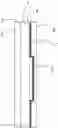
FIG. 1 shows a longitudinal cross section of a preferred embodiment of the RFID device of the present invention.
FIG. 2 shows a longitudinal cross section of a second embodiment of the RFID device of the present invention.
DETAILED DESCRIPTION OF THE INVENTION
A first embodiment of the present invention, as defined in FIG. 1, relates to an RFID device comprising a layer of a textile (1) as the flexible laminar material, with an outer face (2) and an inner face (4), with an RFID tag (5) fixed to said inner face (4) and said inner face (4) further comprising a coating (6) of polyurethane, such that the RFID tag is encapsulated between the inner face (4) and the coating (6) of polyurethane. Additionally, the outer face (2) comprises a second coating (3) of polyurethane.
In a second embodiment, as defined in FIG. 2, the present invention relates to an RFID device comprising a layer of a textile (1) as the flexible laminar material, with an outer face (2) and an inner face (4), with an RFID tag (5) fixed to said inner face (4) and said inner face (4) further comprising a coating (6) of polyurethane, wherein the device additionally comprises a second layer (7) of cellulose as the flexible laminar material sandwiched between the coating (6) of polyurethane and the inner face (4), wherein the second layer (7) of cellulose is additionally sandwiched between the coating (6) of polyurethane and the RFID tag (5). Additionally, the outer face (2) comprises a second coating (3) of polyurethane.
Claims
1. An RFID device comprising:
a layer (1) of flexible laminar material, comprising:
an outer face (2), and
an inner face (4), and
an RFID tag (5), fixed to the inner face (4) of the layer (1), characterised in that the inner face (4) comprises a coating (6), with the RFID tag (5) being encapsulated between the inner face (4) and the coating (6).
2. The RFID device according to claim 1, wherein the layer (1) of flexible laminar material is a textile material.
3. The RFID device according to claim 1, wherein the RFID tag is fixed to the inner face (4) of the layer (1) by means of an adhesive.
4. The RFID device according to claim 1, wherein the coating (6) is a thermoplastic polymer.
5. The RFID device according to claim 4, wherein the thermoplastic polymer is polyurethane.
6. The RFID device according to claim 1, wherein the outer face (2) of the layer (1) of flexible laminar material comprises a second coating (3).
7. The RFID device according to the claim 6, wherein the coating (6) and the second coating (3) are of the same material.
8. The RFID device according to claim 1, wherein the device comprises a second layer (7) of flexible laminar material sandwiched between the coating (6) and the inner face (4), wherein the second layer (7) of flexible laminar material is additionally sandwiched between the coating (6) and the RFID tag (5).
9. The RFID device according to claim 1, wherein the RFID tag is made of aluminium.
10. A method for preparing an RFID device according to claim 1, comprising the following steps:
a) applying a coating (6) on the layer (1) of flexible laminar material containing an RFID tag (5) adhered to its inner face (4), with the RFID tag (5) being encapsulated between the coating (6) and the inner face (4) of the flexible laminar material,
b) drying the layer of coating (6).
11. The method according to claim 10, comprising a step before step a) for fixing the RFID tag to the layer (1) of flexible laminar material.
12. The method according to claim 11, wherein the fixing of the RFID tag to the layer (1) of flexible laminar material is by means of adhesive.
13. The method according to claim 10, comprising a step before step a) for applying a second coating (3) to the outer face (2) of the layer (1) of flexible laminar material.
Images & Drawings included:


Sources:
- United States Patent and Trademark Office - verify current appl. status at the USPTO↗
Similar patent applications:
- » 20190188550
RFID tag manufacturing method, RFID tag manufacturing device, and transfer sheet manufacturing method - » 20070144662
Method of manufacturing RFID devices - » 20090230198
Method of manufacturing RFID devices - » 20250157953
VERTICAL SEMICONDUCTOR RFID STRUCTURE, RFID TAG DEVICE, AND MANUFACTURING METHOD THEREOF - » 20060065738
RFID DEVICE AND METHOD OF MANUFACTURE - » 20120118975
RFID devices and methods for manufacturing - » 20100230161
Joint Structure Between a Wound Coil and An IC-Chip for a Noncontact RFID Device and Methods of Manufacturing The Same - » 20110278363
Semiconductor substrate-based system for an RFID device, RFID device, and method for manufacturing such a semiconductor substrate-based system - » 20220230043
RFID device and method of manufacturing the same - » 20110230015
Semiconductor device, manufacturing method of semiconductor device, and RFID tag
Recent applications in this class:
- » 20250292057 2025-09-18
SELF-CENTERED INLAY AND CORE LAYER FOR INFORMATION CARRYING CARD, PROCESS AND RESULTING PRODUCTS - » 20250272531 2025-08-28
WIRE EMBEDDED LABEL ON SPECIAL SUBSTRATE WITH OR WITHOUT INDUCTIVE COUPLING - » 20250265437 2025-08-21
COMBINATION RFID/EAS TAGS AND METHODS OF MANUFACTURE - » 20250252281 2025-08-07
TRANSACTION CARD INCORPORATING ALUMINUM ALLOYS - » 20250232150 2025-07-17
Easily Attachable RFID Tag and Method of Making the Same - » 20250209293 2025-06-26
METAL SMART CARD WITH RADIO-FREQUENCY ANTENNA AND METHOD FOR MANUFACTURING SUCH A SMART CARD - » 20250200321 2025-06-19
METAL SMARTCARD, AND METHOD FOR MANUFACTURING A METAL SMARTCARD - » 20250181878 2025-06-05
METHOD FOR PRODUCING A FILM FOR A CARD-SHAPED DATA CARRIER, FILM AND CARD-SHAPED DATA CARRIER - » 20250173540 2025-05-29
CARD BODY WITH ABSORBENT CORE AND METHOD FOR PRODUCING A CARD BODY WITH ABSORBENT CORE - » 20250156671 2025-05-15
PAYMENT CARDS WITH ACTIVATED INFORMATION DISPLAYS