METHOD OF STORING WAGER DATA ON A SERVER AND COMMUNICATION DEVICE
US20220166693A1
2022-05-26
17/481,555
2021-09-22
Abstract:
A method of storing wager information on both the server and the communication device. Storing a portion of the data locally on the user's device may be able to get around potential bandwidth issues if a user can place wagers on the server when there are no latency issues, but if there are latency issues, the user may place the wager on the communication device and send the placed wager to the server once there are no more latency issues.
Inventors:
- John CRONIN 294 🇺🇸 Jericho, VT, United States
- Casey Alexander HUKE 199 🇺🇸 Washington, DC, United States
- Michael D'Andrea 183 🇺🇸 Burlington, VT, United States
- Joseph W. BEYERS 141 🇺🇸 Saratoga, CA, United States
Assignee:
- AdrenalineIP 206 🇺🇸 Washington, DC, United States
Interested in similar patents?
Get notified when new applications in this technology area are published.
Classification:
H04L43/08 » CPC main
Arrangements for monitoring or testing data switching networks Monitoring or testing based on specific metrics, e.g. QoS, energy consumption or environmental parameters
H04L67/12 » CPC further
Network arrangements or protocols for supporting network services or applications; Protocols specially adapted for proprietary or special-purpose networking environments, e.g. medical networks, sensor networks, networks in vehicles or remote metering networks
H04L41/0896 » CPC further
Arrangements for maintenance, administration or management of data switching networks, e.g. of packet switching networks; Configuration management of networks or network elements Bandwidth or capacity management, i.e. automatically increasing or decreasing capacities
H04L43/10 » CPC further
Arrangements for monitoring or testing data switching networks Active monitoring, e.g. heartbeat, ping or trace-route
G06Q50/34 » CPC further
Systems or methods specially adapted for specific business sectors, e.g. utilities or tourism Betting or bookmaking, e.g. Internet betting
Description
CROSS-REFERENCE TO RELATED APPLICATIONS
The present patent application claims benefit and priority to U.S. Provisional Patent Application No. 63/117,596 entitled “METHOD OF STORING WAGER DATA ON SERVER AND COMMUNICATION DEVICE” filed on Nov. 24, 2020 which is hereby incorporated by reference into the present disclosure.
FIELD
The present disclosure is generally related to in-play wagering on live sporting events.
BACKGROUND
Wagers on individual plays of a live event, or micro-wagering, are a form of wagering increasing in popularity. One of the problems presented by this type of wagering is the short window in which users can place a wager.
Because of the short window of time to place a wager, latency between the live event, the system offering wagers, and the users making wagers becomes relevant.
Latency issues can cause the flow of data to slow. Because of this, it becomes important to identify which data is critical to send and receive in real-time or near real-time and which data can remain static without compromising the user experience.
SUMMARY
Methods, systems, and apparatuses for storing wager data on a server and a communications device may be shown and described. In one embodiment, a method for adjusting latency and data transmission on a sports wagering network can include testing a connection from a wagering network to a mobile device using a ping service; measuring a latency level between the wagering network and the mobile device; sending the latency level to a local data level module that receives at least live event data; comparing the live event data with at least a latency adjustment factor in an adjustment factor database; adjusting the sent latency level by the latency adjustment factor; determining a portion of a wagering process to be stored on the mobile device based on the adjusted latency level; and at least one of instructing the mobile device to store the wagering process portion and halting transmission of that wagering process from the wagering network.
In another embodiment, a system for adjusting latency and data transmission on a sports wagering network can include a latency detection module; a local data level module; a latency level database; an adjustment factors database; where the latency detection module is configured to ping a mobile device, measure a latency level between a wagering network and the mobile device, and send that latency level to the local data level module; the local data level module is configured to receive a latency level from the latency detection module, receive live event data, compare the live event data with at least one latency adjustment factor in the adjustment factor database, adjust the latency level according to a latency adjustment factor, compare an adjusted latency level with at least one latency level range within the latency level database, determine a portion of a wagering process to be stored on the mobile device, and instruct the mobile device to store the wagering process portion or instruct the wagering network to halt the transmission of the wagering process; the latency level database is configured to contain at least one predetermined range of latencies and at least one type of the wagering process portion to be stored locally on the mobile device within the predetermined range; and the adjustment factors database is configured to contain at least one adjustment factor that adjusts a latency level wherein an adjustment is a flat amount or a percentage amount.
BRIEF DESCRIPTIONS OF THE DRAWINGS
The accompanying drawings illustrate various embodiments of systems, methods, and various other aspects of the embodiments. Any person with ordinary art skills will appreciate that the illustrated element boundaries (e.g., boxes, groups of boxes, or other shapes) in the figures represent an example of the boundaries. It may be understood that, in some examples, one element may be designed as multiple elements or that multiple elements may be designed as one element. In some examples, an element shown as an internal component of one element may be implemented as an external component in another and vice versa. Furthermore, elements may not be drawn to scale. Non-limiting and non-exhaustive descriptions are described with reference to the following drawings. The components in the figures are not necessarily to scale, emphasis instead being placed upon illustrating principles.
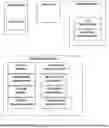
FIG. 1: illustrates a system for balancing local and server-side wagering data based on latency, according to an embodiment.
FIG. 2: illustrates a latency detection module, according to an embodiment.
FIG. 3: illustrates a local data level module, according to an embodiment.
FIG. 4: illustrates a latency level database, according to an embodiment.
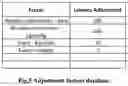
FIG. 5: illustrates an adjustment factors database, according to an embodiment.
DETAILED DESCRIPTION
Aspects of the present invention are disclosed in the following description and related figures directed to specific embodiments of the invention. Those of ordinary skill in the art will recognize that alternate embodiments may be devised without departing from the spirit or the scope of the claims. Additionally, well-known elements of exemplary embodiments of the invention will not be described in detail or will be omitted so as not to obscure the relevant details of the invention.
As used herein, the word exemplary means serving as an example, instance or illustration. The embodiments described herein are not limiting, but rather are exemplary only. The described embodiments are not necessarily to be construed as preferred or advantageous over other embodiments. Moreover, the terms embodiments of the invention, embodiments, or invention do not require that all embodiments of the invention include the discussed feature, advantage, or mode of operation.
Further, many of the embodiments described herein are described in terms of sequences of actions to be performed by, for example, elements of a computing device. It should be recognized by those skilled in the art that specific circuits can perform the various sequence of actions described herein (e.g., application specific integrated circuits (ASICs)) and/or by program instructions executed by at least one processor. Additionally, the sequence of actions described herein can be embodied entirely within any form of computer-readable storage medium such that execution of the sequence of actions enables the processor to perform the functionality described herein. Thus, the various aspects of the present invention may be embodied in several different forms, all of which have been contemplated to be within the scope of the claimed subject matter. In addition, for each of the embodiments described herein, the corresponding form of any such embodiments may be described herein as, for example, a computer configured to perform the described action.
With respect to the embodiments, a summary of terminology used herein is provided.
An action refers to a specific play or specific movement in a sporting event. For example, an action may determine which players were involved during a sporting event. In some embodiments, an action may be a throw, shot, pass, swing, kick, and/or hit performed by a participant in a sporting event. In some embodiments, an action may be a strategic decision made by a participant in the sporting event, such as a player, coach, management, etc. In some embodiments, an action may be a penalty, foul, or other type of infraction occurring in a sporting event. In some embodiments, an action may include the participants of the sporting event. In some embodiments, an action may include beginning events of sporting event, for example opening tips, coin flips, opening pitch, national anthem singers, etc. In some embodiments, a sporting event may be football, hockey, basketball, baseball, golf, tennis, soccer, cricket, rugby, MMA, boxing, swimming, skiing, snowboarding, horse racing, car racing, boat racing, cycling, wrestling, Olympic sport, eSports, etc. Actions can be integrated into the embodiments in a variety of manners.
A “bet” or “wager” is to risk something, usually a sum of money, against someone else's or an entity based on the outcome of a future event, such as the results of a game or event. It may be understood that non-monetary items may be the subject of a “bet” or “wager” as well, such as points or anything else that can be quantified for a “bet” or “wager.” A bettor refers to a person who bets or wagers. A bettor may also be referred to as a user, client, or participant throughout the present invention. A “bet” or “wager” could be made for obtaining or risking a coupon or some enhancements to the sporting event, such as better seats, VIP treatment, etc. A “bet” or “wager” can be made for certain amount or for a future time. A “bet” or “wager” can be made for being able to answer a question correctly. A “bet” or “wager” can be made within a certain period. A “bet” or “wager” can be integrated into the embodiments in a variety of manners.
A “book” or “sportsbook” refers to a physical establishment that accepts bets on the outcome of sporting events. A “book” or “sportsbook” system enables a human working with a computer to interact, according to set of both implicit and explicit rules, in an electronically powered domain to place bets on the outcome of sporting event. An added game refers to an event not part of the typical menu of wagering offerings, often posted as an accommodation to patrons. A “book” or “sportsbook” can be integrated into the embodiments in a variety of manners.
To “buy points” means a player pays an additional price (more money) to receive a half-point or more in the player's favor on a point spread game. Buying points means you can move a point spread, for example, up to two points in your favor. “Buy points” can be integrated into the embodiments in a variety of manners.
The “price” refers to the odds or point spread of an event. To “take the price” means betting the underdog and receiving its advantage in the point spread. “Price” can be integrated into the embodiments in a variety of manners.
“No action” means a wager in which no money is lost or won, and the original bet amount is refunded. “No action” can be integrated into the embodiments in a variety of manners.
The “sides” are the two teams or individuals participating in an event: the underdog and the favorite. The term “favorite” refers to the team considered most likely to win an event or game. The “chalk” refers to a favorite, usually a heavy favorite. Bettors who like to bet big favorites are referred to “chalk eaters” (often a derogatory term). An event or game in which the sportsbook has reduced its betting limits, usually because of weather or the uncertain status of injured players, is referred to as a “circled game.” “Laying the points or price” means betting the favorite by giving up points. The term “dog” or “underdog” refers to the team perceived to be most likely to lose an event or game. A “longshot” also refers to a team perceived to be unlikely to win an event or game. “Sides,” “favorite,” “chalk,” “circled game,” “laying the points price,” “dog,” and “underdog” can be integrated into the embodiments in a variety of manners.
The “money line” refers to the odds expressed in terms of money. With money odds, whenever there is a minus (−), the player “lays” or is “laying” that amount to win (for example, $100); where there is a plus (+), the player wins that amount for every $100 wagered. A “straight bet” refers to an individual wager on a game or event that will be determined by a point spread or money line. The term “straight-up” means winning the game without any regard to the “point spread,” a “money-line” bet. “Money line,” “straight bet,” and “straight-up” can be integrated into the embodiments in a variety of manners.
The “line” refers to the current odds or point spread on a particular event or game. The “point spread” refers to the margin of points in which the favored team must win an event by to “cover the spread.” To “cover” means winning by more than the “point spread.” A handicap of the “point spread” value is given to the favorite team so bettors can choose sides at equal odds. “Cover the spread” means that a favorite wins an event with the handicap considered or the underdog wins with additional points. To “push” refers to when the event or game ends with no winner or loser for wagering purposes, a tie for wagering purposes. A “tie” is a wager in which no money is lost or won because the teams' scores were equal to the number of points in the given “point spread.” The “opening line” means the earliest line posted for a particular sporting event or game. The term “pick” or “pick 'em” refers to a game when neither team is favored in an event or game. “Line,” “cover the spread,” “cover,” “tie,” “pick,” and “pick-em” can be integrated into the embodiments in a variety of manners.
To “middle” means to win both sides of a game; wagering on the “underdog” at one point spread and the favorite at a different point spread and winning both sides. For example, if the player bets the underdog +4 ½ and the favorite −3 ½ and the favorite wins by 4, the player has middled the book and won both bets. “Middle” can be integrated into the embodiments in a variety of manners.
Digital gaming refers to any type of electronic environment that can be controlled or manipulated by a human user for entertainment purposes. A system that enables a human and a computer to interact according to set of both implicit and explicit rules in an electronically powered domain for the purpose of recreation or instruction. “eSports” refers to a form of sports competition using video games, or a multiplayer video game played competitively for spectators, typically by professional gamers. Digital gaming and “eSports” can be integrated into the embodiments in a variety of manners.
The term event refers to a form of play, sport, contest, or game, especially one played according to rules and decided by skill, strength, or luck. In some embodiments, an event may be football, hockey, basketball, baseball, golf, tennis, soccer, cricket, rugby, MMA, boxing, swimming, skiing, snowboarding, horse racing, car racing, boat racing, cycling, wrestling, Olympic sport, etc. The event can be integrated into the embodiments in a variety of manners.
The “total” is the combined number of runs, points or goals scored by both teams during the game, including overtime. The “over” refers to a sports bet in which the player wagers that the combined point total of two teams will be more than a specified total. The “under” refers to bets that the total points scored by two teams will be less than a certain figure. “Total,” “over,” and “under” can be integrated into the embodiments in a variety of manners.
A “parlay” is a single bet that links together two or more wagers; to win the bet, the player must win all the wagers in the “parlay.” If the player loses one wager, the player loses the entire bet. However, if they win all the wagers in the “parlay,” the player receives a higher payoff than if the player had placed the bets separately. A “round robin” is a series of parlays. A “teaser” is a type of parlay in which the point spread, or total of each individual play is adjusted. The price of moving the point spread (teasing) is lower payoff odds on winning wagers. “Parlay,” “round robin,” “teaser” can be integrated into the embodiments in a variety of manners.
A “prop bet” or “proposition bet” means a bet that focuses on the outcome of events within a given game. Props are often offered on marquee games of great interest. These include Sunday and Monday night pro football games, various high-profile college football games, major college bowl games, and playoff and championship games. An example of a prop bet is “Which team will score the first touchdown?” “Prop bet” or “proposition bet” can be integrated into the embodiments in a variety of manners.
A “first-half bet” refers to a bet placed on the score in the first half of the event only and only considers the first half of the game or event. The process in which you go about placing this bet is the same process that you would use to place a full game bet, but as previously mentioned, only the first half is important to a first-half bet type of wager. A “half-time bet” refers to a bet placed on scoring in the second half of a game or event only. “First-half-bet” and “half-time-bet” can be integrated into the embodiments in a variety of manners.
A “futures bet” or “future” refers to the odds that are posted well in advance on the winner of major events. Typical future bets are the Pro Football Championship, Collegiate Football Championship, the Pro Basketball Championship, the Collegiate Basketball Championship, and the Pro Baseball Championship. “Futures bet” or “future” can be integrated into the embodiments in a variety of manners.
The “listed pitchers” is specific to a baseball bet placed only if both pitchers scheduled to start a game start. If they do not, the bet is deemed “no action” and refunded. The “run line” in baseball refers to a spread used instead of the money line. “Listed pitchers,” “no action,” and “run line” can be integrated into the embodiments in a variety of manners.
The term “handle” refers to the total amount of bets taken. The term “hold” refers to the percentage the house wins. The term “juice” refers to the bookmaker's commission, most commonly the 11 to 10 bettors lay on straight point spread wagers: also known as “vigorish” or “vig”. The “limit” refers to the maximum amount accepted by the house before the odds and/or point spread are changed. “Off the board” refers to a game in which no bets are being accepted. “Handle,” “juice,” “vigorish,” “vig,” and “off the board” can be integrated into the embodiments in a variety of manners.
“Casinos” are a public room or building where gambling games are played. “Racino” is a building complex or grounds having a racetrack and gambling facilities for playing slot machines, blackjack, roulette, etc. “Casino” and “Racino” can be integrated into the embodiments in a variety of manners.
Customers are companies, organizations or individuals that would deploy, for fees, and may be part of, or perform, various system elements or method steps in the embodiments.
Managed service user interface service is a service that can help customers (1) manage third parties, (2) develop the web, (3) perform data analytics, (4) connect thru application program interfaces and (4) track and report on player behaviors. A managed service user interface can be integrated into the embodiments in a variety of manners.
Managed service risk management service are services that assist customers with (1) very important person management, (2) business intelligence, and (3) reporting. These managed service risk management services can be integrated into the embodiments in a variety of manners.
Managed service compliance service is a service that helps customers manage (1) integrity monitoring, (2) play safety, (3) responsible gambling, and (4) customer service assistance. These managed service compliance services can be integrated into the embodiments in a variety of manners.
Managed service pricing and trading service is a service that helps customers with (1) official data feeds, (2) data visualization, and (3) land based on property digital signage. These managed service pricing and trading services can be integrated into the embodiments in a variety of manners.
Managed service and technology platforms are services that help customers with (1) web hosting, (2) IT support, and (3) player account platform support. These managed service and technology platform services can be integrated into the embodiments in a variety of manners.
Managed service and marketing support services are services that help customers (1) acquire and retain clients and users, (2) provide for bonusing options, and (3) develop press release content generation. These managed service and marketing support services can be integrated into the embodiments in a variety of manners.
Payment processing services are services that help customers with (1) account auditing and (2) withdrawal processing to meet standards for speed and accuracy. Further, these services can provide for integration of global and local payment methods. These payment processing services can be integrated into the embodiments in a variety of manners.
Engaging promotions allow customers to treat players to free bets, odds boosts, enhanced access, and flexible cashback to boost lifetime value. Engaging promotions can be integrated into the embodiments in a variety of manners.
“Cash out” or “pay out” or “payout” allow customers to make available, on singles bets or accumulated bets with a partial cash out where each operator can control payouts by always managing commission and availability. The “cash out” or “pay out” or “payout” can be integrated into the embodiments in a variety of manners, including both monetary and non-monetary payouts, such as points, prizes, promotional or discount codes, and the like.
“Customized betting” allows customers to have tailored personalized betting experiences with sophisticated tracking and analysis of players' behavior. “Customized betting” can be integrated into the embodiments in a variety of manners.
Kiosks are devices that offer interactions with customers, clients, and users with a wide range of modular solutions for both retail and online sports gaming. Kiosks can be integrated into the embodiments in a variety of manners.
Business Applications are an integrated suite of tools for customers to manage the everyday activities that drive sales, profit, and growth by creating and delivering actionable insights on performance to help customers to manage the sports gaming. Business Applications can be integrated into the embodiments in a variety of manners.
State-based integration allows for a given sports gambling game to be modified by states in the United States or other countries, based upon the state the player is in, mobile phone, or other geolocation identification means. State-based integration can be integrated into the embodiments in a variety of manners.
Game Configurator allows for configuration of customer operators to have the opportunity to apply various chosen or newly created business rules on the game as well as to parametrize risk management. The Game Configurator can be integrated into the embodiments in a variety of manners.
“Fantasy sports connectors” are software connectors between method steps or system elements in the embodiments that can integrate fantasy sports. Fantasy sports allow a competition in which participants select imaginary teams from among the players in a league and score points according to the actual performance of their players. For example, if a player in fantasy sports is playing at a given real-time sport, odds could be changed in the real-time sports for that player.
Software as a service (or SaaS) is a software delivery and licensing method in which software is accessed online via a subscription rather than bought and installed on individual computers. Software as a service can be integrated into the embodiments in a variety of manners.
Synchronization of screens means synchronizing bets and results between devices, such as TV and mobile, PC, and wearables. Synchronization of screens can be integrated into the embodiments in a variety of manners.
Automatic content recognition (ACR) is an identification technology that recognizes content played on a media device or present in a media file. Devices containing ACR support enable users to quickly obtain additional information about the content they see without any user-based input or search efforts. A short media clip (audio, video, or both) is selected to start the recognition. This clip could be selected from within a media file or recorded by a device. Through algorithms such as fingerprinting, information from the actual perceptual content is taken and compared to a database of reference fingerprints, wherein each reference fingerprint corresponds with a known recorded work. A database may contain metadata about the work and associated information, including complementary media. If the media clip's fingerprint is matched, the identification software returns the corresponding metadata to the client application. For example, during an in-play sports game, a “fumble” could be recognized and at the time stamp of the event, metadata such as “fumble” could be displayed. Automatic content recognition (ACR) can be integrated into the embodiments in a variety of manners.
Joining social media means connecting an in-play sports game bet or result to a social media connection, such as a FACEBOOK® chat interaction. Joining social media can be integrated into the embodiments in a variety of manners.
Augmented reality means a technology that superimposes a computer-generated image on a user's view of the real world, thus providing a composite view. In an example of this invention, a real time view of the game can be seen and a “bet”—which is a computer-generated data point—is placed above the player that is bet on. Augmented reality can be integrated into the embodiments in a variety of manners.
Some embodiments of this disclosure, illustrating all its features, will now be discussed in detail. It can be understood that the embodiments are intended to be open-ended in that an item or items used in the embodiments is not meant to be an exhaustive listing of such item or items or meant to be limited to only the listed item or items.
It can be noted that as used herein and in the appended claims, the singular forms “a,” “an,” and “the” include plural references unless the context clearly dictates otherwise. Although any systems and methods similar or equivalent to those described herein can be used in the practice or testing of embodiments, only some exemplary systems and methods are now described.
FIG. 1 is a system for balancing local and server-side wagering data based on latency. This system may include a live event 102, for example, a sporting event such as a football, basketball, baseball, or hockey game, tennis match, golf tournament, eSports, or digital game, etc. The live event 102 may include some number of actions or plays, upon which a user, bettor, or customer can place a bet or wager, typically through an entity called a sportsbook. There are numerous types of wagers the bettor can make, including, but not limited to, a straight bet, a money line bet, or a bet with a point spread or line that the bettor's team would need to cover if the result of the game with the same as the point spread the user would not cover the spread, but instead the tie is called a push. If the user bets on the favorite, points are given to the opposing side, which is the underdog or longshot. Betting on all favorites is referred to as chalk and is typically applied to round-robin or other tournaments' styles. There are other types of wagers, including, but not limited to, parlays, teasers, and prop bets, which are added games that often allow the user to customize their betting by changing the odds and payouts received on a wager. Certain sportsbooks will allow the bettor to buy points which moves the point spread off the opening line. This increases the price of the bet, sometimes by increasing the juice, vig, or hold that the sportsbook takes. Another type of wager the bettor can make is an over/under, in which the user bets over or under a total for the live event 102, such as the score of an American football game or the run line in a baseball game, or a series of actions in the live event 102. Sportsbooks have several bets they can handle, limiting the number of wagers they can take on either side of a bet before they will move the line or odds off the opening line. Additionally, there are circumstances, such as an injury to an important player like a listed pitcher, in which a sportsbook, casino, or racino may take an available wager off the board. As the line moves, an opportunity may arise for a bettor to bet on both sides at different point spreads to middle, and win, both bets. Sportsbooks will often offer bets on portions of games, such as first-half bets and half-time bets. Additionally, the sportsbook can offer futures bets on live events in the future. Sportsbooks need to offer payment processing services to cash out customers which can be done at kiosks at the live event 102 or at another location.
Further, embodiments may include a plurality of sensors 104 that may be used such as motion, temperature, or humidity sensors, optical sensors, and cameras such as an RGB-D camera which is a digital camera capable of capturing color (RGB) and depth information for every pixel in an image, microphones, radiofrequency receivers, thermal imagers, radar devices, lidar devices, ultrasound devices, speakers, wearable devices, etc. Also, the plurality of sensors 104 may include but are not limited to, tracking devices, such as RFID tags, GPS chips, or other such devices embedded on uniforms, in equipment, in the field of play and boundaries of the field of play, or on other markers in the field of play. Imaging devices may also be used as tracking devices, such as player tracking, which provide statistical information through real-time X, Y positioning of players and X, Y, Z positioning of the ball.
Further, embodiments may include a cloud 106 or a communication network that may be a wired and/or wireless network. The communication network, if wireless, may be implemented using communication techniques such as visible light communication (VLC), worldwide interoperability for microwave access (WiMAX), long term evolution (LTE), wireless local area network (WLAN), infrared (IR) communication, public switched telephone network (PSTN), radio waves, or other communication techniques that are known in the art. The communication network may allow ubiquitous access to shared pools of configurable system resources and higher-level services that can be rapidly provisioned with minimal management effort, often over the Internet, and relies on sharing resources to achieve coherence and economies of scale, like a public utility. In contrast, third-party clouds allow organizations to focus on their core businesses instead of expending resources on computer infrastructure and maintenance. The cloud 106 may be communicatively coupled to a peer-to-peer wagering network 114, which may perform real-time analysis on the type of play and the result of the play. The cloud 106 may also be synchronized with game situational data such as the time of the game, the score, location on the field, weather conditions, and the like, which may affect the choice of play utilized. For example, in an exemplary embodiment, the cloud 106 may not receive data gathered from the sensors 104 and may, instead, receive data from an alternative data feed, such as Sports Radar®. This data may be compiled substantially immediately following the completion of any play and may be compared with a variety of team data and league data based on a variety of elements, including the current down, possession, score, time, team, and so forth, as described in various exemplary embodiments herein.
Further, embodiments may include a mobile device 108 such as a computing device, laptop, smartphone, tablet, computer, smart speaker, or I/O devices. I/O devices may be present in the computing device. Input devices may include but are not limited to, keyboards, mice, trackpads, trackballs, touchpads, touch mice, multi-touch touchpads and touch mice, microphones, multi-array microphones, drawing tablets, cameras, single-lens reflex cameras (SLRs), digital SLRs (DSLRs), complementary metal-oxide semiconductor (CMOS) sensors, accelerometers, IR optical sensors, pressure sensors, magnetometer sensors, angular rate sensors, depth sensors, proximity sensors, ambient light sensors, gyroscopic sensors, or other sensors. Output devices may include but are not limited to, video displays, graphical displays, speakers, headphones, inkjet printers, laser printers, or 3D printers. Devices may include, but are not limited to, a combination of multiple input or output devices such as, Microsoft KINECT, Nintendo Wii remote, Nintendo WII U GAMEPAD, or Apple iPhone. Some devices allow gesture recognition inputs by combining input and output devices. Other devices allow for facial recognition, which may be utilized as an input for different purposes such as authentication or other commands. Some devices provide for voice recognition and inputs including, but not limited to, Microsoft KINECT, SIRI for iPhone by Apple, Google Now, or Google Voice Search. Additional user devices have both input and output capabilities including but not limited to, haptic feedback devices, touchscreen displays, or multi-touch displays. Touchscreen, multi-touch displays, touchpads, touch mice, or other touch sensing devices may use different technologies to sense touch, including but not limited to, capacitive, surface capacitive, projected capacitive touch (PCT), in-cell capacitive, resistive, IR, waveguide, dispersive signal touch (DST), in-cell optical, surface acoustic wave (SAW), bending wave touch (BWT), or force-based sensing technologies. Some multi-touch devices may allow two or more contact points with the surface, allowing advanced functionality including, but not limited to, pinch, spread, rotate, scroll, or other gestures. Some touchscreen devices, including but not limited to, Microsoft PIXELSENSE or Multi-Touch Collaboration Wall, may have larger surfaces, such as on a table-top or on a wall, and may also interact with other electronic devices. Some I/O devices, display devices, or groups of devices may be augmented reality devices. An I/O controller may control one or more I/O devices, such as a keyboard and a pointing device, or a mouse or optical pen. Furthermore, an I/O device may also contain storage and/or an installation medium for the computing device. In some embodiments, the computing device may include USB connections (not shown) to receive handheld USB storage devices. In further embodiments, an I/O device may be a bridge between the system bus and an external communication bus, e.g., USB, SCSI, FireWire, Ethernet, Gigabit Ethernet, Fiber Channel, or Thunderbolt buses. In some embodiments, the mobile device 108 could be an optional component and would be utilized in a situation where a paired wearable device employs the mobile device 108 for additional memory or computing power or connection to the internet.
Further, embodiments may include a wagering software application or a wagering app 110, which is a program that enables the user to place bets on individual plays in the live event 102, streams audio and video from the live event 102, and features the available wagers from the live event 102 on the mobile device 108. The wagering app 110 allows the user to interact with the wagering network 114 to place bets and provide payment/receive funds based on wager outcomes.
Further, embodiments may include a mobile device database 112 that may store some or all the user's data, the live event 102, or the user's interaction with the wagering network 114.
Further, embodiments may include the wagering network 114, which may perform real-time analysis on the type of play and the result of a play or action. The wagering network 114 (or the cloud 106) may also be synchronized with game situational data, such as the time of the game, the score, location on the field, weather conditions, and the like, which may affect the choice of play utilized. For example, in an exemplary embodiment, the wagering network 114 may not receive data gathered from the sensors 104 and may, instead, receive data from an alternative data feed, such as SportsRadar®. This data may be provided substantially immediately following the completion of any play and may be compared with a variety of team data and league data based on a variety of elements, including the current down, possession, score, time, team, and so forth, as described in various exemplary embodiments herein. The wagering network 114 can offer several SaaS managed services such as user interface service, risk management service, compliance, pricing and trading service, IT support of the technology platform, business applications, game configuration, state-based integration, fantasy sports connection, integration to allow the joining of social media, or marketing support services that can deliver engaging promotions to the user.
Further, embodiments may include a user database 116, which may contain data relevant to all users of the wagering network 114 and may include, but is not limited to, a user ID, a device identifier, a paired device identifier, wagering history, or wallet information for the user. The user database 116 may also contain a list of user account records associated with respective user IDs. For example, a user account record may include, but is not limited to, information such as user interests, user personal details such as age, mobile number, etc., previously played sporting events, highest wager, favorite sporting event, or current user balance and standings. In addition, the user database 116 may contain betting lines and search queries. The user database 116 may be searched based on a search criterion received from the user. Each betting line may include but is not limited to, a plurality of betting attributes such as at least one of the following: the live event 102, a team, a player, an amount of wager, etc. The user database 116 may include, but is not limited to, information related to all the users involved in the live event 102. In one exemplary embodiment, the user database 116 may include information for generating a user authenticity report and a wagering verification report. Further, the user database 116 may be used to store user statistics like, but not limited to, the retention period for a particular user, frequency of wagers placed by a particular user, the average amount of wager placed by each user, etc.
Further, embodiments may include a historical plays database 118 that may contain play data for the type of sport being played in the live event 102. For example, in American Football, for optimal odds calculation, the historical play data may include metadata about the historical plays, such as time, location, weather, previous plays, opponent, physiological data, etc.
Further, embodiments may utilize an odds database 120—that may contain the odds calculated by an odds calculation module 122—to display the odds on the user's mobile device 108 and take bets from the user through the mobile device wagering app 110.
Further, embodiments may include the odds calculation module 122, which may utilize historical play data to calculate odds for in-play wagers.
Further, embodiments may include a latency detection module 124, which may detect the latency between the wagering network 114 and a mobile device 108. Latency may further be detected between the wagering network and the sensors 104 or broadcast of the live event 102.
Further, embodiments may include a local data level module 126, which may direct the mobile device 108 to store some types of data locally. Which data is stored locally may be determined by the local data level module 126 by comparing the latency of the mobile device 108 from the latency detection module 124 to a range of latencies stored in a latency level database 128. The latency may be adjusted based on factors stored in the adjustment factor database 130.
Further, embodiments may include the latency level database 128, which may contain ranges of latency and the types of data stored locally on the mobile device 108 within that range of latency. For example, if latency is very low (<50 ms), all data may be retrieved from a server. If latency is medium (50-250), then time-sensitive systems may be retrieved from the server, but images and functions that do not require real-time updates may be stored locally.
Further, embodiments may include an adjustment factor database 130, which may contain factors that adjust the latency level ranges corresponding with data stored locally on the mobile device 108. For example, if the weather is causing high packet loss over wireless networks, then the latency ranges may be altered such that users that have medium latency now fall into the high latency level. Conversely, if the live event is one where there is a lot of downtime between plays, then high latency may not be as detrimental, and the latency levels may be altered such that users that would have medium latency now fall into the low latency level.
FIG. 2 illustrates the latency detection module 124. The process may begin with the latency detection module 124 polling, at step 200, for a connection from the mobile device 108. The connection may have just begun or may be ongoing. Next, the latency detection module 124 may ping, at step 202, the mobile device 108. Ping may refer to a computer network administration software utility used to test the reachability of a host on an Internet Protocol (IP) network. Ping may be available for virtually all operating systems with networking capability, including most embedded network administration software. A ping may measure the round-trip time for messages sent from the originating host to a destination computer that echoes back to the source. Next, the latency detection module 124 may poll, at step 204, for a response to the ping. If no response comes within a set amount of time, the connection may be determined to be lost, and the latency detection module may return to step 200. Next, the latency detection module 124 may measure, at step 206, the latency based on the amount of time it took to get a response from the mobile device 108. Latency may be measured in milliseconds (ms). Next, the latency detection module 124 may send, at step 208, the measured latency to the local data level module 126. Finally, the latency detection module 124 may return, at step 210, to step 200.
FIG. 3 illustrates the local data level module 124. The process may begin with the local data level module 126 polling, at step 300, for a latency value from the latency detection module 124. The local data level module 126 may receive, at step 302, live event 102 data from the sensors 104. This data may include details on the live event 102, such as the type of event, the teams playing, and the current play. This data may also include details about the environment of the live event 102, such as weather, wind speed, and electromagnetic interference, which may affect signal strength. The local data level module 126 may compare, at step 304, the live event 102 data to each factor in the adjustment factor database 130. For example, if the data contains weather data and that weather data shows that it is raining, then a “Weather interference—Rain” factor in the adjustment factor database 130 may be met. More than one factor may be met. The local data level module 126 may adjust, at step 306, the received latency based on comparing the live event 102 data to the adjustment factor database 130. For example, the live event 102 is a baseball game, and it is currently raining at the stadium. User A has 40 ms of latency between the wagering network 114 and their mobile device 108. Both the “Weather interference—Rain” and “Event—Baseball” factors are met. The latency may be increased by 10, then increased by 20%, for a total of 60 ms.
The order in which the adjustments are applied may be significant, in which case adjustments may be given a value that signifies the order in which they are applied. The local data level module 126 may compare, at step 308, the adjusted latency to the latency level database 128 to determine the latency ranges in which the adjusted latency falls. For example, an adjusted latency of 60 ms may fall into the 50-250 ms range in the latency level database 126. The local data level module 126 may delegate, at step 310, a portion of data storage to the mobile device 108 based on the latency level of the adjusted latency. For example, if the adjusted latency is between 50-205 ms, image data and advertising data may be stored locally on the mobile device 108, and all other data may be available from the wagering network 114. The local data level module 126 may send instructions to the mobile device 108 on which data to store locally, may stop the wagering network 114 from sending that data, or both. The local data level module 126 may return, at step 312, to step 300.
FIG. 4 illustrates the latency level database 128. The latency level database 128 may contain ranges of latency, and the types of data that should be store locally on the mobile device 108 within that range of latency. For example, if latency is very low (<50 ms), all data may be retrieved from the server. If latency is medium (50-250), then time-sensitive systems may be retrieved from the server, but images and functions that do not require real-time updates may be stored locally.
FIG. 5 illustrates the adjustment factors database 130. The adjustment factor database 130 may contain factors that adjust the latency level ranges corresponding with data stored locally on the mobile device 108. For example, if the weather is causing high packet loss over wireless networks, then the latency ranges may be altered such that users that have medium latency may now fall into the high latency level. Conversely, if the live event is one where there is a lot of downtime between plays, then high latency may not be as detrimental, and the latency levels may be altered such that users that have medium latency may now fall into the low latency level. Adjustments may be a flat adjustment such as +10 ms or −5 ms or a percentage adjustment such as a 20% increase or 40% decrease. Multiple adjustments may be applied.
The foregoing description and accompanying figures illustrate the principles, preferred embodiments, and modes of operation of the invention. However, the invention should not be construed as being limited to the embodiments discussed above. Additional variations of the embodiments discussed above will be appreciated by those skilled in the art.
Therefore, the above-described embodiments should be regarded as illustrative rather than restrictive. Accordingly, it should be appreciated that variations to those embodiments can be made by those skilled in the art without departing from the scope of the invention as defined by the following claims.
Claims
What is claimed is:1. A method for adjusting latency and data transmission on a sports wagering network, comprising:
testing a connection from a wagering network to a mobile device using a ping service;
measuring a latency level between the wagering network and the mobile device;
sending the latency level to a local data level module that receives at least live event data;
comparing the live event data with at least a latency adjustment factor in an adjustment factor database;
adjusting the sent latency level by the latency adjustment factor;
determining a portion of a wagering process to be stored on the mobile device based on the adjusted latency level; and
at least one of instructing the mobile device to store the wagering process portion and halting transmission of that wagering process from the wagering network.
2. The method for adjusting latency and data transmission on a sports wagering network of claim 1, wherein the ping service comprises a computer network administration software utility that sends packets to a destination device and measures an amount of time to receive an echoed version of sent packets from the destination device.
3. The method for adjusting latency and data transmission on a sports wagering network of claim 1, wherein the latency level comprises a time of response from the ping.
4. The method for adjusting latency and data transmission on a sports wagering network of claim 1, wherein the live event data received comprises at least one of event type data, team data, play data, and environmental data.
5. The method for adjusting latency and data transmission on a sports wagering network of claim 4, wherein the environmental data comprises at least one of weather data, wind speed data, and electromagnetic interference data.
6. The method for adjusting latency and data transmission on a sports wagering network of claim 1, wherein the latency adjustment factor comprises at least one predetermined environmental or situational event with an associated latency adjustment that increases or decreases latency by a flat amount or percentage.
7. The method for adjusting latency and data transmission on a sports wagering network of claim 1, wherein the portion of the wagering process stored comprises at least one of image data.
8. A system for adjusting latency and data transmission on a sports wagering network, comprising:
a latency detection module;
a local data level module;
a latency level database;
an adjustment factors database; wherein
the latency detection module is configured to ping a mobile device, measure a latency level between a wagering network and the mobile device, and send that latency level to the local data level module;
the local data level module is configured to receive a latency level from the latency detection module, receive live event data, compare the live event data with at least one latency adjustment factor in the adjustment factor database, adjust the latency level according to a latency adjustment factor, compare an adjusted latency level with at least one latency level range within the latency level database, determine a portion of a wagering process to be stored on the mobile device, and instruct the mobile device to store the wagering process portion or instruct the wagering network to halt the transmission of the wagering process;
the latency level database is configured to contain at least one predetermined range of latencies and at least one type of the wagering process portion to be stored locally on the mobile device within the predetermined range; and
the adjustment factors database is configured to contain at least one adjustment factor that adjusts a latency level wherein an adjustment is a flat amount or a percentage amount.
9. The system for adjusting latency and data transmission on a sports wagering network of claim 8, wherein the wagering process portion is at least one of image data, event statistical data, and odds data.
10. The system for adjusting latency and data transmission on a sports wagering network of claim 8, wherein the adjustment factor is at least one of a weather interference or an event.
11. The system for adjusting latency and data transmission on a sports wagering network of claim 10, wherein the weather interference is at least one of rain, lightning, wind, or electromagnetic.
12. The system for adjusting latency and data transmission on a sports wagering network of claim 10, wherein the event is at least one of a sport, a play, a player, or a team.
Images & Drawings included:


Sources:
- United States Patent and Trademark Office - verify current appl. status at the USPTO↗
Recent applications in this class:
- » 20250141769 2025-05-01
Multi-Model Switching and Distributed Multi-Stage Machine Learning to Enhance Field Diagnostics and Services - » 20250132998 2025-04-24
MULTI-PATH MONITORING OF APPLICATION INSTANCES USING DNS-BASED REACHABILITY INFORMATION - » 20250126036 2025-04-17
METHODS AND SYSTEMS FOR VISUALIZING AVAILABILITY AND UTILIZATION OF ONBOARDS SERVICES IN VESSELS - » 20250119369 2025-04-10
MACHINE LEARNING MODEL FOR ASSESSING NETWORK PERFORMANCE - » 20250119368 2025-04-10
Centralized Monitoring of Containerized Workloads in a Multi-Tenant, Multi-Cloud Environment - » 20250106133 2025-03-27
PERFORMANCE MEASUREMENT ANALYTICS PLATFORM BASED ON TOPOLOGY STABILITY - » 20250097130 2025-03-20
TELEMETRY DATA ABSTRACTION - » 20250080438 2025-03-06
DATA PROCESSING METHOD, APPARATUS AND ELECTRONIC DEVICE - » 20250080437 2025-03-06
APPARATUS AND METHOD FOR DYNAMIC CONTROL OF NETWORK - » 20250071034 2025-02-27
METHOD AND APPARATUS FOR REAL-TIME QOS MONITORING AND PREDICTION
Recent applications for this Assignee:
- » 20250174089 2025-05-29
INCREMENTAL WAGER METHOD - » 20250174083 2025-05-29
WAGER ODDS ADJUSTER - » 20250148860 2025-05-08
METHOD OF DISPLAYING IN-PLAY WAGERS - » 20250124760 2025-04-17
MARKETPLACE OF ODDS - » 20250118138 2025-04-10
METHOD OF PLACING WAGERS THROUGH A MOBILE DEVICE THROUGH A TELEVISION WAGERING PLATFORM - » 20250078628 2025-03-06
POINT OF VIEW BASED WAGER AVAILABILITY - » 20250078611 2025-03-06
METHODS, SYSTEMS, AND APPARATUSES FOR ROLLING PLAYS IN A POSSESSION WAGER - » 20250046150 2025-02-06
METHODS, SYSTEMS, AND APPARATUSES FOR COLLECTION, RECEIVING AND UTILIZING DATA AND ENABLING GAMEPLAY - » 20250030931 2025-01-23
METHOD AND SYSTEM FOR BROADCASTING LIVE EVENTS - » 20250030911 2025-01-23
METHOD, SYSTEM, AND APPARATUS FOR GRAPHICALLY DISPLAYING COLLECTED DATA