Multi-format envelope, method of manufacturing and using such an envelope
US20220185541A1
2022-06-16
17/685,316
2022-03-02
✅ Patent granted
US 12,428,199 B2
2025-09-30
-
-
Peter N Helvey
Rahman LLC
2042-08-29
Abstract:
An envelope includes a front face receiving a closing fold and a rear face, the envelope being in a first format. The envelope includes at least one transverse fold line configured to enable the envelope to be folded on itself on its rear face so as to form at least one second format. The envelope includes at least one gluing strip on the rear face for gluing the folded envelope in the second format. A process, a use, and packaging based on such an envelope is also provided.
Applicant:
Interested in similar patents?
Get notified when new applications in this technology area are published.
Classification:
B31B70/261 » CPC further
Making flexible containers, e.g. envelopes or bags; Folding sheets, blanks or webs involving transversely folding, i.e. along a line perpendicular to the direction of movement
B65D27/14 » CPC main
Envelopes or like essentially-rectangular containers for postal or other purposes having no structural provision for thickness of contents; Closures using adhesive applied to integral parts, e.g. flaps
B31B70/62 » CPC further
Making flexible containers, e.g. envelopes or bags; Uniting opposed surfaces or edges; Taping by adhesives
B31B70/26 IPC
Making flexible containers, e.g. envelopes or bags Folding sheets, blanks or webs
Description
CROSS-REFERENCE TO RELATED APPLICATIONS
This application is a continuation-in-part of PCT patent application no. PCT/IB2021/052647 filed on Mar. 30, 2021, which claims priority to European patent application no. EP 21153569.5 filed on Jan. 26, 2020, the complete disclosures of which, in their entireties, are herein incorporated by reference.
FIELD OF THE INVENTION
The invention concerns a development of an envelope convertible into 3 different formats.
PRIOR STATE OF THE ART
The prior art provides different types of envelopes available in a single format. In order to have several formats, it is necessary to obtain a batch of each format.
PRESENTATION OF THE INVENTION
The invention aims to provide an envelope that can take at least 2 or 3 different formats of standard content already known in commerce:
- C4 envelope (229×324 mm);
- C5 envelope (162×229 mm);
- DL envelope (220×110 mm).
To achieve this objective, the invention provides an envelope comprising a front face receiving a closing fold and a rear face, the envelope being in a first format, characterized in that it comprises at least one transverse fold line configured to enable the envelope to be folded on itself on its rear face so as to form at least one second format; and in that it comprises at least one gluing strip on the rear face for gluing the folded envelope in said second format. The gluing strip is configured to glue faces of the envelope. The gluing strip may comprise one or more of a double-sided adhesive tape, an adhesive strip, a sealing gum or the like. The gluing strip may have a thickness higher than about 4 mm, and preferably equal to or below about 12 mm.
Advantageously, the foldings and gluings enable the use of a single envelope to be reconfigured to the chosen format.
According to other aspects taken alone or combined according to all technically feasible combinations:
- the envelope comprises three transverse fold lines configured to enable the envelope to be folded on itself so as to form a third format; and/or
- the envelope comprises protecting removable strips for said gluing strip.
The invention further relates to a method of manufacturing an envelope, comprising steps for
- placing at least one transverse fold line configured to enable the envelope to be folded on itself on its rear face so as to form at least one second format; and
- placing at least one gluing strip on the rear face to glue the folded envelope in said second format.
Another object of the invention relates to a method of use or a use of an envelope, comprising steps for
- folding the envelope on itself on its rear face so as to form at least one second format; and
- gluing the envelope in said second format on the rear face, via gluing strips provided on the envelope.
The invention further relates to a packaging comprising a front face receiving a closing fold and a rear face, the packaging being in a first format, characterized in that it comprises at least one transverse fold line configured to enable the envelope to be folded on itself on its rear face so as to form at least one second format (C5, DL); and in that it comprises at least one gluing strip on the rear face for gluing the folded envelope in said second format.
BRIEF DESCRIPTION OF THE DRAWINGS
The invention will be further detailed by the description of non-limiting embodiments, and on the basis of the appended figures, among which:
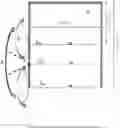
FIG. 1 is a plan view of the rear face of the envelope according to a preferred variant of the invention
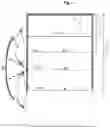
FIG. 2 is a scheme of the folding of the envelope of FIG. 1 towards the C5 format; and
FIG. 3 and FIG. 4 are a scheme of the first and second stages of folding the envelope of FIG. 1 towards the DL format.
DETAILED DESCRIPTION
Concretely, the idea exposed is to offer a foldable and glueable envelope so that the latter can adapt to 3 different formats of standard content and already known in commerce:
- C4 envelope (229×324 mm);
- C5 envelope (162×229 mm);
- DL envelope (220×110 mm).
Starting from a C4 envelope, it is proposed to transform this format into several other formats according to their needs, and this by proceeding with foldings and gluings easy and quick for the user.
In order to design the C4 envelope, it must be taken into account that foldings and gluings would be carried out subsequently to transform the envelope. These gluings (strips C in the figures) reduce the dimensions of the content (dimensions of the sheets that can be inserted into the envelope) when switching to C5 and DL.
The most restrictive dimension to respect after gluing is 229 mm.
The envelope according to the invention can be an envelope according to the A4 format (C4 envelope).
Preferably, lines (references) will be indicated, in particular printed, on the envelope in order to guide the user on how to fold the envelopes to arrive at the desired size. The fold lines can be illustrated by FIG. 1: LC5, LDL. The paper can be pre-folded in some embodiments.
Regarding the C4 to C5 transformation, in order to have a desired format (C5), the user will have to fold the C4 format in half (folding A on line LC5), that is 162 mm from the top of the envelope in the example. The strips represent the gluing zones C. These two gluing strips are spaced 229 mm apart in order to be able to comply with the contents of standard envelopes, the latter being 5 mm thick in the example. The gluing strip may be thicker, for example above 6 mm, and preferably equal to or below 12 mm. Folding is done in the middle of the envelope and the C strip will stick against the top of the envelope.
Regarding the C4 to DL transformation, in order to have a desired format (DL), the user will have to fold the C4 format into three (folds 1 then 2 on lines LDL), that is 110.5 mm and 220.5 mm from the top of the envelope in the example. The strips represent the gluing zones C. These two gluing strips are spaced 229 mm apart in order to comply with the contents of the standard envelopes, the latter being 5 mm thick in the example. The folding is done approximately by the two-thirds of the envelope. One starts with the lower part that one glues on the second third of the envelope (middle third). Then one comes and glues the last third.
The invention therefore makes it possible to configure 3 different envelope formats, starting from a single envelope. The invention is adaptable to other configurations where the folding of an envelope results in another envelope size.
Methods of making and using the envelope are also part of the invention. An envelope making machine can be set up to make an envelope according to the invention.
The envelope of the invention is to be interpreted as any form of packaging, such as a sleeve, in any packaging material, including paper, cardboard, plastic, and the like, as long as the packaging may be folded and glued as specified in the invention.
Claims
What is claimed is:1. An envelope comprising a front face receiving a closing fold and a rear face, the envelope being in a first format, the envelope comprising:
at least one transverse fold line configured to enable the envelope to be folded on itself on its rear face so as to form at least one second format; and
at least one gluing strip on the rear face for gluing the folded envelope in said second format.
2. The envelope of claim 1, comprising three transverse fold lines configured to enable the envelope to be folded on itself so as to form a third format.
3. The envelope of claim 1, comprising protecting removable strips for said gluing strip.
4. The envelope of claim 2, comprising protecting removable strips for said gluing strip.
5. A method of manufacturing an envelope, the method comprising:
placing at least one transverse fold line configured to enable the envelope to be folded on itself on its rear face so as to form at least one second format; and
placing at least one gluing strip on the rear face to glue the envelope folded in said second format.
6. A packaging comprising a front face receiving a closing fold and a rear face, the packaging being in a first format, wherein the packaging comprises:
at least one transverse fold line configured to enable the envelope to be folded on itself on its rear face so as to form at least one second format; and
at least one gluing strip on the rear face for gluing the folded envelope in said second format.
Images & Drawings included:


Sources:
- United States Patent and Trademark Office - verify current appl. status at the USPTO↗
Recent applications in this class:
- » 20230339653 2023-10-26
Foldable cassette bags for transporting biomaterials - » 20230227209 2023-07-20
Foldable cassette bags for transporting biomaterials - » 20220348383 2022-11-03
Envelope and template for forming same - » 20200047950 2020-02-13
Letter envelope - » 20180057214 2018-03-01
Mailing Envelope with Reinforcing Arrangement - » 20150225126 2015-08-13
TAMPER EVIDENT UNIT DOSE PACKAGING - » 20150175311 2015-06-25
Blank for making a mailer and mailer made thereby - » 20140076960 2014-03-20
Envelope sheet - » 20140001252 2014-01-02
Blank for making a mailer and mailer made thereby - » 20130206825 2013-08-15
ENVELOPES AND METHODS FOR THEIR PRODUCTION