Process for the manufacture of a multi-compound tread for pneumatic tires for road vehicles
US20230078465A1
2023-03-16
17/795,613
2021-01-26
✅ Patent granted
US 12,311,626 B2
2025-05-27
WO; PCT/IB2021/050579; 20210126
WO; WO2021/152452; 20210805
Sedef E Paquette
Patterson Intellectual Property Law, PC
2042-01-10
Abstract:
A process for the manufacture of a tread band for pneumatic tyres, wherein the blocks thereof comprise different rubber portions characterized by a different hysteresis loss. The process comprises a shredding step, wherein from a first and from a second rubber tread compound a plurality of fragments is manufactured with dimensions of between 6 and 30 mesh; a mixing step, wherein the fragments from the first and second compound are mixed together in order to obtain a mixture wherein said fragments are distributed in a random manner and retain their chemical/physical individuality; and an extrusion step, wherein the mixture from the preceding step is extruded for the manufacture of the tread band. The first and second compounds have different dynamic properties in terms of: dynamic modulus at 30° C., tand at 0° C., tand at 30° C. and tand at 60° C. The fragments retain a chemical/physical individuality both within the mixture formed during the mixing step and within the tread band formed during the extrusion step.
Inventors:
- Enrico Fresch 3 🇮🇹 Rome, Italy
- Alessandra Bartoloni 5 🇮🇹 Rome, Italy
- Andrea Sabella 2 🇮🇹 Rome, Italy
Assignee:
- BRIDGESTONE EUROPE NV/SA 47 🇧🇪 Zaventem, Belgium
Applicant:
Interested in similar patents?
Get notified when new applications in this technology area are published.
Classification:
B29C48/00 IPC
Extrusion moulding, i.e. expressing the moulding material through a die or nozzle which imparts the desired form; Apparatus therefor
B60C11/00 IPC
Tyre tread bands; Tread patterns; Anti-skid inserts
B29C48/07 » CPC further
Extrusion moulding, i.e. expressing the moulding material through a die or nozzle which imparts the desired form; Apparatus therefor characterised by the shape of the extruded material at extrusion Flat, e.g. panels
B29C48/022 » CPC main
Extrusion moulding, i.e. expressing the moulding material through a die or nozzle which imparts the desired form; Apparatus therefor characterised by the choice of material
B60C11/005 » CPC further
Tyre tread bands; Tread patterns; Anti-skid inserts comprising different tread rubber layers with cap and base layers
B29C48/0022 » CPC further
Extrusion moulding, i.e. expressing the moulding material through a die or nozzle which imparts the desired form; Apparatus therefor; Combinations of extrusion moulding with other shaping operations combined with cutting
B60C2011/0025 » CPC further
Tyre tread bands; Tread patterns; Anti-skid inserts characterised by the tread rubber; Physical properties or dimensions Modulus or tan delta
B29K2021/00 » CPC further
Use of unspecified rubbers as moulding material
B29C48/21 » CPC further
Extrusion moulding, i.e. expressing the moulding material through a die or nozzle which imparts the desired form; Apparatus therefor; Articles comprising two or more components, e.g. co-extruded layers the components being layers the layers being joined at their surfaces
B29C48/345 » CPC further
Extrusion moulding, i.e. expressing the moulding material through a die or nozzle which imparts the desired form; Apparatus therefor; Component parts, details or accessories; Auxiliary operations; Extrusion nozzles or dies Extrusion nozzles comprising two or more adjacently arranged ports, for simultaneously extruding multiple strands, e.g. for pelletising
B29D30/52 » CPC main
Producing pneumatic or solid tyres or parts thereof; Pneumatic tyres or parts thereof (e.g. produced by casting, moulding, compression moulding, injection moulding, centrifugal casting) Unvulcanised treads, e.g. on used tyres; Retreading
B60C11/0008 » CPC further
Tyre tread bands; Tread patterns; Anti-skid inserts characterised by the tread rubber
Description
The present invention relates to a process and to a plant for the manufacture of a multi-compound tread for pneumatic tires or road vehicles. In particular, the present invention relates to a process and to a plant for the manufacture of a tread wherein the blocks thereof comprise portions made using different compounds.
In the field of pneumatic tires for road vehicles, it is known that low rolling resistance and good wet grip performance are characteristics that are difficult to reconcile within the same tread. In fact, whilst in order to confer good rolling resistance to a pneumatic tire treads that are manufactured with compounds with a low hysteresis loss are used, in order to confer good wet grip performance to a pneumatic tire compounds having a higher hysteresis loss become necessary.
Consequently, an optimal tread compound for simultaneously enhancing all dynamic responses should exhibit opposing hysteresis characteristics, at least over certain required performance limits.
It is known that the properties of the aforementioned rubber compound influence not only the balance between wet grip performance/rolling resistance, but also other performance of the pneumatic, tire such as the balance between winter/wet grip performance.
As is known, the tread is composed of a plurality of blocks, which are elements that are delimited by a plurality of grooves that are formed within the tread. These grooves may have differing dimensions depending upon the function that they must fulfill. For example, when the grooves have a reduced width they are called platelets or sipes and are intended to provide greater grip on snow and ice.
In other words, a tread block is a rubber filled portion bounded by a plurality of grooves, independently of whatever the dimensions of the latter may be.
The inventors of the present invention have found that, if the blocks of the tread are composed of different portions manufactured with respective compounds having differing hysteresis losses, it is possible to obtain a synergistic effect that is capable of imparting significant improvements in terms of wet grip performance, without thereby adversely affect the rolling resistance.
The inventors of the present invention have effected a process and an associated plant in order to be able to manufacture, in an effective and productive manner, a tread comprising blocks composed of different portions having differing hysteresis losses.
The object of the present invention is a process for the manufacture of a tread band for pneumatic tires wherein the blocks thereof comprise different rubber portions characterized by a different hysteresis loss; said process being characterized in that it comprises a die-cut step, wherein from a first and from a second rubber tread compound a plurality of fragments is produced with dimensions of between 6 and 30 mesh; a mixing step wherein the fragments from said first and said second compound are mixed together in order to obtain a mixture wherein said fragments are distributed in a random manner and retain their chemical/physical individuality thereof; and an extrusion step, wherein the mixture from the preceding step is extruded for the manufacture of said tread band wherein said fragments from, respectively, said first and said second compound are distributed randomly and retain the chemical/physical individuality thereof; said first and said second compounds having different dynamic properties in terms of: dynamic modulus at 30° C., tand at 0° C., tand at 30° C. and tand at 60° C.
Here and hereinafter, the term rubber compound refers to a mixture comprising at least one cross-linkable unsaturated chain, a filler and a vulcanization system. In other words, rubber compounds are mixtures capable of producing a vulcanized rubber portion that can be used, per se, in the production of portions of pneumatic tires. Here and hereinafter, the term “chemical/physical individuality” means that the individual fragments in the mixture that is formed during the mixing step and in the tread band that is formed during the extrusion step retain the chemical and physical characteristics of the rubber compound wherefrom they originate and, therefore, they are not fused together.
In other words, both in the mixture and the tread band, the different fragments from both compounds are found to be joined to one another in a random manner without, however, merging with one another.
Preferably, said first compound has a dynamic modulus at 30° C. of between 11.0 and 17.0 MPa, a tand at 0° C. of between 0.85 and 1.1, a tand at 30° C. of between 0.45 and 0.65 and a tand at 60° C. of between 0.19 and 0.30; said second compound having a dynamic modulus at 30° C. of between 5.5 and 15 MPa and less than that of said first compound by at least 2 MPa, a tand at 0° C. of between 0.70 and 0.99 and less than that of said first compound by at least 0.02, a tand at 30° C. of between 0.21 and 0.63 and less than that of said first compound by at least 0.02, a tand at 60° C. between 0.10 and 0.28 and less than that of said first compound by at least 0.02.
The dynamic properties were measured in accordance with the ISO 4664 standard. As is known to a person skilled in the art, the tanδ values at 60° C. are strictly correlated to the property of rolling resistance: the lower the tanδ value at 60° C., the better the rolling resistance.
Preferably, said shredding step comprises an extrusion operation for said first and said second compound, and a cutting operation for the extrusions of said first and second compounds.
Preferably, said mixing step and said extrusion step are actuated by the thrust deriving from the extrusion operation included in the die-cutting step.
A further object of the present invention is a tread band manufactured using the process, the object of the present invention.
A further object of the present invention is a plant for the manufacture of a tread band, wherein the blocks thereof comprise different rubber portions characterized by a different hysteresis loss; said plant being characterized in that it comprises a shredding step, wherein from a first and from a second rubber tread compound a plurality of fragments is produced with dimensions of between 6 and 30 mesh; a mixing station wherein the fragments from said first and said second compound are mixed together in order to obtain a mixture wherein said fragments are distributed in a random manner and retain their chemical/physical individuality; and an extrusion station, wherein the mixture from the preceding step is extruded for the manufacture of said tread band, wherein said fragments from said first and said second compound are distributed randomly and retain the chemical/physical individuality thereof.
Preferably, said shredding station comprises two extruders operating in parallel and wherein, into each thereof, a first and a second compound is respectively loaded; each of said extruders comprising a multiple extruder mouth made of a plurality of outflow tubes and a rotary die whereto the respective free ends of the outflow tubes face and being suitable for implementing shredding for the production of said fragments.
Preferably, said mixing station comprises a mixing chamber having a rotary die connected to said inlet opening and an extrusion station connected to said outlet opening.
Preferably, said mixing chamber has a substantially truncated cone conformation wherein, upon a larger base thereof, said inlet opening is formed and upon a smaller base thereof, said outlet opening is formed.
Below an exemplary, non-limiting embodiment of the present invention is given for illustrative purposes, with the aid of the accompanying figures, wherein:
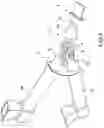
FIG. 1 is a perspective view in exploded form of the plant according to the present invention; and
FIGS. 2 and 3 show, in exploded form, and from two different angles, an enlarged detail of the plant of FIG. 1.
In FIG. 1, the plant, the object of the present invention, is indicated in the entirety thereof with 1.
The plant 1 comprises a shredding station 2, a mixing station 3 and an extrusion station 4.
The shredding station 2 comprises two extruders 5a and 5b, which are loaded, through the hoppers thereof, respectively, with a first and a second tread compound. The two compounds have differing dynamic properties in terms of: dynamic modulus at 30° C., tand at 0° C., tand at 30° C. and tand at 60° C.
Table I gives the compositions of the first and second rubber compounds used.
| TABLE I | ||
| FIRST | SECOND | |
| COMPOUND | COMPOUND | |
| POLYMERIC | S-SBR | 100.0 | 80.0 |
| BASE WITH | E-SBR | 0 | 20.0 |
| OIL | |||
| FILLER | SILICA | 70.0 | 80.0 |
| CARBON BLACK | 10.0 | 5.0 | |
| BINDER | SILANE | 7.0 | 7.0 |
| AGENT | |||
| MICROCRYS- | 8.0 | 8.0 | |
| TALLINE WAX | |||
| STEARIC ACID | 1.0 | 1.0 | |
| AROMATIC OIL | 4.0 | 4.0 | |
| Vulcanization | ZINC OXIDE | 2.0 | 2.0 |
| agents | SULFUR | 1.0 | 1.5 |
| MBTS | 1.0 | 1.2 | |
| DPG | 1.5 | 1.8 | |
| DRY POLYMERIC | 100 | 100 | |
| BASE | |||
E-SBR is a polymeric base obtained by means of an emulsion polymerization process with an average molecular weight of between 800-1500×103 and 500-900×103, respectively, with a styrene content of between 20 and 45% and used with an oil content of between 0 and 30%.
S-SBR is a polymeric base obtained by means of a solution polymerization process with an average molecular weight of between 800-1500×103 and 500-900×103, respectively, with a styrene content of between 20 and 45%.
The silica used is marketed under the name ULTRASIL VN3 by the DEGUSSA company.
The carbon black used is marketed under the name Vulcan 7H (N234) by the CABOT company.
The silane used is marketed under the name SI 69 by the DEGUSSA company.
MBTS is the abbreviation of the compound mercaptobenzothiazole disulfide which functions as a vulcanization accelerator; DPG is the acronym of the compound diphenylguanidine which functions as a vulcanization accelerator.
The first and the second compounds have a dynamic modulus at 30° C., respectively, of 14.4 and 9.4 MPa, a tand at 0° C., respectively, of 0.980 and 0.810, a tand at 30° C., respectively, of 0.532 and 0.238 and a tand at 60° C., respectively, of 0.220 and 0.124.
Both extruders 5a and 5b have a multiple extrusion mouth 6a and 6b comprising a plurality of tubes 7, wherein the free ends thereof are blocked within respective circular openings formed within a single support plate 8.
The shredding station 2 comprises a rotary die 9, wherein a plurality of openings is formed in order to allow for the die-cutting of the extruded compounds.
The extruded compounds, once they pass through the rotary die 9, are in fact cut by the action of the rotation of the rotary die 9 itself.
The extrusion speed of the extruders 5a and 5b and the speed of rotation of the rotary die 9 are set in order to obtain fragments with dimensions of between 6 and 30 mesh.
In FIGS. 2 and 3, the multiple extrusion mouths 6a and 6b are described in detail from two different angles together with the plurality of the tubes 7, the support plate 8 and the rotary die 9.
The mixing station 3 comprises a mixing chamber 10, of a substantially truncated cone shape, wherein the larger base thereof defines an inlet opening 11 connected to the rotary die 9, and wherein the smaller base thereof defines an outlet opening 12 connected to the extrusion station 4.
The fragments, once produced by the action of the rotary die 9, enter the mixing chamber 10 where, by virtue also of the shape of the mixing chamber 10 itself, they are mixed together thereby producing a new compound wherein, however, each fragment maintains its own chemical/physical individuality.
The fact that the different fragments retain their chemical/physical individuality is extremely important in ensuring the effectiveness of the invention.
In fact, only if the different fragments do not fuse together but retain their individuality is it possible to produce a tread band wherein the blocks thereof are composed of parts with differing hysteresis losses and with the advantages that this entails in terms of rolling resistance and wet grip.
Finally, the extrusion station 4 comprises an extrusion outlet 13 connected directly to the outlet opening 12 of the mixing chamber 10. The tread band emerges from the extrusion outlet 13 and is then combined with those other parts of the pneumatic tire that are then to be subjected to a vulcanization step.
From the description above it is apparent that the mixing within the mixing chamber 10 and the extrusion through the extrusion outlet 13 take place due to the thrust deriving from the action of the two extruders 5a and 5b.
As mentioned above, the method and plant of the present invention ensure the preparation of a tread band, wherein the blocks thereof are composed of the random combination of a plurality of portions with differing hysteresis losses.
In particular, it should be noted that the process and the plant of the present invention ensure the effective, high-throughput preparation of the aforementioned tread band.
In this way it will be possible to produce a tread band wherein the technical characteristics thereof are such as to ensure significant improvement effects in terms of wet grip performance, maintaining, at the same time, the advantages obtained in terms of rolling resistance.
Claims
1-9. (canceled)
10. A method for manufacturing a tread band for pneumatic tires wherein blocks thereof comprise portions with differing hysteresis losses, the method comprising:
shredding a first rubber tread compound and a second rubber tread compound to produce a plurality of fragments with dimensions of between 6 and 30 mesh;
mixing the plurality of fragments together to obtain a mixture wherein said fragments are distributed in a random manner and retain their chemical/physical individuality; and
extruding the mixture from the mixing step to form the tread band wherein said fragments from, respectively, said first rubber tread and said second rubber tread compound are distributed randomly and retain their chemical/physical individuality;
wherein said first rubber tread compound and said second rubber tread compound have different dynamic properties with respect to each of: dynamic modulus at 30° C.; tan δ at 0° C.; tan δ at 30° C.; and tan δ at 60° C.
11. The method of claim 10, wherein:
said first rubber tread compound has a dynamic modulus at 30° C. of between 11.0 and 17.0 MPa, a tan δ at 0° C. of between 0.85 and 1.1, a tan δ at 30° C. of between 0.45 and 0.65 and a tan δ at 60° C. of between 0.19 and 0.30;
said second rubber tread compound has a dynamic modulus at 30° C. of between 5.5 and 15 MPa and less than that of said first rubber tread compound by at least 2 MPa, a tan δ at 0° C. of between 0.70 and 0.99 and less than that of said first rubber tread compound by at least 0.02, a tan δ at 30° C. of between 0.21 and 0.63 and less than that of said first rubber tread compound by at least 0.02, a tan δ at 60° C. between 0.10 and 0.28 and less than that of said first rubber tread compound by at least 0.02.
12. The method of claim 10, wherein said shredding step comprises an extrusion operation for said first rubber tread compound and said second rubber tread compound, and a die-cutting operation for the extrusions of said first rubber tread compound and said second rubber tread compound.
13. The method of claim 12, wherein said mixing step and said extrusion step are actuated by a thrust deriving from the extrusion operation associated with the die-cutting operation.
14. A tread band for pneumatic tires wherein blocks thereof comprise portions with differing hysteresis losses, manufactured by:
shredding a first rubber tread compound and a second rubber tread compound to produce a plurality of fragments with dimensions of between 6 and 30 mesh;
mixing the plurality of fragments together to obtain a mixture wherein said fragments are distributed in a random manner and retain their chemical/physical individuality; and
extruding the mixture from the mixing step to form the tread band wherein said fragments from, respectively, said first rubber tread and said second rubber tread compound are distributed randomly and retain their chemical/physical individuality;
wherein said first rubber tread compound and said second rubber tread compound have different dynamic properties with respect to each of: dynamic modulus at 30° C.; tan δ at 0° C.; tan δ at 30° C.; and tan δ at 60° C.
15. The tread band of claim 14, wherein:
said first rubber tread compound has a dynamic modulus at 30° C. of between 11.0 and 17.0 MPa, a tan δ at 0° C. of between 0.85 and 1.1, a tan δ at 30° C. of between 0.45 and 0.65 and a tan δ at 60° C. of between 0.19 and 0.30; and
said second rubber tread compound has a dynamic modulus at 30° C. of between 5.5 and 15 MPa and less than that of said first rubber tread compound by at least 2 MPa, a tan δ at 0° C. of between 0.70 and 0.99 and less than that of said first rubber tread compound by at least 0.02, a tan δ at 30° C. of between 0.21 and 0.63 and less than that of said first rubber tread compound by at least 0.02, a tan δ at 60° C. between 0.10 and 0.28 and less than that of said first rubber tread compound by at least 0.02.
16. The tread band of claim 14, wherein the shredding step comprises an extrusion operation for said first rubber tread compound and said second rubber tread compound, and a die-cutting operation for the extrusions of said first rubber tread compound and said second rubber tread compound.
17. The tread band of claim 16, wherein said mixing step and said extrusion step are actuated by a thrust deriving from the extrusion operation associated with the die-cutting operation.
18. A plant for manufacture of a tread band for pneumatic tires, wherein blocks thereof comprise different rubber portions characterized by a different hysteresis loss, the plant comprising:
a shredding station configured to produce a plurality of fragments from a first rubber tread compound and from a second rubber tread compound, each of the plurality of fragments having dimensions of between 6 and 30 mesh;
a mixing station configured to mix the fragments from said first rubber tread compound and said second rubber tread compound together and form a mixture wherein said fragments are distributed in a random manner and retain their chemical/physical individuality; and
an extrusion station configured to extrude the mixture from the mixing station to form said tread band, wherein said fragments from said first and said second compound are distributed randomly and retain their chemical/physical individuality.
19. The plant of claim 18, wherein the extrusion station is configured to extrude the mixture from the mixing station to a further manufacturing stage wherein at least the tread band is subjected to vulcanization.
20. The plant of claim 18, wherein:
said shredding station comprises first and second extruders operating in parallel and wherein into each thereof a first rubber tread compound and a second rubber tread compound is respectively loaded;
each of said first and second extruders respectively comprising a multiple extruder mouth made of a plurality of outflow tubes and a rotary die whereto respective free ends of the outflow tubes face and are configured to implement shredding for the production of said fragments.
21. The plant of claim 20, wherein said mixing station comprises a mixing chamber having an inlet opening connected to said rotary die and an outlet opening connected to said extrusion station.
22. The plant of claim 21, wherein said mixing chamber has a substantially truncated cone conformation, wherein upon a larger base thereof, said inlet opening is formed and upon a smaller base thereof, said outlet opening is formed.
Images & Drawings included:



Sources:
- United States Patent and Trademark Office - verify current appl. status at the USPTO↗
Recent applications in this class:
- » 20250276481 2025-09-04
FRICTION EXTRUSION OF POLYMER COMPOSITES WITH HIGH FILLER CONTENT - » 20250249632 2025-08-07
METHOD FOR PRODUCING A PLASTIC COMPOUND HAVING IMPROVED PROPERTIES - » 20250242532 2025-07-31
SELF-REINFORCING THERMOPLASTIC COMPOSITE MATERIALS, AND METHODS OF MANUFACTURING SELF-REINFORCING THERMOPLASTIC COMPOSITE MATERIALS - » 20250236057 2025-07-24
METHOD OF MAKING A FLEXIBLE PACKAGE MADE OF POLYMERIC FILM - » 20250229471 2025-07-17
MULTILAYERED FILM - » 20250205953 2025-06-26
ELECTROSTATICALLY PAINTABLE MOLDED ARTICLES AND METHOD FOR THE MANUFACTURE THEREOF - » 20250187245 2025-06-12
A MECHANICAL POLYOLEFIN RECYCLING PROCESS - » 20250162228 2025-05-22
MULTILAYERED FILM - » 20250162227 2025-05-22
POLYURETHANE WASTE BLENDING USING DYNAMIC URETHANE EXCHANGE - » 20250162226 2025-05-22
CAVITY-CONTAINING POLYESTER FILM, RESIN COMPOSITION, AND PRODUCTION METHOD FOR RESIN COMPOSITION
Recent applications for this Assignee:
- » 20250042113 2025-02-06
METHOD OF PRODUCING A TIRE EQUIPPED WITH AN ELECTRONIC DEVICE - » 20240416603 2024-12-19
METHOD AND SYSTEM FOR APPLYING A SEALING AGENT TO THE SURFACE OF AN INTERNAL CAVITY OF A PNEUMATIC TIRE - » 20240391196 2024-11-28
METHOD AND SYSTEM FOR APPLYING A SEALING AGENT TO THE SURFACE OF AN INTERNAL CAVITY OF A PNEUMATIC TIRE - » 20240193396 2024-06-13
TIRE PROVIDED WITH A TEMPORARY IDENTIFICATION LABEL - » 20240174031 2024-05-30
TIRE WITH IMPROVED SNOW PERFORMANCE - » 20240149543 2024-05-09
METHOD AND SYSTEM FOR APPLYING A SEALING AGENT TO THE SURFACE OF AN INTERNAL CAVITY OF A PNEUMATIC TIRE - » 20240042803 2024-02-08
TYRE TREAD WITH IMPROVED SIPE ON THREE LEVELS AND TYRE - » 20240028862 2024-01-25
Method to manufacture an electronic device for a rubber article - » 20240012416 2024-01-11
Method for the management of a warehouse that houses pneumatic tires fitted with transponders and arranged in vertical stacks - » 20230347610 2023-11-02
Method and system for applying a sealing agent to the surface of an internal cavity of a pneumatic tire