CRYSTALS OF ALKYNYL-CONTAINING COMPOUND, SALT AND SOLVATE THEREOF, PREPARATION METHOD, AND APPLICATIONS
US20230106142A1
2023-04-06
17/797,016
2021-07-01
Abstract:
The invention discloses the crystal form, preparation method and application of an alkynyl compound, its salt and solvent compound. The invention specifically discloses 3-((1H-pyrazolo[3,4-b]pyridin-5-yl)ethynyl)-4-methyl-N-(4-((4-methylpiperazine-1-yl)methyl)-3-(trifluoromethyl)phenyl) benzamide crystal form I and 3-((1H-pyrazolo [3,4-b]pyridin-5-yl)ethynyl)-4-methyl-N-(4-((4-methylpiperazine-1-yl)methyl)-3-(trifluoromethyl)phenyl) benzamide fumarate crystal form II. The crystal form of the invention has good stability and has important value for drug optimization and development.
Inventors:
- Jianfeng WEN 9 🇨🇳 Suzhou, China
- Tianzhu WU 5 🇨🇳 Suzhou, China
- Jianpeng Feng 6 🇨🇳 Suzhou, China
- Yanqiong LIN 7 🇨🇳 Suzhou, China
- Zhenzhong SHAO 2 🇨🇳 Suzhou, China
- Weidong LI 4 🇨🇳 Suzhou, China
Interested in similar patents?
Get notified when new applications in this technology area are published.
Classification:
C07B2200/13 » CPC further
Indexing scheme relating to specific properties of organic compounds Crystalline forms, e.g. polymorphs
C07D471/04 » CPC main
Heterocyclic compounds containing nitrogen atoms as the only ring hetero atoms in the condensed system, at least one ring being a six-membered ring with one nitrogen atom, not provided for by groups - in which the condensed system contains two hetero rings Ortho-condensed systems
Description
FIELD OF THE INVENTION
The invention belongs to the field of chemical medicine, and particularly relates to a crystal form, preparation and application of an alkynyl-containing compound, its salt and solvate.
BACKGROUND OF THE INVENTION
This application relates to an alkynyl-containing compound with a chemical name of 3-((1H-pyrazolo [3,4-b]pyridin-5-yl)ethynyl)-4-methyl-N-(4-((4-methylpiperazine-1-yl)methyl)-3-(trifluoromethyl)phenyl) benzamide. The patent reports on this compound are very limited, and the crystal form of the above compound is not involved.
Known compounds generally have polymorphism, and general drugs may have two or more different crystalline substance states. The existence form and quantity of polymorphic compounds are unpredictable. Different crystal forms of the same drug have significant differences in solubility, melting point, density, stability, etc., which affect the temperature profile, uniformity, biological characteristics and Efficacy and safety. Therefore, in the process of new drug development, a comprehensive polymorphic screening of compounds is required, and it is of great clinical significance to select a crystal form suitable for the development of pharmaceutical preparations.
SUMMARY OF THE INVENTION
The invention provides a crystal form, preparation and application of an alkynyl-containing compound, its salt and solvate. The crystal form of the invention has good stability and is of great value to the optimization and development of medicines.
The present invention provides a 3-((1H-pyrazolo[3,4-b]pyridin-5-yl)ethynyl)-4-methyl-N-(4-((4-methylpiperazine-1-yl)methyl)-3-(trifluoromethyl) phenyl) benzamide crystal form 3, which has characteristic peaks at the following positions in the XRPD diagram represented by 20 angles: 9.498±0.2°, 12.293±0.2° 13.045±0.2° 15.899±0.2° 16.199±0.2° 18.183±0.2° 18.327±0.2° 21.755±0.2° 22.362±0.2° 25.690±0.2°;
or characteristic peaks at 8.968±0.2° 9.498±0.2° 12.293±0.2° 13.045±0.2° 15.899±0.2° 16.199±0.2° 16.533±0.2° 16.908±0.2° 18.183±0.2° 18.327±0.2° 20.042±0.2° 20.271±0.2° 21.755±0.2° 22.362±0.2° 25.690±0.2°.
In some preferred embodiments of the present invention, crystal form I has characteristic peaks at the following positions in the XRPD diagram represented by 20 angles, as shown in the Table 1 below;
| TABLE 1 | ||
| Diffraction | Relative | |
| angle | d value | Strength |
| (2θ°) | (Å) | (%) |
| 8.968 | 9.8525 | 11.6 |
| 9.498 | 9.3037 | 20.4 |
| 10.820 | 8.1699 | 2.1 |
| 12.293 | 7.1943 | 40.3 |
| 13.045 | 6.7812 | 25.3 |
| 13.842 | 6.3923 | 0.3 |
| 15.899 | 5.5696 | 65.5 |
| 16.199 | 5.467 | 31.8 |
| 16.533 | 5.3574 | 10.4 |
| 16.908 | 5.2396 | 14.4 |
| 18.183 | 4.8748 | 20 |
| 18.327 | 4.8368 | 25.7 |
| 18.551 | 4.7789 | 2.8 |
| 18.954 | 4.6783 | 2.8 |
| 19.644 | 4.5156 | 2.8 |
| 19.869 | 4.4649 | 9 |
| 20.042 | 4.4267 | 15.1 |
| 20.271 | 4.3772 | 10.7 |
| 20.987 | 4.2294 | 0.3 |
| 21.755 | 4.0819 | 100 |
| 22.362 | 3.9724 | 29.3 |
| 22.941 | 3.8733 | 1.2 |
| 23.599 | 3.7668 | 7.7 |
| 23.919 | 3.7172 | 5.3 |
| 24.500 | 3.6303 | 0.4 |
| 24.876 | 3.5764 | 0 |
| 25.227 | 3.5273 | 0.3 |
| 25.690 | 3.4648 | 30.1 |
| 26.026 | 3.4208 | 5.9 |
| 26.240 | 3.3934 | 2.8 |
| 26.447 | 3.3674 | 2.3 |
| 26.759 | 3.3288 | 5.1 |
| 27.505 | 3.2402 | 1.7 |
| 28.346 | 3.1459 | 6.8 |
| 29.629 | 3.0126 | 3.2 |
| 30.598 | 2.9193 | 6 |
| 31.159 | 2.868 | 2.4 |
| 31.425 | 2.8444 | 1 |
| 31.912 | 2.802 | 2.2 |
| 32.013 | 2.7934 | 2 |
| 33.883 | 2.6434 | 3.3 |
| 34.326 | 2.6103 | 3.4 |
| 34.883 | 2.5699 | 1.9 |
In some preferred embodiments of the present invention, crystal form I has characteristic peaks at the following positions in the XRPD diagram represented by 20 angles are basically as shown in FIG. 1. In the thermogravimetric analysis pattern (TGA) of the crystal form I, the weight loss gradient at 200° C. is 0.15%, and the “%” is the weight percentage, and the TGA pattern is preferably as shown in FIG. 2. In the differential scanning thermal spectrum (DSC) of the crystalline form I, there is a heat absorption peak at 235° C., and the DSC spectrum is preferably as shown in FIG. 3. The dynamic moisture adsorption spectrum (DVS) of the crystal form I is shown in FIG. 4. In the polarized light microscope picture of the crystal form I, the crystal form presents flaky crystals, and the polarized light microscope picture is preferably basically as shown in FIG. 5.
The present invention provides a crystal form of 3-((1H-pyrazolo[3,4-b]pyridin-5-yl)ethynyl)-4-methyl-N-(4-((4-methylpiperazine-1-yl)methyl)-3-(trifluoromethyl) phenyl) benzamide salt, The crystal form of the salt formed by the 3-((1H-pyrazolo[3,4-b]pyridin-5-yl)ethynyl)-4-methyl-N-(4-((4-methylpiperazine-1-yl) methyl)-3-(trifluoromethyl) phenyl) benzamide and acid. The acid may be a pharmaceutically acceptable acid or a common acid in the art, or an inorganic acid. Or organic acid. The inorganic acid is preferably hydrochloric acid, sulfuric acid or phosphoric acid, more preferably hydrochloric acid. The organic acid is preferably hydrobromic acid, methanesulfonic acid, p-toluenesulfonic acid, maleic acid, L-tartaric acid, fumaric acid, citric acid, malic acid or succinic acid, more preferably hydrobromic acid, fumaric acid or Citric acid is more preferably fumaric acid.
The present invention provides a 3-((1H-pyrazolo[3,4-b]pyridin-5-yl)ethynyl)-4-methyl-N-(4-((4-methylpiperazine-1-yl)methyl)-3-(trifluoromethyl) phenyl) benzamide fumarate crystal form II, which has characteristic peaks at the following positions in the XRPD diagram represented by 20 angles: 11.817±0.2° 13.984±0.2° 15.434±0.2° 17.853±0.2° 18.89±0.2° 19.825±0.2° 21.718±0.2°;
or characteristic peaks at 4.461±0.2° 11.817±0.2° 13.251±0.2° 13.984±0.2° 15.434±0.2° 16.78±0.2° 17.853±0.2° 18.89±0.2° 19.825±0.2° 21.718±0.2° 22.056±0.2° 24.652±0.2° 25.198±0.2° 26.762±0.2°;
or characteristic peaks at 4.461±0.2° 8.904±0.2° 11.817±0.2° 12.244±0.2° 13.251±0.2° 13.6±0.2° 13.984±0.2° 15.434±0.2° 15.9±0.2° 16.78±0.2° 17.154±0.2° 17.853±0.2° 18.89±0.2° 19.825±0.2° 20.926±0.2° 21.718±0.2° 22.056±0.2° 22.656±0.2° 24.35±0.2° 24.652±0.2° 25.198±0.2° 25.88±0.2° 26.301±0.2° 26.762±0.2° 27.836±0.2° 28.179±0.2°.
In some preferred embodiments of the present invention, the crystal form II has characteristic peaks at the following positions in the XRPD diagram represented by 20 angles, as shown in the Table 2 below;
| TABLE 2 | ||
| Diffraction | Relative | |
| angle | d value | Strength |
| (2θ°) | (Å) | (%) |
| 4.461 | 41.4 | 19.79333 |
| 8.904 | 20.0 | 9.924 |
| 11.817 | 80.6 | 7.48317 |
| 12.244 | 24.3 | 7.22324 |
| 13.251 | 45.8 | 6.67645 |
| 13.6 | 34.1 | 6.50553 |
| 13.984 | 50.6 | 6.32792 |
| 15.434 | 71.2 | 5.73649 |
| 15.9 | 19.9 | 5.56949 |
| 16.78 | 44.1 | 5.27934 |
| 17.154 | 36.3 | 5.16509 |
| 17.853 | 100 | 4.96424 |
| 18.89 | 50.3 | 4.69408 |
| 19.825 | 50.5 | 4.47468 |
| 20.926 | 28.2 | 4.24173 |
| 21.718 | 54.2 | 4.08883 |
| 22.056 | 42.5 | 4.02688 |
| 22.656 | 23.5 | 3.92152 |
| 23.282 | 14.7 | 3.81762 |
| 23.732 | 17.5 | 3.74614 |
| 24.35 | 27.1 | 3.6525 |
| 24.652 | 48.1 | 3.60846 |
| 25.198 | 48.2 | 3.5315 |
| 25.88 | 25.7 | 3.43995 |
| 26.301 | 26.8 | 3.38583 |
| 26.762 | 45.4 | 3.32852 |
| 27.836 | 23.0 | 3.20251 |
| 28.179 | 22.6 | 3.16424 |
| 28.65 | 11.2 | 3.11328 |
| 29.855 | 12.1 | 2.99033 |
| 30.494 | 14.1 | 2.92915 |
| 30.607 | 15.3 | 2.91859 |
| 31.677 | 13.5 | 2.82236 |
| 32.656 | 11.7 | 2.73999 |
| 36.767 | 10.8 | 2.44247 |
| 37.328 | 10.1 | 2.40703 |
| 37.984 | 8.8 | 2.367 |
| 38.408 | 10.1 | 2.34181 |
| 39.149 | 10.1 | 2.29918 |
In some preferred embodiments of the present invention, crystal form II has characteristic peaks at the following positions in the XRPD diagram represented by 20 angles are basically as shown in FIG. 6. In the TGA pattern of the crystal form II, the weight loss gradient at 200° C. is 0.31%, and the “%” is the weight percentage, and the TGA pattern is shown in FIG. 7. In the DSC spectrum of the crystal form II, there is a heat absorption peak at 251° C., and the DSC spectrum is preferably as shown in FIG. 8. This peak should be the melting peak of the sample and decompose immediately after melting. In the DVS pattern of the crystal form II, the moisture absorption at 90% relative humidity (RH) is 1.66%, the XRPD pattern of the sample has not changed, and the DVS pattern is preferably as shown in FIG. 9. It is known that fumarate has better solid form and properties. In the polarized light microscope picture of the crystal form II, the crystal form presents granular crystals, and the polarized light microscope picture is preferably as shown in FIG. 10.
The present invention provides a 3-((1H-pyrazolo[3,4-b]pyridin-5-yl)ethynyl)-4-methyl-N-(4-((4-methylpiperazine-1-yl)methyl)-3-(trifluoromethyl) phenyl) benzamide monohydrochloride Crystal form III, which has characteristic peaks at the following positions in the XRPD diagram represented by 2θ angles: 5.397±0.2° 8.270±0.2° 10.703±0.2° 13.561±0.2θ 16.097±0.2° 16.374±0.2° 19.460±0.2° 20.501±0.2° 21.041±0.2° 21.514±0.2° 22.298±0.2° 22.601±0.2° 23.615±0.2° 23.828±0.2° 26.440±0.2°.
In some preferred embodiments of the present invention, the crystal form III has characteristic peaks at the following positions in the XRPD diagram represented by 2θ angles, as shown in the Table 3 below;
| TABLE 3 | ||
| Diffraction | Relative | |
| angle | d value | Strength |
| (2θ°) | (Å) | (%) |
| 5.397 | 100 | 16.36285 |
| 8.270 | 20.6 | 10.68294 |
| 10.703 | 29.8 | 8.25938 |
| 11.213 | 10.5 | 7.88469 |
| 13.561 | 20.1 | 6.5241 |
| 13.861 | 11.4 | 6.38369 |
| 15.270 | 10.1 | 5.79766 |
| 15.635 | 19.6 | 5.66331 |
| 16.097 | 22.9 | 5.50165 |
| 16.374 | 21.4 | 5.40916 |
| 16.938 | 17.3 | 5.23026 |
| 18.411 | 12.5 | 4.81501 |
| 18.860 | 11.8 | 4.70146 |
| 19.460 | 20.7 | 4.55792 |
| 20.501 | 21.7 | 4.32873 |
| 21.041 | 61.3 | 4.21873 |
| 21.514 | 26.8 | 4.12717 |
| 22.298 | 28.4 | 3.98365 |
| 22.601 | 21.6 | 3.93096 |
| 23.615 | 41.7 | 3.76449 |
| 23.828 | 40.3 | 3.73127 |
| 24.861 | 12.5 | 3.57858 |
| 25.310 | 17.8 | 3.51603 |
| 26.440 | 72.6 | 3.36833 |
| 26.871 | 16.8 | 3.31527 |
| 27.924 | 17.6 | 3.19254 |
| 28.767 | 12.0 | 3.10089 |
| 29.837 | 6.7 | 2.99214 |
| 30.560 | 10.0 | 2.92293 |
| 31.016 | 12.7 | 2.88104 |
| 32.066 | 6.9 | 2.78902 |
| 33.556 | 12.6 | 2.66846 |
| 34.280 | 7.0 | 2.61376 |
| 36.069 | 5.1 | 2.48816 |
| 37.291 | 6.9 | 2.40937 |
| 38.063 | 6.8 | 2.36224 |
| 38.726 | 6.0 | 2.32331 |
In some preferred embodiments of the present invention, crystal form III has characteristic peaks at the following positions in the XRPD diagram represented by 2θ angles are basically as shown in FIG. 11. In the TGA pattern of the crystal form III, the weight loss gradient at 125° C. is 30.07%, and the “%” is a percentage by weight, and the TGA pattern is preferably as shown in FIG. 12. In the DSC spectrum of the crystal form III, there are heat absorption peaks at 128° C. and 202° C., and the DSC spectrum is preferably as shown in FIG. 13.
The present invention provides a 3-((1H-pyrazolo[3,4-b]pyridin-5-yl)ethynyl)-4-methyl-N-(4-((4-methylpiperazine-1-yl)methyl)-3-(trifluoromethyl) phenyl) benzamide dihydrochloride Crystal form IV, which has characteristic peaks at the following positions in the XRPD diagram represented by 2θ angles: 4.293±0.2° 5.147±0.2° 6.242±0.2° 9.021±0.2° 10.709±0.2° 11.898±0.2° 12.896±0.2° 14.333±0.2° 14.650±0.2° 15.648±0.2° 16.629±0.2° 16.797±0.2° 17.224±0.2° 18.501±0.2° 19.024±0.2° 21.692±0.2° 25.508±0.2°.
In some preferred embodiments of the present invention, the crystal form IV has characteristic peaks at the following positions in the XRPD diagram represented by 2θ angles, as shown in the Table 4 below;
| TABLE 4 | |||
| Diffraction angle | Relative Strength | d value | |
| (2θ°) | (%) | (Å) | |
| 4.293 | 100 | 20.56553 | |
| 5.147 | 79.2 | 17.15621 | |
| 6.242 | 87.4 | 14.14906 | |
| 9.021 | 41.5 | 9.79522 | |
| 10.709 | 47.3 | 8.25469 | |
| 11.898 | 62.1 | 7.43193 | |
| 12.896 | 83.3 | 6.85926 | |
| 14.333 | 65.5 | 6.17468 | |
| 14.650 | 61.5 | 6.04155 | |
| 15.648 | 47.5 | 5.65838 | |
| 16.629 | 56.3 | 5.3268 | |
| 16.797 | 58.5 | 5.27394 | |
| 17.224 | 79.7 | 5.14416 | |
| 18.501 | 48.8 | 4.79187 | |
| 19.024 | 49.3 | 4.66139 | |
| 21.692 | 61.0 | 4.09373 | |
| 25.508 | 79.4 | 3.48917 | |
| 28.342 | 45.4 | 3.14644 | |
| 29.629 | 36.6 | 3.01267 | |
| o |
In some preferred embodiments of the present invention, crystal form IV has characteristic peaks at the following positions in the XRPD diagram represented by 2θ angles are basically as shown in FIG. 14. In the TGA pattern of the crystalline form IV, the weight loss gradient at 114° C. is 0.82%, the weight loss gradient at 215° C. is 3.68%, and the “%” is the weight percentage. The TGA pattern is preferably as shown in FIG. 15. In the DSC spectrum of the crystal form IV, there is a heat absorption peak at 205° C., and the DSC spectrum is preferably as shown in FIG. 16.
The present invention provides a 3-((1H-pyrazolo[3,4-b]pyridin-5-yl)ethynyl)-4-methyl-N-(4-((4-use methylpiperazine-1-yl)methyl)-3-(trifluoromethyl) phenyl) benzamide hydrobromide Crystal form V, which has characteristic peaks at the following positions in the XRPD diagram represented by 2θ angles: 3.177±0.2° 5.370±0.2° 10.658±0.2° 12.667±0.2° 17.429±0.2° 18.333±0.2° 21.671±0.2° 22.216±0.2° 22.515±0.2° 23.466±0.2° 24.716±0.2° 24.976±0.2° 25.216±0.2° 26.68±0.2° 27.728±0.2°.
In some preferred embodiments of the present invention, the crystal form V has characteristic peaks at the following positions in the XRPD diagram represented by 2θ angles, as shown in the Table 5 below;
| TABLE 5 | ||
| Diffraction angle | Relative Strength | d value |
| (2θ°) | (%) | (Å) |
| 3.177 | 34.4 | 27.78533 |
| 5.370 | 100 | 16.44447 |
| 7.129 | 17.3 | 12.38924 |
| 9.178 | 12.4 | 9.62791 |
| 10.658 | 24.6 | 8.29376 |
| 12.667 | 23.5 | 6.9827 |
| 13.247 | 16.4 | 6.6782 |
| 14.087 | 9.6 | 6.28208 |
| 14.401 | 9.8 | 6.14575 |
| 15.061 | 18.6 | 5.87766 |
| 15.539 | 17.5 | 5.69814 |
| 15.987 | 16.4 | 5.53938 |
| 17.429 | 72.7 | 5.08422 |
| 17.752 | 15.7 | 4.99227 |
| 18.333 | 22.5 | 4.83533 |
| 20.394 | 10.5 | 4.35116 |
| 20.712 | 11.9 | 4.28499 |
| 21.213 | 15.9 | 4.18499 |
| 21.671 | 23.1 | 4.09763 |
| 22.216 | 37.5 | 3.99834 |
| 22.515 | 46.8 | 3.9458 |
| 23.466 | 40.0 | 3.788 |
| 24.716 | 30.5 | 3.59926 |
| 24.976 | 36.9 | 3.56231 |
| 25.216 | 29.8 | 3.5289 |
| 25.67 | 12.6 | 3.46751 |
| 26.418 | 17.8 | 3.37108 |
| 26.68 | 35.1 | 3.33853 |
| 27.238 | 16.7 | 3.27141 |
| 27.728 | 25.9 | 3.21471 |
| 29.07 | 13.1 | 3.06929 |
| 30.003 | 18.0 | 2.97595 |
| 30.389 | 14.9 | 2.93896 |
| 32.131 | 8.7 | 2.78351 |
| 32.454 | 12.9 | 2.75655 |
| 32.85 | 16.1 | 2.72422 |
| 33.248 | 9.1 | 2.69251 |
| 33.687 | 8.6 | 2.65839 |
| 36.578 | 10.5 | 2.45468 |
| 38.049 | 10.7 | 2.36309 |
| 39.096 | 10.9 | 2.30216 |
| o |
In some preferred embodiments of the present invention, crystal form V has characteristic peaks at the following positions in the XRPD diagram represented by 2θ angles are basically as shown in FIG. 17. In the TGA pattern of the crystal form V, the weight loss gradient at 262° C. is 3.10%, and the “%” is the weight percentage, and the TGA pattern is preferably as shown in FIG. 18. In the DSC spectrum of the crystal form V, there is a broad absorption peak at 220° C., and the DSC spectrum is preferably as shown in FIG. 19.
The present invention provides a 3-((1H-pyrazolo[3,4-b]pyridin-5-yl)ethynyl)-4-methyl-N-(4-((4-methylpiperazine-1-yl)methyl)-3-(trifluoromethyl) phenyl) benzamide Sulfate Crystal form VI, which has characteristic peaks at the following positions in the XRPD diagram represented by 2θ angles: 4.365±0.2° 8.031±0.2° 8.309±0.2° 10.357±0.2° 13.036±0.2° 13.548±0.2° 14.566±0.2° 15.323±0.2° 15.518±0.2° 16.055±0.2° 16.70±0.2° 17.463±0.2° 18.292±0.2° 18.872±0.2° 19.114±0.2° 19.621±0.2° 19.970±0.2° 20.762±0.2° 21.253±0.2° 22.358±0.2° 23.251±0.2° 24.272±0.2° 24.646±0.2° 25.050±0.2° 25.474±0.2° 26.292±0.2° 26.727±0.2°.
In some preferred embodiments of the present invention, the crystal form VI has characteristic peaks at the following positions in the XRPD diagram represented by 2θ angles, as shown in the Table 6 below;
| TABLE 6 | ||
| Diffraction angle | Relative Strength | d value |
| (2θ°) | (%) | (Å) |
| 4.365 | 91.9 | 20.22792 |
| 8.031 | 25.8 | 10.99964 |
| 8.309 | 38.8 | 10.63289 |
| 10.357 | 100 | 8.53397 |
| 12.253 | 18.7 | 7.21787 |
| 13.036 | 39.2 | 6.78585 |
| 13.548 | 28.2 | 6.53064 |
| 13.899 | 17.5 | 6.36631 |
| 14.566 | 40.3 | 6.07637 |
| 15.323 | 22.8 | 5.77783 |
| 15.518 | 27.2 | 5.70574 |
| 16.055 | 29.7 | 5.51602 |
| 16.70 | 29.4 | 5.30436 |
| 17.463 | 49.6 | 5.07421 |
| 18.292 | 36.8 | 4.84621 |
| 18.872 | 25.8 | 4.69845 |
| 19.114 | 30.7 | 4.6396 |
| 19.621 | 26.3 | 4.52083 |
| 19.970 | 33.9 | 4.44257 |
| 20.762 | 25.9 | 4.27493 |
| 21.253 | 47.7 | 4.17725 |
| 22.358 | 29.4 | 3.97315 |
| 23.251 | 27.9 | 3.82251 |
| 24.272 | 32.1 | 3.66405 |
| 24.646 | 37.3 | 3.60933 |
| 25.050 | 29.7 | 3.55196 |
| 25.474 | 26.8 | 3.49378 |
| 26.292 | 24.9 | 3.3869 |
| 26.727 | 24.2 | 3.33284 |
| 29.136 | 14.8 | 3.06248 |
| o |
In some preferred embodiments of the present invention, crystal form VI has characteristic peaks at the following positions in the XRPD diagram represented by 2θ angles are basically as shown in FIG. 20. In the TGA spectrum of the crystalline form VI, there is a 3.42% weight loss at 100° C. and a 1.25% weight loss at 200° C. The “%” is a weight percentage. The TGA spectrum is preferably as shown in FIG. 21. In the DSC spectrum of the crystal form VI, there are heat absorption peaks at 100° C. and 161° C., and the DSC spectrum is preferably as shown in FIG. 22.
The present invention provides a 3-((1H-pyrazolo[3,4-b]pyridin-5-yl)ethynyl)-4-methyl-N-(4-((4-methylpiperazine-1-yl)methyl)-3-(trifluoromethyl) phenyl) benzamide Phosphate Crystal form VII, which has characteristic peaks at the following positions in the XRPD diagram represented by 2θ angles: 3.178±0.2° 8.510±0.2° 10.637±0.2° 12.741±0.2° 14.097±0.2° 14.471±0.2° 15.144±0.2° 17.056±0.2° 19.043±0.2° 23.974±0.2° 26.785±0.2°.
In some preferred embodiments of the present invention, the crystal form VII has characteristic peaks at the following positions in the XRPD diagram represented by 2θ angles, As shown in the Table 7 below;
| TABLE 7 | ||
| Diffraction angle | Relative Strength | d value |
| (2θ°) | (%) | (Å) |
| 3.178 | 39.6 | 27.78238 |
| 7.206 | 18.6 | 12.25751 |
| 8.510 | 32.1 | 10.38204 |
| 9.560 | 9.1 | 9.24387 |
| 10.637 | 49.8 | 8.31024 |
| 12.741 | 40.3 | 6.94248 |
| 13.197 | 12.5 | 6.70324 |
| 13.606 | 26.8 | 6.50306 |
| 14.097 | 29.9 | 6.27738 |
| 14.471 | 43.6 | 6.11586 |
| 15.144 | 55.3 | 5.84562 |
| 15.939 | 7.9 | 5.55582 |
| 16.52 | 19.7 | 5.36179 |
| 17.056 | 46.5 | 5.19455 |
| 17.543 | 17.2 | 5.05133 |
| 17.904 | 10.7 | 4.95039 |
| 19.043 | 100 | 4.65668 |
| 20.245 | 14.9 | 4.38286 |
| 20.982 | 11.0 | 4.23055 |
| 21.307 | 25.1 | 4.16667 |
| 21.984 | 22.8 | 4.03998 |
| 22.657 | 12.1 | 3.92143 |
| 23.148 | 12.0 | 3.83928 |
| 23.974 | 94.4 | 3.70886 |
| 24.848 | 14.0 | 3.58037 |
| 25.784 | 21.5 | 3.45248 |
| 26.785 | 43.0 | 3.32569 |
| 27.756 | 13.8 | 3.21154 |
| 28.211 | 10.3 | 3.16072 |
| 28.593 | 9.8 | 3.11936 |
| 29.726 | 11.6 | 3.00301 |
| 30.498 | 10.7 | 2.92878 |
| 32.317 | 7.1 | 2.76793 |
| 33.603 | 6.8 | 2.66486 |
| 36.459 | 5.4 | 2.46243 |
| 37.825 | 5.8 | 2.37656 |
| o |
In some preferred embodiments of the present invention, crystal form VII has characteristic peaks at the following positions in the XRPD diagram represented by 2θ angles are basically as shown in FIG. 23. In the TGA pattern of the crystal form VII, the weight loss gradient at 200° C. is about 0.08%, and the “0%” is a weight percentage, and the TGA pattern is preferably as shown in FIG. 24. In the DSC spectrum of the crystal form VII, there is a melting peak at 223° C., and the DSC spectrum is preferably as shown in FIG. 25.
The present invention provides a 3-((1H-pyrazolo[3,4-b]pyridin-5-yl)ethynyl)-4-methyl-N-(4-((4-methylpiperazine-1-yl)methyl)-3-(trifluoromethyl) phenyl) benzamide Citrate Crystal form VIII, which has characteristic peaks at the following positions in the XRPD diagram represented by 2θ angles: 4.455±0.2° 8.297±0.2° 12.856±0.2° 13.307±0.2°.
In some preferred embodiments of the present invention, the crystal form VIII has characteristic peaks at the following positions in the XRPD diagram represented by 2θ angles, as shown in the Table 8 below;
| TABLE 8 | ||
| Diffraction angle | Relative Strength | d value |
| (2θ°) | (%) | (Å) |
| 4.455 | 100 | 19.82056 |
| 6.694 | 8.9 | 13.19358 |
| 8.297 | 27.1 | 10.64757 |
| 8.60 | 16.7 | 10.27356 |
| 8.883 | 15.5 | 9.94707 |
| 10.036 | 8.6 | 8.80676 |
| 10.886 | 13.7 | 8.12114 |
| 11.743 | 13.5 | 7.52999 |
| 12.138 | 16.0 | 7.28565 |
| 12.856 | 33.8 | 6.88041 |
| 13.307 | 54.0 | 6.64819 |
| 14.614 | 18.7 | 6.05634 |
| 15.126 | 12.3 | 5.85277 |
| 15.481 | 10.2 | 5.71922 |
| 16.296 | 11.8 | 5.43481 |
| 16.588 | 11.5 | 5.3398 |
| 17.172 | 18.7 | 5.15969 |
| 17.892 | 17.4 | 4.95363 |
| 19.163 | 13.0 | 4.6279 |
| 20.008 | 16.6 | 4.43414 |
| 21.651 | 13.5 | 4.10127 |
| 22.517 | 9.4 | 3.9455 |
| 25.90 | 8.3 | 3.43736 |
| 26.436 | 10.5 | 3.36882 |
| 27.76 | 7.8 | 3.21102 |
| 29.377 | 5.0 | 3.0379 |
| o |
In some preferred embodiments of the present invention, crystal form VIII has characteristic peaks at the following positions in the XRPD diagram represented by 2θ angles are basically as shown in FIG. 26. In the TGA pattern of the crystal form VIII, the weight loss gradient at 125° C. is 1.46%, and the “%” is a weight percentage, and the TGA pattern is preferably as shown in FIG. 27. In the DSC spectrum of the crystal form VIII, there is a heat absorption peak at 153° C., and the DSC spectrum is preferably as shown in FIG. 28.
The present invention provides a 3-((1H-pyrazolo[3,4-b]pyridin-5-yl)ethynyl)-4-methyl-N-(4-((4-methylpiperazine-1-yl)methyl)-3-(trifluoromethyl) phenyl) benzamide L-tartrate Crystal form IX, which has characteristic peaks at the following positions in the XRPD diagram represented by 2θ angles: 3.591±0.2° 7.250±0.2° 11.462±0.2° 13.734±0.2° 14.019±0.2° 14.485±0.2° 15.124±0.2° 17.727±0.2° 18.080±0.2° 19.438±0.2° 19.674±0.2° 20.18±0.2° 20.745±0.2° 22.956±0.2° 23.532±0.2° 24.255±0.2° 25.963±0.2°.
In some preferred embodiments of the present invention, the crystal form IX has characteristic peaks at the following positions in the XRPD diagram represented by 2θ angles, as shown in the Table 9 below;
| TABLE 9 | ||
| Diffraction angle | Relative Strength | d value |
| (2θ°) | (%) | (Å) |
| 3.591 | 35.2 | 24.58583 |
| 6.579 | 15.8 | 13.42473 |
| 7.250 | 32.8 | 12.1835 |
| 8.85 | 14.6 | 9.98418 |
| 9.582 | 14.6 | 9.2228 |
| 11.462 | 36.4 | 7.71413 |
| 12.787 | 15.4 | 6.91767 |
| 13.734 | 49.3 | 6.44235 |
| 14.019 | 90.5 | 6.31208 |
| 14.485 | 88.1 | 6.11005 |
| 15.124 | 47.5 | 5.85328 |
| 15.797 | 25.5 | 5.60555 |
| 17.083 | 41.5 | 5.18636 |
| 17.727 | 68.7 | 4.99923 |
| 18.080 | 100 | 4.90253 |
| 19.111 | 25.9 | 4.64032 |
| 19.438 | 41.3 | 4.56292 |
| 19.674 | 56.9 | 4.50876 |
| 20.180 | 76.3 | 4.39678 |
| 20.745 | 40.1 | 4.27835 |
| 21.772 | 28.4 | 4.0788 |
| 22.956 | 62.8 | 3.87099 |
| 23.532 | 37.3 | 3.77754 |
| 24.255 | 31.3 | 3.66659 |
| 25.963 | 76.5 | 3.42913 |
| 26.649 | 26.0 | 3.34235 |
| 27.735 | 19.6 | 3.21389 |
| 28.171 | 25.7 | 3.16512 |
| 29.15 | 29.9 | 3.06102 |
| 30.556 | 15.0 | 2.92327 |
| 32.135 | 14.3 | 2.78316 |
| 33.007 | 10.7 | 2.71159 |
| 35.831 | 14.5 | 2.50411 |
| 36.646 | 11.7 | 2.45025 |
| o |
In some preferred embodiments of the present invention, crystal form IX has characteristic peaks at the following positions in the XRPD diagram represented by 2θ angles are basically as shown in FIG. 29. In the TGA spectrum of the crystal form IX, there is a weight loss gradient of 3.36% at 150° C., and the “%” is a weight percentage, and the TGA spectrum is preferably as shown in FIG. 30. In the DSC spectrum of the crystal form IX, there is a broad heat absorption peak at 126° C., and the DSC spectrum is preferably as shown in FIG. 31.
The present invention provides a 3-((1H-pyrazolo[3,4-b]pyridin-5-yl)ethynyl)-4-methyl-N-(4-((4-Text methylpiperazine-1-yl)methyl)-3-(trifluoromethyl) phenyl) benzamide methanesulfonate Crystal form X, use which has characteristic peaks at the following positions in the XRPD diagram represented by 2θ angles: 3.253±0.2° 7.350±0.2° 12.984±0.2° 14.329±0.2° 14.682±0.2° 16.221±0.2° 17.60±0.2° 19.378±0.2 19.567±0.2° 20.055±0.2° 22.721±0.2° 23.978±0.2° 25.515±0.2°.
In some preferred embodiments of the present invention, the crystal form X has characteristic peaks at the following positions in the XRPD diagram represented by 2θ angles, as shown in the Table 10 below;
| TABLE 10 | ||
| Diffraction angle | Relative Strength | d value |
| (2θ°) | (%) | (Å) |
| 3.253 | 40.2 | 27.1423 |
| 7.350 | 43.6 | 12.01757 |
| 12.542 | 14.9 | 7.05189 |
| 12.984 | 32.2 | 6.81312 |
| 13.422 | 28.0 | 6.59174 |
| 13.785 | 24.4 | 6.41878 |
| 14.329 | 100 | 6.17629 |
| 14.682 | 38.9 | 6.0284 |
| 15.743 | 20.8 | 5.62463 |
| 16.221 | 39.8 | 5.45992 |
| 17.406 | 26.5 | 5.09071 |
| 17.60 | 30.1 | 5.03498 |
| 18.432 | 27.2 | 4.80961 |
| 19.378 | 63.9 | 4.57699 |
| 19.567 | 59.8 | 4.53327 |
| 20.055 | 46.6 | 4.42403 |
| 20.579 | 24.1 | 4.31254 |
| 21.914 | 22.8 | 4.05259 |
| 22.721 | 40.1 | 3.91046 |
| 23.978 | 42.4 | 3.70822 |
| 25.515 | 87.9 | 3.4883 |
| 27.191 | 16.1 | 3.27701 |
| 28.447 | 17.6 | 3.13507 |
| 30.047 | 13.0 | 2.97163 |
| 30.69 | 13.8 | 2.91089 |
In some preferred embodiments of the present invention, crystal form X has characteristic peaks at the following positions in the XRPD diagram represented by 2θ angles are basically as shown in FIG. 32. In the TGA pattern of the crystal form X, the weight loss gradient at 200° C. is 0.28%, and the “%” is a weight percentage, and the TGA pattern is preferably as shown in FIG. 33. In the DSC spectrum of the crystal form X, there is a heat absorption peak at 174° C., and the DSC spectrum is preferably as shown in FIG. 34.
The present invention provides a Solvate crystal form of 3-((1H-pyrazolo[3,4-b]pyridin-5-yl)ethynyl)-4-methyl-N-(4-((4-methylpiperazine-1-yl)methyl)-3-(trifluoromethyl) phenyl) benzamide, the Solvate crystal form is formed by 3-((1H-pyrazolo[3,4-b]pyridin-5-yl)ethynyl)-4-methyl-N-(4-((4-methylpiperazine-1-yl)methyl)-3-(trifluoromethyl)phenyl) benzamide and solvent. the solvent is preferably ether and/or aromatic solvent, more preferably one or more of tetrahydrofuran, methyl tert-butyl ether and toluene.
The present invention provides a 3-((1H-pyrazolo[3,4-b]pyridin-5-yl)ethynyl)-4-methyl-N-(4-((4-methylpiperazine-1-yl)methyl)-3-(trifluoromethyl) phenyl) benzamide tetrahydrofuran solvate Crystal form XI, which has characteristic peaks at the following positions in the XRPD diagram represented by 2θ angles: 6.411±0.2° 8.873±0.2° 9.266±0.2° 10.402±0.2° 12.063±0.2° 12.419±0.2° 22.336±0.2°.
In some preferred embodiments of the present invention, the crystal form XI has characteristic peaks at the following positions in the XRPD diagram represented by 2θ angles, as shown in the Table 11 below;
| TABLE 11 | ||
| Diffraction angle | Relative Strength | d value |
| (2θ°) | (%) | (Å) |
| 6.411 | 95.6 | 454 |
| 8.873 | 39.8 | 189 |
| 9.266 | 88.4 | 420 |
| 10.402 | 100 | 475 |
| 12.063 | 41.5 | 197 |
| 12.419 | 30.5 | 145 |
| 12.989 | 26.7 | 127 |
| 14.886 | 17.9 | 85 |
| 15.814 | 28.8 | 137 |
| 17.026 | 29.7 | 141 |
| 17.738 | 21.9 | 104 |
| 18.308 | 15.6 | 74 |
| 18.697 | 16.2 | 77 |
| 19.034 | 15.2 | 72 |
| 19.667 | 14.9 | 71 |
| 20.615 | 14.8 | 70.1 |
| 21.323 | 14.3 | 68 |
| 21.691 | 26.5 | 126 |
| 22.336 | 47.8 | 227 |
| 23.932 | 18.1 | 86 |
| 24.4 | 21.1 | 100 |
| 25.086 | 14.1 | 66.8 |
| 25.568 | 12.0 | 57 |
| 28.243 | 13.5 | 64 |
| o |
In some preferred embodiments of the present invention, crystal form XI has characteristic peaks at the following positions in the XRPD diagram represented by 2θ angles are basically as shown in FIG. 35. In the TGA pattern of the crystalline form XI, the weight loss gradient at 173° C. is about 11.52%, the “%” is a weight percentage, and the TGA pattern is preferably as shown in FIG. 36. In the DSC spectrum of the crystal form XI, there are heat absorption peaks at 119° C. and 232° C., and the DSC spectrum is preferably as shown in FIG. 37.
The present invention provides a 3-((1H-pyrazolo[3,4-b]pyridin-5-yl)ethynyl)-4-methyl-N-(4-((4-methylpiperazine-1-yl)methyl)-3-(trifluoromethyl) phenyl) benzamide tetrahydrofuran-methyl tert-butyl ether solvate Crystal form XII, which has characteristic peaks at the following positions in the XRPD diagram represented by 2θ angles: 7.08±0.2° 8.895±0.2° 24.068±0.2°.
In some preferred embodiments of the present invention, the crystal form XII has characteristic peaks at the following positions in the XRPD diagram represented by 2θ angles, as shown in the Table 12 below;
| TABLE 12 | ||
| Diffraction angle | Relative Strength | d value |
| (2θ°) | (%) | (Å) |
| 7.978 | 100 | 1381 |
| 8.895 | 24.9 | 344 |
| 11.529 | 12.5 | 173 |
| 11.954 | 18.0 | 249 |
| 12.542 | 10.2 | 141 |
| 12.297 | 10.6 | 146 |
| 13.623 | 16.9 | 233 |
| 15.37 | 10.5 | 145 |
| 15.724 | 14.0 | 193 |
| 16.269 | 11.3 | 156 |
| 16.812 | 15.2 | 210 |
| 17.14 | 14.8 | 205 |
| 17.808 | 8.2 | 113 |
| 18.237 | 14.0 | 194 |
| 19.057 | 10.2 | 140 |
| 19.3 | 15.9 | 220 |
| 19.741 | 11.7 | 161 |
| 20.316 | 13.2 | 182 |
| 20.052 | 9.1 | 125 |
| 20.716 | 14.8 | 204 |
| 21.445 | 9.6 | 133 |
| 22.496 | 12.7 | 176 |
| 23.155 | 8.0 | 110 |
| 23.667 | 8.4 | 116 |
| 24.068 | 29.5 | 407 |
| 24.448 | 9.3 | 129 |
| 25.356 | 9.3 | 128 |
| 25.615 | 8.3 | 115 |
| 26.864 | 8.3 | 114 |
| 27.442 | 5.0 | 69 |
| o |
In some preferred embodiments of the present invention, crystal form XII has characteristic peaks at the following positions in the XRPD diagram represented by 2θ angles are basically as shown in FIG. 38. In the TGA pattern of the crystalline form XII, the weight loss gradient at 134° C. is about 7.32%, and the weight loss gradient at 180° C. is about 4.30%. The “%” is the weight percentage. The TGA pattern is preferably as shown in FIG. 39. In the DSC spectrum of the crystalline form XII, there are heat absorption peaks at 139° C. and 235° C., and an exothermic peak at 145° C. The DSC spectrum is preferably as shown in FIG. 40.
The present invention provides a 3-((1H-pyrazolo[3,4-b]pyridin-5-yl)ethynyl)-4-methyl-N-(4-((4-methylpiperazine-1-yl)methyl)-3-(trifluoromethyl) phenyl) benzamide toluene solvate Crystal form XIII, which has characteristic peaks at the following positions in the XRPD diagram represented by 2θ angles: 7.224±0.2° 8.0580±2° 13.86±0.2° 19.312±0.2° 21.843±0.2° 24.398±0.2°.
In some preferred embodiments of the present invention, the crystal form XIII has characteristic peaks at the following positions in the XRPD diagram represented by 2θ angles, as shown in the Table 13 below;
| TABLE 13 | ||
| Diffraction angle | Relative Strength | d value |
| (2θ°) | (%) | (Å) |
| 7.224 | 33.9 | 269 |
| 8.058 | 100 | 793 |
| 9.705 | 24.6 | 195 |
| 11.587 | 26.4 | 209 |
| 13.001 | 18.2 | 144 |
| 13.86 | 32.0 | 254 |
| 14.46 | 20.3 | 161 |
| 14.867 | 23.2 | 184 |
| 15.848 | 29.6 | 235 |
| 16.259 | 17.7 | 140 |
| 18.148 | 13.5 | 107 |
| 19.024 | 26.2 | 208 |
| 19.312 | 38.0 | 301 |
| 20.031 | 15.6 | 124 |
| 20.365 | 15.6 | 124 |
| 20.865 | 15.1 | 120 |
| 21.241 | 14.2 | 113 |
| 21.843 | 68.1 | 540 |
| 22.855 | 12.7 | 101 |
| 24.006 | 24.1 | 191 |
| 24.398 | 45.4 | 360 |
| 25.041 | 12.7 | 101 |
| 26.168 | 15.8 | 125 |
| 27.174 | 12.1 | 96 |
| 28.087 | 9.1 | 71.9 |
| 28.358 | 15.5 | 123 |
| 29.737 | 9.4 | 74.5 |
In some preferred embodiments of the present invention, crystal form XIII has characteristic peaks at the following positions in the XRPD diagram represented by 2θ angles are basically as shown in FIG. 41. In the TGA pattern of the crystalline form XIII, the weight loss gradient at 129° C. is about 7.9200, and the weight loss gradient at 190° C. is about 4.62%. The “0%” is weight percentage, and its TGA pattern is preferably as shown in FIG. 42. In the DSC spectrum of the crystal form XIII, there are heat absorption peaks at 132° C. and 235° C., and the DSC spectrum is preferably as shown in FIG. 43.
The present invention provides a 3-((1H-pyrazolo[3,4-b]pyridin-5-yl)ethynyl)-4-methyl-N-(4-((4-methylpiperazine-1-yl)methyl)-3-(trifluoromethyl) phenyl) benzamide fumarate acetonate Crystal form XIV, the crystal form XIV has characteristic peaks at the following positions in the XRPD diagram represented by 2θ angles, as shown in the Table 14 below;
| TABLE 14 | ||
| Diffraction angle | d value | Relative Strength |
| (2θ°) | (Å) | (%) |
| 5.993 | 14.7357 | 32.9 |
| 7.101 | 12.4388 | 34.2 |
| 8.541 | 10.3443 | 13.9 |
| 9.552 | 9.2515 | 30.8 |
| 10.248 | 8.6247 | 74.4 |
| 11.957 | 7.3952 | 7.3 |
| 12.874 | 6.8709 | 46.6 |
| 13.361 | 6.6215 | 15.2 |
| 14.138 | 6.2592 | 43.2 |
| 14.988 | 5.9062 | 5.0 |
| 15.34 | 5.7713 | 9.5 |
| 16.004 | 5.5332 | 19.7 |
| 16.643 | 5.3222 | 18.4 |
| 16.993 | 5.2134 | 30.1 |
| 17.905 | 4.9498 | 29.8 |
| 18.451 | 4.8047 | 32.2 |
| 19.169 | 4.6262 | 87.8 |
| 20.142 | 4.4049 | 21.1 |
| 20.453 | 4.3387 | 67.4 |
| 21.288 | 4.1703 | 33.2 |
| 22.063 | 4.0256 | 7.7 |
| 22.901 | 3.8801 | 6.2 |
| 23.54 | 3.7762 | 26.7 |
| 23.891 | 3.7215 | 24.9 |
| 24.494 | 3.6312 | 23.7 |
| 24.999 | 3.559 | 100 |
| 25.815 | 3.4483 | 13.5 |
| 26.149 | 3.405 | 16.3 |
| 26.75 | 3.3299 | 29.8 |
| 27.878 | 3.1977 | 9.7 |
| 28.223 | 3.1593 | 11.6 |
| 28.925 | 3.0842 | 29.4 |
| 29.816 | 2.994 | 4.3 |
| 30.522 | 2.9264 | 6.0 |
| 31.384 | 2.8479 | 4.3 |
| 33.658 | 2.6606 | 5.4 |
| 36.171 | 2.4813 | 3.4 |
| 37.575 | 2.3917 | 5.8 |
| 38.82 | 2.3178 | 6.8 |
In some preferred embodiments of the present invention, crystal form XIV has characteristic peaks at the following positions in the XRPD diagram represented by 2θ angles are basically as shown in FIG. 44. In the TGA profile of the crystalline form XIV, the weight loss gradient at 154° C. is about 6.3200, the weight loss gradient at 198° C. is about 1.57%, and the weight loss gradient at 266° C. is about 12.94%. “%” is a percentage by weight, and its TGA profile is preferably as shown in FIG. 45. In the DSC spectrum of the crystalline form XIV, there are heat absorption peaks at 148° C. and 247° C., and an exothermic peak at 166° C. The DSC spectrum is preferably as shown in FIG. 46.
The present invention provides a 3-((1H-pyrazolo[3,4-b]pyridin-5-yl)ethynyl)-4-methyl-N-(4-((4-methylpiperazine-1-yl)methyl)-3-(trifluoromethyl) phenyl) benzamide Monohydrochloride Crystal form XV, the crystal form XV has characteristic peaks at the following positions in the XRPD diagram represented by 2θ angles, as shown in the Table 15 below;
| TABLE 15 | ||
| Diffraction angle | d value | Relative Strength |
| (2θ°) | (Å) | (%) |
| 8.948 | 9.8742 | 15.6 |
| 10.014 | 8.8261 | 4.8 |
| 10.347 | 8.5426 | 9.5 |
| 11.007 | 8.0318 | 3.9 |
| 12.041 | 7.344 | 5.2 |
| 13.395 | 6.6046 | 60.8 |
| 13.923 | 6.3554 | 3.4 |
| 14.722 | 6.0122 | 11.5 |
| 15.4 | 5.7489 | 34.2 |
| 16.661 | 5.3167 | 44.6 |
| 16.971 | 5.2201 | 15.2 |
| 17.263 | 5.1325 | 16.5 |
| 17.828 | 4.971 | 30.2 |
| 19.498 | 4.549 | 14.3 |
| 19.946 | 4.4477 | 20.6 |
| 20.333 | 4.3639 | 16.3 |
| 21.58 | 4.1146 | 18.0 |
| 22.629 | 3.926 | 7.8 |
| 23.931 | 3.7154 | 100 |
| 24.377 | 3.6484 | 34.6 |
| 25.947 | 3.431 | 11.2 |
| 26.479 | 3.3634 | 8.4 |
| 27.14 | 3.283 | 7.2 |
| 27.502 | 3.2405 | 5.5 |
| 29.102 | 3.0659 | 26.5 |
| 31.047 | 2.8781 | 8.2 |
| 32.635 | 2.7416 | 6.7 |
| 38.915 | 2.3124 | 3.7 |
In some preferred embodiments of the present invention, crystal form XV has characteristic peaks at the following positions in the XRPD diagram represented by 2θ angles are basically as shown in FIG. 47. In the TGA pattern of the crystalline form XV, the weight loss gradient at 182° C. is about 0.2900, and the “0%” is a weight percentage, and the TGA pattern is preferably as shown in FIG. 48. In the DSC spectrum of the crystalline form XV, there are heat absorption peaks at 292° C. and 323° C., and an exothermic peak at 298° C. The DSC spectrum is preferably as shown in FIG. 49. The DVS spectrum of the crystal form XV is shown in FIG. 50.
The present invention provides a 3-((1H-pyrazolo[3,4-b]pyridin-5-yl)ethynyl)-4-methyl-N-(4-((4-methylpiperazine-1-yl)methyl)-3-(trifluoromethyl) phenyl) benzamide Dihydrochloride crystal form XVI, the crystal form XVI has characteristic peaks at the following positions in the XRPD diagram represented by 2θ angles, as shown in the Table 16 below;
| TABLE 16 | ||
| Diffraction | Relative | |
| angle | d value | Strength |
| (2θ°) | (Å) | (%) |
| 3.248 | 27.1819 | 47.1 |
| 6.358 | 13.891 | 100 |
| 12.571 | 7.0359 | 5.9 |
| 13.398 | 6.6029 | 9.5 |
| 13.869 | 6.3799 | 20.5 |
| 14.619 | 6.0541 | 11.2 |
| 15.186 | 5.8295 | 15.8 |
| 15.534 | 5.6996 | 16.7 |
| 15.728 | 5.6297 | 23.9 |
| 16.37 | 5.4104 | 17.4 |
| 16.724 | 5.2968 | 14.8 |
| 17.673 | 5.0143 | 18.8 |
| 18.119 | 4.892 | 21.1 |
| 18.371 | 4.8252 | 15.3 |
| 18.893 | 4.6932 | 43.8 |
| 19.246 | 4.6079 | 22.6 |
| 19.791 | 4.4822 | 2.8 |
| 20.398 | 4.3502 | 3.1 |
| 22.027 | 4.0321 | 16.4 |
| 22.728 | 3.9093 | 22.7 |
| 23.05 | 3.8553 | 3.6 |
| 23.442 | 3.7918 | 6.4 |
| 23.544 | 3.7755 | 7.4 |
| 23.892 | 3.7214 | 30.3 |
| 24.438 | 3.6394 | 5.6 |
| 25.214 | 3.5291 | 4.6 |
| 25.642 | 3.4712 | 19.4 |
| 26.203 | 3.3981 | 57.8 |
| 27.329 | 3.2606 | 13.3 |
| 27.78 | 3.2087 | 11.2 |
| 28.458 | 3.1337 | 30.9 |
| 28.804 | 3.0969 | 4.3 |
| 29.482 | 3.0273 | 4.3 |
| 29.936 | 2.9824 | 6.4 |
| 30.232 | 2.9538 | 6.6 |
| 30.621 | 2.9172 | 7.7 |
| 31.335 | 2.8523 | 6.7 |
| 32.073 | 2.7883 | 4.3 |
| 32.417 | 2.7595 | 4.8 |
| 32.772 | 2.7305 | 6.9 |
| 32.985 | 2.7133 | 6.4 |
| 34.625 | 2.5885 | 6.2 |
| 34.989 | 2.5623 | 4.5 |
| 35.962 | 2.4952 | 8 |
| 37.301 | 2.4087 | 3.6 |
| 37.398 | 2.4026 | 4.1 |
| 37.793 | 2.3784 | 5.8 |
| 38.174 | 2.3556 | 9 |
In some preferred embodiments of the present invention, crystal form XVI has characteristic peaks at the following positions in the XRPD diagram represented by 2θ angles are basically as shown in FIG. 51. In the TGA pattern of the crystalline form XVI, the weight loss gradient at 120° C. is about 1.61%, and the weight loss gradient at 212° C. is about 6.23%. The “%” is the weight percentage. The TGA pattern is preferably as shown in FIG. 52. In the DSC spectrum of the crystalline form XVI, there are heat absorption peaks at 224° C. and 323° C., and the DSC spectrum is preferably as shown in FIG. 53.
The present invention provides a 3-((1H-pyrazolo[3,4-b]pyridin-5-yl)ethynyl)-4-methyl-N-(4-((4-methylpiperazine-1-yl)methyl)-3-(trifluoromethyl) phenyl) benzamide Dihydrochloride crystal form XVII, the crystal form XVII has characteristic peaks at the following positions in the XRPD diagram represented by 2θ angles, as shown in the Table 17 below;
| TABLE 17 | ||
| Diffraction | Relative | |
| angle | Strength | d value |
| (2θ°) | (%) | (Å) |
| 7.488 | 11.797 | 28.8 |
| 11.514 | 7.6793 | 41.3 |
| 12.562 | 7.0409 | 4.1 |
| 13.319 | 6.6423 | 23.3 |
| 13.611 | 6.5003 | 23.4 |
| 14.599 | 6.0626 | 8.9 |
| 14.88 | 5.9486 | 3.4 |
| 15.285 | 5.7919 | 5.1 |
| 16.469 | 5.3782 | 53.8 |
| 17.461 | 5.0748 | 5.7 |
| 18.042 | 4.9125 | 18.3 |
| 18.607 | 4.7647 | 22.3 |
| 20.53 | 4.3226 | 13.9 |
| 21.307 | 4.1666 | 21.0 |
| 21.675 | 4.0967 | 12.3 |
| 22.084 | 4.0217 | 49.3 |
| 22.319 | 3.9799 | 23.0 |
| 23.115 | 3.8447 | 71.4 |
| 24.688 | 3.6031 | 100 |
| 25.001 | 3.5587 | 82.2 |
| 25.74 | 3.4582 | 35.4 |
| 26.536 | 3.3562 | 15.9 |
| 26.904 | 3.3112 | 22.1 |
| 27.354 | 3.2577 | 3.1 |
| 27.858 | 3.1999 | 7.2 |
| 28.245 | 3.1569 | 6.5 |
| 29.062 | 3.07 | 23.2 |
| 29.975 | 2.9785 | 7.9 |
| 30.578 | 2.9212 | 31.0 |
| 31.082 | 2.8749 | 8.9 |
| 31.705 | 2.8199 | 5.3 |
| 32.01 | 2.7937 | 3.3 |
| 33.433 | 2.678 | 8.0 |
| 33.761 | 2.6527 | 5.8 |
| 34.603 | 2.5901 | 4.6 |
| 35.068 | 2.5568 | 9.7 |
| 37.881 | 2.3731 | 3.5 |
| 38.488 | 2.337 | 5.0 |
In some preferred embodiments of the present invention, crystal form XVII has characteristic peaks at the following positions in the XRPD diagram represented by 2θ angles are basically as shown in FIG. 54. In the TGA pattern of the crystalline form XVII, the weight loss gradient at 120° C. is about 0.19%, and the weight loss gradient at 265° C. is about 6.17%. The “%” is weight percentage, and its TGA pattern is preferably as shown in the FIG. 55. In the DSC spectrum of the crystal form XVII, there are heat absorption peaks at 258° C. and 339° C., and the DSC spectrum is preferably as shown in FIG. 56.
The present invention provides a 3-((1H-pyrazolo[3,4-b]pyridin-5-yl)ethynyl)-4-methyl-N-(4-((4-methylpiperazine-1-yl)methyl)-3-(trifluoromethyl) phenyl) benzamide citrate crystal form XVIII, the crystal form XVIII has characteristic peaks at the following positions in the XRPD diagram represented by 2θ angles, as shown in the Table 18 below;
| TABLE 18 | ||
| Diffraction | Relative | |
| angle | Strength | d value |
| (2θ°) | (%) | (Å) |
| 6.151 | 14.356 | 11.4 |
| 10.4 | 8.4989 | 4.0 |
| 11.708 | 7.5521 | 17.8 |
| 12.215 | 7.2399 | 6.2 |
| 12.892 | 6.8609 | 21.6 |
| 13.492 | 6.5575 | 12.9 |
| 13.86 | 6.384 | 11.5 |
| 14.371 | 6.1581 | 9.5 |
| 14.859 | 5.9572 | 1.7 |
| 15.692 | 5.6426 | 61.3 |
| 16.198 | 5.4676 | 12.3 |
| 16.7 | 5.3041 | 20.8 |
| 17.244 | 5.1381 | 47.3 |
| 17.826 | 4.9717 | 8.9 |
| 18.393 | 4.8198 | 32.6 |
| 18.973 | 4.6737 | 52.0 |
| 19.345 | 4.5846 | 100 |
| 19.677 | 4.508 | 54.1 |
| 20.061 | 4.4224 | 5.0 |
| 20.61 | 4.3059 | 12.6 |
| 20.917 | 4.2435 | 19.4 |
| 21.6 | 4.1107 | 69.5 |
| 22.143 | 4.0111 | 7.8 |
| 22.476 | 3.9525 | 4.9 |
| 22.805 | 3.8962 | 6.2 |
| 23.017 | 3.8608 | 12.9 |
| 23.522 | 3.779 | 16.8 |
| 24.09 | 3.6912 | 12.1 |
| 24.397 | 3.6455 | 13.4 |
| 24.996 | 3.5594 | 8.2 |
| 25.583 | 3.4791 | 35.0 |
| 25.875 | 3.4404 | 22.5 |
| 26.205 | 3.3979 | 20.5 |
| 26.808 | 3.3228 | 6.3 |
| 27.439 | 3.2478 | 5.1 |
| 28.809 | 3.0964 | 16.4 |
| 29.37 | 3.0386 | 11.4 |
| 30.287 | 2.9486 | 3.6 |
| 30.776 | 2.9028 | 3.7 |
| 31.276 | 2.8575 | 13.6 |
| 31.512 | 2.8367 | 7.1 |
| 32.248 | 2.7736 | 7.8 |
| 32.911 | 2.7193 | 4.7 |
| 33.314 | 2.6872 | 3.3 |
| 33.555 | 2.6685 | 5.6 |
| 34.056 | 2.6304 | 3.6 |
| 34.405 | 2.6045 | 6.6 |
| 34.641 | 2.5873 | 3.1 |
| 35.239 | 2.5447 | 3.0 |
| 35.727 | 2.5111 | 4.7 |
| 37.052 | 2.4243 | 6.6 |
| 39.054 | 2.3045 | 5.9 |
In some preferred embodiments of the present invention, crystal form XVIII has characteristic peaks at the following positions in the XRPD diagram represented by 2θ angles are basically as shown in FIG. 57. In the TGA pattern of the crystalline form XVIII, the weight loss gradient at 165° C. is about 0.49%, and the weight loss gradient at 250° C. is about 22.89%. The “%” is the weight percentage. The TGA pattern is preferably shown in the FIG. 58. In the DSC spectrum of the crystalline form XVIII, there is a heat absorption peak at 192° C., and the DSC spectrum is preferably as shown in FIG. 59.
In the present invention, the rays used in the X-ray powder diffraction are Kα rays.
In the present invention, the target type used in the X-ray powder diffraction is a Cu target.
The present invention also provides a method for preparing compound crystal form I, which comprises the following steps: 3-((1H-pyrazolo[3,4-b]pyridin-5-yl)ethynyl)-4-methyl-N-(4-((4-methylpiperazine-1-yl)methyl)-3-(trifluoromethyl) phenyl) benzamide is crystallized in an organic solvent, the organic solvent is one or more of C1-C10 alkane, C1-C4 alcohol, ether, nitrile, ketone, ester and DMSO.
In the preparation method of the crystal form I, the crystallization method can be a well known in the art, such as suspension stirring, room temperature stirring, heating and cooling crystallization, solvent volatilization or anti-solvent addition.
In the preparation method of the crystal form I, the 3-((1H-pyrazolo[3,4-b]pyridin-5-yl)ethynyl)-4-methyl-N-(4-((4-methylpiperazine-1-yl)methyl)-3-(trifluoromethyl) phenyl) benzamide is prepared by referring to the patent method.
In the preparation method of the crystal form I, the organic solvent is One or more of preferably heptane, methanol, ethanol, isopropanol, methyl tert-butyl ether, acetonitrile, acetone, 2-butanone, ethyl acetate, acetic acid isopropyl ester and DMSO.
In the preparation method of the crystal form I, the mass-volume ratio of the 3-((1H-pyrazolo[3,4-b]pyridin-5-yl)ethynyl)-4-methyl-N-(4-((4-methylpiperazine-1-yl)methyl)-3-(trifluoromethyl) phenyl) benzamide to the organic solvent may be a conventional mass-volume ratio in the art, preferably 1:1-1:5 g/mL, more preferably 1:1-1:3 g/mL, such as 1:2.5 g/mL.
In the preparation method of the crystal form I, the crystallization temperature may be a conventional temperature in the art, for example, 20-50° C.
In the preparation method of the crystal form I, there is no special restriction on the crystallization time, as long as the crystals can be precipitated, such as 1-36 h, or 1-5 h, or 1-3 h.
In the preparation method of the crystal form I, when the crystallization adopts the stirring method at room temperature, the organic solvent is preferably One or more of C1-C10 alkane solvents, C1-C4 alcohol solvents, nitriles, and ketones, ether and ester, more preferably one or more of heptane, methanol, ethanol, isopropanol, acetonitrile, acetone, 2-butanone, methyl tert-butyl ether, isopropyl acetate, ethyl acetate.
In the preparation method of the crystal form I, when the anti-solvent addition is used for the crystallization, the organic solvent is preferably DMSO.
In the preparation method of the crystal form I, when the anti-solvent addition is used for the crystallization, the anti-solvent is preferably one or more of water, alcohol and nitrile. The water can be one or more of distilled water, deionized water, purified water, tap water and mineral water. The alcohol is preferably isopropanol. The nitrile is preferably acetonitrile. The mass-volume ratio of 3-((1H-pyrazolo[3,4-b]pyridin-5-yl)ethynyl)-4-methyl-N-(4-((4-methylpiperazine-1-yl)methyl)-3-(trifluoromethyl) phenyl)benzamide and the anti-solvent may be a conventional mass-volume ratio in the art, preferably 1:2-1:25 g/mL, more preferably 1:2-1:20 g/mL, such as 1:2.5 g/mL, 1:7.5 g/mL, or 1:20 g/mL.
The method for preparing the crystal form I, which preferably comprises the following steps: mixing 3-((1H-pyrazolo[3,4-b]pyridin-5-yl)ethynyl)-4-methyl-N-(4-((4-methylpiperazine-1-yl)methyl)-3-(trifluoromethyl)phenyl) benzamide with an organic solvent, stirring, and filtering to obtain the target crystal form; the organic solvent is One or more of C1-C10 alkane, C1-C4 alcohol, nitrile, ketone, ether and ester, preferably One or more of heptane, methanol, ethanol, isopropanol, acetonitrile, acetone, 2-butanone, methyl tert-butyl ether, isopropyl acetate and ethyl acetate. The stirring is preferably carried out at 20-50° C. The stirring is preferably carried out for 1-5 hours. After the filtering is completed, drying is also preferably included. The drying is preferably vacuum drying. The mass-volume ratio of 3-((1H-pyrazolo[3,4-b]pyridin-5-yl)ethynyl)-4-methyl-N-(4-((4-methylpiperazine-1-yl)methyl)-3-(trifluoromethyl) phenyl) benzamide to the organic solvent is preferably 1:1-1:5 g/mL.
The method for preparing the crystal form I, which preferably comprises the following steps: Adding 3-((1H-pyrazolo[3,4-b]pyridin-5-yl)ethynyl)-4-methyl-N-(4-((4-methylpiperazine-1-yl)methyl)-3-(trifluoromethyl) phenyl) benzamide to mix with DMSO, anti-solvent was added, and filtered to obtain the target crystal form; The anti-solvent is one or more of water, alcohol and nitrile, preferably one or more of water, isopropanol and acetonitrile. The added amount of the anti-solvent is preferably based on the precipitation of a large amount of solids. The said anti-solvent is preferably added slowly. The mass-volume ratio of 3-((1H-pyrazolo[3,4-b]pyridin-5-yl)ethynyl)-4-methyl-N-(4-((4-methylpiperazine-1-yl)methyl)-3-(trifluoromethyl) phenyl) benzamide to the DMSO is preferably 1:1-1:5 g/mL. The mass-volume ratio of 3-((1H-pyrazolo[3,4-b]pyridin-5-yl)ethynyl)-4-methyl-N-(4-((4-methylpiperazine-1-yl)methyl)-3-(trifluoromethyl)phenyl) benzamide to the anti-solvent is preferably 1:2-1:25 g/mL.
The present invention also provides a preparation method of 3-((1H-pyrazolo[3,4-b]pyridin-5-yl)ethynyl)-4-methyl-N-(4-((4-methylpiperazine-1-yl)methyl)-3-(trifluoromethyl) phenyl) benzamide salt crystal form, which comprises the following steps: 3-((1H-pyrazolo[3,4-b]pyridin-5-yl)ethynyl)-4-methyl-N-(4-((4-methylpiperazine-1-yl)methyl)-3-(trifluoromethyl) phenyl) benzamide reacts with acid in an organic solvent, and then crystallizes.
In the method for preparing the crystalline form of 3-((1H-pyrazolo[3,4-b]pyridin-5-yl)ethynyl)-4-methyl-N-(4-((4-methylpiperazine-1-yl)methyl)-3-(trifluoromethyl) phenyl) benzamide salt, the crystallization method can be a well-known method in the art, such as suspension stirring, room temperature stirring, heating and cooling crystallization, solvent volatilization or anti-solvent addition.
In the method for preparing the crystalline form of 3-((1H-pyrazolo[3,4-b]pyridin-5-yl)ethynyl)-4-methyl-N-(4-((4-methylpiperazine-1-yl)methyl)-3-(trifluoromethyl) phenyl) benzamide salt, the 3-((1H-pyrazolo[3,4-b]pyridin-5-yl)ethynyl)-4-methyl-N-(4-((4-methylpiperazine-1-yl)methyl)-3-(trifluoromethyl) phenyl) benzamide is prepared by referring to a patented method.
In the method for preparing the crystalline form of 3-((1H-pyrazolo[3,4-b]pyridin-5-yl)ethynyl)-4-methyl-N-(4-((4-methylpiperazine-1-yl)methyl)-3-(trifluoromethyl) phenyl) benzamide salt, The organic solvent can be a conventional organic solvent in the field, and can also be one or more of alkane, alcohol, ketone, ester, aromatic hydrocarbon solvents, halogenated hydrocarbon solvents, nitrile, ethers, aliphatic hydrocarbon solvents, DMF and DMSO (e.g. C1-C10 alkane, C1-C4 alcohol, acetone, 2-butanone, ethyl acetate, isopropyl acetate, Toluene, dichloromethane, dichloroethane, chloroform, acetonitrile, diethyl ether, methyl tert-butyl ether, tetrahydrofuran, cyclohexane, DMF and DMSO one or more), preferably one or more of alcohol, halogenated hydrocarbon solvents and ether, more preferably one or more of methanol, ethanol, isopropanol, dichloromethane, and tetrahydrofuran.
In the method for preparing the crystalline form of 3-((1H-pyrazolo[3,4-b]pyridin-5-yl)ethynyl)-4-methyl-N-(4-((4-methylpiperazine-1-yl)methyl)-3-(trifluoromethyl) phenyl) benzamide salt, The mass-volume ratio of 3-((1H-pyrazolo[3,4-b]pyridin-5-yl)ethynyl)-4-methyl-N-(4-((4-methylpiperazine-1-yl)methyl)-3-(trifluoromethyl) phenyl) benzamide to the organic solvent may be a conventional mass-volume ratio in the art, preferably 1:1-1:25 g/mL, more preferably 1:5-1:25 g/mL, such as 1:5 g/mL, 1:10 g/mL, 1:12.5 g/mL, or 1:25 g/mL.
In the method for preparing the crystalline form of 3-((1H-pyrazolo[3,4-b]pyridin-5-yl)ethynyl)-4-methyl-N-(4-((4-methylpiperazine-1-yl)methyl)-3-(trifluoromethyl) phenyl) benzamide salt, the acid may be a pharmaceutically acceptable acid or a common acid in the art, and may be an inorganic acid or an organic acid. The inorganic acid is preferably hydrochloric acid, sulfuric acid or phosphoric acid, more preferably hydrochloric acid. The organic acid is preferably hydrobromic acid, methanesulfonic acid, p-toluenesulfonic acid, maleic acid, L-tartaric acid, fumaric acid, citric acid, malic acid or succinic acid, more preferably hydrobromic acid, L-tartaric acid, Fumaric acid or citric acid, more preferably fumaric acid.
In the method for preparing the crystalline form of 3-((1H-pyrazolo[3,4-b]pyridin-5-yl)ethynyl)-4-methyl-N-(4-((4-methylpiperazine-1-yl)methyl)-3-(trifluoromethyl) phenyl) benzamide salt, The molar ratio of the acid to 3-((1H-pyrazolo[3,4-b]pyridin-5-yl)ethynyl)-4-methyl-N-(4-((4-methylpiperazine-1-yl)methyl)-3-(trifluoromethyl) phenyl) benzamide can be a conventional molar ratio in the art, preferably 1:0.9-1:3, such as 1:0.9, 1:1, 1:1.05 or 1:2.1.
In the method for preparing the crystalline form of 3-((1H-pyrazolo[3,4-b]pyridin-5-yl)ethynyl)-4-methyl-N-(4-((4-methylpiperazine-1-yl)methyl)-3-(trifluoromethyl) phenyl) benzamide salt, The crystallization temperature can be a conventional temperature in the art, for example, 20-60° C.
In the method for preparing the crystalline form of 3-((1H-pyrazolo[3,4-b]pyridin-5-yl)ethynyl)-4-methyl-N-(4-((4-methylpiperazine-1-yl)methyl)-3-(trifluoromethyl) phenyl) benzamide salt, There is no special restriction on the crystallization time, as long as the crystals can be precipitated, such as 1-36 h, or 1-5 h.
In the method for preparing the crystalline form of 3-((1H-pyrazolo[3,4-b]pyridin-5-yl)ethynyl)-4-methyl-N-(4-((4-methylpiperazine-1-yl)methyl)-3-(trifluoromethyl) phenyl) benzamide salt, When the anti-solvent addition is used for the crystallization, the anti-solvent is preferably an ester solvent, and more preferably ethyl acetate. There is no special restriction on the mass-volume ratio of the compound and the anti-solvent, as long as it does not affect the precipitation of crystals.
In the method for preparing the crystalline form of 3-((1H-pyrazolo[3,4-b]pyridin-5-yl)ethynyl)-4-methyl-N-(4-((4-methylpiperazine-1-yl)methyl)-3-(trifluoromethyl) phenyl) benzamide salt, which preferably comprises the following steps: Mixing 3-((1H-pyrazolo[3,4-b]pyridin-5-yl)ethynyl)-4-methyl-N-(4-((4-methylpiperazine-1-yl)methyl)-3-(trifluoromethyl) phenyl) benzamide with an organic solvent, adding acid, and filtering to obtain the target crystal form. The organic solvent is preferably one or more of alcohol, halogenated hydrocarbon solvents and ether, more preferably one or more of methanol, ethanol, isopropanol, dichloromethane and tetrahydrofuran. The acid is preferably hydrochloric acid, sulfuric acid, phosphoric acid, hydrobromic acid, L-tartaric acid, fumaric acid or citric acid, and more preferably fumaric acid. the mixing and adding acid are preferably carried out under stirring. After the filtering is completed, drying is preferably included. The drying is preferably vacuum drying, and the drying temperature is preferably 40-60° C., for example, 50° C.
The present invention also provides a method for preparing the crystal form of 3-((1H-pyrazolo[3,4-b]pyridin-5-yl)ethynyl)-4-methyl-N-(4-((4-methylpiperazine-1-yl)methyl)-3-(trifluoromethyl) phenyl) benzamide solvate, which comprises the following steps: the compound is crystallized In the organic solvent, and the organic solvent is an ether and/or an aromatic hydrocarbon solvent.
In the method for preparing the crystal form of 3-((1H-pyrazolo[3,4-b]pyridin-5-yl)ethynyl)-4-methyl-N-(4-((4-methylpiperazine-1-yl)methyl)-3-(trifluoromethyl) phenyl) benzamide solvate, The crystallization method can be a well-known method in the art, such as suspension stirring, room temperature stirring or solvent volatilization.
In the method for preparing the crystal form of 3-((1H-pyrazolo[3,4-b]pyridin-5-yl)ethynyl)-4-methyl-N-(4-((4-methylpiperazine-1-yl)methyl)-3-(trifluoromethyl) phenyl) benzamide solvate, 3-((1H-pyrazolo[3,4-b]pyridin-5-yl)ethynyl)-4-methyl-N-(4-((4-methylpiperazine-1-yl)methyl)-3-(trifluoromethyl) phenyl) benzamide is prepared by referring to the patent method.
In the method for preparing the crystal form of 3-((1H-pyrazolo[3,4-b]pyridin-5-yl)ethynyl)-4-methyl-N-(4-((4-methylpiperazine-1-yl)methyl)-3-(trifluoromethyl) phenyl) benzamide solvate, The organic solvent is preferably one or more of tetrahydrofuran, methyl tert-butyl methyl ether and toluene.
In the method for preparing the crystal form of 3-((1H-pyrazolo[3,4-b]pyridin-5-yl)ethynyl)-4-methyl-N-(4-((4-methylpiperazine-1-yl)methyl)-3-(trifluoromethyl) phenyl) benzamide solvate, The mass-volume ratio of 3-((1H-pyrazolo[3,4-b]pyridin-5-yl)ethynyl)-4-methyl-N-(4-((4-methylpiperazine-1-yl)methyl)-3-(trifluoromethyl) phenyl) benzamid to the organic solvent may be a conventional mass-volume ratio in the art, preferably 50:1-1:200 g/mL, more preferably 1:75-1:150 g/mL, such as 1:75 g/mL, 100 g/mL or 150 g/mL.
In the method for preparing the crystal form of 3-((1H-pyrazolo[3,4-b]pyridin-5-yl)ethynyl)-4-methyl-N-(4-((4-methylpiperazine-1-yl)methyl)-3-(trifluoromethyl) phenyl) benzamide solvate, the crystallization temperature can be a conventional temperature in the art, for example, 20-50° C.
In the method for preparing the crystal form of 3-((1H-pyrazolo[3,4-b]pyridin-5-yl)ethynyl)-4-methyl-N-(4-((4-methylpiperazine-1-yl)methyl)-3-(trifluoromethyl) phenyl) benzamide solvate, There is no special restriction on the crystallization time, as long as the crystals can be precipitated, for example, 1-36 h.
The present invention also provides a pharmaceutical composition, which comprises the crystal form, salt crystal form or solvate crystal form of the above 3-((1H-pyrazolo[3,4-b]pyridin-5-yl)ethynyl)-4-methyl-N-(4-((4-methylpiperazine-1-yl)methyl)-3-(trifluoromethyl) phenyl) benzamide, and pharmaceutically acceptable excipients. The crystal form, salt crystal form or solvate crystal form of 3-((1H-pyrazolo[3,4-b]pyridin-5-yl)ethynyl)-4-methyl-N-(4-((4-methylpiperazine-1-yl)methyl)-3-(trifluoromethyl) phenyl) benzamide can be a therapeutically effective amount. The pharmaceutically acceptable excipients can be well-known excipients in the art. In the case of solid preparations, they include, but are not limited to: diluents, binders, disintegrants, lubricants, glidants, release rate control Agents, plasticizers, preservatives, antioxidants, etc.
The pharmaceutical composition can be selected from a dosage form suitable for human consumption, such as: tablets, capsules, granules, powders, or pills, etc., preferably tablets, capsules, granules, disintegrating tablets, sustained release or controlled release tablet.
The pharmaceutical composition of the present invention can be prepared by a method well known in the art, which can combine a therapeutically effective amount of one or more of the crystal form, salt crystal form or solvate crystal form of the 3-((1H-pyrazolo[3,4-b]pyridin-5-yl)ethynyl)-4-methyl-N-(4-((4-methylpiperazine-1-yl)methyl)-3-(trifluoromethyl) phenyl) benzamide with One or more pharmaceutical excipients are mixed to prepare a dosage form suitable for human consumption. For example, tablets, capsules, and granules can be prepared by mixing, granulating, granulating, pressing, or filling capsules.
The present invention also provides an application of 3-((1H-pyrazolo[3,4-b]pyridin-5-yl)ethynyl)-4-methyl-N-(4-((4-methylpiperazine-1-yl)methyl)-3-(trifluoromethyl) phenyl) benzamide crystal form, salt crystal form or solvate or the above-mentioned pharmaceutical composition in the preparation of medicines. The drug is preferably a drug for preventing and/or treating cancer. The cancer includes, but is not limited to, one or more of gastrointestinal stromal tumor, histiocytic lymphoma, non-small cell lung cancer, small cell lung cancer, pancreatic cancer, breast cancer, prostate cancer, liver cancer, skin cancer, epithelial cell carcinoma, nasopharyngeal carcinoma and leukemia. The medicament preferably contains a therapeutically effective amount of 3-((1H-pyrazolo[3,4-b]pyridin-5-yl)ethynyl)-4-methyl-N-(4-((4-methylpiperazine-1-yl)methyl)-3-(trifluoromethyl) phenyl) benzamide crystal form, salt crystal form or solvate crystal form, or the above-mentioned pharmaceutical composition.
The crystal form prepared by the present invention has the following advantages:
1. There is no record of the crystal form of 3-((1H-pyrazolo[3,4-b]pyridin-5-yl)ethynyl)-4-methyl-N-(4-((4-methylpiperazine-1-yl)methyl)-3-(trifluoromethyl) phenyl) benzamide in the prior art, and a variety of new crystal forms, salts or solvate crystal forms of it have been discovered for the first time in this application. Through a large number of experiments and screening, crystal form I and crystal form II were selected as candidates.
2. The crystal form I and crystal form II prepared by the invention have good stability and convenient storage, can avoid the risk of crystal transformation during drug development or production, avoid changes in bioavailability and drug efficacy, and can be developed into a clinically suitable product. The dosage form used has strong economic value.
3. The invention also provides a method for preparing new crystal forms, salts crystal forms or solvate, crystal forms of 3-((1H-pyrazolo[3,4-b]pyridin-5-yl)ethynyl)-4-methyl-N-(4-((4-methylpiperazine-1-yl)methyl)-3-(trifluoromethyl) phenyl) benzamide, which has simple operation and high reproducibility, the solvent is not easy to remain, is environmentally friendly, and is suitable for different scale production.
DESCRIPTION OF THE DRAWINGS
FIG. 1 is the XPRD pattern of 3-((1H-pyrazolo[3,4-b]pyridin-5-yl)ethynyl)-4-methyl-N-(4-((4-methylpiperazine-1-yl)methyl)-3-(trifluoromethyl) phenyl) benzamide crystal form I.
FIG. 2 is the TGA diagram of 3-((1H-pyrazolo[3,4-b]pyridin-5-yl)ethynyl)-4-methyl-N-(4-((4-methylpiperazine-1-yl)methyl)-3-(trifluoromethyl) phenyl) benzamide crystal form I.
FIG. 3 is a DSC diagram of 3-((1H-pyrazolo[3,4-b]pyridin-5-yl)ethynyl)-4-methyl-N-(4-((4-methylpiperazine-1-yl)methyl)-3-(trifluoromethyl) phenyl) benzamide crystal form I.
FIG. 4 is the DVS diagram of 3-((1H-pyrazolo[3,4-b]pyridin-5-yl)ethynyl)-4-methyl-N-(4-((4-methylpiperazine-1-yl)methyl)-3-(trifluoromethyl) phenyl) benzamide crystal form I.
FIG. 5 is a microscope image of 3-((1H-pyrazolo[3,4-b]pyridin-5-yl)ethynyl)-4-methyl-N-(4-((4-methylpiperazine-1-yl)methyl)-3-(trifluoromethyl) phenyl) benzamide crystal form I.
FIG. 6 is the XPRD pattern of 3-((1H-pyrazolo[3,4-b]pyridin-5-yl)ethynyl)-4-methyl-N-(4-((4-methylpiperazine-1-yl)methyl)-3-(trifluoromethyl) phenyl) benzamide fumarate crystal form II.
FIG. 7 is the TGA diagram of 3-((1H-pyrazolo[3,4-b]pyridin-5-yl)ethynyl)-4-methyl-N-(4-((4-methylpiperazine-1-yl)methyl)-3-(trifluoromethyl) phenyl) benzamide fumarate crystal form II.
FIG. 8 is the DSC diagram of 3-((1H-pyrazolo[3,4-b]pyridin-5-yl)ethynyl)-4-methyl-N-(4-((4-methylpiperazine-1-yl)methyl)-3-(trifluoromethyl) phenyl) benzamide Fumarate crystal form II.
FIG. 9 is the DVS diagram of 3-((1H-pyrazolo[3,4-b]pyridin-5-yl)ethynyl)-4-methyl-N-(4-((4-methylpiperazine-1-yl)methyl)-3-(trifluoromethyl) phenyl) benzamide Fumarate crystal form II.
FIG. 10 is the microscope image of 3-((1H-pyrazolo[3,4-b]pyridin-5-yl)ethynyl)-4-methyl-N-(4-((4-methylpiperazine-1-yl)methyl)-3-(trifluoromethyl) phenyl) benzamide Fumarate crystal form II.
FIG. 11 is the XPRD pattern of 3-((1H-pyrazolo[3,4-b]pyridin-5-yl)ethynyl)-4-methyl-N-(4-((4-methylpiperazine-1-yl)methyl)-3-(trifluoromethyl) phenyl) benzamide monohydrochloride crystal form III.
FIG. 12 is the TGA diagram of 3-((1H-pyrazolo[3,4-b]pyridin-5-yl)ethynyl)-4-methyl-N-(4-((4-methylpiperazine-1-yl)methyl)-3-(trifluoromethyl) phenyl) benzamide monohydrochloride crystal form III.
FIG. 13 is the DSC diagram of 3-((1H-pyrazolo[3,4-b]pyridin-5-yl)ethynyl)-4-methyl-N-(4-((4-methylpiperazine-1-yl)methyl)-3-(trifluoromethyl) phenyl) benzamide monohydrochloride crystal form III.
FIG. 14 is the XPRD pattern of 3-((1H-pyrazolo[3,4-b]pyridin-5-yl)ethynyl)-4-methyl-N-(4-((4-methylpiperazine-1-yl)methyl)-3-(trifluoromethyl) phenyl) benzamide Dihydrochloride crystal form IV.
FIG. 15 is the TGA diagram of 3-((1H-pyrazolo[3,4-b]pyridin-5-yl)ethynyl)-4-methyl-N-(4-((4-methylpiperazine-1-yl)methyl)-3-(trifluoromethyl) phenyl) benzamide Dihydrochloride crystal form IV.
FIG. 16 is the DSC diagram of 3-((1H-pyrazolo[3,4-b]pyridin-5-yl)ethynyl)-4-methyl-N-(4-((4-methylpiperazine-1-yl)methyl)-3-(trifluoromethyl) phenyl) benzamide Dihydrochloride crystal form IV.
FIG. 17 is the XPRD pattern of 3-((1H-pyrazolo[3,4-b]pyridin-5-yl)ethynyl)-4-methyl-N-(4-((4-methylpiperazine-1-yl)methyl)-3-(trifluoromethyl) phenyl) benzamide Hydrobromide crystal form V.
FIG. 18 is the TGA diagram of 3-((1H-pyrazolo[3,4-b]pyridin-5-yl)ethynyl)-4-methyl-N-(4-((4-methylpiperazine-1-yl)methyl)-3-(trifluoromethyl) phenyl) benzamide Hydrobromide crystal form V.
FIG. 19 is the DSC diagram of 3-((1H-pyrazolo[3,4-b]pyridin-5-yl)ethynyl)-4-methyl-N-(4-((4-methylpiperazine-1-yl)methyl)-3-(trifluoromethyl) phenyl) benzamide Hydrobromide crystal form V.
FIG. 20 is the XPRD pattern of 3-((1H-pyrazolo[3,4-b]pyridin-5-yl)ethynyl)-4-methyl-N-(4-((4-methylpiperazine-1-yl)methyl)-3-(trifluoromethyl) phenyl) benzamide Sulfate crystal form VI.
FIG. 21 is the TGA diagram of 3-((1H-pyrazolo[3,4-b]pyridin-5-yl)ethynyl)-4-methyl-N-(4-((4-methylpiperazine-1-yl)methyl)-3-(trifluoromethyl) phenyl) benzamide Sulfate crystal form VI.
FIG. 22 is the DSC diagram of 3-((1H-pyrazolo[3,4-b]pyridin-5-yl)ethynyl)-4-methyl-N-(4-((4-methylpiperazine-1-yl)methyl)-3-(trifluoromethyl) phenyl) benzamide Sulfate crystal form VI.
FIG. 23 is the XPRD pattern of 3-((1H-pyrazolo[3,4-b]pyridin-5-yl)ethynyl)-4-methyl-N-(4-((4-methylpiperazine-1-yl)methyl)-3-(trifluoromethyl) phenyl) benzamide Phosphate crystal form VII.
FIG. 24 is the TGA diagram of 3-((1H-pyrazolo[3,4-b]pyridin-5-yl)ethynyl)-4-methyl-N-(4-((4-methylpiperazine-1-yl)methyl)-3-(trifluoromethyl) phenyl) benzamide Phosphate crystal form VII.
FIG. 25 is the DSC diagram of 3-((1H-pyrazolo[3,4-b]pyridin-5-yl)ethynyl)-4-methyl-N-(4-((4-methylpiperazine-1-yl)methyl)-3-(trifluoromethyl) phenyl) benzamide Phosphate crystal form VII.
FIG. 26 is the XPRD pattern of 3-((1H-pyrazolo[3,4-b]pyridin-5-yl)ethynyl)-4-methyl-N-(4-((4-methylpiperazine-1-yl)methyl)-3-(trifluoromethyl) phenyl) benzamide Citrate crystal Form VIII.
FIG. 27 is the TGA diagram of 3-((1H-pyrazolo[3,4-b]pyridin-5-yl)ethynyl)-4-methyl-N-(4-((4-methylpiperazine-1-yl)methyl)-3-(trifluoromethyl) phenyl) benzamide Citrate crystal Form VIII.
FIG. 28 is the DSC diagram of 3-((1H-pyrazolo[3,4-b]pyridin-5-yl)ethynyl)-4-methyl-N-(4-((4-methylpiperazine-1-yl)methyl)-3-(trifluoromethyl) phenyl) benzamide Citrate crystal Form VIII.
FIG. 29 is the XPRD pattern of 3-((1H-pyrazolo[3,4-b]pyridin-5-yl)ethynyl)-4-methyl-N-(4-((4-methylpiperazine-1-yl)methyl)-3-(trifluoromethyl) phenyl) benzamide L-tartrate crystal form IX.
FIG. 30 is the TGA diagram of 3-((1H-pyrazolo[3,4-b]pyridin-5-yl)ethynyl)-4-methyl-N-(4-((4-methylpiperazine-1-yl)methyl)-3-(trifluoromethyl) phenyl) benzamide L-tartrate crystal form IX.
FIG. 31 is the DSC diagram of 3-((1H-pyrazolo[3,4-b]pyridin-5-yl)ethynyl)-4-methyl-N-(4-((4-methylpiperazine-1-yl)methyl)-3-(trifluoromethyl) phenyl) benzamide L-tartrate crystal form IX.
FIG. 32 is the XPRD pattern of 3-((1H-pyrazolo[3,4-b]pyridin-5-yl)ethynyl)-4-methyl-N-(4-((4-methylpiperazine-1-yl)methyl)-3-(trifluoromethyl) phenyl) benzamide Methanesulfonate Form X.
FIG. 33 is the TGA diagram of 3-((1H-pyrazolo[3,4-b]pyridin-5-yl)ethynyl)-4-methyl-N-(4-((4-methylpiperazine-1-yl)methyl)-3-(trifluoromethyl) phenyl) benzamide Methanesulfonate Form X.
FIG. 34 is the DSC diagram of 3-((1H-pyrazolo[3,4-b]pyridin-5-yl)ethynyl)-4-methyl-N-(4-((4-methylpiperazine-1-yl)methyl)-3-(trifluoromethyl) phenyl) benzamide Methanesulfonate Form X.
FIG. 35 is the XPRD pattern of 3-((1H-pyrazolo[3,4-b]pyridin-5-yl)ethynyl)-4-methyl-N-(4-((4-methylpiperazine-1-yl)methyl)-3-(trifluoromethyl) phenyl) benzamide Tetrahydrofuran Solvate Form XI.
FIG. 36 is the TGA diagram of 3-((1H-pyrazolo[3,4-b]pyridin-5-yl)ethynyl)-4-methyl-N-(4-((4-methylpiperazine-1-yl)methyl)-3-(trifluoromethyl) phenyl) benzamide Tetrahydrofuran Solvate Form XI.
FIG. 37 is the DSC diagram of 3-((1H-pyrazolo[3,4-b]pyridin-5-yl)ethynyl)-4-methyl-N-(4-((4-methylpiperazine-1-yl)methyl)-3-(trifluoromethyl) phenyl) benzamide Tetrahydrofuran Solvate Form XI.
FIG. 38 is the XPRD pattern of 3-((1H-pyrazolo[3,4-b]pyridin-5-yl)ethynyl)-4-methyl-N-(4-((4-methylpiperazine-1-yl)methyl)-3-(trifluoromethyl) phenyl) benzamide Tetrahydrofuran-methyl tert-butyl ether solvate crystalline form XII.
FIG. 39 is the TGA diagram of 3-((1H-pyrazolo[3,4-b]pyridin-5-yl)ethynyl)-4-methyl-N-(4-((4-methylpiperazine-1-yl)methyl)-3-(trifluoromethyl) phenyl) benzamide Tetrahydrofuran-methyl tert-butyl ether solvate crystalline form XII.
FIG. 40 is the DSC diagram of 3-((1H-pyrazolo[3,4-b]pyridin-5-yl)ethynyl)-4-methyl-N-(4-((4-methylpiperazine-1-yl)methyl)-3-(trifluoromethyl) phenyl) benzamide Tetrahydrofuran-methyl tert-butyl ether solvate crystalline form XII.
FIG. 41 is the XPRD pattern of 3-((1H-pyrazolo[3,4-b]pyridin-5-yl)ethynyl)-4-methyl-N-(4-((4-methylpiperazine-1-yl)methyl)-3-(trifluoromethyl) phenyl) benzamide Toluene Solvate Form XIII.
FIG. 42 is the TGA diagram of 3-((1H-pyrazolo[3,4-b]pyridin-5-yl)ethynyl)-4-methyl-N-(4-((4-methylpiperazine-1-yl)methyl)-3-(trifluoromethyl) phenyl) benzamide Toluene Solvate Form XIII.
FIG. 43 is the DSC diagram of 3-((1H-pyrazolo[3,4-b]pyridin-5-yl)ethynyl)-4-methyl-N-(4-((4-methylpiperazine-1-yl)methyl)-3-(trifluoromethyl) phenyl) benzamide Toluene Solvate Form XIII.
FIG. 44 is the XPRD pattern of 3-((1H-pyrazolo[3,4-b]pyridin-5-yl)ethynyl)-4-methyl-N-(4-((4-methylpiperazine-1-yl)methyl)-3-(trifluoromethyl) phenyl) benzamide Fumarate acetonate crystal form XIV.
FIG. 45 is the TGA diagram of 3-((1H-pyrazolo[3,4-b]pyridin-5-yl)ethynyl)-4-methyl-N-(4-((4-methylpiperazine-1-yl)methyl)-3-(trifluoromethyl) phenyl) benzamide Fumarate acetonate crystal form XIV.
FIG. 46 is the DSC diagram of 3-((1H-pyrazolo[3,4-b]pyridin-5-yl)ethynyl)-4-methyl-N-(4-((4-methylpiperazine-1-yl)methyl)-3-(trifluoromethyl) phenyl) benzamide Fumarate acetonate crystal form XIV.
FIG. 47 is the XPRD pattern of 3-((1H-pyrazolo[3,4-b]pyridin-5-yl)ethynyl)-4-methyl-N-(4-((4-methylpiperazine-1-yl)methyl)-3-(trifluoromethyl) phenyl) benzamide Monohydrochloride crystal form XV.
FIG. 48 is the TGA diagram of 3-((1H-pyrazolo[3,4-b]pyridin-5-yl)ethynyl)-4-methyl-N-(4-((4-methylpiperazine-1-yl)methyl)-3-(trifluoromethyl) phenyl) benzamide Monohydrochloride crystal form XV.
FIG. 49 is the DSC diagram of 3-((1H-pyrazolo[3,4-b]pyridin-5-yl)ethynyl)-4-methyl-N-(4-((4-methylpiperazine-1-yl)methyl)-3-(trifluoromethyl) phenyl) benzamide Monohydrochloride crystal form XV.
FIG. 50 is the DVS diagram of 3-((1H-pyrazolo[3,4-b]pyridin-5-yl)ethynyl)-4-methyl-N-(4-((4-methylpiperazine-1-yl)methyl)-3-(trifluoromethyl) phenyl) benzamide Monohydrochloride crystal form XV.
FIG. 51 is the XPRD pattern of 3-((1H-pyrazolo[3,4-b]pyridin-5-yl)ethynyl)-4-methyl-N-(4-((4-methylpiperazine-1-yl)methyl)-3-(trifluoromethyl) phenyl) benzamide Dihydrochloride crystal form XVI.
FIG. 52 is the TGA diagram of 3-((1H-pyrazolo[3,4-b]pyridin-5-yl)ethynyl)-4-methyl-N-(4-((4-methylpiperazine-1-yl)methyl)-3-(trifluoromethyl) phenyl) benzamide Dihydrochloride crystal form XVI.
FIG. 53 is the DSC diagram of 3-((1H-pyrazolo[3,4-b]pyridin-5-yl)ethynyl)-4-methyl-N-(4-((4-methylpiperazine-1-yl)methyl)-3-(trifluoromethyl) phenyl) benzamide Dihydrochloride crystal form XVI.
FIG. 54 is the XPRD pattern of 3-((1H-pyrazolo[3,4-b]pyridin-5-yl)ethynyl)-4-methyl-N-(4-((4-methylpiperazine-1-yl)methyl)-3-(trifluoromethyl) phenyl) benzamide Dihydrochloride crystal form XVII.
FIG. 55 is the TGA diagram of 3-((1H-pyrazolo[3,4-b]pyridin-5-yl)ethynyl)-4-methyl-N-(4-((4-methylpiperazine-1-yl)methyl)-3-(trifluoromethyl) phenyl) benzamide Dihydrochloride crystal form XVII.
FIG. 56 is the DSC diagram of 3-((1H-pyrazolo[3,4-b]pyridin-5-yl)ethynyl)-4-methyl-N-(4-((4-methylpiperazine-1-yl)methyl)-3-(trifluoromethyl) phenyl) benzamide Dihydrochloride crystal form XVII.
FIG. 57 is the XPRD pattern of 3-((1H-pyrazolo[3,4-b]pyridin-5-yl)ethynyl)-4-methyl-N-(4-((4-methylpiperazine-1-yl)methyl)-3-(trifluoromethyl) phenyl) benzamide Citrate crystal form XVIII.
FIG. 58 is the TGA diagram of 3-((1H-pyrazolo[3,4-b]pyridin-5-yl)ethynyl)-4-methyl-N-(4-((4-methylpiperazine-1-yl)methyl)-3-(trifluoromethyl) phenyl) benzamide Citrate crystal form XVIII.
FIG. 59 is the DSC diagram of 3-((1H-pyrazolo[3,4-b]pyridin-5-yl)ethynyl)-4-methyl-N-(4-((4-methylpiperazine-1-yl)methyl)-3-(trifluoromethyl) phenyl) benzamide Citrate crystal form XVIII.
DETAILED DESCRIPTION
The present invention will be further described in detail below in conjunction with specific embodiments. It should be understood that these embodiments are used to illustrate the basic principles, main features, and advantages of the present invention, and the present invention is not limited by the following embodiments. The implementation conditions used in the examples can be further adjusted according to specific requirements, and implementation conditions not specified are usually conditions in routine experiments.
In the following examples, the experimental methods are usually completed according to conventional conditions or conventional test conditions, and the compounds can be obtained by organic synthesis or by commercially available methods. The compounds used in the following examples were obtained by commercially available methods with a purity of 99%.
The abbreviations used in the present invention are explained as follows:
XPRD—X-ray powder diffraction
TGA—Thermogravimetric analysis
DSC—Differential Scanning Calorimetry
DVS—Dynamic moisture absorption and desorption analysis
PLM—Polarized light microscope analysis
The test conditions are as follows:
XRPD
Using X-ray powder diffractometer (Brooke D8 advance or D2 Phase) was used to characterize the solid.
Scanning angle: 30 (2θ)-40 (2θ).
Step size: 0.02° (2θ).
Scan speed: 0.3 sec/step (D8), 0.2 sec/step (D2).
Light tube voltage: 40 KV (D8), 30 KV (D2).
Light tube current: 40 mA (D8), 10 mA (D2).
Rotation: On.
Sample tray: zero background sample tray.
TGA
Use TA Instrument thermogravimetric analysis Q500 or Discovery TGA 55 to perform thermogravimetric analysis of solid samples. After balancing the sample pan, hang the sample on the hanging wire and raise it onto the furnace. After stabilization, heat the sample to different endpoint temperatures at a rate of 10° C./min.
DSC
TA Instrument differential scanning calorimeter Q200 and Discovery DSC 250 were used for DSC analysis of solid samples. Weigh the sample and record the value, then place the sample in the sample chamber. The samples were heated from 25° C. to different endpoint temperatures at a rate of 10° C./min.
DVS
DVS analysis of solids using IGASORP dynamic water adsorption instrument.
temperature: 25° C.
airflow: 250 mL/min.
Scan loop: 2.
Minimum test time: 30 min.
Longest test time: 2 h.
Waiting for balance: 98%.
PLM
Observe the sample with Nikon Eclipse LV100N POL polarizing microscope.
Example 1: Preparation of Form I
40 mg of 3-((1H-pyrazolo[3,4-b]pyridin-5-yl)ethynyl)-4-methyl-N-(4-((4-methylpiperazine-1-yl)methyl)-3-(trifluoromethyl) phenyl) benzamide was added to 0.1 mL of methanol, stirred at room temperature for 1-3 h, filtered and collected the solid to obtain crystal form I.
The XPRD chart of crystal form I is shown in FIG. 1; the TGA chart is shown in FIG. 2; the DSC chart is shown in FIG. 3; The DVS picture is shown in FIG. 4; the microscope picture is shown in FIG. 5.
Example 2: Preparation of Form I
40 mg of 3-((1H-pyrazolo[3,4-b]pyridin-5-yl)ethynyl)-4-methyl-N-(4-((4-methylpiperazine-1-yl)methyl)-3-(trifluoromethyl) phenyl) benzamide was added to 0.1 mL of ethanol, stirred at room temperature for 1-3 h, filtered and collected the solid to obtain crystal form I.
Example 3: Preparation of Form I
40 mg of 3-((1H-pyrazolo[3,4-b]pyridin-5-yl)ethynyl)-4-methyl-N-(4-((4-methylpiperazine-1-yl)methyl)-3-(trifluoromethyl) phenyl) benzamide was added to 0.1 mL of isopropanol, stirred at room temperature for 1-3 h, filtered and collected the solid to obtain crystal form I.
Example 4: Preparation of Form I
40 mg of 3-((1H-pyrazolo[3,4-b]pyridin-5-yl)ethynyl)-4-methyl-N-(4-((4-methylpiperazine-1-yl)methyl)-3-(trifluoromethyl) phenyl) benzamide was added to 0.1 mL of methyl tert-butyl ether, stirred at room temperature for 1-3 h, filtered and collected the solid to obtain crystal form I.
Example 5: Preparation of Form I
40 mg of 3-((1H-pyrazolo[3,4-b]pyridin-5-yl)ethynyl)-4-methyl-N-(4-((4-methylpiperazine-1-yl)methyl)-3-(trifluoromethyl) phenyl) benzamide was added to 0.1 mL of 2-butanone, stirred at room temperature for 1-3 h, filtered and collected the solid to obtain crystal form I.
Example 6: Preparation of Form I
40 mg of 3-((1H-pyrazolo[3,4-b]pyridin-5-yl)ethynyl)-4-methyl-N-(4-((4-methylpiperazine-1-yl)methyl)-3-(trifluoromethyl) phenyl) benzamide was added to 0.1 mL of acetonitrile, stirred at room temperature for 1-3 h, filtered and collected the solid to obtain crystal form I.
Example 7: Preparation of Form I
40 mg of 3-((1H-pyrazolo[3,4-b]pyridin-5-yl)ethynyl)-4-methyl-N-(4-((4-methylpiperazine-1-yl)methyl)-3-(trifluoromethyl) phenyl) benzamide was added to 0.1 mL of acetone, stirred at room temperature for 1-3 h, filtered and collected the solid to obtain crystal form I.
Example 8: Preparation of Form I
40 mg of 3-((1H-pyrazolo[3,4-b]pyridin-5-yl)ethynyl)-4-methyl-N-(4-((4-methylpiperazine-1-yl)methyl)-3-(trifluoromethyl) phenyl) benzamide was added to 0.1 mL of isopropyl acetate, stirred at room temperature for 1-3 h, filtered and collected the solid to obtain crystal form I.
Example 9: Preparation of Form I
40 mg of 3-((1H-pyrazolo[3,4-b]pyridin-5-yl)ethynyl)-4-methyl-N-(4-((4-methylpiperazine-1-yl)methyl)-3-(trifluoromethyl) phenyl) benzamide was added to 0.1 mL of methanol, heated to 50° C. and stirred for 1-5 h, then cooled to room temperature, filtered and collected the solid to obtain crystal form I.
Example 10: Preparation of Form I
Using the same reaction conditions as in Example 1, and replacing the solvent with heptane or ethyl acetate, crystalline form I can be obtained.
Example 11: Preparation of Form I
40 mg of 3-((1H-pyrazolo[3,4-b]pyridin-5-yl)ethynyl)-4-methyl-N-(4-((4-methylpiperazine-1-yl)methyl)-3-(trifluoromethyl) phenyl) benzamide was added to 0.1 mL of DMSO, stirred at room temperature for 1-3 h, 0.1 mL of water was slowly added, and the solid was filtered and collected to obtain crystal form I.
Example 12: Preparation of Form I
40 mg of 3-((1H-pyrazolo[3,4-b]pyridin-5-yl)ethynyl)-4-methyl-N-(4-((4-methylpiperazine-1-yl)methyl)-3-(trifluoromethyl) phenyl) benzamide was added to 0.1 mL of DMSO, stirred at room temperature for 1-3 h, 0.3 mL of acetonitrile was slowly added, and the solid was filtered and collected to obtain crystal form I.
Example 13: Preparation of Form I
40 mg of 3-((1H-pyrazolo[3,4-b]pyridin-5-yl)ethynyl)-4-methyl-N-(4-((4-methylpiperazine-1-yl)methyl)-3-(trifluoromethyl) phenyl) benzamide was added to 0.1 mL of DMSO, stirred at room temperature for 1-3 h, 0.8 mL of Isopropanol was slowly added, and the solid was filtered and collected to obtain crystal form I.
The XPRD pattern, TGA pattern, DSC pattern, DVS pattern and microscope picture of the crystal form I prepared in the foregoing Examples 2-13 are basically the same as the crystal form I prepared in Example 1.
Effect Example 1: Stability Test of Crystal Form I (Different Temperature, Humidity and Light)
The stability of the crystal form I prepared in Examples 1-13 was studied. Before the test, the single impurities of the crystal form I were less than 0.05%, and the total impurities were less than 0.05%.
Place the crystal form I under 60° C., high humidity, and light conditions, and sample at 0 days/5 days/10 days to investigate its content and related substances. The lighting conditions are: total illuminance: ≥1.2×10⁶ Lux·hr, near ultraviolet energy ≥200 w·hr/m2. The results are shown in Table 19.
| TABLE 19 | ||||
| Form I | content | Single impurity | Total impurities | XPRD |
| 0 day | 101.2% | <0.05% | <0.05% | Form I |
| 5 days-high | 101.4% | <0.05% | <0.05% | Form I |
| humidity | ||||
| 5 days-light | 101.5% | <0.05% | <0.05% | Form I |
| 5 days-60° C. | 100.8% | <0.05% | <0.05% | Form I |
| 10 days-high | 100.9% | <0.05% | <0.05% | Form I |
| humidity | Form I | |||
| 10 days-light | 100.4% | <0.05% | <0.05% | Form I |
| 10 days-60° C. | 100.8% | <0.05% | <0.05% | Form I |
The results showed that the content and purity of crystal form I measured at 60° C., high humidity and light conditions on 5 and 10 days were almost unchanged, and the content was close to 100%, and the single impurity content was less than 0.05%, total impurity content <0.05%, crystal form I showed good stability.
Effect Example 2: Stability Test of the Crystal Form I Prepared in Examples 1-13 (Different Solvents)
Weigh the sample crystal form I and place it in a sample bottle, and then add a solvent to prepare a suspension. The resulting suspension is stirred at room temperature and 50° C. for 3 days, then filtered and collected the solid, and the solid is characterized. The results are shown in Table 20 below.
| TABLE 20 |
| The suspension stirring experiment of crystal form I |
| Room | ||||
| Serial | temperature | 50° C. | ||
| number | solvent | suspension | suspension | |
| 1 | Methanol | Form I | Form I | |
| 2 | Ethanol | Form I | Form I | |
| 3 | Isopropanol | Form I | Form I | |
| 4 | Methyl tert-butyl ether | Form I | Form I | |
| 5 | Butanone | Form I | Form I | |
| 6 | Acetonitrile | Form I | Form I | |
| 7 | Acetone | Form I | Form I | |
| 8 | Ethyl acetate | Form I | Form I | |
| 9 | Isopropyl acetate | Form I | Form I | |
| 11 | Acetonitrile:water 1:1 | Form I | Form I | |
| (v:v) | ||||
It can be seen from the above table that the crystal form I has good stability in a variety of solvents.
Effect Example 3: Hygroscopicity Test of Crystal Form I
The hygroscopicity of the crystal form I prepared in Examples 1-13 was studied, and 10 mg of the crystal form I was taken for a dynamic moisture adsorption (DVS) test. The conclusions are described in Table 21 below:
| TABLE 21 | |||
| Free base/salt | DVS (90% RH) | DVS XRPD | |
| Crystal form I | 0.12% | Unchanged | |
The above shows that the crystal form I is not easy to absorb water during storage, is easy to store, and can have a longer shelf life.
Example 14: Preparation of Form III
40 mg of 3-((1H-pyrazolo[3,4-b]pyridin-5-yl)ethynyl)-4-methyl-N-(4-((4-methylpiperazine-1-yl)methyl)-3-(trifluoromethyl) phenyl) benzamide was added to 0.2 mL methanol and dichloromethane (the volume ratio of methanol to dichloromethane is 1:1) and mixed into the system, stirred at room temperature, 1.05 equivalent of hydrochloric acid was added, the solid was completely dissolved, ethyl acetate was added, and stirring was continued for 0.5 h, a solid precipitated, continued stirring for 4 h, filtered, and dried under vacuum at 50° C. overnight to obtain crystal form III.
The XPRD pattern of crystal form III is shown in FIG. 11; the TGA pattern is shown in FIG. 12; and the DSC pattern is shown in FIG. 13.
Example 15: Preparation of Form IV
40 mg of 3-((1H-pyrazolo[3,4-b]pyridin-5-yl)ethynyl)-4-methyl-N-(4-((4-methylpiperazine-1-yl)methyl)-3-(trifluoromethyl) phenyl) benzamide was added to 0.4 mL of methanol and dichloromethane (the volume ratio of methanol to dichloromethane is 1:1) and mix into the system, stir at room temperature, add 2.1 equivalents of hydrochloric acid to precipitate a solid, continue to stir for 1-2 h, and filter. Dry under vacuum at 50° C. overnight to obtain crystal form IV.
The XPRD pattern of crystal form IV is shown in FIG. 14; the TGA pattern is shown in FIG. 15; and the DSC pattern is shown in FIG. 16.
Example 16: Preparation of Form VI
40 mg of 3-((1H-pyrazolo[3,4-b]pyridin-5-yl)ethynyl)-4-methyl-N-(4-((4-methylpiperazine-1-yl)methyl)-3-(trifluoromethyl) phenyl) benzamide was added to 0.4 mL of methanol and dichloromethane (1:1), stirred at room temperature, and 1 equivalent of sulfuric acid was added to dissolve the solid and continue stirring. Ethyl acetate (2 mL) was added to produce a solid precipitate, which was slowly reduced to room temperature, stirred overnight, filtered, and dried in vacuum at 50° C. overnight to obtain crystal form VI.
The XPRD pattern of crystal form VI is shown in FIG. 20; the TGA pattern is shown in FIG. 21; and the DSC pattern is shown in FIG. 22.
Example 17: Preparation of Form VII
40 mg of 3-((1H-pyrazolo[3,4-b]pyridin-5-yl)ethynyl)-4-methyl-N-(4-((4-methylpiperazine-1-yl)methyl)-3-(trifluoromethyl) phenyl) benzamide was added to 1 mL ethanol, heated to 50° C. and stirred, 1 equivalent of phosphoric acid was added, the solid was dissolved, and the stirring was continued to produce solid precipitation. Continue stirring at 50° C. for 0.5 h, then lower to room temperature and stir for 2 h, filter, dry in vacuum overnight at 50° C. to obtain crystal form VII.
The XPRD pattern, TGA pattern, and DSC pattern of Form VII are shown in FIGS. 23, 24 and 25, respectively.
Example 18: Preparation of Form V
40 mg of 3-((1H-pyrazolo[3,4-b]pyridin-5-yl)ethynyl)-4-methyl-N-(4-((4-methylpiperazine-1-yl)methyl)-3-(trifluoromethyl) phenyl) benzamide was added to 1 mL ethanol, heated to 50° C. and stirred, 1 equivalent of hydrobromic acid was added, the solid was dissolved, and the stirring was continued to produce a solid precipitate. Slowly reduce to room temperature, continue stirring for 2 h, filter, and vacuum dry at 50° C. overnight to obtain Form V.
The XPRD pattern, TGA pattern, and DSC pattern of Form V are shown in FIGS. 17, 18 and 19, respectively.
Example 19: Preparation of Form X
40 mg of 3-((1H-pyrazolo[3,4-b]pyridin-5-yl)ethynyl)-4-methyl-N-(4-((4-methylpiperazine-1-yl)methyl)-3-(trifluoromethyl) phenyl) benzamide was added to 1 mL of ethanol, stirred at 50° C., 1.05 equivalent of methanesulfonic acid was added, the solid was dissolved, slowly reduced to room temperature, stirred for 2 h, filtered, and dried under vacuum at 50° C. overnight to obtain crystal form X.
The XPRD pattern, TGA pattern, and DSC pattern of Form X are shown in FIGS. 32, 33 and 34, respectively.
Example 20: Preparation of Form IX
40 mg of 3-((1H-pyrazolo[3,4-b]pyridin-5-yl)ethynyl)-4-methyl-N-(4-((4-methylpiperazine-1-yl)methyl)-3-(trifluoromethyl) phenyl) benzamide was added to 0.4 mL of methanol and dichloromethane (the volume ratio of methanol to dichloromethane was 1:1), stirred at room temperature, added 1 equivalent of L-tartaric acid, sonicated, solids appeared immediately, continue to stir for 1 h, filter, vacuum drying at 50° C. overnight to obtain crystal form IX.
The XPRD pattern, TGA pattern, and DSC pattern of Form IX are shown in FIGS. 29, 30, and 31, respectively.
Example 21: Preparation of Form II
40 mg of 3-((1H-pyrazolo[3,4-b]pyridin-5-yl)ethynyl)-4-methyl-N-(4-((4-methylpiperazine-1-yl)methyl)-3-(trifluoromethyl) phenyl) benzamide was added to 0.5 mL of methanol and dichloromethane (the volume ratio of methanol to dichloromethane is 1:1), stirred at room temperature, and 1 equivalent of fumaric acid was added. A solid appeared immediately. Continue stirring overnight, filter, and vacuum at 50° C. Dry overnight to obtain crystal form II.
The XPRD pattern, TGA pattern, DSC pattern, DVS pattern and microscope picture of Form II are shown in FIGS. 6-10, respectively.
Effect Embodiment 4: Stability Test of Crystal Form II (Different Temperature and Humidity)
The stability study of the crystal form II prepared in Example 21 was carried out. Before the test, the single impurities of the crystal form II were less than 0.05%, and the total impurities were less than 0.05%.
Place the crystal form II at 60° C. and high humidity. Take samples at 0 days/5 days/10 days to investigate their content and related substances. The lighting conditions are: total illuminance ≥1.2×10⁶ Lux·hr, near ultraviolet energy ≥200 w·hr/m2. The results are shown in Table 22.
| TABLE 22 | ||||
| Crystal | Single | Total | ||
| form II | content | impurity | impurities | XPRD |
| 0 day | 98.7% | <0.05% | <0.05% | Crystal Form II |
| 5 days-high | 99.4% | <0.05% | <0.05% | Crystal Form II |
| 5 days-60° C. | 99.5% | <0.05% | <0.05% | Crystal Form II |
| 10 days-high | 99.0% | <0.05% | <0.05% | Crystal Form II |
| 10 days-60° C. | 99.2% | <0.05% | <0.05% | Crystal Form II |
The results show that the content and purity of crystal form II measured by sampling at 60° C. and high humidity in 5 and 10 days have hardly changed, and the content can reach 98.5 or even more than 90%. The content is less than 0.05 E, the total impurity content is less than 0.05, and the crystal form II shows good stability.
Effect Example 5: Study on the Stability of Crystal Form II (Different Solvents)
Weigh the sample crystal form II into a sample bottle, and then add a solvent to prepare a suspension. The resulting suspension is stirred at room temperature and 50° C. for 3-4 days, then filtered and collected the solid. After vacuum drying at room temperature, the solid was characterized. The results are shown in Table 23.
| TABLE 23 |
| Suspension stirring experiment of crystal form II |
| Serial | Room temperature | ||
| number | solvent | suspension | 50° C. suspension |
| 1 | methanol | Crystal Form II | Crystal Form II |
| 2 | ethanol | Crystal Form II | Crystal Form II |
| 3 | Isopropanol | Crystal Form II | Crystal Form II |
| 4 | Acetonitrile | Crystal Form II | Crystal Form II |
| 5 | Ethyl acetate | Crystal Form II | Crystal Form II |
| 6 | Isopropyl acetate | Crystal Form II | N/A |
| 7 | Tetrahydrofuran | Crystal Form II | Crystal Form II |
| 8 | N-heptane | Crystal Form II | N/A |
| 9 | 1,4-dioxane | Crystal Form II | N/A |
| 10 | Methanol: | Crystal Form II | N/A |
| water 3:1 (v:v) | |||
| 11 | Acetone: | N/A | Crystal Form XIV |
| water 1:2 (v:v) | Fumarate acetonate | ||
| Note: | |||
| The above N/A means not determined. |
It can be seen from the above table that crystal form II has good stability at room temperature and 50° C.
Effect Example 6: Study on the Hygroscopicity of Crystal Form II
The crystalline form II prepared in Example 21 was used to conduct a moisture absorption study, and about 10 mg of crystalline form II was taken for a dynamic moisture adsorption (DVS) test. The conclusions are described in Table 24 below
| TABLE 24 | |||
| Free base/salt | DVS (90% RH) | XRPD before and after DVS | |
| Crystal Form II | 1.66% | Unchanged | |
The above shows that the crystal form II is not easy to absorb water during storage, is easy to store, and can extend the shelf life.
Example 22: Preparation of Form VIII
40 mg of 3-((1H-pyrazolo[3,4-b]pyridin-5-yl)ethynyl)-4-methyl-N-(4-((4-methylpiperazine-1-yl) methyl)-3-(trifluoromethyl) phenyl) benzamide was added to 0.5 mL of THF, heated to 60° C. and stirred, 1 equivalent of citric acid was added, and stirring was continued, solids appeared immediately, filtered, and dried under vacuum at 50° C. overnight to obtain crystal form VIII.
The XPRD pattern, TGA pattern, and DSC pattern of Form VIII are shown in FIGS. 26, 27 and 28, respectively.
Example 23: Preparation of Form XI
40 mg of 3-((1H-pyrazolo[3,4-b]pyridin-5-yl)ethynyl)-4-methyl-N-(4-((4-methylpiperazine-1-yl) methyl)-3-(trifluoromethyl) phenyl) benzamide was added to 3 mL of tetrahydrofuran, and the sample was completely dissolved. After the solution was filtered, the filtrate was volatilized to dryness at room temperature to obtain crystal form XI.
The XPRD pattern, TGA pattern, and DSC pattern of Form XI are shown in FIGS. 35, 36 and 37, respectively.
Example 24: Preparation of Form XII
40 mg of 3-((1H-pyrazolo[3,4-b]pyridin-5-yl)ethynyl)-4-methyl-N-(4-((4-methylpiperazine-1-yl) methyl)-3-(trifluoromethyl) phenyl) benzamide was added to 2 mL of tetrahydrofuran, stirred at room temperature to dissolve the solid, and then 4 mL of methyl tert-butyl ether was added, stirred at room temperature, and filtered to obtain crystal form XII.
The XPRD pattern, TGA pattern, and DSC pattern of the crystal form XII are shown in FIGS. 38, 39 and 40, respectively.
Example 25: Preparation of Form XIII
40 mg of 3-((1H-pyrazolo[3,4-b]pyridin-5-yl)ethynyl)-4-methyl-N-(4-((4-methylpiperazine-1-yl) methyl)-3-(trifluoromethyl) phenyl) benzamide was added to 2 mL of tetrahydrofuran and stirred at room temperature to dissolve the solid. Subsequently, 2 mL of toluene was added, stirred at room temperature, and filtered to obtain crystal form XIII.
The XPRD pattern, TGA pattern, and DSC pattern of the crystal form XIII are shown in FIGS. 41, 42 and 43, respectively.
Example 26: Preparation of Form XIV
40 mg of 3-((1H-pyrazolo[3,4-b]pyridin-5-yl)ethynyl)-4-methyl-N-(4-((4-methylpiperazine-1-yl)methyl)-3-(trifluoromethyl) phenyl) benzamide fumarate crystal form II was gradually added with 0.4 mL of acetone to obtain a suspension sample, which was magnetically stirred (25° C., 600 rpm) and filtered to obtain crystal form XIV.
The XPRD pattern, TGA pattern, and DSC pattern of the crystal form XIV are shown in FIGS. 44, 45 and 46, respectively.
Example 27: Preparation of Form XV
3 g of 3-((1H-pyrazolo[3,4-b]pyridin-5-yl)ethynyl)-4-methyl-N-(4-((4-methylpiperazine-1-yl)methyl)-3-(trifluoromethyl) phenyl) benzamide was added to 60 mL THF with ultrasound to help dissolve, magnetically stir, add a hydrochloric acid solution (0.4 mL hydrochloric acid and 2 mL THF) with a molar ratio of raw material:acid of 1:0.9, stir at room temperature, avoid light, 600 rpm, stir overnight, and centrifuge. The residual solid was placed at 25° C. and dried under vacuum to obtain the crystal form XV.
The XPRD pattern, TGA pattern, DSC and DVS pattern of the crystal form XV are shown in FIGS. 47, 48, 49 and 50, respectively.
Example 28: Preparation of Form XVI
2 g of 3-((1H-pyrazolo[3,4-b]pyridin-5-yl)ethynyl)-4-methyl-N-(4-((4-methylpiperazine-1-yl)methyl)-3-(trifluoromethyl) phenyl) benzamide was added to 40 mL THF with ultrasound to aid dissolution, magnetically stir, add a hydrochloric acid solution with a molar ratio of raw material:acid of 1:2.1 (take 0.7 mL hydrochloric acid and 4 mL THF), seal the membrane and stir at room temperature and avoid light. After stirring overnight at 600 rpm, centrifuge and the remaining solid was placed at 25° C. and dried under vacuum to obtain crystal form XVI.
The XPRD pattern, TGA pattern and DSC of the crystal form XVI are shown in FIGS. 51, 52, and 53, respectively.
Example 29: Preparation of Form XVII
40 mg of 3-((1H-pyrazolo[3,4-b]pyridin-5-yl)ethynyl)-4-methyl-N-(4-((4-methylpiperazine-1-yl)methyl)-3-(trifluoromethyl) phenyl) benzamide dihydrochloride was added to 0.4 mL of ethyl acetate to obtain a suspension sample, magnetically stirred overnight, and centrifuged at 40° C. at 600 rpm, and the remaining solid was placed at 25° C. and dried under vacuum to obtain crystal form XVII.
The XPRD pattern, TGA pattern and DSC of the crystal form XVII are shown in FIG. 54, FIG. 55 and FIG. 56, respectively.
Example 30: Preparation of Form XVIII
1 g of 3-((1H-pyrazolo[3,4-b]pyridin-5-yl)ethynyl)-4-methyl-N-(4-((4-methylpiperazine-1-yl)methyl)-3-(trifluoromethyl) phenyl) benzamide dihydrochloride was added to 20 mL THF with ultrasound to aid dissolution, magnetically stir, add citric acid (the molar ratio of raw material:citric acid is 1:1), seal the membrane and stir overnight (at room temperature, protected from light, 600 rpm). After stirring overnight, the sample was in a suspended state. After centrifugation, 20 mL THF was added to the residual solids and then centrifuged. After centrifugation, 20 mL water was added to find that the sample was almost dissolved. Then the solvent was removed by a rotary evaporator and dried in a vacuum drying cabinet to obtain 3-((1H-pyrazolo[3,4-b]pyridin-5-yl)ethynyl)-4-methyl-N-(4-((4-methylpiperazine-1-yl)methyl)-3-(trifluoromethyl) phenyl) benzamide citrate.
Place 40 mg of the above citrate in a glass bottle, add 0.4 mL of mixed solvent (the volume ratio of methanol:water is 1:1) to prepare a suspension sample, magnetically stir (25° C., 600 rpm), after stirring for 3 days, The turbid liquid sample was centrifuged, and the residual solid sample was placed in a vacuum drying oven at 25° C. to dry overnight to obtain crystal form XVIII.
The XPRD pattern, TGA pattern and DSC of the crystal form XVIII are shown in FIG. 57, FIG. 58, and FIG. 59, respectively.
Claims
1. The crystal form I of 3-((1H-pyrazolo[3,4-b]pyridin-5-yl)ethynyl)-4-methyl-N-(4-((4-methyl piperazine-1-yl)methyl)-3-(trifluoromethyl)phenyl)benzamide, which has characteristic peaks at the following positions in the XRPD diagram represented by 2θ angles: 9.498±0.2° 12.293±0.2° 13.045±0.2° 15.899±0.2° 16.199±0.2° 18.183±0.2° 18.327±0.2° 21.755±0.2° 22.362±0.2° 25.690±0.2°;
or characteristic peaks at 8.968±0.2° 9.498±0.2° 12.293±0.2° 13.045±0.2° 15.899±0.2° 16.199±0.2° 16.533±0.2° 16.908±0.2° 18.183±0.2° 18.327±0.2° 20.042±0.2° 20.271±0.2° 21.755±0.2° 22.362±0.2° 25.690±0.2°.
2. The crystal form I of 3-((1H-pyrazolo[3,4-b]pyridin-5-yl)ethynyl)-4-methyl-N-(4-((4-methylpiperazine-1-yl)methyl)-3-(trifluoromethyl)phenyl)benzamide according to claim 1, which has characteristic peaks at the following positions in the XRPD diagram represented by 2θ angles, as shown in the table below;
| Diffraction | Relative | |
| angle | strength | |
| (2θ°) | (%) | |
| 8.968 | 11.6 | |
| 9.498 | 20.4 | |
| 10.820 | 2.1 | |
| 12.293 | 40.3 | |
| 13.045 | 25.3 | |
| 13.842 | 0.3 | |
| 15.899 | 65.5 | |
| 16.199 | 31.8 | |
| 16.533 | 10.4 | |
| 16.908 | 14.4 | |
| 18.183 | 20 | |
| 18.327 | 25.7 | |
| 18.551 | 2.8 | |
| 18.954 | 2.8 | |
| 19.644 | 2.8 | |
| 19.869 | 9 | |
| 20.042 | 15.1 | |
| 20.271 | 10.7 | |
| 20.987 | 0.3 | |
| 21.755 | 100 | |
| 22.362 | 29.3 | |
| 22.941 | 1.2 | |
| 23.599 | 7.7 | |
| 23.919 | 5.3 | |
| 24.500 | 0.4 | |
| 24.876 | 0 | |
| 25.227 | 0.3 | |
| 25.690 | 30.1 | |
| 26.026 | 5.9 | |
| 26.240 | 2.8 | |
| 26.447 | 2.3 | |
| 26.759 | 5.1 | |
| 27.505 | 1.7 | |
| 28.346 | 6.8 | |
| 29.629 | 3.2 | |
| 30.598 | 6 | |
| 31.159 | 2.4 | |
| 31.425 | 1 | |
| 31.912 | 2.2 | |
| 32.013 | 2 | |
| 33.883 | 3.3 | |
| 34.326 | 3.4 | |
| 34.883 | 1.9 | |
and/or, in the thermogravimetric analysis diagram of the crystal form I, the weight loss gradient at 200° C. is 0.15%, and the “%” is the weight percentage;
and/or, in the differential scanning calorimetry of the crystal form I, there is a thermal absorption peak at 235° C.
3. The crystal form I of 3-((1H-pyrazolo[3,4-b]pyridin-5-yl)ethynyl)-4-methyl-N-(4-((4-methylpiperazine-1-yl)methyl)-3-(trifluoromethyl)phenyl) benzamide, according to claim 1 or 2, which has characteristic peaks at the following positions in the XRPD diagram represented by 2θ angles are basically as shown in FIG. 1
and/or, the thermogravimetric analysis spectrum of the crystal form I as shown in FIG. 2;
and/or, the DSC spectrum of the crystal form I as shown in FIG. 3;
and/or, the dynamic water adsorption pattern of the crystal form I as shown in FIG. 4.
4. The fumarate crystal form II of 3-((1H-pyrazolo[3,4-b]pyridin-5-yl)ethynyl)-4-methyl-N-(4-((4-methylpiperazine-1-yl)methyl)-3-(trifluoromethyl)phenyl)benzamide, which has characteristic peaks at the following positions in the XRPD diagram represented by 2θ angles: 11.817±0.2° 13.984±0.2° 15.434±0.2° 17.853±0.2° 18.89±0.2° 19.825±0.2° 21.718±0.2°;
or characteristic peaks at 4.461±0.2° 11.817±0.2° 13.251±0.2° 13.984±0.2° 15.434±0.2° 16.78±0.2° 17.853±0.2° 18.89±0.2° 19.825±0.2° 21.718±0.2° 22.056±0.2° 24.652±0.2° 25.198±0.2° 26.762±0.2°;
or characteristic peaks at 4.461±0.2° 8.904±0.2° 11.817±0.2° 12.244±0.2° 13.251±0.2° 13.6±0.2° 13.984±0.2° 15.434±0.2° 15.9±0.2° 16.78±0.2° 17.154±0.2° 17.853±0.2° 18.89±0.2° 19.825±0.2° 20.926±0.2° 21.718±0.2° 22.056±0.2° 22.656±0.2° 24.35±0.2° 24.652±0.2° 25.198±0.2° 25.88±0.2° 26.301±0.2° 26.762±0.2° 27.836±0.2° 28.179±0.2°.
5. The fumarate crystal form II of 3-((1H-pyrazolo[3,4-b]pyridin-5-yl)ethynyl)-4-methyl-N-(4-((4-methylpiperazine-1-yl)methyl)-3-(trifluoromethyl)phenyl)benzamide, according to claim 4, which has characteristic peaks at the following positions in the XRPD diagram represented by 2θ angles, as shown in the table below;
| Diffraction | Relative | |
| angle | strength | |
| (2θ°) | (%) | |
| 4.461 | 41.4 | |
| 8.904 | 20.0 | |
| 11.817 | 80.6 | |
| 12.244 | 24.3 | |
| 13.251 | 45.8 | |
| 13.6 | 34.1 | |
| 13.984 | 50.6 | |
| 15.434 | 71.2 | |
| 15.9 | 19.9 | |
| 16.78 | 44.1 | |
| 17.154 | 36.3 | |
| 17.853 | 100 | |
| 18.89 | 50.3 | |
| 19.825 | 50.5 | |
| 20.926 | 28.2 | |
| 21.718 | 54.2 | |
| 22.056 | 42.5 | |
| 22.656 | 23.5 | |
| 23.282 | 14.7 | |
| 23.732 | 17.5 | |
| 24.35 | 27.1 | |
| 24.652 | 48.1 | |
| 25.198 | 48.2 | |
| 25.88 | 25.7 | |
| 26.301 | 26.8 | |
| 26.762 | 45.4 | |
| 27.836 | 23.0 | |
| 28.179 | 22.6 | |
| 28.65 | 11.2 | |
| 29.855 | 12.1 | |
| 30.494 | 14.1 | |
| 30.607 | 15.3 | |
| 31.677 | 13.5 | |
| 32.656 | 11.7 | |
| 36.767 | 10.8 | |
| 37.328 | 10.1 | |
| 37.984 | 8.8 | |
| 38.408 | 10.1 | |
| 39.149 | 10.1 | |
and/or, in the thermogravimetric analysis diagram of the crystal form II, the weight loss gradient at 200° C. is 0.33%, and the “%” is the weight percentage;
and/or, in the differential scanning calorimetry of the crystal form II, there is a thermal absorption peak at 246.6° C.
6. The fumarate crystal form II of 3-((1H-pyrazolo[3,4-b]pyridin-5-yl)ethynyl)-4-methyl-N-(4-((4-methylpiperazine-1-yl)methyl)-3-(trifluoromethyl)phenyl)benzamide, according to claim 4 or 5, which has characteristic peaks at the following positions in the XRPD diagram represented by 2θ angles are basically as shown in FIG. 6;
and/or, the thermogravimetric analysis spectrum of the crystal form II is shown in FIG. 7;
and/or, the DSC spectrum of the crystal form II is shown in FIG. 8;
and/or, the dynamic water adsorption pattern of the crystal form II is shown in FIG. 9.
7. The crystal form of 3-((1H-pyrazolo[3,4-b]pyridin-5-yl)ethynyl)-4-methyl-N-(4-((4-methylpiperazine-1-yl)methyl)-3-(trifluoromethyl) phenyl) benzamide, which has characteristic that the crystal form is any of the following crystal form III-crystal form XVIII:
Crystal form III: 3-((1H-pyrazolo[3,4-b]pyridin-5-yl)ethynyl)-4-methyl-N-(4-((4-methylpiperazine-1-yl)methyl)-3-(trifluoromethyl) phenyl) benzamide Monohydrochloride crystal form III which has characteristic peaks at the following positions in the XRPD diagram represented by 2θ angles: 5.397±0.2° 8.270±0.2° 10.703±0.2° 13.561±0.2° 16.097±0.2° 16.374±0.2° 19.460±0.2° 20.501±0.2° 21.041±0.2° 21.514±0.2° 22.298±0.2° 22.601±0.2° 23.615±0.2° 23.828±0.2° 26.440±0.2°;
Crystal form IV: 3-((1H-pyrazolo[3,4-b]pyridin-5-yl)ethynyl)-4-methyl-N-(4-((4-methylpiperazine-1-yl)methyl)-3-(trifluoromethyl) phenyl) benzamide Dihydrochloride crystal form IV, which has characteristic peaks at the following positions in the XRPD diagram represented by 2θ angles: 4.293±0.2° 5.147±0.2° 6.242±0.2° 9.021±0.2° 10.709±0.2° 11.898±0.2° 12.896±0.2° 14.333±0.2° 14.650±0.2° 15.648±0.2° 16.629±0.2° 16.797±0.2° 17.224±0.2° 18.501±0.2° 19.024±0.2° 21.692±0.2° 25.508±0.2°;
Crystal form V: 3-((1H-pyrazolo[3,4-b]pyridin-5-yl)ethynyl)-4-methyl-N-(4-((4-methylpiperazine-1-yl)methyl)-3-(trifluoromethyl) phenyl)benzamide hydrobromide crystal form V, which has characteristic peaks at the following positions in the XRPD diagram represented by 2θ angles: 3.177±0.2° 5.370±0.2° 10.658±0.2° 12.667±0.2° 17.429±0.2° 18.333±0.2° 21.671±0.2° 22.216±0.2° 22.515±0.2° 23.466±0.2° 24.716±0.2° 24.976±0.2° 25.216±0.2° 26.68±0.2° 27.728±0.2°;
Crystal form VI: 3-((1H-pyrazolo[3,4-b]pyridin-5-yl)ethynyl)-4-methyl-N-(4-((4-methylpiperazine-1-yl)methyl)-3-(trifluoromethyl) phenyl) benzamide Sulfate crystal form VI, which has characteristic peaks at the following positions in the XRPD diagram represented by 2θ angles: 4.365±0.2° 8.031±0.2° 8.309±0.2° 10.357±0.2° 13.036±0.2° 13.548±0.2° 14.566±0.2° 15.323±0.2° 15.518±0.2° 16.055±0.2° 16.70±0.2° 17.463±0.2° 18.292±0.2° 18.872±0.2° 19.114±0.2° 19.621±0.2° 19.970±0.2° 20.762±0.2° 21.253±0.2° 22.358±0.2° 23.251±0.2° 24.272±0.2° 24.646±0.2° 25.050±0.2° 25.474±0.2° 26.292±0.2° 26.727±0.2°;
Crystal form VII: 3-((1H-pyrazolo[3,4-b]pyridin-5-yl)ethynyl)-4-methyl-N-(4-((4-methylpiperazine-1-yl)methyl)-3-(trifluoromethyl) phenyl) benzamide Phosphate crystal form VII; which has characteristic peaks at the following positions in the XRPD diagram represented by 2θ angles: 3.178±0.2° 8.510±0.2° 10.637±0.2° 12.741±0.2° 14.097±0.2° 14.471±0.2° 15.144±0.2° 17.056±0.2° 19.043±0.2° 23.974±0.2° 26.785±0.2°;
Crystal form VIII: 3-((1H-pyrazolo[3,4-b]pyridin-5-yl)ethynyl)-4-methyl-N-(4-((4-methylpiperazine-1-yl)methyl)-3-(trifluoromethyl) phenyl) benzamide Citrate crystal form VIII, which has characteristic peaks at the following positions in the XRPD diagram represented by 2θ angles: 4.455±0.2° 8.297±0.2° 12.856±0.2° 13.307±0.2°;
Crystal form IX: 3-((1H-pyrazolo[3,4-b]pyridin-5-yl)ethynyl)-4-methyl-N-(4-((4-methylpiperazine-1-yl)methyl)-3-(trifluoromethyl) phenyl) benzamide L-tartrate Crystal form IX, which has characteristic peaks at the following positions in the XRPD diagram represented by 2θ angles: 3.591±0.2° 7.250±0.2° 11.462±0.2° 13.734±0.2° 14.019±0.2° 14.485±0.2° 15.124±0.2° 17.727±0.2° 18.080±0.2° 19.438±0.2° 19.674±0.2° 20.18±0.2° 20.745±0.2° 22.956±0.2° 23.532±0.2° 24.255±0.2° 25.963±0.2°;
Crystal form X: 3-((1H-pyrazolo[3,4-b]pyridin-5-yl)ethynyl)-4-methyl-N-(4-((4-methylpiperazine-1-yl)methyl)-3-(trifluoromethyl) phenyl) benzamide methanesulfonate Crystal form X, which has characteristic peaks at the following positions in the XRPD diagram represented by 2θ angles: 3.253±0.2° 7.350±0.2° 12.984±0.2° 14.329±0.2° 14.682±0.2° 16.221±0.2° 17.60±0.2° 19.378±0.2° 19.567±0.2° 20.055±0.2° 22.721±0.2° 23.978±0.2° 25.515±0.2°;
Crystal form XI: 3-((1H-pyrazolo[3,4-b]pyridin-5-yl)ethynyl)-4-methyl-N-(4-((4-methylpiperazine-1-yl)methyl)-3-(trifluoromethyl) phenyl) benzamide Tetrahydrofuran Solvate Form XI: which has characteristic peaks at the following positions in the XRPD diagram represented by 2θ angles: 6.411±0.2° 8.873±0.2° 9.266±0.2° 10.402±0.2° 12.063±0.2° 12.419±0.2° 22.336±0.2°;
Crystal form XII: 3-((1H-pyrazolo[3,4-b]pyridin-5-yl)ethynyl)-4-methyl-N-(4-((4-methylpiperazine-1-yl)methyl)-3-(trifluoromethyl) phenyl) benzamide tetrahydrofuran-methyl tert-butyl ether solvate Crystal form XII, which has characteristic peaks at the following positions in the XRPD diagram represented by 2θ angles: 7.978±0.2° 8.895±0.2°, 24.068±0.2°;
Crystal form XIII: 3-((1H-pyrazolo[3,4-b]pyridin-5-yl)ethynyl)-4-methyl-N-(4-((4-methylpiperazine-1-yl)methyl)-3-(trifluoromethyl) phenyl) benzamide Toluene Solvate Form XIII, which has characteristic peaks at the following positions in the XRPD diagram represented by 2θ angles: 7.224±0.2° 8.058±0.2° 13.86±0.2° 19.312±0.2° 21.843±0.2° 24.398±0.2°;
Crystal form XIV: 3-((1H-pyrazolo[3,4-b]pyridin-5-yl)ethynyl)-4-methyl-N-(4-((4-methylpiperazine-1-yl)methyl)-3-(trifluoromethyl) phenyl) benzamide Fumarate acetonate crystal form XIV, which has characteristic peaks at the following positions in the XRPD diagram represented by 2θ angles, as shown in the table below;
| Diffraction | ||
| angle | d value | |
| (2θ°) | (Å) | |
| 5.993 | 14.7357 | |
| 7.101 | 12.4388 | |
| 8.541 | 10.3443 | |
| 9.552 | 9.2515 | |
| 10.248 | 8.6247 | |
| 11.957 | 7.3952 | |
| 12.874 | 6.8709 | |
| 13.361 | 6.6215 | |
| 14.138 | 6.2592 | |
| 14.988 | 5.9062 | |
| 15.34 | 5.7713 | |
| 16.004 | 5.5332 | |
| 16.643 | 5.3222 | |
| 16.993 | 5.2134 | |
| 17.905 | 4.9498 | |
| 18.451 | 4.8047 | |
| 19.169 | 4.6262 | |
| 20.142 | 4.4049 | |
| 20.453 | 4.3387 | |
| 21.288 | 4.1703 | |
| 22.063 | 4.0256 | |
| 22.901 | 3.8801 | |
| 23.54 | 3.7762 | |
| 23.891 | 3.7215 | |
| 24.494 | 3.6312 | |
| 24.999 | 3.559 | |
| 25.815 | 3.4483 | |
| 26.149 | 3.405 | |
| 26.75 | 3.3299 | |
| 27.878 | 3.1977 | |
| 28.223 | 3.1593 | |
| 28.925 | 3.0842 | |
| 29.816 | 2.994 | |
| 30.522 | 2.9264 | |
| 31.384 | 2.8479 | |
| 33.658 | 2.6606 | |
| 36.171 | 2.4813 | |
| 37.575 | 2.3917 | |
| 38.82 | 2.3178 | |
Crystal form XV: 3-((1H-pyrazolo[3,4-b]pyridin-5-yl)ethynyl)-4-methyl-N-(4-((4-methylpiperazine-1-yl)methyl)-3-(trifluoromethyl) phenyl) benzamide Monohydrochloride crystal form XV, which has characteristic peaks at the following positions in the XRPD diagram represented by 2θ angles, as shown in the table below;
| Diffraction | ||
| angle | d value | |
| (2θ°) | (Å) | |
| 8.948 | 9.8742 | |
| 10.014 | 8.8261 | |
| 10.347 | 8.5426 | |
| 11.007 | 8.0318 | |
| 12.041 | 7.344 | |
| 13.395 | 6.6046 | |
| 13.923 | 6.3554 | |
| 14.722 | 6.0122 | |
| 15.4 | 5.7489 | |
| 16.661 | 5.3167 | |
| 16.971 | 5.2201 | |
| 17.263 | 5.1325 | |
| 17.828 | 4.971 | |
| 19.498 | 4.549 | |
| 19.946 | 4.4477 | |
| 20.333 | 4.3639 | |
| 21.58 | 4.1146 | |
| 22.629 | 3.926 | |
| 23.931 | 3.7154 | |
| 24.377 | 3.6484 | |
| 25.947 | 3.431 | |
| 26.479 | 3.3634 | |
| 27.14 | 3.283 | |
| 27.502 | 3.2405 | |
| 29.102 | 3.0659 | |
| 31.047 | 2.8781 | |
| 32.635 | 2.7416 | |
| 38.915 | 2.3124 | |
Crystal form XVI: 3-((1H-pyrazolo[3,4-b]pyridin-5-yl)ethynyl)-4-methyl-N-(4-((4-methylpiperazine-1-yl)methyl)-3-(trifluoromethyl) phenyl) benzamide Dihydrochloride crystal form XVI, which has characteristic peaks at the following positions in the XRPD diagram represented by 2θ angles, as shown in the table below;
| Diffraction | ||
| angle | d value | |
| (2θ°) | (Å) | |
| 3.248 | 27.1819 | |
| 6.358 | 13.891 | |
| 12.571 | 7.0359 | |
| 13.398 | 6.6029 | |
| 13.869 | 6.3799 | |
| 14.619 | 6.0541 | |
| 15.186 | 5.8295 | |
| 15.534 | 5.6996 | |
| 15.728 | 5.6297 | |
| 16.37 | 5.4104 | |
| 16.724 | 5.2968 | |
| 17.673 | 5.0143 | |
| 18.119 | 4.892 | |
| 18.371 | 4.8252 | |
| 18.893 | 4.6932 | |
| 19.246 | 4.6079 | |
| 19.791 | 4.4822 | |
| 20.398 | 4.3502 | |
| 22.027 | 4.0321 | |
| 22.728 | 3.9093 | |
| 23.05 | 3.8553 | |
| 23.442 | 3.7918 | |
| 23.544 | 3.7755 | |
| 23.892 | 3.7214 | |
| 24.438 | 3.6394 | |
| 25.214 | 3.5291 | |
| 25.642 | 3.4712 | |
| 26.203 | 3.3981 | |
| 27.329 | 3.2606 | |
| 27.78 | 3.2087 | |
| 28.458 | 3.1337 | |
| 28.804 | 3.0969 | |
| 29.482 | 3.0273 | |
| 29.936 | 2.9824 | |
| 30.232 | 2.9538 | |
| 30.621 | 2.9172 | |
| 31.335 | 2.8523 | |
| 32.073 | 2.7883 | |
| 32.417 | 2.7595 | |
| 32.772 | 2.7305 | |
| 32.985 | 2.7133 | |
| 34.625 | 2.5885 | |
| 34.989 | 2.5623 | |
| 35.962 | 2.4952 | |
| 37.301 | 2.4087 | |
| 37.398 | 2.4026 | |
| 37.793 | 2.3784 | |
| 38.174 | 2.3556 | |
Crystal form XVII: 3-((1H-pyrazolo[3,4-b]pyridin-5-yl)ethynyl)-4-methyl-N-(4-((4-methylpiperazine-1-yl)methyl)-3-(trifluoromethyl) phenyl) benzamide Dihydrochloride crystal form XVII, which has characteristic peaks at the following positions in the XRPD diagram represented by 2θ angles, as shown in the table below;
| Diffraction | Relative | |
| angle | strength | |
| (2θ°) | (%) | |
| 7.488 | 11.797 | |
| 11.514 | 7.6793 | |
| 12.562 | 7.0409 | |
| 13.319 | 6.6423 | |
| 13.611 | 6.5003 | |
| 14.599 | 6.0626 | |
| 14.88 | 5.9486 | |
| 15.285 | 5.7919 | |
| 16.469 | 5.3782 | |
| 17.461 | 5.0748 | |
| 18.042 | 4.9125 | |
| 18.607 | 4.7647 | |
| 20.53 | 4.3226 | |
| 21.307 | 4.1666 | |
| 21.675 | 4.0967 | |
| 22.084 | 4.0217 | |
| 22.319 | 3.9799 | |
| 23.115 | 3.8447 | |
| 24.688 | 3.6031 | |
| 25.001 | 3.5587 | |
| 25.74 | 3.4582 | |
| 26.536 | 3.3562 | |
| 26.904 | 3.3112 | |
| 27.354 | 3.2577 | |
| 27.858 | 3.1999 | |
| 28.245 | 3.1569 | |
| 29.062 | 3.07 | |
| 29.975 | 2.9785 | |
| 30.578 | 2.9212 | |
| 31.082 | 2.8749 | |
| 31.705 | 2.8199 | |
| 32.01 | 2.7937 | |
| 33.433 | 2.678 | |
| 33.761 | 2.6527 | |
| 34.603 | 2.5901 | |
| 35.068 | 2.5568 | |
| 37.881 | 2.3731 | |
| 38.488 | 2.337 | |
Crystal form XVIII: 3-((1H-pyrazolo[3,4-b]pyridin-5-yl)ethynyl)-4-methyl-N-(4-((4-methylpiperazine-1-yl)methyl)-3-(trifluoromethyl) phenyl) benzamide Citrate crystal form XVIII, which has characteristic peaks at the following positions in the XRPD diagram represented by 2θ angles, as shown in the table below;
| Diffraction | Relative | |
| angle | Strength | |
| (2θ°) | (%) | |
| 6.151 | 14.356 | |
| 10.4 | 8.4989 | |
| 11.708 | 7.5521 | |
| 12.215 | 7.2399 | |
| 12.892 | 6.8609 | |
| 13.492 | 6.5575 | |
| 13.86 | 6.384 | |
| 14.371 | 6.1581 | |
| 14.859 | 5.9572 | |
| 15.692 | 5.6426 | |
| 16.198 | 5.4676 | |
| 16.7 | 5.3041 | |
| 17.244 | 5.1381 | |
| 17.826 | 4.9717 | |
| 18.393 | 4.8198 | |
| 18.973 | 4.6737 | |
| 19.345 | 4.5846 | |
| 19.677 | 4.508 | |
| 20.061 | 4.4224 | |
| 20.61 | 4.3059 | |
| 20.917 | 4.2435 | |
| 21.6 | 4.1107 | |
| 22.143 | 4.0111 | |
| 22.476 | 3.9525 | |
| 22.805 | 3.8962 | |
| 23.017 | 3.8608 | |
| 23.522 | 3.779 | |
| 24.09 | 3.6912 | |
| 24.397 | 3.6455 | |
| 24.996 | 3.5594 | |
| 25.583 | 3.4791 | |
| 25.875 | 3.4404 | |
| 26.205 | 3.3979 | |
| 26.808 | 3.3228 | |
| 27.439 | 3.2478 | |
| 28.809 | 3.0964 | |
| 29.37 | 3.0386 | |
| 30.287 | 2.9486 | |
| 30.776 | 2.9028 | |
| 31.276 | 2.8575 | |
| 31.512 | 2.8367 | |
| 32.248 | 2.7736 | |
| 32.911 | 2.7193 | |
| 33.314 | 2.6872 | |
| 33.555 | 2.6685 | |
| 34.056 | 2.6304 | |
| 34.405 | 2.6045 | |
| 34.641 | 2.5873 | |
| 35.239 | 2.5447 | |
| 35.727 | 2.5111 | |
| 37.052 | 2.4243 | |
| 39.054 | 2.3045 | |
8. The crystal form III of 3-((1H-pyrazolo[3,4-b]pyridin-5-yl)ethynyl)-4-methyl-N-(4-((4-methylpiperazine-1-yl)methyl)-3-(trifluoromethyl)phenyl)benzamide, according to claim 7, which has characteristic peaks at the following positions in the XRPD diagram represented by 2θ angles, as shown in the table below;
| Diffraction | Relative | |
| angle | Strength | |
| (2θ°) | (%) | |
| 5.397 | 100 | |
| 8.270 | 20.6 | |
| 10.703 | 29.8 | |
| 11.213 | 10.5 | |
| 13.561 | 20.1 | |
| 13.861 | 11.4 | |
| 15.270 | 10.1 | |
| 15.635 | 19.6 | |
| 16.097 | 22.9 | |
| 16.374 | 21.4 | |
| 16.938 | 17.3 | |
| 18.411 | 12.5 | |
| 18.860 | 11.8 | |
| 19.460 | 20.7 | |
| 20.501 | 21.7 | |
| 21.041 | 61.3 | |
| 21.514 | 26.8 | |
| 22.298 | 28.4 | |
| 22.601 | 21.6 | |
| 23.615 | 41.7 | |
| 23.828 | 40.3 | |
| 24.861 | 12.5 | |
| 25.310 | 17.8 | |
| 26.440 | 72.6 | |
| 26.871 | 16.8 | |
| 27.924 | 17.6 | |
| 28.767 | 12 | |
| 29.837 | 6.7 | |
| 30.560 | 10 | |
| 31.016 | 12.7 | |
| 32.066 | 6.9 | |
| 33.556 | 12.6 | |
| 34.280 | 7 | |
| 36.069 | 5.1 | |
| 37.291 | 6.9 | |
| 38.063 | 6.8 | |
| 38.726 | 6 | |
and/or, in the thermogravimetric analysis pattern of the crystal form III, the weight loss gradient at 125° C. is 3.07%, and the “%” is a weight percentage;
and/or, in the differential scanning thermogram of the crystal form III, there are heat absorption peaks at 128° C. and 202° C.;
and/or, for the crystalline form IV, which XRPD diagram represented by 2θ angles, as shown in the table below;
| Diffraction | Relative | |
| angle | Strength | |
| (2θ°) | (%) | |
| 4.293 | 100 | |
| 5.147 | 79.2 | |
| 6.242 | 87.4 | |
| 9.021 | 41.5 | |
| 10.709 | 47.3 | |
| 11.898 | 62.1 | |
| 12.896 | 83.3 | |
| 14.333 | 65.5 | |
| 14.650 | 61.5 | |
| 15.648 | 47.5 | |
| 16.629 | 56.3 | |
| 16.797 | 58.5 | |
| 17.224 | 79.7 | |
| 18.501 | 48.8 | |
| 19.024 | 49.3 | |
| 21.692 | 61 | |
| 25.508 | 79.4 | |
| 28.342 | 45.4 | |
| 29.629 | 36.6 | |
and/or, in the thermogravimetric analysis pattern of the crystal form IV, the weight loss gradient at 114° C. is 0.82%, and the weight loss gradient at 215° C. is 3.68%, and the “%” is weight percentage;
and/or, in the differential scanning thermogram of the crystal form IV, there is a heat absorption peak at 205° C.;
and/or, for the crystalline form V, which XRPD diagram represented by 2θ angles, as shown in the table below;
| Diffraction | Relative | |
| angle | Strength | |
| (2θ°) | (%) | |
| 3.177 | 34.4 | |
| 5.370 | 100 | |
| 7.129 | 17.3 | |
| 9.178 | 12.4 | |
| 10.658 | 24.6 | |
| 12.667 | 23.5 | |
| 13.247 | 16.4 | |
| 14.087 | 9.6 | |
| 14.401 | 9.8 | |
| 15.061 | 18.6 | |
| 15.539 | 17.5 | |
| 15.987 | 16.4 | |
| 17.429 | 72.7 | |
| 17.752 | 15.7 | |
| 18.333 | 22.5 | |
| 20.394 | 10.5 | |
| 20.712 | 11.9 | |
| 21.213 | 15.9 | |
| 21.671 | 23.1 | |
| 22.216 | 37.5 | |
| 22.515 | 46.8 | |
| 23.466 | 40 | |
| 24.716 | 30.5 | |
| 24.976 | 36.9 | |
| 25.216 | 29.8 | |
| 25.67 | 12.6 | |
| 26.418 | 17.8 | |
| 26.68 | 35.1 | |
| 27.238 | 16.7 | |
| 27.728 | 25.9 | |
| 29.07 | 13.1 | |
| 30.003 | 18 | |
| 30.389 | 14.9 | |
| 32.131 | 8.7 | |
| 32.454 | 12.9 | |
| 32.85 | 16.1 | |
| 33.248 | 9.1 | |
| 33.687 | 8.6 | |
| 36.578 | 10.5 | |
| 38.049 | 10.7 | |
| 39.096 | 10.9 | |
and/or, in the thermogravimetric analysis pattern of the crystal form V, the weight loss gradient at 262° C. is 3.10%, and the “%” is a weight percentage;
and/or, in the differential scanning thermogram of the crystal form V, there is a broad absorption peak at 220° C.;
and/or, for the crystalline form VI, which XRPD diagram represented by 2θ angles, as shown in the table below;
| Diffraction | Relative | |
| angle | Strength | |
| (2θ°) | (%) | |
| 4.365 | 91.9 | |
| 8.031 | 25.8 | |
| 8.309 | 38.8 | |
| 10.357 | 100 | |
| 12.253 | 18.7 | |
| 13.036 | 39.2 | |
| 13.548 | 28.2 | |
| 13.899 | 17.5 | |
| 14.566 | 40.3 | |
| 15.323 | 22.8 | |
| 15.518 | 27.2 | |
| 16.055 | 29.7 | |
| 16.70 | 29.4 | |
| 17.463 | 49.6 | |
| 18.292 | 36.8 | |
| 18.872 | 25.8 | |
| 19.114 | 30.7 | |
| 19.621 | 26.3 | |
| 19.970 | 33.9 | |
| 20.762 | 25.9 | |
| 21.253 | 47.7 | |
| 22.358 | 29.4 | |
| 23.251 | 27.9 | |
| 24.272 | 32.1 | |
| 24.646 | 37.3 | |
| 25.050 | 29.7 | |
| 25.474 | 26.8 | |
| 26.292 | 24.9 | |
| 26.727 | 24.2 | |
| 29.136 | 14.8 | |
and/or, in the thermogravimetric analysis chart of the crystal form VI, there is a 3.42% weight loss at 100° C. and a 1.25% weight loss at 200° C., and the “%” is a weight percentage;
and/or, in the differential scanning thermogram of the crystal form VI, there are heat absorption peaks at 100° C. and 161° C.;
and/or, for the crystalline form VII, which XRPD diagram represented by 2θ angles, as shown in the table below;
| Diffraction | Relative | |
| angle | Strength | |
| (2θ°) | (%) | |
| 3.178 | 39.6 | |
| 7.206 | 18.6 | |
| 8.510 | 32.1 | |
| 9.560 | 9.1 | |
| 10.637 | 49.8 | |
| 12.741 | 40.3 | |
| 13.197 | 12.5 | |
| 13.606 | 26.8 | |
| 14.097 | 29.9 | |
| 14.471 | 43.6 | |
| 15.144 | 55.3 | |
| 15.939 | 7.9 | |
| 16.52 | 19.7 | |
| 17.056 | 46.5 | |
| 17.543 | 17.2 | |
| 17.904 | 10.7 | |
| 19.043 | 100 | |
| 20.245 | 14.9 | |
| 20.982 | 11 | |
| 21.307 | 25.1 | |
| 21.984 | 22.8 | |
| 22.657 | 12.1 | |
| 23.148 | 12 | |
| 23.974 | 94.4 | |
| 24.848 | 14 | |
| 25.784 | 21.5 | |
| 26.785 | 43 | |
| 27.756 | 13.8 | |
| 28.211 | 10.3 | |
| 28.593 | 9.8 | |
| 29.726 | 11.6 | |
| 30.498 | 10.7 | |
| 32.317 | 7.1 | |
| 33.603 | 6.8 | |
| 36.459 | 5.4 | |
| 37.825 | 5.8 | |
and/or, in the thermogravimetric analysis pattern of the crystal form VII, the weight loss gradient at 200° C. is about 0.08%, and the “%” is a weight percentage;
and/or, in the differential scanning thermogram of the crystalline form VII, there is a melting peak at 223° C.;
and/or, for the crystalline form VIII, which XRPD diagram represented by 2θ angles, as shown in the table below;
| Diffraction | Relative | |
| angle | Strength | |
| (2θ°) | (%) | |
| 4.455 | 100 | |
| 6.694 | 8.9 | |
| 8.297 | 27.1 | |
| 8.60 | 16.7 | |
| 8.883 | 15.5 | |
| 10.036 | 8.6 | |
| 10.886 | 13.7 | |
| 11.743 | 13.5 | |
| 12.138 | 16 | |
| 12.856 | 33.8 | |
| 13.307 | 54 | |
| 14.614 | 18.7 | |
| 15.126 | 12.3 | |
| 15.481 | 10.2 | |
| 16.296 | 11.8 | |
| 16.588 | 11.5 | |
| 17.172 | 18.7 | |
| 17.892 | 17.4 | |
| 19.163 | 13 | |
| 20.008 | 16.6 | |
| 21.651 | 13.5 | |
| 22.517 | 9.4 | |
| 25.90 | 8.3 | |
| 26.436 | 10.5 | |
| 27.76 | 7.8 | |
| 29.377 | 5 | |
and/or, in the thermogravimetric analysis chart of the crystal form VIII, the weight loss gradient at 125° C. is 1.46%, and the “%” is a weight percentage;
and/or, in the differential scanning thermogram of the crystalline form VIII, there is a heat absorption peak at 153° C.;
and/or, for the crystalline form IX, which XRPD diagram represented by 2θ angles, as shown in the table below;
| Diffraction | Relative | |
| angle | Strength | |
| (2θ°) | (%) | |
| 3.591 | 35.2 | |
| 6.579 | 15.8 | |
| 7.250 | 32.8 | |
| 8.85 | 14.6 | |
| 9.582 | 14.6 | |
| 11.462 | 36.4 | |
| 12.787 | 15.4 | |
| 13.734 | 49.3 | |
| 14.019 | 90.5 | |
| 14.485 | 88.1 | |
| 15.124 | 47.5 | |
| 15.797 | 25.5 | |
| 17.083 | 41.5 | |
| 17.727 | 68.7 | |
| 18.080 | 100 | |
| 19.111 | 25.9 | |
| 19.438 | 41.3 | |
| 19.674 | 56.9 | |
| 20.180 | 76.3 | |
| 20.745 | 40.1 | |
| 21.772 | 28.4 | |
| 22.956 | 62.8 | |
| 23.532 | 37.3 | |
| 24.255 | 31.3 | |
| 25.963 | 76.5 | |
| 26.649 | 26.0 | |
| 27.735 | 19.6 | |
| 28.171 | 25.7 | |
| 29.15 | 29.9 | |
| 30.556 | 15.0 | |
| 32.135 | 14.3 | |
| 33.007 | 10.7 | |
| 35.831 | 14.5 | |
| 36.646 | 11.7 | |
and/or, in the thermogravimetric analysis pattern of the crystal form IX, there is a weight loss gradient of 3.36% at 150° C., and the “%” is a weight percentage;
and/or, in the differential scanning thermal spectrum of the crystalline form IX, there is a broad heat absorption peak at 126° C.;
and/or, for the crystalline form X, which XRPD diagram represented by 2θ angles, as shown in the table below;
| Diffraction | Relative | |
| angle | Strength | |
| (2θ°) | (%) | |
| 3.253 | 40.2 | |
| 7.350 | 43.6 | |
| 12.542 | 14.9 | |
| 12.984 | 32.2 | |
| 13.422 | 28.0 | |
| 13.785 | 24.4 | |
| 14.329 | 100 | |
| 14.682 | 38.9 | |
| 15.743 | 20.8 | |
| 16.221 | 39.8 | |
| 17.406 | 26.5 | |
| 17.60 | 30.1 | |
| 18.432 | 27.2 | |
| 19.378 | 63.9 | |
| 19.567 | 59.8 | |
| 20.055 | 46.6 | |
| 20.579 | 24.1 | |
| 21.914 | 22.8 | |
| 22.721 | 40.1 | |
| 23.978 | 42.4 | |
| 25.515 | 87.9 | |
| 27.191 | 16.1 | |
| 28.447 | 17.6 | |
| 30.047 | 13.0 | |
| 30.69 | 13.8 | |
and/or, in the thermogravimetric analysis pattern of the crystal form X, the weight loss gradient at 200° C. is 0.28%, and the “%” is a weight percentage;
and/or, in the differential scanning thermogram of the crystal form X, there is a heat absorption peak at 174° C.;
and/or, for the crystalline form XI, which XRPD diagram represented by 2θ angles, as shown in the table below;
| Diffraction | Relative | |
| angle | Strength | |
| (2θ°) | (%) | |
| 6.411 | 95.6 | |
| 8.873 | 39.8 | |
| 9.266 | 88.4 | |
| 10.402 | 100 | |
| 12.063 | 41.5 | |
| 12.419 | 30.5 | |
| 12.989 | 26.7 | |
| 14.886 | 17.9 | |
| 15.814 | 28.8 | |
| 17.026 | 29.7 | |
| 17.738 | 21.9 | |
| 18.308 | 15.6 | |
| 18.697 | 16.2 | |
| 19.034 | 15.2 | |
| 19.667 | 14.9 | |
| 20.615 | 14.8 | |
| 21.323 | 14.3 | |
| 21.691 | 26.5 | |
| 22.336 | 47.8 | |
| 23.932 | 18.1 | |
| 24.4 | 21.1 | |
| 25.086 | 14.1 | |
| 25.568 | 12 | |
| 28.243 | 13.5 | |
and/or, in the thermogravimetric analysis pattern of the crystal form XI, the weight loss gradient at 173° C. is about 11.52%, and the “%” is a weight percentage;
and/or, in the differential scanning thermogram of the crystalline form XI, there are heat absorption peaks at 119° C. and 232° C.;
and/or, for the crystalline form XII, which XRPD diagram represented by 2θ angles, as shown in the table below;
| Diffraction | Relative | |
| angle | Strength | |
| (2θ°) | (%) | |
| 7.978 | 100 | |
| 8.895 | 24.9 | |
| 11.529 | 12.5 | |
| 11.954 | 18.0 | |
| 12.542 | 10.2 | |
| 12.297 | 10.6 | |
| 13.623 | 16.9 | |
| 15.37 | 10.5 | |
| 15.724 | 14.0 | |
| 16.269 | 11.3 | |
| 16.812 | 15.2 | |
| 17.14 | 14.8 | |
| 17.808 | 8.2 | |
| 18.237 | 14.0 | |
| 19.057 | 10.2 | |
| 19.3 | 15.9 | |
| 19.741 | 11.7 | |
| 20.316 | 13.2 | |
| 20.052 | 9.1 | |
| 20.716 | 14.8 | |
| 21.445 | 9.6 | |
| 22.496 | 12.7 | |
| 23.155 | 8.0 | |
| 23.667 | 8.4 | |
| 24.068 | 29.5 | |
| 24.448 | 9.3 | |
| 25.356 | 9.3 | |
| 25.615 | 8.3 | |
| 26.864 | 8.3 | |
| 27.442 | 5.0 | |
and/or, in the thermogravimetric analysis pattern of the crystal form XII, the weight loss gradient at 134° C. is about 7.32%, and the weight loss gradient at 180° C. is about 4.30%, and the “%” is a weight percentage;
and/or, in the differential scanning thermogram of the crystalline form XII, there are heat absorption peaks at 139° C. and 235° C.;
and/or, for the crystalline form XIII, which XRPD diagram represented by 2θ angles, as shown in the table below;
| Diffraction | Relative | |
| angle | Strength | |
| (2θ°) | (%) | |
| 7.224 | 33.9 | |
| 8.058 | 100 | |
| 9.705 | 24.6 | |
| 11.587 | 26.4 | |
| 13.001 | 18.2 | |
| 13.86 | 32.0 | |
| 14.46 | 20.3 | |
| 14.867 | 23.2 | |
| 15.848 | 29.6 | |
| 16.259 | 17.7 | |
| 18.148 | 13.5 | |
| 19.024 | 26.2 | |
| 19.312 | 38.0 | |
| 20.031 | 15.6 | |
| 20.365 | 15.6 | |
| 20.865 | 15.1 | |
| 21.241 | 14.2 | |
| 21.843 | 68.1 | |
| 22.855 | 12.7 | |
| 24.006 | 24.1 | |
| 24.398 | 45.4 | |
| 25.041 | 12.7 | |
| 26.168 | 15.8 | |
| 27.174 | 12.1 | |
| 28.087 | 9.1 | |
| 28.358 | 15.5 | |
| 29.737 | 9.4 | |
and/or, in the thermogravimetric analysis pattern of the crystal form XIII, the weight loss gradient at 129° C. is about 7.92%, and the weight loss gradient at 190° C. is about 4.62%, and the “%” is a weight percentage;
and/or, in the differential scanning thermogram of the crystalline form XIII, there are heat absorption peaks at 132° C. and 235° C.;
and/or, in the thermogravimetric analysis chart of the crystal form XIV, the weight loss gradient at 154° C. is about 6.32%, the weight loss gradient at 198° C. is about 1.57%, and the weight loss gradient at 266° C. is about 12.94%, the “%” is weight percentage;
and/or, in the differential scanning thermogram of the crystalline form XIV, there are heat absorption peaks at 148° C. and 247° C., and an exothermic peak at 166° C.;
and/or, in the thermogravimetric analysis chart of the crystalline form XV, the weight loss gradient at 182° C. is about 0.29%, and the “%” is a weight percentage;
and/or, in the differential scanning thermogram of the crystalline form XV, there are heat absorption peaks at 292° C. and 323° C., and an exothermic peak at 298° C.;
and/or, in the thermogravimetric analysis pattern of the crystalline form XVI, the weight loss gradient at 120° C. is about 1.61%, and the weight loss gradient at 212° C. is about 6.23%, and the “%” is weight percentage;
and/or, in the differential scanning thermogram of the crystalline form XVI, there are heat absorption peaks at 224° C. and 323° C.;
and/or, in the thermogravimetric analysis pattern of the crystal form XVII, the weight loss gradient at 120° C. is about 0.19%, and the weight loss gradient at 265° C. is about 6.17%, and the “%” is a weight percentage;
and/or, in the differential scanning thermogram of the crystalline form XVII, there are heat absorption peaks at 258° C. and 339° C.;
and/or, in the thermogravimetric analysis pattern of the crystal form XVIII, the weight loss gradient at 165° C. is about 0.49%, and the weight loss gradient at 250° C. is about 22.89%, and the “%” is a weight percentage;
and/or, in the differential scanning thermogram of the crystal form XVIII, there is a heat absorption peak at 192° C.
9. The crystal form III of 3-((1H-pyrazolo[3,4-b]pyridin-5-yl)ethynyl)-4-methyl-N-(4-((4-methylpiperazine-1-yl)methyl)-3-(trifluoromethyl) phenyl) benzamide, according to claim 7 or 8, which has characteristic peaks at the following positions in the XRPD diagram represented by 2θ angles are basically as shown in FIG. 11;
and/or, the thermogravimetric analysis pattern of the crystal form III is shown in FIG. 12;
and/or, the differential scanning thermogram of the crystal form III is shown in FIG. 13;
and/or, the XRPD diagram of the crystalline form IV represented by 2θ angles are basically as shown in FIG. 14;
and/or, the thermogravimetric analysis pattern of the crystal form IV is shown in FIG. 15;
and/or, the differential scanning thermogram of the crystal form IV is shown in FIG. 16;
and/or, the XRPD diagram of the crystalline form V represented by 2θ angles are basically as shown in FIG. 17;
and/or, the thermogravimetric analysis pattern of the crystal form V is shown in FIG. 18;
and/or, the differential scanning thermogram of the crystal form V is shown in FIG. 19
and/or, the XRPD diagram of the crystalline form VI represented by 2θ angles are basically as shown in FIG. 20;
and/or, the thermogravimetric analysis spectrum of the crystal form VI is shown in FIG. 21;
and/or, the differential scanning thermogram of the crystal form VI is shown in FIG. 22;
and/or, the XRPD diagram of the crystalline form VII represented by 2θ angles are basically as shown in FIG. 23;
and/or, the thermogravimetric analysis pattern of the crystal form VII is shown in FIG. 24;
and/or, the differential scanning thermogram of the crystal form VII is shown in FIG. 25;
and/or, the XRPD diagram of the crystalline form VIII represented by 2θ angles are basically as shown in FIG. 26;
and/or, the thermogravimetric analysis pattern of the crystal form VIII is shown in FIG. 27;
and/or, the differential scanning thermogram of the crystal form VIII is shown in FIG. 28;
and/or, the XRPD diagram of the crystalline form IX represented by 2θ angles are basically as shown in FIG. 29;
and/or, the thermogravimetric analysis spectrum of the crystal form IX is shown in FIG. 30;
and/or, the differential scanning thermogram of the crystalline form IX is shown in FIG. 31;
and/or, the XRPD diagram of the crystalline form X represented by 2θ angles are basically as shown in FIG. 32;
and/or, the thermogravimetric analysis spectrum of the crystal form X is shown in FIG. 33;
and/or, the differential scanning thermogram of the crystal form X is shown in FIG. 34;
and/or, the XRPD diagram of the crystalline form XI represented by 2θ angles are basically as shown in FIG. 35;
and/or, the thermogravimetric analysis pattern of the crystal form XI is shown in FIG. 36;
and/or, the differential scanning thermogram of the crystalline form XI is shown in FIG. 37;
and/or, the XRPD diagram of the crystalline form XII represented by 2θ angles are basically as shown in FIG. 38;
and/or, the thermogravimetric analysis spectrum of the crystal form XII is shown in FIG. 39;
and/or, the differential scanning thermogram of the crystal form XII is shown in FIG. 40;
and/or, the XRPD diagram of the crystalline form XIII represented by 2θ angles are basically as shown in FIG. 41;
and/or, the thermogravimetric analysis pattern of the crystal form XIII is shown in FIG. 42;
and/or, the differential scanning thermogram of the crystal form XIII is shown in FIG. 43;
and/or, the XRPD diagram of the crystalline form XIV represented by 2θ angles are basically as shown in FIG. 44;
and/or, the thermogravimetric analysis chart of the crystal form XIV is shown in FIG. 45;
and/or, the differential scanning thermogram of the crystal form XIV is shown in FIG. 46;
and/or, the XRPD diagram of the crystalline form XV represented by 2θ angles are basically as shown in FIG. 47;
and/or, the thermogravimetric analysis spectrum of the crystal form XV is shown in FIG. 48;
and/or, the differential scanning thermogram of the crystalline form XV is shown in FIG. 49;
and/or, the XRPD diagram of the crystalline form XVI represented by 2θ angles are basically as shown in FIG. 51;
and/or, the thermogravimetric analysis pattern of the crystal form XVI is shown in FIG. 52;
and/or, the differential scanning thermogram of the crystalline form XVI is shown in FIG. 53;
and/or, the XRPD diagram of the crystalline form XVII represented by 2θ angles are basically as shown in FIG. 54;
and/or, the thermogravimetric analysis pattern of the crystal form XVII is shown in FIG. 55;
and/or, the differential scanning thermogram of the crystal form XVII is shown in FIG. 56;
and/or, the XRPD diagram of the crystalline form XVIII represented by 2θ angles are basically as shown in FIG. 57;
and/or, the thermogravimetric analysis pattern of the crystal form XVIII is shown in FIG. 58;
and/or, the differential scanning thermogram of the crystalline form XVIII is shown in FIG. 59.
10. A method for preparing 3-((1H-pyrazolo[3,4-b]pyridin-5-yl)ethynyl)-4-methyl-N-(4-((4-methylpiperazine-1-yl)methyl)-3-(trifluoromethyl) phenyl) benzamide crystal form I according to at least one of claims 1 to 3, comprising the following steps: crystallize 3-((1H-pyrazole[3,4-b]pyridine-5-substituted)ethynyl)-4-methyl-n-(4-((4-methylpiperazine-1-substituted)methyl)-3-(trifluoromethyl)phenyl) benzamide in an organic solvent, the organic solvent is one or more of C1-C10 alkane, C1-C4 alcohol, ether, nitrile, ketone, ester and DMSO.
11. The preparation method according to claim 10, wherein the crystallization method is suspension stirring, room temperature stirring, heating and cooling crystallization, solvent volatilization or anti-solvent addition;
and/or, the organic solvent is one or more of heptane, methanol, ethanol, isopropanol, methyl tert-butyl ether, acetonitrile, acetone, 2-butanone, Ethyl acetate, isopropyl acetate and Dimethyl sulfoxide;
and/or, the mass-volume ratio of the 3-((1H-pyrazolo[3,4-b]pyridin-5-yl)ethynyl)-4-methyl-N-(4-((4-methylpiperazine-1-yl)methyl)-3-(trifluoromethyl) phenyl) benzamide to the organic solvent is 1:1-1:5 g/mL, preferably 1:1-1:3 g/mL;
and/or, the crystallization temperature is 20-50° C.;
and/or, the crystallization time is 1-36 h, preferably 1-5 h or 1-3 h.
12. The preparation method according to claim 10 or claim 11, wherein when the crystallization adopts an anti-solvent addition, the anti-solvent is one or more of water, alcohol and nitrile, The water is preferably one or more of distilled water, deionized water, purified water, tap water and mineral water;
the alcohol solvent is preferably isopropanol;
the nitrile solvent is preferably acetonitrile;
the mass-volume ratio of the 3-((1H-pyrazolo[3,4-b]pyridin-5-yl)ethynyl)-4-methyl-N-(4-((4-methylpiperazine-1-yl)methyl)-3-(trifluoromethyl) phenyl) benzamide to the anti-solvent is preferably 1:2-1:25 g/mL, more preferably 1:2-1:20 g/mL.
13. A method for preparing crystal form of 3-((1H-pyrazolo[3,4-b]pyridin-5-yl)ethynyl)-4-methyl-N-(4-((4-methylpiperazine-1-yl)methyl)-3-(trifluoromethyl) phenyl) benzamide salt, which comprises the following steps: the 3-((1H-pyrazolo[3,4-b]pyridin-5-yl)ethynyl)-4-methyl-N-(4-((4-methylpiperazine-1-yl)methyl)-3-(trifluoromethyl) phenyl) benzamide reacted with an acid in an organic solvent, crystallization is performed.
14. The preparation method according to claim 13, wherein the crystallization method is suspension stirring, room temperature stirring, heating and cooling crystallization, solvent volatilization or anti-solvent addition;
and/or, the organic solvent is one or more of alkane, alcohol, ketone, ester, aromatic hydrocarbon, halogenated hydrocarbon, nitrile, ether, aliphatic hydrocarbon solvent, N,N-dimethylformamide and dimethyl sulfoxide, preferably one or more of alcohol, halogenated hydrocarbon and ether, more preferably methanol, One or more of ethanol, isopropanol, difluoromethane and tetrahydrofuran;
and/or, the mass-volume ratio of 3-((1H-pyrazolo[3,4-b]pyridin-5-yl)ethynyl)-4-methyl-N-(4-((4-methylpiperazine-1-yl)methyl)-3-(trifluoromethyl) phenyl) benzamide to the organic solvent is 1:1-1:25 g/mL, preferably 1:5-1:25 g/mL;
and/or, the acid is an inorganic acid or an organic acid, the inorganic acid is preferably hydrochloric acid, sulfuric acid or phosphoric acid, more preferably hydrochloric acid; the organic acid is preferably hydrobromic acid, methanesulfonic acid, or p-toluenesulfonic acid, Maleic acid, L-tartaric acid, fumaric acid, citric acid, malic acid or succinic acid, more preferably hydrobromic acid, L-tartaric acid, fumaric acid or citric acid, and further preferably fumaric acid;
and/or, the molar ratio of the acid to 3-((1H-pyrazolo[3,4-b]pyridin-5-yl)ethynyl)-4-methyl-N-(4-((4-methylpiperazine-1-yl)methyl)-3-(trifluoromethyl) phenyl) benzamide is 1:0.9-1:3;
and/or, the crystallization temperature is 20-60° C.;
and/or, the crystallization time is 1-36 h, more preferably 1-5 h.
15. The preparation method according to claim 13 or 14, wherein the crystallization adopts an anti-solvent addition, the anti-solvent is an ester, preferably ethyl acetate.
16. A method for preparing a compound solvate crystal form, which comprises the following steps: crystallize 3-((1H-pyrazole[3,4-b]pyridine-5-substituted)ethynyl)-4-methyl-n-(4-((4-methylpiperazine-1-substituted)methyl)-3-(trifluoromethyl)phenyl) benzamide in an organic solvent, the organic solvent is ether and/or aromatic hydrocarbon solvents.
17. The preparation method of claim 16, wherein the crystallization method is suspension stirring, room temperature stirring or solvent volatilization;
and/or, the organic solvent is one or more of tetrahydrofuran, methyl tert-butyl methyl ether and toluene;
and/or, the mass-volume ratio of 3-((1H-pyrazole[3,4-b]pyridine-5-substituted)ethynyl)-4-methyl-n-(4-((4-methylpiperazine-1-substituted)methyl)-3-(trifluoromethyl)phenyl) benzamide to the organic solvent is 50:1-1:200 g/mL, preferably 1:75-1:150 g/mL;
and/or, the crystallization temperature is 20-50° C.;
and/or, the crystallization time is 1-36 h.
18. A pharmaceutical composition comprising a crystalline form according to at least one of claims 1 to 9 and a pharmaceutically acceptable excipient.
19. The crystal form according to at least one of claims 1-9 or the pharmaceutical composition according to claim 18 in the preparation of drugs for medicine use.
20. The use of claim 19, which is characterized in that the drug for preventing and/or treating cancer, the cancer is preferably one or more of gastrointestinal stromal tumor, histiocytic lymphoma, non-small cell lung cancer, small cell lung cancer, pancreatic cancer, breast cancer, prostate cancer, liver cancer, skin cancer, epithelial cell cancer, nasopharyngeal carcinoma and leukemia.
Images & Drawings included:
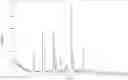
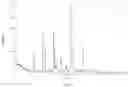



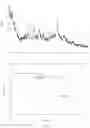


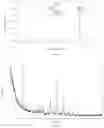


Sources:
- United States Patent and Trademark Office - verify current appl. status at the USPTO↗
Recent applications in this class:
- » 20250171443 2025-05-29
HETEROCYCLIC COMPOUNDS AS IMMUNOMODULATORS - » 20250171442 2025-05-29
WRN INHIBITORS - » 20250171441 2025-05-29
WRN INHIBITORS - » 20250171440 2025-05-29
WRN INHIBITORS - » 20250171439 2025-05-29
INDOLIN-2-ONE OR PYRROLO -PYRIDIN -2 -ONE DERIVATIVES - » 20250171438 2025-05-29
COMPOUNDS AND METHODS USEFUL FOR STABILIZING PHENYLALANINE HYDROXYLASE MUTATIONS - » 20250171437 2025-05-29
(4-BENZO[D]OXAZOL-2-YL)-6,7-DIHYDRO-1H-IMIDAZO[4,5-C]PYRIDINE-5(4H)-YL)METHANONE DERIVATIVES AS MUTANT PAH STABILIZERS FOR THE TREATMENT OF PHENYLKETONURIA - » 20250171436 2025-05-29
Tricyclic Fused Heterocyclic PDE3/4 Dual Inhibitor and Use Thereof - » 20250163060 2025-05-22
SOLID FREEBASE FORMS OF 5-CHLORO-2-(4-((2-HYDROXY-2-METHYLPROPYL)AMINO)PYRIDO[3,4-D]PYRIDAZIN-1-YL)PHENOL FOR INHIBITING NLRP3 AND USES THEREOF - » 20250163059 2025-05-22
HETEROCYCLIC KINASE INHIBITORS