Systems, Devices, and/or Methods for Managing Drone Deliveries
US20230112944A1
2023-04-13
18/078,985
2022-12-11
✅ Patent granted
US 12,369,736 B2
2025-07-29
-
-
Carlos Garcia
Ritchison Law Offices PC | John D Ritchison
2042-12-11
Abstract:
Certain exemplary embodiments can provide a receptacle constructed to receive deliveries from a drone. The receptacle can comprise an automatically openable lid; and a wireless receiver that is constructed to receive data concerning a delivery from the drone. The automatically openable lid can open to receive the delivery from the drone.
Applicant:
Interested in similar patents?
Get notified when new applications in this technology area are published.
Classification:
A47G29/141 » CPC main
Supports, holders, or containers for household use, not provided for in groups - or ; Deposit receptacles for food, e.g. breakfast, milk, or large parcels ; Similar receptacles for large parcels with appliances for preventing unauthorised removal of the deposited articles comprising electronically controlled locking means
B64C39/024 » CPC further
Aircraft not otherwise provided for characterised by special use of the remote controlled vehicle type, i.e. RPV
G07C9/00309 » CPC further
Individual registration on entry or exit; Electronically operated locks; Circuits therefor; Nonmechanical keys therefor, e.g. passive or active electrical keys or other data carriers without mechanical keys operated with bidirectional data transmission between data carrier and locks
A47G29/14 IPC
Supports, holders, or containers for household use, not provided for in groups - or Deposit receptacles for food, e.g. breakfast, milk, or large parcels ; Similar receptacles for large parcels with appliances for preventing unauthorised removal of the deposited articles
B64C39/02 IPC
Aircraft not otherwise provided for characterised by special use
G07C9/00 IPC
Individual registration on entry or exit
A47G2029/145 » CPC further
Supports, holders, or containers for household use, not provided for in groups - or ; Deposit receptacles for food, e.g. breakfast, milk, or large parcels ; Similar receptacles for large parcels with appliances for preventing unauthorised removal of the deposited articles comprising electronically controlled locking means the receptacle comprising means for identifying a deposit; Deposits carrying identification means, e.g. a bar code
A47G2029/147 » CPC further
Supports, holders, or containers for household use, not provided for in groups - or ; Deposit receptacles for food, e.g. breakfast, milk, or large parcels ; Similar receptacles for large parcels with appliances for preventing unauthorised removal of the deposited articles comprising electronically controlled locking means the receptacle comprising heating or cooling means
A47G2029/149 » CPC further
Supports, holders, or containers for household use, not provided for in groups - or ; Deposit receptacles for food, e.g. breakfast, milk, or large parcels ; Similar receptacles for large parcels with appliances for preventing unauthorised removal of the deposited articles comprising electronically controlled locking means with central server link
G07C2009/00412 » CPC further
Individual registration on entry or exit; Electronically operated locks; Circuits therefor; Nonmechanical keys therefor, e.g. passive or active electrical keys or other data carriers without mechanical keys operated with bidirectional data transmission between data carrier and locks the transmitted data signal being encrypted
Description
CROSS-REFERENCES TO RELATED APPLICATIONS
This application is a continuation in part of, and incorporates by reference herein in its entirety, expired U.S. Provisional Patent Application Ser. No. 62/264,082, filed Dec. 7, 2015. This application also is a continuation in part of, and incorporates by reference herein in its entirety, expired U.S. Provisional Patent Application Ser. No. 62/266,027, filed Dec. 11, 2015. This application also is a continuation in part of, and incorporates by reference herein in its entirety, U.S. patent application Ser. No. 15/018,696, filed Feb. 8, 2016, which issued as U.S. Pat. No. 10,210,475. This application also is a continuation in part of, and incorporates by reference herein in its entirety, pending U.S. patent application Ser. No. 16/054,305, filed Aug. 3, 2018.
BRIEF DESCRIPTION OF THE DRAWINGS
A wide variety of potential practical and useful embodiments will be more readily understood through the following detailed description of certain exemplary embodiments, with reference to the accompanying exemplary drawings in which:
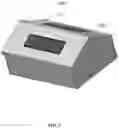
FIG. 1 is a perspective view of an exemplary embodiment of a system 1000;
FIG. 2 is a side view of an exemplary embodiment of a system 2000;
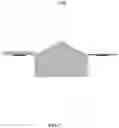
FIG. 3 is a plan view of an exemplary embodiment of a system 3000;
FIG. 4 is a side view of an exemplary embodiment of a system 4000;
FIG. 5 is a side view of an exemplary embodiment of a system 5000;
FIG. 6 is a perspective view of an exemplary embodiment of a system 6000;
FIG. 7 is a side view of an exemplary embodiment of a system 7000;
FIG. 8 is a perspective view of an exemplary embodiment of a system 8000;
FIG. 9 is a perspective view of an exemplary embodiment of a system 9000;
FIG. 10 is a perspective view of a portion of an exemplary embodiment of a system 10000;
FIG. 11 is a side view of an exemplary embodiment of a system 11000;
FIG. 12 is a side view of an exemplary embodiment of a system 12000;
FIG. 13 is a side view of an exemplary embodiment of a system 13000;
FIG. 14 is a perspective view of an exemplary embodiment of a system 14000 with the lid fully open;
FIG. 15 is a perspective view of an exemplary embodiment of a system 15000 with the lid fully open;
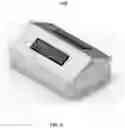
FIG. 16 is a perspective view of an exemplary embodiment of a system 16000 with the lid closed;
FIG. 17 is a perspective view of an exemplary embodiment of a system 17000;
FIG. 18 is a block diagram of an exemplary embodiment of a system 18000.
FIG. 19 is a flowchart of an exemplary embodiment of a method 19000;
FIG. 20 is a block diagram of an exemplary embodiment of an information device 20000′
FIG. 21 is a perspective view of an exemplary embodiment of a system 21000 with a lid fully open;
FIG. 22 is a perspective view of an exemplary embodiment of a system 22000 with a lid fully open;
FIG. 23 is a plan view of an exemplary embodiment of a receptacle 23000;
FIG. 24 is a flat pattern of receptacle 23000;
FIG. 24 is a side view of receptacle 23000;
FIG. 26 is a perspective view of an exemplary embodiment of a system 26000 with a lid fully open;
FIG. 27 is a side view of an exemplary embodiment of a receptacle 27000; and
FIG. 24 is an end view of receptacle 28000.
DETAILED DESCRIPTION
Certain exemplary embodiments can provide a mailbox (i.e., an “AirBox”) constructed to receive deliveries from unmanned aerial vehicles (i.e., drones). The AirBox can comprise an automatically openable lid; and a wireless receiver that is constructed to receive data concerning a delivery from the drone. The automatically openable lid can open to receive the delivery from the drone.
Certain exemplary embodiments accept items transported by drones. Use of an AirBox can reduce the chances of misplaced and/or damaged packages obtained via drone delivery. An AirBox is durable and easy to use, perfect for any household. Businesses can turn to the use of delivery drones to transport their merchandise. With the growing popularity of the use of drones, certain exemplary embodiments provide a specific container that can collect packages sent by drones in a secure manner. Drones can locate an AirBox anywhere in the world through the mailbox's GPS coordinates. The mailbox will then accept parcels from the drones and keep the items secure until a receiving user is ready to pick them up. The AirBox opens from the top, when a signal is received from a drone that is near and ready to deliver a package. The lid on the AirBox opens and accepts the package delivered by drone. The lid then closes and locks, keeping out thieves. The AirBox, can be opened by the owner, such as by key, to retrieve items delivered by drone. The AirBox lid “doors” can be solar powered, and heat can be generated to keep off heavy snow in extreme weather conditions. Solar power can keep the box operational from sunlight received during daylight hours, which can charge a rechargeable battery comprised by the AirBox. The AirBox is not only constructed for residential use, to securely and safely accept deliveries via drones, but can be used in third world countries, and/or hard to reach areas with poor roads. Certain exemplary embodiments can be used in natural disasters, times of political turbulence, war, and/or remote regions of the world. The AirBox can guide drones to its location, with beacon GPS, powered by a self-generating solar power lid. The AirBox lid opens once its senses a delivery via drone. The drone delivers a package, which can comprise survival supplies, food, prescriptions, medicine, and/or mail. The AirBox can securely and safely accept the delivery via drone, in its insulated and lockable container. The secure AirBox keeps thieves out, so the intended recipient receives their delivery when convenient to them. In times of natural disaster, an unmanned aerial vehicle, might be the only means to reach helpless victims. Victims can retrieve survival items from an AirBox, delivered by drone for each intended victim. In hard to reach areas or “slums”, roads might be impassable, and delivery trucks unable to reach certain areas for months. Drones can deliver food, supplies, prescriptions or medical aid to a secure AirBox, intended for a particular individual, keeping thieves out. In the United States, the AirBox is the future “mailbox” for the everyday resident. The AirBox is a safe a secure way, a resident can receive “goods” delivered by drone, from retailers e.g., Amazon, Google, Walmart, and/or any drone delivery service provider. The AirBox can be personally owned by the End User, and is their identifier when ordering “goods” via drone. The GPS coordinates of the AirBox guide the drone to deliver safely to the person's residence. In major cities, around the World, transportation on roads with delivery trucks can be an expensive and potentially difficult way to deliver goods in a timely manner. In major congested cities, the AirBox can be of great value, being able to securely house prescriptions, when ordered by individuals, in need to weekly supplies of prescriptions to treat an illness of a patient. When elderly persons, or patients, can't drive to the pharmacy, or accept deliveries at the front door, the AirBox in an easy to reach area, on a balcony, or window sill, can receive prescriptions deliveries in a safe and secure manner, for the intended patient, in a convenient and easy to access area. Such deliveries are not delayed by roads, or traffic, making the delivery to the patient relatively efficient potentially extending lives.
In certain exemplary embodiments, the AirBox can receive food deliveries (e.g., pizza deliveries) securely in an insulated box. The AirBox can accept pizza delivery from any pizza delivery company, example Dominos, Pizza Hut, Papa John's, at a person's home. The AirBox, allows a pizza delivery drone to land and deliver, for example, two large pizzas, in a secure, and insulated “mailbox”. The AirBox lid automatically opens responsive to a signal from a drone that is near. While the AirBox lid is open, the drone delivers the pizza to the AirBox, whereupon the lid securely closes. The insulated AirBox keeps delivered pizza warm, until retrieved by the customer.
FIG. 1 is a perspective view of an exemplary embodiment of a system 1000, which comprises an AirBox 1100 with an automatically openable lid 1110.
FIG. 2 is a side view of an exemplary embodiment of a system 2000, which comprises an AirBox 2100 with an automatically openable lid 2110.
FIG. 3 is a plan view of an exemplary embodiment of a system 3000, which comprises an AirBox 3100 with an automatically openable lid 3110.
FIG. 4 is a side view of an exemplary embodiment of a system 4000, which can comprise an AirBox 4100. AirBox 4100 can comprise and electronic portion 4200. In the illustrated embodiment electronic portion 4200 is shown on the bottom of AirBox 4100. In other embodiments, electronic portion 4200 can be located at or about any other portion of AirBox 4100. AirBox 4100 can comprise:
-
- sheet metal;
- an automatically openable lid 4110, which can comprise overlapping flaps as illustrated in FIG. 1, the overlapping flaps can be constructed to resist rain entry into AirBox 4100;
- a wireless receiver 4300 that is constructed to receive data concerning a delivery from a drone 4500; in certain exemplary embodiments, wireless receiver 4300 can be an infrared communication device that receives signals from drone 4500; in other embodiments, wireless receiver 4300 can be a radio frequency communication device; wireless receiver 4300 can operate via Wi-Fi when a Wi-Fi network is available and via a Bluetooth low energy specification 3.0 or greater when no Wi-Fi network is available; and/or
- a first information device 4400, wherein wireless receiver 4300 is constructed to communicate the data to first information device 4400; responsive to the data, first information device 4400 can be constructed to:
- cause automatically openable lid 4110 to open to receive the delivery from drone 4500;
- cause automatically openable lid 4110 to close after receipt of the delivery from drone 4500; and/or
- cause system 4000 to enter a sleep mode until a signal is received from drone 4500.
System 4000 can be communicatively coupled to a second information device, such as information device 5100 of FIG. 5, which controls the delivery from drone 4500.
System 4000 can comprise:
-
- a transmitter 4350 constructed to communicate a global positioning system determined location of the AirBox with the second information device controlling the delivery from drone 4500;
- a solar panel 4600 constructed to provide energy to open automatically openable lid 4110;
- a power supply 4450 comprising a rechargeable battery 4470, wherein power supply 4450 is constructed to provide electrical energy to first information device 4400 and to open automatically openable lid 4110;
- a snow detector 4700, which can be constructed to cause automatically openable lid 4110 to open and/or be heated such that snow falls and/or melts off of automatically openable lid 4110;
- hinges 4800 of automatically openable lid 4110, which can be installed to as to not reduce an internal volume of the AirBox;
- automatically openable lid is opened via one or more actuators 4900 (e.g., dual actuators);
- thermal insulation;
- a heater 4950, which can be constructed to maintain an interior of AirBox 4100 within a predetermined temperature range; and/or
- a lock 4910 constructed to restrict access to AirBox 4100 from anyone except a user of AirBox 4100; in certain exemplary embodiments, lock 4910 can be opened via a key by a user; in other embodiments, lock 4910 can be opened via a biometric identifier of a user; etc.
In certain exemplary embodiments, lock 4910 can be an IoT encrypted lock.
In certain exemplary embodiments, the delivery of drone 4500 can comprise at least one of food, pizza, mail, prescriptions, pharmaceuticals, survival supplies, packages, medicine, grocery, and/or a retail store item, etc.
FIG. 5 is a side view of an exemplary embodiment of a system 5000 with the lid open to receive a drone delivery and/or to retrieve a drone delivery.
FIG. 6 is a perspective view of an exemplary embodiment of a system 6000 with the lid open to receive a drone delivery and/or to retrieve a drone delivery.
FIG. 7 is a side view of an exemplary embodiment of a system 7000 with the lid open to receive a drone delivery and/or to retrieve a drone delivery.
FIG. 8 is a perspective view of an exemplary embodiment of a system 8000 with the lid closed.
FIG. 9 is a perspective view of an exemplary embodiment of a system 9000 with the lid open to receive a drone delivery and/or to retrieve a drone delivery.
FIG. 10 is a perspective view of a portion of an exemplary embodiment of a system 10000.
FIG. 11 is a side view of an exemplary embodiment of a system 11000.
FIG. 12 is a side view of an exemplary embodiment of a system 12000 with the lid partially open.
FIG. 13 is a side view of an exemplary embodiment of a system 13000 with the lid fully open.
FIG. 14 is a perspective view of an exemplary embodiment of a system 14000 with the lid fully open.
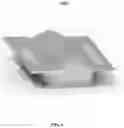
FIG. 15 is a perspective view of an exemplary embodiment of a system 15000 with the lid fully open. As shown therein, the elongated receptacle 150 includes a floor 152, a first wall 154, a second wall 156 opposite the first wall 154, a third wall 158 and a fourth wall 160 opposite the third wall 158, wherein the walls 154, 156, 158 and 160 and the floor 152 form an internal area 162 of receptacle 150 wherein deliveries can be received and maintained. Third wall 158 has a third wall top edge 164 and fourth wall 160 has a fourth wall top edge 166, and each of the top edges 164, 166 extends to the same or substantially the same height H above the floor 152. The first wall 154 includes a pair of first wall rising upper edges 182, 184 that extend from the portion of wall 154 at height Hand meet at a first wall apex 186, and the second wall 156 includes a pair of second wall rising upper edges 188, 190 that extend from the portion of second wall 156 at height H and that meet at a second wall apex 192. The first wall apex 186 and the second wall apex 192 are the same or substantially the same height J above the floor 152, and height J is greater than height H. A first flap 170 is secured to the third wall top edge 164 and a second flap 172 is secured to the fourth wall top edge 166. The first flap 170 includes a first flap interior surface 174 and a first flap exterior surface 176 and the second flap 172 includes a second flap interior surface 178 and a second flap exterior surface 180. The first flap 170 and second flap 172 form the openable lid 4110 shown in FIG. 4, and have respective resting positions along the rising upper edges 182, 184, 188, 190 of first 154 and second 156 walls. Specifically, first flap 170 has a resting position whereby first flap interior surface 178 rests in part upon rising upper edge 182 of first wall 154 and rising upper edge 188 of second wall 156. Second flap 172 has a resting position whereby second flap interior surface 178 rests in part upon rising upper edge 184 of first wall 154 and rising upper edge 190 of second wall 156. First flap 170 also includes first flap side edge first overlap element 193, second overlap element 149, a top edge overlap element 194, and second flap 172 includes second flap side edge overlap elements 195. The top edge overlap element 194 of first flap 170 can overlap a portion of the second flap 172 when the lid is closed as shown in FIGS. 4 and 16. The solar panel 4600 of FIG. 4 is shown on the first flap 170 and the snow detector 4700 of FIG. 4 is shown on the second flap 172.
Receptacle 150 comprises:
-
- a plurality of walls (e.g., first wall 154, second wall 156, third wall 158, and fourth wall 160);
- an automatically openable lid (e.g., lid 4110 of FIG. 4), the automatically openable lid comprising first flap 170, first flap 170 having interior surface 174:
- first overlap element 193, first overlap element 193 extending perpendicular from interior surface 174 of first flap 170; first overlap element 193 engages with first wall 154 of receptacle 150;
- a second overlap element 149, second overlap element 149 extending perpendicular from interior surface 174 of first flap 170, wherein each of first overlap element 193 and second overlap element 149 are constructed to engage with an edge of one of the plurality of walls (edges 182 and 188 as illustrated) and thereby resist rain entry into receptacle 150;
- top edge overlap element 194, top edge overlap element 194 extending perpendicular from interior surface 174 of first flap 170; top edge overlap element 194 engages with a wall (first wall 154 and/or second wall 156) of receptacle 150; top edge overlap element 194 is constructed to engage with an edge of the receptacle and thereby resist rain entry into receptacle 150;
- a wireless receiver (see wireless receiver 4300 of FIG. 4) that is constructed to receive data concerning a delivery to receptacle 150 from a drone (see drone 4500 of FIG. 4); and
- a first information device (see first information device 4400 of FIG. 4), the wireless receiver constructed to communicate the data to the first information device, responsive to the data, the first information device constructed to:
- cause the automatically openable lid to open to receive the delivery from the drone; and
- cause the automatically openable lid to close after receipt of the delivery from the drone.
In certain exemplary embodiments, receptacle 150 can comprise second flap 172. Second flap 172 comprises an apex edge 173. Top edge overlap element 194 is constructed to engage with and overlap apex edge 173 and thereby resist rain entry into receptacle 150.
In certain exemplary embodiments, a snow detector (see snow detector 4700 of FIG. 4) is secured to the automatically openable lid (see, lid 4110 of FIG. 4), wherein the snow detector is operable to cause the automatically openable lid to open such that snow falls off of the automatically openable lid.
In certain exemplary embodiments, a transmitter (see transmitter 4350 of FIG. 4) is constructed to communicate a global positioning system determined location of receptacle 150 with a second information device controlling the delivery from the drone.
In certain exemplary embodiments, a solar panel (see, solar panel 4600 of FIG. 4) is constructed to provide energy to open the automatically openable lid.
In certain exemplary embodiments, the wireless receiver (see wireless receiver 4300 of FIG. 4) operates via Wi-Fi when a Wi-Fi network is available and via a Bluetooth low energy specification 3.0 or greater when no Wi-Fi network is available.
In certain exemplary embodiments, the first information device is constructed to cause the system to enter a sleep mode until a signal is received from the drone.
In certain exemplary embodiments, the automatically openable lid is opened via at least one actuator.
In certain exemplary embodiments, the receptacle is thermally insulated and comprises a heater (see heater 4950 of FIG. 4). The heater is constructed to maintain an interior of receptacle 150 within a predetermined temperature range.
In certain exemplary embodiments, a height of the receptacle 150 is greater than a width of receptacle 150.
In certain exemplary embodiments, an IoT encrypted lock is utilized for receptacle 150. The IoT encrypted lock is openable via a transmitted password, the transmitted password received via an encrypted transmission from a registered user transmitted via the Internet. In certain exemplary embodiments, the transmitted password is usable to open the IoT encrypted lock only a single time. In certain exemplary embodiments, the transmitted password is transmitted to a package deliverer to the IoT encrypted lock. In certain exemplary embodiments, the IoT encrypted lock is openable via a smartphone via the transmitted password.
FIG. 16 is a perspective view of an exemplary embodiment of a system 16000 with the lid closed.
FIG. 17 is a perspective view of an exemplary embodiment of a system 17000.
FIG. 18 is a block diagram of an exemplary embodiment of a system 18000, which can comprise a smartphone 18300, an information device 18100, a network 18400, a first server 18500, a second server 18600, a third server 18700, and a fourth server 18800. First server 18500 can comprise a first user interface 18520 and can be coupled to a first database 18540. Second server 18600 can comprise a second user interface 18620 and can be coupled to a second database 18640. Third server 18700 can comprise a third user interface 18720, a processor 18760, machine instructions 18780, and can be coupled to a third database 18740. Fourth server 18800 can comprise a fourth user interface 18820 and can be coupled to a first database 18840. Any of the methods and/or steps thereof can be carried out in whole or in part by smartphone 18300, information device 18100 and/or first server 18500. Second server 18600, third server 18700, and/or fourth server 18800 can each be associated with a financial institution and each can comprise rewards and/or account information concerning financial accounts stored in memory devices coupled thereto. In certain exemplary embodiments, system 18000 can be used to implement one or more methods disclosed herein.
FIG. 19 is a flowchart of an exemplary embodiment of a method 19000. At activity 19100, an AirBox can be installed. At activity 19120, the AirBox can communicate with a web server. At activity 19140, a mission can be inputted to the web server such that a drone delivery is scheduled to the AirBox. At activity 19160, a key can be issued to the drone. In certain exemplary embodiments, the key can be an electronic key via which the drone can securely deliver a package to the AirBox. At activity 19180, an AirBox key can be generated and communicated to the drone. At activity 19200, the web server can check the AirBox key. At activity 19220, the drone key can be checked and the AirBox key can be accepted such that the drone can open the AirBox when the delivery is made.
At activity 19240, the AirBox can be opened via an infrared signal, which can be checked for validity. At activity 19280, one or more infrared beacons can be used for causing the drone to land for delivery of the package to the AirBox. At activity 19300, the drone can deploy the package to the AirBox. At activity 19320, the drone can leave the package at the AirBox. In certain exemplary embodiments, the drone can be electrically coupled to a power system of the AirBox to recharge one or more batteries of the drone such that the drone has sufficient power for a return flight from the AirBox. At activity 19340, the AirBox can notify the web server that the package has been delivered. At activity 19360, the AirBox can be closed responsive to a signal from the drone.
At activity 19380, the infrared signaling system can shut down and/or a radio frequency system can detect that the drone has left the location of the AirBox. At activity 19400, an information device (e.g., a cell phone) of a user can receive a signal about a drone delivery such as via Bluetooth low energy (“BLE”) and/or near field communication (“NFC”). At activity 19420, the information device of the user can be paired with the AirBox such that the user can securely access the AirBox, but others will be excluded from being able to open the AirBox to retrieve packages therefrom. At activity 19440, the user can load an app (i.e., machine instructions called application software) that communicates with the AirBox via BLE and/or NFC locally. At activity 19460, the system can sleep such that power is conserved. At activity 19480, an authorized user can be identified by the AirBox and/or via the web server at activity 19500. The web server can communicate with the AirBox sending a signal that confirms that the AirBox is authorized to open.
At activity 19520, the AirBox can open such that the user can retrieve the package for use at activity 19540. At activity 19560, the information device (e.g., cell phone) can leave the local area of the AirBox. At activity 19580, the AirBox can close until another drone delivery is made.
Certain exemplary embodiments comprise automatically rendering a dashboard on a user interface, the dashboard constructed to receive instructions from a user of the dashboard, the instructions from the user controlling access to a lockable receptacle, the dashboard constructed to cause transmission of a non-transitory signal, the non-transitory signal constructed to open the lockable receptacle.
In certain exemplary embodiments, the dashboard is constructed to shown substantially continuous updates of a drone location, the drone assigned to deliver a package to the lockable receptacle.
In certain exemplary embodiments, the dashboard is constructed to render substantially continuous updates of a drone location, the drone assigned to pick up a package from the lockable receptacle.
FIG. 20 is a block diagram of an exemplary embodiment of an information device 20000, which in certain operative embodiments can comprise, for example, first information device 4400 of FIG. 4. Information device 20000 can comprise any of numerous circuits and/or components, such as for example, one or more network interfaces 20100, one or more processors 20200, one or more memories 20300 containing instructions 20400, one or more input/output devices 20500, and/or one or more user interfaces 20600 coupled to one or more input/output devices 20500, etc.
In certain exemplary embodiments, via one or more user interfaces 2600, such as a graphical user interface, a user can view a rendering of information related to researching, designing, modeling, creating, developing, building, manufacturing, operating, maintaining, storing, marketing, selling, delivering, selecting, specifying, requesting, ordering, receiving, returning, rating, and/or recommending any of the products, services, methods, and/or information described herein.
FIG. 21 is a perspective view of an exemplary embodiment of a system 21000 with a lid fully open.
FIG. 22 is a perspective view of an exemplary embodiment of a system 22000 with a lid fully open.
FIG. 23 is a plan view of an exemplary embodiment of a receptacle 23000.
FIG. 24 is a flat pattern of receptacle 23000.
FIG. 24 is a side view of receptacle 23000.
FIG. 26 is a perspective view of an exemplary embodiment of a system 26000 with a lid fully open.
FIG. 27 is a side view of an exemplary embodiment of a receptacle 27000.
FIG. 28 is an end view of receptacle 28000.
Definitions
When the following terms are used substantively herein, the accompanying definitions apply. These terms and definitions are presented without prejudice, and, consistent with the application, the right to redefine these terms during the prosecution of this application or any application claiming priority hereto is reserved. For the purpose of interpreting a claim of any patent that claims priority hereto, each definition (or redefined term if an original definition was amended during the prosecution of that patent), functions as a clear and unambiguous disavowal of the subject matter outside of that definition.
-
- a—at least one.
- access—ability to enter a container.
- activity—an action, act, step, and/or process or portion thereof
- actuator—a type of motor that is responsible for moving or controlling a mechanism or system.
- adapter—a device used to effect operative compatibility between different parts of one or more pieces of an apparatus or system.
- AirBox—a receptacle comprising a lid that is constructed to receive deliveries from a drone.
- and/or—either in conjunction with or in alternative to.
- apex—a top or highest part of something.
- apparatus—an appliance or device for a particular purpose.
- assign—to set something aside for a particular purpose.
- associate—to join, connect together, and/or relate.
- automatically—acting or operating in a manner essentially independent of external influence or control. For example, an automatic light switch can turn on upon “seeing” a person in its view, without the person manually operating the light switch.
- battery—a combination of two or more cell electrically connected to work together to produce electric energy.
- biometric identifier—a distinctive, measurable characteristic used to identify an individual; for example, fingerprint, palm veins, face recognition, DNA, palm print, hand geometry, iris recognition, retina and odor/scent, typing rhythm, gait, and/or voice, etc.
- Bluetooth low energy specification 3.0 or greater—a wireless network technology designed and marketed by the Bluetooth Special Interest Group developed as specification 3.0 or higher; the technology provides relatively low power consumption and cost while maintaining a reasonably good communication range.
- can—is capable of, in at least some embodiments.
- cause—to produce an effect.
- circuit—an electrically conductive pathway and/or a communications connection established across two or more switching devices comprised by a network and between corresponding end systems connected to, but not comprised by the network.
- close—to conceal an interior of an AirBox via a lid.
- communicate—to convey information.
- comprising—including but not limited to.
- concerning—relating to.
- configure—to make suitable or fit for a specific use or situation.
- connect—to join or fasten together.
- constructed to—made suitable or fit for a specific use or situation.
- continuous—occurring substantially without interruption.
- control—to exercise restraining or directing influence over.
- convert—to transform, adapt, and/or change.
- coupleable—capable of being joined, connected, and/or linked together.
- coupling—linking in some fashion.
- create—to bring into being.
- dashboard—a graphical report rendered on a user interface that comprises various data relevant to drone interactions (e.g., pickups or deliveries) to a particular receptacle.
- data—distinct pieces of information, usually formatted in a special or predetermined way and/or organized to express concepts.
- define—to establish the outline, form, or structure of
- deliver—the carry and turn over of letters, goods, etc., to a designated recipient.
- determine—to obtain, calculate, decide, deduce, and/or ascertain.
- device—a machine, manufacture, and/or collection thereof.
- drone—an unmanned aircraft or ship guided by remote control.
- dual—comprising two parts.
- edge—an outside limit of an object, area, or surface.
- element—a component.
- encrypt—to convert data into a cipher or code to prevent unauthorized access.
- energy—a power supply or source that allows an apparatus or system to do work.
- engage—to be in contact and interact with.
- estimate—to calculate and/or determine approximately and/or tentatively.
- extend—to continue in a specified direction.
- fall—to descend freely by the force of gravity.
- flap—a portion of a cover or lid.
- food—substances that are consumable by animals.
- generate—to create, produce, give rise to, and/or bring into existence.
- global positioning system—a navigational system using satellite signals to fix the location of a radio receiver on or above the earth's surface.
- greater—larger in magnitude.
- grocery—a food item.
- haptic—involving the human sense of kinesthetic movement and/or the human sense of touch. Among the many potential haptic experiences are numerous sensations, body-positional differences in sensations, and time-based changes in sensations that are perceived at least partially in non-visual, non-audible, and non-olfactory manners, including the experiences of tactile touch (being touched), active touch, grasping, pressure, friction, traction, slip, stretch, force, torque, impact, puncture, vibration, motion, acceleration, jerk, pulse, orientation, limb position, gravity, texture, gap, recess, viscosity, pain, itch, moisture, temperature, thermal conductivity, and thermal capacity.
- heater—an apparatus that imparts thermal energy to an object or space.
- height—a dimension of an uprightly oriented object along a direction that is substantially perpendicular to the ground.
- hinge—a jointed or flexible apparatus that allows a lid to swing open or closed.
- information device—any device capable of processing data and/or information, such as any general purpose and/or special purpose computer, such as a personal computer, workstation, server, minicomputer, mainframe, supercomputer, computer terminal, laptop, wearable computer, and/or Personal Digital Assistant (PDA), mobile terminal, Bluetooth device, communicator, “smart” phone (such as a Treo-like device), messaging service (e.g., Blackberry) receiver, pager, facsimile, cellular telephone, a traditional telephone, telephonic device, a programmed microprocessor or microcontroller and/or peripheral integrated circuit elements, an ASIC or other integrated circuit, a hardware electronic logic circuit such as a discrete element circuit, and/or a programmable logic device such as a PLD, PLA, FPGA, or PAL, or the like, etc. In general any device on which resides a finite state machine capable of implementing at least a portion of a method, structure, and/or or graphical user interface described herein may be used as an information device. An information device can comprise components such as one or more network interfaces, one or more processors, one or more memories containing instructions, and/or one or more input/output (I/O) devices, one or more user interfaces coupled to an I/O device, etc.
- infrared communication—a modulated beam (i.e., a beam that is switched on and off, to encode data) that comprises electromagnetic radiation with longer wavelengths than those of visible light, extending from the nominal red edge of the visible spectrum at approximately 700 nanometers (frequency 430 THz) to approximately 1 mm (300 GHz). An infrared remote control is often bundled with many consumer electronics. Infrared transmit and receive systems are inexpensive and are generally reliable. The carrier frequency of such infrared signals is typically in the order of around 38 kHz.
- initialize—to prepare something for use and/or some future event.
- input/output (I/O) device—any sensory-oriented input and/or output device, such as an audio, visual, haptic, olfactory, and/or taste-oriented device, including, for example, a monitor, display, projector, overhead display, keyboard, keypad, mouse, trackball, joystick, gamepad, wheel, touchpad, touch panel, pointing device, microphone, speaker, video camera, camera, scanner, printer, haptic device, vibrator, tactile simulator, and/or tactile pad, potentially including a port to which an I/O device can be attached or connected.
- install—to connect or set in position and prepare for use.
- instructions—directions adapted to perform a particular operation or function.
- insulate—to separate a conductor of heat from other heat conductors by means of something that resists the passage of heat.
- internal volume—a space inside of a receptacle.
- Internet—an interconnected global collection of networks that connect information devices.
- interior—a portion within limiting boundaries.
- IoT—abbreviation for Internet of Things; IoT devices are smart devices that have Internet connectivity and are able to interact with other devices over the Internet and grant remote access to a user for managing the device as per needs of the user.
- key—an instrument via which a lock is turned and opened.
- lid—a movable cover of an AirBox.
- location—a site occupied by something.
- lock—an apparatus that secures a lid in a closed position that cannot be opened unless a specific key, biometric determination, and/or access code, etc. is used.
- machine instructions—directions adapted to cause a machine, such as an information device, to perform one or more particular activities, operations, or functions. The directions, which can sometimes form an entity called a “processor”, “kernel”, “operating system”, “program”, “application”, “utility”, “subroutine”, “script”, “macro”, “file”, “project”, “module”, “library”, “class”, and/or “object”, etc., can be embodied as machine code, source code, object code, compiled code, assembled code, interpretable code, and/or executable code, etc., in hardware, firmware, and/or software.
- machine readable medium—a physical structure from which a machine can obtain data and/or information. Examples include a memory, punch cards, etc.
- mail—letters and/or packages.
- maintain—to keep in a state.
- may—is allowed and/or permitted to, in at least some embodiments.
- medicine—a substance that treats an illness.
- memory device—an apparatus capable of storing analog or digital information, such as instructions and/or data. Examples include a non-volatile memory, volatile memory, Random Access Memory, RAM, Read Only Memory, ROM, flash memory, magnetic media, a hard disk, a floppy disk, a magnetic tape, an optical media, an optical disk, a compact disk, a CD, a digital versatile disk, a DVD, and/or a raid array, etc. The memory device can be coupled to a processor and/or can store instructions adapted to be executed by processor, such as according to an embodiment disclosed herein.
- method—a process, procedure, and/or collection of related activities for accomplishing something.
- network—a communicatively coupled plurality of nodes. A network can be and/or utilize any of a wide variety of sub-networks, such as a circuit switched, public-switched, packet switched, data, telephone, telecommunications, video distribution, cable, terrestrial, broadcast, satellite, broadband, corporate, global, national, regional, wide area, backbone, packet-switched TCP/IP, Fast Ethernet, Token Ring, public Internet, private, ATM, multi-domain, and/or multi-zone sub-network, one or more Internet service providers, and/or one or more information devices, such as a switch, router, and/or gateway not directly connected to a local area network, etc.
- network interface—any device, system, or subsystem capable of coupling an information device to a network. For example, a network interface can be a telephone, cellular phone, cellular modem, telephone data modem, fax modem, wireless transceiver, Ethernet card, cable modem, digital subscriber line interface, bridge, hub, router, or other similar device.
- non-transitory—of a machine-readable medium that stores data for defined time periods or in the presence of electrical power.
- off—away from something.
- only a single time—once without being repeated.
- open—to expose an interior of an AirBox.
- overlap—to extend over an edge of another flap.
- package—a parcel.
- parallel—substantially a same distance apart and generally not converging or diverging.
- password—a secret and ordered set of alphanumeric characters that is used to gain access to something.
- perpendicular—meeting at substantially right angles.
- pharmaceutical—a medicinal drug.
- pick up—to retrieve for shipment.
- pizza—a dish made comprising flattened bread dough spread with a savory mixture usually including tomatoes and cheese and often other toppings and baked.
- plurality—the state of being plural and/or more than one.
- power supply—a source of electrical energy.
- predetermined—established in advance.
- prescription—a medicine prepared from a written direction for the preparation, compounding, and administration thereof
- processor—a device and/or set of machine-readable instructions for performing one or more predetermined tasks. A processor can comprise any one or a combination of hardware, firmware, and/or software. A processor can utilize mechanical, pneumatic, hydraulic, electrical, magnetic, optical, informational, chemical, and/or biological principles, signals, and/or inputs to perform the task(s). In certain embodiments, a processor can act upon information by manipulating, analyzing, modifying, converting, transmitting the information for use by an executable procedure and/or an information device, and/or routing the information to an output device. A processor can function as a central processing unit, local controller, remote controller, parallel controller, and/or distributed controller, etc. Unless stated otherwise, the processor can be a general-purpose device, such as a microcontroller and/or a microprocessor, such the Pentium IV series of microprocessor manufactured by the Intel Corporation of Santa Clara, Calif. In certain embodiments, the processor can be dedicated purpose device, such as an Application Specific Integrated Circuit (ASIC) or a Field Programmable Gate Array (FPGA) that has been designed to implement in its hardware and/or firmware at least a part of an embodiment disclosed herein.
- project—to calculate, estimate, or predict.
- provide—to furnish, supply, give, and/or make available.
- radio frequency communication—radio frequency (“RF”) remote controls do not require line of sight and do not have to be aimed at target equipment. An RF remote can be operated from another room. Held in the hand like a cellphone, the buttons are pressed in the same straightforward manner. RF communication offers greater range than infrared. It is omni-directional and allows the control of devices in other rooms. Exemplary systems utilize 2.4 GHz RF. There are many different coding systems in use and generally different manufacturers use different codes and different data rates for transmission. In some embodiments, IR signals are sent one way, in a low-speed burst for distances of up to 30 feet.
- rain—moisture condensed from the atmosphere that falls visibly in separate drops.
- range—an extent of variation of a variable.
- receive—to get as a signal, take, acquire, and/or obtain.
- receiver—an apparatus that obtains electromagnetic signals.
- receptacle—a container that is constructed to receive drone deliveries.
- recommend—to suggest, praise, commend, and/or endorse.
- reduce—to diminish.
- register—to formally enroll in a system, the system comprising records.
- render—to make perceptible to a human, for example as data, commands, text, graphics, audio, video, animation, and/or hyperlinks, etc., such as via any visual, audio, and/or haptic means, such as via a display, monitor, electric paper, ocular implant, cochlear implant, speaker, etc.
- repeatedly—again and again; repetitively.
- request—to express a desire for and/or ask for.
- resist—to withstand.
- responsive—as a result of, or in reaction to.
- restrict—to limit.
- retail store item—a purchased good.
- select—to make a choice or selection from alternatives.
- set—a related plurality.
- sheet metal—comprising a relatively thin plate of a class of elementary substances, as gold, silver, or copper, all of which are crystalline when solid.
- signal—information, such as machine instructions for activities and/or one or more letters, words, characters, symbols, signal flags, visual displays, and/or special sounds, etc. having prearranged meaning, encoded as automatically detectable variations in a physical variable, such as a pneumatic, hydraulic, acoustic, fluidic, mechanical, electrical, magnetic, optical, chemical, and/or biological variable, such as power, energy, pressure, flowrate, viscosity, density, torque, impact, force, frequency, phase, voltage, current, resistance, magnetomotive force, magnetic field intensity, magnetic field flux, magnetic flux density, reluctance, permeability, index of refraction, optical wavelength, polarization, reflectance, transmittance, phase shift, concentration, and/or temperature, etc. Depending on the context, a signal and/or the information encoded therein can be synchronous, asynchronous, hard real-time, soft real-time, non-real time, continuously generated, continuously varying, analog, discretely generated, discretely varying, quantized, digital, broadcast, multicast, unicast, transmitted, conveyed, received, continuously measured, discretely measured, processed, encoded, encrypted, multiplexed, modulated, spread, de-spread, demodulated, detected, de-multiplexed, decrypted, and/or decoded, etc.
- sleep mode—a low power consumption mode.
- smartphone—a mobile phone (also known as cell phones) with an advanced mobile operating system that combines features of a personal computer operating system with other features useful for mobile or handheld use. Smartphones, combine the features of a mobile phone, such as the abilities to place and receive voice calls and create and receive text messages, with those of other popular digital mobile devices like personal digital assistants (PDAs), such as an event calendar, media player, video games, GPS navigation, digital camera, and/or digital video camera, etc. Smartphones can access the Internet and can run a variety of third-party software components (“apps”). Smartphones have a user interface that comprises a touchscreen, which enables the user to use a virtual keyboard to type words and numbers and press onscreen icons to activate “app” features.
- snow detector—an apparatus that detects a presence of snow on a lid of an AirBox.
- solar panel—an apparatus constructed to receive energy from the sun and convert that energy to electrical energy.
- store—to place, hold, and/or retain data, typically in a memory.
- substantially—to a great extent or degree.
- support—to bear the weight of, especially from below.
- surface—the outer boundary of an object or a material layer.
- survival supplies—equipment or goods usable for sustaining life.
- system—a collection of mechanisms, devices, machines, articles of manufacture, processes, data, and/or instructions, the collection designed to perform one or more specific functions.
- temperature—a degree of hotness measured on a definite scale.
- thereby—by that means.
- thermally insulated—comprising one or more materials that reduce heat transfer.
- transmit—to send as a signal, provide, furnish, and/or supply.
- transmitter—an apparatus that sends electromagnetic signals.
- update—to change.
- use—to utilize something for a particular purpose.
- user—a human that employs the service of something.
- user interface—any device for rendering information to a user and/or requesting information from the user. A user interface includes at least one of textual, graphical, audio, video, animation, and/or haptic elements. A textual element can be provided, for example, by a printer, monitor, display, projector, etc. A graphical element can be provided, for example, via a monitor, display, projector, and/or visual indication device, such as a light, flag, beacon, etc. An audio element can be provided, for example, via a speaker, microphone, and/or other sound generating and/or receiving device. A video element or animation element can be provided, for example, via a monitor, display, projector, and/or other visual device. A haptic element can be provided, for example, via a very low frequency speaker, vibrator, tactile stimulator, tactile pad, simulator, keyboard, keypad, mouse, trackball, joystick, gamepad, wheel, touchpad, touch panel, pointing device, and/or other haptic device, etc. A user interface can include one or more textual elements such as, for example, one or more letters, number, symbols, etc. A user interface can include one or more graphical elements such as, for example, an image, photograph, drawing, icon, window, title bar, panel, sheet, tab, drawer, matrix, table, form, calendar, outline view, frame, dialog box, static text, text box, list, pick list, pop-up list, pull-down list, menu, tool bar, dock, check box, radio button, hyperlink, browser, button, control, palette, preview panel, color wheel, dial, slider, scroll bar, cursor, status bar, stepper, and/or progress indicator, etc. A textual and/or graphical element can be used for selecting, programming, adjusting, changing, specifying, etc. an appearance, background color, background style, border style, border thickness, foreground color, font, font style, font size, alignment, line spacing, indent, maximum data length, validation, query, cursor type, pointer type, auto sizing, position, and/or dimension, etc. A user interface can include one or more audio elements such as, for example, a volume control, pitch control, speed control, voice selector, and/or one or more elements for controlling audio play, speed, pause, fast forward, reverse, etc. A user interface can include one or more video elements such as, for example, elements controlling video play, speed, pause, fast forward, reverse, zoom-in, zoom-out, rotate, and/or tilt, etc. A user interface can include one or more animation elements such as, for example, elements controlling animation play, pause, fast forward, reverse, zoom-in, zoom-out, rotate, tilt, color, intensity, speed, frequency, appearance, etc. A user interface can include one or more haptic elements such as, for example, elements utilizing tactile stimulus, force, pressure, vibration, motion, displacement, temperature, etc.
- via—by way of and/or utilizing.
- wall—the portion of an object that defines physical limits of the object.
- weight—a value indicative of importance.
- width—an extent of something as measured from end to end as measured in a direction that is substantially perpendicular to a height of the something.
- Wi-Fi—a wireless networking technology that uses radio waves to provide wireless high-speed Internet and network connections.
- wireless—operating by means of transmitted electromagnetic waves and lacking communication wires.
Note
Still other substantially and specifically practical and useful embodiments will become readily apparent to those skilled in this art from reading the above-recited and/or herein-included detailed description and/or drawings of certain exemplary embodiments. It should be understood that numerous variations, modifications, and additional embodiments are possible, and accordingly, all such variations, modifications, and embodiments are to be regarded as being within the scope of this application.
Thus, regardless of the content of any portion (e.g., title, field, background, summary, description, abstract, drawing figure, etc.) of this application, unless clearly specified to the contrary, such as via explicit definition, assertion, or argument, with respect to any claim, whether of this application and/or any claim of any application claiming priority hereto, and whether originally presented or otherwise:
-
- there is no requirement for the inclusion of any particular described or illustrated characteristic, function, activity, or element, any particular sequence of activities, or any particular interrelationship of elements;
- no characteristic, function, activity, or element is “essential”;
- any elements can be integrated, segregated, and/or duplicated;
- any activity can be repeated, any activity can be performed by multiple entities, and/or any activity can be performed in multiple jurisdictions; and
- any activity or element can be specifically excluded, the sequence of activities can vary, and/or the interrelationship of elements can vary.
Moreover, when any number or range is described herein, unless clearly stated otherwise, that number or range is approximate. When any range is described herein, unless clearly stated otherwise, that range includes all values therein and all subranges therein. For example, if a range of 1 to 10 is described, that range includes all values therebetween, such as for example, 1.1, 2.5, 3.335, 5, 6.179, 8.9999, etc., and includes all subranges therebetween, such as for example, 1 to 3.65, 2.8 to 8.14, 1.93 to 9, etc.
When any claim element is followed by a drawing element number, that drawing element number is exemplary and non-limiting on claim scope. No claim of this application is intended to invoke paragraph six of 35 USC 112 unless the precise phrase “means for” is followed by a gerund.
Any information in any material (e.g., a United States patent, United States patent application, book, article, etc.) that has been incorporated by reference herein, is only incorporated by reference to the extent that no conflict exists between such information and the other statements and drawings set forth herein. In the event of such conflict, including a conflict that would render invalid any claim herein or seeking priority hereto, then any such conflicting information in such material is specifically not incorporated by reference herein.
Accordingly, every portion (e.g., title, field, background, summary, description, abstract, drawing figure, etc.) of this application, other than the claims themselves, is to be regarded as illustrative in nature, and not as restrictive, and the scope of subject matter protected by any patent that issues based on this application is defined only by the claims of that patent.
Claims
What is claimed is:1. A system comprising:
a receptacle, the receptacle comprising:
a plurality of walls;
an automatically openable lid, the automatically openable lid comprising a first flap, the first flap having an interior surface:
a first overlap element, the first overlap element extending perpendicular from the interior surface of the first flap;
a second overlap element, the second overlap element extending perpendicular from the interior surface of the first flap wherein each of the first overlap element, the second overlap element are constructed to engage with a first edge of one of the plurality of walls and thereby resist rain entry into the receptacle;
a top edge overlap element, the top edge overlap element extending perpendicular from the interior surface of the first flap, wherein the top edge overlap element is constructed to engage with a second edge of the receptacle and thereby resist rain entry into the receptacle;
a wireless receiver that is constructed to receive data concerning a delivery to the receptacle from a drone;
a first information device, the wireless receiver constructed to communicate the data to the first information device, responsive to the data, the first information device constructed to:
cause the automatically openable lid to open to receive the delivery; and
cause the automatically openable lid to close after receipt of the delivery.
2. The system of claim 1, wherein:
the receptacle comprises a second flap, the second flap comprising an apex edge, the top edge overlap element constructed to engage with and overlap the apex edge and thereby resist rain entry into the receptacle.
3. The system of claim 1, wherein:
the first overlap element engages with a wall of the receptacle, the wall one of the plurality of walls.
4. The system of claim 1, wherein:
the top edge overlap element engages with a wall of the receptacle, the wall one of the plurality of walls.
5. The system of claim 1, further comprising:
the drone.
6. The system of claim 1, further comprising:
a snow detector secured to the automatically openable lid, wherein the snow detector is operable to cause the automatically openable lid to open such that snow falls off of the automatically openable lid.
7. The system of claim 1, further comprising:
a transmitter constructed to communicate a global positioning system determined location of the receptacle with a second information device controlling the delivery from the drone.
8. The system of claim 1, further comprising:
a solar panel constructed to provide energy to open the automatically openable lid.
9. The system of claim 1, wherein:
the wireless receiver operates via Wi-Fi when a Wi-Fi network is available; and
the wireless receiver operates via a Bluetooth low energy specification 3.0 or greater when no Wi-Fi network is available.
10. The system of claim 1, wherein:
the first information device is constructed to cause the system to enter a sleep mode until a signal is received from the drone.
11. The system of claim 1, wherein:
the automatically openable lid is opened via at least one actuator.
12. The system of claim 1, wherein:
the receptacle is thermally insulated and comprises a heater, the heater constructed to maintain an interior of the receptacle within a predetermined temperature range.
13. The system of claim 1, wherein:
a height of the receptacle is greater than a width of the receptacle.
14. A smart-mailbox receptacle comprising:
an IoT encrypted lock, the IoT encrypted lock openable via a transmitted password, the transmitted password received via an encrypted transmission from a registered user transmitted via the Internet.
15. The smart-mailbox receptacle of claim 14, wherein:
the transmitted password is usable to open the IoT encrypted lock only a single time.
16. The smart-mailbox receptacle of claim 14, wherein:
the transmitted password is transmitted to a package deliverer to the IoT encrypted lock.
17. The smart-mailbox receptacle of claim 14, wherein:
the IoT encrypted lock is openable via a smartphone via the transmitted password.
18. A method comprising:
automatically rendering a dashboard on a user interface, the dashboard constructed to receive instructions from a user of the dashboard, the instructions from the user controlling access to a lockable receptacle, the dashboard constructed to cause transmission of a non-transitory signal, the non-transitory signal constructed to open the lockable receptacle.
19. The method of claim 18, wherein:
the dashboard is constructed to shown substantially continuous updates of a location of a drone, the drone assigned to deliver a package to the lockable receptacle.
20. The method of claim 18, wherein:
the dashboard is constructed to render substantially continuous updates of a location of a drone, the drone assigned to pick up a package from the lockable receptacle.
Images & Drawings included:





Sources:
- United States Patent and Trademark Office - verify current appl. status at the USPTO↗
Similar patent applications:
Recent applications in this class:
- » 20250280984 2025-09-11
INFORMATION PROCESSING APPARATUS, INFORMATION PROCESSING SYSTEM, AND INFORMATION PROCESSING METHOD - » 20250255425 2025-08-14
LOCKER APPARATUS - » 20250248553 2025-08-07
METHOD FOR FORMING A PACKAGE CONTAINER IN AN INTELLIGENT PARCEL LOCKER - » 20250235024 2025-07-24
Systems, Devices, and/or Methods for Managing Drone Deliveries - » 20250194838 2025-06-19
SAFE DEVICE AND SAFE SYSTEM - » 20250040740 2025-02-06
RECEPTACLE HOLDER AND ASSOCIATED METHOD, COMPUTER PROGRAM AND COMPUTER PROGRAM PRODUCT - » 20250031889 2025-01-30
Drone Drop System Supporting Delivery Management - » 20250024977 2025-01-23
Systems and Methods to Enable Secure Exchange of Goods in Package Receptacles, and Remote Monitoring and Control of Package Receptacles and Its Surroundings - » 20240423403 2024-12-26
Delivery Shelf - » 20240407582 2024-12-12
AUTOMATED PARCEL MACHINE DEVICES AND SYSTEMS