Visual Training Apparel and Equipment
US20230320437A1
2023-10-12
18/132,275
2023-04-07
Abstract:
A device for Visual Training Apparel and Equipment, this is a visual apparel to help one train a user/wearer's body to repeat movement for muscle memory. Observing the movement of the lines is a guideline and blueprint for the different movements to help improve balance, speed, and power. All types of repeatable movements and exercises benefit from this apparel. Enhancements by using mirrors and video to follow body arm and leg movement is like having a trainer with a person all the time to correct and repeat the proper movement. Coaches will benefit with this apparel being able to watch the line movements to train help their athletes.
Interested in similar patents?
Get notified when new applications in this technology area are published.
Classification:
A63B71/145 » CPC further
Games or sports accessories not covered in groups -; Body-protectors for players or sportsmen, i.e. body-protecting accessories affording protection of body parts against blows or collisions for the hands, e.g. baseball, boxing or golfing gloves in the form of gloves Boxing gloves
A41D2600/10 » CPC further
Uses of garments specially adapted for specific purposes for sport activities
A41D1/08 » CPC main
Garments; Trousers specially adapted for sporting purposes
A41D27/08 » CPC further
Details of garments or of their making Trimmings; Ornaments
A63B71/14 IPC
Games or sports accessories not covered in groups -; Body-protectors for players or sportsmen, i.e. body-protecting accessories affording protection of body parts against blows or collisions for the hands, e.g. baseball, boxing or golfing gloves
Description
CROSS-REFERENCE TO RELATED APPLICATIONS
This application claims the benefit of U.S. Provisional Patent Application with Ser. No. 63/329,447 filed Apr. 10, 2022, by Mark Lemerick. The application is entitled “Visual Training Apparel and Equipment”.
FIELD OF INVENTION
This invention relates a device for Visual Training Apparel and Equipment. This is a visual apparel to help train a user/wearer's body to repeat movement for muscle memory. It is a guideline or blueprint for several different movements to help balance, speed, and power. All repeatable movements and exercises will benefit from this apparel. Using mirrors and video to follow body arm and leg movement, it is like having a trainer with a person all the time to correct and repeat the proper movement. Also, coaches will benefit with this apparel being able to watch the line movements to train help their athletes. This is all purpose pattern that can be put on any apparel to help performance. Swimming, yoga, Tennis, Volleyball, Bowling, Physical Therapy, Golf, Boxing, Lifting Weights.
The present invention relates to the field of ambulatory and non-invasive monitoring of an individual's movements and reactions. In particular, the invention relates to an apparel marked with lines to permit monitoring angles and extensions of limbs when worn by a monitored user. the apparel having attached lines on the fabric for monitoring movement. The present invention relates in general to exercise apparel for providing observation and improved muscle movement by conditioning which encourages muscle memory for the proper positions and repeated movements in a proper manner, without tending to cause unwanted and undesired muscle strain or soreness. The present invention relates to clothing garments and the like worn for exercise. It is an improved training garment for physical conditioning of muscle groups.
FEDERALLY SPONSORED RESEARCH
None.
SEQUENCE LISTING OR PROGRAM
None.
BACKGROUND-FIELD OF INVENTION and PRIOR ART
As far as known, there are no devices for Visual Training Apparel and Equipment or the like. It is believed that this product is unique in its design and technologies.
BACKGROUND
This background as to Visual Training Apparel and Equipment should prove useful. Many exercise devices and apparel typically encourage users to work out in a static environment to reduce the risk of injury. However, some professions may require that a person train in a variety of environments to prepare for unpredictable situations. Such professions can include the sports such as boxing, martial arts, wrestling, and others, where trainees may be forced to exert themselves in a variety of environments. Therefore, by training with a device that is purely static not meant to travel, or otherwise be used in different environments, such trainees may not be adequately prepared to maneuver under various conditions. Other professions where the combination of mobility and resistance can be beneficial include professional athletics, law enforcement, and function specific rehabilitation. Essentially, any profession or avocation where enhanced physical ability can equate to higher performance or lower incidence of injury. Furthermore, by only training under a limited number of conditions, risk of injury can increase because the trainee may not have the muscle memory or brain plasticity to adapt to unpredictable situations.
Repeatability is paramount to performance. The ability to also extend the limbs and flex muscles to their limits are ways to improve performance, flexibility and even increase the power of certain movements such as punching with the arms or jumping/springing of the legs. However, the angle and trajectories can greatly impact this performance. Therefore, there is a need for a type of an apparel that permits these angles during movement to be observed and tracked to assure proper form and technique. If the proper form and techniques can be repeated during training, the muscle memory allows the individua to benefit and perform continuous moves and practice with the proper positions, stances, and movements. As this proper movement is continuously made by the individual and encouraged by the coach, improved performance can be achieved with the use of the visual training apparel.
PROBLEM SOLVED
The improvement and problem solved as to Visual Training Apparel and Equipment provides a device which is a visual reference for certain athletic movements where shoulders and cheeks meet. Boxing-Golf-Baseball-Bowling-Shooting; it can be a visual aid for any type of throwing, turning, follow through, bending; an apparel that permits a visual aid for any type leg or foot movement such as Walking, Running, Kicking, Kneeing, Bending side to side movement, Pivoting, Balance, Picking things up, Repeatability—Visual Guideline; a device that gives a visual aid to allow one to track and watch how much rotation a user/wearer is getting with hips and shoulders; and a device which is made of a material that is flexible, comfortable, lightweight, easy to clean or launder, and made of a breathable fabric.
PRIOR ART
As far as known, there are no devices for Visual Training Apparel and Equipment as described by Lemerick. It is believed that this product is unique in its design and technologies. A novelty search revealed:
- A. US Patent Application 2005/0193461—by Caillibotte in 2005 for a Garment. A garment for a part of the body, and in particular a sport pant, includes an elasticity element, or several such elements, disposed on a portion of the garment, while another portion of the garment is free of elasticity elements. As a result, the garment can store energy by elastic elongation under a movement of, for example, a leg. This energy can then be released under a second movement of the leg in the opposite direction, resulting in the garment supporting the second movement of the leg.
- B. Foreign patent in the United Kingdom GB2491010A by Hawksworth in 2012 for a training device designed to imitate a range of human punches. A training device design to imitate a range of human punches. A training device comprising a structure with mechanical arms 18-20 with pads 6-8 on their ends wherein the arms 18-20 are computer controlled and are arranged to imitate the performance of a jab, hook, and uppercut. Sensors may be provided to record when a user is struck by an arm and whether a user is within a training are 4 associated with the device. A digital display screen 9 may be provided. The device may so be provided with further damping means and the height of the arms may be adjustable. The device designed to provide defensive martial arts training such as dodging and blocking. The software controlling the device may allow for different speeds and timing strikes, a gradual increase in the difficulty and the throwing of bluff punches or feints. Six different arms may be provided to perform the different punches,
- C. U.S. Pat. No. 3,759,510 by Jackson Jr. in 1973 for an EXERCISE GARMENT. A composite exercise garment including helmet, jacket, armlets, gloves, belt, shorts, thigh leggings, calf leggings and boots, these components being detachably connected together for use either as a total composite garment, or for use separately or in various combinations, each component of the total garment having exterior pockets which may be either filled or partially filled with particulate weight materials of various densities, with the object that by using the proper components of the garment, properly weighted, and performing specified movements, exercises of any desired degree of difficulty are provided for any desired muscles or sets of muscles.
- D. U.S. Pat. No. 4,961,573 by Wehrell in 1990 for a Boxing exercise harness. A mobile arm, chest, and shoulder exercise apparatus to be used to train and condition participants in sports demanding a high degree of arm speed, endurance, and power. A harness which conforms to the user's upper back and sides and provides a path for elastic cords through a system of pulleys to a position adjacent to the user's armpits, where hand grips are attached to the ends of the elastic cords. When the user grasps the hand grips and directs them away from the harness, the resistive force of the elastic cords is transferred to the user's arms, thereby providing a relatively constant resistive force directed toward the armpits for strengthening the arms, chest, and shoulders. Generation of a nearly constant force is accomplished by directing one or more of the elastic cords to the rear of the apparatus, thereby allowing for the use of an increased length of cord. The apparatus may be adjusted to fit the physical dimensions of the user, and the resistive force may be varied to fit the needs of the user.
- E. U.S. Pat. No. 5,010,596 by Brown et al. in 1991 for a Conformable weighted conditioning garment. A garment is provided for improving physical conditioning. The garment is formed with shorts having thigh encasing leg sections extending downwardly from a waist to surround and resiliently conform to the thighs of a wearer. A plurality of pouches is defined in each of the thigh encasing leg sections and are spaced laterally apart about the front, rear and outer thigh areas of the leg sections. A plurality of solid plastic encased lead weights is deployed and gripped within at least selected ones of the pouches. The leg sections are preferable secured about the legs of the wearer above the knees by adjustable belts located in hems at the lower extremities of the leg sections. The conforming nature of the garment and the way in which the weights are snugly gripped in the pockets ensures that the weights do not move relative to the wearer's skin, and do not bobble or shift as the wearer runs or engages in other physical conditioning activities.
- F. U.S. Pat. No. 5,033,117 by Fairweather in 1991 for an Exercise Garment. A unitary full body exercise suit is disclosed. The invention is a one-piece garment including a pair of shorts with two thigh portions for covering at least part of the thigh of a user integrally connected to an upper body portion which covers a substantial portion of the abdomen of the user. A set of pockets adapted to receive a weight are included, one on each thigh portion of the shorts. In the more specific embodiment, the invention is constructed of synthetic rubber and further includes belt loops between the upper body portion and the lower body portion adapted to receive a belt therebetween. The belt loops are comprised of straps which further support the weights in the pockets. The straps are sewn into the suit. Look and loop type fasteners are provided at the top of each of the pockets. Shoulder straps are included on the upper body portion of the suit. The suit of the present invention provides a full one-piece exercise suit which employs easily removable weights located and supported for optimum physical exertion and safe operation.
- G. U.S. Pat. No. 5,176,600 by Wilkinson in 1993 for an Aerobic resistance exercise garment. An aerobic resistance exercise garment includes leg or sleeve sections. Where sleeve sections are used, a web is connected to the main portion of the garment. The garment and/or the sleeve and/or the web is made of a stretchable, elastic, resilient material. During the main exercise program where the arms of the user are being swung, resistance is encountered by the sleeves being connected to the garment when the arm swings away from the body causing the material to stretch. Where the garment includes leg portions a web may interconnect the leg portions to each other to offer resistance during the movement of the leg in an exercise program.
- H. U.S. Pat. No. 5,737,773 by Dicker et al., in 1998 for an Aerobic exercise garment. An aerobic exercise garment includes a body section and limb sections. The garment includes a base fabric which incorporates elastic resistance band material having a direction of stretch. The elastic resistance band material is formed with a minimal number of pieces and is incorporated in the garment by securing the pieces together at locations which do not interfere with the direction of resistance.
- I. U.S. Pat. No. 5,745,917 by Dicker et al., in 1998 for an Energy expenditure garment. An aerobic resistance garment for indoor use or warm weather use, includes a shorts section which has elongated resistance elements, and which includes shoulder anchoring structure extending upwardly from the waist area of the shorts section for fitting over the user's shoulders. The legs of the shorts terminate above the calves of the user.
- J. U.S. Pat. No. 6,258,014 by Karecki in 2001 for an Exercise kit and method of using same. An exercise kit includes a lightweight garment having at least a pair of elongated pockets. An elongated bent plastic member is secured within desired ones of the pockets to provide resistance when deformed and no resistance when restored resiliently to an original shape. The method of using the kit includes performing physical activities that includes movement of at least some portion of the body sufficient to cause the plastic member to deform and to provide sufficient resistance to the movement to tone the muscles of the user experiencing such resistance. In another embodiment an exercise kit includes at least one elongated plastic member having a distal end pair of slots and a proximate end pair of slots. A pair of securing straps conformed to fit within respective ones of the slots helps secure the plastic member in a position extending longitudinally along a limb portion of a user. The plastic member is resilient and provides resistance when deformed and no resistance when restored to an original shape. The method of using the kit includes looping the straps through the slot pairs and then fastening them at the upper and lower portions of the limb of a user. The user then performs physical activities including movement of at least some portion of the limb sufficient to cause the plastic member to deform and to provide sufficient resistance to the movement to tone the muscles of the user experiencing such resistance.
- K. U.S. Pat. No. 9,415,254 by Dyer in 2016 for an Exercise Device. An exercise apparatus comprises a wearable article and a plurality of straps. The wearable article may comprise pants, footwear, headwear, jackets, gloves, socks, shorts, shirts, vests, sleeves, unitards, and/or leotards. The straps may be positioned at various locations about the wearable article. The straps include a plurality of tabs exposed through corresponding openings in the wearable article. Each tab includes an attachment member that is capable of being selectively coupled with one or more exercise accessories. The tabs may be positioned equidistantly about each strap. The exercise accessories may comprise straps, static or flexible bands, rods, levels, poles, chains, resistance bands, weights, sandbags, weighted sleds, training parachutes, medical rehabilitation tools (such as stretch bands), or the like. The wearable article or straps may further include a plurality of snaps such that the tabs are selectively securable to the snaps.
- L. U.S. Pat. No. 9,462,975 by Sacker, et al., in 2016 for a Systems and methods for ambulatory monitoring of physiological signs. The present invention relates to the field of ambulatory and non-invasive monitoring of a plurality of physiological parameters of a monitored individual. The invention includes a physiological monitoring apparatus with an improved monitoring apparel, the apparel having sensors for monitoring parameters reflecting pulmonary function and/or parameters reflecting cardiac function and/or parameters reflecting the function of other organ systems. The apparel is preferably also suitable for medical, athletic, and for other uses. The sensors include one or more inductive plethysmographic sensors positioned to monitor at least basic pulmonary parameters, and optionally also basic cardiac parameters. The sensors include one or more ECG sensor electrodes that preferably include a flexible, conductive fabric. The monitoring apparatus also includes an electronic unit for receiving data from the sensors and for storing the data in a computer-readable medium and/or wirelessly transmitted the data. The invention also includes systems for receiving, storing, and processing data generated by one or more physiological monitored apparatuses.
- M. US Patent Application 2005/0193461 by Callibotte et al., in 2005 for a Garment. A garment for a part of the body, and in particular a sport pant, includes an elasticity element, or several such elements, disposed on a portion of the garment, while another portion of the garment is free of elasticity elements. As a result, the garment can store energy by elastic elongation under a movement of, for example, a leg. This energy can then be released under a second movement of the leg in the opposite direction, resulting in the garment supporting the second movement of the leg.
- N. US Patent Application 2013/0067628 by Harb in 2013 for a Resistance Exercise Clothing Device. The resistance exercise clothing device provides a shirt and a pant. Each is provided with resistance bands disposed within channels. Resistance bands may be permanently installed and may also be removably installed. Resistance bands are provided in various elastic resistance strengths. Removable bands are attached at the origins and insertions by various means that may include but are not limited to mechanical fasteners, such as hook and loop, buttons, snaps, and other appropriate means. The origins of the shirt resistance bands are chosen by a user, from lateral to medial attachment to the shirt reinforced panel. This feature enables further resistance properties of the shirt resistance bands by allowing greater or lesser pre-load. The device provides resistance against limb movements of a user. Upon donning the shirt, a user loops the shirt resistance bands around thumbs and hands. A user loops pant resistance bands around feet.
- O. US Patent Application 2019/0022452 by Tedesco et al., in 2019 for a Wearable Resistance Training Device. The described embodiments relate to systems, methods, and apparatuses for providing linear tension to multiple areas of a person to improve training and exercise. The tension can be applied by cables supplied from cable spools that are attached within a resistance assembly. The resistance assembly can be worn as a backpack during exercises, thereby providing a portable means through which tension can be provided to the body. The cables from the resistance assembly can be attached to appendages such as the wrists and legs of the person, and the tension provided by the cables can be adjustable. For instance, the tension can be made non-uniform across the body to improve the person's ability to maneuver in situations where there is an imbalance of force on the body.
- P. U.S. Design Pat. D809,245 by Yeomans in 2018 for a Garment. The ornamental design for a garment, as shown and described.
As can be observed, none of the prior art has anticipated or caused one skilled in the art of exercise equipment or apparel to reason, consider, or conclude this invention by Mark Lemerick as obvious to a person skilled in the ordinary art of the industry. The device for a Visual Training Apparel and Equipment provides an answer to the problems that are shown above. The Lemerick invention addresses the shortfalls and solves them, unlike previous art in this industry.
SUMMARY OF THE INVENTION
This invention is a visual apparel device to help train body to repeat movement for muscle memory. It is a guideline or blueprint for several different movements to help balance, speed, and power. All repeatable movements and exercises will benefit from this apparel. Using mirrors and video to follow body arm and leg movement. It is like having a trainer with you all the time doing the correct movement. Also, coaches will benefit with this apparel being able to watch the line movements to train help their athletes. The preferred embodiment of the Visual Training Apparel device is comprised of: (a) a fabric; (b) a set of lines at vertical, horizontal, and oblique positions to the ground when worn by a user; and (c) a means to secure the lines to the fabric wherein the apparel can be worn and used with various sports and exercises including but not limited to Boxing, Swimming, Yoga, Tennis, Volleyball, Bowling, Lifting Weights, Baseball, Football, Physical Therapy, Golf, and Martial Arts. The newly invented Visual Training Apparel device can be manufactured at low volumes by quite simple means and in high volume production by more complex and controlled systems.
OBJECTS AND ADVANTAGES
There are several objects and advantages of the Visual Training Apparel and Equipment There are currently no exercise apparel or devices and the like that are effective at providing the objects of this invention. The various advantages and benefits are:
| Item | Advantages | |
| 1 | Provides a visual reference for certain | |
| athletic movements where shoulders and | ||
| cheeks meet. Boxing - Golf - Baseball - | ||
| Bowling - Shooting. | ||
| 2 | Provides a visual aid for any type of | |
| throwing, turning, follow through, bending. | ||
| 3 | Permits a visual aid for any type of leg or | |
| foot movement. Walking, Running, Kicking, | ||
| Kneeing, bending side to side movement, | ||
| Pivoting, Balance, Picking things up, | ||
| Repeatability - Visual Guideline. | ||
| 4 | Gives a visual aid to allow one to track and | |
| watch how much rotation a user/wearer is | ||
| getting with hips and shoulders. | ||
| 5 | Is a material that is flexible, comfortable, | |
| lightweight, easy to clean or launder, and | ||
| made of a breathable fabric | ||
Finally, other advantages and additional features of the present Visual Training Apparel device will be more apparent from the accompanying drawings and from the full description of the device. For one skilled in the art of exercise apparel and training systems, it is readily understood that the features shown in the examples with this product are readily adapted to other types of exercise and training systems and devices.
DESCRIPTION OF THE DRAWINGS—FIGURES
The accompanying drawings, which are incorporated in and constitute a part of this specification, illustrate an embodiment of the Visual Training Apparel and Equipment Device that is preferred. The drawings together with the summary description given above and a detailed description given below explain the principles of the exercise apparel and method of use. is understood, however, that the device provided here is not limited to only the precise arrangements and instrumentalities shown.
FIGS. 1A through 1E are sketches of the general Visual Training Apparel for sporting and exercising changes.
FIGS. 2A and 2B are sketches of the general visual training apparel device with components and features noted.
FIGS. 3A through 3F are sketches of the general visual training apparel with the components and features shown from generally a top view.
FIGS. 4A through 4D are sketches of the visual training apparel and the material and line details.
FIGS. 5A through 5C are sketches of the boxing gloves for the visual training apparel and features noted.
FIGS. 6A and 6B are sketches of the visual training apparel with the use in the ready positions.
FIGS. 7A through 7F are sketches of the visual training apparel with the user practicing a cross movement.
FIGS. 8A through 8C are sketches of the visual training apparel with the user practicing an uppercut.
FIGS. 9A through 9H are sketches of the visual training apparel with the user practicing a hook.
FIGS. 10A through 10H are sketches of the visual training apparel with the user practicing a jab movement.
FIGS. 11A through 11E are sketches of the visual training apparel with the user practicing a golf swing.
FIGS. 12A through 12G are sketches of the visual training apparel used with basketball, throwing, filming and in mirror exercises.
FIGS. 13A through 13F are prior art examples dealing with exercise apparel.
DESCRIPTION OF THE DRAWINGS—REFERENCE NUMERALS
The following list refers to the drawings:
| TABLE B |
| Reference numbers |
| Ref # | Description |
| 30 | Visual training apparel 30 for exercise and sporting |
| improvement | |
| 30A | Back view 30A of visual training apparel 30 |
| 31 | Initial sketches 31 of the visual training apparel 30 |
| 40 | Apparel prototype 40 of visual training apparel 30 |
| 42 | Horizontal line 42 (straight punch evaluation) |
| 43 | Tee line 43 |
| 44 | vertical lines 44 (elbow or side seam vertical |
| locations) | |
| 44A | Side vertical line 44A |
| 45 | Shirt 45 of apparel prototype 40 |
| 45A | Back 45A of shirt 45 |
| 47 | Short pants 47 of apparel prototype 40 |
| 47A | Back 47A of short pants 47 |
| 49 | Punch ovals 49 at shoulders (glove or fist location) |
| 50 | Sketches 50 of apparel 40 |
| 51 | Shirt 51 of sketch 50 |
| 52 | Front 52 of shirt 51 |
| 53 | Back 53 of shirt 51 |
| 55 | Pants 55 of sketch 50 |
| 57 | Sleeves 57 with lines |
| 59 | Leggings 59 with lines |
| 60 | Materials and lines sketches 60 |
| 61 | group of fabric material 61 that can be nylon, rayon, |
| cotton, linen, silk, merino wool, polyester, vinyl, | |
| synthetic or non-synthetic composite materials and | |
| all the fabric materials having characteristics that | |
| are flexible, comfortable, lightweight, easy to clean | |
| or launder, breathable fabric - a pre-specified | |
| amount of said fabric configured as apparel | |
| 62 | Exercise lines 62 on fabric 61 (fabric, ink, vinyl, |
| paint or equal, embroidered/sewn with thread) | |
| 65 | Mechanical means 65 for securing exercise lines to |
| fabric 61 such as adhesive/glue, snaps, | |
| sewing/threads, buttons, or other equal adherents | |
| 66 | process means 66 for adhering exercise lines 62 to |
| fabric 61 such as heat seal, hot press, iron-on | |
| adherence etc. | |
| 67 | Sewing means 67 for securing exercise lines 62 to |
| fabric material 61 with thread including cotton, | |
| nylon, synthetic or non-synthetic composite material | |
| thread | |
| 68 | Other process/printing means 68 for securing |
| exercise lines 62 to material 61 such as silk screen, | |
| dye sublimination, inkjet, laser print, embroidering, | |
| etc. (plastisol, ink, fabric etc.) | |
| 70 | Ready position 70 of user 100 in a visual training |
| apparel 30 | |
| 73 | Hook position 73 of user 100 in a visual training |
| apparel 30 | |
| 75 | Jab position 75 of user 100 in a visual training |
| apparel 30 | |
| 78 | Cross position 78 of user 100 in a visual training |
| apparel 30 | |
| 79 | Uppercut position 79 of user 100 in a visual training |
| apparel 30 | |
| 80 | Golf exercise 80 of user 100 in a visual training |
| apparel 30 | |
| 83 | Club 83 |
| 85 | Basketball exercise 85 of user 100 in a visual |
| training apparel | |
| 90 | Throwing exercise 90 of user 100 in visual training |
| apparel 30 | |
| 91 | boxing gloves 91 with training lines 95, 96, 97, 98 |
| 92 | basketball 92 |
| 93 | baseball or softball 93 |
| 95 | Glove lines 95 |
| 96 | Cross 96 glove lines 95 |
| 97 | Longitudinal 97 glove lines 95 |
| 98 | Side glove lines 98 (line up with elbows) |
| 100 | user 100 with a visual training apparel 30 |
| 120 | means for recording positions 120 cameras, phone, |
| video equipment and the like | |
| 150 | Filming 150 individual user 100 using visual training |
| apparel 30 | |
| 170 | Exercise with mirror by a user 100 using a visual |
| training apparel 30 | |
| 172 | Reflection 172 of user 100 |
| 175 | Mirror 175 |
| 177 | Coaching 177 of user 100 by coach 180 |
| 180 | Coach 180 |
| 185 | Screen 185 |
| 187 | Film results 187 |
| G | Ground/mat/floor G - a reference lines 62 and the |
| horizon G | |
| 300 | Prior Art 300 U.S. Pat. No. 4,961,573 by Wehrell 1990 |
| BOXING EXERCISE HARNESS | |
| 310 | Prior Art 310 US Patent App. US 2005/0193461 |
| by Caillibotte et al. - GARMENT | |
| 320 | Prior Art 320 U.S. Pat. No. D809,245 by Yeomans et al- |
| 2018 GARMENT | |
| 330 | Prior Art 330 U.S. Pat. No. 9,415,254 by Dyer - 2016 - |
| EXERCISE DEVICE | |
| 340 | Prior Art 340 U.S. Pat. No. 5,737,773 Dicker et al. 1998 |
| AEROBIC EXERCISE GARMENT | |
| 350 | Prior Art 350 U.S. Pat. No. 5,745,917 by Dicker et al. |
| 1998- ENERGY EXPENDTURE GARMENT | |
DETAILED DESCRIPTION OF PREFERRED EMBODIMENT
This invention relates to a device for Visual Training Apparel and Equipment. This is a visual apparel to help train a user/wearer's body to repeat movement for muscle memory. It is a guideline or blueprint for several different movements to help balance, speed, and power. All repeatable movements and exercises will benefit from this apparel. Using mirrors and video to follow body arm and leg movement. It is like having a trainer with you all the time doing the correct movement. Also, coaches will benefit with this apparel being able to watch the line movements to train help their athletes. This is all purpose pattern that can be put on any apparel to help performance. Swimming, yoga, Tennis, Volleyball, Bowling, Physical Therapy, Golf, Boxing, Lifting Weights. The present invention relates to the field of ambulatory and non-invasive monitoring of an individual's movements and reactions. In particular, the invention relates to an apparel marked with lines to permit monitoring angles and extensions of limbs when worn by a monitored user. the apparel having attached lines on the fabric for monitoring movement. The present invention relates in general to exercise apparel for providing observation and improved muscle movement by conditioning which encourages muscle memory for the proper positions and repeated movements in a proper manner, without tending to cause unwanted and undesired muscle strain or soreness. The present invention relates to clothing garments and the like worn for exercise. It is an improved training garment for physical conditioning of muscle groups.
The advantages for the Visual Training Apparel device 30 are listed above in the introduction. Succinctly the benefits are that the device:
-
- A. Provides a visual reference for certain athletic movements where shoulders and cheeks meet. Boxing-Golf-Baseball-Bowling-Shooting
- B. Provides a visual aid for any type of throwing, turning, follow through, bending.
- C. Permits a visual aid for any type of leg or foot movement. Walking, Running, Kicking, Kneeing, Bending, side to side movement, Pivoting, Balance, Picking things up, Repeatability-Visual Guideline.
- D. Gives a visual aid to allow one to track and watch how much rotation a user/wearer is getting with hips and shoulders.
- E. Is a material that is flexible, comfortable, lightweight, easy to clean or launder, and made of a breathable fabric
The preferred embodiment of the Visual Training Apparel device 30 is comprised of: (a) a fabric 61—a pre-specified amount of said fabric configured as apparel;(b) a set of lines 62 at vertical, horizontal, and oblique positions to the ground G when worn by a user 100; and
-
- (c) a means to secure the lines 62 to the fabric 61 wherein the apparel 30 can be worn and used with various sports and exercises including but not limited to Boxing, Swimming, Yoga, Tennis, Volleyball, Bowling, Lifting Weights, Baseball, Football, Physical Therapy, Golf, and Martial Arts.
There is shown in FIGS. 1-13 a complete description and operative embodiment of the Visual Training Apparel and Equipment device 30. In the drawings and illustrations, one notes well that the FIGS. 1-13 demonstrate the general configuration and use of this product. The various example uses are in the operation and use section, below.
The accompanying drawings, which are incorporated in and constitute a part of this specification, illustrate an embodiment of the Visual Training Apparel and Equipment device 30 that is preferred. The drawings together with the summary description given above and a detailed description given below explain the principles of the exercise apparel device 30. It is understood, however, that the device 30 is not limited to only the precise arrangements and instrumentalities shown. Other examples of attachment devices and the like are still understood by one skilled in the art to be within the scope and spirit shown here.
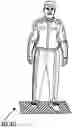
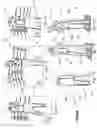
FIGS. 1A through 1E are sketches of the general Visual Training Apparel for sporting and exercising changes. Demonstrated in this overview is: a visual training apparel 30 for exercise and sporting improvement; an initial set of sketches 31 of the visual training apparel 30; an apparel prototype 40 of visual training apparel 30; a ready position 70 of user 100 in a visual training apparel 30; a jab position 75 of user 100 in a visual training apparel 30; and performing a golf exercise 80 of user 100 in a visual training apparel 30. Remember that this is a visual apparel to help train a user/wearer's body to repeat movement for muscle memory. It is a guideline or blueprint for several different movements to help balance, speed, and power.
FIGS. 2A and 2B are sketches of the general visual training apparel device with components and features noted. Shown here are: a visual training apparel 30 for exercise and sporting improvement; a back view 30A of visual training apparel 30; an apparel prototype 40 of visual training apparel 30; a “tee” line 43; a punch oval 49 at shoulders (glove or first location); a group of fabric material 61 that can be nylon, rayon, cotton, linen, silk, merino wool, polyester, vinyl, synthetic or non-synthetic composite materials all the fabric materials having characteristics that are flexible, comfortable, lightweight, easy to clean or launder, breathable fabric—a pre-specified amount of said fabric configured as apparel; a set of exercise lines 62 on fabric 61 (fabric, ink, vinyl, paint or equal); a pair of boxing gloves 91 with training lines 95,96,97,98; and an user 100 with a visual training apparel 30.
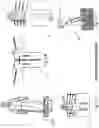
FIGS. 3A through 3F are sketches of the general visual training apparel with the components and features shown from generally a top view. These drawings provide and reveal: a “tee” line 43; a vertical line 44 (elbow or side seam vertical locations); a side vertical line 44A; a shirt 45 of apparel prototype 40; a back 45A of shirt 45; a pair of short pants 47 of apparel prototype 40; a back 47A of short pants 47; sleeves 57 with lines; and leggings 59 with lines.
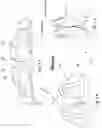
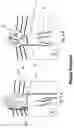
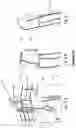
FIGS. 4A through 4D are sketches of the visual training apparel and the material and line details. Here is shown several features and means to connect the material 61 and lines 62 as follows: an initial set of sketches 31 of the visual training apparel 30; a horizontal line 42 (straight punch evaluation); a “tee” line 43; a vertical line 44 (elbow or side seam vertical locations); a side vertical line 44A; a punch oval 49 at shoulders (glove or first location); a sketch 50 of apparel 40; a shirt 51 of sketch 50; a front 52 of shirt 51; a back 53 of shirt 51; a pair of pants 55 of sketch 50; a group of materials and lines sketches 60; a group of fabric material 61 that can be nylon, rayon, cotton, linen, silk, merino wool, polyester, vinyl, synthetic or non-synthetic composite materials and all the fabric materials having characteristics that are flexible, comfortable, lightweight, easy to clean or launder, breathable fabric—a pre-specified amount of said fabric configured as apparel; a set of exercise lines 62 on fabric 61 (fabric, ink, vinyl, paint or equal); a mechanical means 65 for securing exercise lines to fabric 61 such as adhesive/glue, snaps, sewing/threads, buttons or other equal adherents; a process means 66 for adhering exercise lines 62 to fabric 61 such as heat seal, hot press, iron-on adherence etc.; a sewing means 67 for securing exercise lines 62 to fabric material 61 with thread including cotton, nylon, synthetic or non-synthetic composite material thread; and another process/printing means 68 for securing exercise lines 62 to material 61 such as silk screen, dye sublimination, inkjet, laser print, embroidering, etc. (plastisol, ink, fabric etc.) process means 68 for adhering lines 62 to material 61 such as silk screen, dye sublimination, inkjet, laser print, embroidering, etc. (plastisol, ink, fabric etc.); and a pair of boxing gloves 91 with training lines 95,96,97,98.
FIGS. 5A through 5C are sketches of the boxing gloves for the visual training apparel and features noted. These sketches show: a pair of boxing gloves 91 with training lines 95,96,97,98; a set of glove lines 95; a cross 96 glove lines 95; a longitudinal 97 glove lines 95; and a side glove lines 98 (line up with elbows).
FIGS. 6A and 6 B are sketches of the visual training apparel with the use in the ready positions. FIGS. 7A through 7F are sketches of the visual training apparel with the user practicing a cross movement. FIGS. 8A through 8C are sketches of the visual training apparel with the user practicing an uppercut. FIGS. 9A through 9H are sketches of the visual training apparel with the user practicing a hook. FIGS. 10A through 10H are sketches of the visual training apparel with the user practicing a jab movement. FIGS. 11A through 11E are sketches of the visual training apparel with the user practicing a golf swing. FIGS. 12A through 12G are sketches of the visual training apparel used with basketball, throwing, filming and in mirror exercises. These are all described in the operations section below.
FIGS. 13A through 13F are prior art examples dealing with exercise apparel. These include: (a) Prior Art 300 U.S. Pat. No. 4,961,573 by Wehrell 1990 BOXING EXERCISE HARNESS; (b) Prior Art 310 US Patent App. US 2005/0193461 by Caillibotte et al.—GARMENT; (c) Prior Art 320 U.S. Pat. D809,245 by Yeomans et al—2018 GARMENT; (d) Prior Art 330 U.S. Pat. No. 9,415,254 by Dyer—2016—EXERCISE DEVICE; (e) Prior Art 340 U.S. Pat. No. 5,737,773 Dicker et al. 1998 AEROBIC EXERCISE GARMENT; and (f) Prior Art 350 U.S. Pat. No. 5,745,917 by Dicker et al. 1998—ENERGY EXPENDTURE GARMENT. As can be seen, the Visual Training Apparel and Equipment device 30 are unique combinations and uses as described herein.
The anticipated materials for the Visual Training Apparel and Equipment device 30 batons include:
-
- a group of materials and lines sketches 60 wherein the group of fabric material 61 can be nylon, rayon, cotton, linen, silk, merino wool, polyester, vinyl, synthetic or non-synthetic composite materials. The characteristics preferred are: a fabric which is flexible, comfortable, lightweight, easy to clean or launder, and breathable—a pre-specified amount of said fabric configured as apparel. The sewing 67 of lines 62 to fabric material 61 anticipates a cotton, nylon, synthetic or non-synthetic composite material thread.
The details mentioned here are exemplary and not limiting. Other specific components and manners specific to describing a Visual Training Apparel and Equipment device 30 may be added as a person having ordinary skill in the field of exercise apparel and training systems and their uses.
OPERATION OF THE PREFERRED EMBODIMENT
The Visual Training Apparel device 30 for a body camera to attach to an extendable defense baton has been described in the above embodiment. The manner of how the device operates is described below. One notes well that the description above and the operation described here must be taken together to fully illustrate the concept of the Visual Training Apparel device 30. The preferred embodiment of the Visual Training Apparel device 30 is comprised of: (a) a fabric 61—a pre-specified amount of said fabric configured as apparel; (b) a set of lines 62 at vertical, horizontal, and oblique positions to the ground G when worn by a user 100; and (c) a means to secure the lines 62 to the fabric 61 wherein the apparel 30 can be worn and used with various sports and exercises including but not limited to Boxing, Swimming, Yoga, Tennis, Volleyball, Bowling, Lifting Weights, Baseball, Football, Physical Therapy, Golf, and Martial Arts.
The Visual Training Apparel device 30 operates as follows: The “Tee” 43 on Front 45 and Back 45A is a reference point for starting and finishing movements (ready position 70). The relationship of the lines 62 with the ground G or horizon helps help with balance and with shoulder, hip rotation. Watching the lines 62 and movement can be visual way to help the user 100 to stand taller. It also helps create muscle memory with the repetition to return to the Starting and Finishing points 70 as various actions are completed —whether with boxing, throwing, swinging a club, running, etc. The lines 62 for reference help one/the user to keep elbows in some athletic movements. The coach 180 can also reflect on the user's 100 performance and encourage improvement. These lines 62 all serve as Visual Aid for straight extensions of arm movements. The lines 62 reveal proper form when raising arms above head and when stretching arms out. The lines also can show proper arm swing for running or walking.
FIGS. 6A and 6B are sketches of the visual training apparel 30 with the use in the ready positions 70. In FIGS. 7 A through 7F are sketches of the visual training apparel 30 with the user practicing a cross movement 78. One easily sees a pair of boxing gloves 91 with training lines 95,96,97,98 whereby lines shift as the various movements occur. FIGS. 8A through 8C are sketches of the visual training apparel 30 with the user practicing an uppercut 79. Again, a coach 180 can watch the user 100 and easily see if the extensions and punches are correct by simply watching or filming the lines 62 as the user 100 moves. FIGS. 9A through 9H are sketches of the visual training apparel 30 with the user practicing a hook 73. In FIGS. 10A through 10H are sketches of the visual training apparel 30 with the user 100 practicing a jab movement 79. FIGS. 11A through 11E are sketches of the visual training apparel 30 with the user practicing a golf swing 80. One can reflect on the relationship of the user's club 83 with the ground G or observe the arm and body positions by watching the relationship of the lines with the user and various lines—the Tee 43, the vertical lines 44 (elbow or side seam vertical locations) or the horizontals 42 (straight punch evaluation). In FIGS. 12A through 12G are sketches of the visual training apparel 30 used with basketball 85 and throwing 90. Further of these views show the filming/video 150 and in mirror exercises 70. One sees the user 100, coach 180, camera means 120, mirror 175, screen 185, and results 187 of the filming 150. All these to review the user's motions and movement of the lines 62 on the apparel 30 as the user 100 performs the exercises.
In all these use drawings, the various parts of the apparel are seen: a horizontal line 42 (straight punch evaluation); a “tee” line 43; a vertical line 44 (elbow or side seam vertical locations); a side vertical line 44A; a punch oval 49 at shoulders (glove or first location); a group of materials and lines sketches 60; a group of fabric material 61—a pre-specified amount of said fabric configured as apparel; and lines 62 at various angle and sometimes horizontal, oblique, or vertical with the Ground G.
This is an all-purpose pattern of lines that can be put on any apparel type and boxing gloves 91 with training lines 95,96,97,98 to help performance in many types of exercises. Many types of exercise, sport activity and physical movements can benefit from being utilized with the Visual Training Apparel and Equipment 30. Some examples, and not limitations, are shown in the following Table.
| Item | Activity |
| 1 | boxing |
| 2 | swimming |
| 3 | yoga |
| 4 | tennis |
| 5 | volleyball |
| 6 | bowling |
| 7 | lifting weights. |
| 8 | baseball and football |
| 9 | physical therapy/Parkinson therapy |
| 10 | golf |
| 11 | martial Arts |
| 12 | dance |
| 13 | gymnastics |
| 14 | wrestling |
| 15 | walking |
With this description it is to be understood that the Visual Training Apparel device 30 is not to be limited to only the disclosed embodiment of product. The features of the device 30 are intended to cover various modifications and equivalent arrangements included within the spirit and scope of the description.
While certain novel features of this invention have been shown and described and are pointed out in the annexed claims, it is not intended to be limited to the details above, since it will be understood that various omissions, modifications, substitutions and changes in the forms and details of the device illustrated and in its operation can be made by those skilled in the art without departing in any way from the spirit of the present invention. Without further analysis, the foregoing will so fully reveal the gist of the present invention that others can, by applying current knowledge, readily adapt it for various applications without omitting features that, from the standpoint of prior art, fairly constitute essential characteristics of the generic or specific aspects of this invention.
Unless defined otherwise, all technical and scientific terms used herein have the same meaning as commonly understood by one of ordinary skill in the art to which these inventions belong. Although any methods and materials similar or equivalent to those described herein can also be used in the practice or testing of the present inventions, the preferred methods and materials are now described above in the foregoing paragraphs.
Other embodiments of the invention are possible. Although the description above contains much specificity, these should not be construed as limiting the scope of the invention, but as merely providing illustrations of some of the presently preferred embodiments of this invention. It is also contemplated that various combinations or sub-combinations of the specific features and aspects of the embodiments may be made and still fall within the scope of the inventions. Various features and aspects of the disclosed embodiments can be combined with or substituted for one another to form varying modes of the disclosed inventions. Thus, it is intended that the scope of at least some of the present inventions herein disclosed should not be limited by the disclosed embodiments described above.
The terms recited in the claims should be given their ordinary and customary meaning as determined by reference to relevant entries (e.g., definition of “plane” as a carpenter's tool would not be relevant to the use of the term “plane” when used to refer to an airplane, etc.) in dictionaries (e.g., widely used general reference dictionaries and/or relevant technical dictionaries), commonly understood meanings by those in the art, etc., with the understanding that the broadest meaning imparted by any one or combination of these sources should be given to the claim terms (e.g., two or more relevant dictionary entries should be combined to provide the broadest meaning of the combination of entries, etc.) subject only to the following exceptions: (a) if a term is used herein in a manner more expansive than its ordinary and customary meaning, the term should be given its ordinary and customary meaning plus the additional expansive meaning, or (b) if a term has been explicitly defined to have a different meaning by reciting the term followed by the phrase “as used herein shall mean” or similar language (e.g., “herein this term means,” “as defined herein,” “for the purposes of this disclosure [the term] shall mean,” etc.). References to specific examples, use of “i.e.,” use of the word “invention,” etc., are not meant to invoke exception (b) or otherwise restrict the scope of the recited claim terms. Other than situations where exception (b) applies, nothing contained herein should be considered a disclaimer or disavowal of claim scope. Accordingly, the subject matter recited in the claims is not coextensive with and should not be interpreted to be coextensive with any embodiment, feature, or combination of features shown herein. This is true even if only a single embodiment of the feature or combination of features is illustrated and described herein. Thus, the appended claims should be read to be given their broadest interpretation in view of the prior art and the ordinary meaning of the claim terms.
Unless otherwise indicated, all numbers or expressions, such as those expressing dimensions, physical characteristics, etc. used in the specification (other than the claims) are understood as modified in all instances by the term “approximately.” At the very least, and not as an attempt to limit the application of the doctrine of equivalents to the claims, each numerical parameter recited in the specification or claims which is modified by the term “approximately” should at least be construed considering the number of recited significant digits and by applying ordinary rounding techniques.
The present invention contemplates modifications as would occur to those skilled in the art. While the disclosure has been illustrated and described in detail in the figures and the foregoing description, the same is to be considered as illustrative and not restrictive in character, it being understood that only selected embodiments have been shown and described and that all changes, modifications and equivalents that come within the spirit of the disclosures described heretofore and or/defined by the following claims are desired to be protected.
Claims
What is claimed is:1. A Visual Training Apparel device (30) for exercising and improving muscle memory is comprised of:
(a) a pre-specified amount of a fabric material (61) having specific characteristics and configured as an apparel;
(b) a set of exercise lines (62) at vertical, horizontal, and oblique positions to the ground (G) when worn by a user (100); and (c) a means for securing the exercise lines (62) to the fabric (61)
wherein the apparel (30) can be worn and used with various sports and exercises including but not limited to boxing, swimming, yoga, tennis, volleyball, bowling, lifting weights, baseball, football, physical therapy, Parkinson therapy, golf, martial arts, dance, gymnastics, wrestling, and walking.
2. The Visual Training Apparel device (30) in claim 1 further comprising a pair of boxing gloves (91) with training lines (95,96,97,98).
3. The Visual Training Apparel device (30) in claim 1 wherein the configuration of the apparel device is selected from the group consisting of long pants, short pants, long-sleeved shirts, short-sleeved shirts, sleeves, and leggings.
4. The Visual Training Apparel device (30) in claim 1 wherein the fabric material is selected from the group consisting of nylon, rayon, cotton, linen, silk, merino wool, polyester, vinyl, synthetic composite materials, non-synthetic composite materials.
5. The Visual Training Apparel device (30) in claim 1 wherein the fabric material characteristics are selected from the group consisting of flexible, comfortable, lightweight, easy to launder, and a breathable fabric.
6. The Visual Training Apparel device (30) in claim 1 wherein the means for securing the exercise lines (62) to the fabric (61) is selected from the group consisting of a Mechanical means (65), a process means (66), a sewing means (67), and another process/printing means (68).
7. The Visual Training Apparel device (30) in claim 6 wherein the mechanical means (65) for securing the exercise lines (62) to the fabric (61) is selected from the group consisting of an adhesive, a glue, a set of snaps, and a set of buttons.
8. The Visual Training Apparel device (30) in claim 6 wherein the process means (66) for securing the exercise lines (62) to the fabric (61) is selected from the group consisting of a heat seal process, a hot press process, and an iron-on adherence process.
9. The Visual Training Apparel device (30) in claim 6 wherein the sewing means (67) for securing the exercise lines (62) to the fabric (61) is using thread that is selected from the group consisting of cotton, nylon, synthetic composite, and non-synthetic composite material.
10. The Visual Training Apparel device (30) in claim 6 wherein the other process/printing means (68) for securing the exercise lines (62) to the fabric (61) is selected from the group consisting of silk screen, dye sublimination, inkjet, and laser print.
11. A Visual Training Apparel device (30) for exercising and improving muscle memory is comprised of:
(a) a pre-specified amount of a cotton fabric material (61) having specific characteristics and configured as a set of long pants and long sleeved shirts;
(b) a set of exercise lines (62) at vertical, horizontal, and oblique positions to the ground (G) when worn by a user (100); and (c) a means for securing the exercise lines (62) to the fabric (61)
wherein the apparel (30) can be worn and used with various sports and exercises including but not limited to boxing, swimming, yoga, tennis, volleyball, bowling, lifting weights, baseball, football, physical therapy, Parkinson therapy, golf, martial arts, dance, gymnastics, wrestling, and walking.
12. The Visual Training Apparel device (30) in claim 11 wherein the means for securing the exercise lines (62) to the fabric (61) is selected from the group consisting of a mechanical means (65), a process means (66), a sewing means (67), and another process/printing means (68).
13. The Visual Training Apparel device (30) in claim 12 wherein the mechanical means (65) for securing the exercise lines (62) to the fabric (61) is selected from the group consisting of an adhesive, a glue, a set of snaps, and a set of buttons.
14. The Visual Training Apparel device (30) in claim 12 wherein the process means (66) for securing the exercise lines (62) to the fabric (61) is selected from the group consisting of a heat seal process, a hot press process, and an iron-on adherence process.
15. The Visual Training Apparel device (30) in claim 12 wherein the sewing means (67) for securing the exercise lines (62) to the fabric (61) is using thread that is selected from the group consisting of cotton, nylon, synthetic composite, and non-synthetic composite material.
16. The Visual Training Apparel device (30) in claim 12 wherein the other process/printing means (68) for securing the exercise lines (62) to the fabric (61) is selected from the group consisting of silk screen, dye sublimination, inkjet, and laser print.
Images & Drawings included:




Sources:
- United States Patent and Trademark Office - verify current appl. status at the USPTO↗
Recent applications in this class:
- » 20250024898 2025-01-23
LOWER-BODY GARMENT WITH MULTI-AXIAL CROTCH GUSSET - » 20240365889 2024-11-07
WEARABLE ORTHOPEDIC DEVICE FOR LOWER BODY POSTURE CORRECTION AND IMPROVED ERGONOMICS - » 20240188653 2024-06-13
LEGGINGS AND SOCKS - » 20240172817 2024-05-30
GARMENT - » 20240041138 2024-02-08
SYSTEM AND METHOD OF FORMING A WEARABLE RESISTIVE PANT MEMBER - » 20230248082 2023-08-10
TAPING TIGHTS - » 20230240386 2023-08-03
LEG GARMENT WITH ADJUSTABLE SUPPORT ELEMENTS - » 20230218016 2023-07-13
Thermogenic Non-Slip Athletic Legging - » 20220338564 2022-10-27
TIGHTS PRESENTING AN ADJUSTABLECOMPRESSION EFFECT FOR CINCHING AROUND THE WAIST AND PROVIDING SUPPORT - » 20220312860 2022-10-06
KIMONO PANTS