Stone plastic composite (SPC) floor comprising decorative surface
US20230356502A1
2023-11-09
17/781,192
2019-09-25
✅ Patent granted
US 12,005,693 B2
2024-06-11
WO; PCT/CN2019/107796; 20190925
WO; WO2021/042425; 20210311
Lawrence D Ferguson
Workman Nydegger
2039-09-25
Abstract:
A stone plastic composite (SPC) floor includes a decorative surface. The SPC floor has an SPC substrate and a decorative surface formed on the SPC substrate; the decorative surface is a wooden board or a bamboo board; the moisture content of the decorative surface is controlled within 5-7%. The SPC substrate is divided into an upper layer, a middle layer, and a lower layer, and the main components of the SPC substrate comprise polyvinyl chloride resin powder, calcium carbonate, a calcium-zinc stabilizer, an inner lubricant, PE wax, chlorinated polyethylene (CPE), acrylic ester (ACR), a composite lubricant, and a coloring agent. The SPC floor can ensure that the decorative surface does not wrap and deform, and other performances of the floor are not affected, and thus is low in costs.
Inventors:
- Jiangang SONG 5 🇨🇳 Zhejiang, China
- Jiajin FU 5 🇨🇳 Zhejiang, China
- Fuqing LIU 5 🇨🇳 Zhejiang, China
Assignee:
- UNILIN BV 135 🇧🇪 Wielsbeke, Belgium
Applicant:
Interested in similar patents?
Get notified when new applications in this technology area are published.
Classification:
B32B9/00 IPC
Layered products characterised by particular substances used
B32B9/00 IPC
Layered products comprising a layer of a particular substance not covered by groups -
B32B9/002 » CPC further
Layered products comprising a layer of a particular substance not covered by groups - comprising natural stone or artificial stone
B32B9/04 » CPC further
Layered products comprising a layer of a particular substance not covered by groups - comprising such substance as the main or only constituent of a layer, next to another layer of a
B32B21/14 » CPC further
Layered products comprising a layer of wood, e.g. wood board, veneer, wood particle board comprising wood board or veneer
B32B37/12 » CPC further
Methods or apparatus for laminating, e.g. by curing or by ultrasonic bonding characterised by using adhesives
B32B38/00 IPC
Ancillary operations in connection with laminating processes
B32B38/0012 » CPC further
Ancillary operations in connection with laminating processes Mechanical treatment, e.g. roughening, deforming, stretching
E04F15/04 IPC
Flooring; Flooring or floor layers composed of a number of similar elements only of wood , e.g. with wooden connecting members
E04F15/107 » CPC further
Flooring; Flooring or floor layers composed of a number of similar elements of other materials, e.g. fibrous or chipped materials, organic plastics, magnesite , hardboard composed of several layers, e.g. sandwich panels
B32B2255/26 » CPC further
Coating on the layer surface Polymeric coating
B32B2264/0257 » CPC further
Composition or properties of particles which form a particulate layer or are present as additives; Synthetic macromolecular particles; Particles made of materials belonging to Polyolefin particles, e.g. polyethylene or polypropylene homopolymers or ethylene-propylene copolymers
B32B2264/104 » CPC further
Composition or properties of particles which form a particulate layer or are present as additives; Inorganic particles Oxysalt, e.g. carbonate, sulfate, phosphate or nitrate particles
B32B2307/4026 » CPC further
Properties of the layers or laminate having particular optical properties; Coloured within the layer by addition of a colorant, e.g. pigments, dyes
B32B2310/0831 » CPC further
Treatment by energy or chemical effects by wave energy or particle radiation using electromagnetic radiation using UV radiation
B32B2419/04 » CPC further
Buildings or parts thereof Tiles for floors or walls
C08L2205/035 » CPC further
Polymer mixtures characterised by other features containing three or more polymers in a blend containing four or more polymers in a blend
B32B7/12 » CPC further
Layered products characterised by the relation between layers; Layered products characterised by the relative orientation of features between layers, or by the relative values of a measurable parameter between layers, i.e. products comprising layers having different physical, chemical or physicochemical properties; Layered products characterised by the interconnection of layers; Interconnection of layers using interposed adhesives or interposed materials with bonding properties
B32B9/02 » CPC further
Layered products comprising a layer of a particular substance not covered by groups - comprising animal or vegetable substances, e.g. cork, bamboo, starch
C08L27/06 » CPC further
Compositions of homopolymers or copolymers of compounds having one or more unsaturated aliphatic radicals, each having only one carbon-to-carbon double bond, and at least one being terminated by a halogen; Compositions of derivatives of such polymers not modified by chemical after-treatment containing chlorine atoms Homopolymers or copolymers of vinyl chloride
E04F15/10 IPC
Flooring; Flooring or floor layers composed of a number of similar elements of other materials, e.g. fibrous or chipped materials, organic plastics, magnesite , hardboard
B32B9/042 » CPC main
Layered products comprising a layer of a particular substance not covered by groups - comprising such substance as the main or only constituent of a layer, next to another layer of a of wood
E04F15/043 » CPC further
Flooring; Flooring or floor layers composed of a number of similar elements only of wood , e.g. with wooden connecting members with a top layer of wood in combination with a lower layer of other material the lower layer being of organic plastic with or without reinforcements or filling materials
Description
TECHNICAL FIELD
The present invention relates to the field of synthetic floors, and specifically relates to a stone plastic composite (SPC) floor comprising a decorative surface.
BACKGROUND ART
Production of ground decoration materials, including bamboo floors, solid wood floors or composite wood floors, requires the use of large amounts of natural bamboo and wood resources, so with increases in public requirements for environmental protection and in awareness about nature conservation, such use is restricted and has become more and more expensive, and, since large amounts of formaldehyde adhesives are used in the preparation process, a smell of formaldehyde may still be detected in the room even after use for a long time. On the other hand, after use for a long time, problems, such as deformation of the bottom board, will occur if there is damp, especially in the ground floors of one-storey houses and storied buildings, or seaside or lakeside houses, which become more serious in wet seasons.
To overcome the shortcomings of existing decorative materials, it is necessary to replace the above-described materials with novel ones. A novel alternative product has been introduced on the market: PVC stone plastic floor, which, comprising a substrate being a board made by mixing calcium powder and PVC, and a surface coated with a film and grooved, is a ground paving material and a high-quality, high-tech novel ground decoration material with superhigh wear resistance and a bright and nonslippery surface, and thus may be called a model high-tech new material for the twenty-first century. The surface of a PVC stone plastic substrate may be coated with a wooden veneer to give an appearance of solid wood, but the wooden veneer is prone to warping on the surface of the PVC stone plastic substrate, which results in a high defective rate during processing.
SUMMARY OF THE INVENTION
Technical Problem to Be Solved
In the existing stone plastic floor structure, a wooden veneer is prone to warping on the surface of the PVC stone plastic substrate, which results in a high defective rate during processing.
Solution to the Problem
Technical Solution
An objective of the present invention is to overcome the above-mentioned shortcomings of the existing stone plastic floor by providing a stone plastic composite (SPC) floor comprising a decorative surface, which can effectively solve the problem of deformation due to warpage.
The present invention adopts the following technical solution:
a stone plastic composite (SPC) floor comprising a decorative surface, the SPC floor comprising an SPC substrate and a decorative surface formed on the SPC substrate, the decorative surface being a wooden board or a bamboo board, the moisture content of the decorative surface being controlled within 5-7%.
In the above-described technical solution, the problem that the decorative surface is prone to warping on the surface of the stone plastic floor is solved by controlling the moisture content of the decorative surface.
Preferably, the main components of the SPC substrate comprise polyvinyl chloride resin powder, calcium carbonate, a calcium-zinc stabilizer, an inner lubricant, PE wax, chlorinated polyethylene (CPE), acrylic ester (ACR), a composite lubricant, and a coloring agent.
Preferably, the SPC substrate is divided into an upper layer, a middle layer, and a lower layer, wherein the components of the upper layer comprise 100 parts of polyvinyl chloride resin powder, 270-300 parts of calcium carbonate, 4-6 parts of calcium-zinc stabilizer, 0.5-1 part of inner lubricant, 0.6-1.0 part of PE wax, 2-5 parts of chlorinated polyethylene (CPE), 1-3 parts of acrylic ester (ACR), 0.5-1 part of composite lubricant, and 0.5-0.7 parts of coloring agent.
The components of the middle layer comprise 100 parts of polyvinyl chloride resin powder, 350-380 parts of calcium carbonate, 4-6 parts of calcium-zinc stabilizer, 0.5-0.8 parts of inner lubricant, 0.6-0.9 parts of PE wax, 2-4 parts of chlorinated polyethylene (CPE), 1-3 parts of acrylic ester (ACR), 0.5-0.8 parts of composite lubricant, and 0.5-0.7 parts of coloring agent.
The components of the lower layer comprise 100 parts of polyvinyl chloride resin powder, 270-300 parts of calcium carbonate, 4-6 parts of calcium-zinc stabilizer, 0.5-1 part of inner lubricant, 0.6-1.0 part of PE wax, 2-5 parts of chlorinated polyethylene (CPE), 1-3 parts of acrylic ester (ACR), 0.5-1 part of composite lubricant, and 0.5-0.7 parts of coloring agent.
Since the upper layer and the lower layer have the same compositions, having completely identical physical and chemical properties, when the substrate is subjected to extrusion or immersed in water or laminated with the decorative surface, warpage of the decorative surface may be better limited. In addition, use of the same compositions makes it more convenient to control the processing and production cost of the floor.
Preferably, the middle layer has a thickness of 1.5 mm-4 mm. The thickness of the middle layer is crucial to ensuring the support strength of the SPC substrate and the strength of the floor, but if the thickness exceeds 4 mm, the anti-warping effect will be affected.
Preferably, the upper layer has a thickness of 1.0 mm-2.0 mm, and the lower layer has a thickness of 1.0 mm-2.0 mm.
Preferably, the substrate has a total thickness of 4-7 mm.
Preferably, the decorative surface has a thickness of 0.5-1.5 mm.
Preferably, an adhesive layer is arranged between the decorative surface and the SPC substrate.
Preferably, the adhesive layer is formed using a cold glue polyurethane adhesive.
Preferably, the adhesive layer is formed by a roller coating and cold pressing process.
Preferably, the decorative surface is covered with a UV coating.
Further preferably, the UV coating is obtainable with an aqueous two-component polyurethane coating.
Preferably, to improve the sound-deadening performance of the floor, a sound-deadening layer may be glued to the back of the floor, the sound-deadening layer being made of organic polymer foam materials such as PE, EVA, and PU.
The present invention further provides a process for preparing a stone plastic composite (SPC) floor comprising a decorative surface as described above, the process comprising steps:
-
- S-1. Preparing a SPC substrate board, and sanding the board to fix its thickness, thus obtaining a SPC substrate;
- S-2. Laminating the decorative surface and the SPC substrate with cold glue, and performing cold pressing;
- S-3. Performing surface sanding and wire drawing after the cold pressing; and
- S-4. Subjecting the surface to UV treatment to obtain a finished product.
The SPC substrate board is formed by co-extrusion.
During co-extrusion of the SPC substrate board, the barrel temperature of the main engine is 170-210° C., the confluence core temperature is 140-180° C., the die temperature is 170-210° C., the speed of the main engine is 18-20 r/min, the feeding speed is 7-16 r/min, the extrusion speed is 1400-1500 mm/min, and the roller temperature is 175-200° C.
Beneficial Effects of the Invention
Beneficial Effects
By the above-described technical solution, the present invention has the following advantages: the floor obtained by means of the present invention ensures that the decorative surface does not warp or deform while other performances of the floor remain unaffected, and thus is low in costs.
BRIEF DESCRIPTION OF THE DRAWINGS
Description of the Drawings
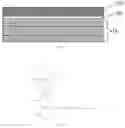
FIG. 1 is a schematic structural diagram of a floor obtained in one embodiment of the present invention;
FIG. 2 is a simplified schematic flow chart of preparing an SPC substrate board in one embodiment of the present invention.
PREFERRED EMBODIMENTS OF THE INVENTION
Preferred Modes of Implementing the Invention
Embodiment 1
A stone plastic composite (SPC) floor comprising a decorative surface, the floor comprises an SPC substrate 10, a decorative surface 20, and an adhesive layer 30 bonding the SPC substrate and the decorative surface, the decorative surface 20 being a wood board or a bamboo board, the moisture content of the decorative surface being controlled within 5-7%. The adhesive layer 30 was formed with a cold glue polyurethane adhesive by roller coating and cold pressing.
The SPC substrate was divided into an upper layer, a middle layer, and a lower layer, the main components of the upper layer and the lower layer comprising PVC resin powder and calcium carbonate, and the preferred compositions are listed in Table 1:
| TABLE 1 |
| Compositions of the upper and lower layers |
| Input amount | Input amount | Input amount | Comparative | |
| Material | in embodiment 1 | in embodiment 2 | in embodiment 3 | example 4 |
| PVC resin powder | 100 | kg | 100 | kg | 100 | kg | 100 | kg |
| Calcium carbonate | 303 | kg | 285 | kg | 270 | kg | 150 | kg |
| Calcium-zinc stabilizer | 5 | kg | 5 | kg | 5 | kg | 5 | kg |
| Composite lubricant | 0.8 | kg | 0.8 | kg | 0.7 | kg | 0.8 | kg |
| (LUBDE A380) | ||||||||
| PE wax | 1 | kg | 0.6 | kg | 0.7 | kg | 1 | kg |
| Stearic acid SP60 | 0.8 | kg | 0.5 | kg | 0.8 | kg | 0.8 | kg |
| CPE | 5 | kg | 4 | kg | 3 | kg | 15 | kg |
| ACR | 2 | kg | 2.5 | kg | 1.5 | kg | 2 | kg |
| Carbon black | 0.5 | kg | 0.5 | kg | 0.5 | kg | 0.5 | kg |
| (coloring agent) | ||||||||
The main components of the middle layer comprised PVC resin powder and calcium carbonate, with the preferred compositions listed in Table 2:
| TABLE 2 |
| Compositions of the middle layer |
| Input amount | Input amount | Input amount | Comparative | |
| Material | in embodiment 1 | in embodiment 2 | in embodiment 3 | example 4 |
| PVC resin powder | 100 | kg | 100 | kg | 100 | kg | 100 | kg |
| Calcium carbonate | 380 | kg | 365 | kg | 350 | kg | 270 | kg |
| Calcium-zinc stabilizer | 5 | kg | 4 | kg | 5 | kg | 15 | kg |
| Composite lubricant | 0.8 | kg | 0.7 | kg | 0.6 | kg | 0.8 | kg |
| (LUBDE A380) | ||||||||
| PE wax | 0.9 | kg | 0.8 | kg | 0.7 | kg | 0.9 | kg |
| Stearic acid SP60 | 0.6 | kg | 0.7 | kg | 0.7 | kg | 0.6 | kg |
| CPE | 4 | kg | 3 | kg | 3.5 | kg | 4 | kg |
| ACR | 2 | kg | 2 | kg | 15 | kg | 2 | kg |
The SPC substrate had the components listed in Tables 1-2.
In the present embodiment, as shown in FIG. 2, the method for manufacturing the floor comprised first feeding raw materials into extruder A according to the materials and input amounts listed in Table 1; and then feeding raw materials into extruder B according to Table 2. Extruder A extruded the upper and lower layers of equal mass and equal thickness at the same time, and extruder B extruded the middle layer. Then, the extrudate entered the runner distributor of the die, so that the middle layer was located between the upper layer and the lower layer, and then it entered the die orifice for extrusion into an SPC substrate. The middle layer had a thickness of 4 mm. The upper and lower layers had the same thickness of 1.0 mm.
Each extruder had a main engine barrel temperature of 200-210° C., a confluence core temperature of 160-180° C., a die temperature of 200-210° C., a main engine speed of 18-20 r/min, a feeding speed of 7-16 r/min, an extrusion speed of 1400-1450 mm/min, and a roller temperature of 175-180° C.
Thus, there was no adhesive between the upper, middle and lower layers. The board ejected from the die was pressed between a shading roller 1 and a mirror roller 2 to form shade, and the substrate was conveyed to extrusion between a mirror roller 3 and an embossing roller 4 to eject a board, which was shaped, cooled, cut, and shaped to obtain a stone plastic composite (SPC) substrate. Thus, there was no adhesive between the three layers, which is more environmentally friendly and reduces the cost of floor production.
The method for manufacturing the bamboo veneer (wooden veneer) was as follows: the bottom surface of the bamboo veneer (wooden veneer) was sanded with a 120-150 mesh sand belt until the surface became smooth and was moved into a kiln, the kiln entrance was closed for stepped heating, the heating continued after the temperature had been kept at 35° C. for 10 hours, the temperature needed to reach 50° C. within 24 hours, when the temperature had reached 50° C., spraying was performed for 3 hours, so that the humidity had a difference of 3 percent with the temperature, then, an equilibrium was maintained for 24 hours at 50° C., so that the humidity fell to have a difference of 10 percent with the temperature, then, spraying was performed for 3 hours at 50° C., so that the humidity had a difference of 5 percent with the temperature, an equilibrium was maintained for 60 hours at 50° C., so that the humidity fell to have a difference of 10 percent with the temperature, until a spot check showed that the oven-dry moisture content had reached the moisture content required for a slab, with the moisture content controlled within 5-7%. The decorative surface had a thickness of 0.5 mm-1.5 mm.
The SPC substrate and the decorative layer needed to be compounded by glue. In this embodiment, the glue is preferably cold glue polyurethanes, and Polyurethane Reactive (PUR) may also be used. The cold glue compounding process parameters of the process for laminating the SPC substrate and the decorative layer are listed in Table 3.
| TABLE 3 |
| Cold glue compounding process parameters of the process |
| for laminating the SPC substrate and decorative layer |
| Glue | Glue | Roller coating | ||
| Key point | Ratio of curing | temperature/ | amount/ | temperature/ |
| in process | agent to glue | ° C. | (g/m2) | ° C. |
| Process | 1:5 | 20-30 | 138-170 | 20-30 |
| requirement | ||||
A polyisocyanate curing agent was used as the curing agent.
The process parameters for cold pressing the SPC substrate and the decorative layer are listed in Table 4.
| TABLE 4 |
| Process parameters for cold pressing the |
| SPC substrate and the decorative layer |
| Key point | Cold | ||
| in process | Unit pressure | Temperature/° C. | pressing time |
| Process | 1.5 MPa/cm2 | 25-30 | 6 h |
| requirement | |||
SPECIFIC EMBODIMENTS
Embodiments of the Invention
Embodiment 2
This embodiment differed from embodiment 1 in the compositions of the upper layer, the middle layer, and the lower layer, details of which are listed in Tables 1-2. Each extruder had a main engine barrel temperature of 170-180° C., a confluence core temperature of 140-150° C., a die temperature of 170-210° C., a main engine speed of 18-20 r/min, a feeding speed of 7-16 r/min, an extrusion speed of 1400-1500 mm/min, and a roller temperature of 175-200° C. The middle layer had a thickness of 3 mm. The upper and lower layers had the same thickness of 1.5 mm.
Embodiment 3
This embodiment differed from embodiment 1 in the compositions of the upper layer, the middle layer, and the lower layer, details of which are listed in Tables 1-2. Each extruder had a main engine barrel temperature of 180-190° C., a confluence core temperature of 140-180° C., a die temperature of 180-190° C., a main engine speed of 18-20 r/min, a feeding speed of 7-16 r/min, an extrusion speed of 1500 mm/min, and a roller temperature of 180-185° C.
Claims
1.-10. (canceled)
11. A stone plastic composite (SPC) floor comprising a decorative surface, wherein the SPC floor comprises an SPC substrate and a decorative surface formed on the SPC substrate, the decorative surface is a wooden board or a bamboo board, and the moisture content of the decorative surface is controlled within 5-7%.
12. The stone plastic composite (SPC) floor comprising a decorative surface of claim 11, wherein the main components of the SPC substrate comprise polyvinyl chloride resin powder, calcium carbonate, a calcium-zinc stabilizer, an inner lubricant, PE wax, chlorinated polyethylene (CPE), acrylic ester (ACR), a composite lubricant, and a coloring agent.
13. The stone plastic composite (SPC) floor comprising a decorative surface of claim 12, wherein the SPC substrate is divided into an upper layer, a middle layer, and a lower layer,
wherein the components of the upper layer comprise 100 parts of polyvinyl chloride resin powder, 270-300 parts of calcium carbonate, 4-6 parts of calcium-zinc stabilizer, 0.5-1 part of inner lubricant, 0.6-1.0 part of PE wax, 2-5 parts of chlorinated polyethylene (CPE), 1-3 parts of acrylic ester (ACR), 0.5-1 part of composite lubricant, and 0.5-0.7 parts of coloring agent;
wherein the components of the middle layer comprise 100 parts of polyvinyl chloride resin powder, 350-380 parts of calcium carbonate, 4-6 parts of calcium-zinc stabilizer, 0.5-0.8 parts of inner lubricant, 0.6-0.9 parts of PE wax, 2-4 parts of chlorinated polyethylene (CPE), 1-3 parts of acrylic ester (ACR), 0.5-0.8 parts of composite lubricant, and 0.5-0.7 parts of coloring agent;
wherein the components of the lower layer comprise 100 parts of polyvinyl chloride resin powder, 270-300 parts of calcium carbonate, 4-6 parts of calcium-zinc stabilizer, 0.5-1 part of inner lubricant, 0.6-1.0 part of PE wax, 2-5 parts of chlorinated polyethylene (CPE), 1-3 parts of acrylic ester (ACR), 0.5-1 part of composite lubricant, and 0.5-0.7 parts of coloring agent.
14. The stone plastic composite (SPC) floor comprising a decorative surface of claim 12, wherein the middle layer has a thickness of 1.5 mm-4 mm.
15. The stone plastic composite (SPC) floor comprising a decorative surface of claim 14, wherein the substrate has a total thickness of 4-7 mm.
16. The stone plastic composite (SPC) floor comprising a decorative surface of claim 11, wherein the decorative surface has a thickness of 0.5-1.5 mm.
17. The stone plastic composite (SPC) floor comprising a decorative surface of claim 13, wherein the SPC substrate board is formed by co-extrusion.
18. The stone plastic composite (SPC) floor comprising a decorative surface of claim 11, wherein an adhesive layer is arranged between the decorative surface and the SPC substrate.
19. The stone plastic composite (SPC) floor comprising a decorative surface of claim 18, wherein the adhesive layer is formed by a roller coating and cold pressing process.
20. A process for preparing the stone plastic composite (SPC) floor comprising a decorative surface of claim 11, comprising the steps:
S-1. Preparing a SPC substrate board, and sanding the board to fix its thickness, thus obtaining a SPC substrate;
S-2. Laminating the decorative surface and the SPC substrate with cold glue, and performing cold pressing;
S-3. Performing surface sanding and wire drawing after the cold pressing; and
S-4. Subjecting the surface to UV treatment to obtain a finished product.
Images & Drawings included:

Sources:
- United States Patent and Trademark Office - verify current appl. status at the USPTO↗
Recent applications in this class:
- » 20210339501 2021-11-04
Thermal-Layered Veneer Product for Aircraft Interior Components - » 20180370187 2018-12-27
Connection structure of pure wood materials - » 20140295190 2014-10-02
Methods for preparing thermofused laminates - » 20120266556 2012-10-25
Floor panel and method for the manufacture thereof - » 20120260486 2012-10-18
Floor panel and method for the manufacture thereof - » 20120096792 2012-04-26
Floor panel and method for the manufacture thereof - » 15212957 2019-02-05
Bamboo laminated construction panel and method of manufacture
Recent applications for this Assignee:
- » 20250249699 2025-08-07
METHOD FOR MANUFACTURING A PANEL - » 20250249698 2025-08-07
METHOD FOR MANUFACTURING A DECORATIVE FOIL AND A PANEL COMPRISING SUCH FOIL - » 20250236751 2025-07-24
A SET OF INK FOR INKJET PRINTING A PLASTIC SUBSTRATE FOR BEING USED IN THE MANUFACTURING OF DECORATIVE PANELS, A METHOD FOR PRINTING ON A PLASTIC SUBSTRATE, A PRINTED PLASTIC SUBSTRATE AND A DECORATIVE PANEL - » 20250235894 2025-07-24
METHOD OF MANUFACTURING A PANEL - » 20250223455 2025-07-10
METHOD FOR MANUFACTURING A PANEL, A PANEL, A FOIL AND A METHOD FOR MANUFACTURING A FOIL - » 20250178344 2025-06-05
METHOD FOR PRINTING ON A DÉCOR PAPER AND/OR ON A DÉCOR FOIL - » 20250178331 2025-06-05
METHODS FOR MANUFACTURING PANELS - » 20250083470 2025-03-13
A METHOD OF MANUFACTURING A PANEL - » 20250078247 2025-03-06
METHOD FOR MANUFACTURING A DECOR SHEET FOR DECORATIVE PANEL - » 20250074094 2025-03-06
PRINTED SUBSTRATE FOR FORMULATING INK AND METHOD FOR FORMULATING INK