RASPBERRY PLANT NAMED 'ABB 135'
US20230363301P1
2023-11-09
18/445,160
2023-05-02
Abstract:
The new and distinct variety of raspberry plant variety ‘ABB 135’ is provided. The variety can be distinguished by its outstanding features of early double cropping, high productivity, light red color, and firm fruit.
Interested in similar patents?
Get notified when new applications in this technology area are published.
Classification:
A01H6/74 IPC
Angiosperms, i.e. flowering plants, characterised by their botanic taxonomy Rosaceae, e.g. strawberry, apple, almonds, pear, rose, blackberries or raspberries
Description
CROSS REFERENCE TO RELATED APPLICATIONS
This application claims the benefit of priority under 35 USC § 119 to Community Plant Variety Office (CPVO) Application No. 20221158 for Community Plant Variety Rights, filed on May 4, 2022, for a raspberry plant with a variety denomination of ‘ABB 135’, which is herein incorporated by reference in its entirety.
Latin name of the genus and species: Botanical classification: a. Genus—Rubus. b. Species—idaeus L.
Variety denomination: The new raspberry plant claimed is of the variety denominated ‘ABB 135’.
BACKGROUND OF THE INVENTION
Field of the Invention
The present invention relates to a new and distinct annual variety of raspberry plant, which has been given the variety denomination of ‘ABB 135’.
Background of the related art
Raspberries are the edible fruit of a multitude of plant species in the genus Rubus of the rose family. Most raspberry species are in the subgenus Idaeobatus. Raspberry plants are perennial plants with woody stems. Many of the most important modern commercial red raspberry cultivars derive from hybrids between R. idaeus and R. strigosus. Recent breeding has resulted in cultivars that are thornless and more strongly upright, not needing staking.
Both the red and the black raspberry species have albino like pale-yellow natural or horticultural variants. Fruits from such plants are called golden raspberries or yellow raspberries. Most pale-fruited raspberries commercially sold in the eastern United States are derivatives of red raspberries. Yellow-fruited variants of the black raspberry are sometimes grown in home gardens. Despite their dissimilar appearance, golden raspberries retain the distinctive flavor of their respective red or black species.
An individual raspberry fruit is made up of around 100 drupelets, each of which contains a juicy pulp and a single central seed. A raspberry bush can yield several hundred berries in a year. Unlike blackberries and dewberries, a raspberry has a hollow core once it is removed from the receptacle.
Raspberries are traditionally planted in the winter as dormant canes, but planting plugs produced by tissue culture is also common. Additionally, the long cane production method consists of growing canes for one year in cold climates where the bud break is early, and then transplanting the canes to warmer climates where they quickly flower and can produce an early season crop. A very vigorous crop, raspberries spread well and can be considered invasive, using extended underground shoots (also known as suckers or basal shoots) that can develop roots and individual plants.
Raspberries are a popular fruit that are recognized for their antioxidants, high fiber, and as a good source of vitamin C, Raspberry fruit is typically consumed as fresh fruit, individually quick frozen (IQF) fruit, or in prepared foods, such as purees, juices, jellies, jams, grocery items, baked goods, and snack foods.
Raspberry is an important and valuable commercial fruit crop, widely grown in all temperate regions of the world. Accordingly, there is a need for new varieties of raspberry plant. In particular, there is a need for improved varieties of raspberry plant that are stable, high yielding, and agronomically sound.
SUMMARY OF THE INVENTION
The present invention relates to a new and distinct annual variety of raspberry, which has been given the variety denomination of ‘ABB 135’ and is intended for use as fresh fruit.
The new raspberry variety is a selection resulting from a sexual cross of raspberry plants at De Kwakel in 2016, involving a seed parent known as ‘62’ (also referred to as ‘Advabertwee’, U.S. Plant Pat. No. 23,914) and a pollen parent known as ‘211150-009’(unpatented).
The selection was subsequently evaluated for a number of years at Rossum.
Asexual reproduction of the new variety by cutting propagation since 2018 at Rossum has demonstrated that the new variety reproduces true to type with all of the morphological characteristics, as herein described, firmly fixed and retained through successive generations of such asexual propagation.
Selection criteria were earliness, fruit size, fruit firmness.
The following characteristics of the new variety have been repeatedly observed and can be used to distinguish ‘ABB 135’ as a new and distinct variety of raspberry plant: early double cropping, high productivity, light red fruit color, and firm fruit.
Plants of the new variety differ from plants of the seed parent ‘62’ primarily in earliness and productivity as set forth in Table 1. As no plants of the pollen parent ‘211150-9’ exist, and there are no similar varieties, no comparison to a pollen parent can be made.
| TABLE 1 | ||||
| Similar variety | Candidate | |||
| Parental | level of | variety level | ||
| variety | Characteristics | expression | of expression | |
| ‘62’ | Terminal leaflet | Double serrate | Serrate | |
| ‘62’ | Fruit firmness | Firm | Very firm | |
| ‘62’ | Earliness | Medium-high | Very high | |
BRIEF DESCRIPTION OF THE DRAWINGS
The accompanying photographic illustrations show the typical appearance of the new variety ‘ABB 135’. The colors are as nearly true as is reasonably possible in a color representation of this type. Colors in the photographs may differ slightly from the color values cited in the detailed botanical description which accurately describes the colors of the new plant.
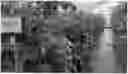
FIG. 1 is a photograph of the new variety ‘ABB 135’, demonstrating high productivity of primocane crop in summer of 2022.
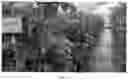
FIG. 2 is a photograph of firm fruit of new variety ‘ABB 135’.
DETAILED BOTANICAL DESCRIPTION
The following detailed description sets forth the distinctive characteristics of ‘ABB 135’. The datum which defines these characteristics was collected from asexual reproductions of the original selection. Dimensions, sizes, colors, and other characteristics are approximations and averages set forth as accurately as possible. The plant history was taken on plants approximately 18 weeks, and the descriptions relate to plants grown in Rossum, Netherlands. Color notations are in reference to the standard R.H.S. Color Chart 2015.
- Classification:
-
- a. Family.—Rosaceae.
- b. Botanical.—Rubus idaeus L.
- c. Common name.—Raspberry.
- d. Variety name.—‘ABB 135’.
-
- Parentage:
-
- a. Female parent.—‘62’(U.S. Plant Pat. No. 23,914).
- b. Male parent.—‘211150-9’.
-
PLANT
- General:
-
- a. Height.—200-240 cm.
- b. Width.—80-100 cm.
- c. Length/width ratio.—Average.
- d. Growth habit.—Upright.
- e. Primocane (current year's cane).—i. Color — Green — 135D. ii. Cane length in autumn — 200-240 cm. iii. Internodal distance at central ⅓ of cane — 7 cm. iv. Anthocyanin coloration of cane — Absent. v. Cane bloom — Very strong. vi. Time of cane emergence — Medium.
- f. Very young shoot.—i. Anthoeyanin coloration of apex during rapid growth — Weak.
- g. Floricane (previous year's cane).—i. Dormant cane color — Brown-purplish brown — 165A. ii. Fruiting lateral attitude — Semi-erect. iii. Fruiting lateral length — Medium.
- h. Prickles (spines).—i. Presence — Present. ii. Density — Medium. iii. Length at 1 inch in height at end of harvest (from base to tip) — Short. iv. Color — Purplish-brown — 59B.
- i. Fruit storage life and shipping quality.—Very good.
- j. Market use.—Fresh fruit.
- k. Hardiness zone (heat/cold tolerance).—Extremely wide range (6-10).
- l. Plant/fruit disease and pest resistance/susceptibility.—Low vulnerability for mildew and low vulnerability for spider mite.
-
LEAVES
- General:
-
- a. Predominant number of leaflets.—Equally 3 and 5.
- b. Profile of leaflets in cross section.—Straight-concave.
- c. Leaf rugosity.—Weak.
- d. Color of upper side.—Dark green — 139A.
- e. Color of lower side.—Light green-greyish green — 191B.
- f. Surface texture of upper side.—Weak rugosity.
- g. Terminal leaflet.—i. Length — Long. ii. Width — Medium. iii. Length/width ratio — Medium. iv. Margin — Serrate. v. Overall shape — Rounded oval. vi. Apex shape — Acuminate. vii. Base shape — Oval.
- h. Later leaflets.—i. Length — Long. ii. Width — Medium. iii. Length/width ratio — Medium. iv. Relative position of lateral leaflets — Touching. v. Margin — Serrate. vi. Overall shape — Rounded oval. vii. Apex shape — Acuminate. viii. Base shape — Oval.
-
FLOWERS
- General:
-
- a. Diameter.—Medium.
- b. Petal.—i. Length — Medium. ii. Width — Medium. iii. Length/width — Medium. iv. Color of upper side — 155C. v. Color of lower side — 155C.
- c. Peduncle.—i. Anthocyanin coloration — Absent.
-
FRUIT
- General:
-
- a. Length.—Long.
- b. Diameter.—Wide.
- c. Length/width ratio.—Wide.
- d. General shape in lateral view.—(Broad) conical.
- e. Color.—Light red — 34A.
- f. Glossiness.—Strong.
- g. Firmness.—Very strong.
- h. Adherence to plug.—Weak.
- i. Size of single drupe.—Small.
- j. Number of drupelets per berry.—High.
- k. Average weight per berry.—6-7 grams.
-
PRODUCTION
- General:
-
- a. Main bearing type.—Double crop.
- b. Primocane (current year's cane).—i. Time of beginning of flowering — Early. ii. Time of beginning of fruit ripening — Medium. iii. Length of fruiting period — Medium. iv. Yield — Very high.
- c. Floricane (previous year's cane).—i. Time of vegetative bud burst — Medium. ii. Time of beginning of flowering — Medium. iii. Time of beginning of fruit ripening — Medium. iv. Length of fruiting period — Medium. v. Yield — High.
-
Claims
1. A new and distinct variety of raspberry plant named ‘ABB 135’, as illustrated and described herein.
Images & Drawings included:

Sources:
- United States Patent and Trademark Office - verify current appl. status at the USPTO↗
Recent applications in this class:
- » 20240292771 2024-08-29
Campanula plant named 'Twilight' - » 20240251691 2024-07-25
HYDRANGEA PLANT NAMED 'HYLV17520' - » 20240251690 2024-07-25
Vaccinium Plant Named 'BWPBLUE02' - » 20240251689 2024-07-25
BLUEBERRY PLANT NAMED 'FC13-113' - » 20240251688 2024-07-25
BLUEBERRY PLANT NAMED 'FCM14-057' - » 20240237567 2024-07-11
PONGAMIA VARIETIES - » 20240224827 2024-07-04
PELARGONIUM PLANT NAMED 'PEQZ0103' - » 20240215470 2024-06-27
Agapanthus plant named 'Monsapho' - » 20240215469 2024-06-27
plant named ‘LOCORA3519’ - » 20240206359 2024-06-20
CORYLUS PLANT NAMED 'BWM01'