Electrospinning method for fabricating nanofiber air filter with minimized pressure drop
US20230383441A1
2023-11-30
17/932,317
2022-09-15
✅ Patent granted
US 12,180,613 B2
2024-12-31
-
-
Yunju Kim
2043-03-21
Abstract:
The present disclosure provides an electrospinning method for fabricating a nanofiber air filter with a minimized pressure drop. The method comprises following steps:S1. dissolving a specified amount of powder polymer material in a solvent, and magnetically stirring a resulting solution; adding the solution to a syringe connected with a microneedle by a plastic tube, and pumping the solution by the syringe into an electrospinning machine;S2. allowing the electrospinning machine to work under a high voltage, such that the solution generates nanofibers; the nanofibers are interweaved to fabricate air filters for removing particles in air with a particle removal efficiency η(Vm, tn) and pressure drop ΔP(Vm, tn), Vm is electrospinning voltage and tn is electrospinning time; andS3. finding optimal electrospinning voltage Vopt and optimal electrospinning time topt, such that an air filter fabricated by Vopt and topt can achieve target particle removal efficiency ηtar and minimized pressure drop ΔPmin.
Inventors:
- Chun CHEN 1 🇭🇰 Hong Kong, Hong Kong
- Zhuolun NIU 1 🇭🇰 Hong Kong, Hong Kong
- Ye BIAN 1 🇭🇰 Hong Kong, Hong Kong
- Li ZHANG 1 🇭🇰 Hong Kong, Hong Kong
Applicant:
Interested in similar patents?
Get notified when new applications in this technology area are published.
Classification:
B01D39/1623 » CPC further
Filtering material for liquid or gaseous fluids; Other self-supporting filtering material ; Other filtering material of organic material, e.g. synthetic fibres the material being fibrous of synthetic origin
B01D46/0001 » CPC further
Filters or filtering processes specially modified for separating dispersed particles from gases or vapours Making filtering elements
B01D2239/025 » CPC further
Aspects relating to filtering material for liquid or gaseous fluids; Types of fibres, filaments or particles, self-supporting or supported materials comprising nanofibres
B01D2239/10 » CPC further
Aspects relating to filtering material for liquid or gaseous fluids Filtering material manufacturing
D10B2505/04 » CPC further
Industrial Filters
D01D5/00 IPC
Formation of filaments, threads, or the like
B01D39/16 IPC
Filtering material for liquid or gaseous fluids; Other self-supporting filtering material ; Other filtering material of organic material, e.g. synthetic fibres
B01D46/00 IPC
Filters or filtering processes specially modified for separating dispersed particles from gases or vapours
B01D46/54 IPC
Filters or filtering processes specially modified for separating dispersed particles from gases or vapours Particle separators, e.g. dust precipitators, using ultra-fine filter sheets or diaphragms
D01D1/02 » CPC further
Treatment of filament-forming or like material Preparation of spinning solutions
D01D5/003 » CPC main
Formation of filaments, threads, or the like; Electro-spinning characterised by the initial state of the material the material being a polymer solution or dispersion
B01D2239/0631 » CPC further
Aspects relating to filtering material for liquid or gaseous fluids; Filter cloth, e.g. knitted, woven non-woven; self-supported material; Arrangement of the fibres in the filtering material Electro-spun
B01D46/546 » CPC further
Filters or filtering processes specially modified for separating dispersed particles from gases or vapours; Particle separators, e.g. dust precipitators, using ultra-fine filter sheets or diaphragms using nano- or microfibres
Description
RELATED APPLICATION
This patent application claims priority to Chinese Patent Application No. 202210576055.1, filed with the Chinese Patent Office on May 24, 2022, which is incorporated herein by reference in their entireties.
TECHNICAL FIELD
The present disclosure relates to the technical field of electrospinning, and in particular to an electrospinning method for fabricating a nanofiber air filter with a minimized pressure drop.
BACKGROUND
Filtration is one of the most effective methods for removing particulate air pollutants. However, with the use of traditional fibrous filters, such as high-efficiency particulate air (HEPA) filters, the pressure drop can be very high, which results in increased fan energy consumption.
To overcome this challenge, the manufacturing technique of electrospinning has been used to fabricate nanofiber air filters, which can achieve a lower pressure drop than traditional fibrous filters. However, the current electrospinning method doesn't guarantee obtaining a nanofiber air filter with the desired particle removal efficiency and a low pressure drop.
Therefore, it is worthwhile to develop an electrospinning method for fabricating nanofiber air filters with the optimal performance, i.e., under a target particle removal efficiency while pressure drop is minimized.
SUMMARY
The present disclosure provides an electrospinning method for fabricating a nanofiber air filter with a minimized pressure drop to solve the technical problem raised in the above background.
An electrospinning method for fabricating a nanofiber air comprises the following steps:
S1. dissolving a specified amount of powder polymer material in a solvent, and magnetically stirring a resulting solution; adding the solution to a syringe connected with a microneedle by a plastic tube, and pumping the solution by the syringe into an electrospinning machine;
S2. allowing the electrospinning machine to work under a high voltage, such that the solution generates nanofibers; the nanofibers are interweaved to fabricate air filters for removing particles in air with a particle removal efficiency η(Vm, tn) and pressure drop ΔP(Vm, tn), Vm is electrospinning voltage and tn is electrospinning time; and
-
- S3. finding optimal electrospinning voltage Vopt and optimal electrospinning time topt, such that an air filter fabricated by Vopt and topt can achieve target particle removal efficiency ηtar and minimized pressure drop ΔPmin.
In an embodiment, the powder polymer material is polyacrylonitrile (PAN), polyvinylidene difluoride (PVDF), polystyrene (PS), or polyvinylpyrrolidone (PVP).
In an embodiment, the microneedle is perpendicular to a rotator, the nanofibers are collected by the rotator covered by a copper mesh.
In an embodiment, the electrospinning machine prepares the nanofibers respectively under M different electrostatic spinning voltages and N different spinning time conditions; M is an integer no less than 5, N is an integer no less than 3; m is an integer no less than 1 and no larger than M, n is an integer no less than 1 and no larger than N.
In an embodiment, the pressure drop ΔP(Vm, tn) is measured by a manometer.
In an embodiment, particle concentrations of upstream flow C1 and downstream flow C2 are measured by particle counters, and the particle removal efficiency η(Vm, tn) is calculated by a following formula:
η = C 1 - C 2 C 1 × 1 0 0 % .
In an embodiment, the step of S3 comprises the following steps:
S31, drawing relationship curves between the particle removal efficiency η(Vm, tn) and the pressure drop ΔP(Vm, tn); under the same particle removal efficiency, the relationship curve which achieves the lowest pressure is an optimal condition, and corresponding electrospinning voltage Vm is the optimal voltage Vopt;
S32, selecting values of the η(Vopt, tn) and tn to fit a following polynomial function by mathematical software:
η=f(t)=1−exp(α·t+b); wherein t represents electrospinning time, η may represents particle removal efficiency, a and b are constants; and
S33, setting a target particle removal efficiency ηtar, corresponding optimal electrospinning time topt is calculated by the polynomial functionη=f(t).
In an embodiment, in the step of S31, the relationship curves are drawn in Excel software.
In an embodiment, in the step of S32, the mathematical software is MATLAB software.
In an embodiment, in the step of S1, the syringe and the microneedle are arranged vertically; the microneedle is arranged at a lower center of the syringe.
In an embodiment, in the step of S2, a Taylor cone is formed by the solution under the high voltage, and the nanofibers are continuously injected along a dynamic spiral trajectory.
BRIEF DESCRIPTION OF THE DRAWINGS
To describe the technical solutions in the embodiments of the present disclosure more clearly, the accompanying drawings required for describing the embodiments are briefly introduced below. Apparently, the accompanying drawings in the following description show merely some embodiments of the present disclosure, and those of ordinary skill in the art may still derive other accompanying drawings from these accompanying drawings without creative efforts.
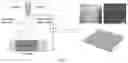
FIG. 1 is a schematic process diagram of the electrospinning method for fabricating a nanofiber air filter according to an embodiment of the present disclosure;
FIG. 2 is a schematic flowchart of the electrospinning method for fabricating a nanofiber air filter with a minimized pressure drop according to an embodiment of in the present disclosure;
FIG. 3 is a schematic flowchart of the electrospinning method for fabricating a nanofiber air filter with a minimized pressure drop shown in FIG. 2; and
FIG. 4 is a schematic flowchart of the electrospinning method for fabricating a nanofiber air filter with a minimized pressure drop according to an embodiment of the present disclosure.
DETAILED DESCRIPTION OF THE EMBODIMENTS
The technical solutions in the examples of the present disclosure will be clearly and completely described below with reference to the drawings in the examples of the present disclosure. It should be understood that the specific examples described herein are merely intended to explain the present disclosure, rather than to limit the present disclosure. It should also be noted that, for convenience of description, only the parts related to the present disclosure are shown in the accompanying drawings. All other examples obtained by a person of ordinary skill in the art based on the examples of the present disclosure without creative efforts shall fall within the protection scope of the present disclosure.
When an “example” is mentioned herein, specific features, structures, or characteristics described in conjunction with the example may be included in at least one example of the present disclosure. The phrase appearing in different parts of the specification does not necessarily refer to the same example or an independent or alternative example exclusive of other examples. It may be explicitly or implicitly appreciated by those skilled in the art that the example described herein may be combined with other examples.
As shown in FIGS. 1-4, the electrospinning method for fabricating a nanofiber air filter with a minimized pressure drop includes the following steps:
S1. dissolving a specified amount of powder polymer material in a solvent, and magnetically stirring a resulting solution; adding the solution to a syringe connected with a microneedle by a plastic tube, and pumping the solution by the syringe into an electrospinning machine;
S2. allowing the electrospinning machine to work under a high voltage, such that the solution generates nanofibers; the nanofibers are interweaved to fabricate air filters for removing particles in air with a particle removal efficiency η(Vm, tn) and pressure drop ΔP(Vm, tn), Vm is electrospinning voltage and tn is electrospinning time; and
S3. finding optimal electrospinning voltage Vopt and optimal electrospinning time topt, such that an air filter fabricated by Vopt and topt can achieve target particle removal efficiency ηtar and minimized pressure drop ΔPmin.
In addition, in the prior art, many nanofiber air filters must be fabricated under different electrospinning voltages and times and tested to find filters with different target particle removal efficiencies, which makes a nanofiber air filter fabrication process very inconvenient, time-consuming, and costly; and although many different nanofiber air filters are fabricated and tested, there is no guarantee that a minimum pressure drop will be achieved.
However, the nanofiber air filter with a minimized pressure drop can be fabricated by an electrospinning method with modeling and optimization approach.
In this embodiment, the adopted polymer materials may be polyacrylonitrile (PAN), polyvinylidene difluoride (PVDF), polystyrene (PS), polyvinylpyrrolidone (PVP), etc.
In this embodiment, the microneedle may be perpendicular to the rotator and scan linearly, the electrospun nanofibers may be collected by a metallic rotator covered by a copper mesh.
In an embodiment, in the step of S1, the syringe and the microneedle are arranged vertically; the microneedle is arranged at a lower center of the syringe. In an embodiment, in the step of S2, a Taylor cone is formed by the solution under the high voltage, and the nanofibers are continuously injected along a dynamic spiral trajectory.
In this embodiment, the electrospinning machine prepares the nanofibers respectively under M different electrostatic spinning voltages and N different spinning time conditions. M may be an integer no less than 5, N may be an integer no less than 3; m maybe an integer no less than 1 and no larger than M, n may be an integer no less than 1 and no larger than N.
In this embodiment, the pressure drop ΔP(Vm, tn) can be measured by a manometer. The particle concentrations of the upstream flow C1 and downstream flow C2 may be measured by particle counters, and the particle removal efficiency η(Vm, tn) may be calculated by the following formula:
η = C 1 - C 2 C 1 × 1 0 0 % .
In this embodiment, the relationship curves between the particle removal efficiency Vm, tn) and pressure drop ΔP(Vm, tn) of the air filter fabricated in S3 can be drawn in Excel.
In this embodiment, under the same particle removal efficiency, the curve which can achieve the lowest pressure is the optimal condition, and the corresponding electrospinning voltage Vm is the optimal voltage Vopt.
In this embodiment, the η(Vopt, tn) and tn may satisfy the following exponential function:
η=f(t)=1−exp(α·t+b), where t may represent the electrospinning time, η may represent the particle removal efficiency, a and b may represent the constants.
In this embodiment, while setting a target particle removal efficiency ηtar, the corresponding optimal electrospinning time topt that results in the minimized pressure drop may be calculated by the function η=f(t).
In this embodiment, a nanofiber air filter may be fabricated under the optimal electrospinning voltage Vop and the electrospinning time topt; and the nanofiber air filter may achieve the target particle removal efficiencyiltar at a pressure drop ΔPmin.
Referring to FIG. 3, in an embodiment, the step of S3 comprises the following steps:
S31, drawing relationship curves between the particle removal efficiency η(Vm, tn) and the pressure drop ΔP(Vm, tn); under the same particle removal efficiency, the relationship curve which achieves the lowest pressure is an optimal condition, and corresponding electrospinning voltage Vm is the optimal voltage Vopt;
S32, selecting values of the η(Vopt, tn) and tn to fit a following polynomial function by mathematical software:
η=f(t)=1−exp(α·t+b); wherein t represents electrospinning time, η may represents particle removal efficiency, a and b are constants; and
S33, setting a target particle removal efficiency ηtar, corresponding optimal electrospinning time topt is calculated by the polynomial functionη=f(t).
In an embodiment, in the step of S31, the relationship curves can be drawn in Excel software. In an embodiment, in the step of S32, the mathematical software is MATLAB software.
The above are merely implementations of the present disclosure, which do not constitute a limitation on the scope of the present disclosure. Any equivalent structure or equivalent process change made based on the description and accompanying drawings of the present disclosure, or direct or indirect application thereof in other related technical fields, should still fall within the protection scope of the present disclosure.
Claims
What is claimed is:1. An electrospinning method for fabricating a nanofiber air filter with a minimized pressure drop, comprising following steps:
S1. dissolving a specified amount of powder polymer material in a solvent, and magnetically stirring a resulting solution; adding the solution to a syringe connected with a microneedle by a plastic tube, and pumping the solution by the syringe into an electrospinning machine;
S2. allowing the electrospinning machine to work under a high voltage, such that the solution generates nanofibers; the nanofibers are interweaved to fabricate air filters for removing particles in air with a particle removal efficiency η(Vm, tn) and pressure drop ΔP(Vm, tn), Vm is electrospinning voltage and tn is electrospinning time; and
S3. finding optimal electrospinning voltage Vopt and optimal electrospinning time topt, such that an air filter fabricated by Vopt and topt can achieve target particle removal efficiency ηtar and minimized pressure drop ΔPmin.
2. The electrospinning method for fabricating a nanofiber air filter according to claim 1, the powder polymer material is polyacrylonitrile (PAN), polyvinylidene difluoride (PVDF), polystyrene (PS), or polyvinylpyrrolidone (PVP).
3. The electrospinning method for fabricating a nanofiber air filter with a minimized pressure drop according to claim 2, the microneedle is perpendicular to a rotator, and the nanofibers are collected by the rotator covered by a copper mesh.
4. The electrospinning method for fabricating a nanofiber air filter with a minimized pressure drop according to claim 3, the electrospinning machine prepares the nanofibers respectively under M different electrostatic spinning voltages and N different spinning time conditions; M is an integer no less than 5, N is an integer no less than 3; m is an integer no less than 1 and no larger than M, n is an integer no less than 1 and no larger than N.
5. The electrospinning method for fabricating a nanofiber air filter with a minimized pressure drop according to claim 4, the pressure drop ΔP(Vm, tn) is measured by a manometer.
6. The electrospinning method for fabricating a nanofiber air filter with a minimized pressure drop according to claim 5, particle concentrations of upstream flow C1 and downstream flow C2 are measured by particle counters, and the particle removal efficiency η(Vm, tn) is calculated by a following formula:
η = C 1 - C 2 C 1 × 1 0 0 % .
7. The electrospinning method for fabricating a nanofiber air filter with a minimized pressure drop according to claim 1, the step of S3 comprises the following steps:
S31, drawing relationship curves between the particle removal efficiency η(Vm, tn) and the pressure drop ΔP(Vm, tn) of the air filter fabricated; under the same particle removal efficiency, the relationship curve which achieves the lowest pressure is an optimal condition, and corresponding electrospinning voltage Vm is the optimal voltage Vopt;
S32, selecting values of the η(Vopt, tn) and tn to fit a following polynomial function by mathematical software:
η=f(t)=1−exp(α·t+b); wherein t represents electrospinning time, η may represents particle removal efficiency, a and b are constants; and
S33, setting the target particle removal efficiency ηtar, corresponding optimal electrospinning time topt is calculated by the polynomial functionη=f(t).
8. The electrospinning method for fabricating a nanofiber air filter with a minimized pressure drop according to claim 7, in the step of S31, the relationship curves are drawn in Excel software.
9. The electrospinning method for fabricating a nanofiber air filter with a minimized pressure drop according to claim 7, in the step of S32, the mathematical software is MATLAB software.
10. The electrospinning method for fabricating a nanofiber air filter with a minimized pressure drop according to claim 1, in the step of S1, the syringe and the microneedle are arranged vertically; the microneedle is arranged at a lower center of the syringe.
11. The electrospinning method for fabricating a nanofiber air filter with a minimized pressure drop according to claim 10, in the step of S2, a Taylor cone is formed by the solution under the high voltage, and the nanofibers are continuously injected along a dynamic spiral trajectory.
Images & Drawings included:



Sources:
- United States Patent and Trademark Office - verify current appl. status at the USPTO↗
Recent applications in this class:
- » 20250250717 2025-08-07
WELL-CONTROLLED ELECTROSPUN NANOSTRUCTURES AND METHODS THEREOF - » 20230037752 2023-02-09
MANUFACTURING METHOD FOR COLORED NONWOVEN FABRIC - » 20220372657 2022-11-24
Apparatus for manufacturing fibers by electrospinning - » 20220372656 2022-11-24
System for manufacturing a composite fibre structure - » 20210332500 2021-10-28
METHOD FOR MANUFACTURING POROUS ANTI-ADHESIVE FILM - » 20210324540 2021-10-21
METHODS AND SYSTEMS FOR FABRICATING NANOFIBER MATERIALS - » 20210269943 2021-09-02
Vascular constructs - » 20210238769 2021-08-05
Creating and protecting magnetic nanomaterials - » 20210207290 2021-07-08
THERMOSENSETIVE NANOFIBROUS STRUCTURE FOR EXOSOME ISOLATION - » 20210140070 2021-05-13
Nanofiber composite membrane for guided bone regeneration, and manufacturing method therefor