Process for the preparation of Indigotindisulfonate sodium (indigo carmine)
US20240076499A1
2024-03-07
18/500,247
2023-11-02
✅ Patent granted
US 12,269,954 B2
2025-04-08
-
-
Shawquia Jackson
Oblon, McClelland, Maier & Neustadt, L.L.P.
2043-11-02
Smart Summary: An improved method has been developed to create a very pure form of Indigotindisulfonate sodium, which is a chemical compound. The goal is to achieve a purity level greater than 99%, with minimal impurities. This method also produces a specific crystalline form of the compound that contains a small amount of moisture. The process includes steps to remove various impurities that can affect the quality of the final product. Overall, the new approach ensures a high-quality and pure form of Indigotindisulfonate sodium for use in various applications. 🚀 TL;DR
Abstract:
This invention relates to an improved method for the preparation of highly or substantially pure Indigotindisulfonate sodium (1). It further relates to the novel crystalline form I of Indigotindisulfonate sodium (1) and the process for its preparation.
Inventors:
- Manik Reddy Pullagurla 38 🇮🇳 Hyderabad, India
- Jagadeesh Babu Rangisetty 39 🇮🇳 Hyderabad, India
Assignee:
- PROVEPHARM LIFE SOLUTIONS S.A. 2 🇫🇷 Marseille, France
- PROVEPHARM LIFE SOLUTIONS S.A. 3 🇫🇷 Marseilles, France
Applicant:
Interested in similar patents?
Get notified when new applications in this technology area are published.
Classification:
C09B67/0025 » CPC further
Influencing the physical, e.g. the dyeing or printing properties of dyestuffs without chemical reactions, e.g. by treating with solvents grinding or grinding assistants, coating of pigments or dyes ; Process features in the making of dyestuff preparations; Dyestuff preparations of a special physical nature, e.g. tablets, films Crystal modifications; Special X-ray patterns
C09B7/02 » CPC main
Indigoid dyes Bis-indole indigos
Description
CROSS REFERENCE
This application is a continuation of U.S. patent Ser. No. 18/045,584 filed on Oct. 11, 2022, which is a continuation of U.S. patent Ser. No. 17/150,123 filed on Jan. 15, 2021, now U.S. Pat. No. 11,499,050, which is a divisional of U.S. patent Ser. No. 16/471,999 filed on Jun. 20, 2019, now U.S. Pat. No. 10,927,258, which is a National Stage entry under 35 U.S.C. § 371 of Indian Patent Application No. PCT/IN2017/050615 filed on Dec. 23, 2017, which claims priority to Indian Patent Application No. 201641044154, filed on Dec. 23, 2016. The entire contents of each are incorporated herein by reference.
FIELD OF THE INVENTION
The present invention relates to an improved process for the preparation of Indigotindisulfonate sodium (1). It further relates to novel crystalline form I of Indigotindisulfonate sodium (1) and process for its preparation.
BACKGROUND OF THE INVENTION
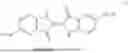
Indigotindisulfonate sodium (1) is chemically referred to as disodium 3,3′-dioxo-2,2′-bi-indolylidene-5,5′-disulfonate.
German patent DE201108, describes the synthesis of Indigotindisulfonate sodium by converting 3-(2-nitrophenyl)-2-oxopropanoic acid to (E)[2,2′-biindolinylidene]-3,3′-dione followed by reaction with sulphuric acid to provide Indigotindisulfonate sodium (1). There is no information about the purity and yield of the product.
SUMMARY OF THE INVENTION
One object of the invention is to provide purification process for preparing substantially pure Indigotindisulfonate sodium having purity greater than 99%, preferably greater than 99.5% and total impurities less than 1.0% and preferably less than 0.5%.
Yet other object of the invention is to provide an improved process for preparing crystalline form I of Indigotindisulfonate sodium containing 4-7% of moisture content.
Another object of the invention is to provide purification process to remove the process impurities which include disodium 3,3′-dioxo-[delta2,2′-biindoline]-5,7′-disulfonate of impurity A, monosodium 3,3′-dioxo-[delta 2,2′-biindoline]-5 sulfonate of impurity B and sodium 2,3-dioxoindoline-5-sulfonate of impurity C.
Another object of the invention is to provide a process for preparing substantially pure Indigotindisulfonate sodium (1) which is having total impurity level less than 1.0%; preferably less than 0.5% and impurity A level less than 0.15%, Impurity B level less than 0.15%, impurity C level less than 0.15% and any unknown impurity is controlled below 0.10%.
Accordingly, it is an object of the present invention to provide an improved process for the preparation of Indigotindisulfonate sodium (1)
The present invention for the preparation of Indigotindisulfonate sodium (1) comprises of the following steps:
-
- 1. First step involves the conversion of 2-nitrobenzaldehyde of compound (2) to 2,2′-biindolylidene-3,3′-dione of compound (3) in the presence of a base
- 2. The second step involves sulphonation of 2,2′-biindolylidene-3,3′-dione of compound (3) to form 3,3′-dioxo-[δ2,2′-biindoline]-5,5′-disulfonic acid in situ. The intermediate so formed was diluted with a mixture of suitable protic and aprotic solvents and treated with a suitable sodium salt to yield crude (Indigotindisulfonate sodium 1),
- 3. The final step involves the purification of the obtained Indigotindisulfonate sodium (1) to isolate a crystalline compound (1)
According to this invention, there is provided a simple procedure for the purification of Indigotindisulfonate sodium (1) by avoiding distillation and other techniques using high temperatures.
Indigotindisulfonate sodium (1) obtained in the above procedure is having purity greater than 99% (by HPLC) and is devoid of the reaction impurities A, B and C, preferably greater than 99.5% and total impurities less than 1.0% and preferably less than 0.5%.
Another object of the invention is to provide Indigotindisulfonate sodium (1) with elemental purity i.e. lead level less than 0.5 ppm and Arsenic level less than 1.5 ppm, preferably combination of lead and arsenic is less than 2 ppm.
BRIEF DESCRIPTION OF THE DRAWINGS
FIG. 1: illustrates the X-Ray powder diffraction pattern (XRPD) of Indigotindisulfonate sodium (1)
FIG. 2: illustrates the infrared (IR) spectrum of Indigotindisulfonate sodium (1)
FIG. 3: illustrates the differential scanning calorimetry (DSC) of Indigotindisulfonate sodium (1)
DETAILED DESCRIPTION OF THE INVENTION
The present invention relates to an improved process for the preparation of Indigotindisulfonate sodium (1) in substantially pure form.
Another object of the invention relates to the process for the preparation of substantially pure form of Indigotindisulfonate sodium (1) with purity greater than 99%, preferably greater than 99.5%.
The detailed process involves:
-
- a) Treating 2-nitrobenzaldehyde of compound (2) with suitable base to obtain 2,2′-biindolylidene-3,3′-dione of compound (3). The unknown impurities observed in the reaction product at this stage are optionally removed by purification.
-
- b) Converting 2,2′-biindolylidene-3,3′-dion of compound (3) in to Indigotindisulfonate sodium of compound (1) by treating with sulphuric acid in the absence of solvent at temperature ranging from 20 to 35° C. followed by treatment with suitable base. The compound 1 is isolated by adjusting pH to not less than 13.
-
- c) Purifying the crude Indigotindisulfonate sodium of compound (1) obtained above by recrystallizing from suitable solvents to provide pure Indigotindisulfonate sodium (1)
Wherein, in step a) suitable base is selected from the group comprising sodium hydroxide, sodium carbonate, sodium bicarbonate or the like; solvent is selected from acetone, DM water or mixtures thereof. For removal of impurities solvents are selected from acetone, methanol and Dimethylformamide or mixtures thereof.
In step b) sulphuric acid is used as the reagent; solvents used for the quenching of the reaction mass are methanol, methyl-t-butyl ether and ethyl acetate.
In step c) Indigotindisulfonate sodium is further purified from the solvents selected from group comprising alcohols like methanol, ethanol, isopropyl alcohol, n-butanol; water; acetonitrile; tetrahydrofuran; acetone; ethyl acetate; dichloromethane or mixtures thereof.
In one aspect, the present invention provides a purification process to produce substantially pure Indigotindisulfonate sodium (1) devoid of the below impurities A, B and C by HPLC analysis.
The purification process comprises the following steps:
-
- i) Suspending crude Indigotindisulfonate sodium obtained in step-b in suitable solvents selected from a group comprising of protic or aprotic solvents or the mixtures thereof.
- ii) Heating the suspension to 60-65° C.
- iii) Cooling the suspension to 20-25° C.
- iv) Filtering the suspension and washing with a suitable protic solvent at 20-25° C. to isolate crystalline form I of Indigotindisulfonate sodium (1)
- v) Optionally repeating the above process with mixture of solvents to increase the purity of Indigotindisulfonate sodium (1)
Wherein the protic or aprotic solvents used in the above purification process are selected from the group consisting of water, methanol, ethanol, isopropyl alcohol, n-butanol, acetonitrile, tetrahydrofuran, acetone, ethyl acetate, dichloromethane or mixtures thereof.
Most preferable solvents used in the above purification process were selected from a group comprising of water, methanol and acetone or mixtures thereof; the ratio of solvent mixture preferably used ranged from (methanol 7:DM water 5:acetone 3) and (methanol 3.5:DM water 2.5:acetone 1.5)
The present invention facilitates the easy removal of many undesired impurities and maintains the pH of the product between 3.0 to 6.5 by providing high purity Indigotindisulfonate sodium (1).
Indigotindisulfonate sodium (1) obtained by the above purification is having moisture content 4-7% as measured by Karl Fischer analysis
Indigotindisulfonate sodium (1) obtained by the purification process of the present invention is substantially pure and has purity greater than 99%, preferably greater than 99.5% and total impurities less than 1.0% and preferably less than 0.5%.
Indigotindisulfonate sodium (1) obtained by the purification process of the present invention is substantially pure and has purity greater than 99%, preferably greater than 99.5% measured by HPLC and which comprises Lead less than 0.5 ppm and Arsenic less than 1.5 ppm, which forms another object of the invention.
Indigotindisulfonate sodium (1) obtained by the purification process of the present invention is comprising total impurities less than 1.0% and preferably less than 0.5%, measured by HPLC and combination of lead and Arsenic metals less than 2 ppm.
In addition, Indigotindisulfonate sodium salt (1) synthesized according to the present invention is having metal impurities as shown in table-2 and forms yet another object of the invention.
The crystalline form I of Indigotindisulfonate sodium (1) obtained after purification is characterized by the X-Ray powder diffraction (XRPD) pattern as shown in FIG. 1 and tablet, infrared (IR) spectrum as shown in FIG. 2 and the differential scanning calorimetry (DSC) as shown in FIG. 3
| TABLE 1 |
| X-Ray diffraction data of Indigotindisulfonate sodium (1) |
| 2 Theta | Relative intensity | |
| S. no | ° C. | I/I0 % |
| 1. | 5.801 | 46.5 |
| 2. | 10.03 | 9.4 |
| 3. | 10.55 | 5.8 |
| 4. | 11.67 | 100 |
| 5. | 14.4 | 22.9 |
| 6. | 15.37 | 55.7 |
| 7. | 16.92 | 6.1 |
| 8. | 17.62 | 72.3 |
| 9. | 18.33 | 5.3 |
| 10. | 20.31 | 97.1 |
| 11. | 20.97 | 19.2 |
| 12. | 21.96 | 8.5 |
| 13. | 23.07 | 8.5 |
| 14. | 24.03 | 22.6 |
| 15. | 24.72 | 25.1 |
| 16. | 26.54 | 93.7 |
| 17. | 27.16 | 23.6 |
| 18. | 27.62 | 8.6 |
| 19. | 27.80 | 6.9 |
| 20. | 28.65 | 28.5 |
| 21. | 29.01 | 15.1 |
| 22. | 29.66 | 7.3 |
| 23. | 30.87 | 54.6 |
| 24. | 32.83 | 10 |
| 25. | 33.06 | 14.2 |
| 26. | 33.62 | 10.6 |
| 27. | 35.39 | 12.8 |
| 28. | 37.99 | 11.6 |
| 29. | 38.8 | 6.2 |
| 30. | 40.97 | 18.7 |
| 31. | 43.36 | 8.4 |
| 32. | 43.77 | 5.9 |
| 33. | 46.93 | 6.9 |
| 34. | 48.76 | 5.3 |
| 35. | 48.99 | 5.8 |
| TABLE 2 | |||
| Elemental results | ICH safety | ||
| of Indigo carmine | limit | ||
| S. No. | Element | (ppm) | (ppm) |
| 1. | Cadmium | 0.001 | 0.2 |
| 2. | Mercury | Not Detected | 0.3 |
| 3. | Cobalt | 0.041 | 0.5 |
| 4. | Vanadium | 0.075 | 1 |
| 5. | Nickel | 2.038 | 5 |
| 6. | Thallium | Not Detected | 0.8 |
| 7. | Gold | 0.000 | 10 |
| 8. | Palladium | 0.002 | 1 |
| 9. | Iridium | Not Detected | 1 |
| 10. | Osmium | 0.001 | 1 |
| 11. | Rhodium | Not Detected | 1 |
| 12. | Ruthenium | Not Detected | 1 |
| 13. | Selenium | Not Detected | 8 |
| 14. | Silver | Not Detected | 1 |
| 15. | Platinum | Not Detected | 1 |
| 16. | Lithium | Not Detected | 25 |
| 17. | Antimony | 0.001 | 9 |
| 18. | Barium | Not Detected | 70 |
| 19. | Molybdenum | 0.454 | 150 |
| 20. | Copper | 0.101 | 30 |
| 21. | Tin | Not Detected | 60 |
| 22. | Chromium | 13.133 | 110 |
The following examples further illustrate the present invention, but should not be construed in any way as to limit its scope.
EXAMPLES
Example-1
Preparation of 2,2′-biindolylidene-3,3′-dione (Compound 3)
To a clean and dry RB flask, 1000 mL of acetone, 500 mL of DM water and 100 g of 2-nitrobenzaldehyde were charged and cooled to 0-5° C. To this 500 mL (1M) of aqueous sodium hydroxide solution was added at 0-5° C. and the reaction mass was stirred for 3-4 hrs at 25-30° C. After completion of the reaction, the reaction mass was filtered under vacuum and the solid obtained was washed with 500 mL of DM water and 200 mL of methanol. The intermediate 2,2′-biindolylidene-3,3′-dione (Compound 3) obtained in this contains more than 3% of unknown impurities.
Purification Process to Remove Unknown Impurities:
The obtained solid was heated in a mixture of 700 mL acetone and 300 mL methanol for 4-5 hrs at 55-60° C. Then the reaction mixture was cooled to 25-30° C. and filtered under vacuum. The obtained solid was filtered and washed with a mixture of acetone and methanol (1:1). The solid was heated in a mixture of 700 mL of acetone and 300 mL of methanol for 4-5 hrs at 55-60° C. Then the reaction mixture was cooled to 25-30° C. and filtered the solid under vacuum.
The solid so obtained was stirred in 1000 mL of methanol for 1-2 hrs at 25-30° C. and filtered under vacuum at 25-30° C. Further the solid was washed with 100 mL of methanol and dried for 8-10 hrs at 60-65° C. To this, 10 volumes of dimethyl formamide was added and stirred for 1 hr at 100-110° C. The mixture was then cooled to 50-55° C., filtered and washed the solid with 2 volumes of methanol and 1 volume of acetone. The solid so obtained was dried under vacuum at 60-65° C.
Yield: 18-21%
Purity: 96% (HPLC)
Chromatographic Conditions:
-
- Column: Inertsil ODS 3V, 4.6×250 mm, 5μ
- Wavelength: 285 nm
- Flow Rate: 1.0 mL/min
- Column Temp.: 25° C.
- Injection volume: 20 μL
- Run time: 55 min
- Flow mode: Gradient
Example-2
Preparation of Indigotindisulfonate Sodium (Crude Compound 1)
To a clean and dry round bottom flask, 1500 mL of sulphuric acid and 100 g of 2,2′-biindolylidene-3,3′-dione (Compound 3) were charged. Then the reaction mixture was stirred for 1 hr at 25-30° C. After completion of reaction, the reaction mixture was quenched/diluted with pre-cooled mixture of methanol (54 volumes), methyl-t-butyl ether (34 volumes) and ethyl acetate (2 volumes) solvents at 5-10° C. The reaction mixture was stirred for 30 minutes and filtered under vacuum at 5-10° C. The obtained solid was washed with 500 mL of chilled methanol and suck dried for 2-3 hrs. 1000 mL of DM water was added to the solid and passed through micron filter, to the filtrate 1000 mL of methanol was charged and cooled to 5-10° C. Then the pH of the solution was adjusted to not less than 13 using aqueous sodium hydroxide solution. The precipitated solid was filtered and washed with 500 mL of chilled methanol at 5-10° C. to obtain crude Indigotindisulfonate sodium of compound (1) (pH: NLT 13)
Yield: 60%
Purity: 95-98%
Example-3
Purification of Indigotindisulfonate Sodium (Compound 1)
-
- i) The crude Indigotindisulfonate sodium solid compound (1) obtained in example 2 was taken in a round bottom flask and charged 7 volumes of methanol, 5 volumes of DM water (Demineralized water) and 3 volumes of acetone. The reaction mixture was heated for 4-5hrs at 60-65° C., cooled and stirred for 1-2 hrs at 20-25° C. The obtained solid was filtered and washed with 1 volume of methanol then suck dried for 2-3 hrs.
- ii) Optionally, the solid obtained in step i) was heated in a mixture of 3.5 volumes methanol, 2.5 volumes of DM water and 1.5 volumes of acetone for 4-5 hrs at 60-65° C. Then the mixture was cooled to 20-25° C. and stirred for 1-2 hrs. The solid was filtered and washed with 1 volume of methanol then suck dried for 2-3 hrs.
- iii) Again, the obtained solid in step ii), optionally was taken in a mixture of 3 volumes of DM water and 1.5 volumes of methanol at 25-30° C. The reaction mixture was heated for 4-5 hrs at 60-65° C., cooled and stirred for 1-2 hrs at 20-25° C. The product was filtered and washed with methanol then suck dried under vacuum for 1-2 hrs.
- iv) Optionally, the solid obtained in step i), ii) or iii) was taken in 1.5 volumes of DM water and stirred for 8-10 hrs at 25-30° C., to this 0.5 volume of methanol was added and stirred for 1-2 hrs. Then the solid was filtered and suck dried under vacuum for 1-2 hrs. Then the final solid was dried under vacuum at 65-70° C. until LOD complies. (Yield: 28-32%, Purity by HPLC: 99.9%, Assay: 99%, pH: 3-6.5)
- v) Optionally, the solid obtained in step i), ii) or iii) was dissolved in 2 volumes of DM water at 25-30° C., and stirred for 8-10 hrs. 1 volume of methanol was then added and stirred for 1-2 hrs at 20-25° C. The solid so formed was filtered and washed with 0.5volume of methanol and dried for 10-12 hrs at 65-70° C. until LOD and pH complies. If the LOD and the pH is not in the limit, then the material was stirred in 3 volumes of water and I volume of methanol for 1-2 hrs at 25-30° C. The solid so obtained was washed with methanol, dried under vacuum. (pH: 3-6.5, LOD: NMT 5.0%)
- Yield: 28-32%
- Purity by HPLC: 99.9%
- Assay: 99.0%
- Arsenic: 0.01 ppm
- Lead: 0.02 ppm
Chromatographic Conditions:
A High-Performance Liquid Chromatography equipped with Ultraviolet Spectrophotometer as detector and an auto sampler.
-
- Column: Inertsil ODS 3V (4.6×250 mm, 5μ)
- Wave length: 245 nm
- Flow Rate: 1.0 mL/min
- Injection volume: 10 μL
- Run time: 60 min
- Column temperature: Ambient
- Flow mode: Gradient
- Diluent: Water
Claims
1. A process for preparing Indigotindisulfonate sodium having a purity greater than 99.0%, comprising:
treating a 2-nitrobenzaldehyde with a base to give a 2,2′-biindolylidene-3,3′-dione;
converting the 2,2′-biindolylidene-3,3′-dione into crude Indigotindisulfonate sodium by treating with sulphuric acid; and
purifying the crude Indigotindisulfonate sodium by recrystallizing from suitable solvents to provide pure Indigotindisulfonate sodium.
2. The process as claimed in claim 1, wherein the base is selected from the group consisting of sodium hydroxide, sodium carbonate and sodium bicarbonate.
3. The process as claimed in claim 1, wherein the converting is carried out in an absence of a solvent at a temperature ranging from 20 to 35° C.
4. The process as claimed in claim 1, wherein in the converting a reaction is quenched with a solvent selected from methanol, methyl-t-butyl ether, ethyl acetate and mixtures thereof.
5. The process as claimed in claim 1, wherein in the converting the crude Indigotindisulfonate sodium is isolated by adjusting a pH to not less than 13.
6. The process as claimed in claim 5, wherein the pH is adjusted using sodium hydroxide.
7. The process as claimed in claim 1, further comprising purifying the 2,2′-biindolylidene-3,3′-dione prior to the converting.
8. The process as claimed in claim 7, wherein the purifying the 2,2′-biindolylidene-3,3′-dione is carried out by treatment in solvents selected from acetone, methanol, dimethyl formamide and mixtures thereof.
9. The process as claimed in claim 7, wherein the purifying the 2,2′-biindolylidene-3,3′-dione is carried out by recrystallisation from solvents selected from acetone, methanol, dimethyl formamide and mixtures thereof.
10. The process as claimed in claim 8, wherein the purifying the 2,2′-biindolylidene-3,3′-dione comprises:
suspending the 2,2′-biindolylidene-3,3′-dione in a mixture of methanol and acetone;
heating the suspension to 55-60° C.;
cooling the suspension to 25-30° C.; and
filtering the suspension and washing with a mixture of methanol and acetone and/or with methanol at 20-25° C. to isolate pure 2,2′-biindolylidene-3,3′-dione.
11. The process as claimed in claim 10, wherein the purifying further comprises:
suspending the pure 2,2′-biindolylidene-3,3′-dione in dimethyl formamide;
heating the suspension to 100-110° C.;
cooling the suspension to 50-55° C.; and
filtering the suspension and washing with a mixture of methanol and acetone at 20-25° C. to isolate a purified 2,2′-biindolylidene-3,3′-dione.
12. The process as claimed in claim 1, wherein the suitable solvents are selected from the group consisting of water, methanol, ethanol, isopropanol, n-butanol, acetonitrile, tetrahydrofuran, acetone, ethyl acetate, dichloromethane and mixtures thereof.
13. The process as claimed in claim 12, wherein the purifying comprises:
suspending the crude Indigotindisulfonate sodium in the suitable solvents;
heating the suspension to 60-65° C.;
cooling the suspension to 20-25° C.;
filtering the suspension and washing with a suitable protic solvent at 20-25° C., to isolate a crystalline form of Indigotindisulfonate sodium; and
optionally repeating the process with a mixture of solvents to increase the purity of Indigotindisulfonate sodium.
14. The process as claimed in claim 13, wherein the suitable solvents in the suspending are selected from the group consisting of water, methanol and acetone or mixtures thereof.
15. The process as claimed in claim 14, wherein a volume ratio of a solvent mixture ranges from 7 to 3.5 for methanol, from 5 to 2.5 for DM water, and from 3 to 1.5 for acetone.
16. The process as claimed in claim 13, wherein the suitable protic solvent is methanol.
17. The process as claimed in claim 1, wherein the Indigotindisulfonate sodium has a purity greater than 99.5%.
18. The process as claimed in claim 1, wherein the Indigotindisulfonate sodium has a purity of 99.9%.
19. The process as claimed in claim 1, wherein the Indigotindisulfonate sodium comprises one or more of the following:
less than 0.15% of impurity A by HPLC at 245 nm;
less than 0.15% of impurity B by HPLC at 245 nm;
less than 0.15% of impurity C by HPLC at 245 nm; and
less than 2 ppm of arsenic and lead combined.
20. The process as claimed in claim 1, wherein the Indigotindisulfonate sodium has a crystalline form characterized by an X-ray powder diffraction (XRPD) pattern presenting at least peaks at 11.67, 20.31 and 26.54 degrees 2 theta±0.2 degrees 2 theta.
21. The process as claimed in claim 20, wherein the X-ray powder diffraction (XRPD) pattern presents further peaks at 5.80, 15.37 and 17.62 degrees 2 theta±0.2 degrees 2 theta.
22. The process as claimed in claim 21, wherein the X-ray powder diffraction (XRPD) pattern presents further peaks at 14.4, 20.97, 24.03, 24.72, 27.16, 28.65 and 40.97 degrees 2 theta±0.2 degrees 2 theta.
23. A process for purifying Indigotindisulfonate sodium comprising:
suspending crude Indigotindisulfonate sodium in suitable solvents selected from the group consisting of protic solvents, aprotic solvents, and mixtures thereof;
heating the suspension to 60-65° C.;
cooling the suspension to 20-25° C.;
filtering the suspension and washing with a suitable protic solvent at 20-25° C., to isolate a crystalline form of Indigotindisulfonate sodium; and
optionally repeating the process with a mixture of solvents to increase a purity of Indigotindisulfonate sodium.
24. The process as claimed in claim 23, wherein the suitable solvents in the suspending are selected from the group consisting of water, methanol, ethanol, isopropanol, n-butanol, acetonitrile, tetrahydrofuran, acetone, ethyl acetate, dichloromethane and mixtures thereof.
25. The process as claimed in claim 24, wherein the suitable solvents in the suspending are selected from the group consisting of water, methanol and acetone or mixtures thereof.
26. The process as claimed in claim 25, wherein a volume ratio of a solvent mixture ranges from 7 to 3.5 for methanol, from 5 to 2.5 for DM water, and from 3 to 1.5 for acetone.
27. The process as claimed in claim 23, wherein the suitable protic solvent is methanol.
Images & Drawings included:



Sources:
- United States Patent and Trademark Office - verify current appl. status at the USPTO↗
Similar patent applications:
Recent applications in this class:
- » 20230193038 2023-06-22
METHODS OF DIGITAL PRINTING USING MODIFIED INDIGO COMPOUNDS - » 20230093526 2023-03-23
Process for the preparation of indigotindisulfonate sodium (indigo carmine) - » 20210403718 2021-12-30
Modified Indigo Compounds and Methods of Dyeing a Substrate Using a Modified Indigo Compound - » 20210206978 2021-07-08
Process for the preparation of indigotindisulfonate sodium (indigo carmine) - » 20200283632 2020-09-10
PROCESS FOR PREPARING INDIGO CARMINE - » 20200207988 2020-07-02
Genetically modified microorganism and method for producing indigo dye - » 20200172734 2020-06-04
METHODS OF MAKING LEUCOINDIGO SALT SOLUTIONS WITH VERY LOW ANILINE CONTENT - » 20200017689 2020-01-16
Process for the preparation of Indigotindisulfonate sodium (indigo carmine) - » 20190292370 2019-09-26
Process for preparing indigo carmine - » 20190256710 2019-08-22
Modified indigo compounds and methods of dyeing a substrate using a modified indigo compound
Recent applications for this Assignee:
- » 20230093526 2023-03-23
Process for the preparation of indigotindisulfonate sodium (indigo carmine) - » 20230093526 2023-03-23
Process for the preparation of indigotindisulfonate sodium (indigo carmine) - » 20210206978 2021-07-08
Process for the preparation of indigotindisulfonate sodium (indigo carmine)