METAL SULFIDE NEGATIVE MATERIAL OF SODIUM ION BATTERY AND PREPARATION METHOD THEREOF
US20240101441A1
2024-03-28
18/265,872
2022-08-11
✅ Patent granted
US 11,939,230 B1
2024-03-26
WO; PCT/CN2022/111807; 20220811
WO; WO2023/071394; 20230504
Tanisha Diggs
MYERS WOLIN, LLC
2042-08-11
Smart Summary: A new type of negative material for sodium ion batteries is made from metal sulfides like zinc sulfide or copper sulfide. This material consists of tiny particles that are very small, ranging from 5 to 500 nanometers in size, and has a porous structure. To create this material, a mixed solution is first made using stannous chloride and a metal salt, along with a substance called polyvinylpyrrolidone. After adding a reaction gas and allowing the mixture to age, a solid precipitate forms. Finally, this precipitate is soaked in a special solution to produce the final metal sulfide material for the battery. 🚀 TL;DR
Abstract:
A metal sulfide negative material of a sodium ion battery and a preparation method thereof. The material has porous nanoparticles with a particle size of 5 nm to 500 nm, and the metal sulfide negative material of the sodium ion battery is at least one of zinc sulfide or copper sulfide. The preparation method includes the steps of preparing a mixed solution of stannous chloride and metal salt, adding polyvinylpyrrolidone into the mixed solution to obtain a solution A, introducing reaction gas into the solution A, aging after the reaction to obtain a precipitate, and soaking the precipitate in a persulfide solution to obtain the metal sulfide sodium ion battery negative material.
Inventors:
- Changdong LI 51 🇨🇳 Guangdong, China
- Haijun YU 42 🇨🇳 Guangdong, China
- Yinghao XIE 40 🇨🇳 Guangdong, China
- Xuemei ZHANG 26 🇨🇳 Guangdong, China
- Yinghao XIE 56 🇨🇳 Foshan, Guangdong, China
- Haijun YU 56 🇨🇳 Foshan, Guangdong, China
- Changdong LI 90 🇨🇳 Foshan, Guangdong, China
- Aixia LI 50 🇨🇳 Foshan, Guangdong, China
- Xuemei ZHANG 42 🇨🇳 Foshan, Guangdong, China
- Aixia Li 33 🇨🇳 Guangdong, China
Assignee:
- HUNAN BRUNP EV RECYCLING CO., LTD. 15 🇨🇳 Changsha, China
- HUNAN BRUNP RECYCLING TECHNOLOGY CO., LTD. 45 🇨🇳 Changsha, Hunan, China
- GUANGDONG BRUNP RECYCLING TECHNOLOGY CO., LTD. 44 🇨🇳 Foshan, Guangdong, China
- HUNAN BRUNP EV RECYCLING CO., LTD. 26 🇨🇳 Changsha, Hunan, China
- HUNAN BRUNP RECYCLING TECHNOLOGY CO., LTD. 52 🇨🇳 Hunan, China
- GUANGDONG BRUNP RECYCLING TECHNOLOGY CO., LTD. 52 🇨🇳 Guangdong, China
Applicant:
Interested in similar patents?
Get notified when new applications in this technology area are published.
Classification:
H01M4/5815 » CPC further
Electrodes; Electrodes composed of, or comprising, active material; Selection of substances as active materials, active masses, active liquids of inorganic compounds other than oxides or hydroxides, e.g. sulfides, selenides, tellurides, halogenides or LiCoF; of polyanionic structures, e.g. phosphates, silicates or borates; Chalcogenides or intercalation compounds thereof Sulfides
C01G9/08 » CPC further
Compounds of zinc Sulfides
C01P2004/03 » CPC further
Particle morphology depicted by an image obtained by SEM
C01P2004/62 » CPC further
Particle morphology; Particles characterised by their size Submicrometer sized, i.e. from 0.1-1 micrometer
C01P2004/64 » CPC further
Particle morphology; Particles characterised by their size Nanometer sized, i.e. from 1-100 nanometer
C01P2004/82 » CPC further
Particle morphology; Particles consisting of a mixture of two or more inorganic phases two phases having the same anion, e.g. both oxidic phases
C01P2006/40 » CPC further
Physical properties of inorganic compounds Electric properties
H01M2004/027 » CPC further
Electrodes; Electrodes composed of, or comprising, active material characterised by the polarity Negative electrodes
H01M4/58 IPC
Electrodes; Electrodes composed of, or comprising, active material; Selection of substances as active materials, active masses, active liquids of inorganic compounds other than oxides or hydroxides, e.g. sulfides, selenides, tellurides, halogenides or LiCoF; of polyanionic structures, e.g. phosphates, silicates or borates
C01G3/12 » CPC main
Compounds of copper Sulfides
H01M10/054 » CPC further
Secondary cells; Manufacture thereof; Accumulators with non-aqueous electrolyte Accumulators with insertion or intercalation of metals other than lithium, e.g. with magnesium or aluminium
H01M2004/021 » CPC further
Electrodes; Electrodes composed of, or comprising, active material Physical characteristics, e.g. porosity, surface area
H01M4/02 IPC
Electrodes Electrodes composed of, or comprising, active material
Description
CROSS-REFERENCE TO RELATED APPLICATION
This application is a national stage filing under 35 U.S.C. § 371 of international application number PCT/CN2022/111807, filed Aug. 11, 2022, which claims priority to Chinese patent application No. 202111259839.3 filed Oct. 28, 2021. The contents of these applications are incorporated herein by reference in their entirety.
TECHNICAL FIELD
The present disclosure belongs to the technical field of sodium ion batteries, and particularly relates to a metal sulfide negative material of a sodium ion battery and a preparation method thereof.
BACKGROUND
Negative materials are one of the key factors affecting the electrochemical performances of sodium ion batteries. However, when graphite widely used in commercial lithium ion batteries is used as the negative material of the sodium ion battery, the sodium storage capacity of the sodium ion battery is low (35 mAh/g) and the cycle stability of the sodium ion battery is poor. This is mainly because that the radius (0.102 nm) of sodium ions is larger than that of lithium ions (0.076 nm), and the intercalation/deintercalation process of the sodium ions between graphite layers easily destroys the structure of the graphite. It is urgent for us to find other suitable negative materials for the sodium ion batteries. Metal oxides and metal sulfides are widely used negative materials for sodium ion batteries at present. Compared with the metal oxides, the reversible deintercalation process and cycle stability of the sulfides are both higher. Because the metal sulfur bonds in the metal sulfides are more conducive to a conversion reaction, the metal sulfides are conducive to the storage of sodium.
In recent years, due to the high theoretical capacity, the metal sulfides have attracted extensive attention as negative materials for the sodium ion batteries. Moreover, the metal sulfides have some unique advantages when used as sodium storage materials. 1. The metal sulfides belong to layered structure materials and are easy to form two-dimensional laminated structures. 2. The Van der Waals force between the metal sulfide layers is weak, which inhibits the metal sulfide layers to stack in the direction of a c axis, thus reducing the thickness of the material and thus shortening the diffusion distance of Na+. 3. The metal sulfides have large interlayer spacing, which is conducive to the diffusion of Na+ between the metal sulfide layers.
The laminated transition metal sulfides have attracted the attention and favor of many researchers due to high conductivity, high theoretical specific capacity and suitable redox potential thereof, as well as advantages thereof in mechanical stability, thermodynamic stability and structural stability. Many transition metal sulfides have been reported as negative materials one after another. Laminated disulfide usually undergoes a Na+ deintercalation reaction at high potentials, and then undergoes a conversion reaction at low potentials, generating metal elements M and Na2S, wherein some material, such as SnS2, also undergoes an alloying reaction at lower potentials.
However, the low conductivity of the laminated metal sulfides and the large volume change (about 340%) during the process of charging and discharging often lead to poor cycle performances.
SUMMARY
The present disclosure aims at solving at least one of the above-mentioned technical problems in the existing technology. Therefore, the present disclosure provides a metal sulfide negative material of a sodium ion battery and a preparation method thereof.
According to one aspect of the present disclosure, a metal sulfide negative material of a sodium ion battery is proposed. The material has porous nanoparticles with a particle size of 5 nm to 500 nm, and the metal sulfide negative material of the sodium ion battery is at least one of zinc sulfide or copper sulfide.
The present disclosure further provides a preparation method of the metal sulfide negative material of the sodium ion battery, including the following steps of:
-
- S1: preparing a mixed solution of stannous chloride and metal salt, wherein the metal salt is at least one of zinc salt or copper salt;
- S2: adding polyvinylpyrrolidone into the mixed solution to obtain a solution A;
- S3: introducing reaction gas into the solution A, wherein the reaction gas is a mixed gas of hydrogen sulfide and nitrogen, aging after the reaction, and performing solid-liquid separation to obtain a precipitate; and
- S4: soaking the precipitate into a persulfide solution, and performing solid-liquid separation, then washing and drying an obtained solid, thus obtaining the metal sulfide negative material of the sodium ion battery; wherein the persulfide solution is a solution of one or two of sodium persulfate and ammonium persulfate.
In some embodiments of the present disclosure, in step S1, a pH of the mixed metal salt solution is less than or equal to 1.
In some embodiments of the present disclosure, wherein in step S1, a concentration of the stannous chloride in the mixed solution ranges from 0.01 mol/L to 1 mol/L, and a metal ion concentration of the metal salt ranges from 0.1 mol/L to 2 mol/L.
In some embodiments of the present disclosure, in step S1, the metal salt is at least one of copper chloride, zinc chloride, copper sulfate, or zinc sulfate.
In some embodiments of the present disclosure, in step S2, a concentration of the polyvinylpyrrolidone in the solution A ranges from 5 g/L to 20 g/L.
In some embodiments of the present disclosure, in step S2, the polyvinylpyrrolidone is at least one of K30 or K60.
In some embodiments of the present disclosure, in step S3, a volume ratio of the hydrogen sulfide to the nitrogen is (0.001 to 1):1; and a flow rate of the mixed gas is 1 times to 5 times of a volume of the solution A per hour.
In some embodiments of the present disclosure, in step S3, the aging lasts for 1 hour to 48 hours.
In some embodiments of the present disclosure, in step S4, a concentration of the persulfide solution ranges from 0.1 mol/L to 1 mol/L; and the soaking lasts for 1 hour to 24 hours.
In some embodiments of the present disclosure, in step S4, when the solid does not contain copper, after washing and drying, the solid is further carbonized as follows: adding the solid into a carbon source solution for hydrothermal reaction, and performing thermal treatment in an inert atmosphere after the reaction, thus obtaining the metal sulfide negative material of the sodium ion battery. Through the carbonization treatment, a supporting carbon skeleton structure is formed inside and outside the particle, thus further improving the strength and conductivity of the particle.
In some embodiments of the present disclosure, in step S4, the washing is to wash with deionized water first and then wash with ethanol or acetone.
In some embodiments of the present disclosure, in step S4, the drying is vacuum drying and performed at a temperature of 50° C. to 80° C., and the drying lasts for 2 hours to 12 hours.
In some embodiments of the present disclosure, in step S4, a concentration of the carbon source solution ranges from 0.05 g/mL to 2 g/mL; and the carbon source in the carbon source solution is at least one of glucose, starch, sucrose, fructose, lactose or galactose.
In some embodiments of the present disclosure, in step S4, the thermal treatment is performed at a temperature of 200° C. to 550° C.; and the thermal treatment lasts for 1 hour to 12 hours.
In some embodiments of the present disclosure, in step S4, a solid-liquid ratio of the solid to the carbon source solution is 1 g:(1 to 10) mL.
In some embodiments of the present disclosure, in step S4, the hydrothermal reaction is performed at a temperature of 150° C. to 200° C., and the reaction lasts for 2 hours to 5 hours.
According to a preferred embodiment of the present disclosure, the present disclosure has at least the following beneficial effects.
1. According to the present disclosure, after the salt solutions of zinc and copper is mixed with the stannous chloride, coprecipitation is realized under the action of the hydrogen sulfide to prepare eutectic nanoparticles of stannous sulfide and zinc sulfide/copper sulfide, and the particles are soaked in sodium persulfate/ammonium persulfate to remove the stannous sulfide, leaving only the zinc sulfide/copper sulfide in the particles, thus obtaining the porous nanoparticles. The sodium persulfate/ammonium persulfate is used to dissolve the stannous sulfide, and the reaction equation is: SnS+(NH4)2S2→(NH4)2SnS3.
2. By adding the polyvinylpyrrolidone, the present disclosure plays a role of co-complexing the metal ions, so that Sn2+ and Zn2+/Cu2+ achieve the purpose of co-precipitation, and the yield of the precipitation reaction is slowed down, so that the crystallinity of the material is better. In order to avoid the hydrolysis of the stannous chloride and increase the solubility of the stannous chloride, it is preferable to prepare the mixed solution at a lower pH.
3. The mixed gas of hydrogen sulfide and nitrogen is used as the reaction gas to further control the concentration of the hydrogen sulfide, thereby controlling the rate of the precipitation reaction and making the crystallinity of the material better.
4. The negative material is nano-scale and has a porous structure, and in the process of charging and discharging, the internal porous structure of the negative material cannot only buffer a volume change caused in the process of charging and discharging, but also increase a contact area between an electrode and an electrolyte, and has high capacity and excellent cycle and rate performances.
BRIEF DESCRIPTION OF DRAWINGS
The present disclosure will be further explained with reference to the accompanying drawings and embodiments hereinafter, wherein:
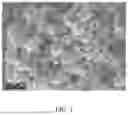
FIG. 1 is an SEM graph of a negative material having porous CuS nanoparticles prepared in Embodiment 1 of the present disclosure.
DETAILED DESCRIPTION
The concepts and the technical effects produced of the present disclosure will be clearly and completely described in conjunction with the embodiments so as to sufficiently understand the objects, the features and the effects of the present disclosure. Obviously, the described embodiments are merely some embodiments of the disclosure, rather than all the embodiments. Other embodiments obtained by those skilled in the art without going through any creative effort shall all fall within the protection scope of the disclosure.
Embodiment 1
In this embodiment, a CuS negative material of a sodium ion battery was prepared. As shown in FIG. 1, the appearance of the negative material had porous nanoparticles with a particle size of 30 nm to 50 nm. The specific preparation process was as follows:
-
- (1) preparing a mixed solution of stannous chloride and copper chloride, wherein a pH of the mixed solution was less than or equal to 1, a concentration of the stannous chloride was 0.05 mol/L, and a concentration of the copper chloride was 0.5 mol/L;
- (2) adding polyvinylpyrrolidone —K30 into the mixed solution to obtain a solution A, wherein a concentration of the polyvinylpyrrolidone in the solution A was 10 g/L;
- (3) under constant stirring, introducing reaction gas into the solution A, wherein the reaction gas was a mixed gas of hydrogen sulfide and nitrogen, a volume ratio of the hydrogen sulfide to the nitrogen was 0.01:1, and a flow rate of the reaction gas was 3 times of a volume of the solution A per hour;
- (4) after the reaction was completed, stopping introducing the reaction gas, aging for 24 hours, and performing solid-liquid separation to collect a precipitate;
- (5) soaking the precipitate into 0.5 mol/L sodium persulfate solution for 24 hours, after solid-liquid separation, washing the solid with deionized water and then washing with acetone; and
- (6) after washing, performing vacuum drying at 60° C. for 8 hours to prepare the porous CuS nanoparticles as the negative material of the sodium ion battery.
Embodiment 2
In this embodiment, a ZnS negative material of a sodium ion battery was prepared. The appearance of the negative material had porous nanoparticles with a particle size of 50 nm to 80 nm. The specific preparation process was as follows:
-
- (1) preparing a mixed solution of stannous chloride and zinc chloride, wherein a pH of the mixed solution was less than or equal to 1, a concentration of the stannous chloride was 0.01 mol/L, and a concentration of the zinc chloride was 1 mol/L;
- (2) adding polyvinylpyrrolidone —K60 into the mixed solution to obtain a solution A, wherein a concentration of the polyvinylpyrrolidone in the solution A was 15 g/L;
- (3) under constant stirring, introducing reaction gas into the solution A, wherein the reaction gas was a mixed gas of hydrogen sulfide and nitrogen, a volume ratio of the hydrogen sulfide to the nitrogen was 0.05:1, and a flow rate of the reaction gas was 2 times of a volume of the solution A per hour;
- (4) after the reaction was completed, stopping introducing the reaction gas, aging for 48 hours, and performing solid-liquid separation to collect a precipitate;
- (5) soaking the precipitate into 1 mol/L ammonium persulfate solution for 12 hours, after solid-liquid separation, washing the solid with deionized water and then washing with acetone;
- (6) after washing, performing vacuum drying at 60° C. for 8 hours; and
- (7) after drying, adding the solid into 2 g/mL glucose solution for hydrothermal reaction, wherein the hydrothermal reaction was performed at a solid-liquid ratio of 1 g: 1 mL and a reaction temperature of 200° C., and lasted for 2 hours, and after the reaction was finished, reacting for 5 hours at 500° C. in an inert atmosphere to obtain the negative material of the sodium ion battery with a chemical formula of ZnS/C.
Embodiment 3
In this embodiment, a CuS—ZnS negative material of a sodium ion battery was prepared. The appearance of the negative material had porous nanoparticles with a particle size of 40 nm to 60 nm. The specific preparation process was as follows:
-
- (1) preparing a mixed solution of stannous chloride, copper chloride and zinc chloride, wherein a pH of the mixed solution was less than or equal to 1, a concentration of the stannous chloride was 0.05 mol/L, and concentrations of the copper chloride and the zinc chloride were both 0.5 mol/L;
- (2) adding polyvinylpyrrolidone —K30 into the mixed solution to obtain a solution A, wherein a concentration of the polyvinylpyrrolidone in the solution A was 20 g/L;
- (3) under constant stirring, introducing reaction gas into the solution A, wherein the reaction gas was a mixed gas of hydrogen sulfide and nitrogen, a volume ratio of the hydrogen sulfide to the nitrogen was 0.02:1, and a flow rate of the reaction gas was 1 times of a volume of the solution A per hour;
- (4) after the reaction was completed, stopping introducing the reaction gas, aging for 24 hours, and performing solid-liquid separation to collect a precipitate;
- (5) soaking the precipitate into 0.5 mol/L sodium persulfate solution for 24 hours, after solid-liquid separation, washing the solid with deionized water and then washing with acetone; and
- (6) after washing, performing vacuum drying at 80° C. for 2 hours to prepare the porous CuS—ZnS nanoparticles as the negative material of the sodium ion battery.
Experiment
The negative materials of the sodium ion batteries prepared in Embodiments 1 to 3 and the corresponding sulfides were used to prepare negative plates of sodium ion batteries respectively and assembled into button batteries, which were tested under a current density of 100 mA/g and a voltage range of 0.4 V to 2.6 V. The results were shown in Table 1.
| TABLE 1 | ||
| Capacity per gram | Capacity per gram | |
| mAh/g after first | mAh/g after 100th | |
| Embodiments | charging and discharging | charging and discharging |
| Embodiment 1 | 435.1 | 421.6 |
| Embodiment 2 | 546.7 | 533.7 |
| Embodiment 3 | 450.5 | 438.3 |
| Capacity per gram | Capacity per gram | |
| Comparative | mAh/g after first | mAh/g after 50th |
| Examples | charging and discharging | charging and discharging |
| Copper sulfide | 415.6 | 392.9 |
| Zinc sulfide | 510.8 | 481.7 |
The embodiments of the present disclosure are described in detail with reference to the drawings above, but the present disclosure is not limited to the above embodiments, and various changes may also be made within the knowledge scope of those of ordinary skills in the art without departing from the purpose of the present disclosure. In addition, in case of no conflict, the embodiments in the application and the features in the embodiments may be combined with each other.
Claims
1. (canceled)
2. A preparation method of a metal sulfide negative material of a sodium ion battery, comprising the following steps of:
S1: preparing a mixed solution of stannous chloride and metal salt, wherein the metal salt is at least one of zinc salt or copper salt;
S2: adding polyvinylpyrrolidone into the mixed solution to obtain a solution A;
S3: introducing reaction gas into the solution A, wherein the reaction gas is a mixed gas of hydrogen sulfide and nitrogen, aging after the reaction, and performing solid-liquid separation to obtain a precipitate; and
S4: soaking the precipitate into a persulfide solution, and performing solid-liquid separation, then washing and drying an obtained solid, thus obtaining the metal sulfide negative material of the sodium ion battery; wherein the persulfide solution is a solution of one or two of sodium persulfate and ammonium persulfate,
wherein the metal sulfide negative material of the sodium ion battery has porous nanoparticles with a particle size of 5 nm to 500 nm, and the metal sulfide negative material of the sodium ion battery is at least one of zinc sulfide or copper sulfide.
3. The preparation method according to claim 2, wherein in step S1, a concentration of the stannous chloride in the mixed solution ranges from 0.01 mol/L to 1 mol/L, and a metal ion concentration of the metal salt ranges from 0.1 mol/L to 2 mol/L.
4. The preparation method according to claim 2, wherein in step S1, the metal salt is at least one of copper chloride, zinc chloride, copper sulfate, or zinc sulfate.
5. The preparation method according to claim 2, wherein in step S2, a concentration of the polyvinylpyrrolidone in the solution A ranges from 5 g/L to 20 g/L.
6. The preparation method according to claim 2, wherein in step S3, a volume ratio of the hydrogen sulfide to the nitrogen is (0.001 to 1):1; and a flow rate of the mixed gas is 1 times to 5 times of a volume of the solution A per hour.
7. The preparation method according to claim 2, wherein in step S4, a concentration of the persulfide solution ranges from 0.1 mol/L to 1 mol/L; and the soaking lasts for 1 hour to 24 hours.
8. The preparation method according to claim 2, wherein in step S4, when the solid does not contain copper, after washing and drying, the solid is further carbonized as follows: adding the solid into a carbon source solution for hydrothermal reaction, and performing thermal treatment in an inert atmosphere after the reaction, thus obtaining the metal sulfide negative material of the sodium ion battery.
9. The preparation method according to claim 8, wherein in step S4, a concentration of the carbon source solution ranges from 0.05 g/mL to 2 g/mL; and the carbon source in the carbon source solution is at least one of glucose, starch, sucrose, fructose, lactose or galactose.
10. The preparation method according to claim 8, wherein in step S4, the thermal treatment is performed at a temperature of 200° C. to 550° C.; and the thermal treatment lasts for 1 hour to 12 hours.
Images & Drawings included:

Sources:
- United States Patent and Trademark Office - verify current appl. status at the USPTO↗
Recent applications in this class:
- » 20250236532 2025-07-24
PROCESS OF EXTRACTING DELETERIOUS SUBSTANCES, AND PRODUCT OBTAINED THROUGH THE PROCESS OF EXTRACTING DELETERIOUS SUBSTANCES - » 20200290887 2020-09-17
Method for synthesizing copper sulfide nano powder using plasma synthesis - » 20200216327 2020-07-09
Method for separating copper from nickel and cobalt - » 20170275177 2017-09-28
System and method for controlling frothing during atmospheric leaching of metal sulphides using silicates - » 20170253493 2017-09-07
Dimensionally focused nanoparticle synthesis methodology - » 20150060729 2015-03-05
Method for producing a sulphided copper sorbent - » 20120190975 2012-07-26
Nanoparticles for use in tumor diagnosis and therapy - » 20120045387 2012-02-23
Porous copper sulfide nano/micro hollow sphere and method for preparing the same - » 20090239073 2009-09-24
Porous copper sulfide nano/micro hollow sphere and method for preparing the same - » 17875703 2023-04-18
Method of making copper sulfide electrode material
Recent applications for this Assignee:
- » 20250121410 2025-04-17
ULTRASONIC VIBRATING SCREEN - » 20250121410 2025-04-17
ULTRASONIC VIBRATING SCREEN - » 20250091021 2025-03-20
PROCESSING DEVICE FOR LITHIUM BATTERY POSITIVE ELECTRODE MATERIAL - » 20250091021 2025-03-20
PROCESSING DEVICE FOR LITHIUM BATTERY POSITIVE ELECTRODE MATERIAL - » 20250079544 2025-03-06
METHOD FOR RECYCLING AND TREATING ELECTROLYTIC SOLUTION OF LITHIUM ION BATTERY - » 20250079544 2025-03-06
METHOD FOR RECYCLING AND TREATING ELECTROLYTIC SOLUTION OF LITHIUM ION BATTERY - » 20250079444 2025-03-06
HIGH-VOLTAGE TERNARY POSITIVE ELECTRODE MATERIAL AND PREPARATION METHOD THEREOF - » 20250079444 2025-03-06
HIGH-VOLTAGE TERNARY POSITIVE ELECTRODE MATERIAL AND PREPARATION METHOD THEREOF - » 20250033977 2025-01-30
METHOD OF PREPARING HARD CARBON ANODE MATERIAL AND USE THEREOF - » 20250033977 2025-01-30
METHOD OF PREPARING HARD CARBON ANODE MATERIAL AND USE THEREOF