A METHOD FOR PRODUCING A HEAT SEALABLE MULTI-LAYER PAPERBOARD AND A HEAT SEALABLE MULTI-LAYER PAPERBOARD OBTAINABLE BY THE METHOD
US20240102247A1
2024-03-28
18/257,807
2021-12-08
Smart Summary: A new method creates a special type of paperboard that can be sealed with heat. This paperboard has a coating made from a specific latex binder called polyvinyl acetate acrylate, which helps it seal better than other types of coatings. After this initial coating, the paperboard is covered with water-based barrier layers to protect it. The result is a paperboard that maintains good sealing properties while also being resistant to moisture and other elements. Overall, this method improves both the sealing ability and durability of the paperboard. 🚀 TL;DR
Abstract:
Disclosed are methods for producing heat sealable multilayer paperboards including precoating layer including polyvinyl acetate acrylate latex binder and one or more water-based barrier layers. Heat sealability of the multilayer paperboard was significantly better than heat-sealability of a multilayer paperboard wherein the precoating was omitted or wherein the precoating incudes typical binders such as styrene butadiene latex or styrene acrylate latex but no polyvinyl acetate acrylate latex. Also disclosed are heat sealable multilayer paperboards obtainable by the method and use of polyvinyl acetate acrylate latex in precoating composition for improving heat sealability of a multi-layer paperboard.
Inventors:
- Päivi MIETTINEN 3 🇫🇮 Espoo, Finland
- Mia AHOKAS 3 🇫🇮 Espoo, Finland
- Jaana HEINONEN 3 🇫🇮 Espoo, Finland
- Heidi KEIHOLA 1 🇫🇮 Espoo, Finland
- Gun LUNDSTEN 1 🇫🇮 Espoo, Finland
Applicant:
Interested in similar patents?
Get notified when new applications in this technology area are published.
Classification:
D21H19/822 » CPC main
Coated paper ; Coating material; Paper comprising more than one coating superposed two superposed coatings, both being pigmented
C09D5/022 » CPC further
Coating compositions, e.g. paints, varnishes or lacquers, characterised by their physical nature or the effects produced ; Filling pastes; Emulsion paints including aerosols Emulsions, e.g. oil in water
C09D5/028 » CPC further
Coating compositions, e.g. paints, varnishes or lacquers, characterised by their physical nature or the effects produced ; Filling pastes; Emulsion paints including aerosols characterised by the additives Pigments; Filters
B65D65/42 » CPC further
Wrappers or flexible covers; Packaging materials of special type or form; Packaging materials of special type or form Applications of coated or impregnated materials
C09D5/26 » CPC further
Coating compositions, e.g. paints, varnishes or lacquers, characterised by their physical nature or the effects produced ; Filling pastes Thermosensitive paints
C09D7/61 » CPC further
Features of coating compositions, not provided for in group ; Processes for incorporating ingredients in coating compositions; Additives non-macromolecular inorganic
C09D7/65 » CPC further
Features of coating compositions, not provided for in group ; Processes for incorporating ingredients in coating compositions; Additives macromolecular
C09D109/08 » CPC further
Coating compositions based on homopolymers or copolymers of conjugated diene hydrocarbons; Copolymers with styrene Latex
C09D131/04 » CPC further
Coating compositions based on homopolymers or copolymers of compounds having one or more unsaturated aliphatic radicals, each having only one carbon-to-carbon double bond, and at least one being terminated by an acyloxy radical of a saturated carboxylic acid, of carbonic acid, or of a haloformic acid ; Coating compositions based on derivatives of such polymers; Homopolymers or copolymers of esters of monocarboxylic acids Homopolymers or copolymers of vinyl acetate
C09D133/062 » CPC further
Coating compositions based on homopolymers or copolymers of compounds having one or more unsaturated aliphatic radicals, each having only one carbon-to-carbon double bond, and at least one being terminated by only one carboxyl radical, or of salts, anhydrides, esters, amides, imides, or nitriles thereof; Coating compositions based on derivatives of such polymers; Homopolymers or copolymers of esters of esters containing only carbon, hydrogen and oxygen, the oxygen atom being present only as part of the carboxyl radical Copolymers with monomers not covered by
D21H19/54 » CPC further
Coated paper ; Coating material; Coatings with pigments characterised by the other ingredients, e.g. the binder or dispersing agent Starch
D21H19/58 » CPC further
Coated paper ; Coating material; Coatings with pigments characterised by the other ingredients, e.g. the binder or dispersing agent; Macromolecular organic compounds or oligomers thereof obtained by reactions only involving carbon-to-carbon unsaturated bonds Polymers or oligomers of diolefins, aromatic vinyl monomers or unsaturated acids or derivatives thereof
D21H19/60 » CPC further
Coated paper ; Coating material; Coatings with pigments characterised by the other ingredients, e.g. the binder or dispersing agent; Macromolecular organic compounds or oligomers thereof obtained by reactions only involving carbon-to-carbon unsaturated bonds Polyalkenylalcohols; Polyalkenylethers; Polyalkenylesters
B65D2565/382 » CPC further
Wrappers or flexible covers; Packaging materials of special type or form; Packaging materials of special type or form; Details of packaging materials of special type or form made of special paper
D21H19/82 IPC
Coated paper ; Coating material; Paper comprising more than one coating superposed
B65D65/40 » CPC further
Wrappers or flexible covers; Packaging materials of special type or form; Packaging materials of special type or form Applications of laminates for particular packaging purposes
C09D5/02 IPC
Coating compositions, e.g. paints, varnishes or lacquers, characterised by their physical nature or the effects produced ; Filling pastes Emulsion paints including aerosols
C09D133/06 IPC
Coating compositions based on homopolymers or copolymers of compounds having one or more unsaturated aliphatic radicals, each having only one carbon-to-carbon double bond, and at least one being terminated by only one carboxyl radical, or of salts, anhydrides, esters, amides, imides, or nitriles thereof; Coating compositions based on derivatives of such polymers; Homopolymers or copolymers of esters of esters containing only carbon, hydrogen and oxygen, the oxygen atom being present only as part of the carboxyl radical
D21H19/40 » CPC further
Coated paper ; Coating material; Coatings with pigments characterised by the pigments siliceous, e.g. clays
D21H27/10 » CPC further
Special paper not otherwise provided for, e.g. made by multi-step processes Packing paper
Description
BACKGROUND OF THE INVENTION
Field of the Invention
The present invention relates to methods for producing heat sealable multi-layer paperboard, in particular to methods comprising precoating the paperboard with coating color composition comprising polyvinyl acetate acrylate. The invention relates also to heat sealable multi-layer paperboards obtainable by the method.
Description of the Related Art
Heat is kinetic energy transfer made by the motion of molecules from one medium to another. Energy transfer in hot bar sealing is by conduction, and in hot air sealing by radiation and convection. In hot bar sealing heat is transferred from metal bars and the heat transfer is fastened by simultaneous pressure. In ultrasonic sealing, the tools will remain cold and sealing is generated by internal friction. Heat transfer in hot air sealing is controlled by the motion of molecules separately in each barrier and base substrate layer and their interface and depends on the heat transfer coefficient and heat capacity. To ensure high seal strength, the hot air has to transfer quickly through the whole material, so the use of tacky Water Based Barrier Coatings (WBBCs) and blocking can be avoided.
Thermal diffusivity increases when conductivity increases and specific heat capacity and density decreases. Pristine materials have their specific thermal properties, but things become very different when the materials are mixed together. When mixing water-based binders with mineral fillers, porosity increases with decreasing densities of the WBBC. Air filled pores on the other hand act as insulation and on the other hand interconnected pores allow air and heat to flow through the entire network. Also pore size and distribution will affect heat transfer through WBBC. Increasing latex amount in WBBC will reduce the number of pores creating a more compact structure. Both latex and air have much lower intrinsic thermal conductivity values than mineral fillers, but the reduction in the pore volume (i.e., porosity) is more significant than the increase in the latex volume. In addition, having smaller pores in the coating layer means that the mineral filler particles have a higher chance to be connected, creating a better channel for heat transfer.
Fast heat transfer is essential in hot air sealability of Water Based Barrier coated board substrate. WBBC's are used in disposable materials, such as disposable cups, instead of PE plastic. To achieve as good barrier protection properties with WBBC's as with PE plastic, the barrier film on the top of the board must be even without any pinholes to prevent moisture, water, oil and grease and chemical migration. Converting properties such as hot air sealing is normally made by soft barrier films, which cause the risk for blocking at all production and converting stages. Although higher porosity in barrier coated material is essential for good hot air sealing that cannot be done in top barrier layer without losing of barrier properties.
Different binders such as styrene butadiene (SB), styrene acrylate (SA) and polyvinyl acetate (PVAc), are used in coating pre layer (a.k.a coating color composition) in multilayer barrier solutions under WBBC layers. Main target to use precoating layer is to improve smoothness of base board to ensure even barrier layer for proper barrier properties. However, the precoating may reduce the speed of the heat transfer and thus the multi-layer coated paperboards may not be hot air sealed in reasonable temperatures. A lot of heat energy is used firstly to vaporize tightly tied water molecules, before the barrier coated board starts to warm up. Accordingly, there is still need for WBBC coated paperboards with good heat-sealing properties.
SUMMARY OF THE INVENTION
The following presents a simplified summary to provide a basic understanding of some aspects of various invention embodiments. The summary is not an extensive overview of the invention. It is neither intended to identify key or critical elements of the invention nor to delineate the scope of the invention. The following summary merely presents some concepts of the invention in a simplified form as a prelude to a more detailed description of exemplifying embodiments of the invention.
In the present invention it was observed that when a paperboard was first precoated with a coating colour composition comprising polyvinyl acetate acrylate latex followed by coating the precoated paperboard with one or more water-based barrier compositions, good heat sealing properties without losing important barrier properties could be obtained.
In accordance with the invention, there is provided a new method for producing a heat sealable multi-layer paperboard, the method comprising:
-
- a) providing a paperboard comprising a first side and a second side,
- b) coating at least the first side with a coating colour composition comprising
- 100 parts of pigments selected from calcium carbonate, titanium dioxide, gypsum, clay, chalk, satin white, barium sulphate, sodium aluminium hydroxide, talc, kaolin, bentonite, and combinations thereof,
- 10-20 parts of one or more binders comprising polyvinyl acetate acrylate latex, wherein the polyvinyl acetate acrylate latex comprises 30-100% by dry weight of the one or more binders,
- 0-5 parts of polyvinyl alcohol,
- 0-5 parts of one or more additives selected from a group consisting of preservatives, dispersing agents, defoaming agents, thickeners, lubricants, hardeners, pH modifiers and optical brighteners,
- water,
- c) drying the coating colour composition thereby producing a precoated paperboard,
- d) coating at least the precoated first side with a first aqueous polymer dispersion comprising
- 40-60% by dry weight pigments selected from calcium carbonate, titanium dioxide, gypsum, clay, chalk, satin white, barium sulphate, sodium aluminium hydroxide, talc, kaolin, bentonite, and combinations thereof,
- 40-60% by dry weight one or more binders comprising synthetic polymers selected from polymer latexes provided that the one or more binders do not comprise polyvinyl acetate acrylate latex,
- 0-5% by dry weight polyvinyl alcohol,
- 0-5% by dry weight one or more additives selected from a group consisting of preservatives, dispersing agents, defoaming agents, thickeners, lubricants, hardeners, pH modifiers and optical brighteners,
- e) drying the first aqueous polymer dispersion thereby producing the multi-layer paperboard.
In accordance with the invention, there is also provided a heat sealable multi-layer paperboard obtainable by a method according to any one of claims 1-11.
In accordance with the invention, there is also provided a new use of polyvinyl acetate acrylate latex in coating colour composition for improving heat sealability of a multi-layer paperboard.
A number of exemplifying and non-limiting embodiments of the invention are described in accompanied dependent claims.
Various exemplifying and non-limiting embodiments of the invention both as to constructions and to methods of operation, together with additional objects and advantages thereof, will be best understood from the following description of specific exemplifying and non-limiting embodiments when read in connection with the accompanying drawings.
The verbs “to comprise” and “to include” are used in this document as open limitations that dependent claims are mutually freely combinable unless otherwise explicitly stated. Furthermore, it is to be understood that the use of “a” or “an”, i.e., a singular form, throughout this document does not exclude a plurality.
BRIEF DESCRIPTION OF THE DRAWINGS
FIG. 1 illustrates an exemplary paperboard (100) which first side (101a) comprises a precoating layer (102) and two water-based barrier layers (103,104) and which second side (101b) comprises one water-based barrier layer (105).
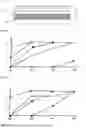
FIG. 2 shows seal strength as a function of sealing temperature (first side-second side) light triangle: precoating composition comprises SB+VAcA, calendared; dark triangle: VAcA; square: SB, light circle: SA; black circle: no precoat.
FIG. 3 shows seal strength as a function of sealing temperature (first side-first side) dark triangle: VAcA; square: SB, light circle: SA; black circle: no precoat.
DETAILED DESCRIPTION
The specific examples provided in the description below should not be construed as limiting the scope and/or the applicability of the accompanied claims. Lists and groups of examples provided in the description are not exhaustive unless otherwise explicitly stated.
According to one embodiment the precent invention concerns a method for producing a heat sealable paperboard, the method comprising
-
- a) providing a paperboard comprising a first side and a second side,
- b) coating the first side with a coating colour composition comprising
- 100 parts of pigments,
- 10-20 parts of one or more binders comprising polyvinyl acetate acrylate latex, wherein the polyvinyl acetate acrylate latex comprises 30-100% by dry weight of the one or more binders,
- 0-5 parts of polyvinyl alcohol,
- 0-5 parts of one or more additives selected from a group consisting of preservatives, dispersing agents, defoaming agents, thickeners, lubricants, hardeners, pH modifiers and optical brighteners,
- water,
- c) drying the composition thereby producing a precoated paperboard,
- d) coating at least the precoated first side with a first aqueous polymer dispersion comprising
- 40-60% by dry weight pigments,
- 40-60% by dry weight one or more binders provided that the one or more binders do not comprise polyvinyl acetate acrylate latex,
- 0-5% by dry weight polyvinyl alcohol,
- 0-5% by dry weight one or more additives selected from a group consisting of preservatives, dispersing agents, defoaming agents, thickeners, lubricants, hardeners, pH modifiers and optical brighteners,
- e) drying the first aqueous polymer dispersion thereby producing the multi-layer paperboard.
According to a preferable embodiment the method further comprises
-
- f) coating the first side of the multilayer paperboard with a second aqueous polymer dispersion comprising
- 40-60% by dry weight pigments,
- 40-60% by dry weight one or more binders provided that the one or more binders do not comprise polyvinyl acetate acrylate latex and that the binder composition differs from binder composition of the first aqueous polymer dispersion,
- 0-5% by dry weight polyvinyl alcohol,
- 0-5% by dry weight one or more additives selected from a group consisting of preservatives, dispersing agents, defoaming agents, thickeners, lubricants, hardeners, pH modifiers and optical brighteners, and
- g) drying the second aqueous dispersion.
- f) coating the first side of the multilayer paperboard with a second aqueous polymer dispersion comprising
The polyvinyl acetate acrylate is preferably polyvinyl acetate butyl acrylate. The one of more binders of the coating colour composition may comprise further synthetic polymers preferably selected from styrene butadiene latex, styrene acrylate latex, ethylene vinyl acetate latex, and vinyl acetate latex, preferably styrene butadiene latex and styrene acrylate latex, most preferably styrene butadiene latex.
According to one embodiment the coating colour composition aka a precoating composition comprises styrene butadiene latex and polyvinyl acetate acrylate latex. According to this embodiment the polyvinyl acetate acrylate (VAcA):styrene butadiene (SB) ratio is typically 1:1 by weight.
According to another embodiment the coating colour composition comprises styrene acrylate (SA) and polyvinyl acetate acrylate. According to this embodiment the VAcA:SA ratio is typically 1:1 by weight.
The coating colour composition comprises typically 1-100 parts per hundred (pph) VAcA latex. An exemplary coating colour composition comprises 100 (pph) pigments, 10 pph SB latex, 10 pph VAcA latex, 0.6 pph polyvinyl alcohol (PVA), and preferably also thickener and base such as NaOH. Exemplary amount of thickener and NaOH in the coating colour composition is 0.2 pph and 0.1 pph, respectively. Another exemplary coating colour composition comprises 100 (pph) pigments, 10 pph SA latex, 10 pph VAcA latex, 0.6 pph polyvinyl alcohol (PVA), and preferably also thickener and base such as NaOH. Exemplary amount of thickener and NaOH in the coating colour composition is 0.2 pph and 0.1 pph, respectively. Component amounts are as pph, by weight based on 100 parts of pigments.
The pigments of the coating colour composition are typically selected calcium carbonate, titanium dioxide, gypsum, chalk, satin white, barium sulphate, sodium aluminium hydroxide, talc, kaolin, bentonite, and combinations thereof. The pigments are preferably platy particles. Solid content of the coating colour composition is typically 20-80% by dry weight.
The first aqueous polymer dispersion i.e., the first WBBC composition comprises pigments and one or more binders, provided that the binders do not include polyvinyl acetate acrylate latex. The pigments of the first aqueous polymer dispersion are typically selected from calcium carbonate, titanium dioxide, gypsum, chalk, satin white, barium sulphate, sodium aluminium hydroxide, talc, kaolin, bentonite, and combinations thereof. The pigments are preferably platy particles. Solid content of the first aqueous dispersion is typically 20-80% by dry weight.
The one or more binders of the first aqueous polymer dispersion comprise synthetic polymers preferably selected from polymer latexes. Exemplary polymer latexes are styrene butadiene latex, styrene acrylate latex, ethylene vinyl acetate latex, and vinyl acetate latex. Preferable latex binder is styrene acrylate latex.
The first aqueous polymer dispersion comprises preferably also one or more biopolymers which are preferably selected from starch, proteins, and carboxy methyl cellulose, more preferably starch. The first aqueous may also comprise additives such as dispersion thickeners, lubricants, defoamers, dispersants, surfactants, and pH modifiers.
The second aqueous polymer dispersion i.e., the second WBBC composition comprises pigments and one or more binders, provided that the binders do not include polyvinyl acetate acrylate latex and that the binder composition differs from the binder composition of the first aqueous polymer dispersion. The pigments of the second aqueous dispersion composition are typically selected calcium carbonate, titanium dioxide, gypsum, chalk, satin white, barium sulphate, sodium aluminium hydroxide, talc, kaolin, bentonite, and combinations thereof. The pigments are preferably platy particles. Solid content of the second aqueous dispersion is typically 20-80% by dry weight.
The one or more binders of the second aqueous polymer dispersion comprise synthetic polymers preferably selected from polymer latexes. Exemplary polymer latexes are styrene butadiene latex, styrene acrylate latex, ethylene vinyl acetate latex. Preferable latex binder is styrene acrylate latex. According to a preferable embodiment one or more latexes of the second aqueous polymer dispersion are core shell latexes. An exemplary core shell latex is styrene acrylate core shell latex. When the binders comprise core shell latexes the coating is harder than a coating which polymer latexes do not include core shell.
The second aqueous polymer dispersion comprises preferably also one or more biopolymers which are preferably selected from starch, proteins, and carboxy methyl cellulose, more preferably starch. The second aqueous may also comprise additives such as dispersion thickeners, lubricants, defoamers, dispersants, surfactants, and pH modifiers.
According to a preferable embodiment the first aqueous polymer dispersion does not include core shell latexes and the second aqueous polymer dispersion includes core shell latexes. According to this embodiment the coating obtainable by using the first and the second aqueous polymer dispersion is elastic and hard, respectively.
FIG. 1 shows an exemplary heat sealable multilayer paperboard 100 obtained by a method of the present invention. The first side 101a is coated with a precoat 102 (3-7 g/m2) followed by an elastic WBBC 103 (3-7 g/m2) to reduce cracking. The top layer consists of an anti-blocking WBBC 104 (3-7 g/m2) comprising core shell latex. The second side 101b is coated with an elastic WBBC 105 (3-5 g/m2) to improve sealing properties.
According to another embodiment the present invention concerns use of polyvinyl acetate acrylate latex in coating colour composition for improving heat sealability of a multi-layer paperboard. The coating colour composition comprises preferably
-
- 100 parts of pigments,
- 10-20 parts of one or more binders comprising the polyvinyl acetate acrylate latex, wherein the polyvinyl acetate acrylate latex comprises 30-100% by dry weight of the one or more binders,
- 0-5 parts of polyvinyl alcohol and
- 0-5 parts of one or more additives selected from a group consisting of preservatives, dispersing agents, defoaming agents, thickeners, lubricants, hardeners, pH modifiers and optical brighteners.
The one or the more binders comprise preferably synthetic polymers preferably selected from styrene butadiene latex, styrene acrylate latex, ethylene vinyl acetate latex, and vinyl acetate latex, preferably styrene butadiene latex and styrene acrylate latex, most preferably styrene butadiene latex
EXAMPLES
Materials and Methods
Water Based Barrier Coating (WBBC) compositions, i.e., the first aqueous polymer dispersion and the second aqueous polymer dispersions were prepared using the method disclosed in WO 2016/174309.
The WBBCs prepared consisted 60 parts per hundred dry weight of styrene acrylate latex (soft) or core shell styrene acrylate latex (hard) and 40 parts per hundred dry weight of pigments.
The coating color compositions (precoating) were prepared by mixing a pigment slurry with binder latexes. Pigment-binder ratios are shown in table 4.
The precoating compositions and water-based barrier compositions were applied on a paperboard and dried.
Hot air and hot bar heat sealability of barrier dispersion coated boards were tested with a OAF heat sealing machine. In hot air sealing test, the material was heated under air flow of 200 L/min at a given temperature for 0.5-3 seconds. Heated side of the sample was then pressed against an unheated side of the material for one second at pressure of 4 bars. In hot bar sealing tests, the temperature of a lower sealing bar was 45° C. and the temperature of the upper sealing bar was adjusted. Samples were placed between the bars coating against coating and bars were clamped for 1 second with a pressure of 4 bars. After cooling formed seals were torn open by hands and sealability was evaluated visually using following scale: 0=no seal, 1=weak adhesion, 2=adhered but no fibre tear, 3=under 50% fibre tear, 4=over 50% fibre tear and 5=100% fibre tear.
Study of the Effect of Precoating on the Hot Sealing Temperature
Effect of Materials Holding Water
The role of energy transfer in multilayer WBBC board in hot air sealing was tested by preventing the movement of molecules in top barrier layer. That was done by adding chemicals which hold water molecules tightly in the barrier layer. Chemicals tested were nanocellulose (MFC), Polyvinyl alcohol (PVA) and Carboxy methyl cellulose (CMC). Results are shown in table 1. Clearly the heat transfer speed was reduced, and barriers could not be hot air sealed in reasonable temperatures.
| TABLE 1 | |
| hot air sealing temperature (° C.)a | |
| Ref. barrier | 450 | |
| 10% MFC | <550 | |
| 10% PVA | 525 | |
| 10% CMC | 525 | |
| aSealing time 0.5 s. |
The effect of precoating layer structure on hot air sealability was studied. Particles in precoating layer were platy type such as clay or talc, to ensure smoothness and good coverage of barrier top layer. The variables in the study were binder type in precoating layer and pre calandering of precoating layer. Barrier testing methods are described in P. Miettinen et al: The role of base substrate in barrier properties and convertibility of Water Based Barrier Coatings (WBBC) of paper and paperboard. Papercon 2017, Apr. 23-26, 2017. Minneapolis, MN, USA. Hot air sealability was confirmed in production scale cup machine.
Precoating Experiments
In comparative examples 1 and 2, a paperboard was coated with SB or SA precoat followed by coating with two different WBBC-layers. The second side was coated with a single WBBC-layer. In examples 1-3 the WBBC-layers were as in the comparative examples but the precoating comprised VAcA or a 1:1 mixture of SB and VAcA or SA and VAcA. Structures of the coated paperboards is illustrated in FIG. 1 and Table 2, and properties of the barrier compositions and precoating formulations are shown in Tables 3 and 4, respectively. Properties of coated paperboards are collected in Table 5.
| TABLE 2 |
| Structures of barrier coated disposable cup materials. |
| COMPARATIVE | COMPARATIVE | ||||
| Layer | EXAMPLE 1 | EXAMPLE 1 | EXAMPLE2 | EXAMPLE3 | EXAMPLE 2 |
| WBBC2 | CHP BAR 3630 | CHP BAR 3630 | CHP BAR 3630 | CHP BAR 3630 | CHP BAR 3630 |
| (104) | Anti-blocking | Anti-blocking | Anti-blocking | Anti blocking | Anti-blocking |
| WBBC1 | CHP BAR 3600 | CHP BAR 3600 | CHP BAR 3600 | CHP BAR 3600 | CHP BAR 3600 |
| (103) | elastic | elastic | elastic | elastic | elastic |
| Precoat | SB | SB + VAcA | VAcA | SA + VAcA | SA |
| (102) | |||||
| (101) | Base board | Base board | Base board | Base board | Base board |
| WBBC1 | CHP BAR 3600 | CHP BAR 3600 | CHP BAR 3600 | CHP BAR 3600 | CHP BAR 3600 |
| (105) | elastic | elastic | elastic | elastic | elastic |
| TABLE 3 |
| Properties of the WBBCs used. |
| WBBC | CHP BAR 3600 | CHP BAR 3630 |
| Solids | % | 50 | 50 |
| pH | 8.1 | 8.1 | |
| Br100 | mPas | 550 | 600 |
| Spindle | no | 4 | 4 |
| Water retentionGradek | g/m2 | 80 | 100 |
| TABLE 4 |
| Properties of precoating formulations. |
| PRECOATING FORMULATION |
| SB + | SA + | ||||
| SB | VAcA | VAcA | VAcA | SA | |
| Pigments (mineral | 100 | 100 | 100 | 100 | 100 | |
| platy fillers) | ||||||
| SB latex | 20 | 10 | ||||
| VAcA latex (CHP | 10 | 20 | 10 | |||
| 111) | ||||||
| SA latex (CHP 204) | 10 | 20 | ||||
| PVA | 0.6 | 0.6 | 0.6 | 0.6 | 0.6 | |
| Thickener (CHP 713) | 0.2 | 0.2 | 0.2 | 0.2 | 0.2 | |
| NaOH | 0.1 | 0.1 | 0.1 | 0.1 | 0.1 | |
| solids | % | 64.5 | 64.5 | 65 | 65 | 65.2 |
| pH | 8.2 | 8.2 | 8.2 | 8.4 | 8.8 | |
| Br100 | mPas | 700 | 600 | 600 | 580 | 640 |
| Water retention | g/m2 | 70 | 67 | 60 | 61 | 65 |
| TABLE 5 |
| Properties of coated paperboards |
| No | ||||||||
| Paper analysis | SB | SB + VAcA | SBa | SB + VAcAa | precoat | VAcA | SA + VAcA | SA |
| Trial # | 1 | 2 | 3 | 4 | 5 | 6 | 7 | 8 |
| Coat weight, | 12 | 12 | 12 | 12 | 0 | 13 | 12 | 11 |
| precoat | ||||||||
| Coat weight, | 5 + 5 | 5 + 5 | 5 + 5 | 5 + 5 | 5 + 5 | 5 + 2 | 5 + 4 | 4 + 4 |
| barrier 1 + 2 BS | ||||||||
| Coat weight | 4 | 4 | 4 | 4 | 4 | 5 | 4 | 4 |
| print side RS | ||||||||
| Roughness PPS | 5.3 | 5.4 | 3.9 | 4.8 | 4.2 | 4.2 | 5 | 4 |
| 10 PS, μm | ||||||||
| Cobb 900 gm−2 | 13 | 12 | 17 | 12 | 17 | 35 | 11 | 29 |
| WVTR-cup | 35 | 56 | 30 | 54 | 66 | 112 | 110 | 115 |
| 23° C., RH50% | ||||||||
| g/m−2/d | ||||||||
| Blocking- | ||||||||
| calendar | ||||||||
| RH50; 80° C., | ||||||||
| 40 bar, 1 nip | ||||||||
| Barrier-barrier | 0-1 | 0-1 | 0-1 | 0 | 1 | 2-3 | 2-3 | 5 |
| Barrier-back | 0-1 | 0-1 | 2 | 1-2 | 0 | 3 | 2.5 | 3 |
| side | ||||||||
| Air permeance | 37800 | 30500 | 1530 | 1920 | 2800 | 19000 | 32000 | 35000 |
| Gurley (s) | ||||||||
| aPre-calendared |
| TABLE 6 |
| Hot air sealing experiments. |
| Sealing temp ° C. |
| Trial | 325 | 350 | 400 | 425 | 450 | 475 | |
| First side | |||||||
| First side | |||||||
| 1 | 4 | 5 | 5 | ||||
| 2 | 0 | 5 | 5 | 5 | |||
| 3 | 3 | 5 | 5 | ||||
| 4 | 4 | 5 | 5 | 5 | |||
| 5 | 0 | 0 | 0 | 1 | |||
| 6 | 2 | 5 | |||||
| 7 | 0 | 4 | 5 | ||||
| 8 | 2 | 3 | 5 | ||||
| First side | |||||||
| Second side | |||||||
| 1 | 3 | 5 | 5 | ||||
| 2 | 1-3 | 5 | 5 | 5 | |||
| 3 | 4 | 5 | 5 | ||||
| 4 | 0 | 4 | 5 | 5 | 5 | ||
| 5 | 0 | ||||||
| 6 | 2 | 4.5 | 5 | ||||
| 7 | 2 | 4 | 4 | 5 | |||
| 8 | 0 | 0 | 2 | 3 | 4 | 5 | |
| TABLE 7 |
| Commercial scale disposable cup trial |
| SB | SB-VAcA | |||
| precoat + | precoat + | No | ||
| Coating | PE | WBBC | WBBC | Precoat |
| Speed cup/min | 30 | 30 | 30 | 30 |
| Air pressure | 8 | 4 | 4 | 4 |
| bar | ||||
| Temperature ° C. | ||||
| Pre warming | 230 | 190 | 190 | 190 |
| Seal 1 | 240 | 180 | 180 | 180 |
| Seal 2 | 240 | 180 | 180 | 180 |
| Ultrasonic ms | 3.3 | 1.6 | 1.4 | 2.4 |
| Seal strenght | ||||
| Sidewall seal | 5 | 5 | 5 | 5 |
| Bottom 1st seal | 5 | 5 | 5 | 5 |
| Bottom, 2nd seal | 3-4 | 3-4 | 5 | 3-4 |
| Coffee test | 1.5 h | 20 min | 1.5 h | 20 min ok |
| (90° C., 20 min) | OK, test | OK, 25 min | OK, test | discoloration |
| finished | leak | finished | inside cup | |
| due absorption | ||||
Discussion
In general, when a barrier is made to be heat-sealed, it is too sticky, and with a board machine, the barrier can either stick to the surface of the machine members at different process stages or different layers on the machine roll can stick to each other. The use of anti-blocking barriers, on the other hand, often prevent seaming.
It was found that an elastic pre-barrier layer prevents the barrier from breaking during cup making. A small layer of elastic barrier is also required on the seconds side od the paperboard to make the cups seal sufficiently. The pre-coating is generally sealed with SB and SA latex and using a sheet-like pigment to provide a uniform and covering layer to the barrier layers. The problem with a too dense pre-coating is poor adhesion of the barrier layers and the barrier layers can peel off the pre-coating. The adhesion of the barrier layers to the precoat can be improved by opening the surface of the precoat. VAcA latex can be used for this purpose. By using this latex, in addition to making the surface of the precoat more open, it can be assumed that the heat transfer will improve throughout the structure. When VAcA latex was used to replace the SB or SA latex usually used, either in part or in whole, it was found that at the same time the hot air sealing temperature could be clearly lowered even if an anti-blocking barrier were used. Water resistance also improved and water vapor resistance slightly deteriorated. In production scale cup tests, the use of VAcA latex in the precoat showed good sealability compared to other latexes. Sealing could also be done at lower temperatures than a PE coated cup. That is, in contrast to the general pre-coating being compacted, the invention negates this and in order to obtain a good cup, VAcA latex (Adhesion, pore structure) must be used. To achieve the effect of VAcA latex, it can be used for 30-100% of the total amount of binder.
The results can be summarized as follows.
-
- Precoating with polyvinyl acetate acrylate binder gave surprisingly good hot air sealing properties (Table 6) without losing important barrier properties compared to SB and SA binder. Water Vapor Transmission Rate is slightly worse (Table 5) with VAcA binder, but it can be optimized by using different amounts of VAcA binder.
- VAcA-latex can be used at least 1-100 pph in precoating formulation.
- The commercial scale cup tests showed that hot air sealing was at least at the same level as PE coted disposable material. The good sealing results were received with lower sealing temperatures than in case of PE and converters can save also in heating energy.
- In the case of VAcA binder, a rough surface of VAcA precoated WBBC product gave same hot air sealing temperatures than without calandering, even though SB precoat was much smoother (PPS 10 value) than VAcA precoat (FIGS. 2 and 3). That indicates that not only heat transfer of different pore structure or pore size distribution of barrier coated cup base but also binder chemistry and adhesion affect hot air sealing.
- VAcA binder seems to be optimal binder and excellent hot air sealing and disposable cup forming can be reached also with antiblocking barriers (Table 7).
Claims
1. A method for producing a heat sealable multi-layer paperboard, the method comprising:
a) providing a paperboard comprising a first side and a second side,
b) coating at least the first side with a coating color composition including
100 parts of pigments selected from calcium carbonate, titanium dioxide, gypsum, clay, chalk, satin white, barium sulphate, sodium aluminum hydroxide, talc, kaolin, bentonite, and combinations thereof,
10-20 parts of one or more binders comprising polyvinyl acetate acrylate latex, wherein the polyvinyl acetate acrylate latex comprises 30-100% by dry weight of the one or more binders,
0-5 parts of polyvinyl alcohol,
0-5 parts of one or more additives selected from a group consisting of preservatives, dispersing agents, defoaming agents, thickeners, lubricants, hardeners, pH modifiers and optical brighteners,
water,
c) drying the composition thereby producing a precoated paperboard,
d) coating at least the precoated first side with a first aqueous polymer dispersion including:
40-60% by dry weight pigments selected from calcium carbonate, titanium dioxide, gypsum, clay, chalk, satin white, barium sulphate, sodium aluminum hydroxide, talc, kaolin, bentonite, and combinations thereof,
40-60% by dry weight one or more binders comprising synthetic polymers selected from polymer latexes provided that the one or more binders do not comprise polyvinyl acetate acrylate latex,
0-5% by dry weight polyvinyl alcohol,
0-5% by dry weight one or more additives selected from a group consisting of preservatives, dispersing agents, defoaming agents, lubricants, thickeners, lubricants, hardeners, pH modifiers and optical brighteners,
e) drying the first aqueous polymer dispersion thereby producing the multi-layer paperboard.
2. The method according to claim 1, further comprising:
f) coating the first side of the multilayer paperboard with a second aqueous polymer dispersion including:
40-60% by dry weight pigments selected from calcium carbonate, titanium dioxide, gypsum, clay, chalk, satin white, barium sulphate, sodium aluminum hydroxide, talc, kaolin, bentonite, and combinations thereof,
40-60% by dry weight one or more binders comprising synthetic polymers selected from polymer latexes provided that the one or more binders do not comprise polyvinyl acetate acrylate latex and that the binder composition differs from the binder composition of the first aqueous polymer dispersion,
0-5% by dry weight polyvinyl alcohol,
0-5% by dry weight one or more additives selected from a group consisting of preservatives, dispersing agents, defoaming agents, thickeners, lubricants, hardeners, pH modifiers and optical brighteners, and
g) drying the second aqueous dispersion.
3. The method according to claim 1, wherein the polyvinyl acetate acrylate is polyvinyl acetate butyl acrylate latex.
4. The method according to claim 1, wherein the one or more binders of the coating color composition comprise further synthetic polymers selected from the group consisting of styrene butadiene latex, styrene acrylate latex, ethylene vinyl acetate latex, and vinyl acetate latex.
5. The method according to claim 4, wherein ratio of polyvinyl acetate acrylate latex and styrene butadiene latex in the coating color composition is 1:1 by weight.
6. The method according to claim 1, wherein the coating color composition comprises 100 pph pigments, 10 pph polyvinyl acetate acrylate latex, 10 pph styrene butadiene latex, and 0.6 pph polyvinyl alcohol.
7. (canceled)
8. The method according to claim 2, wherein the one or more binders of the first and the second aqueous dispersion comprise synthetic polymers selected from the group consisting of styrene butadiene latex, styrene acrylate latex, ethylene vinyl acetate latex, and vinyl acetate latex.
9. The method according to claim 2, wherein the first and/or the second aqueous dispersion comprises one or more biopolymers selected from the group consisting of starch, proteins, and carboxy methyl cellulose.
10. The method according to claim 2, wherein the one or more binders of the second aqueous dispersion comprise one or more core shell latexes.
11. The method according to claim 1, further comprising calandering the precoated paperboard prior to step d).
12. A heat sealable multi-layer paperboard obtainable by a method according to claim 1.
13. (canceled)
14. A polyvinyl acetate acrylate latex-based coating color composition suitable for improving heat sealability of a lulti-layered paperboard, wherein the coating color composition comprises:
100 parts of pigments selected from calcium carbonate, titanium dioxide, gypsum, clay, chalk, satin white, barium sulphate, sodium aluminium hydroxide, talc, kaolin, bentonite, and combinations thereof,
10-20 parts of one or more binders comprising the polyvinyl acetate acrylate latex, wherein the polyvinyl acetate acrylate latex comprises 30-100% by dry weight of the one or more binders,
0-5 parts of polyvinyl alcohol and
0-5 parts of one or more additives selected from a group consisting of preservatives, dispersing agents, defoaming agents, lubricants, lubricants, hardeners, pH modifiers and optical brighteners.
15. The polyvinyl acetate acrylate latex-based coating color composition according to claim 14, wherein the one or more binders comprise further synthetic polymers selected from the group consisting of styrene butadiene latex, styrene acrylate latex, ethylene vinyl acetate latex, and vinyl acetate latex.
16. The method according to claim 2, wherein the polyvinyl acetate acrylate is polyvinyl acetate butyl acrylate latex.
17. The method of claim 4, wherein the further synthetic polymer is styrene butadiene latex.
18. The method of claim 8, wherein the synthetic polymer is styrene acrylate latex.
19. The method of claim 9, wherein the biopolymer is starch.
20. The composition of claim 15, wherein the synthetic polymer is styrene butadiene latex.
Images & Drawings included:

Sources:
- United States Patent and Trademark Office - verify current appl. status at the USPTO↗
Recent applications in this class:
- » 20240401278 2024-12-05
Coated Paper - » 20230287628 2023-09-14
COATED PAPER AND PAPERBOARD STRUCTURES - » 20230193561 2023-06-22
DECORATIVE PAPER LAYER AND METHOD FOR MANUFACTURING LAMINATES - » 20230175206 2023-06-08
BARRIER RECYCLED PAPERBOARD AND METHOD FOR MANUFACTURING THEREOF - » 20210222370 2021-07-22
HEAT-SEALABLE PAPERBOARD STRUCTURES AND METHODS - » 20210214894 2021-07-15
Coating structure, sheet-like product and its use - » 20210180256 2021-06-17
Coated paper and paperboard structures - » 20210095425 2021-04-01
METHOD OF PRINTING COLOURED PAPER - » 20200149222 2020-05-14
Anti-blocking high barrier paperboard structures - » 20200109517 2020-04-09
Oil and grease resistant paperboard