Energy Storage Cell and Method for the Production Thereof
US20240120554A1
2024-04-11
18/276,704
2022-01-25
Smart Summary: An energy storage cell is created using a specific method. First, a housing is made that includes a base and a tapping plate. Next, a wound electrode assembly is connected to the tapping plate and placed inside the housing. The tapping plate and the base are joined together using laser beam welding. This process helps in making a strong and efficient energy storage cell. 🚀 TL;DR
Abstract:
A method for producing an energy storage cell is provided. According to the method, a housing having a base, a tapping plate, and a wound electrode assembly are provided. The wound electrode assembly is connected to the tapping plate, and the tapping plate, which is connected to the wound electrode assembly, is arranged in the housing. The tapping plate and the base of the housing are connected to each other via laser beam welding.
Inventors:
- Franz FUCHS 15 🇩🇪 Muenchen, Germany
- Kevin GALLAGHER 10 🇺🇸 Naperville, IL, United States
- Christophe MILLE 4 🇫🇷 Villard de Lans, France
- Martin HILLER 11 🇩🇪 Karlsfeld, Germany
- Frederik MORGENSTERN 5 🇺🇸 San Francisco, CA, United States
- Florian KOPP 2 🇩🇪 Moettingen, Germany
- Nikolaos TSIOUVARAS 1 🇬🇷 Athens, Greece
- Seokyoon YOO 5 🇩🇪 Muenchen, Germany
Applicant:
Interested in similar patents?
Get notified when new applications in this technology area are published.
Classification:
H01M10/0422 » CPC further
Secondary cells; Manufacture thereof; Construction or manufacture in general Cells or battery with cylindrical casing
H01M2220/20 » CPC further
Batteries for particular applications Batteries in motive systems, e.g. vehicle, ship, plane
H01M10/0525 » CPC further
Secondary cells; Manufacture thereof; Accumulators with non-aqueous electrolyte; Li-accumulators Rocking-chair batteries, i.e. batteries with lithium insertion or intercalation in both electrodes; Lithium-ion batteries
H01M10/0587 » CPC main
Secondary cells; Manufacture thereof; Accumulators with non-aqueous electrolyte; Construction or manufacture of accumulators having only wound construction elements, i.e. wound positive electrodes, wound negative electrodes and wound separators
H01M10/04 IPC
Secondary cells; Manufacture thereof Construction or manufacture in general
Description
The present invention relates to an energy storage cell and a method for the production thereof.
The present invention relates in particular to an energy storage cell, for example a cylindrical lithium ion energy storage cell, having a housing, in which a current collector formed as a lead plate and at least one wound electrode arrangement connected thereto, which includes a cathode, an anode, and a separator arranged in between, are arranged, wherein the lead plate is connected to a base of the housing.
In such energy storage cells, the connection between the lead plate and the base of the housing, which is used to form a heat conduction and current conduction path, is usually produced by a resistance welding process, in which a bar-shaped electrode is led through a hole located in the center of the wound electrode arrangement and pressed onto the lead plate, and another electrode is arranged at a corresponding position of an outside of the base, and the lead plate and the base are connected by welding by means of a current flow between the electrodes. For this purpose, a stable bar-shaped electrode, for example a copper electrode, having corresponding diameter is required, in order to enable a sufficient current flow during the resistance welding process and to be able to exert a sufficient force between the lead plate and the housing to establish a reliable connection between them. During this resistance welding process, small particles can arise in the interior of the housing, which can result in a short circuit between the anode and the cathode of the electrode arrangement during the formation of the energy storage cell.
It is an object of the present invention to provide an improved energy storage cell and an improved method for the production thereof.
This object is achieved by the features of the independent patent claims. Further preferred embodiments of the invention are the subject matter of the dependent claims.
A method according to one embodiment for producing an energy storage cell includes:
-
- housing, and
- providing a housing having a base,
- providing a lead plate,
- providing a wound electrode arrangement,
- connecting the wound electrode arrangement to the lead plate,
- arranging the lead plate connected to the wound electrode arrangement in the
- connecting the lead plate and the base of the housing by laser beam welding.
Due to the connection of the lead plate and the base of the housing by laser beam welding, in particular in the state in which the lead plate connected to the wound electrode arrangement is arranged in the housing, the laser beam can be directed from the outside onto a lower side of the base of the housing, so that the welding process can be carried out from outside the housing. In this way, the occurrence of small particles in the interior of the housing, which can arise during the conventional resistance welding process, can be avoided.
Furthermore, due to the connection of the lead plate and the base of the housing by laser beam welding, in comparison to the conventional resistance welding method, in which predominantly punctiform weld contacts are produced between the lead plate and the base of the housing, the welding connection section, in particular its size, can be deliberately set by the laser beam and overall the quality of the welded connection can be improved, by which the dissipation of the heat which is generated by the electrode arrangement in operation from the interior of the housing via the lead plate and the base of the housing to the surroundings, and the electrical conductivity from the electrode arrangement via the lead plate to the base of the housing can be improved. Moreover, the quality of the laser welding connection can advantageously be checked from outside the housing, for example visually checked.
In addition, the hole in the center of the electrode arrangement, through which the one electrode is led in the resistance welding method in order to apply pressure to the lead plate and supply the current for the resistance welding, can be significantly reduced in size, since an electrode does not have to be led through the hole in laser beam welding in order to supply the current to the lead plate, and pressing the lead plate in the direction of the base of the housing is not required or is required to a significantly lesser extent than in the resistance welding method. In this way, a larger amount of active material can be housed in the housing, by which the performance of the energy storage cell can be increased.
According to one embodiment, providing the housing includes providing a housing having a base, in which a hole is provided, providing the lead plate includes providing a lead plate having a projection, and arranging the lead plate connected to the wound electrode arrangement in the housing includes inserting at least sections of the projection of the lead plate into the hole of the base of the housing.
The lead plate can be centered together with the electrode arrangement connected thereto in a simple manner inside the housing by this embodiment.
In this case, the connection of the lead plate and the base of the housing by laser beam welding can include connecting the projection of the lead plate and the base of the housing by laser beam welding, in which a section of an outside of the base, which adjoins the hole, and an exposed section of the projection are irradiated using a laser beam.
In this way, it can be ensured that no or at least very few particles arise in the interior of the housing due to the laser welding process, which could result in a short circuit during the forming.
Preferably, providing the housing includes providing a housing having a base, in which at least one recess is provided, providing the lead plate includes providing a lead plate having at least one bulge, and arranging the lead plate connected to the wound electrode arrangement in the housing includes inserting at least sections of the at least one bulge into the at least one recess.
In this way, the contact surface between the lead plate and the base of the housing can advantageously be increased, and the arrangement of the lead plate or its sections which include the bulge relative to the base of the housing can be set in a simple manner. The bulges and the recesses can be formed here in such a way that the lead plate and the base of the housing are connected to one another in a formfitting manner.
In this case, connecting the lead plate and the base of the housing by laser beam welding can include irradiating an outside of the base, in a section of the base which includes the at least one recess, using a laser beam.
Furthermore, in this case providing the lead plate can include providing a lead plate having at least one elevation, which extends originating from a first side, which faces away from a second side of the lead plate, originating from which the at least one bulge extends, of the lead plate, and connecting the wound electrode arrangement to the lead plate can include connecting the at least one elevation of the lead plate to the wound electrode arrangement by laser beam welding.
In this case, the elevations and the bulges are preferably arranged offset in relation to one another in order to prevent irradiation of a section two times using the laser beam, one time during the connection of the lead plate to the electrode arrangement and the other time during the connection of the lead plate to the base of the housing.
According to one preferred embodiment, providing the housing includes providing a housing which is provided with a notch, wherein during the connection of the lead plate and the base of the housing by laser beam welding, a laser beam is aligned using the notch on a specified position on the base and/or a specified position on the lead plate.
In this way, in the case that the base includes the recesses, into which the bulges are inserted, the areas of the base of the housing to be irradiated using the laser beam can be set in a simple manner.
Furthermore, in the method, providing the housing can include simultaneously introducing the recess and the notch into the housing, in particular by means of an embossing tool. In this way, deviations from specifications with respect to the position relationship between the notch and the recesses can be avoided.
An energy storage cell according to one embodiment includes:
-
- a housing having a base,
- a lead plate,
- a wound electrode arrangement, wherein
the wound electrode arrangement is connected to the lead plate, the lead plate having the wound electrode arrangement connected thereto is arranged in the housing, and the lead plate and the base of the housing are connected by laser beam welding.
A hole is preferably provided in the base of the housing, wherein the lead plate includes a projection which is inserted at least in sections into the hole of the base of the housing.
In this case, the projection of the lead plate and the base of the housing can be connected by irradiating a section of an outside of the base, which adjoins the hole, and an exposed section of the projection using a laser beam.
The housing preferably includes a base, in which at least one recess is provided, wherein the lead plate includes at least one bulge, and the at least one bulge is inserted at least in sections into the at least one recess.
In this case, the lead plate and the base of the housing can be connected by irradiating an outside of the base, in a section of the base which includes the at least one recess, using a laser beam.
Furthermore, in this case the lead plate can include at least one elevation, which extends originating from a first side, which faces away from a second side of the lead plate, originating from which the at least one bulge extends, of the lead plate, wherein the at least one elevation of the lead plate is connected to the wound electrode arrangement by laser beam welding.
A vehicle, in particular a hybrid or electric vehicle, according to one embodiment includes an above-described energy storage cell, which is connected to a drive motor in order to supply the drive motor with electrical energy.
Further advantageous refinements of the present invention result from the following description of preferred embodiments. In the figures, some of which are schematic:
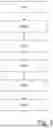
FIG. 1 shows a flow chart to illustrate a method according to one embodiment for producing an energy cell according to one embodiment,
FIGS. 2A-2E show parts of an energy storage cell according to one embodiment in different phases of the production thereof,
FIGS. 3A, 3B show parts of an energy storage cell according to another embodiment in different phases of the production thereof, and
FIG. 4 shows a lead plate of an energy storage cell according to one embodiment.
FIG. 1 shows a flow chart to illustrate a method according to one embodiment for producing an energy storage cell according to one embodiment.
In the method for producing an energy storage cell 100, 100′, in particular a cylindrical lithium-ion energy storage cell, in a step S10, a housing 10, 10′ having a base 11, 11′ is provided, in a step S20, a current collector formed as a lead plate 20, 20′ is provided, and in a step S30, a wound electrode arrangement 30, 30′ is provided.
The wound electrode arrangement 30, 30′, which includes a cathode (not shown), an anode (not shown), and a separator (not shown) arranged in between, is connected in a step S40 to the lead plate 20, 20′, for example by means of a linear laser welding method, as indicated in FIG. 2B by the reference sign “LL”, and in step S50, the lead plate 20, 20′ connected to the wound electrode arrangement 30, 30′ is arranged in the housing 10, 10′. Then, in a step S60, the lead plate 20, 20′ and the base 11, 11′ of the housing 10, 10′ are connected by laser beam welding, in particular by circular laser beam welding or circle laser beam welding, as indicated in FIGS. 2E and 3B by the reference sign “CL”. In this case, as illustrated in FIGS. 2D, 2E, and 3B, the lead plate 20, 20′ can be pressed, using a suitable aid, for example a bar-shaped element 50, 50′, which is led through a hole located in the center of the wound electrode arrangement 30, 30′, in the interior of the housing 10, 10′ in the direction of the base 11, 11′ and held in this position. The use of the bar-shaped element 50, 50′ for pressing the lead plate 20, 20′ is optional, however, and even if the bar-shaped element 50, 50′ is used, it is removed before finishing the energy storage cell 100, 100′, so that it is not part of the finished energy storage cell 100, 100′.
With reference to FIGS. 2A and 3A, providing the housing 10, 10′ having a base 11, 11′ in step S10 can include providing a housing 10, 10′ having a base 11, 11′, in which a hole 12, 12′ is provided.
Furthermore, with reference to FIGS. 2B and 3B, providing the lead plate 20, 20′ in step S20 can include providing a lead plate 20, 20′ having a projection 21, 21′, and with reference to FIGS. 2C and 3B, arranging the lead plate 20, 20′ connected to the wound electrode arrangement 30, 30′ in the housing 10, 10′ in step S50 can include inserting at least sections of the projection 21, 21′ of the lead plate 20, 20′ into the hole 12, 12′ of the base 11, 11′ of the housing 10, 10′.
In this case, during the connection of the lead plate 20, 20′ and the base 11, 11′ of the housing 10, 10′ by laser beam welding in step S60, a section, in particular a circular section, of an outside of the base 11, 11′, which adjoins the hole 12, 12′, and an exposed section of the projection 21, 21′, which adjoins the edge of the hole 12, 12′, can be irradiated using a laser beam, as illustrated in FIGS. 2E and 3B on the basis of the reference sign “CL”.
With reference to FIGS. 3A and 3B, in step S10, a housing 10′ having a base 11′ can be provided in which at least one recess 13′ is provided, and in step S20, a lead plate 20′ having at least one bulge 22′ can be provided. In this case, in step S50, during the arrangement of the lead plate 20′ connected to the wound electrode arrangement 30′ in the housing 10′, the at least one bulge 22′ can be inserted at least in sections, preferably in a formfitting manner, into the at least one recess 13′.
In this case, during the connection of the lead plate 20′ and the base 11′ of the housing 10′ by laser beam welding in step S60, an outside of the base 11′ can be irradiated, in a section of the base 11′ which includes the at least one recess 13′, using a laser beam.
Furthermore, in this case in step S20 with reference to FIG. 4, which shows a schematic top view of one side of the lead plate 20′, which faces toward the base 11, 11′ in the state arranged in the housing 10, 10′, a lead plate 20′ having at least one elevation 23′ can be provided, which extends originating from a first side, which faces away from a second side of the lead plate 20′, originating from which the at least one bulge 22′ extends, of the lead plate 20′. During the connection of the wound electrode arrangement 30′ to the lead plate 20′ in step S40, the at least one elevation 23′ of the lead plate 20′ can be connected to the wound electrode arrangement 30′ by laser beam welding here.
As illustrated in FIG. 4, the elevations 23′ and the bulges 22′ on the first side and the second side of the lead plate 20′ are in particular arranged offset in relation to one another, to prevent the same sections of the lead plate 20′ having to be irradiated using the laser beam for the connection of the wound electrode arrangement 30′ to the lead plate 20′ in step S40 and for the connection of the lead plate 20′ and the base 11′ of the housing 10′ in step S60 by laser beam welding, which would result in material weakening of the corresponding sections.
With reference to FIGS. 3A and 3B, in step S10, a housing 10′ can additionally be provided, which is provided with a notch 14′, which can be arranged, for example, as illustrated in FIGS. 3A and 3B, at or in an edge of the lower side of the base 11′. In this case, during the connection of the lead plate 20′ and the base 11′ of the housing 10′ by laser beam welding in step S60, a laser beam can be aligned using the notch 14′ on a specified position on the base 11′ or its exposed lower side, which corresponds, for example to the recess 13′, and/or a specified position on the lead plate 20′, which corresponds, for example, to the bulge 22′.
Claims
1.-14. (canceled)
15. A method for producing an energy storage cell comprising:
providing a housing having a base;
providing a lead plate;
providing a wound electrode arrangement;
connecting the wound electrode arrangement to the lead plate;
arranging the lead plate connected to the wound electrode arrangement in the housing; and
connecting the lead plate and the base of the housing by laser beam welding.
16. The method according to claim 15, wherein providing the housing includes providing the housing having the base in which a hole is provided, providing the lead plate includes providing the lead plate having a projection, and arranging the lead plate connected to the wound electrode arrangement in the housing includes inserting at least sections of the projection of the lead plate into the hole of the base of the housing.
17. The method according to claim 16, wherein connecting the lead plate and the base of the housing by laser beam welding includes connecting the projection of the lead plate and the base of the housing by laser beam welding, in which a section of an outside of the base, which adjoins the hole, and an exposed section of the projection are irradiated using a laser beam.
18. The method according to claim 15, wherein providing the housing includes providing the housing having the base, in which at least one recess is provided, providing the lead plate includes providing the lead plate having at least one bulge, and arranging the lead plate connected to the wound electrode arrangement in the housing includes inserting at least sections of the at least one bulge into the at least one recess.
19. The method according to claim 18, wherein connecting the lead plate and the base of the housing by laser beam welding includes irradiating an outside of the base, in a section of the base which includes the at least one recess, using a laser beam.
20. The method according to claim 18, wherein providing the lead plate includes providing the lead plate having at least one elevation, which extends originating from a first side, which faces away from a second side of the lead plate, originating from which the at least one bulge extends, of the lead plate, and connecting the wound electrode arrangement to the lead plate includes connecting the at least one elevation of the lead plate to the wound electrode arrangement by laser beam welding.
21. The method according to claim 15, wherein providing the housing includes providing the housing, which is provided with a notch, and during the connection of the lead plate and the base of the housing by laser beam welding, a laser beam is aligned using the notch on a specified position on the base and/or a specified position on the lead plate.
22. An energy storage cell comprising:
a housing having a base;
a lead plate;
a wound electrode arrangement;
wherein the wound electrode arrangement is connected to the lead plate, the lead plate having the wound electrode arrangement connected thereto is arranged in the housing, and the lead plate and the base of the housing are connected by laser beam welding.
23. The energy storage cell according to claim 22, wherein a hole is provided in the base of the housing, the lead plate includes a projection, and the projection of the lead plate is inserted at least in sections into the hole of the base of the housing.
24. The energy storage cell as claimed in claim 23, wherein the projection of the lead plate and the base of the housing are connected by irradiating a section of an outside of the base, which adjoins the hole, and an exposed section of the projection using a laser beam.
25. The energy storage cell according to claim 22, wherein the housing includes a base, in which at least one recess is provided, the lead plate includes at least one bulge, and the at least one bulge is inserted at least in sections into the at least one recess.
26. The energy storage cell according to claim 25, wherein the lead plate and the base of the housing are connected by irradiating an outside of the base, in a section of the base which includes the at least one recess, using a laser beam.
27. The energy storage cell according to claim 25, wherein the lead plate includes at least one elevation, which extends originating from a first side, which faces away from a second side of the lead plate, originating from which the at least one bulge extends, of the lead plate, and the at least one elevation of the lead plate is connected to the wound electrode arrangement by laser beam welding.
28. A hybrid vehicle or an electric vehicle, including an energy storage cell according to claim 22, which is connected to a drive motor in order to supply the drive motor with electrical energy.
Images & Drawings included:



Sources:
- United States Patent and Trademark Office - verify current appl. status at the USPTO↗
Similar patent applications:
- » 20220263200
CELL COMPOSITE COMPRISING A PLURALITY OF ENERGY STORAGE CELLS AND METHOD FOR PRODUCTION THEREOF - » 20140038029
Energy storage module comprising a plurality of prismatic storage cells and method for production thereof - » 20140038030
Energy storage module comprising a plurality of prismatic storage cells and method for production thereof - » 20210043984
Lithium-ion cell for an energy storage unit of a motor vehicle, and method for production thereof
Recent applications in this class:
- » 20250174734 2025-05-29
ELECTROCHEMICAL DEVICE AND ELECTRONIC DEVICE - » 20250174733 2025-05-29
ELECTRODE FOR RECHARGEABLE BATTERY AND ELECTRODE ASSEMBLY INCLUDING THE ELECTRODE - » 20250174732 2025-05-29
NONAQUEOUS ELECTROLYTE SECONDARY BATTERY - » 20250174731 2025-05-29
SECONDARY BATTERY AND ELECTRONIC APPARATUS - » 20250167310 2025-05-22
Low-Emission Cylindrical-Winding Battery Design - » 20250167309 2025-05-22
ELECTROCHEMICAL DEVICE AND ELECTRIC DEVICE - » 20250167308 2025-05-22
APPARATUS AND METHOD FOR MANUFACTURING ELECTRODE - » 20250167307 2025-05-22
NON-AQUEOUS ELECTROLYTE SECONDARY BATTERY - » 20250167306 2025-05-22
NONAQUEOUS ELECTROLYTE SECONDARY BATTERY - » 20250158134 2025-05-15
ELECTRODE PLATE, ELECTRODE ASSEMBLY AND SECONDARY BATTERY