DEATH HANDLING SYSTEM
US20240148341A1
2024-05-09
17/982,972
2022-11-08
Smart Summary: A system has been created to manage the remains of a deceased person based on their prior arrangements. People can purchase repatriation insurance, which assesses their health risks and helps set up their final wishes with a concierge service or funeral home. Once approved, clients receive a special bracelet that monitors their heart rate and body temperature. If the bracelet detects no pulse for three minutes, it will check the body temperature to confirm if the person has passed away. If confirmed, the bracelet alerts the insurance company, which then takes care of transporting the body back to the designated location and fulfilling any special requests. 🚀 TL;DR
Abstract:
The present invention provides a system by which a deceased person is identified, and their remains are handled according to a prearrangement.
Applicant:
Interested in similar patents?
Get notified when new applications in this technology area are published.
Classification:
A61B5/746 » CPC main
Measuring for diagnostic purposes ; Identification of persons; Details of notification to user or communication with user or patient ; user input means Alarms related to a physiological condition, e.g. details of setting alarm thresholds or avoiding false alarms
A61B5/0004 » CPC further
Measuring for diagnostic purposes ; Identification of persons; Remote monitoring of patients using telemetry, e.g. transmission of vital signals via a communication network characterised by the type of physiological signal transmitted
A61B5/02055 » CPC further
Measuring for diagnostic purposes ; Identification of persons; Detecting, measuring or recording pulse, heart rate, blood pressure or blood flow; Combined pulse/heart-rate/blood pressure determination; Evaluating a cardiovascular condition not otherwise provided for, e.g. using combinations of techniques provided for in this group with electrocardiography or electroauscultation; Heart catheters for measuring blood pressure; Simultaneously evaluating both cardiovascular conditions and different types of body conditions, e.g. heart and respiratory condition Simultaneously evaluating both cardiovascular condition and temperature
A61B5/681 » CPC further
Measuring for diagnostic purposes ; Identification of persons; Arrangements of detecting, measuring or recording means, e.g. sensors, in relation to patient specially adapted to be attached to or worn on the body surface; Sensor mounted on worn items Wristwatch-type devices
A61B5/7405 » CPC further
Measuring for diagnostic purposes ; Identification of persons; Details of notification to user or communication with user or patient ; user input means using sound
A61B5/742 » CPC further
Measuring for diagnostic purposes ; Identification of persons; Details of notification to user or communication with user or patient ; user input means using visual displays
A61B5/00 IPC
Measuring for diagnostic purposes ; Identification of persons
A61B5/0205 IPC
Measuring for diagnostic purposes ; Identification of persons; Detecting, measuring or recording pulse, heart rate, blood pressure or blood flow; Combined pulse/heart-rate/blood pressure determination; Evaluating a cardiovascular condition not otherwise provided for, e.g. using combinations of techniques provided for in this group with electrocardiography or electroauscultation; Heart catheters for measuring blood pressure Simultaneously evaluating both cardiovascular conditions and different types of body conditions, e.g. heart and respiratory condition
G06Q40/08 » CPC further
Finance; Insurance; Tax strategies; Processing of corporate or income taxes Insurance, e.g. risk analysis or pensions
G06Q50/30 » CPC further
Systems or methods specially adapted for specific business sectors, e.g. utilities or tourism Transportation; Communications
Description
BACKGROUND OF THE INVENTION
It is a sad reality that persons move away from family and loved ones and do not have proper identifying information upon death. In situation square governments are not able to locate next of kin, bodies are disposed of at the discretion of the local government. These disposal methods are sometimes contrary to the desires of the deceased and the family. There is a need for an automated system that will facilitate the process of notifying next of kin or designated persons.
The present invention addresses this need.
SUMMARY OF THE INVENTION
In one embodiment, the system includes prepaid transportation for the remains to be returned to a pre-approved person and destination.
In one embodiment, a client will reach out to his insurance company for a repatriation insurance. Within the repatriation insurance the client will be assessed for risks and health to determine premiums and eligibility. Then the client will approve their arrangement or special requests of an approved concierge service and/or funeral home.
Upon approval the client will be given a bracelet to wear. This bracelet has technology within it. This technology can tell whether the user is alive or not depending on body temperature and pulse.
The bracelet will take the user's pulse by way of sensors throughout the band. The bracelet will be able to determine normal heart rates of the user through historical data as the bracelet is being worn. If the user's heart rate starts to go outside the normal range of the user, the system will become aware letting the user know that they are in danger. If this should escalate to a point where the heart stops for more than 3 minutes the bracelet will start taking the body temperature of the user as a backup to determine if the person has passed or taken the bracelet off. Should there be no pulse for 3 minutes and there is a reduced body temperature then the bracelet will determine the user has passed. The bracelet will then send an alarm to the insurance company and provide the exact location of the user. Then the insurance company will initiate all the steps of getting the body back to the country of origin. The system will prepare all paperwork, transportation and special requests made from the user to execute their wishes.
The system needs to be automated to make it as easy as possible for the family as they have just lost a member of their family and need to grieve instead of dealing with the frustrations of getting the user back to the country. This will also be a relief of the financial burden to the family as it will all be covered through the premiums of the policy.
In one embodiment, the present invention is a system for identifying and handling remains of a deceased person, said system comprising:
-
- a central monitoring computer;
- a wristband worn by a user and configured with biometric sensors and wireless communication to communicate with said central monitoring computer, said central monitoring computer monitored by a person or entity and configured to alert said person or entity when said wristband communicates a user is not alive based on information sent by said biometric sensors.
In one embodiment, the biometric sensors include measurement of pulse and body temperature.
In one embodiment, the biometric sensors include default values such that measurement of pulse and body temperature indicate death of said user.
In one embodiment, the central monitoring computer transmits contact information to an audio output, visual output, or audio and visual output to said wristband.
In one embodiment, the wristband includes printed indicia of system contact information.
In one embodiment, the system is operated by an insurance company administering a pre-paid transportation of a deceased user as pre-arranged.
In one embodiment, the wristband is configured with a GPS location chip. In a preferred embodiment, the GPS location device is activated by said central monitoring computer monitored by a person or entity. Thus, when the central monitoring computer receives information that a wearer is deceased, the system operation will then activate the GPS location device in order to ascertain the exact location of the deceased. If the deceased is in a hospital or funeral home, the system operator will then be able to contact the entity in possession of the body in order to commence the pre-selected transportation and disposal.
In one embodiment, the present invention is a system for identifying and handling remains of a deceased person, said system consisting of:
-
- a central monitoring computer;
- a wristband worn by a user and configured with biometric sensors and wireless communication to communicate with said central monitoring computer, said central monitoring computer monitored by a person or entity and configured to alert said person or entity when said wristband communicates a user is not alive based on information sent by said biometric sensors.
In one embodiment, the biometric sensors include measurement of pulse and body temperature.
In one embodiment, the invention further consists of the biometric sensors include default values such that measurement of pulse and body temperature indicate death of said user.
In one embodiment, the invention further consists of the central monitoring computer transmits contact information to an audio output, visual output, or audio and visual output to said wristband.
In one embodiment, the invention further consists of the wristband includes printed indicia of system contact information.
In one embodiment, the invention further consists of the system is operated by an insurance company administering a pre-paid transportation of a deceased user as pre-arranged.
In one embodiment, the invention further consists of the wristband is configured with a GPS location chip. In a preferred embodiment, the GPS location device is activated by said central monitoring computer monitored by a person or entity. Thus, when the central monitoring computer receives information that a wearer is deceased, the system operation will then activate the GPS location device in order to ascertain the exact location of the deceased. If the deceased is in a hospital or funeral home, the system operator will then be able to contact the entity in possession of the body in order to commence the pre-selected transportation and disposal.
BRIEF DESCRIPTION OF THE SEVERAL VIEWS OF THE DRAWINGS
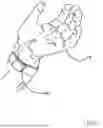
FIG. 1 is the wristband of the system according to one embodiment of the present invention.
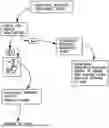
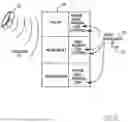
FIG. 2 is a flowchart of the system sensors according to one embodiment of the present invention.
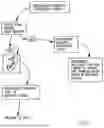
FIG. 3 is a flowchart of the system according to one embodiment of the present invention.
DETAILED DESCRIPTION OF THE PREFERRED EMBODIMENTS
Although the drawings depict a particularized embodiment, the present invention is contemplated as configurable in any physical structure whereby the inventive scope and concept are achieved.
The system includes a bracelet 10 worn about the wrist of a user 12. The bracelet is constructed and arranged with sensors 14 as known in the art to measure pulse and temperature. The system is further configured with communications hardware such that if it is determined that there is no pulse and temperature has dropped to a point indicating the wearer is deceased, a wireless signal is sent to a central receiving microcomputer/microprocessor-based unit. In one environment, the receiving unit is monitored by a burial insurance entity. This is for illustration only. The central receiving unit can be monitored and operated by an independent entity. Has demonstrated in FIG. 3, when an alert is received that a where is deceased, the unit will initially perform a remote diagnostic to determine if there has been a malfunction. If a malfunction is determined, the system will reset the bracelet for continual monitoring. If there has been no malfunction detected, the system will receive the alert and initiate a process by which the remains are identified and handled as desired. Bracelet 10 is configured with printed indicia indicating contact information upon death of the wearer. In one embodiment, the bracelet has audio output, visual output, or combinations thereof, alerting with contact information. In this embodiment, a person or entity handling the remains is notified to contact a particular entity or person relating to handling up the remains.
In an environment where an insurance company has received prepaid disposition payments, the insurance company will arrange for transport of remains as pre-arranged.
While the invention has been described in its preferred form or embodiment with some degree of particularity, it is understood that this description has been given only by way of example and that numerous changes in the details of construction, fabrication, and use, including the combination and arrangement of parts, may be made without departing from the spirit and scope of the invention.
Claims
What is claimed:1. A system for identifying and handling remains of a deceased person, said system comprising:
a central monitoring computer;
a wristband worn by a user and configured with biometric sensors and wireless communication to communicate with said central monitoring computer, said central monitoring computer monitored by a person or entity and configured to alert said person or entity when said wristband communicates a user is not alive based on information sent by said biometric sensors.
2. The system of claim 1, wherein said biometric sensors include measurement of pulse and body temperature.
3. The system of claim 1, wherein said biometric sensors include default values such that measurement of pulse and body temperature indicate death of said user.
4. The system of claim 1, wherein said central monitoring computer transmits contact information to an audio output, visual output, or audio and visual output to said wristband.
5. The system of claim 1, wherein said wristband includes printed indicia of system contact information.
6. The system of claim 1, wherein said system is operated by an insurance company administering a pre-paid transportation of a deceased user as pre-arranged.
Images & Drawings included:
Sources:
- United States Patent and Trademark Office - verify current appl. status at the USPTO↗
Similar patent applications:
Recent applications in this class:
- » 20250169772 2025-05-29
A HEADGEAR - » 20250160763 2025-05-22
METHOD FOR PROVIDING ALARM BASED ON BIOMETRIC DATA - » 20250152110 2025-05-15
PATIENT SUPPORT APPARATUS HAVING VITAL SIGNS MONITORING AND ALERTING - » 20250152109 2025-05-15
POSTURE CONTROL DEVICE - » 20250143653 2025-05-08
ALARM CHARACTERIZATION FOR ANALYTE MONITORING DEVICES AND SYSTEMS - » 20250134475 2025-05-01
ANALYTE MONITORING SYSTEMS - » 20250120658 2025-04-17
PATIENT MONITORING DEVICE AND ALARM METHOD FOR PATIENT MONITORING - » 20250107759 2025-04-03
MONITORING SENSOR RESPONSES TO DIALYSIS - » 20250090107 2025-03-20
MOBILE PATIENT ALARM DISPLAY - » 20250090106 2025-03-20
PERSONALIZED HEMODYNAMIC TARGETS TO REDUCE HYPOTENSION DURING SURGERY