VEHICLE-MOUNTED SOUND SYSTEM AND OPEN-CIRCUIT DETECTION METHOD FOR LOUDSPEAKER THEREOF
US20240179461A1
2024-05-30
18/551,814
2021-12-20
✅ Patent granted
US 12,627,923 B2
2026-05-12
WO; PCT/CN2021/139480; 20211220
WO; WO2022/199157; 20220929
Lun-See Lao
Knobbe, Martens, Olson & Bear, LLP
2042-08-08
Smart Summary: A vehicle sound system has a special circuit that checks if the loudspeaker is working properly. This circuit can turn on or off the connection between the sound system and the loudspeaker based on signals it receives. It also connects to a voltage source to help with its checks. The control module of the system uses this circuit to find out if the loudspeaker is broken or not. If the loudspeaker is in an open-circuit state, the system can detect it and alert the user. 🚀 TL;DR
Abstract:
Discloses are a vehicle-mounted sound system, an open-circuit detection circuit and an open-circuit detection method for a loudspeaker thereof. The vehicle-mounted sound system includes an open-circuit detection circuit including a switching circuit, the switching circuit is connected between an output port of a control module of a power amplifier and a first connecting port so as to be controlled by a control signal from an output port to conduct or cut off the output port and the first connecting port. The second connecting port is electrically connected to a node for accessing a voltage together with an input port of the control module. The control module is configured for enabling the open-circuit detection circuit though the output port to determine whether the loudspeaker is in an open-circuit state according to a signal received by the input port.
Inventors:
- Hongbing DING 3 🇨🇳 Suzhou, Jiangsu, China
- Yurong WU 2 🇨🇳 Suzhou, Jiangsu, China
- Hongbing Ding 1 🇨🇳 Suzhou, China
- Yurong Wu 1 🇨🇳 Suzhou, China
Assignee:
- Suzhou Sonavox Electronics Co., Ltd 14 🇨🇳 Suzhou, China
Applicant:
Interested in similar patents?
Get notified when new applications in this technology area are published.
Classification:
H04R29/001 » CPC further
Monitoring arrangements; Testing arrangements for loudspeakers
H04R2201/028 » CPC further
Details of transducers, loudspeakers or microphones covered by but not provided for in any of its subgroups; Details casings, cabinets or mounting therein for transducers covered by but not provided for in any of its subgroups Structural combinations of loudspeakers with built-in power amplifiers, e.g. in the same acoustic enclosure
H04R2420/03 » CPC further
Details of connection covered by , not provided for in its groups Connection circuits to selectively connect loudspeakers or headphones to amplifiers
H04R2420/05 » CPC further
Details of connection covered by , not provided for in its groups Detection of connection of loudspeakers or headphones to amplifiers
H04R2499/13 » CPC further
Aspects covered by or not otherwise provided for in their subgroups; General applications Acoustic transducers and sound field adaptation in vehicles
H04R3/00 » CPC main
Circuits for transducers, loudspeakers or microphones
H04R29/00 IPC
Monitoring arrangements; Testing arrangements
Description
The present disclosure claims priority from Chinese Patent Application No. CN202110301372.8 filed on Mar. 22, 2021.
FIELD OF TECHNOLOGY
The present disclosure belongs to the field of audio, and in particular, relates to a vehicle-mounted sound system and an open-circuit detection method for a loudspeaker thereof.
BACKGROUND
Currently, power amplifier chips have their own function of diagnosing open-circuit or short-circuit of loudspeakers and the function of protecting when the loudspeakers is open-circuited or short-circuited, which are expensive and costly. However, in the vehicle-mounted sound systems, considering cost reasons, the vehicle-mounted power amplifier chips used in the vehicle-mounted sound systems do not have the function of diagnosing open-circuit or short-circuit of loudspeakers. When selecting this type of power amplifier chips, if it is needed to detect if a loudspeaker is mounted in the vehicle or if the loudspeaker is correctly connected, then a circuit or system for detecting open-circuit of loudspeaker must be added to the mass-produced product to complete this function, so as to determine whether it is in a loudspeaker open-circuit state, which refers to the absence of a loudspeaker or the fact that a loudspeaker is mounted but not properly connected.
SUMMARY
Aiming at the above problems, a purpose of the present invention is to provide a vehicle-mounted sound system, which can achieve the open-circuit detection of the loudspeaker of the vehicle-mounted sound system at a relatively low cost.
Another purpose of the present invention is to provide an open-circuit detection method for a loudspeaker of a vehicle-mounted sound system, which can achieve the open-circuit detection of the loudspeaker of the vehicle-mounted sound system at a relatively low cost.
According to a first aspect of the present disclosure, a vehicle-mounted sound system comprises:
-
- a power amplifier for driving a vehicle-mounted loudspeaker electrically connected to the power amplifier; and
- a control module for controlling the power amplifier, and having an output port and an input port;
- the vehicle-mounted sound system further comprises:
- an open-circuit detection circuit having a first connecting port and a second connecting port, one of the first connecting port and the second connecting port being electrically connected to a positive lead of the vehicle-mounted loudspeaker and the other one being electrically connected to a negative lead of the vehicle-mounted loudspeaker;
- wherein, the open-circuit detection circuit comprises a switching circuit, and the switching circuit is connected between the output port of the control module and the first connecting port so as to be controlled by a control signal from the output port to conduct or cut off the output port and the first connecting port;
- the input port of the control module and the second connecting port are respectively electrically connected to a node for accessing a voltage;
- the control module is configured for enabling the open-circuit detection circuit though the output port to determine whether the loudspeaker is in an open-circuit state according to a signal received by the input port.
Herein, the “loudspeaker in an open-circuit state” refers to the absence of a vehicle-mounted loudspeaker or the fact that a vehicle-mounted loudspeaker is mounted but not properly connected, such as not properly connected to the power amplifier.
In an embodiment, the switching circuit comprises a triode, the base of the triode is electrically connected to the output port, the collector of the triode is electrically connected to the first connecting port, and the emitter of the triode is grounded. Optionally, the triode is an NPN type triode.
In an embodiment, the switching circuit further comprises a first resistor and a second resistor, the first resistor is electrically connected between the output port and the gate of the triode, one end of the second resistor is electrically connected to a middle point between the first resistor and the gate of the triode, and the other end of the second resistor is electrically connected to the collector of the triode.
In an embodiment, the first resistor, the second resistor and the triode together form the switching circuit.
In an embodiment, the open-circuit detection circuit further comprises a third resistor connected between the switching circuit and the first connecting port. The third resistor is used for current limiting.
In an embodiment, the node is electrically connected to a power supply terminal to access a voltage.
In an embodiment, the open-circuit detection circuit further comprises a fourth resistor for pulling up the level transmitted to an IO port, and the fourth resistor is electrically connected between the power supply terminal and the node.
In an embodiment, the open-circuit detection circuit further comprises a diode for preventing the voltage of the power amplifier from striking back to the control module, and the diode is electrically connected between the second connecting port and the input port.
In an embodiment, the open-circuit detection circuit further comprises a capacitor, and an end of the capacitor is electrically connected to a middle point between the second connecting port and the input port and the other end thereof is grounded.
In an embodiment, the power amplifier is a BTL power amplifier; and/or, the control module is a power amplifier chip, and the output port and input port are IO ports of the power amplifier chip, respectively; and/or, the loudspeaker is a loudspeaker with an impedance range of 2-8Ω.
According to a second aspect of the present disclosure, an open-circuit detection circuit of a vehicle-mounted sound system is characterized in that it has a first connecting port and a second connecting port, one of the first connecting port and the second connecting port is to be electrically connected to a positive lead of a vehicle-mounted loudspeaker and the other one is to be electrically connected to a negative lead of the vehicle-mounted loudspeaker;
-
- the open-circuit detection circuit further comprises a switching circuit, and the switching circuit is connected between an output port of a control module of a power amplifier and the first connecting port so as to be controlled by a control signal from the output port to conduct or cut off the output port and the first connecting port;
- the second connecting port is electrically connected to a node for accessing a voltage together with an input port of the control module.
In an embodiment, the switching circuit comprises a triode, the base of the triode is electrically connected to the output port, the collector of the triode is electrically connected to the first connecting port, and the emitter of the triode is grounded.
In an embodiment, the switching circuit comprises a first resistor and a second resistor, the first resistor is electrically connected between the output port and the gate of the triode, one end of the second resistor is electrically connected to a middle point between the first resistor and the gate of the triode, and the other end of the second resistor is electrically connected to the collector of the triode; the open-circuit detection circuit further comprises a third resistor connected between the switching circuit and the first connecting port; the node is electrically connected to a power supply terminal to access a voltage; the open-circuit detection circuit further comprises a fourth resistor, and the fourth resistor is electrically connected between the power supply terminal and the node.
According to a third aspect of the present disclosure, an open-circuit detection method for a loudspeaker of a vehicle-mounted sound system is provided, the vehicle-mounted sound system is a vehicle-mounted sound system mentioned above, and the open-circuit detection method for a loudspeaker comprises a step of open-circuit detection, which specifically comprises:
-
- enabling the output port of the control module to switch on the switching circuit;
- determining the vehicle-mounted loudspeaker in an open-circuit state when a signal of the input port of the control module is a high-level signal;
- determining the vehicle-mounted loudspeaker in a non-open-circuit state when a signal of the input port of the control module is a low-level signal.
In an embodiment, the open-circuit detection method for a loudspeaker further comprises a step of enabling the power amplifier in an off state and the output port and the input port in the low-level state when initial powered on.
By using the above solutions, the present disclosure has the following advantages over the prior art.
In the vehicle-mounted loudspeaker and the open-circuit detection method for a loudspeaker of the present invention, an open-circuit detection circuit is further provided besides the control module, which can determine whether the loudspeaker is open-circuited by judging whether the signal output from the open-circuit detection circuit to the input port of the control module is high-level or low-level, thereby disabling or enabling the power amplifier to output normally, without the need for expensive power amplifier chips with built-in open-circuit detection function, which can achieve the open-circuit detection for a loudspeaker at a relatively low cost.
BRIEF DESCRIPTION OF THE DRAWINGS
For more clearly explaining the technical solutions of the present disclosure, the accompanying drawings required to be used to in the description of the embodiments will be simply introduced below. Apparently, the drawings in the following description show merely some embodiments of the present disclosure, and those of ordinary skill in the art may derive other drawings from these accompanying drawings without creative efforts.
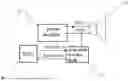
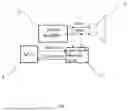
FIG. 1 is a structural block diagram of a vehicle-mounted sound system according to an embodiment of the present disclosure;
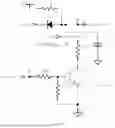
FIG. 2 is a circuit diagram of an open-circuit detection circuit according to an embodiment of the present disclosure;
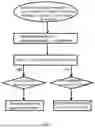
FIG. 3 is a flow chart of an open-circuit detection method for a loudspeaker according to an embodiment of the present disclosure.
DETAILED DESCRIPTION OF EXEMPLARY EMBODIMENTS
The preferred embodiments of the present disclosure are explained below in detail combining with the accompanying drawings so that the advantages and features of the present disclosure can be easily understood by the skilled persons in the art. It should be noted that the explanation on these implementations is to help understanding of the present disclosure, and is not intended to limit the present disclosure. Further, the technical features involved in the various embodiments of the present disclosure described below may be combined with each other as long as they do not conflict with each other.
As used in this description and claims, the terms “comprising” and “containing” only indicate that the clearly identified steps and elements are included, and these steps and elements do not constitute an exclusive list, and the method or device may also include other steps or elements. The term “and/or” as used herein includes any combination of one or more of the associated listed items. It can be further understood that the terms “first”, “second”, etc. are used to describe various information, but this information should not be limited to these terms. These terms are only used to distinguish the same type of information from each other and do not indicate a specific order or degree of importance. In fact, expressions such as “first” and “second” can be used interchangeably. For example, without departing from the scope of the present disclosure, the first information can also be referred to as the second information, and similarly, the second information can also be referred to as the first information.
As shown in FIG. 1, this embodiment provides a vehicle-mounted sound system, which comprises a power amplifier 1 used for driving a loudspeaker 2 electrically connected thereto for electroacoustic conversion; and a control module 4 used for controlling the power amplifier 1 and having an output port OpenChk_1 and an input port 1_Open_Sense. The vehicle-mounted sound system further comprises an open-circuit detection circuit 3 having a first connecting port SPK1− and a second connecting port SPK1+, the first connecting port SPK1− is electrically connected to one of the two sets of leads of the loudspeaker 2 (such as the negative lead), and the second connecting port SPK1+ is electrically connected to the other one of the two sets of leads of the loudspeaker 2 (such as the positive lead). An output port of the power amplifier is also electrically connected to the two sets of leads of the loudspeaker correspondingly to output digital or analog audio signals to the loudspeaker. For ordinary loudspeakers, each set of leads comprises a single lead, that is, the loudspeaker 2 has a pair of leads; for multi-voice-coil loudspeakers, each set of leads may comprise multiple leads, that is, the loudspeaker 2 has multiple pairs of leads. As shown in FIG. 2, the open-circuit detection circuit 3 further comprises a switching circuit 30, and the switching circuit 30 is connected between the output port OpenChk_1 of the control module 4 and the first connecting port SPK1− of the open-circuit detection circuit 3 so as to be controlled by a control signal from the output port OpenChk_1 to conduct or cut off the output port OpenChk_1 and the first connecting port SPK1−. When the entire system is in the initial state of power amplifier startup, a pulse signal emitted by the output port OpenChk_1 of the control module 4 enables the open-circuit detection circuit 3 to determine through the input port 1_Open_Sense whether there is a loudspeaker 2 connected between the second connecting port SPK1+ and the first connecting port SPK1- or whether the loudspeaker 2 has an open-circuit fault. The power amplifier 1 is a multi-channel amplifier with multiple channels, each of which can drive at least one loudspeaker.
The power amplifier 1 is a BTL power amplifier, which is a Class-D digital power amplifier with short-circuit protection function and no open-circuit detection function. The control module 4 is a power amplifier chip, specifically a micro controller unit (MCU), which comprises a micro controller unit body, the output port OpenChk_1 and the input port 1_Open_Sense, wherein the output port OpenChk_1 and the input port 1_Open_Sense are respectively the IO ports of the power amplifier chip; the loudspeaker 2 is a loudspeaker with an impedance range of 2-8Ω.
As shown in FIG. 2, the switching circuit 30 specifically comprises a triode Q5 (which is an NPN type triode), the base of the triode Q5 is electrically connected to the output port OpenChk_1, the collector of the triode Q5 is electrically connected to the first connecting port SPK1−, and the emitter of the triode Q5 is grounded (ground equipotential). The input port 1_Open_Sense and the second connecting port SPK1+ are respectively electrically connected to a node A, the node A is electrically connected to a power supply terminal VDD-MCU to access a voltage, which is consistent with the working voltage of the power amplifier chip.
The control module 4 is used for enabling the open-circuit detection circuit 3 by means of the output port OpenChk_1 to determine whether the loudspeaker is in an open-circuit state according to a signal received by the input port 1_Open_Sense.
The switching circuit 30 comprises a first resistor R65 and a second resistor R73, the first resistor R65 is electrically connected between the output port OpenChk_1 and the gate of the triode Q5, one end of the second resistor R73 is electrically connected to a middle point between the first resistor R65 and the gate of the triode Q5, and the other end of the second resistor R73 is electrically connected to the collector of the triode Q5. The first resistor R65, the second resistor R73 and the triode Q5 together form the switching circuit 30.
The open-circuit detection circuit 3 further comprises a third resistor R33 connected between the switching circuit and the first connecting port SPK1−, and the third resistor R33 is used for current limiting.
The open-circuit detection circuit 3 further comprises a fourth resistor R71 for pulling up the level transmitted to the IO port, and the fourth resistor R71 is electrically connected between the power supply terminal VDD-MCU and the node A.
The open-circuit detection circuit 3 further comprises a diode D6 used to prevent the voltage of the power amplifier from striking back to the control module 4, and the diode D6 is electrically connected between the second connecting port SPK1+ and the input port 1_Open_Sense. Specifically, the positive electrode of the diode D6 is connected to the node A, and the negative electrode is connected to the second connecting port SPK1+.
The open-circuit detection circuit 3 further comprises a capacitor C20 for filtering out high-frequency signals from the power amplifier, and an end of the capacitor C20 is electrically connected to a middle point between the second connecting port SPK1+ and the input port 1_Open_Sense and the other end thereof is grounded (ground equipotential).
This embodiment further provides an open-circuit detection method for a loudspeaker of a vehicle-mounted sound system, where the vehicle-mounted sound system is a vehicle-mounted sound system mentioned above. As shown in FIG. 3, the open-circuit detection method for a loudspeaker comprises a step of open-circuit detection, which specifically comprises:
-
- enabling the power amplifier 1 in an off state and the output port OpenChk_1 and the input port 1_Open_Sense in low-level state when initial powered on;
- enabling the output port OpenChk_1 of the control module 4 to switch on the switching circuit;
- determining that the loudspeaker 2 is in an open-circuit state when a signal of the input port 1_Open_Sense of the control module 4 is a high-level signal;
- determining that the loudspeaker 2 is in a non open-circuit state when a signal of the input port 1_Open_Sense of the control module 4 is a low-level signal.
In this embodiment, in the initial power-on stage of the power amplifier system, the MCU does not start the power amplifier chip first, leaving the power amplifier in the STANDBY state, so that the output of the power amplifier is in a high-impedance state. The open-circuit detection circuit is formed by two IO ports, namely OpenChk_1 and 1_Open_Sense of the MCU, the resistors R33, R65, R71 and R73, the capacitor C20, the diode D6, and the triode Q5. The two IO ports of the MCU are utilized, one configured to output and the other one configured to input. When initial powered on, the condition that the power amplifier has a high impedance output, enables the output IO port OpenChk_1 of the MCU is in high level, in this way, the triode Q5 is switched on. When there is no loudspeaker connected or the loudspeaker has an open-circuit fault, if 1_Open_Sense is in high level, the MCU determines that the loudspeaker is open-circuit; when the triode Q5 is switched on and there is a loudspeaker between SPK1+ and SPK1−, 1_Open_Sense port will be pulled down, then when the MCU receives a low-level signal of 1_Open_Sense port, it will determine that the loudspeaker is in a non open-circuit state. After determining the non open-circuit state of the loudspeaker, it enables OpenChk_1 port to have a low-level output, which switches off the triode Q5 and enables the power amplifier to output, keeping the power amplifier in normal working state. This embodiment provides a vehicle-mounted loudspeaker having a power amplifier 1, a control module 4 and an open-circuit detection circuit 3 that are independent of each other, which can determine whether the loudspeaker is open-circuit by judging whether the signal of the input port1_Open_Sense of the control module 4 is high-level or low-level, thereby disabling or enabling the power amplifier to output normally.
The open-circuit detection method for a loudspeaker provided in this embodiment can complete the open-circuit detection for a loudspeaker without using an external circuit and system, without the need for expensive power amplifier chips with built-in open-circuit detection functions, and without affecting the normal operation of the system, and can achieve the open-circuit detection for a loudspeaker at a relatively low cost.
The embodiments described above are only for illustrating the technical concepts and features of the present disclosure, are preferred embodiments, and are intended to make those skilled in the art being able to understand the present disclosure and thereby implement it, and should not be concluded to limit the protective scope of this disclosure.
Claims
1. A vehicle-mounted sound system, comprising:
a power amplifier for driving a vehicle-mounted loudspeaker electrically connected thereto;
a control module for controlling the power amplifier, and having an output port and an input port; and
an open-circuit detection circuit having a first connecting port and a second connecting port, one of the first connecting port and the second connecting port being electrically connected to a positive lead of the vehicle-mounted loudspeaker and the other one being electrically connected to a negative lead of the vehicle-mounted loudspeaker;
wherein, the open-circuit detection circuit comprises a switching circuit, the switching circuit is connected between the output port of the control module and the first connecting port so as to be controlled by a control signal from the output port to conduct or cut off the output port and the first connecting port;
the input port of the control module and the second connecting port are respectively electrically connected to a node for accessing a voltage; and
the control module is configured for enabling the open-circuit detection circuit though the output port to determine whether the loudspeaker is in an open-circuit state according to a signal received by the input port.
2. The vehicle-mounted sound system according to claim 1, wherein the switching circuit comprises a triode, a base of the triode is electrically connected to the output port, a collector of the triode is electrically connected to the first connecting port, and an emitter of the triode is grounded.
3. The vehicle-mounted sound system according to claim 2, wherein the switching circuit further comprises a first resistor and a second resistor, the first resistor is electrically connected between the output port and a gate of the triode, one end of the second resistor is electrically connected to a middle point between the first resistor and the gate of the triode, and the other end of the second resistor is electrically connected to the collector of the triode.
4. The vehicle-mounted sound system according to claim 1, wherein the open-circuit detection circuit further comprises a third resistor connected between the switching circuit and the first connecting port.
5. The vehicle-mounted sound system according to claim 1, wherein the node is electrically connected to a power supply terminal to access the voltage.
6. The vehicle-mounted sound system according to claim 5, wherein the open-circuit detection circuit further comprises a fourth resistor, and the fourth resistor is electrically connected between the power supply terminal and the node.
7. The vehicle-mounted sound system according to claim 1, wherein the open-circuit detection circuit further comprises a diode for preventing a voltage of the power amplifier from striking back to the control module, and the diode is electrically connected between the second connecting port and the input port.
8. The vehicle-mounted sound system according to claim 1, wherein the open-circuit detection circuit further comprises a capacitor, and an end of the capacitor is electrically connected to a middle point between the second connecting port and the input port, and the other end thereof is grounded.
9. The vehicle-mounted sound system according to claim 1, wherein the power amplifier is a BTL power amplifier; and/or, the control module is a power amplifier chip, and the output port and input port are IO ports of the power amplifier chip, respectively.
10. The vehicle-mounted sound system according to claim 1, wherein the vehicle-mounted loudspeaker is a loudspeaker with an impedance range of 2-8 Ω.
11. An open-circuit detection circuit of a vehicle-mounted sound system, comprising a first connecting port and a second connecting port, wherein one of the first connecting port and the second connecting port is electrically connected to a positive lead of a vehicle-mounted loudspeaker and the other one is electrically connected to a negative lead of the vehicle-mounted loudspeaker;
wherein the open-circuit detection circuit comprises a switching circuit, the switching circuit is connected between an output port of a control module of a power amplifier and the first connecting port so as to be controlled by a control signal from the output port to conduct or cut off the output port and the first connecting port; and
the second connecting port is electrically connected to a node for accessing a voltage together with an input port of the control module.
12. The open-circuit detection circuit according to claim 11, wherein the switching circuit comprises a triode, a base of the triode is electrically connected to the output port, a collector of the triode is electrically connected to the first connecting port, and an emitter of the triode is grounded.
13. The open-circuit detection circuit according to claim 12, wherein the switching circuit comprises a first resistor and a second resistor, the first resistor is electrically connected between the output port and a gate of the triode, one end of the second resistor is electrically connected to a middle point between the first resistor and the gate of the triode, and the other end of the second resistor is electrically connected to the collector of the triode; the open-circuit detection circuit further comprises a third resistor connected between the switching circuit and the first connecting port; the node is electrically connected to a power supply terminal to access the voltage; the open-circuit detection circuit further comprises a fourth resistor, and the fourth resistor is electrically connected between the power supply terminal and the node.
14. An open-circuit detection method for a loudspeaker of a vehicle-mounted sound system according to claim 1, comprising a step of open-circuit detection, which specifically comprises:
enabling the output port of the control module to switch on the switching circuit;
determining the vehicle-mounted loudspeaker in an open-circuit state when a signal of the input port of the control module is a high-level signal; and
determining the vehicle-mounted loudspeaker in a non open-circuit state when a signal of the input port of the control module is a low-level signal.
15. The open-circuit detection method for a loudspeaker according to claim 14, wherein the open-circuit detection method for a loudspeaker further comprises a step of enabling the power amplifier in an off state and the output port and the input port in the low-level state when initial powered on.
Images & Drawings included:
Sources:
- United States Patent and Trademark Office - verify current appl. status at the USPTO↗
Recent applications in this class:
- » 20260095695 2026-04-02
SYSTEMS AND METHODS FOR CONFIGURING DUPLEXING WITHIN A DOORBELL CAMERA - » 20260089440 2026-03-26
ANALOG-TO-DIGITAL CONVERSION DEVICE AND AUDIO DEVICE - » 20260067616 2026-03-05
AUDIO PROCESSING METHOD AND DEVICE - » 20260059237 2026-02-26
SOUND REPRODUCTION SYSTEM AND METHOD - » 20260059236 2026-02-26
SMART SPEAKER IN-CEILING ADAPTOR TECHNOLOGY AND POWER SYSTEM - » 20260052340 2026-02-19
RADIO DONGLE MODULAR ACCESSORY - » 20260046557 2026-02-12
WIRELESS AUDIO RECEPTION APPARATUS, WIRELESS AUDIO TRANSMISSION APPARATUS, AND WIRELESS AUDIO OUTPUT SYSTEM COMPRISING SAME - » 20260040000 2026-02-05
DOUBLE-SIDED SPEAKER DEVICE - » 20250392859 2025-12-25
IMAGING APPARATUS - » 20250373980 2025-12-04
AUDIO PROCESSING METHOD AND RELATED DEVICE
Recent applications for this Assignee:
- » 20240373185 2024-11-07
SYSTEM AND METHOD FOR VERIFYING POWER AMPLIFIER OF ON-BOARD AUDIO SYSTEM - » 20240015431 2024-01-11
COAXIAL LOUDSPEAKER WITH HORN AND SHAPE OPTIMIZATION METHOD THEREFOR - » 20230336918 2023-10-19
MULTI-CONE SPEAKER - » 20230179924 2023-06-08
Tweeter and automobile audio system - » 20230138715 2023-05-04
Loudspeaker system - » 20220405444 2022-12-22
LOUDSPEAKER FRAME, LOUDSPEAKER AND MOUNTING SIMULATION ANALYSIS METHOD THEREFOR - » 20210309146 2021-10-07
Pedestrian warning device having grille cover - » 20210130034 2021-05-06
Speaker packaging device and package body - » 20200010002 2020-01-09
Automotive headrest - » 20150110299 2015-04-23
Method and device for driving digital speaker based on code conversion