COMPOUND, MATERIAL FOR ORGANIC ELECTROLUMINESCENT ELEMENTS, ORGANIC ELECTROLUMINESCENT ELEMENT, AND ELECTRONIC DEVICE
US20240188425A1
2024-06-06
18/263,287
2022-01-27
Smart Summary: A new compound has been developed for use in organic electroluminescent devices, which are used to create light. This device consists of two electrodes, a cathode and an anode, with special organic layers in between that help produce light. One of these organic layers includes the new compound, which enhances the device's performance. The compound is defined by a specific formula that includes different components. Overall, this innovation aims to improve the efficiency and effectiveness of electronic devices that rely on light emission. 🚀 TL;DR
Abstract:
A compound represented by the following general formula (1),
where Ar1, A, and B are as defined in the description. An organic electroluminescent device containing a cathode, an anode, and organic layers intervening between the cathode and the anode, where the organic layers include a light emitting layer, and where at least one layer of the organic layers contains the compound.
Inventors:
- Kei YOSHIDA 51 🇯🇵 Sodegaura-shi, Japan
- Masatoshi Saito 33 🇯🇵 Sodegaura-shi, Japan
- Sayaka MIZUTANI 24 🇯🇵 Sodegaura-shi, Japan
- Masato NAKAMURA 14 🇯🇵 Sodegaura-shi, Japan
- Masato MITANI 8 🇯🇵 Sodegaura-shi, Japan
- Yoshinori AOYAMA 5 🇯🇵 Sodegaura-shi, Japan
Assignee:
- IDEMITSU KOSAN CO.,LTD. 173 🇯🇵 Chiyoda-ku, Japan
Applicant:
Interested in similar patents?
Get notified when new applications in this technology area are published.
Classification:
C07D405/10 » CPC further
Heterocyclic compounds containing both one or more hetero rings having oxygen atoms as the only ring hetero atoms, and one or more rings having nitrogen as the only ring hetero atom containing two hetero rings linked by a carbon chain containing aromatic rings
C09K11/06 » CPC further
Luminescent, e.g. electroluminescent, chemiluminescent materials containing organic luminescent materials
Description
TECHNICAL FIELD
The present invention relates to a compound, a material for an organic electroluminescent device, an organic electroluminescent device, and an electronic device including the organic luminescent device.
BACKGROUND ART
In general, an organic electroluminescent device (which may be hereinafter referred to as an “organic EL device”) is constituted by an anode, a cathode, and an organic layer intervening between the anode and the cathode. In application of a voltage between both the electrodes, electrons from the cathode side and holes from the anode side are injected into a light emitting region, and the injected electrons and holes are recombined in the light emitting region to generate an excited state, which then returns to the ground state to emit light. Accordingly development of a material that efficiently transports electrons or holes into the light emitting region, and promotes recombination of the electrons and holes is important for providing a high-performance organic EL device.
PTLs 1 to 7 disclose compounds used for a material for organic electroluminescent devices.
CITATION LIST
Patent Literature
-
- PTL 1: WO 2013/077352 A1
- PTL 2: WO 2020/116615 A1
- PTL 3: WO 2018/128255 A1
- PTL 4: WO 2020/109269 A1
- PTL 5: WO 2020/226298A1
- PTL 6: WO 2019/172649 A1
- PTL 7: WO 2017/016630 A1
SUMMARY OF INVENTION
Technical Problem
Various compounds for organic EL devices have been conventionally reported; however, a compound that further enhances the capability of an organic EL device has been still demanded.
The present invention has been made for solving the problem, and an object thereof is to provide a compound that further improves the capability of an organic EL device, an organic EL device having a further improved device capability and an electronic device including the organic EL device.
Solution to Problem
As a result of extensive investigations by the present inventors on the capabilities of organic EL devices containing the compounds described in PTLs 1 to 7, it has been found that a compound having a structure in which a specific (aza)dibenzofuran or (aza)dibenzothiophene skeleton is bonded to a pyrimidine skeleton via a single bond or a specific linking group, and a phenyl-substituted fluorenyl group is bonded to a pyrimidine skeleton via a single bond or a specific linking group provides an organic EL device having a further improved device capability.
In one embodiment, the present invention provides a compound represented by the following formula (1).
In the formula (1),
-
- Ar1 is selected from
- a hydrogen atom,
- a halogen atom,
- a nitro group,
- a cyano group,
- a substituted or unsubstituted alkyl group having 1 to 50 carbon atoms,
- a substituted or unsubstituted alkenyl group having 2 to 50 carbon atoms,
- a substituted or unsubstituted alkynyl group having 2 to 50 carbon atoms,
- a substituted or unsubstituted cycloalkyl group having 3 to 50 ring carbon atoms,
- a group represented by —Si(R901)(R902)(R903),
- a group represented by —O(R904),
- a group represented by —S—(R905),
- a group represented by —N(R906)(R907), and
- a substituted or unsubstituted aryl group having 6 to 17 ring carbon atoms.
- R901 to R907 each are independently selected from
- a hydrogen atom,
- a substituted or unsubstituted alkyl group having 1 to 50 carbon atoms,
- a substituted or unsubstituted cycloalkyl group having 3 to 50 ring carbon atoms,
- a substituted or unsubstituted aryl group having 6 to 50 ring carbon atoms, and
- a substituted or unsubstituted heterocyclic group having 5 to 50 ring atoms.
In the case where two or more groups each represented by R901 exist, the two or more groups each represented by R901 are the same as or different from each other,
-
- in the case where two or more groups each represented by R902 exist, the two or more groups each represented by R902 are the same as or different from each other,
- in the case where two or more groups each represented by R903 exist, the two or more groups each represented by R903 are the same as or different from each other,
- in the case where two or more groups each represented by R904 exist, the two or more groups each represented by R904 are the same as or different from each other,
- in the case where two or more groups each represented by R905 exist, the two or more groups each represented by R905 are the same as or different from each other,
- in the case where two or more groups each represented by R906 exist, the two or more groups each represented by R906 are the same as or different from each other,
- in the case where two or more groups each represented by R907 exist, the two or more groups each represented by R907 are the same as or different from each other.
A is a group represented by formula (2),
(HAr1)m-L1-* (2)
(In the formula (2),
-
- HAr1 is a group represented by the following formula (3),
- m is an integer of 1 to 5,
- when m is 1, L1 is a single bond or a divalent linking group,
- when n is 2 to 5, L1 is a trivalent to hexavalent linking group, a plurality of HAr1's may be the same as or different from each other,
- the linking group is
- a substituted or unsubstituted aryl group having 6 to 30 ring carbon atoms,
- a substituted or unsubstituted heterocyclic group having 5 to 30 ring atoms, or
a divalent to hexavalent residue derived from any one of groups in which two or three of these groups are bonded to each other; the groups bonded to each other may be the same as or different from each other; - * represents a bonding site to a central pyrimidine ring,
(In the formula (3),
-
- Y1 is an oxygen atom or a sulfur atom,
- X1 to X8 each are independently a nitrogen atom or CR10
- R10 is selected from
- a hydrogen atom,
- a halogen atom,
- a nitro group,
- a cyano group,
- a substituted or unsubstituted alkyl group having 1 to 50 carbon atoms,
- a substituted or unsubstituted alkenyl group having 2 to 50 carbon atoms,
- a substituted or unsubstituted alkynyl group having 2 to 50 carbon atoms,
- a substituted or unsubstituted cycloalkyl group having 3 to 50 ring carbon atoms,
- a group represented by Si(R901)(R902)(R903),
- a group represented by —O—(R904),
- a group represented by —S—(R905),
- a group represented by —N(R906)(R907),
- a substituted or unsubstituted aryl group having 6 to 50 ring carbon atoms and
- a substituted or unsubstituted heterocyclic group having 5 to 50 ring atoms,
- a plurality of R10's may be bonded to each other to form a ring,
- R901 to R907 are the same as above, provided that
- one selected from X1 to X8 is a carbon atom that is bonded to *a,
- ** represents a bonding site to L1.)
- B is a group represented by formula (4) or formula (5),
In the formula (4) or the formula (5),
-
- R1 is selected from
- a hydrogen atom,
- a fluorine atom,
- a cyano group,
- a substituted or unsubstituted alkyl group having 1 to 50 carbon atoms,
- a substituted or unsubstituted cycloalkyl group having 3 to 50 ring carbon atoms,
- a substituted or unsubstituted aryl group having 6 to 50 ring carbon atoms, and
- a substituted or unsubstituted heterocyclic group having 5 to 50 ring atoms,
- provided that R1 and an adjacent group selected from R11, R18, R21 and R25 are not bonded to each other, and therefore do not form a ring structure;
- R11 to R18 and R21 to R25 each are independently selected from
- a hydrogen atom,
- a halogen atom,
- a nitro group,
- a cyano group,
- a substituted or unsubstituted alkyl group having 1 to 50 carbon atoms,
- a substituted or unsubstituted alkenyl group having 2 to 50 carbon atoms,
- a substituted or unsubstituted alkynyl group having 2 to 50 carbon atoms,
- a substituted or unsubstituted cycloalkyl group having 3 to 50 ring carbon atoms,
- a group represented by —Si(R901)(R902)(R903),
- a group represented by —O—(R904),
- a group represented by —S—(R905),
- a group represented by —N(R906)(R907),
- a substituted or unsubstituted aryl group having 6 to 60 ring carbon atoms, and
- a substituted or unsubstituted heterocyclic group having 5 to 50 ring atoms,
- provided that adjacent two selected from R11 to R18 and R21 to R25 each are independently not bonded to each other and therefore do not form a ring structure,
- R901 to R907 are the same as above;
- L2 is selected from a single bond, a substituted or unsubstituted arylene
- group having 6 to 30 ring carbon atoms, and a substituted or unsubstituted divalent heterocyclic group having 5 to 30 ring atoms.
- provided that
- one selected from R11 to R18 is a single bond that is bonded to *b, and one selected from R21 to R25 is a single bond that is bonded to *c,
- * represents a bonding site to a central pyrimidine ring.)
In another embodiment, the present invention provides a material for an organic EL device containing the compound represented by the formula (1).
In still, another embodiment, the present invention provides an organic electroluminescent device including an anode, a cathode, and organic layers intervening between the anode and the cathode, the organic layers including a light emitting layer, at least one layer of the organic layers containing the compound represented by the formula (1).
In further another embodiment, the present invention provides an electronic device including the organic electroluminescent device.
Advantageous Effects of Invention
An organic EL device containing the compound represented by the formula (1) shows an improved device capability
BRIEF DESCRIPTION OF DRAWINGS
FIG. 1 is a schematic illustration showing an example of a layer configuration of an organic EL device according to one embodiment of the present invention.
FIG. 2 is a schematic illustration showing another example of the layer configuration of the organic EL device according to one embodiment of the present invention.
DESCRIPTION OF EMBODIMENTS
Definitions
In the description herein, the hydrogen atom encompasses isotopes thereof having different numbers of neutrons, i.e., a light hydrogen atom (protium), a heavy hydrogen atom (deuterium), and tritium.
In the description herein, the bonding site where the symbol, such as “R”, or “D” representing a deuterium atom is not shown is assumed to have a hydrogen atom, i.e., a protium atom, a deuterium atom, or a tritium atom, bonded thereto.
In the description herein, the number of ring carbon atoms shows the number of carbon atoms among the atoms constituting the ring itself of a compound having a structure including atoms bonded to form a ring (such as a monocyclic compound, a condensed ring compound, a bridged compound, a carbocyclic compound, and a heterocyclic compound). In the case where the ring is substituted by a substituent, the carbon atom contained in the substituent is not included in the number of ring carbon atoms. The same definition is applied to the “number of ring carbon atoms” described hereinafter unless otherwise indicated. For example, a benzene ring has 6 ring carbon atoms, a naphthalene ring has 10 ring carbon atoms, a pyridine ring has 5 ring carbon atoms, and a furan ring has 4 ring carbon atoms. For example, 9,9-diphenylfluorenyl group has 13 ring carbon atoms, and 9,9′-spirobifluorenyl group has 25 ring carbon atoms.
In the case where a benzene ring has, for example, an alkyl group substituted thereon as a substituent, the number of carbon atoms of the alkyl group is not included in the number of ring carbon atoms of the benzene ring. Accordingly a benzene ring having an alkyl group substituted thereon has 6 ring carbon atoms. In the case where a naphthalene ring has, for example, an alkyl group substituted thereon as a substituent, the number of carbon atoms of the alkyl group is not included in the number of ring carbon atoms of the naphthalene ring. Accordingly a naphthalene ring having an alkyl group substituted thereon has 10 ring carbon atoms.
In the description herein, the number of ring atoms shows the number of atoms constituting the ring itself of a compound having a structure including atoms bonded to form a ring (such as a monocyclic ring, a condensed ring, and a set of rings) (such as a monocyclic compound, a condensed ring compound, a bridged compound, a carbocyclic compound, and a heterocyclic compound). The atom that does not constitute the ring (such as a hydrogen atom terminating the bond of the atom constituting the ring) and, in the case where the ring is substituted by a substituent, the atom contained in the substituent are not included in the number of ring atoms. The same definition is applied to the “number of ring atoms” described hereinafter unless otherwise indicated. For example, a pyridine ring has 6 ring atoms, a quinazoline ring has 10 ring atoms, and a furan ring has 5 ring atoms. For example, the number of hydrogen atoms bonded to a pyridine ring or atoms constituting a substituent is not included in the number of ring atoms of the pyridine ring. Accordingly a pyridine ring having a hydrogen atom or a substituent bonded thereto has 6 ring atoms. For example, the number of hydrogen atoms bonded to carbon atoms of a quinazoline ring or atoms constituting a substituent is not included in the number of ring atoms of the quinazoline ring. Accordingly a quinazoline ring having a hydrogen atom or a substituent bonded thereto has 10 ring atoms.
In the description herein, the expression “having XX to YY carbon atoms” in the expression “substituted or unsubstituted ZZ group having XX to YY carbon atoms” means the number of carbon atoms of the unsubstituted ZZ group, and, in the case where the ZZ group is substituted, the number of carbon atoms of the substituent is not included. Herein, “YY” is larger than “XX”, “XX” represents an integer of 1 or more, and “YY” represents an integer of 2 or more.
In the description herein, the expression “having XX to YY atoms” in the expression “substituted or unsubstituted ZZ group having XX to YY atoms” means the number of atoms of the unsubstituted ZZ group, and, in the case where the ZZ group is substituted, the number of atoms of the substituent is not included. Herein, “YY” is larger than “XX”, “XX” represents an integer of 1 or more, and “YY” represents an integer of 2 or more.
In the description herein, an unsubstituted ZZ group means the case where the “substituted or unsubstituted ZZ group” is an “unsubstituted ZZ group”, and a substituted ZZ group means the case where the “substituted or unsubstituted ZZ group” is a “substituted ZZ group”.
In the description herein, the expression “unsubstituted” in the expression “substituted or unsubstituted ZZ group” means that hydrogen atoms in the ZZ group are not substituted by a substituent. The hydrogen atoms in the “unsubstituted ZZ group” each are a protium atom, a deuterium atom, or a tritium atom.
In the description herein, the expression “substituted” in the expression “substituted or unsubstituted ZZ group” means that one or more hydrogen atom in the ZZ group is substituted by a substituent. The expression “substituted” in the expression “BB group substituted by an AA group” similarly means that one or more hydrogen atom in the BB group is substituted by the AA group.
Substituents in Description
The substituents described in the description herein will be explained.
In the description herein, the number of ring carbon atoms of the “unsubstituted aryl group” is 6 to 50, preferably 6 to 30, and more preferably 6 to 18, unless otherwise indicated in the description.
In the description herein, the number of ring atoms of the “unsubstituted heterocyclic group” is 5 to 50, preferably 5 to 30, and more preferably 5 to 18, unless otherwise indicated in the description.
In the description herein, the number of carbon atoms of the “unsubstituted alkyl group” is 1 to 50, preferably 1 to 20, and more preferably 1 to 6, unless otherwise indicated in the description.
In the description herein, the number of carbon atoms of the “unsubstituted alkenyl group” is 2 to 50, preferably 2 to 20, and more preferably 2 to 6, unless otherwise indicated in the description.
In the description herein, the number of carbon atoms of the “unsubstituted alkynyl group” is 2 to 50, preferably 2 to 20, and more preferably 2 to 6, unless otherwise indicated in the description.
In the description herein, the number of ring carbon atoms of the “unsubstituted cycloalkyl group” is 3 to 50, preferably 3 to 20, and more preferably 3 to 6, unless otherwise indicated in the description.
In the description herein, the number of ring carbon atoms of the “unsubstituted arylene group” is 6 to 50, preferably 6 to 30, and more preferably 6 to 18, unless otherwise indicated in the description.
In the description herein, the number of ring atoms of the “unsubstituted divalent heterocyclic group” is 5 to 50, preferably 5 to 30, and more preferably 5 to 18, unless otherwise indicated in the description.
In the description herein, the number of carbon atoms of the “unsubstituted alkylene group” is 1 to 50, preferably 1 to 20, and more preferably 1 to 6, unless otherwise indicated in the description.
Substituted or Unsubstituted Aryl Group
In the description herein, specific examples (set of specific examples G1) of the “substituted or unsubstituted aryl group” include the unsubstituted aryl groups (set of specific examples G1A) and the substituted aryl groups (set of specific examples G1B) shown below. (Herein, the unsubstituted aryl group means the case where the “substituted or unsubstituted aryl group” is an “unsubstituted aryl group”, and the substituted aryl group means the case where the “substituted or unsubstituted aryl group” is a “substituted aryl group”.) In the description herein, the simple expression “aryl group” encompasses both the “unsubstituted aryl group” and the “substituted aryl group”.
The “substituted aryl group” means a group formed by substituting one or more hydrogen atom of the “unsubstituted aryl group” by a substituent. Examples of the “substituted aryl group” include groups formed by one or more hydrogen atom of each of the “unsubstituted aryl groups” in the set of specific examples G1A by a substituent, and the examples of the substituted aryl groups in the set of specific examples G1B. The examples of the “unsubstituted aryl group” and the examples of the “substituted aryl group” enumerated herein are mere examples, and the “substituted aryl group” in the description herein encompasses groups formed by substituting a hydrogen atom bonded to the carbon atom of the aryl group itself of each of the “substituted aryl groups” in the set of specific examples G1B by a substituent, and groups formed by substituting a hydrogen atom of the substituent of each of the “substituted aryl groups” in the set of specific examples G1B by a substituent.
Unsubstituted Aryl Group (Set of Specific Examples G1A):
-
- a phenyl group,
- a p-biphenyl group,
- a m-biphenyl group,
- an o-biphenyl group,
- a p-terphenyl-4-yl group,
- a p-terphenyl-3-yl group,
- a p-terphenyl-2-yl group,
- a m-terphenyl-4-yl group,
- a m-terphenyl-3-yl group,
- a m-terphenyl-2-yl group,
- an o-terphenyl-4-yl group,
- an o-terphenyl-3-yl group,
- an o-terphenyl-2-yl group,
- a 1-naphthyl group,
- a 2-naphthyl group,
- an anthryl group,
- a benzanthryl group,
- a phenanthryl group,
- a benzophenanthryl group,
- a phenarenyl group,
- a pyrenyl group,
- a chrysenyl group,
- a benzochrysenyl group,
- a triphenylenyl group,
- a benzotriphenylenyl group,
- a tetracenyl group,
- a pentacenyl group,
- a fluorenyl group,
- a 9,9′-spirobifluorenyl group,
- a benzofluorenyl group,
- a dibenzofluorenyl group,
- a fluoranthenyl group,
- a benzofluoranthenyl group,
- a perylenyl group, and
- monovalent aryl groups derived by removing one hydrogen atom from each of the ring structures represented by the following general formulae (TEMP-1) to (TEMP-15):
Substituted Aryl Group (Set of Specific Examples G1B):
-
- an o-tolyl group,
- a m-tolyl group,
- a p-tolyl group,
- a p-xylyl group,
- a m-xylyl group,
- an o-xylyl group,
- a p-isopropylphenyl group,
- a m-isopropylphenyl group,
- an o-isopropylphenyl group,
- a p-t-butylphenyl group,
- a m-t-butylphenyl group,
- a o-t-butylphenyl group,
- a 3,4,5-trimethylphenyl group,
- a 9,9-dimethylfluorenyl group,
- a 9,9-diphenylfluorenyl group,
- a 9,9-bis(4-methylphenyl)fluorenyl group,
- a 9,9-bis(4-isopropylphenyl)fluorenyl group,
- a 9,9-bis(4-t-butylphenyl)fluorenyl group,
- a cyanophenyl group,
- a triphenylsilylphenyl group,
- a trimethylsilylphenyl group,
- a phenylnaphthyl group,
- a naphthylphenyl group, and
- groups formed by substituting one or more hydrogen atom of each of monovalent aryl groups derived from the ring structures represented by the general formulae (TEMP-1) to (TEMP-15) by a substituent.
Substituted or Unsubstituted Heterocyclic Group
In the description herein, the “heterocyclic group” means a cyclic group containing at least one hetero atom in the ring atoms. Specific examples of the hetero atom include a nitrogen atom, an oxygen atom, a sulfur atom, a silicon atom, a phosphorus atom, and a boron atom.
In the description herein, the “heterocyclic group” is a monocyclic group or a condensed ring group.
In the description herein, the “heterocyclic group” is an aromatic heterocyclic group or a non-aromatic heterocyclic group.
In the description herein, specific examples (set of specific examples G2) of the “substituted or unsubstituted heterocyclic group” include the unsubstituted heterocyclic groups (set of specific examples G2A) and the substituted heterocyclic groups (set of specific examples G2B) shown below. (Herein, the unsubstituted heterocyclic group means the case where the “substituted or unsubstituted heterocyclic group” is an “unsubstituted heterocyclic group”, and the substituted heterocyclic group means the case where the “substituted or unsubstituted heterocyclic group” is a “substituted heterocyclic group”.) In the description herein, the simple expression “heterocyclic group” encompasses both the “unsubstituted heterocyclic group” and the “substituted heterocyclic group”.
The “substituted heterocyclic group” means a group formed by substituting one or more hydrogen atom of the “unsubstituted heterocyclic group” by a substituent. Specific examples of the “substituted heterocyclic group” include groups formed by substituting a hydrogen atom of each of the “unsubstituted heterocyclic groups” in the set of specific examples G2A by a substituent, and the examples of the substituted heterocyclic groups in the set of specific examples G2B. The examples of the “unsubstituted heterocyclic group” and the examples of the “substituted heterocyclic group” enumerated herein are mere examples, and the “substituted heterocyclic group” in the description herein encompasses groups formed by substituting a hydrogen atom bonded to the ring atom of the heterocyclic group itself of each of the “substituted heterocyclic groups” in the set of specific examples G2B by a substituent, and groups formed by substituting a hydrogen atom of the substituent of each of the “substituted heterocyclic groups” in the set of specific examples G2B by a substituent.
The set of specific examples G2A includes, for example, the unsubstituted heterocyclic group containing a nitrogen atom (set of specific examples G2A1), the unsubstituted heterocyclic group containing an oxygen atom (set of specific examples G2A2), the unsubstituted heterocyclic group containing a sulfur atom (set of specific examples G2A3), and monovalent heterocyclic groups derived by removing one hydrogen atom from each of the ring structures represented by the following general formulae (TEMP-16) to (TEMP-33) (set of specific examples G2A4).
The set of specific examples G2B includes, for example, the substituted heterocyclic groups containing a nitrogen atom (set of specific examples G2B1), the substituted heterocyclic groups containing an oxygen atom (set of specific examples G2B2), the substituted heterocyclic groups containing a sulfur atom (set of specific examples G2B3), and groups formed by substituting one or more hydrogen atom of each of monovalent heterocyclic groups derived from the ring structures represented by the following general formulae (TEMP-16) to (TEMP-33) by a substituent (set of specific examples G2B4).
Unsubstituted Heterocyclic Group Containing Nitrogen Atom (Set of Specific Examples G2A1):
-
- a pyrrolyl group,
- an imidazolyl group,
- a pyrazolyl group,
- a triazolyl group,
- a tetrazolyl group,
- an oxazolyl group,
- an isoxazolyl group,
- an oxadiazolyl group,
- a thiazolyl group,
- an isothiazolyl group,
- a thiadiazolyl group,
- a pyridyl group,
- a pyridazinyl group,
- a pyrimidinyl group,
- a pyrazinyl group,
- a triazinyl group,
- an indolyl group,
- an isoindolyl group,
- an indolizinyl group,
- a quinolizinyl group,
- a quinolyl group,
- an isoquinolyl group,
- a cinnolinyl group,
- a phthalazinyl group,
- a quinazolinyl group,
- a quinoxalinyl group,
- a benzimidazolyl group,
- an indazolyl group,
- a phenanthrolinyl group,
- a phenanthridinyl group,
- an acridinyl group,
- a phenazinyl group,
- a carbazolyl group,
- a benzocarbazolyl group,
- a morpholino group,
- a phenoxazinyl group,
- a phenothiazinyl group,
- an azacarbazolyl group, and
- a diazacarbazolyl group.
Unsubstituted Heterocyclic Group Containing Oxygen Atom (Set of Specific Examples G2A2):
-
- a furyl group,
- an oxazolyl group,
- an isoxazolyl group,
- an oxadiazolyl group,
- a xanthenyl group,
- a benzofuranyl group,
- an isobenzofuranyl group,
- a dibenzofuranyl group,
- a naphthobenzofuranyl group,
- a benzoxazolyl group,
- a benzisoxazolyl group,
- a phenoxazinyl group,
- a morpholino group,
- a dinaphthofuranyl group,
- an azadibenzofuranyl group,
- a diazadibenzofuranyl group,
- an azanaphthobenzofuranyl group, and
- a diazanaphthobenzofuranyl group.
Unsubstituted Heterocyclic Group Containing Sulfur Atom (Set of Specific Examples G2A3):
-
- a thienyl group,
- a thiazolyl group,
- an isothiazolyl group,
- a thiadiazolyl group,
- a benzothiophenyl group (benzothienyl group),
- an isobenzothiophenyl group (isobenzothienyl group),
- a dibenzothiophenyl group (dibenzothienyl group),
- a naphthobenzothiophenyl group (naphthobenzothienyl group),
- a benzothiazolyl group,
- a benzisothiazolyl group,
- a phenothiazinyl group,
- a dinaphthothiophenyl group (dinaphthothienyl group),
- an azadibenzothiophenyl group (azadibenzothienyl group),
- a diazadibenzothiophenyl group (diazadibenzothienyl group),
- an azanaphthobenzothiophenyl group (azanaphthobenzothienyl group), and
- a diazanaphthobenzothiophenyl group (diazanaphthobenzothienyl group).
Monovalent Heterocyclic Group Derived by Removing One Hydrogen Atom from Ring Structures Represented by General Formulae (TEMP-16) to (TEMP-33) (Set of Specific Examples G2A4)
In the general formulae (TEMP-16) to (TEMP-33), XA and YA each independently represent an oxygen atom, a sulfur atom, NH, or CH2 provided that at least one of XA and YA represents an oxygen atom, a sulfur atom, or NH.
In the general formulae (TEMP-16) to (TEMP-83), in the case where at least one of XA and YA represents NH or CH2, the monovalent, heterocyclic groups, derived from the ring structures rep resented by the general formulae (TEMP-16) to (TEMP-33) include monovalent groups formed by removing one hydrogen atom from the NH or CH2.
Substituted Heterocyclic Group Containing Nitrogen Atom (Set of Specific Examples G2B1):
-
- a (9-phenylcarbazolyl group,
- a (9-phenyl)phenylcarbazolyl group,
- a (9-naphthyl)carbazolyl group,
- a diphenylcarbazol-9-yl group,
- a phenylcarbazol-9-yl group,
- a methylbenzimidazolyl group,
- an ethylbenzimidazolyl group,
- a phenyltriazinyl group,
- a biphenyltriazinyl group,
- a diphenyltriazinyl group,
- a phenylquinazolinyl group, and
- a biphenylquinazolinyl group.
Substituted Heterocyclic Group Containing Oxygen Atom (Set of Specific Examples G2B2):
-
- a phenyldibenzofuranyl group,
- a methyldibenzofuranyl group,
- a t-butyldibenzofuranyl group, and
- a monovalent residual group of spiro[9H-xanthene-9,9′-[9H]fluorene].
Substituted Heterocyclic Group Containing Sulfur Atom (Set of Specific Examples G2B3):
-
- a phenyldibenzothiophenyl group,
- a methyldibenzothiophenyl group,
- a t-butyldibenzothiophenyl group, and
- a monovalent residual group of spiro[9H-thioxanthene-9,9′-[9H]fluorene].
Group Formed by Substituting One or More Hydrogen Atom of Monovalent Heterocyclic Group Derived from Ring Structures Represented by General Formulae (TEMP-16) to (TEMP-33) by Substituent (Set of Specific Examples G2B4)
The “one or more hydrogen atom of the monovalent heterocyclic group” means one or more hydrogen atom selected from the hydrogen atom bonded to the ring carbon atom of the monovalent heterocyclic group, the hydrogen atom bonded to the nitrogen atom in the case where at least one of XA and YA represents NH, and the hydrogen atom of the methylene group in the case where one of XA and YArepresents CH2.
Substituted or Unsubstituted Alkyl Group
In the description herein, specific examples (set of specific examples G3) of the “substituted or unsubstituted alkyl group” include the unsubstituted alkyl groups (set of specific examples G3A) and the substituted alkyl groups (set of specific examples G3B) shown below. (Herein, the unsubstituted alkyl group means the case where the “substituted or unsubstituted alkyl group” is an “unsubstituted alkyl group”, and the substituted alkyl group means the case where the “substituted or unsubstituted alkyl group” is a “substituted alkyl group”.) In the description herein, the simple expression “alkyl group” encompasses both the “unsubstituted alkyl group” and the “substituted alkyl group”.
The “substituted alkyl group” means a group formed by substituting one or more hydrogen atom of the “unsubstituted alkyl group” by a substituent. Specific examples of the “substituted alkyl group” include groups formed by substituting one or more hydrogen atom of each of the “unsubstituted alkyl groups” (set of specific examples G3A) by a substituent, and the examples of the substituted alkyl groups (set of specific examples G3B). In the description herein, the alkyl group in the “unsubstituted alkyl group” means a chain-like alkyl group. Accordingly the “unsubstituted alkyl group” encompasses an “unsubstituted linear alkyl group” and an “unsubstituted branched alkyl group”. The examples of the “unsubstituted alkyl group” and the examples of the “substituted alkyl group” enumerated herein are mere examples, and the “substituted alkyl group” in the description herein encompasses groups formed by substituting a hydrogen atom of the alkyl group itself of each of the “substituted alkyl groups” in the set of specific examples G3B by a substituent, and groups formed by substituting a hydrogen atom of the substituent of each of the “substituted alkyl groups” in the set of specific examples G3B by a substituent.
Unsubstituted Alkyl Group (Set of Specific Examples G3A):
-
- a methyl group,
- an ethyl group,
- a n-propyl group,
- an isopropyl group,
- a n-butyl group,
- an isobutyl group,
- a s-butyl group, and
- a t-butyl group.
Substituted Alkyl Group (Set of Specific Examples G3B):
-
- a heptafluoropropyl group (including isomers),
- a pentafluoroethyl group,
- a 2,2,2-trifluoroethyl group, and
- a trifluoromethyl group.
Substituted or Unsubstituted Alkenyl Group
In the description herein, specific examples (set of specific examples G4) of the “substituted or unsubstituted alkenyl group” include the unsubstituted alkenyl groups (set of specific examples G4A) and the substituted alkenyl groups (set of specific examples G4B) shown below. (Herein, the unsubstituted alkenyl group means the case where the “substituted or unsubstituted alkenyl group” is an “unsubstituted alkenyl group”, and the substituted alkenyl group means the case where the “substituted or unsubstituted alkenyl group” is a “substituted alkenyl group”.) In the description herein, the simple expression “alkenyl group” encompasses both the “unsubstituted alkenyl group” and the “substituted alkenyl group”.
The “substituted alkenyl group” means a group formed by substituting one or more hydrogen atom of the “unsubstituted alkenyl group” by a substituent. Specific examples of the “substituted alkenyl group” include the “unsubstituted alkenyl groups” (set of specific examples G4A) that each have a substituent, and the examples of the substituted alkenyl groups (set of specific examples G4B). The examples of the “unsubstituted alkenyl group” and the examples of the “substituted alkenyl group” enumerated herein are mere examples, and the “substituted alkenyl group” in the description herein encompasses groups formed by substituting a hydrogen atom of the alkenyl group itself of each of the “substituted alkenyl groups” in the set of specific examples G4B by a substituent, and groups formed by substituting a hydrogen atom of the substituent of each of the “substituted alkenyl groups” in the set of specific examples G4B by a substituent.
Unsubstituted Alkenyl Group (Set of Specific Examples G4A):
-
- a vinyl group,
- an allyl group,
- a 1-butenyl group,
- a 2-butenyl group, and
- a 3-butenyl group.
Substituted Alkenyl Group (Set of Specific Examples G4B):
-
- a 1,3-butanedienyl group,
- a 1-methylvinyl group,
- a 1-methylallyl group,
- a 1,1-dimethylallyl group,
- a 2-methylallyl group, and
- a 1,2-dimethylallyl group.
Substituted or Unsubstituted Alkynyl Group
In the description herein, specific examples (set of specific examples G5) of the “substituted or unsubstituted alkynyl group” include the unsubstituted alkynyl group (set of specific examples G5A) shown below. (Herein, the unsubstituted alkynyl group means the case where the “substituted or unsubstituted alkynyl group” is an “unsubstituted alkynyl group”.) In the description herein, the simple expression “alkynyl group” encompasses both the “unsubstituted alkynyl group” and the “substituted alkynyl group”.
The “substituted alkynyl group” means a group formed by substituting one or more hydrogen atom of the “unsubstituted alkynyl group” by a substituent. Specific examples of the “substituted alkenyl group” include groups formed by substituting one or more hydrogen atom of the “unsubstituted alkynyl group” (set of specific examples G5A) by a substituent.
Unsubstituted Alkynyl Group (Set of Specific Examples G5A):
-
- an ethynyl group.
Substituted or Unsubstituted Cycloalkyl Group
In the description herein, specific examples (set of specific examples G6) of the “substituted or unsubstituted cycloalkyl group” include the unsubstituted cycloalkyl groups (set of specific examples G6A) and the substituted cycloalkyl group (set of specific examples G6B) shown below. (Herein, the unsubstituted cycloalkyl group means the case where the “substituted or unsubstituted cycloalkyl group” is an “unsubstituted cycloalkyl group”, and the substituted cycloalkyl group means the case where the “substituted or unsubstituted cycloalkyl group” is a “substituted cycloalkyl group”.) In the description herein, the simple expression “cycloalkyl group” encompasses both the “unsubstituted cycloalkyl group” and the “substituted cycloalkyl group”.
The “substituted cycloalkyl group” means a group formed by substituting one or more hydrogen atom of the “unsubstituted cycloalkyl group” by a substituent. Specific examples of the “substituted cycloalkyl group” include groups formed by substituting one or more hydrogen atom of each of the “unsubstituted cycloalkyl groups” (set of specific examples G6A) by a substituent, and the example of the substituted cycloalkyl group (set of specific examples G6B). The examples of the “unsubstituted cycloalkyl group” and the examples of the “substituted cycloalkyl group” enumerated herein are mere examples, and the “substituted cycloalkyl group” in the description herein encompasses groups formed by substituting one or more hydrogen atom bonded to the carbon atoms of the cycloalkyl group itself of the “substituted cycloalkyl group” in the set of specific examples G6B by a substituent, and groups formed by substituting a hydrogen atom of the substituent of the “substituted cycloalkyl group” in the set of specific examples G6B by a substituent.
Unsubstituted Cycloalkyl Group (Set of Specific Examples G6A):
-
- a cyclopropyl group,
- a cyclobutyl group,
- a cyclopentyl group,
- a cyclohexyl group,
- a 1-adamantyl group,
- a 2-adamantyl group,
- a 1-norbornyl group, and
- a 2-norbornyl group.
Substituted Cycloalkyl Group (Set of Specific Examples G6B):
-
- a 4-methylcyclohexyl group.
Group Represented by —Si(R901)(R902)(R903)
- a 4-methylcyclohexyl group.
In the description herein, specific examples (set of specific examples G7) of the group represented by —Si(R901)(R902)(R901) include:
-
- —Si(G1)(G1)(G1),
- —Si(G1)(G2)(G2),
- —Si(G1)(G1)(G2),
- —Si(G2)(G2)(G2),
- —Si(G3)(G3)(G3), and
- —Si(G6)(G6)(G6).
Herein,
-
- G1 represents the “substituted or unsubstituted aryl group” described in the set of specific examples G1,
- G2 represents the “substituted or unsubstituted heterocyclic group” described in the set of specific examples G2,
- G3 represents the “substituted or unsubstituted alkyl group” described in the set of specific examples G3, and
- G6 represents the “substituted or unsubstituted cycloalkyl group” described in the set of specific examples G6.
Plural groups represented by G1 in —Si(G1)(G1)(G1) are the same as or different from each other.
Plural groups represented by G2 in —Si(G1)(G2)(G2) are the same as or different from each other.
Plural groups represented by G1 in —Si(G1)(G1)(G2) are the same as or different from each other.
Plural groups represented by G2 in —Si(G2)(G2)(G2) are the same as or different from each other.
Plural groups represented by G3 in —Si(G3)(G3)(G3) are the same as or different from each other.
Plural groups represented by G6 in —Si(G6)(G6)(G6) are the same as or different from each other.
Group Represented by —O—(R904)
In the description herein, specific examples (set of specific examples G8) of the group represented by —O—(R904) include:
-
- —O(G1),
- —O(G2),
- —O(G3), and
- —O(G6).
Herein,
-
- G1 represents the “substituted or unsubstituted aryl group” described in the set of specific examples G1,
- G2 represents the “substituted or unsubstituted heterocyclic group” described in the set of specific examples G2,
- G3 represents the “substituted or unsubstituted alkyl group” described in the set of specific examples G3, and
- G6 represents the “substituted or unsubstituted cycloalkyl group” described in the set of specific examples G6.
Group Represented by —S—(R905)
In the description herein, specific examples (set of specific examples G9) of the group represented by —S—(R905) include:
-
- —S(G1),
- —S(G2),
- —S(G3), and
- —S(G6).
Herein,
-
- G1 represents the “substituted or unsubstituted aryl group” described in the set of specific examples G1,
- G2 represents the “substituted or unsubstituted heterocyclic group” described in the set of specific examples G2,
- G3 represents the “substituted or unsubstituted alkyl group” described in the set of specific examples G3, and
- G6 represents the “substituted or unsubstituted cycloalkyl group” described in the set of specific examples G6.
Group Represented by —N(R906)(R907)
In the description herein, specific examples (set of specific examples G10) of the group represented by —N(R906)(R907) include:
-
- —N(G1)(G1),
- —N(G2)(G2),
- —N(G1)(G2),
- —N(G3)(G3), and
- —N(G6)(G6).
- G1 represents the “substituted or unsubstituted aryl group” described in the set of specific examples G1,
- G2 represents the “substituted or unsubstituted heterocyclic group” described in the set of specific examples G2,
- G3 represents the “substituted or unsubstituted alkyl group” described in the set of specific examples G3, and
- G6 represents the “substituted or unsubstituted cycloalkyl group” described in the set of specific examples G6.
Plural groups represented by G1 in —N(G1)(G1) are the same as or different from each other.
Plural groups represented by G2 in —N(G2)(G2) are the same as or different from each other.
Plural groups represented by G3 in —N(G3)(G3) are the same as or different from each other.
Plural groups represented by G6 in —N(G6)(G6) are the same as or different from each other.
Halogen Atom
In the description herein, specific examples (set of specific examples G11) of the “halogen atom” include a fluorine atom, a chlorine atom, a bromine atom, and an iodine atom.
Substituted or Unsubstituted Fluoroalkyl Group
In the description herein, the “substituted or unsubstituted fluoroalkyl group” means a group formed by substituting at least one hydrogen atom bonded to the carbon atom constituting the alkyl group in the “substituted or unsubstituted alkyl group” by a fluorine atom, and encompasses a group formed by substituting all the hydrogen atoms bonded to the carbon atoms constituting the alkyl group in the “substituted or unsubstituted alkyl group” by fluorine atoms (i.e., a perfluoroalkyl group). The number of carbon atoms of the “unsubstituted fluoroalkyl group” is 1 to 50, preferably 1 to 30, and more preferably 1 to 18, unless otherwise indicated in the description. The “substituted fluoroalkyl group” means a group formed by substituting one or more hydrogen atom of the “fluoroalkyl group” by a substituent. In the description herein, the “substituted fluoroalkyl group” encompasses a group formed by substituting one or more hydrogen atom bonded to the carbon atom of the alkyl chain in the “substituted fluoroalkyl group” by a substituent, and a group formed by substituting one or more hydrogen atom of the substituent in the “substituted fluoroalkyl group” by a substituent. Specific examples of the “unsubstituted fluoroalkyl group” include examples of groups formed by substituting one or more hydrogen atom in each of the “alkyl group” (set of specific examples G3) by a fluorine atom.
Substituted or Unsubstituted Haloalkyl Group
In the description herein, the “substituted or unsubstituted haloalkyl group” means a group formed by substituting at least one hydrogen atom bonded to the carbon atom constituting the alkyl group in the “substituted or unsubstituted alkyl group” by a halogen atom, and encompasses a group formed by substituting all the hydrogen atoms bonded to the carbon atoms constituting the alkyl group in the “substituted or unsubstituted alkyl group” by halogen atoms. The number of carbon atoms of the “unsubstituted haloalkyl group” is 1 to 50, preferably 1 to 30, and more preferably 1 to 18, unless otherwise indicated in the description. The “substituted haloalkyl group” means a group formed by substituting one or more hydrogen atom of the “haloalkyl group” by a substituent. In the description herein, the “substituted haloalkyl group” encompasses a group formed by substituting one or more hydrogen atom bonded to the carbon atom of the alkyl chain in the “substituted haloalkyl group” by a substituent, and a group formed by substituting one or more hydrogen atom of the substituent in the “substituted haloalkyl group” by a substituent. Specific examples of the “unsubstituted haloalkyl group” include examples of groups formed by substituting one or more hydrogen atom in each of the “alkyl group” (set of specific examples G3) by a halogen atom. A haloalkyl group may be referred to as a halogenated alkyl group in some cases.
Substituted or Unsubstituted Alkoxy Group
In the description herein, specific examples of the “substituted or unsubstituted alkoxy group” include a group represented by —O(G3), wherein G3 represents the “substituted or unsubstituted alkyl group” described in the set of specific examples G3. The number of carbon atoms of the “unsubstituted alkoxy group” is 1 to 50, preferably 1 to 30, and more preferably 1 to 18, unless otherwise indicated in the description.
Substituted or Unsubstituted Alkylthio Group
In the description herein, specific examples of the “substituted or unsubstituted alkylthio group” include a group represented by —S(G3), wherein G3 represents the “substituted or unsubstituted alkyl group” described in the set of specific examples G3. The number of carbon atoms of the “unsubstituted alkylthio group” is 1 to 50, preferably 1 to 30, and more preferably 1 to 18, unless otherwise indicated in the description.
Substituted or Unsubstituted Aryloxy Group
In the description herein, specific examples of the “substituted or unsubstituted aryloxy group” include a group represented by —O(G1), wherein G1 represents the “substituted or unsubstituted aryl group” described in the set of specific examples G1. The number of ring carbon atoms of the “unsubstituted aryloxy group” is 6 to 50, preferably 6 to 30, and more preferably 6 to 18, unless otherwise indicated in the description.
Substituted or Unsubstituted Arylthio Group
In the description herein, specific examples of the “substituted or unsubstituted arylthio group” include a group represented by —S(G1), wherein G1 represents the “substituted or unsubstituted aryl group” described in the set of specific examples G1. The number of ring carbon atoms of the “unsubstituted arylthio group” is 6 to 50, preferably 6 to 30, and more preferably 6 to 18, unless otherwise indicated in the description.
Substituted or Unsubstituted Trialkylsilyl Group
In the description herein, specific examples of the “trialkylsilyl group” include a group represented by —Si(G3)(G3)(G3), wherein G3 represents the “substituted or unsubstituted alkyl group” described in the set of specific examples G3. Plural groups represented by G3 in —Si(G3)(G3)(G3) are the same as or different from each other. The number of carbon atoms of each of alkyl groups of the “substituted or unsubstituted trialkylsilyl group” is 1 to 50, preferably 1 to 20, and more preferably 1 to 6, unless otherwise indicated in the description.
Substituted or Unsubstituted Aralkyl Group
In the description herein, specific examples of the “substituted or unsubstituted aralkyl group” include a group represented by -(G3)-(G1), wherein G3 represents the “substituted or unsubstituted alkyl group” described in the set of specific examples G3, and G1 represents the “substituted or unsubstituted aryl group” described in the set of specific examples G1. Accordingly the “aralkyl group” is a group formed by substituting a hydrogen atom of an “alkyl group” by an “aryl group” as a substituent, and is one embodiment of the “substituted alkyl group”. The “unsubstituted aralkyl group” is an “unsubstituted alkyl group” that is substituted by an “unsubstituted aryl group”, and the number of carbon atoms of the “unsubstituted aralkyl group” is 7 to 50, preferably 7 to 30, and more preferably 7 to 18, unless otherwise indicated in the description.
Specific examples of the “substituted or unsubstituted aralkyl group” include a benzyl group, a 1-phenylethyl group, a 2-phenylethyl group, a 1-phenylisopropyl group, a 2-phenylisopropyl group, a phenyl-t-butyl group, an α-naphthylmethyl group, a 1-α-naphthylethyl group, a 2-α-naphthylethyl group, a 1-α-naphthylisopropyl group, a 2-α-naphthylisopropyl group, a β-naphthylmethyl group, a 1-β-naphthylethyl group, a 2-β-naphthylethyl group, a 1-β-naphthylisopropyl group, and a 2-β-naphthylisopropyl group.
In the description herein, the substituted or unsubstituted aryl group is preferably a phenyl group, a p-biphenyl group, a m-biphenyl group, an o-biphenyl group, a p-terphenyl-4-yl group, a p-terphenyl-3-yl group, a p-terphenyl-2-yl group, a m-terphenyl-4-yl group, a m-terphenyl-3-yl group, a m-terphenyl-2-yl group, an o-terphenyl-4-yl group, an o-terphenyl-3-yl group, an o-terphenyl-2-yl group, a 1-naphthyl group, a 2-naphthyl group, an anthryl group, a phenanthryl group, a pyrenyl group, a chrysenyl group, a triphenylenyl group, a fluorenyl group, a 9,9′-spirobifluorenyl group, a 9,9-dimethylfluorenyl group, a 9,9-diphenylfluorenyl group, and the like, unless otherwise indicated in the description.
In the description herein, the substituted or unsubstituted heterocyclic group is preferably a pyridyl group, a pyrimidinyl group, a triazinyl group, a quinolyl, group, an isoquinolyl group, a quinazolinyl group, a benzinidazolyl group, a phenanthrolinyl group, a carbazolyl group (e.g., a 1-carbazolyl, group, a 2-carbazolyl, group, a 3-carbazolyl, group, a 4-carbazolyl, group, or a 9-carbazolyl, group), a benzoearbazolyl group, an azacarbazolyl group, a diazacarbazolyl group, a dibenzofuranyl group, a naphthobenzofuranly group, an azadibenzofuranyl group, a diazadibenzofuranyl group, a dibenzothiophenyl group, a naphthobenzothiophenyl group, an azadibenzothiophenyl group, a diazadibenzothiophenyl group, a (9-phenyl)carbazolyl group (e.g., a (9-phenyl)carbazol-1-yl group, a (9-phenyl)carbazol-2-yl group, a (9-phenyl)carbazol-3-yl group, or a (9-phenyl)carbazol-4-yl group), a (9-biphenylyl)carbazolyl group, a (9-phenyl)phenylcarbazolyl group, a diphenylcarbazol-9-yl group, a phenylcarbazol-9-yl group, a phenyltriazinyl group, a biphenylyltriazinyl group, a diphenyltriazinyl group, a phenyldibenzofuranyl group, a phenyldibenzothiophenyl group, and the like, unless otherwise indicated in the description.
In the description herein, the carbazolyl group is specifically any one of the following groups unless otherwise indicated in the description.
In the description herein, the (9-phenylcarbazolyl group is specifically any one of the following groups unless otherwise indicated in the description.
In the general formulae (TEMP-Cz1) to (TEMP-Cz9), * represents a bonding site.
In the description herein, the dibenzofuranyl group and the dibenzothiophenyl group are specifically any one of the following groups unless otherwise indicated in the description
In the general formulae (TEMP-34) to (TEMP-41), * represents a bonding site.
In the description herein, the substituted or unsubstituted alkyl group is preferably a methyl group, an ethyl group, a propyl group, an isopropyl group, a n-butyl group, an isobutyl group, a t-butyl group, or the like unless otherwise indicated in the description.
Substituted or Unsubstituted Arylene Group
In the description herein, the “substituted or unsubstituted arylene group” is a divalent group derived by removing one hydrogen atom on the aryl ring from the “substituted or unsubstituted aryl group” described above unless otherwise indicated in the description. Specific examples (set of specific examples G12) of the “substituted or unsubstituted arylene group” include divalent groups derived by removing one hydrogen atom on the aryl ring from the “substituted or unsubstituted aryl groups” described in the set of specific examples G1.
Substituted or Unsubstituted Divalent Heterocyclic Group
In the description herein, the “substituted or unsubstituted divalent heterocyclic group” is a divalent group derived by removing one hydrogen atom on the heterocyclic ring from the “substituted or unsubstituted heterocyclic group” described above unless otherwise indicated in the description. Specific examples (set of specific examples G13) of the “substituted or unsubstituted divalent heterocyclic group” include divalent groups derived by removing one hydrogen atom on the heterocyclic ring from the “substituted or unsubstituted heterocyclic groups” described in the set of specific examples G2.
Substituted or Unsubstituted Alkylene Group
In the description herein, the “substituted or unsubstituted alkylene group” is a divalent group derived by removing one hydrogen atom on the alkyl chain from the “substituted or unsubstituted alkyl group” described above unless otherwise indicated in the description. Specific examples (set of specific examples G14) of the “substituted or unsubstituted alkylene group” include divalent groups derived by removing one hydrogen atom on the alkyl chain from the “substituted or unsubstituted alkyl groups” described in the set of specific examples G3.
In the description herein, the substituted or unsubstituted arylene group is preferably any one of the groups represented by the following general formulae (TEMP-42) to (TEMP-68) unless otherwise indicated in the description.
in the general formulae (TEMP-42) to (TEMP-52), Q1 to Q11, each independently represent a hydrogen atom or a substituent.
In the general formulae (TEMP-42) to (TEMP-52), * represents a bonding site.
In the general formulae (TEMP-53) to (TEMP-62), Q1 to Q10 each independently represent a hydrogen atom or a substituent.
The formulae Q9 and Q10 may be bonded to each other to form a ring via a single bond.
In the general formulae (TEMP-53) to (TEMP-62), * represents a bonding site.
In the general formulae (TEMP-63) to (TEMP-68), Q1 to Q8 each independently represent a hydrogen atom or a substituent.
In the general formulae (TEMP-63) to (TEMP-68), * represents a bonding site.
In the description herein, the substituted or unsubstituted divalent heterocyclic group is preferably the groups represented by the following general formulae (TEMP-69) to (TEMP-102) unless otherwise indicated in the description,
In the general formulae (TEMP-69) to (TEMP-82), Q1 to Q9 each independently represent a hydrogen atom or a substituent.
In the general formulae (TEMP-83) to (TEMP-102), Q1 to Q8 each independently represent a hydrogen atom or a substituent.
The above are the explanation of the “substituents in the description herein”.
Case Forming Ring by Bonding
In the description herein, the case where “one or more combinations of combinations each including adjacent two or more each are bonded to each other to form a substituted or unsubstituted monocyclic ring, or each are bonded to each other to form a substituted or unsubstituted condensed ring, or each are not bonded to each other” means a case where “one or more combinations of combinations each including adjacent two or more each are bonded to each other to form a substituted or unsubstituted monocyclic ring”, a case where “one or more combinations of combinations each including adjacent two or more each are bonded to each other to form a substituted or unsubstituted condensed ring”, and a case where “one or more combinations of combinations each including adjacent two or more each are not bonded to each other”.
In the description herein, the case where “one or more combinations of combinations each including adjacent two or more each are bonded to each other to form a substituted or unsubstituted monocyclic ring” and the case where “one or more combinations of combinations each including adjacent two or more each are bonded to each other to form a substituted or unsubstituted condensed ring” (which may be hereinafter collectively referred to as a “case forming a ring by bonding”) will be explained below. The cases will be explained for the anthracene compound represented by the following general formula (TEMP-103) having an anthracene core skeleton as an example.
For example, in the case where “one or more combinations of combinations each including adjacent two or more each are bonded to each other to form a ring” among R921 to R930, the combinations each including adjacent two as one combination include a combination of R921 and R922, a combination of R922 and R923, a combination of R923 and R924, a combination of R924 and R930, a combination of R930 and R925, a combination of R925 and R926, a combination of R926, and R927, a combination of R927 and R928, a combination of R928 and R929, and a combination of R929 and R921.
The “one or more combinations” mean that two or more combinations each including adjacent two or more may form rings simultaneously. For example, in the case where R921 and R922 are bonded to each other to form a ring QA, and simultaneously R925, and R926 are bonded to each other to form a ring QB, the anthracene compound represented by the general formula (TEMP-103) is represented by the following general formula (TEMP-104).
The case where the “combination including adjacent two or more forms rings” encompasses not oily the case where adjacent two included in the combination are bonded as in the aforementioned example, but also the case where adjacent three or more included in the combination are bonded. For example, this case means that R921 and R922 are bonded to each other to form a ring QA, R922 and R923 are bonded to each other to form a ring QC, and adjacent three (R921, R922, and R923) included in the combination are bonded to each other to form rings, which are condensed to the anthracene core skeleton, and in this case, the anthracene compound represented by the general formula (TEMP-103) is represented by the following general formula (TEMP-105). In the following general formula (TEMP-105), the ring QA and the ring QC share R922.
The formed “monocyclic ring” or “condensed ring” may be a saturated ring or an unsaturated ring in terms of structure of the formed ring itself. In the case where the “one combination including adjacent two” forms a “monocyclic ring” or a “condensed ring”, the “monocyclic ring” or the “condensed ring” may form a saturated ring or an unsaturated ring. For example, the ring QA and the ring QB formed in the general formula (TEMP-104) each are a “monocyclic ring” or a “condensed ring”. The ring QA and the ring QC formed in the general formula (TEMP-105) each are a “condensed ring”. The ring QA and the ring QC in the general formula (TEMP-105) form a condensed ring through condensation of the ring QA and the ring QC. In the case where the ring QA in the general formula (TEMP-104) is a benzene ring, the ring QA is a monocyclic ring. In the case where the ring QA in the general formula (TEMP-104) is a naphthalene ring, the ring QA is a condensed ring.
The “unsaturated ring” means an aromatic hydrocarbon ring or an aromatic heterocyclic ring. The “saturated ring” means an aliphatic hydrocarbon ring or a non-aromatic heterocyclic ring.
Specific examples of the aromatic hydrocarbon ring include the structures formed by terminating the groups exemplified as the specific examples in the set of specific examples G1 with a hydrogen atom.
Specific examples of the aromatic heterocyclic ring include the structures formed by terminating the aromatic heterocyclic groups exemplified as the specific examples in the set of specific examples G2 with a hydrogen atom.
Specific examples of the aliphatic hydrocarbon ring include the structures formed by terminating the groups exemplified as the specific examples in the set of specific examples G6 with a hydrogen atom.
The expression “to form a ring” means that the ring is formed only with the plural atoms of the core structure or with the plural atoms of the core structure and one or more arbitrary element. For example, the ring QA formed by bonding R921 and R922 each other shown in the general formula (TEMP-104) means a ring formed with the carbon atom of the anthracene skeleton bonded to R921, the carbon atom of the anthracene skeleton bonded to R922, and one or more arbitrary element. As a specific example, in the case where the ring QA is formed with R921 and R922, and in the case where a monocyclic unsaturated ring is formed with the carbon atom of the anthracene skeleton bonded to R921, the carbon atom of the anthracene skeleton bonded to R922, and four carbon atoms, the ring formed with R921 and R922 is a benzene ring.
Herein, the “arbitrary element” is preferably at least one kind of an element selected from the group consisting of a carbon element, a nitrogen element, an oxygen element, and a sulfur element, unless otherwise indicated in the description. For the arbitrary element (for example, for a carbon element or a nitrogen element), a bond that does not form a ring may be terminated with a hydrogen atom or the like, and may be substituted by an “arbitrary substituent” described later. In the case where an arbitrary element other than a carbon element is contained, the formed ring is a heterocyclic ring.
The number of the “one or more arbitrary element” constituting the monocyclic ring or the condensed ring is preferably 2 or more and 15 or less, more preferably 3 or more and 12 or less, and further preferably 3 or more and 5 or less, unless otherwise indicated in the description.
What is preferred between the “monocyclic ring” and the “condensed ring” is the “monocyclic ring” unless otherwise indicated in the description.
What is preferred between the “saturated ring” and the “unsaturated ring” is the “unsaturated ring” unless otherwise indicated in the description.
The “monocyclic ring” is preferably a benzene ring unless otherwise indicated in the description.
The “unsaturated ring” is preferably a benzene ring unless otherwise indicated in the description.
In the case where the “one or more combinations of combinations each including adjacent two or more” each are “bonded to each other to form a substituted or unsubstituted monocyclic ring”, or each are “bonded to each other to form a substituted or unsubstituted condensed ring”, it is preferred that the one or more combinations of combinations each including adjacent two or more each are bonded to each other to form a substituted or unsubstituted “unsaturated ring” containing the plural atoms of the core skeleton and 1 or more and 15 or less at least one kind of an element selected from the group consisting of a carbon element, a nitrogen element, an oxygen element, and a sulfur element, unless otherwise indicated in the description.
In the case where the “monocyclic ring” or the “condensed ring” has a substituent, the substituent is, for example, an “arbitrary substituent” described later. In the case where the “monocyclic ring” or the “condensed ring” has a substituent, specific examples of the substituent include the substituents explained in the section “Substituents in Description” described above.
In the case where the “saturated ring” or the “unsaturated ring” has a substituent, the substituent is, for example, an “arbitrary substituent” described later. In the case where the “monocyclic ring” or the “condensed ring” has a substituent, specific examples of the substituent include the substituents explained in the section “Substituents in Description” described above.
The above are the explanation of the case where “one or more combinations of combinations each including adjacent two or more” each are “bonded to each other to form a substituted or unsubstituted monocyclic ring”, and the case where “one or more combinations of combinations each including adjacent two or more” each are “bonded to each other to form a substituted or unsubstituted condensed ring” (i.e., the “case forming a ring by bonding”).
Substituent for “Substituted or Unsubstituted”
In one embodiment in the description herein, the substituent for the case of “substituted or unsubstituted” (which may be hereinafter referred to as an “arbitrary substituent”) is, for example, a group selected from the group consisting of
-
- an unsubstituted alkyl group having 1 to 50 carbon atoms,
- an unsubstituted alkenyl group having 2 to 50 carbon atoms,
- an unsubstituted alkynyl group having 2 to 50 carbon atoms,
- an unsubstituted cycloalkyl group having 3 to 50 ring carbon atoms,
- Si(R901)(R902)(R903),
- —O—(R904),
- —S—(R905),
- —N(R906)(R907),
- a halogen atom, a cyano group, a nitro group,
- an unsubstituted aryl group having 6 to 50 ring carbon atoms, and
- an unsubstituted heterocyclic group having 5 to 50 ring atoms,
- wherein R901 to R907 each independently represent
- a hydrogen atom,
- a substituted or unsubstituted alkyl group having 1 to 50 carbon atoms
- a substituted or unsubstituted cycloalkyl group having 3 to 50 ring carbon atoms,
- a substituted or unsubstituted aryl group having 6 to 50 ring carbon atoms, or
- a substituted or unsubstituted heterocyclic group having 5 to 50 ring atoms.
In the case where two or more groups each represented by R901 exist, the two or more groups each represented by R901 are the same as or different from each other,
-
- in the case where two or more groups each represented by R902 exist, the two or more groups each represented by R902 are the same as or different from each other,
- in the case where two or more groups each represented by R903 exist, the two or more groups each represented by R903 are the same as or different from each other,
- in the case where two or more groups each represented by R904 exist, the two or more groups each represented by R904 are the same as or different from each other,
- in the case where two or more groups each represented by R905 exist, the two or more groups each represented by R905 are the same as or different from each other,
- in the case where two or more groups each represented by R906 exist, the two or more groups each represented by R906 are the same as or different from each other, and
- in the case where two or more groups each represented by R907 exist, the two or more groups each represented by R907 are the same as or different from each other.
In one embodiment, the substituent for the case of “substituted or unsubstituted” may be a group selected from the group consisting of
-
- an alkyl group having 1 to 50 carbon atoms,
- an aryl group having 6 to 50 ring carbon atoms, and
- a heterocyclic group having 5 to 50 ring atoms.
In one embodiment, the substituent for the case of “substituted or unsubstituted” may be a group selected from the group consisting of
-
- an alkyl group having 1 to 18 carbon atoms,
- an aryl group having 6 to 18 ring carbon atoms, and
- a heterocyclic group having 5 to 18 ring atoms.
The specific examples of the groups for the arbitrary substituent described above are the specific examples of the substituent described in the section “Substituents in Description” described above.
In the description herein, the arbitrary adjacent substituents may form a “saturated ring” or an “unsaturated ring”, preferably form a substituted or unsubstituted saturated 5-membered ring, a substituted or unsubstituted saturated 6-membered ring, a substituted or unsubstituted unsaturated 5-membered ring, or a substituted or unsubstituted unsaturated 6-membered ring, and more preferably form a benzene ring, unless otherwise indicated.
In the description herein, the arbitrary substituent may further have a substituent unless otherwise indicated in the description. The definition of the substituent that the arbitrary substituent further has may be the same as the arbitrary substituent.
In the description herein, a numerical range shown by “AA to BB” means a range including the numerical value AA as the former of “AA to BB” as the lower limit value and the numerical value BB as the latter of “AA to BB” as the upper limit value.
The compound of the present invention will be described below.
The compound of the present invention is a compound represented by the following formula (1). In the following description, the compounds of the present invention represented by the formula (1) and the subordinate formulae of the formula (1) described later each may be referred simply to as an “inventive compound”
The symbols in the aforementioned formulae and the formulae described later will be explained below. The same symbols have the same meanings unless otherwise specified.
In the formula (1),
-
- Ar1 is selected from a hydrogen atom, a halogen atom, a nitro group, a cyano group,
- a substituted or unsubstituted alkyl group having 1 to 50 carbon atoms,
- a substituted or unsubstituted alkenyl group having 2 to 50 carbon atoms,
- a substituted or unsubstituted alkynyl group having 2 to 50 carbon atoms,
- a substituted or unsubstituted cycloalkyl group having 3 to 50 ring carbon atoms,
- a group represented by —Si(R901)(R902)(R903),
- a group represented by —O—(R904),
- a group represented by —S—(R905),
- a group represented by —N(R906)(R907), and
- a substituted or unsubstituted aryl group having 6 to 17 ring carbon atoms. R901 to R907 each are independently selected from
- a hydrogen atom,
- a substituted or unsubstituted alkyl group having 1 to 50 carbon atoms,
- a substituted or unsubstituted cycloalkyl group having 3 to 50 ring carbon atoms,
- a substituted or unsubstituted aryl group having 6 to 50 ring carbon atoms, and
- a substituted or unsubstituted heterocyclic group having 5 to 50 ring atoms.
In the case where two or more groups each represented by R901 exist, the two or more groups each represented by R901 are the same as or different from each other,
-
- in the case where two or more groups each represented by R902 exist, the two or more groups each represented by R902 are the same as or different from each other,
- in the case where two or more groups each represented by R903 exist, the two or more groups each represented by R903 are the same as or different from each other,
- in the case where two or more groups each represented by R904 exist, the two or more groups each represented by R904 are the same as or different from each other,
- in the case where two or more groups each represented by R905 exist, the two or more groups each represented by R905 are the same as or different from each other,
- in the case where two or more groups each represented by R906 exist, the two or more groups each represented by R906 are the same as or different from each other,
- in the case where two or more groups each represented by R907 exist, the two or more groups each represented by R907 are the same as or different from each other.
The unsubstituted aryl group of the substituted or unsubstituted aryl group having 6 to 17 ring carbon atoms represented by Ar1 is preferably a phenyl group, a biphenyl group, a terphenyl group, a naphthyl group, a fluorenyl group, or a phenanthryl group, more preferably a phenyl group, a biphenyl group, or a naphthyl group, and still more preferably a phenyl group.
The halogen atom has been described in detail in the section “Substituents in Description”, and is preferably a fluorine atom.
The substituted or unsubstituted alkyl group having 1 to 50 carbon atoms has been described in detail in the section “Substituents in Description”.
The unsubstituted alkyl group is preferably a methyl group, an ethyl group, an n-propyl group, an isopropyl group, an n-butyl group, an isobutyl group, an s-butyl group, or a t-butyl group, and more preferably a methyl group, an isopropyl group, or a t-butyl group.
The substituted or unsubstituted alkenyl group having 2 to 50 carbon atoms has been described in detail in the section “Substituents in Description”.
The unsubstituted alkenyl group is preferably a vinyl group, an allyl group, a 1-butenyl group, a 2-butenyl group, or a 3-butenyl group.
The substituted or unsubstituted alkynyl group having 2 to 50 carbon atoms has been described in detail in the section “Substituents in Description”.
The unsubstituted alkynyl group is preferably an ethynyl group.
The substituted or unsubstituted cycloalkyl group having 3 to 50 ring carbon atoms has been described in detail in the section “Substituents in Description”.
The unsubstituted cycloalkyl group is preferably a cyclopropyl group, a cyclobutyl group, a cyclopentyl group, or a cyclohexyl group, and more preferably a cyclopropyl group a cyclopentyl group, or a cvclohexyl group.
The substituted or unsubstituted aryl group having 6 to 50 ring carbon atoms represented by R901 to R907 has been described in detail in the section “Substituents in Description”, and is more preferably a phenyl group, a p-biphenyl group, an m-biphenyl group, an o-biphenyl group, a p-terphenyl-4-yl group, a p-terphenyl-3-yl group, a p-terphenyl-2-yl group, an m-terphenyl-4-yl group, an m-terphenyl-3-yl group, an m-terphenyl-2-yl group, an o-terphenyl-4-yl group, an o-terphenyl-3-yl group, an o-terphenyl-2-yl group, a 1-naphthyl group, a 2-naphthyl group, a fluorenyl group, a 9,9′-spirobifluorenyl group, a 9,9-dimethylfluorenyl group, or a 9,9-diphenylfluorenyl group, still more preferably a phenyl group, a p-biphenyl group, an m-biphenyl group, an o-biphenyl group, a 1-naphthyl group, a 2-naphthyl group, a fluorenyl group, a 9,9′-spirobifluorenyl group, a 9,9-dimethylfluorenyl group, or a 9,9-diphenylfluorenyl group.
The substituted or unsubstituted heterocyclic group having 5 to 50 ring atoms represented by R901 to R907 has been described in detail in the section “Substituents in Description”, and is more preferably a carbazolyl group (1-carbazolyl group, 2-carbazolyl group, 3-carbazolyl group, 4-carbazolyl group, or 9-carbazolyl group), a dibenzofuranyl group, a naphthobenzofuranyl group, a dibenzothiophenyl group, a naphthobenzothiophenyl group, a phenyldibenzofuranyl group, or a phenyldibenzothiophenyl group, still more preferably a carbazolyl group (1-carbazolyl group, 2-carbazolyl group, 3-carbazolyl group, 4-carbazolyl group, or 9-carbazolyl group), a dibenzofuranyl group, or a dibenzothiophenyl group.
A is a group represented by formula (2),
(HAr1)m-L1-* (2)
In the formula (2),
-
- HAr1 is a group represented by the following formula (3).
- m is an integer of 1 to 5.
When m is 1, L1 is a single bond or a divalent linking group.
When m is 2 to 5, L1 is a trivalent to hexavalent linking group, a plurality of HAr1's may be the same as or different from each other.
m is preferably 1 or 2. In one embodiment, m is preferably 1, and in another embodiment, m is preferably 2.
The linking group is
-
- a substituted or unsubstituted aryl group having 6 to 30 ring carbon atoms,
- a substituted or unsubstituted heterocyclic group having 5 to 30 ring atoms, or
- a divalent to hexavalent residue derived from any one of groups in which two or three of these groups are bonded to each other. The groups bonded to each other may be the same as or different from each other.
- * represents a bonding site to a central pyrimidine ring.
When m is 1 and L1 is a linking group, the unsubstituted aryl group of the substituted or unsubstituted aryl group having 6 to 30 ring carbon atoms represented by the linking group is preferably a divalent residue selected from a phenyl group, a biphenyl group, a terphenyl group, a naphthyl group, and a phenanthryl group, and more preferably a phenyl group. In addition, the unsubstituted heterocyclic group of the substituted or unsubstituted heterocyclic group having 5 to 30 ring atoms is preferably a divalent residue selected from a pyridyl group, a pyrimidinyl group, a quinolyl group, and an isoquinolyl group.
Furthermore, it is also preferred that these groups are divalent residues derived from any one of groups in which two or three of these groups are bonded to each other.
Examples of the divalent residue derived from any one of the groups in which two or three of these groups are bonded to each other include a group in which a phenyl group and a naphthyl group are bonded to each other, a group in which a phenyl group and a biphenyl group are bonded to each other, and a group in which a biphenyl group and a naphthyl group are bonded to each other. Of these, a group in which a phenyl group and a naphthyl group are bonded to each other is preferred.
When m is 2 and L1 is a linking group, the unsubstituted aryl group of the substituted or unsubstituted aryl group having 6 to 30 ring carbon atoms represented by the linking group is preferably a trivalent residue selected from a phenyl group, a biphenyl group, a terphenyl group, a naphthyl group, and a phenanthryl group. In addition, the unsubstituted heterocyclic group of the substituted or unsubstituted heterocyclic group having 5 to 30 ring atoms is preferably a trivalent residue selected from a pyridyl group, a pyrimidinyl group, a quinolyl group, and an isoquinolyl group.
Furthermore, it is also preferred that these groups are divalent residues derived from any one of groups in which two or three of these groups are bonded to each other.
Examples of the trivalent residue derived from any one of the groups in which two or three of these groups are bonded to each other include a group in which a phenyl group and a naphthyl group are bonded to each other, a group in which a phenyl group and a biphenyl group are bonded to each other, and a group in which a biphenyl group and a naphthyl group are bonded to each other. Of these, a group in which a phenyl group and a naphthyl group are bonded to each other is preferred.
In the formula (3),
-
- Y1 is an oxygen atom or a sulfur atom. In one embodiment, Y1 is preferably an oxygen atom. In another embodiment, Y1 is preferably a sulfur atom.
- X1 to X8 each are independently a nitrogen atom or CR10.
- In one embodiment, X to XV are preferably CR10.
- R10 is selected from a hydrogen atom, a halogen atom, a nitro group, a cyano group,
- a substituted or unsubstituted alkyl group having 1 to 50 carbon atoms,
- a substituted or unsubstituted alkenyl group having 2 to 50 carbon atoms,
- a substituted or unsubstituted alkynyl group having 2 to 50 carbon atoms,
- a substituted or unsubstituted cycloalkyl group having 3 to 50 ring carbon atoms,
- a group represented by —Si(R901)(R902)(R903),
- a group represented by —O—(R904),
- a group represented by —S—(R905),
- a group represented by —N(R906)(R907),
- a substituted or unsubstituted aryl group having 6 to 50 ring carbon atoms and
- a substituted or unsubstituted heterocyclic group having 5 to 50 ring atoms,
- a plurality of R10's may be bonded to each other to form a ring.
- R901 to R907 are the same as above, provided that
- one selected from X1 to X8 is a carbon atom that is bonded to *a.
In one embodiment, X2 is preferably a carbon atom that is bonded to *a. In another embodiment, X4 is preferably a carbon atom that is bonded to *a.
-
- ** represents a bonding site to L1.
The halogen atom has been described in detail in the section “Substituents in Description”, and is preferably a fluorine atom.
The details of the substituted or unsubstituted alkyl group having 1 to 50 carbon atoms are the same as the details of the corresponding groups described for Ar1.
The unsubstituted alkyl group is preferably a methyl group, an ethyl group, an n-propyl group, an isopropyl group, an n-butyl group, an isobutyl group, an s-butyl group, or a t-butyl group, and more preferably a methyl group, an isopropyl group, or a t-butyl group.
The details of the substituted or unsubstituted alkenyl group having 2 to 50 carbon atoms are the same as the details of the corresponding groups described for Ar1.
The unsubstituted alkenyl group is preferably a vinyl group, an allyl group, a 1-butenyl group, a 2-butenyl group, or a 3-butenyl group.
The details of the substituted or unsubstituted alkynyl group having 2 to 50 carbon atoms are the same as the details of the corresponding groups described for Ar1.
The unsubstituted alkynyl group is preferably an ethynyl group.
The details of the substituted or unsubstituted cycloalkyl group having 3 to 50 ring carbon atoms are the same as the details of the corresponding groups described for Ar1.
The unsubstituted cycloalkyl group is preferably a cyclopropyl group, a cyclobutyl group, a cyclopentyl group, or a cyclohexyl group, and more preferably a cyclopropyl group, a cyclopentyl group, or a cyclohexyl group.
The details of the substituted or unsubstituted aryl group having 6 to 50 ring carbon atoms are the same as the details of the corresponding groups described for R901 to R907.
The unsubstituted aryl group is preferably a phenyl group, a p-biphenyl group, an m-biphenyl group, an o-biphenyl group, a p-terphenyl-4-yl group, a p-terphenyl-3-yl group, a p-terphenyl-2-yl group, an m-terphenyl-4-yl group, an m-terphenyl-3-yl group, an m-terphenyl-2-yl group, an o-terphenyl-4-yl group, an o-terphenyl-3-yl group, an o-terphenyl-2-yl group, a 1-naphthyl group, a 2-naphthyl group, a fluorenyl group, a 9,9′-spirobifluorenyl group, a 9,9-dimethylfluorenyl group, or a 9,9-diphenylfluorenyl group.
The details of the substituted or unsubstituted heterocyclic group having 5 to 50 ring atoms are the same as the details of the corresponding groups described for R901 to R907.
The unsubstituted heterocyclic group is preferably a pyrrolyl group, a pyridyl group, an imidazopyridyl group, a pyridazinyl group, a pyrazinyl group, an indolyl group, an acridinyl group, a quinolyl group, or an isoquinolyl group.
B is a group represented by formula (4) or formula (5).
In the formula (4) or the formula (5),
-
- R1 is selected from a hydrogen atom, a fluorine atom, a cyano group, a substituted or unsubstituted alkyl group having 1 to 50 carbon atoms, a substituted or unsubstituted cycloalkyl group having 3 to 50 ring carbon atoms, a substituted or unsubstituted aryl group having 6 to 50 ring carbon atoms, and a substituted or unsubstituted heterocyclic group having 5 to 50 ring atoms, provided that R1 and an adjacent group selected from R11, R18, R21 and R25 are not bonded to each other, and therefore do not form a ring structure.
In one embodiment, B is preferably a group represented by the formula (4).
The details of the substituted or unsubstituted alkyl group having 1 to 50 carbon atoms are the same as the details of the corresponding groups described for Ar1.
The unsubstituted alkyl group is preferably a methyl group, an ethyl group, an n-propyl group, an isopropyl group, an n-butyl group, an isobutyl group, an s-butyl group, or a t-butyl group, more preferably a methyl group, an isopropyl group, or a t-butyl group, and still more preferably a methyl group.
The details of the substituted or unsubstituted cycloalkyl group having 3 to 50 ring carbon atoms are the same as the details of the corresponding groups described for Ar1.
The unsubstituted cycloalkyl group is preferably a cyclopropyl group, a cyclobutyl group, a cyclopentyl group, or a cyclohexyl group, and more preferably a cyclopropyl group, a cyclopentyl group, or a cyclohexyl group.
The details of the substituted or unsubstituted aryl group having 6 to 50 ring carbon atoms are the same as the details of the corresponding groups described for R901 to R907.
The unsubstituted aryl group is preferably a phenyl group, a biphenyl group, or a naphthyl group, and more preferably a phenyl group.
The details of the substituted or unsubstituted heterocyclic group having 5 to 50 ring atoms are the same as the details of the corresponding groups described for R901 to R907.
The unsubstituted heterocyclic group is preferably a pyrrolyl group, a pyridyl group, an imidazopyridyl group, a pyridazinyl group, a pyrazinyl group, an indolyl group, an acridinyl group, a quinolyl group, or an isoquinolyl group.
The unsubstituted aryl group of the substituted or unsubstituted aryl group having 6 to 50 ring carbon atoms represented by R1 is preferably a phenyl group, or the unsubstituted alkyl group of the substituted or unsubstituted alkyl group having 1 to 50 carbon atoms represented by R1 is preferably a methyl group.
R11 to R18 and R21 to R25 each are independently selected from a hydrogen atom, a halogen atom, a nitro group, a cyano group,
-
- a substituted or unsubstituted alkyl group having 1 to 50 carbon atoms,
- a substituted or unsubstituted alkenyl group having 2 to 50 carbon atoms,
- a substituted or unsubstituted alkynyl group having 2 to 50 carbon atoms,
- a substituted or unsubstituted cycloalkyl group having 3 to 50 ring carbon atoms,
- a group represented by —Si(R901)(R902)(R903),
- a group represented by —O—(R904),
- a group represented by —S—(R905),
- a group represented by —N(R906)(R907),
- a substituted or unsubstituted aryl group having 6 to 60 ring carbon atoms, and
- a substituted or unsubstituted heterocyclic group having 5 to 50 ring atoms,
- provided that adjacent two selected from R11 to R18 and R21 to R25 each are independently not bonded to each other and therefore do not form a ring structure.
- R901 to R907 are the same as above, provided that
- when B is a group represented by the formula (4), one selected from R11 to R18 is a single bond that is bonded to *b, and when B is a group represented by the formula (5), one selected from R21 to R25 is a single bond that is bonded to *c.
- * represents a bonding site to a central pyrimidine ring.
The halogen atom has been described in detail in the section “Substituents in Description”, and is preferably a fluorine atom.
The details of the substituted or unsubstituted alkyl group having 1 to 50 carbon atoms are the same as the details of the corresponding groups described for Ar1.
The unsubstituted alkyl group is preferably a methyl group, an ethyl group, an n-propyl group, an isopropyl group, an n-butyl group, an isobutyl group, an s-butyl group, or a t-butyl group, and more preferably a methyl group, an isopropyl group, or a t-butyl group.
The details of the substituted or unsubstituted alkenyl group having 2 to 50 carbon atoms are the same as the details of the corresponding groups described for Ar1.
The unsubstituted alkenyl group is preferably a vinyl group, an allyl group, a 1-butenyl group, a 2-butenyl group, or a 3-butenyl group.
The details of the substituted or unsubstituted alkynyl group having 2 to 50 carbon atoms are the same as the details of the corresponding groups described for Ar1.
The unsubstituted alkynyl group is preferably an ethynyl group.
The details of the substituted or unsubstituted cycloalkyl group having 3 to 50 ring carbon atoms are the same as the details of the corresponding groups described for Ar1.
The unsubstituted cycloalkyl group is preferably a cyclopropyl group, a cyclobutyl group, a cyclopentyl group, or a cyclohexyl group, and more preferably a cyclopropyl group, a cyclopentyl group, or a cyclohexyl group.
The details of the substituted or unsubstituted aryl group having 6 to 50 ring carbon atoms are the same as the details of the corresponding groups described for R901 to R907.
The unsubstituted aryl group is preferably a phenyl group, a p-biphenyl group, an m-biphenyl group, an o-biphenyl group, a p-terphenyl-4-yl group, a p-terphenyl-3-yl group, a p-terphenyl-2-yl group, an m-terphenyl-4-yl group, an m-terphenyl-3-yl group, an m-terphenyl-2-yl group, an o-terphenyl-4-yl group, an o-terphenyl-3-yl group, an o-terphenyl-2-yl group, a 1-naphthyl group, a 2-naphthyl group, a fluorenyl group, a 9,9′-spirobifluorenyl group, a 9,9-dimethylfluorenyl group, or a 9,9-diphenylfluorenyl group.
The details of the substituted or unsubstituted heterocyclic group having 5 to 50 ring atoms are the same as the details of the corresponding groups described for R901 to R907.
The unsubstituted heterocyclic group is preferably a pyrrolyl group, a pyridyl group, an imidazopyridyl group, a pyridazinyl group, a pyrazinyl group, an indolyl group, an acridinyl group, a quinolyl group, or an isoquinolyl group.
L2 is selected from a single bond, a substituted or unsubstituted arylene group having 6 to 30 ring carbon atoms, and a substituted or unsubstituted divalent heterocyclic group having 5 to 30 ring atoms.
The unsubstituted arylene group of the substituted or unsubstituted arylene group having 6 to 30 ring carbon atoms represented by L2 is preferably a phenylene group, a biphenylene group, a terphenylene group, a naphthylene group, or a phenanthrylene group.
The unsubstituted heterocyclic group of the substituted or unsubstituted divalent heterocyclic group having 5 to 30 ring carbon atoms represented by L2 is preferably a divalent residue of an aromatic heterocycle selected from pyridine, pyrimidine, quinoline and isoquinoline.
In one embodiment, L2 is preferably a single bond.
The inventive compound is a compound represented by formula (6) or formula (7).
In the formula, *a, *b, *c, *m, Y1, X1 to X8, L1, Ar1, L2, R1, R11 to R18 and R21 to R25 are as defined in the formula (1).
Further, in a preferred embodiment of the present invention, the inventive compound includes a compound represented by formula (8) or formula (9).
In the formula, *a, *b, *c, *d, Y1, X1 to X8, Ar1, L2, R1, R11 to R18 and R21 to R25 are as defined in the formula (1), and R31 to R35 are the same as R11 to R18 defined in the formula (4), provided that one selected from R31 to R35 is a single bond that is bonded to *d.
The R31 to R35 are the same as R11 to R18 defined in the formula (4). The details of the halogen atom, the details of the substituted or unsubstituted alkyl group having 1 to 50 carbon atoms; the details of the substituted or unsubstituted alkenyl group having 2 to 50 carbon atoms, the details of the substituted or unsubstituted alkynyl group having 2 to 50 carbon atoms, the details of the substituted or unsubstituted cycloalkyl group having 3 to 50 ring carbon atoms, the details of the substituted or unsubstituted aryl group having 6 to 50 ring carbon atoms, the details of the substituted or unsubstituted heterocyclic group having 5 to 50 ring atoms, the details of the group represented by —Si(R901)(R902)(R903), the details of the group represented by —O—(R904), the details of group represented by —S—(R905), the details of the group represented by —N(R903)(R907) are as described above in the section “Substituents in Description”, and the preferred groups are also all the same.
Moreover, in a preferred embodiment of the present invention, the inventive compound includes a compound represented by formula (10) or formula (11).
In the formula, *a, *b, *c, Y1, X1 to X8, Ar1, L2, R1, R11 to R18 and R21 to R25 are as defined in the formula (1), R31 and R33, and R35 are as defined in the formula (8).
Further, in a more preferred embodiment of the present invention, the inventive compound includes a compound represented by formula (8) or formula (9′)
In the formula, *a, *b, *c, *d, Y1, Ar1, L2, R1, R11 to R18, and R21 to R25 are as defined in the formula (1), and R31 to R35 are the same as R11 to R18 defined in the formula (4), provided that one selected from R31 to R35 is a single bond that is bonded to *d.
Further in a more preferred embodiment of the present invention, the inventive compound includes a compound represented by formula (10′) or formula
In the formula, *a, *b, *c, Y1, Ar1, L2, R1, R11 to R18 and R21 to R25 are, as defined in the formula (1), and R31, R33, and R35 are as defined in the formula (8).
In one embodiment of the present invention,
-
- (1) R11 to R14 and R15 to R18 may all be hydrogen atoms,
- (2) R21 to R25 may all be hydrogen atoms,
- (3) R31, R33 and R35 may all be hydrogen atoms,
- (4) R10's of CR10 that are not carbon atoms bonded to *a may all be hydrogen atoms,
- (5) R11 to R14 and R15 to R18 that are not a single bond bonded to *b may all be hydrogen atoms,
- (6) R21 to R25 that are not a single bond bonded to *c may all be hydrogen atoms,
- (7) R31 to R35 that are not a single bond bonded to *d may all be hydrogen atoms.
The inventive compound may satisfy two or more of the above conditions (1) to (7) simultaneously depending on the configurations thereof.
As described above, the “hydrogen atom” referred in the description herein encompasses a protium atom, a deuterium atom, and a tritium atom. Accordingly the inventive compound may contain a naturally-derived deuterium atom.
Alternatively a deuterium atom may be intentionally introduced into the inventive compound A by using a deuterated compound as a part or the whole of the raw material compound. Accordingly in one embodiment of the present invention, the inventive compound contains at least one deuterium atom. That is, the inventive compound may be a compound represented by the formula (1) in which at least one of the hydrogen atoms contained in the compound is a deuterium atom.
At least one hydrogen atom selected from the following hydrogen atoms may be a deuterium atom:
-
- a hydrogen atom represented by Ar1; a hydrogen atom of the substituted or unsubstituted alkyl group, alkenyl group, alkynyl group, cycloalkyl group, aryl group, —Si(R901)(R902)(R903), —O—(R904), —S—(R905), or —N(R906)(R907) represented by Ar1;
- a hydrogen atom represented by any of R901 to R907; a hydrogen atom of the substituted or unsubstituted alkyl group, cycloalkyl group, aryl group, or heterocyclic group represented by any of R901 to R907;
- a hydrogen atom represented by R1; a hydrogen atom of the substituted or unsubstituted alkyl group, cycloalkyl group, aryl group, or heterocyclic group represented by R1;
- a hydrogen atom represented by R10; a hydrogen atom of the substituted or unsubstituted alkyl group, alkenyl group, alkynyl group, cycloalkyl group, aryl group, heterocyclic group, —Si(R901)(R902)(R903), —O—(R904), —S—(R905), or —N(R906)(R907) represented by R10;
- a hydrogen atom represented by any of R11 to R18; a hydrogen atom of the substituted or unsubstituted alkyl group, alkenyl group, alkynyl group, cycloalkyl group, aryl group, heterocyclic group, —Si(R901)(R902)(R903), —O—(R904), —S—(R905), or —N(R906)(R907) represented by any of R11 to R18;
- a hydrogen atom represented by any of R21 to R25; a hydrogen atom of the substituted or unsubstituted alkyl group, alkenyl group, alkynyl group, cycloalkyl group, aryl group, heterocyclic group, —Si(R901)(R902)(R903), —O—(R904), —S—(R905), or —N(R906)(R907) represented by any of R21 to R25;
- a hydrogen atom represented by any of R31 to R35; a hydrogen atom of the substituted or unsubstituted alkyl group, alkenyl group, alkynyl group, cycloalkyl group, aryl group, heterocyclic group, —Si(R901)(R902)(R903), —O—(R904), —S—(R905), or —N(R906)(R907) represented by any of R31 to R35;
- a hydrogen atom of the substituted or unsubstituted aryl group or heterocyclic group represented by L1; and a hydrogen atom of the substituted or unsubstituted aryl group or heterocyclic group represented by L2.
The deuteration rate of the inventive compound depends on the deuteration rate of the raw material compound used. Even if a raw material with a given deuteration rate is used, a certain proportion of naturally-derived proton isotopes may still be contained. Therefore, embodiments of the deuteration rate of the inventive compound shown below include a ratio that takes into account of naturally-derived trace amounts of isotopes with respect to a ratio that is determined simply by counting the number of deuterium atoms represented by a chemical formula.
The deuteration rate of the inventive compound is preferably 1% or more, more preferably 3% or more, still more preferably 5% or more, further more preferably 10% or more, and even more preferably 50% or more.
The inventive compound may be a mixture containing a deuterated compound and a non-deuterated compound, or a mixture of two or more compounds having different deuteration rates from each other. The deuteration rate of the mixture is preferably 1% or more, more preferably 3% or more, still more preferably 5% or more, further more preferably 10% or more, and even more preferably 50% or more, and is less than 100%.
Further, the ratio of the number of deuterium atoms to the total number of hydrogen atoms in the inventive compound is preferably 1% or more, more preferably 3% or more, still more preferably 5% or more, and even more preferably 10% or more, and is 100% or less.
The details of the substituent (arbitrary substituent) in the case of “substituted or unsubstituted” included in the definitions of each formula mentioned above are as described in the “substituent in the case of ‘substituted or unsubstituted’”.
The inventive compound can be readily produced by a person skilled in the art with reference to the following synthesis examples and the known synthesis methods.
Specific examples of the inventive compound will be described below; however, the inventive compound is not limited to the following example compounds.
Material for Organic EL Devices,
The material for organic EL devices of the present invention contains the inventive compound. The content of the inventive compound in the material for organic EL devices is 1% by mass or more (including 100%), and is preferably 10% by mass or more (including 100%), more preferably 50% by mass or more (including 100%), further preferably 80% by mass or more (including 100%), still further preferably 90% by mass or more (including 100%), still more further preferably 95% by mass or more (including 100%), particularly preferably 99% by mass of more (including 100%), and most preferably 99.9% by mass of more (including 100%). The material for organic EL devices of the present invention is useful for the production of an organic EL device.
Organic EL Device
The organic EL device of the present invention includes an anode, a cathode, and organic layers intervening between the anode and the cathode. The organic layers include a light emitting layer, and at least one layer of the organic layers contains the inventive compound.
Examples of the organic layer containing the inventive compound include a hole transporting zone (such as a hole injecting layer, a hole transporting layer, an electron blocking layer, and an exciton blocking layer) intervening between the anode and the light emitting layer, the light emitting layer, a space layer, and an electron transporting zone (such as an electron injecting layer, an electron transporting layer, and a hole blocking layer) intervening between the cathode and the light emitting layer, but are not limited thereto. The inventive compound is preferably a material for the electron transporting zone or light emitting layer in a fluorescent or phosphorescent EL device, more preferably a material for the electron transporting zone, still more preferably a material for the electron injecting layer, the electron transporting layer, or the hole blocking layer, and particularly preferably a material for the hole blocking layer.
The organic EL device of the present invention may be a fluorescent or phosphorescent light emission-type monochromatic light emitting device or a fluorescent/phosphorescent hybrid-type white light emitting device, and may be a simple type having a single light emitting unit or a tandem type having a plurality of light emitting units. Of these, the fluorescent light emission-type device is preferred. The “light emitting unit” referred to herein refers to a minimum unit that emits light through recombination of injected holes and electrons, which includes organic layers among which at least one layer is a light emitting layer.
For example, as a representative device configuration of the simple type organic EL device, the following device configuration may be exemplified.
(1) Anode/Light Emitting Unit/Cathode
Further, the light emitting unit may be a multilayer type having a plurality of phosphorescent light emitting layers or fluorescent light emitting layers. In that case, a space layer may intervene between the light emitting layers for the purpose of preventing excitons generated in the phosphorescent light emitting layer from diffusing into the fluorescent light emitting layer. Representative layer configurations of the simple type light emitting unit are described below. Layers in parentheses are optional.
-
- (a) (hole injecting layer/) hole transporting layer/fluorescent light emitting layer/electron transporting layer (/electron injecting layer)
- (b) (hole injecting layer/) hole transporting layer/phosphorescent light emitting layer/electron transporting layer (/electron injecting layer)
- (c) (hole injecting layer/) hole transporting layer/first fluorescent light emitting layer/second fluorescent light emitting layer/electron transporting layer (/electron injecting layer)
- (d) (hole injecting layer/) hole transporting layer/first phosphorescent light emitting layer/second phosphorescent light emitting layer/electron transporting layer (/electron injecting layer)
- (e) (hole injecting layer/) hole transporting layer/phosphorescent light emitting layer/space layer/fluorescent light emitting layer/electron transporting layer (/electron injecting layer)
- (f) (hole injecting layer/) hole transporting layer/first phosphorescent light emitting layer/second phosphorescent light emitting layer/space layer/fluorescent light emitting layer/electron transporting layer (/electron injecting layer)
- (g) (hole injecting layer/) hole transporting layer/first phosphorescent light emitting layer/space layer/second phosphorescent light emitting layer/space layer/fluorescent light emitting layer/electron transporting layer (/electron injecting layer)
- (h) (hole injecting layer/) hole transporting layer/phosphorescent light emitting layer/space layer/first fluorescent light emitting layer/second fluorescent light emitting layer/electron transporting layer (/electron injecting layer)
- (i) (hole injecting layer/) hole transporting layer/electron blocking layer/fluorescent light emitting layer/electron transporting layer (/electron injecting layer)
- (j) (hole injecting layer/) hole transporting layer/electron blocking layer/phosphorescent light emitting layer/electron transporting layer (/electron injecting layer)
- (k) (hole injecting layer/) hole transporting layer/exciton blocking layer/fluorescent light emitting layer/electron transporting layer (/electron injecting layer)
- (l) (hole injecting layer/) hole transporting layer/exciton blocking layer/phosphorescent light emitting layer/electron transporting layer (/electron injecting layer)
- (m) (hole injecting layer/) first hole transporting layer/second hole transporting layer/fluorescent light emitting layer/electron transporting layer (/electron injecting layer)
- (n) (hole injecting layer/) first hole transporting layer/second hole transporting layer/phosphorescent light emitting layer/electron transporting layer (/electron injecting layer)
- (o) (hole injecting layer/) first hole transporting layer/second hole transporting layer/fluorescent light emitting layer/first electron transporting layer/second electron transporting layer (/electron injecting layer)
- (p) (hole injecting layer/) first hole transporting layer/second hole transporting layer/phosphorescent light emitting layer/first electron transporting layer/second electron transporting layer (/electron injecting layer)
- (q) (hole injecting layer/) hole transporting layer/fluorescent light emitting layer/hole blocking layer/electron transporting layer (/electron injecting layer)
- (r) (hole injecting layer/) hole transporting layer/phosphorescent light emitting layer/hole blocking layer/electron transporting layer (/electron injecting layer)
- (s) (hole injecting layer/) hole transporting layer/fluorescent light emitting layer/exciton blocking layer/electron transporting layer (/electron injecting layer)
- (t) (hole injecting layer/) hole transporting layer/phosphorescent light emitting layer/exciton blocking layer/electron transporting layer (/electron injecting layer)
The phosphorescent and fluorescent light emitting layers may emit emission colors different from each other, respectively. Specifically in the light emitting unit (f), a layer configuration, such as (hole injecting layer/) hole transporting layer/first phosphorescent light emitting layer (red light emission)/second phosphorescent light emitting layer (green light emission)/space layer/fluorescent light emitting layer (blue light emission)/electron transporting layer, may be exemplified.
An electron blocking layer may be properly provided between each light emitting layer and the hole transporting layer or the space layer. In addition, a hole blocking layer may be properly provided between each light emitting layer and the electron transporting layer. The employment of the electron blocking layer or the hole blocking layer allows to increase the probability of charge recombination in the light emitting layer and to improve the emission efficiency by trapping electrons or holes within the light emitting layer.
As a representative device configuration of the tandem type organic EL device, the following device configuration may be exemplified.
(2) Anode/First Light Emitting Unit/Intermediate Layer/Second Light Emitting Unit/Cathode
Here, for example, each of the first light emitting unit and the second light emitting unit may be independently selected from the above-described light emitting units.
The intermediate layer is also generally referred to as an intermediate electrode, an intermediate conductive layer, a charge generation layer, an electron withdrawing layer, a connecting layer, or an intermediate insulating layer, and a known material configuration can be used, in which electrons are supplied to the first light emitting unit and holes are supplied to the second light emitting unit.
FIG. 1 is a schematic illustration showing an example of the configuration of the organic EL device of the present invention. The organic EL device 1 includes a substrate 2, an anode 3, a cathode 4, and a light emitting unit 10 disposed between the anode 3 and the cathode 4. The light emitting unit 10 includes a light emitting layer 5. A hole transporting zone 6 (such as a hole injecting layer and a hole transporting layer) is provided between the light emitting layer 5 and the anode 3, and an electron transporting zone 7 (such as an electron injecting layer and an electron transporting layer) is provided between the light emitting layer 5 and the cathode 4. In addition, an electron blocking layer (which is not shown in the figure) may be provided on the side of the anode 3 of the light emitting layer 5, and a hole blocking layer (which is not shown in the figure) may be provided on the side of the cathode 4 of the light emitting layer 5. According to the configuration, electrons and holes are trapped in the light emitting layer 5, thereby enabling one to further increase the production efficiency of excitons in the light emitting layer 5.
FIG. 2 is a schematic illustration showing another configuration of the organic EL device of the present invention. An organic EL device 11 includes the substrate 2, the anode 3, the cathode 4, and a light emitting unit 20 disposed between the anode 3 and the cathode 4. The light emitting unit 20 includes the light emitting layer 5. In addition, a hole transporting zone 6 (hole injecting layer, hole transporting layer, etc.) is disposed between the anode 3 and the light emitting layer 5. Further, an electron transporting zone is disposed between the light emitting layer 5 and the cathode 4, and the electron transporting zone is formed of a hole blocking layer 7a, an electron transporting layer 7b, and an electron injecting layer 7c.
In the present invention, a host combined with a fluorescent dopant (a fluorescent light emitting material) is referred to as a fluorescent host, and a host combined with a phosphorescent dopant is referred to as a phosphorescent host. The fluorescent host and the phosphorescent host are not distinguished from each other merely by the molecular structures thereof. Specifically the phosphorescent host means a material that forms a phosphorescent light emitting layer containing a phosphorescent dopant, but does not mean unavailability as a material that forms a fluorescent light emitting layer. The same also applies to the fluorescent host.
Substrate
The substrate is used as a support of the organic EL device. Examples of the substrate include a plate of glass, quartz, and plastic. In addition, a flexible substrate may be used. Examples of the flexible substrate include a plastic substrate made of polycarbonate, polyarylate, polyether sulfone, polypropylene, polyester, polyvinyl fluoride, or polyvinyl chloride. In addition, an inorganic vapor deposition film can be used.
Anode
It is preferred that a metal, an alloy an electrically conductive compound, or a mixture thereof, which has a high work function (specifically 4.0 eV or more) is used for the anode formed on the substrate. Specific examples thereof include indium oxide-tin oxide (ITO: Indium Tin Oxide), indium oxide-tin oxide containing silicon or silicon oxide, indium oxide-zinc oxide, indium oxide containing tungsten oxide and zinc oxide, and graphene. Besides, examples thereof include gold (Au), platinum (Pt), nickel (Ni), tungsten (W), chromium (Cr), molybdenum (Mo), iron (Fe), cobalt (Co), copper (Cu), palladium (Pd), titanium (Ti), or nitrides of the metals (for example, titanium nitride).
These materials are usually deposited by a sputtering method. For example, through a sputtering method, it is possible to form indium oxide-zinc oxide by using a target in which 1 to 10% by weight of zinc oxide is added to indium oxide, and to form indium oxide containing tungsten oxide and zinc oxide by using a target containing 0.5 to 5% by weight of tungsten oxide and 0.1 to 1% by weight of zinc oxide with respect to indium oxide. Besides, the production may be performed by a vacuum vapor deposition method, a coating method, an inkjet method, a spin coating method, or the like.
The hole injecting layer formed in contact with the anode is formed by using a material that facilitates hole injection regardless of the work function of the anode, and thus it is possible to use materials generally used as an electrode material (for example, metals, alloys, electrically conductive compounds, and mixtures thereof, elements belonging to Group 1 or 2 of the periodic table of the elements).
It is also possible to use elements belonging to Group 1 or 2 of the periodic table of the elements, which are materials having low work functions, that is, alkali metals, such as lithium (Li) and cesium (Cs), alkaline earth metals, such as magnesium (Mg), calcium (Ca), and strontium (Sr), and alloys containing these (such as MgAg and AlLi), and rare earth metals, such as europium (Eu), and ytterbium (Yb) and alloys containing these. When the anode is formed by using the alkali metals, the alkaline earth metals, and alloys containing these metals, a vacuum vapor deposition method or a sputtering method can be used. Further, when a silver paste or the like is used, a coating method, an inkjet method, or the like can be used.
Hole Injecting Layer
The hole injecting layer is a layer containing a material having a high hole injection capability (a hole injecting material) and is provided between the anode and the light emitting layer, or between the hole transporting layer, if exits, and the anode.
As the hole injecting material, molybdenum oxide, titanium oxide, vanadium oxide, rhenium oxide, ruthenium oxide, chromium oxide, zirconium oxide, hafnium oxide, tantalum oxide, silver oxide, tungsten oxide, manganese oxide, and the like can be used.
Examples of the hole injecting layer material also include aromatic amine compounds, which are low-molecular weight organic compounds, such as 4,4′,4″-tris(N,N-diphenylamino)triphenylamine (abbreviation: TDATA), 4,4′,4″-tris[N-(3-methylphenyl)-N-phenylamino]triphenylamine (abbreviation: MTDATA), 4,4′-bis[N-(4-diphenylaminophenyl)-N-phenylamino]biphenyl (abbreviation: DPAB), 4,4′-bis(N-{4-[N′-(3-methylphenyl)-N′-phenylamino]phenyl}-N-phenylamino)biphenyl (abbreviation: DNTPD), 1,3,5-tris[N-(4-diphenylaminophenyl)-N-phenylamino]benzene (abbreviation: DPA3B), 3-[N-(9-phenylcarbazole-3-yl)-N-phenylamino]-9-phenylcarbazole (abbreviation: PCzPCA1), 3,6-bis[N-(9-phenylcarbazole-3-yl)-N-phenylamino]-9-phenylcarbazole (abbreviation: PCzPCA2), and 3-[N-(1-naphthyl)-N-(9-phenylcarbazole-3-yl)amino]-9-phenylcarbazole (abbreviation: PCzPCN1).
High-molecular weight compounds (such as oligomers, dendrimers, and polymers) may also be used. Examples thereof include high-molecular weight compounds, such as poly(N-vinylcarbazole) (abbreviation: PVK), poly(4-vinyltriphenylamine) (abbreviation: PVTPA), poly[N-(4-{N′-[4-(4-diphenylamino)phenyl]phenyl-N′-phenylamino}phenyl)methacrylamide](abbreviation: PTPDMA), and poly[N,N′-bis(4-butylphenyl)-N,N′-bis(phenyl)benzidine] (abbreviation: Poly-TPD). In addition, high-molecular weight compounds to which an acid is added, such as poly(3,4-ethylenedioxythiophene)/poly (styrene sulfonic acid) (PEDOT/PSS), and polyaniline/poly (styrenesulfonic acid) (PAni/PSS), can also be used.
Furthermore, it is also preferred to use an acceptor material, such as a hexaazatriphenylene (HAT) compound represented by the following formula (K).
In the aforementioned formula, R21 to R26 each independently represent a cyano group, —CONH2, a carboxy group, or —COOR27 (R27 represents an alkyl group having 1 to 20 carbon atoms or a cycloalkyl group having 3 to 20 carbon atoms). In addition, adjacent two selected from R21 and R22, R23 and R24, and R25 and R26 may be bonded to each other to form a group represented by —CO—O—CO—.
Examples of R27 include a methyl group, an ethyl group, an n-propyl group, an isopropyl group, an n-butyl group, an isobutyl group, a t-butyl group, a cyclopentyl group, and a cyclohexyl group.
Hole Transporting Layer
The hole transporting layer is a layer containing a material having a high hole transporting capability (a hole transporting material) and is provided between the anode and the light emitting layer, or between the hole injecting layer, if exists, and the light emitting layer.
The hole transporting layer may have a single layer structure or a multilayer structure including two or more layers. For example, the hole transporting layer may have a two-layer structure including a first hole transporting layer (anode side) and a second hole transporting layer (cathode side). In one embodiment of the present invention, the hole transporting layer having a single layer structure is preferably disposed adjacent to the light emitting layer, and the hole transporting layer that is closest to the cathode in the multilayer structure, such as the second hole transporting layer in the two-layer structure, is preferably disposed adjacent to the light emitting layer. In another embodiment of the present invention, an electron blocking layer described later and the like may be disposed between the hole transporting layer having a single layer structure and the light emitting layer, or between the hole transporting layer that is closest to the light emitting layer in the multilayer structure and the light emitting layer.
As the hole transporting layer material, for example, an aromatic amine compound, a carbazole derivative, an anthracene derivative, and the like can be used.
Examples of the aromatic amine compound include 4,4′-bis[N-(1-naphthyl)-N-phenylamino]biphenyl (abbreviation: NPB) or N,N′-bis(3-methylphenyl)-N,N′-diphenyl-[1,1′-biphenyl]-4,4′-diamine (abbreviation: TPD), 4-phenyl-4′-(9-phenylfluoren-9-yl)triphenylamine (abbreviation: BAFLP), 4,4′-bis[N-(9,9-dimethylfluorene-2-yl)-N-phenylamino]biphenyl (abbreviation: DFLDPBi), 4,4′,4″-tris(N,N-diphenylamino)triphenylamine (abbreviation: TDATA), 4,4′,4″-tris[N-(3-methylphenyl)-N-phenylamino]triphenylamine (abbreviation: MTDATA), and 4,4′-bis[N-(spiro-9,9′-bifluorene-2-yl)-N-phenylamino]biphenyl (abbreviation: BSPB). The aforementioned compounds have a hole mobility of 10−6 cm2/Vs or more.
Examples of the carbazole derivative include 4,4′-di(9-carbazolyl)biphenyl (abbreviation: CBP), 9-[4-(9-carbazolyl)phenyl]-10-phenylanthracene (abbreviation: CzPA), and 9-phenyl-3-[4-(10-phenyl-9-anthryl)phenyl]-9H-carbazole (abbreviation: PCzPA).
Examples of the anthracene derivative include 2-t-butyl-9,10-di(2-naphthyl)anthracene (abbreviation: t-BuDNA), 9,10-di(2-naphthyl)anthracene (abbreviation: DNA), and 9,10-diphenylanthracene (abbreviation: DPAnth).
High-molecular weight compounds, such as poly(N-vinylcarbazole) (abbreviation: PVK) and poly(4-vinyltriphenylamine) (abbreviation: PVTPA), can also be used.
However, compounds other than those as mentioned above can also be used so long as they are compounds high in the hole transporting capability rather than in the electron transporting capability.
Dopant Material of Light Emitting Layer
The light emitting layer is a layer containing a material having a high light emitting property (a dopant material), and various materials can be used. For example, a fluorescent light emitting material or a phosphorescent light emitting material can be used as the dopant material. The fluorescent light emitting material is a compound that emits light from a singlet excited state, and the phosphorescent light emitting material is a compound that emits light from a light triplet excited state.
Examples of a blue-based fluorescent light emitting material that can be used for the light emitting layer include a pyrene derivative, a styrylamine derivative, a chrysene derivative, a fluoranthene derivative, a fluorene derivative, a diamine derivative, and a triarylamine derivative. Specific examples thereof include N,N′-bis[4-(9H-carbazole-9-yl)phenyl]-N,N′-diphenylstilbene-4,4′-diamine (abbreviation: YGA2S), 4-(9H-carbazole-9-yl)-4′-(10-phenyl-9-anthryl)triphenylamine (abbreviation: YGAPA), and 4-(10-phenyl-9-anthryl)-4′-(9-phenyl-9H-carbazole-3-yl)triphenylamine (abbreviation: PCBAPA).
Examples of a green-based fluorescent light emitting material that can be used for the light emitting layer include an aromatic amine derivative. Specific examples thereof include N-(9,10-diphenyl-2-anthryl)-N,9-diphenyl-9H-carbazole-3-amine (abbreviation: 2PCAPA), N-[9,10-bis(1,1′-biphenyl-2-yl)-2-anthryl]-N,9-diphenyl-9H-carbazole-3-amine (abbreviation: 2Pcabpha), N-(9,10-diphenyl-2-anthryl)-N,N′,N′-triphenyl-1,4-phenylenediamine (abbreviation: 2DPAPA), N-[9,10-bis(1,1′-biphenyl-2-yl)-2-anthryl]-N,N′,N′-triphenyl-1,4-phenylenediamine (abbreviation: 2DPABPhA), N-[9,10-bis(1,1′-biphenyl-2-yl)]-N-[4-(9H-carbazole-9-yl)phenyl]-N-phenylanthracene-2-amine (abbreviation: 2YGABPhA), and N,N,9-triphenylanthracene-9-amine (abbreviation: DPhAPhA).
Examples of a red-based fluorescent light emitting material that can be used for the light emitting layer include a tetracene derivative and a diamine derivative. Specific examples thereof include N,N,N′,N′-tetrakis(4-methylphenyl)tetracene-5,11-diamine (abbreviation: p-mPhTD) and 7,14-diphenyl-N,N,N′,N′-tetrakis(4-methylphenyl)acenaphtho[1,2-a]fluoranthene-3,10-diamine (abbreviation: p-mPhAFD).
Examples of a blue-based phosphorescent light emitting material that can be used for the light emitting layer include a metal complex, such as an iridium complex, an osmium complex, and a platinum complex. Specific examples thereof include bis[2-(4′,6′-difluorophenyl)pyridinato-N,C2′]iridium(III)tetrakis(1-pyrazolyl)borate (abbreviation: FIr6), bis[2-(4′,6′-difluorophenyl)pyridinato-N,C2′]iridium(III)picolinate (abbreviation: FIrpic), bis[2-(3′,5′ bistrifluoromethylphenyl)pyridinato-N,C2′]iridium(III)picolinate (abbreviation: Ir(CF3ppy)2(pic)), and bis[2-(4′,6′-difluorophenyl)pyridinato-N,C2′]iridium(III)acetylacetonate (abbreviation: FIracac).
Examples of a green-based phosphorescent light emitting material that can be used for the light emitting layer include an iridium complex. Examples thereof include tris(2-phenylpyridinato-N,C2′)iridium(III) (abbreviation: Ir(ppy)3), bis(2-phenylpyridinato-N, C2′)iridium(III)acetylacetonate (abbreviation: Ir(ppy)2(acac)), bis(1,2-diphenyl-1H-benzimidazolato)iridium(III)acetylacetonate (abbreviation: Ir(pbi)2(acac)), and bis(benzo[h]quinolinato)iridium(III)acetylacetonate (abbreviation: Ir(bzq)2(acac)).
Examples of a red-based phosphorescent light emitting material that can be used for the light emitting layer include a metal complex, such as an iridium complex, a platinum complex, a terbium complex, and a europium complex. Specific examples thereof include organic metal complexes, such as bis[2-(2′-benzo[4,5-a]thienyl)pyridinato-N,C3′]iridium(III)acetylacetonate (abbreviation: Ir(btp)2(acac)), bis(1-phenylisoquinolinato-N,C2′)iridium(III)acetylacetonate (abbreviation: Ir(piq)2(acac)), (acetylacetonate)bis[2,3-bis(4-fluorophenyl)quinoxalinato]iridium(III) (abbreviation: Ir(Fdpq)2(acac)), and 2,3,7,8,12,13,17,18-octaethyl-21H,23H-porphyrinplatinum(II) (abbreviation: PtOEP).
In addition, rare earth metal complexes, such as tris(acetylacetonate) (monophenanthroline)terbium(III) (abbreviation: Tb(acac)3(Phen)), tris(1,3-diphenyl-1,3-propanedionate)(monophenanthroline)europium(III) (abbreviation: Eu(DBM)3(Phen)), and tris[1-(2-thenoyl)-3,3,3-trifluoroacetonate](monophenanthroline)europium(III) (abbreviation: Eu(TTA)3(Phen)), emit light from rare earth metal ions (electron transition between different multiplicities), and thus may be used as the phosphorescent light emitting material.
Host Material of Light Emitting Layer
The light emitting layer may have a configuration in which the aforementioned dopant material is dispersed in another material (a host material). The host material is preferably a material that has a higher lowest unoccupied orbital level (LUMO level) and a lower highest occupied orbital level (HOMO level) than the dopant material.
Examples of the host material include:
-
- (1) a metal complex, such as an aluminum complex, a beryllium complex, and a zinc complex,
- (2) a heterocyclic compound, such as an oxadiazole derivative, a benzimidazole derivative, and a phenanthroline derivative,
- (3) a fused aromatic compound, such as a carbazole derivative, an anthracene derivative, a phenanthrene derivative, a pyrene derivative, and a chrysene derivative, and
- (4) an aromatic amine compound, such as a triarylamine derivative and a fused polycyclic aromatic amine derivative.
For example,
-
- metal complexes, such as tris(8-quinolinolato)aluminum(III) (abbreviation: Alq), tris(4-methyl-8-quinolinolato)aluminum(III) (abbreviation: Almq3), bis(10-hydroxybenzo[h]quinolinato)beryllium(II) (abbreviation: BeBq2), bis(2-methyl-8-quinolinolato)(4-phenylphenolato)aluminum(III) (abbreviation: BAlq), bis(8-quinolinolato)zinc(II) (abbreviation: Znq), bis[2-(2-benzoxazolyl)phenolato]zinc(II) (abbreviation: ZnPBO), and bis[2-(2-benzothiazolyl)phenolato]zinc(II) (abbreviation: ZnBTZ);
- heterocyclic compounds, such as 2-(4-biphenylyl)-5-(4-tert-butylphenyl)-1,3,4-oxadiazole (abbreviation: PBD), 1,3-bis[5-(p-tert-butylphenyl)-1,3,4-oxadiazole-2-yl]benzene (abbreviation: OXD-7), 3-(4-biphenylyl)-4-phenyl-5-(4-tert-butylphenyl)-1,2,4-triazole (abbreviation: TAZ), 2,2′,2″-(1,3,5-benzenetriyl)tris(1-phenyl-1H-benzimidazole) (abbreviation: TPBI), bathophenanthroline (abbreviation: BPhen), and bathocuproine (abbreviation: BCP);
- fused aromatic compounds, such as 9-[4-(10-phenyl-9-anthryl)phenyl]-9H-carbazole (abbreviation: CzPA), 3,6-diphenyl-9-[4-(10-phenyl-9-anthryl)phenyl]-9H-carbazole (abbreviation: DPCzPA), 9,10-bis(3,5-diphenylphenyl)anthracene (abbreviation: DPPA), 9,10-di(2-naphthyl)anthracene (abbreviation: DNA), 2-tert-butyl-9,10-di(2-naphthyl)anthracene (abbreviation: t-BuDNA), 9,9′-bianthryl(abbreviation: BANT), 9,9′-(stilbene-3,3′-diyl)diphenanthrene (abbreviation: DPNS), 9,9′-(stilbene-4,4′-diyl)diphenanthrene (abbreviation: DPNS2), 3,3′,3″-(benzene-1,3,5-triyl)tripyrene (abbreviation: TPB3), 9,10-diphenylanthracene (abbreviation: DPAnth), and 6,12-dimethoxy-5,11-diphenylchrysene; and
- aromatic amine compounds, such as N,N-diphenyl-9-[4-(10-phenyl-9-anthryl)phenyl]-9H-carbazole-3-amine (abbreviation: CzA1PA), 4-(10-phenyl-9-anthryl)triphenylamine (abbreviation: DPhPA), N,9-diphenyl-N-[4-(10-phenyl-9-anthryl)phenyl]-9H-carbazole-3-amine (abbreviation: PCAPA), N,9-diphenyl-N-{4-[4-(10-phenyl-9-anthryl)phenyl]phenyl}-9H-carbazole-3-amine (abbreviation: PCAPBA), N-(9,10-diphenyl-2-anthryl)-N,9-diphenyl-9H-carbazole-3-amine (abbreviation: 2PCAPA), 4,4′-bis[N-(1-naphthyl)-N-phenylamino]biphenyl (abbreviation: NPB or α-NPD), N,N′-bis(3-methylphenyl)-N,N′-diphenyl-[1,1′-biphenyl]-4,4′-diamine (abbreviation: TPD), 4,4′-bis[N-(9,9-dimethylfluorene-2-yl)-N-phenylamino]biphenyl (abbreviation: DFLDPBi), and 4,4′-bis[N-(spiro-9,9′-bifluorene-2-yl)-N-phenylamino]biphenyl (abbreviation: BSPB) can be used. A plurality of host materials may be used.
In particular, in the case of a blue fluorescent device, it is preferred to use the following anthracene compounds as the host material.
Electron Transporting Layer
The electron transporting layer is a layer containing a material having a high electron transporting capability (an electron transporting material) and is provided between the light emitting layer and the cathode, or between the electron injecting layer, if exists, and the light emitting layer.
The inventive compound is preferably used alone in the electron transporting layer or used as a combination with the following compounds.
The electron transporting layer may have a single layer structure or a multilayer structure including two or more layers. For example, the electron transporting layer may have a two-layer structure including a first electron transporting layer (anode side) and a second electron transporting layer (cathode side). In one embodiment of the present invention, the electron transporting layer having a single layer structure is preferably disposed adjacent to the light emitting layer, and the electron transporting layer that is closest to the anode in the multilayer structure, such as the first electron transporting layer in the two-layer structure, is preferably disposed adjacent to the light emitting layer. In another embodiment of the present invention, a hole blocking layer described later and the like may be disposed between the electron transporting layer having a single layer structure and the light emitting layer, or between the electron transporting layer that is closest to the light emitting layer in the multilayer structure and the light emitting layer.
In the electron transporting layer having a two-layer structure, the inventive compound may be contained in one of the first electron transporting layer and the second electron transporting layer, and may be contained in both of the first electron transporting layer and the second electron transporting layer.
In one embodiment of the present invention, it is preferred that the inventive compound is contained only in the first electron transporting layer adjacent to the light emitting layer, and in another embodiment thereof, it is preferred that the inventive compound is contained only in the second electron transporting layer, and in still another embodiment thereof, it is preferred that the inventive compound is contained in the first electron transporting layer and the second electron transporting layer.
In one embodiment of the present invention, the inventive compound contained in one or both of the first electron transporting layer and the second electron transporting layer is preferably a light hydrogen body from the viewpoint of production cost.
The light hydrogen body refers to the inventive compound in which all hydrogen atoms in the formula (1) are protium atoms.
Therefore, the present invention includes an organic EL device containing the inventive compound in which one or both of the first electron transporting layer and the second electron transporting layer are substantially composed of only a light hydrogen body. The “inventive compound substantially composed of only a light hydrogen body” means that the content ratio of the light hydrogen body to the total amount of the compound represented by the formula (1) is 90 mol % or more, preferably 95 mol % or more, and more preferably 99 mol % or more (each including 100%).
For example,
-
- (1) a metal complex, such as an aluminum complex, a beryllium complex, and a zinc complex;
- (2) a heteroaromatic compound, such as an imidazole derivative, a benzimidazole derivative, an azine derivative, a carbazole derivative, and a phenanthroline derivative; and
- (3) a high-molecular weight compound can be used for the electron transporting layer other than the inventive compound.
Examples of the metal complex include tris(8-quinolinolato)aluminum(III) (abbreviation: Alq), tris(4-methyl-8-quinolinolato)aluminum (abbreviation: Almq3), bis(10-hydroxybenzo[h]quinolinato)beryllium (abbreviation: BeBq2), bis(2-methyl-8-quinolinolato)(4-phenylphenolato)aluminum(III) (abbreviation: BAlq), bis(8-quinolinolato)zinc(II) (abbreviation: Znq), bis[2-(2-benzoxazolyl)phenolato]zinc(II) (abbreviation: ZnPBO), and bis[2-(2-benzothiazolyl)phenolato]zinc(II) (abbreviation: ZnBTZ).
Examples of the heteroaromatic compound include 2-(4-biphenylyl)-5-(4-tert-butylphenyl)-1,3,4-oxadiazole (abbreviation: PBD), 1,3-bis[5-(p-tert-butylphenyl)-1,3,4-oxadiazole-2-yl]benzene (abbreviation: OXD-7), 3-(4-tert-butylphenyl)-4-phenyl-5-(4-biphenylyl)-1,2,4-triazole (abbreviation: TAZ), 3-(4-tert-butylphenyl)-4-(4-ethylphenyl)-5-(4-biphenylyl)-1,2,4-triazole (abbreviation: p-EtTAZ), bathophenanthroline (abbreviation: BPhen), bathocuproine (abbreviation: BCP), and 4,4′-bis(5-methylbenzxazol-2-yl)stilbene (abbreviation: BzOs).
Examples of the high-molecular weight compound include poly[(9,9-dihexylfluorene-2,7-diyl)-co-(pyridine-3,5-diyl)] (abbreviation: PF-Py), and poly[(9,9-dioctylfluorene-2,7-diyl)-co-(2,2′-bipyridine-6,6′-diyl)] (abbreviation: PF-BPy).
The materials are materials having an electron mobility of 10−6 cm2/Vs or more. Materials other than those as mentioned above may also be used in the electron transporting layer as long as they are materials high in the electron transporting capability rather than in the hole transporting capability.
Electron Injecting Layer
The electron injecting layer is a layer containing a material having a high electron injection capability (an electron injecting material), and is formed between the cathode and the light emitting layer, or between the electron transporting layer, if exists, and the cathode. The inventive compound may be used in the electron injecting layer.
Alkali metals, such as lithium (Li) and cesium (Cs), alkaline earth metals, such as magnesium (Mg), calcium (Ca), and strontium (Sr), rare earth metals, such as europium (Eu) and ytterbium (Yb), and compounds containing these metals can be used for the electron injecting material other than the inventive compound. Examples of the compounds include an alkali metal oxide, an alkali metal halide, an alkali metal-containing organic complex, an alkaline earth metal oxide, an alkaline earth metal halide, an alkaline earth metal-containing organic complex, a rare earth metal oxide, a rare earth metal halide, and a rare earth metal-containing organic complex. These compounds may be used as a mixture of a plurality thereof.
In addition, a material having an electron transporting capability in which an alkali metal, an alkaline earth metal, or a compound thereof is contained, specifically Alq in which magnesium (Mg) is contained may be used. In this case, electron injection from the cathode can be more efficiently performed.
Otherwise, in the electron injecting layer, a composite material obtained by mixing an organic compound with an electron donor may be used. Such a composite material is excellent in the electron injection capability and the electron transporting capability because the organic compound receives electrons from the electron donor. In this case, the organic compound is preferably a material excellent in transporting received electrons, and specifically for example, a material constituting the aforementioned electron transporting layer (such as a metal complex and a heteroaromatic compound) can be used. As the electron donor, a material having an electron donation property for the organic compound may be used. Specifically alkali metals, alkaline earth metals, and rare earth metals are preferred, and examples thereof include lithium, cesium, magnesium, calcium, erbium, and ytterbium. In addition, an alkali metal oxide or an alkaline earth metal oxide is preferred, and examples thereof include lithium oxide, calcium oxide, and barium oxide. In addition, a Lewis base, such as magnesium oxide, can also be used. In addition, an organic compound, such as tetrathiafulvalene (abbreviation: TTF), can also be used.
Cathode
It is preferred that a metal, an alloy an electrically conductive compound, or a mixture thereof, which has a low work function (specifically 3.8 eV or less) is used for the cathode. Specific examples of such a cathode material include elements belonging to group 1 or 2 of the periodic table of the elements, that is, alkali metals, such as lithium (Li) and cesium (Cs), alkaline earth metals, such as magnesium (Mg), calcium (Ca), and strontium (Sr), and alloys containing these (such as MgAg, and AlLi), and rare earth metals, such as europium (Eu), and ytterbium (Yb), and alloys containing these.
When the cathode is formed by using the alkali metals, the alkaline earth metals, and the alloys containing these, a vacuum vapor deposition method or a sputtering method can be used. In addition, when a silver paste or the like is used, a coating method, an inkjet method, of the like can be used.
By providing the electron injecting layer, the cathode can be formed using various conductive materials, such as Al, Ag, ITO, graphene, and indium oxide-tin oxide containing silicon or silicon oxide regardless of the magnitude of a work function. Such a conductive material can be deposited by using a sputtering method, an inkjet method, a spin coating method, or the like.
Insulating Layer
The organic EL device applies an electric field to an ultrathin film, and thus, pixel defects are likely to occur due to leaks or short-circuiting. In order to prevent this, an insulating layer formed of an insulating thin film layer may be inserted between a pair of electrodes.
Examples of the material used for the insulating layer include aluminum oxide, lithium fluoride, lithium oxide, cesium fluoride, cesium oxide, magnesium oxide, magnesium fluoride, calcium oxide, calcium fluoride, aluminum nitride, titanium oxide, silicon oxide, germanium oxide, silicon nitride, boron nitride, molybdenum oxide, ruthenium oxide, and vanadium oxide. A mixture or a laminate of these may also be used.
Space Layer
The space layer is, for example, a layer provided between a fluorescent light emitting layer and a phosphorescent light emitting layer for the purpose of preventing excitons generated in the phosphorescent light emitting layer from diffusing into the fluorescent light emitting layer, or adjusting a carrier balance, in the case where the fluorescent light emitting layers and the phosphorescent light emitting layers are stacked. In addition, the space layer can also be provided among the plurality of phosphorescent light emitting layers.
Since the space layer is provided between the light emitting layers, a material having both an electron transporting capability and a hole transporting capability is preferred. Also, one having a triplet energy of 2.6 eV or more is preferred in order to prevent triplet energy diffusion in the adjacent phosphorescent light emitting layer. Examples of the material used for the space layer include the same materials as those used for the hole transporting layer as described above.
Blocking Layer
The blocking layer such as the electron blocking layer, the hole blocking layer, and the exciton blocking layer, may be provided adjacent to the light emitting layer. The electron blocking layer is a layer that prevents electrons from leaking from the light emitting layer to the hole transporting layer, and the hole blocking layer is a layer that prevents holes from leaking from the light emitting layer to the electron transporting layer.
In one embodiment, the inventive compound is preferably used as the hole blocking layer.
The exciton blocking layer has a function of preventing excitons generated in the light emitting layer from diffusing into the surrounding layers, and trapping the excitons within the light emitting layer.
Each layer of the organic EL device may be formed by a conventionally known vapor deposition method, a coating method, or the like. For example, formation can be performed by a known method using a vapor deposition method, such as a vacuum vapor deposition method and a molecular beam vapor deposition method (MBE method), or a coating method using a solution of a compound for forming a layer, such as a dipping method, a spin-coating method, a casting method, a bar-coating method, and a roll-coating method.
The film thickness of each layer is not particularly limited, but is typically 5 nm to 10 μm, and more preferably 10 nm to 0.2 μm because in general, when the film thickness is too small, defects such as pinholes are likely to occur, and conversely when the film thickness is too large, a high driving voltage is required and the efficiency decreases.
The organic EL device can be used in electronic devices, such as display components of an organic EL panel module and the like, display devices of a television, a mobile phone, a personal computer, and the like, and light emitting devices of lightings and vehicular lamps.
EXAMPLES
Hereinafter, the present invention will be described in more detail with reference to Examples. However, the present invention is not limited to the following Examples.
Inventive Compounds Used for Production of Organic EL Devices of Examples 1 to 10
Comparative Compound Used for Production of Organic EL Device of Comparative Example 1
Other Compounds used for Production of Organic EL Devices of the Following Examples 1 to 10 and Comparative Example 1
Each organic EL device was produced in the following manner, and each device was evaluated for the EL device capability.
Production of Organic EL Device
Example 1
A glass substrate of 25 mm×75 mm×1.1 mm provided with an ITO transparent electrode (anode) (manufactured by GEGMATEC Co., Ltd.) was ultrasonically cleaned in isopropyl alcohol for 5 minutes and then subjected to UV ozone cleaning for 30 minutes. The film thickness of the ITO was 130 nm.
The cleaned glass substrate provided with the transparent electrode line was mounted on a substrate holder of a vacuum vapor deposition apparatus, and firstly, Compound HT-1 and Compound HT-1 were vapor co-deposited on the surface having the transparent electrode line formed thereon, so as to cover the transparent electrode, resulting in a hole injecting layer with a film thickness of 10 nm. The mass ratio of Compound HT-1 and Compound HT-1 was 97:3. Subsequently, on the hole injecting layer, Compound HT-1 was vapor deposited to form a first hole transporting layer with a film thickness of 80 nm. Subsequently, on the first hole transporting layer, Compound EBL-1 was vapor deposited to form a second hole transporting layer (an electron blocking layer) with a film thickness of 5 nm.
Subsequently on the second hole transporting layer (an electron blocking layer), Compound BH-1 (host material) and Compound BD-1 (dopant material) were vapor co-deposited to form a light emitting layer with a film thickness of 20 nm. The mass ratio of Compound BH-1 and Compound BD-1 was 99:1.
Subsequently on the light emitting layer, Compound 1 (HBL-1) was vapor deposited to form a hole blocking layer with a film thickness of 5 nm.
Compound ET-1 and Liq were vapor co-deposited to form an electron transporting layer with a film thickness of 25 nm. The mass ratio of Compound ET-1 and Liq was 50:50.
Subsequently on the electron transporting layer, Yb was vapor deposited to form an electron injecting electrode (a cathode) with a film thickness of 1 nm.
Then, on the electron injecting electrode, metal Al was vapor deposited to form a metal cathode with a film thickness of 80 nm.
The layer configuration of the organic EL device of Example 1 thus obtained is shown as follows.
ITO (130)/HT-1:HI-1=97:3 (10)/HT-1 (80)/EBL-1 (5)/BH-1:BD-1=99:1 (20)/HBL-1 (5)/ET-1/Liq=50:50 (25)/Yb (1)/Al (80)
In the layer configuration, the numeral in parentheses indicates the film thickness (nm), and the ratio of HT-1 to HI-1 and the ratio of BH-1 to BD-1 are mass ratios.
Examples 2 to 10
Organic EL devices of Examples 2 to 10 were produced in the same manner as in Example 1 except that Compound 2 (HBL-2) to Compound 7 (HBL-7), Compound 10 (HBL-10), Compound 12 (HBL-12), and Compound 15 (HBL-15) were used respectively in this order instead of Compound 1 (HBL-1) of the hole blocking layer in Example 1.
Comparative Example 1
An organic EL device of Comparative Example 1 was produced in the same manner as in Example 1 except that Comparative Compound 1 (HBL-A) was used instead of Compound 1 (HBL-1) of the hole blocking layer in Example 1.
<Evaluation of Organic EL Devices>
Measurement of External Quantum Efficiency (EQE)
The obtained organic EL devices were driven at room temperature with a DC constant current at a current density of 10 mA/cm2, and luminance was measured using a luminance meter (spectroradiometer CS-1000 manufactured by Minolta). The external quantum efficiency W % was determined from the measurement results. The results are shown in Table 1.
| TABLE 1 | ||
| External quantum | ||
| efficiency | ||
| Compound HBL | (%) | |
| Example 1 | Compound 1(HBL-1) | 10.6 |
| Example 2 | Compound 2(HBL-2) | 10.4 |
| Example 3 | Compound 3(HBL-3) | 10.5 |
| Example 4 | Compound 4(HBL-4) | 10.8 |
| Example 5 | Compound 5(HBL-5) | 10.8 |
| Example 6 | Compound 6(HBL-6) | 11.0 |
| Example 7 | Compound 7(HBL-7) | 10.7 |
| Example 8 | Compound 10(HBL-10) | 10.7 |
| Example 9 | Compound 12(HBL-12) | 10.9 |
| Example 10 | Compound 15(HBL-15) | 10.8 |
| Comparative | Comparative Compound 1(HBL-A) | 9.7 |
| Example 1 | ||
As apparent from the results in Table 1, the compound of the present invention having a structure in which a specific (aza)dibenzofuran or (aza)dibenzothiophene skeleton is bonded to a pyrimidine skeleton via a single bond or a specific linking group, and a phenyl-substituted fluorenyl group is bonded to a pyrimidine skeleton via a single bond or a specific linking group showed further improved quantum efficiency as compared with Comparative Compound 1, which does not meet the structural requirements of the present invention.
Compounds 1 to 15 Synthesized in Synthesis Examples 1 to 15
Synthesis Example 1: Synthesis of Compound 1
(1-1) Synthesis of Intermediate A
4,6-dichloro-2-phenylpyrimidine (1 g) and (9,9-diphenyl-9H-fluoren-2-yl)boronic acid (1.6 g) were dissolved in toluene (44 mL), tetrakis(triphenylphosphine)palladium(0) (0.21 g) and a sodium carbonate aqueous solution (2M, 6.7 ml) were added thereto, and the mixture was stirred at 80° C. for 7 hours. After completion of the reaction, the reaction solution was cooled to room temperature and extracted with toluene. The resulting organic layer was washed with saturated brine and dried over magnesium sulfate, and the solvent was distilled off under reduced pressure. The residue was purified by silica gel column chromatography and suspension washing to obtain intermediate A (1.4 g, yield 60%) as a white solid.
(1-2) Synthesis of Compound 1
To Intermediate A (70 g) and 2-[4-(4,4,5,5-tetramethyl-1,3,2-dioxaborolan-2-yl)phenyl]dibenzofuran (6.1 g), 1,2-dimethoxyethane (69 mL) was added and stirred. PdCl2(Amphos)4 (0.39 g) and a sodium carbonate aqueous solution (2M, 21 mL were added thereto, and the mixture was stirred at 80° C. for 6 hours. After completion of the reaction, the reaction solution was cooled to room temperature and the precipitated solid was collected by filtration. The resulting solid was purified by silica gel column chromatography and recrystallization to obtain a white solid (4.8 g, yield 48%).
The resulting white solid was Compound 1 with m/e=715 as a result of mass spectrum analysis.
Synthesis Example 2: Synthesis of Compound 2
(2-1) Synthesis of Compound 2
Synthesis was carried out in the same manner as in (1-2) of Synthesis Example 1 using Intermediate A and 2-[3-(4,4,5,5-tetramethyl-1,3,2-dioxaborolan-2-yl)phenyl]dibenzofuran to obtain a white solid (5.7 g, yield 48%) The resulting white solid was Compound 2 with m/e=715 as a result of mass spectrum analysis.
Synthesis Example 3: Synthesis of Compound 3
(8-1) Synthesis of Intermediate B
Synthesis was carried out in the same manner as in (1-1) of Synthesis Example 1 using 4,6-dichloro-2-phenylpyrimidine and 2-(9,9-diphenyl-9H-fluoren-3-yl)-4,4,5,5-tetramethyl-1,3,2-dioxaborolane to obtain Intermediate 13 as a white solid. (5.5 g, yield. 24%).
(3-2) Synthesis of Compound 3
Synthesis was carried out in the same manner as in (1-2) of Synthesis Example 1 using Intermediate B and 2-[4-(4,4,5,5-tetramethyl-1,3,2-dioxaborolan-2-yl)phenyl]dibenzofuran to obtain a white solid (1.9 g. yield 74%). The resulting white solid was Compound 3 with m/e=715 as a result of mass spectrum analysis.
Synthesis Example 4: Synthesis of Compound 4
(4-1) Synthesis of Compound 4
Synthesis was carried out in the same manner as in (1-2) of Synthesis Example 1 using Intermediate B and 2-[3-(4,4,5,5-tetramethyl-3,2-dioxaborolan-2-yl)phenyl]dibenzofuran to obtain a white solid (1.6 g, yield 59%).
The resulting white solid was Compound 4 with m/e=715 as a result of mass spectrum analysis.
Synthesis Example 5: Synthesis of Compound 5
(5-1) Synthesis of Intermediate C
Synthesis was carried out in the same manner as in (1-1) of Synthesis Example 1 using 4,6-dichloro-2-phenylpyrimidine and (9,9-diphenyl-9H-fluoren-4-yl)boronic acid to obtain Intermediate C as a white solid (16 g, yield 43%).
(5-2) Synthesis of Compound 5
Synthesis was carried out in the same manner as in (1-2) of Synthesis Example 1 using Intermediate C and 2-[4-(4,4,5,5-tetramethyl-1,3,2-dioxaborolan-2-yl)phenyl]dibenzofuran to obtain a white solid (8.1 g yield 82%). The resulting white solid was Compound 5 with m/e=715 as a result of mass spectrum analysis.
Synthesis Example 6: Synthesis of Compound 6
(6-1) Synthesis of Compound 6
Synthesis was carried out in the same manner as in (1-2) of Synthesis Example 1 using Intermediate C and 2-[3-(4,4,5,5-tetramethyl-1,3,2-dioxaborolan-2-yl)phenyl]dibenzofuran to obtain a white solid (7.0 g, yield 82%).
The resulting white solid was Compound 6 with n/e=715 as a result of mass spectrum analysis.
Synthesis Example 7: Synthesis of Compound 7
(7-1) Synthesis of Compound 7
Synthesis was carried out in the same manner as in (1-2) of Synthesis Example 1 using Intermediate C and 2-[4-(4,4,5,5-tetramethyl-1,3,2-dioxaborolan-2-yl)phenyl]dibenthiophene to obtain a white solid (5.8 g, yield 81%). The resulting white solid was Compound 7 with m/e=731 as a result of mass spectrum analysis.
Synthesis Example 8: Synthesis of Compound 8
(8-1) Synthesis of Compound 8
Synthesis was carried out in the same manner as in (1-2) of Synthesis Example 1 using 4-chloro-6-[4-(4-dibenzofuranyl)phenyl]-2-phenylpyrimidine and (9,9-diphenyl-9H-fluoren-4-yl)boronic acid to obtain a white solid (5.2 g, yield 78%). The resulting white solid was Compound 8 with m/e=715 as a result of mass spectrum analysis.
Synthesis Example 9: Synthesis of Compound 9
(9-1) Synthesis of Compound 9
Synthesis was carried out in the same manner as in (1-2) of Synthesis Example 1 using 4-chloro-6-[4-(4-dibenzothiophenyl)phenyl]-2-phenylpyrimidine and 2-(9,9-diphenyl-9H-fluoren-3-yl)-4,4,5,5-tetramethyl-1,3,2-dioxaborolane to obtain a white solid (3.2 g yield 63%).
The resulting white solid was Compound 9 with r/e=731 as a result of mass spectrum analysis.
Synthesis Example 10: Synthesis of Compound 10
(10-1) Synthesis of Compound 10
Synthesis was carried out in the same manner as in (1-2) of Synthesis Example 1 using 4-(4-bromophenyl)-6-[4-(2-dibenzofuranyl)phenyl]-2-phenylpyrimidine and (9,9-diphenyl-9H-fluoren-4-yl)oronic acid to obtain a white solid (4.3 g, yield 81%).
The resulting white solid was Compound 10 with m/e=791 as a result of mass spectrum analysis.
Synthesis Example 11: Synthesis of Compound 11
(11-1) Synthesis of Intermediate D
Synthesis was carried out in the same manner as in (1-1) of Synthesis Example 1 using 4,6-dichloro-2-phenylpyridine and 2-[4-(4,4,5,5-tetramethyl-1,3,2-dioxaborolan-2-yl)phenyl]dibenzofuran to obtain Intermediate D as a white solid (18 g, yield 65%).
(11-2) Synthesis of Compound 11
Synthesis was carried out in the same manner as in (1-2) of Synthesis Example 1 using Intermediate D and 4,4,5,5-tetramethyl-2-(9-methyl-9-phenyl-9:H-fluoren-2-yl)-1,3,2-dioxaborolane to obtain a white solid (2.8 g yield 73%). The resulting white solid was Compound 11 with n/e=653 as a result of mass spectrum analysis.
Synthesis Example 12: Synthesis of Compound 12
(12-1) Synthesis of Compound 12
Synthesis was carried out in the same manner as in (1-2) of Synthesis Example 1 using Intermediate E and 2-[4-(9,9-diphenyl-9H-fluoren-4-yl)phenyl]-4,4,5,5-tetramethyl-1,3,2-dioxaborolane to obtain a white solid (3.6 g. yield 63%). The resulting white solid was Compound 12 with m/e=791 as a result of mass spectrum analysis.
Synthesis Example 13: Synthesis of Compound 13
(13-1) Synthesis of intermediate F
Synthesis was carried out in the same manner as in (1-1) of Synthesis Example 1 using 4,6-dichloro-2-phenylpyrimidine and (9-methy 9-phenyl-9H-fluoren-4-yl)boronic acid to obtain Intermediate F as a white solid (15 g, yield 63%).
(13-2) Synthesis of Compound 13
Synthesis was carried out in the same manner as in (1-2) of Synthesis Example 1 using Intermediate F and 1-[3-(4,4,5,5-tetramethyl-1,3,2-dioxaborolan-2-yl)phenyl]dibenzofuran to obtain a white solid (5.8 g, yield 82%). The resulting white solid was Compound 13 with m/e=653 as a result of mass spectrum analysis.
Synthesis Example 14: Synthesis of Compound 14
(14-1) Synthesis of Compound 14
Synthesis was carried out in the same manner as in (1-2) of Synthesis Example 1 using intermediate G and 9-[3-(4,4,5,5-tetramethyl-1,3,2-dioxaborolan-2-yl)phenyl]benzo[b]naphtho[1,2-d]furan to obtain a white solid (2.5 g, yield 78%). The resulting white solid was Compound 14 with m/e=703 as a result of mass spectrum analysis.
Synthesis Example 15: Synthesis of Compound 15
(15-1) Synthesis of Compound 15
Synthesis was carried out in the same manner as in (1-2) of Synthesis Example 1 using Intermediate C and Intermediate H to obtain a white solid (8.1 g, yield 72%).
The resulting white solid was Compound 15 with m/e=719 as a result of mass spectrum analysis.
REFERENCE SIGNS LIST
-
- 1, 11: Organic EL device
- 2: Substrate
- 3: Anode
- 4: Cathode
- 5: Light emitting layer
- 6: Hole transporting zone (hole injecting layer, hole transporting layer, etc.)
- 7: Electron transporting zone (electron injecting layer, electron transporting layer, etc.)
- 7a: Hole blocking layer
- 7b: Electron transporting layer
- 7c: Electron injecting layer
- 10, 20: Light emitting unit
Claims
1. A compound represented by the following general formula (1),
wherein
Ar1 is selected from a hydrogen atom, a halogen atom, a nitro group, a cyano group, a substituted or unsubstituted alkyl group having 1 to 50 carbon atoms, a substituted or unsubstituted alkenyl group having 2 to 50 carbon atoms, a substituted or unsubstituted alkynyl group having 2 to 50 carbon atoms, a substituted or unsubstituted cycloalkyl group having 3 to 50 ring carbon atoms, a group represented by —Si(R901)(R902)(R903), a group represented by —O—(R904), a group represented by —S—(R905), a group represented by —N(R906)(R907), and a substituted or unsubstituted aryl group having 6 to 17 ring carbon atoms;
R901 to R907 each are independently selected from a hydrogen atom, a substituted or unsubstituted alkyl group having 1 to 50 carbon atoms, a substituted or unsubstituted cycloalkyl group having 3 to 50 ring carbon atoms, a substituted or unsubstituted aryl group having 6 to 50 ring carbon atoms, and a substituted or unsubstituted heterocyclic group having 5 to 50 ring atoms;
in the case where two or more groups each represented by R901 exist, the two or more groups each represented by R901 are the same as or different from each other,
in the case where two or more groups each represented by R902 exist, the two or more groups each represented by R902 are the same as or different from each other,
in the case where two or more groups each represented by R903 exist, the two or more groups each represented by R903 are the same as or different from each other,
in the case where two or more groups each represented by R904 exist, the two or more groups each represented by R904 are the same as or different from each other,
in the case where two or more groups each represented by R905 exist, the two or more groups each represented by R905 are the same as or different from each other,
in the case where two or more groups each represented by R906 exist, the two or more groups each represented by R906 are the same as or different from each other,
in the case where two or more groups each represented by R907 exist, the two or more groups each represented by R907 are the same as or different from each other;
A is a group represented by formula (2),
(HAr1)m-L1-* (2)
wherein
HAr1 is a group represented by the following formula (3),
m is an integer of 1 to 5,
when m is 1, L1 is a single bond or a divalent linking group,
when in is 2 to 5, L1 is a trivalent to hexavalent linking group, a plurality of HAr1's may be the same as or different from each other,
the linking group is a substituted or unsubstituted aryl group having 6 to 30 ring carbon atoms, a substituted or unsubstituted heterocyclic group having 5 to 30 ring atoms, or a divalent to hexavalent residue derived from any one of groups in which two or three of these groups are bonded to each other; the groups bonded to each other may be the same as or different from each other;
* represents a bonding site to a central pyrimidine ring,
wherein
Y1 is an oxygen atom or a sulfur atom,
X1 to X8 each are independently a nitrogen atom or CR10,
R10 is selected from a hydrogen atom, a halogen atom, a nitro group, a cyano group, a substituted or unsubstituted alkyl group having 1 to 50 carbon atoms, a substituted or unsubstituted alkenyl group having 2 to 50 carbon atoms, a substituted or unsubstituted alkynyl group having 2 to 50 carbon atoms, a substituted or unsubstituted cycloalkyl group having 3 to 50 ring carbon atoms, a group represented by —Si(R901)(R902)(R903), a group represented by —O—(R904), a group represented by —S—(R905), a group represented by —N(R906)(R907), a substituted or unsubstituted aryl group having 6 to 50 ring carbon atoms and a substituted or unsubstituted heterocyclic group having 5 to 50 ring atoms,
a plurality of R10's may be bonded to each other to form a ring,
R901 to R907 are the same as above,
provided that one selected from X1 to X8 is a carbon atom that is bonded to *a,
** represents a bonding site to L1;
B is a group represented by formula (4) or formula (5),
wherein
R1 is selected from a hydrogen atom, a fluorine atom, a cyano group, a substituted or unsubstituted alkyl group having 1 to 50 carbon atoms, a substituted or unsubstituted cycloalkyl group having 3 to 50 ring carbon atoms, a substituted or unsubstituted aryl group having 6 to 50 ring carbon atoms, and a substituted or unsubstituted heterocyclic group having 5 to 50 ring atoms,
provided that R1 and an adjacent group selected from R11, R18, R21 and R25 are not bonded to each other, and therefore do not form a ring structure;
R11 to R18 and R21 to R25 each are independently selected from a hydrogen atom, a halogen atom, a nitro group, a cyano group, a substituted or unsubstituted alkyl group having 1 to 50 carbon atoms, a substituted or unsubstituted alkenyl group having 2 to 50 carbon atoms, a substituted or unsubstituted alkynyl group having 2 to 50 carbon atoms, a substituted or unsubstituted cycloalkyl group having 3 to 50 ring carbon atoms, a group represented by —Si(R901)(R902)(R903), a group represented by —O—(R904), a group represented by —S—(R905), a group represented by —N(R906)(R907), a substituted or unsubstituted aryl group having 6 to 60 ring carbon atoms, and a substituted or unsubstituted heterocyclic group having 5 to 50 ring atoms,
provided that adjacent two selected from R11 to R18 and R21 to R25 each are independently not bonded to each other and therefore do not form a ring structure,
R901 to R907 are the same as above;
L2 is selected from a single bond, a substituted or unsubstituted arylene group having 6 to 30 ring carbon atoms, and a substituted or unsubstituted divalent heterocyclic group having 5 to 30 ring atoms,
provided that one selected from R11 to R18 is a single bond that is bonded to *b, and one selected from R21 to R25 is a single bond that is bonded to *c,
* represents a bonding site to a central pyrimidine ring.
2. The compound according to claim 1, wherein the formula (1) is represented by formula (6) or formula (7),
wherein *a, *b, *c, m, Y1, X1 to X8, L1, Ar1, L2, R1, R11 to R18, and R21 to R25 are as defined in the formula (1).
3. The compound according to claim 1, wherein m is 1 or 2.
4. The compound according to claim 1, wherein m is 1, and L1 is a linking group,
wherein the unsubstituted aryl group of the substituted or unsubstituted aryl group having 6 to 30 ring carbon atoms represented by the linking group is a divalent residue selected from a phenyl group, a biphenyl group, a terphenyl group, a naphthyl group, and a phenanthryl group, and
wherein the unsubstituted heterocyclic group of the substituted or unsubstituted heterocyclic group having 5 to 30 ring atoms is a divalent residue selected from a pyridyl group, a pyrimidinyl group, a quinolyl group, and an isoquinolyl group, or a divalent residue derived from any one of groups in which two or three of these groups are bonded to each other.
5. The compound according to claim 1, wherein m is 2, and L1 is a linking group,
wherein the unsubstituted aryl group of the substituted or unsubstituted aryl group having 6 to 30 ring carbon atoms represented by the linking group is a trivalent residue selected from a phenyl group, a biphenyl group, a terphenyl group, a naphthyl group, and a phenanthryl group, and
wherein the unsubstituted heterocyclic group of the substituted or unsubstituted heterocyclic group having 5 to 30 ring atoms is a trivalent residue selected from a pyridyl group, a pyrimidinyl group, a quinolyl group, and an isoquinolyl group, or a trivalent residue derived from any one of groups in which two or three of these groups are bonded to each other.
6. The compound according to claim 1, represented by formula (8) or formula (9),
wherein *a, *b, *c, *d, Y1, X1 to X8, Ar1, L2, R1, R11 to R18, and R21 to R25 are as defined in the formula (1), and R31 to R35 are the same as R11 to R18 defined in the formula (4), provided that one selected from R31 to R35 is a single bond that is bonded to *d.
7. The compound according to claim 1, represented by formula (10) or formula (11),
wherein *a, *b, *c, Y1, X1 to X8, Ar1, L2, R1, R11 to R18, and R21 to R25 are as defined in the formula (1), and R31, R33, and R35 are the same as R11 to R18 defined in the formula (4).
8. The compound according to claim 1, wherein the unsubstituted aryl group of the substituted or unsubstituted aryl group having 6 to 17 ring carbon atoms represented by Ar1 is selected from a phenyl group, a biphenyl group, a terphenyl group, a naphthyl group, and a phenanthryl group.
9. The compound according to claim 1, wherein the unsubstituted arylene group of the substituted or unsubstituted arylene group having 6 to 30 ring carbon atoms represented by L2 is selected from a phenylene group, a biphenylene group, a terphenylene group, a naphthylene group, and a phenanthrylene group.
10. (canceled)
11. The compound according to claim 1, wherein L2 is a single bond.
12. The compound according to claim 1, wherein Y1 in the formula (3) is an oxygen atom.
13. The compound according to claim 1, wherein Y1 in the formula (3) is a sulfur atom.
14. The compound according to claim 1, wherein X1 to X8 in the formula (3) are CR10.
15. The compound according to claim 1, wherein X2 is a carbon atom that is bonded to *a.
16. The compound according to claim 1, wherein X4 is a carbon atom that is bonded to *a.
17. The compound according to claim 1, wherein B is a group represented by the formula (4).
18. The compound according to claim 1, wherein the unsubstituted aryl group of the substituted or unsubstituted aryl group having 6 to 50 ring carbon atoms represented by R1 is selected from a phenyl group, a biphenyl group, and a naphthyl group.
19. The compound according to claim 1, wherein the unsubstituted alkyl group of the substituted or unsubstituted alkyl group having 1 to 50 carbon atoms represented by R1 is selected from a methyl group, an ethyl group, an n-propyl group, an isopropyl group, an n-butyl group, an isobutyl group, an s-butyl group, and a t-butyl group.
20. The compound according to claim 1, wherein the unsubstituted aryl group of the substituted or unsubstituted aryl group having 6 to 50 ring carbon atoms represented by R1 is a phenyl group, or the unsubstituted alkyl group of the substituted or unsubstituted alkyl group having 1 to 50 carbon atoms represented by R1 is a methyl group.
21-26. (canceled)
27. The compound according to claim 6, wherein the unsubstituted aryl group of the substituted or unsubstituted aryl group having 6 to 50 ring carbon atoms represented by R31 to R35 each are independently selected from a phenyl group, a p-biphenyl group, an m-biphenyl group, an o-biphenyl group, a p-terphenyl-4-yl group, a p-terphenyl-3-yl group, a p-terphenyl-2-yl group, an m-terphenyl-4-yl group, an m-terphenyl-3-yl group, an m-terphenyl-2-yl group, an o-terphenyl-4-yl group, an o-terphenyl-3-yl group, an o-terphenyl-2-yl group, a 1-naphthyl group, a 2-naphthyl group, a fluorenyl group, a 9,9′-spirobifluorenyl group, a 9,9-dimethylfluorenyl group, and a 9,9-diphenylfluorenyl group.
28-30. (canceled)
31. The compound according to claim 1, wherein R11 to R14 and R15 to R18 are all hydrogen atoms.
32. The compound according to claim 1, wherein R21 to R25 are all hydrogen atoms.
33. The compound according to claim 7, wherein R31, R33 and R35 are all hydrogen atoms.
34. The compound according to claim 1, wherein R10's of CR10 that are not carbon atoms bonded to *a are all hydrogen atoms.
35. The compound according to claim 1, wherein R11 to R14 and R15 to R18 that are not single bonds bonded to *b are all hydrogen atoms.
36. The compound according to claim 1, wherein R21 to R25 that are not single bonds bonded to *c are all hydrogen atoms.
37. The compound according to claim 6, wherein R31 to R35 that are not single bonds bonded to *d are all hydrogen atoms.
38. The compound according to claim 1, comprising at least one deuterium atom.
39. (canceled)
40. An organic electroluminescent device comprising a cathode, an anode, and organic layers intervening between the cathode and the anode,
wherein the organic layers include a light emitting layer, and
wherein at least one layer of the organic layers contains the compound according to claim 1.
41. The organic electroluminescent device according to claim 40, wherein the organic layers include an electron transporting zone intervening between the cathode and the light emitting layer, and
wherein the electron transporting zone contains the compound.
42. The organic electroluminescent device according to claim 41, wherein the electron transporting zone includes a first electron transporting layer on an anode side and a second electron transporting layer on a cathode side, and
wherein the first electron transporting layer, the second electron transporting layer, or both of the first electron transporting layer and the second electron transporting layer contain the compound.
43. The organic electroluminescent device according to claim 41, wherein the electron transporting zone further includes a hole blocking layer on a cathode side, and
wherein the hole blocking layer contains the compound.
44. The organic electroluminescent device according to claim 43,
wherein the hole blocking layer is adjacent to the light emitting layer.
45-47. (canceled)
Images & Drawings included:




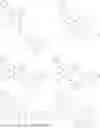


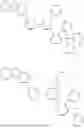




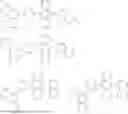


Sources:
- United States Patent and Trademark Office - verify current appl. status at the USPTO↗
Similar patent applications:
- » 20240381761
COMPOUND, ORGANIC ELECTROLUMINESCENT ELEMENT MATERIAL, ORGANIC ELECTROLUMINESCENT ELEMENT, AND ELECTRONIC DEVICE - » 20240315131
COMPOUND, ORGANIC ELECTROLUMINESCENT ELEMENT MATERIAL, ORGANIC ELECTROLUMINESCENT ELEMENT, AND ELECTRONIC DEVICE - » 20230125329
COMPOUND, ORGANIC ELECTROLUMINESCENCE MATERIAL, ORGANIC ELECTROLUMINESCENCE ELEMENT AND ELECTRONIC DEVICE - » 20230006136
COMPOUND, ORGANIC ELECTROLUMINESCENT ELEMENT MATERIAL, ORGANIC ELECTROLUMINESCENT ELEMENT, AND ELECTRONIC DEVICE - » 20240032416
COMPOUND, ORGANIC ELECTROLUMINESCENT ELEMENT MATERIAL, ORGANIC ELECTROLUMINESCENT ELEMENT, AND ELECTRONIC DEVICE - » 20160181525
Compound, organic electroluminescent element material, organic electroluminescent element, and electronic device - » 20170213983
Compound, organic electroluminescence element material, organic electroluminescence element and electronic device - » 20180029983
COMPOUND, ORGANIC ELECTROLUMINESCENT ELEMENT MATERIAL, ORGANIC ELECTROLUMINESCENT ELEMENT, AND ELECTRONIC DEVICE - » 20180166632
HIGH MOLECULAR COMPOUND, ORGANIC ELECTROLUMINESCENCE ELEMENT MATERIAL, ORGANIC ELECTROLUMINESCENCE ELEMENT, AND ELECTRONIC DEVICE - » 20240407255
COMPOUND, ORGANIC ELECTROLUMINESCENT ELEMENT MATERIAL, ORGANIC ELECTROLUMINESCENT ELEMENT, AND ELECTRONIC DEVICE
Recent applications in this class:
- » 20250176428 2025-05-29
ORGANIC ELECTROLUMINESCENT MATERIALS AND DEVICES - » 20250176427 2025-05-29
NITROGEN-CONTAINING COMPOUND, ORGANIC ELECTROLUMINESCENT DEVICE, AND ELECTRONIC APPARATUS - » 20250169357 2025-05-22
COMPOUND, ORGANIC LIGHT EMITTING DEVICE, AND DISPLAY DEVICE - » 20250160203 2025-05-15
Organic Compound, Light-Emitting Device, Light-Emitting Apparatus, Electronic Device, and Lighting Device - » 20250160202 2025-05-15
NOVEL COMPOUND AND ORGANIC LIGHT EMITTING DEVICE COMPRISING THE SAME - » 20250151612 2025-05-08
Light-Emitting Device - » 20250151611 2025-05-08
3,6-BIS(Cyanomethylidene)Cyclohexa-1,4-Diene Compounds and Their Use in Organic Electronic Devices - » 20250143181 2025-05-01
ORGANIC COMPOUND AND ORGANIC LIGHT EMITTING DEVICE COMPRISING THE SAME - » 20250143180 2025-05-01
NOVEL COMPOUND AND ORGANIC LIGHT EMITTING DEVICE COMPRISING THE SAME - » 20250143179 2025-05-01
ORGANIC LIGHT-EMITTING ELEMENT INCLUDING HETEROCYCLIC COMPOUND, COMPOSITION FOR ORGANIC MATERIAL LAYER OF ORGANIC LIGHT-EMITTING ELEMENT, AND METHOD FOR MANUFACTURING ORGANIC LIGHT-EMITTING ELEMENT
Recent applications for this Assignee:
- » 20250096319 2025-03-20
SULFIDE SOLID ELECTROLYTE AND TREATMENT METHOD THEREFOR - » 20240318096 2024-09-26
Lubricating oil composition - » 20240301281 2024-09-12
COMPOUND, MATERIAL FOR ORGANIC ELECTROLUMINESCENT ELEMENT, ORGANIC ELECTROLUMINESCENT ELEMENT, AND ELECTRONIC APPLIANCE - » 20240295042 2024-09-05
SOLID-ELECTROLYTE-TYPE ELECTROLYZER AND METHOD FOR MAINTAINING SAME - » 20240218283 2024-07-04
LUBRICANT COMPOSITION - » 20240215281 2024-06-27
COMPOUND, MATERIAL FOR ORGANIC ELECTROLUMINESCENT ELEMENT, ORGANIC ELECTROLUMINESCENT ELEMENT, AND ELECTRONIC DEVICE - » 20240209520 2024-06-27
APPARATUS FOR MANUFACTURING NITROGEN-CONTAINING COMPOUND AND METHOD FOR MANUFACTURING NITROGEN-CONTAINING COMPOUND - » 20240199975 2024-06-20
LUBRICATING OIL COMPOSITION - » 20240199972 2024-06-20
LUBRICANT COMPOSITION - » 20240199971 2024-06-20
Lubricating oil composition