ORGANIC ELECTROLUMINESCENT MATERIALS AND DEVICES
US20240196729A1
2024-06-13
18/418,593
2024-01-22
Smart Summary: A new type of material has been created for use in light-emitting devices. It includes a special chemical structure made of five or more connected ring shapes that bond with a metal. This design makes the material stronger and more stable when used in organic light-emitting diodes (OLEDs). The improved stability helps the device work better and produce brighter light. Overall, this advancement could lead to better performance in lighting and display technologies. 🚀 TL;DR
Abstract:
Provided is a new composition of matter for phosphorescent emitters containing a chelating ligand including five or more fused carbocyclic or heterocyclic rings that form two bonds to a metal forming a 7-membered chelate. This fused ring structure provides added rigidity to the molecule for enhanced stability in an OLED device and improve photophysical properties.
Inventors:
- Tyler FLEETHAM 70 🇺🇸 Newtown, PA, United States
- Hsiao-Fan CHEN 185 🇺🇸 Lawrence Township, NJ, United States
- Jerald FELDMAN 102 🇺🇸 Cherry Hill, NJ, United States
Assignee:
- UNIVERSAL DISPLAY CORPORATION 1,677 🇺🇸 Ewing, NJ, United States
Applicant:
Interested in similar patents?
Get notified when new applications in this technology area are published.
Classification:
C07D401/14 » CPC further
Heterocyclic compounds containing two or more hetero rings, having nitrogen atoms as the only ring hetero atoms, at least one ring being a six-membered ring with only one nitrogen atom containing three or more hetero rings
H05B33/00 » CPC further
Electroluminescent light sources
Description
CROSS-REFERENCE TO RELATED APPLICATIONS
This application is a continuation of copending U.S. patent application Ser. No. 16/988,003, filed Aug. 7, 2020, which claims priority under 35 U.S.C. § 119(e) to U.S. Provisional Application No. 62/891,623, filed on Aug. 26, 2019, the entire contents of which are incorporated herein by reference.
FIELD
The present disclosure generally relates to organometallic compounds and formulations and their various uses including as emitters in devices such as organic light emitting diodes and related electronic devices.
BACKGROUND
Opto-electronic devices that make use of organic materials are becoming increasingly desirable for various reasons. Many of the materials used to make such devices are relatively inexpensive, so organic opto-electronic devices have the potential for cost advantages over inorganic devices. In addition, the inherent properties of organic materials, such as their flexibility, may make them well suited for particular applications such as fabrication on a flexible substrate. Examples of organic opto-electronic devices include organic light emitting diodes/devices (OLEDs), organic phototransistors, organic photovoltaic cells, and organic photodetectors. For OLEDs, the organic materials may have performance advantages over conventional materials.
OLEDs make use of thin organic films that emit light when voltage is applied across the device. OLEDs are becoming an increasingly interesting technology for use in applications such as flat panel displays, illumination, and backlighting.
One application for phosphorescent emissive molecules is a full color display. Industry standards for such a display call for pixels adapted to emit particular colors, referred to as “saturated” colors. In particular, these standards call for saturated red, green, and blue pixels. Alternatively, the OLED can be designed to emit white light. In conventional liquid crystal displays emission from a white backlight is filtered using absorption filters to produce red, green and blue emission. The same technique can also be used with OLEDs. The white OLED can be either a single emissive layer (EML) device or a stack structure. Color may be measured using CIE coordinates, which are well known to the art.
SUMMARY
This disclosure provides a new composition of matter for phosphorescent emitters containing a chelating ligand comprised of five or more fused carbocyclic or heterocyclic rings. The five or more fused rings form two bonds to a metal forming a 7-membered chelate. This fused ring structure provides added rigidity to the molecule for enhanced stability in an OLED device and improved photophysical properties.
In one aspect, the present disclosure provides a compound having a fragment with at least five rings fused next to each other consecutively wherein the fragment has at least two atoms coordinated to a metal.
In another aspect, the present disclosure provides a compound comprising a ligand LA of Formula I
wherein: rings A, B, C, D, and E are each independently a 5-membered or 6-membered carbocyclic or heterocyclic ring; Z1-Z12 are each independently C or N; RA, RB, RC, RD, and RE each independently represents zero, mono, or up to a maximum allowed substitutions to its associated ring; RA, RB, RC, RD, and RE are each independently a hydrogen or a substituent selected from the group consisting of deuterium, halide, alkyl, cycloalkyl, fluorinated alkyl, heteroalkyl, arylalkyl, alkoxy, aryloxy, amino, silyl, boryl, alkenyl, cycloalkenyl, heteroalkenyl, alkynyl, aryl, heteroaryl, acyl, carbonyl, carboxylic acids, ester, nitrile, isonitrile, sulfanyl, sulfinyl, sulfonyl, phosphino, and combinations thereof; and two substituents can be joined or fused together to form a ring, wherein the ligand LA is complexed to a metal M selected from the group consisting of Ir, Rh, Re, Ru, Os, Pt, Pd, Au, Ag, and Cu; wherein M can be coordinated to other ligands; and wherein the ligand LA can be linked with other ligands to form a tridentate, tetradentate, pentadentate, or hexadentate ligand.
In another aspect, the present disclosure provides a formulation comprising a compound having a fragment with at least five rings fused next to each other consecutively wherein the fragment has at least two atoms coordinated to a metal.
In yet another aspect, the present disclosure provides a formulation comprising a compound of Formula I described herein.
In yet another aspect, the present disclosure provides an OLED having an organic layer comprising a compound having a fragment with at least five rings fused next to each other consecutively wherein the fragment has at least two atoms coordinated to a metal.
In yet another aspect, the present disclosure provides an OLED having an organic layer comprising the compound of Formula I described herein.
In yet another aspect, the present disclosure provides a consumer product comprising an OLED having an organic layer comprising a compound having a fragment with at least five rings fused next to each other consecutively wherein the fragment has at least two atoms coordinated to a metal.
In yet another aspect, the present disclosure provides a consumer product comprising an OLED with an organic layer comprising the compound of Formula I described herein.
In yet another aspect, the present disclosure provides an OLED device comprising an emitter wherein the device emits a luminescent radiation at room temperature when a voltage is applied across the device, wherein the luminescent radiation comprises a first radiation component emitted from the emitter, and wherein the first radiation component has a full width at half maximum equal or less than 15 nm.
BRIEF DESCRIPTION OF THE DRAWINGS
FIG. 1 shows an organic light emitting device.
FIG. 2 shows an inverted organic light emitting device that does not have a separate electron transport layer.
DETAILED DESCRIPTION
A. Terminology
Unless otherwise specified, the below terms used herein are defined as follows:
As used herein, the term “organic” includes polymeric materials as well as small molecule organic materials that may be used to fabricate organic opto-electronic devices. “Small molecule” refers to any organic material that is not a polymer, and “small molecules” may actually be quite large. Small molecules may include repeat units in some circumstances. For example, using a long chain alkyl group as a substituent does not remove a molecule from the “small molecule” class. Small molecules may also be incorporated into polymers, for example as a pendent group on a polymer backbone or as a part of the backbone. Small molecules may also serve as the core moiety of a dendrimer, which consists of a series of chemical shells built on the core moiety. The core moiety of a dendrimer may be a fluorescent or phosphorescent small molecule emitter. A dendrimer may be a “small molecule,” and it is believed that all dendrimers currently used in the field of OLEDs are small molecules.
As used herein, “top” means furthest away from the substrate, while “bottom” means closest to the substrate. Where a first layer is described as “disposed over” a second layer, the first layer is disposed further away from substrate. There may be other layers between the first and second layer, unless it is specified that the first layer is “in contact with” the second layer. For example, a cathode may be described as “disposed over” an anode, even though there are various organic layers in between.
As used herein, “solution processable” means capable of being dissolved, dispersed, or transported in and/or deposited from a liquid medium, either in solution or suspension form.
A ligand may be referred to as “photoactive” when it is believed that the ligand directly contributes to the photoactive properties of an emissive material. A ligand may be referred to as “ancillary” when it is believed that the ligand does not contribute to the photoactive properties of an emissive material, although an ancillary ligand may alter the properties of a photoactive ligand.
As used herein, and as would be generally understood by one skilled in the art, a first “Highest Occupied Molecular Orbital” (HOMO) or “Lowest Unoccupied Molecular Orbital” (LUMO) energy level is “greater than” or “higher than” a second HOMO or LUMO energy level if the first energy level is closer to the vacuum energy level. Since ionization potentials (IP) are measured as a negative energy relative to a vacuum level, a higher HOMO energy level corresponds to an IP having a smaller absolute value (an IP that is less negative). Similarly, a higher LUMO energy level corresponds to an electron affinity (EA) having a smaller absolute value (an EA that is less negative). On a conventional energy level diagram, with the vacuum level at the top, the LUMO energy level of a material is higher than the HOMO energy level of the same material. A “higher” HOMO or LUMO energy level appears closer to the top of such a diagram than a “lower” HOMO or LUMO energy level.
As used herein, and as would be generally understood by one skilled in the art, a first work function is “greater than” or “higher than” a second work function if the first work function has a higher absolute value. Because work functions are generally measured as negative numbers relative to vacuum level, this means that a “higher” work function is more negative. On a conventional energy level diagram, with the vacuum level at the top, a “higher” work function is illustrated as further away from the vacuum level in the downward direction. Thus, the definitions of HOMO and LUMO energy levels follow a different convention than work functions.
The terms “halo,” “halogen,” and “halide” are used interchangeably and refer to fluorine, chlorine, bromine, and iodine.
The term “acyl” refers to a substituted carbonyl radical (C(O)—Rs).
The term “ester” refers to a substituted oxycarbonyl (—O—C(O)—Rs or —C(O)—O—Rs) radical.
The term “ether” refers to an —ORs radical.
The terms “sulfanyl” or “thio-ether” are used interchangeably and refer to a —SRs radical.
The term “sulfinyl” refers to a —S(O)—Rs radical.
The term “sulfonyl” refers to a —SO2—Rs radical.
The term “phosphino” refers to a —P(Rs)3 radical, wherein each Rs can be same or different.
The term “silyl” refers to a —Si(Rs)3 radical, wherein each Rs can be same or different.
The term “boryl” refers to a —B(Rs)2 radical or its Lewis adduct —B(Rs)3 radical, wherein Rs can be same or different.
In each of the above, Rs can be hydrogen or a substituent selected from the group consisting of deuterium, halogen, alkyl, cycloalkyl, heteroalkyl, heterocycloalkyl, arylalkyl, alkoxy, aryloxy, amino, silyl, alkenyl, cycloalkenyl, heteroalkenyl, alkynyl, aryl, heteroaryl, and combination thereof. Preferred Rs is selected from the group consisting of alkyl, cycloalkyl, aryl, heteroaryl, and combination thereof.
The term “alkyl” refers to and includes both straight and branched chain alkyl radicals. Preferred alkyl groups are those containing from one to fifteen carbon atoms and includes methyl, ethyl, propyl, 1-methylethyl, butyl, 1-methylpropyl, 2-methylpropyl, pentyl, 1-methylbutyl, 2-methylbutyl, 3-methylbutyl, 1,1-dimethylpropyl, 1,2-dimethylpropyl, 2,2-dimethylpropyl, and the like. Additionally, the alkyl group may be optionally substituted.
The term “cycloalkyl” refers to and includes monocyclic, polycyclic, and spiro alkyl radicals. Preferred cycloalkyl groups are those containing 3 to 12 ring carbon atoms and includes cyclopropyl, cyclopentyl, cyclohexyl, bicyclo[3.1.1]heptyl, spiro[4.5]decyl, spiro[5.5]undecyl, adamantyl, and the like. Additionally, the cycloalkyl group may be optionally substituted.
The terms “heteroalkyl” or “heterocycloalkyl” refer to an alkyl or a cycloalkyl radical, respectively, having at least one carbon atom replaced by a heteroatom. Optionally the at least one heteroatom is selected from O, S, N, P, B, Si and Se, preferably, O, S or N. Additionally, the heteroalkyl or heterocycloalkyl group may be optionally substituted.
The term “alkenyl” refers to and includes both straight and branched chain alkene radicals. Alkenyl groups are essentially alkyl groups that include at least one carbon-carbon double bond in the alkyl chain. Cycloalkenyl groups are essentially cycloalkyl groups that include at least one carbon-carbon double bond in the cycloalkyl ring. The term “heteroalkenyl” as used herein refers to an alkenyl radical having at least one carbon atom replaced by a heteroatom. Optionally the at least one heteroatom is selected from O, S, N, P, B, Si, and Se, preferably, O, S, or N. Preferred alkenyl, cycloalkenyl, or heteroalkenyl groups are those containing two to fifteen carbon atoms. Additionally, the alkenyl, cycloalkenyl, or heteroalkenyl group may be optionally substituted.
The term “alkynyl” refers to and includes both straight and branched chain alkyne radicals. Alkynyl groups are essentially alkyl groups that include at least one carbon-carbon triple bond in the alkyl chain. Preferred alkynyl groups are those containing two to fifteen carbon atoms. Additionally, the alkynyl group may be optionally substituted.
The terms “aralkyl” or “arylalkyl” are used interchangeably and refer to an alkyl group that is substituted with an aryl group. Additionally, the aralkyl group may be optionally substituted.
The term “heterocyclic group” refers to and includes aromatic and non-aromatic cyclic radicals containing at least one heteroatom. Optionally the at least one heteroatom is selected from O, S, N, P, B, Si, and Se, preferably, O, S, or N. Hetero-aromatic cyclic radicals may be used interchangeably with heteroaryl. Preferred hetero-non-aromatic cyclic groups are those containing 3 to 7 ring atoms which includes at least one hetero atom, and includes cyclic amines such as morpholino, piperidino, pyrrolidino, and the like, and cyclic ethers/thio-ethers, such as tetrahydrofuran, tetrahydropyran, tetrahydrothiophene, and the like. Additionally, the heterocyclic group may be optionally substituted.
The term “aryl” refers to and includes both single-ring aromatic hydrocarbyl groups and polycyclic aromatic ring systems. The polycyclic rings may have two or more rings in which two carbons are common to two adjoining rings (the rings are “fused”) wherein at least one of the rings is an aromatic hydrocarbyl group, e.g., the other rings can be cycloalkyls, cycloalkenyls, aryl, heterocycles, and/or heteroaryls. Preferred aryl groups are those containing six to thirty carbon atoms, preferably six to twenty carbon atoms, more preferably six to twelve carbon atoms. Especially preferred is an aryl group having six carbons, ten carbons or twelve carbons. Suitable aryl groups include phenyl, biphenyl, triphenyl, triphenylene, tetraphenylene, naphthalene, anthracene, phenalene, phenanthrene, fluorene, pyrene, chrysene, perylene, and azulene, preferably phenyl, biphenyl, triphenyl, triphenylene, fluorene, and naphthalene. Additionally, the aryl group may be optionally substituted.
The term “heteroaryl” refers to and includes both single-ring aromatic groups and polycyclic aromatic ring systems that include at least one heteroatom. The heteroatoms include, but are not limited to O, S, N, P, B, Si, and Se. In many instances, O, S, or N are the preferred heteroatoms. Hetero-single ring aromatic systems are preferably single rings with 5 or 6 ring atoms, and the ring can have from one to six heteroatoms. The hetero-polycyclic ring systems can have two or more rings in which two atoms are common to two adjoining rings (the rings are “fused”) wherein at least one of the rings is a heteroaryl, e.g., the other rings can be cycloalkyls, cycloalkenyls, aryl, heterocycles, and/or heteroaryls. The hetero-polycyclic aromatic ring systems can have from one to six heteroatoms per ring of the polycyclic aromatic ring system. Preferred heteroaryl groups are those containing three to thirty carbon atoms, preferably three to twenty carbon atoms, more preferably three to twelve carbon atoms. Suitable heteroaryl groups include dibenzothiophene, dibenzofuran, dibenzoselenophene, furan, thiophene, benzofuran, benzothiophene, benzoselenophene, carbazole, indolocarbazole, pyridylindole, pyrrolodipyridine, pyrazole, imidazole, triazole, oxazole, thiazole, oxadiazole, oxatriazole, dioxazole, thiadiazole, pyridine, pyridazine, pyrimidine, pyrazine, triazine, oxazine, oxathiazine, oxadiazine, indole, benzimidazole, indazole, indoxazine, benzoxazole, benzisoxazole, benzothiazole, quinoline, isoquinoline, cinnoline, quinazoline, quinoxaline, naphthyridine, phthalazine, pteridine, xanthene, acridine, phenazine, phenothiazine, phenoxazine, benzofuropyridine, furodipyridine, benzothienopyridine, thienodipyridine, benzoselenophenopyridine, and selenophenodipyridine, preferably dibenzothiophene, dibenzofuran, dibenzoselenophene, carbazole, indolocarbazole, imidazole, pyridine, triazine, benzimidazole, 1,2-azaborine, 1,3-azaborine, 1,4-azaborine, borazine, and aza-analogs thereof. Additionally, the heteroaryl group may be optionally substituted.
Of the aryl and heteroaryl groups listed above, the groups of triphenylene, naphthalene, anthracene, dibenzothiophene, dibenzofuran, dibenzoselenophene, carbazole, indolocarbazole, imidazole, pyridine, pyrazine, pyrimidine, triazine, and benzimidazole, and the respective aza-analogs of each thereof are of particular interest.
The terms alkyl, cycloalkyl, heteroalkyl, heterocycloalkyl, alkenyl, cycloalkenyl, heteroalkenyl, alkynyl, aralkyl, heterocyclic group, aryl, and heteroaryl, as used herein, are independently unsubstituted, or independently substituted, with one or more general substituents.
In many instances, the general substituents are selected from the group consisting of deuterium, halogen, alkyl, cycloalkyl, heteroalkyl, heterocycloalkyl, arylalkyl, alkoxy, aryloxy, amino, silyl, alkenyl, cycloalkenyl, heteroalkenyl, alkynyl, aryl, heteroaryl, acyl, carboxylic acid, ether, ester, nitrile, isonitrile, sulfanyl, sulfinyl, sulfonyl, phosphino, boryl, and combinations thereof.
In some instances, the preferred general substituents are selected from the group consisting of deuterium, fluorine, alkyl, cycloalkyl, heteroalkyl, alkoxy, aryloxy, amino, silyl, alkenyl, cycloalkenyl, heteroalkenyl, aryl, heteroaryl, nitrile, isonitrile, sulfanyl, boryl, and combinations thereof.
In some instances, the more preferred general substituents are selected from the group consisting of deuterium, fluorine, alkyl, cycloalkyl, alkoxy, aryloxy, amino, silyl, boryl, aryl, heteroaryl, sulfanyl, and combinations thereof.
In yet other instances, the most preferred general substituents are selected from the group consisting of deuterium, fluorine, alkyl, cycloalkyl, aryl, heteroaryl, and combinations thereof.
The terms “substituted” and “substitution” refer to a substituent other than H that is bonded to the relevant position, e.g., a carbon or nitrogen. For example, when R1 represents mono-substitution, then one R1 must be other than H (i.e., a substitution). Similarly, when R1 represents di-substitution, then two of R1 must be other than H. Similarly, when R1 represents zero or no substitution, R1, for example, can be a hydrogen for available valencies of ring atoms, as in carbon atoms for benzene and the nitrogen atom in pyrrole, or simply represents nothing for ring atoms with fully filled valencies, e.g., the nitrogen atom in pyridine. The maximum number of substitutions possible in a ring structure will depend on the total number of available valencies in the ring atoms.
As used herein. “combinations thereof” indicates that one or more members of the applicable list are combined to form a known or chemically stable arrangement that one of ordinary skill in the art can envision from the applicable list. For example, an alkyl and deuterium can be combined to form a partial or fully deuterated alkyl group; a halogen and alkyl can be combined to form a halogenated alkyl substituent; and a halogen, alkyl, and aryl can be combined to form a halogenated arylalkyl. In one instance, the term substitution includes a combination of two to four of the listed groups. In another instance, the term substitution includes a combination of two to three groups. In yet another instance, the term substitution includes a combination of two groups. Preferred combinations of substituent groups are those that contain up to fifty atoms that are not hydrogen or deuterium, or those which include up to forty atoms that are not hydrogen or deuterium, or those that include up to thirty atoms that are not hydrogen or deuterium. In many instances, a preferred combination of substituent groups will include up to twenty atoms that are not hydrogen or deuterium.
The “aza” designation in the fragments described herein, i.e. aza-dibenzofuran, aza-dibenzothiophene, etc. means that one or more of the C—H groups in the respective aromatic ring can be replaced by a nitrogen atom, for example, and without any limitation, azatriphenylene encompasses both dibenzo[f,h]quinoxaline and dibenzo[f,h]quinoline. One of ordinary skill in the art can readily envision other nitrogen analogs of the aza-derivatives described above, and all such analogs are intended to be encompassed by the terms as set forth herein.
As used herein. “deuterium” refers to an isotope of hydrogen. Deuterated compounds can be readily prepared using methods known in the art. For example, U.S. Pat. No. 8,557,400, Patent Pub. No. WO 2006/095951, and U.S. Pat. Application Pub. No. US 2011/0037057, which are hereby incorporated by reference in their entireties, describe the making of deuterium-substituted organometallic complexes. Further reference is made to Ming Yan, et al., Tetrahedron 2015, 71, 1425-30 and Atzrodt et al., Angew. Chem. Int. Ed. (Reviews) 2007, 46, 7744-65, which are incorporated by reference in their entireties, describe the deuteration of the methylene hydrogens in benzyl amines and efficient pathways to replace aromatic ring hydrogens with deuterium, respectively.
It is to be understood that when a molecular fragment is described as being a substituent or otherwise attached to another moiety, its name may be written as if it were a fragment (e.g. phenyl, phenylene, naphthyl, dibenzofuryl) or as if it were the whole molecule (e.g. benzene, naphthalene, dibenzofuran). As used herein, these different ways of designating a substituent or attached fragment are considered to be equivalent.
In some instance, a pair of adjacent substituents can be optionally joined or fused into a ring. The preferred ring is a five, six, or seven-membered carbocyclic or heterocyclic ring, includes both instances where the portion of the ring formed by the pair of substituents is saturated and where the portion of the ring formed by the pair of substituents is unsaturated. As used herein. “adjacent” means that the two substituents involved can be on the same ring next to each other, or on two neighboring rings having the two closest available substitutable positions, such as 2, 2′ positions in a biphenyl, or 1, 8 position in a naphthalene, as long as they can form a stable fused ring system.
B. The Compounds of the Present Disclosure
In one aspect, the present disclosure provides a compound having a fragment with at least five rings fused next to each other consecutively wherein the fragment has at least two atoms coordinated to a metal.
In some embodiments, the compound can be a metal coordination compound comprising a ligand, wherein the ligand comprises a fragment having at least five rings fused next to each other consecutively in a row; and wherein the fragment has at least two atoms coordinated to a metal.
In some embodiments, the at least five rings can comprise two 5-membered rings and three 6-membered rings fused to each other consecutively.
In some embodiments, the at least five rings can comprise five aromatic rings fused next to each other consecutively.
In some embodiments, the fragment can comprise at least six rings fused next to each other consecutively.
In some embodiments, the fragment can comprise at least seven rings fused next to each other consecutively.
In another aspect, the present disclosure provides a ligand LA of Formula I
wherein: rings A, B, C, D, and E are each independently a 5-membered or 6-membered carbocyclic or heterocyclic ring; Z1-Z12 are each independently C or N; RA, RB, RC, RD, and RE each independently represents zero, mono, or up to a maximum allowed substitution to its associated ring; RA, RB, RC, RD, and RE are each independently a hydrogen or a substituent selected from the group consisting of the general substituents defined herein; two substituents can be joined or fused together to form a ring, wherein the ligand LA is complexed to a metal M selected from the group consisting of Ir, Rh, Re, Ru, Os, Pt, Pd, Au, Ag, and Cu; wherein M can be coordinated to other ligands; and wherein the ligand LA can be linked with other ligands to form a tridentate, tetradentate, pentadentate, or hexadentate ligand.
In some embodiments, RA, RB, RC, RD, and RE each can be independently a hydrogen or a substituent selected from the group consisting of the preferred general substituents defined herein.
In some embodiments, M can be Ir, Pt or Pd.
In some embodiments, the ligand LA can be bidentate.
In some embodiments, the ligand LA can be linked with other ligands to form a tetradentate ligand.
In some embodiments, ring A, ring C, and ring E can be 6-membered rings, and ring B and ring D can be 5-membered rings.
In some embodiments, ring A, ring C, and ring E can be 5-membered rings, and ring B and ring D can be 6-membered rings.
In some embodiments, ring A and ring E can be 5-membered rings, and ring B, ring C, and ring D can be 6-membered rings.
In some embodiments, ring A and ring E can be 6-membered rings, and ring B, ring C, and ring D can be 5-membered rings.
In some embodiments, ring A, ring B, ring D, and ring E can be 5-membered rings, and ring C can be a 6-membered ring.
In some embodiments, Z1-Z12 can be C.
In some embodiments, at least one of Z1-Z12 can be N.
In some embodiments, one of Z1 and Z6 can be N and the other can be C.
In some embodiments, Z1 and Z6 can be C.
In some embodiments, Z1 and Z6 can be N.
In some embodiments of LA of Formula I, the ligand LA can be selected from the group consisting of:
wherein each X1-X22 is independently selected from the group consisting of C and N; wherein no more than two N atoms are bond to one another; wherein each Y1-Y5 is selected from the group consisting of O, S, Se, NR, CRR′, SiRR′, GeRR′, and BR; and wherein R and R′ are each independently selected from the group consisting of hydrogen, deuterium, fluorine, alkyl, cycloalkyl, heteroalkyl, alkoxy, aryloxy, amino, silyl, boryl, alkenyl, cycloalkenyl, heteroalkenyl, aryl, heteroaryl, nitrile, isonitrile, and combinations thereof.
In some embodiments of LA of Formula I, the ligand LA can be selected from the group consisting of the structures shown in LIST 1 below:
wherein each X1-X6 is independently selected from the group consisting of C and N; wherein no more than two N atoms are bond to one another; wherein each Y1-Y7 is selected from the group consisting of O, S, Se, NR, CRR′, SiRR′, GeRR′, and BR; and wherein R and R′ are each independently selected from the group consisting of hydrogen, deuterium, fluorine, alkyl, cycloalkyl, heteroalkyl, alkoxy, aryloxy, amino, silyl, boryl, alkenyl, cycloalkenyl, heteroalkenyl, aryl, heteroaryl, nitrile, isonitrile, and combinations thereof.
In some embodiments, the ligand LA can be selected from the group consisting of the structures shown in LIST 2 below. It should be noted that the variables Yi and Yj used in LIST 2 and the subscripted variables Y1-Y7 used above are different set of variables.
| LIST 2 |
| Name of ligand LA | Structure | i, j |
| LAI-[(i)(j)] having the structure | wherein i and j are independently an integer from 1 to 30, and | |
| LAII-[(i)(j)(k)] having the structure | wherein i, j, and k are independently an integer from 1 to 30, and | |
| LAIII-[(i)(j)] having the structure | Wherein i and j are independently an integer from 1 to 30, and | |
| LAIV[(i)] having the structure | wherein i is an integer from 1 to 30, and | |
| LAV-[(i)(j)] having the structure | wherein i and j are independently an integer from 1 to 30, and | |
| LAVI-[(i)(j)] having the structure | wherein i and j are independently an integer from 1 to 30, and | |
| LAVII-[(i)] having the structure | wherein i is an integer from 1 to 30, and | |
| LAVIII-[(i)(j)] having the structure | wherein i and j are independently an integer from 1 to 30, and | |
| LAIX-[(i)(j)] having the structure | wherein i and j are independently an integer from 1 to 30, and | |
| LAX-[(i)(j)] having the structure | wherein i and j are independently an integer from 1 to 30, and | |
| LAXI-[(i)(j)] having the structure | wherein i and j are independently an from 1 to 30, and | |
| LAXII-[(i)] having the structure | wherein i is an integer from 1 to 30, and | |
| LAXIII-[(i)(j)] having the structure | wherein i and j are independently an integer from 1 to 30, and | |
| LAXIV-[(i)(j)] having the structure | wherein i, j, are independently an integer from 1 to 30, and | |
| LAXV-[(i)] having the structure | wherein i is an integer from 1 to 30, and | |
| LAXVI-[(i)(j)] having the structure | wherein i is an integer from 1 to 30, and | |
| LAXVII-[(i)(j)] having the structure | wherein i and j are independently an integer from 1 to 30, and | |
| LAXVIII-[(i)(j)]having the structure | wherein i and j are independently an integer from 1 to 30, and | |
wherein Y1 through Y30 have the structures defined below:
In some embodiments, the compound can have the formula Ir(LA); the formula Ir(LA)(LB)2, the formula Ir(LA)2(LB), or the formula Ir(LA)2(LC),
wherein:
-
- LA is selected from the group consisting of the structures shown in LIST 2 above;
- LB is selected from the group consisting of LB1 through LB468 as shown in LIST 3 below:
and
LC is selected from the group consisting of Lei through Leno based on a structure of Formula X
wherein for each of the ligands LC1 through LC1260, R1, R2, and R3 are defined in LIST 4 below:
| Ligand | R1 | R2 | R3 | |
| LC1 | RD1 | RD1 | H | |
| LC2 | RD2 | RD2 | H | |
| LC3 | RD3 | RD3 | H | |
| LC4 | RD4 | RD4 | H | |
| LC5 | RD5 | RD5 | H | |
| LC6 | RD6 | RD6 | H | |
| LC7 | RD7 | RD7 | H | |
| LC8 | RD8 | RD8 | H | |
| LC9 | RD9 | RD9 | H | |
| LC10 | RD10 | RD10 | H | |
| LC11 | RD11 | RD11 | H | |
| LC12 | RD12 | RD12 | H | |
| LC13 | RD13 | RD13 | H | |
| LC14 | RD14 | RD14 | H | |
| LC15 | RD15 | RD15 | H | |
| LC16 | RD16 | RD16 | H | |
| LC17 | RD17 | RD17 | H | |
| LC18 | RD18 | RD18 | H | |
| LC19 | RD19 | RD19 | H | |
| LC20 | RD20 | RD20 | H | |
| LC21 | RD21 | RD21 | H | |
| LC22 | RD22 | RD22 | H | |
| LC23 | RD23 | RD23 | H | |
| LC24 | RD24 | RD24 | H | |
| LC25 | RD25 | RD25 | H | |
| LC26 | RD26 | RD26 | H | |
| LC27 | RD27 | RD27 | H | |
| LC28 | RD28 | RD28 | H | |
| LC29 | RD29 | RD29 | H | |
| LC30 | RD30 | RD30 | H | |
| LC31 | RD31 | RD31 | H | |
| LC32 | RD32 | RD32 | H | |
| LC33 | RD33 | RD33 | H | |
| LC34 | RD34 | RD34 | H | |
| LC35 | RD35 | RD35 | H | |
| LC36 | RD40 | RD40 | H | |
| LC37 | RD41 | RD41 | H | |
| LC38 | RD42 | RD42 | H | |
| LC39 | RD64 | RD64 | H | |
| LC40 | RD66 | RD66 | H | |
| LC41 | RD68 | RD68 | H | |
| LC42 | RD76 | RD76 | H | |
| LC43 | RD1 | RD2 | H | |
| LC44 | RD1 | RD3 | H | |
| LC45 | RD1 | RD4 | H | |
| LC46 | RD1 | RD5 | H | |
| LC47 | RD1 | RD6 | H | |
| LC48 | RD1 | RD7 | H | |
| LC49 | RD1 | RD8 | H | |
| LC50 | RD1 | RD9 | H | |
| LC51 | RD1 | RD10 | H | |
| LC52 | RD1 | RD11 | H | |
| LC53 | RD1 | RD12 | H | |
| LC54 | RD1 | RD13 | H | |
| LC55 | RD1 | RD14 | H | |
| LC56 | RD1 | RD15 | H | |
| LC57 | RD1 | RD16 | H | |
| LC58 | RD1 | RD17 | H | |
| LC59 | RD1 | RD18 | H | |
| LC60 | RD1 | RD19 | H | |
| LC61 | RD1 | RD20 | H | |
| LC62 | RD1 | RD21 | H | |
| LC63 | RD1 | RD22 | H | |
| LC64 | RD1 | RD23 | H | |
| LC65 | RD1 | RD24 | H | |
| LC66 | RD1 | RD25 | H | |
| LC67 | RD1 | RD26 | H | |
| LC68 | RD1 | RD27 | H | |
| LC69 | RD1 | RD28 | H | |
| LC70 | RD1 | RD29 | H | |
| LC71 | RD1 | RD30 | H | |
| LC72 | RD1 | RD31 | H | |
| LC73 | RD1 | RD32 | H | |
| LC74 | RD1 | RD33 | H | |
| LC75 | RD1 | RD34 | H | |
| LC76 | RD1 | RD35 | H | |
| LC77 | RD1 | RD40 | H | |
| LC78 | RD1 | RD41 | H | |
| LC79 | RD1 | RD42 | H | |
| LC80 | RD1 | RD64 | H | |
| LC81 | RD1 | RD66 | H | |
| LC82 | RD1 | RD68 | H | |
| LC83 | RD1 | RD76 | H | |
| LC84 | RD2 | RD1 | H | |
| LC85 | RD2 | RD3 | H | |
| LC86 | RD2 | RD4 | H | |
| LC87 | RD2 | RD5 | H | |
| LC88 | RD2 | RD6 | H | |
| LC89 | RD2 | RD7 | H | |
| LC90 | RD2 | RD8 | H | |
| LC91 | RD2 | RD9 | H | |
| LC92 | RD2 | RD10 | H | |
| LC93 | RD2 | RD11 | H | |
| LC94 | RD2 | RD12 | H | |
| LC95 | RD2 | RD13 | H | |
| LC96 | RD2 | RD14 | H | |
| LC97 | RD2 | RD15 | H | |
| LC98 | RD2 | RD16 | H | |
| LC99 | RD2 | RD17 | H | |
| LC100 | RD2 | RD18 | H | |
| LC101 | RD2 | RD19 | H | |
| LC102 | RD2 | RD20 | H | |
| LC103 | RD2 | RD21 | H | |
| LC104 | RD2 | RD22 | H | |
| LC105 | RD2 | RD23 | H | |
| LC106 | RD2 | RD24 | H | |
| LC107 | RD2 | RD25 | H | |
| LC108 | RD2 | RD26 | H | |
| LC109 | RD2 | RD27 | H | |
| LC110 | RD2 | RD28 | H | |
| LC111 | RD2 | RD29 | H | |
| LC112 | RD2 | RD30 | H | |
| LC113 | RD2 | RD31 | H | |
| LC114 | RD2 | RD32 | H | |
| LC115 | RD2 | RD33 | H | |
| LC116 | RD2 | RD34 | H | |
| LC117 | RD2 | RD35 | H | |
| LC118 | RD2 | RD40 | H | |
| LC119 | RD2 | RD41 | H | |
| LC120 | RD2 | RD42 | H | |
| LC121 | RD2 | RD64 | H | |
| LC122 | RD2 | RD66 | H | |
| LC123 | RD2 | RD68 | H | |
| LC124 | RD2 | RD76 | H | |
| LC125 | RD3 | RD4 | H | |
| LC126 | RD3 | RD5 | H | |
| LC127 | RD3 | RD6 | H | |
| LC128 | RD3 | RD7 | H | |
| LC129 | RD3 | RD8 | H | |
| LC130 | RD3 | RD9 | H | |
| LC131 | RD3 | RD10 | H | |
| LC132 | RD3 | RD11 | H | |
| LC133 | RD3 | RD12 | H | |
| LC134 | RD3 | RD13 | H | |
| LC135 | RD3 | RD14 | H | |
| LC136 | RD3 | RD15 | H | |
| LC137 | RD3 | RD16 | H | |
| LC138 | RD3 | RD17 | H | |
| LC139 | RD3 | RD18 | H | |
| LC140 | RD3 | RD19 | H | |
| LC141 | RD3 | RD20 | H | |
| LC142 | RD3 | RD21 | H | |
| LC143 | RD3 | RD22 | H | |
| LC144 | RD3 | RD23 | H | |
| LC145 | RD3 | RD24 | H | |
| LC146 | RD3 | RD25 | H | |
| LC147 | RD3 | RD26 | H | |
| LC148 | RD3 | RD27 | H | |
| LC149 | RD3 | RD28 | H | |
| LC150 | RD3 | RD29 | H | |
| LC151 | RD3 | RD30 | H | |
| LC152 | RD3 | RD31 | H | |
| LC153 | RD3 | RD32 | H | |
| LC154 | RD3 | RD33 | H | |
| LC155 | RD3 | RD34 | H | |
| LC156 | RD3 | RD35 | H | |
| LC157 | RD3 | RD40 | H | |
| LC158 | RD3 | RD41 | H | |
| LC159 | RD3 | RD42 | H | |
| LC160 | RD3 | RD64 | H | |
| LC161 | RD3 | RD66 | H | |
| LC162 | RD3 | RD68 | H | |
| LC163 | RD3 | RD76 | H | |
| LC164 | RD4 | RD5 | H | |
| LC165 | RD4 | RD6 | H | |
| LC166 | RD4 | RD7 | H | |
| LC167 | RD4 | RD8 | H | |
| LC168 | RD4 | RD9 | H | |
| LC169 | RD4 | RD10 | H | |
| LC170 | RD4 | RD11 | H | |
| LC171 | RD4 | RD12 | H | |
| LC172 | RD4 | RD13 | H | |
| LC173 | RD4 | RD14 | H | |
| LC174 | RD4 | RD15 | H | |
| LC175 | RD4 | RD16 | H | |
| LC176 | RD4 | RD17 | H | |
| LC177 | RD4 | RD18 | H | |
| LC178 | RD4 | RD19 | H | |
| LC179 | RD4 | RD20 | H | |
| LC180 | RD4 | RD21 | H | |
| LC181 | RD4 | RD22 | H | |
| LC182 | RD4 | RD23 | H | |
| LC183 | RD4 | RD24 | H | |
| LC184 | RD4 | RD25 | H | |
| LC185 | RD4 | RD26 | H | |
| LC186 | RD4 | RD27 | H | |
| LC187 | RD4 | RD28 | H | |
| LC188 | RD4 | RD29 | H | |
| LC189 | RD4 | RD30 | H | |
| LC190 | RD4 | RD31 | H | |
| LC191 | RD4 | RD32 | H | |
| LC192 | RD4 | RD33 | H | |
| LC193 | RD4 | RD34 | H | |
| LC194 | RD4 | RD35 | H | |
| LC195 | RD4 | RD40 | H | |
| LC196 | RD4 | RD41 | H | |
| LC197 | RD4 | RD42 | H | |
| LC198 | RD4 | RD64 | H | |
| LC199 | RD4 | RD66 | H | |
| LC200 | RD4 | RD68 | H | |
| LC201 | RD4 | RD76 | H | |
| LC202 | RD4 | RD1 | H | |
| LC203 | RD7 | RD5 | H | |
| LC204 | RD7 | RD6 | H | |
| LC205 | RD7 | RD8 | H | |
| LC206 | RD7 | RD9 | H | |
| LC207 | RD7 | RD10 | H | |
| LC208 | RD7 | RD11 | H | |
| LC209 | RD7 | RD12 | H | |
| LC210 | RD7 | RD13 | H | |
| LC211 | RD7 | RD14 | H | |
| LC212 | RD7 | RD15 | H | |
| LC213 | RD7 | RD16 | H | |
| LC214 | RD7 | RD17 | H | |
| LC215 | RD7 | RD18 | H | |
| LC216 | RD7 | RD19 | H | |
| LC217 | RD7 | RD20 | H | |
| LC218 | RD7 | RD21 | H | |
| LC219 | RD7 | RD22 | H | |
| LC220 | RD7 | RD23 | H | |
| LC221 | RD7 | RD24 | H | |
| LC222 | RD7 | RD25 | H | |
| LC223 | RD7 | RD26 | H | |
| LC224 | RD7 | RD27 | H | |
| LC225 | RD7 | RD28 | H | |
| LC226 | RD7 | RD29 | H | |
| LC227 | RD7 | RD30 | H | |
| LC228 | RD7 | RD31 | H | |
| LC229 | RD7 | RD32 | H | |
| LC230 | RD7 | RD33 | H | |
| LC231 | RD7 | RD34 | H | |
| LC232 | RD7 | RD35 | H | |
| LC233 | RD7 | RD40 | H | |
| LC234 | RD7 | RD41 | H | |
| LC235 | RD7 | RD42 | H | |
| LC236 | RD7 | RD64 | H | |
| LC237 | RD7 | RD66 | H | |
| LC238 | RD7 | RD68 | H | |
| LC239 | RD7 | RD76 | H | |
| LC240 | RD8 | RD5 | H | |
| LC241 | RD8 | RD6 | H | |
| LC242 | RD8 | RD9 | H | |
| LC243 | RD8 | RD10 | H | |
| LC244 | RD8 | RD11 | H | |
| LC245 | RD8 | RD12 | H | |
| LC246 | RD8 | RD13 | H | |
| LC247 | RD8 | RD14 | H | |
| LC248 | RD8 | RD15 | H | |
| LC249 | RD8 | RD16 | H | |
| LC250 | RD8 | RD17 | H | |
| LC251 | RD8 | RD18 | H | |
| LC252 | RD8 | RD19 | H | |
| LC253 | RD8 | RD20 | H | |
| LC254 | RD8 | RD21 | H | |
| LC255 | RD8 | RD22 | H | |
| LC256 | RD8 | RD23 | H | |
| LC257 | RD8 | RD24 | H | |
| LC258 | RD8 | RD25 | H | |
| LC259 | RD8 | RD26 | H | |
| LC260 | RD8 | RD27 | H | |
| LC261 | RD8 | RD28 | H | |
| LC262 | RD8 | RD29 | H | |
| LC263 | RD8 | RD30 | H | |
| LC264 | RD8 | RD31 | H | |
| LC265 | RD8 | RD32 | H | |
| LC266 | RD8 | RD33 | H | |
| LC267 | RD8 | RD34 | H | |
| LC268 | RD8 | RD35 | H | |
| LC269 | RD8 | RD40 | H | |
| LC270 | RD8 | RD41 | H | |
| LC271 | RD8 | RD42 | H | |
| LC272 | RD8 | RD64 | H | |
| LC273 | RD8 | RD66 | H | |
| LC274 | RD8 | RD68 | H | |
| LC275 | RD8 | RD76 | H | |
| LC276 | RD11 | RD5 | H | |
| LC277 | RD11 | RD6 | H | |
| LC278 | RD11 | RD9 | H | |
| LC279 | RD11 | RD10 | H | |
| LC280 | RD11 | RD12 | H | |
| LC281 | RD11 | RD13 | H | |
| LC282 | RD11 | RD14 | H | |
| LC283 | RD11 | RD15 | H | |
| LC284 | RD11 | RD16 | H | |
| LC285 | RD11 | RD17 | H | |
| LC286 | RD11 | RD18 | H | |
| LC287 | RD11 | RD19 | H | |
| LC288 | RD11 | RD20 | H | |
| LC289 | RD11 | RD21 | H | |
| LC290 | RD11 | RD22 | H | |
| LC291 | RD11 | RD23 | H | |
| LC292 | RD11 | RD24 | H | |
| LC293 | RD11 | RD25 | H | |
| LC294 | RD11 | RD26 | H | |
| LC295 | RD11 | RD27 | H | |
| LC296 | RD11 | RD28 | H | |
| LC297 | RD11 | RD29 | H | |
| LC298 | RD11 | RD30 | H | |
| LC299 | RD11 | RD31 | H | |
| LC300 | RD11 | RD32 | H | |
| LC301 | RD11 | RD33 | H | |
| LC302 | RD11 | RD34 | H | |
| LC303 | RD11 | RD35 | H | |
| LC304 | RD11 | RD40 | H | |
| LC305 | RD11 | RD41 | H | |
| LC306 | RD11 | RD42 | H | |
| LC307 | RD11 | RD64 | H | |
| LC308 | RD11 | RD66 | H | |
| LC309 | RD11 | RD68 | H | |
| LC310 | RD11 | RD76 | H | |
| LC311 | RD13 | RD5 | H | |
| LC312 | RD13 | RD6 | H | |
| LC313 | RD13 | RD9 | H | |
| LC314 | RD13 | RD10 | H | |
| LC315 | RD13 | RD12 | H | |
| LC316 | RD13 | RD14 | H | |
| LC317 | RD13 | RD15 | H | |
| LC318 | RD13 | RD16 | H | |
| LC319 | RD13 | RD17 | H | |
| LC320 | RD13 | RD18 | H | |
| LC321 | RD13 | RD19 | H | |
| LC322 | RD13 | RD20 | H | |
| LC323 | RD13 | RD21 | H | |
| LC324 | RD13 | RD22 | H | |
| LC325 | RD13 | RD23 | H | |
| LC326 | RD13 | RD24 | H | |
| LC327 | RD13 | RD25 | H | |
| LC328 | RD13 | RD26 | H | |
| LC329 | RD13 | RD27 | H | |
| LC330 | RD13 | RD28 | H | |
| LC331 | RD13 | RD29 | H | |
| LC332 | RD13 | RD30 | H | |
| LC333 | RD13 | RD31 | H | |
| LC334 | RD13 | RD32 | H | |
| LC335 | RD13 | RD33 | H | |
| LC336 | RD13 | RD34 | H | |
| LC337 | RD13 | RD35 | H | |
| LC338 | RD13 | RD40 | H | |
| LC339 | RD13 | RD41 | H | |
| LC340 | RD13 | RD42 | H | |
| LC341 | RD13 | RD64 | H | |
| LC342 | RD13 | RD66 | H | |
| LC343 | RD13 | RD68 | H | |
| LC344 | RD13 | RD76 | H | |
| LC345 | RD14 | RD5 | H | |
| LC346 | RD14 | RD6 | H | |
| LC347 | RD14 | RD9 | H | |
| LC348 | RD14 | RD10 | H | |
| LC349 | RD14 | RD12 | H | |
| LC350 | RD14 | RD15 | H | |
| LC351 | RD14 | RD16 | H | |
| LC352 | RD14 | RD17 | H | |
| LC353 | RD14 | RD18 | H | |
| LC354 | RD14 | RD19 | H | |
| LC355 | RD14 | RD20 | H | |
| LC356 | RD14 | RD21 | H | |
| LC357 | RD14 | RD22 | H | |
| LC358 | RD14 | RD23 | H | |
| LC359 | RD14 | RD24 | H | |
| LC360 | RD14 | RD25 | H | |
| LC361 | RD14 | RD26 | H | |
| LC362 | RD14 | RD27 | H | |
| LC363 | RD14 | RD28 | H | |
| LC364 | RD14 | RD29 | H | |
| LC365 | RD14 | RD30 | H | |
| LC366 | RD14 | RD31 | H | |
| LC367 | RD14 | RD32 | H | |
| LC368 | RD14 | RD33 | H | |
| LC369 | RD14 | RD34 | H | |
| LC370 | RD14 | RD35 | H | |
| LC371 | RD14 | RD40 | H | |
| LC372 | RD14 | RD41 | H | |
| LC373 | RD14 | RD42 | H | |
| LC374 | RD14 | RD64 | H | |
| LC375 | RD14 | RD66 | H | |
| LC376 | RD14 | RD68 | H | |
| LC377 | RD14 | RD76 | H | |
| LC378 | RD22 | RD5 | H | |
| LC379 | RD22 | RD6 | H | |
| LC380 | RD22 | RD9 | H | |
| LC381 | RD22 | RD10 | H | |
| LC382 | RD22 | RD12 | H | |
| LC383 | RD22 | RD15 | H | |
| LC384 | RD22 | RD16 | H | |
| LC385 | RD22 | RD17 | H | |
| LC386 | RD22 | RD18 | H | |
| LC387 | RD22 | RD19 | H | |
| LC388 | RD22 | RD20 | H | |
| LC389 | RD22 | RD21 | H | |
| LC390 | RD22 | RD23 | H | |
| LC391 | RD22 | RD24 | H | |
| LC392 | RD22 | RD25 | H | |
| LC393 | RD22 | RD26 | H | |
| LC394 | RD22 | RD27 | H | |
| LC395 | RD22 | RD28 | H | |
| LC396 | RD22 | RD29 | H | |
| LC397 | RD22 | RD30 | H | |
| LC398 | RD22 | RD31 | H | |
| LC399 | RD22 | RD32 | H | |
| LC400 | RD22 | RD33 | H | |
| LC401 | RD22 | RD34 | H | |
| LC402 | RD22 | RD35 | H | |
| LC403 | RD22 | RD40 | H | |
| LC404 | RD22 | RD41 | H | |
| LC405 | RD22 | RD42 | H | |
| LC406 | RD22 | RD64 | H | |
| LC407 | RD22 | RD66 | H | |
| LC408 | RD22 | RD68 | H | |
| LC409 | RD22 | RD76 | H | |
| LC410 | RD26 | RD5 | H | |
| LC411 | RD26 | RD6 | H | |
| LC412 | RD26 | RD9 | H | |
| LC413 | RD26 | RD10 | H | |
| LC414 | RD26 | RD12 | H | |
| LC415 | RD26 | RD15 | H | |
| LC416 | RD26 | RD16 | H | |
| LC417 | RD26 | RD17 | H | |
| LC418 | RD26 | RD18 | H | |
| LC419 | RD26 | RD19 | H | |
| LC420 | RD26 | RD20 | H | |
| LC421 | RD26 | RD21 | H | |
| LC422 | RD26 | RD23 | H | |
| LC423 | RD26 | RD24 | H | |
| LC424 | RD26 | RD25 | H | |
| LC425 | RD26 | RD27 | H | |
| LC426 | RD26 | RD28 | H | |
| LC427 | RD26 | RD29 | H | |
| LC428 | RD26 | RD30 | H | |
| LC429 | RD26 | RD31 | H | |
| LC430 | RD26 | RD32 | H | |
| LC431 | RD26 | RD33 | H | |
| LC432 | RD26 | RD34 | H | |
| LC433 | RD26 | RD35 | H | |
| LC434 | RD26 | RD40 | H | |
| LC435 | RD26 | RD41 | H | |
| LC436 | RD26 | RD42 | H | |
| LC437 | RD26 | RD64 | H | |
| LC438 | RD26 | RD66 | H | |
| LC439 | RD26 | RD68 | H | |
| LC440 | RD26 | RD76 | H | |
| LC441 | RD35 | RD5 | H | |
| LC442 | RD35 | RD6 | H | |
| LC443 | RD35 | RD9 | H | |
| LC444 | RD35 | RD10 | H | |
| LC445 | RD35 | RD12 | H | |
| LC446 | RD35 | RD15 | H | |
| LC447 | RD35 | RD16 | H | |
| LC448 | RD35 | RD17 | H | |
| LC449 | RD35 | RD18 | H | |
| LC450 | RD35 | RD19 | H | |
| LC451 | RD35 | RD20 | H | |
| LC452 | RD35 | RD21 | H | |
| LC453 | RD35 | RD23 | H | |
| LC454 | RD35 | RD24 | H | |
| LC455 | RD35 | RD25 | H | |
| LC456 | RD35 | RD27 | H | |
| LC457 | RD35 | RD28 | H | |
| LC458 | RD35 | RD29 | H | |
| LC459 | RD35 | RD30 | H | |
| LC460 | RD35 | RD31 | H | |
| LC461 | RD35 | RD32 | H | |
| LC462 | RD35 | RD33 | H | |
| LC463 | RD35 | RD34 | H | |
| LC464 | RD35 | RD40 | H | |
| LC465 | RD35 | RD41 | H | |
| LC466 | RD35 | RD42 | H | |
| LC467 | RD35 | RD64 | H | |
| LC468 | RD35 | RD66 | H | |
| LC469 | RD35 | RD68 | H | |
| LC470 | RD35 | RD76 | H | |
| LC471 | RD40 | RD5 | H | |
| LC472 | RD40 | RD6 | H | |
| LC473 | RD40 | RD9 | H | |
| LC474 | RD40 | RD10 | H | |
| LC475 | RD40 | RD12 | H | |
| LC476 | RD40 | RD15 | H | |
| LC477 | RD40 | RD16 | H | |
| LC478 | RD40 | RD17 | H | |
| LC479 | RD40 | RD18 | H | |
| LC480 | RD40 | RD19 | H | |
| LC481 | RD40 | RD20 | H | |
| LC482 | RD40 | RD21 | H | |
| LC483 | RD40 | RD23 | H | |
| LC484 | RD40 | RD24 | H | |
| LC485 | RD40 | RD25 | H | |
| LC486 | RD40 | RD27 | H | |
| LC487 | RD40 | RD28 | H | |
| LC488 | RD40 | RD29 | H | |
| LC489 | RD40 | RD30 | H | |
| LC490 | RD40 | RD31 | H | |
| LC491 | RD40 | RD32 | H | |
| LC492 | RD40 | RD33 | H | |
| LC493 | RD40 | RD34 | H | |
| LC494 | RD40 | RD41 | H | |
| LC495 | RD40 | RD42 | H | |
| LC496 | RD40 | RD64 | H | |
| LC497 | RD40 | RD66 | H | |
| LC498 | RD40 | RD68 | H | |
| LC499 | RD40 | RD76 | H | |
| LC500 | RD41 | RD5 | H | |
| LC501 | RD41 | RD6 | H | |
| LC502 | RD41 | RD9 | H | |
| LC503 | RD41 | RD10 | H | |
| LC504 | RD41 | RD12 | H | |
| LC505 | RD41 | RD15 | H | |
| LC506 | RD41 | RD16 | H | |
| LC507 | RD41 | RD17 | H | |
| LC508 | RD41 | RD18 | H | |
| LC509 | RD41 | RD19 | H | |
| LC510 | RD41 | RD20 | H | |
| LC511 | RD41 | RD21 | H | |
| LC512 | RD41 | RD23 | H | |
| LC513 | RD41 | RD24 | H | |
| LC514 | RD41 | RD25 | H | |
| LC515 | RD41 | RD27 | H | |
| LC516 | RD41 | RD28 | H | |
| LC517 | RD41 | RD29 | H | |
| LC518 | RD41 | RD30 | H | |
| LC519 | RD41 | RD31 | H | |
| LC520 | RD41 | RD32 | H | |
| LC521 | RD41 | RD33 | H | |
| LC522 | RD41 | RD34 | H | |
| LC523 | RD41 | RD42 | H | |
| LC524 | RD41 | RD64 | H | |
| LC525 | RD41 | RD66 | H | |
| LC526 | RD41 | RD68 | H | |
| LC527 | RD41 | RD76 | H | |
| LC528 | RD64 | RD5 | H | |
| LC529 | RD64 | RD6 | H | |
| LC530 | RD64 | RD9 | H | |
| LC531 | RD64 | RD10 | H | |
| LC532 | RD64 | RD12 | H | |
| LC533 | RD64 | RD15 | H | |
| LC534 | RD64 | RD16 | H | |
| LC535 | RD64 | RD17 | H | |
| LC536 | RD64 | RD18 | H | |
| LC537 | RD64 | RD19 | H | |
| LC538 | RD64 | RD20 | H | |
| LC539 | RD64 | RD21 | H | |
| LC540 | RD64 | RD23 | H | |
| LC541 | RD64 | RD24 | H | |
| LC542 | RD64 | RD25 | H | |
| LC543 | RD64 | RD27 | H | |
| LC544 | RD64 | RD28 | H | |
| LC545 | RD64 | RD29 | H | |
| LC546 | RD64 | RD30 | H | |
| LC547 | RD64 | RD31 | H | |
| LC548 | RD64 | RD32 | H | |
| LC549 | RD64 | RD33 | H | |
| LC550 | RD64 | RD34 | H | |
| LC551 | RD64 | RD42 | H | |
| LC552 | RD64 | RD64 | H | |
| LC553 | RD64 | RD66 | H | |
| LC554 | RD64 | RD68 | H | |
| LC555 | RD64 | RD76 | H | |
| LC556 | RD66 | RD5 | H | |
| LC557 | RD66 | RD6 | H | |
| LC558 | RD66 | RD9 | H | |
| LC559 | RD66 | RD10 | H | |
| LC560 | RD66 | RD12 | H | |
| LC561 | RD66 | RD15 | H | |
| LC562 | RD66 | RD16 | H | |
| LC563 | RD66 | RD17 | H | |
| LC564 | RD66 | RD18 | H | |
| LC565 | RD66 | RD19 | H | |
| LC566 | RD66 | RD20 | H | |
| LC567 | RD66 | RD21 | H | |
| LC568 | RD66 | RD23 | H | |
| LC569 | RD66 | RD24 | H | |
| LC570 | RD66 | RD25 | H | |
| LC571 | RD66 | RD27 | H | |
| LC572 | RD66 | RD28 | H | |
| LC573 | RD66 | RD29 | H | |
| LC574 | RD66 | RD30 | H | |
| LC575 | RD66 | RD31 | H | |
| LC576 | RD66 | RD32 | H | |
| LC577 | RD66 | RD33 | H | |
| LC578 | RD66 | RD34 | H | |
| LC579 | RD66 | RD42 | H | |
| LC580 | RD66 | RD68 | H | |
| LC581 | RD66 | RD76 | H | |
| LC582 | RD68 | RD5 | H | |
| LC583 | RD68 | RD6 | H | |
| LC584 | RD68 | RD9 | H | |
| LC585 | RD68 | RD10 | H | |
| LC586 | RD68 | RD12 | H | |
| LC587 | RD68 | RD15 | H | |
| LC588 | RD68 | RD16 | H | |
| LC589 | RD68 | RD17 | H | |
| LC590 | RD68 | RD18 | H | |
| LC591 | RD68 | RD19 | H | |
| LC592 | RD68 | RD20 | H | |
| LC593 | RD68 | RD21 | H | |
| LC594 | RD68 | RD23 | H | |
| LC595 | RD68 | RD24 | H | |
| LC596 | RD68 | RD25 | H | |
| LC597 | RD68 | RD27 | H | |
| LC598 | RD68 | RD28 | H | |
| LC599 | RD68 | RD29 | H | |
| LC600 | RD68 | RD30 | H | |
| LC601 | RD68 | RD31 | H | |
| LC602 | RD68 | RD32 | H | |
| LC603 | RD68 | RD33 | H | |
| LC604 | RD68 | RD34 | H | |
| LC605 | RD68 | RD42 | H | |
| LC606 | RD68 | RD76 | H | |
| LC607 | RD76 | RD5 | H | |
| LC608 | RD76 | RD6 | H | |
| LC609 | RD76 | RD9 | H | |
| LC610 | RD76 | RD10 | H | |
| LC611 | RD76 | RD12 | H | |
| LC612 | RD76 | RD15 | H | |
| LC613 | RD76 | RD16 | H | |
| LC614 | RD76 | RD17 | H | |
| LC615 | RD76 | RD18 | H | |
| LC616 | RD76 | RD19 | H | |
| LC617 | RD76 | RD20 | H | |
| LC618 | RD76 | RD21 | H | |
| LC619 | RD76 | RD23 | H | |
| LC620 | RD76 | RD24 | H | |
| LC621 | RD76 | RD25 | H | |
| LC622 | RD76 | RD27 | H | |
| LC623 | RD76 | RD28 | H | |
| LC624 | RD76 | RD29 | H | |
| LC625 | RD76 | RD30 | H | |
| LC626 | RD76 | RD31 | H | |
| LC627 | RD76 | RD32 | H | |
| LC628 | RD76 | RD33 | H | |
| LC629 | RD76 | RD34 | H | |
| LC630 | RD76 | RD42 | H | |
| LC631 | RD1 | RD1 | RD1 | |
| LC632 | RD2 | RD2 | RD1 | |
| LC633 | RD3 | RD3 | RD1 | |
| LC634 | RD4 | RD4 | RD1 | |
| LC635 | RD5 | RD5 | RD1 | |
| LC636 | RD6 | RD6 | RD1 | |
| LC637 | RD7 | RD7 | RD1 | |
| LC638 | RD8 | RD8 | RD1 | |
| LC639 | RD9 | RD9 | RD1 | |
| LC640 | RD10 | RD10 | RD1 | |
| LC641 | RD11 | RD11 | RD1 | |
| LC642 | RD12 | RD12 | RD1 | |
| LC643 | RD13 | RD13 | RD1 | |
| LC644 | RD14 | RD14 | RD1 | |
| LC645 | RD15 | RD15 | RD1 | |
| LC646 | RD16 | RD16 | RD1 | |
| LC647 | RD17 | RD17 | RD1 | |
| LC648 | RD18 | RD18 | RD1 | |
| LC649 | RD19 | RD19 | RD1 | |
| LC650 | RD20 | RD20 | RD1 | |
| LC651 | RD21 | RD21 | RD1 | |
| LC652 | RD22 | RD22 | RD1 | |
| LC653 | RD23 | RD23 | RD1 | |
| LC654 | RD24 | RD24 | RD1 | |
| LC655 | RD25 | RD25 | RD1 | |
| LC656 | RD26 | RD26 | RD1 | |
| LC657 | RD27 | RD27 | RD1 | |
| LC658 | RD28 | RD28 | RD1 | |
| LC659 | RD29 | RD29 | RD1 | |
| LC660 | RD30 | RD30 | RD1 | |
| LC661 | RD31 | RD31 | RD1 | |
| LC662 | RD32 | RD32 | RD1 | |
| LC663 | RD33 | RD33 | RD1 | |
| LC664 | RD34 | RD34 | RD1 | |
| LC665 | RD35 | RD35 | RD1 | |
| LC666 | RD40 | RD40 | RD1 | |
| LC667 | RD41 | RD41 | RD1 | |
| LC668 | RD42 | RD42 | RD1 | |
| LC669 | RD64 | RD64 | RD1 | |
| LC670 | RD66 | RD66 | RD1 | |
| LC671 | RD68 | RD68 | RD1 | |
| LC672 | RD76 | RD76 | RD1 | |
| LC673 | RD1 | RD2 | RD1 | |
| LC674 | RD1 | RD3 | RD1 | |
| LC675 | RD1 | RD4 | RD1 | |
| LC676 | RD1 | RD5 | RD1 | |
| LC677 | RD1 | RD6 | RD1 | |
| LC678 | RD1 | RD7 | RD1 | |
| LC679 | RD1 | RD8 | RD1 | |
| LC680 | RD1 | RD9 | RD1 | |
| LC681 | RD1 | RD10 | RD1 | |
| LC682 | RD1 | RD11 | RD1 | |
| LC683 | RD1 | RD12 | RD1 | |
| LC684 | RD1 | RD13 | RD1 | |
| LC685 | RD1 | RD14 | RD1 | |
| LC686 | RD1 | RD15 | RD1 | |
| LC687 | RD1 | RD16 | RD1 | |
| LC688 | RD1 | RD17 | RD1 | |
| LC689 | RD1 | RD18 | RD1 | |
| LC690 | RD1 | RD19 | RD1 | |
| LC691 | RD1 | RD20 | RD1 | |
| LC692 | RD1 | RD21 | RD1 | |
| LC693 | RD1 | RD22 | RD1 | |
| LC694 | RD1 | RD23 | RD1 | |
| LC695 | RD1 | RD24 | RD1 | |
| LC696 | RD1 | RD25 | RD1 | |
| LC697 | RD1 | RD26 | RD1 | |
| LC698 | RD1 | RD27 | RD1 | |
| LC699 | RD1 | RD28 | RD1 | |
| LC700 | RD1 | RD29 | RD1 | |
| LC701 | RD1 | RD30 | RD1 | |
| LC702 | RD1 | RD31 | RD1 | |
| LC703 | RD1 | RD32 | RD1 | |
| LC704 | RD1 | RD33 | RD1 | |
| LC705 | RD1 | RD34 | RD1 | |
| LC706 | RD1 | RD35 | RD1 | |
| LC707 | RD1 | RD40 | RD1 | |
| LC708 | RD1 | RD41 | RD1 | |
| LC709 | RD1 | RD42 | RD1 | |
| LC710 | RD1 | RD64 | RD1 | |
| LC711 | RD1 | RD66 | RD1 | |
| LC712 | RD1 | RD68 | RD1 | |
| LC713 | RD1 | RD76 | RD1 | |
| LC714 | RD2 | RD1 | RD1 | |
| LC715 | RD2 | RD3 | RD1 | |
| LC716 | RD2 | RD4 | RD1 | |
| LC717 | RD2 | RD5 | RD1 | |
| LC718 | RD2 | RD6 | RD1 | |
| LC719 | RD2 | RD7 | RD1 | |
| LC720 | RD2 | RD8 | RD1 | |
| LC721 | RD2 | RD9 | RD1 | |
| LC722 | RD2 | RD10 | RD1 | |
| LC723 | RD2 | RD11 | RD1 | |
| LC724 | RD2 | RD12 | RD1 | |
| LC725 | RD2 | RD13 | RD1 | |
| LC726 | RD2 | RD14 | RD1 | |
| LC727 | RD2 | RD15 | RD1 | |
| LC728 | RD2 | RD16 | RD1 | |
| LC729 | RD2 | RD17 | RD1 | |
| LC730 | RD2 | RD18 | RD1 | |
| LC731 | RD2 | RD19 | RD1 | |
| LC732 | RD2 | RD20 | RD1 | |
| LC733 | RD2 | RD21 | RD1 | |
| LC734 | RD2 | RD22 | RD1 | |
| LC735 | RD2 | RD23 | RD1 | |
| LC736 | RD2 | RD24 | RD1 | |
| LC737 | RD2 | RD25 | RD1 | |
| LC738 | RD2 | RD26 | RD1 | |
| LC739 | RD2 | RD27 | RD1 | |
| LC740 | RD2 | RD28 | RD1 | |
| LC741 | RD2 | RD29 | RD1 | |
| LC742 | RD2 | RD30 | RD1 | |
| LC743 | RD2 | RD31 | RD1 | |
| LC744 | RD2 | RD32 | RD1 | |
| LC745 | RD2 | RD33 | RD1 | |
| LC746 | RD2 | RD34 | RD1 | |
| LC747 | RD2 | RD35 | RD1 | |
| LC748 | RD2 | RD40 | RD1 | |
| LC749 | RD2 | RD41 | RD1 | |
| LC750 | RD2 | RD42 | RD1 | |
| LC751 | RD2 | RD64 | RD1 | |
| LC752 | RD2 | RD66 | RD1 | |
| LC753 | RD2 | RD68 | RD1 | |
| LC754 | RD2 | RD76 | RD1 | |
| LC755 | RD3 | RD4 | RD1 | |
| LC756 | RD3 | RD5 | RD1 | |
| LC757 | RD3 | RD6 | RD1 | |
| LC758 | RD3 | RD7 | RD1 | |
| LC759 | RD3 | RD8 | RD1 | |
| LC760 | RD3 | RD9 | RD1 | |
| LC761 | RD3 | RD10 | RD1 | |
| LC762 | RD3 | RD11 | RD1 | |
| LC763 | RD3 | RD12 | RD1 | |
| LC764 | RD3 | RD13 | RD1 | |
| LC765 | RD3 | RD14 | RD1 | |
| LC766 | RD3 | RD15 | RD1 | |
| LC767 | RD3 | RD16 | RD1 | |
| LC768 | RD3 | RD17 | RD1 | |
| LC769 | RD3 | RD18 | RD1 | |
| LC770 | RD3 | RD19 | RD1 | |
| LC771 | RD3 | RD20 | RD1 | |
| LC772 | RD3 | RD21 | RD1 | |
| LC773 | RD3 | RD22 | RD1 | |
| LC774 | RD3 | RD23 | RD1 | |
| LC775 | RD3 | RD24 | RD1 | |
| LC776 | RD3 | RD25 | RD1 | |
| LC777 | RD3 | RD26 | RD1 | |
| LC778 | RD3 | RD27 | RD1 | |
| LC779 | RD3 | RD28 | RD1 | |
| LC780 | RD3 | RD29 | RD1 | |
| LC781 | RD3 | RD30 | RD1 | |
| LC782 | RD3 | RD31 | RD1 | |
| LC783 | RD3 | RD32 | RD1 | |
| LC784 | RD3 | RD33 | RD1 | |
| LC785 | RD3 | RD34 | RD1 | |
| LC786 | RD3 | RD35 | RD1 | |
| LC787 | RD3 | RD40 | RD1 | |
| LC788 | RD3 | RD41 | RD1 | |
| LC789 | RD3 | RD42 | RD1 | |
| LC790 | RD3 | RD64 | RD1 | |
| LC791 | RD3 | RD66 | RD1 | |
| LC792 | RD3 | RD68 | RD1 | |
| LC793 | RD3 | RD76 | RD1 | |
| LC794 | RD4 | RD5 | RD1 | |
| LC795 | RD4 | RD6 | RD1 | |
| LC796 | RD4 | RD7 | RD1 | |
| LC797 | RD4 | RD8 | RD1 | |
| LC798 | RD4 | RD9 | RD1 | |
| LC799 | RD4 | RD10 | RD1 | |
| LC800 | RD4 | RD11 | RD1 | |
| LC801 | RD4 | RD12 | RD1 | |
| LC802 | RD4 | RD13 | RD1 | |
| LC803 | RD4 | RD14 | RD1 | |
| LC804 | RD4 | RD15 | RD1 | |
| LC805 | RD4 | RD16 | RD1 | |
| LC806 | RD4 | RD17 | RD1 | |
| LC807 | RD4 | RD18 | RD1 | |
| LC808 | RD4 | RD19 | RD1 | |
| LC809 | RD4 | RD20 | RD1 | |
| LC810 | RD4 | RD21 | RD1 | |
| LC811 | RD4 | RD22 | RD1 | |
| LC812 | RD4 | RD23 | RD1 | |
| LC813 | RD4 | RD24 | RD1 | |
| LC814 | RD4 | RD25 | RD1 | |
| LC815 | RD4 | RD26 | RD1 | |
| LC816 | RD4 | RD27 | RD1 | |
| LC817 | RD4 | RD28 | RD1 | |
| LC818 | RD4 | RD29 | RD1 | |
| LC819 | RD4 | RD30 | RD1 | |
| LC820 | RD4 | RD31 | RD1 | |
| LC821 | RD4 | RD32 | RD1 | |
| LC822 | RD4 | RD33 | RD1 | |
| LC823 | RD4 | RD34 | RD1 | |
| LC824 | RD4 | RD35 | RD1 | |
| LC825 | RD4 | RD40 | RD1 | |
| LC826 | RD4 | RD41 | RD1 | |
| LC827 | RD4 | RD42 | RD1 | |
| LC828 | RD4 | RD64 | RD1 | |
| LC829 | RD4 | RD66 | RD1 | |
| LC830 | RD4 | RD68 | RD1 | |
| LC831 | RD4 | RD76 | RD1 | |
| LC832 | RD4 | RD1 | RD1 | |
| LC833 | RD7 | RD5 | RD1 | |
| LC834 | RD7 | RD6 | RD1 | |
| LC835 | RD7 | RD8 | RD1 | |
| LC836 | RD7 | RD9 | RD1 | |
| LC837 | RD7 | RD10 | RD1 | |
| LC838 | RD7 | RD11 | RD1 | |
| LC839 | RD7 | RD12 | RD1 | |
| LC840 | RD7 | RD13 | RD1 | |
| LC841 | RD7 | RD14 | RD1 | |
| LC842 | RD7 | RD15 | RD1 | |
| LC843 | RD7 | RD16 | RD1 | |
| LC844 | RD7 | RD17 | RD1 | |
| LC845 | RD7 | RD18 | RD1 | |
| LC846 | RD7 | RD19 | RD1 | |
| LC847 | RD7 | RD20 | RD1 | |
| LC848 | RD7 | RD21 | RD1 | |
| LC849 | RD7 | RD22 | RD1 | |
| LC850 | RD7 | RD23 | RD1 | |
| LC851 | RD7 | RD24 | RD1 | |
| LC852 | RD7 | RD25 | RD1 | |
| LC853 | RD7 | RD26 | RD1 | |
| LC854 | RD7 | RD27 | RD1 | |
| LC855 | RD7 | RD28 | RD1 | |
| LC856 | RD7 | RD29 | RD1 | |
| LC857 | RD7 | RD30 | RD1 | |
| LC858 | RD7 | RD31 | RD1 | |
| LC859 | RD7 | RD32 | RD1 | |
| LC860 | RD7 | RD33 | RD1 | |
| LC861 | RD7 | RD34 | RD1 | |
| LC862 | RD7 | RD35 | RD1 | |
| LC863 | RD7 | RD40 | RD1 | |
| LC864 | RD7 | RD41 | RD1 | |
| LC865 | RD7 | RD42 | RD1 | |
| LC866 | RD7 | RD64 | RD1 | |
| LC867 | RD7 | RD66 | RD1 | |
| LC868 | RD7 | RD68 | RD1 | |
| LC869 | RD7 | RD76 | RD1 | |
| LC870 | RD8 | RD5 | RD1 | |
| LC871 | RD8 | RD6 | RD1 | |
| LC872 | RD8 | RD9 | RD1 | |
| LC873 | RD8 | RD10 | RD1 | |
| LC874 | RD8 | RD11 | RD1 | |
| LC875 | RD8 | RD12 | RD1 | |
| LC876 | RD8 | RD13 | RD1 | |
| LC877 | RD8 | RD14 | RD1 | |
| LC878 | RD8 | RD15 | RD1 | |
| LC879 | RD8 | RD16 | RD1 | |
| LC880 | RD8 | RD17 | RD1 | |
| LC881 | RD8 | RD18 | RD1 | |
| LC882 | RD8 | RD19 | RD1 | |
| LC883 | RD8 | RD20 | RD1 | |
| LC884 | RD8 | RD21 | RD1 | |
| LC885 | RD8 | RD22 | RD1 | |
| LC886 | RD8 | RD23 | RD1 | |
| LC887 | RD8 | RD24 | RD1 | |
| LC888 | RD8 | RD25 | RD1 | |
| LC889 | RD8 | RD26 | RD1 | |
| LC890 | RD8 | RD27 | RD1 | |
| LC891 | RD8 | RD28 | RD1 | |
| LC892 | RD8 | RD29 | RD1 | |
| LC893 | RD8 | RD30 | RD1 | |
| LC894 | RD8 | RD31 | RD1 | |
| LC895 | RD8 | RD32 | RD1 | |
| LC896 | RD8 | RD33 | RD1 | |
| LC897 | RD8 | RD34 | RD1 | |
| LC898 | RD8 | RD35 | RD1 | |
| LC899 | RD8 | RD40 | RD1 | |
| LC900 | RD8 | RD41 | RD1 | |
| LC901 | RD8 | RD42 | RD1 | |
| LC902 | RD8 | RD64 | RD1 | |
| LC903 | RD8 | RD66 | RD1 | |
| LC904 | RD8 | RD68 | RD1 | |
| LC905 | RD8 | RD76 | RD1 | |
| LC906 | RD11 | RD5 | RD1 | |
| LC907 | RD11 | RD6 | RD1 | |
| LC908 | RD11 | RD9 | RD1 | |
| LC909 | RD11 | RD10 | RD1 | |
| LC910 | RD11 | RD12 | RD1 | |
| LC911 | RD11 | RD13 | RD1 | |
| LC912 | RD11 | RD14 | RD1 | |
| LC913 | RD11 | RD15 | RD1 | |
| LC914 | RD11 | RD16 | RD1 | |
| LC915 | RD11 | RD17 | RD1 | |
| LC916 | RD11 | RD18 | RD1 | |
| LC917 | RD11 | RD19 | RD1 | |
| LC918 | RD11 | RD20 | RD1 | |
| LC919 | RD11 | RD21 | RD1 | |
| LC920 | RD11 | RD22 | RD1 | |
| LC921 | RD11 | RD23 | RD1 | |
| LC922 | RD11 | RD24 | RD1 | |
| LC923 | RD11 | RD25 | RD1 | |
| LC924 | RD11 | RD26 | RD1 | |
| LC925 | RD11 | RD27 | RD1 | |
| LC926 | RD11 | RD28 | RD1 | |
| LC927 | RD11 | RD29 | RD1 | |
| LC928 | RD11 | RD30 | RD1 | |
| LC929 | RD11 | RD31 | RD1 | |
| LC930 | RD11 | RD32 | RD1 | |
| LC931 | RD11 | RD33 | RD1 | |
| LC932 | RD11 | RD34 | RD1 | |
| LC933 | RD11 | RD35 | RD1 | |
| LC934 | RD11 | RD40 | RD1 | |
| LC935 | RD11 | RD41 | RD1 | |
| LC936 | RD11 | RD42 | RD1 | |
| LC937 | RD11 | RD64 | RD1 | |
| LC938 | RD11 | RD66 | RD1 | |
| LC939 | RD11 | RD68 | RD1 | |
| LC940 | RD11 | RD76 | RD1 | |
| LC941 | RD13 | RD5 | RD1 | |
| LC942 | RD13 | RD6 | RD1 | |
| LC943 | RD13 | RD9 | RD1 | |
| LC944 | RD13 | RD10 | RD1 | |
| LC945 | RD13 | RD12 | RD1 | |
| LC946 | RD13 | RD14 | RD1 | |
| LC947 | RD13 | RD15 | RD1 | |
| LC948 | RD13 | RD16 | RD1 | |
| LC949 | RD13 | RD17 | RD1 | |
| LC950 | RD13 | RD18 | RD1 | |
| LC951 | RD13 | RD19 | RD1 | |
| LC952 | RD13 | RD20 | RD1 | |
| LC953 | RD13 | RD21 | RD1 | |
| LC954 | RD13 | RD22 | RD1 | |
| LC955 | RD13 | RD23 | RD1 | |
| LC956 | RD13 | RD24 | RD1 | |
| LC957 | RD13 | RD25 | RD1 | |
| LC958 | RD13 | RD26 | RD1 | |
| LC959 | RD13 | RD27 | RD1 | |
| LC960 | RD13 | RD28 | RD1 | |
| LC961 | RD13 | RD29 | RD1 | |
| LC962 | RD13 | RD30 | RD1 | |
| LC963 | RD13 | RD31 | RD1 | |
| LC964 | RD13 | RD32 | RD1 | |
| LC965 | RD13 | RD33 | RD1 | |
| LC966 | RD13 | RD34 | RD1 | |
| LC967 | RD13 | RD35 | RD1 | |
| LC968 | RD13 | RD40 | RD1 | |
| LC969 | RD13 | RD41 | RD1 | |
| LC970 | RD13 | RD42 | RD1 | |
| LC971 | RD13 | RD64 | RD1 | |
| LC972 | RD13 | RD66 | RD1 | |
| LC973 | RD13 | RD68 | RD1 | |
| LC974 | RD13 | RD76 | RD1 | |
| LC975 | RD14 | RD5 | RD1 | |
| LC976 | RD14 | RD6 | RD1 | |
| LC977 | RD14 | RD9 | RD1 | |
| LC978 | RD14 | RD10 | RD1 | |
| LC979 | RD14 | RD12 | RD1 | |
| LC980 | RD14 | RD15 | RD1 | |
| LC981 | RD14 | RD16 | RD1 | |
| LC982 | RD14 | RD17 | RD1 | |
| LC983 | RD14 | RD18 | RD1 | |
| LC984 | RD14 | RD19 | RD1 | |
| LC985 | RD14 | RD20 | RD1 | |
| LC986 | RD14 | RD21 | RD1 | |
| LC987 | RD14 | RD22 | RD1 | |
| LC988 | RD14 | RD23 | RD1 | |
| LC989 | RD14 | RD24 | RD1 | |
| LC990 | RD14 | RD25 | RD1 | |
| LC991 | RD14 | RD26 | RD1 | |
| LC992 | RD14 | RD27 | RD1 | |
| LC993 | RD14 | RD28 | RD1 | |
| LC994 | RD14 | RD29 | RD1 | |
| LC995 | RD14 | RD30 | RD1 | |
| LC996 | RD14 | RD31 | RD1 | |
| LC997 | RD14 | RD32 | RD1 | |
| LC998 | RD14 | RD33 | RD1 | |
| LC999 | RD14 | RD34 | RD1 | |
| LC1000 | RD14 | RD35 | RD1 | |
| LC1001 | RD14 | RD40 | RD1 | |
| LC1002 | RD14 | RD41 | RD1 | |
| LC1003 | RD14 | RD42 | RD1 | |
| LC1004 | RD14 | RD64 | RD1 | |
| LC1005 | RD14 | RD66 | RD1 | |
| LC1006 | RD14 | RD68 | RD1 | |
| LC1007 | RD14 | RD76 | RD1 | |
| LC1008 | RD22 | RD5 | RD1 | |
| LC1009 | RD22 | RD6 | RD1 | |
| LC1010 | RD22 | RD9 | RD1 | |
| LC1011 | RD22 | RD10 | RD1 | |
| LC1012 | RD22 | RD12 | RD1 | |
| LC1013 | RD22 | RD15 | RD1 | |
| LC1014 | RD22 | RD16 | RD1 | |
| LC1015 | RD22 | RD17 | RD1 | |
| LC1016 | RD22 | RD18 | RD1 | |
| LC1017 | RD22 | RD19 | RD1 | |
| LC1018 | RD22 | RD20 | RD1 | |
| LC1019 | RD22 | RD21 | RD1 | |
| LC1020 | RD22 | RD23 | RD1 | |
| LC1021 | RD22 | RD24 | RD1 | |
| LC1022 | RD22 | RD25 | RD1 | |
| LC1023 | RD22 | RD26 | RD1 | |
| LC1024 | RD22 | RD27 | RD1 | |
| LC1025 | RD22 | RD28 | RD1 | |
| LC1026 | RD22 | RD29 | RD1 | |
| LC1027 | RD22 | RD30 | RD1 | |
| LC1028 | RD22 | RD31 | RD1 | |
| LC1029 | RD22 | RD32 | RD1 | |
| LC1030 | RD22 | RD33 | RD1 | |
| LC1031 | RD22 | RD34 | RD1 | |
| LC1032 | RD22 | RD35 | RD1 | |
| LC1033 | RD22 | RD40 | RD1 | |
| LC1034 | RD22 | RD41 | RD1 | |
| LC1035 | RD22 | RD42 | RD1 | |
| LC1036 | RD22 | RD64 | RD1 | |
| LC1037 | RD22 | RD66 | RD1 | |
| LC1038 | RD22 | RD68 | RD1 | |
| LC1039 | RD22 | RD76 | RD1 | |
| LC1040 | RD26 | RD5 | RD1 | |
| LC1041 | RD26 | RD6 | RD1 | |
| LC1042 | RD26 | RD9 | RD1 | |
| LC1043 | RD26 | RD10 | RD1 | |
| LC1044 | RD26 | RD12 | RD1 | |
| LC1045 | RD26 | RD15 | RD1 | |
| LC1046 | RD26 | RD16 | RD1 | |
| LC1047 | RD26 | RD17 | RD1 | |
| LC1048 | RD26 | RD18 | RD1 | |
| LC1049 | RD26 | RD19 | RD1 | |
| LC1050 | RD26 | RD20 | RD1 | |
| LC1051 | RD26 | RD21 | RD1 | |
| LC1052 | RD26 | RD23 | RD1 | |
| LC1053 | RD26 | RD24 | RD1 | |
| LC1054 | RD26 | RD25 | RD1 | |
| LC1055 | RD26 | RD27 | RD1 | |
| LC1056 | RD26 | RD28 | RD1 | |
| LC1057 | RD26 | RD29 | RD1 | |
| LC1058 | RD26 | RD30 | RD1 | |
| LC1059 | RD26 | RD31 | RD1 | |
| LC1060 | RD26 | RD32 | RD1 | |
| LC1061 | RD26 | RD33 | RD1 | |
| LC1062 | RD26 | RD34 | RD1 | |
| LC1063 | RD26 | RD35 | RD1 | |
| LC1064 | RD26 | RD40 | RD1 | |
| LC1065 | RD26 | RD41 | RD1 | |
| LC1066 | RD26 | RD42 | RD1 | |
| LC1067 | RD26 | RD64 | RD1 | |
| LC1068 | RD26 | RD66 | RD1 | |
| LC1069 | RD26 | RD68 | RD1 | |
| LC1070 | RD26 | RD76 | RD1 | |
| LC1071 | RD35 | RD5 | RD1 | |
| LC1072 | RD35 | RD6 | RD1 | |
| LC1073 | RD35 | RD9 | RD1 | |
| LC1074 | RD35 | RD10 | RD1 | |
| LC1075 | RD35 | RD12 | RD1 | |
| LC1076 | RD35 | RD15 | RD1 | |
| LC1077 | RD35 | RD16 | RD1 | |
| LC1078 | RD35 | RD17 | RD1 | |
| LC1079 | RD35 | RD18 | RD1 | |
| LC1080 | RD35 | RD19 | RD1 | |
| LC1081 | RD35 | RD20 | RD1 | |
| LC1082 | RD35 | RD21 | RD1 | |
| LC1083 | RD35 | RD23 | RD1 | |
| LC1084 | RD35 | RD24 | RD1 | |
| LC1085 | RD35 | RD25 | RD1 | |
| LC1086 | RD35 | RD27 | RD1 | |
| LC1087 | RD35 | RD28 | RD1 | |
| LC1088 | RD35 | RD29 | RD1 | |
| LC1089 | RD35 | RD30 | RD1 | |
| LC1090 | RD35 | RD31 | RD1 | |
| LC1091 | RD35 | RD32 | RD1 | |
| LC1092 | RD35 | RD33 | RD1 | |
| LC1093 | RD35 | RD34 | RD1 | |
| LC1094 | RD35 | RD40 | RD1 | |
| LC1095 | RD35 | RD41 | RD1 | |
| LC1096 | RD35 | RD42 | RD1 | |
| LC1097 | RD35 | RD64 | RD1 | |
| LC1098 | RD35 | RD66 | RD1 | |
| LC1099 | RD35 | RD68 | RD1 | |
| LC1100 | RD35 | RD76 | RD1 | |
| LC1101 | RD40 | RD5 | RD1 | |
| LC1102 | RD40 | RD6 | RD1 | |
| LC1103 | RD40 | RD9 | RD1 | |
| LC1104 | RD40 | RD10 | RD1 | |
| LC1105 | RD40 | RD12 | RD1 | |
| LC1106 | RD40 | RD15 | RD1 | |
| LC1107 | RD40 | RD16 | RD1 | |
| LC1108 | RD40 | RD17 | RD1 | |
| LC1109 | RD40 | RD18 | RD1 | |
| LC1110 | RD40 | RD19 | RD1 | |
| LC1111 | RD40 | RD20 | RD1 | |
| LC1112 | RD40 | RD21 | RD1 | |
| LC1113 | RD40 | RD23 | RD1 | |
| LC1114 | RD40 | RD24 | RD1 | |
| LC1115 | RD40 | RD25 | RD1 | |
| LC1116 | RD40 | RD27 | RD1 | |
| LC1117 | RD40 | RD28 | RD1 | |
| LC1118 | RD40 | RD29 | RD1 | |
| LC1119 | RD40 | RD30 | RD1 | |
| LC1120 | RD40 | RD31 | RD1 | |
| LC1121 | RD40 | RD32 | RD1 | |
| LC1122 | RD40 | RD33 | RD1 | |
| LC1123 | RD40 | RD34 | RD1 | |
| LC1124 | RD40 | RD41 | RD1 | |
| LC1125 | RD40 | RD42 | RD1 | |
| LC1126 | RD40 | RD64 | RD1 | |
| LC1127 | RD40 | RD66 | RD1 | |
| LC1128 | RD40 | RD68 | RD1 | |
| LC1129 | RD40 | RD76 | RD1 | |
| LC1130 | RD41 | RD5 | RD1 | |
| LC1131 | RD41 | RD6 | RD1 | |
| LC1132 | RD41 | RD9 | RD1 | |
| LC1133 | RD41 | RD10 | RD1 | |
| LC1134 | RD41 | RD12 | RD1 | |
| LC1135 | RD41 | RD15 | RD1 | |
| LC1136 | RD41 | RD16 | RD1 | |
| LC1137 | RD41 | RD17 | RD1 | |
| LC1138 | RD41 | RD18 | RD1 | |
| LC1139 | RD41 | RD19 | RD1 | |
| LC1140 | RD41 | RD20 | RD1 | |
| LC1141 | RD41 | RD21 | RD1 | |
| LC1142 | RD41 | RD23 | RD1 | |
| LC1143 | RD41 | RD24 | RD1 | |
| LC1144 | RD41 | RD25 | RD1 | |
| LC1145 | RD41 | RD27 | RD1 | |
| LC1146 | RD41 | RD28 | RD1 | |
| LC1147 | RD41 | RD29 | RD1 | |
| LC1148 | RD41 | RD30 | RD1 | |
| LC1149 | RD41 | RD31 | RD1 | |
| LC1150 | RD41 | RD32 | RD1 | |
| LC1151 | RD41 | RD33 | RD1 | |
| LC1152 | RD41 | RD34 | RD1 | |
| LC1153 | RD41 | RD42 | RD1 | |
| LC1154 | RD41 | RD64 | RD1 | |
| LC1155 | RD41 | RD66 | RD1 | |
| LC1156 | RD41 | RD68 | RD1 | |
| LC1157 | RD41 | RD76 | RD1 | |
| LC1158 | RD64 | RD5 | RD1 | |
| LC1159 | RD64 | RD6 | RD1 | |
| LC1160 | RD64 | RD9 | RD1 | |
| LC1161 | RD64 | RD10 | RD1 | |
| LC1162 | RD64 | RD12 | RD1 | |
| LC1163 | RD64 | RD15 | RD1 | |
| LC1164 | RD64 | RD16 | RD1 | |
| LC1165 | RD64 | RD17 | RD1 | |
| LC1166 | RD64 | RD18 | RD1 | |
| LC1167 | RD64 | RD19 | RD1 | |
| LC1168 | RD64 | RD20 | RD1 | |
| LC1169 | RD64 | RD21 | RD1 | |
| LC1170 | RD64 | RD23 | RD1 | |
| LC1171 | RD64 | RD24 | RD1 | |
| LC1172 | RD64 | RD25 | RD1 | |
| LC1173 | RD64 | RD27 | RD1 | |
| LC1174 | RD64 | RD28 | RD1 | |
| LC1175 | RD64 | RD29 | RD1 | |
| LC1176 | RD64 | RD30 | RD1 | |
| LC1177 | RD64 | RD31 | RD1 | |
| LC1178 | RD64 | RD32 | RD1 | |
| LC1179 | RD64 | RD33 | RD1 | |
| LC1180 | RD64 | RD34 | RD1 | |
| LC1181 | RD64 | RD42 | RD1 | |
| LC1182 | RD64 | RD64 | RD1 | |
| LC1183 | RD64 | RD66 | RD1 | |
| LC1184 | RD64 | RD68 | RD1 | |
| LC1185 | RD64 | RD76 | RD1 | |
| LC1186 | RD66 | RD5 | RD1 | |
| LC1187 | RD66 | RD6 | RD1 | |
| LC1188 | RD66 | RD9 | RD1 | |
| LC1189 | RD66 | RD10 | RD1 | |
| LC1190 | RD66 | RD12 | RD1 | |
| LC1191 | RD66 | RD15 | RD1 | |
| LC1192 | RD66 | RD16 | RD1 | |
| LC1193 | RD66 | RD17 | RD1 | |
| LC1194 | RD66 | RD18 | RD1 | |
| LC1195 | RD66 | RD19 | RD1 | |
| LC1196 | RD66 | RD20 | RD1 | |
| LC1197 | RD66 | RD21 | RD1 | |
| LC1198 | RD66 | RD23 | RD1 | |
| LC1199 | RD66 | RD24 | RD1 | |
| LC1200 | RD66 | RD25 | RD1 | |
| LC1201 | RD66 | RD27 | RD1 | |
| LC1202 | RD66 | RD28 | RD1 | |
| LC1203 | RD66 | RD29 | RD1 | |
| LC1204 | RD66 | RD30 | RD1 | |
| LC1205 | RD66 | RD31 | RD1 | |
| LC1206 | RD66 | RD32 | RD1 | |
| LC1207 | RD66 | RD33 | RD1 | |
| LC1208 | RD66 | RD34 | RD1 | |
| LC1209 | RD66 | RD42 | RD1 | |
| LC1210 | RD66 | RD68 | RD1 | |
| LC1211 | RD66 | RD76 | RD1 | |
| LC1212 | RD68 | RD5 | RD1 | |
| LC1213 | RD68 | RD6 | RD1 | |
| LC1214 | RD68 | RD9 | RD1 | |
| LC1215 | RD68 | RD10 | RD1 | |
| LC1216 | RD68 | RD12 | RD1 | |
| LC1217 | RD68 | RD15 | RD1 | |
| LC1218 | RD68 | RD16 | RD1 | |
| LC1219 | RD68 | RD17 | RD1 | |
| LC1220 | RD68 | RD18 | RD1 | |
| LC1221 | RD68 | RD19 | RD1 | |
| LC1222 | RD68 | RD20 | RD1 | |
| LC1223 | RD68 | RD21 | RD1 | |
| LC1224 | RD68 | RD23 | RD1 | |
| LC1225 | RD68 | RD24 | RD1 | |
| LC1226 | RD68 | RD25 | RD1 | |
| LC1227 | RD68 | RD27 | RD1 | |
| LC1228 | RD68 | RD28 | RD1 | |
| LC1229 | RD68 | RD29 | RD1 | |
| LC1230 | RD68 | RD30 | RD1 | |
| LC1231 | RD68 | RD31 | RD1 | |
| LC1232 | RD68 | RD32 | RD1 | |
| LC1233 | RD68 | RD33 | RD1 | |
| LC1234 | RD68 | RD34 | RD1 | |
| LC1235 | RD68 | RD42 | RD1 | |
| LC1236 | RD68 | RD76 | RD1 | |
| LC1237 | RD76 | RD5 | RD1 | |
| LC1238 | RD76 | RD6 | RD1 | |
| LC1239 | RD76 | RD9 | RD1 | |
| LC1240 | RD76 | RD10 | RD1 | |
| LC1241 | RD76 | RD12 | RD1 | |
| LC1242 | RD76 | RD15 | RD1 | |
| LC1243 | RD76 | RD16 | RD1 | |
| LC1244 | RD76 | RD17 | RD1 | |
| LC1245 | RD76 | RD18 | RD1 | |
| LC1246 | RD76 | RD19 | RD1 | |
| LC1247 | RD76 | RD20 | RD1 | |
| LC1248 | RD76 | RD21 | RD1 | |
| LC1249 | RD76 | RD23 | RD1 | |
| LC1250 | RD76 | RD24 | RD1 | |
| LC1251 | RD76 | RD25 | RD1 | |
| LC1252 | RD76 | RD27 | RD1 | |
| LC1253 | RD76 | RD28 | RD1 | |
| LC1254 | RD76 | RD29 | RD1 | |
| LC1255 | RD76 | RD30 | RD1 | |
| LC1256 | RD76 | RD31 | RD1 | |
| LC1257 | RD76 | RD32 | RD1 | |
| LC1258 | RD76 | RD33 | RD1 | |
| LC1259 | RD76 | RD34 | RD1 | |
| LC1260 | RD76 | RD42 | RD1 | |
wherein RD1 to RD21 have the following structures:
In some embodiments, the compound can have the formula Pt(LA) or the formula Pd(LA), wherein the ligand LA can be selected from the group consisting of the structures defined in LIST 5 below:
| Name of ligand LA | Structure | i, j, 1, k |
| LAXIX-[(i)(j)(k)(l)] having the structure | wherein i and j are independently an integer from 1 to 30, and k and l are independently an integer from 1 to 200, and | |
| LAXX-[(i)(j)(k)(l)] having the structure | wherein i and j are independently an integer from 1 to 30, and k and l are independently an integer from 1 to 50, and | |
| LAXXI-[(i)(j)(k)(l)] having the structure | wherein i and j are independently an integer from 1 to 30, k is an integer from 1 to 200, and l is an integer from 1 to 50, and | |
| LAXXII-[(i)(j)Bk)(l)] having the structure | wherein i and j are independently an integer from 1 to 30, k is an integer from 1 to 50, and l is an integer from 1 to 200, and | |
| LAXXIII-[(i)(j)(k)(l)] having the structure | wherein i and j are independently an integer from 1 to 30, and k and l are independently an integer from 1 to 200, and | |
| LAXXIV-[(i)(j)(k)(l)] having the structure | wherein i and j are independently an integer from 1 to 30, and k and l are independently an integer from 1 to 50, and | |
| LAXXV-[(i)(j)(k)(l)] having the structure | wherein i and j are independently an integer from 1 to 30, k is an integer from 1 to 200, and l is an integer from 1 to 50, and | |
| LAXXVI-[(i)(j)(k)(l)] having the structure | wherein i and j are independently an integer from 1 to 30, k is an integer from 1 to 50, and l is an integer from 1 to 200, and | |
| LAXXVII-[(i)(j)(k)(l)] having the structure | wherein i and j are independently an integer from 1 to 30, and k and l are independently an integer from 1 to 200, and | |
| LAXXVIII-[(i)(j)(k)(l)] having the structure | wherein i and j are independently an integer from 1 to 30, and k and l are independently an integer from 1 to 50, and | |
| LAXXIX-[(i)(j)(k)(l)] having the structure | wherein i and j are independently an integer from 1 to 30, k is an integer from 1 to 200, and l is an integer from 1 to 50, and | |
| LAXXX-[(i)(k)(l)] having the structure | wherein i is an integer from 1 to 30, and k and l are independently an integer from 1 to 200, and | |
| LAXXXI-[(i)(k)(l)] having the structure | wherein i is an integer from 1 to 30, and k and l are independently an integer from 1 to 50, and | |
| LAXXXII-[(i)(k)(l)] having the structure | wherein i is an integer from 1 to 30, k is an integer from 1 to 200, and l is an integer from 1 to 50, and | |
| LAXXXIII-[(i)(k)(l)] having the structure | wherein i is an integer from 1 to 30, k is an integer from 1 to 50, and l is an integer from 1 to 200, and | |
| LAXXXIV-[(i)(k)(l)] having the structure | wherein i is an integer from 1 to 30, and k and l are independently an integer from 1 to 200, and | |
| LAXXXV-[(i)(k)(l)] having the structure | wherein i is an integer from 1 to 30, and k and l are independently an integer from 1 to 50, and | |
| LAXXXVI-[(i)(k)(l)] having the structure | wherein i is an integer from 1 to 30, k is an integer from 1 to 200, and l is an integer from 1 to 50, and | |
| LAXXXVII-[(i)(k)(l)] having the structure | wherein i is an integer from 1 to 30, k is an integer from 1 to 50, and l is an integer from 1 to 200 and | |
| LAXXXVIII-[(i)(j)(k)(l)] having the structure | wherein i and j are independently an integer from 1 to 30, and k and l are independently an integer from 1 to 200, and | |
| LAXXXIX-[(i)(j)(k)(l)] having the structure | wherein i and j are independently an integer from 1 to 30, and k and l are independently an integer from 1 to 50, and | |
| LAXL-[(i)(j)(k)(l)] having the structure | wherein i and j are independently an integer from 1 to 30, k is an integer from 1 to 200, and l is an integer from 1 to 50, and | |
| LAXLI-[(i)(j)(k)(l)(m)] having the structure | wherein i, j, and k are independently an integer from 1 to 30, and l and m are independently an integer from 1 to 200, and | |
| LAXLII-[(i)(j)(k)(l)(m)] having the structure | wherein i, j, and k are independently an integer from 1 to 30, and l and m are independently an integer from 1 to 50, and | |
| LAXLIII-[(i)(j)(k)(l)(m)] having the structure | wherein i, j, and k are independently an integer from 1 to 30, and l is an integer from 1 to 50, and m is an integer from 1 to 200, and | |
| LAXLIV-[(i)(j)(k)(l)] having the structure | wherein i and j are independently an integer from 1 to 30, and k and l are independently an integer from 1 to 200, and | |
| LAXLV-[(i)(j)(k)(l)] having the structure | wherein i and j are independently an integer from 1 to 30, and k and l are independently an integer from 1 to 50, and | |
| LAXLVI-[(i)(j)(k)(l)] having the structure | wherein i and j are independently an integer from 1 to 30, k is an integer from 1 to 200, and l is an integer from 1 to 50, and | |
| LAXLVII-[(i)(j)(k)(l)] having the structure | wherein i and j are independently an integer from 1 to 30, k is an integer from 1 to 50, and l is an integer from 1 to 200, and | |
| LAXLVIII-[(i)(j)(k)(l)] having the structure | wherein i and j are independently an integer from 1 to 30, and k and l are independently an integer from 1 to 200, and | |
| LAXLIX-[(i)(j)(k)(l)] having the structure | wherein i and j are independently an integer from 1 to 30, and k and l are independently an integer from 1 to 50, and | |
| LAL-[(i)(j)(k)(l)] having the structure | wherein i and j are independently an integer from 1 to 30, k is an integer from 1 to 200, and l is an integer from 1 to 50, and | |
| LALI-[(i)(j)(k)(l)] having the structure | wherein i and j are independently an integer from 1 to 30, k is an integer from 1 to 50, and l is an integer from 1 to 200, and | |
| LALII-[(i)(j)(k)(l)] having the structure | wherein i and j are independently an integer from 1 to 30, and k and l are independently an integer from 1 to 200, and | |
| LALIII-[(i)(j)(k)(l)] having the structure | wherein i and j are independently an integer from 1 to 30, and k and l are independently an integer from 1 to 50, and | |
| LALIV-[(i)(j)(k)(l)] having the structure | wherein i and j are independently an integer from 1 to 30, k is an integer from 1 to 200, and l is an integer from 1 to 50, and | |
| LALV-[(i)(j)(k)(l)] having the structure | wherein i and j are independently an integer from 1 to 30, k is an integer from 1 to 50, and l is an integer from 1 to 200, and | |
| LALVI-[(i)(j)(k)(l)] having the structure | wherein i and j are independently an integer from 1 to 30, and k and l are independently an integer from 1 to 200, and | |
| LALVII-[(i)(j)(k)(l)] having the structure | wherein i and j are independently an integer from 1 to 30, and k and l are an integer from 1 to 50, and | |
| LALVIII-[(i)(j)(k)(l)] having the structure | wherein i and j are independently an integer from 1 to 30, k is an integer from 1 to 200, and l is an integer from 1 to 50, and | |
| LALIX-[(i)(j)(k)(l)] having the structure | wherein i and j are independently an integer from 1 to 30, k is an integer from 1 to 50, and l is an integer from 1 to 200, and | |
wherein the structures of Y1 to Y30 are as described above and the structures of A1 to A200 are defined as follows:
and wherein the structures of B1 to B50 are as shown below:
wherein in the structures of A1 to A200, and B1 to B50, * represents the point of attachment to LA and the dashed line represents the coordination bond to Pt or Pd.
In some embodiments, the compound can have the formula Au(LA), wherein the ligand LA can be selected from the group consisting of the structures shown in LIST 6 below:
| Name of ligand LA | Structure | i, j, 1, k |
| LALX-[(i)(j)(k)(l)] having the structure | wherein i and j are independently an integer from 1 to 30, and k and l are independently an integer from 1 to 200, and | |
| LALXI-[(i)(j)(k)(l)] having the structure | wherein i and j are independently an integer from 1 to 30, and k and l are independently an integer from 1 to 50, and | |
| LALXII-[(i)(j)(k)(l)] having the structure | wherein i and j are independently an integer from 1 to 30, k is an integer from 1 to 200, and l is an integer from 1 to 50, and | |
| LALXIII-[(i)(j)(k)(l)] having the structure | wherein i and j are independently an integer from 1 to 30, k is an integer from 1 to 50, and l is an integer from 1 to 200, and | |
| LALXIV-[(i)(j)(k)(l)] having the structure | wherein i and j are independently an integer from 1 to 30, and k and l are independently an integer from 1 to 200, and | |
| LALXV-[(i)(j)(k)(l)] having the structure | wherein i and j are independently an integer from 1 to 30, and k and l are independently an integer from 1 to 50, and | |
| LALXVI-[(i)(j)(k)(l)] having the structure | wherein i and j are independently an integer from 1 to 30, k is an integer from 1 to 200, and l is an integer from 1 to 50, and | |
| LALXVII-[(i)(j)(k)(l)] having the structure | wherein i and j are independently an integer from 1 to 30, k is an integer from 1 to 50, and l is an integer from 1 to 200, and | |
| LALXVIII-[(i)(j)(k)(l)] having the structure | wherein i and j are independently an integer from 1 to 30, and k and l are independently an integer from 1 to 200, and | |
| LALXIX-[(i)(j)(k)(l)] having the structure | wherein i and j are independently an integer from 1 to 30, and k and l are independently an integer from 1 to 50, and | |
| LALXX-[(i)(k)(l)] having the structure | wherein i is an integer from 1 to 30, and k and l are independently an integer from 1 to 200, and | |
| LALXXI-[(i)(k)(l)] having the structure | wherein i is an integer from 1 to 30, and k and l are independently an integer from 1 to 50, and | |
| LALXXII-[(i)(k)(l)] having the structure | wherein i is an integer from 1 to 30, k is an integer from 1 to 200, and l is an integer from 1 to 50, and | |
| LALXXIII-[(i)(k)(l)] having the structure | wherein i is an integer from 1 to 30, k is an integer from 1 to 50, and l is an integer from 1 to 200, and | |
| LALXXIV-[(i)(k)(l)] having the structure | wherein i is an integer from 1 to 30, and k and l are independently an integer from 1 to 200, and | |
| LALXXV-[(i)(k)(l)] having the structure | wherein i is an integer from 1 to 30, and k and l are independently an integer from 1 to 50, and | |
| LALXXVI-[(i)(k)(l)] having the structure | wherein i is an integer from 1 to 30, k is an integer from 1 to 200, and l is an integer from 1 to 50, and | |
| LALXXVII-[(i)(k)(l)] having the structure | wherein i is an integer from 1 to 30, k is an integer from 1 to 50, and l is an integer from 1 to 200, and | |
| LALXXVIII-[(i)(j)(k)(l)] having the structure | wherein i and j are independently an integer from 1 to 30, and k and l are independently an integer from 1 to 200, and | |
| LALXXIX-[(i)(j)(k)(l)] having the structure | wherein i and j are independently an integer from 1 to 30, k is an integer from 1 to 200, and l is an integer from 1 to 50, and | |
| LALXXX-[(i)(j)(k)(l)(m)] having the structure | wherein i, j, and k are independently an integer from 1 to 30, and l and m are independently an integer from 1 to 50, and | |
| LALXXXI-[(i)(j)(k)(l)(m)] having the structure | wherein i, j, and k are independently an integer from 1 to 30, l is an integer from 1 to 50, and m is an integer from 1 to 200, and | |
| LALXXXII-[(i)(j)(k)(l)] having the structure | wherein l and j are independently an integer from 1 to 30, and k and l are independently an integer from 1 to 200, and | |
| LALXXXIII-[(i)(j)(k)(l)] having the structure | wherein i and j are independently an integer from 1 to 30, and k and l are independently an integer from 1 to 50, | |
| LALXXXIV-[(i)(j)(k)(l)] having the structure | wherein i and j are independently an integer from 1 to 30, k is an integer from 1 to 200, and l is an integer from 1 to 50, and | |
| LALXXXV-[(i)(j)(k)(l)] having the structure | wherein i and j are independently an integer from 1 to 30, k is an integer from 1 to 50, and l is an integer from 1 to 200, and | |
| LALXXXVI-[(i)(j)(k)(l)] having the structure | wherein i and j are independently an integer from 1 to 30, and k and l are independently an integer from 1 to 200, and | |
| LALXXXVII-[(i)(j)(k)(l)] having the structure | wherein i and j are independently an integer from 1 to 30, and k and l are independently an integer from 1 to 50, and | |
| LALXXXVIII-[(i)(j)(k)(l)] having the structure | wherein i and j are independently an integer from 1 to 30, k is an integer from 1 to 200, and l is an integer from 1 to 50, and | |
| LALXXXIX-[(i)(j)(k)(l)] having the structure | wherein i and j are independently an integer from 1 to 30, k is an integer from 1 to 50, and l is an integer from 1 to 200, and | |
| LALXL-[(i)(j)(k)(l)] having the structure | wherein i and j are independently an integer from 1 to 30, and k and l are independently an integer from 1 to 200, and | |
| LALXLI-[(i)(j)(k)(l)] having the structure | wherein i and j are independently an integer from 1 to 30, and k and l are independently an integer from 1 to 50, and | |
| LALXLII-[(i)(j)(k)(l)] having the structure | wherein i and j are independently an integer from 1 to 30, k is an integer from 1 to 200, and l is an integer from 1 to 50, and | |
| LALXLIII-[(i)(j)(k)(l)] having the structure | wherein i and j are independently an integer from 1 to 30, k is an integer from 1 to 50, and l is an integer from 1 to 200, and | |
| LALXLIV-[(i)(j)(k)(l)] having the structure | wherein i and j are independently an integer from 1 to 30, and k and l are independently an integer from 1 to 200, and | |
| LALXLV-[(i)(j)(k)(l)] having the structure | wherein i and j are independently an integer from 1 to 30, and k and l are independently an integer from 1 to 50, and | |
| LALXLVI-[(i)(j)(k)(l)] having the structure | wherein i and j are independently an integer from 1 to 30, k is an integer from 1 to 200, and l is an integer from 1 to 50, and | |
| LALXLVII-[(i)(j)(k)(l)] having the structure | wherein i and j are independently an integer from 1 to 30, k is an integer from 1 to 50, and l is an integer from 1 to 200, and | |
wherein Y1 to Y30, A1 to A200, and B1 to B50 have the structures as defined herein.
In some embodiments, the compound can have the formula Pt(LC)(LC) or the formula Pt(LC)(LB), wherein LC and LC′ are selected from the group consisting of the structures shown in LIST 7 below:
| Name of ligands LC and LC′ | Structure of Ligand LC and LC′ | i, j, k, l |
| LCI-[(i)(j)] having the structure | wherein i and j are independently an integer from 1 to 30, and | |
| LCII-[(i)(j)(k)] having the structure | wherein i, j and k are independently an integer from 1 to 30, and | |
| LCIII-[(i)(j)] having the structure | wherein i and j are independently an integer from 1 to 30, and | |
| LCIV-[(i)(j)(k)] having the structure | wherein i, j, and k are independently an integer from 1 to 30, and | |
| LCV-[(i)(j)(k)] having the structure | wherein i, j, and k are independently an integer from 1 to 30, and | |
| LCVI-[(i)(j)(k)] having the structure | wherein i, j, and k are independently an integer from 1 to 30, and | |
| LCVII-[(i)(j)(k)] having the structure | wherein i, j, and k are independently an integer from 1 to 30, and | |
| LCVIII-[(i)(j)(k)] having the structure | wherein i, j, and k are independently an integer from 1 to 30, and | |
| LCIX-[(i)(j)(k)] having the structure | wherein i, j, and k are independently an integer from 1 to 30, and | |
| LCX-[(i)(j)(k)] having the structure | wherein i, j, and k are independently an integer from 1 to 30, and | |
| LCXI-[(i)(j)(k)] having the structure | wherein i, j, and k are independently an integer from 1 to 30, and | |
| LCXII-[(i)(j)(k)(l)] having the structure | wherein i, j, k, and l are independently an integer from 1 to 30, and | |
| LCXIII-[(i)(j)(k)] having the structure | wherein i, j, and k are independently an integer from 1 to 30, and | |
| LCXIV-[(i)(j)] having the structure | wherein i and j are independently an integer from 1 to 30, and | |
| LCXV-[(i)(j)] having the structure | wherein i and j are independently an integer from 1 to 30, and | |
| LCXVI-[(i)(j)(k)] having the structure | wherein i, j, and k are independently an integer from 1 to 30, and | |
wherein Y1 to Y30 have the structures as defined herein; and wherein LBy have the structures defined in LIST 9 below:
| LBy | Structure of LBy | Ar1, Ar2, Ar3, R1, R2 | y |
| where y is an integer from 1 to 9900, LBy have the structure | wherein for each y, Ar1 = Ari and R1 = Rk, wherein i is an integer from 1 to 30 and k is an integer from 1 to 330, and | wherein y = 330(i − 1) + k | |
| where y is an integer from 9901 to 19800, LBy have the structure | wherein for each y, Ar1 = Ari and R1 = Rk, wherein i is an integer from 1 to 30 and k is an integer from 1 to 330, and | wherein y = 330(i − 1) + k + 9900 | |
| where y is an integer from 19801 to 29700, LBy have the structure | wherein for each y, Ar1 = Ari and R1 = Rk, wherein i is an integer from 1 to 30 and k is an integer from 1 to 330, and | wherein y = 330(i − 1) + k + 19800 | |
| where y is an integer from 29701 to 39600, LBy have the structure | wherein for each y, Ar1 = Ari and R1 = Rk, wherein i is an integer from 1 to 30 and k is an integer from 1 to 330, and | wherein y = 330(i − 1) + k + 29700 | |
| where y is an integer from 39601 to 49500, LBy have the structure | wherein for each y, Ar1 = Ari and R1 = Rk, wherein i is an integer from 1 to 30 and k is an integer from 1 to 330, and | wherein y = 330(i − 1) + k + 39600 | |
| where y is an integer from 49501 to 59400, LBy have the structure | wherein for each y, Ar1 = Ari and R1 = Rk, wherein i is an integer from 1 to 30 and k is an integer from 1 to 330, and | wherein y = 330(i − 1) + k + 49500 | |
| where y is an integer from 59401 to 69300, LBy have the structure | wherein for each y, Ar1 = Ari and R1 = Rk, wherein i is an integer from 1 to 30 and k is an integer from 1 to 330, and | wherein y = 330(i − 1) + k + 59400 | |
| where y is an integer from 69301 to 79200, LBy have the structure | wherein for each y, Ar1 = Ari and R1 = Rk, wherein i is an integer from 1 to 30 and k is an integer from 1 to 330, and | wherein y = 330(i − 1) + k + 69300 | |
| where y is an integer from 79201 to 79530, LBy have the structure | wherein for each y, R1 = Rk, wherein k is an integer from 1 to 330, and | wherein y = k + 79200 | |
| where y is an integer from 79531 to 79860, LBy have the structure | wherein for each y, R1 = Rk, wherein k is an integer from 1 to 330, and | wherein y = k + 79530 | |
| where y is an integer from 79861 to 80190, LBy have the structure | wherein for each y, R1 = Rk, wherein k is an integer from 1 to 330, and | wherein y = k + 79860 | |
| where y is an integer from 80191 to 80520, LBy have the structure | wherein for each y, R1 = Rk, wherein k is an integer from 1 to 330, and | wherein y = k + 80190 | |
| where y is an integer from 80521 to 81510, LBy have the structure | wherein for each y, AR1 = Ari and R1 = Rk, wherein i is an integer from 1 to 30 and k is an integer from 1 to 330, and | wherein y = 330(i − 1) + k + 80520 | |
| where y is an integer from 81511 to 82500, LBy have the structure | wherein for each y, R1 = Rk, wherein k is an integer from 1 to 330, and | wherein y = k + 81510 | |
| where y is an integer from 82501 to 82830, LBy have the structure | wherein for each y, R1 = Rk, wherein k is an integer from 1 to 330, and | wherein y = k + 82500 | |
| where y is an integer from 82831 to 83160, LBy have the structure | wherein for each y, R1 = Rk, wherein k is an integer from 1 to 330, and | wherein y = k + 82830 | |
| where y is an integer from 83161 to 84150, LBy have the structure | wherein for each y, Ar1 = Ari and R1 = Rk, wherein i is an integer from 1 to 30 and k is an integer from 1 to 330, and | wherein y = 330(i − 1) + k + 83160 | |
| where y is an integer from 84151 to 85140, LBy have the structure | wherein for each y, Ar1 = Ari and R1 = Rk, wherein i is an integer from 1 to 30 and k is an integer from 1 to 330, and | wherein y = 330(i − 1) + k + 84150 | |
| where y is an integer from 85141 to 85470, LBy have the structure | wherein for each y, R1 = Rk, wherein k is an integer from 1 to 330, and | wherein y = k + 85140 | |
| where y is an integer from 85471 to 85800, LBy have the structure | wherein for each y, R1 = Rk, wherein k is an integer from 1 to 330, and | wherein y = k + 85470 | |
| where y is an integer from 85801 to 86790, LBy have the structure | wherein for each y, Ar1 = Ari and R1 = Rk, wherein i is an integer from 1 to 30 and k is an integer from 1 to 330, and | wherein y = 330(i − 1) + k + 85800 | |
| where y is an integer from 86791 to 87780, LBy have the structure | wherein for each y, Ar1 = Ari and R1 = Rk, wherein i is an integer from 1 to 30 and k is an integer from 1 to 330, and | wherein y = 330(i − 1) + k + 86790 | |
| where y is an integer from 87781 to 88110, LBy have the structure | wherein for each y, R1 = Rk, wherein k is an integer from 1 to 330, and | wherein y = k + 87780 | |
| where y is an integer from 88111 to 88140, LBy have the structure | wherein for each y, Ar2 = Arj, wherein j is an integer from 1 to 30, and | wherein y = j + 88110 | |
| where y is 88141, LBy has the structure | |||
| where y is an integer from 88142 to 89041, LBy have the structure | wherein for each y, Ar2 = Arj and Ar3 = Am, wherein j is an integer from 1 to 30 and m is an integer from 1 to 30, and | wherein y = 30(j − 1) + m + 88141 | |
| where y is an integer from 89042 to 89071, LBy have the structure | wherein for each y, Ar2 = Arj, wherein j is an integer from 1 to 30, and | wherein y = j + 89041 | |
| where y is an integer from 89072 to 89971, LBy have the structure | wherein for each y, Ar2 = Arj and Ar3 = Am, wherein j is an integer from 1 to 30 and m is an integer from 1 to 30, and | wherein y = 30(j − 1) + m + 89071 | |
| where y is an integer from 89972 to 90001, LBy have the structure | wherein for each y, Ar2 = Arj, wherein j is an integer from 1 to 30, and | wherein y = j + 89971 | |
| where y is an integer from 90002 to 90031, LBy have the structure | wherein for each y, Ar2 = Arj, wherein j is an integer from 1 to 30, and | wherein y = j + 90001 | |
| where y is an integer from 90032 to 90931, LBy have the structure | wherein for each y, Ar2 = Arj and Ar3 = Arm, wherein j is an integer from 1 to 30 and m is an integer from 1 to 30, and | wherein y = 30(j − 1) + m + 90031 | |
| where y is an integer from 90932 to 91831, LBy have the structure | wherein for each y, Ar2 = Arj and Ar3 = Arm, wherein j is an integer from 1 to 30 and m is an integer from 1 to 30, and | wherein y = 30(j − 1) + m + 90931 | |
| where y is an integer from 91832 to 92731, LBy have the structure | wherein for each y, Ar2 = Arj and Ar3 = Arm, wherein j is an integer from 1 to 30 and m is an integer from 1 to 30, and | wherein y = 30(j − 1) + m + 91831 | |
| where y is an integer from 92732 to 92761, LBy have the structure | wherein for each y, Ar2 = Arj, wherein j is an integer from 1 to 30, and | wherein y = j + 92731 | |
| where y is an integer from 92762 to 93661, LBy have the structure | wherein for each y, Ar2 = Arj and Ar3 = Arm, wherein j is an integer from 1 to 30 and m is an integer from 1 to 30, and | wherein y = 30(j − 1) + m + 92761 | |
| where y is an integer from 92762 to 93691, LBy have the structure | wherein for each y, Ar2 = Arj, wherein j is an integer from 1 to 30, and | wherein y = j + 92761 | |
| where y is an integer from 93692 to 94591, LBy have the structure | wherein for each y, Ar2 = Arj and Ar3 = Arm, wherein j is an integer from 1 to 30 and m is an integer from 1 to 30, and | wherein y = 30(j − 1) + m + 93691 | |
| where y is an integer from 94592 to 95491, LBy have the structure | wherein for each y, Ar2 = Arj and Ar3 = Arm, wherein j is an integer from 1 to 30 and m is an integer from 1 to 30, and | wherein y = 30(j − 1) + m + 94591 | |
| where y is 95492, LBy has the structure | |||
| where y is an integer from 95494 to 95522, LBy have the structure | wherein for each y, Ar2 = Arj, wherein j is an integer from 1 to 30, and | wherein y = j + 95492 | |
| where y is an integer from 95523 to 95552, LBy have the structure | wherein for each y, Ar2 = Arj, wherein j is an integer from 1 to 30, and | wherein y = j + 95522 | |
| where y is an integer from 95553 to 95582, LBy have the structure | wherein for each y, Ar2 = Arj, wherein j is an integer from 1 to 30, and | wherein y = j + 95552 | |
| where y is an integer from 95583 to 95612, LBy have the structure | wherein for each y, Ar2 = Arj, wherein j is an integer from 1 to 30, and | wherein y = j + 95582 | |
| where y is 95613, LBy has the structure | |||
| where y is an integer from 95614 to 95643, LBy have the structure | wherein for each y, Ar2 = Arj, wherein j is an integer from 1 to 30, and | wherein y = j + 95613 | |
| where y is an integer from 95644 to 96543, LBy have the structure | wherein for each y, Ar2 = Arj and Ar3 = Am, wherein j is an integer from 1 to 30 and m is an integer from 1 to 30, and | wherein y = 30(j − 1) + m + 95643 | |
| where y is an integer from 96544 to 96573, LBy have the structure | wherein for each y, Ar2 = Arj, wherein j is an integer from 1 to 30, and | wherein y = j + 96543 | |
| where y is an integer from 96574 to 97473, LBy have the structure | wherein for each y, Ar2 = Arj and Ar3 = Arm, wherein j is an integer from 1 to 30 and m is an integer from 1 to 30, and | wherein y = 30(j − 1) + m + 96573 | |
| where y is an integer from 97474 to 97503, LBy have the structure | wherein for each y, Ar2 = Arj, wherein j is an integer from 1 to 30, and | wherein y = j + 97473 | |
| where y is an integer from 97504 to 97533, LBy have the structure | wherein for each y, Ar2 = Arj, wherein j is an integer from 1 to 30, and | wherein y = j + 97503 | |
| where y is an integer from 97534 to 98433, LBy have the structure | wherein for each y, Ar2 = Arj and Ar3 = Arm, wherein j is an integer from 1 to 30 and m is an integer from 1 to 30, and | wherein y = 30(j − 1) + m + 97533 | |
| where y is an integer from 98434 to 99333, LBy have the structure | wherein for each y, Ar2 = Arj and Ar3 = Arm, wherein j is an integer from 1 to 30 and m is an integer from 1 to 30, and | wherein y = 30(j − 1) + m + 98433 | |
| where y is an integer from 99334 to 99363, LBy have the structure | wherein for each y, Ar2 = Arj, wherein j is an integer from 1 to 30, and | wherein y = j + 99333 | |
| where y is 99364, LBy has the structure | |||
| where y is an integer from 99365 to 99394, LBy have the structure | wherein for each y, Ar2 = Arj, wherein j is an integer from 1 to 30, and | wherein y = j + 99364 | |
| where y is 99395, LBy has the structure | |||
| where y is an integer from 99396 to 102395, LBy have the structure | wherein for each y, Ar2 = Arj and R2 = Rl, wherein j is an integer from 1 to 30 and l is an integer from 1 to 330, and | wherein y = 330(j − 1) + l + 99395 | |
| where y is an integer from 102396 to 102495, LBy have the structure | wherein for each y, R2 = Rl, wherein l is an integer from 1 to 330, and | wherein y = l + 102395 | |
| where y is an integer from 102496 to 105495, LBy have the structure | wherein for each y, Ar2 = Arj and R2 = Rl, wherein j is an integer from 1 to 30 and l is an integer from 1 to 330, and | wherein y = 330(j − 1) + l + 12215 | |
| where y is an integer from 105496 to 105595, LBy have the structure | wherein for each y, R2 = Rl, wherein l is an integer from 1 to 330, and | wherein y = l + 105495 | |
| where y is an integer from 105596 to 108595, LBy have the structure | wherein Ar2 = Arj and R2 = Rl, wherein j is an integer from 1 to 30 and l is an integer from 1 to 330, and | wherein y = 330(j − 1) + l + 105595 | |
| where y is an integer from 108596 to 108695, LBy have the structure | wherein for each y, R2 = Rl, wherein l is an integer from 1 to 330, and | wherein y = l + 108595 | |
| where y is an integer from 108696 to 111695, LBy have the structure | wherein for each y, Ar2 = Arj and R2 = Rl, wherein j is an integer from 1 to 30 and l is an integer from 1 to 330, and | wherein y = 330(j − 1) + l + 111695 | |
| where y is an integer from 111696 to 111795, LBy have the structure | wherein for each y, R2 = Rl, wherein l is an integer from 1 to 330, and | wherein y = l + 111795 | |
| where y is an integer from 111796 to 114795, LBy have the structure | wherein for each y, Ar2 = Arj and R2 = Rl, wherein j is an integer from 1 to 30 and l is an integer from 1 to 330, and | wherein y = 330(j − 1) + l + 111795 | |
| where y is an integer from 114796 to 114895, LBy have the structure | wherein for each y, R2 = Rl, wherein l is an integer from 1 to 330, and | wherein y = l + 114795 | |
| where y is an integer from 114896 to 117895, LBy have the structure | wherein for each y, Ar2 = Arj and R2 = Rl, wherein j is an integer from 1 to 30 and l is an integer from 1 to 330, and | wherein y = 330(j − 1) + l + 114895 | |
| where y is an integer from 117896 to 117995, LBy have the structure | wherein for each y, R2 = Rl, wherein l is an integer from 1 to 330, and | wherein y = l + 117895 | |
| where y is an integer from 117996 to 120995, LBy have the structure | wherein for each y, Ar2 = Arj and R2 = Rl, wherein j is an integer from 1 to 30 and l is an integer from 1 to 330, and | wherein y = 330(j − 1) + l + 117995 | |
| where y is an integer from 120996 to 121095, LBy have the structure | wherein for each y, R2 = Rl, wherein l is an integer from 1 to 330, and | wherein y = l + 120995 | |
| where y is an integer from 121096 to 121125, LBy have the structure | wherein for each y, Ar2 = Arj, wherein j is an integer from 1 to 30, and | wherein y = j + 121095 | |
| where y is 121126, LBy has the structure | |||
| where y is an integer from 121127 to 122026, LBy have the structure | wherein for each y, Ar2 = Arj and Ar3 = Arm, wherein j is an integer from 1 to 30 and m is an integer from 1 to 30, and | wherein y = 30(j − 1) + m + 121126 | |
| where y is an integer from 122027 to 122056, LBy have the structure | wherein for each y, Ar2 = Arj, wherein j is an integer from 1 to 30, and | wherein y = j + 122026 | |
| where y is an integer from 122057 to 122956, LBy have the structure | wherein for each y, Ar2 = Arj and Ar3 = Arm, wherein j is an integer from 1 to 30 and m is an integer from 1 to 30, and | wherein y = 30(j − 1) + m + 122056 | |
| where y is an integer from 122957 to 122986, LBy have the structure | wherein for each y, Ar2 = Arj, wherein j is an integer from 1 to 30, and | wherein y = j + 122956 | |
| where y is an integer from 122987 to 123016, LBy have the structure | wherein for each y, Ar2 = Arj, wherein j is an integer from 1 to 30, and | wherein y = j + 122986 | |
| where y is 123017, LBy has the structure | |||
| where y is an integer from 123018 to 223917, LBy have the structure | wherein for each y, Ar2 = Arj and Ar3 = Arm, wherein j is an integer from 1 to 30 and m is an integer from 1 to 30, and | wherein y = 30(j − 1) + m + 123017 | |
| where y is an integer from 223918 to 223947, LBy have the structure | wherein for each y, Ar2 = Arj, wherein j is an integer from 1 to 30, and | wherein y = j + 223917 | |
| where y is an integer from 223948 to 224847, LBy have the structure | wherein for each y, Ar2 = Arj and Ar3 = Arm, wherein j is an integer from 1 to 30 and m is an integer from 1 to 30, and | wherein y = 30(j − 1) + m + 223947 | |
| where y is an integer from 2248487 to 224877, LBy have the structure | wherein for each y, Ar2 = Arj, wherein j is an integer from 1 to 30, and | wherein y = j + 224847 | |
| where y is an integer from 224878 to 225777, LBy have the structure | wherein for each y, Ar2 = Arj and Ar3 = Arm, wherein j is an integer from 1 to 30 and m is an integer from 1 to 30, and | wherein y = 30(j − 1) + m + 224877 | |
| where y is an integer from 225778 to 225807, LBy have the structure | wherein for each y, Ar2 = Arj, wherein j is an integer from 1 to 30, and | wherein y = j + 225777 | |
| where y is an integer from 225808 to 226707, LBy have the structure | wherein for each y, Ar2 = Arj and Ar3 = Arm, wherein j is an integer from 1 to 30 and m is an integer from 1 to 30, and | wherein y = 30(j − 1) + m + 225807 | |
| where y is an integer from 226708 to 226737, LBy have the structure | wherein for each y, Ar2 = Arj, wherein j is an integer from 1 to 30, and | wherein y = j + 226707 | |
| where y is an integer from 226738 to 227637, LBy have the structure | wherein for each y, Ar2 = Arj and Ar3 = Arm, wherein j is an integer from 1 to 30 and m is an integer from 1 to 30, and | wherein y = 30(j − 1) + m + 226737 | |
| where y is an integer from 227638 to 227667, LBy have the structure | wherein for each y, Ar2 = Arj, wherein j is an integer from 1 to 30, and | wherein y = j + 227637 | |
| where y is an integer from 227668 to 228567, LBy have the structure | wherein for each y, Ar2 = Arj and Ar3 = Arm, wherein j is an integer from 1 to 30 and m is an integer from 1 to 30, and | wherein y = 30(j − 1) + m + 227667 | |
| where y is an integer from 228568 to 228597, LBy have the structure | wherein for each y, Ar2 = Arj, wherein j is an integer from 1 to 30, and | wherein y = j + 228567 | |
| where y is an integer from 228598 to 228627, LBy have the structure | wherein for each y, Ar2 = Arj, wherein j is an integer from 1 to 30, and | wherein y = j + 228597 | |
| where y is an integer from 228628 to 228657, LBy have the structure | wherein for each y, Ar2 = Arj, wherein j is an integer from 1 to 30, and | wherein y = j + 228627 | |
| where y is an integer from 228658 to 228687, LBy have the structure | wherein for each y, Ar2 = Arj, wherein j is an integer from 1 to 30, and | wherein y = j + 228657 | |
| where y is an integer from 228688 to 228717, LBy have the structure | wherein for each y, Ar2 = Arj, wherein j is an integer from 1 to 30, and | wherein y = j + 228787 | |
| where y is an integer from 228718 to 228747, LBy have the structure | wherein for each y, Ar2 = Arj, wherein j is an integer from 1 to 30, and | wherein y = j + 228717 | |
| where y is an integer from 228748 to 228777, LBy have the structure | wherein for each y, Ar2 = Arj, wherein j is an integer from 1 to 30, and | wherein y = j + 228747 | |
| where y is 228778, LBy has the structure | |||
| where y is 228779, LBy has the structure | |||
| where y is 228780, LBy has the structure | |||
| where y is 228781, LBy has the structure | |||
| where y is 228782, LBy has the structure | |||
| where y is 228783, LBy has the structure | |||
wherein Ar1 to Ar30 have the structures defined below:
and wherein R1 to R330 have the structures defined in LIST 10 below:
In some embodiments, the compound can comprise a ligand LA of Formula II
wherein rings H, I, F, and G are each independently a 5-membered or 6-membered carbocyclic or heterocyclic ring; Z13-Z20 are each independently C or N; RH, RI, RF, and RG each independently represents zero, mono, or up to a maximum allowed substitutions to its associated ring; RH, RI, RF, and RG are each independently selected from the group consisting of hydrogen or a substituent selected from a group consisting of the general substituents defined herein; M is Pt or Pd; and wherein rings A, B, C, D, and E are all defined the same as above for Formula I; Z1-Z12 are all defined the same as above for Formula I; and RA, RB, RC, RD, and RE are all defined the same as above for Formula I.
In some of the above embodiments, the compound can be selected from the group consisting of:
In some embodiments, the compounds as described herein emit light upon photoexcitation at room temperature, wherein the light emitted has an emission spectrum characterized by a peak emission wavelength λmax when measured at a concentration of 0.1 mM in a solution of 2-methyl tetrahydrofuran; and wherein the full width at half maximum of the emission at λmax that is equal to or less than 20 nm.
In some of the above embodiments, the full width at half maximum of the emission at λmax is equal to or less than 15 nm.
In some of the above embodiments, the full width at half maximum of the emission at λmax is equal to or less than 10 nm.
C. The OLEDs and the Devices of the Present Disclosure
In another aspect, the present disclosure also provides an OLED device comprising a first organic layer that contains a compound as disclosed in the above compounds section of the present disclosure.
In some embodiments, the OLED comprises an anode, a cathode, and a first organic layer disposed between the anode and the cathode. The first organic layer can comprise a compound having a fragment with at least five rings fused next to each other consecutively wherein the fragment has at least two atoms coordinated to a metal.
In some embodiments, the organic layer can comprise a metal coordination compound comprising a ligand, wherein the ligand comprises a fragment having at least five rings fused next to each other consecutively; and wherein the fragment has at least two atoms coordinated to a metal.
In some embodiments, the fragment is a ligand LA of Formula I
wherein rings A, B, C, D, and E are each independently a 5-membered or 6-membered carbocyclic or heterocyclic ring; Z1-Z12 are each independently C or N; RA, RB, RC, RD, and RE each independently represents zero, mono, or up to a maximum allowed substitutions to its associated ring; RA, RB, RC, RD, and RE are each independently a hydrogen or a substituent selected from the group consisting of the general substituents defined herein; and two substituents can be joined or fused together to form a ring, wherein the ligand LA is complexed to a metal M selected from the group consisting of Ir, Rh, Re, Ru, Os, Pt, Pd, Au, Ag, and Cu; wherein M can be coordinated to other ligands; wherein the ligand LA can be linked with other ligands to form a tridentate, tetradentate, pentadentate, or hexadentate ligand.
Also provided is an OLED comprising: an anode; a cathode; and an organic layer disposed between the anode and the cathode; wherein: the organic layer comprises a first compound as an emitter; the first compound is selected from the group consisting of phosphorescent emitter and delayed fluorescent emitter; the device emits a luminescent radiation at room temperature when a voltage is applied across the device; the luminescent radiation comprises a first radiation component emitted from the first compound; and the first radiation component has a full width at half maximum equal to or less than 15 nm.
In some embodiments, the organic layer may be an emissive layer and the compound as described herein may be an emissive dopant or a non-emissive dopant.
In some embodiments, the organic layer may further comprise a host, wherein the host comprises a triphenylene containing benzo-fused thiophene or benzo-fused furan, wherein any substituent in the host is an unfused substituent independently selected from the group consisting of CnH2n+1, OCnH2n+1, OAr1, N(CnH2n+1)2, N(Ar1)(Ar2), CH═CH—CnH2n+1, C≡CCnH2n+1, Ar1, Ar1-Ar2, CnH2n—Ar1, or no substitution, wherein n is from 1 to 10; and wherein Ar1 and Ar2 are independently selected from the group consisting of benzene, biphenyl, naphthalene, triphenylene, carbazole, and heteroaromatic analogs thereof.
In some embodiments, the organic layer may further comprise a host, wherein host comprises at least one chemical group selected from the group consisting of triphenylene, carbazole, indolocarbazole, dibenzothiophene, dibenzofuran, dibenzoselenophene, 5,9-dioxa-13b-boranaphtho[3,2,1-de]anthracene, aza-triphenylene, aza-carbazole, aza-indolocarbazole, aza-dibenzothiophene, aza-dibenzofuran, aza-dibenzoselenophene, and aza-(5,9-dioxa-13b-boranaphtho[3,2,1-de]anthracene).
In some embodiments, the host may be selected from the HOST Group consisting of:
and combinations thereof.
In some embodiments, the organic layer may further comprise a host, wherein the host comprises a metal complex.
In some embodiments, the compound as described herein may be a sensitizer; wherein the device may further comprise an acceptor; and wherein the acceptor may be selected from the group consisting of fluorescent emitter, delayed fluorescence emitter, and combination thereof.
In yet another aspect, the OLED of the present disclosure may also comprise an emissive region containing a compound as disclosed in the above compounds section of the present disclosure.
In some embodiments, the emissive region can comprise a compound comprising a ligand LA of Formula I
wherein rings A, B, C, D, and E are each independently a 5-membered or 6-membered carbocyclic or heterocyclic ring; Z1-Z12 are each independently C or N; RA, RB, RC, RD, and RE each independently represents zero, mono, or up to a maximum allowed substitutions to its associated ring; RA, RB, RC, RD, and RE are each independently a hydrogen or a substituent selected from the group consisting of the general substituents defined herein; and two substituents can be joined or fused together to form a ring, wherein the ligand LA is complexed to a metal M selected from the group consisting of Ir, Rh, Re, Ru, Os, Pt, Pd, Au, Ag, and Cu; wherein M can be coordinated to other ligands; wherein the ligand LA can be linked with other ligands to form a tridentate, tetradentate, pentadentate, or hexadentate ligand.
In some embodiments of the emissive region, the compound can be an emissive dopant or a non-emissive dopant. In some embodiments, the emissive region further comprises a host, wherein the host contains at least one group selected from the group consisting of metal complex, triphenylene, carbazole, dibenzothiophene, dibenzofuran, dibenzoselenophene, aza-triphenylene, aza-carbazole, aza-dibenzothiophene, aza-dibenzofuran, and aza-dibenzoselenophene. In some embodiments of the emissive region, the emissive region further comprises a host, wherein the host is selected from the Host Group defined above.
In yet another aspect, the present disclosure also provides a consumer product comprising an organic light-emitting device (OLED) having an anode; a cathode; and an organic layer disposed between the anode and the cathode, wherein the organic layer may comprise a compound as disclosed in the above compounds section of the present disclosure.
In some embodiments, the consumer product comprises an OLED having an anode; a cathode; and an organic layer disposed between the anode and the cathode, wherein the organic layer can comprise a compound having a fragment with at least five rings fused next to each other consecutively wherein the fragment has at least two atoms coordinated to a metal.
In some embodiments, the consumer product comprises an OLED having an anode; a cathode; and an organic layer disposed between the anode and the cathode, wherein the organic layer can comprise a compound comprising a ligand LA of Formula I as described herein.
In some embodiments, the consumer product can be one of a flat panel display, a computer monitor, a medical monitor, a television, a billboard, a light for interior or exterior illumination and/or signaling, a heads-up display, a fully or partially transparent display, a flexible display, a laser printer, a telephone, a cell phone, tablet, a phablet, a personal digital assistant (PDA), a wearable device, a laptop computer, a digital camera, a camcorder, a viewfinder, a micro-display that is less than 2 inches diagonal, a 3-D display, a virtual reality or augmented reality display, a vehicle, a video wall comprising multiple displays tiled together, a theater or stadium screen, a light therapy device, and a sign.
Generally, an OLED comprises at least one organic layer disposed between and electrically connected to an anode and a cathode. When a current is applied, the anode injects holes and the cathode injects electrons into the organic layer(s). The injected holes and electrons each migrate toward the oppositely charged electrode. When an electron and hole localize on the same molecule, an “exciton,” which is a localized electron-hole pair having an excited energy state, is formed. Light is emitted when the exciton relaxes via a photoemissive mechanism. In some cases, the exciton may be localized on an excimer or an exciplex. Non-radiative mechanisms, such as thermal relaxation, may also occur, but are generally considered undesirable.
Several OLED materials and configurations are described in U.S. Pat. Nos. 5,844,363, 6,303,238, and 5,707,745, which are incorporated herein by reference in their entirety.
The initial OLEDs used emissive molecules that emitted light from their singlet states (“fluorescence”) as disclosed, for example, in U.S. Pat. No. 4,769,292, which is incorporated by reference in its entirety. Fluorescent emission generally occurs in a time frame of less than 10 nanoseconds.
More recently, OLEDs having emissive materials that emit light from triplet states (“phosphorescence”) have been demonstrated. Baldo et al., “Highly Efficient Phosphorescent Emission from Organic Electroluminescent Devices,” Nature, vol. 395, 151-154, 1998; (“Baldo-I”) and Baldo et al., “Very high-efficiency green organic light-emitting devices based on electrophosphorescence,” Appl. Phys. Lett., vol. 75, No. 3, 4-6 (1999) (“Baldo-II”), are incorporated by reference in their entireties. Phosphorescence is described in more detail in U.S. Pat. No. 7,279,704 at cols. 5-6, which are incorporated by reference.
FIG. 1 shows an organic light emitting device 100. The figures are not necessarily drawn to scale. Device 100 may include a substrate 110, an anode 115, a hole injection layer 120, a hole transport layer 125, an electron blocking layer 130, an emissive layer 135, a hole blocking layer 140, an electron transport layer 145, an electron injection layer 150, a protective layer 155, a cathode 160, and a barrier layer 170. Cathode 160 is a compound cathode having a first conductive layer 162 and a second conductive layer 164. Device 100 may be fabricated by depositing the layers described, in order. The properties and functions of these various layers, as well as example materials, are described in more detail in U.S. Pat. No. 7,279,704 at cols. 6-10, which are incorporated by reference.
More examples for each of these layers are available. For example, a flexible and transparent substrate-anode combination is disclosed in U.S. Pat. No. 5,844,363, which is incorporated by reference in its entirety. An example of a p-doped hole transport layer is m-MTDATA doped with F4-TCNQ at a molar ratio of 50:1, as disclosed in U.S. Patent Application Publication No. 2003/0230980, which is incorporated by reference in its entirety. Examples of emissive and host materials are disclosed in U.S. Pat. No. 6,303,238 to Thompson et al., which is incorporated by reference in its entirety. An example of an n-doped electron transport layer is BPhen doped with Li at a molar ratio of 1:1, as disclosed in U.S. Patent Application Publication No. 2003/0230980, which is incorporated by reference in its entirety. U.S. Pat. Nos. 5,703,436 and 5,707,745, which are incorporated by reference in their entireties, disclose examples of cathodes including compound cathodes having a thin layer of metal such as Mg:Ag with an overlying transparent, electrically-conductive, sputter-deposited ITO layer. The theory and use of blocking layers is described in more detail in U.S. Pat. No. 6,097,147 and U.S. Patent Application Publication No. 2003/0230980, which are incorporated by reference in their entireties. Examples of injection layers are provided in U.S. Patent Application Publication No. 2004/0174116, which is incorporated by reference in its entirety. A description of protective layers may be found in U.S. Patent Application Publication No. 2004/0174116, which is incorporated by reference in its entirety.
FIG. 2 shows an inverted OLED 200. The device includes a substrate 210, a cathode 215, an emissive layer 220, a hole transport layer 225, and an anode 230. Device 200 may be fabricated by depositing the layers described, in order. Because the most common OLED configuration has a cathode disposed over the anode, and device 200 has cathode 215 disposed under anode 230, device 200 may be referred to as an “inverted” OLED. Materials similar to those described with respect to device 100 may be used in the corresponding layers of device 200. FIG. 2 provides one example of how some layers may be omitted from the structure of device 100.
The simple layered structure illustrated in FIGS. 1 and 2 is provided by way of non-limiting example, and it is understood that embodiments of the present disclosure may be used in connection with a wide variety of other structures. The specific materials and structures described are exemplary in nature, and other materials and structures may be used. Functional OLEDs may be achieved by combining the various layers described in different ways, or layers may be omitted entirely, based on design, performance, and cost factors. Other layers not specifically described may also be included. Materials other than those specifically described may be used. Although many of the examples provided herein describe various layers as comprising a single material, it is understood that combinations of materials, such as a mixture of host and dopant, or more generally a mixture, may be used. Also, the layers may have various sublayers. The names given to the various layers herein are not intended to be strictly limiting. For example, in device 200, hole transport layer 225 transports holes and injects holes into emissive layer 220, and may be described as a hole transport layer or a hole injection layer. In one embodiment, an OLED may be described as having an “organic layer” disposed between a cathode and an anode. This organic layer may comprise a single layer, or may further comprise multiple layers of different organic materials as described, for example, with respect to FIGS. 1 and 2.
Structures and materials not specifically described may also be used, such as OLEDs comprised of polymeric materials (PLEDs) such as disclosed in U.S. Pat. No. 5,247,190 to Friend et al., which is incorporated by reference in its entirety. By way of further example, OLEDs having a single organic layer may be used. OLEDs may be stacked, for example as described in U.S. Pat. No. 5,707,745 to Forrest et al, which is incorporated by reference in its entirety. The OLED structure may deviate from the simple layered structure illustrated in FIGS. 1 and 2. For example, the substrate may include an angled reflective surface to improve out-coupling, such as a mesa structure as described in U.S. Pat. No. 6,091,195 to Forrest et al., and/or a pit structure as described in U.S. Pat. No. 5,834,893 to Bulovic et al., which are incorporated by reference in their entireties.
Unless otherwise specified, any of the layers of the various embodiments may be deposited by any suitable method. For the organic layers, preferred methods include thermal evaporation, ink-jet, such as described in U.S. Pat. Nos. 6,013,982 and 6,087,196, which are incorporated by reference in their entireties, organic vapor phase deposition (OVPD), such as described in U.S. Pat. No. 6,337,102 to Forrest et al., which is incorporated by reference in its entirety, and deposition by organic vapor jet printing (OVJP), such as described in U.S. Pat. No. 7,431,968, which is incorporated by reference in its entirety. Other suitable deposition methods include spin coating and other solution based processes. Solution based processes are preferably carried out in nitrogen or an inert atmosphere. For the other layers, preferred methods include thermal evaporation. Preferred patterning methods include deposition through a mask, cold welding such as described in U.S. Pat. Nos. 6,294,398 and 6,468,819, which are incorporated by reference in their entireties, and patterning associated with some of the deposition methods such as ink-jet and organic vapor jet printing (OVJP). Other methods may also be used. The materials to be deposited may be modified to make them compatible with a particular deposition method. For example, substituents such as alkyl and aryl groups, branched or unbranched, and preferably containing at least 3 carbons, may be used in small molecules to enhance their ability to undergo solution processing. Substituents having 20 carbons or more may be used, and 3-20 carbons are a preferred range. Materials with asymmetric structures may have better solution processability than those having symmetric structures, because asymmetric materials may have a lower tendency to recrystallize. Dendrimer substituents may be used to enhance the ability of small molecules to undergo solution processing.
Devices fabricated in accordance with embodiments of the present disclosure may further optionally comprise a barrier layer. One purpose of the barrier layer is to protect the electrodes and organic layers from damaging exposure to harmful species in the environment including moisture, vapor and/or gases, etc. The barrier layer may be deposited over, under or next to a substrate, an electrode, or over any other parts of a device including an edge. The barrier layer may comprise a single layer, or multiple layers. The barrier layer may be formed by various known chemical vapor deposition techniques and may include compositions having a single phase as well as compositions having multiple phases. Any suitable material or combination of materials may be used for the barrier layer. The barrier layer may incorporate an inorganic or an organic compound or both. The preferred barrier layer comprises a mixture of a polymeric material and a non-polymeric material as described in U.S. Pat. No. 7,968,146, PCT Pat. Application Nos. PCT/US2007/023098 and PCT/US2009/042829, which are herein incorporated by reference in their entireties. To be considered a “mixture”, the aforesaid polymeric and non-polymeric materials comprising the barrier layer should be deposited under the same reaction conditions and/or at the same time. The weight ratio of polymeric to non-polymeric material may be in the range of 95:5 to 5:95. The polymeric material and the non-polymeric material may be created from the same precursor material. In one example, the mixture of a polymeric material and a non-polymeric material consists essentially of polymeric silicon and inorganic silicon.
Devices fabricated in accordance with embodiments of the present disclosure can be incorporated into a wide variety of electronic component modules (or units) that can be incorporated into a variety of electronic products or intermediate components. Examples of such electronic products or intermediate components include display screens, lighting devices such as discrete light source devices or lighting panels, etc. that can be utilized by the end-user product manufacturers. Such electronic component modules can optionally include the driving electronics and/or power source(s). Devices fabricated in accordance with embodiments of the present disclosure can be incorporated into a wide variety of consumer products that have one or more of the electronic component modules (or units) incorporated therein. A consumer product comprising an OLED that includes the compound of the present disclosure in the organic layer in the OLED is disclosed. Such consumer products would include any kind of products that include one or more light source(s) and/or one or more of some type of visual displays. Some examples of such consumer products include flat panel displays, curved displays, computer monitors, medical monitors, televisions, billboards, lights for interior or exterior illumination and/or signaling, heads-up displays, fully or partially transparent displays, flexible displays, rollable displays, foldable displays, stretchable displays, laser printers, telephones, mobile phones, tablets, phablets, personal digital assistants (PDAs), wearable devices, laptop computers, digital cameras, camcorders, viewfinders, micro-displays (displays that are less than 2 inches diagonal), 3-D displays, virtual reality or augmented reality displays, vehicles, video walls comprising multiple displays tiled together, theater or stadium screen, a light therapy device, and a sign. Various control mechanisms may be used to control devices fabricated in accordance with the present disclosure, including passive matrix and active matrix. Many of the devices are intended for use in a temperature range comfortable to humans, such as 18 degrees C. to 30 degrees C., and more preferably at room temperature (20-25°) C., but could be used outside this temperature range, for example, from −40 degree C. to +80° C.
More details on OLEDs, and the definitions described above, can be found in U.S. Pat. No. 7,279,704, which is incorporated herein by reference in its entirety.
The materials and structures described herein may have applications in devices other than OLEDs. For example, other optoelectronic devices such as organic solar cells and organic photodetectors may employ the materials and structures. More generally, organic devices, such as organic transistors, may employ the materials and structures.
In some embodiments, the OLED has one or more characteristics selected from the group consisting of being flexible, being rollable, being foldable, being stretchable, and being curved. In some embodiments, the OLED is transparent or semi-transparent. In some embodiments, the OLED further comprises a layer comprising carbon nanotubes.
In some embodiments, the OLED further comprises a layer comprising a delayed fluorescent emitter. In some embodiments, the OLED comprises a RGB pixel arrangement or white plus color filter pixel arrangement. In some embodiments, the OLED is a mobile device, a hand held device, or a wearable device. In some embodiments, the OLED is a display panel having less than 10 inch diagonal or 50 square inch area. In some embodiments, the OLED is a display panel having at least 10 inch diagonal or 50 square inch area. In some embodiments, the OLED is a lighting panel.
In some embodiments, the compound can be an emissive dopant. In some embodiments, the compound can produce emissions via phosphorescence, fluorescence, thermally activated delayed fluorescence, i.e., TADF (also referred to as E-type delayed fluorescence; see, e.g., U.S. application Ser. No. 15/700,352, which is hereby incorporated by reference in its entirety), triplet-triplet annihilation, or combinations of these processes. In some embodiments, the emissive dopant can be a racemic mixture, or can be enriched in one enantiomer. In some embodiments, the compound can be homoleptic (each ligand is the same). In some embodiments, the compound can be heteroleptic (at least one ligand is different from others). When there are more than one ligand coordinated to a metal, the ligands can all be the same in some embodiments. In some other embodiments, at least one ligand is different from the other ligands. In some embodiments, every ligand can be different from each other. This is also true in embodiments where a ligand being coordinated to a metal can be linked with other ligands being coordinated to that metal to form a tridentate, tetradentate, pentadentate, or hexadentate ligands. Thus, where the coordinating ligands are being linked together, all of the ligands can be the same in some embodiments, and at least one of the ligands being linked can be different from the other ligand(s) in some other embodiments.
In some embodiments, the compound can be used as a phosphorescent sensitizer in an OLED where one or multiple layers in the OLED contains an acceptor in the form of one or more fluorescent and/or delayed fluorescence emitters. In some embodiments, the compound can be used as one component of an exciplex to be used as a sensitizer. As a phosphorescent sensitizer, the compound must be capable of energy transfer to the acceptor and the acceptor will emit the energy or further transfer energy to a final emitter. The acceptor concentrations can range from 0.001% to 100%. The acceptor could be in either the same layer as the phosphorescent sensitizer or in one or more different layers. In some embodiments, the acceptor is a TADF emitter. In some embodiments, the acceptor is a fluorescent emitter. In some embodiments, the emission can arise from any or all of the sensitizer, acceptor, and final emitter.
According to another aspect, a formulation comprising the compound described herein is also disclosed.
The OLED disclosed herein can be incorporated into one or more of a consumer product, an electronic component module, and a lighting panel. The organic layer can be an emissive layer and the compound can be an emissive dopant in some embodiments, while the compound can be a non-emissive dopant in other embodiments.
In yet another aspect of the present disclosure, a formulation that comprises the novel compound disclosed herein is described. The formulation can include one or more components selected from the group consisting of a solvent, a host, a hole injection material, hole transport material, electron blocking material, hole blocking material, and an electron transport material, disclosed herein.
The present disclosure encompasses any chemical structure comprising the novel compound of the present disclosure, or a monovalent or polyvalent variant thereof. In other words, the inventive compound, or a monovalent or polyvalent variant thereof, can be a part of a larger chemical structure. Such chemical structure can be selected from the group consisting of a monomer, a polymer, a macromolecule, and a supramolecule (also known as supermolecule). As used herein, a “monovalent variant of a compound” refers to a moiety that is identical to the compound except that one hydrogen has been removed and replaced with a bond to the rest of the chemical structure. As used herein, a “polyvalent variant of a compound” refers to a moiety that is identical to the compound except that more than one hydrogen has been removed and replaced with a bond or bonds to the rest of the chemical structure. In the instance of a supramolecule, the inventive compound can also be incorporated into the supramolecule complex without covalent bonds.
D. Combination of the Compounds of the Present Disclosure with Other Materials
The materials described herein as useful for a particular layer in an organic light emitting device may be used in combination with a wide variety of other materials present in the device. For example, emissive dopants disclosed herein may be used in conjunction with a wide variety of hosts, transport layers, blocking layers, injection layers, electrodes and other layers that may be present. The materials described or referred to below are non-limiting examples of materials that may be useful in combination with the compounds disclosed herein, and one of skill in the art can readily consult the literature to identify other materials that may be useful in combination.
a) Conductivity Dopants:
A charge transport layer can be doped with conductivity dopants to substantially alter its density of charge carriers, which will in turn alter its conductivity. The conductivity is increased by generating charge carriers in the matrix material, and depending on the type of dopant, a change in the Fermi level of the semiconductor may also be achieved. Hole-transporting layer can be doped by p-type conductivity dopants and n-type conductivity dopants are used in the electron-transporting layer.
Non-limiting examples of the conductivity dopants that may be used in an OLED in combination with materials disclosed herein are exemplified below together with references that disclose those materials: EP01617493, EP01968131, EP2020694, EP2684932, US20050139810, US20070160905, US20090167167, US2010288362, WO06081780, WO2009003455, WO2009008277, WO2009011327, WO2014009310, US2007252140, US2015060804, US20150123047, and US2012146012.
b) HIL/HTL:
A hole injecting/transporting material to be used in the present disclosure is not particularly limited, and any compound may be used as long as the compound is typically used as a hole injecting/transporting material. Examples of the material include, but are not limited to: a phthalocyanine or porphyrin derivative; an aromatic amine derivative; an indolocarbazole derivative; a polymer containing fluorohydrocarbon; a polymer with conductivity dopants; a conducting polymer, such as PEDOT/PSS; a self-assembly monomer derived from compounds such as phosphonic acid and silane derivatives; a metal oxide derivative, such as MoOx; a p-type semiconducting organic compound, such as 1,4,5,8,9,12-Hexaazatriphenylenehexacarbonitrile; a metal complex, and a cross-linkable compounds.
Examples of aromatic amine derivatives used in HIL or HTL include, but not limit to the following general structures:
Each of Ar1 to Ar9 is selected from the group consisting of aromatic hydrocarbon cyclic compounds such as benzene, biphenyl, triphenyl, triphenylene, naphthalene, anthracene, phenalene, phenanthrene, fluorene, pyrene, chrysene, perylene, and azulene; the group consisting of aromatic heterocyclic compounds such as dibenzothiophene, dibenzofuran, dibenzoselenophene, furan, thiophene, benzofuran, benzothiophene, benzoselenophene, carbazole, indolocarbazole, pyridylindole, pyrrolodipyridine, pyrazole, imidazole, triazole, oxazole, thiazole, oxadiazole, oxatriazole, dioxazole, thiadiazole, pyridine, pyridazine, pyrimidine, pyrazine, triazine, oxazine, oxathiazine, oxadiazine, indole, benzimidazole, indazole, indoxazine, benzoxazole, benzisoxazole, benzothiazole, quinoline, isoquinoline, cinnoline, quinazoline, quinoxaline, naphthyridine, phthalazine, pteridine, xanthene, acridine, phenazine, phenothiazine, phenoxazine, benzofuropyridine, furodipyridine, benzothienopyridine, thienodipyridine, benzoselenophenopyridine, and selenophenodipyridine; and the group consisting of 2 to 10 cyclic structural units which are groups of the same type or different types selected from the aromatic hydrocarbon cyclic group and the aromatic heterocyclic group and are bonded to each other directly or via at least one of oxygen atom, nitrogen atom, sulfur atom, silicon atom, phosphorus atom, boron atom, chain structural unit and the aliphatic cyclic group. Each Ar may be unsubstituted or may be substituted by a substituent selected from the group consisting of deuterium, halogen, alkyl, cycloalkyl, heteroalkyl, heterocycloalkyl, arylalkyl, alkoxy, aryloxy, amino, silyl, alkenyl, cycloalkenyl, heteroalkenyl, alkynyl, aryl, heteroaryl, acyl, carboxylic acids, ether, ester, nitrile, isonitrile, sulfanyl, sulfinyl, sulfonyl, phosphino, and combinations thereof.
In one aspect, Ar1 to Ar9 is independently selected from the group consisting of:
wherein k is an integer from 1 to 20; X101 to X108 is C (including CH) or N; Z101 is NAr1, O, or S; Ar1 has the same group defined above.
Examples of metal complexes used in HIL or HTL include, but are not limited to the following general formula:
wherein Met is a metal, which can have an atomic weight greater than 40; (Y101-Y102) is a bidentate ligand, Y101 and Y102 are independently selected from C, N, O, P, and S; L101 is an ancillary ligand: k′ is an integer value from 1 to the maximum number of ligands that may be attached to the metal; and k′+k″ is the maximum number of ligands that may be attached to the metal.
In one aspect, (Y101-Y102) is a 2-phenylpyridine derivative. In another aspect, (Y101-Y102) is a carbene ligand. In another aspect, Met is selected from Ir, Pt, Os, and Zn. In a further aspect, the metal complex has a smallest oxidation potential in solution vs. Fc+/Fc couple less than about 0.6 V.
Non-limiting examples of the HIL and HTL materials that may be used in an OLED in combination with materials disclosed herein are exemplified below together with references that disclose those materials: CN102702075, DE102012005215, EP01624500, EP01698613, EP01806334, EP01930964, EP01972613, EP01997799, EP02011790, EP02055700, EP02055701, EP1725079, EP2085382, EP2660300, EP650955, JP07-073529, JP2005112765, JP2007091719, JP2008021687, JP2014-009196, KR20110088898, KR20130077473, TW201139402, U.S. Ser. No. 06/517,957, US20020158242, US20030162053, US20050123751, US20060182993, US20060240279, US20070145888, US20070181874, US20070278938, US20080014464, US20080091025, US20080106190, US20080124572, US20080145707, US20080220265, US20080233434, US20080303417, US2008107919, US20090115320, US20090167161, US2009066235, US2011007385, US20110163302, US2011240968, US2011278551, US2012205642, US2013241401, US20140117329, US2014183517, U.S. Pat. Nos. 5,061,569, 5,639,914, WO05075451, WO07125714, WO08023550, WO08023759, WO2009145016, WO2010061824, WO2011075644, WO2012177006, WO2013018530, WO2013039073, WO2013087142, WO2013118812, WO2013120577, WO2013157367, WO2013175747, WO2014002873, WO2014015935, WO2014015937, WO2014030872, WO2014030921, WO2014034791, WO2014104514, WO2014157018.
c) EBL:
An electron blocking layer (EBL) may be used to reduce the number of electrons and/or excitons that leave the emissive layer. The presence of such a blocking layer in a device may result in substantially higher efficiencies, and/or longer lifetime, as compared to a similar device lacking a blocking layer. Also, a blocking layer may be used to confine emission to a desired region of an OLED. In some embodiments, the EBL material has a higher LUMO (closer to the vacuum level) and/or higher triplet energy than the emitter closest to the EBL interface. In some embodiments, the EBL material has a higher LUMO (closer to the vacuum level) and/or higher triplet energy than one or more of the hosts closest to the EBL interface. In one aspect, the compound used in EBL contains the same molecule or the same functional groups used as one of the hosts described below.
d) Hosts:
The light emitting layer of the organic EL device of the present disclosure preferably contains at least a metal complex as light emitting material, and may contain a host material using the metal complex as a dopant material. Examples of the host material are not particularly limited, and any metal complexes or organic compounds may be used as long as the triplet energy of the host is larger than that of the dopant. Any host material may be used with any dopant so long as the triplet criteria is satisfied.
Examples of metal complexes used as host are preferred to have the following general formula:
wherein Met is a metal; (Y103-Y104) is a bidentate ligand, Y103 and Y104 are independently selected from C, N, O, P, and S; L101 is an another ligand; k′ is an integer value from 1 to the maximum number of ligands that may be attached to the metal; and k′+k″ is the maximum number of ligands that may be attached to the metal.
In one aspect, the metal complexes are:
wherein (O—N) is a bidentate ligand, having metal coordinated to atoms O and N.
In another aspect, Met is selected from Ir and Pt. In a further aspect, (Y103-Y101) is a carbene ligand.
In one aspect, the host compound contains at least one of the following groups selected from the group consisting of aromatic hydrocarbon cyclic compounds such as benzene, biphenyl, triphenyl, triphenylene, tetraphenylene, naphthalene, anthracene, phenalene, phenanthrene, fluorene, pyrene, chrysene, perylene, and azulene; the group consisting of aromatic heterocyclic compounds such as dibenzothiophene, dibenzofuran, dibenzoselenophene, furan, thiophene, benzofuran, benzothiophene, benzoselenophene, carbazole, indolocarbazole, pyridylindole, pyrrolodipyridine, pyrazole, imidazole, triazole, oxazole, thiazole, oxadiazole, oxatriazole, dioxazole, thiadiazole, pyridine, pyridazine, pyrimidine, pyrazine, triazine, oxazine, oxathiazine, oxadiazine, indole, benzimidazole, indazole, indoxazine, benzoxazole, benzisoxazole, benzothiazole, quinoline, isoquinoline, cinnoline, quinazoline, quinoxaline, naphthyridine, phthalazine, pteridine, xanthene, acridine, phenazine, phenothiazine, phenoxazine, benzofuropyridine, furodipyridine, benzothienopyridine, thienodipyridine, benzoselenophenopyridine, and selenophenodipyridine; and the group consisting of 2 to 10 cyclic structural units which are groups of the same type or different types selected from the aromatic hydrocarbon cyclic group and the aromatic heterocyclic group and are bonded to each other directly or via at least one of oxygen atom, nitrogen atom, sulfur atom, silicon atom, phosphorus atom, boron atom, chain structural unit and the aliphatic cyclic group. Each option within each group may be unsubstituted or may be substituted by a substituent selected from the group consisting of deuterium, halogen, alkyl, cycloalkyl, heteroalkyl, heterocycloalkyl, arylalkyl, alkoxy, aryloxy, amino, silyl, alkenyl, cycloalkenyl, heteroalkenyl, alkynyl, aryl, heteroaryl, acyl, carboxylic acids, ether, ester, nitrile, isonitrile, sulfanyl, sulfinyl, sulfonyl, phosphino, and combinations thereof.
In one aspect, the host compound contains at least one of the following groups in the molecule:
wherein R101 is selected from the group consisting of hydrogen, deuterium, halogen, alkyl, cycloalkyl, heteroalkyl, heterocycloalkyl, arylalkyl, alkoxy, aryloxy, amino, silyl, alkenyl, cycloalkenyl, heteroalkenyl, alkynyl, aryl, heteroaryl, acyl, carboxylic acids, ether, ester, nitrile, isonitrile, sulfanyl, sulfinyl, sulfonyl, phosphino, and combinations thereof, and when it is aryl or heteroaryl, it has the similar definition as Ar's mentioned above. k is an integer from 0 to 20 or 1 to 20. X101 to X108 are independently selected from C (including CH) or N. Z101 and Z102 are independently selected from NR101, O, or S.
Non-limiting examples of the host materials that may be used in an OLED in combination with materials disclosed herein are exemplified below together with references that disclose those materials: EP2034538, EP2034538A, EP2757608, JP2007254297, KR20100079458, KR20120088644, KR20120129733, KR20130115564, TW201329200, US20030175553, US20050238919, US20060280965, US20090017330, US20090030202, US20090167162, US20090302743, US20090309488, US20100012931, US20100084966, US20100187984, US2010187984, US2012075273, US2012126221, US2013009543, US2013105787, US2013175519, US2014001446, US20140183503, US20140225088, US2014034914, U.S. Pat. No. 7,154,114, WO2001039234, WO2004093207, WO2005014551, WO2005089025, WO2006072002, WO2006114966, WO2007063754, WO2008056746, WO2009003898, WO2009021126, WO2009063833, WO2009066778, WO2009066779, WO2009086028, WO2010056066, WO2010107244, WO2011081423, WO2011081431, WO2011086863, WO2012128298, WO2012133644, WO2012133649, WO2013024872, WO2013035275, WO2013081315, WO2013191404, WO2014142472, US20170263869, US20160163995, U.S. Pat. No. 9,466,803,
e) Additional Emitters:
One or more additional emitter dopants may be used in conjunction with the compound of the present disclosure. Examples of the additional emitter dopants are not particularly limited, and any compounds may be used as long as the compounds are typically used as emitter materials. Examples of suitable emitter materials include, but are not limited to, compounds which can produce emissions via phosphorescence, fluorescence, thermally activated delayed fluorescence, i.e., TADF (also referred to as E-type delayed fluorescence), triplet-triplet annihilation, or combinations of these processes.
Non-limiting examples of the emitter materials that may be used in an OLED in combination with materials disclosed herein are exemplified below together with references that disclose those materials: CN103694277, CN1696137, EB01238981, EP01239526, EP01961743, EP1239526, EP1244155, EP1642951, EP1647554, EP1841834, EP1841834B, EP2062907, EP2730583, JP2012074444, JP2013110263, JP4478555, KR1020090133652, KR20120032054, KR20130043460, TW201332980, U.S. Ser. No. 06/699,599, U.S. Ser. No. 06/916,554, US20010019782, US20020034656, US20030068526, US20030072964, US20030138657, US20050123788, US20050244673, US2005123791, US2005260449, US20060008670, US20060065890, US20060127696, US20060134459, US20060134462, US20060202194, US20060251923, US20070034863, US20070087321, US20070103060, US20070111026, US20070190359, US20070231600, US2007034863, US2007104979, US2007104980, US2007138437, US2007224450, US2007278936, US20080020237, US20080233410, US20080261076, US20080297033, US200805851, US2008161567, US2008210930, US20090039776, US20090108737, US20090115322, US20090179555, US2009085476, US2009104472, US20100090591, US20100148663, US20100244004, US20100295032, US2010102716, US2010105902, US2010244004, US2010270916, US20110057559, US20110108822, US20110204333, US2011215710, US2011227049, US2011285275, US2012292601, US20130146848, US2013033172, US2013165653, US2013181190, US2013334521, US20140246656, US2014103305, U.S. Pat. Nos. 6,303,238, 6,413,656, 6,653,654, 6,670,645, 6,687,266, 6,835,469, 6,921,915, 7,279,704, 7,332,232, 7,378,162, 7,534,505, 7,675,228, 7,728,137, 7,740,957, 7,759,489, 7,951,947, 8,067,099, 8,592,586, 8,871,361, WO06081973, WO06121811, WO07018067, WO07108362, WO07115970, WO07115981, WO08035571, WO2002015645, WO2003040257, WO2005019373, WO2006056418, WO2008054584, WO2008078800, WO2008096609, WO2008101842, WO2009000673, WO2009050281, WO2009100991, WO2010028151, WO2010054731, WO2010086089, WO2010118029, WO2011044988, WO2011051404, WO2011107491, WO2012020327, WO2012163471, WO2013094620, WO2013107487, WO2013174471, WO2014007565, WO2014008982, WO2014023377, WO2014024131, WO2014031977, WO2014038456, WO2014112450.
f) HBL:
A hole blocking layer (HBL) may be used to reduce the number of holes and/or excitons that leave the emissive layer. The presence of such a blocking layer in a device may result in substantially higher efficiencies and/or longer lifetime as compared to a similar device lacking a blocking layer. Also, a blocking layer may be used to confine emission to a desired region of an OLED. In some embodiments, the HBL material has a lower HOMO (further from the vacuum level) and/or higher triplet energy than the emitter closest to the HBL interface. In some embodiments, the HBL material has a lower HOMO (further from the vacuum level) and/or higher triplet energy than one or more of the hosts closest to the HBL interface.
In one aspect, compound used in HBL contains the same molecule or the same functional groups used as host described above.
In another aspect, compound used in HBL contains at least one of the following groups in the molecule:
wherein k is an integer from 1 to 20; L101 is another ligand, k′ is an integer from 1 to 3.
g) ETL:
Electron transport layer (ETL) may include a material capable of transporting electrons. Electron transport layer may be intrinsic (undoped), or doped. Doping may be used to enhance conductivity. Examples of the ETL material are not particularly limited, and any metal complexes or organic compounds may be used as long as they are typically used to transport electrons.
In one aspect, compound used in ETL contains at least one of the following groups in the molecule:
wherein R101 is selected from the group consisting of hydrogen, deuterium, halogen, alkyl, cycloalkyl, heteroalkyl, heterocycloalkyl, arylalkyl, alkoxy, aryloxy, amino, silyl, alkenyl, cycloalkenyl, heteroalkenyl, alkynyl, aryl, heteroaryl, acyl, carboxylic acids, ether, ester, nitrile, isonitrile, sulfanyl, sulfinyl, sulfonyl, phosphino, and combinations thereof, when it is aryl or heteroaryl, it has the similar definition as Ar's mentioned above. Ar1 to Ar3 has the similar definition as Ar's mentioned above. k is an integer from 1 to 20. X101 to X108 is selected from C (including CH) or N.
In another aspect, the metal complexes used in ETL contains, but not limit to the following general formula:
wherein (O—N) or (N—N) is a bidentate ligand, having metal coordinated to atoms O, N or N, N; L101 is another ligand; k′ is an integer value from 1 to the maximum number of ligands that may be attached to the metal.
Non-limiting examples of the ETL materials that may be used in an OLED in combination with materials disclosed herein are exemplified below together with references that disclose those materials: CN103508940, EP01602648, EP01734038, EP01956007, JP2004-022334, JP2005149918, JP2005-268199, KR0117693, KR20130108183, US20040036077, US20070104977, US2007018155, US20090101870, US20090115316, US20090140637, US20090179554, US2009218940, US2010108990, US2011156017, US2011210320, US2012193612, US2012214993, US2014014925, US2014014927, US20140284580, U.S. Pat. Nos. 6,656,612, 8,415,031, WO2003060956, WO2007111263, WO2009148269, WO2010067894, WO2010072300, WO2011074770, WO2011105373, WO2013079217, WO2013145667, WO2013180376, WO2014104499, WO2014104535,
h) Charge Generation Layer (CGL)
In tandem or stacked OLEDs, the CGL plays an essential role in the performance, which is composed of an n-doped layer and a p-doped layer for injection of electrons and holes, respectively. Electrons and holes are supplied from the CGL and electrodes. The consumed electrons and holes in the CGL are refilled by the electrons and holes injected from the cathode and anode, respectively; then, the bipolar currents reach a steady state gradually. Typical CGL materials include n and p conductivity dopants used in the transport layers.
In any above-mentioned compounds used in each layer of the OLED device, the hydrogen atoms can be partially or fully deuterated. Thus, any specifically listed substituent, such as, without limitation, methyl, phenyl, pyridyl, etc. may be undeuterated, partially deuterated, and fully deuterated versions thereof. Similarly, classes of substituents such as, without limitation, alkyl, aryl, cycloalkyl, heteroaryl, etc. also may be undeuterated, partially deuterated, and fully deuterated versions thereof.
It is understood that the various embodiments described herein are by way of example only and are not intended to limit the scope of the invention. For example, many of the materials and structures described herein may be substituted with other materials and structures without deviating from the spirit of the invention. The present invention as claimed may therefore include variations from the particular examples and preferred embodiments described herein, as will be apparent to one of skill in the art. It is understood that various theories as to why the invention works are not intended to be limiting.
E. Experimental Data
Synthesis of Compound 1
Synthesis of 4-(2,6-diisopropylphenyl)-1-(1-ethoxyethyl)-1H-pyrazole
A 1000 mL round-bottom-flask was charged with potassium carbonate (15.58 g, 113 mmol) and water (120 ml) and sparged with argon for 5 minutes. Dioxane (240 ml), 1-(1-ethoxyethyl)-4-(4,4,5,5-tetramethyl-1,3,2-dioxaborolan-2-yl)-1H-pyrazole (10.00 g, 37.6 mmol), and 2-bromo-1,3-diisopropylbenzene (9.97 g, 41.3 mmol) were added to the solution and was degassed for 15 minutes, then a pre-mixed and degassed solution (15 min) of palladium(II) acetate (0.211 g, 0.939 mmol) and di((3S,5S,7S)-adamantan-1-yl)(butyl) phosphane (0.808 g, 2.254 mmol) in Dioxane (20 ml) was added. The reaction mixture was heated to 110° C. overnight, under argon. After cooling to room temperature, the layers were separated, the aqueous layer was extracted with EtOAc (2×200 mL). The organic layers were combined, dried over Na2SO4, and concentrated under reduced pressure. The crude product was purified on a 330 g ISCO gold silica gel column, with 0-30% EtOAc/Hexane to obtain an amber semi-solid 4-(2,6-diisopropylphenyl)-1-(1-ethoxyethyl)-1H-pyrazole (65% Yield).
Synthesis of 4-(2,6-diisopropylphenyl)-1H-pyrazole
A 500 mL round-bottom-flask was charged with 4-(2,6-diisopropylphenyl)-1-(1-ethoxyethyl)-1H-pyrazole (18.3 g, 60.9 mmol) and dissolved in THF (162 ml) then hydrochloric acid (aq) (187 ml, 187 mmol) was added, the reaction mixture was stirred at 50° ° C. for 22 hours. The reaction was monitored by liquid chromatography (LC), and upon complete consumption of starting material the reaction mixture was allowed to cool to room temperature and neutralized with solid Na2CO3. The layers were separated, and the aqueous layer was extracted with EtOAc (2*200 mL). The organic layers were combined, washed with brine (200 mL), dried over Na2SO4, and concentrated under reduced pressure. The crude product was chromatographed on a 220 g Gold silica gel column, with 0-40% EtOAc/hexane to obtain a very light yellow solid, 4-(2,6-diisopropylphenyl)-1H-pyrazole (90% Yield).
Synthesis of 1-(3-bromo-4-fluorophenyl)-4-(2,6-diisopropylphenyl)-1H-pyrazole
A 250 mL round-bottom-flask was charged with 4-(2,6-diisopropylphenyl)-1H-pyrazole (6.91 g, 30.3 mmol) 2-bromo-1-fluoro-4-iodobenzene (10.02 g, 33.3 mmol) in 2-Propanol (80 ml) with copper(I) iodide (3.17 g, 16.64 mmol) Cs2CO3 (32.5 g, 100 mmol). The reaction mixture was sparged with argon for 10 minutes, then heated to 100° C. for overnight. The reaction was monitored by LC, upon complete consumption of starting material the reaction mixture was quenched with water, the layers were separated and solids were filtered through a fritted funnel to access the crude product 1-(3-bromo-4-fluorophenyl)-4-(2,6-diisopropylphenyl)-1H-pyrazole with 86% yield.
Synthesis of 4-(2,6-diisopropylphenyl)-1-(4-fluoro-3-(4,4,5,5-tetramethyl-1,3,2-dioxaborolan-2-yl) phenyl)-1H-pyrazole
A stirred solution of 1-(3-bromo-4-fluorophenyl)-4-(2,6-diisopropylphenyl)-1H-pyrazole (4.00 g, 9.97 mmol) in dry Et2O (49.8 ml) under argon atmosphere was cooled to −78° C. n-Butyllithium (4.98 ml, 11.96 mmol, 2.4 M) was added dropwise over 5 minutes and allowed to stir for 60 minutes at the same temperature. 2-isopropoxy-4,4,5,5-tetramethyl-1,3,2-dioxaborolane (2.040 g, 10.96 mmol) was added in one portion and the reaction was stirred at −78° C. for 20 minutes then allowed to warm to room temperature and continued stirring for 30 minutes. The reaction was monitored by LC, upon complete consumption of starting material the reaction mixture was quenched with saturated ammonium chloride solution and extracted with ethyl acetate (2×200 mL). The combined organic layers were dried over Na2SO4 followed by concentration under reduced pressure, the crude reaction mixture was subjected to trituration with hexane at −20° C. to obtain solid as product. 4-(2,6-diisopropylphenyl)-1-(4-fluoro-3-(4,4,5,5-tetramethyl-1,3,2-dioxaborolan-2-yl) phenyl)-1H-pyrazole with 70% yield.
Synthesis of 1,1′-(6,6″-difluoro-3′,6′-dimethoxy-[1,1′:2′,1″-terphenyl]-3,3″-diyl)bis(4-(2,6-diisopropylphenyl)-1H-pyrazole)
A Solution of 2,3-dibromo-1,4-dimethoxybenzene (2.50 g, 8.45 mmol), and 4-(2,6-diisopropylphenyl)-1-(4-fluoro-3-(4,4,5,5-tetramethyl-1,3,2-dioxaborolan-2-yl)phenyl)-1H-pyrazole (7.95 g, 17.74 mmol), potassium phosphate monohydrate (5.84 g, 25.3 mmol), in DME (77 mL) and water (7.6 mL) under argon atmosphere was equipped with a reflux condenser. The reaction mixture was argon bubbled for 10 minutes, then SPhos-3 (0.659 g, 0.845 mmol) was added and argon bubbling continued for 5 more minutes. The reaction mixture was heated to reflux 100° C. for 12 hours. The reaction was monitored by LC, upon complete consumption of starting material the reaction mixture was cooled to room temperature and water (50 mL) was added and extracted with ethyl acetate several times. combined organics were dried over MgSO4 and concentrated under vacuum to yield gummy solid. The crude mixture was treated with hexane and vigorously stirred for 4 hours to access free flowing solid. The solid product was then filtered using funnel and dried in vacuo to afford pure off-white solid 1,1′-(6,6″-difluoro-3′,6′-dimethoxy-[1,1′:2′,1″-terphenyl]-3,3″-diyl)bis(4-(2,6-diisopropylphenyl)-1H-pyrazole) (5.21 g, 6.69 mmol, 79% yield).
Synthesis of 5,5″-bis(4-(2,6-diisopropylphenyl)-1H-pyrazol-1-yl)-2,2″-difluoro-[1,1′:2′,1″-terphenyl]-3′,6′-diol
A 250 mL RBF was charged with 1,1′-(6,6″-difluoro-3′,6′-dimethoxy-[1,1′:2′,1″-terphenyl]-3,3″-diyl)bis(4-(2,6-diisopropylphenyl)-1H-pyrazole) (5.1 g, 6.55 mmol) and dissolved in dichloromethane (35 mL) under argon atmosphere then cooled to 0° C. Then Boron tribromide (1.547 ml, 16.37 mmol) was added at 0° C. and the resulting mixture was stirred at room temperature for about 2-4 hours until complete consumption of the starting material by LC. The reaction mixture was slowly cooled to 0° C., and quenched with methanol (5 ml) and concentrated in vacuo. The gummy residue was slowly quenched with water (100 mL) and the crude gummy mixture was stirred vigorously to precipitate solids, the solids were filtered and the slurry was washed with water (2×50 mL) to afford pure product 5,5″-bis(4-(2,6-diisopropylphenyl)-1H-pyrazol-1-yl)-2,2″-difluoro-[1,1′:2′,1″-terphenyl]-3′,6′-diol (4.1 g, 5.46 mmol, 83% yield).
Synthesis of Ligand 1
A 250 mL round-bottom-flask was charged with 5,5″-bis(4-(2,6-diisopropylphenyl)-1H-pyrazol-1-yl)-2,2″-difluoro-[1,1′:2′,1″-terphenyl]-3′,6′-diol (5.60 g, 7.46 mmol) was dissolved in NMP (75 mL), under argon atmosphere. Then cesium carbonate (7.29 g, 22.37 mmol) was added, and the resulting mixture was stirred at 160° C. for about 2-4 hours until the complete consumption of the starting material was monitored by LC. Then reaction mixture was cooled to room temperature and quenched with water (50 mL) to precipitate out solids and the slurry was stirred for 1 hour, the solids were filtered and washed with water (2×100 mL) to afford the crude Ligand 1, which was purified by column chromatography (3.2 g, 5.6 mmol, 54% yield).
Synthesis of Compound 1:
A mixture of Ligand 1 (50.8 mg, 0.071 mmol) and Pt(COD)Cl2 (26.7 mg, 0.071 mmol) in a Schlenk tube was vacuumed and back-filled with nitrogen. 1,2-dichlorobenzene (2 ml) was added and refluxed for 2 weeks. The crude reaction mixture was coated on Celite and chromatographed on silica (DCM/Hep=1/1) yielding the product Compound 1 (15 mg, 23% yield).
Synthesis of Compound 2:
Synthesis of (2-fluoro-5-(pyridin-2-yl) phenyl) boronic acid
To a stirred solution of 2-(4-fluorophenyl)pyridine (5.000 g, 28.9 mmol) in dry THF (144 mL) under argon atmosphere was added potassium 2-methylpropan-2-olate (3.56 g, 31.8 mmol) and the reaction mixture was cooled to −78° C. n-Butyllithium (13.23 ml, 31.8 mmol, 2.4 M) was added dropwise over 5 minutes and allowed to stir for 60 minutes at the same temperature. 2-isopropoxy-4,4,5,5-tetramethyl-1,3,2-dioxaborolane (8.06 g, 43.3 mmol) was added in one portion and the reaction was stirred at −78° C. for 20 minutes. The reaction was monitored by LCMS, after complete consumption of the starting material the reaction was quenched with saturated ammonium chloride solution and extracted with ethyl acetate (2×200 mL). The organic layers were combined and dried over Na2SO4 followed by concentration under reduced pressure to afford crude product (2-fluoro-5-(pyridin-2-yl) phenyl) boronic acid with 72% yield.
Synthesis of 2,2′-(6,6″-difluoro-3′,6′-dimethoxy-[1,1′:2′,1″-terphenyl]-3,3″-diyl) dipyridine
A Solution of 2,3-dibromo-1,4-dimethoxybenzene (5.000 g, 16.89 mmol), and (2-fluoro-5-(pyridin-2-yl)phenyl)boronic acid (8.43 g, 38.9 mmol), potassium carbonate (8.17 g, 59.1 mmol), in DME (77 mL) and water (7.6 mL) under argon atmosphere with a reflux condenser. The reaction mixture was argon bubbled for 10 minutes, then SPhos-4 (1.341 g, 1.689 mmol) was added and continued bubbling argon for 5 more minutes. The reaction mixture was heated to reflux 100° ° C. for 12 hours. The reaction was monitored by LCMS and after complete consumption of starting material, the reaction mixture was cooled to room temperature and water (50 mL) was added and extracted with ethyl acetate several times. The combined organics were dried over MgSO4 and concentrated in vacuo to yield a gummy solid. The crude product was treated with hexane and vigorously stirred for 4 hours to access free flow solid. The solid product was then filtered using funnel and dried under vacuum to afford pure off-white solid 2,2′-(6,6″-difluoro-3′,6′-dimethoxy-[1,1′:2′,1″-terphenyl]-3,3″-diyl)dipyridine. (12.2 g, 40.7 mmol, 65% yield).
Synthesis of 2,2″-difluoro-5,5″-di(pyridin-2-yl)-[1,1′:2′,1″-terphenyl]-3′,6′-diol
A 500 mL round-bottom-flask was charged with 2,2′-(6,6″-difluoro-3′,6′-dimethoxy-[1,1′:2′,1″-terphenyl]-3,3″-diyl)dipyridine (6.500 g, 13.53 mmol) and dissolved in dichloromethane (68 mL) under argon atmosphere then cooled to 0° C. Then Boron tribromide (3.20 ml, 33.8 mmol) was added at 0° C. and the resulting mixture was stirred at room temperature for about 2-4 hours until the starting material was completely consumed as monitored by LC. The reaction mixture was slowly cooled to 0° C. and quenched with methanol (5 ml) then concentrated in vacuo. The gummy residue was slowly quenched with water (100 mL) and the crude gummy mixture was stirred vigorously to precipitate solids, filter the solids and slurry wash with water (2*50 mL) to afford pure product 2,2″-difluoro-5,5″-di(pyridin-2-yl)-[1,1′:2′,1″-terphenyl]-3′,6′-diol (7.00 g, 15.47 mmol, 80% yield).
Synthesis of Benzo[1,2-b:4,3-b′]bisbenzofuran-2,11-2-pyridine (Ligand 2)
A 250 mL RBF was charged with 2,2″-difluoro-5,5″-di(pyridin-2-yl)-[1,1′:2′,1″-terphenyl]-3′,6′-diol (7.00 g, 15.47 mmol) dissolved in NMP (77 ml), under argon atmosphere. Then cesium carbonate (15.12 g, 46.4 mmol) was added, and the resulting mixture was stirred at 160° C. for about 2-4 h until the complete consumption of the starting material by LC. Then reaction mixture was cooled to room temperature and quenched with water (50 mL) to precipitate grey colored solids, which were filtered and washed with water (2×100 mL) to afford the crude product. The wet solid was dried under vacuum for 1 hour, then performed slurry wash with methanol (2×50 mL), trituration with diethyl ether, trituration DMF, trituration with hot diethyl ether, and charcoal treatment in DCM to access the product Benzo[1,2-b:4,3-b′]bisbenzofuran-2,11-2-pyridine (Ligand 2) (2.86 g, 6.96 mmol, 45% yield).
Synthesis of Compound 2:
A mixture of Ligand 2 (100 mg, 0.242 mmol) and Pt(COD)Cl2 (91 mg, 0.242 mmol) in a Schlenk tube was vacuumed and back-filled with nitrogen. 1,2-dichlorobenzene (2 ml) was added and refluxed for 2 weeks. The reaction mixture was cooled down, coated on celite, and chromatographed on silica (DCM/Hep=2/1) to obtain the product Compound 2 (7 mg, 4.8% yield).
The emission spectra of Compounds 1 and 2 in a solution of 2-methyl tetrahydrofuran were collected on a Horiba Fluorolog-3 spectrophotometer at both room temperature (RT) and in frozen glass at 77K. The peak wavelengths (λmax) and the full width at half maximum (FWHM) of each of the compounds are given in Table 1. In general, the FWHM for a phosphorescent emitter complex is greater than 60 nm. It has been a long-sought goal to achieve the narrow FWHM. The narrower FWHM, the better color purity for the display application. As a background information, the ideal line shape is a single wavelength (single line). As can be seen here, the current inventive compounds can reach a single digit of FWHM, this is remarkably unexpected and is a breakthrough in OLED industry. Compound 2 has much larger FWHM at room temperature. Without being bound by any theory, this is probably due the higher metal to ligand charge transfer in the room temperature.
| TABLE 1 | ||||
| λmax (RT) | FWHM (RT) | λmax (77K) | FWHM (77K) | |
| Compound 1 | 462 | 6 | 459 | 4 |
| Compound 2 | 497 | 50 | 488 | 8 |
Claims
What is claimed is:1. An organic light emitting device (OLED) comprising:
an anode;
a cathode; and
an organic layer disposed between the anode and the cathode;
wherein the organic layer comprises a first compound as an emitter;
wherein the first compound is selected from the group consisting of phosphorescent emitter and delayed fluorescent emitter;
wherein the device emits a luminescent radiation at room temperature when a voltage is applied across the device;
wherein the luminescent radiation comprises a first radiation component emitted from the first compound; and
wherein the first radiation component has a full width at half maximum equal to or less than 15 nm.
2. The OLED of claim 1, wherein the first radiation component has a full width at half maximum equal to or less than 12 nm.
3. The OLED of claim 1, wherein the first radiation component has a full width at half maximum equal to or less than 9 nm.
4. The OLED of claim 1, wherein the first compound comprises a fused ring structure containing five or more fused rings.
5. The OLED of claim 4, wherein the fused ring structure comprises 5-membered and 6-membered rings.
6. The OLED of claim 1, wherein the first compound is capable of emitting light from a triplet excited state to a ground singlet state in the device.
7. The OLED of claim 1, wherein the first compound is a TADF emitter.
8. The OLED of claim 1, wherein the first compound is a metal coordination complex having a metal-carbon bond or a metal-nitrogen bond.
9. The OLED of claim 8, wherein the metal is selected from the group consisting of Ir, Rh, Re, Ru, Os, Pt, Pd, Au, Ag, and Cu.
10. The OLED of claim 9, wherein the first compound has a first fragment having at least five rings fused next to each other consecutively, wherein the first fragment has at least two atoms coordinated to the metal.
11. The OLED of claim 10, wherein the first fragment of the first compound is a ligand LA of Formula I;
wherein:
rings A, B, C, D, and E are each independently a 5-membered or 6-membered carbocyclic or heterocyclic ring;
Z1-Z12 are each independently C or N;
RA, RB, RC, RD, and RE each independently represents zero, mono, or up to a maximum allowed substitutions to its associated ring;
if an RA, RB, RC, RD, or RE represents no substitution, then said RA, RB, RC, RD, or RE is hydrogen;
if RA, RB, RC, RD, or RE represents a substituent, then each RA, RB, RC, RD, and RE is independently a substituent selected from the group consisting of deuterium, halide, alkyl, cycloalkyl, fluorinated alkyl, heteroalkyl, arylalkyl, alkoxy, aryloxy, amino, silyl, boryl, alkenyl, cycloalkenyl, heteroalkenyl, alkynyl, aryl, heteroaryl, acyl, carbonyl, carboxylic acids, ester, nitrile, isonitrile, sulfanyl, sulfinyl, sulfonyl, phosphino, and combinations thereof;
two substituents can be joined or fused together to form a ring;
wherein the ligand LA is complexed to a metal M at Z1 and Z6;
wherein the metal M is selected from the group consisting of Ir, Rh, Re, Ru, Os, Pt, Pd, Au, Ag, and Cu;
wherein M can be coordinated to other ligands; and
wherein the ligand LA can be linked with other ligands to form a tridentate, tetradentate, pentadentate, or hexadentate ligand.
12. The OLED of claim 11, wherein one of Z1 and Z6 is N and the other is C.
13. The OLED of claim 11, wherein Z1 and Z6 are N
14. The OLED of claim 11, wherein Z1 and Z6 are C.
15. The OLED of claim 11, wherein RA, RB, RC, RD, and RE are each independently selected from the group consisting of deuterium, fluorine, alkyl, cycloalkyl, heteroalkyl, alkoxy, aryloxy, amino, silyl, boryl, alkenyl, cycloalkenyl, heteroalkenyl, aryl, heteroaryl, nitrile, isonitrile, and combinations thereof.
16. The OLED of claim 11, wherein the metal is Pt, Ir, or Cu.
17. The OLED of claim 11, wherein the at least five rings fused next to each other consecutively comprises two 5-membered rings and three 6-membered rings.
18. The OLED of claim 11, wherein the at least five rings fused next to each other consecutively comprises five aromatic rings.
Images & Drawings included:


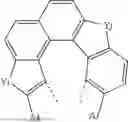


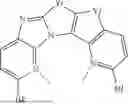


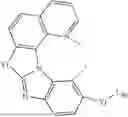


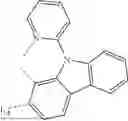


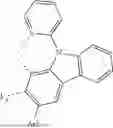


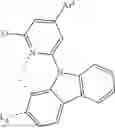


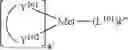







Sources:
- United States Patent and Trademark Office - verify current appl. status at the USPTO↗
Similar patent applications:
- » 20140077191
Compound, organic electroluminescence device material, organic electroluminescence device and electronic device - » 20240368103
COMPOUND, ORGANIC-ELECTROLUMINESCENCE-DEVICE MATERIAL, ORGANIC ELECTROLUMINESCENCE DEVICE, AND ELECTRONIC DEVICE - » 20240276878
COMPOUND, ORGANIC-ELECTROLUMINESCENCE-DEVICE MATERIAL, ORGANIC ELECTROLUMINESCENCE DEVICE, AND ELECTRONIC DEVICE - » 20250057041
COMPOUND, ORGANIC-ELECTROLUMINESCENCE-DEVICE MATERIAL, ORGANIC ELECTROLUMINESCENCE DEVICE, AND ELECTRONIC DEVICE - » 20170005274
COMPOUND, ORGANIC ELECTROLUMINESCENT DEVICE MATERIAL, ORGANIC ELECTROLUMINESCENT DEVICE, AND ELECTRONIC EQUIPMENT - » 20180102484
Compound, organic electroluminescence device material, organic electroluminescence device and electronic device - » 20090167165
Organic electroluminescent device material, organic electroluminescent device, display and illuminating device - » 20140239273
Anthracene derivative, organic-electroluminescence-device material, organic electroluminescence device, and electronic equipment - » 20100181553
Organic electroluminescent device material and organic electroluminescent device - » 20060251918
Organic electroluminescent device material and organic electroluminescent device using same
Recent applications in this class:
- » 20250176422 2025-05-29
ORGANIC ELECTROLUMINESCENCE DEVICE AND ORGANOMETALLIC COMPOUND FOR ORGANIC ELECTROLUMINESCENCE DEVICE - » 20250176421 2025-05-29
Organometallic Complex And Light-Emitting Device - » 20250169354 2025-05-22
COMPOSITION, LIGHT-EMITTING DEVICE, ELECTRONIC EQUIPMENT INCLUDING THE LIGHT-EMITTING DEVICE, AND ORGANOMETALLIC COMPOUND - » 20250151609 2025-05-08
LIGHT-EMITTING DEVICE INCLUDING ORGANOMETALLIC COMPOUND, ELECTRONIC APPARATUS INCLUDING THE LIGHT-EMITTING DEVICE, AND THE ORGANOMETALLIC COMPOUND - » 20250151608 2025-05-08
LIGHT-EMITTING DEVICE INCLUDING ORGANOMETALLIC COMPOUND, ELECTRONIC APPARATUS INCLUDING THE LIGHT-EMITTING DEVICE, AND THE ORGANOMETALLIC COMPOUND - » 20250143169 2025-05-01
LIGHT-EMITTING DEVICE INCLUDING ORGANOMETALLIC COMPOUND, ELECTRONIC APPARATUS INCLUDING THE LIGHT-EMITTING DEVICE, AND THE ORGANOMETALLIC COMPOUND - » 20250143168 2025-05-01
ORGANOMETALLIC COMPOUND, LIGHT-EMITTING DEVICE INCLUDING THE SAME, AND ELECTRONIC APPARATUS INCLUDING THE LIGHT-EMITTING DEVICE - » 20250133954 2025-04-24
ORGANIC ELECTROLUMINESCENT MATERIALS AND DEVICES - » 20250127032 2025-04-17
ORGANIC ELECTROLUMINESCENT MATERIALS AND DEVICES - » 20250127031 2025-04-17
ORGANIC ELECTROLUMINESCENT MATERIALS AND DEVICES
Recent applications for this Assignee:
- » 20250176428 2025-05-29
ORGANIC ELECTROLUMINESCENT MATERIALS AND DEVICES - » 20250176420 2025-05-29
ORGANIC ELECTROLUMINESCENT MATERIALS AND DEVICES - » 20250171685 2025-05-29
ORGANIC ELECTROLUMINESCENT MATERIALS AND DEVICES - » 20250171480 2025-05-29
ORGANIC ELECTROLUMINESCENT MATERIALS AND DEVICES - » 20250171478 2025-05-29
ORGANIC ELECTROLUMINESCENT MATERIALS AND DEVICES - » 20250171477 2025-05-29
ORGANIC ELECTROLUMINESCENT MATERIALS AND DEVICES - » 20250169353 2025-05-22
ORGANIC ELECTROLUMINESCENT MATERIALS AND DEVICES - » 20250169351 2025-05-22
ORGANIC ELECTROLUMINESCENT MATERIALS AND DEVICES - » 20250169349 2025-05-22
ORGANIC ELECTROLUMINESCENT MATERIALS AND DEVICES - » 20250163317 2025-05-22
ORGANIC ELECTROLUMINESCENT MATERIALS AND DEVICES