DEVICE FOR SCREWING IN DENTAL IMPLANTS
US20240197451A1
2024-06-20
18/287,214
2022-05-31
Smart Summary: A device is designed to help screw in dental implants easily. It has a special tip that fits onto the screw used for attaching the implant. The device includes a handle with a head where the tip is attached, allowing for better control. Users can rotate the tip using a control on the handle, making the process smoother. Inside the handle, there is a mechanism that connects the control to the tip for efficient operation. 🚀 TL;DR
Abstract:
The present invention relates to a device (1) for screwing dental implants (101) which includes: a screw-in tip (2) comprising a machined actuator (20), suitably shaped to drive the attachment screw (100) for attaching the dental implant (101); a handle (3) comprising an end head (30) in which the screw-in tip (2) is mounted and having an actuation control (31) for actuating the rotation of the screw-in tip (2) in an area opposite to said head (30); and a transmission (32) arranged inside said handle (3) connecting the actuation control (31) to the screw-in tip (2).
Applicant:
Interested in similar patents?
Get notified when new applications in this technology area are published.
Classification:
A61C13/225 » CPC main
Dental prostheses; Making same Fastening prostheses in the mouth
A61C1/141 » CPC further
Dental machines for boring or cutting ; General features of dental machines or apparatus, e.g. hand-piece design; Machine parts specially adapted for dentistry; Tool-holders, i.e. operating tool holders, e.g. burr holders in an angled handpiece
A61C1/145 » CPC further
Dental machines for boring or cutting ; General features of dental machines or apparatus, e.g. hand-piece design; Machine parts specially adapted for dentistry; Tool-holders, i.e. operating tool holders, e.g. burr holders Instruments or accessories for tool holders
A61C1/04 » CPC further
Dental machines for boring or cutting ; General features of dental machines or apparatus, e.g. hand-piece design characterised by the drive of the dental tools with treadle or manual drive
A61C1/12 » CPC further
Dental machines for boring or cutting ; General features of dental machines or apparatus, e.g. hand-piece design; Machine parts specially adapted for dentistry Angle hand-pieces
A61C1/14 IPC
Dental machines for boring or cutting ; General features of dental machines or apparatus, e.g. hand-piece design; Machine parts specially adapted for dentistry Tool-holders, i.e. operating tool holders, e.g. burr holders
Description
SUBJECT OF THE INVENTION
The present invention involves a device for screwing in dental implants and is meant to be used by dental professionals.
PREDECESSORS OF THE INVENTION
At present, in order to screw dental implants into their anchors, affixed into the bone under the gums, screwdrivers are used, which are comprised of a straight shaft with a mechanical actuator on the screw at one end and a small knob at the opposite end. This length of the shaft is small in order to fit in the oral cavity during the operation, and the knob is wide enough to be used with the dentist's two fingers, at 5-10 millimetres in diameter.
This configuration has several drawbacks. Mainly, it is difficult to work, due to the minimal space available inside the oral cavity. As a consequence of the above, the screwdriver—or the screw itself—can often fall into the mouth, or even be swallowed by the patient.
DESCRIPTION OF THE INVENTION
The device for screwing in the invention of dental implants is comprised of, in its most generic form:
-
- a screwdriver bit, comprised of a machined actuator with a shape suitable for driving in the dental implant fixing screw (a blade or a prismatic protrusion, for example),
- a handle, comprised of an end head where the screwdriver bit is mounted, while opposite to said head there is an actuating controller for rotating the screwdriver bit, and
- a transmission located on the inside of said handle, which connects the actuating controller with the screwdriver bit, directly or indirectly—that is, through a bit holder where the screwdriver bit is mounted, but detachable.
In this way, the handle can be made large enough so that the dentist's hand does not have to work inside the patient's mouth at any time during the operation, improving the grip from the outside of the mouth and, ideally, placing the controller outside of the oral cavity, which increases the comfort both of the practitioner and the patient during the procedure and increases safety, since it is impossible for the screwdriver to fall into the oral cavity due to its dimensions and the fact that it is held outside the mouth.
In addition, the bit can be detachable and the device can be used with bits of any specifications.
BRIEF DESCRIPTION OF THE DRAWINGS
FIG. 1.—Shows a view of a dental contra angle, from which the invented device was derived.
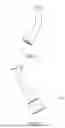
FIG. 2.—Shows a general view of the invented device.
FIG. 3.—Shows a view of how to use the invented device.
FIG. 4.—Shows an enlarged view of the head of the invented device, configured using the dental contra angle bit holder.
FIG. 5.—Shows a view of how to use the invented device on a dental mould, to see it in use more clearly.
FIG. 6.—Shows a detail of the mechanical engagement of the knob, of the invented device, which is configured by the dental contra angle's actuating controller.
DESCRIPTION OF THE PREFERRED FORM OF IMPLEMENTATION
The invented device (1) for screwing in dental implants (101) is comprised of (see FIGS. 2 and 4):
-
- a screwdriver bit (2) comprised of a mechanical actuator (20), suitably shaped to drive in the screw (100) for fastening the dental implant (101) (see also FIG. 5),
- a handle (3), comprised of a head (30) on one end where the screwdriver bit (2) is mounted, while opposite to said head (30) there is an actuating controller (31) for rotating the screwdriver bit (2), and
- a transmission (32) located on the inside of said handle (3), which is connects the actuating controller (31) with the screwdriver bit (2).
Preferably, the handle (3) is big enough for the actuating controller (31) to be on the outside of the oral cavity; for example, a length between 5 and 10 centimetres (see FIG. 3).
Very preferably, the handle (3) is comprised of a dental contra angle (see FIG. 1)—which is a tool widely used by dentists, and which, on the one hand, is commercially available, exists, and allows the invention to be easily implemented; and on the other hand, already incorporates the transmission (32) inside it—is comprised of the screwdriver bit (2) (see FIG. 5), a proximal end (22), opposite to the mechanical actuator (20), which is detachable and connected to the bit holder (33) of said dental contra angle—with the bit holder (33) configuring the head (30) of the handle (3)—, and with the actuating controller (31) comprised of a knob (35) or crank (see FIGS. 2 and 3) provided with mechanical coupling (36) (see FIG. 6) to the end of the inner shaft (37) (see FIG. 1) of the transmission (32) of said contra angle. Thus, implementing the invention is as easy as manufacturing the knob (35) or crank and attaching it to the contra angle on the instrument tray of the dentist's chair.
In the representation shown in the figures, the mechanical coupling (36) is comprised of (see FIG. 6) a cylindrical tubular protrusion (36a), inside of which there is a partition (36b) centred diametrically with a central recess (36c), and clipping notches (36d) adapted to the end of the inner shaft (37) of the contra angle's transmission (32), which, logically, will vary on a case-by-case basis and adapt to the specific shape of said end. Furthermore, in this case, the knob (35) is comprised of a ribbing (35a) or roulette to make it easier to operate.
Notwithstanding the foregoing, and since the description given corresponds only to an example of preferred embodiment of the invention, it shall be understood that, with the same basic idea, multiple variations of detail may be introduced, and likewise protected, which may affect the shape, size, or manufacturing materials for the assembly or its parts, without this involving any alteration of the invention as a whole, delimited only by the claims provided in the following.
Claims
1. Device (1) for screwing in dental implants (101); characterised in that it is comprised of:
a screwdriver bit (2) comprised of a mechanical actuator (20), suitably shaped to drive in the fastening screw (100) for the dental implant (101),
a handle (3), comprised of a head (30) on one end where the screwdriver bit (2) is mounted, while opposite to said head (30) there is an actuating controller (31) for rotating the screwdriver bit (2), and
a transmission (32) located on the inside of said handle (3), which is connects the actuating controller (31) with the screwdriver bit (2).
2. Device (1) for screwing in dental implants (101) according to claim 1, wherein the handle (3) is big enough for the actuating controller (31) to be on the outside of the oral cavity.
3. Device (1) for screwing in dental implants (101) according to claim 2, wherein the handle (3) has a length between 5 and 10 centimetres.
4. Device (1) for screwing in dental implants (101) according to claim 1, wherein there is a handle (3) comprised of a dental contra angle; a screwdriver bit (2) comprised of a proximal end (22) opposite the mechanical actuator (20), which is detachable and coupled with the bit holder (33) of said dental contra angle; and, comprising the actuating controller (31), a knob (35) or crank provided with a mechanical coupling (36) to the end of the inner shaft (37) of the transmission (32) of said counter-angle.
5. Device (1) for screwing in dental implants (101) according to claim 4, wherein the mechanical coupling (36) is comprised of a tubular cylindrical projection (36a), inside of which there is a partition (36b) centred diametrically, thicker in the middle, (36c) and clipping notches (36d) adapted to the end of the inner shaft (37) of the contra angle's transmission (32).
6. Device (1) for screwing in dental implants (101) according to claim 5, wherein the knob (35) employs a ribbing (35a) or routing.
Images & Drawings included:



Sources:
- United States Patent and Trademark Office - verify current appl. status at the USPTO↗
Similar patent applications:
- » 20100261141
Dental Implant Device and Screw
Recent applications in this class:
- » 20250041033 2025-02-06
CUSTOMIZED PADS AND RELATED METHODS FOR DENTAL APPLIANCES - » 20210361397 2021-11-25
ORAL APPLIANCE - » 20200022791 2020-01-23
Method of establishing upper boundary for dental prosthetic - » 20190201172 2019-07-04
Positioning handle and occlusal locks for removable prosthesis - » 20150182318 2015-07-02
DENTAL PROSTHESIS AND ITS MANUFACTURING METHOD - » 20150099238 2015-04-09
RETRIEVABLE DETENT RETAINED DENTAL PROSTHESIS SYSTEM AND METHODS - » 20150004562 2015-01-01
Dental attachment appliance and device - » 20140363786 2014-12-11
Stabilizer for lower dental appliances - » 20140127393 2014-05-08
METHOD OF APPLYING DENTURE ADHESIVES - » 20130248487 2013-09-26
Surface treatment for an implant surface