ORTHOPEDIC RASP AND SURGICAL TECHNIQUE FOR PREPARING AN INTERCUNEIFORM JOINT FOR FUSION
US20240260976A1
2024-08-08
18/435,912
2024-02-07
Smart Summary: An orthopedic rasp is a tool designed to prepare a specific joint in the foot, called the intercuneiform joint, for surgery. It has a long body with two surfaces and a head that features sharp cutting teeth. These teeth help to remove tissue and create a smooth surface for the joint fusion process. The rasp can fit into the narrow space between two bones in the foot, known as cuneiforms. This technique improves the chances of successful healing after the joint fusion surgery. 🚀 TL;DR
Abstract:
Orthopedic rasps and associated techniques can be used for preparing an intercuneiform joint for fusion. In some examples, the orthopedic rasp includes a body having a length extending from a first end to a second end and defining a first widthwise surface and a second widthwise surface opposite the first widthwise surface. The rasp may include a rasp head having a plurality of cutting teeth extending outwardly from one or both of the first widthwise surface and the second widthwise surface of the body. The plurality of cutting teeth may be spaced apart from each other along the width and/or length of the body. The rasp head can be configured to be inserted into an intercuneiform joint space between a first cuneiform and a second cuneiform.
Inventors:
- Adriaan Kuyler 18 🇺🇸 Ponte Vedra, FL, United States
- Mitch Read 4 🇺🇸 Berlin, MA, United States
Applicant:
Interested in similar patents?
Get notified when new applications in this technology area are published.
Classification:
A61B17/1682 » CPC main
Surgical instruments, devices or methods, e.g. tourniquets; Osteoclasts Bone cutting, breaking or removal means other than saws, e.g. ; Drills or chisels for bones; Trepans for particular parts of the body for the foot or ankle
A61F2/4606 » CPC further
Filters implantable into blood vessels; Prostheses, i.e. artificial substitutes or replacements for parts of the body; Appliances for connecting them with the body; Devices providing patency to, or preventing collapsing of, tubular structures of the body, e.g. stents; Prostheses implantable into the body; Joints; Special tools or methods for implanting or extracting artificial joints, accessories, bone grafts or substitutes, or particular adaptations therefor for insertion or extraction of endoprosthetic joints or of accessories thereof of wrists or ankles; of hands, e.g. fingers; of feet, e.g. toes
A61B2017/564 » CPC further
Surgical instruments, devices or methods, e.g. tourniquets; Surgical instruments or methods for treatment of bones or joints; Devices specially adapted therefor Methods for bone or joint treatment
A61B2090/062 » CPC further
Instruments, implements or accessories specially adapted for surgery or diagnosis and not covered by any of the groups - , e.g. for luxation treatment or for protecting wound edges; Measuring instruments not otherwise provided for penetration depth
A61F2002/30622 » CPC further
Filters implantable into blood vessels; Prostheses, i.e. artificial substitutes or replacements for parts of the body; Appliances for connecting them with the body; Devices providing patency to, or preventing collapsing of, tubular structures of the body, e.g. stents; Prostheses implantable into the body; Joints; Additional features of subject-matter classified in , and subgroups thereof; Features concerning the anatomical functioning or articulation of the prosthetic joint Implant for fusing a joint or bone material
A61B17/16 IPC
Surgical instruments, devices or methods, e.g. tourniquets Osteoclasts Bone cutting, breaking or removal means other than saws, e.g. ; Drills or chisels for bones; Trepans
A61B17/56 IPC
Surgical instruments, devices or methods, e.g. tourniquets Surgical instruments or methods for treatment of bones or joints; Devices specially adapted therefor
A61B90/00 IPC
Instruments, implements or accessories specially adapted for surgery or diagnosis and not covered by any of the groups - , e.g. for luxation treatment or for protecting wound edges
A61F2/30 IPC
Filters implantable into blood vessels; Prostheses, i.e. artificial substitutes or replacements for parts of the body; Appliances for connecting them with the body; Devices providing patency to, or preventing collapsing of, tubular structures of the body, e.g. stents; Prostheses implantable into the body Joints
A61F2/46 IPC
Filters implantable into blood vessels; Prostheses, i.e. artificial substitutes or replacements for parts of the body; Appliances for connecting them with the body; Devices providing patency to, or preventing collapsing of, tubular structures of the body, e.g. stents; Prostheses implantable into the body; Joints Special tools or methods for implanting or extracting artificial joints, accessories, bone grafts or substitutes, or particular adaptations therefor
Description
RELATED APPLICATION
This application claims the benefit of U.S. Provisional Application Ser. No. 63/444,224, filed Feb. 8, 2023, the entire contents of which are incorporated herein by reference.
TECHNICAL FIELD
This disclosure relates to surgical instruments and, more particularly, to rasp instruments and related surgical techniques for preparing small bones for fusion.
BACKGROUND
Bones within the human body, such as bones in the foot, may be anatomically misaligned. For example, one common type of bone deformity is hallux valgus, which is a progressive foot deformity in which the first metatarsophalangeal joint is affected and is often accompanied by significant functional disability and foot pain. The metatarsophalangeal joint is laterally deviated, resulting in an abduction of the first metatarsal while the phalanges adduct. This often leads to development of soft tissue and a bony prominence on the medial side of the foot, which is called a bunion.
Another type of bone deformity in the foot is metatarsus adductus. MTA is a deformity of the foot in which the metatarsals are angulated into adduction. MTA is typically characterized by a medial deviation of the metatarsals in the transverse plane. For example, MTA is often described as a structural deformity occurring at the Lisfranc joint (tarsometatarsal joints), with the metatarsals being deviated medially with reference to the lesser tarsus.
In some cases, surgical intervention is needed to address hallux valgus and/or MTA deformities. Surgical intervention may involve realigning one or more bones of the foot, improving patient comfort and increasing patient mobility. A clinician may use a variety of different surgical instruments and techniques during a surgical procedure performed on the foot, including one or more instruments to prepare bones for fusing together following completion of the surgical procedure. Surgical instruments and techniques that can facilitate efficient, accurate, and reproducible clinical results are useful for practitioners performing bone correction and realignment techniques.
SUMMARY
In general, this disclosure generally relates to orthopedic rasp instruments and associated systems (e.g., kits) as well as surgical techniques utilizing an orthopedic rasp. In particular, the disclosure relates to orthopedic rasp instruments and techniques for preparing an intercuneiform joint space for fusion. In some examples according to the disclosure, an orthopedic rasp can be inserted into an intercuneiform joint space between a first cuneiform and a second cuneiform. The rasp can then be used to prepare a surface of the first cuneiform and an opposed surface of the second cuneiform for fusion. For example, the rasp can include teeth on one or both sides of the instrument that, when the instrument is moved relative to the bones, causes the teeth to cut into the bones to provide bleeding bone surfaces. The prepared surfaces of the two bones can be compressed together and held in a fixed position using a fixation device for fusion during which natural bone growth causes the prepared surfaces to fuse together across the intercuneiform joint space.
While a rasp according to the disclosure can have a variety of different configurations, the rasp may be configured specifically for preparation of opposed bones defining the intercuneiform joint space. For example, the rasp may have a body defining a length and first and second widthwise surfaces opposite each other. The rasp can have multiple cutting teeth extending outward from one side of the rasp (one widthwise surface) or both sides of the rasp (both widthwise surfaces). For example, the rasp may have cutting teeth extending outwardly from both sides of the rasp to allow simultaneous preparation of a surface of the first cuneiform and an opposed surface of the second cuneiform and/or to help ensure that the surfaces of the two cuneiforms prepared by the rasp are aligned with each other across the intercuneiform joint space.
Independent of the number or configuration of the cutting teeth on the rasp, the rasp may be sized and shaped for insertion into the intercuneiform joint space. For example, the rasp may have a rasp head having a thickness within a range from 0.8 mm to 1.5 mm, a width within a range from 4 mm to 6 mm, and a length within a range from 15 mm to 30 mm. A rasp with comparatively small dimensions configured for insertion into the intercuneiform joint space may facilitate accurate and reproducible fusion across the intercuneiform joint space while helping the clinician avoid cutting or otherwise damaging soft tissue (e.g., tendons, ligaments) over or adjacent the intercuneiform joint space. Further, a rasp with comparatively small dimensions configured for insertion into the intercuneiform joint space can allow the clinician to prepare and fuse the first cuneiform and the second cuneiform over a comparatively small surface area, e.g., providing precisely directed spot bone preparation and fusion, avoiding preparation of larger areas of bone causing greater bone damage and requiring greater healing. Providing comparatively small, precisely directed spot bone preparation and fusion using a rasp instrument and/or surgical technique according to the disclosure can be using during a minimally invasive procedure (among other use cases), where access to the intercuneiform joint space is made through a comparatively small incision.
Instruments and techniques according to the disclosure may be used in a procedure in which only the first cuneiform and second cuneiform are prepared and the intercuneiform joint fixated for fusion without performing surgical techniques on other bones or joints. In practice, an intercuneiform joint fusion may typically be performed in conjunction with a metatarsal realignment procedure, such as a metatarsal realignment procedure to treat a bunion deformity. During a metatarsal realignment procedure, a metatarsal separated from the first cuneiform by a tarsometatarsal joint may be moved to help correct a misalignment of the metatarsal. The end of the first cuneiform facing the tarsometatarsal joint and the end of the metatarsal facing the tarsometatarsal joint may each be prepared (e.g., by cutting the end of one or both bones). Before or after preparing one or both bone ends, the metatarsal can be moved in one or more planes (e.g., a transverse plane, a frontal plane, and/or a sagittal plane). A fixation device can be applied across the tarsometatarsal joint that fixates the moved position of the metatarsal while the ends of the first cuneiform and metatarsal fuse across the tarsometatarsal joint.
Preparation of the first cuneiform and second cuneiform across the intercuneiform joint space for fusion using a rasp may be performed to help address transverse plane splay and/or instability at the intercuneiform joint notwithstanding the correction and fixation applied at the tarsometatarsal joint. For example, after moving the metatarsal relative to the first cuneiform and applying one or more fixation device across the tarsometatarsal joint, a patient may exhibit laxity at the first cuneiform-second cuneiform joint. This can allow the intermetatarsal angle between the metatarsal being realigned and an adjacent metatarsal to open up at the intercuneiform joint. For these and/or other reasons, a clinician may prepare the intercuneiform joint for fusion using a rasp and apply a fixation device (e.g., crossing screw) across the first cuneiform and the second cuneiform. The fixation and subsequent fusion can stabilize the intercuneiform joint as part of a wholistic correction procedure.
In one example, a method of preparing an intercuneiform joint for fusion is described. The method involves inserting an orthopedic rasp into an intercuneiform joint between a first cuneiform and a second cuneiform. The orthopedic rasp includes a body defining a first widthwise surface and a second widthwise surface opposite the first widthwise surface and a rasp head defined along at least a portion of a length of the body. In some examples, the rasp head includes a first plurality of cutting teeth extending outwardly from the first widthwise surface of the body and a second plurality of cutting teeth extending outwardly from the second widthwise surface of the body. The example method also involves moving the orthopedic rasp relative to the first cuneiform and the second cuneiform, thereby causing the first plurality of cutting teeth to prepare a surface of the first cuneiform and the second plurality of cutting teeth to prepare an opposed surface of the second cuneiform across the intercuneiform joint. The example method also involves applying a fixation device to the first cuneiform and the second cuneiform and across the intercuneiform joint. The fixation device can hold the surface of the first cuneiform prepared by the first plurality of cutting teeth in contact with the opposed surface of the second cuneiform prepared by the second plurality of cutting teeth for fusion.
In another example, an orthopedic rasp for preparing an intercuneiform joint for fusion is described. The rasp includes a body having a length extending from a first end to a second end and defining a first widthwise surface and a second widthwise surface opposite the first widthwise surface. The rasp also includes a rasp head defined along at least a portion of the length of the body. The rasp head includes a plurality of cutting teeth extending outwardly from one or both of the first widthwise surface and the second widthwise surface of the body. The example specifies that at least some of the plurality of cutting teeth are spaced apart from each other along the length of the body and that the rasp head is configured to be inserted into an intercuneiform joint space between a first cuneiform and a second cuneiform.
The details of one or more examples are set forth in the accompanying drawings and the description below. Other features, objects, and advantages will be apparent from the description and drawings, and from the claims.
BRIEF DESCRIPTION OF DRAWINGS
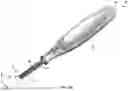
FIGS. 1A-1C are different views of an example orthopedic rasp according to the disclosure.
FIGS. 2A and 2B are an enlarged top view and side sectional view, respectively, of a first end region of the example rasp from FIG. 1.
FIG. 3 is exploded perspective view of the example rasp from FIG. 1.
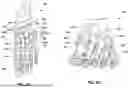
FIGS. 4A and 4B are top and front views, respectively, of a foot showing normal metatarsal alignment positions.
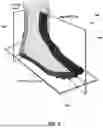
FIG. 5 illustrates the different anatomical planes of a foot.
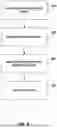
FIG. 6 is a flow diagram of an example technique for preparing an intercuneiform joint for fusion that can be performed utilizing a rasp according to disclosure.
FIGS. 7-9 are perspective illustrations of example steps that can be performed during an intercuneiform joint preparation using a rasp.
FIG. 10 is a flow diagram of an example technique for performing a metatarsal correction that may performed in conjunction with preparation and fixation of an intercuneiform joint.
DETAILED DESCRIPTION
This disclosure generally relates to orthopedic rasp instruments and surgical techniques utilizing rasps to prepare an intercuneiform joint space between a first cuneiform and a second cuneiform for fusion. In some examples, the rasp is configured (e.g., sized and shaped) to be inserted into an intercuneiform joint space between a medial cuneiform and an adjacent intermediate cuneiform. One or more cutting faces of the rasp can be moved relative to a lateral side of the medial cuneiform and a medial side of the intermediate cuneiform, e.g., forming bleeding bone surfaces that are aligned with each other and that contact each other when the medial cuneiform and the intermediate cuneiform are compressed together and the intercuneiform joint space closed. While the rasp may find particular utility preparing the joint space between medial cuneiform and the intermediate cuneiform for fusion, the instrument may be used to prepare the joint space between intermediate cuneiform and the lateral cuneiform for fusion, and/or the joint space between lateral cuneiform and the cuboid for fusion.
In exemplary applications, the devices, systems, and techniques can be used during a surgical procedure performed on one or more bones, such as a bone alignment, osteotomy, fusion procedure, fracture repair, and/or other procedures where one or more bones are to be set in a desired position. Such a procedure can be performed, for example, on bones (e.g., adjacent bones separated by a joint or different portions of a single bone) in the foot or hand, where bones are relatively small compared to bones in other parts of the human anatomy. In one example, a procedure utilizing devices and/or techniques of the disclosure can be used in conjunction with a procedure to correct an alignment between a metatarsal (e.g. a first metatarsal) and a cuneiform (e.g., a medial cuneiform), such as a bunion correction. An example of such a procedure is a lapidus procedure. In another example, the devices, systems, and/or techniques can be utilized in conjunction with a procedure to modify a position of one portion of a bone relative to another portion of the same bone. An example of such a procedure is an osteotomy procedure (e.g., metatarsal osteotomy procedure) in which the bone is cut into at least two different bones and one portion (e.g., a distal portion) is realigned relative to another bone portion (e.g., a proximal portion) of the same bone.
Preparation and fusion of one or more intercuneiform joints is performed as a standalone procedure or in conjunction with preparation and fusion of one or more TMT joints. Preparation and fusion of a TMT joint may be performed to treat metatarsus adductus, hallux valgus, arthritis, and/or other bone and/or joint conditions.
Metatarsus adductus is a deformity of the foot characterized by a transverse plane deformity where the metatarsals are adducted at the Lisfranc joint. The extent of a metatarsus adductus deformity can be characterized by a metatarsus adductus angle. The metatarsus adductus angle can be defined as the angle between the longitudinal axis of the second metatarsal (representing the longitudinal axis of the metatarsus) and the longitudinal axis of the lesser tarsus. The measurement of the longitudinal axis of the lesser tarsus can be characterized by a line perpendicular to the transverse axis of the lesser tarsus using the lateral joint of the fourth metatarsal with the cuboid as a reference.
Hallux valgus, also referred to as hallux abducto valgus, is a complex progressive condition that is characterized by lateral deviation (valgus, abduction) of the hallux and medial deviation of the first metatarsophalangeal joint. Hallux valgus typically results in a progressive increase in the hallux adductus angle, the angle between the long axes of the first metatarsal and proximal phalanx in the transverse plane. An increase in the hallux adductus angle may tend to laterally displace the plantar aponeurosis and tendons of the intrinsic and extrinsic muscles that cross over the first metatarsophalangeal joint from the metatarsal to the hallux. Consequently, the sesamoid bones may also be displaced, e.g., laterally relative to the first metatarsophalangeal joint, resulting in subluxation of the joints between the sesamoid bones and the head of the first metatarsal. This can increase the pressure between the medial sesamoid and the crista of the first metatarsal head.
Preparation and fusion of an intercuneiform joint may facilitate corrective alignment of a metatarsal relative to an opposed cuneiform and/or relative to an adjacent metatarsal. For example, preparation and fusion of an intercuneiform joint may help reduce or eliminate splay of a metatarsal (e.g., first metatarsal) in which the distal end of the metatarsal shifts medially outwardly from an adjacent metatarsal, enlarging an intermetatarsal angle between the two metatarsal. Additionally or alternatively, preparation and fusion of an intercuneiform joint may help stabilize an unstable joint.
While techniques and devices are generally described herein in connection with the intercuneiform joint between the medial cuneiform and the intermediate cuneiform, the techniques and devices may be used on other adjacent bones (e.g., separated from each other by a joint). For example, devices and techniques may be used for preparation and fusion of an intercuneiform joint between the intermediate cuneiform and the lateral cuneiform and/or the joint between the lateral cuneiform and cuboid. Accordingly, reference to particular bones may be replaced with other bone pairs as described herein.
The anatomy of the foot and example techniques utilizing an orthopedic rasp according to the disclosure will be described in greater detail with respect to FIGS. 4-9. However, an example orthopedic rasp according to the disclosure will first be described with respect to FIGS. 1-3.
FIGS. 1A-1C (collectively referred to as “FIG. 1”) are different views of an example orthopedic rasp 10 according to the disclosure. FIG. 1A is a perspective view of rasp 10, while FIGS. 1B and 1C are top and bottom views, respectively, of rasp 10. As illustrated, rasp 10 includes a body 12 having a length extending from a first end 14 to a second end 16. Body 12 defines a rasp head 18, which may be a region of the body configured and intended to be inserted into the space between a first cuneiform and a second cuneiform within an intercuneiform joint space when using rasp 10. In the illustrated example, rasp 10 includes handle 20 that is operatively connected to the body and is configured to be grasp by a user, allowing the user to manually manipulate the position and force applied by rasp head 18 under hand pressure and control. In various implementations, body 12 and handle 20 may be fabricated as a unitary body (e.g., cut or cast as a single piece of material) or may be fabricated as separate components that are joined together to form a combined structure the does not separate during use.
As will be described in greater detail below, rasp head 18 can be configured to be inserted into an intercuneiform joint space between a first cuneiform and a second cuneiform. Rasp head 18 can include multiple cutting teeth located on one or both sides of the rasp that are effective to prepare the first and/or second cuneiform for fusion. Rasp head 18 can prepare the first and/or second cuneiform for fusion by rasping side surfaces of one or both bones across the intercuneiform joint. For example, rasp head 18 can include multiple cutting teeth located on one or both sides of the rasp head that, upon advancing and retracting the cutting teeth against a side surface of the first cuneiform and/or a second cuneiform (e.g., multiple times through a reciprocating motion) form opposed bleeding bone surface. The multiple cutting teeth carried by rasp head 18 can be used to prepare a lateral side of the first cuneiform and a medial side of the second cuneiform across the intercuneiform joint at locations that contact each other for fusion, when the first cuneiform and the second cuneiform are pressed together to close the intercuneiform joint space. One or more fixation devices can then be applied to the first cuneiform and the second cuneiform across the intercuneiform joint to hold the prepared bone surfaces in contact during bone growth and resulting fusion.
With reference to FIGS. 1B and 1C, body 12 of rasp 10 is illustrated as defining a first widthwise surface 22 and a second widthwise surface 24 in the region of rasp head 18. Second widthwise surface 24 is on an opposite side of body 12 across the thickness of the material defining rasp head 18. First widthwise surface 22 and second widthwise surface 24 may be surfaces of body 12 (e.g., in the X-Z plane indicated on FIGS. 1B and 1C) in the region defining rasp head 18 and that extend perpendicular to the length of the body (in the Z-direction indicated on the figures) and perpendicular to the thickness of the body (in the Y-direction indicated on the figures). In the illustrated configuration, first widthwise surface 22 and second widthwise surface 24 each are flat or planar surfaces within different X-Y planes indicated in FIG. 1B and 1C (with the two planes being separated by the thickness of rasp head 18). In other implementations, one or both of first widthwise surface 22 and second widthwise surface 24 may be curved, angled, or have other shape characteristics than the configuration specifically illustrated.
Rasp head 18 includes a plurality of cutting teeth 26 extending outwardly from one or both of first widthwise surface 22 and second widthwise surface 24. In some implementations, rasp head 18 includes the plurality of cutting teeth 26 extending outwardly from one only one surface (e.g., first widthwise surface 22) with the opposite surface (e.g., second widthwise surface 24) being devoid of cutting teeth. In these implementations, a clinician may rasp one cuneiform defining an intercuneiform joint using rasp head 18 before flipping the rasp over and rasping the other cuneiform defining the intercuneiform joint using the same side of rasp head 18 used to prepare the first cuneiform. In other implementations, first widthwise surface 22 and second widthwise surface 24 are each configured with a plurality of cutting teeth extending outwardly from a respective on of the widthwise surfaces.
For example, in the illustrated configuration of FIG. 1, first widthwise surface 22 of rasp head 18 includes a first plurality of cutting teeth 26A extending outwardly from the surface, and second widthwise surface 24 includes a second plurality of cutting teeth 26B extending outwardly from the surface. Unless otherwise specified, the first plurality of cutting teeth 26A and the second plurality of cutting teeth 26B will individually and collectively be referred to as the “plurality of cutting teeth 26” for purposes of simplicity in the continued discussion.
As will be described in greater detail, the plurality of cutting teeth 26 may be arranged such that at least some of the plurality of cutting teeth are spaced apart from each other along the length of body 12 (in the Z-direction indicated on the figures). In use, rasp 10 may be inserted into an intercuneiform joint with first end 14 providing or distal or leading end and second end 16 providing a proximal or trailing end. Rasp head 18 may be inserted with the distal end of the rasp entering the joint space before a comparatively proximal portion of the rasp head entering the joint space. Rasp head 18 can be configured with cutting teeth spaced along at least a portion of the length of the rasp head to provide a longitudinally extending array of cutting teeth positioned at different vertical elevations along the length of the rasp.
Each of the plurality of cutting teeth 26 can extend outwardly from a respective widthwise surface of rasp head 18. As a result, each of the plurality of cutting teeth can define a height from an outmost edge of the cutting tooth to a respective widthwise surface of rasp head 18. The size and configuration of the plurality of cutting teeth 26 can vary depending on the amount of bone preparation and aggressiveness of cutting desired to be provided by rasp 10.
Rasp head 18 of rasp 10 may be specifically configured (e.g., sized and/or shaped) to be inserted into an intercuneiform joint between a first cuneiform and a second cuneiform. Rasp head 18 may have a thickness 28 (in the Y-direction indicated on FIG. 1) that is sufficiently small to allow the rasp head to be inserted into the intercuneiform joint while being sufficiently large to avoid undesirable flexing during rasping and/or to allow rasp head 18 to simultaneously contacting rasp both the first and second cuneiforms. In some examples, rasp head 18 has a thickness 28 of at least 0.5 mm, such as at least 0.7 mm, at least 0.8 mm, at least 0.9 mm, at least 1.0 mm, at least 1.1 mm, or at least 1.2 mm. Additionally or alternatively, rasp head 18 may have a thickness 28 less than 2.5 mm, such as less than 2.0 mm, less than 1.8 mm, less than 1.7 mm, less than 1.6 mm, less than 1.5 mm, less than 1.4 mm, less than 1.3 mm, or less than 1.2 mm. For example, rasp head 18 may have a thickness 28 within a range from 0.6 mm to 1.8 mm, such as from 0.7 mm to 1.7 mm, or from 0.8 mm to 1.5 mm.
Thickness 28 may be measured from the outermost edge of the outwardly extending plurality of cutting teeth 26 of one side of rasp head 18 to the owner most edge of the outwardly extending plurality of cutting teeth on the opposite side of the rasp (when configured with cutting teeth on both side surfaces of the rasp). Accordingly, the foregoing example thickness dimensions can include any thickness contribution associated with the height of the plurality teeth. Thickness 28 may be substantially constant over the width and/or length of rasp head 18 or may vary over the width and/or length of the rasp head. When thickness 28 of rasp head 18 varies over the width and/or length of the rasp head, the foregoing example thickness dimensions can represent an average thickness across the rasp head.
Rasp head 18 of rasp 10 can define a width 30 (in the X-direction indicated on FIG. 1B and 1C) that is sufficiently large to prepare enough bone surface for fusion to achieve a good union between the first cuneiform and the second cuneiform. However, width 30 of rasp head 18 may be comparatively small, e.g., to allow the rasp to be inserted through a comparatively small incision and/or to avoid damaging soft tissue (e.g., tendons, ligaments) adjacent to the intercuneiform joint space when rasping the first cuneiform and the second cuneiform. In some examples, the width 30 of rasp head 18 is at least 2 mm, such as at least 3 mm, at least 4 mm, at least 5 mm, at least 6 mm, or at least 7 mm. Additionally or alternatively, the width 30 of rasp and 18 may be less than 15 mm, such as less than 10 mm, less than 8 mm, less than 7 mm, or less than 6 mm. For example, the width 30 of rasp head 18 may be within a range from 2 mm to 8 mm, such as from 3 mm to 7 mm, from 4 mm to 6 mm, or from 4.5 mm to 5.5 mm.
Width rasp head 18 may be substantially constant over the length of the rasp head or may vary over the length of the rasp head. For example, in the illustrated configuration, both the thickness 28 and width 30 of rasp head 18 are substantially constant over the length of the rasp head. When width 30 of rasp head 18 varies over the length of the rasp head, the foregoing example width dimensions can represent an average width across the rasp head.
Rasp head 18 may define a length 32 (in the Z-direction indicated on FIG. 1) sufficient to allow rasp 10 to be inserted into the intercuneiform joint space between the first cuneiform and the second cuneiform and to allow the rasp to prepare opposed surfaces of the two bones across the joint space. In some examples, rasp head 18 defines a length 32 within a range from 10 mm to 50 mm, such as from 15 mm to 30 mm, from 15 mm to 25 mm, or from 18 mm to 20 mm. In some configurations, rasp head 18 includes a depth marking 25 positioned at a specified distance from first end 14 (e.g., 10 mm, 15 mm, 20 mm, 25 mm, 30 mm). Depth marking 25 can be a visual indicator (e.g., notch, line, size and/or shape transition, marker) to allow the clinician to assess how deep into the intercuneiform joint space rasp 10 has been inserted.
As illustrated in the example of FIG. 1, rasp 10 and/or body 12 can have a length greater than the length 32 defined by the rasp head portion of the structure. Body 12 may or may not have a distinguishing size and/or shape change between the portion of the body defining rasp head 18 in a proximal remainder of the body. Rasp head 18 may be identified as that portion of body 12 configured (e.g., sized and/or shaped) and intended to be inserted into the intercuneiform joint space and to provide a working surface or surfaces for rasping the first cuneiform and the second cuneiform. In the illustrated configuration, for instance, rasp head 18 extends from first end 14 to depth marking 25. In some configurations, rasp 10 defines an overall length (e.g., from the first end 14 to the second end 16) within a range from 50 mm to 200 mm, such as from 100 mm to 150 mm.
FIGS. 2A and 2B (collectively referred to as “FIG. 2”) are an enlarged top view and side sectional view, respectively, of a first end region of rasp 10, encompassing rasp head 18, from FIG. 1 illustrating an example leading end configuration of the rasp and an example cutting tooth configuration of the rasp. As shown in the example of FIG. 2, rasp head 18 includes a plurality of cutting teeth 26 extending outwardly (e.g., in the direction of the thickness of the rasp) from one or both widthwise surfaces of the rasp. In particular, in the illustrated example, of rasp head 18 includes a first plurality of cutting teeth 26A extending outwardly from first widthwise surface 22 of rasp head 18 and a second plurality of cutting teeth 26B extending outwardly from second widthwise surface 24.
Rasp 10 can utilize a variety of different cutting teeth configuration. In some implementations, each cutting tooth 26 extends across substantially the entire width of rasp head 18, with different cutting teeth separated from each other along the length of the cutting. In other implementations, including that illustrated in FIG. 2, the plurality of cutting teeth 26 are spaced apart from each other both lengthwise and widthwise across rasp head 18. As a result, rasp head 18 can include at least some cutting teeth 26 spaced apart from each other along the length of body 12 (in the Z-direction indicated) and/or at least some cutting teeth 26 spaced apart from each other along the width of body 12 (in the X-direction indicated).
The relative spacing between individual cutting teeth 26 can vary, e.g., based on the size and configuration of the cutting teeth and desired aggressiveness of cutting provided by the cutting teeth. Further, the size of each cutting tooth 26 can vary, e.g., based on the desired aggressiveness of cutting provided by the cutting teeth. FIG. 2A illustrates the plurality of cutting teeth 26 being spaced apart from each other along the length of body 12 (in the Z-direction indicated) to provide a lengthwise spacing 34 between adjacent pairs of the plurality of cutting teeth. Lengthwise spacing 34 may be measured from a proximal or back end of a distal tooth to a distal or front end of an immediately-adjacent proximal tooth. In some examples, the lengthwise spacing 34 between adjacent pairs of the cutting teeth 26 is within a range from 0.25 mm to 2 mm, such as 0.5 mm to 1.5 mm, or from 0.9 mm to 1.2 mm. The lengthwise spacing 34 may be the same between each adjacent pair of cutting teeth or may vary (e.g., such that some cutting teeth are spaced farther from adjacent cutting teeth than the spacing exhibited by other pairs of cutting teeth).
When the plurality of cutting teeth 26 are spaced apart from each other along the width of body 12 (in the X-direction indicated), a widthwise spacing 36 can be provided between adjacent pairs of the plurality of cutting teeth. In some examples, the widthwise spacing 36 between adjacent pairs of the cutting teeth 26 is within a range from 0.1 mm to 1.0 mm, such as from 0.3 to 0.7 mm, or from 0.4 mm to 0.6 mm. The widthwise spacing 36 may be the same between each adjacent pair of cutting teeth or may vary (e.g., such that some cutting teeth are spaced farther from adjacent cutting teeth than the spacing exhibited by other pairs of cutting teeth). Further, when some or all of the plurality of cutting teeth 26 are spaced apart from adjacent cutting teeth along the width of body 12, the cutting teeth may be symmetrically arrayed (e.g., into ordered and/or repeating patterns) or asymmetrically arrayed across a widthwise surface of the rasp. For example, the plurality of cutting teeth 26 may be arranged in one or more longitudinally-extending columns which, in the illustrated arrangement, is shown as three longitudinally-extending columns.
While each of the plurality of cutting teeth 26 may have a variety of different sizes, in some examples, each cutting tooth has a length 38 (in a direction parallel to the length of rasp 10) within a range from 0.25 mm to 1.0 mm, such as from 0.5 mm to 0.85 mm, or from 0.65 mm to 0.75 mm. Each cutting tooth may have a width 40 (in a direction parallel to the width of rasp 10) within a range from 0.5 mm to 1.5 mm, such as from 0.8 mm to 1.3 mm, or from 1.0 mm to 1.2 mm. In some examples, the width 40 of each cutting tooth 26 is larger than the length 38 of the cutting tooth.
With reference to FIG. 2B, each cutting tooth can extend outwardly from a widthwise surface of body 12. For example, as illustrated, the first plurality of cutting teeth 26A can extend outwardly a first direction from a first widthwise surface 22, and the second plurality of cutting teeth 26B can extend outwardly a second direction (e.g. opposite the first direction) from a second widthwise surface 24. Each of the plurality of cutting teeth 26 may outwardly from a respective widthwise surface a distance 42, within may be within a range from 0.25 mm to 0.55 mm, such as from 0.3 to 0.45 mm, or from 0.35 to 0.40 mm.
The plurality of cutting teeth 26 may be configured for bidirectional cutting or unidirectional cutting. When configured for bidirectional cutting, each cutting tooth may have a cutting surface on both a proximal and distal side of the cutting tooth. As a result, when rasp 10 is moved (e.g., reciprocated up and down) the cutting teeth on the rasp may cut in both movement directions. When configured for unidirectional cutting, each cutting tooth may have a cutting surface on one side of the cutting tooth (e.g., a proximal or distal side of the cutting tooth) but be devoid of a cutting surface on the opposite side of the cutting tooth. When so configured, the cutting teeth on the rasp may cut in one movement direction (e.g., as rasp 10 is moved upwardly or downwardly) but not be configured to cut in the opposite movement direction.
In the illustrated arrangement, the plurality of cutting teeth 26 are shown as being configured as unidirectional cutting teeth in which there is a single cutting surface 44 positioned on a proximal or trailing side of the cutting tooth. For example, each cutting tooth may be defined by a tapered leading surface 46 that extends outwardly at an angle from a respective widthwise surface. Tapered leading surface 46 may be tapered in a direction towards the proximal for second end 16 of rasp 10. Trailing cutting surface 44 extends outwardly from a respective widthwise surface and can join tapered leading surface 46 and an outer side of the cutting tooth. For example, trailing cutting surface 44 can intersect tapered leading surface 46 at an apex or, as illustrated, an outer side edge 48 extending between trailing cutting surface 44 and tapered leading surface 46.
Configuring cutting tooth 26 with a tapered leading surface 46 may be useful to help provide a tapered surface that eases insertion of rasp 10 into the intercuneiform joint space. Tapered leading surface 46 may taper at an angle 50 measured relative to the widthwise surface from which the tapered leading surface extends. In some examples, tapered leading surface 46 tapers at an angle 50 within a range from 115° to 130°, such as from 120° to 125°. Trailing cutting surface 44 may extend perpendicularly outwardly relative to the widthwise surface from which the cutting surface extends, or may extend at an angle (e.g., directed proximally).
The end of body 12 may or may not be tapered to help facilitate insertion of rasp 10 into the intercuneiform joint space (e.g., helping to pry the first cuneiform and the second cuneiform away from each other as the instrument is inserted into the joint). In some examples, such as the example illustrated in FIG. 2A, the distal end of body 12 may be tapered across the width of the body, narrowing the cross-sectional width of the body at the distalmost end as compared to a region offset from the distalmost end. For example, body 12 may define a first leading surface 52 extending angularly outwardly from the first end 14 of the body and a second leading surface 54 extending angularly outwardly from the first end 14 of the body in an opposite direction from the first leading surface. The first leading surface 52 and the second leading surface 54 can converge at or adjacent the first end 14 of body 12 in flare outwardly in a direction toward the proximal or second end 16 of the body. In some configurations, the first leading surface 52 and/or the second leading surface 54 extends angularly outwardly from the first end 14 of the body at an angle 56 measured relative to a longitudinal axis at the outer end of each respective leading surface. In some examples, angle 56 is within a range from 30° to 70°, such as from 40° to 60°, or from 45° to 55°.
In addition to or in lieu of tapering body 12 across the width of the body at the first end 14, the thickness of the body may be tapered at distal end 14 (e.g., to aid insertion of rasp 10 into the joint space. For example, with reference to FIG. 2B, the thickness of body 12 at distal end 14 may be taped (in the Y-direction indicated on the figure). Body 12 may be tapered at first end 14 in a first direction across the thickness of the body (e.g., from first end 14 toward first widthwise surface 22) and in a second direction across the thickness of the body (e.g., from first end 14 toward second widthwise surface 24). The two taper planes may intersect each other at a location that is substantially centered across the thickness of the body. This configuration may be referred to as a dual-sided taper configuration. In other configurations, body 12 may not be tapered across the thickness or may only be tapered from one side. While the angle of taper can vary, in some configurations, one or both sides body 12 taper at first end 14 at an angle within a range from 15 degrees to 75 degrees, such from 20 degrees to 50 degrees, from 25 degrees to 45 degrees, or from 30 degrees to 35 degrees. Tapering or chamfering the tip of rasp 10 can be helpful to provide a wedge shape that can help pry open the intercuneiform joint space during insertion of the instrument.
The plurality of cutting teeth 26 can be arrayed to extend from first end 14 of body 12 proximally along the length of rasp head 18. In some configurations, rasp head 18 includes a region devoid of cutting teeth (on first widthwise surface 22 and/or second widthwise surface 24) between the first end 14 of the body and a first or distal-most cutting tooth. For example, with reference to FIG. 2B, rasp head 18 includes a distal-most cutting tooth 27, which is illustrated as a distal-most cutting tooth 27A on first widthwise surface 22 and a co-linearly positioned distal-most cutting tooth 27B on second widthwise surface 24. Rasp head 18 defines a region 29 devoid of cutting teeth between the first end 14 of body 12 and the distal-most cutting tooth 27. First widthwise surface 22 and/or second widthwise surface 24 may be smooth (e.g., planar) surfaces over region 29. Configuring rasp 10 with a leading region 29 devoid of cutting teeth may be helpful to enable easier insertion of the rasp into the intercuneiform joint. When configured with region 29, the region may have a length from the first end 14 of body 12 and the distal edge of distal-most cutting tooth 27 within a range from 2 mm to 6 mm, such as from 3 mm to 5 mm, or from 4 mm to 5 mm, such as approximately 4.5 mm (plus or minus 5%).
With further reference to FIG. 1, body 12 of rasp 10 can include a shank 60 extending from rasp head 18. Shank 60 may be integrally formed with or operatively coupled to rasp head 18. Shank 60 may be in extending part of body 12 from the working portion of the rasp. In some examples, shank 60 may define a handle or be connected to handle 20.
In general, rasp 10, including body 12 and handle 20, can be formed of any desired material or combinations of materials. Typically, body 12 (including rasp head 18) will be fabricated of metal to form a sharp cutting surface, such as steel (e.g., stainless steel), titanium, or the like, although may be formed of ceramic or other sharpenable materials. Handle 20 may be formed of a variety of materials, including one or more metals and/or polymeric materials.
FIG. 3 is exploded perspective view of rasp 10 illustrating an example body and handle configuration. In some configurations, body 12 and handle 20 are formed as a unitary structure (e.g., via casting, milling) defined by a single type of material. In other configurations, body 12 and handle 20 may be formed as separate structures joined together to couple the cutting head to the handle for subsequent use. In some such configurations, handle 20 may be formed of a different material (e.g., a polymeric material) then body 12 (which may be formed of metal material), e.g., for increased grip ability and/or comfort and holding. For example, handle 20 may define a receiving cavity, and an end of body 12 opposite leading end 14 can be inserted into the receiving cavity to interconnect the handling cutting head. Fixation means (e.g., adhesive, screws such as set screws, bolts, welding) may be used to permanently affix the cutting head to the handle. In other configurations, body 12 may be detachably attached to handle 20 to allow the handle to be used with different interchangeable cutting heads (e.g., each having the same configuration or having different configurations from each other).
Handle 20 may generally be configured to be gripped manually by the hand of a clinician using rasp 10. Handle 20 may have an enlarged cross-sectional size (e.g., width, thickness) relative to body 12 to provide a larger surface for grasping. In some configurations, handle 20 includes surface texturing 62, such as knobs, ribs, knurls, and/or other features that facilitate gripping of the handle without slippage. While handle 20 may generally be designed to be gripped manually by the hand of the clinician, in other configurations, body 12 and/or handle 20 may be designed to be inserted into a powered hand instrument that can drive movement of rasp 10.
In the illustrated arrangements, handle 20 is illustrated as extending co-linearly with rasp head 18 of body 12. That is, the longitudinal axis defined by handle 20 is illustrated as extending co-linearly with a longitudinal axis extending through rasp head 18. In other configurations, handle 20 (the entire handle or portion thereof) may be offset from and/or angled relative to the longitudinal axis extending through rasp head 18.
As briefly discussed above, rasp instrument 10 can be used during a variety of different procedures, including as part of a bone alignment procedure. Rasp 10 can be used to prepare opposed surfaces of a first cuneiform and a second cuneiform across an inner cuneiform joint for fixation and fusion. In some examples, the preparation of the intercuneiform joint using rasp 10 for fusion is performed in conjunction with a procedure in which one or more bones of the foot are realigned. To further understand example techniques according to the disclosure, the anatomy of the foot will be described with respect to FIGS. 4A and 4B.
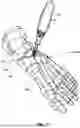
FIGS. 4A and 4B are top and front views, respectively, of a foot 100 showing normal metatarsal alignment positions. Foot 100 is composed of multiple bones including a first metatarsal 102, a second metatarsal 104, a third metatarsal 106, a fourth metatarsal 108, and a fifth metatarsal 112. First metatarsal 102 is on a medial-most side of the foot while fifth metatarsal 112 is on a lateral-most side of the foot. The metatarsals are connected distally to phalanges 114 and, more particularly, each to a respective proximal phalanx. The joint 116 between a metatarsal and a corresponding opposed proximal phalanx is referred to as a metatarsophalangeal (“MTP”) joint. The first MTP joint is labeled as joint 116 in FIG. 4A, although second, third, fourth, and fifth MTP joints are also illustrated in series adjacent to the first MTP joint.
The first metatarsal 102 is connected proximally to a medial cuneiform 118, while the second metatarsal 104 is connected proximally to an intermediate cuneiform 120, and the third metatarsal 106 is connected proximally to lateral cuneiform 122. The fourth and fifth metatarsals 108, 112 are connected proximally to the cuboid bone 124. The joint between a metatarsal and opposed bone (cuneiform, cuboid) is referred to as the tarsometatarsal (“TMT”) joint. FIG. 4A designates a first TMT joint 126, a second TMT joint 128, a third TMT joint 130, a fourth TMT joint 132, and a fifth TMT joint 134. The angle between adjacent metatarsals is referred to as the intermetatarsal angle (“IMA”).
The joint between one cuneiform and an adjacent cuneiform is an intercuneiform joint. FIG. 4A designates a first intercuneiform joint 136 between medial cuneiform 118 and intermediate cuneiform 120 and a second intercuneiform joint 138 between intermediate cuneiform 120 and lateral cuneiform 122. FIG. 4A also illustrates a cuneiform-cuboid joint 139 between lateral cuneiform 122 and a cuboid 124.
In the example of FIGS. 4A and 4B, foot 100 is illustrates as having generally normally aligned metatarsals. Normal metatarsal alignment may be characterized, among other attributes, by a low intermetatarsal angle (e.g., 9 degrees or less, such as 5 degrees or less) between the first metatarsal and the second metatarsal. In addition, the lesser metatarsals may be generally parallel to a longitudinal axis bisecting the foot proximally to distally.
FIG. 5 illustrates the different anatomical planes of foot 100, including frontal plane 140, transverse plane 142, and sagittal plane 144. The frontal plane 140, which is also known as the coronal plane, is generally considered any vertical plane that divides the body into anterior and posterior sections. On foot 100, the frontal plane 140 is a plane that extends vertically and is perpendicular to an axis extending proximally to distally along the length of the foot. The transverse plane 142, which is also known as the horizontal plane, axial plane, or transaxial plane, is considered any plane that divides the body into superior and inferior parts. On foot 100, the transverse plane 142 is a plane that extends horizontally and is perpendicular to an axis extending dorsally to plantarly (top to bottom) across the foot. Further, the sagittal plane 144 is a plane parallel to the sagittal suture which divides the body into right and left halves. On foot 100, the sagittal plane 144 is a plane that extends vertically and intersects an axis extending proximally to distally along the length of the foot. For patients afflicted with certain bone misalignments, one or more of metatarsals may be deviated medially in the transverse plane (e.g., in addition to or in lieu of being rotated in the frontal plane and/or being deviated in the sagittal plane relative to clinically defined normal anatomical alignment for a standard patient population).
FIG. 6 is a flow diagram of an example technique for preparing an intercuneiform joint for fusion that can be performed utilizing a rasp instrument 10 according to disclosure. The example technique will be described in conjunction with a bone realignment procedure in which a metatarsal is moved in a TMT joint prepared for fusion. An intercuneiform joint preparation technique can be performed for a variety of additional or different applications other than the specific example described with respect FIG. 6. The example technique of FIG. 6 with be described with respect to example procedure steps illustrated in FIGS. 7-9.
The example technique of FIG. 6 involves surgically accessing the intercuneiform joint (200). The clinician can make an incision through the skin of the patient on the dorsal side of the foot over the intercuneiform joint being accessed, such first intercuneiform joint 136 between medial cuneiform 118 and intermediate cuneiform 120 (or other joints defined by other bone pairs as defined herein). In some examples, the clinician makes a comparatively small, minimally invasive incision to access the intercuneiform joint, such as an incision less than 50 mm, less than 35 mm, less than 25 mm, less than 20 mm, or less than 15 mm. The incision may extend from a distal end of intercuneiform joint proximally along a length of the joint or adjacent thereto.
With the intercuneiform joint exposed, the clinician can insert rasp 10 into the intercuneiform joint in the technique of FIG. 6 (202). For example, with reference to FIGS. 7 and 8, the clinician can insert orthopedic rasp 10 into the first intercuneiform joint 136 between medial cuneiform 118 and intermediate cuneiform 120. The clinician may insert at least a portion of rasp head 18 of rasp 10 into the joint. Depending on the orientation of the incision and joint, the clinician may insert the distal end of rasp 10 plantarly (downwardly) into intercuneiform joint 136. In some examples, rasp 10 includes a depth marking 25, and the clinician inserts the rasp down into the joint to a depth indicated by the depth marking (or a lesser position below the depth marking). Rasp 10 may include a handle 20 manually graspable by the clinician such that, when the clinician inserts rasp 10 into intercuneiform joint 136, the insertion is controlled via and movement of the clinician.
While the clinician can insert rasp 10 at a variety of locations (in the distal to proximal direction) along the intercuneiform joint, in some applications, the clinician inserts the rasp at or adjacent to a distal end of the joint. For example, the clinician may insert rasp 10 into intercuneiform joint 136 along a distalmost half of the joint, such as a distalmost quarter of the joint, or a distalmost for the joint. In other applications, the clinician may additionally or alternatively insert the rasp in a proximal portion of the joint.
With rasp 10 partially or fully inserted into the intercuneiform joint, the technique of FIG. 6 includes moving the rasp relative to one or both bones forming the joint (204). For example, the clinician can move the plurality of cutting teeth 26 against and relative to medial cuneiform 118 and intermediate cuneiform 120. As the cutting teeth move against a respective one of the bones, the cutting teeth may cut partially into or fully through a cortex of the bone. This can create a bleeding bone surface that can facilitate fusion with an opposed bleeding bone surface.
In some implementations, such as when rasp 10 is configured with cutting teeth 26 only on a single side of the rasp, the clinician can move rasp against and relative to one of medial cuneiform 118 and intermediate cuneiform 120, preparing a surface of the bone, and then flip the rasp over and move the rasp against and relative to the other bone, preparing a surface of the other bone. In implementations when rasp 10 is configured with a first plurality of cutting teeth 26A in a second plurality of cutting teeth 26B on opposed faces of the rasp, the clinician may use one set of cutting teeth pair a surface of one bone and the other set of cutting teeth to repair an opposite surface on the other bone.
For example, the clinician can move the first plurality of cutting teeth 26A carried by the first side of the rasp relative to an against the lateral side of medial cuneiform 118 and move the second plurality of cutting teeth 26B carried by the second side of the rasp relative to an against the medial side of intermediate cuneiform 120 without flipping the rasp. In some examples, the clinician can move rasp 10 to simultaneously prepare the lateral surface of medial cuneiform 118 and the medial surface of intermediate cuneiform 120. For example, the intercuneiform joint may be sufficiently small compared to the thickness of rasp head 18 such that, when the rasp is moved relative to the joint, the cutting teeth of the opposed faces of the rasp simultaneously contact and move against the respective bones defining the joint.
The clinician may move rasp 10 dorsally and plantarly (up and down) within the intercuneiform joint one or more times to prepare the opposed surfaces of the bones defining the joint. For example, the clinician may move rasp 10 dorsally and plantarly a plurality of times in a reciprocating (e.g., repeating) pattern of movement. Each pass of the rasp against the surface of a bone may remove an additional amount of the bone (and/or cartilage in/or tissue surrounding the bone) to prepare the bone for fusion. As the clinician moves rasp 10 within the intercuneiform joint dorsally and plantarly, the clinician may or may not entirely remove the rasp from the joint before reinserting the rasp into the joint during a particular pass. When rasp 10 is configured with unidirectional cutting teeth, the rasp may cut bone when moving in a particular direction (e.g., dorsally out of the intercuneiform joint) without substantially cutting bone when moving in the opposite direction (e.g., plantarly into the intercuneiform joint).
The amount of surface area prepared on each cuneiform by rasp 10 may vary, e.g., based on the size of the rasp in the movement pattern of the rasp. In some applications, the clinician translates rasp 10 substantially orthogonally to the joint (e.g., dorsally and plantarly) without substantially translating the rasp distally to proximally in the joint. As a result, the surface of the cuneiforms prepared by the rasp may be confined to the location in the dorsal to proximal direction of the intercuneiform joint to where the rasp was placed in the joint. The prepared surface of each cuneiform may have a width corresponding to the width of the rasp (e.g., the same or substantially the same as the width of the rasp).
With the intercuneiform joint prepared using rasp 10, the example technique of FIG. 6 includes applying a fixation device across the joint to hold the prepared cuneiforms for fusion (206). For example, FIGS. 9A and 9B (collectively “FIG. 9”) are a top view and a perspective view, respectively, of a foot showing an example fixation device applied across a prepared intercuneiform joint. With reference to FIG. 9, the clinician can apply an example fixation device 208 to medial cuneiform 118 into intermediate cuneiform 120 across intercuneiform joint 136. The fixation device may stably hold the prepared surface of medial cuneiform 118 relative to (e.g., against and/or in contact with) the opposed prepared surface of intermediate cuneiform 120 for fusion, allowing bone growth in union across the joint through natural healing occurring following preparation and fixation of the joint.
A variety of different fixation devices 208 can be used to fixate the cuneiforms together across the joint. Example fixation devices that can be used as fixation device 208 include one or more of a plate, a screw, a staple, and/or a pin. In some examples, the fixation device is applied across the intercuneiform joint by extending externally over the joint. For example, the fixation device may be a plate or staple that is secured on one side to one cuneiform in the opposite side to another cuneiform, with the plate or staple bridging across the intercuneiform joint.
Additionally or alternatively, the fixation device may be positioned internally through the intercuneiform joint (e.g., an intramedullary fixation device). For example, the fixation device may be inserted through the intercuneiform joint space. In some examples, the fixation device is implemented using one or more screws that are inserted through the intercuneiform joint space. For example, the one or more screws may be inserted through the medial cuneiform 118 (e.g., from a medial side of the medial cuneiform) and into the intermediate cuneiform 120 (e.g., extending in a lateral direction) crossing intercuneiform joint 136. The clinician may or may not apply a compressive force across the intercuneiform joint to press the prepared surfaces of the cuneiforms together prior to or while attaching one or more fixation devices.
As discussed above, preparation and fixation of an intercuneiform joint may be performed in conjunction with a metatarsal realignment procedure. For example, preparation and fixation of one or more intercuneiform joints using a rasp may be performed in conjunction with realignment of first metatarsal 102 and/or one or more lesser metatarsals, such as second metatarsal 104 and/or and third metatarsal 106. Preparation and fixation of one or more intercuneiform joints using a rasp may be performed before, after, or at least partially concurrent with the process of realigning, preparing, and/or fixating one or more metatarsals as part of a metatarsal realignment procedure.
For example, the clinician may move one or more metatarsals to a moved position, prepare the end faces of the bones forming the tarsometatarsal joint of the metatarsal being moved (e.g., before and/or after moving the metatarsal), and apply one or more metatarsal fixation devices across the prepared tarsometatarsal joint. The clinician may thereafter prepare the opposed surfaces of the cuneiforms defining the intercuneiform joint and apply one or more fixation devices across the joint to promote fusion. Alternatively, the clinician may prepare one or both cuneiforms for fusion before performing any or all of the steps of the metatarsal correction process and/or apply the one or more fixation devices across the intermediate cuneiform joint before performing any or all of the steps of the metatarsal correction process.
FIG. 10 is a flow diagram of an example technique for performing a metatarsal correction that may performed in conjunction with preparation and fixation of an intercuneiform joint. Additional details on example surgical techniques that can be used, including example instrumentation that can be used during the techniques, can be found in U.S. Pat. No. 9,622,805, issued Apr. 18, 2017 and entitled “BONE POSITIONING AND PREPARING GUIDE SYSTEMS AND METHODS” and US Patent Publication No. 2020/0015856, published Jan. 16, 2020 and entitled “COMPRESSOR-DISTRACTOR FOR ANGULARLY REALIGNING BONE PORTIONS,” the entire contents of each of which are incorporated herein by reference.
In the example of FIG. 10, the method includes at step 250 making an incision to access the TMT joint. The incision can be made through the skin, such as on a dorsal side of the foot, a medial side of the foot, or on a dorsal-medial side of the foot. The incision can be made to provide surgical access to the TMT joint 126 which separates first metatarsal 102 from opposed medial cuneiform 118. To surgically access the joint, the patient may be placed in a supine position on the operating room table and general anesthesia or monitored anesthesia care administered. Hemostasis can be obtained by applying thigh tourniquet or mid-calf tourniquet. In some examples, imaging of the foot can be used to assist the clinician in ascertaining the location of TMT joint 126 about which incision can be centered when subsequently cutting through skin.
At step 252, the example method includes preparing first metatarsal 102 and/or medial cuneiform 118 for fusion. With the TMT joint 126 exposed via the incision, an end face (e.g., proximal end face) of first metatarsal 102 and/or an end face (e.g., distal end face) of medial cuneiform 118 can be prepared. It is to be noted that one or both of the end faces of the metatarsal and the cuneiform can be prepared before and/or after the metatarsal is moved relative to the cuneiform in one or more planes. Accordingly, unless otherwise specified, the order of bone preparation and/or movement is not limited.
In general, the clinician can prepare the end of each bone forming TMT joint 126 so as to promote fusion of the bone ends across the TMT joint following realignment. Bone preparation may involve using a tissue removing instrument to apply a force to the end face of the bone so as to create a bleeding bone face to promote subsequent fusion. Example tissue removing instruments that can be used include, but are not limited to, a saw, a rotary bur, a rongeur, a reamer, an osteotome, a curette, and the like. The tissue removing instrument can be applied to the end face of the bone being prepared to remove cartilage and/or bone. For example, the tissue removing instrument may be applied to the end face to remove cartilage (e.g., all cartilage) down to subchondral bone. Additionally or alternatively, the tissue removing instrument may be applied to cut, fenestrate, morselize, and/or otherwise reshape the end face of the bone and/or form a bleeding bone face to promote fusion. In instances where a cutting operation is performed to remove an end portion of a bone, the cutting may be performed freehand or with the aid of a cutting guide having a guide surface positionable over the portion of bone to be cut. When using a bone preparation guide, a cutting instrument can be inserted against a guide surface (e.g., between a slot define between two guide surfaces) of the bone preparation guide to guide the cutting instrument for bone removal.
The example method of FIG. 10 includes at step 254 moving first metatarsal 102. As noted, first metatarsal 102 can be moved before and/or after first metatarsal 102 and/or medial cuneiform 118 are prepared. Moving first metatarsal 102 can include moving the first metatarsal in at least one plane. For example, first metatarsal 102 can be moved in at least a transverse plane to close the IMA between first metatarsal 102 and adjacent second metatarsal 104 and/or a frontal plane (e.g., to reposition the sesamoid bones substantially centered under the metatarsal). In some examples, first metatarsal 102 can be moved in multiple planes, such as the transverse plane and/or frontal plane and/or sagittal plane (e.g., each of the transverse, frontal, and sagittal planes). The clinician may or may not utilize a bone positioning device to facilitate movement of the bone portion. The moved position of first metatarsal 102 can result is realignment of first metatarsal 102 relative to one of more other adjacent bones.
The example method of FIG. 10 may include at step 254 compressing one or more bones. In some applications, this compression step may be omitted depending on the realigned position of the first metatarsal 102. When included, the prepared end faces of the bone portions of first metatarsal 102 and medial cuneiform 118 can be compressed together prior to fixating the position of these bones. The clinician may compress the end faces together with hand pressure and/or using a compressing instrument physically attached to both the two bones.
The method of FIG. 10 includes at step 256 apply an implant to the first metatarsal 102 and to the medial cuneiform 118 across TMT joint 126 separating the two bones. Example metatarsal implants that can be used include one or more plates, staples, screws, pins, and combinations thereof.
Various examples have been described. These and other examples are within the scope of the following claims.
Claims
1. A method of preparing an intercuneiform joint for fusion, the method comprising:
inserting an orthopedic rasp into an intercuneiform joint between a first cuneiform and a second cuneiform, the orthopedic rasp comprising a body defining a first widthwise surface and a second widthwise surface opposite the first widthwise surface and a rasp head defined along at least a portion of a length of the body, the rasp head comprising a plurality of cutting teeth extending outwardly from one or both of the first widthwise surface and the second widthwise surface of the body;
manually moving the orthopedic rasp relative to the first cuneiform and the second cuneiform, thereby causing the plurality of cutting teeth to prepare a surface of the first cuneiform and to prepare an opposed surface of the second cuneiform across the intercuneiform joint; and
applying a fixation device to the first cuneiform and the second cuneiform and across the intercuneiform joint, the fixation device holding the surface of the first cuneiform prepared by the plurality of cutting teeth in contact with the opposed surface of the second cuneiform prepared by the plurality of cutting teeth for fusion.
2. The method of claim 1, wherein the rasp head has a thickness within a range from 0.8 mm to 1.8 mm, the rasp head defines a width within a range from 4 mm to 6 mm, and the rasp head defines a length within a range from 15 mm to 30 mm.
3. The method of claim 1, wherein:
the plurality of cutting teeth comprise a first plurality of cutting teeth extending outwardly from the first widthwise surface of the body and a second first plurality of cutting teeth extending outwardly from the second widthwise surface of the body;
manually moving the orthopedic rasp relative to the first cuneiform and the second cuneiform, thereby causing the plurality of cutting teeth to prepare the surface of the first cuneiform and to prepare the opposed surface of the second cuneiform across the intercuneiform joint comprises causing the first plurality of cutting teeth to prepare the surface of the first cuneiform and the second plurality of cutting teeth to prepare the opposed surface of the second cuneiform; and
applying the fixation device to the first cuneiform and the second cuneiform and across the intercuneiform joint, comprises applying the fixation device holding the surface of the first cuneiform prepared by the first plurality of cutting teeth in contact with the opposed surface of the second cuneiform prepared by the second plurality of cutting teeth for fusion.
4. The method of claim 1, wherein moving the orthopedic rasp relative to the first cuneiform and the second cuneiform, thereby causing the first plurality of cutting teeth of prepare the surface of the first cuneiform and the second plurality of cutting teeth of prepare the opposed surface of the second cuneiform comprises simultaneously causing the first plurality of cutting teeth of prepare the surface of the first cuneiform and the second plurality of cutting teeth of prepare the opposed surface of the second cuneiform.
5. The method of claim 1, wherein:
the plurality of cutting teeth extend outwardly from the first widthwise surface of the body;
the second widthwise surface of the body is devoid of cutting teeth; and
manually moving the orthopedic rasp relative to the first cuneiform and the second cuneiform, thereby causing the plurality of cutting teeth to prepare the surface of the first cuneiform and to prepare the opposed surface of the second cuneiform across the intercuneiform joint comprises applying the plurality of cutting teeth to prepare the surface of the first cuneiform and then flipping the body over to apply the plurality of cutting teeth to prepare the opposed surface of the second cuneiform.
6. The method of claim 1, wherein inserting the orthopedic rasp into the intercuneiform joint comprises inserting the orthopedic rasp plantarly into the intercuneiform joint to a depth indicated by a depth marking on the body.
7. The method of claim 1, wherein manually moving the orthopedic rasp relative to the first cuneiform and the second cuneiform comprises reciprocating the orthopedic rasp dorsally and plantarly.
8. The method of claim 1, wherein the orthopedic rasp comprises a handle configured to be manually grasped by a user, and inserting the orthopedic rasp into the intercuneiform joint and manually moving the orthopedic rasp relative to the first cuneiform and the second cuneiform comprises inserting the orthopedic rasp and manually moving the orthopedic rasp via hand movement of the user grasping the handle.
9. The method of claim 1, wherein applying the fixation device across the first cuneiform and the second cuneiform comprises inserting the fixation device through the intercuneiform joint space.
10. The method of claim 9, wherein inserting the fixation device through the intercuneiform joint space comprises inserting the fixation device through the surface of the first cuneiform prepared by the plurality of cutting teeth and through the opposed surface of the second cuneiform prepared by the plurality of cutting teeth.
11. The method of claim 1, wherein at least some of the plurality of cutting teeth are spaced apart from each other widthwise across one or both of the first widthwise surface and the second widthwise surface.
12. The method of claim 11, wherein:
a widthwise spacing between adjacent pairs of the plurality of cutting teeth is within a range from 0.3 mm to 0.7 mm; and
a lengthwise spacing between adjacent pairs of the plurality of cutting teeth is within a range from 0.5 mm to 1.5 mm.
13. The method of claim 1, wherein each of the plurality of cutting teeth are configured as a unidirectional cutting tooth having a cutting surface facing a proximal end of the body.
14. The method of claim 13, wherein each of the plurality of cutting teeth comprises:
a tapered leading surface extending from the first widthwise surface or the second widthwise surface outwardly in a direction tapered toward the proximal end; and
a trailing cutting surface extending from the first widthwise surface or the second widthwise surface, the trailing cutting surface joining the tapered leading surface.
15. The method of claim 1, wherein the body defines a first leading surface extending angularly outwardly from a distal end of the body and a second leading surface extending angularly outwardly from the distal end of the body in an opposite direction from the first leading surface.
16. The method of claim 1, wherein the first widthwise surface and the second widthwise surface are each planar surfaces.
17. The method of claim 1, further comprising:
moving a metatarsal separated from the first cuneiform across a tarsometatarsal joint in at least a transverse plane to close an intermetatarsal angle between the metatarsal and an adjacent metatarsal;
preparing an end of the metatarsal for fusion;
preparing an end of the first cuneiform facing the metatarsal for fusion; and
applying a metatarsal fixation device to the metatarsal and the first cuneiform and across the tarsometatarsal joint.
18. The method of claim 17, wherein applying the metatarsal fixation device to the metatarsal and the first cuneiform comprises applying the metatarsal fixation device prior to applying the fixation device to the first cuneiform and the second cuneiform.
19. An orthopedic rasp for preparing an intercuneiform joint for fusion, the orthopedic rasp comprising:
a body having a length extending from a first end to a second end and defining a first widthwise surface and a second widthwise surface opposite the first widthwise surface; and
a rasp head defined along at least a portion of the length of the body, the rasp head comprising a plurality of cutting teeth extending outwardly from one or both of the first widthwise surface and the second widthwise surface of the body;
wherein at least some of the plurality of cutting teeth are spaced apart from each other along the length of the body; and
the rasp head is configured to be inserted into an intercuneiform joint space between a first cuneiform and a second cuneiform.
20. The orthopedic rasp of claim 19, wherein the rasp head has a thickness within a range from 0.8 mm to 1.8 mm.
21. The orthopedic rasp of claim 19, wherein the plurality of cutting teeth comprise a first plurality of cutting teeth extending outwardly the first widthwise surface of the rasp head and a second plurality of cutting teeth extending outwardly the second widthwise surface of the rasp head.
22. The orthopedic rasp of claim 19, wherein the rasp head defines a width within a range from 4 mm to 6 mm and a length within a range from 15 mm to 30 mm.
23. The orthopedic rasp of claim 19, wherein the plurality of cutting teeth are arranged in longitudinally-extending columns and each of the plurality of cutting teeth are configured as a unidirectional cutting tooth having a cutting surface facing the second end of the body.
Images & Drawings included:





Sources:
- United States Patent and Trademark Office - verify current appl. status at the USPTO↗
Recent applications in this class:
- » 20250120730 2025-04-17
ORTHOPEDIC IMPLANTS AND INSTRUMENTS - » 20250017600 2025-01-16
PREPARING A TIBIA FOR RECEIVING TIBIAL IMPLANT COMPONENT OF A REPLACEMENT ANKLE - » 20240016504 2024-01-18
PREPARING A TIBIA FOR RECEIVING TIBIAL IMPLANT COMPONENT OF A REPLACEMENT ANKLE - » 20230414230 2023-12-28
TOE IMPLANT ASSEMBLIES, KITS, SURGICAL METHODS, AND METHODS OF MANUFACTURING - » 20230263540 2023-08-24
MULTI-SIDED CUTTING INSTRUMENT FOR MOBILIZING SMALL BONES IN THE FOOT - » 20220087693 2022-03-24
Preparing a tibia for receiving tibial implant component of a replacement ankle - » 20220031338 2022-02-03
ARTHROSCOPIC SURGERY METHOD FOR ANKLE LIGAMENT RECONSTRUCTION - » 20210369288 2021-12-02
Ankle replacement system and method - » 20210145461 2021-05-20
Ankle replacement system and method - » 20200390451 2020-12-17
Surgical systems and methods for assembling and fusing bones