METHOD AND SYSTEM FOR RECOGNIZING TRIPS BASED ON AUTOMOTIVE DATA
US20240265752A1
2024-08-08
18/165,521
2023-02-07
Smart Summary: A system is designed to identify trips taken by vehicles using data from their recorders. It starts by checking the vehicle data for signs of when a trip begins and ends within a certain time frame. Next, it removes any irrelevant information about these trip indicators. The relevant start and end points are then grouped into sessions, and any sessions that don't qualify as trips are filtered out. Finally, this process results in a clear list of actual trips taken by the vehicles. 🚀 TL;DR
Abstract:
A method and a system for recognizing trips of vehicles from a plurality of vehicle related activity are provided herein. The method may include the following steps: scanning vehicle data recorders (VDRs) associated with respective vehicles in a specified time range, to determine indications for trip start and trip end indications; filtering out indications for trip start and trip end indications that are irrelevant; grouping trip start and trip end indications into sessions; and filtering out sessions that are not trips, to yield a list of trips. The system implements the method in a server client configuration.
Assignee:
- OTONOMO TECHNOLOGIES LTD. 7 🇮🇱 Herzeliya Pituach, Israel
Applicant:
Interested in similar patents?
Get notified when new applications in this technology area are published.
Classification:
G07C5/085 » CPC main
Registering or indicating the working of vehicles; Registering or indicating performance data other than driving, working, idle, or waiting time, with or without registering driving, working, idle or waiting time; Registering performance data using electronic data carriers
G07C5/08 IPC
Registering or indicating the working of vehicles Registering or indicating performance data other than driving, working, idle, or waiting time, with or without registering driving, working, idle or waiting time
Description
FIELD OF THE INVENTION
The present invention relates generally to the field of data processing, and more particularly to data processing affiliated with connected cars.
BACKGROUND OF THE INVENTION
Prior to setting forth the background of the invention, it may be helpful to set forth definitions of certain terms that will be used hereinafter.
The term “connected device” or “network-connected device” as used herein is defined as any type of device that has network connectivity and therefore can transmit data about various properties such as mobility parameters or metrics it measures via sensors it may be coupled to.
The term “connected vehicle” as used herein is defined as a car (or any other vehicle such as an aerial vehicle) that is equipped with any form of wireless network connectivity access, and usually also with a wireless local area network. This allows the car to share internet access with other devices both inside as well as outside the vehicle. Often, the car is also outfitted with special technologies that tap into the internet or wireless LAN and provide additional benefits to the driver.
The term “data marketplace” or “data market” as used herein is defined an online platform that enables a plurality of users (subscribers) to access and consume data. Data marketplaces typically offer various types of data for different markets and from different sources. Common types of data consume include business intelligence, demographics, research and market data. Data types can be mixed and structured in a variety of ways. Data vendors may offer data in specific formats for individual clients.
Data consumed in these marketplaces may be used by businesses of all kinds, fleets, business and safety applications and many types of analysts. Data marketplaces have proliferated with the growth of big data, as the amount of data collected by municipalities and smart cities, businesses, websites, and services has increased, and all that data has become increasingly recognized as an asset.
The term “data anonymization” as used herein is defined as type of information sanitization whose intent is privacy protection. It is the process of either encrypting or removing personally identifiable information from data sets, so that the people whom the data describe remain anonymous.
One major challenge in processing location-based measurements of connected vehicles is to determine, out of a plurality of location readings, which of the location readings account to a trip made by the connected vehicle.
SUMMARY OF THE INVENTION
A method and a system for recognizing trips of vehicles from a plurality of vehicle related activity are provided herein. The method may include the following steps: scanning vehicle data recorders (VDRs) associated with respective vehicles in a specified time range, to determine indications for trip start and trip end indications; filtering out indications for trip start and trip end indications that are irrelevant; grouping trip start and trip end indications into sessions; and filtering out sessions that are not trips, to yield a list of trips. The system implements the method on a server client configuration.
BRIEF DESCRIPTION OF THE DRAWINGS
The subject matter regarded as the invention is particularly pointed out and distinctly claimed in the concluding portion of the specification. The invention, however, both as to organization and method of operation, together with objects, features, and advantages thereof, may best be understood by reference to the following detailed description when read with the accompanying drawings in which:
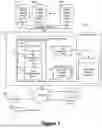
FIG. 1 is a block diagram illustrating non-limiting exemplary architecture of a marketplace server for managing data relating to connected-cars in accordance with embodiments of the present invention; and
FIG. 2 is a high-level flowchart illustrating non-limiting exemplary method in accordance with embodiments of the present invention.
It will be appreciated that for simplicity and clarity of illustration, elements shown in the figures have not necessarily been drawn to scale. For example, the dimensions of some of the elements may be exaggerated relative to other elements for clarity. Further, where considered appropriate, reference numerals may be repeated among the figures to indicate corresponding or analogous elements.
DETAILED DESCRIPTION OF THE INVENTION
In the following description, various aspects of the present invention will be described. For purposes of explanation, specific configurations and details are set forth in order to provide a thorough understanding of the present invention. However, it will also be apparent to one skilled in the art that the present invention may be practiced without the specific details presented herein. Furthermore, well known features may be omitted or simplified in order not to obscure the present invention.
Unless specifically stated otherwise, as apparent from the following discussions, it is appreciated that throughout the specification discussions utilizing terms such as “processing,” “computing,” “calculating,” “determining,” or the like, refer to the action and/or processes of a computer or computing system, or similar electronic computing device, that manipulates and/or transforms data represented as physical, such as electronic, quantities within the computing system's registers and/or memories into other data similarly represented as physical quantities within the computing system's memories, registers or other such information storage, transmission or display devices.
FIG. 1 is a block diagram illustrating non-limiting exemplary architecture of a marketplace server for managing data relating to connected-cars in accordance with embodiments of the present invention. System 100 may include a server 110 implementing the data marketplace and connected via network 30 to a plurality of clients 40A-40D. Vehicle related data, possibly obtained for various sensors may be stored in raw format on a plurality of vehicle related data sources 10A-10N and are accessed by server 110 via a secured data link 20. Server 110 may include a processing records module 130 implemented by a computer readable code running on computer processor 120. Processing records module 130 may include a data collector 132, a normalization module 134 and a data anonymization module that are configured to collect, normalize and anonymize respectively the data arriving from the plurality of vehicle related data sources 10A-10N, thus creating a processed records data lake 160 storing vehicle related data.
According to embodiments of the present invention, server 100 may include a trip recognition module 170 configured to scan processed records data lake 160 in search for vehicle data recorders (VDRs) associated with respective vehicles in a specified time range, to determine indications for trip start and trip end indications; filter out indications for trip start and trip end indications that are irrelevant; and group trip start and trip end indications into sessions; and filtering out sessions that are not trips, to yield a list of trips.
Following is a non-limiting example of how to implement the embodiment of the server of the present invention:
VDRs are scanned in a specified time range looking for trip start and trip end indications. There are several ways to find those indications.
For start indication:
-
- 1. When the VDR includes an Ignition ON event (Ignition based)
- 2. When the VDR is the first record for that vehicle in the last X minutes (Time based)
For end indication: - 3. When the VDR includes an Ignition OFF event (Ignition based)
- 4. When the VDR is the last record for that vehicle for the next X minutes (Time based)
Once a list of indications is obtained, for each vehicle its indications are scanned and clear irrelevant ones using the following algorithm:
-
- 1. Sort the indications by state (start indications first) and then by time;
- 2. Drop every end indication before the first start indication;
- 3. When there are subsequent start indications, ignore but the first;
- 4. When there are subsequent end indications, ignore but the last; and
- 5. Drop every start indication after the last end indication.
Ignored indications are not dropped but used later to determine the level of certainty of each trip. now have a list of indications ordered by time is available, which can be divided into pairs of start-end indications. Each of those pairs is considered a session.
At this point it is possible to hold a list of sessions of car usage. In order to extract only the trips, the sessions are filtered in the following matter:
-
- 1. Drop every session that starts and ends at the same time;
- 2. Drop every session that is shorter than X kilometers;
- 3. Drop every session that is shorter than X minutes; and
- 4. Drop every session that consists of less than X VDRs.
It is no possible to determine the level of certainty for each trip. There are several criteria to the trip that affect that level.
Those that increase:
-
- 1. Ignition-based indications, used to determine the boundaries;
- 2. Ignition-based indications, that was not used, but were in close proximity to the indication that was used;
- 3. First speed metric has a low value, and is in close proximity to the start of the trip;
- 4. The end location of the trip is the start location of the subsequent trip, and the other way around.
Those that decrease:
-
- 1. Ignition-based indications, that was not used, and were not in close proximity to the indication that was used.
- 2. The end location of the trip is far away from the start location of the subsequent trip, and the other way around.
FIG. 2 is a high-level flowchart illustrating non-limiting exemplary method in accordance with embodiments of the present invention. Method 200 of recognizing trips of vehicles from a plurality of vehicle related activity, is provided herein and may include the following steps: scanning vehicle data recorders (VDRs) associated with respective vehicles in a specified time range, to determine indications for trip start and trip end indications 210; filtering out indications for trip start and trip end indications that are irrelevant 220; and grouping trip start and trip end indications into sessions; and filtering out sessions that are not trips, to yield a list of trips 230.
According to some embodiments of the present invention, method 200 may further include a step of displaying the list of trips.
According to some embodiments of the present invention, method 200 may further include the step of displaying each the session of the trip on a map.
It should be noted that the method according to embodiments of the present invention may be stored as instructions in a computer readable medium to cause processors, such as central processing units (CPU) to perform the method. Additionally, the method described in the present disclosure can be stored as instructions in a non-transitory computer readable medium, such as storage devices which may include hard disk drives, solid state drives, flash memories, and the like. Additionally, non-transitory computer readable medium can be memory units.
In order to implement the method according to embodiments of the present invention, a computer processor may receive instructions and data from a read-only memory or a random-access memory or both. At least one of aforementioned steps is performed by at least one processor associated with a computer. The essential elements of a computer are a processor for executing instructions and one or more memories for storing instructions and data. Generally, a computer will also include, or be operatively coupled to communicate with, one or more mass storage devices for storing data files. Storage modules suitable for tangibly embodying computer program instructions and data include all forms of non-volatile memory, including by way of example semiconductor memory devices, such as EPROM, EEPROM, and flash memory devices and also magneto-optic storage devices.
As will be appreciated by one skilled in the art, aspects of the present invention may be embodied as a system, method, or computer program product. Accordingly, aspects of the present invention may take the form of an entirely hardware embodiment, an entirely software embodiment (including firmware, resident software, micro-code, etc.) or an embodiment combining software and hardware aspects that may all generally be referred to herein as a “circuit,” “module” or “system.” Furthermore, aspects of the present invention may take the form of a computer program product embodied in one or more computer readable medium(s) having computer readable program code embodied thereon.
Any combination of one or more computer readable medium(s) may be utilized. The computer readable medium may be a computer readable signal medium or a computer readable storage medium. A computer readable storage medium may be, for example, but not limited to, an electronic, magnetic, optical, electromagnetic, infrared, or semiconductor system, apparatus, or device, or any suitable combination of the foregoing. More specific examples (a non-exhaustive list) of the computer readable storage medium would include the following: an electrical connection having one or more wires, a portable computer diskette, a hard disk, a random access memory (RAM), a read-only memory (ROM), an erasable programmable read-only memory (EPROM or Flash memory), an optical fiber, a portable compact disc read-only memory (CD-ROM), an optical storage device, a magnetic storage device, or any suitable combination of the foregoing. In the context of this document, a computer readable storage medium may be any tangible medium that can contain or store a program for use by or in connection with an instruction execution system, apparatus, or device.
Program code embodied on a computer readable medium may be transmitted using any appropriate medium, including but not limited to wireless, wireline, optical fiber cable, RF, etc., or any suitable combination of the foregoing.
Computer program code for carrying out operations for aspects of the present invention may be written in any combination of one or more programming languages, including an object-oriented programming language such as Java, Smalltalk, JavaScript Object Notation (JSON), C++ or the like and conventional procedural programming languages, such as the “C” programming language or similar programming languages. The program code may execute entirely on the user's computer, partly on the user's computer, as a stand-alone software package, partly on the user's computer and partly on a remote computer or entirely on the remote computer or server. In the latter scenario, the remote computer may be connected to the user's computer through any type of network, including a local area network (LAN) or a wide area network (WAN), or the connection may be made to an external computer (for example, through the Internet using an Internet Service Provider).
Aspects of the present invention are described above with reference to flowchart illustrations and/or portion diagrams of methods, apparatus (systems) and computer program products according to embodiments of the invention. It will be understood that each portion of the flowchart illustrations and/or portion diagrams, and combinations of portions in the flowchart illustrations and/or portion diagrams, can be implemented by computer program instructions. These computer program instructions may be provided to a processor of a general-purpose computer, special purpose computer, or other programmable data processing apparatus to produce a machine, such that the instructions, which execute via the processor of the computer or other programmable data processing apparatus, create means for implementing the functions/acts specified in the flowchart and/or portion diagram portion or portions.
These computer program instructions may also be stored in a computer readable medium that can direct a computer, other programmable data processing apparatus, or other devices to function in a particular manner, such that the instructions stored in the computer readable medium produce an article of manufacture including instructions which implement the function/act specified in the flowchart and/or portion diagram portion or portions.
The computer program instructions may also be loaded onto a computer, other programmable data processing apparatus, or other devices to cause a series of operational steps to be performed on the computer, other programmable apparatus or other devices to produce a computer implemented process such that the instructions which execute on the computer or other programmable apparatus provide processes for implementing the functions/acts specified in the flowchart and/or portion diagram portion or portions.
The aforementioned flowchart and diagrams illustrate the architecture, functionality, and operation of possible implementations of systems, methods and computer program products according to various embodiments of the present invention. In this regard, each portion in the flowchart or portion diagrams may represent a module, segment, or portion of code, which comprises one or more executable instructions for implementing the specified logical function(s). It should also be noted that, in some alternative implementations, the functions noted in the portion may occur out of the order noted in the figures. For example, two portions shown in succession may, in fact, be executed substantially concurrently, or the portions may sometimes be executed in the reverse order, depending upon the functionality involved. It will also be noted that each portion of the portion diagrams and/or flowchart illustration, and combinations of portions in the portion diagrams and/or flowchart illustration, can be implemented by special purpose hardware-based systems that perform the specified functions or acts, or combinations of special purpose hardware and computer instructions.
In the above description, an embodiment is an example or implementation of the inventions. The various appearances of “one embodiment,” “an embodiment” or “some embodiments” do not necessarily all refer to the same embodiments.
Although various features of the invention may be described in the context of a single embodiment, the features may also be provided separately or in any suitable combination. Conversely, although the invention may be described herein in the context of separate embodiments for clarity, the invention may also be implemented in a single embodiment.
Reference in the specification to “some embodiments”, “an embodiment”, “one embodiment” or “other embodiments” means that a particular feature, structure, or characteristic described in connection with the embodiments is included in at least some embodiments, but not necessarily all embodiments, of the inventions.
It is to be understood that the phraseology and terminology employed herein is not to be construed as limiting and are for descriptive purpose only.
The principles and uses of the teachings of the present invention may be better understood with reference to the accompanying description, figures and examples.
It is to be understood that the details set forth herein do not construe a limitation to an application of the invention.
Furthermore, it is to be understood that the invention can be carried out or practiced in various ways and that the invention can be implemented in embodiments other than the ones outlined in the description above.
It is to be understood that the terms “including”, “comprising”, “consisting” and grammatical variants thereof do not preclude the addition of one or more components, features, steps, or integers or groups thereof and that the terms are to be construed as specifying components, features, steps or integers.
If the specification or claims refer to “an additional” element, that does not preclude there being more than one of the additional element.
It is to be understood that where the claims or specification refer to “a” or “an” element, such reference is not construed that there is only one of that element.
It is to be understood that where the specification states that a component, feature, structure, or characteristic “may”, “might”, “can” or “could” be included, that particular component, feature, structure, or characteristic is not required to be included.
Where applicable, although state diagrams, flow diagrams or both may be used to describe embodiments, the invention is not limited to those diagrams or to the corresponding descriptions. For example, flow need not move through each illustrated box or state, or in exactly the same order as illustrated and described.
Methods of the present invention may be implemented by performing or completing manually, automatically, or a combination thereof, selected steps or tasks.
The term “method” may refer to manners, means, techniques and procedures for accomplishing a given task including, but not limited to, those manners, means, techniques and procedures either known to, or readily developed from known manners, means, techniques and procedures by practitioners of the art to which the invention belongs.
The descriptions, examples, methods and materials presented in the claims and the specification are not to be construed as limiting but rather as illustrative only.
Meanings of technical and scientific terms used herein are to be commonly understood as by one of ordinary skill in the art to which the invention belongs, unless otherwise defined.
The present invention may be implemented in the testing or practice with methods and materials equivalent or similar to those described herein.
Any publications, including patents, patent applications and articles, referenced or mentioned in this specification are herein incorporated in their entirety into the specification, to the same extent as if each individual publication was specifically and individually indicated to be incorporated herein. In addition, citation, or identification of any reference in the description of some embodiments of the invention shall not be construed as an admission that such reference is available as prior art to the present invention.
While the invention has been described with respect to a limited number of embodiments, these should not be construed as limitations on the scope of the invention, but rather as exemplifications of some of the preferred embodiments. Other possible variations, modifications, and applications are also within the scope of the invention. Accordingly, the scope of the invention should not be limited by what has thus far been described, but by the appended claims and their legal equivalents.
Claims
1. A method of recognizing trips of vehicles from a plurality of vehicle related activity, the method comprising:
scanning vehicle data recorders (VDRs) associated with respective vehicles in a specified time range, to determine indications for trip start and trip end indications;
filtering out indications for trip start and trip end indications that are irrelevant; and
grouping trip start and trip end indications into sessions.
2. The method according to claim 1, further comprising filtering out sessions that are not trips, to yield a list of trips.
3. The method according to claim 2, further comprising displaying the list of trips;
4. The method according to claim 3, wherein the displaying comprising displaying each the session of the trip on a map.
5. A system of recognizing trips of vehicles from a plurality of vehicle related activity, the system comprising:
a computer processor; and
a set of instructions that when executed cause the computer processor to:
scan vehicle data recorders (VDRs) associated with respective vehicles in a specified time range, to determine indications for trip start and trip end indications;
filter out indications for trip start and trip end indications that are irrelevant; and
group trip start and trip end indications into sessions.
6. The system according to claim 5, wherein the computer processor is further configured to filter out sessions that are not trips, to yield a list of trips.
7. The system according to claim 6, the computer processor is further configured to display the list of trips;
8. The system according to claim 7, wherein the computer processor is further configured to display each one the sessions of the trip on a map.
9. A non-transitory computer readable medium for recognizing trips of vehicles from a plurality of vehicle related activity, the computer readable medium comprising a set of instructions that when executed cause at least one computer processor to:
scan vehicle data recorders (VDRs) associated with respective vehicles in a specified time range, to determine indications for trip start and trip end indications;
filter out indications for trip start and trip end indications that are irrelevant; and
group trip start and trip end indications into sessions.
10. The non-transitory computer readable medium according to claim 9, further comprising a set of instructions that when executed cause the at least one computer processor to filter out sessions that are not trips, to yield a list of trips.
11. The non-transitory computer readable medium according to claim 10, further comprising a set of instructions that when executed cause the at least one computer processor to display the list of trips;
12. The non-transitory computer readable medium according to claim 11, further comprising a set of instructions that when executed cause the at least one computer processor to display each one the sessions of the trip on a map.
Images & Drawings included:


Sources:
- United States Patent and Trademark Office - verify current appl. status at the USPTO↗
Recent applications in this class:
- » 20250166433 2025-05-22
SENSOR DEVICE - » 20250166432 2025-05-22
INFORMATION PROCESSING DEVICE - » 20250148848 2025-05-08
AUTOMATIC COLLECTION OF AUTONOMOUS VEHICLE LOGGING DATA - » 20250140040 2025-05-01
FLEET DATA COLLECTION USING A UNIFIED MODEL TO COLLECT DATA FROM HETEROGENOUS VEHICLES - » 20250131780 2025-04-24
DATA WRITING METHOD, RECORDING MEDIUM, AND VEHICLE - » 20250095424 2025-03-20
Method Of Operating A Data Recording Device And System - » 20250078588 2025-03-06
AUTONOMOUS DRIVING SYSTEM - » 20250069454 2025-02-27
INFORMATION PROCESSING DEVICE - » 20250046134 2025-02-06
SYSTEMS AND METHODS FOR VISUALIZING VEHICLE DATA - » 20250005977 2025-01-02
AUTONOMOUS DRIVING VEHICLE
Recent applications for this Assignee:
- » 20240265455 2024-08-08
METHOD AND SYSTEM FOR DETECTING A CHANGE OF OWNERSHIP OF A CONNECTED VEHICLE - » 20240265297 2024-08-08
METHOD AND A SYSTEM FOR GENERATING A MACHINE LEARNING MODEL FOR REDUCING A LOCATION ERROR OF READINGS OF ROAD SIGNS SENSED BY CONNECTED VEHICLES - » 20240265140 2024-08-08
METHOD AND SYSTEM FOR OBTAINING REPRESENTATIVE SAMPLE OF AUTOMOTIVE DATA RECORDS FOR DATA SCORING - » 20240265139 2024-08-08
METHOD AND SYSTEM FOR PRIVACY MULTI-TIERING OF AUTOMOTIVE DATA - » 20240265068 2024-08-08
METHOD AND SYSTEM FOR DIGITAL RIGHT MANAGEMENT (DRM) OF DATA OBTAINED FROM CONENCTED CARS - » 20240241925 2024-07-18
METHOD AND SYSTEM FOR MATCHING CONTRACTS BETWEEN AUTOMOTIVE DATA PROVIDERS AND AUTOMOTIVE DATA CONSUMERS