CLASSIFICATION SYSTEM WITH EASY SPACE GROUP INFERENCE AND METHOD OF RECOMMENDING ZONE AXIS IN THE SAME
US20240282129A1
2024-08-22
18/612,883
2024-03-21
Smart Summary: A new system helps classify images taken by a special type of microscope called a Transmission Electron Microscope (TEM). It uses a method that groups these images based on certain patterns, known as SADP (Selected Area Diffraction Pattern). Each group is given a label that corresponds to specific categories in crystallography, which is the study of crystal structures. This makes it easier to understand and organize the images. Additionally, the system can recommend the best angles to view these patterns for better analysis. 🚀 TL;DR
Abstract:
A method and a system for providing a parking service are disclosed. An SADP classification scheme comprises plural labels. Here, the labels are constructed by grouping SADP (Selected Area Diffraction Pattern) images photographed through a TEM (Transmission Electron Microscope, TEM) according to specific reference, and the labels are matched with space groups of a classification scheme in crystallography.
Inventors:
- Jin-Ha Jeong 36 🇰🇷 Yongin-si, South Korea
- Hea-Yun Lee 13 🇰🇷 Suwon-si, South Korea
- Hyun Ji Lee 17 🇰🇷 Seoul, South Korea
- Moon Soo RA 8 🇰🇷 Bucheon-si, South Korea
Applicant:
Interested in similar patents?
Get notified when new applications in this technology area are published.
Classification:
G06V20/698 » CPC main
Scenes; Scene-specific elements; Type of objects; Microscopic objects, e.g. biological cells or cellular parts Matching; Classification
G06V20/693 » CPC further
Scenes; Scene-specific elements; Type of objects; Microscopic objects, e.g. biological cells or cellular parts Acquisition
G06V20/69 IPC
Scenes; Scene-specific elements; Type of objects Microscopic objects, e.g. biological cells or cellular parts
G06V10/774 » CPC further
Arrangements for image or video recognition or understanding using pattern recognition or machine learning; Processing image or video features in feature spaces; using data integration or data reduction, e.g. principal component analysis [PCA] or independent component analysis [ICA] or self-organising maps [SOM]; Blind source separation Generating sets of training patterns; Bootstrap methods, e.g. bagging or boosting
G06V20/70 » CPC further
Scenes; Scene-specific elements Labelling scene content, e.g. deriving syntactic or semantic representations
Description
CROSS-REFERENCE TO RELATED APPLICATIONS
This application is a Bypass continuation of PCT International Application No. PCT/KR2022/015355, which was filed on Oct. 12, 2022, and which claims priorities under 35 U. S. C. 119(a) to Korean Patent Application No. 10-2021-0136499 filed with the Korean Intellectual Property Office on Oct. 14, 2021, Korean Patent Application No. 10-2021-0156578 filed with the Korean Intellectual Property Office on Nov. 15, 2021, Korean Patent Application No. 10-2021-0156580 filed with the Korean Intellectual Property Office on Nov. 15, 2021, Korean Patent Application No. 10-2021-0157137 filed with the Korean Intellectual Property Office on Nov. 16, 2021 and Korean Patent Application No. 10-2021-0185805 filed with the Korean Intellectual Property Office on Dec. 23, 2021. The disclosures of the above patent applications are incorporated herein by reference in their entirety.
TECHNICAL FIELD
The disclosure relates to a classification system with easy space group inference and a method of recommending a zone axis in the same.
The disclosure relates to a method of inferring space groups of an object and recommending a zone axis for next photographing.
BACKGROUND ART
Selected Area Diffraction Pattern (SADP) is to generate diffraction of electrons in an image type after emitting an electron beam to an object to be analyzed. The SADP is shown in two-dimensional image though the object has three-dimensional crystal structure, and thus it is difficult to specify definitely a space group of the object using one SADP image. To solve this problem, Ziletti et al. proposes a method of generating one diffraction fingerprint using six SADP images, learning/analyzing the generated diffraction fingerprint and then specifying a space group of the object.
The diffraction fingerprint is obtained by using SADP images which are generated by photographing the object through a TEM with rotating the object in six directions. The rotation is performed based on a zone axis [001]. Here, the diffraction fingerprint is generated by accumulating SADP images obtained by photographing the object under rotating the object by ±45° in an x axis in a red channel of RGB, accumulating SADP images obtained by photographing the object under rotating the object by ±45° in an y axis in a green channel and accumulating SADP images obtained by photographing the object under rotating the object by ±45° in a z axis in a blue channel.
A propagation direction of the electron beam and the zone axis of the object should be aligned at first to generate the diffraction fingerprint. It is impossible to align the propagation direction of the electron beam and the zone axis because a crystal structure of the object is not known.
The SADP image obtained by photographing the object with rotating by ±45° in an x direction, an y direction or a z direction can't include meaningful information if the object has the crystal structure out of cubic system and hexagonal system, though the propagation direction of the electron beam is aligned with the zone axis of the object.
SUMMARY
The disclosure is to provide a classification system inferable easily a space group and a method of constructing a classification scheme in the same.
The disclosure is to provide a method of inferring space groups candidate of an object and recommending a zone axis for next photographing.
An SADP classification scheme according to an embodiment of the disclosure includes plural labels. Here, the labels are constructed by grouping SADP (Selected Area Diffraction Pattern) images photographed through a TEM (Transmission Electron Microscope, TEM) according to specific reference, and the labels are matched with space groups of a classification scheme in crystallography.
A classification system according to an embodiment of the disclosure includes a diffraction pattern analyzing unit configured to generate an SADP classification scheme having multiple labels in 2D pattern by grouping SADP images photographed by a TEM according to specific reference; and a classification scheme matching unit configured to match the SADP classification scheme with a classification scheme in crystallography. Here, the classification scheme in crystallography includes space groups and information concerning zone axes, and labels in the SADP classification scheme are one-to-one matched with the space groups or the labels are matched with the space groups in one-to-multi relation.
A classification system according to another embodiment of the disclosure includes a diffraction pattern analyzing unit configured to generate an SADP classification scheme having multiple labels by grouping SADP images photographed by a TEM according to specific reference; and a probability-based space group inferring unit configured to infer probabilistically a space group of an object by analyzing a classification scheme in crystallography matched with a label obtained by applying an algorithm learned by machine learning to an SADP image of the object. Here, the classification scheme in crystallography includes a space group and information concerning a zone axis.
A classification system according to still another embodiment of the disclosure includes a learning unit configured to learn a classifying algorithm to classify SADP image photographed by a TEM through machine learning; and a probability-based space group inferring unit configured to infer probabilistically a space group of an object by analyzing a classification scheme in crystallography matched with a label obtained by applying the classifying algorithm to an SADP image of the object. Here, the labels are constructed by grouping the SADP images according to specific reference and are matched space groups in the classification scheme in crystallography.
A recording medium readable by a computer recording a program code according to one embodiment of the disclosure, wherein the program code is used for performing a method comprises generating new SADP classification scheme having multiple labels by grouping SADP images photographed by a TEM according to specific reference; and matching the new SADP classification scheme with a classification scheme in crystallography. Here, the classification scheme in crystallography includes space groups and information concerning zone axes, and labels in the SADP classification scheme are one-to-one matched with the space groups or the labels are matched with the space groups in one-to-multi relation.
A classification system according to still another embodiment of the disclosure includes a classification scheme matching unit configured to match an SADP classification scheme having multiple labels in 2D pattern with a classification scheme in crystallography; and a zone axis recommending unit configured to recommend a zone axis for next photographing of an object, electron beam being emitted to the zone axis. Here, the classification scheme in crystallography includes space groups and information concerning zone axes, and labels in the SADP classification scheme are one-to-one matched with the space groups or the labels are matched with the space groups in one-to-multi relation.
A classification system according to still another embodiment of the disclosure includes a table configured to including labels having a space group in crystal structure and information concerning a zone axis; and a zone axis recommending unit configured to recommend a zone axis to which electron beam is to be emitted for next photographing of an object. Here, the recommended zone axis is one of zone axes included in the labels.
A classification system according to still another embodiment of the disclosure includes a zone axis recommending unit configured to recommend a zone axis to which electron beam is to be emitted for next photographing of an object from labels having space groups in crystal structure and information concerning zone axes matched with the space groups. Here, the zone axis recommending unit includes a calculation unit configured to calculate degree of randomness about zone axes in the labels; and a recommending unit configured to recommend a zone axis having lowest degree of randomness as the zone axis for next photographing depending on the calculated result.
A classification system and a method of constructing a classification scheme in the same according to the disclosure cluster similar SADP images based on specific reference and generate new classification scheme by using clustered SADP images. A space group may be easily inferred by using the new classification scheme.
Additionally, the classification system may infer a space group of an object by using one or more SADP images obtained by photographing the object through a TEM, without supporting of a crystallography expert.
Furthermore, the classification system recommends a zone axis capable of specifying definitely a space group in next photographing, thereby minimizing a stress applied to the object while analyzing the object.
BRIEF DESCRIPTION OF DRAWINGS
Example embodiments of the disclosure will become more apparent by describing in detail example embodiments of the disclosure with reference to the accompanying drawings, in which:
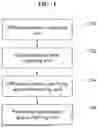
FIG. 1 is a view illustrating a classification system according to an embodiment of the disclosure;
FIG. 2 is a view illustrating structure of a classification scheme and matching of classification schemes according to an embodiment of the disclosure;
FIG. 3 is a view illustrating a reference of classifying an SADP images according to an embodiment of the disclosure;
FIG. 4 is a view illustrating a process of inferring a space group according to an embodiment of the disclosure;
FIG. 5 is a view illustrating SADP images having similar diffraction patterns while belonging to different space groups;
FIG. 6 is a view illustrating a classification system according to another embodiment of the disclosure;
FIG. 7 is a view illustrating a table indicating matching of an SADP classification scheme in crystallography and new SADP classification scheme classified easily by a computer;
FIG. 8 is a view illustrating a zone axis recommending unit according to an embodiment of the disclosure.
DETAILED DESCRIPTION
In the present specification, an expression used in the singular encompasses the expression of the plural, unless it has a clearly different meaning in the context. In the present specification, terms such as “comprising” or “including,” etc., should not be interpreted as meaning that all of the elements or operations are necessarily included. That is, some of the elements or operations may not be included, while other additional elements or operations may be further included. Also, terms such as “unit,” “module,” etc., as used in the present specification may refer to a part for processing at least one function or action and may be implemented as hardware, software, or a combination of hardware and software.
The disclosure relates to a classification system and a method of constructing a classification scheme in the same, and it may reconstruct a classification scheme in crystallography to new classification scheme classified easily by a computer.
Here, the new classification scheme may include plural labels generated by classifying SADP (Selected Area Diffraction Pattern) images based on specific reference. That is, SADP images with common feature or similar structure may belong to the same label.
Additionally, the classification system may match the classification scheme in crystallography with the new classification scheme classified easily by the computer and infer a space group of an object by analyzing one or more SADP images obtained by photographing the object by a transmission electron microscope (TEM) through an artificial intelligence, especially a machine learning, e.g., a deep learning.
Hereinafter, embodiments of the disclosure will be described in detail with reference to accompanying drawings.
FIG. 1 is a view illustrating a classification system according to an embodiment of the disclosure, FIG. 2 is a view illustrating structure of a classification scheme and matching of classification schemes according to an embodiment of the disclosure, and FIG. 3 is a view illustrating a reference of classifying an SADP images according to an embodiment of the disclosure. FIG. 4 is a view illustrating a process of inferring a space group according to an embodiment of the disclosure, and FIG. 5 is a view illustrating SADP images having similar diffraction patterns while belonging to different space groups.
In FIG. 1, the classification system of the present embodiment constructs new classification scheme classified easily by the computer different from a classification scheme in crystallography, and it may include a diffraction pattern analyzing unit 100, a classification scheme matching unit 102, a diffraction pattern classifying algorithm learning unit 104, a probability-based space group inferring unit 106 and a controller (not shown) for controlling their operation.
The diffraction pattern analyzing unit 100 may generate new classification scheme (SADP classification scheme) by grouping SADP images classified easily by the computer using an internal angle information of a triangle and forbidden reflection information obtained through structure factor calculation, wherein the triangle includes a diffraction point and two diffraction points nearest to the diffraction point. The diffraction pattern analyzing unit 100 may be referred to as a classification scheme generating unit because the diffraction pattern analyzing unit 100 generates the classification scheme.
For example, the diffraction pattern analyzing unit 100 may generate new classification scheme by grouping SADP images similar in appearance using internal angle information (∠AOB, ∠OAB) of a triangle and forbidden reflection information shown in a right side in FIG. 3, wherein the triangle includes a diffraction point(O) and two diffraction points(A, B) nearest to the diffraction point(O) as shown in a left side in FIG. 3. Here, the new classification scheme may be divided into a square primitive A, a rectangle primitive B, a hexagonal primitive C and an oblique primitive D based on a basic structure having two-dimensional lattice.
In another embodiment, the diffraction pattern analyzing unit 100 may generate new classification scheme by grouping SADP images using one diffraction point or internal angle information between at least three diffraction points not internal angle points between two diffraction points nearest to a diffraction point.
In still another embodiment, the diffraction pattern analyzing unit 100 may generate new classification scheme by grouping SADP images using only one of the internal angle information and the forbidden reflection information.
In still another embodiment, the diffraction pattern analyzing unit 100 may generate new classification scheme by grouping the SADP images using average angle of angles between central diffraction point and its surrounding diffraction points.
In FIG. 2, a classification scheme in crystallography includes space groups. Here, space groups with similar structure may exist in the classification scheme.
In a process of constructing new classification scheme, the classification system may obtain SADP images related to space groups by using the TEM. Indication such as “001”, etc. in FIG. 2 may mean a direction of an electron beam emitted to an object. For example, “001” may mean a direction of the electron beam emitted in a parallel to a Z axis. Here, plural SADP images having similar or the same structure may exist when the SADP images are classified based on specific reference.
The diffraction pattern analyzing unit 100 may generate new classification scheme by grouping the SADP images using the internal angle information (∠AOB, ∠OAB) of the triangle including diffraction points and the forbidden reflection information. Here, classification of the SADP images to the new classification scheme may be performed by a diffraction pattern classifying algorithm (model) as shown in FIG. 4.
For example, the diffraction pattern analyzing unit 100 may define 60 labels by grouping SADP images obtained based on 16 zone axes ([0 0 1], [1 0 1], [1 0 2], [1 0 3], [1 0 4], [1 1 1], [1 1 2], [1 1 3], [1 1 4], [2 0 3], [2 1 2], [2 1 3], [2 1 4], [2 2 3], [3 1 3], [3 2 3]) related to five space groups (213, 221, 225, 227, 229). Here, the SADP images may be classified to 112 labels based on a classification scheme in crystallography. The number of the labels is smaller than that of the labels in the classification scheme in crystallography due to the grouping.
FIG. 5 shows SADP images, in different space groups, which belong to the same label. That is, the SADP images corresponding to multiple space groups may belong to one label.
On the other hand, the reference for grouping the SADP images may be variously modified as long as new classification scheme is generated by using the diffraction points.
The classification scheme matching unit 102 may match the classification scheme in crystallography expressed in the space group and the zone axis with an SADP classification scheme classified easily by the computer as shown in FIG. 2. That is, the classification scheme matching unit 102 may match the space groups in 3D structure with the labels in 2D structure.
The label and the space group are fundamentally matched in one-to-multi relation, but may be one-to-one matched depending on a shape of the SADP image. That is, an SADP image corresponding to specific space group and specific zone axis may belong to one label. In this case, information concerning correct space group and zone axis may be searched by inputting an SADP image.
The diffraction pattern classifying algorithm learning unit 104 may learn a model (diffraction pattern classifying algorithm) to classify the SADP images through a machine learning.
In an embodiment, the diffraction pattern classifying algorithm learning unit 104 may generate and learn the diffraction pattern classifying algorithm by using AlexNet, Inception v3, ResNet, DenseNet, etc. which are off-the-shelf deep learning model.
The probability-based space group inferring unit 106 may infer probabilistically a space group of the object by analyzing the classification scheme in crystallography matched with the label obtained by applying the diffraction pattern classifying algorithm to the SADP image of the object.
For example, the probability-based space group inferring unit 106 may infer probabilistically a space group of the object in crystal structure by analyzing the classification scheme in crystallography matched with the label obtained by applying respectively the diffraction pattern classifying algorithm to two SADP images for the object as shown in FIG. 4.
In an embodiment, the probability-based space group inferring unit 106 may draw final probability in consideration of probabilities inferred from multiple SADP images. In FIG. 4, the final probability equals to an average of the inferred probabilities. However, the probability-based space group inferring unit 106 may accumulate the inferred probabilities and determine a space group corresponding to maximum value of the accumulated inferred probabilities as the space group of the object.
Referring to two SADP images inputted to the diffraction pattern classifying algorithm in FIG. 4, upper images are classified to an A1-0 label through the diffraction pattern classifying algorithm, the A1-0 label is matched with a space group 221, a space group 225, a space group 227 and a space group 229 in one-to-multi relation, and thus it is inferred that a probability of the object belonging to each of the space groups 221, 225, 227 and 229 is 25%. Whereas, lower images are classified to a D8-0 label through the diffraction pattern classifying algorithm, the D8-0 label is one-to-one matched with the space group 225, and thus it is inferred that a probability of the object belonging to the space group 225 is 100%. Consequently, it is inferred that a probability of the object belonging to the space group 225 is 62.5% and a probability of the object belonging to the space group 221, 227 or 229 is 12.5%, when average of the inferred two probabilities is considered.
Conventional technique infers a space group of an object by using the classification scheme in crystallography. Particularly, conventional technique obtains six SADP images through TEM and detects a space group to which the object belongs by analyzing the obtained SADP images. However, it is difficult to perform this process because a user emits the electron beam to the object with rotating the object in six directions. As a result, only an expert can perform this process. Furthermore, it is difficult to emit the electron beam with rotating accurately the object in six directions, and thus the space group is not correctly inferred.
Whereas, the classification system of the disclosure may generate multiple labels by grouping the SADP images and infer probabilistically the space group of the object by analyzing the space group matched with the label. Accordingly, the user may infer the space group of the object by using at least one SADP image photographed by the TEM without helping of a crystallography expert.
Briefly, the classification system of the disclosure may match 3D classification scheme in crystallography with new 2D classification scheme formed by grouping the SADP images and infer the space group of the object by analyzing the space group matched with the label to which the SADP image obtained through the TEM belongs.
Advantages when the new classification scheme is used are follows.
-
- 1. It is possible to infer the space group of the object with high accuracy though usual machine learning techniques are used.
- 2. It is possible to infer probabilistically the space group of the object though one SADP image is used and infer more accurately the space group of the object by considering synthetically inferred probabilities for multiple SADP images when the SADP images exist.
- 3. It is possible to recommend a zone axis at which it is expected that inferred probability of the space group increases when next SADP image is photographed, by analyzing SADP image photographed at present in the event that a TEM machine and the classification system of the disclosure are together used.
It is necessary to analyze three or more SADP images to determine 3D structure because the SDAP image is a 2D image, when the user detects a crystal structure of the object using the TEM. The SADP images are obtained with changing a scan direction of the electron beam. In this time, many times scanning of the electron beam should be performed if accurate scan direction of the electron beam is not determined. As a result, the object may be broken due to energy of the electron beam. Accordingly, many time scanning of the electron beam should not be performed, and it is necessary to determine accurate scan direction of the electron beam. It is possible to recommend accurate scan direction of the electron beam, i.e. recommend accurate zone axis when the classification system of the disclosure is employed.
Hereinafter, a method of recommending a scan direction of the electron beam, i.e. zone axis will be described in detail.
FIG. 6 is a view illustrating a classification system according to another embodiment of the disclosure, FIG. 7 is a view illustrating a table indicating matching of an SADP classification scheme in crystallography and new SADP classification scheme classified easily by a computer, and FIG. 8 is a view illustrating a zone axis recommending unit according to an embodiment of the disclosure.
In FIG. 6, the classification system of the present embodiment may include a diffraction pattern analyzing unit 100, a classification scheme matching unit 102, a diffraction pattern classifying algorithm learning unit 104, a probability-based space group recommending unit 106 and a zone axis recommending unit 600. Since the other elements except the zone axis recommending unit 600 are the same as in above embodiment, any further description concerning the same elements will be omitted.
Function of the zone axis recommending unit 600 will be described after a method of recommending the zone axis is conceptually described with reference to a drawing FIG. 7. A table in FIG. 7 includes a space group in crystal structure and labels having information concerning the zone axis.
In FIG. 7, it is assumed that an A1-0 label is obtained by analyzing inputted SADP image while the 3D SADP classification scheme in crystallography is matched with new 2D SADP classification scheme. In this case, the A1-0 label is matched with a zone axis of a space group 225, a zone axis of a space group 227 and a zone axis of a space group 229 in one-to-multi relation. Accordingly, the inputted SADP image can belong to three space groups 225, 227 and 229, and thus the space group of an object corresponding to the inputted SADP image is not specified. However, a user can accurately see information concerning the zone axis [001].
It is necessary to recommend a zone axis capable of specifying definitely a space group for photographing of next SADP image through the TEM. Accordingly, the disclosure provides a method of recommending a zone axis capable of specifying clearly the space group, the object being rotated in a direction of the zone axis.
A C1-0 label will be obtained when an SADP image obtained by next photographing is analyzed if the object is aligned with a zone axis [111] in next photographing. The C1-0 label can belong to the space group 225, the space group 227 and the space group 229, and thus the space group of the object is not specified clearly. Accordingly, the classification system does not recommend the zone axis [111].
A B2-0 label or a D11-0 label will be obtained when an SADP image obtained by next photographing is analyzed if the object is aligned with a zone axis in next photographing. If the B2-0 label is obtained, it is quite evident that the object belongs to the space group 225. However, if the D11-0 label is obtained, it is difficult to know what space group the object belongs to of the space groups 227 and 229. In this case, specifying of the space group when the object is aligned with the zone axis is more clear than that when the object is aligned with the zone axis [111], but the space group is also not specified definitely. Accordingly, the classification system does not recommend the zone axis [102].
A B1-0 label, a D7-0 label or a D7-1 label will be obtained when an SADP image obtained by next photographing is analyzed if the object is aligned with a zone axis in next photographing. It is quite evident that the object belongs to the space group 229 if the B1-0 label is obtained, it is clear that the object belongs to the space group 225 if the D7-0 label is obtained, and it is definite that the object belongs to the space group 227 if the D7-1 label is obtained. That is, the space group of the object is clearly specified in every case. Accordingly, the classification system may recommend the zone axis [101].
On the other hand, a zone axis and a zone axis exist if the object belongs to a B5-0 label according to analysis of the SADP image, and thus accurate zone axis is not specified. The classification system may select a zone axis capable of specifying more efficiently the space group of a zone axis to be aligned for next photographing obtained through above process in case of the zone axis and a zone axis to be aligned for next photographing obtained through above process in case of the zone axis [223].
The number and a time for scanning the electron beam to the object may considerably reduce when above process is connected to a TEM hardware, and thus it is possible to analyze efficiently the object.
Shortly, the zone axis recommending unit 600 may discriminate whether a space group is clearly specified when corresponding zone axis is selected for next TEM SADP photographing, perform sequentially the discriminating process about every zone axis usable for next TEM SADP photographing and recommend a zone axis at which the space group is definitely specified through the discriminated result.
In an embodiment, the zone axis recommending unit 600 may recommend a zone axis of a label matched with one space group as next zone axis. That is, the zone axis recommending unit 600 may recommend a zone axis with very high discernment about the space group. Preferably, the zone axis recommending unit 600 may calculate discernment of the zone axes and recommend the zone axis with highest discernment as a zone axis for new TEM SADP photographing.
Of course, the zone axis recommending unit 600 may recommend a zone axis corresponding to a label matched with two space groups when the zone axis corresponding to the label matched with one space group does not exist. However, the zone axis recommending unit 600 may not recommend a zone axis corresponding to a label matched with three space groups when the zone axis corresponding to the label matched with two space groups does not exist. This is because a probability of specifying the space group becomes very lower.
To recommend the zone axis, the zone axis recommending unit 600 may calculate discernment about a space group of a zone axis to be aligned for next photographing through calculation of an entropy(H(X)) in following equation 1.
H ( X ) = - ∑ j = 1 j = k P ( x j ) ∑ i = 1 i = n P ( x i ) log n P ( x i ) [ Equation 1 ]
Here, p(xj) means a probability of jth label of specific zone axis, k indicates total number of labels, p(xj) means a probability that the object belongs to ith space groups in corresponding label, and n indicates total number of space groups in corresponding label.
Since the entropy indicates degree of randomness, high entropy means low discernment about the space group, and low entropy indicates high discernment about the space group.
Accordingly, the zone axis recommending unit 600 may calculate an entropy about every zone axis or preset zone axes, and recommend a zone axis having lowest entropy as the zone axis for next photographing of an SADP image.
A probability that the object belongs the space group 225, the space group 227 or the space group 229 is respectively ⅓ if the A1-0 label is obtained by analyzing the inputted SADP image, and thus calculation of the entropy about the A1-0 label is following equation 2. Maximum value of the entropy is 1. The calculated entropy is 1, and thus the zone axis recommending unit 600 may discriminate that the space group 225, the space group 227 and the space group 229 don't have any discernment.
H ( X ) = - ∑ i = 1 3 P ( x i ) log 3 P ( x i ) = - 3 × 1 3 × log 3 1 3 = - 3 × 1 3 × log ( 1 / 3 ) log ( 3 ) = 1 [ Equation 2 ]
A B2-0 label or a D11-0 label may be obtained with the object is aligned with a zone axis after the A1-0 label is obtained. In the B2-0 label, a probability that the object belongs to the space group 225 is 100%. In the D11-0 label, a probability that the object belongs to the space group 227 is 50%, and a probability that the object belongs to the space group 229 is 50%. Since it is impossible to see what label of the B2-0 label and the D11-0 label is obtained, it is assumed that a probability of each of the B2-0 label and the D11-0 label is 50%. In this case, entropy calculation about the zone axis follows as equation 3. Discernment when the object is aligned with the zone axis is greater than that when the A1-0 label is obtained because an entropy of the B2-0 label or the D11-0 label is lower than that of the A1-0 label.
H ( X ) = - 1 2 ( 1 × log 3 1 ) - 1 2 ( 2 × 1 2 × log 3 1 2 ) = 0.3155 [ Equation 3 ]
A B1-0 label, a D7-0 label or a D7-1 label may be obtained with the object is aligned with a zone axis [101]. In the B1-0 label, a probability that the object belongs to the space group 229 is 100%. In the D7-0 label, a probability that the object belongs to the space group 227 is 100%. In the D7-1 label, a probability that the object belongs to the space group 227 is 100%. Since it is impossible to see what label of the B1-0 label, the D7-0 label and the D7-1 label is obtained, it is assumed that a probability of each of the B1-0 label, the D7-0 label and the D7-1 label is 33%. In this case, entropy calculation about the zone axis [101] follows as equation 4.
H ( X ) = - 3 × 1 3 ( 1 × log 3 1 ) = 0 [ Equation 4 ]
The entropy when the object is aligned with the zone axis is lower than that when the object is aligned with the zone axis [102]. Accordingly, the zone axis recommending unit 600 may recommend the zone axis as a direction in which the electron beam is to be scanned. As a result, the electron beam will be emitted in the direction of the zone axis [101].
Briefly, the zone axis recommending unit 600 may calculate entropies about every zone axis or entropies about multiple zone axes, and recommend a zone axis having lowest entropy as a zone axis for photographing of next SADP image. Accordingly, a user may infer a space group of the object using the SADP image obtained by photographing the object through the TEM without helping of the crystallography expert. Additionally, the classification system may minimize stress applied to the object when the object is analyzed because it recommends the zone axis capable of specifying the most effectively the zone axis when next photographing is performed.
On the other hand, the zone axis recommending unit 600 may recommend randomly one of the zone axes when plural zone axes having smallest entropy exist.
In the above, degree of randomness is calculated by using the entropy. However, a method of calculating the degree of randomness may be variously modified as long as the zone axis is recommended by calculating the degree of randomness.
In FIG. 8, the zone axis recommending unit 600 may include a table unit 800, a calculation unit 802 and a recommendation unit 804.
The table unit 800 may include labels having information concerning zone axes matched with the space groups in crystal structure.
The calculation unit 802 may calculate the degree of randomness, i.e. the entropies about the zone axes which belong to the labels.
The recommendation unit 804 may recommend a zone axis having lowest degree of randomness as a zone axis for next photographing, depending on the calculated result.
Components in the embodiments described above can be easily understood from the perspective of processes. That is, each component can also be understood as an individual process. Likewise, processes in the embodiments described above can be easily understood from the perspective of components.
Also, the technical features described above can be implemented in the form of program instructions that may be performed using various computer means and can be recorded in a computer-readable medium. Such a computer-readable medium can include program instructions, data files, data structures, etc., alone or in combination. The program instructions recorded on the medium can be designed and configured specifically for the disclosure or can be a type of medium known to and used by the skilled person in the field of computer software. Examples of a computer-readable medium may include magnetic media such as hard disks, floppy disks, magnetic tapes, etc., optical media such as CD-ROM's, DVD's, etc., magneto-optical media such as floptical disks, etc., and hardware devices such as ROM, RAM, flash memory, etc. Examples of the program of instructions may include not only machine language codes produced by a compiler but also high-level language codes that can be executed by a computer through the use of an interpreter, etc. The hardware mentioned above can be made to operate as one or more software modules that perform the actions of the embodiments of the invention, and vice versa.
The embodiments of the invention described above are disclosed only for illustrative purposes. A person having ordinary skill in the art would be able to make various modifications, alterations, and additions without departing from the spirit and scope of the invention, but it is to be appreciated that such modifications, alterations, and additions are encompassed by the scope of claims set forth below.
Claims
What is claimed is:1. A selected area diffraction pattern (SADP) classification scheme comprising:
plural labels,
wherein the labels are constructed by grouping SADP images photographed through a transmission electron microscope (TEM) according to specific reference, and the labels are matched with space groups of a classification scheme in crystallography.
2. The SADP classification scheme of claim 1, wherein the specific reference is information concerning an internal angle of a triangle including one diffraction point and two diffraction points nearest to the one diffraction point and forbidden reflection information in the SADP image,
and wherein SADP images having similar information concerning the internal angle and similar forbidden reflection information belong to the same label.
3. The SADP classification scheme of claim 2, wherein the SADP images are images obtained based on zone axes of the space groups, and the number of the labels is smaller than the product of the number of the space groups and the number of the zone axes.
4. A classification system comprising:
a diffraction pattern analyzing unit configured to generate a selected area diffraction pattern (SADP) classification scheme having multiple labels in two-dimensional (2D) pattern by grouping SADP images photographed by a transmission electron microscope (TEM) according to specific reference; and
a classification scheme matching unit configured to match the SADP classification scheme with a classification scheme in crystallography,
wherein the classification scheme in crystallography includes space groups and information concerning zone axes, and labels in the SADP classification scheme are one-to-one matched with the space groups or the labels are matched with the space groups in one-to-multi relation.
5. The classification system of claim 4, wherein the specific reference is information concerning an internal angle of a triangle including one diffraction point and two diffraction points nearest to the one diffraction point and forbidden reflection information in the SADP image,
and wherein SADP images having similar information concerning the internal angle and similar forbidden reflection information belong to the same label.
6. The classification system of claim 4, further comprising:
a learning unit configured to learn a diffraction pattern classifying algorithm to classify the SADP images through a machine learning; and
a probability-based space group inferring unit configured to infer probabilistically a space group of an object by analyzing the classification scheme in crystallography matched with a label obtained by applying the diffraction pattern classifying algorithm to an SADP image of the object.
7. The classification system of claim 6, wherein the probability-based space group inferring unit draws final probability in consideration of probabilities inferred from the SADP images, or accumulates the inferred probabilities and selects a space group having maximum value of the accumulated probabilities.
8. A classification system comprising:
a classification scheme matching unit configured to match a selected area diffraction pattern (SADP) classification scheme having multiple labels in two-dimensional (2D) pattern with a classification scheme in crystallography; and
a zone axis recommending unit configured to recommend a zone axis for next photographing of an object, electron beam being emitted to the zone axis,
wherein the classification scheme in crystallography includes space groups and information concerning zone axes, and labels in the SADP classification scheme are one-to-one matched with the space groups or the labels are matched with the space groups in one-to-multi relation.
9. The classification system of claim 8, wherein the zone axis recommending unit recommends a zone axis corresponding to a label matched with one space group as the zone axis for next photographing.
10. The classification system of claim 8, wherein the zone axis recommending unit calculates degree of randomness about zone axes in the labels, does not recommend a zone axis with considerable high degree of randomness but recommend a zone axis having considerable low degree of randomness depending on the calculated result.
11. The classification system of claim 10, wherein the zone axis recommending unit recommends a zone axis with lowest degree of randomness as the zone axis for next photographing depending on the calculated result.
12. The classification system of claim 11, wherein the zone axis recommending unit calculates an entropy in following equation as the degree of randomness and recommends a zone axis having lowest entropy as the zone axis for next photographing.
H ( X ) = - ∑ j = 1 j = k P ( x j ) ∑ i = 1 i = n P ( x i ) log n P ( x i ) [ Equation ]
Here, p(xj) means a probability of jth label of specific zone axis, k indicates total number of labels, p(xj) means a probability that the object belongs to ith space groups in corresponding label, and n indicates total number of space groups in corresponding label.
13. The classification system of claim 12, wherein the zone axis recommending unit recommends randomly one of plural zone axes when the zone axes having lowest entropy exist.
Images & Drawings included:



Sources:
- United States Patent and Trademark Office - verify current appl. status at the USPTO↗
Recent applications in this class:
- » 20250174032 2025-05-29
CELL IMAGE PROCESSING SYSTEM AND CELL IMAGE PROCESSING METHOD - » 20250166398 2025-05-22
ARTIFICIAL INTELLIGENCE FOR IMAGING FLOW CYTOMETRY - » 20250157233 2025-05-15
QUANTITATIVE STRUCTURAL ASSAY OF A NERVE GRAFT - » 20250157232 2025-05-15
METHOD FOR ANALYZING NEURONAL PATTERNS IN GOLGI-STAINED IMAGES - » 20250148815 2025-05-08
GRADIENT-TO-PARAMETER RATIO GUIDED FEATURE ALIGNMENT FOR MODEL ADAPTATION - » 20250131752 2025-04-24
METHOD OF DETECTION OF PARTICLES PRESENT IN A LIQUID - » 20250131751 2025-04-24
GRAPHICAL USER INTERFACE FOR ARTIFICIAL INTELLIGENCE ANALYSIS OF IMAGING FLOW CYTOMETRY DATA - » 20250131750 2025-04-24
BIOLOGICAL FLUID ANALYSER WITH LIGHT-SETTING-BASED CELL CLASSIFICATION - » 20250131749 2025-04-24
SYSTEM AND METHODS FOR ANALYZING MULTICOMPONENT CELL AND MICROBE SOLUTIONS AND METHODS OF DIAGNOSING BACTEREMIA USING THE SAME - » 20250131748 2025-04-24
SYSTEMS AND METHODS FOR POLYMERASE CHAIN REACTION QUANTIFICATION