METHOD AND SYSTEM FOR DETECTING AND LOCATING OBSTACLES/ELEMENTS ON ROAD PAVEMENT THAT ARE DANGEROUS OR POTENTIALLY DANGEROUS TO TIRE AND/OR VEHICLE INTEGRITY
US20240308526A1
2024-09-19
18/580,216
2022-07-15
✅ Patent granted
US 12,630,164 B2
2026-05-19
WO; PCT/EP2022/069871; 20220715
WO; WO2023/001707; 20230126
Imran K Mustafa
Patterson Intellectual Property Law, PC
2043-01-28
Smart Summary: A method has been developed to find and locate dangerous obstacles on the road that could harm vehicles or tires. It starts by collecting data on how fast a vehicle's wheels are turning while driving. When a wheel hits an obstacle, the system records the time it hits and leaves the obstacle, then calculates how severe the impact was based on changes in wheel speed. The location of the obstacle is determined using GPS data linked to the wheel speed information. Finally, this information about the obstacle's position and severity is saved for future reference. 🚀 TL;DR
Abstract:
The invention concerns a method (1) for detecting and locating obstacles/elements on road pavement, including: acquiring (11) wheel speed values related to a wheel of a motor vehicle driven on a road, and georeferencing data associated with the wheel speed values and indicative of corresponding positions of the motor vehicle; detecting (12) an obstacle/element present on the road based on the acquired wheel speed values by identifying an entry time instant at which the wheel meets the obstacle/element, and an exit time instant at which the wheel has gone beyond said obstacle/element, and by computing a normalized peak-to-peak value related to the obstacle/element based on a maximum value and a minimum value of the acquired wheel speed values related to impact-related time instants comprised between the entry and exit time instants, and an average value of the acquired wheel speed values related to first impact-freetime instants immediately before the entry time instant; determining (13) a severity degree associated with the obstacle/element based on the normalized peak-to-peak value; determining (14) a position of the obstacle/element based on the acquired georeferencing data associated with one or more of the acquired wheel speed values related to the impact-related time instants and/or to the first impact-free time instants and/or to second impact-free time instants 39 immediately after the exit time instant; and storing (15) the position of the obstacle/element along with the severity degree associated therewith.
Inventors:
- Lorenzo ALLEVA 18 🇮🇹 Roma, Italy
- Valerio Bortolotto 4 🇮🇹 Roma, Italy
- Marco Pascucci 11 🇮🇹 Roma, Italy
- Valerio Bortolotto 4 🇮🇹 Rome, Italy
- Roberto Benedetti 2 🇮🇹 Rome, Italy
- Marco Pascucci 9 🇮🇹 Rome, Italy
- Lorenzo Alleva 13 🇮🇹 Rome, Italy
- Roberto Benedetti 1 🇮🇹 Roma, Italy
Assignee:
- BRIDGESTONE EUROPE NV/SA 55 🇧🇪 Zaventem, Belgium
Applicant:
Interested in similar patents?
Get notified when new applications in this technology area are published.
Classification:
G01C21/3822 » CPC further
Navigation; Navigational instruments not provided for in groups -; Electronic maps specially adapted for navigation; Updating thereof; Creation or updating of map data characterised by the type of data; Road data Road feature data, e.g. slope data
G01C21/3833 » CPC further
Navigation; Navigational instruments not provided for in groups -; Electronic maps specially adapted for navigation; Updating thereof; Creation or updating of map data characterised by the source of data
B60W2520/06 » CPC further
Input parameters relating to overall vehicle dynamics Direction of travel
B60W2520/28 » CPC further
Input parameters relating to overall vehicle dynamics Wheel speed
B60W40/06 » CPC main
Estimation or calculation of driving parameters for road vehicle drive control systems not related to the control of a particular sub unit, related to ambient conditions Road conditions
B60W50/14 » CPC further
Details of control systems for road vehicle drive control not related to the control of a particular sub-unit, e.g. process diagnostic or vehicle driver interfaces; Interaction between the driver and the control system Means for informing the driver, warning the driver or prompting a driver intervention
G01C21/00 IPC
Navigation; Navigational instruments not provided for in groups -
Description
TECHNICAL FIELD OF THE INVENTION
The present invention concerns a method and a system for detecting and locating obstacles/elements on road pavement that are dangerous or potentially dangerous to tire and/or vehicle integrity (e.g., potholes, bumps, or the like), for determining severity degrees/levels of the detected obstacles/elements and, preferably, also for determining one or more geometrical features of the detected obstacles/elements.
STATE OF THE ART
As is known, road pavements need to be designed so as to ensure a rolling surface that is substantially regular and with little deformation in order to meet safety and comfort requirements for motor vehicles driven thereon.
In fact, an impact of a wheel of a motor vehicle against/on an obstacle on the road pavement (such as a pothole, a bump or the like) can cause a damage to the tire of the wheel, in particular to the carcass (i.e., the casing) thereof, and/or to the motor vehicle (e.g., to the wheel rim and/or the suspension).
For example, an external bulge on the sidewall of a tire typically indicates that cords have been broken inside the carcass due to an impact against/on an obstacle, since driving on objects like bumps and potholes can cause individual cords to break.
If a damaged tire (e.g., a tire with some damaged cords) is not promptly detected and, hence, is not promptly repaired/replaced, by keeping on driving with said damaged tire there is a risk of completely breaking/destroying the carcass of the tire and even of damaging the wheel rim and/or the suspension (for example, in case of further impacts of the damaged tire against/on other obstacles).
Therefore, in the automotive sector, there is markedly felt the need for tire damage detection technologies capable of automatically and promptly detecting potential damages to tires of motor vehicles.
For example, known solutions of this kind are disclosed in Applicant's International applications WO 2019/229627 A1, WO 2019/229628 A1, WO 2019/229629 A1, WO 2019/229630 A1 and WO 2019/229634 A1.
In particular, WO 2019/229627 A1 concerns a tire damage detection system including an acquisition device, a processing system and a notification device. The acquisition device is installed on board a motor vehicle equipped with two or more wheels fitted with tires, is coupled to a vehicle bus of the motor vehicle, and is configured to acquire, from the vehicle bus, signals indicative of speeds of the motor vehicle and of a wheel of said motor vehicle, and to output quantities indicative of the speeds of the motor vehicle and of the wheel thereof. The processing system is configured to store a predefined tire damage model and to receive, from the acquisition device, the quantities indicative of the speeds of the motor vehicle and of the wheel of said motor vehicle, and is programmed to compute, based on the quantities indicative of the speeds of the motor vehicle and of the wheel of said motor vehicle, a normalized wheel speed indicative of a ratio of the wheel speed to the motor vehicle speed, and to detect a potential damage to a tire of the wheel of the motor vehicle based on the predefined tire damage model and on the normalized wheel speed. The notification device is configured to, if a potential damage to the tire of the wheel of the motor vehicle is detected by the processing system, signal the detected potential damage to a user associated with the motor vehicle. In the tire damage detection system according to WO 2019/229627 A1, the processing system is a cloud computing system that is wirelessly and remotely connected to the acquisition device, while the notification device is an electronic communication device associated with the user and remotely connected to the cloud computing system via one or more wired and/or wireless networks.
Instead, WO 2019/229628 A1 concerns a tire damage detection method that includes a tire damage detection step comprising: providing an acquisition device, which is installed on board a motor vehicle equipped with two or more wheels fitted with tires, and which is coupled to a vehicle bus of the motor vehicle, and a processing device/system storing a predefined tire damage model; acquiring, by the acquisition device from the vehicle bus, signals indicative of speeds of the motor vehicle and of a wheel of said motor vehicle; outputting, by the acquisition device, quantities indicative of the speeds of the motor vehicle and of the wheel thereof; receiving, by the processing device/system from the acquisition device, the quantities indicative of the speeds of the motor vehicle and of the wheel of said motor vehicle; computing, by the processing device/system, based on the quantities indicative of the speeds of the motor vehicle and of the wheel of said motor vehicle, a normalized wheel speed indicative of a ratio of the wheel speed to the motor vehicle speed; and detecting, by the processing device/system, a potential damage to a tire of the wheel of the motor vehicle based on the predefined tire damage model and on the normalized wheel speed. The tire damage detection method according to WO 2019/229628 A1 includes also a preliminary step that comprises: performing tests involving test tire impacts against/on different obstacles at different motor vehicle speeds; measuring/acquiring test-related wheel and motor vehicle speeds during the performed tests; computing test-related normalized wheel speeds based on the test-related wheel and motor vehicle speeds; and determining the predefined tire damage model to be used by the processing device/system in the tire damage detection step on the basis of the test-related normalized wheel speeds and the test-related motor vehicle speeds that correspond to the test tire impacts.
Additionally, WO 2019/229629 A1 concerns a tire damage detection system that includes an acquisition device, a processing system and a notification device. The acquisition device is installed on board a motor vehicle equipped with two or more wheels fitted with tires, is coupled to a vehicle bus of the motor vehicle, and is configured to acquire, from the vehicle bus, a signal indicative of a speed of a wheel of the motor vehicle and to output quantities indicative of the wheel speed. The processing system is configured to store a predefined tire damage model and to receive, from the acquisition device, the quantities indicative of the wheel speed, and is programmed to compute, based on the quantities indicative of the wheel speed, a normalized wheel speed indicative of a ratio of the wheel speed to an average wheel speed indicative of motor vehicle speed, and to detect a potential damage to a tire of the wheel of the motor vehicle based on the predefined tire damage model and on the normalized wheel speed. The notification device is configured to, if a potential damage to the tire of the wheel of the motor vehicle is detected by the processing system, signal the detected potential damage to a user associated with the motor vehicle. In the tire damage detection system according to WO 2019/229629 A1, the processing system is a cloud computing system that is wirelessly and remotely connected to the acquisition device, while the notification device is an electronic communication device associated with the user and remotely connected to the cloud computing system via one or more wired and/or wireless networks.
Moreover, WO 2019/229630 A1 concerns a tire damage detection method that includes a tire damage detection step comprising: providing an acquisition device, which is installed on board a motor vehicle equipped with two or more wheels fitted with tires, and which is coupled to a vehicle bus of the motor vehicle, and a processing device/system storing a predefined tire damage model; acquiring, by the acquisition device from the vehicle bus, a signal indicative of a speed of a wheel of the motor vehicle; outputting, by the acquisition device, quantities indicative of the wheel speed; receiving, by the processing device/system from the acquisition device, the quantities indicative of the wheel speed; computing, by the processing device/system, based on the quantities indicative of the wheel speed, a normalized wheel speed indicative of a ratio of the wheel speed to an average wheel speed indicative of motor vehicle speed; and detecting, by the processing device/system, a potential damage to a tire of the wheel of the motor vehicle based on the predefined tire damage model and on the normalized wheel speed. The tire damage detection method according to WO 2019/229630 A1 includes also a preliminary step that comprises: performing tests involving test tire impacts against/on different obstacles at different motor vehicle speeds; measuring/acquiring test-related wheel speeds during the performed tests; computing test-related normalized wheel speeds based on the test-related wheel speeds; and determining the predefined tire damage model to be used by the processing device/system in the tire damage detection step on the basis of the test-related normalized wheel speeds corresponding to the test tire impacts and of associated test-related average wheel speeds.
Furthermore, WO 2019/229634 A1 concerns a tire damage detection system that includes an acquisition device and a processing device/system. The acquisition device is installed on board a motor vehicle equipped with two or more wheels fitted with tires, is coupled to a vehicle bus of the motor vehicle, and is configured to acquire, from the vehicle bus, a signal indicative of a speed of a wheel of the motor vehicle and to output quantities indicative of the wheel speed. The processing device/system is configured to store a predefined tire damage model that includes a set of predefined thresholds related to different reference wheel speed values and a set of predefined time lengths related to different reference wheel speed values and to receive, from the acquisition device, the quantities indicative of the wheel speed, and is programmed to: analyse the wheel speed by means of a sliding time window; select one of the predefined thresholds and one of the predefined time lengths based on a given reference wheel speed value that is a wheel speed value, or an average of wheel speed values, immediately preceding and/or following the sliding time window, wherein said sliding time window has the predefined time length selected; detect a maximum value and a minimum value of the wheel speed within the sliding time window; compute a difference between said maximum and minimum values; compute a ratio of the difference between said maximum and minimum values to the given reference wheel speed value; and detect a potential damage to a tire of the wheel of the motor vehicle if the ratio of the difference between said maximum and minimum values to the given reference wheel speed value exceeds the predefined threshold selected.
OBJECT AND SUMMARY OF THE INVENTION
In view of the foregoing, the Applicant has felt the need to carry out an in-depth study in order to try developing an innovative technical solution for detecting and locating obstacles/elements on road pavement that are dangerous or potentially dangerous to tire and/or vehicle integrity (e.g., potholes, bumps, or the like), for determining severity degrees/levels of the detected obstacles/elements and, preferably, also for determining one or more geometrical features thereof, thereby enabling also signalling of positions of detected hazardous obstacles/elements to drivers (in order to allow them to avoid, or to tackle with an appropriately reduced speed, said hazardous obstacles/elements) and/or to road managing companies (for example, in order to appropriately plan and/or prioritize road maintenance works). In this way, the Applicant has arrived at the present invention.
Therefore, an object of the present invention is that of providing a technical solution for detecting and locating obstacles/elements on road pavement that are dangerous or potentially dangerous to tire and/or vehicle integrity, for determining severity degrees/levels of the detected obstacles/elements and, preferably, also for determining one or more geometrical features thereof.
This and other objects are achieved by the present invention in that it relates to a method and a system for detecting and locating obstacles/elements on road pavement, as defined in the appended claims.
In particular, the present invention concerns a method for detecting and locating obstacles/elements on road pavement, wherein said method includes:
-
- acquiring
- wheel speed values related to a wheel of a motor vehicle driven on a road, and
- georeferencing data associated with the wheel speed values and indicative of corresponding positions of the motor vehicle;
- detecting an obstacle/element present on the road based on the acquired wheel speed values by
- identifying an entry time instant at which the wheel meets the obstacle/element, and an exit time instant at which the wheel has gone beyond said obstacle/element, and
- computing a normalized peak-to-peak value related to the obstacle/element based on
- a maximum value and a minimum value of the acquired wheel speed values related to impact-related time instants comprised between the entry and exit time instants, and
- an average value of the acquired wheel speed values related to first impact-free time instants immediately before the entry time instant;
- determining a severity degree associated with the obstacle/element based on the normalized peak-to-peak value;
- determining a position of the obstacle/element based on the acquired georeferencing data associated with one or more of the acquired wheel speed values related to the impact-related time instants and/or to the first impact-free time instants and/or to second impact-free time instants immediately after the exit time instant; and
- storing the position of the obstacle/element along with the severity degree associated therewith.
- acquiring
BRIEF DESCRIPTION OF THE DRAWINGS
For a better understanding of the present invention, preferred embodiments, which are intended purely by way of non-limiting examples, will now be described with reference to the attached drawings (all not to scale), where:
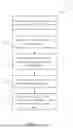
FIG. 1 schematically illustrates a hazardous obstacle/element detection and localization method according to a preferred embodiment of the present invention;
FIGS. 2 and 3 show examples of wheel speed behavior over time for impacts of a wheel of a motor vehicle on a pothole;
FIG. 4 shows an example of different severity degrees for impacts of a wheel of a motor vehicle on/against obstacles/elements on road pavement;
FIG. 5 shows examples of results of impact tests performed by the Applicant by driving motor vehicles at different speeds against bumps with different heights;
FIG. 6 shows an example of chart related to different integrity degrees;
FIG. 7 shows an example of a map relating to Rome area in Italy, wherein detected hazardous obstacles/elements are shown along with respective severity degrees associated therewith; and
FIG. 8 schematically illustrates a hazardous obstacle/element detection and localization system according to a general embodiment of the present invention, which is designed to carry out the hazardous obstacle/element detection and localization method shown in FIG. 1.
DETAILED DESCRIPTION OF PREFERRED EMBODIMENTS OF THE INVENTION
The following discussion is presented to enable a person skilled in the art to make and use the invention. Various modifications to the embodiments will be readily apparent to those skilled in the art, without departing from the scope of the present invention as claimed. Thence, the present invention is not intended to be limited to the embodiments shown and described, but is to be accorded the widest scope of protection consistent with the features defined in the appended claims.
The present invention concerns a method for detecting and locating obstacles/elements on road pavement that are dangerous or potentially dangerous to tire and/or vehicle integrity (e.g., potholes, bumps, or the like), for determining severity degrees/levels of the detected obstacles/elements and, preferably, also for determining one or more geometrical features thereof.
In this respect, FIG. 1 schematically illustrates a hazardous obstacle/element detection and localization method (denoted as a whole by 1) according to a preferred embodiment of the present invention.
In particular, the hazardous obstacle/element detection and localization method 1 includes:
-
- acquiring (block 11 in FIG. 1)
- wheel speed values related to a wheel of a motor vehicle driven on a road (conveniently, a motor vehicle fitted with two or more wheels, such as a two-or three-wheeled motorbike, a car, a bus, a truck, etc., equipped with an internal combustion engine, or of the hybrid or electric type), and
- georeferencing data associated with the wheel speed values and indicative of corresponding positions of the motor vehicle (e.g., positions provided by a Global Navigation Satellite System (GNSS) receiver, such as a Global Positioning System (GPS) receiver, installed on board said motor vehicle);
- detecting (block 12 in FIG. 1) an obstacle/element present on the road based on the acquired wheel speed values by
- identifying an entry time instant at which the wheel meets the obstacle/element, and an exit time instant at which the wheel has at gone beyond said obstacle/element, and
- computing a normalized peak-to-peak value related to the obstacle/element based on
- a maximum value and a minimum value of the acquired wheel speed values related to impact-related time instants comprised between the entry and exit time instants, and
- an average value of the acquired wheel speed values related to first impact-free time instants immediately before the entry time instant, wherein the normalized peak-to-peak value is conveniently computed as a ratio of
- a peak-to-peak value of the wheel speed (i.e., a difference between the maximum and minimum values thereof) due to impact against/on the obstacle/element
- to the average value of the wheel speed before the impact (wherein said average value is indicative of a speed of the motor vehicle when impacting said obstacle/element),
- whereby said ratio represents impact-related peak-to-peak wheel speed normalized with respect to impact vehicle speed;
- determining (block 13 in FIG. 1) a severity degree associated with the detected obstacle/element (i.e., a degree/level of danger or potential danger thereof to integrity of a tire of the wheel) based on the normalized peak-to-peak value;
- determining (block 14 in FIG. 1) a position of the detected obstacle/element based on the acquired georeferencing data associated with one or more of the acquired wheel speed values related to the impact-related time instants (i.e., those ones comprised between the entry and exit time instants) and/or to the first impact-free time instants (i.e., those ones immediately before the entry time instant) and/or to second impact-free time instants immediately after the exit time instant; and
- storing (block 15 in FIG. 1)—for example, on a memory or a database—the determined position of the detected obstacle/element along with the determined severity degree associated therewith.
- acquiring (block 11 in FIG. 1)
Conveniently, the entry and exit time instants are identified by analyzing the acquired wheel speed values by means of a sliding time window having a predefined time length. Preferably, said predefined time length is selected from among predefined window time length values (for example, stored predefined window time length values) on the basis of a current vehicle speed value indicative of a current speed (conveniently, an average current speed) of the motor vehicle, wherein said current vehicle speed value can be conveniently computed based on one or more of the acquired wheel speed values.
Conveniently, computing a normalized peak-to-peak value related to the obstacle/element comprises:
-
- forming
- an impact-related speed vector with the acquired wheel speed values related to the impact-related time instants (i.e., those ones comprised between the entry and exit time instants), and
- an impact-free speed vector with the acquired wheel speed values related to the first impact-free time instants (i.e., those ones immediately before the entry time instant); and
- computing the normalized peak-to-peak value based on
- a maximum value and a minimum value of the wheel speed values in the impact-related speed vector, and
- an average value of the wheel speed values in the impact-free speed vector (wherein, as previously explained, said average value is indicative of a speed of the motor vehicle when impacting said obstacle/element).
- forming
Preferably, the severity degree associated with the detected obstacle/element is determined (block 13 in FIG. 1) based on the computed normalized peak-to-peak value and on an impact vehicle speed value indicative of a speed, conveniently an average speed, of the motor vehicle when impacting said obstacle/element.
In particular, the impact vehicle speed value can be conveniently obtained:
-
- by acquiring the wheel speed values (block 11 in FIG. 1) along with corresponding vehicle speed values of the motor vehicle and by computing said impact vehicle speed value based on one or more of the acquired vehicle speed values related to the first impact-free time instants (i.e., those ones immediately before the entry time instant); or
- by computing said impact vehicle speed value based on one or more of the acquired wheel speed values related to the first impact-free time instants, conveniently one or more of the wheel speed values in the impact-free speed vector.
Conveniently, acquiring the wheel speed values (block 11 in FIG. 1) comprises acquiring wheel speed values related to all the wheels of the motor vehicle, wherein the hazardous obstacle/element detection and localization method 1 further includes determining a travelling direction of the motor vehicle based on the acquired georeferencing data associated with one or more of the acquired wheel speed values related to the first impact-free time instants and to the second impact-free time instants, and wherein the position of the detected obstacle/element is determined (block 14 in FIG. 1) based on:
-
- a vehicle position determined based on the acquired georeferencing data associated with one or more of the acquired wheel speed values related to the impact-related time instants;
- a position on the motor vehicle of the wheel that has impacted the detected obstacle/element (e.g., front/rear right/left wheel); and
- the determined travelling direction of the motor vehicle (whereby the position of the detected obstacle/element is determined with increased accuracy, identifying also the correct road lane where the detected obstacle/element is located).
Preferably, the hazardous obstacle/element detection and localization method 1 further includes estimating a first geometrical feature of the obstacle/element (conveniently, a length thereof in the travelling direction of the motor vehicle) based on:
-
- a time difference between the identified entry and exit time instants; and
- the average value of the acquired wheel speed values related to the impact-free time instants (conveniently, the average value of the wheel speed values in the impact-free speed vector), or the impact vehicle speed value.
Moreover, the hazardous obstacle/element detection and localization method 1 preferably includes estimating also a second geometrical feature of the obstacle/element (conveniently, a height/depth thereof) based on the normalized peak-to-peak value, the impact vehicle speed value and predefined reference data/thresholds, wherein said predefined reference data/thresholds can be preliminarily obtained by:
-
- performing impact tests involving driving one or more motor vehicles at different vehicle speeds against/on different obstacles/elements with known, different geometrical features (e.g., potholes, bumps, or the like, having known, different depths/heights and/or lengths);
- measuring/acquiring test-related wheel speeds (and, conveniently, also test-related vehicle speeds) during the performed impact tests; and
- computing/determining, based on the test-related wheel speeds (and, conveniently, also on the test-related vehicle speeds), reference data/thresholds to be subsequently used to estimate the second geometrical feature of the detected obstacle/element.
Preferably, the severity degree associated with the detected obstacle/element is determined (block 13 in FIG. 1) also on the basis of said predefined reference data/thresholds (conveniently determined by preliminary carrying out the aforesaid impact tests).
Preferably, the hazardous obstacle/element detection and localization method 1 further includes:
-
- warning a driver approaching the obstacle/element about presence thereof (thereby allowing the driver to avoid, or to tackle with an appropriately reduced speed, said obstacle/element); and/or
- signalling the determined position of the obstacle/element along with the determined severity degree associated therewith (and, conveniently, also the estimated first and/or second geometrical feature(s) thereof) to a road managing company in charge of the road (for example, thereby allowing said road managing company to appropriately plan and/or prioritize road maintenance works).
The hazardous obstacle/element detection and localization method 1 can be advantageously carried out by acquiring (block 11 in FIG. 1) the wheel speed values related to the wheels of, and the georeferencing data (and, conveniently, also the vehicle speed values) of, a plurality of motor vehicles of a single type or of multiple/different types (e.g., two-or three-wheeled motorbikes and/or cars and/or buses and/or trucks, etc., fitted with internal combustion engines or of the hybrid or electric type).
In view of the foregoing, the hazardous obstacle/element detection and localization method 1 enables assessment of road conditions by detecting and locating hazardous obstacles/elements (such as potholes, bumps or the like) present on road pavements and, conveniently, also by estimating their geometry based on wheel speed analysis.
In particular, the hazardous obstacle/element detection and localization method 1 conveniently provides information, such as geometry and positions on a map, about road hazardous obstacles/elements and, hence, allows warning in advance drivers to avoid potential impacts against said road hazardous obstacles/elements (for example, by signalling in advance the presence of road hazardous obstacles/elements and by suggesting appropriately reduced speeds such that to prevent damages to tires, wheel rims, suspensions, etc.). Moreover, by exploiting the hazardous obstacle/element detection and localization method 1, also road managing companies can be conveniently informed about road hazardous obstacles/elements, thereby enabling proper planning of road maintenance works. Additionally, the information obtained thanks to the hazardous obstacle/element detection and localization method 1 can be also used for assessment of vehicle components such as tires, suspensions, steering systems, and chassis.
As previously described, the detection of an obstacle/element on road pavement (block 12 in FIG. 1) requires a correct identification of entry and exit time instants related to an impact on/against said obstacle/element and, hence, a correct identification of the wheel speed values related to time instants before the impact on/against said obstacle/element (when speed is almost constant) and of the wheel speed values related to time instants during the impact (when speed typically assumes a minimum value and then a maximum value or vice versa depending on obstacle/element type, e.g., a bump or a pothole).
Conveniently, in order to correctly identify a pre-impact time window and a post-impact time window to be used for successive analysis/processing, the following mathematical formula can be advantageously used to identify a time instant when the wheel touches an exit edge of an obstacle/element such as a pothole:
∑ i = 1 N ❘ "\[LeftBracketingBar]" v i - v _ ❘ "\[RightBracketingBar]" ≤ K ,
where vi denotes the i-th wheel speed value in a time window having a predefined time length of N wheel speed samples, v denotes an average wheel speed of the N wheel speed samples in said time window, and K denotes a predefined constant threshold.
In this respect, reference can be made to FIGS. 2 and 3 that show examples of wheel speed behavior over time for impacts of a wheel of a motor vehicle on a pothole. In particular, with specific reference to FIG. 3, by analyzing the waveform resulting from the impact on the pothole, it is possible to identify the entry time instant to and the exit time instant t1. Additionally, by multiplying the time difference Δtimp=t1−t0 by the impact vehicle speed value, it is possible to obtain an estimated length of the pothole.
Once identified the entry and exit time instants related to an obstacle/element hit by a wheel of a motor vehicle, a corresponding normalized peak-to-peak value P2P can be conveniently computed according to the following mathematical formula:
P 2 P = max ( V t ) - min ( V t ) avg ( V p ) ,
where Vt denotes the aforesaid impact-related speed vector including the wheel speed values related to time instants comprised between the entry time instant t0 and the exit time instant t1 (i.e., during the transitory period of the impact), and Vp denotes the aforesaid impact-free speed vector including the wheel speed values related to time instants immediately before the impact (i.e., immediately before the entry time instant t0).
Then, a severity degree associated with the hit obstacle/element can be determined (block 13 in FIG. 1) based on the computed normalized peak-to-peak value P2P. In this respect, reference can be made to FIG. 4 that shows an example of different severity degrees For impacts of a wheel of a motor vehicle on/against obstacles/elements on road pavement.
Additionally, as previously described, preliminary impact tests can be conveniently performed. In this way, it is possible to assess an exponential behaviour of the relative peak-to-peak wheel speed signal with respect to vehicle speed signal over different obstacles/elements with different heights/depths and lengths. In this respect, reference can be made to FIG. 5 that shows examples of results of impact tests performed by the Applicant by driving motor vehicles at different speeds against a first bump with a first height of 1 cm (continuous line), a second bump with a second height of 3 cm (dash-dot line), a third bump with a third height of 8 cm (dashed line).
As previously explained, the severity degree determined for an obstacle/element (block 13 in FIG. 1) is indicative of the danger or potential danger of said obstacle/element to tire integrity. In particular, the severity degree Can be conveniently computed by rescaling the normalized peak-to-peak response P2P of the motor vehicle(s) used for the impact tests in the following way:
| Severity = 1 (very mild) | P2P <50% Exp; | |
| Severity = 2 (mild) | P2P >60% Exp; | |
| Severity = 3 (relevant) | P2P >80% Exp; | |
| Severity = 4 (severe) | P2P >100% Exp. | |
In this respect, reference can be made to FIG. 6 that shows an example of P2P-vs-speed chart related to different integrity degrees.
Therefore, reference thresholds can be conveniently tuned by performing additional impact tests with additional, different bump/pothole geometries and shapes.
FIG. 7 shows an example of a map relating to Rome area in Italy, wherein detected hazardous obstacles/elements are shown along with respective severity degrees associated therewith.
The present invention concerns also a system designed to:
-
- detect and locate obstacles/elements on road pavement that are dangerous or potentially dangerous to tire and/or vehicle integrity (e.g., potholes, bumps, or the like);
- determine severity degrees/levels of the detected obstacles/elements; and,
- preferably, also determine one or more geometrical features of the detected obstacles/elements.
In this respect, FIG. 8 schematically illustrates, by means of a block diagram, a functional architecture of a hazardous obstacle/element detection and localization system (denoted as a whole by 2) according to a general embodiment of the present invention, which is designed to carry out the hazardous obstacle/element detection and localization method 1.
In particular, the hazardous obstacle/element detection and localization system 2 includes acquisition means 21, processing means 22, storing means 23 and notification means 24.
The acquisition means 21 are configured to carry out the wheel speed value and georeferencing data acquisition step (block 11 in FIG. 1) of the hazardous obstacle/element detection and localization method 1.
Conveniently, the acquisition means 21 include an acquisition device that is installed on board the motor vehicle and is coupled to a vehicle bus thereof (e.g., based upon a standard Controller Area Network (CAN) bus) to acquire, from said vehicle bus, the wheel speed values and the georeferencing data (and, conveniently, also the vehicle speed values).
More in general, the acquisition means 21 preferably include a plurality of acquisition devices, each of which is installed on board a respective motor vehicle and is coupled to a respective vehicle bus of said respective motor vehicle to acquire, from said respective vehicle bus, respective wheel speed values and respective georeferencing data (and, conveniently, also respective vehicle speed values).
The processing means 22 are configured to:
-
- receive from the acquisition means 21 the acquired wheel speed values (and, and georeferencing data conveniently, also the acquired vehicle speed values);
- carry out the obstacle/element detection step (block 12 in FIG. 1), the severity degree determination step (block 13 in FIG. 1) and the position determination step (block 14 in FIG. 1) of the hazardous obstacle/element detection and localization method 1; and,
- conveniently, carry out also the previously described step(s) of estimating the first and/or second geometrical feature(s) of the detected obstacles/elements.
The processing means 22 can be conveniently implemented according to:
-
- a distributed architecture, wherein
- a processing device (e.g., an Electronic Control Unit (ECU) of the automotive type) is installed on board the motor vehicle and is connected to the acquisition device also installed on said motor vehicle to receive therefrom the acquired wheel speed values and georeferencing data (and, conveniently, also the vehicle speed values), or,
- more in general, each of a plurality of processing devices is installed on board a respective motor vehicle and is connected to the respective acquisition device also installed on said respective motor vehicle to receive therefrom the respective wheel speed values and georeferencing data (and, conveniently, also the respective vehicle speed values) acquired by said respective acquisition device; or
- a centralized architecture, wherein a cloud computing system is used, which is wirelessly and remotely connected to the acquisition device(s) (e.g., via one or more mobile communications technologies, such as 2G, 3G, 4G and/or 5G cellular telephony technologies) to receive the (respective) wheel speed values and the (respective) georeferencing data (and, conveniently, also the (respective) vehicle speed values) acquired by said acquisition device(s).
- a distributed architecture, wherein
The storing means 23 are configured to carry out the step of storing (block 15 in FIG. 1) the positions of the detected obstacles/elements and the associated severity degrees (and conveniently, also the estimated geometrical features of the detected obstacles/elements) determined by the processing means 22.
The storing means 23 can be conveniently implemented:
-
- in said distributed architecture, by means of
- a data memory installed on board the motor vehicle and coupled to the processing device also installed on said motor vehicle, or,
- more in general, a respective data memory locally coupled to each processing device; or
- in said centralized architecture, by means of a database coupled to the cloud computing system.
- in said distributed architecture, by means of
The notification means 24 are configured to carry out the step (s) of warning drivers and/or road managing companies about detected obstacles/elements.
The notification means 24 can be conveniently implemented by means of:
-
- one or more software applications installed on electronic devices used by the drivers and/or on processing systems of the road managing companies; and/or
- Human-Machine Interface (HMI) means provided on board the motor vehicles used by the drivers.
From the foregoing, the technical advantages and the innovative features of the present invention are immediately clear to those skilled in the art.
In particular, it is important to point out again that the present invention enables detection, localization and severity characterization (and, conveniently, also geometrical characterization) of obstacles/elements on road pavement that are dangerous or potentially dangerous to tire and/or vehicle integrity, such as potholes, bumps, or the like.
Additionally, the present invention enables also signalling of positions of detected hazardous obstacles/elements to drivers (in order to allow them to avoid, or to tackle with an appropriately reduced speed, said hazardous obstacles/elements) and/or to road managing companies (for example, in order to appropriately plan and/or prioritize road maintenance works).
In conclusion, it is clear that numerous modifications and variants can be made to the present invention, which fall within the scope of the invention as defined in the appended claims.
Claims
1-19. (canceled)
20. A method for detecting and locating obstacles/elements on road pavement, the method comprising:
acquiring wheel speed values related to a wheel of a motor vehicle driven on a road, and georeferencing data associated with the wheel speed values and indicative of corresponding positions of the motor vehicle;
detecting an obstacle/element present on the road based on the acquired wheel speed values by:
identifying an entry time instant at which the wheel meets the obstacle/element, and an exit time instant at which the wheel has gone beyond said obstacle/element, and
computing a normalized peak-to-peak value related to the obstacle/element based on:
a maximum value and a minimum value of the acquired wheel speed values related to impact-related time instants comprised between the entry and exit time instants; and
an average value of the acquired wheel speed values related to first impact-free time instants immediately before the entry time instant;
determining a severity degree associated with the obstacle/element based on the normalized peak-to-peak value;
determining a position of the obstacle/element based on the acquired georeferencing data associated with one or more of the acquired wheel speed values related to the impact-related time instants and/or to the first impact-free time instants and/or to second impact-free time instants immediately after the exit time instant; and
storing the position of the obstacle/element along with the severity degree associated therewith.
21. The method of claim 20, wherein the entry and exit time instants are identified by analyzing the acquired wheel speed values with respect to a sliding time window having a predefined time length.
22. The method of claim 21, wherein the predefined time length is selected from among predefined window time length values based on a current vehicle speed value indicative of a current speed of the motor vehicle.
23. The method of claim 22, wherein the current vehicle speed value is computed based on one or more of the acquired wheel speed values.
24. The method of claim 20, wherein computing a normalized peak-to-peak value related to the obstacle/element comprises:
forming an impact-related speed vector with the acquired wheel speed values related to the impact-related time instants;
forming an impact-free speed vector with the acquired wheel speed values related to the first impact-free time instants; and
computing the normalized peak-to-peak value based on
a maximum value and a minimum value of the wheel speed values in the impact-related speed vector, and
an average value of the wheel speed values in the impact-free speed vector.
25. The method of claim 24, wherein the normalized peak-to-peak value is computed as a ratio of a difference between the maximum and minimum values of the wheel speed values in the impact-related speed vector to the average value of the wheel speed values in the impact-free speed vector.
26. The method of claim 20, wherein:
acquiring the wheel speed values comprises acquiring wheel speed values related to all the wheels of the motor vehicle;
wherein the method further comprises determining a travelling direction of the motor vehicle based on the acquired georeferencing data associated with one or more of the acquired wheel speed values related to the first impact-free time instants and to the second impact-free time instants; and
the position of the detected obstacle/element is determined based on:
a vehicle position determined based on the acquired georeferencing data associated with one or more of the acquired wheel speed values related to the impact-related time instants;
a position on the motor vehicle of the wheel that has impacted the detected obstacle/element; and
the determined travelling direction of the motor vehicle.
27. The method of claim 20, wherein the severity degree associated with the obstacle/element is determined based on the normalized peak-to-peak value and on an impact vehicle speed value indicative of a speed of the motor vehicle when impacting said obstacle/element.
28. The method of claim 27, wherein the impact vehicle speed value is obtained:
by acquiring the wheel speed values along with corresponding vehicle speed values of the motor vehicle and by computing said impact vehicle speed value based on one or more of the acquired vehicle speed values related to the first impact-free time instants; or
by computing said impact vehicle speed value based on one or more of the acquired wheel speed values related to the first impact-free time instants.
29. The method of claim 27, further comprising estimating a first geometrical feature of the obstacle/element based on:
a time difference between the entry and exit time instants; and
the average value of the acquired wheel speed values related to the first impact-free time instants, or the impact vehicle speed value.
30. The method of claim 27, further comprising estimating a second geometrical feature of the obstacle/element based on the normalized peak-to-peak value, the impact vehicle speed value and predefined reference data/thresholds.
31. The method of claim 30, wherein the predefined reference data/thresholds are preliminarily obtained by:
performing impact tests involving driving one or more motor vehicles at different vehicle speeds against/on different obstacles/elements with different, known geometrical features;
measuring/acquiring test-related wheel speeds and test-related vehicle speeds during the performed impact tests; and
computing/determining, based on the test-related wheel speeds and the test-related vehicle speeds, reference data/thresholds to be used to estimate the second geometrical feature of the detected obstacle/element.
32. The method of claim 30, wherein the severity degree associated with the detected obstacle/element is determined also based on at least the predefined reference data/thresholds.
33. The method of claim 20, further comprising:
warning a driver approaching the obstacle/element about presence thereof; and/or
signalling the position of the obstacle/element along with the severity degree associated therewith to a road managing company in charge of the road.
34. A system for detecting and locating obstacles/elements on road pavement, comprising:
an acquisition device installed on board a motor vehicle, and coupled to a vehicle bus of the motor vehicle, and configured to acquire wheel speed values related to a wheel of the motor vehicle when driven on a road, and georeferencing data associated with the wheel speed values and indicative of corresponding positions of the motor vehicle;
a processing system configured to:
detect an obstacle/element present on the road based on the acquired wheel speed values by
identifying an entry time instant at which the wheel meets the obstacle/element, and an exit time instant at which the wheel has gone beyond said obstacle/element, and
computing a normalized peak-to-peak value related to the obstacle/element based on:
a maximum value and a minimum value of the acquired wheel speed values related to impact-related time instants comprised between the entry and exit time instants; and
an average value of the acquired wheel speed values related to first impact-free time instants immediately before the entry time instant;
determine a severity degree associated with the obstacle/element based on the normalized peak-to-peak value; and
determine a position of the obstacle/element based on the acquired georeferencing data associated with one or more of the acquired wheel speed values related to the impact-related time instants and/or to the first impact-free time instants and/or to second impact-free time instants immediately after the exit time instant; and
data storage configured to store the position of the obstacle/element along with the severity degree associated therewith.
35. The system of claim 34, wherein:
the processing system comprises one or more processing devices installed on board the motor vehicle and connected to the acquisition device.
36. The system of claim 34, wherein:
the processing system comprises a cloud computing system remotely connected to the acquisition device.
37. A computer program product comprising a processing system having one or more software and/or firmware code portions loaded thereon, and configured for detecting and locating obstacles/elements on road pavement by directing the performance of operations comprising:
acquiring, from an acquisition device associated with a motor vehicle driven on a road, wheel speed values related to a wheel of the motor vehicle, and georeferencing data associated with the wheel speed values and indicative of corresponding positions of the motor vehicle;
detecting an obstacle/element present on the road based on the acquired wheel speed values by:
identifying an entry time instant at which the wheel meets the obstacle/element, and an exit time instant at which the wheel has gone beyond said obstacle/element, and
computing a normalized peak-to-peak value related to the obstacle/element based on:
a maximum value and a minimum value of the acquired wheel speed values related to impact-related time instants comprised between the entry and exit time instants; and
an average value of the acquired wheel speed values related to first impact-free time instants immediately before the entry time instant;
determining a severity degree associated with the obstacle/element based on the normalized peak-to-peak value;
determining a position of the obstacle/element based on the acquired georeferencing data associated with one or more of the acquired wheel speed values related to the impact-related time instants and/or to the first impact-free time instants and/or to second impact-free time instants immediately after the exit time instant; and
storing the position of the obstacle/element along with the severity degree associated therewith.
38. The computer program product of claim 37, wherein:
the processing system comprises one or more processing devices installed on board the motor vehicle and connected to the acquisition device.
39. The computer program product of claim 37, wherein:
the processing system comprises a cloud computing system remotely connected to the acquisition device.
Images & Drawings included:



Sources:
- United States Patent and Trademark Office - verify current appl. status at the USPTO↗
Recent applications in this class:
- » 20260116391 2026-04-30
CONTROL DEVICE - » 20250333064 2025-10-30
ACOUSTIC SENSOR AND VEHICLE STRUCTURE - » 20250319879 2025-10-16
METHOD FOR DETERMINING A ROAD SURFACE CONDITION, METHOD FOR CONTROLLING A VEHICLE, DATA PROCESSING APPARATUS, VEHICLE, COMPUTER PROGRAM, COMPUTER-READABLE STORAGE MEDIUM, AND METHOD FOR TRAINING A COMBINATION OF ARTIFICIAL NEURAL NETWORKS - » 20250304076 2025-10-02
DETERMINATION DEVICE, DETERMINATION METHOD, AND STORAGE MEDIUM - » 20250242813 2025-07-31
ROAD VECTOR FIELDS - » 20250236300 2025-07-24
Systems and Methods for Automotive Sensing - » 20250229787 2025-07-17
ROADWAY CONDITION MONITORING BY DETECTION OF ANOMALIES - » 20250206318 2025-06-26
ESTIMATION METHOD FOR ROAD SURFACE CONDITION - » 20250187610 2025-06-12
VEHICLE TIRE AREA CONTROL - » 20250178610 2025-06-05
BUMP DETECTOR
Recent applications for this Assignee:
- » 20250042113 2025-02-06
METHOD OF PRODUCING A TIRE EQUIPPED WITH AN ELECTRONIC DEVICE - » 20240416603 2024-12-19
METHOD AND SYSTEM FOR APPLYING A SEALING AGENT TO THE SURFACE OF AN INTERNAL CAVITY OF A PNEUMATIC TIRE - » 20240391196 2024-11-28
METHOD AND SYSTEM FOR APPLYING A SEALING AGENT TO THE SURFACE OF AN INTERNAL CAVITY OF A PNEUMATIC TIRE - » 20240326521 2024-10-03
RADIO-FREQUENCY IDENTIFICATION (RFID) DEVICE TO BE INSERTED IN A TIRE - » 20240193396 2024-06-13
TIRE PROVIDED WITH A TEMPORARY IDENTIFICATION LABEL - » 20240190092 2024-06-13
METHOD AND SYSTEM FOR CLEANING AN INNER SURFACE OF A TIRE - » 20240181818 2024-06-06
PNEUMATIC TIRE EQUIPPED WITH A TRANSPONDER - » 20240174031 2024-05-30
TIRE WITH IMPROVED SNOW PERFORMANCE - » 20240149543 2024-05-09
METHOD AND SYSTEM FOR APPLYING A SEALING AGENT TO THE SURFACE OF AN INTERNAL CAVITY OF A PNEUMATIC TIRE - » 20240051348 2024-02-15
HYDROPHOBIC PATTERNS FOR TIRE TREAD GROOVES