HOT-WATER SUPPLY SYSTEM AND METHOD EXECUTED BY COMPUTER FOR CONTROLLING THE HOT-WATER SUPPLY SYSTEM
US20240328635A1
2024-10-03
18/604,479
2024-03-13
Smart Summary: A hot-water supply system allows users to set a desired temperature for the hot water. The system checks if this temperature is too high for the equipment to handle. If the temperature is too high, it alerts the main control system and stops the hot-water supply. It also informs a remote controller that hot water cannot be provided at that temperature. Finally, the system displays a message indicating that the requested hot water cannot be supplied. 🚀 TL;DR
Abstract:
A processing executed by a hot-water supply system includes: receiving an input of a temperature (setting temperature) of hot water to be supplied by the hot-water supply system from a user; determining, by a processor of each hot-water supplier, whether the setting temperature exceeds an upper limit value of a temperature of hot water capable of being supplied by the hot-water supplier; in a case where the setting temperature exceeds the upper limit value, notifying a system controller that the setting temperature exceeds the upper limit value; transmitting a signal prohibiting a hot-water supply operation to all hot-water suppliers; notifying a remote controller that hot water cannot be supplied; and outputting a status that hot water cannot be supplied at the setting temperature.
Assignee:
- NORITZ CORPORATION 230 🇯🇵 Hyogo, Japan
Applicant:
Interested in similar patents?
Get notified when new applications in this technology area are published.
Classification:
F24D19/1006 » CPC main
Details; Arrangement or mounting of control or safety devices for water heating systems
F24D19/10 IPC
Details Arrangement or mounting of control or safety devices
Description
CROSS-REFERENCE TO RELATED APPLICATION
This application claims the priority benefit of Japan application serial no. 2023-058054, filed on Mar. 31, 2023. The entirety of the above-mentioned patent application is hereby incorporated by reference herein and made a part of this specification.
BACKGROUND
Technical Field
The disclosure relates to control of a hot-water supply system composed of a plurality of hot-water suppliers, and more specifically, relates to control of an action of each hot-water supplier.
Related Art
Conventionally, in a known hot-water supply system, a plurality of hot-water supply apparatuses connected to one system controller are linked and operate together (see, for example, Patent Document 1 (Japanese Patent Application Laid-Open No. 2002-357361), Patent Document 2 (Japanese Patent Application Laid-Open No. 2012-117782), and Patent Document 3 (Japanese Patent Application Laid-Open No. 2017-187194)).
The performance of each of the hot-water supply apparatuses constituting such a hot-water supply system is not necessarily the same. There may be cases where hot-water supply apparatuses with performances different from each other constitute a hot-water supply system. For example, among the hot-water supply apparatuses, a hot-water supply apparatus (also referred to as a “50° C. limited product” or a “low-temperature product”) may be imposed with a limitation of not discharging hot water of a predetermined limit temperature (e.g., 50° C.(=122° F.)) or higher. If the hot-water supply system is composed of a plurality of limited products only, no problem arises because hot water at the limit temperature or higher will not be supplied.
However, for example, there may also be cases where a hot-water supply system is configured by a mixture of a normal hot-water supply apparatus capable of supplying water also at 50° C. or higher and the low-temperature product described above. In such cases, since it becomes possible to set a temperature equal to or higher than the limit temperature as a hot-water supply temperature, there is a risk that the hot-water supply system may output hot water at a temperature higher than the limit temperature. Thus, a technique is required to prevent supply of hot water at a temperature equal to or higher than the limit temperature.
SUMMARY
(1) A hot-water supply system according to an embodiment includes a plurality of hot-water suppliers, and a system controller for controlling a hot-water supply operation performed by the plurality of hot-water suppliers. Each of the plurality of hot-water suppliers includes a control device and a memory. The control device communicates with the system controller to control an action of the hot-water supplier. The memory holds an upper limit value of a temperature of hot water capable of being supplied by the hot-water supplier. The system controller transmits a setting temperature of hot water to be supplied by the hot-water supply system to each of the hot-water suppliers. Each of the control devices respectively determines whether the setting temperature exceeds the upper limit value. Any one of the control devices, based on determining that the setting temperature exceeds the upper limit value, notifies the system controller that the setting temperature exceeds the upper limit value. The system controller prohibits operation of each of the plurality of hot-water suppliers.
(2) A hot-water supply system according to another embodiment includes a plurality of hot-water suppliers, and a system controller that communicates with the plurality of hot-water suppliers to control a hot-water supply operation performed by each of the hot-water suppliers. Each of the plurality of hot-water suppliers includes a control device and a memory. The control device communicates with the system controller to control an action of the hot-water supplier. The memory holds an upper limit value of a temperature of hot water capable of being supplied by the hot-water supplier. The system controller is configured to: determine whether a setting temperature of hot water to be supplied by the hot-water supply system exceeds any of the upper limit values, and prohibit operation of each of the plurality of hot-water suppliers based on determining that the setting temperature exceeds any of the upper limit values.
(3) In an aspect, the system controller notifies, to outside of the hot-water supply system, that the setting temperature exceeds the upper limit value.
(4) Another embodiment provides a method executed by a computer for controlling a hot-water supply system including a plurality of hot-water suppliers. The method includes steps below. It is determined whether a setting temperature of hot water to be supplied by the hot-water supply system exceeds an upper limit value of a temperature of hot water capable of being supplied by any of the plurality of hot-water suppliers. Supply of hot water at the setting temperature is prohibited based on determining that the setting temperature exceeds the upper limit value.
(5) The method according to an aspect further includes notifying, to outside of the hot-water supply system, that the setting temperature exceeds the upper limit value.
The above and other aspects of the disclosure will become apparent from the following detailed description related to the disclosure to be understood in association with the accompanying drawings.
BRIEF DESCRIPTION OF DRAWINGS
FIG. 1 is a view illustrating a configuration of a hot-water supply system 100 according to an embodiment.
FIG. 2 is a flowchart showing a part of a processing performed by the hot-water supply system 100 according to an embodiment.
FIG. 3 is a view illustrating an example of a screen displayed on a touch panel 121 provided in a remote controller 120.
DESCRIPTION OF EMBODIMENTS
Embodiments of the disclosure provide a hot-water supply system that does not supply hot water at a temperature equal to or higher than a limit temperature even if a plurality of hot-water supply apparatuses coexist.
Embodiments of the disclosure will be described below with reference to the drawings.
In the following description, the same parts will be labeled with the same reference signs. Their names and functions are also the same. Thus, detailed descriptions thereof will not be repeated.
[Hardware Configuration]
Referring to FIG. 1, a configuration of a hot-water supply system 100 will be described. FIG. 1 is a view illustrating the configuration of the hot-water supply system 100 according to an embodiment. The hot-water supply system 100 includes a system controller 110, a remote controller 120, and a plurality of hot-water suppliers 130, 140, and 150. The system controller 110 is communicably connected to the hot-water supplier 130. The form of connection may be either wired or wireless. Although three hot-water suppliers 130, 140, and 150 are illustrated in FIG. 1, the number of hot-water suppliers connectable to the system controller 110 is not limited to three. Four or more hot-water suppliers may be connected to the system controller 110 to form one hot-water supply system.
The remote controller 120 includes a touch panel 121. The touch panel 121 includes a monitor 122. The touch panel 121 receives an instruction of a user of the hot-water supply system 100 and transmits a signal according to the instruction to the hot-water supplier 130. The monitor 122 is a liquid crystal monitor, an organic electro luminescence (EL) display device, or another display device. A content displayed on the monitor 122 may include, for example, a content set by the user, information indicating a status of the hot-water supply system 100, and a message, but other information may also be displayed. The message may include an operation guide, a warning, etc. The instruction received by the remote controller 120 includes a setting value of a temperature of hot water to be supplied from the hot-water supply system 100.
In the example of FIG. 1, the remote controller 120 is connected to the hot-water supplier 130, but the other hot-water suppliers 140 and 150 may also be each communicable with a remote controller. In this case, if any one of the remote controllers has received an input of the setting temperature, the other remote controllers may not need to receive an input of the setting temperature. For example, a remote controller having received an input of the setting temperature transmits the setting temperature and an identification number of the remote controller itself to the system controller 110. The system controller 110 associates the identification number of the remote controller and the setting temperature with their reception time and stores to a memory 112. Subsequently, when another remote controller receives a different setting temperature, the another remote controller transmits its own identification number and the different setting temperature to the system controller 110. Since the system controller 110 has already received an input of the setting temperature, the system controller 110 notifies this status to the another remote controller. Accordingly, it is possible to prevent duplicate inputs of the setting temperature.
The hot-water supplier 130 includes a control device 131. The control device 131 has a memory 132. The memory 132 holds an identification number of the hot-water supplier 130 and an upper limit value (e.g., 70° C.(=158° F.)) of the temperature of hot water capable of being supplied by the hot-water supplier 130. The control device 131 controls the operation of the hot-water supplier 130 based on a program and data stored in the memory 132. Thus, in the case of operating alone, the hot-water supplier 130 is capable of supplying hot water up to 70° C.
The hot-water supplier 140 includes a control device 141. The control device 141 has a memory 142. The memory 142 holds an identification number of the hot-water supplier 140 and an upper limit value (e.g., 50° C.) of the temperature of hot water capable of being supplied by the hot-water supplier 140. The control device 141 controls the operation of the hot-water supplier 140 based on a program and data stored in the memory 142. Thus, in the case of operating alone, the hot-water supplier 140 is capable of supplying hot water up to 50° C.
The hot-water supplier 150 includes a control device 151. The control device 151 has a memory 152. The memory 152 holds an identification number of the hot-water supplier 150 and an upper limit value (e.g., 50° C.) of the temperature of hot water capable of being supplied by the hot-water supplier 150. The control device 151 controls the operation of the hot-water supplier 150 based on a program and data stored in the memory 152. Thus, in the case of operating alone, the hot-water supplier 150 is capable of supplying hot water up to 50° C.
The system controller 110 is communicably connected with each of the hot-water suppliers 130, 140, and 150 which constitute the hot-water supply system 100. The system controller 110 includes a processor 111 and a memory 112. In one aspect, the processor 111 sends a command to each of the hot-water suppliers 130, 140, and 150 and receives data indicating their respective upper limit values and statuses from each of the hot-water suppliers 130, 140, and 150. In another aspect, the memory 112 may hold the upper limit values (70° C., 50° C., and 50° C.) of hot-water supply temperatures set respectively in the hot-water suppliers 130, 140, and 150 in association with identification information of the respective hot-water suppliers.
[A Case where the Setting Temperature is Lower than or Equal to the Upper Limit Value]
In one aspect, when a user of the hot-water supply system 100 operates the touch panel 121 of the remote controller 120 to set the setting temperature of hot-water supply to 50° C. and instructs a hot-water supply operation, the remote controller 120 transmits information (50° C.) indicating the setting temperature and a signal instructing the hot-water supply operation to the hot-water supplier 130.
The hot-water supplier 130 transmits the setting temperature and the instruction signal to the system controller 110. Furthermore, the hot-water supplier 130 compares the setting temperature (50° C.) with the upper limit value (70° C.) held in the memory 132. Upon determining that the setting temperature does not exceed the upper limit value, the hot-water supplier 130 notifies the system controller 110 of this determination result.
The system controller 110 transmits the setting temperature and the instruction signal received from the hot-water supplier 130 to the other hot-water suppliers 140 and 150.
The hot-water supplier 140 compares the setting temperature (50° C.) with the upper limit value (50° C.) held in the memory 142. Upon determining that the setting temperature does not exceed the upper limit value, the hot-water supplier 140 notifies the system controller 110 of this determination result.
Similarly, the hot-water supplier 150 compares the setting temperature (50° C.) with the upper limit value (50° C.) held in the memory 152. Upon determining that the setting temperature does not exceed the upper limit value, the hot-water supplier 150 notifies the system controller 110 of this determination result.
Upon confirming that the setting temperature inputted to the remote controller 120 does not exceed the upper limit value in each of the hot-water suppliers 130, 140, and 150, the system controller 110 instructs each hot-water supplier 130, 140, and 150 to perform a hot-water supply operation at the setting temperature (50° C.). For example, the system controller 110 instructs any of the hot-water suppliers to perform the hot-water supply operation. In this case, it is possible to instruct any of the hot-water suppliers to perform the hot-water supply operation according a predetermined sequence. Alternatively, the system controller 110 may also instruct all of the hot-water suppliers 130, 140, and 150 to perform the hot-water supply operation.
[A Case where the Setting Temperature Exceeds the Upper Limit Value]
In another aspect, the user of the hot-water supply system 100 may input, to the remote controller 120, a temperature that exceeds the upper limit value (e.g., 50° C.) of the temperature of hot water to be supplied by any of the hot-water suppliers to serve as the setting temperature (e.g., 70° C.) of hot-water supply. In this case, the hot-water supply system 100 does not start the hot-water supply operation because the setting temperature exceeds the upper limit value.
More specifically, upon receiving an input of a setting temperature and an input of a hot-water supply instruction, the touch panel 121 displays the received contents on the monitor 122. For example, when a user inputs the setting temperature as 70° C. to the touch panel 121 to obtain hot water of 70° C. from the hot-water supply system 100, the monitor 122 displays that the setting temperature inputted to the hot-water supplier 130 is 70° C.
Subsequently, when the user performs an operation instructing an operation startup, the remote controller 120 transmits information on the setting temperature to the hot-water supplier 130 connected to the remote controller 120. When the hot-water supplier 130 receives the information on the setting temperature from the remote controller 120, the control device 131 transmits this information to the system controller 110.
Determination by System Controller
In one aspect, the determination on whether to prohibit hot-water supply of the hot-water supply system 100 is performed by the system controller 110. More specifically, upon receiving the information on the setting temperature from the hot-water supplier 130, the system controller 110 instructs the hot-water suppliers 130, 140, and 150 to transmit the upper limit values of the temperature of hot water capable of being supplied to the system controller 110.
Upon receiving this transmission command, the hot-water supplier 130 transmits information indicating the upper limit value (70° C.) to the system controller 110. Upon receiving this transmission command, the hot-water supplier 140 transmits information indicating the upper limit value (50° C.) to the system controller 110. Upon receiving this transmission command, the hot-water supplier 150 transmits information indicating the upper limit value (50° C.) to the system controller 110.
When the system controller 110 receives each upper limit value from the hot-water suppliers 130, 140, and 150, the processor 111 determines whether the setting value exceeds the upper limit value received from each of the hot-water suppliers 130, 140, and 150. Upon determining that the setting temperature exceeds the upper limit value, the processor 111 transmits a signal including this determination to the hot-water supplier 130. The hot-water supplier 130 transmits a signal including a status that the setting temperature exceeds the upper limit value (50° C.) of the hot-water supply system 100 to the remote controller 120.
Upon receiving this signal from the hot-water supplier 130, the remote controller 120 displays this status on the monitor 122, or outputs a voice informing a setting abnormality from a speaker (not shown). Furthermore, the remote controller 120 may transmit a signal prohibiting the operation at the setting temperature to the hot-water supplier 130.
Accordingly, even if a temperature exceeding the upper limit value set in any of the plurality of hot-water suppliers 130, 140, and 150 is provided to the hot-water supply system 100 as the setting temperature of hot-water supply, since the hot-water supply system 100 does not start the hot-water supply operation as a whole, accidental supply of hot water at a high temperature is prevented.
Determination by Hot-Water Supplier
In another aspect, any one of the plurality of hot-water suppliers 130, 140, and 150 constituting the hot-water supply system 100 may determine whether supply of hot water according to the setting temperature is possible in place of the system controller 110.
For example, upon receiving information on the setting temperature from the remote controller 120, the hot-water supplier 130 instructs the other hot-water suppliers 140 and 150 to transmit their respective upper limit values to the hot-water supplier 130. The processor 111 of the hot-water supplier 130 compares its own upper limit value and the upper limit values received from the other hot-water suppliers 140 and 150 respectively with the setting temperature. In the case where the setting temperature exceeds any of the upper limit values, the processor 111 notifies the system controller 110 and the remote controller 120 of this status. Upon receiving this notification, the system controller 110 does not issue a combustion command to the hot-water suppliers 130, 140, and 150. The remote controller 120 displays a message indicating this status on the monitor 122. Alternatively, the remote controller 120 outputs a voice indicating this status from a speaker (not shown).
Accordingly, even if a temperature exceeding the upper limit value set for each of the plurality of hot-water suppliers 130, 140, and 150 is provided to the hot-water supply system 100 as the setting temperature of hot-water supply, any of the hot-water suppliers detects that the setting temperature exceeds the upper limit value before starting the combustion operation. Since the hot-water supply system 100 does not start the hot-water supply operation as a whole, accidental supply of hot water at a high temperature is prevented.
Determination by Remote Controller
In still another aspect, the remote controller 120 may determine whether to execute hot-water supply according to the setting temperature in place of the system controller 110 and the plurality of hot-water suppliers 130, 140, and 150.
For example, upon receiving an input of the setting temperature from the user, the remote controller 120 instructs the hot-water supplier 130 to transmit the upper limit value of the temperature of hot water supplied by the hot-water supplier 130 to the remote controller 120. Based on this instruction, the hot-water supplier 130 instructs the other hot-water suppliers 140 and 150 to transmit the upper limit values of the temperature of hot water supplied by the other hot-water suppliers 140 and 150 to the remote controller 120. In response to this instruction, the other hot-water suppliers 140 and 150 respectively transmit their upper limit values to the hot-water supplier 130. The hot-water supplier 130 transmits its own upper limit value and the upper limit values of the hot-water suppliers 140 and 150 to the remote controller 120.
The remote controller 120 determines whether the inputted setting temperature exceeds the respective upper limit values. If the setting value exceeds any of the upper limit values, the remote controller 120 displays this status on the monitor 122. Furthermore, the remote controller 120 does not transmit a combustion command based on the setting temperature to the hot-water suppliers 130, 140, and 150. Accordingly, accidental supply of hot water at a high temperature is prevented.
[Control Structure]
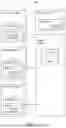
Referring to FIG. 2, a control structure of the hot-water supply system 100 will be described. FIG. 2 is a flowchart showing a part of a processing performed by the hot-water supply system 100 according to an embodiment.
In step S210, the remote controller 120 receives an input of a temperature (setting temperature) of hot water to be supplied by the hot-water supply system 100 from a user.
In step S215, the remote controller 120 notifies the hot-water supplier 130 of the setting temperature.
In step S220, the hot-water supplier 130 transmits the setting temperature to the system controller 110.
In step S225, the system controller 110 notifies the other hot-water suppliers 140 and 150 of the setting temperature.
In step S230, the processors of each of the hot-water supplier 130, 140, and 150 respectively determine whether the setting temperature exceeds the upper limit value of the temperature of hot water capable of being supplied by the respective hot-water suppliers. Each hot-water supplier communicates with the other hot-water suppliers to share the determination result. If any of the processors determines that the setting temperature exceeds the upper limit value (YES in step S230), the control switches to step S240. Otherwise, that is, in the case where the setting temperature does not exceed any of the upper limit values (NO in step S230), the control switches to step S260.
In step S240, the hot-water supplier that has determined that the setting temperature exceeds the upper limit value notifies the system controller 110 that the setting temperature exceeds the upper limit value.
In step S245, the system controller 110 transmits a signal prohibiting a hot-water supply operation to all of the hot-water suppliers 130, 140, and 150. Accordingly, none of the hot-water suppliers 130, 140, and 150 starts, for example, a combustion operation.
In step S250, the system controller 110 notifies the remote controller 120 that hot water cannot be supplied.
In step S255, the remote controller 120 outputs a status that hot water cannot be supplied at the setting temperature. For example, the remote controller 120 displays a message indicating this status on the monitor 122. In another aspect, the remote controller 120 outputs a voice indicating this status from a speaker (not shown). In still another aspect, the remote controller 120 may notify this status to outside of the hot-water supply system 100, for example, to a mobile information communication terminal (e.g., a smartphone or a tablet terminal) that is communicably connected as another remote control device.
In step S260, the system controller 110 starts a normal hot-water supply operation. For example, the system controller 110 instructs all or one of the hot-water suppliers 130, 140, and 150 to perform the hot-water supply operation. In this case, one hot-water supplier may be selected according to a predetermined sequence or randomly.
The above processing is a processing of a case where each of the hot-water suppliers 130, 140, and 150 determines whether the setting temperature exceeds the upper limit value. In another aspect, the remote controller 120 or the system controller 110 may determine whether the setting value exceeds the upper limit value of each of the hot-water suppliers 130, 140, and 150.
In still another aspect, in the case where an external communication terminal (e.g., a smartphone) communicable with the hot-water supply system 100 receives an input of a setting temperature, the external communication terminal may perform the determination described above. In this case, upon receiving the input of the setting temperature, the external communication terminal communicates with, for example, the remote controller 120 and transmits a transmission request for the upper limit value of each of the hot-water suppliers 130, 140, and 150 to the remote controller 120. In response to this transmission request, the remote controller 120 acquires the upper limit value from each of the hot-water suppliers 130, 140, and 150. The remote controller 120 transmits the acquired upper limit values to the external communication terminal. The external communication terminal determines whether the setting temperature exceeds any of the received upper limit values. In the case where the setting temperature exceeds the upper limit value of any of the hot-water suppliers, the external communication terminal displays this status on a monitor (not shown).
[Display Mode of Screen]
Referring to FIG. 3, display of a screen on the remote controller 120 will be described. FIG. 3 is a view illustrating an example of a screen displayed on the touch panel 121 provided in the remote controller 120.
Among the plurality of hot-water suppliers 130, 140, and 150 constituting the hot-water supply system 100, the upper limit values of the temperature of hot water capable of being supplied are set to 50° C. in the hot-water suppliers 140 and 150.
Thus, in the case where the setting temperature is 70° C., this setting temperature exceeds the upper limit values of the hot-water suppliers 140 and 150. As a result, the touch panel 121 displays a message 300 indicating this status. Accordingly, since the user of the hot-water supply system 100 can recognize that the setting temperature exceeds the upper limit value, the user inputs the setting temperature again.
As ‘described above’, according to this embodiment, if a setting temperature exceeding the upper limit value of the temperature of hot water set for each hot-water supplier is inputted to the hot-water supply system 100 composed of a plurality of hot-water suppliers, the hot-water supply system 100 does not start the hot-water supply operation. Accordingly, inadvertent supply of hot water at a high temperature is prevented.
The ‘embodiments’ disclosed herein should be considered as illustrative in all respects and not restrictive. The scope of the disclosure is intended to be indicated by the claims rather than the above description, and all changes within the meaning and range equivalent to the claims are intended to be included.
The disclosed technical features are applicable to a hot-water supply system configured by connecting a plurality of hot-water suppliers.
Claims
What is claimed is:1. A hot-water supply system comprising:
a plurality of hot-water suppliers; and
a system controller for controlling a hot-water supply operation performed by the plurality of hot-water suppliers, wherein
each of the plurality of hot-water suppliers comprises:
a control device that communicates with the system controller to control an action of the hot-water supplier; and
a memory that holds an upper limit value of a temperature of hot water capable of being supplied by the hot-water supplier,
the system controller transmits a setting temperature of hot water to be supplied by the hot-water supply system to each of the hot-water suppliers,
each of the control devices respectively determines whether the setting temperature exceeds the upper limit value,
any one of the control devices, based on determining that the setting temperature exceeds the upper limit value, notifies the system controller that the setting temperature exceeds the upper limit value, and
the system controller prohibits operation of each of the plurality of hot-water suppliers.
2. The hot-water supply system according to claim 1, wherein
the system controller notifies, to outside of the hot-water supply system, that the setting temperature exceeds the upper limit value.
3. A hot-water supply system comprising:
a plurality of hot-water suppliers; and
a system controller that communicates with the plurality of hot-water suppliers to control a hot-water supply operation performed by each of the hot-water suppliers, wherein
each of the plurality of hot-water suppliers comprises:
a control device that communicates with the system controller to control an action of the hot-water supplier; and
a memory that holds an upper limit value of a temperature of hot water capable of being supplied by the hot-water supplier, and
the system controller is configured to:
determine whether a setting temperature of hot water to be supplied by the hot-water supply system exceeds any of the upper limit values, and
prohibit operation of each of the plurality of hot-water suppliers based on determining that the setting temperature exceeds any of the upper limit values.
4. The hot-water supply system according to claim 3, wherein
the system controller notifies, to outside of the hot-water supply system, that the setting temperature exceeds the upper limit value.
5. A method executed by a computer for controlling a hot-water supply system comprising a plurality of hot-water suppliers, the method comprising:
determining whether a setting temperature of hot water to be supplied by the hot-water supply system exceeds an upper limit value of a temperature of hot water capable of being supplied by any of the plurality of hot-water suppliers; and
prohibiting supply of hot water at the setting temperature based on determining that the setting temperature exceeds the upper limit value.
6. The method according to claim 5, further comprising:
notifying, to outside of the hot-water supply system, that the setting temperature exceeds the upper limit value.
Images & Drawings included:



Sources:
- United States Patent and Trademark Office - verify current appl. status at the USPTO↗
Recent applications in this class:
- » 20240344716 2024-10-17
TEMPERATURE SENSOR, HEATING SYSTEM AND CONTROLLER - » 20230266020 2023-08-24
LINKED HOT WATER SUPPLY SYSTEM - » 20230045781 2023-02-09
DISTRIBUTION PUMP ARRANGEMENT FOR A HYDRAULIC DISTRIBUTION SYSTEM HAVING CHANGING FLOWING DIRECTION - » 20220214050 2022-07-07
Water heaters with real-time hot water supply determination - » 20220026080 2022-01-27
Distribution pump arrangement for a hydraulic distribution system having changing flowing direction - » 20220010976 2022-01-13
Apparatus and method for supplying hot water - » 20210033286 2021-02-04
Water heaters with real-time hot water supply determination - » 20200232654 2020-07-23
Intra-day rolling scheduling method for integrated heat and electricity system - » 20160209052 2016-07-21
Method for determining whether hot water is used during heating of an air handler system - » 20160123604 2016-05-05
Ground source heat pump integrated controller and method of achieving same
Recent applications for this Assignee:
- » 20250172288 2025-05-29
PREMIXING DEVICE AND COMBUSTION DEVICE INCLUDING THE SAME - » 20250137664 2025-05-01
HOT WATER SUPPLY SYSTEM - » 20250129860 2025-04-24
DISTRIBUTION VALVE - » 20250075906 2025-03-06
PREMIXING DEVICE AND COMBUSTION DEVICE INCLUDING THE SAME - » 20250043955 2025-02-06
COMBUSTION APPARATUS AND HOT WATER APPARATUS PROVIDED WITH SAME - » 20240410619 2024-12-12
HOT WATER SUPPLY APPARATUS - » 20240389165 2024-11-21
RECORDING MEDIUM RECORDING PROGRAM EXECUTED ON MOBILE COMMUNICATION TERMINAL THAT COMMUNICATES WITH WATER HEATER, AND WATER HEATER - » 20240384896 2024-11-21
WATER HEATER - » 20240361039 2024-10-31
HOT WATER SUPPLY SYSTEM - » 20240361007 2024-10-31
HOT WATER SUPPLY SYSTEM