METHOD FOR PREPARING DURABLE HYDROPHILIC ULTRAFILTRATION MEMBRANE
US20240399313A1
2024-12-05
18/669,142
2024-05-20
Smart Summary: A new method creates a strong and water-attracting ultrafiltration membrane. It involves mixing a special hydrophilic molecule with a polymer solution. When this mixture is placed in a coagulation bath, a reaction occurs that links the molecules together. This process helps control the movement of the polymer chains and prevents irregularities in the membrane's structure. As a result, the final membrane has a consistent pore size and is more durable. 🚀 TL;DR
Abstract:
Provided is a method for preparing a durable hydrophilic ultrafiltration membrane. In the disclosure, a functional hydrophilic molecule is synchronously synthesized during conventional dissolution of a polymer membrane material; and a resulting casting solution (a nascent membrane) is introduced into a coagulation bath, which initiates a cross-linking reaction between the functional hydrophilic molecules to form a hydrophilic cross-linked network. A hydrophilic cross-linked interpenetrating network is formed in situ during polymer phase separation to limit movement of polymer chains and formation and growth of micelles, thereby forming a relatively uniform polymer interpenetrating network structure to obtain the durable hydrophilic ultrafiltration membrane with a relatively uniform membrane pore structure.
Inventors:
- Chunrui Wu 3 🇨🇳 Tianjin, China
- Jingguo She 3 🇨🇳 Tianjin, China
- Xiaolong Lv 3 🇨🇳 Tianjin, China
- Haifu GAO 2 🇨🇳 Tianjin, China
- Ziping SONG 2 🇨🇳 Tianjin, China
Applicant:
Interested in similar patents?
Get notified when new applications in this technology area are published.
Classification:
B01D67/00165 » CPC main
Processes specially adapted for manufacturing semi-permeable membranes for separation processes or apparatus; Organic membrane manufacture by phase separation, sol-gel transition, evaporation or solvent quenching; Coagulation Composition of the coagulation baths
B01D67/0011 » CPC further
Processes specially adapted for manufacturing semi-permeable membranes for separation processes or apparatus; Organic membrane manufacture by phase separation, sol-gel transition, evaporation or solvent quenching Casting solutions therefor
B01D2323/081 » CPC further
Details relating to membrane preparation; Specific temperatures applied Heating
B01D67/00 IPC
Processes specially adapted for manufacturing semi-permeable membranes for separation processes or apparatus
B01D71/30 » CPC further
Semi-permeable membranes for separation processes or apparatus characterised by the material; Manufacturing processes specially adapted therefor; Organic material Polyalkenyl halides
B01D71/68 » CPC further
Semi-permeable membranes for separation processes or apparatus characterised by the material; Manufacturing processes specially adapted therefor; Organic material; Polymers having sulfur in the main chain, with or without nitrogen, oxygen or carbon only Polysulfones; Polyethersulfones
Description
CROSS-REFERENCE TO RELATED APPLICATIONS
This patent application claims the benefit and priority of Chinese Patent Application No. 202310622567.1 filed with the China National Intellectual Property Administration on May 30, 2023, the disclosure of which is incorporated by reference herein in its entirety as part of the present application.
TECHNICAL FIELD
The present disclosure belongs to the field of filtration membranes, relates to an ultrafiltration membrane, in particular to a method for preparing a durable hydrophilic ultrafiltration membrane.
BACKGROUND OF THE INVENTION
As global water shortages become increasingly severe, water purification and reuse play an increasingly important role in human and industrial activities. Membrane technology has become the mainstream of water purification technology due to its low cost and high efficiency. Ultrafiltration technology shows strong membrane structure adaptability, low operating pressure, high water production flux, and low operating cost, and could achieve efficient removal of colloidal particles, macromolecular organic matter, proteins, and microorganisms in water. The ultrafiltration technology has become the technology of choice for the next generation of urban and industrial wastewater recycling.
Ultrafiltration membranes mainly remove impurities in water through pore size sieving. However, due to the randomness of the phase separation in the preparation of ultrafiltration membranes by dry-wet phase separation, most of the resulting ultrafiltration membranes have a relatively wide pore size distribution, limiting the separation efficiency of separation membranes. From an analysis of a phase separation principle, a pore structure of the ultrafiltration membranes is mainly affected by migration and curing of polymer molecular chains in a casting solution during phase separation, namely formation, growth, and curing of polymeric micelles.
Therefore, it is the key to achieving a uniform pore structure of the ultrafiltration membranes by realizing controllable development of relatively random nucleation and growth of the polymeric micelles.
SUMMARY OF THE INVENTION
An object of the present disclosure is to provide a method for preparing a durable hydrophilic ultrafiltration membrane. The method constructs a cross-linked network in situ to assist phase separation, and a pore size of the durable hydrophilic ultrafiltration membrane is uniformed simultaneously by constructing a hydrophilic cross-linked interpenetrating network in situ during membrane production. The method also simultaneously improves permeation flux, separation performance, and anti-pollution capacity of the ultrafiltration membrane.
The technical solutions to achieve the object of the present disclosure are as follows:
In the present disclosure, a functional hydrophilic molecule is synthesized in situ through a one-pot method during conventional dissolution of a polymer membrane material. A resulting casting solution (a nascent membrane) is introduced into a coagulation bath, which initiates a cross-linking reaction between the functional hydrophilic molecules to form a cross-linked interpenetrating network with a molecular chain of the polymer membrane material in situ. Through the hydrophilic cross-linked interpenetrating network formed in situ, the phase separation is coordinated and controlled to limit movement of polymer chains and formation and growth of micelles, thereby forming a relatively uniform polymer interpenetrating network structure to finally obtain the durable hydrophilic ultrafiltration membrane with a relatively uniform membrane pore structure. The method realizes hydrophilization of the membrane materials and homogenization of the pore size synchronously during membrane preparation, and simultaneously improves permeation flux, separation performance and anti-pollution capacity of the ultrafiltration membrane.
In the present disclosure, the method includes the following steps:
-
- stirring a polymer membrane material, an active molecule A, an active molecule B, and a solvent at a constant temperature, such that a functional hydrophilic molecule is synchronously synthesized in situ and a casting solution is obtained during conventional dissolution of the polymer membrane material; and
- preparing an ultrafiltration membrane from the casting solution by dry-wet phase separation, initiating a cross-linking reaction between the active molecule A and the active molecule B by using a coagulation bath, and curing into a membrane, namely a finished ultrafiltration membrane.
In some embodiments, based on a total amount of the casting solution being 100%, the polymer membrane material accounts for 13 wt % to 20 wt % of a weight of the casting solution, the solvent accounts for 55 wt % to 86 wt % of the weight of the casting solution, the active molecule A accounts for 1 wt % to 10 wt % of the weight of the casting solution, and the active molecule B accounts for 1 wt % to 15 wt % of the weight of the casting solution.
The polymer membrane material is a conventional polymer membrane material. In some embodiments, the polymer membrane material is selected from the group consisting of polyvinyl chloride (PVC), chlorinated PVC, polyvinylidene fluoride (PVDF), a PVDF-chlorotrifluoroethylene (CTFE) copolymer, polysulfone (PSF), polyethersulfone (PES), polyacrylonitrile (PAN), and a mixture of two or more thererof.
In some embodiments, the solvent is selected from the group consisting of N,N-dimethylformamide (DMF), dimethyl sulfoxide (DMSO), N,N-dimethylacetamide (DMAc), and a mixture of two or more thererof.
In some embodiments, the stirring is conducted at the constant temperature of 30° C. to 90° C. for 2 h to 48 h.
The active molecule A is a molecule including an amino group and a siloxane group. In some embodiments, the active molecule A is selected from the group consisting of (3-aminopropyl) trimethoxysilane, 3-aminopropyltriethoxysilane, 3-aminopropyldimethylmethoxysilane, 3-aminopropyldiethoxymethylsilane, diethylenetriamino propyltrimethoxysilane, N-(2-aminoethyl)-3-amino-propyltrimethoxysilane, N-(2-aminoethyl)-3-aminopropylmethyldiethoxysilane, 3-piperazinylpropylmethyldimethoxysilane, and a mixture of two or more thererof.
In some embodiments, the active molecule B is selected from the group consisting of diglycidyl ether, glycerol diglycidyl ether, ethylene glycol diglycidyl ether, 1,6-hexanediol diglycidyl ether, polyethylene glycol diglycidyl ether, diethylene glycol diglycidyl ether, and a mixture of two or more thererof.
Where, an active molecule A could react with an active molecule B, and impart self-crosslinking characteristics to the active molecule B. The active molecule B is rich in hydrophilic groups. The active molecule A and the active molecule B are combined in a casting solution and cross-linked with polymer molecular chains in a coagulation bath to form a cross-linked interpenetrating structure. A synergistic effect of the active molecule A and the active molecule B is conducive to uniformization of pore size and promotes permeation flux, separation performances, and anti-pollution capacity of an ultrafiltration membrane.
In some embodiments, the coagulation bath is selected from the group consisting of an aqueous sodium hydroxide solution and an aqueous hydrogen chloride solution, with a concentration maintained of 0.1 wt % to 30 wt %, and a temperature of the coagulation bath is controlled between 25° C. and 80° C.
The ultrafiltration membrane refers to one of a flat membrane and a hollow fiber membrane.
The present disclosure has the following advantages and beneficial effects:
1. In the present disclosure, a coagulation bath initiates a cross-linking reaction between functional hydrophilic molecules, thereby forming a hydrophilic cross-linked interpenetrating network with a molecular chain of a polymer membrane material in situ, such that an ultrafiltration membrane achieves lasting hydrophilicity.
2. In the present disclosure, the hydrophilic cross-linked interpenetrating network formed in situ regulates phase separation and interferes with movement of polymer chains and formation and growth of micelles, thereby forming a relatively uniform polymer network structure to obtain the durable hydrophilic ultrafiltration membrane with a relatively uniform membrane pore structure.
3. In the present disclosure, the process for constructing the hydrophilic cross-linked interpenetrating network in situ realizes simultaneous improvement of permeation flux, separation performance, and anti-pollution capacity of the ultrafiltration membrane.
BRIEF DESCRIPTION OF DRAWINGS
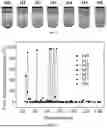
FIG. 1 shows a comparison of dissolution of ultrafiltration membranes with different additive amounts of active molecules in a solvent.
FIG. 2 shows a comparison of pore diameter and pore diameter distribution of the ultrafiltration membranes with different additive amounts of active molecules.
DETAILED DESCRIPTION OF THE INVENTION
In order to better understand the purpose, structure and function of the present disclosure, the method for preparing an ultrafiltration membrane based on in-situ construction of cross-linked network-assisted phase separation according to the present disclosure will be described in further detail below.
Examples 1 to 10 and Comparative Example 1
13 wt % of a polymer membrane material, 5 wt % of an active molecule A, and 75 wt % of DMF (as a solvent) were weighed, and 7 wt % of an active molecule B was added thereto. A resulting mixture was stirred at a constant temperature of 40° C. for 48 h until completely dissolved to form a uniform solution. After membrane scraping, a resulting membrane was placed in a coagulation bath with a cross-linking factor to prepare a flat ultrafiltration membrane by phase inversion. Types of the active molecule A and the active molecule B and composition of the coagulation bath are shown in Table 1. The coagulation bath was at a temperature of 25° C.
| TABLE 1 |
| Effect of adding different reactive active molecules on properties of the flat membrane |
| Water | |||||||
| contact | |||||||
| Water | angle | Flux | |||||
| contact | after | recovery | |||||
| Membrane | Active | Active | Coagulation | angle | 300 h of | rate |
| SN | material | molecule A | molecule B | bath | (*) | testing | (%) |
| Comparative | Control | PES | No addition | Polyethylene | Deionized | 85 | 95 | 65 |
| Example 1 | Group 1 | glycol | water | |||||
| diglycidyl | (pH = 7) | |||||||
| ether | ||||||||
| Control | PES | 3- | No addition | Deionized | 93 | 93 | 75 | |
| group 2 | aminopropyl | water | ||||||
| triethoxysilane | (pH = 7) | |||||||
| Example 1 | Experimental | PES | 3- | Polyethylene | Deionized | 60 | 60 | 96 |
| group | aminopropyl | glycol | water | |||||
| triethoxysilane | diglycidyl | (pH = 7) | ||||||
| ether | ||||||||
| Example 2 | Experimental | PES | 3- | Polyethylene | Deionized | 66 | 56 | 93 |
| group | aminopropyl | glycol | water | |||||
| dimethyl- | diglycidyl | (pH = 1) | ||||||
| methoxysilane | ether | |||||||
| Example 3 | Experimental | PVDF | 3- | Diglycidyl | Deionized | 62 | 62 | 90 |
| group | aminopropyl | ether | water | |||||
| diethoxy- | (pH = 5) | |||||||
| methylsilane | ||||||||
| Example 4 | Experimental | PSF | Diethylene- | Diglycidyl | Deionized | 46 | 46 | 95 |
| group | triamino | ether | water | |||||
| propyltri- | (pH = 7) | |||||||
| methoxysilane | ||||||||
| Example 5 | Experimental | PVDF- | N-(2- | Glycerol | Deionized | 65 | 65 | 93 |
| group | CTFE | aminoethyl)- | diglycidyl | water | ||||
| copolymer | 3-amino- | ether | (pH = 9) | |||||
| propyltri- | ||||||||
| methoxysilane | ||||||||
| Example 6 | Experimental | Chlorinated | N-(2- | Glycerol | Deionized | 58 | 58 | 90 |
| group | PVC | aminoethyl)- | diglycidyl | water | ||||
| 3-aminopropyl | ether | (pH = 11) | ||||||
| methyldiethoxy- | ||||||||
| silane | ||||||||
| Example 7 | Experimental | PVC | (3-aminopropyl) | 1,6- | Deionized | 60 | 60 | 89 |
| group | trimethoxy- | hexanediol | water | |||||
| silane | diglycidyl | (pH = 13) | ||||||
| ether | ||||||||
| Example 8 | Experimental | PVC | (3-aminopropyl) | Diethylene | Deionized | 65 | 65 | 89 |
| group | trimethoxy- | glycol | water | |||||
| silane | diglycidyl | (pH = 10) | ||||||
| ether | ||||||||
| Example 9 | Experimental | PVC | (3-aminopropyl) | Ethylene | Deionized | 66 | 66 | 87 |
| group | trimethoxy- | glycol | water | |||||
| silane | diglycidyl | (pH = 2) | ||||||
| ether | ||||||||
| Example 10 | Experimental | PAN | 3-piperazinyl- | Ethylene | Deionized | 63 | 63 | 93 |
| group | propylmethyl | glycol | water | |||||
| dimethoxysilane | diglycidyl | (pH = 7) | ||||||
| ether | ||||||||
Table 1 shows the effects of adding different active molecules A and B to a casting solution on hydrophilicity and anti-pollution capacity of the ultrafiltration membrane. Comparative Example 1 is a control group, and Examples 1 to 10 are experimental groups. By adding a certain amount of the different active molecules A, such as the (3-aminopropyl) trimethoxysilane, the 3-aminopropyltriethoxysilane, the 3-aminopropyldimethylmethoxysilane, the 3-aminopropyldiethoxymethylsilane, the diethylenetriamino propyltrimethoxysilane, the N-(2-aminoethyl)-3-amino-propyltrimethoxysilane, the N-(2-aminoethyl)-3-aminopropylmethyldiethoxysilane, and the 3-piperazinylpropylmethyldimethoxysilane, and the different active molecules B, such as the diglycidyl ether, the glycerol diglycidyl ether, the ethylene glycol diglycidyl ether, the 1,6-hexanediol diglycidyl ether, the polyethylene glycol diglycidyl ether, and the diethylene glycol diglycidyl ether, to the polymer membrane material such as the PVC, the chlorinated PVC, PVDF, the PVDF-CTFE copolymer, the PSF, the PES, and the PAN, excellent long-lasting hydrophilicity and anti-pollution capacity could be achieved, indicating that the method is universal.
In Example 1, a flat ultrafiltration membrane is prepared using the PES as the polymer membrane material, the 3-aminopropyltriethoxysilane as the active molecule A, and the polyethylene glycol diglycidyl ether as the active molecule B. Compared with only the active molecule A added in the control group 1 of Comparative Example 1 or only the active molecule B added in the control group 2 of Comparative Example 1, the ultrafiltration membrane obtained in Example 1 has a lower water contact angle and the water contact angle remains stable after running in pure water for 300 h. Moreover, the flux recovery rate of the ultrafiltration membrane obtained in Example 1 is also significantly improved compared with that of the control groups. It was proved that by simultaneously introducing a certain amount of the active molecule A and the active molecule B into the casting solution, the hydrophilicity of the ultrafiltration membrane is improved and lasting hydrophilicity is obtained, and the anti-pollution capacity of the ultrafiltration membrane is improved.
Examples 11 to 16
20 wt % of PES (as the polymer membrane material), a certain amount of 3-aminopropyltriethoxysilane and ethylene glycol diglycidyl ether, and solvent as a balance were weighed (a total amount of a casting solution was maintained at 100%). The resulting weighed materials were stirred at a constant temperature of 80° C. for 24 h until completely dissolved to form a uniform solution. After membrane scraping, the membrane was placed in a coagulation bath with a cross-linking factor to prepare a flat ultrafiltration membrane by phase inversion. Additive amounts of 3-aminopropyltriethoxysilane and ethylene glycol diglycidyl ether are shown in Table 2. The coagulation bath was deionized water with pH=8.5, and the coagulation bath had a temperature of 80° C.
| TABLE 2 |
| Effect of additive amount of reactive active molecules |
| on properties of a PES-based hollow fiber membrane |
| Additive | Additive | Proportion of | |||||
| amount of 3- | amount of | cross- | |||||
| aminopropyltri | ethylene glycol | Water | linked | Flux | BSA | Flux | |
| ethoxysilane | diglycidyl | contact | structure | (L/m−2 | retention rate | recovery rate | |
| SN | (%) | ether (%) | angle (°) | (%) | h bar) | (%) | (%) |
| Example 11 | 1 | 1 | 70 | 10 | 232.1 | 98.0 | 90 |
| Example 12 | 1 | 5 | 60 | 15 | 619.1 | 98.9 | 98 |
| Example 13 | 5 | 5 | 59 | 18 | 702.4 | 98.4 | 98 |
| Example 14 | 5 | 10 | 55 | 35 | 934.2 | 98.1 | 98 |
| Example 15 | 10 | 10 | 45 | 50 | 1,221.9 | 98.9 | 99 |
| Example 16 | 10 | 15 | 45 | 50 | 1,300 | 98.3 | 99 |
Table 2 shows the effect of additive amounts of an active molecule A and an active molecule B on the properties of the PES-based hollow fiber ultrafiltration membrane. Examples 11 to 16 were the preparation of the ultrafiltration membranes by adding different amounts of the active molecule A and the active molecule B to the casting solution. As shown in Examples 11 and 12, Examples 13 and 14, and Examples 15 and 16, as the additive amount of the reactive active molecules increases, the proportion of the cross-linked structure in the ultrafiltration membrane increases, and the flux of the ultrafiltration membrane shows an increasing trend and maintains a stable retention rate of BSA molecules, the water contact angle is significantly reduced, and the flux recovery rate increases. It is proven that increasing the additive amount of reactive active molecules could help improve hydrophilicity, anti-pollution capacity, and filtration performance of the ultrafiltration membrane.
The dissolution of the ultrafiltration membranes obtained in Examples 11 to 16 in a solvent DMAc is shown in FIG. 1, where M0 is the ultrafiltration membrane of control group 1 without adding active molecule A, while M1, M2, M3, M4, M5, and M6 correspond to Examples 11, 12, 13, 14, 15, and 16 for comparison with the control group M0, respectively. As the additive amount of the active molecule A and the active molecule B increases, the ultrafiltration membrane gradually becomes insoluble, and an amount of insoluble residue shows an increasing trend, and an appearance of the residue also changes from flocculent to a complete membrane. This proves the successful construction of a hydrophilic cross-linked network. The pore diameter and pore diameter distribution of the ultrafiltration membranes obtained in Examples 11 to 16 are shown in FIG. 2, where M0 is the control group 1 of Comparative Example 1, while M1, M2, M3, M4, M5, and M6 correspond to Examples 11, 12, 13, 14, 15, and 16 for comparison with the control group 1 M0, respectively. After adding the active molecule A and the active molecule B, the pore size of the ultrafiltration membrane becomes more uniform from the wider distribution of M0. Moreover, the improvement in the additive amounts of the active molecule A and the active molecule B increases an average pore size of the ultrafiltration membrane while keeping a maximum pore size consistent, thus helping improve the separation efficiency of the ultrafiltration membrane. This proves that the pore size of the ultrafiltration membrane is uniform after adding the active molecule A and the active molecule B.
In the present disclosure, a functional hydrophilic molecule is synchronously synthesized and a uniform casting solution is obtained during dissolution of the polymer membrane material. Further, the casting solution is prepared by dry-wet phase separation into an ultrafiltration membrane, a cross-linking reaction between an active molecule A and an active molecule B is initiated with a coagulation bath, and cured into a membrane, namely a finished ultrafiltration membrane.
The present disclosure is described in conjunction with the examples, and those skilled in the art should know that various changes or equivalent substitutions can be made to the features and examples of the present disclosure without departing from the spirit and scope of the present disclosure. In addition, under the concept of the present disclosure, these features and examples can be modified to adapt to specific conditions and materials without departing from the spirit and scope of the present disclosure. Therefore, the present disclosure is not limited by the disclosed specific examples, and all examples falling within the scope of the claims of this application should belong to the scope of the present disclosure.
Claims
1. A method for preparing a durable hydrophilic ultrafiltration membrane, comprising the following steps:
stirring a polymer membrane material, an active molecule A, an active molecule B, and a solvent at a constant temperature, such that a functional hydrophilic molecule is synchronously synthesized and a casting solution is obtained during dissolution of the polymer membrane material; and
preparing an ultrafiltration membrane from the casting solution by dry-wet phase separation, initiating a cross-linking reaction between the active molecule A and the active molecule B by using a coagulation bath to form a cross-linked network in situ; allowing the cross-linked network and a molecular chain of the polymer membrane material to jointly form a cross-linked interpenetrating network during the dry-wet phase separation; and controlling the dry-wet phase separation by forming cross-links in situ to limit movement of polymer chains and formation and growth of micelles, thereby forming a uniform polymer interpenetrating network structure to obtain the durable hydrophilic ultrafiltration membrane with a uniform membrane pore structure;
wherein the active molecule A is a molecule comprising an amino group and a siloxane group, and the active molecule B is a diglycidyl ether functional hydrophilic molecule.
2. The method of claim 1, wherein based on a total amount of the casting solution being 100%, the polymer membrane material accounts for 13 wt % to 20 wt % of a weight of the casting solution, the solvent accounts for 55 wt % to 86 wt % of the weight of the casting solution, the active molecule A accounts for 1 wt % to 10 wt % of the weight of the casting solution, and the active molecule B accounts for 1 wt % to 15 wt % of the weight of the casting solution.
3. The method of claim 1, wherein the polymer membrane material is selected from the group consisting of polyvinyl chloride (PVC), chlorinated PVC, polyvinylidene fluoride (PVDF), a PVDF-chlorotrifluoroethylene (CTFE) copolymer, polysulfone (PSF), polyethersulfone (PES), polyacrylonitrile (PAN), and a mixture of two or more thererof.
4. The method of claim 1, wherein the active molecule A is selected from the group consisting of (3-aminopropyl) trimethoxysilane, 3-aminopropyltriethoxysilane, 3-aminopropyldimethylmethoxysilane, 3-aminopropyldiethoxymethylsilane, diethylenetriamino propyltrimethoxysilane, N-(2-aminoethyl)-3-amino-propyltrimethoxysilane, N-(2-aminoethyl)-3-aminopropylmethyldiethoxysilane, 3-piperazinylpropylmethyldimethoxysilane, and a mixture of two or more thererof.
5. The method of claim 1, wherein the active molecule B is selected from the group consisting of diglycidyl ether, glycerol diglycidyl ether, ethylene glycol diglycidyl ether, 1,6-hexanediol diglycidyl ether, polyethylene glycol diglycidyl ether, diethylene glycol diglycidyl ether, and a mixture of two or more thererof.
6. The method of claim 1, wherein the solvent is selected from the group consisting of N,N-dimethylformamide (DMF), dimethyl sulfoxide (DMSO), N,N-dimethylacetamide (DMAc), and a mixture of two or more thererof.
7. The method of claim 1, wherein the stirring is conducted at the constant temperature of 30° C. to 90° C. for 2 h to 48 h.
8. The method of claim 1, wherein the coagulation bath is selected from the group consisting of an aqueous sodium hydroxide solution and an aqueous hydrogen chloride solution, the aqueous sodium hydroxide solution and the aqueous hydrogen chloride solution each have a concentration of 0.1 wt % to 30 wt %, and a temperature of the coagulation bath is controlled between 25° C. and 80° C.
Images & Drawings included:

Sources:
- United States Patent and Trademark Office - verify current appl. status at the USPTO↗