SENSOR ARRANGEMENT FOR DETECTING A PERSON IN AN AREA OF USE OF A SANITARY FACILITY
US20250034849A1
2025-01-30
18/708,036
2022-10-25
Smart Summary: A system is designed to detect if someone is near a sanitary device, like a toilet or sink. When a second sensor notices a person nearby, it turns on a first sensor that measures distance. This first sensor uses a special technology called Time of Flight (ToF) to find out how far away the person is. Once the person leaves the area, the system turns off the first sensor to save energy. This process helps ensure that the sanitary facility is aware of its surroundings while using minimal power. 🚀 TL;DR
Abstract:
A method for operating a sensor arrangement for detecting a person in an area of use of a sanitary device including: a) activation a first sensor when a second sensor, which differs from the first sensor, detects the presence of at least one person in the vicinity of the sanitary device, wherein the activation establishes a previously completely interrupted power supply to the first sensor and wherein the first sensor is a ToF sensor; b) detection a distance information about the spatial distance between the person and the sanitary device by means of the first sensor, wherein a run time measurement of a signal emitted by the first sensor is performed; c) deactivation of the first sensor when the presence of a person in the vicinity of the sanitary device is no longer detected, wherein the deactivation has a complete interruption of the power supply to the first sensor.
Inventors:
- Gernot Becker 6 🇩🇪 Dortmund, Germany
- Krystian PRZIBYLLA 2 🇩🇪 Menden, Germany
- David MAINKA 1 🇩🇪 Iserloln, Germany
- Bastian SOBOTTA 1 🇩🇪 Hemer, Germany
Assignee:
- Grohe AG 124 🇩🇪 Hemer, Germany
Applicant:
Interested in similar patents?
Get notified when new applications in this technology area are published.
Classification:
E03C1/057 » CPC main
Domestic plumbing installations for fresh water or waste water; Sinks; Plumbing installations for fresh water; Arrangements of devices on wash-basins, baths, sinks, or the like for remote control of taps; Electrical control devices, e.g. with push buttons, control panels or the like touchless, i.e. using sensors
E03C1/05 IPC
Domestic plumbing installations for fresh water or waste water; Sinks; Plumbing installations for fresh water Arrangements of devices on wash-basins, baths, sinks, or the like for remote control of taps
Description
The invention relates to a method for operating a sensor arrangement to detect a person in an area of use of a sanitary device, a sensor arrangement for detecting a person in an area of use of a sanitary device and a sanitary device having such a sensor arrangement.
An electrically operated sanitary faucet with a presence sensor is known. Presence sensors with a comparatively long range are usually used to monitor the presence of one or more persons in an area of use of the sanitary faucet over a comparatively large area. However, the long range often comes at the expense of the accuracy of these sensors. Increasingly, precise measurements are required, in particular for the implementation of advantageous functions such as automatic flushing when a person moves away from the faucet, which cannot always be implemented using long-range sensors. As a result, short-range sensors are at least also increasingly being installed in sanitary faucets.
In particular when a short-range sensor, for instance a so-called ToF sensor (ToF=Time of Flight), is installed in a faucet, it is often desirable that it is not connected to the mains but is powered by a (rechargeable) battery. However, as these only have a limited service life or have to be recharged after a while, it is desirable and advantageous to keep the power consumption as low as possible to prevent the faucet from having to be replaced too frequently.
However, ToF sensors in particular require too much energy for battery applications in order to perform continuous measurements. A strategy is therefore needed to reduce energy requirements.
Based thereon, the invention addresses the problem of at least partially solving the problems described with reference to the prior art. In particular, the aim is to specify a solution that is as technically simple as possible and that permits a sanitary device to be monitored and/or operated in the most energy-efficient and advantageously safe manner.
These tasks are solved using a method, a sensor arrangement and a sanitary device according to the independent claims. Advantageous further embodiments are specified in the dependent claims. The features listed in the claims can be combined with one another in any technically meaningful way and can, if necessary, be defined further based on features of the description. The description, in particular with reference to the figures, illustrates the invention and specifies further exemplary embodiments.
A method for operating a sensor arrangement for detecting a person in an area of use of a sanitary device, comprising at least the steps outlined below, contributes to solving the problem:
-
- a) activation of a first sensor of the sensor arrangement when a second sensor of the sensor arrangement, which differs from the first sensor, detects the presence of at least one person in the vicinity of the sanitary device (in particular in the area of use), wherein the activation comprises establishing a previously completely interrupted power supply to the first sensor and wherein the first sensor is a ToF sensor;
- b) detection of at least one piece of distance information about the spatial distance between the person and the sanitary device by means of the first sensor, wherein a run time measurement of a signal emitted by the first sensor is performed;
- c) deactivation the first sensor when the presence of at least one person in the vicinity of the sanitary device (in particular in the area of use) is no longer detected by, in particular, the first sensor and/or the second sensor, wherein the deactivation comprises a complete interruption of the power supply to the first sensor. In other words, this means in particular that the system is switched off when no person can be detected in the area of use.
Steps a), b), and c) may, for instance, be performed at least once and/or repeatedly in the order indicated to perform the method. The procedure can be performed, for instance, using a sensor arrangement also described here. The procedure is used to detect a person in the area of use of the sanitary device. Furthermore, the method can contribute to or be performed for (electronic) control, in particular triggering or activation (of a water discharge) of the sanitary device.
The sanitary device can be, for instance, a water faucet, e.g., in the form of a tap, a shower, a bathtub, etc. Furthermore, the sanitary device can be, for instance, a toilet or lavatory, a bidet and/or a urinal or a faucet for any of the above. The area of use refers in particular to a (predetermined) surrounding area at or around the sanitary device, where the sanitary device is switched ready for use and/or (a water dispenser) is activated when a person (e.g., a hand) enters said area of use. The sensor arrangement or the first sensor and/or the second sensor is (or are) applied at or towards the sanitary device in such a way that its detection field approximately coincides with the predetermined area of use or at least partially covers it.
The sensor arrangement can comprise the first sensor and the second sensor, for instance in the form of a hybrid sensor. In this context, the first sensor and the second sensor can form a hybrid sensor of the sensor arrangement. In this context, the term “hybrid sensor” means in particular that two different sensor technologies are used. In particular, the first sensor is suitable to perform a distance measurement. In contrast, the second sensor may only be suitable for detecting the presence of an object, such as a person, in the area of use. In particular, the first sensor and the second sensor can work in accordance with physically different measuring principles.
The ToF (Time of Flight) sensor permits the contactless detection of the presence or measurement of the distance to physical objects and persons in an advantageous way. The ToF sensor can measure the distance to a target object by recording the time it takes photons to travel from the sensor to the object or person and back (run time measurement). The ToF sensor can be used with vertical cavity surface emitting lasers (VCSEL: Vertical-Cavity Surface-Emitting Laser) and/or arrays with single photon avalanche photodiodes (SPAD: Single Photon Avalanche Photodiode). The ToF sensor can implement several, for instance three, distance mode functions, for instance a close, a medium and a short-range mode. The ToF sensor can, for instance, perform distance measurements at a resolution of 1 mm [millimeter] and, in particular, report to the monitoring device via a digital I2C interface, which can also serve as a control port for the sensors. For instance, the ToF sensor may be a ToF laser sensor.
Furthermore, the ToF sensor and/or the sensor arrangement may have a viewing window that can preferably filter out light of certain wavelengths or other wavelengths (than the laser beams).
In particular, the ToF sensor can also be used to perform several (consecutive) distance measurements for the purpose of tracking a person's movement inside or out of the area of use, for instance to trigger a flush when leaving a urinal or toilet.
The method contributes in an advantageous manner to ensuring that a ToF measurement is only performed when an object is located in the area of use (detection area). This can advantageously reduce the (total) energy requirements of the sensor arrangement. In particular, a (second) sensor is used to detect whether something is located in the detection area, which advantageously requires little energy. If not required, the ToF sensor can be switched off completely using suitable means (Power Off). In particular, a monitoring device can use an additional sensor to check whether there is something in the detection area. As soon as an object is detected in the detection area, the ToF sensor can be switched on and a distance measurement can be performed. As soon as the monitoring device has recognized that the detection area has been exited, the ToF sensor can be switched off. Both the ToF sensor and the additional sensor can be used to detect that the detection area has been exited.
According to an advantageous embodiment, it is proposed for the second sensor to have a lower electrical power consumption than the first sensor. Furthermore, the second sensor can have a greater range than the first sensor. In addition, the first sensor can have a greater measuring accuracy than the second sensor. For instance, the second sensor can be an ultrasonic sensor or an infrared sensor. Preferably, the second sensor is an infrared sensor. In particular, the second sensor can be disposed independently of the first sensor (ToF sensor). The first sensor and the second sensor may be disposed in juxtaposition with each other. The first sensor and the second sensor can be disposed in a joint housing.
According to an advantageous embodiment, it is proposed for the first sensor to be connected to an electrical energy storage device of the sanitary device to establish the power supply. The electrical energy storage device can, for instance, comprise at least one electrical battery and/or at least one electrical accumulator.
According to an advantageous embodiment, it is proposed that an electronic switch is actuated to establish or interrupt the power supply to the first sensor. The switch can be disposed and set up in such a way that it can completely interrupt the power supply to the first sensor (keep the supply voltage away) and restore it on demand. At least one transistor can, for instance, be used to form the electronic switch. Furthermore, the electronic switch can, for instance, be actuated by a monitoring device of the sensor arrangement. The monitoring device can actuate the electronic switch, for instance, depending on a sensor output from the second sensor. The monitoring device can be formed in the manner of a monitoring unit, for instance by means of a microcontroller.
The complete interruption of the power supply is in any case different from a transfer to “standby” mode, in which a sensor would still consume electrical energy or power. Furthermore, the first sensor is advantageously always actuated via the switches or the monitoring device. In any case, there is no direct software command from the second sensor to the first sensor. In particular, the second sensor does not communicate with the first sensor. In this case, to switch it on, a simple binary signal can be used to switch the transistor to open and supply the first sensor with power again.
According to a further aspect, a sensor arrangement for detecting a person in an area of use of a sanitary device is proposed, at least comprising:
-
- a first sensor, which is a ToF sensor, for detecting at least one piece of distance information about a spatial distance between a person and the sanitary device;
- a second sensor, different from the first sensor, for detecting the presence of at least one person in the vicinity of the sanitary device;
- an electronic switch for establishing or interrupting a power supply from an electrical energy storage device to the first sensor;
- a monitoring device for actuating the electronic switch depending on whether the second sensor detects the presence of at least one person in the vicinity of the sanitary device.
The sensor arrangement can be advantageously set up to perform a method described here.
According to a further aspect, a sanitary device having a sensor arrangement described herein is proposed.
The details, features and advantageous embodiments discussed in connection with the method may similarly also occur in the sensor arrangement and/or the sanitary device presented here and vice versa. In this respect, reference is made in full to the explanations given there for a more detailed characterization of the features.
The invention and its technical environment presented here are explained in more detail below with reference to the figures. It should be noted that the invention is not intended to be restricted by the shown exemplary embodiments. In particular, unless explicitly shown otherwise, it is also possible to extract partial aspects of the facts explained in the figures and combine them with other components and/or findings from other figures and/or from this description. Schematically:
FIG. 1 shows an exemplary sequence of a process presented here,
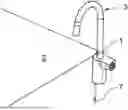
FIG. 2 shows an exemplary sanitary device having the sensor arrangement described here, and
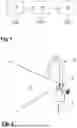
FIG. 3 shows an exemplary structure of a sensor arrangement presented here.
FIG. 1 schematically shows an exemplary sequence of a process presented here. The method is used to operate a sensor arrangement 1 for detecting a person 8 in an area of use 2 of a sanitary device 3 (see FIGS. 2, 3). The sequence of steps a), b) and c) shown as the blocks 110, 120 and 130 is exemplary and can be run through at least once in the sequence shown, for instance, to perform the method.
In block 110, according to step a), a first sensor 4 of the sensor arrangement 1 is switched on when a second sensor 5 of the sensor arrangement 1, which second sensor differs from the first sensor 4, detects the presence of at least one person 8 in the vicinity of the sanitary device 3, wherein the activation comprises establishing a previously completely interrupted power supply to the first sensor 4 and wherein the first sensor 4 is a ToF sensor. In block 120, according to step b), the first sensor 4 detects at least one piece of distance information about the spatial distance between the person 8 and the sanitary device 3, wherein a run time measurement of a signal emitted by the first sensor 4 is performed. In block 130, according to step c), the first sensor 4 is switched off when the presence of at least one person 8 in the vicinity of the sanitary device 3 is no longer detected, wherein the deactivation comprises a complete interruption of the power supply to the first sensor 4.
FIG. 2 schematically shows an exemplary sanitary device 3 having the sensor arrangement 1 described here. There, the sanitary device 3 is designed like a sanitary faucet that can, for instance, dispense water into a wash basin positioned in front of it.
FIG. 3 schematically shows an exemplary structure of a sensor arrangement 1 presented here for detecting a person 8 in an area of use 2 of a sanitary device 3. The sensor arrangement 1 comprises a first sensor 4, which is a ToF (Time of Flight) sensor, for detecting at least one piece of distance information about a spatial distance between a person 8 and the sanitary device 3. The sensor arrangement 1 further comprises a second sensor 5, different from the first sensor 4, for detecting the presence of at least one person 8 in the vicinity of the sanitary device 3. The sensor arrangement 1 further comprises an electronic switch 10 for establishing or interrupting a power supply from an electrical energy storage device 7 to the first sensor 4. The sensor arrangement 1 further comprises a monitoring device 6 for actuating the electronic switch 10 depending on whether the second sensor 5 detects the presence of at least one person 8 in the vicinity of the sanitary device 3. By way of example, the sensor arrangement 1 here also has a pane 9 or a viewing window, behind which the sensors 4, 5 are disposed.
For instance, the second sensor 5 can have a lower electrical power consumption than the first sensor 4. Furthermore, the first sensor 4 can be connected to an electrical energy storage device 7 of the sanitary device 3 to establish the power supply. For instance, the electronic switch 10 can be actuated to establish or interrupt the power supply to the first sensor 4. In this context, the electronic switch 10 can be formed by a transistor, for instance. The electronic switch 10 can be actuated by the monitoring device 6 of the sensor arrangement 1. The monitoring device 6 can actuate the electronic switch 10 depending on a sensor output of the second sensor 5.
In particular, the sensor arrangement 1 can be designed in the form of a hybrid sensor, in which a second sensor 5 constitutes an additional sensor to a first (ToF) sensor 4, which second sensor requires much less energy than the first sensor 4 (main sensor). The additional sensor is used here in particular to switch on the ToF sensor for a measurement only on demand. During the remaining period, the ToF sensor remains switched off (i.e., completely de-energized or in “Power Off”). As a result, the (total) energy requirement of the sensor arrangement 1 or the hybrid sensor can be advantageously reduced.
Consequently, a solution has been specified here that at least partially solves the problems described with reference to the state of the art. In particular, a solution has been specified that is as technically simple as possible and permits a sanitary device to be monitored and/or operated as energy-efficiently and safely as possible.
LIST OF REFERENCE NUMERALS AND TERMS
-
- 1 sensor arrangement
- 2 area of use
- 3 sanitary facilities
- 4 first sensor
- 5 second sensor
- 6 monitoring device
- 7 energy storage device
- 8 person
- 9 pane
- 10 switch(es)
Claims
1. A method for operating a sensor arrangement (1) to detect a person (8) in an area of use (2) of a sanitary device (3), comprising at least the steps outlined below:
a) activation a first sensor (4) of the sensor arrangement (1) when a second sensor (5) of the sensor arrangement (1), which differs from the first sensor (4), detects the presence of at least one person (8) in the vicinity of the sanitary device (3), wherein the activation comprises establishing a previously completely interrupted power supply to the first sensor (4) and wherein the first sensor (4) is a ToF sensor;
b) detection of at least one piece of distance information about the spatial distance between the person (8) and the sanitary device (3) by means of the first sensor (4), wherein a run time measurement of a signal emitted by the first sensor (4) is performed;
c) deactivation the first sensor (4) when the presence of at least one person (8) in the vicinity of the sanitary device (3) is no longer detected, wherein the deactivation comprises a complete interruption of the power supply to the first sensor (4).
2. The method according to claim 1, wherein the second sensor (5) has a lower electrical power consumption than the first sensor (4).
3. The method according to claim 1, wherein the first sensor (4) is connected to an electrical energy storage device (7) of the sanitary device (3) to establish the power supply.
4. The method according to claim 1, wherein for an electronic switch (10) is actuated to establish or interrupt the power supply to the first sensor (4).
5. The method according to claim 4, wherein at least one transistor is used to form the electronic switch (10).
6. The method according to claim 4, wherein the electronic switch (10) is actuated by a monitoring device (6) of the sensor arrangement (1).
7. The method according to claim 6, wherein the monitoring device (6) actuates the electronic switch (10) depending on a sensor output of the second sensor (5).
8. A sensor arrangement (1) for detecting a person (8) in an area of use (2) of a sanitary device (3), at least comprising:
a first sensor (4), which is a ToF sensor, for detecting at least one piece of distance information about a spatial distance between a person (8) and the sanitary device (3);
a second sensor (5), different from the first sensor (4), for detecting the presence of at least one person (8) in the vicinity of the sanitary device (3);
an electronic switch (10) for establishing or interrupting a current supply from an electrical energy storage device (7) to the first sensor (4);
a monitoring device (6) for actuating the electronic switch (10) depending on whether the second sensor (5) detects the presence of at least one person (8) in the vicinity of the sanitary device (3).
9. The sensor arrangement (1) according to claim 8, set up for performing a method for operating a sensor arrangement (1) to detect a person (8) in an area of use (2) of a sanitary device (3), comprising at least the steps outlined below:
a) activation a first sensor (4) of the sensor arrangement (1) when a second sensor (5) of the sensor arrangement (1), which differs from the first sensor (4), detects the presence of at least one person (8) in the vicinity of the sanitary device (3), wherein the activation comprises establishing a previously completely interrupted power supply to the first sensor (4) and wherein the first sensor (4) is a ToF sensor;
b) detection of at least one piece of distance information about the spatial distance between the person (8) and the sanitary device (3) by means of the first sensor (4), wherein a run time measurement of a signal emitted by the first sensor (4) is performed;
c) deactivation the first sensor (4) when the presence of at least one person (8) in the vicinity of the sanitary device (3) is no longer detected, wherein the deactivation comprises a complete interruption of the power supply to the first sensor (4).
10. A sanitary device (3) having a sensor arrangement (1) according to claim 8.
Images & Drawings included:

Sources:
- United States Patent and Trademark Office - verify current appl. status at the USPTO↗
Recent applications in this class:
- » 20250137242 2025-05-01
OBJECT SENSING AND CUSTOMIZED DISPENSING - » 20250101724 2025-03-27
APPARATUS WITH ACOUSTICALLY CONTROLLED FLOW RANGE, SYSTEM COMPRISING SUCH AN APPARATUS AND METHOD - » 20250059745 2025-02-20
CONTROL DEVICE AND CONTROL METHOD OF FAUCET DEVICE, AND FAUCET DEVICE - » 20250059744 2025-02-20
TOUCHLESS LAVATORY OPTICAL TIME OF FLIGHT PROXIMITY - » 20250019947 2025-01-16
VALVE ASSEMBLY FOR AN ELECTRONIC FAUCET - » 20250012061 2025-01-09
SHOWER WITH ELECTRONICALLY-ACTUATED MODE CHANGING - » 20240417961 2024-12-19
SANITARY FITTING AND METHOD FOR DISPENSING A LIQUID USING A SANITARY FITTING - » 20240410148 2024-12-12
INTERCHANGABLE FAUCET DESIGN ASSEMBLY - » 20240392545 2024-11-28
SYSTEMS AND METHODS FOR AUTOMATICALLY CONTROLLING A FAUCET - » 20240360654 2024-10-31
DEVICE AND METHOD FOR CONTROLLING FAUCET, AND FAUCET
Recent applications for this Assignee:
- » 20250164032 2025-05-22
VALVE FOR A FLUID LINE, DEVICE FOR A FLUID LINE WITH A VALVE, AND USE OF A VALVE - » 20250059741 2025-02-20
WATER FAUCET WITH SCALD PROTECTION - » 20250043550 2025-02-06
METHOD OF MANUFACTURING A FAUCET BODY FOR A SANITARY FAUCET AND A FAUCET BODY FOR A SANITARY FAUCET - » 20250018407 2025-01-16
SHOWER HEAD FOR A WATER FAUCET - » 20240301671 2024-09-12
SANITARY FITTING AND METHOD FOR CONTROLLING A SANITARY FITTING - » 20240295887 2024-09-05
Expansion material element for a thermostatic mixing valve - » 20240287773 2024-08-29
Connection body for a flush-mounted installation body - » 20240254749 2024-08-01
FUNCTIONAL UNIT FOR A SHOWER TOILET AND SHOWER TOILET WITH A FUNCTIONAL UNIT - » 20240246096 2024-07-25
SHOWER FOR A SANITARY FAUCET - » 20240229432 2024-07-11
SHOWER HEAD FOR A WATER FITTING