KIT FOR IMPROVING THE DISTURBANCES ASSOCIATED WITH THE INFLAMMATION OF ADIPOSE TISSUE, WITH THE PHLEBOLYMPHATIC PATHOLOGIES AND FOR MUSCULAR REHABILITATION IN GENERAL
US20250050123A1
2025-02-13
18/721,080
2022-12-21
Smart Summary: A special kit helps improve problems caused by inflammation in fat tissue and supports muscle recovery. It includes a device that uses gentle vibrations and has a part where you can attach a handpiece. There’s also a screen that lets users interact with the kit easily. The kit features an electrostimulator that connects to electrodes placed on the body for treatment. Additionally, it comes with a digital camera to monitor temperature changes, which can connect wirelessly or through a cable. 🚀 TL;DR
Abstract:
Kit for improving the disturbances associated with the inflammation of the adipose tissue, with the phlebolymphatic pathologies and for muscular rehabilitation comprising a compressive microvibration device with a base element (110) with a recess (111) suitable for housing at least a handpiece (150), a screen (112) adapted to provide a communication interface between the user and the computer terminal comprised in said base clement (110) and an electrical connection cable (120) for connecting said handpiece (150) to said base element (110), an electrostimulator device housed inside said base element (110) and connected via an electrical cable (260) to common electrodes (250) which can be positioned near the body areas affected by the treatment with said handpiece (150) and a digital thermographic camera (300 connected via a common wireless connection system (310) or connected to a dedicated outlet (330) made on said base element (110 by means of an inlet plug (361).
Applicant:
Interested in similar patents?
Get notified when new applications in this technology area are published.
Classification:
A61N2/002 » CPC main
Magnetotherapy in combination with another treatment
A61H15/0085 » CPC further
Massage by means of rollers, balls, e.g. inflatable, chains, or roller chains power-driven hand-held
A61N2/008 » CPC further
Magnetotherapy specially adapted for a specific therapy for pain treatment or analgesia
A61B5/015 » CPC further
Measuring for diagnostic purposes ; Identification of persons; Measuring temperature of body parts ; Diagnostic temperature sensing, e.g. for malignant or inflamed tissue By temperature mapping of body part
A61H2015/005 » CPC further
Massage by means of rollers, balls, e.g. inflatable, chains, or roller chains with balls or rollers rotating about their own axis; Balls or spheres multiple on the same axis
A61H2015/0071 » CPC further
Massage by means of rollers, balls, e.g. inflatable, chains, or roller chains with balls or rollers having built-in vibrating means
A61H2207/00 » CPC further
Anti-cellulite devices
A61N1/328 » CPC further
Electrotherapy; Circuits therefor; Applying electric currents by contact electrodes alternating or intermittent currents for improving the appearance of the skin, e.g. facial toning or wrinkle treatment
A61N2/00 IPC
Magnetotherapy
A61B5/01 IPC
Measuring for diagnostic purposes ; Identification of persons Measuring temperature of body parts ; Diagnostic temperature sensing, e.g. for malignant or inflamed tissue
A61H15/00 IPC
Massage by means of rollers, balls, e.g. inflatable, chains, or roller chains
A61N1/32 IPC
Electrotherapy; Circuits therefor; Applying electric currents by contact electrodes alternating or intermittent currents
Description
TECHNICAL FIELD
The present patent application for an invention generally relates to the field of aesthetic medicine, sports medicine and phlebo-lymphology.
The invention is applicable to any field where such a type of device can be advantageously used, but preferably it relates to the field of the treatment of the various forms of cellulite and lipolymphedema.
PRIOR ART
As is known, cellulite manifests itself from an aesthetic point of view in the form of irregularities on the surface of the epidermis and is scientifically referred to as edematous-fibrosclerotic panniculopathy.
Cellulite indicates an alteration of the subcutaneous tissue rich in fat cells and is characterized precisely by the increase in the volume of fat cells, where excess liquids accumulate in the intracellular spaces, which are left over from the body's biochemical processes. The balance of the venous and lymphatic systems is modified by a slowing down of blood flow and fluid retention by the tissues.
The onset of cellulite, even if basically everything can be traced back to an alteration of the microcirculation, can be considered dependent on various factors which often add up to each other. Some of these factors cannot be eliminated and are therefore defined as primary as they are due to sex, race or familiarity, others are defined as secondary as they are connected to certain phases of life, particular pathologies or the intake of drugs and others still aggravating factors are defined as well as poor diet or sedentary lifestyle and which could certainly be controlled by adopting a different lifestyle. Since the 1970s, cellulite is no longer classified as a generic imperfection, but as an autonomous pathological condition.
Treatment of cellulite includes surgical methods and non-invasive methods.
The operation to surgically eliminate cellulite is generically called liposuction and involves the effective removal of fat deposits in limited and fairly extensive body areas, also with the use of general anesthesia. Obviously it is a technique, which although valid, is very invasive and therefore indicated only in the most serious cases.
Leaving aside the treatments with anti-cellulite creams, which are not directly part of the present invention, there are many non-invasive treatments to cure cellulite and which consist of medical techniques that use equipment such as cavitation, ultrasound, radiofrequency, electrolipolysis, cryosculpture, laser therapy, ozone therapy, pressotherapy, lymphatic drainage and magnetotherapy. These techniques are widely practiced both in the professional field and directly by the patient and are more or less effective in resolving or at least reducing this imperfection.
Starting from the consideration that for years the technique of dermo-suction has been used, thanks to which the tissues were sucked up and placed in traction by means of cylinders, this technology has gradually evolved using less bloody techniques for the purpose which, both in the professional field and directly by the user, were based on the well-known compressive micro-vibration technology of the tissues, but which resulted to be variously effective in solving or at least reducing the type of imperfection reported above.
Therefore, the main object of the present invention consists in general in realizing a kit also based on the well-known technology of compressive micro-vibration of the tissues, which is able to act even more effectively on the improvement of this imperfection, compared to those existing in the prior art and that adopt this technology.
A further object of the present invention is to provide to all those who carry out a professional activity, relating to the treatment of this type of blemish, a medical kit which is capable of implementing in synergy at least two of the techniques previously mentioned, in order to be able to effectively extend the treatment to one type of disorder or better synergistically to several types of disorders.
Therefore, the object of the present invention consists in general in realizing a device designed to solve the above problems, as will result from the detailed description of an exemplifying and non-limiting embodiment thereof, illustrated below.
SUMMARY OF THE INVENTION
The present patent application for industrial invention is intended to describe and claim a kit provided with at least a new and alternative solution to the solutions known to date and in particular it aims to obviate one or more of the drawbacks or problems referred to above and/or to meet one or more needs perceived in the art and in particular deducible from the above.
For this purpose, the inventors have developed an effective medical kit, capable of realizing the benefits deriving from a combined magnetotherapy treatment, am electrostimulation treatment and a compressive microvibration treatment of the tissues and all combined with an effective thermographic control. In fact, said inventive kit consists of a magnetotherapy device with compressive microvibration, at least an electrostimulator device and a digital thermographic camera.
Specifically, said kit can be advantageously used to improve disorders associated with vascular hemodynamics, increase in interstitial fibrous tissue, lymphatic stasis and lymphedema, and painful conditions deriving from edematous conditions and post-traumatic and rehabilitative physiotherapy.
More specifically, said inventive kit comprises a base element provided with at least a recess for housing at least a handpiece, at least a screen, preferably a touch-screen, capable of providing a communication interface between the user and the computer terminal included in such base element. Said base element is connected via an electrical connection cable or via a battery system with Wi-Fi or Bluetooth radio connection, to said handpiece, inside which a rotor is housed consisting of multiple balls having a particular internal and external shape associated with calibrated elastomeric features, capable of transferring pressure to the body area being treated in a controlled manner by virtue of their particular viscoelastic nature.
Specifically, a fundamental feature of the invention concerns the fact that the system is suitable for ensuring that by placing the handpiece on the dermis only with its own weight, the mechanical resistance encountered by the rotor balls while sliding on the patient's tissue is detected by means of a dedicated system of pressure and speed sensors, thus detecting the type of edematous or fibrous tissue with which the balls come into contact and thus independently regulating the intensity of the device according to the resistance by means of a dedicated software.
Specifically, a particularly fundamental feature, according to the present invention, relates to the fact that said calibrated elastomeric features of the balls, i.e. of each row containing balls having the same viscoelastic properties represents a means by which to obtain compressive harmonic waves determined on the body area being treated in addition to the classic pulsating compression effect already existing in the art. Even more specifically, said compressive microvibration technology of the tissues implemented by the formation of compressive harmonic waves on the body area being treated is due to a hypercompressive effect, which exploits the muscle as active resistance when said body tissue comes into contact cyclically with a row of balls having high rigidity during the rotation of the rotor. Therefore, it is intuitive to consider that the frequency, duration and amplitude of said compressive harmonic waves derive directly also from the arrangement of said rows of balls having high rigidity between the rows of balls having viscoelastic properties.
Another innovative feature of said inventive kit consists in that the benefits deriving from the aforementioned technology of compressive microvibration of the tissues are effectively implemented by combining it with the physical therapy of magnetotherapy and all this by designing said handpiece in order to accommodate a specially conceived solenoid capable of emitting a suitable electromagnetic field to implement a magnetotherapy treatment in synergy.
In fact, magnetotherapy seems to be able to stimulate tissue regeneration, due to the restoration of a cellular biochemical balance exclusively and effectively for therapeutic and curative purposes. For example, it seems to be effective as an adjuvant treatment against cellulite, precisely because it acts directly on the adipocytes, allowing a strong metabolic stress and locally of the blood circulation to be induced, reducing water retention and inflammation that accompany cellulite itself.
A further fundamental feature of the present inventive kit consists in the presence of the electrostimulator included in said base element, suitable for carrying out a targeted electrostimulation treatment in the vicinity of the object body area and in conjunction with the magnetotherapy and microvibration treatment. The positioning of electrodes, whether they are self-adhesive electrodes, pre-gelled electrodes or an electrostimulator band, on areas of the body subjected to compressive microvibration treatment represents a substantial feature of the present invention, as it is inventively associated with the already referred feature of the production of compressive harmonic waves determined on the body area being treated. In particular, the previously mentioned hypercompressive effect, determined by the presence of at least a row of rigid balls between the rows of balls having certain viscoelastic properties, allows by virtue of said dedicated software which regulates the rotor speed parameters and the type of pulse, frequency, duration, intensity and latency, to make the instant in which said hypercompression operated by the row of rigid balls takes place on the tissue coincide with the instant in which the electric impulse is generated. In particular, said synchronism allows for an involuntary contraction of the muscle to be produced, suitable for amplifying the active resistance of the muscle itself, at the instant in which the hypercompressive effect occurs and therefore allows for the genesis of amplified compressive harmonic waves which propagate effectively also to the neighboring areas.
A further and no less fundamental inventive feature relevant to the inventive purposes of the present kit concerns the possibility of implementing a thermographic technique through the presence of a digital thermographic camera connected to the computer terminal housed in said base element. The mapping of the portions of the body before, during and at the end of the treatment session, obtained by passing said digital thermographic camera over the patient's body areas, allows to visually highlight, with different colors, the thermal differences present on the body areas. In this way it is possible to differentiate normothermic areas, with normal blood circulation, from more hypothermic areas, where blood circulation is impaired or where there is poor circulation and therefore the presence of cellulite in its various stages.
A further aspect, on the sidelines of all the technical solutions described up to now, but of particular relevance in the implementation of the invention, concerns the creation and development of a multiplicity of programs used in the data processing system and which create a software specially developed by the inventors, capable of being able to best and effectively perform all the functions deriving from the technical features described up to now.
Said dedicated software is able to process the input data coming from the sensors placed on the handpiece and to manage the output data for regulating the speed of the rotor, which is regulated both by synchronizing it with the electrical impulses emitted by the electrostimulator and by regulating it on the basis the presence of variously fibrotic areas through a fine feedback mechanism, which also provides for the intervention of the operator able to vary the automatic setting of the system. In other words, said device inventively presents a mechanism for adjusting the intensity of the stimuli emitted by the electrostimulator as well as of the associated speed of the rotor according to the resistance encountered on the tissue and therefore relating to the presence of more or less incompressible fibrous areas and which represent an unequivocal sign of cellulite areas.
It is therefore a specific object of the present invention to implement an inventive medical kit including the relative dedicated software, capable of realizing the benefits deriving from a combined magnetotherapy treatment, a compressive microvibration treatment of the and electrostimulation and all assisted by the thermographic technique in the treatment or alleviation of aesthetic disorders resulting from cellulite.
A further and more general object is to be able to implement a kit capable of being advantageously used in the improvement of disorders associated with vascular hemodynamics, the increase in interstitial fibrous tissue, lymphatic stasis and lymphedema, to painful states resulting from edematous conditions.
Other features of the present invention are described in the following detailed description of one or more specific embodiments thereof, protected by the various dependent claims.
BRIEF DESCRIPTION OF THE DRAWINGS
The foregoing advantages, as well as other advantages and features of the present invention, will be illustrated with reference to the accompanying drawings, which are to be considered purely illustrative and not limiting or binding to the effects of the present patent application, in which:
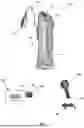
FIG. 1 is a perspective view of the components of the inventive kit;
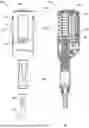
FIG. 2A is a front view of a handpiece forming part of the kit;
FIG. 2B is a sectioned front view of the handpiece forming part of the kit;
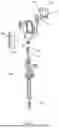
FIG. 3A is an exploded view of the handpiece that is part of the kit;
FIG. 3B shows in detail the exploded view of the rotor installed in the handpiece according to the invention;
FIG. 4 shows in detail the exploded view of the inductor and the plug of the handpiece according to the invention;
FIG. 5 shows in detail the exploded view of the interface and of the isolating and clamping support means of the handpiece cable according to the invention;
FIG. 6A shows in detail the perspective view of an elastomeric ball;
FIG. 6b is the plan view of the elastomeric ball.
DETAILED DESCRIPTION OF THE INVENTION
It will be immediately apparent that innumerable variations and modifications (for example relating to shape, dimensions, arrangements and parts with equivalent functionality) may be made to what has been described without departing from the scope of the invention as appears in the appended claims.
In fact, with the present invention, a new and/or alternative solution to the solutions known thus far is proposed and in particular it is proposed to remedy one or more of the drawbacks or problems referred to above, and/or to satisfy one or more requirements felt in the art, and in particular inferrable from the foregoing.
As shown in the detail of FIG. 1, a kit is shown for the treatment of inflammation of the adipose tissue, phlebolymphatic pathologies and for muscle rehabilitation in general comprising a magnetotherapy device with compressive microvibration 100, an electrostimulator device and a digital thermographic camera 300.
More specifically, said magnetotherapy device with compressive microvibration 100 consists of a base element 110 provided with at least a recess 111 for housing at least a handpiece 150, at least a screen 112, preferably a touch-screen, capable of providing a communication interface between the user and the computer terminal included in such base element 110. Said base element 110 is connected via an electrical connection cable 120 or via any wireless system, to said handpiece 150, inside which a rotor 200 is housed consisting of multiple balls having an internal and external conformation suitable for achieving calibrated elastomeric features, able to transfer energy to the body area being treated in a controlled manner, by virtue of their particular viscoelastic nature.
In particular, the different geometric configuration of the balls is aimed at obtaining a particular and pre-established effect on the patient's skin.
As shown in FIGS. 2A-B, said handpiece 150 consists of a head 160, a body 170 and a handle 180. Said body 170 has a recess suitable for housing said rotor 200 as shown in FIGS. 3A-B, is shaped like a hollow cylinder, which on the lateral surface has a plurality of balls 190 inserted through the longitudinal central channels 191 (see FIG. 6) on sliding bushes 197 (see FIG. 3B) so as to allow free rotation on themselves, in which each pin 192 is common to at least four balls 190 and in which the axis of rotation of the balls 190 and of the rotor 200 coincides with that of insertion into the recess of the handpiece 150 and in which said pins 192 are constrained respectively to a head ring nut 181 and to a ring nut of the handle 162. Said ring nut of the handle 162 comprises a central fitting system adapted to be inserted on a rotation mechanism 184 shown specifically in FIG. 5, forming part of an electric motor 171 housed inside said handle 180 and wherein said electric motor 171 is connected by means of isolating support means 420 and tightening means 410 to said electrical connection cable 120 connected in turn to said computer terminal compressed inside the base element 110.
The rotation of the rotor 200 is such as to cause the passive rotation of each individual ball 190 on itself, every time it slides on the patient's tissue, through a rectangular opening 172 shown in FIGS. 3 and 5 and made on said body 170 of the handpiece 150. As shown in FIGS. 2A and 5, on the body 170 in a position opposite to that of the rectangular opening 172, an interface is made comprising a display 173, a plurality of indicators 174 and a plurality of buttons 175.
With reference to FIG. 4, the head 160 comprises a flange 161, in which one face of the same is adapted to allow the rotation of said head ring nut 181 while the other face is constrained to a cap 182 of the handpiece. Said cap 182 is connected to the head 160 of the handpiece 150 through at least a common pair of reversible connection systems 183 and therefore capable of being removed to allow easy extraction of the rotor 200 after each session to replace it or for related sanitization.
A fundamental feature of the present invention is that of comprising said balls 190 made of an elastomeric material having different degrees of elasticity and which, as shown in detail in FIGS. 2, 3 and 6A-B, have a particular internal structure consisting of multiple longitudinal internal channels 193 made in parallel around said longitudinal central channel 191 or geometric shapes suitable for reproducing a particular elastic effect.
The association of said elastomeric property with the presence of said longitudinal internal channels 193 is adapted to give said balls 190 well-defined viscoelastic properties and exploited to absorb in a calibrated manner part of the pressure transferred by the handpiece 150 on the patient's body area being treated. As shown in FIG. 3, another innovative feature derives from the fact that the creation of rows with balls 190 each having the same viscoelastic property associated with the presence in the rotor of at least a row of rigid balls 198 (see FIG. 3B) without said longitudinal internal channels 193 and therefore capable of exerting a hypercompressive effect with respect to the analogous balls 190, gives the inventive device the ability to produce specific compressive harmonic waves amplified on the body area being treated, in addition to the classic compressive effect already existing in the art. Therefore, it is intuitive to consider that the frequency, duration and shape of said compressive harmonic waves also derive directly from the arrangement of said rows of balls 190 having viscoelastic properties associated with the presence of at least a row of rigid balls 198.
It forms a further specific feature of the present invention that of comprising in the cavity of said rotor 200 an inducer device 140, specifically shown in FIGS. 2B, 3A and 4, consisting of at least a solenoid with a cylindrical shape, which engages a rotary bearing 141 via one end which in turn is constrained to said head ring nut 181. The presence of said inducer device 140 inside the handpiece 150 is an aspect which further characterizes the present invention, since it allows obtaining a combined magnetotherapy treatment and a modified compressive microvibration treatment of the tissues.
Another specific feature of the present invention shown in FIGS. 2A and 3A is that of making a pressure sensor 130 on the cap 182 of the handpiece adapted to detect the pressure of the rotor 200 exerted by the balls 190 on the tissue of the patient undergoing therapy. Also, said pressure sensor 130 results, through a connection device 131 consisting of a connector provided with a plurality of pins (FIGS. 2 and 4), in connection with an electronic control unit 135 shown in FIG. 2B.
A further specific feature of the present invention as shown in FIG. 5, is to provide said handpiece with a revolution sensor 132 located near the rotation mechanism 184 or via an encoder positioned on the rotary axis of the motor, and adapted to detect the revolutions of the rotor in real time and therefore to send the data to said electronic control unit 135, which it is controlled by the computer terminal by means of a wiring system, which passes through said electrical connection cable 120.
Specifically, a fundamental feature of the invention relates to the fact that the entire system inventively presents a mechanism for adjusting the intensity of the device according to the resistance encountered on the tissue and therefore relating to the presence of more or less incompressible fibrous areas and which represent an unequivocal sign of cellulite areas. In other words, the dedicated system of pressure 130 and revolution 132 sensors is adapted to ensure that, by placing the handpiece on the dermis only with its weight, the mechanical resistance encountered by the rotor balls while sliding on the patient's tissue is detected, thus detecting the type of normal, edematous or fibrous tissue with which the balls come into contact and therefore autonomously regulating the intensity of the device according to the resistance.
As shown in FIG. 2B, the electronic control unit 135 is located close to and behind the interface and in addition manages the power supply to said inductor device 140 through said connection device 131.
Another fundamental component of said inventive kit shown in FIG. 1 is represented by the presence in said base element 110 of an electrostimulator device connected via an electrical cable 260 to common electrodes 250, which may be self-adhesive electrodes, pre-gelled electrodes or an electrostimulating band, suitable for being positioned near the tissue portions of the body to be treated with the handpiece 150 and in which said electrical cable 260 is connected to the dedicated outlet 230 made on the base element 110 through a common inlet plug 261. The positioning of said electrodes 250 on the body areas of the patient represents a fundamental feature of the present invention, as it is inventively associated with the hypercompressive effect, determined by the presence of at least a row of rigid balls 198 between the rows with balls 190 having viscoelastic properties, allowing by virtue of a dedicated software regulating the parameters of the type of impulse, frequency, duration, intensity, to make the instant in which said hypercompression operated by the row of rigid balls 198 occurs on the tissue coincide with the instant in which the electrical impulse capable of producing the involuntary contraction of the muscle is generated. This synchronism is suitable for amplifying the active resistance of the muscle at the moment in which the hypercompressive effect occurs and therefore is capable of generating effective compressive and well-defined harmonic waves which propagate on the adjacent tissue.
A further and no less fundamental inventive feature relevant to the inventive purposes of the present kit concerns the possibility of carrying out a thermography through the presence of a digital thermographic camera 300 connected via a common electrical cable 310 (or via Wi-Fi or Bluetooth) to the dedicated outlet 330 made on said base element 110 by means of the inlet plug 361. The mapping of the portions of the body before, during and at the end of the treatment session, obtained by passing said digital thermographic camera 300 over the patient's body areas, allows to highlight both visually in real time and by storing the data in the form of a thermographic map, with different colors, the thermal differences that are generated on the tissue. In this way it is possible to differentiate normothermic areas, with normal blood circulation, from more hypothermic areas, where blood circulation is impaired or where there is poor circulation and therefore the presence of cellulite in its various stages. The data detected will be both displayed in real time by the operator, highlighting the areas where it is necessary to concentrate the activity of the device and sent to the computer terminal which will provide for drawing up a thermographic map which can be viewed on said screen 112.
A further aspect, on the sidelines of all the technical solutions described up to now, but of particular relevance in the implementation of the invention, concerns the creation and development of a multiplicity of programs used in the data processing system and which create said software specially developed by the inventors, capable of being able to best and effectively perform all the functions deriving from the technical features described up to now.
For this purpose said dedicated software is capable on the one hand of assisting the operator in real time by showing through said display 173 and said indicators 174 both the pressure exerted in real time by the rotor 200 and therefore exerted by the balls on the patient's tissue undergoing treatment and detected by said pressure sensor 130, and the number of revolutions of the rotor 200 detected in real time by the revolution sensor 132 and therefore to adjust the parameters of type of pulse, frequency, duration, so as to make the instant in which said hypercompression operated by the row of rigid balls 198 occurs on the tissue coincide with the instant in which the electric impulse is generated by means of the electrodes 250.
Moreover, said dedicated software via the buttons 175 of the interface is adapted to allow the operator to be able to instantly vary all those parameters set at the origin of the session in the computer terminal on the basis of a standard basic setting or on the basis of the data present in the memory and obtained from the previous sessions of a specific patient. Specifically, the parameters set at the start of the session in the computer terminal are the speed of the rotor, the intensity of the impulses of the inductor, the impulse frequency and the feedback mechanism which links the automatic variation of the speed of the rotor on the basis of the values of resistance that the balls encounter during contact with the patient's tissue.
A further version of the present invention provides that the kit also includes an elastic band 340 adaptable to the body of any patient, comprising said electrodes 250. The function of the band 340 is to allow the treatment by the handpiece 150, avoiding damage or detachment of the electrodes 250 themselves.
It is therefore a specific object of the present invention to develop an effective medical kit including the relative dedicated software, capable of realizing the benefits deriving from a combined magnetotherapy treatment and a compressive microvibration treatment of the tissues and electrostimulation and all supported by the use of thermography in the treatment or alleviation of aesthetic disorders resulting from cellulite and all this through a non-invasive treatment and therefore suitable for all ages and not least without any contraindication.
A further and more general object is to be able to realize a combined magnetotherapy treatment with compressive microvibration and tissue electrostimulation capable of being advantageously used in the improvement of disorders associated with vascular hemodynamics, the increase in interstitial fibrous tissue, lymphatic stasis and lymphedema, to painful states resulting from edematous conditions, all obtainable with a few applications.
Of course, the data provided herein are purely illustrative and absolutely non-limiting of the scope of the present invention, since they serve exclusively to enable a person skilled in the art to understand some possible applications and embodiments of the invention. Therefore, from the foregoing it is clear that the inventive concept is adaptable to the particular needs of each individual case and that therefore different modifications can be made to the above description without departing from its scope of protection as defined by the following dependent claims.
Claims
1. Kit for improving the disturbances associated with the inflammation of adipose tissue, with the phlebolymphatic pathologies and for muscular rehabilitation comprising a magnetotherapy device with compressive microvibration (100), an electrostimulator device and a digital thermographic camera (300) characterized in that said magnetotherapy device with compressive microvibration (100) comprises a base element (110) provided with at least a recess (111) suitable for housing at least a handpiece (150), with at least a screen (112) adapted to provide a communication interface between the user and the computer terminal comprised in said base element (110) and a system for electrical connection (120) that is wired or wireless, for the connection of said handpiece (150) to said base element (110), in that said electrostimulator device is housed inside said base element (110) and is connected by means of an electric cable (260) to common electrodes (250) adapted to be positioned in proximity to the body area affected by the treatment with said handpiece (150) and in which said electric cable (260) by means of a common inlet plug (261) is connected to the dedicated outlet (230) made on said base element (110) and in that said digital thermographic camera (300) is connected by means of a common electric cable (310) to the dedicated outlet (330) made on said base element (110) by means of an inlet plug (361).
2. Kit according to claim 1 in which said handpiece (150) is constituted by a head (160), by a body (170) and by a handle (180), in which in the head (160) and in the body (170) there is a recess adapted to house a rotor (200) adapted to carry out work in a radial direction with respect to the axis of the access hole made on said head (160), in which said rotor (200) has the form of a hollow cylinder, having on the lateral surface a plurality of balls (190) that are free to rotate on themselves and forming rows by means of the insertion of pins (192) in longitudinal central channels (191), in which each pin (192) forms a row to which at least four balls (190) belong and in which the rotation axis of the balls (190) and of the rotor (200) with that of insertion in the recess of the handpiece (150), in which said pins (192) are constrained respectively to a head ring nut (181) and to a ring nut of the handle (162), in which said ring nut of the handle (162) comprises a central fitting system adapted to be inserted on a rotation mechanism (184) constituting part of an electric motor (171) housed within said handle (180), in which said electric motor (171) is electrically connected, by means of isolating support means (420) and tightening means (410), to an electrical connection cable (120) connected to the computer terminal comprised in said base element (110), in which the rotation of the rotor (200) is such to cause the passive rotation of each single ball (190) on itself each time that this comes into contact with the tissue of the patient, by means of a rectangular opening (172) made on said body (170), in which on the body (170), in a position opposite that of the rectangular opening (172), an interface is attained comprising a display (173), a plurality of indicators (174) and a plurality of buttons (175), in which the head (160) comprises a flange (161) having one face adapted to allow the rotation of said head ring nut (181) and having the other face constrained to a cap (182), in which said cap (182) is connected to the head (160) by means of at least a common pair of reversible connection systems (183) and characterized in that said balls (190) are configured with a different geometric solution as a function of the effect that one wishes to obtain; said balls (190) are made of elastomeric material with an internal structure constituted by a plurality of longitudinal internal channels (193) attained parallel around said longitudinal central channel (191), in that the presence of said longitudinal internal channels (193) is adapted to confer to said balls (190) viscoelastic properties that are defined and exploited for controllably absorbing the pressure exerted by the handpiece (150) onto the tissue under treatment of the patient, in that in the cavity of said rotor (200) there is an inducer device (140), constituted by at least a solenoid with cylindrical shape constrained at one end to a rotary bearing (141), in that said rotary bearing (141) is constrained to said head ring nut (181), in that on said cap (182) there is a pressure sensor (130) adapted to detect the pressure of the rotor (200) exerted by the balls (190) on the tissue of the patient during the treatment, in that said pressure sensor (130) is connected with an electronic control unit (135) by means of a connection device (131), constituted by a connector provided with a plurality of pins, in that in proximity to the rotation mechanism (184) there is a revolution sensor (132) or an encoder positioned on the rotary axis of the motor, adapted to detect the revolutions of the rotor (200) and to send the data to said electronic control unit (135), in that said electronic control unit (135) is controlled by said computer terminal by means of a wiring system that passes by means of said electrical connection system (120) with or without wires, and in that said electronic control unit (135) is situated in proximity to and behind the interface and manages, by means of said connection device (131), the power supply to said inducer device (140).
3. Kit according to claim 1, characterized in that said balls (190) belonging to each row have the same viscoelastic property, in that in said rotor (200) there is at least a row of rigid balls (198) lacking said longitudinal internal channels (193) and adapted to carry out a hyper-compressive effect suitable for exploiting the muscle as active resistance, at the time when they cyclically come into contact with the body tissue and in that the presence of the rigid balls (198) and of the elastomeric balls (190) during the rotation of the rotor is adapted to produce compressive harmonic waves.
4. Kit according to claim 1, characterized in that the presence of the pressure sensor (130) and of the revolution sensor (132) is adapted to allow the detection of the mechanical resistance encountered by the rigid balls (198) and by the balls (190) during the sliding on the tissue of the patient and in that said resistance is adapted to indicate which type of tissue, normal, edematous or fibrous, is in contact with the aforesaid balls and in that by means of said display (173) and said indicators (174), the pressure is indicated which is exerted by the rotor (200) on the tissue of the patient subjected to therapy and detected by said pressure sensor (130).
5. Kit according to claim 1 comprising a multiplicity of programs employed in the data processing system and attaining a dedicated software, in which said dedicated software is characterized in that it is adapted to self-regulate in real time the speed of the rotor (200) and the intensity of the pulses of the inducer device (140) based on the values of the resistance that the balls encounter during the contact with the tissue of the patient and detected by said pressure sensor (130) and by the revolution sensor (132).
6. Kit according to claim 1 characterized in that said dedicated software is adapted to self-regulate in real time the speed of the rotor (200) and the frequency, duration, intensity of the electric pulse actuated by the electrostimulator by means of said common electrodes (250) positioned in proximity to the body area subjected to the action of the handpiece (150), in that said dedicated software makes the instant at which there occurs said hypercompression, operated by the row of rigid balls (198) on the tissue, coincide with the instant at which the electric pulse is generated which causes an involuntary contraction of the muscle and in that said synchronism is adapted to amplify the active resistance of the muscle at the time in which there is the hypercompressive effect, generating compressive harmonic waves propagating on the neighboring tissue.
7. Kit according to claim 1 characterized in that said electrostimulator is connected to the electrodes (250) and in that belonging to said electrodes (250) are the self-adhesive electrodes, the pre-gelled electrodes and those constituting part of an electrostimulator band.
8. Kit according to claim 1 characterized in that said dedicated software is adapted to be configured by the operator at the start of the session by means of the computer terminal and in that said configuration occurs based on the data present in the memory and obtained from the preceding sessions of the patient and in that said dedicated software is adapted to be configured by the operator at the start of the session so as to set the value of the speed of the rotor (200) and the intensity of the pulses of the inducer device (140).
9. Kit according to claim 1 characterized in that said dedicated software is adapted to allow the operator, by means of the buttons (175) of the interface, to vary in real time the parameters set at the start of the session in the computer terminal.
10. Kit according to claim 1 characterized in that the thermographic data detected by said digital thermographic camera (300) on the body areas of the patient, before, during and at the end of the treatment session, is adapted to be stored in said computer terminal and in that by means of said data the dedicated software is adapted to process a thermographic map showing the hypovascularization zones.
11. Kit according to claim 1 characterized in that it comprises an elastic band (340) adaptable to the body of any one patient, said band (340) comprising said electrodes (250) and being adapted to allow the treatment by said handpiece (150), avoiding the damage or the detachment of the electrodes (250) themselves.
Images & Drawings included:



Sources:
- United States Patent and Trademark Office - verify current appl. status at the USPTO↗
Recent applications in this class:
- » 20250170411 2025-05-29
METHOD OF REPAIRING AGE AND DISEASE IMMUNE DYSFUNCTION AND CELLULAR SENESCENCE WITH LYMPHOID STEM CELLS AND THEN RE-APPLYING THOSE FOR THERAPEUTIC USE - » 20250170410 2025-05-29
THERAPY DEVICE - » 20250144436 2025-05-08
ARTHRITIS PAIN TREATMENT DEVICE AND DRIVING METHOD THEREFOR - » 20250135218 2025-05-01
METHOD AND APPARATUS FOR ONCOMAGNETIC TREATMENT - » 20250121202 2025-04-17
APPARATUS FOR NEURAL STIMULATION AND METHOD OF USE - » 20250121201 2025-04-17
SYSTEMS AND METHODS TO ENHANCE MEMORY USING NON-INVASIVE BRAIN STIMULATION - » 20250082952 2025-03-13
MAGNETICALLY-ASSISTED DELIVERY INTO AND THROUGH THE SKIN - » 20250058137 2025-02-20
System and Method For Enhancing Cartilage-Specific Collagen Formation Using Stem Cells and A Support Garment Having A Composite Fabric Containing Embedded Semiconductor and Carbon Nanoparticles - » 20250058136 2025-02-20
MAGNETOTHERAPY AND COMPRESSIVE MICROVIBRATION APPARATUS FOR THE TISSUES - » 20240424316 2024-12-26
APPARATUS FOR NEURAL STIMULATION AND METHOD OF USE