SECONDARY BATTERY POSITIVE ELECTRODE, PRODUCTION METHOD THEREFOR, AND SECONDARY BATTERY
US20250054982A1
2025-02-13
18/720,824
2022-12-20
Smart Summary: A positive electrode is a part of a rechargeable battery. It has a current collector that supports a layer of active materials. This layer is made up of tiny particles, a binder to hold them together, and an additive that can break down when heated. The special additive used in this design is acetamidobenzoic acid. This combination helps improve the battery's performance and efficiency. 🚀 TL;DR
Abstract:
A positive electrode for a secondary battery including a positive electrode current collector, and a positive electrode active material layer supported on the positive electrode current collector. The positive electrode active material layer contains active material particles, a binder, and a thermal decomposable additive, and the thermal decomposable additive includes an acetamidobenzoic acid.
Assignee:
- Panasonic Intellectual Property Management Co., Ltd. 180 🇯🇵 Kadoma-shi, Osaka, Japan
Applicant:
Interested in similar patents?
Get notified when new applications in this technology area are published.
Classification:
H01M4/0404 » CPC further
Electrodes; Electrodes composed of, or comprising, active material; Processes of manufacture in general; Methods of deposition of the material by coating on electrode collectors
H01M4/623 » CPC further
Electrodes; Electrodes composed of, or comprising, active material; Selection of inactive substances as ingredients for active masses, e.g. binders, fillers; Binders being polymers fluorinated polymers
H01M2004/021 » CPC further
Electrodes; Electrodes composed of, or comprising, active material Physical characteristics, e.g. porosity, surface area
H01M2004/028 » CPC further
Electrodes; Electrodes composed of, or comprising, active material characterised by the polarity Positive electrodes
H01M4/62 » CPC main
Electrodes; Electrodes composed of, or comprising, active material Selection of inactive substances as ingredients for active masses, e.g. binders, fillers
H01M4/02 IPC
Electrodes Electrodes composed of, or comprising, active material
H01M4/04 IPC
Electrodes; Electrodes composed of, or comprising, active material Processes of manufacture in general
H01M4/131 » CPC further
Electrodes; Electrodes composed of, or comprising, active material; Electrodes for accumulators with non-aqueous electrolyte, e.g. for lithium-accumulators; Processes of manufacture thereof Electrodes based on mixed oxides or hydroxides, or on mixtures of oxides or hydroxides, e.g. LiCoOx
H01M4/1391 » CPC further
Electrodes; Electrodes composed of, or comprising, active material; Electrodes for accumulators with non-aqueous electrolyte, e.g. for lithium-accumulators; Processes of manufacture thereof; Processes of manufacture of electrodes based on mixed oxides or hydroxides, or on mixtures of oxides or hydroxides, e.g. LiCoOx
H01M4/525 » CPC further
Electrodes; Electrodes composed of, or comprising, active material; Selection of substances as active materials, active masses, active liquids of inorganic oxides or hydroxides of nickel, cobalt or iron of mixed oxides or hydroxides containing iron, cobalt or nickel for inserting or intercalating light metals, e.g. LiNiO, LiCoO or LiCoOxFy
Description
TECHNICAL FIELD
The present disclosure mainly relates to a positive electrode for a secondary battery.
BACKGROUND ART
For a secondary battery, as its energy density is increased, improvement in safety is required. In particular, it is important to reduce the heat generation due to internal short circuit. When the battery has internal short circuit, even though the shorted portion is small, the Joule heat generated by short-circuit current melts the separator, to form a larger shorted portion. When the shorted portion expands and the short-circuit current increases, the battery temperature rises acceleratingly. The higher the energy density of the secondary battery is, the more the Joule heat generated by short-circuit current increases.
Patent Literature 1 proposes a positive electrode active material comprising a composite oxide mainly composed of lithium and nickel and having a layered crystal structure, which is a powder having an element composition represented by a general formula: LiaNi1−b−cM1bM2cO2, where 0.95≤a≤1.05, 0.01≤b≤0.10, and 0.10≤c≤0.20 (here, M1 is one or more elements selected from Al, B, Y, Ce, Ti, Sn, V, Ta, Nb, W, and Mo, and M2 is one or more elements selected from Co, Mn, and Fe), and is characterized by that when the powder is pressure-molded, an electrical conductivity σ at 25° C. of a powder compact at a compression density of 4.0 g/cm3 is within the range of 5×10⁻²≥σ≥5×10⁻⁴ [S/cm].
CITATION LIST
Patent Literature
Patent Literature 1: Japanese Laid-Open Patent Publication No. 2000-315502
SUMMARY OF INVENTION
Technical Problem
Patent Literature 1 discloses that, according to the above positive electrode active material, the thermal stability in a charged state can be improved, and even when an internal short circuit occurs in the battery, the Joule heat generation by short-circuit current can be suppressed, easily leading to ensured safety.
However, when controlling the electrical conductivity of the powder compact as in Patent Literature 1, the battery ends up in having a high resistance as a whole, causing a deterioration in battery performance. Moreover, the solution in Patent Literature 1 is specialized for a composite oxide mainly composed of lithium and nickel, and is poor in versatility.
Solution to Problem
One aspect of the present disclosure relates to a positive electrode for a secondary battery, including: a positive electrode current collector; and a positive electrode active material layer supported on the positive electrode current collector, wherein the positive electrode active material layer contains active material particles, a binder, and a thermal decomposable additive, and the thermal decomposable additive includes an acetamidobenzoic acid.
Another aspect of the present disclosure relates to a secondary battery, including: the above-described positive electrode for a secondary battery; a negative electrode; a nonaqueous electrolyte; and a separator interposed between the positive electrode and the negative electrode.
Still another aspect of the present disclosure relates to a method for producing a positive electrode for a secondary battery, the method including steps of: preparing a positive electrode slurry containing active material particles, a binder, a thermal decomposable additive, and a dispersion medium; preparing a positive electrode current collector; applying the positive electrode slurry onto a surface of the positive electrode current collector, to form an applied film; drying the applied film, to form an unrolled layer; and rolling the unrolled layer, to form a positive electrode active material layer, wherein the thermal decomposable additive includes an acetamidobenzoic acid, and the dispersion medium includes an organic solvent.
Advantageous Effects of Invention
According to the present disclosure, while suppressing an increase in the resistance at room temperature, it is possible to increase the resistance at high temperature when an internal short circuit occurs in the battery. Therefore, both high safety and good battery performance can be achieved.
While the novel features of the invention are set forth particularly in the appended claims, the invention, both as to organization and content, will be better understood and appreciated, along with other objects and features thereof, from the following detailed description taken in conjunction with the drawings.
BRIEF DESCRIPTION OF DRAWING
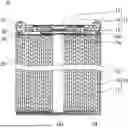
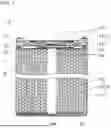
FIG. 1 A schematic longitudinal cross-sectional view of the internal structure of a secondary battery according to an embodiment of the present disclosure.
DESCRIPTION OF EMBODIMENTS
Embodiments of a positive electrode for a secondary battery according to the present disclosure and a secondary battery using the positive electrode will be described below by way of examples, but the present disclosure is not limited to the examples described below. In the following description, specific numerical values and materials are exemplified in some cases, but other numerical values and other materials may be adopted as long as the effects of the present disclosure can be obtained. In the present specification, when referring to “a range of a numerical value A to a numerical value B,” the range includes the numerical value A and the numerical value B, and can be rephrased as “a numerical value A or more and a numerical value B or less.” In the following description, when the lower and upper limits of numerical values related to specific physical properties, conditions, etc. are mentioned as examples, any one of the mentioned lower limits and any one of the mentioned upper limits can be combined in any combination as long as the lower limit is not equal to or more than the upper limit.
The present disclosure encompasses a combination of matters recited in any two or more claims selected from plural claims in the appended claims. In other words, as long as no technical contradiction arises, matters recited in any two or more claims selected from plural claims in the appended claims can be combined.
A. Positive Electrode for Secondary Battery
A positive electrode for a secondary battery according to an embodiment of the present disclosure includes a positive electrode current collector, and a positive electrode active material layer supported on the positive electrode current collector. The positive electrode active material layer is formed on a surface of the positive electrode current collector.
[Positive Electrode Current Collector]
The positive electrode current collector is constituted of a sheet of conductive material. The positive electrode current collector may be a non-porous conductive substrate (metal foil, etc.) or a porous conductive substrate (mesh, net, punched sheet, etc.).
[Positive Electrode Active Material Layer]
The positive electrode active material layer is supported on one or both surfaces of the positive electrode current collector. The positive electrode active material layer, usually, is a positive electrode mixture layer constituted of a positive electrode mixture and is in the form of a membrane or film. The positive electrode mixture includes, as essential components, active material particles (particles of a positive electrode active material), a binder, and a thermal decomposable additive. The active material particles may include a lithium-containing transition metal oxide. The binder includes at least one selected from the group consisting of a fluorocarbon resin and a hydrogenated nitrile butadiene rubber. The thermal decomposable additive includes an acetamidobenzoic acid.
The acetamidobenzoic acid, despite being present in the positive electrode active material layer, has little influence on the battery performance. The acetamidobenzoic acid may be an acid type whose COOH group is bonded to a proton, may be a zwitterion type, and may be a salt type in which the proton of the COOH group is replaced with a cation. The cation may be an ammonium cation, a metal cation (Na, K, Li, etc.), and the like. The acetamidobenzoic acid may be 3-acetamidobenzoic acid and may be 4-acetamidobenzoic acid, but is preferably 3-acetamidobenzoic acid. The content of the 3-acetamidobenzoic acid in the total amount of the acetamidobenzoic acid is preferably 98 mass % or more, and may be 100%.
When an internal short circuit occurs in the battery, the short-circuit current increases, and the battery temperature rises, the thermal decomposable additive decomposes thermally and blocks the conductive path. In other words, the thermal decomposable additive hardly cause an increase in the resistance at room temperature, and has an effect of selectively increasing the battery internal resistance at high temperature. The acetamidobenzoic acid thermally decomposes at a temperature of about 250° C. or higher. Therefore, the battery internal resistance increases remarkably before the battery temperature rises excessively. Although not yet clear, the conductive path is blocked presumably through the following mechanism: a gas is generated within the positive electrode active material layer due to thermal decomposition of the thermal decomposable additive, which causes a local structural change in the positive electrode active material layer, and this results in an increase in the resistance.
The acetamidobenzoic acid is considered to have good affinity for a binder containing at least one selected from the group consisting of a fluorocarbon resin and a hydrogenated nitrile butadiene rubber (H-NBR). The fluorocarbon resin and H-NBR dissolve in an organic solvent (e.g., N-methyl-2-pyrrolidone) used as the dispersion medium for forming a positive electrode active material layer. The acetamidobenzoic acid also dissolves moderately in an organic solvent used as the dispersion medium. It is considered therefore that the acetamidobenzoic acid, which is dissolved moderately in the organic solvent and dispersed in the form of fine particles or assemblages into the organic solvent, can be uniformly dispersed, together with the binder, within the positive electrode active material layer. Furthermore, the acetamidobenzoic acid is unlikely to cause side reactions in the presence of an organic solvent and is considered to be stable. Note that when water is used as the dispersion medium for a positive electrode slurry, the water may deteriorate the positive electrode active material, causing a capacity drop in some cases.
At least part of the thermal decomposable additive is desirably present as particles having a particle diameter of 10 μm or more, in the positive electrode active material layer. Here, “particles” mean a concept that includes primary particles, secondary particles, and assemblages of these particles, and includes, in addition to ordinary grains or particles, concepts of aggregation, agglomeration, and the like. The particle diameter (or assemblage diameter) may be regarded, in the later-describe observation of a cross-section sample, as the diameter of an equivalent circle having the same area as the area surrounded by the outline of the particle (or assemblage). When the thermal decomposable additive is contained in such a size in the positive electrode active material layer, it is inferred that the local structural change of the positive electrode active material layer due to thermal decomposition of the thermal decomposable additive is increased, increasing the resistance more remarkably. The particle diameter of the thermal decomposable additive may be 20 μm or more, or 30 μm or more. A maximum value of the particle diameter of the thermal decomposable additive is desirably 100 μm or less, may be 60 μm or less, and may be 50 μm or less. When the maximum value is within the above range, the influence on the battery performance can be sufficiently reduced.
The particle diameter can be measured in the following manner.
(1) Preparation of Cross-Section Sample of Positive Electrode
First, a positive electrode to be measured is prepared. Next, the positive electrode active material layer and the positive electrode current collector are cut together along the thickness direction of the positive electrode, to form a cross section. At this time, a thermosetting resin may be packed into the positive electrode active material layer, and cured. For example, CP (cross-section polisher) method, FIB (focused ion beam) method, or the like may be used to obtain a cross-section sample of the positive electrode.
The positive electrode to be measured is taken out from a secondary battery with a depth of discharge (DOD) of 90% or more. The depth of discharge (DOD) means a ratio of the amount of electricity discharged to the amount of electricity that a fully charged battery has. The amount of charged electricity when a fully discharged battery (DOD=100%) is charged until full charge (SOC=100%, DOD=0%) (i.e., full charge amount) is equivalent to the rated capacity. The voltage of a fully charged battery corresponds to the end-of-charge voltage. The voltage of a fully discharged battery corresponds to the end-of-discharge voltage.
(2) Photographing Cross Section of Positive Electrode with Scanning Electron Microscope (SEM)
Next, the cross-section sample is observed with a SEM. The observation with a SEM is performed at low magnification (e.g., 200 times to 1000 times). A SEM image is taken such that a region of 300 μm or more (preferably 400 μm or more) long in the plane direction of the positive electrode active material layer can be observed.
(3) Elemental Analysis by Electron Probe Microanalyzer (EPMA)
Elemental analysis by EPMA is performed using the SEM image of the cross-section sample. A map of the thermal decomposable additive is obtained by extracting a component derived from the thermal decomposable additive (e.g., nitrogen element), from the EPMA analysis data of the cross-section sample. The conditions for nitrogen mapping measurement are that, with the accelerating voltage set at 8.0 kV and the irradiation current set at 1.0×10⁻⁷ A, and with ⅓ of the maximum count number in the positive electrode active material layer determined as a threshold value, the pixel at which the detection level is equal to or more than the threshold is regarded as a portion where the thermal decomposable additive is present. From the obtained map, a particle or assemblage of the thermal decomposable additive is identified. The diameter of an equivalent circle having the same area as the area of the specified particle or assemblage is determined as the particle diameter of the thermal decomposable additive.
As for the particles (or assemblages) of the thermal decomposable additive having a particle diameter of 10 μm or more, it suffices when one or more particles are observed, but desirably, five or more particles are observed in a rectangular field of view defined by a length 300 μm in a plane direction of the positive electrode active material layer multiplied by a thickness T of the positive electrode active material layer (when positive electrode active material layers are formed on both surfaces of the positive electrode current collector, one of the positive electrode active material layers on one surface (the same applies hereinafter)). The greater the number of the particles of the thermal decomposable additive having a particle diameter of 10 μm or more observed in the above field of view is, the greater the effect of selectively increasing the battery internal resistance at high temperature becomes. The upper limit of the number of the particles of the thermal decomposable additive having a particle diameter of 10 μm or more observed in the above field of view is, for example, 40 or less. Each of the aforementioned numbers may be an average value of the number of the particles of the thermal decomposable additive having a particle diameter of 10 μm or more counted in a plurality of (e.g., 3 or more) fields of view (each measuring 300 μm×T).
It suffices when a small amount of the thermal decomposable additive is contained in the positive electrode active material layer. The content of the acetamidobenzoic acid in the positive electrode active material layer may be, for example, 0.1 mass % or more and 5 mass % or less, may be 0.3 mass % or more and 3 mass % or less, and may be 0.5 mass % or more and 2 mass % or less. Also, when a cross section of the positive electrode active material layer is analyzed using a scanning electron microscope and an electron probe microanalyzer as described above, the area of a portion where the acetamidobenzoic acid is present may be 0.5 area % or more and 27 area % or less, may be 1 area % or more and 15 area % or less, and may be 3 area % or more and 10 area % or less, in a rectangular field of view defined by a length 300 μm in a plane direction of the positive electrode active material layer multiplied by a thickness T of the positive electrode active material layer. The acetamidobenzoic acid contained at the above content has no significant influence on the battery capacity. Furthermore, the acetamidobenzoic acid contained in the above content can be uniformly dispersed as the particles or assemblages of above-described appropriate particle diameter into the positive electrode active material layer.
The thermal decomposable additive may include an acetic acid component. The acetic acid component has an effect of suppressing the sedimentation of the positive electrode mixture in a positive electrode slurry prepared for forming a positive electrode active material layer. The acetic acid component may be an acetic acid having an OH group (acid type), or a salt type in which the proton of the OH group is replaced with a cation. The cation may be an ammonium cation, a metal cation (Na, K, Li, etc.), and the like. The acetic acid component is desirably contained in a proportion of 500 μg or more and 5000 μg or less per 1 g of the thermal decomposable additive or the acetamidobenzoic acid. The amount of the acetic acid component contained in the thermal decomposable additive or the acetamidobenzoic acid can be determined by, for example, peeling off the positive electrode active material layer from the positive electrode, extracting the acetamidobenzoic acid from the positive electrode active material layer using a solvent, and analyzing the solvent containing the acetamidobenzoic acid by ion chromatography. The solvent may be N-methyl-2-pyrrolidone (NMP).
It is desirable that the thermal decomposable additive covers part of the surfaces of the active material particles. The thermal decomposable additive present on the surfaces of the active material particles is considered, at high temperature, to effectively block the conductive path between the active material particles, between the active material particles and the conductive material, or between the active material particles and the positive electrode current collector. For example, the thermal decomposable additive present on the surfaces of the active material particles and thus interposed between the active material particles, through its state change such as gasification, reduces the contacts between the active material particles. On the other hand, when the thermal decomposable additive covers only part of the surfaces of the active material particles and does not cover the entire surfaces, the resistance to the battery reaction hardly increases.
The thermal decomposable additive covering only part of the surfaces of the active material particles can be confirmed by observing an EPMA elemental mapping of the SEM image of a cross-section sample of the positive electrode obtained by the already-described method.
The thermal decomposable additive (esp., particulate thermal decomposable additive (in particular, particles having a particle diameter of 10 μm or more)) is desirably more distributed near the outermost surface (i.e., on the separator side) of the positive electrode active material layer than near a surface facing the positive electrode current collector of the positive electrode active material layer. This is because a battery internal short circuit starts to expand, in many cases, on the separator side of the positive electrode active material layer. The internal short circuit occurs, for example, when an electrically conductive foreign matter penetrates a separator. By distributing the thermal decomposable additive to be localized on the separator side of the positive electrode active material layer, a high resistance region can be formed on the separator side of the positive electrode active material layer at an early stage after the occurrence of short circuit. Thus, it is possible to suppress the expansion of the shorted portion.
More specifically, when the thickness of the positive electrode active material layer is denoted by T, for example, 1.35≤Pt/Pb is satisfied, 1.5≤Pt/Pb≤40 may be satisfied, where the Pb represents a presence probability of the thermal decomposable additive present in a region from a surface of the positive electrode current collector to 0.5T in the positive electrode active material layer, and the Pt represents a presence probability of the thermal decomposable additive present in a region from a position at 0.5T from the surface of the positive electrode current collector to the outermost surface (i.e., the surface on the separator side of the positive electrode active material layer) in the positive electrode active material layer. Note that when Pt/Pb<1.35, the thermal decomposable additive cannot be said as being substantially more distributed on the outermost surface side than on the positive electrode current collector side in the positive electrode active material layer.
Hereinafter, the region from the surface of the positive electrode current collector to 0.5T in the positive electrode active material layer is sometimes referred to as a “lower layer region”, and the region from the position at 0.5T from the surface of the positive electrode current collector to the outermost surface in the positive electrode active material layer is sometimes referred to as an “upper layer region.”
The Pb and the Pt can be measured by analyzing the cross-section sample of the positive electrode obtained by the method described above using SEM and EPMA. Specifically, in an elemental map of the thermal decomposable additive obtained from an EPMA analysis data of the cross-section sample, the areas occupied by the thermal decomposable additive in the lower layer region and in the upper layer region are measured. At this time, regardless of the particle diameter of the thermal decomposable additive, all the particles of the thermal decomposable additive are counted. The area percentages of the thermal decomposable additive in the lower layer region and in the upper layer region are regarded as Pb and Pt, respectively. The Pb and Pt are measured in a rectangular field of view defined by a length 300 μm in a plane direction of the positive electrode active material layer multiplied by a thickness T of the positive electrode active material layer. The Pb and Pt may be an average value of Pb's and an average value of or Pt's, respectively, obtained in a plurality of (e.g., three or more) fields of view.
Preferably, when the thickness of the positive electrode active material layer is denoted by T, 1.5≤Pt (q)/Pb (q)≤50 may be satisfied, where the Pb (q) represents a presence probability of the thermal decomposable additive in a region from the surface of the positive electrode current collector to 0.25T in the positive electrode active material layer, and the Pt (q) represents a presence probability of the thermal decomposable additive in a region from a position at 0.75T from the surface of the positive electrode current collector to the outermost surface (i.e., the surface on the separator side of the positive electrode active material layer) in the positive electrode active material layer.
<Production Method of Positive Electrode>
Next, an example of a method of producing a positive electrode for a secondary battery according to an embodiment of the present disclosure will be described.
The production method includes: a step (I) of preparing a positive electrode slurry containing active material particles, a binder, a thermal decomposable additive, and a dispersion medium; a step (II) of preparing a positive electrode current collector; a step (III) of applying the positive electrode slurry onto a surface of the positive electrode current collector, to form an applied film; a step (IV) of drying the applied film, to form an unrolled layer; and a step (V) of rolling the unrolled layer, to form a positive electrode active material layer.
(I) Step of Preparing Slurry
A positive electrode slurry is prepared by mixing a positive electrode mixture including active material particles, a binder, and a thermal decomposable additive, with a liquid dispersion medium, and dispersing the mixture in the dispersion medium. The positive electrode mixture may further include another component (e.g., a conductive material). As the liquid dispersion medium, an organic solvent having excellent affinity with both the binder and the thermal decomposable additive is used.
The organic solvent is preferably N-methyl-2-pyrrolidone (NMP), but may be an alcohol such as ethanol, an ether such as tetrahydrofuran, an amide such as dimethylformamide, a ketone such as cyclohexanone, and the like.
As the thermal decomposable additive, an acetamidobenzoic acid is at least used. The acetamidobenzoic acid may be mixed with a dispersion medium in advance to be partially dissolved. For example, particles of an acetamidobenzoic acid having an average particle diameter D1 may be mixed with a dispersion medium, to prepare a liquid dispersion of particles of the acetamidobenzoic acid having an average particle diameter d1 (d1<D1). Here, the average particle diameter is a median diameter (D50) at 50% cumulative volume in a volume-based particle size distribution obtained using a laser diffraction particle size distribution analyzer. The average particle diameter D1 is desirably 100 μm or less, and more desirably, an acetamidobenzoic acid that passes through a 100-μm mesh is used. The average particle diameter d1 is desirably 50 μm or less.
As the binder, at least one selected from the group consisting of a fluorocarbon resin and a hydrogenated nitrile butadiene rubber is used. Examples of the fluorocarbon resin include polyvinylidene fluoride (PVDF), polytetrafluoroethylene (PTFE), perfluoroalkoxyalkane (PFA), tetrafluoroethylene-hexafluoropropylene copolymer (FEP), and ethylene-tetrafluoroethylene copolymer (ETFE), and vinylidene fluoride-hexafluoropropylene copolymer. These are readily soluble in an organic solvent and are suitable for use in combination with a sulfamic acid. In particular, PVDF is preferred.
(II) Step of Preparing Positive Electrode Current Collector
As the positive electrode current collector, a sheet of conductive material (metal foil, mesh, net, punched sheet, etc.) is used. In particular, a metal foil is preferred. Examples of the material of the positive electrode current collector include stainless steel, aluminum, an aluminum alloy, and titanium. The thickness of the positive electrode current collector is not particularly limited, but is, for example, 1 to 50 μm, and may be 5 to 30 μm.
(III) Step of Forming Applied Film of Positive Electrode Slurry
An applied film is formed by applying the positive electrode slurry onto a surface of the positive electrode current collector. Examples of an apparatus used for applying the positive electrode slurry include a bar coater, a gravure coater, a blade coater, a roll coater, a comma coater, a die coater, and a lip coater.
In the positive electrode slurry applied onto a surface of the positive electrode current collector, it is desirable that at least part of the thermal decomposable additive is present in the form of particles having a particle diameter of 10 μm or more. By this, a positive electrode active material layer containing a thermal decomposable additive having a particle diameter of 10 μm or more can be easily obtained. Furthermore, only part of the surfaces of the active material particles are likely to be covered with the thermal decomposable additive.
(IV) Step of Drying Applied Film
Next, the applied film is dried to volatilize the dispersion medium, to form an unrolled applied film. By controlling the conditions for drying as appropriate, the thermal decomposable additive may be allowed to migrate, together with the dispersion medium, from the lower layer region to the upper layer region (i.e., from the positive electrode current collector side to the separator side). This results in a state where the thermal decomposable additive is more distributed on the separator side than on the positive electrode current collector side in the positive electrode active material layer. For example, when the applied film is dried at a temperature of 150° C. or higher, or 200° C. or higher, the thermal decomposable additive is likely to be more distributed on the separator side than on the positive electrode current collector side in the positive electrode active material layer.
For example, when the thickness of the unrolled layer is dented by T2, 1.35≤P2t/P2b may be satisfied, where the P2b represents a presence probability of the thermal decomposable additive in a region from the surface of the positive electrode current collector to 0.5T2 in the unrolled layer, and the P2t represents a presence probability of the thermal decomposable additive in a region from the position at 0.5T2 from the surface of the positive electrode current collector to the outermost surface in the unrolled layer.
(V) Step of Rolling Unrolled Layer
Next, the unrolled layer is rolled, to form a positive electrode active material layer. The rolling conditions are not particularly limited, but the density of the active material particles (positive electrode active material) in the positive electrode active material layer is, for example, 3.3 g/cm3 or more and 4.0 g/cm3 or less, and may be 3.5 g/cm3 or more and 4.0 g/cm3 or less.
Although a description is given here to control the P2t/P2b by controlling the conditions for drying the applied film, the method of controlling the P2t/P2b is not limited thereto. For example, a positive electrode active material layer constituted of two or more layers differing in the content of the thermal decomposable additive may be formed by applying two or more kinds of positive electrode slurries in layers.
B. Secondary Battery
A secondary battery according to an embodiment of the present disclosure includes the above-described positive electrode for a secondary battery, a negative electrode, a lithium-ion conductive electrolyte, and a separator interposed between the positive electrode and the negative electrode. The secondary battery may be a liquid-type secondary battery including a liquid electrolyte as the lithium-ion conductive electrolyte, and the liquid electrolyte may be a nonaqueous liquid electrolyte or an aqueous electrolyte solution. A gel or solid electrolyte in which a liquid electrolyte is held in a matrix material may also be used. The secondary battery may be an all-solid secondary battery including a solid electrolyte as the lithium-ion conductive electrolyte. The secondary battery includes: a lithium-ion secondary battery in which a material that reversibly absorbs and releases lithium ions is used as the negative electrode active material; a lithium secondary battery in which lithium metal deposits at the negative electrode during charging, and the lithium metal dissolves during discharging; and a solid-state battery including a gel electrolyte or a solid electrolyte.
In the following, using a lithium-ion secondary battery as an example, the configuration of the secondary battery will be specifically described.
[Positive Electrode]
As the positive electrode, a positive electrode for a secondary battery having the above-described features is used. The positive electrode active material layer is constituted of a positive electrode mixture. The positive electrode mixture includes, as essential components, active material particles (particles of a positive electrode active material), a binder, and a thermal decomposable additive (at least an acetamidobenzoic acid), and may also include optional components. The optional components may include a conductive material, a thickener, and the like.
The thickness of the positive electrode active material layer is not particularly limited, but may be, for example, 50 μm or more and 150 μm or less, or 75 μm or more and 125 μm or less. One positive electrode active material layer may be formed using a plurality of layers having different morphologies from each other. For example, two or more layers containing active material particles with different average particle diameters from each other may be used, or two or more layers differing in the type or composition of positive electrode active material from each other may be used.
The average particle diameter of the active material particles (particles of the positive electrode active material) is, for example, 3 μm or more and 30 μm or less, and may be 5 μm or more and 25 μm or less. Herein also, the average particle diameter is a median diameter (D50) at 50% cumulative volume in a volume-based particle size distribution obtained using a laser diffraction particle size distribution analyzer. The active material particles may be separated and collected from the positive electrode. The measuring instrument that can be used is, for example, “LA-750”, available from Horiba, Ltd. (HORIBA).
The average particle diameter of the active material particles may be measured from the above-described cross-sectional sample of the positive electrode. For example, a SEM image of the cross section is photographed so that 10 or more active material particles are observed, and through image processing, the diameters of equivalent circles respectively having the same areas as the cross sections of 10 or more active material particles are measured, to calculate an average of them as the average particle diameter.
The positive electrode active material constituting the active material particles may include a lithium-containing transition metal oxide. In view of achieving high capacity, it is desirable that the lithium-containing transition metal oxide contains a lithium-nickel oxide (composite oxide N) including lithium and Ni and having a layered rock-salt type crystal structure. The proportion of the composite oxide N in the positive electrode active material is, for example, 70 mass % or more, may be 90 mass % or more, and may be 95 mass % or more. The proportion of Ni in the metal elements other than Li contained in the composite oxide N may be 50 at. % or more.
The composite oxide N is represented by, for example, a formula (1): LiαNix1M1x2M2(1−x1−x2)O2+β. Here, the element M1 is at least one selected from the group consisting of V, Co, and Mn. The element M2 is at least one selected from the group consisting of Mg, Al, Ca, Ti, Cu, Zn, and Nb. The formula (1) satisfies 0.95≤α≤1.05, −0.05≤β≤0.05, 0.5≤x1<1, 0≤x2≤0.5, and 0<1−x1−x2≤0.5. The value of α increases and decreases during charging and discharging.
The composite oxide N contains Ni, and may further contain at least one selected from the group consisting of Co, Mn, and Al, as the element M1 and the element M2. Co, Mn, and Al contribute to stabilizing the crystal structure of the composite oxide N.
In view of achieving cost reduction and high capacity, the proportion of Co in the metal elements other than Li contained in the composite oxide N is desirably 0 at. % or more and 20 at. % or less, more desirably 0 at. % or more and 15 at. % or less.
The proportion of Mn in the metal elements other than Li may be 10 at. % or less, and may be 5 at. % or less. The proportion of Mn in the metal elements other than Li may be 1 at. % or more, may be 3 at. % or more, and may be 5 at. % or more.
The proportion of Al in the metal elements other than Li may be 10 at. % or less, or 5 at. % or less. The proportion of Al in the metal elements other than Li may be 1 at. % or more, may be 3 at. % or more, and may be 5 at. % or more.
The composite oxide N can be represented by, for example, a formula (2): LiαNi(1−y1−y2−y3−z)COy1Mny2Aly3MzO2+β. The element M is an element other than Li, Ni, Co, Mn, Al, and oxygen, and may be at least one selected from the group consisting of Ti, Zr, Nb, Mo, W, Fe, Zn, B, Si, Mg, Ca, Sr, Sc, and Y. The formula (2) satisfies 0.95≤α≤1.05, −0.05≤β≤0.05, 0≤y1≤0.1, 0≤y2≤0.1, 0≤y3≤0.1, and 0≤z≤0.10. The symbol 1−y1−y2−y3−z (=v) representing the atomic ratio of Ni is, for example, 0.8 or more, may be 0.85 or more, and may be 0.90 or more, or 0.95 or more. The symbol v representing the atomic ratio of Ni may be 0.98 or less, may be 0.95 or less.
Examples of the conductive material that can be included as an optional component in the positive electrode active material layer include carbon nanotubes (CNTs), carbon fibers other than CNTs, and conductive particles (e.g., carbon black, graphite).
[Negative Electrode]
The negative electrode includes at least a negative electrode current collector. The negative electrode includes, for example, a negative electrode current collector, and a negative electrode active material layer. The negative electrode active material layer is supported on one or both surfaces of the negative electrode current collector.
The negative electrode active material layer may be a negative electrode mixture layer constituted of a negative electrode mixture. The negative electrode mixture layer is in the form of a membrane or film. The negative electrode mixture contains particles of a negative electrode active material as an essential component, and may contain a binder, a conductive agent, a thickener, and the like, as optional components. A lithium metal foil or lithium alloy foil may be attached as a negative electrode active material layer to the negative electrode current collector.
The negative electrode mixture layer can be formed by, for example, applying a negative electrode slurry of a negative electrode mixture containing particles of a negative electrode active material, a binder, and the like dispersed into a dispersion medium, onto a surface of a negative electrode current collector, followed by drying the slurry. The dry applied film may be rolled as necessary.
The negative electrode active material includes a material that electrochemically absorbs and releases lithium ions, lithium metal, a lithium alloy, and the like. As the material that electrochemically absorbs and releases lithium ions, a carbon material, an alloy-type material, and the like can be used. Examples of the carbon material include graphite, graphitizable carbon (soft carbon), and non-graphitizable carbon (hard carbon). Particularly preferred is graphite, which is stable during charging and discharging and whose irreversible capacity is small. As the alloy-type material, a material containing at least one metal capable of forming an alloy with lithium may be used, examples of which include silicon, tin, a silicon alloy, a tin alloy, and a silicon compound. Silicon oxide, tin oxide, and the like may be used, and other silicon-containing materials may be used.
As the negative electrode current collector, a nonporous conductive substrate (metal foil, etc.) and a porous conductive substrate (mesh, net, punched sheet, etc.) can be used. Examples of the material of the negative electrode current collector include stainless steel, nickel, a nickel alloy, copper, and a copper alloy.
The binder may be, for example, styrene-butadiene rubber, but not particularly limited thereto.
Examples of the conductive material include carbon nanotubes (CNTs), carbon fibers other than CNTs, and conductive particles (e.g., carbon black, graphite).
Examples of the thickener include: cellulose derivatives (e.g., cellulose ethers), such as carboxymethyl cellulose (CMC) and modified products thereof (including salts, such as Na salt), and methyl cellulose; saponified products of a polymer having a vinyl acetate unit, such as polyvinyl alcohol; and polyethers (e.g., polyalkylene oxide, such as polyethylene oxide).
[Separator]
The separator is interposed between the positive electrode and the negative electrode. The separator is excellent in ion permeability and has moderate mechanical strength and electrically insulating properties. The separator may be a microporous thin film, a woven fabric, a nonwoven fabric, and the like. The material of the separator may be, for example, polyolefin, such as polypropylene and polyethylene. The separator may have a heat-resistant, electrically-insulating layer as a surface layer on at least one side. The heat-resistant, electrically-insulating layer may contain an inorganic oxide filler as a major component (e.g., 80 mass % or more), or a heat-resistant resin as a major component (e.g., 40 mass % or more). The heat-resistant resin may be a polyamide resin, such as aromatic polyamide (aramid), a polyimide resin, a polyamide imide resin, and the like.
[Electrolyte]
The electrolyte may be a liquid electrolyte (electrolyte solution), may be a gel electrolyte, and may be a solid electrolyte. The gel electrolyte contains a lithium salt and a matrix polymer, or contains a lithium salt, a nonaqueous solvent, and a matrix polymer. The matrix polymer may be, for example, a polymer material that absorbs a nonaqueous solvent and turns into a gel. Examples of the polymer material include a fluorocarbon resin, an acrylic resin, a polyether resin, and polyethylene oxide.
The solid electrolyte may be an inorganic solid electrolyte. As the inorganic solid electrolyte, for example, a known material for use in all-solid lithium-ion secondary batteries and the like (e.g., oxide-based solid electrolyte, sulfide-based solid electrolyte, halide-based solid electrolyte) is used.
The electrolyte may be, for example, a nonaqueous liquid electrolyte containing a nonaqueous solvent and a lithium salt dissolved in the nonaqueous solvent. The concentration of the lithium salt in the nonaqueous liquid electrolyte is, for example, 0.5 mol/L or more and 2 mol/L or less. The nonaqueous liquid electrolyte may contain a known additive.
As the nonaqueous solvent, for example, a cyclic carbonic acid ester, a chain carbonic acid ester, a cyclic carboxylic acid ester, and the like are used. Examples of the cyclic carbonic acid ester include propylene carbonate (PC), and ethylene carbonate (EC). Examples of the chain carbonic acid ester include diethyl carbonate (DEC), ethyl methyl carbonate (EMC), and dimethyl carbonate (DMC). Examples of the cyclic carboxylic acid ester include γ-butyrolactone (GBL), and γ-valerolactone (GVL). The nonaqueous solvent may be used singly, or in combination of two or more kinds.
Examples of the lithium salt include a lithium salt of a chlorine-containing acid (LiClO4, LiAlCl4, LiB10Cl10, etc.), a lithium salt of a fluorine-containing acid (LiPF6, LiBF4, LiSbF6, LiAsF6, LiCF3SO3, LiCF3CO2, etc.), a lithium salt of a fluorine-containing acid imide (LiN(SO2F)2, LiN(CF3SO2)2, LiN(CF3SO2)(C4F9SO2), LiN(C2F5SO2)2, etc.), and a lithium halide (LiCl, LiBr, Lil, etc.). The lithium salt may be used singly, or in combination of two or more kinds.
The secondary battery, for example, has a structure in which an electrode group formed by winding the positive electrode and the negative electrode with the separator interposed therebetween is housed together with the liquid electrolyte in an outer body. Without limited thereto, a different form of electrode group may be adopted. For example, a stacked-type electrode group formed by stacking the positive electrode and the negative electrode with the separator interposed therebetween may be adopted. The form of the battery is also not limited, and may be cylindrical, prismatic, coin, button, or laminate type.
In the following, a structure of a secondary battery will be described with reference to FIG. 1. FIG. 1 is a longitudinal cross-sectional view of a cylindrical nonaqueous secondary battery 10 which is an example of the present embodiment. The present disclosure, however, is not limited to the following configuration.
The secondary battery 10 includes an electrode group 18, a liquid electrolyte (not shown), and a bottomed cylindrical battery can 22 housing them. A sealing assembly 11 is clamped onto the opening of the battery can 22, with a gasket 21 interposed therebetween. This seals the inside of the battery. The sealing assembly 11 includes a valve body 12, a metal plate 13, and an annular insulating member 14 interposed between the valve body 12 and the metal plate 13. The valve body 12 and the metal plate 13 are connected to each other at their respective centers. A positive electrode lead 15a extended from the positive electrode plate 15 is connected to the metal plate 13. Therefore, the valve body 12 functions as a positive external terminal. A negative electrode lead 16a extended from the negative electrode plate 16 is connected to the bottom inner surface of the battery can 22. An annular groove 22a is formed near the open end of the battery can 22. A first insulating plate 23 is placed between one end surface of the electrode group 18 and the annular groove 22a. A second insulating plate 24 is placed between the other end surface of the electrode group 18 and the bottom of the battery can 22. The electrode group 18 is formed of the positive electrode plate 15 and the negative electrode plate 16 wound together, with the separator 17 interposed therebetween.
In the following, the present disclosure will be specifically described with reference to Examples and Comparative Examples. The present disclosure, however, is not limited to the following Examples.
Example 1
[Production of Positive Electrode]
A composite oxide N (LiNi0.85Co0.10Al0.05O2) having an average particle diameter of 13 μm was used as the positive electrode active material constituting the active material particles. A 15-μm-thick aluminum foil was prepared as a positive electrode current collector.
To a positive electrode mixture containing the active material particles, acetylene black, and polyvinylidene fluoride (PVDF) in a mass ratio of 95:2.5:2.5, and containing 3-acetamidobenzoic acid (average particle diameter 100 μm) at a content of 1.3 mass %, NMP was added, and stirred together, to prepare a positive electrode slurry. At this time, the stirring conditions were controlled so that the particle diameter of 3-acetamidobenzoic acid fell in the range of 10 μm to 50 μm.
The positive electrode slurry was applied onto a surface of an aluminum foil serving as a positive electrode current collector, and the applied film was dried, to form an unrolled layer on each of both surfaces of the aluminum foil. At this time, the drying temperature was controlled at 200° C. so that the later-described distribution of 3-acetamidobenzoic acid in the positive electrode active material layer satisficed Pt/Pb≈1.5.
Next, the unrolled layers were rolled into positive electrode active material layers each having a positive electrode active material density of 3.6 g/cm3. The overall thickness of the positive electrode after rolling was 160 μm.
[Production of Negative Electrode]
To a negative electrode mixture containing graphite serving as a negative electrode active material, sodium carboxymethyl cellulose (CMC-Na), and styrene-butadiene rubber (SBR) in a mass ratio of 96:2:2, water was added, and stirred together, to prepare a negative electrode slurry. Next, the negative electrode slurry was applied onto a surface of a copper foil serving as a negative electrode current collector, and the applied film was dried, and then rolled, to form a negative electrode active material layer on each of both surfaces of the copper foil. The density of the negative electrode active material in the negative electrode active material layer was adjusted to 1.6 g/cm3. The overall thickness of the negative electrode was 170 μm.
[Preparation of Nonaqueous Electrolyte]
In a mixed solvent containing ethylene carbonate (EC) and diethyl carbonate (DEC) in a volume ratio of 3:7, LiPF6 was dissolved at a concentration of 1.0 mol/L, to prepare a nonaqueous electrolyte.
[Fabrication of Secondary Battery]
With a tab attached to each electrode, the positive electrode and the negative electrode were wound spirally with the separator interposed therebetween such that the tab was positioned at the outermost layer, thereby to form an electrode group. The electrode group was inserted into an outer body made of aluminum laminated film and dried under vacuum at 105° C. for two hours. Then, the liquid electrolyte was injected, and the opening of the outer body was sealed. A secondary battery A1 was thus obtained.
Example 2
A secondary battery A2 was fabricated in the same manner as in Example 1, except that the drying temperature was controlled to room temperature so that the distribution of 3-acetamidobenzoic acid in the positive electrode active material layer satisfied Pt/Pb≈1.
Example 3
A secondary battery A3 was fabricated in the same manner as in Example 1, except that 3-acetamidobenzoic acid was completely dissolved in NMP in advance when preparing the positive electrode slurry. Specifically, 3-acetamidobenzoic acid was added in an amount equivalent to 1.3 mass % of the positive electrode mixture into NMP of 50° C., and dissolved over 3 hours. Then, active material particles, acetylene black, and polyvinylidene fluoride (PVDF) were added in a mass ratio of 95:2.5:2.5 into the NMP solution of 3-acetamidobenzoic acid, and stirred, to prepare a positive electrode slurry. The drying temperature was controlled at 200° C. so that the distribution of 3-acetamidobenzoic acid in the positive electrode active material layer satisfied Pt/Pb≈1.5.
Example 4
A secondary battery A4 was fabricated in the same manner as in Example 3, except that the drying temperature was controlled to room temperature so that the distribution of 3-acetamidobenzoic acid in the positive electrode active material layer satisfied Pt/Pb≈1.
Comparative Example 1
A secondary battery B1 was fabricated in the same manner as in Example 1, except that no 3-acetamidobenzoic acid was contained in the positive electrode mixture (the content of 3-acetamidobenzoic acid was 0%).
[Evaluation 1]
The secondary batteries obtained in Examples 1 to 4 and Comparative Example 1 were evaluated as follows.
-
- (a) In a 25° C. environment, the batteries were constant-current charged at a constant current of 0.3 It until the voltage reached 4.2 V, and then constant-voltage charged at a constant voltage of 4.2 V until the current reached 0.05 It.
- (b) In a 25° C. environment, the tip of a round nail (diameter 2.7 mm) was brought into contact with each battery charged in (a) at its center, and driven into the battery at a speed of 1 mm/sec. Immediately after the detection of a battery voltage drop (Δ50 mV) due to an internal short circuit, the driving of the round nail was stopped. The surface temperature of the battery was measured one minute after the battery was short-circuited. The surface temperatures of the batteries A1 to A4 and the battery B1 are shown in Table 1.
| TABLE 1 | ||||||
| content of 3- | localization of 3- | particles of | surface | |||
| secondary | acetamidobenzoic | acetamidobenzoic | 10 μm or | temperature | ||
| battery | binder | acid (%) | Pt/Pb | acid | more | (° C.) |
| A1 | PVDF | 1.30 | 1.5 | with | with | 37.2 |
| A2 | PVDF | 1.30 | 1 | without | with | 47.0 |
| A3 | PVDF | 1.30 | 1.5 | with | without | 44.2 |
| A4 | PVDF | 1.30 | 1 | without | without | 51.3 |
| B1 | PVDF | 0 | — | — | without | 80 or higher |
Table 1 shows that in the batteries A1 to A4, the safety when an internal short circuit occurred in the battery was improved as compared to the battery B1. Furthermore, comparison among Examples having the same Pt/Pb value show that when the positive electrode active material layer contained particles or assemblages of 10 μm or more of 3-acetamidobenzoic acid, the improvement in safety was remarkable.
Example 5
A secondary battery A4 was fabricated in the same manner as in Example 1, except that the thermal decomposable additive was changed from 3-acetamidobenzoic acid to 4-acetamidobenzoic acid (average particle diameter 100 μm), and the drying temperature was controlled so that the distribution of 4-acetamidobenzoic acid in the positive electrode active material layer satisfied Pt/Pb≈1.35.
Example 6
A secondary battery A6 was fabricated in the same manner as in Example 2, except that the thermal decomposable additive was changed from 3-acetamidobenzoic acid to 4-acetamidobenzoic acid (average particle diameter 100 μm).
Example 7
A secondary battery A7 was fabricated in the same manner as in Example 3, except that the thermal decomposable additive was changed from 3-acetamidobenzoic acid to 4-acetamidobenzoic acid, and the drying temperature was controlled so that the distribution of 4-acetamidobenzoic acid in the positive electrode active material layer satisfied Pt/Pb≈1.35.
Example 8
A secondary battery A8 was fabricated in the same manner as in Example 4, except that the thermal decomposable additive was changed from 3-acetamidobenzoic acid to 4-acetamidobenzoic acid.
[Evaluation 2]
The secondary batteries obtained in Examples 5 to 8 were evaluated in the same manner as in Evaluation 1. The surface temperatures of the batteries A5 to A8 are shown in Table 2.
| TABLE 2 | ||||||
| content of 4- | localization of 4- | particles of | surface | |||
| secondary | acetamidobenzoic | acetamidobenzoic | 10 μm or | temperature | ||
| battery | binder | acid (%) | Pt/Pb | acid | more | (° C.) |
| A5 | PVDF | 1.30 | 1.35 | with | with | 47.0 |
| A6 | PVDF | 1.30 | 1 | without | with | 54.6 |
| A7 | PVDF | 1.30 | 1.35 | with | without | 52.4 |
| A8 | PVDF | 1.30 | 1 | without | without | 57.9 |
Table 2 shows that in the batteries A5 to A8, the safety when an internal short circuit occurred in the batteries was improved as compared to the battery B1 in Table 1. Furthermore, comparison among Examples having the same Pt/Pb value show that when the positive electrode active material layer contained particles or assemblages of 10 μm or more of 4-acetamidobenzoic acid, the improvement in safety was remarkable. Tables 1 and 2 show that the effect of improving the safety was greater with 3-acetamidobenzoic acid than with 4-acetamidobenzoic acid.
INDUSTRIAL APPLICABILITY
A positive electrode for a secondary battery according to the present disclosure and a secondary battery including the positive electrode are useful as main power sources for mobile communication devices, portable electronic devices, electric cars, and the like.
Although the present invention has been described in terms of the presently preferred embodiments, it is to be understood that such disclosure is not to be interpreted as limiting. Various alterations and modifications will no doubt become apparent to those skilled in the art to which the present invention pertains, after having read the above disclosure. Accordingly, it is intended that the appended claims be interpreted as covering all alterations and modifications as fall within the true spirit and scope of the invention.
REFERENCE SIGNS LIST
10: secondary battery, 11: sealing assembly, 12: valve body, 13: metal plate, 14: insulating member, 15: positive electrode plate, 15a: positive electrode lead, 16: negative electrode plate, 16a: negative electrode lead, 17: separator, 18: electrode group, 21: gasket, 22: battery can, 22a: groove, 23: first insulating plate, 24: second insulating plate
Claims
1. A positive electrode for a secondary battery, comprising:
a positive electrode current collector; and a positive electrode active material layer supported on the positive electrode current collector, wherein
the positive electrode active material layer contains active material particles, a binder, and a thermal decomposable additive, and
the thermal decomposable additive includes an acetamidobenzoic acid.
2. The positive electrode for a secondary battery according to claim 1, wherein at least part of the thermal decomposable additive is present as particles having a particle diameter of 10 μm or more, in the positive electrode active material layer.
3. The positive electrode for a secondary battery according to claim 2, wherein in a cross-sectional observation of the positive electrode active material layer, 5 or more particles of the thermal decomposable additive having a particle diameter of 10 μm or more are observed in a rectangular field of view defined by a length 300 μm in a plane direction of the positive electrode active material layer multiplied by a thickness of the positive electrode active material layer.
4. The positive electrode for a secondary battery according to claim 1, wherein a content of the acetamidobenzoic acid in the positive electrode active material layer is 0.1 mass % or more and 5 mass % or less.
5. The positive electrode for a secondary battery according to claim 1, wherein, when a cross section of the positive electrode active material layer is analyzed using a scanning electron microscope and an electron probe microanalyzer, an area of a portion where the acetamidobenzoic acid is present is 0.5 area % or more and 27 area % or less in a rectangular field of view defined by a length 300 μm in a plane direction of the positive electrode active material layer multiplied by a thickness T of the positive electrode active material layer.
6. The positive electrode for a secondary battery according to claim 1, wherein an acetic acid component is contained in an amount of 500 μg or more and 5000 μg or less per 1 gram of the thermal decomposable additive.
7. The positive electrode for a secondary battery according to claim 1, wherein the thermal decomposable additive covers part of surfaces of the active material particles.
8. The positive electrode for a secondary battery according to claim 1, wherein the thermal decomposable additive is more distributed near an outermost surface of the positive electrode active material layer than near a surface facing the positive electrode current collector of the positive electrode active material layer.
9. The positive electrode for a secondary battery according to claim 8, wherein
1.35≤Pt/Pb is satisfied,
where when a thickness of the positive electrode active material layer is denoted by T,
the Pb represents a presence probability of the thermal decomposable additive present in a region from a surface of the positive electrode current collector to 0.5T in the positive electrode active material layer, and
the Pt represents a presence probability of the thermal decomposable additive present in a region from a position at 0.5T from the surface of the positive electrode current collector to the outermost surface in the positive electrode active material layer.
10. The positive electrode for a secondary battery according to claim 1, wherein
the active material particles include a lithium-containing transition metal oxide,
the lithium-containing transition metal oxide contains a lithium-nickel oxide including lithium and Ni and having a layered rock-salt type crystal structure, and
a proportion of Ni in metal elements other than Li contained in the lithium-nickel oxide is 50 at. % or more.
11. The positive electrode for a secondary battery according to claim 10, wherein
the lithium-nickel oxide is represented by
a formula: LiαNix1M1x2M2(1−x1−x2)O2+β,
where the element M1 is at least one selected from the group consisting of V, Co, and Mn,
the element M2 is at least one selected from the group consisting of Mg, Al, Ca, Ti, Cu, Zn, and Nb,
0.95≤α≤1.05,
−0.05≤β≤0.05,
0.5≤x1<1,
0≤x2≤0.5, and
0<1−x1−x2≤0.5.
12. The positive electrode for a secondary battery according to claim 1, wherein the binder is at least one selected from the group consisting of a fluorocarbon resin and a hydrogenated nitrile butadiene rubber.
13. A secondary battery, comprising: the positive electrode for a secondary battery of claim 1; a negative electrode; a lithium-ion conductive electrolyte; and a separator interposed between the positive electrode and the negative electrode.
14. A method for producing a positive electrode for a secondary battery, the method comprising steps of:
preparing a positive electrode slurry containing active material particles, a binder, a thermal decomposable additive, and a dispersion medium;
preparing a positive electrode current collector;
applying the positive electrode slurry onto a surface of the positive electrode current collector, to form an applied film;
drying the applied film, to form an unrolled layer; and
rolling the unrolled layer, to form a positive electrode active material layer, wherein
the thermal decomposable additive includes an acetamidobenzoic acid, and
the dispersion medium includes an organic solvent.
15. The method for producing a positive electrode for a secondary battery of claim 14, wherein at least part of the thermal decomposable additive is present as particles having a particle diameter of 10 μm or more, in the positive electrode slurry.
16. The method for producing a positive electrode for a secondary battery according to claim 14, wherein
1.35≤Pt/Pb is satisfied,
where when a thickness of the positive electrode active material layer is denoted by T,
the Pb represents a presence probability of the thermal decomposable additive present in a region from a surface of the positive electrode current collector to 0.5T in the positive electrode active material layer, and
the Pt represents a presence probability of the thermal decomposable additive present in a region from a position at 0.5T from the surface of the positive electrode current collector to an outermost surface in the positive electrode active material layer.
Images & Drawings included:
Sources:
- United States Patent and Trademark Office - verify current appl. status at the USPTO↗
Similar patent applications:
- » 20250038196
SECONDARY BATTERY POSITIVE ELECTRODE, PRODUCTION METHOD THEREFOR, AND SECONDARY BATTERY - » 20210075018
BINDER COMPOSITION FOR SECONDARY BATTERY POSITIVE ELECTRODE, SLURRY COMPOSITION FOR SECONDARY BATTERY POSITIVE ELECTRODE AND PRODUCTION METHOD THEREFOR, POSITIVE ELECTRODE FOR SECONDARY BATTERY, AND SECONDARY BATTERY - » 20180233750
Slurry for positive electrode of lithium-ion secondary battery, positive electrode for lithium-ion secondary battery obtained using slurry for positive electrode of lithium-ion secondary battery and production method therefor, and lithium-ion secondary battery provided with positive electrode for lithium-ion secondary battery and production method therefor - » 20200343546
Positive electrode active material for non-aqueous electrolyte secondary batteries, production method therefor, and non-aqueous electrolyte secondary batteries using said positive electrode active material - » 20200343547
Positive electrode active material for non-aqueous electrolyte secondary batteries, production method therefor, and non-aqueous electrolyte secondary batteries using said positive electrode active material - » 20180316055
NONAQUEOUS SECONDARY BATTERY, AND POSITIVE ELECTRODE ACTIVE MATERIAL FOR NONAQUEOUS SECONDARY BATTERY AND PRODUCTION METHOD THEREFOR - » 20150280224
Coated nickel hydroxide powder for positive electrode active material for alkaline secondary battery, and production method therefor - » 20180287147
Coated Nickel Hydroxide Powder for Positive Electrode Active Material of Alkaline Secondary Battery, and Production Method Therefor - » 20070231691
Positive Electrode active material for non-aqueous electrolyte-based secondary battery, production method therefor and non-aqueous electrolyte-based secondary battery using the same
Recent applications in this class:
- » 20250167234 2025-05-22
ELECTRODE HAVING AN INTERPHASE STRUCTURE - » 20250158064 2025-05-15
NEGATIVE ELECTRODE MIXTURE FOR SODIUM ION BATTERY, AND SODIUM ION BATTERY AND METHOD FOR MANUFACTURING THEREOF - » 20250149584 2025-05-08
ANODES FOR LITHIUM-BASED ENERGY STORAGE DEVICES - » 20250149583 2025-05-08
ELECTRODE FOR RECHARGEABLE BATTERY, ELECTRODE ASSEMBLY AND RECHARGEABLE BATTERY INCLUDING THE SAME - » 20250140859 2025-05-01
ELECTRODE ASSEMBLY AND BATTERY - » 20250140858 2025-05-01
CATHODE COATING FOR LI-ION BATTERY - » 20250125360 2025-04-17
ELECTROCHEMICAL APPARATUS AND ELECTRIC DEVICE - » 20250125359 2025-04-17
NEGATIVE ACTIVE MATERIAL FOR RECHARGEABLE LITHIUM BATTERY, NEGATIVE ELECTRODE INCLUDING SAME, AND RECHARGEABLE LITHIUM BATTERY INCLUDING SAME - » 20250118754 2025-04-10
NEGATIVE ELECTRODE FOR SECONDARY BATTERY, AND SECONDARY BATTERY - » 20250112239 2025-04-03
POSITIVE ELECTRODE ADDITIVE, POSITIVE ELECTRODE PLATE AND PREPARATION METHOD THEREOF, AND APPLICATION THEREOF
Recent applications for this Assignee:
- » 20250174646 2025-05-29
POSITIVE ELECTRODE FOR NONAQUEOUS ELECTROLYTE SECONDARY BATTERY, AND NONAQUEOUS ELECTROLYTE SECONDARY BATTERY - » 20250167378 2025-05-22
BATTERY HOLDER AND BATTERY PACK - » 20250167307 2025-05-22
NON-AQUEOUS ELECTROLYTE SECONDARY BATTERY - » 20250167244 2025-05-22
POSITIVE ELECTRODE ACTIVE MATERIAL FOR NONAQUEOUS ELECTROLYTE SECONDARY BATTERIES, POSITIVE ELECTRODE FOR NONAQUEOUS ELECTROLYTE SECONDARY BATTERIES, NONAQUEOUS ELECTROLYTE SECONDARY BATTERY, AND METHOD FOR PRODUCING POSITIVE ELECTRODE ACTIVE MATERIAL FOR NONAQUEOUS ELECTROLYTE SECONDARY BATTERIES - » 20250167242 2025-05-22
POSITIVE ELECTRODE ACTIVE MATERIAL FOR NONAQUEOUS ELECTROLYTE SECONDARY BATTERIES, AND NONAQUEOUS ELECTROLYTE SECONDARY BATTERY - » 20250167226 2025-05-22
POSITIVE ELECTRODE ACTIVE MATERIAL FOR NON-AQUEOUS ELECTROLYTE SECONDARY BATTERY, AND NON-AQUEOUS ELECTROLYTE SECONDARY BATTERY - » 20250167220 2025-05-22
NEGATIVE ELECTRODE ACTIVE MATERIAL FOR NONAQUEOUS ELECTROLYTE SECONDARY BATTERIES, AND NONAQUEOUS ELECTROLYTE SECONDARY BATTERY - » 20250166928 2025-05-22
SOLID ELECTROLYTIC CAPACITOR AND METHOD FOR PRODUCING SOLID ELECTROLYTIC CAPACITOR - » 20250158226 2025-05-15
SECONDARY CELL SEPARATOR, MANUFACTURING METHOD THEREFOR, AND SECONDARY CELL - » 20250158123 2025-05-15
NONAQUEOUS ELECTROLYTE FOR NONAQUEOUS-ELECTROLYTE CELL, AND NONAQUEOUS-ELECTROLYTE CELL