ORGANIC ELECTROLUMINESCENT MATERIALS AND DEVICES
US20250057033A1
2025-02-13
18/782,258
2024-07-24
Smart Summary: New materials have been created using special metal compounds that include platinum or palladium at their center. These compounds are combined with a specific type of ligand that has a saturated carbene ring and an aromatic ring. They can be mixed into formulations for use in technology. These materials are particularly useful in making organic light-emitting devices, known as OLEDs. OLEDs are used in various consumer products, like screens and lighting, to produce bright and efficient light. 🚀 TL;DR
Abstract:
Provided are organometallic compounds comprising a Pt or Pd as the central metal atom which is coordinated by a tetradentate ligand comprising a saturated carbene ring and at least one 6-membered aromatic carbocyclic ring. Also provided are formulations comprising these organometallic compounds. Further provided are organic light emitting devices (OLEDs) and related consumer products that utilize these organometallic compounds.
Inventors:
- Morgan C. MACINNIS 46 🇺🇸 Yardley, PA, United States
- Hsiao-Fan CHEN 185 🇺🇸 Lawrence Township, NJ, United States
- Jerald FELDMAN 102 🇺🇸 Cherry Hill, NJ, United States
- Joseph A. MACOR 29 🇺🇸 Morrisville, PA, United States
Applicant:
Interested in similar patents?
Get notified when new applications in this technology area are published.
Classification:
C07F15/0086 » CPC further
Compounds containing elements of Groups 8, 9, 10 or 18 of the Periodic System compounds of the platinum group Platinum compounds
C07B2200/05 » CPC further
Indexing scheme relating to specific properties of organic compounds Isotopically modified compounds, e.g. labelled
C09K2211/1044 » CPC further
Chemical nature of organic luminescent or tenebrescent compounds; Non-macromolecular compounds; Heterocyclic compounds characterised by ligands containing two nitrogen atoms as heteroatoms
C09K2211/185 » CPC further
Chemical nature of organic luminescent or tenebrescent compounds; Metal complexes of the platinum group, i.e. Os, Ir, Pt, Ru, Rh or Pd
C09K11/06 » CPC further
Luminescent, e.g. electroluminescent, chemiluminescent materials containing organic luminescent materials
C07F15/00 IPC
Compounds containing elements of Groups 8, 9, 10 or 18 of the Periodic System
Description
CROSS-REFERENCE TO RELATED APPLICATIONS
This application claims priority under 35 U.S.C. § 119(e) to U.S. Provisional Application No. 63/517,649, filed on Aug. 4, 2023, the entire contents of which are incorporated herein by reference.
FIELD
The present disclosure generally relates to organic or metal coordination compounds and formulations and their various uses including as emitters, sensitizers, charge transporters, or exciton transporters in devices such as organic light emitting diodes and related electronic devices and consumer products.
BACKGROUND
Opto-electronic devices that make use of organic materials are becoming increasingly desirable for various reasons. Many of the materials used to make such devices are relatively inexpensive, so organic opto-electronic devices have the potential for cost advantages over inorganic devices. In addition, the inherent properties of organic materials, such as their flexibility, may make them well suited for particular applications such as fabrication on a flexible substrate. Examples of organic opto-electronic devices include organic light emitting diodes/devices (OLEDs), organic phototransistors, organic photovoltaic cells, organic scintillators, and organic photodetectors. For OLEDs, the organic materials may have performance advantages over conventional materials.
OLEDs make use of thin organic films that emit light when voltage is applied across the device. OLEDs are becoming an increasingly interesting technology for use in applications such as displays, illumination, and backlighting.
One application for emissive molecules is a full color display. Industry standards for such a display call for pixels adapted to emit particular colors, referred to as “saturated” colors. In particular, these standards call for saturated red, green, and blue pixels. Alternatively, the OLED can be designed to emit white light. In conventional liquid crystal displays emission from a white backlight is filtered using absorption filters to produce red, green and blue emission. The same technique can also be used with OLEDs. The white OLED can be either a single emissive layer (EML) device or a stack structure. Color may be measured using CIE coordinates, which are well known to the art.
SUMMARY
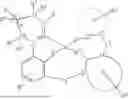
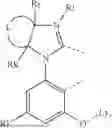
In one aspect, the present disclosure provides a compound having a structure of Formula I:
-
- wherein:
- M is Pt or Pd;
- moiety A is absent or present, and if present is a monocyclic ring or a polycyclic fused ring system, wherein the monocyclic ring or each ring of the polycyclic fused ring system is independently a 5-membered to 10-membered carbocyclic or heterocyclic ring;
- moiety B is a monocyclic ring or a polycyclic fused ring system, wherein the monocyclic ring or each ring of the polycyclic fused ring system is independently a 5-membered to 10-membered carbocyclic or heterocyclic ring;
- Z1—Z5 are each independently C or N;
- n is 0, 1, or 2;
- L1 and L2 are each independently selected from the group consisting of a direct bond, BR′, BR′R″, NR′, PR′, O, S, Se, C═O, S═O, SO2, CR′R″, SiR′R″, GeR′R″, alkyl, cycloalkyl, and combinations thereof; K1, K2, and K3 are each independently a direct bond, O, or S;
- RA, RB, and R1 each independently represent zero, mono, or up to maximum allowed substitutions to its associated ring;
- each of R1, R2, R3, R4, R5, R6, R, R′, R″, RA, RB, and RC is independently a hydrogen or a substituent selected from the group consisting of deuterium, halogen, alkyl, cycloalkyl, heteroalkyl, heterocycloalkyl, arylalkyl, alkoxy, aryloxy, amino, silyl, boryl, alkenyl, cycloalkenyl, heteroalkenyl, alkynyl, aryl, heteroaryl, acyl, carboxylic acid, ether, ester, nitrile, isonitrile, sulfanyl, sulfinyl, sulfonyl, phosphino, and combinations thereof; and
- any two substituents can be joined or fused to form a ring.
In another aspect, the present disclosure provides a formulation of the compound as described herein.
In yet another aspect, the present disclosure provides an OLED having an organic layer comprising the compound as described herein.
In yet another aspect, the present disclosure provides a consumer product comprising an OLED with an organic layer comprising the compound as described herein.
BRIEF DESCRIPTION OF THE DRAWINGS
FIG. 1 shows an organic light emitting device.
FIG. 2 shows an inverted organic light emitting device that does not have a separate electron transport layer.
DETAILED DESCRIPTION
A. Terminology
Unless otherwise specified, the below terms used herein are defined as follows:
As used herein, “top” means furthest away from the substrate, while “bottom” means closest to the substrate. Where a first layer is described as “disposed over” a second layer, the first layer is disposed further away from substrate. There may be other layers between the first and second layer, unless it is specified that the first layer is “in contact with” the second layer. For example, a cathode may be described as “disposed over” an anode, even though there are various organic layers in between.
As used herein, “solution processable” means capable of being dissolved, dispersed, or transported in and/or deposited from a liquid medium, either in solution or suspension form.
As used herein, and as would be generally understood by one skilled in the art, a first “Highest Occupied Molecular Orbital” (HOMO) or “Lowest Unoccupied Molecular Orbital” (LUMO) energy level is “greater than” or “higher than” a second HOMO or LUMO energy level if the first energy level is closer to the vacuum energy level.
Since ionization potentials (IP) are measured as a negative energy relative to a vacuum level, a higher HOMO energy level corresponds to an IP having a smaller absolute value (an IP that is less negative). Similarly, a higher LUMO energy level corresponds to an electron affinity (EA) having a smaller absolute value (an EA that is less negative). On a conventional energy level diagram, with the vacuum level at the top, the LUMO energy level of a material is higher than the HOMO energy level of the same material. A “higher” HOMO or LUMO energy level appears closer to the top of such a diagram than a “lower” HOMO or LUMO energy level.
As used herein, and as would be generally understood by one skilled in the art, a first work function is “greater than” or “higher than” a second work function if the first work function has a higher absolute value.
Because work functions are generally measured as negative numbers relative to vacuum level, this means that a “higher” work function is more negative. On a conventional energy level diagram, with the vacuum level at the top, a “higher” work function is illustrated as further away from the vacuum level in the downward direction. Thus, the definitions of HOMO and LUMO energy levels follow a different convention than work functions.
Layers, materials, regions, and devices may be described herein in reference to the color of light they emit.
In general, as used herein, an emissive region that is described as producing a specific color of light may include one or more emissive layers disposed over each other in a stack.
As used herein, a “NIR”, “red”, “green”, “blue”, “yellow” layer, material, region, or device refers to a layer, a material, a region, or a device that emits light in the wavelength range of about 700-1500 nm, 580-700 nm, 500-600 nm, 400-500 nm, 540-600 nm, respectively, or a layer, a material, a region, or a device that has a highest peak in its emission spectrum in the respective wavelength region. In some arrangements, separate regions, layers, materials, or devices may provide separate “deep blue” and “light blue” emissions. As used herein, the “deep blue” emission component refers to an emission having a peak emission wavelength that is at least about 4 nm less than the peak emission wavelength of the “light blue” emission component. Typically, a “light blue” emission component has a peak emission wavelength in the range of about 465-500 nm, and a “deep blue” emission component has a peak emission wavelength in the range of about 400-470 nm, though these ranges may vary for some configurations.
In some arrangements, a color altering layer that converts, modifies, or shifts the color of the light emitted by another layer to an emission having a different wavelength is provided. Such a color altering layer can be formulated to shift wavelength of the light emitted by the other layer by a defined amount, as measured by the difference in the wavelength of the emitted light and the wavelength of the resulting light. In general, there are two classes of color altering layers: color filters that modify a spectrum by removing light of unwanted wavelengths, and color changing layers that convert photons of higher energy to lower energy. For example, a “red” color filter can be present in order to filter an input light to remove light having a wavelength outside the range of about 580-700 nm.
A component “of a color” refers to a component that, when activated or used, produces or otherwise emits light having a particular color as previously described. For example, a “first emissive region of a first color” and a “second emissive region of a second color different than the first color” describes two emissive regions that, when activated within a device, emit two different colors as previously described.
As used herein, emissive materials, layers, and regions may be distinguished from one another and from other structures based upon light initially generated by the material, layer or region, as opposed to light eventually emitted by the same or a different structure. The initial light generation typically is the result of an energy level change resulting in emission of a photon. For example, an organic emissive material may initially generate blue light, which may be converted by a color filter, quantum dot or other structure to red or green light, such that a complete emissive stack or sub-pixel emits the red or green light. In this case the initial emissive material, region, or layer may be referred to as a “blue” component, even though the sub-pixel is a “red” or “green” component.
In some cases, it may be preferable to describe the color of a component such as an emissive region, sub-pixel, color altering layer, or the like, in terms of 1931 CIE coordinates. For example, a yellow emissive material may have multiple peak emission wavelengths, one in or near an edge of the “green” region, and one within or near an edge of the “red” region as previously described. Accordingly, as used herein, each color term also corresponds to a shape in the 1931 CIE coordinate color space. The shape in 1931 CIE color space is constructed by following the locus between two color points and any additional interior points. For example, interior shape parameters for red, green, blue, and yellow may be defined as shown below:
| Color | CIE Shape Parameters | |
| Central Red | Locus: [0.6270, 0.3725]; [0.7347, 0.2653]; | |
| Interior: [0.5086, 0.2657] | ||
| Central Green | Locus: [0.0326, 0.3530]; [0.3731, 0.6245]; | |
| Interior: [0.2268, 0.3321 | ||
| Central Blue | Locus: [0.1746, 0.0052]; [0.0326, 0.3530]; | |
| Interior: [0.2268, 0.3321] | ||
| Central Yellow | Locus: [0.373l, 0.6245]; [0.6270, 0.3725]; | |
| Interior: [0.3700, 0.4087]; [0.2886, 0.4572] | ||
The terms “halo,” “halogen,” and “halide” are used interchangeably and refer to fluorine, chlorine, bromine, and iodine.
The term “acyl” refers to a substituted carbonyl group (—C(O)—Rs).
The term “ester” refers to a substituted oxycarbonyl (—O—C(O)—R, or —C(O)—O—Rs) group.
The term “ether” refers to an —OR, group.
The terms “sulfanyl” or “thio-ether” are used interchangeably and refer to a —SRs group.
The term “selenyl” refers to a —SeRs group.
The term “sulfinyl” refers to a —S(O)—Rs group.
The term “sulfonyl” refers to a —SO2—Rs group.
The term “phosphino” refers to a group containing at least one phosphorus atom bonded to the relevant structure. Common examples of phosphino groups include, but are not limited to, groups such as a —P(Rs)2 group or a —PO(Rs)2 group, wherein each Rs can be same or different.
The term “silyl” refers to a group containing at least one silicon atom bonded to the relevant structure. Common examples of silyl groups include, but are not limited to, groups such as a —Si(Rs)3 group, wherein each R, can be same or different.
The term “germyl” refers to a group containing at least one germanium atom bonded to the relevant structure. Common examples of germyl groups include, but are not limited to, groups such as a —Ge(Rs)3 group, wherein each R can be same or different.
The term “boryl” refers to a group containing at least one boron atom bonded to the relevant structure.
Common examples of boryl groups include, but are not limited to, groups such as a —B(Rs)2 group or its Lewis adduct—B(Rs)3 group, wherein R, can be same or different.
In each of the above, R, can be hydrogen or a substituent selected from the group consisting of the general substituents as defined in this application. Preferred R, is selected from the group consisting of deuterium, halogen, alkyl, cycloalkyl, heteroalkyl, heterocycloalkyl, arylalkyl, alkoxy, aryloxy, amino, silyl, alkenyl, cycloalkenyl, heteroalkenyl, alkynyl, aryl, heteroaryl, and combination thereof. More preferably Rs is selected from the group consisting of alkyl, cycloalkyl, aryl, heteroaryl, and combination thereof.
The term “alkyl” refers to and includes both straight and branched chain alkyl groups having an alkyl carbon atom bonded to the relevant structure. Preferred alkyl groups are those containing from one to fifteen carbon atoms, preferably one to nine carbon atoms, and includes methyl, ethyl, propyl, 1-methylethyl, butyl, 1-methylpropyl, 2-methylpropyl, pentyl, 1-methylbutyl, 2-methylbutyl, 3-methylbutyl, 1,1-dimethylpropyl, 1,2-dimethylpropyl, 2,2-dimethylpropyl, and the like. Additionally, the alkyl group can be further substituted.
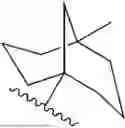
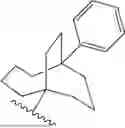
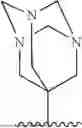
The term “cycloalkyl” refers to and includes monocyclic, polycyclic, and spiro alkyl groups having a ring alkyl carbon atom bonded to the relevant structure. Preferred cycloalkyl groups are those containing 3 to 12 ring carbon atoms and includes cyclopropyl, cyclopentyl, cyclohexyl, bicyclo[3.1.1]heptyl, spiro[4.5]decyl, spiro[5.5]undecyl, adamantyl, and the like. Additionally, the cycloalkyl group can be further substituted.
The terms “heteroalkyl” or “heterocycloalkyl” refer to an alkyl or a cycloalkyl group, respectively, having at least one carbon atom replaced by a heteroatom. Optionally the at least one heteroatom is selected from O, S, N, P, B, Si, Ge and Se, preferably, O, S or N. Additionally, the heteroalkyl or heterocycloalkyl group can be further substituted.
The term “alkenyl” refers to and includes both straight and branched chain alkene groups. Alkenyl groups are essentially alkyl groups that include at least one carbon-carbon double bond in the alkyl chain with one carbon atom from the carbon-carbon double bond that is bonded to the relevant structure. Cycloalkenyl groups are essentially cycloalkyl groups that include at least one carbon-carbon double bond in the cycloalkyl ring. The term “heteroalkenyl” as used herein refers to an alkenyl group having at least one carbon atom replaced by a heteroatom.
Optionally the at least one heteroatom is selected from O, S, N, P, B, Si, Ge, and Se, preferably, O, S, or N.
Preferred alkenyl, cycloalkenyl, or heteroalkenyl groups are those containing two to fifteen carbon atoms.
Additionally, the alkenyl, cycloalkenyl, or heteroalkenyl group can be further substituted.
The term “alkynyl” refers to and includes both straight and branched chain alkyne groups. Alkynyl groups are essentially alkyl groups that include at least one carbon-carbon triple bond in the alkyl chain with one carbon atom from the carbon-carbon triple bond that is bonded to the relevant structure. Preferred alkynyl groups are those containing two to fifteen carbon atoms. Additionally, the alkynyl group can be further substituted.
The terms “aralkyl” or “arylalkyl” are used interchangeably and refer to an aryl-substituted alkyl group having an alkyl carbon atom bonded to the relevant structure. Additionally, the aralkyl group can be further substituted.
The term “heterocyclic group” refers to and includes aromatic and non-aromatic cyclic groups containing at least one heteroatom. Optionally the at least one heteroatom is selected from O, S, Se, N, P, B, Si, Ge, and Se, preferably, O, S, N, or B. Hetero-aromatic cyclic groups may be used interchangeably with heteroaryl. Preferred hetero-non-aromatic cyclic groups are those containing 3 to 10 ring atoms, preferably those containing 3 to 7 ring atoms, which includes at least one hetero atom, and includes cyclic amines such as morpholino, piperidino, pyrrolidino, and the like, and cyclic ethers/thio-ethers, such as tetrahydrofuran, tetrahydropyran, tetrahydrothiophene, and the like. Additionally, the heterocyclic group can be further substituted or fused.
The term “aryl” refers to and includes both single-ring and polycyclic aromatic hydrocarbyl groups. The polycyclic rings may have two or more rings in which two carbons are common to two adjoining rings (the rings are “fused”). Preferred aryl groups are those containing six to thirty carbon atoms, preferably six to twenty-four carbon atoms, six to eighteen carbon atoms, and more preferably six to twelve carbon atoms. Especially preferred is an aryl group having six carbons, ten carbons, twelve carbons, fourteen carbons, or eighteen carbons. Suitable aryl groups include phenyl, biphenyl, triphenyl, triphenylene, tetraphenylene, naphthalene, anthracene, phenalene, phenanthrene, pyrene, chrysene, perylene, and azulene, preferably phenyl, biphenyl, triphenyl, triphenylene, and naphthalene.
Additionally, the aryl group can be further substituted or fused, such as, without limitation, fluorene.
The term “heteroaryl” refers to and includes both single-ring aromatic groups and polycyclic aromatic ring systems that include at least one heteroatom. The heteroatoms include, but are not limited to 0, S, Se, N, P, B, Si, Ge, and Se. In many instances, O, S, N, or B are the preferred heteroatoms. Hetero-single ring aromatic systems are preferably single rings with 5 or 6 ring atoms, and the ring can have from one to six heteroatoms. The hetero-polycyclic ring systems can have two or more aromatic rings in which two atoms are common to two adjoining rings (the rings are “fused”) wherein at least one of the rings is a heteroaryl. The hetero-polycyclic aromatic ring systems can have from one to six heteroatoms per ring of the polycyclic aromatic ring system. Preferred heteroaryl groups are those containing three to thirty carbon atoms, preferably three to twenty-four carbon atoms, three to eighteen carbon atoms, and more preferably three to twelve carbon atoms. Suitable heteroaryl groups include dibenzothiophene, dibenzofuran, dibenzoselenophene, furan, thiophene, benzofuran, benzothiophene, benzoselenophene, carbazole, indolocarbazole, pyridylindole, pyrrolodipyridine, pyrazole, imidazole, triazole, oxazole, thiazole, oxadiazole, oxatriazole, dioxazole, thiadiazole, pyridine, pyridazine, pyrimidine, pyrazine, triazine, oxazine, oxathiazine, oxadiazine, indole, benzimidazole, indazole, indoxazine, benzoxazole, benzisoxazole, benzothiazole, quinoline, isoquinoline, cinnoline, quinazoline, quinoxaline, naphthyridine, phthalazine, pteridine, xanthene, acridine, phenazine, phenothiazine, phenoxazine, benzofuropyridine, furodipyridine, benzothienopyridine, thienodipyridine, benzoselenophenopyridine, selenophenodipyridine, azaborine, borazine, 5λ2,9λ2-diaza-13b-boranaphtho[2,3,4-de]anthracene, 52′-benzo[d]benzo[4,5]imidazo[3,2-a]imidazole, and 5,9-dioxa-13b-boranaphtho[3,2,1-de]anthracene; preferably dibenzothiophene, dibenzofuran, dibenzoselenophene, carbazole, indolocarbazole, imidazole, pyridine, triazine, benzimidazole, 5λ2,9λ2-diaza-13b-boranaphtho[2,3,4-de]anthracene, 5,2-benzo[d]benzo[4,5]imidazo[3,2-a]imidazole, and 5,9-dioxa-13b-boranaphtho[3,2,1-de]anthracene. Additionally, the heteroaryl group can be further substituted or fused.
Of the aryl and heteroaryl groups listed above, the groups of triphenylene, naphthalene, anthracene, dibenzothiophene, dibenzofuran, dibenzoselenophene, carbazole, indolocarbazole, imidazole, pyridine, pyrazine, pyrimidine, triazine, benzimidazole, 5λ2,9λ2-diaza-13b-boranaphtho[2,3,4-de]anthracene, 5λ2-benzo[d]benzo[4,5]imidazo[3,2-a]imidazole, 5,9-dioxa-13b-boranaphtho[3,2,1-de]anthracene, and the respective aza-analogs of each thereof are of particular interest.
In many instances, the General Substituents are selected from the group consisting of deuterium, halogen, alkyl, cycloalkyl, heteroalkyl, heterocycloalkyl, arylalkyl, alkoxy, aryloxy, amino, silyl, germyl, boryl, alkenyl, cycloalkenyl, heteroalkenyl, alkynyl, aryl, heteroaryl, acyl, carboxylic acid, ether, ester, nitrile, isonitrile, sulfanyl, selenyl, sulfinyl, sulfonyl, phosphino, and combinations thereof.
In some instances, the Preferred General Substituents are selected from the group consisting of deuterium, fluorine, alkyl, cycloalkyl, heteroalkyl, alkoxy, aryloxy, amino, silyl, germyl, boryl, alkenyl, cycloalkenyl, heteroalkenyl, aryl, heteroaryl, nitrile, isonitrile, sulfanyl, and combinations thereof.
In some instances, the More Preferred General Substituents are selected from the group consisting of deuterium, fluorine, alkyl, cycloalkyl, alkoxy, aryloxy, amino, silyl, germyl, boryl, aryl, heteroaryl, nitrile, sulfanyl, and combinations thereof.
In some instances, the Even More Preferred General Substituents are selected from the group consisting of deuterium, fluorine, alkyl, cycloalkyl, silyl, aryl, heteroaryl, nitrile, and combinations thereof.
In yet other instances, the Most Preferred General Substituents are selected from the group consisting of deuterium, alkyl, cycloalkyl, aryl, heteroaryl, and combinations thereof.
The terms “substituted” and “substitution” refer to a substituent other than H that is bonded to the relevant position, e.g., a carbon or nitrogen. For example, when R1 represents mono-substitution, then one R1 must be other than H (i.e., a substitution). Similarly, when R1 represents di-substitution, then two of R1 must be other than H. Similarly, when R1 represents zero or no substitution, R1, for example, can be a hydrogen for all available valencies of ring atoms, as in carbon atoms for benzene and the nitrogen atom in pyrrole, or simply represents nothing for ring atoms with fully filled valencies, e.g., the nitrogen atom in pyridine. The maximum number of substitutions possible in a ring structure will depend on the total number of available valencies in the ring atoms.
As used herein, “combinations thereof” indicates that one or more members of the applicable list are combined to form a known or chemically stable arrangement that one of ordinary skill in the art can envision from the applicable list. For example, an alkyl and deuterium can be combined to form a partial or fully deuterated alkyl group; a halogen and alkyl can be combined to form a halogenated alkyl substituent; and a halogen, alkyl, and aryl can be combined to form a halogenated arylalkyl. In one instance, the term substitution includes a combination of two to four of the listed groups. In another instance, the term substitution includes a combination of two to three groups. In yet another instance, the term substitution includes a combination of two groups. Preferred combinations of substituent groups are those that contain up to fifty atoms that are not hydrogen or deuterium, or those which include up to forty atoms that are not hydrogen or deuterium, or those that include up to thirty atoms that are not hydrogen or deuterium. In many instances, a preferred combination of substituent groups will include up to twenty atoms that are not hydrogen or deuterium.
The “aza” designation in the fragments described herein, i.e. aza-dibenzofuran, aza-dibenzothiophene, etc. means that one or more of the C—H groups in the respective aromatic ring can be replaced by a nitrogen atom, for example, and without any limitation, azatriphenylene encompasses both dibenzo[f,h]quinoxaline and dibenzo[f,h]quinoline. One of ordinary skill in the art can readily envision other nitrogen analogs of the aza-derivatives described above, and all such analogs are intended to be encompassed by the terms as set forth herein.
As used herein, “deuterium” refers to an isotope of hydrogen. Deuterated compounds can be readily prepared using methods known in the art. For example, U.S. Pat. No. 8,557,400, Patent Pub. No. WO 2006/095951, and U.S. Pat. Application Pub. No. US 2011/0037057, which are hereby incorporated by reference in their entireties, describe the making of deuterium-substituted organometallic complexes. Further reference is made to Ming Yan, et al., Tetrahedron 2015, 71, 1425-30 and Atzrodt et al., Angew. Chem. Int. Ed. (Reviews) 2007, 46, 7744-65, which are incorporated by reference in their entireties, describe the deuteration of the methylene hydrogens in benzyl amines and efficient pathways to replace aromatic ring hydrogens with deuterium, respectively.
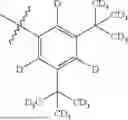
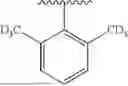
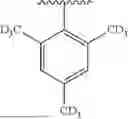
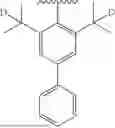
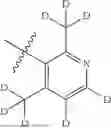
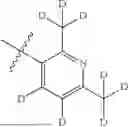
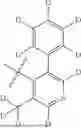
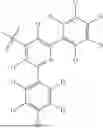
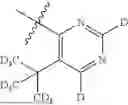
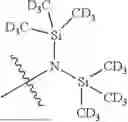
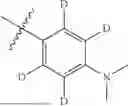
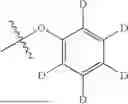
As used herein, any specifically listed substituent, such as, without limitation, methyl, phenyl, pyridyl, etc. includes undeuterated, partially deuterated, and fully deuterated versions thereof. Similarly, classes of substituents such as, without limitation, alkyl, aryl, cycloalkyl, heteroaryl, etc. also include undeuterated, partially deuterated, and fully deuterated versions thereof. Unless otherwise specified, atoms in chemical structures without valences fully filled by H or D should be considered to include undeuterated, partially deuterated, and fully deuterated versions thereof. For example, the chemical structure of implies to include C6H6, C6D6, C6H3D3, and any other partially deuterated variants thereof. Some common basic partially or fully deuterated group include, without limitation, CD3, CD2C(CH3)3, C(CD3)3, and C6D5.
It is to be understood that when a molecular fragment is described as being a substituent or otherwise attached to another moiety, its name may be written as if it were a fragment (e.g. phenyl, phenylene, naphthyl, dibenzofuryl) or as if it were the whole molecule (e.g. benzene, naphthalene, dibenzofuran). As used herein, these different ways of designating a substituent or attached fragment are considered to be equivalent.
In some instances, a pair of substituents in the molecule can be optionally joined or fused into a ring. The preferred ring is a five to nine-membered carbocyclic or heterocyclic ring, includes both instances where the portion of the ring formed by the pair of substituents is saturated and where the portion of the ring formed by the pair of substituents is unsaturated. In yet other instances, a pair of adjacent substituents can be optionally joined or fused into a ring. As used herein, “adjacent” means that the two substituents involved can be on the same ring next to each other, or on two neighboring rings having the two closest available substitutable positions, such as 2, 2′ positions in a biphenyl, or 1, 8 position in a naphthalene.
B. The Compounds of the Present Disclosure
In one aspect, the present disclosure provides a compound having a structure of Formula I:
-
- wherein:
- M is Pt or Pd;
- moiety A is absent or present, and if present is a monocyclic ring or a polycyclic fused ring system, wherein the monocyclic ring or each ring of the polycyclic fused ring system is independently a 5-membered to 10-membered carbocyclic or heterocyclic ring;
- moiety B is a monocyclic ring or a polycyclic fused ring system, wherein the monocyclic ring or each ring of the polycyclic fused ring system is independently a 5-membered to 10-membered carbocyclic or heterocyclic ring;
- Z1—Z5 are each independently C or N;
- n is 0, 1, or 2;
- L1 and L2 are each independently selected from the group consisting of a direct bond, BR′, BR′R″, NR′, PR′, O, S, Se, C═O, S═O, SO2, CR′R″, SiR′R″, GeR′R″, alkyl, cycloalkyl, and combinations thereof;
- K1, K2, and K3 are each independently a direct bond, O, or S;
- RA, RB, and RC each independently represent zero, mono, or up to maximum allowed substitutions to its associated ring; and
- each of R1, R2, R3, R4, R5, R6, R, R1, R″, RA, RB, and RC is independently a hydrogen or a substituent selected from the group consisting of deuterium, halogen, alkyl, cycloalkyl, heteroalkyl, heterocycloalkyl, arylalkyl, alkoxy, aryloxy, amino, silyl, germyl, boryl, alkenyl, cycloalkenyl, heteroalkenyl, alkynyl, aryl, heteroaryl, acyl, carboxylic acid, ether, ester, nitrile, isonitrile, sulfanyl, sulfinyl, sulfonyl, phosphino, and combinations thereof; and any two substituents can be joined or fused to form a ring.
In some embodiments, R1 and R3 do not join to form a structure that comprises Formula II;
-
- $ connects to C1, and & connects to C2
- wherein the dashed lines indicate a bond to C1 or C2; and
- wherein represents a single bond or double bond.
In some embodiments, moiety A is absent or present, and if present is a 5- or 6-membered heterocyclic or carbocyclic ring.
In some embodiments, moiety B is a 5- or 6-membered heterocyclic or carbocyclic ring.
In some embodiments, at least one of R1, R2, R3, R4, RA, RB, and RC is partially or fully deuterated.
In some embodiments, R1 is partially or fully deuterated.
In some embodiments, R2 is partially or fully deuterated.
In some embodiments, R3 is partially or fully deuterated.
In some embodiments, R4 is partially or fully deuterated.
In some embodiments, at least one RB is partially or fully deuterated.
In some embodiments, at least one RC is partially or fully deuterated.
In some embodiments, if present, at least one RA is partially or fully deuterated.
In some embodiments, if present, R5 is partially or fully deuterated.
In some embodiments, if present, R6 is partially or fully deuterated.
In some embodiments, if present, R′ is partially or fully deuterated.
In some embodiments, if present, R″ is partially or fully deuterated.
In some embodiments, each of R1, R2, R3, R4, R5, R6, R, R1, R″, RA, RB, and RC is independently a hydrogen or a substituent selected from the group consisting of deuterium, fluorine, alkyl, cycloalkyl, heteroalkyl, alkoxy, aryloxy, amino, silyl, germyl, boryl, alkenyl, cycloalkenyl, heteroalkenyl, aryl, heteroaryl, nitrile, isonitrile, sulfanyl, and combinations thereof.
In some embodiments, each of R1, R2, R3, R4, R5, and R6 is independently selected from the group consisting of hydrogen, deuterium, alkyl, cycloalkyl, aryl, silyl, and combinations thereof.
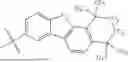
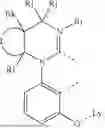
In some embodiments, the compound has a structure of Formula IA:
wherein REE each independently represent zero, mono, or up to maximum allowed substitutions; each of REE, REE1 and REE2 is independently hydrogen or a substituent selected from the group consisting of the General Substituents defined herein; REE0 is selected from the group consisting of halogen, alkyl, cycloalkyl, heteroalkyl, heterocycloalkyl, arylalkyl, alkoxy, aryloxy, amino, silyl, germyl, boryl, alkenyl, cycloalkenyl, heteroalkenyl, alkynyl, aryl, heteroaryl, acyl, carboxylic acid, ether, ester, nitrile, isonitrile, sulfanyl, sulfinyl, sulfonyl, phosphino, selenyl, and combinations thereof.
In some embodiments, REE1 is the same as REE2.
In some embodiments, REE1 is different from REE2.
In some embodiments, at least one of REE1 and REE2 comprises a chemical group containing at least three 6-membered aromatic rings that are not fused next to each other.
In some embodiments, at least one of REE1 and REE2 comprises a chemical group containing at least four 6-membered aromatic rings that are not fused next to each other.
In some embodiments, at least one of REE1 and REE2 comprises a chemical group containing at least five 6-membered aromatic rings that are not fused next to each other.
In some embodiments, at least one of REE1 and REE2 comprises a chemical group containing at least six 6-membered aromatic rings that are not fused next to each other.
In some embodiments, both REE1 and REE2 comprise a chemical group containing at least three to six 6-membered aromatic rings that are not fused next to each other.
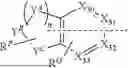
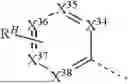
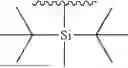
In some embodiments, at least one of REE1 and REE2 comprises a group RW having a structure selected from the group consisting of:
Formula IIA, —Q(R1a)(R2a)a(R3a)b, Formula IIA,
and Formula IIB,
wherein
each of RF, RG, and RH independently represents mono to the maximum allowable number of substitutions, or no substitution;
each R, R1, R1a, R2a, R3a, RF, RG, and RH is independently hydrogen or a substituent selected from the group consisting of deuterium, halogen, alkyl, cycloalkyl, heteroalkyl, heterocycloalkyl, arylalkyl, alkoxy, aryloxy, amino, silyl, germyl, boryl, alkenyl, cycloalkenyl, heteroalkenyl, alkynyl, aryl, heteroaryl, acyl, carboxylic acid, ether, ester, nitrile, isonitrile, sulfanyl, sulfinyl, sulfonyl, phosphino, selenyl, and combinations thereof;
-
- each of X30 to X38 is independently C or N;
- each of YA YB, and C is independently CRR′ or SiRR′;
- n is an integer between 1 and 4;
- Q is selected from C, Si, N, O, and B;
- a and b are each independently 0 or 1;
- a+b=2 when Q is C or Si;
- a+b=1 when Q is N or B;
- a+b=0 when Q is O;
and any two substituents may be optionally fused or joined to form a ring.
In some embodiments, at least one of REE1 and REE2 comprises a group RW.
In some embodiments, both REE1 and REE2 comprise a group RW.
In some embodiments, both REE1 and REE2 comprise Formula IIA.
In some embodiments, both REE1 and REE2 comprise Formula IIB.
In some embodiments, both REE1 and REE2 comprise Formula IIC.
In some embodiments, one of REE1 and REE2 comprises Formula IIA, and the other one of REE1 and REE2 comprises Formula IIB.
In some embodiments, one of REE1 and REE2 comprises Formula IIA, and the other one of REE1 and REE2 comprises Formula IIC.
In some embodiments, one of REE1 and REE2 comprises Formula IIB, and the other one of REE1 and REE2 comprises Formula IIC.
In some embodiments, REE1 has a molecular weight (MW) greater than 56 g/mol and REE2 has a molecular weight greater than that of REE1.
In some embodiments, REE1 has a molecular weight (MW) greater than 76 g/mol and REE2 has a molecular weight greater than that of REE1.
In some embodiments, REE1 has a molecular weight (MW) greater than 81 g/mol and REE2 has a molecular weight greater than that of REE1.
In some embodiments, REE1 or REE2 has a molecular weight (MW) greater than 165 g/mol.
In some embodiments, REE1 or REE2 has a molecular weight (MW) greater than 166 g/mol. In some embodiments, REE1 or REE2 has a molecular weight (MW) greater than 182 g/mol.
In some embodiments, REE1 has one more 6-membered aromatic ring than REE2 In some embodiments, REE1 has two more 6-membered aromatic rings than REE2.
In some embodiments, REE1 has three more 6-membered aromatic rings than REE2.
In some embodiments, REE1 has four more 6-membered aromatic rings than REE2.
In some embodiments, REE1 has five more 6-membered aromatic rings than REE2.
In some embodiments, REE1 comprises at least one heteroatom and REE2 consists of hydrocarbon and deuterated variant thereof.
In some embodiments, REE1 comprises at least two heteroatoms and REE2 consists of hydrocarbon and deuterated variant thereof.
In some embodiments, REE1 comprises at least three heteroatoms and REE2 consists of hydrocarbon and deuterated variant thereof.
In some embodiments, REE1 comprises exactly one heteroatom and REE2 consists of hydrocarbon and deuterated variant thereof.
In some embodiments, REE1 comprises exactly two heteroatoms and REE2 consists of hydrocarbon and deuterated variant thereof.
In some embodiments, REE1 comprises exactly three heteroatoms and REE2 consists of hydrocarbon and deuterated variant thereof.
In some embodiments, REE1 comprises exactly one heteroatom and REE2 comprises exactly one heteroatom that is different from the heteroatom in REE1.
In some embodiments, REE1 comprises exactly one heteroatom and REE2 comprises exactly one heteroatom that is same as the heteroatom in REE1.
In some embodiments, REE1 comprises exactly two heteroatoms and REE2 comprises exactly one heteroatom.
In some embodiments, REE1 comprises exactly two heteroatoms and REE2 comprises exactly two heteroatoms.
In some embodiments, REE1 comprises exactly three heteroatoms and REE2 comprises exactly one heteroatom.
In some embodiments, REE1 comprises exactly three heteroatoms and REE2 comprises exactly two heteroatoms.
In some embodiments, REE1 comprises exactly three heteroatoms and REE2 comprises exactly three heteroatoms.
In some embodiments of Formula IA, each of REE1 and REE2 is independently selected from the group of LIST 1 as defined herein.
In some embodiments of Formula IA, R1 is C6H5, C6D5, or tert-butyl.
It should also be understood that all the embodiments/features of Formula I can be equally applicable to the embodiments/features of Formula IA wherein proper.
In some embodiments, Z1 is N, and Z2 is C.
In some embodiments, Z1 is C, and Z2 is N.
In some embodiments, Z1 is N, and Z2 is N.
In some embodiments, Z3—Z5 are each independently C.
In some embodiments, moiety A and moiety B are each independently selected from the group consisting of pyridine, pyrimidine, triazine, N-heterocyclic carbene, imidazole, triazole, benzene, pyridazine, pyrazine, pyrazole, pyrrole, oxazole, furan, thiophene, and thiazole.
In some embodiments, moiety A is selected from the group consisting of pyridine, pyrimidine, triazine, N-heterocyclic carbene, imidazole, triazole, and pyrazole.
In some embodiments, moiety A is pyridine, or pyrazole.
In some embodiments, moiety B is benzene or pyridine.
In some embodiments, at least one of moiety A and moiety B is each independently selected from the group consisting of benzene, pyridine, pyrimidine, pyridazine, pyrazine, triazine, imidazole, pyrazole, pyrrole, oxazole, furan, thiophene, thiazole, triazole, naphthalene, quinoline, isoquinoline, quinazoline, benzofuran, aza-benzofuran, benzoxazole, aza-benzoxazole, benzothiophene, aza-benzothiophene, benzothiazole, aza-benzothiazole, benzoselenophene, aza-benzoselenophene, indene, aza-indene, indole, aza-indole, benzimidazole, aza-benzimidazole, carbazole, aza-carbazole, dibenzofuran, aza-dibenzofuran, dibenzothiophene, aza-dibenzothiophene, quinoxaline, phthalazine, phenanthrene, aza-phenanathrene, anthracene, aza-anthracene, phenanthridine, fluorene, and aza-fluorene.
In some embodiments, each of moiety A and moiety B is each independently selected from the group consisting of benzene, pyridine, pyrimidine, pyridazine, pyrazine, triazine, imidazole, pyrazole, pyrrole, oxazole, furan, thiophene, thiazole, triazole, naphthalene, quinoline, isoquinoline, quinazoline, benzofuran, aza-benzofuran, benzoxazole, aza-benzoxazole, benzothiophene, aza-benzothiophene, benzothiazole, aza-benzothiazole, benzoselenophene, aza-benzoselenophene, indene, aza-indene, indole, aza-indole, benzimidazole, aza-benzimidazole, carbazole, aza-carbazole, dibenzofuran, aza-dibenzofuran, dibenzothiophene, aza-dibenzothiophene, quinoxaline, phthalazine, phenanthrene, aza-phenanathrene, anthracene, aza-anthracene, phenanthridine, fluorene, and aza-fluorene.
In some embodiments, n is 0, meaning it is a direct bond between C1 and C2.
In some embodiments, n is 1.
In some embodiments, one of K1, K2, and K3 is O.
In some embodiments, one of K1 or K2 is O.
In some embodiments, K3 is O.
In some embodiments, K1, K2, and K3 are each independently a direct bond.
In some embodiments, L2 is O.
In some embodiments, L1 is a direct bond.
In some embodiments, L1 is NR′.
In some embodiments, R′ and one RB substituent are joined to form a ring.
In some embodiments, two adjacent RA substituents are joined to form a fused ring.
In some embodiments, the fused ring and moiety A form a polycyclic ring structure selected from naphthalene, quinoline, isoquinoline, quinazoline, benzofuran, benzoxazole, benzothiophene, benzothiazole, benzoselenophene, indene, indole, benzimidazole, carbazole, dibenzofuran, dibenzothiophene, quinoxaline, phthalazine, phenanthrene, phenanthridine, fluorene, and their aza variants.
In some embodiments, two adjacent RB substituents are joined to form a fused ring. In some embodiments, the fused ring and moiety B form a polycyclic ring structure selected from naphthalene, quinoline, isoquinoline, quinazoline, benzofuran, benzoxazole, benzothiophene, benzothiazole, benzoselenophene, indene, indole, benzimidazole, carbazole, dibenzofuran, dibenzothiophene, quinoxaline, phthalazine, phenanthrene, phenanthridine, fluorene, and their aza variants. In some embodiments, two adjacent RC substituents are joined to form a fused ring.
In some embodiments, the fused ring and the benzene ring form a polycyclic ring structure selected from naphthalene, quinoline, isoquinoline, quinazoline, benzofuran, benzoxazole, benzothiophene, benzothiazole, benzoselenophene, indene, indole, benzimidazole, carbazole, dibenzofuran, dibenzothiophene, quinoxaline, phthalazine, phenanthrene, phenanthridine, fluorene, and their aza variants.
In some embodiments, R is selected from the group consisting of alkyl, deuterated alkyl, aryl, deuterated aryl, heteroaryl, deuterated heteroaryl, cycloalkyl, deuterated cycloalkyl, heteroalkyl, heterocycloalkyl, and combinations thereof.
In some embodiments, M is Pt.
In some embodiments, Formula I comprises an electron-withdrawing group. In these embodiments, the electron-withdrawing group commonly comprises one or more highly electronegative elements including but not limited to fluorine, oxygen, sulfur, nitrogen, chlorine, and bromine.
In some embodiments, the electron-withdrawing group has a Hammett constant larger than 0.
In some embodiments, the electron-withdrawing group has a Hammett constant equal or larger than 0.1, 0.2, 0.3, 0.4, 0.5, 0.6, 0.7, 0.8, 0.9, 1.0, or 1.1.
In some embodiments, the electron-withdrawn group is selected from the group consisting of the following structures (LIST EWG 1): F, CF3, CN, COCH3, CHO, COCF3, COOMe, COOCF3, NO2, SF3, SiF3, PF4, SFs, OCF3, SCF3, SeCF3, SOCF3, SeOCF3, SO2F, SO2CF3, SeO2CF3, OSeO2CF3, OCN, SCN, SeCN, NC, +N(Rk2)3, (Rk2)2CCN, (Rk2)2CCF3, CNC(CF3)2, BRk3Rk2, substituted or unsubstituted dibenzoborole, 1-substituted carbazole, 1,9-substituted carbazole, substituted or unsubstituted carbazole, substituted or unsubstituted pyridine, substituted or unsubstituted pyrimidine, substituted or unsubstituted pyrazine, substituted or unsubstituted pyridoxine, substituted or unsubstituted triazine, substituted or unsubstituted oxazole, substituted or unsubstituted benzoxazole, substituted or unsubstituted thiazole, substituted or unsubstituted benzothiazole, substituted or unsubstituted imidazole, substituted or unsubstituted benzimidazole, ketone, carboxylic acid, ester, nitrile, isonitrile, sulfinyl, sulfonyl, partially and fully fluorinated alkyl, partially and fully fluorinated aryl, partially and fully fluorinated heteroaryl, cyano-containing alkyl, cyano-containing aryl, cyano-containing heteroaryl, isocyanate,
-
- wherein YG is selected from the group consisting of BRe, NRe, PRe, O, S, Se, C═O, S═O, SO2, CReRf, SiReRf, and GeReRf; and
- Rk1 each independently represents mono to the maximum allowable substitutions, or no substitution;
- wherein each of Rk1, Rk2, Rk3, Re, and Rf is independently a hydrogen or a substituent selected from the group consisting of the General Substituents defined herein.
In some embodiments, the electron-withdrawing group is selected from the group consisting of the following structures (LIST EWG 2):
In some embodiments, the electron-withdrawing group is selected from the group consisting of the following structures (LIST EWG 3):
In some embodiments, the electron-withdrawing group is selected from the group consisting of the following structures (LIST EWG 4):
In some embodiments, the electron-withdrawing group is a π-electron deficient electron-withdrawing group.
In some embodiments, the π-electron deficient electron-withdrawing group is selected from the group consisting of the following structures (LIST Pi-EWG): CN, COCH3, CHO, COCF3, COOMe, COOCF3, NO2, SF3, SiF3, PF4, SFs, OCF3, SCF3, SeCF3, SOCF3, SeOCF3, SO2F, SO2CF3, SeO2CF3, OSeO2CF3, OCN, SCN, SeCN, NC, +N(Rk1)3, BRk1Rk2, substituted or unsubstituted dibenzoborole, 1-substituted carbazole, 1,9-substituted carbazole, substituted or unsubstituted carbazole, substituted or unsubstituted pyridine, substituted or unsubstituted pyrimidine, substituted or unsubstituted pyrazine, substituted or unsubstituted pyridazine, substituted or unsubstituted triazine, substituted or unsubstituted oxazole, substituted or unsubstituted benzoxazole, substituted or unsubstituted thiazole, substituted or unsubstituted benzothiazole, substituted or unsubstituted imidazole, substituted or unsubstituted benzimidazole, ketone, carboxylic acid, ester, nitrile, isonitrile, sulfinyl, sulfonyl, partially and fully fluorinated aryl, partially and fully fluorinated heteroaryl, cyano-containing aryl, cyano-containing heteroaryl, isocyanate,
wherein the variables are the same as previously defined.
In some embodiments of Formula I or IA, at least one of R1, R2, R3, R4, R, RB, and RC is/comprises an electron-withdrawing group from LIST EWG 1 as defined herein. In some embodiments of Formula I or IA, at least one of R1, R2, R3, R4, R, RB, and RC is/comprises an electron-withdrawing group from LIST EWG 2 as defined herein. In some embodiments of Formula I or IA, at least one of R1, R2, R3, R4, R, RB, and RC is/comprises an electron-withdrawing group from LIST EWG 3 as defined herein. In some embodiments of Formula I or IA, at least one of R1, R2, R3, R4, R, RB, and RC is/comprises an electron-withdrawing group from LIST EWG 4 as defined herein. In some embodiments of Formula I or IA, at least one of R1, R2, R3, R4, R, RB, and RC is/comprises an electron-withdrawing group from LIST Pi-EWG as defined herein.
In some embodiments of Formula I or IA, R1 is/comprises an electron-withdrawing group from LIST EWG 1 as defined herein. In some embodiments of Formula I or IA, R1 is/comprises an electron-withdrawing group from LIST EWG 2 as defined herein. In some embodiments of Formula I or IA, R1 is/comprises an electron-withdrawing group from LIST EWG 3 as defined herein. In some embodiments of Formula I or IA, R1 is/comprises an electron-withdrawing group from LIST EWG 4 as defined herein. In some embodiments of Formula I or IA, R1 is/comprises an electron-withdrawing group from LIST Pi-EWG as defined herein.
In some embodiments of Formula I or IA, R2 is/comprises an electron-withdrawing group from LIST EWG 1 as defined herein. In some embodiments of Formula I or IA, R2 is/comprises an electron-withdrawing group from LIST EWG 2 as defined herein. In some embodiments of Formula I or IA, R2 is/comprises an electron-withdrawing group from LIST EWG 3 as defined herein. In some embodiments of Formula I or IA, R2 is/comprises an electron-withdrawing group from LIST EWG 4 as defined herein. In some embodiments of Formula I or IA, R2 is/comprises an electron-withdrawing group from LIST Pi-EWG as defined herein.
In some embodiments of Formula I or IA, R3 is/comprises an electron-withdrawing group from LIST EWG 1 as defined herein. In some embodiments of Formula I or IA, R3 is/comprises an electron-withdrawing group from LIST EWG 2 as defined herein. In some embodiments of Formula I or IA, R3 is/comprises an electron-withdrawing group from LIST EWG 3 as defined herein. In some embodiments of Formula I or IA, R3 is/comprises an electron-withdrawing group from LIST EWG 4 as defined herein. In some embodiments of Formula I or IA, R3 is/comprises an electron-withdrawing group from LIST Pi-EWG as defined herein.
In some embodiments of Formula I or IA, R is/comprises an electron-withdrawing group from LIST EWG 1 as defined herein. In some embodiments of Formula I or IA, R is/comprises an electron-withdrawing group from LIST EWG 2 as defined herein. In some embodiments of Formula I or IA, R is/comprises an electron-withdrawing group from LIST EWG 3 as defined herein. In some embodiments of Formula I or IA, R is/comprises an electron-withdrawing group from LIST EWG 4 as defined herein. In some embodiments of Formula I or IA, R is/comprises an electron-withdrawing group from LIST Pi-EWG as defined herein.
In some embodiments of Formula I or IA, if present, at least one RA is/comprises an electron-withdrawing group from LIST EWG 1 as defined herein. In some embodiments of Formula I or IA, if present, at least one of RA is/comprises an electron-withdrawing group from LIST EWG 2 as defined herein. In some embodiments of Formula I or IA, if present, at least one of RA is/comprises an electron-withdrawing group from LIST EWG 3 as defined herein. In some embodiments of Formula I or IA, if present, at least one of RA is/comprises an electron-withdrawing group from LIST EWG 4 as defined herein. In some embodiments of Formula I or IA, if present, at least one of RA is/comprises an electron-withdrawing group from LIST Pi-EWG as defined herein.
In some embodiments of Formula I or IA, at least one RB is/comprises an electron-withdrawing group from LIST EWG 1 as defined herein. In some embodiments of Formula I or IA, at least one ofRB is/comprises an electron-withdrawing group from LIST EWG 2 as defined herein. In some embodiments of Formula I or IA, at least one of RB is/comprises an electron-withdrawing group from LIST EWG 3 as defined herein. In some embodiments of Formula I or IA, at least one of RB is/comprises an electron-withdrawing group from LIST EWG 4 as defined herein. In some embodiments of Formula I or IA, at least one of RB is/comprises an electron-withdrawing group from LIST Pi-EWG as defined herein.
In some embodiments of Formula I or IA, at least one RC is/comprises an electron-withdrawing group from LIST EWG 1 as defined herein. In some embodiments of Formula I or IA, at least one of RC is/comprises an electron-withdrawing group from LIST EWG 2 as defined herein. In some embodiments of Formula I or IA, at least one of RC is/comprises an electron-withdrawing group from LIST EWG 3 as defined herein. In some embodiments of Formula I or IA, at least one of RC is/comprises an electron-withdrawing group from LIST EWG 4 as defined herein. In some embodiments of Formula I or IA, at least one of RC is/comprises an electron-withdrawing group from LIST Pi-EWG as defined herein.
In some embodiments of Formula I or IA, if present, R5 is/comprises an electron-withdrawing group from LIST EWG 1 as defined herein. In some embodiments of Formula I or IA, if present, R5 is/comprises an electron-withdrawing group from LIST EWG 2 as defined herein. In some embodiments of Formula I or IA, if present, R5 is/comprises an electron-withdrawing group from LIST EWG 3 as defined herein. In some embodiments of Formula I or IA, if present, R5 is/comprises an electron-withdrawing group from LIST EWG 4 as defined herein. In some embodiments of Formula I or IA, if present, RS is/comprises an electron-withdrawing group from LIST Pi-EWG as defined herein.
In some embodiments of Formula I or IA, if present, R6 is/comprises an electron-withdrawing group from LIST EWG 1 as defined herein. In some embodiments of Formula I or IA, if present, R6 is/comprises an electron-withdrawing group from LIST EWG 2 as defined herein. In some embodiments of Formula I or IA, if present, R6 is/comprises an electron-withdrawing group from LIST EWG 3 as defined herein. In some embodiments of Formula I or IA, if present, R6 is/comprises an electron-withdrawing group from LIST EWG 4 as defined herein. In some embodiments of Formula I or IA, if present, R6 is/comprises an electron-withdrawing group from LIST Pi-EWG as defined herein.
In some embodiments of Formula I or IA, if present, R′ is/comprises an electron-withdrawing group from LIST EWG 1 as defined herein. In some embodiments of Formula I or IA, if present, R′ is/comprises an electron-withdrawing group from LIST EWG 2 as defined herein. In some embodiments of Formula I or IA, if present, R′ is/comprises an electron-withdrawing group from LIST EWG 3 as defined herein. In some embodiments of Formula I or IA, if present, R′ is/comprises an electron-withdrawing group from LIST EWG 4 as defined herein. In some embodiments of Formula I or IA, if present, R′ is/comprises an electron-withdrawing group from LIST Pi-EWG as defined herein.
In some embodiments of Formula I or IA, if present, R″ is/comprises an electron-withdrawing group from LIST EWG 1 as defined herein. In some embodiments of Formula I or IA, if present, R″ is/comprises an electron-withdrawing group from LIST EWG 2 as defined herein. In some embodiments of Formula I or IA, if present, R″ is/comprises an electron-withdrawing group from LIST EWG 3 as defined herein. In some embodiments of Formula I or IA, if present, R″ is/comprises an electron-withdrawing group from LIST EWG 4 as defined herein. In some embodiments of Formula I or IA, if present, R″ is/comprises an electron-withdrawing group from LIST Pi-EWG as defined herein.
In some embodiments, the compound is selected from the group consisting of compounds having the formula of Pt(LA′)(Ly):
-
- wherein LA′ is selected from the group consisting of the structures shown below (LIST 1A):
-
- wherein L is selected from the group consisting of the structures shown below (LIST 1B):3
-
- wherein Ly is selected from the group consisting of the structures shown below (LIST 1C):
wherein each of R1, R2, R1′, R2′, R3′, R4′, R, RX, RY, RA, RB, RC, RE, and RF is independently selected from the group consisting of the general substituents as defined herein.
In some embodiments, each of R1, R2, R1′, R2′, R1, R4′, R, RX, RY, RA, RB, RC, RE, and RF is independently selected from the LIST 1 consisting of:
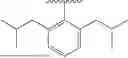
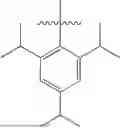
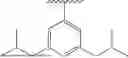
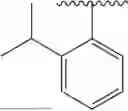
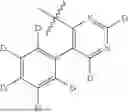
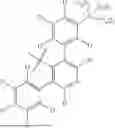
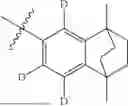
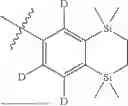
In some embodiments, at least one of R1, R2, R2′, R3′, R4′, R, RA, RE, and RF is selected from LIST 2 consisting of:
wherein each of QA, QB, QC, QD, and QE independently represents mono to the maximum allowable substitution, or no substitution;
wherein each QA, QB, QC, QD, QE, QA1, QB1, QC1, QD1 and QE1 is independently a hydrogen or a substituent selected from the group consisting of alkyl, cycloalkyl, heteroalkyl, heterocycloalkyl, boryl, arylalkyl, alkoxy, aryloxy, amino, silyl, germyl, alkenyl, cycloalkenyl, heteroalkenyl, alkynyl, aryl, heteroaryl, acyl, carboxylic acid, ether, ester, nitrile, isonitrile, sulfanyl, sulfinyl, sulfonyl, phosphino, selenyl, and combinations thereof; each Yaa and Ybb is independently selected from the group consisting of a direct bond, BR, BRR′, NR, PR, O, S, Se, C═O, C═S, C═Se, C═NR, C═CRR′, S═O, SO2, CR, CRR′, SiRR′, GeRR′, alkyl, cycloalkyl, aryl, heteroaryl, and combinations thereof; and any two substituents can be joined or fused to form a ring.
In some embodiments, the compound is selected from the group consisting of the compounds having the formula of Pt(LA′)(Ly):
-
- wherein LA′ is selected from the group consisting of the structures shown below (LIST 2A);
| LA′ | Structure of LA′ |
| LA′1-(Ri)(Rj)(Rk)(Rl), wherein LA′1- (R1)(R1)(R1)(R1) to LA′1- (R468)(R468)(R468)(R468), having the structure | |
| LA′2-(Ri)(Rj)(Rk)(Rl), wherein LA′2- (R1)(R1)(R1)(R1) to LA′2- (R468)(R468)(R468)(R468), having the structure | |
| LA′3-(Ri)(Rj)(Rk)(Rl)- L(Rv)(Rw), wherein LA′3-(R1)(R1)(R1)(R1)- L1(R1)(R1) to LA′3- (R468)(R468)(R468)(R468)- L19(R468)(R468), having the structure | |
| LA′4-(Ri)(Rj)(Rk)(Rl)- L(Rv)(Rw), wherein LA′4- (R1)(R1)(R1)(R1)- L1(R1)(R1) to LA′4- (R468)(R468)(R468)(R468)- L19(R468)(R468), having the structure | |
| LA′5-(Ri)(Rj)(Rk)(Rl)- L(Rv)(Rw), wherein LA′5- (R1)(R1)(R1)(R1)- L1(R1)(R1) to LA′5- (R468)(R468)(R468)(R468)- L19(R468)(R468), having the structure | |
-
- wherein L is selected from the group consisting of the structures shown below (LIST 2B):
| L | Structure of L |
| L1-(Rv)(Rw), wherein L1-(R1)(R1) to L1- (R468)(R468), having the structure | |
| L2-(Rv)(Rw), wherein L2-(R1)(R1) to L2- (R468)(R468), having the structure | |
| L3-(Rv)(Rw), wherein L3-(R1)(R1) to L3- (R468)(R468), having the structure | |
| L4-(Rv)(Rw), wherein L4-(R1)(R1) to L4- (R468)(R468), having the structure | |
| L5-(Rv)(Rw), wherein L5-(R1)(R1) to L5- (R468)(R468), having the structure | |
| L6-(Rv)(Rw), wherein L6-(R1)(R1) to L6- (R468)(R468), having the structure | |
| L7-(Rv)(Rw), wherein L7-(R1)(R1) to L7- (R468)(R468), having the structure | |
| L8-(Rv)(Rw), wherein L8-(R1)(R1) to L8- (R468)(R468), having the structure | |
| L9-(Rv)(Rw), wherein L9-(R1)(R1) to L9- (R468)(R468), having the structure | |
| L10-(Rv)(Rw), wherein L10-(R1)(R1) to L10- (R468)(R468), having the structure | |
| L11-(Rv)(Rw), wherein L11-(R1)(R1) to L11- (R468)(R468), having the structure | |
| L12-(Rv)(Rw), wherein L12-(R1)(R1) to L12- (R468)(R468), having the structure | |
| L13-(Rv)(Rw), wherein L13-(R1)(R1) to L13- (R468)(R468), having the structure | |
| L14-(Rv)(Rw), wherein L14-(R1)(R1) to L14- (R468)(R468), having the structure | |
| L15-(Rv)(Rw), wherein L15-(R1)(R1) to L15- (R468)(R468), having the structure | |
| L16-(Rv)(Rw), wherein L16-(R1)(R1) to L16- (R468)(R468), having the structure | |
| L17-(Rv)(Rw), wherein L17-(R1)(R1) to L17- (R468)(R468), having the structure | |
-
- wherein Ly is selected from the group consisting of the structures shown below (LIST 2C):
| Ly | Structure of Ly |
| Ly1-(Rs)(Rt)(Ru), wherein Ly1-(R1)(R1)(R1) to Ly1- (R468)(R468)(R468), having the structure | |
| Ly2-(Rs)(Rt)(Ru), wherein Ly2-(R1)(R1)(R1) to Ly2- (R468)(R468)(R468), having the structure | |
| Ly3-(Rs)(Rt)(Ru), wherein Ly3-(R1)(R1)(R1) to Ly3- (R468)(R468)(R468), having the structure | |
| Ly4-(Rs)(Rt)(Ru), wherein Ly4-(R1)(R1)(R1) to Ly4- (R468)(R468)(R468), having the structure | |
| Ly5-(Rs)(Rt)(Ru), wherein Ly5-(R1)(R1)(R1) to Ly5- (R468)(R468)(R468), having the structure | |
| Ly6-(Rs)(Rt)(Ru), wherein Ly6-(R1)(R1)(R1) to Ly6- (R468)(R468)(R468), having the structure | |
| Ly7-(Rs)(Rt)(Ru), wherein Ly7-(R1)(R1)(R1) to Ly7- (R468)(R468)(R468), having the structure | |
| Ly8-(Rs)(Rt)(Ru), wherein Ly8-(R1)(R1)(R1) to Ly8- (R468)(R468)(R468), having the structure | |
| Ly9-(Rs)(Rt)(Ru), wherein Ly9-(R1)(R1)(R1) to Ly9- (R468)(R468)(R468), having the structure | |
| Ly10-(Rs)(Rt)(Ru), wherein Ly10-(R1)(R1)(R1) to Ly10- (R468)(R468)(R468), having the structure | |
| Ly11-(Rs)(Rt)(Ru), wherein Ly11-(R1)(R1)(R1) to Ly11- (R468)(R468)(R468), having the structure | |
| Ly12-(Rs)(Rt)(Ru), wherein Ly12-(R1)(R1)(R1) to Ly12- (R468)(R468)(R468), having the structure | |
| Ly13-(Rs)(Rt)(Ru), wherein Ly13-(R1)(R1)(R1) to Ly 13-(R468)(R468)(R468), having the structure | |
| Ly14-(Rs)(Rt)(Ru), wherein Ly14-(R1)(R1)(R1) to Ly14- (R468)(R468)(R468), having the structure | |
| Ly15-(Rs)(Rt)(Ru), wherein Ly15-(R1)(R1)(R1) to Ly15- (R468)(R468)(R468), having the structure | |
| Ly16-(Rs)(Rt)(Ru), wherein Ly16-(R1)(R1)(R1) to Ly 16- (R468)(R468)(R468), having the structure | |
| Ly17-(Rs)(Rt)(Ru), wherein Ly17-(R1)(R1)(R1) to Ly17- (R468)(R468)(R468), having the structure | |
| Ly18-(Rs)(Rt)(Ru), wherein Ly18- (R1)(R1)(R1) to Ly18- (R468)(R468)(R468), having the structure | |
| Ly19-(Rs)(Rt)(Ru), wherein Ly19- (R1)(R1)(R1) to Ly19- (R468)(R468)(R468), having the structure | |
| Ly20-(Rs)(Rt)(Ru), wherein Ly20- (R1)(R1)(R1) to Ly20- (R468)(R468)(R468), having the structure | |
| Ly21-(Rs)(Rt)(Ru), wherein Ly21- (R1)(R1)(R1) to Ly21- (R468)(R468)(R468), having the structure | |
| Ly22-(Rs)(Rt)(Ru), wherein Ly22- (R1)(R1)(R1) to Ly22- (R468)(R468)(R468), having the structure | |
| Ly23-(Rs)(Rt)(Ru), wherein Ly23- (R1)(R1)(R1) to Ly23- (R468)(R468)(R468), having the structure | |
| Ly24-(Rs)(Rt)(Ru), wherein Ly24- (R1)(R1)(R1) to Ly24- (R468)(R468)(R468), having the structure | |
| Ly25-(Rs)(Rt)(Ru), wherein Ly25- (R1)(R1)(R1) to Ly25- (R468)(R468)(R468), having the structure | |
| Ly26-(Rs)(Rt)(Ru), wherein Ly26- (R1)(R1)(R1) to Ly26- (R468)(R468)(R468), having the structure | |
| Ly27-(Rs)(Rt)(Ru), wherein Ly27- (R1)(R1)(R1) to Ly27- (R468)(R468)(R468), having the structure | |
| Ly28-(Rs)(Rt)(Ru), wherein Ly28- (R1)(R1)(R1) to Ly28- (R468)(R468)(R468), having the structure | |
| Ly29-(Rs)(Rt)(Ru), wherein Ly29- (R1)(R1)(R1) to Ly29- (R468)(R468)(R468), having the structure | |
| Ly30-(Rs)(Rt)(Ru), wherein Ly30- (R1)(R1)(R1) to Ly30- (R468)(R468)(R468), having the structure | |
| Ly31-(Rs)(Rt)(Ru), wherein Ly31- (R1)(R1)(R1) to Ly31- (R468)(R468)(R468), having the structure | |
| Ly32-(Rs)(Rt)(Ru), wherein Ly32- (R1)(R1)(R1) to Ly32- (R468)(R468)(R468), having the structure | |
| Ly33-(Rs)(Rt)(Ru), wherein Ly33- (R1)(R1)(R1) to Ly33- (R468)(R468)(R468), having the structure | |
-
- wherein R1 to R468 have the following structures (LIST 2D)):
| Structure | |
| R1 | |
| R2 | |
| R3 | |
| R4 | |
| R5 | |
| R6 | |
| R7 | |
| R8 | |
| R9 | |
| R10 | |
| R11 | |
| R12 | |
| R13 | |
| R14 | |
| R15 | |
| R16 | |
| R17 | |
| R18 | |
| R19 | |
| R20 | |
| R21 | |
| R22 | |
| R23 | |
| R24 | |
| R25 | |
| R26 | |
| R27 | |
| R28 | |
| R29 | |
| R30 | |
| R31 | |
| R32 | |
| R33 | |
| R34 | |
| R35 | |
| R36 | |
| R37 | |
| R38 | |
| R39 | |
| R40 | |
| R41 | |
| R42 | |
| R43 | |
| R44 | |
| R45 | |
| R46 | |
| R47 | |
| R48 | |
| R49 | |
| R50 | |
| R51 | |
| R52 | |
| R53 | |
| R54 | |
| R55 | |
| R56 | |
| R57 | |
| R58 | |
| R59 | |
| R60 | |
| R61 | |
| R62 | |
| R63 | |
| R64 | |
| R65 | |
| R66 | |
| R67 | |
| R68 | |
| R69 | |
| R70 | |
| R71 | |
| R72 | |
| R73 | |
| R74 | |
| R75 | |
| R76 | |
| R77 | |
| R78 | |
| R79 | |
| R80 | |
| R81 | |
| R82 | |
| R83 | |
| R84 | |
| R85 | |
| R86 | |
| R87 | |
| R88 | |
| R89 | |
| R90 | |
| R91 | |
| R92 | |
| R93 | |
| R94 | |
| R95 | |
| R96 | |
| R97 | |
| R98 | |
| R99 | |
| R100 | |
| R101 | |
| R102 | |
| R103 | |
| R104 | |
| R105 | |
| R106 | |
| R107 | |
| R108 | |
| R109 | |
| R110 | |
| R111 | |
| R112 | |
| R113 | |
| R114 | |
| R115 | |
| R116 | |
| R117 | |
| R118 | |
| R119 | |
| R120 | |
| R121 | |
| R122 | |
| R123 | |
| R124 | |
| R125 | |
| R126 | |
| R127 | |
| R128 | |
| R129 | |
| R130 | |
| R131 | |
| R132 | |
| R133 | |
| R134 | |
| R135 | |
| R136 | |
| R137 | |
| R138 | |
| R139 | |
| R140 | |
| R141 | |
| R142 | |
| R143 | |
| R144 | |
| R145 | |
| R146 | |
| R147 | |
| R148 | |
| R149 | |
| R150 | |
| R151 | |
| R152 | |
| R153 | |
| R154 | |
| R155 | |
| R156 | |
| R157 | |
| R158 | |
| R159 | |
| R160 | |
| R161 | |
| R162 | |
| R163 | |
| R164 | |
| R165 | |
| R166 | |
| R167 | |
| R168 | |
| R169 | |
| R170 | |
| R171 | |
| R172 | |
| R173 | |
| R174 | |
| R175 | |
| R176 | |
| R177 | |
| R178 | |
| R179 | |
| R468 | |
| R181 | |
| R182 | |
| R183 | |
| R184 | |
| R185 | |
| R186 | |
| R187 | |
| R188 | |
| R189 | |
| R190 | |
| R191 | |
| R192 | |
| R193 | |
| R194 | |
| R195 | |
| R196 | |
| R197 | |
| R198 | |
| R199 | |
| R200 | |
| R201 | |
| R202 | |
| R203 | |
| R204 | |
| R205 | |
| R206 | |
| R207 | |
| R208 | |
| R209 | |
| R210 | |
| R211 | |
| R212 | |
| R213 | |
| R214 | |
| R215 | |
| R216 | |
| R217 | |
| R218 | |
| R219 | |
| R220 | |
| R221 | |
| R222 | |
| R223 | |
| R224 | |
| R225 | |
| R226 | |
| R227 | |
| R228 | |
| R229 | |
| R230 | |
| R231 | |
| R232 | |
| R233 | |
| R234 | |
| R235 | |
| R236 | |
| R237 | |
| R238 | |
| R239 | |
| R240 | |
| R241 | |
| R242 | |
| R243 | |
| R244 | |
| R245 | |
| R246 | |
| R247 | |
| R248 | |
| R249 | |
| R250 | |
| R251 | |
| R252 | |
| R253 | |
| R254 | |
| R255 | |
| R256 | |
| R257 | |
| R258 | |
| R259 | |
| R260 | |
| R261 | |
| R262 | |
| R263 | |
| R264 | |
| R265 | |
| R266 | |
| R267 | |
| R268 | |
| R269 | |
| R270 | |
| R271 | |
| R272 | |
| R273 | |
| R274 | |
| R275 | |
| R276 | |
| R277 | |
| R278 | |
| R279 | |
| R280 | |
| R281 | |
| R282 | |
| R283 | |
| R284 | |
| R285 | |
| R286 | |
| R287 | |
| R288 | |
| R289 | |
| R290 | |
| R291 | |
| R292 | |
| R293 | |
| R294 | |
| R295 | |
| R296 | |
| R297 | |
| R298 | |
| R299 | |
| R300 | |
| R301 | |
| R302 | |
| R303 | |
| R304 | |
| R305 | |
| R306 | |
| R307 | |
| R308 | |
| R309 | |
| R310 | |
| R311 | |
| R312 | |
| R313 | |
| R314 | |
| R315 | |
| R316 | |
| R317 | |
| R318 | |
| R319 | |
| R320 | |
| R321 | |
| R322 | |
| R323 | |
| R324 | |
| R325 | |
| R326 | |
| R327 | |
| R328 | |
| R329 | |
| R330 | |
| R331 | |
| R332 | |
| R333 | |
| R334 | |
| R335 | |
| R336 | |
| R337 | |
| R338 | |
| R339 | |
| R340 | |
| R341 | |
| R342 | |
| R343 | |
| R344 | |
| R345 | |
| R346 | |
| R347 | |
| R348 | |
| R349 | |
| R350 | |
| R351 | |
| R352 | |
| R353 | |
| R354 | |
| R355 | |
| R356 | |
| R357 | |
| R358 | |
| R359 | |
| R360 | |
| R361 | |
| R362 | |
| R363 | |
| R364 | |
| R365 | |
| R366 | |
| R367 | |
| R368 | |
| R369 | |
| R370 | |
| R371 | |
| R372 | |
| R373 | |
| R374 | |
| R375 | |
| R376 | |
| R377 | |
| R378 | |
| R379 | |
| R380 | |
| R381 | |
| R382 | |
| R383 | |
| R384 | |
| R385 | |
| R386 | |
| R387 | |
| R388 | |
| R389 | |
| R390 | |
| R391 | |
| R392 | |
| R393 | |
| R394 | |
| R395 | |
| R396 | |
| R397 | |
| R398 | |
| R399 | |
| R400 | |
| R401 | |
| R402 | |
| R403 | |
| R404 | |
| R405 | |
| R406 | |
| R407 | |
| R408 | |
| R409 | |
| R410 | |
| R411 | |
| R412 | |
| R413 | |
| R414 | |
| R415 | |
| R416 | |
| R417 | |
| R418 | |
| R419 | |
| R420 | |
| R421 | |
| R422 | |
| R423 | |
| R424 | |
| R425 | |
| R426 | |
| R427 | |
| R428 | |
| R429 | |
| R430 | |
| R431 | |
| R432 | |
| R433 | |
| R434 | |
| R435 | |
| R436 | |
| R437 | |
| R438 | |
| R439 | |
| R440 | |
| R441 | |
| R442 | |
| R443 | |
| R444 | |
| R445 | |
| R446 | |
| R447 | |
| R448 | |
| R449 | |
| R450 | |
| R451 | |
| R452 | |
| R453 | |
| R454 | |
| R455 | |
| R456 | |
| R457 | |
| R458 | |
| R459 | |
| R460 | |
| R461 | |
| R462 | |
| R463 | |
| R464 | |
| R465 | |
| R466 | |
| R467 | |
| R468 | |
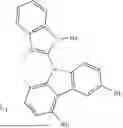
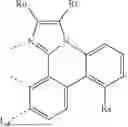
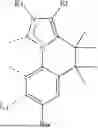
In some embodiments, the compound is selected from the group consisting of the following structures (LIST 3):
Claims
What is claimed is:1. A compound having a structure of Formula I:
wherein:
M is Pt or Pd;
moiety A is absent or present, and if present is a monocyclic ring or a polycyclic fused ring system, wherein the monocyclic ring or each ring of the polycyclic fused ring system is independently a 5-membered to 10-membered carbocyclic or heterocyclic ring;
moiety B is a monocyclic ring or a polycyclic fused ring system, wherein the monocyclic ring or each ring of the polycyclic fused ring system is independently a 5-membered to 10-membered carbocyclic or heterocyclic ring;
Z1—Z5 are each independently C or N;
n is 0, 1, or 2;
L1 and L2 are each independently selected from the group consisting of a direct bond, BR′, BR′R″, NR′, PR′, O, S, Se, C═O, S═O, SO2, CR′R″, SiR′R″, GeR′R″, alkyl, cycloalkyl, and combinations thereof;
K1, K2, and K3 are each independently a direct bond, O, or S;
RA, RB, and RC each independently represent zero, mono, or up to maximum allowed substitutions to its associated ring;
each of R1, R2, R3, R4, R5, R6, R, R′, R″, RA, RB, and RC is independently a hydrogen or a substituent selected from the group consisting of deuterium, halogen, alkyl, cycloalkyl, heteroalkyl, heterocycloalkyl, arylalkyl, alkoxy, aryloxy, amino, silyl, germyl, boryl, alkenyl, cycloalkenyl, heteroalkenyl, alkynyl, aryl, heteroaryl, acyl, carboxylic acid, ether, ester, nitrile, isonitrile, sulfanyl, sulfinyl, sulfonyl, phosphino, and combinations thereof; and
any two substituents may be optionally joined or fused to form a ring;
with the proviso that R1 and R3 do not join to form a structure that comprises Formula II;
$ connects to C1, and & connects to C2
wherein the dashed lines indicates C1 or C2; and
wherein represents a single bond or double bond.
2. The compound of claim 1, wherein each of R1, R2, R3, R4, R5, R6, R, R′, R″, RA, RB, and RC is independently a hydrogen or a substituent selected from the group consisting of deuterium, fluorine, alkyl, cycloalkyl, heteroalkyl, alkoxy, aryloxy, amino, silyl, germyl, boryl, alkenyl, cycloalkenyl, heteroalkenyl, aryl, heteroaryl, nitrile, isonitrile, sulfanyl, and combinations thereof.
3. The compound of claim 1, wherein each of R1, R2, R3, R4, R5, and R6 is independently selected from the group consisting of hydrogen, deuterium, alkyl, cycloalkyl, aryl, silyl, and combinations thereof.
4. The compound of claim 1, wherein Z1 is N, and Z2 is C; or wherein Z1 is C, and Z2 is N; or wherein Z1 is N, and Z2 is N.
5. The compound claim 1, wherein Z3—Z5 are each independently C.
6. The compound of claim 1, wherein moiety A when present and moiety B are each independently selected from the group consisting of pyridine, pyrimidine, triazine, N-heterocyclic carbene, imidazole, triazole, benzene, pyridazine, pyrazine, pyrazole, pyrrole, oxazole, furan, thiophene, and thiazole.
7. The compound of claim 1, wherein moiety A is selected from the group consisting of pyridine, pyrimidine, triazine, N-heterocyclic carbene, imidazole, triazole, and pyrazole; and/or wherein moiety B is benzene or pyridine.
8. The compound of claim 1, wherein n is 0 or 1; and/or wherein M is Pt.
9. The compound of claim 1, wherein K1, K2, and K3 are each independently a direct bond or wherein one of K1, K2, and K3 is O.
10. The compound of claim 1, wherein L2 is O; and/or wherein L1 is a direct bond or NR′.
11. The compound of claim 1, wherein two adjacent RA substituents are joined to form a fused ring; and/or
wherein two adjacent RB substituents are joined to form a fused ring; and/or wherein two adjacent RC substituents are joined to form a fused ring.
12. The compound of claim 1, wherein R is selected from the group consisting of alkyl, deuterated alkyl, aryl, deuterated aryl, heteroaryl, deuterated heteroaryl, cycloalkyl, deuterated cycloalkyl, heteroalkyl, heterocycloalkyl, and combinations thereof.
13. The compound of claim 1, wherein the compound is selected from the group consisting of compounds having the formula of Pt(LA,)(Ly):
whereinLA is selected from the group consisting of the structures of LIST 1A defined herein;
wherein L is selected is selected from the group consisting of the structures of LIST 1B defined herein;
wherein Ly is selected from the group consisting of the structures of LIST 1C defined herein;
wherein each of R1, R2, R1′, R2′, R3′, R4′, R, RX, RY, RA, RB, RC, RE, and RF is independently selected from the group consisting of the general substituents as defined herein.
14. The compound of claim 1, wherein the compound is selected from the group consisting of the compounds having the formula of Pt(LA)(Ly):
wherein LA′ is selected from the group consisting of the structures of LIST 2A defined herein wherein L is selected from the group consisting of the structures of LIST 2B defined herein;
wherein Ly is selected from the group consisting of the structures of LIST 2C defined herein; and
wherein R1 to R468 have the structures of LIST 2D defined herein.
15. The compound of claim 1, wherein the compound is selected from the group consisting of the structures of LIST 3 as defined herein.
16. An organic light emitting device (OLED) comprising:
an anode;
a cathode; and
an organic layer disposed between the anode and the cathode,
wherein the organic layer comprises a compound according to claim 1.
17. The OLED of claim 16, wherein the organic layer further comprises a host, wherein the host is selected from the HOST group 1 as defined herein.
18. The OLED of claim 16, wherein the compound is a sensitizer, and the OLED further comprises an acceptor selected from the group consisting of a fluorescent emitter, a delayed fluorescence emitter, and combination thereof.
19. A consumer product comprising an organic light-emitting device (OLED) comprising:
an anode;
a cathode; and
an organic layer disposed between the anode and the cathode,
wherein the organic layer comprises a compound according to claim 1.
20. A formulation comprising a compound according to claim 1.
Images & Drawings included:












































































































































Sources:
- United States Patent and Trademark Office - verify current appl. status at the USPTO↗
Similar patent applications:
- » 20140077191
Compound, organic electroluminescence device material, organic electroluminescence device and electronic device - » 20240368103
COMPOUND, ORGANIC-ELECTROLUMINESCENCE-DEVICE MATERIAL, ORGANIC ELECTROLUMINESCENCE DEVICE, AND ELECTRONIC DEVICE - » 20240276878
COMPOUND, ORGANIC-ELECTROLUMINESCENCE-DEVICE MATERIAL, ORGANIC ELECTROLUMINESCENCE DEVICE, AND ELECTRONIC DEVICE - » 20250057041
COMPOUND, ORGANIC-ELECTROLUMINESCENCE-DEVICE MATERIAL, ORGANIC ELECTROLUMINESCENCE DEVICE, AND ELECTRONIC DEVICE - » 20170005274
COMPOUND, ORGANIC ELECTROLUMINESCENT DEVICE MATERIAL, ORGANIC ELECTROLUMINESCENT DEVICE, AND ELECTRONIC EQUIPMENT - » 20180102484
Compound, organic electroluminescence device material, organic electroluminescence device and electronic device - » 20090167165
Organic electroluminescent device material, organic electroluminescent device, display and illuminating device - » 20140239273
Anthracene derivative, organic-electroluminescence-device material, organic electroluminescence device, and electronic equipment - » 20100181553
Organic electroluminescent device material and organic electroluminescent device - » 20060251918
Organic electroluminescent device material and organic electroluminescent device using same
Recent applications in this class:
- » 20250176422 2025-05-29
ORGANIC ELECTROLUMINESCENCE DEVICE AND ORGANOMETALLIC COMPOUND FOR ORGANIC ELECTROLUMINESCENCE DEVICE - » 20250176421 2025-05-29
Organometallic Complex And Light-Emitting Device - » 20250169354 2025-05-22
COMPOSITION, LIGHT-EMITTING DEVICE, ELECTRONIC EQUIPMENT INCLUDING THE LIGHT-EMITTING DEVICE, AND ORGANOMETALLIC COMPOUND - » 20250151609 2025-05-08
LIGHT-EMITTING DEVICE INCLUDING ORGANOMETALLIC COMPOUND, ELECTRONIC APPARATUS INCLUDING THE LIGHT-EMITTING DEVICE, AND THE ORGANOMETALLIC COMPOUND - » 20250151608 2025-05-08
LIGHT-EMITTING DEVICE INCLUDING ORGANOMETALLIC COMPOUND, ELECTRONIC APPARATUS INCLUDING THE LIGHT-EMITTING DEVICE, AND THE ORGANOMETALLIC COMPOUND - » 20250143169 2025-05-01
LIGHT-EMITTING DEVICE INCLUDING ORGANOMETALLIC COMPOUND, ELECTRONIC APPARATUS INCLUDING THE LIGHT-EMITTING DEVICE, AND THE ORGANOMETALLIC COMPOUND - » 20250143168 2025-05-01
ORGANOMETALLIC COMPOUND, LIGHT-EMITTING DEVICE INCLUDING THE SAME, AND ELECTRONIC APPARATUS INCLUDING THE LIGHT-EMITTING DEVICE - » 20250133954 2025-04-24
ORGANIC ELECTROLUMINESCENT MATERIALS AND DEVICES - » 20250127032 2025-04-17
ORGANIC ELECTROLUMINESCENT MATERIALS AND DEVICES - » 20250127031 2025-04-17
ORGANIC ELECTROLUMINESCENT MATERIALS AND DEVICES