VESSEL LOADING WITH GUIDANCE USING AN AUGMENTED REALITY HEADSET
US20250061680A1
2025-02-20
18/451,791
2023-08-17
Smart Summary: An augmented reality headset is used to help load packages into vessels more efficiently. First, it identifies different types of packages and the vessel they need to go into. Then, it determines the best way to arrange these packages inside the vessel. For each package, the headset recognizes it and shows a visual guide on where to place it. This makes the loading process easier and more organized. 🚀 TL;DR
Abstract:
Techniques are described herein for leveraging an augmented reality headset to facilitate improved loading of packages into vessels at various stages of package distribution. A method includes: identifying a heterogeneous plurality of packages and a vessel into which the heterogeneous plurality of packages is to be loaded; based on identifying the heterogeneous plurality of packages and the vessel, identifying an arrangement of the heterogeneous plurality of packages within an interior of the vessel; and for each package in the heterogeneous plurality of packages: performing object recognition on the package, using an augmented reality (AR) headset; and based on identifying the arrangement of the heterogeneous plurality of packages and further based on performing object recognition on the package, providing, using the AR headset, a visual annotation corresponding to the package, the visual annotation indicating a position for the package within the interior of the vessel.
Inventors:
- Mark Moore 5 🇺🇸 Burlingame, CA, United States
- Kartik Lakshminarayanan 2 🇺🇸 Saratoga, CA, United States
Applicant:
Interested in similar patents?
Get notified when new applications in this technology area are published.
Classification:
G06V10/235 » CPC main
Arrangements for image or video recognition or understanding; Image preprocessing by selection of a specific region containing or referencing a pattern; Locating or processing of specific regions to guide the detection or recognition based on user input or interaction
G02B27/017 » CPC further
Optical systems or apparatus not provided for by any of the groups -; Head-up displays Head mounted
G06F3/013 » CPC further
Input arrangements for transferring data to be processed into a form capable of being handled by the computer; Output arrangements for transferring data from processing unit to output unit, e.g. interface arrangements; Input arrangements or combined input and output arrangements for interaction between user and computer; Arrangements for interaction with the human body, e.g. for user immersion in virtual reality Eye tracking input arrangements
G02B2027/014 » CPC further
Optical systems or apparatus not provided for by any of the groups -; Head-up displays characterised by optical features comprising information/image processing systems
G06V10/22 IPC
Arrangements for image or video recognition or understanding; Image preprocessing by selection of a specific region containing or referencing a pattern; Locating or processing of specific regions to guide the detection or recognition
G02B27/01 IPC
Optical systems or apparatus not provided for by any of the groups - Head-up displays
G06F3/01 IPC
Input arrangements for transferring data to be processed into a form capable of being handled by the computer; Output arrangements for transferring data from processing unit to output unit, e.g. interface arrangements Input arrangements or combined input and output arrangements for interaction between user and computer
Description
BACKGROUND
At various points of a package distribution network, different types of vessels are loaded with packages having varying sizes, shapes, and/or masses. For instance, at a manufacturing or distribution center, a set of packages may be loaded into a truck. At a container port, some of the set of packages may be removed from the truck and intermingled with other packages into a shipping container having different dimensions than the truck. At another location downstream from the container port, the packages may be unloaded from the shipping container and distributed among one or more additional vessels, such as trucks, train cars, etc., along with yet additional packages not included in the original set.
Without thoughtful consideration of how packages are arranged within vessels during each stage of distribution, individual packages may be lost, damaged, and/or destroyed. Additionally, packages may not be optimally positioned for downstream distribution. For example, packages in one vessel that are intended to be loaded together in a downstream vessel should be placed in close proximity with each other to reduce the likelihood that packages will be misplaced, and/or to improve logistical efficiency.
SUMMARY
Implementations are described herein for leveraging an augmented reality headset to facilitate improved loading of packages into vessels at various stages of package distribution. In some implementations, arrangements of packages within vessels that are likely to bolster efficiencies and/or reduce losses associated with distribution of the packages across the package distribution network may be determined (e.g., using artificial intelligence and/or machine learning models that generate output that conveys such arrangements) and/or identified, and based on such arrangements, one or more augmented reality headsets may provide visual annotations indicating positions for packages within interiors of vessels. As used herein, a “vessel” may refer to anything that can be used to hold and/or move physical objects (e.g., packages) between physical locations, such as all or parts of ships or boats (e.g., cargo holds, cargo decks), semi-truck trailers, shipping containers that can be loaded onto trucks, ships, aircraft, or trains, train cars, flat beds, panel trucks, vans, elevators, and so forth.
In various implementations, a method implemented by one or more processors may include: identifying a heterogeneous plurality of packages and a vessel into which the heterogeneous plurality of packages is to be loaded; based on identifying the heterogeneous plurality of packages and the vessel, identifying an arrangement of the heterogeneous plurality of packages within an interior of the vessel; and for each package in the heterogeneous plurality of packages: performing object recognition on the package, using an augmented reality (AR) headset; and based on identifying the arrangement of the heterogeneous plurality of packages and further based on performing object recognition on the package, providing, using the AR headset, a visual annotation corresponding to the package, the visual annotation indicating a position for the package within the interior of the vessel.
In some implementations, for each package in the heterogeneous plurality of packages, performing object recognition on the package is in response to a gaze of a user wearing the AR headset being directed toward the package.
In some implementations, for each package in the heterogeneous plurality of packages, using the AR headset to provide the visual annotation corresponding to the package is in response to a gaze of a user wearing the AR headset being directed toward the interior of the vessel. In some implementations, for each package in the heterogeneous plurality of packages, using the AR headset to provide the visual annotation corresponding to the package is further in response to receiving user input indicating a selection of the package. In some implementations, the user input indicating the selection of the package includes a wink or a blink.
In some implementations, the method further includes: based on a gaze of a user wearing the AR headset being directed toward two or more packages of the heterogeneous plurality of packages, the two or more packages being ready to load into the interior of the vessel: identifying, from the two or more packages, a particular package to be loaded next into the interior of the vessel; and providing, using the AR headset, a visual annotation indicating the particular package to be loaded next into the interior of the vessel.
In some implementations, the interior of the vessel is logically divided into a three-dimensional (3D) array of logical cells, and for each package in the heterogenous plurality of packages, the visual annotation indicates a particular logical cell in the 3D array of logical cells into which the package is to be loaded.
In some implementations, the arrangement of the heterogeneous plurality of packages includes a plurality of layers of the packages.
In some implementations, for each package in the heterogeneous plurality of packages, the visual annotation corresponding to the package overlays one or more digital images depicting the interior of the vessel. The visual annotation may convey one or more aspects of the position for the package in the arrangement of the heterogeneous plurality of packages within the interior of the vessel.
In some implementations, the method further includes: for each package in the heterogeneous plurality of packages, based on identifying the arrangement of the heterogeneous plurality of packages and further based on performing object recognition on the package, rendering audio output corresponding to the package, the audio output indicating the position for the package within the interior of the vessel.
In some implementations, the vessel is a shipping container, a trailer, a box truck, a panel truck, a cargo van, an aircraft, a ship, or a railcar.
In some additional or alternative implementations, a computer program product may include one or more computer-readable storage media having program instructions collectively stored on the one or more computer-readable storage media. The program instructions may be executable to: identify a heterogeneous plurality of packages and a vessel into which the heterogeneous plurality of packages is to be loaded; based on identifying the heterogeneous plurality of packages and the vessel, identify an arrangement of the heterogeneous plurality of packages within an interior of the vessel; and for each package in the heterogeneous plurality of packages: perform object recognition on the package, using an augmented reality (AR) headset; and based on identifying the arrangement of the heterogeneous plurality of packages and further based on performing object recognition on the package, provide, using the AR headset, a visual annotation corresponding to the package, the visual annotation indicating a position for the package within the interior of the vessel.
In some additional or alternative implementations, a computer program product may include one or more computer-readable storage media having program instructions collectively stored on the one or more computer-readable storage media. The program instructions may be executable to: identify a heterogeneous plurality of packages and a vessel into which the heterogeneous plurality of packages is to be loaded; based on identifying the heterogeneous plurality of packages and the vessel, identify an arrangement of the heterogeneous plurality of packages within an interior of the vessel; and for each package in the heterogeneous plurality of packages: perform object recognition on the package, using an augmented reality (AR) headset; and based on identifying the arrangement of the heterogeneous plurality of packages and further based on performing object recognition on the package, provide, using the AR headset, a visual annotation corresponding to the package, the visual annotation indicating a position for the package within the interior of the vessel.
The above description is provided as an overview of some implementations of the present disclosure. Further description of those implementations, and other implementations, are described in more detail below.
Various implementations can include a non-transitory computer readable storage medium storing instructions executable by one or more processors (e.g., central processing unit(s) (CPU(s)), graphics processing unit(s) (GPU(s), digital signal processor(s) (DSP(s)), and/or tensor processing unit(s) (TPU(s)) to perform a method such as one or more of the methods described herein. Other implementations can include a client device that includes processor(s) operable to execute stored instructions to perform a method, such as one or more of the methods described herein. Yet other implementations can include a system of one or more servers that include one or more processors operable to execute stored instructions to perform a method such as one or more of the methods described herein.
BRIEF DESCRIPTION OF THE DRAWINGS
FIG. 1 schematically depicts an example environment in which selected aspects of the present disclosure may be implemented, in accordance with various implementations.
FIG. 2 schematically depicts an example of how various components may cooperate to implement selected aspects of the present disclosure, in accordance with various implementations.
FIG. 3A and FIG. 3B depict an example process in which packages are loaded into a panel truck with machine learning-based guidance, in accordance with various implementations.
FIG. 4 depicts a flowchart illustrating an example method for practicing selected aspects of the present disclosure.
FIG. 5 illustrates an example architecture of a computing device.
DETAILED DESCRIPTION
Implementations are described herein for leveraging an augmented reality headset to facilitate improved loading of packages into vessels at various stages of package distribution. More particularly, but not exclusively, techniques are described herein for determining arrangements (e.g., using artificial intelligence and/or machine learning models that generate output that conveys such arrangements) and/or identifying arrangements of packages, within vessels, that are likely to bolster efficiencies and/or reduce losses associated with distribution of the packages across the package distribution network, and based on such arrangements, using one or more augmented reality headsets to provide visual annotations indicating positions for packages within interiors of vessels.
In various implementations, a heterogeneous plurality of packages that are to be loaded into a vessel (e.g., a truck, shipping container, rail car, crate, etc.) may be evaluated, e.g., to determine physical characteristics of the individual packages and/or logistical relationships between the packages. Physical characteristics of packages may include, but are not limited to, shapes, volumes, weights, constituent spatial dimensions (e.g., length, width, height), and/or masses of the individual packages. Physical characteristics of packages may also include a classification of matter within or otherwise associated with a package, such as solid, liquid, gas, and so forth. Logistical relationships between packages may include, for instance, identities of one or more downstream intermediate or final destinations (e.g., downstream vessels) that are shared by two or more packages.
In some cases, a package's physical characteristics and/or logistical relationships with other packages (collectively, “features” of the package) may give rise to one or more package constraints. Suppose a package includes matter that remains solid within a first temperature range but turns into liquid within a second temperature range. If there is a need or desire to maintain that matter in the solid state (e.g., keep a liquid frozen), then that package may have an associated package constraint of needing to be kept within the first temperature range. As another example, a package comprising liquid may be constrained to being loaded in particular locations within a vessel, such as on a bottom layer, or at a location at which the liquid's movement will not negatively impact the vessel's motion (e.g., in the center of the vessel, or balanced by another liquid-based package). A package's logical relationship with other packages may also impose package constraint(s). For example, two packages that are destined for the same downstream hub or destination may be subject to one or more package constraints that cause those packages to be bundled together across one or more vessels.
Package features may be determined in various ways. In some cases, identifiers of the packages (e.g., Global Trade Item Numbers, Universal Product Codes) may be associated in database(s) with various features of the packages. Lists of package identifiers—e.g., obtained from a log of packages to be loaded or scanned from fiducials on the packages themselves—can thereby be cross-referenced with those physical characteristics in the database(s). Additionally of alternatively, physical characteristics of the packages may be determined in situ using various sensors, such a digital cameras, light detection and ranging (LIDAR) sensors, infrared (IR) sensors, scales, and so forth. For example, a LIDAR sensor or three-dimensional (3D) digital camera can be operated to generate sensor data depicting a package, and the sensor data can be evaluated to determine a shape and/or volume of the package.
Once the packages' features are known, data indicative of the physical characteristics and/or logistical relationships between packages may be processed using one or more trained machine learning models to generate output. The output may be usable (e.g., interpretable) to identify one or more arrangements of those packages within an interior of a vessel. For example, in some implementations, a vessel's interior may be logically divided into a 3D array of logical cells, with each cell (or “voxel”) corresponding to one or more predetermined volumes. In some implementations, the 3D array of logical cells may be subdivided further, e.g., recursively, until, for instance, each cell is only occupied by a single package or not at all. The machine learning model may be used to generate output that maps the packages to these 3D cells. For instance, each cell may be classified with one or more probabilities that one or more of the packages should at least partially occupy that cell.
The data indicative of the packages' features that is processed using the machine learning model(s) may take various forms depending on, among other things, the architecture of the machine learning model(s). For example, in some implementations, physical characteristics of each package and/or a package's logistical relationship(s) with other package(s) may be encoded. e.g., using one hot or integer encoding, into a corresponding encoding (e.g., a vector or embedding of known dimensionality). In some implementations, encodings corresponding to individual packages may be combined, e.g., using concatenation, etc., to generate an aggregate encoding that conveys physical characteristics of multiple packages at once. For example, if a x by 1 vector is generated for each package, then a x by y vector may be generated for y distinct packages (x and y may be integers greater than zero). In other implementations, packages may be encoded into continuous embeddings, e.g., using a machine learning model that is trained to generate embeddings of similarly-sized/shaped packages that are near one another in embedding space.
Additionally or alternatively, in some implementations, the machine learning model may be configured to process multiple iterations (e.g., a sequence) of inputs, such as a set of encodings corresponding to a set of packages. At each iteration, the machine learning model may generate output that represents one or more arrangements of those packages for which encodings have been thus far processed. As additional encodings representing additional packages are processed, the output may assign those additional packages to logical cells of the vessel's interior in a manner that is optimal, given the already loaded packages. Various types of machine learning models may be used for iterative processing as described herein, including but not limited to a recurrent neural network (RNN), a long short-term memory (LSTM) network, a gated recurrent unit (GRU) network, and so forth. Additionally or alternatively, other types of sequence-to-sequence networks may be employed, including various types of transformers (which are often employed as large language models in other applications) such as a BERT (Bidirectional Encoder Representations from Transformers) transformer and/or a GPT (Generative Pre-trained Transformer), to name a few.
As noted previously, the output generated based on the machine learning model(s) may be usable to identify one or more arrangements of a set of heterogeneous packages within a vessel. In some implementations, the output may identify one or more candidate arrangements that each conveys a comprehensive layout of all packages to be loaded into the vessel at once. For example, an augmented reality headset may be used to present, to a user, a 3D map that shows where each package of the set should be placed relative to the other packages. In some implementations, this 3D map may be selectively rendered as an “exploded” view that makes each package (and its spatial relationship to neighboring packages) more easily viewable.
In other implementations, an augmented reality headset may be used to present, to a user, output that identifies the packages one layer at a time, based on one or more arrangements of a set of heterogeneous packages within a vessel determined using the machine learning model(s). For instance, a first output generated during a first invocation of the machine learning model may identify a first layer of packages selected as a subset from the superset of packages. This output may also indicate a spatial arrangement of those packages within the layer. After the first layer of packages are loaded into the vessel (confirmed by user input or visually using various sensors, e.g., sensors on an augmented reality headset), a second output generated during a second invocation of the machine learning model-during which encodings representing packages that remain outside the vessel after the first layer's packages are loaded may identify a second layer of the packages. This may continue, layer by layer, until all packages are loaded into the vessel.
In some implementations, an augmented reality headset may be used to present, to a user, output that identifies a single package at a time, based on one or more arrangements of a set of heterogeneous packages within a vessel determined using the machine learning model(s). Based on a gaze of a user wearing the augmented reality headset being directed toward two or more packages that are ready to load into the interior of the vessel (e.g., as determined by a camera in the augmented reality headset that tracks eye movements), a particular package to be loaded next into the interior of the vessel may be automatically identified, and the augmented reality headset may provide a visual annotation indicating the particular package to be loaded next into the interior of the vessel. This visual annotation may indicate a position for the package within the interior of the vessel.
In other implementations, based on a gaze of a user wearing an augmented reality headset being directed toward a particular package, object recognition on the particular package may be performed, and the augmented reality headset may provide a visual annotation corresponding to the package, the visual annotation indicating a position for the package within the interior of the vessel, based on one or more arrangements of a set of heterogeneous packages within a vessel determined using the machine learning model(s).
In other implementations, based on a gaze of a user wearing an augmented reality headset being directed toward an interior of a vessel and receiving user input (e.g., a wink or a blink) indicating a selection of a package, the augmented reality headset may provide a visual annotation corresponding to the package, the visual annotation indicating a position for the package within the interior of the vessel, based on one or more arrangements of a set of heterogeneous packages within a vessel determined using the machine learning model(s).
In some implementations, data other than physical characteristics of the packages may be processed using the machine learning model. For instance, data indicative of a spatial characteristic of the interior of vessel may be applied as an input across the machine learning model, e.g., as additional dimensions of encodings that also include physical characteristics of the packages or as separate encodings. In some implementations, the machine learning model may first be applied to the spatial characteristic data of the vessel's interior to “prime” or “condition” the model to predict arrangements of packages. Then, data indicative of the packages' physical characteristics may be applied across the primed conditioned model subsequently to generate predicted arrangements of those packages within the vessel's interior.
As another example, logistical relationship data indicative of scheduled downstream distribution of at least some of the packages may be applied as input across the machine learning model. In some implementations, packages that are going to be loaded into the same vessel downstream from the current vessel may be annotated as such. For example, a given embedding dimension may be commandeered to identify a downstream vessel. Encodings representing packages to be loaded into that downstream vessel may each include the same downstream vessel identifier in the given dimension. Alternatively, packages that are to be loaded together downstream may be represented collectively as a graph, with other packages of the same load that have different downstream destination(s) not being included in the graph. However downstream package relationships are represented, the machine learning model may be trained to generate output that increases probabilities that packages that are to be kept together downstream are more likely to be loaded proximate each other within the current vessel.
Techniques described herein provided for various technical advantages. By training a machine learning model to approximate human expertise, packages may be loaded into vessels in ways that reduce the risk of packages being damaged and/or destroyed. By accounting for packages having the same intermediate or final destinations, packages can be loaded into vessels in a way that increases efficiencies for unloading the packages and/or reloading them in other vessels. Additionally, vehicles used as vessels, or used to transport vessels, may consume less fuel (e.g., gasoline, diesel fuel, electricity, etc.) because packages are loaded in manners that will increase fuel efficiency, e.g., by ensuring equal or balanced distribution of weight. Furthermore, by utilizing an augmented reality headset to provide visual annotations indicating positions for packages within an interior of a vessel, loading accuracy (i.e., loading packages in conformance with a determined or identified arrangement) may be improved, further reducing the risk of packages being damaged and/or destroyed, increasing efficiencies for unloading the packages and or reloading them in other vessels, and/or increasing fuel efficiency.
FIG. 1 schematically depicts an example environment in which selected aspects of the present disclosure may be implemented, in accordance with various implementations. Any computing devices depicted in FIG. 1 or elsewhere in the figures may include logic such as one or more microprocessors (e.g., central processing units or “CPUs”, graphical processing units or “GPUs”, tensor processing units or “TPUs”) that execute computer-readable instructions stored in memory, or other types of logic such as application-specific integrated circuits (“ASIC”), field-programmable gate arrays (“FPGA”), and so forth. Some of the systems depicted in FIG. 1, such as a vessel packing guidance system 102, may be implemented using one or more server computing devices that form what is sometimes referred to as a “cloud infrastructure,” although this is not required.
Vessel packing guidance system 102 may be provided for helping various entities (including workers employed by entities) load packages into and/or onto vessels. As used herein, a “vessel” refers to any wholly or partially enclosed space that can be loaded with items and transported between locations. Non-limiting examples of vessels include shipping containers 122, panel trucks 132, airplanes 142, rail cars, trailers, boat holds and/or decks, and so forth.
Vessel packing guidance system 102 may include various components that may be implemented using any combination of hardware and software, and which may be configured to carry out selected aspects of the present disclosure. In FIG. 1, for instance, vessel packing guidance system 102 includes a package feature extractor 104, an inference module 106, a training module 108, and a user interface (UX) module 110. In other implementations, one or more of modules 104-110 may be combined, omitted, or implemented apart from vessel packing guidance system 102.
Package feature extractor 104 may be configured to process data indicative of packages to be loaded into a vessel to extract various package features. The data indicative of packages may be provided in various forms. In FIG. 1, for instance, data indicative of packages to be loaded into a vessel may be contained in a bill of lading database 112 that identifies individual packages, e.g., by identifiers such as Universal Product Codes (UPC). In some cases, bill of lading database 112 may include, or have access to, data indicative of physical characteristics of packages and/or logistical relationships between packages.
Data indicative of packages to be loaded into a vessel may also be contained in a package database 114 that can be populated in various ways. In some implementations, package database 114 may be populated via UX module 110. For example, a worker may operate a client computing device (e.g., 124, 134, 144) to provide data indicative of physical characteristics of the packages to be loaded into the vessel. These data may be provided to UX module 110, which in turn may populate database 114. Additionally or alternatively, the packages to be loaded into the vessel may be analyzed using one or more sensors, such as scales and/or various types of vision sensors. These raw data may be analyzed using various techniques to determine physical attributes of packages. These raw data and/or the determined physical attributes can be stored in database 114 so that they are available to package feature extractor 104.
The features extracted by package feature extractor 104 may be selected and/or formatted in various ways. In some implementations, package feature extractor 104 may extract, and generate a feature vector that includes in predefined slots, pieces of data about packages-to-be-loaded that are relevant to downstream operation. As one example, package feature extractor 104 may generate a separate feature vector for each package to be loaded into a vessel. The package feature vector may include, for instance, an identifier of the package (e.g., a UPC code), one or more physical characteristics of the package such as length, width, height, a mass of the package, a physical state of the package's contents (e.g., solid, liquid, gas), logistical relationships with other packages, and so forth. In other implementations, package feature extractor 104 may encode extracted package features into a continuous vector embedding. For instance, package feature extractor 104 may use a machine learning model (not depicted) that is trained using techniques such as triplet loss to embed similar packages and/or groups of heterogeneous packages near one another (e.g., in clusters) in embedding space.
Inference module 106 may be configured to process data generated by package feature extractor 104 using one or more machine learning models 116 to generate output. In some implementations, a database 116 may store the one or more machine learning models. The reference numeral 116 is used herein interchangeably to refer to this database and/or to the machine learning model(s) it stores. In various implementations, output generated by inference module 106 based on one or more of these machine learning models 116 may be indicative of how a set of heterogeneous packages should or can be arranged within a vessel. In some implementations, an interior of a vessel may be logically divided into a 3D array of logical cells. Output generated by inference module 106 may map the heterogeneous plurality of packages to the 3D array of logical cells. For example, the output may indicate, for each logical cell of the 3D array of logical cells, one or more probabilities that one or more individual packages of the heterogeneous plurality of packages should physically occupy that logical cell.
Trained machine learning models 116 may take various forms, including but not limited to BERT transformers, GPT transformers, a graph-based network such as a graph neural network (“GNN”), graph attention neural network (“GANN”), or graph convolutional neural network (“GCN”), other types of models and/or encoder-decoders, various flavors of a recurrent neural network (RNN, LSTM, GRU, etc.), and any other type of machine learning model that may be applied to facilitate selected aspects of the present disclosure.
Training module 108 may be configured to train one or more of the machine learning models 116 based on various signals, e.g., using techniques such as gradient descent and back propagation. These signals may include, for instance, human feedback that accepts, rejects, or modifies one or more candidate arrangements of packages provided in output generated by inference module 106. For example, if a worker follows an arrangement of packages represented in output generated by inference module 106 when loading a container, training module 108 to train one or more machine learning models using that positive feedback. As another example, when a worker explicitly rejects a proposed arrangement of packages, e.g., by providing explicit feedback at a computing device or by loading packages differently than recommended, training module 108 may use that as a negative training example to train the machine learning model.
UX module 110 may be configured to receive inferences generated by inference module 106, process those inferences as needed, and present those inferences or data indicative thereof to interested parties. For example, UX module 110 may, based on output generated by inference module—e.g., probabilities that packages should at least partially occupy particular 3D cells that are logically defined within an interior of the vessel-generate a two-dimensional (2D) or 3D map of an arrangement of at least some of the packages. This map may include one or more candidate arrangements of how those packages should be loaded within the interior of the vessel. In some implementations, UX module 110 may present a package arrangement as an interactive map that can, for instance, be transitioned into an exploded view in which individual packages and their spatial relationships with other packages are more easily viewed. Depending on the output of inference module 106, UX module 110 may present an entire mapping of all packages to be loaded into a vessel at once, or UX module 110 may present packages one layer at a time. As noted elsewhere herein, these layers may change depending on whether workers accept them (e.g., by loading the packages in the recommended arrangement) or reject them (e.g., by loading the packages differently than recommended).
Also depicted in FIG. 1 are some examples of the types of logistical hubs that may take advantage of selected aspects of the present disclosure. Each of these hubs (120, 130, 140) includes one or more computing systems (e.g., 124, 134, 144) and may include one or more augmented reality headsets (e.g., 125, 135, 145) that are operably coupled with vessel packing guidance system 102 via one or more local area and/or wide area networks 118, such as the Internet. Each of the one or more augmented reality headsets (e.g., 125, 135, 145) may include a head-mounted display unit that may be a computing system that includes one or more processors and one or more cameras, e.g., 2D, 2.5D, and/or 3D digital cameras (e.g., depth cameras, stereoscopic cameras, etc.), infrared cameras and/or projectors (e.g., to determine scale and/or determine sizes of objects), LIDAR sensors, and so forth. Each of the one or more augmented reality headsets (e.g., 125, 135, 145) may also include transparent combiner lenses and a projector that projects images and/or text onto the transparent combiner lenses. Each of the one or more augmented reality headsets (e.g., 125, 135, 145) may also include speakers and/or one or more other sensors.
A first logistical bub takes the form of a port 120 at which shipping containers 122 are loaded with packages items. Port 120 may include, e.g., onsite or remotely connected thereto, one or more port computing systems 124 and one or more port augmented reality headsets 125 that may be configured to implement selected aspects of the present disclosure. For example, a port computing system 124 may be connected to a database 126 that includes local copies or versions of modules 104-110 and/or machine learning models 116.
In some implementations, one or more sensors 128 may be deployed at port 120 and operably coupled with port system(s) 124. These sensor(s) 128 may monitor how packages are unloaded from and/or loaded into vessels such as shipping container 122. To this end, port sensor(s) 128 may include, for instance, 2D, 2.5D, and/or 3D digital cameras (e.g., depth cameras, stereoscopic cameras, etc.), infrared cameras and/or projectors (e.g., to determine scale and/or determine sizes of objects), LIDAR sensors, and so forth. Port sensor(s) 128 may be deployed at various locations outside of, on, or within shipping container(s) 122 so that they capture data evidencing how packages were loaded into an interior of shipping container(s) 122. In some implementations, one or more sensors 128 may be carried by workers, e.g., as wearable devices such as body cams or the like, so that they are able to record how packages are loaded into shipping container(s) 122. In some implementations, one or more port sensors 128 may be included in one or more port augmented reality headsets 125.
In some implementations, one or more port augmented reality headsets 125 may be deployed at port 120 and operably coupled with port system(s) 124 and/or vessel packing guidance system 102. UX module 110 of vessel packing guidance system 102 (or a local copy or version of UX module 110, e.g., in database 126 and/or included in port computing system 124) may cause port augmented reality headset(s) 125 to present a package arrangement, e.g., as an interactive map that can, for instance, be transitioned into an exploded view in which individual packages and their spatial relationships with other packages are more easily viewed. Depending on the output of inference module 106, UX module 110 may cause port augmented reality headset(s) 125 to present an entire mapping of all packages to be loaded into a vessel at once, or UX module 110 may cause port augmented reality headset(s) 125 to present packages one layer at a time.
In some implementations, UX module 110 of vessel packing guidance system 102 (or a local copy or version of UX module 110, e.g., in database 126 and/or included in port computing system 124) may cause port augmented reality headset 125 to present, to a user, output that identifies a single package at a time, based on one or more arrangements of a set of heterogeneous packages within shipping container(s) 122 determined using the machine learning model(s). Based on a gaze of a user wearing the port augmented reality headset 125 being directed toward two or more packages that are ready to load into shipping container(s) 122, a particular package to be loaded next into the interior of shipping container(s) 122 may be automatically identified, and port augmented reality headset 125 may provide a visual annotation indicating the particular package to be loaded next into shipping container(s) 122. This visual annotation may indicate a position for the package within the interior of shipping container(s) 122.
In other implementations, based on a gaze of a user wearing port augmented reality headset 125 being directed toward a particular package, object recognition on the particular package may be performed, and port augmented reality headset 125 may provide a visual annotation corresponding to the package, the visual annotation indicating a position for the package within the interior of shipping container(s) 122, based on one or more arrangements of a set of heterogeneous packages within shipping container(s) 122 determined using the machine learning model(s).
In other implementations, based on a gaze of a user wearing port augmented reality headset 125 being directed toward an interior of shipping container(s) 122 and receiving user input (e.g., a wink or a blink) indicating a selection of a package, port augmented reality headset 125 may provide a visual annotation corresponding to the package, the visual annotation indicating a position for the package within the interior of shipping container(s) 122, based on one or more arrangements of a set of heterogeneous packages within shipping container(s) 122 determined using the machine learning model(s).
Like port 120, a carrier 130 may be any location (e.g., distributor) at which packages are unloaded from and/or loaded into trucks and/or trailers, such as panel truck(s) 132, semi-trucks, etc. Carrier 130 may include, e.g., onsite or remotely connected thereto, one or more computing systems 134 and one or more carrier augmented reality headsets 135 that may be configured to implement selected aspects of the present disclosure. For example, a carrier system 134 may be connected to a carrier database 136 that includes local copies or versions of modules 104-110 and/or machine learning models 116.
In some implementations, one or more carrier sensors 138 may be deployed at carrier 130 as well. As was the case with port sensors 128 at port 120, carrier sensor(s) 138 at carrier 130 may monitor how packages are unloaded from and/or loaded into vessels such as panel truck 132. To this end, carrier sensor(s) 138 may include, for instance, 2D, 2.5D, and/or 3D digital cameras, infrared cameras, LIDAR sensors, and so forth. Carrier sensor(s) 138 may be deployed at various locations outside of, on, or within shipping panel truck(s) 132 so that they capture data evidencing how packages were loaded into an interior of panel truck(s) 132. In some implementations, one or more carrier sensors 138 may be carried by workers, e.g., as wearable devices such as body cams or the like, so that they are able to record how packages are loaded into panel truck(s) 132. In some implementations, one or more carrier sensors 138 may be included in one or more carrier augmented reality headsets 135.
In some implementations, one or more carrier augmented reality headsets 135 may be deployed at carrier 130 and operably coupled with carrier system(s) 134 and/or vessel packing guidance system 102. UX module 110 of vessel packing guidance system 102 (or a local copy or version of UX module 110, e.g., in database 136 and/or included in carrier computing system 134) may cause carrier augmented reality headset(s) 135 to present a package arrangement, e.g., as an interactive map that can, for instance, be transitioned into an exploded view in which individual packages and their spatial relationships with other packages are more easily viewed. Depending on the output of inference module 106, UX module 110 may cause carrier augmented reality headset(s) 135 to present an entire mapping of all packages to be loaded into a vessel at once, or UX module 110 may cause carrier augmented reality headset(s) 135 to present packages one layer at a time.
In some implementations. UX module 110 of vessel packing guidance system 102 (or a local copy or version of UX module 110, e.g., in database 136 and/or included in carrier computing system 134) may cause carrier augmented reality headset 135 to present, to a user, output that identifies a single package at a time, based on one or more arrangements of a set of heterogeneous packages within panel truck(s) 132 determined using the machine learning model(s). Based on a gaze of a user wearing the carrier augmented reality headset 135 being directed toward two or more packages that are ready to load into panel truck(s) 132, a particular package to be loaded next into the interior of panel truck(s) 132 may be automatically identified, and carrier augmented reality headset 135 may provide a visual annotation indicating the particular package to be loaded next into panel truck(s) 132. This visual annotation may indicate a position for the package within the interior of panel truck(s) 132.
In other implementations, based on a gaze of a user wearing carrier augmented reality headset 135 being directed toward a particular package, object recognition on the particular package may be performed, and carrier augmented reality headset 135 may provide a visual annotation corresponding to the package, the visual annotation indicating a position for the package within the interior of panel truck(s) 132, based on one or more arrangements of a set of heterogeneous packages within panel truck(s) 132 determined using the machine learning model(s).
In other implementations, based on a gaze of a user wearing carrier augmented reality headset 135 being directed toward an interior of panel truck(s) 132 and receiving user input (e.g., a wink or a blink) indicating a selection of a package, carrier augmented reality headset 135 may provide a visual annotation corresponding to the package, the visual annotation indicating a position for the package within the interior of panel truck(s) 132, based on one or more arrangements of a set of heterogeneous packages within panel truck(s) 132 determined using the machine learning model(s).
Airport 140 may have a similar arrangement of components as port 120 and carrier 130, except that one or more airplanes 142 are loaded with packages. Airport 140 may include, e.g., onsite or remotely connected thereto, one or more computing systems 144 and one or more airport augmented reality headsets 145 that may be configured to implement selected aspects of the present disclosure. For example, an airport system 144 may be connected to an airport database 146 that includes local copies or versions of modules 104-110 and/or machine learning models 116. Likewise, airport 140 may include airport sensor(s) 148 that are used similarly as port sensors 128 and/or carrier sensors 138. In some implementations, one or more airport sensors 148 may be included in one or more airport augmented reality headsets 145.
In some implementations, one or more airport augmented reality headsets 145 may be deployed at airport 140 and operably coupled with airport system(s) 144 and/or vessel packing guidance system 102. UX module 110 of vessel packing guidance system 102 (or a local copy or version of UX module 110, e.g., in database 146 and/or included in airport computing system 144) may cause airport augmented reality headset(s) 145 to present a package arrangement, e.g., as an interactive map that can, for instance, be transitioned into an exploded view in which individual packages and their spatial relationships with other packages are more easily viewed. Depending on the output of inference module 106. UX module 110 may cause airport augmented reality headset(s) 145 to present an entire mapping of all packages to be loaded into a vessel at once, or UX module 110 may cause airport augmented reality headset(s) 145 to present packages one layer at a time.
In some implementations, UX module 110 of vessel packing guidance system 102 (or a local copy or version of UX module 110, e.g., in database 146 and/or included in airport computing system 144) may cause airport augmented reality headset 145 to present, to a user, output that identifies a single package at a time, based on one or more arrangements of a set of heterogeneous packages within airplane(s) 142 determined using the machine learning model(s). Based on a gaze of a user wearing the airport augmented reality headset 145 being directed toward two or more packages that are ready to load into airplane(s) 142 (or into one or more containers, not shown, to be loaded into airplane(s) 142), a particular package to be loaded next into the interior of airplane(s) 142 (or into the interior of one or more containers, not shown, to be loaded into airplane(s) 142) may be automatically identified, and airport augmented reality headset 145 may provide a visual annotation indicating the particular package to be loaded next into airplane(s) 142 (or into one or more containers, not shown, to be loaded into airplane(s) 142). This visual annotation may indicate a position for the package within the interior of airplane(s) 142 (or within the interior of one or more containers, not shown, to be loaded into airplane(s) 142).
In other implementations, based on a gaze of a user wearing airport augmented reality headset 145 being directed toward a particular package, object recognition on the particular package may be performed, and airport augmented reality headset 145 may provide a visual annotation corresponding to the package, the visual annotation indicating a position for the package within the interior of airplane(s) 142 (or within the interior of one or more containers, not shown, to be loaded into airplane(s) 142), based on one or more arrangements of a set of heterogeneous packages within airplane(s) 142 (or within one or more containers, not shown, to be loaded into airplane(s) 142) determined using the machine learning model(s).
In other implementations, based on a gaze of a user wearing airport augmented reality headset 145 being directed toward an interior of airplane(s) 142 (or into the interior of one or more containers, not shown, to be loaded into airplane(s) 142) and receiving user input (e.g., a wink or a blink) indicating a selection of a package, airport augmented reality headset 145 may provide a visual annotation corresponding to the package, the visual annotation indicating a position for the package within the interior airplane(s) 142 (or within the interior of one or more containers, not shown, to be loaded into airplane(s) 142), based on one or more arrangements of a set of heterogeneous packages within airplane(s) 142 (or within the interior of one or more containers, not shown, to be loaded into airplane(s) 142) determined using the machine learning model(s).
Any of systems 124, 134, 144 may exchange various data with vessel packing guidance system 102 in order to facilitate techniques described herein. During training-which may continue even after the machine learning models 116 have reached some level of convergence in order to keep the models up to date-sensor data captured by sensors 128, 138, 148 may be directly (as raw data) or indirectly (e.g., as reduced dimensionality embeddings) provided by systems 124, 134, 144 to vessel packing guidance system 102. Vessel packing guidance system 102, and in particular, training module 108, may use this data to train one or more machine learning models 116 as described herein.
In some implementations, at least a portion of training may occur outside of vessel packing guidance system 102. For instance, one or more of systems 124, 134, 144 may include local instances (not depicted) of inference module 106 and/or training module 108. These local instances may cooperate in a federated learning framework with vessel packing guidance system 102. The local instances of modules 106, 108 may apply and train local instances of machine learning models 116 (which may be duplicates of those found on vessel packing guidance system 102 or reduced dimensionality versions thereof) to learn “local gradients.” These local gradients may then be propagated from systems 124, 134, 144 through network(s) 118 to vessel packing guidance system 102, where training module 108 may update machine learning model(s) 116 based on these local gradients. In some implementations, training module 108 may send updated machine learning model weights back down to systems 124, 134, 144, e.g., so that relevant training that occurs at port 120, for instance, may be leveraged at carrier 130 and/or at airport 140 via the federated learning framework.
FIG. 2 schematically depicts one example of how various components depicted in FIG. 1 may cooperate to perform selected aspects of the present disclosure. Starting at left, various types of data 250-254 may be provided to package feature extractor 104. Package feature extractor 104 may extract various package features 256 from data 250-254 and provide the extracted features 256 to one or more downstream computing processes. These package features 256 may include various data, including but not limited to physical characteristics of the individual packages, such as mass, weight, length, width, height, depth, etc., states of the packages' contents (e.g., solid, liquid, gas), logistical relationships between packages such as intermediate and/or final destinations of individual packages (e.g., packages heading to the same or similar logical waypoints or destinations may be grouped together to gain efficiencies), costs associated with the packages, insurance coverage for individual packages or the packages as a whole, and so forth.
Bill of lading data 250 may include one or more lists of packages to be loaded into an interior of a vessel. Bill of lading data 250 may include various levels of detail. In some cases, bill of lading data 250 may explicitly provide various features of individual packages, including physical characteristics of the individual packages, such as mass, volume, weight, length, width, height, depth, etc., as well as other package features such as one or more of those mentioned previously. In other cases, bill of lading data 250 may provide information that is usable to obtain features (e.g., physical characteristics) of the individual packages and/or logistical relationships between packages. For example, bill of lading data 250 may provide identification information (e.g., UPC codes) that can be used, e.g., by package feature extractor 104, to retrieve, e.g., from bill of lading database 112, package physical characteristics associated with the identification information.
Another type of data that may be provided to package feature extractor 104 is package dimensions data 252. Package dimensions data 252 may simply include various physical characteristics of packages to be loaded into a vessel. In some implementations, package dimensions data 252 may be provided manually by a user, e.g., a worker operating one of systems 124, 134, 144, via UX module 110. Additionally or alternatively, package dimensions data 252 may be determined automatically, e.g., by processing sensor data captured by sensors 128, 138, 148. In some implementations, package dimensions may be calculated, e.g., by one or more of systems 124, 134, 144, using various object detection techniques. In some implementations, one or more of systems 124, 134, 144 or another component may calculate package dimensions by determining distances to the packages, and then calculating the packages' dimensions based in part on those distances. In some implementations, a sensor such as a 3D camera may project patterns (e.g., infrared checkerboards) onto surfaces, e.g., as reference scales against which packages can be measured. Additionally or alternatively, package dimensions data 252 may be determined by package feature extractor 104 itself based on raw sensor data 254 retrieved from sensors (e.g., 128, 138, 148).
However package features 256 are determined, inference module 106 may process package features 256 based on one or more machine learning models 116 to generate one or more inferences 258. As shown by the dashed lines, in some implementations, inference module 106 may also process one or more vessel features 257 into which the packages are being loaded as inputs to one or more of the machine learning models 116. Vessel features 257 may include, for instance, physical dimensions of the vessel's interior, available capacity within the interior of the vessel (e.g., there may be a constraint to preserve some capacity for additional payload from elsewhere), physical characteristics of the vessel (e.g., maximum load, compatibility with various vehicles), other features of the vessel (e.g., refrigeration, insulation, etc.), and so forth.
Inference(s) 258 may include information that is usable to identify arrangement(s) of a heterogeneous plurality of packages within the interior of the vessel at issue. In some implementations, the interior of the vessel may be logically divided into 3D cells, e.g., based on vessel features 257. In some such cases, inference(s) 258 may include probabilities that one or more individual packages of the heterogeneous plurality of packages should physically occupy each logical cell. For instance, inference(s) 258 could include a probability distribution across the plurality of 3D cells, e.g., for each package, groups of packages, etc.
As noted previously, in some implementations, inference module 106 may apply one or more machine learning model(s) iteratively. Each iterative application of machine learning model(s) 116 by inference module 106 may generate one or more inferences 258 that represents a respective layer of the packages within the vessel's interior. During a given iterative application of machine learning model(s) 116 by inference module 106, data indicative of a subset of heterogeneous plurality of packages that are already loaded into the vessel may be excluded from being applied as input across the machine learning model. Intuitively, if some packages have already been loaded, those loaded packages should not be considered when inferring new arrangements of the packages that remain to be loaded into the vessel's interior.
Referring back to FIG. 2, in some implementations, inference(s) 258 may be provided to UX module 110. Based on inference(s) 258. UX module 110 may present arrangement(s) of packages to a worker 262 in various ways, such as visually (e.g., using one or more augmented reality headsets 125, 135, 145), audibly (e.g., computer-generated speech that includes a series of instructions to be followed to load packages into the vessel's interior), and so forth. In some implementations, one or more sensors 128, 138, 148 may monitor how worker 262 actually loads the packages into the vessel's interior. Whether worker 262 accepts or rejects a proposed package arrangement, that may be detected, for instance, by comparing a “ground truth” arrangement of packages observed by sensor(s) to the proposed arrangement. In some implementations, this ground truth arrangement of packages may be provided, e.g., by UX module 110, as feedback 260 to be used by training module 108 to train and/or fine-tune machine learning model(s) 116.
Alternatively, worker 262 may interact with a graphical user interface (GUI) to explicitly accept or reject the proposed arrangement(s) of packages. For example, in some implementations. UX module 110 may present a proposed arrangement of packages as an exploded (or expandable) 3D view of the packages within the vessel's interior. Individual packages of the exploded view may be interactive, e.g., so that worker 262 can drag them relative to each other to form alternative arrangements of packages (this technique could also be used during training when there are no real world packages to load).
In various implementations, the outcome of UX module 110 presenting the proposed package arrangement(s) to worker 262 may be used, e.g., as feedback 260 by training module 108, to train and/or fine-tune machine learning model(s) 116. For example, a difference or error between whatever package arrangement(s) are ultimately used by worker 262 when loading packages and the proposed package arrangements may be used by training module 108 to train and/or fine-tune machine learning model(s) 116 using techniques such as gradient descent, back propagation, etc.
FIGS. 3A-B depict an example of how techniques described herein may be implemented during an inference stage to guide one or more workers (not depicted in FIGS. 3A-B, see FIG. 2) on how to load packages into a vessel's interior. In this example, the vessel is panel truck 132 having an interior 364. A nearby loading dock 366 is stocked with a heterogeneous plurality of packages 368 that are to be loaded into interior 364 of panel truck 132.
In FIG. 3A, various features (e.g., 256 in FIG. 2) of packages 368 are processed, e.g., by inference module 106 based on one or more trained machine learning models 116. The output generated from this processing may be usable to present, e.g., using one or more carrier augmented reality headsets 135, one or more candidate arrangements 372 of packages within interior 364 of panel truck 132. In FIG. 3A, a candidate arrangement 372 is depicted in dashed line to indicate that they are not yet loaded into interior 364 of panel truck 132. In this example, candidate arrangement 372 of packages is in the form of a layer of packages arranged against an interior wall of panel truck 132. As noted elsewhere herein, in some implementations, packages may be processed into candidate arrangements within a vessel's interior one layer at a time. This may be easier for a worker to follow than if a comprehensive candidate arrangement of all packages within a vessel's interior was provided.
FIG. 3A is not meant to show precisely how candidate arrangements 372 of packages are presented to a user. Rather. FIG. 3A is meant to demonstrate how a candidate arrangement 372 presented to a user (e.g., using one or more carrier augmented reality headsets 135) would actually be arranged within interior 364 of panel truck 132. However, it is contemplated that in some implementations, the perspective view shown m FIGS. 3A-B could be presented to the user. e.g., using one or more carrier augmented reality headsets 135, as a perspective and cutout view of panel truck 132 that frames the candidate arrangement 372 of packages. In other implementations, candidate arrangements 372 of packages may be presented as 2D and/or 3D maps, and/or as 3D views that are can be “exploded” to add artificial space between individual packages, e.g., so that a user can more easily see and interact with individual packages.
In other implementations, candidate arrangement 372 may be presented, a single package at a time, to users using one or more carrier augmented reality headsets 135. Based on a gaze of a user using carrier augmented reality headset 135 being directed toward two or more packages that are ready to load into panel truck 132, a particular package to be loaded next into panel truck 132 may be automatically identified, and the augmented reality headset may provide a visual annotation indicating the particular package to be loaded next into panel truck 132. This visual annotation may indicate a position for the package within the interior of panel truck 132.
In other implementations, candidate arrangement 372 may be presented, a single package at a time, to users using one or more carrier augmented reality headsets 135. Based on a gaze of a user using carrier augmented reality headset 135 being directed toward a particular package, object recognition on the particular package may be performed, and carrier augmented reality headset 135 may provide a visual annotation corresponding to the package, the visual annotation indicating a position for the package within the interior of panel truck 132, based on candidate arrangement 372.
In other implementations, based on a gaze of a user wearing carrier augmented reality headset 135 being directed toward an interior of panel truck 132 and receiving user input (e.g., a wink or a blink) indicating a selection of a package, carrier augmented reality headset 135 may provide a visual annotation corresponding to the package, the visual annotation indicating a position for the package within the interior of panel truck 132, based on candidate arrangement 372.
FIG. 3B shows panel truck 132 during a subsequent stage of loading. In FIG. 3B, the candidate arrangement 372 of packages depicted in FIG. 3A was followed, as evidenced by the actual (or “ground truth”) arrangement 370 of packages loaded in interior 364 of panel truck 132 (the real packages are depicted in solid lines). A new candidate 374 arrangement of packages is shown in dashed lines as a next layer within interior 364 of panel truck 132. It can be seen that packages forming the actual layer 370 of packages already loaded into interior 364 of panel truck 132 are no longer on loading dock 366, and a smaller number of packages to be loaded remains.
The process depicted in FIGS. 3A-B may continue, e.g., layer by layer or package by package within interior 364 of panel truck 132, until for instance, there are no remaining packages to load, the truck is full or satisfies some other criterion (e.g., maximum weight, maximum value of packages contained within, etc.), and so forth. At each iteration/layer, worker(s) may follow the guidance provided by the candidate arrangement (372, 374, . . . ) of packages presented to them. Should worker(s) deviate from the candidate arrangement provided during a given iteration, the ground truth arrangement of loaded packages (370) actually loaded into interior 364 of panel truck 132 may be accounted for during the next iteration/layer. For example, package features (e.g., 256 in FIG. 2) of the packages 368 remaining on loading dock 366 may be resampled, e.g., using data sensor 138, and used by inference module 106 to generate a new candidate arrangement of packages as a next layer within interior 364 of panel truck 132. Moreover, this difference between proposed and ground truth arrangements of packages may be used, e.g., by training module 108, to perform ongoing training of machine learning model(s) 116.
FIG. 4 is a flowchart illustrating an example method 400 of performing selected aspects of the present disclosure, in accordance with various implementations. For convenience, the operations of the flow chart are described with reference to a system that performs the operations. This system may include various components of various computer systems, such as one or more components of vessel packing guidance system 102. Moreover, while operations of method 400 are shown in a particular order, this is not meant to be limiting. One or more operations may be reordered, omitted or added.
At block 410, the system, e.g., by way of package feature extractor 104 and/or inference module 106, may identify a heterogeneous plurality of packages and a vessel into which the heterogeneous plurality of packages is to be loaded. In some implementations, the vessel is a shipping container, a trailer, a box truck, a panel truck, a cargo van, an aircraft, a ship, or a railcar.
For example, bill of lading data 250, package dimensions data 252, and/or raw sensor data 254, may be provided to package feature extractor 104, and package feature extractor 104 may consult bill of lading data 250 and database 112 to determine package features 256 (e.g., physical characteristics). Additionally or alternatively, package features 256 may be determined from raw sensor data 254. In some implementations, other data may be determined by package feature extractor 104. For example, package feature extractor 104 may determine logistical relationship data such as intermediate and/or final destinations of individual packages.
Still referring to block 410, package features 256 determined by package feature extractor 104 as well as vessel features 257 may be provided to inference module 106.
At block 420, based on identifying the heterogeneous plurality of packages and the vessel (at block 410), the system, e.g., by way of inference module 106, may identify an arrangement of the heterogeneous plurality of packages within an interior of the vessel. For example, inference module 106 may use package features 256 determined by package feature extractor 104 at block 410 and vessel features 257 to identify the arrangement of the heterogeneous plurality of packages within an interior of the vessel.
For example, in some implementations, inference module 106 may apply data indicative of the physical characteristics of the heterogeneous plurality of packages (e.g., package features 256) as input across a machine learning model 116 to generate one or more outputs. As noted elsewhere herein, the machine learning model may be trained based on historical examples of vessels being loaded with heterogeneous pluralities of packages. Based on one or more of the outputs, inference module 106, may identify the arrangement of the heterogeneous plurality of packages within the interior of the vessel. In some implementations, the outputs may map the heterogeneous plurality of packages to a 3D array of logical cells (e.g., voxels) into which the vessel's interior is logically divided. For example, the output or inference (258 in FIG. 2) generated by inference module 106 may include one or more probability distributions over the plurality of 3D cells. These probability distribution(s) may be interpreted, e.g., by UX module 110, to generate a 3D map in which the 3D cells are at least partially occupied by 3D renderings of the packages.
Still referring to block 420, in some implementations, the arrangement of the heterogeneous plurality of packages comprises a plurality of layers of the packages.
At block 430, for each package in the heterogenous plurality of packages (identified at block 410), the system performs the operations of blocks 440 and 450.
At block 440, the system, e.g., by way of one or more augmented reality headsets (e.g., 125, 135, 145 worn by workers at port 120, carrier 130, or airport 140) and UX module 110, may perform object recognition on the package. For example, one or more cameras, e.g., 2D, 2.5D, and/or 3D digital cameras (e.g., depth cameras, stereoscopic cameras, etc.) and/or infrared cameras of one or more augmented reality headsets (e.g., 125, 135, 145) may detect image(s) of the package, which UX module 110 may use to recognize the package as a particular package in the arrangement identified at block 420, e.g., based on the detected image as well as package features 256 and/or inference 258.
Still referring to block 440, in some implementations, for each package in the heterogeneous plurality of packages, performing object recognition on the package is in response to a gaze of a user wearing the AR headset being directed toward the package.
At block 450, based on identifying the arrangement of the heterogeneous plurality of packages (at block 420) and further based on performing object recognition on the package (at block 440), the system, e.g., by way of one or more augmented reality headsets (e.g., 125, 135, 145 worn by workers at port 120, carrier 130, or airport 140) and UX module 110, may provide a visual annotation corresponding to the package, the visual annotation indicating a position for the package within the interior of the vessel. In some implementations, the visual annotation may instruct workers at port 120, carrier 130, or airport 140 how to load packages into vessels such as shipping container 122, panel truck 132, or airplane 142. This visual annotation may be rendered as a 3D map of packages that demonstrates the packages physical relationships with each other within the vessel's interior. In some implementations, the visual annotation may be overlaid on one or more digital images depicting the interior of the vessel. In various implementations, the visual annotation may convey one or more aspects of the arrangement of the heterogeneous plurality of packages.
Still referring to block 450, in some implementations, for each package in the heterogeneous plurality of packages, using the AR headset to provide the visual annotation corresponding to the package is in response to a gaze of a user wearing the AR headset being directed toward the interior of the vessel. In some implementations, for each package in the heterogeneous plurality of packages, using the AR headset to provide the visual annotation corresponding to the package is further in response to receiving user input indicating a selection of the package. In some implementations, the user input indicating the selection of the package comprises a wink or a blink.
In some implementations, based on a gaze of a user wearing the AR headset being directed toward two or more packages of the heterogeneous plurality of packages, the two or more packages being ready to load into the interior of the vessel, the system may identify, from the two or more packages, a particular package to be loaded next into the interior of the vessel: and the system may provide, using the AR headset, a visual annotation indicating the particular package to be loaded next into the interior of the vessel.
Still referring to block 450, in some implementations, the interior of the vessel is logically divided into a three-dimensional (3D) array of logical cells, and for each package in the heterogenous plurality of packages, the visual annotation indicates a particular logical cell in the 3D array of logical cells into which the package is to be loaded.
Still referring to block 450, in some implementations, for each package in the heterogeneous plurality of packages, the visual annotation corresponding to the package overlays one or more digital images depicting the interior of the vessel, wherein the visual annotation conveys one or more aspects of the position for the package in the arrangement of the heterogeneous plurality of packages within the interior of the vessel.
Still referring to block 450, in some implementations, for each package in the heterogeneous plurality of packages, based on identifying the arrangement of the heterogeneous plurality of packages and further based on performing object recognition on the package, the system further renders audio output corresponding to the package, the audio output indicating the position for the package within the interior of the vessel.
FIG. 5 is a block diagram of an example computing device 510 that may optionally be utilized to perform one or more aspects of techniques described herein. Computing device 510 typically includes at least one processor 514 which communicates with a number of peripheral devices via bus subsystem 512. As shown in FIG. 5, in some implementations, computing device 510 may include additional logic that is optimized for executing machine learning-based computations, such as one or more tensor processing units (“TPUs”) 515 and/or one or more graphics processing units (“GPUs”) 517.
The peripheral devices may include a storage subsystem 524, including, for example, a memory subsystem 525 and a file storage subsystem 526, user interface output devices 520, user interface input devices 522, and a network interface subsystem 516. The input and output devices allow user interaction with computing device 510. Network interface subsystem 516 provides an interface to outside networks and is coupled to corresponding interface devices in other computing devices.
User interface input devices 522 may include a keyboard, pointing devices such as a mouse, trackball, touchpad, or graphics tablet, a scanner, a touch screen incorporated into the display, audio input devices such as voice recognition systems, microphones, and/or other types of input devices. In general, use of the term “input device” is intended to include all possible types of devices and ways to input information into computing device 510 or onto a communication network.
User interface output devices 520 may include a display subsystem, a printer, a fax machine, or non-visual displays such as audio output devices. The display subsystem may include a cathode ray tube (CRT), a flat-panel device such as a liquid crystal display (LCD), a projection device, or some other mechanism for creating a visible image. The display subsystem may also provide non-visual display such as via audio output devices. In general, use of the term “output device” is intended to include all possible types of devices and ways to output information from computing device 510 to the user or to another machine or computing device.
Storage subsystem 524 stores programming and data constructs that provide the functionality of some or all of the modules described herein. For example, the storage subsystem 524 may include the logic to perform selected aspects of the method of FIG. 4, as well as to implement various components depicted in FIGS. 1-2.
These software modules are generally executed by processor 514 alone or in combination with other processors. Memory 525 used in the storage subsystem 524 can include a number of memories including a main random-access memory (RAM) 530 for storage of instructions and data during program execution and a read only memory (ROM) 532 in which fixed instructions are stored. A file storage subsystem 526 can provide persistent storage for program and data files, and may include a hard disk drive, a floppy disk drive along with associated removable media, a CD-ROM drive, an optical drive, or removable media cartridges. The modules implementing the functionality of certain implementations may be stored by file storage subsystem 526 in the storage subsystem 524, or in other machines accessible by the processor(s) 514.
Bus subsystem 512 provides a mechanism for letting the various components and subsystems of computing device 510 communicate with each other as intended. Although bus subsystem 512 is shown schematically as a single bus, alternative implementations of the bus subsystem may use multiple buses.
Computing device 510 can be of varying types including a workstation, server, computing cluster, blade server, server farm, or any other data processing system or computing device. Due to the ever-changing nature of computers and networks, the description of computing device 510 depicted in FIG. 5 is intended only as a specific example for purposes of illustrating some implementations. Many other configurations of computing device 510 are possible having more or fewer components than the computing device depicted in FIG. 5.
While several implementations have been described and illustrated herein, a variety of other means and/or structures for performing the function and/or obtaining the results and/or one or more of the advantages described herein may be utilized, and each of such variations and/or modifications is deemed to be within the scope of the implementations described herein. More generally, all parameters, dimensions, materials, and configurations described herein are meant to be exemplary and that the actual parameters, dimensions, materials, and/or configurations will depend upon the specific application or applications for which the teachings is/are used. Those skilled in the art will recognize, or be able to ascertain using no more than routine experimentation, many equivalents to the specific implementations described herein. It is, therefore, to be understood that the foregoing implementations are presented by way of example only and that, within the scope of the appended claims and equivalents thereto, implementations may be practiced otherwise than as specifically described and claimed. Implementations of the present disclosure are directed to each individual feature, system, article, material, kit, and/or method described herein. In addition, any combination of two or more such features, systems, articles, materials, kits, and/or methods, if such features, systems, articles, materials, kits, and/or methods are not mutually inconsistent, is included within the scope of the present disclosure.
Claims
What is claimed is:1. A method implemented by one or more processors, the method comprising:
identifying a heterogeneous plurality of packages and a vessel into which the heterogeneous plurality of packages is to be loaded;
based on identifying the heterogeneous plurality of packages and the vessel, identifying an arrangement of the heterogeneous plurality of packages within an interior of the vessel; and
for each package in the heterogeneous plurality of packages:
performing object recognition on the package, using an augmented reality (AR) headset; and
based on identifying the arrangement of the heterogeneous plurality of packages and further based on performing object recognition on the package, providing, using the AR headset, a visual annotation corresponding to the package, the visual annotation indicating a position for the package within the interior of the vessel.
2. The method according to claim 1, wherein for each package in the heterogeneous plurality of packages, performing object recognition on the package is in response to a gaze of a user wearing the AR headset being directed toward the package.
3. The method according to claim 1, wherein for each package in the heterogeneous plurality of packages, using the AR headset to provide the visual annotation corresponding to the package is in response to a gaze of a user wearing the AR headset being directed toward the interior of the vessel.
4. The method according to claim 3, wherein for each package in the heterogeneous plurality of packages, using the AR headset to provide the visual annotation corresponding to the package is further in response to receiving user input indicating a selection of the package.
5. The method according to claim 4, wherein the user input indicating the selection of the package comprises a wink or a blink.
6. The method according to claim 1, further comprising:
based on a gaze of a user wearing the AR headset being directed toward two or more packages of the heterogeneous plurality of packages, the two or more packages being ready to load into the interior of the vessel:
identifying, from the two or more packages, a particular package to be loaded next into the interior of the vessel; and
providing, using the AR headset, a visual annotation indicating the particular package to be loaded next into the interior of the vessel.
7. The method according to claim 1, wherein:
the interior of the vessel is logically divided into a three-dimensional (3D) array of logical cells, and
for each package in the heterogenous plurality of packages, the visual annotation indicates a particular logical cell in the 3D array of logical cells into which the package is to be loaded.
8. The method according to claim 1, wherein the arrangement of the heterogeneous plurality of packages comprises a plurality of layers of the packages.
9. The method according to claim 1, wherein for each package in the heterogeneous plurality of packages, the visual annotation corresponding to the package overlays one or more digital images depicting the interior of the vessel, wherein the visual annotation conveys one or more aspects of the position for the package in the arrangement of the heterogeneous plurality of packages within the interior of the vessel.
10. The method according to claim 1, further comprising, for each package in the heterogeneous plurality of packages, based on identifying the arrangement of the heterogeneous plurality of packages and further based on performing object recognition on the package, rendering audio output corresponding to the package, the audio output indicating the position for the package within the interior of the vessel.
11. The method according to claim 1, wherein the vessel is a shipping container, a trailer, a box truck, a panel truck, a cargo van, an aircraft, a ship, or a railcar.
12. A computer program product comprising one or more non-transitory computer-readable storage media having program instructions collectively stored on the one or more computer-readable storage media, the program instructions executable to:
identify a heterogeneous plurality of packages and a vessel into which the heterogeneous plurality of packages is to be loaded;
based on identifying the heterogeneous plurality of packages and the vessel, identify an arrangement of the heterogeneous plurality of packages within an interior of the vessel; and
for each package in the heterogeneous plurality of packages:
perform object recognition on the package, using an augmented reality (AR) headset; and
based on identifying the arrangement of the heterogeneous plurality of packages and further based on performing object recognition on the package, provide, using the AR headset, a visual annotation corresponding to the package, the visual annotation indicating a position for the package within the interior of the vessel.
13. The computer program product according to claim 12, wherein for each package in the heterogeneous plurality of packages, performing object recognition on the package is m response to a gaze of a user wearing the AR headset being directed toward the package.
14. The computer program product according to claim 12, wherein for each package in the heterogeneous plurality of packages, using the AR headset to provide the visual annotation corresponding to the package is in response to a gaze of a user wearing the AR headset being directed toward the interior of the vessel.
15. The computer program product according to claim 14, wherein for each package in the heterogeneous plurality of packages, using the AR headset to provide the visual annotation corresponding to the package is further in response to receiving user input indicating a selection of the package.
16. The computer program product according to claim 15, wherein the user input indicating the selection of the package comprises a wink or a blink.
17. The computer program product according to claim 12, the program instructions further being executable to:
based on a gaze of a user wearing the AR headset being directed toward two or more packages of the heterogeneous plurality of packages, the two or more packages being ready to load into the interior of the vessel:
identify, from the two or more packages, a particular package to be loaded next into the interior of the vessel; and
provide, using the AR headset, a visual annotation indicating the particular package to be loaded next into the interior of the vessel.
18. The computer program product according to claim 12, wherein:
the interior of the vessel is logically divided into a three-dimensional (3D) array of logical cells, and
for each package in the heterogenous plurality of packages, the visual annotation indicates a particular logical cell in the 3D array of logical cells into which the package is to be loaded.
19. The computer program product according to claim 12, wherein the arrangement of the heterogeneous plurality of packages comprises a plurality of layers of the packages.
20. A system comprising:
a processor, a computer-readable memory, one or more computer-readable storage media, and program instructions collectively stored on the one or more computer-readable storage media, the program instructions executable to:
identify a heterogeneous plurality of packages and a vessel into which the heterogeneous plurality of packages is to be loaded;
based on identifying the heterogeneous plurality of packages and the vessel, identify an arrangement of the heterogeneous plurality of packages within an interior of the vessel; and
for each package in the heterogeneous plurality of packages:
perform object recognition on the package, using an augmented reality (AR) headset; and
based on identifying the arrangement of the heterogeneous plurality of packages and further based on performing object recognition on the package, provide, using the AR headset, a visual annotation corresponding to the package, the visual annotation indicating a position for the package within the interior of the vessel.
Images & Drawings included:

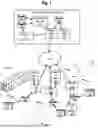


Sources:
- United States Patent and Trademark Office - verify current appl. status at the USPTO↗
Recent applications in this class:
- » 20240395000 2024-11-28
Virtual Planogram Automation and Modification with Computer Vision - » 20240346796 2024-10-17
Multi-Angle Object Recognition - » 20240290058 2024-08-29
INFORMATION PROCESSING APPARATUS AND PROGRAM - » 20240282071 2024-08-22
Configurable Acceleration of Peripheral Machine Vision Implemented using Artificial Neural Networks - » 20240185551 2024-06-06
DYNAMIC IMAGE SEARCH BASED ON USER-SELECTED OBJECTS - » 20230334813 2023-10-19
SYSTEM AND METHOD OF GENERATING BOUNDING POLYGONS - » 20230290104 2023-09-14
OBJECT DETECTION DEVICE AND METHOD - » 20230215126 2023-07-06
Multi-angle object recognition - » 20230105785 2023-04-06
VIDEO CONTENT PROVIDING METHOD AND VIDEO CONTENT PROVIDING DEVICE - » 20230016147 2023-01-19
System and method for training an artificial intelligence (AI) classifier of scanned items