Systems and Methods for Charge Imbalance Correction in Heat Pumps
US20250067486A1
2025-02-27
18/796,419
2024-08-07
Smart Summary: A system is designed to fix charge imbalances in heat pumps. It includes a tank that temporarily holds refrigerant when the heat pump is heating. When the heat pump switches back to cooling, the refrigerant from the tank is sent back into the system. A special three-way valve controls the flow of refrigerant between the tank and the heat pump. This valve uses a spring and a sliding mechanism to connect different parts based on its position. 🚀 TL;DR
Abstract:
Systems and methods are provided for charge imbalance correction in heat pumps. Particularly, a tank may be provided between a vapor conduit and a liquid refrigerant conduit of a heat pump that may be used to temporarily store at least some of the refrigerant when the heat pump is in a heating mode. When the heat pump transitions back to a cooling mode, the refrigerant may be returned back into the heat pump. The flow of refrigerant to and from the tank may be regulated by a three-way valve. The valve is connected to the vapor conduit through one port, the tank through a second port, and the liquid refrigerant conduit through a third port. The valve includes a spring and a slide with a cut-out region that allows two of the three ports to be in fluid communication depending on a position of the slide within the valve.
Inventors:
- Kevin Mercer 45 🇺🇸 Danville, IN, United States
- Mark O. Creason 3 🇺🇸 Hackett, AR, United States
Applicant:
Interested in similar patents?
Get notified when new applications in this technology area are published.
Classification:
F25B45/00 » CPC main
Arrangements for charging or discharging refrigerant
F25B13/00 » CPC further
Compression machines, plants or systems, with reversible cycle
Description
CROSS-REFERENCE TO RELATED APPLICATIONS
This application claims priority to and benefit of U.S. provisional patent application No. 63/520,698 filed Aug. 21, 2023, which is herein incorporated by reference.
TECHNICAL FIELD
The present disclosure relates generally to heat pumps and more particularly to systems and methods for charge imbalance correction in heat pumps.
BACKGROUND
A heat pump system generally cools a building by transferring heat from the building to an external environment on warm days and warms the building by drawing heat from the external environment into the building on cool days. The heat pump system functions by redistributing heat from the air and uses a refrigerant that circulates between an indoor fan coil and an outdoor compressor to transfer the heat between the building and the external environment. The heat pump system may operate in a cooling mode or a heating mode. In the cooling mode, the heat pump system is configured to provide cool air within the building. In this mode, the outdoor coil operates as a condenser and the indoor coil operates as an evaporator. In the cooling mode, most of the liquid refrigerant is stored in the outdoor coil. When the system switches to the heating mode (in which the heat pump system is configured to provide warm air within the building), the outdoor coil becomes the evaporator and the indoor coil becomes the condenser and is forced to accept the refrigerant. However, if a smaller indoor coil is used, the condensing side pressure may undesirably increase when the system switches modes.
BRIEF DESCRIPTION OF THE DRAWINGS
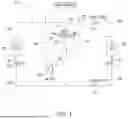
FIG. 1 illustrates a heat pump system, in accordance with one or more embodiments of the disclosure.
FIG. 2 illustrates a heat pump system including a charge imbalance correction apparatus, in accordance with one or more embodiments of the disclosure.
FIG. 3 illustrates a valve of the charge imbalance correction apparatus of FIG. 2, in accordance with one or more embodiments of the disclosure.
FIG. 4A illustrates a charge imbalance correction apparatus in a heating mode of a heat pump system, in accordance with one or more embodiments of the disclosure.
FIG. 4B illustrates a charge imbalance correction apparatus in a cooling mode of a heat pump system, in accordance with one or more embodiments of the disclosure.
FIG. 5 illustrates a method, in accordance with one or more embodiments of the disclosure.
The detailed description is set forth with reference to the accompanying drawings. The drawings are provided for purposes of illustration only and merely depict example embodiments of the disclosure. The drawings are provided to facilitate understanding of the disclosure and shall not be deemed to limit the breadth, scope, or applicability of the disclosure. The use of the same reference numerals indicates similar but not necessarily the same or identical components; different reference numerals may be used to identify similar components as well. Various embodiments may utilize elements or components other than those illustrated in the drawings, and some elements and/or components may not be present in various embodiments. The use of singular terminology to describe a component or element may, depending on the context, encompass a plural number of such components or elements and vice versa.
DETAILED DESCRIPTION
This disclosure relates to, among other things, systems and methods for charge imbalance correction in heat pumps. Particularly, the systems and methods reduce the effective amount of “charge” in a heat pump system while the heat pump system is operating in heating mode when a smaller internal volume indoor coil is installed with an existing heat pump that may previously have included a larger internal volume indoor coil.
Charge may be defined as the amount of refrigerant needed for a system to operate correctly. Reducing the amount of charge may involve removing at least some of the refrigerant from the vapor (the term “gas” may be used interchangeably with “vapor” in some instances herein) conduit and/or the liquid refrigerant conduit of the heat pump system for temporary storage to reduce the pressure within the heat pump system. This may be accomplished by providing an apparatus between the vapor conduit and the liquid refrigerant conduit of the heat pump that includes a tank configured to store at least some of the liquid refrigerant from the heat pump system.
The apparatus may be manufactured as a part of the heat pump system or may be separately installed as an addition to the heat pump system during and/or subsequent to the initial installation of the heat pump system at a location to be heated and/or cooled. This tank stores at least some of the liquid refrigerant while in the heating mode of the heat pump system. When the heat pump system transitions into the cooling mode, the liquid refrigerant may be routed through conduits of the heat pump system from the tank. Thus, the apparatus serves to mitigate any undesirable pressure increases that may result from the use of a smaller indoor coil in the existing heat pump system.
In one or more embodiments, the apparatus also includes a modified reversing valve used to regulate the flow of liquid refrigerant into the tank from the conduits of the heat pump system and back into the conduits from the tank. This modified reversing valve is provided in addition to an existing reversing valve in the heat pump system that is used to control the flow direction of fluid through the heat pump system (e.g., depending on whether the heat pump system is in heating mode or cooling mode). The modified reversing valve construction and operation may include any number of suitable types of valves, such as an electric valve, a spring return valve (for example, as shown in FIG. 3), and/or any other type of valve to facilitate similar function. In some embodiments, the modified reversing valve may be a three-way valve, with one port connected to a first conduit of the heat pump system (for example, the vapor conduit), one port connected to the tank, and one port connected to a second conduit of the heat pump system (for example, the liquid refrigerant conduit).
In a particular embodiment, the modified reversing valve may include a spring that is connected to a slide (shown and described further detail with respect to at least FIGS. 2-3) that is configured to translate between one end of the valve and another end of the valve. The slide includes a cut-out region facing the three ports of the valve. The cut-out region provides a pocket within the slide such that fluid may flow in one port of the valve, through the cut-out region of the slide, and out through another port of the valve. The cut-out region may be sized such that fluid is only able to flow through two of the three ports of the valve at a given time. The slide may be a component that is configured to actuate between a first position in which the first port and the second port are aligned with the cut-out region and a second position in which the second port and the third port are aligned with the cut-out region.
The position of the slide may depend on whether the heat pump system is in the cooling mode or the heating mode. The default position of the spring and slide may be the second position in which the cut-out is aligned with the second port and the third port of the valve. The second port of the valve may be connected to the tank of the apparatus and the third port of the valve may be connected to the liquid refrigerant conduit. In the heating mode of the heat pump system, the pressure differential between the vapor conduit and the liquid refrigerant conduit may be relatively low (for example, 10 psi or less or any other pressure), and the slide and the spring may remain in this resting (the term “default” is also used herein) position. This allows for at least some of the liquid refrigerant to flow from the liquid refrigerant conduit into the tank for temporary storage (for example, as shown in FIG. 4A).
In the cooling mode, the vapor in the vapor conduit may be traveling in a first direction at a lower pressure. Consequentially, the pressure difference between the vapor conduit and the liquid refrigerant conduit may be higher in the cooling mode than when the heat pump system is in the heating mode. For example, the difference in pressure between the two conduits may be 100 psi (or any other pressure difference). The pressure from the liquid refrigerant conduit causes the slide within the valve to produce a force against the spring, which compresses the spring and moves the slide to the first position. In this first position, the first port connected to the vapor conduit and the second port connected to the tank of the apparatus are aligned with the cut-out of the slide. The higher pressure within the heat pump system in this cooling mode in combination with the valve being in the first position causes some or all of the liquid refrigerant stored in the tank to flow back into the conduits of the heat pump system (for example, as shown in FIG. 4B).
Additionally, the tank may be provided in any number of different sizes suitable to hold varying amounts of liquid refrigerant. For example, a larger or smaller tank may be provided in the apparatus depending on the sizes of the indoor and/or outdoor coils in the heat pump system. The internal volume of the tank may also be dynamically adjustable to accept varying amounts of liquid refrigerant depending on the sizes of the indoor and outdoor coils in which the apparatus is installed. In this manner, an apparatus with a single type of tank may be installed in any given heat pump system and the internal volume of the tank may simply be dynamically adjusted based on the sizes of the indoor coil and the outdoor coil in the particular heat pump system.
While reference is made specifically to heat pumps herein, this is not necessarily intended to be limiting, and the same charge imbalance correction system may also be applicable in other types of heating appliances that use refrigerants, such as gas furnaces, etc.
Turning to the figures, FIG. 1 illustrates a heat pump system 100, in accordance with one or more embodiments of the disclosure. Particularly, FIG. 1 illustrates a schematic of a heat pump system 100 operating in a heating mode. The heat pump system 100 includes a compressor 102, a reversing valve 104, an indoor coil 106, an outdoor coil 108, a vapor valve 110, an expansion valve 112, a liquid service valve 114, an expansion valve 116, and one or more conduits (for example, conduit 118, conduit 120, conduit 122, conduit 124, conduit 126, conduit 128, conduit 130, conduit 132, conduit 134, etc.). The reversing valve 104 includes a port 136, a port 138, a port 140, and a port 142.
The conduit 118 is configured to provide a refrigerant path from the compressor 102 to the port 136 of the reversing valve 104. The conduit 120 is configured to provide a refrigerant path between the port 138 of the reversing valve 104 and the vapor service valve 110. The conduit 122 is configured to provide a refrigerant path between the vapor service valve 110 and the indoor coil 106. The conduit 124 is configured to provide a refrigerant path between the indoor coil 106 and the expansion valve 112. The conduit 126 is configured to provide a refrigerant path between the expansion valve 112 and the liquid service valve 114. The conduit 128 is configured to provide a refrigerant path between the liquid service valve 114 and the expansion valve 116. The conduit 130 is configured to provide a refrigerant path between the expansion valve 116 and the outdoor coil 108. The conduit 132 is configured to provide a refrigerant path between the outdoor coil 108 and the port 140 of the reversing valve 104. The conduit 134 is configured to provide a refrigerant path between the port 142 of the reversing valve 104 and the compressor 102.
In operation, each of the conduits is filled with a refrigerant, in either a liquid, gaseous, or mixed state. The compressor 102 compresses the gaseous refrigerant in the heat pump system 100 and raises the refrigerant's pressure simultaneously increasing the temperature of the gaseous refrigerant.
The vapor valve 110 is configured to permit gaseous refrigerant to either travel in a direction from the reversing valve 104 to the indoor coil 106 in a heating mode or to travel in a direction from the indoor coil 106 to the reversing valve 104 in a cooling mode. As depicted in FIG. 1, the heat pump system 100 is operating in a heating mode, and the vapor valve 110 is configured to permit gaseous refrigerant to travel in the direction from the reversing valve 104 to the indoor coil 106.
During the heating mode, the expansion valve 112 is configured to pass the liquid leaving the indoor coil 106. The liquid service valve 114 is configured to permit liquid refrigerant to either travel in a direction from the indoor coil 106 to the expansion valve 116 in the heating mode or to travel in a direction from the outdoor coil 108 to the expansion valve 112 in the cooling mode. The heat pump system 100 is operating in a heating mode, as depicted in FIG. 1, and the liquid valve 114 is configured to permit liquid refrigerant to travel in the direction from the indoor coil 106 to the expansion valve 116.
In operation, the compressor 102 provides high temperature gaseous refrigerant to the reversing valve 138, which is passed through the vapor service valve 110 to the indoor coil 106. The indoor coil 106 acts as a heat exchanger to extract heat from the high temperature gaseous refrigerant to provide heat to e.g., a home. This heat transfer is achieved by condensation and in some cases, subcooling of the refrigerant. The gaseous refrigerant from the conduit 122 enters the indoor coil 106, becomes liquid in the indoor coil 106 and leaves the indoor coil via the conduit 124 in liquid form. The liquid refrigerant passes through the expansion valve 112 and into the conduit 126 without any change in state. The liquid refrigerant then passes through the liquid service valve 114 and into the conduit 128.
The expansion valve 116 is configured to reduce the pressure of the cooler liquefied refrigerant from the conduit 128. The outdoor coil 108 acts as an evaporator and absorbs heat from ambient air. The liquid refrigerant inside the outdoor coil 108 gets superheated and converted to a superheated gas. This superheated gas enters back to the compressor 102 via the conduit 132, the port 140 of the reversing valve 104, the port 142 of the reversing valve 104 and the conduit 134.
In certain embodiments, the cycle includes providing heated refrigerant from the compressor 102, through the reversing valve 104, to the indoor coil 106, to the outdoor coil 108, and then providing cooled refrigerant from the outdoor coil 108, through the reversing valve 104, back to the compressor 102. The cycle then repeats.
FIG. 2 illustrates a heat pump system 200 including a charge imbalance correction apparatus 202, in accordance with one or more embodiments of the disclosure. The apparatus 202 may be provided in the heat pump system 200, for example, if a smaller indoor coil is provided within the heat pump system 200 during the initial installation of the heat pump system 200 or if an existing indoor coil 106 is replaced with a smaller indoor coil 106 subsequent to installation of the heat pump system 200. The apparatus 202 serves to reduce an undesirable pressure increase within the heat pump system 202 while the heat pump system 202 is in a heating mode (for example, when the heat pump system 202 is functioning to provide warm air into a building).
The apparatus 202 may include a combination of a tank 204 and a valve 206 (e.g., a modified reversing that is distinct from an existing reversing valve in the system 200. The tank 204 includes an internal volume that may be used to temporarily store refrigerant from the heat pump system 100. That is, the tank 204 may be configured to receive refrigerant from any of the conduits of the system. Although FIG. 2 depicts the tank 204 being in fluid communication with conduit 120 and conduit 128 through the modified reversing valve 206, this is merely for illustrative purposes, and the tank 204 may be in fluid communication with any other conduits shown in FIG. 1 or FIG. 2 or otherwise. The flow of refrigerant between the conduits of the heat pump system 100 and the tank 204 may be regulated using the modified reversing valve 206. To provide for this regulation of the flow of refrigerant for storage in the tank 204 and release back into the heat pump system 100, the valve may include three ports connected to conduit 208, conduit 210, and conduit 212, respectively. Additional details about the modified reversing valve 206 are provided with respect to the valve 300 of FIG. 3.
In some embodiments, any of the valves of the heat pump system 200 may also be controlled automatically based on signals provided by one or more controller(s) 220 (which may be referred to hereinafter as “controller 220” for simplicity). The one or more controller(s) 220 may be located locally to the heat pump system 100 and/or remotely from the heat pump system 100. The one or more controller(s) 220 may be installed within or on any of the components of the heat pump system 100 or may be provided as standalone components locally to the heat pump system as well.
In one or more embodiments, the one or more controller(s) 220 (and/or any other elements of the heat pump system 100) may be configured to communicate via a communications network 228. The communications network 228 may include, but not limited to, any one of a combination of different types of suitable communications networks such as, for example, broadcasting networks, cable networks, public networks (e.g., the Internet), private networks, wireless networks, cellular networks, or any other suitable private and/or public networks. Further, the communications network 228 may have any suitable communication range associated therewith and may include, for example, global networks (e.g., the Internet), metropolitan area networks (MANs), wide area networks (WANs), local area networks (LANs), or personal area networks (PANs). In addition, communications network 228 may include any type of medium over which network traffic may be carried including, but not limited to, coaxial cable, twisted-pair wire, optical fiber, a hybrid fiber coaxial (HFC) medium, microwave terrestrial transceivers, radio frequency communication mediums, white space communication mediums, ultra-high frequency communication mediums, satellite communication mediums, or any combination thereof.
The controller 220 may include one or more processors 222 that may include any suitable processing unit capable of accepting digital data as input, processing the input data based on stored computer-executable instructions, and generating output data. The computer-executable instructions may be stored, for example, in the data storage 226 and may include, among other things, operating system software and application software. The computer-executable instructions may be retrieved from the data storage 226 and loaded into the memory 224 as needed for execution. The processor 222 may be configured to execute the computer-executable instructions to cause various operations to be performed. Each processor 222 may include any type of processing unit including, but not limited to, a central processing unit, a microprocessor, a microcontroller, a Reduced Instruction Set Computer (RISC) microprocessor, a Complex Instruction Set Computer (CISC) microprocessor, an Application Specific Integrated Circuit (ASIC), a System-on-a-Chip (SoC), a field-programmable gate array (FPGA), and so forth.
The data storage 226 may store program instructions that are loadable and executable by the processors 222, as well as data manipulated and generated by one or more of the processors 222 during execution of the program instructions. The program instructions may be loaded into the memory 224 as needed for execution. The memory 224 may be volatile memory (memory that is not configured to retain stored information when not supplied with power) such as random access memory (RAM) and/or non-volatile memory (memory that is configured to retain stored information even when not supplied with power) such as read-only memory (ROM), flash memory, and so forth. In various implementations, the memory 224 may include multiple different types of memory, such as various forms of static random access memory (SRAM), various forms of dynamic random access memory (DRAM), unalterable ROM, and/or writeable variants of ROM such as electrically erasable programmable read-only memory (EEPROM), flash memory, and so forth.
Various program modules, application may be stored in data storage 226 that may comprise computer-executable instructions that when executed by one or more of the processors 222 cause various operations to be performed. The memory 224 may have loaded from the data storage 226 one or more operating systems (O/S) that may provide an interface between other application software (for example dedicated applications, a browser application, a web-based application, a distributed client-server application, etc.) executing on the server and the hardware resources of the server. More specifically, the O/S may include a set of computer-executable instructions for managing the hardware resources of the server and for providing common services to other application programs (for example managing memory allocation among various application programs). The O/S may include any operating system now known or which may be developed in the future including, but not limited to, any mobile operating system, desktop or laptop operating system, mainframe operating system, or any other proprietary or open-source operating system.
FIG. 3 illustrates a valve 300 (for example, the modified reversing valve) of the charge imbalance correction apparatus of FIGS. 2, 4A, and 4B, in accordance with one or more embodiments of the disclosure.
In one or more embodiments, the valve 300 is a three-way valve including a spring return mechanism. That is, the valve 300 may include a spring 312 that is connected to a slide 314 that is configured to translate between a first end 318 of the valve and a second end 320 of the valve. The spring 314 may be any type of spring (e.g., torsion spring, extension spring, spiral spring, and compression spring, etc.) made from any suitable material. The slide 314 includes a cut-out region 316 facing three ports (for example, first port 302, second port 304, and third port 306) of the valve 300. The cut-out region 316 provides an air pocket within the slide 314 such that fluid may flow in one port of the valve 300, through the cut-out region 316 of the slide 314, and out through another port of the valve 300. The remainder of the slide 314 may include a solid material. The cut-out region 314 may be sized such that fluid is only able to flow through two of the three ports of the valve 300 at a given time. In this manner, the valve 300 may be used to regulate whether refrigerant is removed from the conduits of the heat pump system and temporarily stored within the tank or returned back into the conduits of the heat pump system based on the two ports of the valve 300 that are aligned with the cut-out region 316.
The valve 300 may be configured such that the slide 314 actuates between a first position in which the first port 302 and the second port 304 are aligned with the cut-out region 316 and a second position (shown in FIG. 3) in which the second port 304 and the third port 306 are aligned with the cut-out region 316. The position of the slide 314 may depend on whether the heat pump system is in the cooling mode or the heating mode. The natural resting position of the spring 312 and slide 314 may be the second position in which the cut-out region 316 is aligned with the second port 304 and the third port 306 of the valve 300. The second port 304 of the valve 300 may be connected to the tank of the apparatus (for example, tank 204) through conduit 305 and the third port 306 of the valve 300 may be connected to the liquid refrigerant conduit through conduit 307. The first port 302 may be connected to the vapor conduit through conduit 303.
In the heating mode of the heat pump system, the pressure differential between the vapor conduit and the liquid refrigerant conduit may be relatively low (for example, 10 psi or less or any other pressure value), and the slide 314 and the spring 310 may remain in this resting position, as shown in FIG. 3. This allows for at least some of the liquid refrigerant to flow from the liquid refrigerant conduit, through the conduit 307, into the third port 306, through the cut-out region 316, through the port 304 and conduit 305, and into the tank for temporary storage.
In the cooling mode, the refrigerant in the vapor conduit is traveling in a first direction at a lower pressure. Consequentially, the pressure differential (which may be any suitable pressure difference) between the vapor conduit and the liquid refrigerant conduit may be higher when the heat pump system is in the cooling mode than when the heat pump system is in the heating mode. For example, the difference in pressure between the two conduits may be 20 psi (or any other pressure difference). The pressure from the liquid refrigerant conduit causes the slide 314 within the valve 300 to produce a force against the spring 312, which compresses the spring 314 and moves the slide 314 from the second position to the first position (shown in FIG. 4B). In this first position, the first port 302 connected to the vapor conduit through conduit 303 and the second port 304 connected to the tank of the apparatus through conduit 305 are aligned with the cut-out region 316 of the slide 314. This allows some or all of the liquid refrigerant stored in the tank to flow back into the conduits of the heat pump system (for example, as shown in FIG. 4B).
To facilitate the adjustment of the slide 314 from the second position to the first position, a first pilot conduit 308 may be provided that connects the third port 306 and the valve 300 and a second pilot conduit 309 may be provided that connects the first port 302 and the valve 300. The pilot conduits 308 and 309 allow the pressure difference within the vapor conduit and the liquid refrigerant conduit of the heat pump system to be provided within the valve 300. For example, based on the pilot conduits 308 and 309, a like pressure difference is established between an area 322 below the slide 314 and an area 324 above the slide 314 within the valve 300. Thus, the pressure difference between the vapor conduit and the liquid refrigerant conduit may be established within the valve 300 to cause the spring 310 to compress and the slide 314 to move to the first position. In some instances, the pressure may also only be provided to the area 324 as well.
The particular valve configuration shown in FIG. 3 is not intended to be limiting and any other type of valve may also be used. For example, an electrically-actuated valve using a solenoid may also be used, as well as any other type of valve. The valve may also include any other number of ports (for example, the valve may be a four-way valve, etc.).
FIG. 4A illustrates a charge imbalance correction apparatus 402 (which may be the same as apparatus 202) in a heating mode of a heat pump system 400, in accordance with one or more embodiments of the disclosure.
Particularly, FIG. 4A shows a simplified representation of the heat pump system 100 focusing on the apparatus 402. Similar to the apparatus 202 in FIG. 2, the apparatus 402 includes a tank 404 and a valve 406 (which may be the modified reversing valve as described herein). In the heating mode illustrated in FIG. 4A, refrigerant in a gaseous state is flowing through the vapor conduit 408 (for example, conduit 120, conduit 122, and/or any other conduit shown in FIGS. 1-2 or otherwise) and refrigerant in a liquid state is flowing through the liquid refrigerant conduit 410 (for example, conduit 126, conduit 128, and/or any other conduit shown in FIGS. 1-2 or otherwise) in a first direction. For example, the refrigerant may be flowing through the vapor conduit 408 and the liquid refrigerant conduit 410 in a clockwise direction through the heat pump system 400 (however, this direction is not intended to be limiting). In the heating mode, the outdoor coil (not shown in the figure) becomes the evaporator and the indoor coil (not shown in the figure) becomes the condenser. Heat is absorbed in the outdoor unit by liquid refrigerant, turning it into cold gas. Pressure is then applied to the cold gas, which increases the temperature of the gas. The warmed gas is cooled in the indoor coil by passing air across the indoor coil using a fan, which heats the air and condenses the gas into a warm liquid refrigerant. The pressure of the warm liquid refrigerant is reduced as it enters the outdoor coil, converting the warm liquid refrigerant into a cooler liquid refrigerant and repeating the cycle.
In the heating mode shown in FIG. 4A, the tank may be used to temporarily store at least some of the refrigerant that is flowing through the conduits of the heat pump system 400. Specifically, in some instances, the slide of the valve 406 may be located in the second position shown in FIG. 3 while the heat pump system 400 is in the heating mode. While in this second position, the cut-out region of the slide may be aligned with the second port of the valve 406 that is connected to the tank 404 as well as the third port of the valve 406 that is connected to the liquid refrigerant conduit 410. With the slide of the valve 406 in this second position, liquid refrigerant may flow from the liquid refrigerant conduit (for example, conduit 126 and/or 128 in FIG. 1) into the tank 404 for temporary storage. This may serve to reduce the pressure within the heat pump system 400. This pressure reduction is beneficial if a smaller indoor coil is provided within the heat pump system 400, which may result in a pressure increase within the heat pump system 400 when the heat pump system 400 is in the heating mode. In this manner, when an indoor coil is replaced within a heat pump system 400 with a smaller indoor coil, the apparatus 402 may also be provided within the heat pump system 400 to mitigate any pressure increases caused by the smaller indoor coil. Thus, the apparatus 402 may not necessarily be a permanent element of the heat pump system 400, but may rather be provided within the heat pump system 400 as necessary and may be removable.
FIG. 4B illustrates a charge imbalance correction apparatus 402 in a cooling mode of a heat pump system 400, in accordance with one or more embodiments of the disclosure.
In the cooling mode illustrated in FIG. 4B, refrigerant in a gaseous state is flowing through the vapor conduit 408 and refrigerant in a liquid state is flowing through the liquid refrigerant conduit 410 in a second direction. For example, the refrigerant may be flowing through the vapor conduit 408 and the liquid refrigerant conduit 410 in a counterclockwise direction through the heat pump system 400 (however, this direction is not intended to be limiting). In the cooling mode, the outdoor coil (not shown in the figure) becomes the condenser and the indoor coil (not shown in the figure) becomes the evaporator.
Liquid refrigerant is provided through an expansion device at the indoor coil. Inside air is blown across the indoor coil using a fan and heat is absorbed by the refrigerant. The resulting cool air is blown through the building that is being cooled by the heat pump system 400. Absorbing the heat causes the liquid refrigerant to increase in temperature and evaporate into a gaseous state. The gaseous refrigerant then passes through a compressor, which pressurizes the gas. Pressurizing the gas increases its temperature. The warmer, pressurized refrigerant then moves through the heat pump system to the outdoor coil. A fan blows outside air across the outdoor coil. Given that the outside air is cooler than the hot compressed gas refrigerant in the outdoor coil, heat is transferred from the refrigerant to the outside air. The refrigerant then condenses back to a liquid state as it cools. The warm liquid refrigerant is provided through the heat pump system to the expansion valve at the indoor coil. The expansion valve reduces the pressure of the warm liquid refrigerant, which cools the refrigerant. The refrigerant is then in a cool, liquid state and may be pumped back to the indoor coil to repeat the cycle.
In the cooling mode shown in FIG. 4B, the liquid refrigerant that was temporarily stored in the tank 404 in the heating mode of the heat pump system 400 may be returned back into the vapor conduit 408 and/or the liquid refrigerant conduit 410 from the tank 404. Specifically, in some instances, the slide of the valve 406 may be located in the first position while the heat pump system 400 is in the cooling mode. While in this first position, the cut-out region of the slide may be aligned with the first port of the valve 406 that is connected to the vapor conduit 408 as well as the second port of the valve 406 that is connected to the tank 404. With the slide of the valve 406 in this first position, liquid refrigerant may flow from the tank into the vapor conduit 408. In the cooling mode, the pressure difference between the vapor conduit 408 and the liquid refrigerant conduit 410 may be higher than when the heat pump system is in the heating mode. For example, the difference in pressure between the two conduits may be 100 psi (or any other pressure difference). The pressure from the liquid refrigerant conduit causes the slide within the valve to produce a force against the spring, which compresses the spring and moves the slide to the first position. In this first position, the first port connected to the vapor conduit and the second port connected to the tank of the apparatus are aligned with the cut-out of the slide. The higher pressure within the heat pump system in this cooling mode in combination with the valve being in the first position causes some or all of the liquid refrigerant stored in the tank to flow back into the conduits of the heat pump system.
FIG. 5 is an example method 500, in accordance with one or more embodiments of the disclosure.
At block 502, the method 500 may include providing a valve (for example, valve 206, valve 300, valve 406, etc.) in fluid communication with a tank (for example, tank 204, tank 404, etc.) in a first position, wherein the valve and the tank are provided within a heat pump system (for example, heat pump system 100, heat pump system 400, etc.). The terms “first position” and “second position” may be used interchangeably herein. That is, in some recitations, the first position may refer to the spring of the valve being in a resting position. In other recitations, the second position may refer to the spring being in the resting position. At block 504, the method 500 may include temporarily storing, in a heating mode of a heat pump system, refrigerant from the heat pump system within a tank. That is, to reduce undesirable pressure increases in the heat pump system while the heat pump system is in the heating mode, the tank may be used to temporarily store at least some of the refrigerant that is flowing through the conduits of the heat pump system. While the valve is in the first position, liquid refrigerant may flow from the liquid refrigerant conduit of the heat pump system into the tank for temporary storage.
At block 505, the method 500 may include transitioning the heat pump system from the heating mode to a cooling mode. For example, the heat pump system may transition to the cooling mode automatically when it is determined that cool air should be provided to a building in which the heat pump system is installed. In some instances, the transition may be based on a manual user input, such as a user switching the heat pump system to a cooling mode through a thermostat device (which may be the one or more controllers 220). In the cooling mode, the heat pump system provides cool air into the building rather than providing warm air into the building as is performed in the heating mode.
At block 508, the method 500 may include adjusting, in the cooling mode of the heat pump system, a position of the valve from the first position to a second position. At block 510, the method 500 may include providing the refrigerant in the tank back into the heat pump system. A pressure difference between the vapor conduit and the liquid refrigerant conduit may be higher in the cooling mode than when the heat pump system is in the heating mode. The pressure from the liquid refrigerant conduit causes the slide within the valve to produce a force against the spring, which compresses the spring and moves the slide to the first position. In this first position, the first port connected to the vapor conduit and the second port connected to the tank of the apparatus are aligned with the cut-out of the slide. The higher pressure within the heat pump system in this cooling mode in combination with the valve being in the first position causes some or all of the liquid refrigerant stored in the tank to flow back into the conduits of the heat pump system.
It should be noted that the recitation of a single conduit (for example, “vapor conduit,” “liquid refrigerant conduit,” and/or any other conduit, may also refer to multiple conduits shown in FIGS. 1-2 or otherwise).
Although certain examples of the disclosed technology are explained in detail herein, it is to be understood that other examples, embodiments, and implementations of the disclosed technology are contemplated. Accordingly, it is not intended that the disclosed technology is limited in its scope to the details of construction and arrangement of components expressly set forth in the following description or illustrated in the drawings. The disclosed technology can be implemented in a variety of examples and can be practiced or carried out in various ways. In particular, the presently disclosed subject matter is described in the context of being devices and systems for use with an outdoor air conditioning unit. The present disclosure, however, is not so limited, and can be applicable in other contexts. The present disclosure, for example and not limitation, can include devices and systems for use with an indoor air conditioning unit. Furthermore, the present disclosure can include other air conditioning or refrigeration heat exchanger units that utilize a subcooling line including systems that utilize a fluid other than air to facilitate heat transfer across the heat exchanger coil (e.g., air conditioning or refrigeration systems that use nitrogen, argon, helium, hydrogen, water vapor, water, glycol, silicone oil, hydrocarbons, salt brines, or any other suitable type of heat transfer fluid). Such implementations and applications are contemplated within the scope of the present disclosure. Accordingly, when the present disclosure is described in the context of being devices and systems for use with an outdoor air conditioning unit, it will be understood that other implementations can take the place of those referred to.
It should also be noted that, as used in the specification and the appended claims, the singular forms “a,” “an,” and “the” include plural references unless the context clearly dictates otherwise. References to a composition containing “a” constituent is intended to include other constituents in addition to the one named.
Also, in describing the examples, terminology will be resorted to for the sake of clarity. It is intended that each term contemplates its broadest meaning as understood by those skilled in the art and includes all technical equivalents which operate in a similar manner to accomplish a similar purpose.
Ranges may be expressed herein as from “about” or “approximately” or “substantially” one particular value and/or to “about” or “approximately” or “substantially” another particular value. When such a range is expressed, the various examples of the disclosed technology includes from the one particular value and/or to the other particular value. Further, ranges described as being between a first value and a second value are inclusive of the first and second values. Likewise, ranges described as being from a first value and to a second value are inclusive of the first and second values.
Herein, the use of terms such as “having,” “has,” “including,” or “includes” are open-ended and are intended to have the same meaning as terms such as “comprising” or “comprises” and not preclude the presence of other structure, material, or acts. Similarly, though the use of terms such as “can” or “may” are intended to be open-ended and to reflect that structure, material, or acts are not necessary, the failure to use such terms is not intended to reflect that structure, material, or acts are essential. To the extent that structure, material, or acts are presently considered to be essential, they are identified as such.
It is also to be understood that the mention of one or more method steps does not preclude the presence of additional method steps or intervening method steps between those steps expressly identified. Moreover, although the term “step” can be used herein to connote different aspects of methods employed, the term should not be interpreted as implying any particular order among or between various steps herein disclosed unless and except when the order of individual steps is explicitly required. Further, the disclosed technology does not necessarily require all steps included in the example methods and processes described herein. That is, the disclosed technology includes methods that omit one or more steps expressly discussed with respect to the examples provided herein.
The components described hereinafter as making up various elements of the disclosed technology are intended to be illustrative and not restrictive. Many suitable components that would perform the same or similar functions as the components described herein are intended to be embraced within the scope of the disclosed technology. Such other components not described herein can include, but are not limited to, for example, similar components that are developed after development of the presently disclosed subject matter.
Although embodiments have been described in language specific to structural features and/or methodological acts, it is to be understood that the disclosure is not necessarily limited to the specific features or acts described. Rather, the specific features and acts are disclosed as illustrative forms of implementing the embodiments. Conditional language, such as, among others, “can,” “could,” “might,” or “may,” unless specifically stated otherwise, or otherwise understood within the context as used, is generally intended to convey that certain embodiments could include, while other embodiments do not include, certain features, elements, and/or steps. Thus, such conditional language is not generally intended to imply that features, elements, and/or steps are in any way required for one or more embodiments or that one or more embodiments necessarily include logic for deciding, with or without user input or prompting, whether these features, elements, and/or steps are included or are to be performed in any particular embodiment.
Claims
That which is claimed is:1. A heat pump system comprising:
an indoor coil;
an outdoor coil;
a first conduit and a second conduit connecting the indoor coil and the outdoor coil; and
an apparatus in fluid communication with the first conduit and the second conduit, the apparatus comprising:
a tank configured to receive liquid refrigerant from the first conduit or the second conduit in a heating mode of the heat pump system, and to provide the liquid refrigerant to the first conduit or the second conduit in a cooling mode of the heat pump system; and
a first valve disposed between the tank and the first conduit.
2. The heat pump system of claim 1, wherein the first valve comprises a spring, wherein the spring is coupled to a slide disposed in the first valve, and wherein the slide comprises a cut-out region.
3. The heat pump system of claim 2, wherein the first valve further comprises a first port, a second port, and a third port, wherein the first port is in fluid communication with the first conduit through a third conduit, wherein the second port is in fluid communication with the tank through a fourth conduit, and wherein the third port is in fluid communication with the second conduit through a fifth conduit.
4. The heat pump system of claim 3, wherein the spring is in a default position while the heat pump system is in the heating mode, wherein the slide is located in a first position in the first valve while the spring is in the default position, wherein a first port and a second port of the first valve are in fluid communication via the cut-out region while the slide is in the first position.
5. The heat pump system of claim 3, wherein the spring is in a compressed position while the heat pump system is in the cooling mode, wherein the slide is located in a second position within the first valve while the spring is in the compressed position, wherein the second port and a third port of the first valve are in fluid communication through the cut-out region while the slide is in the second position.
6. The heat pump system of claim 2, wherein the slide of the first valve is configured to translate from a first position to a second position based on a pressure difference between the first conduit and the second conduit.
7. The heat pump system of claim 1, wherein the first valve is a three-way valve or a four-way valve.
8. The heat pump system of claim 1, wherein the first valve is different than an existing reversing valve in the heat pump system.
9. The heat pump system of claim 1, wherein gaseous refrigerant flows through the first conduit between the indoor coil and outdoor coil, and wherein liquid refrigerant flows through the second conduit between the indoor coil and outdoor coil.
10. An apparatus of a heat pump system comprising:
a tank configured to receive liquid refrigerant from a first conduit of a heat pump system or a second conduit of the heat pump system in a heating mode of the heat pump system, and to provide the liquid refrigerant to the first conduit or the second conduit in a cooling mode of the heat pump system; and
a first valve disposed between the tank and the first conduit, wherein the first valve comprises a spring, wherein the spring is coupled to a slide disposed in the first valve, and wherein the slide comprises a cut-out region.
11. The apparatus of claim 10, wherein the first valve further comprises a first port, a second port, and a third port, wherein the first port is in fluid communication with the first conduit through a third conduit, wherein the second port is in fluid communication with the tank through a fourth conduit, and wherein the third port is in fluid communication with the second conduit through a fifth conduit.
12. The apparatus of claim 11, wherein the spring is in a default position while the heat pump system is in the heating mode, wherein the slide is located in a first position in the first valve while the spring is in the default position, wherein a first port and a second port of the first valve are in fluid communication via the cut-out region while the slide is in the first position.
13. The apparatus of claim 11, wherein the spring is in a compressed position while the heat pump system is in the cooling mode, wherein the slide is located in a second position within the first valve while the spring is in the compressed position, wherein the second port and a third port of the first valve are in fluid communication through the cut-out region while the slide is in the second position.
14. The apparatus of claim 10, wherein the first valve is a three-way valve or a four-way valve.
15. The apparatus of claim 10, wherein the tank is configured to adjust from a first internal volume to a second internal volume.
16. A valve for a heat pump, the valve comprising:
a spring;
a slide connected to the spring and comprising a cut-out region;
a first port in fluid communication with a first conduit;
a second port in fluid communication with a tank configured to temporarily store refrigerant; and
a third port in fluid communication with a second conduit.
17. The valve of claim 16, wherein the first port is in fluid communication with the first conduit through a third conduit, wherein the second port is in fluid communication with the tank through a fourth conduit, and wherein the third port is in fluid communication with the second conduit through a fifth conduit.
18. The valve of claim 17, wherein the slide is located in a first position in the valve while the spring is in a default position, wherein a first port and a second port of the valve are in fluid communication via the cut-out region while the slide is in the first position.
19. The valve of claim 17, wherein the spring is in a compressed position while the heat pump is in a cooling mode, wherein the slide is located in a second position within the valve while the spring is in the compressed position, wherein the second port and a third port of the valve are in fluid communication through the cut-out region while the slide is in the second position.
20. The valve of claim 16, wherein the valve is a three-way valve or a four-way valve.
Images & Drawings included:



Sources:
- United States Patent and Trademark Office - verify current appl. status at the USPTO↗
Recent applications in this class:
- » 20250164166 2025-05-22
REFRIGERATION SYSTEM WITH AN OIL DRAIN CONDUIT AND METHODS OF USE - » 20250164165 2025-05-22
Controlled Clearing of Refrigerant Orifice - » 20250129980 2025-04-24
METHOD TO CHARGE MULTIPLE REFRIGERANTS WITH DESIRED CONCENTRATIONS - » 20250075954 2025-03-06
AUTOMATIC REFRIGERANT CHARGING SYSTEM AND METHOD FOR AIR CONDITIONERS - » 20250035353 2025-01-30
SYSTEMS AND METHODS FOR HEAT PUMP SYSTEMS FOR CHARGE MANAGEMENT - » 20250012496 2025-01-09
METHOD FOR CHARGING REFRIGERANT - » 20250003657 2025-01-02
SYSTEMS, DEVICES, AND METHODS FOR FLUID MANAGEMENT - » 20240410631 2024-12-12
REFRIGERANT RECOVERY SYSTEM AND RECOVERY CART THEREOF - » 20240384905 2024-11-21
SERVICE TOOLS AND SYSTEMS FOR PROCESSING FLUID THROUGH A FLUID ACCESS PORT - » 20240361055 2024-10-31
Method For Supplying Pressurized Refrigerant, And Pressurized Refrigerant Tank