SYSTEM AND METHOD FOR SCHEDULING AND PACING TRAINS
US20250074487A1
2025-03-06
18/239,395
2023-08-29
Smart Summary: A system helps schedule and control the speed of trains on a railroad network. It sends time windows to each train, telling them when to arrive or leave specific points, allowing them to adjust their speed for things like fuel savings. If a train can't meet its schedule, the system looks at other trains on the same track and makes changes to avoid problems. This way, all trains can still operate smoothly together. Additionally, the system ensures that any adjustments made for one area do not interfere with trains moving into other areas of the network. 🚀 TL;DR
Abstract:
A hierarchy of procedures sets pacing schedules for trains operating in a railroad network. At a train level of the hierarchy, a network coordinator sends time windows to a train indicating when the train should arrive at or depart from a siding along its track. The time windows provide flexibility for the train to adjust its pace as needed, for example, to conserve fuel. At a territory level, if the train indicates that it cannot comply with the time windows, the coordinator evaluates and adjusts pacing schedules at least for other trains sharing the same track in the territory to avoid conflicts, again providing time windows for the trains to adjust their pace as needed. At a network level, the coordinator ensures that pacing schedules adjusted for a territory also meet time windows set for trains crossing a boundary into another territory in the network.
Inventors:
- Rodrigo Almeida Goncalves 1 🇧🇷 Campinas SP, Brazil
- Fernando Antonio Campos Gomide 1 🇧🇷 Campinas SP, Brazil
- Alexandre Tazoniero 1 🇧🇷 Curitiba PR, Brazil
Assignee:
- Progress Rail Locomotive Inc. 86 🇺🇸 LaGrange, IL, United States
Applicant:
Interested in similar patents?
Get notified when new applications in this technology area are published.
Classification:
B61L27/16 » CPC main
Central railway traffic control systems; Trackside control; Communication systems specially adapted therefor; Operations, e.g. scheduling or time tables Trackside optimisation of vehicle or vehicle train operation
Description
TECHNICAL FIELD
The present disclosure relates generally to a system and method for planning, controlling, and monitoring railroad networks. More specifically, the present disclosure relates to a hierarchical system of scheduling and pacing trains within a railroad network using movement planning system and components onboard locomotives.
BACKGROUND
Railroad networks may span large geographical areas and offer many transportation services, including freight delivery between numerous origins and destinations daily. Planning the movement of trains within a network can be complex. The trains may have the option of traveling on more than one path between their origins and destinations, and trains sometimes must share a track that is common to their routes. Often the trains sharing a track are traveling in opposite directions. A siding, or waypoint, provides a parallel section for one train to exit the track to avoid a collision with the passing train in an event often called a “meet-and-pass.” Coordinating the arrival and departure of trains at the siding for the meet-and-pass can be critical to ensure safety, while also keeping freight delivery on time to the destination and maintaining energy efficiency.
Planning train movement within a railroad network, which occurs for a given time period, must consider a multitude of factors. The plan must account for the path of each train from origin to destination considering meet-and-passes, siding capacities, track maintenance, recrewing, refueling, breakdowns, crew shortages, and other issues. From the plan, a network coordinator provides each train with arrival and departure times for a meet-and-pass at a particular siding using positive train control (PTC) protocol. Train operators or the operating system with the train, with the assistance of train protection signaling systems, then ensure that each train arrives and departs the siding according to schedule.
Movement planning for railroad networks tends to schedule trains to run between stops at a set arrival time at a high rate of speed. While this approach may ensure that a train arrives at a siding or other intermediate destination at or ahead of schedule, running at high speed can cause unnecessary energy usage and exhaust emission. In addition, arriving early at an intermediate destination, such as a meet-and-pass, may simply cause the train to wait longer before departing for the rest of the mission.
One approach for adjusting a movement plan in a railroad network is described in U.S. Pat. No. 9,008,933 (“the '933 patent”). The system in the '933 patent includes a congestion module that calculates a throughput parameter representative of a statistical measure of adherence by trains to a movement plan. If data indicates a passing vehicle is set to arrive late to a meet-and-pass, for example, the system can instruct the yielding vehicle to slow its speed to save fuel if the confidence parameter indicates doing so will not negatively impact the throughput parameter. Involving statistical analysis, the method of the '933 patent reacts to single aberrations to the set arrival times within its original movement plan and, therefore, has limited applicability to the overall movement of trains in a railroad network.
Examples of the present disclosure are directed to overcoming deficiencies of such systems.
SUMMARY
In an aspect of the present disclosure, a system for scheduling and pacing trains includes a scheduling module configured to generate an initial movement plan and a modified movement plan for at least the first train and a second train to operate on a track within a railroad network during a time period. The initial movement plan includes a first pacing schedule for the first train and a second pacing schedule for the second train. The scheduling module further includes a train-level pacing module configured to determine time-window data for the first train comprising an earliest arrival time (EAT) and a latest time of arrival (LTA) to arrive at a siding along the track for the first pacing schedule under initial movement plan. The train-level pacing module is further configured to cause the time-window data to be delivered to the first train and to receive compliance feedback with an estimated time of arrival (ETA) of the first train at the siding under a modified first pacing schedule. The scheduling module may further include a territory-level pacing module configured, in response to the compliance feedback indicating the first train will not comply within the time-window data, to identify a conflict between the modified first pacing schedule and the second pacing schedule and to generate a modified second pacing schedule as part of the modified movement plan. The system includes one or more processors configured to generate the initial movement plan and the modified movement plan and a network interface configured to communicate the EAT, the LTA, and the ETA between the scheduling module and the first train.
In another aspect of the present disclosure, a computer-implemented method includes generating, by one or more processors, an initial movement plan for trains within at least a first territory of a railroad network, where the initial movement plan includes a first pacing schedule for a first train and a second pacing schedule for a second train sharing a track with the first train. The one or more processors identifies a meet-and-pass for the first train and the second train at a siding of the track, calculates first timing data defining a first time window, and causes the first timing data to be sent to the first train. The first time window defines a first earliest arrival time (EAT) and a first latest time of arrival (LTA) for the first train at the siding. Thereafter, the one or more processors receives first compliance feedback from the first train indicating that the first train will not comply with the first timing data. At least in response to the first compliance feedback, the one or more processors generates a modified movement plan and causes the first train and the second train to proceed according to the modified movement plan.
In yet another aspect of the present disclosure, a non-transitory computer-readable storage medium having instructions stored thereupon which are executable by one or more processors and which, when executed, cause the one or more processors to generate an initial movement plan for trains within at least a first territory of a railroad network and a modified movement plan. The initial movement plan includes a first pacing schedule for a first train and a second pacing schedule for a second train, where the first train and the second train share a track. The one or more processors also calculate timing data defining a time window for movement of the first train at a siding on the track, where the time window defines an earliest arrival time (EAT) and a latest time of arrival (LTA) for the first train at the siding. The one or more processors cause the timing data to be sent to the first train and to receive compliance feedback from the first train that indicates that the first train will not comply with the timing data. At least in response to the compliance feedback, the one or more processors generates a modified movement plan and causes the first train and the second train to proceed according to the modified movement plan.
BRIEF DESCRIPTION OF THE DRAWINGS
The detailed description references the accompanying figures. In the figures, the left-most digit of a reference number identifies the figure in which the reference number first appears. The same reference numbers indicate similar or identical items.
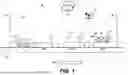
FIG. 1 is a schematic diagram of a scheduling and pacing system within a railroad network in accordance with an example of the present disclosure.
FIG. 2 is a train graph from a portion of a movement plan in accordance with an example of the present disclosure.
FIG. 3 is a block diagram of an architecture for a network controller in accordance with an example of the present disclosure.
FIG. 4 is a portion of a train graph depicting pacing schedules for the trains in FIG. 1 in accordance with an example of the present disclosure.
FIG. 5 is a functional block diagram of a method for train-level pacing in accordance with an example of the present disclosure.
FIG. 6 is the train graph of FIG. 2 updated from territory-level pacing in accordance with an example of the present disclosure.
FIG. 7 is a functional block diagram of a method for territory-level pacing in accordance with an example of the present disclosure.
FIG. 8 is a functional block diagram of a method for network-level pacing in accordance with an example of the present disclosure.
FIG. 9 is a train graph for a movement plan with network-level pacing in accordance with an example of the present disclosure.
FIG. 10 is a flowchart depicting a method of scheduling and pacing trains within a railroad network in accordance with an example of the present disclosure.
DETAILED DESCRIPTION
Consistent with the principles of the present disclosure, a system for scheduling and pacing the traffic of trains in a rail network includes coordinating a centralized schedule, or movement plan (MP), for the trains across the network with pacing objectives for each locomotive. The system for scheduling and pacing follows a logical hierarchy. At its base, the system may include a rule-based component providing instructions within an onboard controller for how to operate the locomotive in an energy-efficient manner based on positive train control (PTC) messages received from the MP. The PTC messages may include a time window for arriving at a particular waypoint for a meet-and-pass. This time window may be defined by PTC messages of an earliest arrival time (EAT) and a latest time of arrival (LTA) that each train should abide by for the waypoint, as well as an estimated time of departure (ETD). At a higher level, the system may process comply and not-comply messages provided from the onboard controller of the locomotive in response to the received time window, including replanning train schedules within a territory to accommodate a not-comply response. At the highest level, the system includes a network traffic optimizer that plans or replans train schedules to meet time windows for when trains cross boundaries of territories within the network. The following describes several examples for carrying out the principles of this disclosure.
FIG. 1 is a schematic diagram of a scheduling and pacing system 100 for controlling and monitoring traffic within a railroad network 102 as one example suitable for carrying out the principles discussed in the present disclosure. Railroad network 102 may be considered as a matrix of rails crossing a geographic area, such as a county, state, or country, typically controlled by a central network operator. Railroad network 102 is divided into a series of smaller areas, or territories. A separate dispatcher may be in charge of coordinating rail traffic within each of the territories. For purposes of illustration, FIG. 1 illustrates a first territory 104 within railroad network 102. To the left of first territory 104 in FIG. 1 is a second territory 106, separated by a boundary 108. Boundary 108 may be any separation between the territories of railroad network 102 deemed appropriate by the central network operator. To the right of first territory 104 in FIG. 1 is third territory 110, also separated by a boundary 108.
The railroad network 102 in FIG. 1 includes eastbound train 112E traveling along track 130, for ease of discussion, from West to East. Eastbound train 112E is depicted as a single locomotive for simplicity, but the train may include multiple rail cars (including powered and/or non-powered rail cars or units) linked together as one or more consists or a single rail car (a powered or non-powered rail car or unit). Eastbound train 112E rides on wheels 116 along track 130 as powered by propulsion system 118.
The propulsion system 118 provides power for delivering tractive effort to cause eastbound train 112E to move along wheels 116 as well as braking effort to reduce or stop the movement. Propulsion system 118 may include electric and/or mechanical devices and components, such as diesel engines, electric generators, and traction motors, used to provide tractive effort that propels eastbound train 112E. Braking effort may arise from dynamic braking, rheostatic braking, frictional braking, or other means known to those of ordinary skill in the field.
Additionally, eastbound train 112E includes control system 120 for electronically monitoring, managing, and controlling various operations of the locomotive. In some examples, control system 120 is an onboard controller and embodies one or more computer processors that include a means for operating and/or controlling eastbound train 112E based on information obtained from sensors monitoring various train components, from data stored in memory, from communications received external to the locomotive, and other sources. Control system 120 may include computer-readable media in the form of a memory, a secondary storage device, a processor, and any other components for executing instructions stored on the computer-readable media. The memory may include a non-transitory computer-readable medium, such as RAM, ROM, FLASH memory, CD ROM, magnetic devices (e.g., disks, tape, etc.), and/or other types of memory. Various other circuits may be associated with controller such as power supply circuitry, signal conditioning circuitry, solenoid driver circuitry, and other types of circuitry.
In certain locomotives, control system 120 may include an energy-management system (not shown) embedded within or in electronic communication with eastbound train 112E. The energy-management system is configured to generate command signals to optimize control of eastbound train 112E under currently detected circumstances. The energy-management system may be configured to receive input signals from a variety of sensors and other inputs indicative of operating parameters of the train and to generate output signals for achieving optimum control of the train. For example, the energy-management system may generate command signals for automatically controlling throttle, braking, and or other aspects of eastbound train 112E associated with propulsion system 118 based on the current operating parameters and health condition of the locomotive, along with the current mission, location, and topography, in order to achieve optimum performance while accomplishing mission goals and objectives. Mission goals and objectives may include achieving performance goals (e.g., performance levels, efficiency levels, etc.), adhering to schedules, and obeying laws (e.g., speed limits). The energy-management system may also control or modify operating parameters for eastbound train 112E to maximize fuel efficiency and/or to minimize emissions.
Finally, eastbound train 112E also includes communication system 122 for wirelessly transmitting and receiving electrical signals with offboard remote electronics external to the train. Communication system 122 is communicatively coupled with control system 120 and includes one or more antennas for facilitating wireless communication. Communication system 122 may include electronic components for facilitating communication within railroad network 102 under protocols and standards known to those of ordinary skill in the field. Examples include a cellular connection following TDMA, 3G, 4G, 5G, or other protocol, a wireless local area network (WLAN), WiMax (Worldwide Interoperability for Microwave Access), satellite communications, and the like.
As depicted in FIG. 1, communication system 122 facilitates wireless communications between eastbound train 112E and network coordinator 141 via a wireless network 142. Network coordinator 141 is generally a computer system configured for planning, monitoring, and adjusting schedules and movement of trains within railroad network 102 whose structure and operation is described in further detail below. Network coordinator 141 may be in continuous or intermittent communication with communication system 122 on eastbound train 112E and other trains within railroad network 102 at least before the trains depart on their respective missions or routes.
Turning to the operation of railroad network 102 within first territory 104, FIG. 1 illustrates the presence of three sidings or waypoints labeled NTX01, NTX02, and NTX03 along track 130 between second territory 106 and third territory 110. The number of sidings within a rail line may be more or fewer than three, which is provided for purposes of discussion. Siding NTX01, for instance, includes a first siding track 132 generally in parallel with track 130 and available for a train such as eastbound train 112E to access. Moving onto first siding track 132, eastbound train 112E may obtain various services, such as changes to equipment or personnel, or may move off of track 130 to allow another train on track 130 to pass, for instance by traveling in the same eastbound direction and overtaking eastbound train 112E. In another example, eastbound train 112E may access first siding track 132 to enable a train traveling in the westbound direction, such as westbound train 112W in FIG. 1, to cross eastbound train 112E on track 130. Siding NTX02, at an undefined distance farther along track 130 from siding NTX01, although typically of several kilometers, contains two tracks in parallel or otherwise set off form track 130, second siding first track 134 and second siding second track 136. Similarly, siding NTX03 follows an undefined distance from siding NTX02 and includes third siding track 138. Westbound train 112W is currently stationed within third siding track 138 and off track 130, possibly receiving service. Westbound train 112W may be substantially the same as eastbound train 112E, as shown in FIG. 1, or may have a different size and structure than eastbound train 112E.
As will be evident from FIG. 1 and known to those of ordinary skill in the field, sidings NTX01, NTX02, and NTX03 provide outlets for a train sharing the same track with another train to depart from the track and allow the other train to pass. For example, in the arrangement shown in FIG. 1, with westbound train 112W positioned in third siding track 138, eastbound train 112E is free to continue moving along track 130 without risk of a collision. Similarly, eastbound train 112E could exit onto either siding NTX01 or siding NTX02 and allow westbound train 112W to proceed along track 130.
Coordination of the timing and movements of trains such as eastbound train 112E and westbound train 112W into various sidings such as NTX01, NTX02, and NTX03 is typically handled by network coordinator 141. A computerized system, network coordinator 141 is configured to organize, plan, and schedule movement of trains and payloads on railroad network 102 over given periods of time (e.g., daily, weekly, monthly, etc.). For example, personnel may use a scheduling system to plan origin and destination locations for delivery missions, time constraints for completing all or a part of each mission, and specific routes for trains to travel from an origin to a destination. Origins and destinations may be expressed as coordinate locations (e.g., GPS locations) or other characteristics (e.g., an address, a location name, etc.) associated with an origin or destination. Network coordinator 141 may be configured to receive manual entries of scheduling input from a user (e.g., via an interface device of a computer) and/or automatically receive scheduling input from other electronic devices (e.g., trains, signaling systems, inventory systems, shipment tracking systems, etc.). The scheduling input may include a wide array of information, for example ranging from quantities of payloads to be delivered, sections of track that are open or closed, and dates and times at which payloads are required to be picked up or delivered at certain locations, as is known to those of ordinary skill in the field.
Based at least in part on the scheduling input, network coordinator 141 generates a movement plan for railroad network 102. The movement plan is essentially a schedule of the movement of trains along tracks of railroad network 102 as a function of location and time. FIG. 2 shows an example of a portion of a movement plan 200 for one railroad track in the form of a train graph or a straight-line diagram. The left vertical axis of this movement plan is distance along the track with each solid horizontal line indicating a siding or waypoint where two or more side tracks are available. The notations along the left axis, namely, NTX01 through NTX15, are representative codes for each siding. The bottom horizontal axis of this movement plan is time with each vertical line indicating a different hour in the day. Generally, movement from the bottom of the graph to the top represents a distance traveled in one direction on the track, such as inbound or East, while movement from the top to the bottom represents a distance traveled in the opposite direction on the track, such as outbound or West.
Each of the diagonal lines within FIG. 2 indicates the pacing schedule for a particular train. Because the graph is distance versus time, the slope of a diagonal line such as T57 pacing schedule 202 indicates the speed of the train with a higher slope representing a higher speed. For instance, T57 pacing schedule 202 for a train labeled in the graph as T57 begins in the plan at siding 204 (NTX09) at 15:10 hours and travels inbound on the track for several hours before stopping at siding 206 (NTX04) at about 17:35 hours. T57 pacing schedule 202 has train T57 wait within siding 206 for about 30 minutes to allow a train T56 traveling on T56 pacing schedule 208 in the outbound direction to pass through siding 206 without conflict. It will be apparent that any intersection between a route for an inbound train and a route for an outbound train must occur at a siding (i.e., at a solid horizontal line in the movement plan) to avoid a conflict on the shared track. After train T56 has left siding 206, train T57 departs siding 206 and continues along T57 pacing schedule 202 to siding 210 (NTX03) where it passes through while train 140 has waited.
As discussed above, network coordinator 141 processes scheduling input and generates an overall schedule or movement plan for trains operating in railroad network 102 for given periods of time, of which movement plan 200 in FIG. 2 is a small example. In some aspects, network coordinator 141 is embedded within a computer system having an architecture generally represented in FIG. 3. Network coordinator 141 may include a processor 302 coupled with a memory 304 in any form of computer-readable medium. Processor 302 may be any computer processor, microprocessor, microcontroller, or similar device that executes instructions and accesses data stored on a tangible computer-readable medium, such as memory 304. Memory 304 stores data and software routines executable by processor 302 to develop a movement plan and provide scheduling and operational instructions and related information at least to trains operating within railroad network 102. In general, a computer-readable medium may include non-transitory storage media or memory media, such as magnetic or optical media. A non-transitory computer-readable storage medium may also include any volatile or non-volatile media, such as RAM, ROM, etc., that may be included in some aspects of network coordinator 141 as memory 304. While discussed primarily as a processor with memory, some or all of network coordinator 141 may also be implemented at least partially in firmware or hardware. Examples include, but are not limited to, application-specific integrated circuits (ASICs), standard integrated circuits, controllers, field-programmable gate arrays (FPGAs), and other complex programmable logic devices.
In some examples, memory 304, firmware, or hardware within network coordinator 141 contains one or more modules configured to set schedules for railroad network 102 and to accommodate pacing of trains within those schedules. A module refers to hardware, software, or combinations of hardware and software configured to store and execute computer-readable instructions for a particular task. The results of executed instructions by processor 302 following software within various modules of memory 304 is communicated from network coordinator 141 to wireless network 142 by way of network interface 314. Network interface 314 is configured to allow data to be exchanged between network coordinator 141 and other devices, such as communication system 122 within eastbound train 112E. In various aspects, network interface 314 may support communication via any suitable wired or wireless general data networks, telecommunications/telephony networks, storage area networks, or any other suitable type of network and/or protocol.
As shown in FIG. 3, network coordinator 141 may include at least a scheduling module 306, which may further include a train-level pacing module 308, a territory-level pacing module 310, and a network-level pacing module 312. These modules are representative only as a construct for functions and potential organization within memory 304. The train-level pacing module 308, territory-level pacing module 310, and network-level pacing module 312 are shown as being part of scheduling module 306, although those modules may equally be implemented as software or hardware entities distinct from each other. Other modules may exist, and these functional modules may be combined or further divided to accommodate an implementation for network coordinator 141. Scheduling module 306 is representative of computer-executable instructions in network coordinator 141 for developing a movement plan for railroad network 102. As such, scheduling module 306 would receive scheduling input from a variety of sources as discussed above and would provide a schedule of departures, stops, starts, and arrivals for each train within railroad network 102 for a period of time. Train-level pacing module 308, territory-level pacing module 310, and network-level pacing module 312, which are discussed further below, are representative of computer-executable instructions for adjusting the speed and/or timing of trains within railroad network 102 to accommodate changes in train traffic and, in certain circumstances, fuel and emission efficiencies for the trains.
In accordance with the principles of the present disclosure, scheduling module 306 within network coordinator 141 may be configured to generate and provide data to a train indicative of a time window for arrival and departure of the train at a location along its route, such as a siding in which a meet-and-pass event will occur. Rather than provide the train with a fixed schedule for arrival at the location, network coordinator 141 informs the train of timing goals, such as an earliest arrival time (EAT), a latest time of arrival (LTA), and an estimated time of departure (ETD) for the location. The difference between the EAT and the LTA defines a window for arrival. The receiving train, specifically communication system 122 and then control system 120 within eastbound train 112E in the example of FIG. 1, can process the time window and adjust its speed and other behavior in order to accommodate the targets from network coordinator 141. The accommodation implemented on the train, whether by the train operator or control system 120 may find a combination of command and brake settings to achieve the goal in a safe, emission-efficient, and energy-efficient manner. Network coordinator 141 can generate and transmit EAT, LTA, and ETD data for each train passing through each location, yard, or terminal of each rail line of the territories of the railroad network, such as for each train within first territory 104, second territory 106, and third territory 110 of railroad network 102.
FIGS. 4 and 5 provide a context for the implementation of the train pacing process using time windows from network coordinator 141 as pacing goals for the train. FIG. 4 is a portion of a train graph 400, or movement plan, for eastbound train 112E and westbound train 112W in FIG. 1. The vertical axis indicates the current time, where eastbound train 112E is approaching siding NTX01 along track 130 and westbound train 112W is positioned at siding NTX03. In atypical arrangement, eastbound train 112E would receive PTC instructions to arrive at NTX01 at time 1 and would set its speed to meet that schedule. Rather than provide a fixed arrival time, scheduling module 306 within network coordinator 141 determines and causes network interface 314 to provide an EAT of time 1 and an LTA of time 5 for eastbound train 112E to be at first siding track 132 of NTX01. As shown in FIG. 4, the LTA of time 5 ensures that eastbound train 112E is safely within first siding track 132 before westbound train 112W passes in the outbound direction, avoiding any conflict on track 130.
Receiving the time window between EAT at time 1 and LTA at time 5, energy-management system within control system 120 of eastbound train 112E can evaluate its course, topology, weight, and other factors to determine a speed to arrive at first siding track 132 within the time window defined by the EAT and the LTA. The calculation of an appropriate speed can also consider the consumption of fuel and release of emissions. For instance, as shown by FIG. 4, control system 120 of eastbound train 112E may conclude that a speed slower than what would cause an arrival at time 1 will conserve fuel and meet other objectives of its mission, such that eastbound train 112E adopts slower eastbound pacing 406 to arrive at about time 3.5.
In some examples of pacing determinations made at a train level, the determination and adoption of slower eastbound pacing 406 by control system 120 occurs as an open-loop process. That is, control system 120 receives the parameters of EAT, LTA, and ETD from network coordinator 141 and determines an operating process for the locomotive that will abide by the time window indicated by the parameters. Doing so may involve consultation with a collection of pacing guidelines known as a Pacing Rule Base (PRB). In some examples, the PRB contains operational rules for the locomotive and best practices confirmed to save fuel or otherwise operate the train in an energy-efficient manner. These rules, often followed automatically by train engineers, may include such actions as increasing speed before reaching an incline, reducing speed while going downhill, turning off the engine when stopped for extended periods, and changing between a preset configuration for the energy-management system (e.g., between fast operation and energy-efficient operation) depending on the situation. In addition, the PRB may be programmed into control system 120 to ensure they are followed automatically.
In other examples of train-level pacing, alternatively or jointly configured with a PRB, control system 120 may run in an automatic train operation (ATO) mode, track EAT, LTA and ETD targets received from network coordinator 141, and provide feedback to network coordinator 141. As known to those of ordinary skill in the field, ATO systems provide one or more control systems for a locomotive with enhanced software operation onboard with the goal of achieving driverless operation. Thus, while EAT, LTA and ETD data determined by scheduling module 306 is passed downward to each train from network coordinator 141, control system 120 may automatically process the received data and help set its schedule for complying with the deadlines. Operating in ATO mode, control system 120 may evaluate the feasibility or the success of the locomotive meeting the deadlines indicated by the EAT, LTA, and ETD data and, in turn, sending positive or negative responses to network coordinator 141. In some examples, those responses may be PTC messages of the type “comply” or “not comply.” If the train has proceeded based on its onboard determination for meeting the time window, its comply and not-comply messages convey information for network coordinator 141 to monitor the progress of the train movements under PRB or ATO in an open-loop mode. In some examples, control system 120 can also include in its response to network coordinator 141 actual data relating to its time of arrival and departure within a siding for use by network coordinator 141.
On the other hand, if the train determines that it cannot proceed under the assigned schedule for siding NTX01, for example, a not-comply message can be processed by network coordinator 141 in an open-loop fashion to change the schedule for the train. In FIG. 4, for example, the energy-management system of control system 120 may determine, based on a variety of factors, a calculated pace 408 that exceeds the LTA received from network coordinator 141. The communication system 122 can send a not-comply message, in some implementations also including calculated pace 408, to network coordinator 141. In turn, network coordinator 141, using train-level pacing module 308, can evaluate calculated pace 408 and generate an updated set of EAT, LTA, and ETD for eastbound train 112E at NTX01 for control system 120 to again process and provide feedback. Accordingly, eastbound train 112E and network coordinator 141 can generate scheduling and pacing in a closed-loop mode.
FIG. 5 is a functional flow diagram of the modules, components, and processes that may be involved in train-level pacing 500 according to some examples of the present disclosure. As indicated above, a movement plan for a train, such as eastbound train 112E, is developed at a step 502 by network coordinator 141 from various forms of scheduling input possibly through the use of scheduling module 306 (FIG. 3). From scheduling module 306, network coordinator 141 can deliver EAT, LTA, and ETD information in a step 504 to eastbound train 112E where a pacing rule base, or PRB 506, can be accessed to guide operation of the locomotive accordingly. Alternatively or in conjunction, control system 120 operating in an ATO mode 508 can automatically evaluate compliance with the EAT, LTA, and ETD data and provide feedback to network coordinator 141. In an open-loop mode, after possibly considering energy and emission efficiencies and determining a pacing plan for the train, the train can proceed according to its onboard determination for meeting the time window. Further, control system 120 can provide actual data in step 510 of its arrival and departure from a waypoint as an indication of whether the targets provided by network coordinator 141 were achieved or not and in what way. In a closed-loop mode, the train can send a comply message in step 510 to confirm the current movement plan for the train or a not-comply message in step 510 to convey compliance feedback for network coordinator 141 to adjust the train schedule.
In addition to adjusting the pacing of a particular train such as eastbound train 112E, scheduling and pacing system 100 can also coordinate and adjust the pacing of multiple trains within railroad network 102 at a territory level. As indicated above, a territory, such as railroad network 102, first territory 104, and boundary 108, is any region or subset of railroad network 102 that is under the supervision of a dispatcher. Territories may be of any number and size for a railroad network within the discretion of the network administrator. The adjustment of a schedule and pace for one train arriving at a siding for a meet-and-pass can impact the pace and schedule for other trains sharing the same track. By monitoring and adjusting pacing across a territory, schedules can be coordinated for oversight by a single dispatcher. The following provides one example of territory-level pacing of trains by network coordinator 141 following the initial delivery of EAT, LTA, and ETD to one or more trains within the territory.
FIG. 6 is a movement plan 600 in the form of a train graph corresponding to movement plan 200 of FIG. 2 updated to reflect a pacing adjustment for multiple trains in the territory due to a not-comply message sent in step 510. As discussed above, in FIG. 2, T57 pacing schedule 202 for train T57 and 140 pacing schedule 212 for train 140 intersect within siding 210 (NTX03). In one example, however, the energy-management system of train T57 may conclude that it cannot arrive at siding 210 within the provided time window from the EAT, LTA, and ETD for the meet-and-pass and provides a not-comply message to network coordinator 141. The not-comply message could arise for numerous reasons, such as a delay for a crew change, construction on the track, a need for maintenance on the train or at the station, among many others. As a result, network coordinator 141, using its territory-level pacing module 310, needs to replan the movement of train T57, train 140, or both to avoid a conflict.
In FIG. 6, the updated train graph for movement plan 600 indicates that a change to both T57 pacing schedule 602 and 140 pacing schedule 612 may alleviate the potential conflict at siding 210. In particular, territory-level pacing module 310 calculates a new set of EAT, LTA, and ETD for train T57 that has a similar arrival window but a later ETD from siding 206 (NTX04). As well, territory-level pacing module 310 generates a new set of EAT, LTA, and ETD for train 140 for siding 614 (NTX02) and siding 210 (NTX03), where train 140 will leave siding 614 at a later time than in movement plan 200 and will arrive later and leave earlier from siding 210 than in movement plan 200. Train T57 and train 140 both can respond with comply messages to movement plan 600 at step 510 from which the schedule will proceed. In short, compared with movement plan 200, movement plan 600 arranges for and causes train T57 to wait for train 140 at siding 206 rather than have 140 wait for T57 at siding 210, alleviating a potential conflict based on compliance feedback from the energy-management and control systems of one or both of the trains. Although not shown in this example or the figures, network coordinator 141 can also replan the schedule and pacing of trains other than those sharing the same track in the same territory have their movement plans revised. An overall new movement plan for the territory may be issued due to non-comply messages received from one or more of the trains in that territory.
FIG. 7 is a functional flow diagram providing an overview of modules, components, and processes that may be involved in territory-level pacing 700 for multiple trains, namely eastbound train 112E and westbound train 112W. As indicated in FIG. 7, territory-level pacing 700 is a continuation of a hierarchy that begins with train-level pacing 500 as applied to multiple trains with a territory, such as first territory 104. Thus, in addition to the various functional blocks and steps in FIG. 5 for train-level pacing of eastbound train 112E, train-level pacing for westbound train 112W may occur similarly. That is, in some examples, network coordinator 141 will generate and send EAT, LTA, and ETD to westbound train 112W for waypoints between the origin and destination in its mission during a certain time period (e.g., 48 hours) in step 502 and step 504. Network coordinator 141 may cause control system 120 to issue a notification or alert to the operator of the train to indicate the time goals or other parameters under which control system 120 has been instructed to operate.
In response, the energy-management system within control system 120 in westbound train 112W will evaluate its ability to meet the time window and deadlines within ATO mode 508 and possibly consider energy and emission efficiencies in plotting a pacing schedule within those parameters. Further, control system 120 of westbound train 112W will send comply, not-comply, or actual travel data to network coordinator 141 at step 510. FIG. 7 further illustrates that the actual travel data of step 510 may include an estimated time of arrival (ETA) at one or more waypoints identified by the energy-management system to be provided to network coordinator 141. Additionally, the actual travel data as part of compliance feedback to network coordinator 141 may include the forecasted LTA and forecasted ETD. The additional estimated data may also be useful for network coordinator 141 to monitor or, if necessary, replan the movement of train westbound train 112W.
While train-level pacing 500 may continue to monitor or replan the schedule for eastbound train 112E and/or westbound train 112W as warranted, territory-level pacing 700 may also receive data relating to the comply, not-comply, or actual travel data received at step 502 in order to coordinate any changes to schedules or pacing for multiple trains within the territory. Thus, at step 704 and at step 706, the feedback from eastbound train 112E and westbound train 112W, respectively, is evaluated by territory-level pacing module 310 of network coordinator 141 for overall compliance with each other and avoidance of potential conflicts. In addition, the scheduling and pacing of the different routes within the territory may be considered at step 702 with respect to fuel and emissions efficiency. In one example shown in FIG. 6, one train sending a not-comply response to network coordinator 141, such as train T57, can result in territory-level pacing module 310 at step 702 evaluating the schedule and pacing for other trains as well, such as train 140. Considering multiple factors, such as scheduling input, not-comply messages, estimated timing from various trains, territory-level pacing module 310 in network coordinator 141 can replan the routes of one or more trains traveling within first territory 104. After this replanning, network coordinator 141 at step 708 may communicate new timing data in the form of EAT, LTA, and ETD to the affected trains within first territory 104 causing a change in movement for territory-level pacing 700, which is exemplified in the replanning performed for trains T57 and 140 in FIG. 6.
Continuing the hierarchy of pacing within railroad network 102, scheduling and pacing system 100 can also coordinate scheduling and pacing at a network level. One or more trains having their schedules replanned within a territory as at steps 702 and 708 may cross into other territories, such as by crossing boundary 108. Therefore, while those trains may have compliable movements while moving in a single territory such as first territory 104 after territory-level pacing 700, their movements may cause traffic inconsistencies with trains moving in the territory they proceed to, such as second territory 106 or third territory 110. Accordingly, network-level pacing attempts to coordinate traffic of trains crossing boundaries between territories, each of which may be separately managed by a different dispatcher.
FIG. 8 depicts an extension of territory-level pacing 700 into network-level pacing 800 following the same hierarchy and is a functional flow diagram providing an overview of modules, components, and processes that may be involved in network-level pacing 800 for multiple trains. While FIG. 7 considers, as an example, eastbound train 112E and westbound train 112W in a single first territory 104, FIG. 8 considers, as an example, the same trains within first territory 104 and inbound train 112X and outbound train 112Y within second territory 106. In addition to the various functional blocks and steps in FIG. 7 for train-level pacing 500 and for territory-level pacing 700 of eastbound train 112E and westbound train 112W within first territory 104, network-level pacing 800 also considers the movements of an exemplary inbound train 112X and outbound train 112Y within second territory 106. Those trains are similar paced based on the delivery of EAT, LTA, and ETD data according to a movement plan for each train at step 502 and adjusted according to a movement plan for the territory in step 702. Therefore, as with eastbound train 112E and westbound train 112W, inbound train 112X and outbound train 112Y may have their initial schedules adjusted by network-level pacing module 312 based on compliance feedback from control system 120 within the trains to network coordinator 141 to coordinate the schedules within each of first territory 104 and second territory 106.
In FIG. 8, network-level pacing 800 then takes the compliance feedback from the individual trains in each territory and addresses consistencies in scheduling for trains crossing boundary 108 between first territory 104 and second territory 106. In some examples, a dispatcher overseeing one of the territories, e.g., second territory 106, needs to know that a train crossing boundary 108 will do so within an arranged time window even if the schedule for that train while traveling in the other territory, e.g., first territory 104, has been replanned. Therefore, at step 804 and step 806, the comply or not-comply responses from the trains scheduled to cross boundary 108, as well as the affiliated actual or estimated data for EAT, LTA, and ETD may be shared with network-level pacing module 312 in network coordinator 141 for analysis.
Using the received data among other information, in some examples, network coordinator 141 at step 802 can replan one or more schedules for eastbound train 112E, westbound train 112W, inbound train 112X, or outbound train 112Y to ensure that those trains cross boundary 108 within an arranged time window. Following that time window, network-level pacing module 312 within network coordinator 141 may then generate data relating to a time window for the arrival of the trains at boundary 108, i.e., an EAT, LTA, and ETD for crossing boundary 108, at step 808. Territory-level pacing module 310 within network coordinator 141 may then process that crossing data to replan, as needed, scheduling or pacing for one or more of eastbound train 112E, westbound train 112W, inbound train 112X, or outbound train 112Y to ensure compliance with the crossing timing. Further processing by train-level pacing module 308 may follow as well, in a manner discussed above, to refine the schedule for the trains and to send timing data to cause the trains to cross boundary 108 within an expected window of time.
While FIG. 8 illustrates a logical construct and general flow diagram for network-level pacing, FIG. 9 is a movement plan 900 in the form of a train diagram for discussing network-level pacing at boundaries between territories. In FIG. 9, the train diagram depicts motion for six trains within first territory 104 designated as T02, T04, T06, C12, C14, and C16. As a result, boundary 108 adjoining second territory 106 runs across the horizontal top of the train diagram, and boundary 108 for adjoining third territory 110 runs across the horizontal bottom in FIG. 9. The movements for the three inbound trains are depicted to run as T02 pacing schedule 902, T04 pacing schedule 904, and T06 pacing schedule 906 from second territory 106 to third territory 110, whereas C12 pacing schedule 912, C14 pacing schedule 914, and C16 pacing schedule 916 are depicted to run from third territory 110 to second territory 106 for the three outbound trains. In some examples as in FIG. 9, scheduling and pacing system 100 can consider and maximize fuel and emission efficiencies while applying train-level pacing, territory-level pacing, and network-level pacing for the six trains, as discussed below.
After railroad network 102 develops movement plan 900 and communicates to the trains EAT, LTA, and ETD for respective sidings within first territory 104, the trains may process the received time windows and apply train-level pacing consistent with the techniques explained above. FIG. 9 illustrates the incorporation of train-level pacing for train T02 in one example. As shown, train T02 has set its initial T02 pacing schedule 922, as a default, for a speed to achieve its mission as fast as possible, or at least at a high rate of travel. That default speed would have train T02 arrive at siding 940 (mile marker 140) at about 0.6 hours. Due to the intersection with train C12 at siding 940, however, train T02 must wait in siding 940 for C12 to pass until at least about 1.6 hours. Therefore, at least to conserve fuel and to reduce emissions, the energy-management system of control system 120 within train T02 will apply train-level pacing to arrive at siding 940 closer to the LTA it received from network coordinator 141 of about 1.1 hours. For T02 pacing schedule 902, train T02 will then be moving slower in its first leg of travel and will have a shorter wait time within siding 940 than for initial T02 pacing schedule 922. The control system 120 of train T02 would communicate its actual arrival data and change from initial T02 pacing schedule 922 to network coordinator 141 at step 510 (FIGS. 5 and 7), and step 702 as part of territory-level pacing 700 would conclude the pacing change does not affect the schedule for other trains within first territory 104.
FIG. 9 also illustrates an example of territory-level pacing as applied to trains C14 and T04. The initial C14 pacing schedule 934 would have outbound train C14 traveling at a fairly high rate of speed for an arrival at siding 942 (mile post 80) at about 1.7 hours. Train C14 would then wait within siding 942 until about 2.4 hours for a crossing with inbound train T02. Applying train-level pacing, energy-management system within control system 120 of train C14 determines that energy and emissions can be conserved by traveling more slowly to siding 942 according to C14 pacing schedule 914, arriving at about 2.3 hours. Receiving this data generated by train C14, step 702 (FIG. 7) determines that the resulting C14 pacing schedule 914 has train C14 traveling later on the track to arrive at siding 940. This delay will lead to a conflict with initial T04 pacing schedule 924 for inbound train T04 just before siding 940 at about 3.0 hours. Accordingly, territory-level pacing module 310 (FIG. 2) will change movement plan 900 such that, for example, train T04 obtains a new ETD for siding 942 of about 3.1 hours, keeping train T04 within siding 942 longer. During this wait for train T04, train C14 can pass through siding 942 without conflict.
Further, FIG. 9 illustrates an example of network-level pacing as applied to inbound train T06 and outbound train C16. The initial C16 pacing schedule 936 provides train C16 with a fast pace to have a meet-and-pass at siding 942 with train T04 at about 4.0 hours. The movement plan 900, however, also provides time-window data of EAT, LTA, ETD for boundary 108 to coordinate and control train traffic scheduled for second territory 106. Complying with the LTA for boundary 108, train C16 will need to delay its arrival at boundary 108 of 5.8 hours for initial C16 pacing schedule 936. For example, as shown in FIG. 9, network-level pacing module 312 has generated an LTA for train T06 at boundary 108 with second territory 106 of 6.5 hours. By shifting the schedule of train T06 to arrive at about this LTA and sending a comply message to network coordinator 141, control system 120 within train T06 can abide by movement plan 900. However, shifting the schedule of train T06 later would cause a conflict with inbound train T04 at about 5 hours and mile marker 112. Therefore, network-level pacing module 312 and/or territory-level pacing module 310 adjusts the time windows for initial T06 pacing schedule 926 to have an earlier ETD as shown for T06 pacing schedule 906, causing train T06 and train C16 to have their meet-and-pass at siding 942 and the potential conflict is avoided. Additionally, train C16 will arrive at boundary 108 within its scheduled LTA to ensure network-level pacing between railroad network 102 and first territory 104.
Turning from the architecture of scheduling and pacing system 100 and options for scheduling and pacing trains as illustrated in FIGS. 1-9, FIG. 10 is a generalized flowchart of a representative method 1000 for accessing on-demand boost operation in a locomotive using boost notches. This method 1000 is illustrated as a logical flow graph, operation of which represents a sequence of operations that can be implemented in hardware, software, or a combination thereof. In the context of software, the operations represent computer-executable instructions stored on one or more computer-readable storage media that, when executed by one or more processors, perform the recited operations. Generally, computer-executable instructions include routines, programs, objects, components, data structures, and the like that perform particular functions or implement particular data types. The order in which the operations are described is not intended to be construed as a limitation, and any number of the described operations may be combined in any order and/or in parallel to implement the process.
In FIG. 10, the example process 1000, at step 1002, includes processing equipment, or other electronic controllers or processors within a central management system for a network of trains, generating a new meet-and-pass plan the trains. As shown in FIG. 3, a network coordinator 141 operated by an administrator of a railroad network 102 may include a scheduling module 306, among other modules and options, to arrange a schedule for trains to arrive and depart at least at sidings within a first territory 104. FIG. 2 shows a sample movement plan 200 flowing from the executions of scheduling module 306 by processor 302 of the schedule and pacing for several trains sharing a track within network coordinator 141 including a meet-and-pass plan for siding 204, siding 206, and siding 210. Among other things, the meet-and-pass plan coordinates the timing for two trains to intersect within one of the sidings without conflict.
In a second step 1004 in FIG. 10, processing equipment such as network coordinator 141 finds a meet-and-pass within the network for trains sharing a track. For instance, in FIG. 4, network coordinator 141 may find for analysis the siding NTX01 in which eastbound train 112E and westbound train 112W will share a track. Many other options may exist within a first territory 104 of railroad network 102, for situations of a meet-and-pass, either due to trains traveling in opposite directions on a common track to cross at the siding or trains traveling in the same direction at different speeds to pass at the siding.
Step 1006 of the method includes the processing equipment such as network coordinator 141 calculating timing guidelines for each train stopping or passing through the siding. Typically, these timing guidelines will include the earliest arrival time (EAT) and the latest time of arrival (LTA) at the siding, as well as the estimated time of departure (ETD) for the train from the siding. As discussed above, the EAT and LTA define a time window for the train to arrive at the siding, from which an energy-management system or similar intelligence of the train, such as within railroad network 102, can execute train-level pacing to balance speed, energy efficiency, and other factors to determine an actual time of arrival at the siding. Therefore, at step 1008, the processing equipment, such as through network interface 314 and wireless network 142, can send the EAT, LTA, and ETD information to the trains. FIG. 5 illustrates this communication of time windows at step 504. As an example, network coordinator 141 may employ positive train control (PTC) protocols to send the EAT, LTA, and ETD data to trains such as eastbound train 112E and westbound train 112W.
In step 1010, processing equipment such as network coordinator 141 then receives compliance feedback from the trains that were sent the EAT, LTA, and ETD data. For instance, after receiving the EAT, LTA, and ETD data, control system 120 within the respective trains can determine if factors affecting their mission make it feasible to comply with the received schedule. In some examples, staffing, construction, or maintenance issues may impede the ability of the train to arrive at the relevant siding before the LTA, in which case the train may respond to network coordinator 141 with a not-comply message. In other examples, the train may respond with a comply message and determine a train-level pacing schedule for arrival with the received time window based on factors specific to the train, such as fuel economy, topology, or the environment for its travel. As explained above for step 510 in FIG. 5, the trains may also provide timing data back to network coordinator 141, such as an estimated time of arrival (ETA) particularly if providing a not-comply response.
At step 1012 in FIG. 10, the processing equipment will evaluate the compliance feedback received from the trains. If the compliance feedback is positive, i.e., the response is a comply message, then the generalized process will end. That is, the train has confirmed that it will comply with the timing schedule provided to it by network coordinator 141, and the movement plan is complete with respect to that train. If, however, the evaluation at step 1012 is such that the train will not comply with the timing schedule provided to it, then the method continues to step 1016 where timing information received from the train, such as an ETA at the particular siding, is assessed. At step 1016, if the new ETA is such that it does not impact the schedule for any other trains, then that new ETA is feasible without further impact on the movement plan. As a result, method 1000 will return to step 1004 where another meet-and-pass will be evaluated.
On the other hand, at step 1016, if the new ETA is such that it will impact the schedule for other trains, then that new ETA is deemed not feasible for the movement plan in its current form by network coordinator 141. As a result, method 1000 will return to step 1002, where a new meet-and-pass plan for multiple trains will need to be generated to accommodate at least the new ETA for the subject train. For example, as shown in FIG. 7, feedback of a not-comply message and actual ETA at step 510 may cause network coordinator 141 at step 502 to generate new EAT, LTA, and ETD for eastbound train 112E to accommodate territory-level pacing. Or similarly, in FIG. 8, feedback of a not-comply message and actual ETA at step 804 for crossing a boundary may cause step 802 to generate new EAT, LTA, and ETD for the subject train at step 808 to accommodate network-level pacing. The method 1000 can continue through this process iteratively until the schedule and pacing for all affected trains in railroad network 102 are arranged.
Those of ordinary skill in the field will appreciate that the principles of this disclosure are not limited to the specific examples discussed or illustrated in the figures. For example, while scheduling and pacing of trains has been discussed in the context of trains traveling in opposite directions on a common track that need to cross at sidings, the same principles may be applied to multiple trains traveling in the same direction on a common track at different speeds and that need to pass at sidings. In addition, the principles of the present disclosure may be applied to trains traveling on separate tracks (i.e., so-called double tracks or parallel tracks) rather than sharing a single track. Moreover, while the present disclosure addresses train-level, territory-level, and network-level pacing as an integrated hierarchy, any one or more of the levels may be applied solely or in combination. Finally, while directed to trains, the principles of scheduling and pacing of the present disclosure are applicable to any vehicles that could benefit and operate consistently with the examples and techniques disclosed and claimed.
INDUSTRIAL APPLICABILITY
The present disclosure provides systems and methods for applying a hierarchy of procedures to set pacing schedules for trains operating in a railroad network. At a train level of the hierarchy, a network coordinator sends time windows to a train indicating when the train should arrive at or depart from a siding along its track. The time windows provide flexibility for the train to adjust its pace as needed, for example, to conserve fuel. At a territory level, if the train indicates that it cannot comply with the time windows, the coordinator evaluates and adjusts pacing schedules at least for other trains sharing the same track in the territory to avoid conflicts, again providing time windows for the trains to adjust their pace as needed. At a network level, the coordinator ensures that pacing schedules adjusted for a territory also meet time windows set for trains crossing a boundary into another territory in the network. As a result, the hierarchy forms a coordinated planning, control, and monitoring mechanism to facilitate on-time train operation while saving energy, decreasing emission, and increasing asset utilization.
As noted above for FIGS. 1-10, an example system for scheduling and pacing trains includes a scheduling module 306 within a network coordinator 141 of a railroad that is configured to generate an initial movement plan 200 and a modified movement plan 600 for at least a first train and a second train to operate on a track during a time period. The initial movement plan 200 includes a first pacing schedule 202 for the first train and a second pacing schedule 212 for the second train. The system includes a train-level pacing module 308 configured to determine time-window data for the first train comprising an earliest arrival time (EAT) and a latest time of arrival (LTA) to arrive at a siding 206 along the track. The train-level pacing module 308 is further configured to cause the time-window data to be delivered to the first train and to receive from the first train compliance feedback and an estimated time of arrival (ETA) of the first train at the siding 206. The system also includes a territory-level pacing module 310 configured to identify a conflict between the modified first pacing schedule 602 and the second pacing schedule 212 and to generate a modified second pacing schedule 612 as part of the modified movement plan 600.
In the examples of the present disclosure, the scheduling and pacing system integrates offboard coordination of trains networkwide with onboard computing capability to provide enhanced movement flexibility. Providing each train with time windows for movement within sidings, the network coordinator enables the energy-management systems within the trains to apply onboard intelligence to choose an optimal pace for its situation, leading to efficiencies such as less use of fuel and emission of exhaust. Receiving feedback from the trains on their anticipated movements outside the time windows, the network coordinator can adjust pacing schedules for other trains that may be affected to avoid potential conflicts. Finally, coordination of pacing schedules for trains moving across territories leads to increased predictability for dispatchers across the network.
Unless explicitly excluded, the use of the singular to describe a component, structure, or operation does not exclude the use of plural such components, structures, or operations or their equivalents. As used herein, the word “or” refers to any possible permutation of a set of items. For example, the phrase “A, B, or C” refers to at least one of A, B, C, or any combination thereof, such as any of. A; B; C; A and B; A and C; B and C; A, B, and C; or multiple of any item such as A and A; B, B, and C; A, A, B, C, and C; etc.
Terms of approximation are meant to include ranges of values that do not change the function or result of the disclosed structure or process. For instance, the term “about” generally refers to a range of numeric values that one of skill in the art would consider equivalent to the recited numeric value or having the same function or result. Similarly, the antecedent “substantially” means largely, but not wholly, the same form, manner or degree, and the particular element will have a range of configurations as a person of ordinary skill in the art would consider as having the same function or result. As an example, “substantially parallel” need not be exactly 180 degrees but may also encompass slight variations of a few degrees based on the context.
While aspects of the present disclosure have been particularly shown and described with reference to the embodiments above, it will be understood by those skilled in the art that various additional embodiments may be contemplated by the modification of the disclosed systems and methods without departing from the spirit and scope of what is disclosed. Such embodiments should be understood to fall within the scope of the present disclosure as determined based upon the claims and any equivalents thereof.
Claims
What is claimed is:1. A system, comprising:
a scheduling module configured to generate an initial movement plan and a modified movement plan for at least a first train and a second train to operate on a track within a railroad network during a time period, the initial movement plan including a first pacing schedule for the first train and a second pacing schedule for the second train, the scheduling module comprising:
a train-level pacing module configured to determine time-window data for the first train comprising an earliest arrival time (EAT) and a latest time of arrival (LTA) to arrive at a siding along the track for the first pacing schedule under the initial movement plan, wherein the train-level pacing module is further configured to cause the time-window data to be delivered to the first train and to receive compliance feedback and an estimated time of arrival (ETA) of the first train at the siding under a modified first pacing schedule, and
a territory-level pacing module configured, in response to the compliance feedback indicating the first train will not comply within the time-window data, to identify a conflict between the modified first pacing schedule and the second pacing schedule and to generate a modified second pacing schedule as part of the modified movement plan;
one or more processors configured to execute the scheduling module to generate the initial movement plan and the modified movement plan; and
a network interface configured to communicate the EAT, the LTA, and the ETA between the scheduling module and the first train.
2. The system of claim 1, further comprising:
a network-level pacing module configured, in response to the modified second pacing schedule generated by the territory-level pacing module, to identify that the second train will not cross a boundary from a first territory to a second territory within the railroad network during an arrival window identified in the initial movement plan.
3. The system of claim 2, wherein the network-level pacing module is further configured, in response to identifying that the second train will not cross the boundary during the arrival window, to further change the modified second pacing schedule as part of the modified movement plan to cross the boundary within the arrival window.
4. The system of claim 1, wherein the train-level pacing module is further configured to generate the modified first pacing schedule based at least in part on the ETA.
5. The system of claim 1, wherein the time-window data further comprises an estimated time of departure (ETD) for the first train to depart the siding for the initial movement plan.
6. The system of claim 1, wherein the train-level pacing module is further configured to determine additional time-window data for the first train to arrive at additional sidings along the track for the initial movement plan, wherein the train-level pacing module is further configured to cause the additional time-window data to be delivered to the first train.
7. The system of claim 1, wherein the train-level pacing module is further configured to determine other time-window data for the second train to arrive at the siding for the initial movement plan, wherein the train-level pacing module is further configured to cause the other time-window data to be delivered to the second train.
8. A computer-implemented method, comprising:
generating, by one or more processors, an initial movement plan for trains within at least a first territory of a railroad network, the initial movement plan including a first pacing schedule for a first train and a second pacing schedule for a second train, the first train and the second train sharing a track;
identifying, by the one or more processors, a meet-and-pass for the first train and the second train at a siding of the track;
calculating, by the one or more processors, first timing data defining a first time window, the first time window defining a first earliest arrival time (EAT) and a first latest time of arrival (LTA) for the first train at the siding;
causing the first timing data to be sent to the first train;
receiving, by the one or more processors, first compliance feedback from the first train, the first compliance feedback indicating that the first train will not comply with the first timing data;
at least in response to the first compliance feedback, generating, by the one or more processors, a modified movement plan; and
causing, by the one or more processors, the first train and the second train to proceed according to the modified movement plan.
9. The computer-implemented method of claim 8, further comprising:
before generating the modified movement plan, receiving from the first train, by the one or more processors, a first estimated time of arrival (ETA) for the first train at the siding; and
determining, by the one or more processors, that the first EAT will require modification of the second pacing schedule.
10. The computer-implemented method of claim 9, further comprising:
generating, by the one or more processors, a modified second pacing schedule; and
sending to the second train, by the one or more processors, second timing data defining a second time window, the second time window defining a second EAT and a second LTA for the second train at the siding.
11. The computer-implemented method of claim 10, further comprising:
receiving, by the one or more processors, second compliance feedback from the second train, the second compliance feedback indicating that the second train will comply with the second timing data.
12. The computer-implemented method of claim 11, wherein the second timing data comprises a second estimated time of departure (ETD) for the second train to depart the siding.
13. The computer-implemented method of claim 8, wherein the first timing data comprises a first estimated time of departure (ETD) for the first train to depart the siding.
14. The computer-implemented method of claim 9, wherein a crossing time window defines a time period under the initial movement plan for the first train to arrive at a boundary between the first territory and a second territory in the railroad network, the method further comprising:
before generating the modified movement plan, determining, by the one or more processors, that the first train will arrive at the boundary outside the crossing time window under the modified movement plan; and
determining, by the one or more processors, that the first pacing schedule will require modification.
15. A non-transitory computer-readable storage medium having instructions stored thereupon which are executable by one or more processors and which, when executed, cause the one or more processors to:
generate an initial movement plan for trains within at least a first territory of a railroad network, the initial movement plan including a first pacing schedule for a first train and a second pacing schedule for a second train, the first train and the second train sharing a track;
calculate timing data defining a time window for movement of the first train at a siding on the track, the time window defining a first earliest arrival time (EAT) and a first latest time of arrival (LTA) for the first train at the siding;
cause the timing data to be sent to the first train;
receive compliance feedback from the first train, the compliance feedback indicating that the first train will not comply with the timing data;
at least in response to the compliance feedback, generate a modified movement plan; and
cause the first train and the second train to proceed according to the modified movement plan.
16. The non-transitory computer-readable storage medium of claim 15, the non-transitory computer-readable storage medium having further instructions stored thereupon to:
before generating the modified movement plan, receive from the first train an estimated time of arrival (ETA) for the first train at the siding; and
determine that the first EAT will require modification of the second pacing schedule.
17. The non-transitory computer-readable storage medium of claim 16, the non-transitory computer-readable storage medium having further instructions stored thereupon to:
generate a modified second pacing schedule; and
send movement goals to the second train, the movement goals defining a second EAT and a second LTA for the second train at the siding.
18. The non-transitory computer-readable storage medium of claim 17, the non-transitory computer-readable storage medium having further instructions stored thereupon to:
receive a response from the second train, the response indicating that the second train will comply with the movement goals.
19. The non-transitory computer-readable storage medium of claim 17, wherein the movement goals comprise a second estimated time of departure (ETD) for the second train to depart the siding.
20. The non-transitory computer-readable storage medium of claim 15, wherein the timing data comprises a first estimated time of departure (ETD) for the first train to depart the siding.
Images & Drawings included:



Sources:
- United States Patent and Trademark Office - verify current appl. status at the USPTO↗
Recent applications in this class:
- » 20250153749 2025-05-15
METHODS AND SYSTEMS FOR DETERMINING HYBRID TRAIN CONFIGURATIONS - » 20250145198 2025-05-08
COORDINATED CONTROL METHOD FOR URBAN RAIL TRANSIT PASSENGER FLOW, ELECTRONIC DEVICE, AND STORAGE MEDIUM - » 20250145197 2025-05-08
SYSTEMS AND METHODS FOR ADVANCED SCHEDULING AND OPTIMIZATION OF RAMP OPERATIONS OF A HUB BASED ON AN INTELLIGENT GRAPHICAL USER INTERFACE - » 20250145196 2025-05-08
SYSTEM AND METHOD FOR OPTIMIZING RAMP OPERATIONS OF A HUB BASED ON A DUAL-STREAM RESOURCE OPTIMIZATION - » 20250145195 2025-05-08
SYSTEM AND METHOD FOR OPTIMIZING UTILIZATION OF HOSTLER RESOURCES OF A HUB BASED ON A DUAL-STREAM RESOURCE OPTIMIZATION - » 20250145194 2025-05-08
SYSTEM AND METHOD FOR MANAGING HOSTLER-AIDED MULTI-HOP OPERATIONS TO REPAIR DEVIATIONS IN EXECUTION OF OPTIMIZED OPERATING SCHEDULES ASSOCIATED WITH A HUB - » 20250145193 2025-05-08
SYSTEM AND METHOD FOR INTELLIGENTLY DIFFUSING UNIT STORAGE ACROSS PARKING LOT RESOURCES TO MAXIMIZE UNIT THROUGHPUT IN A HUB BASED ON A DUAL-STREAM RESOURCE OPTIMIZATION - » 20250145192 2025-05-08
SYSTEM AND METHOD FOR OPTIMIZING UTILIZATION OF CHASSIS RESOURCES OF A HUB BASED ON A DUAL-STREAM RESOURCE OPTIMIZATION - » 20250145191 2025-05-08
System and Method for Optimizing Utilization of Parking Lot Resources of a Hub based on a Dual-Stream Resource Optimization - » 20250108843 2025-04-03
INTEGRATED RAILWAY MOVEMENT DISPATCHING AND TRAIN OPERATION CONTROL METHOD, SYSTEM, AND APPLICATION
Recent applications for this Assignee:
- » 20250153749 2025-05-15
METHODS AND SYSTEMS FOR DETERMINING HYBRID TRAIN CONFIGURATIONS - » 20250137883 2025-05-01
ENGINE OIL SYSTEM HEALTH MONITORING USING OIL LEVEL SENSOR - » 20250136157 2025-05-01
SYSTEMS AND METHODS FOR DEPLOYING LOCOMOTIVES WITHIN A CONSIST - » 20250123183 2025-04-17
Engine Health Monitoring System - » 20250122855 2025-04-17
HIGH PRESSURE COMMON RAIL SYSTEM FAILURE DETECTION - » 20250115137 2025-04-10
METHODS AND SYSTEMS FOR CONTROLLING BATTERY ELECTRIC LOCOMOTIVES - » 20250083711 2025-03-13
HYBRID LOCOMOTIVE PROPULSION SYSTEM - » 20240420016 2024-12-19
METHOD AND SYSTEM FOR GENERATING SYNTHETIC TRAINING DATA FOR TRAINING AN ARTIFICIAL INTELLIGENCE (AI) MODEL USABLE TO OPERATE A TRAIN - » 20240409138 2024-12-12
HYBRID LOCOMOTIVE WITH THROTTLE POWER BOOST - » 20240397319 2024-11-28
SECURE TRAIN COMMUNICATION TECHNIQUES