DIHYDRO-2H-ISOINDOLE ESTER COMPOUND
US20250092010A1
2025-03-20
18/291,497
2022-06-09
Smart Summary: A new compound called dihydro-2H-isoindole ester has been developed. It can be made using a specific method and is intended for use in creating a drug to treat multiple myeloma, a type of cancer. This compound is easily absorbed when taken by mouth and provides a consistent therapeutic effect. Its unique absorption and metabolism make it more effective than current treatments. Overall, it offers promising pharmacokinetic properties that meet clinical needs better than existing options. 🚀 TL;DR
Abstract:
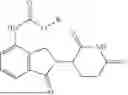
The present invention discloses a dihydro-2H-isoindole ester compound of the general structural formula:
The present invention also provides a method of preparing the dihydro-2H-isoindole ester compound and use thereof for preparation of a drug for treating multiple myeloma. The dihydro-2H-isoindole ester compound of the present invention has good permeability and, when orally administered, is absorbed and exerts a therapeutic effect in a steady and smooth manner. Due to the distinct absorption and metabolism behavior, the compound of the present invention possesses pharmacokinetic properties that can better address clinical needs, when compared to the existing drugs.
Inventors:
- Mingfeng Shi 3 🇨🇳 Shanghai, China
- XIANG HU 8 🇨🇳 Shanghai, China
- Yekun GUO 2 🇨🇳 Shanghai, China
- Dujian HUANG 2 🇨🇳 Shanghai, China
Assignee:
- Shanghai Maius Pharmaceutical Co. Ltd. 2 🇨🇳 Shanghai, China
Applicant:
Interested in similar patents?
Get notified when new applications in this technology area are published.
Classification:
C07D401/04 » CPC main
Heterocyclic compounds containing two or more hetero rings, having nitrogen atoms as the only ring hetero atoms, at least one ring being a six-membered ring with only one nitrogen atom containing two hetero rings directly linked by a ring-member-to-ring-member bond
C07D405/14 » CPC further
Heterocyclic compounds containing both one or more hetero rings having oxygen atoms as the only ring hetero atoms, and one or more rings having nitrogen as the only ring hetero atom containing three or more hetero rings
Description
TECHNICAL FIELD
The present invention pertains to the field of medicine and, in particular, to a dihydro-2H-isoindole ester compound.
BACKGROUND
Multiple myeloma (MM) is a poorly prognostic malignant tumor often found in elders. MM is characterized by significantly impaired hematopoiesis in bone marrow, or even hematopoietic failure, induced by tremendous proliferation of monoclonal plasma cells in bone marrow, which eventually leads to multifocal bone destruction.
At present, MM treatment relies mainly on chemotherapy. According to The Guidelines for the Diagnosis and Management of Multiple Myeloma in China (2020 revision), most currently available induction therapies adopt a three-drug regimen featuring the use of a proteasome inhibitor in combination with an immunomodulator and dexamethasone. Commonly used such regimens include bortezomib/thalidomide/dexamethasone (BTD), lenalidomide/bortezomib/dexamethasone (RVD) and thalidomide/cyclophosphamide/dexamethasone (TCD).
Thalidomide, lenalidomide and pomalidomide are immunomodulators commonly used in the clinical practice and each have a skeletal structure consisting of a dihydro-2H-isoindole ring linked to a piperidinedione ring:
Known effects of these immunomodulators include anti-tumorous properties, anti-angiogenic properties, erythropoietic stimulation and immune regulation. It is considered that they can attack the micro-environment of plasma cells in a multi-targeted manner, causing apoptosis of the cells. They can provide both immune regulation and angiogenic inhibition.
In-depth research on the three “-domide” drugs is continuously widening their scope of indications, gradually making them pan-cancer drugs for the treatment of various cancers.
During use, hematologic toxicity (decreases in neutrophils and platelets) and venous thrombosis (deep vein thrombosis and pulmonary embolism) are common adverse reactions to the three drugs. In particular, decreases in neutrophils and platelets have been recognized as the major dose-limiting toxicity.
For example, a clinical study showed that patients who received lenalidomide at 50 mg per day all showed Grade 3 myelosuppression on the 28th day of treatment and exhibited good tolerance when the dose was lowered to 25 mg per day. Therefore, the latter dose was taken as the maximum tolerated dose (MTD). Studies have shown that severe myelosuppression (Grade 3 or higher) is dose-dependent, and it is suggested that the dose be reduced once any toxic or side effect such as myelosuppression manifested, for example, as a decrease in neutrophils or platelets is observed.
Clinical pharmacokinetic studies show that the “-domide” drugs are absorbed and metabolized rapidly and feature significant plasma drug concentration variation. High peak plasma drug concentrations have been identified as a dose-limiting factor.
SUMMARY
In view of the above described disadvantages and drawbacks in practical use of the “-domide” drugs, the inventors attempted a series of structural modifications of them, studied pharmacokinetics of the modified compounds and successfully identified a class of dihydro-2H-isoindole ester compounds.
Accordingly, in a first aspect of the present invention, there is provided a dihydro-2H-isoindole ester compound of general structural formula (I):
-
- where R is selected from —CH(CH3)2, —(CH2)2CH3, —(CH2)3CH3, —CH2CH(CH3)2, —(CH2)5CH3,
—(CH2)7CH3, —(CH2)10CH3, —(CH2)17CH3, —CH2CH(C2H5)2, —CH(C2H5)2, —CH(CH(CH3)2)2 and —CH2Ph.
In a second aspect of the present invention, there are provided methods of preparing the dihydro-2H-isoindole ester compound.
In a first method, commercially available 3-(4′-amino-1-oxo-1,3-dihydro-2H-isoindol-2-yl) piperidine-2,6-dione is used as a starting material, and a target compound is obtained from its reaction with a corresponding chloroformate, according to:
or
-
- in a second method, the same starting material is first reacted with phenyl chloroformate (or p-nitrophenyl chloroformate) to derive its phenyl (or p-nitrophenyl) ester, which is then subjected to transesterification with a corresponding alcohol, giving a target compound, according to:
-
- where R is selected from —CH(CH3)2, —(CH2)2CH3, —(CH2)3CH3, —CH2CH(CH3)2, —(CH2)5CH3,
—(CH2)7CH3, —(CH2)10CH3, —(CH2)17CH3, —CH2CH(C2H5)2, —CH(C2H5)2, —CH(CH(CH3)2)2 and —CH2Ph; and
-
- R′ is H or nitro.
In a third aspect of the present invention, there is provided use of the dihydro-2H-isoindole ester compound for preparation of a drug for treating multiple myeloma.
The present invention has the following benefits:
1. The dihydro-2H-isoindole ester compound of the present invention has better permeability than the existing drugs. After being orally administered, it is absorbed in a steady and smooth manner and hydrolyzed into an active metabolite, which exerts its therapeutic effect in a sustained manner. Due to the distinct absorption and metabolism behavior, the compound of the present invention possesses pharmacokinetic properties that can better address clinical needs, when compared to the existing drugs.
2. The active metabolite of the dihydro-2H-isoindole ester compound of the present invention has an AUC value equivalent to about 40-60% of that of the existing drugs administered at the same molar amount. However, it is advantageous in a time to peak concentration up to 7 h and an average retention time as long as 4-9 h, both better than those of the existing drugs, which are 0.7 h and 3 h, respectively.
The active metabolite of Compound 1 has an AUC value equivalent to 45% of that of the existing drugs administered at the same molar amount, a time to peak concentration of 0.8 h and an average retention time of 4.5 h. The active metabolite of Compound 3 has an AUC value equivalent to 40% of that of the existing drugs administered at the same molar amount, a time to peak concentration of 5 h and an average retention time of 5.6 h. The active metabolite of Compound 6 has an AUC value equivalent to 61% of that of the existing drugs administered at the same molar amount, a time to peak concentration of 7 h and an average retention time of 8.6 h.
Among the AUC value (equivalent to 61% of that of the existing drugs administered at the same molar amount), the time to peak concentration (7 h) and the average retention time (8.6 h) of the active metabolite of Compound 6, both the time to peak concentration and the average retention time are much better than those of the existing drugs.
3. The dihydro-2H-isoindole ester compound of the present invention can provide a steadier and smoother plasma drug concentration profile and can exert a longer-lasting therapeutic effect.
BRIEF DESCRIPTION OF THE DRAWINGS
FIG. 1 shows a Plasma drug concentration-time curve of the reference drug after it is oral gavage administered to rats.
FIG. 2 shows a Plasma drug concentration-time curve of the active metabolite of Compound 1 after it is oral gavage administered to rats.
FIG. 3 shows a Plasma drug concentration-time curve of the active metabolite of Compound 3 after it is oral gavage administered to rats.
FIG. 4 shows a Plasma drug concentration-time curve of the active metabolite of Compound 6 after it is oral gavage administered to rats.
DETAILED DESCRIPTION
The present invention will be described clearly and fully below with reference to specific embodiments thereof and to the accompanying drawings. It is understood that the embodiments set forth herein are merely some, but not all, of the possible embodiments of this invention. Any and all other embodiments devisable by skilled artisans in light of the disclosed embodiments without paying any creative effort are considered to fall within the scope of the invention.
The following are the definitions of some terms as used in the context of the present invention.
The term “plasma drug concentration” refers to the total concentration of a drug in the blood plasma after it is absorbed in the form of being either bound to plasma protein or free in the plasma. Sometimes, this term refers to the concentration of a drug in the whole blood. The potency of a drug is proportional to its plasma drug concentration, and its in vivo concentration varies over time.
The term “time to peak concentration” refers to the time that it takes for a drug to reach its peak plasma drug concentration after its administration. At the end of this time, the drug is present at a maximum plasma drug concentration. The time to peak concentration of a drug can be used to analytically determine a suitable time for the drug to be taken.
The term “AUC” stands for the area under the curve of the plasma drug concentration of a drug as a function of time. In modern pharmacokinetic studies, AUC is an important parameter for assessing the in vivo properties of a drug. This area represents the total amount of absorption of a drug within a certain time after it is administered for a single time and can be used to calculate the drug's bioavailability.
The term “terminal elimination half-life” refers to the time that it takes for the plasma drug concentration of a drug that has reached a distribution equilibrium to drop by 50%.
In the context of the present invention, some compounds of general structural formula (I) that it is directed to, as well as the respective R groups therein, are numbered as shown in Table 1 blow.
| TABLE 1 | ||
| Compound No. | R Group | |
| 1 | —CH(CH3)2 | |
| 2 | —(CH2)2CH3 | |
| 3 | —(CH2)3CH3 | |
| 4 | —CH2CH(CH3)2 | |
| 5 | —(CH2)5CH3 | |
| 6 | ||
| 7 | —(CH2)7CH3 | |
| 8 | —(CH2)10CH3 | |
| 9 | —(CH2)17CH3 | |
| 10 | —CH2CH(C2H5)2 | |
| 11 | —CH(C2H5)2 | |
| 12 | —CH(CH(CH3)2)2 | |
| 13 | —CH2Ph | |
Example 1: Preparation of Compound 1
In a 250-mL three-neck flask, 12 g of 3-(4′-amino-1-oxo-1,3-dihydro-2H-isoindol-2-yl) piperidine-2,6-dione and then 100 g of tetrahydrofuran were added, followed by heating to reflux. Subsequently, 5.7 g of isopropyl chloroformate was added, and the reaction was run for 4 h under reflux. After that, 3.6 g of isopropyl chloroformate was supplemented, and the reaction was further run for another 4 h. Again, 2.7 g of isopropyl chloroformate was supplemented, and the reaction was further run for yet another 4 h. The reaction was stopped at the point when there was almost no starting material left according to TLC monitoring.
After the reaction was complete, 80 g of tetrahydrofuran was distilled out, and 50 g of ethanol was added, followed by agitation at 70° C. After the temperature cooled down to 20-25° C., filtration was performed, and the filter cake was collected and again agitated in 50 g of ethanol at 70° C. After the temperature cooled down to 20-25° C., filtration was performed, and the filter cake was collected and dried to afford the product. 12.0 g of the product was obtained at a yield of 75%.
1H NMR (300 MHz, DMSO-d6) δ 11.01 (s, 1H), 9.45 (s, 1H), 7.76 (dt, J=7.4, 3.7 Hz, 1H), 7.54-7.42 (m, 2H), 5.13 (dd, J=13.2, 5.1 Hz, 1H), 4.91 (hept, J=6.3 Hz, 1H), 4.53-4.26 (m, 2H), 2.92 (ddd, J=17.2, 13.5, 5.4 Hz, 1H), 2.69-2.55 (m, 1H), 2.36 (qd, J=13.2, 4.4 Hz, 1H), 2.03 (ddd, J=9.6, 5.1, 2.4 Hz, 1H), 1.27 (d, J=6.2 Hz, 6H). 13C NMR (75 MHz, DMSO-d6) δ 173.34, 171.48, 168.30, 153.88, 134.49, 133.52, 133.22, 129.16, 124.77, 118.81, 68.47, 52.07, 46.78, 31.69, 23.06, 22.40.
As detected by mass spectrometry, [M+H]+=346.1, in consistence with the molecular structural formula.
Example 2: Preparation of Compound 2
The same preparation steps as in Example 1 were performed, except that isopropyl chloroformate was replaced with propyl chloroformate. 13.4 g of the target product was obtained at a yield of 83.6%.
1H NMR (300 MHZ, DMSO-d6) δ 11.01 (s, 1H), 9.51 (s, 1H), 7.76 (dt, J=7.4, 3.7 Hz, 1H), 7.56-7.43 (m, 2H), 5.13 (dd, J=13.2, 5.1 Hz, 1H), 4.54-4.28 (m, 2H), 4.06 (t, J=6.7 Hz, 2H), 2.92 (ddd, J=18.1, 13.4, 5.3 Hz, 1H), 2.74-2.55 (m, 1H), 2.36 (qd, J=13.3, 4.5 Hz, 1H), 2.15-1.91 (m, 1H), 1.65 (q, J=7.1 Hz, 2H). 13C NMR (75 MHz, DMSO-d6) δ 173.33, 171.48, 168.28, 154.39, 134.42, 133.56, 133.23, 129.20, 124.79, 118.89, 66.57, 52.06, 46.75, 31.68, 23.07, 22.34, 10.72.
As detected by mass spectrometry, [M+H]+=346.1, in consistence with the molecular structural formula.
Example 3: Preparation of Compound 3
The same preparation steps as in Example 1 were performed, except that isopropyl chloroformate was replaced with butyl chloroformate. 12.0 g of the target product was obtained at a yield of 72.1%.
1H NMR (300 MHz, DMSO-d6) δ 11.01 (s, 1H), 9.50 (s, 1H), 7.76 (dt, J=7.3, 3.6 Hz, 1H), 7.49 (d, J=3.0 Hz, 2H), 5.13 (dd, J=13.2, 5.1 Hz, 1H), 4.56-4.23 (m, 2H), 4.11 (t, J=6.6 Hz, 2H), 2.92 (ddd, J=18.4, 13.6, 5.4 Hz, 1H), 2.61 (d, J=16.9 Hz, 1H), 2.35 (qd, J=13.1, 4.3 Hz, 1H), 2.03 (dtd, J=10.2, 7.9, 6.5, 3.5 Hz, 1H), 1.62 (tt, J=8.4, 6.4 Hz, 2H), 1.49-1.27 (m, 2H), 0.92 (t, J=7.3 Hz, 3H). 13C NMR (75 MHZ, DMSO-d6) δ 173.33, 171.48, 168.29, 154.39, 134.44, 133.52, 133.23, 129.18, 124.74, 118.87, 64.77, 52.07, 46.76, 31.69, 31.02, 23.09, 19.07, 14.04.
As detected by mass spectrometry, [M+H]+=360.1, in consistence with the molecular structural formula.
Example 4: Preparation of Compound 4
The same preparation steps as in Example 1 were performed, except that 15 g of the starting material was used and isopropyl chloroformate was replaced with a corresponding amount of isobutyl chloroformate. 14.9 g of the target product was obtained at a yield of 71.6%.
1H NMR (300 MHz, DMSO-d6) δ 11.01 (s, 1H), 9.51 (s, 1H), 7.77 (dt, J=7.4, 3.7 Hz, 1H), 7.56-7.42 (m, 2H), 5.13 (dd, J=13.2, 5.1 Hz, 1H), 4.57-4.25 (m, 2H), 3.90 (d, J=6.7 Hz, 2H), 2.92 (ddd, J=18.1, 13.4, 5.4 Hz, 1H), 2.61 (d, J=17.2 Hz, 1H), 2.36 (qd, J=13.2, 4.5 Hz, 1H), 2.13-1.96 (m, 1H), 1.94 (dp, J=13.4, 6.8 Hz, 1H), 0.94 (d, J=6.7 Hz, 6H). 13C NMR (75 MHZ, DMSO-d6) δ 173.33, 171.49, 168.28, 154.42, 134.42, 133.56, 133.23, 129.20, 124.80, 118.90, 70.96, 52.05, 46.73, 31.69, 28.03, 23.08, 19.36.
As detected by mass spectrometry, [M+H]+=360.1, in consistence with the molecular structural formula.
Example 5: Preparation of Compound 5
The same preparation steps as in Example 1 were performed, except that isopropyl chloroformate was replaced with n-hexyl chloroformate. 11.0 g of the target product was obtained at a yield of 62.5%.
1H NMR (300 MHz, DMSO-d6) δ 11.01 (s, 1H), 9.50 (s, 1H), 7.76 (dt, J=7.4, 3.7 Hz, 1H), 7.57-7.35 (m, 2H), 5.13 (dd, J=13.2, 5.1 Hz, 1H), 4.55-4.25 (m, 2H), 4.10 (t, J=6.6 Hz, 2H), 2.92 (ddd, J=17.8, 13.4, 5.3 Hz, 1H), 2.61 (d, J=17.6 Hz, 1H), 2.35 (qd, J=13.2, 4.4 Hz, 1H), 2.03 (dtd, J=12.0, 5.1, 4.6, 1.9 Hz, 1H), 1.74-1.52 (m, 2H), 1.46-1.20 (m, 6H), 0.88 (t, J=6.8 Hz, 3H). 13C NMR (75 MHZ, DMSO-d6) δ 173.31, 171.47, 168.28, 154.38, 134.44, 133.52, 133.23, 129.18, 124.75, 118.87, 65.07, 52.06, 46.74, 31.69, 31.39, 28.95, 25.51, 23.09, 22.51, 14.34.
As detected by mass spectrometry, [M+H]+=388.2, in consistence with the molecular structural formula.
Example 6: Preparation of Compound 6
In a 1-L single-neck flask, 17 g of 3-(4′-amino-1-oxo-1,3-dihydro-2H-isoindol-2-yl) piperidine-2,6-dione, 19.8 g of p-nitrophenyl chloroformate and 250 mL of tetrahydrofuran were added, followed by stirring for 3 h under heating at 65° C. When it was detected by TLC monitoring that the starting material had been completely consumed, rotation-evaporation was performed, and 200 mL of ethyl acetate was added, followed by agitation therein. From filtration, 24 g of a white solid was obtained.
In a 500-mL three-neck flask, 19 g of the white solid obtained from the above step, 9.7 g of 4-(hydroxymethyl)-5-methyl-[1,3]dioxol-2-one, 7.6 g of triethylamine and 250 mL of DMF were added and stirred at 25° C. for 24 h. When it was detected by TLC monitoring that the starting material had been completely consumed, the liquid reaction was poured into ice water and extracted with 1 L of ethyl acetate, followed by drying on anhydrous sodium sulfate and rotation-evaporation. A liquid fraction obtained from column chromatography (petroleum ether/ethyl acetate=1:1-0:1) was concentrated to give about 7 g of an oil, to which n-heptane (200 mL) was added, followed by agitation. From filtration, 4.4 g of the target compound was obtained as a white solid with purity of 93.6%.
1H NMR (300 MHz, DMSO-d6) δ 11.01 (s, 1H), 9.78 (s, 1H), 7.77 (dt, J=7.7, 3.8 Hz, 1H), 7.59-7.45 (m, 2H), 5.13 (dd, J=13.2, 5.1 Hz, 1H), 5.05 (s, 2H), 4.56-4.24 (m, 2H), 2.92 (ddd, J=18.0, 13.4, 5.3 Hz, 1H), 2.69-2.56 (m, 1H), 2.34 (qd, J=13.2, 4.4 Hz, 1H), 2.20 (s, 3H), 2.10-1.95 (m, 1H). 13C NMR (76 MHz, DMSO-d6) δ 173.33, 171.47, 168.20, 153.57, 152.36, 140.61, 134.16, 133.94, 133.77, 133.31, 129.31, 124.95, 119.30, 54.77, 52.08, 46.68, 31.68, 23.07, 9.32.
As detected by mass spectrometry, [M+H]+=416.1, in consistence with the molecular structural formula.
Example 7: Preparation of Compound 7
The same preparation steps as in Example 1 were performed, except that isopropyl chloroformate was replaced with crude n-octyl chloroformate prepared from 5 eq. of n-octanol, 7.5 eq. of triethylamine and 2.5 eq. of triphosgene. The reaction was subject to column chromatography, giving 4.20 g of the target compound at a yield of 52.4%.
1H NMR (400 MHZ, DMSO-d6) δ 11.01 (s, 1H), 9.51 (s, 1H), 7.76 (dt, J=7.1, 3.5 Hz, 1H), 7.62-7.36 (m, 2H), 5.12 (dd, J=13.2, 5.1 Hz, 1H), 4.40 (dd, J=36.2, 17.6 Hz, 2H), 4.19-4.01 (m, 2H), 3.00-2.84 (m, 1H), 2.66 (dd, J=36.3, 20.1 Hz, 1H), 2.35 (qd, J=13.2, 4.4 Hz, 1H), 2.07-1.94 (m, 1H), 1.75-1.41 (m, 2H), 1.31-1.26 (m, 10H), 0.86 (t, J=6.8 Hz, 3H).
As detected by mass spectrometry, [M+H]+=416.23, in consistence with the molecular structural formula.
Example 8: Preparation of Compound 8
The same preparation steps as in Example 1 were performed, except that isopropyl chloroformate was replaced with crude n-undecyl chloroformate prepared from 5 eq. of n-undecanol, 7.5 eq. of triethylamine and 2.5 eq. of triphosgene. The reaction was subject to column chromatography, giving 5.6 g of the target compound at a yield of 63.2%.
1H NMR (400 MHZ, DMSO-d6) δ 11.01 (s, 1H), 9.49 (s, 1H), 7.76 (dt, J=7.1, 3.5 Hz, 1H), 7.58-7.39 (m, 2H), 5.12 (dd, J=13.3, 5.1 Hz, 1H), 4.39 (q, J=17.6 Hz, 2H), 4.08 (t, J=6.6 Hz, 2H), 3.00-2.83 (m, 1H), 2.63 (t, J=16.4 Hz, 1H), 2.34 (qd, J=13.2, 4.4 Hz, 1H), 2.02 (ddd, J=13.2, 6.5, 4.5 Hz, 1H), 1.77-1.41 (m, 2H), 1.40-1.15 (m, 16H), 0.85 (t, J=6.8 Hz, 3H).
As detected by mass spectrometry, [M+H]+=458.29, in consistence with the molecular structural formula.
Example 9: Preparation of Compound 9
The same preparation steps as in Example 1 were performed, except that isopropyl chloroformate was replaced with crude n-octadecyl chloroformate prepared from 5 eq. of n-octadecanol, 7.5 eq. of triethylamine and 2.5 eq. of triphosgene. The reaction was subject to column chromatography, giving 6.4 g of the target compound at a yield of 60.1%.
1H NMR (400 MHZ, DMSO-d6) δ 11.00 (s, 1H), 9.49 (s, 1H), 7.76 (dd, J=5.9, 2.3 Hz, 1H), 7.48 (dd, J=8.6, 5.0 Hz, 2H), 5.12 (dd, J=13.2, 5.0 Hz, 1H), 4.39 (q, J=17.6 Hz, 2H), 4.08 (t, J=6.6 Hz, 2H), 3.02-2.81 (m, 1H), 2.60 (d, J=17.0 Hz, 1H), 2.34 (qd, J=13.2, 4.3 Hz, 1H), 1.99 (dd, J=27.4, 21.9 Hz, 1H), 1.57 (dt, J=69.7, 34.9 Hz, 2H), 1.41-0.95 (m, 30H), 0.85 (t, J=6.6 Hz, 3H).
As detected by mass spectrometry, [M+H]+=556.39, in consistence with the molecular structural formula.
Example 10: Preparation of Compound 10
The same preparation steps as in Example 1 were performed, except that isopropyl chloroformate was replaced with crude 2-ethylbutyl chloroformate prepared from 5 eq. of 2-ethylbutanol, 7.5 eq. of triethylamine and 2.5 eq. of triphosgene. The reaction was subject to column chromatography, giving 3.9 g of the target compound at a yield of 52.5%.
1H NMR (400 MHz, DMSO-d6) δ 11.01 (s, 1H), 9.47 (s, 1H), 7.75 (dt, J=33.1, 16.5 Hz, 1H), 7.61-7.27 (m, 2H), 5.13 (dd, J=13.2, 5.1 Hz, 1H), 4.40 (q, J=17.6 Hz, 2H), 4.03 (d, J=5.9 Hz, 2H), 3.00-2.83 (m, 1H), 2.61 (d, J=16.9 Hz, 1H), 2.35 (qd, J=13.2, 4.4 Hz, 1H), 2.10-1.94 (m, 1H), 1.58-1.47 (m, 1H), 1.45-1.28 (m, 4H), 0.88 (t, J=7.4 Hz, 6H).
As detected by mass spectrometry, [M+H]+=388.19, in consistence with the molecular structural formula.
Example 11: Pharmacokinetic Assays of Compounds
Instruments: ultra high performance liquid chromatography (Acquity UPLC, Waters) system; triple quadrupole mass spectrometer (Qtrap 5500, Sciex); high-speed refrigerated centrifuge (5430R, Eppendorf).
Chromatography Condition: Column: 2.1×50 mm (1.7 μm, BEH C18, Waters); Column Temperature: 45° C.; Mobile Phase: 0.1% aqueous solution of formic acid (A)/acetonitrile; Gradient: see the table below:
| Gradient Table |
| Time | Flow | % A | % B | |
| initial | 0.400 | 95.0 | 5.0 | |
| 1.00 | 0.400 | 95.0 | 5.0 | |
| 2.80 | 0.400 | 38.0 | 62.0 | |
| 2.90 | 0.400 | 0.0 | 100.0 | |
| 3.90 | 0.400 | 0.0 | 100.0 | |
| 4.00 | 0.400 | 95.0 | 5.0 | |
Mass Spectrometry Condition: Mode: positive ion multiple reaction monitoring (MRM); Curtain Gas: 45 psi; Gas 1:45 psi; Gas 2:45 psi; Ion Source Temperature: 500° C.; Ion Source Voltage: 5000 V. Precursor ions (Q1), product ions (Q3) and collision energy (CE) of some compounds are listed in the table below:
| Q1 Mass | Q3 Mass | Time | |||
| (Da) | (Da) | (msec) | ID | CE(volts) | |
| 1 | 260.100 | 149.100 | 100.0 | Lenalidomide | 20.000 |
| 2 | 388.200 | 277.200 | 100.0 | Compound 5 | 30.000 |
| 3 | 416.100 | 193.100 | 100.0 | Compound 6 | 25.000 |
| 4 | 274.100 | 84.000 | 100.0 | IS | 20.000 |
Experimental Animals: male SD rats, 6 in each group, weighing 200-220 grams, fasting overnight before experimentation.
Preparation of Drugs: lenalidomide, as a reference drug, and the test compounds (Compounds 1-10) were accurately weighed and dispensed in 0.5% CMC-Na solutions, resulting in suspensions.
Drug Administration to and Blood Collection from Animals: the drugs were oral gavage administered to the rats, and 100-μl blood samples were taken before administration and 10 min, 20 min, 40 min, 1 h, 1.5 h, 2 h, 3 h, 5 h, 8 h, 12 h, 21 h, 24 h and 30 h after administration. Each sample was placed in an ice bath, centrifuged for plasma collection, frozen and stored.
Plasma drug concentration Data and Calculation of Pharmacokinetic Parameters: Plasma drug concentration data was processed using MultiQuan 3.0 (Sciex), and pharmacokinetic parameters were calculated using DAS 2.0 software. Plasma drug concentrations were measured in ug/L.
FIGS. 1 to 4 show respective plasma drug concentration-time curves of the reference drug group and the test groups treated with Compounds 1, 3 and 6, and Table 2 shows the results of pharmacokinetic assays.
As can be seen from FIGS. 1 to 4, and from the results of pharmacokinetic assays shown in Table 2, after being orally administered and absorbed, the compounds of the present invention can exert their intended therapeutic effects in the plasma. Active metabolites of compounds 1, 3, 6, etc. have an AUC value comparable to that of the conventional drugs administered at the same molar amount. However, the compounds of the present invention exhibit a lower plasma drug concentration peak, a prolonged time to peak concentration, a longer average retention time and pharmacokinetic properties that can better address clinical needs.
| TABLE 2 |
| Results of Pharmacokinetic Assays |
| Parameter | Unit | reference drug | Compound 6 | Compound 1 | Compound 3 | Compound 5 |
| AUC(0-t) | ug/L*h | 8494.4 ± 920 | 5217 ± 754.8 | 3822 ± 424.5 | 3398 ± 304.2 | 1022 ± 214.5 |
| AUC(0-∞) | ug/L*h | 8505.7 ± 920.1 | 5229.3 ± 755.1 | 3889.6 ± 435.6 | 3413.1 ± 314.3 | 1257 ± 209.6 |
| AUMC(0-t) | 25619.7 ± 5124.9 | 44683.6 ± 4956.6 | 32705.8 ± 3125.3 | 28866.3 ± 3051.1 | 8749 ± 352.6 | |
| AUMC(0-∞) | 25989.2 ± 5200.6 | 45199.7 ± 4922.6 | 33484.2 ± 3040.7 | 28901.2 ± 3221.3 | 8954 ± 336.4 | |
| MRT(0-t) | h | 3 ± 0.4 | 8.6 ± 0.6 | 4.5 ± 0.7 | 5.6 ± 0.5 | 4 ± 0.5 |
| MRT(0-∞) | h | 3 ± 0.4 | 8.7 ± 0.6 | 4.6 ± 0.6 | 5.7 ± 0.5 | 1.1 ± 0.6 |
| VRT(0-t) | h{circumflex over ( )}2 | 9.4 ± 1.3 | 20 ± 2.5 | 13 ± 2.2 | 17 ± 3.0 | 11 ± 1.8 |
| VRT(0-∞) | h{circumflex over ( )}2 | 10.3 ± 1.6 | 21.8 ± 2.8 | 14.3 ± 2.1 | 17.8 ± 2.8 | 11.8 ± 2.1 |
| t½z | h | 2.8 ± 0.2 | 2.9 ± 0.4 | 2.8 ± 0.3 | 2.9 ± 0.3 | 3.0 ± 0.3 |
| Tmax | h | 0.7 ± 0.3 | 7 ± 1.5 | 0.8 ± 0.4 | 5 ± 1.5 | 4 ± 0.5 |
| CLz/F | L/h/kg | 3.6 ± 0.4 | 5.9 ± 1 | 4.3 ± 1 | 4.9 ± 0.9 | 4.2 ± 0.9 |
| Vz/F | L/kg | 14.3 ± 2.4 | 24.2 ± 5.1 | 16.4 ± 3.9 | 18.5 ± 4.8 | 16.9 ± 1.8 |
| Cmax | ug/L | 2766.9 ± 335.6 | 405.4 ± 89.8 | 543.6 ± 68.5 | 378.4 ± 75.3 | 158 ± 31.1 |
| Parameter | Unit | Compound 7 | Compound 8 | Compound 9 | Compound 10 |
| AUC(0-t) | ug/L*h | 503.2 ± 42.6 | 489.4 ± 50.3 | 402.5 ± 51.6 | 1568 ± 205.4 |
| AUC(0-∞) | ug/L*h | 584.3 ± 50.3 | 421.5 ± 55.6 | 456 ± 48.0 | 1765 ± 226.3 |
| AUMC(0-t) | 3965 ± 415.1 | 3596 ± 401.3 | 3126 ± 298.1 | 13691 ± 587.2 | |
| AUMC(0-∞) | 4123 ± 446.1 | 3689 ± 411.6 | 3360 ± 318.6 | 14002 ± 589.6 | |
| MRT(0-t) | h | 3.8 ± 0.7 | 3.8 ± 0.5 | 3.5 ± 0.6 | 5.2 ± 0.7 |
| MRT(0-∞) | h | 3.8 ± 0.8 | 3.9 ± 0.5 | 3.6 ± 0.7 | 5.2 ± 0.7 |
| VRT(0-t) | h{circumflex over ( )}2 | 10 ± 1.3 | 9.8 ± 1.5 | 10 ± 1.5 | 14 ± 2.1 |
| VRT(0-∞) | h{circumflex over ( )}2 | 10.5 ± 1.3 | 9.9 ± 1.6 | 10.2 ± 1.5 | 14.2 ± 2.2 |
| t½z | h | 3.1 ± 0.2 | 2.9 ± 0.3 | 3.0 ± 0.4 | 3.1 ± 0.5 |
| Tmax | h | 3.5 ± 0.8 | 3.8 ± 1.1 | 4.1 ± 0.8 | 5 ± 0.9 |
| CLz/F | L/h/kg | 4.1 ± 1.1 | 3.8 ± 0.9 | 4.2 ± 1.0 | 3.9 ± 0.8 |
| Vz/F | L/kg | 15.1 ± 1.4 | 14.9 ± 1.2 | 13.9 ± 2.0 | 16.1 ± 1.9 |
| Cmax | ug/L | 135 ± 23.0 | 105.3 ± 24.1 | 95.6 ± 22.2 | 163.2 ± 26.4 |
Claims
1. A dihydro-2H-isoindole ester compound, characterized in being of the general structural formula:
where R is
2. (canceled)
3. (canceled)
4. A method of preparing the dihydro-2H-isoindole ester compound according to claim 1, characterized in using 3-(4′-amino-1-oxo-1,3-dihydro-2H-isoindol-2-yl) piperidine-2,6-dione as a starting material and obtaining a target compound from its reaction with a corresponding chloroformate, wherein the reaction is represented by the following equation:
where R is
5. A method of preparing the dihydro-2H-isoindole ester compound according to claim 1, characterized in using 3-(4′-amino-1-oxo-1,3-dihydro-2H-isoindol-2-yl) piperidine-2,6-dione as a starting material and obtaining a target compound from transesterification of a phenyl (or p-nitrophenyl) ester compound, which is obtained from its reaction with phenyl chloroformate (or p-nitrophenyl chloroformate), with a corresponding alcohol, wherein the reactions are represented by the following equations:
where R is
and
R′ is H or nitro.
6. Use of the dihydro-2H-isoindole ester compound according to claim 1, characterized in being for preparation of a drug for treating multiple myeloma.
Images & Drawings included:



Sources:
- United States Patent and Trademark Office - verify current appl. status at the USPTO↗
Recent applications in this class:
- » 20250163020 2025-05-22
Chiral Synthesis of Nornicotine and Nicotine - » 20250163019 2025-05-22
NICOTINE SALTS, CO-CRYSTALS, AND SALT CO-CRYSTAL COMPLEXES - » 20250163018 2025-05-22
KEY AMINO ACID BASED ON PROTEIN-DRUG INTERACTIONS INDUCED NEW CRYSTAL FORMS OF TRELAGLIPTIN AND PREPARATION METHODS THEREOF - » 20250163017 2025-05-22
LANTHIONINE C-LIKE PROTEIN 2 LIGANDS, CELLS PREPARED THEREWITH, AND THERAPIES USING SAME - » 20250163016 2025-05-22
PYRIDINE DERIVATIVE, PREPARATION METHOD THEREFOR AND USE THEREOF - » 20250154124 2025-05-15
PROCESSES FOR THE PREPARATION OF N-(1-METHYLCYCLOPROPYL)-2-(3-PYRIDINYL)-2H-INDAZOLE-4-CARBOXAMIDE AND INTERMEDIATES THEREOF - » 20250145584 2025-05-08
SOLID FORM OF A BRADYKININ B2-RECEPTOR ANTAGONIST - » 20250145583 2025-05-08
ETHYL 2-[9-(2-HYDROXYPYRIDIN-3-YL)-3,6-DIPHENYL-1,8-DIOXO-3,4,9,10-TETRAHYDROACRIDINE-10-YL]-ACETATE AS AN ANTIMICROBIAL COMPOUND - » 20250136574 2025-05-01
SELECTIVE AGENTS TARGETING MYCOBACTERIUM TUBERCULOSIS - » 20250136573 2025-05-01
NONPEPTIDE SOMATOSTATIN TYPE 5 RECEPTOR AGONISTS AND USES THEREOF
Recent applications for this Assignee:
- » 20240360144 2024-10-31
PYRAZOLOPYRIMIDINE ESTER COMPOUND