BODY COMPONENT FOR A VEHICLE BODY
US20250100366A1
2025-03-27
18/890,815
2024-09-20
Smart Summary: A new vehicle body component includes a section that forms part of the vehicle's underbody. This section has a special structure designed to hold a battery, with walls that create separate spaces for each battery cell. Each space is meant to fit one battery cell from the vehicle's battery. Some of these walls have channels that allow coolant to flow through, helping to keep the battery cells cool. Overall, this component helps integrate the vehicle's battery into its body design. 🚀 TL;DR
Abstract:
The disclosure relates to an apparatus comprising a body component associated with a vehicle body, wherein the body component comprising an underbody section configured to form at least part of a vehicle body, and a battery housing structure at the underbody section, the battery housing structure comprising multiple compartment walls, the multiple compartment walls partitioning the battery housing structure into multiple compartments, each one of the multiple compartments being configured to accommodate one of the multiple battery cells of a vehicle battery, and at least one of the multiple compartment walls comprising at least one flow channel configured for conveying a coolant for cooling at least one of the multiple battery cells, wherein the body component is associated with a vehicle body, wherein the body component is configured for housing the vehicle battery comprising multiple battery cells.
Inventors:
- Klas PERSSON 9 🇸🇪 Göteborg, Sweden
- Daniel Karlsson 12 🇸🇪 Göteborg, Sweden
- Martin Hjälm Wallborg 7 🇸🇪 Göteborg, Sweden
Assignee:
- VOLVO CAR CORPORATION 156 🇸🇪 Goteborg, Sweden
Applicant:
Interested in similar patents?
Get notified when new applications in this technology area are published.
Classification:
B60L50/64 » CPC further
Electric propulsion with power supplied within the vehicle using propulsion power supplied by batteries or fuel cells using power supplied by batteries Constructional details of batteries specially adapted for electric vehicles
B60K2001/0438 » CPC further
Arrangement or mounting of electrical propulsion units of the electric storage means for propulsion characterised by their position Arrangement under the floor
B60K1/04 » CPC main
Arrangement or mounting of electrical propulsion units of the electric storage means for propulsion
B60L58/26 » CPC further
Methods or circuit arrangements for monitoring or controlling batteries or fuel cells, specially adapted for electric vehicles for monitoring or controlling batteries for controlling the temperature of batteries by cooling
Description
CROSS-REFERENCE TO RELATED APPLICATIONS
This application claims the benefit of European Patent Application Number 23198890.8, filed on Sep. 21, 2023, which is hereby incorporated by reference in its entirety.
TECHNICAL FIELD
The present disclosure relates to a body component for a vehicle body, a battery pack comprising the body component, a vehicle comprising the battery pack, a method for producing the battery pack, and a mold configured for casting the body component.
BACKGROUND
Vehicles, particularly electrical vehicles, may comprise battery packs installed on a vehicle body to provide electric power to the vehicle. Battery packs are complex systems comprising multiple battery cells and a cooling system for preventing over-heating of the battery cells. Today, vehicle bodies and battery packs are built separately and joined together at a later phase of production. Joining thereof requires handling of sensitive battery cells and cooling systems and arranging these in a compact manner on the vehicle body. Interfaces formed between the separate battery packs and the vehicle bodies may have negative effects, such as added weight, costs and cause inefficiencies, especially thermal inefficiencies.
Such interfaces may comprise different connection means used for connecting the battery packs to the vehicle bodies, for instance bolts, which may additionally require sealing thereof. Every additional connection means may affect stiffness of the vehicle in a negative manner. Connection means also require a downstream production footprint, leading to additional product cost. Furthermore, accommodating connection means and/or sealing is causing a wasted space that could otherwise be used more efficiently. Additionally, separate installation of battery packs and cooling system on the vehicle body causes a reduction in cooling capacity, affecting the thermal efficiency of the battery. An efficient arrangement of the cooling system in the battery pack is also crucial for improving a driving range of the vehicles with battery packs.
Recently, attempts have been made to co-engineer battery packs and vehicle bodies with an intention of providing a compact and efficient installation. However, a high number of interfaces between these elements remain, and still cause inefficiencies.
SUMMARY
The problem is at least partially solved or alleviated by the subject matter of the independent claims of the present disclosure, wherein further examples are incorporated in the dependent claims.
According to a first aspect, there is provided a body component for a vehicle body. The body component is configured for housing a vehicle battery comprising multiple battery cells. The body component comprises an underbody section configured to form at least part of the vehicle body and a battery housing structure at the underbody section. The battery housing structure comprises multiple compartment walls. The multiple compartment walls partition the battery housing structure into multiple compartments. Each one of the multiple compartments is configured to accommodate one of the multiple battery cells. At least one of the multiple compartment walls comprises at least one flow channel configured for conveying a coolant for cooling at least one of the multiple battery cells.
The body component comprises multiple compartment walls forming multiple compartments at the underbody section of the body component. The multiple compartment walls may comprise multiple walls added to each other to form a single wall structure or may be formed of a single wall. The vehicle body may be a frame upon which vehicle components can be built. The underbody section of the body component may be provided at a lower part of the body component. For instance, the underbody section may comprise a section of a chassis of the vehicle, such as a base of the vehicle body. Inside each compartment a battery cell of the vehicle battery may be accommodated. By forming the underbody section of the body component integral to the vehicle body, a need for a separate housing structure for the battery cells may be avoided. Accordingly, state of the art technology of providing a battery pack comprising battery cells and installing the battery pack on a vehicle body may be improved.
By providing the body component as a part of the vehicle body, interfaces between the vehicle body and the battery pack may be reduced, thereby making the vehicle lighter. Furthermore, usage of any connection means for fastening the battery pack on the vehicle body may be reduced or even avoided. The compartment walls partitioning the battery housing structure may allow utilization of the battery housing structure efficiently. The number of compartment walls may be optimized. The battery housing structure may be divided optimally.
To maintain optimal performance and longevity of the battery pack, vehicles may incorporate a thermal management system. The thermal management system may comprise the at least one flow channel for circulating a cooling liquid therethrough for regulating a temperature of the battery cells. The flow channel may also be referred to as a cooling channel. The coolant may be conveyed through the flow channel or, in other words, flow therethrough to pass one or more battery cells, in effect, cooling them. The coolant may be any fluid, in particular any liquid, such as water, for example. An antifreeze agent, such as ethylene glycol, for example, may be included in the coolant. The at least one flow channel may be a single channel, or a combination of channels connected to one another. The at least one flow channel may be provided inside the compartment wall or at least one side of the compartment wall. When the at least one flow channel is provided inside the compartment wall, cooling of multiple battery cells at opposite sides of the wall may be achieved. Whereas, when the at least one flow channel is provided at either side of the compartment wall, the battery cells on a respective side of the compartment wall may be cooled. In any case, providing the at least one flow channel at the compartment wall may prevent fixing of the flow channel on an additional component of the vehicle body. Providing the at least one flow channel at the multiple compartment wall provides an efficient cooling of the battery cells. Heat or energy losses caused by inefficient utilisation of the battery housing structure may be minimized.
According to an example, the multiple compartments may be arranged in a honeycomb pattern. A honeycomb pattern may be a repeated arrangement of compartments. The honeycomb pattern may have radial symmetry. Although a honeycomb may be a hexagon structure (a six-sided polygon with straight sides and angles), it may have any number of sides ranging from three (as in a triangle) to eight (octahedral) or more up to a round shape for round battery cells. The compartments may be of a uniform size and/or shape. In principle, the compartments may be surrounded by other compartments from each side, in other words, by a number of other compartments equal to a number of sides of the compartment. This may provide a uniform distribution of the compartments on the battery housing structure.
In an example, the compartments may have any shape, such as a circular one. According to the invention, such an arrangement may be also called a honeycomb pattern. The compartments may be of a uniform size and/or shape. Maintaining consistent dimensions throughout the body component may contribute to structural stability.
According to an example, the body component may be monolithic. Monolithic may mean that the part of the vehicle body may be configured to form the body component. For instance, the body component may be directly on the chassis. The chassis may provide structural support and/or may form a foundation for various vehicle systems. The body component may be at a part of the chassis (vehicle body), whereas other parts of the chassis may be used for housing, for instance at least one of the engine, transmission, suspension, or wheels. Especially, while the underbody section of the body component is configured to form a part of the vehicle body, another section of the body component, for instance an upper body section on the underbody section, may be configured to house components such as electrical connections, a cover element and/or a means for insulating the battery housing structure at the underbody section.
According to an example, the body component may further comprise at least one flow inlet and at least one flow outlet. The at least one flow inlet may be arranged at a side of the body component opposite to the flow outlet. The at least one flow channel may be arranged between the flow inlet and the flow outlet. A coolant may flow from the flow inlet, through the flow channel and to the flow outlet. The coolant may be circulated from the flow outlet to the flow inlet. A heat exchange means may cool down the coolant before the coolant circulates back to the flow inlet. Providing the flow inlet and the flow outlet on the body component provides a simple and compact design for cooling the battery cells placed on the body component. Additional installation of a cooling system on the body component may be avoided.
According to an example, at least a section of the at least one flow channel may have a serpentine shape. The serpentine shape may be defined as curves that transition from one side of a battery cell to an opposite side of a consecutive battery cell. The shape may be depicted as an “S” shape, two consecutive battery cells being provided on recesses on opposite sides. An arrangement of the flow channel between the consecutive battery cells may increase a surface of heat exchange between the flow channel and the battery cells and thereby provide an improved cooling for the battery cells.
According to an example, the body component may further comprise a cover at a top of at least one of the multiple compartments. The cover may be configured to house at least one busbar component connecting at least two battery cells with each other. The connection between the two battery cells may be an electrical connection. The connection can be additionally a mechanical connection. At least a section of the at least one flow channel may be configured for cooling the busbar component or, in other words, conveying the coolant for cooling the busbar component. The cover may be positioned at the upper body section of the body component. The flow channel may be housed at least partially by the cover.
The busbar may provide a low-resistance path for electrical current to flow between the battery cells. As the busbars are usually made from materials with high electrical conductivity, such as copper or aluminum, while efficient transmission of electrical current may be achieved, busbars may dissipate high levels of heat. Accordingly, cooling thereof may support efficient working of the vehicle. The cover housing the busbar component may help to prevent heat dissipation outside of the body component and efficient cooling thereof at place.
The section of the at least one flow channel at the top of the compartments may provide a cooling of the battery cells placed inside the compartments from a top side, in addition to the cooling from the at least one flow channel at the compartment walls, preferably at a side of the battery cell placed inside the compartment. Accordingly, by providing the section of the at least one flow channel to cool down the busbar housed by the cover, an increased heat exchange may be provided from multiple sides of the battery cells placed inside the compartments.
According to an example, at least one of the multiple compartment walls may comprise at least two flow channels. The flow channels may be arranged adjacent to each other. The flow channels may be essentially parallel to each other or arranged angularly. When there are more than two flow channels, the flow channels may be arranged at equal intervals or may be concentrated at an upper or a lower section of the compartment wall. The section where the flow channels are concentrated may correspond to a part of the battery cell which heats up more, for instance at an upper part of the compartment wall corresponding to battery cell electrodes.
According to an example, the body component may comprise a sealing shelf on top of the battery housing structure. The body component may further comprise a further adhesive between the sealing shelf and at least one of the compartment walls of the battery housing structure. The adhesive between the sealing shelf and the compartment wall may fix the sealing shelf on the battery housing structure while providing an electrical insulation of the battery cells from each other.
According to a second aspect, there is provided a battery pack comprising the body component according to the first aspect and a vehicle battery. The vehicle battery comprises multiple battery cells. Each one of the multiple battery cells is provided in a respective one of the multiple compartments of the body component.
The battery pack may function as a structural support to secure the battery cells within the compartments of the body component. The battery pack may distribute weight and minimize vibrations. The battery cells may be electrically connected with each other, preferably by the busbar component, to achieve a desired voltage and/or capacity level.
According to an example, at least one of the multiple compartments may comprise a space between the compartment wall and the battery cell inside the compartment. The compartments may have a size and/or shape corresponding to a commercial battery cell. Different types of batteries, such as lithium-ion, nickel-metal hydride (NiMH), and lead-acid, may have different sizes. Among these, lithium-ion batteries may be seen as most commonly used in (electric) vehicles. As an example, the compartments may have a suitable shape to accommodate a cylindrical cell with a diameter of around 21 mm and a length of 70 mm. Of course, the battery cells may have a prismatic form or a pouch form. The space between the compartment wall and the battery cell may for example range from 5 mm to 0.5 mm in diameter, for example being 2 mm.
According to an example, the space may be filled with adhesive. The adhesive may provide mechanical stability, electrical isolation, and/or heat conduction. The adhesive may hold the battery cells in the respective compartments within the battery pack, prevent movement and minimize vibrations that could lead to physical stress on the battery cells. Further, it can enhance a structural integrity of the battery pack by reinforcing joints and connections between the battery cells. The adhesive may have good thermal conductivity, which may help facilitate transfer of heat generated during charging and/or discharging away from the battery cells, contributing to effective thermal management. The adhesive may have insulating properties for preventing electrical contact between adjacent cells, reducing a risk of short circuits and ensuring proper electrical isolation. Last but not least, the adhesive can be applied in a thin layer, allowing for a compact and efficient use of the space within the battery pack. An assembly may be therewith simplified, and usage of additional mechanical fastening components may be avoided.
According to an example, the vehicle battery may comprise at least one busbar component connecting at least two battery cells. At least a cover of the body component may house the busbar component. At least a section of the at least one flow channel may be configured for cooling the busbar component. The busbar component may be a metallic strip or bar that serves as a conductor for distributing electrical current from one battery cell to another, and/or for distributing electrical energy collected from the battery cells to various equipment of the vehicle.
A sealing shelf may be provided on top of the battery housing structure. A further adhesive between the sealing shelf and at least one of the compartment walls of the battery housing structure may be configured to fix the sealing shelf on the battery housing structure while providing an electrical insulation of the battery cells from each other. The sealing shelf may comprise at least an opening for a connection with the busbar component of the battery cell.
According to the previous example, the cover may further comprise an elevated portion extending away from the at least one of the multiple battery cells. The elevated portion may be configured to house the busbar component and the section of the at least one flow channel. The elevated portion may provide a space for housing the busbar component and the section of the flow channel therein further away from the battery cells. Thereby, the elevated portion may help in dissipating heat away from the busbar component.
According to a third aspect, there is provided a vehicle comprising a battery pack according to the second aspect.
In an example, the vehicle may further comprise at least a second body component joined to the body component (as in the first aspect). The second body component may be different to the body component of the first aspect such that they together form the vehicle body.
According to a fourth aspect, there is provided a method for producing the battery pack of the second aspect. The method comprises:
-
- providing the body component of the first aspect, and
- providing each one of the multiple battery cells of the vehicle battery in a respective one of the multiple compartments of the body component.
According to a fifth aspect, there is provided a mold configured for casting the body component according to the first aspect. The mold may be configured such that the body component may be casted in a single step. The mold may comprise a core part for creating a cavity inside the casted body component, for instance for forming the compartments.
According to an aspect, the present disclosure relates to an apparatus comprising: a body component associated with a vehicle body, wherein the body component comprises an underbody section configured to form at least part of the vehicle body, and a battery housing structure at the underbody section, the battery housing structure comprising multiple compartment walls, the multiple compartment walls partitioning the battery housing structure into multiple compartments, each one of the multiple compartments being configured to accommodate one of the multiple battery cells associated with a vehicle battery, and at least one of the multiple battery cells associated with a vehicle battery, and at least one of the multiple compartment walls comprising at least one flow channel configured for conveying a coolant for cooling at least one of multiple battery cells, wherein the body component is configured for housing the vehicle battery comprising multiple battery cells.
According to another aspect, the present disclosure relates to a battery pack comprising: a body component; and a vehicle battery comprising multiple battery cells, wherein the body component is associated with a vehicle body, wherein the body component comprises an underbody section configured to form at least part of the vehicle body, and a battery housing structure at the underbody section, the battery housing structure comprising multiple compartment walls, the multiple compartment walls partitioning the battery housing structure into multiple compartments, each one of the multiple compartments being configured to accommodate one of the multiple battery cells associated with the vehicle battery, and at least one of the multiple compartment walls comprising at least one flow channel configured for conveying a coolant for cooling at least one of the multiple battery cells.
According to one another aspect, the present disclosure relates to a mold comprising a core part, wherein the mold is configured for casting a body component and the core part is configured for creating a cavity in the body component, wherein the body component comprises: an underbody section configured to form at least part of a vehicle body, and a battery housing structure at the underbody section, the battery housing structure comprising multiple compartment walls, the multiple compartment walls partitioning the battery housing structure into multiple compartments, each one of the multiple compartments being configured to accommodate one of the multiple battery cells associated with the vehicle battery, and at least one of the multiple compartment walls comprising at least one flow channel configured for conveying a coolant for cooling at least one of the multiple battery cells.
It should be noted that the above examples may be combined with each other irrespective of the aspects involved. Accordingly, the method may be combined with structural features and, likewise, the apparatus and the system may be combined with features described above with regard to the method.
These and other aspects of the present disclosure will become apparent from and elucidated with reference to the examples described hereinafter.
BRIEF DESCRIPTION OF DRAWINGS
Examples of the disclosure will be described in the following with reference to the following drawings.
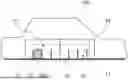
FIG. 1 shows schematically and exemplarily a vehicle body, according to an embodiment.
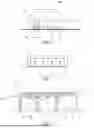
FIG. 2 shows schematically and exemplarily a battery pack of the vehicle body, according to an embodiment.
FIG. 3 shows schematically and exemplarily a body component of the battery pack, according to an embodiment.
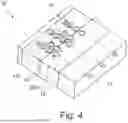
FIG. 4 shows schematically and exemplarily the battery pack from another perspective, according to an embodiment.
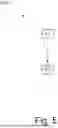
FIG. 5 shows schematically and exemplarily a flow diagram of a method for producing the battery pack, according to an embodiment.
DETAILED DESCRIPTION
The Figures are merely schematic representations and serve only to illustrate examples of the disclosure. Identical or equivalent elements are in principle provided with the same reference signs.
FIG. 1 shows schematically and exemplarily a vehicle body 100. The vehicle body 100 comprises a battery pack 20. The battery pack 20 comprises a body component 10 arranged next to another body component 10. The body component 10 comprises an underbody section 11. The underbody section 11 is configured to form at least part of the vehicle body 100. Here the underbody section 11 is a based of the vehicle body 100. The body component 10 further comprises a battery housing structure 12 at the underbody section 11. The battery housing structure 12 comprises multiple compartment walls 13 partitioning the battery housing structure 12 into multiple compartments 14. In FIG. 1, one of the multiple compartments 14 is accommodating one of the multiple battery cells 200.
FIG. 2 shows schematically and exemplarily the battery pack 20. The battery pack 20 comprises the body component 10. The battery housing structure 12 of the body component 10 comprises multiple compartment walls 13 partitioning the battery housing structure 12 into multiple compartments 14. The compartment walls 13 comprise flow channels 15 configured for cooling at least one of the multiple battery cells 200 (not depicted in FIG. 2). The multiple compartment walls 13 comprise at least two flow channels 15. The flow channels 15 are arranged adjacent to each other. The flow channels 15 may be essentially parallel to each other or arranged angularly. From a cross-sectional view, the flow channels 15 are depicted to be parallel to each other. The section of the compartment wall 13 where the flow channels 15 are concentrated may correspond to a part of the battery cell 200 that heats up more than a rest of the battery cell 200, for instance at an upper part of the compartment wall 13 corresponding to battery cell electrodes (not depicted).
FIG. 3 shows schematically and exemplarily the body component 10 of the battery pack 20. The body component 10 comprises two battery cells 200 distributed to two of the multiple compartments 14. The compartments 14 comprise a space 21 between the compartment wall 13 and the battery cell 200 inside the compartment 14. One of the multiple spaces 21 is schematically illustrated to be filled with an adhesive 22. A sealing shelf 24 is provided on top of the battery housing structure 12. A further adhesive 22 between the sealing shelf 24 and at least one of the compartment walls 13 of the battery housing structure 12 is configured to fix the sealing shelf 24 on the battery housing structure 12. The further adhesive also provides an electrical insulation of the battery cells 200 from each other. The adhesive 22 and the further adhesive 22 may be of a same material or may be of a different material. The sealing shelf 24 comprises at least an opening 25 for a connection with the busbar component 201 of the battery cell 200. The connection may extend through consecutive openings 25 of two consecutive busbar components 201 for connecting the battery cells 200 with each other.
As depicted in FIG. 3, the body component 10 further comprises a cover 18 at a top of the multiple compartments 14. The cover 18 houses the busbar component 201 connecting at least two battery cells 200 with each other. The section of the at least one of the flow channels 15 for cooling the busbar component 201 is provided at the cover 18, in other words underneath the cover 18. More specifically, the section of the flow channel 15 is provided at an elevated portion 23 of the cover 18 extending away from the multiple battery cells 200.
As shown in FIG. 3, the body component 10 comprises at least one flow inlet 16 and at least one flow outlet 17. The flow channel 15 is arranged between the flow inlet 16 and the flow outlet 17. A coolant may flow from the flow inlet 16, through the flow channel 15 and to the flow outlet 17. The compartment walls 13 in this example comprise flow channels 15 in different numbers to illustrate the diversity of cooling capacity, which may be provided by altering the number of the flow channels 15 in the compartment walls 13, however, the number of flow channels 15 can also be equal in each compartment wall 13.
FIG. 4 shows schematically and exemplarily the battery pack 20 from another perspective. The body component 10 comprises multiple flow inlets 16 and multiple flow outlets 17. The flow inlets 16 are arranged at a side of the body component 10 opposite to the flow outlets 17. The flow channels 15 are arranged between the flow inlets 16 and the flow outlets 17. FIG. 4 shows multiple body components 10 from perspective and in parallel to one another, inside an exemplary battery pack 20. The battery cells 200 are provided in multiple compartments 14 that are arranged in a partial honeycomb pattern, showing only a few rows of the honeycomb pattern, without showing a few of the rows in between, for sake of clarity. Here, the compartments 14 of the honeycomb pattern have a circular shape. The cover 18 and the sealing shelf 24 are omitted in FIG. 4.
FIG. 5 shows schematically and exemplarily a flow chart of the method 300 for producing the battery pack 20. The method 300 comprises providing the body component S1, and providing each one of the multiple battery cells 200 of the vehicle battery in a respective one of the multiple compartments 14 of the body component S2.
As used herein, the phrase “at least one,” in reference to a list of one or more entities should be understood to mean at least one entity selected from any one or more of the entities in the list of entities, but not necessarily including at least one of each and every entity specifically listed within the list of entities and not excluding any combinations of entities in the list of entities. This definition also allows that entities may optionally be present other than the entities specifically identified within the list of entities to which the phrase “at least one” refers, whether related or unrelated to those entities specifically identified. Thus, as a non-limiting example, “at least one of A and B” (or, equivalently, “at least one of A or B,” or, equivalently “at least one of A and/or B”) may refer, in one example, to at least one, optionally including more than one, A, with no B present (and optionally including entities other than B); in another example, to at least one, optionally including more than one, B, with no A present (and optionally including entities other than A); in yet another example, to at least one, optionally including more than one, A, and at least one, optionally including more than one, B (and optionally including other entities). In other words, the phrases “at least one,” “one or more,” and “and/or” are open-ended expressions that are both conjunctive and disjunctive in operation. For example, each of the expressions “at least one of A, B, and C,” “at least one of A, B, or C,” “one or more of A, B, and C,” “one or more of A, B, or C,” and “A, B, and/or C” may mean A alone, B alone, C alone, A and B together, A and C together, B and C together, A, B, and C together, and optionally any of the above in combination with at least one other entity.
Other variations to the disclosed examples can be understood and effected by those skilled in the art in practicing the claimed disclosure, from the study of the drawings, the disclosure, and the appended claims. In the claims the word “comprising” does not exclude other elements or steps and the indefinite article “a” or “an” does not exclude a plurality. The mere fact that certain measures are recited in mutually different dependent claims does not indicate that a combination of these measures cannot be used to advantage. Any reference signs in the claims should not be construed as limiting the scope of the claims.
As used herein, the terms “first,” “second,” “third,” and the like in the description and in the claims, if any, distinguish between similar elements and do not necessarily describe a particular sequence or chronological order. The terms are interchangeable under appropriate circumstances such that the embodiments herein are, for example, capable of operation in sequences other than those illustrated or otherwise described herein. Furthermore, the terms “include,” “have,” and any variations thereof, cover a non-exclusive inclusion such that a process, method, system, article, device, or apparatus that comprises a list of elements is not necessarily limiting to those elements, but may include other elements not expressly listed or inherent to such process, method, system, article, device, or apparatus.
As used herein the term “component” refers to a distinct and identifiable part, element, subsystem, or unit within a larger system, structure, or entity. It is a building block that serves a specific function or purpose within a more complex whole. Components are often designed to be modular and interchangeable, allowing them to be combined or replaced in various configurations to create or modify systems. Components may be a combination of mechanical, electrical, hardware, firmware, software and/or other engineering elements.
Aspects of the one or more embodiments described herein are described with reference to flowchart illustrations and/or block diagrams of methods, apparatus (systems), and computer program products according to one or more embodiments described herein. Each block of the flowchart illustrations and/or block diagrams, and combinations of blocks in the flowchart illustrations and/or block diagrams, can be implemented by machine-readable storage program instructions. These computer-readable program instructions can be provided to a processor of a general purpose computer, special purpose computer and/or other programmable data processing apparatus to produce a machine, such that the instructions, which execute via the processor of the computer or other programmable data processing apparatus, can create means for implementing the functions/acts specified in the flowchart and/or block diagram block or blocks. These computer-readable program instructions can also be stored in a computer-readable storage medium that can direct a computer, a programmable data processing apparatus and/or other devices to function in a particular manner, such that the computer-readable storage medium having instructions stored therein can comprise an article of manufacture including instructions which can implement aspects of the function/act specified in the flowchart and/or block diagram block or blocks. The computer-readable program instructions can also be loaded onto a computer, other programmable data processing apparatus and/or other device to cause a series of operational acts to be performed on the computer, other programmable apparatus and/or other device to produce a computer implemented process, such that the instructions which execute on the computer, other programmable apparatus and/or other device implement the functions/acts specified in the flowchart and/or block diagram block or blocks.
While this specification contains many specifics, these do not construe as limitations on the scope of the disclosure or of the claims, but as descriptions of features specific to particular implementations. A single implementation may implement certain features described in this specification in the context of separate implementations. Conversely, multiple implementations separately or in any suitable sub-combination may implement various features described herein in the context of a single implementation. Moreover, although features described herein as acting in certain combinations and even initially claimed as such, one or more features from a claimed combination may in some cases be excised from the combination, and the claimed combination may be directed to a sub-combination or variation of a sub-combination.
Similarly, while operations depicted herein in the drawings in a particular order to achieve desired results, this should not be understood as requiring that such operations be performed in the particular order shown or in sequential order or that all illustrated operations be performed, to achieve desirable results. In certain circumstances, multitasking and parallel processing may be advantageous. Moreover, the separation of various system components in the implementations should not be understood as requiring such separation in all implementations, and it should be understood that the described program components and systems may be integrated together in a single software product or packaged into multiple software products.
Even though particular combinations of features are recited in the claims and/or disclosed in the specification, these combinations are not intended to limit the disclosure of possible implementations. Other implementations are within the scope of the claims. For example, the actions recited in the claims may be performed in a different order and still achieve desirable results. In fact, many of these features may be combined in ways not specifically recited in the claims and/or disclosed in the specification. Although each dependent claim may directly depend on only one claim, the disclosure of possible implementations includes each dependent claim in combination with every other claim in the claim set.
LIST OF REFERENCE SIGNS
-
- Body component 10
- vehicle body 100
- battery cells 200
- method 300
- underbody section 11
- battery housing structure 12
- compartment wall 13
- compartment 14
- flow channel 15
- flow inlet 16
- flow outlet 17
- cover 18
- battery pack 20
- busbar component 201
- space 21
- adhesive 22
- elevated portion 23
- sealing shelf 24
- method step S1, S2
Claims
What is claimed is:1. An apparatus comprising:
a body component associated with a vehicle body, wherein the body component comprises:
an underbody section configured to form at least part of the vehicle body, and
a battery housing structure at the underbody section, the battery housing structure comprising multiple compartment walls, the multiple compartment walls partitioning the battery housing structure into multiple compartments, each one of the multiple compartments being configured to accommodate one of the multiple battery cells associated with a vehicle battery, and at least one of the multiple compartment walls comprising at least one flow channel configured for conveying a coolant for cooling at least one of the multiple battery cells; and
wherein the body component is configured for housing the vehicle battery comprising multiple battery cells.
2. The apparatus of claim 1, wherein the multiple compartments are arranged in a honeycomb pattern.
3. The apparatus of claim 1, wherein the body component is monolithic.
4. The apparatus of claim 1 further comprising: at least one flow inlet and at least one flow outlet, the at least one flow inlet being arranged at a side of the body component opposite to the at least one flow outlet, and the at least one flow channel being arranged between the at least one flow inlet and the at least one flow outlet.
5. The apparatus of claim 4, wherein at least a section of the at least one flow channel comprises a serpentine shape.
6. The apparatus of claim 5 further comprising: a cover at a top of at least one of the multiple compartments, wherein the cover is configured to house at least one busbar component electrically connecting at least two battery cells with each other, and wherein the at least a section of the at least one flow channel is configured for cooling the busbar component.
7. The apparatus of claim 6, wherein the cover is positioned at the upper body section of the body component.
8. The apparatus of claim 4, wherein at least one of the multiple compartment walls comprises at least two flow channels being arranged adjacent to each other.
9. The apparatus of claim 8, wherein the at least two flow channels are parallel to each other.
10. The apparatus of claim 8, wherein the at least two flow channels are placed angularly to each other.
11. The apparatus of claim 6, wherein the at least one flow channel is housed at least partially by the cover.
12. The apparatus of claim 1, wherein the underbody section comprises a section of a chassis of the vehicle body.
13. The apparatus of claim 1 further comprising: an upper body section on the underbody section, wherein the upper body section is configured to house at least one of electrical connections, a cover element, and a means for insulating the battery housing structure at the underbody section.
14. A battery pack comprising:
a body component; and
a vehicle battery comprising multiple battery cells; and
wherein the body component is associated with a vehicle body; and
wherein the body component comprises:
an underbody section configured to form at least part of the vehicle body, and
a battery housing structure at the underbody section, the battery housing structure comprising multiple compartment walls, the multiple compartment walls partitioning the battery housing structure into multiple compartments, each one of the multiple compartments being configured to accommodate one of the multiple battery cells associated with the vehicle battery, and at least one of the multiple compartment walls comprising at least one flow channel configured for conveying a coolant for cooling at least one of the multiple battery cells.
15. The battery pack of claim 14, wherein at least one of the multiple compartments comprises a space between the compartment wall and the battery cell inside the compartment.
16. The battery pack of claim 15, wherein the space is filled with adhesive.
17. The battery pack of claim 15, wherein the vehicle battery comprises at least one busbar component connecting at least two battery cells, at least a cover of the body component housing the busbar component and at least a section of the at least one flow channel being configured for cooling the busbar component.
18. The battery pack of claim 17, wherein the cover further comprises an elevated portion extending away from the at least one of the multiple battery cells, wherein the elevated portion is configured to house the busbar component and the section of the at least one flow channel.
19. A mold comprising:
a core part, wherein the mold is configured for casting a body component and the core part is configured for creating a cavity in the body component, wherein the body component comprises:
an underbody section configured to form at least part of a vehicle body, and
a battery housing structure at the underbody section, the battery housing structure comprising multiple compartment walls, the multiple compartment walls partitioning the battery housing structure into multiple compartments, each one of the multiple compartments being configured to accommodate one of the multiple battery cells associated with the vehicle battery, and at least one of the multiple compartment walls comprising at least one flow channel configured for conveying a coolant for cooling at least one of the multiple battery cells.
20. The mold of claim 19 further configured to cast the body component in a single step.
Images & Drawings included:
Sources:
- United States Patent and Trademark Office - verify current appl. status at the USPTO↗
Similar patent applications:
- » 20210229596
Vehicle body component, method for manufacturing a vehicle body component and method for operating a lighting means arrangement - » 20120112486
Vehicle body components with a metal hybrid construction and production methods for such vehicle body components - » 20230278646
METHOD FOR PRODUCING A BODY COMPONENT OF A VEHICLE BODY OF A VEHICLE, AND BODY COMPONENT AND VEHICLE BODY - » 20170334148
Method for producing a body component for a motor vehicle, device for producing a body component for a motor vehicle and body component for a motor vehicle - » 20070039155
Method and apparatus for assembling exterior automotive vehicle body components onto an automotive vehicle body - » 20130269873
Method for establishing an adhesive connection between at least two components, in particular vehicle body components, by use of positive-fit elements - » 20180297644
Method and system for joining aluminum roof component to steel vehicle body component - » 20240424534
CLEANING FACILITY AND CLEANING METHOD FOR CLEANING A COMPONENT, PREFERABLY A VEHICLE BODY COMPONENT - » 20080169685
Vehicle body component and mating feature - » 20080268277
Method for the production of a sheet metal plate, in particular of steel, for the Manufacture of motor vehicle body components
Recent applications in this class:
- » 20250170882 2025-05-29
BATTERY PACK STRUCTURE - » 20250162397 2025-05-22
USER-SCALABLE POWER UNIT INCLUDING REMOVABLE BATTERY PACKS - » 20250162396 2025-05-22
STRUCTURAL ASSEMBLY AND VEHICLE HAVING STRUCTURAL ASSEMBLY - » 20250162395 2025-05-22
ELECTRIC VEHICLE STRUCTURE - » 20250162394 2025-05-22
SIMPLE TWO-SIDE FASTENERS FOR VEHICLE BATTERY PACK HOUSINGS - » 20250153555 2025-05-15
IMPACT-PROTECTION DEVICES, SYSTEMS, AND ASSEMBLIES, AND METHODS OF MANUFACTURING, INTEGRATING, AND USING THE SAME - » 20250153554 2025-05-15
AUTOMOTIVE BODY SIDE STRUCTURE - » 20250144992 2025-05-08
VEHICLE FRONT PORTION STRUCTURE - » 20250135866 2025-05-01
BATTERY FRAME, POWER BATTERY AND VEHICLE - » 20250135865 2025-05-01
ELECTRIC POWERTRAIN SYSTEM FOR HEAVY DUTY VEHICLES
Recent applications for this Assignee:
- » 20250174912 2025-05-29
ANTENNA ASSEMBLY FOR A VEHICLE AND ROOF ASSEMBLY FOR A VEHICLE - » 20250174854 2025-05-29
BATTERY CELL, BATTERY MODULE AND VEHICLE COMPRISING A BATTERY CELL OR A BATTERY MODULE - » 20250171028 2025-05-29
Lidar based Road Condition Estimation for Passenger Vehicles - » 20250170975 2025-05-29
METHODS AND SYSTEMS FOR ADAPTING AN AUTOMATION SYSTEM IN A VEHICLE - » 20250167283 2025-05-22
END PLATE FOR A BATTERY UNIT ARRANGEMENT - » 20250153723 2025-05-15
METHOD FOR ENABLING VERIFICATION OF DATA FROM A DETECTION SYSTEM OF A VEHICLE - » 20250153536 2025-05-15
SYSTEM AND METHOD FOR TESTING A CABIN AIR QUALITY COMPONENT OF A VEHICLE - » 20250138543 2025-05-01
METHODS AND SYSTEMS FOR REMOTELY ASSISTING PARKING OR UNPARKING A VEHICLE - » 20250135864 2025-05-01
ELECTRONICS UNIT FOR A TRACTION BATTERY OF A VEHICLE - » 20250128735 2025-04-24
METHOD FOR MANEUVERING AN AT LEAST PARTIALLY AUTONOMOUS VEHICLE AT A JUNCTION