LIQUID-CRYSTAL MEDIUM
US20250101305A1
2025-03-27
18/888,536
2024-09-18
Smart Summary: A new liquid-crystal medium is created using a mix of special polar compounds. This medium can be used in various optical and electronic devices, especially in liquid-crystal displays (LCDs). It is particularly designed for a type of display called fringe-field switching mode, which helps save energy. The invention also includes a method for making these energy-efficient displays. Overall, this liquid-crystal medium improves the performance of LCDs while reducing energy consumption. 🚀 TL;DR
Abstract:
The present invention relates to a liquid-crystal (LC) medium or LC material based on a mixture of polar compounds, to its use for optical, electro-optical and electronic purposes, in particular in LC displays, especially in LC displays of the fringe-field switching mode, to an LC display of the fringe-field switching mode comprising the LC medium, especially an energy-saving LC display and to a process of manufacturing the LC display.
Inventors:
- Hee-Kyu LEE 5 🇰🇷 Pyeongtaek, South Korea
- Sven Christian LAUT 10 🇩🇪 Darmstadt, Germany
- Minghui YANG 1 🇨🇳 Pudong New Area, Shanghai, China
Applicant:
Interested in similar patents?
Get notified when new applications in this technology area are published.
Classification:
C09K19/3003 » CPC main
Liquid crystal materials characterised by the chemical structure of the liquid crystal components, e.g. by a specific unit; Non-steroidal liquid crystal compounds containing at least two non-condensed rings containing saturated or unsaturated non-aromatic rings, e.g. cyclohexane rings; Cyclohexane rings Compounds containing at least two rings in which the different rings are directly linked (covalent bond)
C09K19/3028 » CPC further
Liquid crystal materials characterised by the chemical structure of the liquid crystal components, e.g. by a specific unit; Non-steroidal liquid crystal compounds containing at least two non-condensed rings containing saturated or unsaturated non-aromatic rings, e.g. cyclohexane rings; Cyclohexane rings in which at least two rings are linked by a carbon chain containing carbon to carbon single bonds
C09K19/3066 » CPC further
Liquid crystal materials characterised by the chemical structure of the liquid crystal components, e.g. by a specific unit; Non-steroidal liquid crystal compounds containing at least two non-condensed rings containing saturated or unsaturated non-aromatic rings, e.g. cyclohexane rings; Cyclohexane rings in which the rings are linked by a chain containing carbon and oxygen atoms, e.g. esters or ethers
C09K19/3098 » CPC further
Liquid crystal materials characterised by the chemical structure of the liquid crystal components, e.g. by a specific unit; Non-steroidal liquid crystal compounds containing at least two non-condensed rings containing saturated or unsaturated non-aromatic rings, e.g. cyclohexane rings Unsaturated non-aromatic rings, e.g. cyclohexene rings
C09K19/3491 » CPC further
Liquid crystal materials characterised by the chemical structure of the liquid crystal components, e.g. by a specific unit; Non-steroidal liquid crystal compounds containing at least one heterocyclic ring having sulfur as hetero atom
C09K19/30 IPC
Liquid crystal materials characterised by the chemical structure of the liquid crystal components, e.g. by a specific unit; Non-steroidal liquid crystal compounds containing at least two non-condensed rings containing saturated or unsaturated non-aromatic rings, e.g. cyclohexane rings
C09K19/34 IPC
Liquid crystal materials characterised by the chemical structure of the liquid crystal components, e.g. by a specific unit; Non-steroidal liquid crystal compounds containing at least one heterocyclic ring
C09K19/52 » CPC further
Liquid crystal materials characterised by components which are not liquid crystals, e.g. additives with special physical aspect: solvents, solid particles
Description
CROSS-REFERENCE TO RELATED APPLICATIONS
This application is a U.S. national application filed under 35 U.S.C. § 111, claiming priority under 35 U.S.C. § 119(a) of and to Chinese Application No. CN 202311206087.3, filed Sep. 19, 2023, the contents of which are incorporated herein by reference in their entirety and for all purposes.
BACKGROUND OF THE INVENTION
The present invention relates to a liquid-crystal (LC) medium or LC material based on a mixture of polar compounds, to its use for optical, electro-optical and electronic purposes, in particular in LC displays, especially in LC displays of the fringe-field switching mode, to an LC display of the fringe-field switching mode comprising the LC medium, especially an energy-saving LC display, to a process of preparing the LC medium, and to a process of manufacturing the LC display.
One of the liquid-crystal display (LCD) modes used at present is the TN (“twisted nematic”) mode. However, TN LCDs have the disadvantage of a strong viewing-angle dependence of the contrast.
Therefore, so-called FFS (“fringe-field switching”) displays have been reported (see, inter alia, S. H. Jung et al., Jpn. J. Appl. Phys., Volume 43, No. 3, 2004, 1028), which contain two electrodes on the same substrate, one of which is structured in a comb-shaped manner and the other is unstructured. A strong, so-called “fringe field” is thereby generated, i.e. a strong electric field close to the edge of the electrodes, and, throughout the cell, an electric field which has both a strong vertical component and also a strong horizontal component. FFS displays have a low viewing-angle dependence of the contrast. FFS displays usually contain an LC medium with positive dielectric anisotropy, and an alignment layer, usually of polyimide, which provides planar alignment to the molecules of the LC medium.
FFS displays can be operated as active-matrix or passive-matrix displays. In the case of active-matrix displays, individual pixels are usually addressed by integrated, non-linear active elements, such as, for example, transistors (for example thin-film transistors (“TFTs”)), while in the case of passive-matrix displays, individual pixels are usually addressed by the multiplex method, as known from the prior art.
Furthermore, a new type of FFS displays (known as “Ultra Brightness FFS (UB-FFS)” mode displays) has been disclosed (see S. H. Lee et al., Appl. Phys. Lett. 73 (20), 1998, 2882-2883 and S. H. Lee et al., Liquid Crystals 39 (9), 2012, 1141-1148), which have similar electrode design and layer thickness as FFS displays, but comprise a layer of an LC medium with negative dielectric anisotropy instead of an LC medium with positive dielectric anisotropy. The LC medium with negative dielectric anisotropy shows a more favourable director orientation that has less tilt and more twist orientation compared to the LC medium with positive dielectric anisotropy, as a result of which these displays have a higher transmission. The displays further comprise an alignment layer, preferably of polyimide provided on at least one of the substrates that is in contact with the LC medium and induces planar alignment of the LC molecules of the LC medium. These displays require an LC medium with high reliability.
In addition, so-called VA (“vertically aligned”) displays are known which have a broad viewing angle and fast response times. The LC cell of a VA display contains a layer of an LC medium between two transparent electrodes, where the LC medium usually has a negative value of the dielectric anisotropy (Δε). In the switched-off state, the molecules of the LC layer are aligned perpendicular to the electrode surfaces (homeotropically) or have a tilted homeotropic alignment. On application of a voltage to the two electrodes, a realignment of the LC molecules parallel to the electrode surfaces takes place.
Also known are so-called IPS (“in-plane switching”) displays, which contain an LC layer between two substrates with planar orientation, where the two electrodes are arranged on only one of the two substrates and preferably have interdigitated, comb-shaped structures. On application of a voltage to the electrodes an electric field with a significant component parallel to the LC layer is generated between them. This causes realignment of the LC molecules in the layer plane.
In VA displays of the more recent type, uniform alignment of the LC molecules is restricted to a plurality of relatively small domains within the LC cell. Disclinations may exist between these domains, also known as tilt domains. VA displays having tilt domains have, compared with conventional VA displays, a greater viewing-angle independence of the contrast and the grey shades. In addition, displays of this type are simpler to produce since additional treatment of the electrode surface for uniform alignment of the molecules in the switched-on state, such as, for example, by rubbing, is no longer necessary. Instead, the preferential direction of the tilt or pretilt angle is controlled by a special design of the electrodes.
However, the use of LC media with negative dielectric anisotropy in VA or FFS displays has also several drawbacks. For example, they have a significantly lower reliability compared to LC media with positive dielectric anisotropy.
The term “reliability” as used hereinafter means the quality of the performance of the display during time and with different stress loads, such as light load, temperature, humidity, or voltage which cause display defects such as image sticking (area and line image sticking), mura, yogore etc. and which are known to the skilled person in the field of LC displays. As a standard parameter for categorising the reliability usually the voltage holding ration (VHR) value is used, which is a measure for maintaining a constant electrical voltage in a test display. The higher the VHR value, the better the reliability of the LC medium.
The reduced reliability of an LC medium with negative dielectric anisotropy in a VA or FFS display can be explained by an interaction of the LC molecules with the polyimide of the alignment layer, as a result of which ions are extracted from the polyimide alignment layer, and wherein LC molecules with negative dielectric anisotropy do more effectively extract such ions.
This results in new requirements for LC media to be used in VA or FFS displays. In particular, the LC medium has to show a high reliability and a high VHR value after UV exposure. Further requirements are a high specific resistance, a large working-temperature range, short response times even at low temperatures, a low threshold voltage, a multiplicity of grey levels, high contrast and a broad viewing angle, and reduced image sticking.
Thus, in displays known from prior art often the undesired effect of so-called “image sticking” or “image burn” is observed, wherein the image produced in the LC display by temporary addressing of individual pixels still remains visible even after the electric field in these pixels has been switched off, or after other pixels have been addressed.
This “image sticking” can occur on the one hand if LC media having a low VHR are used. The UV component of daylight or the backlight can cause undesired decomposition reactions of the LC molecules therein and thus initiate the production of ionic or free-radical impurities. These may accumulate, in particular, at the electrodes or the alignment layers, where they may reduce the effective applied voltage.
SUMMARY OF THE INVENTION
It is therefore an object of the present invention to provide improved LC media for use in FFS-, VA-, or IPS displays, which do not exhibit the disadvantages described above or only do so to a small extent and have improved properties. A further object of the invention is to provide FFS—, VA-, and IPS-displays with good transmission, high reliability, a VHR value especially after backlight exposure, a high specific resistance, a large working-temperature range, short response times even at low temperatures, a low threshold voltage, a multiplicity of grey levels, high contrast and a broad viewing angle, and reduced image sticking.
The contrast ratio is defined as the ratio of the luminance of the brightest shade (white) to that of the darkest shade (black) that the system is capable of producing, i.e., the transmittane (white level) to the scattering parameter (dark level). The contrast ratio can be significantly improved by the lower scattering parameter (high Kavg and low Δn). Therefore, a LC mixture having high Kavg and low Δn is very effective to achieve a high contrast ratio display. A further object of the present invention is to provide LC mixtures with a favourably high average elastic constant Kavg and low birefringence Δn, while still keeping a low rotational viscosity γ1.
It was found that one or more of these objects could be achieved by providing an LC medium as disclosed and claimed hereinafter.
The invention thus relates to a liquid crystal medium comprising one or more compounds of formula I
-
- and
- one or more compounds of formula III
-
- and/or
- one or more compounds of formula BC
-
- and/or
- one or more compounds of formula PH-1
-
- in which
- R11, R31, R32, R81, and R82 each, independently of one another, denote H, an alkyl or alkoxy radical having 1 to 15 C atoms, preferably having 1 to 7 C atoms, where one or more —CH2— groups in these radicals may each be replaced, independently of one another, by
-
- —C≡C—, —CF2O—, —OCF2—, —CH═CH—, by —O—, —CO—O— or —O—CO— in such a way that O atoms are not linked directly to one another, and in which one or more H atoms may be replaced by halogen,
- R12 denotes an alkenyl radical having 2 to 12 C atoms, preferably having 2 to 7 C atoms,
- A3 on each occurrence, independently of one another, denotes a 1,4-phenylene radical, in which one or two CH groups may be replaced by N, or a 1,4-cyclohexylene or 1,4-cyclohexenylene radical, in which one or two non-adjacent CH2 groups may be replaced by —O— or —S—, where the radicals may be mono- or polysubstituted by halogen atoms,
- n denotes 0, 1 or 2,
- Z3 on each occurrence independently of one another denotes —CF2O—, —OCF2—, —CH2O—, —OCH2—, —CH2—, —CH2CH2—, —CH═CH—, —C═C— or a single bond,
- L31 and L32, each, independently of one another, denote F, Cl, CF3 or CHF2, and
- Y1, Y2, Y3, and Y4, each, independently of one another, denote H, F, Cl, CF3, CHF2, CH3 or OCH3, preferably H, CH3 or OCH3, very preferably H.
The invention further relates to an LC display comprising the liquid crystal medium as described above and below, in particular a VA, IPS, FFS, PS-VA, PS-IPS, PS-FFS, UB-FFS or UV2A display.
The invention furthermore relates to the use of the liquid crystal medium as described above and below in a VA, IPS, FFS, PS-VA, PS-IPS, PS-FFS UB-FFS or UV2A display.
The invention furthermore relates to a process for preparing an LC medium as described above and below, comprising the steps of mixing one or more compounds of formula I with one or more compounds of formula III, and optionally with further LC compounds and/or additives.
The invention furthermore relates to a process for manufacturing an LC display as described above and below, comprising the steps of filling or otherwise providing an LC medium as described above and below between the substrates of the display.
The LC medium according to the present invention allow to achieve one or more of the following advantageous effects:
-
- a favourably high average elastic constant Kavg that equals to (K1+K2+K3)/3, which contributes to a low scattering parameter,
- a low birefringence, which in combination with the high average elastic constant contribute to a high contrast ratio,
- a low viscosity which enables fast response times,
- a low threshold voltage which is useful to reduce the driving voltage and enable energy-saving displays,
- enable an LC panel production process which is time- and cost-effective and energy saving.
The LC media according to the present invention show one or more of the following advantageous properties when used in LC displays:
-
- high contrast ratio,
- high transmittance,
- reduced rotational viscosity,
- fast response times,
- a low threshold voltage which is useful to enable energy-saving displays.
DETAILED DESCRIPTION OF THE INVENTION
Above and below,
denotes a trans-1,4-cyclohexylene ring, and
denotes a 1,4-phenylene ring.
In a group
the single bond shown between the two ring atoms can be attached to any free position of the benzene ring.
If in the formulae shown above and below a terminal group like R11,12, R21,22, R31,32,33, R41,42, R51,52, R61, R71, RN1,N2, R81,82, R91,92,93, RL1,L2, RQ, RR1, R2, or L denotes an alkyl radical and/or an alkoxy radical, this may be straight-chain or branched. It is preferably straight-chain, has 2, 3, 4, 5, 6 or 7 C atoms and accordingly preferably denotes ethyl, propyl, butyl, pentyl, hexyl, heptyl, ethoxy, propoxy, butoxy, pentoxy, hexyloxy or heptyloxy, furthermore methyl, octyl, nonyl, decyl, undecyl, dodecyl, tridecyl, tetra-decyl, pentadecyl, methoxy, octyloxy, nonyloxy, decyloxy, undecyloxy, dodecyloxy, tridecyloxy or tetradecyloxy.
If one of the aforementioned terminal groups denotes an alkyl radical wherein one or more CH2 groups are replaced by S, this may be straight-chain or branched. It is preferably straight-chain, has 1, 2, 3, 4, 5, 6 or 7 C atoms and accordingly preferably denotes thiomethyl, thioethyl, thiopropyl, thiobutyl, thiopentyl, thiohexyl or thioheptyl.
Oxaalkyl preferably denotes straight-chain 2-oxapropyl (=methoxymethyl), 2-(=ethoxymethyl) or 3-oxabutyl (=2-methoxyethyl), 2-, 3- or 4-oxapentyl, 2-, 3-, 4- or 5-oxahexyl, 2-, 3-, 4-, 5- or 6-oxaheptyl, 2-, 3-, 4-, 5-, 6- or 7-oxaoctyl, 2-, 3-, 4-, 5-, 6-, 7- or 8-oxanonyl, 2-, 3-, 4-, 5-, 6-, 7-, 8- or 9-oxadecyl.
If one of the aforementioned terminal groups denotes an alkoxy or oxaalkyl group it may also contain one or more additional oxygen atoms, provided that oxygen atoms are not linked directly to one another.
If one of the aforementioned terminal groups denotes an alkyl radical in which one CH2 group has been replaced by —CH═CH—, this may be straight-chain or branched. It is preferably straight-chain and has 2 to 10 C atoms. Accordingly, it denotes, in particular, vinyl, prop-1- or -2-enyl, but-1-, -2- or -3-enyl, pent-1-, -2-, -3- or -4-enyl, hex-1-, -2-, -3-, -4- or -5-enyl, hept-1-, -2-, -3-, -4-, -5- or -6-enyl, oct-1-, -2-, -3-, -4-, -5-, -6- or -7-enyl, non-1-, -2-, -3-, -4-, -5-, -6-, -7- or -8-enyl, dec-1-, -2-, -3-, -4-, -5-, -6-, -7-, -8- or -9-enyl.
If one of the aforementioned terminal groups denotes an alkyl or alkenyl radical which is at least monosubstituted by halogen, this radical is preferably straight-chain, and halogen is preferably F or Cl. In the case of polysubstitution, halogen is preferably F. The resultant radicals also include perfluorinated radicals. In the case of mono-substitution, the fluorine or chlorine substituent may be in any desired position, but is preferably in the ω-position.
In another preferred embodiment, one or more of the aforementioned terminal groups, like R11,12, R21,22, R31,32,33, R41,42, R51,52, R61, R71, RN1,N2, R81,82, R91,92,93, RL1,L2, RQ, RR1,R2, or L are selected from the group consisting of
—S1—F, —O—S1—F, —O—S1—O—S2, wherein S1 is C1-12-alkylene or C2-12-alkenylene and S2 is H, C1-12-alkyl or C2-12-alkenyl, and very preferably are selected from the group consisting of
—O(CH2)2OCH3, —O(CH2)3OCH3, —O(CH2)4OCH3, —O(CH2)2F, —O(CH2)3F, —O(CH2)4F.
Halogen is preferably F or Cl, very preferably F.
The group —CR0═CR00— is preferably —CH═CH—.
-
- —CO—, —C(═O)— and —C(O)— denote a carbonyl group, i.e.
Preferred substituents L, are, for example, F, Cl, Br, I, —CN, —NO2, —NCO, —NCS, —OCN, —SCN, —C(═O)N(Rx)2, —C(═O)Y1, —C(═O)Rx, —N(Rx)2, straight-chain or branched alkyl, alkoxy, alkylcarbonyl, alkoxycarbonyl, alkylcarbonyloxy or alkoxycarbonyloxy each having 1 to 25 C atoms, in which one or more H atoms may optionally be replaced by F or C, optionally substituted silyl having 1 to 20 Si atoms, or optionally substituted aryl having 6 to 25, preferably 6 to 15, C atoms,
-
- wherein Rx denotes H, F, C, CN, or straight chain, branched or cyclic alkyl having 1 to 25 C atoms, wherein one or more non-adjacent CH2-groups are optionally replaced by —O—, —S—, —CO—, —CO—O—, —O—CO—, —O—CO—O— in such a manner that O- and/or S-atoms are not directly connected with each other, and wherein one or more H atoms are each optionally replaced by F, Cl, P— or P-Sp-, and Y1 denotes halogen.
Particularly preferred substituents L are, for example, F, C, CN, NO2, CH3, C2H5, OCH3, OC2H5, COCH3, COC2H5, COOCH3, COOC2H5, CF3, OCF3, OCHF2, OC2F5, furthermore phenyl.
in which L has one of the meanings indicated above.
In a preferred embodiment the LC medium according to the invention, comprises one or more are compounds of formula I, wherein R11 and R12 independently of one another denote straight-chain alkyl having 1 to 7 C atoms or alkenyl having 2 to 7 C atoms.
In a preferred embodiment the LC medium according to the invention comprises one or more compounds of the formula I, preferably selected from the compounds of the formulae Ia to Ie:
in which alkyl and alkyl* each, independently of one another, denote an alkyl group having 1 to 7 C atoms, alkenyl and alkenyl* each, independently of one another, denote an alkenyl group having 2 to 7 C atoms, and cycloalkyl denotes a cyclic alkyl group having 3 to 12 C atoms, preferably cyclopropyl, cyclobutyl, cyclopentyl, cyclopropylalkyl, cyclobutylalkyl or cyclopentylalkyl.
Very preferred compounds of the formulae Ia to Ie are selected from the compounds of the formulae Ib-1 to Ib-3, Ic-1 to Ic-4, Id-1 to Id-7 and Ie-1 to Ie-8.
in which alkyl denotes ethyl, n-propyl, n-butyl or n-pentyl, preferably n-propyl.
Preferred compounds of formula I is Ib-1, and the most preferred is the compound CCC-3-V.
Preferred compounds of formula III are those of formula III-1 to III-6:
in which the occurring groups have the same meanings as given under formula III above and preferably
-
- R31 and R32 each, independently of one another, denote an alkyl, alkenyl or alkoxy radical having up to 15 C atoms, preferably having 1 to 7 C atoms, more preferably one or both of them denote an alkoxy radical; or cyclic alkyl having 3 to 6 C atoms,
- R33 denotes alkyl or alkenyl having up to 7 C atoms or a group Cy-CnH2n+1—,
- m and n are, identically or differently, 0, 1, 2, 3, 4, 5 or 6, preferably 1, 2 or 3, very preferably 1,
- Cy denotes a cycloaliphatic group having 3, 4 or 5 ring atoms, which is optionally substituted with alkyl or alkenyl each having up to 3 C atoms, or with halogen or CN, and preferably denotes cyclopropyl, cyclobutyl, cyclopentyl or cyclopentenyl,
- (O) denotes O or a single bond,
- L31 and L32 each, independently of one another, denote F or Cl, preferably both denote F, and
- Y3 denotes H, F, Cl, CF3, CHF2, CH3 or OCH3, preferably H or CH3.
In another preferred embodiment the LC medium comprises one or more compounds of the formula III-1 selected from the group of compounds of formulae III-1-1 to III-1-20, preferably of formula III-1-1 and III-1-11,
in which alkyl and alkyl* each, independently of one another, denote a straight-chain alkyl radical having 1-6 C atoms, alkenyl and alkenyl* each, independently of one another, denote a straight-chain alkenyl radical having 2-6 C atoms, alkoxy and alkoxy* each, independently of one another, denote a straight-chain alkoxy radical having 1-6 C atoms, and L31 and L32 each, independently of one another, denote F or Cl, preferably both F.
Very preferred compounds of formula III-1-1 are selected from the group consisting of the following subformulae,
Very preferred compounds of formula III-1-11 are selected from the group consisting of the following subformulae,
Very preferred compounds of the formula III-2 are the following,
in which alkoxy denotes a straight-chain alkoxy radical having 1-6 C atoms, preferably ethoxy, propoxy, butoxy or pentoxy, very preferably ethoxy or propoxy, and alkenyl denotes a straight-chain alkenyl radical having 2-6 C atoms.
Very preferred compounds of formula III-6 are selected from the group consisting of the following formulae,
in which R32 denotes alkyl having 1 to 7 C-atoms, preferably ethyl, n-propyl or n-butyl, or alternatively cyclopropylmethyl, cyclobutylmethyl or cyclopentylmethyl or alternatively —(CH2)nF in which n is 2,3,4, or 5, preferably C2H4F.
Preferred compounds of formula III is III-1-1-3, III-1-1-4, III-1-1-5, III-2-7, as well as III-6-2, and the most preferred are compounds B(S)-2O-O4, B(S)-2O-O5, B(S)-2O-O6, B(S)-1V1O—O1(c5), and COB(S)-2-O4.
Further preferred embodiments of the LC medium according to the present invention are listed below, including any combination thereof:
Preferably the LC medium further comprises one or more compounds of formula II,
wherein the individual radicals, independently of each other and on each occurrence identically or differently, have the following meanings
-
- R21 and R22 straight chain, branched or cyclic alkyl or alkoxy having 1 to 20 C atoms, wherein one or more non-adjacent CH2-groups are optionally replaced by —O—, —S—, —CO—, —CO—O—, —O—, —O—CO—O—, CR0═CR00—, —C≡C—,
-
- in such a manner that O- and/or S-atoms are not directly connected with each other, and wherein one or more H atoms are each optionally replaced by F, Cl, CN or CF3, preferably alkyl or alkoxy having 1 to 6 C atoms,
- R0, R00 H or alkyl having 1 to 12 C atoms,
- A1 and A2 a group selected from the following formulae
-
- preferably from formulae A1, A2, A3, A4, A5, A6, A9 and A10, very preferably from formulae A1, A2, A3, A4, A5, A9 and A10,
- Z1 and Z2 —CH2CH2—, —CH═CH—, —CF2O—, —OCF2—, —CH2O—, —OCH2—, —CO—O—, —O—CO—, —C2F4—, —CF═CF—, —CH═CH—CH2O— or a single bond, preferably a single bond,
- L1, L2, L3 and L4 F, Cl, OCF3, CF3, CH3, CH2F or CHF2, preferably F or Cl, very preferably F,
- Y H, F, Cl, CF3, CHF2 or CH3, preferably H or CH3, very preferably H,
- LC CH3 or OCH3, preferably CH3,
- a1 0, 1 or 2,
- a2 0 or 1.
Preferably the LC medium comprises one or more compounds of formula II selected from the group consisting of compounds of the formulae IIA, IIB, IIC, IID, IIE, and IIF,
in which the individual radicals, on each occurrence identically or differently, and each, independently of one another, have the following meaning:
-
- R21, R22 H, an alkyl, alkoxy or alkenyl radical having up to 15 C atoms which is unsubstituted or monosubstituted by F, Cl, CN or CF3 and where, in addition, one or more CH2 groups in these radicals may be replaced by —O—, —S—, —C═C—, —CF2O—, —OCF2—, —OC—O—, —O—CO—
-
- in such a way that O- and/or S-atoms are not linked directly to one another,
- L1 to L4 F, Cl, CF3 or CHF2,
- Y H, F, C, CF3, CHF2 or CH3, preferably H or CH3, particularly preferably H,
- Z1, Z2 a single bond, —CH2CH2—, —CH═CH—, —CF2O—, —OCF2—, —CH2O—, —OCH2—, —COO—, —OCO—, —C2F4—, —CF═CF—, —CH═CHCH2O,
- p 0, 1 or 2, and
- q 0 or 1.
Preferred compounds of the formulae IIA, IIB, IIC; IID and IIE are those wherein R22 denotes an alkyl or alkoxy radical having up to 15 C atoms, and very preferably denotes (O)C2H2v+1 wherein (O) is an oxygen atom or a single bond and v is 1, 2, 3, 4, 5 or 6.
Further preferred compounds of the formulae IIA, IIB, IIC; IID and IIE are those wherein R21 or R22 denotes or contains cycloalkyl or cycloalkoxy radical, preferably selected from the group consisting of
wherein S1 is C1-12-alkylene or C2-12-alkenylene and S2 is H, C1-12-alkyl or C2-12-alkenyl, and very preferably are selected from the group consisting of
Further preferred compounds of the formulae IIA, IIB, IIC, IID and IIE are indicated below.
In a preferred embodiment the LC medium comprises one or more compounds of the formula IIA selected from the group consisting of the following formulae:
in which the index a denotes 1 or 2, alkyl and alkyl* each, independently of one another, denote a straight-chain or branched alkyl radical having 1-6 C atoms, alkenyl denotes a straight-chain or branched alkenyl radical having 2-6 C atoms, and (O) denotes an oxygen atom or a single bond, and alkenyl preferably denotes CH2═CH—, CH2═CHCH2CH2—, CH3—CH═CH—, CH3—CH2—CH═CH—, CH3—(CH2)2—CH═CH—, CH3—(CH2)3—CH═CH— or CH3—CH═CH—(CH2)2—.
Particularly preferred LC media according to the invention comprise one or more compounds selected from the group consisting of formulae IIA-2, IIA-8, IIA-10, IIA-16, IIA-18, IIA-40, IIA-41, IIA-42, IIA-43, IIA-67, IIA-69, and IIA-81.
Preferably, the LC medium comprises one or more compounds of the formula IIA-2 selected from the following subformulae:
Alternatively, preferably in addition to the compounds of the formulae IIA-2-1 to IIA-2-5, the LC medium comprises one or more compounds of the following formulae:
Further preferably, the LC medium comprises one or more compounds of the formula IIA-10 selected from the following sub-formulae:
Alternatively, preferably in addition to the compounds of the formulae IIA-10-1 to IIA-10-6, the LC medium comprises one or more compounds of the following formulae:
Further preferably, the LC medium comprises one or more compounds of the formula IIA-16 selected from the following sub-formulae:
Further preferably, the LC medium comprises one or more compounds of the formula IIA-40 selected from the following sub-formulae:
Alternatively, preferably in addition to the compounds of the formulae IIA-40-1 to IIA-40-5, the LC medium comprises one or more compounds of the following formulae:
Further preferably, the LC medium comprises one or more compounds of the formula IIA-42 selected from the following sub-formulae:
Further preferably, the LC medium comprises one or more compounds of the formula IIA-67 selected from the following subformulae:
Further preferably, the LC medium comprises one or more compounds of the formula IIA-69 selected from the following sub-formulae:
Further preferably, the LC medium comprises one or more compounds of the formula IIA-81 selected from the following sub-formulae:
Preferred LC media additionally comprise one or more compounds of formula IIA-Y
-
- in which R21 and R22 have one of the meanings given in formula IIA above, and L1 and L2, identically or differently, denote F or Cl.
- Preferred compounds of the formula IIA-Y are selected from the group consisting of the following subformulae
-
- in which, Alkyl and Alkyl* each, independently of one another, denote a straight-chain or branched alkyl radical having 1-6 C atoms, Alkoxy denotes a straight-chain or branched alkoxy radical having 1-6 C atoms, Alkenyl and Alkenyl* each, independently of one another, denote a straight-chain or branched alkenyl radical having 2-6 C atoms, and 0 denotes an oxygen atom or a single bond. Alkenyl and Alkenyl* preferably denote CH2═CH—, CH2═CHCH2CH2—, CH3—CH═CH—, CH3—CH2—CH═CH—, CH3—(CH2)2—CH═CH—, CH3—(CH2)3—CH═CH— or CH3—CH═CH—(CH2)2—.
- Particularly preferred compounds of the formula IIA-Y are selected from the group consisting of following subformulae:
-
- in which Alkoxy and Alkoxy* have the meanings defined above and preferably denote methoxy, ethoxy, n-propyloxy, n-butyloxy or n-pentyloxy.
In another preferred embodiment the LC medium comprises one or more compounds of the formula IIB selected from the group consisting of formulae IIB-1 to IIB-26,
in which alkyl and alkyl* each, independently of one another, denote a straight-chain or branched alkyl radical having 1-6 C atoms, alkenyl denotes a straight-chain or branched alkenyl radical having 2-6 C atoms, and (O) denotes an oxygen atom or a single bond, and alkenyl preferably denotes CH2═CH—, CH2═CHCH2CH2—, CH3—CH═CH—, CH3—CH2—CH═CH—, CH3—(CH2)2—CH═CH—, CH3—(CH2)3—CH═CH— or CH3—CH═CH—(CH2)2—.
Particularly preferred LC media according to the invention comprise one or more compounds selected from the group consisting of formulae IIB-2, IIB-11 and IIB-17.
Preferably, the LC medium comprises one or more compounds of the formula IIB-11 selected from the following sub-formulae:
Alternatively, preferably in addition to the compounds of the formulae IIB-11-1 to 1IIB-11-5, the LC medium comprises one or more compounds of the formulae IIB-11 a-1 to IIB-11a-5:
Preferably, the LC medium comprises one or more compounds of the formula IIB-17 selected from the following sub-formulae:
In another preferred embodiment the LC medium comprises one or more compounds of the formula IIC selected from the formula IIC-1,
in which alkyl and alkyl* each, independently of one another, denote a straight-chain alkyl radical having 1-6 C atoms, preferably in amounts of 0.5% to 5% by weight, in particular 1% to 3% by weight.
In another preferred embodiment the LC medium comprises one or more compounds of the formula IID selected from the group consisting of the following formulae,
in which alkyl and alkyl* each, independently of one another, denote a straight-chain or branched alkyl radical having 1-6 C atoms, alkenyl denotes a straight-chain or branched alkenyl radical having 2-6 C atoms, and (O) denotes an oxygen atom or a single bond, and alkenyl preferably denotes CH2═CH—, CH2═CHCH2CH2—, CH3—CH═CH—, CH3—CH2—CH═CH—, CH3—(CH2)2—CH═CH—, CH3—(CH2)3—CH═CH— or CH3—CH═CH—(CH2)2—.
Particularly preferred LC media according to the invention comprise one or more compounds of the formula IID-1, IID-4, IID-12, and/or IID-19.
Very preferred compounds of the formula IID are selected from the following subformulae of IID-1,
wherein v is 1, 2, 3, 4, 5 or 6.
Very preferred compounds of the formula IID are selected from the following subformulae of IID-4,
wherein v is 1, 2, 3, 4, 5 or 6.
Very preferred compounds of the formula IID are selected from the following subformulae of IID-12,
wherein v is 1, 2, 3, 4, 5 or 6.
In a preferred embodiment, the LC medium comprises one or more compounds of formula IID-12a
in which R21, Y and q have the meanings given in formula IID, and R23 is
in which r is 0, 1, 2, 3, 4, 5 or 6 and s is 1, 2 or 3.
Preferred compounds of formula IID-10a are the compounds IID-12a-1 to IID-12a-14:
Very preferred compounds of the formula IID are selected from the following subformulae of IID-19,
wherein v is 1, 2, 3, 4, 5 or 6.
In a preferred embodiment the LC medium comprises one or more compounds of the formula IIE selected from the group consisting of the following formulae:
in which the index a denotes 1 or 2, alkyl and alkyl* each, independently of one another, denote a straight-chain alkyl radical having 1-6 C atoms, alkenyl denotes a straight-chain alkenyl radical having 2-6 C atoms, and (O) denotes an oxygen atom or a single bond, and alkenyl preferably denotes CH2═CH—, CH2═CHCH2CH2—, CH3—CH═CH—, CH3—CH2—CH═CH—, CH3—(CH2)2—CH═CH—, CH3—(CH2)3—CH═CH— or CH3—CH═CH—(CH2)2—.
Particularly preferred LC media according to the invention comprise one or more compounds selected from the group consisting of formulae IIE-2, IIE-8, IIE-10, IIE-16, IIE-18, IIE-37, IIE-38, IIE-39 and IIE-40.
Preferably, the LC medium comprises one or more compounds of the formula IIE-2 selected from the following sub-formulae:
Preferably, the LC medium comprises one or more compounds of the formula IIE-10 selected from the following sub-formulae:
In another preferred embodiment the LC medium comprises one or more compounds of the formula IIF selected from the group consisting of the following formulae,
in which alkyl and alkyl* each, independently of one another, denote a straight-chain or branched alkyl radical having 1-6 C atoms.
Preferably, the LC medium comprises one or more compounds of the formula IIF-2 selected from the following sub-formulae:
Particularly preferred LC media according to the invention comprise one or more compounds selected from the formulae IIA-2, IIA-8, IIA-10, IIA-16, II-18, IIA-40, IIA-41, IIA-42, IIA-43, IIA-67, IIA-69, IIA-81, IIB-2, IIB-10, IIB-16, IIC-1, and IID-1, IID-4, IID-12, IID-19, IIE-2, IIE-8, IIE-10, IIE-16, IIE-18, IIE-37, IIE-38, IIE-39, IIE-40, and IIF-2 or their subformulae.
The proportion of compounds of the formulae IIA and/or IIB in the mixture as a whole is preferably at least 20% by weight.
Preferably the LC medium further comprises one or more compounds of formula IIIA:
in which R31, R32, A3, Z3, L31, L32, Y1, Y2, Y3, Y4, and n have the meanings given above for formula III.
In a preferred embodiment of the present invention the LC medium comprises one or more compounds of the formula IIIA-1:
in which the occurring groups have the same meanings as given under formula IIIA above and preferably
-
- R31 and R32 each, independently of one another, an alkyl, alkenyl or alkoxy radical having up to 15 C atoms, preferably having 1 to 7 C atoms, more preferably one or both of them denote an alkoxy radical, or cyclic alkyl having 3 to 6 C atoms, and
- L31 and L32 each, independently of one another, denote F or Cl, preferably both denote F.
In another preferred embodiment the LC medium comprises one or more compounds of the formula IIIA-1 selected from the group of compounds of formulae IIIA-1-1 to IIIA-1-20, preferably of formulae IIIA-1-8 and IIIA-1-18,
in which alkyl and alkyl* each, independently of one another, denote a straight-chain alkyl radical having 1-6 C atoms, or, or cyclic alkyl having 3 to 6 C atoms, alkenyl and alkenyl* each, independently of one another, denote a straight-chain alkenyl radical having 2-6 C atoms, alkoxy and alkoxy* each, independently of one another, denote a straight-chain alkoxy radical having 1-6 C atoms, and L31 and L32 each, independently of one another, denote F or Cl, preferably both F.
Preferably, the LC medium comprises one or more compounds of the formula IIIA-1-8 selected from the following sub-formulae:
Preferably, the LC medium comprises one or more compounds of the formula IIIA-1-18 selected from the following sub-formulae:
In another preferred embodiment of the present invention the LC medium comprises one or more compounds of the formula IIIA-2
in which L31 and L32 have the same meanings as given under formula IIIA, (O) denotes O or a single bond,
-
- R33 denotes alkyl or alkenyl having up to 7 C atoms or a group Cy-CnH2n+1—,
- m and n are, identically or differently, 0, 1, 2, 3, 4, 5 or 6, preferably 1, 2 or 3, very preferably 1, and
- Cy denotes a cycloaliphatic group having 3, 4 or 5 ring atoms, which is optionally substituted with alkyl or alkenyl each having up to 3 C atoms, or with halogen or CN, and preferably denotes cyclopropyl, cyclobutyl, cyclopentyl or cyclopentenyl.
The compounds of formula IIIA-2 are contained in the LC medium either alternatively or additionally to the compounds of formula III, preferably additionally.
Very preferred compounds of the formula IIIA-2 are the following,
in which alkoxy denotes a straight-chain alkoxy radical having 1-6 C atoms.
In another preferred embodiment the LC medium comprises one or more compounds of the formula IIIA selected from the group of compounds of formulae IIIA-3 to IIIA-5,
in which the occurring groups have the same meanings as given under formula III, and R31 preferably denotes straight-chain alkyl or cyclic alkyl and R32 preferably denotes alkoxy each having 1 to 7 C atoms.
In a preferred embodiment of the present invention the LC medium comprises one or more compounds of the formula IIIA-6:
in which the occurring groups have the same meanings as given under formula III and preferably
-
- R31 and R32 each, independently of one another, an alkyl, alkenyl or alkoxy radical having up to 15 C atoms, preferably having 1 to 7 C atoms, more preferably one or both of them denote an alkoxy radical.
Very preferred compounds of formula IIIA-6 are selected from the group consisting of the following formulae,
in which R32 denotes alkyl having 1 to 7 C-atoms, preferably ethyl, n-propyl or n-butyl, or alternatively cyclopropylmethyl, cyclobutylmethyl or cyclopentylmethyl or alternatively —(CH2)nF in which n is 2, 3, 4, or 5, preferably C2H4F.
In a preferred embodiment of the present invention the LC medium comprises at least one compound of the formula I, at least one compound of the formula III and at least one compound of the formula IIIA.
In a preferred embodiment, the LC medium comprises one or more compounds of the formula IV,
in which
-
- R41 denotes an unsubstituted alkyl radical having 1 to 7 C atoms where, in addition, one or more CH2 groups may be replaced by
-
- or an unsubstituted alkenyl radical having 2 to 7 C atoms, preferably an n-alkyl radical, particularly preferably having 2, 3, 4 or 5 C atoms, and
- R42 denotes an unsubstituted alkyl radical having 1 to 7 C atoms, or cyclic alkyl having 3 to 6 C atoms, or an unsubstituted alkoxy radical having 1 to 6 C atoms, both preferably having 2 to 5 C atoms, an unsubstituted alkenyl radical having 2 to 7 C atoms, preferably having 2, 3 or 4 C atoms, more preferably a vinyl radical or a 1-propenyl radical and in particular a vinyl radical.
The compounds of the formula IV are preferably selected from the group of the compounds of the formulae IV-1 to IV-4,
in which
-
- alkyl and alkyl*, independently of one another, denote alkyl radical having 1 to 7 C atoms, preferably having 2 to 5 C atoms,
- alkenyl denotes an alkenyl radical having 2 to 5 C atoms, preferably having 2 to 4 C atoms, particularly preferably 2 C atoms,
- alkenyl* denotes an alkenyl radical having 2 to 5 C atoms, preferably having 2 to 4 C atoms, particularly preferably having 2 to 3 C atoms, and
- alkoxy denotes alkoxy having 1 to 5 C atoms, preferably having 2 to 4 C atoms.
Preferably, the LC medium comprises one or more compounds selected from the compounds of the formulae IV-1-1 to IV-1-14:
in which alkyl denotes methyl, ethyl, n-propyl, isopropyl, n-butyl, isobutyl, or n-pentyl.
Very preferably, the LC medium according to the invention comprises one or more compounds of the formulae IV-2-1 and/or IV-2-2
Very preferably, the LC medium according to the invention comprises a compound of formula IV-3, in particular selected from the compounds of the formulae IV-3-1 to IV-3-9:
The LC medium according to the invention preferably comprises one or more compounds CC-n-V and/or CC-n-Vm, in particular CC-3-V, CC-4-V, CC-3-V1 and/or CC-4-V1, preferably in a total concentration in the range of from 15 to 70%, preferably from 25 to 55%, very preferably from 30 to 50%. CC-3-V is preferably used in concentrations of 5-60%, in particular 10-55%.
In another preferred embodiment, the LC medium according to the invention comprises one or more compounds of formula IV-3 selected from the compounds of the formulae IV-3-10 to IV-3-25:
Very preferably, the LC medium according to the invention comprises a compound of formula IV-4, in particular selected from the compounds of the following formulae:
In another preferred embodiment the LC medium comprises one or more compounds of formula IV-4 and its subformulae in which one or both of
-
- “alkenyl” and “alkenyl’” denote
-
- in which
- m is 0, 1 or 2, and n is 0, 1 or 2, very preferably selected from compounds of formulae IV-4-3 to IV-4-6.
Very preferably, the LC medium according to the invention comprises one or more compounds of the formula IV-1 or its subformulae and/or one or more compounds of the formula IV-3 or its subformulae and/or one or more compounds of the formula IV-4 or its subformulae, where the total concentration of these compounds of the formula IV-1 is in the range from 1% to 30%.
The LC medium according to the invention preferably additionally comprises one or more compounds of the formula IVa,
in which
-
- R41 and R42 each, independently of one another, denote a straight-chain alkyl, alkoxy, alkenyl, alkoxyalkyl or alkoxy radical having up to 12 C atoms, or cyclic alkyl having 3 to 6 C atoms,
-
- Z4 denotes a single bond, —CH2CH2—, —CH═CH—, —CF2O—, —OCF2—, —CH2O—, —OCH2—, —COO—, —OCO—, —C2F4—, —C4H8— or —CF═CF—.
Preferred compounds of the formula IVa are indicated below:
-
- in which alkyl and alkyl* each, independently of one another, denote a straight-chain alkyl radical having 1 to 6 C atoms.
The LC medium according to the invention preferably comprises at least one compound of the formula IVa-1 and/or formula IVa-2.
The proportion of compounds of the formula IVa in the mixture as a whole is preferably at least 5% by weight.
Preferably, the LC medium comprises one or more compounds of formula IVb-1 to IVb-3
in which
-
- alkyl and alkyl* each, independently of one another, denote a straight-chain alkyl radical having 1 to 6 C atoms, or cyclic alkyl having 3 to 6 C atoms, preferably alkyl denotes methyl, and
- alkenyl and alkenyl* each, independently of one another, denote a straight-chain alkenyl radical having 2 to 6 C atoms.
The proportion of the compounds of the formulae IV-1 to IV-3 in the mixture as a whole is preferably at least 3% by weight, in particular ≥5% by weight.
Of the compounds of the formulae IVa-1 to IVa-4, the compounds of the formula IVa-2 are particularly preferred.
Of the compounds of the formulae IVb-1 to IVb-3, the compounds of the formula IVb-2 are particularly preferred.
Particularly preferred compounds of the formulae IV-1 to IV-3 are selected from the group consisting of the following formulae
in which alkyl* denotes an alkyl radical having 1 to 6 C atoms and preferably denotes n-propyl.
The LC medium according to the invention particularly preferably comprises one or more compounds of the formulae IVb-1-1, IVb-2-3 and/or IVb-2-4.
In another preferred embodiment, the LC medium according to the invention comprises one or more compounds of formula V
in which
-
- R51 and R52 independently of one another, denote H, an alkyl, alkoxy or alkenyl radical having up to 15 C atoms which is unsubstituted, monosubstituted by F, Cl, CN or CF3 or at least monosubstituted by halogen, where, in addition, one or more CH2 groups in these radicals may be replaced by —O—, —S—, —C═C—, —CF2O—, —OCF2—, —OC—O—, —O—CO—
-
- in such a way that O atoms are not linked directly to one another, and preferably denote alkyl having 1 to 7 C atoms, preferably n-alkyl, particularly preferably n-alkyl having 1 to 5 C atoms, alkoxy having 1 to 6 C atoms, preferably n-alkoxy, particularly preferably n-alkoxy having 2 to 5 C atoms, alkoxyalkyl, alkenyl or alkenyloxy having 2 to 7 C atoms, preferably having 2 to 4 C atoms, preferably alkenyloxy,
-
- identically or differently, denote
in which
-
- Z51, Z52 each, independently of one another, denote —CH2—CH2—, —CH2—O—, —CH═CH—, —C═C—, —COO— or a single bond, preferably —CH2—CH2—, —CH2—O— or a single bond and particularly preferably a single bond, and
- n is 1 or 2,
wherein one or more compounds of formula V are different from formula I.
The compounds of formula V are preferably selected from the compounds of the formulae V-1 to V-16:
in which R51 and R52 have the meanings as indicated above,
-
- R51 and R52 preferably each, independently of one another, denote straight-chain alkyl or alkenyl.
Preferred LC media comprise one or more compounds of the formulae V-1, V-3, V-4, V-6, V-9, V-10, V-11, V-13, V-14, and/or V-15.
LC media according to the invention very particularly preferably comprise the compounds of the formula V-9 and/or IV-1, in particular in amounts of 5 to 30%.
Preferred compounds of the formulae V-9 are indicated below:
The LC medium according to the invention particularly preferably comprises the tricyclic compounds of the formula V-9a and/or of the formula V-9b in combination with one or more bicyclic compounds of the formulae IV-1 The total proportion of the compounds of the formulae V-9a and/or V-9b in combination with one or more compounds selected from the bicyclohexyl compounds of the formula IV-1 is 5 to 40%, very particularly preferably 15 to 35%.
Particularly preferred LC media comprise the compounds V-9a and/or IV-1-1
The compounds V-9a and IV-1-1 are preferably present in the mixture in a concentration of 5 to 30%, very preferably 10 to 25%, based on the mixture as a whole.
Preferred LC media comprise at least one compound selected from the group of the compounds
in which R41, R42, R51 and R52 have the meanings as indicated above. Preferably in the compounds V-6, I and IV, R41 and R51 denotes alkyl or alkenyl having 1 to 6 or 2 to 6 C atoms, respectively, and R42 and R52 denotes alkenyl having 2 to 6 C atoms. Preferably in the compounds V-13, R51 denotes alkyl or alkenyl having 1 to 6 or 2 to 6 C atoms and R52 denotes alkyl having 1 to 6 C atoms.
In a preferred embodiment of the present invention the LC medium additionally comprises one or more compounds of the formulae VI-1 to VI-24,
in which
-
- R61 denotes a straight-chain alkyl or alkoxy radical having 1 to 6 C atoms, or cyclic alkyl having 3 to 6 C atoms, (O) denotes —O— or a single bond, X denotes F, Cl, OCF3 or OCHF2, Lx denotes H or F, m is 0, 1, 2, 3, 4, 5 or 6 and n is 0, 1, 2, 3 or 4.
R61 preferably denotes methyl, ethyl, propyl, butyl, pentyl, hexyl, methoxy, ethoxy, propoxy, butoxy, pentoxy.
X preferably denotes F or OCH3, very preferably F.
The LC medium according to the invention preferably comprises the terphenyls of the formulae VI-1 to VI-24 in amounts of 2 to 30% by weight, in particular 5 to 20% by weight.
Particular preference is given to compounds of the formulae VI-1, VI-3, VI-19, VI-20, and VI-21 wherein X denotes F. In these compounds, R61 preferably denotes alkyl, furthermore alkoxy, each having 1 to 5 C atoms. In the compounds of the formula VI-19, R61 preferably denotes alkyl or alkenyl, in particular alkyl. In the compounds of the formula VI-20, R61 preferably denotes alkyl. In the compounds of the formulae VI-21 to VI-24, X preferably denotes F.
The terphenyls of formula VI-1 to VI-24 are preferably employed in the LC media according to the invention if the Δn value of the mixture is to be >0.1. Preferred LC media comprise 2 to 20% by weight of one or more terphenyl compounds selected from the group of the compounds of formulae VI-1 to VI-24.
In another preferred embodiment of the present invention the LC medium additionally comprises one or more compounds of the formulae VII-1 to VII-9
in which
-
- R71 each, independently of one another, have one of the meanings indicated for R21 in formula IIA, and
- w and x each, independently of one another, denote 1 to 6.
Particular preference is given to LC media comprising at least one compound of the formula VII-9.
LC medium comprising one or more substances which contain a tetrahydronaphthyl or naphthyl unit, such as, for example, the compounds of the formulae N-1 to N-5,
-
- in which RN1 and RN2 each, independently of one another, have the meanings indicated for R21, preferably denote straight-chain alkyl, straight-chain alkoxy or straight-chain alkenyl, and
- ZN1 and ZN2 each, independently of one another, denote —C2H4—, —CH═CH—, —(CH2)4—, —(CH2)30—, —O(CH2)3—, —CH═CHCH2CH2—, —CH2CH2CH═CH—, —CH2O—, —OCH2—, —COO—, —OCO—, —C2F4—, —CF═CF—, —CF═CH—, —CH═CF—, —CF2O—, —OCF2—, —CH2— or a single bond.
- LC medium comprising one or more compounds selected from the group of the difluorodibenzochroman compounds of the formula BC, chromans of the formula CR, and fluorinated phenanthrenes of the formulae PH-1 and PH-2,
-
- in which
- R81 and R82 each, independently of one another, have the meaning of R21, R81 and R82 preferably, independently of one another, denote alkyl or alkoxy having 1 to 6 C atoms, or cyclic alkyl having 3 to 6 C atoms,
- c is 0, 1 or 2, and
- Y1, Y2, Y3, Y4, each, independently of one another, denote H, F, Cl, CF3, CHF2, CH3 or OCH3.
- The LC medium according to the invention preferably comprises the compounds of the formulae BC, CR, PH-1, PH-2 in amounts of 3 to 20% by weight, in particular in amounts of 3 to 15% by weight.
- Particularly preferred compounds of the formulae BC and CR are the compounds BC-1 to BC-7 and CR-1 to CR-5,
-
- in which
- alkyl and alkyl* each, independently of one another, denote a straight-chain alkyl radical having 1 to 6 C atoms, or cyclic alkyl having 3 to 6 C atoms, and
- alkenyl and
- alkenyl* each, independently of one another, denote a straight-chain alkenyl radical having 2 to 6 C atoms.
- Particularly preferred compounds of the formula BC the compounds B(A)-2O-O2,
-
- Particularly preferred compounds of the formula PH-1 the compounds B(P)-2O-O3 and B(P)-A2O—O4,
LC medium comprising one or more indane compounds of the formula In,
-
- in which
- R91, R92
- R93 each, independently of one another, denote a straight-chain alkyl, alkoxy, alkoxyalkyl or alkenyl radical having 1 to 6 C atoms, or cyclic alkyl having 3 to 6 C atoms,
- R92 and R93 may also denote halogen, preferably F,
-
- i denotes 0, 1 or 2.
- Preferred compounds of the formula In are the compounds of the formulae In-1 to In-16 indicated below:
Particular preference is given to the compounds of the formulae In-1, In-2, In-3 and In-4.
-
- The compounds of the formula In and the sub-formulae In-1 to In-16 are preferably employed in the LC media according to the invention in concentrations 5% by weight, in particular 5 to 30% by weight and very particularly preferably 5 to 25% by weight.
LC medium comprising one or more compounds of the formulae L-1 to L-8,
-
- in which
- RL1 and RL2 each, independently of one another, have the meanings indicated for R21 in formula IIA above, and alkyl denotes an alkyl radical having 1 to 6 C atoms. The parameter s denotes 1 or 2.
- The compounds of the formulae L-1 to L8 are preferably employed in concentrations of 5 to 15% by weight, in particular 5 to 12% by weight and very particularly preferably 8 to 10% by weight.
- LC medium comprising one or more quaterphenyl compounds selected from the following formula:
-
- wherein
- RQ is alkyl, alkoxy, oxaalkyl or alkoxyalkyl having 1 to 9 C atoms or alkenyl or alkenyloxy having 2 to 9 C atoms, all of which are optionally fluorinated,
- XQ is F, Cl, halogenated alkyl or alkoxy having 1 to 6 C atoms or halogenated alkenyl or alkenyloxy having 2 to 6 C atoms,
- LQ1 to LQ6 independently of each other are H or F, with at least one of LQ1 to LQ6 being F.
- Preferred compounds of formula Q are those wherein RQ denotes straight-chain alkyl with 2 to 6 C-atoms, very preferably ethyl, n-propyl or n-butyl.
- Preferred compounds of formula Q are those wherein LQ3 and LQ4 are F. Further preferred compounds of formula Q are those wherein LQ3, LQ4 and one or two of LQ1 and LQ2 are F.
- Preferred compounds of formula Q are those wherein XQ denotes F or OCF3, very preferably F.
- The compounds of formula Q are preferably selected from the following subformulae
-
- wherein RQ has one of the meanings of formula Q or one of its preferred meanings given above and below, and is preferably ethyl, n-propyl or n-butyl.
- Especially preferred are compounds of formula Q1, in particular those wherein RQ is n-propyl.
- Preferably the proportion of compounds of formula Q in the LC medium is from >0 to ≤5% by weight, very preferably from 0.05 to 2% by weight, more preferably from 0.1 to 1% by weight, most preferably from 0.1 to 0.8% by weight.
- Preferably the LC medium contains 1 to 5, preferably 1 or 2 compounds of formula Q.
- The addition of quaterphenyl compounds of formula Q to the LC mixture of a poymerizable LC medium enables to reduce ODF mura, whilst maintaining high UV absorption, enabling quick and complete polymerization, enabling strong and quick tilt angle generation, and increasing the UV stability of the LC medium.
- Besides, the addition of compounds of formula Q, which have positive dielectric anisotropy, to the LC medium with negative dielectric anisotropy allows a better control of the values of the dielectric constants ε∥ and ε⊥, and in particular enables to achieve a high value of the dielectric constant ε∥ while keeping the dielectric anisotropy Δε constant, thereby reducing the kick-back voltage and reducing image sticking.
The LC medium according to the invention preferably comprises
-
- one or more compounds of formula I or its subformulae, preferably of formula Ib, preferably in a proportion from 1 to 15%, very preferably from 2 to 12%, most preferably from 3 to 10% by weight;
and/or - one or more compounds of formula III, or its subformulae, preferably of formula III-1 and/or 111-6, preferably in a total concentration in the range of from 0.1 to 30%, more preferably from 1 to 20%, very preferably from 1 to 18%;
and/or - one or more compounds of formula BC, or its subformulae, preferably in a total concentration in the range of from 0.1 to 30%, more preferably from 1 to 20%, very preferably from 1 to 18%;
and/or - one or more compounds of formula PH-1, or its subformulae, preferably in a total concentration in the range of from 0.1 to 30%, more preferably from 1 to 20%, very preferably from 1 to 18%;
and/or - one or more compounds of formula 1l, or its subformulae, preferably of formula IIA and/or IIB, and/or IID, preferably in a total concentration in the range of from 25 to 65%, more preferably from 30 to 60%, particularly preferably from 35 to 55%;
and/or - one or more compounds of formula IV, or its subformulae, preferably of formula IV-1, IV-3, and IVa-2, preferably in a total concentration in the range of 25 to 60%, more preferably 30 to 55%, particularly preferably 35 to 50%;
and/or - one or more compounds of formula V, or its subformulae, preferably of formula V-9, preferably in a total concentration in the range of 0.1 to 30%, more preferably 0.25 to 25%, particularly preferably 0.5 to 20%;
- one or more compounds of formula I or its subformulae, preferably of formula Ib, preferably in a proportion from 1 to 15%, very preferably from 2 to 12%, most preferably from 3 to 10% by weight;
Further preferred embodiments are listed below, where the acronyms used are explained in Table B, wherein n and m are, independently of one another, each an integer from 1 to 7:
-
- one or more compounds CCC-n-V, in particular CCC-3-V, preferably in a total concentration in the range of from 1 to 15%, preferably from 2 to 12%, very preferably from 3 to 10%, based on the mixture as a whole;
and/or - one or more compounds B(S)-nO-Om and/or COB(S)-n-Om, in particular B(S)-2O-O4, B(S)-2O-O5, B(S)-2O-O6, and/or COB(S)-2-O4, preferably in a total concentration in the range of from 0.1 to 30%, more preferably from 1 to 20%, very preferably from 1 to 18%, based on the mixture as a whole;
and/or - one or more compounds B(P)-nO-Om, in particular B(P)-2O-O3, and/or B(P)-2O-O4, preferably in a total concentration in the range of from 0.1 to 30%, more preferably from 1 to 20%, very preferably from 1 to 18%, based on the mixture as a whole;
and/or - one or more compounds B(A)-nO-Om, in particular B(P)-2O-O2, preferably in a total concentration in the range of from 0.1 to 30%, more preferably from 1 to 20%, very preferably from 1 to 18%, based on the mixture as a whole;
and/or - one or more compounds Y-nO-Om, CY-n-Om, CPY-n-Om, CCY-n-Om, CCY-Vn-Om, CLY-n-Om, CLOY-n-Om, and/or CAIY-n-Om, in particular Y-4O-O4, CY-3-O2, CPY-3-O2, CCY-3-O2, CCY-5-O2, CLY-3-O2, CLY-3-O3, CLY-4-O2, CLY-5-O2, CLOY-3-O2 and/or CAIY-3-O2, preferably in a total concentration in the range of from 25 to 65%, more preferably from 30 to 60%, based on the mixture as a whole;
and/or - one or more compounds CC-n-m, CC-n-V, CC-n-Vm, and/or CP-n-Om, preferably CC-3-4, CC-3-5, CC-3-V, CC-3-V1, CC-4-V1, and/or CP-3-O2, preferably in a total concentration in the range of from 25 to 60%, more preferably from 30 to 55%, particularly preferably from 35 to 50%, based on the mixture as a whole;
and/or - one or more compounds CY-n-Om, in particular CY-3-O4, CY-5-04 and/or CY-3-02, preferably in a total concentration in the range of from 5% to 30%, preferably 10% to 20%, based on the mixture as a whole;
and/or - one or more compounds PY-n-Om, and/or PY-nO-Om, in particular PY-1-O2, PY-2-02 and/or PY-3-O2, preferably in a total concentration in the range of from 5% to 40%, preferably 10% to 30%, based on the mixture as a whole;
and/or - one or more compounds CPY-n-Om, and/or CPY-Vn-m, in particular CPY-2-O2, CPY-3-O2 and/or CPY-5-O2, preferably in concentrations >5%, in particular 7% to 20%, based on the mixture as a whole,
and/or - one or more compounds CCY-n-Om, preferably CCY-4-O2, CCY-3-O2, CCY-3-O3, CCY-3-O1 and/or CCY-5-O2, preferably in concentrations >3%, in particular 5 to 15%, based on the mixture as a whole;
and/or - one or more compounds CPY-n-Om and CY-n-Om, preferably in concentrations of 10 to 80%, based on the mixture as a whole,
and/or - one or more compounds CPY-n-Om and PY-n-Om, preferably CPY-2-O2 and/or CPY-3-O2 and PY-3-O2 or PY-1-O2, preferably in concentrations of 5 to 20%, more preferably 10 to 15% to based on the mixture as a whole,
and/or - one or more compound(s) selected from the group consisting of CCH-13, CCH-23, CCH-34, CCH-35, CCH-301 and CCH-303, preferably in a total concentration of 3 to 40%, preferably 3 to 25% based on the mixture as a whole,
and/or - one or more compounds selected from the group consisting of CC-2-V1, CC-3-V1, CC-3-V2, CC-4-V1, CC-3-V, CC-4-V and CC-5-V, preferably in a total concentration of 3 to 40%, more preferably from 5% to 30% based on the mixture as a whole,
and/or - one or more compound(s) CCP-n-m and/or CCP-Vn-m and/or CPP-n-m, preferably selected from the group consisting of CCP-3-1, CCP—V-1, CCP-V2-1 and CPP-3-2, preferably in a total concentration of 4 to 35%, preferably 5 to 25% based on the mixture as a whole,
and/or - one or more compound(s) CLP-n-m, CLP-n-Om and/or CLP-Vn-m, preferably selected from the group consisting of CLP-3-1, CLP-3-2, CLP-3-01, CLP-3-O2 and CLP-V-1, preferably in a total concentration of 1 to 25%, preferably 2 to 15% based on the mixture as a whole,
and/or - one or more compounds selected from the group consisting of PYP-n-m, PGIY-n-Om and PGP-n-2V, preferably in a total concentration of 2 to 20%, more preferably 2% to 15%, most preferably 2 to 10%, based on the mixture as a whole,
and/or - one or more compound(s) PP-n-m and/or PP-n-nVm, preferably selected from the group consisting of PP-1-3, PP-1-4, PP-1-5, PP-1-2V and PP-1-2V1, preferably in a total concentration of 1 to 15%, preferably 2 to 10% based on the mixture as a whole,
and/or - the compound PPGU-3-F, preferably in a concentration of 0.1% to 3% based on the mixture as a whole.
- one or more compounds CCC-n-V, in particular CCC-3-V, preferably in a total concentration in the range of from 1 to 15%, preferably from 2 to 12%, very preferably from 3 to 10%, based on the mixture as a whole;
It is advantageous for the liquid-crystalline medium according to the invention to preferably have a nematic phase from ≤−20° C. to ≥70° C., particularly preferably from ≤−30° C. to ≥80° C., very particularly preferably from ≤−40° C. to ≥90° C.
The LC medium according to the invention has a clearing temperature of 70° C. or more, preferably of 95° C. or more, e.g., from 95° C. to 125° C.
The expression “have a nematic phase” here means on the one hand that no smectic phase and no crystallisation are observed at low temperatures at the corresponding temperature and on the other hand that clearing still does not occur on heating from the nematic phase. The investigation at low temperatures is carried out in a flow viscometer at the corresponding temperature and checked by storage in test cells having a layer thickness corresponding to the electro-optical use for at least 100 hours. If the storage stability at a temperature of −20° C. in a corresponding test cell is 1000 h or more, the LC medium is referred to as stable at this temperature. At temperatures of −30° C. and −40° C., the corresponding times are 500 h and 250 h respectively. At high temperatures, the clearing point is measured by conventional methods in capillaries.
The liquid-crystal mixture preferably has a nematic phase range of at least 60 K and a flow viscosity v20 of at most 30 mm2-s−1 at 20° C.
The mixture is nematic at a temperature of −20° C. or less, preferably at −30° C. or less, very preferably at −40° C. or less.
The values of the birefringence Δn in the liquid-crystal mixture are generally between 0.07 and 0.16, preferably between 0.08 and 0.15, very preferably between 0.09 and 0.14. In a preferred embodiment of the present invention, the LC medium has a birefringence in the range of from 0.075 to 0.110, preferably from 0.080 to 0.108, in particular from 0.082 to 0.105.
The liquid-crystal mixture according to the invention has a dielectric anisotropy Δε of −1.5 to −8.0, preferably of −3.0 to −6.9.
The rotational viscosity γ1 at 20° C. is preferably ≤245 mPa·s, in particular ≤240 mPa·s. In a preferred embodiment, the rotational viscosity γ1 at 20° C. is ≤235 mPa·s, in particular ≤230 mPa·s.
The liquid-crystal media according to the invention have relatively low values for the threshold voltage (V0). They are preferably in the range from 1.7 V to 3.0 V, particularly preferably ≤2.7 V and very particularly preferably ≤2.5 V.
For the present invention, the term “threshold voltage” relates to the capacitive threshold (V0), also called the Freedericks threshold, unless explicitly indicated otherwise.
In addition, the liquid-crystal media according to the invention have high values for the voltage holding ratio in liquid-crystal cells.
In general, liquid-crystal media having a low addressing voltage or threshold voltage exhibit a lower voltage holding ratio than those having a higher addressing voltage or threshold voltage and vice versa.
For the present invention, the term “dielectrically positive compounds” denotes compounds having a Δε>1.5, the term “dielectrically neutral compounds” denotes those having −1.5≤Δε≤1.5 and the term “dielectrically negative compounds” denotes those having Δε<−1.5. The dielectric anisotropy of the compounds is determined here by dissolving 10% of the compounds in a liquid-crystalline host and determining the capacitance of the resultant mixture in at least one test cell in each case having a layer thickness of 20 μm with homeotropic and with homogeneous surface alignment at 1 kHz. The measurement voltage is typically 0.5 V to 1.0 V, but is always lower than the capacitive threshold of the respective liquid-crystal mixture investigated.
All temperature values indicated for the present invention are in ° C.
The LC media according to the invention are suitable for all FFS (fringe field switching) and UB-FFS (Ultra Brightness FFS) applications having negative Δε. The LC media according to the invention are further suitable for all VA-TFT (vertical alignment-thin film transistor) applications, such as, for example, VAN (vertically aligned nematic), MVA (multidomain VA), (S)-PVA (super patterned VA), ASV (advanced super view, or axially symmetric VA), PSA (polymer sustained VA) and PS-VA (polymer stabilised VA). They are furthermore suitable for IPS (in-plane switching) applications having negative Δε.
The nematic LC media in the displays according to the invention generally comprise two components A and B, which themselves consist of one or more individual compounds.
Component A has significantly negative dielectric anisotropy and gives the nematic phase a dielectric anisotropy of ≤−0.5.
The proportion of component A is preferably between 45 and 100%, in particular between 60 and 85%.
For component A, one (or more) individual compound(s) which has (have) a value of Δε≤−1.5 is (are) preferably selected. This value must be more negative, the smaller the proportion A in the mixture as a whole.
Component B are dielectrically neutral compounds which has −1.5≤Δε≤1.5. Furthermore, component B has pronounced nematogeneity and a flow viscosity of not greater than 30 mm2·s−1, preferably not greater than 25 mm2·s−1, at 20° C.
A multiplicity of suitable materials is known to the person skilled in the art from the literature.
Particularly preferred individual compounds in component B are extremely low-viscosity nematic liquid crystals having a flow viscosity of not greater than 18 mm2·s−1, preferably not greater than 12 mm2·s−1, at 20° C.
Component B is monotropically or enantiotropically nematic, has no smectic phases and is able to prevent the occurrence of smectic phases down to very low temperatures in LC media. For example, if various materials of high nematogeneity are added to a smectic liquid-crystal mixture, the nematogeneity of these materials can be compared through the degree of suppression of smectic phases that is achieved.
The mixture may optionally also comprise a component C, comprising compounds having a dielectric anisotropy of Δε≥1.5. These so-called positive compounds are generally present in a mixture of negative dielectric anisotropy in amounts of ≤20% by weight, based on the mixture as a whole.
Besides compounds of the formula I, and compounds of the formula III and the compounds of the formulae IIA, IIB and/or IID, other constituents may also be present, for example in an amount of up to 45% of the mixture as a whole, but preferably up to 35%, in particular up to 10%.
The other constituents are preferably selected from nematic or nematogenic substances, in particular known substances, from the classes of the azoxybenzenes, benzylideneanilines, biphenyls, terphenyls, phenyl or cyclohexyl benzoates, phenyl or cyclohexyl cyclohexanecarboxylates, phenylcyclohexanes, cyclohexylbiphenyls, cyclohexylcyclohexanes, cyclohexylnaphthalenes, 1,4-biscyclohexylbiphenyls or cyclohexylpyrimidines, phenyl- or cyclohexyldioxanes, optionally halogenated stilbenes, benzyl phenyl ethers, tolanes and substituted cinnamic acid esters.
The most important compounds which are suitable as constituents of liquid-crystal phases of this type can be characterised by the formula R
RR1-L-G-E-RR2 R
in which L and E each denote a carbo- or heterocyclic ring system from the group formed by 1,4-disubstituted benzene and cyclohexane rings, 4,4′-disubstituted biphenyl, phenylcyclohexane and cyclohexylcyclohexane systems, 2,5-disubstituted pyrimidine and 1,3-dioxane rings, 2,6-disubstituted naphthalene, di- and tetrahydronaphthalene, quinazoline and tetrahydroquinazoline,
G denotes —CH═CH— —N(O)═N—
-
- —CH═CQ- —CH═N(O)—
- —C═C— —CH2—CH2—
- —CO—O— —CH2—O—
- —CO—S— —CH2—S—
- —CH═N— —COO-Phe-COO—
- —CF2O— —CF═CF—
- —OCF2— —OCH2—
- —(CH2)4— —(CH2)3O—
or a C—C single bond, Q denotes halogen, preferably chlorine, or —CN, and RR1 and RR2 each denote alkyl, alkenyl, alkoxy, alkoxyalkyl or alkoxycarbonyloxy having up to 18, preferably up to 8, carbon atoms, or one of these radicals alternatively denotes CN, NC, NO2, NCS, CF3, SF5, OCF3, F, Cl or Br.
In most of these compounds, RR1 and RR2 are different from one another, one of these radicals usually being an alkyl or alkoxy group. Other variants of the proposed substituents are also common. Many such substances or also mixtures thereof are commercially available. All these substances can be prepared by methods known from the literature.
It goes without saying for the person skilled in the art that the VA, IPS or FFS mixture according to the invention may also comprise compounds in which, for example, H, N, O, C and F have been replaced by the corresponding isotopes.
The LC medium has preferably a nematic LC phase.
In a preferred embodiment the LC media contain one or more chiral dopants, preferably in a concentration from 0.01 to 1% by weight, very preferably from 0.05 to 0.5% by weight. The chiral dopants are preferably selected from the group consisting of compounds from Table C below, very preferably from the group consisting of R- or S-1011, R- or S-2011, R- or S-3011, R- or S-4011, and R- or S-5011.
In another preferred embodiment the LC media contain a racemate of one or more chiral dopants, which are preferably selected from the chiral dopants mentioned in the previous paragraph.
In another preferred embodiment of the present invention the LC media contain one or more further stabilisers.
Preferred stabilisers are selected from the compounds of formula H
in which
-
- Ar denotes an aromatic or heteroaromatic hydrocarbon group having 4 to 40 C atoms, preferably 6 to 30 C atoms;
- Sp denotes a spacer group;
- RS denotes H, alkyl having 1 to 12 C atoms or alkenyl having 2 to 12 C atoms;
- ZS denotes —O—, —C(O)O—, —(CH2)z— or —(CH2)zO—, or a single bond;
- HA denotes
-
- RH denotes H, O−, CH3, OH or ORS, preferably H or O−;
- RS1, RS2, RS3 and RS4, identically or differently, denote alkyl having 1 to 6 C atoms, preferably having 1 to 3 C atoms, very preferably CH3;
- G denotes H or RS or a group ZS-HA;
- z is an integer from 1 to 6; and
- q is 3 or 4.
The compounds of formula H are described in EP3354710 A1 and EP3354709 A1.
Preferred compounds of formula H are selected from the formulae H-1, H-2 and H-3:
in which RH has the meanings given above and preferably denotes H or O−, and n is an integer from 0 to 12, preferably 5, 6, 7, 8 or 9, very preferably 7, and Sp denotes a spacer group, preferably alkylene having 1 to 12 C atoms in which one or more non-adjacent —CH2— groups may be replaced with —O—.
Preferred compounds of formula H-1 are those of formula H-1-1:
in which RH has the meanings given above and preferably denotes H or O−, and n is an integer from 0 to 12, preferably 5, 6, 7, 8 or 9, very preferably 7.
Very preferred compounds of formula H-1-1 are those of formula H-1-1-1:
Preferred compounds of formula H-2 are those of formula H-2-1:
in which RH has the meanings given above and preferably denotes H or O−, and n2, on each occurrence identically or differently, preferably identically, is an integer from 1 to 12, preferably 2, 3, 4, 5, or 6, very preferably 3, and RS on each occurrence identically or differently, preferably identically, denotes alkyl having 1 to 6 C atoms, preferably n-butyl.
Very preferred compounds of formula H-2-1 are those of formula H-2-1-1:
Preferred compounds of formula H-3 are selected from the formula H-3-1:
in which Sp and RH have the meanings given above and RH preferably denotes H or O−, and n is an integer from 0 to 12, preferably 5, 6, 7, 8 or 9, very preferably 7.
Further preferred stabilisers are selected from the group consisting of the formulae ST-1 to ST-18:
in which
-
- RST denotes H, an alkyl or alkoxy radical having 1 to 15 C atoms, wherein, in addition, one or more CH2 groups may each be replaced, independently of one another, by —C═C—, —CF2O—, —OCF2—, —CH═CH—,
-
- —O—, —CO—O—, —O—CO— in such a way that O atoms are not linked directly to one another, and in which, in addition, one or more H atoms may be replaced by halogen,
-
- on each occurrence, identically or differently, denotes
-
- ZST each, independently of one another, denote —CO—O—, —O—CO—, —CF2O—, —OCF2—, —CH2O—, —OCH2—, —CH2—, —CH2CH2—, —(CH2)4—, —CH═CH—, —CH2O—, —C2F4—, —CH2CF2—, —CF2CH2—, —CF═CF—, —CH═CF—, —CF═CH—, —CH═CH—, —C═C— or a single bond,
- L1 and L2 each, independently of one another, denote F, Cl, CH3, CF3 or CHF2,
- p denotes 0, 1 or 2,
- q denotes 1, 2, 3, 4, 5, 6, 7, 8, 9 or 10.
Preferred compounds of formula ST are those selected from the formulae ST-3 and in particular:
in which n=1, 2, 3, 4, 5, 6 or 7, preferably n=3
in which n=1, 2, 3, 4, 5, 6 or 7, preferably n=3
in which n=1, 2, 3, 4, 5, 6 or 7, preferably n=1 or 7
in which q=8.
In the compounds of the formula ST-2a, n preferably denotes 7.
Very preferred stabilisers are selected from the group of the compounds of the formulae ST-2a-1, ST-3a-1, ST-3a-2, ST-3b-1, ST-3b-2, ST-7, ST-8-1, ST-9-1 and ST-12:
In another preferred embodiment the LC medium comprises one or more stabilisers selected from Table D below.
Preferably the proportion of stabilisers in the LC medium is from 10 to 500 ppm, very preferably from 20 to 100 ppm.
The LC medium according to the present invention may additionally comprise one or more further components or additives, preferably selected from the list including but not limited to co-monomers, chiral dopants, polymerization initiators, inhibitors, stabilisers, surfactants, wetting agents, lubricating agents, dispersing agents, hydrophobing agents, adhesive agents, flow improvers, defoaming agents, deaerators, diluents, reactive diluents, auxiliaries, colourants, dyes, pigments and nanoparticles.
Furthermore, it is possible to add to the LC media, for example, 0 to 15% by weight of pleochroic dyes, furthermore nanoparticles, conductive salts, preferably ethyldimethyldodecylammonium 4-hexoxybenzoate, tetrabutylammonium tetraphenylborate or complex salts of crown ethers (cf., for example, Haller et al., Mol. Cryst. Liq. Cryst. 24, 249-258 (1973)), for improving the conductivity, or substances for modifying the dielectric anisotropy, the viscosity and/or the alignment of the nematic phases. Substances of this type are described, for example, in DE-A 22 09 127, 22 40 864, 23 21 632, 23 38 281, 24 50 088, 26 37 430 and 28 53 728.
The individual components of the above-listed preferred embodiments of the LC media according to the invention are either known or methods for the preparation thereof can readily be derived from the prior art by the person skilled in the relevant art, since they are based on standard methods described in the literature. Corresponding compounds of the formula CY are described, for example, in EP-A-0 364 538. Corresponding compounds of the formula ZK are described, for example, in DE-A-26 36 684 and DE-A-33 21 373.
The LC media which can be used in accordance with the invention are prepared in a manner conventional per se, for example by mixing one or more of the above-mentioned compounds with one or more polymerizable compounds as defined above, and optionally with further liquid-crystalline compounds and/or additives. In general, the desired amount of the components used in lesser amount is dissolved in the components making up the principal constituent, advantageously at elevated temperature. It is also possible to mix solutions of the components in an organic solvent, for example in acetone, chloroform or methanol, and to remove the solvent again, for example by distillation, after thorough mixing. The invention furthermore relates to the process for the preparation of the LC media according to the invention.
It goes without saying to the person skilled in the art that the LC media according to the invention may also comprise compounds in which, for example, H, N, O, Cl, F have been replaced by the corresponding isotopes like deuterium etc.
The following examples explain the present invention without restricting it. However, they show the person skilled in the art preferred mixture concepts with compounds preferably to be employed and the respective concentrations thereof and combinations thereof with one another. In addition, the examples illustrate which properties and property combinations are accessible.
For the present invention and in the following examples, the structures of the liquid-crystal compounds are indicated by means of acronyms. Unless stated otherwise, the transformation into chemical formulae is done in accordance with Tables A.1 to A.3 below. All radicals CnH2n+1, CmH2m+1 and CiH2i+1 or CnH2n, CmH2m and CiH2i are straight-chain alkyl radicals or alkylene radicals, in each case having n, m and l C atoms respectively. Preferably n, m and l are independently of each other 1, 2, 3, 4, 5, 6, or 7. Table A.1 shows the codes for the ring elements of the nuclei of the compound, Table A.2 lists the bridging units, and Table A.3 lists the meanings of the symbols for the left- and right-hand end groups of the molecules. The acronyms are composed of the codes for the ring elements with optional linking groups, followed by a first hyphen and the codes for the left-hand end group, and a second hyphen and the codes for the right-hand end group.
| TABLE A.1 |
| Ring elements |
| C | ||
| D | ||
| DI | ||
| A | ||
| AI | ||
| P | ||
| G | ||
| GI | ||
| U | ||
| UI | ||
| Y | ||
| P(F, Cl)Y | ||
| P(Cl, F)Y | ||
| np | ||
| n3f | ||
| nN3fl | ||
| th | ||
| thl | ||
| tH2f | ||
| tH2fl | ||
| o2f | ||
| o2fl | ||
| dh | ||
| nf | ||
| B | ||
| B(S) | ||
| O | ||
| S | ||
| K | ||
| KI | ||
| L | ||
| LI | ||
| F | ||
| FI | ||
| Bh | ||
| Bh(S) | ||
| Bf | ||
| Bf(S) | ||
| Bfi | ||
| Bfi(S) | ||
| B(P) | ||
| B(A) | ||
| TABLE A.2 |
| Bridging units |
| E | —CH2—CH2— | ZI | —O—CO— | |
| V | —CH═CH— | XI | —CH═CF— | |
| T | —C≡C— | OI | —O—CH2— | |
| W | —CF2—CF2— | QI | —O—CF2— | |
| B | —CF═CF— | |||
| Z | —CO—O— | |||
| X | —CF═CH— | |||
| O | —CH2—O— | |||
| Q | —CF2—O— | |||
| TABLE A.3 |
| End groups |
| On the left individually or in combination | On the right individually or in combination |
| -n- | CnH2n+1- | -n | —CnH2n+1 |
| -nO- | CnH2n+1—O— | -On | —O—CnH2n+1 |
| -m | —CmH2m+1 | ||
| -Om | —O—CmH2m+1 | ||
| -V- | CH2═CH— | -V | —CH═CH2 |
| -nV- | CnH2n+1—CH═CH— | -nV | —CnH2n—CH═CH2 |
| -Vn- | CH2═CH—CnH2n— | -Vn | —CH═CH—CnH2n+1 |
| -nVm- | CnH2n+1—CH═CH—CmH2m— | -nVm | —CnH2n—CH═CH—CmH2m+1 |
| -N- | N≡C— | -N | —C—N |
| -S- | S═C═N— | -S | —N═C═S |
| -F- | F— | -F | —F |
| -CL- | Cl— | -CL | —Cl |
| -M- | CFH2— | -M | —CFH2 |
| -D- | CF2H— | -D | —CF2H |
| -T- | CF3— | -T | —CF3 |
| -MO- | CFH2O— | -OM | —OCFH2 |
| -DO- | CF2HO— | -OD | —OCF2H |
| -TO- | CF3O— | -OT | —OCF3 |
| -A- | H—C≡C— | -A | —C≡C—H |
| -nA- | CnH2n+1—C≡C— | -An | —C≡C—CnH2n+1 |
| -NA- | N≡C—C≡C— | -AN | —C≡C—C≡N |
| -(cn)- | -(cn) | ||
| -(cn)m- | -m(cn) | ||
| On the left only in combination | On the right only in combination |
| -... n ...- | —CnH2n— | -... n ...- | —CnH2n— |
| -... m ...- | —CmH2m— | ||
| -... M ...- | —CFH— | -... M ...- | —CFH— |
| -... D ...- | —CF2— | -... D ...- | —CF2— |
| -... V ...- | —CH═CH— | -... V ...- | —CH═CH— |
| -... Z ...- | —CO—O— | -... Z ...- | —CO—O— |
| -... Zl ...- | —O—CO— | .... ZI ...- | —O—CO— |
| -... K ...- | —CO— | -... K ...- | —CO— |
| -... W ...- | —CF═CF— | -... W ...- | —CF═CF— |
| -... O ...- | —O— | -... O ...- | —O— |
in which n and m are each integers, and the three dots “ . . . ” are placeholders for other abbreviations from this table.
Table B shows illustrative structures of compounds together with their respective abbreviations.
| TABLE B |
| In Table B, n, m, k and l are, independently of one another, each an integer, preferably |
| 1 to 9 preferably 1 to 7, k and l may also be 0 and are preferably 0 to 4, more preferably |
| 0 or 2 and most preferably 2, n is preferably 1, 2, 3, 4 or 5 or, in the combination “-nO-”, |
| n is preferably 1, 2, 3 or 4, very preferably 2 or 4, m is preferably 1, 2, 3, 4 or 5 or, in |
| the combination “-Om”, m is preferably 1, 2, 3 or 4, more preferably 2 or 4. The |
| combination “-nVm” preferably is “2V1”. (O)CmH2m+1 means CmH2m+1 or OCH2m+1. |
| Alk-n-F |
| AlY-n-Om |
| AY-n-Om |
| B-nO-Om |
| B-n-Om |
| B-(c3)-Om |
| B-(c3)1O-Om |
| B-(c4)-Om |
| B-(c4)1O-Om |
| B-(c5)-Om |
| B-(c5)1O-Om |
| B(S)-nO-Om |
| B(S)-1V1O-O1(c5) |
| B(S)-n-Om |
| B(S)-(c3)-Om |
| B(S)(c3)1O-Om |
| B(S)-(c4)-Om |
| B(S)-(c4)1O-Om |
| B(S)-(c5)-Om |
| B(S)-(c5)1O-Om |
| CB(S)-n-(O)m |
| CB-n-m |
| CB-n-Om |
| COB-n-Om |
| COB(S)-n-Om |
| PB-n-m |
| PB-n-Om |
| B(P)-nO-Om |
| B(A)-nO-Om |
| BCH-nm |
| BCH-nmF |
| BCN-nm |
| C-1V-V1 |
| CY-n-Om |
| CY-(c3)-Om |
| CY-(c3)1-Om |
| CY(F, Cl)-n-Om |
| CY(Cl, F)-n-Om |
| CCY-n-Om |
| CC1Y-n-Om |
| CC1G-V-F |
| CCG-V-F |
| CAIY-n-Om |
| CCY(F, Cl)-n-Om |
| CCY(Cl, F)-n-Om |
| CCY-n-m |
| CCY-V-m |
| CCY-Vn-m |
| CCY-n-OmV |
| CGPC-n-m, CBC-nmF |
| CPPC-n-m, CBC-nm |
| CCP-V-m |
| CCP-VI-m |
| CCP-nV-m |
| CCP-nVI-m |
| CCP-n-m |
| CPYP-n-(O)m |
| CYYC-n-m |
| CCYY-n-(O)m |
| CCY-n-O2V |
| CCH-nOm, CC-n-Om |
| Ccc-n-m |
| CCC-n-V |
| CY-n-m |
| CCH-nm, CC-n-m |
| CC-n-V |
| CC-n-IV |
| CC-n-Vm |
| CC-V-V |
| CC-n-mV |
| CC-V-IV |
| CC-V-Vm |
| CC-Vk-IV |
| CC-n-IVm |
| CC-nV-Vm |
| CC-nV-IV |
| CC-n-VV |
| CC-n-VVm |
| CVC-n-m |
| CVC-n-V |
| CVC-n-Vm |
| CCOC-n-m |
| CCZPC-n-m |
| CCZY-n-Om, CP-nOmFF |
| CCZC-n-m, CH-nm |
| CEY-n-Om |
| CEY-V-n |
| CVY-V-n |
| CY-V-On |
| CY-n-O1V |
| CY-n-OC(CH3)═CH2 |
| CCN-nm |
| CY-n-OV |
| CCPC-nm |
| CCY-n-kOm |
| CPY-n-Om |
| CPY-n-m |
| CPY-cp-Om |
| CPY-V-Om |
| CPY-n-O1(c3) |
| CQY-n-(O)m |
| CQIY-n-(O)m |
| CCQY-n-(O)m |
| CCQIY-n-(O)m |
| CPQY-n-(O)m |
| CPQIY-n-(O)m |
| CPYG-n-(O)m |
| CCY-V-Om |
| CCY-V2-(O)m |
| CCY-1V2-(O)m |
| CCY-3V-(O)m |
| CCVC-n-V |
| CCVC-n-m |
| CCVC-n-IV |
| CLP-n-m |
| CLP-V-n |
| CPP-n-m |
| CPG-n-m |
| CGP-n-m |
| CCVC-V-V |
| CPGP-n-m |
| CY-nV-(O)m |
| CENaph-n-Om |
| COChrom-n-Om |
| COChrom-n-m |
| CCOChrom-n-Om |
| CCOChrom-n-m |
| CONaph-n-Om |
| CCONaph-n-Om |
| CCNaph-n-Om |
| CNaph-n-Om |
| CETNaph-n-Om |
| CTNaph-n-Om |
| CK-n-F |
| CLY-n-Om |
| CLY-n-m |
| LYLI-n-m |
| CYLI-n-m |
| LY-n-(O)m |
| COYOICC-n-m |
| COYOIC-n-V |
| CCOY-V-O2V |
| CCOY-V-O3V |
| COY-n-Om |
| CCOY-n-Om |
| CCEY-n-Om |
| CZYY-n-Om |
| D-nOmFF |
| LB(S)-n-T |
| LB(S)-n-OT |
| PCH-nm, CP-n-m |
| PCH-nOm, CP-n-Om |
| PGIGI-n-F |
| PGP-n-m |
| PP-n-(O)m |
| PP-n-2V1 |
| PGP-n-2V1 |
| PGP-n-IVm |
| PPP-n-2V1 |
| PGP-n-2V |
| PYP-n-mV |
| PYP-n-m |
| PYP-n-Om |
| PGIY-n-Om |
| PPYY-n-m |
| YPY-n-m |
| YPY-n-mV |
| PY-n-Om |
| PY-n-m |
| PY-V2-Om |
| DFDBC-n(O)-(O)m |
| Y-nO-Om |
| Y-nO-OmV |
| Y-nO-OkVm |
| YG-n-Om |
| YG-nO-Om |
| YGI-n-Om |
| YGI-nO-Om |
| YY-n-Om |
| YY-nO-Om |
| PPGU-n-F |
| CCQU-n-F |
In a preferred embodiment of the present invention, the LC media according to the invention comprise one or more compounds selected from the group consisting of compounds from Table B.
| TABLE C |
| Table C shows possible chiral dopants which can be added to the LC media according |
| to the invention. |
| C 15 |
| CB 15 |
| CM 21 |
| R/S-811 |
| CM 44 |
| CM 45 |
| CM 47 |
| CN |
| R/S-1011 |
| R/S-2011 |
| R/S-3011 |
| R/S-4011 |
| R/S-5011 |
The LC media preferably comprise 0 to 10% by weight, in particular 0.01 to 5% by weight, particularly preferably 0.1 to 3% by weight, of dopants. The LC media preferably comprise one or more dopants selected from the group consisting of compounds from Table C.
| TABLE D |
| Table D shows possible stabilisers which can be added to the LC media according to the |
| invention. Therein n denotes an integer from 1 to 12, preferably 1, 2, 3, 4, 5, 6, 7 or 8, |
| and terminal methyl groups are not shown. |
The LC media preferably comprise 0 to 10% by weight, in particular 1 ppm to 5% by weight, particularly preferably 1 ppm to 1% by weight, of stabilisers. The LC media preferably comprise one or more stabilisers selected from the group consisting of compounds from Table D.
EXAMPLES
The following examples explain the present invention without restricting it. However, they show the person skilled in the art preferred mixture concepts with compounds preferably to be employed and the respective concentrations thereof and combinations thereof with one another. In addition, the examples illustrate which properties and property combinations are accessible.
In addition, the following abbreviations and symbols are used:
-
- V0 threshold voltage, capacitive [V] at 20° C.,
- ne extraordinary refractive index at 20° C. and 589 nm,
- no ordinary refractive index at 20° C. and 589 nm,
- Δn optical anisotropy at 20° C. and 589 nm,
- ε⊥ dielectric permittivity perpendicular to the director at 20° C. and 1 kHz,
- ε∥ dielectric permittivity parallel to the director at 20° C. and 1 kHz,
- Δε dielectric anisotropy at 20° C. and 1 kHz,
- cl.p., T(N,I) clearing point [° C.],
- γ1 rotational viscosity at 20° C. [mPa·s],
- K1 elastic constant, “splay” deformation at 20° C. [pN],
- K2 elastic constant, “twist” deformation at 20° C. [pN],
- K3 elastic constant, “bend” deformation at 20° C. [pN]
- Kav average elastic constant at 20° C. [pN] defined here as
K av . ≡ ( 3 / 2 K 1 + K 3 ) / 3 ≈ ( K 1 + K 2 + K 3 ) / 3 ,
-
- LTS low-temperature stability of the phase, determined in test cells,
- VHR voltage holding ratio.
Unless explicitly noted otherwise, all concentrations in the present application are quoted in percent by weight and relate to the corresponding mixture as a whole, comprising all solid or liquid-crystalline components, without solvents.
Unless explicitly noted otherwise, all temperature values indicated in the present application, such as, for example, for the melting point T(C,N), the transition from the smectic (S) to the nematic (N) phase T(S,N) and the clearing point T(N,I), are quoted in degrees Celsius (° C.). M.p. denotes melting point, cl.p.=clearing point. Furthermore, C=crystalline state, N=nematic phase, S=smectic phase and I=isotropic phase. The data between these symbols represent the transition temperatures.
All physical properties are and have been determined in accordance with “Merck Liquid Crystals, Physical Properties of Liquid Crystals”, Status November 1997, Merck KGaA, Germany, and apply for a temperature of 20° C., and Δn is determined at 589 nm and Δε at 1 kHz, unless explicitly indicated otherwise in each case.
The term “threshold voltage” for the present invention relates to the capacitive threshold (V0), also known as the Freedericks threshold, unless explicitly indicated otherwise. In the examples, the optical threshold may also, as generally usual, be quoted for 10% relative contrast (V10).
Unless stated otherwise, the process of polymerizing the polymerizable compounds in the PSA displays as described above and below is carried out at a temperature where the LC medium exhibits a liquid crystal phase, preferably a nematic phase, and most preferably is carried out at room temperature.
Unless stated otherwise, methods of preparing test cells and measuring their electrooptical and other properties are carried out by the methods as described hereinafter or in analogy thereto.
The polymerizable compounds are polymerized in the display or test cell by irradiation with UV light of defined intensity for a prespecified time, with a voltage simultaneously being applied to the display (usually 10 V to 30 V alternating current, 1 kHz).
The tilt angle is determined using the Mueller Matrix Polarimeter “AxoScan” from Axometrics. A low value (i.e. a large deviation from the 90° angle) corresponds to a large tilt here.
Unless stated otherwise, the term “tilt angle” means the angle between the LC director and the substrate, and “LC director” means in a layer of LC molecules with uniform orientation the preferred orientation direction of the optical main axis of the LC molecules, which corresponds, in case of calamitic, uniaxially positive birefringent LC molecules, to their molecular long axis.
Example 1
The nematic LC mixture N1 is formulated as follows.
| B(S)—2O—O5 | 3.0% | Cl. p. [° C.]: | 101.8 | |
| CC-3-V | 14.0% | ne [589 nm, 20° C.]: | 1.5698 | |
| CC-3-V1 | 8.0% | no [589 nm, 20° C.]: | 1.4790 | |
| CC-4-V1 | 8.0% | Δn [589 nm, 20° C.]: | 0.0908 | |
| CCC-3-V | 5.0% | ε∥ [1 kHz, 20° C.]: | 3.4 | |
| CC-3-4 | 4.0% | ε⊥ [1 kHz, 20° C.]: | 7.6 | |
| CC-3-5 | 7.0% | Δε [1 kHz, 20° C.]: | −4.2 | |
| CCY-3-O2 | 9.0% | γ1 [mPa s, 20° C.]: | 156 | |
| CCY-5-O2 | 0.5% | K1 [pN, 20° C.]: | 21.9 | |
| CLOY-3-O2 | 12.0% | K3 [pN, 20° C.]: | 20.6 | |
| CLY-3-O2 | 9.0% | |||
| CLY-3-O3 | 5.0% | |||
| CLY-5-O2 | 5.0% | |||
| COB(S)-2-O4 | 5.0% | |||
| Y—4O—O4 | 5.5% | |||
| Σ | 100.0% | |||
To the mixture N1 are added 100 ppm of the stabiliser H-1-1-1.
Example 2
The nematic LC mixture N2 is formulated as follows.
| CC-3-V | 12.0% | Cl. p. [° C.]: | 96 | |
| CC-3-V1 | 8.0% | ne [589 nm, 20° C.]: | 1.5609 | |
| CC-4-V1 | 8.0% | no [589 nm, 20° C.]: | 1.4773 | |
| CCC-3-V | 5.0% | Δn [589 nm, 20° C.]: | 0.0836 | |
| CC-3-4 | 4.0% | ε∥ [1 kHz, 20° C.]: | 3.4 | |
| CC-3-5 | 8.0% | ε⊥ [1 kHz, 20° C.]: | 7.3 | |
| CCP-3-1 | 0.75% | Δε [1 kHz, 20° C.]: | −3.9 | |
| CCY-3-O2 | 9.0% | γ1 [mPa s, 20° C.]: | 147 | |
| CCY-5-O2 | 2.0% | K1 [pN, 20° C.]: | 20.5 | |
| CLOY-3-O2 | 15.0% | K3 [pN, 20° C.]: | 20.6 | |
| CLY-3-O2 | 9.0% | |||
| CLY-3-O3 | 5.0% | |||
| CLY-5-O2 | 5.0% | |||
| COB(S)-2-O4 | 1.0% | |||
| Y—4O—O4 | 8.25% | |||
| Σ | 100.0% | |||
To the mixture N2 are added 150 ppm of the stabiliser ST-3a-1.
Example 3
The nematic LC mixture N3 is formulated as follows.
| B(S)—2O—O5 | 3.0% | Cl. p. [° C.]: | 99.4 | |
| CC-3-V | 23.5% | ne [589 nm, 20° C.]: | 1.5723 | |
| CC-3-V1 | 8.0% | no [589 nm, 20° C.]: | 1.4798 | |
| CCC-3-V | 4.0% | Δn [589 nm, 20° C.]: | 0.0925 | |
| CC-3-5 | 7.5% | ε∥ [1 kHz, 20° C.]: | 3.4 | |
| CCY-3-O2 | 9.0% | ε⊥ [1 kHz, 20° C.]: | 7.4 | |
| CLY-3-O2 | 9.0% | Δε [1 kHz, 20° C.]: | −4.0 | |
| CLY-3-O3 | 6.0% | γ1 [mPa s, 20° C.]: | 134 | |
| CLY-4-O2 | 5.0% | K1 [pN, 20° C.]: | 18.7 | |
| CLY-5-O2 | 5.0% | K3 [pN, 20° C.]: | 19.4 | |
| COB(S)-2-O4 | 5.0% | |||
| CY-3-O2 | 15.0% | |||
| Σ | 100.0% | |||
To the mixture N3 are added 150 ppm of the stabiliser ST-3b-1.
Example 4
The nematic LC mixture N4 is formulated as follows.
| B(S)—2O—O4 | 3.0% | Cl. p. [° C.]: | 121.8 | |
| B(S)—2O—O5 | 4.0% | ne [589 nm, 20° C.]: | 1.5858 | |
| CC-3-V | 12.5% | no [589 nm, 20° C.]: | 1.4842 | |
| CC-3-V1 | 8.0% | Δn [589 nm, 20° C.]: | 0.1016 | |
| CC-4-V1 | 8.0% | ε∥ [1 kHz, 20° C.]: | 3.2 | |
| CCC-3-V | 5.0% | ε⊥ [1 kHz, 20° C.]: | 7.0 | |
| CC-3-4 | 4.0% | Δε [1 kHz, 20° C.]: | −3.8 | |
| CC-3-5 | 8.0% | γ1 [mPa s, 20° C.]: | 179 | |
| CCP-3-1 | 4.0% | K1 [pN, 20° C.]: | 30.0 | |
| CCY-3-O2 | 8.0% | K3 [pN, 20° C.]: | 34.8 | |
| CLOY-3-O2 | 4.5% | |||
| CLY-3-O2 | 8.0% | |||
| CLY-3-O3 | 3.0% | |||
| CLY-4-O2 | 5.0% | |||
| CLY-5-O2 | 5.0% | |||
| COB(S)-2-O4 | 6.0% | |||
| CPY-3-O2 | 4.0% | |||
| Σ | 100.0% | |||
To the mixture N4 are added 50 ppm of the stabiliser H-2-1-1.
Example 5
The nematic LC mixture N5 is formulated as follows.
| B(S)-2O-O4 | 4.0% | Cl.p. [° C.]: | 118.3 | |
| B(S)-2O-O5 | 1.5% | ne [589 nm, 20° C.]: | 1.5854 | |
| B(S)-2O-O6 | 4.0% | no [589 nm, 20° C.]: | 1.4844 | |
| CC-3-V1 | 10.0% | Δn [589 nm, 20° C.]: | 0.1010 | |
| CC-4-V1 | 13.0% | ε∥ [1 kHz, 20° C.]: | 3.2 | |
| CCC-3-V | 3.0% | ε⊥ [1 kHz, 20° C.]: | 7.4 | |
| CC-3-5 | 10.0% | Δε [1 kHz, 20° C.]: | −4.2 | |
| CCP-3-1 | 6.0% | γ1 [mPa s, 20° C.]: | 218 | |
| CCP-V2-1 | 8.5% | K1 [pN, 20° C.]: | 28.1 | |
| CCY-3-O2 | 9.0% | K3 [pN, 20° C.]: | 27.9 | |
| CLOY-3-O2 | 15.0% | |||
| CLY-3-O2 | 9.0% | |||
| CLY-5-O2 | 5.0% | |||
| Y-4O-O4 | 2.0% | |||
| Σ | 100.0% | |||
To the mixture N5 are added 100 ppm of the stabiliser ST-8-1.
Example 6
The nematic LC mixture N6 is formulated as follows.
| B(S)-2O-O4 | 4.0% | Cl.p. [° C.]: | 120 | |
| B(S)-2O-O5 | 3.0% | ne [589 nm, 20° C.]: | 1.5874 | |
| B(S)-2O-O6 | 4.0% | no [589 nm, 20° C.]: | 1.4847 | |
| CC-3-V1 | 10.0% | Δn [589 nm, 20° C.]: | 0.1027 | |
| CC-4-V1 | 12.5% | ε∥ [1 kHz, 20° C.]: | 3.2 | |
| CCC-3-V | 5.0% | ε⊥ [1 kHz, 20° C.]: | 7.4 | |
| CC-3-5 | 10.0% | Δε [1 kHz, 20° C.]: | −4.2 | |
| CCP-3-1 | 6.0% | γ1 [mPa s, 20° C.]: | 226 | |
| CCP-V2-1 | 4.0% | K1 [pN, 20° C.]: | 29.0 | |
| CCY-3-O2 | 9.0% | K3 [pN, 20° C.]: | 30.0 | |
| CLOY-3-O2 | 15.5% | |||
| CLY-3-O2 | 9.0% | |||
| CLY-5-O2 | 5.0% | |||
| CP-3-O2 | 3.0% | |||
| Σ | 100.0% | |||
To the mixture N6 are added 50 ppm of the stabiliser ST-9-1.
Example 7
The nematic LC mixture N7 is formulated as follows.
| B(S)-2O-O4 | 2.5% | Cl.p. [° C.]: | 118.8 | |
| B(S)-2O-O5 | 3.0% | ne [589 nm, 20° C.]: | 1.5876 | |
| B(S)-2O-O6 | 4.0% | no [589 nm, 20° C.]: | 1.4851 | |
| CC-3-V1 | 10.0% | Δn [589 nm, 20° C.]: | 0.1025 | |
| CC-4-V1 | 12.0% | ε∥ [1 kHz, 20° C.]: | 3.2 | |
| CCC-3-V | 3.0% | ε⊥ [1 kHz, 20° C.]: | 7.3 | |
| CC-3-4 | 4.0% | Δε [1 kHz, 20° C.]: | −4.1 | |
| CC-3-5 | 8.0% | γ1 [mPa s, 20° C.]: | 222 | |
| CCP-3-1 | 6.0% | K1 [pN, 20° C.]: | 29.0 | |
| CCP-V2-1 | 5.5% | K3 [pN, 20° C.]: | 29.2 | |
| CCY-3-O2 | 8.0% | |||
| CLOY-3-O2 | 15.0% | |||
| CLY-3-O2 | 9.0% | |||
| CLY-5-O2 | 5.0% | |||
| COB(S)-2-O4 | 2.5% | |||
| CP-3-O2 | 2.5% | |||
| Σ | 100.0% | |||
To the mixture N7 are added 50 ppm of the stabiliser ST-12.
Example 8
The nematic LC mixture N8 is formulated as follows.
| B(S)-2O-O5 | 3.0% | Cl.p. [° C.]: | 101.0 | |
| CC-3-V | 14.0% | Δn [589 nm, 20° C.]: | 0.0917 | |
| CC-3-V1 | 8.0% | ε∥ [1 kHz, 20° C.]: | 3.4 | |
| CC-4-V1 | 8.0% | ε⊥ [1 kHz, 20° C.]: | 7.6 | |
| CCC-3-V | 5.0% | Δε [1 kHz, 20° C.]: | −4.2 | |
| CC-3-4 | 4.0% | γ1 [mPa s, 20° C.]: | 154 | |
| CC-3-5 | 7.0% | K1 [pN, 20° C.]: | 22.0 | |
| CCY-3-O2 | 9.0% | K3 [pN, 20° C.]: | 20.9 | |
| CLY-5-O2 | 0.5% | |||
| CLOY-3-O2 | 12.0% | |||
| CLY-3-O2 | 9.0% | |||
| CLY-3-O3 | 5.0% | |||
| CLY-5-O2 | 2.5% | |||
| COB(S)-2-O4 | 5.0% | |||
| Y-4O-O4 | 3.0% | |||
| LY-3-O2 | 5.0% | |||
| Σ | 100.0% | |||
To the mixture N8 are added 150 ppm of the stabiliser ST-3a-2.
Example 9
The nematic LC mixture N9 is formulated as follows.
| B(S)-2O-O5 | 3.0% | Cl.p. [° C.]: | 101.0 | |
| CC-3-V | 14.0% | Δn [589 nm, 20° C.]: | 0.0905 | |
| CC-3-V1 | 8.0% | ε∥ [1 kHz, 20° C.]: | 3.4 | |
| CC-4-V1 | 8.0% | ε⊥ [1 kHz, 20° C.]: | 7.9 | |
| CCC-3-V | 5.0% | Δε [1 kHz, 20° C.]: | −4.5 | |
| CC-3-4 | 4.0% | γ1 [mPa s, 20° C.]: | 157 | |
| CC-3-5 | 7.0% | K1 [pN, 20° C.]: | 21.9 | |
| CCY-3-O2 | 9.0% | K3 [pN, 20° C.]: | 20.8 | |
| CCY-5-O2 | 0.5% | |||
| CLOY-3-O2 | 12.0% | |||
| CLY-3-O2 | 9.0% | |||
| CLY-3-O3 | 5.0% | |||
| CLY-5-O2 | 2.5% | |||
| COB(S)-2-O4 | 5.0% | |||
| Y-4O-O4 | 3.0% | |||
| COY-3-O2 | 5.0% | |||
| Σ | 100.0% | |||
To the mixture N9 are added 150 ppm of the stabiliser ST-3b-2.
Example 10
The nematic LC mixture N10 is formulated as follows.
| B(S)-2O-O5 | 3.0% | Cl.p. [° C.]: | 106.0 | |
| CC-3-V | 14.0% | Δn [589 nm, 20° C.]: | 0.0913 | |
| CC-3-V1 | 8.0% | ε∥ [1 kHz, 20° C.]: | 3.4 | |
| CC-4-V1 | 8.0% | ε⊥ [1 kHz, 20° C.]: | 7.7 | |
| CCC-3-V | 5.0% | Δε [1 kHz, 20° C.]: | −4.3 | |
| CC-3-4 | 4.0% | γ1 [mPa s, 20° C.]: | 155 | |
| CC-3-5 | 7.0% | K1 [pN, 20° C.]: | 22.1 | |
| CCY-3-O2 | 9.0% | K3 [pN, 20° C.]: | 20.8 | |
| CCY-5-O2 | 0.5% | |||
| CLOY-3-O2 | 4.0% | |||
| CCOY-3-O2 | 8.0% | |||
| CLY-3-O2 | 9.0% | |||
| CLY-3-O3 | 5.0% | |||
| CLY-5-O2 | 5.0% | |||
| COB(S)-2-O4 | 5.0% | |||
| Y-4O-O4 | 5.5% | |||
| Σ | 100.0% | |||
To the mixture N10 are added 100 ppm of the stabiliser ST-7.
Example 11
The nematic LC mixture N11 is formulated as follows.
| B(S)-2O-O5 | 3.0% | Cl.p. [° C.]: | 103.0 | |
| CC-3-V | 14.0% | Δn [589 nm, 20° C.]: | 0.0901 | |
| CC-3-V1 | 8.0% | ε∥ [1 kHz, 20° C.]: | 3.4 | |
| CC-4-V1 | 8.0% | ε⊥ [1 kHz, 20° C.]: | 7.6 | |
| CCC-3-V | 5.0% | Δε [1 kHz, 20° C.]: | −4.2 | |
| CC-3-4 | 4.0% | γ1 [mPa s, 20° C.]: | 156 | |
| CC-3-5 | 7.0% | K1 [pN, 20° C.]: | 21.3 | |
| CCY-3-O2 | 9.0% | K3 [pN, 20° C.]: | 20.1 | |
| CCY-5-O2 | 0.5% | |||
| CLOY-3-O2 | 7.0% | |||
| CAIY-3-O2 | 5.0% | |||
| CLY-3-O2 | 9.0% | |||
| CLY-3-O3 | 5.0% | |||
| CLY-5-O2 | 5.0% | |||
| COB(S)-2-O4 | 5.0% | |||
| Y-4O-O4 | 5.5% | |||
| Σ | 100.0% | |||
To the mixture N11 are added 100 ppm of the stabiliser H-1-1-1.
Example 12
The nematic LC mixture N12 is formulated as follows.
| B(S)-2O-O5 | 3.0% | Cl.p. [° C.]: | 106.5 | |
| CC-3-V | 14.0% | Δn [589 nm, 20° C.]: | 0.0963 | |
| CC-3-V1 | 8.0% | ε∥ [1 kHz, 20° C.]: | 3.4 | |
| CC-4-V1 | 8.0% | ε⊥ [1 kHz, 20° C.]: | 7.7 | |
| CCC-3-V | 5.0% | Δε [1 kHz, 20° C.]: | −4.3 | |
| CC-3-4 | 4.0% | γ1 [mPa s, 20° C.]: | 174 | |
| CC-3-5 | 2.0% | K1 [pN, 20° C.]: | 22.8 | |
| CCY-3-O2 | 9.0% | K3 [pN, 20° C.]: | 21.7 | |
| CCY-5-O2 | 0.5% | |||
| CLOY-3-O2 | 12.0% | |||
| CLY-3-O2 | 9.0% | |||
| CLY-3-O3 | 5.0% | |||
| CLY-5-O2 | 5.0% | |||
| COB(S)-2-O4 | 5.0% | |||
| Y-4O-O4 | 5.5% | |||
| CLP-V-1 | 5.0% | |||
| Σ | 100.0% | |||
To the mixture N12 are added 150 ppm of the stabiliser ST-3a-1.
Example 13
The nematic LC mixture N13 is formulated as follows.
| B(S)-4O-O5 | 3.0% | Cl.p. [° C.]: | 101.0 | |
| CC-3-V | 14.0% | Δn [589 nm, 20° C.]: | 0.0905 | |
| CC-3-V1 | 8.0% | ε∥ [1 kHz, 20° C.]: | 3.4 | |
| CC-4-V1 | 8.0% | ε⊥ [1 kHz, 20° C.]: | 7.6 | |
| CCC-3-V | 5.0% | Δε [1 kHz, 20° C.]: | −4.2 | |
| CC-3-4 | 4.0% | γ1 [mPa s, 20° C.]: | 157 | |
| CC-3-5 | 7.0% | K1 [pN, 20° C.]: | 21.5 | |
| CCY-3-O2 | 9.0% | K3 [pN, 20° C.]: | 20.4 | |
| CCY-5-O2 | 0.5% | |||
| CLOY-3-O2 | 12.0% | |||
| CLY-3-O2 | 9.0% | |||
| CLY-3-O3 | 5.0% | |||
| CLY-5-O2 | 5.0% | |||
| COB(S)-2-O4 | 5.0% | |||
| Y-4O-O4 | 5.5% | |||
| Σ | 100.0% | |||
To the mixture N13 are added 150 ppm of the stabiliser ST-3b-1.
Example 14
The nematic LC mixture N14 is formulated as follows.
| B(S)-4O-O1(c5) | 3.0% | Cl.p. [° C.]: | 101.5 | |
| CC-3-V | 14.0% | Δn [589 nm, 20° C.]: | 0.0903 | |
| CC-3-V1 | 8.0% | ε∥ [1 kHz, 20° C.]: | 3.4 | |
| CC-4-V1 | 8.0% | ε⊥ [1 kHz, 20° C.]: | 7.7 | |
| CCC-3-V | 5.0% | Δε [1 kHz, 20° C.]: | −4.3 | |
| CC-3-4 | 4.0% | γ1 [mPa s, 20° C.]: | 160 | |
| CC-3-5 | 7.0% | K1 [pN, 20° C.]: | 21.8 | |
| CCY-3-O2 | 9.0% | K3 [pN, 20° C.]: | 20.4 | |
| CCY-5-O2 | 0.5% | |||
| CLOY-3-O2 | 12.0% | |||
| CLY-3-O2 | 9.0% | |||
| CLY-3-O3 | 5.0% | |||
| CLY-5-O2 | 5.0% | |||
| COB(S)-2-O4 | 5.0% | |||
| Y-4O-O4 | 5.5% | |||
| Σ | 100.0% | |||
wherein B(S)-4O-O1(c5) is
To the mixture N14 are added 50 ppm of the stabiliser H-2-1-1.
Example 15
The nematic LC mixture N15 is formulated as follows.
| B(S)-2O-O5 | 3.0% | Cl.p. [° C.]: | 100.0 | |
| CC-3-V | 14.0% | Δn [589 nm, 20° C.]: | 0.0905 | |
| CC-3-V1 | 8.0% | ε∥ [1 kHz, 20° C.]: | 3.4 | |
| CC-4-V1 | 8.0% | ε⊥ [1 kHz, 20° C.]: | 7.6 | |
| CCC-3-V | 5.0% | Δε [1 kHz, 20° C.]: | −4.2 | |
| CC-3-4 | 4.0% | γ1 [mPa s, 20° C.]: | 155 | |
| CC-3-5 | 7.0% | K1 [pN, 20° C.]: | 21.8 | |
| CCY-3-O2 | 9.0% | K3 [pN, 20° C.]: | 21.0 | |
| CCY-5-O2 | 0.5% | |||
| CLOY-3-O2 | 12.0% | |||
| CLY-3-O2 | 9.0% | |||
| CLY-3-O3 | 5.0% | |||
| CLY-5-O2 | 2.5% | |||
| COB(S)-2-O4 | 5.0% | |||
| Y-4O-O4 | 3.0% | |||
| CEY-3-O2 | 5.0% | |||
| Σ | 100.0% | |||
To the mixture N15 are added 100 ppm of the stabiliser ST-8-1.
Example 16
The nematic LC mixture N16 is formulated as follows.
| B(S)-2O-O5 | 3.0% | Cl.p. [° C.]: | 106.0 | |
| CC-3-V | 14.0% | Δn [589 nm, 20° C.]: | 0.0921 | |
| CC-3-V1 | 8.0% | Δε [1 kHz, 20° C.]: | −3.9 | |
| CC-4-V1 | 8.0% | γ1 [mPa s, 20° C.]: | 151 | |
| CCC-3-V | 5.0% | K1 [pN, 20° C.]: | 22.5 | |
| CC-3-4 | 4.0% | K3 [pN, 20° C.]: | 21.4 | |
| CC-3-5 | 7.0% | |||
| CCY-3-O2 | 9.0% | |||
| CCY-5-O2 | 0.5% |
| CLOY-3-O2 | 4.0% | ||
| CLY-3-O2 | 9.0% | ||
| CLY-3-O3 | 5.0% | ||
| CLY-5-O2 | 5.0% | ||
| COB(S)-2-04 | 5.0% | ||
| Y-4O-O4 | 5.5% | ||
| CCEY-3-O2 | 8.0% | ||
| Σ | 100.0% | ||
To the mixture N16 are added 50 ppm of the stabiliser ST-9-1.
Example 17
The nematic LC mixture N17 is formulated as follows.
| CC-3-V | 12.0% | Cl.p. [° C.]: | 97 | |
| CC-3-V1 | 8.0% | Δn [589 nm, 20° C.]: | 0.0855 | |
| CC-4-V1 | 8.0% | ε∥ [1 kHz, 20° C.]: | 3.4 | |
| CCC-3-V | 5.0% | ε⊥ [1 kHz, 20° C.]: | 7.3 | |
| CC-3-4 | 4.0% | Δε [1 kHz, 20° C.]: | −3.9 | |
| CC-3-5 | 8.0% | γ1 [mPa s, 20° C.]: | 149 | |
| CCP-3-1 | 0.75% | K1 [pN, 20° C.]: | 20.9 | |
| CCY-3-O2 | 9.0% | K3 [pN, 20° C.]: | 21.3 | |
| CCY-5-O2 | 2.0% | V0 [V, 20° C.]: | 2.44 | |
| CLOY-3-O2 | 15.0% | |||
| CLY-3-O2 | 9.0% | |||
| CLY-3-O3 | 5.0% | |||
| CLY-5-O2 | 3.0% | |||
| COB(S)-2-O4 | 1.0% | |||
| Y-4O-O4 | 5.25% | |||
| LY-3-O2 | 5.0% | |||
| Σ | 100.0% | |||
To the mixture N17 are added 50 ppm of the stabiliser ST-12.
Example 18
The nematic LC mixture N18 is formulated as follows.
| CC-3-V | 12.0% | Cl.p. [° C.]: | 97 | |
| CC-3-V1 | 8.0% | Δn [589 nm, 20° C.]: | 0.0842 | |
| CC-4-V1 | 8.0% | ε∥ [1 kHz, 20° C.]: | 3.4 | |
| CCC-3-V | 5.0% | ε⊥ [1 kHz, 20° C.]: | 7.6 | |
| CC-3-4 | 4.0% | Δε [1 kHz, 20° C.]: | −3.2 | |
| CC-3-5 | 8.0% | γ1 [mPa s, 20° C.]: | 152 | |
| CCP-3-1 | 0.75% | K1 [pN, 20° C.]: | 20.8 | |
| CCY-3-O2 | 9.0% | K3 [pN, 20° C.]: | 21.2 | |
| CCY-5-O2 | 2.0% | |||
| CLOY-3-O2 | 15.0% | |||
| CLY-3-O2 | 9.0% | |||
| CLY-3-O3 | 5.0% | |||
| CLY-5-O2 | 3.0% | |||
| COB(S)-2-O4 | 1.0% | |||
| Y-4O-O4 | 5.25% | |||
| COY-3-O2 | 5.0% | |||
| Σ | 100.0% | |||
To the mixture N18 are added 150 ppm of the stabiliser ST-3a-2.
Example 19
| CC-3-V | 12.0% | Cl.p. [° C.]: | 100 | |
| CC-3-V1 | 8.0% | Δn [589 nm, 20° C.]: | 0.0845 | |
| CC-4-V1 | 8.0% | ε∥ [1 kHz, 20° C.]: | 3.4 | |
| CCC-3-V | 5.0% | ε⊥ [1 kHz, 20° C.]: | 7.4 | |
| CC-3-4 | 4.0% | Δε [1 kHz, 20° C.]: | −4.0 | |
| CC-3-5 | 8.0% | γ1 [mPa s, 20° C.]: | 146 | |
| CCP-3-1 | 0.75% | K1 [pN, 20° C.]: | 20.7 | |
| CCY-3-O2 | 9.0% | K3 [pN, 20° C.]: | 20.8 | |
| CCY-5-O2 | 2.0% | |||
| CLOY-3-O2 | 7.0% | |||
| CLY-3-O2 | 9.0% | |||
| CLY-3-O3 | 5.0% | |||
| CLY-5-O2 | 5.0% | |||
| COB(S)-2-O4 | 1.0% | |||
| Y-4O-O4 | 8.25% | |||
| CCOY-3-O2 | 8.0% | |||
| Σ | 100.0% | |||
To the mixture N19 are added 150 ppm of the stabiliser ST-3b-2.
Example 20
The nematic LC mixture N20 is formulated as follows.
| CC-3-V | 12.0% | Cl.p. [° C.]: | 97.5 | |
| CC-3-V1 | 8.0% | Δn [589 nm, 20° C.]: | 0.0833 | |
| CC-4-V1 | 8.0% | ε∥ [1 kHz, 20° C.]: | 3.4 | |
| CCC-3-V | 5.0% | ε⊥ [1 kHz, 20° C.]: | 7.3 | |
| CC-3-4 | 4.0% | Δε [1 kHz, 20° C.]: | −3.9 | |
| CC-3-5 | 8.0% | γ1 [mPa s, 20° C.]: | 146 | |
| CCP-3-1 | 0.75% | K1 [pN, 20° C.]: | 19.9 | |
| CCY-3-O2 | 9.0% | K3 [pN, 20° C.]: | 20.5 | |
| CCY-5-O2 | 2.0% | |||
| CLOY-3-O2 | 10.0% | |||
| CLY-3-O2 | 9.0% | |||
| CLY-3-O3 | 5.0% | |||
| CLY-5-O2 | 5.0% | |||
| COB(S)-2-O4 | 1.0% | |||
| Y-4O-O4 | 8.25% | |||
| CAIY-3-O2 | 5.0% | |||
| Σ | 100.0% | |||
To the mixture N20 are added 50 ppm of the stabiliser ST-7.
Example 21
The nematic LC mixture N21 is formulated as follows.
| CC-3-V | 12.0% | Cl.p. [° C.]: | 101 | |
| CC-3-V1 | 8.0% | Δn [589 nm, 20° C.]: | 0.0890 | |
| CC-4-V1 | 8.0% | ε∥ [1 kHz, 20° C.]: | 3.4 | |
| CCC-3-V | 5.0% | ε⊥ [1 kHz, 20° C.]: | 7.3 | |
| CC-3-4 | 4.0% | Δε [1 kHz, 20° C.]: | −3.9 | |
| CC-3-5 | 4.0% | γ1 [mPa s, 20° C.]: | 161 | |
| CCY-3-O2 | 9.0% | K1 [pN, 20° C.]: | 21.4 | |
| CCY-5-O2 | 2.0% | K3 [pN, 20° C.]: | 21.7 | |
| CLOY-3-O2 | 15.0% | |||
| CLY-3-O2 | 9.0% | |||
| CLY-3-O3 | 5.0% | |||
| CLY-5-O2 | 5.0% | |||
| COB(S)-2-O4 | 1.0% | |||
| Y-4O-O4 | 8.0% | |||
| CLP-V-1 | 5.0% | |||
| Σ | 100.0% | |||
To the mixture N21 are added 100 ppm of the stabiliser H-1-1-1.
Example 22
The nematic LC mixture N22 is formulated as follows.
| CC-3-V | 12.0% | Cl.p. [° C.]: | 101 | |
| CC-3-V1 | 8.0% | Δn [589 nm, 20° C.]: | 0.0881 | |
| CC-4-V1 | 8.0% | ε∥ [1 kHz, 20° C.]: | 3.4 | |
| CCC-3-V | 5.0% | ε⊥ [1 kHz, 20° C.]: | 7.6 | |
| CC-3-4 | 4.0% | Δε [1 kHz, 20° C.]: | −4.2 | |
| CC-3-5 | 8.0% | γ1 [mPa s, 20° C.]: | 161 | |
| CCY-3-O2 | 9.0% | K1 [pN, 20° C.]: | 21.6 | |
| CCY-5-O2 | 2.0% | K3 [pN, 20° C.]: | 21.4 | |
| CLOY-3-O2 | 15.0% | |||
| CLY-3-O2 | 9.0% | |||
| CLY-3-O3 | 5.0% | |||
| CLY-5-O2 | 5.0% | |||
| COB(S)-2-O4 | 1.0% | |||
| Y-4O-O4 | 6.0% | |||
| B(S)-4O-O5 | 3.0% | |||
| Σ | 100.0% | |||
To the mixture N22 are added 150 ppm of the stabiliser ST-3a-1.
Example 23
The nematic LC mixture N23 is formulated as follows.
| CC-3-V | 12.0% | Cl.p. [C]: | 101 | |
| CC-3-V1 | 8.0% | Δn [589 nm, 20° C.]: | 0.0879 | |
| CC-4-V1 | 8.0% | Δε [1 kHz, 20° C.]: | −4.2 | |
| CCC-3-V | 5.0% | γ1 [mPa s, 20° C.]: | 167 | |
| CC-3-4 | 4.0% | K1 [pN, 20° C.]: | 21.7 | |
| CC-3-5 | 8.0% | K3 [pN, 20° C.]: | 21.3 | |
| CCP-3-1 | 0.75% | |||
| CCY-3-O2 | 9.0% | |||
| CCY-5-O2 | 2.0% | |||
| CLOY-3-O2 | 15.0% | |||
| CLY-3-O2 | 9.0% | |||
| CLY-3-O3 | 5.0% | |||
| CLY-5-O2 | 5.0% | |||
| COB(S)-2-O4 | 1.0% | |||
| Y-4O-O4 | 5.25% | |||
| B(S)-4O-O1(c5) | 3.0% | |||
| Σ | 100.0% | |||
To the mixture N23 are added 150 ppm of the stabiliser ST-3b-1.
Example 24
The nematic LC mixture N24 is formulated as follows.
| CC-3-V | 12.0% | Cl.p. [° C.]: | 96 | |
| CC-3-V1 | 8.0% | Δn [589 nm, 20° C.]: | 0.0839 | |
| CC-4-V1 | 8.0% | ε∥ [1 kHz, 20° C.]: | 3.4 | |
| CCC-3-V | 5.0% | ε⊥ [1 kHz, 20° C.]: | 7.3 | |
| CC-3-4 | 4.0% | Δε [1 kHz, 20° C.]: | −3.9 | |
| CC-3-5 | 8.0% | γ1 [mPa s, 20° C.]: | 150 | |
| CCP-3-1 | 0.75% | K1 [pN, 20° C.]: | 20.9 | |
| CCY-3-O2 | 9.0% | K3 [pN, 20° C.]: | 21.4 | |
| CCY-5-O2 | 2.0% | |||
| CLOY-3-O2 | 15.0% | |||
| CLY-3-O2 | 9.0% | |||
| CLY-3-O3 | 5.0% | |||
| CLY-5-O2 | 3.0% | |||
| COB(S)-2-O4 | 1.0% | |||
| Y-4O-O4 | 5.25% | |||
| CEY-3-O2 | 5.0% | |||
| Σ | 100.0% | |||
To the mixture N24 are added 50 ppm of the stabiliser H-2-1-1.
Example 25
The nematic LC mixture N25 is formulated as follows.
| CC-3-V | 12.0% | Cl.p. [C]: | 100 | |
| CC-3-V1 | 8.0% | Δn [589 nm, 20° C.]: | 0.0850 | |
| CC-4-V1 | 8.0% | Δε [1 kHz, 20° C.]: | −3.6 | |
| CCC-3-V | 5.0% | γ1 [mPa s, 20° C.]: | 143 | |
| CC-3-4 | 4.0% | K1 [pN, 20° C.]: | 21.1 | |
| CC-3-5 | 8.0% | K3 [pN, 20° C.]: | 21.4 | |
| CCP-3-1 | 0.75% | |||
| CCY-3-O2 | 9.0% | |||
| CCY-5-O2 | 2.0% | |||
| CLOY-3-O2 | 7.0% | |||
| CLY-3-O2 | 9.0% | |||
| CLY-3-O3 | 5.0% | |||
| CLY-5-O2 | 5.0% | |||
| COB(S)-2-O4 | 1.0% | |||
| Y-4O-O4 | 8.25% | |||
| CCEY-3-O2 | 8.0% | |||
| Σ | 100.0% | |||
To the mixture N25 are added 100 ppm of the stabiliser ST-8-1.
Example 26
The nematic LC mixture N26 is formulated as follows.
| B(S)-1V1O-O1(c5) | 3.0% | Cl.p. [° C.]: | 102 |
| CC-3-V | 14.0% | Δn [589 nm, 20° C.]: | 0.0913 |
| CC-3-V1 | 8.0% | ε∥ [1 kHz, 20° C.]: | 3.4 |
| CC-4-V1 | 8.0% | ε⊥ [1 kHz, 20° C.]: | 7.7 |
| CCC-3-V | 5.0% | Δε [1 kHz, 20° C.]: | −4.3 |
| CC-3-4 | 4.0% | γ1 [mPa s, 20° C.]: | 164 |
| CC-3-5 | 7.0% | K1 [pN, 20° C.]: | 21.9 |
| CCY-3-O2 | 9.0% | K3 [pN, 20° C.]: | 20.6 |
| CCY-5-O2 | 0.5% | ||
| CLOY-3-O2 | 12.0% | ||
| CLY-3-O2 | 9.0% | ||
| CLY-3-O3 | 5.0% | ||
| CLY-5-O2 | 5.0% | ||
| COB(S)-2-O4 | 5.0% | ||
| Y-4O-O4 | 5.5% | ||
| Σ | 100.0% | ||
wherein B(S)-1 V1O—O1(c5) is
To the mixture N26 are added 50 ppm of the stabiliser ST-9-1.
Example 27
The nematic LC mixture N27 is formulated as follows.
| CC-3-V | 12.0% | Cl.p. [C]: | 101.5 |
| CC-3-V1 | 8.0% | Δn [589 nm, 20° C.]: | 0.0883 |
| CC-4-V1 | 8.0% | Δε [1 kHz, 20° C.]: | −4.2 |
| CCC-3-V | 5.0% | γ1 [mPa s, 20° C.]: | 169 |
| CC-3-4 | 4.0% | K1 [pN, 20° C.]: | 21.8 |
| CC-3-5 | 8.0% | K3 [pN, 20° C.]: | 21.5 |
| CCP-3-1 | 0.75% | ||
| CCY-3-O2 | 9.0% | ||
| CCY-5-O2 | 2.0% | ||
| CLOY-3-O2 | 15.0% | ||
| CLY-3-O2 | 9.0% | ||
| CLY-3-O3 | 5.0% | ||
| CLY-5-O2 | 5.0% | ||
| COB(S)-2-O4 | 1.0% | ||
| Y-4O-O4 | 5.25% | ||
| B(S)-1V1O-O1(c5) | 3.0% | ||
| Σ | 100.0% | ||
To the mixture N27 are added 50 ppm of the stabiliser ST-12.
Example 28
The nematic LC mixture N28 is formulated as follows.
| B(P)-2O-O4 | 3.0% | Cl.p. [° C.]: | 102 | |
| CC-3-V | 14.0% | Δn [589 nm, 20° C.]: | 0.0900 | |
| CC-3-V1 | 8.0% | ε∥ [1 kHz, 20° C.]: | 3.3 | |
| CC-4-V1 | 8.0% | ε⊥ [1 kHz, 20° C.]: | 7.3 | |
| CCC-3-V | 5.0% | Δε [1 kHz, 20° C.]: | −4.0 | |
| CC-3-4 | 4.0% | γ1 [mPa s, 20° C.]: | 152 | |
| CC-3-5 | 7.0% | |||
| CCY-3-O2 | 9.0% | |||
| CCY-5-O2 | 0.5% | |||
| CLOY-3-O2 | 12.0% | |||
| CLY-3-O2 | 9.0% | |||
| CLY-3-O3 | 5.0% | |||
| CLY-5-O2 | 5.0% | |||
| COB(S)-2-O4 | 5.0% | |||
| Y-4O-O4 | 5.5% | |||
| Σ | 100.0% | |||
To the mixture N28 are added 150 ppm of the stabiliser ST-3a-2.
Example 29
The nematic LC mixture N29 is formulated as follows.
| CC-3-V | 12.0% | Cl.p. [° C.]: | 101 | |
| CC-3-V1 | 8.0% | Δn [589 nm, 20° C.]: | 0.0873 | |
| CC-4-V1 | 8.0% | ε∥ [1 kHz, 20° C.]: | 3.3 | |
| CCC-3-V | 5.0% | ε⊥ [1 kHz, 20° C.]: | 7.2 | |
| CC-3-4 | 4.0% | Δε [1 kHz, 20° C.]: | −3.9 | |
| CC-3-5 | 8.0% | γ1 [mPa s, 20° C.]: | 153 | |
| CCP-3-1 | 0.75% | K1 [pN, 20° C.]: | 20.4 | |
| CCY-3-O2 | 9.0% | K3 [pN, 20° C.]: | 20.3 | |
| CCY-5-O2 | 2.0% | |||
| CLOY-3-O2 | 15.0% | |||
| CLY-3-O2 | 9.0% | |||
| CLY-3-O3 | 5.0% | |||
| CLY-5-O2 | 5.0% | |||
| COB(S)-2-O4 | 1.0% | |||
| Y-4O-O4 | 5.25% | |||
| B(P)-2O-O3 | 3.0% | |||
| Σ | 100.0% | |||
To the mixture N29 are added 150 ppm of the stabiliser ST-3b-2.
Example 30
The nematic LC mixture N30 is formulated as follows.
| B(A)-2O-O2 | 0.5% | Cl.p. [° C.]: | 115.0 | |
| CC-3-V | 24.5% | Δn [589 nm, 20° C.]: | 0.0889 | |
| CC-4-V1 | 3.5% | ε∥ [1 kHz, 20° C.]: | 3.2 | |
| CCC-3-V | 3.0% | ε⊥ [1 kHz, 20° C.]: | 6.9 | |
| CC-3-5 | 8.0% | Δε [1 kHz, 20° C.]: | −3.7 | |
| CCP-V-1 | 2.5% | γ1 [mPa s, 20° C.]: | 203 | |
| CCY-3-1 | 3.5% | K1 [pN, 20° C.]: | 22.6 | |
| CCY-3-O1 | 3.0% | K3 [pN, 20° C.]: | 23.6 | |
| CCY-3-O2 | 8.0% | |||
| CCY-3-O3 | 3.0% | |||
| CLOY-3-O2 | 15.5% | |||
| CLY-3-O2 | 9.0% | |||
| CLY-3-O3 | 6.0% | |||
| CLY-4-O2 | 5.0% | |||
| CLY-5-O2 | 5.0% | |||
| Σ | 100.0% | |||
To the mixture N30 are added 100 ppm of the stabiliser ST-7.
Example 31
The nematic LC mixture N31 is formulated as follows.
| B(S)-2O-O4 | 4.0% | Cl.p. [° C.]: | 119.8 | |
| B(S)-2O-O5 | 2.0% | ne [589 nm, 20° C.]: | 1.5886 | |
| B(S)-2O-O6 | 4.0% | no [589 nm, 20° C.]: | 1.4856 | |
| BCH-32 | 2.0% | Δn [589 nm, 20° C.]: | 0.1030 | |
| CC-3-V | 7.5% | ε∥ [1 kHz, 20° C.]: | 3.2 | |
| CC-3-V1 | 8.0% | ε⊥ [1 kHz, 20° C.]: | 7.2 | |
| CC-4-V1 | 6.0% | Δε [1 kHz, 20° C.]: | −4.0 | |
| CCC-3-V | 3.0% | γ1 [mPa s, 20° C.]: | 223 | |
| CC-3-4 | 2.5% | K1 [pN, 20° C.]: | 27.2 | |
| CC-3-5 | 8.0% | K3 [pN, 20° C.]: | 26.7 | |
| CCP-3-1 | 6.0% | |||
| CCP-V2-1 | 8.5% | |||
| CCY-3-O2 | 9.0% | |||
| CLOY-3-O2 | 16.5% | |||
| CLY-3-O2 | 8.0% | |||
| CLY-5-O2 | 5.0% | |||
| Σ | 100.0% | |||
To the mixture N31 are added 100 ppm of the stabiliser H-1-1-1.
Example 32
The nematic LC mixture N32 is formulated as follows.
| B(S)-2O-O4 | 4.0% | Cl.p. [C]: | 121.7 | |
| B(S)-2O-O5 | 3.0% | ne [589 nm, 20° C.]: | 1.5871 | |
| B(S)-2O-O6 | 4.0% | no [589 nm, 20° C.]: | 1.4852 | |
| CC-3-V | 5.0% | Δn [589 nm, 20° C.]: | 0.1019 | |
| CC-3-V1 | 8.0% | ε∥ [1 kHz, 20° C.]: | 3.2 | |
| CC-4-V1 | 9.0% | ε⊥ [1 kHz, 20° C.]: | 7.1 | |
| CCC-3-V | 3.0% | Δε [1 kHz, 20° C.]: | -3.9 | |
| CC-3-4 | 4.0% | γ1 [mPa s, 20° C.]: | 210 | |
| CC-3-5 | 8.0% | K1 [pN, 20° C.]: | 19.4 | |
| CCP-3-1 | 9.0% | K3 [pN, 20° C.]: | 30.4 | |
| CCP-V2-1 | 5.5% | |||
| CCY-3-O2 | 9.0% | |||
| CLOY-3-O2 | 12.5% | |||
| CLY-3-O2 | 9.0% | |||
| CLY-4-O2 | 2.0% | |||
| CLY-5-O2 | 5.0% | |||
| Σ | 100.0% | |||
To the mixture N32 are added 150 ppm of the stabiliser ST-3a-1.
Example 33
The nematic LC mixture N33 is formulated as follows.
| B(S)-2O-O4 | 4.0% | Cl.p. [° C.]: | 121.2 | |
| B(S)-2O-O5 | 3.0% | ne [589 nm, 20° C.]: | 1.5880 | |
| B(S)-2O-O6 | 4.0% | no [589 nm, 20° C.]: | 1.4854 | |
| CC-3-V | 7.0% | Δn [589 nm, 20° C.]: | 0.1026 | |
| CC-3-V1 | 8.0% | ε∥ [1 kHz, 20° C.]: | 3.2 | |
| CC-4-V1 | 6.0% | ε⊥ [1 kHz, 20° C.]: | 7.2 | |
| CCC-3-V | 3.0% | Δε [1 kHz, 20° C.]: | −4.0 | |
| CC-3-4 | 3.0% | γ1 [mPa s, 20° C.]: | 223 | |
| CC-3-5 | 8.0% | K1 [pN, 20° C.]: | 28.2 | |
| CCP-3-1 | 9.0% | K3 [pN, 20° C.]: | 27.3 | |
| CCP-V2-1 | 7.5% | |||
| CCY-3-O2 | 9.0% | |||
| CLOY-3-O2 | 14.5% | |||
| CLY-3-O2 | 9.0% | |||
| CLY-5-O2 | 5.0% | |||
| Σ | 100.0% | |||
To the mixture N33 are added 150 ppm of the stabiliser ST-3b-1.
Example 34
The nematic LC mixture N34 is formulated as follows.
| B(S)-2O-O4 | 4.0% | Cl.p. [C]: | 121.4 | |
| B(S)-2O-O5 | 2.5% | ne [589 nm, 20° C.]: | 1.5878 | |
| B(S)-2O-O6 | 4.0% | no [589 nm, 20° C.]: | 1.4859 | |
| CC-3-V | 7.5% | Δn [589 nm, 20° C.]: | 0.1019 | |
| CC-3-V1 | 8.0% | ε∥ [1 kHz, 20° C.]: | 3.2 | |
| CC-4-V1 | 6.0% | ε⊥ [1 kHz, 20° C.]: | 7.2 | |
| CCC-3-V | 3.0% | Δε [1 kHz, 20° C.]: | −4.0 | |
| CC-3-4 | 3.0% | γ1 [mPa s, 20° C.]: | 220 | |
| CC-3-5 | 8.0% | K1 [pN, 20° C.]: | 28.0 | |
| CCP-3-1 | 8.0% | K3 [pN, 20° C.]: | 27.2 | |
| CCP-V2-1 | 7.5% | |||
| CCY-3-O2 | 9.0% | |||
| CLOY-3-O2 | 14.0% | |||
| CLY-3-O2 | 9.0% | |||
| CLY-4-O2 | 1.5% | |||
| CLY-5-O2 | 5.0% | |||
| Σ | 100.0% | |||
To the mixture N34 are added 50 ppm of the stabiliser H-2-1-1.
Example 35
The nematic LC mixture N35 is formulated as follows.
| B(S)-2O-O5 | 0.75% | Cl.p. [° C.]: | 114.3 | |
| CC-3-V | 14.5% | ne [589 nm, 20° C.]: | 1.5676 | |
| CC-4-V1 | 11.5% | no [589 nm, 20° C.]: | 1.4793 | |
| CCC-3-V | 3.0% | Δn [589 nm, 20° C.]: | 0.0883 | |
| CC-3-O3 | 8.0% | ε∥ [1 kHz, 20° C.]: | 3.2 | |
| CC-3-5 | 5.0% | ε⊥ [1 kHz, 20° C.]: | 7.0 | |
| CCY-3-1 | 3.5% | Δε [1 kHz, 20° C.]: | −3.8 | |
| CCY-3-O1 | 3.0% | γ1 [mPa s, 20° C.]: | 211 | |
| CCY-3-O2 | 8.0% | K1 [pN, 20° C.]: | 24.2 | |
| CCY-3-O3 | 3.0% | K3 [pN, 20° C.]: | 23.2 | |
| CLOY-3-O2 | 15.75% | |||
| CLY-3-O2 | 8.0% | |||
| CLY-3-O3 | 6.0% | |||
| CLY-4-O2 | 5.0% | |||
| CLY-5-O2 | 5.0% | |||
| Σ | 100.0% | |||
To the mixture N35 are added 100 ppm of the stabiliser ST-8-1.
Example 36
The nematic LC mixture N36 is formulated as follows.
| B(S)-2O-O5 | 0.5% | Cl.p. [° C.]: | 115.2 | |
| CC-3-V | 24.5% | ne [589 nm, 20° C.]: | 1.5706 | |
| CC-4-V1 | 3.5% | no [589 nm, 20° C.]: | 1.4814 | |
| CCC-3-V | 3.0% | Δn [589 nm, 20° C.]: | 0.0892 | |
| CC-3-5 | 8.0% | ε∥ [1 kHz, 20° C.]: | 3.2 | |
| CCP-V-1 | 2.5% | ε⊥ [1 kHz, 20° C.]: | 6.9 | |
| CCY-3-1 | 3.5% | Δε [1 kHz, 20° C.]: | −3.8 | |
| CCY-3-O1 | 3.0% | γ1 [mPa s, 20° C.]: | 203 | |
| CCY-3-O2 | 8.0% | K1 [pN, 20° C.]: | 22.7 | |
| CCY-3-O3 | 3.0% | K3 [pN, 20° C.]: | ||
| CLOY-3-O2 | 15.5% | |||
| CLY-3-O2 | 9.0% | |||
| CLY-3-O3 | 6.0% | |||
| CLY-4-O2 | 5.0% | |||
| CLY-5-O2 | 5.0% | |||
| Σ | 100.0% | |||
To the mixture N36 are added 50 ppm of the stabiliser ST-9-1.
Example 37
The nematic LC mixture N37 is formulated as follows.
| B(S)-2O-O5 | 1.0% | Cl.p. [° C.]: | 95.7 | |
| CC-3-V | 12.0% | ne [589 nm, 20° C.]: | 1.5605 | |
| CC-3-V1 | 8.0% | no [589 nm, 20° C.]: | 1.4762 | |
| CC-4-V1 | 8.0% | Δn [589 nm, 20° C.]: | 0.0843 | |
| CCC-3-V | 5.0% | ε∥ [1 kHz, 20° C.]: | 3.5 | |
| CC-3-4 | 4.0% | ε⊥ [1 kHz, 20° C.]: | 7.4 | |
| CC-3-5 | 8.0% | Δε [1 kHz, 20° C.]: | −3.9 | |
| CCY-3-O2 | 9.0% | γ1 [mPa s, 20° C.]: | 147 | |
| CCY-5-O2 | 2.0% | K1 [pN, 20° C.]: | 20.4 | |
| CLOY-3-O2 | 15.0% | K3 [pN, 20° C.]: | 20.5 | |
| CLY-3-O2 | 9.0% | |||
| CLY-3-O3 | 6.0% | |||
| CLY-5-O2 | 5.0% | |||
| Y-4O-O4 | 8.0% | |||
| Σ | 100.0% | |||
To the mixture N37 are added 50 ppm of the stabiliser ST-12.
Example 38
The nematic LC mixture N38 is formulated as follows.
| B(S)-2O-O5 | 0.5% | Cl.p. [° C.]: | 96.3 | |
| CC-3-V | 9.5% | ne [589 nm, 20° C.]: | 1.5598 | |
| CC-3-V1 | 8.0% | no [589 nm, 20° C.]: | 1.4761 | |
| CC-4-V1 | 8.0% | Δn [589 nm, 20° C.]: | 0.0837 | |
| CCC-3-V | 7.5% | ε∥ [1 kHz, 20° C.]: | 3.5 | |
| CC-3-4 | 4.0% | ε⊥ [1 kHz, 20° C.]: | 7.5 | |
| CC-3-5 | 8.0% | Δε [1 kHz, 20° C.]: | −4.0 | |
| CCY-3-O2 | 9.0% | γ1 [mPa s, 20° C.]: | 148 | |
| CCY-5-O2 | 2.0% | K1 [pN, 20° C.]: | 20.8 | |
| CLOY-3-O2 | 15.0% | K3 [pN, 20° C.]: | 20.5 | |
| CLY-3-O2 | 9.0% | |||
| CLY-3-O3 | 5.0% | |||
| CLY-5-O2 | 5.0% | |||
| Y-4O-O4 | 9.5% | |||
| Σ | 100.0% | |||
To the mixture N38 are added 150 ppm of the stabiliser ST-3a-2.
Example 39
The nematic LC mixture N39 is formulated as follows.
| B(S)-2O-O5 | 0.5% | Cl.p. [° C.]: | 95.7 | |
| CC-3-V | 11.0% | ne [589 nm, 20° C.]: | 1.5600 | |
| CC-3-V1 | 8.0% | no [589 nm, 20° C.]: | 1.4764 | |
| CC-4-V1 | 8.0% | Δn [589 nm, 20° C.]: | 0.0836 | |
| CCC-3-V | 6.0% | ε∥ [1 kHz, 20° C.]: | 3.5 | |
| CC-3-4 | 4.0% | ε⊥ [1 kHz, 20° C.]: | 7.4 | |
| CC-3-5 | 8.0% | Δε [1 kHz, 20° C.]: | −3.9 | |
| CCY-3-O2 | 9.0% | γ1 [mPa s, 20° C.]: | 146 | |
| CCY-5-O2 | 2.0% | K1 [pN, 20° C.]: | 20.4 | |
| CLOY-3-O2 | 15.0% | K3 [pN, 20° C.]: | 20.5 |
| CLY-3-O2 | 9.0% | ||
| CLY-3-O3 | 5.75% | ||
| CLY-5-O2 | 5.0% | ||
| Y-4O-O4 | 8.75% | ||
| Σ | 100.0% | ||
To the mixture N39 are added 150 ppm of the stabiliser ST-3b-2.
Example 40
The nematic LC mixture N40 is formulated as follows.
| B(S)-2O-O4 | 4.0% | Cl.p. [° C.]: | 121.1 | |
| B(S)-2O-O5 | 3.0% | ne [589 nm, 20° C.]: | 1.5876 | |
| B(S)-2O-O6 | 4.0% | no [589 nm, 20° C.]: | 1.4847 | |
| CC-3-V1 | 10.0% | Δn [589 nm, 20° C.]: | 0.1029 | |
| CC-4-V1 | 10.25% | ε∥ [1 kHz, 20° C.]: | 3.2 | |
| CCC-3-V | 3.0% | ε⊥ [1 kHz, 20° C.]: | 7.5 | |
| CC-3-4 | 2.0% | Δε [1 kHz, 20° C.]: | −4.2 | |
| CC-3-5 | 10.0% | γ1 [mPa s, 20° C.]: | 217 | |
| CCP-3-1 | 6.0% | K1 [pN, 20° C.]: | 31.0 | |
| CCP-V2-1 | 8.5% | K3 [pN, 20° C.]: | 39.3 | |
| CCY-3-O2 | 7.0% | |||
| CCY-5-O2 | 3.0% | |||
| CLOY-3-O2 | 12.5% | |||
| CLY-3-O2 | 9.0% | |||
| CLY-4-O2 | 1.25% | |||
| CLY-5-O2 | 5.0% | |||
| Y-4O-O4 | 1.5% | |||
| Σ | 100.0% | |||
To the mixture N40 are added 100 ppm of the stabiliser ST-7.
Example 41
The nematic LC mixture N41 is formulated as follows.
| B(S)-2O-O4 | 4.0% | Cl.p. [° C.]: | 122.9 | |
| B(S)-2O-O5 | 3.0% | ne [589 nm, 20° C.]: | 1.5868 | |
| B(S)-2O-O6 | 4.0% | no [589 nm, 20° C.]: | 1.4846 | |
| CC-3-V | 5.5% | Δn [589 nm, 20° C.]: | 0.1022 | |
| CC-3-V1 | 10.0% | ε∥ [1 kHz, 20° C.]: | 3.2 | |
| CC-4-V1 | 6.0% | ε⊥ [1 kHz, 20° C.]: | 7.4 | |
| CCC-3-V | 3.0% | Δε [1 kHz, 20° C.]: | −4.2 | |
| CC-3-4 | 2.0% | γ1 [mPa s, 20° C.]: | 221 | |
| CC-3-5 | 10.0% | K1 [pN, 20° C.]: | 29.4 | |
| CCP-3-1 | 5.0% | K3 [pN, 20° C.]: | 29.6 | |
| CCP-V2-1 | 7.0% | |||
| CCY-3-O2 | 7.0% | |||
| CCY-4-O2 | 1.5% | |||
| CCY-5-O2 | 5.0% | |||
| CLOY-3-O2 | 11.5% | |||
| CLY-3-O2 | 9.0% | |||
| CLY-4-O2 | 3.0% | |||
| CLY-5-O2 | 3.5% | |||
| Σ | 100.0% | |||
To the mixture N41 are added 100 ppm of the stabiliser H-1-1-1.
Example 42
The nematic LC mixture N42 is formulated as follows.
| B(S)-2O-O5 | 3.0% | Cl.p. [° C.]: | 127.9 | |
| B(S)-2O-O6 | 3.5% | ne [589 nm, 20° C.]: | 1.5846 | |
| CC-3-V | 15.0% | no [589 nm, 20° C.]: | 1.4845 | |
| CC-3-V1 | 8.0% | Δn [589 nm, 20° C.]: | 0.1001 | |
| CC-4-V1 | 4.0% | ε∥ [1 kHz, 20° C.]: | 3.2 | |
| CCC-3-V | 3.0% | ε⊥ [1 kHz, 20° C.]: | 7.0 | |
| CC-3-4 | 3.5% | Δε [1 kHz, 20° C.]: | −3.8 | |
| CC-3-5 | 5.0% | γ1 [mPa s, 20° C.]: | 196 | |
| CCOC-3-3 | 1.0% | K1 [pN, 20° C.]: | 28.5 | |
| CCP-3-1 | 2.0% | K3 [pN, 20° C.]: | 27.7 |
| CCP-V2-1 | 5.5% | ||
| CCY-3-O1 | 5.5% | ||
| CCY-3-O2 | 7.0% | ||
| CCY-5-O2 | 6.0% | ||
| CLY-3-O2 | 7.0% | ||
| CLY-3-O3 | 6.0% | ||
| CLY-4-O2 | 5.0% | ||
| CLY-5-O2 | 5.0% | ||
| COB(S)-2-O4 | 5.0% | ||
| Σ | 100.0% | ||
To the mixture N42 are added 150 ppm of the stabiliser ST-3a-1.
Example 43
The nematic LC mixture N43 is formulated as follows.
| B(S)-2O-O5 | 3.0% | Cl.p. [° C.]: | 128.6 | |
| B(S)-2O-O6 | 3.5% | ne [589 nm, 20° C.]: | 1.5866 | |
| CC-3-V | 20.0% | no [589 nm, 20° C.]: | 1.4852 | |
| CC-3-V1 | 8.0% | Δn [589 nm, 20° C.]: | 0.1014 | |
| CCC-3-V | 3.0% | ε∥ [1 kHz, 20° C.]: | 3.2 | |
| CC-3-5 | 5.0% | ε⊥ [1 kHz, 20° C.]: | 7.0 | |
| CCOC-3-3 | 1.0% | Δε [1 kHz, 20° C.]: | −3.8 | |
| CCP-3-1 | 5.0% | γ1 [mPa s, 20° C.]: | 204 | |
| CCP-V2-1 | 5.0% | K1 [pN, 20° C.]: | 26.7 | |
| CCY-3-O1 | 5.5% | K3 [pN, 20° C.]: | 24.2 | |
| CCY-3-O2 | 7.0% | |||
| CCY-5-O2 | 6.0% | |||
| CLY-3-O2 | 7.0% | |||
| CLY-3-O3 | 6.0% | |||
| CLY-4-O2 | 5.0% | |||
| CLY-5-O2 | 5.0% | |||
| COB(S)-2-O4 | 5.0% | |||
| Σ | 100.0% | |||
To the mixture N43 are added 150 ppm of the stabiliser ST-3b-1.
Example 44
The nematic LC mixture N44 is formulated as follows.
| B(S)-2O-O4 | 4.0% | Cl.p. [° C.]: | 107 | |
| CC-3-V | 11.5% | ne [589 nm, 20° C.]: | 1.5632 | |
| CC-3-V1 | 14.0% | no [589 nm, 20° C.]: | 1.4791 | |
| CC-4-V1 | 12.0% | Δn [589 nm, 20° C.]: | 0.0841 | |
| CCC-3-V | 5.0% | ε∥ [1 kHz, 20° C.]: | 3.0 | |
| CC-3-O3 | 8.0% | ε⊥ [1 kHz, 20° C.]: | 5.4 | |
| CC-3-5 | 5.0% | Δε [1 kHz, 20° C.]: | −2.5 | |
| CCP-3-1 | 6.75% | γ1 [mPa s, 20° C.]: | 140 | |
| CCY-3-O2 | 10.0% | K1 [pN, 20° C.]: | 23.5 | |
| CLOY-3-O2 | 13.75% | K3 [pN, 20° C.]: | 24.1 | |
| CLY-3-O2 | 9.0% | |||
| CP-3-O2 | 1.0% | |||
| Σ | 100.0% | |||
To the mixture N44 are added 50 ppm of the stabiliser H-2-1-1.
Example 45
The nematic LC mixture N45 is formulated as follows.
| B(S)-2O-O4 | 4.0% | Cl.p. [° C.]: | 104.5 | |
| B(S)-2O-O5 | 1.5% | ne [589 nm, 20° C.]: | 1.5645 | |
| CC-3-V | 12.0% | no [589 nm, 20° C.]: | 1.4793 | |
| CC-3-V1 | 14.0% | Δn [589 nm, 20° C.]: | 0.0852 | |
| CC-4-V1 | 12.0% | ε∥ [1 kHz, 20° C.]: | 3.0 | |
| CCC-3-V | 5.0% | ε⊥ [1 kHz, 20° C.]: | 5.7 | |
| CC-3-O3 | 8.0% | Δε [1 kHz, 20° C.]: | −2.7 | |
| CC-3-5 | 5.0% | γ1 [mPa s, 20° C.]: | 139 | |
| CCP-3-1 | 4.5% | K1 [pN, 20° C.]: | 23.3 | |
| CCY-3-O2 | 10.0% | K3 [pN, 20° C.]: | 23.6 | |
| CLOY-3-O2 | 14.0% | |||
| CLY-3-O2 | 9.0% | |||
| CP-3-O2 | 1.0% | |||
| Σ | 100.0% | |||
To the mixture N45 are added 100 ppm of the stabiliser ST-8-1.
Example 46
A polymerizable mixture is prepared by adding 0.3% of the polymerizable compound RM-171 to the mixture of Example 1.
Example 47
A polymerizable mixture is prepared by adding 0.3% of the polymerizable compound RM-1 to the mixture of Example 2.
Example 48
A polymerizable mixture is prepared by adding 0.3% of the polymerizable compound RM-35 to the mixture of Example 3.
Example 49
A polymerizable mixture is prepared by adding 0.3% of the polymerizable compound RM-172 to the mixture of Example 4.
Example 50
A polymerizable mixture is prepared by adding 0.4% of the polymerizable compound RM-64 to the mixture of Example 5.
Example 51
The nematic LC mixture N51 is formulated as follows.
| B(S)-2O-O4 | 4.0% | Cl.p. [° C.]: | 113.5 | |
| B(S)-2O-O5 | 0.6% | ne [589 nm, 20° C.]: | 1.5714 | |
| CC-3-V | 9.0% | no [589 nm, 20° C.]: | 1.4820 | |
| CC-3-V1 | 11.9% | Δn [589 nm, 20° C.]: | 0.0894 | |
| CC-4-V1 | 6.4% | ε∥ [1 kHz, 20° C.]: | 3.0 | |
| CCC-V-V | 4.9% | ε⊥ [1 kHz, 20° C.]: | 5.9 | |
| CC-3-O3 | 2.0% | Δε [1 kHz, 20° C.]: | −2.9 | |
| CC-3-5 | 12.5% | γ1 [mPa s, 20° C.]: | 173 | |
| CCP-3-1 | 9.7% | K1 [pN, 20° C.]: | 25.2 | |
| CCY-3-O2 | 11.0% | K3 [pN, 20° C.]: | 25.6 | |
| CLOY-3-O2 | 15.0% | |||
| CLY-3-O2 | 10.0% | |||
| CLY-5-O2 | 1.0% | |||
| CP-3-O2 | 2.0% | |||
| Σ | 100.0% | |||
To the mixture N51 are added 100 ppm of the stabiliser H-1-1-1.
Example 52
The nematic LC mixture N52 is formulated as follows.
| B(P)-2O-O3 | 4.0% | Cl.p. [° C.]: | 114.0 | |
| B(S)-2O-O5 | 0.6% | ne [589 nm, 20° C.]: | 1.5721 | |
| CC-3-V | 9.0% | no [589 nm, 20° C.]: | 1.4815 | |
| CC-3-V1 | 11.9% | Δn [589 nm, 20° C.]: | 0.0906 | |
| CC-4-V1 | 6.4% | ε∥ [1 kHz, 20° C.]: | 3.0 | |
| CCC-V-V | 4.9% | ε⊥ [1 kHz, 20° C.]: | 5.7 | |
| CC-3-O3 | 2.0% | Δε [1 kHz, 20° C.]: | −2.7 | |
| CC-3-5 | 12.5% | γ1 [mPa s, 20° C.]: | 175 | |
| CCP-3-1 | 9.7% | K1 [pN, 20° C.]: | 25.0 | |
| CCY-3-O2 | 11.0% | K3 [pN, 20° C.]: | 25.3 | |
| CLOY-3-O2 | 15.0% | |||
| CLY-3-O2 | 10.0% | |||
| CLY-5-O2 | 1.0% | |||
| CP-3-O2 | 2.0% | |||
| Σ | 100.0% | |||
To the mixture N52 are added 150 ppm of the stabiliser ST-3a-1.
Example 53
The nematic LC mixture N53 is formulated as follows.
| B(A)-2O-O2 | 4.0% | Cl.p. [° C.]: | 113.0 | |
| B(S)-2O-O5 | 0.6% | ne [589 nm, 20° C.]: | 1.5693 | |
| CC-3-V | 9.0% | no [589 nm, 20° C.]: | 1.4822 | |
| CC-3-V1 | 11.9% | Δn [589 nm, 20° C.]: | 0.0871 | |
| CC-4-V1 | 6.4% | ε∥ [1 kHz, 20° C.]: | 3.0 | |
| CCC-V-V | 4.9% | ε⊥ [1 kHz, 20° C.]: | 5.7 | |
| CC-3-O3 | 2.0% | Δε [1 kHz, 20° C.]: | −2.7 | |
| CC-3-5 | 12.5% | γ1 [mPa s, 20° C.]: | 174 | |
| CCP-3-1 | 9.7% | K1 [pN, 20° C.]: | 24.6 | |
| CCY-3-O2 | 11.0% | K3 [pN, 20° C.]: | 25.8 | |
| CLOY-3-O2 | 15.0% | |||
| CLY-3-O2 | 10.0% | |||
| CLY-5-O2 | 1.0% | |||
| CP-3-O2 | 2.0% | |||
| Σ | 100.0% | |||
To the mixture N53 are added 100 ppm of the stabiliser ST-8-1.
Example 54
The nematic LC mixture N54 is formulated as follows.
| B(S)-2O-O4 | 4.0% | Cl.p. [° C.]: | 122.5 | |
| B(S)-2O-O5 | 3.9% | ne [589 nm, 20° C.]: | 1.5872 | |
| B(S)-2O-O6 | 2.2% | no [589 nm, 20° C.]: | 1.4849 | |
| CC-3-V | 8.6% | Δn [589 nm, 20° C.]: | 0.1023 | |
| CC-3-V1 | 9.5% | ε∥ [1 kHz, 20° C.]: | 3.2 | |
| CC-4-V1 | 8.0% | ε⊥ [1 kHz, 20° C.]: | 7.0 | |
| CCC-V-V | 3.0% | Δε [1 kHz, 20° C.]: | −3.8 | |
| CC-3-O3 | 2.0% | γ1 [mPa s, 20° C.]: | 195 | |
| CC-3-5 | 8.8% | K1 [pN, 20° C.]: | 28.6 | |
| CCP-3-1 | 9.0% | K3 [pN, 20° C.]: | 28.0 | |
| CCP-V2-1 | 2.5% | |||
| CCY-3-O2 | 10.5% | |||
| CCY-5-O2 | 1.0% | |||
| CLOY-3-O2 | 6.0% | |||
| CLY-3-O2 | 9.5% | |||
| CLY-4-O2 | 4.0% | |||
| CLY-5-O2 | 5.1% |
| COB(S)-2-O4 | 2.4% | ||
| Σ | 100.0% | ||
To the mixture N54 are added 50 ppm of the stabiliser ST-9-1.
Claims
1. A liquid crystal medium comprising one or more compounds of formula
and
one or more compounds of formula III
and/or
one or more compounds of formula BC
and/or
one or more compounds of formula PH-1
in which
R11, R31, R32, R81, and R82 each, independently of one another, denote H, an alkyl or alkoxy radical having 1 to 15 C atoms, where one or more —CH2— groups in these radicals may each be replaced, independently of one another, by
—C═C—, —CF2O—, —OCF2—, —CH═CH—, by —O—, —CO—O— or —O—CO— in such a way that O atoms are not linked directly to one another, and in which one or more H atoms may be replaced by halogen,
R12 denotes an alkenyl radical having 2 to 12 C atoms,
A3 on each occurrence, independently of one another, denotes a 1,4-phenylene radical, in which one or two CH groups may be replaced by N, or a 1,4-cyclohexylene or 1,4-cyclohexenylene radical, in which one or two non-adjacent CH2 groups may be replaced by —O— or —S—, where the radicals may be mono- or polysubstituted by halogen atoms,
n denotes 0, 1 or 2,
Z3 on each occurrence independently of one another denotes —CF2O—, —OCF2—, —CH2O—, —OCH2—, —CH2—, —CH2CH2—, —CH═CH—, —C═C— or a single bond,
L31 and L32, each, independently of one another, denote F, Cl, CF3 or CHF2, and
Y1, Y2, Y3, Y4, each, independently of one another, denote H, F, Cl, CF3, CHF2, CH3 or OCH3.
2. The liquid crystal medium according to claim 1, wherein the one or more compounds of formula III comprise one or more compounds selected from formula III-1 and/or formula III-6
3. The liquid crystal medium according to claim 1, wherein the medium further comprises one or more compounds selected from the group of the formulae IIA, IIB, IIC, IID, IIE, and IIF,
in which the individual radicals, on each occurrence identically or differently, and each, independently of one another, have the following meaning:
R21, R22 H, an alkyl or alkoxy radical having up to 15 C atoms or an alkenyl radical having 2 to 15 C atoms, which is unsubstituted or monosubstituted by F, Cl, CN or CF3 and where, in addition, one or more CH2 groups in these radicals may be replaced by —O—, —S—, —C═C—, —CF2O—, —OCF2—, —OC—O—, —O—CO—,
in such a way that O- and/or S-atoms are not linked directly to one another,
L1 to L4 F, C, CF3 or CHF2,
Y H, F, C, CF3, CHF2 or CH3,
Z1, Z2 a single bond, —CH2CH2—, —CH═CH—, —CF2O—, —OCF2—, —CH2O—, —OCH2—, —COO—, —OCO—, —C2F4—, —CF═CF—, —CH═CHCH2O,
p 0, 1 or 2, and
q 0 or 1.
4. The liquid crystal medium according to claim 1, wherein the one or more compounds of formula III comprise one or more compounds of formula IIIA
5. The liquid crystal medium according to claim 1, further comprising one or more compounds of formula IV
in which
R41 denotes an unsubstituted alkyl radical having 1 to 7 C atoms, or cyclic alkyl having 3 to 6 C atoms, or an unsubstituted alkenyl radical having 2 to 7 C atoms, and
R42 denotes an unsubstituted alkyl radical having 1 to 7 C atoms, or cyclic alkyl having 3 to 6 C atoms, or an unsubstituted alkoxy radical having 1 to 6 C atoms, or an unsubstituted alkenyl radical having 2 to 7 C atoms.
6. The liquid crystal medium according to claim 5, wherein the one or more compounds of formula IV comprise one or more compounds of formula IV-1 and/or formula IV-3,
in which
alkyl and alkyl*, independently of one another, denote an alkyl radical having 1 to 7 C atoms, or cyclic alkyl having 3 to 6 C atoms, and
alkenyl denotes an alkenyl radical having 2 to 7 C atoms.
7. The liquid crystal medium according to claim 5, wherein the one or more compounds of formula IV comprise one or more compounds of formula IVa-2,
in which
alkyl and alkyl*, independently of one another, denote a straight-chain alkyl radical having 1 to 6 C atoms, or cyclic alkyl having 3 to 6 C atoms.
8. The liquid crystal medium according to claim 1, further comprising one or more compounds of the formula V
in which
R51, R52 denote alkyl having 1 to 7 C atoms, or cyclic alkyl having 3 to 6 C atoms, alkoxy having 1 to 7 C atoms, or alkoxyalkyl, alkenyl or alkenyloxy having 2 to 7 C atoms,
identically or differently, denote
Z51, Z52 each, independently of one another, denote —CH2—CH2—, —CH2—O—, —CH═CH—, —C≡C—, —COO— or a single bond, and
n is 1 or 2;
wherein the one or more compounds of formula V are different from the one or more compounds of formula I.
9. The liquid crystal medium according to claim 1, wherein the medium comprises one or more compounds of the formulae VI-1 to VI-24,
in which
R61 denotes a straight-chain alkyl or alkoxy radical having 1 to 6 C atoms, or cyclic alkyl having 3 to 6 C atoms, (O) denotes —O— or a single bond, X denotes F, Cl, OCF3 or OCHF2, Lx denotes H or F, m is 0, 1, 2, 3, 4, 5 or 6 and n is 0, 1, 2, 3 or 4.
10. The liquid crystal medium according to claim 1, further comprising one or more compounds of formula CR and/or formula PH-2:
in which
R81 and R82 each, independently of one another, are H, an alkyl or alkoxy radical having up to 15 C atoms or an alkenyl radical having 2 to 15 C atoms, which is unsubstituted or monosubstituted by F, Cl, CN or CF3 and where, in addition, one or more CH2 groups in these radicals may be replaced by —O—, —S—, —C═C—, —CF2O—, —OCF2—, —OC—O—, —O—CO—,
in such a way that O- and/or S-atoms are not linked directly to one another, and
c is 0, 1 or 2.
11. The liquid crystal medium according to claim 1, wherein it additionally comprises one or more additives selected from the group consisting of stabilisers, chiral dopants, polymerization initiators and self alignment additives.
12. A liquid crystal display comprising the liquid crystal medium according to claim 1.
13. The display according to claim 12, wherein the display is a VA, IPS, FFS, PS-VA, PS-IPS, PS-FFS, UB-FFS or UV2A display.
14. An energy-saving LC display comprising a liquid crystal medium according to claim 1.
15. A process of preparing a liquid crystal medium according to claim 1, comprising the steps of mixing one or more compounds of the formulae I and Ill with one or more compounds selected from the formule II and/or formule IV, optionally with further LC compounds and/or additives.
Images & Drawings included:




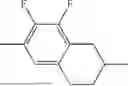


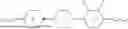


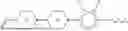





Sources:
- United States Patent and Trademark Office - verify current appl. status at the USPTO↗
Similar patent applications:
- » 20230007940
Liquid-crystal medium comprising polymerisable compounds and the use thereof in liquid-crystal displays - » 20160215214
Liquid-crystal medium - » 20050104038
Liquid-crystal medium and electro-optical display containing same - » 20110248216
Liquid-crystal medium - » 20070001149
Liquid-crystal medium containing monofluoroterphenyl compounds - » 20080193681
Liquid-crystal medium - » 20110042615
Liquid-crystal medium - » 20090103011
Liquid-crystal medium - » 20110193020
Liquid-crystal medium - » 20160115388
Mesogenic compound, liquid-crystal medium and liquid crystal display
Recent applications in this class:
- » 20240247191 2024-07-25
LIQUID CRYSTAL COMPOSITION, PREPARATION METHOD OF THE SAME, AND DISPLAY PANEL - » 20240228877 2024-07-11
LIQUID-CRYSTALLINE MEDIUM - » 20240026223 2024-01-25
Liquid crystal composition and liquid crystal display device comprising same - » 20230383186 2023-11-30
Liquid-crystal medium - » 20230295511 2023-09-21
Liquid crystal medium - » 20230295510 2023-09-21
Liquid crystal medium - » 20230265345 2023-08-24
LIQUID CRYSTAL COMPOSITION CONTAINING POLYMERIZABLE COMPOUND AND APPLICATION OF LIQUID CRYSTAL COMPOSITION - » 20230062801 2023-03-02
COMPOSITION, POLARIZER LAYER, LAMINATE, AND IMAGE DISPLAYING DEVICE - » 20220267675 2022-08-25
OPTICALLY ANISOTROPIC LAYER, OPTICAL FILM, POLARIZING PLATE, AND IMAGE DISPLAY DEVICE - » 20220220383 2022-07-14
METHOD FOR PREPARING A LIQUID CRYSTAL-BASED SWITCHING ELEMENT