Iron-Based Alloy Strengthened by Intermetallic Compound Phase-Coated Nano-Oxide Phase and Preparation Method Thereof
US20250101552A1
2025-03-27
18/412,949
2024-01-15
Smart Summary: An iron-based alloy is enhanced using a special coating of intermetallic compounds and nano-sized rare earth oxides. To create this alloy, several steps are followed: first, a pre-alloyed powder is made. Then, the powder undergoes two rounds of mechanical mixing and milling to blend the materials thoroughly. After that, the mixture is compacted using heat and pressure to form a solid piece. Finally, the alloy is treated with heat to improve its strength and stability. 🚀 TL;DR
Abstract:
Disclosed are an iron-based alloy strengthened by an intermetallic compound (IMC) phase-coated nano-rare earth oxide phase and a preparation method thereof. The preparation method includes the following steps: step S1, preparation of a pre-alloyed powder; step S2, first mechanical alloying; step S3, mixing by ball milling; step S4, second mechanical alloying; step S5, thermomechanical densification; and step S6, solid solution heat treatment and aging heat treatment.
Applicant:
Interested in similar patents?
Get notified when new applications in this technology area are published.
Classification:
C22C33/025 » CPC main
Making ferrous alloys by powder metallurgy having an intermetallic of the REM-Fe type which is not magnetic
C22C33/0207 » CPC further
Making ferrous alloys by powder metallurgy Using a mixture of prealloyed powders or a master alloy
C22C33/02 IPC
Making ferrous alloys by powder metallurgy
C22C38/22 » CPC further
Ferrous alloys, e.g. steel alloys containing chromium with molybdenum or tungsten
Description
CROSS REFERENCE TO RELATED APPLICATION
This patent application claims the benefit and priority of Chinese Patent Application No. 202311226811.9 filed with the China National Intellectual Property Administration on Sep. 22, 2023, the disclosure of which is incorporated by reference herein in its entirety as part of the present application.
TECHNICAL FIELD
The present disclosure relates to the technical field of alloy materials, and specifically relates to an iron-based alloy strengthened by an intermetallic compound phase-coated nano-oxide phase and a preparation method thereof.
BACKGROUND
Conventional oxide-dispersion-strengthened (ODS) iron-based alloys achieve excellent high-temperature yielding, creep resistance, and oxidation resistance by dispersedly precipitating a high number density of nano-oxides in a ferrite matrix to effectively hinder dislocation and grain boundary movement. Moreover, this type of alloy shows outstanding radiation resistance and exhibits important application prospects in the fields such as nuclear power and heat-resistant tools and molds. However, the dispersed and precipitated high-number-density nano-oxides may still coarsen under long-term high-temperature conditions, which would adversely impact the strengthening effect of the strengthening phase, resulting in an unexpectedly poor long-term high-temperature mechanical service performance of the iron-based alloys. Some researchers have proposed introducing other types of strengthening phases, such as intermetallic compounds (IMCs), and hoped to obtain a superimposed strengthening effect, thereby further strengthening the iron-based alloys. However, there is no significant superimposed strengthening effect, and especially, the coarsening of nano-oxides under long-term high temperature conditions has not been effectively suppressed.
A preparation method was proposed in the Patent CN103233182A published by the University of Science and Technology Beijing. A matrix element powder (Fe, Cr, and Mo), a β′ phase-forming element powder (Ni and Al), and an oxide-forming component (Fe2O3, YH2, and Ti) are premixed evenly. The resulting mixture is subjected to high-energy ball milling, then densified through sintering or hot isostatic pressing, and followed by solid solution and aging treatment to obtain an ODS iron-based alloy strengthened by a combination of β′ nano-phase and oxide nano-phase. However, the β′ nano-phase and the oxide nano-phase prepared by the above process only appear separately in the matrix and each play the strengthening role independently. This process belongs to simple superposition and does not achieve a real composite strengthening effect. Under subsequent long-term high-temperature working conditions, the β′ nano-phase and the oxide nano-phase each coarsen independently, which consistently reduces the thermal stabilities and mechanical properties of the iron-based alloy during the long-term high-temperature service. At present, the problem of effectively suppressing the coarsening of strengthening phase under long-term high temperature has not been fundamentally solved.
SUMMARY
In view of the above, an object of the present disclosure is to provide an iron-based alloy strengthened by an intermetallic compound (IMC) phase-coated nano-oxide phase and a preparation method thereof. In the present disclosure, a rare earth element oxide (REEO) nano-phase having three or more elements and a heat-resistant IMC phase with a high number density, a high degree of coherency, and a high thermal stability are obtained in an iron-based alloy through a two-step mechanical alloying process including an activation pretreatment. The IMC phase preferentially precipitates at an interface of REEO nano-phase and forms an effective coating. In this way, nano-particles with a core-shell structure with the REEO nano-phase having three or more elements as a core and the heat-resistant IMC phase as a shell are obtained in the iron-based alloy. Since the IMC shell can effectively hinder the diffusion of elements at high temperature, the thermal stability of the REEO nano-particles are greatly improved. As a consequence, both the microstructures and the macroscopic properties of the heat-resistant iron-based alloy can maintain an ultra-long-term stability under high-temperature conditions.
The present disclosure provides the following technical solutions:
The present disclosure provides a method for preparing an iron-based alloy strengthened by an IMC phase-coated REEO nano-phase, including:
-
- step S1, preparation of a pre-alloyed powder: preparing the pre-alloyed powder of the iron-based alloy by vacuum melting and gas atomization;
- step S2, first mechanical alloying: subjecting a raw material powder for forming an IMC to high-energy ball milling according to a stoichiometric ratio of the IMC to obtain an IMC mechanically-alloyed powder;
- step S3, mixing by ball milling: mixing the pre-alloyed powder of the iron-based alloy obtained in step S1, the IMC mechanically-alloyed powder obtained in step S2, and a rare earth element-containing powder in a high-speed oscillating ball mill thoroughly under a first inert gas protection to obtain a mixed powder;
- step S4, second mechanical alloying: subjecting the mixed powder obtained in step S3 to mechanical alloying ball milling under a second inert gas protection to obtain a supersaturated solid solution mechanical alloying powder;
- step S5, thermomechanical densification: charging the supersaturated solid solution mechanical alloying powder obtained in step S4 into a can, vacuumizing, and conducting thermomechanical densification by hot extrusion/hot isostatic pressing/spark plasma sintering to obtain an iron-based alloy bulk, where a large amount of dispersed REEO nano-phase precipitates inside grains and at grain boundaries of an iron-based alloy matrix during the thermomechanical densification; and
- step S6, solid solution heat treatment and aging heat treatment: subjecting the iron-based alloy bulk to a solid solution heat treatment and an aging heat treatment to obtain the iron-based alloy strengthened by the IMC phase-coated REEO nano-phase, where during the solid solution heat treatment and aging heat treatment, the REEO nano-phase further precipitates, and the REEO nano-phase has a particle size of 2 nm to 30 nm and a number density of 1022-1024 particles/m3; an IMC phase preferentially precipitates with a phase interface of the REEO nano-phase as a heterogeneous nucleation site, and then almost all of the REEO nano-phase is gradually wrapped, thereby forming a nano-particle with a core-shell structure with a REEO nano-phase having three or more elements as a core and the IMC phase as a shell; and a small amount of single-phase nano-particles of the IMC phase are also separately precipitated,
- where the obtained iron-based alloy strengthened by the IMC phase-coated REEO nano-phase features heat resistance; since almost all of the REEO nano-phase is wrapped, the nano-particle with the core-shell structure has a total precipitation number density of 1022-1024 particles/m3 and maintains a high degree of coherency and a high thermal stability in the iron-based alloy matrix.
In some embodiments, the iron-based alloy is one selected from the group consisting of a Cr-containing full ferrite alloy and a Cr-containing ferrite/martensite alloy.
In some embodiments, the IMC phase includes the IMC in step S2 alone; alternatively, the IMC phase includes the IMC in step S2 and an alloying element in the iron-based alloy.
An ideal IMC coating is required to have the following main characteristics: the constituent elements have a relatively high diffusion rate in an iron matrix; the IMC preferentially precipitates on the nano-REEO interfaces; the precipitated IMC phase has a high thermal stability; and the IMC maintains a high degree of coherency with the nano-REEO and the iron matrix simultaneously. As a result, many heat-resistant IMCs such as Ni/Ti/Fe—Al series, Ti/Ni—Si series, and Ni—Ti series, as well as heat-resistant IMCs containing tungsten, molybdenum, tantalum, niobium, vanadium, chromium and other refractory metals or rare earth metal elements, can be included in the investigation. In some embodiments, the IMC in step S2 is one or more selected from the group consisting of Ni—Al series, Ti—Al series, Fe—Al series, Ti—Si series, Ni—Si series, Ni—Ti series, Nb—Al series, Ru—Al series, Mo—Si series, and Nb—Si series.
In some embodiments, the REEO nano-phase exhibits a high thermal stability.
In some embodiments, the REEO nano-phase includes one type of a complex oxide phase having three or more elements; alternatively, the REEO nano-phase includes multiple types of complex oxide phase having three or more elements.
In some embodiments, the rare earth element-containing powder is one selected from the group consisting of a rare earth element oxide powder and a rare earth element hydride powder.
In some embodiments, the first mechanical alloying and the second mechanical alloying each are conducted using an omnidirectional planetary ball mill at a disk speed of 200 rpm to 400 rpm, a longitudinal speed of 10 rpm to 20 rpm, and a ball-to-material mass ratio of 5:1 to 10:1 for 5 h to 15 h; and the omnidirectional planetary ball mill is stopped for 5 min to 10 min and then changes a rotational direction every 15 min to 30 min of ball milling.
In some embodiments, in step S6, the solid solution heat treatment is conducted at a temperature of 800° C. to 1100° C. for 1 h to 3 h with a cooling process of water cooling, and the aging heat treatment is conducted at a temperature of 500° C. to 650° C. for 1 h to 3 h with a cooling process of water cooling.
In view of this, the present disclosure further provides an iron-based alloy strengthened by an IMC phase-coated REEO nano-phase prepared by any one of the above methods.
In the present disclosure, a reaction mechanism of the method includes: the IMC is added in the form of a powder prepared by the first mechanical alloying and has an extremely high chemical activity. The IMC can quickly dissolve into a pre-alloyed matrix in the second mechanical alloying. Nano-oxides precipitate at the beginning of thermomechanical densification, and then the IMC preferentially precipitates with an interface of the nano-oxides as a heterogeneous nucleation site during the heat treatment. Therefore, almost all of the nano-oxides are coated by the subsequent precipitated IMC phase. Different from previous simple superposition strengthening, a technical key of the present disclosure is to realize an “activation, dissolution, and preferential precipitation” mechanism of the IMC phase, and the precipitation of IMC occurs after the precipitation of the nano-oxides, which can fundamentally achieve full encapsulation on almost all of the nano-oxides with different particle sizes. Eventually, a specific nano-precipitation structure with the nano-oxide as a core and the IMC as a shell is prepared, thereby greatly improving a long-term thermal stability of the alloy's structure and properties.
The technical solutions of the present disclosure have following beneficial effects:
-
- 1. In the present disclosure, a novel two-step mechanical alloying process including IMC activation pre-treatment realizes an “activation, dissolution, and preferential precipitation” mechanism of the IMC phase. This mechanism solves the technical bottleneck that the IMC phase and nano-oxide phase separately formed in a ferrite matrix can only achieve a simple superimposed strengthening effect (1+1≤2). The two-step mechanical alloying process including activation pretreatment can form a large number of nano-particles with a core-shell structure in the ferrite matrix, with a nano-oxide phase having three or more elements as a core and a heat-resistant IMC phase as a shell. In this way, the above two phases are truly “superimposed” together, thereby greatly improving a long-term thermal stability of the nano-oxide particles and achieving a technical effect of 1+1>2.
- 2. In the nano-particles with a core-shell structure of the present disclosure, the heat-resistant IMC phase encapsulates the nano-oxide phase therein, which can effectively prevent the coarsening of nano-oxides at high temperature by completely inhibiting element diffusion, thereby greatly improving a structural thermal stability of the alloy.
- 3. One or more types of complex oxide phases having three or more elements can be formed simultaneously in the iron matrix, and can all be coated by the same IMC, thereby obtaining the high strength and the high heat resistance.
- 4. The IMC phase shows a high degree of coherency with the ferrite matrix. Compared with an original interface between the nano-oxide and the matrix, the IMC exhibit stronger interface bonding with the matrix. The IMC-coated nano-oxides thus gain a stronger ability to coordinate the deformation. As a result, a better ductility is achieved while ensuring a substantial improvement in the structural thermal stability and room temperature/high temperature strength of iron-based alloys.
- 5. For the nano-particles with a core-shell structure prepared by the present disclosure, the outer shell layer is an IMC, while the inner core is one or more types of complex oxides having three or more elements. The IMC phase and the complex oxide phase are both of low nanometer scale, achieve a large amount of uniform and diffuse distribution in the matrix, and show a high degree of coherency with the matrix. This structure can effectively hinder the movement of dislocations, sub-grains, and grain boundaries at high temperature, and effectively inhibit softening behaviors such as recrystallization and creeping. Therefore, the alloy matrix can maintain high strength and desirable plasticity/toughness for a long time under high temperature service conditions.
BRIEF DESCRIPTION OF THE DRAWINGS
To describe the technical solutions in the embodiments of the present disclosure more clearly, the following briefly introduces the accompanying drawings required for describing the embodiments. Apparently, the accompanying drawings in the following description show merely some embodiments of the present disclosure, and those of ordinary skill in the art may still derive other drawings from these accompanying drawings without creative efforts.
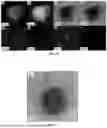
FIG. 1A shows a transmission electron microscopy (TEM) image of the nano-particles with a NiAl-coated Y—Zr—O core-shell structure in the novel heat-resistant iron-based alloy prepared according to Example 1 of the present disclosure.
FIG. 1B shows a three-dimensional atom probe tomography (APT) elemental analysis of the nano-particles with a NiAl-coated Y—Zr—O core-shell structure in the novel heat-resistant iron-based alloy prepared according to Example 1 of the present disclosure.
FIG. 1C shows a high-angle annular dark field-scanning transmission electron microscopy (HAADF-STEM) image of a typical nano-particle with a NiAl-coated Y—Zr—O core-shell structure in the novel heat-resistant iron-based alloy prepared according to Example 1 of the present disclosure.
FIG. 1D shows an energy dispersion spectroscopy (EDS) elemental surface scan image of the nano-particle in FIG. 1C.
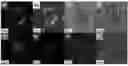
FIG. 2A shows a HAADF-STEM image of a typical nano-particle with a NiAl-coated Y—Al—O core-shell structure in the novel heat-resistant iron-based alloy prepared according to Example 1 of the present disclosure.
FIG. 2B shows an EDS elemental surface scan image of the nano-particle in FIG. 2A.
FIG. 2C shows a magnified HAADF-STEM image of the nano-particle in the frame of FIG. 2A.
FIG. 2D shows a fast Fourier transform (FFT) structural analysis of the nano-particle in the frame of FIG. 2C.
FIG. 3 shows room temperature and high temperature tensile curves of a novel heat-resistant iron-based alloy with nano-oxides Y—Zr—O and Y—Al—O both being coated by NiAl prepared according to Example 1 of the present disclosure.
DETAILED DESCRIPTION OF THE EMBODIMENTS
In order to enable those skilled in the art to better understand the technical solutions in the embodiments of the present disclosure and to make the above objects, features, and advantages of the present disclosure more obvious and understandable, specific embodiments of the present disclosure are further described below.
The endpoints and any values of ranges disclosed herein are not limited to the precise range or value, and these ranges or values should be understood to include values close to these ranges or values. In terms of numerical ranges, one or more new numerical ranges can be derived by combining the end values of each range, combining the end values of each range and the individual point values and combining the individual point values, and these numerical ranges should be considered as specifically disclosed herein.
The present disclosure provides a method for preparing an iron-based alloy strengthened by an IMC phase-coated REEO nano-phase, including the following steps:
-
- step S1, preparation of a pre-alloyed powder: preparing the pre-alloyed powder of the iron-based alloy by vacuum melting and gas atomization;
- step S2, first mechanical alloying: subjecting a raw material powder for forming an IMC to high-energy ball milling according to a stoichiometric ratio of the IMC to obtain an IMC mechanically-alloyed powder;
- step S3, mixing by ball milling: mixing the pre-alloyed powder of the iron-based alloy obtained in step S1, the IMC mechanically-alloyed powder obtained in step S2, and a rare earth element-containing powder in a high-speed oscillating ball mill thoroughly under a first inert gas protection to obtain a mixed powder;
- step S4, second mechanical alloying: subjecting the mixed powder obtained in step S3 to mechanical alloying ball milling under a second inert gas protection to obtain a supersaturated solid solution mechanical alloying powder;
- step S5, thermomechanical densification: charging the supersaturated solid solution mechanical alloying powder obtained in step S4 into a can, vacuumizing, and conducting thermomechanical densification by hot extrusion/hot isostatic pressing/spark plasma sintering to obtain an iron-based alloy bulk, where a large amount of dispersed REEO nano-phase precipitates inside grains and at grain boundaries of an iron-based alloy matrix during the thermomechanical densification; and
- step S6, solid solution heat treatment and aging heat treatment: subjecting the iron-based alloy bulk to a solid solution heat treatment and an aging heat treatment to obtain the iron-based alloy strengthened by the IMC phase-coated REEO nano-phase, where during the solid solution heat treatment and aging heat treatment, the REEO nano-phase further precipitates, and the REEO nano-phase has a particle size of 2 nm to 30 nm and a number density of 1022-1024 particles/m3; an IMC phase preferentially precipitates with a phase interface of the REEO nano-phase as a heterogeneous nucleation site, and then almost all of the REEO nano-phase is gradually wrapped, thereby forming a nano-particle with a core-shell structure with a REEO nano-phase having three or more elements as a core and the IMC phase as a shell; and a small amount of single-phase nano-particles of the IMC phase are also separately precipitated,
- where, the obtained iron-based alloy strengthened by the IMC phase-coated REEO nano-phase features heat resistance; since almost all of the REEO nano-phase is wrapped, the nano-particle with the core-shell structure has a total precipitation number density of 1022-1024 particles/m3 and maintains a high degree of coherency and a high thermal stability in the iron-based alloy matrix.
In some embodiments, the iron-based alloy is one selected from the group consisting of a Cr-containing full ferrite alloy and a Cr-containing ferrite/martensite alloy.
In some embodiments, the IMC phase includes the IMC in step S2 alone; alternatively, the IMC phase includes the IMC in step S2 and an alloying element in the iron-based alloy.
In some embodiments, the IMC in step S2 is one or more selected from the group consisting of Ni—Al series, Ti—Al series, Fe—Al series, Ti—Si series, Ni—Si series, Ni—Ti series, Nb—Al series, Ru—Al series, Mo—Si series, and Nb—Si series.
In some embodiments, the REEO nano-phase exhibits a high thermal stability.
In some embodiments, the REEO nano-phase includes one type of a complex oxide phase having three or more elements; alternatively, the REEO nano-phase includes multiple types of complex oxide phases having three or more elements.
In some embodiments, the rare earth element-containing powder is one selected from the group consisting of a rare earth element oxide powder and a rare earth element hydride powder.
In some embodiments, the first mechanical alloying and the second mechanical alloying each are conducted using an omnidirectional planetary ball mill at a disk speed of 200 rpm to 400 rpm, a longitudinal speed of 10 rpm to 20 rpm, and a ball-to-material mass ratio of 5:1 to 10:1 for 5 h to 15 h; and the omnidirectional planetary ball mill is stopped for 5 min to 10 min and then changes a rotational direction every 15 min to 30 min of ball milling.
In some embodiments, in step S6, the solid solution heat treatment is conducted at a temperature of 800° C. to 1100° C. for 1 h to 3 h with a cooling process of water cooling, and the aging heat treatment is conducted at a temperature of 500° C. to 650° C. for 1 h to 3 h with a cooling process of water cooling.
The present disclosure further provides an iron-based alloy strengthened by an IMC phase-coated REEO nano-phase prepared by any one of the above methods.
Example 1
A method for preparing a heat-resistant iron-based alloy strengthened by NiAl-coated Y—Zr—O and Y—Al—O nano-particles consisted of the following steps:
-
- step S1, a Fe—Cr—W—Zr pre-alloyed powder with a particle size of 5 μm to 30 μm was prepared by vacuum melting+argon gas atomization; where
- the Fe—Cr—W—Zr pre-alloyed powder consisted of the following components in percentage by weight:
- 15% of Cr, 2% of W, 0.7% of Zr, Fe as a balance, and inevitable impurities;
- step S2, first mechanical alloying: a raw material powder consisting of a Ni powder and a Al powder was subjected to high-energy ball milling according to a stoichiometric ratio of NiAl to obtain an IMC NiAl mechanically-alloyed powder;
- step S3, mixing by ball milling: the Fe—Cr—W—Zr pre-alloyed powder obtained in step S1, the IMC NiAl mechanically-alloyed powder, and a Y2O3 powder were mixed in a high-speed oscillating ball mill thoroughly under a first inert gas protection to obtain a mixed powder; where the mixed powder consisted of the following alloying components in percentage by weight: 15% of Cr, 2% of W, 0.7% of Zr, 5.5% of Ni, 2.5% of Al, Fe as a balance, and inevitable impurities;
- step S4, second mechanical alloying: the mixed powder was subjected to mechanical alloying ball milling fully under a second inert gas protection, such that [Ni] and [Al] in the IMC powder and [Y] and [O] in the Y2O3 powder were dissolved into an iron matrix in atomic form, to form a supersaturated solid solution mechanical alloying powder;
- step S5, thermomechanical densification: the supersaturated solid solution mechanical alloying powder was charged into a can, vacuumized, and subjected to thermomechanical densification by hot extrusion/hot isostatic pressing/spark plasma sintering to obtain an iron-based alloy bulk, where during the thermomechanical densification, the supersaturated [Ni], [Al], [Y], and [O] solute atoms in the iron matrix were precipitated, forming a large amount of dispersed Y—Zr—O and Y—Al—O nano-oxide phases inside grains and at grain boundaries; the Y—Zr—O and Y—Al—O nano-oxide phases had a particle size of 2 nm to 50 nm and a number density of about 1×10²³ particles/m3; a NiAl phase was preferentially precipitated at the interfaces of the Y—Zr—O and Y—Al—O nano-oxide phases to gradually coat the Y—Zr—O and Y—Al—O nano-oxide phases, thus forming a core-shell nano-structure with a higher thermal stability; and a part of the NiAl phase was also precipitated separately;
- step S6, heat treatment: the iron-based alloy bulk was subjected to solid solution heat treatment and aging heat treatment, obtaining the heat-resistant iron-based alloy strengthened by NiAl coated Y—Zr—O and Y—Al—O nano-particles; where the solid solution heat treatment and the aging heat treatment were conducted as follows: the solid solution heat treatment was conducted at 800° C. to 1,100° C. for 1 h to 3 h with a cooling process of water cooling, and the aging heat treatment was conducted at 500° C. to 650° C. for 1 h to 3 h with a cooling process of water cooling.
The result analysis is as follows. FIGS. 1A-1D show a heat-resistant iron-based alloy strengthened by the NiAl-coated Y—Zr—O core-shell structure: FIG. 1A shows TEM observation results; FIG. 1B shows characterization analysis of three-dimensional APT; and FIG. 1C shows a HAADF-STEM image and FIG. 1D shows an EDS elemental surface scan image. In FIG. 1A, a large number of dispersed nano-strengthening particles are shown, with a total number density of about 1×10²³ particles/m3. The elemental analysis of FIGS. 1B-1D confirms that the nano-strengthening particles have a core-shell structure of NiAl shell and Y—Zr—O core, in which the arrows mark a part of the individually precipitated NiAl phase.
FIGS. 2A-2D show a heat-resistant iron-based alloy strengthened by NiAl-coated Y—Al—O core-shell structure, where FIGS. 2A-2B show a HAADF-STEM image and an EDS elemental surface scan image of a typical nanoparticle with a core-shell structure, respectively; and FIGS. 2C-2D show a magnified HAADF-STEM image of the nano-particle in the frame of FIG. 2A and an FFT analysis of the nano-particle in the frame of FIG. 2C, respectively, indicating that the core is a Y4Al2O9 nano-oxide phase that shows a high degree of coherency with the NiAl shell and the ferrite matrix.
FIG. 3 is obtained from the data in Table 1, and shows room temperature and high temperature tensile curves of a novel heat-resistant iron-based alloy strengthened by NiAl-coated nano-oxides Y—Zr—O and Y—Al—O prepared according to Example 1 of the present disclosure.
| TABLE 1 |
| Room temperature and high temperature mechanical |
| properties of the novel alloy (in annealed state) |
| Temperature (° C.) | YS (MPa) | UTS (MPa) | EL (%) | |
| 25 | 1095 ± 72 | 1280 ± 20 | 14.2 ± 0.1 | |
| 600 | 497 ± 43 | 541.5 ± 35 | 27.9 ± 2.5 | |
Example 2
A method for preparing a heat-resistant iron-based alloy strengthened by NiAl-coated Y—Ti—Zr—O and Y—Zr—O nano-particles consisted of the following steps:
-
- step S1, a Fe—Cr—W—Zr-Ti pre-alloyed powder with a particle size of 5 μm to 30 μm was prepared by vacuum melting+argon gas atomization; where
- the Fe—Cr—W—Zr-Ti pre-alloyed powder consisted of the following components in percentage by weight:
- 15% of Cr, 2% of W, 0.5% of Zr, 0.5% of Ti, Fe as a balance, and inevitable impurities;
- step S2, first mechanical alloying: a raw material powder consisting of a Ni powder and a Al powder was subjected to high-energy ball milling according to a stoichiometric ratio of NiAl to obtain an IMC NiAl mechanically-alloyed powder;
- step S3, mixing by ball milling: the Fe—Cr—W—Zr—Ti pre-alloyed powder obtained in step S1, the IMC NiAl mechanically-alloyed powder, and a Y2O3 powder were mixed in a high-speed oscillating ball mill thoroughly under a first inert gas protection to obtain a mixed powder; where the mixed powder consisted of the following components in percentage by weight: 15% of Cr, 2% of W, 0.5% of Zr, 0.5% of Ti, 5.5% of Ni, 2.5% of Al, Fe as a balance, and inevitable impurities;
- step S4, second mechanical alloying: the mixed powder was subjected to mechanical alloying ball milling fully under a second inert gas protection, such that [Ni] and [Al] in the IMC powder and [Y] and [O] in the Y2O3 powder were dissolved into an iron matrix in atomic form, to form a supersaturated solid solution mechanical alloying powder;
- step S5, thermomechanical densification: the supersaturated solid solution mechanical alloying powder was charged into a can, vacuumized, and subjected to thermomechanical densification by hot extrusion/hot isostatic pressing/spark plasma sintering to obtain an iron-based alloy bulk, where the supersaturated [Ni], [Al], [Y], and [O] solute atoms in the iron matrix were precipitated during the thermomechanical densification, forming a large amount of dispersed Y—Ti—Zr—O and Y—Zr—O nano-oxide phases inside grains and at grain boundaries; the Y—Ti—Zr—O and Y—Zr—O nano-oxide phases had a particle size of 2 nm to 40 nm and a number density of about 2×10²³ particles/m3; a NiAl phase was preferentially precipitated at the interfaces of the Y—Ti—Zr—O and Y—Zr—O nano-oxide phases to gradually coat the Y—Ti—Zr—O and Y—Zr—O nano-oxide phases, thus forming a core-shell nano-structure with a higher thermal stability; and a part of the NiAl phase was also precipitated separately;
- step S6, heat treatment: the iron-based alloy bulk was subjected to solid solution heat treatment and aging heat treatment, obtaining the heat-resistant iron-based alloy strengthened by NiAl-coated Y—Ti—Zr—O and Y—Zr—O nano-particles, where the solid solution heat treatment and the aging heat treatment were conducted as follows: the solid solution heat treatment was conducted at 800° C. to 1,100° C. for 1 h to 3 h with a cooling process of water cooling, and the aging heat treatment was conducted at 500° C. to 650° C. for 1 h to 3 h with a cooling process of water cooling.
Example 3
A method for preparing a heat-resistant iron-based alloy strengthened by Ti (Al, W)-coated Y—Si—Zr—O and Y—Zr—O nano-particles consisted of the following steps:
-
- step S1, a Fe—Cr—W—Zr—Si pre-alloyed powder with a particle size of 5 μm to 30 μm was prepared by vacuum melting+argon gas atomization; where
- the Fe—Cr—W—Zr—Si pre-alloyed powder consisted of the following components in percentage by weight:
- 15% of Cr, 2% of W, 0.5% of Zr, 0.2% of Si, Fe as a balance, and inevitable impurities;
- step S2, first mechanical alloying: a raw material powder consisting of a Ti powder and a Al powder was subjected to high-energy ball milling according to a stoichiometric ratio of TiAl to obtain an IMC TiAl mechanically-alloyed powder;
- step S3, mixing by ball milling: the Fe—Cr—W—Zr—Si pre-alloyed powder obtained in step S1, the IMC NiAl mechanically alloyed powder, and a Y2O3 powder were mixed in a high-speed oscillating ball mill thoroughly under a first inert gas protection to obtain a mixed powder; where the Fe—Cr—W—Zr—Si pre-alloyed powder consisted of following components in percentage by weight: 15% of Cr, 2% of W, 0.5% of Zr, 0.2% of Si, 3.0% of Ti, 2.5% of Al, Fe as a balance, and inevitable impurities;
- step S4, second mechanical alloying: the mixed powder was subjected to mechanical alloying ball milling fully under a second inert gas protection, such that [Ni] and [Al] in the IMC powder and [Y] and [O] in the Y2O3 powder were dissolved into an iron matrix in atomic form, to form a supersaturated solid solution mechanical alloying powder;
- step S5, thermomechanical densification: the supersaturated solid solution mechanical alloying powder was charged into a can, vacuumized, and subjected to thermomechanical densification by hot extrusion/hot isostatic pressing/spark plasma sintering to obtain an iron-based alloy bulk; where during the thermomechanical densification, the supersaturated [Ni], [Al], [Y], and [O] solute atoms in the iron matrix were precipitated, forming a large amount of dispersed Y—Si—Zr—O and Y—Zr—O nano-oxide phases inside grains and at grain boundaries; the Y—Ti—Zr—O and Y—Zr—O nano-oxide phases had a particle size of 2 nm to 40 nm and a number density of about 2×10²³ particles/m3; a Ti (Al, W) phase was preferentially precipitated at the interfaces of the Y—Si—Zr—O and Y—Zr—O nano-oxide phases to gradually coat the Y—Si—Zr—O and Y—Zr—O nano-oxide phases, thus forming a core-shell nano-structure with a higher thermal stability; and a part of the Ti (Al, W) phase was also precipitated separately;
- step S6, heat treatment: the iron-based alloy bulk was subjected to solid solution heat treatment and aging heat treatment, obtaining the heat-resistant iron-based alloy strengthened by Ti (Al, W)-coated Y—Si—Zr—O and Y—Zr—O nano-particles, where the solid solution heat treatment and the aging heat treatment were conducted as follows: the solid solution heat treatment was conducted at 800° C. to 1,100° C. for 1 h to 3 h with a cooling process of water cooling, and the aging heat treatment was conducted at 500° C. to 650° C. for 1 h to 3 h with a cooling process of water cooling.
Example 4
A method for preparing a heat-resistant iron-based alloy strengthened by NiTi-coated Y—Ti—O nano-particles consisted of the following steps:
-
- step S1, a Fe—Cr—W—Ti pre-alloyed powder with a particle size of 5 μm to 30 μm was prepared by vacuum melting+argon gas atomization; where
- the Fe—Cr—W—Ti pre-alloyed powder consisted of the following components in percentage by weight:
- 15% of Cr, 2% of W, 0.5% of Ti, Fe as a balance, and inevitable impurities;
- step S2, first mechanical alloying: a raw material powder consisting of a Ni powder and a Ti powder was subjected to high-energy ball milling according to a stoichiometric ratio of NiTi to obtain an IMC NiTi mechanically-alloyed powder;
- step S3, mixing by ball milling: the Fe—Cr—W—Ti pre-alloyed powder obtained in step S1, the IMC NiTi mechanically-alloyed powder, and a Y2O3 powder were mixed in a high-speed oscillating ball mill thoroughly under a first inert gas protection to obtain a mixed powder; where the mixed powder consisted of the following components in percentage by weight: 15% of Cr, 2% of W, 3.0% of Ti, 4.5% of Ni, Fe as a balance, and inevitable impurities;
- step S4, second mechanical alloying: the mixed powder was subjected to mechanical alloying ball milling fully under a second inert gas protection, such that [Ni] and [Ti] in the IMC powder and [Y] and [O] in the Y2O3 powder were dissolved into an iron matrix in atomic form, to form a supersaturated solid solution mechanical alloying powder;
- step S5, thermomechanical densification: the supersaturated solid solution mechanical alloying powder was charged into a can, vacuumized, and subjected to thermomechanical densification by hot extrusion/hot isostatic pressing/spark plasma sintering to obtain an iron-based alloy bulk, where during the thermomechanical densification, the supersaturated [Ni], [Ti], [Y], and [O] solute atoms in the iron matrix were precipitated, forming a large amount of dispersed Y—Ti—O nano-oxide phases inside grains and at grain boundaries; the Y—Ti—O nano-oxide phase had a particle size of 2 nm to 40 nm and a number density of-2×10²³ particles/m3; a NiTi phase was preferentially precipitated at interfaces of the Y—Si—Zr—O and Y—Zr-O nano-oxide phases to gradually coat the Y—Ti—O nano-oxide phase, thus forming a core-shell nano-structure with a higher thermal stability; and a part of the NiTi phase was also precipitated separately;
- step S6, heat treatment: the iron-based alloy bulk was subjected to solid solution heat treatment and aging heat treatment, obtaining the heat-resistant iron-based alloy strengthened by NiTi-coated Y—Ti—O nano-particles, where the solid solution heat treatment and the aging heat treatment were conducted as follows: the solid solution heat treatment was conducted at 800° C. to 1,100° C. for 1 h to 3 h with a cooling process of water cooling, and the aging heat treatment was conducted at 500° C. to 650° C. for 1 h to 3 h with a cooling process of water cooling.
Claims
What is claimed is:1. A method for preparing an iron-based alloy strengthened by an intermetallic compound (IMC) phase-coated rare earth element oxide (REEO) nano-phase, comprising:
step S1, preparation of a pre-alloyed powder: preparing the pre-alloyed powder of the iron-based alloy by vacuum melting and gas atomization;
step S2, first mechanical alloying: subjecting a raw material powder for forming an IMC to high-energy ball milling according to a stoichiometric ratio of the IMC to obtain an IMC mechanically-alloyed powder;
step S3, mixing by ball milling: mixing the pre-alloyed powder of the iron-based alloy obtained in step S1, the IMC mechanically-alloyed powder obtained in step S2, and a rare earth element-containing powder in a high-speed oscillating ball mill thoroughly under a first inert gas protection to obtain a mixed powder;
step S4, second mechanical alloying: subjecting the mixed powder obtained in step S3 to mechanical alloying ball milling under a second inert gas protection to obtain a supersaturated solid solution mechanical alloying powder;
step S5, thermomechanical densification: charging the supersaturated solid solution mechanical alloying powder obtained in step S4 into a can, vacuumizing, and conducting thermomechanical densification by hot extrusion/hot isostatic pressing/spark plasma sintering to obtain an iron-based alloy bulk, wherein a large amount of dispersed REEO nano-phase precipitates inside grains and at grain boundaries of an iron-based alloy matrix during the thermomechanical densification; and
step S6, solid solution heat treatment and aging heat treatment: subjecting the iron-based alloy bulk to a solid solution heat treatment and an aging heat treatment to obtain the iron-based alloy strengthened by the IMC phase-coated REEO nano-phase, wherein during the solid solution heat treatment and the aging heat treatment, the REEO nano-phase further precipitates, and the REEO nano-phase has a particle size of 2 nm to 30 nm and a number density of 1022-1024 particles/m3; an IMC phase preferentially precipitates with a phase interface of the REEO nano-phase as a heterogeneous nucleation site, and then almost all of the REEO nano-phase is gradually wrapped, thereby forming a nano-particle with a core-shell structure with a REEO nano-phase having three or more elements as a core and the IMC phase as a shell; and a small amount of single-phase nano-particles of the IMC phase are also separately precipitated;
wherein, the obtained iron-based alloy strengthened by the IMC phase-coated REEO nano-phase features heat resistance; since almost all of the REEO nano-phase is wrapped, the nano-particles with the core-shell structure have a total precipitation number density of 1022-1024 particles/m3 and maintains a high degree of coherency and a high thermal stability in the iron-based alloy matrix.
2. The method of claim 1, wherein the iron-based alloy is one selected from the group consisting of a Cr-containing full ferrite alloy and a Cr-containing ferrite/martensite alloy.
3. The method of claim 1, wherein the IMC phase comprises the IMC in step S2 alone; alternatively, the IMC phase comprises the IMC in step S2 and an alloying element in the iron-based alloy.
4. The method of claim 1, wherein the IMC in step S2 is one or more selected from the group consisting of Ni—Al series, Ti—Al series, Fe—Al series, Ti—Si series, Ni—Si series, Ni—Ti series, Nb—Al series, Ru—Al series, Mo—Si series, and Nb—Si series.
5. The method of claim 1, wherein the REEO nano-phase exhibits a high thermal stability.
6. The method of claim 5, wherein the REEO nano-phase comprises one type of a complex oxide phase having three or more elements; alternatively, the REEO nano-phase comprises multiple types of complex oxide phases having three or more elements.
7. The method of claim 1, wherein the rare earth element-containing powder is one selected from the group consisting of a rare earth element oxide powder and a rare earth element hydride powder.
8. The method of claim 1, wherein the first mechanical alloying and the second mechanical alloying each are conducted using an omnidirectional planetary ball mill at a disk speed of 200 rpm to 400 rpm, a longitudinal speed of 10 rpm to 20 rpm, and a ball-to-material mass ratio of 5:1 to 10:1 for 5 h to 15 h; and the omnidirectional planetary ball mill is stopped for 5 min to 10 min and then changes a rotational direction every 15 min to 30 min of ball milling.
9. The method of claim 1, wherein in step S6, the solid solution heat treatment is conducted at a temperature of 800° C. to 1100° C. for 1 h to 3 h with a cooling process of water cooling, and the aging heat treatment is conducted at a temperature of 500° C. to 650° C. for 1 h to 3 h with a cooling process of water cooling.
10. An iron-based alloy strengthened by an IMC phase-coated REEO nano-phase prepared by the method of claim 1.
11. The iron-based alloy strengthened by an IMC phase-coated REEO nano-phase of claim 10, wherein the iron-based alloy is one selected from the group consisting of a Cr-containing full ferrite alloy and a Cr-containing ferrite/martensite alloy.
12. The iron-based alloy strengthened by an IMC phase-coated REEO nano-phase of claim 10, wherein the IMC phase comprises the IMC in step S2 alone; alternatively, the IMC phase comprises the IMC in step S2 and an alloying element in the iron-based alloy.
13. The iron-based alloy strengthened by an IMC phase-coated REEO nano-phase of claim 10, wherein the IMC in step S2 is one or more selected from the group consisting of Ni—Al series, Ti—Al series, Fe—Al series, Ti—Si series, Ni—Si series, Ni—Ti series, Nb—Al series, Ru—Al series, Mo—Si series, and Nb—Si series.
14. The iron-based alloy strengthened by an IMC phase-coated REEO nano-phase of claim 10, wherein the REEO nano-phase exhibits a high thermal stability.
15. The iron-based alloy strengthened by an IMC phase-coated REEO nano-phase of claim 14, wherein the REEO nano-phase comprises one type of a complex oxide phase having three or more elements; alternatively, the REEO nano-phase comprises multiple types of complex oxide phases having three or more elements.
16. The iron-based alloy strengthened by an IMC phase-coated REEO nano-phase of claim 10, wherein the rare earth element-containing powder is one selected from the group consisting of a rare earth element oxide powder and a rare earth element hydride powder.
17. The iron-based alloy strengthened by an IMC phase-coated REEO nano-phase of claim 10, wherein the first mechanical alloying and the second mechanical alloying each are conducted using an omnidirectional planetary ball mill at a disk speed of 200 rpm to 400 rpm, a longitudinal speed of 10 rpm to 20 rpm, and a ball-to-material mass ratio of 5:1 to 10:1 for 5 h to 15 h; and the omnidirectional planetary ball mill is stopped for 5 min to 10 min and then changes a rotational direction every 15 min to 30 min of ball milling.
18. The iron-based alloy strengthened by an IMC phase-coated REEO nano-phase of claim 10, wherein in step S6, the solid solution heat treatment is conducted at a temperature of 800° C. to 1100° C. for 1 h to 3 h with a cooling process of water cooling, and the aging heat treatment is conducted at a temperature of 500° C. to 650° C. for 1 h to 3 h with a cooling process of water cooling.