Household appliance comprising a glass plate and a command and control interface
US20250102148A1
2025-03-27
18/852,646
2023-03-30
Smart Summary: A household appliance features a glass plate shaped like a polygon with a specific thickness and an opening along its edge. It includes a control interface that can produce light signals. There is an element that connects this control interface to the glass plate, ensuring they work together. The glass plate is designed to sit above surfaces where food can be cooked. Notably, the control interface is positioned higher than the bottom of the glass plate. 🚀 TL;DR
Abstract:
The present disclosure concerns an household appliance comprising a glass plate with polygonal shape having a first thickness and an opening, said opening being bounded perimetrically by at least one side of said glass plate;—a command and control interface configured to generate light signals;—an interposition element that can be interposed between the glass plate and the control and command interface, said interposition element being configured to connect the control and command interface to the glass plate along the at least one side of the opening—said glass plate extends predominantly on a plane along a thickness direction, orthogonal to said plane, between a rest surface, adapted to be associated with receptacles for cooking food, and a bottom surface, opposite to the rest surface—wherein the interposition element is configured to bind the command and control interface to the glass plate to said plane of the glass plate. A characteristic feature of the household appliance is that the bottom of said command and control interface lies at a higher level than the level at which the bottom surface of the glass plate lies.
Applicant:
Interested in similar patents?
Get notified when new applications in this technology area are published.
Classification:
F24C7/083 » CPC main
Stoves or ranges heated by electric energy; Arrangement or mounting of control or safety devices on ranges, e.g. control panels, illumination on tops, hot plates
F24C15/102 » CPC further
Details; Tops, e.g. hot plates; Rings electrically heated
F24C7/08 IPC
Stoves or ranges heated by electric energy Arrangement or mounting of control or safety devices
F24C15/10 IPC
Details Tops, e.g. hot plates; Rings
Description
TECHNICAL FIELD
The present invention relates to a household appliance that finds useful application in the kitchen equipment sector, in accordance with the preamble of claim 1.
STATE OF THE ART
Glass ceramic hobs have long been known. These hobs comprise a plate made of glass ceramic material and a plurality of cooking regions equipped with special means capable of releasing energy.
In use, the means capable of releasing energy are operated to transmit thermal energy to one or more receptacles for cooking food which are arranged on the glass ceramic plate at the cooking regions.
It should be noted that the high temperatures reached in the cooking regions impose using glass ceramic material for the realization of the plate of the hob. In fact, glass ceramic is a material commonly known for its excellent heat resistance, high toughness, and low coefficient of thermal expansion.
To increase the fragile resistance to breakage, the bottom surface of the glass plate (a surface opposite to the upper surface adapted to receive abuttingly the receptacles for cooking food) has a series of reinforcing ribs or bulges, therefore it is not flat.
It should also be specified that the ceramic glass plate necessarily has significant thicknesses, typically between 5 mm and 10 mm, to resist the action of the weight force of the receptacles for cooking food.
The ceramic glass production process involves a reddish colouring, for this reason the glass plates used to realize the hobs are typically black darkened through a screen-printing process.
The hobs also comprise a command and control interface configured to allow the display of information, relating to the operating status of the hob, by means of light beams projected through the glass ceramic plate as well as to command the various functionalities of the hob.
This command and control interface is arranged on the surface of the hob opposite to the one used to receive the pots. Therefore, in the known hobs, a portion of the glass ceramic plate is used as a screen for projecting light signals generated by the command and control interface.
To ensure that the light signals are not distorted, excessively reflected or excessively attenuated in their brightness, it is necessary that at least the bottom surface of the plate, at the portion used as a screen, is flat.
This, disadvantageously, significantly limits the maximum extent of the light signal display area.
In fact, in accordance with the above, the presence of the command and control interface and an excessive planar extension of the bottom surface significantly increases the fragility of the glass plate, compromising the loading capacity thereof.
It should also be noted that the command and control interface is typically used to manage different functionalities of the household appliance, such as for example switching on/off, rate of power used, etc. or even to manage the different functionalities of several household appliances if a hob and an oven and/or even a suction hood are integrated into a household appliance.
Therefore, limiting the maximum extent of the display area significantly impacts the ease of interaction between the user and the household appliance.
Moreover, the high thickness imposed by the above structural limits means that the command interface is significantly spaced from the upper rest surface of the hob. Disadvantageously, this generates high parallax errors which, in the case of the touch-type command interface, significantly affect the correct positioning of the user's finger used to impart the commands to the household appliance.
It is evident that the parallax error, and hence the difficulties in the interaction with the household appliance, increases with increasing thickness of the glass ceramic plate.
Yet, in order to improve the quality of the light signals perceived by the user, it is necessary to locally reduce the intensity of the screen printing at the light signal display region.
In addition, in some known processes, it is necessary to screen print in black in the projection area to eliminate the red colour of the ceramic glass originated from the production process.
It is clear that the different intensity of screen printing in the projection area causes an increase in production costs, as it requires the introduction of a specific processing phase.
In addition, the screen printing in black, even if attenuated in intensity, worsens the transparency of the glass plate to the passage of light signals, reducing the brightness thereof perceived by the user. Therefore, the light signals have a quality that hardly meets the expectations of the user.
In fact, the user that uses these household appliances has as a reference command and control interface like the one of his smartphone/tablet.
In this case, the use and the habit of the user is to have performance in terms of touch accuracy, ease of use, colour range, screen brightness, and message resolution (whether they are icons or alphanumeric texts) that is not reachable through the command and control interfaces of the known household appliances.
Document DE 102009000304 B4 describes a hob comprising a command interface having a protective glass distinct from the glass ceramic plate of the rest plane of the pots. The command interface is arranged in an opening of the plate and comprises an LCD display and a pressure sensor that are adhering to a lower surface of the protective glass. In particular, document DE 102009000304 B4, in order to improve the sharpness and the brightness of the light signals transmitted through the protective glass, teaches to make the latter in a glass ceramic material other than that of the plate such as, for example, in white glass ceramic or transparent glass ceramic.
Document EP 2923153 B1 describes, in particular, a hob that employs an interposition element to connect the protective glass and the display to the glass ceramic plate that defines the rest plane of the pots.
The embodiments described in document DE 102009000304 B4 and EP 2923153 B1, however, have a high vertical footprint that reduces the useful volume available that is immediately below the hob.
AIM OF THE INVENTION
In this context, the task of the person skilled in the art underpinning the present invention is to propose a household appliance that overcomes the drawbacks of the above-mentioned prior art.
In particular, it is an object of the present invention to make available a household appliance capable of detaching the maximum size of the light signal display region from the loading capacity of the hob.
Therefore, it is an object of the present invention to make available household appliances capable of having good properties of resistance to breakage while having wide light signal display areas.
Furthermore, it is an object of the present invention to make available a household appliance capable of improving user experience in terms of touch accuracy and display of optical signals. In other words, it is an object of the present invention to make available a household appliance having performance in terms of touch accuracy, practicality of use, colour range, screen brightness and message resolution, comparable with that of the smartphones/tablets which he is customary to use.
Furthermore, it is an object of the present invention to make available a household appliance having a command and control interface of limited vertical footprint.
SUMMARY OF THE INVENTION
The present invention relates to a household appliance, preferably for cooking dishes, comprising a glass plate with polygonal shape having a determined first thickness. In detail, the glass plate comprises an opening bounded perimetrically by at least one side.
The household appliance subject-matter of the present invention further comprises a command and control interface configured to generate light signals. In detail, the command and control interface in turn comprises a protective glass with polygonal shape and having a second thickness less than the first thickness of the glass plate. The protective glass is available in the opening of the glass plate so as to be connected to the at least one side.
The command interface further comprises an electronic device for generating light signals representative of the operating status and for controlling the functionalities of the household appliance. The electronic device is connectable to the at least one side of the opening and arranged in such a way as to allow the display of the light signals through the protective glass.
Advantageously, in the household appliance subject-matter of the present invention the extension of the command interface, in particular of the protective glass and of the source, does not directly impact the fragile resistance to breakage of the glass plate. In fact, the projection region is not obtained on the glass plate but on a distinct protective glass.
It is therefore evident that the present invention makes it possible to make available household appliances having wide light signal display regions, without compromising the loading capacity of the glass plate.
In addition, advantageously, the protective glass has a thickness less than that of the glass plate; therefore, it is able to reduce the parallax error in favour of the user experience in terms of touch accuracy.
Still, advantageously, the protective glass, unlike the glass plate, is not screen-printed in black; therefore, it has excellent transparency to the light signals in favour of the user experience in terms of brightness, colour range and resolution.
It should also be specified that in the case in which in order to carry out wide light signal display regions it is necessary to make extensive openings in the plate, and therefore significant notching effects, it is possible to increase the resistance to breakage of the glass plate by increasing the thickness thereof. This does not generate an increase in parallax error as the latter, in the present invention, is solely determined by the thickness of the protective glass.
Still advantageously, the present invention makes it possible to make available household appliances having a reduced vertical footprint of the command and control interface compared to the state of the art so as to maximise the useful volume below the hob.
LIST OF FIGURES
Further features and advantages of the present invention will become more apparent from the indicative, and therefore non-limiting, description of a preferred but non-exclusive embodiment of a household appliance, as illustrated in the accompanying drawings in which:
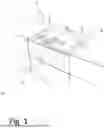
FIG. 1 shows a perspective view of a household appliance according to the present invention integrated in a kitchen cabinet;
FIG. 2 shows a top view of the household appliance of FIG. 1;
FIG. 3 shows a perspective view of a component of the household appliance of FIG. 1;
FIG. 4 shows a perspective view of a component of the household appliance of FIG. 1;
FIG. 5 shows a magnification of a detail of FIG. 4;
FIG. 6 shows a perspective view of the household appliance of FIG. 1 sectioned along the section plane A-A;
FIG. 7 shows a magnification of a detail of FIG. 6;
FIG. 8 shows a perspective view of the household appliance of FIG. 1 sectioned along the section plane B-B.
DETAILED DESCRIPTION
Even if not explicitly highlighted, the individual features disclosed with reference to the specific embodiments shall be understood as accessory to and/or interchangeable with other features disclosed with reference to other embodiments.
It should also be specified that the dimensions that are provided in the following description have a tolerance value evaluable in ±10%.
With reference to the attached figures, the present invention relates to a household appliance 1 for cooking food.
As shown in FIG. 1 and detailed in FIG. 3, the household appliance 1 subject-matter of the present invention comprises a glass plate 2 with polygonal shape.
Preferably, the glass plate 2 has a planar development and is bounded perimetrically by a perimeter edge C. Hereinafter, P1 indicates the plane in which the glass plate 2 develops.
The glass plate 2 has a first thickness S1. In other words, the glass plate 2 further extends along a thickness direction S-S, orthogonal to the plane P1, between a rest surface 2a, adapted to be associated with receptacles for cooking food, and a bottom surface 2b, opposite to the rest surface 2a. Preferably, the first thickness S1 of the glass plate, i.e. the distancing of the rest surface 2a from the bottom surface 2b, is between 3mm and 8 mm.
Preferably, the glass plate 2 has a first light transmission value, preferably between 0.7 and 0.95.
In the context of the present invention with light transmission is meant an optical parameter capable of expressing the ability of a material to be traversed by a part of the incident light. In detail, the light transmission value is a dimensionless quantity that can be calculated as the ratio between the intensity of the transmitted radiant flux and the intensity of the incident radiant flux.
With reference to FIG. 3, the glass plate 2 comprises an opening 3 bounded by at least one side 30. Preferably, the opening 3 is bounded by at least one pair of sides 30, even more preferably the opening is bounded by at least three sides 30.
In the embodiment shown in the attached figures, the opening 3 is bounded perimetrically by three sides (30) and extends starting from a portion of the perimeter edge C of the glass plate 2, creating a U-shaped recess or indentation. In alternative embodiments, the opening 3 could for example extend along an entire side of the perimeter contour C, or it could be placed in a central portion of the glass plate 2. Therefore, the opening need not extend starting from the perimeter edge C of the glass plate 2.
The opening 3 is preferably passing-through, i.e. it passes through the entire thickness S of the glass plate 2. In other words, the opening 3 extends from the rest surface 2a to the bottom surface 2b of the glass plate 2.
Preferably, the glass plate 2 has a plurality of cooking regions and the household appliance 1 comprises a plurality of heating elements or energy sources (not shown in the figures) adapted to generate an energy flow through the glass plate 2 at the cooking regions. Said energy flow is configured to increase the temperature of one or more receptacles for cooking food that are standing on the glass plate 2 at the cooking regions.
To withstand the temperatures necessary for cooking foodstuffs, the glass plate 2 is made of ceramic glass, a material commonly known for its excellent thermal properties (coefficient of thermal expansion, thermal conductivity, resistance to thermal variations, resistance to thermal shocks, temperature/time load). In detail, glass ceramic has a high resistance to thermal variations and to thermal shocks and low coefficients of expansion and thermal conductivity.
The glass plate and the plurality of heating elements realize what in the state of the art is commonly defined as a hob. Therefore, preferably, the household appliance 1 subject-matter of the present invention comprises a hob la.
It should be specified that in the context of the present invention, the term hob refers indifferently to induction, electric, gas hobs, and the like.
With reference to FIGS. 2, 6 and 7, the household appliance 1 comprises a command and control interface 4 capable of generating light signals representative of the information relating to the operating/control status of the household appliance and visible to the eye of a user.
For example, such a device may be employed for displaying the intensity of operation of the sources.
According to one aspect, the command and control interface 4 is both capable of emitting signals representative of the operating state, and capable of receiving the commands imparted by the user for controlling the operating parameters.
It should be noted, also with reference to FIG. 8, that the command and control interface 4 defines an upper surface 4A which is the one turned outwards the household appliance 1, i.e. the surface observable by the user and a lower surface 4B which represents the bottom of the interface itself. Said bottom 4B is turned inwards the household appliance 1.
In particular, the command and control interface 4 has a thickness S2 along a thickness direction S-S oriented perpendicularly to the plane P1.
In detail, the command and control interface 4 comprises a protective glass 40 with polygonal shape and crossable by light signals. Said protective glass 40 has its own thickness S3 which is smaller than the first thickness S1 of the glass plate 2.
In detail, with reference to FIG. 7, the protective glass 40 develops planarly in a plane P2 and along the thickness direction S-S, oriented perpendicularly to the plane P2, between a surface 40A that is turned outwards the household appliance 1 and an opposite surface 40B that is turned inwards the household appliance 1.
It should also be specified that the input and output surface of the light signals are spaced apart by an amount equal to the second thickness S2.
The protective glass 40 is available in the opening 3 of the glass plate 2 and connectable to the at least one side 30.
In the embodiment shown in the attached figures, the opening is bounded perimetrically by three sides 30 and the protective glass 40 can be inserted into the opening so as to be connected to all three sides 30 simultaneously.
When the protective glass 40 is arranged in the opening 3 it at least partially obstructs it. Preferably, the protective glass 40 is suitably sized to be placed to close the opening 3.
In the embodiment of FIGS. 2 and 3, the opening 3 is rectangular and extends starting from the perimeter edge C of the glass plate 2. The protective glass 40 is also rectangular in shape and is inserted into the opening 3 connecting the perimeter edge C at an interruption 31 generated by the opening 3. In detail, the protective glass 40 has four sides 43-44, three of which 43 can be associated with respective sides 30 of the opening 3 and a fourth side 44 alignable with the perimeter edge C of the glass plate 2 at the interruption 31.
Preferably, the protective glass 40 has a second light transmission value greater than the first light transmission value of the glass plate 2.
According to one aspect the protective glass 40 is a tempered glass such as for example that commercially known under the trademark Gorilla Glass.
Furthermore, the command and control interface 4 comprises an electronic device 41 configured to generate light signals representative of the operating status and to control the functionalities of the household appliance 1.
Said electronic device 41 has its own thickness S4 which is a function of the technological choices with which the electronics of said interface are implemented.
In detail, again with reference to FIG. 7, the electronic device 41 develops planarly in the same plane P2 and along the thickness direction S-S, oriented perpendicularly to the plane P2, between a light signal emitting surface 41A and a lower surface 41B that is free and turned inwards the household appliance 1.
The electronic device 41 is connected to the at least one side 30 of the opening and is arranged so as to allow the display of light signals through the projection glass 40.
With reference to FIG. 7, the electronic device 41 is configured to generate light beams passing through the protective glass 40 from the input surface to the output surface of the light signals, i.e. the electronic device 41 has the side from which the light beams are coming out facing the side arranged below the glass 40.
It should be noted that the electronic device 41 is distinct from the protective glass 40 but the latter is associated with it by means of usual techniques known to the person skilled in the art and not described herein.
In other words, the protective glass 40 is adhering, in close surface contact with the electronic device 41 so as to realize the command and control interface 4.
In other words, the protective glass 40 is superimposed on and adhering to the light signal emitting surface 41A of the electronic device 41.
Preferably, the electronic device 41, in order to emit the light signals, exploits a screen based on TFT (Thin Film Transistor) technology, preferably of the capacitive type.
In the preferred embodiment, the protective glass 40 is therefore adhering to and superimposed on the TFT panel of the electronic device 41 so as to constitute a single body with it.
The glass plate 2 is preferably screen-printed in black and the protective glass 40 advantageously has a predetermined smoking value. This smoking value allows, when the electronic device 41 does not emit light signals, to render the glass 2 substantially indistinguishable from the command and control interface 4.
With reference to FIGS. 2 and 4, the household appliance 1 preferably comprises an interposition element 5 that is available, at least partially, between the glass plate 2 and the command and control interface 4.
In detail, said interposition element 5 is configured to connect the command and control interface 4 to the glass plate 2 along the at least one side 30 of the opening 3.
Preferably, the interposition element 5 is configured to constrain the command and control interface 4 to the glass plate 2 to the plane P1 in which the glass plate 2 lies, preferably along a transverse direction.
Even more preferably, the interposition element 5 is configured to constrain the command and control interface 4 to the glass plate 2 along the thickness direction S-S of the plate 4.
In this case the interposition element 5 has the function of anchoring the command and control interface 4 to the glass plate 2.
Advantageously, therefore, the interposition element 5 makes it possible to avoid introducing further appropriate support elements.
According to a characteristic aspect, also with reference to FIG. 8, the bottom 4B of the command and control interface 4 lies at a higher level than the level at which the bottom surface 2b of the glass plate 2 lies.
This feature allows, advantageously, to occupy a lower volume and to leave more space, for example, for the circulation of air for the cooling of the command and control interface 4, thus guaranteeing better reliability and performance than the known solutions.
It should be noted that the term level refers to the distance between the walkable floor when the household appliance 1 is in use conditions.
According to one aspect, the interposition element 5 is configured to connect with continuity the command and control interface 4 to the glass plate 2, by associating each side 30 of the opening 3 with a respective side of the surface 40A of the protective glass 40.
In accordance with what is shown in FIGS. 2 and 5, the interposition element 5 is configured to surround at least partially, but preferably with continuity along at least three sides 43, the protective glass 40 and the electronic device 41.
In other words, the interposition element 5 is configured to frame, at least partially, the protective glass 40 and the electronic device 41.
Furthermore, as can be noted from FIG. 2, the interposition element 5 is configured to internally and at least partially surround the opening 3. Preferably, the interposition element 5 is configured to extend with continuity along the three sides 30 of the opening 3 of the glass plate 2.
According to one aspect, the interposition element 5 is configured to distance the protective glass 40 from the plane P1 in which the glass plate 2 lies, in such a way that the surface 40A of the protective glass 40 is raised with respect to the glass plate 2, i.e. the surface 4A of the command and control interface 4 is raised.
In detail, the interposition element 5 is configured to distance the protective glass 40 from the rest surface 2a of the glass plate 2 in the opposite direction with respect to the bottom surface 2b.
In a preferable embodiment, the interposition element 5 is configured to arrange the surface 40A of the protective glass 40, i.e. the surface 4A of the command and control interface 4, raised by at least 0.5 mm, preferably 1 mm, or 1.5 mm or 2 mm with respect to the rest surface 2a of the glass plate 2.
Advantageously, the raised arrangement of the surface 40A of the glass 40, i.e. the surface 4A of the command and control interface 4, with respect to the rest surface 2a makes it possible to avoid that cooking liquids accidentally spilled from the dish receptacles can easily reach the projection surface 40 soiling it or possibly damaging it.
Moreover, such a raised arrangement also makes it possible to avoid that by sliding the dish receptacles on the hob they can be positioned above the surface 40A of the protective glass 40 of the electronic device 41, that is, above the surface 4A of the command and control interface 4.
With reference to the sectional views shown in FIGS. 6, 7 and 8, the interposition element 5 preferably comprises a central portion 50 configured to be interposed between the sides 30 of the opening 3 and the command and control interface 4.
In particular, the central portion 50 is configured to connect with continuity the sides 30 from the opening 3 with the respective sides 43 of the command and control interface 4.
Preferably, the central portion 50 has a thickness S5 along the thickness direction S-S equal to at least the sum of the thicknesses of the protective glass 40 (i.e. S3) and of the electronic device 41 (i.e. S4), and therefore in other words equal to at least the thickness S2 of the command and control interface 4.
In detail, in the embodiment shown in the sectional views of FIGS. 6, 7 and 8, the interposition element 5 has an S-shaped cross-section.
Furthermore, the interposition element 5 comprises a first flange 51 and a second flange 52 that are connected to the central portion 50.
It should be noted that the first and second flange 51, 52 project from the central portion 50 along opposite directions.
The first flange 51 is configured to abuttingly strike on the glass plate 2 at the sides 30 of the opening 3, otherwise the second flange 52 is configured to be connected to the image command and control interface 4.
According to one aspect, the first flange 51 has a thickness S6 (orthogonal to the thickness direction S-S) equal to or greater than the distancing of the projection surface 40 from the rest surface 2a of the glass plate 2.
It should be noted that the first flange 51, by abuttingly striking on the glass plate 2, in particular on the rest surface 2a, realizes a protective barrier adapted to prevent the cooking liquids from being able to easily reach the command and control interface 4 soiling it or, worse, damaging it.
As can always be noted from FIGS. 6 and 7, the flange 52 of the interposition element 5 has a thickness S7 (orthogonal to the thickness direction S-S) such as to guarantee a firm support for the electronic device 41 and the associated protective glass 40 as well as the flange 51.
Still, with reference to the sectional views of FIGS. 6, 7 and 8, the interposition element 5 is shaped to allow the projection glass 40 to extend seamlessly from the first flange 51. That is, the interposition element is shaped to align the light signal output surface of the protective glass 40 and the first flange 51 along a direction orthogonal to the projection plane P2.
In particular, again from FIGS. 6 and 7, the interposition element 5 supports the electronic device 41 and the protective glass 40 associated with it in such a way that the bottom 41B of the electronic device 41 lies at a level (measured with respect to the walkable floor when the household appliance 1 is in use) higher than the level at which the bottom surface 2b of the glass plate 2 lies.
In other words, the shape of the interposition element 5 allows to limit the vertical footprint (along S-S) of the electronic device 41 and of the protective glass 40 since said assembly does not fall below the level at which the bottom surface 2b of the glass plate 2 lies so as to guarantee a larger useful volume of the area below the command and control interface 4.
This also advantageously ensures better air circulation and therefore a more effective cooling if in this underlying area the command and control interface 4 in this area is the seat for a part or the entire electronics for the operation of the household appliance 1.
According to one aspect the first flange 51 is substantially planar with the protective glass 40. This, in addition to facilitating ordinary cleaning operations, makes it possible to avoid that cooking liquids, which unfortunately leaked from the receptacles, can accumulate at the command and control interface 4.
Preferably, the interposition element 5 is made of thermally insulating material, for example of aluminium, so as to create a thermal discontinuity between the glass plate 2 and the command and control interface 4.
Therefore, the interposition element 5 is configured to realize a thermal barrier adapted to prevent the passage of heat from the glass plate 2 to the command and control interface 4.
It is therefore evident that the interposition element 5, in addition to acting as a mechanical support and as a liquid barrier for the command and control interface 4, also has the characteristic of preventing overheating of the command and control interface since it comprises several electronic components, which, as known, are sensitive to high temperatures.
According to one aspect, the household appliance I further comprises at least one of an oven 8 having a temperature-controllable cavity, and a suction device 9 configured to suck in fumes generated by cooking foodstuffs.
In detail, the suction device 9 comprises one or more suction openings 80 associated with the glass plate 2. Preferably, the suction device is a downdraft hood configured to generate a downward suction flow through the suction openings 80.
In the embodiment of FIG. 1, the household appliance 1 comprises, in addition to the hob, both the oven 8 and the suction device 9, i.e. the downdraft hood.
It should be specified that in the event that the household appliance 1 comprises both the oven 8 and/or the suction device 9, the command and control interface 4 can be used to display information relating to the operation of the latter.
In particular, the command and control interface 4 can be used both as an output device adapted to allow the display of the operating parameters and/or of the activated functionality of the hob and/or of the oven 8 and/or of the suction device 9, and as an input device to allow the control of the operation of the hob and/or of the oven 8 and/or of the suction device 9.
Claims
1. Household appliance (1) comprising:
a glass plate (2) with polygonal shape having a first thickness (S1) and an opening (3), said opening (3) being bounded perimetrically by at least one side (30) of said glass plate (2);
a command and control interface (4) configured to generate light signals;
an interposition element (5) that can be interposed between the glass plate (2) and the command and control interface (4), said interposition element (5) being configured to connect the command and control interface (4) to the glass plate (2) along the at least one side (30) of the opening (3),
said glass plate (2) extends predominantly on a plane (P1) along a thickness direction (S-S), orthogonal to said plane (P1), between a rest surface (2a), adapted to be associated with receptacles for cooking food, and a bottom surface (2b), opposite to the rest surface (2a);
wherein the interposition element (5) is configured to bind the command and control interface (4) to the glass plate (2) to said plane (P1) of the glass plate (2),
characterised in that the bottom (4B) of said command and control interface (4) lies at a higher level than the level at which the bottom surface (2b) of the glass plate (2) lies.
2. Household appliance (1) according to claim 1, wherein said interposition element (5) comprises a first flange (51) connected to the central portion (50) and configured to abut onto the glass plate (2) at the at least one side (30) of the opening (3) and a second flange (52) connected to the central portion (50) and configured to be connected to the image command and control interface (4) to support it, said second flange (52) supports the bottom (4B) of said command and control interface (4) which lies at a higher level than the level at which the bottom surface (2b) of the glass plate (2) lies.
3. Household appliance (1) according to claim 1, wherein said command and control interface (4) comprises a protective glass (40) with polygonal shape and has a thickness (S3) less than the first thickness (S1) and an electronic device (41) configured to generate light signals representative of the operating state of the household appliance (1) and to control the functionality of the household appliance (1) and has a thickness (S4), said protective glass (40) being associated with said electronic device (41),
4. Household appliance (1) according to claim 3, where said thickness (S3) of the protective glass (40) is between 1 mm and 3 mm.
5. Household appliance (1) according to claim 3, wherein the interposition element (5) is configured to:
at least partially surround the protective glass (40) and the electronic device (41), and
distance the protective glass (40) from the plane (P1) of the glass plate (2) in such a way that the protective glass (40) is raised with respect to the glass plate (2).
6. Household appliance (1) according to the preceding claim 3, wherein the interposition element (5) comprises a central portion (50) configured to be interposed between the at least one side (30), said central portion (50) having a thickness (S5) along the thickness direction S-S equal to at least the sum of the thicknesses of the protective glass (40) and of the electronic device (41) (i.e. S4).
7. Household appliance (1) according to claim 6, wherein the first and second flanges (51, 52) project from the central portion (50) along opposite directions.
8. Household appliance (1) according to any one of the preceding claims, wherein:
the opening (3) of the glass plate (2) is bounded perimetrically by at least three interconnected sides (30);
the interposition element (5) is shaped to extend with continuity along the three sides (30) of the opening (3).
9. Household appliance (1) according to claim 1, wherein said opening (3) is passing-through.
10. Household appliance (1) according to claim 1, wherein:
the glass plate (2) is made of glass ceramic and has a plurality of cooking regions;
the household appliance comprises heating elements associated with each cooking region and configured to generate an energy flow through the glass plate (2).
11. Household appliance (1) according to claim 1, wherein the electronic device (41) comprises a TFT (Thin Film Transistor) technology panel for generating the light signals, said protective glass (40) being adhering to said TFT technology panel.
12. Household appliance (1) according to any one of the preceding claims comprising at least one among:
an oven (8); and
a suction device (9) for cooking fumes comprising one or more suction openings (80) associated with the glass plate (2).
Images & Drawings included:



Sources:
- United States Patent and Trademark Office - verify current appl. status at the USPTO↗
Recent applications in this class:
- » 20250146670 2025-05-08
COOKING APPLIANCE AND METHOD OF INDICATING PAN ABSENCE ON A COOKTOP OF A COOKING APPLIANCE - » 20250129944 2025-04-24
COOKING DEVICES AND COMPONENTS THEREOF - » 20240344710 2024-10-17
SENSOR DEVICE, HEATING MEANS WITH A SENSOR DEVICE AND COOKTOP WITH MULTIPLE HEATING MEANS - » 20240344709 2024-10-17
COOKTOP APPLIANCE AND METHODS OF BURNER LEVEL RESPONSE - » 20240344708 2024-10-17
REMOVABLE CONTROL SYSTEM FOR A HEATING COIL OR COOKTOP - » 20240318825 2024-09-26
COOKING DEVICE AND CONTROL METHOD THEREFOR - » 20240310050 2024-09-19
DOMESTIC APPLIANCE WITH STAND-BY FUNCTION - » 20240302050 2024-09-12
ADJUSTING A COOKING CYCLE ACCORDING TO THERMAL ATTRIBUTES OF COOKWARE ITEMS - » 20240191880 2024-06-13
Domestic appliance device - » 20240191879 2024-06-13
TEMPERATURE MODULATION IN A COOKING APPARATUS