FLUORENE-CONTAINING HETEROCYCLIC COMPOUND AND ORGANIC ELECTROLUMINESCENT DEVICE THEREOF
US20250107433A1
2025-03-27
18/649,736
2024-04-29
Smart Summary: A new compound has been developed that contains fluorene and is used in organic light-emitting devices. This compound helps electrons move more easily, which lowers the energy needed to operate the device. It also improves how well light is produced by allowing better interaction between the layers of the device. The material stays stable and doesn't crystallize easily when made into a film, which helps it last longer. Overall, this innovation makes devices more efficient and reduces power consumption while enhancing their brightness. 🚀 TL;DR
Abstract:
Provided are a fluorene-containing heterocyclic compound and an organic electroluminescent device thereof. The compound has relatively high electron mobility and proper HOMO and LUMO energy levels and can adjust transport balance between holes and electrons, reduce energy potential barrier during electron injection and reduce drive voltage; meanwhile, the compound can match energy level of an adjacent functional layer, improve electron transport efficiency, and increase recombination rate of excitons in a light-emitting layer to avoid light emission at interface of the light-emitting layer, thereby reducing power consumption while improving luminescence efficiency. The compound has high glass transition temperature and is not prone to crystallize during film formation by evaporation. In addition, the material possesses a relatively large space structure, has good uniformity and stability during film formation by evaporation, and can reduce inter-molecular stack effect and energy quenching, and improve film-forming morphology of the compound, thereby improving organic electroluminescent device lifetime.
Inventors:
- Mingzhu Du 3 🇨🇳 Changchun City, China
- Yuhe Miao 3 🇨🇳 Changchun City, China
- Jianhua GUO 3 🇨🇳 Changchun City, China
Applicant:
Interested in similar patents?
Get notified when new applications in this technology area are published.
Classification:
C07F7/0812 » CPC further
Compounds containing elements of Groups 4 or 14 of the Periodic System; Silicon compounds; Compounds having one or more C—Si linkages; Compounds with Si-C or Si-Si linkages comprising at least one atom selected from the elements N, O, halogen, S, Se or Te comprising a heterocyclic ring
C07F7/0814 » CPC further
Compounds containing elements of Groups 4 or 14 of the Periodic System; Silicon compounds; Compounds having one or more C—Si linkages; Compounds with Si-C or Si-Si linkages comprising at least one atom selected from the elements N, O, halogen, S, Se or Te comprising a heterocyclic ring said ring is substituted at a C ring atom by Si
C07B2200/05 » CPC further
Indexing scheme relating to specific properties of organic compounds Isotopically modified compounds, e.g. labelled
C09K2211/1018 » CPC further
Chemical nature of organic luminescent or tenebrescent compounds; Non-macromolecular compounds Heterocyclic compounds
C07F7/08 IPC
Compounds containing elements of Groups 4 or 14 of the Periodic System; Silicon compounds Compounds having one or more C—Si linkages
C09K11/06 » CPC further
Luminescent, e.g. electroluminescent, chemiluminescent materials containing organic luminescent materials
Description
TECHNICAL FIELD
This application claims priority to Chinese Patent Application No. CN 202311034121.3 filed Aug. 16, 2023, the disclosure of which is incorporated herein by reference in its entirety.
TECHNICAL FIELD
The present disclosure relates to the field of organic electroluminescent materials and specifically, to a fluorene-containing heterocyclic compound and an organic electroluminescent device thereof.
BACKGROUND
With the rapid development of information technology, new goals and requirements have been put forward for the performance of information display systems, and the display with high brightness, high resolution, a wide viewing angle, and low energy consumption has become a research hotspot. The organic electroluminescent, also known as organic light-emitting diode (OLED), display technology has advantages of being full-solid-state, high luminescence efficiency, high color contrast, fast response speed, being free of viewing angle limitation, light weight, low power consumption, being easy to achieve flexible display and 3D display, and the like and thus has gradually become the focus of research.
The light emission principle of an organic electroluminescent device is as follows: under the action of an applied electric field, holes and electrons are injected from the anode and the cathode, respectively, then compound in the light-emitting layer and generate excitons, the excitons transfer energy to organic light-emitting molecules such that the organic light-emitting molecules transition from the ground state to the excited state with the excited molecules in an unstable state, and when the excited molecules returns from the excited state to the ground state, energy is released in the form of light, resulting in the luminescence phenomenon. At present, the OLED device is mostly in a sandwich-shaped structure and includes a cathode, an anode, and organic layers disposed between the cathode and the anode. According to different functions of the organic layers, the organic layers are divided into a hole injection layer, a hole transport layer, a hole blocking layer, an electron blocking layer, an electron injection layer, an electron transport layer, a light-emitting layer, and a light extraction layer.
With the continuous development of organic electroluminescent devices, the development of functional materials is far from meeting market requirements, and as a result, the organic electroluminescent material has become a research hotspot in the field. Currently, the organic electroluminescent device shows problems of a high drive voltage, low luminescence efficiency, and high power consumption, and the reason is that the electron transport efficiency of an electron transport material is low, the transport of electrons and holes is unbalanced, and the electrons and the holes cannot be effectively transmitted to the light-emitting layer; at the same time, the energy levels of the functional layer do not match so that part of electrons and holes to escape from the light-emitting layer, resulting in a decrease of the luminescence efficiency and an increase of the drive voltage. In addition, the problems existing in the light-emitting layer that electron migration is not balanced with hole migration and the triplet energy levels of host and guest materials do not match also cause the low efficiency of generating the excitons by the recombination of electrons and holes, further affecting the luminescence efficiency of the organic electroluminescent device.
Optimization and performance improvement of the OLED device may be achieved by improving the materials of different functional layers in the device. Therefore, to solve the current problems that exist in the electron transport material and the light-emitting layer material, an electron transport material, a hole blocking material, and a light-emitting layer host material that have better performance need to be developed.
SUMMARY
In terms of the preceding problems, the present disclosure provides a fluorene-containing heterocyclic compound and an organic electroluminescent device that includes the heterocyclic compound to solve the problems of a high drive voltage, low luminescence efficiency, and short service life of the organic electroluminescent device. With the preceding problems significantly improved, the organic electroluminescent device can have a low drive voltage, high luminescence efficiency, and a long service life.
Specifically, the present disclosure provides a fluorene-containing heterocyclic compound. The fluorene-containing heterocyclic compound has a structure represented by Formula I:
-
- wherein in Formula I, X is independently selected from C(R0) or an N atom, and at least one of X is selected from an N atom;
- R0 is independently selected from any one of hydrogen, deuterium, tritium, cyano, halogen, nitro, substituted or unsubstituted C1 to C12 alkyl, substituted or unsubstituted silyl, substituted or unsubstituted C1 to C12 alkoxy, substituted or unsubstituted C3 to C12 cycloalkyl, substituted or unsubstituted C2 to C12 heterocycloalkyl, substituted or unsubstituted C6 to C30 aryl, or substituted or unsubstituted C2 to C30 heteroaryl;
- Ar3 is selected from a group represented by Formula II-1 or Formula II-2:
-
- the ring W1, the ring W2, the ring W3, the ring W4, the ring W5 and the ring W6 are independently selected from any one of the following structures:
-
- “*” represents a fusion site;
- Ra is independently selected from any one of hydrogen, deuterium, tritium, cyano, halogen, nitro, substituted or unsubstituted C1 to C12 alkyl, substituted or unsubstituted silyl, substituted or unsubstituted C1 to C12 alkoxy, substituted or unsubstituted C3 to C12 cycloalkyl, substituted or unsubstituted C2 to C12 heterocycloalkyl, substituted or unsubstituted C6 to C30 aryl, or substituted or unsubstituted C2 to C30 heteroaryl;
- m1 is independently selected from 0, 1, 2, 3 or 4, m2 is independently selected from 0, 1, 2 or 3, m3 is independently selected from 0, 1 or 2, and m4 is independently selected from 0, 1, 2, 3, 4, 5 or 6;
- R1 is independently selected from any one of hydrogen, deuterium, tritium, cyano, halogen, nitro, substituted or unsubstituted C1 to C12 alkyl, substituted or unsubstituted silyl, substituted or unsubstituted C1 to C12 alkoxy, substituted or unsubstituted C3 to C12 cycloalkyl, substituted or unsubstituted C2 to C12 heterocycloalkyl, substituted or unsubstituted C6 to C30 aryl, or substituted or unsubstituted C2 to C30 heteroaryl; or two adjacent R1 are linked to each other to form a substituted or unsubstituted C3 to C7 aliphatic ring;
- L is selected from any one of a single bond, C6 to C30 arylene unsubstituted or substituted by one or more Rb, or C2 to C30 heteroarylene unsubstituted or substituted by one or more Rb;
- L1 and L2 are independently selected from any one of a single bond, substituted or unsubstituted C6 to C30 arylene, or substituted or unsubstituted C2 to C30 heteroarylene;
- Ar1 and Ar2 are independently selected from C6 to C30 aryl unsubstituted or substituted by one or more Rc or are selected from any one of the following groups:
-
- Q is independently selected from C(Rd) or an N atom, and at least one Q in each group is selected from an N atom;
- T is independently selected from C(Rd);
- the ring M is independently selected from C3 to C7 aliphatic ring unsubstituted or substituted by one or more R4;
- Y1 is selected from O, S, C(R5)2 or N(R6); Y2 is selected from an O atom, an S atom or N(R3);
- Rd is independently selected from any one of hydrogen, deuterium, tritium, cyano, halogen, nitro, substituted or unsubstituted C1 to C12 alkyl, substituted or unsubstituted silyl, substituted or unsubstituted C1 to C12 alkoxy, substituted or unsubstituted C3 to C12 cycloalkyl, substituted or unsubstituted C2 to C12 heterocycloalkyl, substituted or unsubstituted C6 to C30 aryl, or substituted or unsubstituted C2 to C30 heteroaryl;
- R2, R4 and R5 are independently selected from any one of hydrogen, deuterium, tritium, cyano, halogen, nitro, substituted or unsubstituted C1 to C12 alkyl, substituted or unsubstituted silyl, substituted or unsubstituted C1 to C12 alkoxy, substituted or unsubstituted C3 to C12 cycloalkyl, substituted or unsubstituted C2 to C12 heterocycloalkyl, substituted or unsubstituted C6 to C30 aryl, or substituted or unsubstituted C2 to C30 heteroaryl;
- R3 and R6 are independently selected from any one of substituted or unsubstituted C1 to C12 alkyl, substituted or unsubstituted silyl, substituted or unsubstituted C1 to C12 alkoxy, substituted or unsubstituted C3 to C12 cycloalkyl, substituted or unsubstituted C2 to C12 heterocycloalkyl, substituted or unsubstituted C6 to C30 aryl, or substituted or unsubstituted C2 to C30 heteroaryl;
- Rb and Rc are independently selected from any one of hydrogen, deuterium, tritium, cyano, halogen, nitro, substituted or unsubstituted C1 to C12 alkyl, substituted or unsubstituted silyl, substituted or unsubstituted C1 to C12 alkoxy, substituted or unsubstituted C3 to C12 cycloalkyl, substituted or unsubstituted C2 to C12 heterocycloalkyl, substituted or unsubstituted C6 to C30 aryl, or substituted or unsubstituted C2 to C30 heteroaryl; with the proviso that at least one of R1, Ra, Rb, Rc or Rd is selected from a group represented by Formula III:
-
- Ry is independently selected from any one of hydrogen, deuterium, cyano, nitro, halogen, substituted or unsubstituted C1 to C12 alkyl, substituted or unsubstituted C2 to C12 alkenyl, substituted or unsubstituted C3 to C12 cycloalkyl, or substituted or unsubstituted C2 to C12 heterocycloalkyl;
- Ly is independently selected from any one of a single bond, substituted or unsubstituted C6 to C30 aryl, or substituted or unsubstituted C2 to C30 heteroaryl;
- when two or more R1, Ra, Rb, Rc and Rd are present, the two or more R1, Ra, Rb, Rc and Rd are identical to each other or different from each other.
Another scheme of the present disclosure provides an organic electroluminescent device. The organic electroluminescent device includes an anode, a cathode and an organic layer, where the organic layer is disposed between the anode and the cathode, the organic layer includes at least one of a light-emitting layer, an electron transport layer or a hole blocking layer, at least one of the light-emitting layer, the electron transport layer or the hole blocking layer includes any one or more of the fluorene-containing heterocyclic compound described in the present disclosure.
Another scheme of the present disclosure provides an organic electroluminescent device. The organic electroluminescent device includes an anode, a cathode and an organic layer, where the organic layer is disposed on an outer side of at least one of the anode or the cathode, the organic layer includes a light extraction layer, and the light extraction layer includes any one or more of the fluorene-containing heterocyclic compound described in the present disclosure.
The fluorene-containing heterocyclic compound provided by the present disclosure has relatively high electron mobility and suitable highest occupied molecular orbital (HOMO) and lowest unoccupied molecular orbital (LUMO) energy levels and can improve the electron mobility, adjust the transport balance between holes and electrons, reduce the energy potential barrier between electron injection and transport, and reduce a drive voltage; the compound can match the energy level of an adjacent functional layer, improve the electron transport efficiency, and limit holes within the light-emitting layer to avoid light emission at the interface of the light-emitting layer, thereby reducing power consumption while improving the luminescence efficiency.
In another aspect, the compound has a relatively high glass transition temperature and is not prone to crystallize during film formation by evaporation. Especially, since its structure includes a silicon-containing group, the molecular material possesses a relatively large space structure, has good uniformity and stability during film formation by evaporation, and can reduce an inter-molecular stack effect, reduce the quenching of energy, and improve film morphology of the heterocyclic compound, thereby further improving the lifetime of an organic electroluminescent device.
DETAILED DESCRIPTION
The present disclosure is further illustrated below in conjunction with specific embodiments. It is to be understood that these embodiments are intended to illustrate the present disclosure and are not to limit the scope thereof, and modifications of various equivalents of the present disclosure made by those skilled in the art after reading the present disclosure fall within the scope of the claims of the present application.
In the compounds of the present disclosure, any atom not specifically designated as a particular isotope is included as any stable isotope of that atom and contains atoms at both its natural and non-natural isotopic abundance.
The halogen atom in the present disclosure includes fluorine, chlorine, bromine and iodine.
In the present disclosure, when the position of a substituent on an aromatic ring is not fixed, it indicates that the substituent may be linked to any one of the corresponding optional sites of the aromatic ring. For example,
may be represented as
may be represented as
may be represented as
The rest can be represented in the same manner.
In the present disclosure, the expression that “two adjacent groups are linked to form a ring” means that adjacent groups are bound to each other and optionally aromatized to form a substituted or unsubstituted aromatic ring, heteroaromatic ring, aliphatic ring or aliphatic heterocyclic ring. The term “adjacent groups” refers to two substituents on two atoms that are directly linked to each other, a substituent that is set in the closest spatial proximity to a corresponding substituent, and another substituent that is on the atom that has a corresponding substituent, for example, two substituents substituted in ortho-positions of a benzene ring or two substituents on the same carbon atom in an alicyclic ring may be considered to be “adjacent” to each other.
The aliphatic ring and the aliphatic heterocyclic ring may be saturated rings or may be unsaturated rings, and specifically, the linked ring may be a three-membered ring, a four-membered ring, a five-membered ring, a six-membered ring, a seven-membered ring, a spirocyclic ring or a fuse ring; the number of ring carbon atoms of the formed aromatic ring is preferably 6 to 30, particularly preferably 6 to 18, and most preferably 6 to 12; the number of ring carbon atoms of the formed heteroaromatic ring is preferably 2 to 30, particularly preferably 2 to 18, and most preferably 2 to 12; the number of ring carbon atoms of the formed aliphatic ring is preferably 3 to 30, particularly preferably 3 to 18, more preferably 3 to 12, and most preferably 3 to 7; the number of ring carbon atoms of the formed aliphatic heterocyclic ring is preferably 3 to 30, particularly preferably 2 to 18, more preferably 2 to 12, and most preferably 2 to 7. Furthermore, the linked ring may be, but is not limited to, benzene, naphthalene, indene, cyclopentene, cyclopentane, benzocyclopentane cyclopentanobenzene, cyclohexene, cyclohexane, benzocyclohexane, pyridine, quinoline, isoquinoline, benzofuran, benzothiophene, dibenzofuran, dibenzothiophene, phenanthrene or pyrene.
“Substituted” in “substituted or unsubstituted” as used in the present disclosure, for example, “substituted” in “substituted or unsubstituted alkyl, substituted or unsubstituted silyl, substituted or unsubstituted alkoxy, substituted or unsubstituted cycloalkyl, substituted or unsubstituted heterocycloalkyl, substituted or unsubstituted aryl, substituted or unsubstituted heteroaryl, substituted or unsubstituted arylidene, or substituted or unsubstituted heteroarylidene”, means that at least one hydrogen atom on the group is substituted with a substituent. When a plurality of hydrogens are substituted with a plurality of substituents, the plurality of substituents may be identical to or different from each other. The substituents used for “substituted” in “substituted or unsubstituted” include, but are not limited to, the following groups: deuterium, tritium, cyano, nitro, hydroxyl, a halogen atom, substituted or unsubstituted C1 to C12 alkyl, substituted or unsubstituted C2 to C12 alkenyl, substituted or unsubstituted C3 to C12 cycloalkyl, substituted or unsubstituted C6 to C30 aryl, substituted or unsubstituted C2 to C30 heteroaryl, substituted or unsubstituted C1 to C12 alkoxy, substituted or unsubstituted C1 to C12 alkylthio, substituted or unsubstituted C1 to C12 alkylamino, substituted or unsubstituted C6 to C30 aryloxy, and substituted or unsubstituted C6 to C30 arylamine. The substituents are preferably the following groups: deuterium, tritium, cyano, fluorine, chlorine, bromine, iodine, nitro, methyl, ethyl, propyl, butyl, pentyl, hexyl, heptyl, octyl, cyclopropyl, cyclobutyl, cyclopentyl, cyclohexyl, cyclobutenyl, cyclopentenyl, cyclohexenyl, cyclopentadienyl, cyclohexadienyl, adamantyl, norbornyl, trifluoromethyl, trifluoroethyl, trimethylsilyl, triethylsilyl, tri-tert-butylsilyl, triphenylsilyl, trideuteromethyl, methoxy, ethoxy, phenyl, biphenyl, terphenyl, naphthyl, phenanthryl, triphenylenyl, anthryl, pyrenyl, chrysenyl, fluoranthenyl, benzocyclopropyl, benzocyclobutyl, benzocyclopentyl, benzocyclohexyl, benzocycloheptyl, benzocyclobutenyl, benzcyclopentenyl, benzocyclohexenyl, 9,9-dimethylfluorenyl, 9,9-diphenylfluorenyl, 9-methyl-9-phenylfluorenyl, 9,9′-spirobifluorenyl, diphenylamino, pyridyl, pyrimidinyl, pyrazinyl, pyridazinyl, triazinyl, quinolyl, isoquinolyl, quinazolinyl, quinoxalinyl, benzoquinolyl, benzisoquinolyl, phenanthrolinyl, oxazolyl, benzoxazolyl, thiazolyl, benzothiazolyl, imidazolyl, benzimidazolyl, benzofuryl, dibenzofuryl, benzothienyl, dibenzothienyl, indolyl, carbazolyl, and the like. In addition, each of the preceding substituents may be substituted or unsubstituted, and two adjacent substituents may be linked to form a ring.
Alkyl as used in the present disclosure refers to a monovalent group obtained by removing one hydrogen atom from an alkane molecule. Alkyl may be linear alkyl or branched alkyl and preferably has 1 to 12 carbon atoms, more preferably 1 to 8 carbon atoms, and particularly preferably 1 to 6 carbon atoms. Examples of alkyl may include, but are not limited to, methyl, ethyl, n-propyl, isopropyl, n-butyl, tert-butyl, isobutyl, s-butyl, n-pentyl, isopentyl, n-hexyl, and the like.
Cycloalkyl as used in the present disclosure refers to a monovalent group obtained by removing one hydrogen atom from a cycloalkane molecule. Cycloalkyl preferably has 3 to 12 carbon atoms, more preferably 3 to 10 carbon atoms, and particularly preferably 3 to 7 carbon atoms. Examples of cycloalkyl include, but are not limited to, cyclopropyl, cyclobutyl, cyclopentyl, cyclohexyl, cycloheptyl, adamantyl, norbornyl, and the like.
Heterocycloalkyl as used in the present disclosure refers to a monovalent group obtained by substituting at least one carbon atom in a cycloalkane molecule with heteroatoms, where the heteroatoms include, but are not limited to, oxygen, sulphur, nitrogen, silicon or phosphorus atoms. Heterocycloalkyl preferably has 3 to 12 carbon atoms, more preferably 3 to 10 carbon atoms, and particularly preferably 3 to 6 carbon atoms. Examples of heterocycloalkyl include, but are not limited to, pyrrolyl, tetrahydropyranyl, piperidyl, tetrahydrofuryl, and the like.
The alkoxy in the present disclosure is represented by —O-alkyl. Alkoxy may be linear alkoxy or branched alkoxy and preferably has 1 to 12 carbon atoms, more preferably 1 to 8 carbon atoms, and particularly preferably 1 to 6 carbon atoms. Examples of alkoxy may include, but are not limited to, methoxy, ethoxy, n-propoxy, isopropoxy, n-butoxy, isobutoxy, tert-butoxy, n-pentoxy, n-hexoxy, and the like.
Aryl as used in the present disclosure refers to the generic term of monovalent groups obtained by removing one hydrogen atom from the aromatic nucleus carbon of an aromatic compound molecule. Aryl includes monocyclic aryl, polycyclic aryl, fused ring aryl, or a combination thereof, and preferably has 6 to 30 carbon atoms, more preferably 6 to 18 carbon atoms, and particularly preferably 6 to 12 carbon atoms. Examples of aryl include, but are not limited to, phenyl, biphenyl, terphenyl, tetraphenyl, naphthyl, phenanthryl, anthryl, triphenylenyl, fluorenyl, benzofluorenyl, spirobifluorenyl, benzospirobifluorenyl, pyrenyl, fluoranthenyl, chrysenyl, and the like.
Heteroaryl as used in the present disclosure refers to a monovalent group obtained by substituting one or more aromatic nucleus carbon atoms in an aromatic hydrocarbon molecule by heteroatoms, where the heteroatoms include, but are not limited to, oxygen, sulphur, nitrogen, silicon or phosphorus atoms. Heteroaryl preferably has 2 to 30 carbon atoms, more preferably 2 to 18 carbon atoms, and particularly preferably 2 to 12 carbon atoms. Examples of heteroaryl include, but are not limited to, oxazolyl, benzoxazolyl, naphthoxazolyl, phenanthroxazolyl, anthroxazolyl, triphenylenoxazolyl, pyridoxazoly, thiazolyl, benzothiazolyl, naphthothiazolyl, phenanthrothiazolyl, anthrothiazolyl, triphenylenothiazolyl, pyridothiazolyl, imidazolyl, benzimidazolyl, naphthoimidazolyl, phenanthroimidazolyl, anthroimidazoly, triphenylenoimidazoly, pyridoimidazoly, spirofluorenexanthyl, spirofluorenethioxanthyl, furyl, benzofuryl, pyridofuryl, naphthofuryl, phenanthrofuryl, anthrofuryl, triphenylenofuryl, dibenzofuryl, benzodibenzofuryl, thienyl, benzothienyl, pyridothienyl, naphthothienyl, phenanthrothienyl, anthrothienyl, triphenylenothienyl, dibenzothienyl, benzodibenzothienyl, indolyl, naphthoindolyl, phenanthroindolyl, anthroindolyl, triphenylenoindolyl, carbazolyl, pyridyl, pyrimidinyl, bipyridyl, bipyrimidinyl, phenylpyridyl, phenylpyrimidinyl, pyrazinyl, pyridazinyl, triazinyl, quinolyl, isoquinolyl, quinazolinyl, quinoxalinyl, naphthyridinyl, ortho-phenanthrolinyl, benzoquinolyl, benzisoquinolyl, benzoquinazolinyl, benzoquinoxalinyl, and the like.
Silyl in the present disclosure refers to a monovalent group obtained by removing one hydrogen atom from a silane molecule and may be represented by a group shown in —Si(Rs)(Rs)(Rs), where Rs is selected from hydrogen, deuterium, cyano, halogen, or is selected from any one or more of alkyl, alkenyl, alkoxy or cycloalkyl. Silyl preferably has 1 to 30 carbon atoms, preferably 1 to 25 carbon atoms, more preferably 1 to 22 carbon atoms, and most preferably 1 to 18 carbon atoms. Examples of silyl may include, but are not limited to, trimethylsilyl, triethylsilyl, triisopropylsilyl, tri-tert-butylsilyl, dimethylethylsilyl, dimethyl-tert-butylsilyl, diethylmethyllsilyl, tricyclopropylsilyl, tricyclobutylsilyl, and the like.
The aliphatic ring in the present disclosure may be a saturated or unsaturated ring and may include cycloalkane, cycloolefin, cycloalkyne, and the like. The aliphatic ring preferably has 3 to 25 carbon atoms, more preferably 3 to 20 carbon atoms, particularly preferably 3 to 15 carbon atoms, preferably 5 to 10 carbon atoms, and most preferably 5 to 7 carbon atoms. Examples of the aliphatic ring may include, but are not limited to, cyclopropane, cyclobutane, cyclopentane, cyclohexane, cycloheptane, adamantane, norbornene alkanes, cyclopropene, cyclobutene, cyclopentene, cyclohexene, cycloheptene, and the like.
Arylene as used in the present disclosure refers to those having two binding positions on aryl, that is, a divalent group. The description stated above about aryl may be applied to arylene except that arylene is a divalent group.
Heteroarylene as used in the present disclosure refers to those having two binding positions on heteroaryl, that is, a divalent group. The description stated above about heteroaryl may be applied to heteroarylene except that heteroarylene is a divalent group.
“At least one” and “one or more” as used in the present disclosure refer to, if permitted, one, two, three, four, five, six, seven, eight or more.
One embodiment of the present disclosure provides a fluorene-containing heterocyclic compound having a structure represented by Formula I.
-
- wherein in Formula I, X is independently selected from C(R0) or an N atom, and at least one of X is selected from an N atom;
- R0 is independently selected from any one of hydrogen, deuterium, tritium, cyano, halogen, nitro, substituted or unsubstituted C1 to C12 alkyl, substituted or unsubstituted silyl, substituted or unsubstituted C1 to C12 alkoxy, substituted or unsubstituted C3 to C12 cycloalkyl, substituted or unsubstituted C2 to C12 heterocycloalkyl, substituted or unsubstituted C6 to C30 aryl, or substituted or unsubstituted C2 to C30 heteroaryl;
- Ar3 is selected from a group represented by Formula II-1 or Formula II-2:
-
- the ring W1, the ring W2, the ring W3, the ring W4, the ring W5 and the ring W6 are independently selected from any one of the following structures:
-
- “*” represents a fusion site;
- Ra is independently selected from any one of hydrogen, deuterium, tritium, cyano, halogen, nitro, substituted or unsubstituted C1 to C12 alkyl, substituted or unsubstituted silyl, substituted or unsubstituted C1 to C12 alkoxy, substituted or unsubstituted C3 to C12 cycloalkyl, substituted or unsubstituted C2 to C12 heterocycloalkyl, substituted or unsubstituted C6 to C30 aryl, or substituted or unsubstituted C2 to C30 heteroaryl;
- m1 is independently selected from 0, 1, 2, 3 or 4, m2 is independently selected from 0, 1, 2 or 3, m3 is independently selected from 0, 1 or 2, and m4 is independently selected from 0, 1, 2, 3, 4, 5 or 6;
- R1 is independently selected from any one of hydrogen, deuterium, tritium, cyano, halogen, nitro, substituted or unsubstituted C1 to C12 alkyl, substituted or unsubstituted silyl, substituted or unsubstituted C1 to C12 alkoxy, substituted or unsubstituted C3 to C12 cycloalkyl, substituted or unsubstituted C2 to C12 heterocycloalkyl, substituted or unsubstituted C6 to C30 aryl, or substituted or unsubstituted C2 to C30 heteroaryl; or two adjacent R1 are linked to each other to form a substituted or unsubstituted C3 to C7 aliphatic ring;
- L is selected from any one of a single bond, C6 to C30 arylene unsubstituted or substituted by one or more Rb, or C2 to C30 heteroarylene unsubstituted or substituted by one or more Rb;
- L1 and L2 are independently selected from any one of a single bond, substituted or unsubstituted C6 to C30 arylene, or substituted or unsubstituted C2 to C30 heteroarylene;
- Ar1 and Ar2 are independently selected from C6 to C30 aryl unsubstituted or substituted by one or more Rc or are selected from any one of the following groups:
-
- Q is independently selected from C(Rd) or an N atom, and at least one Q in each group is selected from an N atom;
- T is independently selected from C(Rd);
- the ring M is independently selected from C3 to C7 aliphatic ring unsubstituted or substituted by one or more R4;
- Y1 is selected from O, S, C(R5)2 or N(R6); Y2 is selected from an O atom, an S atom or N(R3);
- Rd is independently selected from any one of hydrogen, deuterium, tritium, cyano, halogen, nitro, substituted or unsubstituted C1 to C12 alkyl, substituted or unsubstituted silyl, substituted or unsubstituted C1 to C12 alkoxy, substituted or unsubstituted C3 to C12 cycloalkyl, substituted or unsubstituted C2 to C12 heterocycloalkyl, substituted or unsubstituted C6 to C30 aryl, or substituted or unsubstituted C2 to C30 heteroaryl;
- R2, R4 and R5 are independently selected from any one of hydrogen, deuterium, tritium, cyano, halogen, nitro, substituted or unsubstituted C1 to C12 alkyl, substituted or unsubstituted silyl, substituted or unsubstituted C1 to C12 alkoxy, substituted or unsubstituted C3 to C12 cycloalkyl, substituted or unsubstituted C2 to C12 heterocycloalkyl, substituted or unsubstituted C6 to C30 aryl, or substituted or unsubstituted C2 to C30 heteroaryl;
- R3 and R6 are independently selected from any one of substituted or unsubstituted C1 to C12 alkyl, substituted or unsubstituted silyl, substituted or unsubstituted C1 to C12 alkoxy, substituted or unsubstituted C3 to C12 cycloalkyl, substituted or unsubstituted C2 to C12 heterocycloalkyl, substituted or unsubstituted C6 to C30 aryl, or substituted or unsubstituted C2 to C30 heteroaryl;
- Rb and Rc are independently selected from any one of hydrogen, deuterium, tritium, cyano, halogen, nitro, substituted or unsubstituted C1 to C12 alkyl, substituted or unsubstituted silyl, substituted or unsubstituted C1 to C12 alkoxy, substituted or unsubstituted C3 to C12 cycloalkyl, substituted or unsubstituted C2 to C12 heterocycloalkyl, substituted or unsubstituted C6 to C30 aryl, or substituted or unsubstituted C2 to C30 heteroaryl;
- with the proviso that at least one of R1, Ra, Rb, Rc or Rd is selected from a group represented by Formula III:
-
- Ry is independently selected from any one of hydrogen, deuterium, cyano, nitro, halogen, substituted or unsubstituted C1 to C12 alkyl, substituted or unsubstituted C2 to C12 alkenyl, substituted or unsubstituted C3 to C12 cycloalkyl, or substituted or unsubstituted C2 to C12 heterocycloalkyl;
- Ly is independently selected from any one of a single bond, substituted or unsubstituted C6 to C30 aryl, or substituted or unsubstituted C2 to C30 heteroaryl;
- when multiple R1, Ra, Rb, Rc and Rd are present, the multiple R1, Ra, Rb, Rc and Rd are identical to each other or different from each other.
Preferably, one X in
is selected from an N atom, more preferably, two X in
are selected from N atoms, and still more preferably, three X in
are selected from N atoms.
Preferably,
is selected from any one of the following groups:
-
- wherein R0 is the same as defined for R0 described above; m0 is independently selected from 0, 1 or 2;
- “*” is the linkage site to L1, L2 or L.
Preferably, the fluorene-containing heterocyclic compound is selected from any one of the structures represented by Formulas I-1 to I-4:
-
- wherein Ar1, Ar2, Ar3, L, L1, L2 and X are the same as defined above.
More preferably, the fluorene-containing heterocyclic compound is selected from any one of the structures represented by Formulas IV-1 to IV-5:
-
- wherein Ar1, Ar2, Ar3, L, L1, L2 and R0 are the same as defined above.
Preferably, at least one of R0, R1, Ra, Rb, Rc or Rd is selected from a group represented by Formula III, which means that any one, any two, any three, any four, any five or all of multiple R, multiple R1, multiple Ra, multiple Rb, multiple Rc, and multiple Rd are selected from the group represented by Formula III.
Preferably, at least one (any one, any two, any three, any four, any five or all) of R1, Ra, Rb, Rc or Rd is selected from a group represented by Formula III; more preferably, at least one (any one, any two, any three, any four, any five or all) of Ra, Rb, Rc or Rd is selected from a group represented by Formula III; still more preferably, at least one (any one, any two, any three, any four, any five or all) of Ra, Rc or Rd is selected from a group represented by Formula III.
Preferably, one or two of Ra are selected from a group represented by Formula III.
Preferably, one or two of Rc and Rd are selected from a group represented by Formula III.
Preferably, one or two of Ra and one or two of Rc and Rd are selected from a group represented by Formula III.
Preferably, Ar3 is independently selected from any one of the following groups:
-
- wherein R1 is independently selected from any one of hydrogen, deuterium, tritium, cyano, halogen, nitro, substituted or unsubstituted C1 to C12 alkyl, substituted or unsubstituted silyl, substituted or unsubstituted C1 to C12 alkoxy, substituted or unsubstituted C3 to C12 cycloalkyl, substituted or unsubstituted C2 to C12 heterocycloalkyl, substituted or unsubstituted C6 to C30 aryl, or substituted or unsubstituted C2 to C30 heteroaryl; or two adjacent R1 are linked to each other to form any one of the following ring groups:
-
- R7 is independently selected from any one of hydrogen, deuterium, tritium, cyano, halogen, nitro, substituted or unsubstituted C1 to C12 alkyl, substituted or unsubstituted silyl, substituted or unsubstituted C1 to C12 alkoxy, substituted or unsubstituted C3 to C12 cycloalkyl, substituted or unsubstituted C2 to C12 heterocycloalkyl, substituted or unsubstituted C6 to C30 aryl, or substituted or unsubstituted C2 to C30 heteroaryl;
- n1 is independently selected from 0, 1, 2, 3 or 4, n2 is independently selected from 0, 1, 2, 3, 4, 5 or 6, n3 is independently selected from 0, 1, 2, 3, 4, 5, 6, 7 or 8, n4 is independently selected from 0, 1, 2, 3, 4, 5, 6, 7, 8, 9 or 10, and n5 is independently selected from 0, 1, 2, 3, 4, 5, 6, 7, 8, 9, 10, 11 or 12;
- Ra is independently selected from any one of hydrogen, deuterium, tritium, cyano, halogen, nitro, substituted or unsubstituted C1 to C12 alkyl, substituted or unsubstituted silyl, substituted or unsubstituted C1 to C12 alkoxy, substituted or unsubstituted C3 to C12 cycloalkyl, substituted or unsubstituted C2 to C12 heterocycloalkyl, substituted or unsubstituted C6 to C30 aryl, or substituted or unsubstituted C2 to C30 heteroaryl;
- m1 is independently selected from 0, 1, 2, 3 or 4, m2 is independently selected from 0, 1, 2 or 3, m3 is independently selected from 0, 1 or 2, and m4 is independently selected from 0, 1, 2, 3, 4, 5 or 6.
Preferably, Formula II-1 is selected from any one of the following groups:
Preferably, R1 in the present disclosure is independently selected from hydrogen, deuterium, tritium, cyano, fluorine, chlorine, bromine, iodine or nitro, or is selected from any one of the following groups unsubstituted or substituted with one or more deuterium: methyl, ethyl, n-propyl, isopropyl, n-butyl, isobutyl, tert-butyl, cyclopropyl, cyclobutyl, cyclopentyl, cyclohexyl, cycloheptyl, adamantyl, norbornyl, trimethylsilyl, dimethylethylsilyl, methyldiethylilyl, triethylsilyl, tri-tert-butylsilyl, fluoro-substituted methyl, fluoro-substituted ethyl, methyl-substituted adamantyl, methyl-substituted norbornyl, phenyl, biphenyl, naphthyl, pyridyl, pyrimidinyl, benzofuryl, benzothienyl, benzocyclopropyl, benzocyclobutyl, benzocyclopentyl, benzocyclohexyl, dibenzofuryl, dibenzothienyl, methyl-substituted phenyl, ethyl-substituted phenyl, n-propyl-substituted phenyl, isopropyl-substituted phenyl, n-butyl-substituted phenyl, isobutyl-substituted phenyl, tert-butyl-substituted phenyl, methyl-substituted biphenyl, isopropyl-substituted biphenyl, tert-butyl-substituted biphenyl, adamantyl-substituted phenyl and adamantyl-substituted biphenyl, or is selected from a group represented by Formula III.
More preferably, R1 is independently selected from a group represented by Formula III.
Preferably, R7 in the present disclosure is independently selected from hydrogen, deuterium, tritium, cyano, fluorine, chlorine, bromine, iodine or nitro, or is selected from any one of the following groups unsubstituted or substituted with one or more deuterium: methyl, ethyl, n-propyl, isopropyl, n-butyl, isobutyl, tert-butyl, cyclopropyl, cyclobutyl, cyclopentyl, cyclohexyl, cycloheptyl, adamantyl, norbornyl, trimethylsilyl, dimethylethylsilyl, methyldiethylilyl, triethylsilyl, tri-tert-butylsilyl, fluoro-substituted methyl, fluoro-substituted ethyl, methyl-substituted adamantyl, methyl-substituted norbornyl, phenyl, biphenyl, naphthyl, pyridyl, methyl-substituted phenyl, ethyl-substituted phenyl, n-propyl-substituted phenyl, isopropyl-substituted phenyl, n-butyl-substituted phenyl, isobutyl-substituted phenyl, tert-butyl-substituted phenyl, methyl-substituted biphenyl, isopropyl-substituted biphenyl, tert-butyl-substituted biphenyl, adamantyl-substituted phenyl and adamantyl-substituted biphenyl.
Preferably, Formula II-2 is selected from any one of the following groups:
Preferably, Ra in the present disclosure is independently selected from hydrogen, deuterium, tritium, cyano, fluorine, chlorine, bromine, iodine or nitro, or is selected from any one of the following groups unsubstituted or substituted with one or more deuterium: methyl, ethyl, n-propyl, isopropyl, n-butyl, isobutyl, tert-butyl, cyclopropyl, cyclobutyl, cyclopentyl, cyclohexyl, cycloheptyl, adamantyl, norbornyl, trimethylsilyl, dimethylethylsilyl, methyldiethylilyl, triethylsilyl, tri-tert-butylsilyl, fluoro-substituted methyl, fluoro-substituted ethyl, methyl-substituted adamantyl, methyl-substituted norbornyl, phenyl, biphenyl, naphthyl, pyridyl, pyrimidinyl, benzofuryl, benzothienyl, benzocyclopropyl, benzocyclobutyl, benzocyclopentyl, benzocyclohexyl, dibenzofuryl, dibenzothienyl, methyl-substituted phenyl, ethyl-substituted phenyl, n-propyl-substituted phenyl, isopropyl-substituted phenyl, n-butyl-substituted phenyl, isobutyl-substituted phenyl, tert-butyl-substituted phenyl, methyl-substituted biphenyl, isopropyl-substituted biphenyl, tert-butyl-substituted biphenyl, adamantyl-substituted phenyl and adamantyl-substituted biphenyl, or is selected from a group represented by Formula III.
Preferably, Ra is independently selected from a group represented by Formula III.
Preferably, Ly is independently selected from a single bond, substituted or unsubstituted phenylene, substituted or unsubstituted biphenylene, substituted or unsubstituted naphthylene, or substituted or unsubstituted pyridylene.
The “substituted” group in Ly is selected from any one or more of deuterium or C1 to C6 alkyl.
Preferably, Ry is independently selected from hydrogen, deuterium, cyano, nitro, fluorine, chlorine, bromine, iodine, or any one of the following groups unsubstituted or substituted with one or more deuterium: methyl, ethyl, n-propyl, isopropyl, n-butyl, isobutyl, tert-butyl, vinyl, propenyl, cyclopropyl, cyclobutyl, cyclopentyl, cyclohexyl, cycloheptyl, adamantyl, norbornyl, trimethylsilyl, dimethylethylsilyl, methyldiethylilyl, triethylsilyl, tri-tert-butylsilyl, fluoro-substituted methyl, fluoro-substituted ethyl, methyl-substituted adamantyl and methyl-substituted norbornyl.
Preferably, Ry is not hydrogen or deuterium simultaneously.
More preferably, Formula III is selected from any one of the following groups:
Preferably, the ring M in the groups of Ar1 and Ar2 is independently selected from any one of the following structures:
-
- wherein R4 is independently selected from any one of hydrogen, deuterium, tritium, cyano, halogen, nitro, substituted or unsubstituted C1 to C12 alkyl, substituted or unsubstituted silyl, substituted or unsubstituted C1 to C12 alkoxy, substituted or unsubstituted C3 to C12 cycloalkyl, or substituted or unsubstituted C2 to C12 heterocycloalkyl;
- n1 is independently selected from 0, 1, 2, 3 or 4, n2 is selected from 0, 1, 2 or 3, n3 is selected from 0, 1 or 2, n4 is selected from 0, 1, 2, 3, 4, 5 or 6, n5 is selected from 0, 1, 2, 3, 4, 5, 6, 7 or 8, and n6 is independently selected from 0, 1, 2, 3, 4, 5, 6, 7, 8, 9 or 10.
Preferably, Ar1 and Ar2 are independently selected from any one of the following groups:
-
- wherein Rc, Rd, R2, R3, R4, R5 and R6 are the same as defined in Formula I;
- a1 is independently selected from 0, 1, 2, 3, 4 or 5, a2 is independently selected from 0, 1, 2, 3 or 4, a3 is independently selected from 0, 1, 2 or 3, a4 is independently selected from 0, 1 or 2, a5 is independently selected from 0, 1, 2, 3, 4, 5, 6 or 7, a6 is independently selected from 0, 1, 2, 3, 4, 5, 6, 7, 8, 9 or 10, a7 is independently selected from 0, 1 or 2, a8 is independently selected from 0, 1, 2, 3, 4, 5, 6, 7 or 8, and a9 is independently selected from 0, 1, 2, 3, 4, 5 or 6.
Preferably, Rc is independently selected from hydrogen, deuterium, tritium, cyano, fluorine, chlorine, bromine, iodine or nitro, or is selected from any one of the following groups unsubstituted or substituted with one or more deuterium: methyl, ethyl, n-propyl, isopropyl, n-butyl, isobutyl, tert-butyl, cyclopropyl, cyclobutyl, cyclopentyl, cyclohexyl, cycloheptyl, adamantyl, norbornyl, trimethylsilyl, dimethylethylsilyl, methyldiethylilyl, triethylsilyl, tri-tert-butylsilyl, fluoro-substituted methyl, fluoro-substituted ethyl, methyl-substituted adamantyl, methyl-substituted norbornyl, phenyl, biphenyl, naphthyl, pyridyl, pyrimidinyl, benzofuryl, benzothienyl, benzocyclopropyl, benzocyclobutyl, benzocyclopentyl, benzocyclohexyl, dibenzofuryl, dibenzothienyl, methyl-substituted phenyl, ethyl-substituted phenyl, n-propyl-substituted phenyl, isopropyl-substituted phenyl, n-butyl-substituted phenyl, isobutyl-substituted phenyl, tert-butyl-substituted phenyl, methyl-substituted biphenyl, isopropyl-substituted biphenyl, tert-butyl-substituted biphenyl, adamantyl-substituted phenyl or adamantyl-substituted biphenyl, or is selected from a group represented by Formula III.
Preferably, Rc is independently selected from a group represented by Formula III.
Preferably, Rd is independently selected from hydrogen, deuterium, tritium, cyano, fluorine, chlorine, bromine, iodine or nitro, or is selected from any one of the following groups unsubstituted or substituted with one or more deuterium: methyl, ethyl, n-propyl, isopropyl, n-butyl, isobutyl, tert-butyl, cyclopropyl, cyclobutyl, cyclopentyl, cyclohexyl, cycloheptyl, adamantyl, norbornyl, trimethylsilyl, dimethylethylsilyl, methyldiethylilyl, triethylsilyl, tri-tert-butylsilyl, fluoro-substituted methyl, fluoro-substituted ethyl, methyl-substituted adamantyl, methyl-substituted norbornyl, phenyl, biphenyl, naphthyl, pyridyl, pyrimidinyl, benzofuryl, benzothienyl, benzocyclopropyl, benzocyclobutyl, benzocyclopentyl, benzocyclohexyl, dibenzofuryl, dibenzothienyl, methyl-substituted phenyl, ethyl-substituted phenyl, n-propyl-substituted phenyl, isopropyl-substituted phenyl, n-butyl-substituted phenyl, isobutyl-substituted phenyl, tert-butyl-substituted phenyl, methyl-substituted biphenyl, isopropyl-substituted biphenyl, tert-butyl-substituted biphenyl, adamantyl-substituted phenyl or adamantyl-substituted biphenyl, or is selected from a group represented by Formula III.
Preferably, Rd is independently selected from a group represented by Formula III.
Preferably, R3 and R6 are independently selected from is selected from any one of the following groups unsubstituted or substituted with one or more deuterium: methyl, ethyl, n-propyl, isopropyl, n-butyl, isobutyl, tert-butyl, cyclopropyl, cyclobutyl, cyclopentyl, cyclohexyl, cycloheptyl, adamantyl, norbornyl, trimethylsilyl, dimethylethylsilyl, methyldiethylilyl, triethylsilyl, tri-tert-butylsilyl, fluoro-substituted methyl, fluoro-substituted ethyl, methyl-substituted adamantyl, methyl-substituted norbornyl, phenyl, biphenyl, naphthyl, pyridyl, pyrimidinyl, benzofuryl, benzothienyl, benzocyclopropyl, benzocyclobutyl, benzocyclopentyl, benzocyclohexyl, dibenzofuryl, dibenzothienyl, methyl-substituted phenyl, ethyl-substituted phenyl, n-propyl-substituted phenyl, isopropyl-substituted phenyl, n-butyl-substituted phenyl, isobutyl-substituted phenyl, tert-butyl-substituted phenyl, methyl-substituted biphenyl, isopropyl-substituted biphenyl, tert-butyl-substituted biphenyl, adamantyl-substituted phenyl and adamantyl-substituted biphenyl.
Preferably, R2, R4 and R5 are independently selected from hydrogen, deuterium, tritium, cyano, fluorine, chlorine, bromine, iodine or nitro, or is selected from any one of the following groups unsubstituted or substituted with one or more deuterium: methyl, ethyl, n-propyl, isopropyl, n-butyl, isobutyl, tert-butyl, cyclopropyl, cyclobutyl, cyclopentyl, cyclohexyl, cycloheptyl, adamantyl, norbornyl, trimethylsilyl, dimethylethylsilyl, methyldiethylilyl, triethylsilyl, tri-tert-butylsilyl, fluoro-substituted methyl, fluoro-substituted ethyl, methyl-substituted adamantyl, methyl-substituted norbornyl, phenyl, biphenyl, naphthyl, pyridyl, pyrimidinyl, benzofuryl, benzothienyl, benzocyclopropyl, benzocyclobutyl, benzocyclopentyl, benzocyclohexyl, dibenzofuryl, dibenzothienyl, methyl-substituted phenyl, ethyl-substituted phenyl, n-propyl-substituted phenyl, isopropyl-substituted phenyl, n-butyl-substituted phenyl, isobutyl-substituted phenyl, tert-butyl-substituted phenyl, methyl-substituted biphenyl, isopropyl-substituted biphenyl, tert-butyl-substituted biphenyl, adamantyl-substituted phenyl and adamantyl-substituted biphenyl.
Preferably, L, L1 and L2 are independently selected from a single bond or any one of the following groups:
-
- Rb is the same as defined for Rb above;
- n1 is independently selected from 0, 1, 2, 3 or 4, n2 is independently selected from 0, 1, 2 or 3, n3 is independently selected from 0, 1 or 2, n4 is independently selected from 0, 1, 2, 3, 4, 5 or 6, and n5 is independently selected from 0, 1, 2, 3, 4, 5, 6, 7 or 8.
Preferably, Rb is independently selected from any one of hydrogen, deuterium, tritium, cyano, fluorine, chlorine, bromine, iodine, nitro, methyl, ethyl, n-propyl, isopropyl, n-butyl, isobutyl, tert-butyl, cyclopropyl, cyclobutyl, cyclopentyl, cyclohexyl, cycloheptyl, adamantyl, norbornyl, trimethylsilyl, dimethyl ethyl silyl, methyldiethylilyl, triethylsilyl, tri-tert-butylsilyl, fluoro-substituted methyl, fluoro-substituted ethyl, methyl-substituted adamantyl, methyl-substituted norbornyl, phenyl, deuterated methyl, deuterated ethyl, deuterated n-propyl, deuterated isopropyl, deuterated tert-butyl or deuterated phenyl, or is selected from a group represented by Formula III.
Preferably, Rd is independently selected from a group represented by Formula III.
Most preferably, the heterocyclic compound is selected from any one of the following structures:
Some specific chemical structures of the fluorene-containing heterocyclic compound represented by Formula 1 of the present disclosure are exemplified above. However, the present disclosure is not limited to these chemical structures, and any group based on the structure represented by Formula I and having the substituent defined above shall be included therein.
Another embodiment of the present disclosure provides an organic electroluminescent device. The organic electroluminescent device includes an anode, a cathode and an organic layer, and the organic layer includes any one or more of the fluorene-containing heterocyclic compound described in the present disclosure.
The organic electroluminescent device in the present disclosure at least includes an anode, a cathode and an organic layer. One organic electroluminescent device may include one or more organic layers, and the one or more organic layers may be disposed between the anode and may also be disposed on an outer side of at least one of the anode or the cathode.
The organic layer including the above-mentioned compound may include, for example, but are not limited to, an anode-side organic layer (a hole transport layer, a hole injection layer, a light-emitting auxiliary layer, and the like) disposed between an anode and a light-emitting layer, a light-emitting layer, a cathode-side organic layer (an electron transport layer, a hole-blocking layer, an electron injection layer, and the like) disposed between a cathode and a light-emitting layer, and an organic layer (a light extraction layer, a light-efficiency improvement layer, a sealing layer, and the like) disposed an outer side of a cathode.
Preferably, the organic layer is disposed between the anode and the cathode, and the organic layer includes any one or more of the fluorene-containing heterocyclic compound described in the present disclosure.
Preferably, the organic layer includes at least one of a light-emitting layer, an electron transport layer or a hole blocking layer, and at least one of the light-emitting layer, the electron transport layer or the hole blocking layer includes any one or more of the fluorene-containing heterocyclic compound described in the present disclosure.
Preferably, the organic layer includes a light-emitting layer, and the light-emitting layer includes any one or more of the fluorene-containing heterocyclic compound described in the present disclosure.
More preferably, the organic layer includes a doped material and a host material, and the host material includes any one or more of the fluorene-containing heterocyclic compound described in the present disclosure.
Preferably, the organic layer includes an electron transport region, the electron transport region includes at least one of an electron injection layer, an electron transport layer or a hole blocking layer and includes any one or more of the fluorene-containing heterocyclic compound described in the present disclosure.
Preferably, the organic layer includes at least one of an electron transport layer or a hole blocking layer, and at least one of the electron transport layer or the hole blocking layer includes any one or more of the fluorene-containing heterocyclic compound described in the present disclosure.
Preferably, the organic layer includes an electron transport layer, and the electron transport layer includes any one or more of the fluorene-containing heterocyclic compound described in the present disclosure.
Preferably, the organic layer includes a hole blocking layer, and the hole blocking layer includes any one or more of the fluorene-containing heterocyclic compound described in the present disclosure.
Preferably, the organic layer is disposed on an outer side of at least one of the anode or the cathode, and the organic layer includes any one or more of the fluorene-containing heterocyclic compound described in the present disclosure. Further preferably, the organic layer is disposed on an outer side of the cathode.
Preferably, the organic layer includes a light extraction layer, and the light extraction layer includes any one or more of the fluorene-containing heterocyclic compound described in the present disclosure.
The material of each film of the organic electroluminescent device is particularly limited in the present disclosure, and the substances known in the art can be used. The above-mentioned organic functional layers of the organic electroluminescent device and the electrodes on both sides of the device are introduced below.
The anode in the present disclosure needs to have a high work function to improve the efficiency of hole injection. The material of the anode may be the following materials: metal oxides, combinations of metals and oxides, metals or alloys thereof, and the like. Specific examples of the material of the anode may include, but are not limited to, indium tin oxide (ITO), indium zinc oxide (IZO), aluminum (Al), titanium (Ti), gold (Au), platinum (Pt), copper (Cu), silver (Ag), indium tin oxide/silver/indium tin oxide (ITO/Ag/ITO), and the like.
The cathode in the present disclosure needs to have a low work function to improve the efficiency of electron injection. The material of the cathode may be metals or alloys thereof. Specific examples of the material of the cathode may include, but are not limited to, aluminum (Al), silver (Ag), calcium (Ca), indium (In), magnesium:silver (Mg:Ag), and the like.
The material of the hole injection layer in the present disclosure needs to have a good hole injection capability and possesses a suitable HOMO energy level to reduce the interface potential barrier between the anode and the hole transport layer and enhance the hole injection capability. The material of the hole injection layer may be the following materials: aromatic amine derivatives, metal oxides, phthalocyanine metal complexes, multicyano conjugated organics, polymers, and the like. Specific examples of the material of the hole injection layer include, but are not limited to, 2,3,6,7,10,11-hexacyano-1,4,5,8,9,12-hexaazatriphenylene (HAT-CN), copper phthalocyanine (CuPC), 4,4′,4″-tris(N,N-2-naphthylphenylamino)triphenylamine (2-TNATA), 4,4′,4″-tris(N-3-methylphenyl-N-phenylamino)triphenylamine (m-MTDATA), 2,3,5,6-tetrafluoro-7,7′,8,8′-tetracyanoquinodimethane (F4-TCNQ), poly(4-vinyltriphenylamine) (PVTPA), and the like.
The material of the hole transport layer in the present disclosure needs to have a high hole mobility to facilitate hole injection. The material of the hole transport layer may be the following materials: aromatic amine derivatives, carbazole derivatives, fluorene derivatives, polymers, and the like. Specific examples of the material of the hole transport layer include, but are not limited to, N,N′-bis(1-naphthalenyl)-N,N′-bisphenyl-(1,1′-biphenyl)-4,4′-diamine (NPB), N,N′-bis(naphthalene-2-yl)-N,N′-diphenyl-[1,1′-biphenyl]-4,4′-diamine (β-NPB), N,N,N′,N′-tetra-1-naphthalenyl-[1,1′-bisphenyl]-4,4′-diamine (α-TNB), N,N′-bis(3-methylphenyl)-N,N′-diphenyl-(1,1′-biphenyl)-4,4′-diamine (TPD), 4,4′-cyclohexylidenebis[N,N-bis(4-methylphenyl)aniline](TAPC), 4,4′,4″-tris(carbazol-9-yl)-triphenylamine (TCTA), polyvinylcarbazole (PVC), and the like.
The material of the electron blocking layer in the present disclosure needs to have a good hole transport capability and a good capability to block electrons to efficiently transport holes and limit the escape of electrons to the interface of the light-emitting layer. The material of the electron blocking layer may be the following materials: aromatic amine derivatives, carbazole derivatives, and the like. Specific examples of the material of the electron blocking layer may include, but are not limited to, N,N-bis([1,1′-biphenyl]-4-yl)-(9H-carbazol-9-yl)-[1,1′-biphenyl]-4-amine, N-(4′-(9H-carbazol-9-yl)-[1,1′-biphenyl]-4-N-([1,1′-biphenyl]-4-yl)-9,9-dimethyl-9H-fluoren e-2-amine, N,N′-bis(naphthalen-1-yl)-N,N′-bis(phenyl)-benzidine (NPD), and the like.
The material of the light-emitting layer in the present disclosure may be a red, green or blue light-emitting material and usually includes a guest (doped) material and a host material. The guest material may be a simple fluorescent material, phosphorescent material or TADF material or may be a combination of a fluorescent and a phosphorescent material. The host material of the light-emitting layer not only needs to have a bipolar charge transfer property, but also needs to have a suitable energy level to effectively transfer the excitation energy to the guest light-emitting material, and such a material may be, for example, diphenylvinyl aryl derivatives, stilbene derivatives, carbazole derivatives, triaryl amine derivatives, anthracene derivatives, pyrene derivatives, and the like, and preferably is at least one of the heterocyclic compound described in the present disclosure. Specific examples of the host material may include, but are not limited to, 4,4′-bis(9-carbazolyl)biphenyl (CBP), 4,4′-bis(carbazol-9-yl)-2,2′-dimethylbiphenyl (CDBP), 9-(4-tert-butylphenyl)-3,6-bis(triphenylsilyl)-9H-carbazole (CZSi), 9,9′-(2,6-pyridinediyldi-3,1-phenylene)bis-9H-carbazole (26DCZPPY), 9,9′-diphenyl-9H,9′H-3,3′-bicarbazole (BCzPh), 9-(5-(3-(9H-carbazol-9-yl)phenyl)pyridin-3-yl)-9H-carbazole (CPPyC), 4,4′-bis(carbazol-9-yl)-2,2′-dimethylbiphenyl (CDBP), 1,3-bis(N-carbazolyl)benzene (MCP), 9,9-diethyl-N,N-diphenyl-7-[4-(1-phenyl-1H-benzo[d]imidazol-2-yl)phenyl]-9H-fluoren-2-a mine (EFIN), 10-(4′-(diphenylamino)biphenyl-4-yl)acridin-9(10H)-one (ADBP), tris[4-(pyrenyl)-phenyl]amine (TPyPA), 9,10-di(naphth-2-yl)anthracene (ADN), 2-(tert-butyl)-9,10-di(2-naphthalenyl)anthracene (TBADN), 1-(7-[9,9′-bianthracen]-10-yl-9,9-dioctyl-9H-fluoren-2-yl)pyrene (BAnF8Pye), 9,9,9′,9′-tetra(4-methylphenyl)-2,2′-bi-9H-fluorene (BDAF), tris(6-fluoro-8-hydroxyquinolinato)aluminum (6FAlq3), tris(8-hydroxyquinolinato)aluminum (Alq3), bis(10-hydroxybenzo[H]quinolinato)beryllium (BeBq2), bis(8-quinolinolato)zinc (Znq2), and the like.
Specific examples of the guest material may be, but are not limited to, any one or more of the following structures: metal complexes (for example, iridium complexes, platinum complexes, osmium complexes, rhodium complexes, and the like), anthracene derivatives, pyrene derivatives, perylene derivatives, and the like. Specific examples of the guest material may include, but are not limited to, bis(2-(naphthalen-2-yl)pyridine)(acetylacetonate)iridium (Ir(npy)2acac), tris[2-phenyl-4-methylquinoline)]iridium (Ir(Mphq)3), acetylacetonatobis(2-phenylpyridine)iridium (Ir(ppy)2(acac)), tris[2-(3-methyl-2-pyridinyl)phenyl]iridium (Ir(3mppy)3), bis(2-benzo[H]quinoline-C2,N′)(acetylacetonato)iridium(III) (Ir(bzq)2(acac)), tris(2-(3,5-dimethylphenyl)quinoline-C2,N′)iridium(III) (Ir(dmpq)3), bis(1-phenyl-isoquinoline)(acetylacetonato)iridium(III) (Ir(piq)2(acac)), 2,5,8,11-tetra-tert-butylperylene (TBPe), rubrene, 9-(9-phenylcarbazole-3-yl)-10-(naphthalene-1-yl) (PCAN), 1,4-bis(4-(9H-carbazol-9-yl)styryl)benzene (BCzSB), 1,1′-(4,4′-(4-phenyl-4H-1,2,4-triazole-3,5-diyl)bis(4,1-phenylene))bis(10H-phenoxazine) (2PXZ-TAZ), and the like.
The material of the hole blocking layer in the present disclosure needs to have a good electron transport capability and a good capability to block holes to efficiently transport electrons and limit the escape of holes to the interface of the light-emitting layer. The material of the hole blocking layer may be the following materials: metal complexes, quinoline derivatives, imidazole derivatives, o-diazophene derivatives, triazole derivatives, azabenzene derivatives, and the like, and is preferably at least one of the heterocyclic compound described in the present disclosure. Examples of the material of the hole blocking layer may include, but are not limited to, bis(2-methyl-8-quinolinolato-N1,O8)-(1,1′-biphenyl-4-olato)aluminum (BAlq), 1,3,5-tris(N-phenylbenzimidazol-2-yl)benzene (TPBi), 2,9-dimethyl-4,7-diphenyl-1,10-phenanthroline (BCP), 3,3′-[5′-[3-(3-pyridinyl)phenyl][1,1′:3′,1″-terphenyl]-3,3″-diyl]bispyridine (TmPyPB), and the like.
The material of the electron transport layer in the present disclosure needs to have a high electron mobility to facilitate electron injection. The material of the electron transport layer may be selected from the following materials: quinoline derivatives, imidazole derivatives, o-diazophene derivatives, triazole derivatives, metal chelates, azobenzene derivatives, phenazine derivatives, silicone-containing heterocyclic analogues, boron-containing heterocyclic analogues, and the like and is preferably at least one of the heterocyclic compound described in the present disclosure. Examples of the material of the electron transport layer may include, but are not limited to, 8-hydroxyquinoline aluminum (Alq3), 2,9-bis(naphthalen-2-yl)-4,7-diphenyl-1,10-phenanthroline (NBphen), 1,3,5-tri(4-pyrid-3-yl-phenyl)benzene (TpPyPB), 1,3,5-tris(4-pyridinquinolin-2-yl)benzene (TPyQB), 3-(biphenyl-4-yl)-4-phenyl-5-(4-tert-butylphenyl)-1,2,4-triazole (TAZ), 1,3,5-tris(N-phenylbenzimidazol-2-yl)benzene (TPBi), tris(2,4,6-trimethyl-3-(pyridin-3-yl)phenyl)borane (3TPYMB), and the like.
The material of the electron injection layer in the present disclosure needs to have a good electron injection capability and possesses a suitable LUMO energy level to reduce the interface potential barrier between the cathode and the electron transport layer and enhance the electron injection capability. The material of the electron injection layer includes, but is not limited to, the following materials: metals, alkali metals, alkaline earth metals, metal compounds, metal oxides, metal halides, alkaline earth metal compounds, alkaline earth metal oxides, alkaline earth metal halides, alkali metal compounds, alkali metal oxides, alkali metal halides, and the like. Examples of the material of the electron injection layer include, but are not limited to, lithium (Li), strontium (Sr), ytterbium (Yb), lithium fluoride (LiF), sodium fluoride (NaF), cesium fluoride (CsF), calcium fluoride (CaF2), 8-hydroxyquinolinolato-lithium (Liq), tris(8-hydroxyquinolinato)aluminum (Alq3), cesium carbonate (Cs2CO3), rubidium acetate (CH3COORb), lithium oxide (Li2O), and the like.
The light extraction layer in the present disclosure has the function of light coupling to improve the luminescence efficiency. The material of the light extraction layer may include the following materials: metal compounds, triarylamine derivatives, benzidine derivatives, carbazole derivatives, and the like, and is preferably at least one of the heterocyclic compound described in the present disclosure. Examples of the material of the light extraction layer include, but are not limited to, tris(8-hydroxyquinolinato)aluminum (Alq3), N,N′-bis(naphthalen-1-yl)-N,N′-bis(phenyl)-2,2′-dimethylbenzidine (NPD), 4,4′-bis(9-carbazolyl)biphenyl (CBP), and the like.
The preparation method of each film of the organic electroluminescent device of the present disclosure is not particularly limited, which may be, but is not limited to, a vacuum evaporation method, a sputtering method, a spin coating method, a spraying method, a silk-screen printing method, and a laser transfer printing method.
The organic electroluminescent device of the present disclosure is mainly applied to the technical fields of information display and illumination and is widely applied to various information displays in the aspect of information display, such as mobile phones, tablet computers, flat-panel televisions, smart watches, VR, vehicle-mounted systems, digital cameras, wearable devices, and the like.
Synthesis Example
Raw materials and reagents: the raw materials or reagents used in the following synthesis examples are not particularly limited in the present disclosure and may be commercially available products or those prepared by preparation methods well-known to those skilled in the art.
Instruments: G2-Si quadrupole-time-of-flight mass spectrometer (WATERS CORPORATION, UK); Vario EL cube elemental analyzer (ELEMENTAR CO., GERMANY).
The core structure of the compound of Formula I of the present disclosure can be prepared by the reaction route shown below, the substituent can be bonded by methods known in the art, and the type, position and number of the substituent can be varied according to techniques known in the art.
Synthesis Route:
The main type of reaction involved in the present disclosure is Suzuki coupling reaction and Miyaura boronisation reaction, and the raw materials in the synthetic routes provided by the present disclosure can be commercially available products or can be those prepared by preparation methods known in the art.
For example, when L is selected from *-L1-L2-*, raw material A can be prepared using the synthetic route shown below, which is not limited thereto:
raw material C can be prepared using the synthetic route shown below:
when Ar1 and Ar2 are identical to each other, the groups Ar1 and Ar2 can be introduced in one step to obtain raw material C, that is,
Xa, Xb, Xc, Xd and Xe are independently selected from Cl, Br and I, and Ma is independently selected from
Alternatively, the above reaction sequence may be changed to obtain the fluorene-containing heterocyclic compound represented by Formula I of the present disclosure.
Synthesis Example 1: Synthesis of Intermediate C-43
Under nitrogen protection, magnesium (5.04 g, 210 mmol) was added to a reaction flask, 50 mL of anhydrous tetrahydrofuran was added, then two particles of iodine were added, and b-43 (31.60 g, 200 mmol) was slowly added dropwise and dissolved in 100 mL of tetrahydrofuran to initiate Grignard reaction. After the dropwise addition was completed, the reaction was carried out at room temperature for 7 hours. After the reaction was completed, the reaction mixture was cooled to room temperature.
Under nitrogen protection, a-43 (36.88 g, 200 mmol) was added to a reaction flask, then 200 mL of tetrahydrofuran was added, the temperature of the system was lowered to −5° C., and then the Grignard reagent prepared by the above reaction was added slowly dropwise with the dropwise time of 2 to 3 hours. After the dropwise addition was completed, the reaction was carried out for 5.5 hours at −5° C. After the reaction was completed, the reaction solution was poured into 12% dilute hydrochloric acid, stirred fully for 30 minutes, and then extracted with dichloromethane (300 mL×three times). The organic phases were separated and dried with anhydrous magnesium sulfate, the solvent was concentrated by distillation under reduced pressure, and the resulting product was filtered by suction and recrystallization with tetrahydrofuran to give Intermediate F-43 (29.51 g, with a yield of 65%) with IPLC purity of ≥99.73%. Mass spectrum m/z: theoretical value: 225.9813, and measured value: 225.9826.
Under nitrogen protection, Intermediate F-43 (24.97 g, 110 mmol), d-43 (17.80 g, 100 mmol) and anhydrous potassium phosphate (42.45 g, 200 mmol) were added to a reaction flask, and then 250 mL of toluene solution was added. The reaction flask was purged with nitrogen three times to replace air, tetrakis(triphenylphosphine)palladium (1.16 g, 1.0 mmol) was added, and the resulting mixture was heated with stirring and reacted for 7 hours. After the reaction was completed, the reaction mixture was cooled to room temperature, the solvent was concentrated by distillation under reduced pressure, and the resulting product was filtered by suction. The filter cake was washed with ethanol and recrystallized with toluene to give Intermediate C-43 (20.41 g, with a yield of 63%) with IPLC purity ≥99.84%. Mass spectrum m/z: theoretical value: 324.0236, and measured value: 324.0245.
According to the preparation method of Intermediate C-43 described above, raw material a-43, raw material b-43 and raw material d-43 in Synthesis Example 1 were substituted with raw material a, raw material b and raw material d shown in the following table to synthesize the following Intermediates C:
| Mass | |||||
| Raw | Yield/HPLC | spectrum | |||
| material a | Raw material b | Raw material d | Intermediate C | purity | m/z |
| 25.54g; HPLC purity ≥99.81% | Measured value: 399.0588 Theoretical value: 399.0597 | ||||
| 28.27g; HPLC purity ≥99.74% | Measured value: 455.1203 Theoretical value: 455.1221 | ||||
| 31.01g; HPLC purity ≥99.76% | Measured value: 503.1994 Theoretical value: 503.1980 | ||||
| 26.83g; HPLC purity ≥99.84% | Measured value: 415.1255 Theoretical value: 415.1272 | ||||
| 27.58g; HPLC purity ≥99.80% | Measured value: 439.1288 Theoretical value: 439.1272 | ||||
| 27.58g; HPLC purity ≥99.85% | Measured value: 465.1409 Theoretical value: 465.1428 | ||||
| 27.38g; HPLC purity ≥99.83% | Measured value: 415.1288 Theoretical value: 415.1272 | ||||
| 30.62g; HPLC purity ≥99.72% | Measured value: 501.1470 Theoretical value: 501.1459 | ||||
| 28.89g; HPLC purity ≥99.86% | Measured value: 447.1885 Theoretical value: 447.1898 | ||||
| 27.74g; HPLC purity ≥99.80% | Measured value: 445.1870 Theoretical value: 445.1885 | ||||
| 27.96g; HPLC purity ≥99.77% | Measured value: 440.1240 Theoretical value: 440.1224 | ||||
| 26.47g; HPLC purity ≥99.75% | Measured value: 419.1850 Theoretical value: 419.1856 | ||||
| 25.81g; HPLC purity ≥99.78% | Measured value: 416.1245 Theoretical value: 416.1224 | ||||
| 25.33g; HPLC purity ≥99.76% | Measured value: 395.0665 Theoretical value: 395.0679 | ||||
| 25.02g; HPLC purity ≥99.79% | Measured value: 390.1047 Theoretical value: 390.1068 | ||||
| 22.59g; HPLC purity ≥99.86% | Measured value: 344.1256 Theoretical value: 344.1272 | ||||
| 33.61g; HPLC purity ≥99.81% | Measured value: 533.2041 Theoretical value: 533.2054 | ||||
| 33.37g; HPLC purity ≥99.73% | Measured value: 545.2453 Theoretical value: 545.2449 | ||||
| 29.45g; HPLC purity ≥99.80% | Measured value: 471.1550 Theoretical value: 471.1534 | ||||
| 26.05g; HPLC purity ≥99.84% | Measured value: 395.1566 Theoretical value: 395.1585 | ||||
Synthesis Example 2: Synthesis of Compound 20
Preparation of D-20:
Under nitrogen protection, A-20 (20.69 g, 120 mmol), B-20 (41.44 g, 120 mmol) and potassium phosphate (50.94 g, 240 mmol) were added to a reaction flask, and then 450 mL of mixed solvent of toluene/ethanol/water (toluene:ethanol:water v/v=2:1:1) was added. The reaction flask was purged with nitrogen three times to replace air, tetrakis(triphenylphosphine)palladium (0.14 g, 0.12 mmol) was added, and the resulting mixture was stirred under reflux and reacted for 5 hours. After the reaction was completed, the reaction mixture was cooled to room temperature and filtered by suction, and the filter cake was washed with ethanol and recrystallized with toluene to give D-20 (30.76 g, with a yield of 68%) with HPLC purity ≥99.78%. Mass spectrum m/z: measured value: 376.1430, and theoretical value: 376.1414.
Preparation of E-20:
Under nitrogen protection, D-20 (30.15 g, 80 mmol), bis(pinacolato)diboron (21.58 g, 85 mmol) and KOAc (19.63 g, 200 mmol) were added to a reaction flask, and then 400 mL of DMF solution was added. The reaction flask was purged with nitrogen three times to replace air, Pd(dppf)Cl2 (0.59 g, 0.8 mmol) was added, and the resulting mixture was heated with stirring and reacted for 6 hours. After the reaction was completed, the reaction mixture was cooled to room temperature, distilled water was added, and then the reaction mixture was extracted with ethyl acetate (500 mL×three times). The organic phases were separated and dried with anhydrous magnesium sulphate, and the resulting solid was purified with hexane:ethyl acetate=10:1 (v/v) to give E-20 (29.98 g, 80%) with HPLC purity ≥99.90%. Mass spectrum m/z: measured value: 468.2645, and theoretical value: 468.2656.
Preparation of Compound 20:
Under nitrogen protection, E-20 (23.42 g, 50 mmol), C-20 (24.00 g, 50 mmol) and potassium carbonate (13.82 g, 100 mmol) were added to a reaction flask, 250 mL of mixed solvent of toluene/ethanol/water (toluene:ethanol:water v/v=2:1:1) was added, and then palladium acetate (0.22 g, 1.0 mmol) was added. The reaction flask was purged with nitrogen three times to replace air, and 2-dicyclohexylphosphino-2′,4′,6′-triisopropylbiphenyl (trade name: Xphos) (0.95 g, 2.0 mmol) was added. After the reaction was completed, the reaction mixture was cooled to room temperature, distilled water was added, and then the reaction mixture was allowed to stand to separate the liquid. The separated organic phases were subjected to solvent concentration by distillation under reduced pressure and filtered by suction, and the filter cake was washed with ethanol and distilled water and recrystallized with toluene to give Compound 20 (23.58 g, 60%) with HPLC purity ≥99.89%. Mass spectrum m/z: measured value: 785.2374, and theoretical value: 785.2355. Theoretical element content (%) of C51H39N3S2Si: C, 77.92; H, 5.00; N, 5.35. Measured element content (%): C, 77.90; H, 5.05; N, 5.37.
Synthesis Example 3: Synthesis of Compound 27
According to the preparation method of Compound 20 in Synthetic Example 2, C-20 was substituted with equimolar C-27 to give Compound 27 (23.34 g), with other steps remaining the same. The purity of the solid detected by HPLC was ≥99.96%. Mass spectrum m/z: measured value: 717.3387, and theoretical value: 717.3391. Theoretical element content (%) of C45H51N3Si3: C, 75.26; H, 7.16; N, 5.85. Measured element content (%): C, 75.21; H, 7.18; N, 5.87.
Synthesis Example 4: Synthesis of Compound 43
According to the preparation method of Compound 20 in Synthetic Example 2, A-20, B-20 and C-20 were substituted with equimolar A-43, B-43 and C-43 respectively to give Compound 43 (22.27 g), with other steps remaining the same. The purity of the solid detected by HPLC was ≥99.84%. Mass spectrum m/z: measured value: 754.2598, and theoretical value: 754.2586. Theoretical element content (%) of C50H38N4SSi: C, 79.54; H, 5.07; N, 7.42. Measured element content (%): C, 79.50; H, 5.02; N, 7.45.
Synthesis Example 5: Synthesis of Compound 54
According to the preparation method of Compound 20 in Synthetic Example 2, B-20 and C-20 were substituted with equimolar B-54 and C-54 respectively to give Compound 54 (25.54 g), with other steps remaining the same. The purity of the solid detected by HPLC was ≥99.87%. Mass spectrum m/z: measured value: 832.3935, and theoretical value: 832.3948. Theoretical element content (%) of C59H36D9N3Si: C, 85.05; H, 6.53; N, 5.04. Measured element content (%): C, 85.10; H, 6.55; N, 5.00.
Synthesis Example 6: Synthesis of Compound 87
According to the preparation method of Compound 20 in Synthetic Example 2, A-20 and C-20 were substituted with equimolar A-87 and C-87 respectively to give Compound 87 (20.15 g), with other steps remaining the same. The purity of the solid detected by HPLC was ≥99.95%. Mass spectrum m/z: measured value: 649.2934, and theoretical value: 649.2913. Theoretical element content (%) of C45H39N3Si: C, 83.16; H, 6.05; N, 6.47.
Measured element content (%): C, 83.12; H, 6.10; N, 6.43.
Synthesis Example 7: Synthesis of Compound 124
According to the preparation method of Compound 20 in Synthetic Example 2, A-20, B-20 and C-20 were substituted with equimolar A-124, B-124 and C-124 respectively to give Compound 124 (29.09 g), with other steps remaining the same. The purity of the solid detected by HPLC was ≥99.80%. Mass spectrum m/z: measured value: 953.4544, and theoretical value: 953.4561. Theoretical element content (%) of C66H63N3Si2: C, 83.06; H, 6.65; N, 4.40. Measured element content (%): C, 83.10; H, 6.61; N, 4.45.
Synthesis Example 8: Synthesis of Compound 188
Preparation of G-188:
Under nitrogen protection, e-188 (59.61 g, 250 mmol), f-188 (85.76 g, 250 mmol) and K3PO4 (159.20 g, 750 mmol) were added to a reaction flask, and then 900 mL of toluene solvent was added. The reaction flask was purged with nitrogen three times to replace air, tetrakis(triphenylphosphine)palladium (2.89 g, 2.5 mmol) was added, and the resulting mixture was heated with stirring and reacted for 6 hours. After the reaction was completed, the reaction mixture was cooled to room temperature and filtered by suction under reduced pressure, and the filter cake was washed with ethanol and distilled water and recrystallized with toluene to give G-188 (73.76 g, 72%) with HPLC purity ≥99.79%. Mass spectrum m/z: measured value: 408.0267, and theoretical value: 408.0280.
Preparation of A-188:
Under nitrogen protection, G-188 (69.65 g, 170 mmol), bis(pinacolato)diboron (44.44 g, 175 mmol) and KOAc (49.07 g, 500 mmol) were added to a reaction flask, and then 700 mL of 1,4-dioxane was added. The reaction flask was purged with nitrogen three times to replace air, Pd(dppf)Cl2 (1.23 g, 1.7 mmol) was added, and the resulting mixture was heated with stirring and reacted for 7.5 hours. After the reaction was completed, the reaction mixture was cooled to room temperature, distilled water was added, and then the reaction mixture was extracted with ethyl acetate (1000 mL×three times). The organic phases were separated and dried with anhydrous magnesium sulphate, and the resulting solid was purified with hexane:ethyl acetate=20:1 (v/v) to give A-188 (62.90 g, 81%) with HPLC purity ≥99.90%. Mass spectrum m/z: measured value: 456.2050, and theoretical value: 456.2027.
Preparation of Compound 188:
According to the preparation method of Compound 20 in Synthetic Example 2, A-20, B-20 and C-20 were substituted with equimolar A-188, B-188 and C-87 respectively to give Compound 188 (19.90 g), with other steps remaining the same. The purity of the solid detected by HPLC was ≥99.87%. Mass spectrum m/z: measured value: 675.3081, and theoretical value: 675.3070. Theoretical element content (%) of C47H41N3Si: C, 83.51; H, 6.11; N, 6.22. Measured element content (%): C, 83.46; H, 6.13; N, 6.25.
Synthesis Example 9: Synthesis of Compound 202
Preparation of A-202:
According to the preparation method of Intermediate A-188 in Synthetic Example 8, e-188 and f-188 were substituted with equimolar e-202 and f-202 respectively to give A-202 (57.51 g), with other steps remaining the same. The HPLC purity was ≥99.90%. Mass spectrum m/z: measured value: 430.1855, and theoretical value: 430.1871.
Preparation of Compound 202:
According to the preparation method of Compound 20 in Synthetic Example 2, A-20, B-20 and C-20 were substituted with equimolar A-202, B-202 and C-87 respectively to give Compound 202 (20.99 g), with other steps remaining the same. The purity of the solid detected by HPLC was ≥99.90%. Mass spectrum m/z: measured value: 699.3052, and theoretical value: 699.3070. Theoretical element content (%) of C49H41N3Si: C, 84.08; H, 5.90; N, 6.00. Measured element content (%): C, 84.04; H, 5.87; N, 6.03.
Synthesis Example 10: Synthesis of Compound 227
Preparation of A-227:
According to the preparation method of Intermediate A-188 in Synthetic Example 8, f-188 was substituted with equimolar f-227 to give A-202 (74.52 g), with other steps remaining the same. The HPLC purity was ≥99.87%. Mass spectrum m/z: measured value: 554.2168, and theoretical value: 554.2184.
Preparation of Compound 227:
According to the preparation method of Compound 20 in Synthetic Example 2, A-20, B-20 and C-20 were substituted with equimolar A-227, B-188 and C-227 respectively to give Compound 227 (28.09 g), with other steps remaining the same. The purity of the solid detected by HPLC was ≥99.86%. Mass spectrum m/z: measured value: 905.3247, and theoretical value: 905.3260. Theoretical element content (%) of C63H47N3SSi: C, 83.50; H, 5.23; N, 4.64. Measured element content (%): C, 83.54; H, 5.20; N, 4.60.
Synthesis Example 11: Synthesis of Compound 279
Preparation of A-279:
According to the preparation method of Intermediate A-188 in Synthetic Example 8, f-188 was substituted with equimolar f-279 to give A-202 (74.25 g), with other steps remaining the same. The HPLC purity was ≥99.88%. Mass spectrum m/z: measured value: 552.2051, and theoretical value: 552.2027.
Preparation of Compound 279:
According to the preparation method of Compound 20 in Synthetic Example 2, A-20, B-20 and C-20 were substituted with equimolar A-279, B-188 and C-279 respectively to give Compound 279 (23.16 g), with other steps remaining the same. The purity of the solid detected by HPLC was ≥99.92%. Mass spectrum m/z: measured value: 771.3061, and theoretical value: 771.3070. Theoretical element content (%) of C55H41N3Si: C, 85.57; H, 5.35; N, 5.44. Measured element content (%): C, 85.53; H, 5.40; N, 5.41.
Synthesis Example 12: Synthesis of Compound 282
According to the preparation method of Compound 20 in Synthetic Example 2, B-20 and C-20 were substituted with equimolar B-282 and C-27 respectively to give Compound 282 (21.64 g), with other steps remaining the same. The purity of the solid detected by HPLC was ≥99.90%. Mass spectrum m/z: measured value: 645.2980, and theoretical value: 645.2996. Theoretical element content (%) of C42H43N3Si2: C, 78.09; H, 6.71; N, 6.50. Measured element content (%): C, 78.06; H, 6.73; N, 6.47.
Synthesis Example 13: Synthesis of Compound 304
According to the preparation method of Compound 20 in Synthetic Example 2, B-20 and C-20 were substituted with equimolar B-304 and C-304 respectively to give Compound 304 (22.49 g), with other steps remaining the same. The purity of the solid detected by HPLC was ≥99.88%. Mass spectrum m/z: measured value: 714.2826, and theoretical value: 714.2815. Theoretical element content (%) of C48H38N4OSi: C, 80.64; H, 5.36; N, 7.84. Measured element content (%): C, 80.67; H, 5.39; N, 7.80.
Synthesis Example 14: Synthesis of Compound 307
According to the preparation method of Compound 20 in Synthetic Example 2, A-20, B-20 and C-20 were substituted with equimolar A-307, B-307 and C-27 respectively to give Compound 307 (21.45 g), with other steps remaining the same. The purity of the solid detected by HPLC was ≥99.95%. Mass spectrum m/z: measured value: 649.3250, and theoretical value: 649.3247. Theoretical element content (%) of C42H39D4N3Si2: C, 77.61; H, 7.29; N, 6.46. Measured element content (%): C, 77.65; H, 7.33; N, 6.42.
Synthesis Example 15: Synthesis of Compound 310
According to the preparation method of Compound 20 in Synthetic Example 2, A-20, B-20 and C-20 were substituted with equimolar A-310, B-310 and C-310 respectively to give Compound 310 (25.03 g), with other steps remaining the same. The purity of the solid detected by HPLC was ≥99.82%. Mass spectrum m/z: measured value: 813.3919, and theoretical value: 813.3935. Theoretical element content (%) of C55H55N3Si2: C, 81.13; H, 6.81; N, 5.16. Measured element content (%): C, 81.16; H, 6.77; N, 5.12.
Synthesis Example 16: Synthesis of Compound 327
According to the preparation method of Compound 20 in Synthetic Example 2, A-20, B-20 and C-20 were substituted with equimolar A-43, B-282 and C-327 respectively to give Compound 327 (20.99 g), with other steps remaining the same. The purity of the solid detected by HPLC was ≥99.96%. Mass spectrum m/z: measured value: 649.2900, and theoretical value: 649.2913. Theoretical element content (%) of C45H39N3Si: C, 83.16; H, 6.05; N, 6.47. Measured element content (%): C, 83.11; H, 6.02; N, 6.43.
Synthesis Example 17: Synthesis of Compound 328
According to the preparation method of Compound 20 in Synthetic Example 2, B-20 and C-20 were substituted with equimolar B-328 and C-328 respectively to give Compound 328 (20.68 g), with other steps remaining the same. The purity of the solid detected by HPLC was ≥99.83%. Mass spectrum m/z: measured value: 675.2837, and theoretical value: 675.2818. Theoretical element content (%) of C45H37N5Si: C, 79.97; H, 5.52; N, 10.36. Measured element content (%): C, 79.92; H, 5.50; N, 10.39.
Synthesis Example 18: Synthesis of Compound 350
According to the preparation method of Compound 20 in Synthetic Example 2, A-20, B-20 and C-20 were substituted with equimolar A-87, B-282 and C-27 respectively to give Compound 350 (24.00 g), with other steps remaining the same. The purity of the solid detected by HPLC was ≥99.98%. Mass spectrum m/z: measured value: 721.3294, and theoretical value: 721.3309. Theoretical element content (%) of C48H47N3Si2: C, 79.84; H, 6.56; N, 5.82. Measured element content (%): C, 79.88; H, 6.54; N, 5.79.
Synthesis Example 19: Synthesis of Compound 378
According to the preparation method of Compound 20 in Synthetic Example 2, A-20, B-20 and C-20 were substituted with equimolar A-43, B-282 and C-378 respectively to give Compound 378 (21.72 g), with other steps remaining the same. The purity of the solid detected by HPLC was ≥99.90%. Mass spectrum m/z: measured value: 700.3041, and theoretical value: 700.3022. Theoretical element content (%) of C48H40N4Si: C, 82.25; H, 5.75; N, 7.99. Measured element content (%): C, 82.21; H, 5.77; N, 7.96.
Synthesis Example 20: Synthesis of Compound 397
According to the preparation method of Compound 20 in Synthetic Example 2, B-20 and C-20 were substituted with equimolar B-397 and C-397 respectively to give Compound 397 (24.31 g), with other steps remaining the same. The purity of the solid detected by HPLC was ≥99.94%. Mass spectrum m/z: measured value: 747.3055, and theoretical value: 747.3070. Theoretical element content (%) of C53H41N3Si: C, 85.10; H, 5.53; N, 5.62. Measured element content (%): C, 85.14; H, 5.50; N, 5.66.
Synthesis Example 21: Synthesis of Compound 411
According to the preparation method of Compound 20 in Synthetic Example 2, E-20 and C-20 were substituted with equimolar E-411 and C-411 respectively to give Compound 411 (21.57 g), with other steps remaining the same. The purity of the solid detected by HPLC was ≥99.91%. Mass spectrum m/z: measured value: 711.2719, and theoretical value: 711.2706. Theoretical element content (%) of C49H37N3OSi: C, 82.67; H, 5.24; N, 5.90. Measured element content (%): C, 82.65; H, 5.28; N, 5.87.
Synthesis Example 22: Synthesis of Compound 422
According to the preparation method of Compound 20 in Synthetic Example 2, A-20, B-20 and C-20 were substituted with equimolar A-422, B-422 and C-27 respectively to give Compound 422 (26.23 g), with other steps remaining the same. The purity of the solid detected by HPLC was ≥99.85%. Mass spectrum m/z: measured value: 859.3400, and theoretical value: 859.3414. Theoretical element content (%) of C58H49N30Si2: C, 80.98; H, 5.74; N, 4.88. Measured element content (%): C, 80.93; H, 5.78; N, 4.84.
Synthesis Example 23: Synthesis of Compound 428
According to the preparation method of Compound 20 in Synthetic Example 2, A-20, B-20 and C-20 were substituted with equimolar A-87, B-422 and C-428 respectively to give Compound 428 (27.21 g), with other steps remaining the same. The purity of the solid detected by HPLC was ≥99.95%. Mass spectrum m/z: measured value: 849.3553, and theoretical value: 849.3539. Theoretical element content (%) of C61H47N3Si: C, 86.18; H, 5.57; N, 4.94. Measured element content (%): C, 86.20; H, 5.55; N, 4.90.
Synthesis Example 24: Synthesis of Compound 431
According to the preparation method of Compound 20 in Synthetic Example 2, A-20, B-20 and C-20 were substituted with equimolar A-431, B-431 and C-431 respectively to give Compound 431 (25.74 g), with other steps remaining the same. The purity of the solid detected by HPLC was ≥99.84%. Mass spectrum m/z: measured value: 857.3277, and theoretical value: 857.3258. Theoretical element content (%) of C58H47N30Si2: C, 81.17; H, 5.52; N, 4.90. Measured element content (%): C, 81.20; H, 5.50; N, 4.94.
Synthesis Example 25: Synthesis of Compound 432
According to the preparation method of Compound 20 in Synthetic Example 2, B-20 and C-20 were substituted with equimolar B-432 and C-432 respectively to give Compound 432 (26.53 g), with other steps remaining the same. The purity of the solid detected by HPLC was ≥99.87%. Mass spectrum m/z: measured value: 883.4308, and theoretical value: 883.4322. Theoretical element content (%) of C63H57N3Si: C, 85.57; H, 6.50; N, 4.75. Measured element content (%): C, 85.52; H, 6.53; N, 4.78.
Synthesis Example 26: Synthesis of Compound 446
According to the preparation method of Compound 20 in Synthetic Example 2, E-20 and C-20 were substituted with equimolar E-446 and C-446 respectively to give Compound 446 (23.64 g), with other steps remaining the same. The purity of the solid detected by HPLC was ≥99.86%. Mass spectrum m/z: measured value: 735.3088, and theoretical value: 735.3070. Theoretical element content (%) of C52H41N3Si: C, 84.86; H, 5.62; N, 5.71. Measured element content (%): C, 84.88; H, 5.59; N, 5.75.
Synthesis Example 27: Synthesis of Compound 456
According to the preparation method of Compound 20 in Synthetic Example 2, B-20 and C-20 were substituted with equimolar B-456 and C-456 respectively to give Compound 456 (24.64 g), with other steps remaining the same. The purity of the solid detected by HPLC was ≥99.93%. Mass spectrum m/z: measured value: 769.3070, and theoretical value: 769.3057. Theoretical element content (%) of C50H43N5Si2: C, 77.98; H, 5.63; N, 9.09. Measured element content (%): C, 77.95; H, 5.66; N, 9.13.
Synthesis Example 28: Synthesis of Compound 466
According to the preparation method of Compound 20 in Synthetic Example 2, B-20 and C-20 were substituted with equimolar B-422 and C-466 respectively to give Compound 466 (25.28 g), with other steps remaining the same. The purity of the solid detected by HPLC was ≥99.94%. Mass spectrum m/z: measured value: 798.3190, and theoretical value: 798.3179. Theoretical element content (%) of C56H42N4Si: C, 84.18; H, 5.30; N, 7.01. Measured element content (%): C, 84.14; H, 5.27; N, 7.06.
Synthesis Example 29: Synthesis of Compound 479
According to the preparation method of Compound 20 in Synthetic Example 2, A-20, B-20 and C-20 were substituted with equimolar A-43, B-479 and C-479 respectively to give Compound 479 (22.28 g), with other steps remaining the same. The purity of the solid detected by HPLC was ≥99.87%. Mass spectrum m/z: measured value: 703.3642, and theoretical value: 703.3654. Theoretical element content (%) of C46H37D8N3Si2: C, 78.47; H, 7.59; N, 5.97. Measured element content (%): C, 78.49; H, 7.63; N, 5.92.
Synthesis Example 30: Synthesis of Compound 483
According to the preparation method of Compound 20 in Synthetic Example 2, A-20, B-20 and C-20 were substituted with equimolar A-87, B-282 and C-483 respectively to give Compound 483 (22.36 g), with other steps remaining the same. The purity of the solid detected by HPLC was ≥99.90%. Mass spectrum m/z: measured value: 699.3055, and theoretical value: 699.3070. Theoretical element content (%) of C49H41N3Si: C, 84.08; H, 5.90; N, 6.00. Measured element content (%): C, 84.12; H, 5.95; N, 6.04.
Synthesis Example 31: Synthesis of Compound 489
According to the preparation method of Compound 20 in Synthetic Example 2, A-20, B-20 and C-20 were substituted with equimolar A-89, B-489 and C-489 respectively to give Compound 489 (27.58 g), with other steps remaining the same. The purity of the solid detected by HPLC was ≥99.89%. Mass spectrum m/z: measured value: 900.3632, and theoretical value: 900.3648. Theoretical element content (%) of C64H48N4Si: C, 85.30; H, 5.37; N, 6.22. Measured element content (%): C, 85.35; H, 5.33; N, 6.25.
Synthesis Example 32: Synthesis of Compound 493
According to the preparation method of Compound 20 in Synthetic Example 2, B-20 and C-20 were substituted with equimolar B-493 and C-493 respectively to give Compound 493 (24.98 g), with other steps remaining the same. The purity of the solid detected by HPLC was ≥99.94%. Mass spectrum m/z: measured value: 801.2615, and theoretical value: 801.2634. Theoretical element content (%) of C55H39N3SSi: C, 82.36; H, 4.90; N, 5.24. Measured element content (%): C, 82.32; H, 4.94; N, 5.27.
Synthesis Example 33: Synthesis of Compound 494
According to the preparation method of Compound 20 in Synthetic Example 2, B-20 and C-20 were substituted with equimolar B-494 and C-494 respectively to give Compound 494 (24.72 g), with other steps remaining the same. The purity of the solid detected by HPLC was ≥99.82%. Mass spectrum m/z: measured value: 798.3152, and theoretical value: 798.3179. Theoretical element content (%) of C56H42N4Si: C, 84.18; H, 5.30; N, 7.01. Measured element content (%): C, 84.20; H, 5.35; N, 7.04.
Synthesis Example 34: Synthesis of Compound 500
According to the preparation method of Compound 20 in Synthetic Example 2, B-20 and C-20 were substituted with equimolar B-500 and C-500 respectively to give Compound 500 (24.60 g), with other steps remaining the same. The purity of the solid detected by HPLC was ≥99.93%. Mass spectrum m/z: measured value: 768.3365, and theoretical value: 768.3356. Theoretical element content (%) of C53H48N2Si2: C, 82.76; H, 6.29; N, 3.64. Measured element content (%): C, 82.72; H, 6.33; N, 3.60.
Synthesis Example 35: Synthesis of Compound 522
According to the preparation method of Compound 20 in Synthetic Example 2, A-20, B-20 and C-20 were substituted with equimolar A-87, B-282 and C-522 respectively to give Compound 522 (21.41 g), with other steps remaining the same. The purity of the solid detected by HPLC was ≥99.98%. Mass spectrum m/z: measured value: 654.3240, and theoretical value: 654.3227. Theoretical element content (%) of C45H34D5N3Si: C, 82.53; H, 6.77; N, 6.42. Measured element content (%): C, 82.55; H, 6.72; N, 6.39.
Synthesis Example 36: Synthesis of Compound 525
According to the preparation method of Compound 20 in Synthetic Example 2, A-20, B-20 and C-20 were substituted with equimolar A-525, B-282 and C-483 respectively to give Compound 525 (21.32 g), with other steps remaining the same. The purity of the solid detected by HPLC was ≥99.90%. Mass spectrum m/z: measured value: 689.3220, and theoretical value: 689.3226. Theoretical element content (%) of C48H43N3Si: C, 83.56; H, 6.28; N, 6.09. Measured element content (%): C, 83.55; H, 6.30; N, 6.05.
Synthesis Example 37: Synthesis of Compound 534
According to the preparation method of Compound 20 in Synthetic Example 2, A-20, B-20 and C-20 were substituted with equimolar A-534, B-534 and C-534 respectively to give Compound 534 (26.59 g), with other steps remaining the same. The purity of the solid detected by HPLC was ≥99.81%. Mass spectrum m/z: measured value: 857.4154, and theoretical value: 857.4165. Theoretical element content (%) of C61H55N3Si: C, 85.37; H, 6.46; N, 4.90. Measured element content (%): C, 85.33; H, 6.50; N, 4.92.
Synthesis Example 38: Synthesis of Compound 536
According to the preparation method of Compound 20 in Synthetic Example 2, B-20 and C-20 were substituted with equimolar B-536 and C-536 respectively to give Compound 536 (25.51 g), with other steps remaining the same. The purity of the solid detected by HPLC was ≥99.86%. Mass spectrum m/z: measured value: 841.4242, and theoretical value: 841.4248. Theoretical element content (%) of C57H59N3Si2: C, 81.28; H, 7.06; N, 4.99. Measured element content (%): C, 81.31; H, 7.04; N, 5.02.
Synthesis Example 39: Synthesis of Compound 538
According to the preparation method of Compound 20 in Synthetic Example 2, A-20, B-20 and C-20 were substituted with equimolar A-538, B-538 and C-538 respectively to give Compound 538 (25.27 g), with other steps remaining the same. The purity of the solid detected by HPLC was ≥99.84%. Mass spectrum m/z: measured value: 842.3456, and theoretical value: 842.3441. Theoretical element content (%) of C58H46N4OSi: C, 82.63; H, 5.50; N, 6.65. Measured element content (%): C, 82.60; H, 5.51; N, 6.63.
Synthesis Example 40: Synthesis of Compound 540
According to the preparation method of Compound 20 in Synthetic Example 2, A-20, B-20 and C-20 were substituted with equimolar A-540, B-282 and C-540 respectively to give Compound 540 (25.02 g), with other steps remaining the same. The purity of the solid detected by HPLC was ≥99.90%. Mass spectrum m/z: measured value: 781.3870, and theoretical value: 781.3852. Theoretical element content (%) of C55H51N3Si: C, 84.46; H, 6.57; N, 5.37. Measured element content (%): C, 84.50; H, 6.52; N, 5.34
Device Example
Test method: The drive voltage and luminescence efficiency were tested using a combined IVL test system composed of test software, a computer, a K2400 digital source meter produced by KEITHLEY, USA, and a PR788 spectral scanning photometer produced by PHOTO RESEARCH, USA. The lifetime was tested using an M6000 OLED lifetime test system produced by MCSCIENCE. The test was conducted in an atmospheric environment and at room temperature.
The materials used in preparing the organic electroluminescent devices and comparative devices are as follows:
Device Example 1: Preparation of Green Organic Electroluminescent Device
An ITO transparent glass substrate was subjected to ultrasonic cleaning twice with 5% glass cleaning liquid for 20 minutes each time and then subjected to ultrasonic cleaning twice with deionized water for 10 minutes each time. The glass substrate was subjected to ultrasonic cleaning with acetone and isoacetone sequentially for 20 minutes and dried at 120° C. All organic materials were sublimated, whose purity was 99.99% or above. A mixture of HI-P and HT-1 (at a mass ratio of 3:97) was vacuum-evaporated on the ITO transparent glass substrate to form a hole injection layer with an evaporation thickness of 10 nm; HT-1 was vacuum-evaporated on the hole injection layer to form a hole transport layer with an evaporation thickness of 120 nm; HT-3 was evaporated on the hole transport layer to form a light-emitting auxiliary layer with an evaporation thickness of 40 nm; a mixture of GH-2, GH-1 and GD-1 (at a mass ratio of 47:47:6) was evaporated on the light-emitting auxiliary layer to form a light-emitting layer with an evaporation thickness of 40 nm; a mixture of Compound 20 of the present disclosure and Liq (at a mass ratio of 1:1) was vacuum-evaporated on the light-emitting layer to form an electron transport layer with an evaporation thickness of 30 nm; LiF was evaporated to form an electron injection layer with an evaporation thickness of 1 nm; Al was vacuum-evaporated on the electron injection layer to form a cathode with an evaporation thickness of 130 nm.
Device Examples 2 to 20: Preparation of Green Organic Electroluminescent Device
Compound 20 in Device Example 1 was substituted with Compound 27, Compound 54, Compound 188, Compound 279, Compound 282, Compound 304, Compound 307, Compound 327, Compound 328, Compound 350, Compound 411, Compound 422, Compound 431, Compound 456, Compound 483, Compound 489, Compound 500, Compound 534 and Compound 540 of the present disclosure as the electron transport layer, with other preparation processes remaining completely the same, to prepare organic electroluminescent devices.
Device Comparative Examples 1 to 2
Compound 20 in Device Example 1 was substituted with Comparative Compound 1 and Comparative Compound 2 as the electron transport layer, with other preparation processes remaining completely the same, to prepare organic electroluminescent devices.
Device Example 21: Preparation of Green Organic Electroluminescent Device
An ITO transparent glass substrate was subjected to ultrasonic cleaning twice with 5% glass cleaning liquid for 20 minutes each time and then subjected to ultrasonic cleaning twice with deionized water for 10 minutes each time. The glass substrate was subjected to ultrasonic cleaning with acetone and isoacetone sequentially for 20 minutes and dried at 120° C. All organic materials were sublimated, whose purity was 99.99% or above. A mixture of HI-P and HT-1 (at a mass ratio of 3:97) was vacuum-evaporated on the ITO transparent glass substrate to form a hole injection layer with an evaporation thickness of 10 nm; HT-1 was vacuum-evaporated on the hole injection layer to form a hole transport layer with an evaporation thickness of 120 nm; HT-3 was evaporated on the hole transport layer to form a light-emitting auxiliary layer with an evaporation thickness of 40 nm; a mixture of GH-2, GH-1 and GD-1 (at a mass ratio of 47:47:6) was evaporated on the light-emitting auxiliary layer to form a light-emitting layer with an evaporation thickness of 40 nm; Compound 20 of the present disclosure was vacuum-evaporated on the light-emitting layer to form a hole blocking layer with an evaporation thickness of 10 nm; a mixture of ET-1 and Liq (at a mass ratio of 1:1) was evaporated on the hole blocking layer to form an electron transport layer with an evaporation thickness of 30 nm; LiF was evaporated to form an electron injection layer with an evaporation thickness of 1 nm; Al was vacuum-evaporated on the electron injection layer to form a cathode with an evaporation thickness of 130 nm.
Device Examples 22 to 40: Preparation of Green Organic Electroluminescent Device
Compound 20 in Device Example 1 was substituted with Compound 43, Compound 87, Compound 124, Compound 202, Compound 282, Compound 350, Compound 378, Compound 397, Compound 411, Compound 428, Compound 432, Compound 446, Compound 466, Compound 479, Compound 489, Compound 493, Compound 522, Compound 525 and Compound 536 of the present disclosure as the hole blocking layer, with other preparation processes remaining completely the same, to prepare organic electroluminescent devices.
Comparative Device Examples 3 to 4
Compound 20 in Device Example 1 was substituted with Comparative Compound 3 and Comparative Compound 4, with other preparation processes remaining completely the same, to prepare organic electroluminescent devices.
| TABLE 1 |
| Luminescence property test data of the organic |
| electroluminescent devices prepared in Device |
| Examples 1 to 40 and Device Comparative Examples 1 to 4 |
| Electron | Hole | Luminescence | |||
| transport | blocking | Voltage [V] | efficiency | Lifetime | |
| layer | layer | (@ 10 | [cd/A] (@ | [T95, h] | |
| Example | material | material | mA/cm2) | 10 mA/cm2) | (@ 10mA/cm2) |
| Device | Compound | — | 4.8 | 63.8 | 273 |
| Example 1 | 20:Liq | ||||
| Device | Compound | — | 4.6 | 64.9 | 273 |
| Example 2 | 27:Liq | ||||
| Device | Compound | — | 4.7 | 65.3 | 276 |
| Example 3 | 54:Liq | ||||
| Device | Compound | — | 4.7 | 64.4 | 275 |
| Example 4 | 188:Liq | ||||
| Device | Compound | — | 4.8 | 63.6 | 272 |
| Example 5 | 279:Liq | ||||
| Device | Compound | — | 4.5 | 61.7 | 269 |
| Example 6 | 282:Liq | ||||
| Device | Compound | — | 4.8 | 59.9 | 265 |
| Example 7 | 304:Liq | ||||
| Device | Compound | — | 4.5 | 65.5 | 278 |
| Example 8 | 307:Liq | ||||
| Device | Compound | — | 4.7 | 60.8 | 267 |
| Example 9 | 327:Liq | ||||
| Device | Compound | — | 4.7 | 59.6 | 264 |
| Example 10 | 328:Liq | ||||
| Device | Compound | — | 4.6 | 62.7 | 275 |
| Example 11 | 350:Liq | ||||
| Device | Compound | — | 4.6 | 58.7 | 264 |
| Example 12 | 411:Liq | ||||
| Device | Compound | — | 4.8 | 63.0 | 270 |
| Example 13 | 422:Liq | ||||
| Device | Compound | — | 4.7 | 62.6 | 271 |
| Example 14 | 431:Liq | ||||
| Device | Compound | — | 4.7 | 62.3 | 271 |
| Example 15 | 456:Liq | ||||
| Device | Compound | — | 4.8 | 60.2 | 265 |
| Example 16 | 483:Liq | ||||
| Device | Compound | — | 4.9 | 60.6 | 266 |
| Example 17 | 489:Liq | ||||
| Device | Compound | — | 4.6 | 61.5 | 268 |
| Example 18 | 500:Liq | ||||
| Device | Compound | — | 4.9 | 59.1 | 263 |
| Example 19 | 534:Liq | ||||
| Device | Compound | — | 4.8 | 61.2 | 270 |
| Example 20 | 540:Liq | ||||
| Device | ET-1:Liq | Compound | 4.6 | 73.0 | 325 |
| Example 21 | 20 | ||||
| Device | ET-1:Liq | Compound | 4.5 | 72.8 | 324 |
| Example 22 | 43 | ||||
| Device | ET-1:Liq | Compound | 4.5 | 74.0 | 331 |
| Example 23 | 87 | ||||
| Device | ET-1:Liq | Compound | 4.7 | 73.7 | 331 |
| Example 24 | 124 | ||||
| Device | ET-1:Liq | Compound | 4.6 | 73.3 | 329 |
| Example 25 | 202 | ||||
| Device | ET-1:Liq | Compound | 4.4 | 72.0 | 323 |
| Example 26 | 282 | ||||
| Device | ET-1:Liq | Compound | 4.4 | 72.3 | 328 |
| Example 27 | 350 | ||||
| Device | ET-1:Liq | Compound | 4.6 | 68.2 | 314 |
| Example 28 | 378 | ||||
| Device | ET-1:Liq | Compound | 4.6 | 68.8 | 317 |
| Example 29 | 397 | ||||
| Device | ET-1:Liq | Compound | 4.4 | 67.5 | 315 |
| Example 30 | 411 | ||||
| Device | ET-1:Liq | Compound | 4.6 | 71.3 | 320 |
| Example 31 | 428 | ||||
| Device | ET-1:Liq | Compound | 4.7 | 69.4 | 322 |
| Example 32 | 432 | ||||
| Device | ET-1:Liq | Compound | 4.5 | 67.0 | 313 |
| Example 33 | 446 | ||||
| Device | ET-1:Liq | Compound | 4.5 | 68.5 | 315 |
| Example 34 | 466 | ||||
| Device | ET-1:Liq | Compound | 4.7 | 74.4 | 332 |
| Example 35 | 479 | ||||
| Device | ET-1:Liq | Compound | 4.7 | 70.2 | 320 |
| Example 36 | 489 | ||||
| Device | ET-1:Liq | Compound | 4.7 | 67.6 | 318 |
| Example 37 | 493 | ||||
| Device | ET-1:Liq | Compound | 4.5 | 74.7 | 334 |
| Example 38 | 522 | ||||
| Device | ET-1:Liq | Compound | 4.5 | 69.8 | 319 |
| Example 39 | 525 | ||||
| Device | ET-1:Liq | Compound | 4.6 | 71.8 | 321 |
| Example 40 | 536 | ||||
| Comparative | Comparative | — | 5.2 | 48.5 | 205 |
| Example 1 | Compound | ||||
| 1:Liq | |||||
| Comparative | Comparative | — | 5.0 | 47.6 | 201 |
| Example 2 | Compound | ||||
| 2:Liq | |||||
| Comparative | ET-1:Liq | Comparative | 5.1 | 52.8 | 234 |
| Example 3 | Compound 3 | ||||
| Comparative | ET-1:Liq | Comparative | 4.7 | 50.6 | 227 |
| Example 4 | Compound 4 | ||||
As can be known from the results in Table 1, the fluorene-containing heterocyclic compound of the present disclosure has high electron mobility and suitable HOMO and LUMO energy levels and thus can improve the electron transport rate and block the holes from migrating to the side of the electron transport layer, and when the fluorene-containing heterocyclic compound is applied to the organic electroluminescent device, the potential barrier between electron injection and transport can be reduced, the driving voltage can be reduced, and the rise of power consumption of the device under a high local voltage can be avoided, thereby extending the lifetime of the device, increasing the recombination efficiency of holes and electrons, and improving the luminescence efficiency of the organic electroluminescent device.
Device Example 41: Preparation of Red Organic Electroluminescent Device
A mixture of HI-P and HT-1 (at a mass ratio of 3:97) was vacuum-evaporated on the ITO transparent glass substrate to form a hole injection layer with an evaporation thickness of 10 nm; HT-1 was vacuum-evaporated on the hole injection layer to form a hole transport layer with an evaporation thickness of 120 nm; HT-3 was vacuum-evaporated on the hole transport layer to form a light-emitting auxiliary layer with an evaporation thickness of 70 nm; a mixture of Compound 20 of the present disclosure, RH-1, and RD-1 (at a mass ratio of 48:48:4) was evaporated on the light-emitting auxiliary layer to form a light-emitting layer with an evaporation thickness of 40 nm; a mixture of ET-1 and Liq (at a mass ratio of 1:1) was vacuum-evaporated on the light-emitting layer to form an electron transport layer with an evaporation thickness of 30 nm; LiF was evaporated to form an electron injection layer with an evaporation thickness of 1 nm; Al was vacuum-evaporated on the electron injection layer to form a cathode with an evaporation thickness of 130 nm.
Device Examples 42 to 79: Preparation of Red Organic Electroluminescent Device
Compound 20 in Device Example 41 was substituted with Compound 27, Compound 43, Compound 54, Compound 87, Compound 124, Compound 188, Compound 202, Compound 227, Compound 279, Compound 282, Compound 304, Compound 307, Compound 310, Compound 327, Compound 328, Compound 350, Compound 378, Compound 397, Compound 411, Compound 422, Compound 428, Compound 431, Compound 432, Compound 446, Compound 456, Compound 466, Compound 479, Compound 483, Compound 489, Compound 493, Compound 494, Compound 500, Compound 522, Compound 525, Compound 534, Compound 536, Compound 538 and Compound 540 of the present disclosure as the red host material, with other preparation processes remaining completely the same, to prepare organic electroluminescent devices.
Device Comparative Examples 5 to 7
Compound 20 in Device Example 41 was substituted with Comparative Compound 5, Comparative Compound 6, and Comparative Compound 7 as the red host material, with other preparation processes remaining completely the same, to prepare organic electroluminescent devices.
| TABLE 2 |
| Luminescence property test data of the organic electroluminescent |
| devices prepared in Device Examples |
| 41 to 79 and Device Comparative Examples 5 to 7 |
| Lifetime | ||||
| Voltage | Luminescence | [T95, | ||
| [V] | efficiency | h] | ||
| (@ 10 | [cd/A] | @ 10 | ||
| Light-emitting layer | mA/ | (@, 10 | (mA/ | |
| Example | host material | cm2) | mA/cm2) | cm2) |
| Device Example | Compound 20:RH-1 | 4.3 | 39.3 | 298 |
| 41 | ||||
| Device Example | Compound 27:RH-1 | 4.3 | 41.0 | 305 |
| 42 | ||||
| Device Example | Compound 43:RH-1 | 4.4 | 38.7 | 294 |
| 43 | ||||
| Device Example | Compound 54:RH-1 | 4.5 | 41.4 | 299 |
| 44 | ||||
| Device Example | Compound 87:RH-1 | 4.3 | 40.8 | 304 |
| 45 | ||||
| Device Example | Compound 124:RH-1 | 4.6 | 40.3 | 302 |
| 46 | ||||
| Device Example | Compound 188:RH-1 | 4.5 | 40.1 | 301 |
| 47 | ||||
| Device Example | Compound 202:RH-1 | 4.4 | 39.7 | 300 |
| 48 | ||||
| Device Example | Compound 227:RH-1 | 4.4 | 38.9 | 299 |
| 49 | ||||
| Device Example | Compound 279:RH-1 | 4.5 | 37.7 | 297 |
| 50 | ||||
| Device Example | Compound 282:RH-1 | 4.3 | 36.6 | 294 |
| 51 | ||||
| Device Example | Compound 304:RH-1 | 4.5 | 33.0 | 279 |
| 52 | ||||
| Device Example | Compound 307:RH-1 | 4.3 | 41.8 | 303 |
| 53 | ||||
| Device Example | Compound 310:RH-1 | 4.5 | 37.1 | 292 |
| 54 | ||||
| Device Example | Compound 327:RH-1 | 4.4 | 33.4 | 281 |
| 55 | ||||
| Device Example | Compound 328:RH-1 | 4.4 | 33.1 | 280 |
| 56 | ||||
| Device Example | Compound 350:RH-1 | 4.5 | 38.0 | 296 |
| 57 | ||||
| Device Example | Compound 378:RH-1 | 4.4 | 32.0 | 275 |
| 58 | ||||
| Device Example | Compound 397:RH-1 | 4.5 | 33.8 | 282 |
| 59 | ||||
| Device Example | Compound 411:RH-1 | 4.4 | 30.6 | 270 |
| 60 | ||||
| Device Example | Compound 422:RH-1 | 4.6 | 38.4 | 297 |
| 61 | ||||
| Device Example | Compound 428:RH-1 | 4.6 | 35.5 | 293 |
| 62 | ||||
| Device Example | Compound 431:RH-1 | 4.6 | 36.8 | 293 |
| 63 | ||||
| Device Example | Compound 432:RH-1 | 4.6 | 34.1 | 288 |
| 64 | ||||
| Device Example | Compound 446:RH-1 | 4.5 | 30.3 | 271 |
| 65 | ||||
| Device Example | Compound 456:RH-1 | 4.5 | 36.2 | 290 |
| 66 | ||||
| Device Example | Compound 466:RH-1 | 4.4 | 32.4 | 277 |
| 67 | ||||
| Device Example | Compound 479:RH-1 | 4.5 | 41.3 | 307 |
| 68 | ||||
| Device Example | Compound 483:RH-1 | 4.4 | 34.6 | 286 |
| 69 | ||||
| Device Example | Compound 489:RH-1 | 4.6 | 34.3 | 284 |
| 70 | ||||
| Device Example | Compound 493:RH-1 | 4.5 | 31.5 | 273 |
| 71 | ||||
| Device Example | Compound 494:RH-1 | 4.6 | 31.0 | 272 |
| 72 | ||||
| Device Example | Compound 500:RH-1 | 4.4 | 34.9 | 287 |
| 73 | ||||
| Device Example | Compound 522:RH-1 | 4.4 | 42.1 | 306 |
| 74 | ||||
| Device Example | Compound 525:RH-1 | 4.3 | 31.9 | 274 |
| 75 | ||||
| Device Example | Compound 534:RH-1 | 4.6 | 31.2 | 273 |
| 76 | ||||
| Device Example | Compound 536:RH-1 | 4.6 | 35.2 | 288 |
| 77 | ||||
| Device Example | Compound 538:RH-1 | 4.5 | 32.7 | 278 |
| 78 | ||||
| Device Example | Compound 540:RH-1 | 4.5 | 35.9 | 298 |
| 79 | ||||
| Comparative | Comparative | 4.8 | 22.7 | 205 |
| Example 5 | Compound 5:RH-1 | |||
| Comparative | Comparative | 4.7 | 23.9 | 211 |
| Example 6 | Compound 6:RH-1 | |||
| Comparative | Comparative | 5.0 | 25.2 | 220 |
| Example 7 | Compound 7:RH-1 | |||
As can be known from the results in Table 2, the fluorene-containing heterocyclic compound provided by the present disclosure has suitable energy levels, can match the energy level of an adjacent functional layer, and thus helps to achieve the balance between the electron and hole transport in the light-emitting layer so that the holes and electrons are effectively recombined in the light-emitting layer, thereby reducing the drive voltage, improving the luminescence efficiency, and extending the lifetime of the device.
Device Example 80: Preparation of Blue Organic Electroluminescent Device
A mixture of HI-P and HT-1 (at a mass ratio of 3:97) was vacuum-evaporated on an ITO/Ag/ITO glass substrate which had been cleaned and dried to form a hole injection layer with an evaporation thickness of 10 nm; HT-1 was vacuum-evaporated on the hole injection layer to form a hole transport layer with an evaporation thickness of 130 nm; HT-2 was evaporated on the hole transport layer to form a light-emitting auxiliary layer with an evaporation thickness of 10 nm; a mixture of BH-1 and BD-1 (at a mass ratio of 98:2) was evaporated on the light-emitting auxiliary layer to form a light-emitting layer with an evaporation thickness of 35 nm; a mixture of ET-1 and Liq (at a mass ratio of 1:1) was vacuum-evaporated on the light-emitting layer to form an electron transport layer with an evaporation thickness of 30 nm; Yb was evaporated to form an electron injection layer with an evaporation thickness of 1 nm; an Mg:Ag alloy (at a mass ratio of 1:9) was vacuum-evaporated on the electron injection layer to form a cathode with an evaporation thickness of 15 nm; Compound 43 of the present disclosure was vacuum-evaporated on the cathode to form a light extraction layer with an evaporation thickness of 70 nm.
Device Examples 81 to 89: Preparation of Blue Organic Electroluminescent Device
Compound 43 in Device Example 80 was substituted with Compound 202, Compound 307, Compound 327, Compound 411, Compound 422, Compound 479, Compound 493, Compound 525 and Compound 538 of the present disclosure as the light extraction layer material, with other preparation processes remaining completely the same, to prepare organic electroluminescent devices.
Device Comparative Example 8
Compound 43 in Device Example 80 was substituted with Comparative Compound 8 as the light extraction layer material, with other preparation processes remaining completely the same, to prepare an organic electroluminescent device.
| TABLE 3 |
| Luminescence property test data of the organic |
| electroluminescent devices prepared in Device Examples |
| 80 to 89 and Device Comparative Example 8 |
| Luminescence | |||
| efficiency | Lifetime | ||
| Light extraction | [cd/A] | [T95, h] (@ 10 | |
| Example | layer material, | (@ 10 mA/cm2) | mA/cm2) |
| Example 80 | Compound 43 | 9.5 | 168 |
| Example 81 | Compound 202 | 9.1 | 153 |
| Example 82 | Compound 307 | 8.8 | 149 |
| Example 83 | Compound 327 | 9.2 | 158 |
| Example 84 | Compound 411 | 9.5 | 165 |
| Example 85 | Compound 422 | 9.2 | 155 |
| Example 86 | Compound 479 | 8.9 | 150 |
| Example 87 | Compound 493 | 9.3 | 160 |
| Example 88 | Compound 525 | 9.0 | 152 |
| Example 89 | Compound 538 | 9.4 | 163 |
| Comparative | Comparative | 7.0 | 115 |
| Example 8 | Compound 8 | ||
With the comparison with Comparative Compound 8, the fluorene-containing heterocyclic compound provided by the present disclosure has a higher refractive index and a higher glass transition temperature, and when applied to the light extraction layer of the organic electroluminescent device, can improve the luminescence efficiency of the device and extend the lifetime of the device.
It is to be noted that though the present disclosure has been specifically described through particular embodiments, those skilled in the art can make various modifications in form or detail without departing from the principle of the present disclosure, and such modifications also fall within the scope of the present disclosure.
Claims
What is claimed is:1. A fluorene-containing heterocyclic compound, having a structure represented by Formula I:
wherein in Formula I, X is independently selected from C(R0) or an N atom, and at least one of X is selected from an N atom;
R0 is independently selected from any one of hydrogen, deuterium, tritium, cyano, halogen, nitro, substituted or unsubstituted C1 to C12 alkyl, substituted or unsubstituted silyl, substituted or unsubstituted C1 to C12 alkoxy, substituted or unsubstituted C3 to C12 cycloalkyl, substituted or unsubstituted C2 to C12 heterocycloalkyl, substituted or unsubstituted C6 to C30 aryl, or substituted or unsubstituted C2 to C30 heteroaryl;
Ar3 is selected from a group represented by Formula II-1 or Formula II-2:
the ring W1, the ring W2, the ring W3, the ring W4, the ring W5, and the ring W6 are independently selected from any one of the following structures:
“*” represents a fusion site;
Ra is independently selected from any one of hydrogen, deuterium, tritium, cyano, halogen, nitro, substituted or unsubstituted C1 to C12 alkyl, substituted or unsubstituted silyl, substituted or unsubstituted C1 to C12 alkoxy, substituted or unsubstituted C3 to C12 cycloalkyl, substituted or unsubstituted C2 to C12 heterocycloalkyl, substituted or unsubstituted C6 to C30 aryl, or substituted or unsubstituted C2 to C30 heteroaryl;
m1 is independently selected from 0, 1, 2, 3 or 4, m2 is independently selected from 0, 1, 2 or 3, m3 is independently selected from 0, 1 or 2, and m4 is independently selected from 0, 1, 2, 3, 4, 5 or 6;
R1 is independently selected from any one of hydrogen, deuterium, tritium, cyano, halogen, nitro, substituted or unsubstituted C1 to C12 alkyl, substituted or unsubstituted silyl, substituted or unsubstituted C1 to C12 alkoxy, substituted or unsubstituted C3 to C12 cycloalkyl, substituted or unsubstituted C2 to C12 heterocycloalkyl, substituted or unsubstituted C6 to C30 aryl, or substituted or unsubstituted C2 to C30 heteroaryl; or two adjacent R1 are linked to each other to form a substituted or unsubstituted C3 to C7 aliphatic ring;
L is selected from any one of a single bond, C6 to C30 arylene unsubstituted or substituted by one or more Rb, or C2 to C30 heteroarylene unsubstituted or substituted by one or more Rb;
L1 and L2 are independently selected from any one of a single bond, substituted or unsubstituted C6 to C30 arylene, or substituted or unsubstituted C2 to C30 heteroarylene;
Ar1 and Ar2 are independently selected from C6 to C30 aryl unsubstituted or substituted by one or more Rc, or is selected from any one of the following groups:
Q is independently selected from C(Rd) or an N atom, and at least one Q in each group is selected from an N atom;
T is independently selected from C(Rd);
the ring M is independently selected from C3 to C7 aliphatic ring unsubstituted or substituted by one or more R4;
Y1 is selected from O, S, C(R5)2 or N(R6); Y2 is selected from an O atom, an S atom or N(R3);
Rd is independently selected from any one of hydrogen, deuterium, tritium, cyano, halogen, nitro, substituted or unsubstituted C1 to C12 alkyl, substituted or unsubstituted silyl, substituted or unsubstituted C1 to C12 alkoxy, substituted or unsubstituted C3 to C12 cycloalkyl, substituted or unsubstituted C2 to C12 heterocycloalkyl, substituted or unsubstituted C6 to C30 aryl, or substituted or unsubstituted C2 to C30 heteroaryl;
R2, R4 and R5 are independently selected from any one of hydrogen, deuterium, tritium, cyano, halogen, nitro, substituted or unsubstituted C1 to C12 alkyl, substituted or unsubstituted silyl, substituted or unsubstituted C1 to C12 alkoxy, substituted or unsubstituted C3 to C12 cycloalkyl, substituted or unsubstituted C2 to C12 heterocycloalkyl, substituted or unsubstituted C6 to C30 aryl, or substituted or unsubstituted C2 to C30 heteroaryl;
R3 and R6 are independently selected from any one of substituted or unsubstituted C1 to C12 alkyl, substituted or unsubstituted silyl, substituted or unsubstituted C1 to C12 alkoxy, substituted or unsubstituted C3 to C12 cycloalkyl, substituted or unsubstituted C2 to C12 heterocycloalkyl, substituted or unsubstituted C6 to C30 aryl, or substituted or unsubstituted C2 to C30 heteroaryl;
Rb and Rc are independently selected from any one of hydrogen, deuterium, tritium, cyano, halogen, nitro, substituted or unsubstituted C1 to C12 alkyl, substituted or unsubstituted silyl, substituted or unsubstituted C1 to C12 alkoxy, substituted or unsubstituted C3 to C12 cycloalkyl, substituted or unsubstituted C2 to C12 heterocycloalkyl, substituted or unsubstituted C6 to C30 aryl, or substituted or unsubstituted C2 to C30 heteroaryl;
with the proviso that at least one of R1, Ra, Rb, Rc or Rd is selected from a group represented by Formula III:
Ry is independently selected from any one of hydrogen, deuterium, cyano, nitro, halogen, substituted or unsubstituted C1 to C12 alkyl, substituted or unsubstituted C2 to C12 alkenyl, substituted or unsubstituted C3 to C12 cycloalkyl, or substituted or unsubstituted C2 to C12 heterocycloalkyl;
Ly is independently selected from any one of a single bond, substituted or unsubstituted C6 to C30 aryl, or substituted or unsubstituted C2 to C30 heteroaryl;
when two or more R1, Ra, Rb, Rc and Rd are present, the two or more R1, Ra, Rb, Rc and Rd are identical to each other or different from each other.
2. The fluorene-containing heterocyclic compound according to claim 1, wherein the fluorene-containing heterocyclic compound is selected from any one of the following structures represented by Formulas IV-1 to IV-5:
wherein Ar1, Ar2, Ar3, L, L1, L2 and R0 are the same as defined in Formula I.
3. The fluorene-containing heterocyclic compound according to claim 1, wherein Ar3 is independently selected from any one of the following groups:
wherein R1 is independently selected from any one of hydrogen, deuterium, tritium, cyano, halogen, nitro, substituted or unsubstituted C1 to C12 alkyl, substituted or unsubstituted silyl, substituted or unsubstituted C1 to C12 alkoxy, substituted or unsubstituted C3 to C12 cycloalkyl, substituted or unsubstituted C2 to C12 heterocycloalkyl, substituted or unsubstituted C6 to C30 aryl, or substituted or unsubstituted C2 to C30 heteroaryl; or two adjacent R1 are linked to each other to form any one of the following ring groups:
R7 is independently selected from any one of hydrogen, deuterium, tritium, cyano, halogen, nitro, substituted or unsubstituted C1 to C12 alkyl, substituted or unsubstituted silyl, substituted or unsubstituted C1 to C12 alkoxy, substituted or unsubstituted C3 to C12 cycloalkyl, substituted or unsubstituted C2 to C12 heterocycloalkyl, substituted or unsubstituted C6 to C30 aryl, or substituted or unsubstituted C2 to C30 heteroaryl;
n1 is independently selected from 0, 1, 2, 3 or 4, n2 is independently selected from 0, 1, 2, 3, 4, 5 or 6, n3 is independently selected from 0, 1, 2, 3, 4, 5, 6, 7 or 8, n4 is independently selected from 0, 1, 2, 3, 4, 5, 6, 7, 8, 9 or 10, and n5 is independently selected from 0, 1, 2, 3, 4, 5, 6, 7, 8, 9, 10, 11 or 12;
Ra is independently selected from any one of hydrogen, deuterium, tritium, cyano, halogen, nitro, substituted or unsubstituted C1 to C12 alkyl, substituted or unsubstituted silyl, substituted or unsubstituted C1 to C12 alkoxy, substituted or unsubstituted C3 to C12 cycloalkyl, substituted or unsubstituted C2 to C12 heterocycloalkyl, substituted or unsubstituted C6 to C30 aryl, or substituted or unsubstituted C2 to C30 heteroaryl;
m1 is independently selected from 0, 1, 2, 3 or 4, m2 is independently selected from 0, 1, 2 or 3, m3 is independently selected from 0, 1 or 2, and m4 is independently selected from 0, 1, 2, 3, 4, 5 or 6.
4. The fluorene-containing heterocyclic compound according to claim 1, wherein at least one of Ra, Rc or Rd is selected from a group represented by Formula III, and when two or more Ra, Rc and Rd are present, the two or more Ra, Rc and Rd are identical to or different from each other.
5. The fluorene-containing heterocyclic compound according to claim 1, wherein Formula III is selected from any one of the following groups:
6. The fluorene-containing heterocyclic compound according to claim 1, wherein Ar1 and Ar2 are independently selected from any one of the following groups:
wherein Rc, Rd, R2, R3, R4, R5 and R6 are the same as defined in Formula I;
a1 is independently selected from 0, 1, 2, 3, 4 or 5, a2 is independently selected from 0, 1, 2, 3 or 4, a3 is independently selected from 0, 1, 2 or 3, a4 is independently selected from 0, 1 or 2, a5 is independently selected from 0, 1, 2, 3, 4, 5, 6 or 7, a6 is independently selected from 0, 1, 2, 3, 4, 5, 6, 7, 8, 9 or 10, a7 is independently selected from 0, 1 or 2, a8 is independently selected from 0, 1, 2, 3, 4, 5, 6, 7 or 8, and a9 is independently selected from 0, 1, 2, 3, 4, 5 or 6.
7. The fluorene-containing heterocyclic compound according to claim 1, wherein L, L1 and L2 are independently selected from a single bond or any one of the following groups:
wherein Rb is independently selected from any one of hydrogen, deuterium, tritium, cyano, halogen, nitro, substituted or unsubstituted C1 to C12 alkyl, substituted or unsubstituted silyl, substituted or unsubstituted C1 to C12 alkoxy, substituted or unsubstituted C3 to C12 cycloalkyl, substituted or unsubstituted C2 to C12 heterocycloalkyl, substituted or unsubstituted C6 to C30 aryl, or substituted or unsubstituted C2 to C30 heteroaryl;
n1 is independently selected from 0, 1, 2, 3 or 4, n2 is independently selected from 0, 1, 2 or 3, n3 is independently selected from 0, 1 or 2, n4 is independently selected from 0, 1, 2, 3, 4, 5 or 6, and n5 is independently selected from 0, 1, 2, 3, 4, 5, 6, 7 or 8.
8. The fluorene-containing heterocyclic compound according to claim 1, wherein the heterocyclic compound is selected from any one of the following structures:
9. An organic electroluminescent device, comprising an anode, a cathode and an organic layer, wherein the organic layer is disposed between the anode and the cathode, the organic layer comprises at least one of a light-emitting layer, an electron transport layer or a hole blocking layer, and at least one of the light-emitting layer, the electron transport layer or the hole blocking layer comprises any one or more of the fluorene-containing heterocyclic compound according to claim 1.
10. An organic electroluminescent device, comprising an anode, a cathode and an organic layer, wherein the organic layer is disposed on an outer side of at least one of the anode or the cathode, the organic layer comprises a light extraction layer, and the light extraction layer comprises any one or more of the fluorene-containing heterocyclic compound according to claim 1.
Images & Drawings included:
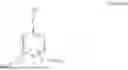

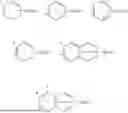

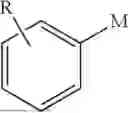
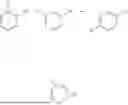
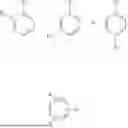







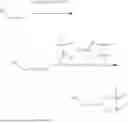
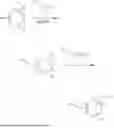


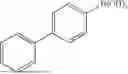

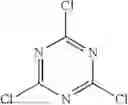


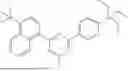


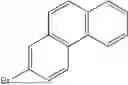


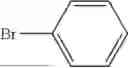
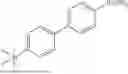


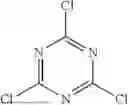


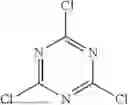


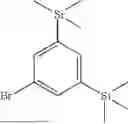







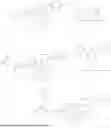














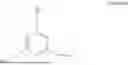



































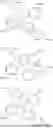






















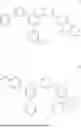




























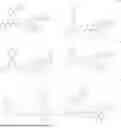


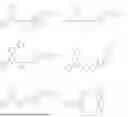





Sources:
- United States Patent and Trademark Office - verify current appl. status at the USPTO↗
Recent applications in this class:
- » 20250176423 2025-05-29
HETEROCYCLIC COMPOUND AND ORGANIC LIGHT-EMITTING DEVICE INCLUDING THE SAME - » 20250160196 2025-05-15
ORGANIC ELECTROLUMINESCENCE DEVICE AND FUSED POLYCYCLIC COMPOUND FOR ORGANIC ELECTROLUMINESCENCE DEVICE - » 20250160195 2025-05-15
LIGHT-EMITTING DEVICE INCLUDING HETEROCYCLIC COMPOUND, ELECTRONIC APPARATUS INCLUDING THE LIGHT-EMITTING DEVICE, AND THE HETEROCYCLIC COMPOUND - » 20250143172 2025-05-01
LIGHT-EMITTING DEVICE AND ELECTRONIC APPARATUS INCLUDING THE SAME - » 20250143171 2025-05-01
ORGANIC COMPOUND AND ORGANIC LIGHT EMITTING DEVICE COMPRISING THE SAME - » 20250143170 2025-05-01
HETEROCYCLIC COMPOUND AND LIGHT-EMITTING DEVICE USING THE SAME - » 20250133956 2025-04-24
LIGHT-EMITTING DEVICE INCLUDING HETEROCYCLIC COMPOUND, ELECTRONIC APPARATUS AND ELECTRONIC DEVICE INCLUDING THE LIGHT-EMITTING DEVICE, AND THE HETEROCYCLIC COMPOUND - » 20250127034 2025-04-17
ORGANIC ELECTROLUMINESCENT MATERIALS AND DEVICES - » 20250120304 2025-04-10
ORGANIC LIGHT EMITTING DEVICE - » 20250107434 2025-03-27
ORGANIC COMPOUNDS AND ORGANIC LIGHT-EMITTING DEVICE COMPRISING THE SAME