COMPOUND FOR ORGANIC OPTOELECTRONIC DEVICE, COMPOSITION FOR ORGANIC OPTOELECTRONIC DEVICE, ORGANIC OPTOELECTRONIC DEVICE AND DISPLAY DEVICE
US20250160205A1
2025-05-15
18/916,858
2024-10-16
Smart Summary: A new chemical compound has been developed for use in organic optoelectronic devices, which are important for technology like displays. This compound can be mixed with other materials to create a special composition that enhances the performance of these devices. The resulting organic optoelectronic device can be used in various applications, including screens for TVs and smartphones. By using this compound, the quality and efficiency of displays can be improved. Overall, this innovation aims to advance the technology behind modern electronic displays. 🚀 TL;DR
Abstract:
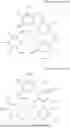
A compound for an organic optoelectronic device, a composition for an organic optoelectronic device including the compound, an organic optoelectronic device including the compound or the composition for an organic optoelectronic device, and a display device including the organic optoelectronic device, the compound being represented by Chemical Formula 1:
Inventors:
- Hyung-Sun Kim 63 🇰🇷 Suwon-si, South Korea
- Wook Kim 38 🇰🇷 Suwon-si, South Korea
- Seungjae LEE 82 🇰🇷 Suwon-si, South Korea
- Dalho HUH 46 🇰🇷 Suwon-si, South Korea
- Hanill LEE 38 🇰🇷 Suwon-si, South Korea
- Jiyun KWON 19 🇰🇷 Suwon-si, South Korea
- Jiah YOON 7 🇰🇷 Suwon-si, South Korea
- Jonghoon KIM 18 🇰🇷 Suwon-si, South Korea
- Seonyeong GWAK 7 🇰🇷 Suwon-si, South Korea
- Suheon IM 4 🇰🇷 Suwon-si, South Korea
Applicant:
Interested in similar patents?
Get notified when new applications in this technology area are published.
Classification:
C07D471/04 » CPC further
Heterocyclic compounds containing nitrogen atoms as the only ring hetero atoms in the condensed system, at least one ring being a six-membered ring with one nitrogen atom, not provided for by groups - in which the condensed system contains two hetero rings Ortho-condensed systems
C09K11/02 » CPC further
Luminescent, e.g. electroluminescent, chemiluminescent materials Use of particular materials as binders, particle coatings or suspension media therefor
Description
CROSS-REFERENCE TO RELATED APPLICATION
This application claims priority to and the benefit of Korean Patent Application No. 10-2023-0152970 filed in the Korean Intellectual Property Office on Nov. 7, 2023, the entire contents of which are incorporated herein by reference.
BACKGROUND
1. Field
Embodiments relate to a compound for an organic optoelectronic device, a composition for an organic optoelectronic device, an organic optoelectronic device, and a display device.
2. Description of the Related Art
An organic optoelectronic device (e.g., organic optoelectronic diode) is a device capable of converting electrical energy and optical energy to each other.
Organic optoelectronic devices may be divided into two types according to a principle of operation. One is a photoelectric device that generates electrical energy by separating excitons formed by light energy into electrons and holes, and transferring the electrons and holes to different electrodes, respectively and the other is light emitting device that generates light energy from electrical energy by supplying voltage or current to the electrodes.
Examples of the organic optoelectronic device may include an organic photoelectric device, an organic light emitting diode, an organic solar cell, or an organic photoconductor drum.
Among them, organic light emitting diodes (OLEDs) are attracting much attention in recent years due to increasing demands for flat panel display devices. The organic light emitting diode is a device that converts electrical energy into light, and the performance of the organic light emitting diode is greatly influenced by an organic material between electrodes.
SUMMARY
The embodiments may be realized by providing a compound for an organic optoelectronic device, the compound being represented by Chemical Formula 1:
-
- wherein, in Chemical Formula 1, L1 and L2 are each independently a single bond, a substituted or unsubstituted C6 to C30 arylene group, or a substituted or unsubstituted C2 to C30 heterocyclic group, L3 is a single bond or a substituted or unsubstituted C6 to C30 arylene group, Z1 to Z3 are each independently N or CRa, at least one of Z1 to Z3 is N, Ra and R1 to R6 are each independently hydrogen, deuterium, a cyano group, a halogen, a substituted or unsubstituted C1 to C30 alkyl group, a substituted or unsubstituted C6 to C30 aryl group, a substituted or unsubstituted carbazolyl group, a substituted or unsubstituted dibenzofuranyl group, or a substituted or unsubstituted dibenzothiophenyl group, Ar1 and Ar2 are each independently a substituted or unsubstituted C6 to C30 aryl group or a substituted or unsubstituted C2 to C30 heterocyclic group, and Ar3 is a substituted or unsubstituted C6 to C30 aryl group.
The embodiments may be realized by providing a composition for an organic optoelectronic device, the composition including a first compound; and a second compound, wherein the first compound is the compound for an organic optoelectronic device according to an embodiment, and the second compound is represented by Chemical Formula 2; a combination of Chemical Formula 3 and Chemical Formula 4; or Chemical Formula 5,
in Chemical Formula 2, Ar3 and Ar4 are each independently a substituted or unsubstituted C6 to C20 aryl group or a substituted or unsubstituted C2 to C30 heterocyclic group, L4 and L5 are each independently a single bond or a substituted or unsubstituted C6 to C20 arylene group, R12 to R22 are each independently hydrogen, deuterium, a cyano group, a halogen, a substituted or unsubstituted amine group, a substituted or unsubstituted C1 to C30 alkyl group, a substituted or unsubstituted C6 to C30 aryl group, or a substituted or unsubstituted C2 to C30 heterocyclic group, m6 and m7 are each independently an integer of 1 to 3, m8 is an integer of 1 to 4, and n is an integer of 0 to 2;
-
- in Chemical Formula 3 and Chemical Formula 4, Ar5 and Ar6 are each independently a substituted or unsubstituted C6 to C20 aryl group or a substituted or unsubstituted C2 to C30 heterocyclic group, two adjacent ones of a1* to a4* in Chemical Formula 3 are linking carbon (C) linked at * of Chemical Formula 4, the remaining two of a1* to a4* of Chemical Formula 3, not linked at * of Chemical Formula 4, are each independently C-La-Rb, La, L6, and L7 are each independently a single bond or a substituted or unsubstituted C6 to C20 arylene group, and Rb and R23 to R30 are each independently hydrogen, deuterium, a cyano group, a halogen, a substituted or unsubstituted amine group, a substituted or unsubstituted C1 to C30 alkyl group, a substituted or unsubstituted C6 to C30 aryl group, or a substituted or unsubstituted C2 to C30 heterocyclic group;
-
- in Chemical Formula 5, L8 is a single bond or a substituted or unsubstituted C6 to C20 arylene group, R31 to R43 are each independently hydrogen, deuterium, a cyano group, a halogen, a substituted or unsubstituted amine group, a substituted or unsubstituted C1 to C30 alkyl group, a substituted or unsubstituted C6 to C30 aryl group, or a substituted or unsubstituted C2 to C30 heterocyclic group, Ar7 is a substituted or unsubstituted C6 to C20 aryl group or a substituted or unsubstituted C2 to C30 heterocyclic group, and m9 is an integer of 1 to 3.
The embodiments may be realized by providing an organic optoelectronic device including an anode and a cathode facing each other, and at least one organic layer between the anode and the cathode, wherein the at least one organic layer includes the compound for an organic optoelectronic device according to an embodiment.
The embodiments may be realized by providing an organic optoelectronic device including an anode and a cathode facing each other, and at least one organic layer between the anode and the cathode, wherein the at least one organic layer includes the composition for an organic optoelectronic device according to an embodiment.
The embodiments may be realized by providing a display device including the organic optoelectronic device according to an embodiment.
BRIEF DESCRIPTION OF THE DRAWING
Features will be apparent to those of skill in the art by describing in detail exemplary embodiments with reference to the attached drawing in which:
the FIG. 1s a cross-sectional view showing an organic light emitting diode according to some embodiments.
DETAILED DESCRIPTION
Example embodiments will now be described more fully hereinafter with reference to the accompanying drawings; however, they may be embodied in different forms and should not be construed as limited to the embodiments set forth herein. Rather, these embodiments are provided so that this disclosure will be thorough and complete, and will fully convey exemplary implementations to those skilled in the art.
In the drawing FIGURES, the dimensions of layers and regions may be exaggerated for clarity of illustration. It will also be understood that when a layer or element is referred to as being “on” another layer or element, it can be directly on the other layer or element, or intervening layers may also be present. In addition, it will also be understood that when a layer is referred to as being “between” two layers, it can be the only layer between the two layers, or one or more intervening layers may also be present. Like reference numerals refer to like elements throughout. As used herein, the term “or” is not necessarily an exclusive term, e.g., “A or B” would include A, B, or A and B.
As used herein, when a definition is not otherwise provided, “substituted” refers to replacement of at least one hydrogen of a substituent or a compound by deuterium, a halogen, a hydroxyl group, an amino group, a substituted or unsubstituted C1 to C30 amine group, a nitro group, a substituted or unsubstituted C1 to C40 silyl group, a C1 to C30 alkyl group, a C1 to C10 alkylsilyl group, a C6 to C30 arylsilyl group, a C3 to C30 cycloalkyl group, a C3 to C30 heterocycloalkyl group, a C6 to C30 aryl group, a C2 to C30 heteroaryl group, a C1 to C20 alkoxy group, a C1 to C10 trifluoroalkyl group, a cyano group, or a combination thereof.
In one example, the “substituted” refers to replacement of at least one hydrogen of a substituent or a compound by deuterium, a C1 to C30 alkyl group, a C1 to C10 alkylsilyl group, a C6 to C30 arylsilyl group, a C3 to C30 cycloalkyl group, a C3 to C30 heterocycloalkyl group, a C6 to C30 aryl group, a C2 to C30 heteroaryl group, or a cyano group. In a specific example, the “substituted” refers to replacement of at least one hydrogen of a substituent or a compound by deuterium, a C1 to C20 alkyl group, a C1 to C10 alkylsilyl group, a C6 to C30 aryl group, or a cyano group. In a specific example, the “substituted” refers to replacement of at least one hydrogen of a substituent or a compound by deuterium, a C1 to C5 alkyl group, a C1 to C5 alkylsilyl group, a C6 to C18 aryl group, or a cyano group. In a specific example, the “substituted” refers to replacement of at least one hydrogen of a substituent or a compound by deuterium, a cyano group, a methyl group, an ethyl group, a propyl group, a butyl group, a trimethylsilyl group, a phenyl group, a biphenyl group, a terphenyl group, or a naphthyl group.
“Unsubstituted” refers to non-replacement of a hydrogen atom by another substituent and remaining of the hydrogen atom.
In the present specification, “hydrogen (—H)” may include “deuterium substitution (-D)” or “tritium substitution (-T).” For example, any hydrogen in any compound described herein may be protium, deuterium, or tritium (e.g., based on natural or artificial substitution).
As used herein, when a definition is not otherwise provided, “hetero” refers to one including one to three heteroatoms selected from N, O, S, P, and Si, and remaining carbons in one functional group.
As used herein, “aryl group” refers to a group including at least one hydrocarbon aromatic moiety, and all elements of the hydrocarbon aromatic moiety have p-orbitals which form conjugation, for example a phenyl group, a naphthyl group, and the like, two or more hydrocarbon aromatic moieties may be linked by a sigma bond and may be, for example a biphenyl group, a terphenyl group, a quaterphenyl group, and the like, and two or more hydrocarbon aromatic moieties are fused directly or indirectly to provide a non-aromatic fused ring, for example a fluorenyl group.
The aryl group may include a monocyclic, polycyclic, or fused ring polycyclic (i.e., rings sharing adjacent pairs of carbon atoms) functional group.
As used herein, “a heterocyclic group” is a generic concept of a heteroaryl group, and may include at least one heteroatom selected from N, O, S, P, and Si instead of carbon (C) in a cyclic compound such as aryl group, a cycloalkyl group, a fused ring thereof, or a combination thereof. In an implementation, the heterocyclic group may be a fused ring, and the entire ring or each ring of the heterocyclic group may include one or more heteroatoms.
For example, “a heteroaryl group” may refer to aryl group including at least one heteroatom selected from N, O, S, P, and Si. Two or more heteroaryl groups are linked by a sigma bond directly, or when the heteroaryl group includes two or more rings, the two or more rings may be fused. When the heteroaryl group is a fused ring, each ring may include one to three heteroatoms.
For example, the substituted or unsubstituted C6 to C30 aryl group may be a substituted or unsubstituted phenyl group, a substituted or unsubstituted naphthyl group, a substituted or unsubstituted anthracenyl group, a substituted or unsubstituted phenanthrenyl group, a substituted or unsubstituted naphthacenyl group, a substituted or unsubstituted pyrenyl group, a substituted or unsubstituted biphenyl group, a substituted or unsubstituted p-terphenyl group, a substituted or unsubstituted m-terphenyl group, a substituted or unsubstituted o-terphenyl group, a substituted or unsubstituted chrysenyl group, a substituted or unsubstituted triphenylene group, a substituted or unsubstituted perylenyl group, a substituted or unsubstituted fluorenyl group, a substituted or unsubstituted indenyl group, or a combination thereof, but is not limited thereto.
For example, the substituted or unsubstituted C2 to C30 heterocyclic group may be a substituted or unsubstituted furanyl group, a substituted or unsubstituted thiophenyl group, a substituted or unsubstituted pyrrolyl group, a substituted or unsubstituted pyrazolyl group, a substituted or unsubstituted imidazolyl group, a substituted or unsubstituted triazolyl group, a substituted or unsubstituted oxazolyl group, a substituted or unsubstituted thiazolyl group, a substituted or unsubstituted oxadiazolyl group, a substituted or unsubstituted thiadiazolyl group, a substituted or unsubstituted pyridyl group, a substituted or unsubstituted pyrimidinyl group, a substituted or unsubstituted pyrazinyl group, a substituted or unsubstituted triazinyl group, a substituted or unsubstituted benzofuranyl group, a substituted or unsubstituted benzothiophenyl group, a substituted or unsubstituted benzimidazolyl group, a substituted or unsubstituted indolyl group, a substituted or unsubstituted quinolinyl group, a substituted or unsubstituted isoquinolinyl group, a substituted or unsubstituted quinazolinyl group, a substituted or unsubstituted quinoxalinyl group, a substituted or unsubstituted naphthyridinyl group, a substituted or unsubstituted benzoxazinyl group, a substituted or unsubstituted benzthiazinyl group, a substituted or unsubstituted acridinyl group, a substituted or unsubstituted phenazinyl group, a substituted or unsubstituted phenothiazinyl group, a substituted or unsubstituted phenoxazinyl group, a substituted or unsubstituted carbazolyl group, a substituted or unsubstituted dibenzofuranyl group, a substituted or unsubstituted dibenzothiophenyl group, a substituted or unsubstituted benzofuranopyrimidinyl group, a substituted or unsubstituted benzothiophenepyrimidinyl group, or a combination thereof, but is not limited thereto.
As used herein, hole characteristics refer to an ability to donate an electron to form a hole when an electric field is applied and that a hole formed in the anode may be easily injected into the light emitting layer and transported in the light emitting layer due to conductive characteristics according to a highest occupied molecular orbital (HOMO) level.
In addition, electron characteristics refer to an ability to accept an electron when an electric field is applied and that electron formed in the cathode may be easily injected into the light emitting layer and transported in the light emitting layer due to conductive characteristics according to a lowest unoccupied molecular orbital (LUMO) level.
Hereinafter, a compound for an organic optoelectronic device according to some embodiments is described.
The compound for an organic optoelectronic device according to some embodiments may be represented by Chemical Formula 1.
In Chemical Formula 1, L1 and L2 may each independently be or include, e.g., a single bond, a substituted or unsubstituted C6 to C30 arylene group, or a substituted or unsubstituted C2 to C30 heterocyclic group.
L3 may be or may include, e.g., a single bond or a substituted or unsubstituted C6 to C30 arylene group.
Z1 to Z3 may each independently be, e.g., N or CRa. In an implementation, at least one of Z1 to Z3 is N.
Ra and R1 to R6 may each independently be or include, e.g., hydrogen, deuterium, a cyano group, a halogen, a substituted or unsubstituted C1 to C30 alkyl group, a substituted or unsubstituted C6 to C30 aryl group, a substituted or unsubstituted carbazolyl group, a substituted or unsubstituted dibenzofuranyl group, or a substituted or unsubstituted dibenzothiophenyl group.
Ar1 and Ar2 may each independently be or include, e.g., a substituted or unsubstituted C6 to C30 aryl group or a substituted or unsubstituted C2 to C30 heterocyclic group.
Ar3 may be or may include, e.g., a substituted or unsubstituted C6 to C30 aryl group.
The compound represented by Chemical Formula 1 may have high Tl energy and shallow LUMO characteristics by including α-carboline, implementing a high-efficiency device.
In an implementation, a long life-span device may be implemented by substituting the β position (Ar3) of α-carboline, which has relatively high chemical reactivity, with an aryl group.
In an implementation, Ar3 may be, e.g., a substituted or unsubstituted phenyl group, a substituted or unsubstituted biphenyl group, a substituted or unsubstituted terphenyl group, a substituted or unsubstituted naphthyl group, a substituted or unsubstituted anthracenyl group, a substituted or unsubstituted phenanthrenyl group, a substituted or unsubstituted fluorenyl group, or a substituted or unsubstituted triphenylene group.
In an implementation, Ar3 may be, e.g., a substituted or unsubstituted phenyl group or a substituted or unsubstituted biphenyl group.
In an implementation, Ar1 and Ar2 may each independently be, e.g., a substituted or unsubstituted phenyl group, a substituted or unsubstituted biphenyl group, a substituted or unsubstituted terphenyl group, a substituted or unsubstituted naphthyl group, a substituted or unsubstituted anthracenyl group, a substituted or unsubstituted phenanthrenyl group, a substituted or unsubstituted fluorenyl group, a substituted or unsubstituted triphenylene group, a substituted or unsubstituted carbazolyl group, a substituted or unsubstituted dibenzofuranyl group, a substituted or unsubstituted dibenzothiophenyl group, or a substituted or unsubstituted dibenzosilolyl group.
In an implementation, Ar1 and Ar2 may each independently be, e.g., a substituted or unsubstituted phenyl group, a substituted or unsubstituted biphenyl group, a substituted or unsubstituted triphenylene group, a substituted or unsubstituted carbazolyl group, a substituted or unsubstituted dibenzofuranyl group, or a substituted or unsubstituted dibenzothiophenyl group.
In an implementation, moieties -L1-Ar1 and -L2-Ar2 may each independently be a moiety of Group I.
In Group I, R7 to R9 may each independently be, e.g., hydrogen, deuterium, a cyano group, a substituted or unsubstituted C1 to C10 alkyl group, a substituted or unsubstituted C1 to C10 alkylsilyl group, or a substituted or unsubstituted C6 to C12 aryl group.
Ar8 may be, e.g., a substituted or unsubstituted C6 to C12 aryl group.
m1 may be, e.g., an integer of 1 to 5.
m2 may be, e.g., an integer of 1 to 4.
m3 may be, e.g., an integer of 1 to 3.
* is a linking point.
In an implementation, R1 to R6 may each independently be, e.g., hydrogen, deuterium, a cyano group, a halogen, a substituted or unsubstituted C1 to C10 alkyl group, or a substituted or unsubstituted C6 to C12 aryl group.
In an implementation, R1 to R6 may each independently be, e.g., hydrogen, deuterium, a cyano group, a halogen, a substituted or unsubstituted C1 to C5 alkyl group, or a substituted or unsubstituted C6 to C12 aryl group.
In an implementation, the compound for an organic optoelectronic device represented by Chemical Formula 1 may be, e.g., a compound of Group 1.
(Dn means the number of deuterium substituted, and represents a structure substituted with one or more deuterium)
A composition for an organic optoelectronic device according to some embodiments may include a first compound and a second compound. In an implementation, the first compound may be the aforementioned compound for an organic optoelectronic device. In an implementation, the second compound may be represented by, e.g., Chemical Formula 2; a combination of Chemical Formula 3 and Chemical Formula 4; or Chemical Formula 5.
In Chemical Formula 2, Ar3 and Ar4 may each independently be or include, e.g., a substituted or unsubstituted C6 to C20 aryl group or a substituted or unsubstituted C2 to C30 heterocyclic group.
L4 and L5 may each independently be or include, e.g., a single bond or a substituted or unsubstituted C6 to C20 arylene group.
R12 to R22 may each independently be or include, e.g., hydrogen, deuterium, a cyano group, a halogen, a substituted or unsubstituted amine group, a substituted or unsubstituted C1 to C30 alkyl group, a substituted or unsubstituted C6 to C30 aryl group, or a substituted or unsubstituted C2 to C30 heterocyclic group.
m6 and m7 may each independently be, e.g., an integer of 1 to 3.
m8 may be, e.g., an integer of 1 to 4.
n may be, e.g., an integer of 0 to 2.
In Chemical Formula 3 and Chemical Formula 4, Ar5 and Ar6 may each independently be or include, e.g., a substituted or unsubstituted C6 to C20 aryl group or a substituted or unsubstituted C2 to C30 heterocyclic group.
Two adjacent ones of a1* to a4* in Chemical Formula 3 may be linking carbon (C) linked at * of Chemical Formula 4. The remaining two of a1* to a4* in Chemical Formula 3, not linked at * of Chemical Formula 4, may each independently be, e.g., C-La-Rb. As used herein, the term “linking carbon” refers to a shared carbon at which fused rings are linked.
La, L6, and L7 may each independently be or include, e.g., a single bond or a substituted or unsubstituted C6 to C20 arylene group.
Rb and R23 to R30 may each independently be or include, e.g., hydrogen, deuterium, a cyano group, a halogen, a substituted or unsubstituted amine group, a substituted or unsubstituted C1 to C30 alkyl group, a substituted or unsubstituted C6 to C30 aryl group, or a substituted or unsubstituted C2 to C30 heterocyclic group.
In Chemical Formula 5, L8 may be or may include, e.g., a single bond or a substituted or unsubstituted C6 to C20 arylene group.
R31 to R43 may each independently be or include, e.g., hydrogen, deuterium, a cyano group, a halogen, a substituted or unsubstituted amine group, a substituted or unsubstituted C1 to C30 alkyl group, a substituted or unsubstituted C6 to C30 aryl group, or a substituted or unsubstituted C2 to C30 heterocyclic group.
Ar7 may be or may include, e.g., a substituted or unsubstituted C6 to C20 aryl group or a substituted or unsubstituted C2 to C30 heterocyclic group.
m9 may be, e.g., an integer of 1 to 3.
In an implementation, one or two or more types of the first compound may be used or included.
The second compound may be used or included in the light emitting layer together with the first compound to improve luminous efficiency and life-span characteristics by increasing charge mobility and stability.
In an implementation, m6 may be, e.g., 2 or 3, and each R16 may be the same or different from each other.
In an implementation, m7 may be, e.g., 2 or 3, and each R17 may be the same or different from each other.
In an implementation, m8 may be, e.g., 2, 3, or 4, and each R22 may be the same or different from each other.
In an implementation, Ar3 and Ar4 of Chemical Formula 2 may each independently be, e.g., a substituted or unsubstituted phenyl group, a substituted or unsubstituted biphenyl group, a substituted or unsubstituted terphenyl group, a substituted or unsubstituted naphthyl group, a substituted or unsubstituted anthracenyl group, a substituted or unsubstituted triphenylenyl group, a substituted or unsubstituted pyridinyl group, a substituted or unsubstituted carbazolyl group, a substituted or unsubstituted dibenzothiophenyl group, a substituted or unsubstituted dibenzofuranyl group, or a substituted or unsubstituted fluorenyl group.
In an implementation, L4 and L5 of Chemical Formula 2 may each independently be, e.g., a single bond, a substituted or unsubstituted phenylene group, or a substituted or unsubstituted biphenylene group.
In an implementation, R12 to R22 in Chemical Formula 2 may each independently be, e.g., hydrogen, deuterium, or a substituted or unsubstituted C6 to C12 aryl group, and
In an implementation, n may be, e.g., 0 or 1.
As an example, “substitution” in Chemical Formula 2 means that at least one hydrogen is replaced by deuterium, a C1 to C4 alkyl group, a C1 to C5 alkylsilyl group, a C6 to C18 aryl group, or a C2 to C30 heteroaryl group.
In an implementation, Chemical Formula 2 may be represented by, e.g., one of Chemical Formula 2-1 to Chemical Formula 2-15.
In Chemical Formula 2-1 to Chemical Formula 2-15, R12 to R22 may each independently be, e.g., hydrogen, deuterium substituted or unsubstituted C1 to C10 alkyl group, or a substituted or unsubstituted C6 to C12 aryl group.
m6 and m7 may each independently be, e.g., an integer of 1 to 3.
m8 may be, e.g., an integer of 1 to 4.
Moieties -L4-Ar3 and -L5-Ar4 may each independently be a moiety of Group II.
In Group II, R44 to R47 may each independently be, e.g., hydrogen, deuterium, a cyano group, a substituted or unsubstituted C1 to C10 alkyl group, or a substituted or unsubstituted C6 to C12 aryl group.
m10 may be, e.g., an integer of 1 to 5.
m11 may be, e.g., an integer of 1 to 4.
m12 may be, e.g., an integer of 1 to 3.
m13 may be, e.g., 1 or 2.
* is a linking point.
In an implementation, m10 may be, e.g., 2, 3, 4, or 5, and each R44 may be the same or different from each other.
In an implementation, m11 may be, e.g., 2, 3, or 4, and each R45 may be the same or different from each other.
In an implementation, m12 may be, e.g., 2 or 3, and each R46 may be the same or different from each other.
In an implementation, m13 may be 2, and each R47 may be the same or different from each other.
In an implementation, Chemical Formula 2 may be represented by Chemical Formula 2-8.
In an implementation, moieties -L4-Ar3 and -L5-Ar4 of Chemical Formula 2-8 may each independently be a moiety of Group II, e.g., may be E-1, E-2, E-3, E-4, E-7, E-8, or E-9.
In an implementation, the second compound represented by the combination of Chemical Formula 3 and Chemical Formula 4 may be represented by, e.g., Chemical Formula 3A, Chemical Formula 3B, Chemical Formula 3C, Chemical Formula 3D, or Chemical Formula 3E.
In Chemical Formula 3A to Chemical Formula 3E, Ar5, Ar6, L6, L7, and R23 to R30 may be defined the same as those described above.
La1 to La4 may be defined the same as L6 and L7.
Rb1 to Rb4 may be defined the same as R23 to R30.
In an implementation, Ar5 and Ar6 of Chemical Formula 3 and 4 may each independently be, e.g., a substituted or unsubstituted phenyl group, a substituted or unsubstituted biphenyl group, a substituted or unsubstituted pyridinyl group, a substituted or unsubstituted carbazolyl group, a substituted or unsubstituted dibenzofuranyl group, or a substituted or unsubstituted dibenzothiophenyl group.
In an implementation, Rb1 to Rb4 and R23 to R30 may each independently be, e.g., hydrogen, deuterium, a cyano group, a substituted or unsubstituted C1 to C10 alkyl group, a substituted or unsubstituted phenyl group, a substituted or unsubstituted biphenyl group, a substituted or unsubstituted pyridinyl group, a substituted or unsubstituted carbazolyl group, a substituted or unsubstituted dibenzofuranyl group, or a substituted or unsubstituted dibenzothiophenyl group.
In an implementation, moieties -L6-Ar5 and -L7-Ar6 of Chemical Formulas 3 and 4 may each independently be a moiety of Group II.
In an implementation, Rb1 to Rb4 and R23 to R30 may each independently be, e.g., hydrogen, deuterium, cyano group, substituted or unsubstituted C1 to C10 alkyl group, substituted or unsubstituted phenyl group, substituted or unsubstituted biphenyl group, substituted or unsubstituted pyridinyl group, substituted or unsubstituted carbazolyl group, substituted or unsubstituted dibenzofuranyl group, or substituted or unsubstituted dibenzothiophenyl group.
In an implementation, Rb1 to Rb4 and R23 to R30 may each independently be, e.g., hydrogen, deuterium, a cyano group, a substituted or unsubstituted C1 to C5 alkyl group, or a substituted or unsubstituted phenyl group.
In an implementation, Rb1 to Rb4, and R23 to R30 may each independently be, e.g., hydrogen, deuterium, or a substituted or unsubstituted phenyl group.
In an implementation, m9 may be 2 or 3, and each R35 may be the same or different from each other.
In an implementation, Chemical Formula 5 may be represented by, e.g., one of Chemical Formula 5-1 to Chemical Formula 5-4.
In Chemical Formula 5-1 to Chemical Formula 5-4, L8, R31 to R43, Ar7, and m9 may be defined the same as those described above.
In an implementation, Ar7 of Chemical Formula 5 may be, e.g., a substituted or unsubstituted phenyl group, a substituted or unsubstituted biphenyl group, a substituted or unsubstituted terphenyl group, a substituted or unsubstituted naphthyl group, a substituted or unsubstituted anthracenyl group, a substituted or unsubstituted triphenylenyl group, a substituted or unsubstituted carbazolyl group, a substituted or unsubstituted dibenzothiophenyl group, a substituted or unsubstituted dibenzofuranyl group, or a substituted or unsubstituted fluorenyl group.
In an implementation, R31 to R43 may each independently be, e.g., hydrogen, deuterium, a cyano group, a substituted or unsubstituted C1 to C10 alkyl group, a substituted or unsubstituted phenyl group, a substituted or unsubstituted biphenyl group, a substituted or unsubstituted pyridinyl group, a substituted or unsubstituted carbazolyl group, a substituted or unsubstituted dibenzofuranyl group, or a substituted or unsubstituted dibenzothiophenyl group.
In an implementation, moiety -L8-Ar7 of Chemical Formula 5 may be a moiety of Group II.
In an implementation, R31 to R43 may each independently be, e.g., hydrogen, deuterium, a cyano group, a substituted or unsubstituted C1 to C10 alkyl group, or a substituted or unsubstituted phenyl group.
In an implementation, the second compound may be, e.g., a compound of Group 2.
Examples of Compound B-1 to Compound B-150 from Group 2 in which at least one hydrogen is replaced by deuterium are below.
(Dn refers to the number of deuterium substitutions and indicates a structure with one or more deuterium substitutions)
For Compound B-151 to Compound B-195 of Group 2, the most specific structures according to the deuterium substitution position and substitution ratio are exemplarily shown below.
In an implementation, deuterium may be substituted, and the deuterium substitution position and deuterium substitution ratio may include all changeable ranges within the ranges of Compound B-1 to Compound B-195.
Examples of Compound C-1 to Compound C-57 listed in Group 2 in which at least one hydrogen is replaced by deuterium are shown below.
(Dn means the number of deuterium substituted, and represents a structure substituted with one or more deuterium)
For Compound C-58 to Compound C-72 of Group 2, the most specific structures according to the deuterium substitution position and substitution ratio are exemplarily shown below.
In an implementation, the deuterium substitution position and deuterium substitution ratio may include all changeable ranges within the ranges of Compound C-1 to Compound C-72.
Examples of Compound D-1 to Compound D-60 listed in Group 2 in which at least one hydrogen is replaced by deuterium are shown below.
(Dn means the number of deuterium substituted, and represents a structure substituted with one or more deuterium)
In an implementation, one or two or more types of the second compound may be used.
The first compound and the second compound may be included (e.g., mixed) in a weight ratio of, e.g., about 1:99 to about 99:1. Within the range, bipolar properties may be implemented by matching an appropriate weight ratio using electron transport capability of the first compound and the hole transport capability of the second compound, to help improve efficiency and life-span. In an implementation, they may be included in a weight ratio of about 10:90 to 90:10, about 20:80 to 80:20, e.g., about 20:80 to about 70:30, about 20:80 to about 60:40, or about 30:70 to about 60:40. In an implementation, they may be included in a weight ratio of about 40:60, about 50:50, or about 60:40.
Hereinafter, an organic optoelectronic device including the aforementioned compound for an organic optoelectronic device or composition for an organic optoelectronic device is described.
The organic optoelectronic device may be a suitable device to convert electrical energy into photoenergy and vice versa, and may be, e.g., an organic photoelectric device, an organic light emitting diode, an organic solar cell, or an organic photoconductor drum.
Herein, an organic light emitting diode as one example of an organic optoelectronic device is described referring to the drawing.
The FIG. 1s a cross-sectional view illustrating an organic light emitting diode according to some embodiments.
Referring to the FIGURE, an organic light emitting diode 100 according to some embodiments may include, e.g., an anode 120 and a cathode 110 facing each other and an organic layer 105 between the anode 120 and cathode 110.
The anode 120 may be made of a conductor having a large work function to help hole injection, and may be, e.g. a metal, a metal oxide and/or a conductive polymer. The anode 120 may be, e.g., a metal such as nickel, platinum, vanadium, chromium, copper, zinc, gold, or the like or an alloy thereof; a metal oxide, e.g., zinc oxide, indium oxide, indium tin oxide (ITO), indium zinc oxide (IZO), or the like; a combination of a metal and an oxide such as ZnO and Al or SnO2 and Sb; a conductive polymer such as poly(3-methylthiophene), poly(3,4-(ethylene-1,2-dioxy)thiophene) (PEDOT), polypyrrole, or polyaniline.
The cathode 110 may be made of a conductor having a small work function to help electron injection, and may be, e.g., a metal, a metal oxide, and/or a conductive polymer. The cathode 110 may be, e.g., a metal such as magnesium, calcium, sodium, potassium, titanium, indium, yttrium, lithium, gadolinium, aluminum silver, tin, lead, cesium, barium, or the like, or an alloy thereof; a multi-layer structure material such as LiF/Al, LiO2/Al, LiF/Ca, or BaF2/Ca.
The organic layer 105 may include the aforementioned compound for an organic optoelectronic device or composition for an organic optoelectronic device.
The organic layer 105 may include a light emitting layer 130, and the light emitting layer 130 may include a host and a dopant, the host may include the aforementioned compound for an organic optoelectronic device or composition for an organic optoelectronic device. The dopant may be, e.g., a phosphorescent dopant, e.g., a red, green, or blue phosphorescent dopant, e.g., a red or green phosphorescent dopant.
The dopant may be a substance that emits light when mixed in a small amount in a compound or composition for an organic optoelectronic device and in general, may be, a material such as a metal complex that emits light by multiple excitation that excites the triplet state or higher. The dopant may be, e.g., an inorganic, organic, or organic/inorganic compound, and may be included in one or two or more types.
An example of the dopant may be a phosphorescent dopant, and examples of the phosphorescent dopant may include an organometallic compound including Ir, Pt, Os, Ti, Zr, Hf, Eu, Tb, Tm, Fe, Co, Ni, Ru, Rh, Pd, or a combination thereof. The phosphorescent dopant may include, e.g., a compound represented by Chemical Formula Z.
L9MX [Chemical Formula Z]
In Chemical Formula Z, M may be a metal, and L9 and X may each independently be ligands forming a complex with M.
M may be, e.g., Ir, Pt, Os, Ti, Zr, Hf, Eu, Tb, Tm, Fe, Co, Ni, Ru, Rh, Pd, or a combination thereof, and L9 and X may be, e.g., a bidentate ligand.
In an implementation, the ligands represented by L′ and X may be a ligand of Group A.
In Group A, R300 to R302 may each independently be, e.g., hydrogen, deuterium a C1 to C30 alkyl group that is substituted or unsubstituted with a halogen, a C6 to C30 aryl group that is substituted or unsubstituted with a C1 to C30 alkyl, or a halogen.
R303 to R324 may each independently be, e.g., hydrogen, deuterium, halogen, a substituted or unsubstituted C1 to C30 alkyl group, a substituted or unsubstituted C1 to C30 alkoxy group, a substituted or unsubstituted C3 to C30 cycloalkyl group, a substituted or unsubstituted C2 to C30 alkenyl group, a substituted or unsubstituted C6 to C30 aryl group, a substituted or unsubstituted C1 to C30 heteroaryl group, a substituted or unsubstituted C1 to C30 amino group, a substituted or unsubstituted C6 to C30 arylamino group, SF5, a trialkylsilyl group having a substituted or unsubstituted C1 to C30 alkyl group, a dialkylarylsilyl group having a substituted or unsubstituted C1 to C30 alkyl group and C6 to C30 aryl group, or a triarylsilyl group having a substituted or unsubstituted C6 to C30 aryl group.
n1 may be, e.g., an integer of 1 to 5.
n2 may be, e.g., an integer of 1 to 4.
n3 may be, e.g., an integer of 1 to 3.
n4 may be, e.g., an integer of 1 or 2.
n5 may be, e.g., an integer of 1 to 6.
The dopant according to some embodiments may be an iridium complex, and may be represented, e.g., by Chemical Formula 4-1 or Chemical Formula 4-2.
In Chemical Formula 4-1, R101 to R116 may each independently be, e.g., hydrogen, deuterium, a substituted or unsubstituted C1 to C10 alkyl group, a substituted or unsubstituted C6 to C20 aryl group, or —SiR132R133R134.
R132 to R134 may each independently be, e.g., a substituted or unsubstituted C1 to C6 alkyl group.
At least one of R101 to R116 may be a functional group represented by Chemical Formula V-1.
L100 may be a bidentate ligand of a monovalent anion, and may be a ligand that coordinates to iridium through a lone pair of carbons or heteroatoms.
m21 and m22 may each independently be, e.g., an integer of 0 to 3, and m21+m22 may be an integer of 1 to 3.
In Chemical Formula V-1, R135 to R139 may each independently be, e.g., hydrogen, deuterium, a substituted or unsubstituted C1 to C10 alkyl group, a substituted or unsubstituted C6 to C20 aryl group, or —SiR132R133R134.
* indicates a portion linked to a carbon atom.
In Chemical Formula 4-2, R101 to R117 may each independently be, e.g., hydrogen, deuterium, a substituted or unsubstituted C1 to C10 alkyl group, a substituted or unsubstituted C6 to C20 aryl group, or —SiR133R134R135.
R133 to R135 may each independently be, e.g., a substituted or unsubstituted C1 to C6 alkyl group.
L100 may be a bidentate ligand of a monovalent anion, and may be a ligand that coordinates to iridium through a lone pair of carbons or heteroatoms.
n1 and n2 may each independently be, e.g., an integer of 0 to 3 and n1+n2 may be an integer of 1 to 3.
The dopant according to some embodiments may be a platinum complex, and may be represented, e.g., by Chemical Formula Z-1.
In Chemical Formula Z-1, rings A, B, C, and D may each independently be, e.g., a 5-membered or 6-membered carbocyclic or heterocyclic ring.
RA, RB, RC, and RD may each independently be, e.g., mono-, di-, tri-, or tetra-substitution, or unsubstitution.
LB, LC, and LD may each independently be, e.g., a direct bond, BR, NR, PR, O, S, Se, C═O, S═O, SO2, CRR′, SiRR′, GeRR′, or a combination thereof.
In an implementation, nA may be 1, and LE may be a direct bond, BR, NR, PR, O, S, Se, C═O, S═O, SO2, CRR′, SiRR′, GeRR′, or a combination thereof. In an implementation, nA may be 0, and LE does not exist.
RA, RB, RC, RD, R, and R′ may each independently be, e.g., hydrogen, deuterium, a halogen, an alkyl group, a cycloalkyl group, a heteroalkyl group, an arylalkyl group, an alkoxy group, an aryloxy group, an amino group, a silyl group, an alkenyl group, a cycloalkenyl group, a heteroalkenyl group, an alkynyl group, an aryl group, a heteroaryl group, an acyl group, a carbonyl group, a carboxylic acid group, an ester group, a nitrile group, an isonitrile group, a sulfanyl group, a sulfinyl group, a sulfonyl group, a phosphino group, or a combination thereof. In an implementation, any adjacent ones of RA, RB, RC, RD, R, and R′ may be separate or may be linked to each other to provide a ring; XB, XC, XD, and XE may each independently be, e.g., carbon and nitrogen; and Q1, Q2, Q3, and Q4 may each independently be, e.g., oxygen or a direct bond.
The platinum complex may be represented, e.g., by Chemical Formula 6-1 or Chemical Formula 6-2.
In Chemical Formula 6-1 and Chemical Formula 6-2, X100 may be O, S, or NR132.
R118 to R132 may each independently be, e.g., hydrogen, deuterium, a substituted or unsubstituted C1 to C10 alkyl group, a substituted or unsubstituted C6 to C20 aryl group, or —SiR133R134R135.
R133 to R135 may each independently be, e.g., a substituted or unsubstituted C1 to C6 alkyl group,
In an implementation, at least one of R118 to R132 may be —SiR133R134R135 or tert-butyl group.
R133 to R135 may each independently be, e.g., a substituted or unsubstituted C1 to C6 alkyl group.
The organic layer may further include a charge transport region in addition to the light emitting layer.
The charge transport region may be, e.g., the hole transport region 140.
The hole transport region 140 may further increase hole injection or hole mobility between the anode 120 and the light emitting layer 130 and block electrons.
In an implementation, the hole transport region 140 may include a hole transport layer between the anode 120 and the light emitting layer 130, and a hole transport auxiliary layer between the light emitting layer 130 and the hole transport layer, and a compound of Group B may be included in at least one of the hole transport layer and the hole transport auxiliary layer.
(Dn means the number of deuterium substituted, and represents a structure substituted with one or more deuterium)
In the hole transport region 140, other suitable compounds may be used in addition to the compounds.
Also, the charge transport region may be, e.g., the electron transport region 150.
The electron transport region 150 may help further increase electron injection and/or electron mobility between the cathode 110 and the light emitting layer 130 and block holes.
In an implementation, the electron transport region 150 may include an electron transport layer between the cathode 110 and the light emitting layer 130, and an electron transport auxiliary layer between the light emitting layer 130 and the electron transport layer and a compound of Group C may be included in at least one of the electron transport layer and the electron transport auxiliary layer.
Some embodiments may provide an organic light emitting diode including a light emitting layer as an organic layer.
Some embodiments may provide an organic light emitting diode including a light emitting layer and a hole transport region as an organic layer.
Some embodiments may provide an organic light emitting diode including a light emitting layer and an electron transport region as an organic layer.
The organic light emitting diode according to some embodiments may include a hole transport region 140 and an electron transport region 150 in addition to the light emitting layer 130 as the organic layer 105, as shown in the FIGURE.
In an implementation, the organic light emitting diode may further include an electron injection layer, a hole injection layer, or the like, in addition to the light emitting layer as the aforementioned organic layer.
The organic light emitting diode 100 may be produced by forming an anode or a cathode on a substrate, forming an organic layer using a dry film formation method such as a vacuum deposition method (evaporation), sputtering, plasma plating, or ion plating, and forming a cathode or an anode thereon.
The aforementioned organic light emitting diode may be applied to an organic light emitting display device.
The following Examples and Comparative Examples are provided in order to highlight characteristics of one or more embodiments, but it will be understood that the Examples and Comparative Examples are not to be construed as limiting the scope of the embodiments, nor are the Comparative Examples to be construed as being outside the scope of the embodiments. Further, it will be understood that the embodiments are not limited to the particular details described in the Examples and Comparative Examples.
Hereinafter, starting materials and reactants used in the Examples and Synthesis Examples were purchased from Sigma-Aldrich Co. Ltd., TCI Inc., Tokyo chemical industry, or P&H tech as far as there is no particular comment or were synthesized by suitable methods.
(Synthesis of Compound for Organic Optoelectronic Device)
Synthesis Example 1: Synthesis of Compound A-4
1st Step: Synthesis of Intermediate P-1
2-([1,1′-biphenyl]-4-yl)-4-chloro-6-phenyl-1,3,5-triazine (100 g/1.0 eq.), (4-fluorophenyl) boronic acid (1.1 eq.), Pd(PPh3)4 (0.05 eq.), and K2CO3 (3.0 eq.) were injected into the flask together with THF (750 mL) and distilled water (250 mL) and refluxed at 80° C. After 12 hours, the reaction was completed, diluted with dichloromethane (DCM), washed three times with brine, and dried with MgSO4. 90 g of Intermediate P-1 was obtained using column chromatography.
2nd Step: Synthesis of Compound A-4
Intermediate P-1 (30 g/1.0 eq.), 2-phenyl-9H-pyrido [2,3-b]indole (1.5 eq.), and K3PO4 (3.0 eq.) were added to the flask along with DMF (500 mL) and refluxed to 150° C. After 12 hours, the reaction was completed, diluted with DCM, washed three times with brine, and dried with MgSO4. 15 g of Compound A-4 was obtained using column chromatography.
Synthesis Example 2: Synthesis of Compound A-5
1st Step: Synthesis of Intermediate P-2
2-([1,1′-biphenyl]-4-yl)-4-chloro-6-phenyl-1,3,5-triazine (100 g/1.0 eq.), (3-fluorophenyl) boronic acid (1.1 eq.), Pd(PPh3)4 (0.05 eq.), and K2CO3 (3.0 eq.) were injected into the flask along with THF (750 mL) and distilled water (250 mL) and refluxed at 80° C. After 12 hours, the reaction was completed, diluted with DCM, washed three times with brine, and dried with MgSO4. 92 g of Intermediate P-2 was obtained using column chromatography.
2nd Step: Synthesis of Compound A-5
Intermediate P-2 (30 g/1.0 eq.), 2-phenyl-9H-pyrido [2,3-b]indole (1.5 eq.), and K3PO4 (3.0 eq.) were added to the flask along with DMF (500 mL) and refluxed to 150° C. After 12 hours, the reaction was completed, diluted with DCM, washed three times with brine, and dried with MgSO4. 14 g of Compound A-5 was obtained using column chromatography.
Synthesis Example 3: Synthesis of Compound A-6
1st Step: Synthesis of Intermediate P-3
2-([1,1′-biphenyl]-4-yl)-4-chloro-6-phenyl-1,3,5-triazine (100 g/1.0 eq.), (2-fluorophenyl) boronic acid (1.1 eq.), Pd(PPh3)4 (0.05 eq.) and K2CO3 (3.0 eq.) were injected into the flask along with THF (750 mL) and distilled water (250 mL) and refluxed to 80° C. After 12 hours, the reaction was completed, diluted with DCM, washed three times with brine, and dried with MgSO4. 82 g of Intermediate P-3 was obtained using column chromatography.
2nd Step: Synthesis of Compound A-6
Intermediate P-3 (30 g/1.0 eq.), 2-phenyl-9H-pyrido [2,3-b]indole (1.5 eq.), and K3PO4 (3.0 eq.) were added to the flask along with DMF (500 mL) and refluxed to 150° C. After 12 hours, the reaction was completed, diluted with DCM, washed three times with brine, and dried with MgSO4. 18 g of Compound A-6 was obtained using column chromatography.
Synthesis Example 4: Synthesis of Compound B-136
Compound B-136 was synthesized by referring to the synthesis method described in European Patent No. EP3034581.
HRMS (70 eV, EI+): m/z calcd for C42H28N2: 560.2252, found: 560.
Elemental Analysis: C, 90%; H, 5%
Comparative Synthesis Example 1: Synthesis of Compound R-1
Compound R-1 was synthesized by referring to the synthesis method described in Chinese Patent No. CN111689960.
Comparative Synthesis Example 2: Synthesis of Compound R-2
Compound R-2 was synthesized by referring to the synthesis method described in Korean Patent No. KR2023-0052860.
Example 1: Manufacture of Green Organic Light Emitting Diode (Single Host)
A glass substrate coated with ITO (indium tin oxide) was washed with distilled water and ultrasonic waves. After washing with the distilled water, the glass substrate was ultrasonically washed with isopropyl alcohol, acetone, or methanol, and dried and then, moved to a plasma cleaner, cleaned by using oxygen plasma for 10 minutes, and moved to a vacuum depositor. This prepared ITO transparent electrode was used as an anode, Compound A doped with 3% NDP-9 (Novaled GmbH) was vacuum-deposited on the ITO substrate to form a 100 Å-thick hole injection layer, and Compound A was deposited on the hole injection layer to a thickness of 1,350 Å to form a hole transport layer. Compound B was deposited on the hole transport layer to a thickness of 350 Å to form a hole transport auxiliary layer. Compound A-4 was used as a host on the hole transport auxiliary layer, and 7 wt % of PhGD was doped as a dopant to form a 400 Å-thick light emitting layer by vacuum deposition. Subsequently, Compound C was deposited to form a 50 Å-thick electron transport auxiliary layer on the light emitting layer, and Compound D and Liq were simultaneously vacuum-deposited in a weight ratio of 1:1 to form a 300 Å-thick electron transport layer. On the electron transport layer, Liq and Al were sequentially vacuum-deposited to be 15 Å-thick and 1,200 Å-thick, manufacturing an organic light emitting diode.
The structure was ITO/Compound A (3% NDP-9 doping, 100 Å)/Compound A (1,350 Å)/Compound B (350 Å)/EML [Host (Compound A-4): PhGD=93 wt %: 7 wt %] (400 Å)/Compound C (50 Å)/Compound D: LiQ (300 Å)/Liq (15 Å)/Al (1,200 Å).
Compound A: N-(biphenyl-4-yl)-9,9-dimethyl-N-(4-(9-phenyl-9H-carbazol-3-yl)phenyl)-9H-fluoren-2-amine
Compound B: N-[4-(4-Dibenzofuranyl)phenyl]-N-[4-(9-phenyl-9H-fluoren-9-yl)phenyl][1,1′-biphenyl]-4-amine
Compound C: 2,4-Diphenyl-6-(4′,5′,6′-triphenyl [1,1′: 2′,1″: 3″,1′″: 3″,1″-quinquephenyl]-3″-yl)-1,3,5-triazine
Compound D: 2-(1,1′-Biphenyl-4-yl)-4-(9,9-diphenylfluoren-4-yl)-6-phenyl-1,3,5-triazine
Examples 2 to 3 and Comparative Examples 1 to 2
Organic light emitting diodes were manufactured in the same manner as in Example 1, except that the compositions were changed to those shown in Table 1.
Example 4: Manufacture of Green Organic Light Emitting Diode (Mixed Host)
A glass substrate coated with ITO (indium tin oxide) was washed with distilled water and ultrasonic waves. After washing with the distilled water, the glass substrate was ultrasonically washed with isopropyl alcohol, acetone, or methanol, and dried and then, moved to a plasma cleaner, cleaned by using oxygen plasma for 10 minutes, and moved to a vacuum depositor. This prepared ITO transparent electrode was used as an anode, Compound E doped with 3% NDP-9 (Novaled GmbH) was vacuum-deposited on the ITO substrate to form a 100 Å-thick hole injection layer, and Compound E is deposited on the hole injection layer to a thickness of 1,350 Å to form a hole transport layer. Compound F was deposited on the hole transport layer to a thickness of 320 Å to form a hole transport auxiliary layer. On the hole transport auxiliary layer, Compound A-4 and Compound B-136 were simultaneously used as hosts at a weight ratio of 3:7 and 15 wt % of PtGD was used as a dopant to form a 380 Å-thick light emitting layer by vacuum deposition. Subsequently, Compound G was deposited to form a 50 Å-thick electron transport auxiliary layer on the light emitting layer, and Compound H and Liq were simultaneously vacuum-deposited in a weight ratio of 1:1 to form a 300 Å-thick electron transport layer. On the electron transport layer, Liq and Al were sequentially vacuum-deposited to be 15 Å-thick and 1,200 Å-thick, manufacturing an organic light emitting diode.
The structure was ITO/Compound E (3% NDP-9 doping, 100 Å)/Compound E (1,350 Å)/Compound F (320 Å/EML [Host (Compound A-4: Compound B-136=3:7 wt %/wt %): PtGD=85 wt %: 15 wt %] (380 Å)/Compound G (50 Å)/Compound H: LiQ (300 Å)/LiQ (15 Å)/Al (1,200 Å).
Compound E: N-(9,9-diphenyl-9H-fluoren-2-yl)-N,9-diphenyl-9H-carbazol-2-amine
Compound F: 9,9-dimethyl-N-[3-(9-phenyl-9H-fluoren-9-yl)phenyl]-4-(4-phenylphenyl)-9H-fluoren-2-amine
Compound G: 4-{4-[4-(9,9-dimethyl-9H-fluoren-4-yl)phenyl]phenyl}-2-phenyl-6-(4-phenylphenyl)pyrimidine
Compound H: 2-(4-{1-[4-(diphenyl-1,3,5-triazin-2-yl)phenyl]naphthalene-2-yl}-4,6-diphenyl-1,3,5-triazine
Examples 5 to 6 and Comparative Examples 3 to 4
Organic light emitting diodes were manufactured in the same manner as in Example 4, except that the compositions were changed to those shown in Table 2.
EVALUATION
The luminous efficiency and life-span characteristics of organic light emitting diodes according to Examples 1 to 6 and Comparative Examples 1 to 4 were evaluated.
The specific measurement method was as follows, and the results are shown in Tables 1 and 2.
(1) Measurement of Current Density Change Depending on Voltage Change
The obtained organic light emitting diodes were measured regarding a current value flowing in the unit device, while increasing the voltage from 0 V to 10 V using a current-voltage meter (Keithley 2400), and the measured current value was divided by area to provide the results.
(2) Measurement of Luminance Change Depending on Voltage Change
Luminance was measured by using a luminance meter (Minolta Cs-1000A), while the voltage of the organic light emitting diodes was increased from 0 V to 10 V.
(3) Measurement of Luminous Efficiency
Using the luminance and current density measured from (1) and (2) above and voltage, the current efficiency (cd/A) at the same current density (10 mA/cm2) was calculated.
The luminous efficiency values of Examples 1 to 3 and Comparative Example 2 were calculated as relative values based on Comparative Example 1 and are listed in Table 1.
The luminous efficiency values of Examples 4 to 6 and Comparative Example 4 were calculated as relative values based on Comparative Example 3 and are listed in Table 2.
(4) Measurement of Life-Span
The results were obtained by maintaining the luminance (cd/m2) at 24,000 cd/m2 and measuring the time for the current efficiency (cd/A) to decrease to 97%.
The life-span measurements of Examples 1 to 3 and Comparative Example 2 were calculated as relative values based on Comparative Example 1 and are listed in Table 1.
The life-span measurement values of Examples 4 to 6 and Comparative Example 4 were calculated as relative values based on Comparative Example 3 and are listed in Table 2.
| TABLE 1 | ||||
| Luminous efficiency | Life-span | |||
| Nos. | Host | (%) | (%) | |
| Example 1 | A-4 | 112.2 | 160.2 | |
| Example 2 | A-5 | 111.9 | 158.5 | |
| Example 3 | A-6 | 121.2 | 155.2 | |
| Comparative | R-1 | 100.0 | 100.0 | |
| Example 1 | ||||
| Comparative | R-2 | 109.0 | 72.1 | |
| Example 2 | ||||
| TABLE 2 | ||||
| Luminous efficiency | Life-span | |||
| Nos. | Host1 | Host2 | (%) | (%) |
| Example 4 | A-4 | B-136 | 110.5 | 180.2 |
| Example 5 | A-5 | B-136 | 109.8 | 173.5 |
| Example 6 | A-6 | B-136 | 122.5 | 185.5 |
| Comparative | R-1 | B-136 | 100.0 | 100.0 |
| Example 3 | ||||
| Comparative | R-2 | B-136 | 108.5 | 85.9 |
| Example 4 | ||||
Referring to Tables 1 and 2, the luminous efficiency and life-span characteristics of the organic light emitting diodes according to Examples 1 to 6 were significantly improved compared to the organic light emitting diodes according to Comparative Examples 1 and 3. The luminous efficiency was improved and the life-span characteristics were improved by more than 200%, compared to the organic light emitting diodes according to Comparative Examples 2 and 4.
One or more embodiments may provide a compound for an organic optoelectronic device that may help lower a driving voltage and implement a high efficiency and long life-span organic optoelectronic device.
An organic optoelectronic device having high efficiency and a long life-span may be realized while lowering the driving voltage.
Example embodiments have been disclosed herein, and although specific terms are employed, they are used and are to be interpreted in a generic and descriptive sense only and not for purposes of limitation. In some instances, as would be apparent to one of ordinary skill in the art as of the filing of the present application, features, characteristics, and/or elements described in connection with a particular embodiment may be used singly or in combination with features, characteristics, and/or elements described in connection with other embodiments unless otherwise specifically indicated. Accordingly, it will be understood by those of skill in the art that various changes in form and details may be made without departing from the spirit and scope of the present invention as set forth in the following claims.
Claims
What is claimed is:1. A compound for an organic optoelectronic device, the compound being represented by Chemical Formula 1:
wherein, in Chemical Formula 1,
L1 and L2 are each independently a single bond, a substituted or unsubstituted C6 to C30 arylene group, or a substituted or unsubstituted C2 to C30 heterocyclic group,
L3 is a single bond or a substituted or unsubstituted C6 to C30 arylene group,
Z1 to Z3 are each independently N or CRa,
at least one of Z1 to Z3 is N,
Ra and R1 to R6 are each independently hydrogen, deuterium, a cyano group, a halogen, a substituted or unsubstituted C1 to C30 alkyl group, a substituted or unsubstituted C6 to C30 aryl group, a substituted or unsubstituted carbazolyl group, a substituted or unsubstituted dibenzofuranyl group, or a substituted or unsubstituted dibenzothiophenyl group,
Ar1 and Ar2 are each independently a substituted or unsubstituted C6 to C30 aryl group or a substituted or unsubstituted C2 to C30 heterocyclic group, and
Ar3 is a substituted or unsubstituted C6 to C30 aryl group.
2. The compound for an organic optoelectronic device as claimed in claim 1, wherein Ar3 is a substituted or unsubstituted phenyl group, a substituted or unsubstituted biphenyl group, a substituted or unsubstituted terphenyl group, a substituted or unsubstituted naphthyl group, a substituted or unsubstituted anthracenyl group, a substituted or unsubstituted phenanthrenyl group, a substituted or unsubstituted fluorenyl group, or a substituted or unsubstituted triphenylenyl group.
3. The compound for an organic optoelectronic device as claimed in claim 1, wherein Ar1 and Ar2 are each independently a substituted or unsubstituted phenyl group, a substituted or unsubstituted biphenyl group, a substituted or unsubstituted terphenyl group, a substituted or unsubstituted naphthyl group, a substituted or unsubstituted anthracenyl group, a substituted or unsubstituted phenanthrenyl group, a substituted or unsubstituted fluorenyl group, a substituted or unsubstituted triphenylene group, a substituted or unsubstituted carbazolyl group, a substituted or unsubstituted dibenzofuranyl group, a substituted or unsubstituted dibenzothiophenyl group, or a substituted or unsubstituted dibenzosilolyl group.
4. The compound for an organic optoelectronic device as claimed in claim 1, wherein Ar1 and Ar2 are each independently a substituted or unsubstituted phenyl group, a substituted or unsubstituted biphenyl group, a substituted or unsubstituted triphenylene group, a substituted or unsubstituted carbazolyl group, a substituted or unsubstituted dibenzofuranyl group, or a substituted or unsubstituted dibenzothiophenyl group.
5. The compound for an organic optoelectronic device as claimed in claim 1, wherein:
moieties -L1-Ar1 and -L2-Ar2 are each independently a moiety of Group I:
wherein, in Group I,
R7 to R9 are each independently hydrogen, deuterium, a cyano group, a substituted or unsubstituted C1 to C10 alkyl group, a substituted or unsubstituted C1 to C10 alkylsilyl group, or a substituted or unsubstituted C6 to C12 aryl group,
Ar8 is a substituted or unsubstituted C6 to C12 aryl group,
m1 is an integer of 1 to 5,
m2 is an integer of 1 to 4,
m3 is an integer of 1 to 3, and
* is a linking point.
6. The compound for an organic optoelectronic device as claimed in claim 1, wherein R1 to R6 are each independently hydrogen, deuterium, a cyano group, a halogen, a substituted or unsubstituted C1 to C10 alkyl group, or a substituted or unsubstituted C6 to C12 aryl group.
7. The compound for an organic optoelectronic device as claimed in claim 1, wherein the compound is a compound of Group 1:
8. A composition for an organic optoelectronic device, the composition comprising:
a first compound; and
a second compound,
wherein:
the first compound is the compound for an organic optoelectronic device as claimed in claim 1, and
the second compound is represented by:
Chemical Formula 2;
a combination of Chemical Formula 3 and Chemical Formula 4; or
Chemical Formula 5,
in Chemical Formula 2,
Ar3 and Ar4 are each independently a substituted or unsubstituted C6 to C20 aryl group or a substituted or unsubstituted C2 to C30 heterocyclic group,
L4 and L5 are each independently a single bond or a substituted or unsubstituted C6 to C20 arylene group,
R12 to R22 are each independently hydrogen, deuterium, a cyano group, a halogen, a substituted or unsubstituted amine group, a substituted or unsubstituted C1 to C30 alkyl group, a substituted or unsubstituted C6 to C30 aryl group, or a substituted or unsubstituted C2 to C30 heterocyclic group,
m6 and m7 are each independently an integer of 1 to 3,
m8 is an integer of 1 to 4, and
n is an integer of 0 to 2;
in Chemical Formula 3 and Chemical Formula 4,
Ar5 and Ar6 are each independently a substituted or unsubstituted C6 to C20 aryl group or a substituted or unsubstituted C2 to C30 heterocyclic group,
two adjacent ones of a1* to a4* in Chemical Formula 3 are linking carbon (C) linked at * of Chemical Formula 4, the remaining two of a1* to a4* of Chemical Formula 3, not linked at * of Chemical Formula 4, are each independently C-La-Rb,
La, L6, and L′ are each independently a single bond or a substituted or unsubstituted C6 to C20 arylene group, and
Rb and R23 to R30 are each independently hydrogen, deuterium, a cyano group, a halogen, a substituted or unsubstituted amine group, a substituted or unsubstituted C1 to C30 alkyl group, a substituted or unsubstituted C6 to C30 aryl group, or a substituted or unsubstituted C2 to C30 heterocyclic group;
in Chemical Formula 5,
L8 is a single bond or a substituted or unsubstituted C6 to C20 arylene group,
R31 to R43 are each independently hydrogen, deuterium, a cyano group, a halogen, a substituted or unsubstituted amine group, a substituted or unsubstituted C1 to C30 alkyl group, a substituted or unsubstituted C6 to C30 aryl group, or a substituted or unsubstituted C2 to C30 heterocyclic group,
Ar7 is a substituted or unsubstituted C6 to C20 aryl group or a substituted or unsubstituted C2 to C30 heterocyclic group, and
m9 is an integer of 1 to 3.
9. The composition for an organic optoelectronic device as claimed in claim 8, wherein:
the second compound is represented by Chemical Formula 2,
Chemical Formula 2 is represented by Chemical Formula 2-8,
in Chemical Formula 2-8,
R12 to R21 are each independently hydrogen, deuterium, or a substituted or unsubstituted C6 to C12 aryl group,
m6 and m7 are each independently an integer of 1 to 3, and
moieties -L4-Ar3 and -L5-Ar4 are each independently a moiety of Group II,
in Group II,
R44 to R47 are each independently hydrogen, deuterium, a cyano group, a substituted or unsubstituted C1 to C10 alkyl group or a substituted or unsubstituted C6 to C12 aryl group,
m10 is an integer of 1 to 5,
m11 is an integer of 1 to 4,
m12 is an integer of 1 to 3,
m13 is 1 or 2, and
* is a linking point.
10. The composition for an organic optoelectronic device as claimed in claim 8, wherein:
the second compound is represented by a combination of Chemical Formula 3 and Chemical Formula 4,
the combination of Chemical Formula 3 and Chemical Formula 4 is represented by Chemical Formula 3C:
in Chemical Formula 3C,
La3 and La4 are each a single bond,
R23 to R30, Rb3, and Rb4 are each independently hydrogen or a substituted or unsubstituted C6 to C12 aryl group, and
moieties -L6-Ar5 and -L7-Ar6 of Chemical Formulas 3 and 4 are each independently a moiety of Group II,
in Group II,
R44 to R47 are each independently hydrogen, deuterium, a cyano group, a substituted or unsubstituted C1 to C10 alkyl group or a substituted or unsubstituted C6 to C12 aryl group,
m10 is an integer of 1 to 5,
m11 is an integer of 1 to 4,
m12 is an integer of 1 to 3,
m13 is 1 or 2, and
* is a linking point.
11. The composition for an organic optoelectronic device as claimed in claim 8, wherein:
the second compound is represented by Chemical Formula 5,
Chemical Formula 5 is represented by one of Chemical Formula 5-2 or Chemical Formula 5-3,
in Chemical Formula 5-2 and Chemical Formula 5-3, L8, R31 to R43, Ar7, and m9 are defined the same as those of Chemical Formula 5.
12. An organic optoelectronic device, comprising:
an anode and a cathode facing each other, and
at least one organic layer between the anode and the cathode,
wherein the organic at least one layer includes the compound for an organic optoelectronic device as claimed in claim 1.
13. The organic optoelectronic device as claimed in claim 12, wherein:
the organic layer includes a light emitting layer, and
the light emitting layer includes the compound.
14. A display device comprising the organic optoelectronic device as claimed in claim 12.
15. An organic optoelectronic device, comprising:
an anode and a cathode facing each other, and
at least one organic layer between the anode and the cathode,
wherein the at least one organic layer includes the composition for an organic optoelectronic device as claimed in claim 8.
16. The organic optoelectronic device as claimed in claim 15, wherein:
the organic layer includes a light emitting layer, and
the light emitting layer includes the composition.
17. A display device comprising the organic optoelectronic device as claimed in claim 15.
Images & Drawings included:







Sources:
- United States Patent and Trademark Office - verify current appl. status at the USPTO↗
Similar patent applications:
- » 20160301012
Organic compound, composition, organic optoelectronic device, and display device - » 20230371371
ORGANIC COMPOUND, COMPOSITION, ORGANIC OPTOELECTRONIC DEVICE, AND DISPLAY DEVICE - » 20200388765
Organic compound, composition, organic optoelectronic device, and display apparatus - » 20200161564
ORGANIC COMPOUND, COMPOSITION, ORGANIC OPTOELECTRONIC DEVICE, AND DISPLAY DEVICE - » 20160351822
Organic compound, composition, organic optoelectronic diode, and display device - » 20230345828
COMPOUND, COMPOSITION AND ORGANIC OPTOELECTRONIC DEVICE AND DISPLAY DEVICE - » 20210130304
Compound, composition, organic optoelectronic diode, and display device - » 20190363261
Compound, composition and organic optoelectronic device and display device - » 20230255109
COMPOUND, COMPOSITION AND ORGANIC OPTOELECTRONIC DEVICE AND DISPLAY DEVICE - » 20190165281
Compound for organic optoelectronic device, composition for organic optoelectronic device, organic optoelectronic device and display apparatus
Recent applications in this class:
- » 20250169360 2025-05-22
COMPOSITION FOR ORGANIC OPTOELECTRONIC DEVICE, ORGANIC OPTOELECTRONIC DEVICE, AND DISPLAY DEVICE - » 20250169359 2025-05-22
ORGANIC COMPOUND AND ORGANIC LIGHT-EMITTING DEVICE - » 20250169358 2025-05-22
Organic Compound, And Organic Light Emitting Diode And Organic Light Emitting Device Including The Same - » 20250160206 2025-05-15
COMPOUND - » 20250160204 2025-05-15
MATERIALS FOR ELECTRONIC DEVICES - » 20250151616 2025-05-08
LIGHT EMITTING DEVICE - » 20250151615 2025-05-08
DISPLAY APPARATUS - » 20250151614 2025-05-08
ORGANIC ELECTROLUMINESCENT MATERIALS AND DEVICES - » 20250143183 2025-05-01
LIGHT-EMITTING DEVICE INCLUDING HETEROCYCLIC COMPOUND, ELECTRONIC APPARATUS INCLUDING THE LIGHT-EMITTING DEVICE, AND THE HETEROCYCLIC COMPOUND - » 20250143182 2025-05-01
ORGANIC MOLECULE FOR OPTOELECTRONIC DEVICE