System, Method, and Apparatus for Centralizing a Downhole Casing and Connecting Portions Thereof
US20250172047A1
2025-05-29
18/611,490
2024-03-20
Smart Summary: A new downhole casing system connects multiple casing parts using a special coupling. This coupling has blades on its outer surface that help keep the casing centered in the borehole. Each casing part can be attached to the coupling at both ends, allowing for easy assembly. The design allows for casing parts of different lengths or sizes to be used if needed. Overall, this system simplifies the process of installing casing in wells while ensuring it stays properly aligned. 🚀 TL;DR
Abstract:
Embodiments of the present invention may comprise a downhole casing system. A coupling may have a first end, a second end, an inner surface, and an outer surface. One or more blades may be configured on the outer surface of the coupling. The one or more blades may extend substantially from the first end to the second end. The one or more blades may extend in a helical pattern. A first casing portion may thread into or onto the first end of the coupling. A second casing portion may thread into or onto the second end of the coupling to form a connected casing. The connected casing may be inserted into a borehole, whereby the one or more blades of the coupling centralize the connected casing within the borehole.
Applicant:
Interested in similar patents?
Get notified when new applications in this technology area are published.
Classification:
E21B17/1078 » CPC main
Drilling rods or pipes; Flexible drill strings; Kellies; Drill collars; Sucker rods; Casings Cables; ; Tubings; Wear protectors; Centralising devices, e.g. stabilisers Stabilisers or centralisers for casing, tubing or drill pipes
E21B17/08 » CPC further
Drilling rods or pipes; Flexible drill strings; Kellies; Drill collars; Sucker rods; Casings Cables; ; Tubings; Couplings; joints Casing joints
E21B17/10 IPC
Drilling rods or pipes; Flexible drill strings; Kellies; Drill collars; Sucker rods; Casings Cables; ; Tubings Wear protectors; Centralising devices, e.g. stabilisers
Description
CROSS-REFERENCE TO RELATED APPLICATIONS
This application claims priority to U.S. Provisional Patent Application No. 63/603,055, filed on Nov. 27, 2023, which is hereby incorporated by reference.
BACKGROUND OF THE INVENTION
When installing a drilling casing into a wellbore (known as “running a casing downhole”), multiple casing portions are threaded together using couplings. One casing portion is threaded into or onto a first end of a coupling, and another casing portion is threaded into or onto a second end of the coupling. When running the casing downhole, centralizers may be configured over casing portions to centralize the casing within the borehole. Centralizers may have blades or other protrusions that contact interior walls of the borehole to centralize the casing within the borehole; and in some applications, to reduce casing contact with the wellbore to reduce downhole drag and friction. Couplings and centralizers are generally implemented on casings as two separate parts.
SUMMARY OF THE INVENTION
Embodiments of the present invention may comprise a downhole casing system. A first casing portion and a second casing portion may be connected to one another via a coupling, thereby creating a connected casing. Additional couplings may be used to connect a third casing portion, fourth casing portion, and an nth casing portion to the connected casing. Each of the casing portions of the downhole casing system may be identical. Alternatively, the casing portions of the downhole casing system may vary in length and/or other dimensions and properties. Each of the couplings of the downhole casing system may be identical. Alternatively, the couplings of the downhole casing system may vary in length and/or other dimensions and properties. The couplings of the downhole casing system may be referred to herein as simply “a coupling” or “the coupling”. This description is for the purposes of simplicity and is not intended to limit the downhole casing system of the present invention to only comprising a single coupling.
The coupling may have an inner surface and an outer surface. The coupling may be cylindrical. The coupling may alternatively be generally cylindrical whereby the outer surface has a curvature that may not be constant throughout the entire outer surface, such as in an elliptical cylinder. In preferred embodiments, the inner surface is cylindrical so that internal threads may be configured on the inner surface. The coupling may have a first end and a second end configured opposite the first end. The first end and the second end may be separated by a coupling length.
One or more blades may be configured on the outer surface of the coupling. The one or more blades may extend substantially from the first end to the second end. This means that the one or more blades each begin at a distance from the first end that is 30% or less of the coupling length, and that the one or more blades each extend to a distance from the second end that is within 30% or less of the coupling length. The one or more blades may extend substantially from the first end to the second end in a helical pattern. The one or more blades may alternatively extend substantially from the first end to the second end in a linear pattern along the coupling length. The one or more blades may alternatively extend substantially from the first end to the second end in any pattern.
The one or more blades may be integrally formed with the outer surface of the coupling. The coupling may be formed by molding, machining, welding, or combinations thereof. The coupling may be made of a material commonly used in downhole casings such as but not limited to steel or titanium alloy.
The downhole casing system may comprise a borehole. The connected casing of the downhole casing system may be inserted into the borehole. The one or more blades of the coupling may centralize the connected casing within the borehole. The one or more blades of the coupling may contact interior walls of the borehole and prevent or limit the various casing portions of the connected casing from contacting the interior walls of the borehole.
The first casing portion may be connected to the coupling at the first end by internal threads configured on the inner surface of the coupling. The first casing portion may alternatively be connected to the coupling at the first end by external threads configured on the outer surface of the coupling. The second casing portion may be connected to the coupling at the second end by internal threads configured on the inner surface of the coupling. The second casing portion may alternatively be connected to the coupling at the second end by external threads configured on the outer surface of the coupling.
The various internal threads and external threads of the coupling may be short round threads (STC), long round threads (LTC), or buttress threads (BTC). The exact specifications of the threads may meet American Petroleum Institute (API) standards. Any other desired thread owned by another entity may be utilized with appropriate permissions; the invention is not intended to be limited by thread type. The first casing portion and the second casing portion may each have internal or external threads that correspond to the threads of the coupling with which the casing portion mates.
A shoulder ring may be configured on the inner surface of the coupling. The first casing portion and the second casing portion may be separated by the shoulder ring when the first casing portion and the second casing portion are connected by the coupling. The shoulder ring may increase the torque that may be applied when connecting the first casing portion and the second casing portion to the coupling. This may allow for a more secure connection between the first casing portion and the coupling, and between the second casing portion and the coupling. A portion of the first casing portion may extend past a portion of the shoulder ring when the first casing portion is threaded into the coupling. Likewise, a portion of the second casing portion may extend past a portion of the shoulder ring when the second casing portion is threaded into the coupling.
The first casing portion and the second casing portion may each have outer diameters. In some embodiments, the outer diameters of the first casing portion and the second casing portion may be equal. In such embodiments, a corresponding inner diameter of the coupling may be constant throughout the coupling length whereby the coupling can accept the first casing portion at the first end and the second casing portion at the second end. In other embodiments, the outer diameter of the first casing portion may be greater than the outer diameter of the second casing portion. In such embodiments, the inner diameter of the coupling between the first end and the shoulder ring may be greater than the inner diameter of the of the coupling between the second end and the shoulder ring whereby the coupling can accept the first casing portion at the first end and the second casing portion at the second end.
Embodiments of the present invention may also comprise a method for running a casing downhole. A borehole may be provided. The borehole may be drilled using conventional means used to drill boreholes for the recovery of natural resources such as petroleum and natural gas. A first casing portion and a second casing portion may be provided. A coupling may be provided. The first casing portion, second casing portion, and coupling may be the first casing portion, second casing portion, and coupling used in the downhole casing system described herein.
A connected casing may be formed by connecting the first casing portion to the first end of the coupling and connecting the second casing portion to the second end of the coupling. In some embodiments, a third casing portion, fourth casing portion, and nth casing portion may be provided. In such embodiments, a second coupling, third coupling, and n−1th coupling may be provided to connect the third casing portion, fourth casing portion, and nth casing portion to the rest of the connected casing. The term “nth” casing portion as used herein means that any whole number of casing portions may be used in the connected casing. The term “n-lth” coupling as used herein means that there is 1 less coupling than casing portions in the connected casing, since each coupling connects two casing portions.
The connected casing may be inserted into the borehole. The connected casing may be centralized in the borehole with the one or more blades of the coupling. The one or more blades of the coupling may contact interior walls of the borehole when the connected casing is inserted into the borehole. This may prevent or limit contact between the interior walls of the borehole and the various casing portions of the connected casing. This may further cause the connected casing to extend through the borehole along a borehole center axis. The one or more blades of the coupling may cause the connected casing to either extend at an angle parallel to the borehole center axis, or to extend at an angle no more than 5 degrees askew from the borehole center axis.
In some embodiments, the first casing portion may be connected to the first end of the coupling by threading the first casing portion into internal threads configured on the inner surface of the coupling. In other embodiments, the first casing portion may be connected to the first end of the coupling by threading the first casing portion onto external threads configured on the outer surface of the coupling. In some embodiments, the second casing portion may be connected to the second end of the coupling by threading the second casing portion into internal threads configured on the inner surface of the coupling. In other embodiments, the second casing portion may be connected to the second end of the coupling by threading the second casing portion onto external threads configured on the outer surface of the coupling.
Drilling fluid may be moved through the borehole. When drilling fluid is moved through the borehole, some of the drilling fluid may be moved through the casing. Some of the drilling fluid may also be moved through the borehole outside of the casing. When some of the drilling fluid is moved through the borehole outside of the casing, the motion of said some of the drilling fluid may be aided by the one or more blades of the coupling. The one or more blades of the coupling may act as flutes that facilitate the movement of drilling fluid and/or debris up and down the borehole. This is especially true when the one or more blades extend in a helical pattern along the outer surface of the coupling.
The threaded connection between the various casing portions and the coupling, along with the helical pattern of the blades of the coupling, allow the downhole casing system to reduce friction between the borehole and the connected casing better than other casing systems that exist in the art. Other casing systems comprise couplings that freely rotate relative to their respective casing portions. In such systems, when the entire connected casing is rotated within the borehole, the coupling does not rotate with the casing portions, and therefore the blades of the coupling do not actively engage with interior walls of the borehole to reduce friction. In the downhole casing system of the present invention, since the casing portions are threaded into the coupling, the coupling rotates with the rest of the connected casing. Therefore, when the connected casing is rotated within a borehole, the coupling is thereby rotated, and the helical blades of the coupling actively engage with interior walls of the borehole to reduce friction between the borehole and the connected casing.
BRIEF DESCRIPTION OF DRAWINGS
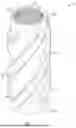
FIG. 1 is a top front perspective view of a coupling according to some embodiments of the present invention.
FIG. 2A is a front view of the coupling of FIG. 1.
FIG. 2B is a side view of the coupling of FIG. 1.
FIG. 3 is a front cross-sectional view of a coupling with internal threads at a first end thereof and a second end thereof.
FIG. 4 is a front cross-sectional view of a coupling with internal threads at a first end thereof, and both internal threads and external threads at a second end thereof.
FIG. 5 is a front cross-sectional view of a coupling with both internal threads and external threads at a first end thereof, and with both internal threads and external threads and a second end thereof.
FIG. 6 is a top front perspective view of a downhole casing system according to some embodiments of the present invention.
DETAILED DESCRIPTION OF THE INVENTION
Reference now should be made to the drawings, in which the same reference numbers are used throughout the different figures to designate the same components.
It will be understood that, although the terms first, second, third, etc. may be used herein to describe various elements, these elements should not be limited by these terms. These terms are only used to distinguish one element from another element. Thus, a first element discussed below could be termed a second element without departing from the teachings of the present disclosure.
The terminology used herein is for the purpose of describing particular embodiments only and is not intended to be limiting. As used herein, the singular forms “a”, “an”, and “the are intended to include the plural forms as well, unless the context clearly indicates otherwise. It will be further understood that the terms “comprises” and/or “comprising” or “includes” and/or “including” when used in this specification, specify the presence of stated features, regions, integers, steps, operations, elements, and/or components but do not preclude the presence or addition of one or more other features, regions, integers, steps, operations, elements, components, and/or groups thereof.
As shown in FIG. 1, a coupling 20 has a first end 24 and second end 28 configured opposite the first end 24. The coupling 20 is cylindrical in shape with an outer surface 46 and an inner surface 42. Internal threads 52 are configured on the inner surface 42. One or more blades 34 are configured on the outer surface 46. As shown in FIG. 1, the one or more blades 34 are four different blades 34. The blades 34 extend substantially from the first end 24 to the second end 28 in a helical pattern, whereby the radius of curvature of the blades maintains constant throughout the entire length of the blades.
As shown in FIGS. 2A and 2B, multiple blades 34 are configured on the outer surface 46 of the coupling 20. The helical patterns of the various blades 34 are such that when the coupling 20 is rotated 90 degrees as shown between the FIGS. 2A and 2B, the view of the blades 34 is the same.
As shown in FIG. 3, internal threads 52 are configured on the inner surface 42 of the coupling 20. The internal threads 52 extend from the first end 24 to a shoulder ring 38, and also from the second end 28 to the shoulder ring 38. When used in a downhole casing system, a first casing portion (not shown in FIG. 3) may have external threads that mate with the internal threads 52 of the coupling. The first casing portion may thread into the internal threads 52 at the first end 24 of the coupling 20. The first casing portion may be threaded all the way to the shoulder ring 38. The presence of the shoulder ring 38 may increase the torque that is able to be applied to the connection between the coupling 20 and the first casing portion, thereby creating a more secure connection between the coupling 20 and the first casing portion.
A second casing portion (not shown in FIG. 3) may also have external threads that mate with the internal threads 52 of the coupling 20. The second casing portion may thread into the internal threads 52 at the second end 28 of the coupling 20. The second casing portion may be threaded all the way to the shoulder ring 38. The presence of the shoulder ring 38 may increase the torque that is able to be applied to the connection between the coupling 20 and the second casing portion, thereby creating a more secure connection between the coupling 20 and the second casing portion. The shoulder ring 38 may further create a gap between the first casing portion and second casing portion, thereby reducing the chances of hoop stress and damaging of the coupling 20 when additional torque is applied. The shoulder ring 38 may be configured within a “J space” of the coupling 20, which is a space within a coupling 20 between casing portions.
As shown in FIG. 4, internal threads 52 are configured on the inner surface 42 of the coupling 20. The internal threads 52 extend from the first end 24 to a shoulder ring 38, and also from the second end 28 to the shoulder ring 38. External threads 56 are configured on the outer surface 46 of the coupling 20. The external threads 56 extend from or about the second end 28 away from the shoulder ring 38. The first casing portion and second casing portion described herein may thread into the internal threads 52 at the first end 24 of the coupling 20 and the second end 28 of the coupling 20, respectively. Alternatively, the second casing portion may have internal threads that correspond with the external threads 56 configured at the second end 28 of the coupling 20. The second casing portion may thread onto the external threads 56 at the second end 28 of the coupling 20 to connect the second casing portion to the coupling 20. The
As shown in FIG. 5, internal threads 52 are configured on the inner surface 42 of the coupling 20. The internal threads 52 extend from the first end 24 to a shoulder ring 38, and also from the second end 28 to the shoulder ring 38. External threads 56 are configured on the outer surface 46 of the coupling 20. The external threads 56 extend from the first end 24 away from the shoulder ring 38, and also from the second end 28 away from the shoulder ring 38. The first casing portion and second casing portion described herein may thread into the internal threads 52 at the first end 24 of the coupling 20 and the second end 28 of the coupling 20, respectively. Alternatively, the first casing portion and second casing portion may each have internal threads that correspond with the external threads 56 configured at the first end 24 of the coupling 20 and second end 28 of the coupling 20, respectively. Each casing portion may thread onto the external threads 56 at its respective end of the coupling 20 to connect said casing portion to the coupling 20.
FIG. 4 and FIG. 5 show embodiments of the couple where internal threading is coupled with external threading in the depicted arrangements. However, in some embodiments the combination of internal threading and external threading on a single coupling may not be necessary and as a result, one of the internal threading or the external threading at the first end 24 and/or second end 28 may be absent. For example, in an embodiment where the external threading 56 extended (or is otherwise present) about the first end 24 and the second end 26, the internal threading 52 may not be present at all.
As shown in FIG. 6, a first casing portion 60 and a second casing portion 70 are removably connected to the coupling 20 as part of a downhole casing system 10. The combination of the first casing portion 60, second casing portion 70, and coupling 20 may form a connected casing 80. As shown in FIG. 6, the first easing portion 60 is threaded into the first end 24 of the coupling 20, and the second casing portion 70 is threaded into the second end 28 of the coupling 20. The blades 34 of the coupling 20 protrude from the outer surface 46 of the coupling 20, and thereby protrude past outer diameters of the first casing portion 60 and second casing portion 70. This allows the coupling 20 to centralize the connected casing 80 within a borehole (not shown in FIG. 6). When the connected coupling 80 is inserted into a borehole, the blades 34 of the coupling 20 may contact interior walls of the borehole and force the connected casing 80 into the center of the borehole. This may limit contact between the first casing portion 60 and the interior walls of the borehole, as well as between the second casing portion 70 and the interior walls of the borehole. This may reduce wear on the first casing portion 60 and the second casing portion 70, as well as providing an unobstructed path for drilling fluid to move through the borehole outside of the connected casing 80.
Claims
1. A downhole casing system comprising:
a first casing portion;
a second casing portion;
a coupling comprising:
an inner surface;
an outer surface;
a first end;
a second end;
one or more blades configured on the outer surface and extending substantially from the first end to the second end; and
a borehole;
wherein the first casing portion and second casing portion are connected by the coupling to form a connected casing,
wherein the connected casing is inserted into a borehole,
wherein the one or more blades of the coupling centralize the connected casing within the borehole.
2. The system of claim 1,
wherein the first casing portion is connected to the coupling at the first end by internal threads configured on the inner surface of the coupling,
wherein the second casing portion is connected to the coupling at the second end by internal threads configured on the inner surface of the coupling.
3. The system of claim 1,
wherein the first casing portion is connected to the coupling at the first end by external threads configured on the outer surface of the coupling,
wherein the second casing portion is connected to the coupling at the second end by internal threads configured on the inner surface of the coupling.
4. The system of claim 1,
wherein the first casing portion is connected to the coupling at the first end by external threads configured on the outer surface of the coupling,
wherein the second casing portion is connected to the coupling at the second end by external threads configured on the outer surface of the coupling.
5. The system of claim 1, wherein the one or more blades extend substantially from the first end of the coupling to the second end of the coupling in a helical pattern.
6. The system of claim 1, wherein the one or more blades are integrally formed with the outer surface of the coupling.
7. The system of claim 1, wherein the coupling further comprises a shoulder ring configured on the inner surface of the coupling,
wherein the first casing portion and the second casing portion are separated by the shoulder ring when the first casing portion and the second casing portion are connected by the coupling.
8. The system of claim 1, wherein the shoulder ring increases the torque that is applied when connecting the first casing portion and the second casing portion to the coupling.
9. A coupling comprising:
an inner surface;
an outer surface;
a first end;
a second end; and
one or more blades configured on the outer surface and extending substantially from the first end to the second end,
wherein the coupling connects two portions of downhole casing to form a connected casing,
wherein the connected casing is inserted into a borehole,
wherein the one or more blades of the coupling centralize the connected casing in the borehole.
10. The coupling of claim 9, further comprising a shoulder ring configured on the inner surface between the first end and the second end.
11. The coupling of claim 9, further comprising:
internal threads configured on the inner surface and extending from the first end towards the shoulder ring; and
internal threads configured on the inner surface and extending from the second end towards the shoulder ring,
wherein the two portions of the downhole casing are threaded into the coupling at the first end and second end, respectively.
12. The coupling of claim 9, further comprising:
internal threads configured on the inner surface and extending from the first end towards the shoulder ring; and
external threads configured on the outer surface and extending from the second end away from the shoulder ring,
wherein the two portions of the downhole casing are threaded into the coupling at the first end and onto the coupling at the second end, respectively.
13. The coupling of claim 9, further comprising:
external threads configured on the outer surface and extending from the first end away from the shoulder ring; and
external threads configured on the outer surface and extending from the second end away from the shoulder ring,
wherein the two portions of the downhole casing are threaded onto the coupling at the first end and the second end, respectively.
14. The coupling of claim 9, further comprising:
internal threads configured on the inner surface and extending from the first end towards the shoulder ring;
internal threads configured on the inner surface and extending from the second end towards the shoulder ring;
external threads configured on the outer surface and extending from the first end away from the shoulder ring; and
external threads configured on the outer surface and extending from the second end away from the shoulder ring,
wherein the two portions of the downhole casing are connected to the coupling at the first end and the second end, respectively.
15. The coupling of claim 9, wherein the one or more blades extend substantially from the first end to the second end in a helical pattern.
16. The coupling of claim 9, wherein the one or more blades are integrally formed with the outer surface.
17. A method for running a casing downhole, comprising:
providing a borehole;
providing a first casing portion;
providing a second casing portion;
providing a coupling comprising:
an inner surface;
an outer surface;
a first end;
a second end;
one or more blades configured on the outer surface and extending substantially from the first end to the second end;
forming a connected casing by:
connecting the first casing portion to the first end of the coupling;
connecting the second casing portion to the second end of the coupling;
inserting the connected casing into the borehole; and
centralizing the connected casing within the borehole with the one or more blades of the coupling.
18. The method of claim 17, wherein the first casing portion is connected to the first end of the coupling by threading the first casing portion into internal threads configured on the inner surface of the coupling.
19. The method of claim 17, wherein the first casing portion is connected to the first end of the coupling by threading the first casing portion onto external threads configured on the outer surface of the coupling.
20. The method of claim 17, further comprising:
moving drilling fluid through the borehole,
whereby some of the drilling fluid moves through the borehole outside of the casing,
wherein the motion of the some of the drilling fluid outside of the casing is aided by the one or more blades of the coupling.
Images & Drawings included:




Sources:
- United States Patent and Trademark Office - verify current appl. status at the USPTO↗
Recent applications in this class:
- » 20250146367 2025-05-08
SPRING-BASED SUPPORT DEVICE FOR ANCHORING AND/OR CENTRALIZING A BOLT OR PIPE IN A BOREHOLE - » 20250137332 2025-05-01
Mandrel with integrated centralizer - » 20250129677 2025-04-24
METHODS AND SYSTEMS FOR UTILIZING A CENTRALIZER FOR REFRACTURING OPERATIONS - » 20250109641 2025-04-03
DRILLING APPARATUS AND RELATED METHODS - » 20250109640 2025-04-03
Centralizer having internal stop collar - » 20250092743 2025-03-20
Slimline stop collar with seal to prevent micro-annulus leakage - » 20250034958 2025-01-30
DUAL TUBING LOCATING ADAPTOR FOR A TUBING STRING - » 20240384609 2024-11-21
Continuous Contact Radially Phased Centralizer - » 20240344408 2024-10-17
REDUCING VIBRATION OF AN ELECTRIC SUBMERSIBLE PUMP - » 20240240530 2024-07-18
INSULATED DRILLING SYSTEMS AND ASSOCIATED METHODS