TRAVEL CONTROL DEVICE, TRAVEL CONTROL METHOD, AND NON-TRANSITORY RECORDING MEDIUM
US20250178643A1
2025-06-05
18/952,482
2024-11-19
Smart Summary: A travel control device helps cars understand their surroundings better. It uses a special camera to recognize patterns on the road that are created by light from nearby vehicles. After recognizing these patterns, it predicts what the other vehicles will do next. Based on this prediction, the device can adjust how the host vehicle moves. This technology aims to make driving safer and more efficient. 🚀 TL;DR
Abstract:
A travel control device includes an image recognition unit which performs image recognition of a pattern drawn on a road surface by light irradiated from a surrounding vehicle, a prediction unit which predicts behavior of the surrounding vehicle based on a result of the image recognition of the pattern, and a travel control unit which controls travel of a host vehicle based on the behavior of the surrounding vehicle.
Assignee:
- TOYOTA JIDOSHA KABUSHIKI KAISHA 8,384 🇯🇵 Toyota-shi, Aichi-ken, Japan
Applicant:
Interested in similar patents?
Get notified when new applications in this technology area are published.
Classification:
B60W60/00274 » CPC main
Drive control systems specially adapted for autonomous road vehicles; Planning or execution of driving tasks using trajectory prediction for other traffic participants considering possible movement changes
B60W50/0097 » CPC further
Details of control systems for road vehicle drive control not related to the control of a particular sub-unit, e.g. process diagnostic or vehicle driver interfaces Predicting future conditions
B60W60/0015 » CPC further
Drive control systems specially adapted for autonomous road vehicles; Planning or execution of driving tasks specially adapted for safety
G06V20/582 » CPC further
Scenes; Scene-specific elements; Context or environment of the image exterior to a vehicle by using sensors mounted on the vehicle; Recognition of moving objects or obstacles, e.g. vehicles or pedestrians; Recognition of traffic objects, e.g. traffic signs, traffic lights or roads of traffic signs
G06V20/588 » CPC further
Scenes; Scene-specific elements; Context or environment of the image exterior to a vehicle by using sensors mounted on the vehicle Recognition of the road, e.g. of lane markings; Recognition of the vehicle driving pattern in relation to the road
B60W2420/403 » CPC further
Indexing codes relating to the type of sensors based on the principle of their operation; Photo or light sensitive means, e.g. infrared sensors Image sensing, e.g. optical camera
B60W2552/53 » CPC further
Input parameters relating to infrastructure Road markings, e.g. lane marker or crosswalk
B60W2554/4046 » CPC further
Input parameters relating to objects; Dynamic objects, e.g. animals, windblown objects; Characteristics Behavior, e.g. aggressive or erratic
G06V2201/07 » CPC further
Indexing scheme relating to image or video recognition or understanding Target detection
B60W60/00 IPC
Drive control systems specially adapted for autonomous road vehicles
B60W50/00 IPC
Details of control systems for road vehicle drive control not related to the control of a particular sub-unit, e.g. process diagnostic or vehicle driver interfaces
G06V20/56 IPC
Scenes; Scene-specific elements; Context or environment of the image exterior to a vehicle by using sensors mounted on the vehicle
G06V20/58 IPC
Scenes; Scene-specific elements; Context or environment of the image exterior to a vehicle by using sensors mounted on the vehicle Recognition of moving objects or obstacles, e.g. vehicles or pedestrians; Recognition of traffic objects, e.g. traffic signs, traffic lights or roads
Description
CROSS-REFERENCE TO RELATED APPLICATIONS
This application claims priority to Japanese Patent Application No. 2023-20262 6 filed Nov. 30, 2023, the entire contents of which are herein incorporated by reference.
FIELD
The present disclosure relates to travel control device, travel control method, and non-transitory recording medium.
BACKGROUND
PTL 1 (WO 2020/218498 A1) describes that a sensing system including a camera which shoots a video of a road surface and an arithmetic processing device is mounted on a vehicle (host vehicle), that a pattern drawn on the road surface by another traffic participant (for example, a surrounding vehicle, etc.) is included in the video shot by the camera, that the arithmetic processing device detects a state of the host vehicle and another traffic participant based on the pattern included in the video shot by the camera, and that the vehicle (host vehicle) equipped with a sensing system controls at least one of a steering, an accelerator, and a brake according to an output of the sensing system.
In the technique described in PTL 1, the pattern drawn on the road surface by another traffic participant is not intended to announce future behavior of another traffic participant (e.g., the surrounding vehicle as another traffic participant backing up, a door of the surrounding vehicle as another traffic participant (in detail, the surrounding vehicle in a state where the door is closed) opening and the like) in advance. Therefore, in the technique described in PTL 1, it is impossible for the host vehicle to predict the future behavior of another traffic participant based on the pattern drawn on the road surface by another traffic participant. As a result, in the technique described in PTL 1, it is impossible to appropriately control the traveling of the host vehicle based on the pattern drawn on the road surface by another traffic participant, and it is impossible to sufficiently improve travel safety of the host vehicle.
SUMMARY
In view of the above-described points, it is an object of the present disclosure to provide travel control device, travel control method, and non-transitory recording medium that can sufficiently improve travel safety of a host vehicle.
(1) One aspect of the present disclosure is a travel control device including a processor configured to: perform image recognition of a pattern drawn on a road surface by light irradiated from a surrounding vehicle; predict behavior of the surrounding vehicle based on a result of the image recognition of the pattern; and control travel of a host vehicle based on the behavior of the surrounding vehicle.
(2) In the travel control device of the aspect (1), the processor may be configured to cause the host vehicle to avoid the pattern drawn on the road surface by the light irradiated from the surrounding vehicle and travel.
(3) In the travel control device of the aspect (1) or (2), the processor may be configured to determine whether the pattern which is a target of the image recognition is a traffic sign.
(4) Another aspect of the present disclosure is a travel control method including: performing image recognition of a pattern drawn on a road surface by light irradiated from a surrounding vehicle; predicting behavior of the surrounding vehicle based on a result of the image recognition of the pattern; and controlling travel of a host vehicle based on the behavior of the surrounding vehicle.
(5) Another aspect of the present disclosure is a non-transitory recording medium having recorded thereon a computer program for causing a processor to execute a process including: performing image recognition of a pattern drawn on a road surface by light irradiated from a surrounding vehicle; predicting behavior of the surrounding vehicle based on a result of the image recognition of the pattern; and controlling travel of a host vehicle based on the behavior of the surrounding vehicle.
According to the present disclosure, it is possible to sufficiently improve travel safety of a host vehicle.
BRIEF DESCRIPTION OF DRAWINGS
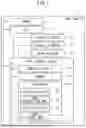
FIG. 1 is a view showing a first example of a host vehicle 1 to which a travel control device 13 of a first embodiment is applied.
FIG. 2 is a view showing a first example of a pattern PT drawn on a road surface RS by light irradiated from a surrounding vehicle SV.
FIG. 3 is a view showing a second example of the pattern PT drawn on the road surface RS by the light irradiated from the surrounding vehicle SV.
FIG. 4 is a flowchart for explaining an example of a process executed by a processor 133 of the travel control device 13 of the first embodiment.
FIG. 5 is a view showing an example of the host vehicle 1 to which the travel control device 13 of a second embodiment is applied.
FIG. 6 is a flowchart for explaining an example of the process executed by the processor 133 of the travel control device 13 of the second embodiment.
DESCRIPTION OF EMBODIMENTS
Below, referring to the drawings, embodiments of travel control device, travel control method, and non-transitory recording medium of the present disclosure will be explained.
First Embodiment
FIG. 1 is a view showing a first example of a host vehicle 1 to which a travel control device 13 of a first embodiment is applied.
In the example shown in FIG. 1, the host vehicle 1 includes camera 11, HMI (Human Machine Interface) 12, the travel control device 13, steering actuator 14, braking actuator 15 and drive actuator 16.
The camera 11 shoots, for example, surroundings (e.g., front, side, rear, etc.) of the host vehicle 1 and transmits a camera image to the travel control device 13. The HMI 12 has a function of receiving various operations of a driver of the host vehicle 1 and transmits signals indicating the operations of the driver of the host vehicle 1 to the travel control device 13.
In the example shown in FIG. 1, the travel control device 13 is configured, for example, by a driving assistance ECU (Electronic Control Unit) (i.e., by one ECU).
In another example, the travel control device 13 may be configured, for example, by the driving assistance ECU and an image-processing ECU (i.e., by a plurality of ECUs).
In the example shown in FIG. 1, the travel control device 13 controls the steering actuator 14, the braking actuator 15, and the drive actuator 16 based on the camera image transmitted from the camera 11, the signals indicating the operations of the driver of the host vehicle 1 transmitted from the HMI 12, and the like. The steering actuator 14 has a function of steering the host vehicle 1. The steering actuator 14 includes, for example, power steering system, steer-by-wire steering system, rear wheel steering system, and the like. The braking actuator 15 has a function of decelerating the host vehicle 1. The braking actuator 15 includes, for example, hydraulic brake, power regenerative brake and the like. The drive actuator 16 has a function of accelerating the host vehicle 1. The drive actuator 16 includes, for example, engine, EV (electric vehicle) system, hybrid system, fuel-cell system and the like.
The travel control device 13 is configured by a microcomputer including communication interface (I/F) 131, memory 132 and processor 133. The communication interface 131 includes interface circuit for connecting the travel control device 13 to the camera 11, the HMI 12, the steering actuator 14, the braking actuator 15, the drive actuator 16, and the like. The memory 132 stores programs used in processes performed by the processor 133 and various data (e.g., the camera image transmitted from the camera 11). The processor 133 has function as an acquisition unit 3A, function as an image recognition unit 3B, function as a prediction unit 3C, and function as the travel control unit 3D.
The acquisition unit 3A acquires the camera image. The acquisition unit 3A acquires the signals indicating the operations of the driver of the host vehicle 1 (for example, operation to turn on/off the driving assistance function (for example, ACC (adaptive cruise control), FCW (forward collision warning), AEBS (collision damage reduction braking control device), emergency steering assistance (with an active steering function) and the like), steering operation, brake pedal operation, accelerator pedal operation and the like) that the HMI 12 receives.
The image recognition unit 3B recognizes a pattern PT (see FIG. 2 and FIG. 3) drawn on a road surface RS (see FIG. 2 and FIG. 3) by light irradiated from a surrounding vehicle SV (see FIG. 2 and FIG. 3) based on the camera image acquired by the acquisition unit 3A.
FIG. 2 is a view showing a first example of the pattern PT drawn on the road surface RS by the light irradiated from the surrounding vehicle SV.
In the example shown in FIG. 2, when the surrounding vehicle SV moves backward, the surrounding vehicle SV draws the pattern PT indicating that the surrounding vehicle SV moves backward on the road surface RS by irradiating the light and alerts pedestrian (not shown), vehicle (not shown) and the like around the surrounding vehicle SV in order to prevent an accident.
In the example shown in FIG. 1 (the first example of the host vehicle 1 to which the travel control device 13 of the first embodiment is applied), the image recognition unit 3B executes image recognition of the pattern PT (the pattern PT indicating that the surrounding vehicle SV moves backward) which is drawn on the road surface RS by the light irradiated from the surrounding vehicle SV included in the camera image acquired by the acquisition unit 3A by using a model obtained by performing learning using teacher data which is a dataset with a learning camera image and a label which indicates whether the pattern included in the learning camera image is the pattern PT which is drawn on the road surface RS by the light irradiated from a learning surrounding vehicle SV when the learning surrounding vehicle SV moves backward and which indicates that the learning surrounding vehicle SV moves backward as shown in FIG. 2.
In the example shown in FIG. 1, the prediction unit 3C predicts behavior of the surrounding vehicle SV based on a result of the image recognition of the pattern PT executed by the image recognition unit 3B.
Specifically, in the example shown in FIG. 1, when the image recognition of the pattern PT indicating that the surrounding vehicle SV moves backward is executed by the image recognition unit 3B, the prediction unit 3C predicts that the surrounding vehicle SV moves backward as the behavior of the surrounding vehicle SV.
In the example shown in FIG. 1, the travel control unit 3D controls travel of the host vehicle 1 based on the behavior of the surrounding vehicle SV predicted by the prediction unit 3C.
Specifically, in the example shown in FIG. 1, when the prediction unit 3C predicts that the surrounding vehicle SV moves backward as the behavior of the surrounding vehicle SV, the travel control unit 3D causes the host vehicle 1 to travel avoiding the pattern PT (the pattern PT indicating that the surrounding vehicle SV moves backward) which is drawn on the road surface RS by the light irradiated from the surrounding vehicle SV. In other words, the travel control unit 3D causes the host vehicle 1 to travel so that the host vehicle 1 does not touch the surrounding vehicle SV when the surrounding vehicle SV moves backward.
Specifically, for example, when the ACC and the emergency steering assistance are in the ON state, the travel control unit 3D controls the steering actuator 14 and the braking actuator 15 so that the host vehicle 1 travels by avoiding the pattern PT indicating that the surrounding vehicle SV moves backward without the need for the driver of the host vehicle 1 to perform the steering operation and the brake pedal operation.
In another example, when the driving assistance function is in the ON state, the driving control unit 3D may cause the HMI 12 to output an alert to prompt the driver of the host vehicle 1 to perform the steering operation and the brake pedal operation for the host vehicle 1 to travel avoiding the pattern PT indicating that the surrounding vehicle SV moves backward.
FIG. 3 is a view showing a second example of the pattern PT drawn on the road surface RS by the light irradiated from the surrounding vehicle SV.
In the example shown in FIG. 3, when there is a possibility that an occupant of the surrounding vehicle SV opens a door SVD of the surrounding vehicle SV, the surrounding vehicle SV draws the pattern PT indicating that the door SVD of the surrounding vehicle SV opens on the road surface RS by irradiating the light and alerts the pedestrian (not shown), the vehicle (not shown) and the like around the surrounding vehicle SV in order to prevent the accident.
In the second example of the host vehicle 1 to which the travel control device 13 of the first embodiment is applied, the image recognition part 3B executes the image recognition of the pattern PT (the pattern PT indicating that the door SVD of the surrounding vehicle SV opens) which is drawn on the road surface RS by the light irradiated from the surrounding vehicle SV included in the camera image acquired by the acquisition unit 3A by using the model obtained by performing the learning using the teacher data which is the dataset with the learning camera image and the label which indicates whether the pattern included in the learning camera image is the pattern PT which is drawn on the road surface RS by the light irradiated from the learning surrounding vehicle SV when there is the possibility that the occupant of the learning surrounding vehicle SV opens the door SVD of the learning surrounding vehicle SV and which indicates that the door SVD of the learning surrounding vehicle SV opens as shown in FIG. 3.
In the second example of the host vehicle 1 to which the travel control device 13 of the first embodiment is applied, when the image recognition of the pattern PT indicating that the door SVD of the surrounding vehicle SV opens is executed by the image recognition unit 3B, the prediction unit 3C predicts that the door SVD of the surrounding vehicle opens as the behavior of the surrounding vehicle SV.
In the second example of the host vehicle 1 to which the travel control device 13 of the first embodiment is applied, when the prediction unit 3C predicts that the door SV of the surrounding vehicle SV opens as the behavior of the surrounding vehicle SV, the travel control unit 3D causes the host vehicle 1 to travel avoiding the pattern PT (the pattern PT indicating that the door SVD of the surrounding vehicle SV opens) which is drawn on the road surface RS by the light irradiated from the surrounding vehicle SV. In other words, the travel control unit 3D causes the host vehicle 1 to travel so that the host vehicle 1 does not touch the door SVD of the surrounding vehicle SV when the door SVD of the surrounding vehicle SV opens.
Specifically, for example, when the ACC and the emergency steering assistance are in the ON state, the travel control unit 3D controls the steering actuator 14 and the braking actuator 15 so that the host vehicle 1 travels by avoiding the pattern PT indicating that the door SVD of the surrounding vehicle SV opens without the need for the driver of the host vehicle 1 to perform the steering operation and the brake pedal operation.
In another example, when the driving assistance function is in the ON state, the driving control unit 3D may cause the HMI 12 to output the alert to prompt the driver of the host vehicle 1 to perform the steering operation and the brake pedal operation for the host vehicle 1 to travel avoiding the pattern PT indicating that the door SVD of the surrounding vehicle SV opens.
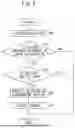
FIG. 4 is a flowchart for explaining an example of a process executed by the processor 133 of the travel control device 13 of the first embodiment.
In the example shown in FIG. 4, at step S10, the image recognition unit 3B executes the image recognition of the pattern PT (see FIG. 2 and FIG. 3) drawn on the road surface RS (see FIG. 2 and FIG. 3) by the light irradiated from the surrounding vehicle SV (see FIG. 2 and FIG. 3) based on the camera image acquired at step not shown.
At step S11, the image recognition unit 3B determines whether the pattern PT drawn on the road surface RS by the light irradiated from the surrounding vehicle SV is included in the result of the image recognition performed at step S10. If YES, it proceeds to step S12, while if NO, the process shown in FIG. 4 is ended.
At step S12, the prediction unit 3C predicts the behavior of the surrounding vehicle SV based on the result of the image recognition of the pattern PT performed at step S10.
At step S13, the travel control unit 3D controls the travel of the host vehicle 1 based on the behavior of the surrounding vehicle SV predicted at step S12.
In the host vehicle 1 to which the travel control device 13 of the first embodiment is applied, the prediction of the behavior of the surrounding vehicle SV is performed, the travel of the host vehicle 1 is controlled based on the predicted behavior of the surrounding vehicle SV. Therefore, it is possible to sufficiently improve the travel safety of the host vehicle 1 compared with a case in which the prediction of the behavior of the surrounding vehicle SV is not performed.
Second Embodiment
The host vehicle 1 to which the travel control device 13 of a second embodiment is applied is configured similarly to the host vehicle 1 to which the travel control device 13 of the first embodiment described above is applied, except for the points mentioned below.
FIG. 5 is a view showing an example of the host vehicle 1 to which the travel control device 13 of the second embodiment is applied.
In the example shown in FIG. 1, the host vehicle 1 is not provided with a LiDAR (Laser Imaging Detection and Ranging) 17 (refer to FIG. 5), but in the example shown in FIG. 5, the host vehicle 1 is provided with the LiDAR 17. The LiDAR 17 detects a surrounding situation of the host vehicle 1 and transmits the detection result to the travel control device 13. The acquisition unit 3A acquires the detection result of the LiDAR 17.
In the example shown in FIG. 1, the processor 133 does not have a function as a determination unit 3E (see FIG. 5), but in the example shown in FIG. 5, the processor 133 has the function as the determination unit 3E. The determining unit 3E determines whether the pattern PT (refer to FIG. 2 and FIG. 3) the image recognition of which is performed by the image recognition unit 3B is a traffic sign (e.g., compartment line, road surface marking, etc.).
Specifically, when the intensity of reflected light from the pattern PT and the intensity of the reflected light from a part other than the pattern PT among the road surface RS (see FIG. 2 and FIG. 3) received by a light receiving section (not shown) of the LiDAR 17 are the same, the determination unit 3E determines that the pattern PT recognized by the image recognition unit 3B is not road surface painting (the traffic sign) but the pattern PT drawn on the road surface RS by the light irradiated from the surrounding vehicle SV.
When the intensity of the reflected light from the pattern PT and the intensity of the reflected light from the part other than the pattern PT among the road surface RS received by the light receiving section of the LiDAR 17 are very different, the determining unit 3E determines that the pattern PT recognized by the image recognition unit 3B is the road surface painting (the traffic sign).
FIG. 6 is a flowchart for explaining an example of the process executed by the processor 133 of the travel control device 13 of the second embodiment.
In the example shown in FIG. 6, at step S20, the image recognition unit 3B performs the image recognition of the pattern PT drawn on the road surface RS by the light irradiated from the surrounding vehicle SV based on the camera image acquired at step not shown.
At step S21, the image recognition unit 3B determines whether the pattern PT drawn on the road surface RS by the light irradiated from the surrounding vehicle SV is included in the result of the image recognition performed at step S20. If YES, it proceeds to step S22, while if NO, the process shown in FIG. 6 is ended.
At step S22, the determination unit 3E determines whether the pattern PT recognized at step S20 is the traffic sign (e.g., the compartment line, the road surface marking, etc.). If NO, it proceeds to step S23, while if YES, the process shown in FIG. 6 is ended.
At step S23, the prediction unit 3C predicts the behavior of the surrounding vehicle SV based on the result of the image recognition of the pattern PT performed at step S20.
At step S24, the travel control unit 3D controls the travel of the host vehicle 1 based on the behavior of the surrounding vehicle SV predicted at step S23.
In the host vehicle 1 to which the travel control device 13 of the second embodiment is applied as described above, when the determination unit 3E determines that the pattern PT recognized by the image recognition unit 3B is not the traffic sign (for example, the compartment line, the road surface marking, etc.), the travel control unit 3D executes the travel control of the host vehicle 1 based on the behavior of the surrounding vehicle SV. Therefore, it is possible to suppress the risk of misrecognition of the traffic sign (for example, the compartment line, the road surface marking, etc.) as the pattern PT drawn on the road surface RS by the light irradiated from the surrounding vehicle SV and the risk of improper execution of the travel control of the host vehicle 1 based on the result of the misrecognition.
Third Embodiment
The host vehicle 1 to which the travel control device 13 of a third embodiment is applied is configured similarly to the host vehicle 1 to which the travel control device 13 of the first embodiment described above is applied, except for the points mentioned below.
In the example shown in FIG. 1 (the first example of the host vehicle 1 to which the travel control device 13 of the first embodiment is applied), the processor 133 does not have the function as the determination unit 3E (see FIG. 5), but in an example of the host vehicle 1 to which the travel control device 13 of the third embodiment is applied, the processor 133 has the function as the determination unit 3E. The determination unit 3E determines whether the pattern PT the image recognition of which is performed by the image recognition unit 3B (refer to FIG. 2 and FIG. 3) is the traffic sign (e.g. the compartment line, the road surface marking, etc.), similar to the example shown in FIG. 5.
In the example of the host vehicle 1 to which the travel control device 13 of the third embodiment is applied, the determination unit 3E determines whether the pattern PT (see FIG. 2 and FIG. 3) recognized by the image recognition unit 3B is the traffic sign (for example, the compartment line, the road surface marking, or the like) by using a machine learning model, unlike the example shown in FIG. 5. Specifically, the determination unit 3E determines whether the pattern PT recognized by the image recognition unit 3B is the traffic sign by using the learning model obtained by performing the learning using the teacher data which is the dataset with the learning camera image and a label which indicates whether the pattern included in the learning camera image is the pattern PT drawn on the road surface RS by the light irradiated from the learning surrounding vehicle SV or the road surface painting (the traffic sign).
In the example of the host vehicle 1 to which the travel control device 13 of the third embodiment is applied, when the determination unit 3E determines that the pattern PT recognized by the image recognition unit 3B is not the traffic sign, the prediction unit 3C predicts the behavior of the surrounding vehicle SV and the travel control unit 3D controls the travel of the host vehicle 1.
Fourth Embodiment
The host vehicle 1 to which the travel control device 13 of a fourth embodiment is applied is configured similarly to the host vehicle 1 to which the travel control device 13 of the third embodiment described above is applied, except for the points mentioned below.
In the example of the host vehicle 1 to which the travel control device 13 of the third embodiment is applied, as described above, the determination unit 3E determines whether the pattern PT (see FIG. 2 and FIG. 3) recognized by the image recognition unit 3B is the traffic sign (e.g., the compartment line, the road surface marking, etc.) by using the machine learning model.
On the other hand, in an example of the host vehicle 1 to which the travel control device 13 of the fourth embodiment is applied, the determination unit 3E determines whether the pattern PT recognized by the image recognition unit 3B is the traffic sign based on presence or absence of time variation of relative positional relationship between the pattern PT recognized by the image recognition unit 3B and the surrounding vehicle SV. When the time variation of the relative positional relationship between the pattern PT recognized by the image recognition unit 3B and the surrounding vehicle SV exists (more detail, when the position of the pattern PT does not change but the position of the surrounding vehicle SV changes), the determination unit 3E determines that the pattern PT recognized by the image recognition unit 3B is the traffic sign.
Fifth Embodiment
The host vehicle 1 to which the travel control device 13 of a fifth embodiment is applied is configured similarly to the host vehicle 1 to which any one of the travel control devices 13 of the first to the fourth embodiments described above is applied, except for the points mentioned below.
In the host vehicle 1 to which any one of the travel control devices 13 of the first to the fourth embodiments is applied as described above, the travel control device 13 is configured by, for example, the driving assistance ECU.
On the other hand, in the host vehicle 1 to which the travel control device 13 of the fifth embodiment is applied, the travel control device 13 is configured by, for example, an autonomous driving ECU. The travel control device 13 controls the steering actuator 14, the braking actuator 15, and the drive actuator 16 based on the camera image transmitted from the camera 11, a signal indicating an operation of putting the host vehicle 1 in an autonomous driving mode by the driver of the host vehicle 1 transmitted from the HMI 12 and the like.
In the host vehicle 1 to which the travel control device 13 of the fifth embodiment is applied, the acquisition unit 3A acquires the signal indicating the operation of the driver of the host vehicle 1 received by the HMI 12 (for example, the operation of putting the host vehicle 1 in the autonomous driving mode, the operation of canceling the autonomous driving mode of the host vehicle 1, and the like).
In an example of the host vehicle 1 to which the travel control device 13 of the fifth embodiment is applied, when the prediction unit 3C predicts that the surrounding vehicle SV moves backward as the behavior of the surrounding vehicle SV, the travel control unit 3D generates a travel plan for traveling the host vehicle 1 avoiding the pattern PT (the pattern PT indicating that the surrounding vehicle SV moves backward) drawn on the road surface RS by the light irradiated from the surrounding vehicle SV, and controls the steering actuator 14 and the braking actuator 15 based on the travel plan.
In another example of the host vehicle 1 to which the travel control device 13 of the fifth embodiment is applied, when the prediction unit 3C predicts that the door SVD of the surrounding vehicle SV opens as the behavior of the surrounding vehicle SV, the travel control unit 3D generates the travel plan for traveling the host vehicle 1 avoiding the pattern PT (the pattern PT indicating that the door SVD of the surrounding vehicle SV opens) drawn on the road surface RS by the light irradiated from the surrounding vehicle SV, and controls the steering actuator 14 and the braking actuator 15 based on the travel plan.
As described above, although the embodiments of the travel control device, the travel control method, and the non-transitory recording medium of the present disclosure have been described with reference to the drawings, the travel control device, the travel control method, and the non-transitory recording medium of the present disclosure are not limited to the embodiments described above, and may be appropriately changed without departing from the scope of the present disclosure. The configuration of each example of the embodiment described above may be appropriately combined. In each example of the embodiments described above, the process performed in the travel control device 13 (e.g., the driving assistance ECU, the autonomous driving ECU, etc.) has been described as a software process performed by executing the programs, the process performed in the travel control device 13 may be a process performed by hardware. Alternatively, the process performed by the travel control device 13 may be a combined process of both software and hardware. Further, the programs (the programs for realizing the function of the processor 133 of the travel control device 13) that is stored in the memory 132 of the travel control device 13 may be recorded in a computer-readable storage medium (a non-transitory recording medium) such as, for example, a semiconductor memory, a magnetic recording medium, an optical recording medium, or the like for providing, distribution or the like.
Claims
1. A travel control device comprising a processor configured to:
perform image recognition of a pattern drawn on a road surface by light irradiated from a surrounding vehicle;
predict behavior of the surrounding vehicle based on a result of the image recognition of the pattern; and
control travel of a host vehicle based on the behavior of the surrounding vehicle.
2. The travel control device according to claim 1, wherein
the processor is configured to cause the host vehicle to avoid the pattern drawn on the road surface by the light irradiated from the surrounding vehicle and travel.
3. The travel control device according to claim 1, wherein
the processor is configured to determine whether the pattern which is a target of the image recognition is a traffic sign.
4. A travel control method comprising:
performing image recognition of a pattern drawn on a road surface by light irradiated from a surrounding vehicle;
predicting behavior of the surrounding vehicle based on a result of the image recognition of the pattern; and
controlling travel of a host vehicle based on the behavior of the surrounding vehicle.
5. A non-transitory recording medium having recorded thereon a computer program for causing a processor to execute a process comprising:
performing image recognition of a pattern drawn on a road surface by light irradiated from a surrounding vehicle;
predicting behavior of the surrounding vehicle based on a result of the image recognition of the pattern; and
controlling travel of a host vehicle based on the behavior of the surrounding vehicle.
Images & Drawings included:



Sources:
- United States Patent and Trademark Office - verify current appl. status at the USPTO↗
Similar patent applications:
- » 20240262353
TRAVEL CONTROL DEVICE, TRAVEL CONTROL METHOD, AND NON-TRANSITORY RECORDING MEDIUM - » 20240304091
TRAVEL CONTROL DEVICE, TRAVEL CONTROL METHOD, AND NON-TRANSITORY RECORDING MEDIUM - » 20250178607
FOLLOWING TRAVEL CONTROL DEVICE, FOLLOWING TRAVEL CONTROL METHOD, AND NON-TRANSITORY RECORDING MEDIUM
Recent applications in this class:
- » 20250178644 2025-06-05
TIME GAPS FOR AUTONOMOUS VEHICLES - » 20250145181 2025-05-08
CREATING A REPRESENTATION OF VISIBLE SPACE AROUND A MACHINE USING A PREVIOUSLY DETERMINED COMBINED OCCUPANCY GRID - » 20250100586 2025-03-27
METHOD FOR TRAJECTORY PREDICTION, METHOD FOR CONTROLLING AN EGO VEHICLE - » 20250091621 2025-03-20
METHOD FOR DETERMINING VEHICLE DRIVING TRAJECTORY, COMPUTER DEVICE, AND VEHICLE - » 20250091620 2025-03-20
PREDICTION OF MOVABILITY OF AN UNCLASSIFIED OBJECT - » 20250065922 2025-02-27
Systems and Methods for Generating Physically Realistic Trajectories - » 20250065921 2025-02-27
INTERVENTION BEHAVIOR PREDICTION WITH CONTINUOUS CONFOUNDERS - » 20250026380 2025-01-23
METHOD AND APPARATUS FOR PREDICTING FUTURE TRAJECTORIES OF NEARBY VEHICLES FOR AUTONOMOUS DRIVING - » 20250026379 2025-01-23
TRAFFIC SIGN PREDICTION FOR A VEHICLE - » 20240409127 2024-12-12
OBJECT DETECTION AND TRACKING FOR AUTOMATED OPERATION OF VEHICLES AND MACHINERY
Recent applications for this Assignee:
- » 20250183749 2025-06-05
MOTOR - » 20250183337 2025-06-05
SYSTEMS AND METHODS FOR DETERMINING SEQUENTIAL PRESSURE REGRESSION IN FUEL CELLS - » 20250182767 2025-06-05
CONTROL APPARATUS, VEHICLE, CONTROL METHOD, AND NON-TRANSITORY COMPUTER READABLE MEDIUM - » 20250182613 2025-06-05
SYSTEMS AND METHODS FOR SYNCHRONIZING THE PRESENTATION OF VEHICLE EXTERIOR LIGHTS - » 20250182612 2025-06-05
SYSTEMS AND METHODS FOR PROVIDING ASSISTANCE TO HEARING-IMPAIRED PEDESTRIANS - » 20250182542 2025-06-05
BATTERY LIFE PREDICTION USING A GLOBAL-LOCAL DECOMPOSITION TRANSFORMER - » 20250182339 2025-06-05
SYSTEMS AND METHODS FOR SUPERIMPOSING AUGMENTED REALITY VEHICLE LIGHTS IN A VEHICLE DISPLAY - » 20250178610 2025-06-05
BUMP DETECTOR - » 20250178607 2025-06-05
FOLLOWING TRAVEL CONTROL DEVICE, FOLLOWING TRAVEL CONTROL METHOD, AND NON-TRANSITORY RECORDING MEDIUM - » 20250178586 2025-06-05
IN-VEHICLE CONTROL DEVICE