LEAD-FREE BRASS ALLOY AND MACHINE ELEMENT PRODUCED THEREFROM
US20250197971A1
2025-06-19
19/069,297
2025-03-04
Smart Summary: A new type of brass alloy is made without lead, which is better for health and the environment. It includes 55 to 59% copper, 2.0 to 2.5% manganese, and 0.65 to 1.5% silicon, with very little lead (less than 0.1%). The rest of the alloy is mostly zinc, along with some unavoidable impurities. This lead-free brass can be used to create various machine parts. Overall, it offers a safer alternative for manufacturing while maintaining good performance. 🚀 TL;DR
Abstract:
A lead-free brass alloy contains 55 to 59 wt % of Cu, 2.0 to 2.5 wt % of Mn, 0.65 to 1.5 wt % of Si, less than 0.1 wt % of Pb, and a remainder or balance of Zn as well as unavoidable impurities. A machine element which is produced from the lead-free brass alloy is also provided.
Inventors:
- Alexander Dehnelt 4 🇩🇪 Nurnberg, Germany
- Florian Seuss 7 🇩🇪 Spardorf, Germany
- Patrick Feldner 3 🇩🇪 Nürnberg, Germany
- Volker Bräutigam 2 🇩🇪 Erlangen, Germany
- Sven Reimus 2 🇩🇪 Flörsheim, Germany
- Miroslava Sakaliyska 2 🇩🇪 Frankfurt am Main, Germany
Applicant:
Interested in similar patents?
Get notified when new applications in this technology area are published.
Description
CROSS-REFERENCE TO RELATED APPLICATION
This application is a continuation, under 35 U.S.C. § 120, of copending International Patent Application PCT/EP2023/074002, filed Sep. 1, 2023, which designated the United States; this application also claims the priority, under 35 U.S.C. § 119, of German Patent Application DE 10 2022 122 831.2, filed Sep. 8, 2022; the prior applications are herewith incorporated by reference in their entirety.
FIELD AND BACKGROUND OF THE INVENTION
The invention relates to a lead-free brass alloy.
In the past, the machining of brass alloys was improved by the addition of Pb to an extent of up to 4 wt %. For the future, however, there are severe limitations on the addition of Pb, due to foreseeable statutory stipulations.
There is therefore a demand for a lead-free brass alloy. Alloys of that kind are known per se; reference is made, for example, to the following publications: European Patent Application EP 2 009 122 A1, corresponding to U.S. Publication No. 2009/0022620 A1; European Patent Application EP 3 272 888 A1; International Publication WO 2016/045770 A1, corresponding to U.S. Publication No. 2017/0204501 A1; and European Patent Application EP 3 269 835 A1, corresponding to U.S. Pat. No. 10,316,398 B2. The absence of lead, however, is detrimental to the machineability of such brass alloys.
SUMMARY OF THE INVENTION
It is accordingly an object of the invention to provide a lead-free brass alloy and a machine element produced therefrom, which overcome the hereinafore-mentioned disadvantages of the heretofore-known alloys and machine elements of this general type and in which the lead-free brass alloy which has good machineability.
With the foregoing and other objects in view there is provided, in accordance with the invention, a lead-free brass containing: 55 to 59 wt % of Cu, 2.0 to 2.5 wt % of Mn, 0.65 to 1.5 wt % of Si, less than 0.1 wt % of Pb, and a balance of Zn and also unavoidable impurities.
The brass alloy of the invention possesses less than 0.1 wt % of Pb and is therefore deemed to be lead-free. It has emerged that in spite of the low lead content of less than 0.1 wt %, the brass alloy of the invention exhibits satisfactory machineability. In particular, machining is not accompanied by the formation of any unwanted long spiral chips. Furthermore, the frictional properties of the lead-free brass alloy of the invention are comparable with those of a lead-containing brass alloy.
In one advantageous configuration of the invention, the ratio of the weight percentages of Mn to Si corresponds to the inequation 2.0≤Mn/Si≤2.9. It has been found that this ratio between manganese and silicon leads to an optimal chemical composition and to the formation of manganese silicides.
In the lead-free brass alloy of the invention, the copper equivalent is 53 to 66%.
In the lead-free brass alloy of the invention there is preferably less than 0.2 wt % of Fe.
In the lead-free brass alloy of the invention there is preferably less than 0.5 wt % of Sn.
In the lead-free brass alloy of the invention there is preferably 1.5 to 2.6 wt % of Ni.
The following composition of the lead-free brass alloy of the invention is particularly preferred: 57 wt % of Cu, 2.3 wt % of Mn, 1.0 wt % of Si, 0.1 wt % of Fe, 0.1 wt % of Sn, 2.0 wt % of Ni, less than 0.1 wt % of Pb, and a balance Zn and also unavoidable impurities.
In one preferred configuration of the invention, the lead-free brass alloy contains less than 0.1 wt % of Al.
In the lead-free brass alloy, it may also be the case that there is less than 0.25 wt % of Cr and/or less than 0.25 wt of Ti and/or less than 0.25 wt % of Co.
With the objects of the invention in view, there is concomitantly provided a machine element produced from the lead-free brass alloy of the invention. Due to its good frictional properties, the lead-free brass alloy is ideally suited to the production of machine elements which are used with a lubricant.
Other features which are considered as characteristic for the invention are set forth in the appended claims.
Although the invention is illustrated and described herein as embodied in a lead-free brass alloy and a machine element produced therefrom, it is nevertheless not intended to be limited to the details shown, since various modifications and structural changes may be made therein without departing from the spirit of the invention and within the scope and range of equivalents of the claims.
The construction and method of operation of the invention, however, together with additional objects and advantages thereof will be best understood from the following description of specific embodiments when read in connection with the accompanying drawings.
BRIEF DESCRIPTION OF THE FIGURES
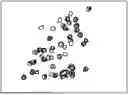
FIG. 1 is a diagrammatic, plan view showing a chip pattern generated by machining a reference alloy; and
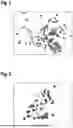
FIG. 2 is a plan view showing a chip pattern generated by machining a lead-free brass alloy of the invention.
DETAILED DESCRIPTION OF THE INVENTION
Referring now to the diagrammatic figures of the drawings in detail, it is seen that one exemplary embodiment of the lead-free brass alloy has the following composition: 57 wt % of Cu; 2.3 wt % of Mn; 1.0 wt % of Si; 0.1 wt % of Fe; 0.1 wt % of Sn; 2.0 wt % of Ni; less than 0.1 wt % of Pb; and a balance Zn and also unavoidable impurities.
The copper equivalent (Cu Eq) of the lead-free brass alloy is between 53% and 66% and may be calculated as follows on the basis of the alloy constituents:
If : Si free = Si · 3.26 - ( Fe + Mn ) < 0 and Si free 2 = Si · 3.26 - ( Fe + M n + Ni ) < 0 , then Cu Eq = Cu [ 100 - Fe - Mn - S i - Ni + ( ❘ "\[LeftBracketingBar]" Si free ❘ "\[RightBracketingBar]" × 0.7 ) + [ Ni × ( - 1 . 9 ) ] 1 0 0 ] If Si free = Si · 3.26 - ( Fe + Mn ) > 0 and Si free 2 = Si · 3.26 - ( Fe + M n + Ni ) < 0 Cu Eq = Cu [ 100 - Fe - Mn - S i - Ni + [ ❘ "\[LeftBracketingBar]" Si free 2 ❘ "\[RightBracketingBar]" × ( - 1 . 9 ) ] 1 0 0 ] If Si free = Si · 3.26 - ( Fe + Mn ) > 0 and Si free 2 = Si · 3.26 - ( Fe + M n + Ni ) > 0 Cu Eq = Cu [ 100 - Fe - Mn - S i - Ni + [ ❘ "\[LeftBracketingBar]" Si free 2 ❘ "\[RightBracketingBar]" 3.26 × 10 ] 1 0 0 ]
The meanings of the abbreviations are as follows:
-
- Cu: wt % of copper
- Fe: wt % of iron
- Mn: wt % of manganese
- Si: wt % of silicon
- Ni: wt % of nickel
The lead-free brass alloy can be processed into intermediates such as plates, tubes or rods, from which machine elements used with a lubricant can be produced. One example of these are axial piston pump components that are subject to friction. The lead-free brass alloy includes manganese silicides, which are responsible for the good frictional properties.
The machineability of the lead-free brass alloy is compared with a reference alloy. In the table below, the compositions of the lead-free brass alloy and of the reference alloy are set out:
| Lead-free brass alloy | Reference alloy (chip | |
| (chip pattern FIG. 2) | pattern FIG. 1) | |
| 57.2 wt % Cu, | 57.2 wt % Cu, | |
| 2.3 wt % Mn, | 2.2 wt % Mn, | |
| 1.0 wt % Si, | 1.0 wt % Si, | |
| 0.1 wt % Fe, | 0 wt % Fe, | |
| 0.05 wt % Sn, | 0 wt % Sn, | |
| 0 wt % Pb, | 0.66 wt % Pb. | |
The machining trial was carried out by using an indexable cutting insert of type CNMG120404FP HC5010, with a rotary speed of 3000 rpm, an advancement per rotation of 0.25 mm and a cutting depth of 1.25 mm. FIG. 1 shows the chip pattern of the lead-containing reference alloy; FIG. 2 shows, in comparison to this, the chip pattern of the lead-free brass alloy. It is apparent that the two alloys generate chips of approximately the same size and kind. The chip quality of the lead-free brass alloy is therefore satisfactory.
For the two alloys, the frictional coefficient was ascertained in identical trials. It was discovered that both the lead-free brass alloy and the lead-containing reference alloy possess virtually identical friction coefficients. The friction coefficient is about 0.012.
These experiments showed that the lead-free brass alloy can be used without limitations as a replacement of the lead-containing reference alloy.
The lead-free brass alloy can be used for producing various machine elements, especially machine elements which are subject to friction and are used with a lubricant. An example of these are axial piston pump components or sliding blocks.
Claims
1. A lead-free brass alloy, comprising:
55 to 59 wt % of Cu;
2.0 to 2.5 wt % of Mn;
0.65 to 1.5 wt % of Si;
<0.1 wt % of Pb; and
a balance Zn and unavoidable impurities.
2. The lead-free brass alloy according to claim 1, wherein a ratio of the weight percentages of Mn to Si corresponds to the following inequation:
2. ≤ Mn / Si ≤ 2 . 9 .
3. The lead-free brass alloy according to claim 1, wherein a copper equivalent is between 53% and 66%.
4. The lead-free brass alloy according to claim 1, which further comprises less than 0.2 wt % of Fe.
5. The lead-free brass alloy according to claim 1, which further comprises less than 0.5 wt % of Sn.
6. The lead-free brass alloy according to claim 1, which further comprises 1.5 to 2.6 wt % of Ni.
7. The lead-free brass alloy according to claim 1, which further comprises:
57 wt % of Cu;
2.3 wt % of Mn;
1.0 wt % of Si;
0.1 wt % of Fe;
0.1 wt % of Sn;
2.0 wt % of Ni;
<0.1 wt % of Pb; and
a balance Zn and unavoidable impurities.
8. The lead-free brass alloy according to claim 1, which further comprises less than 0.1 wt % of Al.
9. The lead-free brass alloy according to claim 1, which further comprises at least one of:
less than 0.25 wt % of Cr, or
less than 0.25 wt % of Ti, or
less than 0.25 wt % of Co.
10. A machine element, comprising the lead-free brass alloy according to claim 1.
Images & Drawings included:

Sources:
- United States Patent and Trademark Office - verify current appl. status at the USPTO↗
Recent applications in this class:
- » 20250197970 2025-06-19
LEAD-FREE BRASS ALLOY AND BEARING COMPONENT PRODUCED THEREFROM - » 20250163544 2025-05-22
HIGH PURITY COPPER-BASED ALLOYS FORMED USING INERT GAS - » 20250059630 2025-02-20
Components For Drinking Water Pipes, And Method For Manufacturing Same - » 20250019797 2025-01-16
COPPER-ZINC ALLOY - » 20240384374 2024-11-21
CU-ZN-ALLOY - » 20240093332 2024-03-21
FREE-CUTTING COPPER ALLOY AND METHOD FOR MANUFACTURING FREE-CUTTING COPPER ALLOY - » 20240002980 2024-01-04
BRASS ALLOY - » 20230357894 2023-11-09
WROUGHT ALLOY FOR A BEARING MATERIAL - » 20230160039 2023-05-25
WIRE ROD OF CU-ZN-SI BASED ALLOY OBTAINED BY UP-DRAWING CONTINUOUS CASTING - » 20230151457 2023-05-18
Lead-Free Brass Alloy