Waveguide Structure
US20250246790A1
2025-07-31
18/428,861
2024-01-31
✅ Patent granted
US 12,640,454 B2
2026-05-26
-
-
Quan Tra
Hamilton, Brook, Smith & Reynolds, P.C.
2044-04-17
Smart Summary: A coplanar waveguide (CPW) structure is designed for use in micro-electromechanical systems (MEMS). It consists of a glass substrate that supports a MEMS component on its surface. This substrate has metal layers that help create the MEMS device. The structure also includes a glass cap with metal layers on both the top and bottom. The CPW signal path and ground plane are formed on the substrate's surface, with the ground plane utilizing metal from both the cap and the substrate. 🚀 TL;DR
Abstract:
A coplanar waveguide (CPW) structure on a micro-electromechanical system (MEMS) device may comprise a glass device substrate that hosts a MEMS component on a first surface of the glass device substrate. The glass device substrate may have an associated set of metal layers that are used for fabrication of the MEMS component. The CPW structure may further comprise a glass cap having a top metal layer and a bottom metal layer. The CPW structure may further comprise a CPW signal path on the first surface of the glass device substrate, and a CPW ground plane on the first surface of the glass device substrate along a side of the CPW signal path. The CPW ground plane may comprise the bottom metal layer of the glass cap and at least one metal layer of the set of metal layers that are used for fabrication of the at least one MEMS component.
Inventors:
- Wei Ye 2 🇺🇸 Westford, MA, United States
- Hajime Terazawa 2 🇺🇸 Carlsbad, CA, United States
- Sanchien Hong 2 🇺🇸 Placentia, CA, United States
Assignee:
- MENLO MICROSYSTEMS, INC. 9 🇺🇸 Irvine, CA, United States
Applicant:
Interested in similar patents?
Get notified when new applications in this technology area are published.
Classification:
H01P3/08 » CPC main
Waveguides; Transmission lines of the waveguide type with two longitudinal conductors Microstrips; Strip lines
B81B7/0006 » CPC further
Microstructural systems; Auxiliary parts of microstructural devices or systems Interconnects
B81C1/00269 » CPC further
Manufacture or treatment of devices or systems in or on a substrate for manufacturing microsystems; Processes for packaging MEMS devices Bonding of solid lids or wafers to the substrate
H01P11/003 » CPC further
Apparatus or processes specially adapted for manufacturing waveguides or resonators, lines, or other devices of the waveguide type; Manufacturing waveguides or transmission lines of the waveguide type Manufacturing lines with conductors on a substrate, e.g. strip lines, slot lines
B81B7/00 IPC
Microstructural systems; Auxiliary parts of microstructural devices or systems
B81C1/00 IPC
Manufacture or treatment of devices or systems in or on a substrate
H01P11/00 IPC
Apparatus or processes specially adapted for manufacturing waveguides or resonators, lines, or other devices of the waveguide type
Description
BACKGROUND
Micro-electrical-mechanical system (MEMS) devices have utility in high-frequency applications such as switching of radio frequency (RF) signals. Transmission line architectures such as microstrip and stripline are often used to convey such high-frequency signals to and from the MEMS devices. A microstrip or stripline transmission line may, however, distort the signal being transmitted. Process limitations associated with the MEMS technology may preclude the use of transmission line technologies that are capable of conveying higher frequency signals with less distortion.
SUMMARY
In transmission line theory, a Coplanar Waveguide (CPW) has lower-loss performance at higher frequencies compare to, for example, microstrip. A coplanar waveguide situates a signal conductor and one or more reference ground conductors in a common plane. The signal conductor and the ground planes are situated on a dielectric substrate (e.g., glass). A Grounded Coplanar Waveguide (GCPW) includes all the elements of the CPW and adds a substrate ground plane. Conductive vias, disposed through the dielectric substrate, electrically couple the coplanar ground planes to the substrate ground plane.
The example embodiments described herein are directed to a CPW structure disposed in a micro-electrical-mechanical system (MEMS) device to convey a high-frequency signal (e.g., a radio frequency (RF) signal) from a port on the MEM device to a destination within the MEMS device (e.g., to an input or output of a MEMS switch). The overall signal to the switch may span a frequency of DC to 20 GHz, with the high-frequency signal spanning, for example, a range of 1 MHz to 20 GHz, although the upper end of the frequency range may extend to 300 GHz. The embodiments are also directed to an implementation of the coplanar ground plane on the CPW or GCPW structure that avoids interfering with electrical conductors that are disposed on the MEMS device.
In one aspect, a coplanar waveguide (CPW) structure of a micro-electromechanical system (MEMS) device may comprise a device substrate that hosts at least one MEMS component on a first surface of the device substrate. The device substrate may have an associated set of metal layers that are used for fabrication of the at least one MEMS component. The CPW structure may further comprise a cap having a top metal layer and a bottom metal layer and having a cavity into which the at least one MEMS component is hermetically scaled by the cap bonded to the first surface of the device substrate. The CPW structure may further comprise a CPW signal path disposed on the first surface of the device substrate, and a CPW ground plane disposed on the first surface of the device substrate along a side of the CPW signal path. The CPW ground plane may comprise (i) the bottom metal layer of the cap and (ii) at least one metal layer of the set of metal layers that are used for fabrication of the at least one MEMS component.
In an embodiment, two or more metal layers of the set of metal layers may form a bridge structure that enables crossing of the CPW ground plane and a signal line without electrical coupling of the CPW ground plane to the signal line. The two or more metal layers of the set of metal layers that are used to form a bridge structure may be a first metal layer, a trace plate layer, and a scal metal layer. The bridge structure may comprise two portions of the first metal layer disposed on either side of the signal line and a portion of the trace plate layer disposed on top of the two portions of the first metal layer. The seal metal layer may electrically couple the bridge structure to the bottom metal layer of the cap.
The cap may be a glass cap, and a through-glass via (TGV) in the glass cap may electrically couple the top metal layer to the bottom metal layer.
In another aspect, a structure on a micro-electromechanical system (MEMS) device that isolates two intersecting electrical paths may comprise a device substrate that hosts at least one MEMS component on a first surface of the device substrate. The device substrate may have a set of metal layers that are used for fabrication of the at least one MEMS component. The structure may further comprise a first electrical path disposed on the first surface of the glass device substrate that intersects a second electrical path, and a bridge structure in the first electrical path that spans the second electrical path. The bridge structure may comprise at least two metal layers of the set of metal layers used for fabrication of the at least one MEMS component.
The set of metal layers may comprise (i) a first metal layer, (ii) a trace plate layer, and (iii) a seal metal layer. The structure may further comprise a glass cap having a top metal layer and a bottom metal layer and having a cavity into which the at least one MEMS component is hermetically sealed by the glass cap bonded to the first surface of the glass device substrate. The first signal path may be a CPW signal path disposed on the first surface of the glass device substrate, and the second signal path may be a CPW ground plane disposed on the first surface of the glass device substrate along a side of the CPW signal path. The CPW ground plane may comprise the bottom metal layer of the glass cap and at least one metal layer of the set of metal layers that are used for fabrication of the at least one MEMS component.
A through-glass via (TGV) in the glass cap may electrically couple the top metal layer to the bottom metal layer. The two or more of the set of metal layers that are used to form a bridge structure may be a first metal layer and a trace plate layer. The bridge structure may comprise two portions of the first metal layer disposed on either side of the signal line and a portion of the trace plate layer disposed on top of the two portions of the first metal layer. The seal metal layer may electrically couple the bridge structure to the bottom metal layer of the glass cap.
In another aspect, a method of fabricating a micro-electromechanical system (MEMS) device may comprise hosting a MEMS component on a first surface of a glass device substrate. The glass device substrate may have an associated set of metal layers that are used for fabrication of the at least one MEMS component. The method may further comprise disposing a CPW signal path on the first surface of the glass device substrate, disposing a CPW ground plane on the first surface of the glass device substrate along a side of the CPW signal path, and bonding a glass cap to the glass device substrate. The glass cap may have a cap top metal layer and a cap bottom metal layer, and a cavity into which the at least one MEMS component is hermetically sealed when the glass cap is bonded to the first surface of the glass device substrate. The CPW ground plane may comprise (i) the bottom metal layer of the glass cap and (ii) at least one metal layer of the set of metal layers that are used for fabrication of the at least one MEMS component.
The method may further comprise using two or more of the set of metal layers to form a bridge structure that facilitates intersection of the CPW ground plane and a signal line without electrical coupling of the CPW ground plane to the signal line. The two or more of the set of metal layers that are used to form a bridge structure may be a first metal layer and a trace plate layer. The method may further comprise forming the bridge structure by disposing two portions of the first metal layer on either side of the signal line and disposing a portion of the trace plate layer on top of the two portions of the first metal layer. The method may further comprise coupling the bridge structure to the bottom metal layer of the glass cap with a seal metal layer that is used to seal the glass cap to the glass device substrate. The method may further comprise using a through-glass via to electrically coupling the cap top metal layer to the cap bottom metal layer.
BRIEF DESCRIPTION OF THE DRAWINGS
The patent or application file contains at least one drawing executed in color. Copies of this patent or patent application publication with color drawing(s) will be provided by the Office upon request and payment of the necessary fee.
The foregoing will be apparent from the following more particular description of example embodiments, as illustrated in the accompanying drawings in which like reference characters refer to the same parts throughout the different views. The drawings are not necessarily to scale, emphasis instead being placed upon illustrating embodiments.
FIG. 1A illustrates an implementation of a coplanar waveguide (CPW) structure according to an example embodiment.
FIG. 1B illustrates an implementation of a grounded coplanar waveguide (GCPW) structure according to an example embodiment.
FIG. 2A shows an RF signal path of an example CPW structure according to an example embodiment.
FIG. 2B identifies certain components of the bridge shown in FIG. 2A according to an example embodiment.
FIG. 3 illustrates an example set of the process layers of the bridge according to the invention.
FIG. 4A shows a side view of a bridge spanning a poly signal line according to an example embodiment.
FIG. 4B shows a top view of the bridge depicted in FIG. 4A.
FIGS. 5A and 5B show an alternative example embodiment of a CPW structure.
DETAILED DESCRIPTION
A description of example embodiments follows.
The example embodiments described herein are directed to a coplanar waveguide (CPW) structure, implemented in a micro-electrical-mechanical system (MEMS) device. The CPW structure serves as a transmission line for radio frequency (RF) and higher frequency signals. Through-glass vias (TGVs) that are connected to a ground plane may be “stitched” along a signal line to provide the CPW ground plane required for CPW functionality.
In transmission line theory, a Coplanar Waveguide (CPW) has lower-loss performance at higher frequencies compare to, for example, microstrip. A coplanar waveguide situates a signal conductor and one or more reference ground conductors in a common plane, as shown in FIG. 1A. As shown, the signal conductor 102 and the ground planes 104a, 104b are situated on a dielectric substrate 106 (e.g., glass). FIG. 1B illustrates a Grounded Coplanar Waveguide (GCPW) that includes all the elements of FIG. 1A and adds a substrate ground plane 108. Conductive vias 110, disposed through the dielectric substrate 106, electrically couple the coplanar ground planes 104a, 104b to the substrate ground plane 108.
The example MEMS device comprises a glass (e.g., fused silica) MEMS device substrate that hosts at least one MEMS component (e.g., a MEMS switch) and a glass (e.g., fused silica) MEMS device cap that is configured to be bonded to the MEMS device substrate. Although the device substrate and cap are glass in the example embodiment, other substrate and cap materials may alternatively be used. As used herein, a substrate “hosting” a component means that the substrate provides a platform upon which the component is securely mounted. The MEMS device cap has a cavity formed into a surface of the cap. The cavity is configured so that when the device cap is bonded to the device substrate, the one or more MEMS components are hermetically sealed within the cavity.
The CPW structure is configured to convey electrical signals at radio frequency (RF) frequencies or higher from a port of the MEMS device to the at least one component (e.g., a MEMS switch) within the MEMS device. The CPW structure of the described embodiments is implemented within the MEMS device without requiring modification to the process used to fabricate the MEMS device. As described in more detail herein, the CPW structure is constructed using only the materials and fabrication layers that are used to fabricate the MEMS device without the CPW structure.
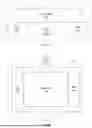
FIGS. 2A and 2B illustrate an example CPW structure on a MEMS device 200. FIG. 2A shows an RF signal path 202 of an example CPW structure. Signal path 202 corresponds to signal conductor 102 of FIGS. 1A and 1B and is electrically coupled to an external port of the MEMS device by the signal through glass via (TGV) 204. FIG. 2A also shows the CPW ground plane 206, which corresponds to the coplanar ground plane 104a or 104b in FIGS. 1A and 1B. The CPW ground plane 206 is electrically coupled to the ground plane on top of the glass cap (i.e., the cap top metal 310) by TGVs 208.
FIG. 2A further shows a polycrystalline silicon (poly) signal line 210 that lies in the path of the CPW ground plane 206. To allow crossing of the CPW ground plane 206 with the poly signal line 210 while avoiding electrically coupling the poly signal line 210 with the CPW ground plane 206, the path of the CPW ground plane 206 includes a bridge 212 over the poly signal line 210, as shown in FIG. 2A. The CPW ground plane 206 thus comprises cap bottom metal 312 and the bridge 212. The cap bottom metal 312 is electrically coupled to the cap top metal 310 by TGVs 208.
FIG. 2B shows certain components of the bridge 212. The bridge 212 is constructed only of layers available in the process used to fabricate the MEMS component itself. FIG. 3, which illustrates an example set of such layers, shows a MEMS device substrate 302 and a MEMS device cap 304 configured to be bonded to the MEMS device substrate 302 to form a hermetically sealed cavity 306 in which the MEMS components (not shown) reside. The MEMS device cap 304 comprises a cap glass substrate 308 on which a cap top metal 310 layer and a cap bottom metal 312 layer are disposed. A TGV 208 electrically couples the top metal 310 to the bottom metal 312. The MEMS device substrate 302 comprises a glass substrate body 320 (e.g., fused silica) upon which a set of layers may be disposed, for example a first metal layer 322, a trace plate layer 324, and a seal metal layer 326. The first metal layer 322 is used for making electrical connections to the MEMS device, and the trace plate layer 324 is used for electrical connection to the MEMS device that covers above (or on top of) the first metal layer 322.
As shown in FIGS. 4A and 4B, the bridge 212 comprises the first metal layer 322 and trace plate layer 324, which are layers of the original MEMS device topology (i.e., the various layers and geometries used to construct the MEMS component). FIG. 4A is a side view of the bridge 212, and FIG. 4B is a top view of the bridge 212. Two portions of the first metal layer 322 are disposed along opposite sides of a poly line 210, and a portion of trace plate layer 324 spans the two portions of the first metal layer 322, such that the poly line 210 is disposed in a space that is bounded on the sides by the portions of the first metal layer 322 and above by the trace plate layer 324. The bridge 212 and its constituent components are further illustrated in FIG. 2B.
As shown in FIG. 2A, the ground plane of CPW structure 206 comprises cap bottom metal 312 and TGVs that electrically couple the cap bottom metal 312 and the cap top metal 310, and the bridge 212. The cap bottom metal 312 is a component of the cap 304, and the bridge 212 comprises components of the MEMS device substrate. To make the CPW structure 206 a continuous ground, the cap bottom metal 312 is electrically coupled to the bridge 212. In the example embodiments, the cap bottom metal 312 is electrically coupled to the bridge 212 with seal metal layer 326. In the MEMS device 200, the seal metal layer 326 is used to bond the MEMS device cap 304 to the MEMS device substrate 302 using, for example, a thermo-compression process. Outside if its use for bonding the cap to the device substrate thereby hermetically sealing the device cavity, the use of seal metal layer 326 is limited to electrical coupling of the cap bottom metal to the bridge 212 structure, because an excessive use of scal metal 326 (i.e., beyond its use in bonding the cap to the device substrate) may lead to reduced yields of the device fabrication process.
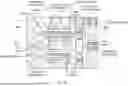
FIGS. 5A and 5B illustrate another example embodiment of a CPW structure on a MEMS device. FIG. 5A shows a similar CPW ground plane 206 and CPW signal path 202 as depicted in the examples of FIGS. 2A and 2B. FIG. 5B shows a cross-section of the architecture in FIG. 5A (section A-A), with the MEMS device cap 504 configured to be bonded to the MEMS device substrate 502. The cross sectional view shows trace plate metal segments 534, the Met1 layer 522, the cap bottom metal 512, the cap top metal 510, the TGV 508 electrically coupling the cap top metal 510 to the cap bottom metal 512, and the seal metal 526 used to electrically couple the cap bottom metal 512 to the cap top metal 510.
While example embodiments have been particularly shown and described, it will be understood by those skilled in the art that various changes in form and details may be made therein without departing from the scope of the embodiments encompassed by the appended claims.
Claims
What is claimed is:1. A coplanar waveguide (CPW) structure of a micro-electromechanical system (MEMS) device, comprising:
a device substrate that hosts at least one MEMS component on a first surface of the device substrate, the device substrate having an associated set of metal layers that are used for fabrication of the at least one MEMS component;
a cap having a top metal layer and a bottom metal layer, and having a cavity into which the at least one MEMS component is hermetically sealed by the cap bonded to the first surface of the device substrate;
a CPW signal path disposed on the first surface of the device substrate;
a CPW ground plane disposed on the first surface of the device substrate along a side of the CPW signal path, the CPW ground plane comprising (i) the bottom metal layer of the cap and (ii) at least one metal layer of the set of metal layers that are used for fabrication of the at least one MEMS component.
2. The CPW structure of claim 1, wherein two or more metal layers of the set of metal layers form a bridge structure that enables crossing of the CPW ground plane and a signal line without electrical coupling of the CPW ground plane to the signal line.
3. The CPW structure of claim 2, wherein the two or more metal layers of the set of metal layers that are used to form a bridge structure are a first metal layer, a trace plate layer, and a seal metal layer.
4. The CPW structure of claim 3, wherein the bridge structure comprises two portions of the first metal layer disposed on either side of the signal line and a portion of the trace plate layer disposed on top of the two portions of the first metal layer.
5. The CPW structure of claim 3, wherein the seal metal layer electrically couples the bridge structure to the bottom metal layer of the cap.
6. The CPW structure of claim 1, wherein the cap is a glass cap, and a through-glass via (TGV) in the glass cap electrically couples the top metal layer to the bottom metal layer.
7. A structure on a micro-electromechanical system (MEMS) device that isolates two intersecting electrical paths, comprising:
a device substrate that hosts at least one MEMS component on a first surface of the device substrate, the device substrate having a set of metal layers that are used for fabrication of the at least one MEMS component;
a first electrical path disposed on the first surface of the glass device substrate that intersects a second electrical path;
a bridge structure in the first electrical path that spans the second electrical path, the bridge structure comprising at least two metal layers of the set of metal layers used for fabrication of the at least one MEMS component.
8. The structure of claim 7, wherein the set of metal layers comprises (i) a first metal layer, (ii) a trace plate layer, and (iii) a seal metal layer.
9. The structure of claim 7, further comprising:
a glass cap having a top metal layer and a bottom metal layer, and having a cavity into which the at least one MEMS component is hermetically sealed by the glass cap bonded to the first surface of the glass device substrate;
wherein the first signal path is a CPW signal path disposed on the first surface of the glass device substrate, and the second signal path is a CPW ground plane disposed on the first surface of the glass device substrate along a side of the CPW signal path.
10. The structure of claim 9, wherein the CPW ground plane comprises the bottom metal layer of the glass cap and at least one metal layer of the set of metal layers that are used for fabrication of the at least one MEMS component.
11. The structure of claim 9, wherein a through-glass via (TGV) in the glass cap electrically couples the top metal layer to the bottom metal layer.
12. The structure of claim 8, wherein the two or more of the set of metal layers that are used to form a bridge structure are a first metal layer and a trace plate layer.
13. The structure of claim 12, wherein the bridge structure comprises two portions of the first metal layer disposed on either side of the signal line and a portion of the trace plate layer disposed on top of the two portions of the first metal layer.
14. The structure of claim 12, wherein the seal metal layer electrically couples the bridge structure to the bottom metal layer of the glass cap.
15. A method of fabricating a micro-electromechanical system (MEMS) device, comprising:
hosting a MEMS component on a first surface of a glass device substrate, the glass device substrate having an associated set of metal layers that are used for fabrication of the at least one MEMS component;
disposing a CPW signal path on the first surface of the glass device substrate;
disposing a CPW ground plane on the first surface of the glass device substrate along a side of the CPW signal path;
bonding a glass cap to the glass device substrate, the glass cap having a cap top metal layer and a cap bottom metal layer, and having a cavity into which the at least one MEMS component is hermetically sealed when the glass cap is bonded to the first surface of the glass device substrate;
the CPW ground plane comprises (i) the bottom metal layer of the glass cap and (ii) at least one metal layer of the set of metal layers that are used for fabrication of the at least one MEMS component.
16. The method of claim 15, further comprising using two or more of the set of metal layers to form a bridge structure that facilitates intersection of the CPW ground plane and a signal line without electrical coupling of the CPW ground plane to the signal line.
17. The CPW structure of claim 16, wherein the two or more of the set of metal layers that are used to form a bridge structure are a first metal layer and a trace plate layer.
18. The method of claim 17, further comprising forming the bridge structure by disposing two portions of the first metal layer on either side of the signal line and disposing a portion of the trace plate layer on top of the two portions of the first metal layer.
19. The method of claim 16, further comprising coupling the bridge structure to the bottom metal layer of the glass cap with a seal metal layer that is used to seal the glass cap to the glass device substrate.
20. The method of claim 15, further comprising using a through-glass via to electrically coupling the cap top metal layer to the cap bottom metal layer.
Images & Drawings included:





Sources:
- United States Patent and Trademark Office - verify current appl. status at the USPTO↗
Similar patent applications:
- » 20100164654
Waveguide structure, antenna apparatus that uses that waveguide structure, and vehicle radar apparatus in which a waveguide structure or an antenna apparatus is used - » 20160252678
Waveguide structure, waveguide coupling structure, and production method - » 20090180747
Method for effective refractive index trimming of optical waveguiding structures and optical waveguiding structures - » 20210159577
ARRANGEMENT FOR INTERCONNECTION OF WAVEGUIDE STRUCTURES AND A STRUCTURE FOR A WAVEGUIDE STRUCTURE INTERCONNECTING ARRANGEMENT - » 20110013874
Method for Effective Refractive Index Trimming of Optical Waveguiding Structures and Optical Waveguiding Structures - » 20190123411
Arrangement for Interconnection of Waveguide Structures and a Structure for a Waveguide Structure Interconnecting Arrangement - » 20100189402
Method for effective refractive index trimming of optical waveguiding structures and optical waveguiding structures - » 20070201803
Method for fabrication of multilayered optical waveguide structure and multilayered optical waveguide structure - » 20120013421
Waveguide structure, high frequency module including waveguide structure, and radar apparatus - » 20190273359
Waveguide structure and optical system with waveguide structure
Recent applications in this class:
- » 20260066515 2026-03-05
TRANSMITTING ELECTROMAGNETIC SIGNALS OVER AN INTERFACE TRANSITION REGION BETWEEN INTEGRATED CIRCUIT DEVICE PLANES - » 20260045673 2026-02-12
Half-Mode Waveguide Having An Asymmetric Structure For A Radar System - » 20260024905 2026-01-22
TRANSMISSION LINE STRUCTURE AND FABRICATING METHOD OF THE SAME - » 20250385417 2025-12-18
IMPEDANCE TRANSFORMER WITH NON-COUPLED TRANSMISSION LINE PATHS FOR HIGH FREQUENCY OPERATION - » 20250343341 2025-11-06
TRANSMISSION LINE AND ELECTRONIC DEVICE - » 20250062519 2025-02-20
ULTRA WIDEBAND BOARD-TO-BOARD TRANSITIONS FOR STRIPLINE RF TRANSMISSION LINES - » 20250015473 2025-01-09
TRANSITION CIRCUIT AND COMMUNICATION DEVICE - » 20240387972 2024-11-21
ADDITIVELY-MANUFACTURED ELECTRICAL TRANSMISSION LINE, AND METHOD OF MAKING - » 20240356190 2024-10-24
TRANSMISSION LINE - » 20240322413 2024-09-26
HIGH-FREQUENCY TRANSMISSION ELEMENT
Recent applications for this Assignee:
- » 20250260224 2025-08-14
SYSTEMS AND METHODS TO PROTECT A MEMS RELAY SWITCH SYSTEM - » 20240056068 2024-02-15
High Frequency Differential Single Pole Multiple Throw Switch Module - » 20230202831 2023-06-29
Distributed MEMS Switch Array Design with Multiple Input/Output Ports - » 20230064520 2023-03-02
MEMS device built on substrate with ruthenium based contact surface material - » 20210391228 2021-12-16
Materials and methods for passivation of metal-plated through glass vias - » 20210304973 2021-09-30
MEMS device built on substrate with ruthenium based contact surface material - » 20210273330 2021-09-02
Differential time delay shifter including a 1-N switch and transmission lines configured to provide adjustable delay shift - » 20200270120 2020-08-27
Full symmetric multi-throw switch using conformal pinched through via