OXADIAZOLE COMPOUND, PHARMACEUTICAL COMPOSITION COMPRISING SAME, AND USE THEREOF
US20250257060A1
2025-08-14
18/856,846
2023-04-14
Smart Summary: An oxadiazole compound has been created that can help treat certain diseases. It is part of a special mixture called a pharmaceutical composition. This compound works by blocking a protein known as HDAC6, which is involved in various health issues. By inhibiting this protein, the compound may help improve health conditions related to it. Researchers believe this could lead to new treatments for diseases where HDAC6 plays a role. 🚀 TL;DR
Abstract:
Disclosed are an oxadiazole compound having a structure of formula (I), a pharmaceutical composition comprising same, and the use thereof as an HDAC6 inhibitor.
Inventors:
- Tao ZHANG 2 🇨🇳 Suzhou, Jiangsu, China
- Guiping ZHANG 1 🇨🇳 Suzhou, Jiangsu, China
- Kuifeng WANG 1 🇨🇳 Suzhou, Jiangsu, China
- Jiapeng LI 1 🇨🇳 Suzhou, Jiangsu, China
- Faridoon . 1 🇨🇳 Suzhou, Jiangsu, China
- Jiyue ZHENG 1 🇨🇳 Suzhou, Jiangsu, China
- Tao LIU 1 🇨🇳 Suzhou, Jiangsu, China
- Chensheng TAN 1 🇨🇳 Suzhou, Jiangsu, China
- Xue DONG 1 🇨🇳 Suzhou, Jiangsu, China
Assignee:
- SUZHOU GENHOUSE BIO CO., LTD. 1 🇨🇳 Suzhou, Jiangsu, China
Applicant:
Interested in similar patents?
Get notified when new applications in this technology area are published.
Classification:
C07D417/14 » CPC main
Heterocyclic compounds containing two or more hetero rings, at least one ring having nitrogen and sulfur atoms as the only ring hetero atoms, not provided for by group containing three or more hetero rings
A61K31/428 » CPC further
Medicinal preparations containing organic active ingredients; Heterocyclic compounds having nitrogen as a ring hetero atom, e.g. guanethidine or rifamycins having five-membered rings with two or more ring hetero atoms, at least one of which being nitrogen, e.g. tetrazole; Thiazoles condensed with carbocyclic rings
A61K31/437 » CPC further
Medicinal preparations containing organic active ingredients; Heterocyclic compounds having nitrogen as a ring hetero atom, e.g. guanethidine or rifamycins having six-membered rings with one nitrogen as the only ring hetero atom ortho- or peri-condensed with heterocyclic ring systems the heterocyclic ring system containing a five-membered ring having nitrogen as a ring hetero atom, e.g. indolizine, beta-carboline
A61K31/4439 » CPC further
Medicinal preparations containing organic active ingredients; Heterocyclic compounds having nitrogen as a ring hetero atom, e.g. guanethidine or rifamycins having six-membered rings with one nitrogen as the only ring hetero atom; Non condensed pyridines; Hydrogenated derivatives thereof containing further heterocyclic ring systems containing a five-membered ring with nitrogen as a ring hetero atom, e.g. omeprazole
A61K31/444 » CPC further
Medicinal preparations containing organic active ingredients; Heterocyclic compounds having nitrogen as a ring hetero atom, e.g. guanethidine or rifamycins having six-membered rings with one nitrogen as the only ring hetero atom; Non condensed pyridines; Hydrogenated derivatives thereof containing further heterocyclic ring systems containing a six-membered ring with nitrogen as a ring heteroatom, e.g. amrinone
A61K31/497 » CPC further
Medicinal preparations containing organic active ingredients; Heterocyclic compounds having nitrogen as a ring hetero atom, e.g. guanethidine or rifamycins having six-membered rings with two nitrogen atoms as the only ring heteroatoms, e.g. piperazine; Non-condensed pyrazines containing further heterocyclic rings
A61K31/506 » CPC further
Medicinal preparations containing organic active ingredients; Heterocyclic compounds having nitrogen as a ring hetero atom, e.g. guanethidine or rifamycins having six-membered rings with two nitrogen atoms as the only ring heteroatoms, e.g. piperazine; Pyrimidines; Hydrogenated pyrimidines, e.g. trimethoprim not condensed and containing further heterocyclic rings
A61K31/5377 » CPC further
Medicinal preparations containing organic active ingredients; Heterocyclic compounds having nitrogen as a ring hetero atom, e.g. guanethidine or rifamycins having six-membered rings with at least one nitrogen and one oxygen as the ring hetero atoms, e.g. 1,2-oxazines 1,4-Oxazines, e.g. morpholine not condensed and containing further heterocyclic rings, e.g. timolol
C07D417/04 » CPC further
Heterocyclic compounds containing two or more hetero rings, at least one ring having nitrogen and sulfur atoms as the only ring hetero atoms, not provided for by group containing two hetero rings directly linked by a ring-member-to-ring-member bond
C07D471/04 » CPC further
Heterocyclic compounds containing nitrogen atoms as the only ring hetero atoms in the condensed system, at least one ring being a six-membered ring with one nitrogen atom, not provided for by groups - in which the condensed system contains two hetero rings Ortho-condensed systems
C07D513/04 » CPC further
Heterocyclic compounds containing in the condensed system at least one hetero ring having nitrogen and sulfur atoms as the only ring hetero atoms, not provided for in groups , or - in which the condensed system contains two hetero rings Ortho-condensed systems
Description
TECHNICAL FIELD
The present application relates to an oxadiazole compound, a pharmaceutical composition comprising the same, and use thereof as an HDAC6 inhibitor.
BACKGROUND
Histone deacetylases (HDACs) can catalyze the deacetylation of histones or other proteins, and play important roles in a variety of biological processes, primarily through transcriptional inhibition. HDACs in humans can be divided into four classes. Class I includes HDAC1, HDAC2, HDAC3, and HDAC8; class II includes HDAC4, HDAC5, HDAC6, HDAC7, HDAC9, and HDAC10; class III includes SIRT1, SIRT2, SIRT3, SIRT4, SIRT5, SIRT6, and SIRT7; class IV includes HDAC11. HDACs of class II can be further divided into subclasses IIa (HDAC4, HDAC5, HDAC7, and HDAC9) and IIb (HDAC6 and HDAC10). HDAC6 mainly catalyzes the deacetylation of non-histone substrates, such as α-tubulin and Hsp90. HDAC6 is involved in the pathological processes of a variety of diseases, including cancer, nervous system diseases, infections, cardiovascular diseases, immune diseases, and inflammation-related diseases.
In the field of tumor therapy, most HDAC inhibitors are broad-spectrum inhibitors, which are not selective for HDAC subtypes. The side effects of broad-spectrum inhibitors of the HDAC family are closely related to their inhibition of class I subtypes, particularly HDAC1 and HDAC2.
BRIEF SUMMARY
The present application provides an oxadiazole compound, which can be used as an HDAC6 inhibitor for preventing or treating an HDAC6-related disease. The compounds of the present application are highly selective for HDAC6, thus avoiding the side effects of broad-spectrum HDAC inhibitors. In addition, the compounds of the present invention have more excellent properties such as better physicochemical properties (e.g., solubility and physical and/or chemical stability), improved pharmacokinetic properties (e.g., improved bioavailability, improved metabolic stability, and suitable half-life and duration of action), improved safety (less toxicity (e.g., reduced cardiotoxicity) and/or fewer side effects), and less susceptibility to drug resistance.
One aspect of the present invention provides a compound, or a pharmaceutically acceptable salt, an ester, a stereoisomer, a tautomer, a polymorph, a solvate, a metabolite, an isotopically labeled compound or a prodrug thereof, wherein the compound has a structure of formula (I):
wherein
-
- L is selected from a direct bond, —C1-6 alkylene-, —C2-6 alkenylene-, and —C2-6 alkynylene-;
- X is CR6 or N;
- Y is CR4 or N;
- Z is CR5 or N;
- R1 is selected from H, halogen, —OH, —NH2, —CN, —NO2, C1-6 alkyl, C2-6 alkenyl, C2-6 alkynyl, C3-6 cyclohydrocarbyl, 3- to 10-membered heterocyclyl, C6-10 aryl, 5- to 14-membered heteroaryl, C6-12 aralkyl, —C(═O)Ra, —OC(═O)Ra, —OC(═O)NRaRb, —C(═O)ORa, —ORa, —SRa, —S(═O)Ra, —S(═O)2Ra, —S(═O)2NRaRb, —NRaRb, —C(═O)NRaRb, —NRa—C(═O)Rb, —NRa—C(═O)ORb, —NRa—S(═O)2—Rb, —NRa—C(═O)—NRaRb, —C1-6 alkylene-ORa, —C1-6 alkylene-NRaRb, and —O—C1-6 alkylene-NRaRb;
- R2 and R3 are each independently selected from H, halogen, —OH, —NH2, —CN, —NO2, C1-6 alkyl, C2-6 alkenyl, C2-6 alkynyl, C3-6 cyclohydrocarbyl, 3- to 10-membered heterocyclyl, C6-10 aryl, 5- to 14-membered heteroaryl, C6-12 aralkyl, —C(═O)Ra, —OC(═O)Ra, —OC(═O)NRaRb, —C(═O)ORa, —ORa, —SRa, —S(═O)Ra, —S(═O)2Ra, —S(═O)2NRaRb, —NRaRb, —C(═O)NRaRb, —NRa—C(═O)Rb, —NRa—C(═O)ORb, —NRa—S(═O)2—Rb, —NRa, —C(═O)—NRaRb, —C1-6 alkylene-ORa, —C1-6 alkylene-NRaRb, and —O—C1-6 alkylene-NRaRb; or R2 and R3 together form oxo (═O); or R2 and R3, together with the carbon atom to which they are attached, form C3-6 cyclohydrocarbyl or 3- to 10-membered heterocyclyl;
- R4, R5, and R6 are each independently selected from H, halogen, —OH, —NH2, —CN, —NO2, C1-6 alkyl, C2-6 alkenyl, C2-6 alkynyl, C3-6 cyclohydrocarbyl, 3- to 10-membered heterocyclyl, C6-10 aryl, 5- to 14-membered heteroaryl, C6-12 aralkyl, —C(═O)Ra, —OC(═O)Ra, —OC(═O)NRaRb, —C(═O)ORa, —ORa, —SRa, —S(═O)Ra, —S(═O)2Ra, —S(═O)2NRaRb, —NRaRb, —C(═O)NRaRb, —NRa—C(═O)Rb, —NRa—C(═O)ORb, —NRa—S(═O)2—Rb, —NRa, —C(═O)—NRaRb, —C1-6 alkylene-ORa, —C1-6 alkylene-NRaRb, and —O—C1-6 alkylene-NRaRb;
- Ra and Rb, at each occurrence, are each independently selected from H, C1-6 alkyl, C3-10 cyclohydrocarbyl, 3- to 10-membered heterocyclyl, C6-10 aryl, 5- to 14-membered heteroaryl, and C6-12 aralkyl;
- the alkyl, alkylene, alkenyl, alkenylene, alkynyl, alkynylene, cyclohydrocarbyl, heterocyclyl, aryl, heteroaryl, and aralkyl, at each occurrence, are each optionally substituted with one or more substituents independently selected from: halogen, —OH, ═O, —NH2, —CN, —NO2, C1-6 alkyl, C3-6 cyclohydrocarbyl, 3- to 10-membered heterocyclyl, C6-10 aryl, 5- to 14-membered heteroaryl, C6-12 aralkyl, —C(═O)Rc, —OC(═O)Rc, —OC(═O)NRcRd, —C(═O)ORc, —ORc, —SRc, —S(═O)Rc, —S(═O)2Rc, —S(═O)2NRcRd, —NRcRd, —C(═O)NRcRd, —NRc—C(═O)Rd, —NRc—C(═O)ORd, —NRc—S(═O)2—Rd, —NRc—C(═O)—NRcRd, —C1-6 alkylene-ORc, —C1-6 alkylene-NRcRd, and —O—C1-6 alkylene-NRcRd; the alkyl, cyclohydrocarbyl, heterocyclyl, aryl, heteroaryl, and aralkyl are further optionally substituted with one or more substituents independently selected from: halogen, —OH, ═O, —C(═O)O-tert-butyl, —NH2, —CN, —NO2, C1-6 alkyl, halogenated C1-6 alkyl, —OC1-6 alkyl, —O-halogenated C1-6 alkyl, C3-6 cyclohydrocarbyl, 3- to 10-membered heterocyclyl, C6-10 aryl, 5- to 14-membered heteroaryl, and C6-12 aralkyl;
- Rc and Rd, at each occurrence, are each independently selected from H, C1-6 alkyl, C3-10 cyclohydrocarbyl, 3- to 10-membered heterocyclyl, C6-10 aryl, 5- to 14-membered heteroaryl, and C6-12 aralkyl; the alkyl, cyclohydrocarbyl, heterocyclyl, aryl, heteroaryl, and aralkyl are further optionally substituted with one or more substituents independently selected from: halogen, —OH, ═O, —C(═O)O-tert-butyl, —NH2, —CN, —NO2, C1-6 alkyl, halogenated C1-6 alkyl, C3-6 cyclohydrocarbyl, 3- to 10-membered heterocyclyl, C6-10 aryl, 5- to 14-membered heteroaryl, and C6-12 aralkyl.
Another aspect of the present invention provides a pharmaceutical composition comprising the compound, or the pharmaceutically acceptable salt, the ester, the stereoisomer, the tautomer, the polymorph, the solvate, the metabolite, the isotopically labeled compound or the prodrug thereof of the present invention, and one or more pharmaceutically acceptable carriers, wherein the pharmaceutical composition is preferably a solid formulation, a liquid formulation, or a transdermal formulation.
Another aspect of the present invention provides use of the compound, or the pharmaceutically acceptable salt, the ester, the stereoisomer, the tautomer, the polymorph, the solvate, the metabolite, the isotopically labeled compound or the prodrug thereof of the present invention, or the pharmaceutical composition of the present invention in the preparation of a medicament for preventing or treating an HDAC6-related disease. Another aspect of the present invention provides the compound, or the pharmaceutically acceptable salt, the ester, the stereoisomer, the tautomer, the polymorph, the solvate, the metabolite, the isotopically labeled compound or the prodrug thereof of the present invention, or the pharmaceutical composition of the present invention, for use in the prevention or treatment of an HDAC6-related disease.
Another aspect of the present invention provides a method for preventing or treating an HDAC6-related disease, comprising administering to a subject in need thereof an effective amount of the compound, or the pharmaceutically acceptable salt, the ester, the stereoisomer, the tautomer, the polymorph, the solvate, the metabolite, the isotopically labeled compound or the prodrug thereof of the present invention, or the pharmaceutical composition of the present invention.
DETAILED DESCRIPTION OF THE INVENTION
Definitions
Unless otherwise defined below, all technical and scientific terms used herein are intended to have the same meaning as commonly understood by those of ordinary skill in the art. Reference to the techniques used herein is intended to refer to techniques commonly understood in the art, including those variations of or alternatives to techniques that would be apparent to those of ordinary skill in the art. Although the following terms are believed to be well understood by those skilled in the art, the following definitions are set forth to better explain the present invention.
The terms “include”, “comprise”, “have”, “contain” or “involve”, and other variant forms thereof herein, are inclusive or open-ended and do not exclude other unrecited elements or method steps.
As used herein, the term “alkylene” refers to saturated divalent hydrocarbyl, preferably saturated divalent hydrocarbyl having 1, 2, 3, 4, 5, or 6 carbon atoms, e.g., methylene, ethylene, propylene, or butylene.
As used herein, the term “alkyl” is defined as a linear or branched saturated aliphatic hydrocarbon. In some embodiments, the alkyl has 1-12, e.g., 1-6, carbon atoms. For example, as used herein, the term “C1-6 alkyl” refers to a linear or branched group of 1-6 carbon atoms (e.g., methyl, ethyl, n-propyl, isopropyl, n-butyl, isobutyl, sec-butyl, tert-butyl, n-pentyl, or n-hexyl) that is optionally substituted with 1 or more (such as 1-3) suitable substituents such as halogen (in which case the group is referred to as “haloalkyl”) (e.g., CF3, C2F5, CHF2, CH2F, CH2CF3, CH2Cl, —CH2CH2CF3, or the like). The term “C1-4 alkyl” refers to a linear or branched aliphatic hydrocarbon chain of 1-4 carbon atoms (i.e., methyl, ethyl, n-propyl, isopropyl, n-butyl, isobutyl, sec-butyl, or tert-butyl).
As used herein, the term “alkenyl” refers to linear or branched monovalent hydrocarbyl containing one or more double bonds and having 2-6 carbon atoms (“C2-6 alkenyl”). The alkenyl is, for example, —CH═CH2, —CH2CH═CH2, —C(CH3)═CH2, —CH2—CH═CH—CH3, 2-pentenyl, 3-pentenyl, 4-pentenyl, 2-hexenyl, 3-hexenyl, 4-hexenyl, 5-hexenyl, 2-methyl-2-propenyl, or 4-methyl-3-pentenyl. When the compound of the present invention contains the alkenyl, the compound may be present in a pure E (entgegen) form, a pure Z (zusammen) form, or any mixture thereof. The term “alkenylene” is a corresponding divalent group, including, for example, “C2-6 alkenylene”, “C2-4 alkenylene”, and the like, specific examples of which include, but are not limited to: —CH═CH—, —CH2CH═CH—, —C(CH3)═CH—, butenylene, pentenylene, hexenylene, and the like.
As used herein, the term “alkynyl” refers to monovalent hydrocarbyl containing one or more triple bonds and preferably having 2, 3, 4, 5, or 6 carbon atoms, e.g., ethynyl, 2-propynyl, 2-butynyl, 1,3-butadiynyl, and the like. The alkynyl is optionally substituted with one or more (such as 1-3) identical or different substituents. The term “alkynylene” is a corresponding divalent group, including, for example, “C2-8 alkynylene”, “C2-6 alkynylene”, “C2-4 alkynylene”, and the like, examples of which include, but are not limited to,
and the like. The alkynylene is optionally substituted with one or more (such as 1-3) identical or different substituents.
As used herein, the terms “cyclohydrocarbylene”, “cyclohydrocarbyl”, and “hydrocarbon ring” refer to a saturated (i.e., “cycloalkylene” and “cycloalkyl”) or unsaturated (i.e., having one or more double and/or triple bonds within the ring) monocyclic or polycyclic hydrocarbon ring having, for example, 3-10 (suitably 3-8, and more suitably 3-6) ring carbon atoms, including, but not limited to, cyclopropyl(ene) (ring), cyclobutyl(ene) (ring), cyclopentyl(ene) (ring), cyclohexyl(ene) (ring), cycloheptyl(ene) (ring), cyclooctyl(ene) (ring), cyclononyl(ene) (ring), cyclohexenyl(ene) (ring), and the like.
As used herein, the term “cycloalkyl” refers to a saturated monocyclic or polycyclic (such as bicyclic) hydrocarbon ring (e.g., monocyclic ring, such as cyclopropyl, cyclobutyl, cyclopentyl, cyclohexyl, cycloheptyl, cyclooctyl, or cyclononyl, or bicyclic ring, including spiro ring, fused ring, or bridged ring system (such as bicyclo[1.1.1]pentyl, bicyclo[2.2.1]heptyl, bicyclo[3.2.1]octyl, bicyclo[5.2.0]nonyl, or decahydronaphthyl) optionally substituted with 1 or more (such as 1-3) suitable substituents. The cycloalkyl has 3-15 carbon atoms. For example, the term “C3-6 cycloalkyl” refers to a saturated monocyclic or polycyclic (such as bicyclic) hydrocarbon ring of 3-6 ring-forming carbon atoms (e.g., cyclopropyl, cyclobutyl, cyclopentyl, or cyclohexyl) optionally substituted with 1 or more (such as 1-3) suitable substituents, for example, cyclopropyl substituted with methyl.
As used herein, the term “heterocyclyl” refers to a saturated or unsaturated monovalent monocyclic or bicyclic group having 2, 3, 4, 5, 6, 7, 8, or 9 carbon atoms in the ring and one or more (e.g., one, two, three, or four) heteroatom-containing groups selected from O, S, S(═O), S(═O)2, and NRa, wherein Ra represents a hydrogen atom or C1-6 alkyl or halogenated C1-6 alkyl; the heterocyclyl may be attached to the rest of the molecule through any of the carbon atoms or the nitrogen atom (if present). In particular, 3- to 10-membered heterocyclyl is a group having 3-10 carbon atoms and heteroatoms in the ring, for example, but not limited to, oxiranyl, aziridinyl, azetidinyl, oxetanyl, tetrahydrofuranyl, dioxolinyl, pyrrolidinyl, pyrrolidinonyl, imidazolidinyl, pyrazolidinyl, pyrrolinyl, tetrahydropyranyl, piperidinyl, morpholinyl, dithianyl, thiomorpholinyl, piperazinyl, or trithianyl.
As used herein, the term “heterocyclyl” encompasses fused ring structures, the point of attachment of which to other groups may be on any one of the fused ring structures. Thus, the heterocyclyl of the present invention also includes, but are not limited to, heterocyclyl-heterocyclyl, heterocyclyl-cycloalkyl, monoheterocyclyl-monoheterocyclyl, and monoheterocyclyl-monocycloalkyl, e.g., 3- to 7-membered (mono)heterocyclyl-3- to 7-membered (mono)heterocyclyl, 3- to 7-membered (mono)heterocyclyl-cycloalkyl, and 3- to 7-membered (mono)heterocyclyl-C4-6 (mono)cycloalkyl, examples of which include, but are not limited to, pyrrolidinyl-cyclopropyl, cyclopentyl-aziridinyl, pyrrolidinyl-cyclobutyl, pyrrolidinyl-pyrrolidinyl, pyrrolidinyl-piperidinyl, pyrrolidinyl-piperazinyl, piperidinyl-morpholinyl,
As used herein, the term “heterocyclyl” encompasses bridged heterocyclyl and spiro heterocyclyl.
As used herein, the term “bridged heterocyclic ring” refers to a cyclic structure containing one or more (e.g., 1, 2, 3, or 4) heteroatoms (e.g., oxygen atoms, nitrogen atoms, and/or sulfur atoms) formed by two saturated rings that share two ring atoms not directly connected, including, but not limited to, a 7- to 10-membered bridged heterocyclic ring, a 8- to 10-membered bridged heterocyclic ring, a 7- to 10-membered nitrogen-containing bridged heterocyclic ring, a 7- to 10-membered oxygen-containing bridged heterocyclic ring, a 7- to 10-membered sulfur-containing bridged heterocyclic ring and the like, e.g.
and the like. The “nitrogen-containing bridged heterocyclic ring”, “oxygen-containing bridged heterocyclic ring”, or “sulfur-containing bridged heterocyclic ring” optionally further contains one or more other heteroatoms selected from oxygen, nitrogen, and sulfur.
As used herein, the term “spiro heterocyclic ring” refers to a cyclic structure containing one or more (e.g., 1, 2, 3, or 4) heteroatoms (e.g., oxygen atoms, nitrogen atoms, sulfur atoms) formed by two or more saturated rings that share one ring atom, including, but not limited to, a 5- to 10-membered spiro heterocyclic ring, a 6- to 10-membered spiro heterocyclic ring, a 6- to 10-membered nitrogen-containing spiro heterocyclic ring, a 6- to 10-membered oxygen-containing spiro heterocyclic ring, a 6- to 10-membered sulfur-containing spiro heterocyclic ring, and the like, e.g.,
The “nitrogen-containing spiro heterocyclic ring”, “oxygen-containing spiro heterocyclic ring”, or “sulfur-containing spiro heterocyclic ring” optionally further contains one or more other heteroatoms selected from oxygen, nitrogen, and sulfur. The term “6- to 10-membered nitrogen-containing spiro heterocyclyl” refers to spiro heterocyclyl containing a total of 6-10 ring atoms, at least one of which is a nitrogen atom.
As used herein, the term “aryl” refers to an all-carbon monocyclic or fused polycyclic aromatic group having a conjugated π-electron system. For example, as used herein, the term “C6-14 aryl” refers to an aromatic group containing 6-14 carbon atoms, such as phenyl or naphthyl. The aryl is optionally substituted with 1 or more (such as 1-3) suitable substituents (e.g., halogen, —OH, —CN, —NO2, C1-6 alkyl, and the like).
The term “aralkyl” preferably refers to alkyl substituted with aryl, wherein the aryl and the alkyl are as defined herein. Generally, the aryl may have 6-14 carbon atoms and the alkyl may have 1-6 carbon atoms. Exemplary aralkyl includes, but is not limited to, benzyl, phenylethyl, phenylpropyl, and phenylbutyl.
As used herein, the term “heteroaryl” or “heteroaromatic ring” refers to a monocyclic or polycyclic aromatic group containing one or more identical or different heteroatoms, including monocyclic heteroaryl and a bicyclic or polycyclic ring system containing at least one heteroaromatic ring (an aromatic ring system containing at least one heteroatom), which may have 5, 6, 7, 8, 9, 10, 11, 12, 13, or 14 ring atoms, e.g., 5, 6, 7, 8, 9, or 10 ring atoms. The heteroatoms may be oxygen, nitrogen, or sulfur. The carbon atoms and heteroatoms on the heteroaryl are optionally substituted with oxo groups (e.g., to form C═O, S(═O), or S(═O)2).
As used herein, the term “5- to 10-membered heteroaryl” or “5- to 10-membered heteroaromatic ring” refers to heteroaryl (heteroaromatic ring) containing 5-10 (e.g., 5-6) ring atoms, including 5- to 10-membered nitrogen-containing heteroaryl, 5- to 10-membered oxygen-containing heteroaryl, 5- to 10-membered sulfur-containing heteroaryl, 5- to 6-membered nitrogen-containing heteroaryl, 5- to 6-membered oxygen-containing heteroaryl, 5- to 6-membered sulfur-containing heteroaryl, and the like. The “nitrogen-containing heteroaryl”, “oxygen-containing heteroaryl”, and “sulfur-containing heteroaryl” each optionally contain one or more other heteroatoms selected from oxygen, nitrogen, and sulfur, examples of which include, but are not limited to, thienyl, furanyl, pyrrolyl, oxazolyl, thiazolyl, imidazolyl, pyrazolyl, isoxazolyl, isothiazolyl, triazolyl, tetrazolyl, oxadiazolyl, thiadiazolyl, and the like, or pyridyl, pyridazinyl, pyrimidinyl, pyrazinyl, triazinyl, and the like, and 5- to 10-membered fused ring groups containing these groups.
As used herein, the term “heteroaryl” encompasses fused ring structures, the point of attachment of which to other groups may be on any one of the fused ring structures. Thus, the heteroaryl of the present invention also includes, but is not limited to, (mono)heteroaryl-(mono)heteroaryl, (mono)heteroaryl-(monocyclic) aryl, (mono)heteroaryl-(mono)heterocyclyl, and (mono)heteroaryl-(mono)cycloalkyl, e.g., 5- to 6-membered (mono)heteroaryl-5- to 6-membered (mono)heteroaryl, 5- to 6-membered (mono)heteroaryl-phenyl, 5- to 6-membered (mono)heteroaryl-5- to 6-membered (mono)heterocyclyl, or 5- to 6-membered (mono)heteroaryl-C4-6(mono)cycloalkyl (e.g., 5- to 6-membered heteroaryl-cyclobutyl, 5- to 6-membered heteroaryl-cyclopentyl, or 5- to 6-membered heteroaryl-cyclohexyl), examples of which include, but are not limited to, indolyl, isoindolyl, indazolyl, benzimidazole, quinolyl, isoquinolyl,
and the like.
As used herein, the term “halo” or “halogen” group is defined to include F, Cl, Br, or I.
As used herein, the term “alkylthio” refers to alkyl as defined above that is attached to the parent molecular moiety through a sulfur atom. Representative examples of C1-6 alkylthio include, but are not limited to, methylthio, ethylthio, tert-butylthio, and hexylthio.
As used herein, the term “nitrogen-containing heterocyclic ring” refers to a saturated or unsaturated monocyclic or bicyclic group having 2, 3, 4, 5, 6, 7, 8, 9, 10, 11, 12, or 13 carbon atoms and at least one nitrogen atom in the ring, which may also optionally contain one or more (e.g., one, two, three, or four) ring members selected from N, O, C═O, S, S═O, and S(═O)2. The nitrogen-containing heterocyclic ring is attached to the rest of the molecule through a nitrogen atom. The nitrogen-containing heterocyclic is preferably a saturated nitrogen-containing monocyclic ring. In particular, a 3- to 14-membered nitrogen-containing heterocyclic ring is a group having 3-14 carbon atoms and heteroatoms (at least one of which is a nitrogen atom) in the ring, including, but not limited to, a three-membered nitrogen-containing heterocyclic ring (e.g., aziridinyl), a four-membered nitrogen-containing heterocyclic ring (e.g., azetidinyl), a five-membered nitrogen-containing heterocyclic ring (e.g., pyrrolyl, pyrrolidinyl (pyrrolidine ring), pyrrolinyl, pyrrolidinonyl, imidazolyl, imidazolidinyl, imidazolinyl, pyrazolyl, or pyrazolinyl), a six-membered nitrogen-containing heterocyclic ring (e.g., piperidinyl (piperidine ring), morpholinyl, thiomorpholinyl, or piperazinyl), a seven-membered nitrogen-containing heterocyclic ring, and the like.
The term “substitution” means that one or more (e.g., one, two, three, or four) hydrogen atoms on a specified atom are replaced with a selection from the designated group, with the proviso that the normal valency of the atom specified under the present circumstances is not exceeded and that the replacement results in a stable compound. A combination of substituents and/or variables is permissible only if the combination results in a stable compound.
If a substituent is described as “optionally substituted with . . . ”, the substituent may be (1) unsubstituted or (2) substituted. If a carbon of a substituent is described as being optionally substituted with one or more of a list of substituents, then one or more hydrogen atoms on the carbon (to the extent of any hydrogen atoms present) may be replaced individually and/or together with an independently selected optional substituent.
If a nitrogen of a substituent is described as being optionally substituted with one or more of a list of substituents, then one or more hydrogen atoms on the nitrogen (to the extent any hydrogen atoms present) may each be replaced with an independently selected optional substituent.
If a substituent is described as being “independently selected from” one group, each substituent is selected independently of the other. Thus, each substituent may be identical to or different from another (other) substituent(s).
As used herein, the term “one or more” refers to 1 or more than 1, such as 2, 3, 4, 5, or 10, under reasonable conditions.
Unless otherwise indicated, as used herein, the point of attachment of a substituent may be from any suitable position of the substituent.
When a bond of a substituent is shown to pass through a bond connecting two atoms in the ring, the substituent may be bonded to any one of the ring-forming atoms in the substitutable ring.
The present invention also includes all pharmaceutically acceptable isotopically-labeled compounds, which are identical to the compounds of the present invention, except that one or more atoms are replaced by an atom having the same atomic number, but an atomic mass or mass number different from the atomic mass or mass number predominant in nature. Examples of isotopes suitable for incorporation into the compounds of the present invention include, but are not limited to, isotopes of hydrogen (e.g., deuterium (D, 2H), tritium (T, 3H)); isotopes of carbon (e.g., 11C, 13C, and 14C); isotopes of chlorine (e.g., 36Cl); isotopes of fluorine (e.g., 18F); isotopes of iodine (e.g., 123I and 125I); isotopes of nitrogen (e.g., 13N and 15N); isotopes of oxygen (e.g., 15O, 17O, and 18O); isotopes of phosphorus (e.g., 32P); and isotopes of sulfur (e.g., 35S). Certain isotopically-labeled compounds of the present invention (e.g., those into which a radioactive isotope is incorporated) can be used in drug and/or substrate tissue distribution studies (e.g., assays). The radioactive isotopes tritium (i.e., 3H) and carbon-14 (i.e., 14C) are particularly useful for this purpose because of their ease of incorporation and detection. Substitution with positron emitting isotopes (e.g., 11C, 18F, 15O, and 13N) can be used to examine substrate receptor occupancy in positron emission tomography (PET) studies. The isotopically labeled compounds of the present invention can be prepared by processes analogous to those described in the accompanying routes and/or in the examples and preparations by using an appropriate isotopically labeled reagent in place of the non-labeled reagent previously employed. The pharmaceutically acceptable solvates of the present invention include those in which the crystallization solvent may be isotopically substituted, e.g., D2O, acetone-d6, or DMSO-d6.
It should be understood that certain compounds of the present invention may be present in free form for use in therapy or, where appropriate, in the form of a pharmaceutically acceptable derivative thereof. In the present invention, the pharmaceutically acceptable derivatives include, but are not limited to, pharmaceutically acceptable salts, esters, solvates, metabolites or prodrugs, which upon administration to a patient in need thereof are capable of providing, directly or indirectly, the compound of the present invention or a metabolite or residue thereof. Thus, when reference is made herein to “the compound of the present invention”, it is also intended to encompass the various derivative forms of the compound described above.
The pharmaceutically acceptable salts of the compounds of the present invention include acid addition salts and base addition salts thereof.
A review of suitable salts is found in Stahl and Wermuth, “Handbook of Pharmaceutical Salts: Properties, Selection, and Use” (Wiley-VCH, 2002). Methods for preparing the pharmaceutically acceptable salts of the compounds of the present invention are known to those skilled in the art.
As used herein, the term “ester” refers to an ester derived from the compounds of formulas in the present application, including physiologically hydrolyzable esters (which can be hydrolyzed under physiological conditions to release the compounds of the present invention in the form of free acids or alcohols). The compounds of the present invention may themselves also be esters.
The compounds of the present invention may be present in the form of solvates (preferably hydrates), and the compounds of the present invention contain a polar solvent as a structural element of the crystal lattice of the compound, particularly, for example, water, methanol, or ethanol. The amount of the polar solvent, especially water, may be present in a stoichiometric or non-stoichiometric ratio.
Also included within the scope of the present invention are metabolites of the compounds of the present invention, i.e., substances formed in vivo upon administration of the compounds of the present invention.
Such products may result, for example, from oxidation, reduction, hydrolysis, amidation, deamidation, esterification, defatting, enzymatic digestion, and the like of the administered compound. Thus, the present invention includes metabolites of the compounds of the present invention, including compounds made by the process of contacting the compounds of the present invention with a mammal for a time sufficient to produce metabolites thereof.
Also included within the scope of the present invention are prodrugs of the compounds of the present invention, which are certain derivatives of the compounds of the present invention that may themselves have little or no pharmacological activity and, when administered into or onto the body, are converted to the compounds of the present invention having the desired activity, for example by hydrolysis. Generally, such prodrugs will be functional derivatives of the compounds, which are readily converted into desired therapeutically active compounds in vivo. Additional information on the use of prodrugs can be found in “Pro-drugs as Novel Delivery Systems”, volume 14, ACS Symposium Series (T. Higuchi and V. Stella) and “Bioreversible Carriers in Drug Design”, Pergamon Press, 1987 (E. B. Roche eds., American Pharmaceutical Association). The prodrugs of the present invention may be prepared, for example, by replacing appropriate functional groups present in the compounds of the present invention with certain moieties known to those skilled in the art as “pro-moieties”, for example as described in “Design of Prodrugs”, H. Bundgaard (Elsevier, 1985).
The present invention further encompasses the compounds of the present invention containing a protective group. In any process of preparing the compounds of the present invention, it may be necessary and/or desirable to protect sensitive or reactive groups on any of the molecules concerned, thereby forming a chemically protected form of the compounds of the present invention. This can be achieved by conventional protective groups, as described, for example, in Protective Groups in Organic Chemistry, ed. J. F. W. McOmie, Plenum Press, 1973; and T. W. Greene & P. G. M. Wuts, Protective Groups in Organic Synthesis, John Wiley & Sons, 1991, which are incorporated herein by reference. The protective groups may be removed at an appropriate subsequent stage by methods known in the art.
As used herein, the term “about” means within ±10%, preferably within ±5%, and more preferably within ±2% of the stated numerical value.
Compound
In some embodiments, the present invention provides a compound, or a pharmaceutically acceptable salt, an ester, a stereoisomer, a tautomer, a polymorph, a solvate, a metabolite, am isotopically labeled compound or a prodrug thereof, wherein the compound has a structure of formula (I):
wherein
-
- L is selected from a direct bond, —C1-6 alkylene-, —C2-6 alkenylene-, and —C2-6 alkynylene-;
- X is CR6 or N;
- Y is CR4 or N;
- Z is CR5 or N;
- R1 is selected from H, halogen, —OH, —NH2, —CN, —NO2, C1-6 alkyl, C2-6 alkenyl, C2-6 alkynyl, C3-6 cyclohydrocarbyl, 3- to 10-membered heterocyclyl, C6-10 aryl, 5- to 14-membered heteroaryl, C6-12 aralkyl, —C(═O)Ra, —OC(═O)Ra, —OC(═O)NRaRb, —C(═O)ORa, —ORa, —SRa, —S(═O)Ra, —S(═O)2Ra, —S(═O)2NRaRb, —NRaRb, —C(═O)NRaRb, —NRa—C(═O)Rb, —NRa—C(═O)ORb, —NRa—S(═O)2—Rb, —NRa—C(═O)—NRaRb, —C1-6 alkylene-ORa, —C1-6 alkylene-NRaRb, and —O—C1-6 alkylene-NRaRb;
- R2 and R3 are each independently selected from H, halogen, —OH, —NH2, —CN, —NO2, C1-6 alkyl, C2-6 alkenyl, C2-6 alkynyl, C3-6 cyclohydrocarbyl, 3- to 10-membered heterocyclyl, C6-10 aryl, 5- to 14-membered heteroaryl, C6-12 aralkyl, —C(═O)Ra, —OC(═O)Ra, —OC(═O)NRaRb, —C(═O)ORa, —ORa, —SRa, —S(═O)Ra, —S(═O)2Ra, —S(═O)2NRaRb, —NRaRb, —C(═O)NRaRb, —NRa—C(═O)Rb, —NRa—C(═O)ORb, —NRa—S(═O)2—Rb, —NRa, —C(═O)—NRaRb, —C1-6 alkylene-ORa, —C1-6 alkylene-NRaRb, and —O—C1-6 alkylene-NRaRb; or R2 and R3 together form oxo (═O); or R2 and R3, together with the carbon atom to which they are attached, form C3-6 cyclohydrocarbyl or 3- to 10-membered heterocyclyl;
- R4, R5, and R6 are each independently selected from H, halogen, —OH, —NH2, —CN, —NO2, C1-6 alkyl, C2-6 alkenyl, C2-6 alkynyl, C3-6 cyclohydrocarbyl, 3- to 10-membered heterocyclyl, C6-10 aryl, 5- to 14-membered heteroaryl, C6-12 aralkyl, —C(═O)Ra, —OC(═O)Ra, —OC(═O)NRaRb, —C(═O)ORa, —ORa, —SRa, —S(═O)Ra, —S(═O)2Ra, —S(═O)2NRaRb, —NRaRb, —C(═O)NRaRb, —NRa—C(═O)Rb, —NRa—C(═O)ORb, —NRa—S(═O)2—Rb, —NRa, —C(═O)—NRaRb, —C1-6 alkylene-ORa, —C1-6 alkylene-NRaRb, and —O—C1-6 alkylene-NRaRb;
- Ra and Rb, at each occurrence, are each independently selected from H, C1-6 alkyl, C3-10 cyclohydrocarbyl, 3- to 10-membered heterocyclyl, C6-10 aryl, 5- to 14-membered heteroaryl, and C6-12 aralkyl;
- the alkyl, alkylene, alkenyl, alkenylene, alkynyl, alkynylene, cyclohydrocarbyl, heterocyclyl, aryl, heteroaryl, and aralkyl, at each occurrence, are each optionally substituted with one or more substituents independently selected from: halogen, —OH, ═O, —NH2, —CN, —NO2, C1-6 alkyl, C3-6 cyclohydrocarbyl, 3- to 10-membered heterocyclyl, C6-10 aryl, 5- to 14-membered heteroaryl, C6-12 aralkyl, —C(═O)Rc, —OC(═O)Rc, —OC(═O)NRcRd, —C(═O)ORc, —ORc, —SRc, —S(═O)Rc, —S(═O)2Rc, —S(═O)2NRcRd, —NRcRd, —C(═O)NRcRd, —NRc—C(═O)Rd, —NRc—C(═O)ORd, —NRc—S(═O)2—Rd, —NRc—C(═O)—NRcRd, —C1-6 alkylene-ORc, —C1-6 alkylene-NRcRd, and —O—C1-6 alkylene-NRcRd; the alkyl, cyclohydrocarbyl, heterocyclyl, aryl, heteroaryl, and aralkyl are further optionally substituted with one or more substituents independently selected from: halogen, —OH, ═O, —C(═O)O-tert-butyl, —NH2, —CN, —NO2, C1-6 alkyl, halogenated C1-6 alkyl, —OC1-6 alkyl, —O-halogenated C1-6 alkyl, C3-6 cyclohydrocarbyl, 3- to 10-membered heterocyclyl, C6-10 aryl, 5- to 14-membered heteroaryl, and C6-12 aralkyl;
- Rc and Rd, at each occurrence, are each independently selected from H, C1-6 alkyl, C3-10 cyclohydrocarbyl, 3- to 10-membered heterocyclyl, C6-10 aryl, 5- to 14-membered heteroaryl, and C6-12 aralkyl; the alkyl, cyclohydrocarbyl, heterocyclyl, aryl, heteroaryl, and aralkyl are further optionally substituted with one or more substituents independently selected from: halogen, —OH, ═O, —C(═O)O-tert-butyl, —NH2, —CN, —NO2, C1-6 alkyl, halogenated C1-6 alkyl, C3-6 cyclohydrocarbyl, 3- to 10-membered heterocyclyl, C6-10 aryl, 5- to 14-membered heteroaryl, and C6-12 aralkyl.
In a preferred embodiment, the present invention provides a compound, or a pharmaceutically acceptable salt, an ester, a stereoisomer, a tautomer, a polymorph, a solvate, a metabolite, an isotopically labeled compound or a prodrug thereof, wherein the compound has a structure of formula (II) or formula (III):
wherein:
-
- L′ is —C1-6 alkylene-, wherein the alkylene is optionally substituted with one or more substituents independently selected from: —OH, C3-6 cyclohydrocarbyl, 3- to 10-membered heterocyclyl, C6-10 aryl, and 5- to 14-membered heteroaryl; preferably, the alkylene is optionally substituted with one or more substituents independently selected from: —OH, cyclopropyl, and phenyl optionally substituted with one or more halogen; the other groups are as defined herein.
In some embodiments, the present invention provides a compound of formula (I), formula (II), or formula (III), or a pharmaceutically acceptable salt, an ester, a stereoisomer, a tautomer, a polymorph, a solvate, a metabolite, an isotopically labeled compound or a prodrug thereof, wherein L is a direct bond or —C1-6 alkylene-, wherein the alkylene is optionally substituted with one or more substituents independently selected from: —OH, —OCH3, C1-6 alkyl, C3-6 cyclohydrocarbyl, 3- to 10-membered heterocyclyl, C6-10 aryl, and 5- to 14-membered heteroaryl; the alkyl, cyclohydrocarbyl, heterocyclyl, aryl, and heteroaryl are further optionally substituted with one or more halogen or C1-6 alkyl.
In a preferred embodiment, L is a direct bond, methylene, or ethylene, wherein the methylene and ethylene are optionally substituted with one or more substituents independently selected from: —OH, —OCH3, methyl, cyclopropyl, phenyl, pyrazolyl, pyridinyl, pyrimidinyl, and pyridazinyl; the groups described above are optionally further substituted with one or more halogen and/or methyl.
In a most preferred embodiment, L is a direct bond, —CH2—,
—CH2CH2—,
In some embodiments, the present invention provides a compound of formula (I), formula (II), or formula (III), or a pharmaceutically acceptable salt, an ester, a stereoisomer, a tautomer, a polymorph, a solvate, a metabolite, an isotopically labeled compound or a prodrug thereof, wherein X, Y, and Z are each independently CH, CF, or N.
In some embodiments, the present invention provides a compound of formula (I), formula (II), or formula (III), or a pharmaceutically acceptable salt, an ester, a stereoisomer, a tautomer, a polymorph, a solvate, a metabolite, an isotopically labeled compound or a prodrug thereof, wherein R1 is selected from C1-6 alkyl, C3-6 cyclohydrocarbyl, 3- to 10-membered heterocyclyl, C6-10 aryl, and 5- to 14-membered heteroaryl;
-
- the alkyl, cyclohydrocarbyl, heterocyclyl, aryl, and heteroaryl are each optionally substituted with one or more substituents independently selected from: halogen, —OH, —CN, C1-6 alkyl, C3-6 cyclohydrocarbyl, 3- to 10-membered heterocyclyl, C6-10 aryl, 5- to 14-membered heteroaryl, —C(═O)Rc, —OC(═O)Rc, —C(═O)ORc, —ORc, —S(═O)2Rc, —NRcRd, —C(═O)NRcRd, —NRc—C(═O)Rd, —NRc—C(═O)ORd, —NRc—S(═O)2—Rd, and —NRc—C(═O)—NRcRd; the alkyl, cyclohydrocarbyl, heterocyclyl, aryl, and heteroaryl described above are further optionally substituted with one or more substituents independently selected from: halogen (e.g., fluoro), —OH, ═O, C1-6 alkyl (e.g., methyl), halogenated C1-6 alkyl (e.g., trifluoromethyl), —OC1-6 alkyl (e.g., methoxy), and —O-halogenated C1-6 alkyl (e.g., trifluoromethoxy).
In some embodiments, the present invention provides a compound of formula (I), formula (II), or formula (III), or a pharmaceutically acceptable salt, an ester, a stereoisomer, a tautomer, a polymorph, a solvate, a metabolite, an isotopically labeled compound or a prodrug thereof, wherein Rc and Rd, at each occurrence, are each independently selected from H, C1-6 alkyl (e.g., methyl, ethyl, or tert-butyl), C3-10 cyclohydrocarbyl (e.g., cyclopropyl), 3- to 10-membered heterocyclyl (e.g., pyrrolidinyl, morpholinyl, or piperidinyl optionally substituted with F), C6-10 aryl (phenyl optionally substituted with F), and 5- to 14-membered heteroaryl (e.g., pyridinyl); the alkyl, cyclohydrocarbyl, heterocyclyl, aryl, and heteroaryl are further optionally substituted with one or more substituents independently selected from: halogen (e.g., F), —OH, halogenated C1-6 alkyl (e.g., trifluoromethyl), and C3-6 cyclohydrocarbyl (e.g., cyclopropyl).
In some embodiments, the present invention provides a compound of formula (I), formula (II), or formula (III), or a pharmaceutically acceptable salt, an ester, a stereoisomer, a tautomer, a polymorph, a solvate, a metabolite, an isotopically labeled compound or a prodrug thereof, wherein R1 is selected from methyl, cyclopropyl, cyclohexyl, tetrahydropyrrolyl, tetrahydropyranyl, piperidinyl, morpholinyl, phenyl, pyrazolyl, pyridinyl, pyrimidinyl, pyridazinyl, and imidazopyridinyl; the groups are each optionally substituted with one or more substituents independently selected from: —F, —Cl, —OH, —CN, —NH2, —CH3, —CF3, —CH2CF2CF3, —NHCH2CF3,
In some embodiments, the present invention provides a compound of formula (I), formula (II), or formula (III), or a pharmaceutically acceptable salt, an ester, a stereoisomer, a tautomer, a polymorph, a solvate, a metabolite, an isotopically labeled compound or a prodrug thereof, wherein R1 has the following structure:
wherein:
-
- U and V are each independently CR8eR8f, NR8g, or O;
- R8a, R8b, R8c, R8d, R8e, R8f, and R8g are each independently H or halogen (e.g., F);
- R9 is —ORc, —NRc—C(═O)Rd, —NRcRd, —NRc—C(═O)ORd, —NRc—S(═O)2—Rd, —NR—C(═O)—NRcRd, or —OC(═O)Rc.
In some embodiments, the present invention provides a compound of formula (I), formula (II), or formula (III), or a pharmaceutically acceptable salt, an ester, a stereoisomer, a tautomer, a polymorph, a solvate, a metabolite, an isotopically labeled compound, or a prodrug thereof, wherein R1 is selected from methyl,
In some embodiments, the present invention provides a compound of formula (I), formula (II), or formula (III), or a pharmaceutically acceptable salt, an ester, a stereoisomer, a tautomer, a polymorph, a solvate, a metabolite, an isotopically labeled compound or a prodrug thereof, wherein R2 and R3 are H or C1-6 alkyl, preferably H or methyl; or R2 and R3 together form oxo (═O); or R2 and R3, together with the carbon atom to which they are attached, form C3-6 cyclohydrocarbyl, preferably cyclopropyl.
In some embodiments, the present invention provides a compound of formula (I), formula (II), or formula (III), or a pharmaceutically acceptable salt, an ester, a stereoisomer, a tautomer, a polymorph, a solvate, a metabolite, an isotopically labeled compound or a prodrug thereof, wherein R4, R5, and R6 are each independently H or halogen; preferably, R4, R5, and R6 are each independently H or F.
The present invention encompasses the compounds resulting from any combination of the various embodiments.
In a preferred embodiment, the present invention provides a compound, or a pharmaceutically acceptable salt, an ester, a stereoisomer, a tautomer, a polymorph, a solvate, a metabolite, an isotopically labeled compound or a prodrug thereof, wherein the compound is selected from:
| No. | Structure |
| 1. | |
| 2. | |
| 3. | |
| 4. | |
| 5. | |
| 6. | |
| 7. | |
| 8. | |
| 9. | |
| 10. | |
| 11. | |
| 12. | |
| 13. | |
| 14. | |
| 15. | |
| 16. | |
| 17. | |
| 18. | |
| 19. | |
| 20. | |
| 21. | |
| 22. | |
| 23. | |
| 24. | |
| 25. | |
| 26. | |
| 27. | |
| 28. | |
| 29. | |
| 30. | |
| 31. | |
| 32. | |
| 33. | |
| 34. | |
| 35. | |
| 36. | |
| 37. | |
| 38. | |
| 39. | |
| 40. | |
| 41. | |
| 42. | |
| 43. | |
| 44. | |
| 45. | |
| 46. | |
| 47. | |
| 48. | |
| 49. | |
| 50. | |
| 51. | |
| 52. | |
| 53. | |
| 54. | |
| 55. | |
| 56. | |
| 57. | |
| 58. | |
| 59. | |
| 60. | |
| 61. | |
| 62. | |
| 63. | |
| 64. | |
| 65. | |
| 66. | |
| 67. | |
| 68. | |
| 69. | |
| 70. | |
| 71. | |
| 72. | |
| 73. | |
| 74. | |
| 75. | |
| 76. | |
| 77. | |
| 78. | |
| 79. | |
| 80. | |
| 81. | |
| 82. | |
| 83. | |
| 84. | |
| 85. | |
| 86. | |
| 87. | |
| 88. | |
| 89. | |
| 90. | |
| 91. | |
| 92. | |
| 93. | |
| 94. | |
| 95. | |
| 96. | |
| 97. | |
| 98. | |
| 99. | |
| 100. | |
| 101. | |
| 102. | |
| 103. | |
| 104. | |
| 105. | |
| 106. | |
| 107. | |
| 108. | |
| 109. | |
| 110. | |
| 111. | |
| 112. | |
| 113. | |
| 114. | |
| 115. | |
| 116. | |
| 117. | |
| 118. | |
| 119. | |
| 120. | |
| 121. | |
| 122. | |
| 123. | |
| 124. | |
| 125. | |
| 126. | |
| 127. | |
| 128. | |
| 129. | |
| 130. | |
| 131. | |
| 132. | |
| 133. | |
| 134. | |
| 135. | |
| 136. | |
| 137. | |
| 138. | |
| 139. | |
| 140. | |
| 141. | |
| 142. | |
| 143. | |
| 144. | |
| 145. | |
| 146. | |
| 147. | |
| 148. | |
| 149. | |
| 150. | |
| 151. | |
| 152. | |
| 153. | |
| 154. | |
| 155. | |
| 156. | |
| 157. | |
| 158. | |
| 159. | |
Pharmaceutical Composition and Treatment Method
In some embodiments, the present invention provides a pharmaceutical composition comprising a prophylactically or therapeutically effective amount of the compound, or the pharmaceutically acceptable salt, the ester, the stereoisomer, the tautomer, the polymorph, the solvate, the metabolite, the isotopically labeled compound or the prodrug thereof of the present invention, and one or more pharmaceutically acceptable carriers. The pharmaceutical composition is preferably a solid formulation, a liquid formulation, or a transdermal formulation.
In some embodiments, the present invention provides use of the compound, or the pharmaceutically acceptable salt, the ester, the stereoisomer, the tautomer, the polymorph, the solvate, the metabolite, the isotopically labeled compound or the prodrug thereof of the present invention, or the pharmaceutical composition of the present invention in the preparation of a medicament for preventing or treating an HDAC6-related disease.
In some embodiments, the present invention provides the compound, or the pharmaceutically acceptable salt, the ester, the stereoisomer, the tautomer, the polymorph, the solvate, the metabolite, the isotopically labeled compound or the prodrug thereof of the present invention, or the pharmaceutical composition of the present invention, for use in preventing or treating an HDAC6-related disease.
In some embodiments, the present invention provides a method for preventing or treating an HDAC6-related disease, comprising administering to a subject in need thereof an effective amount of the compound, or the pharmaceutically acceptable salt, the ester, the stereoisomer, the tautomer, the polymorph, the solvate, the metabolite, the isotopically labeled compound or the prodrug thereof of the present invention, or the pharmaceutical composition of the present invention.
The HDAC6-related disease includes, but is not limited to, cancer or proliferative diseases (e.g., lung cancer, colon cancer, breast cancer, prostate cancer, liver cancer, brain cancer, kidney cancer, ovarian cancer, stomach cancer, skin cancer, bone cancer, pancreatic cancer, glioma, glioblastoma, hepatocellular carcinoma, papillary renal carcinoma, head and neck squamous cell carcinoma, leukemia, lymphoma, myeloma, multiple myeloma, and solid tumors); Wilson's disease, spinocerebellar ataxia, prion disease, Parkinson's disease, Huntington's disease, amyotrophic lateral sclerosis, amyloidosis, Alzheimer's disease, Alexander's disease, alcoholic liver disease, cystic fibrosis, Pick's disease, spinal muscular atrophy, or Lewy body dementia; rheumatoid arthritis, osteoarthritis; rheumatoid spondylitis; psoriasis; inflammatory bowel disease; chronic inflammatory lung disease, eczema, asthma, ischemia/reperfusion injury, ulcerative colitis, acute respiratory distress syndrome, psoriatic arthritis, infectious arthritis, progressive chronic arthritis, arthritis deformans, osteoarthritis, traumatic arthritis, gouty arthritis, Reiter's syndrome, polychondritis, acute synovitis and spondylitis, glomerulonephritis, hemolytic anemia, aplastic anemia, idiopathic thrombocytopenic purpura, neutropenia, ulcerative colitis, Crohn's disease, host-versus-graft disease, graft-versus-host disease, allograft rejection, chronic thyroiditis, Graves' disease, scleroderma, diabetes, active hepatitis, primary biliary cirrhosis, myasthenia gravis, multiple sclerosis (MS), systemic lupus erythematosus, atopic dermatitis, contact dermatitis, sunburn of the skin, chronic renal insufficiency, Stevens-Johnson syndrome, idiopathic steatorrhea, sarcoidosis, Guillain-Barre syndrome, uveitis, conjunctivitis, keratoconjunctivitis, otitis media, periodontal disease, pulmonary interstitial fibrosis, asthma, bronchitis, rhinitis, sinusitis, pneumoconiosis, pulmonary insufficiency syndrome, emphysema, pulmonary fibrosis, or silicosis.
The term “pharmaceutically acceptable carrier” refers to a diluent, an adjuvant, an excipient, or a vehicle administered together with a therapeutic agent, which is suitable, within the scope of sound medical judgment, for contact with the tissues of humans and/or other animals without undue toxicity, irritation, allergic response, or other problems or complications commensurate with a reasonable benefit/risk ratio. Unless otherwise stated, the term “treat”, “treating”, or “treatment” as used herein means reversing, alleviating, or inhibiting the progression of a disorder or condition to which such term applies or one or more symptoms of such a disorder or condition, or preventing such a disorder or condition or one or more symptoms of such a disorder or condition.
As used herein, an “individual” includes a human or non-human animal. Exemplary human individuals include human individuals with a disease (e.g., a disease described herein), which are referred to as patients, or normal individuals. In the present invention, “non-human animals” include all vertebrates, e.g., non-mammals (e.g., birds, amphibians, reptiles) and mammals, e.g., non-human primates, livestock, and/or domesticated animals (e.g., sheep, dogs, cats, cows, pigs, etc.).
In another embodiment, the pharmaceutical composition of the present invention may further comprise one or more additional therapeutic or prophylactic agents.
Preparation Method
In some embodiments, the compounds of the present application are synthesized by the following reaction routes:
wherein R is halogen and the other groups are as defined herein.
wherein R is halogen; PG is an amino protecting group; R10 is —C(═O)Rd, —C(═O)ORd, —S(═O)2—Rd, or C(═O)—NRcRd; the other groups are as defined herein.
wherein R is halogen and the other groups are as defined herein.
wherein R is halogen; PG is an amino protecting group; R10 is —C(═O)Rd, —C(═O)ORd, —S(═O)2—R, or C(═O)—NRcRd; the other groups are as defined herein.
wherein the groups are as defined herein.
wherein PG is an amino protecting group; R10 is —C(═O)Rd, —C(═O)ORd, —S(═O)2—R, or C(═O)—NRcRd; the other groups are as defined herein.
Example
The present invention is further described below with reference to examples, but these examples are not intended to limit the scope of the present invention.
The abbreviations herein have the following meanings:
| Abbreviation | Full version |
| ACN/MeCN | Acetonitrile |
| AcOH | Acetic acid |
| AIBN | Azobisisobutyronitrile |
| BnSH | Benzyl mercaptan |
| CDCl3 | Deuterated chloroform |
| Cs2CO3 | Cesium carbonate |
| DAST | Diethylaminosulfur trifluoride |
| DCE | Dichloroethane |
| DCM | Dichloromethane |
| DIPEA/DIEA | N,N-diisopropylethylamine |
| DMF | N,N-dimethylformamide |
| DMSO | Dimethyl sulfoxide |
| EtOAc | Ethyl acetate |
| EtOH | Ethanol |
| HATU | O-(7-azabenzotriazol-l-yl)-N,N,N′,N′-tetramethyluronium |
| hexafluorophosphate | |
| LC-MS | Liquid chromatography-mass spectrometry |
| MeCN | Acetonitrile |
| MeOH | Methanol |
| NBS | N-bromosuccinimide |
| NCS | N-chlorosuccinimide |
| n-BuLi | n-Butyllithium |
| NMR | Nuclear magnetic resonance |
| Pd2(dba)3 | Tris(dibenzylideneacetone)dipalladium |
| Pd(dppf)Cl2 | 1,1′-Bis(diphenylphosphino)ferrocenepalladium |
| dichloride | |
| Pre-HPLC | Preparative high-performance liquid chromatography |
| SFC | Chiral resolution |
| TEA | Triethylamine |
| TFA | Trifluoroacetic acid |
| THF | Tetrahydrofuran |
| TLC | Thin-layer chromatography |
| TsCl | p-Toluenesulfonyl chloride |
| Xantphos | 4,5-Bis(diphenylphosphino)-9,9-dimethylxanthene |
| XPhosPd-G3 | Methanesulfonato(2-dicyclohexylphosphino- |
| 2′,4′,6′-triisopropyl-1,1′-biphenyl)(2′- | |
| amino-1,1′-biphenyl-2-yl)palladium(II) | |
Example 1: (Compound 1)
Step 1: (Compound 1b)
Compound 1a (5 g, 36.72 mmol) was dissolved in chlorosulfonic acid (17.11 g, 146.88 mmol). The mixture was stirred at 120° C. for 4 h under nitrogen atmosphere. After the reaction was completed as detected by LC-MS, the reaction solution was slowly poured into crushed ice, and the resulting mixture was filtered to give a solid, which was dried under vacuum to give 1b (7.3 g, 75%) as a white solid.
1H NMR (400 MHz, DMSO-d6) δ 8.35 (d, J=1.9 Hz, 1H), 7.80 (dd, J=7.8, 2.0 Hz, 1H), 7.29 (d, J=7.8 Hz, 1H), 2.61 (s, 3H).
Step 2: (Compound 1c)
Compound 1b (6.3 g, 26.85 mmol) was dissolved in oxalyl chloride (30 g, 236.35 mmol). The mixture was stirred at 70° C. for 2 h under nitrogen atmosphere. After the reaction was completed as detected by TLC, the reaction was quenched with methanol, and the reaction solution was concentrated under reduced pressure to remove excess oxalyl chloride. The residue was dissolved in dichloromethane (20 mL). The mixture was cooled to 0° C., and methanol (10 mL) was slowly added dropwise. After the addition, the mixture was stirred at 0° C. for 2 h. After the reaction was completed as detected by TLC, the reaction solution was concentrated and purified by column chromatography to give 1c (5.5 g, 82%) as a white solid.
1HNMR (400 MHz, CDCl3) δ 8.76 (d, J=1.8 Hz, 1H), 8.30 (dd, J=7.9, 1.8 Hz, 1H), 7.57 (d, J=8.0 Hz, 1H), 4.01 (s, 3H), 2.90 (s, 3H).
Step 3: (Compound 1d)
To carbon tetrachloride (30 mL) were added compound 1c (2 g, 8.04 mmol), N-bromosuccinimide (1.57 g, 8.84 mmol), and azobisisobutyronitrile (132.02 mg, 0.80 mmol). The mixture was stirred at 80° C. for 8 h under nitrogen atmosphere. After the reaction was completed as monitored by TLC, the reaction solution was diluted with ethyl acetate (100 mL) and water (30 mL). The separated organic phase was washed with saturated brine (30 mL×2), dried over anhydrous sodium sulfate, filtered, concentrated, and purified by column chromatography to give 1d (1.6 g, 35%) as a colorless oil.
1HNMR (400 MHz, CDCl3) δ 8.80-8.76 (m, 1H), 8.41 (dd, J=8.1, 1.8 Hz, 1H), 7.90 (d, J=8.1 Hz, 1H), 5.06 (s, 2H), 4.03 (s, 3H).
Step 4: (Compound 1e)
To a mixed solvent of acetonitrile (30 mL) and water (6 mL) were added compound 1d (1.6 g, 2.78 mmol), 1d′ (0.6, 2.78 mmol), and sodium carbonate (0.69 g, 5.56 mmol). The mixture was stirred at 25° C. for 30 min, and then heated to 80° C. and stirred for 4 h. The reaction solution was diluted with ethyl acetate (60 mL) and water (20 mL). The separated organic phase was washed with saturated brine (15 mL×2), dried over anhydrous sodium sulfate, filtered, concentrated, and purified by column chromatography to give 1e (1.02 g, 86%) as a colorless oil.
ESI m/z [M+H]+=425.1.
1HNMR (400 MHz, DMSO-d6) δ 8.24 (d, J=9.2 Hz, 2H), 7.81 (d, J=8.0 Hz, 1H), 6.72 (d, J=9.2 Hz, 1H), 4.79 (d, J=15.2 Hz, 1H), 4.58 (d, J=15.1 Hz, 1H), 3.92 (s, 3H), 3.55-3.41 (m, 2H), 1.88-1.66 (m, 5H), 1.51 (d, J=12.1 Hz, 1H), 1.27 (d, J=9.6 Hz, 2H), 1.10 (s, 9H).
Step 5: (Compound 1f)
To methanol (6 mL) were added compound 1e (500 mg, 1.18 mmol) and hydrazine hydrate (2.06 g, 32.92 mmol, 80%). The mixture was stirred in a sealed tube at 80° C. for 2 h. After the reaction was completed as detected by LC-MS, the reaction solution was concentrated under reduced pressure to remove excess methanol, filtered, and dried under vacuum to give if (495 mg, 99%) as a white solid.
ESI m/z [M+H]+=425.2.
Step 6: (Compound 20)
To dichloromethane (20 mL) were sequentially added compound 1f (495 mg, 1.17 mmol), triethylamine (0.53 g, 5.23 mmol), and difluoroacetic anhydride (0.45 g, 2.57 mmol). The mixture was stirred at 25° C. for 16 h. After the reaction was completed as detected by LC-MS, the reaction solution was concentrated and purified by column chromatography to give 20 (330 mg, 58%) as a white solid.
ESI m/z [M+H]+=485.1. 1H NMR (400 MHz, DMSO-d6) δ 8.40 (d, J=1.5 Hz, 1H), 8.36 (dd, J=8.1, 1.6 Hz, 1H), 7.93 (d, J=8.1 Hz, 1H), 7.59 (t, J=51.3 Hz, 1H), 6.76 (d, J=9.1 Hz, 1H), 4.83 (d, J=15.2 Hz, 1H), 4.62 (d, J=15.2 Hz, 1H), 3.54-3.41 (m, 2H), 1.84 (d, J=11.8 Hz, 2H), 1.73 (d, J=17.5 Hz, 3H), 1.52 (q, J=12.3, 11.5 Hz, 1H), 1.31 (d, J=12.2 Hz, 2H), 1.12 (s, 9H).
Step 7: (Compound 108)
Compound 20 (150 mg, 0.31 mmol) was dissolved in a 4 M solution of hydrogen chloride in ethyl acetate (20 mL). The solution was stirred at 25° C. for 2 h. After the reaction was completed as detected by LC-MS, the reaction solution was concentrated to give 108 (130 mg, 100%) as a white solid.
ESI m/z [M+H]+=385.1. 1H NMR (400 MHz, DMSO-d6) δ 8.40 (d, J=1.5 Hz, 1H), 8.36 (dd, J=8.1, 1.6 Hz, 1H), 7.93 (d, J=8.1 Hz, 1H), 7.59 (t, J=51.3 Hz, 1H), 6.76 (d, J=9.1 Hz, 1H), 4.83 (d, J=15.2 Hz, 1H), 4.62 (d, J=15.2 Hz, 1H), 3.47 (dtd, J=21.6, 10.8, 5.2 Hz, 2H), 1.84 (d, J=11.5 Hz, 2H), 1.73 (d, J=17.5 Hz, 3H), 1.52 (d, J=12.2 Hz, 1H), 1.31 (d, J=12.6 Hz, 2H).
Step 8: (Compound 1)
To N,N-dimethylformamide (3 mL) were sequentially added compound 108 (65 mg, 0.15 mmol), difluoropropionic acid (20 mg, 0.18 mmol), N,N-diisopropylethylamine (39 mg, 0.3 mmol), and HATU (74 mg, 0.20 mmol). The mixture was stirred at 25° C. for 2 h. After the reaction was completed as detected by LC-MS, the reaction solution was diluted with ethyl acetate (40 mL) and water (15 mL). The separated organic phase was washed with saturated brine (15 mL×2), dried over anhydrous sodium sulfate, filtered, concentrated, and purified by column chromatography to give 1 (26 mg, 36%) as a white solid.
ESI m/z [M+H]+=477.1. 1H NMR (400 MHz, DMSO-d6) δ 7.97 (d, J=9.3 Hz, 1H), 7.77 (d, J=1.5 Hz, 1H), 7.74 (dd, J=8.1, 1.6 Hz, 1H), 7.28 (d, J=8.1 Hz, 1H), 6.95 (t, J=51.3 Hz, 1H), 4.14-3.91 (m, 2H), 3.36-3.21 (m, 1H), 3.01 (td, J=11.0, 4.2 Hz, 1H), 1.28-1.03 (m, 6H), 0.87 (t, J=19.4 Hz, 3H), 0.71 (d, J=11.2 Hz, 2H).
Example 2: (Compound 2)
To a solution of compound 108 (71 mg, 0.17 mmol) and N,N-diisopropylethylamine (0.11 g, 0.85 mmol) in N,N-dimethylformamide (3 mL) was added dropwise difluoroacetic anhydride (59 mg, 0.34 mmol) at 25° C. After the dropwise addition, the mixture was stirred for 1 h. After the reaction was completed as detected by TLC, the reaction solution was diluted with ethyl acetate (40 mL) and water (15 mL). The separated organic phase was washed with saturated brine (15 mL×2), dried over anhydrous sodium sulfate, filtered, concentrated, and purified by column chromatography to give 2 (36.2 mg, 46%) as a white solid.
ESI m/z [M+H]+=463.0. 1H NMR (400 MHz, DMSO-d6) δ 8.76 (d, J=9.3 Hz, 1H), 8.44-8.31 (m, 2H), 7.92 (d, J=8.1 Hz, 1H), 7.60 (t, J=51.3 Hz, 1H), 6.03 (t, J=53.8 Hz, 1H), 4.76-4.62 (m, 2H), 3.99-3.87 (m, 1H), 3.61 (td, J=10.8, 4.5 Hz, 1H), 1.94-1.57 (m, 6H), 1.32 (d, J=25.9 Hz, 2H).
Example 3: (Compound 3)
Compound 108 (200 mg, 0.48 mmol) was dissolved in dichloromethane (4 mL), and N,N-diisopropylethylamine (156.27 mg, 0.50 mmol) and pentafluoropropionic anhydride (189.21 mg, 1.46 mmol) were added. The mixture was stirred at 10° C. for 14 h. After the reaction was completed as detected by LCMS, the reaction solution was poured into water, and the resulting mixture was extracted with dichloromethane. The organic phase was washed once with saturated brine, dried over anhydrous sodium sulfate, filtered, concentrated, and subjected to column chromatography to give 3 (23 mg, 9%) as a white solid.
ESI m/z [M−H]−=529.1. 1H NMR (400 MHz, DMSO-d6) δ 9.44 (d, J=9.1 Hz, 1H), 8.39 (d, J=1.5 Hz, 1H), 8.35 (dd, J=8.1, 1.6 Hz, 1H), 7.89 (d, J=8.1 Hz, 1H), 7.56 (t, J=51.3 Hz, 1H), 4.69 (d, J=15.4 Hz, 1H), 4.56 (d, J=15.4 Hz, 1H), 4.09-3.90 (m, 1H), 3.63 (td, J=11.0, 4.2 Hz, 1H), 1.78 (ddd, J=33.3, 16.2, 6.8 Hz, 6H), 1.34 (d, J=9.4 Hz, 2H).
Example 4: (Compound 4)
Compound 108 (200 mg, 0.48 mmol) was dissolved in dichloromethane (4 mL), and N,N-diisopropylethylamine (186.11 mg, 1.44 mmol) and cyclopropylsulfonyl chloride (80.98 mg, 0.58 mmol) were added. The mixture was stirred at 10° C. for 14 h. After the reaction was completed as detected by LCMS, the reaction solution was poured into water, and the resulting mixture was extracted with dichloromethane. The organic phase was washed once with saturated brine, dried over anhydrous sodium sulfate, filtered, concentrated, and purified by prep-TLC to give 4 (27 mg, 12%) as a white solid.
ESI m/z [M−H]−=487.2. 1H NMR (400 MHz, DMSO-d6) δ 8.41 (d, J=1.5 Hz, 1H), 8.36 (dd, J=8.1, 1.6 Hz, 1H), 7.89 (d, J=8.1 Hz, 1H), 7.57 (t, J=51.3 Hz, 1H), 7.11 (d, J=8.7 Hz, 1H), 4.71 (d, J=2.5 Hz, 2H), 3.52-3.37 (m, 2H), 2.18 (d, J=12.9 Hz, 1H), 1.92 (d, J=12.6 Hz, 1H), 1.72 (q, J=13.2, 12.2 Hz, 3H), 1.58-1.44 (m, 1H), 1.37-1.22 (m, 3H), 0.92-0.75 (m, 4H).
Example 5: (Compound 6)
Step 1 (compound 6b)
Compound 6a (1 g, 3.41 mmol) was dissolved in acetonitrile (20 mL), and diisopropylethylamine (1.1 g, 8.53 mmol) and compound 1d′ (730 mg, 3.41 mmol) were added. The mixture was stirred at room temperature for 30 min and then at 80° C. overnight. The reaction solution was washed with water, extracted with ethyl acetate, concentrated, and separated by column chromatography to give compound 6b (1.2 g, 82%).
Steps 2-5 (compound 6) Referring to steps 5-8 of the synthetic route of Example 1, 1e was replaced with compound 6b in step 5 and difluoropropionic acid was replaced with difluoroacetic acid in step 8 to give 6 as a while solid.
ESI m/z [M+H]+=477.0. 1H NMR (400 MHz, CDCl3) δ 8.54 (s, 1H), 8.50 (d, J=8.0 Hz, 1H), 8.17 (d, J=8.0 Hz, 1H), 6.89 (t, J=51.6 Hz, 1H), 6.29 (d, J=8.4 Hz, 1H), 5.61 (t, J=54.4 Hz, 1H), 4.62-4.60 (m, 1H), 3.77-3.74 (m, 1H), 2.50-2.41 (m, 1H), 2.22-2.16 (m, 1H), 2.04-2.01 (m, 1H), 1.93-1.87 (m, 1H), 1.81-1.78 (m, 1H), 1.47-1.40 (m, 1H), 1.37-1.28 (m, 2H).
Example 6: (Compound 7)
1. (Compound 7b)
A solution of compound 7a (5.0 g, 23.6 mmol) and 4,4-dimethylcyclohexanone (5.9 g, 47.2 mmol) in methanol (100 mL) was stirred at room temperature for 1 h. The mixture was cooled to 0° C., and sodium borohydride (3.6 g, 94.3 mmol) was added. The mixture was stirred at room temperature for 2 h. The reaction was quenched with water, and the reaction solution was extracted with ethyl acetate. The organic phase was dried, concentrated, and stirred in hydrogen chloride (4 M in dioxane, 20 mL) for 1 h. The mixture was filtered, and the filter cake was dissolved in water, neutralized with sodium bicarbonate, and extracted with ethyl acetate. The organic phase was dried and concentrated to give 7b (5 g, 66%) as a pale yellow oil.
1H NMR (400 MHz, CDCl3) δ 7.21-7.12 (m, 10H), 4.01 (d, J=7.2 Hz, 1H), 3.84 (d, J=7.6 Hz, 1H), 2.23-2.16 (m, 1H), 2.04 (s, 3H), 1.74-1.64 (m, 1H), 1.531.45 (m, 1H), 1.28-1.21 (m, 3H), 1.17-0.96 (m, 3H), 0.82 (d, J=14.4 Hz, 6H).
2. (Compound 7c)
To chloroform (200 mL) were added compound 7b (3.6 g, 11.1 mmol), N-Boc-O-p-toluenesulfonyl hydroxylamine (16.0 g, 55.7 mmol), sodium bicarbonate (23.4 g, 278.7 mmol), and benzoic acid (6.8 g, 55.7 mmol). The mixture was stirred at room temperature for 1 h, and cyclohexenone (16.0 g, 167.2 mmol) was added. The mixture was stirred at room temperature overnight. The reaction was quenched with water, and the reaction solution was extracted with dichloromethane. The organic phase was dried, concentrated, and separated by column chromatography to give 7c (8.5 g, 64%) as a yellow oil.
1H NMR (400 MHz, CDCl3) δ 3.10-3.05 (m, 1H), 2.89 (d, J=5.6 Hz, 1H), 2.54-2.46 (m, 1H), 2.27-2.19 (m, 1H), 2.10-1.91 (m, 2H), 1.83-1.74 (m, 1H), 1.68-1.60 (m, 1H), 1.45 (s, 9H).
3. (Compound 7d)
To a solution of compound 7c (2.5 g, 11.8 mmol) in dichloromethane (30 mL) was added DAST (12.3 g, 59.2 mmol) at 0° C. The mixture was stirred at room temperature for 16 h. The reaction solution was poured into ice water and extracted with dichloromethane. The organic phase was dried, concentrated, and separated by column chromatography to give 7d (5.0 g, 63%) as a yellow oil.
1H NMR (400 MHz, CDCl3) δ 2.88-2.81 (m, 2H), 1.99-1.64 (m, 4H), 1.62-1.55 (m, 2H), 1.45 (s, 9H).
4. (Compound 7e)
A solution of compound 7e (5.0 g, 21.5 mmol) in methanol/ammonia (100 mL) was stirred at room temperature for 3 days. The reaction solution was directly concentrated and separated by column chromatography to give 7e (1.8 g, 33%) as a white solid.
ESI m/z [M+H]+=251.1. 1H NMR (400 MHz, DMSO-d6) δ 6.89 (d, J=9.6 Hz, 1H), 3.50-3.35 (m, 1H), 2.62-2.53 (m, 1H), 2.06-1.93 (m, 1H), 1.85-1.59 (m, 3H), 1.48 (s, 2H), 1.39 (s, 9H), 1.36-1.15 (m, 2H).
5. (Compound 7)
Referring to the synthetic route for compound 1 in Example 1, 1d′ was replaced with compound 7e to give 7 as a white solid.
ESI m/z [M+H]+=512.9. 1H NMR (400 MHz, CDCl3) δ 8.50 (s, 1H), 8.38 (d, J=7.6 Hz, 1H), 7.43 (d, J=8.4 Hz, 1H), 7.06-6.78 (m, 2H), 4.69 (d, J=14.4 Hz, 1H), 4.50 (d, J=14.0 Hz, 1H), 4.44-4.33 (m, 1H), 3.96-3.90 (m, 1H), 2.38-2.34 (m, 1H), 2.24-2.19 (m, 1H), 1.97-1.92 (m, 1H), 1.88-1.67 (m, 3H), 1.56 (t, J=18.8 Hz, 3H).
Example 7: (Compound 10)
1. (Compound 10a)
To a solution of 7e (0.2 g, 0.8 mmol) in DMF (1 mL) were added HATU (0.3 g, 0.8 mmol) and N,N-diisopropylethylamine (0.31 g, 2.4 mmol). The mixture was stirred at 25° C. for 30 min, and difluoropropionic acid (0.11 g, 0.96 mmol) was added. The mixture was stirred at 20° C. for 16 h. Water was added to precipitate a solid, and the mixture was filtered to give 10a (0.2 g, 73%) as a white solid.
ESI m/z [M+H]+=343.1.
2. (Compound 10b)
To a solution of compound 10a (150 mg, 0.44 mmol) in dioxane (5 mL) was added a solution of hydrogen chloride in dioxane (1 mL, 4 M). The mixture was stirred at room temperature for 3 h. The reaction solution was directly concentrated to give 10b (0.1 g, 94%) as a yellow oil.
ESI m/z [M+H]+=243.1.
5. (Compound 10)
Referring to the synthetic route for compound 20 in Example 1, 1d′ was replaced with compound 10b in step 4 to give 10 as a white solid.
ESI m/z [M−H]−=511.1. 1H NMR (400 MHz, DMSO-d6) δ 8.70 (d, J=9.2 Hz, 1H), 8.48 (d, J=1.5 Hz, 1H), 8.40 (dd, J=8.1, 1.6 Hz, 1H), 7.95 (d, J=8.1 Hz, 1H), 7.60 (t, J=51.3 Hz, 1H), 4.88-4.73 (m, 2H), 4.30-4.19 (m, 1H), 4.18-4.04 (m, 1H), 2.25 (s, 1H), 2.02-1.83 (m, 3H), 1.54 (d, J=13.9 Hz, 2H), 1.38 (d, J=19.2 Hz, 3H).
Example 8: (Compound 21)
Referring to the synthetic route for compound 20 in Example 1, 1d′ was replaced with (1R,2R)-2-aminocyclohexan-1-ol in step 4 to give 21 as a white solid.
ESI m/z [M−H]−=384.1. 1H NMR (400 MHz, DMSO-d6) δ 8.40-8.33 (m, 2H), 7.88 (d, J=8.1 Hz, 1H), 7.56 (t, J=51.3 Hz, 1H), 4.84 (d, J=5.0 Hz, 1H), 4.72-4.59 (m, 2H), 3.59-3.49 (m, 2H), 1.94 (dd, J=27.5, 11.9 Hz, 2H), 1.65 (d, J=15.7 Hz, 2H), 1.37-1.14 (m, 4H).
Example 9: (Compound 24)
Referring to the synthetic method for compound 4 in Example 4, cyclopropylsulfonyl chloride was replaced with methanesulfonyl chloride to give 24 as a white solid.
ESI m/z [M+H]+=463.2. 1H NMR (400 MHz, DMSO-d6) δ 8.44 (d, J=1.5 Hz, 1H), 8.39 (dd, J=8.1, 1.6 Hz, 1H), 7.92 (d, J=8.2 Hz, 1H), 7.60 (t, J=51.3 Hz, 1H), 7.13 (d, J=8.3 Hz, 1H), 4.72 (s, 2H), 3.52-3.39 (m, 2H), 2.84 (s, 3H), 2.17-2.06 (m, 1H), 1.99-1.63 (m, 4H), 1.47 (dd, J=18.2, 7.6 Hz, 1H), 1.31 (q, J=16.0, 13.4 Hz, 2H).
Example 10: (Compound 39)
Referring to the synthetic method for compound 1 in Example 1, p-methylbenzoic acid was replaced with methyl 3-fluoro-4-methylbenzoate in step 1 to give 39 as a white solid.
ESI m/z [M+H]+=494.9. 1H NMR (400 MHz, DMSO-d6) δ 8.58 (d, J=9.6 Hz, 1H), 8.30 (d, J=0.8 Hz, 1H), 8.25-8.22 (m, 1H), 7.56 (d, J=51.2 Hz, 1H), 4.77-4.66 (m, 2H), 3.96-3.93 (m, 1H), 3.65-3.61 (m, 1 H), 1.86-1.70 (m, 6H), 1.54-1.44 (m, 3H), 1.34-1.23 (m, 2H).
Example 11: (Compound 40)
Referring to the synthetic method for compound 1 in Example 1, p-methylbenzoic acid was replaced with methyl 3-fluoro-4-methylbenzoate in step 1 and difluoropropionic acid was replaced with difluoroacetic acid in step 8 to give 40 as a white solid.
ESI m/z [M+H2O]+=498.0. 1H NMR (400 MHz, DMSO-d6) δ 8.73 (d, J=9.2 Hz, 1H), 8.29 (d, J=0.8 Hz, 1H), 8.23 (d, J=9.2 Hz, 1H), 7.57 (d, J=51.2 Hz, 1H), 6.00 (d, J=53.6 Hz, 1H), 4.78-4.67 (m, 2H), 3.98-3.93 (m, 1H), 3.61-3.55 (m, 1H), 1.87-1.63 (m, 6H), 1.35-1.23 (m, 2H).
Example 12: (Compound 47)
Referring to the synthetic method for compound 20 in Example 1, 1d′ was replaced with (3R,4R)-4-amino-3-hydroxytetrahydropyran in step 4 to give 47 as a white solid.
ESI m/z [M+H]+=387.9. 1H NMR (400 MHz, DMSO-d6) δ 8.40 (s, 1H), 8.38-8.36 (m, 1H), 7.89 (d, J=8.4 Hz, 1H), 7.70-7.44 (m, 1H), 5.23 (d, J=5.2 Hz, 1H), 4.77 (d, J=15.6 Hz, 1H), 4.65 (d, J=15.6 Hz, 1H), 3.91-3.82 (m, 2H), 3.69-3.57 (m, 2H), 3.42-3.34 (m, 1H), 3.15-3.09 (m, 1H), 1.94-1.90 (m, 2H).
Example 13: (Compound 49)
Referring to the synthetic method for compound 20 in Example 1, 1d′ was replaced with (3R,4R)-3-amino-4-hydroxytetrahydropyran in step 4 to give 49 as a white solid.
ESI m/z [M+H]+=387.9. 1H NMR (400 MHz, DMSO-d6) δ 8.40 (s, 1H), 8.38-8.36 (m, 1H), 7.89 (d, J=8.4 Hz, 1H), 7.70-7.44 (m, 1H), 5.23 (d, J=5.2 Hz, 1H), 4.77 (d, J=15.6 Hz, 1H), 4.65 (d, J=15.6 Hz, 1H), 3.91-3.82 (m, 2H), 3.69-3.57 (m, 2H), 3.42-3.34 (m, 1H), 3.15-3.09 (m, 1H), 1.94-1.90 (m, 2H).
Example 14: (Compound 55)
Referring to the synthetic method for compound 2 in Example 2, difluoroacetic anhydride was replaced with trifluoroacetic anhydride to give 55 as a white solid.
ESI m/z [M−H]−=479.2. 1H NMR (400 MHz, DMSO-d6) δ 9.36 (d, J=9.1 Hz, 1H), 8.46-8.33 (m, 2H), 7.93 (d, J=8.1 Hz, 1H), 7.60 (t, J=51.3 Hz, 1H), 4.73 (d, J=15.5 Hz, 1H), 4.63 (d, J=15.4 Hz, 1H), 4.03-3.90 (m, 1H), 3.69-3.59 (m, 1H), 1.82 (d, J=17.0 Hz, 4H), 1.73 (d, J=11.0 Hz, 2H), 1.36 (d, J=10.4 Hz, 2H).
Example 15: (Compound 60)
Referring to the synthetic method for compound 20 in Example 1, 1d′ was replaced with 3-chlorobenzylamine to give 60 as a white solid.
ESI m/z [M−H]−=410.0. 1H NMR (400 MHz, DMSO-d6) δ 8.51 (d, J=1.5 Hz, 1H), 8.41 (dd, J=8.1, 1.6 Hz, 1H), 7.90-7.86 (m, 1H), 7.75-7.45 (m, 5H), 4.54 (s, 2H), 4.53 (s, 2H).
Example 16: (Compound 61)
Referring to the synthetic method for compound 1 in Example 1, 1d′ was replaced with 7e in step 4 and difluoropropionic acid was replaced with difluoroacetic acid in step 8 to give 61 as a white solid.
ESI m/z [M+H]+=499.1. 1H NMR (400 MHz, DMSO-d6) δ 9.28 (d, J=9.7 Hz, 1H), 8.44 (d, J=1.5 Hz, 1H), 8.39 (dd, J=8.1, 1.6 Hz, 1H), 7.94 (d, J=8.2 Hz, 1H), 7.60 (t, J=51.3 Hz, 1H), 6.19 (t, J=53.7 Hz, 1H), 4.78 (d, J=15.6 Hz, 1H), 4.74-4.62 (m, 1H), 4.57 (d, J=15.5 Hz, 1H), 3.77 (td, J=11.7, 3.9 Hz, 1H), 2.26-1.99 (m, 3H), 1.87 (d, J=13.1 Hz, 2H), 1.64-1.48 (m, 1H).
Example 17: (Compound 62)
To a solution of compound 108 (100 mg, 0.65 mol) in acetonitrile (2 mL) were added N,N-diisopropylethylamine (100 mg, 0.78 mmol) and 2,2,2-trifluoroethyl trifluoromethanesulfonate (91 mg, 0.39 mmol) at 25° C. under stirring. Then the mixture was reacted at 80° C. for 16 h. The reaction solution was subjected to reversed-phase column chromatography to give 62 (50 mg, 41%) as a white solid.
ESI m/z [M+H]+=467.2. 1H NMR (400 MHz, DMSO-d6) δ 8.45 (d, J=1.5 Hz, 1H), 8.40 (dd, J=8.1, 1.6 Hz, 1H), 7.91 (d, J=8.1 Hz, 1H), 7.60 (t, J=51.3 Hz, 1H), 4.75-4.61 (m, 2H), 3.48 (t, J=9.0 Hz, 1H), 3.28 (s, 1H), 2.79-2.66 (m, 1H), 2.48-2.34 (m, 1H), 2.14-2.02 (m, 1H), 1.91 (d, J=11.6 Hz, 1H), 1.72 (s, 3H), 1.38 (d, J=12.2 Hz, 1H), 1.23 (d, J=9.4 Hz, 1H), 1.03 (d, J=6.4 Hz, 1H).
Example 18: (Compounds 70i-A, 70i-B, 70i-B-A, and 70i-B-B)
1 (Compound 70c)
To a solution of compound 70a (2.34 g, 25.25 mmol) in tetrahydrofuran (40 mL) was added n-butyllithium (16.8 mL, 1.5 M in THF) at −78° C. The mixture was stirred at this temperature for 1 h. Then a solution of compound 70b (3.46 g, 25.25 mmol) in tetrahydrofuran (20 mL) was slowly added dropwise. The mixture was stirred at this temperature for 3 h, then heated to room temperature and stirred overnight. The reaction was quenched with dilute hydrochloric acid, and the reaction solution was extracted with dichloromethane, concentrated, and separated by column chromatography to give compound 70c (2.0 g, 40%) as a white solid.
2. (Compound 70d)
To hydrochloric acid (6 M, 20 mL) was added compound 70c (1.94 g, 9.78 mmol) at 0° C., and an aqueous solution (5 mL) of sodium nitrite (1.69 g, 24.5 mmol) was slowly added. The mixture was stirred at room temperature for 2 h. The reaction solution was extracted with dichloromethane, concentrated, and separated by column chromatography to give 70d (1.51 g, 68%) as a yellow solid.
3. (Compound 70e)
To a solution of compound 70d (1.51 g, 6.68 mmol) in methanol (40 mL) was added sodium borohydride (304 mg, 8 mmol) at 0° C. The mixture was stirred for 2 h. The reaction solution was washed with water, extracted with dichloromethane, and concentrated to give 70e (1.5 g, 98%) as a yellow solid.
4. (Compounds 70f-P1 and 70f-P2)
A solution of compound 70e (1.5 g, 6.5 mmol) and Pd/C (750 mg, 10%) in methanol (200 mL) was stirred at 70° C. under hydrogen atmosphere (4.0 MPa) for 2 days. The reaction solution was filtered, and the filtrate was separated by column chromatography to give 70f-P1 (400 mg, 27%) and 70f-P2 (400 mg, 27%) as yellow oils.
70f-P1: 1H NMR (400 MHz, DMSO-d6): δ 8.51-8.47 (m, 2H), 7.79-7.68 (m, 2H), 7.46 (d, J=10.4 Hz, 1H), 4.79 (d, J=10.4 Hz, 1H), 7.26-7.20 (m, 2H), 5.47 (s, 1H), 4.91 (d, J=4.8 Hz, 1H), 4.25 (d, J=5.2 Hz, 1H), 1.94 (s, 2H).
70f-P2: 1H NMR (400 MHz, DMSO-d6): δ 8.48-8.41 (m, 2H), 7.68-7.59 (m, 2H), 7.23-7.15 (m, 4H), 5.46 (s, 1H), 4.79 (d, J=6.0 Hz, 1H), 4.19 (d, J=6.4 Hz, 1H), 2.04 (s, 2H).
5. (Compound 70i-A)
Referring to the synthetic route for compound 20 in Example 1, 1d′ was replaced with compound 70f-P1 to give 70i-A as a white solid, which was a racemate.
ESI m/z [M+H]+=485.9. 1H NMR (400 MHz, DMSO-d6) δ 8.51-8.47 (m, 2H), 8.35-8.33 (m, 2H), 7.93 (d, J=8.4 Hz, 1H), 7.70-7.43 (m, 4H), 7.24-7.18 (m, 3H), 5.96 (d, J=5.6 Hz, 1H), 5.61-5.58 (m, 1H), 5.44 (d, J=6.0 Hz, 1H), 5.14-5.01 (m, 2H).
6. (Compound 70i-B)
Referring to the synthetic route for compound 20 in Example 1, 1d′ was replaced with compound 70f-P2 to give 70i-B as a white solid, which was a racemate.
ESI m/z [M+H]+=485.9. 1H NMR (400 MHz, DMSO-d6) δ 8.58 (d, J=4.0 Hz, 1H), 8.38 (d, J=4.4 Hz, 1H), 8.30-8.28 (m, 1H), 8.24 (s, 1H), 7.89 (d, J=8.4 Hz, 1H), 7.80-7.74 (m, 2H), 7.66-7.40 (m, 3H), 7.37-7.31 (m, 1H), 7.22-7.19 (m, 1H), 6.99 (d, J=6.0 Hz, 1H), 5.47-5.44 (m, 1H), 5.18 (d, J=8.4 Hz, 1H), 5.14-5.02 (m, 2H).
7. (Compounds 70i-B-A and 70i-B-B)
Compound 70i-B (240 mg, 0.49 mmol) was subjected to chiral resolution (column: IC, mobile phase: Hex/EtOH/TFA 50/50/0.3, flow rate: 25 mL/min, and detection wavelength: 254 nM) to give compound 70i-B-A (retention time: 21.264 min, 50 mg, 21%) and compound 70i-B-B (retention time: 29.823 min, 50 mg, 21%) as white solids, both of which were chirally pure compounds.
70i-B-A: ESI m/z [M+H]+=486.0. 1H NMR (400 MHz, DMSO-d6) δ 8.59 (s, 1H), 8.40 (s, 1H), 8.29 (d, J=8.0 Hz, 1H), 8.25 (s, 1H), 7.89 (d, J=8.4 Hz, 1H), 7.80-7.74 (m, 2H), 7.66-7.63 (m, 1H), 7.53-7.41 (m, 2H), 7.33 (m, 1H), 7.23 (m, 1H), 6.03 (s, 1H), 5.47 (d, J=7.2 Hz, 1H), 5.19-5.00 (m, 3H). 70i-B-B: ESI m/z [M+H]+=485.9. 1H NMR (400 MHz, DMSO-d6) δ 8.58 (d, J=4.0 Hz, 1H), 8.38 (d, J=4.4 Hz, 1H), 8.30-8.28 (m, 1H), 8.25 (s, 1H), 7.89 (d, J=8.0 Hz, 1H), 7.80-7.75 (m, 2H), 7.66-7.41 (m, 3H), 7.34-7.31 (m, 1H), 7.23-7.20 (m, 1H), 6.01 (s, 1H), 5.46 (d, J=8.0 Hz, 1H), 5.20-5.02 (m, 3H).
Example 19: (Compound 72)
1. (Compound 72b)
Compound 72a (1 g, 6.21 mmol), 4-bromo-1-methyl-1H-pyrazole (1.98 g, 6.21 mmol), potassium carbonate (2.57 g, 18.6 mmol), and 1,1′-bis(diphenylphosphino)ferrocenepalladium dichloride (0.55 g, 0.75 mmol) were added to a mixed solution of dioxane (5 mL) and water (1 mL). The mixture was reacted with stirring at 80° C. for 16 h. The reaction solution was poured into water, extracted with dichloromethane, concentrated, and purified by column chromatography to give 72b (900 mg, 53%) as a white solid.
ESI m/z [M+H]+=274.1.
2. (Compound 72c)
Compound 72b (500 mg, 2.12 mmol) was added to a dichloromethane solution (5 mL), and trifluoroacetic acid (2 mL) was added with stirring. The mixture was reacted for 2 h. The reaction solution was concentrated to give 72c (300 mg, 95%) as a yellow oil.
3. (Compound 72) Referring to the synthetic route for compound 20 in Example 1, 1d′ was replaced with compound 72c for synthesis over three steps to give 72 as a white solid.
ESI m/z [M+H]+=444.2. 1H NMR (400 MHz, DMSO-d6) δ 8.61-8.57 (m, 1H), 8.46 (dd, J=8.1, 1.6 Hz, 1H), 8.06 (s, 1H), 7.91 (d, J=8.2 Hz, 1H), 7.79 (s, 1H), 7.77-7.61 (m, 3H), 7.54 (td, J=7.6, 1.4 Hz, 1H), 7.43 (td, J=7.6, 1.6 Hz, 1H), 4.83 (s, 2H), 3.81 (s, 3H).
Example 20: (Compounds 79i, 79i-A, and 79i-B)
1. (Compound 79c)
A mixture of compound 79a (2 g, 16.6 mmol), sodium tert-butoxide (3.8 g, 39.6 mmol), and XPhosPd-G3 (1.41 g, 1.66 mmol) in toluene (20 mL) was stirred under nitrogen atmosphere for 30 min, and then compound 79b (3.8 g, 18.2 mmol) was added. The mixture was reacted at 130° C. under microwave irradiation for 30 min. The reaction solution was washed with water and extracted with ethyl acetate. The organic phase was concentrated and separated by column chromatography to give 79c (1.05 g, 32%) as a white solid.
ESI m/z [M+H]+=201.0.
2. (Compound 79f)
Referring to the synthetic route for 70f in Example 18, 70c was replaced with 79c for synthesis over three steps to give 79f. The isomers of 79f were not separated, and the mixture was used in the next step.
3. (Compounds 79i, 79i-A, and 79i-B)
Referring to the synthesis conditions for compound 70i-A in Example 18, 70f-P1 was replaced with 79f for synthesis over 3 steps to give a mixture 79i, which was subjected to chiral resolution (column: IBN, mobile phase: Hex/EtOH 50/50, flow rate: 25 mL/min, and detection wavelength: 254 nM) to give 79i-A (isomer A, retention time: 15.494 min) and 79i-B (isomer B, retention time: 18.437 min) as white solids, both of which were chirally pure compounds. Meanwhile, the other two isomers 79i-C (retention time: 29.632 min) and 79i-D (retention time: 35.885 min) with lower yields were obtained.
79i-A (isomer A): ESI m/z [M+H]+=488.0. 1H NMR (400 MHz, DMSO-d6) δ 8.38 (s, 1H), 8.32 (d, J=8.0 Hz, 1H), 7.84 (d, J=8.4 Hz, 1H), 7.72 (s, 1H), 7.69-7.44 (m, 2H), 7.35-7.33 (m, 2H), 7.28-7.25 (m, 2H), 7.19-7.18 (m, 1H), 6.01 (d, J=4.8 Hz, 1H), 5.25-5.23 (m, 1H), 4.98 (d, J=4.0 Hz, 1H), 4.89 (d, J=16.0 Hz, 1H), 4.37 (d, J=16.4 Hz, 1H), 3.74 (s, 3H).
79i-B (isomer B): ESI m/z [M+H]+=488.0. 1H NMR (400 MHz, DMSO-d6) δ 8.38 (s, 1H), 8.33-8.31 (m, 1H), 7.84 (d, J=8.4 Hz, 1H), 7.72 (s, 1H), 7.69-7.44 (m, 2H), 7.35-7.34 (m, 2H), 7.28-7.25 (m, 2H), 7.19-7.18 (m, 1H), 6.02 (d, J=4.4 Hz, 1H), 5.26-5.23 (m, 1H), 4.98 (d, J=4.4 Hz, 1H), 4.89 (d, J=16.0 Hz, 1H), 4.37 (d, J=16.0 Hz, 1H), 3.74 (s, 3H).
Example 21: (Compounds 84j-A, 84j-B, 84j-A-A, and 84j-A-B)
1. (Compound 84b)
To an aqueous solution (14 mL) of tert-butyl carbamate (1.09 g, 9.3 mmol) and sodium p-toluenesulfonate (2.5 g, 14.0 mmol) was slowly added a solution of compound 84a (1.0 g, 9.3 mmol) in methanol (7 mL).
The mixture was stirred at room temperature for half an hour, and formic acid (0.72 mL) was added. The mixture was stirred at room temperature for 3 days. The reaction solution was directly filtered, and the filter cake was washed with water and dried to give 84b (1.7 g, 50%) as a white solid.
2. (Compound 84e)
To a solution of compound 84c (125 mg, 4.47 mmol), compound 84b (1.7 g, 4.7 mmol), and compound 84d (226 mg, 0.89 mmol) in tetrahydrofuran (20 mL) was added triethylamine (7.1 g, 70.3 mmol). The mixture was stirred at 60° C. under nitrogen atmosphere for 16 h. The reaction solution was cooled to 0° C., treated with saturated ammonium chloride, extracted with ethyl acetate, dried over sodium sulfate, and separated by column chromatography to give 84e (1.05 g, 70%) as a white solid.
ESI m/z [M+H]+=332.1.
3. (Compound 84f)
To a solution of compound 84e (1.84 g, 5.55 mmol) in methanol (40 mL) was slowly added sodium borohydride (253 mg, 6.67 mmol). The mixture was stirred at 0° C. for 1 h. A small amount of water was added to quench excess sodium borohydride, and the reaction solution was directly concentrated and separated by column chromatography to give 84f (1.75 g, 94%) as a yellow solid.
ESI m/z [M+H]+=334.1.
4. (Compound 84g)
To a solution of compound 84f (750 mg, 2.25 mmol) in dichloromethane (10 mL) was slowly added trifluoroacetic acid (5 mL). The mixture was stirred at room temperature for 1 h. The reaction solution was directly concentrated to give 84g (781 mg, trifluoroacetate) as a yellow oil.
ESI m/z [M+H]+=234.1.
5. (Compounds 84j-A and 84j-B)
Referring to the synthetic route for compound 20 in Example 1, 1d′ was replaced with compound 84g for synthesis to give 84j, which was separated by reversed-phase preparative chromatography to give diastereoisomers 84j-A and 84j-B as white solids.
84j-A (isomer A): ESI m/z [M+H]+=504.0. 1H NMR (400 MHz, DMSO-d6) δ 8.60 (d, J=4.0 Hz, 1H), 8.36 (s, 1H), 8.30-8.28 (m, 1H), 8.25 (s, 1H), 7.89 (d, J=8.0 Hz, 1H), 7.82-7.78 (m, 1H), 7.72-7.70 (m, 2H), 7.66-7.36 (m, 2H), 7.34-7.32 (m, 1H), 6.03 (d, J=6.0 Hz, 1H), 5.52-5.48 (m, 1H), 5.12 (d, J=8.8 Hz, 1H), 5.09-4.98 (m, 2H).
84j-B (isomer B): ESI m/z [M+H]+=503.9. 1H NMR (400 MHz, DMSO-d6) δ 8.53-8.47 (m, 2H), 8.35-8.33 (m, 2H), 7.93-7.91 (m, 1H), 7.71-7.43 (m, 4H), 7.27-7.21 (m, 2H), 6.08 (d, J=5.2 Hz, 1H), 5.67-5.64 (m, 1H), 5.38 (d, J=5.6 Hz, 1H), 5.10-4.99 (m, 2H).
6. (Compounds 84j-A-A and 84j-A-B)
Compound 84j-A (100 mg) was subjected to chiral resolution (column: IC, mobile phase: Hex/EtOH/TFA 40/60/0.3, flow rate: 25 mL/min, and detection wavelength: 254 nM) to give compound 84j-A-A (retention time: 15.293 min, 30 mg, 30%) and compound 84j-A-B (retention time: 21.500 min, 30 mg, 30%) as white solids, both of which were chirally pure compounds.
84j-A-A (isomer A-A): ESI m/z [M+H]+=504.0. 1H NMR (400 MHz, DMSO-d6) δ 8.60 (d, J=4.0 Hz, 1H), 8.36 (s, 1H), 8.30-8.28 (m, 1H), 8.25 (s, 1H), 7.88 (d, J=8.0 Hz, 1H), 7.82-7.77 (m, 1H), 7.72-7.70 (m, 2H), 7.66-7.41 (m, 2H), 7.35-7.32 (m, 1H), 6.03 (d, J=6.0 Hz, 1H), 5.52-5.48 (m, 1H), 5.11 (d, J=8.4 Hz, 1H), 5.09-4.98 (m, 2H).
84j-A-B (isomer A-B): ESI m/z [M+H]+=504.0. 1H NMR (400 MHz, DMSO-d6) δ 8.60 (d, J=4.0 Hz, 1H), 8.36 (s, 1H), 8.30-8.28 (m, 1H), 8.25 (s, 1H), 7.89 (d, J=8.0 Hz, 1H), 7.82-7.78 (m, 1H), 7.72-7.70 (m, 2H), 7.66-7.41 (m, 2H), 7.35-7.32 (m, 1H), 6.03 (d, J=6.0 Hz, 1H), 5.52-5.48 (m, 1H), 5.13-4.98 (m, 3H).
Example 22: (Compounds 88j-A, 88j-B, 88j-A-A, and 88j-A-B)
1. (Compounds 88j-A and 88j-B)
Referring to the synthetic route for compound 84j in Example 21, 84a was replaced with the compound 5-fluoropyridine-2-formaldehyde, and finally, the product was separated by reversed-phase preparative chromatography to give diastereoisomers 88j-A and 88j-B as white solids.
88j-A (isomer A): ESI m/z [M+H]+=521.9. 1H NMR (400 MHz, DMSO-d6) δ 8.59 (d, J=3.2 Hz, 1H), 8.37 (d, J=1.6 Hz, 1H), 8.31-8.29 (m, 1H), 8.26 (s, 1H), 7.88 (d, J=8.4 Hz, 1H), 7.77-7.70 (m, 3H), 7.67-7.41 (m, 2H), 6.02 (d, J=5.6 Hz, 1H), 5.49-5.45 (m, 1H), 5.17 (d, J=8.8 Hz, 1H), 5.07-4.96 (m, 2H).
88j-B (isomer B): ESI m/z [M+H]+=522.1. 1H NMR (400 MHz, DMSO-d6) δ 8.51 (d, J=3.2 Hz, 1H), 8.47 (d, J=2.8 Hz, 1H), 8.36-8.34 (m, 2H), 7.94 (d, J=8.4 Hz, 1H), 7.69-7.43 (m, 4H), 7.35-7.32 (m, 1H), 6.10 (d, J=5.2 Hz, 1H), 5.62-5.59 (m, 1H), 5.42 (d, J=6.0 Hz, 1H), 5.09-4.99 (m, 2H).
2. (Compounds 88j-A-A and 88j-A-B)
Compound 88j-A (100 mg) was subjected to chiral resolution (column: IC, mobile phase: Hex/EtOH/TFA 40/60/0.3, flow rate: 25 mL/min, and detection wavelength: 254 nM) to give compounds 88j-A-A (retention time: 10.727 min, 30 mg, 30%) and 88j-A-B (retention time: 17.608 min, 20 mg, 20%) as white solids, both of which were chirally pure compounds.
88j-A-A (isomer A-A): ESI m/z [M+H]+=521.9. 1H NMR (400 MHz, DMSO-d6) δ 8.59 (d, J=2.8 Hz, 1H), 8.37 (d, J=1.6 Hz, 1H), 8.31-8.29 (m, 1H), 8.25 (s, 1H), 7.88 (d, J=8.4 Hz, 1H), 7.76-7.69 (m, 3H), 7.66-7.41 (m, 2H), 6.01 (d, J=5.6 Hz, 1H), 5.48-5.44 (m, 1H), 5.16 (d, J=8.4 Hz, 1H), 5.06-4.95 (m, 2H).
88j-A-B (isomer A-B): ESI m/z [M+H]+=521.9. 1H NMR (400 MHz, DMSO-d6) δ 8.59 (d, J=2.4 Hz, 1H), 8.37 (s, 1H), 8.31-8.29 (m, 1H), 8.25 (s, 1H), 7.88 (d, J=8.0 Hz, 1H), 7.76-7.69 (m, 3H), 7.66-7.41 (m, 2H), 6.02 (d, J=6.0 Hz, 1H), 5.48-5.44 (m, 1H), 5.17 (d, J=8.4 Hz, 1H), 5.06-4.95 (m, 2H).
Example 23: (Compound 92)
Referring to the synthetic method for compound 4 in Example 4, cyclopropylsulfonyl chloride was replaced with methyl chloroformate to give 92 as a white solid.
ESI m/z [M+H]+=443.1. 1H NMR (400 MHz, DMSO-d6) δ 8.38-8.34 (m, 2H), 7.98 (d, J=4 Hz, 1H), 7.57 (t, 1H), 7.03 (d, J=4.2 Hz, 1H), 4.68 (s, 1H), 3.50-3.45 (m, 2H) 3.31 (s, 3H), 1.89-1.70 (m, 5H), 1.51-1.49 (m, 1H), 1.28-1.24 (m, 2H).
Example 24: (Compound 93)
Referring to the synthetic method for compound 4 in Example 4, cyclopropylsulfonyl chloride was replaced with dimethylcarbamoyl chloride to give 93 as a white solid.
ESI m/z [M+H]+=456.1. 1H NMR (400 MHz, DMSO-d6) δ 8.37-8.33 (m, 2H), 7.87 (d, J=4 Hz, 1H), 7.57 (t, 1H), 5.99 (d, J=3.6 Hz, 1H), 4.65 (s, 1H), 3.76-3.73 (m, 1H), 3.57-3.56 (m, 1H), 2.63 (s, 6H), 1.85-1.70 (m, 5H), 1.55-1.52 (m, 1H), 1.30-1.24 (m, 2H).
Example 25: (Compound 94)
Referring to the synthetic method for compound 4 in Example 4, cyclopropylsulfonyl chloride was replaced with methylcarbamoyl chloride to give 94 as a white solid.
ESI m/z [M+H]+=442.1. 1H NMR (400 MHz, DMSO-d6) δ 8.39-8.35 (m, 2H), 7.91 (d, J=8 Hz, 1H), 7.59 (t, 1H), 5.77 (d, J=12 Hz, 1H), 4.64 (d, J=5.2 Hz, 1H), 4.71 (dd, J=10 Hz, 2H), 3.76-3.73 (m, 1H), 3.45-3.37 (m, 1H), 2.39 (d, J=6 Hz, 3H), 1.91-1.88 (m, 2H), 1.75-1.72 (m, 3H), 1.34-1.30 (m, 3H).
Example 26: (Compounds 95j-A, 95j-B, 95j-B-A, and 95j-B-B)
1. (Compounds 95j-A and 95j-B)
Referring to the synthetic route for compound 84j in Example 21, 84a and 84c were replaced with 1-methylpyrazole 4-formaldehyde for synthesis to give 95j, which was separated by reversed-phase preparative chromatography to give diastereoisomers 95j-A and 95j-B as white solids.
95j-A (isomer A): ESI m/z [M+H]+=492.0. 1H NMR (400 MHz, DMSO-d6) δ 8.44 (s, 1H), 8.34 (dd, J1=1.2 Hz, J2=8.0 Hz, 1H), 7.73 (d, J=8.0 Hz, 1H), 7.70 (s, 1H), 7.60 (s, 1H), 7.56 (s, 1H), 7.46 (s, 1H), 7.36-7.10 (m, 1H), 5.52 (d, J=6.0 Hz, 1H), 5.04 (d, J=6.0 Hz, 1H), 4.83 (d, J=6.0 Hz, 1H), 4.45 (d, J=15.6 Hz, 1H), 3.81 (s, 6H).
95j-B (isomer B): ESI m/z [M+H]+=492.0. 1H NMR (400 MHz, DMSO-d6) δ 8.44 (s, 1H), 8.34 (dd, J1=1.2 Hz, J2=8.0 Hz, 1H), 7.78 (s, 1H), 7.72 (d, J=8.0 Hz, 1H), 7.64 (s, 1H), 7.49 (s, 1H), 7.36 (s, 1H), 7.35-7.10 (m, 1H), 5.34 (d, J=5.2 Hz, 1H), 5.03 (d, J=5.2 Hz, 1H), 4.77 (d, J=5.2 Hz, 1H), 4.39 (d, J=15.6 Hz, 1H), 3.84 (s, 3H), 3.79 (s, 3H).
2. (Compounds 95j-B-A and 95j-B-B)
Compound 95j-B (40 mg) was subjected to chiral resolution (column: IE, mobile phase: MeOH/EtOH 50/50, flow rate: 25 mL/min, and detection wavelength: 214 nM) to give compound 95j-B-A (retention time: 12.459 min, 20 mg, 50%) and compound 95j-B-B (retention time: 15.560 min, 20 mg, 50%) as white solids, both of which were chirally pure compounds.
95j-B-A (isomer B-A): ESI m/z [M+H]+=492.0. 1H NMR (400 MHz, DMSO-d6) δ 8.44 (s, 1H), 8.34 (dd, J1=1.6 Hz, J2=8.4 Hz, 1H), 7.78 (s, 1H), 7.72 (d, J=8.0 Hz, 1H), 7.64 (s, 1H), 7.49 (s, 1H), 7.36 (s, 1H), 7.35-7.10 (m, 1H), 5.34 (d, J=4.8 Hz, 1H), 5.04 (d, J=4.8 Hz, 1H), 4.80 (d, J=4.8 Hz, 1H), 4.39 (d, J=15.6 Hz, 1H), 3.85 (s, 3H), 3.79 (s, 3H).
95j-B-B (isomer B-B): ESI m/z [M+H]+=492.0. 1H NMR (400 MHz, DMSO-d6) δ 8.44 (s, 1H), 8.34 (dd, J1=1.6 Hz, J2=8.4 Hz, 1H), 7.78 (s, 1H), 7.72 (d, J=8.4 Hz, 1H), 7.64 (s, 1H), 7.49 (s, 1H), 7.36 (s, 1H), 7.35-7.10 (m, 1H), 5.34 (d, J=4.8 Hz, 1H), 5.03 (d, J=4.8 Hz, 1H), 4.78 (d, J=4.8 Hz, 1H), 4.40 (d, J=15.6 Hz, 1H), 3.85 (s, 3H), 3.79 (s, 3H).
Example 27: (Compounds 99j-A, 99j-B, 99j-A-A, and 99j-A-B)
1. (Compounds 99j-A and 99j-B)
Referring to the synthetic route for compound 84j in Example 21, 84a and 84c were replaced with 2-pyrazine formaldehyde, and finally, the product was separated by reversed-phase preparative chromatography to give diastereoisomers 99j-A and 99j-B as white solids.
99j-A (isomer A): ESI m/z [M+H]+=488.1. 1H NMR (400 MHz, DMSO-d6) δ 8.92 (s, 1H), 8.83 (d, J=1.2 Hz, 1H), 8.70 (s, 1H), 8.63 (d, J=2.4 Hz, 1H), 8.52-8.48 (m, 2H), 8.32-8.30 (m, 1H), 8.26 (s, 1H), 7.88 (d, J=8.4 Hz, 1H), 7.66-7.41 (m, 1H), 6.24 (d, J=5.6 Hz, 1H), 5.54-5.50 (m, 1H), 5.36 (d, J=9.2 Hz, 1H), 5.03 (s, 2H).
99j-B (isomer B): ESI m/z [M+H]+=488.1. 1H NMR (400 MHz, DMSO-d6) δ 8.81 (s, J=1.2 Hz, 1H), 8.64 (d, J=1.2 Hz, 1H), 8.59-8.50 (m, 4H), 8.37-8.35 (m, 2H), 7.93 (d, J=8.4 Hz, 1H), 7.68-7.43 (m, 1H), 6.39 (d, J=5.2 Hz, 1H), 5.73-5.70 (m, 1H), 5.56 (d, J=5.6 Hz, 1H), 5.15-5.05 (s, 2H).
2. (Compounds 99j-A-A and 99j-A-B)
Compound 99j-A (100 mg) was subjected to chiral resolution (column: IH, mobile phase: MeOH/EtOH/TFA 50/50/0.3, flow rate: 25 mL/min, and detection wavelength: 254 nM) to give compound 99j-A-A (retention time: 8.371 min, 35 mg, 35%) and compound 99j-A-B (retention time: 11.741 min, 35 mg, 35%) as white solids, both of which were chirally pure compounds.
99j-A-A (isomer A-A): ESI m/z [M+H]+=488.0. 1H NMR (400 MHz, DMSO-d6) δ 8.92 (d, J=1.2 Hz, 1H), 8.83 (d, J=1.2 Hz, 1H), 8.70 (s, 1H), 8.63 (d, J=2.4 Hz, 1H), 8.52-8.48 (m, 2H), 8.32-8.26 (m, 2H), 7.88 (d, J=8.0 Hz, 1H), 7.66-7.41 (m, 1H), 6.24 (d, J=6.0 Hz, 1H), 5.54-5.51 (m, 1H), 5.36 (d, J=9.2 Hz, 1H), 5.03 (s, 2H).
99j-A-B (isomer A-B): ESI m/z [M+H]+=488.0. 1H NMR (400 MHz, DMSO-d6) δ 8.93 (s, 1H), 8.83 (d, J=0.8 Hz, 1H), 8.70 (d, J=2.0 Hz, 1H), 8.63 (d, J=2.4 Hz, 1H), 8.52-8.48 (m, 2H), 8.32-8.26 (m, 2H), 7.88 (d, J=8.4 Hz, 1H), 7.66-7.41 (m, 1H), 6.25 (d, J=6.0 Hz, 1H), 5.55-5.51 (m, 1H), 5.36 (d, J=9.2 Hz, 1H), 5.04 (s, 2H).
Example 28: (Compounds 103j-A, 103j-B, 103j-C, and 103j-D)
Referring to the synthetic route for compound 84j in Example 21, 84a and 84c were replaced with 2-pyrimidinecarboxaldehyde, and finally, the resulting mixture 103j was subjected to chiral resolution (column: IBN, mobile phase: MeOH/DCM 90/10, flow rate: 25 mL/min, and detection wavelength: 254 nM) to give compounds 103j-A (retention time: 9.214 min), 103j-B (retention time: 12.041 min), 103j-C (retention time: 13.807 min), and 103j-D (retention time: 18.648 min) as white solids, all of which were chirally pure compounds.
103j-A (isomer A): ESI m/z [M+H]+=488.0. 1H NMR (400 MHz, DMSO-d6) δ 8.78-8.75 (m, 4H), 8.36-8.34 (m, 1H), 8.31 (s, 1H), 7.97 (d, J=8.4 Hz, 1H), 7.68-7.43 (m, 1H), 7.41-7.36 (m, 2H), 5.94 (d, J=4.8 Hz, 1H), 5.73-5.71 (m, 1H), 5.53-5.48 (m, 2H), 5.14 (d, J=16.4 Hz, 1H).
103j-B (isomer B): ESI m/z [M+H]+=488.0. 1H NMR (400 MHz, DMSO-d6) δ 8.82-8.76 (m, 4H), 8.32-8.30 (m, 1H), 8.25 (s, 1H), 7.94 (d, J=8.0 Hz, 1H), 7.67-7.38 (m, 3H), 5.86 (d, J=6.0 Hz, 1H), 5.51-5.42 (m, 2H), 5.33 (d, J=16.0 Hz, 1H), 5.06 (d, J=15.6 Hz, 1H).
103j-C (isomer C): ESI m/z [M+H]+=487.9. 1H NMR (400 MHz, DMSO-d6) δ 8.82-8.77 (m, 4H), 8.31 (d, J=8.4 Hz, 1H), 8.25 (s, 1H), 7.94 (d, J=8.0 Hz, 1H), 7.67-7.38 (m, 3H), 5.86 (d, J=6.4 Hz, 1H), 5.51-5.42 (m, 2H), 5.33 (d, J=16.0 Hz, 1H), 5.06 (d, J=15.6 Hz, 1H).
103j-D (isomer D): ESI m/z [M+H]+=488.0. 1H NMR (400 MHz, DMSO-d6) δ 8.78-8.75 (m, 4H), 8.36-8.34 (m, 1H), 8.31 (s, 1H), 7.97 (d, J=8.0 Hz, 1H), 7.68-7.43 (m, 1H), 7.41-7.36 (m, 2H), 5.95 (d, J=4.8 Hz, 1H), 5.73-5.71 (m, 1H), 5.53-5.47 (m, 2H), 5.13 (d, J=16.4 Hz, 1H).
Example 29: (Compound 107)
Referring to the synthetic method for compound 108 in Example 1, 1d′ was replaced with (S)—N-Boc-3-aminomethylmorpholine to give 107 as a white solid.
ESI m/z [M−H]−=387.1. 1H NMR (400 MHz, Methanol-d4) δ 8.56 (s, 1H), 8.47 (dd, J=8.1, 1.6 Hz, 1H), 7.87 (d, J=8.1 Hz, 1H), 7.29 (t, J=51.6 Hz, 1H), 4.75 (d, J=15.0 Hz, 1H), 4.63 (d, J=14.9 Hz, 1H), 4.04 (d, J=11.0 Hz, 1H), 3.92 (dt, J=12.2, 3.2 Hz, 1H), 3.69 (ddd, J=12.3, 10.0, 2.8 Hz, 1H), 3.55-3.36 (m, 4H), 3.22-2.95 (m, 2H).
Example 30: (Compound 109)
To a mixture of cyclopropylamine (500 mg, 8.76 mmol) and triethylamine (2.66 g, 26.28 mmol) in toluene (3 mL) and water (2 mL) was added triphosgene (0.91 g, 3.07 mmol) at 0° C. The mixture was stirred for 2 h. The upper toluene phase was taken and added to a solution of compound 108 (200 mg, 0.52 mmol) and triethylamine (130 mg, 1.3 mmol) in N,N-dimethylformamide (2 mL). The mixture was stirred for 2 h. The reaction solution was washed with water and separated by reversed-phase column chromatography to give 109 (30 mg, 12%) as a white solid.
ESI m/z [M+H]+=468.2. 1H NMR (400 MHz, DMSO-d6) δ 8.41 (d, J=1.5 Hz, 1H), 8.37 (dd, J=8.1, 1.6 Hz, 1H), 7.91 (d, J=8.1 Hz, 1H), 7.60 (t, J=51.3 Hz, 1H), 6.08 (s, 1H), 5.75 (d, J=9.1 Hz, 1H), 4.80 (d, J=15.5 Hz, 1H), 4.66 (d, J=15.5 Hz, 1H), 3.73 (d, J=11.1 Hz, 1H), 3.52 (t, J=10.2 Hz, 1H), 2.23 (dd, J=7.0, 4.0 Hz, 1H), 2.09-1.99 (m, 1H), 1.92 (d, J=13.1 Hz, 2H), 1.75 (d, J=11.0 Hz, 2H), 1.48 (d, J=11.7 Hz, 2H), 0.46 (dt, J=12.4, 7.5 Hz, 2H), 0.24 (dd, J=10.0, 5.0 Hz, 1H), 0.18-0.08 (m, 1H).
Example 31: (Compound 110)
Referring to the synthetic method of compound 109 in Example 30, cyclopropylamine was replaced with cyclopropylmethylamine to give 110 as a white solid.
ESI m/z [M+H]+=482.2. 1H NMR (400 MHz, DMSO-d6) δ 8.44-8.20 (m, 2H), 7.88 (d, J=8.1 Hz, 1H), 7.57 (t, J=51.3 Hz, 1H), 5.85-5.68 (m, 2H), 4.78 (d, J=15.4 Hz, 1H), 4.62 (d, J=15.5 Hz, 1H), 3.79-3.59 (m, 1H), 2.69 (td, J=6.3, 4.7 Hz, 2H), 1.88 (d, J=11.7 Hz, 2H), 1.71 (q, J=12.0, 10.9 Hz, 3H), 1.45-1.19 (m, 4H), 0.64-0.53 (m, 1H), 0.10 (ddd, J=9.8, 4.7, 2.7 Hz, 2H), −0.09 (dd, J=4.8, 1.9 Hz, 2H).
Example 32: (Compound 111)
Referring to the synthetic method of compound 109 in Example 30, cyclopropylamine was replaced with trifluoroethylamine to give 111 as a white solid.
ESI m/z [M+H]+=510.2. 1H NMR (400 MHz, DMSO-d6) δ 8.41 (s, 1H), 8.38 (dd, J=8.1, 1.6 Hz, 1H), 7.92 (d, J=8.1 Hz, 1H), 7.62 (t, J=51.3 Hz, 1H), 6.44 (t, J=6.5 Hz, 1H), 6.13 (d, J=9.3 Hz, 1H), 4.82-4.64 (m, 2H), 3.85-3.73 (m, 1H), 3.72-3.62 (m, 2H), 3.47 (dt, J=11.1, 5.7 Hz, 1H), 1.99-1.88 (m, 2H), 1.76 (t, J=12.3 Hz, 3H), 1.50-1.30 (m, 3H).
Example 33: (Compound 112)
Referring to the synthetic method of compound 109 in Example 30, cyclopropylamine was replaced with tetrahydropyrrole to give 112 as a white solid.
ESI m/z [M+H]+=482.3. 1H NMR (400 MHz, DMSO-d6) δ 8.40 (d, J=1.5 Hz, 1H), 8.36 (dd, J=8.1, 1.6 Hz, 1H), 7.90 (d, J=8.1 Hz, 1H), 7.60 (t, J=51.3 Hz, 1H), 5.81 (d, J=9.0 Hz, 1H), 4.70 (q, J=15.6 Hz, 2H), 3.75 (t, J=11.9 Hz, 1H), 3.59 (td, J=11.1, 10.7, 3.8 Hz, 1H), 3.12 (dt, J=9.4, 6.1 Hz, 2H), 3.01 (dt, J=9.4, 6.3 Hz, 2H), 1.87 (t, J=10.4 Hz, 2H), 1.74 (q, J=11.3, 10.1 Hz, 3H), 1.69-1.62 (m, 4H), 1.56 (d, J=12.2 Hz, 1H), 1.33 (t, J=10.5 Hz, 2H).
Example 34: (Compound 113)
Referring to the synthetic method of compound 109 in Example 30, cyclopropylamine was replaced with morpholine to give 113 as a white solid.
ESI m/z [M+H]+=498.2. 1H NMR (400 MHz, DMSO-d6) δ 8.60-8.30 (m, 2H), 7.82 (d, J=8.2 Hz, 1H), 7.26 (t, J=51.6 Hz, 1H), 6.28 (d, J=8.9 Hz, 1H), 4.73-4.60 (m, 2H), 3.98-3.80 (m, 1H), 3.63 (td, J=11.2, 4.1 Hz, 1H), 3.51-3.36 (m, 4H), 3.23 (t, J=5.0 Hz, 4H), 2.01 (d, J=13.8 Hz, 2H), 1.93-1.70 (m, 3H), 1.48 (q, J=13.8, 13.2 Hz, 3H).
Example 35: (Compound 114)
To a solution of cyclopropylcarboxylic acid (20 mg, 0.23 mmol) in N,N-dimethylformamide (2 mL) were added diisopropylethylamine (90 mg, 0.70 mmol) and HATU (90 mg, 0.24 mmol). The mixture was stirred at room temperature for 30 min, and then compound 108 (100 mg, 0.26 mmol) was added. The mixture was stirred overnight. The reaction solution was filtered and separated by reversed-phase column chromatography to give 114 (30 mg, 28%) as a white solid.
ESI m/z [M+H]+=453.2. 1H NMR (400 MHz, DMSO-d6) δ 8.44-8.31 (m, 2H), 7.98 (d, J=9.4 Hz, 1H), 7.89 (d, J=8.1 Hz, 1H), 7.60 (t, J=51.3 Hz, 1H), 4.80-4.53 (m, 2H), 4.00-3.82 (m, 1H), 3.49 (dd, J=11.3, 3.8 Hz, 1H), 1.98-1.82 (m, 2H), 1.82-1.67 (m, 3H), 1.59-1.21 (m, 4H), 0.54 (dddd, J=20.3, 10.0, 7.3, 3.3 Hz, 2H), 0.46-0.32 (m, 1H), 0.20 (ddt, J=9.8, 7.2, 3.9 Hz, 1H).
Example 36: (Compound 118)
Referring to the synthetic method of Example 21, 84a was replaced with 118a and 84c was replaced with 118c to give 118.
ESI m/z [M+H]+=506.1. 1H NMR (400 MHz, DMSO-d6) δ 8.40 (s, 1H), 8.35 (dd, J=8.1, 1.6 Hz, 1H), 7.87 (d, J=8.1 Hz, 1H), 7.73 (d, J=13.3 Hz, 1H), 7.47 (d, J=7.0 Hz, 1H), 7.41 (dd, J=8.5, 5.5 Hz, 2H), 7.11 (t, J=8.8 Hz, 2H), 6.09 (d, J=4.9 Hz, 1H), 5.26 (t, J=5.1 Hz, 1H), 5.06-4.83 (m, 2H), 4.40 (d, J=16.2 Hz, 1H), 3.79 (s, 3H).
Example 37: (Compound 116)
Referring to the synthetic method for compound 2 in Example 2, difluoroacetic anhydride was replaced with trifluoromethanesulfonic anhydride to give 116 as a white solid.
ESI m/z [M+H]+=515.2. 1H NMR (400 MHz, DMSO-d6) δ 9.36 (d, J=9.1 Hz, 1H), 8.46-8.33 (m, 2H), 7.93 (d, J=8.1 Hz, 1H), 7.60 (t, J=51.3 Hz, 1H), 4.73 (d, J=15.5 Hz, 1H), 4.63 (d, J=15.4 Hz, 1H), 4.03-3.90 (m, 1H), 3.69-3.59 (m, 1H), 1.82 (d, J=17.0 Hz, 4H), 1.73 (d, J=11.0 Hz, 2H), 1.36 (d, J=10.4 Hz, 2H).
Example 38: (Compound 117)
Referring to the synthetic method for compound 72 in Example 19, 4-bromo-1-methyl-1H-pyrazole was replaced with 2-bromopyridine in step 1 to give 117 as a white solid.
ESI m/z [M+H]+=441.2. 1H NMR (400 MHz, DMSO-d6) δ 8.60 (d, J=4.9 Hz, 1H), 8.47 (d, J=1.4 Hz, 1H), 8.41 (dd, J=8.1, 1.6 Hz, 1H), 7.90 (d, J=8.2 Hz, 1H), 7.80-7.74 (m, 4H), 7.69-7.64 (m, 2H), 7.54 (d, J=51.2 Hz, 1H), 7.32 (ddd, J=6.7, 4.8, 1.7 Hz, 1H), 4.98 (s, 2H).
Example 39: (Compound 14)
1. (Compound 14e)
Referring to the synthetic method for compound 108 in Example 1, 1d′ was replaced with 14a for synthesis over 4 steps to give 14e as a white solid.
2. (Compound 14)
Referring to the synthetic method for compound 2 in Example 2, compound 108 was replaced with compound 14e to give 14 as a white solid.
ESI m/z [M−H]−=463.2. 1H NMR (400 MHz, DMSO-d6) δ 8.54 (s, 1H), 8.47 (dd, J=8.1, 1.6 Hz, 1H), 7.88 (d, J=8.1 Hz, 1H), 7.32 (t, J=51.7 Hz, 1H), 5.95 (td, J=54.0, 3.3 Hz, 1H), 4.66 (s, 2H), 4.43 (dt, J=10.5, 5.5 Hz, 1H), 4.13-4.05 (m, 2H), 3.89-3.77 (m, 2H), 3.65-3.58 (m, 1H), 2.05 (ddd, J=18.9, 12.2, 6.6 Hz, 3H).
Example 40: (Compound 13)
1. (Compound 13a)
To a solution of compound 14a (200 mg, 0.92 mmol) in dichloromethane (2 mL) was added diisopropylethylamine (360 mg, 2.76 mmol). The mixture was stirred for 5 min, and difluoroacetic anhydride (240 mg, 1.38 mmol) was added dropwise at 0° C. The mixture was stirred for 2 h. The reaction solution was treated with water, extracted with ethyl acetate, and concentrated to give 13a (250 mg, 91%) as a colorless oil.
ESI m/z [M+H]+=295.1.
2. (Compound 13b)
To a solution of compound 13a (250 mg, 0.85 mmol) in dichloromethane was added a solution of hydrogen chloride in dioxane (1 mL, 4 M). The mixture was stirred at room temperature for 3 h. The reaction solution was concentrated to give 13b (150 mg, 90%) as a colorless oil.
ESI m/z [M+H]+=195.1.
3. (Compound 13)
Referring to the synthetic method for compound 20 in Example 1, 1d′ was replaced with 13b to give 13 as a white solid.
ESI m/z [M−H]−=463.2. 1H NMR (400 MHz, Methanol-d4) δ 8.54 (s, 1H), 8.47 (dd, J=8.1, 1.6 Hz, 1H), 7.88 (d, J=8.1 Hz, 1H), 7.32 (t, J=51.7 Hz, 1H), 5.95 (td, J=54.0, 3.3 Hz, 1H), 4.66 (s, 2H), 4.43 (dt, J=10.5, 5.5 Hz, 1H), 4.13-4.05 (m, 2H), 3.89-3.77 (m, 2H), 3.65-3.58 (m, 1H), 2.05 (ddd, J=18.9, 12.2, 6.6 Hz, 3H).
Example 41: (Compound 65)
Referring to the synthetic method of compound 114 in Example 35, compound 108 was replaced with compound 14e and cyclopropylcarboxylic acid was replaced with 1-trifluoromethylcyclopropyl-1-carboxylic acid to give 65 as a white solid.
ESI m/z [M+H]+=521.2. 1H NMR (400 MHz, DMSO-d6) δ 8.45 (d, J=1.5 Hz, 1H), 8.39 (dd, J=8.1, 1.6 Hz, 1H), 7.92 (d, J=8.2 Hz, 1H), 7.82 (d, J=9.1 Hz, 1H), 7.59 (t, J=51.3 Hz, 1H), 4.77-4.63 (m, 2H), 4.25 (dq, J=10.2, 5.3 Hz, 1H), 3.87 (ddd, J=14.5, 10.6, 4.0 Hz, 2H), 3.75-3.59 (m, 2H), 3.46 (d, J=10.3 Hz, 1H), 2.06-1.85 (m, 1H), 1.81 (dd, J=13.5, 4.6 Hz, 1H), 1.41-1.32 (m, 1H), 1.19-1.12 (m, 1H), 1.08 (ddd, J=10.4, 8.7, 6.4 Hz, 2H).
Example 42: (Compound 66)
Referring to the synthetic method for compound 2 of Example 2, compound 108 was replaced with compound 14e and difluoroacetic anhydride was replaced with pentafluoropropionic anhydride to give 66 as a white solid.
ESI m/z [M+H]+=533.0. 1H NMR (400 MHz, DMSO-d6) δ 9.63 (s, 1H), 8.46 (s, 1H), 8.40 (dd, J=8.1, 1.6 Hz, 1H), 7.94 (d, J=8.2 Hz, 1H), 7.60 (d, J=102.6 Hz, 1H), 7.60 (s, 1H), 4.80-4.62 (m, 2H), 4.36 (s, 1H), 3.91 (dd, J=10.2, 4.6 Hz, 2H), 3.84-3.67 (m, 2H), 3.50 (t, J=11.7 Hz, 1H), 2.06-1.99 (m, 1H), 1.89 (d, J=10.9 Hz, 1H).
Example 43: (Compound 119)
Referring to the synthetic method for compound 72 in Example 19, 4-bromo-1-methyl-1H-pyrazole was replaced with 4-bromo-1-fluorobenzene in step 1 to give 119 as a white solid. ESI m/z [M−H]−=456.2 1H NMR (400 MHz, DMSO-d6) δ 8.52 (d, J=1.5 Hz, 1H), 8.38 (dd, J=8.1, 1.6 Hz, 1H), 7.84-7.78 (m, 2H), 7.73-7.48 (m, 6H), 7.24-7.18 (m, 2H), 4.66 (s, 2H).
Example 44: (Compound 120)
Referring to the synthetic method for compound 72 in Example 19, 4-bromo-1-methyl-1H-pyrazole was replaced with 3-bromo-1-fluorobenzene in step 1 to give 120 as a white solid.
1H NMR (400 MHz, DMSO-d6) δ 8.54 (d, J=1.5 Hz, 1H), 8.39 (dd, J=8.1, 1.6 Hz, 1H), 7.85-7.78 (m, 2H), 7.67-7.47 (m, 4H), 7.44-7.37 (m, 3H), 7.18 (tdd, J=9.2, 4.0, 2.2 Hz, 1H), 4.68 (s, 2H).
Example 45: (Compound 121)
Referring to the synthetic method for compound 72 in Example 19, 4-bromo-1-methyl-1H-pyrazole was replaced with 5-bromo-1,3-difluorobenzene in step 1 to give 121 as a white solid.
1H NMR (400 MHz, DMSO-d6) δ 8.54 (d, J=1.5 Hz, 1H), 8.41 (dd, J=8.1, 1.6 Hz, 1H), 7.86 (d, J=8.2 Hz, 1H), 7.83-7.78 (m, 1H), 7.75-7.46 (m, 4H), 7.33-7.26 (m, 2H), 7.23 (tt, J=9.4, 2.4 Hz, 1H), 4.78 (s, 2H).
Example 46: (Compound 63)
1. (Compound 63b)
To a reaction flask were added compound 63a (5 g, 27.75 mmol), cuprous bromide (4.78 g, 33.3 mmol), and acetonitrile (100 mL). The mixture was cooled to 0° C., and tert-butyl nitrite (7.73 g, 74.93 mmol) was added dropwise. The mixture was stirred at room temperature for two days. After the reaction was completed as detected by LCMS, the reaction solution was concentrated and subjected to silica gel column chromatography (dichloromethane/ethyl acetate: 20%-50%) to give a product 63b (5 g, 73.83%) as an off-white solid. MS m/z [M+H]+: 244.0.
2. (Compound 63c)
To a reaction flask were added compound 63b (1.5 g, 6.15 mmol), azobisisobutyronitrile (0.1 g, 0.62 mmol), N-bromosuccinimide (1.09 g, 6.15 mmol), and dichloroethane (20 mL). The mixture was heated to 80° C. and stirred overnight. After the reaction was completed as detected by LCMS, the reaction solution was concentrated and purified by silica gel column chromatography (dichloromethane/ethyl acetate: 30%-80%) to give 63c (1.2 g, 60.46%) as a yellow oil. MS m/z [M+H]+: 323.8
3. (Compound 63d)
To a reaction flask were added compound 63c (1.2 g, 4.03 mmol), compound 1d′ (1 g, 4.67 mmol), and acetonitrile (20 mL). The mixture was stirred at room temperature for 5 h. After the reaction was completed as detected by LCMS, water (30 mL) was added to the reaction solution, and the resulting mixture was extracted with dichloromethane (30 mL×2), and subjected to liquid separation. The extract was washed with water and saturated brine, dried over sodium sulfate, concentrated, and purified by silica gel column chromatography (dichloromethane/ethyl acetate: 50%-90%) to give an off-white product 63d (1 g, yield: 54.44%). MS m/z [M+H]+: 456.2.
4. (Compound 63e)
To a reaction flask were added compound 63d (1 g, 2.19 mmol), benzyl mercaptan (0.5 g, 4.03 mmol), N,N-diisopropylethylamine (0.8 g, 6.19 mmol), 4,5-bis(diphenylphosphino)-9,9-dimethylxanthene (0.13 g, 0.22 mmol), tris(dibenzylideneacetone)dipalladium (0.20 g, 0.22 mmol), and dioxane (20 mL). The mixture was purged with nitrogen three times, heated to 106° C., and stirred for 16 h. After the reaction was completed as detected by LCMS, the reaction solution was purified by silica gel column chromatography (dichloromethane/ethyl acetate: 50%-90%) to give an off-white product 63e (400 mg, yield: 36.53%). MS m/z [M+H]+: 500.3.
5. (Compound 63f)
To a reaction flask were added compound 63e (400 mg, 0.80 mmol), N-chlorosuccinimide (1070 mg, 8 mmol), acetic acid (3 mL), and water (1 mL). The mixture was stirred at room temperature for 3 h. After the reaction was completed as detected by LCMS, water (20 mL) was added to the reaction solution, and the resulting mixture was adjusted to pH 7-8 with a saturated sodium carbonate solution, extracted with dichloromethane (30 mL×2), and subjected to liquid separation. The extract was washed with water and saturated brine, concentrated, and separated by silica gel column chromatography (ethyl acetate/dichloromethane: 30%-80%) to give an off-white product 63f (300 mg, yield: 85.26%). MS m/z [M-100]+: 340.1.
6. (Compound 63g)
To a reaction flask were added compound 63f (300 mg, 0.68 mmol), hydrazine hydrate (0.5 mL), and ethanol (5 mL). The mixture was heated to 80° C. and stirred for 2 h. After the reaction was completed as detected by LCMS, the reaction solution was concentrated to give a crude product 63g, which was directly used in the next step (0.3 g, yield: 100%). MS m/z [M-100]+: 326.1
7. (Compound 63h)
To a reaction flask were added compound 63g (300 mg, 0.71 mmol), triethylamine (220 mg, 2.17 mmol), and dichloromethane (5 mL). Difluoroacetic anhydride (250 mg, 1.44 mmol) was added dropwise at 0° C. The mixture was stirred for 2 h. After the reaction was completed as detected by LCMS, the reaction solution was concentrated to give 63h (0.3 g, yield: 84.51%) as a pale yellow product. MS m/z [M-100]+: 404.2.
8. (Compound 63i)
To a reaction flask were added compound 63h (300 mg, 0.60 mmol), p-toluenesulfonyl chloride (140 mg, 0.72 mmol), triethylamine (180 mg, 1.80 mmol), and acetonitrile (5 mL) at 0° C. The mixture was stirred at 25° C. for 2 h. After the reaction was completed as detected by LCMS, water (20 mL) was added to the reaction solution, and the resulting mixture was extracted with dichloromethane (30 mL×2), and subjected to liquid separation. The extract was washed with water, concentrated, and purified by silica gel column chromatography (ethyl acetate/dichloromethane: 40%-90%) to give a yellow product 63i (0.1 g, yield: 34.57%). MS m/z [M-100]+: 386.1.
9. (Compound 63j)
To a reaction flask were added compound 63i (100 mg, 0.21 mmol) and dichloromethane (2 mL). Trifluoroacetic acid (0.2 mL) was added dropwise at 0° C. The mixture was stirred at room temperature for 1 h. After the reaction was completed as detected by LCMS, water (10 mL) was added to the reaction solution, and the resulting mixture was adjusted to pH 7-9 with a saturated aqueous sodium carbonate solution, extracted with dichloromethane (30 mL×2), and subjected to liquid separation. The extract was washed with water, dried over sodium sulfate, filtered, and concentrated to give a white product 63j (60 mg, yield: 75.59%). MS m/z [M+H]+: 386.1.
10. (Compound 63)
To a reaction flask were added compound 2,2-difluoropropionic acid (400 mg, 3.63 mmol), one drop of DMF, and dichloromethane (3 mL). Thionyl chloride (450 mg, 3.78 mmol) was slowly added dropwise. The mixture was stirred at 0° C. for 2 h to give a 2,2-difluoropropionyl chloride solution.
To another reaction flask were added compound 63j (60 mg, 0.16 mmol), potassium carbonate (100 mg, 0.72 mmol), DCM (3 mL), and water (1 mL). The 2,2-difluoropropionyl chloride solution described above was added dropwise at 0° C. The mixture was stirred at room temperature for 1 h. After the reaction was completed as detected by LCMS, the reaction solution was concentrated and purified by reversed-phase column chromatography (acetonitrile/0.05% aqueous formic acid solution: 30%-60%) to give a product 63 (19.2 mg, yield: 25.83%, purity: 96.92%) as a white solid. MS m/z [M+H]+: 478.1
1H NMR (400 MHz, DMSO-d6) δ 9.51 (d, J=2.0 Hz, 1H), 9.03 (d, J=2.0 Hz, 1H), 8.64 (d, J=9.2 Hz, 1H), 7.63 (t, J=51.2 Hz, 1H), 4.90-4.68 (m, 2H), 4.05-3.90 (m, 1H), 3.77-3.65 (m, 1H), 1.91-1.70 (m, 6H), 1.53 (t, J=19.5 Hz, 3H), 1.36 (s, 2H).
Example 47: (Compound 145)
To a reaction flask were added pentafluoropropionic acid (20 mg, 0.12 mmol), N,N-diisopropylethylamine (30 mg, 0.23 mmol), HATU (44 mg, 0.12 mmol), and DMF (2 mL). The mixture was stirred for half an hour at room temperature, and compound 63j (30 mg, 0.078 mmol) was added. The mixture was stirred for 2 h at room temperature. After the reaction was completed as detected by LCMS, the reaction solution was purified by reversed-phase column chromatography (acetonitrile/0.05% aqueous formic acid solution: 50%-70%) to give a product 145 (2 mg, yield: 4.83%) as a white solid. MS m/z[M−H]+:530.2
1H NMR (400 MHz, Methanol-d4) δ 9.55 (d, J=2.0 Hz, 1H), 8.92 (d, J=2.0 Hz, 1H), 7.30 (t, J=51.6 Hz, 1H), 4.78 (d, J=16.2 Hz, 2H), 4.15 (td, J=11.2, 4.4 Hz, 1H), 3.81 (dt, J=13.0, 6.6 Hz, 1H), 2.16-1.84 (m, 6H), 1.50 (q, J=11.6, 11.1 Hz, 2H).
Example 48: (Compound 18)
To a reaction flask were added compound 63j (30 mg, 0.078 mmol), N,N-diisopropylethylamine (30 mg, 0.039 mmol), and DCM (3 mL). Difluoroacetic anhydride (16 mg, 0.094 mmol) was added dropwise at 0° C.
The mixture was stirred at room temperature for 1 h. After the reaction was completed as detected by LCMS, the reaction solution was concentrated and purified by reversed-phase column chromatography (acetonitrile/0.05% aqueous formic acid solution: 30%-60%) to give a product 18 (16.6 mg, yield: 46.02%, purity: 100%) as a white solid. MS m/z [M+H]+: 464.2
1H NMR (400 MHz, DMSO-d6) δ 9.51 (d, J=1.9 Hz, 1H), 9.02 (d, J=1.9 Hz, 1H), 8.79 (d, J=9.2 Hz, 1H), 7.63 (t, J=51.2 Hz, 1H), 6.03 (t, J=53.8 Hz, 1H), 4.78 (q, J=16.1 Hz, 2H), 3.99 (d, J=10.4 Hz, 1H), 3.66 (td, J=10.4, 5.5 Hz, 1H), 2.02-1.77 (m, 4H), 1.77-1.62 (m, 2H), 1.38 (d, J=9.7 Hz, 2H).
Example 49: (Compound 159)
1. (Compound 159a)
To a reaction flask were added compound 63c (200 mg, 0.62 mmol), cyclopentylamine (60 mg, 0.64 mmol), potassium carbonate (260 mg, 1.86 mmol), and acetonitrile (2 mL). The mixture was stirred at room temperature for 3 h. After the reaction was completed as detected by LCMS, water (30 mL) was added to the reaction solution, and the resulting mixture was extracted with dichloromethane (30 mL×2), and subjected to liquid separation. The extract was washed with water and saturated brine, dried over sodium sulfate, filtered, and concentrated to give a product 159a (0.1 g, yield: 49.35%) as a yellow oil. MS m/z [M+H]+: 327.0.
2. (Compound 159b)
To a reaction flask were added compound 159a (0.1 g, 0.31 mmol), benzyl mercaptan (0.06 g, 0.46 mmol), N,N-diisopropylethylamine (0.12 g, 0.93 mmol), 4,5-bis(diphenylphosphino)-9,9-dimethylxanthene (0.04 g, 0.06 mmol), tris(dibenzylideneacetone)dipalladium (0.03 g, 0.03 mmol), and dioxane (3 mL). The mixture was purged with nitrogen three times, heated to 108° C., and stirred for 16 h. After the reaction was completed as detected by LCMS, the reaction solution was purified by silica gel column chromatography (dichloromethane/ethyl acetate: 50%-90%) to give an off-white product 159b (50 mg, yield: 44.16%). MS m/z [M+H]+: 371.2.
3. (Compound 159c)
To a reaction flask were added compound 159b (50 mg, 0.13 mmol), N-chlorosuccinimide (170 mg, 1.3 mmol), acetic acid (3 mL), and water (1 mL). The mixture was stirred at room temperature for 3 h. After the reaction was completed as detected by LCMS, water (20 mL) was added to the reaction solution, and the resulting mixture was adjusted to pH 7-8 with a saturated sodium carbonate solution, extracted with dichloromethane (30 mL×2), and subjected to liquid separation. The extract was washed with water and saturated brine, concentrated, and purified by silica gel column chromatography (ethyl acetate/dichloromethane: 30%-80%) to give a product 159c (20 mg, yield: 47.75%) as a yellow oil. MS m/z [M+H]+: 311.1.
4. (Compound 159d)
To a reaction flask were added compound 159c (20 mg, 0.064 mmol), hydrazine hydrate (0.1 mL), and ethanol (2 mL). The mixture was heated to 80° C. and stirred for 2 h. After the reaction was completed as detected by LCMS, the reaction solution was concentrated to give a crude product 159d (19 mg, yield: 100%), which was directly used in the next step. MS m/z [M+H]+: 297.1.
5. (Compound 159e)
To a reaction flask were added compound 159d (10 mg, 0.034 mmol), triethylamine (10 mg, 0.099 mmol), and dichloromethane (2 mL). Difluoroacetic anhydride (12 mg, 0.069 mmol) was added dropwise at 0° C.
The mixture was stirred for 2 h. After the reaction was completed as detected by LCMS, the reaction solution was concentrated to give 159e (10 mg, yield: 79.3%) as a pale yellow product. MS m/z [M+H]+: 375.1.
6. (Compound 159)
To a reaction flask were added compound 159e (10 mg, 0.027 mmol), p-toluenesulfonyl chloride (3 mg, 0.032 mmol), triethylamine (8 mg, 0.081 mmol), and acetonitrile (2 mL) at 0° C. The mixture was stirred at 25° C. for 2 h. After the reaction was completed as detected by LCMS, the reaction solution was filtered and purified by reversed-phase column chromatography to give a product 159 (2.6 mg, yield: 27.31%) as an off-white solid.
1H NMR (400 MHz, DMSO-d6) δ 9.54 (d, J=2.0 Hz, 1H), 8.91 (d, J=2.0 Hz, 1H), 7.29 (t, J=51.6 Hz, 1H), 4.65 (s, 2H), 4.00 (q, J=7.6 Hz, 1H), 2.12 (s, 2H), 2.02-1.81 (m, 4H), 1.73 (dd, J=7.3, 4.4 Hz, 2H).
Example 50: (Compound 122)
Referring to the synthetic method for compound 72 in Example 19, 4-bromo-1-methyl-1H-pyrazole was replaced with 2-bromo-6-trifluoromethylpyridine in step 1 to give 122 as a white solid.
1H NMR (400 MHz, DMSO-d6) δ 8.43 (d, J=8.4 Hz, 2H), 8.12 (t, J=7.8 Hz, 1H), 8.04 (d, J=7.9 Hz, 1H), 7.96 (d, J=8.1 Hz, 1H), 7.87-7.81 (m, 3H), 7.75-7.46 (m, 3H), 5.18 (s, 2H).
Biological Assays
Experimental Example 1
The inhibitory activity of the compounds of the present application against HDAC6 was evaluated by an enzymatic activity assay.
HDAC6 (Abcam), test compounds, and a 20 M substrate solution (Ac-GAK(Ac)-AMC) were each added to a 384-well plate, and the plate was incubated at 37° C. for 30 min. 1 M Trypsin and 10 M TSA were added, and the plate was incubated at room temperature for 15 min. The fluorescence intensity at an excitation wavelength of 360 nm and an emission wavelength of 455 nm was measured, and then the inhibition rate at each concentration was calculated. IC50 was obtained by fitting using GraphPadPrism 7.0 software.
The obtained experimental results are shown in Table 1.
| TABLE 1 | |||||||
| Compound | IC50 | Compound | IC50 | Compound | IC50 | Compound | IC50 |
| No. | (nM) | No. | (nM) | No. | (nM) | No. | (nM) |
| 1 | 59 | 2 | 5.7 | 3 | 46.1 | 4 | 154.1 |
| 6 | 395 | 7 | 56.7 | 10 | 43.1 | 20 | 224.1 |
| 21 | 742 | 24 | 193.8 | 39 | 261.1 | 40 | 251.8 |
| 49 | 819.6 | 55 | 48.4 | 60 | 490.5 | 61 | 63 |
| 70i-B | 37.9 | 72 | 398.8 | 79i-A | 117.9 | 79i-B | 75.9 |
| 70i-A | 136.7 | 70i-B-A | 216.3 | 70i-B-B | 108.6 | 84j-A | 42.7 |
| 84j-B | 112.6 | 84j-A-A | 210.5 | 84j-A-B | 23.1 | 88j-A | 131.8 |
| 88j-B | 668 | 88j-A-A | 584 | 88j-A-B | 160 | 92 | 164.2 |
| 93 | 133.4 | 94 | 203 | 95j-A | 230.8 | 95j-B | 29.9 |
| 95j-B-A | 66.8 | 95j-B-B | 183.2 | 99j-A | 148.5 | 99j-B | 138.1 |
| 99j-A-A | 205 | 99j-A-B | 73.9 | 103j-A | 285.2 | 103j-B | 108.1 |
| 103j-C | 226 | 103j-D | 231.2 | 109 | 89.8 | 110 | 325.2 |
| 112 | 141.2 | 114 | 97.5 | 116 | 172.8 | 117 | 449.3 |
Experimental Example 2
The inhibitory activity of the compounds of the present application on HDAC1-5 and 7-11 was evaluated by an enzymatic activity assay.
HDAC proteins of different subtypes (purchased from BPS), test compounds, and substrate solutions at concentrations of 2.5-40 M (purchased from BPS) were each added to a 384-well plate, and the plate was incubated at 37° C. for 30 min. 1 M Trypsin and 10 M TSA were added, and the plate was incubated at room temperature for 15 min. The fluorescence intensity at an excitation wavelength of 360 nm and an emission wavelength of 455 nm was measured, and then the inhibition rate at each concentration was calculated. IC50 was obtained by fitting using GraphPadPrism 7.0 software.
The obtained experimental results are shown in Tables 2 and 3.
| TABLE 2 | ||
| HADC1 | ||
| Compound | Inhibition rate (%) |
| No. | 10 μM | 1 μM |
| 1 | −3.17 | 8.57 |
| 2 | −3.91 | −11.89 |
| TABLE 3 | |
| IC50 (μM) |
| Compound | HDA | HDA | HDA | HDA | HDA | HDA | HDA | HDA | HDAC | HDAC |
| No. | C1 | C2 | C3 | C4 | C5 | C7 | C8 | C9 | 10 | 11 |
| 2 | >50 | >50 | >50 | >50 | >50 | >50 | >50 | >50 | >50 | >50 |
Experimental Example 3. Assay on Acetylation Level of α-Tublin
A375/HCT116/HCC827 cells at a logarithmic growth phase were taken, digested with a cell lysis buffer (trypsin), centrifuged, counted, and plated in a 96-well plate at an appropriate cell density (30,000 cells/well) at 100 L/well, and an appropriate amount of PBS was added around the plate for water sealing. The next day, the cells were treated with the compounds at different concentrations (starting at 100 μM, 5-fold dilution, 9 concentration gradients). After 6 h, the medium was pipetted out and the cells were washed twice with 100 μL of PBST. The cells were then immobilized in 4% paraformaldehyde, and the plate was incubated at room temperature for 20 min. The stationary liquid was discarded and the cells were washed with PBST. 150 μL of special blocking buffer (containing 1% Triton-100) was added to each well for blocking at room temperature for 2 h, and the plate was washed with PBS to remove excess blocking buffer. α-tubulin (DM1A) mouse mAb and acetyl-α-tubulin (Lys40) (D20G3) XP rabbit mAb were diluted at a 1:2000 ratio with a blocking buffer containing 0.033% Triton-100. The dilutions were added to the 96-well plate and the plate was incubated overnight at 4° C. Meanwhile, a blank control group was set. The next day, the plate was washed twice with PBST. Secondary anti-mouse IgG (H+L) (DyLight™ 680 conjugate) and anti-rabbit IgG (H+L) (DyLight™ 800 conjugate) were diluted at a 1:2000 ratio with a blocking buffer containing 0.033% Triton-100. The dilutions were added to a 96-well plate and the plate was incubated at room temperature for 2 h. The plate was washed twice with PBST and once with PBS. Fluorescence signals at 700 nm and 800 nm were detected with a Li-COR Odyssey two-color near-infrared laser imager.
The obtained experimental results are shown in Table 4.
| TABLE 4 | |||
| Cells | Compound No. | EC50 (nM) | |
| A375 | 1 | 392.6 ± 192.4 | |
| 2 | 202.5 ± 114.8 | ||
| HCT116 | 1 | 261.9 | |
| 2 | 139.9 ± 39.1 | ||
| HCC827 | 1 | 337.9 | |
| 2 | 287.5 ± 49.3 | ||
| HCT116 | HCT116 | HCT116 | HCT116 | ||||
| cell | cell | cell | cell | ||||
| Compound | EC50 | Compound | EC50 | Compound | EC50 | Compound | EC50 |
| No. | (nM) | No. | (nM) | No. | (nM) | No. | (nM) |
| 1 | 261.9 | 2 | 139.9 ± 39.1 | 7 | 245.2 | 10 | 262.2 |
| 13 | 133.2 | 14 | 123.8 | 61 | 194.9 | 65 | 467.4 |
| 66 | 322.1 | 70i-B-B | 926.7 | 84j-A | 543.9 | 87j-A-B | 354.9 |
| 88j-A-B | 618.5 | 113 | 238.9 | 114 | 350.9 | ||
Experimental Example 4. Stability Test
Phase I metabolic stability of the test compounds in liver microsomes of CD-1 mice (MLMs), Sprague-Dawley rats (RLMs), beagle dogs (DLMs), cynomolgus monkeys (CLMs), and humans (HLMs) was evaluated.
Experimental System:
The animal and human liver microsomes used in the test system were purchased from Xenotech, Corning, or other qualified suppliers and stored in a freezer at a temperature below −60° C. prior to use.
Brief Introduction of the Experiment:
The test samples and control compounds were separately incubated with animal and human liver microsomes at 37±1° C. for a period of incubation time up to 60 min. The samples were removed at the indicated time points, and the reaction was stopped with acetonitrile or other organic solvents containing an internal standard. After centrifugation, the resulting supernatants were assayed by liquid chromatography-tandem mass spectrometry (LC-MS/MS).
Experimental Method:
1. Preparation of Buffer
73.21 g of dipotassium hydrogenphosphate trihydrate and 10.78 g of potassium dihydrogenphosphate were dissolved in 4000 mL of ultrapure water. The solution was adjusted to pH 7.40±0.10 with 10% phosphoric acid or 1 M potassium hydroxide to make a final concentration of 100 mM.
2. Preparation of Working Solution
The test sample powder was prepared into a stock solution at a certain concentration with DMSO or other organic solvents, which was then further diluted with a proper organic solvent.
Control compounds testosterone, diclofenac, and propafenone were prepared into a 10 mM stock solution with DMSO, which was then further diluted with a proper organic solvent.
3. Preparation of Liver Microsome Solution
Microsomes of each species were diluted into a 2× working solution with a 100 mM potassium phosphate buffer. The final concentration of the microsomes in the reaction system was 0.5 mg/mL.
4. Preparation of Reduced Nicotinamide Adenine Dinucleotide Phosphate (NADPH) Regeneration System
An appropriate amount of nicotinamide adenine dinucleotide phosphate (NADP) and isocitric acid (ISO) powder was weighed out, dissolved in a magnesium chloride solution, and shaken and mixed well. An appropriate amount of isocitrate dehydrogenase (IDH) was added, and the mixture was mixed well by gently turning upside down. The final concentrations in the reaction system were: 1 mM NADP, 1 mM magnesium chloride, 6 mM ISO, and 1 unit/mL IDH.
5. Preparation of Stop Solution
The stop solution was prepared with acetonitrile or other organic solvent containing an internal standard (tolbutamide or other suitable compounds). The prepared stop solution was stored in a freezer at a temperature of 2-8° C.
6. Incubation Process
Incubation was performed in a 96-well plate. Eight incubation plates were prepared and designated T0, T5, T15, T30, T45, T60, Blank60, and NCF60, respectively. The first 6 plates corresponded to reaction time points of 0, 5, 15, 30, 45, and 60 min, respectively. No test sample or control compound was added to the Blank60 plate, and samples were taken after 60 min of incubation. In the NCF60 plate, incubation was performed for 60 min using the potassium phosphate buffer instead of the NADPH regeneration system solution. Three replicates were made for samples in all conditions.
The microsomes and the test sample or control compound were mixed, and then the incubation plates Blank60, T5, T15, T30, T45, and T60 except for TO and NCF60 were placed in a 37° C. water bath for pre-incubation for about 10 min. In the incubation plate TO, a stop solution was first added, followed by addition of the NADPH regeneration system working solution, and 98 μL of the potassium phosphate buffer was added to each sample well of the incubation plate NCF60 to initiate the reaction. After the pre-incubations of the incubation plates Blank60, T5, T15, T30, T45, and T60 were completed, 98 μL of the NADPH regeneration system working solution was added to each sample well to initiate the reaction. The reaction temperature was 37±1° C., the final volume of the reaction was 200 μL, and the reaction system included 0.5 mg/mL microsomes, 1.0 M substrate, 1 mM NADP, 6 mM ISO, and 1 unit/mL IDH.
At 5 min, 15 min, 30 min, 45 min, and 60 min, a cold stop solution containing an internal standard was added to the reaction plate to stop the reaction.
All the reaction plates after the reaction was stopped were shaken well and centrifuged at 3220×g at 4° C. for 20 min. After the supernatant was diluted according to a certain proportion, LC-MS/MS analysis was performed.
Sample Analysis
Sample analysis was performed by the liquid chromatography-tandem mass spectrometry (LC-MS/MS) method without standard curves and quality control samples. Semi-quantitative determinations were performed according to the ratio of the analyte peak area to the internal standard peak area. The retention times of the analyte and internal standard, the chromatogram acquisitions and the integrals of the chromatograms were processed with software Analyst (Sciex, Framingham, Massachusetts, USA).
The CV for the internal standard peak area in each matrix in each analysis batch should be within 20%.
Data Analysis
The in vitro elimination rate constant ke of the compound was obtained by converting the ratio of the peak area of the compound to the internal standard peak area in the following formula into the remaining rate:
Remaining rate ( % ) = Peak area ratio of compound to internal standard at any time point Peak area ratio of compound to internal standard at 0 min × 100 C t = C 0 · e - k e · t when C t = 1 / 2 C 0 , T 1 / 2 = Ln 2 k e = 0.693 k e
-
- CLint (mic)=0.693/T1/2/microsome protein content (microsome concentration during incubation, mg/mL)
- CLint (liver)=CLint (mic)×microsome protein amount in liver (mg/g)×liver-to-body weight ratio
According to the well stir model, the hepatic intrinsic clearance and hepatic clearance can be converted through the following formula.
CL ( liver ) = ( CL int ( liver ) * Q h ) / ( CL int ( liver ) + Q h )
Parameters in the formula are shown in the table below.
| Liver-to-body | Liver blood | Microsome | |
| weight ratio (g/kg | flow volume (Qh) | protein amount | |
| Species | body weight) [1-2] | (mL/min/kg) [1--2] | (mg/g liver weight) |
| Mice | 88 | 90.0 | 45 |
| Rat | 40 | 55.2 | |
| Dog | 32 | 30.9 | |
| Monkey | 30 | 43.6 | |
| Human | 20 | 20.7 | |
| [1] Brian Davies and Tim Morris, Physiological Parameters in Laboratory Animals and Human. Pharmaceutical Research, Vol. 10 No. 7, 1993 | |||
| [2] Journal of Pharmacology and Experimental Therapeutics, 1997, 283(1): 46-58. |
The obtained experimental results are shown in Table 5.
| TABLE 5 | ||||||
| Compound No. | HLM | RLM | MLM | DLM | CLM | |
| 1 | R2 | 0.2047 | 0.9052 | 0.2775 | 0.0187 | 0.3709 |
| T1/2 (min) | >145 | 96.6 | >145 | >145 | >145 | |
| CLint (mic) | <9.6 | 14.4 | <9.6 | <9.6 | <9.6 | |
| (μL/min/mg) | ||||||
| CLint (liver) | <8.6 | 25.8 | <38.0 | <13.8 | <13.0 | |
| (mL/min/kg) | ||||||
| Remaining rate | 79.0% | 68.9% | 79.8% | 86.6% | 79.1% | |
| (T = 60 min) | ||||||
| Remaining rate | 83.4% | 100.2% | 97.6% | 98.9% | 94.8% | |
| (NCF = 60 min) | ||||||
| 2 | R2 | 0.7713 | 0.8854 | 0.7684 | 0.5254 | 0.8196 |
| T1/2 (min) | >145 | >145 | >145 | >145 | >145 | |
| CLint (mic) | <9.6 | <9.6 | <9.6 | <9.6 | <9.6 | |
| (μL/min/mg) | ||||||
| CLint (liver) | <8.6 | <17.3 | <38.0 | <13.8 | <13.0 | |
| (mL/min/kg) | ||||||
| Remaining rate | 86.1% | 76.4% | 84.8% | 85.8% | 88.8% | |
| (T = 60 min) | ||||||
| Remaining rate | 97.3% | 93.0% | 99.8% | 90.9% | 101.5% | |
| (NCF = 60 min) | ||||||
| 61 | R2 | |||||
| T½ (min) | 239.35 | 128.29 | 294.13 | |||
| CLint (mic) | ||||||
| (μL/min/mg) | ||||||
| CLint (liver) | 7.26 | 19.36 | 18.55 | |||
| (mL/min/kg) | ||||||
| Remaining rate | 85.62% | 72.95% | 85.14% | |||
| (T = 60 min) | ||||||
| Remaining rate | 86.25% | 88.24% | 83.81% | |||
| (NCF = 60 min) | ||||||
| 83 | R2 | |||||
| T½ (min) | 270.54 | 42.37 | 131.73 | |||
| CLint (mic) | ||||||
| (μL/min/mg) | ||||||
| CLint (liver) | 6.43 | 58.62 | 41.43 | |||
| (mL/min/kg) | ||||||
| Remaining rate | 82.70% | 36.99% | 72.27% | |||
| (T = 60 min) | ||||||
| Remaining rate | 84.68% | 88.49% | 84.39% | |||
| (NCF = 60 min) | ||||||
Experimental Example 5. Pharmacokinetic Test in Mice
In this example, the pharmacokinetic behavior of the compounds after intravenous injection (IV) and intragastric (PO) administration in BALB/c mice was tested.
On the day of administration, mice were weighed for actual body weight and the administration volume was calculated. Each compound was tested in two groups with 3 mice in each group, one group administered by single intravenous injection and the other group of mice by single intragastric administration. Whole blood samples were collected via the orbit at prescribed time points (0.25 h, 0.5 h, 1 h, 2 h, 4 h, 8 h, and 24 h after administration). After blood sample collection, the samples were immediately transferred to labeled commercial sample tubes containing K2-EDTA (0.85-1.15 mg), followed by centrifugation (3200×g, 4° C., 10 min) and plasma collection. The plasma was transferred to a pre-cooled centrifuge tube, frozen in dry ice, and stored in an ultra-low temperature freezer at −60° C. or lower until the LC-MS/MS analysis.
Plasma concentrations were determined by a LC-MS/MS method. Plasma drug concentration data for compounds 1 and 2 were processed in a non-compartmental model using WinNonlin Version 6.3 (Pharsight, Mountain View, CA) pharmacokinetic software. The relevant pharmacokinetic parameters were calculated by a linear logarithmic trapezoid method.
The obtained experimental results are shown in Table 6.
| TABLE 6 | ||||||
| Compound | ||||||
| No. | IV@2 mg/kg | PO@10 mg/kg | PO@30 mg/kg | PO@100 mg/kg | ||
| 1 | AUC(0-t) | nM*h | 9879.84 | 45181.61 | 73081.85 | 171466 |
| AUC(0-∞) | nM*h | 9879.841 | 45181.61 | 73081.85 | 171491.9 | |
| MRT(0-∞) | h | 2.194 | 3.347 | 3.652 | 3.715 | |
| t½z | h | 1.062 | 0.919 | 0.918 | 1.292 | |
| Vz | L/kg | 0.684 | ||||
| Tmax | h | 1 | 0.417 | 1.5 | ||
| CLz | L/h/kg | 0.426 | ||||
| C0/Cmax | nM | 4520.52 | 8971.316 | 17530.96 | 30483.15 | |
| F | % | 91.46 | 49.31 | 34.72 | ||
| 2 | AUC(0-t) | nM*h | 12552.15 | 77690.92 | 182495.53 | 600707.51 |
| AUC(0-∞) | nM*h | 12552.15 | 77770.78 | 182495.53 | 600707.51 | |
| MRT(0-∞) | h | 2.35 | 4.50 | 3.66 | 4.33 | |
| t½z | h | 1.01 | 1.62 | 0.87 | 0.81 | |
| Vz | L/kg | 0.55 | ||||
| Tmax | h | 0.50 | 0.67 | 1.33 | ||
| CLz | L/h/kg | 0.36 | ||||
| C0/Cmax | nM | 6749.28 | 13883.48 | 35033.09 | 87871.06 | |
| F | % | 123.92 | 96.93 | 95.71 | ||
| 61 | AUC(0-t) | nM*h | 12782.76 | 57008.607 | ||
| AUC(0-∞) | nM*h | 15375.84 | 73418.487 | |||
| MRT(0-∞) | h | 4.379 | 5.305 | |||
| t½z | h | 3.12 | 3.551 | |||
| Vz | L/kg | 1.175 | ||||
| Tmax | h | 1 | ||||
| CLz | L/h/kg | 0.261 | ||||
| C0/Cmax | nM | 4522.401 | 12550.55 | |||
| F | % | 89.2 | ||||
| 83 | AUC(0-t) | nM*h | 8606.529 | 50510.891 | ||
| AUC(0-∞) | nM*h | 8781.805 | 63718.102 | |||
| MRT(0-∞) | h | 2.064 | 4.569 | |||
| t½z | h | 1.493 | 3.323 | |||
| Vz | L/kg | 1.01 | ||||
| Tmax | h | 0.5 | ||||
| CLz | L/h/kg | 0.469 | ||||
| C0/Cmax | nM | 5273.247 | 12030.21 | |||
| F | % | 117.4 | ||||
| Compound No. | IV@1 mg/kg | PO@5 mg/kg | ||
| 10 | AUC(0-t) | nM*h | 3484.4 | 19868.2 |
| AUC(0-∞) | nM*h | 3676.0 | 21527.0 | |
| MRT(0-∞) | h | 2.5 | 3.3 | |
| t½z | h | 1.9 | 2.1 | |
| Vz | L/kg | 1.5 | ||
| Tmax | h | 0.5 | ||
| CLz | L/h/kg | 0.5 | ||
| C0/Cmax | nM | 1718.9 | 4774.7 | |
| F | % | 117.1 | ||
| 13 | AUC(0-t) | nM*h | 4418.6 | 21397.5 |
| AUC(0-∞) | nM*h | 4530.5 | 21968.1 | |
| MRT(0-∞) | h | 1.846 | 2.63 | |
| t½z | h | 1.52 | 1.52 | |
| Vz | L/kg | 1.05 | ||
| Tmax | h | 0.5 | ||
| CLz | L/h/kg | 0.48 | ||
| C0/Cmax | nM | 3053.4 | 7127.4 | |
| F | % | 97.0 | ||
| 14 | AUC(0-t) | nM*h | 4222.2 | 14822.7 |
| AUC(0-∞) | nM*h | 4274.3 | 15232.1 | |
| MRT(0-∞) | h | 1.497 | 1.876 | |
| t½z | h | 1.277 | 1.48 | |
| Vz | L/kg | 0.928 | ||
| Tmax | h | 0.5 | ||
| CLz | L/h/kg | 0.504 | ||
| C0/Cmax | nM | 3145.9 | 7271.1 | |
| F | % | 71.27 | ||
| 80 | AUC(0-t) | nM*h | 5045.6 | 25524.5 |
| AUC(0-∞) | nM*h | 5279.7 | 34006.5 | |
| MRT(0-∞) | h | 2.6 | 5.6 | |
| t½z | h | 1.8 | 4.2 | |
| Vz | L/kg | 1.0 | ||
| Tmax | h | 1.0 | ||
| CLz | L/h/kg | 0.4 | ||
| C0/Cmax | nM | 1913.6 | 7169.9 | |
| F | % | 101.2 | ||
| 87 | AUC(0-t) | nM*h | 1622.8 | 15052.8 |
| AUC(0-∞) | nM*h | 1768.2 | 15544.8 | |
| MRT(0-∞) | h | 0.8 | 2.3 | |
| t½z | h | 0.6 | 1.5 | |
| Vz | L/kg | 0.9 | ||
| Tmax | h | 1.0 | ||
| CLz | L/h/kg | 1.1 | ||
| C0/Cmax | nM | 1894.4 | 5747.0 | |
| F | % | 175.8 | ||
| 93 | AUC(0-t) | nM*h | 1074.0 | 4562.9 |
| AUC(0-∞) | nM*h | 1081.7 | 4565.5 | |
| MRT(0-∞) | h | 0.6 | 1.2 | |
| t½z | h | 0.7 | 0.7 | |
| Vz | L/kg | 1.9 | ||
| Tmax | h | 0.5 | ||
| CLz | L/h/kg | 2.0 | ||
| C0/Cmax | nM | 2106.4 | 3413.6 | |
| F | % | 84.4 | ||
| 113 | AUC(0-t) | nM*h | 1702.7 | 8637.18 |
| AUC(0-∞) | nM*h | 1711.1 | 8711.55 | |
| MRT(0-∞) | h | 0.542 | 1.469 | |
| t½z | h | 0.605 | 1.149 | |
| Vz | L/kg | 1.026 | ||
| Tmax | h | 0.25 | ||
| CLz | L/h/kg | 1.175 | ||
| C0/Cmax | nM | 3469.3 | 5133.66 | |
| F | % | 101.8 | ||
Experimental Example 6. Pharmacokinetic Test in Rats
In this example, the pharmacokinetic behavior of the compounds after intravenous injection (IV) and intragastric (PO) administration in SD rats was tested.
On the day of administration, rats were weighed for actual body weight and the administration volume was calculated. Each compound was tested in two groups with 3 rats in each group, one group administered by single intravenous injection and the other by single intragastric administration. Whole blood samples were collected via the jugular vein at prescribed time points (0.25, 0.5, 1, 2, 4, 8, and 24 h after administration). After blood sample collection, the samples were immediately transferred to labeled commercial sample tubes containing K2-EDTA (0.85-1.15 mg), followed by centrifugation (3200×g, 4° C., 10 min) and plasma collection. The plasma was transferred to a pre-cooled centrifuge tube, frozen in dry ice, and stored in an ultra-low temperature freezer at −60° C. or lower until the LC-MS/MS analysis.
Plasma concentrations were determined by a LC-MS/MS method. Plasma drug concentration data for the compounds were processed in a non-compartmental model using WinNonlin Version 6.3 (Pharsight, Mountain View, CA) pharmacokinetic software. The relevant pharmacokinetic parameters were calculated by a linear logarithmic trapezoid method.
Experimental Example 7. Brain-to-Blood Drug Concentration Ratio of Mice
On the day of administration, mice were weighed for actual body weight and the administration volume was calculated. In each group of 9 mice, the compound was administered by single intravenous (IV) injection or intragastric (PO) administration. Whole blood samples were collected via the orbit at prescribed time points. After blood sample collection, the samples were immediately transferred to labeled commercial sample tubes containing K2-EDTA (0.85-1.15 mg), followed by centrifugation (3200×g, 4° C., 10 min) and plasma collection. The plasma was transferred to a pre-cooled centrifuge tube, frozen in dry ice, and stored in an ultra-low temperature freezer at −60° C. or lower until the LC-MS/MS analysis. 20 μL of a plasma sample or brain tissue homogenate was taken and 80 μL of an internal standard solution (50 ng/mL solution of propafenone in acetonitrile) was added. The plate was sealed with a film sealer at 165° C., shaken on a micro oscillator (maximum vibration speed) for 10 min, and centrifuged at 4000 rpm for 20 min using a low-speed benchtop centrifuge, 10 μL of supernatant was transferred and 90 μL of acetonitrile was added. The mixture was vortexed and mixed well, and then the plate was sealed with the film sealer at 165° C. After the mixture was vortexed and mixed well, 1 μL of supernatant was taken for LC-MS/MS analysis. Plasma drug concentration data for the compounds were processed in a non-compartmental model using WinNonlin Version 6.3 (Pharsight, Mountain View, CA) pharmacokinetic software. The relevant pharmacokinetic parameters were calculated by a linear logarithmic trapezoid method.
Data processing: brain-to-blood drug concentration ratio of mice at the same time point=drug concentration in brain tissue/drug concentration in plasma
| Brain drug | Blood drug | ||||
| Administration | Time | concentration | concentration | Brain/blood drug | |
| Compound No. | dose | (h) | (ng/mL) | (ng/mL) | concentration ratio |
| 1 | 2 | mg/kg IV | 1 | 285 | 986 | 0.29 |
| 4 | 161 | 453 | 0.36 | |||
| 10 | mg/kg PO | 1 | 759 | 4271 | 0.18 | |
| 4 | 373 | 2503 | 0.15 | |||
| 2 | 2 | mg/kg IV | 1 | 268 | 1090 | 0.26 |
| 4 | 149 | 595 | 0.25 | |||
| 10 | mg/kg PO | 1 | 882 | 4993 | 0.18 | |
| 4 | 435 | 2833 | 0.15 | |||
| 4 | 5 | mg/kg PO | 2 | 190 | 2263 | 0.08 |
| 10 | 5 | mg/kg PO | 2 | 338 | 2018 | 0.17 |
| 8 | 80 | 277 | 0.29 | |||
| 13 | 5 | mg/kg PO | 1 | 218 | 2950 | 0.07 |
| 2 | 174 | 1776 | 0.09 | |||
| 14 | 5 | mg/kg PO | 1 | 85.56 | 2453 | 0.03 |
| 2 | 42.755 | 1382 | 0.03 | |||
| 80 | 5 | mg/kg PO | 2 | 160 | 1908 | 0.08 |
| 8 | 72 | 695 | 0.10 | |||
| 87 | 5 | mg/kg PO | 2 | 298 | 1056 | 0.28 |
| 93 | 5 | mg/kg PO | 2 | 27 | 252 | 0.11 |
| 113 | 5 | mg/kg PO | 1 | 44.8 | 1403 | 0.03 |
| 2 | 16.209 | 930 | 0.02 | |||
Experimental Example 8. hERG Inhibition Test
The HEK293 cells were cultured in a DMEM medium containing 10% fetal bovine serum and 0.8 mg/mL G418 at 37° C. with 5% CO2. The cells were digested by TrypLE™ Express and centrifuged. The cell density was adjusted to 2×10⁶ cells/mL. The cells were then gently mixed for 15-20 min using a shaker equilibrated at room temperature, and subjected to patch clamping on a machine. The medium of the prepared cells was replaced with extracellular fluid. The intracellular fluid and the extracellular fluid were taken from the fluid pool, and added to the intracellular fluid pool and the cell and the test substance pool of the QPlate chip, respectively. The voltage stimulation of the whole-cell hERG potassium current was recorded by the whole-cell patch clamp, and the test data was collected and stored by Qpatch. The compound was subjected to a 3-fold dilution starting from 30 M to obtain 6 concentration points, each for two administrations over a period of at least 5 min. The current detected in compound-free extracellular fluid for each cell was served as its own control group, and the detection was repeated at least twice independently using two cells per concentration. All electrophysiological experiments were performed at room temperature.
For data analysis, the current after the action of each drug concentration and the current of the blank control Peak tail current compound were standardized
( Peak tail current compound Peak tail current vehicle ) ,
and then the inhibition rate corresponding to each drug concentration was calculated
( 1 - Peak tail current compound Peak tail current vehicle ) .
The mean and standard error were calculated for each concentration, and the half maximal inhibitory concentration of each compound was calculated:
Y = Bottom + Top - Bottom 1 + 10 ^ ( ( Log IC 5 0 - C ) * HillSlope ) .
The dose-dependent effect was fitted non-linearly using the above equation, wherein Y represents the inhibition rate, C represents the concentration of the test substance, IC50 is the half maximal inhibitory concentration, and HillSlope represents the Hill coefficient. Curve fitting and calculation of IC50 were performed by Graphpad software.
Experimental Example 9. Cytochrome Oxidase P450 Inhibition Test
1) Preparation of Buffer:
100 mM K-Buffer: 9.5 mL of stock solution A was mixed with 40.5 mL of stock solution B, the total volume was adjusted to 500 mL with ultrapure water, and the buffer was titrated to pH 7.4 with KOH or H3PO4.
-
- Stock solution A (1 M potassium dihydrogen phosphate): 136.5 g of potassium dihydrogen phosphate in 1 L of water.
- Stock solution B (1 M potassium dihydrogen phosphate): 174.2 g of potassium dihydrogen phosphate in 1 L of water.
2) Preparation of Test Substance
The test substance powder was prepared into a stock solution with a certain concentration using DMSO or other organic solvents, which was then further diluted using a proper organic solvent.
3) in Vitro Incubation
The extracorporeal incubation system for CYP450 enzyme metabolism phenotype study was biochemical reaction of a prepared liver microsome, a redox coenzyme, and an enzyme-specific selective inhibitor in simulated physiological temperature and environment.
4) Detection of Parent Drug or Metabolite
The concentration of the parent drug or a metabolite thereof in the incubation solution was determined by LC-MS/MS.
Experimental Example 10. Human, Rat, And Mouse Plasma Protein Binding Assay
-
- (1) Preparation of solution: 0.05 M sodium phosphate and 0.07 M NaCl buffers, a control compound (the final concentration of warfarin and quinidine in the system was 1 μM), and an administration solution (the final concentration was 1 μM) were prepared.
- (2) Pretreatment of dialysis membrane: Firstly, the membrane was soaked in distilled water for 60 min; then, a 20% (v/v) ethanol solution (diluted with distilled water) was added, and the mixture was soaked for 20 min until the assay was started. The membrane was washed twice with distilled water to remove residual ethanol before use.
- (3) Pretreatment of plasma: 1) human, rat, and mouse plasma was thawed at room temperature, and centrifuged at room temperature for 5 min at a maximum speed of 2000× g after thawing, and the supernatant was retained (freezing and thawing of plasma resulted in fibrous precipitation; plasma samples were stored at room temperature for the rest of the experiments); 2) the pH value of the plasma was measured and adjusted to 7.4±0.02 by the addition of a small amount of solid powder NaH2PO4.
- (4) Control and test groups: 100 μL of plasma solution containing a positive control or a test compound was added to the donor end (Donor) of the equilibrium dialysis device, and 100 μL of blank buffer was added to the receiver end (Receiver).
- (5) The equilibrium dialysis device was incubated at 37° C. at 100 rpm for 5 h.
- (6) Preparation of T0 samples for control and test groups: 25 μL of plasma solution containing a positive control or test compound was taken and supplemented with 25 μL of blank buffer.
- (7) After incubation for 5 h in the control group and the test group, 25 μL of the sample at the donor end was taken and supplemented with 25 μL of blank buffer; 25 μL of the sample at the receiver end was taken and supplemented with 25 μL of blank plasma.
- (8) 200 μL of acetonitrile containing an internal standard was added to all the samples, and the samples were vortexed and shaken for 10 min and then centrifuged at 4000 rpm for 10 min. The prepared samples were sent for UPLC-MS/MS analysis. Note: the internal standard was 40 ng/mL tolbutamide.
- (9) Data processing
The plasma protein binding rates of the test compounds were calculated by testing the T0 samples, the samples at the donor end and the receiver end after 5 h of equilibration and dialysis, according to the following formula:
Binding rate % = 100 × ( [ donor end ] 5 h - [ receiver end ] 5 h ) / [ donor end ] 5 h
Experimental Example 11. Ames Assay
The test strains adopted in the mutagenicity test were Salmonella typhimurium auxotroph strains TA98 and TA100. The test was performed using a 6-well plate in the presence or absence of the S9 metabolic activation system, with both a solvent control group (DMSO) and a positive control group set, with 2 replicate wells per treatment group. Compounds were set at 5 concentrations ranging from 62.5 μg/well to 1000.0 μg/well (equivalent to 312.5 μg/dish to 5000.0 μg/dish in the standard Ames assay). The plate was incubated at 37° C. for 48-72 h, and then bacterial toxicity was measured in each well and the number of mutant colonies in each well was counted. When the number of revertant colonies of the test compound groups is more than twice the number of spontaneous revertant colonies of the solvent control group in a reproducible and dose-dependent manner, the test substance is considered to have positive mutagenicity for the test strain.
In this test, dimethyl sulfoxide (DMSO) was used to dissolve the test substance and served as a negative (solvent) control. In the S9-free group (−S9), 2-nitrofluorene and sodium azide were used as positive controls for TA98 and TA100, respectively; in the S9 group (+S9), 2-aminofluorene was used as a positive control for TA98 and TA100.
| Compound No. | Pollutant mutagenicity test results | |
| 61 | Negative | |
Various modifications of the present invention in addition to those described herein will be apparent to those skilled in the art from the foregoing description. Such modifications are also intended to fall within the scope of the appended claims. References (including all patents, patent applications, journal articles, books, and any other publications) cited in the present application are incorporated herein by reference in its entirety.
Claims
1. A compound, or a pharmaceutically acceptable salt, an ester, a stereoisomer, a tautomer, a polymorph, a solvate, a metabolite, an isotopically labeled compound or a prodrug thereof, wherein the compound has a structure of formula (I):
wherein
L is selected from a direct bond, —C1-6 alkylene-, —C2-6 alkenylene-, and —C2-6 alkynylene-;
X is CR6 or N;
Y is CR4 or N;
Z is CR5 or N;
R1 is selected from H, halogen, —OH, —NH2, —CN, —NO2, C1-6 alkyl, C2-6 alkenyl, C2-6 alkynyl, C3-6 cyclohydrocarbyl, 3- to 10-membered heterocyclyl, C6-10 aryl, 5- to 14-membered heteroaryl, C6-12 aralkyl, —C(═O)Ra, —OC(═O)Ra, —OC(═O)NRaRb, —C(═O)ORa, —ORa, —SRa, —S(═O)Ra, —S(═O)2Ra, —S(═O)2NRaRb, —NRaRb, —C(═O)NRaRb, —NRa—C(═O)Rb, —NRa—C(═O)ORb, —NRa, —S(═O)2—Rb, —NRa—C(═O)—NRaRb, —C1-6 alkylene-ORa, —C1-6 alkylene-NRaRb, and —O—C1-6 alkylene-NRaRb;
R2 and R3 are each independently selected from H, halogen, —OH, —NH2, —CN, —NO2, C1-6 alkyl, C2-6 alkenyl, C2-6 alkynyl, C3-6 cyclohydrocarbyl, 3- to 10-membered heterocyclyl, C6-10 aryl, 5- to 14-membered heteroaryl, C6-12 aralkyl, —C(═O)Ra, —OC(═O)Ra, —OC(═O)NRaRb, —C(═O)ORa, —ORa, —SRa, —S(═O)Ra, —S(═O)2Ra, —S(═O)2NRaRb, —NRaRb, —C(═O)NRaRb, —NRa—C(═O)Rb, —NRa, —C(═O)ORb, —NRa—S(═O)2—Rb, —NRa—C(═O)—NRaRb, —C1-6 alkylene-ORa, —C1-6 alkylene-NRaRb, and —O—C1-6 alkylene-NRaRb; or R2 and R3 together form oxo (═O); or R2 and R3, together with the carbon atom to which they are attached, form C3-6 cyclohydrocarbyl or 3- to 10-membered heterocyclyl;
R4, R5, and R6 are each independently selected from H, halogen, —OH, —NH2, —CN, —NO2, C1-6 alkyl, C2-6 alkenyl, C2-6 alkynyl, C3-6 cyclohydrocarbyl, 3- to 10-membered heterocyclyl, C6-10 aryl, 5- to 14-membered heteroaryl, C6-12 aralkyl, —C(═O)Ra, —OC(═O)Ra, —OC(═O)NRaRb, —C(═O)ORa, —ORa, —SRa, —S(═O)Ra, —S(═O)2Ra, —S(═O)2NRaRb, —NRaRb, —C(═O)NRaRb, —NRa, —C(═O)Rb, —NRa—C(═O)ORb, —NRa—S(═O)2—Rb, —NRa—C(═O)—NRaRb, —C1-6 alkylene-ORa, —C1-6 alkylene-NRaRb, and —O—C1-6 alkylene-NRaRb;
Ra and Rb, at each occurrence, are each independently selected from H, C1-6 alkyl, C3-10 cyclohydrocarbyl, 3- to 10-membered heterocyclyl, C6-10 aryl, 5- to 14-membered heteroaryl, and C6-12 aralkyl;
the alkyl, alkylene, alkenyl, alkenylene, alkynyl, alkynylene, cyclohydrocarbyl, heterocyclyl, aryl, heteroaryl, and aralkyl, at each occurrence, are each optionally substituted with one or more substituents independently selected from: halogen, —OH, ═O, —NH2, —CN, —NO2, C1-6 alkyl, C3-6 cyclohydrocarbyl, 3- to 10-membered heterocyclyl, C6-10 aryl, 5- to 14-membered heteroaryl, C6-12 aralkyl, —C(═O)Rc, —OC(═O)Rc, —OC(═O)NRcRd, —C(═O)ORc, —ORc, —SRc, —S(═O)Rc, —S(═O)2Rc, —S(═O)2NRcRd, —NRcRd, —C(═O)NRcRd, —NRc—C(═O)Rd, —NRc—C(═O)ORd, —NRc, —S(═O)2—Rd, —NRc—C(═O)—NRcRd, —C1-6 alkylene-ORc, —C1-6 alkylene-NRcRd, and —O—C1-6 alkylene-NRcRd; the alkyl, cyclohydrocarbyl, heterocyclyl, aryl, heteroaryl, and aralkyl are further optionally substituted with one or more substituents independently selected from: halogen, —OH, ═O, —C(═O)O-tert-butyl, —NH2, —CN, —NO2, C1-6 alkyl, halogenated C1-6 alkyl, —OC1-6 alkyl, —O-halogenated C1-6 alkyl, C3-6 cyclohydrocarbyl, 3- to 10-membered heterocyclyl, C6-10 aryl, 5- to 14-membered heteroaryl, and C6-12 aralkyl; preferably, the alkyl, cyclohydrocarbyl, heterocyclyl, aryl, heteroaryl, and aralkyl are further optionally substituted with one or more substituents independently selected from: halogen, —OH, ═O, —C(═O)O-tert-butyl, —NH2, —CN, —NO2, C1-6 alkyl, C3-6 cyclohydrocarbyl, 3- to 10-membered heterocyclyl, C6-10 aryl, 5- to 14-membered heteroaryl, and C6-12 aralkyl;
Rc and Rd, at each occurrence, are each independently selected from H, C1-6 alkyl, C3-10 cyclohydrocarbyl, 3- to 10-membered heterocyclyl, C6-10 aryl, 5- to 14-membered heteroaryl, and C6-12 aralkyl; the alkyl, cyclohydrocarbyl, heterocyclyl, aryl, heteroaryl, and aralkyl are further optionally substituted with one or more substituents independently selected from: halogen, —OH, ═O, —C(═O)O-tert-butyl, —NH2, —CN, —NO2, C1-6 alkyl, halogenated C1-6 alkyl, C3-6 cyclohydrocarbyl, 3- to 10-membered heterocyclyl, C6-10 aryl, 5- to 14-membered heteroaryl, and C6-12 aralkyl.
2. The compound, or the pharmaceutically acceptable salt, the ester, the stereoisomer, the tautomer, the polymorph, the solvate, the metabolite, the isotopically labeled compound or the prodrug thereof according to claim 1, wherein L is a direct bond or —C1-6 alkylene-, wherein the alkylene is optionally substituted with one or more substituents independently selected from: —OH, —OCH3, C1-6 alkyl, C3-6 cyclohydrocarbyl, 3- to 10-membered heterocyclyl, C6-10 aryl, and 5- to 14-membered heteroaryl; the alkyl, cyclohydrocarbyl, heterocyclyl, aryl, and heteroaryl are further optionally substituted with one or more halogen or C1-6 alkyl;
preferably, L is a direct bond or —C1-6 alkylene-, wherein the alkylene is optionally substituted with one or more substituents independently selected from: —OH, C3-6 cyclohydrocarbyl, 3- to 10-membered heterocyclyl, C6-10 aryl, and 5- to 14-membered heteroaryl; the cyclohydrocarbyl, heterocyclyl, aryl, and heteroaryl are further optionally substituted with one or more halogen or C1-6 alkyl;
preferably, L is a direct bond, methylene, or ethylene, wherein the methylene and ethylene are optionally substituted with one or more substituents independently selected from: —OH, —OCH3, methyl, cyclopropyl, phenyl, pyrazolyl, pyridinyl, pyrimidinyl, and pyridazinyl; the groups described above are optionally further substituted with one or more halogen and/or methyl;
preferably, L is a direct bond, methylene, or ethylene, wherein the methylene and ethylene are optionally substituted with one or more substituents independently selected from: —OH, cyclopropyl, phenyl, pyrazolyl, and pyridinyl; the groups described above are optionally further substituted with one or more halogen and/or methyl;
preferably, L is a direct bond, —CH2—,
—CH2CH2—,
preferably, L is a direct bond, —CH2—,
—CH2CH2—,
3. The compound, or the pharmaceutically acceptable salt, the ester, the stereoisomer, the tautomer, the polymorph, the solvate, the metabolite, the isotopically labeled compound or the prodrug thereof according to claim 1, wherein X, Y, and Z are each independently CH, CF, or N.
4. The compound, or the pharmaceutically acceptable salt, the ester, the stereoisomer, the tautomer, the polymorph, the solvate, the metabolite, the isotopically labeled compound or the prodrug thereof according to claim 1, wherein R1 is selected from C1-6 alkyl, C3-6 cyclohydrocarbyl, 3- to 10-membered heterocyclyl, C6-10 aryl, and 5- to 14-membered heteroaryl;
the alkyl, cyclohydrocarbyl, heterocyclyl, aryl, and heteroaryl are each optionally substituted with one or more substituents independently selected from: halogen, —OH, —CN, C1-6 alkyl, C3-6 cyclohydrocarbyl, 3- to 10-membered heterocyclyl, C6-10 aryl, 5- to 14-membered heteroaryl, —C(═O)Rc, —OC(═O)Rc, —C(═O)ORc, —ORc, —S(═O)2Rc, —NRcRd, —C(═O)NRcRd, —NRc—C(═O)Rd, —NRc—C(═O)ORd, —NRc—S(═O)2—Rd, and —NRc—C(═O)—NRcRd; the alkyl, cyclohydrocarbyl, heterocyclyl, aryl, and heteroaryl described above are further optionally substituted with one or more substituents independently selected from: halogen (e.g., fluoro), —OH, ═O, C1-6 alkyl (e.g., methyl), halogenated C1-6 alkyl (e.g., trifluoromethyl), —OC1-6 alkyl (e.g., methoxy), and —O-halogenated C1-6 alkyl (e.g., trifluoromethoxy); preferably, the alkyl, cyclohydrocarbyl, heterocyclyl, aryl, and heteroaryl are further optionally substituted with one or more substituents independently selected from: halogen (e.g., fluorine), —OH, ═O, and C1-6 alkyl (e.g., methyl).
5. The compound, or the pharmaceutically acceptable salt, the ester, the stereoisomer, the tautomer, the polymorph, the solvate, the metabolite, the isotopically labeled compound or the prodrug thereof according to claim 1, wherein Rc and Rd, at each occurrence, are each independently selected from H, C1-6 alkyl (e.g., methyl, ethyl, or tert-butyl), C3-10 cyclohydrocarbyl (e.g., cyclopropyl), 3- to 10-membered heterocyclyl (e.g., pyrrolidinyl, morpholinyl, or piperidinyl optionally substituted with F, preferably piperidinyl optionally substituted with F), C6-10 aryl (phenyl optionally substituted with F), and 5- to 14-membered heteroaryl (e.g., pyridinyl); the alkyl, cyclohydrocarbyl, heterocyclyl, aryl, and heteroaryl are further optionally substituted with one or more substituents independently selected from: halogen (e.g., F), —OH, halogenated C1-6 alkyl (e.g., trifluoromethyl), and C3-6 cyclohydrocarbyl (e.g., cyclopropyl).
6. The compound, or the pharmaceutically acceptable salt, the ester, the stereoisomer, the tautomer, the polymorph, the solvate, the metabolite, the isotopically labeled compound or the prodrug thereof according to claim 1, wherein R1 is selected from methyl, cyclopropyl, cyclohexyl, tetrahydropyrrolyl, tetrahydropyranyl, piperidinyl, morpholinyl, phenyl, pyrazolyl, pyridinyl, pyrimidinyl, pyridazinyl, and imidazopyridinyl; the groups are each optionally substituted with one or more substituents independently selected from: —F, —Cl, —OH, —CN, —NH2, —CH3, —CF3, —CH2CF2CF3, —NHCH2CF3,
preferably, R1 is selected from methyl, cyclohexyl, tetrahydropyrrolyl, tetrahydropyranyl, piperidinyl, morpholinyl, phenyl, pyrazolyl, pyridinyl, and imidazopyridinyl; the groups are each optionally substituted with one or more substituents independently selected from: —F, —Cl, —OH, —CN, —CH3, —CF3, —CH2CF2CF3, —NHCH2CF3,
7. The compound, or the pharmaceutically acceptable salt, the ester, the stereoisomer, the tautomer, the polymorph, the solvate, the metabolite, the isotopically labeled compound or the prodrug thereof according to claim 1, wherein R1 has the following structure:
wherein:
U and V are each independently CR8e, R8f, NR8g, or O;
R8a, R8b, R8c, R8d, R8e, R8f, and R89 are each independently H or halogen (e.g., F);
R9 is —ORc, —NRc—C(═O)Rd, —NRcRd, —NRc—C(═O)ORd, —NRc—S(═O)2—Rd, —NRc—C(═O)—NRcRd, or —OC(═O)Rc.
8. The compound, or the pharmaceutically acceptable salt, the ester, the stereoisomer, the tautomer, the polymorph, the solvate, the metabolite, the isotopically labeled compound or the prodrug thereof according to claim 1 wherein R1 is selected from methyl
preferably, R1 is selected from methyl,
9. The compound, or the pharmaceutically acceptable salt, the ester, the stereoisomer, the tautomer, the polymorph, the solvate, the metabolite, the isotopically labeled compound or the prodrug thereof according to claim 1, wherein R2 and R3 are H or C1-6 alkyl, preferably H or methyl; or R2 and R3 together form oxo (═O); or R2 and R3, together with the carbon atom to which they are attached, form C3-6 cyclohydrocarbyl, preferably cyclopropyl.
10. The compound, or the pharmaceutically acceptable salt, the ester, the stereoisomer, the tautomer, the polymorph, the solvate, the metabolite, the isotopically labeled compound or the prodrug thereof according to claim 1, wherein R4, R5, and R6 are each independently H or halogen; preferably, R4, R5, and R6 are each independently H or F.
11. The compound, or the pharmaceutically acceptable salt, the ester, the stereoisomer, the tautomer, the polymorph, the solvate, the metabolite, the isotopically labeled compound or the prodrug thereof according to claim 1, wherein the compound has a structure of formula (II) or formula (III):
wherein:
L′ is —C1-6 alkylene-, wherein the alkylene is optionally substituted with one or more substituents independently selected from: —OH, C3-6 cyclohydrocarbyl, 3- to 10-membered heterocyclyl, C6-10 aryl, and 5- to 14-membered heteroaryl; preferably, the alkylene is optionally substituted with one or more substituents independently selected from: —OH, cyclopropyl, and phenyl optionally substituted with one or more halogen;
the other groups are as defined in claim 1.
12. The compound, or the pharmaceutically acceptable salt, the ester, the stereoisomer, the tautomer, the polymorph, the solvate, the metabolite, the isotopically labeled compound or the prodrug thereof according to claim 1, wherein the compound is selected from:
| No. | Structure |
| 1. | |
| 2. | |
| 3. | |
| 4. | |
| 5. | |
| 6. | |
| 7. | |
| 8. | |
| 9. | |
| 10. | |
| 11. | |
| 12. | |
| 13. | |
| 14. | |
| 15. | |
| 16. | |
| 17. | |
| 18. | |
| 19. | |
| 20. | |
| 21. | |
| 22. | |
| 23. | |
| 24. | |
| 25. | |
| 26. | |
| 27. | |
| 28. | |
| 29. | |
| 30. | |
| 31. | |
| 32. | |
| 33. | |
| 34. | |
| 35. | |
| 36. | |
| 37. | |
| 38. | |
| 39. | |
| 40. | |
| 41. | |
| 42. | |
| 43. | |
| 44. | |
| 45. | |
| 46. | |
| 47. | |
| 48. | |
| 49. | |
| 50. | |
| 51. | |
| 52. | |
| 53. | |
| 54. | |
| 55. | |
| 56. | |
| 57. | |
| 58. | |
| 59. | |
| 60. | |
| 61. | |
| 62. | |
| 63. | |
| 64. | |
| 65. | |
| 66. | |
| 67. | |
| 68. | |
| 69. | |
| 70. | |
| 71. | |
| 72. | |
| 73. | |
| 74. | |
| 75. | |
| 76. | |
| 77. | |
| 78. | |
| 79. | |
| 80. | |
| 81. | |
| 82. | |
| 83. | |
| 84. | |
| 85. | |
| 86. | |
| 87. | |
| 88. | |
| 89. | |
| 90. | |
| 91. | |
| 92. | |
| 93. | |
| 94. | |
| 95. | |
| 96. | |
| 97. | |
| 98. | |
| 99. | |
| 100. | |
| 101. | |
| 102. | |
| 103. | |
| 104. | |
| 105. | |
| 106. | |
| 107. | |
| 108. | |
| 109. | |
| 110. | |
| 111. | |
| 112. | |
| 113. | |
| 114. | |
| 115. | |
| 116. | |
| 117. | |
| 118. | |
| 119. | |
| 120. | |
| 121. | |
| 122. | |
| 123. | |
| 124. | |
| 125. | |
| 126. | |
| 127. | |
| 128. | |
| 129. | |
| 130. | |
| 131. | |
| 132. | |
| 133. | |
| 134. | |
| 135. | |
| 136. | |
| 137. | |
| 138. | |
| 139. | |
| 140. | |
| 141. | |
| 142. | |
| 143. | |
| 144. | |
| 145. | |
| 146. | |
| 147. | |
| 148. | |
| 149. | |
| 150. | |
| 151. | |
| 152. | |
| 153. | |
| 154. | |
| 155. | |
| 156. | |
| 157. | |
| 158. | |
| 159. | |
13. A pharmaceutical composition comprising the compound, or the pharmaceutically acceptable salt, the ester, the stereoisomer, the tautomer, the polymorph, the solvate, the metabolite, the isotopically labeled compound or the prodrug thereof according to claim 1, and one or more pharmaceutically acceptable carriers, wherein the pharmaceutical composition is preferably a solid formulation, a liquid formulation, or a transdermal formulation.
14. A method for preventing or treating an HDAC6-related disease, comprising administering to a subject in need thereof an effective amount of the compound, or the pharmaceutically acceptable salt, the ester, the stereoisomer, the tautomer, the polymorph, the solvate, the metabolite, the isotopically labeled compound or the prodrug thereof according to claim 1.
15. The method according to claim 14, wherein the HDAC6-related disease is selected from cancer or proliferative diseases (e.g., lung cancer, colon cancer, breast cancer, prostate cancer, liver cancer, brain cancer, kidney cancer, ovarian cancer, stomach cancer, skin cancer, bone cancer, pancreatic cancer, glioma, glioblastoma, hepatocellular carcinoma, papillary renal carcinoma, head and neck squamous cell carcinoma, leukemia, lymphoma, myeloma, multiple myeloma, and solid tumors); Wilson's disease, spinocerebellar ataxia, prion disease, Parkinson's disease, Huntington's disease, amyotrophic lateral sclerosis, amyloidosis, Alzheimer's disease, Alexander's disease, alcoholic liver disease, cystic fibrosis, Pick's disease, spinal muscular atrophy, or Lewy body dementia; rheumatoid arthritis, osteoarthritis; rheumatoid spondylitis; psoriasis; inflammatory bowel disease; chronic inflammatory lung disease, eczema, asthma, ischemia/reperfusion injury, ulcerative colitis, acute respiratory distress syndrome, psoriatic arthritis, infectious arthritis, progressive chronic arthritis, arthritis deformans, osteoarthritis, traumatic arthritis, gouty arthritis, Reiter's syndrome, polychondritis, acute synovitis and spondylitis, glomerulonephritis, hemolytic anemia, aplastic anemia, idiopathic thrombocytopenic purpura, neutropenia, ulcerative colitis, Crohn's disease, host-versus-graft disease, graft-versus-host disease, allograft rejection, chronic thyroiditis, Graves' disease, scleroderma, diabetes, active hepatitis, primary biliary cirrhosis, myasthenia gravis, multiple sclerosis (MS), systemic lupus erythematosus, atopic dermatitis, contact dermatitis, sunburn of the skin, chronic renal insufficiency, Stevens-Johnson syndrome, idiopathic steatorrhea, sarcoidosis, Guillain-Barre syndrome, uveitis, conjunctivitis, keratoconjunctivitis, otitis media, periodontal disease, pulmonary interstitial fibrosis, asthma, bronchitis, rhinitis, sinusitis, pneumoconiosis, pulmonary insufficiency syndrome, emphysema, pulmonary fibrosis, or silicosis.
Images & Drawings included:


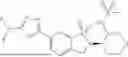


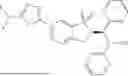


Sources:
- United States Patent and Trademark Office - verify current appl. status at the USPTO↗
Recent applications in this class:
- » 20250257061 2025-08-14
COMPOSITIONS AND METHODS FOR TREATING CANCER AND REDUCING WNT MEDIATED EFFECTS - » 20250250266 2025-08-07
COMPOSITIONS AND METHODS FOR INHIBITING KINASES - » 20250243195 2025-07-31
FUSED IMIDAZOLE DERIVATIVE, PREPARATION METHOD THEREFOR, AND MEDICAL USE THEREOF - » 20250243194 2025-07-31
ANTAGONIST OF ADENOSINE RECEPTORS - » 20250243193 2025-07-31
AMIDE-SUBSTITUTED HETEROCYCLIC COMPOUNDS USEFUL AS MODULATORS OF IL-12, IL-23 AND/OR IFN ALPHA RESPONSES - » 20250230154 2025-07-17
COMPOUND HAVING SHP2 PROTEIN DEGRADING ACTIVITY, AND MEDICAL USES THEREOF - » 20250230153 2025-07-17
2,3-DIHYDROBENZO[B][1,4]DIOXIN-6-YL CONTAINING COMPOUNDS USEFUL AS IMMUNOMODULATORS - » 20250197388 2025-06-19
COMPOUNDS, PHARMACEUTICAL COMPOSITIONS AND METHODS FOR TREATING INFLAMMATORY BOWEL DISEASE - » 20250188072 2025-06-12
COMPOUNDS FOR TREATMENT OF CANCER - » 20250171435 2025-05-29
Carbon Linked BCL Inhibitors and Senolytic Compounds and Uses Thereof