ENHANCED FASTENER PATTERN FOR IMPROVED SHEAR CAPACITY IN WALLS
US20250257564A1
2025-08-14
18/890,088
2024-09-19
Smart Summary: A new wall framing system includes a frame made of horizontal and vertical members. Wall panels are attached to this frame using fasteners that hold everything together. At the corners of the panels, the fasteners are placed closer together than in other areas. This denser pattern at the corners helps improve the strength of the wall. As a result, the walls can better resist forces that try to pull them apart. 🚀 TL;DR
Abstract:
A wall framing system is provided, including a frame including upper and lower horizontal members attached to each other by a plurality of horizontally-spaced vertical studs forming a frame, at least one wall panel secured to the frame, the panel having at least one corner, a plurality of fasteners securing each panel to the frame. The fasteners have a prescribed spacing. A denser pattern of the fasteners, narrower than said prescribed spacing, is applied at each corner than on other portions of the panel.
Inventors:
- Frank Charles POSPISIL 1 🇺🇸 Oak Park, IL, United States
- William Joseph MARTZ 1 🇺🇸 Kenosha, WI, United States
Applicant:
Interested in similar patents?
Get notified when new applications in this technology area are published.
Classification:
E04B2/562 » CPC main
Walls, e.g. partitions, for buildings; Wall construction with regard to insulation; Connections specially adapted to walls walls of framework or pillarwork Load-bearing ; Walls incorporating load-bearing elongated members with fillings between the load-bearing elongated members
E04B2/56 IPC
Walls, e.g. partitions, for buildings; Wall construction with regard to insulation; Connections specially adapted to walls walls of framework or pillarwork Load-bearing ; Walls incorporating load-bearing elongated members
Description
RELATED APPLICATION
This application is a Non-Provisional of, and claims 35 U.S.C. 119 priority from, U.S. Provisional Patent application Ser. No. 63/551,781 filed Feb. 9, 2024, the entire contents of which are incorporated by reference herein.
BACKGROUND
The present invention relates generally to the construction of walls used in commercial and residential construction, both exterior and interior, and to an improved wall configuration that resists shear forces.
Current building techniques include structures for addressing shear forces or lateral forces exerted on a wall, such as by winds on exterior walls, or structural or environmental forces acting on interior walls. For example, walls defining interior hallways in hotels can be subject to enhanced shear forces. Conventional building techniques include lateral restraints for noncombustible construction (featuring metal framing members) such as X-K-bracing or cross-strapping. In residential construction, where combustible materials are more common, plywood or OSB panels are secured to framing members for enhancing resistance to shear forces. These measures significantly add to construction costs, including additional materials as well as installation labor.
As such, there is a need for an improved more economical approach for constructing walls for resisting shear forces
SUMMARY
The above-listed need is met or exceeded by the present enhanced fastener pattern for improved shear capacity in walls. The present structure provides an inexpensive way to significantly improve shearwall capacity without increasing steel frame support gauge, panel size or thickness, OSB or other plywood support panels, or without increasing the number of rows of fasteners.
It has been found that by adding the number of fasteners, preferably screws, especially in the corner region of the wall panel, significantly adds to shear force resistance. Test results have shown that shear failure of walls, both exterior and interior, is most common at the corners of the panel where it is attached to the frame. An enhanced screw pattern is provided for increasing shear capacity in walls using paneled shearwalls fastened to a wood or steel support frame. Shear force capacity is significantly increased when the fasteners are spaced preferably at 2 inches (5 cm) apart between adjacent fasteners. Most preferably, the more tightly spaced fasteners are located in the corner regions of the panels. While present test results use structural cement panels, sold by United States Gypsum Company under the trademark STRUCTO-CRETE® panel in wall applications for shearwalls, it is contemplated that favorable results are also achieved in securing traditional wallboard panels.
More specifically, a wall framing system is provided, including a frame including upper and lower horizontal members attached to each other by a plurality of horizontally-spaced vertical studs forming a frame, at least one wall panel secured to the frame, the panel having at least one corner, a plurality of fasteners securing each panel to the frame. The fasteners have a prescribed spacing. A denser pattern of the fasteners, narrower than the prescribed spacing, is applied at each corner than on other portions of the panel.
In an embodiment, the fasteners at each said corner have a 2 inch (5 cm) spacing. It is preferred that the fasteners include 12 screws at each corner having a 2 inch (5 cm) spacing.
In another embodiment, upon assembly, the wall system includes a single thickness of the panels and the studs are single ended, or of single thickness throughout the frame, and the wall system has a shear capacity of 3,137 lb. This shear capacity is at least 10% stronger than walls having conventional fastener spacing.
In an embodiment, upon assembly, the wall system includes a single thickness of the panels and the studs are double ended or installed at double thickness at ends of the frame. The wall system in this embodiment has a shear capacity of at least 5,000 lb. Upon placement of the denser fastener spacing at panel corners, the shear capacity increases at least 40% from walls having conventional fastener spacing.
In an embodiment, the fasteners have a first spacing along vertical and horizontal edges of the at least one panel and a second, denser spacing at the at least one corner. In an embodiment, the first spacing is one of 4 inches (10 cm) and 6 inches (15 cm), and the second spacing is 2 inches (5 cm).
BRIEF DESCRIPTION OF THE DRAWINGS
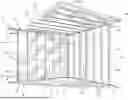
FIG. 1 is a front view of a wall system incorporating the present fastener arrangement;
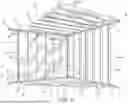
FIG. 2 is a front view of a conventional wall system depicting the standard fastener pattern; and
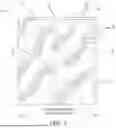
FIG. 3 is a fragmentary view of the present wall system showing the present fastener pattern.
DETAILED DESCRIPTION
Referring now to FIG. 1, the present wall system is generally designated 10, and includes a frame 12 including at least one lower horizontal member 14, also referred to as a footer, at least one upper horizontal member 16, also referred to as a header. In conventional construction, the lower horizontal members 14 are secured to a floor 18, and the upper horizontal members 16 are secured to a ceiling 20, here shown as a plurality of joists 22. The lower and upper horizontal members 14, 16 are attached to each other by a plurality of horizontally-spaced vertical studs 24.
It is contemplated that the frame members 14, 16 and 24 are either wood or metal, the latter being one of a variety of gauges of metal, and typically being formed in a “C” or “U”-shaped horizontal cross-section. The frame members 14, 16 and 24 are secured together with frame fasteners 26, preferably screws or nails. A frame 12 with all of the vertical studs 24 at a single thickness is referred to as a “single end” frame. In some cases, to increase structural integrity of the frame, vertical studs 24A on the ends of each frame segment are double-thickness, being so-called “double end” frames.
Another part of the wall system 10 is at least one panel 30 secured to the frame 12 with a plurality of panel fasteners 32. When the wall system 10 is configured for interior use, the panels 30 are mainly gypsum wallboard. However, in some interior applications, more durable structural cement panels are employed, such as panels sold by United States Gypsum Company under the trademark STRUCTO-CRETE® panel. When the wall system 10 is configured for exterior or high moisture use (showers, bathrooms), the panels 30 are made of more durable structural cement panels, sold by United States Gypsum Company under the trademark STRUCTO-CRETE® panel, moisture-resistant “green board” or the like. Regardless of the construction of the panel 30, each panel is rectangular in shape and has a plurality of, preferably four corners 34.
As seen in FIGS. 1 and 2, the panel fasteners 32 (represented schematically by “x” in FIG. 2) are distributed about the panel 30 wherever the panel engages a portion of the frame 12. As such, the panel fasteners 32 are distributed vertically to secure the panel 30 to the vertical studs 24, and also horizontally to secure the panel 30 to the lower horizontal member 14 and the upper horizontal member 16. A standard or prescribed spacing of such panel fasteners 32 is between 4 to 6 inches (10-15 cm) around a perimeter of the panel 30, and 12″ (30 cm) in a field or interior of the panel.
In strength tests of wall systems, preferably according to ASTM E72, a shear force ‘F’ (FIG. 2) is applied transversely to the frame, preferably 20 gauge steel or greater, and a 4 ft×8 ft (1.2192×2.438 meters) panel, or parallel to the length of the lower and upper horizontal members 14, 16. Basically, a racking force is applied to the wall systems until they fracture. Such fracturing usually involves the crushing and collapsing of vertical frame members 24, and the destruction of the panel at the corner 34.
Referring now to FIG. 3, it has been found that by decreasing a spacing of the panel fasteners 32 in the region of the corners 34, and thus increasing the number of panel fasteners 32, has significantly increased resistance of the wall system 10 to an applied shear force ‘F’ (FIG. 2). In FIG. 3, the standard spacing of the panel fasteners 32 is represented by “x”s. Additional fasteners 36 are represented by “+”. Taken together, the spacing of the panel fasters 32, 36 in the corners 34 is preferably 2 inches (5 cm). However, it will be understood that the specific spacing may vary to suit the application. Thus, in the present wall system 10, the spacing of the fasteners 32, 36, is such that there are 12 fasteners around the corner 34 having the above-described 2 inch (5 cm) spacing. The result is a denser pattern of panel fasteners 32, 36 than in other regions of the panel 30.
In one embodiment, the wall system 10 includes a single thickness of the panels 30 the studs 24 are single ended, and has the above-described denser fastener spacing of 2 inches (5 cm) at all of the corners 34. The frame 12 is 20 gauge steel with studs 12 inches (30.48 cm) on center. Pursuant to ASTM E72, the wall system 10 has a shear capacity of 3,137 lb. (1422.919 kg), which is at least 10% stronger than walls having conventional fastener spacing, having a shear capacity of 2,841 lb (1288.656 kg).
In another embodiment, the wall system 10 includes a single thickness of the panels 30 and the studs 24 are double ended or double thickness at the ends of the 20 gauge steel frame accommodating each panel. The studs are 12 inches (30.48 cm) on center. Also, the wall system 10 has the above-described denser fastener spacing of 2 inches (5 cm) at each of the corners 34. Pursuant to ASTM E72, the wall system as constructed has a shear capacity of at least 5,000 lb. (2267.962 kg), compared to a wall system constructed similarly with standard fastener spacing has a shear capacity of 3,492 lb. (1583.945 kg). In other words, the shear capacity increases at least 40% from walls having conventional fastener spacing. Similar increases in capacity for added corner fasteners also to be noted when using 16 ga. and 14 ga. steel frames.
Thus, tests of the present wall system 10 reveal that the addition of a few extra fasteners at a cost of about $2.50 per panel 30 increases shearwall capacity from 110 to 145% depending on exact configuration and steel framing used.
While a particular embodiment of the present enhanced fastener pattern for improved wall shear capacity has been described herein, it will be appreciated by those skilled in the art that changes and modifications may be made thereto without departing from the invention in its broader aspects and as set forth in the following claims.
Claims
1. A wall framing system, including:
a frame including upper and lower horizontal members attached to each other by a plurality of horizontally-spaced vertical studs forming a frame;
at least one wall panel secured to said frame, said panel having at least one corner;
a plurality of fasteners securing each said at least one panel to said frame, said fasteners having a prescribed spacing; and
a denser pattern of said fasteners, narrower than said prescribed spacing, being applied at each said corner than on other portions of the panel.
2. The wall framing system of claim 1, wherein said fasteners at each said corner have a 2 inch (5 cm) spacing.
3. The wall framing system of claim 1, wherein said fasteners include 12 screws at each corner having a 2 inch (5 cm) spacing.
4. The wall framing system of claim 1, wherein upon assembly, said wall system includes a single thickness of said panels and said studs are single ended, said wall system has a shear capacity of 3,137 lb., which is at least 10% stronger than walls having conventional fastener spacing.
5. The wall framing system of claim 1, wherein upon assembly, said wall system includes a single thickness of said panels and said studs are double ended, said wall system has a shear capacity of at least 5,000 lb.
6. The wall framing system of claim 5, wherein upon placement of said denser fastener spacing at panel corners, said shear capacity increases at least 40% from walls having conventional fastener spacing.
7. The wall framing system of claim 1, wherein said fasteners have a first spacing along vertical and horizontal edges of said at least one panel and a second, denser spacing at said at least one corner.
8. The wall framing system of claim 7, wherein said first spacing is one of 4inches and 6 inches, and said second spacing is 2 inches.
Images & Drawings included:
Sources:
- United States Patent and Trademark Office - verify current appl. status at the USPTO↗
Recent applications in this class:
- » 20210254332 2021-08-19
Foam wall structures and methods for their manufacture - » 20210040733 2021-02-11
Sealed envelope agricultural building constructions - » 20210010264 2021-01-14
System, method and apparatus for compressed insulation - » 20200181903 2020-06-11
System, method and apparatus for compressed insulation - » 20200080301 2020-03-12
Continuous wall assemblies and methods - » 20200032506 2020-01-30
INSTALLATION-READY WALL AND STUD CASSETTES - » 20190345714 2019-11-14
High performace wall assembly - » 20190161962 2019-05-30
Wood blocking blank for creating wood blocking for metal studs and methods of manufacture and use thereof - » 20190153726 2019-05-23
Continuous wall assemblies and methods - » 20180245340 2018-08-30
BUILDING SYSTEM WITH A LOAD-RESISTING FRAME MADE OF REINFORCED CONCRETE OR STEEL INTEGRATED WITH WOODEN INFILL PANELS