COMPOSITIONS AND METHODS FOR INHIBITION OF RAS
US20250270206A1
2025-08-28
18/867,307
2023-05-19
Smart Summary: New compounds and their variations have been developed to help fight certain types of cancer. These compounds can be used in medicines to target a specific mutation in a gene called KRAS, which is often involved in cancer growth. The goal is to reduce the activity of this mutated gene, potentially slowing down or stopping the cancer. The research includes different forms of these compounds to ensure they work effectively. Overall, this work aims to provide better treatment options for patients with specific cancer types. 🚀 TL;DR
Abstract:
Provided herein are compounds, or salts, esters, tautomers, prodrugs, zwitterionic forms, or stereoisomers thereof, as well as pharmaceutical compositions comprising the same. Also provided herein are methods of using the same in modulating (e g., inhibiting) KRAS (e.g., KRAS having a G12C mutation) and treating diseases or disorders such as cancers in subjects in need thereof.
Inventors:
- Bin Wang 23 🇺🇸 Dallas, TX, United States
- Rui XU 21 🇺🇸 Dallas, TX, United States
- Felice LIGHTSTONE 8 🇺🇸 FREMONT, CA, United States
- Zuhui ZHANG 7 🇺🇸 Millbrae, CA, United States
- Eli Wallace 8 🇺🇸 Loveland, CO, United States
- Yue Yang 7 🇺🇸 Foster City, CA, United States
- Anna Elzbieta Maciag 6 🇺🇸 Frederick, MD, United States
- David Michael Turner 7 🇺🇸 Frederick, MD, United States
- Dhirendra Kumar Simanshu 7 🇺🇸 Frederick, MD, United States
- Albert Hay Wah Chan 6 🇺🇸 Frederick, MD, United States
- Christopher John Brassard 4 🇺🇸 Frederick, MD, United States
- Tao Liao 4 🇺🇸 Frederick, MD, United States
Applicant:
Interested in similar patents?
Get notified when new applications in this technology area are published.
Classification:
C07D471/04 » CPC main
Heterocyclic compounds containing nitrogen atoms as the only ring hetero atoms in the condensed system, at least one ring being a six-membered ring with one nitrogen atom, not provided for by groups - in which the condensed system contains two hetero rings Ortho-condensed systems
A61K31/519 » CPC further
Medicinal preparations containing organic active ingredients; Heterocyclic compounds having nitrogen as a ring hetero atom, e.g. guanethidine or rifamycins having six-membered rings with two nitrogen atoms as the only ring heteroatoms, e.g. piperazine; Pyrimidines; Hydrogenated pyrimidines, e.g. trimethoprim ortho- or peri-condensed with heterocyclic rings
C07D519/00 » CPC further
Heterocyclic compounds containing more than one system of two or more relevant hetero rings condensed among themselves or condensed with a common carbocyclic ring system not provided for in groups or
Description
RELATED APPLICATIONS
This application claims priority to and benefit of U.S. Application No. 63/344,336, filed May 20, 2022, the entire contents of which are hereby incorporated by reference.
STATEMENT AS TO RIGHTS TO INVENTIONS MADE UNDER FEDERALLY SPONSORED RESEARCH AND DEVELOPMENT
This invention was made with government support under (1) Contract No.: 75N91019D00024 awarded by the National Institutes of Health and (2) Contract No. DE-AC52-07NA27344 awarded by the United States Department of Energy. The government has certain rights in the invention.
BACKGROUND
RAS mutations occur in approximately 20-30% of human cancers, including the majority of pancreatic ductal adenocarcinoma (PDAC), half of colorectal cancers, and a third of all lung cancers. With the highest RAS mutation frequencies seen with the top three causes of cancer deaths in the United States (lung, colorectal, and pancreatic cancer), the development of anti-RAS therapies is a major priority and a major challenge for cancer research. RAS proteins did not appear to present suitable pockets to which drugs could bind, except for the GDP/GTP binding site. Unfortunately, RAS proteins bind to these nucleotides with very high (picomolar) affinities, making the development of effective nucleotide analogs virtually impossible. Attempts to block pathways downstream of RAS with a hope to provide clinical benefit for patients suffering from RAS-driven cancers have been generally disappointing.
The three RAS genes (HRAS, NRAS, and KRAS) encode four 188-189 amino acid proteins that share 82%-90% amino acid sequence identity and near-identical structural and biochemical properties. However, they are differentially expressed, and mutated with different frequencies in cancer. KRAS is the most frequently mutated oncogene in cancer, and KRAS mutation is commonly associated with poor prognosis and resistance to therapy. Significant cancer type preferences exist among the RAS genes. KRAS mutations predominate in lung, colorectal, and pancreatic cancer, whereas NRAS mutations predominate in cutaneous melanomas and acute myelogenous leukemia, and HRAS mutations are found in bladder and head and neck squamous cell carcinomas.
An estimated over 600,000 Americans will die from cancer in 2021, corresponding to more than 1600 deaths per day (Cancer Facts and Figures 2021). The greatest number of deaths are from cancers of the lung, prostate, and colorectum in men, and cancers of the lung, breast, and colorectum in women. Almost one-quarter of all cancer deaths are due to lung cancer, 82% of which is directly caused by cigarette smoking. The 5-year survival rate for lung cancer patients is only about 20%.
KRAS is mutationally activated in lung cancer, and Glycine-to-Cysteine (G12C) mutations account for the majority of codon 12 mutations associated with cigarette smoking. A significant percentage of colorectal cancers are also driven by KRAS G12C mutations.
Early clinical data for allele-specific covalent KRAS G12C inhibitors show some effectiveness, at least in lung cancer. Those KRAS G12C inhibitors (e.g., Amgen Inc.'s sotorasib and Mirati Therapeutics. Inc.'s adagrasib) target inactive (GDP)-bound protein, and their effectiveness is enabled by high (comparable to wild type (WT) KRAS) intrinsic GTP hydrolysis rate of KRAS G12C mutant. Clinical data for these agents have shown that though most patients with KRAS G12C mutant non-small cell lung cancer (NSCLC) experience clinical benefit from selective KRAS G12C inhibition, patients with colorectal cancer bearing the same mutation rarely respond.
The cause of limited efficacy of KRAS G12C (GDP) inhibitors in colorectal cancers has been investigated. Unlike NSCLC cell lines, KRAS G12C colorectal cancer models have high basal receptor tyrosine kinase (RTK) activation and are responsive to growth factor stimulation. In colorectal cancer lines, KRAS G12C inhibition induces higher phospho-ERK rebound than in NSCLC cells. Also, it has been reported that KRAS G12C-GDP inhibitors induce transcription of new KRAS G12C that is in GTP-bound conformation, and insensitive to KRAS G12C inactive state inhibitors.
Therefore, there is a need for improved KRAS G12C inhibitors.
SUMMARY
The present disclosure provides compounds, as well as compositions and kits comprising the same, and methods of using the same in the treatment of diseases and disorders such as cancers. The present disclosure provides KRAS G12C inhibitors targeting both active GTP-bound protein and inactive GDP-bound protein, which inhibitors may provide therapeutic advantages over KRAS G12C-GDP inhibitors In some embodiments, compounds provided herein have inhibitory activity against a KRAS protein comprising a glycine to cysteine mutation at codon 12 (e.g., a G12C mutation) in both its active and inactive conformations. In some embodiments, compounds provided herein are useful in the treatment of cancers, such as cancers characterized by a KRAS G12C mutation.
In an aspect, the present disclosure provides compositions comprising compounds represented by one of Formulas I, IA, IB, IC, II, IIA, IIB, and IIC:
or a salt, ester, tautomer, prodrug, zwitterionic form, or stereoisomer thereof, wherein X, Y, Z, R1, R2, R3, R4, R5, R6, and R7 are as provided herein. In some embodiments, a compound provided herein, or a salt, ester, tautomer, zwitterionic form, or stereoisomer thereof, can modulate (e.g., inhibit) the activity of a KRAS protein, such as a KRAS protein having a G12C mutation. In some embodiments, a compound provided herein, or a salt, ester, tautomer, zwitterionic form, or stereoisomer thereof, includes an electrophilic moiety E, as provided herein. In some embodiments, a compound provided herein, or a salt, ester, tautomer, zwitterionic form, or stereoisomer thereof, is capable of interacting covalently with a cysteine at the 12 position of a KRAS protein (e.g., a G12C mutation). In some embodiments, a compound provided herein, or a salt, ester, tautomer, zwitterionic form, or stereoisomer thereof, is capable of binding a KRAS protein in an active (“GTP-bound”) conformation. In some embodiments, a compound provided herein, or a salt, ester, tautomer, zwitterionic form, or stereoisomer thereof, is capable of binding a KRAS protein in an inactive (“GDP-bound”) conformation.
In another aspect, the present disclosure provides a pharmaceutical composition comprising a compound provided herein (e.g., a compound represented by one of Formulas I, IA, IB, IC, II, IIA, IIB, and IIC, or any other formula set forth herein), or a salt, ester, tautomer, prodrug, zwitterionic form, or stereoisomer thereof, together with a pharmaceutically acceptable carrier.
In a further aspect, the present disclosure provides a method of inhibition of KRAS activity in a human or animal subject for the treatment of a disease such as cancer, including pancreatic cancer (e.g., pancreatic ductal adenocarcinoma (PDAC)), colorectal cancer, and lung cancer, using, e.g., a compound provided herein (e.g., a compound represented by one of Formulas I, IA, IB, IC, II, IIA, IIB, and IIC, or any other formula set forth herein), or a salt, ester, tautomer, prodrug, zwitterionic form, or stereoisomer thereof, or a pharmaceutical composition comprising the same.
In another aspect, the present disclosure provides a use of a compound provided herein (e.g., a compound represented by one of Formulas I, IA, IB, IC, II, IIA, IIB, and IIC, or any other formula set forth herein), or a salt, ester, tautomer, zwitterionic form, or stereoisomer thereof, in the manufacture of a medicament for the treatment of a disease, disorder, or condition (e.g., a cancer) ameliorated, treated, inhibited, or reduced by inhibition of KRAS, including KRAS having a G12C mutation. In some embodiments, the disease, disorder, or condition is pancreatic cancer (e.g., pancreatic ductal adenocarcinoma (PDAC)), colorectal cancer, or lung cancer.
In a further aspect, the present disclosure provides a compound as provided herein (e.g., a compound represented by one of Formulas I, IA, IB, IC, II, IIA, IIB, and IIC, or any other formula set forth herein), or a salt, ester, tautomer, zwitterionic form, or stereoisomer thereof, for use as a medicament. In some embodiments, the medicament is used in the treatment of a disease, disorder, or condition (e.g., a cancer). In some embodiments, the disease, disorder, or condition is pancreatic cancer (e.g., pancreatic ductal adenocarcinoma (PDAC)), colorectal cancer, or lung cancer.
DETAILED DESCRIPTION
The present disclosure provides compounds (e.g., compounds of Formulas I, IA, IA1, IA2, IB, IB1, IB2, IC, IC1, IC2, II, IIA, IIB, and IIC), which compounds may possess useful KRAS inhibitory activity, and may be used in the treatment or prophylaxis of a disease, disorder, or condition in which KRAS plays an active role. In particular, certain compounds provided herein may possess useful inhibitory activity of KRAS having a G12C mutation, which KRAS protein is in an active (GTP-bound) or inactive (GDP-bound) conformation. Certain compounds provided herein may be capable of inhibiting both active and inactive forms of KRAS. The present disclosure also provides pharmaceutical compositions comprising one or more compounds provided herein together with a pharmaceutically acceptable carrier, as well as methods of making and using the compounds and compositions. The present disclosure also provides methods for inhibiting KRAS, including KRAS having a G12C mutation, which KRAS is in an active or inactive conformation. In an aspect, the present disclosure provides a method for treating a disorder mediated by KRAS including a KRAS having a G12C mutation in a subject in need of such treatment, which method comprises administering to the subject a therapeutically effective amount of a compound or composition provided herein. Also provided herein is the use of certain compounds provided herein in the manufacture of a medicament for the treatment of a disease, disorder, or condition ameliorated, treated, inhibited, or reduced by inhibition of KRAS, including KRAS having a G12C mutation. In some embodiments, the disease, disorder, or condition is a cancer (e.g., as described herein).
When ranges of values are disclosed, and the notation “from n1 . . . to n2” or “between n1 . . . and n2” is used, where n1 and n2 are the numbers, then unless otherwise specified, this notation is intended to include the numbers themselves and the range between them. This range may be integral or continuous between and including the end values. By way of example, the range “from 2 to 6 carbons” is intended to include two, three, four, five, and six carbons, since carbons come in integer units. Compare, by way of example, the range “from 1 to 3 μM (micromolar),” which is intended to include 1 μM, 3 μM, and everything in between to any number of significant figures (e.g., 1.255 μM, 2.1 μM, 2.9999 μM, etc.).
“About,” as used herein, is intended to qualify the numerical values which it modifies, denoting such a value as variable within a margin of error. When no particular margin of error, such as a standard deviation to a mean value given in a chart or table of data, is recited, the term “about” should be understood to mean that range which would encompass the recited value and the range which would be included by rounding up or down to that figure as well, taking into account significant figures.
“Acyl,” as used herein, alone or in combination, refers to a carbonyl attached to an alkenyl, alkyl, aryl, cycloalkyl, heteroaryl, heterocycle, or any other moiety where the atom attached to the carbonyl is carbon. An “acetyl” group refers to a —C(O)CH3 group. An “alkylcarbonyl” or “alkanoyl” group refers to an alkyl group attached to the parent molecular moiety through a carbonyl group. Examples of such groups include methylcarbonyl and ethylcarbonyl. Examples of acyl groups include formyl, alkanoyl and aroyl.
“Alkenyl,” as used herein, alone or in combination, refers to a straight-chain or branched-chain hydrocarbon radical having one or more double bonds and containing from 2 to 20 carbon atoms. In certain embodiments, said alkenyl will comprise from 2 to 6 carbon atoms. The term “alkenylene” refers to a carbon-carbon double bond system attached at two or more positions such as ethenylene [(—CH═CH—),(—C::C—)]. Examples of suitable alkenyl radicals include ethenyl, propenyl, 2-methylpropenyl, 1,4-butadienyl and the like. Unless otherwise specified, the term “alkenyl” may include “alkenylene” groups.
“Alkynyl” refers to either a straight chain or branched-chain hydrocarbon having at least 2 carbon atoms and at least one triple bond and having the number of carbon atoms indicated (i.e., C2-6 means to two to six carbons). Alkynyl can include any number of carbons, such as C2, C2-3, C2-4, C2-5, C2-6, C2-7, C2-8, C2-9, C2-10, C3, C3-4, C3-5, C3-6, C4, C4-5, C4-6, C5, C5-6, and C6. Examples of alkynyl groups include, but are not limited to, acetylenyl, propynyl, 1-butynyl, 2-butynyl, butadiynyl, 1-pentynyl, 2-pentynyl, isopentynyl, 1,3-pentadiynyl, 1,4-pentadiynyl, 1-hexynyl, 2-hexynyl, 3-hexynyl, 1,3-hexadiynyl, 1,4-hexadiynyl, 1,5-hexadiynyl, 2,4-hexadiynyl, and 1,3,5-hexatrivnyl.
“Alkoxy,” as used herein, alone or in combination, refers to an alkyl ether radical, wherein the term alkyl is as described herein. Examples of suitable alkyl ether radicals include methoxy, ethoxy, n-propoxy, isopropoxy, n-butoxy, iso-butoxy, sec-butoxy, tert-butoxy, and the like.
“Alkyl,” as used herein, alone or in combination, refers to a straight-chain or branched-chain alkyl radical containing from 1 to 20 carbon atoms (e.g., C1-20 alkyl). In certain embodiments, said alkyl will comprise from 1 to 10 carbon atoms (e.g., C1-10 alkyl). In further embodiments, said alkyl will comprise from 1 to 8 carbon atoms (e.g., C1-8 alkyl). In further embodiments, said alkyl will comprise from 1 to 6 carbon atoms (e.g., C1-6 alkyl). In further embodiments, said alkyl will comprise from 1 to 3 carbon atoms (e.g., C1-3 alkyl). Alkyl groups are unsubstituted or substituted as defined herein. Examples of alkyl radicals include methyl, ethyl, n-propyl, isopropyl, n-butyl, isobutyl, sec-butyl, tert-butyl, pentyl, iso-amyl, hexyl, octyl, nonyl, and the like. The term “alkylene,” as used herein, alone or in combination, refers to a saturated aliphatic group derived from a straight or branched chain saturated hydrocarbon attached at two or more positions, such as methylene (—CH2—). Unless otherwise specified, the term “alkyl” may include “alkylene” groups.
“Alkylamino,” as used herein, alone or in combination, refers to an alkyl group attached to the parent molecular moiety through an amino group. Suitable alkylamino groups may be mono- or dialkylated, forming groups such as, for example, N-methylamino, N-ethylamino, N,N-dimethylamino, N,N-ethylmethylamino, and the like.
“Alkylthio,” as used herein, alone or in combination, refers to an alkyl thioether (R—S—) radical wherein the term alkyl is as described herein and wherein the sulfur may be singly or doubly oxidized. Examples of suitable alkyl thioether radicals include methylthio, ethylthio, n-propylthio, isopropylthio, n-butylthio, iso-butylthio, sec-butylthio, tert-butylthio, methanesulfonyl, ethanesulfinyl, and the like.
“Amido” and “carbamoyl,” as used herein, alone or in combination, refer to an amino group as described herein attached to the parent molecular moiety through a carbonyl group, or vice versa. The “amido” group as used herein incudes a “C-amido” and “N-amido” groups. The term “C-amido” as used herein, alone or in combination, refers to a —C(O)N(RR′) group with R and R′ as defined herein or as defined by the specifically enumerated “R” groups designated. In some embodiments, the “amido” group includes —C(O)NH2, C1-6alkylamido, and di(C1-6alkyl)amido. The term “C1-6alkylamido”, as used herein, refers to —C(O)NH(C1-6alkyl), wherein C1-6alkyl is as defined herein. The term “N-amido” as used herein, alone or in combination, refers to a RC(O)N(R′)— group, with R and R′ as defined herein or as defined by the specifically enumerated “R” groups designated. The term “acylamino” as used herein, alone or in combination, embraces an acyl group attached to the parent moiety through an amino group. An example of an “acylamino” group is acetylamino (CH3C(O)NH—).
“Amino,” as used herein, alone or in combination, refers to —NRR′, wherein R and R′ are independently selected from hydrogen, alkyl, acyl, heteroalkyl, aryl, cycloalkyl, heteroaryl, and heterocycloalkyl, any of which may themselves be unsubstituted or substituted. Additionally, R and R′ may combine to form a heterocycloalkyl, which is unsubstituted or substituted. An “amino” group may be a primary amine (e.g., —NH2), secondary or di-substituted amine (e.g., —NHR where R is not hydrogen), or tertiary or tri-substituted amine (e.g., —NRR′ where neither R nor R′ is hydrogen).
“Aryl,” as used herein, alone or in combination, means a carbocyclic aromatic system containing one, two, or three rings wherein such polycyclic ring systems are fused together. The term “aryl” embraces aromatic groups such as phenyl, naphthyl, anthracenyl, and phenanthryl. An aryl moiety may include, for example, between 5 to 20 carbon atoms, such as between 5 to 12 carbon atoms, such as 5 or 6 carbon atoms.
“Arylalkenyl” or “aralkenyl,” as used herein, alone or in combination, refers to an aryl group attached to the parent molecular moiety through an alkenyl group.
“Arylalkoxy” or “aralkoxy,” as used herein, alone or in combination, refers to an aryl group attached to the parent molecular moiety through an alkoxy group.
“Arylalkyl” or “aralkyl,” as used herein, alone or in combination, refers to an aryl group attached to the parent molecular moiety through an alkyl group.
“Aryloxy,” as used herein, alone or in combination, refers to an aryl group attached to the parent molecular moiety through an oxy.
“Carbamate,” as used herein, alone or in combination, refers to an ester of carbamic acid (—NHCOO—) which may be attached to the parent molecular moiety from either the nitrogen or acid end, and which is unsubstituted or substituted as defined herein.
“O-carbamyl” as used herein, alone or in combination, refers to a —OC(O)NRR′ group, with Rand R′ as defined herein.
“N-carbamyl” as used herein, alone or in combination, refers to a ROC(O)NR′— group, with R and R′ as defined herein.
“Carbonyl,” as used herein, when alone includes formyl [—C(O)H] and in combination is a —C(O)— group.
“Carboxyl” or “carboxy,” as used herein, refers to —C(O)OH or the corresponding “carboxylate” anion, such as is in a carboxylic acid salt. An “O-carboxy” group refers to a RC(O)O— group, where R is as defined herein. A “C-carboxy” group refers to a —C(O)OR groups where R is as defined herein.
“Cyano,” as used herein, alone or in combination, refers to —CN.
“Cycloalkyl,” or, alternatively, “carbocycle,” as used herein, alone or in combination, refers to a saturated or partially saturated monocyclic, bicyclic, or tricyclic alkyl group wherein each cyclic moiety contains from 3 to 12 carbon atom ring members and which may optionally be a benzo fused ring system which is unsubstituted or substituted as defined herein. A carbocycle may comprise a bridged ring system and/or a spiro ring system (e.g., a system including two rings sharing a single carbon atom). The term “cycloalkenyl” refers to a cycloalkyl group having one or two double bonds. In certain embodiments, said cycloalkyl (or cycloalkenyl) will comprise from 5 to 7 carbon atoms. Examples of such groups include cyclopropyl, cyclobutyl, cyclopentyl, cyclohexyl, cycloheptyl, cyclobutenyl, cyclopentenyl, cyclohexenyl, tetrahydronapthyl, indanyl, octahydronaphthyl, 2,3-dihydro-1H-indenyl, adamantyl, and the like. “Bicyclic” and “tricyclic” as used herein are intended to include both fused ring systems, such as decahydronaphthalene and octahydronaphthalene, as well as the multicyclic (multicentered) saturated or partially unsaturated type. The latter type of isomer is exemplified in general by bicyclo[1,1,1]pentane, camphor, adamantane, and bicyclo[3,2,1]octane.
“Ester,” as used herein, alone or in combination, refers to a carboxy group bridging two moieties linked at carbon atoms.
“Ether,” as used herein, alone or in combination, refers to an oxy group bridging two moieties linked at carbon atoms.
“Halo,” or “halogen,” as used herein, alone or in combination, refers to fluorine, chlorine, bromine, or iodine.
“Haloalkoxy,” as used herein, alone or in combination, refers to a haloalkyl group attached to the parent molecular moiety through an oxygen atom.
“Haloalkyl,” as used herein, alone or in combination, refers to an alkyl radical having the meaning as described herein wherein one or more hydrogens are replaced with a halogen. Specifically embraced are monohaloalkyl, dihaloalkyl and polyhaloalkyl radicals. A monohaloalkyl radical, for one example, may have an iodo, bromo, chloro, or fluoro atom within the radical. Dihalo and polyhaloalkyl radicals may have two or more of the same halo atoms or a combination of different halo radicals. Examples of haloalkyl radicals include fluoromethyl, difluoromethyl, trifluoromethyl, chloromethyl, dichloromethyl, trichloromethyl, pentafluoroethyl, heptafluoropropyl, difluorochloromethyl, dichlorofluoromethyl, difluoroethyl, difluoropropyl, dichloroethyl and dichloropropyl. “Haloalkylene” refers to a haloalkyl group attached at two or more positions. Examples include fluoromethylene (—CFH—), difluoromethylene (—CF2—), chloromethylene (—CHCl—) and the like.
“Heteroalkyl,” as used herein, alone or in combination, refers to a stable straight or branched hydrocarbon chain, fully saturated or containing from 1 to 3 degrees of unsaturation, consisting of the stated number of carbon atoms and from one to three heteroatoms selected from N, O, and S, and wherein the N and S atoms may optionally be oxidized and the N heteroatom may optionally be quaternized. The heteroatom(s) may be placed at any interior position of the heteroalkyl group. Up to two heteroatoms may be consecutive, such as, for example, —CH2—NH—OCH3.
“Heteroaryl,” as used herein, alone or in combination, refers to a 3- to 15-membered aromatic monocyclic ring, or a fused monocyclic, bicyclic, or tricyclic ring system in which at least one of the fused rings is aromatic, which ring or ring system contains at least one atom selected from N, O, and S. In certain embodiments, said heteroaryl will comprise from 1 to 4 heteroatoms as ring members. In further embodiments, said heteroaryl will comprise from 1 to 2 heteroatoms as ring members. In certain embodiments, said heteroaryl will comprise from 5 to 7 atoms. The term also embraces fused polycyclic groups wherein heterocyclic rings are fused with aryl rings, wherein heteroaryl rings are fused with other heteroaryl rings, wherein heteroaryl rings are fused with heterocycloalkyl rings, or wherein heteroaryl rings are fused with cycloalkyl rings. Examples of heteroaryl groups include pyrrolyl, imidazolyl, pyrazolyl, pyridyl, pyrimidinyl, pyrazinyl, pyridazinyl, triazolyl, furyl, thienyl, oxazolyl, isoxazolyl, oxadiazolyl, thiazolyl, thiadiazolyl, isothiazolyl, indolyl, isoindolyl, indolizinyl, benzimidazolyl, quinolyl, isoquinolyl, quinoxalinyl, quinazolinyl, indazolyl, benzotriazolyl, benzodioxolyl, benzopyranyl, benzoxazolyl, benzoxadiazolyl, benzothiazolyl, benzothiadiazolyl, benzofuryl, benzothienyl, chromonyl, coumarinyl, benzopyranyl, tetrahydroquinolinyl, tetrazolopyridazinyl, tetrahydroisoquinolinyl, thienopyridinyl, furopyridinyl, pyrrolopyridinyl and the like. Exemplary tricyclic heterocyclic groups include carbazolyl, phenanthrolinyl, dibenzofuranyl, acridinyl, phenanthridinyl, xanthenyl and the like.
“Heterocycloalkyl” and, interchangeably, “heterocycle,” as used herein, alone or in combination, each refer to a saturated, partially unsaturated, or fully unsaturated (but nonaromatic) monocyclic, bicyclic, or tricyclic heterocyclic group containing at least one heteroatom as a ring member, wherein each said heteroatom may be independently selected from nitrogen, oxygen, and sulfur. In certain embodiments, said heterocycloalkyl will comprise from 1 to 4 heteroatoms as ring members. In further embodiments, said heterocycloalkyl will comprise from 1 to 2 heteroatoms as ring members. In certain embodiments, said heterocycloalkyl will comprise from 3 to 8 ring members in each ring. In further embodiments, said heterocycloalkyl will comprise from 3 to 7 ring members in each ring. In yet further embodiments, said heterocycloalkyl will comprise from 5 to 6 ring members in each ring. A heterocycle may comprise a bridged ring system and/or a spiro ring system (e.g., a system including two rings sharing a single atom, such as a single carbon atom). “Heterocycloalkyl” and “heterocycle” are intended to include sulfones, sulfoxides, N-oxides of tertiary nitrogen ring members, and carbocyclic fused and benzo fused ring systems; additionally, both terms also include systems where a heterocycle ring is fused to an aryl group, as defined herein, or an additional heterocycle group. Examples of heterocycle groups include aziridinyl, azetidinyl, 1,3-benzodioxolyl, dihydroisoindolyl, dihydroisoquinolinyl, dihydrocinnolinyl, dihydrobenzodioxinyl, dihydro[1,3]oxazolo[4,5-b]pyridinyl, benzothiazolyl, dihydroindolyl, dihydropyridinyl, 1,3-dioxanyl, 1,4-dioxanyl, 1,3-dioxolanyl, isoindolinyl, morpholinyl, piperazinyl, pyrrolidinyl, tetrahydropyridinyl, piperidinyl, thiomorpholinyl, and the like. The heterocycle groups are unsubstituted or substituted unless specifically prohibited.
“Hydrazinyl” as used herein, alone or in combination, refers to two amino groups joined by a single bond, i.e., —N—N—.
“Hydroxy,” as used herein, alone or in combination, refers to —OH.
“Hydroxyalkyl,” as used herein, alone or in combination, refers to a hydroxy group attached to the parent molecular moiety through an alkyl group.
“Iminohydroxy,” as used herein, alone or in combination, refers to ═N(OH) and ═N—O—.
“Lower amino,” as used herein, alone or in combination, refers to —NRR′, wherein R and R′ are independently selected from hydrogen and lower alkyl (e.g., C1-6 alkyl), either of which is unsubstituted or substituted.
“Mercaptyl” as used herein, alone or in combination, refers to an RS— group, where R is as defined herein.
“Nitro,” as used herein, alone or in combination, refers to —NO2.
“Oxy” or “oxa,” as used herein, alone or in combination, refer to —O—.
“Oxo,” as used herein, alone or in combination, refers to ═O.
“Perhaloalkoxy” refers to an alkoxy group where all of the hydrogen atoms are replaced by halogen atoms.
“Perhaloalkyl” as used herein, alone or in combination, refers to an alkyl group where all of the hydrogen atoms are replaced by halogen atoms.
“Ring,” or equivalently, “cycle,” as used herein, in reference to a chemical structure or portion thereof, means a group in which every atom is a member of a common cyclic structure. A ring can be saturated or unsaturated, including aromatic, unless otherwise provided, and may have between 3 and 9 members. If the ring is a heterocycle, it may contain between 1 and 4 heteroatoms or heteroatom-comprising groups selected from B, N, O, S, C(O), and S(O)m, wherein m is 0, 1, or 2. Unless specifically prohibited, a ring is unsubstituted or substituted. Two or more rings may be fused together (e.g., they may share a bond and two common atoms). Two or more rings may be linked together in a spiro arrangement such that only a single atom is shared between the two rings. Two or more rings may also or alternatively be configured in a bridged arrangement such that three or more atoms are shared between two or more rings.
“Sulfonate,” “sulfonic acid,” and “sulfonic,” as used herein, alone or in combination, refer to the —SO3H group and its anion as the sulfonic acid is used in salt formation.
“Sulfanyl,” as used herein, alone or in combination, refers to —S—.
“Sulfinyl,” as used herein, alone or in combination, refers to —S(O)—.
“Sulfonyl,” as used herein, alone or in combination, refers to —S(O)2—.
“N-sulfonamido” refers to a RS(═O)2NR′— group with R and R′ as defined herein.
“S-sulfonamido” refers to a —S(═O)2NRR′, group, with R and R′ as defined herein.
“Tautomer”, as use herein, alone or in combination, refers to one of two or more isomers that rapidly interconvert. Generally, this interconversion is sufficiently fast so that an individual tautomer is not isolated in the absence of another tautomer. The ratio of the amount of tautomers can be dependent on solvent composition, ionic strength, and pH, as well as other solution parameters. The ratio of the amount of tautomers can be different in a particular solution and in the microenvironment of a biomolecular binding site in said solution. Examples of tautomers that are well known in the art include keto/enol, enamine/imine, and lactam/lactim tautomers. Examples of tautomers that are well known in the art also include 2-hydroxypyridine/2(1H)-pyridone and 2-aminopyridine/2(1H)-iminopyridone tautomers.
“Thia” and “thio,” as used herein, alone or in combination, refer to a —S— group or an ether wherein the oxygen is replaced with sulfur. The oxidized derivatives of the thio group, namely sulfinyl and sulfonyl, are included in the definition of thia and thio.
“Thiol,” as used herein, alone or in combination, refers to an —SH group.
“Miocarbonyl,” as used herein, when alone includes thioformyl —C(S)H and in combination is a —C(S)— group.
“N-thiocarbamyl” refers to an ROC(S)NR′— group, with R and R′ as defined herein.
“O-thiocarbamyl” refers to a —OC(S)NRR′ group, with R and R′ as defined herein.
“Thiocyanato” refers to a —CNS group.
Any definition herein may be used in combination with any other definition to describe a composite structural group. By convention, the trailing element of any such definition is that which attaches to the parent moiety. For example, the composite group alkylamido would represent an alkyl group attached to the parent molecule through an amido group, and the term alkoxyalkyl would represent an alkoxy group attached to the parent molecule through an alkyl group.
As described herein, groups may be substituted or unsubstituted (e.g., “optionally substituted”). Unless otherwise specified, any group may be substituted with one or more substituents, such as one or more substituents provided herein. Examples of substituents that may substitute a group include, but are not limited to, one or more substituents independently selected from the following groups or a particular designated set of groups, alone or in combination: alkyl (e.g., C1-20 alkyl, such as C1-10 alkyl, such as C1-6 alkyl, such as C1-3 alkyl), alkenyl (e.g., C2-20 alkenyl, such as C2-10 alkenyl, such as C2-6 alkenyl), alkynyl (e.g., C2-20 alkynyl, such as C2-10 alkynyl, such as C2-6 alkynyl), alkanoyl (e.g., C1-20 alkanoyl, such as C1-10 alkanoyl, such as C1-6 alkanoyl), heteroalkyl (e.g., a heteroalkyl moiety including 1-20 carbon atoms and 1-6 heteroatoms, such as a heteroalkyl moiety including 1-6 carbon atoms and 1-3 heteroatoms), haloalkyl (e.g., a halo-substituted C1-20 alkyl, such as a halo-substituted C1-10 alkyl, a halo-substituted C1-6 alkyl), haloalkenyl (e.g., a halo-substituted C2-20 alkenyl, such as a halo-substituted C2-6 alkenyl), haloalkynyl (e.g., a halo-substituted C2-20 alkynyl, such as a halo-substituted C2-6 alkynyl), perhaloalkyl (e.g., C1-20 perhaloalkyl, such as C1-6 perhaloalkyl, such as C1-3 perhaloalkyl), perhaloalkoxy (e.g., C1-20 perhaloalkoxy, such as C1-6 perhaloalkoxy), phenyl, aryl (e.g., C5-20 aryl, such as C5-10 aryl, such as C5-6 aryl), aryloxy (e.g., C5-20 aryloxy, such as C5-10 aryloxy, such as C5-6 aryloxy), alkoxy (e.g., C1-20 alkoxy, such as C1-10 alkoxy, such as C1-6 alkoxy), haloalkoxy (e.g., C1-20 haloalkoxy, such as C1-10 haloalkoxy, such as C1-6 haloalkoxy), oxo, acyloxy (e.g., an acyloxy group including 1-20 carbon atoms, such as 1-10 carbon atoms, such as 1-6 carbon atoms), carbonyl (e.g., C(O) or C═O), carboxyl (e.g., C(O)O), alkylcarbonyl (e.g., C1-20 alkylcarbonyl, such as C1-10 alkylcarbonyl, such as C1-6 alkylcarbonyl, such as C1-3 alkylcarbonyl), carboxyester (e.g., C(O)OR where R is, e.g., alkyl (e.g., C1-20 alkyl, such as C1-10 alkyl, such as C1-6 alkyl, such as C1-3 alkyl), alkenyl (e.g., C2-20 alkenyl, such as C2-10 alkenyl, such as C2-6 alkenyl), or alkynyl (e.g., C2-20 alkynyl, such as C2-10 alkynyl, such as C2-6 alkynyl), any of which may be substituted by any group provided herein), carboxamido, cyano (e.g., CN), hydrogen, halogen (e.g., iodine, bromine, chlorine, or fluorine), hydroxy, amino (e.g., NR′R″ where R′ and R″ are independently, e.g., hydrogen, alkyl (e.g., C1-20 alkyl, such as C1-10 alkyl, such as C1-6 alkyl, such as C1-3 alkyl), alkenyl (e.g., (e.g., C2-20 alkenyl, such as C2-10 alkenyl, such as C2-6 alkenyl), or alkynyl (e.g., C2-20 alkynyl, such as C2-10 alkynyl, such as C2-6 alkynyl), any of which may be substituted by any group provided herein), alkylamino (e.g., NR′R″ where R′ is alkyl (e.g., C1-20 alkyl, such as C1-10 alkyl, such as C1-6 alkyl, such as C1-3 alkyl) and R″ is, e.g., hydrogen, alkyl (e.g., C1-20 alkyl, such as C1-10 alkyl, such as C1-6 alkyl, such as C1-3 alkyl), alkenyl (e.g., (e.g., C2-20 alkenyl, such as C2-10 alkenyl, such as C2-6 alkenyl), or alkynyl (e.g., C2-20 alkynyl, such as C2-10 alkynyl, such as C2-6 alkynyl), any of which may be substituted by any group provided herein), arylamino (e.g., NR′R″ where R′ is aryl (e.g., C5-20 aryl, such as C5-10 aryl, such as C5-6 aryl) and R″ is, e.g., hydrogen, alkyl (e.g., C1-20 alkyl, such as C1-10 alkyl, such as C1-6 alkyl, such as C1-3 alkyl), alkenyl (e.g., (e.g., C2-20 alkenyl, such as C2-10 alkenyl, such as C2-6 alkenyl), or alkynyl (e.g., C2-20 alkynyl, such as C2-10 alkynyl, such as C2-6 alkynyl), any of which may be substituted by any group provided herein), amido (e.g., C(O)NR′R″ where R′ and R″ are independently, e.g., hydrogen, alkyl (e.g., C1-20 alkyl, such as C1-10 alkyl, such as C1-6 alkyl, such as C1-3 alkyl), alkenyl (e.g., C2-20 alkenyl, such as C2-10 alkenyl, such as C2-6 alkenyl), or alkynyl (e.g., C2-20 alkynyl, such as C2-10 alkynyl, such as C2-6 alkynyl), any of which may be substituted by any group provided herein), nitro (e.g., NO2), thiol (e.g., SH), alkylthio (e.g., C1-20 alkyl substituted with a thiol group, such as C1-10 alkyl substituted with a thiol group, such as C1-6 alkyl substituted with a thiol group, such as C1-3 alkyl substituted with a thiol group), haloalkylthio (e.g., C1-20 haloalkylthio, such as C1-10 haloalkylthio, such as C1-6 haloalkylthio, such as C1-3 haloalkylthio), perhaloalkylthio (e.g., C1-20 perhaloalkylthio, such as C1-10 perhaloalkylthio, such as C1-6 perhaloalkylthio, such as C1-3 perhaloalkylthio), arylthiol (e.g., C5-20 arylthiol, such as C5-10 arylthiol, such as C5-6 arylthiol), sulfonate (e.g., S(O)2OR where R is, e.g., alkyl (e.g., C1-20 alkyl, such as C1-10 alkyl, such as C1-6 alkyl, such as C1-3 alkyl), alkenyl (e.g., C2-20 alkenyl, such as C2-10 alkenyl, such as C2-6 alkenyl), or alkynyl (e.g., C2-20 alkynyl, such as C2-10 alkynyl, such as C2-6 alkynyl), any of which may be substituted by any group provided herein), sulfonic acid (e.g., S(O)2OH), trisubstituted silyl (e.g., SiR′R″R* where R′, R″, and R* are independently selected from, e.g., alkyl (e.g., C1-20 alkyl, such as C1-10 alkyl, such as C1-6 alkyl, such as C1-3 alkyl), alkenyl (e.g., C2-20 alkenyl, such as C2-10 alkenyl, such as C2-6 alkenyl), or alkynyl (e.g., C2-20 alkynyl, such as C2-10 alkynyl, such as C2-6 alkynyl), any of which may be substituted by any group provided herein; in some cases, a trisubstituted silyl can be trimethylsilyl), N3, SCH3, C(O)CH3, CO2CH3, CO2H, pyridinyl, thiophene, furanyl, carbamate, and urea. Additional groups may also be contemplated. Where structurally feasible, two substituents may be joined together to form a fused five-, six-, or seven-membered carbocyclic or heterocyclic ring consisting of zero to three heteroatoms (e.g., N, O, S, etc.), for example forming methylenedioxy or ethylenedioxy. An unsubstituted or substituted group may be unsubstituted (e.g., —CH2CH3), fully substituted (e.g., —CF2CF3), monosubstituted (e.g., —CH2CH2F) or substituted at a level anywhere in-between fully substituted and monosubstituted (e.g., —CH2CF3). Where substituents are recited without qualification as to substitution, both substituted and unsubstituted forms are encompassed. Where a substituent is qualified as “substituted,” the substituted form is specifically intended. Additionally, different sets of optional substituents to a particular moiety may be defined as needed; in these cases, the optional substitution will be as defined, often immediately following the phrase, “unsubstituted or substituted with.”
The terms R, R′, R″, R*, etc., appearing by themselves and without a number designation, unless otherwise defined, refer to a moiety selected from hydrogen, alkyl, cycloalkyl, heteroalkyl, aryl, heteroaryl and heterocycloalkyl, any of which is unsubstituted or substituted (e.g., as described herein). Such R and R′ groups should be understood to be unsubstituted or substituted as defined herein. Whether an R group has a number designation or not, every R group, including R, R′ and R″ where n=(1, 2, 3, . . . n), every substituent, and every term should be understood to be independent of every other in terms of selection from a group. Should any variable, substituent, or term (e.g., aryl, heterocycle, R, etc.) occur more than one time in a formula or generic structure, its definition at each occurrence is independent of the definition at every other occurrence. Those of skill in the art will further recognize that certain groups may be attached to a parent molecule or may occupy a position in a chain of elements from either end as written. For example, an unsymmetrical group such as —C(O)N(R)— may be attached to the parent moiety at either the carbon or the nitrogen.
“Bond” refers to a covalent linkage between two atoms, or two moieties when the atoms joined by the bond are considered to be part of larger substructure. A bond may be single, double, or triple unless otherwise specified. A dashed line between two atoms in a drawing of a molecule indicates that an additional bond may be present or absent at that position.
Asymmetric centers may exist in the compounds disclosed herein. These centers are designated by the symbols “R” or “S,” depending on the configuration of substituents around the chiral carbon atom. It should be understood that the disclosure encompasses all stereochemical isomeric forms, including diastereomeric, enantiomeric, atropisomeric, and epimeric forms, as well as d-isomers and l-isomers, and mixtures thereof. Individual stereoisomers of compounds can be prepared synthetically from commercially available starting materials which contain chiral centers or by preparation of mixtures of enantiomeric products followed by separation such as conversion to a mixture of diastereomers followed by separation or recrystallization, chromatographic techniques, direct separation of enantiomers on chiral chromatographic columns, or any other appropriate method known in the art. Starting compounds of particular stereochemistry are either commercially available or can be made and resolved by techniques known in the art. Additionally, the compounds disclosed herein may exist as geometric isomers. The present disclosure includes all cis, trans, syn, anti, entgegen (E), and zusammen (Z) isomers as well as the appropriate mixtures thereof. Additionally, compounds may exist as tautomers; all tautomeric isomers are provided by this disclosure. Additionally, the compounds provided herein may comprise conformational isomers, which compounds comprise groups that can orient in different conformations in relation to another moiety. Additionally, the compounds disclosed herein can exist in unsolvated as well as solvated forms with pharmaceutically acceptable solvents such as water, ethanol, and the like. In general, the solvated forms are considered equivalent to the unsolvated forms.
“Combination therapy” means the administration of two or more therapeutic agents to treat a therapeutic condition or disorder described in the present disclosure. Such administration encompasses co-administration of these therapeutic agents in a substantially simultaneous manner, such as in a single dose unit (e.g., capsule) having a fixed ratio of active ingredients or in multiple, separate dose units (e.g., capsules) for each active ingredient. In addition, such administration also encompasses use of each type of therapeutic agent in a sequential manner. In either case, the treatment regimen will provide beneficial effects of the drug combination in treating the conditions or disorders described herein.
“KRAS inhibitor” is used herein to refer to a compound that exhibits an IC50 with respect to KRAS activity of no more than about 100 μM and more typically not more than about 50 μM, as measured in one or more assays described generally herein, such as level of covalent modification to Cys12 in KRAS G12C as measured using a matrix assisted laser desorption ionization-time of flight mass spectrometry (MALDI-TOF MS) assay, and/or a KRAS G12C protein-effector protein interaction disruption assay. “IC50” is that concentration of inhibitor which reduces the activity of an enzyme (e.g., KRAS) to half-maximal level. Certain compounds disclosed herein have been discovered to exhibit inhibition against KRAS. In certain embodiments, compounds exhibit an IC50 with respect to KRAS (e.g., KRAS having a G12C mutation) of no more than about 50 μM; in further embodiments, compounds exhibit an IC50 with respect to KRAS (e.g., KRAS having a G12C mutation) of no more than about 10 μM; in yet further embodiments, compounds exhibit an IC50 with respect to KRAS (e.g., KRAS having a G12C mutation) of not more than about 1 μM; in yet further embodiments, compounds exhibit an IC50 with respect to KRAS (e.g., KRAS having a G12C mutation) of not more than about 200 nanomolar (nM), as measured in a KRAS assay described herein. In some embodiments, compounds exhibit an IC50 with respect to KRAS (e.g., KRAS having a G12C mutation) of less than about 50 μM, such as less than about 40 μM, 30 μM, 20 μM, 10 μM, 9 μM, 8 μM, 7 μM, 6 μM, 5 μM, 4 μM, 3 μM, 2 μM, 1 μM, 900 nM, 800 nM, 700 nM, 600 nM, 500 nM, 400 nM, 300 nM, 200 nM, 100 nM, 90 nM, 80 nM, 70 nM, 60 nM, 50 nM, 40 nM, 30 nM, 20 nM, 10 nM, 9 nM, 8 nM, 7 nM, 6 nM, 5 nM, 4 nM, 3 nM, 2 nM, 1 nM, or less. In certain embodiments, compounds exhibit an IC50 with respect to KRAS (e.g., KRAS having a G12C mutation) of less than about 1 μM, such as less than about 900 nM, 800 nM, 700 nM, 600 nM, 500 nM, 400 nM, 300 nM, 200 nM, 100 nM, 90 nM, 80 nM, 70 nM, 60 nM, 50 nM, 40 nM, 30 nM, 20 nM, 10 nM, 9 nM, 8 nM, 7 nM, 6 nM, 5 nM, 4 nM, 3 nM, 2 nM, 1 nM, or less. In some embodiments, a KRAS inhibitor has inhibitory activity against KRAS having a G12C mutation that exceeds its inhibitory activity against KRAS having another mutation, such as a G12D, G12R, G12S, G12A, or G12V mutation. For example, in some embodiments, a KRAS inhibitor provided herein has at least two-fold, five-fold, ten-fold, twenty-fold, thirty-fold, forty-fold, fifty-fold, one hundred-fold, or higher inhibitory activity against KRAS having a G12C mutation relative to KRAS having another mutation such as a G12D, G12R, G12S, G12A, or G12V mutation. In some embodiments, a KRAS inhibitor provided herein has greater inhibitory activity against KRAS having a G12C mutation than against KRAS having a G12D mutation. In some embodiments, a KRAS inhibitor provided herein has greater inhibitory activity against KRAS having a G12C mutation than against KRAS having a G12R mutation. In some embodiments, a KRAS inhibitor provided herein has greater inhibitory activity against KRAS having a G12C mutation than against an KRAS having a G12S mutation. In some embodiments, a KRAS inhibitor provided herein has greater inhibitory activity against KRAS having a G12C mutation than against KRAS having a G12A mutation. In some embodiments, a KRAS inhibitor provided herein has greater inhibitory activity against KRAS having a G12C mutation than against KRAS having a G12V mutation. In some embodiments, a KRAS inhibitor provided herein has greater inhibitory activity against active (“GTP-bound”) KRAS having a G12C mutation than against an inactive (“GDP-bound”) KRAS having a G12C mutation. In some embodiments, a KRAS inhibitor provided herein has lower inhibitory activity against active (“GTP-bound”) KRAS having a G12C mutation than against an inactive (“GDP-bound”) KRAS having a G12C mutation. In some embodiments, a KRAS inhibitor provided herein has inhibitory activity against both active (“GTP-bound”) and inactive (“GDP-bound”) KRAS having a G12C mutation. In some embodiments, a KRAS inhibitor provided herein has similar inhibitory activity against active (“GTP-bound”) and inactive (“GDP-bound”) KRAS having a G12C mutation. In some embodiments, a KRAS inhibitor provided herein has inhibitory activity against a K-RAS4a splice variant. In some embodiments, a KRAS inhibitor provided herein has inhibitory activity against a K-RAS4b splice variant. In some embodiments, a KRAS inhibitor provided herein has inhibitory activity against both K-RAS4a and K-RAS4b splice variants.
“Therapeutically effective amount” refers to an amount of a compound or of a pharmaceutical composition useful for treating or ameliorating an identified disease, disorder, or condition, or for exhibiting a detectable therapeutic or inhibitory effect. The exact amounts will depend on the purpose of the treatment and will be ascertainable by one skilled in the art using known techniques (see, e.g., Lieberman, Pharmaceutical Dosage Forms (vols. 1-3, 1992); Lloyd, The Art, Science and Technology of Pharmaceutical Compounding (1999); Pickar, Dosage Calculations (1999); and Remington: The Science and Practice of Pharmacy, 20th Edition, 2003, Gennaro, Ed., Lippincott, Williams & Wilkins).
The term “therapeutically acceptable” refers to those compounds (or salts, prodrugs, tautomers, zwitterionic forms, etc.) which are suitable for use in contact with the tissues of patients without undue toxicity, irritation, and allergic response, are commensurate with a reasonable benefit/risk ratio, and are effective for their intended use.
“Treat,” “treating,” and “treatment” refer to any indicia of success in the treatment or amelioration of an injury, pathology, disease, disorder, or condition, including any objective or subjective parameter such as abatement; remission; diminishing of symptoms or making the injury, pathology, disease, disorder, or condition more tolerable to the patient; slowing in the rate of degeneration or decline; making the final point of degeneration less debilitating; and/or improving a patient's physical or mental well-being. The treatment or amelioration of symptoms can be based on objective or subjective parameters, including the results of a physical examination, neuropsychiatric exams, and/or a psychiatric evaluation. Treatment may also be preemptive in nature; i.e., it may include prevention of a disease, disorder, or condition, prevention of onset of one or more symptoms of a disease, disorder, or condition, and/or prevention of escalation of a disease, disorder, or condition. Prevention of a disease, disorder, or condition may involve complete protection from disease, and/or prevention of disease progression (e.g., to a later stage of the disease, disorder, or condition). For example, prevention of a disease may not mean complete foreclosure of any effect related to the diseases at any level, but instead may mean prevention of the symptoms of a disease, disorder, or condition to a clinically significant or detectable level.
“Patient” or “subject” refers to a living organism suffering from or prone to a disease, disorder, or condition that can be treated by administration of a compound or pharmaceutical composition as provided herein. Non-limiting examples include humans, rats, mice, rabbits, hamsters, guinea pigs, hamsters, cats, dogs, non-human primates (e.g., monkeys), goats, pigs, sheep, cows, deer, horses, and other non-mammalian animals. Examples of mammals that can be treated by administration of a compound or pharmaceutical composition provided herein include, for example, rodents (e.g., rats, mice, squirrels, guinea pigs, hamsters, etc.), lagomorphs (e.g., rabbits, hares, etc.), primates (e.g., monkeys, apes, etc.), bovines (e.g., cattle), odd-toed ungulates (e.g., horses), even-toed ungulates (e.g., bovines such as cattle, ovine such as sheep, caprine such as goats, porcine such as pigs, etc.), and marsupials (e.g., kangaroo, wallaby, wallaroo, sugar glider, etc.). In some embodiments, the patient or subject is human. In some embodiments, the patient or subject is a companion animal such as a cat or dog. In some embodiments, the patient or subject is a farm animal such as a goat, sheep, cow, pig, or horse. In some embodiments, the patient or subject is an exotic animal such as a primate (e.g., monkey), marsupial (e.g., kangaroo, wallaby, wallaroo, sugar glider, etc.), or a non-domesticated or hybrid cat or dog.
“Composition,” as used herein, is intended to encompass a product comprising the specified ingredients in the specified amounts, as well as any product, which results, directly or indirectly, from combination of the specified ingredients in the specified amounts. By “pharmaceutically acceptable” it is meant the carrier, diluent, or excipient must be compatible with the other ingredients of the formulation and not deleterious to the recipient thereof.
“Pharmaceutically acceptable excipient” refers to a substance that aids the administration of an active agent to and absorption by a subject. Pharmaceutical excipients useful in the present disclosure include, but are not limited to, binders, fillers, disintegrants, lubricants, coatings, sweeteners, flavors, and colors. One of skill in the art will recognize that other pharmaceutical excipients are useful in the present disclosure.
The term “prodrug” refers to a compound that is made more active in vivo. Certain compounds disclosed herein may also exist as prodrugs. Prodrugs of the compounds described herein are structurally modified forms of the compound that readily undergo chemical changes under physiological conditions to provide the compound. Additionally, prodrugs can be converted to the compound by chemical or biochemical methods in an ex vivo environment. For example, prodrugs can be slowly converted to a compound when placed in a transdermal patch reservoir with a suitable enzyme or chemical reagent. Prodrugs are often useful because, in some situations, they may be easier to administer than the compound, or parent drug. They may, for instance, be bioavailable by oral administration whereas the parent drug is not. The prodrug may also have improved solubility in pharmaceutical compositions over the parent drug.
The compounds disclosed herein can exist as therapeutically acceptable salts, also referred to as “pharmaceutically acceptable salts.” The present disclosure includes compounds provided herein in the form of salts, including acid addition salts. Suitable salts include those formed with both organic and inorganic acids. Such acid addition salts will normally be pharmaceutically acceptable. However, salts of non-pharmaceutically acceptable salts may be of utility in the preparation and purification of the compound in question. Basic addition salts may also be formed and be pharmaceutically acceptable.
The term “pharmaceutically acceptable salt” or “therapeutically acceptable salt,” as used herein, represents salts or zwitterionic forms of the compounds disclosed herein which are water or oil-soluble or dispersible and therapeutically acceptable as defined herein. The salts can be prepared during the final isolation and purification of the compounds or separately by reacting the appropriate compound in the form of the free base with a suitable acid. Representative acid addition salts include acetate, adipate, alginate, L-ascorbate, aspartate, benzoate, benzenesulfonate (besylate), bisulfate, butyrate, camphorate, camphorsulfonate, citrate, digluconate, formate, fumarate, gentisate, glutarate, glycerophosphate, glycolate, hemisulfate, heptanoate, hexanoate, hippurate, hydrochloride, hydrobromide, hydroiodide, 2-hydroxyethansulfonate (isethionate), lactate, maleate, malonate, DL-mandelate, mesitylenesulfonate, methanesulfonate, naphthylenesulfonate, nicotinate, 2-naphthalenesulfonate, oxalate, pamoate, pectinate, persulfate, 3-phenylproprionate, phosphonate, picrate, pivalate, propionate, pyroglutamate, succinate, sulfonate, tartrate, L-tartrate, trichloroacetate, trifluoroacetate, phosphate, glutamate, bicarbonate, para-toluenesulfonate (p-tosylate), and undecanoate. Also, basic groups in the compounds disclosed herein can be quaternized with methyl, ethyl, propyl, and butyl chlorides, bromides, and iodides; dimethyl, diethyl, dibutyl, and diamyl sulfates; decyl, lauryl, myristyl, and steryl chlorides, bromides, and iodides; and benzyl and phenethyl bromides. Examples of acids which can be employed to form therapeutically acceptable addition salts include inorganic acids such as hydrochloric, hydrobromic, sulfuric, and phosphoric, and organic acids such as oxalic, maleic, succinic, and citric. Salts can also be formed by coordination of the compounds with an alkali metal or alkaline earth ion. Hence, the present disclosure contemplates sodium, potassium, magnesium, and calcium salts of the compounds disclosed herein, and the like.
Basic addition salts can be prepared during the final isolation and purification of the compounds by reacting a carboxy group with a suitable base such as the hydroxide, carbonate, or bicarbonate of a metal cation or with ammonia or an organic primary, secondary, or tertiary amine. The cations of therapeutically acceptable salts include lithium, sodium, potassium, calcium, magnesium, and aluminum, as well as nontoxic quaternary amine cations such as ammonium, tetramethylammonium, tetraethylammonium, methylamine, dimethylamine, trimethylamine, triethylamine, diethylamine, ethylamine, tributylamine, pyridine, N,N-dimethylaniline, N-methylpiperidine, N-methylmorpholine, dicyclohexylamine, procaine, dibenzylamine, N,N-dibenzylphenethylamine, 1-ephenamine, and N,N′-dibenzylethylenediamine. Other representative organic amines useful for the formation of base addition salts include ethylenediamine, ethanolamine, diethanolamine, piperidine, and piperazine.
A salt of a compound can be made by reacting the appropriate compound in the form of the free base with the appropriate acid.
“KRAS G12C-positive cancer” refers to a cancer characterized by a KRAS G12C mutation.
“Jointly therapeutically effective amount” as used herein means the amount at which the therapeutic agents, when given separately (in a chronologically staggered manner, especially a sequence-specific manner) to a warm-blooded animal, especially to a human to be treated, show an (additive, but preferably synergistic) interaction (joint therapeutic effect). Whether this is the case can be determined inter alia by following the blood levels, showing that both compounds are present in the blood of the human to be treated at least during certain time intervals.
“Synergistic effect” as used herein refers to an effect of at least two therapeutic agents: a KRAS G12C inhibitor, as defined herein, and an additional agent, which additional agent may be an agent configured to treat a disease, disorder, or condition or a symptom thereof. The effect can be, for example, slowing the symptomatic progression of a proliferative disease, such as cancer, particularly lung cancer, or symptoms thereof. Analogously, a “synergistically effective amount” refers to the amount needed to obtain a synergistic effect.
“A,” “an,” or “a(n)”, when used in reference to a group of substituents or “substituent group” herein, mean at least one. For example, where a compound is substituted with “an” alkyl or aryl, the compound is unsubstituted or substituted with at least one alkyl and/or at least one aryl, wherein each alkyl and/or aryl is optionally different. In another example, where a compound is substituted with “a” substituent group, the compound is substituted with at least one substituent group, wherein each substituent group is optionally different.
Compounds
In an aspect, the present disclosure provides a compound represented by Formula I:
or a salt (e.g., pharmaceutically acceptable salt), ester, tautomer, prodrug, zwitterionic form, or stereoisomer thereof, wherein:
-
- X, Y, and Z are selected from N and C, wherein one and only one of X, Y, and Z is N;
- R1 is selected from —OR8,
-
- a 4-6 membered heterocycle, wherein the heterocycle is unsubstituted or is substituted with one or more R9;
- R2 is selected from H, C1-6alkyl, and a 3-6 membered carbocycle, wherein any C1-6 alkyl is unsubstituted or is substituted with one or more R13;
- R3 is selected from C1-6alkyl and a 4-6 membered heterocycle, wherein the C1-6 alkyl is substituted with —N(R12)(E), and wherein the heterocycle is substituted with one or more E and 0-4 R10;
- or R2 and R3, together with the atom to which they are attached, form a 4-8 membered heterocycle that is substituted with one or more E and 0-4 R11;
- when X is C, R4 is H, and when X is N, R4 is absent;
- when Y is C, R5 is selected from H, halogen, —CN, and C1-6alkyl, wherein any C1-6alkyl is unsubstituted or substituted with one or more R13, and when Y is N, R5 is absent;
- R6 is a bicyclic heteroaryl substituted with one or more R15;
- when Z is C, R7 is selected from halogen, —CN, and H, and when Z is N, R7 is absent;
- R8 is selected from a heterocycle and an alkylheterocycle, wherein any heterocycle comprises 4-8 members and is unsubstituted or is substituted with one or more Ra and/or Rb, and wherein an alkyl moiety of any alkylheterocycle is selected from C1-6alkyl;
- each R9 is independently selected from C1-6alkyl and a 3-6 membered heterocycle, wherein any C1-6 alkyl is unsubstituted or is substituted with one or more R13, and any heterocycle is unsubstituted or substituted with one or more R;
- each R10 is independently selected from halogen and C1-6alkyl, wherein any C1-6alkyl is unsubstituted or substituted with one or more R20;
- each R11 is independently selected from C1-6alkyl, wherein any C1-6alkyl is unsubstituted or substituted with one or more R20;
- each R12 is independently selected from C1-6 alkyl, C2-6 alkenyl, and H, wherein any C1-6alkyl or C2-6 alkenyl is unsubstituted or substituted with one or more R13;
- each R13 is independently selected from —OR14, —CN, —N(R14)2, and halogen;
- each R14 is independently selected from C1-6 alkyl, C2-6 alkenyl, and H;
- each R15 is independently selected from halogen, —N(R12)2, —CN, and C1-6alkyl, wherein any C1-6alkyl is unsubstituted or substituted with one or more R13;
- each R20 is independently selected from —OH, —OC1-6alkyl, —CN, —NH2, —NHC1-6alkyl, and halogen;
- R27 is a 3-6 membered heterocycle including one or more heteroatoms selected from N, O, and S, wherein the heterocycle is unsubstituted or substituted with one or more R28;
- each R28 is independently selected from C1-6alkyl and halogen;
- each Ra and Rb are independently selected from halogen, C1-6 alkyl, —OR12, and H, wherein any C1-6alkyl is unsubstituted or is substituted with one or more R13, optionally wherein an Ra and Rb connected to the same atom, together with the atom to which they are attached, form a C3-6 carbocycle;
- each E is independently selected from
-
- and CN;
- each Rd and Re are independently selected from halogen, C1-6 alkyl, and H; and
- each Rf is independently selected from C1-6 alkyl and H.
In some embodiments, the present disclosure provides a compound of Formula I, or a salt (e.g., a pharmaceutically acceptable salt) thereof.
In some embodiments for a compound of Formula I, X is N, and Y and Z are C. In some embodiments, R5 is H. In some embodiments, R5 is a halogen (e.g., F or Cl). In some embodiments, R5 is Cl. In some embodiments, R5 is F. In some embodiments, R5 is —CN. In some embodiments, R5 is selected from C1-6alkyl that is unsubstituted or substituted with one or more R13. In some embodiments, R5 is selected from C1-2alkyl that is unsubstituted or substituted with one or more R13. In some embodiments, R5 is selected from C1-6alkyl that is unsubstituted, such as methyl or ethyl. In some embodiments, R5 is selected from C1-6alkyl that is substituted with one or more halogens or —CN. In some embodiments, R5 is C1-6alkyl that is substituted with one or more halogens, such as one or more fluorines. In some embodiments, R5 is —CF3. In some embodiments, R5 is —CHF2. In some embodiments, R5 is selected from —CF2H, —CF3, —CH2CN, and —CH2CH3. In some embodiments, R5 is selected from —CH3, —CH2CH3, —CF2H, —CF3, —CF2CH3, and —CH2CN. In some embodiments, R5 is C1-6alkyl that is substituted with one or more R13, wherein each R13 is independently selected from —OR14, —CN, and —N(R14)2. In some embodiments, R5 is —CH2CN. In some embodiments, R7 is H. In some embodiments, R7 is a halogen (e.g., F or Cl). In some embodiments, R7 is Cl. In some embodiments, R7 is F. In some embodiments, R7 is —CN.
In some embodiments for a compound of Formula I, Y is N, and X and Z are C. In some embodiments, R7 is H. In some embodiments, R7 is a halogen (e.g., F or Cl). In some embodiments, R7 is Cl. In some embodiments, R7 is F. In some embodiments, R7 is —CN.
In some embodiments for a compound of Formula I, Z is N, and X and Y are C. In some embodiments, R5 is H. In some embodiments, R5 is a halogen (e.g., F or Cl). In some embodiments, R5 is Cl. In some embodiments, R5 is F. In some embodiments, R5 is —CN. In some embodiments, R5 is selected from C1-6alkyl that is unsubstituted or substituted with one or more R13. In some embodiments, R5 is selected from C1-2alkyl that is unsubstituted or substituted with one or more R13. In some embodiments, R5 is selected from C1-6alkyl that is unsubstituted, such as methyl or ethyl. In some embodiments, R5 is selected from C1-6alkyl that is substituted with one or more halogens or —CN. In some embodiments, R5 is C1-6alkyl that is substituted with one or more halogens, such as one or more fluorines. In some embodiments, R5 is —CF3. In some embodiments, R5 is —CHF2. In some embodiments, R5 is selected from —CF2H, —CF3, —CH2CN, and —CH2CH3. In some embodiments, R5 is selected from —CH3, —CH2CH3, —CF2H, —CF3, —CF2CH3, and —CH2CN. In some embodiments, R5 is C1-6alkyl that is substituted with one or more R13, wherein each R13 is independently selected from —OR14, —CN, and —N(R14)2. In some embodiments, R5 is —CH2CN.
In some embodiments for a compound of Formula I, R1 is selected from —OR8,
and a 4-6 membered heterocycle, wherein the heterocycle is unsubstituted or is substituted with one or more R9, and wherein R8 is selected from a heterocycle and an alkylheterocycle, wherein a heterocycle of R8 comprises 6-8 members and is unsubstituted or is substituted with one or more Ra and/or Rb, and wherein an alkyl moiety of any alkylheterocycle is selected from C1-6 alkyl.
In some embodiments for a compound of Formula I, R1 is selected from —OR8, wherein R8 is selected from a heterocycle and an alkylheterocycle, wherein any heterocycle comprises 4-8 members and is unsubstituted or is substituted with one or more Ra and/or Rb, and wherein an alkyl moiety of any alkylheterocycle is selected from C1-6 alkyl. In some embodiments, R8 is a heterocycle or an alkylheterocycle, wherein any heterocycle contains 4-8 members and is substituted with one or more Ra and/or Rb. In some embodiments, R8 is a heterocycle that is unsubstituted or substituted with one or more Ra and/or Rb. In some embodiments, R8 is an alkylheterocycle that is unsubstituted or substituted with one or more Ra and/or Rb. In some embodiments, R8 is —CH2(heterocycle), wherein the heterocycle is unsubstituted or substituted with one or more Ra and/or Rb. In some embodiments, a heterocycle or a heterocycle of an alkylheterocycle is a 4-6 membered monocyclic heterocycle having 1-2 heteroatoms independently selected from N, O, and S. In some embodiments, a heterocycle or a heterocycle of an alkylheterocycle is an 8-membered bicyclic heterocycle having 1-2 heteroatoms independently selected from N, O, and S. In some embodiments, a heterocycle or a heterocycle of an alkylheterocycle is substituted with one or more Ra and/or Rb, wherein the one or more Ra and/or Rb is a halogen (e.g., F). In some embodiments, a heterocycle or a heterocycle of an alkylheterocycle is substituted with one or more Ra and/or Rb, wherein the one or more Ra and/or Rb is a C1-6alkyl (e.g., methyl). In some embodiments, a heterocycle or a heterocycle of an alkylheterocycle is substituted with one or more Ra and/or Rb, wherein the one or more Ra and/or Rb is a —OR12 (e.g., —OCH3).
In some embodiments for a compound of Formula I, R1 is selected from:
wherein Ra and Rb are each independently selected from halogen, C1-6alkyl, —OR12, and H, wherein any C1-6alkyl is unsubstituted or is substituted with one or more R13. In some embodiments, Ra is a halogen. In some embodiments, Ra is F. In some embodiments, Ra is C1-6alkyl that is unsubstituted or is substituted with one or more R13. In some embodiments, Ra is methyl. In some embodiments, Ra is —OC1-6alkyl. In some embodiments, Ra is H. In some embodiments, Rb is H. In some embodiments, Rb is a halogen. In some embodiments, Rb is F. In some embodiments, Rb is C1-6alkyl that is unsubstituted or is substituted with one or more R3. In some embodiments, Rb is methyl. In some embodiments, each of Ra and Rb is F. In some embodiments, each of Ra and Rb is methyl. In some embodiments, R1 is selected from:
In some embodiments for a compound of Formula I, R1 is selected from:
In some embodiments for a compound of Formula I, R1 is selected from:
wherein Ra is independently selected from C1-6 alkyl and H.
In some embodiments for a compound of Formula I, Ra is methyl. In some embodiments, R1 is selected from:
In some embodiments for a compound of Formula I, R1 is selected from:
wherein each Ra and Rb is independently selected from halogen, C1-6 alkyl, —OR12, and H; and Rc is selected from C1-6 alkyl, wherein the C1-6 alkyl is unsubstituted or is substituted with one or more R13, optionally wherein an Ra and Rb connected to the same atom, together with the atom to which they are attached, form a C3-6 carbocycle. In some embodiments, each Ra and Rb is independently selected from halogen, C1-6 alkyl, —OR12, and H; and Rc is selected from C1-6 alkyl, wherein the C1-6 alkyl is unsubstituted or is substituted with one or more R13. In some embodiments, one Ra or Rb is selected from halogen, C1-6 alkyl, and —OR12, and the other Ra and Rb groups are H. In some embodiments, one Ra or Rb is halogen (e.g., F). In some embodiments, two Ra groups, two Rb groups, or an Ra and an Rb are halogen (e.g., F). In some embodiments, one Ra or Rb is —OR12 (e.g., —OCH3 or —CHF2). In some embodiments, one Ra or Rb is C1-6 alkyl (e.g., methyl). In some embodiments, two Ra groups, two Rb groups, or an Ra and an Rb are C1-6 alkyl (e.g., methyl). In some embodiments, Rc is selected from —CH3, —CH2CH2F, —CH2CHF2, and —CH2CH2CN. In some embodiments, an Ra and Rb connected to the same atom, together with the atom to which they are attached, form a C3-6 carbocycle. In some embodiments, R1 is selected from:
In some embodiments for a compound of Formula I, R1 is selected from:
In some embodiments for a compound of Formula I, R1 is
In some embodiments, R1 is selected from:
In some embodiments for a compound of Formula I, R1 is a 4-6 membered heterocycle, wherein the heterocycle is unsubstituted or is substituted with one or more R9. In some embodiments, R1 is selected from:
In some embodiments for a compound of Formula I, R2 is selected from H, C1-6 alkyl, and a 3-6 membered carbocycle, wherein C1-6 alkyl is unsubstituted or substituted with one or more R13. In some embodiments, R2 is selected from H, C1-6 alkyl, and a 3-6 membered carbocycle. In some embodiments, R2 is selected from H and C1-6 alkyl. In some embodiments, R2 is H. In some embodiments, R2 is C1-6 alkyl unsubstituted or substituted with one or more R13. In some such embodiments, each R13 is independently selected from —OR14 (e.g., —OH) and —CN. In some embodiments, R2 is C1-6 alkyl. In some embodiments R2 is selected from —CH3, —CH2CH3, —CH2CH2OH, —CH2CH2CN, and —CH(CH3)2. In some embodiments, R2 is a 3-6 membered carbocycle. In some embodiments, R2 is cyclopropyl.
In some embodiments for a compound of Formula I, R3 is selected from C1-6 alkyl that is substituted with —N(R12)(E). In some embodiments, R3 is selected from C1-6 alkyl that is substituted with —N(H)(E).
In some embodiments for a compound of Formula I, R3 is a 4-6 membered heterocycle that is substituted with one or more E and 0-4 R10. In some embodiments, R3 is a 4-6 membered heterocycle that is substituted with one or more E and 0-4 R10, wherein the heterocycle includes one or more heteroatoms selected from N, O, and S. In some embodiments, R3 is a 4-6 membered heterocycle that is substituted with one or more E and 0-4 R10, wherein the heterocycle includes a single heteroatom that is N. In some embodiments, R3 is an azetidine, pyrrolidine, or piperidine, wherein the azetidine, pyrrolidine, or piperidine is substituted with one or more E and 0-4 R10. In some embodiments, R3 is selected from:
wherein each Rg is independently selected from C1-6alkyl, H, halogen, and E, wherein at least one Rg is E, and wherein any C1-6alkyl is unsubstituted or substituted with one or more R20. In some embodiments, each Rg is independently selected from C1-6alkyl, H, and E, wherein at least one Rg is E, and wherein any C1-6alkyl is unsubstituted or substituted with one or more R20. In some embodiments, R3 is selected from:
wherein each Rg is independently selected from C1-6alkyl, halogen, and H, wherein any C1-6alkyl is unsubstituted or substituted with one or more R20. In some embodiments, each Rg is independently selected from C1-6alkyl and H, wherein any C1-6alkyl is unsubstituted or substituted with one or more R20. In some embodiments, each Rg is H. In some embodiments, at least one Rg is a halogen. In some embodiments, at least one Rg is F. In some embodiments, at least one Rg is C1-6alkyl, wherein any C1-6alkyl is unsubstituted or substituted with one or more R20. In some embodiments, at least one Rg is selected from —CH3, —CH2CH3, and —CH2OCH3.
In some embodiments for a compound of Formula I, R2 and R3, together with the atom to which they are attached, form a 4-8 membered heterocycle that is substituted with one or more E and 0-4 R11. In some embodiments, R2 and R3, together with the atom to which they are attached, form a 4-8 membered heterocycle that is substituted with one or more E and 0-4 R11, wherein the heterocycle includes one or more heteroatoms selected from N, O, and S. In some embodiments, R2 and R3, together with the atom to which they are attached, form a piperazinyl ring that is substituted with one or more E and 0-4 R11. In some embodiments, R2 and R3, together with the atom to which they are attached, form the structure:
wherein each Rg is independently selected from C1-6alkyl and H, wherein any C1-6alkyl is unsubstituted or substituted with one or more R20. In some embodiments, each Rg is H. In some embodiments, R2 and R3, together with the atom to which they are attached, form the structure:
In some embodiments for a compound of Formula I, R6 is a 9-10 membered bicyclic heteroaryl having 1-3 heteroatoms independently selected from nitrogen, oxygen, and sulfur that is substituted with one or more R15. In some embodiments, R6 is a 9-membered bicyclic heteroaryl having 1-3 heteroatoms independently selected from nitrogen, oxygen, and sulfur and substituted with one or more R15. In some such embodiments, at least one R15 is —N(R12)2 (e.g., —NH2). In some embodiments, at least one R15 is a halogen (e.g., F). In some embodiments, each R15 is independently selected from halogen, —CN, and —N(R12)2. In some embodiments, R6 is substituted with at least two R15 (e.g., at least a halogen and —NH2).
In some embodiments for a compound of Formula I, R6 has the structure:
wherein X1 is selected from N and C—CN; Y1 is selected from O and S; R23 is selected from —N(R12)2, C1-6alkyl, and C1-6alkyl-N(R14)2, wherein any C1-6alkyl is unsubstituted or substituted with one or more R13; and R24, R25, and R26 are independently selected from H, halogen, and C1-6alkyl, wherein any C1-6alkyl is unsubstituted or substituted with one or more R13. In some embodiments, X1 is C—CN and Y1 is S. In some embodiments, X1 is C—CN and Y1 is O. In some embodiments, X1 is N and Y1 is S. In some embodiments, X1 is N and Y1 is O. In some embodiments, X1 is C—CN, Y1 is S, and R23 is —N(R12)2. In some embodiments, X1 is C—CN, Y1 is S, and R23 is —NH2. In some embodiments, R24 is halogen (e.g., fluoro).
In some embodiments for a compound of Formula I, R6 is selected from:
any of which is substituted with one or more R15.
In some embodiments for a compound of Formula I, R6 is selected from:
In some embodiments fora compound of Formula I, R6 is selected from:
In some embodiments for a compound of Formula I, each E is independently selected from:
In some embodiments for a compound of Formula I, each E is:
In some embodiments, each Rd and Re are H. In some embodiments, the compound has a single E.
In some embodiments, a compound of Formula I is not a compound selected from Table 2.
In an aspect, the present disclosure provides a compound represented by Formula IA:
or a salt (e.g., pharmaceutically acceptable salt), ester, tautomer, prodrug, zwitterionic form, or stereoisomer thereof, wherein:
-
- R1 is selected from —OR8,
-
- and a 4-6 membered heterocycle, wherein the heterocycle is unsubstituted or is substituted with one or more R9;
- R2 is selected from H, C1-6alkyl, and a 3-6 membered carbocycle, wherein any C1-6 alkyl is unsubstituted or is substituted with one or more R13;
- R3 is selected from C1-6alkyl and a 4-6 membered heterocycle, wherein the C1-6 alkyl is substituted with —N(R12)(E), and wherein the heterocycle is substituted with one or more E and 0-4 R10;
- or R2 and R3, together with the atom to which they are attached, form a 4-8 membered heterocycle that is substituted with one or more E and 0-4 R11;
- R5 is selected from H, halogen, —CN, and C1-6alkyl, wherein any C1-6alkyl is unsubstituted or substituted with one or more R13;
- R6 is a bicyclic heteroaryl substituted with one or more R15;
- R7 is selected from halogen, —CN, and H;
- R8 is selected from a heterocycle and an alkylheterocycle, wherein any heterocycle comprises 4-8 members and is unsubstituted or is substituted with one or more Ra and/or Rb, and wherein an alkyl moiety of any alkylheterocycle is selected from C1-6alkyl;
- each R9 is independently selected from C1-6alkyl and a 3-6 membered heterocycle, wherein any C1-6 alkyl is unsubstituted or is substituted with one or more R13, and any heterocycle is unsubstituted or substituted with one or more R20;
- each R10 is independently selected from halogen and C1-6alkyl, wherein any C1-6alkyl is unsubstituted or substituted with one or more R20;
- each R11 is independently selected from C1-6alkyl, wherein any C1-6alkyl is unsubstituted or substituted with one or more R20;
- each R12 is independently selected from C1-6 alkyl, C2-6 alkenyl, and H, wherein any C1-6alkyl or C2-6 alkenyl is unsubstituted or substituted with one or more R13;
- each R13 is independently selected from —OR14, —CN, —N(R14)2, and halogen;
- each R14 is independently selected from C1-6 alkyl, C2-6 alkenyl, and H;
- each R15 is independently selected from halogen, —N(R12)2, —CN, and C1-6alkyl, wherein any C1-6alkyl is unsubstituted or substituted with one or more R13;
- each R20 is independently selected from —OH, —OC1-6alkyl, —CN, —NH2, —NHC1-6alkyl, and halogen;
- R27 is a 3-6 membered heterocycle including one or more heteroatoms selected from N, O, and S, wherein the heterocycle is unsubstituted or substituted with one or more R28;
- each R28 is independently selected from C1-6alkyl and halogen;
- each Ra and Rb are independently selected from halogen, C1-6alkyl, —OR12, and H, wherein any C1-6alkyl is unsubstituted or is substituted with one or more R13, optionally wherein an Ra and Rb connected to the same atom, together with the atom to which they are attached, form a C3-6 carbocycle;
- each E is independently selected from
-
- and CN;
- each Rd and Re are independently selected from halogen, C1-6 alkyl, and H; and
- each Rf is independently selected from C1-6 alkyl and H.
In some embodiments, the present disclosure provides a compound of Formula IA, or a salt (e.g., a pharmaceutically acceptable salt) thereof.
In some embodiments for a compound of Formula IA, R5 is H.
In some embodiments for a compound of Formula IA, R5 is a halogen (e.g., F or Cl). In some embodiments, R5 is Cl. In some embodiments, R5 is F.
In some embodiments for a compound of Formula IA, R5 is —CN.
In some embodiments for a compound of Formula IA, R5 is selected from C1-6alkyl that is unsubstituted or substituted with one or more R13. In some embodiments, R5 is selected from C1-2alkyl that is unsubstituted or substituted with one or more R13. In some embodiments, R5 is selected from C1-6alkyl that is unsubstituted, such as methyl or ethyl. In some embodiments, R5 is selected from C1-6alkyl that is substituted with one or more halogens or —CN. In some embodiments, R5 is C1-6alkyl that is substituted with one or more halogens, such as one or more fluorines. In some embodiments, R5 is —CF3. In some embodiments, R5 is —CHF2. In some embodiments, R5 is selected from —CF2H, —CF3, —CH2CN, and —CH2CH3. In some embodiments, R5 is selected from —CH3, —CH2CH3, —CF2H, —CF3, —CF2CH3, and —CH2CN. In some embodiments, R5 is C1-6alkyl that is substituted with one or more R13, wherein each R13 is independently selected from —OR14, —CN, and —N(R14)2. In some embodiments, R5 is —CH2CN.
In some embodiments for a compound of Formula IA, R7 is H.
In some embodiments for a compound of Formula IA, R7 is a halogen (e.g., F or Cl). In some embodiments, R7 is Cl. In some embodiments, R7 is F.
In some embodiments for a compound of Formula IA, R7 is —CN.
In some embodiments for a compound of Formula IA, R1 is selected from —OR8, wherein R8 is selected from a heterocycle and an alkylheterocycle, wherein any heterocycle comprises 4-8 members and is unsubstituted or is substituted with one or more Ra and/or Rb, and wherein an alkyl moiety of any alkylheterocycle is selected from C1-6 alkyl. In some embodiments, R8 is a heterocycle or an alkylheterocycle, wherein any heterocycle contains 4-8 members and is substituted with one or more Ra and/or Rb. In some embodiments, R8 is a heterocycle that is unsubstituted or substituted with one or more Ra and/or Rb. In some embodiments, R8 is an alkylheterocycle that is unsubstituted or substituted with one or more Ra and/or Rb. In some embodiments, R8 is —CH2(heterocycle), wherein the heterocycle is unsubstituted or substituted with one or more Ra and/or Rb. In some embodiments, a heterocycle or a heterocycle of an alkylheterocycle is a 4-6 membered monocyclic heterocycle having 1-2 heteroatoms independently selected from N, O, and S. In some embodiments, a heterocycle or a heterocycle of an alkylheterocycle is an 8-membered bicyclic heterocycle having 1-2 heteroatoms independently selected from N, O, and S. In some embodiments, a heterocycle or a heterocycle of an alkylheterocycle is substituted with one or more Ra and/or Rb, wherein the one or more Ra and/or Rb is a halogen (e.g., F). In some embodiments, a heterocycle or a heterocycle of an alkylheterocycle is substituted with one or more Ra and/or Rb, wherein the one or more Ra and/or Rb is a C1-6alkyl (e.g., methyl). In some embodiments, a heterocycle or a heterocycle of an alkylheterocycle is substituted with one or more Ra and/or Rb, wherein the one or more Ra and/or Rb is a —OR2 (e.g., —OCH3).
In some embodiments for a compound of Formula IA, R1 is selected from:
wherein Ra and Rb are each independently selected from halogen, C1-6alkyl, —OR12, and H, wherein any C1-6alkyl is unsubstituted or is substituted with one or more R13. In some embodiments, Ra is a halogen. In some embodiments, Ra is F. In some embodiments, Ra is C1-6alkyl that is unsubstituted or is substituted with one or more R13. In some embodiments, Ra is methyl. In some embodiments, Ra is —OC1-6alkyl. In some embodiments, Ra is H. In some embodiments, Rb is H. In some embodiments, Rb is a halogen. In some embodiments, Rb is F. In some embodiments, Rb is C1-6alkyl that is unsubstituted or is substituted with one or more R13. In some embodiments, Rb is methyl. In some embodiments, each of Ra and Rb is F. In some embodiments, each of Ra and Rb is methyl. In some embodiments, R1 is selected from:
In some embodiments for a compound of Formula IA, Ra is selected from:
In some embodiments for a compound of Formula IA, R1 is selected from:
wherein Ra is independently selected from C1-6 alkyl and H.
In some embodiments for a compound of Formula IA, Ra is methyl. In some embodiments, R1 is selected from:
In some embodiments for a compound of Formula IA, R1 is selected from:
wherein each Ra and Rb is independently selected from halogen, C1-6 alkyl, —OR12, and H; and Rc is selected from C1-6 alkyl, wherein the C1-6 alkyl is unsubstituted or is substituted with one or more R13, optionally wherein an Ra and Rb connected to the same atom, together with the atom to which they are attached, form a C3-6 carbocycle. In some embodiments, wherein each Ra and Rb is independently selected from halogen, C1-6 alkyl, —OR12, and H; and Rc is selected from C1-6 alkyl, wherein the C1-6 alkyl is unsubstituted or is substituted with one or more R13. In some embodiments, one Ra or Rb is selected from halogen, C1-6 alkyl, and —OR12, and the other Ra and Rb groups are H. In some embodiments, one Ra or Rb is halogen (e.g., F). In some embodiments, two Ra groups, two Rb groups, or an Ra and an Rb are halogen (e.g., F). In some embodiments, one Ra or Rb is —OR12 (e.g., —OCH3 or —CHF2). In some embodiments, one Ra or Rb is C1-6 alkyl (e.g., methyl). In some embodiments, two Ra groups, two Rb groups, or an Ra and an Rb are C1-6 alkyl (e.g., methyl). In some embodiments, Rc is selected from —CH3, —CH2CH2F, —CH2CHF2, and —CH2CH2CN. In some embodiments, an Ra and Rb connected to the same atom, together with the atom to which they are attached, form a C3-6 carbocycle. In some embodiments, R1 is selected from:
In some embodiments for a compound of Formula IA, R1 is selected from:
In some embodiments for a compound of Formula IA, R1 is
In some embodiments, R1 is selected from:
In some embodiments for a compound of Formula IA, R1 is a 4-6 membered heterocycle, wherein the heterocycle is unsubstituted or is substituted with one or more R9. In some embodiments, R1 is selected from:
In some embodiments for a compound of Formula IA, R2 is selected from H, C1-6 alkyl, and a 3-6 membered carbocycle, wherein C1-6 alkyl is unsubstituted or substituted with one or more R13. In some embodiments, R2 is selected from H, C1-6 alkyl, and a 3-6 membered carbocycle. In some embodiments, R2 is selected from H and C1-6 alkyl. In some embodiments, R2 is H. In some embodiments, R2 is C1-6 alkyl that is unsubstituted or substituted with one or more R13. In some such embodiments, each R13 is independently selected from —OR14 (e.g., —OH) and —CN. In some embodiments, R2 is C1-6 alkyl. In some embodiments R2 is selected from —CH3, —CH2CH3, —CH2CH2OH, —CH2CH2CN, and —CH(CH3)2. In some embodiments, R2 is a 3-6 membered carbocycle. In some embodiments, R2 is cyclopropyl.
In some embodiments for a compound of Formula IA, R3 is selected from C1-6 alkyl that is substituted with —N(R12)(E). In some embodiments, R3 is selected from C1-6 alkyl that is substituted with —N(H)(E).
In some embodiments for a compound of Formula IA, R3 is a 4-6 membered heterocycle that is substituted with one or more E and 0-4 R10. In some embodiments, R3 is a 4-6 membered heterocycle that is substituted with one or more E and 0-4 R10, wherein the heterocycle includes one or more heteroatoms selected from N, O, and S. In some embodiments, R3 is a 4-6 membered heterocycle that is substituted with one or more E and 0-4 R10, wherein the heterocycle includes a single heteroatom that is N. In some embodiments, R3 is an azetidine, pyrrolidine, or piperidine, wherein the azetidine, pyrrolidine, or piperidine is substituted with one or more E and 04 R10. In some embodiments, R3 is selected from:
wherein each Rg is independently selected from C1-6alkyl, H, halogen, and E, wherein at least one Rg is E, and wherein any C1-6alkyl is unsubstituted or substituted with one or more R20. In some embodiments, each Rg is independently selected from C1-6alkyl, H, and E, wherein at least one Rg is E, and wherein any C1-6alkyl is unsubstituted or substituted with one or more R20. In some embodiments, R3 is selected from:
wherein each Rg is independently selected from C1-6alkyl, halogen, and H, wherein any C1-6alkyl is unsubstituted or substituted with one or more R20. In some embodiments, each Rg is independently selected from C1-6alkyl and H, wherein any C1-6alkyl is unsubstituted or substituted with one or more R20. In some embodiments, each Rg is H. In some embodiments, at least one Rg is a halogen. In some embodiments, at least one Rg is F. In some embodiments, at least one Rg is C1-6alkyl, wherein any C1-6alkyl is unsubstituted or substituted with one or more R20. In some embodiments, at least one Rg is selected from —CH3, —CH2CH3, and —CH2OCH3.
In some embodiments for a compound of Formula IA, R2 and R3, together with the atom to which they are attached, form a 4-8 membered heterocycle that is substituted with one or more E and 0-4 R11. In some embodiments, R2 and R3, together with the atom to which they are attached, form a 4-8 membered heterocycle that is substituted with one or more E and 0-4 R11, wherein the heterocycle includes one or more heteroatoms selected from N, O, and S. In some embodiments, R2 and R3, together with the atom to which they are attached, form a piperazinyl ring that is substituted with one or more E and 0-4 R11. In some embodiments, R2 and R3, together with the atom to which they are attached, form the structure:
wherein each Rg is independently selected from C1-6alkyl and H, wherein any C1-6alkyl is unsubstituted or substituted with one or more R20. In some embodiments, each Rg is H. In some embodiments, R2 and R3, together with the atom to which they are attached, form the structure:
In some embodiments for a compound of Formula IA, R6 is a 9-10 membered bicyclic heteroaryl having 1-3 heteroatoms independently selected from nitrogen, oxygen, and sulfur that is substituted with one or more R15. In some embodiments, R6 is a 9-membered bicyclic heteroaryl having 1-3 heteroatoms independently selected from nitrogen, oxygen, and sulfur and substituted with one or more R15. In some such embodiments, at least one R15 is —N(R12)2 (e.g., —NH2). In some embodiments, at least one R15 is a halogen (e.g., F). In some embodiments, each R15 is independently selected from halogen, —CN, and —N(R12)2. In some embodiments, R6 is substituted with at least two R15 (e.g., at least a halogen and —NH2).
In some embodiments for a compound of Formula IA, R6 has the structure:
wherein X1 is selected from N and C—CN; Y1 is selected from O and S; R23 is selected from —N(R2)2, C1-6alkyl, and C1-6alkyl-N(R14)2, wherein any C1-6alkyl is unsubstituted or substituted with one or more R13; and R24, R25, and R26 are independently selected from H, halogen, and C1-6alkyl, wherein any C1-6alkyl is unsubstituted or substituted with one or more R13. In some embodiments, X1 is C—CN and Y1 is S. In some embodiments, X1 is C—CN and Y1 is O. In some embodiments, X1 is N and Y1 is S. In some embodiments, X1 is N and Y1 is O. In some embodiments, X1 is C—CN, Y1 is S, and R23 is —N(R12)2. In some embodiments, X1 is C—CN, Y1 is S, and R23 is —NH2. In some embodiments, R24 is halogen (e.g., fluoro).
In some embodiments for a compound of Formula IA, R6 is selected from:
any of which is substituted with one or more R15.
In some embodiments for a compound of Formula IA, R6 is selected from:
In some embodiments for a compound of Formula IA, R6 is selected from:
In some embodiments for a compound of Formula IA, each E is independently selected from:
In some embodiments for a compound of Formula IA, each E is:
In some embodiments, each Rd and Re are H. In some embodiments, the compound has a single E.
In an aspect, the present disclosure provides a compound represented by Formula IA L:
or a salt (e.g., pharmaceutically acceptable salt), ester, tautomer, prodrug, zwitterionic form, or stereoisomer thereof, wherein:
-
- R1 is selected from —OR8,
-
- and a 4-6 membered heterocycle, wherein the heterocycle is unsubstituted or is substituted with one or more R9;
- R2 is selected from H and C1-6alkyl, wherein any C1-6 alkyl is unsubstituted or is substituted with one or more R13;
- R3 is a 4-6 membered heterocycle that is substituted with one or more E and 0-4 R10;
- R5 is selected from H, halogen, and C1-6alkyl, wherein any C1-6alkyl is unsubstituted or substituted with one or more R13;
- R7 is selected from halogen and H;
- R8 is selected from a heterocycle and an alkylheterocycle, wherein any heterocycle comprises 4-8 members and is unsubstituted or is substituted with one or more Ra and/or Rb, and wherein an alkyl moiety of any alkylheterocycle is selected from C1-6alkyl;
- each R9 is independently selected from C1-6alkyl and a 3-6 membered heterocycle, wherein any C1-6 alkyl is unsubstituted or is substituted with one or more R13, and any heterocycle is unsubstituted or substituted with one or more R20;
- each R10 is independently selected from halogen and C1-6alkyl, wherein any C1-6alkyl is unsubstituted or substituted with one or more R20;
- each R12 is independently selected from C1-6 alkyl, C2-6 alkenyl, and H, wherein any C1-6alkyl or C2-6 alkenyl is unsubstituted or substituted with one or more R13;
- each R13 is independently selected from —OR14, —CN, —N(R14)2, and halogen;
- each R14 is independently selected from C1-6 alkyl, C2-6 alkenyl, and H;
- each R20 is independently selected from —OH, —OC1-6alkyl, —CN, —NH2, —NHC1-6alkyl, and halogen;
- R27 is a 3-6 membered heterocycle including one or more heteroatoms selected from N, O, and S, wherein the heterocycle is unsubstituted or substituted with one or more R28;
- each R28 is independently selected from C1-6alkyl and halogen;
- X1 is selected from N and C—CN;
- Y1 is selected from O and S;
- R23 is selected from —N(R12)2, C1-6alkyl, and C1-6alkyl-N(R14)2, wherein any C1-6alkyl is unsubstituted or substituted with one or more R13;
- R24, R23, and R26 are independently selected from H, halogen, and C1-6alkyl, wherein any C1-6alkyl is unsubstituted or substituted with one or more R13;
- each Ra and Rb are independently selected from halogen, C1-6 alkyl, —OR12, and H, wherein any C1-6alkyl is unsubstituted or is substituted with one or more R13, optionally wherein an Ra and Rb connected to the same atom, together with the atom to which they are attached, form a C3-6 carbocycle;
- each E is independently selected from
-
- and CN;
- each Rd and Re are independently selected from halogen, C1-6 alkyl, and H; and
- each Rf is independently selected from C1-6 alkyl and H.
In some embodiments, the present disclosure provides a compound of Formula IA1, or a salt (e.g., a pharmaceutically acceptable salt) thereof.
In some embodiments for a compound of Formula IA1, R2 is selected from H and C1-6 alkyl, wherein C1-6 alkyl is unsubstituted or substituted with one or more R13. In some embodiments, R2 is selected from H and C1-6 alkyl. In some embodiments, R2 is H. In some embodiments, R2 is C1-6 alkyl that is unsubstituted or substituted with one or more R13. In some such embodiments, each R13 is independently selected from —OR14 (e.g., —OH) and —CN. In some embodiments, R2 is C1-6 alkyl. In some embodiments R2 is selected from —CH3, —CH2CH3, —CH2CH2OH, —CH2CH2CN, and —CH(CH3)2.
In some embodiments for a compound of Formula IA1, R3 is a 4-6 membered heterocycle that is substituted with one or more E and 0-4 R10, wherein the heterocycle includes one or more heteroatoms selected from N, O, and S. In some embodiments, R3 is a 4-6 membered heterocycle that is substituted with one or more E and 0-4 R10, wherein the heterocycle includes a single heteroatom that is N. In some embodiments, R3 is an azetidine, pyrrolidine, or piperidine, wherein the azetidine, pyrrolidine, or piperidine is substituted with one or more E and 0-4 R10. In some embodiments, R3 is selected from:
wherein each Rg is independently selected from C1-6alkyl, H, halogen, and E, wherein at least one Rg is E, and wherein any C1-6alkyl is unsubstituted or substituted with one or more R20. In some embodiments, each Rg is independently selected from C1-6alkyl, H, and E, wherein at least one Rg is E, and wherein any C1-6alkyl is unsubstituted or substituted with one or more R20. In some embodiments, R3 is selected from:
wherein each Rg is independently selected from C1-6alkyl, halogen, and H, wherein any C1-6alkyl is unsubstituted or substituted with one or more R20. In some embodiments, each Rg is independently selected from C1-6alkyl and H, wherein any C1-6alkyl is unsubstituted or substituted with one or more R20. In some embodiments, each Rg is H. In some embodiments, at least one Rg is a halogen. In some embodiments, at least one Rg is F. In some embodiments, at least one Rg is C1-6alkyl, wherein any C1-6alkyl is unsubstituted or substituted with one or more R20. In some embodiments, at least one Rg is selected from —CH3, —CH2CH3, and —CH2OCH3.
In an aspect, the present disclosure provides a compound represented by Formula IA2:
or a salt (e.g., pharmaceutically acceptable salt), ester, tautomer, prodrug, zwitterionic form, or stereoisomer thereof, wherein:
-
- R1 is selected from —OR8,
-
- and a 4-6 membered heterocycle, wherein the heterocycle is unsubstituted or is substituted with one or more Rg;
- R2 and R3, together with the atom to which they are attached, form a 4-8 membered heterocycle that is substituted with one or more E and 0-4 R11;
- R5 is selected from H, halogen, and C1-6alkyl, wherein any C1-6alkyl is unsubstituted or substituted with one or more R13;
- R7 is selected from halogen and H;
- R8 is selected from a heterocycle and an alkylheterocycle, wherein any heterocycle comprises 4-8 members and is unsubstituted or is substituted with one or more Ra and/or Rb, and wherein an alkyl moiety of any alkylheterocycle is selected from C1-6alkyl;
- each R9 is independently selected from C1-6alkyl and a 3-6 membered heterocycle, wherein any C1-6 alkyl is unsubstituted or is substituted with one or more R13, and any heterocycle is unsubstituted or substituted with one or more R20;
- each R11 is independently selected from C1-6alkyl, wherein any C1-6alkyl is unsubstituted or substituted with one or more R20;
- each R12 is independently selected from C1-6 alkyl, C2-6 alkenyl, and H, wherein any C1-6alkyl or C2-6 alkenyl is unsubstituted or substituted with one or more R13;
- each R13 is independently selected from —OR14, —CN, —N(R14)2, and halogen;
- each R14 is independently selected from C1-6 alkyl, C2-6 alkenyl, and H;
- each R20 is independently selected from —OH, —OC1-6alkyl, —CN, —NH2, —NHC1-6alkyl, and halogen;
- R27 is a 3-6 membered heterocycle including one or more heteroatoms selected from N, O, and S, wherein the heterocycle is unsubstituted or substituted with one or more R28;
- each R28 is independently selected from C1-6alkyl and halogen;
- X1 is selected from N and C—CN;
- Y1 is selected from O and S;
- R23 is selected from —N(R12)2, C1-6alkyl, and C1-6alkyl-N(R14)2, wherein any C1-6alkyl is unsubstituted or substituted with one or more R13;
- R24, R25, and R26 are independently selected from H, halogen, and C1-6alkyl, wherein any C1-6alkyl is unsubstituted or substituted with one or more R13;
- each Ra and Rb are independently selected from halogen, C1-6 alkyl, —OR12, and H, wherein any C1-6alkyl is unsubstituted or is substituted with one or more R13, optionally wherein an Ra and Rb connected to the same atom, together with the atom to which they are attached, form a C3-6 carbocycle;
- each E is independently selected from
-
- and CN;
- each Rd and Re are independently selected from halogen, C1-6 alkyl, and H; and
- each Rf is independently selected from C1-6 alkyl and H.
In some embodiments, the present disclosure provides a compound of Formula IA2, or a salt (e.g., a pharmaceutically acceptable salt) thereof.
In some embodiments for a compound of Formula IA2, R2 and R3, together with the atom to which they are attached, form a piperazinyl ring that is substituted with one or more E and 0-4 R11. In some embodiments, R2 and R3, together with the atom to which they are attached, form the structure:
wherein each Rg is independently selected from C1-6alkyl and H, wherein any C1-6alkyl is unsubstituted or substituted with one or more R20. In some embodiments, each Rg is H. In some embodiments, R2 and R3, together with the atom to which they are attached, form the structure:
In some embodiments for a compound of Formula IA1 or IA2, R5 is H.
In some embodiments for a compound of Formula IA1 or IA2, R5 is a halogen (e.g., F or Cl). In some embodiments, R5 is Cl. In some embodiments, R5 is F.
In some embodiments for a compound of Formula IA1 or IA2, R5 is selected from C1-6alkyl that is unsubstituted or substituted with one or more R13. In some embodiments, R5 is selected from C1-2alkyl that is unsubstituted or substituted with one or more R13. In some embodiments, R5 is selected from C1-6alkyl that is unsubstituted, such as methyl or ethyl. In some embodiments, R5 is selected from C1-6alkyl that is substituted with one or more halogens or —CN. In some embodiments, R5 is C1-6alkyl that is substituted with one or more halogens, such as one or more fluorines. In some embodiments, R5 is —CF3. In some embodiments, R5 is —CHF2. In some embodiments, R5 is selected from —CF2H, —CF3, —CH2CN, and —CH2CH3. In some embodiments, R5 is selected from —CH3, —CH2CH3, —CF2H, —CF3, —CF2CH3, and —CH2CN. In some embodiments, R5 is C1-6alkyl that is substituted with one or more R13, wherein each R13 is independently selected from —OR14, —CN, and —N(R14)2. In some embodiments, R5 is —CH2CN.
In some embodiments for a compound of Formula IA1 or IA2, R7 is H.
In some embodiments for a compound of Formula IA1 or IA2, R7 is a halogen (e.g., F or Cl). In some embodiments, R7 is Cl. In some embodiments, R7 is F.
In some embodiments for a compound of Formula IA1 or IA2, R1 is selected from —OR8, wherein R8 is selected from a heterocycle and an alkylheterocycle, wherein any heterocycle comprises 4-8 members and is unsubstituted or is substituted with one or more Ra and/or Rb, and wherein an alkyl moiety of any alkylheterocycle is selected from C1-6 alkyl. In some embodiments, R8 is a heterocycle or an alkylheterocycle, wherein any heterocycle contains 4-8 members and is substituted with one or more Ra and/or Rb. In some embodiments, R8 is a heterocycle that is unsubstituted or substituted with one or more Ra and/or Rb. In some embodiments, R8 is an alkylheterocycle that is unsubstituted or substituted with one or more Ra and/or Rb. In some embodiments, R8 is —CH2(heterocycle), wherein the heterocycle is unsubstituted or substituted with one or more Ra and/or Rb. In some embodiments, a heterocycle or a heterocycle of an alkylheterocycle is a 4-6 membered monocyclic heterocycle having 1-2 heteroatoms independently selected from N, O, and S. In some embodiments, a heterocycle or a heterocycle of an alkylheterocycle is an 8-membered bicyclic heterocycle having 1-2 heteroatoms independently selected from N, O, and S. In some embodiments, a heterocycle or a heterocycle of an alkylheterocycle is substituted with one or more Ra and/or Rb, wherein the one or more Ra and/or Rb is a halogen (e.g., F). In some embodiments, a heterocycle or a heterocycle of an alkylheterocycle is substituted with one or more Ra and/or Rb, wherein the one or more Ra and/or Rb is a C1-6alkyl (e.g., methyl). In some embodiments, a heterocycle or a heterocycle of an alkylheterocycle is substituted with one or more Ra and/or Rb, wherein the one or more Ra and/or Rb is a —OR2 (e.g., —OCH3).
In some embodiments for a compound of Formula IA1 or IA2, R1 is selected from:
wherein Ra and Rb are each independently selected from halogen, C1-6alkyl, —OR12, and H, wherein any C1-6alkyl is unsubstituted or is substituted with one or more R13. In some embodiments, Ra is a halogen. In some embodiments, Ra is F. In some embodiments, Ra is C1-6alkyl that is unsubstituted or is substituted with one or more R13. In some embodiments, Ra is methyl. In some embodiments, Ra is —OC1-6alkyl. In some embodiments, Ra is H. In some embodiments, Rb is H. In some embodiments, Rb is a halogen. In some embodiments, Rb is F. In some embodiments, Rb is C1-6alkyl that is unsubstituted or is substituted with one or more R13. In some embodiments, Rb is methyl. In some embodiments, each of Ra and Rb is F. In some embodiments, each of Ra and Rb is methyl. In some embodiments, R1 is selected from:
In some embodiments for a compound of Formula IA1 or IA2, R1 is selected from:
In some embodiments for a compound of Formula IA1 or IA2, R1 is selected from:
wherein Ra is independently selected from C1-6 alkyl and H.
In some embodiments for a compound of Formula IA1 or IA2, Ra is methyl. In some embodiments, R1 is selected from:
In some embodiments for a compound of Formula IA1 or IA2, R1 is selected from:
wherein each Ra and Rb is independently selected from halogen, C1-6 alkyl, —OR2, and H; and Rc is selected from C1-6 alkyl, wherein the C1-6 alkyl is unsubstituted or is substituted with one or more R13, optionally wherein an Ra and Rb connected to the same atom, together with the atom to which they are attached, form a C3-6 carbocycle. In some embodiments, wherein each Ra and Rb is independently selected from halogen, C1-6 alkyl, —OR12, and H; and Rc is selected from C1-6 alkyl, wherein the C1-6 alkyl is unsubstituted or is substituted with one or more R13. In some embodiments, one Ra or Rb is selected from halogen, C1-6 alkyl, and —OR12, and the other Ra and Rb groups are H. In some embodiments, one Ra or Rb is halogen (e.g., F). In some embodiments, two Ra groups, two Rb groups, or an Ra and an Rb are halogen (e.g., F). In some embodiments, one Ra or Rb is —OR12 (e.g., —OCH3 or —CHF2). In some embodiments, one Ra or Rb is C1-6 alkyl (e.g., methyl). In some embodiments, two Ra groups, two Rb groups, or an Ra and an Rb are C1-6 alkyl (e.g., methyl). In some embodiments, Rc is selected from —CH3, —CH2CH2F, —CH2CHF2, and —CH2CH2CN. In some embodiments, an Ra and Rb connected to the same atom, together with the atom to which they are attached, form a C3-6 carbocycle. In some embodiments, R1 is selected from:
In some embodiments for a compound of Formula IA1 or IA2, R1 is selected from:
In some embodiments for a compound of Formula IA1 or IA2, R1 is selected from:
In some embodiments for a compound of Formula IA1 or IA2, R1 is selected from:
In some embodiments for a compound of Formula IA1 or IA2, X1 is N. In some embodiments, Y1 is O. In some embodiments, Y1 is S.
In some embodiments for a compound of Formula IA1 or IA2, X1 is C—CN. In some embodiments, Y1 is O. In some embodiments, Y1 is S.
In some embodiments for a compound of Formula IA1 or IA2, R23 is selected from —N(R12)2. In some embodiments, R23 is —NH2. In some embodiments, R23 is —NHCH3. In some embodiments, R23 is C1-6alkyl, wherein any C1-6alkyl is unsubstituted or substituted with one or more R13. In some embodiments, R23 is CHF2. In some embodiments, R24 is a halogen (e.g., F). In some embodiments, R25 and R26 are H.
In some embodiments for a compound of Formula IA1 or IA2, each E is independently selected from:
In some embodiments for a compound of Formula IA1 or IA2, each E is:
In some embodiments, each Rd and Re are H. In some embodiments, the compound has a single E.
In an aspect, the present disclosure provides a compound represented by Formula IB:
or a salt (e.g., pharmaceutically acceptable salt), ester, tautomer, prodrug, zwitterionic form, or stereoisomer thereof, wherein:
-
- R1 is selected from —OR8,
-
- and a 4-6 membered heterocycle, wherein the heterocycle is unsubstituted or is substituted with one or more R9;
- R2 is selected from H, C1-6alkyl, and a 3-6 membered carbocycle, wherein any C1-6 alkyl is unsubstituted or is substituted with one or more R13;
- R3 is selected from C1-6alkyl and a 4-6 membered heterocycle, wherein the C1-6 alkyl is substituted with —N(R12)(E), and wherein the heterocycle is substituted with one or more E and 0-4 R10;
- or R2 and R3, together with the atom to which they are attached, form a 4-8 membered heterocycle that is substituted with one or more E and 0-4 R11;
- R6 is a bicyclic heteroaryl substituted with one or more R15;
- R7 is selected from halogen, —CN, and H;
- R8 is selected from a heterocycle and an alkylheterocycle, wherein any heterocycle comprises 4-8 members and is unsubstituted or is substituted with one or more Ra and/or Rb, and wherein an alkyl moiety of any alkylheterocycle is selected from C1-6alkyl;
- each R9 is independently selected from C1-6alkyl and a 3-6 membered heterocycle, wherein any C1-6 alkyl is unsubstituted or is substituted with one or more R13, and any heterocycle is unsubstituted or substituted with one or more R20;
- each R10 is independently selected from halogen and C1-6alkyl, wherein any C1-6alkyl is unsubstituted or substituted with one or more R20;
- each R11 is independently selected from C1-6alkyl, wherein any C1-6alkyl is unsubstituted or substituted with one or more R20;
- each R12 is independently selected from C1-6 alkyl, C2-6 alkenyl, and H, wherein any C1-6alkyl or C2-6 alkenyl is unsubstituted or substituted with one or more R13;
- each R13 is independently selected from —OR14, —CN, —N(R14)2, and halogen;
- each R14 is independently selected from C1-6 alkyl, C2-6 alkenyl, and H;
- each R15 is independently selected from halogen, —N(R12)2, —CN, and C1-6alkyl, wherein any C1-6alkyl is unsubstituted or substituted with one or more R13;
- each R20 is independently selected from —OH, —OC1-6alkyl, —CN, —NH2, —NHC1-6alkyl, and halogen;
- R27 is a 3-6 membered heterocycle including one or more heteroatoms selected from N, O, and S, wherein the heterocycle is unsubstituted or substituted with one or more R28;
- each R28 is independently selected from C1-6alkyl and halogen;
- each Ra and Rb are independently selected from halogen, C1-6 alkyl, —OR12, and H, wherein any C1-6alkyl is unsubstituted or is substituted with one or more R13, optionally wherein an Ra and Rb connected to the same atom, together with the atom to which they are attached, form a C3-6 carbocycle;
- each E is independently selected from
-
- and CN;
- each Rd and Re are independently selected from halogen, C1-6 alkyl, and H; and
- each Rf is independently selected from C1-6 alkyl and H.
In some embodiments for a compound of Formula IB, the present disclosure provides a compound of formula (IB), or a salt (e.g., a pharmaceutically acceptable salt) thereof.
In some embodiments for a compound of Formula IB, R7 is H.
In some embodiments for a compound of Formula IB, R7 is a halogen (e.g., F or Cl). In some embodiments, R7 is Cl. In some embodiments, R7 is F.
In some embodiments for a compound of Formula IB, R7 is —CN.
In some embodiments for a compound of Formula IB, R1 is selected from —OR8,
and a 4-6 membered heterocycle, wherein the heterocycle is unsubstituted or is substituted with one or more R9, and wherein R8 is selected from a heterocycle and an alkylheterocycle, wherein a heterocycle of R8 comprises 6-8 members and is unsubstituted or is substituted with one or more Ra and/or Rb, and wherein an alkyl moiety of any alkylheterocycle is selected from C1-6 alkyl.
In some embodiments for a compound of Formula IB, R1 is selected from —OR8, wherein R8 is selected from a heterocycle and an alkylheterocycle, wherein any heterocycle comprises 4-8 members and is unsubstituted or is substituted with one or more Ra and/or Rb, and wherein an alkyl moiety of any alkylheterocycle is selected from C1-6 alkyl. In some embodiments, R8 is a heterocycle or an alkylheterocycle, wherein any heterocycle contains 4-8 members and is substituted with one or more Ra and/or Rb. In some embodiments, R8 is a heterocycle that is unsubstituted or substituted with one or more Ra and/or Rb. In some embodiments, R8 is an alkylheterocycle that is unsubstituted or substituted with one or more Ra and/or Rb. In some embodiments, R8 is —CH2(heterocycle), wherein the heterocycle is unsubstituted or substituted with one or more Ra and/or Rb. In some embodiments, a heterocycle or a heterocycle of an alkylheterocycle is a 4-6 membered monocyclic heterocycle having 1-2 heteroatoms independently selected from N, O, and S. In some embodiments, a heterocycle or a heterocycle of an alkylheterocycle is an 8-membered bicyclic heterocycle having 1-2 heteroatoms independently selected from N, O, and S. In some embodiments, a heterocycle or a heterocycle of an alkylheterocycle is substituted with one or more Ra and/or Rb, wherein the one or more Ra and/or Rb is a halogen (e.g., F). In some embodiments, a heterocycle or a heterocycle of an alkylheterocycle is substituted with one or more Ra and/or Rb, wherein the one or more Ra and/or Rb is a C1-6alkyl (e.g., methyl). In some embodiments, a heterocycle or a heterocycle of an alkylheterocycle is substituted with one or more Ra and/or Rb, wherein the one or more Ra and/or Rb is a —OR12 (e.g., —OCH3).
In some embodiments for a compound of Formula IB, R1 is selected from:
wherein Ra and Rb are each independently selected from halogen, C1-6alkyl, —OR12, and H, wherein any C1-6alkyl is unsubstituted or is substituted with one or more R13. In some embodiments, Ra is a halogen. In some embodiments, Ra is F. In some embodiments, Ra is C1-6alkyl that is unsubstituted or is substituted with one or more R13. In some embodiments, Ra is methyl. In some embodiments, Ra is —OC1-6alkyl. In some embodiments, Ra is H. In some embodiments, Rb is H. In some embodiments, Rb is a halogen. In some embodiments, Rb is F. In some embodiments, Rb is C1-6alkyl that is unsubstituted or is substituted with one or more R13. In some embodiments, Rb is methyl. In some embodiments, each of Ra and Rb is F. In some embodiments, each of Ra and Rb is methyl. In some embodiments, R1 is selected from:
In some embodiments for a compound of Formula IB, R1 is selected from:
In some embodiments for a compound of Formula IB, R1 is selected from:
wherein Ra is independently selected from C1-6 alkyl and H.
In some embodiments for a compound of Formula IB, Ra is methyl. In some embodiments, R1 is selected from:
In some embodiments for a compound of Formula IB, R1 is selected from:
wherein each Ra and Rb is independently selected from halogen, C1-6alkyl, —OR12, and H; and Rc is selected from C1-6 alkyl, wherein the C1-6 alkyl is unsubstituted or is substituted with one or more R13, optionally wherein an Ra and Rb connected to the same atom, together with the atom to which they are attached, form a C3-6 carbocycle. In some embodiments, each Ra and Rb is independently selected from halogen, C1-6 alkyl, —OR12, and H; and Rc is selected from C1-6 alkyl, wherein the C1-6 alkyl is unsubstituted or is substituted with one or more R13. In some embodiments, one Ra or Rb is selected from halogen, C1-6 alkyl, and —OR12, and the other Ra and Rb groups are H. In some embodiments, one Ra or Rb is halogen (e.g., F). In some embodiments, two Ra groups, two Rb groups, or an Ra and an Rb are halogen (e.g., F). In some embodiments, one Ra or Rb is —OR12 (e.g., —OCH3 or —CHF2). In some embodiments, one Ra or Rb is C1-6 alkyl (e.g., methyl). In some embodiments, two Ra groups, two Rb groups, or an Ra and an Rb are C1-6 alkyl (e.g., methyl). In some embodiments, Rc is selected from —CH3, —CH2CH2F, —CH2CHF2, and —CH2CH2CN. In some embodiments, an Ra and Rb connected to the same atom, together with the atom to which they are attached, form a C3-6 carbocycle. In some embodiments R1 is selected from:
In some embodiments for a compound of Formula IB, R1 is selected from:
In some embodiments for a compound of Formula IB, R1 is
In some embodiments, R1 is selected from:
In some embodiments for a compound of Formula IB, R1 is a 4-6 membered heterocycle, wherein the heterocycle is unsubstituted or is substituted with one or more R9. In some embodiments, R1 is selected from:
In some embodiments for a compound of Formula IB, R2 is selected from H, C1-6 alkyl, and a 3-6 membered carbocycle, wherein C1-6 alkyl is unsubstituted or substituted with one or more R13. In some embodiments, R2 is selected from H, C1-6 alkyl, and a 3-6 membered carbocycle. In some embodiments, R2 is selected from H and C1-6 alkyl. In some embodiments, R2 is H. In some embodiments, R2 is C1-6 alkyl unsubstituted or substituted with one or more R13. In some such embodiments, each R13 is independently selected from —OR14 (e.g., —OH) and —CN. In some embodiments, R2 is C1-6 alkyl. In some embodiments R2 is selected from —CH3, —CH2CH3, —CH2CH2OH, —CH2CH2CN, and —CH(CH3)2. In some embodiments, R2 is a 3-6 membered carbocycle. In some embodiments, R2 is cyclopropyl.
In some embodiments for a compound of Formula IB, R3 is selected from C1-6 alkyl that is substituted with —N(R12)(E). In some embodiments, R3 is selected from C1-6 alkyl that is substituted with —N(H)(E).
In some embodiments for a compound of Formula IB, R3 is a 4-6 membered heterocycle that is substituted with one or more E and 0-4 R10. In some embodiments, R3 is a 4-6 membered heterocycle that is substituted with one or more E and 0-4 R10, wherein the heterocycle includes one or more heteroatoms selected from N, O, and S. In some embodiments, R3 is a 4-6 membered heterocycle that is substituted with one or more E and 0-4 R10, wherein the heterocycle includes a single heteroatom that is N. In some embodiments, R3 is an azetidine, pyrrolidine, or piperidine, wherein the azetidine, pyrrolidine, or piperidine is substituted with one or more E and 0-4 R10. In some embodiments, R3 is selected from:
wherein each Rg is independently selected from C1-6alkyl, H, halogen, and E, wherein at least one Rg is E, and wherein any C1-6alkyl is unsubstituted or substituted with one or more R20. In some embodiments, each Rg is independently selected from C1-6alkyl, H, and E, wherein at least one Rg is E, and wherein any C1-6alkyl is unsubstituted or substituted with one or more R20. In some embodiments, R3 is selected from:
wherein each Rg is independently selected from C1-6alkyl, halogen, and H, wherein any C1-6alkyl is unsubstituted or substituted with one or more R20. In some embodiments, each Rg is independently selected from C1-6alkyl and H, wherein any C1-6alkyl is unsubstituted or substituted with one or more R20. In some embodiments, each Rg is H. In some embodiments, at least one Rg is a halogen. In some embodiments, at least one Rg is F. In some embodiments, at least one Rg is C1-6alkyl, wherein any C1-6alkyl is unsubstituted or substituted with one or more R20. In some embodiments, at least one Rg is selected from —CH3, —CH2CH3, and —CH2OCH3.
In some embodiments for a compound of Formula IB, R2 and R3, together with the atom to which they are attached, form a 4-8 membered heterocycle that is substituted with one or more E and 0-4 R11. In some embodiments, R2 and R3, together with the atom to which they are attached, form a 4-8 membered heterocycle that is substituted with one or more E and 0-4 R11, wherein the heterocycle includes one or more heteroatoms selected from N, O, and S. In some embodiments, R2 and R3, together with the atom to which they are attached, form a piperazinyl ring that is substituted with one or more E and 0-4 R11. In some embodiments, R2 and R3, together with the atom to which they are attached, form the structure:
wherein each Rg is independently selected from C1-6alkyl and H, wherein any C1-6alkyl is unsubstituted or substituted with one or more R20. In some embodiments, each Rg is H. In some embodiments, R2 and R3, together with the atom to which they are attached, form the structure:
In some embodiments for a compound of Formula IB, R6 is a 9-10 membered bicyclic heteroaryl having 1-3 heteroatoms independently selected from nitrogen, oxygen, and sulfur that is substituted with one or more R15. In some embodiments, R6 is a 9-membered bicyclic heteroaryl having 1-3 heteroatoms independently selected from nitrogen, oxygen, and sulfur and substituted with one or more R15. In some such embodiments, at least one R15 is —N(R12)2 (e.g., —NH2). In some embodiments, at least one R15 is a halogen (e.g., F). In some embodiments, each R15 is independently selected from halogen, —CN, and —N(R12)2. In some embodiments, R6 is substituted with at least two R15 (e.g., at least a halogen and —NH2).
In some embodiments for a compound of Formula IB, R6 has the structure:
wherein X1 is selected from N and C—CN; Y1 is selected from O and S; R23 is selected from —N(R12)2, C1-6alkyl, and C1-6alkyl-N(R14)2, wherein any C1-6alkyl is unsubstituted or substituted with one or more R13; and R24, R25, and R26 are independently selected from H, halogen, and C1-6alkyl, wherein any C1-6alkyl is unsubstituted or substituted with one or more R3. In some embodiments, X1 is C—CN and Y1 is S. In some embodiments, X1 is C—CN and Y1 is O. In some embodiments, X1 is N and Y1 is S. In some embodiments, X1 is N and Y1 is O. In some embodiments, X1 is C—CN, Y1 is S, and R23 is —N(R12)2. In some embodiments, X1 is C—CN, Y1 is S, and R23 is —NH2. In some embodiments, R24 is halogen (e.g., fluoro).
In some embodiments for a compound of Formula IB, R6 is selected from:
any of which is substituted with one or more R15.
In some embodiments for a compound of Formula IB, R6 is selected from:
In some embodiments for a compound of Formula IB, R6 is selected from:
In some embodiments for a compound of Formula IB, each E is independently selected from:
In some embodiments for a compound of Formula IB, each E is:
In some embodiments, each Rd and Re are H. In some embodiments, the compound has a single E.
In some embodiments, a compound of Formula IB is not a compound selected from Table 2.
In an aspect, the present disclosure provides a compound represented by Formula IB1:
or a salt (e.g., pharmaceutically acceptable salt), ester, tautomer, prodrug, zwitterionic form, or stereoisomer thereof, wherein:
-
- R1 is selected from —OR8,
-
- and a 4-6 membered heterocycle, wherein the heterocycle is unsubstituted or is substituted with one or more R9;
- R2 is selected from H and C1-6alkyl, wherein any C1-6 alkyl is unsubstituted or is substituted with one or more R13;
- R3 is a 4-6 membered heterocycle that is substituted with one or more E and 0-4 R10;
- R7 is selected from halogen and H;
- R8 is selected from a heterocycle and an alkylheterocycle, wherein any heterocycle comprises 4-8 members and is unsubstituted or is substituted with one or more Ra and/or Rb, and wherein an alkyl moiety of any alkylheterocycle is selected from C1-6alkyl;
- each R9 is independently selected from C1-6alkyl and a 3-6 membered heterocycle, wherein any C1-6 alkyl is unsubstituted or is substituted with one or more R13, and any heterocycle is unsubstituted or substituted with one or more R20;
- each R10 is independently selected from halogen and C1-6alkyl, wherein any C1-6alkyl is unsubstituted or substituted with one or more R20;
- each R12 is independently selected from C1-6 alkyl, C2-6 alkenyl, and H, wherein any C1-6alkyl or C2-6 alkenyl is unsubstituted or substituted with one or more R13;
- each R13 is independently selected from —OR14, —CN, —N(R14)2, and halogen;
- each R14 is independently selected from C1-6 alkyl, C2-6 alkenyl, and H;
- each R20 is independently selected from —OH, —OC1-6alkyl, —CN, —NH2, —NHC1-6alkyl, and halogen;
- R27 is a 3-6 membered heterocycle including one or more heteroatoms selected from N, O, and S, wherein the heterocycle is unsubstituted or substituted with one or more R28;
- each R28 is independently selected from C1-6alkyl and halogen;
- X1 is selected from N and C—CN;
- Y1 is selected from O and S;
- R23 is selected from —N(R12)2, C1-6alkyl, and C1-6alkyl-N(R14)2, wherein any C1-6alkyl is unsubstituted or substituted with one or more R13;
- R24, R25, and R26 are independently selected from H, halogen, and C1-6alkyl, wherein any C1-6alkyl is unsubstituted or substituted with one or more R13;
- each Ra and Rb are independently selected from halogen, C1-6 alkyl, —OR12, and H, wherein any C1-6alkyl is unsubstituted or is substituted with one or more R13, optionally wherein an Ra and Rb connected to the same atom, together with the atom to which they are attached, form a C3-6 carbocycle;
- each E is independently selected from
-
- and CN;
- each Rd and Re are independently selected from halogen, C1-6 alkyl, and H; and
- each Rf is independently selected from C1-6 alkyl and H.
In some embodiments, the present disclosure provides a compound of Formula IB1, or a salt (e.g., a pharmaceutically acceptable salt) thereof.
In some embodiments for a compound of Formula IB1, R2 is H. In some embodiments, R2 is C1-6 alkyl unsubstituted or substituted with one or more R13. In some such embodiments, each R13 is independently selected from —OR14 (e.g., —OH) and —CN. In some embodiments, R2 is C1-6 alkyl. In some embodiments R2 is selected from —CH3, —CH2CH3, —CH2CH2OH, —CH2CH2CN, and —CH(CH3)2.
In some embodiments for a compound of Formula IB1, R3 is a 4-6 membered heterocycle that is substituted with one or more E and 0-4 R10, wherein the heterocycle includes one or more heteroatoms selected from N, O, and S. In some embodiments, R3 is a 4-6 membered heterocycle that is substituted with one or more E and 0-4 R10, wherein the heterocycle includes a single heteroatom that is N. In some embodiments, R3 is an azetidine, pyrrolidine, or piperidine, wherein the azetidine, pyrrolidine, or piperidine is substituted with one or more E and 0-4 R10. In some embodiments, R3 is selected from:
wherein each Rg is independently selected from C1-6alkyl, H, halogen, and E, wherein at least one Rg is E, and wherein any C1-6alkyl is unsubstituted or substituted with one or more R20. In some embodiments, each Rg is independently selected from C1-6alkyl, H, and E, wherein at least one Rg is E, and wherein any C1-6alkyl is unsubstituted or substituted with one or more R20. In some embodiments, R3 is selected from:
wherein each Rg is independently selected from C1-6alkyl, halogen, and H, wherein any C1-6alkyl is unsubstituted or substituted with one or more R20. In some embodiments, each Rg is independently selected from C1-6alkyl and H, wherein any C1-6alkyl is unsubstituted or substituted with one or more R20. In some embodiments, each Rg is H. In some embodiments, at least one Rg is a halogen. In some embodiments, at least one Rg is F. In some embodiments, at least one Rg is C1-6alkyl, wherein any C1-6alkyl is unsubstituted or substituted with one or more R20. In some embodiments, at least one Rg is selected from —CH3, —CH2CH3, and —CH2OCH3.
In an aspect, the present disclosure provides a compound represented by Formula IB2:
or a salt (e.g., pharmaceutically acceptable salt), ester, tautomer, prodrug, zwitterionic form, or stereoisomer thereof, wherein:
-
- R1 is selected from —ORg,
-
- and a 4-6 membered heterocycle, wherein the heterocycle is unsubstituted or is substituted with one or more R9;
- R2 and R3, together with the atom to which they are attached, form a 4-8 membered heterocycle that is substituted with one or more E and 0-4 R11;
- R7 is selected from halogen and H;
- R8 is selected from a heterocycle and an alkylheterocycle, wherein any heterocycle comprises 4-8 members and is unsubstituted or is substituted with one or more Ra and/or Rb, and wherein an alkyl moiety of any alkylheterocycle is selected from C1-6alkyl;
- each R9 is independently selected from C1-6alkyl and a 3-6 membered heterocycle, wherein any C1-6 alkyl is unsubstituted or is substituted with one or more R13, and any heterocycle is unsubstituted or substituted with one or more R20;
- each R11 is independently selected from C1-6alkyl, wherein any C1-6alkyl is unsubstituted or substituted with one or more R20;
- each R12 is independently selected from C1-6 alkyl, C2-6 alkenyl, and H, wherein any C1-6alkyl or C2-6alkenyl is unsubstituted or substituted with one or more R13;
- each R13 is independently selected from —OR14, —CN, —N(R14)2, and halogen;
- each R14 is independently selected from C1-6 alkyl, C2-6 alkenyl, and H;
- each R20 is independently selected from —OH, —OC1-6alkyl, —CN, —NH2, —NHC1-6alkyl, and halogen;
- R27 is a 3-6 membered heterocycle including one or more heteroatoms selected from N, O, and S, wherein the heterocycle is unsubstituted or substituted with one or more R28;
- each R28 is independently selected from C1-6alkyl and halogen;
- X1 is selected from N and C—CN;
- Y1 is selected from O and S;
- R23 is selected from —N(R12)2, C1-6alkyl, and C1-6alkyl-N(R14)2, wherein any C1-6alkyl is unsubstituted or substituted with one or more R13;
- R24, R25, and R26 are independently selected from H, halogen, and C1-6alkyl, wherein any C1-6alkyl is unsubstituted or substituted with one or more R13;
- each Ra and Rb are independently selected from halogen, C1-6 alkyl, —OR12, and H, wherein any C1-6alkyl is unsubstituted or is substituted with one or more R13, optionally wherein an Ra and Rb connected to the same atom, together with the atom to which they are attached, form a C3-6 carbocycle;
- each E is independently selected from
-
- and CN;
- each Rd and Re are independently selected from halogen, C1-6 alkyl, and H; and
- each Rf is independently selected from C1-6 alkyl and H.
In some embodiments, the present disclosure provides a compound of Formula IB2, or a salt (e.g., a pharmaceutically acceptable salt) thereof.
In some embodiments for a compound of Formula IB2, R2 and R3, together with the atom to which they are attached, form a piperazinyl ring that is substituted with one or more E and 0-4 R11. In some embodiments, R2 and R3, together with the atom to which they are attached, form the structure:
wherein each Rg is independently selected from C1-6alkyl and H, wherein any C1-6alkyl is unsubstituted or substituted with one or more R20. In some embodiments, each Rg is H. In some embodiments, R2 and R3, together with the atom to which they are attached, form the structure:
In some embodiments for a compound of Formula IB1 or IB2, R7 is H.
In some embodiments for a compound of Formula IB1 or IB2, R7 is a halogen (e.g., F or Cl). In some embodiments, R7 is Cl. In some embodiments, R7 is F.
In some embodiments for a compound of Formula IB1 or IB2, R1 is selected from —OR8,
and a 4-6 membered heterocycle, wherein the heterocycle is unsubstituted or is substituted with one or more R9, and wherein R8 is selected from a heterocycle and an alkylheterocycle, wherein a heterocycle of R8 comprises 6-8 members and is unsubstituted or is substituted with one or more Ra and/or Rb, and wherein an alkyl moiety of any alkylheterocycle is selected from C1-6 alkyl.
In some embodiments for a compound of Formula IB1 or IB2, R1 is selected from —OR, wherein R8 is selected from a heterocycle and an alkylheterocycle, wherein any heterocycle comprises 4-8 members and is unsubstituted or is substituted with one or more Ra and/or Rb, and wherein an alkyl moiety of any alkylheterocycle is selected from C1-6 alkyl. In some embodiments, R8 is a heterocycle or an alkylheterocycle, wherein any heterocycle contains 4-8 members and is substituted with one or more Ra and/or Rb. In some embodiments, R8 is a heterocycle that is unsubstituted or substituted with one or more Ra and/or Rb. In some embodiments, R8 is an alkylheterocycle that is unsubstituted or substituted with one or more Ra and/or Rb. In some embodiments, R8 is —CH2(heterocycle), wherein the heterocycle is unsubstituted or substituted with one or more Ra and/or Rb. In some embodiments, a heterocycle or a heterocycle of an alkylheterocycle is a 4-6 membered monocyclic heterocycle having 1-2 heteroatoms independently selected from N, O, and S. In some embodiments, a heterocycle or a heterocycle of an alkylheterocycle is an 8-membered bicyclic heterocycle having 1-2 heteroatoms independently selected from N, O, and S. In some embodiments, a heterocycle or a heterocycle of an alkylheterocycle is substituted with one or more R and/or R, wherein the one or more Ra and/or Rb is a halogen (e.g., F). In some embodiments, a heterocycle or a heterocycle of an alkylheterocycle is substituted with one or more Ra and/or Rb, wherein the one or more Ra and/or Rb is a C1-6alkyl (e.g., methyl). In some embodiments, a heterocycle or a heterocycle of an alkylheterocycle is substituted with one or more Ra and/or Rb, wherein the one or more Ra and/or Rb is a —OR2 (e.g., —OCH3).
In some embodiments for a compound of Formula IB1 or IB2, R1 is selected from:
wherein Ra and Rb are each independently selected from halogen, C1-6alkyl, —OR12, and H, wherein any C1-6alkyl is unsubstituted or is substituted with one or more R13. In some embodiments, Ra is a halogen. In some embodiments, Ra is F. In some embodiments, Ra is C1-6alkyl that is unsubstituted or is substituted with one or more R13. In some embodiments, Ra is methyl. In some embodiments, Ra is —OC1-6alkyl. In some embodiments, Ra is H. In some embodiments, Rb is H. In some embodiments, Rb is a halogen. In some embodiments, Rb is F. In some embodiments, Rb is C1-6alkyl that is unsubstituted or is substituted with one or more R13. In some embodiments, Rb is methyl. In some embodiments, each of Ra and Rb is F. In some embodiments, each of Ra and Rb is methyl. In some embodiments, R1 is selected from:
In some embodiments for a compound of Formula IB1 or IB2, R1 is selected from:
In some embodiments for a compound of Formula IB1 or IB2, R1 is selected from:
wherein Ra is independently selected from C1-6 alkyl and H.
In some embodiments for a compound of Formula IB1 or IB2, Ra is methyl. In some embodiments, R1 is selected from:
In some embodiments for a compound of Formula IB1 or IB2, R1 is selected from:
wherein each Ra and Rb is independently selected from halogen, C1-6alkyl, —OR2, and H; and Rc is selected from C1-6 alkyl, wherein the C1-6 alkyl is unsubstituted or is substituted with one or more R13, optionally wherein an Ra and Rb connected to the same atom, together with the atom to which they are attached, form a C3-6 carbocycle. In some embodiments, each Ra and Rb is independently selected from halogen, C1-6 alkyl, —OR12, and H; and Rc is selected from C1-6 alkyl, wherein the C1-6 alkyl is unsubstituted or is substituted with one or more R13. In some embodiments, one Ra or Rb is selected from halogen, C1-6 alkyl, and —OR12, and the other Ra and Rb groups are H. In some embodiments, one Ra or Rb is halogen (e.g., F). In some embodiments, two Ra groups, two Rb groups, or an Ra and an Rb are halogen (e.g., F). In some embodiments, one Ra or Rb is —OR12 (e.g., —OCH3 or —CHF2). In some embodiments, one Ra or Rb is C1-6 alkyl (e.g., methyl). In some embodiments, two Ra groups, two Rb groups, or an Ra and an Rb are C1-6 alkyl (e.g., methyl). In some embodiments, Rc is selected from —CH3, —CH2CH2F, —CH2CHF2, and —CH2CH2CN. In some embodiments, an Ra and Rb connected to the same atom, together with the atom to which they are attached, form a C3-6 carbocycle. In some embodiments, R1 is selected from:
In some embodiments for a compound of Formula IB1 or IB2, R1 is selected from:
In some embodiments for a compound of Formula IB1 or IB2, R1 is
In some embodiments, R1 is selected from:
In some embodiments for a compound of Formula IB1 or IB2, R1 is a 4-6 membered heterocycle, wherein the heterocycle is unsubstituted or is substituted with one or more R9. In some embodiments, R1 is selected from:
In some embodiments for a compound of Formula IB1 or IB2, X1 is N. In some embodiments, Y1 is O. In some embodiments, Y1 is S.
In some embodiments for a compound of Formula IB1 or IB2, X1 is C—CN. In some embodiments, Y1 is O. In some embodiments, Y1 is S.
In some embodiments for a compound of Formula IB1 or IB2, R23 is selected from —N(R12)2. In some embodiments, R23 is —NH2. In some embodiments, R23 is —NHCH3. In some embodiments, R23 is C1-6alkyl, wherein any C1-6alkyl is unsubstituted or substituted with one or more R13. In some embodiments, R23 is CHF2. In some embodiments, R24 is a halogen (e.g., F). In some embodiments, R25 and R26 are H.
In some embodiments for a compound of Formula IB1 or IB2, each E is independently selected from:
In some embodiments for a compound of Formula IB1 or IB2, each E is:
In some embodiments, each Rd and Re are H. In some embodiments, the compound has a single E.
In some embodiments, a compound of Formula IB1 or IB2 is not a compound selected from Table 2.
In an aspect, the present disclosure provides a compound represented by Formula IC:
or a salt (e.g., pharmaceutically acceptable salt), ester, tautomer, prodrug, zwitterionic form, or stereoisomer thereof, wherein:
-
- R1 is selected from —OR8,
-
- and a 4-6 membered heterocycle, wherein the heterocycle is unsubstituted or is substituted with one or more R9;
- R2 is selected from H, C1-6alkyl, and a 3-6 membered carbocycle, wherein any C1-6 alkyl is unsubstituted or is substituted with one or more R13;
- R3 is selected from C1-6alkyl and a 4-6 membered heterocycle, wherein the C1-6 alkyl is substituted with —N(R12)(E), and wherein the heterocycle is substituted with one or more E and 0-4 R10;
- or R2 and R3, together with the atom to which they are attached, form a 4-8 membered heterocycle that is substituted with one or more E and 0-4 R11;
- R5 is selected from H and C1-6alkyl, wherein any C1-6alkyl is unsubstituted or substituted with one or more R13;
- R6 is a bicyclic heteroaryl substituted with one or more R15;
- R8 is selected from a heterocycle and an alkylheterocycle, wherein any heterocycle comprises 4-8 members and is unsubstituted or is substituted with one or more Ra and/or Rb, and wherein an alkyl moiety of any alkylheterocycle is selected from C1-6alkyl;
- each R9 is independently selected from C1-6alkyl and a 3-6 membered heterocycle, wherein any C1-6 alkyl is unsubstituted or is substituted with one or more R13, and any heterocycle is unsubstituted or substituted with one or more R20;
- each R10 is independently selected from halogen and C1-6alkyl, wherein any C1-6alkyl is unsubstituted or substituted with one or more R20;
- each R11 is independently selected from C1-6alkyl, wherein any C1-6alkyl is unsubstituted or substituted with one or more R20;
- each R12 is independently selected from C1-6 alkyl, C2-6 alkenyl, and H, wherein any C1-6alkyl or C2-6 alkenyl is unsubstituted or substituted with one or more R13;
- each R13 is independently selected from —OR14, —CN, —N(R14)2, and halogen;
- each R14 is independently selected from C1-6 alkyl, C2-6 alkenyl, and H;
- each R15 is independently selected from halogen, —N(R12)2, —CN, and C1-6alkyl, wherein any C1-6alkyl is unsubstituted or substituted with one or more R13;
- each R20 is independently selected from —OH, —OC1-6alkyl, —CN, —NH2, —NHC1-6alkyl, and halogen;
- R27 is a 3-6 membered heterocycle including one or more heteroatoms selected from N, O, and S, wherein the heterocycle is unsubstituted or substituted with one or more R28;
- each R28 is independently selected from C1-6alkyl and halogen;
- each Ra and Rb are independently selected from halogen, C1-6 alkyl, —OR12, and H, wherein any C1-6alkyl is unsubstituted or is substituted with one or more R13, optionally wherein an Ra and Rb connected to the same atom, together with the atom to which they are attached, form a C3-6 carbocycle;
- each E is independently selected from
-
- and CN;
- each Rd and Re are independently selected from halogen, C1-6 alkyl, and H; and
- each Rf is independently selected from C1-6 alkyl and H.
In some embodiments, the present disclosure provides a compound of Formula (IC), or a salt (e.g., a pharmaceutically acceptable salt) thereof.
In some embodiments for a compound of Formula IC, R5 is H.
In some embodiments for a compound of Formula IC, R5 is selected from C1-6alkyl that is unsubstituted or substituted with one or more R13. In some embodiments, R5 is selected from C1-2alkyl that is unsubstituted or substituted with one or more R13. In some embodiments, R5 is selected from C1-6alkyl that is unsubstituted, such as methyl or ethyl. In some embodiments, R5 is selected from C1-6alkyl that is substituted with one or more halogens or —CN. In some embodiments, R5 is C1-6alkyl that is substituted with one or more halogens, such as one or more fluorines. In some embodiments, R5 is —CF3. In some embodiments, R5 is —CHF2. In some embodiments, R5 is selected from —CF2H, —CF3, —CH2CN, and —CH2CH3. In some embodiments, R5 is selected from —CH3, —CH2CH3, —CF2H, —CF3, —CF2CH3, and —CH2CN. In some embodiments, R5 is C1-6alkyl that is substituted with one or more R13, wherein each R13 is independently selected from —OR14, —CN, and —N(R14)2. In some embodiments, R5 is —CH2CN.
In some embodiments for a compound of Formula IC, R1 is selected from —OR8, wherein R8 is selected from a heterocycle and an alkylheterocycle, wherein any heterocycle comprises 4-8 members and is unsubstituted or is substituted with one or more Ra and/or Rb, and wherein an alkyl moiety of any alkylheterocycle is selected from C1-6 alkyl. In some embodiments, R8 is a heterocycle or an alkylheterocycle, wherein any heterocycle contains 4-8 members and is substituted with one or more Ra and/or Rb. In some embodiments, R8 is a heterocycle that is unsubstituted or substituted with one or more Ra and/or Rb. In some embodiments, R8 is an alkylheterocycle that is unsubstituted or substituted with one or more Ra and/or Rb. In some embodiments, R8 is —CH2(heterocycle), wherein the heterocycle is unsubstituted or substituted with one or more Ra and/or Rb. In some embodiments, a heterocycle or a heterocycle of an alkylheterocycle is a 4-6 membered monocyclic heterocycle having 1-2 heteroatoms independently selected from N, O, and S. In some embodiments, a heterocycle or a heterocycle of an alkylheterocycle is an 8-membered bicyclic heterocycle having 1-2 heteroatoms independently selected from N, O, and S. In some embodiments, a heterocycle or a heterocycle of an alkylheterocycle is substituted with one or more Ra and/or Rb, wherein the one or more Ra and/or Rb is a halogen (e.g., F). In some embodiments, a heterocycle or a heterocycle of an alkylheterocycle is substituted with one or more Ra and/or Rb, wherein the one or more Ra and/or Rb is a C1-6alkyl (e.g., methyl). In some embodiments, a heterocycle or a heterocycle of an alkylheterocycle is substituted with one or more Ra and/or Rb, wherein the one or more Ra and/or Rb is a —OR12 (e.g., —OCH3).
In some embodiments for a compound of Formula IC, R1 is selected from:
wherein Ra and Rb are each independently selected from halogen, C1-6alkyl, —OR12, and H, wherein any C1-6alkyl is unsubstituted or is substituted with one or more R13. In some embodiments, Ra is a halogen. In some embodiments, Ra is F. In some embodiments, Ra is C1-6alkyl that is unsubstituted or is substituted with one or more R13. In some embodiments, Ra is methyl. In some embodiments, Ra is —OC1-6alkyl. In some embodiments, Ra is H. In some embodiments, Rb is H. In some embodiments, Rb is a halogen. In some embodiments, Rb is F. In some embodiments, Rb is C1-6alkyl that is unsubstituted or is substituted with one or more R13. In some embodiments, Rb is methyl. In some embodiments, each of Ra and Rb is F. In some embodiments, each of Ra and Rb is methyl. In some embodiments, R1 is selected from:
In some embodiments for a compound of Formula IC, R1 is selected from:
In some embodiments for a compound of Formula IC, R1 is selected from:
wherein Ra is selected from C1-6 alkyl and H.
In some embodiments for a compound of Formula IC, Ra is methyl. In some embodiments, R1 is selected from:
In some embodiments for a compound of Formula IC, R1 is selected from:
wherein each Ra and Rb is independently selected from halogen, C1-6 alkyl, —OR12, and H; and Rc is selected from C1-6 alkyl, wherein the C1-6 alkyl is unsubstituted or is substituted with one or more R13, optionally wherein an Ra and Rb connected to the same atom, together with the atom to which they are attached, form a C3-6 carbocycle. In some embodiments, each Ra and Rb is independently selected from halogen, C1-6 alkyl, —OR12, and H; and Rc is selected from C1-6 alkyl, wherein the C1-6 alkyl is unsubstituted or is substituted with one or more R13. In some embodiments, one Ra or Rb is selected from halogen, C1-6 alkyl, and —OR12, and the other Ra and Rb groups are H. In some embodiments, one Ra or Rb is halogen (e.g., F). In some embodiments, two Ra groups, two Rb groups, or an Ra and an Rb are halogen (e.g., F). In some embodiments, one Ra or Rb is —OR12 (e.g., —OCH3 or —CHF2). In some embodiments, one Ra or Rb is C1-6 alkyl (e.g., methyl). In some embodiments, two Ra groups, two Rb groups, or an Ra and an Rb are C1-6 alkyl (e.g., methyl). In some embodiments, Rc is selected from —CH3, —CH2CH2F, —CH2CHF2, and —CH2CH2CN. In some embodiments, an Ra and Rb connected to the same atom, together with the atom to which they are attached, form a C3-6 carbocycle. In some embodiments, R1 is selected from:
In some embodiments for a compound of Formula IC, R1 is selected from:
In some embodiments for a compound of Formula IC, R1 is
In some embodiments, R1 is selected from:
In some embodiments for a compound of Formula IC, R1 is a 4-6 membered heterocycle, wherein the heterocycle is unsubstituted or is substituted with one or more R9. In some embodiments, R1 is selected from:
In some embodiments for a compound of Formula IC, R2 is selected from H, C1-6 alkyl, and a 3-6 membered carbocycle, wherein C1-6 alkyl is unsubstituted or substituted with one or more R13. In some embodiments, R2 is selected from H, C1-6 alkyl, and a 3-6 membered carbocycle. In some embodiments, R2 is selected from H and C1-6 alkyl. In some embodiments, R2 is H. In some embodiments, R2 is C1-6 alkyl unsubstituted or substituted with one or more R13. In some such embodiments, each R13 is independently selected from —OR14 (e.g., —OH) and —CN. In some embodiments, R2 is C1-6 alkyl. In some embodiments R2 is selected from —CH3, —CH2CH3, —CH2CH2OH, —CH2CH2CN, and —CH(CH3)2. In some embodiments, R2 is a 3-6 membered carbocycle. In some embodiments, R2 is cyclopropyl.
In some embodiments for a compound of Formula IC, R3 is selected from C1-6 alkyl that is substituted with —N(R12)(E). In some embodiments, R3 is selected from C1-6 alkyl that is substituted with —N(H)(E).
In some embodiments for a compound of Formula IC, R3 is a 4-6 membered heterocycle that is substituted with one or more E and 0-4 R10. In some embodiments, R3 is a 4-6 membered heterocycle that is substituted with one or more E and 0-4 R10, wherein the heterocycle includes one or more heteroatoms selected from N, O, and S. In some embodiments, R3 is a 4-6 membered heterocycle that is substituted with one or more E and 0-4 R10, wherein the heterocycle includes a single heteroatom that is N. In some embodiments, R3 is an azetidine, pyrrolidine, or piperidine, wherein the azetidine, pyrrolidine, or piperidine is substituted with one or more E and 0-4 R10. In some embodiments, R3 is selected from:
wherein each Rg is independently selected from C1-6alkyl, H, halogen, and E, wherein at least one Rg is E, and wherein any C1-6alkyl is unsubstituted or substituted with one or more R20. In some embodiments, each Rg is independently selected from C1-6alkyl, H, and E, wherein at least one Rg is E, and wherein any C1-6alkyl is unsubstituted or substituted with one or more R20. In some embodiments, R3 is selected from:
wherein each Rg is independently selected from C1-6alkyl, halogen, and H, wherein any C1-6alkyl is unsubstituted or substituted with one or more R20. In some embodiments, each Rg is independently selected from C1-6alkyl and H, wherein any C1-6alkyl is unsubstituted or substituted with one or more R20. In some embodiments, each Rg is H. In some embodiments, at least one Rg is a halogen. In some embodiments, at least one Rg is F. In some embodiments, at least one Rg is C1-6alkyl, wherein any C1-6alkyl is unsubstituted or substituted with one or more R20. In some embodiments, at least one Rg is selected from —CH3, —CH2CH3, and —CH2OCH3.
In some embodiments for a compound of Formula IC, R2 and R3, together with the atom to which they are attached, form a 4-8 membered heterocycle that is substituted with one or more E and 0-4 R11. In some embodiments, R2 and R3, together with the atom to which they are attached, form a 4-8 membered heterocycle that is substituted with one or more E and 0-4 R11, wherein the heterocycle includes one or more heteroatoms selected from N, O, and S. In some embodiments, R2 and R3, together with the atom to which they are attached, form a piperazinyl ring that is substituted with one or more E and 0-4 R11. In some embodiments, R2 and R3, together with the atom to which they are attached, form the structure:
wherein each Rg is independently selected from C1-6alkyl and H, wherein any C1-6alkyl is unsubstituted or substituted with one or more R20. In some embodiments, each Rg is H. In some embodiments, R2 and R3, together with the atom to which they are attached, form the structure:
In some embodiments for a compound of Formula IC, R6 is a 9-10 membered bicyclic heteroaryl having 1-3 heteroatoms independently selected from nitrogen, oxygen, and sulfur that is substituted with one or more R15. In some embodiments, R6 is a 9-membered bicyclic heteroaryl having 1-3 heteroatoms independently selected from nitrogen, oxygen, and sulfur and substituted with one or more R15. In some such embodiments, at least one R15 is —N(R12)2 (e.g., —NH2). In some embodiments, at least one R15 is a halogen (e.g., F). In some embodiments, each R15 is independently selected from halogen, —CN, and —N(R12)2. In some embodiments, R6 is substituted with at least two R15 (e.g., at least a halogen and —NH2).
In some embodiments for a compound of Formula IC, R6 has the structure:
wherein X1 is selected from N and C—CN; Y1 is selected from O and S; R23 is selected from —N(R2)2, C1-6alkyl, and C1-6alkyl-N(R14)2, wherein any C1-6alkyl is unsubstituted or substituted with one or more R13; and R24, R25, and R26 are independently selected from H, halogen, and C1-6alkyl, wherein any C1-6alkyl is unsubstituted or substituted with one or more R3. In some embodiments, X1 is C—CN and Y1 is S. In some embodiments, X1 is C—CN and Y1 is O. In some embodiments, X1 is N and Y1 is S. In some embodiments, X1 is N and Y1 is O. In some embodiments, X1 is C—CN, Y1 is S, and R3 is —N(R12)2. In some embodiments, X1 is C—CN, Y1 is S, and R23 is —NH2. In some embodiments, R24 is halogen (e.g., fluoro).
In some embodiments for a compound of Formula IC, R6 is selected from:
any of which is substituted with one or more R15.
In some embodiments for a compound of Formula IC, R6 is selected from:
In some embodiments for a compound of Formula IC, R6 is selected from:
In some embodiments for a compound of Formula IC, each E is independently selected from:
In some embodiments for a compound of Formula IC, each E is:
In some embodiments, each Rd and Re are H. In some embodiments, the compound has a single E.
In an aspect, the present disclosure provides a compound represented by Formula IC1:
or a salt (e.g., pharmaceutically acceptable salt), ester, tautomer, prodrug, zwitterionic form, or stereoisomer thereof, wherein:
-
- R1 is selected from —OR8,
-
- and a 4-6 membered heterocycle, wherein the heterocycle is unsubstituted or is substituted with one or more R9;
- R2 is selected from H and C1-6alkyl, wherein any C1-6 alkyl is unsubstituted or is substituted with one or more R13;
- R3 is a 4-6 membered heterocycle that is substituted with one or more E and 0-4 R10;
- R5 is selected from H and C1-6alkyl, wherein any C1-6alkyl is unsubstituted or substituted with one or more R13;
- R8 is selected from a heterocycle and an alkylheterocycle, wherein any heterocycle comprises 4-8 members and is unsubstituted or is substituted with one or more Ra and/or Rb, and wherein an alkyl moiety of any alkylheterocycle is selected from C1-6alkyl;
- each R9 is independently selected from C1-6alkyl and a 3-6 membered heterocycle, wherein any C1-6 alkyl is unsubstituted or is substituted with one or more R13, and any heterocycle is unsubstituted or substituted with one or more R20;
- each R10 is independently selected from halogen and C1-6alkyl, wherein any C1-6alkyl is unsubstituted or substituted with one or more R20
- each R12 is independently selected from C1-6 alkyl, C2-6 alkenyl, and H, wherein any C1-6alkyl or C2-6 alkenyl is unsubstituted or substituted with one or more R13;
- each R13 is independently selected from —OR14, —CN, —N(R14)2, and halogen;
- each R14 is independently selected from C1-6 alkyl, C2-6 alkenyl, and H;
- each R20 is independently selected from —OH, —OC1-6alkyl, —CN, —NH2, —NHC1-6alkyl, and halogen;
- R27 is a 3-6 membered heterocycle including one or more heteroatoms selected from N, O, and S, wherein the heterocycle is unsubstituted or substituted with one or more R28;
- each R28 is independently selected from C1-6alkyl and halogen;
- X1 is selected from N and C—CN;
- Y1 is selected from O and S;
- R23 is selected from —N(R12)2, C1-6alkyl, and C1-6alkyl-N(R14)2, wherein any C1-6alkyl is unsubstituted or substituted with one or more R13;
- R24, R25, and R26 are independently selected from H, halogen, and C1-6alkyl, wherein any C1-6alkyl is unsubstituted or substituted with one or more R13;
- each Ra and Rb are independently selected from halogen, C1-6 alkyl, —OR12, and H, wherein any C1-6alkyl is unsubstituted or is substituted with one or more R13, optionally wherein an Ra and Rb connected to the same atom, together with the atom to which they are attached, form a C3-6 carbocycle;
- each E is independently selected from
-
- and CN;
- each Rd and Re are independently selected from halogen, C1-6 alkyl, and H; and
- each Rf is independently selected from C1-6 alkyl and H.
In some embodiments, the present disclosure provides a compound of Formula IC1, or a salt (e.g., a pharmaceutically acceptable salt) thereof.
In some embodiments for a compound of Formula IC1, R2 is H. In some embodiments, R2 is C1-6 alkyl that is unsubstituted or substituted with one or more R13. In some such embodiments, each R13 is independently selected from —OR14 (e.g., —OH) and —CN. In some embodiments, R2 is C1-6 alkyl. In some embodiments R2 is selected from —CH3, —CH2CH3, —CH2CH2OH, —CH2CH2CN, and —CH(CH3)2.
In some embodiments for a compound of Formula IC1, R3 is a 4-6 membered heterocycle that is substituted with one or more E and 0-4 R10, wherein the heterocycle includes one or more heteroatoms selected from N, O, and S. In some embodiments, R3 is a 4-6 membered heterocycle that is substituted with one or more E and 0-4 R10, wherein the heterocycle includes a single heteroatom that is N. In some embodiments, R3 is an azetidine, pyrrolidine, or piperidine, wherein the azetidine, pyrrolidine, or piperidine is substituted with one or more E and 0-4 R10. In some embodiments, R3 is selected from:
wherein each Rg is independently selected from C1-6alkyl, H, halogen, and E, wherein at least one Rg is E, and wherein any C1-6alkyl is unsubstituted or substituted with one or more R20. In some embodiments, each Rg is independently selected from C1-6alkyl, H, and E, wherein at least one Rg is E, and wherein any C1-6alkyl is unsubstituted or substituted with one or more R20. In some embodiments, R3 is selected from:
wherein each Rg is independently selected from C1-6alkyl, halogen, and H, wherein any C1-6alkyl is unsubstituted or substituted with one or more R20. In some embodiments, each Rg is independently selected from C1-6alkyl and H, wherein any C1-6alkyl is unsubstituted or substituted with one or more R20. In some embodiments, each Rg is H. In some embodiments, at least one Rg is a halogen. In some embodiments, at least one Rg is F. In some embodiments, at least one Rg is C1-6alkyl, wherein any C1-6alkyl is unsubstituted or substituted with one or more R20. In some embodiments, at least one Rg is selected from —CH3, —CH2CH3, and —CH2OCH3.
In an aspect, the present disclosure provides a compound represented by Formula IC2:
or a salt (e.g., pharmaceutically acceptable salt), ester, tautomer, prodrug, zwitterionic form, or stereoisomer thereof, wherein:
-
- R1 is selected from —OR8,
-
- and a 4-6 membered heterocycle, wherein the heterocycle is unsubstituted or is substituted with one or more R9;
- R2 and R3, together with the atom to which they are attached, form a 4-8 membered heterocycle that is substituted with one or more E and 0-4 R11;
- R5 is selected from H and C1-6alkyl, wherein any C1-6alkyl is unsubstituted or substituted with one or more R13;
- R8 is selected from a heterocycle and an alkylheterocycle, wherein any heterocycle comprises 4-8 members and is unsubstituted or is substituted with one or more Ra and/or Rb, and wherein an alkyl moiety of any alkylheterocycle is selected from C1-6alkyl;
- each R9 is independently selected from C1-6alkyl and a 3-6 membered heterocycle, wherein any C1-6alkyl is unsubstituted or is substituted with one or more R13, and any heterocycle is unsubstituted or substituted with one or more R;
- each R11 is independently selected from C1-6alkyl, wherein any C1-6alkyl is unsubstituted or substituted with one or more R20;
- each R12 is independently selected from C1-6 alkyl, C2-6 alkenyl, and H, wherein any C1-6alkyl or C2-6 alkenyl is unsubstituted or substituted with one or more R13;
- each R13 is independently selected from —OR14, —CN, —N(R14)2, and halogen;
- each R14 is independently selected from C1-6 alkyl, C2-6 alkenyl, and H;
- each R20 is independently selected from —OH, —OC1-6alkyl, —CN, —NH2, —NHC1-6alkyl, and halogen;
- R27 is a 3-6 membered heterocycle including one or more heteroatoms selected from N, O, and S, wherein the heterocycle is unsubstituted or substituted with one or more R28;
- each R28 is independently selected from C1-6alkyl and halogen;
- X1 is selected from N and C—CN;
- Y1 is selected from O and S;
- R23 is selected from —N(R12)2, C1-6alkyl, and C1-6alkyl-N(R14)2, wherein any C1-6alkyl is unsubstituted or substituted with one or more R13;
- R24, R25, and R26 are independently selected from H, halogen, and C1-6alkyl, wherein any C1-6alkyl is unsubstituted or substituted with one or more R13;
- each Ra and Rb are independently selected from halogen, C1-6 alkyl, —OR12, and H, wherein any C1-6alkyl is unsubstituted or is substituted with one or more R13, optionally wherein an Ra and Rb connected to the same atom, together with the atom to which they are attached, form a C3-6 carbocycle;
- each E is independently selected from
-
- and CN;
- each Rd and Re are independently selected from halogen, C1-6 alkyl, and H; and
- each Rf is independently selected from C1-6 alkyl and H.
In some embodiments, the present disclosure provides a compound of Formula IC2, or a salt (e.g., a pharmaceutically acceptable salt) thereof.
In some embodiments for a compound of Formula IC2, R2 and R3, together with the atom to which they are attached, form a piperazinyl ring that is substituted with one or more E and 0-4 R11. In some embodiments, R2 and R3, together with the atom to which they are attached, form the structure:
wherein each Rg is independently selected from C1-6alkyl and H, wherein any C1-6alkyl is unsubstituted or substituted with one or more R20. In some embodiments, each Rg is H. In some embodiments, R2 and R3, together with the atom to which they are attached, form the structure:
In some embodiments for a compound of Formula IC1 or IC2, R5 is H.
In some embodiments for a compound of Formula IC1 or IC2, R5 is selected from C1-6alkyl that is unsubstituted or substituted with one or more R13. In some embodiments, R5 is selected from C1-2alkyl that is unsubstituted or substituted with one or more R13. In some embodiments, R5 is selected from C1-6alkyl that is unsubstituted, such as methyl or ethyl. In some embodiments, R5 is selected from C1-6alkyl that is substituted with one or more halogens or —CN. In some embodiments, R5 is C1-6alkyl that is substituted with one or more halogens, such as one or more fluorines. In some embodiments, R5 is —CF3. In some embodiments, R5 is —CHF2. In some embodiments, R5 is selected from —CF2H, —CF3, —CH2CN, and —CH2CH3. In some embodiments, R5 is selected from —CH3, —CH2CH3, —CF2H, —CF3, —CF2CH3, and —CH2CN. In some embodiments, R5 is C1-6alkyl that is substituted with one or more R13, wherein each R13 is independently selected from —OR14, —CN, and —N(R14)2. In some embodiments, R5 is —CH2CN.
In some embodiments for a compound of Formula IC1 or IC2, R1 is selected from —OR8, wherein R8 is selected from a heterocycle and an alkylheterocycle, wherein any heterocycle comprises 4-8 members and is unsubstituted or is substituted with one or more Ra and/or Rb, and wherein an alkyl moiety of any alkylheterocycle is selected from C1-6 alkyl. In some embodiments, R8 is a heterocycle or an alkylheterocycle, wherein any heterocycle contains 4-8 members and is substituted with one or more Ra and/or Rb. In some embodiments, R8 is a heterocycle that is unsubstituted or substituted with one or more Ra and/or Rb. In some embodiments, R8 is an alkylheterocycle that is unsubstituted or substituted with one or more Ra and/or Rb. In some embodiments, R8 is —CH2(heterocycle), wherein the heterocycle is unsubstituted or substituted with one or more Ra and/or Rb. In some embodiments, a heterocycle or a heterocycle of an alkylheterocycle is a 4-6 membered monocyclic heterocycle having 1-2 heteroatoms independently selected from N, O, and S. In some embodiments, a heterocycle or a heterocycle of an alkylheterocycle is an 8-membered bicyclic heterocycle having 1-2 heteroatoms independently selected from N, O, and S. In some embodiments, a heterocycle or a heterocycle of an alkylheterocycle is substituted with one or more Ra and/or Rb, wherein the one or more Ra and/or Rb is a halogen (e.g., F). In some embodiments, a heterocycle or a heterocycle of an alkylheterocycle is substituted with one or more Ra and/or Rb, wherein the one or more Ra and/or Rb is a C1-6alkyl (e.g., methyl). In some embodiments, a heterocycle or a heterocycle of an alkylheterocycle is substituted with one or more Ra and/or Rb, wherein the one or more Ra and/or Rb is a —OR12 (e.g., —OCH3).
In some embodiments for a compound of Formula IC1 or IC2, R1 is selected from:
wherein Ra and Rb are each independently selected from halogen, C1-6alkyl, —OR12, and H, wherein any C1-6alkyl is unsubstituted or is substituted with one or more R13. In some embodiments, Ra is a halogen. In some embodiments, Ra is F. In some embodiments, Ra is C1-6alkyl that is unsubstituted or is substituted with one or more R13. In some embodiments, Ra is methyl. In some embodiments, Ra is —OC1-6alkyl. In some embodiments, Ra is H. In some embodiments, Rb is H. In some embodiments, Rb is a halogen. In some embodiments, Rb is F. In some embodiments, Rb is C1-6alkyl that is unsubstituted or is substituted with one or more R13. In some embodiments, Rb is methyl. In some embodiments, each of Ra and Rb is F. In some embodiments, each of Ra and Rb is methyl. In some embodiments, R1 is selected from:
In some embodiments for a compound of Formula IC1 or IC2, R1 is selected from:
In some embodiments for a compound of Formula IC1 or IC2, R1 is selected from:
wherein Ra is selected from C1-6 alkyl and H.
In some embodiments for a compound of Formula IC1 or IC2, Ra is methyl. In some embodiments, R1 is selected from:
In some embodiments for a compound of Formula IC1 or IC2, R1 is selected from:
wherein each Ra and Rb is independently selected from halogen, C1-6alkyl, —OR2, and H; and Rc is selected from C1-6 alkyl, wherein the C1-6 alkyl is unsubstituted or is substituted with one or more R13, optionally wherein an Ra and Rb connected to the same atom, together with the atom to which they are attached, form a C3-6 carbocycle. In some embodiments, each Ra and Rb is independently selected from halogen, C1-6 alkyl, —OR12, and H; and Rc is selected from C1-6 alkyl, wherein the C1-6 alkyl is unsubstituted or is substituted with one or more R13. In some embodiments, one Ra or Rb is selected from halogen, C1-6 alkyl, and —OR12, and the other Ra and Rb groups are H. In some embodiments, one Ra or Rb is halogen (e.g., F). In some embodiments, two Ra groups, two Rb groups, or an Ra and an Rb are halogen (e.g., F). In some embodiments, one Ra or Rb is —OR12 (e.g., —OCH3 or —CHF2). In some embodiments, one Ra or Rb is C1-6 alkyl (e.g., methyl). In some embodiments, two Ra groups, two Rb groups, or an Ra and an Rb are C1-6 alkyl (e.g., methyl). In some embodiments, Rc is selected from —CH3, —CH2CH2F, —CH2CHF2, and —CH2CH2CN. In some embodiments, an Ra and Rb connected to the same atom, together with the atom to which they are attached, form a C3-6 carbocycle. In some embodiments, R1 is selected from:
In some embodiments for a compound of Formula IC1 or IC2, R1 is selected from:
In some embodiments for a compound of Formula IC1 or IC2, R1 is
In some embodiments, R1 is selected from:
In some embodiments for a compound of Formula IC1 or IC2, R1 is a 4-6 membered heterocycle, wherein the heterocycle is unsubstituted or is substituted with one or more R9. In some embodiments, R1 is selected from:
In some embodiments for a compound of Formula IC1 or IC2, X1 is N. In some embodiments, Y1 is O. In some embodiments, Y1 is S.
In some embodiments for a compound of Formula IC1 or IC2, X1 is C—CN. In some embodiments, Y1 is O. In some embodiments, Y1 is S.
In some embodiments for a compound of Formula IC1 or IC2, R23 is selected from —N(R12)2. In some embodiments, R23 is —NH2. In some embodiments, R23 is —NHCH3. In some embodiments, R23 is C1-6alkyl, wherein any C1-6alkyl is unsubstituted or substituted with one or more R13. In some embodiments, R23 is CHF2. In some embodiments, R24 is a halogen (e.g., F). In some embodiments, R25 and R26 are H.
In some embodiments for a compound of Formula IC1 or IC2, each E is independently selected from:
In some embodiments for a compound of Formula IC1 or IC2, each E is:
In some embodiments, each Rd and Re are H. In some embodiments, the compound has a single E.
In an aspect, the present disclosure provides a compound represented by Formula II:
or a salt (e.g., pharmaceutically acceptable salt), ester, tautomer, prodrug, zwitterionic form, or stereoisomer thereof, wherein:
-
- X, Y, and Z are selected from N and C, wherein one and only one of X, Y, and Z is N;
- R1 is selected from H and —OR8;
- R2 is selected from H, C1-6alkyl, and a 3-6 membered carbocycle, wherein any C1-6 alkyl is unsubstituted or is substituted with one or more R13;
- R3 is selected from C1-6alkyl and a 4-6 membered heterocycle, wherein the C1-6 alkyl is substituted with —N(R12)(E), and wherein the heterocycle is substituted with one or more E and 0-4 R10;
- or R2 and R3, together with the atom to which they are attached, form a 4-8 membered heterocycle that is substituted with one or more E and 0-4 R11;
- when X is C, R4 is H, and when X is N, R4 is absent;
- when Y is C, R5 is selected from H, halogen, —CN, and C1-6alkyl, wherein any C1-6alkyl is unsubstituted or substituted with one or more R13, and when Y is N, R5 is absent;
- R6 is a bicyclic heteroaryl substituted with one or more R15;
- when Z is C, R7 is selected from halogen, —CN, and H, and when Z is N, R7 is absent;
- R8 is selected from C1-6alkyl, wherein any C1-6alkyl is unsubstituted or substituted with one or more R13;
- each R10 is independently selected from halogen and C1-6alkyl, wherein any C1-6alkyl is unsubstituted or substituted with one or more R20;
- each R11 is independently selected from C1-6alkyl, wherein any C1-6alkyl is unsubstituted or substituted with one or more R20;
- each R12 is independently selected from C1-6 alkyl, C2-6 alkenyl, and H, wherein any C1-6alkyl or C2-6 alkenyl is unsubstituted or substituted with one or more R13;
- each R13 is independently selected from —OR14, —CN, —N(R14)2, and halogen;
- each R14 is independently selected from C1-6 alkyl, C2-6 alkenyl, and H;
- each R15 is independently selected from halogen, —N(R12)2, —CN, and C1-6alkyl, wherein any C1-6alkyl is unsubstituted or substituted with one or more R13;
- each R20 is independently selected from —OH, —OC1-6alkyl, —CN, —NH2, —NHC1-6alkyl, and halogen;
- each E is independently selected from
-
- and CN;
- each Rd and Re are independently selected from halogen, C1-6 alkyl, and H; and
- each Rf is independently selected from C1-6 alkyl and H.
In some embodiments, the present disclosure provides a compound of Formula II, or a salt (e.g., a pharmaceutically acceptable salt) thereof.
In an aspect, the present disclosure provides a compound represented by Formula IIA:
or a salt (e.g., pharmaceutically acceptable salt), ester, tautomer, prodrug, zwitterionic form, or stereoisomer thereof, wherein:
-
- R1 is selected from H and —OR8;
- R2 is selected from H, C1-6alkyl, and a 3-6 membered carbocycle, wherein any C1-6 alkyl is unsubstituted or is substituted with one or more R13;
- R3 is selected from C1-6alkyl and a 4-6 membered heterocycle, wherein the C1-6 alkyl is substituted with —N(R12)(E), and wherein the heterocycle is substituted with one or more E and 0-4 R10;
- or R2 and R3, together with the atom to which they are attached, form a 4-8 membered heterocycle that is substituted with one or more E and 0-4 R11;
- R5 is selected from H, halogen, —CN, and C1-6alkyl, wherein any C1-6alkyl is unsubstituted or substituted with one or more R13;
- R6 is a bicyclic heteroaryl substituted with one or more R15;
- R7 is selected from halogen, —CN, and H;
- R8 is selected from C1-6alkyl, wherein any C1-6alkyl is unsubstituted or substituted with one or more R13;
- each R10 is independently selected from halogen and C1-6alkyl, wherein any C1-6alkyl is unsubstituted or substituted with one or more R20;
- each R11 is independently selected from C1-6alkyl, wherein any C1-6alkyl is unsubstituted or substituted with one or more R20;
- each R12 is independently selected from C1-6 alkyl, C2-6 alkenyl, and H, wherein any C1-6alkyl or C2-6 alkenyl is unsubstituted or substituted with one or more R13;
- each R13 is independently selected from —OR14, —CN, —N(R14)2, and halogen;
- each R14 is independently selected from C1-6 alkyl, C2-6 alkenyl, and H;
- each R15 is independently selected from halogen, —N(R12)2, —CN, and C1-6alkyl, wherein any C1-6alkyl is unsubstituted or substituted with one or more R13;
- each R20 is independently selected from —OH, —OC1-6alkyl, —CN, —NH2, —NHC1-6alkyl, and halogen;
- each E is independently selected from
-
- and CN;
- each Rd and Re are independently selected from halogen, C1-6 alkyl, and H; and
- each Rf is independently selected from C1-6 alkyl and H.
In some embodiments, the present disclosure provides a compound of Formula IIA, or a salt (e.g., a pharmaceutically acceptable salt) thereof.
In an aspect, the present disclosure provides a compound represented by Formula IIB:
or a salt (e.g., pharmaceutically acceptable salt), ester, tautomer, prodrug, zwitterionic form, or stereoisomer thereof, wherein:
-
- R1 is selected from H and —OR8;
- R2 is selected from H, C1-6alkyl, and a 3-6 membered carbocycle, wherein any C1-6 alkyl is unsubstituted or is substituted with one or more R13;
- R3 is selected from C1-6alkyl and a 4-6 membered heterocycle, wherein the C1-6 alkyl is substituted with —N(R12)(E), and wherein the heterocycle is substituted with one or more E and 0-4 R10;
- or R2 and R3, together with the atom to which they are attached, form a 4-8 membered heterocycle that is substituted with one or more E and 0-4 R11;
- R6 is a bicyclic heteroaryl substituted with one or more R15;
- R7 is selected from halogen, —CN, and H;
- R8 is selected from C1-6alkyl, wherein any C1-6alkyl is unsubstituted or substituted with one or more R13;
- each R10 is independently selected from halogen and C1-6alkyl, wherein any C1-6alkyl is unsubstituted or substituted with one or more R20;
- each R11 is independently selected from C1-6alkyl, wherein any C1-6alkyl is unsubstituted or substituted with one or more R20;
- each R12 is independently selected from C1-6 alkyl, C2-6 alkenyl, and H, wherein any C1-6alkyl or C2-6 alkenyl is unsubstituted or substituted with one or more R13;
- each R13 is independently selected from —OR14, —CN, —N(R14)2, and halogen;
- each R14 is independently selected from C1-6 alkyl, C2-6 alkenyl, and H;
- each R15 is independently selected from halogen, —N(R12)2, —CN, and C1-6alkyl, wherein any C1-6alkyl is unsubstituted or substituted with one or more R13;
- each R20 is independently selected from —OH, —OC1-6alkyl, —CN, —NH2, —NHC1-6alkyl, and halogen;
- each E is independently selected from
-
- and CN;
- each Rd and Re are independently selected from halogen, C1-6 alkyl, and H; and
- each Rf is independently selected from C1-6 alkyl and H.
In some embodiments, the present disclosure provides a compound of Formula IIB, or a salt (e.g., a pharmaceutically acceptable salt) thereof.
In an aspect, the present disclosure provides a compound represented by Formula IIC:
or a salt (e.g., pharmaceutically acceptable salt), ester, tautomer, prodrug, zwitterionic form, or stereoisomer thereof, wherein:
-
- R1 is selected from H and —OR8;
- R2 is selected from H, C1-6alkyl, and a 3-6 membered carbocycle, wherein any C1-6 alkyl is unsubstituted or is substituted with one or more R13;
- R3 is selected from C1-6alkyl and a 4-6 membered heterocycle, wherein the C1-6 alkyl is substituted with —N(R12)(E), and wherein the heterocycle is substituted with one or more E and 0-4 R10;
- or R2 and R3, together with the atom to which they are attached, form a 4-8 membered heterocycle that is substituted with one or more E and 0-4 R11;
- R5 is selected from H, halogen, —CN, and C1-6alkyl, wherein any C1-6alkyl is unsubstituted or substituted with one or more R13;
- R6 is a bicyclic heteroaryl substituted with one or more R15;
- R8 is selected from C1-6alkyl, wherein any C1-6alkyl is unsubstituted or substituted with one or more R13;
- each R10 is independently selected from halogen and C1-6alkyl, wherein any C1-6alkyl is unsubstituted or substituted with one or more R20;
- each R11 is independently selected from C1-6alkyl, wherein any C1-6alkyl is unsubstituted or substituted with one or more R20;
- each R12 is independently selected from C1-6alkyl, C2-6 alkenyl, and H, wherein any C1-6alkyl or C2-6 alkenyl is unsubstituted or substituted with one or more R13;
- each R13 is independently selected from —OR14, —CN, —N(R14)2, and halogen;
- each R14 is independently selected from C1-6 alkyl, C2-6 alkenyl, and H;
- each R15 is independently selected from halogen, —N(R12)2, —CN, and C1-6alkyl, wherein any C1-6alkyl is unsubstituted or substituted with one or more R13;
- each R20 is independently selected from —OH, —OC1-6alkyl, —CN, —NH2, —NHC1-6alkyl, and halogen;
- each E is independently selected from
-
- and CN;
- each Rd and Re are independently selected from halogen, C1-6 alkyl, and H; and
- each Rf is independently selected from C1-6 alkyl and H.
In some embodiments, the present disclosure provides a compound of Formula IIC, or a salt (e.g., a pharmaceutically acceptable salt) thereof.
In some embodiments of any one of Formulas II, IIA, IIB, or IIC, R1 is H. In some embodiments, R1 is —OR8. In some embodiments, R1 is —OR8, wherein R8 is C1-6alkyl, wherein any C1-6alkyl is unsubstituted. In some embodiments, R1 is —OR8, wherein R8 is C1-6alkyl, wherein any C1-6alkyl is substituted with one or more R13 (e.g., one or more —OR14). In some embodiments, R1 is —OR8, wherein R8 is C1-3alkyl, wherein any C1-6alkyl is unsubstituted. In some embodiments, R1 is —OR8, wherein R8 is C1-3alkyl, wherein any C1-6alkyl is substituted with one or more R13 (e.g., one or more —OR14). In some embodiments, R8 is selected from —CH3, —CH2CH3, —CH2CH2OH, and —CH2CH2OCH3.
In some embodiments of any one of Formulas II, IIA, IIB, or IIC, R2 is selected from H, C1-6 alkyl, and a 3-6 membered carbocycle, wherein C1-6 alkyl is unsubstituted or substituted with one or more R13. In some embodiments, R2 is selected from H, C1-6 alkyl, and a 3-6 membered carbocycle. In some embodiments, R2 is selected from H and C1-6 alkyl. In some embodiments, R2 is H. In some embodiments, R2 is C1-6 alkyl unsubstituted or substituted with one or more R13. In some such embodiments, each R13 is independently selected from —OR14 (e.g., —OH) and —CN. In some embodiments, R2 is C1-6 alkyl. In some embodiments R2 is selected from —CH3, —CH2CH3, —CH2CH2OH, —CH2CH2CN, and —CH(CH3)2. In some embodiments, R2 is a 3-6 membered carbocycle. In some embodiments, R2 is cyclopropyl.
In some embodiments of anyone of Formulas II, IIA, IIB, or IIC, R3 is selected from C1-6 alkyl that is substituted with —N(R12)(E). In some embodiments, R3 is selected from C1-6 alkyl that is substituted with —N(H)(E).
In some embodiments of any one of Formulas II, IIA, IIB, or IIC, R3 is a 4-6 membered heterocycle that is substituted with one or more E and 0-4 R10. In some embodiments, R3 is a 4-6 membered heterocycle that is substituted with one or more E and 0-4 R10, wherein the heterocycle includes one or more heteroatoms selected from N, O, and S. In some embodiments, R3 is a 4-6 membered heterocycle that is substituted with one or more E and 0-4 R10, wherein the heterocycle includes a single heteroatom that is N. In some embodiments, R3 is an azetidine, pyrrolidine, or piperidine, wherein the azetidine, pyrrolidine, or piperidine is substituted with one or more E and 0-4 R10. In some embodiments, R3 is selected from:
wherein each Rg is independently selected from C1-6alkyl, H, halogen, and E, wherein at least one Rg is E, and wherein any C1-6alkyl is unsubstituted or substituted with one or more R20. In some embodiments, each Rg is independently selected from C1-6alkyl, H, and E, wherein at least one Rg is E, and wherein any C1-6alkyl is unsubstituted or substituted with one or more R20. In some embodiments, R3 is selected from:
wherein each Rg is independently selected from C1-6alkyl, halogen, and H, wherein any C1-6alkyl is unsubstituted or substituted with one or more R20. In some embodiments, each Rg is independently selected from C1-6alkyl and H, wherein any C1-6alkyl is unsubstituted or substituted with one or more R20. In some embodiments, each Rg is H. In some embodiments, at least one Rg is a halogen. In some embodiments, at least one Rg is F. In some embodiments, at least one Rg is C1-6alkyl, wherein any C1-6alkyl is unsubstituted or substituted with one or more R20. In some embodiments, at least one Rg is selected from —CH3, —CH2CH3, and —CH2OCH3.
In some embodiments of any one of Formulas II. IIA, IIB, or IIC, R2 and R3, together with the atom to which they are attached, form a 4-8 membered heterocycle that is substituted with one or more E and 0-4 R11. In some embodiments, R2 and R3, together with the atom to which they are attached, form a 4-8 membered heterocycle that is substituted with one or more E and 0-4 R11, wherein the heterocycle includes one or more heteroatoms selected from N, O, and S. In some embodiments, R2 and R3, together with the atom to which they are attached, form a piperazinyl ring that is substituted with one or more E and 0-4 R11. In some embodiments, R2 and R3, together with the atom to which they are attached, form the structure:
wherein each Rg is independently selected from C1-6alkyl and H, wherein any C1-6alkyl is unsubstituted or substituted with one or more R20. In some embodiments, each R9 is H. In some embodiments, R2 and R3, together with the atom to which they are attached, form the structure:
In some embodiments of any one of Formulas II, IIA, IIB, or IIC, R6 is a 9-10 membered bicyclic heteroaryl having 1-3 heteroatoms independently selected from nitrogen, oxygen, and sulfur that is substituted with one or more R15. In some embodiments, R6 is a 9-membered bicyclic heteroaryl having 1-3 heteroatoms independently selected from nitrogen, oxygen, and sulfur and substituted with one or more R15. In some such embodiments, at least one R15 is —N(R12)2 (e.g., —NH2). In some embodiments, at least one R15 is a halogen (e.g., F). In some embodiments, each R15 is independently selected from halogen, —CN, and —N(R12)2. In some embodiments, R6 is substituted with at least two R15 (e.g., at least a halogen and —NH2).
In some embodiments of any one of Formulas II, IIA, IIB, or IIC, R6 has the structure:
wherein X1 is selected from N and C—CN; Y1 is selected from O and S; R23 is selected from —N(R12)2, C1-6alkyl, and C1-6alkyl-N(R14)2, wherein any C1-6alkyl is unsubstituted or substituted with one or more R13; and R24, R25, and R26 are independently selected from H, halogen, and C1-6alkyl, wherein any C1-6alkyl is unsubstituted or substituted with one or more R13. In some embodiments, X1 is C—CN and Y1 is S. In some embodiments, X1 is C—CN and Y1 is O. In some embodiments, X1 is N and Y1 is S. In some embodiments, X1 is N and Y1 is O. In some embodiments, X1 is C—CN, Y1 is S, and R23 is —N(R12)2. In some embodiments, X1 is C—CN, Y1 is S, and R23 is —NH2. In some embodiments, R24 is halogen (e.g., fluoro).
In some embodiments of any one of Formulas II, IIA, IIB, or IIC, R6 is selected from:
any of which is substituted with one or more R15.
In some embodiments of any one of Formulas II, IIA, IIB, or IIC, R6 is selected from:
In some embodiments of any one of Formulas II, IIA, IIB, or IIC, R6 is selected from:
In some embodiments of any one of Formulas II, IIA, IIB, or IIC, each E is independently selected from:
In some embodiments of any one of Formulas II, IIA, IIB, or IIC, each E is:
In some embodiments of any one of Formulas II, IA, IIB, or IIC, each Rd and Re are H. In some embodiments, the compound has a single E.
In some embodiments of any one of Formulas II, IIA, IIB, or IIC, R5 is H. In some embodiments, R5 is a halogen (e.g., F or Cl). In some embodiments, R5 is Cl. In some embodiments, R5 is F. In some embodiments, R5 is —CN. In some embodiments, R5 is selected from C1-6alkyl that is unsubstituted or substituted with one or more R13. In some embodiments, R5 is selected from C1-2alkyl that is unsubstituted or substituted with one or more R13. In some embodiments, R5 is selected from C1-6alkyl that is unsubstituted, such as methyl or ethyl. In some embodiments, R5 is selected from C1-6alkyl that is substituted with one or more halogens or —CN. In some embodiments, R5 is C1-6alkyl that is substituted with one or more halogens, such as one or more fluorines. In some embodiments, R5 is —CF3. In some embodiments, R5 is —CHF2. In some embodiments, R5 is selected from —CF2H, —CF3, —CH2CN, and —CH2CH3. In some embodiments, R5 is selected from —CH3, —CH2CH3, —CF2H, —CF3, —CF2CH3, and —CH2CN. In some embodiments, R5 is C1-6alkyl that is substituted with one or more R13, wherein each R13 is independently selected from —OR14, —CN, and —N(R14)2. In some embodiments, R5 is —CH2CN.
In some embodiments of any one of Formulas II, IIA, IIB, or IIC, R7 is H. In some embodiments, R7 is a halogen (e.g., F or Cl). In some embodiments, R7 is Cl. In some embodiments, R7 is F. In some embodiments, R7 is —CN.
Also provided herein are embodiments wherein any embodiment described herein may be combined with any one or more of these embodiments, provided the combination is not mutually exclusive. As used herein, two embodiments are “mutually exclusive” when one is defined to be something which is different than the other. For example, an embodiment wherein two groups combine to form a ring is mutually exclusive with an embodiment in which one group is ethyl and the other group is hydrogen. Similarly, an embodiment wherein one group is CH2 is mutually exclusive with an embodiment wherein the same group is NH.
In some embodiments of any of the preceding aspects, the compound is a compound included in Table 2, or a salt, ester, tautomer, prodrug, zwitterionic form, or stereoisomer thereof. In some embodiments of any of the preceding aspects, the compound is a compound included in Table 3, or a salt, ester, tautomer, prodrug, zwitterionic form, or stereoisomer thereof. In some embodiments of any of the preceding aspects, the compound is a compound included in Table 4, or a salt, ester, tautomer, prodrug, zwitterionic form, or stereoisomer thereof.
Also provided herein is a compound selected from Table 2, 3, or 4 or any of the Examples provided herein, or a salt, ester, tautomer, prodrug, zwitterionic form, or stereoisomer thereof. In some embodiments, the present disclosure provides a compound selected from Table 2, 3, or 4 or any of the Examples provided herein, or a salt thereof.
In some embodiments of any of the preceding aspects, a compound provided herein, or a salt, ester, tautomer, zwitterionic form, or stereoisomer thereof, includes an electrophilic moiety E, as provided herein. In some embodiments of any of the preceding aspects, a compound includes multiple electrophilic moieties. In some embodiments of any of the preceding aspects, a compound provided herein, or a salt, ester, tautomer, zwitterionic form, or stereoisomer thereof, is capable of interacting covalently with a cysteine (C) at the 12 position of the KRAS protein (e.g., a G12C mutation) (e.g., via an electrophilic moiety E). In some embodiments of any of the preceding aspects, a compound provided herein, or a salt, ester, tautomer, zwitterionic form, or stereoisomer thereof, is capable of reversibly interacting with a cysteine (C) at the 12 position of the KRAS protein (e.g., a G12C mutation) (e.g., via an electrophilic moiety E). In some embodiments of any of the preceding aspects, a compound provided herein, or a salt, ester, tautomer, zwitterionic form, or stereoisomer thereof, is capable of irreversibly interacting with a cysteine (C) at the 12 position of the KRAS protein (e.g., a G12C mutation) (e.g., via an electrophilic moiety E). In some embodiments of any of the preceding aspects, a compound provided herein, or a salt, ester, tautomer, zwitterionic form, or stereoisomer thereof, binds selectively to KRAS having a G12C mutation relative to KRAS having other residues at the 12 position of the P loop, such as glycine (G), valine (V), serine (S), alanine (A), and aspartic acid (D). For example, in some embodiments, a compound provided herein, or a salt, ester, tautomer, zwitterionic form, or stereoisomer thereof, demonstrates at least 1.5, 2, 3, 4, 5, 10, 20, 30, 40, 50, 60, 70, 80, 90, 100-fold, or greater selectivity for KRAS having a G12C mutation relative to KRAS having other residues at the 12 position of the P loop, such as glycine (G), valine (V), serine (S), alanine (A), and aspartic acid (D). In some embodiments of any of the preceding aspects, a compound provided herein, or a salt, ester, tautomer, zwitterionic form, or stereoisomer thereof, binds selectively to KRAS having a G12C mutation relative to wildtype KRAS. For example, in some embodiments, a compound provided herein, or a salt, ester, tautomer, zwitterionic form, or stereoisomer thereof, demonstrates at least 1.5, 2, 3, 4, 5, 10, 20, 30, 40, 50, 60, 70, 80, 90, 100-fold, or greater binding selectivity for KRAS having a G12C mutation relative to wildtype KRAS. In some embodiments of any of the preceding aspects, a compound provided herein, or a salt, ester, tautomer, zwitterionic form, or stereoisomer thereof, binds selectively to KRAS having a G12C mutation relative to other forms of RAS (e.g., HRAS and NRAS). For example, in some embodiments, a compound provided herein, or a salt, ester, tautomer, zwitterionic form, or stereoisomer thereof, demonstrates at least 1.5, 2, 3, 4, 5, 10, 20, 30, 40, 50, 60, 70, 80, 90, 100-fold, or greater binding selectivity for KRAS having a G12C mutation relative to another form of RAS (e.g., HRAS or NRAS), such as an HRAS or NRAS protein having a G12C mutation. In some embodiments of any of the preceding aspects, a compound provided herein, or a salt, ester, tautomer, zwitterionic form, or stereoisomer thereof, is capable of binding to a KRAS protein having a G12C mutation and one or more additional mutations, such as a mutation at codon 13 (to, e.g., D or C) or codon 61.
In some embodiments of any of the preceding aspects, a compound provided herein, or a salt, ester, tautomer, zwitterionic form, or stereoisomer thereof, is capable of selectively binding a KRAS protein in an active (GTP-bound) conformation. In some embodiments of any of the preceding aspects, a compound provided herein, or a salt, ester, tautomer, zwitterionic form, or stereoisomer thereof, is capable of selectively binding a KRAS protein in an inactive (GDP-bound) conformation. In some embodiments of any of the preceding aspects, a compound provided herein, or a salt, ester, tautomer, zwitterionic form, or stereoisomer thereof, is capable of selectively binding a KRAS protein in both active (GTP-bound) and inactive (GDP-bound) conformations. In some embodiments of any of the preceding aspects, a compound provided herein, or a salt, ester, tautomer, zwitterionic form, or stereoisomer thereof, has higher selectivity for a KRAS protein in its active (GTP-bound) conformation than in its inactive (GDP-bound) conformation. In some embodiments of any of the preceding aspects, a compound provided herein, or a salt, ester, tautomer, zwitterionic form, or stereoisomer thereof, has higher selectivity for a KRAS protein in its inactive (GDP-bound) conformation than in its active (GTP-bound) conformation.
Compositions
The present disclosure also provides a composition (e.g., a pharmaceutical composition) comprising a compound provided herein (e.g., a compound of any one of Formulas I, IA, IA1, IA2, IB, IB1, IB2, IC, IC1, IC2, II, IIA, IIB, and IIC), or a salt, ester, tautomer, prodrug, zwitterionic form, or stereoisomer thereof. In some embodiments, a provided composition comprises a compound provided herein, or a pharmaceutically acceptable salt thereof. For example, the present disclosure provides a pharmaceutical composition comprising a compound provided herein (e.g., a compound of any one of Formulas I, IA, IA1, IA2, IB, IB1, IB2, IC, IC1, IC2, II, IIA, IIB, and IIC), or a salt, ester, tautomer, prodrug, zwitterionic form, or stereoisomer thereof, together with a pharmaceutically acceptable carrier. In some embodiments, a provided pharmaceutical composition comprises a compound provided herein or a pharmaceutically acceptable salt thereof together with a pharmaceutically acceptable carrier.
In some embodiments, the pharmaceutical composition is formulated for oral administration. In some embodiments, the oral pharmaceutical formulation is selected from a tablet and a capsule.
In some embodiments, the pharmaceutical composition is formulated for parenteral administration. In some embodiments, the pharmaceutical composition is formulated for intravenous administration. In some embodiments, the pharmaceutical composition is formulated for subcutaneous administration.
While it may be possible for certain compounds provided herein (e.g., a compound of any one of Formulas I, IA, IA1, IA2, IB, IB1, IB2, IC, IC1, IC2, II, IIA, IIB, and IIC), or a salt, ester, tautomer, prodrug, zwitterionic form, or stereoisomer thereof, to be administered as the raw chemical, compounds may additionally or alternatively be provided in a pharmaceutical formulation. Accordingly, provided herein are pharmaceutical formulations which comprise one or more compounds disclosed herein (e.g., a compound of any one of Formulas I, IA, IA1, IA2, IB, IB1, IB2, IC, IC1, IC2, II, IIA, IIB, and IIC), or one or more pharmaceutically acceptable salts, esters, prodrugs, amides, or solvates thereof, together with one or more pharmaceutically acceptable carriers thereof and optionally one or more other therapeutic ingredients. The carrier(s) must be “acceptable” in the sense of being compatible with the other ingredients of the formulation and not deleterious to the recipient thereof. Proper formulation is dependent upon the route of administration selected. Any of the well-known techniques, carriers, and excipients may be used as suitable and as understood in the art. The pharmaceutical compositions disclosed herein may be manufactured in any suitable manner known, e.g., by means of conventional mixing, dissolving, granulating, dragee-making, levigating, emulsifying, encapsulating, entrapping or compression processes.
A pharmaceutical formulation provided herein can be suitable for oral, parenteral (including subcutaneous, intradermal, intramuscular, intravenous, intraarticular, and intramedullary), intraperitoneal, transmucosal, transdermal, rectal, and topical (including dermal, buccal, sublingual, and intraocular) administration. The most suitable route may depend on, for example, the condition and disorder of the subject to which the pharmaceutical formulation will be administered. A pharmaceutical formulation can be provided in a unit dosage form. A pharmaceutical formulation can be prepared by any suitable method. A method of preparing a pharmaceutical formulation may comprise bringing a compound provided herein (e.g., a compound of any one of Formulas I, IA, IA1, IA2, IB, IB1, IB2, IC, IC1, IC2, II, IIA, IIB, and IIC), or a pharmaceutically acceptable salt, ester, amide, prodrug or solvate thereof (“active ingredient”) in contact with one or more pharmaceutically acceptable carriers (e.g., accessory ingredients). In general, the formulations are prepared by uniformly and intimately bringing into association the active ingredient with liquid carriers or finely divided solid carriers or both and then, if necessary, shaping the product into the desired formulation.
Pharmaceutical formulations of compounds provided herein (e.g., compounds of any one of Formulas I, IA, IA1, IA2, IB, IB1, IB2, IC, IC1, IC2, II, IIA, IIB, and IIC in any available form (e.g., salt, ester, tautomer, prodrug, zwitterionic form, stereoisomer etc.)) may be provided as discrete units. For example, a formulation suitable for oral administration may be provided as capsules, cachets, and/or tablets containing a predetermined amount of the compound in any suitable form (e.g., the active ingredient); as a solution or suspension in a solvent (e.g., aqueous or non-aqueous solvent); as an emulsion (e.g., an oil-in-water liquid emulsion or water-in-oil liquid emulsion); or as a powder or granules. The active ingredient may additionally or alternatively be provided as a bolus, electuary, or paste.
Pharmaceutical preparations suitable for oral administration include tablets, push-fit capsules made of gelatin, as well as soft, sealed capsules made of gelatin and a plasticizer, such as glycerol or sorbitol. Tablets may be made by, for example, compression or molding, optionally with one or more accessory ingredients, such as one or more pharmaceutically acceptable excipients. Compressed tablets may be prepared by, for example, compressing in a suitable machine the active ingredient in a free-flowing form such as a powder or granules, optionally mixed with binders, inert diluents, or lubricating, surface active or dispersing agents. Molded tablets may be made by, for example, molding in a suitable machine a mixture of the powdered compound moistened with an inert liquid diluent. The tablets may optionally be coated or scored and may be formulated to provide slow or controlled release of the active ingredient therein. All formulations for oral administration should be in dosages suitable for such administration. The push-fit capsules can contain the active ingredients in admixture with, for example, one or more fillers such as lactose, one or more binders such as one or more starches, and/or one or more lubricants such as talc or magnesium stearate and, optionally, one or more stabilizers. In soft capsules, the active compounds may be dissolved or suspended in suitable liquids, such as fatty oils, liquid paraffin, or liquid polyethylene glycols. Stabilizers and other elements may also be added. Dragee cores are provided with suitable coatings. For this purpose, concentrated sugar solutions may be used, which may optionally contain a gum, gelling agent, polymer, solvent, or combination thereof. Dyestuffs or pigments may be added to the tablets or dragee coatings for identification or to characterize different combinations of active compound doses.
A pharmaceutical composition comprising a compound provided herein (e.g., a compound of any one of Formulas I, IA, IA1, IA2, IB, IB1, IB2, IC, IC1, IC2, II, IIA, IIB, and IIC), or a form thereof (e.g., salt, ester, tautomer, prodrug, zwitterionic form, stereoisomer, etc.), may be formulated for parenteral administration by injection, e.g., by bolus injection or continuous infusion. Formulations for injection may be presented in unit dosage form, e.g., in ampoules, vials, or in multi-dose containers, with an added preservative. The compositions may take such forms as suspensions, solutions, or emulsions in oily or aqueous vehicles, and may contain formulating agents such as suspending, stabilizing, and/or dispersing agents. The formulations may be presented in unit-dose or multi-dose containers, for example sealed ampoules and vials, and may be stored in powder form or in a freeze-dried (lyophilized) condition requiring only the addition of the sterile liquid carrier, for example, saline or sterile pyrogen-free water, prior (e.g., immediately prior) to use. Extemporaneous injection solutions and suspensions may be prepared from sterile powders, granules and tablets of the kind previously described.
A pharmaceutical composition comprising a compound provided herein (e.g., a compound of any one of Formulas I. IA, IA1, IA2, IB, IB1, IB2, IC, IC1, IC2, II, IIA, IIB, and IIC), or a form thereof (e.g., salt, ester, tautomer, prodrug, zwitterionic form, stereoisomer etc.), may be formulated as a solution for injection, which solution may be an aqueous or non-aqueous (oily) sterile solution and may comprise one or more antioxidants, thickening agents, suspending agents, buffers, solutes, and/or bacteriostats. The addition of one or more such additives may render the formulation isotonic with the blood of the intended recipient (e.g., subject or patient). Suitable lipophilic solvents or vehicles include fatty oils such as sesame oil, or synthetic fatty acid esters, such as ethyl oleate or triglycerides, or liposomes. Aqueous injection suspensions may contain substances which increase the viscosity of the suspension, such as sodium carboxymethyl cellulose, sorbitol, or dextran. Optionally, the suspension may also contain suitable stabilizers or agents which increase the solubility of the compounds to allow for the preparation of highly concentrated solutions.
In addition to the formulations described elsewhere herein, the compounds provided herein (e.g., compounds of any one of Formulas I, IA, IA1, IA2, IB, IB1, IB2, IC, IC1, IC2, II, IIA, IIB, and IIC in any suitable form (e.g., salt, ester, tautomer, prodrug, zwitterionic form, stereoisomer, etc.)), may also be formulated as a depot preparation. Such long-acting formulations may be administered by implantation (for example subcutaneously or intramuscularly) or by intramuscular injection. Thus, for example, the compounds may be formulated with suitable polymeric or hydrophobic materials (for example as an emulsion in an acceptable oil) or ion exchange resins, or as sparingly soluble derivatives, for example, as a sparingly soluble salt.
A pharmaceutical composition comprising a compound provided herein (e.g., a compound of any one of Formulas I, IA, IA1, IA2, IB, IB1, IB2, IC, IC1, IC2, II, IIA, IIB, and IIC) or a form thereof (e.g., salt, ester, tautomer, prodrug, zwitterionic form, stereoisomer, etc.) that is suitable for buccal or sublingual administration may take the form of tablets, lozenges, pastilles, or gels. Such compositions may comprise the active ingredient in a flavored basis such as sucrose and acacia or tragacanth. A pharmaceutical composition comprising a compound provided herein or a form thereof (e.g., salt, ester, tautomer, prodrug, zwitterionic form, stereoisomer, etc.) that is suitable for rectal administration may be formulated as a suppository or retention enema and may comprise a medium such as, for example, cocoa butter, polyethylene glycol, or other glycerides.
Certain compounds provided herein (e.g., a compound of any one of Formulas I, IA, IA1, IA2, IB, IB1, IB2, IC, IC1, IC2, II, IIA, IIB, and IIC) or a form thereof (e.g., salt, ester, tautomer, prodrug, zwitterionic form, stereoisomer, etc.) may be formulated for non-systemic administration, such as topical administration. This includes the application of a compound disclosed herein, or a form thereof, externally to the epidermis or the buccal cavity and the instillation of such a compound, or a form thereof, into the ear, eye and nose, such that the compound, or a form thereof, does not significantly enter the blood stream. In contrast, systemic administration refers to oral, intravenous, intraperitoneal, and intramuscular administration.
Formulations suitable for topical administration include liquid or semi-liquid preparations suitable for penetration through the skin to the site of inflammation such as gels, liniments, lotions, creams, ointments, or pastes, and drops suitable for administration to the eye, ear or nose. The active ingredient for topical administration may comprise, for example, from 0.001% to 10% w/w (by weight) of the formulation. In certain embodiments, the active ingredient may comprise as much as 10% w/w. In other embodiments, it may comprise less than 5% w/w. In certain embodiments, the active ingredient may comprise from 2% w/w to 5% w/w. In other embodiments, it may comprise from 0.1% to 1% w/w of the formulation.
For administration by inhalation, compounds (e.g., compounds of any one of Formulas I, IA, IA1, IA2, IB, IB1, IB2, IC, IC1, IC2, II, IIA, IIB, and IIC) or forms thereof (e.g., salt, ester, tautomer, prodrug, zwitterionic form, stereoisomer, etc.) may be conveniently delivered from an insufflator, nebulizer pressurized packs, or other convenient means of delivering an aerosol spray. Pressurized packs may comprise a suitable propellant such as dichlorodifluoromethane, trichlorofluoromethane, dichlorotetrafluoroethane, carbon dioxide, or other suitable gas. In the case of a pressurized aerosol, the dosage unit may be determined by providing a valve to deliver a metered amount. Alternatively, for administration by inhalation or insufflation, the compounds provided herein may take the form of a dry powder composition, for example a powder mix of the compound and a suitable powder base such as lactose or starch. The powder composition may be presented in unit dosage form, in for example, capsules, cartridges, gelatin or blister packs from which the powder may be administered with the aid of an inhalator or insufflator.
Preferred unit dosage formulations are those containing an effective dose, as described herein, or an appropriate fraction thereof, of the active ingredient (e.g., a compound provided herein (e.g., a compound of any one of Formulas I, IA, IA1, IA2, IB, IB1, IB2, IC, IC1, IC2, II, IIA, IIB, and IIC), or a salt, ester, tautomer, prodrug, zwitterionic form, or stereoisomer thereof).
It should be understood that in addition to the ingredients particularly described elsewhere herein, the formulations described herein may include other useful agents having regard to the type of formulation in question, for example those suitable for oral administration may include flavoring agents.
Compounds (e.g., compounds of any one of Formulas I, IA, IA1, IA2, IB, IB1, IB2, IC, IC1, IC2, II, IIA, IIB, and IIC) or forms thereof (e.g., salt, ester, tautomer, prodrug, zwitterionic form, stereoisomer, etc.) may be administered orally or via injection at a dose of from 0.1 to 500 mg/kg per day. The dose range for adult humans is generally from 5 mg to 2 g/day. Tablets or other forms of presentation provided in discrete units may conveniently contain an amount of one or more compounds which is effective at such dosage or as a multiple of the same, for instance, units containing 5 mg to 500 mg, usually around 10 mg to 200 mg.
The amount of active ingredient that may be combined with the carrier materials to produce a single dosage form will vary depending upon the host treated and the particular mode of administration.
Methods
The present disclosure also provides a method of modulating KRAS (e.g., KRAS having a G12C mutation) comprising contacting KRAS with a compound provided herein (e.g., a compound of any one of Formulas I, IA, IA1, IA2, IB, IB1, IB2, IC, IC1, IC2, II, IIA, IIB, and IIC), or a salt, ester, tautomer, prodrug, zwitterionic form, or stereoisomer thereof. For example, the present disclosure may provide a method of altering a cell phenotype, cell proliferation, KRAS activity, biochemical output produced by active or inactive KRAS, expression of KRAS, and/or binding of KRAS with a natural binding partner. Any such feature may be monitored and may be altered upon contacting KRAS with a compound provided herein, or a form thereof. A method of modulating KRAS (e.g., KRAS having a G12C mutation) may be a mode of treatment of a disease, disorder, or condition (e.g., a cancer), a biological assay, a cellular assay, a biochemical assay, etc. In some embodiments, a method of modulating KRAS (e.g., KRAS having a G12C mutation) comprises contacting a KRAS protein with a compound provided herein, or a salt, ester, tautomer, zwitterionic form, or stereoisomer thereof, where the KRAS protein is in the active (GTP-bound) conformation. In some embodiments, a method of modulating KRAS (e.g., KRAS having a G12C mutation) comprises contacting a KRAS protein with a compound provided herein, or a salt, ester, tautomer, zwitterionic form, or stereoisomer thereof, where the KRAS protein is in the inactive (GDP-bound) conformation. In some embodiments, contacting a KRAS protein with a compound provided herein, or a salt, ester, tautomer, zwitterionic form, or stereoisomer thereof, comprises incubating the KRAS protein with the compound or form thereof. In some embodiments, contacting a KRAS protein with a compound provided herein, or a salt, ester, tautomer, zwitterionic form, or stereoisomer thereof, comprises contacting a cell containing the KRAS protein with the compound or form thereof. In some embodiments, the cell is in a subject. In some embodiments, the subject is a human. In some embodiments, the subject is a human having a disease, disorder, or condition such as a cancer, such as a cancer characterized by a KRAS protein having a G12C mutation.
The present disclosure also provides methods of treating a disease, disorder, or condition in a subject in need thereof using a compound provided herein, (e.g., a compound of any one of Formulas I, IA, IA1, IA2, IB, IB1, IB2, IC, IC1, IC2, II, IIA, IIB, and IIC), or a salt, ester, tautomer, prodrug, zwitterionic form, or stereoisomer thereof. For example, the present disclosure provides a method comprising providing (e.g., administering) to a subject (e.g., patient) in need thereof an effective amount of a compound provided herein (e.g., a compound of any one of Formulas I, IA, IA1, IA2, IB, IB1, IB2, IC, IC1, IC2, II, IIA, IIB, and IIC), or a salt, ester, tautomer, prodrug, zwitterionic form, or stereoisomer thereof. The present disclosure also provides methods of treating a disease, disorder, or condition in a subject in need thereof using a pharmaceutical composition comprising a compound provided herein, (e.g., a compound of any one of Formulas I, IA, IA1, IA2, IB, IB1, IB2, IC, IC1, IC2, II, IIA, IIB, and IIC), or a salt, ester, tautomer, prodrug, zwitterionic form, or stereoisomer thereof. For example, the present disclosure provides a method comprising providing (e.g., administering) to a subject (e.g., patient) in need thereof a pharmaceutical composition comprising an effective amount of a compound provided herein (e.g., a compound of any one of Formulas I, IA, IA1, IA2, IB, IB1, IB2, IC, IC1, IC2, II, IIA, IIB, and IIC), or a salt, ester, tautomer, prodrug, zwitterionic form, or stereoisomer thereof. In some embodiments, the subject is known to have (e.g., has previously been diagnosed with) a disease, disorder, or condition such as a cancer. The disease, disorder, or condition may be a KRAS-mediated disease, such as a cancer characterized by a G12C mutation in KRAS. In some embodiments, the compound administered to the subject in need thereof according to the methods described herein is a compound described in an embodiment, example, figure, or table herein, or a stereoisomer or pharmaceutically acceptable salt thereof.
The present disclosure also provides a compound as provided herein (e.g., a compound of any one of Formulas I, IA, IA1, IA2, IB, IB1, IB2, IC, IC1, IC2, II, IIA, IIB, and IIC), or a salt, ester, tautomer, prodrug, zwitterionic form, or stereoisomer thereof, or a pharmaceutical composition comprising any of the foregoing compounds and a pharmaceutically acceptable excipient, for use as a medicament, such as a medicament for the treatment of a disease, disorder, or condition (e.g., a cancer). The present disclosure also provides a compound as provided herein (e.g., a compound of any one of Formulas I, IA, IA1, IA2, IB, IB1, IB2, IC, IC1, IC2, II, IIA, IIB, and IIC), or a salt, ester, tautomer, prodrug, zwitterionic form, or stereoisomer thereof, or a pharmaceutical composition comprising any of the foregoing compounds and a pharmaceutically acceptable excipient, for use in the manufacture of a medicament for the treatment of a disease, disorder, or condition (e.g., a cancer) in a subject in need thereof.
The present disclosure also provides the use of a compound provided herein (e.g., a compound of any one of Formulas I, IA, IA1, IA2, IB, IB1, IB2, IC, IC1, IC2, II, IIA, IIB, and IIC), or a salt, ester, tautomer, prodrug, zwitterionic form, or stereoisomer thereof, or a pharmaceutical composition comprising any of the foregoing compounds and a pharmaceutically acceptable excipient, for the treatment of a disease, disorder, or condition (e.g., a cancer, as described herein, such as a cancer characterized by a KRAS protein having a G12C mutation) in a subject in need thereof.
The present disclosure also provides the use of a compound provided herein (e.g., a compound of any one of Formulas I, IA, IA1, IA2, IB, IB1, IB2, IC, IC1, IC2, II, IIA, IIB, and IIC), or a salt, ester, tautomer, prodrug, zwitterionic form, or stereoisomer thereof, or a pharmaceutical composition comprising any of the foregoing compounds and a pharmaceutically acceptable excipient, in the manufacture of a medicament for treating a disease, disorder, or condition (e.g., a cancer, as described herein, such as a cancer characterized by a KRAS protein having a G12C mutation) in a subject in need thereof.
The present disclosure also provides a method of inhibiting KRAS (e.g., KRAS having a G12C mutation) (e.g., in a subject in need thereof) comprising contacting KRAS with a compound as provided herein (e.g., a compound of any one of Formulas I, IA, IA1, IA2, IB, IB1, IB2, IC, IC1, IC2, II, IIA, IIB, and IIC), or a salt, ester, tautomer, prodrug, zwitterionic form, or stereoisomer thereof, or a pharmaceutical composition comprising any of the foregoing compounds and a pharmaceutically acceptable excipient. In some embodiments, a method of inhibiting KRAS (e.g., KRAS having a G12C mutation) comprises contacting a KRAS protein with a compound provided herein, or a salt, ester, tautomer, zwitterionic form, or stereoisomer thereof, where the KRAS protein is in the active (GTP-bound) conformation. In some embodiments, a method of inhibiting KRAS (e.g., KRAS having a G12C mutation) comprises contacting a KRAS protein with a compound provided herein, or a salt, ester, tautomer, zwitterionic form, or stereoisomer thereof, where the KRAS protein is in the inactive (GDP-bound) conformation. In some embodiments, contacting a KRAS protein with a compound provided herein, or a salt, ester, tautomer, zwitterionic form, or stereoisomer thereof, comprises incubating the KRAS protein with the compound or form thereof. In some embodiments, contacting a KRAS protein with a compound provided herein, or a salt, ester, tautomer, zwitterionic form, or stereoisomer thereof, comprises contacting a cell containing the KRAS protein with the compound or form thereof. In some embodiments, the cell is in a subject. In some embodiments, the subject is a human. In some embodiments, the subject is a human having a disease, disorder, or condition such as a cancer, such as a cancer characterized by a KRAS protein having a G12C mutation.
The present disclosure also provides a compound as provided herein (e.g., a compound of any one of Formulas I, IA, IA1, IA2, IB, IB1, IB2, IC, IC1, IC2, II, IIA, IIB, and IIC), or a salt, ester, tautomer, prodrug, zwitterionic form, or stereoisomer thereof, or a pharmaceutical composition comprising any of the foregoing compounds and a pharmaceutically acceptable excipient, for use in inhibiting KRAS (e.g., KRAS having a G12C mutation) (e.g., in a subject in need thereof). The present disclosure also provides a compound as provided herein (e.g., a compound of any one of Formulas I, IA, IA1, IA2, IB, IB1, IB2, IC, IC1, IC2, II, IIA, IIB, and IIC), or a salt, ester, tautomer, prodrug, zwitterionic form, or stereoisomer thereof, or a pharmaceutical composition comprising any of the foregoing compounds and a pharmaceutically acceptable excipient, for use in the manufacture of a medicament for inhibiting KRAS (e.g., KRAS having a G12C mutation) in a subject in need thereof.
The present disclosure also provides the use of a compound provided herein (e.g., a compound of any one of Formulas I, IA, IA1, IA2, IB, IB1, IB2, IC, IC1, IC2, II, IIA, IIB, and IIC), or a salt, ester, tautomer, prodrug, zwitterionic form, or stereoisomer thereof, or a pharmaceutical composition comprising any of the foregoing compounds and a pharmaceutically acceptable excipient, for inhibiting KRAS (e.g., KRAS having a G12C mutation) in a subject in need thereof.
The present disclosure also provides the use of a compound provided herein (e.g., a compound of any one of Formulas I, IA, IA1, IA2, IB, IB1, IB2, IC, IC1, IC2, II, IIA, IIB, and IIC), or a salt, ester, tautomer, prodrug, zwitterionic form, or stereoisomer thereof, or a pharmaceutical composition comprising any of the foregoing compounds and a pharmaceutically acceptable excipient, in the manufacture of a medicament for inhibiting KRAS (e.g., KRAS having a G12C mutation) in a subject in need thereof.
The present disclosure also provides a method comprising administering a therapeutically effective amount of a compound provided herein (e.g., a compound of any one of Formulas I, IA, IA1, IA2, IB, IB1, IB2, IC, IC1, IC2, II, IIA, IIB, and IIC), or a salt, ester, tautomer, prodrug, zwitterionic form, or stereoisomer thereof to a subject (e.g., patient) (e.g., a subject in need thereof), thereby ameliorating, reducing, eliminating, ceasing, delaying the progression of, or improving one or more symptoms of the subject, such as one or more symptoms of a disease, disorder, or condition (e.g., a cancer). In some embodiments, the subject has a cancer characterized by a mutant KRAS (e.g., KRAS having a G12C mutation).
In some embodiments, administering a therapeutically effective amount of a compound provided herein (e.g., a compound of any one of Formulas I, IA, IA1, IA2, IB, IB1, IB2, IC, IC1, IC2, II, IIA, IIB, and IIC), or a salt, ester, tautomer, prodrug, zwitterionic form, or stereoisomer thereof, slows or prevents growth of a tumor. In some embodiments, administering a therapeutically effective amount of a compound provided herein (e.g., a compound of any one of Formulas I, IA, IA1, IA2, IB, IB1, IB2, IC, IC1, IC2, II, IIA, IIB, and IIC), or a salt, ester, tautomer, prodrug, zwitterionic form, or stereoisomer thereof, results in shrinkage of a tumor (e.g., tumor regression). In some embodiments, administering a therapeutically effective amount of a compound provided herein (e.g., a compound of any one of Formulas I, IA, IA1, IA2, IB, IB1, IB2, IC, IC1, IC2, II, IIA, IIB, and IIC), or a salt, ester, tautomer, prodrug, zwitterionic form, or stereoisomer thereof, results in at least about 5%, 10%, 15%, 20%, 25%, 30%, 35%, 40%, 45%, 50%, 55%, 60%, 65%, 70%, 75%, 80%, 85%, 90%, 95%, 96%, 97%, 98%, or 99% regression of a tumor, such as for a period of one or more weeks (e.g., at least about 1, 2, 3, 4, 5, 6, 7, 8, 9, 10, 11, 12, or more weeks), a period of one or more months (e.g., at least about 1, 2, 3, 4, 5, 6, 7, 8, 9, 10, 11, 12, or more months), or a period of one or more years (e.g., at least about 1, 2, 3, or more years). In some embodiments, administering a therapeutically effective amount of a compound provided herein (e.g., a compound of any one of Formulas I, IA, IA1, IA2, IB, IB1, IB2, IC, IC1, IC2, II, IIA, IIB, and IIC), or a salt, ester, tautomer, prodrug, zwitterionic form, or stereoisomer thereof, stabilizes a tumor. In some embodiments, administering a therapeutically effective amount of a compound provided herein (e.g., a compound of any one of Formulas I, IA, IA1, IA2, IB, IB1, IB2, IC, IC1, IC2, II, IIA, IIB, and IIC), or a salt, ester, tautomer, prodrug, zwitterionic form, or stereoisomer thereof, stabilizes a tumor for a period of one or more weeks (e.g., at least about 1, 2, 3, 4, 5, 6, 7, 8, 9, 10, 11, 12, or more weeks), a period of one or more months (e.g., at least about 1, 2, 3, 4, 5, 6, 7, 8, 9, 10, 11, 12, or more months), or a period of one or more years (e.g., at least about 1, 2, 3, or more years). In some embodiments, the subject has a cancer characterized by a mutant KRAS (e.g., KRAS having a G12C mutation).
In some embodiments of any of the methods, uses, and medicaments provided herein, the disease, disorder, or condition is a cancer. In some embodiments of any of the methods, uses, and medicaments provided herein, the cancer is pancreatic cancer (e.g., pancreatic ductal adenocarcinoma), lung cancer (e.g., non-small cell lung cancer), colorectal cancer (CRC), endometrial cancer, uterine carcinosarcoma, Ewing sarcoma, osteosarcoma, Rhabdomyosarcoma, adrenocortical carcinoma, neuroblastoma, Wilm tumor, retinoblastoma, skin cancer, breast cancer, prostate cancer, head and neck cancer, or ovarian cancer. In some embodiments, the cancer is pancreatic cancer (e.g., pancreatic ductal adenocarcinoma), lung cancer (e.g., non-small cell lung cancer adenocarcinoma), or colorectal cancer (CRC). In some embodiments, the cancer is pancreatic cancer (e.g., pancreatic ductal adenocarcinoma). In some embodiments, the cancer is lung cancer (e.g., non-small cell lung cancer adenocarcinoma). In some embodiments, the cancer is colorectal cancer (CRC). In some embodiments, the cancer is or comprises a solid tumor.
In some embodiments of any of the methods, uses, and medicaments provided herein, the disease, disorder, or condition is related to KRAS, such as a disorder associated with a mutation of KRAS or dysregulation of KRAS. In some embodiments, the disease, disorder, or condition is related to the KRAS gene, such as a disease, disorder, or condition associated with a mutation of the KRAS gene or dysregulation of the KRAS gene. Mutation or dysregulation of KRAS or KRAS may include mutation or dysregulation of human K-Ras4a and/or human K-Ras4b. In some embodiments, the disease, disorder, or condition is related to the KRAS (e.g., human K-Ras4a or K-Ras4b) signaling pathway activity, such as a disease, disorder, or condition related to aberrant KRAS signaling pathway activity. In some embodiments, the disease, disorder, or condition is related to mutation or dysregulation of human K-Ras4b. In some embodiments, the disease, disorder, or condition is related to aberrant K-Ras4b signaling pathway activity. In some embodiments, the disease, disorder, or condition is related to mutation or dysregulation of human K-Ras4a. In some embodiments, the disease, disorder, or condition is related to aberrant K-Ras4a signaling pathway activity.
Administration and Combination Therapy
The compounds provided herein (e.g., compounds of any one of Formulas I, IA, IA1, IA2, IB, IB1, IB2, IC, IC1, IC2, II, IA, IIB, and IIC) and forms thereof (e.g., salt, ester, tautomer, prodrug, zwitterionic form, stereoisomer, etc.), or compositions (e.g., pharmaceutical compositions) comprising the same, can be administered in various modes (e.g., orally, topically, or by injection). The amount of active ingredient (e.g., a compound provided herein in any suitable form thereof) administered to a subject (e.g., patient) will be the responsibility of an attendant medical provider. The specific dose level for a given subject (e.g., patient) will depend on a variety of factors including, for example, the activity of the active ingredient administered; the physical attributes of the subject (e.g., age, weight, height, body mass index, general health, co-morbidities, sex, etc.); other characteristics of the subject (e.g., diet, level of exercise, national origin, ethnicity, etc.); time of administration; route of administration; rate of excretion; drug combination; the disease, disorder, or condition being treated; and the severity of the disease, disorder, or condition being treated.
In some embodiments, a compound provided herein (e.g., a compound of any one of Formulas I, IA, IA1, IA2, IB, IB1, IB2, IC, IC1, IC2, II, IIA, IIB, and IIC), or a form thereof (e.g., salt, ester, tautomer, prodrug, zwitterionic form, stereoisomer, etc.) is administered in combination with an additional agent, such as an additional therapeutic agent. For example, if a subject experiences a side effect such as hypertension upon receiving a compound provided herein, or a form thereof, it may be appropriate to administer an additional agent that is effective in managing the side effect, such as an anti-hypertensive agent. In another example, the therapeutic effectiveness of a compound provided herein (e.g., a compound of any one of Formulas I, IA, IA1, IA2, IB, IB1, IB2, IC, IC1, IC2, II, IIA, IIB, and IIC), or a form thereof, may be enhanced by administration of an adjuvant, which adjuvant may itself have only minimal therapeutic benefit, but in combination with another therapeutic agent may provide an enhanced overall therapeutic benefit to a subject. In a further example, the therapeutic benefit of a compound provided herein (e.g., a compound of any one of Formulas I, IA, IA1, IA2, IB, IB1, IB2, IC, IC1, IC2, II, IIA, IIB, and IIC), or a form thereof, may be enhanced by administration of the compound, or a form thereof, and an additional agent (which may comprise an additional therapeutic regimen) that also provides a therapeutic benefit. For example, a compound provided herein (e.g., a compound of any one of Formulas I, IA, IA1, IA2, IB, IB1, IB2, IC, IC1, IC2, II, IIA, IIB, and IIC), or a form thereof, may be administered in combination with an additional agent that may be effective in the treatment of a disease, disorder, or condition such as a cancer. Generally, the combination of a compound provided herein (e.g., a compound of any one of Formulas I, IA, IA1, IA2, IB, IB1, IB2, IC, IC1, IC2, II, IIA, IIB, and IIC), or a form thereof, and one or more additional agents (e.g., therapeutic agents) may enhance the overall benefit experienced by the subject upon either component individually. In some embodiments, the effect may be additive. In some embodiments, the effect may be synergistic.
In some embodiments, a compound provided herein (e.g., a compound of any one of Formulas I, IA, IA1, IA2, IB, IB1, IB2, IC, IC1, IC2, II, IIA, IIB, and IIC), or a form thereof (e.g., salt, ester, tautomer, prodrug, zwitterionic form, stereoisomer, etc.) is administered in combination with an anti-cancer agent (e.g., chemotherapeutic agent). An anti-cancer agent may be, for example, an alkylating agent, an antimitotic, a checkpoint inhibitor, an anti-metabolite, a plant alkaloid, a terpenoid, a cytotoxic agent, an antibiotic, a topoisomerase inhibitor, an aromatase inhibitor, an angiogenesis inhibitor, an anti-steroid, an anti-androgen, an mTOR inhibitor, monoclonal antibodies, or a tyrosine kinase inhibitor. An alkylating agent may be, for example, armustine, chlorambucil (LEUKERAN), cisplatin (PLATIN), carboplatin (PARAPLATIN), oxaliplatin (ELOXATIN), streptozocin (ZANOSAR), busulfan (MYLERAN), dacarbazine, ifosfamide, lomustine (CCNU), melphalan (ALKERAN), procarbazine (MATULAN), temozolomide (TEMODAR), thiotepa, or cyclophosphamide (ENDOXAN). An anti-metabolite may be, for example, cladribine (LEUSTATIN), mercaptopurine (PURINETHOL), thioguanine, pentostatin (NIPENT), cytosine arabinoside (cytarabine, ARA-C), gemcitabine (GEMZAR), fluorouracil (5-FU, CARAC), capecitabine (XELODA), leucovorin (FUSILEY), methotrexate (RHEUMATREX), or raltitrexed. An antimitotic may be, for example, a taxane such as docetaxel (TAXITERE) or paclitaxel (ABRAXANE, TAXOL), or a vinca alkaloid such as vincristine (ONCOVIN), vinblastine, vindesine, or vinorelbine (NAVELBINE). A checkpoint inhibitor may be an anti-PD-1 or anti-PD-L1 antibody such as pembrolizumab (KEYTRUDA), nivolumab (OPDIVO), MEDI4736, or MPDL3280A; anti-CTLA-4 antibody ipilimumab (YERVOY); or an agent that targets LAG3 (lymphocyte activation gene 3 protein), KIR (killer cell immunoglobulin-like receptor), 4-1BB (tumor necrosis factor receptor superfamily member 9), TIM3 (T-cell immunoglobulin and mucin-domain containing-3), or 0X40 (tumor necrosis factor receptor superfamily member 4). A topoisomerase inhibitor may be, for example, camptothecin (CTP), irinotecan (CAMPTOSAR), topotecan (HYCAMTIN), teniposide (VUMON), or etoposide (EPOSIN). A cytotoxic antibiotic may be, for example, actinomycin D (dactinomycin, COSMEGEN), bleomycin (BLENOXANE) doxorubicin (ADRIAMYCIN), daunorubicin (CERUBIDINE), epirubicin (ELLENCE), fludarabine (FLUDARA), idarubicin, mitomycin (MITOSOL), mitoxantrone (NOYANTRONE), or plicamycin. An aromatase inhibitor may be, for example, aminoglutethimide, anastrozole (ARIMIDEX), letrozole (FEMARA), vorozole (RIYIZOR), or exemestane (AROMASIN). An angiogenesis inhibitor may be, for example, genistein, sunitinib (SUTENT), or bevacizumab (AYASTIN). An anti-steroid or anti-androgen may be, for example, aminoglutethimide (CYTADREN), bicalutamide (CASODEX), cyproterone, flutamide (EULEXIN), or nilutamide (NILANDRON). A tyrosine kinase inhibitor may be, for example, imatinib (GLEEVEC), erlotinib (TARCEVA), afatinib (GILOTRIF), lapatinib (TYKERB), sorafenib (NEXAVAR), or axitinib (INLYTA). An mTOR inhibitor may be, for example, everolimus, temsirolimus (TORISEL), or sirolimus. Monoclonal antibody may be, for example, trastuzumab (HERCEPTIN) or rituximab (RITUXAN). Additional examples of agents that may be useful in combination with a compound provided herein, or an alternative form thereof, include, but are not limited to, amsacrine; Bacillus Calmette-Guerin (B-C-G) vaccine; buserelin (ETILAMIDE); chloroquine (ARALEN); clodronate, pamidronate, and other bisphosphonates; colchicine; demethoxyviridin; dichloroacetate; estramustine; filgrastim (NEUPOGEN); fludrocortisone (FLORINEF); goserelin (ZOLADEX); interferon; leucovorin; leuprolide (LUPRON); levamisole; lonidamine; mesna; metformin; mitotane (o,r′-DDD, LYSODREN); nocodazole; octreotide (SANDOSTATIN); perifosine; porfimer (particularly in combination with photo- and radiotherapy); suramin; tamoxifen; titanocene dichloride; tretinoin; anabolic steroids such as fluoxymesterone (HALOTESTIN); estrogens such as estradiol, diethylstilbestrol (DES), and dienestrol; progestins such as medroxyprogesterone acetate (MPA) and megestrol; and testosterone.
Two or more therapeutic agents, one of which is a compound provided herein (e.g., a compound of any one of Formulas I, IA, IA1, IA2, IB, IB1, IB2, IC, IC1, IC2, II, IIA, IIB, and IIC) or a form thereof, may be administered in any order or may be administered simultaneously. If administered simultaneously, the multiple therapeutic agents may be provided in a single, unified form, or in multiple forms (such as, for example, as a single pill or as two separate pills). One of the therapeutic agents may be given in multiple doses, or both may be given as multiple doses. If not administered simultaneously, the timing between the multiple doses may be any duration of time ranging from a few minutes to four weeks.
Accordingly, in another aspect, the present disclosure provides a method for treating a disease, disorder, or condition (e.g., a cancer) in a subject (e.g., a human or animal subject) in need of such treatment comprising administering to the subject an amount of a compound provided herein (e.g., a compound of any one of Formulas I, IA, IA1, IA2, IB, IB1, IB2, IC, IC1, IC2, II, IIA, IIB, and IIC), or a form thereof (e.g., salt, ester, tautomer, prodrug, zwitterionic form, stereoisomer, etc.), in combination with at least one additional agent for the treatment of the disease, disorder, or condition. In a related aspect, the present disclosure provides a composition (e.g., pharmaceutical composition) comprising a compound provided herein (e.g., a compound of any one of Formulas I, IA, IA1, IA2, IB, IB1, IB2, IC, IC1, IC2, II, IIA, IIB, and IIC), or a form thereof (e.g., salt, ester, tautomer, prodrug, zwitterionic form, stereoisomer, etc.), and at least one additional agent for use in the treatment of a disease, disorder, or condition (e.g., a cancer).
In some embodiments, a method provided herein is used to treat a disease, disorder, or condition (e.g., a cancer) comprising administering to a subject in need thereof a therapeutically effective amount of a compound of any one of Formulas I, IA, IA1, IA2, IB, IB1, IB2, IC, IC1, IC2, II, IIA, IIB, and IIC or a pharmaceutically acceptable salt thereof, wherein the disease, disorder, or condition is a cancer that has developed a resistance to one or more chemotherapeutic drugs and/or ionizing radiation. In some embodiments, a method provided herein is used to treat a disease, disorder, or condition (e.g., a cancer) comprising administering to a subject in need thereof a therapeutically effective amount of a compound of any one of Formulas I, IA, IA1, IA2, IB, IB1, IB2, IC, IC1, IC2, II, IIA, IIB, and IIC or a pharmaceutically acceptable salt thereof, in combination with an additional agent, wherein the disease, disorder, or condition is a cancer that has developed a resistance to one or more chemotherapeutic drugs and/or ionizing radiation.
The compounds, compositions, and methods disclosed herein are useful for the treatment of a disease, disorder, or condition, such as a cancer. In certain embodiments, the disease is one of dysregulated cellular proliferation, including cancer. The cancer may be hormone-dependent or hormone-resistant, such as in the case of breast cancers. In certain embodiments, the cancer is or comprises a solid tumor. In other embodiments, the cancer is a lymphoma or leukemia. In certain embodiments, the cancer is a drug resistant phenotype of a cancer disclosed herein or otherwise known. Tumor invasion, tumor growth, tumor metastasis, and angiogenesis may also be treated using the compositions and methods disclosed herein. In some embodiments, the compounds, compositions, and methods provided herein are also useful in the treatment of precancerous neoplasias.
Cancers that may be treated by the methods disclosed herein include, but are not limited to, pancreatic cancer, colon cancer, rectal cancer, colorectal cancer, breast cancer, ovarian cancer, endometrial cancer, lung cancer, and prostate cancer; cancers of the oral cavity and pharynx (lip, tongue, mouth, larynx, pharynx), esophagus, stomach, small intestine, large intestine, colon, rectum, liver and biliary passages; pancreas, bone, connective tissue, skin, cervix, uterus, corpus endometrium, testis, bladder, kidney and other urinary tissues, including renal cell carcinoma (RCC); cancers of the eye, brain, spinal cord, and other components of the central and peripheral nervous systems, as well as associated structures such as the meninges; and thyroid and other endocrine glands. The term “cancer” also encompasses cancers that do not necessarily form solid tumors, including Hodgkin's disease, non-Hodgkin's lymphomas, multiple myeloma, and hematopoietic malignancies including leukemias (Chronic Lymphocytic Leukemia (CLL), Acute Lymphocytic Leukemia (ALL), Chronic Myelogenous Leukemia (CML), Acute Myelogenous Leukemia (AML)) and lymphomas including lymphocytic, granulocytic and monocytic lymphomas. Additional types of cancers which may be treated using the compounds and methods provided herein include, but are not limited to, adenocarcinoma, angiosarcoma, astrocytoma, acoustic neuroma, anaplastic astrocytoma, basal cell carcinoma, blastoglioma, chondrosarcoma, choriocarcinoma, chordoma, craniopharyngioma, cutaneous melanoma, cystadenocarcinoma, endotheliosarcoma, embryonal carcinoma, ependymoma, Ewing's tumor, epithelial carcinoma, fibrosarcoma, gastric cancer, genitourinary tract cancers, glioblastoma multiforme, head and neck cancer, hemangioblastoma, hepatocellular carcinoma, hepatoma, Kaposi's sarcoma, large cell carcinoma, leiomyosarcoma, leukemias, liposarcoma, lymphatic system cancer, lymphomas, lymphangiosarcoma, lymphangioendotheliosarcoma, medullary thyroid carcinoma, medulloblastoma, meningioma mesothelioma, myelomas, myxosarcoma neuroblastoma, neurofibrosarcoma, oligodendroglioma, osteogenic sarcoma, epithelial ovarian cancer, papillary carcinoma, papillary adenocarcinomas, paraganglioma, parathyroid tumors, pheochromocytoma, pinealoma, plasmacytomas, retinoblastoma, rhabdomyosarcoma, sebaceous gland carcinoma, seminoma, skin cancers, melanoma, small cell lung carcinoma, non-small cell lung carcinoma, squamous cell carcinoma, sweat gland carcinoma, synovioma, thyroid cancer, uveal melanoma, and Wilm's tumor. Additional diseases and disorders that may be treated by the methods disclosed herein include, but are not limited to, diseases or disorders related to KRAS, such as diseases or disorders associated with a mutation of KRAS (e.g., KRAS G12C mutation) or dysregulation of KRAS, and diseases or disorders related to the KRAS gene, such as diseases or disorders associated with a mutation of the KRAS gene or dysregulation of the KRAS gene.
In some embodiments, the compounds, compositions, and methods provided herein are useful in the prevention and/or reduction of tumor invasion, growth, and/or metastasis.
The compounds, compositions, and methods provided herein may be useful in the treatment of humans as well as in the veterinary treatment of non-human animals including companion animals, exotic animals, and farm animals (e.g., as described herein), including mammals, rodents, and the like. For example, the compounds, compositions, and methods provided herein may be useful in the treatment of horses, dogs, or cats.
ENUMERATED EMBODIMENTS
The following embodiments, while non-limiting, are exemplary of certain aspects of the present disclosure:
1. A compound represented by Formula I:
or a salt (e.g., pharmaceutically acceptable salt) thereof, wherein:
-
- X, Y, and Z are selected from N and C, wherein one and only one of X, Y, and Z is N;
- R1 is selected from —OR8,
-
- and a 4-6 membered heterocycle, wherein the heterocycle is unsubstituted or is substituted with one or more R9;
- R2 is selected from H, C1-6alkyl, and a 3-6 membered carbocycle, wherein any C1-6 alkyl is unsubstituted or is substituted with one or more R13;
- R3 is selected from C1-6alkyl and a 4-6 membered heterocycle, wherein the C1-6 alkyl is substituted with —N(R12)(E), and wherein the heterocycle is substituted with one or more E and 0-4 R10;
- or R2 and R3, together with the atom to which they are attached, form a 4-8 membered heterocycle that is substituted with one or more E and 0-4 R11;
- when X is C, R4 is H, and when X is N, R4 is absent;
- when Y is C, R5 is selected from H, halogen, —CN, and C1-6alkyl, wherein any C1-6alkyl is unsubstituted or substituted with one or more R13, and when Y is N, R5 is absent;
- R6 is a bicyclic heteroaryl substituted with one or more R15;
- when Z is C, R7 is selected from halogen, —CN, and H, and when Z is N, R7 is absent;
- R8 is selected from a heterocycle and an alkylheterocycle, wherein any heterocycle comprises 4-8 members and is unsubstituted or is substituted with one or more Ra and/or Rb, and wherein an alkyl moiety of any alkylheterocycle is selected from C1-6alkyl;
- each R9 is independently selected from C1-6alkyl and a 3-6 membered heterocycle, wherein any C1-6alkyl is unsubstituted or is substituted with one or more R13, and any heterocycle is unsubstituted or substituted with one or more R20;
- each R10 is independently selected from halogen and C1-6alkyl, wherein any C1-6alkyl is unsubstituted or substituted with one or more R20;
- each R11 is independently selected from C1-6alkyl, wherein any C1-6alkyl is unsubstituted or substituted with one or more R20;
- each R12 is independently selected from C1-6 alkyl, C2-6 alkenyl, and H, wherein any C1-6alkyl or C2-6 alkenyl is unsubstituted or substituted with one or more R13;
- each R13 is independently selected from —OR14, —CN, —N(R14)2, and halogen;
- each R14 is independently selected from C1-6 alkyl, C2-6 alkenyl, and H;
- each R15 is independently selected from halogen, —N(R12)2, —CN, and C1-6alkyl, wherein any C1-6alkyl is unsubstituted or substituted with one or more R13;
- each R20 is independently selected from —OH, —OC1-6alkyl, —CN, —NH2, —NHC1-6alkyl, and halogen;
- R27 is a 3-6 membered heterocycle including one or more heteroatoms selected from N, O, and S, wherein the heterocycle is unsubstituted or substituted with one or more R28;
- each R28 is independently selected from C1-6alkyl and halogen;
- each Ra and Rb are independently selected from halogen, C1-6 alkyl, —OR12, and H, wherein any C1-6alkyl is unsubstituted or is substituted with one or more R13, optionally wherein an Ra and Rb connected to the same atom, together with the atom to which they are attached, form a C3-6 carbocycle;
- each E is independently selected from
-
- and CN;
- each Rd and Re are independently selected from halogen, C1-6 alkyl, and H; and
- each Rf is independently selected from C1-6 alkyl and H.
2. The compound of embodiment 1, wherein X is N, and Y and Z are C.
3. The compound of embodiment 2, wherein R5 is H.
4. The compound of embodiment 2, wherein R5 is selected from halogen, —CN, and C1-6alkyl, wherein any C1-6alkyl is unsubstituted or substituted with one or more R13.
-
- 5. The compound of any one of embodiments 1-4, wherein R7 is selected from halogen and H.
6. The compound of embodiment 1, wherein Y is N, and X and Z are C.
7. The compound of embodiment 6, wherein R7 is a halogen.
8. The compound of embodiment 1, wherein Z is N, and X and Y are C.
9. The compound of embodiment 8, wherein R5 is H.
10. The compound of embodiment 8, wherein R5 is selected from halogen, —CN, and C1-6alkyl, wherein any C1-6alkyl is unsubstituted or substituted with one or more R13.
11. The compound of any one of embodiments 1-10, wherein R1 is selected from —OR8.
12. The compound of embodiment 11, wherein R1 is selected from:
wherein Ra and Rb are each independently selected from halogen, C1-6alkyl, —OR12, and H, wherein any C1-6alkyl is unsubstituted or is substituted with one or more R13.
13. The compound of embodiment 12, wherein R1 is selected from:
14. The compound of embodiment 11, wherein R1 is selected from:
wherein each Ra and Rb is independently selected from halogen, C1-6 alkyl, —OR12, and H; and Rc is selected from C1-6 alkyl, wherein the C1-6 alkyl is unsubstituted or is substituted with one or more R13.
15. The compound of embodiment 14, wherein R1 is selected from:
16. The compound of claim any one of embodiments 1-10, wherein R1 is selected from:
17. The compound of any one of embodiments 1-10, wherein R1 is selected from:
18. The compound of any one of embodiments 1-17, wherein R2 is H.
19. The compound of any one of embodiments 1-17, wherein R2 is C1-6 alkyl unsubstituted or substituted with one or more R13.
20. The compound of embodiment 19, wherein R2 is selected from —CH3, —CH2CH3, —CH2CH2OH, —CH2CH2CN, and —CH(CH3)2.
21. The compound of any one of embodiments 1-20, wherein R3 is a 4-6 membered heterocycle that is substituted with one or more E and 0-4 R10.
22. The compound of embodiment 21, wherein R3 is an azetidine, pyrrolidine, or piperidine, wherein the azetidine, pyrrolidine, or piperidine is substituted with one or more E and 0-4 R10.
23. The compound of embodiment 22, wherein R3 is selected from:
wherein each Rg is independently selected from C1-6alkyl, H, halogen, and E, wherein at least one Rg is E, and wherein any C1-6alkyl is unsubstituted or substituted with one or more R20.
24. The compound of embodiment 23, wherein R3 is selected from:
wherein each Rg is independently selected from C1-6alkyl, halogen, and H, wherein any C1-6alkyl is unsubstituted or substituted with one or more R20.
25. The compound of any one of embodiments 1-17, wherein R2 and R3, together with the atom to which they are attached, form a 4-8 membered heterocycle that is substituted with one or more E and 0-4 R11.
26. The compound of embodiment 25, wherein R2 and R3, together with the atom to which they are attached, form a piperazinyl ring that is substituted with one or more E and 0-4 R11.
27. The compound of embodiment 26, wherein R2 and R3, together with the atom to which they are attached, form the structure:
wherein each Rg is independently selected from C1-6alkyl and H, wherein any C1-6alkyl is unsubstituted or substituted with one or more R20.
28. The compound of any one of embodiments 1-27, wherein R6 is a 9-10 membered bicyclic heteroaryl having 1-3 heteroatoms independently selected from nitrogen, oxygen, and sulfur that is substituted with one or more R15.
29. The compound of embodiment 28, wherein R6 has the structure:
wherein:
-
- X1 is selected from N and C—CN;
- Y1 is selected from O and S;
- R23 is selected from —N(R12)2, C1-6alkyl, and C1-6alkyl-N(R14)2, wherein any C1-6alkyl is unsubstituted or substituted with one or more R13; and
- R24, R25, and R26 are independently selected from H, halogen, and C1-6alkyl, wherein any C1-6alkyl is unsubstituted or substituted with one or more R13.
30. The compound of embodiment 29, wherein R6 is selected from:
31. The compound of any one of embodiments 1-30, wherein each E is independently selected from:
32. The compound of embodiment 31, wherein the compound has a single E, wherein E has the structure:
33. The compound of any one of embodiments 1-32, wherein each Rd and Re is H.
34. The compound of any one of embodiments 1-33, wherein the compound is not a compound selected from Table 2.
35. A compound represented by Formula IA:
or a salt (e.g., pharmaceutically acceptable salt) thereof, wherein:
-
- R1 is selected from —OR8,
-
- and a 4-6 membered heterocycle, wherein the heterocycle is unsubstituted or is substituted with one or more R9;
- R2 is selected from H, C1-6alkyl, and a 3-6 membered carbocycle, wherein any C1-6 alkyl is unsubstituted or is substituted with one or more R13;
- R3 is selected from C1-6alkyl and a 4-6 membered heterocycle, wherein the C1-6 alkyl is substituted with —N(R2)(E), and wherein the heterocycle is substituted with one or more E and 0-4 R10;
- or R2 and R3, together with the atom to which they are attached, form a 4-8 membered heterocycle that is substituted with one or more E and 0-4 R11;
- R5 is selected from H, halogen, —CN, and C1-6alkyl, wherein any C1-6alkyl is unsubstituted or substituted with one or more R13;
- R6 is a bicyclic heteroaryl substituted with one or more R15;
- R7 is selected from halogen, —CN, and H;
- R8 is selected from a heterocycle and an alkylheterocycle, wherein any heterocycle comprises 4-8 members and is unsubstituted or is substituted with one or more Ra and/or Rb, and wherein an alkyl moiety of any alkylheterocycle is selected from C1-6alkyl;
- each R9 is independently selected from C1-6alkyl and a 3-6 membered heterocycle, wherein any C1-6 alkyl is unsubstituted or is substituted with one or more R13, and any heterocycle is unsubstituted or substituted with one or more R20;
- each R10 is independently selected from halogen and C1-6alkyl, wherein any C1-6alkyl is unsubstituted or substituted with one or more R20;
- each R11 is independently selected from C1-6alkyl, wherein any C1-6alkyl is unsubstituted or substituted with one or more R20;
- each R12 is independently selected from C1-6 alkyl, C2-6 alkenyl, and H, wherein any C1-6alkyl or C2-6 alkenyl is unsubstituted or substituted with one or more R13;
- each R13 is independently selected from —OR14, —CN, —N(R14)2, and halogen;
- each R14 is independently selected from C1-6 alkyl, C2-6 alkenyl, and H;
- each R15 is independently selected from halogen, —N(R12)2, —CN, and C1-6alkyl, wherein any C1-6alkyl is unsubstituted or substituted with one or more R13;
- each R20 is independently selected from —OH, —OC1-6alkyl, —CN, —NH2, —NHC1-6alkyl, and halogen;
- R27 is a 3-6 membered heterocycle including one or more heteroatoms selected from N, O, and S, wherein the heterocycle is unsubstituted or substituted with one or more R28;
- each R28 is independently selected from C1-6alkyl and halogen;
- each Ra and Rb are independently selected from halogen, C1-6 alkyl, —OR12, and H, wherein any C1-6alkyl is unsubstituted or is substituted with one or more R13, optionally wherein an Ra and Rb connected to the same atom, together with the atom to which they are attached, form a C3-6 carbocycle;
- each E is independently selected from
-
- and CN;
- each Rd and Re are independently selected from halogen, C1-6 alkyl, and H; and
- each Rf is independently selected from C1-6 alkyl and H.
36. The compound of embodiment 35, wherein R5 is H.
37. The compound of embodiment 35, wherein R5 is selected from halogen, —CN, and C1-6alkyl, wherein any C1-6alkyl is unsubstituted or substituted with one or more R13.
38. The compound of embodiment 37, wherein R5 is a halogen.
39. The compound of embodiment 37, wherein R5 is C1-6alkyl that is unsubstituted or substituted with one or more R13.
40. The compound of any one of embodiments 35-39, wherein R7 is selected from halogen and H.
41. The compound of any one of embodiments 35-40, wherein R1 is selected from —OR8.
42. The compound of embodiment 41, wherein R1 is selected from:
wherein Ra and Rb are each independently selected from halogen, C1-6alkyl, —OR12, and H, wherein any C1-6alkyl is unsubstituted or is substituted with one or more R13.
43. The compound of embodiment 42, wherein R1 is selected from:
44. The compound of embodiment 41, wherein R1 is selected from:
wherein each Ra and Rb is independently selected from halogen, C1-6 alkyl, —OR12, and H; and Rc is selected from C1-6 alkyl, wherein the C1-6 alkyl is unsubstituted or is substituted with one or more R13.
45. The compound of embodiment 44, wherein R1 is selected from:
46. The compound of any one of embodiments 35-40, wherein R1 is selected from:
47. The compound of any one of embodiments 35-40, wherein R1 is selected from:
48. The compound of any one of embodiments 35-47, wherein R2 is H.
49. The compound of any one of embodiments 35-47, wherein R2 is C1-6 alkyl that is unsubstituted or substituted with one or more R13.
50. The compound of embodiment 49, wherein R2 is selected from —CH3, —CH2CH3, —CH2CH2OH, —CH2CH2CN, and —CH(CH3)2.
51. The compound of any one of embodiments 35-50, wherein R3 is a 4-6 membered heterocycle that is substituted with one or more E and 0-4 R10.
52. The compound of embodiment 51, wherein R3 is an azetidine, pyrrolidine, or piperidine, wherein the azetidine, pyrrolidine, or piperidine is substituted with one or more E and 0-4 R10.
53. The compound of embodiment 52, wherein R3 is selected from:
wherein each Rg is independently selected from C1-6alkyl, H, halogen, and E, wherein at least one Rg is E, and wherein any C1-6alkyl is unsubstituted or substituted with one or more R20.
54. The compound of embodiment 53, wherein R3 is selected from:
wherein each Rg is independently selected from C1-6alkyl, halogen, and H, wherein any C1-6alkyl is unsubstituted or substituted with one or more R20.
55. The compound of any one of embodiments 35-47, wherein R2 and R3, together with the atom to which they are attached, form a 4-8 membered heterocycle that is substituted with one or more E and 0-4 R11.
56. The compound of embodiment 55, wherein R2 and R3, together with the atom to which they are attached, form a piperazinyl ring that is substituted with one or more E and 0-4 R11.
57. The compound of embodiment 56, wherein R2 and R3, together with the atom to which they are attached, form the structure:
wherein each Rg is independently selected from C1-6alkyl and H, wherein any C1-6alkyl is unsubstituted or substituted with one or more R20.
58. The compound of any one of embodiments 35-57, wherein R6 is a 9-10 membered bicyclic heteroaryl having 1-3 heteroatoms independently selected from nitrogen, oxygen, and sulfur that is substituted with one or more R15.
59. The compound of embodiment 58, wherein R6 has the structure:
wherein:
-
- X1 is selected from N and C—CN;
- Y1 is selected from O and S;
- R23 is selected from —N(R12)2, C1-6alkyl, and C1-6alkyl-N(R14)2, wherein any C1-6alkyl is unsubstituted or substituted with one or more R13; and
- R24, R25, and R26 are independently selected from H, halogen, and C1-6alkyl, wherein any C1-6alkyl is unsubstituted or substituted with one or more R13.
60. The compound of embodiment 59, wherein R6 is selected from:
61. The compound of any one of embodiments 35-60, wherein each E is independently selected from:
62. The compound of embodiment 61, wherein the compound includes a single E, wherein E has the structure
63. The compound of any one of embodiments 35-62, wherein each Rd and Re is H.
64. A compound represented by Formula IA1:
or a salt (e.g., pharmaceutically acceptable salt) thereof, wherein:
-
- R1 is selected from —OR8,
-
- and a 4-6 membered heterocycle, wherein the heterocycle is unsubstituted or is substituted with one or more R9;
- R2 is selected from H and C1-6alkyl, wherein any C1-6 alkyl is unsubstituted or is substituted with one or more R3;
- R3 is a 4-6 membered heterocycle that is substituted with one or more E and 0-4 R10;
- R5 is selected from H, halogen, and C1-6alkyl, wherein any C1-6alkyl is unsubstituted or substituted with one or more R13;
- R7 is selected from halogen and H;
- R8 is selected from a heterocycle and an alkylheterocycle, wherein any heterocycle comprises 4-8 members and is unsubstituted or is substituted with one or more Ra and/or Rb, and wherein an alkyl moiety of any alkylheterocycle is selected from C1-6alkyl;
- each R9 is independently selected from C1-6alkyl and a 3-6 membered heterocycle, wherein any C1-6alkyl is unsubstituted or is substituted with one or more R13, and any heterocycle is unsubstituted or substituted with one or more R20;
- each R10 is independently selected from halogen and C1-6alkyl, wherein any C1-6alkyl is unsubstituted or substituted with one or more R20;
- each R12 is independently selected from C1-6 alkyl, C2-6 alkenyl, and H, wherein any C1-6alkyl or C2-6 alkenyl is unsubstituted or substituted with one or more R13;
- each R13 is independently selected from —OR14, —CN, —N(R14)2, and halogen;
- each R14 is independently selected from C1-6 alkyl, C2-6 alkenyl, and H;
- each R20 is independently selected from —OH, —OC1-6alkyl, —CN, —NH2, —NHC1-6alkyl, and halogen;
- R27 is a 3-6 membered heterocycle including one or more heteroatoms selected from N, O, and S, wherein the heterocycle is unsubstituted or substituted with one or more R28;
- each R28 is independently selected from C1-6alkyl and halogen;
- X1 is selected from N and C—CN;
- Y1 is selected from O and S;
- R23 is selected from —N(R12)2, C1-6alkyl, and C1-6alkyl-N(R14)2, wherein any C1-6alkyl is unsubstituted or substituted with one or more R13;
- R24, R25, and R26 are independently selected from H, halogen, and C1-6alkyl, wherein any C1-6alkyl is unsubstituted or substituted with one or more R13;
- each Ra and Rb are independently selected from halogen, C1-6 alkyl, —OR12, and H, wherein any C1-6alkyl is unsubstituted or is substituted with one or more R13, optionally wherein an Ra and Rb connected to the same atom, together with the atom to which they are attached, form a C3-6 carbocycle;
- each E is independently selected from
-
- and CN;
- each Rd and Re are independently selected from halogen, C1-6 alkyl, and H; and
- each Rf is independently selected from C1-6 alkyl and H.
65. The compound of embodiment 64, wherein R2 is H.
66. The compound of embodiment 64, wherein R2 is C1-6 alkyl that is unsubstituted or substituted with one or more R13.
67. The compound of embodiment 66, wherein R2 is selected from —CH3, —CH2CH3, —CH2CH2OH, —CH2CH2CN, and —CH(CH3)2.
68. The compound of any one of embodiments 64-67, wherein R3 is a 4-6 membered heterocycle that is substituted with one or more E and 0-4 R10, wherein the heterocycle includes one or more heteroatoms selected from N, O, and S.
69. The compound of embodiment 68, wherein R3 is an azetidine, pyrrolidine, or piperidine, wherein the azetidine, pyrrolidine, or piperidine is substituted with one or more E and 0-4 R10.
70. The compound of embodiment 69, wherein R3 is selected from:
wherein each Rg is independently selected from C1-6alkyl, H, halogen, and E, wherein at least one Rg is E, and wherein any C1-6alkyl is unsubstituted or substituted with one or more R20.
71. A compound represented by Formula IA2:
or a salt (e.g., pharmaceutically acceptable salt) thereof, wherein:
-
- R1 is selected from —OR8,
-
- and a 4-6 membered heterocycle, wherein the heterocycle is unsubstituted or is substituted with one or more R9;
- R2 and R3, together with the atom to which they are attached, form a 4-8 membered heterocycle that is substituted with one or more E and 0-4 R11;
- R5 is selected from H, halogen, and C1-6alkyl, wherein any C1-6alkyl is unsubstituted or substituted with one or more R13;
- R7 is selected from halogen and H;
- R8 is selected from a heterocycle and an alkylheterocycle, wherein any heterocycle comprises 4-8 members and is unsubstituted or is substituted with one or more Ra and/or Rb, and wherein an alkyl moiety of any alkylheterocycle is selected from C1-6alkyl;
- each R9 is independently selected from C1-6alkyl and a 3-6 membered heterocycle, wherein any C1-6 alkyl is unsubstituted or is substituted with one or more R13, and any heterocycle is unsubstituted or substituted with one or more R20;
- each R11 is independently selected from C1-6alkyl, wherein any C1-6alkyl is unsubstituted or substituted with one or more R20;
- each R12 is independently selected from C1-6 alkyl, C2-6 alkenyl, and H, wherein any C1-6alkyl or C2-6 alkenyl is unsubstituted or substituted with one or more R13;
- each R13 is independently selected from —OR14, —CN, —N(R14)2, and halogen;
- each R14 is independently selected from C1-6 alkyl, C2-6 alkenyl, and H;
- each R20 is independently selected from —OH, —OC1-6alkyl, —CN, —NH2, —NHC1-6alkyl, and halogen;
- R27 is a 3-6 membered heterocycle including one or more heteroatoms selected from N, O, and S, wherein the heterocycle is unsubstituted or substituted with one or more R28;
- each R28 is independently selected from C1-6alkyl and halogen;
- X1 is selected from N and C—CN;
- Y1 is selected from O and S;
- R23 is selected from —N(R12)2, C1-6alkyl, and C1-6alkyl-N(R14)2, wherein any C1-6alkyl is unsubstituted or substituted with one or more R13;
- R24, R25, and R26 are independently selected from H, halogen, and C1-6alkyl, wherein any C1-6alkyl is unsubstituted or substituted with one or more R13;
- each Ra and Rb are independently selected from halogen, C1-6 alkyl, —OR12, and H, wherein any C1-6alkyl is unsubstituted or is substituted with one or more R13, optionally wherein an Ra and Rb connected to the same atom, together with the atom to which they are attached, form a C3-6 carbocycle;
- each E is independently selected from
-
- and CN;
- each Rd and Re are independently selected from halogen, C1-6 alkyl, and H; and
- each Rf is independently selected from C1-6 alkyl and H.
72. The compound of embodiment 71, wherein R2 and R3, together with the atom to which they are attached, form a piperazinyl ring that is substituted with one or more E and 0-4 R11.
73. The compound of embodiment 72, wherein R2 and R3, together with the atom to which they are attached, form the structure:
wherein each Rg is independently selected from C1-6alkyl and H, wherein any C1-6alkyl is unsubstituted or substituted with one or more R20.
74. The compound of any one of embodiments 64-73, wherein R5 is H.
75. The compound of any one of embodiments 64-73, wherein R5 is a halogen (e.g., F or Cl).
76. The compound of any one of embodiments 64-73, wherein R5 is selected from C1-6alkyl that is unsubstituted or substituted with one or more R13.
77. The compound of embodiment 76, wherein R5 is selected from —CF2H, —CF3, —CH2CN, and —CH2CH3.
78. The compound of any one of embodiments 64-77, wherein R7 is H.
79. The compound of any one of embodiments 64-77, wherein R7 is a halogen (e.g., F or Cl).
80. The compound of any one of embodiments 64-79, wherein R1 is selected from —OR8.
81. The compound of embodiment 80, wherein R1 has the structure:
wherein Ra and Rb are each independently selected from halogen, C1-6alkyl, —OR12, and H, wherein any C1-6alkyl is unsubstituted or is substituted with one or more R13.
82. The compound of embodiment 81, wherein R1 is selected from:
83. The compound of embodiment 80, wherein R1 is selected from:
wherein each Ra and Rb is independently selected from halogen, C1-6 alkyl, —OR12, and H; and Rc is selected from C1-6 alkyl, wherein the C1-6 alkyl is unsubstituted or is substituted with one or more R13.
84. The compound of embodiment 83, wherein R1 is selected from:
85. The compound ofany one of embodiments 64-79, wherein R1 is selected from:
86. The compound of any one of embodiments 64-79, wherein R1 is selected from:
87. The compound of any one of embodiments 64-86, wherein X1 is N.
88. The compound of any one of embodiments 64-86, wherein X1 is C—CN.
89. The compound of any one of embodiments 64-88, wherein Y1 is O.
90. The compound of any one of embodiments 64-88, wherein Y1 is S.
91. The compound of any one of embodiments 64-90, wherein R23 is selected from —N(R12)2.
92. The compound of embodiment 91, wherein R23 is —NH2.
93. The compound of any one of embodiments 64-92, wherein R24 is a halogen (e.g., F).
94. The compound of any one of embodiments 64-93, wherein R25 and R26 are H.
95. The compound of any one of embodiments 64-94, wherein each E is independently selected from:
96. The compound of embodiment 95, wherein the compound includes a single E, wherein E has the structure
97. The compound of any one of embodiments 64-96, wherein each Rd and Re is H.
98. A compound represented by Formula IB:
or a salt (e.g., pharmaceutically acceptable salt) thereof, wherein:
-
- R1 is selected from —OR8,
-
- and a 4-6 membered heterocycle, wherein the heterocycle is unsubstituted or is substituted with one or more R9;
- R2 is selected from H, C1-6alkyl, and a 3-6 membered carbocycle, wherein any C1-6 alkyl is unsubstituted or is substituted with one or more R13;
- R3 is selected from C1-6alkyl and a 4-6 membered heterocycle, wherein the C1-6 alkyl is substituted with —N(R2)(E), and wherein the heterocycle is substituted with one or more E and 0-4 R10;
- or R2 and R3, together with the atom to which they are attached, form a 4-8 membered heterocycle that is substituted with one or more E and 0-4 R11;
- R6 is a bicyclic heteroaryl substituted with one or more R15;
- R7 is selected from halogen, —CN, and H;
- R8 is selected from a heterocycle and an alkylheterocycle, wherein any heterocycle comprises 4-8 members and is unsubstituted or is substituted with one or more Ra and/or Rb, and wherein an alkyl moiety of any alkylheterocycle is selected from C1-6alkyl;
- each R9 is independently selected from C1-6alkyl and a 3-6 membered heterocycle, wherein any C1-6 alkyl is unsubstituted or is substituted with one or more R13, and any heterocycle is unsubstituted or substituted with one or more R20;
- each R10 is independently selected from halogen and C1-6alkyl, wherein any C1-6alkyl is unsubstituted or substituted with one or more R20;
- each R11 is independently selected from C1-6alkyl, wherein any C1-6alkyl is unsubstituted or substituted with one or more R20;
- each R12 is independently selected from C1-6 alkyl, C2-6 alkenyl, and H, wherein any C1-6alkyl or C2-6 alkenyl is unsubstituted or substituted with one or more R13;
- each R13 is independently selected from —OR14, —CN, —N(R14)2, and halogen;
- each R14 is independently selected from C1-6 alkyl, C2-6 alkenyl, and H;
- each R15 is independently selected from halogen, —N(R12)2, —CN, and C1-6alkyl, wherein any C1-6alkyl is unsubstituted or substituted with one or more R3;
- each R20 is independently selected from —OH, —OC1-6alkyl, —CN, —NH2, —NHC1-6alkyl, and halogen;
- R27 is a 3-6 membered heterocycle including one or more heteroatoms selected from N, O, and S, wherein the heterocycle is unsubstituted or substituted with one or more R28;
- each R28 is independently selected from C1-6alkyl and halogen;
- each Ra and Rb are independently selected from halogen, C1-6 alkyl, —OR12, and H, wherein any C1-6alkyl is unsubstituted or is substituted with one or more R13, optionally wherein an Ra and Rb connected to the same atom, together with the atom to which they are attached, form a C3-6 carbocycle;
- each E is independently selected from
-
- and CN;
- each Rd and Re are independently selected from halogen, C1-6 alkyl, and H; and
- each Rf is independently selected from C1-6 alkyl and H.
99. The compound of embodiment 98, wherein R7 is H.
100. The compound of embodiment 98, wherein R7 is a halogen (e.g., F or Cl).
101. The compound of embodiment 98, wherein R7 is selected from halogen and H.
102. The compound of any one of embodiments 98-101, wherein R1 is selected from —OR8.
103. The compound of embodiment 102, wherein R1 is selected from:
wherein Ra and Rb are each independently selected from halogen, C1-6alkyl, —OR12, and H, wherein any C1-6alkyl is unsubstituted or is substituted with one or more R13.
104. The compound of embodiment 103, wherein R1 is selected from:
105. The compound of embodiment 102, wherein R1 is selected from:
wherein each Ra and Rb is independently selected from halogen, C1-6 alkyl, —OR12, and H; and Rc is selected from C1-6alkyl, wherein the C1-6 alkyl is unsubstituted or is substituted with one or more R13.
106. The compound of embodiment 105, wherein R1 is selected from:
107. The compound ofany one of embodiments 98-101, wherein R1 is selected from:
108. The compound of any one of embodiments 98-101, wherein R1 is selected from:
109. The compound of any one of embodiments 98-108, wherein R2 is H.
110. The compound of any one of embodiments 98-108, wherein R2 is C1-6 alkyl that is unsubstituted or substituted with one or more R13.
111. The compound of embodiment 110, wherein R2 is selected from —CH3, —CH2CH3, —CH2CH2OH, —CH2CH2CN, and —CH(CH3)2.
112. The compound of any one of embodiments 98-111, wherein R3 is a 4-6 membered heterocycle that is substituted with one or more E and 0-4 R10.
113. The compound of embodiment 112, wherein R3 is an azetidine, pyrrolidine, or piperidine, wherein the azetidine, pyrrolidine, or piperidine is substituted with one or more E and 0-4 R10.
114. The compound of embodiment 113, wherein R3 is selected from:
wherein each Rg is independently selected from C1-6alkyl, H, halogen, and E, wherein at least one Rg is E, and wherein any C1-6alkyl is unsubstituted or substituted with one or more R20.
115. The compound of embodiment 114, wherein R3 is selected from:
wherein each Rg is independently selected from C1-6alkyl, halogen, and H, wherein any C1-6alkyl is unsubstituted or substituted with one or more R20.
116. The compound of any one of embodiments 98-108, wherein R2 and R3, together with the atom to which they are attached, form a 4-8 membered heterocycle that is substituted with one or more E and 0-4 R11.
117. The compound of embodiment 116, wherein R2 and R3, together with the atom to which they are attached, form a piperazinyl ring that is substituted with one or more E and 0-4 R11.
118. The compound of embodiment 117, wherein R2 and R3, together with the atom to which they are attached, form the structure:
wherein each Rg is independently selected from C1-6alkyl and H, wherein any C1-6alkyl is unsubstituted or substituted with one or more R20.
119. The compound of any one of embodiments 98-118, wherein R6 is a 9-10 membered bicyclic heteroaryl having 1-3 heteroatoms independently selected from nitrogen, oxygen, and sulfur that is substituted with one or more R15.
120. The compound of embodiment 119, wherein R6 has the structure:
wherein:
-
- X1 is selected from N and C—CN;
- Y1 is selected from O and S;
- R23 is selected from —N(R12)2, C1-6alkyl, and C1-6alkyl-N(R14)2, wherein any C1-6alkyl is unsubstituted or substituted with one or more R13; and
- R24, R25, and R26 are independently selected from H, halogen, and C1-6alkyl, wherein any C1-6alkyl is unsubstituted or substituted with one or more R13.
121. The compound of embodiment 120, wherein R6 is selected from:
122. The compound of any one of embodiments 98-121, wherein each E is independently selected from:
123. The compound of embodiment 122, wherein the compound includes a single E, wherein E has the structure
124. The compound of any one of embodiments 98-123, wherein each Rd and Re is H.
125. The compound of any one of embodiments 98-124, wherein the compound is not a compound selected from Table 2.
126. A compound represented by Formula IB1:
or a salt (e.g., pharmaceutically acceptable salt) thereof, wherein:
-
- R1 is selected from —OR8,
-
- and a 4-6 membered heterocycle, wherein the heterocycle is unsubstituted or is substituted with one or more R9;
- R2 is selected from H and C1-6alkyl, wherein any C1-6 alkyl is unsubstituted or is substituted with one or more R13;
- R3 is a 4-6 membered heterocycle that is substituted with one or more E and 0-4 R10;
- R7 is selected from halogen and H;
- R8 is selected from a heterocycle and an alkylheterocycle, wherein any heterocycle comprises 4-8 members and is unsubstituted or is substituted with one or more Ra and/or Rb, and wherein an alkyl moiety of any alkylheterocycle is selected from C1-6alkyl;
- each R9 is independently selected from C1-6alkyl and a 3-6 membered heterocycle, wherein any C1-6 alkyl is unsubstituted or is substituted with one or more R13, and any heterocycle is unsubstituted or substituted with one or more R20;
- each R10 is independently selected from halogen and C1-6alkyl, wherein any C1-6alkyl is unsubstituted or substituted with one or more R20;
- each R12 is independently selected from C1-6 alkyl, C2-6 alkenyl, and H, wherein any C1-6alkyl or C2-6 alkenyl is unsubstituted or substituted with one or more R13;
- each R13 is independently selected from —OR14, —CN, —N(R14)2, and halogen;
- each R14 is independently selected from C1-6 alkyl, C2-6 alkenyl, and H;
- each R20 is independently selected from —OH, —OC1-6alkyl, —CN, —NH2, —NHC1-6alkyl, and halogen;
- R27 is a 3-6 membered heterocycle including one or more heteroatoms selected from N, O, and S, wherein the heterocycle is unsubstituted or substituted with one or more R28;
- each R28 is independently selected from C1-6alkyl and halogen;
- X1 is selected from N and C—CN;
- Y1 is selected from O and S;
- R2 is selected from —N(R12)2, C1-6alkyl, and C1-6alkyl-N(R14)2, wherein any C1-6alkyl is unsubstituted or substituted with one or more R13;
- R24, R25, and R26 are independently selected from H, halogen, and C1-6alkyl, wherein any C1-6alkyl is unsubstituted or substituted with one or more R13;
- each Ra and Rb are independently selected from halogen, C1-6 alkyl, —OR12, and H, wherein any C1-6alkyl is unsubstituted or is substituted with one or more R13, optionally wherein an Ra and Rb connected to the same atom, together with the atom to which they are attached, form a C3-6 carbocycle;
- each E is independently selected from
-
- and CN;
- each Rd and Re are independently selected from halogen, C1-6 alkyl, and H; and
- each Rf is independently selected from C1-6 alkyl and H.
127. The compound of embodiment 126, wherein R2 is H.
128. The compound of embodiment 126, wherein R2 is C1-6alkyl that is unsubstituted or substituted with one or more R13.
129. The compound of embodiment 126, wherein R2 is selected from —CH3, —CH2CH3, —CH2CH2OH, —CH2CH2CN, and —CH(CH3)2.
130. The compound of any one of embodiments 126-129, wherein R3 is a 4-6 membered heterocycle that is substituted with one or more E and 0-4 R10, wherein the heterocycle includes one or more heteroatoms selected from N, O, and S.
131. The compound of embodiment 130, wherein R3 is an azetidine, pyrrolidine, or piperidine, wherein the azetidine, pyrrolidine, or piperidine is substituted with one or more E and 0-4 R10.
132. The compound of embodiment 131, wherein R3 is selected from:
wherein each Rg is independently selected from C1-6alkyl, H, halogen, and E, wherein at least one Rg is E, and wherein any C1-6alkyl is unsubstituted or substituted with one or more R20.
133. A compound represented by Formula IB2:
or a salt (e.g., pharmaceutically acceptable salt) thereof, wherein:
-
- R1 is selected from —OR8,
-
- and a 4-6 membered heterocycle, wherein the heterocycle is unsubstituted or is substituted with one or more R9;
- R2 and R3, together with the atom to which they are attached, form a 4-8 membered heterocycle that is substituted with one or more E and 0-4 R1;
- R7 is selected from halogen and H;
- R8 is selected from a heterocycle and an alkylheterocycle, wherein any heterocycle comprises 4-8 members and is unsubstituted or is substituted with one or more Ra and/or Rb, and wherein an alkyl moiety of any alkylheterocycle is selected from C1-6alkyl;
- each R9 is independently selected from C1-6alkyl and a 3-6 membered heterocycle, wherein any C1-6 alkyl is unsubstituted or is substituted with one or more R13, and any heterocycle is unsubstituted or substituted with one or more R20;
- each R11 is independently selected from C1-6alkyl, wherein any C1-6alkyl is unsubstituted or substituted with one or more R20;
- each R12 is independently selected from C1-6 alkyl, C2-6 alkenyl, and H, wherein any C1-6alkyl or C2-6 alkenyl is unsubstituted or substituted with one or more R13;
- each R13 is independently selected from —OR14, —CN, —N(R14)2, and halogen;
- each R14 is independently selected from C1-6 alkyl, C2-6 alkenyl, and H;
- each R20 is independently selected from —OH, —OC1-6alkyl, —CN, —NH2, —NHC1-6alkyl, and halogen;
- R27 is a 3-6 membered heterocycle including one or more heteroatoms selected from N, O, and S, wherein the heterocycle is unsubstituted or substituted with one or more R28;
- each R28 is independently selected from C1-6alkyl and halogen;
- X1 is selected from N and C—CN;
- Y1 is selected from O and S;
- R23 is selected from —N(R12)2, C1-6alkyl, and C1-6alkyl-N(R14)2, wherein any C1-6alkyl is unsubstituted or substituted with one or more R13;
- R24, R25, and R26 are independently selected from H, halogen, and C1-6alkyl, wherein any C1-6alkyl is unsubstituted or substituted with one or more R13;
- each Ra and Rb are independently selected from halogen, C1-6 alkyl, —OR12, and H, wherein any C1-6alkyl is unsubstituted or is substituted with one or more R13, optionally wherein an Ra and Rb connected to the same atom, together with the atom to which they are attached, form a C3-6 carbocycle;
- each E is independently selected from
-
- and CN;
- each Rd and Re are independently selected from halogen, C1-6 alkyl, and H; and
- each Rf is independently selected from C1-6 alkyl and H.
134. The compound of embodiment 133, wherein R2 and R3, together with the atom to which they are attached, form a piperazinyl ring that is substituted with one or more E and 0-4 R11.
135. The compound of embodiment 134, wherein R2 and R3, together with the atom to which they are attached, form the structure:
wherein each Rg is independently selected from C1-6alkyl and H, wherein any C1-6alkyl is unsubstituted or substituted with one or more R20.
136. The compound of any one of embodiments 126-135, wherein R7 is H.
137. The compound of any one of embodiments 126-135, wherein R7 is a halogen (e.g., F or Cl).
138. The compound of any one of embodiments 126-137, wherein R1 is selected from —OR8.
139. The compound of embodiment 138, wherein R1 has the structure:
wherein Ra and Rb are each independently selected from halogen, C1-6alkyl, —OR12, and H, wherein any C1-6alkyl is unsubstituted or is substituted with one or more R13.
140. The compound of embodiment 139, wherein R1 is selected from:
141. The compound of embodiment 138, wherein R1 is selected from:
wherein each Ra and Rb is independently selected from halogen, C1-6 alkyl, —OR12, and H; and Rc is selected from C1-6 alkyl, wherein the C1-6 alkyl is unsubstituted or is substituted with one or more R13.
142. The compound of embodiment 141, wherein R1 is selected from:
143. The compound of any one of embodiments 126-137, wherein R1 is selected from:
144. The compound of any one of embodiments 126-137, wherein R1 is selected from:
145. The compound of any one of embodiments 126-144, wherein X1 is N.
146. The compound of any one of embodiments 126-144, wherein X1 is C—CN.
147. The compound of any one of embodiments 126-146, wherein Y1 is O.
148. The compound of any one of embodiments 126-146, wherein Y1 is S.
149. The compound of any one of embodiments 126-148, wherein R23 is selected from —N(R12)2.
150. The compound of embodiment 149, wherein R23 is —NH2.
151. The compound of any one of embodiments 126-150, wherein R24 is a halogen (e.g., F).
152. The compound of any one of embodiments 126-151, wherein R25 and R26 are H.
153. The compound of any one of embodiments 126-152, wherein each E is independently selected from:
154. The compound of embodiment 153, wherein the compound includes a single E, wherein E has the structure
155. The compound of any one of embodiments 126-154, wherein each Rd and Re is H.
156. The compound of any one of embodiments 126-155, wherein the compound is not a compound selected from Table 2.
157. A compound represented by Formula IC:
or a salt (e.g., pharmaceutically acceptable salt) thereof, wherein:
-
- R1 is selected from —OR8,
-
- and a 4-6 membered heterocycle, wherein the heterocycle is unsubstituted or is substituted with one or more R9;
- R2 is selected from H, C1-6alkyl, and a 3-6 membered carbocycle, wherein any C1-6 alkyl is unsubstituted or is substituted with one or more R13;
- R3 is selected from C1-6alkyl and a 4-6 membered heterocycle, wherein the C1-6 alkyl is substituted with —N(R12)(E), and wherein the heterocycle is substituted with one or more E and 0-4 R10;
- or R2 and R3, together with the atom to which they are attached, form a 4-8 membered heterocycle that is substituted with one or more E and 0-4 R11;
- R5 is selected from H and C1-6alkyl, wherein any C1-6alkyl is unsubstituted or substituted with one or more R13;
- R6 is a bicyclic heteroaryl substituted with one or more R15;
- R8 is selected from a heterocycle and an alkylheterocycle, wherein any heterocycle comprises 4-8 members and is unsubstituted or is substituted with one or more Ra and/or Rb, and wherein an alkyl moiety of any alkylheterocycle is selected from C1-6alkyl;
- each R9 is independently selected from C1-6alkyl and a 3-6 membered heterocycle, wherein any C1-6alkyl is unsubstituted or is substituted with one or more R13, and any heterocycle is unsubstituted or substituted with one or more R20;
- each R10 is independently selected from halogen and C1-6alkyl, wherein any C1-6alkyl is unsubstituted or substituted with one or more R20;
- each R11 is independently selected from C1-6alkyl, wherein any C1-6alkyl is unsubstituted or substituted with one or more R20;
- each R12 is independently selected from C1-6 alkyl, C2-6 alkenyl, and H, wherein any C1-6alkyl or C2-6 alkenyl is unsubstituted or substituted with one or more R13;
- each R13 is independently selected from —OR14, —CN, —N(R14)2, and halogen;
- each R14 is independently selected from C1-6 alkyl, C2-6 alkenyl, and H;
- each R15 is independently selected from halogen, —N(R12)2, —CN, and C1-6alkyl, wherein any C1-6alkyl is unsubstituted or substituted with one or more R13;
- each R20 is independently selected from —OH, —OC1-6alkyl, —CN, —NH2, —NHC1-6alkyl, and halogen;
- R27 is a 3-6 membered heterocycle including one or more heteroatoms selected from N, O, and S, wherein the heterocycle is unsubstituted or substituted with one or more R28;
- each R28 is independently selected from C1-6alkyl and halogen;
- each Ra and Rb are independently selected from halogen, C1-6 alkyl, —OR12, and H, wherein any C1-6alkyl is unsubstituted or is substituted with one or more R13, optionally wherein an Ra and Rb connected to the same atom, together with the atom to which they are attached, form a C3-6 carbocycle;
- each E is independently selected from
-
- and CN;
- each Rd and Re are independently selected from halogen, C1-6 alkyl, and H; and
- each Rf is independently selected from C1-6 alkyl and H.
158. The compound of embodiment 157, wherein R5 is H.
159. The compound of embodiment 157, wherein R5 is C1-6alkyl that is unsubstituted or substituted with one or more R13.
160. The compound of any one of embodiments 157-159, wherein R1 is selected from —OR8.
161. The compound of embodiment 160, wherein R1 is selected from:
wherein Ra and Rb are each independently selected from halogen, C1-6alkyl, —OR12, and H, wherein any C1-6alkyl is unsubstituted or is substituted with one or more R13.
162. The compound of embodiment 161, wherein R1 is selected from:
163. The compound of embodiment 160, wherein R1 is selected from:
wherein each Ra and Rb is independently selected from halogen, C1-6 alkyl, —OR12, and H; and Rc is selected from C1-6 alkyl, wherein the C1-6 alkyl is unsubstituted or is substituted with one or more R13.
164. The compound of embodiment 163, wherein R1 is selected from:
165. The compound ofany one of embodiments 157-159, wherein R1 is selected from:
166. The compound of any one of embodiments 157-159, wherein R1 is selected from:
167. The compound of any one of embodiments 157-166, wherein R2 is H.
168. The compound of any one of embodiments 157-166, wherein R2 is C1-6 alkyl that is unsubstituted or substituted with one or more R13.
169. The compound of embodiment 168, wherein R2 is selected from —CH3, —CH2CH3, —CH2CH2OH, —CH2CH2CN, and —CH(CH3)2.
170. The compound of any one of embodiments 157-169, wherein R3 is a 4-6 membered heterocycle that is substituted with one or more E and 0-4 R10.
171. The compound of embodiment 170, wherein R3 is an azetidine, pyrrolidine, or piperidine, wherein the azetidine, pyrrolidine, or piperidine is substituted with one or more E and 0-4 R10.
172. The compound of embodiment 171, wherein R3 is selected from:
wherein each Rg is independently selected from C1-6alkyl, H, halogen, and E, wherein at least one Rg is E, and wherein any C1-6alkyl is unsubstituted or substituted with one or more R20.
173. The compound of embodiment 172, wherein R3 is selected from:
wherein each Rg is independently selected from C1-6alkyl, halogen, and H, wherein any C1-6alkyl is unsubstituted or substituted with one or more R20.
174. The compound of any one of embodiments 157-166, wherein R2 and R3, together with the atom to which they are attached, form a 4-8 membered heterocycle that is substituted with one or more E and 0-4 R11.
175. The compound of embodiment 174, wherein R2 and R3, together with the atom to which they are attached, form a piperazinyl ring that is substituted with one or more E and 0-4 R11.
176. The compound of embodiment 175 wherein R2 and R3, together with the atom to which they are attached, form the structure:
wherein each Rg is independently selected from C1-6alkyl and H, wherein any C1-6alkyl is unsubstituted or substituted with one or more R20.
177. The compound of any one of embodiments 157-176, wherein R6 is a 9-10 membered bicyclic heteroaryl having 1-3 heteroatoms independently selected from nitrogen, oxygen, and sulfur that is substituted with one or more R15.
178. The compound of embodiment 177, wherein R6 has the structure:
wherein:
-
- X1 is selected from N and C—CN;
- Y1 is selected from O and S;
- R23 is selected from —N(R12)2, C1-6alkyl, and C1-6alkyl-N(R14)2, wherein any C1-6alkyl is unsubstituted or substituted with one or more R13; and
- R24, R25, and R26 are independently selected from H, halogen, and C1-6alkyl, wherein any C1-6alkyl is unsubstituted or substituted with one or more R13.
179. The compound of embodiment 178, wherein R6 is selected from:
180. The compound of any one of embodiments 157-179, wherein each E is independently selected from:
181. The compound of embodiment 180, wherein the compound includes a single E, wherein E has the structure
182. The compound of any one of embodiments 157-181, wherein each Rd and Re is H.
183. A compound represented by Formula IC1:
or a salt (e.g., pharmaceutically acceptable salt) thereof, wherein:
-
- R1 is selected from —OR8,
-
- and a 4-6 membered heterocycle, wherein the heterocycle is unsubstituted or is substituted with one or more R9;
- R2 is selected from H and C1-6alkyl, wherein any C1-6 alkyl is unsubstituted or is substituted with one or more R13;
- R3 is a 4-6 membered heterocycle that is substituted with one or more E and 0-4 R10;
- R5 is selected from H and C1-6alkyl, wherein any C1-6alkyl is unsubstituted or substituted with one or more R13;
- R8 is selected from a heterocycle and an alkylheterocycle, wherein any heterocycle comprises 4-8 members and is unsubstituted or is substituted with one or more Ra and/or Rb, and wherein an alkyl moiety of any alkylheterocycle is selected from C1-6alkyl;
- each R9 is independently selected from C1-6alkyl and a 3-6 membered heterocycle, wherein any C1-6alkyl is unsubstituted or is substituted with one or more R13, and any heterocycle is unsubstituted or substituted with one or more R20;
- each R10 is independently selected from halogen and C1-6alkyl, wherein any C1-6alkyl is unsubstituted or substituted with one or more R20;
- each R12 is independently selected from C1-6 alkyl, C2-6 alkenyl, and H, wherein any C1-6alkyl or C2-6 alkenyl is unsubstituted or substituted with one or more R13;
- each R13 is independently selected from —OR14, —CN, —N(R14)2, and halogen;
- each R14 is independently selected from C1-6 alkyl, C2-6 alkenyl, and H;
- each R20 is independently selected from —OH, —OC1-6alkyl, —CN, —NH2, —NHC1-6alkyl, and halogen;
- R27 is a 3-6 membered heterocycle including one or more heteroatoms selected from N, O, and S, wherein the heterocycle is unsubstituted or substituted with one or more R28;
- each R28 is independently selected from C1-6alkyl and halogen;
- X1 is selected from N and C—CN;
- Y1 is selected from O and S;
- R23 is selected from —N(R12)2, C1-6alkyl, and C1-6alkyl-N(R14)2, wherein any C1-6alkyl is unsubstituted or substituted with one or more R13;
- R24, R25, and R26 are independently selected from H, halogen, and C1-6alkyl, wherein any C1-6alkyl is unsubstituted or substituted with one or more R13;
- each Ra and Rb are independently selected from halogen, C1-6 alkyl, —OR12, and H, wherein any C1-6alkyl is unsubstituted or is substituted with one or more R13, optionally wherein an Ra and Rb connected to the same atom, together with the atom to which they are attached, form a C3-6 carbocycle;
- each E is independently selected from
-
- and CN;
- each Rd and Re are independently selected from halogen, C1-6 alkyl, and H; and
- each Rf is independently selected from C1-6 alkyl and H.
184. The compound of embodiment 183, wherein R2 is H.
185. The compound of embodiment 183, wherein R2 is C1-6alkyl that is unsubstituted or substituted with one or more R13.
186. The compound of embodiment 185, wherein R2 is selected from —CH3, —CH2CH3, —CH2CH2OH, —CH2CH2CN, and —CH(CH3)2.
187. The compound of any one of embodiments 183-186, wherein R3 is a 4-6 membered heterocycle that is substituted with one or more E and 0-4 R10, wherein the heterocycle includes one or more heteroatoms selected from N, O, and S.
188. The compound of embodiment 187, wherein R3 is an azetidine, pyrrolidine, or piperidine, wherein the azetidine, pyrrolidine, or piperidine is substituted with one or more E and 0-4 R10.
189. The compound of embodiment 188, wherein R3 is selected from:
wherein each Rg is independently selected from C1-6alkyl, H, halogen, and E, wherein at least one Rg is E, and wherein any C1-6alkyl is unsubstituted or substituted with one or more R20.
190. A compound represented by Formula IC2:
or a salt (e.g., pharmaceutically acceptable salt) thereof, wherein:
-
- R1 is selected from —OR8,
-
- and a 4-6 membered heterocycle, wherein the heterocycle is unsubstituted or is substituted with one or more R9;
- R2 and R3, together with the atom to which they are attached, form a 4-8 membered heterocycle that is substituted with one or more E and 0-4 R11;
- R5 is selected from H and C1-6alkyl, wherein any C1-6alkyl is unsubstituted or substituted with one or more R13;
- R8 is selected from a heterocycle and an alkylheterocycle, wherein any heterocycle comprises 4-8 members and is unsubstituted or is substituted with one or more Ra and/or Rb, and wherein an alkyl moiety of any alkylheterocycle is selected from C1-6alkyl;
- each R9 is independently selected from C1-6alkyl and a 3-6 membered heterocycle, wherein any C1-6alkyl is unsubstituted or is substituted with one or more R13, and any heterocycle is unsubstituted or substituted with one or more R20;
- each R11 is independently selected from C1-6alkyl, wherein any C1-6alkyl is unsubstituted or substituted with one or more R20;
- each R12 is independently selected from C1-6 alkyl, C2-6 alkenyl, and H, wherein any C1-6alkyl or C2-6 alkenyl is unsubstituted or substituted with one or more R13;
- each R13 is independently selected from —OR14, —CN, —N(R14)2, and halogen;
- each R14 is independently selected from C1-6 alkyl, C2-6 alkenyl, and H;
- each R20 is independently selected from —OH, —OC1-6alkyl, —CN, —NH2, —NHC1-6alkyl, and halogen;
- R27 is a 3-6 membered heterocycle including one or more heteroatoms selected from N, O, and S, wherein the heterocycle is unsubstituted or substituted with one or more R28;
- each R28 is independently selected from C1-6alkyl and halogen;
- X1 is selected from N and C—CN;
- Y1 is selected from O and S;
- R23 is selected from —N(R12)2, C1-6alkyl, and C1-6alkyl-N(R14)2, wherein any C1-6alkyl is unsubstituted or substituted with one or more R13;
- R24, R25, and R26 are independently selected from H, halogen, and C1-6alkyl, wherein any C1-6alkyl is unsubstituted or substituted with one or more R13;
- each Ra and Rb are independently selected from halogen, C1-6 alkyl, —OR12, and H, wherein any C1-6alkyl is unsubstituted or is substituted with one or more R13, optionally wherein an Ra and Rb connected to the same atom, together with the atom to which they are attached, form a C3-6 carbocycle;
- each E is independently selected from
-
- and CN;
- each Rd and Re are independently selected from halogen, C1-6 alkyl, and H; and
- each Rf is independently selected from C1-6 alkyl and H.
191. The compound of embodiment 190, wherein R2 and R3, together with the atom to which they are attached, form a piperazinyl ring that is substituted with one or more E and 0-4 R11.
192. The compound of embodiment 191, wherein R2 and R3, together with the atom to which they are attached, form the structure:
wherein each Rg is independently selected from C1-6alkyl and H, wherein any C1-6alkyl is unsubstituted or substituted with one or more R20.
193. The compound of any one of embodiments 183-192, wherein R5 is H.
194. The compound of any one of embodiments 185-192, wherein R5 is selected from C1-6alkyl that is unsubstituted or substituted with one or more R13.
195. The compound of embodiment 194, wherein R5 is selected from —CF2H, —CF3, —CH2CN, and —CH2CH3.
196. The compound of any one of embodiments 183-195, wherein R1 is selected from —OR8.
197. The compound of embodiment 196, wherein R1 has the structure:
wherein Ra and Rb are each independently selected from halogen, C1-6alkyl, —OR12, and H, wherein any C1-6alkyl is unsubstituted or is substituted with one or more R13.
198. The compound of embodiment 197, wherein R1 is selected from:
199. The compound of embodiment 196, wherein R1 is selected from:
wherein each Ra and Rb is independently selected from halogen, C1-6 alkyl, —OR12, and H; and Rc is selected from C1-6 alkyl, wherein the C1-6 alkyl is unsubstituted or is substituted with one or more R13.
200. The compound of embodiment 199, wherein R1 is selected from:
201. The compound of any one of embodiments 183-195, wherein R1 is selected from:
202. The compound of any one of embodiments 183-195, wherein R1 is selected from:
203. The compound ofany one of embodiments 183-202, wherein X1 is N.
204. The compound of any one of embodiments 183-202, wherein X1 is C—CN.
205. The compound ofany one of embodiments 183-204, wherein Y1 is O.
206. The compound of any one of embodiments 183-204, wherein Y1 is S.
207. The compound of any one of embodiments 183-206, wherein R23 is selected from —N(R12)2.
208. The compound of embodiment 207, wherein R23 is —NH2.
209. The compound of any one of embodiments 183-208, wherein R24 is a halogen (e.g., F).
210. The compound of any one of embodiments 183-209, wherein R25 and R26 are H.
211. The compound of any one of embodiments 183-210, wherein each E is independently selected from:
212. The compound of embodiment 211, wherein the compound includes a single E, wherein E has the structure
213. The compound of any one of embodiments 183-212, wherein each Rd and Re is H.
214. A compound shown in Table 3, or a salt (e.g., pharmaceutically acceptable salt) thereof.
215. A pharmaceutical composition comprising the compound of any one of embodiments 1-214, or a salt (e.g., pharmaceutically acceptable salt) thereof, and a pharmaceutically acceptable excipient.
216. A compound of any one of embodiments 1-214, or a salt (e.g., pharmaceutically acceptable salt) thereof, for use as a medicament.
217. The compound of embodiment 216, wherein the medicament is useful in the prevention or treatment of a disease, disorder, or condition ameliorated by the inhibition of KRAS having a G12C mutation.
218. The compound of embodiment 216 or 217, wherein the medicament is useful in the prevention or treatment of a cancer.
219. The compound of embodiment 218, wherein the cancer is selected from the group consisting of pancreatic cancer, colorectal cancer, and lung cancer.
220. A compound of any one of embodiments 1-214, or a salt (e.g., pharmaceutically acceptable salt) thereof, for use in the treatment of a disease, disorder, or condition.
221. The compound of embodiment 220, wherein the disease, disorder, or condition is a cancer.
222. The compound of embodiment 221, wherein the cancer is selected from the group consisting of pancreatic cancer, colorectal cancer, and lung cancer.
223. The compound of any one of embodiments 220-222, wherein the compound is used in the treatment of a disease, disorder, or condition in a subject in need thereof.
224. A compound of any one of embodiments 1-214, or a salt (e.g., pharmaceutically acceptable salt) thereof, for use in the manufacture of a medicament.
225. The compound of embodiment 224, wherein the medicament is useful in the prevention or treatment of a disease, disorder, or condition ameliorated by the inhibition of KRAS having a G12C mutation.
226. The compound of embodiment 224 or 225, wherein the medicament is useful in the treatment of a cancer.
227. The compound of embodiment 226, wherein the cancer is selected from the group consisting of pancreatic cancer, colorectal cancer, and lung cancer.
228. A method, comprising administering a therapeutically effective amount of a compound of any one of embodiments 1-214, or a salt (e.g., pharmaceutically acceptable salt) thereof, to a subject in need thereof.
229. The method of embodiment 228, wherein the subject has a disease, disorder, or condition ameliorated by the inhibition of KRAS having a G12C mutation.
230. The method of embodiment 228 or 229, wherein the subject has a cancer.
231. The method of embodiment 230, wherein the subject was previously diagnosed with the cancer.
232. The method of embodiment 230, wherein the subject has previously undergone a treatment regimen for the cancer.
233. The method of embodiment 230, wherein the subject has previously entered remission from the cancer.
234. The method of any one of embodiments 230-233, wherein the cancer is selected from the group consisting of pancreatic cancer, colorectal cancer, and lung cancer.
235. The method of any one of embodiments 228-234, wherein the compound, or the salt thereof, is administered in combination with an additional therapeutic agent.
236. The use of a compound of any one of embodiments 1-214, or a salt (e.g., pharmaceutically acceptable salt) thereof, for the manufacture of a medicament for the treatment of a cancer.
237. The use of embodiment 236, wherein the cancer is selected from the group consisting of pancreatic cancer, colorectal cancer, and lung cancer.
238. A method, comprising contacting a KRAS protein with a compound of any one of embodiments 1-214, or a salt (e.g., pharmaceutically acceptable salt) thereof.
239. The method of embodiment 238, wherein contacting the KRAS protein with the compound modulates KRAS.
240. The method of embodiment 238 or 239, wherein the KRAS protein has a G12C mutation.
241. The method of any one of embodiments 238-240, wherein the KRAS protein is in an active (GTP-bound) state.
242. The method of any one of embodiments 238-240, wherein the KRAS protein is in an inactive (GDP-bound) state.
243. The method of any one of embodiments 238-242, wherein the KRAS protein is located within a cell.
244. The method of embodiment 243, wherein the cell is located within a subject.
245. The method of embodiment 244, wherein the subject is a human.
246. The method of embodiment 244 or 245, wherein the subject has a cancer.
247. The method of embodiment 246, wherein the cancer is selected from the group consisting of pancreatic cancer, colorectal cancer, and lung cancer.
248. A method of inhibiting the function of a KRAS protein having a G12C mutation, comprising contacting the KRAS protein with a compound of any one of embodiments 1-214, or a salt (e.g., pharmaceutically acceptable salt) thereof.
249. The method of embodiment 248, wherein the KRAS protein is in an active (GTP-bound) state.
250. The method of embodiment 248, wherein the KRAS protein is in an inactive (GDP-bound) state.
251. The method of any one of embodiments 248-250, wherein the KRAS protein is located within a cell.
252. The method of embodiment 251, wherein the cell is located within a subject.
253. The method of embodiment 252, wherein the subject is a human.
254. The method of embodiment 252 or 253, wherein the subject has a cancer.
255. The method of embodiment 254, wherein the cancer is selected from the group consisting of pancreatic cancer, colorectal cancer, and lung cancer.
256. A compound capable of inhibiting a KRAS protein with a G12C mutation in both its active (GTP-bound) and inactive (GDP-bound) state.
257. The compound of embodiment 256, wherein the compound:
-
- (i) demonstrates modification of ≥70%, 50% 5 modification <70%, or 10%≤modification <50% of GppNHp-KRAS G12C, GTP-KRAS G12C, or GDP-KRAS G12C in the assay of Biological Example 1 (e.g., a Matrix-Assisted Laser Desorption Ionization-Time of Flight Mass Spectrometry (MALDI-TOF MS) analysis of covalent modification of Cys12 in GppNHp, GTP or GDP-loaded KRAS4b (amino acids 1-169) G12C/C118S);
- (ii) has IC50≤0.5 μM, 0.5 μM<IC50≤5 μM, or 5 μM<IC50≤20 μM in the assay of Biological Example 2 (e.g., a protein:protein interaction (PPI) Homogenous Time Resolved Fluorescence (HTRF) analysis of Avi-KRAS G12C Q25A (amino acids 1-169) GppNHp/3×FLAG-PI3K CA (157-299), Avi-KRAS G12C (amino acids 1-169) GppNHp/RAF1 RBD-3×FLAG (52-151)); and/or
- (iii) has IC50≤0.1 μM; B: 0.1 μM<IC50≤1 μM; C: IC50>1 μM in the assay of Biological Example 3 (e.g., cell-based pERK).
258. The compound of embodiment 256 or 257, wherein the compound is capable of irreversibly binding the KRAS protein.
259. The compound of any one of embodiments 256-258, wherein the compound is capable of reversibly binding the KRAS protein.
260. The compound ofany one of embodiments 256-259, wherein the compound is a compound according to any one of embodiments 1-214.
EXAMPLES
Selected abbreviations used in the preceding sections and the Examples are summarized in Table 1.
| TABLE 1 |
| Abbreviations. |
| Abbreviation | Term |
| MeCN | acetonitrile |
| cm | centimeter |
| ° C. | degrees Celsius |
| ° K | degrees Kelvin |
| BINAP | [1,1′-Binaphthalene]-2,2′-diyl)bis(diphenylphosphane) |
| DCM | dichloromethane |
| DIEA | N,N-diisopropylethylamine (Hünig's base) |
| DMF | dimethylformamide |
| DMSO | dimethyl sulfoxide |
| DPPA | diphenylphosphoryl azide |
| eq | equivalents |
| ESI | electrospray ion-mass spectrometry |
| EtOH | ethanol |
| EtOAc | ethyl acetate |
| g | gram |
| Hz | hertz |
| HATU | Hexafluorophosphate azabenzotriazole tetramethyl uronium |
| HPLC | high performance liquid chromatography |
| HTRF | homogenous time-resolved fluorescence |
| h | hour |
| kDa | kilodalton |
| LC | liquid chromatography |
| LCMS | liquid chromatography-mass spectrometry |
| L | liter |
| MS | mass spectra |
| MHz | megahertz |
| MeOH | methanol |
| MTBE | methyl tert-butyl ether |
| μg | microgram |
| μL | microliter |
| μM | micromolar |
| μm | micron |
| μs | microsecond |
| mg | milligram |
| mL | milliliter |
| mm | millimeter |
| mM | millimolar |
| mmol | millimole |
| min | minute |
| M | molar |
| nL | nanoliter |
| nm | nanometer |
| NCS | N-chlorosuccinimide |
| NMP | N-methyl-2-pyrrolidone |
| PE:EA | Petroleum ether:ethyl acetate |
| ppm | parts per million |
| PTLC | preparative thin layer chromatography |
| 1HNMR | proton nuclear magnetic resonance |
| RBD | receptor binding domain |
| RP | reverse phase |
| rpm | revolutions per minute |
| SPR | surface plasmon resonance |
| THF | tetrahydrofuran |
| TMS | tetramethylsilane |
| TLC | thin layer chromatography |
| SOCl2 | thionyl chloride |
| TEA | triethylamine |
| TFA | trifluoroacetic acid |
| TCEP | tris(2-carboxyethyl)phosphine |
| UV | ultraviolet |
| UV/Vis | ultraviolet/visible |
Materials and Methods
Preparative thin layer chromatography (PTLC) separations described herein were typically performed on 20×20 cm plates (500-μm thick silica gel).
Chromatographic purifications were typically performed using Biotage Isolera One automated system running Biotage Isolera One 2.0.6 software (Biotage LLC, Charlotte, NC). Flow rates were the default values specified for the column in use. Reverse phase chromatography was performed using elution gradients of water and acetonitrile on KP-C18-HS Flash+ columns (Biotage LLC) of various sizes. Typical loading was between 1:50 and 1:1000 crude sample: RP SiO2 by weight. Normal phase chromatography was performed using elution gradients of various solvents (e.g., hexane, ethyl acetate, methylene chloride, methanol, acetone, chloroform, MTBE, etc.). The columns were SNAP Cartridges containing KP-SIL or SNAP Ultra (25 pm spherical particles) of various sizes (Biotage LLC). Typical loading was between 1:10 to 1:150 crude sample: SiO2 by weight. Alternatively, silica gel chromatography was performed on a Biotage Horizon flash chromatography system.
1HNMR analyses of intermediates and exemplified compounds were typically performed on a Bruker Ascend™ 400 spectrometer (operating at 400 MHz), Bruker Ascend 700 MHz Advance Neo Spectrometer (Bruker-Biospin) or Bruker Advance ultrashield 300/54 (operating at 300 MHz) at 298° K following standard operating procedure suggested by manufacturer. Reference frequency was set using TMS as an internal standard. Chemical shift values (δ) are reported in parts per million (ppm) with splitting patterns abbreviated to: s (singlet), br. s (broad singlet), d (doublet), dd (double doublet), t (triplet), and m (multiplet). The coupling constant (J) is given in Hz. Typical deuterated solvents were utilized as indicated in the individual examples.
LCMS analysis were typically performed using one of the following conditions:
(1) LCMS spectra were taken on an Agilent Technologies 6120B Quadrupole spectrometer. The mobile phase for the LC was acetonitrile (A) with 0.1% formic acid, and water (B) with 0.1% formic acid, and the eluent gradient was from 5-95% A in 6.0 min, 5%-40% A in 6.0 min, 80-100% A in 6.0 min. using a poroshell 120 EC-C18 50 mm×3.0 mm×2.7 μm capillary column; Flow Rate: 0.7 mL/min. Mass spectra (MS) were measured by electrospray ion-mass spectroscopy (ESI). All temperatures are in degrees Celsius (° C.) unless otherwise noted.
(2) LCMS spectra were taken on an Agilent Technologies 1290-6420 Triple Quadrupole spectrometer: The mobile phase for the LC was acetonitrile (A) with 0.05% formic acid, and water (B) with 0.05% formic acid, and the eluent gradient was from 5-95% A in 5.0 min, using a ZORBAX SB-C18 50 mm×2.1 mm×1.8 μm capillary column; Flow Rate: 0.3 mL/min. Mass spectra (MS) were measured by electrospray ion-mass spectroscopy (ESI). All temperatures are in degrees Celsius unless otherwise noted.
(3) LC-MS analysis was performed using an Agilent 6120b single quadrupole mass spectrometer with an Agilent 1260 infinity II chromatography separations module and Agilent 1260 infinity II photodiode array detector controlled by Agilent Chemstation software. The HPLC column used was an Agilent ZORBAX Eclipse XDB-C18 4.6 mm×150 mm×3.5 μm RapidResol column with a mobile phase of water (0.1% formic acid)/MeCN (0.1% formic acid) and a gradient of 5-95% MeCN over 10 minutes at a flow rate of 1 mL/min. Accurate mass data was obtained using a Thermo Fisher extractive plus EMR orbitrap LCMS system. Exact mass values were calculated by ChemCalc.
(4) LCMS spectra were taken on an alliance Waters 2695 coupled to a dual absorbance detector waters 2487 and a waters micro mass ZQ-2000 single quadrupole spectrometer. The mobile phase for the LC was acetonitrile (A) and water (B) with 0.01% formic acid, and the eluent gradient was from 5-100% A in 10.0 minute using a Kromasil 100-5-C18 150 mm×4.6 mm×5 μm column. Mass spectra (MS) were measured by electrospray ion-mass spectroscopy (ESI). All temperatures are in degrees Celsius unless otherwise noted.
Typically, analytical HPLC mass spectrometry conditions were as follows:
LC1: Agilent Technologies 1260 Infinity coupled, Column: poroshell 120 EC-C18 150 mm×4.6 mm×4 μm; Temperature: 40° C.; Eluent: 5:95 v/v acetonitrile/water+0.02% trifluoroacetic acid in 20 min; Flow Rate: 1.2 mL/min; Detection: VWD, 190-600 nm.
LC2: C18-Reverse phase preparative HPLC was performed using a Waters purification system with 2489 UV/Vis detector, 2545 Gradient module, and Fraction collector III controlled by Waters Chromescope v1.6. The preparative HPLC column used was a Waters XBridge® Prep C18 5 μm OBD™ 19×250 mm column with a mobile phase of water/MeCN or water (0.1% TFA)/MeCN (0.1% TFA).
Preparative HPLC were carried out with one of the following two conditions:
Condition 1: GILSON Preparative HPLC System; Column: Ultimate XB-C18, 21.2 mm×250 mm, 5 μm; Mobile phase: Water with 0.1% trifluoroacetic acid; MeCN with 0.1% trifluoroacetic acid; Method: 15 minutes gradient elution; Initial organic: 10% to 30%; Final organic: 60% to 80%; UV1: 240; UV2: 230; Flow: 15 mL/min.
Condition 2: C18-Reverse phase preparative HPLC was performed using a Waters purification system with 2489 UV/Vis detector, 2545 Gradient module, and Fraction collector III controlled by Waters Chromescope v1.6. The preparative HPLC column used was a Waters XBridge® Prep C18 5 um OBD™ 19×250 mm column with a mobile phase of water/MeCN or water (0.1% TFA)/MeCN (0.1% TFA).
Compound names were generated with ChemDraw Professional.
The compounds provided herein, including in various forms such as salts, esters, tautomers, prodrugs, zwitterionic forms, stereoisomers, etc., may be prepared according to various methods including those set forth in the following examples.
Synthetic Example 1: Synthesis of (S)-1-(4-(7-(2-amino-7-fluorobenzo[d]thiazol-4-yl)-8-fluoro-2-((1-methylpyrrolidin-2-yl)methoxy)pyrido[4,3-d]pyrimidin-4-yl)piperazin-1-yl)prop-2-en-1-one (Compound 3)
Step A: Preparation of tert-butyl N-(2-chloro-3-fluoro-4-pyridyl)carbamate: To a mixed solution of 2-chloro-3-fluoro-pyridine-4-carboxylic acid (1.00 eq, 38.50 g, 219 mmol) in tert-butanol (150 mL) was added TEA (3.00 eq, 92 mL, 658 mmol) and DPPA (1.50 eq, 90.47 g, 329 mmol) in portions. After stirring for 3 hours at room temperature, the mixture was stirred for 10 hours at 110° C. The reaction was quenched with water (1 L) and extracted with ethyl acetate (1000 mL×3). The combined organic layers were washed with an aqueous solution of NaCl (800 mL×3), dried over Na2SO4 and evaporated to dry under vacuum. The residue was purified by column chromatography on silica gel (eluting with petroleum ether/ethyl acetate 100:1→50:1→10:1→5:1) to give the tert-butyl N-(2-chloro-3-fluoro-4-pyridyl)carbamate (41.5 g, 53% yield). LCMS ESI (+) m/z 247.1 (M+H).
Step B: Preparation of 2-chloro-3-fluoro-pyridin-4-amine: To a solution of tert-butyl N-(2-chloro-3-fluoro-4-pyridyl)carbamate (1.00 eq, 41.00 g, 167 mmol) in MeCN (150 mL) was added 4M HCl in 1,4-dioxane (150 mL). The mixture was stirred for 5 hours at room temperature. Water (1000 mL) was added, the mixture was adjusted pH=8 with aqueous solution of Na2CO3 and was extracted with ethyl acetate (1000 mL×3). The combined organic layers were washed with an aqueous solution of NaCl (800 mL×3), dried over Na2SO4 and evaporated to dryness under vacuum. The crude product was purified by recrystallization from petroleum ether/ethyl acetate (5/1) to afford 2-chloro-3-fluoro-pyridin-4-amine (22.0 g, 90% yield). LCMS ESI (+) m/z 147.1 (M+H).
Step C: Preparation of 2-chloro-3-fluoro-5-iodo-pyridin-4-amine: To a solution of 2-chloro-3-fluoro-pyridin-4-amine (1.00 eq, 22.00 g, 150 mmol) and TsOH·H2O (0.1000 eq, 2852 mg, 15.0 mmol) in MeCN (300 mL) was added NIS (1.00 eq, 33.77 g, 150 mmol). The mixture was stirred for 5 hours at 70° C. The reaction was quenched with Na2SO3 solution (1000 mL) and extracted with ethyl acetate (1.5 L×3). The combined organic layers were washed with an aqueous solution of NaCl (1000 mL×3), dried over Na2SO4 and evaporated to dryness. The crude product was purified by column chromatography on silica gel eluted with (petroleum ether/ethyl acetate 20:1→10:1→8:1) to give 2-chloro-3-fluoro-5-iodo-pyridin-4-amine (23.0 g, 50% yield). LCMS ESI (+) m/z 272.9 (M+H).
Step D: Preparation of ethyl 4-amino-6-chloro-5-fluoro-pyridine-3-carboxylate: Under CO, to a mixed solution of 2-chloro-3-fluoro-5-iodo-pyridin-4-amine (1.00 eq, 10.00 g, 36.7 mmol) and TEA (5.00 eq, 26 mL, 184 mmol) in Ethanol (80 mL) was added Pd(dppf)Cl2 (0.100 eq, 2.69 g, 3.67 mmol). The mixture was stirred for 24 hours at 60° C. The reaction was quenched with water (1000 mL) and extracted with ethyl acetate (1.2 L×3). The combined organic layers were washed with an aqueous solution of NaCl (1000 mL), dried over Na2SO4 and evaporated to dryness. The crude product was purified by column chromatography on silica gel (eluting with petroleum ether/ethyl acetate 20:1→10:1→5:1) to give ethyl 4-amino-6-chloro-5-fluoro-pyridine-3-carboxylate (6.30 g, 66% yield). LCMS: (ES+): m/z 219.0 [M+1].
Step E: Preparation of ethyl 6-chloro-5-fluoro-4-[(2,2,2-trichloroacetyl)carbamoylamino]pyridine-3-carboxylate: To a solution of ethyl 4-amino-6-chloro-5-fluoro-pyridine-3-carboxylate (1.00 eq, 5.80 g, 26.5 mmol) in THF (60 mL) was added 2,2,2-trichloroacetyl isocyanate (1.50 eq, 7.50 g, 39.8 mmol) at 0° C. The mixture was stirred for 2 hours at 25° C. The reaction was filtered through a Celite® pad, and the solid was concentrated to give the product ethyl 6-chloro-5-fluoro-4-[(2,2,2-trichloroacetyl)carbamoylamino]pyridine-3-carboxylate (9.1 g, 84% yield) which was used directly for the next step. LCMS ESI (+) m/z 406.0 (M+H).
Step F: Preparation of 7-chloro-8-fluoro-pyrido[4,3-d]pyrimidine-2,4-diol: To a solution of ethyl 6-chloro-5-fluoro-4-[(2,2,2-trichloroacetyl)carbamoylamino]pyridine-3-carboxylate (1.00 eq, 9.10 g, 22.4 mmol) in Methanol (50 mL) was add NH3 in MeOH (20 mL). The mixture was stirred for 4 hours at 25° C. The reaction was filtered through a Celite® pad, and the solid was concentrated to give the product 7-chloro-8-fluoro-pyrido[4,3-d]pyrimidine-2,4-diol (4.80 g, 89% yield) which was used directly for the next step. LCMS ESI (+) m/z 216.1 (M+H).
Step G: Preparation of 2,4,7-trichloro-8-fluoro-pyrido[4,3-d]pyrimidine: 7-chloro-8-fluoro-pyrido[4,3-d]pyrimidine-2,4-diol (1.00 eq, 1 g, 4.64 mmol) was added in portions to the mixed solution of POCl3 (23.0 eq, 10 mL, 106.6 mmol) and DIEA (5.00 eq, 4.2 mL, 23.2 mmol) at 0-5° C. The mixture was stirred for 20 minutes at room temperature and then stirred for another 2 hours at 100° C. After completion, the reaction was evaporated to dry under vacuum. The residue was purified by silica gel column (eluting with 25% EtOAc in Petroleum ether) to give 2,4,7-trichloro-8-fluoro-pyrido[4,3-d]pyrimidine (800 mg, 3.57 mmol).
Step H: Preparation of tert-butyl 4-(2,7-dichloro-8-fluoropyrido[4,3-d]pyrimidin-4-yl)piperazine-1-carboxylate: To a mixture of 2,4,7-trichloro-8-fluoropyrido[4,3-d]pyrimidine (WO2020146613) (1.0 g, 4.0 mol) in DCM (20 mL) at −45° C. was added N-ethyl-N-isopropylpropan-2-amine (2.1 mL, 12 mmol) followed by tert-butyl piperazine-1-carboxylate (0.89 g, 4.8 mmol) and stirred at this temperature for 10 minutes. The reaction was quenched with ethyl acetate and saturated aqueous NaHCO3. The organic layer was separated, dried with Na2SO4, filtered and evaporated under reduced pressure. The residue was purified by flash column chromatography on silicagel with ethyl acetate in hexane (10% to 50%) to provide tert-butyl 4-(2,7-dichloro-8-fluoropyrido[4,3-d]pyrimidin-4-yl)piperazine-1-carboxylate (0.90 g, 56%) as solid. LCMS ESI (+) m/z 402 (M+H). 1HNMR (300 MHz, CDCl3) δ 8.90 (s, 1H), 4.27-3.92 (m, 4H), 3.87-3.45 (m, 4H), 1.52 (s, 9H).
Step I: Preparation of (S)-tert-butyl 4-(7-chloro-8-fluoro-2-((1-methylpyrrolidin-2-yl)methoxy)pyrido[4,3-d]pyrimidin-4-yl)piperazine-1-carboxylate: To a mixture of tert-butyl 4-{2,7-dichloro-8-fluoropyrido[4,3-d]pyrimidin-4-yl}piperazine-1-carboxylate (0.80 g, 2.0 mmol) and [(2S)-1-methylpyrrolidin-2-yl]methanol (0.46 g, 4.0 mmol) in p-dioxane (16 mL) was added N-ethyl-N-isopropylpropan-2-amine (1.0 mL, 5.6 mmol) and stirred at 80° C. for 4 hours. After cooled to ambient temperature, solvent was removed under reduced pressure. The residue obtained was purified using silica gel column chromatography with ethyl acetate in MeOH (0% to 10%) to provide (S)-tert-butyl 4-(7-chloro-8-fluoro-2-((1-methylpyrrolidin-2-yl)methoxy)pyrido[4,3-d]pyrimidin-4-yl)piperazine-1-carboxylate (0.48 g, 50%). 1HNMR (300 MHz, CDCl3) δ 8.77 (s, 1H), 4.55 (dd, J=10.8, 4.7 Hz, 1H), 4.36 (dd, J=10.8, 6.6 Hz, 1H), 4.05-3.82 (m, 4H), 3.79-3.31 (m, 4H), 3.23-2.82 (m, 1H), 2.74 (m, 1H), 2.51 (s, 3H), 2.31 (dd, J=17.6, 8.5 Hz, 1H), 2.15-2.01 (m, 1H), 1.82 (m, 3H), 1.59 (s, 9H).
Step J: Preparation of (S)-tert-butyl 4-(7-(2-((tert-butoxycarbonyl)amino)-7-fluorobenzo[d]thiazol-4-yl)-8-fluoro-2-((1-methylpyrrolidin-2-yl)methoxy)pyrido[4,3-d]pyrimidin-4-yl)piperazine-1-carboxylate: A mixture of tert-butyl 4-(7-chloro-8-fluoro-2-{[(2S)-1-methylpyrrolidin-2-yl]methoxy}pyrido[4,3-d]pyrimidin-4-yl)piperazine-1-carboxylate (0.15 g, 0.31 mmol), 2-{[(tert-butoxy)carbonyl]amino}-7-fluoro-1,3-benzothiazol-4-yl)boronic acid (0.20 g, 0.624 mmol) and cesium carbonate (0.20 g, 0.62 mmol) in p-dioxane (4.3 mL) and water (0.86 mL) was degassed with argon followed by the addition of Pd(dppf)Cl2 (0.046 g, 0.062 mmol), then degassed again. The reaction mixture was stirred at 95° C. for 3 hours then cooled down to ambient temperature. The resulting mixture was diluted with ethyl acetate and brine and the organic layer was separated. The organic layer was dried over Na2SO4, filtered and concentrated under reduced pressure. The crude was purified using silica gel column chromatography with DCM in MeOH (0% to 10%) to provide (S)-tert-butyl 4-(7-(2-((tert-butoxycarbonyl)amino)-7-fluorobenzo[d]thiazol-4-yl)-8-fluoro-2-((1-methylpyrrolidin-2-yl)methoxy)pyrido[4,3-d]pyrimidin-4-yl)piperazine-1-carboxylate (0.090 g, 40%). LCMS ESI (+) m/z 713 (M+H). 1HNMR (300 MHz, CDCl3) δ 9.07 (s, 1H), 7.72 (dd, J=8.6, 5.4 Hz, 1H), 7.15 (t, J=8.7 Hz, 1H), 4.59 (m, 1H), 4.41 (m, 1H), 3.99 (m, 4H), 3.68 (m, 4H), 3.17 (m, 1H), 2.77 (m, 1H), 2.54 (s, 3H), 2.32 (m, 1H), 2.07 (m, 1H), 1.83 (m, 3H), 1.58 (s, 9H), 1.53 (s, 9H).
Step K: Preparation of 7-fluoro-4-(8-fluoro-2-{[(2S)-1-methylpyrrolidin-2-yl]methoxy}-4-(piperazin-1-yl)pyrido[4,3-d]pyrimidin-7-yl)-1,3-benzothiazol-2-amine: To tert-butyl (S)-4-(7-(2-((tert-butoxycarbonyl)amino)-7-fluorobenzo[d]thiazol-4-yl)-8-fluoro-2-((1-methylpyrrolidin-2-yl)methoxy)pyrido[4,3-d]pyrimidin-4-yl)piperazine-1-carboxylate (18 mg, 0.025 mmol) in DCM (2 mL) was added TFA (0.5 mL) and the reaction mixture was stirred at ambient temperature for 3 hours. The resulting mixture was evaporated under reduce pressure. The resulting solid was triturated with Ether for 30 minutes and solid was collected and dried to give 7-fluoro-4-(8-fluoro-2-{[(2S)-1-methylpyrrolidin-2-yl]methoxy}-4-(piperazin-1-yl)pyrido[4,3-d]pyrimidin-7-yl)-1,3-benzothiazol-2-amine (0.015 g, 95%) as TFA salt. LCMS ESI (+) m/z 513 (M+H).
Step L: Preparation of (S)-1-(4-(7-(2-amino-7-fluorobenzo[d]thiazol-4-yl)-8-fluoro-2-((1-methylpyrrolidin-2-yl)methoxy)pyrido[4,3-d]pyrimidin-4-yl)piperazin-1-yl)prop-2-en-1-one: To a mixture of 7-fluoro-4-(8-fluoro-2-{[(2S)-1-methylpyrrolidin-2-yl]methoxy}-4-(piperazin-1-yl)pyrido[4,3-d]pyrimidin-7-yl)-1,3-benzothiazol-2-amine bis(trifluoroacetic acid) (80 mg, 0.11 mmol) in 2-methyloxolane (1.1 mL) was added potassium carbonate (60 mg, 0.43 mmol) followed by the addition of a 0.5 M solution of prop-2-enoyl chloride (0.24 mL, 0.12 mmol) in 2-methyloxolane at −78° C. The reaction was followed by HPLC after 1 hour (no progression). Therefore 1 mL of water was added to the reaction followed by the addition of 60 μL of 0.5 M solution of prop-2-enoyl chloride (0.24 mL, 0.13 mmol) at 0° C. to complete the reaction. The resulting reaction mixture was diluted with water and extracted twice with EtOAc. The organic layers were combined, dried over sodium sulfate, filtered, and evaporated under reduced pressure. The crude material was purified on a 12 g column with a gradient from 0% to 30% MeOH in DCM to provide (S)-1-(4-(7-(2-amino-7-fluorobenzo[d]thiazol-4-yl)-8-fluoro-2-((1-methylpyrrolidin-2-yl)methoxy)pyrido[4,3-d]pyrimidin-4-yl)piperazin-1-yl)prop-2-en-1-one (0.016 g, 26%). LCMS ESI (+) m/z 567.3 (M+H). 1H NMR (300 MHz, CD3OD): δ 9.13 (s, 1H), 7.49 (dd, J=8.5, 5.5 Hz, 1H), 7.03 (t, J=8.8 Hz, 1H), 6.83 (dd, J=16.7, 10.6 Hz, 1H), 6.30 (dd, J=16.8, 1.9 Hz, 1H), 5.83 (dd, J=10.6, 1.8 Hz, 1H), 4.52 (m, 2H), 4.18 (m, 4H), 4.03 (m, 4H), 3.12 (dd, J=9.5, 4.5 Hz, 1H), 2.83 (d, J=7.9 Hz, 1H), 2.55 (s, 3H), 2.40 (dd, J=17.8, 8.9 Hz, 1H), 2.14 (dd, J=11.2, 6.0 Hz, 1H), 2.01-1.44 (m, 3H).
Synthetic Example 2: Synthesis of 2-amino-7-fluoro-4-[8-fluoro-2-[[(2R,8S)-2-fluoro-1,2,3,5,6,7-hexahydropyrrolizin-8-yl]methoxy]-4-[methyl-[(3R)-1-prop-2-enoylpyrrolidin-3-yl]amino]pyrido[4,3-d]pyrimidin-7-yl]benzothiophene-3-carbonitrile (Compound 6)
Step A: Preparation of tert-butyl (3R)-3-[(2,7-dichloro-8-fluoro-pyrido[4,3-d]pyrimidin-4-yl)-methyl-amino]pyrrolidine-1-carboxylate: To mixture of 2,4,7-trichloro-8-fluoro-pyrido[4,3-d]pyrimidine (1.00 eq, 450 mg, 1.78 mmol) and DIEA (3.00 eq, 0.95 mL, 5.35 mmol) in DCM (5 mL) was added tert-butyl (3R)-3-(methylamino)pyrrolidine-1-carboxylate (1.00 eq, 357 mg, 1.78 mmol). The mixture was stirred for 2 hours at room temperature. The reaction was quenched with water (200 mL) and extracted with ethyl acetate (500 mL×3). The combined organic layers were washed with an aqueous solution of NaCl (100 mL), dried over Na2SO4 and evaporated to dryness. The crude product was purified by column chromatography on silica gel eluted with (petroleum ether/ethyl acetate 20:1→10:1→5:1) to give tert-butyl (3R)-3-[(2,7-dichloro-8-fluoro-pyrido[4,3-d]pyrimidin-4-yl)-methyl-amino]pyrrolidine-1-carboxylate (680 mg, 77% yield). LCMS ESI (+) m/z 416.1 (M+H).
Step B: Preparation of tert-butyl (3R)-3-[[7-chloro-8-fluoro-2-[[(2R,8S)-2-fluoro-1,2,3,5,6,7-hexahydropyrrolizin-8-yl]methoxy]pyrido[4,3-d]pyrimidin-4-yl]-methyl-amino]pyrrolidine-1-carboxylate: A solution of tert-butyl (3R)-3-[(2,7-dichloro-8-fluoro-pyrido[4,3-d]pyrimidin-4-yl)-methyl-amino]pyrrolidine-1-carboxylate (1.00 eq, 150 mg, 0.36 mmol), [(2R,8S)-2-fluoro-1,2,3,5,6,7-hexahydro pyrrolizin-8-yl]methanol (2.00 eq, 115 mg, 0.72 mmol) and Cs2CO3 (3.00 eq, 352 mg, 1.08 mmol) in 1,4-Dioxane (1 mL) was stirred at 70° C. for 15 hours under Ar. The mixture was extracted with DCM and water, then washed with brine, dried over anhydrous Na2SO4, concentrated and purified by column chromatography on silica gel (PE/EtOAc: 6/1→4/1→3/1) to give tert-butyl (3R)-3-[[7-chloro-8-fluoro-2-[[(2R,8S)-2-fluoro-1,2,3,5,6,7-hexahydropyrrolizin-8-yl]methoxy]pyrido[4,3-d]pyrimidin-4-yl]-methyl-amino]pyrrolidine-1-carboxylate (132 mg, 67% yield). LCMS ESI (+) m/z 539.3 (M+H).
Step C: Preparation of tert-butyl (3R)-3-[[7-[2-(tert-butoxycarbonylamino)-3-cyano-7-fluoro-benzothiophen-4-yl]-8-fluoro-2-[[(2R,8S)-2-fluoro-1,2,3,5,6,7-hexahydropyrrolizin-8-yl]methoxy]pyrido[4,3-d]pyrimidin-4-yl]-methyl-amino]pyrrolidine-1-carboxylate: A solution of tert-butyl N-[3-cyano-4-(5,5-dimethyl-1,3,2-dioxaborinan-2-yl)-7-fluoro-benzothiophen-2-yl]carbamate (2.00 eq, 120 mg, 0.30 mmol), Pd(DPEPhos)Cl2 (0.1000 eq, 11 mg, 0.015 mmol), tert-butyl (3R)-3-[[7-chloro-8-fluoro-2-[[(2R,8S)-2-fluoro-1,2,3,5,6,7-hexahydropyrrolizin-8-yl]methoxy]pyrido[4,3-d]pyrimidin-4-yl]-methyl-amino]pyrrolidine-1-carboxylate (1.00 eq, 80 mg, 0.148 mmol), and Cs2CO3 (2.50 eq, 121 mg, 0.371 mmol) in 1,4-Dioxane (1.5 mL) was stirred at 90° C. for 2 h. The reaction was concentrated to dryness and purified by flash column chromatography eluting with 50% EtOAc in Petroleum ether. The desired fractions were concentrated to dryness in vacuo to give tert-butyl (3R)-3-[[7-[2-(tert-butoxycarbonylamino)-3-cyano-7-fluoro-benzothiophen-4-yl]-8-fluoro-2-[[(2R,8S)-2-fluoro-1,2,3,5,6,7-hexahydropyrrolizin-8-yl]methoxy]pyrido[4,3-d]pyrimidin-4-yl]-methyl-amino]pyrrolidine-1-carboxylate (32 mg, 27% yield). LCMS ESI (+) m/z 795.4 (M+H).
Step D: Preparation of 2-amino-7-fluoro-4-[8-fluoro-2-[[(2R,8S)-2-fluoro-1,2,3,5,6,7-hexahydropyrrolizin-8-yl]methoxy]-4-[methyl-[(3R)-pyrrolidin-3-yl]amino]pyrido[4,3-d]pyrimidin-7-yl]benzothiophene-3-carbonitrile: To a solution of tert-butyl (3R)-3-[[7-[2-(tert-butoxycarbonylamino)-3-cyano-7-fluoro-benzothiophen-4-yl]-8-fluoro-2-[[(2R,8S)-2-fluoro-1,2,3,5,6,7-hexahydropyrrolizin-8-yl]methoxy]pyrido[4,3-d]pyrimidin-4-yl]-methyl-amino]pyrrolidine-1-carboxylate (1.00 eq, 43 mg, 0.054 mmol) in DCM (1 mL) was added TFA (72.0 eq, 0.30 mL, 3.89 mmol). The reaction was stirred at 30° C. for 1 h. LCMS showed little starting material remaining. The reaction was concentrated to dryness to get crude 2-amino-7-fluoro-4-[8-fluoro-2-[[(2R,8S)-2-fluoro-1,2,3,5,6,7-hexahydropyrrolizin-8-yl]methoxy]-4-[methyl-[(3R)-pyrrolidin-3-yl]amino]pyrido[4,3-d]pyrimidin-7-yl]benzothiophene-3-carbonitrile (43 mg, 100% yield). LCMS ESI (+) m/z 595.3 (M+H).
Step E: Preparation of 2-amino-7-fluoro-4-[8-fluoro-2-[[(2R,8S)-2-fluoro-1,2,3,5,6,7-hexahydropyrrolizin-8-yl]methoxy]-4-[methyl-[(3R)-1-prop-2-enoylpyrrolidin-3-yl]amino]pyrido[4,3-d]pyrimidin-7-yl]benzothiophene-3-carbonitrile: To a solution of 2-amino-7-fluoro-4-[8-fluoro-2-[[(2R,8S)-2-fluoro-1,2,3,5,6,7-hexahydropyrrolizin-8-yl]methoxy]-4-[methyl-[(3R)-pyrrolidin-3-yl]amino]pyrido[4,3-d]pyrimidin-7-yl]benzothiophene-3-carbonitrile (1.00 eq, 33 mg, 0.056 mmol) and prop-2-enoyl prop-2-enoate (1.00 eq, 7.0 mg, 0.056 mmol) in DCM (3 mL) was added N,N-Diisopropylethylamine (3.00 eq, 0.029 mL, 0.17 mmol) at −60° C. The reaction was stirred at −60° C. for 2 hrs. LCMS showed little starting material remained. The reaction was taken up in DCM (20 mL) and the organic layers washed with 1×20 mL saturated NaHCO3 then 1×20 mL saturated brine solution. The organic layers were then separated and dried (MgSO4) before concentrating to dryness. The crude was then purified by preparative RP-HPLC to give 2-amino-7-fluoro-4-[8-fluoro-2-[[(2R,8S)-2-fluoro-1,2,3,5,6,7-hexahydropyrrolizin-8-yl]methoxy]-4-[methyl-[(3R)-1-prop-2-enoylpyrrolidin-3-yl]amino]pyrido[4,3-d]pyrimidin-7-yl]benzothiophene-3-carbonitrile (16 mg, 45% yield). LCMS ESI (+) m/z 649.3 (M+H). 1HNMR (400 MHz, CD3OD): δ 9.30 (s, 1H), 7.42-7.48 (m, 1H), 7.06 (t, J=8.8 Hz, 1H), 6.59-6.72 (m, 1H), 6.32 (d, J=16.8 Hz, 1H), 5.78-5.83 (m, 1H), 5.40-5.64 (m, 2H), 4.61-4.78 (m, 2H), 3.71-4.19 (m, 6H), 3.42-3.69 (m, 5H), 2.10-2.79 (m, 8H).
Synthetic Example 3: Synthesis of 2-amino-4-[4-[(2S,5R)-2,5-dimethyl-4-prop-2-enoyl-piperazin-1-yl]-8-fluoro-2-[[(2R,8S)-2-fluoro-1,2,3,5,6,7-hexahydropyrrolizin-8-yl]methoxy]pyrido[4,3-d]pyrimidin-7-yl]-7-fluoro-benzothiophene-3-carbonitrile (Compound 7)
Step A: Preparation of tert-butyl (2R,5S)-4-(2,7-dichloro-8-fluoro-pyrido[4,3-d]pyrimidin-4-yl)-2,5-dimethyl-piperazine-1-carboxylate: To a solution of tert-butyl (2R,5S)-2,5-dimethylpiperazine-1-carboxylate (1.00 eq, 127 mg, 0.59 mmol) and triethylamine (3.00 eq, 0.25 mL, 1.78 mmol) in DCM (1 mL), was added a solution of 2,4,7-trichloro-8-fluoro-pyrido[4,3-d]pyrimidine (1.00 eq, 150 mg, 0.59 mmol) in DCM (1 mL) dropwise at 0° C., then the mixture was stirred at 15° C. for 40 minutes under Ar. The starting material was consumed completely by TLC. The mixture was extracted with DCM and water, then washed with brine, dried over anhydrous Na2SO4, concentrated, and purified by column chromatography (PE/EtOAc: 8/1) to give tert-butyl (2R,5S)-4-(2,7-dichloro-8-fluoro-pyrido[4,3-d]pyrimidin-4-yl)-2,5-dimethyl-piperazine-1-carboxylate (160 mg, 62% yield). LCMS ESI (+) nm/z 430.1 (M+H).
Step B: Preparation of tert-butyl (2S,5S)-1-[7-chloro-8-fluoro-2-[[(2R,8S)-2-fluoro-1,2,3,5,6,7-hexahydropyrrolizin-8-yl]methoxy]pyrido[4,3-d]pyrimidin-4-yl]-2,5-dimethyl-piperidine-4-carboxylate: A solution of tert-butyl ((2R,5S)-4-(2,7-dichloro-8-fluoro-pyrido[4,3-d]pyrimidin-4-yl)-2,5-dimethyl-piperazine-1-carboxylate (1.00 eq, 100 mg, 0.23 mmol), [(2R,8S)-2-fluoro-1,2,3,5,6,7-hexahydropyrrolizin-8-yl]methanol (2.00 eq, 74 mg, 0.47 mmol) and Cs2CO3 (3.00 eq, 228 mg, 0.70 mmol) in 1,4-Dioxane (1 mL) was stirred at 70° C. for 15 hours under Ar. The mixture was extracted with DCM and water, and then washed with brine, dried over anhydrous Na2SO4, concentrated and purified by Prep-TLC (PE/EtOAc=1/1) to give tert-butyl (2R,5S)-4-(7-chloro-8-fluoro-2-(((2R,7aS)-2-fluorotetrahydro-1H-pyrrolizin-7a(5H)-yl)methoxy)pyrido[4,3-d]pyrimidin-4-yl)-2,5-dimethylpiperazine-1-carboxylate (100 mg, 77% yield). LCMS ESI (+) m/z 553.3 (M+H).
Step C: Preparation of tert-butyl (2R,5S)-4-[7-[2-(tert-butoxycarbonylamino)-3-cyano-7-fluoro-benzothiophen-4-yl]-8-fluoro-2-[[(2R,8S)-2-fluoro-1,2,3,5,6,7-hexahydropyrrolizin-8-yl]methoxy]pyrido[4,3-d]pyrimidin-4-yl]-2,5-dimethyl-piperazine-1-carboxylate: A solution of DPEPhosPdCl2 (0.100 eq, 12 mg, 0.016 mmol), tert-butyl (2R,5S)-4-[7-chloro-8-fluoro-2-[[(2R,8S)-2-fluoro-1,2,3,5,6,7-hexahydropyrrolizin-8-yl]methoxy]pyrido[4,3-d]pyrimidin-4-yl]-2,5-dimethyl-piperazine-1-carboxylate (1.00 eq, 90 mg, 0.16 mmol), tert-butyl N-[3-cyano-4-(5,5-dimethyl-1,3,2-dioxaborinan-2-yl)-7-fluoro-benzothiophen-2-yl]carbamate (2.00 eq, 132 mg, 0.325 mmol) and Cs2CO3 (2.00 eq, 106 mg, 0.33 mmol) in toluene (1 mL) was stirred at 105° C. for 6 hours under Ar. The starting material was consumed and then the mixture was concentrated and purified by preparative-TLC to give tert-butyl (2R,5S)-4-[7-[2-(tert-butoxycarbonylamino)-3-cyano-7-fluoro-benzothiophen-4-yl]-8-fluoro-2-[[(2R,8S)-2-fluoro-1,2,3,5,6,7-hexahydropyrrolizin-8-yl]methoxy]pyrido[4,3-d]pyrimidin-4-yl]-2,5-dimethyl-piperazine-1-carboxylate (19 mg, 14% yield). LCMS ESI (+) m/z 809.4 (M+H).
Step D: Preparation of 2-amino-4-[4-[(2S,5R)-2,5-dimethylpiperazin-1-yl]-8-fluoro-2-[[(2R,8S)-2-fluoro-1,2,3,5,6,7-hexahydropyrrolizin-8-yl]methoxy]pyrido[4,3-d]pyrimidin-7-yl]-7-fluoro-benzothiophene-3-carbonitrile: To a solution of tert-butyl (2R,5S)-4-[7-[2-(tert-butoxycarbonylamino)-3-cyano-7-fluoro-benzothiophen-4-yl]-8-fluoro-2-[[(2R,8S)-2-fluoro-1,2,3,5,6,7-hexahydropyrrolizin-8-yl]methoxy]pyrido[4,3-d]pyrimidin-4-yl]-2,5-dimethyl-piperazine-1-carboxylate (1.00 eq, 19 mg, 0.024 mmol) in DCM (2 mL) was added TFA (387 eq, 0.70 mL, 9.09 mmol), the mixture was stirred at 25° C. for 2 hours. After concentration, the crude product was used directly for the next step without purification. LCMS ESI (+) m/z 609.3 (M+H).
Step E: Preparation of 2-amino-4-[4-[(2S,5R)-2,5-dimethyl-4-prop-2-enoyl-piperazin-1-yl]-8-fluoro-2-[[(2R,8S)-2-fluoro-1,2,3,5,6,7-hexahydropyrrolizin-8-yl]methoxy]pyrido[4,3-d]pyrimidin-7-yl]-7-fluoro-benzothiophene-3-carbonitrile: To a solution of 2-amino-4-[4-[(2S,5R)-2,5-dimethylpiperazin-1-yl]-8-fluoro-2-[[(2R,8S)-2-fluoro-1,2,3,5,6,7-hexahydropyrrolizin-8-yl]methoxy]pyrido[4,3-d]pyrimidin-7-yl]-7-fluoro-benzothiophene-3-carbonitrile (1.00 eq, 15 mg, 0.025 mmol) and Et3N (4.00 eq, 0.014 mL, 0.099 mmol) in DCM (1 mL), a solution of prop-2-enoyl prop-2-enoate (0.800 eq, 2.5 mg, 0.020 mmol) in DCM (1 mL) was added dropwise at −70° C., and the mixture stirred for 2 hours under Ar. The mixture was extracted with DCM and saturated NaHCO3 solution, then washed with brine, dried over anhydrous Na2SO4, concentrated and purified by Prep-HPLC to give 2-amino-4-[4-[(2S,5R)-2,5-dimethyl-4-prop-2-enoyl-piperazin-1-yl]-8-fluoro-2-[[(2R,8S)-2-fluoro-1,2,3,5,6,7-hexahydropyrrolizin-8-yl]methoxy]pyrido[4,3-d]pyrimidin-7-yl]-7-fluoro-benzothiophene-3-carbonitrile (2.9 mg, 18% yield). LCMS ESI (+) m/z 663.3 (M+H). 1HNMR (400 MHz, CD3OD): δ 9.09-9.18 (m, 1H), 7.41-7.52 (m, 1H), 7.08 (d, J=8.8 Hz, 1H), 6.70-6.94 (m, 1H), 6.20-6.39 (m, 1H), 5.78-5.90 (m, 1H), 5.48 (d, J=51.6 Hz, 2H), 5.02-5.19 (m, 1H), 4.90-4.99 (m, 2H), 4.71 (s, 2H), 4.52-4.60 (m, 1H), 3.81-4.11 (m, 5H), 3.41-3.52 (m, 1H), 2.10-2.81 (m, 6H), 1.53 (dd, J=9.6, 6.4 Hz, 3H), 1.31 (dd, J=24.8, 6.4 Hz, 3H).
Synthetic Example 4: Synthesis of 4-(4-(((R)-1-acryloylpyrrolidin-3-yl)(methyl)amino)-2-(((2R,7aS)-2-fluorotetrahydro-1H-pyrrolizin-7a(5H)-yl)methoxy)pyrido[2,3-d]pyrimidin-7-yl)-2-amino-7-fluorobenzo[b]thiophene-3-carbonitrile (Compound 9)
Step A: Preparation of 2-amino-6-chloronicotinamide: To a solution of 2-amino-6-chloro-pyridine-3-carboxylic acid (1.00 eq, 5.00 g, 29.0 mmol) in THF (100 mL) was added SOCl2 (5.00 eq, 17239 mg, 145 mmol) dropwise at 0° C. under nitrogen. After addition, the reaction mixture was stirred at 60° C. for 3 h. The residue was concentrated as before to give a solid residue which was then dissolved in THF and ammonia gas bubbled through the solution for 1 hour. The resulting precipitate was removed by filtration and the filtrate was concentrated in vacuo to give a yellow precipitate which was triturated with water at 50° C., and then filtered to give 2-amino-6-chloro-pyridine-3-carboxamide (5.00 g, 90% yield). LCMS ESI (+) m/z 172 (M+H).
Step B: Preparation of 7-chloropyrido[2,3-d]pyrimidine-2,4-diol: To a solution of 2-amino-6-chloro-pyridine-3-carboxamide (1.00 eq, 1000 mg, 5.83 mmol) in Toluene (20 mL) was added Oxalyl chloride (1.20 eq, 888 mg, 6.99 mmol) dropwise under nitrogen. The reaction mixture was stirred at 110° C. for 16 hours. The solvent was removed to give crude of 7-chloropyrido[2,3-d]pyrimidine-2,4-diol (1000 mg, 69% yield), which was directly used in the next step without further purification. LCMS ESI (+) m/z 198 (M+H).
Step C: Preparation of 2,4,7-trichloropyrido[2,3-d]pyrimidine: To a solution of 7-chloropyrido[2,3-d]pyrimidine-2,4-diol (1.00 eq, 690 mg, 3.49 mmol) in POCl3 (50.4 eq, 1.0 mL, 176 mmol) was added DIPEA (5.00 eq, 3.1 mL, 17.5 mmol). After addition, the reaction mixture was stirred at 110° C. for 1 hour. The solvent was removed to give 2,4,7-trichloropyrido[2,3-d]pyrimidine (3500 mg, purity: 20%, 85% yield), which was used directly in the next step without further purification. LCMS ESI (+) m/z 234, 236 (M+H).
Step D: Preparation of tert-butyl (R)-3-((2,7-dichloropyrido[2,3-d]pyrimidin-4-yl)(methyl)amino)pyrrolidine-1-carboxylate: To a solution of 2,4,7-trichloropyrido[2,3-d]pyrimidine (1.00 eq, 1100 mg, 4.69 mmol) in DCM (20 mL) was added TEA (3.00 eq, 2.0 mL, 14.1 mmol) and tert-butyl (3R)-3-(methylamino)pyrrolidine-1-carboxylate (1.20 eq, 1128 mg, 5.63 mmol). After addition, the reaction mixture was stirred at 25° C. for 16 h. The mixture was poured into water (500 mL), extracted with DCM (20 mL×3), the DCM layer was dried over Na2SO4 filtered and concentrated in vacuo, the residue was purified by column chromatography (PE:EtOAc=2:1) to give tert-butyl (R)-3-((2,7-dichloropyrido[2,3-d]pyrimidin-4-yl)(methyl)amino)pyrrolidine-1-carboxylate (690 mg, 40% yield). LCMS ESI (+) m/z 398 (M+H).
Step E: Preparation of tert-butyl (R)-3-((7-(2-((tert-butoxycarbonyl)amino)-3-cyano-7-fluorobenzo[b]thiophen-4-yl)-2-chloropyrido[2,3-d]pyrimidin-4-yl)(methyl)amino)pyrrolidine-1-carboxylate: To a solution of tert-butyl (R)-3-((2,7-dichloropyrido[2,3-d]pyrimidin-4-yl)(methyl)amino)pyrrolidine-1-carboxylate (1.00 eq, 500 mg, 1.26 mmol) in Toluene (5 mL) was added tert-butyl N-[3-cyano-4-(5,5-dimethyl-1,3,2-dioxaborinan-2-yl)-7-fluoro-benzothiophen-2-yl]carbamate (1.20 eq, 609 mg, 1.51 mmol), Cs2CO3 (2.00 eq, 1.4 mL, 2.51 mmol) and DPEPhosPdCl2 (0.100 eq, 90 mg, 0.126 mmol), and after addition, the reaction mixture was stirred at 90° C. for 3 hours. The mixture was poured into water (100 mL) extracted with EtOAc (50 mL×3), the combined organic phase was dried over Na2SO4, filtered and concentrated in vacuo, the residue was purified by column chromatography (PE/EtOAc=5:1) to give tert-butyl (R)-3-((7-(2-((tert-butoxycarbonyl)amino)-3-cyano-7-fluorobenzo[b]thiophen-4-yl)-2-chloropyrido[2,3-d]pyrimidin-4-yl)(methyl)amino)pyrrolidine-1-carboxylate (260 mg, 28% yield). LCMS ESI (+) m/z 654.2 (M+H).
Step F: Preparation of tert-butyl (R)-3-((7-(2-((tert-butoxycarbonyl)amino)-3-cyano-7-fluorobenzo[b]thiophen-4-yl)-2-(((2R,7aS)-2-fluorotetrahydro-1H-pyrrolizin-7a(5H)-yl)methoxy)pyrido[2,3-d]pyrimidin-4-yl)(methyl)amino)pyrrolidine-1-carboxylate: To a solution of [(2R,8S)-2-fluoro-1,2,3,5,6,7-hexahydropyrrolizin-8-yl]methanol (4.00 eq, 262 mg, 1.65 mmol) in 1,4-Dioxane (5 mL) was added tert-butyl (R)-3-((7-(2-((tert-butoxycarbonyl)amino)-3-cyano-7-fluorobenzo[b]thiophen-4-yl)-2-chloropyrido[2,3-d]pyrimidin-4-yl)(methyl)amino)pyrrolidine-1-carboxylate (1.00 eq, 269 mg, 0.41 mmol) and DIPEA (10.0 eq, 0.73 mL, 4.12 mmol). After addition, the reaction mixture was stirred at 100° C. for 16 h. The mixture was poured into water (100 mL) extracted with EtOAc (15 mL×3), the combined organic phase was dried over Na2SO4, filtered, and concentrated in vacuo, and the residue was purified by column chromatography on silica gel (DCM/MEOH=20:1) to give tert-butyl (R)-3-((7-(2-((tert-butoxycarbonyl)amino)-3-cyano-7-fluorobenzo[b]thiophen-4-yl)-2-(((2R,7aS)-2-fluorotetrahydro-1H-pyrrolizin-7a(5H)-yl)methoxy)pyrido[2,3-d]pyrimidin-4-yl)(methyl)amino)pyrrolidine-1-carboxylate (45 mg, 12% yield). LCMS ESI (+) m/z 777.2 (M+H).
Step G: Preparation of 2-amino-7-fluoro-4-(2-(((2R,7aS)-2-fluorotetrahydro-1H-pyrrolizin-7a(5H)-yl)methoxy)-4-(methyl((R)-pyrrolidin-3-yl)amino)pyrido[2,3-d]pyrimidin-7-yl)benzo[b]thiophene-3-carbonitrile. To a solution of tert-butyl (R)-3-((7-(2-((tert-butoxycarbonyl)amino)-3-cyano-7-fluorobenzo[b]thiophen-4-yl)-2-(((2R,7aS)-2-fluorotetrahydro-1H-pyrrolizin-7a(5H)-yl)methoxy)pyrido[2,3-d]pyrimidin-4-yl)(methyl)amino)pyrrolidine-1-carboxylate (1.00 eq, 40 mg, 0.0515 mmol) in DCM (2 mL) was added TFA (261 eq, 1.0 mL, 13.4 mmol), and after addition, the reaction mixture was stirred at 25° C. for 16 h. The solvent was removed, and the residue was purified by preparative RP-HPLC to give 2-amino-7-fluoro-4-(2-(((2R,7aS)-2-fluorotetrahydro-1H-pyrrolizin-7a(5H)-yl)methoxy)-4-(methyl((R)-pyrrolidin-3-yl)amino)pyrido[2,3-d]pyrimidin-7-yl)benzo[b]thiophene-3-carbonitrile (21 mg, 70% yield). LCMS ESI (+) m/z 577.1 (M+H). 1H NMR (400 MHz, CD3OD) δ 8.80 (d, 1H), 7.74 (d, 1H), 7.55-7.58 (m, 1H), 7.10 (t, 1H), 5.64 (s, 0.5H), 5.51 (s, 0.5H), 5.45 (t, 1H), 4.79 (s, 2H), 3.99-4.02 (m, 2H), 3.96-3.98 (m, 2H), 3.85-3.90 (m, 1H), 3.70 (s, 3H), 3.42-3.51 (m, 3H), 2.71-2.72 (m, 1H), 2.59-2.67 (m, 2H), 2.38-2.57 (m, 4H), 2.34-2.37 (m, 1H).
Step H: Preparation of 4-(4-(((R)-1-acryloylpyrrolidin-3-yl)(methyl)amino)-2-(((2R,7aS)-2-fluorotetrahydro-1H-pyrrolizin-7a(5H)-yl)methoxy)pyrido[2,3-d]pyrimidin-7-yl)-2-amino-7-fluorobenzo[b]thiophene-3-carbonitrile: To a solution of 2-amino-7-fluoro-4-(2-(((2R,7aS)-2-fluorotetrahydro-1H-pyrrolizin-7a(5H)-yl)methoxy)-4-(methyl((R)-pyrrolidin-3-yl)amino)pyrido[2,3-d]pyrimidin-7-yl)benzo[b]thiophene-3-carbonitrile (1.00 eq, 18 mg, 0.0312 mmol) in DCM (1 mL) was added acrylic anhydride (0.800 eq, 3.1 mg, 0.025 mmol) at −30° C. under nitrogen. After addition, the reaction mixture was stirred at −30° C. for 0.5 hour. The mixture was poured into water (5 mL) extracted with DCM (5 mL×3), the DCM layer was dried over Na2SO4, filtered. The solvent was removed and the residue was purified by prep-TLC to give 4-(4-(((R)-1-acryloylpyrrolidin-3-yl)(methyl)amino)-2-(((2R,7aS)-2-fluorotetrahydro-1H-pyrrolizin-7a(5H)-yl)methoxy)pyrido[2,3-d]pyrimidin-7-yl)-2-amino-7-fluorobenzo[b]thiophene-3-carbonitrile (8.0 mg, 60% yield). LCMS ESI (+) m/z 631.1 (M+H). 1H NMR (400 MHz, CDCl3) δ 8.35 (d, 1H), 7.42-7.43 (m, 2H), 6.93 (t, 1H), 6.70 (s, 2H), 6.40-6.55 (m, 2H), 5.73-5.77 (m, 1H), 5.35-5.36 (m, 0.5H), 5.34-5.35 (m, 0.5H), 5.20-5.26 (m, 1H), 4.47-4.55 (m, 2H), 3.98-4.23 (m, 3H), 3.64-3.72 (m, 4H), 3.34-3.60 (m, 4H), 3.14 (s, 1H), 2.03-2.50 (m, 6H), 1.27 (s, 1H).
Synthetic Example 5: Synthesis of 4-(4-((2S,5R)-4-acryloyl-2,5-dimethylpiperazin-1-yl)-2-(((2R,7aS)-2-fluorotetrahydro-1H-pyrrolizin-7a(5H)-yl)methoxy)-6-(trifluoromethyl)pyrido[3,2-d]pyrimidin-7-yl)-2-amino-7-fluorobenzo[b]thiophene-3-carbonitrile (Compound 10)
Step A: Preparation of methyl 3-amino-5-bromo-pyridine-2-carboxylate: To a stirring solution of 3-amino-5-bromo-pyridine-2-carboxylic acid (1.00 eq, 23.00 g, 106 mmol) in Methanol (200 mL) was added dropwise H2SO4 (7 eq, 40 mL, 745 mmol) at 30° C. The resulting mixture was heated to 100° C. for 5 hours. The solvent was evaporated, and water was added to the residue. The solid was filtered, the filter cake dissolved in DCM, washed with saturated sodium bicarbonate aqueous solution, and the organic phase was dried with Na2SO4, filtered and concentrated under vacuum to give methyl 3-amino-5-bromo-pyridine-2-carboxylate (20.0 g, 79% yield) as a solid. LCMS ESI (+) m/z 230.9 (M+H). 1HNMR (400 MHz, CDCl3) δ 8.08 (s, 1H), 7.26 (s, 1H), 5.84 (s, 2H), 3.99 (s, 3H).
Step B: Preparation of methyl 3-amino-5-bromo-6-iodo-pyridine-2-carboxylate: To a mixture of Iodine (1.40 eq, 30.78 g, 121 mmol) and silver sulfate (0.850 eq, 22.94 g, 73.6 mmol) in ethanol (800 mL) was added methyl 3-amino-5-bromo-pyridine-2-carboxylate (1.00 eq, 20.00 g, 86.6 mmol) and the resulting mixture was stirred at ambient temperature for 45 minutes. The solid was filtered off and washed with DCM, and the filtrate was concentrated under vacuum. The residue was dissolved in DCM and washed with 10% sodium thiosulphate solution, brine and the resulting organic solution was dried over Na2SO4, filtered, and concentrated under vacuum to give methyl 3-amino-5-bromo-6-iodo-pyridine-2-carboxylate (25 g, 78% yield). LCMS ESI (+) m/z 357 (M+H). 1HNMR (400 MHz, CDCl3) δ 7.30 (s, 1H), 5.83 (s, 2H), 3.96 (s, 3H).
Step C: Preparation of methyl 3-acetamido-5-bromo-6-iodo-pyridine-2-carboxylate: The methyl 3-amino-5-bromo-6-iodo-pyridine-2-carboxylate (1.00 eq, 27.00 g, 75.6 mmol) and pyridine (3.00 eq, 17.93 g, 227 mmol) were dissolved in DCM (270 mL) at 0° C. Acetyl chloride (1.30 eq, 7.77 g, 98.3 mmol) was added and the reaction was warmed to ambient temperature and stirred at this temperature for 3 hours. the reaction mixture was washed with 1N hydrochloric acid to pH<7, then washed with saturated sodium bicarbonate to pH>8, the organic phase was washed with water and brine, dried and concentrated under vacuum to give methyl 3-acetamido-5-bromo-6-iodo-pyridine-2-carboxylate (30 g, 97% yield) as a solid. LCMS ESI (+) m/z 398.8 (M+H). 1HNMR (400 MHz, CDCl3) δ 10.88 (s, 1H), 9.37 (s, 1H), 4.02 (s, 3H), 2.28 (s, 3H).
Step D: Preparation of methyl 3-acetamido-5-bromo-6-(trifluoromethyl)pyridine-2-carboxylate: To a stirred solution of methyl 3-acetamido-5-bromo-6-iodo-pyridine-2-carboxylate (1.00 eq, 20.00 g, 50.1 mmol) and Methyl 2,2-difluoro-2-(fluorosulfonyl)acetate (5.00 eq, 48.12 g, 251 mmol) in NMP (260 mL) at ambient temperature was added CuI (2.50 eq, 23.87 g, 125 mmol) and the resulting mixture was stirred at 80° C. for 1 hour. Once cooled to ambient temperature, the mixture was quenched with water, filtered, and the filtrate was extracted with ethyl acetate. The organic layer was dried over Na2SO4, filtered, concentrated and the crude material was purified by silica gel column chromatography using ethyl acetate in hexanes (0% to 80%) as eluent to give methyl 3-acetamido-5-bromo-6-(trifluoromethyl)pyridine-2-carboxylate (14.00 g, 73% yield) as a solid. LCMS ESI (+) m/z 340.9 (M+H). 1HNMR (400 MHz, CDCl3) δ 11.12 (s, 1H), 9.60 (s, 1H), 4.05 (s, 3H), 2.32 (s, 3H).
Step E: Preparation of methyl 3-amino-5-bromo-6-(trifluoromethyl)pyridine-2-carboxylate: A mixture of 3-acetamido-5-bromo-6-(trifluoromethyl)pyridine-2-carboxylate (1.00 eq, 14.00 g, 41.0 mmol) in 3M HCl in methanol (10.0 eq, 140 mL, 410 mmol) was heated at 60° C. for 2 hours. Once cooled to ambient temperature, saturated NaHCO3 to pH>7 was added, and the crude product was extracted with EtOAc. The organic layer was separated, dried over sodium sulfate, filtered, and evaporated to provide methyl 3-amino-5-bromo-6-(trifluoromethyl)pyridine-2-carboxylate (14.00 g, 100% yield). LCMS ESI (+) m/z 298.9 (M+H). 1HNMR (400 MHz, CDCl3) δ 7.41 (s, 1H), 6.16 (s, 2H), 3.99 (s, 3H).
Step F: Preparation of methyl 5-bromo-3-[(2,2,2-trichloroacetyl)carbamoylamino]-6-(trifluoromethyl)pyridine-2-carboxylate: To a mixture of methyl 3-amino-5-bromo-6-(trifluoromethyl)pyridine-2-carboxylate (1.00 eq, 14.00 g, 46.8 mmol) in THF (150 mL) was added 2,2,2-trichloroacetyl isocyanate (1.50 eq, 13.23 g, 70.2 mmol) at ambient temperature. After 5 hours, the reaction mixture was evaporated to provide methyl 5-bromo-3-[(2,2,2-trichloroacetyl)carbamoylamino]-6-(trifluoromethyl)pyridine-2-carboxylate (26.30 g, 99% yield). LCMS ESI (+) m/z 485.7 (M+H). 1H NMR (400 MHz, CDCl3) δ 12.56 (s, 1H), 9.51 (s, 1H), 8.87 (s, 1H), 4.12 (s, 3H).
Step G: Preparation of 7-bromo-6-(trifluoromethyl)pyrido[3,2-d]pyrimidine-2,4-diol: To a solution of methyl 5-bromo-3-[(2,2,2-trichloroacetyl)carbamoylamino]-6-(trifluoromethyl)pyridine-2-carboxylate (1.00 eq, 27.00 g, 55.4 mmol) in Methanol (300 mL) was added NH3 in CH3OH (7M) (4.00 eq, 27 mL, 222 mmol) at ambient temperature and stirred at ambient temperature for 1 hour. The mixture was concentrated under reduced pressure to provide a solid. The crude product was purified by silica gel column chromatography using ethyl acetate in hexanes (50% to 100%) as eluent to give 7-bromo-6-(trifluoromethyl)pyrido[3,2-d]pyrimidine-2,4-diol (9.90 g, 53% yield). LCMS ESI (+) m/z 309.9 (M+H). 1H NMR (400 MHz, DMSO-d6) δ 11.80 (s, 2H), 7.99 (s, 1H).
Step H: Preparation of 7-bromo-2,4-dichloro-6-(trifluoromethyl)pyrido[3,2-d]pyrimidine: To a stirring solution of phosphorus oxychloride (33.2 eq, 5.0 mL, 53.6 mmol) and DIPEA (5.00 eq, 1.4 mL, 8.06 mmol) was added 7-bromo-6-(trifluoromethyl)pyrido[3,2-d]pyrimidine-2,4-diol (1.00 eq, 500 mg, 1.61 mmol) at 0° C. After addition, the resulting mixture was stirred at 110° C. for 1 hour. Once cooled down to ambient temperature, the mixture was evaporated and co-evaporated with chloroform to give 7-bromo-2,4-dichloro-6-(trifluoromethyl)pyrido[3,2-d]pyrimidine (2.50 g crude, 89% yield) which used as such for the next step. LCMS ESI (+) m/z 346 (M+H).
Step I: Preparation of tert-butyl (2R,5S)-4-(7-bromo-2-chloro-6-(trifluoromethyl)pyrido[3,2-d]pyrimidin-4-yl)-2,5-dimethylpiperazine-1-carboxylate: To a solution of 7-bromo-2,4-dichloro-6-(trifluoromethyl)pyrido[3,2-d]pyrimidine (1.00 eq, 500 mg, 1.44 mmol) in 1,4-Dioxane (10 mL) was added tert-butyl (2R,5S)-2,5-dimethylpiperazine-1-carboxylate (1.20 eq, 371 mg, 1.73 mmol) and DIPEA (5.00 eq, 1.3 mL, 7.21 mmol), and after addition, the reaction mixture was stirred at 80° C. for 16 hours. The mixture was poured into water (10 mL) extracted with EtOAc (15 mL×3), the EtOAc layer was dried over Na2SO4, filtered and concentrated in vacuo, and the residue was purified by column chromatography (PE/EtOAc=10:1) to give tert-butyl (2R,5S)-4-[7-bromo-2-chloro-6-(trifluoromethyl)pyrido[3,2-d]pyrimidin-4-yl]-2,5-dimethyl-piperazine-1-carboxylate (350 mg, 41% yield) as a brown solid. LCMS ESI (+) m/z 523.9 (M+H).
Step J: Preparation of tert-butyl (2R,5S)-4-(7-bromo-2-(((2R,7aS)-2-fluorotetrahydro-1H-pyrrolizin-7a(5H)-yl)methoxy)-6-(trifluoromethyl)pyrido[3,2-d]pyrimidin-4-yl)-2,5-dimethylpiperazine-1-carboxylate: To a solution of tert-butyl (2R,5S)-4-[7-bromo-2-chloro-6-(trifluoromethyl)pyrido[3,2-d]pyrimidin-4-yl]-2,5-dimethyl-piperazine-1-carboxylate (1.00 eq, 350 mg, 0.667 mmol) in 1,4-Dioxane (5 mL) was added [(2R,8S)-2-fluoro-1,2,3,5,6,7-hexahydropyrrolizin-8-yl]methanol (2.00 eq, 212 mg, 1.33 mmol) and DIPEA (5.00 eq, 0.59 mL, 3.33 mmol), and after addition, the reaction mixture was stirred at 105° C. for 48 h. The mixture was then diluted with water and extracted with EA (3×20 mL). The combined extracts were washed with brine, dried over sodium sulfate, filtered and concentrated. The residue was purified by preparative-TLC to give tert-butyl (2R,5S)-4-(7-bromo-2-(((2R,7aS)-2-fluorotetrahydro-1H-pyrrolizin-7a(5H)-yl)methoxy)-6-(trifluoromethyl)pyrido[3,2-d]pyrimidin-4-yl)-2,5-dimethylpiperazine-1-carboxylate (230 mg, 53% yield). LCMS ESI (+) m/z 647.0 (M+H).
Step K: Preparation of tert-butyl (2R,5S)-4-(7-(2-((tert-butoxycarbonyl)amino)-3-cyano-7-fluorobenzo[b]thiophen-4-yl)-2-(((2R,7aS)-2-fluorotetrahydro-1H-pyrrolizin-7a(5H)-yl)methoxy)-6-(trifluoromethyl)pyrido[3,2-d]pyrimidin-4-yl)-2,5-dimethylpiperazine-1-carboxylate: To a solution of tert-butyl (2R,5S)-4-(7-bromo-2-(((2R,7aS)-2-fluorotetrahydro-1H-pyrrolizin-7a(5H)-yl)methoxy)-6-(trifluoromethyl)pyrido[3,2-d]pyrimidin-4-yl)-2,5-dimethylpiperazine-1-carboxylate (1.00 eq, 110 mg, 0.170 mmol) in 1,4-Dioxane (4 mL) was added tert-butyl N-[3-cyano-4-(5,5-dimethyl-1,3,2-dioxaborinan-2-yl)-7-fluoro-benzothiophen-2-yl]carbamate (2.00 eq, 137 mg, 0.340 mmol), potassium trimethylsilanolate (3.00 eq, 65 mg, 0.510 mmol) and DPEPhosPdCl2 (0.500 eq, 61 mg, 0.0849 mmol), and after addition, the reaction mixture was stirred at 95° C. for 16 hours under N2. The reaction mixture was quenched with water, extracted with EA (3×10 mL), the combined organic phase was washed brine, dried over Na2SO4, and concentrated. The residue was purified with preparative-TLC to give tert-butyl (2R,5S)-4-(7-(2-((tert-butoxycarbonyl)amino)-3-cyano-7-fluorobenzo[b]thiophen-4-yl)-2-(((2R,7aS)-2-fluorotetrahydro-1H-pyrrolizin-7a(5H)-yl)methoxy)-6-(trifluoromethyl)pyrido[3,2-d]pyrimidin-4-yl)-2,5-dimethylpiperazine-1-carboxylate (30 mg, 20% yield). LCMS ESI (+) m/z 859.1 (M+H).
Step L: Preparation of 2-amino-4-(4-((2S,5R)-2,5-dimethylpiperazin-1-yl)-2-(((2R,7aS)-2-fluorotetrahydro-1H-pyrrolizin-7a(5H)-yl)methoxy)-6-(trifluoromethyl)pyrido[3,2-d]pyrimidin-7-yl)-7-fluorobenzo[b]thiophene-3-carbonitrile: To a solution of tert-butyl (2R,5S)-4-(7-(2-((tert-butoxycarbonyl)amino)-3-cyano-7-fluorobenzo[b]thiophen-4-yl)-2-(((2R,7aS)-2-fluorotetrahydro-1H-pyrrolizin-7a(5H)-yl)methoxy)-6-(trifluoromethyl)pyrido[3,2-d]pyrimidin-4-yl)-2,5-dimethylpiperazine-1-carboxylate (1.00 eq, 60 mg, 0.0699 mmol) in DCM (4 mL) was added TFA (374 eq, 2.0 mL, 26.1 mmol), and after addition, the reaction mixture was stirred at 25° C. for 16 h. LC-MS showed starting material had disappeared, and the mixture was concentrated. The residue was purified by preparative RP-HPLC to give 2-amino-4-(4-((2S,5R)-2,5-dimethylpiperazin-1-yl)-2-(((2R,7aS)-2-fluorotetrahydro-1H-pyrrolizin-7a(5H)-yl)methoxy)-6-(trifluoromethyl)pyrido[3,2-d]pyrimidin-7-yl)-7-fluorobenzo[b]thiophene-3-carbonitrile (10 mg, 19% yield). LCMS ESI (+) m/z 659.2 (M+H).
Step M: 4-(4-((2S,5R)-4-acryloyl-2,5-dimethylpiperazin-1-yl)-2-(((2R,7aS)-2-fluorotetrahydro-1H-pyrrolizin-7a(5H)-yl)methoxy)-6-(trifluoromethyl)pyrido[3,2-d]pyrimidin-7-yl)-2-amino-7-fluorobenzo[b]thiophene-3-carbonitrile: To a solution of 2-amino-4-(4-((2S,5R)-2,5-dimethylpiperazin-1-yl)-2-(((2R,7aS)-2-fluorotetrahydro-1H-pyrrolizin-7a(5H)-yl)methoxy)-6-(trifluoromethyl)pyrido[3,2-d]pyrimidin-7-yl)-7-fluorobenzo[b]thiophene-3-carbonitrile (1.00 eq, 95 mg, 0.144 mmol) in DCM (1 mL) was added dropwise acrylic anhydride (0.80 eq, 15 mg, 0.115 mmol) under nitrogen, and after addition, the reaction mixture was stirred at −30° C. for 0.5 hour. The mixture was poured into water (10 mL) extracted with DCM (5 mL×3), the DCM layer was dried over Na2SO4, and filtered. The solvent was removed and the residue was purified by preparative-TLC to give 4-(4-((2S,5R)-4-acryloyl-2,5-dimethylpiperazin-1-yl)-2-(((2R,7aS)-2-fluorotetrahydro-1H-pyrrolizin-7a(5H)-yl)methoxy)-6-(trifluoromethyl)pyrido[3,2-d]pyrimidin-7-yl)-2-amino-7-fluorobenzo[b]thiophene-3-carbonitrile (19 mg, 17% yield) as a pink solid. LCMS ESI (+) m/z 713.1 (M+H). 1H NMR (400 MHz, CD3OD) δ 7.87 (s, 1H), 7.22-7.25 (m, 1H), 7.00-7.04 (m, 1H), 6.79-6.92 (m, 1H), 6.28-6.32 (m, 1H), 6.27-6.28 (m, 1H), 5.81-5.83 (m, 1H), 5.40 (s, 0.5H), 5.26 (s, 0.5H), 4.30 (s, 1H), 4.21-4.24 (m, 1H), 3.65-3.85 (m, 2H), 3.42-3.50 (m, 1H), 3.29-3.33 (m, 3H), 3.02-3.08 (m, 1H), 2.35-2.38 (m, 2H), 2.16-2.23 (m, 1H), 2.00-2.03 (m, 2H), 1.92-1.98 (m, 1H), 1.24-1.32 (m, 7H).
Synthetic Example 6: Synthesis of 2-amino-4-[2-[3-(5-azaspiro[2.3]hexan-5-yl)azetidin-1-yl]-8-fluoro-4-[methyl-[(3R)-1-prop-2-enoylpyrrolidin-3-yl]amino]pyrido[4,3-d]pyrimidin-7-yl]-7-fluoro-benzothiophene-3-carbonitrile (Compound 14)
Step A: Preparation of benzyl 3-(5-azaspiro[2.3]hexan-5-yl)azetidine-1-carboxylate: 5-azaspiro[2.3]hexane hydrochloride (1.00 eq, 0.6 g, 4.98 mmol) was dissolved in DCM (30 mL), and benzyl 3-oxoazetidine-1-carboxylate (3.00 eq, 3.06 g, 14.9 mmol) and Acetic Acid (3.00 eq, 0.85 mL, 14.9 mmol) were added. After stirring at room temperature for 10 min (approx. pH=5-6), Sodium triacetoxyborohydride (3.00 eq, 3.16 g, 14.9 mmol) was added and stirred at 25° C. for 36 hours. The reaction was quenched with H2O (100 mL) and extracted with EA (200 mL×3). The organic layers were washed with saturated solution of NaHCO3, and the residue was purified by silica gel column, eluting with 50% EtOAc in petroleum ether to give benzyl 3-(5-azaspiro[2.3]hexan-5-yl)azetidine-1-carboxylate (920 mg, 67%).
Step B: Preparation of 5-(azetidin-3-yl)-5-azaspiro [2.3] hexane: To the solution of benzyl 3-(5-azaspiro [2.3] hexan-5-yl) azetidine-1-carboxylate (1.00 eq, 920 mg, 3.38 mmol) in Methanol (40 mL) was added Pd/C (184 mg). The mixture was purged with H2 for three times and then stirred at room temperature under hydrogen gas for 12 hours. The reaction mixture was filtered on Celite® and concentrated under reduced pressure to give 5-(azetidin-3-yl)-5-azaspiro[2.3]hexane (450 mg, 96%). LCMS m/z [M+1]: 139.2.
Step C: Preparation of tert-butyl-(3R)-3-[[2-[3-(5-azaspiro[2.3]hexan-5-yl)azetidin-1-yl]-7-chloro-8-fluoro-pyrido[4,3-d]pyrimidin-4-yl]-methyl-amino]pyrrolidine-1-carboxylate: To a solution of tert-butyl-(3R)-3-[(2,7-dichloro-8-fluoro-pyrido[4,3-d]pyrimidin-4-yl)-methyl-amino]pyrrolidine-1-carboxylate (1.00 eq, 30 mg, 0.0721 mmol) and N,N-Diisopropylethylamine (3.00 eq, 0.038 mL, 0.22 mmol) in DCM (3 mL) was added 5-(azetidin-3-yl)-5-azaspiro[2.3]hexane (1.00 eq, 10 mg, 0.072 mmol) at 0° C. The reaction was stirred at 30° C. for 3 hours. TLC showed no starting material remaining. The reaction was diluted with DCM (10 mL) and the organic layers washed with 2×10 mL water then 1×10 mL saturated brine solution. The organic layers were then separated and dried (MgSO4) before concentrating to dryness. The crude was then purified by preparative-TLC (DCM:MeOH=20:1) to afford tert-butyl-(3R)-3-[[2-[3-(5-azaspiro[2.3]hexan-5-yl)azetidin-1-yl]-7-chloro-8-fluoro-pyrido[4,3-d]pyrimidin-4-yl]-methyl-amino]pyrrolidine-1-carboxylate (15 mg, 40% yield). LCMS m/z [M+1]: 518.3.
Step D: Preparation of tert-butyl-(3R)-3-[[2-[3-(5-azaspiro[2.3]hexan-5-yl)azetidin-1-yl]-7-[2-(tert-butoxycarbonylamino)-3-cyano-7-fluoro-benzothiophen-4-yl]-8-fluoro-pyrido[4,3-d]pyrimidin-4-yl]-methyl-amino]pyrrolidine-1-carboxylate: To a solution of tert-butyl (3R)-3-[[2-[3-(5-azaspiro[2.3]hexan-5-yl)azetidin-1-yl]-7-chloro-8-fluoro-pyrido[4,3-d]pyrimidin-4-yl]-methyl-amino]pyrrolidine-1-carboxylate (1.00 eq, 15 mg, 0.029 mmol), tert-butyl N-[3-cyano-4-(5,5-dimethyl-1,3,2-dioxaborinan-2-yl)-7-fluoro-benzothiophen-2-yl]carbamate (2.50 eq, 29 mg, 0.072 mmol), and Cesium Carbonate (2.00 eq, 19 mg, 0.058 mmol) in 1,4-Dioxane (2 mL) was added xantPhosPdCl2 (0.100 eq, 2.2 mg, 0.0029 mmol). The reaction was purged with Ar for three times and then stirred at 95° C. for 4 hours. TLC showed no starting material remaining. The reaction was diluted with EtOAc (20 mL) and the organic layers were washed with 2×10 mL water, then 1×10 mL saturated brine solution. The organic layers were then separated and dried (MgSO4) before concentrating to dryness. The crude was then purified by preparative-TLC (PE:EtOAc (0.5% TEA)=1:1) to afford tert-butyl-(3R)-3-[[2-[3-(5-azaspiro[2.3]hexan-5-yl)azetidin-1-yl]-7-[2-(tert-butoxycarbonylamino)-3-cyano-7-fluoro-benzothiophen-4-yl]-8-fluoro-pyrido[4,3-d]pyrimidin-4-yl]-methyl-amino]pyrrolidine-1-carboxylate (10 mg, 44% yield)). LCMS m/z [M+1]: 774.5.
Step E: Preparation of 2-amino-4-[2-[3-(5-azaspiro[2.3]hexan-5-yl)azetidin-1-yl]-8-fluoro-4-[methyl-[(3R)-pyrrolidin-3-yl]amino]pyrido[4,3-d]pyrimidin-7-yl]-7-fluoro-benzothiophene-3-carbonitrile: tert-butyl-(3R)-3-[[2-[3-(5-azaspiro[2.3]hexan-5-yl)azetidin-1-yl]-7-[2-(tert-butoxycarbonylamino)-3-cyano-7-fluoro-benzothiophen-4-yl]-8-fluoro-pyrido[4,3-d]pyrimidin-4-yl]-methyl-amino]pyrrolidine-1-carboxylate (1.00 eq, 50 mg, 0.0646 mmol) was dissolved in DCM (2 mL) and to this was added TFA (201 eq, 1.0 mL, 13.0 mmol). The mixture was stirred for 3 hours at 15° C. After concentrating under vacuum, the organic layers were washed with saturated solution of NaHCO3 and the combined organic layers were concentrated to dryness under vacuum. The residue was directly used for the next step. LCMS m/z [M+1]: 574.3.
Step F: Preparation of 2-amino-4-[2-[3-(5-azaspiro[2.3]hexan-5-yl)azetidin-1-yl]-8-fluoro-4-[methyl-[(3R)-1-prop-2-enoylpyrrolidin-3-yl]amino]pyrido[4,3-d]pyrimidin-7-yl]-7-fluoro-benzothiophene-3-carbonitrile: To a solution of 2-amino-4-[2-[3-(5-azaspiro[2.3]hexan-5-yl)azetidin-1-yl]-8-fluoro-4-[methyl-[(3R)-pyrrolidin-3-yl]amino]pyrido[4,3-d]pyrimidin-7-yl]-7-fluoro-benzothiophene-3-carbonitrile (1.00 eq, 40 mg, 0.070 mmol) and triethylamine (3.00 eq, 0.029 mL, 0.21 mmol) in DCM (3 mL) was added prop-2-enoyl prop-2-enoate (0.800 eq, 7.0 mg, 0.056 mmol) at −60° C. The reaction was stirred at −60° C. for 1 hour. TLC showed no starting material remaining. The reaction was diluted with DCM (10 mL) and the organics washed with 2×10 mL water then 1×10 mL saturated brine solution. The organic layers were then separated and dried (MgSO4) before concentrating to dryness. The crude was then purified by preparative RP-HPLC to afford 2-amino-4-[2-[3-(5-azaspiro[2.3]hexan-5-yl)azetidin-1-yl]-8-fluoro-4-[methyl-[(3R)-1-prop-2-enoylpyrrolidin-3-yl]amino]pyrido[4,3-d]pyrimidin-7-yl]-7-fluoro-benzothiophene-3-carbonitrile (16 mg, 37% yield). LCMS m/z [M+1]: 628.4. 1HNMR (400 MHz, CD3OD) δ 9.11 (s, 1H), 7.38-7.53 (m, 1H), 7.09 (t, J=8.8 Hz, 1H), 6.59-6.76 (m, 1H), 6.32 (d, J=16.8 Hz, 1H), 5.72-5.89 (m, 1H), 5.25-5.51 (m, 1H), 4.52-4.71 (m, 3H), 4.25-4.46 (m, 6H), 3.51-4.20 (m, 4H), 3.49 (s, 3H), 2.31-2.56 (m, 2H), 0.86 (s, 4H).
Synthetic Example 7: Synthesis of 4-(4-(((2R,3R)-1-acryloyl-2-methylpyrrolidin-3-yl)(methyl)amino)-8-fluoro-2-(((2R,7aS)-2-fluorotetrahydro-1H-pyrrolizin-7a(5H)-yl)methoxy)pyrido[4,3-d]pyrimidin-7-yl)-2-amino-7-fluorobenzo[b]thiophene-3-carbonitrile (Compound 17)
Step A: Preparation of tert-butyl-(2R,3R)-3-[(2,7-dichloro-8-fluoro-pyrido[4,3-d]pyrimidin-4-yl)-methyl-amino]-2-methyl-pyrrolidine-1-carboxylate: To a mixture of 2,4,7-trichloro-8-fluoro-pyrido[4,3-d]pyrimidine (110 mg, 0.44 mmol) in DCM (1 mL) was added triethylamine (0.18 mL, 1.31 mmol) and tert-butyl (2R,3R)-2-methyl-3-(methylamino)pyrrolidine-1-carboxylate (75 mg, 0.35 mmol) at ambient temperature. The mixture was stirred for 1 hour at ambient temperature and the mixture was concentrated to dryness under vacuum. The crude product was purified by preparative-TLC, eluting with 25% EtOAc in petroleum ether to give tert-butyl-(2R,3R)-3-[(2,7-dichloro-8-fluoro-pyrido[4,3-d]pyrimidin-4-yl)-methyl-amino]-2-methyl-pyrrolidine-1-carboxylate (110 mg, 58% yield) as solid. LCMS ESI (+) m/z 430.1 (M+H).
Step B: Preparation of tert-butyl (2R,3R)-3-[[7-chloro-8-fluoro-2-[[(2R,8S)-2-fluoro-1,2,3,5,6,7-hexahydropyrrolizin-8-yl]methoxy]pyrido[4,3-d]pyrimidin-4-yl]-methyl-amino]-2-methyl-pyrrolidine-1-carboxylate: To tert-butyl-(2R,3R)-3-[(2,7-dichloro-8-fluoro-pyrido[4,3-d]pyrimidin-4-yl)-methyl-amino]-2-methyl-pyrrolidine-1-carboxylate (110 mg, 0.26 mmol) in DMSO (1 mL) were added [(2R,8S)-2-fluoro-1,2,3,5,6,7-hexahydropyrrolizin-8-yl]methanol (49 mg, 0.31 mmol) and KF (119 mg, 2.05 mmol) at ambient temperature. The mixture was stirred at 90° C. for 4 hours. After cooled to ambient temperature, the reaction mixture was poured into water (20 mL) and extracted with EtOAc (20 mL×2). The combined organic layers were washed with saturated brine solution. The organic layers were then separated and dried over Na2SO4 before concentrating to dryness. The crude product was purified by preparative-TLC, eluting with 50% EtOAc in petroleum ether, to give tert-butyl (2R,3R)-3-[[7-chloro-8-fluoro-2-[[(2R,8S)-2-fluoro-1,2,3,5,6,7-hexahydropyrrolizin-8-yl]methoxy]pyrido[4,3-d]pyrimidin-4-yl]-methyl-amino]-2-methyl-pyrrolidine-1-carboxylate (130 mg, 91% yield) as solid. LCMS ESI (+) m/z 553.1 (M+H).
Step C: Preparation of tert-butyl (2R,3R)-3-[[7-[2-(tert-butoxycarbonylamino)-3-cyano-7-fluoro-benzothiophen-4-yl]-8-fluoro-2-[[(2R,8S)-2-fluoro-1,2,3,5,6,7-hexahydropyrrolizin-8-yl]methoxy]pyrido[4,3-d]pyrimidin-4-yl]-methyl-amino]-2-methyl-pyrrolidine-1-carboxylate: A mixture of tert-butyl (2R,3R)-3-[[7-chloro-8-fluoro-2-[[(2R,8S)-2-fluoro-1,2,3,5,6,7-hexahydropyrrolizin-8-yl]methoxy]pyrido[4,3-d]pyrimidin-4-yl]-methyl-amino]-2-methyl-pyrrolidine-1-carboxylate (60 mg, 0.11 mmol), tert-butyl N-[3-cyano-4-(5,5-dimethyl-1,3,2-dioxaborinan-2-yl)-7-fluoro-benzothiophen-2-yl]carbamate (9.3 mg, 0.023 mmol), Cs2CO3 (89.6 mg, 0.28 mmol), and XantphosPdCl2 (1.1 mg, 0.0015 mmol) in 1,4-dioxane (1.5 mL) and THF (0.75 mL) was stirred at 95° C. for 4 h under argon. After cooled to ambient temperature, the reaction was concentrated and purified by preparative-TLC (100% EtOAc) to give tert-butyl (2R,3R)-3-[[7-[2-(tert-butoxycarbonylamino)-3-cyano-7-fluoro-benzothiophen-4-yl]-8-fluoro-2-[[(2R,8S)-2-fluoro-1,2,3,5,6,7-hexahydropyrrolizin-8-yl]methoxy]pyrido[4,3-d]pyrimidin-4-yl]-methyl-amino]-2-methyl-pyrrolidine-1-carboxylate (44 mg, 49%). LCMS ESI (+) m/z 809.1 (M+H).
Step D: Preparation of 2-amino-7-fluoro-4-(8-fluoro-2-(((2R,7aS)-2-fluorotetrahydro-1H-pyrrolizin-7a(5H)-yl)methoxy)-4-(methyl((2R,3R)-2-methylpyrrolidin-3-yl)amino)pyrido[4,3-d]pyrimidin-7-yl)benzo[b]thiophene-3-carbonitrile: To a solution of tert-butyl (2R,3R)-3-[[7-[2-(tert-butoxycarbonylamino)-3-cyano-7-fluoro-benzothiophen-4-yl]-8-fluoro-2-[[(2R,8S)-2-fluoro-1,2,3,5,6,7-hexahydropyrrolizin-8-yl]methoxy]pyrido[4,3-d]pyrimidin-4-yl]-methyl-amino]-2-methyl-pyrrolidine-1-carboxylate (44 mg, 0.054 mmol) in DCM (3 mL) was added TFA (1.5 mL) at ambient temperature. The reaction was stirred at ambient temperature for 1.5 h. The reaction was concentrated to dryness to give 2-amino-7-fluoro-4-(8-fluoro-2-(((2R,7aS)-2-fluorotetrahydro-1H-pyrrolizin-7a(5H)-yl)methoxy)-4-(methyl((2R,3R)-2-methylpyrrolidin-3-yl)amino)pyrido[4,3-d]pyrimidin-7-yl)benzo[b]thiophene-3-carbonitrile, which was used directly in the next step without purification. LCMS ESI (+) m/z 609.2 (M+H).
Step E: Preparation of 4-(4-(((2R,3R)-1-acryloyl-2-methylpyrrolidin-3-yl)(methyl)amino)-8-fluoro-2-(((2R,7aS)-2-fluorotetrahydro-1H-pyrrolizin-7a(5H)-yl)methoxy)pyrido[4,3-d]pyrimidin-7-yl)-2-amino-7-fluorobenzo[b]thiophene-3-carbonitrile: To a solution of 2-amino-7-fluoro-4-[8-fluoro-2-[[(2R,8S)-2-fluoro-1,2,3,5,6,7-hexahydropyrrolizin-8-yl]methoxy]-4-[methyl-[(3R)-pyrrolidin-3-yl]amino]pyrido[4,3-d]pyrimidin-7-yl]benzothiophene-3-carbonitrile (10 mg, 0.017 mmol) in DCM (1 mL) was added prop-2-enoyl prop-2-enoate (2.1 mg, 0.017 mmol) at ambient temperature. The mixture was cooled to −30° C. and triethylamine (5.1 mg, 0.050 mmol) was added dropwise at −30° C. under Ar. The mixture was stirred at −30° C. for 30 minutes. The reaction was concentrated to dryness and the residue was taken up in EtOAc and the organic layers washed with water and brine. The organic layers were then separated and dried (Na2SO4) before concentrating to dryness. The crude was then purified by preparative-TLC (DCM:MeOH=15:1) to give 4-(4-(((2R,3R)-1-acryloyl-2-methylpyrrolidin-3-yl)(methyl)amino)-8-fluoro-2-(((2R,7aS)-2-fluorotetrahydro-1H-pyrrolizin-7a(5H)-yl)methoxy)pyrido[4,3-d]pyrimidin-7-yl)-2-amino-7-fluorobenzo[b]thiophene-3-carbonitrile (9.7 mg, 35% yield) as solid. LCMS ESI (+) m/z 663.3 (M+H). 1HNMR (400 MHz, CD3OD): δ 9.34-9.40 (m, 1H), 7.41-7.48 (m, 1H), 7.04-7.13 (m, 1H), 6.60-6.74 (m, 1H), 6.35 (t, J=17.2 Hz, 1H), 5.80 (d, J=10.3 Hz, 1H), 5.57 (d, J=51.9 Hz, 1H), 4.91-5.09 (m, 2H), 4.62-4.77 (m, 2H), 3.86-4.09 (m, 4H), 3.71-3.77 (m, 3H), 3.43-3.65 (m, 2H), 2.59-2.78 (m, 3H), 2.30-2.49 (m, 4H), 2.11-2.23 (m, 1H), 1.10-1.23 (m, 3H).
Synthetic Example 8: Synthesis of 4-(4-((rac-(2S,3R)-1-acryloyl-2-(methoxymethyl)pyrrolidin-3-yl)(methyl)amino)-8-chloro-2-(((2R,7aS)-2-fluorotetrahydro-1H-pyrrolizin-7a(5H)-yl)methoxy)pyrido[4,3-d]pyrimidin-7-yl)-2-amino-7-fluorobenzo[b]thiophene-3-carbonitrile (Compound 29)
Step A: Preparation of methyl 4-amino-5,6-dichloro-pyridine-3-carboxylate: To a solution of methyl 4-amino-6-chloro-pyridine-3-carboxylate (2.00 g, 10.7 mmol) in acetonitrile (20 mL) was added N-chlorosuccinimide (5.72 g, 42.9 mmol) at ambient temperature. The resulting mixture was stirred at 50° C. for 4 hours. After cooled to ambient temperature, the reaction mixture was concentrated to dryness and purified by column chromatography on silica gel to give methyl 4-amino-5,6-dichloro-pyridine-3-carboxylate (2.20 g, 92% yield).
Step B: Preparation of methyl 5,6-dichloro-4-[(2,2,2-trichloroacetyl)carbamoylamino]pyridine-3-carboxylate: To a mixture of methyl 4-amino-5,6-dichloro-pyridine-3-carboxylate (2.00 g, 9.05 mmol) in THF (30 mL) was added 2,2,2-trichloroacetyl isocyanate (2.56 g, 13.6 mmol) at ambient temperature and stirred for 30 minutes. The reaction mixture was concentrated to provide methyl 5,6-dichloro-4-[(2,2,2-trichloroacetyl)carbamoylamino]pyridine-3-carboxylate (3.50 g, 94% yield) as a solid, which was used directly in next step without purification.
Step C: Preparation of 7,8-dichloropyrido[4,3-d]pyrimidine-2,4-diol: To a solution of methyl 5,6-dichloro-4-[(2,2,2-trichloroacetyl)carbamoylamino]pyridine-3-carboxylate (3.50 g, 8.55 mmol) in methanol (30 mL) was added 7 M NH3 in methanol (4.9 mL, 34.2 mmol) at ambient temperature and stirred at this temperature for 1 hour. The mixture was concentrated under reduced pressure to provide a solid. The crude product was triturated with ethyl acetate to give 7,8-dichloropyrido[4,3-d]pyrimidine-2,4-diol (1.90 g, 95% yield) as a solid. LCMS ESI (+) m/z 229.9 (M+H).
Step D: Preparation of 2,4,7,8-tetrachloropyrido[4,3-d]pyrimidine: To a solution of POCl3 (18 mL, 188 mmol) was added DIPEA (7.3 mL, 40.9 mmol) at 0° C. and then 7,8-dichloropyrido[4,3-d]pyrimidine-2,4-diol (1.90 g, 8.19 mmol) was added slowly. The mixture was stirred at 110° C. for 1 hour. After cooling to ambient temperature, the mixture was concentrated to dryness in vacuo. The crude was purified by silica gel column chromatography using ethyl acetate in hexanes (10% to 20%) to afford 2,4,7,8-tetrachloropyrido[4,3-d]pyrimidine (1.30 g, 59% yield) as a solid.
Step E: Preparation of tert-butyl-rac-(2S,3R)-2-(methoxymethyl)-3-[methyl-(2,7,8-trichloropyrido[4,3-d]pyrimidin-4-yl)amino]pyrrolidine-1-carboxylate: To a solution of 2,4,7,8-tetrachloropyrido[4,3-d]pyrimidine (100 mg, 0.37 mmol) in 1,4-dioxane (2 mL) was added DIPEA (0.20 mL, 1.12 mmol) and tert-butyl (2S,3R)-2-(methoxymethyl)-3-(methylamino)pyrrolidine-1-carboxylate (100 mg, 0.41 mmol) at ambient temperature. The resulting mixture was stirred at 50° C. for 3 hours. After cooling to ambient temperature, the reaction was concentrated and purified by silica gel column chromatography (PE:EA=3/1) to afford tert-butyl-rac-(2S,3R)-2-(methoxymethyl)-3-[methyl-(2,7,8-trichloropyrido[4,3-d]pyrimidin-4-yl)amino]pyrrolidine-1-carboxylate (110 mg, 62% yield) as a solid. LCMS ESI (+) m/z 476.0 (M+H).
Step F: Preparation of tert-butyl-rac-(2S,3R)-3-[[7,8-dichloro-2-[[(2R,8S)-2-fluoro-1,2,3,5,6,7-hexahydropyrrolizin-8-yl]methoxy]pyrido[4,3-d]pyrimidin-4-yl]-methyl-amino]-2-(methoxymethyl)pyrrolidine-1-carboxylate: To a solution of tert-butyl-cis-2-(methoxymethyl)-3-[methyl-(2,7,8-trichloropyrido[4,3-d]pyrimidin-4-yl)amino]pyrrolidine-1-carboxylate (110 mg, 0.23 mmol) in DMSO (2 mL) was added KF (107 mg, 1.85 mmol) and [(2R,8S)-2-fluoro-1,2,3,5,6,7-hexahydropyrrolizin-8-yl]methanol (110 mg, 0.692 mmol) at ambient temperature. The resulting mixture was stirred at 95° C. for 2 hours. After cooling to ambient temperature, the reaction was diluted with ethyl acetate (30 mL). The organic layers were washed with water and saturated brine solution. The organic layers were then separated and dried (MgSO4) before concentrating to dryness. The crude was then purified by preparative-TLC (DCM:MeOH=20:1) to afford tert-butyl-rac-(2S,3R)-3-[[7,8-dichloro-2-[[(2R,8S)-2-fluoro-1,2,3,5,6,7-hexahydropyrrolizin-8-yl]methoxy]pyrido[4,3-d]pyrimidin-4-yl]-methyl-amino]-2-(methoxymethyl)pyrrolidine-1-carboxylate (80 mg, 57% yield) as solid. LCMS ESI (+) m/z 599.0 (M+H).
Step G: Preparation of tert-butyl-rac-(2S,3R)-3-[[7-[2-(tert-butoxycarbonylamino)-3-cyano-7-fluoro-benzothiophen-4-yl]-8-chloro-2-[[(2R,8S)-2-fluoro-1,2,3,5,6,7-hexahydropyrrolizin-8-yl]methoxy]pyrido[4,3-d]pyrimidin-4-yl]-methyl-amino]-2-(methoxymethyl)pyrrolidine-1-carboxylate: To a mixture of tert-butyl-rac-(2S,3R)-3-[[7,8-dichloro-2-[[(2R,8S)-2-fluoro-1,2,3,5,6,7-hexahydropyrrolizin-8-yl]methoxy]pyrido[4,3-d]pyrimidin-4-yl]-methyl-amino]-2-(methoxymethyl)pyrrolidine-1-carboxylate (80 mg, 0.13 mmol), tert-butyl N-[3-cyano-4-(5,5-dimethyl-1,3,2-dioxaborinan-2-yl)-7-fluoro-benzothiophen-2-yl]carbamate (135 mg, 0.33 mmol) and Cs2CO3 (87 mg, 0.27 mmol) in 1,4-dioxane (2 mL) was added XantphosPdCl2 (15 mg, 0.020 mmol) at ambient temperature under nitrogen atmosphere. The resulting mixture was stirred at 95° C. for 2 hours. After cooling to ambient temperature, the reaction was diluted with EA (20 mL) and the organic layers washed with water and saturated brine solution. The organic layers were then separated and dried (MgSO4) before concentrating to dryness. The crude was then purified by preparative-TLC (DCM:MeOH=10/1) to afford tert-butyl-rac-(2S,3R)-3-[[7-[2-(tert-butoxycarbonylamino)-3-cyano-7-fluoro-benzothiophen-4-yl]-8-chloro-2-[[(2R,8S)-2-fluoro-1,2,3,5,6,7-hexahydropyrrolizin-8-yl]methoxy]pyrido[4,3-d]pyrimidin-4-yl]-methyl-amino]-2-(methoxymethyl) pyrrolidine-1-carboxylate (60 mg, 52% yield) as a solid. LCMS ESI (+) m/z 855.3 (M+H).
Step H: Preparation of 2-amino-4-(8-chloro-2-(((2R,7aS)-2-fluorotetrahydro-1H-pyrrolizin-7a(5H)-yl)methoxy)-4-((rac-(2S,3R)-2-(methoxymethyl)pyrrolidin-3-yl)(methyl)amino)pyrido[4,3-d]pyrimidin-7-yl)-7-fluorobenzo[b]thiophene-3-carbonitrile: To a solution of tert-butyl-rac-(2S,3R)-3-[[7-[2-(tert-butoxycarbonylamino)-3-cyano-7-fluoro-benzothiophen-4-yl]-8-chloro-2-[[(2R,8S)-2-fluoro-1,2,3,5,6,7-hexahydropyrrolizin-8-yl]methoxy]pyrido[4,3-d]pyrimidin-4-yl]-methyl-amino]-2-(methoxymethyl)pyrrolidine-1-carboxylate (60 mg, 0.070 mmol) in DCM (5 mL) was added TFA (1.0 mL, 13.0 mmol) at ambient temperature, and the resulting mixture was stirred at ambient temperature for 2 hours. The mixture was concentrated in vacuo to give the crude product, which was used in the next step without further purification. LCMS ESI (+) m/z 655.2 (M+H).
Step I: Preparation of 4-(4-((rac-(2S,3R)-1-acryloyl-2-(methoxymethyl)pyrrolidin-3-yl)(methyl)amino)-8-chloro-2-(((2R,7aS)-2-fluorotetrahydro-1H-pyrrolizin-7a(5H)-yl)methoxy)pyrido[4,3-d]pyrimidin-7-yl)-2-amino-7-fluorobenzo[b]thiophene-3-carbonitrile: To a mixture of 2-amino-4-(8-chloro-2-(((2R,7aS)-2-fluorotetrahydro-1H-pyrrolizin-7a(5H)-yl)methoxy)-4-((rac-(2S,3R)-2-(methoxymethyl)pyrrolidin-3-yl)(methyl)amino)pyrido[4,3-d]pyrimidin-7-yl)-7-fluorobenzo[b]thiophene-3-carbonitrile (10 mg, 0.015 mmol) in ethyl acetate (10 mL) and water (8 mL) was added potassium carbonate (24 mg, 0.074 mmol) at ambient temperature. The reaction was stirred for 10 minutes at ambient temperature, and then acryloyl chloride (0.0014 mL, 0.018 mmol) was added at 0° C. The reaction was stirred at 0° C. for 30 minutes. The reaction was separated and extracted with EtOAc. The organic layers were then dried (MgSO4) and concentrated to dryness in vacuo to give crude product. The crude was purified by RP Preparative-HPLC to afford 4-(4-((rac-(2S,3R)-1-acryloyl-2-(methoxymethyl)pyrrolidin-3-yl)(methyl)amino)-8-chloro-2-(((2R,7aS)-2-fluorotetrahydro-1H-pyrrolizin-7a(5H)-yl)methoxy)pyrido[4,3-d]pyrimidin-7-yl)-2-amino-7-fluorobenzo[b]thiophene-3-carbonitrile (2.1 mg, 19% yield) as a solid. LCMS ESI (+) m/z 709.0 (M+H). 1HNMR (400 MHz, CD3OD): δ 9.42 (s, 1H), 7.35-7.38 (m, 1H), 7.06 (t, J=8.80 Hz, 1H), 6.66-6.78 (m, 1H), 6.32-6.39 (m, 1H), 5.78-5.83 (m, 1H), 5.55 (d, J=51.78 Hz, 1H), 4.93-5.13 (m, 2H), 4.66-4.78 (m, 2H), 3.42-4.10 (m, 11H), 3.26 (d, J=10.50 Hz, 3H), 2.14-2.90 (m, 8H).
A compound of present disclosure, such as a compound of a formula included in Tables 2, 3, and 4, may be synthesized according to one of the general routes outlined in Synthetic Examples 1-8 or by various other methods generally known in the art.
Tables 2, 3, and 4 include selected compounds of the present disclosure.
| TABLE 2 |
| Selected compounds of the present disclosure. |
| No. | Structure | Analytical data |
| 1 | LCMS m/z [M + 1]: 541.23 1HNMR (300 MHz, CD3OD) δ 8.52 (s, 1H), 7.46 (dd, J = 8.5, 5.6 Hz, 1H), 7.03 (t, J = 8.8 Hz, 1H), 6.33-6.16 (m, 2H), 5.69 (dd, J = 6.8, 5.2 Hz, 1H), 4.89-4.82 (m, 1H), 4.75- 4.66 (m, 1H), 3.90-3.75 (m, 3H), 3.69-3.58 (m, 3H), 3.18- 3.08 (m, 1H), 3.01 (s, 3H), 2.42-2.30 (m, 1H), 2.18-2.02 (m, 3H). | |
| 2 | LCMS m/z [M + 1]: 553.2 1HNMR (300 MHz, CD3OD) δ 9.24 (s, 1H), 7.46 (dd, J = 8.5, 5.6 Hz, 1H), 7.03 (t, J = 8.8 Hz, 1H), 6.35 (m, 2H), 5.79 (dd, J = 10.0, 2.2 Hz, 1H), 5.08 (m, 1H), 4.79 (t, J = 8.7 Hz, 1H), 4.47 (m, 4H), 4.26 (m, 1H), 3.11 (m, 1H), 2.80 (m, 1H), 2.55 (s, 3H), 2.39 (q, J = 9.0 Hz, 1H), 2.13 (m, 1H), 1.97-1.55 (m, 3H). | |
| 3 | LCMS m/z [M + 1]: 567.3 1HNMR (300 MHz, CD3OD) δ 9.13 (s, 1H), 7.49 (dd, J = 8.5, 5.5 Hz, 1H), 7.03 (t, J = 8.8 Hz, 1H), 6.83 (dd, J = 16.7, 10.6 Hz, 1H), 6.30 (dd, J = 16.8, 1.9 Hz, 1H), 5.83 (dd, J = 10.6, 1.8 Hz, 1H), 4.52 (m, 2H), 4.18 (m, 4H), 4.03 (m, 4H), 3.12 (dd, J = 9.5, 4.5 Hz, 1H), 2.83 (d, J = 7.9 Hz, 1H), 2.55 (s, 3H), 2.40 (dd, J = 17.8, 8.9 Hz, 1H), 2.14 (dd, J = 11.2, 6.0 Hz, 1H), 2.01-1.44 (m, 3H). | |
| TABLE 3 |
| Selected compounds of the present disclosure. |
| No. | Structure | Analytical data |
| 4 | LCMS m/z [M + 1]: 625.3 1HNMR (400 MHz, CD3OD) δ 9.35 (s, 1H), 7.62-7.91 (m, 1H), 7.05-7.26 (m, 1H), 6.59-6.78 (m, 1 H), 6.33 (d, J = 16.4 Hz, 1H), 5.80 (t, J = 8.8 Hz, 1H), 5.39-5.69 (m, 2H), 4.61- 4.78 (m, 2H), 3.71-4.19 (m, 6H), 3.42-3.69 (m, 5H), 2.10- 2.79 (m, 8H). | |
| 4a | ||
| 5 | LCMS m/z [M + 1]: 643.3 1HNMR (400 MHz, CD3OD): δ 9.30 (s, 1H), 6.95 (t, J = 10.0 Hz, 1H), 6.60-6.75 (m, 1 H), 6.33 (d, J = 14.8 Hz, 1H), 5.80 (t, J = 8.4 Hz, 1H), 5.41-5.69 (m, 2H), 4.69 (dd, J = 33.2, 12.0 Hz, 2H), 3.70-4.19 (m, 6H), 3.42-3.69 (m, 5H), 2.10- 2.79 (m, 8H). | |
| 5a | ||
| 6 | LCMS m/z [M + 1]: 649.4 1HNMR (400 MHz, CD3OD): δ 9.30 (s, 1H), 7.42-7.48 (m, 1H), 7.06 (t, J = 8.8 Hz, 1H), 6.59-6.72 (m, 1 H), 6.32 (d, J = 16.8 Hz, 1H), 5.78-5.83 (m, 1H), 5.40-5.64 (m, 2H), 4.61- 4.78 (m, 2H), 3.71-4.19 (m, 6H), 3.42-3.69 (m, 5H), 2.10- 2.79 (m, 8H). | |
| 6a | ||
| 7 | LCMS m/z [M + 1]: 666.3 1HNMR (400 MHz, CD3OD): δ 9.09-9.18 (m, 1H), 7.41-7.52 (m, 1H), 7.08 (d, J = 8.8 Hz, 1H), 6.70-6.94 (m, 1 H), 6.20- 6.39 (m, 1H), 5.78-5.90 (m, 1H), 5.48 (d, J = 51.6 Hz, 2H), 5.02-5.19 (m, 1H), 4.90-4.99 (m, 2H), 4.71 (s, 2H), 4.52-4.60 (m, 1H), 3.81-4.11 (m, 5H), 3.41-3.52 (m, 1H), 2.10-2.81 (m, 6H), 1.53 (dd, J = 9.6, 6.4 Hz, 3H), 1.31 (dd, J = 24.8, 6.4 Hz, 3H). | |
| 7a | ||
| 8 | LCMS m/z [M + 1]: 699.1 1HNMR (400 MHz, CD3OD) δ 7.86 (s, 1H), 7.24 (s, 1H), 7.00-7.04 (t, 1H), 6.66-6.70 (m, 1H), 6.31-6.35 (d, 1H), 5.77- 5.81 (t, 1H), 5.41 (s, 0.5H), 5.28 (s, 0.5H), 4.35-4.38 (m, 1H), 3.9-4.28 (m, 3H), 3.67-3.90 (m, 3H), 3.43-3.62 (m, 3H), 3.15-3.25 (m, 2H), 3.05-3.10 (m, 1H), 2.33-2.51 (m, 2H), 2.27-2.3 (m, 1H), 1.91-2.1 (m, 4H), 1.30-1.35 (m, 2H). | |
| 8a | ||
| 9 | LCMS m/z [M + 1]: 631.1 1HNMR (400 MHz, CDCl3) δ 8.35 (d, 1H), 7.42-7.43 (m, 2H), 6.93 (t, 1H), 6.70 (s, 2H), 6.40-6.55 (m, 2H), 5.73-5.77 (m, 1H), 5.35-5.36 (m, 0.5H), 5.34-5.35 (m, 0.5H), 5.20-5.26 (m, 1H), 4.47-4.55 (m, 2H), 3.98-4.23 (m, 3H), 3.64-3.72 (m, 4H), 3.34-3.60 (m, 4H), 3.14 (s, 1H), 2.03-2.50 (m, 6H), 1.27 (s, 1H). | |
| 9a | ||
| 10 | LCMS m/z [M + 1]: 713.1 1H NMR (400 MHz, CD3OD) δ 7.87 (s, 1H), 7.22-7.25 (m, 1H), 7.00-7.04 (m, 1H), 6.79-6.92 (m, 1H), 6.28-6.32 (m, 1H), 6.27-6.28 (m, 1H), 5.81-5.83 (m, 1H), 5.40 (s, 0.5H), 5.26 (s, 0.5H), 4.30 (s, 1H), 4.21-4.24 (m, 1H), 3,65- 3.85 (m, 2H), 3.42-3.50 (m, 1H), 3.29-3.33 (m, 3H), 3.02- 3.08 (m, 1H), 2.35-2.38 (m, 2H), 2.16-2.23 (m, 1H), 2.00- 2.03 (m, 2H), 1.92-1.98 (m, 1H), 1.24-1.32 (m, 7H). | |
| 10a | ||
| 11 | LCMS m/z [M + 1]: 667.0 1HNMR (400 MHz, M CD3OD): δ 9.37 (s, 1H), 7.42-7.47 (m, 1H), 7.06 (t, J = 8.8 Hz, 1H), 6.57-6.79 (m, 1H), 6.37 (d, J = 17.2 Hz, 1H), 5.81-5.88 (m, 1H), 5.31-5.81 (m, 2H), 5.28- 5.49 (m, 1H), 4.60-4.80 (m, 2H), 3.80-4.31 (m, 6H), 3.73 (s, 3H), 3.48-3.52 (m, 1H), 2.10-2.75 (m, 6H). | |
| 11a | ||
| 12 | LCMS m/z [M + 1]: 667.4 1HNMR(400 MHz, CD3OD): δ 9.35 (s, 1H), 7.42-7.47 (m, 1H), 7.08 (t, J = 8.8 Hz, 1H), 6.57-6.79 (m, 1H), 6.37 (d, J = 15.2 Hz, 1H), 5.26-5.80 (m, 5H), 3.80-4.81 (m, 8H), 3.64 (d, J = 20.0 Hz, 3H), 3.48-3.52 (m, 1H), 2.10-2.75 (m, 6H). | |
| 13 | LCMS m/z [M + 1]: 713.1 1HNMR (400 MHz, CD3OD) δ 7.87 (s, 1H), 7.24 (t, 1H), 7.04 (t, 1H), 6.70-6.60 (m, 1H), 6.39 (t, 1H), 5.79-5.75(m, 1H), 5.36 (s, 0.5H), 5.29 (s, 0.5H), 4.60-3.95(m, 5H), 3.85- 3.73 (m, 1H), 3.52-3.35 (m, 3H), 3.15-3.05 (m, 1H), 2.70- 2.55(m, 1H), 2.42-1.90 (m, 9H), 1.65-1.57 (m, 1H), 1.35 (d, 3H). | |
| 13a | ||
| 14 | LCMS m/z [M + 1]: 628.4 1HNMR (400 MHz, CD3OD) δ 9.11 (s, 1H), 7.38-7.53 (m, 1H), 7.09 (t, J = 8.8 Hz, 1H), 6.59-6.76 (m, 1H), 6.32 (d, J = 16.8 Hz, 1H), 5.72-5.89 (m, 1H), 5.25-5.51 (m, 1H), 4.52- 4.71 (m, 3H), 4.25-4.46 (m, 6H), 3.51-4.20 (m, 4H), 3.49 (s, 3H), 2.31-2.56 (m, 2H), 0.86 (s, 4H). | |
| 14a | ||
| 15 | LCMS m/z [M + 1]: 713.1 1H NMR (400 MHz, CD3OD) δ 7.88 (s, 1H), 7.23 (t, 1H), 7.03 (t, 1H), 6.66 (t, 1H), 6.33 (t, 1H), 5.77 (t, 1H), 5.44 (s, 0.5H), 5.32 (s, 0.5H), 5.05-4.96 (m, 1H), 4.47-4.32 (m, 2H), 3.97 (t, 1H), 3.80 (t, 1H), 3.69-3.32 (m, 6H), 3.20-3.1 (m, 1H), 2.80-2.68 (m, 1H), 2.46-1.99 (m, 8H) 1.25 (d, 3H). | |
| 15a | ||
| 16 | LCMS m/z [M + 1]: 713.1 1H NMR (400 MHz, CD3OD) δ 7.90 (s, 1H), 7.20-7.28 (m, 1H), 6.97-7.07 (m, 1H), 6.61-6.76 (m, 1H), 6.35 (d, 1H), 5.80-5.88 (m, 1H), 5.57-5.78 (m, 1H), 5.38 (s, 0.5H), 5.25 (s, 0.5H), 4.20-4.40 (m, 3H), 3.83-4.18 (m, 3H), 3.45- 3.82 (m, 3H), 3.14-3.31 (m, 3H), 2.98-3.08 (m, 1H), 1.74- 2.46 (m, 7H). | |
| 16a | ||
| 17 | LCMS m/z [M + 1]: 663.3 1HNMR (400 MHz, CD3OD) δ 9.36 (s, 1H), 7.42-7.47 (m, 1H), 7.06 (t, J = 8.8 Hz, 1H), 6.60-6.71 (m, 1H), 6.29-6.41 (m, 1H), 5.81 (d, J = 10.0 Hz, 1H), 5.57 (d, J = 52.0 Hz, 1H), 4.86-5.13 (m, 2H), 4.61-4.78 (m, 2H), 3.80-4.11 (m, 4H), 3.75 (s, 3H), 3.41-3.75 (m, 2H), 2.08-2.80 (m, 8H), 1.10- 1.29 (m, 3H). | |
| 17a | ||
| TABLE 4 |
| Selected compounds of the present disclosure. |
| No. | Structure | Analytical data |
| 18 | LCMS m/z [M + 1]: 681.3 1HNMR (400 MHz, CD3OD) δ 9.27 (s, 1H), 7.44-7.48 (m, 1H), 7.08 (t, J = 8.88 Hz, 1H), 6.60-6.77 (m, 1H), 6.37 (d, J = 17.76 Hz, 1H), 5.20-5.90 (m, 4H), 4.62-4.76 (m, 1H), 3.86-4.38 (m, 10H), 3.45-3.62 (m, 1H), 2.17-2.74 (m, 6H), 1.48-1.52 (m, 3H). | |
| 18a | ||
| 19 | LCMS m/z [M + 1]: 677.3 1HNMR (400 MHz, CD3OD) δ 9.29 (d, J = 5.54 Hz, 1H), 7.46-7.49 (m, 1H), 7.10 (t, J = 8.90 Hz, 1H), 6.65-6.71 (m, 1H), 6.32-6.42 (m, 1H), 5.82 (d, J = 10.42 Hz, 1H), 5.60 (d, J = 51.70 Hz, 1H), 4.91-5.18 (m, 2H), 4.68-4.77 (m, 2H), 3.50-4.25 (m, 8H), 2.17-2.82 (m, 8H), 1.57 (t, J = 6.84 Hz, 3H), 1.10-1.19 (m, 3H). | |
| 19a | ||
| 20 | LCMS m/z [M + 1]: 679.3 1HNMR (400 MHz, CD3OD) δ 9.37 (s, 1H), 7.43-7.47 (m, 1H), 7.08 (t, J = 8.90 Hz, 1H), 6.66-6.76 (m, 1H), 6.32- 6.37 (m, 1H), 5.77-5.83 (m, 1H), 4.90-5.18 (m, 3H), 4.64- 4.69 (m, 1H), 3.10-4.19 (m, 14H), 3.14-3.27 (m, 6H), 2.14- 2.92 (m, 4H). | |
| 20a | ||
| 21 | LCMS m/z [M + 1]: 675.3 1HNMR (400 MHz, CD3OD) δ 9.39 (s, 1H), 7.44-7.47 (m, 1H), 7.08 (t, J = 8.80 Hz, 1H), 6.66-6.75 (m, 1H), 6.31-6.38 (m, 1H), 5.77-5.83 (m, 1H), 4.92-5.15 (m, 3H), 4.67-4.74 (m, 1H), 3.34-4.12 (m, 10H), 3.14-3.27 (m, 6H), 2.71-2.92 (m, 1H), 2.36-2.48 (m, 2H), 1.92-1.96 (m, 1H), 0.71-0.82 (m, 4H). | |
| 21a | ||
| 22 | LCMS m/z [M + 1]: 619.3 1HNMR (400 MHz, CD3OD) δ 9.34-9.36 (m, 1H), 7.42-7.45 (m, 1H), 7.07 (t, J = 9.18 Hz, 1H), 6.62-6.69 (m, 1H). 6.29- 6.33 (m, 1H). 5.77-5.80 (m, 1H). 4.90-5.06 (m, 3H), 4.64- 4.67 (m, 1H), 3.47-4.01 (m, 8H), 3.10 (s, 3H), 2.03-2.77 (m, 6H), 1.13-1.20 (m, 3H). | |
| 22a | ||
| 23 | LCMS m/z [M + 1]: 637.3 1HNMR (400 MHz, CD3OD) δ 9.35-9.37 (m, 1H), 7.43-7.46 (m, 1H), 7.07 (t, J = 8.94 Hz, 1H), 6.62-6.69 (m, 1H). 6.30- 6.37 (m, 1H). 5.78-5.80 (m, 1H). 5.48 (d, J = 52.24 Hz, 1H), 4.91-5.04 (m, 3H), 4.70-4.74 (m, 1H), 3.54-4.27 (m, 8H), 3.19 (s, 3H), 2.36-2.81 (m, 4H), 1.13-1.20 (m, 3H). | |
| 23a | ||
| 24 | LCMS m/z [M + 1]: 645.3 1HNMR (400 MHz, CD3OD) δ 9.35-9.37 (m, 1H), 7.43-7.46 (m, 1H), 7.07 (t, J = 8.98 Hz, 1H), 6.62-6.69 (m, 1H). 6.29- 6.37 (m, 1H). 5.77-5.80 (m, 1H). 4.90-5.06 (m, 3H), 4.70- 4.71 (m, 1H), 3.34-4.14 (m, 8H), 3.14 (s, 3H), 2.63-2.80 (m, 1H), 2.43-2.48 (m, 2H), 1.93-1.96 (m, 1H), 1.12-1.20 (m, 3H), 0.73-0.82 (m, 4H). | |
| 24a | ||
| 25 | LCMS m/z [M + 1]: 707.2 1HNMR (400 MHz, CD3OD) δ 9.24 (m, 1H), 7.43-7.47 (m, 1H), 7.08 (t, J = 9.2 Hz, 1H), 6.68-6.82 (m, 1H), 6.29-6.45 (m, 1H), 5.78-5.83 (m, 1H), 5.35 (d, J = 52.8 Hz, 1H), 5.08- 5.12 (m, 1H), 4.59 (s, 3H), 4.15-4.42 (m, 4H), 3.91-4.02 (m, 1H), 3.48-3.77 (m, 3H), 3.20-3.27 (m, 3H), 3.02-3.15 (m, 1H), 2.68-2.86 (m, 1H), 1.82-2.54 (m, 8H), 1.52-1.61 (m, 3H). | |
| 25a | ||
| 26 | LCMS m/z [M + 1]: 649.3 1HNMR (400 MHz, CD3OD) δ 9.37 (s, 1H), 7.43-7.46 (m, 1H), 7.08 (t, J = 8.80 Hz, 1H), 6.66-6.73 (m, 1H), 6.32-6.37 (m, 1H), 5.77-5.83 (m, 1H), 4.90-5.14 (m, 2H), 4.63-4.67 (m, 1H), 3.57-3.98 (m, 8H), 2.81-3.27 (m, 9H), 2.03-2.40 (m, 6H). | |
| 26a | ||
| 27 | LCMS m/z [M + 1]: 667.3 1HNMR (400 MHz, CD3OD) δ 9.38 (s, 1H), 7.43-7.47 (m, 1H), 7.08 (t, J = 8.82 Hz, 1H), 6.66-6.73 (m, 1H), 6.32-6.37 (m, 1H), 5.77-5.84 (m, 1H), 5.48 (d, J = 51.76 Hz, 1H), 4.90-5.18 (m, 3H), 4.67-4.73 (m, 1H), 3.43-4.26 (m, 10H), 3.19-3.27 (m, 6H), 2.36-2.93 (m, 4H). | |
| 27a | ||
| 28 | LCMS m/z [M + 1]: 649.3 1HNMR (400 MHz, CD3OD) δ 9.35-9.36 (m, 1H), 7.43-7.47 (m, 1H), 7.08 (t, J = 8.88 Hz, 1H), 6.63-6.70 (m, 1H), 6.30- 6.38 (m, 1H), 5.80 (d, J = 10.50 Hz, 1H), 4.92-5.05 (m, 3H), 4.65-4.70 (m, 1H), 3.40-4.20 (m, 12H), 3.15 (s, 3H), 2.17- 2.81 (m, 4H), 1.13-1.20 (m, 3H). | |
| 28a | ||
| 29 | LCMS m/z [M + 1]: 709.3 1HNMR (400 MHz, CD3OD) δ 9.42 (s, 1H), 7.35-7.38 (m, 1H), 7.06 (t, J = 8.80 Hz, 1H), 6.66-6.78 (m, 1H), 6.32-6.39 (m, 1H), 5.78-5.83 (m, 1H), 5.55 (d, J = 51.78 Hz, 1H), 4.93-5.13 (m, 2H), 4.66-4.78 (m, 2H), 3.42-4.10 (m, 11H), 3.26 (d, J = 10.50 Hz, 3H), 2.14-2.90 (m, 8H). | |
| 29a | ||
| 30 | LCMS m/z [M + 1]: 723.3 1HNMR (400 MHz, CD3OD) δ 9.33 (s, 1H), 7.35-7.38 (m, 1H), 7.06 (t, J = 8.80 Hz, 1H), 6.66-6.72 (m, 1H), 6.32-6.38 (m, 1H), 5.78-5.83 (m, 1H), 5.56 (d, J = 51.60 Hz, 1H), 4.96-5.07 (m, 2H), 4.62-4.77 (m, 2H), 3.37-4.20 (m, 9H), 3.20-3.26 (m, 4H), 2.34-2.91 (m, 8H), 1.52-1.57 (m, 3H). | |
| 30a | ||
| 31 | LCMS m/z [M + 1]: 580.3 1HNMR (400 MHz, CD3OD) δ 9.34 (s, 1H), 7.44-7.45 (m, 1H), 7.07 (t, J = 8.74 Hz, 1H), 6.62-6.68 (m, 1H). 6.29-6.36 (m, 1H). 5.77-5.79 (m, 1H). 5.01-5.09 (m, 2H), 4.59-4.69 (m, 1H), 3.47-4.00 (m, 8H), 3.41 (s, 3H), 2.39-2.81 (m, 2H), 1.17-1.19 (m, 3H). | |
| 31a | ||
| 32 | LCMS m/z [M + 1]: 536.3 1HNMR(400 MHz, CD3OD) 8 9.36-9.37 (m, 1H), 7.45-7.49 (m, 1H), 7.08 (t, J = 8.88 Hz, 1H), 6.62-6.71 (m, 1H), 6.30- 6.36 (m, 1H), 5.78 (d, J = 11.38 Hz, 1H), 4.99-5.13 (m, 2H), 3.55-4.21 (m, 8H), 2.39-2.80 (m, 2H), 1.19 (d, J = 6.38 Hz, 3H). | |
| 32a | ||
| 33 | LCMS m/z [M + 1]: 555.2 1HNMR (400 MHz, CD3OD) δ 9.37 (s, 1H), 7.46-7.49 (m, 1H), 7.08 (t, J = 8.88 Hz, 1H), 6.62-6.69 (m, 1H), 6.30-6.37 (m, 1H), 5.78-5.81 (m, 1H), 4.95-5.11 (m, 2H), 4.61- 4.66 (m, 2H), 3.58-4.01 (m, 5H), 2.39-2.83 (m, 2H), 1.45- 1.50 (m, 3H), 1.16-1.21 (m, 3H). | |
| 33a | ||
| 34 | LCMS m/z [M + 1]: 679.3 1HNMR (400 MHz, CD3OD) δ 9.30-9.41 (s, 1H), 7.34-7.37 (m, 1H), 7.06 (t, J = 9.2 Hz, 1H), 6.62-6.69 (m, 1H), 6.29- 6.38 (m, 1H), 5.75-5.81 (m, 1H), 5.56 (d, J = 52.0 Hz, 1H), 4.92-5.08 (m, 2H), 4.66-4.81 (m, 2H), 3.40-4.11 (m, 9H), 2.03-2.81 (m, 8H), 1.12-1.28 (s, 3H). | |
| 34a | ||
| 35 | LCMS m/z [M + 1]: 566.2 1HNMR (400 MHz, CD3OD) δ 9.35 (s, 1H), 7.45-7.48 (m, 1H), 7.07 (t, J = 8.98 Hz, 1H), 6.62-6.73 (m, 1H), 6.29-6.36 (m, 1H), 5.77-5.79 (m, 1H), 4.97-5.11 (m, 2H), 4.55-4.67 (m, 2H), 3.54-4.01 (m, 7H), 2.61-2.80 (m, 1H), 2.40-2.49 (m, 1H), 1.17-1.18 (m, 3H). | |
| 35a | ||
| 36 | LCMS m/z [M + 1]: 506.2 1HNMR (400 MHz, CD3OD) δ 9.42 (d, J = 4.48 Hz, 1H), 8.74 (d, J = 8.24 Hz, 1H), 7.44-7.47 (m, 1H), 7.07 (t, J = 9.24 Hz, 1H), 6.61-6.70 (m, 1H), 6.28-6.36 (m, 1H), 5.76- 5.78 (m, 1H), 4.99-5.12 (m, 2H), 3.78-3.99 (m, 1H), 3.52- 3.71 (m, 4H), 2.59-2.78 (m, 1H), 2.38-2.46 (m, 1H), 1.13- 1.17 (m, 3H). | |
| 36a | ||
| 37 | LCMS m/z [M + 1]: 693.3 1HNMR (400 MHz, CD3OD) δ 9.32 (s, 1H), 7.34-7.36 (m, 1H), 7.06 (t, J = 8.9 Hz, 1H), 6.62-6.69 (m, 1H), 6.29-6.38 (m, 1H), 5.75-5.80 (m, 1H), 5.56 (d, J = 52.0 Hz, 1H), 4.92- 5.14 (m, 2H), 4.65-4.81 (m, 2H), 3.44-4.21 (m, 8H), 2.03- 2.74 (m, 8H), 1.45-1.53 (m, 3H), 1.06-1.22 (m, 3H). | |
| 37a | ||
| 38 | LCMS m/z [M + 1]: 693.3 1HNMR (400 MHz, CD3OD) δ 9.40 (s, 1H), 7.34-7.38 (m, 1H), 7.06 (t, J = 8.8 Hz, 1H), 6.65-6.72 (m, 1H), 6.29-6.40 (m, 1H), 5.76-5.82 (m, 1H), 5.58 (d, J = 51.4 Hz, 1H), 4.96- 5.14 (m, 1H), 4.65-4.81 (m, 3H), 3.85-4.18 (m, 4H), 3.65- 3.75 (m, 4H), 3.45-3.51 (m, 1H), 2.11-2.74 (m, 8H), 1.49- 1.62 (m, 2H), 0.85-0.91 (m, 3H). | |
| 38a | ||
| 39 | LCMS m/z [M + 1]: 677.3 1HNMR (400 MHz, CD3OD) δ 9.36 (m, 1H), 7.42-7.50 (m, 1H), 7.08 (t, J = 8.9 Hz, 1H), 6.61-6.76 (m, 1H), 6.24-6.44 (m, 1H), 5.76-5.85 (m, 1H), 5.59 (d, J = 51.2 Hz, 1H), 4.93- 5.17 (m, 2H), 4.62-4.78 (m, 2H), 3.82-4.13 (m, 4H), 3.65- 3.78 (m, 4H), 3.42-3.53 (m, 1H), 2.53-2.82 (m, 3H), 2.13- 2.52 (m, 5H), 1.51-1.71 (m, 2H), 0.83-0.95 (m, 3H) | |
| 39a | ||
| 40 | LCMS m/z [M + 1]: 691.3 1HNMR (400 MHz, CD3OD) δ 9.26-9.27 (m, 1H), 7.44-7.47 (m, 1H), 7.08 (t, J = 8 Hz, 1H), 6.65-6.76 (m, 1H), 6.28- 6.41 (m, 1H), 5.80-5.83 (m, 1H), 5.59 (d, J = 51.78 Hz, 1H), 5.00-5.21 (m, 1H), 4.59-4.78 (m, 2H), 3.42-4.30 (m, 8H), 2.05-2.97 (m, 8H), 1.22-1.70 (m, 6H), 0.82-0.91 (m, 3H). | |
| 40a | ||
| 41 | LCMS m/z [M + 1]: 707.3 1HNMR (400 MHz, CD3OD) δ 9.27-9.34 (m, 1H), 7.34-7.39 (m, 1H), 7.06 (t, J = 9.2 Hz, 1H), 6.64-6.73 (m, 1H), 6.25- 6.42 (m, 1H), 5.74-5.85 (m, 1H), 5.58 (d, J = 52.4 Hz, 1H), 5.12-5.20 (m, 1H), 4.64-4.81 (m, 3H), 3.71-4.19 (m, 7H), 3.43-3.53 (m, 1H), 2.30-2.77 (m, 7H), 2.07-2.21 (m, 1H), 1.46-1.62 (m, 5H), 0.81-0.92 (m, 3H). | |
| 41a | ||
| 42 | LCMS m/z [M + 1]: 677.3 1HNMR (400 MHz, CD3OD) δ 9.35 (s, 1H), 7.42-7.46 (m, 1H), 7.07 (t, J = 9.08 Hz, 1H), 6.64-6.71 (m, 1H), 6.28-6.40 (m, 1H), 5.78-5.82 (m, 1H), 5.59 (d, J = 51.78 Hz, 1H), 4.97-5.13 (m, 1H), 4.63-4.77 (m, 3H), 3.89-4.07 (m, 4H), 3.70-3.73 (m, 4H), 3.44-3.51 (m, 1H), 2.17-2.77 (m, 8H), 1.54-1.69 (m, 2H), 0.86-0.91 (m, 3H). | |
| 43 | LCMS m/z [M + 1]: 707.3 1HNMR (400 MHz, CD3OD) δ 9.30-9.37 (m, 1H), 7.36-7.43 (m, 1H), 7.06-7.13 (m, 1H), 6.67-6.77 (m, 1H), 6.30-6.43 (m 1H), 5.80-5.86 (m, 1H), 5.61 (d, J = 52.0 Hz, 1H), 5.14-5.24 (m, 1H), 4.91-4.98 (m, 2H), 4.66-4.84 (m, 3H), 3.46-4.26 (m, 8H), 2.12-2.82 (m, 8H), 1.53-1.57 (m, 3H), 0.81-0.93 (m, 3H). | |
| 44 | LCMS m/z [M + 1]: 677.3 1HNMR (400 MHz, CD3OD) δ 9.40 (s, 1H), 7.34-7.38 (m, 1H), 7.06 (t, J = 8.8 Hz, 1H), 6.65-6.72 (m, 1H), 6.29-6.40 (m, 1H), 5.76-5.82 (m, 1H), 5.58 (d, J = 51.4 Hz, 1H), 4.96- 5.14 (m, 1H), 4.65-4.81 (m, 3H), 3.85-4.18 (m, 4H), 3.65- 3.75 (m, 4H), 3.45-3.51 (m, 1H), 2.11-2.74 (m, 8H), 1.49- 1.62 (m, 2H), 0.85-0.91 (m, 3H). | |
| 45 | LCMS m/z [M + 1]: 693.3 1HNMR (400 MHz, CD3OD) δ 9.34 (s, 1H), 7.30-7.41 (m, 1H), 7.06 (t, J = 9.2 Hz, 1H), 6.62-6.75 (m, 1H), 6.28-6.42 (m, 1H), 5.74-5.83 (m, 1H), 5.56 (d, J = 52.0 Hz, 1H), 5.25- 5.38 (m, 1H), 4.63-4.78 (m, 2H), 4.38-4.48 (m, 1H), 3.84- 4.14 (m, 4H), 3.66-3.78 (m, 1H), 3.44-3.56 (m, 4H), 2.28- 2.74 (m, 7H), 2.04-2.20 (m, 1H), 1.75-1.93 (m, 2H), 0.94- 1.07 (m, 3H). | |
| 46 | LCMS m/z [M + 1]: 691.3 1HNMR (400 MHz, CD3OD) δ 9.28-9.29 (m, 1H ), 7.40-7.55 (m, 1H), 7.10 (t, J = 8.9 Hz, 1H), 6.59-6.88 (m, 1H), 6.25- 6.49 (m, 1H), 5.78-5.93 (m, 1H), 5.61 (d, J = 52.5 Hz, 1H), 5.01-5.30 (m, 2H), 4.64- 4.79 (m, 2H), 3.45-4.36 (m, 8H), 2.00-2.96 (m, 8H), 1.41- 1.71 (m, 5H), 0.73-0.95 (m, 3H). | |
| 47 | LCMS m/z [M + 1]: 693.3 1HNMR (400 MHz, CD3OD) δ 9.39 (s, 1H), 7.34-7.37 (m, 1H), 7.06 (t, J = 9.18 Hz, 1H), 6.65-6.71 (m, 1H), 6.28-6.40 (m, 1H), 5.79-5.82 (m, 1H), 5.51-5.64 (d, J = 52.04 Hz, 1H), 4.98-5.12 (m, 1H), 4.65-4.82 (m, 3H), 3.87-4.10 (m, 4H), 3.67-3.76 (m, 4H), 3.44-3.51 (m, 1H), 2.13-2.77 (m, 8H), 1.56-1.61 (m, 2H), 0.86-0.91 (m, 3H). | |
| 48 | LCMS m/z [M + 1]: 691.3 1HNMR (400 MHz, CD3OD) δ 9.09-9.20 (m, 1H), 7.39-7.51 (m, 1H), 7.07 (t, J = 8.8 Hz 1H), 6.60-6.79 (m, 1H), 6.26- 6.37 (m, 1H), 5.73-5.82 (m, 1H), 5.50-5.68 (m, 1H), 4.50- 4.67 (m, 4H), 3.42-4.36 (m, 8H), 2.24-2.76 (m, 7H), 2.05- 2.21 (m, 1H), 1.68-1.90 (m, 2H), 1.45-1.58 (m, 3H), 0.83- 1.04 (m, 3H). | |
| 49 | LCMS m/z [M + 1]: 707.3 1HNMR (400 MHz, CD3OD) δ 9.10-9.16 ( m, 1H), 7.31-7.38 (m, 1H), 7.00-7.09 (m, 1H), 6.62-6.75 (m, 1H), 6.25-6.38 (m, 1H), 5.73-5.84 (m, 1H), 5.28-5.48 (m, 1H), 4.12-4.58 (m, 5H), 3.94-4.05 (m, 1H), 3.63-3.87 (m, 2H), 3.34-3.50 (m, 2H), 3.02-3.15 (m, 1H), 2.08-2.60 (m, 8H), 1.71-1.96 (m, 3H), 1.37-1.50 (m, 3H), 0.83-0.97 (m, 3H). | |
| 50 | LCMS m/z [M + 1]: 677.3 1HNMR (400 MHz, CD3OD) δ 9.11-9.14 (m, 1H), 7.42-7.47 (m, 1H), 7.07 (t, J = 9 Hz, 1H), 6.64-6.74 (m, 1H), 6.29-6.37 (m, 1H), 5.78-5.83 (m, 1H), 5.63 (d, J = 52.8 Hz, 1H), 4.51- 4.74 (m, 4H), 3.70-4.21 (m, 6H), 3.42-3.51 (m, 2H), 2.30- 2.75 (m, 8H), 1.52-1.58 (m, 3H), 1.39-1.45 (m, 3H). | |
| 50a | ||
| 51 | LCMS m/z [M + 1]: 693.3 1HNMR (400 MHz, CD3OD) δ 9.15-9.19 (m, 1H), 7.33-7.38 (m, 1H), 7.06 (t, J = 8.88 Hz, 1H), 6.63-6.74 (m, 1H), 6.33 (t, J = 12.4 Hz, 1H), 5.77-5.83 (m, 1H), 5.57 (d, J = 51.2 Hz, 1H), 4.53-4.69 (m, 5H), 3.85-4.13 (m,6H), 3.42-3.57 (m, 1H), .2.31-2.70 (m, 7H), .2.09 (s, 1H), 1.49-1.56 (m, 3H), 1.37-1.44 (m, 3H). | |
| 52 | LCMS m/z [M + 1]: 663.3 1HNMR (400 MHz, CD3OD) δ 9.30 (s, 1H), 7.42-7.46 (m, 1H), 7.08 (t, J = 9.00 Hz , 1H), 6.63-6.74 (m , 1H), 6.33 (t, J = 16.6 Hz , 1H), 5.79 (d, J = 10.4 Hz , 1H), 5.58 (d, J = 52.00 Hz, 1H), 5.16-5.19 (m, 1H), 4.48-4.73 (m, 3H), 3.42- 4.07 (m, 9H), 2.15-2.75 (m, 8H), 1.43-1.47 (m, 3H). | |
| 52a | ||
| 53 | LCMS m/z [M + 1]: 679.3 1HNMR (400 MHz, CD3OD) δ 9.32-9.34 (m, 1H), 7.34-7.38 (m, 1H), 7.06 (t, J = 9.2 Hz , 1H), 6.63-6.74(m, 1H), 6.28- 6.37 (m, 1H), 5.77-5.81 (m, 1H), 5.57 (d, J = 53.2 Hz, 1H), 5.14-5.16 (m, 1H), 4.49-4.78 (m, 3H), 3.47-4.10 (m, 9H), 2.13-2.75 (m, 8H), 1.42-1.47 (m, 3H). | |
Biological Example 1: Covalent Cysteine 12 Modification Analysis Using Matrix Assisted Laser Desorption Ionization—Time of Flight Mass Spectrometry (MALDI-TOF MS)
MALDI-TOF MS analysis was performed using 1 μM protein target, and 1:2.5 protein to compound ratio was used.
Reaction: 1 μM of GppNHp, GTP, or GDP-loaded KRAS4b (amino acids 1-169) G12C/C118S protein (produced in-house by Protein Expression Laboratory, FNLCR/Leidos Biomed) in 20 mM 4-(2-hydroxyethyl)-1-piperazineethanesulfonic acid (HEPES) buffer containing 150 mM NaCl, 1 mM MgCl2, pH 7.3 was prepared freshly before assay. Ten-μL aliquots of protein were dispensed onto low volume 384-well plate, then 375 nL DMSO, and 25 nL of tested compounds from 5 mM DMSO stocks were added to appropriate wells using ECHO 555 acoustic liquid handler (Labcyte Inc.). For each reaction/assay, three blanks were prepared by mixing 10 μL of protein solution with 400 nL DMSO. The contents of the wells were carefully mixed by aspiration, and then each plate was sealed with an adhesive cover, centrifuged at 2000 g for 1 minute, and kept in the dark at room temperature until 5 min, 15 min, 30 min, 2 h, or 6 h collections.
Target pretreatment: Before each assay MALDI target (Bruker MPT 384 ground steel BC) was pre-treated by pipetting on each spot 0.75 μL of saturated sinapinic acid in acetonitrile (ACN). This step significantly improves uniformity of sample crystallization across the plate resulting in enhanced sensitivity.
Sample preparation: At collection time point, 2 μL of reaction mixtures were pipetted out into 20 μL MALDI matrix solution (saturated solution of sinapinic acid in 1:1 ACN:water solution containing 0.75% trifluoroacetic acid (TFA)) deposited on 384 well polypropylene plate. Resulting solution was mixed by aspiration, centrifuged at 2000 g for 1 minute, then 1 μL aliquots were dispensed on pre-treated MALDI target using Beckman Coulter Biomek FXP 96/384-Span-8 Laboratory Automation Workstation. Finally, the MALDI target was dried under mild vacuum to produce spots with fine crystalline structure.
Measurements: MALDI-TOF measurements were performed on a Bruker Daltonics rapifleX Tissuetyper TOF-TOF mass spectrometer using linear mode and mass range from 18.6 to 21.6 kDa. Detector gain was set to 3.3× (483 V), sample rate to 5 GS/s, real time smoothing to medium (175 MHz), laser smart beam pattern was set to: “MS Thin Layer M5”, and the laser frequency was 10000 Hz. Spectra were automatically collected using custom AutoXecute method. Laser power was auto adjusted using fuzzy control. The peak selection range was set to be between 19000 and 21500 Da. Peak evaluation uses half width parameter set to be smaller than 40 Da for processed spectrograms (centroid peak detection: smoothed by SavitzkyGolay algorithm using 7 m/z width and 2 cycles; baseline was subtracted using median algorithm with flatness 1 and median level 0.01). Fuzzy control used Proteins/Oligonucleotides protocol with minimum half width 1/10 times above threshold. Up to 40000 satisfactory shots were collected in 10000 shot steps. Dynamic termination was implemented to finish data collection when peak signal/noise ratio reached a value of 50.
Spectra processing: Spectra were smoothed by SavitzkyGolay algorithm using 7 m/z width and three cycles. Centroid peak detection algorithm was used with signal to noise threshold set to 6, relative intensity threshold 4%, peak width 10 m/z and median baseline subtraction using flatness of 1 and median level of 0.01. Peak intensity and area under the peak were evaluated and recorded for all peaks between 19,300 Da and 21,550 Da.
Calculation of percent modification: Percent modification was calculated as a ratio of peak height for protein modified by compound to sum of peak height of remaining protein plus peak height for protein modified by compound. If multiple modifications were observed each was calculated as a ratio of peak height for given modification versus sum of peak heights for all observed protein species. Data reported in Table 5 are from the 15 minutes reaction time point.
Biological Example 2: Disrupting KRAS G12C-Effector Binding (Protein:Protein Interaction HTRF Assay)
A protein:protein interaction (PPI) Homogeneous Time Resolved Fluorescence (HTRF) assay was used to determine the effectiveness of compounds of the present disclosure in disrupting KRAS G12C protein and effector (RAF1) binding.
The HTRF assay used the following reagents and proteins: 50 nM Avi-KRAS G12C (1-169) GppNHp/RAF1 RBD-3×FLAG (52-151); 75 nM Avi-RAF1 RBD-3×FLAG; Assay Buffer: 50 mM Tris pH 7.5, 100 mM NaCl, 5 mM MgCl2, 0.1% BSA, 0.01% Tween 20, 10% DMSO; Bead Buffer: 50 mM Tris pH 7.5, 0.01% Tween 20; Assay volume: 20 μL (384 well plate-low volume format); and Compound titration: 30-0.02 μM, 3× dilution series.
The HTRF assay employed the following protocol:
Compounds were dispensed in assay plate (384-well, Grenier Bione #784075) using Echo (model 555) with dose response settings: 200 nL final volume, titration from 100 μM as a 10-point dilution series. KRAS proteins were prepared in assay buffer, and dispensed on plates, 5 μL per well, then incubated for 1 h at room temperature, with 700 rpm shaking. RAF1 RBD were prepared in assay buffer, dispensed onto plates, 5 μL per well, and then incubated for 1 h at room temperature, with 700 rpm shaking. Reagent mix was then prepared and dispensed on plates, 10 μL per well, and then incubated for 1 h at room temperature, with 700 rpm shaking.
Plates were analyzed on an Envision plate reader using the following setting: Excitation 320 nm, Bandwidth 75 nm, Emission 615 nm, Bandwidth 85 nm; Gain 100%; Flashes 100; Lag 60 μs. Data was reported as percentage of activity, with DMSO as 100%. Data was plotted and analyzed using Prism 8. Table 5 summarizes parameters used with the Envision plate reader.
| TABLE 5 |
| Envision plate reader settings. |
| Top Mirror | TRF LANCE/DELFIA dual enh (D400/630) |
| Excitation Filter | UV2 (TRF) 320 (Bandwith: 75 nm) |
| Emission Filter | APC 665 (Bandwith: 75 nm) |
| 2nd Emission Filter | Europium 615 (Bandwith: 85 nM) |
| Cycle | 2000 |
| Gain (%) | 100 |
| Number of Flashes | 100 |
| Delay (μs) | 60 |
| Total time of windows (μs) | 400 |
| Flash Lamp | |
Biological Example 3: Cell-Based pERK HTRF Assay
pERK HTRF assays (Perkin Elmer) were used to determine the effectiveness of compounds of the present disclosure in disrupting KRAS G12C protein/effector signaling in cells.
On Day 1, cells (NCI-H358) were seeded into 96-well plates at 4×10⁴ cells/well in complete growth media (RPMI, 10% FBS).
On Day 2, cells were treated with compounds at 0.25% DMSO. The source plate was created with compounds diluted in media at 5-fold the final assay concentration. The compounds were run in a 9-point concentration curve starting at 75 μM, with a 3-fold dilution between concentrations. 20 μL was transferred onto the cell plates (final volume in wells was 100 μL). Plates were harvested after 30 min incubation by aspirating media and adding kit-supplied 1× supplemented lysis buffer to all wells (75 μL per well). Plates were then placed on a plate shaker and incubated at 850 rpm for an additional 30 min.
Antibody mixture solution was prepared by diluting aliquoted d2 and Eu Cryptate antibodies 1:20 in kit supplied detection buffer, then mixed the diluted antibodies solutions (1:1 v:v). 4 μL of this solution was then added to a 384-well detection plate (Perkin Elmer; 6008230).
Samples were homogenized by pipetting up and down and then transferred (16 μL of cell lysates) from the 96-well cell culture plate to two wells of the HTRF 384-well detection plate containing the antibody solution. Plates were centrifuged (524 g for 1 min) and allowed to incubate between 4 and 24 h at room temperature. Maximum signal is reached after 4 h incubation time and remains stable over a period of 24 hours. Therefore, readings can be made between 4 and 24 h of incubation. Plates were centrifuged again (524 g for 1 min) and analyzed on the EnVision plate reader using the following settings: Excitation 320 nm, Bandwidth 75 nm; Emission 615 nm, Bandwidth 85 nm; Gain 100%; Flashes 100; Lag 60 μs.
The percent of modification of GppNHp, GTP, or GDP loaded KRAS G12C by MALDI-TOF MS, biochemical Rafi RBD-KRAS G12C-GppNHp disruption assay IC50, and pERK inhibition IC50 of selected compounds described herein are shown in Table 6. For percent of modification at 15 minutes (MALDI-TOF MS) of GppNHp, GTP, or GDP loaded KRAS G12C: A: percent of modification ≥70% B: 50% percent of modification <70%; C: 10%≤percent of modification <50%; D: percent of modification <10%. For Raf1 RBD-KRAS G12C-GppNHp disruption assay: A: IC50≤0.5 μB: 0.5 μM<IC50≤5 μM; C: 5 μM<IC50≤20 μM; D: IC50>20 μM. For pERK inhibition in H358 cell assay: A: IC50≤0.1 μM; B: 0.1 μM<IC50≤1 μM; C: IC50>1 μM. Blanks in the table represent that compound was not tested in the indicated assay.
| TABLE 6 |
| Biological characterization of selected compounds of the present disclosure. |
| GppNHp-KRAS | GTP-KRAS | GDP-KRAS | Raf1-GppNHp- | ||
| Compound | G12C percent of | G12C percent of | G12C percent of | KRAS G12C | pERK in |
| No. | modification | modification | modification | disruption | H358 cell |
| 4 | A | A | A | C | |
| 5 | A | A | A | A | A |
| 6 | A | A | A | A | A |
| 7 | B | D | A | A | A |
| 8 | C | C | C | A | A |
| 9 | C | C | A | A | C |
| 10 | A | C | A | A | A |
| 11 | A | A | A | A | A |
| 12 | A | A | A | A | A |
| 13 | C | C | C | A | A |
| 14 | C | C | A | A | B |
| 15 | A | A | A | A | A |
| 16 | C | C | B | A | A |
| 17 | A | A | A | A | A |
| 18 | A | A | A | A | A |
| 19 | A | A | A | A | A |
| 20 | A | A | A | A | B |
| 21 | A | A | A | A | B |
| 22 | A | A | A | A | B |
| 23 | A | A | A | A | B |
| 24 | A | A | A | A | B |
| 25 | A | A | A | A | B |
| 26 | A | A | A | A | B |
| 27 | A | A | A | A | B |
| 28 | A | A | A | A | B |
| 29 | A | A | A | A | A |
| 30 | A | A | A | A | B |
| 31 | D | D | C | B | C |
| 32 | D | D | C | C | C |
| 33 | D | D | C | C | C |
| 34 | A | A | A | A | A |
| 35 | D | D | C | C | C |
| 36 | D | D | C | C | C |
| 37 | A | A | A | A | A |
| 38 | A | A | A | A | A |
| 39 | A | A | A | A | B |
| 40 | A | A | A | A | B |
| 41 | A | A | A | A | B |
| 42 | A | A | A | A | B |
| 43 | A | A | A | A | B |
| 44 | C | D | A | B | B |
| 45 | C | D | A | B | B |
| 46 | A | A | A | A | B |
| 47 | A | A | A | A | A |
| 48 | D | D | A | B | B |
| 49 | D | D | A | B | B |
| 50 | A | C | A | A | A |
| 51 | A | C | A | A | A |
| 52 | A | B | A | A | A |
| 53 | A | B | A | A | A |
It should be understood from the foregoing that, while particular implementations have been illustrated and described, various modifications may be made thereto and are contemplated herein. It is also not intended that the invention be limited by the specific examples provided within the specification. While the invention has been described with reference to the aforementioned specification, the descriptions and illustrations of the preferable embodiments herein are not meant to be construed in a limiting sense. Furthermore, it shall be understood that all aspects of the invention are not limited to the specific depictions, configurations or relative proportions set forth herein which depend upon a variety of conditions and variables. Various modifications in form and detail of the embodiments of the invention will be apparent to a person skilled in the art. It is therefore contemplated that the invention shall also cover any such modifications, variations, and equivalents. It is intended that the following claims define the scope of the invention and that methods and structures within the scope of these claims and their equivalents be covered thereby.
Claims
1. A compound represented by Formula I:
or a salt (e.g., pharmaceutically acceptable salt) thereof, wherein:
X, Y, and Z are selected from N and C, wherein one and only one of X, Y, and Z is N;
R1 is selected from —OR8,
and a 4-6 membered heterocycle, wherein the heterocycle is unsubstituted or is substituted with one or more R9;
R2 is selected from H, C1-6alkyl, and a 3-6 membered carbocycle, wherein any C1-6 alkyl is unsubstituted or is substituted with one or more R13;
R3 is selected from C1-6alkyl and a 4-6 membered heterocycle, wherein the C1-6 alkyl is substituted with —N(R12)(E), and wherein the heterocycle is substituted with one or more E and 0-4 R10;
or R2 and R3, together with the atom to which they are attached, form a 4-8 membered heterocycle that is substituted with one or more E and 0-4 R11;
when X is C, R4 is H, and when X is N, R4 is absent;
when Y is C, R5 is selected from H, halogen, —CN, and C1-6alkyl, wherein any C1-6alkyl is unsubstituted or substituted with one or more R13, and when Y is N, R5 is absent;
R6 is a bicyclic heteroaryl substituted with one or more R15;
when Z is C, R7 is selected from halogen, —CN, and H, and when Z is N, R7 is absent;
R8 is selected from a heterocycle and an alkylheterocycle, wherein any heterocycle comprises 4-8 members and is unsubstituted or is substituted with one or more Ra and/or Rb, and wherein an alkyl moiety of any alkylheterocycle is selected from C1-6alkyl;
each R9 is independently selected from C1-6alkyl and a 3-6 membered heterocycle, wherein any C1-6 alkyl is unsubstituted or is substituted with one or more R13, and any heterocycle is unsubstituted or substituted with one or more R20;
each R10 is independently selected from halogen and C1-6alkyl, wherein any C1-6alkyl is unsubstituted or substituted with one or more R20;
each R11 is independently selected from C1-6alkyl, wherein any C1-6alkyl is unsubstituted or substituted with one or more R20;
each R12 is independently selected from C1-6 alkyl, C2-6 alkenyl, and H, wherein any C1-6alkyl or C2-6 alkenyl is unsubstituted or substituted with one or more R13;
each R13 is independently selected from —OR14, —CN, —N(R14)2, and halogen;
each R14 is independently selected from C1-6 alkyl, C2-6 alkenyl, and H;
each R15 is independently selected from halogen, —N(R12)2, —CN, and C1-6alkyl, wherein any C1-6alkyl is unsubstituted or substituted with one or more R13;
each R20 is independently selected from —OH, —OC1-6alkyl, —CN, —NH2, —NHC1-6alkyl, and halogen;
R27 is a 3-6 membered heterocycle including one or more heteroatoms selected from N, O, and S, wherein the heterocycle is unsubstituted or substituted with one or more R28;
each R28 is independently selected from C1-6alkyl and halogen;
each Ra and Rb are independently selected from halogen, C1-6 alkyl, —OR12, and H, wherein any C1-6alkyl is unsubstituted or is substituted with one or more R13, optionally wherein an Ra and Rb connected to the same atom, together with the atom to which they are attached, form a C3-6 carbocycle;
each E is independently selected from
and CN;
each Rd and Re are independently selected from halogen, C1-6 alkyl, and H; and
each Rf is independently selected from C1-6 alkyl and H.
2. The compound of claim 1, wherein the compound is of Formula IB:
or a salt (e.g., pharmaceutically acceptable salt) thereof.
3. The compound of claim 1, wherein the compound is of Formula IA:
or a salt (e.g., pharmaceutically acceptable salt) thereof.
4. The compound of claim 1, wherein the compound is of Formula IC:
or a salt (e.g., pharmaceutically acceptable salt) thereof.
5. The compound of any one of claims 1, 3, or 4, wherein R5 is H.
6. The compound of any one of claims 1, 3, or 4, wherein R5 is selected from halogen, —CN, and C1-6alkyl, wherein any C1-6alkyl is unsubstituted or substituted with one or more R13.
7. The compound of any one of claims 1-3, 5, or 6, wherein R7 is selected from halogen and H.
8. The compound of claim 7, wherein R7 is a halogen.
9. The compound of any one of claims 1-8, wherein R1 is —OR8.
10. The compound of claim 9, wherein R8 is selected from a heterocycle and an alkylheterocycle, wherein a heterocycle of R8 comprises 6-8 members and is unsubstituted or is substituted with one or more Ra and/or Rb, and wherein an alkyl moiety of any alkylheterocycle is selected from C1-6 alkyl.
11. The compound of claim 9, wherein R1 is:
wherein Ra and Rb are each independently selected from halogen, C1-6alkyl, —OR12, and H, wherein any C1-6alkyl is unsubstituted or is substituted with one or more R13.
12. The compound of claim 11, wherein R1 is selected from:
13. The compound of claim 9, wherein R1 is selected from:
wherein each Ra and Rb is independently selected from halogen, C1-6 alkyl, —OR12, and H; and Rc is selected from C1-6alkyl, wherein the C1-6alkyl is unsubstituted or is substituted with one or more R13, optionally wherein an Ra and Rb connected to the same atom, together with the atom to which they are attached, form a C3-6 carbocycle.
14. The compound of claim 13, wherein R1 is selected from:
15. The compound of claim any one of claims 1-8, wherein R1 is selected from:
16. The compound of any one of claims 1-8, wherein R1 is selected from:
17. The compound of any one of claims 1-16, wherein R2 is H.
18. The compound of any one of claims 1-16, wherein R2 is C1-6alkyl unsubstituted or substituted with one or more R13.
19. The compound of claim 18, wherein R2 is selected from —CH3, —CH2CH3, —CH2CH2OH, —CH2CH2CN, and —CH(CH3)2.
20. The compound of any one of claims 1-19, wherein R3 is selected from C1-6 alkyl that is substituted with —N(R12)(E).
21. The compound of any one of claims 1-19, wherein R3 is a 4-6 membered heterocycle that is substituted with one or more E and 0-4 R10.
22. The compound of claim 21, wherein R3 is an azetidine, pyrrolidine, or piperidine, wherein the azetidine, pyrrolidine, or piperidine is substituted with one or more E and 0-4 R10.
23. The compound of claim 22, wherein R3 is selected from:
wherein each Rg is independently selected from C1-6alkyl, H, halogen, and E, wherein at least one Rg is E, and wherein any C1-6alkyl is unsubstituted or substituted with one or more R20.
24. The compound of claim 23, wherein R3 is selected from:
wherein each Rg is independently selected from C1-6alkyl, halogen, and H, wherein any C1-6alkyl is unsubstituted or substituted with one or more R20.
25. The compound of any one of claims 1-16, wherein R2 and R3, together with the atom to which they are attached, form a 4-8 membered heterocycle that is substituted with one or more E and 0-4 R11.
26. The compound of claim 25, wherein R2 and R3, together with the atom to which they are attached, form a piperazinyl ring that is substituted with one or more E and 0-4 R11.
27. The compound of claim 26, wherein R2 and R3, together with the atom to which they are attached, form the structure:
wherein each Rg is independently selected from C1-6alkyl and H, wherein any C1-6alkyl is unsubstituted or substituted with one or more R20.
28. The compound of any one of claims 1-27, wherein R6 is a 9-10 membered bicyclic heteroaryl having 1-3 heteroatoms independently selected from nitrogen, oxygen, and sulfur that is substituted with one or more R15.
29. The compound of claim 28, wherein R6 has the structure:
wherein:
X1 is selected from N and C—CN;
Y1 is selected from O and S;
R23 is selected from —N(R12)2, C1-6alkyl, and C1-6alkyl-N(R14)2, wherein any C1-6alkyl is unsubstituted or substituted with one or more R13; and
R24, R25, and R26 are independently selected from H, halogen, and C1-6alkyl, wherein any C1-6alkyl is unsubstituted or substituted with one or more R13.
30. The compound of claim 29, wherein X1 is C—CN and Y1 is S.
31. The compound of claim 29, wherein X is C—CN and Y1 is O.
32. The compound of claim 29, wherein X is N and Y1 is S.
33. The compound of claim 29, wherein X is N and Y1 is O.
34. The compound of any one of claims 29-33, wherein R2 is —N(R12)2.
35. The compound of claim 34, wherein R2 is —NH2.
36. The compound of any one of claims 29-35, wherein R24 is halogen (e.g., fluoro).
37. The compound of claim 29, wherein R6 is selected from:
38. The compound of any one of claims 1-37, wherein each E is independently selected from:
39. The compound of claim 38, wherein the compound has a single E, wherein E has the structure:
40. The compound of any one of claims 1-39, wherein each Rd and Re is H.
41. The compound of any one of claims 1-40, wherein the compound is not a compound selected from Table 2.
42. The compound of claim 3, wherein the compound is of Formula IA1:
or a salt (e.g., pharmaceutically acceptable salt) thereof, wherein:
R2 is selected from H and C1-6alkyl, wherein any C1-6 alkyl is unsubstituted or is substituted with one or more R13;
R3 is a 4-6 membered heterocycle that is substituted with one or more E and 0-4 R10;
R5 is selected from H, halogen, and C1-6alkyl, wherein any C1-6alkyl is unsubstituted or substituted with one or more R13;
R7 is selected from halogen and H;
X1 is selected from N and C—CN;
Y1 is selected from O and S;
R23 is selected from —N(R12)2, C1-6alkyl, and C1-6alkyl-N(R14)2, wherein any C1-6alkyl is unsubstituted or substituted with one or more R13; and
R24, R2S, and R26 are independently selected from H, halogen, and C1-6alkyl, wherein any C1-6alkyl is unsubstituted or substituted with one or more R13.
43. The compound of claim 3, wherein the compound is of Formula IA2:
or a salt (e.g., pharmaceutically acceptable salt) thereof, wherein:
R2 and R3, together with the atom to which they are attached, form a 4-8 membered heterocycle that is substituted with one or more E and 0-4 R11;
R5 is selected from H, halogen, and C1-6alkyl, wherein any C1-6alkyl is unsubstituted or substituted with one or more R13;
R7 is selected from halogen and H;
X1 is selected from N and C—CN;
Y1 is selected from O and S;
R23 is selected from —N(R12)2, C1-6alkyl, and C1-6alkyl-N(R14)2, wherein any C1-6alkyl is unsubstituted or substituted with one or more R13; and
R24, R25, and R26 are independently selected from H, halogen, and C1-6alkyl, wherein any C1-6alkyl is unsubstituted or substituted with one or more R13.
44. The compound of claim 1, wherein the compound is of Formula IB1:
or a salt (e.g., pharmaceutically acceptable salt) thereof, wherein:
R2 is selected from H and C1-6alkyl, wherein any C1-6 alkyl is unsubstituted or is substituted with one or more R13;
R3 is a 4-6 membered heterocycle that is substituted with one or more E and 0-4 R10;
R7 is selected from halogen and H;
X1 is selected from N and C—CN;
Y1 is selected from O and S;
R23 is selected from —N(R12)2, C1-6alkyl, and C1-6alkyl-N(R14)2, wherein any C1-6alkyl is unsubstituted or substituted with one or more R13; and
R24, R25, and R26 are independently selected from H, halogen, and C1-6alkyl, wherein any C1-6alkyl is unsubstituted or substituted with one or more R13.
45. The compound of claim 2, wherein the compound is of Formula IB2:
or a salt (e.g., pharmaceutically acceptable salt) thereof, wherein:
R2 and R3 together with the atom to which they are attached, form a 4-8 membered heterocycle that is substituted with one or more E and 0-4 R11;
R7 is selected from halogen and H;
X1 is selected from N and C—CN;
Y1 is selected from O and S;
R23 is selected from —N(R12)2, C1-6alkyl, and C1-6alkyl-N(R14)2, wherein any C1-6alkyl is unsubstituted or substituted with one or more R13; and
R24, R25, and R26 are independently selected from H, halogen, and C1-6alkyl, wherein any C1-6alkyl is unsubstituted or substituted with one or more R13.
46. The compound of claim 4, wherein the compound is of Formula IC1:
or a salt (e.g., pharmaceutically acceptable salt) thereof, wherein:
R2 is selected from H and C1-6alkyl, wherein any C1-6 alkyl is unsubstituted or is substituted with one or more R13;
R3 is a 4-6 membered heterocycle that is substituted with one or more E and 0-4 R10;
R5 is selected from H and C1-6alkyl, wherein any C1-6alkyl is unsubstituted or substituted with one or more R13;
X1 is selected from N and C—CN;
Y1 is selected from O and S;
R23 is selected from —N(R12)2, C1-6alkyl, and C1-6alkyl-N(R14)2, wherein any C1-6alkyl is unsubstituted or substituted with one or more R13; and
R24, R25, and R26 are independently selected from H, halogen, and C1-6alkyl, wherein any C1-6alkyl is unsubstituted or substituted with one or more R13.
47. The compound of claim 4, wherein the compound is of Formula IC2:
or a salt (e.g., pharmaceutically acceptable salt) thereof, wherein:
R2 and R3, together with the atom to which they are attached, form a 4-8 membered heterocycle that is substituted with one or more E and 0-4 R11;
R5 is selected from H and C1-6alkyl, wherein any C1-6alkyl is unsubstituted or substituted with one or more R13;
X1 is selected from N and C—CN;
Y1 is selected from O and S;
R23 is selected from —N(R12)2, C1-6alkyl, and C1-6alkyl-N(R14)2, wherein any C1-6alkyl is unsubstituted or substituted with one or more R13; and
R24, R25, and R26 are independently selected from H, halogen, and C1-6alkyl, wherein any C1-6alkyl is unsubstituted or substituted with one or more R13.
48. A compound represented by Formula II:
or a salt (e.g., pharmaceutically acceptable salt) thereof, wherein:
X, Y, and Z are selected from N and C, wherein one and only one of X, Y, and Z is N;
R1 is selected from H and —OR8;
R2 is selected from H, C1-6alkyl, and a 3-6 membered carbocycle, wherein any C1-6 alkyl is unsubstituted or is substituted with one or more R13;
R3 is selected from C1-6alkyl and a 4-6 membered heterocycle, wherein the C1-6 alkyl is substituted with —N(R12)(E), and wherein the heterocycle is substituted with one or more E and 0-4 R10;
or R2 and R3, together with the atom to which they are attached, form a 4-8 membered heterocycle that is substituted with one or more E and 0-4 R11;
when X is C, R4 is H, and when X is N, R4 is absent;
when Y is C, R5 is selected from H, halogen, —CN, and C1-6alkyl, wherein any C1-6alkyl is unsubstituted or substituted with one or more R13, and when Y is N, R5 is absent;
R6 is a bicyclic heteroaryl substituted with one or more R15;
when Z is C, R7 is selected from halogen, —CN, and H, and when Z is N, R7 is absent;
R8 is selected from C1-6alkyl, wherein any C1-6alkyl is unsubstituted or substituted with one or more R13;
each R10 is independently selected from halogen and C1-6alkyl, wherein any C1-6alkyl is unsubstituted or substituted with one or more R20;
each R11 is independently selected from C1-6alkyl, wherein any C1-6alkyl is unsubstituted or substituted with one or more R20;
each R12 is independently selected from C1-6 alkyl, C2-6 alkenyl, and H, wherein any C1-6alkyl or C2-6 alkenyl is unsubstituted or substituted with one or more R13;
each R13 is independently selected from —OR14, —CN, —N(R14)2, and halogen;
each R14 is independently selected from C1-6 alkyl, C2-6 alkenyl, and H;
each R15 is independently selected from halogen, —N(R12)2, —CN, and C1-6alkyl, wherein any C1-6 alkyl is unsubstituted or substituted with one or more R13;
each R20 is independently selected from —OH, —OC1-6alkyl, —CN, —NH2, —NHC1-6alkyl, and halogen;
each E is independently selected from
and CN;
each Rd and Re are independently selected from halogen, C1-6 alkyl, and H; and
each Rf is independently selected from C1-6 alkyl and H.
49. The compound of claim 48, wherein the compound is of Formula IB:
or a salt (e.g., pharmaceutically acceptable salt) thereof.
50. The compound of claim 48, wherein the compound is of Formula IIA:
or a salt (e.g., pharmaceutically acceptable salt) thereof.
51. The compound of claim 48, wherein the compound is of Formula IIC:
or a salt (e.g., pharmaceutically acceptable salt) thereof.
52. The compound of any one of claims 48, 50, or 51, wherein R5 is H.
53. The compound of any one of claims 48, 50, or 51, wherein R5 is selected from halogen, —CN, and C1-6alkyl, wherein any C1-6alkyl is unsubstituted or substituted with one or more R13.
54. The compound of any one of claims 48-50, 52, or 53, wherein R7 is selected from halogen and H.
55. The compound of claim 54, wherein R7 is a halogen.
56. The compound of any one of claims 48-55, wherein R1 is H.
57. The compound of any one of claims 48-55, wherein R1 is —OR8.
58. The compound of claim 57, wherein R8 is C1-6alkyl, wherein any C1-6alkyl is unsubstituted.
59. The compound of claim 57, wherein R8 is C1-6alkyl, wherein any C1-6alkyl is substituted with one or more R13 (e.g., one or more —OR14).
60. The compound of any one of claims 48-59, wherein R2 is H.
61. The compound of any one of claims 48-59, wherein R2 is C1-6 alkyl unsubstituted or substituted with one or more R13.
62. The compound of claim 61, wherein R2 is selected from —CH3, —CH2CH3, —CH2CH2OH, —CH2CH2CN, and —CH(CH3)2.
63. The compound of any one of claims 48-62, wherein R3 is selected from C1-6 alkyl that is substituted with —N(R12)(E).
64. The compound of any one of claims 48-63, wherein R3 is a 4-6 membered heterocycle that is substituted with one or more E and 0-4 R10.
65. The compound of claim 64, wherein R3 is an azetidine, pyrrolidine, or piperidine, wherein the azetidine, pyrrolidine, or piperidine is substituted with one or more E and 0-4 R10.
66. The compound of claim 65, wherein R3 is selected from:
wherein each Rg is independently selected from C1-6alkyl, H, halogen, and E, wherein at least one Rg is E, and wherein any C1-6alkyl is unsubstituted or substituted with one or more R20.
67. The compound of claim 66, wherein R3 is selected from:
wherein each Rg is independently selected from C1-6alkyl, halogen, and H, wherein any C1-6alkyl is unsubstituted or substituted with one or more R20.
68. The compound of any one of claims 48-59, wherein R2 and R3, together with the atom to which they are attached, form a 4-8 membered heterocycle that is substituted with one or more E and 0-4 R11.
69. The compound of claim 68, wherein R2 and R3, together with the atom to which they are attached, form a piperazinyl ring that is substituted with one or more E and 0-4 R11.
70. The compound of claim 69, wherein R2 and R3, together with the atom to which they are attached, form the structure:
wherein each Rg is independently selected from C1-6alkyl and H, wherein any C1-6alkyl is unsubstituted or substituted with one or more R20.
71. The compound of any one of claims 48-70, wherein R6 is a 9-10 membered bicyclic heteroaryl having 1-3 heteroatoms independently selected from nitrogen, oxygen, and sulfur that is substituted with one or more R15.
72. The compound of claim 71, wherein R6 has the structure:
wherein:
X1 is selected from N and C—CN;
Y1 is selected from O and S;
R23 is selected from —N(R12)2, C1-6alkyl, and C1-6alkyl-N(R14)2, wherein any C1-6alkyl is unsubstituted or substituted with one or more R13; and
R24, R25, and R26 are independently selected from H, halogen, and C1-6alkyl, wherein any C1-6alkyl is unsubstituted or substituted with one or more R13.
73. The compound of claim 72, wherein X1 is C—CN and Y1 is S.
74. The compound of claim 72, wherein X1 is C—CN and Y1 is O.
75. The compound of claim 72, wherein X1 is N and Y1 is S.
76. The compound of claim 72, wherein X1 is N and Y1 is O.
77. The compound of any one of claims 72-76, wherein R23 is —N(R12)2.
78. The compound of claim 77, wherein R23 is —NH2.
79. The compound of any one of claims 72-78, wherein R24 is halogen (e.g., fluoro).
80. The compound of claim 71, wherein R6 is selected from:
81. The compound of any one of claims 48-80, wherein each E is independently selected from:
82. The compound of claim 81, wherein the compound has a single E, wherein E has the structure:
83. The compound of any one of claims 48-82, wherein each Rd and Re is H.
84. A compound shown in Table 3, or a salt (e.g., pharmaceutically acceptable salt) thereof.
85. A compound shown in Table 4, or a salt (e.g., pharmaceutically acceptable salt) thereof.
86. A pharmaceutical composition comprising the compound of any one of claims 1-85, or a salt (e.g., pharmaceutically acceptable salt) thereof, and a pharmaceutically acceptable excipient.
87. A compound of any one of claims 1-85, or a salt (e.g., pharmaceutically acceptable salt) thereof, for use as a medicament.
88. The compound of claim 87, wherein the medicament is useful in the prevention or treatment of a disease, disorder, or condition ameliorated by the inhibition of KRAS having a G12C mutation.
89. The compound of claim 87 or 88, wherein the medicament is useful in the prevention or treatment of a cancer.
90. The compound of claim 89, wherein the cancer is selected from the group consisting of pancreatic cancer, colorectal cancer, and lung cancer.
91. A compound of any one of claims 1-85, or a salt (e.g., pharmaceutically acceptable salt) thereof, for use in the treatment of a disease, disorder, or condition.
92. The compound of claim 91, wherein the disease, disorder, or condition is a cancer.
93. The compound of claim 92, wherein the cancer is selected from the group consisting of pancreatic cancer, colorectal cancer, and lung cancer.
94. The compound of any one of claims 91-93, wherein the compound is used in the treatment of a disease, disorder, or condition in a subject in need thereof.
95. A compound of any one of claims 1-85, or a salt (e.g., pharmaceutically acceptable salt) thereof, for use in the manufacture of a medicament.
96. The compound of claim 95, wherein the medicament is useful in the prevention or treatment of a disease, disorder, or condition ameliorated by the inhibition of KRAS having a G12C mutation.
97. The compound of claim 95 or 96, wherein the medicament is useful in the treatment of a cancer.
98. The compound of claim 97, wherein the cancer is selected from the group consisting of pancreatic cancer, colorectal cancer, and lung cancer.
99. A method, comprising administering a therapeutically effective amount of a compound of any one of claims 1-85, or a salt (e.g., pharmaceutically acceptable salt) thereof, to a subject in need thereof.
100. The method of claim 99, wherein the subject has a disease, disorder, or condition ameliorated by the inhibition of KRAS having a G12C mutation.
101. The method of claim 99 or 100, wherein the subject has a cancer.
102. The method of claim 101, wherein the subject was previously diagnosed with the cancer.
103. The method of claim 101, wherein the subject has previously undergone a treatment regimen for the cancer.
104. The method of claim 101, wherein the subject has previously entered remission from the cancer.
105. The method of any one of claims 101-104, wherein the cancer is selected from the group consisting of pancreatic cancer, colorectal cancer, and lung cancer.
106. The method of any one of claims 99-105, wherein the compound, or the salt thereof, is administered in combination with an additional therapeutic agent.
107. The use of a compound of any one of claims 1-85, or a salt (e.g., pharmaceutically acceptable salt) thereof, for the manufacture of a medicament for the treatment of a cancer.
108. The use of claim 107, wherein the cancer is selected from the group consisting of pancreatic cancer, colorectal cancer, and lung cancer.
109. A method, comprising contacting a KRAS protein with a compound of any one of claims 1-85, or a salt (e.g., pharmaceutically acceptable salt) thereof.
110. The method of claim 109, wherein contacting the KRAS protein with the compound modulates KRAS.
111. The method of claim 109 or 110, wherein the KRAS protein has a G12C mutation.
112. The method of any one of claims 109-111, wherein the KRAS protein is in an active (GTP-bound) state.
113. The method of any one of claims 109-111, wherein the KRAS protein is in an inactive (GDP-bound) state.
114. The method of any one of claims 109-113, wherein the KRAS protein is located within a cell.
115. The method of claim 114, wherein the cell is located within a subject.
116. The method of claim 115, wherein the subject is a human.
117. The method of claim 115 or 116, wherein the subject has a cancer.
118. The method of claim 117, wherein the cancer is selected from the group consisting of pancreatic cancer, colorectal cancer, and lung cancer.
119. A method of inhibiting the function of a KRAS protein having a G12C mutation, comprising contacting the KRAS protein with a compound of any one of claims 1-85, or a salt (e.g., pharmaceutically acceptable salt) thereof.
120. The method of claim 119, wherein the KRAS protein is in an active (GTP-bound) state.
121. The method of claim 119, wherein the KRAS protein is in an inactive (GDP-bound) state.
122. The method of any one of claims 119-121, wherein the KRAS protein is located within a cell.
123. The method of claim 122, wherein the cell is located within a subject.
124. The method of claim 123, wherein the subject is a human.
125. The method of claim 123 or 124, wherein the subject has a cancer.
126. The method of claim 125, wherein the cancer is selected from the group consisting of pancreatic cancer, colorectal cancer, and lung cancer.
127. A compound capable of inhibiting a KRAS protein with a G12C mutation in both its active (GTP-bound) and inactive (GDP-bound) state.
128. The compound of claim 127, wherein the compound:
(i) demonstrates modification of ≥70%, 50% 5 modification <70%, or 10%5 modification <50% of GppNHp-KRAS G12C, GTP-KRAS G12C, or GDP-KRAS G12C in the assay of Biological Example 1 (e.g., a Matrix-Assisted Laser Desorption Ionization-Time of Flight Mass Spectrometry (MALDI-TOF MS) analysis of covalent modification of Cys12 in GppNHp, GTP or GDP-loaded KRAS4b (amino acids 1-169) G12C/C118S);
(ii) has IC50≤0.5 μM, 0.5 μM<IC50≤5 μM, or 5 μM<IC50≤20 μM in the assay of Biological Example 2 (e.g., a protein:protein interaction (PPI) Homogenous Time Resolved Fluorescence (HTRF) analysis of Avi-KRAS G12C Q25A (amino acids 1-169) GppNHp/3×FLAG-PI3K CA (157-299), Avi-KRAS G12C (amino acids 1-169) GppNHp/RAF1 RBD-3×FLAG (52-151)); and/or
(iii) has IC50≤0.1 μM; B: 0.1 μM<IC50≤1 μM; C: IC50>1 μM in the assay of Biological Example 3 (e.g., cell-based pERK).
129. The compound of claim 127 or 128, wherein the compound is capable of irreversibly binding the KRAS protein.
130. The compound of any one of claims 127-129, wherein the compound is capable of reversibly binding the KRAS protein.
131. The compound of any one of claims 127-130, wherein the compound is a compound according to any one of claims 1-85.
Images & Drawings included:





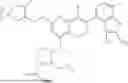


Sources:
- United States Patent and Trademark Office - verify current appl. status at the USPTO↗
Similar patent applications:
- » 20170247376
Methods and compositions for inhibition of Ras - » 20240300964
COMPOSITIONS AND METHODS FOR INHIBITION OF RAS - » 20250084079
COMPOSITIONS AND METHODS FOR INHIBITION OF RAS - » 20250188085
COMPOSITIONS AND METHODS FOR INHIBITION OF RAS - » 20250270225
COMPOSITIONS AND METHODS FOR INHIBITION OF RAS - » 20220326218
COMPOSITION AND METHOD FOR INHIBITING BORC COMPLEX TO TREAT CANCERS WITH NF1 DEFICIENCY AND DYSREGULATED RAS SIGNALING
Recent applications in this class:
- » 20250270211 2025-08-28
COMPOUNDS FOR FGFR INHIBITION - » 20250270210 2025-08-28
BCL-2 Inhibitor - » 20250270209 2025-08-28
LRRK2 INHIBITORS - » 20250270208 2025-08-28
BICYCLIC HETEROCYCLES AS MRGPRX2 ANTAGONISTS - » 20250270207 2025-08-28
PYRIDO[3,2-D]PYRIMIDINE COMPOUNDS USES THEREOF FOR TREATING A PROLIFERATIVE DISEASE - » 20250270205 2025-08-28
COMPOSITIONS AND METHODS FOR INHIBITING TREM-1 - » 20250270204 2025-08-28
PROCESS FOR THE PREPARATION OF 2-CYANOETHYL (4S)-4-(4-CYANO-2-METHOXY-PHENYL)-5-HYDROXY-2,8-DIMETHYL-1,4-DIHYDRO-1,6-NAPHTHYRIDIN-3-CARBOXYLATE BY RACEMATE SEPARATION BY MEANS OF DIASTEREOMERIC TARTARIC ACID ESTERS - » 20250263411 2025-08-21
3,4-DIHYDRO-2,7-NAPHTHYRIDINE-1,6(2H,7H)-DIONES AS MEK INHIBITORS - » 20250263410 2025-08-21
NK3 MODULATORS AND USES THEREOF - » 20250263409 2025-08-21
FGFR2 INHIBITOR COMPOUNDS