HALOGENATED ALL-SOLID-STATE BATTERY MATERIAL AND PREPARATION METHOD AND APPLICATION THEREOF
US20250273673A1
2025-08-28
18/858,759
2023-08-09
Smart Summary: A new type of battery material is designed for all-solid-state batteries. It includes elements like lithium or sodium, along with a mix of metals and halogens. This material is special because it allows ions to move easily, which is important for battery performance. It can be used in different parts of the battery, such as the positive electrode, negative electrode, and solid electrolyte. Overall, it shows great potential for improving how batteries work. 🚀 TL;DR
Abstract:
A halogenated all-solid-state battery material and a preparation method and application thereof are provided. A general chemical formula of the halogenated all-solid-state battery material is AxMyXzYb, wherein A contains Li or Na; M contains one or more of Mg, Al, Si, P, Ca, Ti, V, Cr, Mn, Fe, Co, Ni, Cu, Zn, Ga, Zr and Nb; X contains one or more of F, Cl, Br and I; Y contains O and/or S; and wherein 1≤x≤4, 0.5≤y≤1, 3≤z≤8, and 0≤b≤3. The material has good ionic conductivity, variable valence of M cation and deformability, which enables the material to meet the various requirements as a positive electrode, a negative electrode and a solid electrolyte of an all-solid-state battery and have excellent electrochemical performance.
Assignee:
- UNIVERSITY OF SCIENCE AND TECHNOLOGY OF CHINA 55 🇨🇳 Hefei, China
Applicant:
Interested in similar patents?
Get notified when new applications in this technology area are published.
Classification:
H01M4/582 » CPC main
Electrodes; Electrodes composed of, or comprising, active material; Selection of substances as active materials, active masses, active liquids of inorganic compounds other than oxides or hydroxides, e.g. sulfides, selenides, tellurides, halogenides or LiCoF; of polyanionic structures, e.g. phosphates, silicates or borates Halogenides
C01G23/002 » CPC further
Compounds of titanium Compounds containing, besides titanium, two or more other elements, with the exception of oxygen or hydrogen
C01G23/005 » CPC further
Compounds of titanium; Titanates Alkali titanates
C01G25/006 » CPC further
Compounds of zirconium Compounds containing, besides zirconium, two or more other elements, with the exception of oxygen or hydrogen
H01M10/0562 » CPC further
Secondary cells; Manufacture thereof; Accumulators with non-aqueous electrolyte characterised by the materials used as electrolytes, e.g. mixed inorganic/organic electrolytes the electrolyte being constituted of inorganic materials only Solid materials
C01P2002/72 » CPC further
Crystal-structural characteristics defined by measured X-ray, neutron or electron diffraction data by d-values or two theta-values, e.g. as X-ray diagram
C01P2006/40 » CPC further
Physical properties of inorganic compounds Electric properties
H01M2300/008 » CPC further
Electrolytes; Non-aqueous electrolytes; Solid electrolytes inorganic Halides
H01M4/58 IPC
Electrodes; Electrodes composed of, or comprising, active material; Selection of substances as active materials, active masses, active liquids of inorganic compounds other than oxides or hydroxides, e.g. sulfides, selenides, tellurides, halogenides or LiCoF; of polyanionic structures, e.g. phosphates, silicates or borates
C01G23/00 IPC
Compounds of titanium
C01G25/00 IPC
Compounds of zirconium
Description
CROSS REFERENCE TO THE RELATED APPLICATIONS
This application is the national phase entry of International Application No. PCT/CN2023/111920, filed on Aug. 9, 2023, which is based upon and claims priority to Chinese Patent Application No. 202210979868.5, filed on Aug. 16, 2022, the entire contents of which are incorporated herein by reference.
TECHNICAL FIELD
The present disclosure relates to the technical field of all-solid-state battery materials, and in particular, to a halogenated all-solid-state battery material and a preparation method and application thereof.
BACKGROUND
As the next generation of energy storage technology, all-solid-state batteries are expected to solve the safety problems of commercial lithium-ion batteries and further improve energy density. All-solid-state batteries adopt a structure similar to that of commercial lithium-ion batteries, i.e., materials with different functions are used as positive electrodes, negative electrodes and solid electrolytes respectively. The improvement of energy density and cycle stability of all-solid-state batteries depends largely on the cathode materials, but these cathode materials are currently extremely rigid oxides. When these oxides are used as cathode materials for all-solid-state batteries, they have to be combined with a large number of deformable solid electrolytes (such as halides, sulfides, etc.) to form composite electrodes to meet the needs of ion transport. This not only reduces the energy density of the all-solid-state battery, but also the side reaction between the electrode material and the solid electrolyte material in the composite electrode will further reduce its cycle stability.
In view of this, it is urgent to optimize and develop all-solid-state batteries with new structures, which requires further development of battery material functions. However, the function of commercial lithium-ion battery materials is relatively simple. The positive electrode, negative electrode and electrolyte are all acted by the corresponding functional materials, which greatly limits the optimization of battery structure. Scientists have also tried to design a battery material with multiple functions of positive electrode, negative electrode and electrolyte, but this ideal multi-functional material has not been found yet. The difficulty is that this new multifunctional battery material should simultaneously satisfy high ionic conductivity, good deformability and reversible redox ability with non-lithium/sodium cations. Only in this way can it act as at least two of the positive electrode, negative electrode and electrolyte of the all-solid-state batteries.
Therefore, how to obtain an all-solid-state battery material with multiple functions of positive electrode, negative electrode and electrolyte is a technical problem to be solved at present.
SUMMARY
An objective of the present disclosure is to provide a halogenated all-solid-state battery material and preparation method and applications thereof, to solve the technical problems that the prior art cannot obtain a multi-functional battery material that simultaneously satisfies high ion conductivity, good deformability, and reversible oxidation-reduction ability of non-lithium/sodium cations.
In order to achieve the above objective, the present disclosure adopts the following technical solutions.
The present disclosure provides a halogenated all-solid-state battery material, a general chemical formula of the halogenated all-solid-state battery material is AxMyXzYb, wherein A contains Li or Na; M contains one or more of Mg, Al, Si, P, Ca, Ti, V, Cr, Mn, Fe, Co, Ni, Cu, Zn, Ga, Zr and Nb; X contains one or more of F, Cl, Br and I; Y contains O and/or S; and wherein 1≤x≤4, 0.5≤y≤1, 3≤z≤8, and 0≤b≤3.
Further, a chemical formula of the halogenated all-solid-state battery material is selected from one of the following chemical formulas:
-
- Li3TiCl6, Li4TiCl6, Li3TiCl5O0.5, Li3TiCl5F, Li3Ti0.75Al0.25Cl6, Li4NiCl6, Li3ZrCl6, Li3Zr0.75Ti0.25Cl6, Li3.25Zr0.75Mg0.25Cl6, and Li2.5Zr0.75Ca0.25Cl6.
The present disclosure provides a preparation method for the halogenated all-solid-state battery material, comprising the following steps:
-
- taking and mixing raw materials with a stoichiometric ratio, and then performing ball milling, to obtain the halogenated all-solid-state battery material.
Further, a ball material ratio of the ball milling is (10-15):1, a rotation speed of the ball milling is 500-600 rpm, and a time of the ball milling is 20-50 h.
Further, performing an annealing treatment after the ball milling.
Further, a temperature of the annealing treatment is 300-500° C., and a time of the annealing treatment is 4-6 h.
The present disclosure provides application of the halogenated all-solid-state battery material in preparing an all-solid-state battery.
The beneficial effects of the present disclosure are:
-
- the halogenated all-solid-state battery material obtained by the present disclosure not only has an ionic conductivity of up to 1 mS/cm, but also has good deformability, and the M element has a reversible redox ability. The good deformation ability ensures that the battery material can be simply cold pressed into an all-solid-state battery. The battery material, as a positive and negative electrode, no longer needs to add a deformable ion conductive agent that does not provide energy, which can increase the energy density of the battery. At the same time, the high lithium-ion conductivity ensures the high rate performance of the battery.
The successful development of the halogenated all-solid-state battery material of the present disclosure contributes to optimizing the structure of the all-solid-state battery, improving the energy density of the all-solid-state battery, and providing a new idea for the industrialization of the all-solid-state battery.
BRIEF DESCRIPTION OF THE DRAWINGS
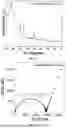
FIG. 1 is an X-ray diffraction spectrum of a low-crystalline Li3TiCl6 material prepared by Embodiment 1;
FIG. 2 is an electrochemical impedance spectroscopy of a low-crystalline Li3TiCl6 material prepared by Embodiment 1;
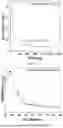
FIG. 3 is a direct current polarization spectrum of a low-crystalline Li3TiCl6 material prepared by Embodiment 1;
FIG. 4 is an X-ray diffraction spectrum of a high-crystalline Li3TiCl6 material prepared by Embodiment 1;
FIG. 5 is an electrochemical impedance spectroscopy of a high-crystalline Li3TiCl6 material prepared by Embodiment 1;
FIG. 6 is a direct current polarization spectrum of a high-crystalline Li3TiCl6 material prepared by Embodiment 1;
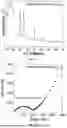
FIG. 7 is a charge-discharge curve of a high-crystalline Li3TiCl6 material prepared by Embodiment 1 as a cathode material;
FIG. 8 is a charge-discharge curve of a single material all-solid-state battery assembled by a high-crystalline Li3TiCl6 material prepared by Embodiment 1;
FIG. 9 is an X-ray diffraction spectrum of a low-crystalline Li4TiCl6 material prepared by Embodiment 2;
FIG. 10 is an electrochemical impedance spectroscopy of a low-crystalline Li4TiCl6 material prepared by Embodiment 2;
FIG. 11 is a direct current polarization spectrum of a low-crystalline Li4TiCl6 material prepared by Embodiment 2;
FIG. 12 is an X-ray diffraction spectrum of a low-crystalline Li3TiCl5O0.5 material prepared by Embodiment 3;
FIG. 13 is an electrochemical impedance spectroscopy of a low-crystalline Li3TiCl5O0.5 material prepared by Embodiment 3;
FIG. 14 is a direct current polarization spectrum of a low-crystalline Li3TiCl5O0.5 material prepared by Embodiment 3;
FIG. 15 is an X-ray diffraction spectrum of a high-crystalline Li3TiCl5O0.5 material prepared by Embodiment 3;
FIG. 16 is an electrochemical impedance spectroscopy of a high-crystalline Li3TiCl5O0.5 material prepared by Embodiment 3;
FIG. 17 is a direct current polarization spectrum of a high-crystalline Li3TiCl5O0.5 material prepared by Embodiment 3;
FIG. 18 is an X-ray diffraction spectrum of a low-crystalline Li3TiCl5F material prepared by Embodiment 4;
FIG. 19 is an electrochemical impedance spectroscopy of a low-crystalline Li3TiCl5F material prepared by Embodiment 4;
FIG. 20 is a direct current polarization spectrum of a low-crystalline Li3TiCl5F material prepared by Embodiment 4;
FIG. 21 is an X-ray diffraction spectrum of a low-crystalline Li3Ti0.75Al0.25Cl6 material prepared by Embodiment 5;
FIG. 22 is an electrochemical impedance spectroscopy of a low-crystalline Li3Ti0.75Al0.25Cl6 material prepared by Embodiment 5;
FIG. 23 is a direct current polarization spectrum of a low-crystalline Li3Ti0.75Al0.25Cl6 material prepared by Embodiment 5;
FIG. 24 is an X-ray diffraction spectrum of a high-crystalline Li3Ti0.75Al0.25Cl6 material prepared by Embodiment 5;
FIG. 25 is an electrochemical impedance spectroscopy of a high-crystalline Li3Ti0.75Al0.25Cl6 material prepared by Embodiment 5;
FIG. 26 is a direct current polarization spectrum of a high-crystalline Li3Ti0.75Al0.25Cl6 material prepared by Embodiment 5;
FIG. 27 is an X-ray diffraction spectrum of a low-crystalline Li4NiCl6 material prepared by Embodiment 6;
FIG. 28 is an electrochemical impedance spectroscopy of a low-crystalline Li4NiCl6 material prepared by Embodiment 6;
FIG. 29 is a direct current polarization spectrum of a low-crystalline Li4NiCl6 material prepared by Embodiment 6;
FIG. 30 is a charge-discharge curve of a low-crystalline Li4NiCl6 material prepared by Embodiment 6 as an electrode material in a voltage range of 3.16-5 V vs. Li/Li+;
FIG. 31 is a charge-discharge curve of a low-crystalline Li4NiCl6 material prepared by Embodiment 6 as an electrode material in a voltage range of 1-3 V vs. Li/Li+;
FIG. 32 is an X-ray diffraction spectrum of a low-crystalline Li3ZrCl6 material prepared by Embodiment 7;
FIG. 33 is an electrochemical impedance spectroscopy of a low-crystalline Li3ZrCl6 material prepared by Embodiment 7;
FIG. 34 is a direct current polarization spectrum of a low-crystalline Li3ZrCl6 material prepared by Embodiment 7;
FIG. 35 is an X-ray diffraction spectrum of a low-crystalline Li3Zr0.75Ti0.25Cl6 material prepared by Embodiment 8;
FIG. 36 is an electrochemical impedance spectroscopy of a low-crystalline Li3Zr0.75Ti0.25Cl6 material prepared by Embodiment 8;
FIG. 37 is a direct current polarization spectrum of a low-crystalline Li3Zr0.75Ti0.25Cl6 material prepared by Embodiment 8;
FIG. 38 is an X-ray diffraction spectrum of a low-crystalline Li3.25Zr0.75Mg0.25Cl6 material prepared by Embodiment 9;
FIG. 39 is an electrochemical impedance spectroscopy of a low-crystalline Li3.25Zr0.75Mg0.25Cl6 material prepared by Embodiment 9;
FIG. 40 is a direct current polarization spectrum of a low-crystalline Li3.25Zr0.75Mg0.25Cl6 material prepared by Embodiment 9;
FIG. 41 is an X-ray diffraction spectrum of a low-crystalline Li2.5Zr0.75Ca0.25Cl6 material prepared by Embodiment 10;
FIG. 42 is an electrochemical impedance spectroscopy of a low-crystalline Li2.5Zr0.75Ca0.25Cl6 material prepared by Embodiment 10; and
FIG. 43 is a direct current polarization spectrum of a low-crystalline Li2.5Zr0.75Ca0.25Cl6 material prepared by Embodiment 10.
DETAILED DESCRIPTION OF THE EMBODIMENTS
The present disclosure provides a halogenated all-solid-state battery material, a general chemical formula of the halogenated all-solid-state battery material is AxMyXzYb, wherein A contains Li or Na; M contains one or more of Mg, Al, Si, P, Ca, Ti, V, Cr, Mn, Fe, Co, Ni, Cu, Zn, Ga, Zr and Nb; X contains one or more of F, Cl, Br and I; Y contains O and/or S; and wherein 1≤x≤4, 0.5≤y≤1, 3≤z≤8, and 0≤b≤3.
In the present disclosure, wherein x, y, z and b are preferably: 2≤x≤3, 0.6≤y≤0.9, 4≤z≤7, and 1≤b≤2; and further preferably: 2.1≤x≤2.6, 0.7≤y≤0.8, 5≤z≤6, and 1.2≤b≤1.8.
In the present disclosure, a chemical formula of the halogenated all-solid-state battery material is selected from one of the following chemical formulas:
-
- Li3TiCl6, Li4TiCl6, Li3TiCl5O0.5, Li3TiCl5F, Li3Ti0.75Al0.25Cl6, Li4NiCl6, Li3ZrCl6, Li3Zr0.75Ti0.25Cl6, Li3.25Zr0.75Mg0.25Cl6, and Li2.5Zr0.75Ca0.25Cl6.
The present disclosure provides a preparation method for the halogenated all-solid-state battery material, comprising the following steps:
-
- taking and mixing raw materials with a stoichiometric ratio, and then performing ball milling, to obtain the halogenated all-solid-state battery material.
In the present disclosure, a ball material ratio of the ball milling is (10-15):1, a rotation speed of the ball milling is 500-600 rpm, and a time of the ball milling is 20-50 h; preferably, a ball material ratio of the ball milling is 11-14:1, a rotation speed of the ball milling is 520-580 rpm, and a time of the ball milling is 24-45 h; and further preferably, a ball material ratio of the ball milling is 12-13:1, a rotation speed of the ball milling is 520-550 rpm, and a time of the ball milling is 30-40 h.
In the present disclosure, performing an annealing treatment after the ball milling.
In the present disclosure, a temperature of the annealing treatment is 300-500° C., and a time of the annealing treatment is 4-6 h; preferably, a temperature of the annealing treatment is 350-450° C., and a time of the annealing treatment is 4-5 h; and further preferably, a temperature of the annealing treatment is 400° C., and a time of the annealing treatment is 5 h.
In the present disclosure, the material after annealing treatment is a high crystal material, and the material without annealing treatment is a low crystal material.
The present disclosure provides application of the halogenated all-solid-state battery material in preparing an all-solid-state battery.
The halogenated all-solid-state battery material can be used as one or more of the positive electrode, negative electrode and solid electrolyte of the all-solid-state battery.
In the following, the technical solutions provided by the present disclosure are described in detail in combination with the embodiments, but they cannot be understood as limiting the scope of protection of the present disclosure.
Embodiment 1
Preparation of a Halogenated All-Solid-State Li3TiCl6 Material
In an argon-protected glove box (a water oxygen content was less than 0.01 ppm), LiCl and TiCl3 were weighed in a stoichiometric ratio, respectively, placed in an 80 mL silicon nitride ball mill tank equipped with 5 mm diameter zirconia ball mill beads (a mass ratio of ball and material was 12:1), and ball milled for 24 hours at 600 r/min in a high-energy ball mill Pulverisette 7 of the German Fritsch Company after sealing. A low-crystalline sample was unannealed after ball milling, a high-crystalline sample was sealed in a quartz tube and annealed at 300°° C. for 5 hours, and their X-ray diffraction spectrum, electrochemical impedance spectroscopy and direct current polarization spectrum were shown in FIGS. 1-6, respectively. The results showed that a space group of the Li3TiCl6 material was C2/m, an ionic conductivity at room temperature (σi) of a low-crystalline Li3TiCl6 material was 1.15×10⁻⁴ S/cm, and an electronic conductivity at room temperature (σe) was 3.32×10⁻⁷ S/cm; an ionic conductivity at room temperature (σi) of a high-crystalline Li3TiCl6 material was as high as 1.04×10⁻³ S/cm, and an electronic conductivity at room temperature was 7.30×10⁻⁷ S/cm. The ionic conductivity and electronic conductivity were measured by simply cold pressing the battery material into sheets, indicating that the Li3TiCl6 material had good deformability; and a fact that the ionic conductivity was three orders of magnitude higher than the electronic conductivity proved that the Li3TiCl6 material was a pure ionic conductor that might be used as a solid electrolyte. A transition metal element Ti generally had combined states of Ti2+, Ti3+ and Ti4+, which had a potential redox ability as a cathode material.
The high-crystalline Li3TiCl6 (LTC) with a mass ratio of 95:5 was uniformly mixed with carbon black (C) as a composite cathode, Li2ZrCl6 (LZC) and Li6PS5Cl (LPSCl) were used as solid electrolytes, and a Li-In alloy was used as a negative electrode to assemble an all-solid-state battery, to verify the feasibility of Li3TiCl6 as a cathode material, as shown in FIG. 7. The results showed that the all-solid-state battery had an initial coulombic efficiency of no less than 97.3% and an initial discharge specific capacity of 92.5 mAh·g−1, which proved that Li3TiCl6 might be used as a 3V insertion cathode material.
In an argon-protected glove box (a water oxygen content was less than 0.01 ppm), the high-crystalline Li3TiCl6 (LTC) and carbon black (C) with a mass ratio of 95:5 were taken, then mixed evenly as a composite positive electrode and a composite negative electrode. Then a single material all-solid-state battery was assembled according to a structure of Li3TiCl6+C|Li3TiCl6| Li3TiCl6+C, and then electrochemical tests were performed, as shown in FIG. 8. The results showed that the Li3TiCl6 material had an initial coulombic efficiency of not less than 86.1% and an initial discharge specific capacity of 80.5 mAh·g−1, which proved that the Li3TiCl6 material might be used as the positive electrode, negative electrode and solid electrolyte of all-solid-state battery. It was worth noting that Li3TiCl6 might be replaced by any of the multi-functional halides contained in the present disclosure to assemble the single-material all-solid-state battery.
Embodiment 2
Preparation of a Halogenated All-Solid-State Li4TiCl6 Material
In an argon-protected glove box (a water oxygen content was less than 0.01 ppm), LiCl, TiCl3 and Ti powder were weighed in a stoichiometric ratio, respectively, placed in an 80 mL silicon nitride ball mill tank equipped with 5 mm diameter zirconia ball mill beads (a mass ratio of ball and material was 12:1), and ball milled for 24 hours at 600 r/min in a high-energy ball mill Pulverisette 7 of the German Fritsch Company after sealing. The X-ray diffraction spectrum, electrochemical impedance spectroscopy and direct current polarization spectrum of a low-crystalline Li4TiCl6 material after ball milling were shown in FIGS. 9-11, respectively. The results showed that a space group of the Li4TiCl6 material was C2/m, an ionic conductivity at room temperature of the low-crystalline Li4TiCl6 material was 7.67×10⁻⁶ S/cm, and an electronic conductivity at room temperature was 8.65×10⁻⁷ S/cm; and the ionic conductivity and electronic conductivity were measured by simply cold pressing the battery material into sheets, indicating that the Li4TiCl6 material had good deformability. A transition metal element Ti generally had combined states of Ti2+, Ti3+ and Ti4+, which had a potential redox ability as a cathode material.
Embodiment 3
Preparation of a Halogenated All-Solid-State Li3TiCl5O0.5 Material
In an argon-protected glove box (a water oxygen content was less than 0.01 ppm), LiCl, TiCl3 and Li2O were weighed in a stoichiometric ratio, respectively, placed in an 80 mL silicon nitride ball mill tank equipped with 5 mm diameter zirconia ball mill beads (a mass ratio of ball and material was 12:1), and ball milled for 24 hours at 600 r/min in a high-energy ball mill Pulverisette 7 of the German Fritsch Company after sealing. A low-crystalline sample was unannealed after ball milling, a high-crystalline sample was sealed in a quartz tube and annealed at 300° C. for 5 hours, and their X-ray diffraction spectrum, electrochemical impedance spectroscopy and direct current polarization spectrum were shown in FIGS. 12-17, respectively. The results showed that a space group of the Li3TiCl5O0.5 material was C2/m, an ionic conductivity at room temperature of a low-crystalline Li3TiCl5O0.5 material was 9.95×10⁻⁵ S/cm, and an electronic conductivity at room temperature was 5.38×10⁻⁸ S/cm; and an ionic conductivity at room temperature of a high-crystalline Li3TiCl5O0.5 material was 2.64×10⁻⁴ S/cm, and an electronic conductivity at room temperature was 1.22×10⁻⁷ S/cm. The ionic conductivity and electronic conductivity were measured by simply cold pressing the battery material into sheets, indicating that the Li3TiCl5O0.5 material had good deformability; and a fact that the ionic conductivity was three orders of magnitude higher than the electronic conductivity proved that the Li3TiCl5O0.5 material was a pure ionic conductor that might be used as a solid electrolyte. A transition metal element Ti generally had combined states of Ti2+, Ti3+ and Ti4+, which had a potential redox ability as a cathode material.
Embodiment 4
Preparation of a Halogenated All-Solid-State Li3TiCl5F Material
In an argon-protected glove box (a water oxygen content was less than 0.01 ppm), LiCl, TiCl3 and LiF were weighed in a stoichiometric ratio, respectively, placed in an 80 mL silicon nitride ball mill tank equipped with 5 mm diameter zirconia ball mill beads (a mass ratio of ball and material was 12:1), and ball milled for 24 hours at 600 r/min in a high-energy ball mill Pulverisette 7 of the German Fritsch Company after sealing. The X-ray diffraction spectrum, electrochemical impedance spectroscopy and direct current polarization spectrum of a low-crystalline Li3TiCl5F material after ball milling were shown in FIGS. 18-20, respectively. The results showed that a space group of the Li3TiCl5F material was C2/m, an ionic conductivity at room temperature of the low-crystalline Li3TiCl5F material was 1.02×10⁻⁴ S/cm, and an electronic conductivity at room temperature was 3.79×10⁻⁸ S/cm. The ionic conductivity and electronic conductivity were measured by simply cold pressing the battery material into sheets, indicating that the Li3TiCl5F material had good deformability; and a fact that the ionic conductivity was four orders of magnitude higher than the electronic conductivity proved that the Li3TiCl5F material was a pure ionic conductor that might be used as a solid electrolyte. A transition metal element Ti generally had combined states of Ti2+, Ti3+ and Ti4+, which had a potential redox ability as a cathode material.
Embodiment 5
Preparation of a Halogenated All-Solid-State Li3Ti0.75Al0.25Cl6 Material
In an argon-protected glove box (a water oxygen content was less than 0.01 ppm), LiCl, TiCl3 and AlCl3 were weighed in a stoichiometric ratio, respectively, placed in an 80 mL silicon nitride ball mill tank equipped with 5 mm diameter zirconia ball mill beads (a mass ratio of ball and material was 12:1), and ball milled for 24 hours at 600 r/min in a high-energy ball mill Pulverisette 7 of the German Fritsch Company after sealing. A low-crystalline sample was unannealed after ball milling, a high-crystalline sample was sealed in a quartz tube and annealed at 300° C. for 5 hours, and their X-ray diffraction spectrum, electrochemical impedance spectroscopy and direct current polarization spectrum were shown in FIGS. 21-26, respectively. The results showed that a space group of the Li3Ti0.75Al0.25Cl6 material was C2/m, an ionic conductivity at room temperature of a low-crystalline Li3Ti0.75Al0.25Cl6 material was 3.31×10⁻⁵ S/cm, and an electronic conductivity at room temperature was 3.72×10⁻⁸ S/cm; and an ionic conductivity at room temperature of a high-crystalline Li3Ti0.75Al0.25Cl6 material was 4.24×10⁻⁴ S/cm, a grain boundary ionic conductivity was 1.63×10⁻⁴ S/cm, and an electronic conductivity at room temperature was 1.50×10⁻⁸ S/cm. The ionic conductivity and electronic conductivity were measured by simply cold pressing the battery material into sheets, indicating that the Li3Ti0.75Al0.25Cl6 material had good deformability; and a fact that the ionic conductivity was four orders of magnitude higher than the electronic conductivity proved that the Li3TiCl6 material was a pure ionic conductor that might be used as a solid electrolyte. A transition metal element Ti generally had combined states of Ti2+, Ti3+ and Ti4+, which had a potential redox ability as a cathode material.
Embodiment 6
Preparation of a Halogenated All-Solid-State Li4NiCl6 Material
In an argon-protected glove box (a water oxygen content was less than 0.01 ppm), LiCl and NiCl2 were weighed in a stoichiometric ratio, respectively, placed in an 80 mL silicon nitride ball mill tank equipped with 5 mm diameter zirconia ball mill beads (a mass ratio of ball and material was 12:1), and ball milled for 24 hours at 600 r/min in a high-energy ball mill Pulverisette 7 of the German Fritsch Company after sealing. The X-ray diffraction spectrum, electrochemical impedance spectroscopy and direct current polarization spectrum of the Li4NiCl6 material after ball milling were shown in FIGS. 27-29, respectively. The results showed that a space group of the Li4NiCl6 material was C2/m, an ionic conductivity at room temperature of a low-crystalline Li4NiCl6 material was 6.94×10⁻⁶ S/cm, and an electronic conductivity at room temperature was 1.48×10⁻⁸ S/cm. The ionic conductivity and electronic conductivity were measured by simply cold pressing the battery material into sheets, indicating that the Li4NiCl6 material had good deformability. A transition metal element Ni generally had combined states of Ni+, Ni2+ and Ni3+, which had a potential redox ability as a cathode material.
The low-crystalline Li4NiCl6, LZC and carbon black (C) with a mass ratio of 50:45:5 were used as a composite cathode, LZC and LPSCl were used as solid electrolytes, and a Li—In alloy was used as a negative electrode to assemble an all-solid-state battery, to verify the feasibility of the Li4NiCl6 material as an electrode material, as shown in FIG. 30 and FIG. 31. The results showed that the Li4NiCl6 material might be charged and discharged in different voltage ranges, and might be used as a positive electrode, a negative electrode and an electrolyte material.
Embodiment 7
Preparation of a Halogenated All-Solid-State Li3ZrCl6 Material
In an argon-protected glove box (a water oxygen content was less than 0.01 ppm), LiCl, ZrCl4 and Zr powder were weighed in a stoichiometric ratio, respectively, placed in an 80 mL silicon nitride ball mill tank equipped with 5 mm diameter zirconia ball mill beads (a mass ratio of ball and material was 10:1), and ball milled for 45 hours at 500 r/min in a high-energy ball mill Pulverisette 7 of the German Fritsch Company after sealing. The X-ray diffraction spectrum, electrochemical impedance spectroscopy and direct current polarization spectrum of a low-crystalline Li3ZrCl6 material after ball milling were shown in FIGS. 32-34, respectively. The results showed that an ionic conductivity at room temperature of the low-crystalline Li3ZrCl6 material was 2.62×10⁻⁴ S/cm, and an electronic conductivity at room temperature was 4.47×10⁻⁸ S/cm. The ionic conductivity and electronic conductivity were measured by simply cold pressing the battery material into sheets, indicating that the Li3ZrCl6 material had good deformability; and a fact that the ionic conductivity was four orders of magnitude higher than the electronic conductivity proves that the Li3ZrCl6 material was a pure ionic conductor that might be used as a solid electrolyte. A transition metal element Zr had combined state of Zr3+ and Zr4+, which had a potential redox ability as a cathode material.
Embodiment 8
Preparation of a Halogenated All-Solid-State Li3Zr0.75Ti0.25Cl6 Material
In an argon-protected glove box (a water oxygen content was less than 0.01 ppm), LiCl, ZrCl4 and Ti powder were weighed in a stoichiometric ratio, respectively, placed in an 80 mL silicon nitride ball mill tank equipped with 5 mm diameter zirconia ball mill beads (a mass ratio of ball and material was 10:1), and ball milled for 45 hours at 500 r/min in a high-energy ball mill Pulverisette 7 of the German Fritsch Company after sealing. The X-ray diffraction spectrum, electrochemical impedance spectroscopy and direct current polarization spectrum of a low-crystalline Li3Zr0.75Ti0.25Cl6 material after ball milling were shown in FIGS. 35-37, respectively. The results showed that an ionic conductivity at room temperature of the low-crystalline Li3Zr0.75Ti0.25Cl6 material was 5.17×10⁻⁴ S/cm, and an electronic conductivity at room temperature was 5.63×10⁻⁹ S/cm. The ionic conductivity and electronic conductivity were measured by simply cold pressing the battery material into sheets, indicating that the Li3Zr0.75Ti0.25Cl6 material had good deformability; and a fact that the ionic conductivity was five orders of magnitude higher than the electronic conductivity proved that the Li3Zr0.75Ti0.25Cl6 material was a pure ionic conductor that might be used as a solid electrolyte. A transition metal element Zr had combined states of Zr3+ and Zr4+, and Ti had combined states of Ti2+, Ti3+ and Ti4+, which had a potential redox ability as a cathode material.
Embodiment 9
Preparation of a Halogenated All-Solid-State Li3.25Zr0.75Mg0.25Cl6 Material
In an argon-protected glove box (a water oxygen content was less than 0.01 ppm), LiCl, ZrCl4, MgCl2 and Zr powder were weighed in a stoichiometric ratio, respectively, placed in an 80 mL silicon nitride ball mill tank equipped with 5 mm diameter zirconia ball mill beads (a mass ratio of ball and material was 10:1), and ball milled for 45 hours at 500 r/min in a high-energy ball mill Pulverisette 7 of the German Fritsch Company after sealing. The X-ray diffraction spectrum, electrochemical impedance spectroscopy and direct current polarization spectrum of a low-crystalline Li3.25Zr0.75Mg0.25Cl6 material after ball milling were shown in FIGS. 38-40, respectively. The results showed that an ionic conductivity at room temperature of the low-crystalline Li3.25Zr0.75Mg0.25Cl6 material was 1.51×10⁻⁴ S/cm, and an electronic conductivity at room temperature was 1.07×10⁻⁸ S/cm. The ionic conductivity and electronic conductivity were measured by simply cold pressing the battery material into sheets, indicating that the Li3.25Zr0.75Mg0.25Cl6 material had good deformability; and a fact that the ionic conductivity was four orders of magnitude higher than the electronic conductivity proved that the Li3.25Zr0.75Mg0.25 Cl6 material was a pure ionic conductor that might be used as a solid electrolyte. A transition metal element Zr had combined states of Zr3+ and Zr4+, which had a potential redox ability as a cathode material.
Embodiment 10
Preparation of a Halogenated All-Solid-State Li2.5Zr0.75Ca0.25Cl6 Material
In an argon-protected glove box (a water oxygen content was less than 0.01 ppm), LiCl, ZrCl4, and CaCl2 powder were weighed in a stoichiometric ratio, respectively, placed in an 80 mL silicon nitride ball mill tank equipped with 5 mm diameter zirconia ball mill beads (a mass ratio of ball and material was 10:1), and ball milled for 45 hours at 500 r/min in a high-energy ball mill Pulverisette 7 of the German Fritsch Company after sealing. The X-ray diffraction spectrum, electrochemical impedance spectroscopy and direct current polarization spectrum of a low-crystalline Li2.5Zr0.75Ca0.25Cl6 material after ball milling were shown in FIGS. 41-43, respectively. The results showed that an ionic conductivity at room temperature of the low-crystalline Li2.5Zr0.75Ca0.25Cl6 material was 2.15×10⁻⁴ S/cm, and an electronic conductivity at room temperature was 2.85×10⁻⁹ S/cm. The ionic conductivity and electronic conductivity were measured by simply cold pressing the battery material into sheets, indicating that the Li2.5Zr0.75Ca0.25Cl6 material had good deformability; and a fact that the ionic conductivity was five orders of magnitude higher than the electronic conductivity proved that the Li2.5Zr0.75Ca0.25Cl6 material was a pure ionic conductor that might be used as a solid electrolyte. A transition metal element Zr had combined states of Zr3+ and Zr4+, which had a potential redox ability as a cathode material.
It can be seen from the above embodiments, that the present disclosure provides a halogenated all-solid-state battery material and preparation method and application thereof. The halogenated all-solid-state battery material obtained by the present disclosure not only has an ionic conductivity of up to 1 mS/cm, but also has good deformability, and the M element has a reversible redox ability. The good deformation ability ensures that the battery material can be simply cold pressed into an all-solid-state battery. This battery material, as a positive and negative electrode, no longer needs to add a deformable ion conductive agent that does not provide energy, which can improve the energy density of the battery. At the same time, the high lithium-ion conductivity ensures that the battery has high rate performance.
The above descriptions are merely the preferred embodiments of the present disclosure. It is to be pointed out that for ordinary technical personnel in this technical field, some improvements and embellishments can be made without breaking away from the principle of the present disclosure, and the improvements and embellishments are also to be regarded as the protection scope of the present disclosure.
Claims
What is claimed is:1. A halogenated all-solid-state battery material, wherein a general chemical formula of the halogenated all-solid-state battery material is AxMyXzYb, wherein A contains Li or Na; M contains one or more of Mg, Al, Si, P, Ca, Ti, V, Cr, Mn, Fe, Co, Ni, Cu, Zn, Ga, Zr, and Nb; X contains one or more of F, Cl, Br, and I; Y contains O and/or S; and 1≤x≤4, 0.5≤y≤1, 3≤z≤8, and 0≤b≤3.
2. The halogenated all-solid-state battery material according to claim 1, wherein a chemical formula of the halogenated all-solid-state battery material is selected from one of the following chemical formulas:
Li3TiCl6, Li4TiCl6, Li3TiCl5O0.5, Li3TiCl5F, Li3Ti0.75Al0.25Cl6, Li4NiCl6, Li3ZrCl6, Li3Zr0.75Ti0.25Cl6, Li3.25Zr0.75Mg0.25Cl6, and Li2.5Zr0.75Ca0.25Cl6.
3. A preparation method for the halogenated all-solid-state battery material according to claim 1, comprising the following steps:
taking and mixing raw materials with a stoichiometric ratio, and then performing ball milling, to obtain the halogenated all-solid-state battery material.
4. The preparation method for the halogenated all-solid-state battery material according to claim 3, wherein a ball material ratio of the ball milling is (10-15):1, a rotation speed of the ball milling is 500-600 rpm, and a time of the ball milling is 20-50 h.
5. The preparation method for the halogenated all-solid-state battery material according to claim 3, wherein an annealing treatment is performed after the ball milling.
6. The preparation method for the halogenated all-solid-state battery material according to claim 5, wherein a temperature of the annealing treatment is 300-500° C., and a time of the annealing treatment is 4-6 h.
7. A preparation method of an all-solid-state battery, comprising using the halogenated all-solid-state battery material according to claim 1.
8. The preparation method for the halogenated all-solid-state battery material according to claim 3, wherein a chemical formula of the halogenated all-solid-state battery material is selected from one of the following chemical formulas:
Li3TiCl6, Li4TiCl6, Li3TiCl5O0.5, Li3TiCl5F, Li3Ti0.75Al0.25Cl6, Li4NiCl6, Li3ZrCl6, Li3Zr0.75Ti0.25Cl6, Li3.25Zr0.75Mg0.25Cl6, and Li2.5Zr0.75Ca0.25Cl6.
9. The preparation method for the halogenated all-solid-state battery material according to claim 8, wherein a ball material ratio of the ball milling is (10-15):1, a rotation speed of the ball milling is 500-600 rpm, and a time of the ball milling is 20-50 h.
10. The preparation method for the halogenated all-solid-state battery material according to claim 8, wherein an annealing treatment is performed after the ball milling.
11. The preparation method for the halogenated all-solid-state battery material according to claim 4, wherein an annealing treatment is performed after the ball milling.
12. The preparation method for the halogenated all-solid-state battery material according to claim 9, wherein an annealing treatment is performed after the ball milling.
13. The preparation method for the halogenated all-solid-state battery material according to claim 10, wherein a temperature of the annealing treatment is 300-500° C., and a time of the annealing treatment is 4-6 h.
14. The preparation method for the halogenated all-solid-state battery material according to claim 11, wherein a temperature of the annealing treatment is 300-500° C., and a time of the annealing treatment is 4-6 h.
15. The preparation method for the halogenated all-solid-state battery material according to claim 12, wherein a temperature of the annealing treatment is 300-500° C., and a time of the annealing treatment is 4-6 h.
16. The preparation method of the all-solid-state battery according to claim 7, wherein a chemical formula of the halogenated all-solid-state battery material is selected from one of the following chemical formulas:
Li3TiCl6, Li4TiCl6, Li3TiCl5O0.5, Li3TiCl5F, Li3Ti0.75Al0.25Cl6, Li4NiCl6, Li3ZrCl6, Li3Zr0.75Ti0.25Cl6, Li3.25Zr0.75Mg0.25Cl6, and Li2.5Zr0.75Ca0.25Cl6.
Images & Drawings included:






Sources:
- United States Patent and Trademark Office - verify current appl. status at the USPTO↗
Recent applications in this class:
- » 20250158057 2025-05-15
CATHODE HAVING DOPED METAL FLUORIDE CORE-SHELL PARTICLE AND BATTERIES COMPRISING THE SAME - » 20250140851 2025-05-01
POSITIVE ELECTRODE ACTIVE MATERIAL AND LITHIUM ION SECONDARY BATTERY - » 20250054977 2025-02-13
LITHIUM ION-CONDUCTING SOLID MATERIALS - » 20250015286 2025-01-09
OXYHALIDE MATERIAL, BATTERY, AND BATTERY SYSTEM - » 20250015285 2025-01-09
Cathode active material and fluoride ion battery - » 20240363855 2024-10-31
ELECTRODE MIXTURE AND LITHIUM-ION BATTERY - » 20240332525 2024-10-03
HIGH CAPACITY, HIGH ENERGY DENSITY AND HIGH POWER REVERSIBLE Li-Cl2 BATTERY SYSTEM - » 20240322161 2024-09-26
FLUORIDE-ION BATTERY, NEGATIVE ELECTRODE ACTIVE MATERIAL FOR FLUORIDE-ION BATTERY, AND METHOD FOR MANUFACTURING NEGATIVE ELECTRODE ACTIVE MATERIAL FOR FLUORIDE-ION BATTERY - » 20240250258 2024-07-25
POSITIVE ELECTRODE ACTIVE MATERIAL FOR FLUORIDE ION BATTERY AND FLUORIDE ION BATTERY - » 20240243282 2024-07-18
ELECTROCHEMICAL DEVICE AND ELECTRONIC DEVICE
Recent applications for this Assignee:
- » 20250226400 2025-07-10
ELECTRODE MATERIAL, ELECTRODE MATERIAL PREPARATION METHOD, ELECTRODE MATERIAL PRECURSOR, AND ELECTRODE MATERIAL PRECURSOR PREPARATION METHOD - » 20250203065 2025-06-19
IMAGE PREDICTION METHOD AND DEVICE - » 20250147160 2025-05-08
FITTING METHOD FOR SPONTANEOUS EMISSION NOISE OF LASER RADAR SYSTEM AND OPTICAL FIBER SENSING SYSTEM - » 20250069390 2025-02-27
METHOD FOR WHOLE-TIME SPACE-AIR-GROUND INTEGRATED HYPERSPECTRAL STEREOSCOPIC REMOTE SENSING, TRACING AND PREDICTION OF GREENHOUSE/POLLUTION GAS - » 20240416332 2024-12-19
POSITIVELY CHARGED QUATERNARY AMMONIUM SALT POLYMER CATALYST AND PREPARATION METHOD AND APPLICATION THEREOF - » 20240333913 2024-10-03
Image prediction method and device - » 20240175815 2024-05-30
APPARATUS FOR QUANTITATIVELY DETECTING ISOTOPOLOGUE OF CARBON DIOXIDE USING DUAL-PHOTON ABSORPTION AND SPECTROMETER - » 20240168942 2024-05-23
Method and apparatus for hierarchically pruning data in blockchain transaction, device and medium - » 20240167945 2024-05-23
Device and spectrometer for quantitatively detecting carbon 14 isotope by dual-wavelength method - » 20240093345 2024-03-21
FIXED POINT DEFECT DOPING METHOD FOR MICRO-NANOSTRUCTURE, AND NV CENTER SENSOR