POLYCYCLIC COMPOUND AND ORGANIC LIGHT-EMITTING DEVICE INCLUDING THE SAME
US20250301898A1
2025-09-25
19/061,904
2025-02-24
Smart Summary: A new type of chemical compound has been created, which is called a polycyclic compound. This compound can be used in devices that emit light, like screens or displays. The organic light-emitting device uses this compound to produce bright and colorful light. Additionally, electronic devices that include this light-emitting technology can benefit from improved performance. Overall, this innovation aims to enhance how we see and use light in various gadgets. 🚀 TL;DR
Abstract:
Provided are a polycyclic compound represented by Formula 1, an organic light-emitting device including the same, and an electronic apparatus including the organic light-emitting device.
Inventors:
- Sangho PARK 45 🇰🇷 Anyang-si, South Korea
- Sangmo KIM 80 🇰🇷 Hwaseong-si, South Korea
- Hyeonho CHOI 105 🇰🇷 Seoul, South Korea
- Juhyun KIM 47 🇰🇷 Seoul, South Korea
- Joonghyuk Kim 63 🇰🇷 Seoul, South Korea
- Junha Park 128 🇰🇷 Yongin-si, South Korea
- Munki Sim 98 🇰🇷 Yongin-si, South Korea
- Sooghang IHN 60 🇰🇷 Hwaseong-si, South Korea
- Soonok JEON 68 🇰🇷 Suwon-si, South Korea
- Minjung JUNG 77 🇰🇷 Yongin-si, South Korea
- Yusuke MARUYAMA 15 🇰🇷 Hwaseong-si, South Korea
- Dmitry ANDROSOV 7 🇰🇷 Hwaseong-si, South Korea
- Kyoung Sunwoo 34 🇰🇷 Yongin-si, South Korea
- Sangyeon Hwang 9 🇰🇷 Seoul, South Korea
- Sunyoung PARK 5 🇰🇷 Yongin-si, South Korea
- MinJae SUNG 49 🇰🇷 Yongin-si, South Korea
- Seonhyoung HUR 44 🇰🇷 Yongin-si, South Korea
- Giwoong HAN 24 🇰🇷 Yongin-si, South Korea
Applicant:
Interested in similar patents?
Get notified when new applications in this technology area are published.
Classification:
C07F5/027 » CPC further
Compounds containing elements of Groups 3 or 13 of the Periodic System; Boron compounds Organoboranes and organoborohydrides
C09K11/02 » CPC further
Luminescent, e.g. electroluminescent, chemiluminescent materials Use of particular materials as binders, particle coatings or suspension media therefor
C09K11/06 » CPC further
Luminescent, e.g. electroluminescent, chemiluminescent materials containing organic luminescent materials
C07B2200/05 » CPC further
Indexing scheme relating to specific properties of organic compounds Isotopically modified compounds, e.g. labelled
C09K2211/1007 » CPC further
Chemical nature of organic luminescent or tenebrescent compounds; Non-macromolecular compounds; Carbocyclic compounds Non-condensed systems
C09K2211/1018 » CPC further
Chemical nature of organic luminescent or tenebrescent compounds; Non-macromolecular compounds Heterocyclic compounds
C07F5/02 IPC
Compounds containing elements of Groups 3 or 13 of the Periodic System Boron compounds
Description
CROSS-REFERENCE TO RELATED APPLICATION
This application is a continuation of U.S. patent application Ser. No. 17/531,303, filed Nov. 19, 2021, which is a continuation-in-part of U.S. patent application Ser. No. 17/345,095, filed on Jun. 11, 2021, which is based on and claims priority to Korean Patent Application Nos. 10-2020-0156925, filed on Nov. 20, 2020, and 10-2021-0160720, filed on Nov. 19, 2021 in the Korean Intellectual Property Office, and all the benefits accruing therefrom under 35 U.S.C. § 119, the entire contents of all applications being incorporated by reference herein in their entirety.
BACKGROUND
1. Field
One or more embodiments relate to a polycyclic compound and an organic light-emitting device including the same.
2. Description of the Related Art
Organic light-emitting devices are self-emission devices that produce full-color images, and also have wide viewing angles, high contrast ratios, short response times, and excellent characteristics in terms of brightness, driving voltage, and response speed, compared to devices in the art.
In an example, an organic light-emitting device includes an anode, a cathode, and an organic layer between the anode and the cathode, wherein the organic layer includes an emission layer. A hole transport region may be located between the anode and the emission layer, and an electron transport region may be located between the emission layer and the cathode. Holes provided from the anode may move toward the emission layer through the hole transport region, and electrons provided from the cathode may move toward the emission layer through the electron transport region. The holes and the electrons recombine in the emission layer to produce excitons. These excitons transition from an excited state to a ground state to thereby generate light.
SUMMARY
Provided is an organic light-emitting device with improved lifespan characteristics.
Additional aspects will be set forth in part in the description, which follows and, in part, will be apparent from the description, or may be learned by practice of the presented embodiments of the disclosure.
According to an aspect of an embodiment, provided is a polycyclic compound represented by Formula 1
-
- wherein, in Formulae 1 and 1-1,
- Ar1 may be a substituted or unsubstituted C5-C30 carbocyclic group or a substituted or unsubstituted C1-C30 heterocyclic group,
- Ar2 may be a group represented by Formula 1-1,
- L1 may be a substituted or unsubstituted C5-C30 carbocyclic group or a substituted or unsubstituted C1-C30 heterocyclic group,
- m1 may be an integer from 0 to 3, wherein, when m1 is 0, *-(L1)m1-*′ indicates a chemical bond,
- M may be B, Al, Si(Ra), Ge(Ra), P, P(═O), or P(═S),
- R1 to R5, R11, and R12 may each independently be selected from hydrogen, deuterium, —F, —Cl, —Br, —I, —SF5, -CD3, -CD2H, -CDH2, —CF3, —CF2H, —CFH2, a hydroxyl group, a cyano group, a nitro group, an amidino group, a hydrazine group, a hydrazone group, a carboxylic acid group or a salt thereof, a sulfonic acid group or a salt thereof, a phosphoric acid group or a salt thereof, a substituted or unsubstituted C1-C60 alkyl group, a substituted or unsubstituted C2-C60 alkenyl group, a substituted or unsubstituted C2-C60 alkynyl group, a substituted or unsubstituted C1-C60 alkoxy group, a substituted or unsubstituted C1-C60 alkylthio group, a substituted or unsubstituted C3-C1 cycloalkyl group, a substituted or unsubstituted C1-C1 heterocycloalkyl group, a substituted or unsubstituted C3-C10 cycloalkenyl group, a substituted or unsubstituted C2-C10 heterocycloalkenyl group, a substituted or unsubstituted C6-C60 aryl group, a substituted or unsubstituted C6-C60 aryl alkyl group, a substituted or unsubstituted C6-C60 aryloxy group, a substituted or unsubstituted C6-C60 arylthio group, a substituted or unsubstituted C1-C60 heteroaryl group, a substituted or unsubstituted C1-C60 heteroaryloxy group, a substituted or unsubstituted C1-C60 heteroarylthio group, a substituted or unsubstituted C1-C60 heteroalkylaryl group, a substituted or unsubstituted monovalent non-aromatic condensed polycyclic group, a substituted or unsubstituted monovalent non-aromatic condensed heteropolycyclic group, —N(Q1)(Q2), —Si(Q3)(Q4)(Q5), —B(Q6)(Q7), and —P(═O)(Q8)(Q9),
- neighboring two groups from among R1 to R5, R11, and R12 may optionally be bonded to each other to form a C5-C30 carbocyclic group unsubstituted or substituted with at least one R10a or a C1-C30 heterocyclic group unsubstituted or substituted with at least one R10a, and R10a is the same as described in connection with R1,
- a1 to a3 may each independently be an integer from 1 to 3,
- a4 and a5 may each independently be an integer from 1 to 4,
- a11 and a12 may each independently be an integer from 1 to 3,
- t-Bu indicates a tert-butyl group, and
- at least one substitutent of the substituted C5-C30 carbocyclic group, the substituted C1-C30 heterocyclic group, the substituted C1-C60 alkyl group, the substituted C2-C60 alkenyl group, the substituted C2-C60 alkynyl group, the substituted C1-C60 alkylthio group, the substituted C1-C60 alkoxy group, the substituted C3-C10 cycloalkyl group, the substituted C1-C10 heterocycloalkyl group, the substituted C3-C10 cycloalkenyl group, the substituted C2-C10 heterocycloalkenyl group, the substituted C6-C60 aryl group, the substituted C6-C60 aryl alkyl group, the substituted C6-C60 aryloxy group, the substituted C6-C60 arylthio group, the substituted C1-C60 heteroaryl group, the substituted C1-C60 heteroaryloxy group, the substituted C1-C60 heteroarylthio group, the substituted C1-C60 heteroalkylaryl group, the substituted monovalent non-aromatic condensed polycyclic group, and the substituted monovalent non-aromatic condensed heteropolycyclic group may be selected from
- deuterium, —F, —Cl, —Br, —I, -CD3, -CD2H, -CDH2, —CF3, —CF2H, —CFH2, a hydroxyl group, a cyano group, a nitro group, an amino group, an amidino group, a hydrazine group, a hydrazone group, a carboxylic acid or a salt thereof, a sulfonic acid or a salt thereof, a phosphoric acid or a salt thereof, a C1-C60 alkyl group, a C2-C60 alkenyl group, a C2-C60 alkynyl group, a C1-C60 alkylthio group, and a C1-C60 alkoxy group,
- a C1-C60 alkyl group, a C2-C60 alkenyl group, a C2-C60 alkynyl group, a C1-C60 alkylthio group, and a C1-C60 alkoxy group, each independently substituted with at least one selected from deuterium, —F, —Cl, —Br, —I, -CD3, -CD2H, -CDH2, —CF3, —CF2H, —CFH2, a hydroxyl group, a cyano group, a nitro group, an amino group, an amidino group, a hydrazine group, a hydrazone group, a carboxylic acid group or a salt thereof, a sulfonic acid group or a salt thereof, a phosphoric acid group or a salt thereof, a C3-C10 cycloalkyl group, a C1-C10 heterocycloalkyl group, a C3-C10 cycloalkenyl group, a C1-C10 heterocycloalkenyl group, a C6-C60 aryl group, a C6-C60 aryl alkyl group, a C6-C60 aryloxy group, a C6-C60 arylthio group, a C6-C60 aryl alkyl group, a C1-C60 heteroaryl group, a C1-C60 heteroaryloxy group, a C1-C60 heteroarylthio group, a C1-C60 heteroalkylaryl group, a monovalent non-aromatic condensed polycyclic group, a monovalent non-aromatic condensed heteropolycyclic group, —Si(Q11)(Q12)(Q13), —N(Q14)(Q15), —B(Q16)(Q17), and —P(═O)(Q18)(Q19),
- a C3-C10 cycloalkyl group, a C1-C1 heterocycloalkyl group, a C3-C10 cycloalkenyl group, a C1-C1 heterocycloalkenyl group, a C6-C60 aryl group, a C6-C60 aryl alkyl group, a C6-C60 aryloxy group, a C6-C60 arylthio group, a C6-C60 aryl alkyl group, a C1-C6a heteroaryl group, a C1-C60 heteroaryloxy group, a C1-C60 heteroarylthio group, a C1-C6a heteroalkylaryl group, a monovalent non-aromatic condensed polycyclic group, and a monovalent non-aromatic condensed heteropolycyclic group,
- a C3-C10 cycloalkyl group, a C1-C1 heterocycloalkyl group, a C3-C10 cycloalkenyl group, a C1-C1 heterocycloalkenyl group, a C6-C60 aryl group, a C6-C60 aryloxy group, a C6-C60 arylthio group, a C6-C60 alkylaryl group, a C1-C60 heteroaryl group, a C1-C60 heteroaryloxy group, a C1-C60 heteroarylthio group, a C1-C60 heteroalkylaryl group, a monovalent non-aromatic condensed polycyclic group, and a monovalent non-aromatic condensed heteropolycyclic group, each independently substituted with at least one selected from deuterium, —F, —Cl, —Br, —I, -CD3, -CD2H, -CDH2, —CF3, —CF2H, —CFH2, a hydroxyl group, a cyano group, a nitro group, an amino group, an amidino group, a hydrazine group, a hydrazone group, a carboxylic acid group or a salt thereof, a sulfonic acid group or a salt thereof, a phosphoric acid group or a salt thereof, a C1-C60 alkyl group, a C2-C60 alkenyl group, a C2-C60 alkynyl group, a C1-C60 alkylthio group, a C1-C60 alkoxy group, a C3-C10 cycloalkyl group, a C1-C1 heterocycloalkyl group, a C3-C10 cycloalkenyl group, a C1-C1 heterocycloalkenyl group, a C6-C60 aryl group, a C6-C60 aryl alkyl group, a C6-C60 aryloxy group, a C6-C60 arylthio group, a C1-C60 heteroaryl group, a C1-C6a heteroaryloxy group, a C1-C60 heteroarylthio group, a C1-C60 heteroalkylaryl group, a monovalent non-aromatic condensed polycyclic group, a monovalent non-aromatic condensed heteropolycyclic group, —Si(Q21)(Q22)(Q23), —N(Q24)(Q25)-B(Q26)(Q27), and —P(═O)(Q28)(Q29), and
- —Si(Q31)(Q32)(Q33), —N(Q34)(Q35), —B(Q36)(Q37), and —P(═O)(Q38)(Q39),
- wherein Q1 to Q9, Q11 to Q19, Q21 to Q29, and Q31 to Q39 may each independently be selected from hydrogen, deuterium, —F, —Cl, —Br, —I, a hydroxyl group, a cyano group, a nitro group, an amino group, an amidino group, a hydrazine group, a hydrazone group, a carboxylic acid group or a salt thereof, a sulfonic acid group or a salt thereof, a phosphoric acid group or a salt thereof, a substituted or unsubstituted C1-C60 alkyl group, a substituted or unsubstituted C2-C60 alkenyl group, a substituted or unsubstituted C2-C60 alkynyl group, a substituted or unsubstituted C1-C60 alkoxy group, a substituted or unsubstituted C1-C60 alkylthio group, a substituted or unsubstituted C3-C10 cycloalkyl group, a substituted or unsubstituted C1-C10 heterocycloalkyl group, a substituted or unsubstituted C3-C10 cycloalkenyl group, a substituted or unsubstituted C1-C10 heterocycloalkenyl group, a substituted or unsubstituted C6-C60 aryl group, a substituted or unsubstituted C6-C60 aryl alkyl group, a substituted or unsubstituted C6-C60 aryloxy group, a substituted or unsubstituted C6-C60 arylthio group, a substituted or unsubstituted C1-C60 heteroaryl group, a substituted or unsubstituted C1-C60 heteroaryloxy group, a substituted or unsubstituted C1-C60 heteroarylthio group, a substituted or unsubstituted C1-C60 heteroalkylaryl group, a substituted or unsubstituted monovalent non-aromatic condensed polycyclic group, and a substituted or unsubstituted monovalent non-aromatic condensed heteropolycyclic group.
According to another aspect, provided is an organic light-emitting device including a first electrode a second electrode facing the first electrode, and an organic layer including an emission layer and located between the first electrode and the second electrode, and the polycyclic compound described herein.
According to another aspect, provided is an electronic apparatus including the organic light-emitting device.
BRIEF DESCRIPTION OF THE DRAWING
The above and other aspects, features, and advantages of certain embodiments of the disclosure will be more apparent from the following description taken in conjunction FIGURE which is a schematic view of an organic light-emitting device.
DETAILED DESCRIPTION
Reference will now be made in detail to embodiments, examples of which are illustrated in the accompanying drawings, wherein like reference numerals refer to like elements throughout the specification. In this regard, the present embodiments may have different forms and should not be construed as being limited to the descriptions set forth herein. Accordingly, the embodiments are merely described below, by referring to the FIGURE, to explain aspects of the present description. As used herein, the term “and/or” includes any and all combinations of one or more of the associated listed items. Throughout the disclosure, the expression “at least one of a, b or c” indicates only a, only b, only c, both a and b, both a and c, both b and c, all of a, b, and c, or variations thereof.
It will be understood that when an element is referred to as being “on” another element, it can be directly in contact with the other element or intervening elements may be present therebetween. In contrast, when an element is referred to as being “directly on” another element, there are no intervening elements present.
It will be understood that, although the terms first, second, third etc. may be used herein to describe various elements, components, regions, layers, and/or sections, these elements, components, regions, layers, and/or sections should not be limited by these terms. These terms are only used to distinguish one element, component, region, layer, or section from another element, component, region, layer, or section. Thus, a first element, component, region, layer, or section discussed below could be termed a second element, component, region, layer, or section without departing from the teachings of the present embodiments.
The terminology used herein is for the purpose of describing particular embodiments only and is not intended to be limiting. As used herein, the singular forms “a,”, “an,” and “the” are intended to include the plural forms as well, unless the context clearly indicates otherwise.
The term “or” means “and/or.” It will be further understood that the terms “comprises” and/or “comprising,” or “includes” and/or “including” when used in this specification, specify the presence of stated features, regions, integers, steps, operations, elements, and/or components, but do not preclude the presence or addition of one or more other features, regions, integers, steps, operations, elements, components, and/or groups thereof.
Unless otherwise defined, all terms (including technical and scientific terms) used herein have the same meaning as commonly understood by one of ordinary skill in the art to which this general inventive concept belongs. It will be further understood that terms, such as those defined in commonly used dictionaries, should be interpreted as having a meaning that is consistent with their meaning in the context of the relevant art and the present disclosure, and will not be interpreted in an idealized or overly formal sense unless expressly so defined herein.
Exemplary embodiments are described herein with reference to cross section illustrations that are schematic illustrations of idealized embodiments. As such, variations from the shapes of the illustrations as a result, for example, of manufacturing techniques and/or tolerances, are to be expected. Thus, embodiments described herein should not be construed as limited to the particular shapes of regions as illustrated herein but are to include deviations in shapes that result, for example, from manufacturing. For example, a region illustrated or described as flat may, typically, have rough and/or nonlinear features. Moreover, sharp angles that are illustrated may be rounded. Thus, the regions illustrated in the FIGURE are schematic in nature and their shapes are not intended to illustrate the precise shape of a region and are not intended to limit the scope of the present claims.
“About” or “approximately” as used herein is inclusive of the stated value and means within an acceptable range of deviation for the particular value as determined by one of ordinary skill in the art, considering the measurement in question and the error associated with measurement of the particular quantity (i.e., the limitations of the measurement system). For example, “about” can mean within one or more standard deviations, or within ±20%, 10%, 5% of the stated value.
In any formula, * and *′ each indicate a binding site to a neighboring atom or a neighboring functional group.
A polycyclic compound according to one aspect may be represented by Formula 1:
-
- wherein, in Formulae 1 and 1-1
- Ar1 in Formula 1 may be a substituted or unsubstituted C5-C30 carbocyclic group or a substituted or unsubstituted C1-C30 heterocyclic group, and Ar2 may be a group represented by Formula 1-1
- t-Bu in Formula 1-1 indicates a tert-butyl group.
Hereinafter, Formulae 1 and 1-1 will be described in more detail.
In an embodiment, Ar1 may be a cyclopentyl group, a cyclohexyl group, a cycloheptyl group, a cyclopentenyl group, a cyclohexenyl group, a cycloheptenyl group, a phenyl group, a biphenyl group, a naphthyl group, a fluorenyl group, a phenanthrenyl group, an anthracenyl group, a fluoranthenyl group, a triphenylenyl group, a pyrenyl group, a chrysenyl group, a pyrrolyl group, a thiophenyl group, a furanyl group, an imidazolyl group, a pyrazolyl group, a thiazolyl group, an isothiazolyl group, an oxazolyl group, an isoxazolyl group, a pyridinyl group, a pyrazinyl group, a pyrimidinyl group, a pyridazinyl group, an isoindolyl group, an indolyl group, an indazolyl group, a purinyl group, a quinolinyl group, an isoquinolinyl group, a benzoquinolinyl group, a quinoxalinyl group, a quinazolinyl group, a cinnolinyl group, a phenanthrolinyl group, a benzimidazolyl group, a benzofuranyl group, a benzothiophenyl group, a benzoisothiazolyl group, a benzoxazolyl group, an isobenzoxazolyl group, a triazolyl group, a tetrazolyl group, an oxadiazolyl group, a triazinyl group, a dibenzofuranyl group, and a dibenzothiophenyl group; and
-
- a cyclopentyl group, a cyclohexyl group, a cycloheptyl group, a cyclopentenyl group, a cyclohexenyl group, a cycloheptenyl group, a phenyl group, a biphenyl group, a naphthyl group, a fluorenyl group, a phenanthrenyl group, an anthracenyl group, a fluoranthenyl group, a triphenylenyl group, a pyrenyl group, a chrysenyl group, a pyrrolyl group, a thiophenyl group, a furanyl group, an imidazolyl group, a pyrazolyl group, a thiazolyl group, an isothiazolyl group, an oxazolyl group, an isoxazolyl group, a pyridinyl group, a pyrazinyl group, a pyrimidinyl group, a pyridazinyl group, an isoindolyl group, an indolyl group, an indazolyl group, a purinyl group, a quinolinyl group, an isoquinolinyl group, a benzoquinolinyl group, a quinoxalinyl group, a quinazolinyl group, a cinnolinyl group, a phenanthrolinyl group, a benzimidazolyl group, a benzofuranyl group, a benzothiophenyl group, a benzoisothiazolyl group, a benzoxazolyl group, an isobenzoxazolyl group, a triazolyl group, a tetrazolyl group, an oxadiazolyl group, a triazinyl group, a dibenzofuranyl group, and a dibenzothiophenyl group, each independently substituted with at least one selected from deuterium, —F, —Cl, —Br, —I, a hydroxyl group, a cyano group, a nitro group, an amino group, a C1-C60 alkyl group, a C1-C60 alkylthio group, a C1-C60 alkoxy group, a C6-C60 aryl alkyl group, a cyclopentyl group, a cyclohexyl group, a cycloheptyl group, a cyclopentenyl group, a cyclohexenyl group, a cycloheptenyl group, a phenyl group, a biphenyl group, a naphthyl group, a fluorenyl group, a phenanthrenyl group, an anthracenyl group, a fluoranthenyl group, a triphenylenyl group, a pyrenyl group, a chrysenyl group, a pyrrolyl group, a thiophenyl group, a furanyl group, an imidazolyl group, a pyrazolyl group, a thiazolyl group, an isothiazolyl group, an oxazolyl group, an isoxazolyl group, a pyridinyl group, a pyrazinyl group, a pyrimidinyl group, a pyridazinyl group, an isoindolyl group, an indolyl group, an indazolyl group, a purinyl group, a quinolinyl group, an isoquinolinyl group, a benzoquinolinyl group, a quinoxalinyl group, a quinazolinyl group, a cinnolinyl group, a phenanthrolinyl group, a benzimidazolyl group, a benzofuranyl group, a benzothiophenyl group, a benzoisothiazolyl group, a benzoxazolyl group, an isobenzoxazolyl group, a triazolyl group, a tetrazolyl group, an oxadiazolyl group, a triazinyl group, a dibenzofuranyl group, a dibenzothiophenyl group, —Si(Q31)(Q32)(Q33), —N(Q34)(Q35), —B(Q36)(Q37), and —P(═O)(Q38)(Q39).
For example, Ar1 may be a group represented by one of Formulae 3-1 to 3-77, but embodiments of the present disclosure are not limited thereto:
-
- wherein, in Formulae 3-1 to 3-77,
- Y31 may be O, S, N(Z35), C(Z35)(Z36), or Si(Z35)(Z36),
- Z31 to Z36 may each independently be selected from
- hydrogen, deuterium, —F, —Cl, —Br, —I, a hydroxyl group, a cyano group, a nitro group, an amino group, a C1-C60 alkyl group, a C1-C60 alkylthio group, a C1-C60 alkoxy group, a C6-C60 aryl alkyl group, a cyclopentyl group, a cyclohexyl group, a cycloheptyl group, a cyclopentenyl group, a cyclohexenyl group, a cycloheptenyl group, a phenyl group, a biphenyl group, a naphthyl group, a fluorenyl group, a phenanthrenyl group, an anthracenyl group, a fluoranthenyl group, a triphenylenyl group, a pyrenyl group, a chrysenyl group, a pyrrolyl group, a thiophenyl group, a furanyl group, an imidazolyl group, a pyrazolyl group, a thiazolyl group, an isothiazolyl group, an oxazolyl group, an isoxazolyl group, a pyridinyl group, a pyrazinyl group, a pyrimidinyl group, a pyridazinyl group, an isoindolyl group, an indolyl group, an indazolyl group, a purinyl group, a quinolinyl group, an isoquinolinyl group, a benzoquinolinyl group, a quinoxalinyl group, a quinazolinyl group, a cinnolinyl group, a phenanthrolinyl group, a benzimidazolyl group, a benzofuranyl group, a benzothiophenyl group, a benzoisothiazolyl group, a benzoxazolyl group, an isobenzoxazolyl group, a triazolyl group, a tetrazolyl group, an oxadiazolyl group, a triazinyl group, a dibenzofuranyl group, a dibenzothiophenyl group, and a carbazolyl group,
- e2 may be an integer from 0 to 2,
- e3 may be an integer from 0 to 3,
- e4 may be an integer from 0 to 4,
- e5 may be an integer from 0 to 5,
- e6 may be an integer from 0 to 6,
- e7 may be an integer from 0 to 7,
- e9 may be an integer from 0 to 9,
- * indicates a binding site to a neighboring atom, and
- substituents Z31 to Z34 may be present on each ring through which the bond with the corresponding substituent passes.
- Ar1 may be selected from Formulae 3-1 to 3-19.
For example, Ar1 may be selected from:
-
- a phenyl group, a biphenyl group, a naphthyl group, a fluorenyl group, a phenanthrenyl group, an anthracenyl group, a fluoranthenyl group, a triphenylenyl group, a pyrenyl group, a chrysenyl group, and a pyrrolyl group; and
- a phenyl group, a biphenyl group, a naphthyl group, a fluorenyl group, a phenanthrenyl group, an anthracenyl group, a fluoranthenyl group, a triphenylenyl group, a pyrenyl group, a chrysenyl group, and a pyrrolyl group, each independently substituted with at least one of deuterium, a C1-C60 alkyl group, a C1-C60 alkylthio group, a C1-C60 alkoxy group, a C6-C60 aryl alkyl group, a phenyl group, a biphenyl group, a naphthyl group, a fluorenyl group, a phenanthrenyl group, an anthracenyl group, a fluoranthenyl group, a triphenylenyl group, a pyrenyl group, a chrysenyl group, and a pyrrolyl group, —Si(Q31)(Q32)(Q33), —N(Q34)(Q35), —B(Q36)(Q37), and —P(═O)(Q38)(Q39).
For example, Ar1 may be a phenyl group or a biphenyl group, for example, Ar1(s) bonded to Formula 1 may be identical to each other.
In an embodiment, Ar2 may be selected from Formulae 1-1-1 to 1-1-16:
In relation to Formulae 1-1-1 to 1-1-16,
-
- L1 and m1 are each the same as described in the present specification,
- R11a to R11d are each the same as described in connection with R11,
- R12a to R12d are each the same as described in connection with R12, and
- t-Bu indicates a tert-butyl group.
For example, each of R11a to R11d and R12a to R12d in Formulae 1-1-1 to 1-1-16 may be hydrogen.
In an embodiment, L1 may be a substituted or unsubstituted C5-C60 carbocyclic group, or a substituted or unsubstituted C1-C30 heterocyclic group.
For example, L1 may be selected from groups represented by Formulae 2-1 to 2-98, but embodiments of the present disclosure are not limited thereto:
-
- wherein, in Formulae 2-1 to 2-98,
- Y21 may be O, S, N(Z3), C(Z3)(Z4), or Si(Z3)(Z4),
- Z1 to Z4 may each independently be selected from
- hydrogen, deuterium, —F, —Cl, —Br, —I, a hydroxyl group, a cyano group, a nitro group, an amino group, a C1-C60 alkyl group, a C1-C60 alkylthio group, a C1-C60 alkoxy group, a C6-C60 aryl alkyl group, a cyclopentyl group, a cyclohexyl group, a cycloheptyl group, a cyclopentenyl group, a cyclohexenyl group, a cycloheptenyl group, a phenyl group, a biphenyl group, a naphthyl group, a fluorenyl group, a phenanthrenyl group, an anthracenyl group, a fluoranthenyl group, a triphenylenyl group, a pyrenyl group, a chrysenyl group, a pyrrolyl group, a thiophenyl group, a furanyl group, an imidazolyl group, a pyrazolyl group, a thiazolyl group, an isothiazolyl group, an oxazolyl group, an isoxazolyl group, a pyridinyl group, a pyrazinyl group, a pyrimidinyl group, a pyridazinyl group, an isoindolyl group, an indolyl group, an indazolyl group, a purinyl group, a quinolinyl group, an isoquinolinyl group, a benzoquinolinyl group, a quinoxalinyl group, a quinazolinyl group, a cinnolinyl group, a phenanthrolinyl group, a benzimidazolyl group, a benzofuranyl group, a benzothiophenyl group, a benzoisothiazolyl group, a benzoxazolyl group, an isobenzoxazolyl group, a triazolyl group, a tetrazolyl group, an oxadiazolyl group, a triazinyl group, a dibenzofuranyl group, a dibenzothiophenyl group, and a carbazolyl group,
- d2 may be an integer from 0 to 2,
- d3 may be an integer from 0 to 3,
- d4 may be an integer from 0 to 4,
- d5 may be an integer from 0 to 5,
- d6 may be an integer from 0 to 6,
- d8 may be an integer from 0 to 8,
- * and *′ each indicate a binding site to a neighboring group, and
- substituents Z11 and Z12 may be present on each ring through which the bond with the corresponding substituent passes.
- m1 in Formula 1-1 may be an integer from 0 to 3, wherein, when m1 is 0, *-(L1)m1-*′ indicates a chemical bond. For example, m1 may be 0.
In an embodiment, M may be B, Al, Si(Ra), Ge(Ra), P, P(═O), or P(═S).
For example, M may be B.
In an embodiment, R1 to R5, R11, and R12 may each independently be selected from hydrogen, deuterium, —F, —Cl, —Br, —I, —SF5, -CD3, -CD2H, -CDH2, —CF3, —CF2H, —CFH2, a hydroxyl group, a cyano group, a nitro group, an amidino group, a hydrazine group, a hydrazone group, a carboxylic acid group or a salt thereof, a sulfonic acid group or a salt thereof, a phosphoric acid group or a salt thereof, a substituted or unsubstituted C1-C60 alkyl group, a substituted or unsubstituted C2-C60 alkenyl group, a substituted or unsubstituted C2-C60 alkynyl group, a substituted or unsubstituted C1-C60 alkoxy group, a substituted or unsubstituted C1-C60 alkylthio group, a substituted or unsubstituted C3-C10 cycloalkyl group, a substituted or unsubstituted C1-C10 heterocycloalkyl group, a substituted or unsubstituted C3-C10 cycloalkenyl group, a substituted or unsubstituted C2-C10 heterocycloalkenyl group, a substituted or unsubstituted C6-C60 aryl group, a substituted or unsubstituted C6-C60 aryl alkyl group, a substituted or unsubstituted C6-C60 aryloxy group, a substituted or unsubstituted C6-C60 arylthio group, a substituted or unsubstituted C1-C60 heteroaryl group, a substituted or unsubstituted C1-C60 heteroaryloxy group, a substituted or unsubstituted C1-C60 heteroarylthio group, a substituted or unsubstituted C1-C60 heteroalkylaryl group, a substituted or unsubstituted monovalent non-aromatic condensed polycyclic group, a substituted or unsubstituted monovalent non-aromatic condensed heteropolycyclic group, —N(Q1)(Q2), —Si(Q3)(Q4)(Q5), —B(Q6)(Q7), and —P(═O)(Q8)(Q9).
For example, R1 to R5, R11, and R12 may each independently be selected from:
-
- hydrogen, deuterium, —F, —Cl, —Br, —I, a hydroxyl group, a cyano group, a nitro group, an amino group, a C1-C60 alkyl group, a C1-C60 alkylthio group and a C1-C60 alkoxy group;
- a C1-C60 alkyl group, a C1-C60 alkylthio group and a C1-C60 alkoxy group, each independently substituted with at least one of deuterium, —F, —Cl, —Br, —I, a hydroxyl group, a cyano group, a nitro group, an amino group, a phenyl group, a biphenyl group, a naphthyl group, a fluorenyl group, a phenanthrenyl group, an anthracenyl group, a fluoranthenyl group, a triphenylenyl group, a pyrenyl group, and a chrysenyl group,
- a cyclopentyl group, a cyclohexyl group, a cycloheptyl group, a cyclopentenyl group, a cyclohexenyl group, a cycloheptenyl group, a phenyl group, a biphenyl group, a naphthyl group, a fluorenyl group, a phenanthrenyl group, an anthracenyl group, a fluoranthenyl group, a triphenylenyl group, a pyrenyl group, a chrysenyl group, a pyrrolyl group, a thiophenyl group, a furanyl group, an imidazolyl group, a pyrazolyl group, a thiazolyl group, an isothiazolyl group, an oxazolyl group, an isoxazolyl group, a pyridinyl group, a pyrazinyl group, a pyrimidinyl group, a pyridazinyl group, an isoindolyl group, an indolyl group, an indazolyl group, a purinyl group, a quinolinyl group, an isoquinolinyl group, a benzoquinolinyl group, a quinoxalinyl group, a quinazolinyl group, a cinnolinyl group, a phenanthrolinyl group, a benzimidazolyl group, a benzofuranyl group, a benzothiophenyl group, a benzoisothiazolyl group, a benzoxazolyl group, an isobenzoxazolyl group, a triazolyl group, a tetrazolyl group, an oxadiazolyl group, a triazinyl group, a dibenzofuranyl group, a dibenzothiophenyl group, a carbazolyl group, a benzocarbazolyl group, and a dibenzocarbazolyl group;
- a cyclopentyl group, a cyclohexyl group, a cycloheptyl group, a cyclopentenyl group, a cyclohexenyl group, a cycloheptenyl group, a phenyl group, a biphenyl group, a naphthyl group, a fluorenyl group, a phenanthrenyl group, an anthracenyl group, a fluoranthenyl group, a triphenylenyl group, a pyrenyl group, a chrysenyl group, a pyrrolyl group, a thiophenyl group, a furanyl group, an imidazolyl group, a pyrazolyl group, a thiazolyl group, an isothiazolyl group, an oxazolyl group, an isoxazolyl group, a pyridinyl group, a pyrazinyl group, a pyrimidinyl group, a pyridazinyl group, an isoindolyl group, an indolyl group, an indazolyl group, a purinyl group, a quinolinyl group, an isoquinolinyl group, a benzoquinolinyl group, a quinoxalinyl group, a quinazolinyl group, a cinnolinyl group, a phenanthrolinyl group, a benzimidazolyl group, a benzofuranyl group, a benzothiophenyl group, a benzoisothiazolyl group, a benzoxazolyl group, an isobenzoxazolyl group, a triazolyl group, a tetrazolyl group, an oxadiazolyl group, a triazinyl group, a dibenzofuranyl group, a dibenzothiophenyl group, a carbazolyl group, a benzocarbazolyl group, and a dibenzocarbazolyl group, each independently substituted with at least one of deuterium, —F, —Cl, —Br, —I, a hydroxyl group, a cyano group (CN), a nitro group, an amino group, a C1-C60 alkyl group, a C1-C60 alkylthio group, a C1-C60 alkoxy group, a C6-C60 aryl alkyl group, a cyclopentyl group, a cyclohexyl group, a cycloheptyl group, a cyclopentenyl group, a cyclohexenyl group, a cycloheptenyl group, a phenyl group, a biphenyl group, a naphthyl group, a fluorenyl group, a phenanthrenyl group, an anthracenyl group, a fluoranthenyl group, a triphenylenyl group, a pyrenyl group, a chrysenyl group, a pyrrolyl group, a thiophenyl group, a furanyl group, an imidazolyl group, a pyrazolyl group, a thiazolyl group, an isothiazolyl group, an oxazolyl group, an isoxazolyl group, a pyridinyl group, a pyrazinyl group, a pyrimidinyl group, a pyridazinyl group, an isoindolyl group, an indolyl group, an indazolyl group, a purinyl group, a quinolinyl group, an isoquinolinyl group, a benzoquinolinyl group, a quinoxalinyl group, a quinazolinyl group, a cinnolinyl group, a phenanthrolinyl group, a benzimidazolyl group, a benzofuranyl group, a benzothiophenyl group, a benzoisothiazolyl group, a benzoxazolyl group, an isobenzoxazolyl group, a triazolyl group, a tetrazolyl group, an oxadiazolyl group, a triazinyl group, a dibenzofuranyl group, a dibenzothiophenyl group, a carbazolyl group, a benzocarbazolyl group, and a dibenzocarbazolyl group; and
- —Si(Q3)(Q4)(Q5), —B(Q6)(Q7), and —P(═O)(Q8)(Q9).
In an embodiment, R1, R2, R4, R5, R11, and R12 may each independently be selected from:
-
- hydrogen, deuterium, —F, —CI, —Br, —I, a hydroxyl group, a cyano group (CN), a nitro group, an amino group, a C1-C20 alkyl group, and a C1-C20 alkoxy group;
- a C1-C20 alkyl group and a C1-C20 alkoxy group, each independently substituted with at least one of deuterium, —F, —CI, —Br, —I, a hydroxyl group, a cyano group (CN), a nitro group, an amino group, a phenyl group, a biphenyl group, a naphthyl group, a fluorenyl group, a phenanthrenyl group, an anthracenyl group, a fluoranthenyl group, a triphenylenyl group, a pyrenyl group, and a chrysenyl group; and —Si(Q3)(Q4)(Q5).
In an embodiment, R3 may be selected from:
-
- hydrogen, deuterium, —F, —CI, —Br, —I, a hydroxyl group, a cyano group (CN), a nitro group, an amino group, a C1-C20 alkyl group, and a C1-C20 alkoxy group;
- a C1-C20 alkyl group and a C1-C20 alkoxy group;
- a phenyl group, a biphenyl group, a naphthyl group, a fluorenyl group, a phenanthrenyl group, an anthracenyl group, a fluoranthenyl group, a triphenylenyl group, a pyrenyl group, a chrysenyl group, a carbazolyl group, a benzocarbazolyl group, and a dibenzocarbazolyl group, each independently substituted with at least one of deuterium, —F, —CI, —Br, —I, a hydroxyl group, a cano group (CN), a nitro group, an amino group, a phenyl group, a biphenyl group, a naphthyl group, a fluorenyl group, a phenanthrenyl group, an anthracenyl group, a fluoranthenyl group, a triphenylenyl group, a pyrenyl group, a chrysenyl group, a carbazolyl group, a benzocarbazolyl group, and a dibenzocarbazolyl group; and —Si(Q3)(Q4)(Q5).
In an embodiment, neighboring two groups of R1 to R5, R11 and R12 may optionally be bonded to each other to form a substituted or unsubstituted C5-C30 carbocyclic group unsubstituted or substituted with R10a or a C1-C30 heterocyclic group unsubstituted or substituted with R10a, wherein R10a is the same as described in connection with R1.
In an embodiment, a1 to a3 may each independently be an integer from 1 to 3, and a4 and a5 in Formula 1-1 may each independently be an integer from 1 to 4. For example, a1 indicates the number of R1, and when a1 is 2 or more, two or more R1(s) may be identical to or different from each other, a2 indicates the number of R2, and when a2 is 2 or more, two or more R2(s) may be identical to or different from each other, a3 indicates the number of R3, and when a3 is 2 or more, two or more R3(s) may be identical to or different from each other, a4 indicates the number of R4, and when a4 is 2 or more, two or more R4(s) may be identical to or different from each other, and a5 indicates the number of R5, and when a5 is 2 or more, two or more R5(s) may be identical to or different from each other.
In an embodiment, a11 and a12 may each independently be an integer from 1 to 3. For example, a11 indicates the number of R11, and when a11 is 2 or more, two or more R11(s) may be identical to or different from each other, a12 indicates the number of R12, and when a12 is 2 or more, two or more R12(s) may be identical to or different from each other.
In an embodiment, Formula 1 may be represented by Formula 1a:
-
- wherein, in Formula 1A,
- M, R1, R2, R3, R4, R5, a1, a2, a3, a4, a5, and Ar1 are each the same as described in the present specification, and t-Bu indicates a tert-butyl group.
In an embodiment, Formula 1 may be represented by Formulae 1 b:
-
- M, R1, R2, R3, R4, R5, a1, a2, a3, a4, a5, and Ar1 in Formula 1b are each the same as described in the present specification,
- R31 to R33 are each the same as described in connection with R3.
For example, in relation to Formula 1 b,
-
- R31 and R33 may each independently be selected from hydrogen, deuterium, —F, —Cl, —Br, —I, a hydroxyl group, a cyano group (CN), a nitro group, an amino group, a methyl group, an ethyl group, an n-propyl group, an iso-propyl group, an n-butyl group, a sec-butyl group, an isobutyl group, a tert-butyl group, an n-pentyl group, a tert-pentyl group, a neopentyl group, an isopentyl group, a sec-pentyl group, 3-pentyl group, a sec-isopentyl group, an n-hexyl group, an iso-hexyl group, a sec-hexyl group, a tert-hexyl group, an n-heptyl group, an iso-heptyl group, a sec-heptyl group, a tert-heptyl group, an n-octyl group, an iso-octyl group, a sec-octyl group, a tert-octyl group, an n-nonyl group, an iso-nonyl group, a sec-nonyl group, a tert-nonyl group, an n-decyl group, an iso-decyl group, a sec-decyl group, a tert-decyl group; and
- a methyl group, an ethyl group, an n-propyl group, an iso-propyl group, an n-butyl group, a sec-butyl group, an isobutyl group, a tert-butyl group, an n-pentyl group, a tert-pentyl group, a neopentyl group, an isopentyl group, a sec-pentyl group, 3-pentyl group, a sec-isopentyl group, an n-hexyl group, an iso-hexyl group, a sec-hexyl group, a tert-hexyl group, an n-heptyl group, an iso-heptyl group, a sec-heptyl group, a tert-heptyl group, an n-octyl group, an iso-octyl group, a sec-octyl group, a tert-octyl group, an n-nonyl group, an iso-nonyl group, a sec-nonyl group, a tert-nonyl group, an n-decyl group, an iso-decyl group, a sec-decyl group, and a tert-decyl group, each independently substituted with at least one of deuterium, —F, —CI, —Br, —I, a hydroxyl group, a cyano group (CN), a nitro group, an amino group, a phenyl group, a biphenyl group, a naphthyl group, a fluorenyl group, a phenanthrenyl group, an anthracenyl group, a fluoranthenyl group, a triphenylenyl group, a pyrenyl group, and a chrysenyl group,
- R32 may be hydrogen, deuterium, —F, —CI, —Br, —I, a hydroxyl group, a cyano group (CN), a nitro group, an amino group, a C1-C20 alkyl group, and a C1-C20 alkoxy group;
- a C1-C20 alkyl group and a C1-C20 alkoxy group, each unsubstituted or substituted with at least one of deuterium, —F, —CI, —Br, —I, a hydroxyl group, a cyano group (CN), a nitro group, an amino group, a phenyl group, a biphenyl group, a naphthyl group, a fluorenyl group, a phenanthrenyl group, an anthracenyl group, a fluoranthenyl group, a triphenylenyl group, a pyrenyl group, and a chrysenyl group;
- a phenyl group, a biphenyl group, a naphthyl group, a fluorenyl group, a phenanthrenyl group, an anthracenyl group, a fluoranthenyl group, a triphenylenyl group, a pyrenyl group, a chrysenyl group, a carbazolyl group, a benzocarbazolyl group, and a dibenzocarbazolyl group, each unsubstituted or substituted with at least one of deuterium, —F, —CI, —Br, —I, a hydroxyl group, a cyano group (CN), a nitro group, an amino group, a phenyl group, a biphenyl group, a naphthyl group, a fluorenyl group, a phenanthrenyl group, an anthracenyl group, a fluoranthenyl group, a triphenylenyl group, a pyrenyl group, a chrysenyl group, a carbazolyl group, a benzocarbazolyl group, and a dibenzocarbazolyl group; and
- —Si(Q3)(Q4)(Q5).
In an embodiment, the polycyclic compound may be selected from Compounds 1 to 90:
In the polycyclic compound represented by Formula 1, a carbazole group substituted with a tert-butyl group represented by Formula 1-1 is bonded to the condensed ring core thereof, whereby electron density of a molecule is improved and luminescence efficiency is improved.
The highest occupied molecular orbital (HOMO) energy level, lowest unoccupied molecular orbital (LUMO) energy level, S1 energy level, and T1 energy level of some of the polycyclic compounds represented by Formula 1 were evaluated using the Gaussian 16 program with the molecular structure optimization obtained by B3LYP-based density functional theory (DFT), and results thereof are shown in Table 1.
| TABLE 1 | ||||
| Compound | HOMO | LUMO | S1 | T1 |
| No. | (eV) | (eV) | (eV) | (eV) |
| Compound 1 | −4.942 | −1.384 | 3.078 | 2.671 |
| Compound 2 | −5.059 | −1.520 | 3.109 | 2.713 |
From Table 1, it is confirmed that the polycyclic compound represented by Formula 1 has such electric characteristics that are suitable for use as a blue light-emitting dopant for an electric device, for example, an organic light-emitting device.
Synthesis method of the polycyclic compound represented by Formula 1 may be recognized by those skilled in the art with reference to the following Synthesis Examples.
The polycyclic compound represented by Formula 1 is suitable for use in an organic layer of an organic light-emitting device, for example, for use as a dopant in an emission layer of the organic layer. Thus, another aspect provides an organic light-emitting device that includes: a first electrode; a second electrode; and an organic layer that is located between the first electrode and the second electrode and includes an emission layer, wherein the organic layer includes at least one polycyclic compound represented by Formula 1.
In an embodiment, the polycyclic compound may be included in the emission layer.
In an embodiment, the emission layer may further include a host, and the polycyclic compound may be a light-emitting dopant. In this regard, the amount of host in the emission layer may be greater than the amount of the polycyclic compound.
In an embodiment, the emission layer may include a host compound, an organometallic complex compound, and the polycyclic compound. Herein, the organometallic complex compound may be a sensitizer which transfers the excitation energy of the host to a light-emitting dopant, and the polycyclic compound may emit blue light after receiving energy from the host or the organometallic complex compound.
In an embodiment, the emission layer may further include a host and a light-emitting dopant, and the polycyclic compound may be a sensitizer which transfers the excitation energy of the host to the light-emitting dopant. In this regard, the amount of host in the emission layer may be greater than the total amount of the light-emitting dopant and the sensitizer. The host will be described in detail.
The organic light-emitting device includes an organic layer including the polycyclic compound represented by Formula 1 as described above. Accordingly, such an organic light-emitting device may have a long lifespan and excellent color purity.
A polycyclic compound represented by Formula 1 may be used between a pair of electrodes in an organic light-emitting device. In an embodiment, polycyclic compound represented by Formula 1 may be included in the emission layer. In this regard, the polycyclic compound acts as a light-emitting dopant or a sensitizer, and the emission layer may further include a host (that is, the amount of polycyclic compound represented by Formula 1 may be smaller than the amount of the host). The emission layer may emit blue light, for example, blue light having the maximum emission wavelength of 450 nm or more (for example, 450 nm or more and 500 nm or less).
The expression “(an organic layer) includes at least one polycyclic compound” as used herein may include a case in which “(an organic layer) includes identical polycyclic compounds represented by Formula 1” and a case in which “(an organic layer) includes two or more different polycyclic compounds represented by Formula 1”.
For example, the organic layer may include, as the polycyclic compound, only Compound 1. In this embodiment, Compound 1 may be included in the emission layer of the organic light-emitting device. In one or more embodiments, the organic layer may include, as the polycyclic compound, Compound 1 and Compound 2. In this regard, Compound 1 and Compound 2 may exist in an identical layer (for example, Compound 1 and Compound 2 all may exist in an emission layer).
The first electrode may be an anode, which is a hole injection electrode, and the second electrode may be a cathode, which is an electron injection electrode; or the first electrode may be a cathode, which is an electron injection electrode, and the second electrode may be an anode, which is a hole injection electrode.
In an embodiment, in the organic light-emitting device, the first electrode is an anode, and the second electrode is a cathode, and the organic layer may further include a hole transport region between the first electrode and the emission layer and an electron transport region between the emission layer and the second electrode, and the hole transport region may include a hole injection layer, a hole transport layer, an electron blocking layer, a buffer layer, or any combination thereof, and the electron transport region may include a hole blocking layer, an electron transport layer, an electron injection layer, or any combination thereof.
The term “organic layer” used herein refers to a single layer and/or a plurality of layers between the first electrode and the second electrode of the organic light-emitting device. The “organic layer” may include, in addition to an organic compound, an organometallic complex including metal.
The term “sensitize” refers to a compound that is included in an organic layer (for example, an emission layer) and may deliver excitation energy to a light-emitting dopant compound.
OLED System
The organic light-emitting device according to an embodiment may include an emission layer including a host and a light-emitting dopant. The amount of the host in the emission layer may be greater than the amount of the polycyclic compound.
The host may include one or more compounds selected from a fluorescent host and a phosphorescent host which will be described later. When the host includes two or more mixed hosts, the mixed host may form an exciplex host.
The host will be described in detail later.
The light-emitting dopant may include the polycyclic compound represented by Formula 1.
An organic light-emitting device according to another embodiment of the present disclosure may include an emission layer including a host, a sensitizer, and a light-emitting dopant. The amount of the host in the emission layer may be greater than the total amount of the light-emitting dopant and the sensitizer.
The host will be described in detail later.
At least one of the sensitizer and the light-emitting dopant may include the polycyclic compound represented by Formula 1.
In an embodiment, the sensitizer may include the polycyclic compound represented by Formula 1. In an embodiment, the sensitizer may include a compound having an energy relationship suitable to transfer the excited singlet energy and/or excited triplet energy to the light-emitting dopant, in relation to the light-emitting dopant.
In an embodiment, the sensitizer may include the polycyclic compound represented by Formula 1, and the light-emitting dopant may be a phosphorescent dopant.
The singlet excitons and triplet excitons of the polycyclic compound may be respectively delivered to the excited singlet and triplet energy levels of the phosphorescent dopant through forster resonance energy transfer (FRET) and a dexter energy transfer (DET) mechanism, and the triplet excitons of the phosphorescent dopant exhibit phosphorescent emission.
In an embodiment, the sensitizer may include the polycyclic compound represented by Formula 1, and the light-emitting dopant may include a thermally activate delayed fluorescence (TADF) compound.
The singlet excitons and triplet excitons of the polycyclic compound may be respectively delivered to the excited singlet and excited triplet energy levels of the phosphorescent dopant through a FRET mechanism and a DET mechanism, and triplet excitons in the TADF compound may be converted to singlet excitons by reverse inter system crossing (RISC), and accumulated singlet excitons may be sequentially transitioned to a ground state, exhibiting fluorescence.
In an embodiment, the sensitizer includes the polycyclic compound represented by Formula 1, wherein the polycyclic compound may be a TADF compound, and the light-emitting dopant may include a phosphorescent dopant or a TADF compound.
In the TADF polycyclic compound, triplet excitons within the polycyclic compound are converted into singlet excitons by RISC, and at the same time, energy transfer to the light-emitting dopant by FRET and DET mechanisms may occur.
Since the sensitizer contains the polycyclic compound represented by Formula 1, the triplet-triplet annihilation of the triplet excitons may be suppressed and the luminescence efficiency of the light-emitting dopant may be improved.
In an embodiment, the light-emitting dopant includes the polycyclic compound represented by Formula 1, and the sensitizer may include a TADF compound or an organometallic compound. However, embodiments of the present disclosure are not limited thereto. Any compound that can transmit excitons to a polycyclic compound may be included.
The excitons formed in the sensitizer are transferred to a light-emitting dopant compound through a DET mechanism or a FRET mechanism, and the excitons energy transferred to the light-emitting dopant compound may be transitioned to a ground state, emitting light.
In this regard, the excitons of the sensitizer may be formed by the FRET mechanism from the host compound, or by the delivery of excitons generated from the host by the DET mechanism.
In an embodiment, the sensitizer may be a TADF compound.
In addition, the sensitizer may satisfy Equation 1 below:
Δ E ST ≤ 0.3 eV Equation 1
In this regard, ΔEST refers to the energy difference between the lowest excited singlet (S1) and the lowest excited triplet (T1).
The TADF compound includes singlet excitons and triplet excitons, and triplet excitons can be transferred to singlet excitons by RISC, and the singlet excitons accumulated in the singlet of the sensitizer may be energy-transitioned to the polycyclic compound by FRET and/or DET.
In an embodiment, the sensitizer may be an organometallic compound. In an embodiment, the sensitizer may be an organometallic compound including Pt as a central metal, but embodiments of the present disclosure are not limited thereto.
The organometallic compound includes singlet excitons and triplet excitons, and in the case of triplet excitons, energy can be transferred to the excited triplet energy of the polycyclic compound by the DET mechanism.
The organometallic compound may satisfy Equation 1 above, and when Equation 1 is satisfied, excitons may be delivered to the excited singlet and excited triplet energy levels of the polycyclic compound by a mechanism similar to the mechanism applied to the TADF compound, that is, the FRET and/or DET mechanism.
In an embodiment, the excited singlet energy level and the excited triplet energy level of the sensitizer may be lower than the excited singlet energy and excited triplet energy of the host. Therefore, excited singlet and triplet energy transfer from the host to the sensitizer may easily occur.
In an embodiment, the sensitizer and the light-emitting dopant may each independently have the polycyclic compound represented by Formula 1.
As a result, energy transfer between the sensitizer and the light-emitting dopant is facilitated by FRET and DET mechanisms, and it is easy to manufacture a high-efficiency organic light-emitting device by suppressing triplet-triplet annihilation.
In general, it is known that since triplet excitons stay long in an excited state, they influence the decrease in the lifespan of organic light-emitting devices. However, according to the present disclosure, due to the use of the polycyclic compound, the time during which the sensitizer stays in the triplet excitons is reduced, and thus, the lifespan of an organic light-emitting device including the same may be prolonged.
In an embodiment, the polycyclic compound is a material capable of emitting fluorescent light. An emission layer emitting the fluorescent light is clearly distinguished from an emission layer of the related art that emits phosphorescent light.
In an embodiment, the polycyclic compound may emit TADF light.
The excited singlet and excited triplet energy levels of the polycyclic compound may be lower than the excited singlet and excited triplet energy levels of the host compound described later. Accordingly, singlet excitons and/or triplet excitons are easily transitioned from the host compound to the polycyclic compound.
The polycyclic compound may receive singlet excitons and/or triplet excitons from the sensitizer.
In an embodiment, when the sensitizer is a TADF compound, the excited singlet energy level of the polycyclic compound is lower than the excited singlet energy level of the sensitizer, and the polycyclic compound may receive singlet excitons from the excited singlet of the sensitizer by the FRET and/or DET mechanism.
In an embodiment, when the sensitizer is an organometallic compound, the excited triplet energy level of the polycyclic compound is lower than the excited triplet level of the sensitizer, and the polycyclic compound may receive triplet excitons from the sensitizer by DET mechanism.
When the sensitizer is a TADF compound or an organometallic compound, the polycyclic compound may further receive singlet excitons and/or triplet excitons from the host, and the triplet excitons received from the host may be transitioned to singlet energy of the polycyclic compound by RISC.
Due to this mechanism, triplet-triplet annihilation may be suppressed by reducing the time during which excitons stay in the excited triplet energy of the polycyclic compound, and high-efficiency fluorescent light emission is realized through the transition of multiple singlet excitons to the ground state.
The amount of the sensitizer in the emission layer may be from about 5 weight percentage (wt %) to about 50 wt %, for example, from about 5 wt % to about 40 wt %, from about 5 wt % to about 30 wt %, from about 5 wt % to about 20 wt %, from about 5 wt % to about 10 wt %, from about 10 wt % to about 50 wt %, from about 15 wt % to about 50 wt %, from about 20 wt % to about 50 wt %, from about 25 wt % to about 50 wt %, from about 30 wt % to about 50 wt %, from about 35 wt % to about 50 wt %, from about 40 wt % to about 50 wt %, or from about 45 wt % to about 50 wt %. Within these ranges, it is possible to achieve effective energy transfer in the emission layer, and accordingly, an organic light-emitting device having high efficiency and long lifespan can be obtained.
In an embodiment, the host, the polycyclic compound, and the sensitizer may satisfy Equation 2:
T 1 ( H ) / S 1 ( H ) ≥ T 1 ( S ) / S 1 ( S ) ≥ T 1 ( PC ) / S 1 ( PC ) Equation 2
wherein, in Equation 2,
-
- T1(H) is the lowest excited triplet energy level of the host,
- S1(H) is the lowest excited singlet energy level of the host;
- T1(PC) is the lowest excited triplet energy level of the polycyclic compound;
- S1(PC) is the lowest excited singlet energy level of the polycyclic compound;
- T1(S) is the lowest excited triplet energy level of the sensitizer; and
- S1(S) is the lowest excited singlet energy level of the sensitizer.
When the host, the polycyclic compound, and the sensitizer further satisfy Equation 2, triplet excitons may be effectively transferred from the emission layer to the polycyclic compound, thereby obtaining an organic light-emitting device with improved efficiency.
A thickness of the emission layer may be in a range of about 100 angstrom (Å) to about 1,000 Å, for example, about 100 Å to about 600 Å, about 200 Å to about 600 Å, about 300 Å to about 500 Å, about 400 Å to about 800 Å, or about 500 Å to about 900 Å. When the thickness of the emission layer is within these ranges, excellent light-emission characteristics may be obtained without a substantial increase in driving voltage.
DESCRIPTION OF FIGURE
FIGURE is a schematic cross-sectional view of an organic light-emitting device 10 according to an embodiment. Hereinafter, the structure of an organic light-emitting device according to an embodiment of the present disclosure and a method of manufacturing an organic light-emitting device according to an embodiment of the present disclosure will be described in connection with FIGURE.
The organic light-emitting device 10 of FIGURE includes a first electrode 11, a second electrode 19 facing the first electrode 11, and an organic layer 10A between the first electrode 11 and the second electrode 19.
The organic layer 10A includes an emission layer 15, a hole transport region 12 may be located between the first electrode 11 and the emission layer 15, and an electron transport region 17 may be located between the emission layer 15 and the second electrodes 19.
A substrate may be additionally located under the first electrode 11 or above the second electrode 19. For use as the substrate, any substrate that is used in organic light-emitting devices available in the art may be used, and the substrate may be a glass substrate or a transparent plastic substrate, each having excellent mechanical strength, thermal stability, transparency, surface smoothness, ease of handling, and water resistance.
First Electrode 11
In one or more embodiments, the first electrode 11 may be formed by depositing or sputtering a material for forming the first electrode 11 on the substrate. The first electrode 11 may be an anode. The material for forming the first electrode 11 may be selected from materials with a high work function to facilitate hole injection. The first electrode 11 may be a reflective electrode, a semi-transmissive electrode, or a transmissive electrode. The material for forming the first electrode 11 may be indium tin oxide (ITO), indium zinc oxide (IZO), tin oxide (SnO2), or zinc oxide (ZnO). In one or more embodiments, the material for forming the first electrode 11 may be metal, such as magnesium (Mg), aluminum (Al), aluminum-lithium (Al—Li), calcium (Ca), magnesium-indium (Mg—In), or magnesium-silver (Mg—Ag).
The first electrode 11 may have a single-layered structure or a multi-layered structure including two or more layers. For example, the first electrode 11 may have a three-layered structure of ITO/Ag/ITO, but the structure of the first electrode 11 is not limited thereto.
The organic layer 10A is located on the first electrode 11.
The organic layer 10A may include a hole transport region 12, an emission layer 15, and an electron transport region 17.
Hole Transport Region 12
The hole transport region 12 may be located between the first electrode 11 and the emission layer 15 of the organic light-emitting device 10.
The hole transport region 12 may have a single-layered structure or a multi-layered structure.
For example, the hole transport region 12 may have a hole injection layer, a hole transport layer, a hole injection layer/hole transport layer structure, a hole injection layer/first hole transport layer/second hole transport layer structure, a hole transport layer/middle layer structure, a hole injection layer/hole transport layer/middle layer structure, a hole transport layer/electron blocking layer structure, or a hole injection layer/hole transport layer/electron blocking layer structure, but embodiments of the present disclosure are not limited thereto.
The hole transport region 12 may include any compound having hole transport properties.
For example, the hole transport region 12 may include an amine-based compound.
In an embodiment, the hole transport region 1 may include at least one selected from a compound represented by Formula 201 to a compound represented by Formula 205, but embodiments of the present disclosure are not limited thereto:
-
- wherein, in Formulae 201 to 205,
- L201 to L209 may each independently *-be O—*′, *—S—*′, a substituted or unsubstituted C5-C60 carbocyclic group, or a substituted or unsubstituted C1-C60 heterocyclic group,
- xa1 to xa9 may each independently be an integer from 0 to 5, and
- R201 to R206 may each independently be a substituted or unsubstituted C3-C10 cycloalkyl group, a substituted or unsubstituted C1-C10 heterocycloalkyl group, a substituted or unsubstituted C3-C10 cycloalkenyl group, a substituted or unsubstituted C1-C10 heterocycloalkenyl group, a substituted or unsubstituted C6-C60 aryl group, a substituted or unsubstituted C6-C60 aryloxy group, a substituted or unsubstituted C6-C60 arylthio group, a substituted or unsubstituted C6-C60 arylalkyl group, a substituted or unsubstituted C1-C60 heteroaryl group, a substituted or unsubstituted C1-C60 heteroaryloxy group, a substituted or unsubstituted C1-C60 heteroarylthio group, a substituted or unsubstituted C1-C60 heteroalkylaryl group, a substituted or unsubstituted monovalent non-aromatic condensed polycyclic group, or a substituted or unsubstituted monovalent non-aromatic condensed heteropolycyclic group, wherein neighboring two groups of R201 to R206 may optionally be linked to each other via a single bond, a dimethyl-methylene group, or a diphenyl-methylene group.
For example, L201 to L209 may be a benzene group, a heptalene group, an indene group, a naphthalene group, an azulene group, a heptalene group, an indacene group, an acenaphthylene group, a fluorene group, a spiro-bifluorene group, a benzofluorene group, a dibenzofluorene group, a phenalene group, a phenanthrene group, an anthracene group, a fluoranthene group, a triphenylene group, a pyrene group, a chrysene group, a naphthacene group, a picene group, a perylene group, a pentacene group, a hexacene group, a pentacene group, a rubicene group, a corogen group, an ovalene group, a pyrrole group, an isoindole group, an indole group, a furan group, a thiophene group, a benzofuran group, a benzothiophene group, a benzocarbazole group, a dibenzocarbazole group, a dibenzofuran group, a dibenzothiophene group, a dibenzothiophene sulfone group, a carbazole group, a dibenzosilole group, an indenocarbazole group, an indolocarbazole group, a benzofurocarbazole group, a benzothienocarbazole group, or a triindolobenzene group, each unsubstituted or substituted with deuterium, a C1-C10 alkyl group, a C1-C1 alkoxy group, a phenyl group, a naphthyl group, a fluorenyl group, a carbazolyl group, a dibenzofuranyl group, a dibenzothiophenyl group, a triphenylenyl group, a biphenyl group, a terphenyl group, a tetraphenyl group, —Si(Q11)(Q12)(Q13), or any combination thereof,
-
- xa1 to xa9 may each independently be 0, 1, or 2, and
- R201 to R206 may each independently be a phenyl group, a biphenyl group, a terphenyl group, a pentalenyl group, an indenyl group, a naphthyl group, an azulenyl group, a heptalenyl group, an indacenyl group, an acenaphthyl group, a fluorenyl group, a spiro-bifluorenyl group, a benzofluorenyl group, a dibenzofluorenyl group, a phenalenyl group, a phenanthrenyl group, an anthracenyl group, a fluoranthenyl group, a triphenylenyl group, a pyrenyl group, a chrysenyl group, a naphthacenyl group, a picenyl group, a perylenyl group, a pentaphenyl group, a hexacenyl group, a pentacenyl group, a rubicenyl group, a coronenyl group, an ovalenyl group, a thiophenyl group, a furanyl group, a carbazolyl group, an indolyl group, an isoindolyl group, a benzofuranyl group, a benzothiophenyl group, a dibenzofuranyl group, a dibenzothiophenyl group, a benzocarbazolyl group, a dibenzocarbazolyl group, a dibenzosilolyl group, a pyridinyl group, an indeno carbazolyl group, an indolocarbazolyl group, a benzofurocarbazolyl group, or a benzothienocarbazolyl group, each unsubstituted or substituted with deuterium, —F, —CI, —Br, —I, a hydroxyl group, a cyano group, a nitro group, an amidino group, a hydrazine group, a hydrazone group, a C1-C20 alkyl group, a C1-C20 alkoxy group, a cyclopentyl group, a cyclohexyl group, a cycloheptyl group, a cyclopentenyl group, a cyclohexenyl group, a phenyl group, a biphenyl group, a terphenyl group, a phenyl group substituted with a C1-C10 alkyl group, a phenyl group substituted with —F, a pentalenyl group, an indenyl group, a naphthyl group, an azulenyl group, a heptalenyl group, an indacenyl group, an acenaphthyl group, a fluorenyl group, a spiro-bifluorenyl group, a benzofluorenyl group, a dibenzofluorenyl group, a phenalenyl group, a phenanthrenyl group, an anthracenyl group, a fluoranthenyl group, a triphenylenyl group, a pyrenyl group, a chrysenyl group, a naphthacenyl group, a picenyl group, a perylenyl group, a pentaphenyl group, a hexacenyl group, a pentacenyl group, a rubicenyl group, a coronenyl group, an ovalenyl group, a thiophenyl group, a furanyl group, a carbazolyl group, an indolyl group, an isoindolyl group, a benzofuranyl group, a benzothiophenyl group, a dibenzofuranyl group, a dibenzothiophenyl group, a benzocarbazolyl group, a dibenzocarbazolyl group, a dibenzosilolyl group, a pyridinyl group, —Si(Q31)(Q32)(Q33), —N(Q31)(Q32), or any combination thereof.
Q11 to Q13 and Q31 to Q33 may each independently be a C1-C10 alkyl group, a C1-C10 alkoxy group, a phenyl group, a biphenyl group, a terphenyl group, or a naphthyl group.
In one or more embodiments, the hole transport region 12 may include a carbazole-containing amine-based compound.
In an embodiment, the hole transport region 12 may include a carbazole-containing amine-based compound and a carbazole-free amine-based compound.
The carbazole-containing amine-based compound may be selected from, for example, compounds represented by Formula 201 including a carbazole group and further including at least one selected from a dibenzofuran group, a dibenzothiophene group, a fluorene group, a spiro-bifluorene group, an indenocarbazole group, an indolocarbazole group, a benzofurocarbazole group, and a benzothienocarbazole group.
The carbazole-free amine-based compound may be selected from, for example, compounds represented by Formula 201 which do not include a carbazole group and which include at least one selected from a dibenzofuran group, a dibenzothiophene group, a fluorene group, a spiro-bifluorene group, an indenocarbazole group, an indolocarbazole group, a benzofurocarbazole group, and a benzothienocarbazole group.
In one or more embodiments, the hole transport region 12 may include at least one selected from compounds represented by Formulae 201 or 202.
In an embodiment, the hole transport region 12 may include at least one selected from compounds represented by Formulae 201-1, 202-1 and 201-2, but embodiments of the present disclosure are not limited thereto:
In Formulae 201-1, 202-1, and 201-2, L201 to L203, L205, xa1 to xa3, xa5, R201 and R202 are the same as described herein, and R211 to R213 may each independently be selected from hydrogen, deuterium, —F, —Cl, —Br, —I, a hydroxyl group, a cyano group, a nitro group, an amidino group, a hydrazine group, a hydrazone group, a C1-C20 alkyl group, a C1-C20 alkoxy group, a phenyl group, a biphenyl group, a terphenyl group, a phenyl group substituted with a C1-C10 alkyl group, a phenyl group substituted with —F, a naphthyl group, a fluorenyl group, a spiro-bifluorenyl group, a dimethylfluorenyl group, a diphenylfluorenyl group, a triphenylenyl group, a thiophenyl group, a furanyl group, a carbazolyl group, an indolyl group, an isoindolyl group, a benzofuranyl group, a benzothiophenyl group, a dibenzofuranyl group, a dibenzothiophenyl group, a benzocarbazolyl group, a dibenzocarbazolyl group, a dibenzosilolyl group, or a pyridinyl group.
For example, the hole transport region 12 may include at least one selected from Compounds HT1 to HT39, but embodiments of the present disclosure are not limited thereto.
In one or more embodiments, hole transport region 12 of the organic light-emitting device 10 may further include a p-dopant. When the hole transport region 12 further includes a p-dopant, the hole transport region 12 may have a matrix (for example, at least one of compounds represented by Formulae 201 to 205) and a p-dopant included in the matrix. The p-dopant may be uniformly or non-uniformly doped in the hole transport region 12.
In an embodiment, the LUMO energy level of the p-dopant may be −3.5 eV or less.
The p-dopant may include at least one selected from a quinone derivative, a metal oxide, and a cyano group-containing compound, but embodiments of the present disclosure are not limited thereto.
In an embodiment, the p-dopant may include at least one selected from:
-
- a quinone derivative, such as tetracyanoquinodimethane (TCNQ), 2,3,5,6-tetrafluoro-7,7,8,8-tetracyanoquinodimethane (F4-TCNQ), and F6-TCNNQ;
- a metal oxide, such as tungsten oxide or molybdenum oxide;
- 1,4,5,8,9,12-hexaazatriphenylene-hexacarbonitrile (HAT-CN); and
- a compound represented by Formula 221 below,
- but embodiments of the present disclosure are not limited thereto:
In Formula 221,
-
- R221 to R223 may each independently be selected from a substituted or unsubstituted C3-C10 cycloalkyl group, a substituted or unsubstituted C1-C10 heterocycloalkyl group, a substituted or unsubstituted C3-C10 cycloalkenyl group, a substituted or unsubstituted C1-C10 heterocycloalkenyl group, a substituted or unsubstituted C6-C60 aryl group, a substituted or unsubstituted C1-C60 heteroaryl group, a substituted or unsubstituted monovalent non-aromatic condensed polycyclic group, and a substituted or unsubstituted monovalent non-aromatic condensed heteropolycyclic group, and at least one selected from R221 to R223 may have at least one substituent selected from a cyano group, —F, —Cl, —Br, —I, a C1-C20 alkyl group substituted with —F, a C1-C20 alkyl group substituted with —Cl, a C1-C20 alkyl group substituted with —Br, and a C1-C20 alkyl group substituted with —I.
The hole transport region 12 may have a thickness of about 100 Å to about 10000 Å, for example, about 200 Å to about 1000 Å, about 400 Å to about 2000 Å, about 500 Å to about 3000 Å, about 600 Å to about 4000 Å, about 700 Å to about 5000 Å, about 800 Å to about 6000 Å, about 900 Å to about 7000 Å, about 1000 Å to about 8000 Å, or about 2000 Å to about 9000 Å, and the emission layer 15 may have a thickness of about 100 Å to about 3000 Å, for example, about 100 Å to about 500 Å, about 300 Å to about 1000 Å, about 400 Å to about 1500 Å, about 500 Å to about 2000 Å, or about 600 Å to about 2500 Å. When the thickness of each of the hole transport region 12 and the emission layer 15 is within these ranges described above, satisfactory hole transportation characteristics and/or luminescent characteristics may be obtained without a substantial increase in driving voltage.
Emission Layer 15
The emission layer may further include a host, and the light-emitting dopant may include the polycyclic compound represented by Formula 1. The host may include no metal atoms.
In one or more embodiments, the host may include one kind of host. When the host includes one host, the one host may be selected from a bipolar host, an electron transport host, and a hole transport host, which will be described later.
In one or more embodiments, the host may include a mixture of two or more different hosts. For example, the host may be a mixture of an electron transport host and a hole transport host, a mixture of two types of electron transport hosts different from each other, or a mixture of two types of hole transport hosts different from each other. The electron transport host and the hole transport host may be understood by referring to the related description to be presented later.
In one or more embodiments, the host may include an electron transport host including at least one electron transport moiety and a hole transport host that is free of an electron transport moiety.
The electron transport moiety used herein may be selected from a cyano group, a π electron-deficient nitrogen-containing cyclic group, and a group represented by one of the following Formulae:
In the formulae, *, *′, and *″ are each binding sites to neighboring atoms.
In one or more embodiments, the electron transport host of the emission layer may include at least one of a cyano group, and a π electron-deficient nitrogen-containing cyclic group.
In one or more embodiments, the electron transport host in the emission layer may include at least one cyano group.
In one or more embodiments, the electron transport host in the emission layer may include at least one cyano group and at least one π electron deficient nitrogen-containing cyclic group.
In one or more embodiments, the host may include an electron transport host and a hole transport host, wherein the electron transport host may include at least one π electron-deficient nitrogen-free cyclic group and at least one electron transport moiety, and the hole transport host may include at least one π electron-deficient nitrogen-free cyclic group and may not include an electron transport moiety.
The term “π electron-deficient nitrogen-containing cyclic group” used herein refers to a cyclic group having at least one *—N═*′ moiety, and for example, may be selected from an imidazole group, a pyrazole group, a thiazole group, an isothiazole group, an oxazole group, an isoxazole group, a pyridine group, a pyrazine group, a pyridazine group, a pyrimidine group, an indazole group, a purine group, a quinoline group, an isoquinoline group, a benzoquinoline group, a phthalazine group, a naphthyridine group, a quinoxaline group, a quinazoline group, a cinnoline group, a phenanthridine group, an acridine group, a phenanthroline group, a phenazine group, a benzimidazole group, an isobenzothiazole group, a benzoxazole group, an isobenzoxazole group, a triazole group, a tetrazole group, an oxadiazole group, a triazine group, a thiadiazole group, an imidazopyridine group, an imidazopyrimidine group, and an azacarbazole group; and a condensed cyclic group in which two or more π electron-efficient nitrogen-containing cyclic groups are condensed with each other.
Meanwhile, the π electron-deficient nitrogen-free cyclic group may be selected from a benzene group, a heptalene group, an indene group, a naphthalene group, an azulene group, an indacene group, acenaphthylene group, a fluorene group, a spiro-bifluorene group, a benzofluorene group, a dibenzofluorene group, a phenalene group, a phenanthrene group, an anthracene group, a fluoranthene group, a triphenylene group, a pyrene group, a chrysene group, a naphthacene group, a picene group, a perylene group, a pentacene group, a hexacene group, a pentacene group, a rubicene group, a corogen group, an ovalene group, a pyrrole group, an isoindole group, an indole group, a furan group, a thiophene group, a benzofuran group, a benzothiophene group, a benzocarbazole group, a dibenzocarbazole group, a dibenzofuran group, a dibenzothiophene group, a dibenzothiophene sulfone group, a carbazole group, a dibenzosilole group, an indenocarbazole group, an indolocarbazole group, a benzofurocarbazole group, a benzothienocarbazole group, a triindolobenzene group; and a condensed cyclic group of two or more π electron-deficient nitrogen-free cyclic groups, but embodiments of the present disclosure are not limited thereto.
In one or more embodiments, the electron transport host may be selected from compounds represented by Formula E-1, and
the hole transport host may be selected from compounds represented by Formula H-1, but embodiments of the present disclosure are not limited thereto:
-
- wherein, in Formula E-1,
- Ar301 may be selected from a substituted or unsubstituted C5-C60 carbocyclic group, and a substituted or unsubstituted C1-C60 heterocyclic group,
- xb11 may be 1, 2, or 3,
- L301 may each independently be selected from a single bond, a group represented by the following formula, a substituted or unsubstituted C5-C60 carbocyclic group, and a substituted or unsubstituted C1-C60 heterocyclic group, and *, *′ and *″ in the following formulae are each a binding site to a neighboring atom,
-
- xb1 may be an integer from 1 to 5,
- R301 may be selected from hydrogen, deuterium, —F, —Cl, —Br, —I, a hydroxyl group, a cyano group, a nitro group, an amidino group, a hydrazine group, a hydrazone group, a substituted or unsubstituted C1-C60 alkyl group, a substituted or unsubstituted C2-C60 alkenyl group, a substituted or unsubstituted C2-C60 alkynyl group, a substituted or unsubstituted C1-C60 alkoxy group, a substituted or unsubstituted C1-C60 alkylthio group, a substituted or unsubstituted C3-C10 cycloalkyl group, a substituted or unsubstituted C1-C10 heterocycloalkyl group, a substituted or unsubstituted C3-C10 cycloalkenyl group, a substituted or unsubstituted C1-C10 heterocycloalkenyl group, a substituted or unsubstituted C6-C60 aryl group, a substituted or unsubstituted C6-C60 aryloxy group, a substituted or unsubstituted C6-C60 arylthio group, a substituted or unsubstituted C1-C60 heteroaryl group, a substituted or unsubstituted monovalent non-aromatic condensed polycyclic group, a substituted or unsubstituted monovalent non-aromatic condensed heteropolycyclic group, —Si(Q301)(Q302)(Q303), —N(Q301)(Q302), —B(Q301)(Q302), —C(═O)(Q301), —S(═O)2(Q301), —S(═O)(Q301), —P(═O)(Q301)(Q302), and —P(═S)(Q301)(Q302),
- xb21 may be an integer from 1 to 5,
- Q301 to Q303 are each independently be selected from a C1-C10 alkyl group, a C1-C10 alkoxy group, a phenyl group, a biphenyl group, a terphenyl group, and a naphthyl group, and
- at least one of Condition 1 to Condition 3 is satisfied:
Condition 1
Ar301, L301, and R301 in Formula E-1 may each independently include a π electron-deficient nitrogen-containing cyclic group.
Condition 2
L301 in Formula E-1 is a group represented by the following groups:
Condition 3
R301 in Formula E-1 may be selected from a cyano group, —S(═O)2(Q301), —S(═O)(Q301), —P(═O)(Q301)(Q302), and —P(═S)(Q301)(Q302).
-
- wherein, in Formulae H-1, 11, and 12,
- L401 may be selected from:
- a single bond; and
- a benzene group, a heptalene group, an indene group, a naphthalene group, an azulene group, an indacene group, acenaphthylene group, a fluorene group, a spiro-bifluorene group, a benzofluorene group, a dibenzofluorene group, a phenalene group, a phenanthrene group, an anthracene group, a fluoranthene group, a triphenylene group, a pyrene group, a chrysene group, a naphthacene group, a picene group, a perylene group, a pentacene group, a hexacene group, a pentacene group, a rubicene group, a corogen group, an ovalene group, a pyrrole group, an isoindole group, an indole group, a furan group, a thiophene group, a benzofuran group, a benzothiophene group, a benzocarbazole group, a dibenzocarbazole group, a dibenzofuran group, a dibenzothiophene group, a dibenzothiophene sulfone group, a carbazole group, a dibenzosilole group, an indenocarbazole group, an indolocarbazole group, a benzofurocarbazole group, a benzothienocarbazole group, and a triindolobenzene group, each unsubstituted or substituted with at least one selected from deuterium, a C1-C10 alkyl group, a C1-C10 alkoxy group, a phenyl group, a naphthyl group, a fluorenyl group, a carbazolyl group, a dibenzofuranyl group, a dibenzothiophenyl group, a triphenylenyl group, a biphenyl group, a terphenyl group, a tetraphenyl group, and —Si(Q401)(Q402)(Q403),
- xd1 may be an integer from 1 to 10, wherein when xd1 is 2 or more, two or more of L401 (s) may be identical to or different from each other,
- Ar401 may be selected from groups represented by Formulae 11 and 12,
- Ar402 may be selected from:
- groups represented by Formula 11 and 12, a phenyl group, a naphthyl group, a fluorenyl group, a carbazolyl group, a dibenzofuranyl group, a dibenzothiophenyl group, a biphenyl group, a terphenyl group, and a triphenylenyl group; and
- a phenyl group, a naphthyl group, a fluorenyl group, a carbazolyl group, a dibenzofuranyl group, a dibenzothiophenyl group, a biphenyl group, a terphenyl group, and a triphenylenyl group, each independently substituted with at least one selected from deuterium, a hydroxyl group, an amino group, an amidino group, a hydrazine group, a hydrazone group, a carboxylic acid or a salt thereof, a sulfonic acid or a salt thereof, a phosphoric acid or a salt thereof, a C1-C20 alkyl group, a C1-C20 alkoxy group, a phenyl group, a naphthyl group, a fluorenyl group, a carbazolyl group, a dibenzofuranyl group, a dibenzothiophenyl group, a biphenyl group, a terphenyl group, and a triphenylenyl group,
- xd11 may be an integer from 1 to 10, wherein, when xd11 is 2 or more two or more of Ar402(s) may be identical to each other or different from each other,
- CY401 and CY402 may each independently be selected from a benzene group, a naphthalene group, a fluorene group, a carbazole group, a benzocarbazole group, an indolocarbazole group, a dibenzofuran group, a dibenzothiophene group, a dibenzosilole group, a benzonaphthofuran group, a benzonaphthothiophene group, and a benzonaphthosilole group,
- A21 may be selected from a single bond, O, S, N(R51), C(R51)(R52), and Si(R51)(R52),
- A22 may be selected from a single bond, O, S, N(R53), C(R53)(R54), and Si(R53)(R54),
- at least one selected from A21 and A22 in Formula 12 is not a single bond,
- R51 to R54, R60, and R70 may each independently be selected from:
- hydrogen, deuterium, a hydroxyl group, an amino group, an amidino group, a hydrazine group, a hydrazone group, a carboxylic acid group or a salt thereof, a sulfonic acid group or a salt thereof, a phosphoric acid group or a salt thereof, a C1-C20 alkyl group, and a C1-C20 alkoxy group;
- a C1-C20 alkyl group, and a C1-C20 alkoxy group, each independently substituted with at least one selected from deuterium, a hydroxyl group, an amino group, an amidino group, a hydrazine group, a hydrazone group, a carboxylic acid group or a salt thereof, a sulfonic acid group or a salt thereof, a phosphoric acid group or a salt thereof, a phenyl group, a naphthyl group, a fluorenyl group, a carbazolyl group, a dibenzofuranyl group, and a dibenzothiophenyl group;
- a π electron-deficient nitrogen-free cyclic group (for example, a phenyl group, a naphthyl group, a fluorenyl group, a carbazolyl group, a dibenzofuranyl group, a dibenzothiophenyl group, a biphenyl group, a terphenyl group, and a triphenylenyl group);
- a π electron-deficient nitrogen-free cyclic group (for example, a phenyl group, a naphthyl group, a fluorenyl group, a carbazolyl group, a dibenzofuranyl group, a dibenzothiophenyl group, a biphenyl group, a terphenyl group, and a triphenylenyl group), each independently substituted with at least one selected from deuterium, a hydroxyl group, an amino group, an amidino group, a hydrazine group, a hydrazone group, a carboxylic acid or a salt thereof, a sulfonic acid or a salt thereof, a phosphoric acid or a salt thereof, a C1-C20 alkyl group, a C1-C20 alkoxy group, a phenyl group, a naphthyl group, a fluorenyl group, a carbazolyl group, a dibenzofuranyl group, a dibenzothiophenyl group, and a biphenyl group; and
- —Si(Q404)(Q405)(Q406),
- e1 and e2 may each independently be an integer from 0 to 10,
- Q401 to Q406 may each independently be selected from hydrogen, deuterium, a hydroxyl group, an amino group, an amidino group, a hydrazine group, a hydrazone group, a carboxylic acid or a salt thereof, a sulfonic acid or a salt thereof, a phosphoric acid or a salt thereof, a phenyl group, a naphthyl group, a fluorenyl group, a carbazolyl group, a dibenzofuranyl group, a dibenzothiophenyl group, a biphenyl group, a terphenyl group, and a triphenylenyl group, and
- * indicates a binding site to an adjacent atom.
In one or more embodiments, Ar301 and L301 in Formula E-1 may each independently be selected from a benzene group, a naphthalene group, a fluorene group, a spiro-bifluorene group, a benzofluorene group, a dibenzofluorene group, a phenalene group, a phenanthrene group, an anthracene group, a fluoranthene group, a triphenylene group, a pyrene group, a chrysene group, a naphthacene group, a picene group, a perylene group, a pentaphene group, an indenoanthracene group, a dibenzofuran group, a dibenzothiophene group, an imidazole group, a pyrazole group, a thiazole group, an isothiazole group, an oxazole group, an isoxazole group, a pyridine group, a pyrazine group, a pyridazine group, a pyrimidine group, an indazole group, a purine group, a quinoline group, an isoquinoline group, a benzoquinoline group, a phthalazine group, a naphthyridine group, a quinoxaline group, a quinazoline group, a cinnoline group, a phenanthridine group, an acridine group, a phenanthroline group, a phenazine group, a benzimidazole group, an isobenzothiazole group, a benzoxazole group, an isobenzoxazole group, a triazole group, a tetrazole group, an oxadiazole group, a triazine group, a thiadiazole group, an imidazopyridine group, an imidazopyrimidine group, and an azacarbazole group, each unsubstituted or substituted with at least one selected from deuterium, —F, —Cl, —Br, —I, a hydroxyl group, a cyano group, a nitro group, an amidino group, a hydrazine group, a hydrazone group, a C1-C20 alkyl group, a C1-C20 alkoxy group, a phenyl group, a biphenyl group, a terphenyl group, a naphthyl group, a cyano-containing phenyl group, a cyano-containing biphenyl group, a cyano-containing terphenyl group, a cyano-containing naphthyl group, a pyridinyl group, a phenylpyridinyl group, a diphenylpyridinyl group, a biphenylpyridinyl group, a di(biphenyl)pyridinyl group, a pyrazinyl group, a phenylpyrazinyl group, a diphenylpyrazinyl group, a biphenylpyrazinyl group, a di(biphenyl)pyrazinyl group, a pyridazinyl group, a phenylpyridazinyl group, a diphenylpyridazinyl group, a biphenylpyridazinyl group, a di(biphenyl)pyridazinyl group, a pyrimidinyl group, a phenylpyrimidinyl group, a diphenylpyrimidinyl group, a biphenylpyrimidinyl group, a di(biphenyl)pyrimidinyl group, a triazinyl group, a phenyltriazinyl group, a diphenyltriazinyl group, a biphenyltriazinyl group, a di(biphenyl)triazinyl group, —Si(Q31)(Q32)(Q33), —N(Q31)(Q32), —B(Q31)(Q32), —C(═O)(Q31), —S(═O)2(Q31), and —P(═O)(Q31)(Q32),
-
- at least one of L301(s) in the number of xb1 may each independently be selected from an imidazole group, a pyrazole group, a thiazole group, an isothiazole group, an oxazole group, an isoxazole group, a pyridine group, a pyrazine group, a pyridazine group, a pyrimidine group, an indazole group, a purine group, a quinoline group, an isoquinoline group, a benzoquinoline group, a phthalazine group, a naphthyridine group, a quinoxaline group, a quinazoline group, a cinnoline group, a phenanthridine group, an acridine group, a phenanthroline group, a phenazine group, a benzimidazole group, an isobenzothiazole group, a benzoxazole group, an isobenzoxazole group, a triazole group, a tetrazole group, an oxadiazole group, a triazine group, a thiadiazole group, an imidazopyridine group, an imidazopyrimidine group, and an azacarbazole group, each unsubstituted or substituted with at least one selected from deuterium, —F, —Cl, —Br, —I, a hydroxyl group, a cyano group, a nitro group, an amidino group, a hydrazine group, a hydrazone group, a C1-C20 alkyl group, a C1-C20 alkoxy group, a phenyl group, a biphenyl group, a terphenyl group, a naphthyl group, a cyano group-containing phenyl group, a cyano group-containing biphenyl group, a cyano group-containing terphenyl group, a cyano group-containing naphthyl group, a pyridinyl group, a phenylpyridinyl group, a diphenylpyridinyl group, a biphenylpyridinyl group, a di(biphenyl)pyridinyl group, a pyrazinyl group, a phenylpyrazinyl group, a diphenylpyrazinyl group, a biphenylpyrazinyl group, a di(biphenyl)pyrazinyl group, a pyridazinyl group, a phenylpyridazinyl group, a diphenylpyridazinyl group, a biphenylpyridazinyl group, a di(biphenyl)pyridazinyl group, a pyrimidinyl group, a phenylpyrimidinyl group, a diphenylpyrimidinyl group, a biphenylpyrimidinyl group, a di(biphenyl)pyrimidinyl group, a triazinyl group, a phenyltriazinyl group, a diphenyltriazinyl group, a biphenyltriazinyl group, a di(biphenyl)triazinyl group, —Si(Q31)(Q32)(Q33), —N(Q31)(Q32), —B(Q31)(Q32), —C(═O)(Q31), —S(═O)2(Q31), and —P(═O)(Q31)(Q32), and
- R301 may be selected from hydrogen, deuterium, —F, —Cl, —Br, —I, a hydroxyl group, a cyano group, a nitro group, an amidino group, a hydrazine group, a hydrazone group, a C1-C20 alkyl group, a C1-C20 alkoxy group, a phenyl group, a biphenyl group, a terphenyl group, a tetraphenyl group, a naphthyl group, a cyano-containing phenyl group, a cyano-containing biphenyl group, a cyano-containing terphenyl group, a cyano-containing tetraphenyl group, a cyano-containing naphthyl group, a pyridinyl group, a phenylpyridinyl group, a diphenylpyridinyl group, a biphenylpyridinyl group, a di(biphenyl)pyridinyl group, a pyrazinyl group, a phenylpyrazinyl group, a diphenylpyrazinyl group, a biphenylpyrazinyl group, a di(biphenyl)pyrazinyl group, a pyridazinyl group, a phenylpyridazinyl group, a diphenylpyridazinyl group, a biphenylpyridazinyl group, a di(biphenyl)pyridazinyl group, a pyrimidinyl group, a phenylpyrimidinyl group, a diphenylpyrimidinyl group, a biphenylpyrimidinyl group, a di(biphenyl)pyrimidinyl group, a triazinyl group, a phenyltriazinyl group, a diphenyltriazinyl group, a biphenyltriazinyl group, a di(biphenyl)triazinyl group, —Si(Q31)(Q32)(Q33), —N(Q31)(Q32), —B(Q31)(Q32), —C(═O)(Q31), —S(═O)2(Q31), and —P(═O)(Q31)(Q32),
- wherein Q31 to Q33 may each independently be selected from a C1-C10 alkyl group, a C1-C10 alkoxy group, a phenyl group, a biphenyl group, a terphenyl group, and a naphthyl group, but embodiments of the present disclosure are not limited thereto.
In one or more embodiments, Ar301 may be selected from a benzene group, a naphthalene group, a fluorene group, a spiro-bifluorene group, a benzofluorene group, a dibenzofluorene group, a phenalene group, a phenanthrene group, an anthracene group, a fluoranthene group, a triphenylene group, a pyrene group, a chrysene group, a naphthacene group, a picene group, a perylene group, a pentaphene group, an indenoanthracene group, a dibenzofuran group, and a dibenzothiophene group, each unsubstituted or substituted with at least one selected from deuterium, —F, —Cl, —Br, —I, a hydroxyl group, a cyano group, a nitro group, an amidino group, a hydrazine group, a hydrazone group, a C1-C20 alkyl group, a C1-C20 alkoxy group, a phenyl group, a biphenyl group, a terphenyl group, a naphthyl group, a cyano-containing phenyl group, a cyano-containing biphenyl group, a cyano-containing terphenyl group, a cyano-containing naphthyl group, a pyridinyl group, a phenylpyridinyl group, a diphenylpyridinyl group, a biphenylpyridinyl group, a di(biphenyl)pyridinyl group, a pyrazinyl group, a phenylpyrazinyl group, a diphenylpyrazinyl group, a biphenylpyrazinyl group, a di(biphenyl)pyrazinyl group, a pyridazinyl group, a phenylpyridazinyl group, a diphenylpyridazinyl group, a biphenylpyridazinyl group, a di(biphenyl)pyridazinyl group, a pyrimidinyl group, a phenylpyrimidinyl group, a diphenylpyrimidinyl group, a biphenylpyrimidinyl group, a di(biphenyl)pyrimidinyl group, a triazinyl group, a phenyltriazinyl group, a diphenyltriazinyl group, a biphenyltriazinyl group, a di(biphenyl)triazinyl group, —Si(Q31)(Q32)(Q33), —N(Q31)(Q32), —B(Q31)(Q32), —C(═O)(Q31), —S(═O)2(Q31), and —P(═O)(Q31)(Q32); and
-
- groups represented by Formulae 5-1 to 5-3 and Formulae 6-1 to 6-33, and
- L301 may be selected from groups represented by Formulae 5-1 to 5-3 and Formulae 6-1 to 6-33:
-
- wherein, in Formulae 5-1 to 5-3 and 6-1 to 6-33,
- Z1 may be selected from hydrogen, deuterium, —F, —Cl, —Br, —I, a hydroxyl group, a cyano group, a nitro group, an amidino group, a hydrazine group, a hydrazone group, a C1-C20 alkyl group, a C1-C20 alkoxy group, a phenyl group, a biphenyl group, a terphenyl group, a naphthyl group, a cyano-containing phenyl group, a cyano-containing biphenyl group, a cyano-containing terphenyl group, a cyano-containing naphthyl group, a pyridinyl group, a phenylpyridinyl group, a diphenylpyridinyl group, a biphenylpyridinyl group, a di(biphenyl)pyridinyl group, a pyrazinyl group, a phenylpyrazinyl group, a diphenylpyrazinyl group, a biphenylpyrazinyl group, a di(biphenyl)pyrazinyl group, a pyridazinyl group, a phenylpyridazinyl group, a diphenylpyridazinyl group, a biphenylpyridazinyl group, a di(biphenyl)pyridazinyl group, a pyrimidinyl group, a phenylpyrimidinyl group, a diphenylpyrimidinyl group, a biphenylpyrimidinyl group, a di(biphenyl)pyrimidinyl group, a triazinyl group, a phenyltriazinyl group, a diphenyltriazinyl group, a biphenyltriazinyl group, a di(biphenyl)triazinyl group, —Si(Q31)(Q32)(Q33), —N(Q31)(Q32), —B(Q31)(Q32), —C(═O)(Q31), —S(═O)2(Q31), and —P(═O)(Q31)(Q32),
- d4 may be 0, 1, 2, 3, or 4,
- d3 may be 0, 1, 2, or 3,
- d2 may be 0, 1, or 2, and
- * and *′ each indicate a binding site to a neighboring atom.
- wherein Q31 to Q33 are the same as described above.
In one or more embodiments, L301 may be selected from groups represented by Formulae 5-2, 5-3 and 6-8 to 6-33.
In one or more embodiments, R301 may be selected from a cyano group and groups represented by Formula 7-1 to 7-18, and at least one of Ar402(s) in the number of xd11 may be selected from groups represented by Formulae 7-1 to 7-18, but embodiments of the present disclosure are not limited thereto:
-
- wherein, in Formulae 7-1 to 7-18,
- xb41 to xb44 may each be 0, 1, or 2, wherein xb41 in Formula 7-10 is not 0, the sum of xb41 and xb42 in Formulae 7-11 to 7-13 is not 0, the sum of xb41, xb42, and xb43 in Formulae 7-14 to 7-16 is not 0, the sum of xb41, xb42, xb43, and xb44 in Formulae 7-17 and 7-18 is not 0, and * indicates a binding site to a neighboring atom.
Two or more Ar301(s) in Formula E-1 may be identical to or different from each other, two or more of L301(s) may be identical to or different from each other, two or more of L401(s) in Formula H-1 may be identical to or different from each other, and two or more of Ar402(s) in Formula H-1 may be identical to or different from each other.
In an embodiment, the electron transport host includes i) at least one of a cyano group, a pyrimidine group, a pyrazine group, and a triazine group and ii) a triphenylene group, and the hole transport host may include a carbazole group.
In one or more embodiments, the electron transport host may include at least one cyano group.
The electron transport host may be, for example, selected from groups HE1 to HE7, but embodiments of the present disclosure are not limited thereto:
Group HE1
Group HE2
Group HE3
Group HE4
Group HE5
Group HE6
Group HE7
In an embodiment, the hole transport host may be selected from Compounds H-H1 to H-H104, but embodiments of the present disclosure are not limited thereto:
In an embodiment, the bipolar host may be selected from group HEM, but embodiments of the present disclosure are not limited thereto:
Group HEH1
-
- wherein, in Compounds 1 to 432,
- Ph may be a phenyl group.
When the host is a mixture of an electron transport host and a hole transport host, the weight ratio of the electron transport host and hole transport host may be 1:9 to 9:1, for example, 2:8 to 8:2, for example, 4:6 to 6:4, for example, 5:5. When the weight ratio of the electron transport host and the hole transport host satisfies the above-described ranges, the hole-and-electron transport balance in the emission layer may be made.
In an embodiment, the host may include at least one selected from TPBi, TBADN, ADN (also referred to as “DNA”), CBP, CDBP, TCP, mCP, and Compound H50 to Compound H52:
In one or more embodiments, the host may further include a compound represented by Formula 301:
-
- Ar111 and Ar112 in Formula 301 may each independently be:
- a phenylene group, a naphthylene group, a phenanthrenylene group, and a pyrenylene group; and
- a phenylene group, a naphthylene group, a phenanthrenylene group, and a pyrenylene group, each independently substituted with at least one selected from a phenyl group, a naphthyl group, and an anthracenyl group.
- Ar113 to Ar11 in Formula 301 may each independently be:
- a C1-C10 alkyl group, a phenyl group, a naphthyl group, a phenanthrenyl group, and a pyrenyl group; and
- a phenyl group, a naphthyl group, a phenanthrenyl group, and a pyrenyl group, each independently substituted with at least one selected from a phenyl group, a naphthyl group, and an anthracenyl group.
- g, h, i, and j in Formula 301 may each independently be an integer from 0 to 4, and may be, for example, 0, 1, or 2.
- Ar113 and Ar11 in Formula 301 may each independently be:
- a C1-C10 alkyl group, substituted with at least one selected from a phenyl group, a naphthyl group, and an anthracenyl group;
- a phenyl group, a naphthyl group, an anthracenyl group, a pyrenyl, a phenanthrenyl group, and a fluorenyl group;
- a phenyl group, a naphthyl group, an anthracenyl group, a pyrenyl group, a phenanthrenyl group, and a fluorenyl group, each independently substituted with at least one selected from deuterium, —F, —Cl, —Br, —I, a hydroxyl group, a cyano group, a nitro group, an amino group, an amidino group, a hydrazine group, a hydrazone group, a carboxylic acid group or a salt thereof, a sulfonic acid group or a salt thereof, a phosphoric acid group or a salt thereof, a C1-C60 alkyl group, a C2-C60 alkenyl group, a C2-C60 alkynyl group, a C1-C60 alkylthio group, a C1-C60 alkoxy group, a phenyl group, a naphthyl group, an anthracenyl group, a pyrenyl group, a phenanthrenyl group, and a fluorenyl group; and
-
- but embodiments of the present disclosure are not limited thereto.
In one or more embodiments, the host may include a compound represented by Formula 302 below:
-
- Ar122 to Ar125 in Formula 302 are the same as described in detail in connection with Ar113 in Formula 301.
- Ar126 and Ar127 in Formula 302 may each independently be a C1-C10 alkyl group (for example, a methyl group, an ethyl group, or a propyl group).
- k and l in Formula 302 may each independently be an integer from 0 to 4. For example, k and l may be 0, 1, or 2.
When the organic light-emitting device is a full-color organic light-emitting device, the emission layer may be patterned into a red emission layer, a green emission layer, and a blue emission layer. In one or more embodiments, due to a stacked structure including a red emission layer, a green emission layer, and/or a blue emission layer, the emission layer may emit white light.
When the emission layer includes a host and a light-emitting dopant, an amount of the light-emitting dopant may be in a range of about 0.01 parts by weight to about 15 parts by weight based on 100 parts by weight of the host, for example, about 0.01 parts by weight to about 12 parts by weight, about 0.01 parts by weight to about 10 parts by weight, about 0.01 parts by weight to about 8 parts by weight, about 0.01 parts by weight to about 6 parts by weight, about 0.01 parts by weight to about 4 parts by weight, or about 0.01 parts by weight to about 2 parts by weight based on 100 parts by weight of the host, but embodiments of the present disclosure are not limited thereto.
A thickness of the emission layer may be in a range of about 100 Å to about 1,000 Å, for example, about 100 Å to about 800 Å, about 200 Å to about 600 Å, or about 300 Å to about 400 Å. When the thickness of the emission layer is within these ranges, excellent light-emission characteristics may be obtained without a substantial increase in driving voltage.
The sensitizer may include the polycyclic compound represented by Formula 1.
In this case, the sensitizer may include an organic metallic compound including at least one metal selected from Period 1 transition metal, Period 2 transition metal, and Period 3 transition metal.
In an embodiment, the sensitizer may include metal (M1) of at least one selected from a first-row transition metal of the Periodic Table of Elements, a second-row transition metal of the Periodic Table of Elements, and a third-row transition metal of the Periodic Table of Elements, and an organic ligand (L1), and L1 and M11 may form 1, 2, 3, or 4 cyclometallated rings.
In an embodiment, the sensitizer may include an organometallic compound represented by Formula 101:
-
- wherein, in Formula 101,
- M11 is selected from a first-row transition metal of the Periodic Table of Elements, a second-row transition metal of the Periodic Table of Elements, and a third-row transition metal of the Periodic Table of Elements;
- L1 is a ligand represented by one of Formulae 10-1 to 10-4;
- L2 may be selected from a monodentate ligand and a bidentate ligand;
- n1 may be 1;
- n2 may be selected from 0, 1, and 2;
-
- wherein, in Formulae 10-1 to 10-4,
- A1 to A4 may each independently be selected from a substituted or unsubstituted C5-C30 carbocyclic group, a substituted or unsubstituted C1-C30 heterocyclic group, and a non-cyclic group,
- Y11 to Y14 may each independently be a chemical bond, O, S, N(R91), B(R91), P(R91), or C(R91)(R92),
- T1 to T4 may each independently be selected from a single bond, a double bond, *—N(R93)—*′, *—B(R93)—*′, *—P(R93)—*′, *—C(R93)(R94)—*′, *—Si(R93)(R94)—*′, *—Ge(R93)(R94)—*′, *—S—*′, *—Se—*′, *—O—*′, *—C(═O)—*′, *—S(═O)—*′, *—S(═O)2—*′, *—C(R93)═*′, *═C(R93)—*, *—C(R93)═C(R94)—*′, *—C(═S)—*′, and *—C≡C—*′,
- A substituent of the substituted C5-C30 carbocyclic group, a substituent of substituted C1-C30 heterocyclic group, and R91 to R94 may each independently be selected from hydrogen, deuterium, —F, —Cl, —Br, —I, —SF5, a hydroxyl group, a cyano group, a nitro group, an amidino group, a hydrazine group, a hydrazone group, a carboxylic acid or a salt thereof, a sulfonic acid or a salt thereof, a phosphoric acid or a salt thereof, a substituted or unsubstituted C1-C60 alkyl group, a substituted or unsubstituted C2-C60 alkenyl group, a substituted or unsubstituted C2-C60 alkynyl group, a substituted or unsubstituted C1-C60 alkoxy group, a substituted or unsubstituted C1-C60 alkylthio group, a substituted or unsubstituted C3-C10 cycloalkyl group, a substituted or unsubstituted C1-C10 heterocycloalkyl group, a substituted or unsubstituted C3-C10 cycloalkenyl group, a substituted or unsubstituted C1-C10 heterocycloalkenyl group, a substituted or unsubstituted C6-C60 aryl group, a substituted or unsubstituted C6-C60 aryloxy group, a substituted or unsubstituted C6-C60 arylthio group, a substituted or unsubstituted C1-C60 heteroaryl group, a substituted or unsubstituted monovalent non-aromatic condensed polycyclic group, a substituted or unsubstituted monovalent non-aromatic condensed heteropolycyclic group, —Si(Q1)(Q2)(Q3), —B(Q1)(Q2), —N(Q1)(Q2), —P(Q1)(Q2), —C(═O)(Q1), —S(═O)(Q1), —S(═O)2(Q1), —P(═O)(Q1)(Q2), and —P(═S)(Q1)(Q2), wherein each of a substituent of the substituted C5-C30 carbocyclic group, and a substituent of substituted C1-C30 heterocyclic group is not hydrogen,
- *1, *2, *3, and *4 each indicate a binding site to M11, and
- Q1 to Q3 may each independently selected from hydrogen, deuterium, —F, —Cl, —Br, —I, a hydroxyl group, a cyano group, a nitro group, an amidino group, a hydrazine group, a hydrazone group, a C1-C60 alkyl group, a C2-C60 alkenyl group, a C2-C60 alkynyl group, a C1-C60 alkylthio group, a C1-C60 alkoxy group, a C3-C10 cycloalkyl group, a C1-C10 heterocycloalkyl group, a C3-C10 cycloalkenyl group, a C1-C10 heterocycloalkenyl group, a C6-C60 aryl group, a C7-C60 alkylaryl group, a C6-C60 aryloxy group, a C6-C60 arylthio group, a C1-C60 heteroaryl group, a C2-C60 alkyl heteroaryl group, a C1-C60 heteroaryloxy group, a C1-C60 heteroarylthio group, a monovalent non-aromatic condensed polycyclic group, a monovalent non-aromatic condensed heteropolycyclic group, a C1-C60 alkyl group that is substituted with at least one selected from deuterium, —F, a cyano group, a C1-C60 alkyl group, and a C6-C60 aryl group, and a C6-C60 aryl group that is substituted with deuterium, —F, a cyano group, a C1-C60 alkyl group, and a C6-C60 aryl group.
In one or more embodiments, the sensitizer may be selected from Groups I to VI, but embodiments of the present disclosure are not limited thereto:
Group I
Group II
Group III
Group IV
Group V
-
- a compound represented by Formula A below:
-
- L101, n101, M101, L102, and m101 in Formula A are the same as described in connection with Tables 2 to 4:
| TABLE 2 | |||||
| Compound Name | L101 | n101 | M101 | L102 | m101 |
| BD001 | LM1 | 3 | Ir | — | 0 |
| BD002 | LM2 | 3 | Ir | — | 0 |
| BD003 | LM3 | 3 | Ir | — | 0 |
| BD004 | LM4 | 3 | Ir | — | 0 |
| BD005 | LM5 | 3 | Ir | — | 0 |
| BD006 | LM6 | 3 | Ir | — | 0 |
| BD007 | LM7 | 3 | Ir | — | 0 |
| BD008 | LM8 | 3 | Ir | — | 0 |
| BD009 | LM9 | 3 | Ir | — | 0 |
| BD010 | LM10 | 3 | Ir | — | 0 |
| BD011 | LM11 | 3 | Ir | — | 0 |
| BD012 | LM12 | 3 | Ir | — | 0 |
| BD013 | LM13 | 3 | Ir | — | 0 |
| BD014 | LM14 | 3 | Ir | — | 0 |
| BD015 | LM15 | 3 | Ir | — | 0 |
| BD016 | LM16 | 3 | Ir | — | 0 |
| BD017 | LM17 | 3 | Ir | — | 0 |
| BD018 | LM18 | 3 | Ir | — | 0 |
| BD019 | LM19 | 3 | Ir | — | 0 |
| BD020 | LM20 | 3 | Ir | — | 0 |
| BD021 | LM21 | 3 | Ir | — | 0 |
| BD022 | LM22 | 3 | Ir | — | 0 |
| BD023 | LM23 | 3 | Ir | — | 0 |
| BD024 | LM24 | 3 | Ir | — | 0 |
| BD025 | LM25 | 3 | Ir | — | 0 |
| BD026 | LM26 | 3 | Ir | — | 0 |
| BD027 | LM27 | 3 | Ir | — | 0 |
| BD028 | LM28 | 3 | Ir | — | 0 |
| BD029 | LM29 | 3 | Ir | — | 0 |
| BD030 | LM30 | 3 | Ir | — | 0 |
| BD031 | LM31 | 3 | Ir | — | 0 |
| BD032 | LM32 | 3 | Ir | — | 0 |
| BD033 | LM33 | 3 | Ir | — | 0 |
| BD034 | LM34 | 3 | Ir | — | 0 |
| BD035 | LM35 | 3 | Ir | — | 0 |
| BD036 | LM36 | 3 | Ir | — | 0 |
| BD037 | LM37 | 3 | Ir | — | 0 |
| BD038 | LM38 | 3 | Ir | — | 0 |
| BD039 | LM39 | 3 | Ir | — | 0 |
| BD040 | LM40 | 3 | Ir | — | 0 |
| BD041 | LM41 | 3 | Ir | — | 0 |
| BD042 | LM42 | 3 | Ir | — | 0 |
| BD043 | LM43 | 3 | Ir | — | 0 |
| BD044 | LM44 | 3 | Ir | — | 0 |
| BD045 | LM45 | 3 | Ir | — | 0 |
| BD046 | LM46 | 3 | Ir | — | 0 |
| BD047 | LM47 | 3 | Ir | — | 0 |
| BD048 | LM48 | 3 | Ir | — | 0 |
| BD049 | LM49 | 3 | Ir | — | 0 |
| BD050 | LM50 | 3 | Ir | — | 0 |
| BD051 | LM51 | 3 | Ir | — | 0 |
| BD052 | LM52 | 3 | Ir | — | 0 |
| BD053 | LM53 | 3 | Ir | — | 0 |
| BD054 | LM54 | 3 | Ir | — | 0 |
| BD055 | LM55 | 3 | Ir | — | 0 |
| BD056 | LM56 | 3 | Ir | — | 0 |
| BD057 | LM57 | 3 | Ir | — | 0 |
| BD058 | LM58 | 3 | Ir | — | 0 |
| BD059 | LM59 | 3 | Ir | — | 0 |
| BD060 | LM60 | 3 | Ir | — | 0 |
| BD061 | LM61 | 3 | Ir | — | 0 |
| BD062 | LM62 | 3 | Ir | — | 0 |
| BD063 | LM63 | 3 | Ir | — | 0 |
| BD064 | LM64 | 3 | Ir | — | 0 |
| BD065 | LM65 | 3 | Ir | — | 0 |
| BD066 | LM66 | 3 | Ir | — | 0 |
| BD067 | LM67 | 3 | Ir | — | 0 |
| BD068 | LM68 | 3 | Ir | — | 0 |
| BD069 | LM69 | 3 | Ir | — | 0 |
| BD070 | LM70 | 3 | Ir | — | 0 |
| BD071 | LM71 | 3 | Ir | — | 0 |
| BD072 | LM72 | 3 | Ir | — | 0 |
| BD073 | LM73 | 3 | Ir | — | 0 |
| BD074 | LM74 | 3 | Ir | — | 0 |
| BD075 | LM75 | 3 | Ir | — | 0 |
| BD076 | LM76 | 3 | Ir | — | 0 |
| BD077 | LM77 | 3 | Ir | — | 0 |
| BD078 | LM78 | 3 | Ir | — | 0 |
| BD079 | LM79 | 3 | Ir | — | 0 |
| BD080 | LM80 | 3 | Ir | — | 0 |
| BD081 | LM81 | 3 | Ir | — | 0 |
| BD082 | LM82 | 3 | Ir | — | 0 |
| BD083 | LM83 | 3 | Ir | — | 0 |
| BD084 | LM84 | 3 | Ir | — | 0 |
| BD085 | LM85 | 3 | Ir | — | 0 |
| BD086 | LM86 | 3 | Ir | — | 0 |
| BD087 | LM87 | 3 | Ir | — | 0 |
| BD088 | LM88 | 3 | Ir | — | 0 |
| BD089 | LM89 | 3 | Ir | — | 0 |
| BD090 | LM90 | 3 | Ir | — | 0 |
| BD091 | LM91 | 3 | Ir | — | 0 |
| BD092 | LM92 | 3 | Ir | — | 0 |
| BD093 | LM93 | 3 | Ir | — | 0 |
| BD094 | LM94 | 3 | Ir | — | 0 |
| BD095 | LM95 | 3 | Ir | — | 0 |
| BD096 | LM96 | 3 | Ir | — | 0 |
| BD097 | LM97 | 3 | Ir | — | 0 |
| BD098 | LM98 | 3 | Ir | — | 0 |
| BD099 | LM99 | 3 | Ir | — | 0 |
| BD100 | LM100 | 3 | Ir | — | 0 |
| TABLE 3 | |||||
| Compound Name | L101 | n101 | M101 | L102 | m101 |
| BD101 | LM101 | 3 | Ir | — | 0 |
| BD102 | LM102 | 3 | Ir | — | 0 |
| BD103 | LM103 | 3 | Ir | — | 0 |
| BD104 | LM104 | 3 | Ir | — | 0 |
| BD105 | LM105 | 3 | Ir | — | 0 |
| BD106 | LM106 | 3 | Ir | — | 0 |
| BD107 | LM107 | 3 | Ir | — | 0 |
| BD108 | LM108 | 3 | Ir | — | 0 |
| BD109 | LM109 | 3 | Ir | — | 0 |
| BD110 | LM110 | 3 | Ir | — | 0 |
| BD111 | LM111 | 3 | Ir | — | 0 |
| BD112 | LM112 | 3 | Ir | — | 0 |
| BD113 | LM113 | 3 | Ir | — | 0 |
| BD114 | LM114 | 3 | Ir | — | 0 |
| BD115 | LM115 | 3 | Ir | — | 0 |
| BD116 | LM116 | 3 | Ir | — | 0 |
| BD117 | LM117 | 3 | Ir | — | 0 |
| BD118 | LM118 | 3 | Ir | — | 0 |
| BD119 | LM119 | 3 | Ir | — | 0 |
| BD120 | LM120 | 3 | Ir | — | 0 |
| BD121 | LM121 | 3 | Ir | — | 0 |
| BD122 | LM122 | 3 | Ir | — | 0 |
| BD123 | LM123 | 3 | Ir | — | 0 |
| BD124 | LM124 | 3 | Ir | — | 0 |
| BD125 | LM125 | 3 | Ir | — | 0 |
| BD126 | LM126 | 3 | Ir | — | 0 |
| BD127 | LM127 | 3 | Ir | — | 0 |
| BD128 | LM128 | 3 | Ir | — | 0 |
| BD129 | LM129 | 3 | Ir | — | 0 |
| BD130 | LM130 | 3 | Ir | — | 0 |
| BD131 | LM131 | 3 | Ir | — | 0 |
| BD132 | LM132 | 3 | Ir | — | 0 |
| BD133 | LM133 | 3 | Ir | — | 0 |
| BD134 | LM134 | 3 | Ir | — | 0 |
| BD135 | LM135 | 3 | Ir | — | 0 |
| BD136 | LM136 | 3 | Ir | — | 0 |
| BD137 | LM137 | 3 | Ir | — | 0 |
| BD138 | LM138 | 3 | Ir | — | 0 |
| BD139 | LM139 | 3 | Ir | — | 0 |
| BD140 | LM140 | 3 | Ir | — | 0 |
| BD141 | LM141 | 3 | Ir | — | 0 |
| BD142 | LM142 | 3 | Ir | — | 0 |
| BD143 | LM143 | 3 | Ir | — | 0 |
| BD144 | LM144 | 3 | Ir | — | 0 |
| BD145 | LM145 | 3 | Ir | — | 0 |
| BD146 | LM146 | 3 | Ir | — | 0 |
| BD147 | LM147 | 3 | Ir | — | 0 |
| BD148 | LM148 | 3 | Ir | — | 0 |
| BD149 | LM149 | 3 | Ir | — | 0 |
| BD150 | LM150 | 3 | Ir | — | 0 |
| BD151 | LM151 | 3 | Ir | — | 0 |
| BD152 | LM152 | 3 | Ir | — | 0 |
| BD153 | LM153 | 3 | Ir | — | 0 |
| BD154 | LM154 | 3 | Ir | — | 0 |
| BD155 | LM155 | 3 | Ir | — | 0 |
| BD156 | LM156 | 3 | Ir | — | 0 |
| BD157 | LM157 | 3 | Ir | — | 0 |
| BD158 | LM158 | 3 | Ir | — | 0 |
| BD159 | LM159 | 3 | Ir | — | 0 |
| BD160 | LM160 | 3 | Ir | — | 0 |
| BD161 | LM161 | 3 | Ir | — | 0 |
| BD162 | LM162 | 3 | Ir | — | 0 |
| BD163 | LM163 | 3 | Ir | — | 0 |
| BD164 | LM164 | 3 | Ir | — | 0 |
| BD165 | LM165 | 3 | Ir | — | 0 |
| BD166 | LM166 | 3 | Ir | — | 0 |
| BD167 | LM167 | 3 | Ir | — | 0 |
| BD168 | LM168 | 3 | Ir | — | 0 |
| BD169 | LM169 | 3 | Ir | — | 0 |
| BD170 | LM170 | 3 | Ir | — | 0 |
| BD171 | LM171 | 3 | Ir | — | 0 |
| BD172 | LM172 | 3 | Ir | — | 0 |
| BD173 | LM173 | 3 | Ir | — | 0 |
| BD174 | LM174 | 3 | Ir | — | 0 |
| BD175 | LM175 | 3 | Ir | — | 0 |
| BD176 | LM176 | 3 | Ir | — | 0 |
| BD177 | LM177 | 3 | Ir | — | 0 |
| BD178 | LM178 | 3 | Ir | — | 0 |
| BD179 | LM179 | 3 | Ir | — | 0 |
| BD180 | LM180 | 3 | Ir | — | 0 |
| BD181 | LM181 | 3 | Ir | — | 0 |
| BD182 | LM182 | 3 | Ir | — | 0 |
| BD183 | LM183 | 3 | Ir | — | 0 |
| BD184 | LM184 | 3 | Ir | — | 0 |
| BD185 | LM185 | 3 | Ir | — | 0 |
| BD186 | LM186 | 3 | Ir | — | 0 |
| BD187 | LM187 | 3 | Ir | — | 0 |
| BD188 | LM188 | 3 | Ir | — | 0 |
| BD189 | LM189 | 3 | Ir | — | 0 |
| BD190 | LM190 | 3 | Ir | — | 0 |
| BD191 | LM191 | 3 | Ir | — | 0 |
| BD192 | LM192 | 3 | Ir | — | 0 |
| BD193 | LM193 | 3 | Ir | — | 0 |
| BD194 | LM194 | 3 | Ir | — | 0 |
| BD195 | LM195 | 3 | Ir | — | 0 |
| BD196 | LM196 | 3 | Ir | — | 0 |
| BD197 | LM197 | 3 | Ir | — | 0 |
| BD198 | LM198 | 3 | Ir | — | 0 |
| BD199 | LM199 | 3 | Ir | — | 0 |
| BD200 | LM200 | 3 | Ir | — | 0 |
| TABLE 4 | |||||
| Compound Name | L101 | n101 | M101 | L102 | m101 |
| BD201 | LM201 | 3 | Ir | — | 0 |
| BD202 | LM202 | 3 | Ir | — | 0 |
| BD203 | LM203 | 3 | Ir | — | 0 |
| BD204 | LM204 | 3 | Ir | — | 0 |
| BD205 | LM205 | 3 | Ir | — | 0 |
| BD206 | LM206 | 3 | Ir | — | 0 |
| BD207 | LM207 | 3 | Ir | — | 0 |
| BD208 | LM208 | 3 | Ir | — | 0 |
| BD209 | LM209 | 3 | Ir | — | 0 |
| BD210 | LM210 | 3 | Ir | — | 0 |
| BD211 | LM211 | 3 | Ir | — | 0 |
| BD212 | LM212 | 3 | Ir | — | 0 |
| BD213 | LM213 | 3 | Ir | — | 0 |
| BD214 | LM214 | 3 | Ir | — | 0 |
| BD215 | LM215 | 3 | Ir | — | 0 |
| BD216 | LM216 | 3 | Ir | — | 0 |
| BD217 | LM217 | 3 | Ir | — | 0 |
| BD218 | LM218 | 3 | Ir | — | 0 |
| BD219 | LM219 | 3 | Ir | — | 0 |
| BD220 | LM220 | 3 | Ir | — | 0 |
| BD221 | LM221 | 3 | Ir | — | 0 |
| BD222 | LM222 | 3 | Ir | — | 0 |
| BD223 | LM223 | 3 | Ir | — | 0 |
| BD224 | LM224 | 3 | Ir | — | 0 |
| BD225 | LM225 | 3 | Ir | — | 0 |
| BD226 | LM226 | 3 | Ir | — | 0 |
| BD227 | LM227 | 3 | Ir | — | 0 |
| BD228 | LM228 | 3 | Ir | — | 0 |
| BD229 | LM229 | 3 | Ir | — | 0 |
| BD230 | LM230 | 3 | Ir | — | 0 |
| BD231 | LM231 | 3 | Ir | — | 0 |
| BD232 | LM232 | 3 | Ir | — | 0 |
| BD233 | LM233 | 3 | Ir | — | 0 |
| BD234 | LM234 | 3 | Ir | — | 0 |
| BD235 | LM235 | 3 | Ir | — | 0 |
| BD236 | LM236 | 3 | Ir | — | 0 |
| BD237 | LM237 | 3 | Ir | — | 0 |
| BD238 | LM238 | 3 | Ir | — | 0 |
| BD239 | LM239 | 3 | Ir | — | 0 |
| BD240 | LM240 | 3 | Ir | — | 0 |
| BD241 | LM241 | 3 | Ir | — | 0 |
| BD242 | LM242 | 3 | Ir | — | 0 |
| BD243 | LM243 | 3 | Ir | — | 0 |
| BD244 | LFM1 | 3 | Ir | — | 0 |
| BD245 | LFM2 | 3 | Ir | — | 0 |
| BD246 | LFM3 | 3 | Ir | — | 0 |
| BD247 | LFM4 | 3 | Ir | — | 0 |
| BD248 | LFM5 | 3 | Ir | — | 0 |
| BD249 | LFM6 | 3 | Ir | — | 0 |
| BD250 | LFM7 | 3 | Ir | — | 0 |
| BD251 | LFP1 | 3 | Ir | — | 0 |
| BD252 | LFP2 | 3 | Ir | — | 0 |
| BD253 | LFP3 | 3 | Ir | — | 0 |
| BD254 | LFP4 | 3 | Ir | — | 0 |
| BD255 | LFP5 | 3 | Ir | — | 0 |
| BD256 | LFP6 | 3 | Ir | — | 0 |
| BD257 | LFP7 | 3 | Ir | — | 0 |
| BD258 | LM47 | 2 | Ir | AN1 | 1 |
| BD259 | LM47 | 2 | Ir | AN2 | 1 |
| BD260 | LM47 | 2 | Ir | AN3 | 1 |
| BD261 | LM47 | 2 | Ir | AN4 | 1 |
| BD262 | LM47 | 2 | Ir | AN5 | 1 |
| BD263 | LM11 | 2 | Pt | — | 0 |
| BD264 | LM13 | 2 | Pt | — | 0 |
| BD265 | LM15 | 2 | Pt | — | 0 |
| BD266 | LM45 | 2 | Pt | — | 0 |
| BD267 | LM47 | 2 | Pt | — | 0 |
| BD268 | LM49 | 2 | Pt | — | 0 |
| BD269 | LM98 | 2 | Pt | — | 0 |
| BD270 | LM100 | 2 | Pt | — | 0 |
| BD271 | LM102 | 2 | Pt | — | 0 |
| BD272 | LM132 | 2 | Pt | — | 0 |
| BD273 | LM134 | 2 | Pt | — | 0 |
| BD274 | LM136 | 2 | Pt | — | 0 |
| BD275 | LM151 | 2 | Pt | — | 0 |
| BD276 | LM153 | 2 | Pt | — | 0 |
| BD277 | LM158 | 2 | Pt | — | 0 |
| BD278 | LM180 | 2 | Pt | — | 0 |
| BD279 | LM182 | 2 | Pt | — | 0 |
| BD280 | LM187 | 2 | Pt | — | 0 |
| BD281 | LM201 | 2 | Pt | — | 0 |
| BD282 | LM206 | 2 | Pt | — | 0 |
| BD283 | LM211 | 2 | Pt | — | 0 |
| BD284 | LM233 | 2 | Pt | — | 0 |
| BD285 | LM235 | 2 | Pt | — | 0 |
| BD286 | LM240 | 2 | Pt | — | 0 |
| BD287 | LFM5 | 2 | Pt | — | 0 |
| BD288 | LFM6 | 2 | Pt | — | 0 |
| BD289 | LFM7 | 2 | Pt | — | 0 |
| BD290 | LFP5 | 2 | Pt | — | 0 |
| BD291 | LFP6 | 2 | Pt | — | 0 |
| BD292 | LFP7 | 2 | Pt | — | 0 |
| BD293 | LM47 | 1 | Pt | AN1 | 1 |
| BD294 | LM47 | 1 | Pt | AN2 | 1 |
| BD295 | LM47 | 1 | Pt | AN3 | 1 |
| BD296 | LM47 | 1 | Pt | AN4 | 1 |
| BD297 | LM47 | 1 | Pt | AN5 | 1 |
LM1 to LM243, LFM1 to LFM7 and LFP1 to LFP7 in Tables 2 to 4 may be understood by referring to Formulae 11-1 to 11-3 and Tables 5 to 7:
| TABLE 5 |
| Formula 11-1 |
| Ligand Name | R11 | R12 | R13 | R14 | R15 | R16 | R17 | R18 | R19 | R20 |
| LM1 | X1 | H | X3 | H | X1 | H | H | H | H | D |
| LM2 | X1 | H | X3 | H | X1 | H | H | H | D | H |
| LM3 | X1 | H | X3 | H | X1 | H | H | H | D | D |
| LM4 | Y1 | H | X3 | H | Y1 | H | H | H | D | D |
| LM5 | Y2 | H | X3 | H | Y2 | H | H | H | D | D |
| LM6 | Y3 | H | X3 | H | Y3 | H | H | H | D | D |
| LM7 | Y3 | D | X3 | D | Y3 | H | H | H | D | D |
| LM8 | Y3 | D | X3 | D | Y3 | D | H | H | D | D |
| LM9 | Y3 | D | X3 | D | Y3 | D | D | H | D | D |
| LM10 | Y3 | D | X3 | D | Y3 | D | D | D | D | D |
| LM11 | Y3 | D | Y11 | D | Y3 | D | D | D | D | D |
| LM12 | Y3 | D | Y11 | D | Y3 | H | X1 | H | D | D |
| LM13 | Y3 | D | Y11 | D | Y3 | D | Y3 | D | D | D |
| LM14 | Y3 | D | Y11 | D | Y3 | H | X4 | H | D | D |
| LM15 | Y3 | D | Y11 | D | Y3 | D | Y12 | D | D | D |
| LM16 | X2 | H | X3 | H | X2 | H | H | H | H | D |
| LM17 | X2 | H | X3 | H | X2 | H | H | H | D | H |
| LM18 | X2 | H | X3 | H | X2 | H | H | H | D | D |
| LM19 | Y4 | H | X3 | H | Y4 | H | H | H | D | D |
| LM20 | Y5 | H | X3 | H | Y5 | H | H | H | D | D |
| LM21 | Y6 | H | X3 | H | Y6 | H | H | H | D | D |
| LM22 | Y7 | H | X3 | H | Y7 | H | H | H | D | D |
| LM23 | Y8 | H | X3 | H | Y8 | H | H | H | D | D |
| LM24 | Y9 | H | X3 | H | Y9 | H | H | H | D | D |
| LM25 | Y10 | H | X3 | H | Y10 | H | H | H | D | D |
| LM26 | Y10 | D | X3 | D | Y10 | H | H | H | D | D |
| LM27 | Y10 | D | X3 | D | Y10 | D | H | H | D | D |
| LM28 | Y10 | D | X3 | D | Y10 | D | D | H | D | D |
| LM29 | Y10 | D | X3 | D | Y10 | D | D | D | D | D |
| LM30 | Y10 | D | Y11 | D | Y10 | D | D | D | D | D |
| LM31 | Y10 | D | Y11 | D | Y10 | H | X1 | H | D | D |
| LM32 | Y10 | D | Y11 | D | Y10 | D | Y3 | D | D | D |
| LM33 | Y10 | D | Y11 | D | Y10 | H | X4 | H | D | D |
| LM34 | Y10 | D | Y11 | D | Y10 | D | Y12 | D | D | D |
| LM35 | X1 | H | X4 | H | X1 | H | H | H | H | D |
| LM36 | X1 | H | X4 | H | X1 | H | H | H | D | H |
| LM37 | X1 | H | X4 | H | X1 | H | H | H | D | D |
| LM38 | Y1 | H | X4 | H | Y1 | H | H | H | D | D |
| LM39 | Y2 | H | X4 | H | Y2 | H | H | H | D | D |
| LM40 | Y3 | H | X4 | H | Y3 | H | H | H | D | D |
| LM41 | Y3 | D | X4 | D | Y3 | H | H | H | D | D |
| LM42 | Y3 | D | X4 | D | Y3 | D | H | H | D | D |
| LM43 | Y3 | D | X4 | D | Y3 | D | D | H | D | D |
| LM44 | Y3 | D | X4 | D | Y3 | D | D | D | D | D |
| LM45 | Y3 | D | Y12 | D | Y3 | D | D | D | D | D |
| LM46 | Y3 | D | Y12 | D | Y3 | H | X1 | H | D | D |
| LM47 | Y3 | D | Y12 | D | Y3 | D | Y3 | D | D | D |
| LM48 | Y3 | D | Y12 | D | Y3 | H | X4 | H | D | D |
| LM49 | Y3 | D | Y12 | D | Y3 | D | Y12 | D | D | D |
| LM50 | X2 | H | X4 | H | X2 | H | H | H | H | D |
| LM51 | X2 | H | X4 | H | X2 | H | H | H | D | H |
| LM52 | X2 | H | X4 | H | X2 | H | H | H | D | D |
| LM53 | Y4 | H | X4 | H | Y4 | H | H | H | D | D |
| LM54 | Y5 | H | X4 | H | Y5 | H | H | H | D | D |
| LM55 | Y6 | H | X4 | H | Y6 | H | H | H | D | D |
| LM56 | Y7 | H | X4 | H | Y7 | H | H | H | D | D |
| LM57 | Y8 | H | X4 | H | Y8 | H | H | H | D | D |
| LM58 | Y9 | H | X4 | H | Y9 | H | H | H | D | D |
| LM59 | Y10 | H | X4 | H | Y10 | H | H | H | D | D |
| LM60 | Y10 | D | X4 | D | Y10 | H | H | H | D | D |
| LM61 | Y10 | D | X4 | D | Y10 | D | H | H | D | D |
| LM62 | Y10 | D | X4 | D | Y10 | D | D | H | D | D |
| LM63 | Y10 | D | X4 | D | Y10 | D | D | D | D | D |
| LM64 | Y10 | D | Y12 | D | Y10 | D | D | D | D | D |
| LM65 | Y10 | D | Y12 | D | Y10 | H | X1 | H | D | D |
| LM66 | Y10 | D | Y12 | D | Y10 | D | Y3 | D | D | D |
| LM67 | Y10 | D | Y12 | D | Y10 | H | X4 | H | D | D |
| LM68 | Y10 | D | Y12 | D | Y10 | D | Y12 | D | D | D |
| LM69 | X1 | H | X5 | H | X1 | H | H | H | H | D |
| LM70 | X1 | H | X5 | H | X1 | H | H | H | D | H |
| LM71 | X1 | H | X5 | H | X1 | H | H | H | D | D |
| LM72 | Y1 | H | X5 | H | Y1 | H | H | H | D | D |
| LM73 | Y2 | H | X5 | H | Y2 | H | H | H | D | D |
| LM74 | Y3 | H | X5 | H | Y3 | H | H | H | D | D |
| LM75 | Y3 | D | X5 | D | Y3 | H | H | H | D | D |
| LM76 | Y3 | D | X5 | D | Y3 | D | H | H | D | D |
| LM77 | Y3 | D | X5 | D | Y3 | D | D | H | D | D |
| LM78 | Y3 | D | X5 | D | Y3 | D | D | D | D | D |
| LM79 | Y3 | D | Y13 | D | Y3 | D | D | D | D | D |
| LM80 | Y3 | D | Y13 | D | Y3 | H | X1 | H | D | D |
| LM81 | Y3 | D | Y13 | D | Y3 | D | Y3 | D | D | D |
| LM82 | Y3 | D | Y13 | D | Y3 | H | X4 | H | D | D |
| LM83 | Y3 | D | Y13 | D | Y3 | D | Y12 | D | D | D |
| LM84 | X2 | H | X5 | H | X2 | H | H | H | H | D |
| LM85 | X2 | H | X5 | H | X2 | H | H | H | D | H |
| LM86 | X2 | H | X5 | H | X2 | H | H | H | D | D |
| LM87 | Y4 | H | X5 | H | Y4 | H | H | H | D | D |
| LM88 | Y5 | H | X5 | H | Y5 | H | H | H | D | D |
| LM89 | Y6 | H | X5 | H | Y6 | H | H | H | D | D |
| LM90 | Y7 | H | X5 | H | Y7 | H | H | H | D | D |
| LM91 | Y8 | H | X5 | H | Y8 | H | H | H | D | D |
| LM92 | Y9 | H | X5 | H | Y9 | H | H | H | D | D |
| LM93 | Y10 | H | X5 | H | Y10 | H | H | H | D | D |
| LM94 | Y10 | D | X5 | D | Y10 | H | H | H | D | D |
| LM95 | Y10 | D | X5 | D | Y10 | D | H | H | D | D |
| LM96 | Y10 | D | X5 | D | Y10 | D | D | H | D | D |
| LM97 | Y10 | D | X5 | D | Y10 | D | D | D | D | D |
| LM98 | Y10 | D | Y13 | D | Y10 | D | D | D | D | D |
| LM99 | Y10 | D | Y13 | D | Y10 | H | X1 | H | D | D |
| LM100 | Y10 | D | Y13 | D | Y10 | D | Y3 | D | D | D |
| LM101 | Y10 | D | Y13 | D | Y10 | H | X4 | H | D | D |
| LM102 | Y10 | D | Y13 | D | Y10 | D | Y12 | D | D | D |
| LM103 | X1 | H | X6 | H | X1 | H | H | H | H | D |
| LM104 | X1 | H | X6 | H | X1 | H | H | H | D | H |
| LM105 | X1 | H | X6 | H | X1 | H | H | H | D | D |
| LM106 | Y1 | H | X6 | H | Y1 | H | H | H | D | D |
| LM107 | Y2 | H | X6 | H | Y2 | H | H | H | D | D |
| LM108 | Y3 | H | X6 | H | Y3 | H | H | H | D | D |
| LM109 | Y3 | D | X6 | D | Y3 | H | H | H | D | D |
| LM110 | Y3 | D | X6 | D | Y3 | D | H | H | D | D |
| LM111 | Y3 | D | X6 | D | Y3 | D | D | H | D | D |
| LM112 | Y3 | D | X6 | D | Y3 | D | D | D | D | D |
| LM113 | Y3 | D | Y14 | D | Y3 | D | D | D | D | D |
| LM114 | Y3 | D | Y14 | D | Y3 | H | X1 | H | D | D |
| LM115 | Y3 | D | Y14 | D | Y3 | D | Y3 | D | D | D |
| LM116 | Y3 | D | Y14 | D | Y3 | H | X4 | H | D | D |
| LM117 | Y3 | D | Y14 | D | Y3 | D | Y12 | D | D | D |
| LM118 | X2 | H | X6 | H | X2 | H | H | H | H | D |
| LM119 | X2 | H | X6 | H | X2 | H | H | H | D | H |
| LM120 | X2 | H | X6 | H | X2 | H | H | H | D | D |
| LM121 | Y4 | H | X6 | H | Y4 | H | H | H | D | D |
| LM122 | Y5 | H | X6 | H | Y5 | H | H | H | D | D |
| LM123 | Y6 | H | X6 | H | Y6 | H | H | H | D | D |
| LM124 | Y7 | H | X6 | H | Y7 | H | H | H | D | D |
| LM125 | Y8 | H | X6 | H | Y8 | H | H | H | D | D |
| LM126 | Y9 | H | X6 | H | Y9 | H | H | H | D | D |
| LM127 | Y10 | H | X6 | H | Y10 | H | H | H | D | D |
| LM128 | Y10 | D | X6 | D | Y10 | H | H | H | D | D |
| LM129 | Y10 | D | X6 | D | Y10 | D | H | H | D | D |
| LM130 | Y10 | D | X6 | D | Y10 | D | D | H | D | D |
| LM131 | Y10 | D | X6 | D | Y10 | D | D | D | D | D |
| LM132 | Y10 | D | Y14 | D | Y10 | D | D | D | D | D |
| LM133 | Y10 | D | Y14 | D | Y10 | H | X1 | H | D | D |
| LM134 | Y10 | D | Y14 | D | Y10 | D | Y3 | D | D | D |
| LM135 | Y10 | D | Y14 | D | Y10 | H | X4 | H | D | D |
| LM136 | Y10 | D | Y14 | D | Y10 | D | Y12 | D | D | D |
| LM137 | X1 | H | X7 | H | X1 | H | H | H | H | D |
| LM138 | X1 | H | X7 | H | X1 | H | H | H | D | H |
| LM139 | X1 | H | X7 | H | X1 | H | H | H | D | D |
| LM140 | Y1 | H | X7 | H | Y1 | H | H | H | D | D |
| LM141 | Y2 | H | X7 | H | Y2 | H | H | H | D | D |
| LM142 | Y3 | H | X7 | H | Y3 | H | H | H | D | D |
| LM143 | Y3 | D | X7 | D | Y3 | H | H | H | D | D |
| LM144 | Y3 | D | X7 | D | Y3 | D | H | H | D | D |
| LM145 | Y3 | D | X7 | D | Y3 | D | D | D | D | D |
| LM146 | Y3 | D | X7 | D | Y3 | D | D | D | D | D |
| LM147 | Y3 | D | X8 | D | Y3 | D | D | D | D | D |
| LM148 | Y3 | D | Y16 | D | Y3 | D | D | D | D | D |
| LM149 | Y3 | D | Y17 | D | Y3 | D | D | D | D | D |
| LM150 | Y3 | D | Y18 | D | Y3 | D | D | D | D | D |
| LM151 | Y3 | D | Y15 | D | Y3 | D | D | D | D | D |
| LM152 | Y3 | D | Y15 | D | Y3 | H | X1 | H | D | D |
| LM153 | Y3 | D | Y15 | D | Y3 | D | Y3 | D | D | D |
| LM154 | Y3 | D | Y16 | D | Y3 | D | Y3 | D | D | D |
| LM155 | Y3 | D | Y17 | D | Y3 | D | Y3 | D | D | D |
| LM156 | Y3 | D | Y18 | D | Y3 | D | Y3 | D | D | D |
| LM157 | Y3 | D | Y15 | D | Y3 | H | X4 | H | D | D |
| LM158 | Y3 | D | Y15 | D | Y3 | D | Y12 | D | D | D |
| LM159 | Y3 | D | Y16 | D | Y3 | D | Y12 | D | D | D |
| LM160 | Y3 | D | Y17 | D | Y3 | D | Y12 | D | D | D |
| LM161 | Y3 | D | Y18 | D | Y3 | D | Y12 | D | D | D |
| LM162 | X2 | H | X7 | H | X2 | H | H | H | H | D |
| LM163 | X2 | H | X7 | H | X2 | H | H | H | D | H |
| LM164 | X2 | H | X7 | H | X2 | H | H | H | D | D |
| LM165 | Y4 | H | X7 | H | Y4 | H | H | H | D | D |
| LM166 | Y5 | H | X7 | H | Y5 | H | H | H | D | D |
| LM167 | Y6 | H | X7 | H | Y6 | H | H | H | D | D |
| LM168 | Y7 | H | X7 | H | Y7 | H | H | H | D | D |
| LM169 | Y8 | H | X7 | H | Y8 | H | H | H | D | D |
| LM170 | Y9 | H | X7 | H | Y9 | H | H | H | D | D |
| LM171 | Y10 | H | X7 | H | Y10 | H | H | H | D | D |
| LM172 | Y10 | D | X7 | D | Y10 | H | H | H | D | D |
| LM173 | Y10 | D | X7 | D | Y10 | D | H | H | D | D |
| LM174 | Y10 | D | X7 | D | Y10 | D | D | H | D | D |
| LM175 | Y10 | D | X7 | D | Y10 | D | D | D | D | D |
| LM176 | Y10 | D | X8 | D | Y10 | D | D | D | D | D |
| LM177 | Y10 | D | Y16 | D | Y10 | D | D | D | D | D |
| LM178 | Y10 | D | Y17 | D | Y10 | D | D | D | D | D |
| LM179 | Y10 | D | Y18 | D | Y10 | D | D | D | D | D |
| LM180 | Y10 | D | Y15 | D | Y10 | D | D | D | D | D |
| LM181 | Y10 | D | Y15 | D | Y10 | H | X1 | H | D | D |
| LM182 | Y10 | D | Y15 | D | Y10 | D | Y3 | D | D | D |
| LM183 | Y10 | D | Y16 | D | Y10 | D | Y3 | D | D | D |
| LM184 | Y10 | D | Y17 | D | Y10 | D | Y3 | D | D | D |
| LM185 | Y10 | D | Y18 | D | Y10 | D | Y3 | D | D | D |
| LM186 | Y10 | D | Y15 | D | Y10 | H | X4 | H | D | D |
| LM187 | Y10 | D | Y15 | D | Y10 | D | Y12 | D | D | D |
| LM188 | Y10 | D | Y16 | D | Y10 | D | Y12 | D | D | D |
| LM189 | Y10 | D | Y17 | D | Y10 | D | Y12 | D | D | D |
| LM190 | Y10 | D | Y18 | D | Y10 | D | Y12 | D | D | D |
| LM191 | X1 | X7 | H | H | X1 | H | H | H | H | D |
| LM192 | X1 | X7 | H | H | X1 | H | H | H | D | H |
| LM193 | X1 | X7 | H | H | X1 | H | H | H | D | D |
| LM194 | Y1 | X7 | H | H | Y1 | H | H | H | D | D |
| LM195 | Y2 | X7 | H | H | Y2 | H | H | H | D | D |
| LM196 | Y3 | X7 | H | H | Y3 | H | H | H | D | D |
| LM197 | Y3 | X7 | D | D | Y3 | H | H | H | D | D |
| LM198 | Y3 | X7 | D | D | Y3 | D | H | H | D | D |
| LM199 | Y3 | X7 | D | D | Y3 | D | D | H | D | D |
| LM200 | Y3 | X7 | D | D | Y3 | D | D | D | D | D |
| LM201 | Y3 | Y15 | D | D | Y3 | D | D | D | D | D |
| LM202 | Y3 | Y16 | D | D | Y3 | D | D | D | D | D |
| LM203 | Y3 | Y17 | D | D | Y3 | D | D | D | D | D |
| LM204 | Y3 | Y18 | D | D | Y3 | D | D | D | D | D |
| LM205 | Y3 | Y15 | D | D | Y3 | H | X1 | H | D | D |
| LM206 | Y3 | Y15 | D | D | Y3 | D | Y3 | D | D | D |
| LM207 | Y3 | Y16 | D | D | Y3 | D | Y3 | D | D | D |
| LM208 | Y3 | Y17 | D | D | Y3 | D | Y3 | D | D | D |
| LM209 | Y3 | Y18 | D | D | Y3 | D | Y3 | D | D | D |
| LM210 | Y3 | Y15 | D | D | Y3 | H | X4 | H | D | D |
| LM211 | Y3 | Y15 | D | D | Y3 | D | Y12 | D | D | D |
| LM212 | Y3 | Y16 | D | D | Y3 | D | Y12 | D | D | D |
| LM213 | Y3 | Y17 | D | D | Y3 | D | Y12 | D | D | D |
| LM214 | Y3 | Y18 | D | D | Y3 | D | Y12 | D | D | D |
| LM215 | X2 | X7 | H | H | X2 | H | H | H | H | D |
| LM216 | X2 | X7 | H | H | X2 | H | H | H | D | H |
| LM217 | X2 | X7 | H | H | X2 | H | H | H | D | D |
| LM218 | Y4 | X7 | H | H | Y4 | H | H | H | D | D |
| LM219 | Y5 | X7 | H | H | Y5 | H | H | H | D | D |
| LM220 | Y6 | X7 | H | H | Y6 | H | H | H | D | D |
| LM221 | Y7 | X7 | H | H | Y7 | H | H | H | D | D |
| LM222 | Y8 | X7 | H | H | Y8 | H | H | H | D | D |
| LM223 | Y9 | X7 | H | H | Y9 | H | H | H | D | D |
| LM224 | Y10 | X7 | H | H | Y10 | H | H | H | D | D |
| LM225 | Y10 | X7 | D | D | Y10 | H | H | H | D | D |
| LM226 | Y10 | X7 | D | D | Y10 | D | H | H | D | D |
| LM227 | Y10 | X7 | D | D | Y10 | D | D | H | D | D |
| LM228 | Y10 | X7 | D | D | Y10 | D | D | D | D | D |
| LM229 | Y10 | X8 | D | D | Y10 | D | D | D | D | D |
| LM230 | Y10 | Y16 | D | D | Y10 | D | D | D | D | D |
| LM231 | Y10 | Y17 | D | D | Y10 | D | D | D | D | D |
| LM232 | Y10 | Y18 | D | D | Y10 | D | D | D | D | D |
| LM233 | Y10 | Y15 | D | D | Y10 | D | D | D | D | D |
| LM234 | Y10 | Y15 | D | D | Y10 | H | X1 | H | D | D |
| LM235 | Y10 | Y15 | D | D | Y10 | D | Y3 | D | D | D |
| LM236 | Y10 | Y16 | D | D | Y10 | D | Y3 | D | D | D |
| LM237 | Y10 | Y17 | D | D | Y10 | D | Y3 | D | D | D |
| LM238 | Y10 | Y18 | D | D | Y10 | D | Y3 | D | D | D |
| LM239 | Y10 | Y15 | D | D | Y10 | H | X4 | H | D | D |
| LM240 | Y10 | Y15 | D | D | Y10 | D | Y12 | D | D | D |
| LM241 | Y10 | Y16 | D | D | Y10 | D | Y12 | D | D | D |
| LM242 | Y10 | Y17 | D | D | Y10 | D | Y12 | D | D | D |
| LM243 | Y10 | Y18 | D | D | Y10 | D | Y12 | D | D | D |
| TABLE 6 |
| Formula 11-2 |
| Ligand Name | R11 | X11 | R101 | R102 | R103 | R104 | R14 | R15 | R16 | R17 | R18 | R19 | R20 |
| LFM1 | Y10 | N—Ph | D | D | D | D | D | Y10 | D | D | D | D | D |
| LFM2 | Y10 | S | D | D | D | D | D | Y10 | D | D | D | D | D |
| LFM3 | Y10 | O | D | D | D | D | D | Y10 | D | D | D | D | D |
| LFM4 | Y3 | O | D | D | D | D | D | Y3 | D | D | D | D | D |
| LFM5 | Y10 | O | D | D | D | D | D | Y10 | D | D | D | D | D |
| LFM6 | Y10 | O | D | D | D | D | D | Y10 | D | Y3 | D | D | D |
| LFM7 | Y10 | O | D | D | D | D | D | Y10 | D | Y12 | D | D | D |
| TABLE 7 |
| Formula 11-3 |
| Ligand Name | R11 | X11 | R101 | R102 | R103 | R104 | R14 | R15 | R16 | R17 | R18 | R19 | R20 |
| LFP1 | Y10 | N—Ph | D | D | D | D | D | Y10 | D | D | D | D | D |
| LFP2 | Y10 | S | D | D | D | D | D | Y10 | D | D | D | D | D |
| LFP3 | Y10 | O | D | D | D | D | D | Y10 | D | D | D | D | D |
| LFP4 | Y3 | O | D | D | D | D | D | Y3 | D | D | D | D | D |
| LFP5 | Y10 | O | D | D | D | D | D | Y10 | D | D | D | D | D |
| LFP6 | Y10 | O | D | D | D | D | D | Y10 | D | Y3 | D | D | D |
| LFP7 | Y10 | O | D | D | D | D | D | Y10 | D | Y12 | D | D | D |
X1 to X10 and Y1 to Y18 in Tables 5-7 are the same as described below, and Ph in the tables refers to a phenyl group:
Group VI
In an embodiment, the sensitizer may be a TADF emitter that satisfies Condition 7:
Δ E ST ≤ 0.3 eV Condition 7
-
- wherein, in Condition 7,
- ΔEST is the difference between the lowest excitation singlet energy level and the lowest excitation triplet energy level of the sensitizer.
In an embodiment, the sensitizer may include the thermally activated delayed fluorescence emitter represented by Formula 201 or 202:
-
- wherein, in Formulae 201 and 202,
- A21 is an acceptor group,
- D21 is a donor group,
- m21 may be 1, 2, or 3, and n21 may be 1, 2, or 3,
- the sum of n21 and m21 in Formula 201 may be 6 or less, and the sum of n21 and m21 in Formula 202 may be 5 or less,
- R21 may be selected from hydrogen, deuterium, —F, —Cl, —Br, —I, SF5, a hydroxyl group, a cyano group, a nitro group, an amidino group, a hydrazine group, a hydrazone group, a substituted or unsubstituted C1-C60 alkyl group, a substituted or unsubstituted C2-C60 alkenyl group, a substituted or unsubstituted C2-C60 alkynyl group, a substituted or unsubstituted C1-C60 alkoxy group, a substituted or unsubstituted C1-C60 alkylthio group, a substituted or unsubstituted C3-C10 cycloalkyl group, a substituted or unsubstituted C1-C10 heterocycloalkyl group, a substituted or unsubstituted C3-C10 cycloalkenyl group, a substituted or unsubstituted C1-C10 heterocycloalkenyl group, a substituted or unsubstituted C6-C60 aryl group, a substituted or unsubstituted C7-C60 alkylaryl group, a substituted or unsubstituted C6-C60 aryloxy group, a substituted or unsubstituted C6-C60 arylthio group, a substituted or unsubstituted C1-C60 alkylheteroaryl group, a substituted or unsubstituted C2-C60 heteroaryl alkyl group, a substituted or unsubstituted C1-C60 heteroaryloxy group, a substituted or unsubstituted C1-C60 heteroarylthio group, a substituted or unsubstituted monovalent non-aromatic condensed polycyclic group, a substituted or unsubstituted monovalent non-aromatic condensed heteropolycyclic group, —Si(Q1)(Q2)(Q3), —B(Q1)(Q2), —N(Q1)(Q2), —P(Q1)(Q2), —C(═O)(Q1), —S(═O)(Q1), —S(═O)2(Q1), —P(═O)(Q1)(Q2), and —P(═S)(Q1)(Q2), and a plurality of R21(s) may optionally be bonded to form a substituted or unsubstituted C5-C30 carbocyclic group or a substituted or unsubstituted C1-C30 heterocyclic group,
- Q1 to Q3 may each independently selected from hydrogen, deuterium, —F, —Cl, —Br, —I, a hydroxyl group, a cyano group, a nitro group, an amidino group, a hydrazine group, a hydrazone group, a C1-C60 alkyl group, a C2-C60 alkenyl group, a C2-C60 alkynyl group, a C1-C60 alkylthio group, a C1-C60 alkoxy group, a C3-C10 cycloalkyl group, a C1-C10 heterocycloalkyl group, a C3-C10 cycloalkenyl group, a C1-C10 heterocycloalkenyl group, a C6-C60 aryl group, a C7-C60 alkylaryl group, a C6-C60 aryloxy group, a C6-C60 arylthio group, a C1-C60 heteroaryl group, a C2-C60 alkyl heteroaryl group, a C1-C60 heteroaryloxy group, a C1-C60 heteroarylthio group, a monovalent non-aromatic condensed polycyclic group, a monovalent non-aromatic condensed heteropolycyclic group, a C1-C60 alkyl group that is substituted with at least one selected from deuterium, —F, a cyano group, a C1-C60 alkyl group, and a C6-C60 aryl group, and a C6-C60 aryl group that is substituted with deuterium, —F, a cyano group, a C1-C60 alkyl group, and a C6-C60 aryl group.
For example, A21 in Formulae 201 and 202 may be a substituted or unsubstituted π electron-deficient nitrogen-free cyclic group.
In an embodiment, the π electron-deficient nitrogen-free cyclic group may be selected from a benzene group, a heptalene group, an indene group, a naphthalene group, an azulene group, an indacene group, acenaphthylene group, a fluorene group, a spiro-bifluorene group, a benzofluorene group, a dibenzofluorene group, a phenalene group, a phenanthrene group, an anthracene group, a fluoranthene group, a triphenylene group, a pyrene group, a chrysene group, a naphthacene group, a picene group, a perylene group, a pentacene group, a hexacene group, a pentacene group, a rubicene group, a corogen group, an ovalene group, a pyrrole group, an isoindole group, an indole group, a furan group, a thiophene group, a benzofuran group, a benzothiophene group, a benzocarbazole group, a dibenzocarbazole group, a dibenzofuran group, a dibenzothiophene group, a dibenzothiophene sulfone group, a carbazole group, a dibenzosilole group, an indenocarbazole group, an indolocarbazole group, a benzofurocarbazole group, a benzothienocarbazole group, a triindolobenzene group; and a condensed cyclic group of two or more π electron-deficient nitrogen-free cyclic groups, but embodiments of the present disclosure are not limited thereto.
For example, D21 in Formulae 201 and 202 may be selected from: —F, a cyano group, or an π-electron deficient nitrogen-containing cyclic group;
-
- a C1-C60 alkyl group, an r-electron deficient nitrogen-containing cyclic group, and an π electron-deficient nitrogen-free cyclic group, each independently substituted with at least one selected from —F and a cyano group; and
- an π-electron deficient nitrogen-containing cyclic group, each independently substituted with at least one selected from deuterium, a C1-C60 alkyl group, an π-electron deficient nitrogen-containing cyclic group, and an r electron-deficient nitrogen-free cyclic group.
In an embodiment, the r electron-deficient nitrogen-free cyclic group is the same as described above.
The term “π electron-deficient nitrogen-containing cyclic group” used herein refers to a cyclic group having at least one *—N═*′ moiety, and, for example, may be selected from an imidazole group, a pyrazole group, a thiazole group, an isothiazole group, an oxazole group, an isoxazole group, a pyridine group, a pyrazine group, a pyridazine group, a pyrimidine group, an indazole group, a purine group, a quinoline group, an isoquinoline group, a benzoquinoline group, a phthalazine group, a naphthyridine group, a quinoxaline group, a quinazoline group, a cinnoline group, a phenanthridine group, an acridine group, a phenanthroline group, a phenazine group, a benzimidazole group, an isobenzothiazole group, a benzoxazole group, an isobenzoxazole group, a triazole group, a tetrazole group, an oxadiazole group, a triazine group, a thiadiazole group, an imidazopyridine group, an imidazopyrimidine group, an azacarbazole group, and a benzimidazolobenzimidazole group; and a condensed cyclic group in which two or more r electron-efficient nitrogen-containing cyclic groups are condensed with each other.
In one or more embodiments, the sensitizer may be selected from Groups VII to XI, but embodiments of the present disclosure are not limited thereto:
Group VII
Group VIII
Group IX
Group X
Group XI
[Electron Transport Region 17]
Then, an electron transport region may be located on the emission layer.
The electron transport region 17 is placed between the emission layer 15 and the second electrode 19 of the organic light-emitting device 10.
The electron transport region 17 may have a single-layered structure or a multi-layered structure.
For example, the electron transport region 17 may have an electron transport layer, an electron transport layer/electron injection layer structure, a buffer layer/electron transport layer structure, hole blocking layer/electron transport layer structure, a buffer layer/electron transport layer/electron injection layer structure, or a hole blocking layer/electron transport layer/electron injection layer structure, but embodiments of the present disclosure are not limited thereto. The electron transport region 17 may further include an electron control layer.
The electron transport region 17 may include known electron transport materials.
The electron transport region (for example, a buffer layer, a hole blocking layer, an electron control layer, or an electron transport layer in the electron transport region) may include a metal-free compound containing at least one π electron-deficient nitrogen-containing C1-C60 cyclic group. The π electron-deficient nitrogen-containing C1-C60 cyclic group is the same as described above.
In an embodiment, the electron transport region may include a compound represented by Formula 601 below:
-
- wherein, in Formula 601,
- Ar601 and L601 may each independently be a substituted or unsubstituted C5-C60 carbocyclic group unsubstituted or substituted with at least one R601a or a C1-C60 heterocyclic group unsubstituted or substituted with at least one R601a,
- xe11 may be 1, 2, or 3,
- xe1 may be an integer from 0 to 5,
- R601a and R601 may each independently be a substituted or unsubstituted C3-C10 cycloalkyl group, a substituted or unsubstituted C1-C10 heterocycloalkyl group, a substituted or unsubstituted C3-C10 cycloalkenyl group, a substituted or unsubstituted C1-C10 heterocycloalkenyl group, a substituted or unsubstituted C6-C60 aryl group, a substituted or unsubstituted C6-C60 aryloxy group, a substituted or unsubstituted C6-C60 arylthio group, a substituted or unsubstituted C1-C60 heteroaryl group, a substituted or unsubstituted monovalent non-aromatic condensed polycyclic group, a substituted or unsubstituted monovalent non-aromatic condensed heteropolycyclic group, —Si(Q601)(Q602)(Q603), —C(═O)(Q601), —S(═O)2(Q601), or —P(═O)(Q601)(Q602),
- Q601 to Q603 may each independently be a C1-C10 alkyl group, a C1-C10 alkoxy group, a phenyl group, a biphenyl group, a terphenyl group, or a naphthyl group, and
- xe21 may be an integer from 1 to 5.
In an embodiment, at least one of Ar601(s) in the number of xe11 and R601(s) in the number of xe21 may include the π electron-deficient nitrogen-containing C1-C60 cyclic group.
In an embodiment, Ar601 and L601 in Formula 601 may each independently be a benzene group, a naphthalene group, a fluorene group, a spiro-bifluorene group, a benzofluorene group, a dibenzofluorene group, a phenalene group, a phenanthrene group, an anthracene group, a fluoranthene group, a triphenylene group, a pyrene group, a chrysene group, a naphthacene group, a picene group, a perylene group, a pentaphene group, an indenoanthracene group, a dibenzofuran group, a dibenzothiophene group, a carbazole group, an imidazole group, a pyrazole group, a thiazole group, an isothiazole group, an oxazole group, an isoxazole group, a pyridine group, a pyrazine group, a pyrimidine group, a pyridazine group, an indazole group, a purine group, a quinoline group, an isoquinoline group, a benzoquinoline group, a phthalazine group, a naphthyridine group, a quinoxaline group, a quinazoline group, a cinnoline group, a phenanthridine group, an acridine group, a phenanthroline group, a phenazine group, a benzimidazole group, an isobenzothiazole group, a benzoxazole group, an isobenzoxazole group, a triazole group, a tetrazole group, an oxadiazole group, a triazine group, a thiadiazole group, an imidazopyridine group, an imidazopyrimidine group, or an azacarbazole group, each unsubstituted or substituted with deuterium, —F, —Cl, —Br, —I, a hydroxyl group, a cyano group, a nitro group, an amidino group, a hydrazino group, a hydrazono group, a C1-C20 alkyl group, a C1-C20 alkoxy group, a phenyl group, a biphenyl group, a terphenyl group, a naphthyl group, —Si(Q31)(Q32)(Q33), —S(═O)2(Q31), —P(═O)(Q31)(Q32), or any combination thereof,
-
- Q31 to Q33 may each independently be a C1-C10 alkyl group, a C1-C10 alkoxy group, a phenyl group, a biphenyl group, a terphenyl group, or a naphthyl group.
When xe11 in Formula 601 is 2 or more, two or more of Ar601(s) may be linked to each other via a single bond.
In one or more embodiments, Ar601 in Formula 601 may be an anthracene group.
In one or more embodiments, the compound represented by Formula 601 may be represented by Formula 601-1:
In Formula 601-1,
-
- X614 may be N or C(R614), X615 may be N or C(R615), X616 may be N or C(R616), at least one of X614 to X616 may be N,
- L611 to L613 may each independently be the same as described in connection with L601,
- xe611 to xe613 may each independently be the same as described in connection with xe1,
- R611 to R613 may each independently be the same as described in connection with R601, and
- R614 to R616 may each independently be hydrogen, deuterium, —F, —Cl, —Br, —I, a hydroxyl group, a cyano group, a nitro group, an amidino group, a hydrazino group, a hydrazono group, a C1-C20 alkyl group, a C1-C20 alkoxy group, a phenyl group, a biphenyl group, a terphenyl group, or a naphthyl group.
In one or more embodiments, xe1 and xe611 to xe613 in Formulae 601 and 601-1 may each independently be 0, 1, or 2.
In one or more embodiments, R601 and R611 to R613 in Formulae 601 and 601-1 may each independently be a phenyl group, a biphenyl group, a terphenyl group, a naphthyl group, a fluorenyl group, a spiro-bifluorenyl group, a benzofluorenyl group, a dibenzofluorenyl group, a phenanthrenyl group, an anthracenyl group, a fluoranthenyl group, a triphenylenyl group, a pyrenyl group, a chrysenyl group, a perylenyl group, a pentaphenyl group, a hexacenyl group, a pentacenyl group, a thiophenyl group, a furanyl group, a carbazolyl group, an indolyl group, an isoindolyl group, a benzofuranyl group, a benzothiophenyl group, a dibenzofuranyl group, a dibenzothiophenyl group, a benzocarbazolyl group, a dibenzocarbazolyl group, a dibenzosilolyl group, a pyridinyl group, an imidazolyl group, a pyrazolyl group, a thiazolyl group, an isothiazolyl group, an oxazolyl group, an isoxazolyl group, a thiadiazolyl group, an oxadiazolyl group, a pyrazinyl group, a pyrimidinyl group, a pyridazinyl group, a triazinyl group, a quinolinyl group, an isoquinolinyl group, a benzoquinolinyl group, a phthalazinyl group, a naphthyridinyl group, a quinoxalinyl group, a quinazolinyl group, a cinnolinyl group, a phenanthridinyl group, an acridinyl group, a phenanthrolinyl group, a phenazinyl group, a benzimidazolyl group, an isobenzothiazolyl group, a benzoxazolyl group, an isobenzoxazolyl group, a triazolyl group, a tetrazolyl group, an imidazopyridinyl group, an imidazopyrimidinyl group, or an azacarbazolyl group, each unsubstituted or substituted with deuterium, —F, —Cl, —Br, —I, a hydroxyl group, a cyano group, a nitro group, an amidino group, a hydrazino group, a hydrazono group, a C1-C20 alkyl group, a C1-C20 alkoxy group, a phenyl group, a biphenyl group, a terphenyl group, a naphthyl group, a fluorenyl group, a spiro-bifluorenyl group, a benzofluorenyl group, a dibenzofluorenyl group, a phenanthrenyl group, an anthracenyl group, a fluoranthenyl group, a triphenylenyl group, a pyrenyl group, a chrysenyl group, a perylenyl group, a pentaphenyl group, a hexacenyl group, a pentacenyl group, a thiophenyl group, a furanyl group, a carbazolyl group, an indolyl group, an isoindolyl group, a benzofuranyl group, a benzothiophenyl group, a dibenzofuranyl group, a dibenzothiophenyl group, a benzocarbazolyl group, a dibenzocarbazolyl group, a dibenzosilolyl group, a pyridinyl group, an imidazolyl group, a pyrazolyl group, a thiazolyl group, an isothiazolyl group, an oxazolyl group, an isoxazolyl group, a thiadiazolyl group, an oxadiazolyl group, a pyrazinyl group, a pyrimidinyl group, a pyridazinyl group, a triazinyl group, a quinolinyl group, an isoquinolinyl group, a benzoquinolinyl group, a phthalazinyl group, a naphthyridinyl group, a quinoxalinyl group, a quinazolinyl group, a cinnolinyl group, a phenanthridinyl group, an acridinyl group, a phenanthrolinyl group, a phenazinyl group, a benzimidazolyl group, an isobenzothiazolyl group, a benzoxazolyl group, an isobenzoxazolyl group, a triazolyl group, a tetrazolyl group, an imidazopyridinyl group, an imidazopyrimidinyl group, an azacarbazolyl group, or any combination thereof, or
-
- —S(═O)2(Q601), or —P(═O)(Q601)(Q602),
- wherein Q601 and Q602 are the same as described above.
The electron transport region may include at least one compound selected from Compounds ET1 to ET36, but embodiments of the present disclosure are not limited thereto:
In one or more embodiments, the electron transport region may include at least one selected from 2,9-dimethyl-4,7-diphenyl-1,10-phenanthroline (BCP), 4,7-dphenyl-1,10-phenanthroline (Bphen), Alq3, BAlq, 3-(biphenyl-4-yl)-5-(4-tert-butylphenyl)-4-phenyl-4H-1,2,4-triazole (TAZ), and NTAZ:
Thicknesses of the buffer layer, the hole blocking layer, and the electron control layer may each independently be in the range of about 20 Å to about 1,000 Å, for example, about 10 Å to about 100 Å, about 20 Å to about 200 Å, about 30 Å to about 300 Å, about 40 Å to about 400 Å, about 50 Å to about 500 Å, about 60 Å to about 600 Å, about 70 Å to about 700 Å, about 80 Å to about 800 Å, about 90 Å to about 900 Å, or about 100 Å to about 1000 Å. When the thicknesses of the buffer layer, the hole blocking layer, and the electron control layer are within these ranges, excellent hole blocking characteristics or excellent electron control characteristics may be obtained without a substantial increase in driving voltage.
A thickness of the electron transport layer may be in the range of about 100 Å to about 1,000 Å, for example, about 150 Å to about 500 Å, about 200 Å to about 600 Å, about 250 Å to about 700 Å, about 300 Å to about 800 Å, about 350 Å to about 900 Å, or about 400 Å to about 1000 Å. When the thickness of the electron transport layer is within the range described above, the electron transport layer may have satisfactory electron transport characteristics without a substantial increase in driving voltage.
The electron transport region 17 (for example, the electron transport layer in the electron transport region) may further include, in addition to the materials described above, a metal-containing material.
The metal-containing material may include at least one selected from alkali metal complex and alkaline earth-metal complex. The alkali metal complex may include a metal ion selected from a Li ion, a Na ion, a K ion, a Rb ion, and a Cs ion, and the alkaline earth-metal complex may include a metal ion selected from a Be ion, a Mg ion, a Ca ion, a Sr ion, and a Ba ion. A ligand coordinated with the metal ion of the alkali metal complex or the alkaline earth-metal complex may be selected from a hydroxy quinoline, a hydroxy isoquinoline, a hydroxy benzoquinoline, a hydroxy acridine, a hydroxy phenanthridine, a hydroxy phenyloxazole, a hydroxy phenylthiazole, a hydroxy diphenyloxadiazole, a hydroxy diphenylthiadiazole, a hydroxy phenylpyridine, a hydroxy phenylbenzimidazole, a hydroxy phenylbenzothiazole, a bipyridine, a phenanthroline, and a cyclopentadiene, but embodiments of the present disclosure are not limited thereto.
In an embodiment, the metal-containing material may include a Li complex. The Li complex may include, for example, Compound ET-D1 (LiQ) or ET-D2:
The electron transport region 17 may include an electron injection layer that facilitates the injection of electrons from the second electrode 19. The electron injection layer may directly contact the second electrode 19.
The electron injection layer may have i) a single-layered structure including a single layer including a single material, ii) a single-layered structure including a single layer including a plurality of different materials, or iii) a multi-layered structure having a plurality of layers including a plurality of different materials.
The electron injection layer may include an alkali metal, an alkaline earth metal, a rare earth metal, an alkali metal compound, an alkaline earth-metal compound, a rare earth metal compound, an alkali metal complex, an alkaline earth-metal complex, a rare earth metal complex, or any combinations thereof.
The alkali metal may be selected from Li, Na, K, Rb, and Cs. In an embodiment, the alkali metal may be Li, Na, or Cs. In one or more embodiments, the alkali metal may be Li or Cs, but embodiments of the present disclosure are not limited thereto.
The alkaline earth metal may be selected from Mg, Ca, Sr, and Ba.
The rare earth metal may be selected from Sc, Y, Ce, Tb, Yb, and Gd.
The alkali metal compound, the alkaline earth-metal compound, and the rare earth metal compound may be selected from oxides and halides (for example, fluorides, chlorides, bromides, or iodides) of the alkali metal, the alkaline earth-metal, and the rare earth metal.
The alkali metal compound may be selected from alkali metal oxides, such as Li2O, Cs2O, or K2O, and alkali metal halides, such as LiF, NaF, CsF, KF, LiI, NaI, CsI, or Kl. In an embodiment, the alkali metal compound may be selected from LiF, Li2O, NaF, LiI, NaI, CsI, and Kl, but embodiments of the present disclosure are not limited thereto.
The alkaline earth-metal compound may be selected from alkaline earth-metal oxides, such as BaO, SrO, CaO, BaxSr1-xO (0<x<1), or BaxCa1-xO (0<x<1). In an embodiment, the alkaline earth-metal compound may be selected from BaO, SrO, and CaO, but embodiments of the present disclosure are not limited thereto.
The rare earth metal compound may be selected from YbF3, ScF3, ScO3, Y2O3, Ce2O3, GdF3, and TbF3. In an embodiment, the rare earth metal compound may be selected from YbF3, ScF3, TbF3, Ybl3, Scl3, and Tbl3, but embodiments of the present disclosure are not limited thereto.
The alkali metal complex, the alkaline earth-metal complex, and the rare earth metal complex may include an ion of alkali metal, alkaline earth-metal, and rare earth metal as described above, and a ligand coordinated with a metal ion of the alkali metal complex, the alkaline earth-metal complex, or the rare earth metal complex may be selected from hydroxy quinoline, hydroxy isoquinoline, hydroxy benzoquinoline, hydroxy acridine, hydroxy phenanthridine, hydroxy phenyloxazole, hydroxy phenylthiazole, hydroxy diphenyloxadiazole, hydroxy diphenylthiadiazole, hydroxy phenylpyridine, hydroxy phenylbenzimidazole, hydroxy phenylbenzothiazole, bipyridine, phenanthroline, and cyclopentadiene, but embodiments of the present disclosure are not limited thereto.
The electron injection layer may consist of an alkali metal, an alkaline earth metal, a rare earth metal, an alkali metal compound, an alkaline earth-metal compound, a rare earth metal compound, an alkali metal complex, an alkaline earth-metal complex, a rare earth metal complex, or any combinations thereof, as described above. In one or more embodiments, the electron injection layer may further include an organic material. When the electron injection layer further includes an organic material, an alkali metal, an alkaline earth metal, a rare earth metal, an alkali metal compound, an alkaline earth-metal compound, a rare earth metal compound, an alkali metal complex, an alkaline earth-metal complex, a rare earth metal complex, or any combination thereof may be homogeneously or non-homogeneously dispersed in a matrix including the organic material.
A thickness of the electron injection layer may be in a range of about 1 Å to about 100 Å, and, for example, about 3 Å to about 90 Å, about 6 Å to about 80 Å, about 9 Å to about 70 Å, about 12 Å to about 60 Å, about 15 Å to about 50 Å, about 18 Å to about 40 Å, or about 20 Å to about 30 Å. When the thickness of the electron injection layer is within the range described above, the electron injection layer may have satisfactory electron injection characteristics without a substantial increase in driving voltage.
[Second Electrode 19]
The second electrode 19 is located on the organic layer 10A having such a structure. The second electrode 19 may be a cathode which is an electron injection electrode, and in this regard, a material for forming the second electrode 19 may be selected from a metal, an alloy, an electrically conductive compound, and a combination thereof, which have a relatively low work function.
The second electrode 19 may include at least one selected from lithium (Li), silver (Ag), magnesium (Mg), aluminum (Al), aluminum-lithium (Al—Li), calcium (Ca), magnesium-indium (Mg—In), magnesium-silver (Mg—Ag), ITO, and IZO, but embodiments of the present disclosure are not limited thereto. The second electrode 19 may be a transmissive electrode, a semi-transmissive electrode, or a reflective electrode.
The second electrode 19 may have a single-layered structure having a single layer or a multi-layered structure including two or more layers.
Hereinbefore, the organic light-emitting device has been described with reference to FIGURE, but embodiments of the present disclosure are not limited thereto.
Another aspect provides a diagnostic composition including at least one of the polycyclic compound represented by Formula 1.
The polycyclic compound represented by Formula 1 provides high luminescence efficiency. Accordingly, a diagnostic composition including the polycyclic compound may have high diagnostic efficiency.
The diagnostic composition may be used in various applications including a diagnosis kit, a diagnosis reagent, a biosensor, and a biomarker.
Another aspect of the present disclosure provides an electronic apparatus including the organic light-emitting device.
According to an embodiment, the electronic device may be applied in various fields such as, a diagnostic kit, a biosensor, a biomarker, a display, and a lighting device.
EXPLANATION OF TERMS
The term “C1-C60 alkyl group” as used herein refers to a linear or branched saturated aliphatic hydrocarbon monovalent group having 1 to 60 carbon atoms, and non-limiting examples thereof include a methyl group, an ethyl group, a propyl group, an isobutyl group, a sec-butyl group, a tert-butyl group, a pentyl group, an isoamyl group, and a hexyl group. The term “C1-C60 alkylene group” as used herein refers to a divalent group having the same structure as the C1-C60 alkyl group.
The term “C1-C60 alkoxy group” used herein refers to a monovalent group represented by -OA101 (wherein A101 is the C1-C60 alkyl group), and examples thereof include a methoxy group, an ethoxy group, and an isopropyloxy group.
The term “C1-C60 alkylthio group” used herein refers to a monovalent group represented by -SA105 (wherein A105 is the C1-C60 alkyl group), and examples thereof include a thiomethyl group, a thioethyl group, and a thioisopropyl group.
The term “C2-C60 alkenyl group” as used herein refers to a hydrocarbon group formed by substituting at least one carbon-carbon double bond in the middle or at the terminus of the C2-C60 alkyl group, and examples thereof include an ethenyl group, a propenyl group, and a butenyl group. The term “C2-C60 alkenylene group” as used herein refers to a divalent group having the same structure as the C2-C60 alkenyl group.
The term “C2-C60 alkynyl group” as used herein refers to a hydrocarbon group formed by substituting at least one carbon-carbon triple bond in the middle or at the terminus of the C2-C60 alkyl group, and examples thereof include an ethynyl group, and a propynyl group. The term “C1-C60 alkynylene group” as used herein refers to a divalent group having the same structure as the C1-C60 alkynyl group.
The term “C3-C10 cycloalkyl group” as used herein refers to a monovalent saturated hydrocarbon monocyclic group having 3 to 10 carbon atoms, and examples thereof include a cyclopropyl group, a cyclobutyl group, a cyclopentyl group, a cyclohexyl group, and a cycloheptyl group. The term “C3-C10 cycloalkylene group” as used herein refers to a divalent group having the same structure as the C3-C10 cycloalkyl group.
The term “C1-C10 heterocycloalkyl group” as used herein refers to a monovalent saturated monocyclic group having at least one heteroatom selected from N, O, P, Si, and S as a ring-forming atom and 1 to 10 carbon atoms, and non-limiting examples thereof include a tetrahydrofuranyl group, and a tetrahydrothiophenyl group. The term “C1-C10 heterocycloalkylene group” as used herein refers to a divalent group having the same structure as the C1-C10 heterocycloalkyl group.
The term “C3-C10 cycloalkenyl group” as used herein refers to a monovalent monocyclic group that has 3 to 10 carbon atoms and at least one carbon-carbon double bond in the ring thereof and no aromaticity, and non-limiting examples thereof include a cyclopentenyl group, a cyclohexenyl group, and a cycloheptenyl group. The term “C3-C10 cycloalkenylene group” as used herein refers to a divalent group having the same structure as the C3-C10 cycloalkenyl group.
The term “C1-C10 heterocycloalkenyl group” as used herein refers to a monovalent monocyclic group that has at least one heteroatom selected from N, O, P, Si, and S as a ring-forming atom, 1 to 10 carbon atoms, and at least one carbon-carbon double bond in its ring. Examples of the C1-C10 heterocycloalkenyl group are a 2,3-dihydrofuranyl group, and a 2,3-dihydrothiophenyl group. The term “C1-C10 heterocycloalkenylene group” as used herein refers to a divalent group having the same structure as the C1-C10 heterocycloalkenyl group.
The term “C6-C60 aryl group” as used herein refers to a monovalent group having a carbocyclic aromatic system having 6 to 60 carbon atoms, and the term “C6-C60 arylene group” as used herein refers to a divalent group having a carbocyclic aromatic system having 6 to 60 carbon atoms. Examples of the C6-C60 aryl group include a phenyl group, a naphthyl group, an anthracenyl group, a phenanthrenyl group, a pyrenyl group, and a chrysenyl group. When the C6-C60 aryl group and the C6-C60 arylene group each include two or more rings, the rings may be fused to each other.
The term “C6-C60 alkylaryl group” as used herein refers to a C6-C59 aryl group substituted with at least one C1-C54 alkyl or alkylene group, and the term “C6-C60 arylalkyl group” as used herein indicates -A106A107 (wherein A106 is the C6-C59 aryl group and A107 is the C1-C54 alkyl or alkylene group).
The term “C1-C60 heteroaryl group” as used herein refers to a monovalent group having a carbocyclic aromatic system that has at least one heteroatom selected from N, O, P, Si, and S as a ring-forming atom, and 1 to 60 carbon atoms. The term “C1-C60 heteroarylene group” as used herein refers to a divalent group having a carbocyclic aromatic system that has at least one heteroatom selected from N, O, P, and S as a ring-forming atom, and 1 to 60 carbon atoms. Examples of the C1-C60 heteroaryl group include a pyridinyl group, a pyrimidinyl group, a pyrazinyl group, a pyridazinyl group, a triazinyl group, a quinolinyl group, and an isoquinolinyl group. When the C6-C60 heteroaryl group and the C6-C60 heteroarylene group each include two or more rings, the rings may be fused to each other.
The term “C6-C60 aryloxy group” used herein refers to -OA102 (where A102 is the C6-C60 aryl group), and the C6-C60 arylthio group is -SA103 (where A103 is the C6-C60 aryl group), and the C6-C60 arylalkyl group is —(CR2)nA104 (where A104 is the C6-C60 aryl group, R is H or a C1-C10 alkyl group, and n is an integer from 1 to 10).
The term “C1-C60 heteroaryloxy group” as used herein refers to -OA108 (wherein A108 is the C1-C60 heteroaryl group), the term “C1-C60 heteroarylthio group” as used herein indicates -SA109 (wherein A109 is the C1-C60 heteroaryl group), and the term “C1-C60 heteroalkylaryl group group” as used herein refers to -A109A110 (A109 is a C1-C55 heteroalkylene or heteroalkyl group, and A110 is a C1-C59 heteroaryl group).
The term “monovalent non-aromatic condensed polycyclic group” as used herein refers to a monovalent group (for example, having 8 to 60 carbon atoms) having two or more rings condensed to each other, only carbon atoms as ring-forming atoms, and no aromaticity in its entire molecular structure. Examples of the monovalent non-aromatic condensed polycyclic group include a fluorenyl group. The term “divalent non-aromatic condensed polycyclic group” as used herein refers to a divalent group having the same structure as a monovalent non-aromatic condensed polycyclic group.
The term “monovalent non-aromatic condensed heteropolycyclic group” as used herein refers to a monovalent group (for example, having 2 to 60 carbon atoms) having two or more rings condensed to each other, a heteroatom selected from N, O, P, Si, and S, other than carbon atoms, as a ring-forming atom, and no aromaticity in its entire molecular structure. Examples of the monovalent non-aromatic condensed heteropolycyclic group include a carbazolyl group. The term “divalent non-aromatic condensed heteropolycyclic group” as used herein refers to a divalent group having the same structure as a monovalent non-aromatic condensed heteropolycyclic group.
The term “C5-C30 carbocyclic group” as used herein refers to a saturated or unsaturated cyclic group having, as a ring-forming atom, 5 to 30 carbon atoms only. The C5-C30 carbocyclic group may be a monocyclic group or a polycyclic group. For example, the C5-C30 carbocyclic group may be a cyclopentane group, a cyclohexane group, a cyclohexene group, a phenyl group, a naphthalene group, an anthracene group, a phenanthrene group, a triphenylene group, a pyrene group, or like.
The term “C1-C30 heterocyclic group” as used herein refers to a saturated or unsaturated cyclic group having, as a ring-forming atom, at least one heteroatom selected from N, O, Si, P, and S other than 1 to 30 carbon atoms. The C1-C30 heterocyclic group may be a monocyclic group or a polycyclic group.
In an embodiment, the π electron-deficient nitrogen-containing C1-C60 cyclic group may be an imidazole group, a pyrazole group, a thiazole group, an isothiazole group, an oxazole group, an isoxazole group, a pyridine group, a pyrazine group, a pyridazine group, a pyrimidine group, an indazole group, a purine group, a quinoline group, an isoquinoline group, a benzoquinoline group, a benzoisoquinoline group, a phthalazine group, a naphthyridine group, a quinoxaline group, a benzoquinoxaline group, a quinazoline group, a cinnoline group, a phenanthridine group, an acridine group, a phenanthroline group, a phenazine group, a benzimidazole group, an isobenzothiazole group, a benzoxazole group, a benzoisoxazole group, a triazole group, a tetrazole group, an oxadiazole group, a triazine group, a thiadiazole group, an imidazopyridine group, an imidazopyrimidine group, an azacarbazole group, an azadibenzofuran group, an azadibenzothiophene group, an azadibenzosilole group, an acridine group, or a pyridopyrazine group.
For example, the π electron-rich C3-C60 cyclic group may be a benzene group, a heptalene group, an indene group, a naphthalene group, an azulene group, an indacene group, acenaphthylene group, a fluorene group, a spiro-bifluorene group, a benzofluorene group, a dibenzofluorene group, a phenalene group, a phenanthrene group, an anthracene group, a fluoranthene group, a triphenylene group, a pyrene group, a chrysene group, a naphthacene group, a picene group, a perylene group, a pentacene group, a hexacene group, a pentaphene group, a rubicene group, a coronene group, an ovalene group, a pyrrole group, a furan group, a thiophene group, an isoindole group, an indole group, an indene group, a benzofuran group, a benzothiophene group, a benzosilole group, a naphthopyrrole group, a naphthofuran group, a naphthothiophene group, a naphthosilole group, a benzocarbazole group, a dibenzocarbazole group, a dibenzofuran group, a dibenzothiophene group, a carbazole group, a dibenzosilole group, an indenocarbazole group, an indolocarbazole group, a benzofurocarbazole group, a benzothienocarbazole group, a benzosilolocarbazole group, a triindolobenzene group, a pyrrolophenanthrene group, a furanophenanthrene group, a thienophenanthrene group, a benzonaphthofuran group, a benzonaphthothiophene group, an (indolo)phenanthrene group, a (benzofuran)phenanthrene group, or a (benzothieno)phenanthrene group.
For example, the C5-C60 cyclic group may be a cyclopentane group, a cyclohexane group, a cyclohexene group, a benzene group, a naphthalene group, an anthracene group, a phenanthrene group, a triphenylene group, a pyrene group, a chrysene group, a 1,2,3,4-tetrahydronaphthalene group, a cyclopentadiene group, an indene group, a fluorene group, a 5,6,7,8-tetrahydroisoquinoline group, a 5,6,7,8-tetrahydroquinoline group, an adamantane group, a norbornane group, or a norbornene group.
For example, the C1-C60 heterocyclic group may be a thiophene group, a furan group, a pyrrole group, a cyclopentadiene group, a silole group, a borole group, phosphole group, a selenophene group, a germole group, a benzothiophene group, a benzofuran group, an indole group, an indene group, a benzosilole group, a benzoborole group, a benzophosphole group, a benzoselenophene group, a benzogermole group, a dibenzothiophene group, a dibenzofuran group, a carbazole group, a dibenzosilole group, a dibenzoborole group, a dibenzophosphole group, a dibenzoselenophene group, a dibenzogermole group, a dibenzothiophene 5-oxide group, a 9H-fluorene-9-one group, a dibenzothiophene 5,5-dioxide group, an azabenzothiophene group, an azabenzofuran group, an azaindole group, an azaindene group, an azabenzosilole group, an azabenzoborole group, an azabenzophosphole group, an azabenzoselenophene group, an azabenzogermole group, an azadibenzothiophene group, an azadibenzofuran group, an azacarbazole group, an azafluorene group, an azadibenzosilole group, an azadibenzoborole group, an azadibenzophosphole group, an azadibenzoselenophene group, an azadibenzogermole group, an azadibenzothiophene 5-oxide group, an aza-9H-fluorene-9-one group, an azadibenzothiophene 5,5-dioxide group, a pyridine group, a pyrimidine group, a pyrazine group, a pyridazine group, a triazine group, a quinoline group, an isoquinoline group, a quinoxaline group, a quinazoline group, a phenanthroline group, a pyrazole group, an imidazole group, a triazole group, an oxazole group, an isooxazole group, a thiazole group, an isothiazole group, an oxadiazole group, a thiadiazole group, a benzopyrazole group, a benzimidazole group, a benzoxazole group, a benzothiazole group, a benzoxadiazole group, or a benzothiadiazole group.
The term “a π electron-deficient nitrogen-containing C1-C60 cyclic group, a π electron-rich C3-C60 cyclic group, a C5-C60 cyclic group, and a C1-C60 heterocyclic group” may be part of a condensed cycle or may be a monovalent, a divalent, a trivalent, a tetravalent, a pentavalent, or a hexavalent group, depending on the formula structure.
At least one substituent of the substituted π electron-deficient nitrogen-containing C1-C60 cyclic group, the substituted π electron-rich C3-C60 cyclic group, the substituted C5-C30 carbocyclic group, the substituted C2-C30 heterocyclic group, the substituted C1-C60 alkyl group, the substituted C2-C60 alkenyl group, the substituted C2-C60 alkynyl group, the substituted C1-C60 alkylthio group, the substituted C1-C60 alkoxy group, the substituted C3-C10 cycloalkyl group, the substituted C1-C10 heterocycloalkyl group, the substituted C3-C10 cycloalkenyl group, the substituted C1-C10 heterocycloalkenyl group, the substituted C6-C60 aryl group, the substituted C6-C60 aryloxy group, the substituted C6-C60 arylthio group, the substituted C6-C60 aryl alkyl group, the substituted C1-C60 heteroaryl group, the substituted monovalent non-aromatic condensed polycyclic group, and the substituted monovalent non-aromatic condensed heteropolycyclic group may be selected from:
-
- deuterium, —F, —Cl, —Br, —I, -CD3, -CD2H, -CDH2, —CF3, —CF2H, —CFH2, a hydroxyl group, a cyano group, a nitro group, an amino group, an amidino group, a hydrazine group, a hydrazone group, a carboxylic acid or a salt thereof, a sulfonic acid or a salt thereof, a phosphoric acid or a salt thereof, a C1-C60 alkyl group, a C2-C60 alkenyl group, a C2-C60 alkynyl group, a C1-C60 alkylthio group and a C1-C60 alkoxy group,
- a C1-C60 alkyl group, a C2-C60 alkenyl group, a C2-C60 alkynyl group, a C1-C60 alkylthio group and a C1-C60 alkoxy group, each independently substituted with at least one selected from deuterium, —F, —Cl, —Br, —I, -CD3, -CD2H, -CDH2, —CF3, —CF2H, —CFH2, a hydroxyl group, a cyano group, a nitro group, an amino group, an amidino group, a hydrazine group, a hydrazone group, a carboxylic acid group or a salt thereof, a sulfonic acid group or a salt thereof, a phosphoric acid group or a salt thereof, a C3-C10 cycloalkyl group, a C1-C60 heterocycloalkyl group, a C3-C10 cycloalkenyl group, a C1-C10 heterocycloalkenyl group, a C6-C60 aryl group, a C6-C60 aryloxy group, a C6-C60 arylthio group, a C6-C60 aryl alkyl group, a C1-C60 heteroaryl group, a monovalent non-aromatic condensed polycyclic group, a monovalent non-aromatic condensed heteropolycyclic group, —N(Q11)(Q12), —Si(Q13)(Q14)(Q15), —B(Q16)(Q17), and —P(═O)(Q18)(Q19);
- a C3-C10 cycloalkyl group, a C1-C10 heterocycloalkyl group, a C3-C10 cycloalkenyl group, a C1-C10 heterocycloalkenyl group, a C6-C60 aryl group, a C6-C60 aryloxy group, a C6-C60 arylthio group, a C1-C60 heteroaryl group, a monovalent non-aromatic condensed polycyclic group, and a monovalent non-aromatic condensed heteropolycyclic group;
- a C3-C10 cycloalkyl group, a C1-C10 heterocycloalkyl group, a C3-C10 cycloalkenyl group, a C1-C10 heterocycloalkenyl group, a C6-C60 aryl group, a C6-C60 aryloxy group, a C6-C60 arylthio group, a C6-C60 aryl alkyl group, a C1-C60 heteroaryl group, a monovalent non-aromatic condensed polycyclic group, and a monovalent non-aromatic condensed heteropolycyclic group, each independently substituted with at least one selected from deuterium, —F, —Cl, —Br, —I, -CD3, -CD2H, -CDH2, —CF3, —CF2H, —CFH2, a hydroxyl group, a cyano group, a nitro group, an amino group, an amidino group, a hydrazine group, a hydrazone group, a carboxylic acid group or a salt thereof, a sulfonic acid group or a salt thereof, a phosphoric acid group or a salt thereof, a C1-C60 alkyl group, a C2-C60 alkenyl group, a C2-C60 alkynyl group, a C1-C60 alkylthio group, a C1-C60 alkoxy group, a C3-C10 cycloalkyl group, a C1-C10 heterocycloalkyl group, a C3-C10 cycloalkenyl group, a C1-C10 heterocycloalkenyl group, a C6-C60 aryl group, a C6-C60 aryloxy group, a C6-C60 arylthio group, a C6-C60 aryl alkyl group, a C1-C60 heteroaryl group, a monovalent non-aromatic condensed polycyclic group, a monovalent non-aromatic condensed heteropolycyclic group, —N(Q21)(Q22), —Si(Q23)(Q24)(Q25), —B(Q26)(Q27), and —P(═O)(Q28)(Q29); and
- —N(Q31)(Q32), —Si(Q33)(Q34)(Q35), —B(Q36)(Q37), and —P(═O)(Q38)(Q39),
- wherein Q1 to Q9, Q11 to Q19, Q21 to Q29, and Q31 to Q39 may each independently be selected from hydrogen, deuterium, —F, —Cl, —Br, —I, a hydroxyl group, a cyano group, a nitro group, an amino group, an amidino group, a hydrazine group, a hydrazone group, a carboxylic acid group or a salt thereof, a sulfonic acid group or a salt thereof, a phosphoric acid group or a salt thereof, a C1-C60 alkyl group, a C2-C60 alkenyl group, a C2-C60 alkynyl group, a C1-C60 alkylthio group, a C1-C60 alkoxy group, a C3-C10 cycloalkyl group, a C1-C10 heterocycloalkyl group, a C3-C10 cycloalkenyl group, a C1-C10 heterocycloalkenyl group, a C6-C60 aryl group, a C6-C60 aryloxy group, a C6-C60 arylthio group, a C6-C60 aryl alkyl group, a C1-C60 heteroaryl group, a monovalent non-aromatic condensed polycyclic group, and a monovalent non-aromatic condensed heteropolycyclic group.
For example, Q1 to Q9, Q11 to Q19, Q21 to Q29 and Q31 to Q39 described herein may each independently be:
-
- —CH3, -CD3, -CD2H, -CDH2, —CH2CH3, —CH2CD3, —CH2CD2H, —CH2CDH2, —CHDCH3, —CHDCD2H, —CHDCDH2, —CHDCD3, -CD2CD3, -CD2CD2H, or -CD2CDH2; or
- an n-propyl group, an isopropyl group, an n-butyl group, a sec-butyl group, an isobutyl group, a tert-butyl group, an n-pentyl group, a tert-pentyl group, a neopentyl group, an isopentyl group, a sec-pentyl group, a 3-pentyl group, a sec-isopentyl group, a phenyl group, a biphenyl group, or a naphthyl group, each unsubstituted or substituted with deuterium, a C1-C10 alkyl group, a phenyl group, or any combination thereof.
The term “room temperature” used herein refers to a temperature of about 25° C.
The terms “a biphenyl group, a terphenyl group, and a tetraphenyl group” used herein respectively refer to monovalent groups in which two, three, or four phenyl groups which are linked together via a single bond.
The terms “a cyano-containing phenyl group, a cyano-containing biphenyl group, a cyano-containing terphenyl group, and a cyano-containing tetraphenyl group” used herein respectively refer to a phenyl group, a biphenyl group, a terphenyl group, and a tetraphenyl group, each of which is substituted with at least one cyano group. In “a cyano-containing phenyl group, a cyano-containing biphenyl group, a cyano-containing terphenyl group, and a cyano-containing tetraphenyl group”, a cyano group may be substituted to any position of the corresponding group, and the “cyano-containing phenyl group, the cyano-containing biphenyl group, the cyano-containing terphenyl group, and the cyano-containing tetraphenyl group” may further include substituents other than a cyano group. For example, a phenyl group substituted with a cyano group, and a phenyl group substituted with a cyano group, and a methyl group may all belong to “a cyano-containing phenyl group.”
Hereinafter, a compound and an organic light-emitting device according to embodiments are described in detail with reference to Synthesis Examples and Examples. However, the organic light-emitting device is not limited thereto. The wording “‘B’ was used instead of ‘A’” used in describing Synthesis Examples means that an amount of ‘A’ used was identical to an amount of ‘B’ used, in terms of a molar equivalent.
EXAMPLES
Synthesis Example 1: Synthesis of Compound a
Synthesis of Compound a-1 (9-(3,4,5-trichlorophenyl)-9H-carbazole)
5-bromo-1,2,3-trichlorobenzene (22.53 g, 86.55 mmol), 9H-carbazole (14.47 g, 86.55 mmol), Pd(dba)2 (4.98 g, 8.65 mmol), SPhos (7.11 g, 8.65 mmol), and NaOtBu (12.48 g, 129.82 mmol) were mixed with o-xylene (290 ml) in a 500 ml round-bottom flask, followed by stirring while heating at a temperature of 140° C. for 18 hours in the nitrogen atmosphere. The solvent of the reactants obtained therefrom was removed by using a rotary evaporator, and methylenechloride (MC, 500 ml) was added to the result to dissolve the reactants, followed by washing twice with water (300 ml), and water was removed therefrom using MgSO4 anhydride. Then, the solvent was removed therefrom by using a rotary evaporator, and a purification process was performed thereon by silica gel column chromatography (MC/Hx) to obtain Compound a-1 (5.44 g). The obtained Compound a-1 was confirmed by LC-MS.
C18H10Cl3N: 346.014
Synthesis of Compound a-2 (N1,N1,N3,N3-tetra([1,1′-biphenyl]-4-yl)-5-(9H-carbazol-9-yl)-2-chlorobenzene-1,3-diamine)
Compound a-1 (7.30 g, 21.06 mmol), di([1,1′-biphenyl]-4-yl)amine (12.86 g, 40.01 mmol), Pd(dba)2 (0.61 g, 1.05 mmol), SPhos (0.43 g, 1.05 mmol), and NaOtBu (6.07 g, 63.17 mmol) were mixed with toluene (105 ml) in a 250 ml round-bottom flask and stirred while heating in the nitrogen atmosphere at a temperature of 80° C. for 4 hours. The solvent of the reactants obtained therefrom was removed by using a rotary evaporator, and MC (500 ml) was added to the result to dissolve the reactants, followed by washing twice with water (300 ml), and water was removed therefrom using MgSO4 anhydride. Then, the solvent was removed therefrom by using a rotary evaporator, and a purification process was performed thereon by silica gel column chromatography (MC/Hx) to obtain Compound a-2 (9.91 g). The obtained compound a-2 was confirmed by LC-MS.
C66H46ClN3: 914.405
Synthesis of Compound a (5,9-di([1,1′-biphenyl]-4-yl)-7-(9H-carbazol-9-yl)-2,12-diphenyl-5,9-dihydro-5,9-diaza-13b-boranaphtho[3,2,1-de]anthracene)
Compound a-2 (6.93 g, 5.90 mmol) was mixed with t-butylbenzene (240 ml) in a 500 ml round-bottom flask and, in the nitrogen atmosphere, at a temperature of −78° C., 1.6M tert-BuLi pentane solution (9.6 ml, 14.75 mmol) was added thereto. Then, the temperature was raised to 60° C. and heating was performed for 1.5 hours while stirring. The temperature was dropped to −40° C., and BBr3 (1.14 ml, 11.80 mmol) was added thereto, and the result was stirred at room temperature for 1.5 hours. Then, the temperature was dropped to −40° C., and N,N-diisopropylethylamine (2.16 ml, 12.39 mmol) was added thereto and stirred at a temperature of 120° C. for 4 hours. After cooling at room temperature, an NaOAc sat.aq. aqueous solution and ethylacetate (EA, 200 ml) were added, followed by washing with water (300 ml). Then, water was removed therefrom by using MgSO4 anhydride, and the solvent was removed by using a rotary evaporator, followed by purification using silica gel column chromatography (MC/Hx) to obtain Compound a (2.30 g). The obtained Compound a was confirmed by LC-MS.
C66H44BN3: 890.426
Synthesis Example 2: Synthesis of Compound 1
Synthesis of Compound 1-1
Compound 1-1 was prepared in the same manner as used to synthesize Compound a-2, except that 1-bromo-2,3-dichlorobenzene and N-(3-(3,6-di-tert-butyl-9H-carbazol-9-yl)phenyl)-[1,1′-biphenyl]-4-amine were respectively used instead of Compound a-1 and di([1,1′-biphenyl]-4-yl)amine. The obtained Compound 1-1 was confirmed by LC-MS.
C82H77ClN4: 1153.559
Synthesis of Compound 1
Compound 1 (0.8 g) was prepared in the same manner as used to synthesize Compound a, except that Compound 1-1 (5.0 g) was used instead of Compound a-2. The obtained Compound 1 was confirmed by LC-MS.
C82H75BN4: 1127.645
Synthesis Example 3: Synthesis of Compound 2
Synthesis of Compound 2-1
Compound 2-1 was prepared in the same manner as used to synthesize Compound a-2, except that N-(3-(3,6-di-tert-butyl-9H-carbazol-9-yl)phenyl)-[1,1′-biphenyl]-4-amine was used instead of di([1,1′-biphenyl]-4-yl)amine. The obtained Compound 2-1 was confirmed by LC-MS.
C94H84ClN5: 1319.646
Synthesis of Compound 2
Compound 2 (0.33 g) was prepared in the same manner as used to synthesize Compound a, except that Compound 2-1 (5.0 g) was used instead of Compound a-2. The obtained Compound 2 was confirmed by LC-MS.
C94H82BN4: 1292.664
Synthesis Example 4: Synthesis of Compound b
Synthesis of Compound b-1
Compound b-1 was prepared in the same manner as used to synthesize Compound a-2, except that 1-bromo-2,3-dichlorobenzene and N-(3-(9H-carbazol-9-yl)phenyl)-[1,1′-biphenyl]-4-amine were respectively used instead of Compound a-1 and di([1,1′-biphenyl]-4-yl)amine. The obtained Compound b-1 was confirmed by LC-MS.
C66H45ClN4: 929.342
Synthesis of Compound b
Compound b (1.2 g) was prepared in the same manner as used to synthesize Compound a, except that Compound b-1 (5.0 g) was used instead of Compound a-2. The obtained Compound b was confirmed by LC-MS.
C66H43BN4: 903.373
Examples 1 and 2, and Comparative Examples 1 and 2
A glass substrate with an ITO electrode located thereon was cut to a size of 50 mm×50 mm×0.5 mm and then, sonicated in acetone isopropyl alcohol and pure water, each for 15 minutes, and then, washed by exposure to UV ozone for 30 minutes.
Then, HAT-CN was deposited on the ITO electrode (anode) on the glass substrate to form a hole injection layer having a thickness of 100 Å, NPB was deposited on the hole injection layer to form a first hole transport layer having a thickness of 500 Å, TCTA was deposited on the first hole transport layer to form a second hole transport layer having a thickness of 50 Å, and mCP was deposited on the second hole transport layer to form an electron blocking layer having a thickness of 50 Å.
The host, the sensitizer, and the emitter shown in Table 2A were co-deposited at a certain weight ratio on the electron blocking layer to form an emission layer having a thickness of 400 Å.
DBFPO was deposited on the emission layer to form a hole blocking layer having a thickness of 100 Å, and then DBFPO and Liq were co-deposited thereon at a weight ratio of 5:5 to form an electron transport layer having a thickness of 300 Å, and then, Liq was deposited on the electron transport layer to form an electron injection layer having a thickness of 10 Å, and Al was deposited on the electron injection layer to form a cathode having a thickness of 1000 Å, thereby completing the manufacture of an organic light-emitting device.
| TABLE 2A | |||
| Host |
| HT- | ET- | |||
| HOST | HOST | Sensitizer | Emitter | |
| Comparative Example 1 | H3 | H4 | S-2 | Compound a |
| 6:4 | 10 wt % | 3 wt % |
| Comparative Example 2 | H3 | H4 | S-2 | Compound b |
| 6:4 | 10 wt % | 3 wt % |
| Example 1 | H3 | H4 | S-2 | Compound 1 |
| 6:4 | 10 wt % | 3 wt % |
| Example 2 | H3 | H4 | S-2 | Compound 2 |
| 6:4 | 10 wt % | 3 wt % | |
Evaluation Example 1: Evaluation of Properties of Organic Light-Emitting Devices
For each of the organic light-emitting devices prepared according to Example 1 and 2 and Comparative Examples 1 and 2, the maximum emission wavelength thereof was compared, and quantum efficiency thereof was compared by correcting cd/A with CIEy in order to correct the effect of reduction in efficiency due to shortening of the wavelength, and results thereof are shown in the relative values with respect to Comparative Example 1 in Table 3A.
| TABLE 3A | ||
| maxium emission | Cd/A/CIEy | |
| wavelength (nm) | (%) | |
| Comparative Example 1 | 465 | 100 |
| Comparative Example 2 | 466 | 105 |
| Example 1 | 463 | 121 |
| Example 2 | 453 | 116 |
As shown in Table 3A, due to the inclusion of the polycyclic compound of Compound 1 or Compound 2 simultaneously including a tert-butyl group-substituted carbazole group, and a para-biphenyl group bonded to the N atom of the polycyclic group, the organic light emitting devices of Examples 1 and 2 may have significantly improved lifespan characteristics compared to Comparative Examples 1 and 2.
In an organic light-emitting device according to an aspect, the electron donating property of carbazole is enhanced by the substitution with a tert-butyl group in the carbazole, and thus the luminiscence efficiency of the molecule is improved.
It should be understood that embodiments described herein should be considered in a descriptive sense only and not for purposes of limitation. Descriptions of features or aspects within each embodiment should typically be considered as available for other similar features or aspects in other embodiments. While one or more embodiments have been described with reference to the FIGURE, it will be understood by those of ordinary skill in the art that various changes in form and details may be made therein without departing from the spirit and scope as defined by the following claims.
Claims
What is claimed is:1. A polycyclic compound represented by Formula 1:
wherein, in Formulae 1, and 1-1,
A is a group represented by Formula 1-1,
Ar1 is a substituted or unsubstituted C5-C30 carbocyclic group or a substituted or unsubstituted C1-C30 heterocyclic group,
Ar2 is a group represented by Formula 1-1,
L1 is a substituted or unsubstituted C5-C30 carbocyclic group or a substituted or unsubstituted C1-C30 heterocyclic group,
m1 is an integer from 0 to 3, wherein, when m1 is 0, *-(L1)m1-*′ indicates a chemical bond,
M is B, Al, Si(Ra), Ge(Ra), P, P(═O), or P(═S),
R1 to R5, R11, and R12 are each independently be selected from hydrogen, deuterium, —F, —Cl, —Br, —I, —SF5, -CD3, -CD2H, -CDH2, —CF3, —CF2H, —CFH2, a hydroxyl group, a cyano group, a nitro group, an amidino group, a hydrazine group, a hydrazone group, a carboxylic acid group or a salt thereof, a sulfonic acid group or a salt thereof, a phosphoric acid group or a salt thereof, a substituted or unsubstituted C1-C60 alkyl group, a substituted or unsubstituted C2-C60 alkenyl group, a substituted or unsubstituted C2-C60 alkynyl group, a substituted or unsubstituted C1-C60 alkoxy group, a substituted or unsubstituted C1-C60 alkylthio group, a substituted or unsubstituted C3-C10 cycloalkyl group, a substituted or unsubstituted C1-C10 heterocycloalkyl group, a substituted or unsubstituted C3-C10 cycloalkenyl group, a substituted or unsubstituted C2-C10 heterocycloalkenyl group, a substituted or unsubstituted C6-C60 aryl group, a substituted or unsubstituted C6-C60 aryl alkyl group, a substituted or unsubstituted C6-C60 aryloxy group, a substituted or unsubstituted C6-C60 arylthio group, a substituted or unsubstituted C1-C60 heteroaryl group, a substituted or unsubstituted C1-C60 heteroaryloxy group, a substituted or unsubstituted C1-C60 heteroarylthio group, a substituted or unsubstituted C1-C60 heteroalkylaryl group, a substituted or unsubstituted monovalent non-aromatic condensed polycyclic group, a substituted or unsubstituted monovalent non-aromatic condensed heteropolycyclic group, —N(Q1)(Q2), —Si(Q3)(Q4)(Q5), —B(Q6)(Q7), and —P(═O)(Q8)(Q9),
two neighboring groups of R1 to R5, R11, and R12 are optionally bonded to each other to form a C5-C30 carbocyclic group unsubstituted or substituted with at least one R10a or a C1-C30 heterocyclic group unsubstituted or substituted with at least one R10a, and R10a is the same as described in connection with R1,
a1 to a3 are each independently an integer from 1 to 3,
a4 and a5 are each independently an integer from 1 to 4,
a11 and a12 are each independently an integer from 1 to 3,
t-Bu indicates a tert-butyl group, and
at least one substituent of the substituted C5-C30 carbocyclic group, the substituted C1-C30 heterocyclic group, the substituted C1-C60 alkyl group, the substituted C2-C60 alkenyl group, the substituted C2-C60 alkynyl group, the substituted C1-C60 alkylthio group, the substituted C1-C60 alkoxy group, the substituted C3-C10 cycloalkyl group, the substituted C2-C10 heterocycloalkyl group, the substituted C3-C10 cycloalkenyl group, the substituted C2-C10 heterocycloalkenyl group, the substituted C6-C60 aryl group, the substituted C6-C60 arylalkyl group, the substituted C6-C60 aryloxy group, the substituted C6-C60 arylthio group, the substituted C1-C60 heteroaryl group, the substituted C1-C60 heteroaryloxy group, the substituted C1-C60 heteroarylthio group, the substituted C1-C60 heteroalkylaryl group, the substituted monovalent non-aromatic condensed polycyclic group, and the substituted monovalent non-aromatic condensed heteropolycyclic group is selected from:
deuterium, —F, —Cl, —Br, —I, -CD3, -CD2H, -CDH2, —CF3, —CF2H, —CFH2, a hydroxyl group, a cyano group, a nitro group, an amino group, an amidino group, a hydrazine group, a hydrazone group, a carboxylic acid or a salt thereof, a sulfonic acid or a salt thereof, a phosphoric acid or a salt thereof, a C1-C60 alkyl group, a C2-C60 alkenyl group, a C2-C60 alkynyl group, a C1-C60 alkylthio group and a C1-C60 alkoxy group;
a C1-C60 alkyl group, a C2-C60 alkenyl group, a C2-C60 alkynyl group, a C1-C60 alkylthio group and a C1-C60 alkoxy group, each independently substituted with at least one selected from deuterium, —F, —Cl, —Br, —I, -CD3, -CD2H, -CDH2, —CF3, —CF2H, —CFH2, a hydroxyl group, a cyano group, a nitro group, an amino group, an amidino group, a hydrazine group, a hydrazone group, a carboxylic acid group or a salt thereof, a sulfonic acid group or a salt thereof, a phosphoric acid group or a salt thereof, a C3-C10 cycloalkyl group, a C1-C1 heterocycloalkyl group, a C3-C10 cycloalkenyl group, a C1-C1 heterocycloalkenyl group, a C6-C60 aryl group, a C6-C60 arylalkyl group, a C6-C60 aryloxy group, a C6-C60 arylthio group, a C6-C60 arylalkyl group, a C1-C60 heteroaryl group, a C1-C60 heteroaryloxy group, a C1-C60 heteroarylthio group, a C1-C60 heteroalkylaryl group, a monovalent non-aromatic condensed polycyclic group, a monovalent non-aromatic condensed heteropolycyclic group, —Si(Q11)(Q12)(Q13), —N(Q14)(Q15), —B(Q16)(Q17), and —P(═O)(Q18)(Q19);
a C3-C1 cycloalkyl group, a C1-C1 heterocycloalkyl group, a C3-C1 cycloalkenyl group, a C1-C1 heterocycloalkenyl group, a C6-C60 aryl group, a C6-C60 arylalkyl group, a C6-C60 aryloxy group, a C6-C60 arylthio group, a C1-C60 heteroaryl group, a C1-C60 heteroaryloxy group, a C1-C60 heteroarylthio group, a C1-C60 heteroalkylaryl group, a monovalent non-aromatic condensed polycyclic group, and a monovalent non-aromatic condensed heteropolycyclic group;
a C3-C1 cycloalkyl group, a C1-C1 heterocycloalkyl group, a C3-C1 cycloalkenyl group, a C1-C1 heterocycloalkenyl group, a C6-C60 aryl group, a C6-C60 aryloxy group, a C6-C60 arylthio group, a C6-C60 alkylaryl group, a C1-C60 heteroaryl group, a C1-C60 heteroaryloxy group, a C1-C60 heteroarylthio group, a C1-C60 heteroalkylaryl group, a monovalent non-aromatic condensed polycyclic group, and a monovalent non-aromatic condensed heteropolycyclic group, each independently substituted with at least one selected from deuterium, —F, —Cl, —Br, —I, -CD3, -CD2H, -CDH2, —CF3, —CF2H, —CFH2, a hydroxyl group, a cyano group, a nitro group, an amino group, an amidino group, a hydrazine group, a hydrazone group, a carboxylic acid group or a salt thereof, a sulfonic acid group or a salt thereof, a phosphoric acid group or a salt thereof, a C1-C60 alkyl group, a C2-C60 alkenyl group, a C2-C60 alkynyl group, a C1-C60 alkylthio group, a C1-C60 alkoxy group, a C3-C1a cycloalkyl group, a C1-C1a heterocycloalkyl group, a C3-C1a cycloalkenyl group, a C1-C1a heterocycloalkenyl group, a C6-C60 aryl group, a C6-C60 aryl alkyl group, a C6-C60 aryloxy group, a C6-C60 arylthio group, a C1-C60 heteroaryl group, a C1-C60 heteroaryloxy group, a C1-C60 heteroarylthio group, a C1-C60 heteroalkylaryl group, a monovalent non-aromatic condensed polycyclic group, a monovalent non-aromatic condensed heteropolycyclic group, —Si(Q21)(Q22)(Q23), —N(Q24)(Q25)-B(Q26)(Q27), and —P(═O)(Q28)(Q29); and
—Si(Q31)(Q32)(Q33), —N(Q34)(Q35), —B(Q36)(Q37), and —P(═O)(Q38)(Q39),
wherein Q1 to Q9, Q11 to Q19, Q21 to Q29, and Q31 to Q39 are each independently selected from hydrogen, deuterium, —F, —Cl, —Br, —I, a hydroxyl group, a cyano group, a nitro group, an amino group, an amidino group, a hydrazine group, a hydrazone group, a carboxylic acid group or a salt thereof, a sulfonic acid group or a salt thereof, a phosphoric acid group or a salt thereof, a substituted or unsubstituted C1-C60 alkyl group, a substituted or unsubstituted C2-C60 alkenyl group, a substituted or unsubstituted C2-C60 alkynyl group, a substituted or unsubstituted C1-C60 alkoxy group, a substituted or unsubstituted C1-C60 alkylthio group, a substituted or unsubstituted C3-C10 cycloalkyl group, a substituted or unsubstituted C1-C10 heterocycloalkyl group, a substituted or unsubstituted C3-C10 cycloalkenyl group, a substituted or unsubstituted C1-C10 heterocycloalkenyl group, a substituted or unsubstituted C6-C60 aryl group, a substituted or unsubstituted C6-C60 aryl alkyl group, a substituted or unsubstituted C6-C60 aryloxy group, a substituted or unsubstituted C6-C60 arylthio group, a substituted or unsubstituted C1-C60 heteroaryl group, a substituted or unsubstituted C1-C60 heteroaryloxy group, a substituted or unsubstituted C1-C60 heteroarylthio group, a substituted or unsubstituted C1-C60 heteroalkylaryl group, a substituted or unsubstituted monovalent non-aromatic condensed polycyclic group, and a substituted or unsubstituted monovalent non-aromatic condensed heteropolycyclic group.
2. The polycyclic compound of claim 1, wherein Ar1 is selected from:
a cyclopentyl group, a cyclohexyl group, a cycloheptyl group, a cyclopentenyl group, a cyclohexenyl group, a cycloheptenyl group, a phenyl group, a biphenyl group, a naphthyl group, a fluorenyl group, a phenanthrenyl group, an anthracenyl group, a fluoranthenyl group, a triphenylenyl group, a pyrenyl group, a chrysenyl group, a pyrrolyl group, a thiophenyl group, a furanyl group, an imidazolyl group, a pyrazolyl group, a thiazolyl group, an isothiazolyl group, an oxazolyl group, an isoxazolyl group, a pyridinyl group, a pyrazinyl group, a pyrimidinyl group, a pyridazinyl group, an isoindolyl group, an indolyl group, an indazolyl group, a purinyl group, a quinolinyl group, an isoquinolinyl group, a benzoquinolinyl group, a quinoxalinyl group, a quinazolinyl group, a cinnolinyl group, a phenanthrolinyl group, a benzimidazolyl group, a benzofuranyl group, a benzothiophenyl group, a benzoisothiazolyl group, a benzoxazolyl group, an isobenzoxazolyl group, a triazolyl group, a tetrazolyl group, an oxadiazolyl group, a triazinyl group, a dibenzofuranyl group, a dibenzothiophenyl group, and a carbazolyl group; and
a cyclopentyl group, a cyclohexyl group, a cycloheptyl group, a cyclopentenyl group, a cyclohexenyl group, a cycloheptenyl group, a phenyl group, a biphenyl group, a naphthyl group, a fluorenyl group, a phenanthrenyl group, an anthracenyl group, a fluoranthenyl group, a triphenylenyl group, a pyrenyl group, a chrysenyl group, a pyrrolyl group, a thiophenyl group, a furanyl group, an imidazolyl group, a pyrazolyl group, a thiazolyl group, an isothiazolyl group, an oxazolyl group, an isoxazolyl group, a pyridinyl group, a pyrazinyl group, a pyrimidinyl group, a pyridazinyl group, an isoindolyl group, an indolyl group, an indazolyl group, a purinyl group, a quinolinyl group, an isoquinolinyl group, a benzoquinolinyl group, a quinoxalinyl group, a quinazolinyl group, a cinnolinyl group, a phenanthrolinyl group, a benzimidazolyl group, a benzofuranyl group, a benzothiophenyl group, a benzoisothiazolyl group, a benzoxazolyl group, an isobenzoxazolyl group, a triazolyl group, a tetrazolyl group, an oxadiazolyl group, a triazinyl group, a dibenzofuranyl group, and a dibenzothiophenyl group, each independently substituted with at least one of deuterium, —F, —Cl, —Br, —I, a hydroxyl group, a cyano group, a nitro group, an amino group, a C1-C60 alkyl group, a C1-C60 alkylthio group a C1-C60 alkoxy group, a C6-C60 aryl alkyl group, a cyclopentyl group, a cyclohexyl group, a cycloheptyl group, a cyclopentenyl group, a cyclohexenyl group, a cycloheptenyl group, a phenyl group, a biphenyl group, a naphthyl group, a fluorenyl group, a phenanthrenyl group, an anthracenyl group, a fluoranthenyl group, a triphenylenyl group, a pyrenyl group, a chrysenyl group, a pyrrolyl group, a thiophenyl group, a furanyl group, an imidazolyl group, a pyrazolyl group, a thiazolyl group, an isothiazolyl group, an oxazolyl group, an isoxazolyl group, a pyridinyl group, a pyrazinyl group, a pyrimidinyl group, a pyridazinyl group, an isoindolyl group, an indolyl group, an indazolyl group, a purinyl group, a quinolinyl group, an isoquinolinyl group, a benzoquinolinyl group, a quinoxalinyl group, a quinazolinyl group, a cinnolinyl group, a phenanthrolinyl group, a benzimidazolyl group, a benzofuranyl group, a benzothiophenyl group, a benzoisothiazolyl group, a benzoxazolyl group, an isobenzoxazolyl group, a triazolyl group, a tetrazolyl group, an oxadiazolyl group, a triazinyl group, a dibenzofuranyl group, a dibenzothiophenyl group, —Si(Q31)(Q32)(Q33), —N(Q34)(Q35), —B(Q36)(Q37), and —P(═O)(Q38)(Q39).
3. The polycyclic compound of claim 1, wherein
Ar1 is selected from:
a phenyl group, a biphenyl group, a naphthyl group, a fluorenyl group, a phenanthrenyl group, an anthracenyl group, a fluoranthenyl group, a triphenylenyl group, a pyrenyl group, a chrysenyl group, and a pyrrolyl group; and
a phenyl group, a biphenyl group, a naphthyl group, a fluorenyl group, a phenanthrenyl group, an anthracenyl group, a fluoranthenyl group, a triphenylenyl group, a pyrenyl group, a chrysenyl group, and a pyrrolyl group, each independently substituted with at least one of deuterium, a C1-C60 alkyl group, a C1-C60 alkylthio group, a C1-C60 alkoxy group, a C6-C60 aryl alkyl group, a phenyl group, a biphenyl group, a naphthyl group, a fluorenyl group, a phenanthrenyl group, an anthracenyl group, a fluoranthenyl group, a triphenylenyl group, a pyrenyl group, a chrysenyl group, and a pyrrolyl group, —Si(Q31)(Q32)(Q33), —N(Q34)(Q35), —B(Q36)(Q37), and —P(═O)(Q38)(Q39).
4. The polycyclic compound of claim 1, wherein Ar1(s) in the number of n1 are identical to each other.
5. The polycyclic compound of claim 1, wherein Ar2 is selected from groups represented by Formulae 1-1-1 to 1-1-16:
wherein, in Formulae 1-1-1 to 1-1-16,
L1 and m1 are each the same as described in connection with claim 1
R11a to R11d are each the same as described in connection with R11 in claim 1,
R12a to R12d are each the same as described in connection with R12 in claim 1, and
t-Bu indicates a tert-butyl group.
6. The polycyclic compound of claim 5, wherein R11a to R11d and R12a to R12d in Formulae 1-1-1 to 1-1-16 are each hydrogen.
7. The polycyclic compound of claim 1, wherein L1 is selected from groups represented by Formulae 2-1 to 2-98:
wherein, in Formulae 2-1 to 2-98,
Y21 is O, S, N(Z3), C(Z3)(Z4), or Si(Z3)(Z4),
Z1 to Z4 are each independently selected from
hydrogen, deuterium, —F, —Cl, —Br, —I, a hydroxyl group, a cyano group, a nitro group, an amino group, a C1-C60 alkyl group, a C1-C60 alkylthio group, a C1-C60 alkoxy group, a C6-C60 aryl alkyl group, a cyclopentyl group, a cyclohexyl group, a cycloheptyl group, a cyclopentenyl group, a cyclohexenyl group, a cycloheptenyl group, a phenyl group, a biphenyl group, a naphthyl group, a fluorenyl group, a phenanthrenyl group, an anthracenyl group, a fluoranthenyl group, a triphenylenyl group, a pyrenyl group, a chrysenyl group, a pyrrolyl group, a thiophenyl group, a furanyl group, an imidazolyl group, a pyrazolyl group, a thiazolyl group, an isothiazolyl group, an oxazolyl group, an isoxazolyl group, a pyridinyl group, a pyrazinyl group, a pyrimidinyl group, a pyridazinyl group, an isoindolyl group, an indolyl group, an indazolyl group, a purinyl group, a quinolinyl group, an isoquinolinyl group, a benzoquinolinyl group, a quinoxalinyl group, a quinazolinyl group, a cinnolinyl group, a phenanthrolinyl group, a benzimidazolyl group, a benzofuranyl group, a benzothiophenyl group, a benzoisothiazolyl group, a benzoxazolyl group, an isobenzoxazolyl group, a triazolyl group, a tetrazolyl group, an oxadiazolyl group, a triazinyl group, a dibenzofuranyl group, a dibenzothiophenyl group, and a carbazolyl group,
d2 is an integer from 0 to 2,
d3 is an integer from 0 to 3,
d4 is an integer from 0 to 4,
d5 is an integer from 0 to 5,
d6 is an integer from 0 to 6,
d8 is an integer from 0 to 7, and
* and *′ each indicate a binding site to a neighboring group.
8. The polycyclic compound of claim 1, wherein M is B.
9. The polycyclic compound of claim 1, wherein
R1 to R5, R11, and R12 are each independently selected from:
hydrogen, deuterium, —F, —Cl, —Br, —I, a hydroxyl group, a cyano group, a nitro group, an amino group, a C1-C60 alkyl group, a C1-C60 alkylthio group and a C1-C60 alkoxy group;
a C1-C60 alkyl group, a C1-C60 alkylthio group and a C1-C60 alkoxy group, each independently substituted with at least one of deuterium, —F, —Cl, —Br, —I, a hydroxyl group, a cyano group, a nitro group, an amino group, a phenyl group, a biphenyl group, a naphthyl group, a fluorenyl group, a phenanthrenyl group, an anthracenyl group, a fluoranthenyl group, a triphenylenyl group, a pyrenyl group, and a chrysenyl group;
a cyclopentyl group, a cyclohexyl group, a cycloheptyl group, a cyclopentenyl group, a cyclohexenyl group, a cycloheptenyl group, a phenyl group, a biphenyl group, a naphthyl group, a fluorenyl group, a phenanthrenyl group, an anthracenyl group, a fluoranthenyl group, a triphenylenyl group, a pyrenyl group, a chrysenyl group, a pyrrolyl group, a thiophenyl group, a furanyl group, an imidazolyl group, a pyrazolyl group, a thiazolyl group, an isothiazolyl group, an oxazolyl group, an isoxazolyl group, a pyridinyl group, a pyrazinyl group, a pyrimidinyl group, a pyridazinyl group, an isoindolyl group, an indolyl group, an indazolyl group, a purinyl group, a quinolinyl group, an isoquinolinyl group, a benzoquinolinyl group, a quinoxalinyl group, a quinazolinyl group, a cinnolinyl group, a phenanthrolinyl group, a benzimidazolyl group, a benzofuranyl group, a benzothiophenyl group, a benzoisothiazolyl group, a benzoxazolyl group, an isobenzoxazolyl group, a triazolyl group, a tetrazolyl group, an oxadiazolyl group, a triazinyl group, a dibenzofuranyl group, a dibenzothiophenyl group, a carbazolyl group, a benzocarbazolyl group, and a dibenzo carbazolyl group;
a cyclopentyl group, a cyclohexyl group, a cycloheptyl group, a cyclopentenyl group, a cyclohexenyl group, a cycloheptenyl group, a phenyl group, a biphenyl group, a naphthyl group, a fluorenyl group, a phenanthrenyl group, an anthracenyl group, a fluoranthenyl group, a triphenylenyl group, a pyrenyl group, a chrysenyl group, a pyrrolyl group, a thiophenyl group, a furanyl group, an imidazolyl group, a pyrazolyl group, a thiazolyl group, an isothiazolyl group, an oxazolyl group, an isoxazolyl group, a pyridinyl group, a pyrazinyl group, a pyrimidinyl group, a pyridazinyl group, an isoindolyl group, an indolyl group, an indazolyl group, a purinyl group, a quinolinyl group, an isoquinolinyl group, a benzoquinolinyl group, a quinoxalinyl group, a quinazolinyl group, a cinnolinyl group, a phenanthrolinyl group, a benzimidazolyl group, a benzofuranyl group, a benzothiophenyl group, a benzoisothiazolyl group, a benzoxazolyl group, an isobenzoxazolyl group, a triazolyl group, a tetrazolyl group, an oxadiazolyl group, a triazinyl group, a dibenzofuranyl group, a dibenzothiophenyl group, a carbazolyl group, a benzocarbazolyl group, and a dibenzo carbazolyl group, each independently substituted with at least one of deuterium, —F, —Cl, —Br, —I, a hydroxyl group, a cyano group (CN), a nitro group, an amino group, a C1-C60 alkyl group, a C1-C60 alkylthio group, a C1-C60 alkoxy group, a C6-C60 aryl alkyl group, a cyclopentyl group, a cyclohexyl group, a cycloheptyl group, a cyclopentenyl group, a cyclohexenyl group, a cycloheptenyl group, a phenyl group, a biphenyl group, a naphthyl group, a fluorenyl group, a phenanthrenyl group, an anthracenyl group, a fluoranthenyl group, a triphenylenyl group, a pyrenyl group, a chrysenyl group, a pyrrolyl group, a thiophenyl group, a furanyl group, an imidazolyl group, a pyrazolyl group, a thiazolyl group, an isothiazolyl group, an oxazolyl group, an isoxazolyl group, a pyridinyl group, a pyrazinyl group, a pyrimidinyl group, a pyridazinyl group, an isoindolyl group, an indolyl group, an indazolyl group, a purinyl group, a quinolinyl group, an isoquinolinyl group, a benzoquinolinyl group, a quinoxalinyl group, a quinazolinyl group, a cinnolinyl group, a phenanthrolinyl group, a benzimidazolyl group, a benzofuranyl group, a benzothiophenyl group, a benzoisothiazolyl group, a benzoxazolyl group, an isobenzoxazolyl group, a triazolyl group, a tetrazolyl group, an oxadiazolyl group, a triazinyl group, a dibenzofuranyl group, a dibenzothiophenyl group, a carbazolyl group, a benzocarbazolyl group, and a dibenzo carbazolyl group; and
—Si(Q3)(Q4)(Q5), —B(Q6)(Q7), and —P(═O)(Q8)(Q9).
10. The polycyclic compound of claim 1, wherein
R1, R2, R4, R5, R11 and R12 are each independently selected from:
hydrogen, deuterium, —F, —Cl, —Br, —I, a hydroxyl group, a cyano group (CN), a nitro group, an amino group, a C1-C20 alkyl group, and a C1-C20 alkoxy group;
a C1-C20 alkyl group and a C1-C20 alkoxy group, each unsubstituted or substituted with at least one of deuterium, —F, —Cl, —Br, —I, a hydroxyl group, a cyano group (CN), a nitro group, an amino group, a phenyl group, a biphenyl group, a naphthyl group, a fluorenyl group, a phenanthrenyl group, an anthracenyl group, a fluoranthenyl group, a triphenylenyl group, a pyrenyl group, and a chrysenyl group; and
—Si(Q3)(Q4)(Q5).
11. The polycyclic compound of claim 1, wherein
Formula 1 is represented by Formula 1a:
wherein, in Formula 1a,
M, R1, R2, R3, R4, R5, a1, a2, a3, a4, a5 and Ar1 are each the same as described in claim 1, and t-Bu indicates a tert-butyl group.
12. The polycyclic compound of claim 1, wherein Formula 1 is represented by Formula 1 b:
wherein, in Formula 1 b,
M, R1, R2, R3, R4, R5, a1, a2, a3, a4, a5, and Ar1 are each the same as described in claim 1, and
R31 to R33 are each the same as described in connection with R3 in claim 1.
13. The polycyclic compound of claim 12, wherein,
in relation to Formula 1b,
R31 and R33 are each independently selected from hydrogen, deuterium, —F, —Cl, —Br, —I, a hydroxyl group, a cyano group (CN), a nitro group, an amino group, a methyl group, an ethyl group, an n-propyl group, an iso-propyl group, an n-butyl group, a sec-butyl group, an isobutyl group, a tert-butyl group, an n-pentyl group, a tert-pentyl group, a neopentyl group, an isopentyl group, a sec-pentyl group, 3-pentyl group, a sec-isopentyl group, an n-hexyl group, an iso-hexyl group, a sec-hexyl group, a tert-hexyl group, an n-heptyl group, an iso-heptyl group, a sec-heptyl group, a tert-heptyl group, an n-octyl group, an iso-octyl group, a sec-octyl group, a tert-octyl group, an n-nonyl group, an iso-nonyl group, a sec-nonyl group, a tert-nonyl group, an n-decyl group, an iso-decyl group, a sec-decyl group, and a tert-decyl group; and
a methyl group, an ethyl group, an n-propyl group, an iso-propyl group, an n-butyl group, a sec-butyl group, an isobutyl group, a tert-butyl group, an n-pentyl group, a tert-pentyl group, a neopentyl group, an isopentyl group, a sec-pentyl group, 3-pentyl group, a sec-isopentyl group, an n-hexyl group, an iso-hexyl group, a sec-hexyl group, a tert-hexyl group, an n-heptyl group, an iso-heptyl group, a sec-heptyl group, a tert-heptyl group, an n-octyl group, an iso-octyl group, a sec-octyl group, a tert-octyl group, an n-nonyl group, an iso-nonyl group, a sec-nonyl group, a tert-nonyl group, an n-decyl group, an iso-decyl group, a sec-decyl group, and a tert-decyl group, each independently substituted with at least one of deuterium, —F, —Cl, —Br, —I, a hydroxyl group, a cyano group (CN), a nitro group, an amino group, a phenyl group, a biphenyl group, a naphthyl group, a fluorenyl group, a phenanthrenyl group, an anthracenyl group, a fluoranthenyl group, a triphenylenyl group, a pyrenyl group, and a chrysenyl group,
R32 is selected from:
hydrogen, deuterium, —F, —Cl, —Br, —I, a hydroxyl group, a cyano group, a nitro group, an amino group, a C1-C20 alkyl group, and a C1-C20 alkoxy group;
a C1-C20 alkyl group, and a C1-C20 alkoxy group, each independently substituted with at least one of deuterium, —F, —Cl, —Br, —I, a hydroxyl group, a cyano group, a nitro group, an amino group, a phenyl group, a biphenyl group, a naphthyl group, a fluorenyl group, a phenanthrenyl group, an anthracenyl group, a fluoranthenyl group, a triphenylenyl group, a pyrenyl group, and a chrysenyl group;
a phenyl group, a biphenyl group, a naphthyl group, a fluorenyl group, a phenanthrenyl group, an anthracenyl group, a fluoranthenyl group, a triphenylenyl group, a pyrenyl group, a chrysenyl group, a carbazolyl group, a benzocarbazolyl group, a dibenzocarbazolyl group, a carbazolyl group, a benzocarbazolyl group, and a dibenzocarbazolyl group, each unsubstituted or substituted with at least one of deuterium, —F, —Cl, —Br, —I, a hydroxyl group, a cyano group (CN), a nitro group, an amino group, a phenyl group, a biphenyl group, a naphthyl group, a fluorenyl group, a phenanthrenyl group, an anthracenyl group, a fluoranthenyl group, a triphenylenyl group, a pyrenyl group, a chrysenyl group, a carbazolyl group, a benzocarbazolyl group, and a dibenzocarbazolyl group; and
—Si(Q3)(Q4)(Q5).
14. The polycyclic compound of claim 1, wherein the polycyclic compound is selected from Compounds 1 to 90:
15. An organic light-emitting device comprising:
a first electrode;
a second electrode facing the first electrode; and
an organic layer comprising an emission layer and located between the first electrode and the second electrode; and
the polycyclic compound of claim 1.
16. The organic light-emitting device of claim 15, wherein
the first electrode is an anode,
the second electrode is a cathode,
the organic layer further comprises a hole transport region located between the first electrode and the emission layer and an electron transport region located between the emission layer and the second electrode,
the hole transport region includes a hole injection layer, a hole transport layer, an electron blocking layer, a buffer layer, or any combination thereof, and
the electron transport region includes a hole blocking layer, an electron transport layer, an electron injection layer, or any combination thereof.
17. The organic light-emitting device of claim 15, wherein the emission layer comprises the polycyclic compound.
18. The organic light-emitting device of claim 17, wherein
the emission layer includes a host compound and a dopant compound, and the host compound is included in an amount of 50 wt % or more based on the total weight of the emission layer, and
the dopant compound comprises the polycyclic compound
19. The organic light-emitting device of claim 17, wherein the emission layer emits blue light.
20. An electronic apparatus comprising the organic light-emitting device of claim 15.
Images & Drawings included:


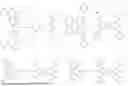
















Sources:
- United States Patent and Trademark Office - verify current appl. status at the USPTO↗
Similar patent applications:
- » 20230006137
POLYCYCLIC COMPOUND, ORGANIC LIGHT-EMITTING DEVICE INCLUDING POLYCYCLIC COMPOUND, AND ELECTRONIC APPARATUS INCLUDING ORGANIC LIGHT-EMITTING DEVICE - » 20180033974
Polycyclic compound and organic light-emitting device including the same - » 20180240982
Polycyclic compound and organic light-emitting device including the same - » 20210317147
Polycyclic compound and organic light-emitting device including same - » 20230081897
POLYCYCLIC COMPOUND AND ORGANIC LIGHT-EMITTING DEVICE INCLUDING THE SAME - » 20230084208
POLYCYCLIC COMPOUND AND ORGANIC LIGHT-EMITTING DEVICE INCLUDING THE SAME - » 20230097942
POLYCYCLIC COMPOUND AND ORGANIC LIGHT-EMITTING DEVICE INCLUDING THE SAME - » 20120013700
NOVEL FUSED POLYCYCLIC COMPOUND AND ORGANIC LIGHT-EMITTING DEVICE INCLUDING THE SAME - » 20240268227
CONDENSED POLYCYCLIC COMPOUND AND ORGANIC LIGHT-EMITTING DEVICE INCLUDING SAME
Recent applications in this class:
- » 20250176419 2025-05-29
A LIGAND FOR COMPLEXES FOR USE IN OPTOELECTRONIC DEVICES - » 20250169348 2025-05-22
LIGHT EMITTING DEVICE - » 20250143162 2025-05-01
LIGHT EMITTING DEVICE - » 20240298514 2024-09-05
VISIBLY TRANSPARENT, NEAR-INFRARED-ABSORBING AND ULTRAVIOLET-ABSORBING PHOTOVOLTAIC DEVICES - » 20240260445 2024-08-01
Organic electroluminescent materials and devices - » 20240180019 2024-05-30
OPTO-ELECTRONIC DEVICE AND ELECTRONIC APPARATUS INCLUDING THE SAME - » 20240107871 2024-03-28
ORGANIC ELECTROLUMINESCENCE DEVICE AND POLYCYCLIC COMPOUND FOR ORGANIC ELECTROLUMINESCENCE DEVICE - » 20230403926 2023-12-14
ORGANIC LIGHT-EMITTING DEVICE WITH IMPROVED LIFESPAN CHARACTERISTICS - » 20230397482 2023-12-07
CONDENSED CYCLIC COMPOUND, LIGHT-EMITTING DEVICE INCLUDING THE SAME, AND ELECTRONIC APPARATUS INCLUDING THE LIGHT-EMITTING DEVICE - » 20230292586 2023-09-14
ORGANIC ELECTROLUMINESCENT MATERIALS AND DEVICES