COMPOSITIONS USEFUL FOR MODULATING SPLICING
US20250304593A1
2025-10-02
18/864,030
2023-05-12
Smart Summary: New compounds have been created that can change how genes are spliced, which is an important step in making proteins. These compounds can help treat diseases linked to problems with gene expression or protein activity. By adjusting the splicing process, they may improve the function of certain genes. This approach could lead to new therapies for various health conditions. Overall, these discoveries offer promising ways to influence gene behavior for better health outcomes. 🚀 TL;DR
Abstract:
Described herein are compounds that modulate splicing of a pre-mRNA, encoded by genes, and methods of treating diseases and conditions associated with gene expression or activity of proteins encoded by genes.
Inventors:
- Tiansheng Wang 93 🇺🇸 Concord, MA, United States
- Hasane Ratni 118 🇫🇷 Habsheim, France
- Brian LUCAS 21 🇺🇸 Arlington, MA, United States
- Sivaraman Dandapani 9 🇺🇸 Wakefield, MA, United States
- Michael Luzzio 29 🇺🇸 Noank, CT, United States
- Ingo KONETZKI 2 🇨🇭 Basel, Switzerland
Applicant:
Interested in similar patents?
Get notified when new applications in this technology area are published.
Classification:
C07D491/048 » CPC main
Heterocyclic compounds containing in the condensed ring system both one or more rings having oxygen atoms as the only ring hetero atoms and one or more rings having nitrogen atoms as the only ring hetero atoms, not provided for by groups - , , or in which the condensed system contains two hetero rings; Ortho-condensed systems with only one oxygen atom as ring hetero atom in the oxygen-containing ring the oxygen-containing ring being five-membered
A61K31/519 » CPC further
Medicinal preparations containing organic active ingredients; Heterocyclic compounds having nitrogen as a ring hetero atom, e.g. guanethidine or rifamycins having six-membered rings with two nitrogen atoms as the only ring heteroatoms, e.g. piperazine; Pyrimidines; Hydrogenated pyrimidines, e.g. trimethoprim ortho- or peri-condensed with heterocyclic rings
Description
CROSS REFERENCE
This application claims the benefit of priority to U.S. Provisional Application No. 63/341,358, filed May 12, 2022, which is incorporated herein by reference in its entirety.
BACKGROUND
Spinocerebellar Ataxia 3 (SCA3 or Machado-Joseph Disease) is a rare, inherited, neurodegenerative, autosomal dominant disease. It is characterized by progressive degeneration of the brainstem, cerebellum and spinal cord, however, neurons in other areas of the brain are also affected. Presenting features include gait problems, speech difficulties, clumsiness, and often visual blurring and diplopia; saccadic eye movements become slow and ophthalmoparesis develops, resulting initially in up-gaze restriction. Ambulation becomes increasingly difficult, leading to the need for assistive devices 10 to 15 years following onset. Late in the disease course, individuals are wheelchair bound and have severe dysarthria, dysphagia, facial and temporal atrophy. The disease progresses relentlessly until death occurs at any time from 6 to approximately 30 years after onset through pulmonary complications.
SCA3 is caused by CAG tri-nucleotide repeats in exon 10 of the Ataxin 3 (ATXN3) gene. ATXN3 encodes for a deubiquitinase with wide-ranging functions, but it does not appear to be an essential gene. Disease causing variants of the ATXN3 gene have approximately 40 to over 200 CAG tri-nucleotide repeats in exon 10. Expanded CAG repeats in the ATXN3 gene are translated into expanded polyglutamine repeats (polyQ) in the ataxin-3 protein and this toxic Ataxin 3 protein is associated with aggregates. The polyglutamine expanded ataxin-3 protein in these aggregates is ubiquitinated and the aggregates contain other proteins, including heat shock proteins and transcription factors. Aggregates are frequently observed in the brain tissue of SCA3 patients. There are currently no treatments for SCA3.
SUMMARY
In one aspect, described herein is a compound of Formula (I), or a pharmaceutically acceptable salt thereof.
wherein X3, X4, X8, and R21 are as defined herein.
Also provided herein are pharmaceutical compositions comprising a compound disclosed herein, or a pharmaceutically acceptable salt thereof, and a pharmaceutically acceptable excipient or carrier.
In some aspects, described herein, is a method of modulating splicing of a Ataxin3 (ATXN3) pre-mRNA, comprising contacting a small molecule splicing modulator compound disclosed herein (SMSM) to the ATXN3 pre-mRNA with a splice site sequence or cells comprising the ATXN3 pre-mRNA, wherein the SMSM binds to the ATXN3 pre-mRNA and modulates splicing of the ATXN3 pre-mRNA in a cell of a subject to produce a spliced product of the ATXN3 pre-mRNA.
In some aspects, described herein, is a method of treating, preventing, delaying of progress, or ameliorating symptoms of a disease or a condition associated with Ataxin 3 (ATXN3) expression level or activity level in a subject in need thereof, comprising administering a therapeutically effective amount of a small molecule splicing modulator compound disclosed herein (SMSM), wherein the SMSM binds to a pre-mRNA encoded by ATXN3 and modulates splicing of the ATXN3 pre-mRNA in a cell of the subject to produce a spliced product of the ATXN3 pre-mRNA, wherein the amount of full length ATXN3 is reduced.
INCORPORATION BY REFERENCE
All publications, patents, and patent applications mentioned in this specification are herein incorporated by reference to the same extent as if each individual publication, patent, or patent application was specifically and individually indicated to be incorporated by reference.
DETAILED DESCRIPTION
Unless otherwise defined, all technical and scientific terms used herein have the same meaning as commonly understood by one of ordinary skill in the art to which this disclosure belongs. Although methods and materials similar or equivalent to those described herein can be used in the practice or testing of the present disclosure, suitable methods, and materials are described below.
Definitions
The term “small molecule splicing modulator” or “SMSM” denotes a small molecule compound that binds to a cell component (e.g., DNA, RNA, pre-mRNA, protein, RNP, snRNA, carbohydrates, lipids, co-factors, nutrients, and/or metabolites) and modulates splicing. For example, a SMSM can bind to a polynucleotide, e.g., an RNA (e.g., a pre-mRNA) with an aberrant splice site, resulting in steric modulation of the polynucleotide. For example, a SMSM can bind to a protein, e.g., a spliceosome protein or a ribonuclear protein, resulting in steric modulation of the protein. For example, a SMSM can bind to a spliceosome component, e.g., a spliceosome protein or snRNA resulting in steric modulation of the spliceosome protein or snRNA. For example, a SMSM is a compound of Formula (I). The term “small molecule splicing modulator” or “SMSM” specifically excludes compounds consisting of oligonucleotides.
“Steric alteration,” “steric modification,” or “steric modulation” herein refers to changes in the spatial orientation of chemical moieties with respect to each other. A person of ordinary skill in the art would recognize steric mechanisms include, but are not limited to, steric hindrance, steric shielding, steric attraction, chain crossing, steric repulsions, steric inhibition of resonance, and steric inhibition of protonation.
Any open valency appearing on a carbon, oxygen, sulfur or nitrogen atom in the structures herein indicates the presence of a hydrogen, unless indicated otherwise.
The definitions described herein apply irrespective of whether the terms in question appear alone or in combination. It is contemplated that the definitions described herein can be appended to form chemically relevant combinations, such as e.g., “heterocycloalkylaryl,” “haloalkylheteroaryl,” “arylalkylheterocycloalkyl,” or “alkoxyalkyl.” The last member of the combination is the radical which is binding to the rest of the molecule. The other members of the combination are attached to the binding radical in reversed order in respect of the literal sequence, e.g., the combination arylalkylheterocycloalkyl refers to a heterocycloalkyl-radical which is substituted by an alkyl which is substituted by an aryl.
When indicating the number of substituents, the term “one or more” refers to the range from one substituent to the highest possible number of substitutions, i.e., replacement of one hydrogen up to replacement of all hydrogens by substituents.
The term “optional” or “optionally” denotes that a subsequently described event or circumstance can but need not occur, and that the description includes instances where the event or circumstance occurs and instances in which it does not.
The term “substituent” denotes an atom or a group of atoms replacing a hydrogen atom on the parent molecule.
The term “substituted” denotes that a specified group bears one or more substituents. Where any group can carry multiple substituents and a variety of possible substituents is provided, the substituents are independently selected and need not to be the same. The term “unsubstituted” means that the specified group bears no substituents. The term “optionally substituted” means that the specified group is unsubstituted or substituted by one or more substituents, independently chosen from the group of possible substituents. When indicating the number of substituents, the term “one or more” means from one substituent to the highest possible number of substitutions, i.e., replacement of one hydrogen up to replacement of all hydrogens by substituents.
The terms “compound(s) of this disclosure,” “compound(s) of the present disclosure,” “small molecule steric modulator,” “small molecule splicing modulator,” “steric modulator,” “splicing modulator,” “compounds that modify splicing,” and “compounds modifying splicing” are interchangeably used herein and refer to compounds as disclosed herein and stereoisomers, tautomers, solvates, and salts (e.g., pharmaceutically acceptable salts) thereof.
The following abbreviations are used throughout the specification: acetic acid (AcOH); ethyl acetate (EtOAc); butyl alcohol (n-BuOH); 1,2-dichloroethane (DCE); dichloromethane (CH2Cl2, DCM); diisopropylethylamine (Diipea); dimethylformamide (DMF); hydrogen chloride (HCl); methanol (MeOH); methoxymethyl bromide (MOMBr); N-methyl-2-pyrrolidone (NMP); methyl Iodide (Mel); n-propanol (n-PrOH); p-methoxybenzyl (PMB); triethylamine (Et3N); [1,1′-Bis(diphenylphosphino)ferrocene]dichloropalladium(II); (Pd(dppf)Cl2); sodium ethane thiolate (EtSNa); sodium acetate (NaOAc); sodium hydride (NaH); sodium hydroxide (NaOH); tetrahydropyran (THP); tetrahydrofuran (THF).
As used herein, C1-Cx includes C1-C2, C1-C3 . . . C1-Cx. By way of example only, a group designated as “C1-C4” indicates that there are one to four carbon atoms in the moiety, i.e. groups containing 1 carbon atom, 2 carbon atoms, 3 carbon atoms or 4 carbon atoms.
Thus, by way of example only, “C1-C4 alkyl” indicates that there are one to four carbon atoms in the alkyl group, i.e., the alkyl group is selected from among methyl, ethyl, propyl, iso-propyl, n-butyl, iso-butyl, sec-butyl, and t-butyl.
The term “oxo” refers to the =0 substituent.
“Carboxyl” refers to —COOH.
“Cyano” refers to —CN.
The term “thioxo” refers to the =S substituent.
The term “halo,” “halogen,” and “halide” are used interchangeably herein and denote fluoro, chloro, bromo, or iodo.
The term “alkyl” refers to a straight or branched hydrocarbon chain radical, having from one to twenty carbon atoms, and which is attached to the rest of the molecule by a single bond. An alkyl comprising up to 10 carbon atoms is referred to as a C1-C10 alkyl, likewise, for example, an alkyl comprising up to 6 carbon atoms is a C1-C6 alkyl. Alkyls (and other moieties defined herein) comprising other numbers of carbon atoms are represented similarly. Alkyl groups include, but are not limited to, C1-C10 alkyl, C1-C9 alkyl, C1-C8 alkyl, C1-C7 alkyl, C1-C6 alkyl, C1-C5 alkyl, C1-C4 alkyl, C1-C3 alkyl, C1-C2 alkyl, C2-C8 alkyl, C3-C8 alkyl and C4-C8 alkyl. Representative alkyl groups include, but are not limited to, methyl, ethyl, n-propyl, 1-methylethyl (i-propyl), n-butyl, i-butyl, s-butyl, n-pentyl, 1,1-dimethylethyl (t-butyl), 3-methylhexyl, 2-methylhexyl, 1-ethyl-propyl, and the like. In some embodiments, the alkyl is methyl or ethyl. In some embodiments, the alkyl is —CH(CH3)2 or —C(CH3)3. Unless stated otherwise specifically in the specification, an alkyl group may be optionally substituted as described below. “Alkylene” or “alkylene chain” refers to a straight or branched divalent hydrocarbon chain linking the rest of the molecule to a radical group. In some embodiments, the alkylene is —CH2—, —CH2CH2—, or —CH2CH2CH2—.
In some embodiments, the alkylene is —CH2—. In some embodiments, the alkylene is —CH2CH2—. In some embodiments, the alkylene is —CH2CH2CH2—.
The term “alkoxy” refers to a radical of the formula —OR where R is an alkyl radical as defined. Unless stated otherwise specifically in the specification, an alkoxy group may be optionally substituted as described below. Representative alkoxy groups include, but are not limited to, methoxy, ethoxy, propoxy, butoxy, pentoxy. In some embodiments, the alkoxy is methoxy. In some embodiments, the alkoxy is ethoxy.
The term “alkylamino” refers to a radical of the formula —NHR or —NRR where each R is, independently, an alkyl radical as defined above. Unless stated otherwise specifically in the specification, an alkylamino group may be optionally substituted as described below.
The term “alkenyl” refers to a type of alkyl group in which at least one carbon-carbon double bond is present. In one embodiment, an alkenyl group has the formula —C(R)═CR2, wherein R refers to the remaining portions of the alkenyl group, which may be the same or different. In some embodiments, R is H or an alkyl. In some embodiments, an alkenyl is selected from ethenyl (i.e., vinyl), propenyl (i.e., allyl), butenyl, pentenyl, pentadienyl, and the like. Non-limiting examples of an alkenyl group include —CH═CH2, —C(CH3)=CH2, —CH═CHCH3, —C(CH3)=CHCH3, and —CH2CH═CH2.
The term “alkynyl” refers to a type of alkyl group in which at least one carbon-carbon triple bond is present. In one embodiment, an alkenyl group has the formula —C—C—R, wherein R refers to the remaining portions of the alkynyl group. In some embodiments, R is H or an alkyl. In some embodiments, an alkynyl is selected from ethynyl, propynyl, butynyl, pentynyl, hexynyl, and the like. Non-limiting examples of an alkynyl group include —C≡CH, —C—CCH3—C—CCH2CH3, —CH2C—CH.
The term “aromatic” refers to a planar ring having a delocalized R-electron system containing 4n+2 7L electrons, where n is an integer. Aromatics can be optionally substituted.
The term “aromatic” includes both aryl groups (e.g., phenyl, naphthalenyl) and heteroaryl groups (e.g., pyridinyl, furanyl, quinolinyl).
The term “aryl” refers to a radical derived from a hydrocarbon ring system comprising at least one aromatic ring wherein each of the atoms forming the ring is a carbon atom. Aryl groups can be optionally substituted. Examples of aryl groups include, but are not limited to phenyl, and naphthyl. In some embodiments, the aryl is phenyl. Depending on the structure, an aryl group can be a monoradical or a diradical (i.e., an arylene group). Unless stated otherwise specifically in the specification, the term “aryl” or the prefix “ar-” (such as in “aralkyl”) is meant to include aryl radicals that are optionally substituted. In some embodiments, an aryl group is partially reduced to form a cycloalkyl group defined herein. In some embodiments, an aryl group is fully reduced to form a cycloalkyl group defined herein.
The term “haloalkyl” denotes an alkyl group wherein at least one of the hydrogen atoms of the alkyl group has been replaced by same or different halogen atoms, particularly fluoro atoms. Examples of haloalkyl include monofluoro-, difluoro- or trifluoro-methyl, -ethyl or -propyl, for example, 3,3,3-trifluoropropyl, 2-fluoroethyl, 2,2,2-trifluoroethyl, fluoromethyl, or trifluoromethyl. The term “perhaloalkyl” denotes an alkyl group where all hydrogen atoms of the alkyl group have been replaced by the same or different halogen atoms.
“Hydroxyalkyl” refers to an alkyl radical, as defined above, that is substituted by one or more hydroxyls. In some embodiments, the alkyl is substituted with one hydroxyl. In some embodiments, the alkyl is substituted with one, two, or three hydroxyls. Hydroxyalkyl include, for example, hydroxymethyl, hydroxyethyl, hydroxypropyl, hydroxybutyl, or hydroxypentyl. In some embodiments, the hydroxyalkyl is hydroxymethyl.
“Aminoalkyl” refers to an alkyl radical, as defined above, that is substituted by one or more amines. In some embodiments, the alkyl is substituted with one amine. In some embodiments, the alkyl is substituted with one, two, or three amines. Aminoalkyl include, for example, aminomethyl, aminoethyl, aminopropyl, aminobutyl, or aminopentyl. In some embodiments, the aminoalkyl is aminomethyl.
“Cyanoalkyl” refers to an alkyl radical, as defined above, that is substituted by one or more cyano groups. In some embodiments, the alkyl is substituted with one cyano group. In some embodiments, the alkyl is substituted with one, two, or three cyano groups. Aminoalkyl include, for example, cyanomethyl, cyanoethyl, cyanopropyl, cyanobutyl, or cyanopentyl.
The term “haloalkoxy” denotes an alkoxy group wherein at least one of the hydrogen atoms of the alkoxy group has been replaced by same or different halogen atoms, particularly fluoro atoms. Examples of haloalkoxyl include monofluoro-, difluoro- or trifluoro-methoxy, -ethoxy or -propoxy, for example, 3,3,3-trifluoropropoxy, 2-fluoroethoxy, 2,2,2-trifluoroethoxy, fluoromethoxy, or trifluoromethoxy. The term “perhaloalkoxy” denotes an alkoxy group where all hydrogen atoms of the alkoxy group have been replaced by the same or different halogen atoms.
The term “bicyclic ring system” denotes two rings which are fused to each other via a common single or double bond (annelated bicyclic ring system), via a sequence of three or more common atoms (bridged bicyclic ring system) or via a common single atom (spiro bicyclic ring system). Bicyclic ring systems can be saturated, partially unsaturated, unsaturated, or aromatic. Bicyclic ring systems can comprise heteroatoms selected from N, O, and S.
The terms “carbocyclic” or “carbocycle” refer to a ring or ring system where the atoms forming the backbone of the ring are all carbon atoms. The term thus distinguishes carbocyclic from “heterocyclic” rings or “heterocycles” in which the ring backbone contains at least one atom which is different from carbon. In some embodiments, at least one of the two rings of a bicyclic carbocycle is aromatic. In some embodiments, both rings of a bicyclic carbocycle are aromatic. Carbocycle includes cycloalkyl and aryl.
The term “cycloalkyl” refers to a monocyclic or polycyclic non-aromatic radical, wherein each of the atoms forming the ring (i.e., skeletal atoms) is a carbon atom. In some embodiments, cycloalkyls are saturated or partially unsaturated. In some embodiments, cycloalkyls are spirocyclic or bridged compounds. In some embodiments, cycloalkyls are fused with an aromatic ring (in which case the cycloalkyl is bonded through a non-aromatic ring carbon atom). Cycloalkyl groups include groups having from 3 to 10 ring atoms.
Representative cycloalkyls include, but are not limited to, cycloalkyls having from three to ten carbon atoms, from three to eight carbon atoms, from three to six carbon atoms, or from three to five carbon atoms. Monocyclic cycloalkyl radicals include, for example, cyclopropyl, cyclobutyl, cyclopentyl, cyclohexyl, cycloheptyl, and cyclooctyl. In some embodiments, the monocyclic cycloalkyl is cyclopropyl, cyclobutyl, cyclopentyl or cyclohexyl. In some embodiments, the monocyclic cycloalkyl is cyclopentenyl or cyclohexenyl. In some embodiments, the monocyclic cycloalkyl is cyclopentenyl. Polycyclic radicals include, for example, adamantyl, 1,2-dihydronaphthalenyl, 1,4-dihydronaphthalenyl, tetrainyl, decalinyl, 3,4-dihydronaphthalenyl-1(2H)-one, spiro[2.2]pentyl, norbornyl and bicycle[1.1.1]pentyl.
Unless otherwise stated specifically in the specification, a cycloalkyl group may be optionally substituted.
The term “bridged” refers to any ring structure with two or more rings that contains a bridge connecting two bridgehead atoms. The bridgehead atoms are defined as atoms that are the part of the skeletal framework of the molecule and which are bonded to three or more other skeletal atoms. In some embodiments, the bridgehead atoms are C, N, or P. In some embodiments, the bridge is a single atom or a chain of atoms that connects two bridgehead atoms. In some embodiments, the bridge is a valence bond that connects two bridgehead atoms. In some embodiments, the bridged ring system is cycloalkyl. In some embodiments, the bridged ring system is heterocycloalkyl.
The term “fused” refers to any ring structure described herein which is fused to an existing ring structure. When the fused ring is a heterocyclyl ring or a heteroaryl ring, any carbon atom on the existing ring structure which becomes part of the fused heterocyclyl ring or the fused heteroaryl ring may be replaced with one or more N, S, and O atoms. The non-limiting examples of fused heterocyclyl or heteroaryl ring structures include 6-5 fused heterocycle, 6-6 fused heterocycle, 5-6 fused heterocycle, 5-5 fused heterocycle, 7-5 fused heterocycle, and 5-7 fused heterocycle.
The term “haloalkyl” refers to an alkyl radical, as defined above, that is substituted by one or more halo radicals, as defined above, e.g., trifluoromethyl, difluoromethyl, fluoromethyl, trichloromethyl, 2,2,2-trifluoroethyl, 1,2-difluoroethyl, 3-bromo-2-fluoropropyl, 1,2-dibromoethyl, and the like. Unless stated otherwise specifically in the specification, a haloalkyl group may be optionally substituted.
The term “haloalkoxy” refers to an alkoxy radical, as defined above, that is substituted by one or more halo radicals, as defined above, e.g., trifluoromethoxy, difluoromethoxy, fluoromethoxy, trichloromethoxy, 2,2,2-trifluoroethoxy, 1,2-difluoroethoxy, 3-bromo-2-fluoropropoxy, 1,2-dibromoethoxy, and the like. Unless stated otherwise specifically in the specification, a haloalkoxy group may be optionally substituted.
The term “fluoroalkyl” refers to an alkyl in which one or more hydrogen atoms are replaced by a fluorine atom. In one aspect, a fluoroalkyl is a C1-C6 fluoroalkyl. In some embodiments, a fluoroalkyl is selected from trifluoromethyl, difluoromethyl, fluoromethyl, 2,2,2-trifluoroethyl, 1-fluoromethyl-2-fluoroethyl, and the like.
The term “heteroalkyl” refers to an alkyl group in which one or more skeletal atoms of the alkyl are selected from an atom other than carbon, e.g., oxygen, nitrogen (e.g., —NH—, —N(alkyl)-, or —N(aryl)-), sulfur (e.g., —S—, —S(═O)—, or —S(═O)2—), or combinations thereof.
In some embodiments, a heteroalkyl is attached to the rest of the molecule at a carbon atom of the heteroalkyl. In some embodiments, a heteroalkyl is attached to the rest of the molecule at a heteroatom of the heteroalkyl. In some embodiments, a heteroalkyl is a C1-C6 heteroalkyl. Representative heteroalkyl groups include, but are not limited to —OCH2OMe, —OCH2CH2OH, —OCH2CH2OMe, or —OCH2CH2OCH2CH2NH2.
“Heteroalkylene” or “heteroalkylene chain” refers to a straight or branched divalent heteroalkyl chain linking the rest of the molecule to a radical group. Unless stated otherwise specifically in the specification, the heteroalkyl or heteroalkylene group may be optionally substituted as described below. Representative heteroalkylene groups include, but are not limited to —OCH2CH2O—, —OCH2CH2OCH2CH2O—, or —OCH2CH2OCH2CH2OCH2CH2O—.
The term “heterocycloalkyl” refers to a cycloalkyl group that includes at least one heteroatom selected from nitrogen, oxygen, and sulfur. Unless stated otherwise specifically in the specification, the heterocycloalkyl radical may be a monocyclic, or bicyclic ring system, which may include fused (when fused with an aryl or a heteroaryl ring, the heterocycloalkyl is bonded through a non-aromatic ring atom) or bridged ring systems. The nitrogen, carbon, or sulfur atoms in the heterocyclyl radical may be optionally oxidized. The nitrogen atom may be optionally quaternized. The heterocycloalkyl radical is partially or fully saturated. Examples of heterocycloalkyl radicals include, but are not limited to, dioxolanyl, thienyl[1,3]dithianyl, tetrahydroquinolyl, tetrahydroisoquinolyl, decahydroquinolyl, decahydroisoquinolyl, imidazolinyl, imidazolidinyl, isothiazolidinyl, isoxazolidinyl, morpholinyl, octahydroindolyl, octahydroisoindolyl, 2-oxopiperazinyl, 2-oxopiperidinyl, 2-oxopyrrolidinyl, oxazolidinyl, piperidinyl, piperazinyl, 4-piperidonyl, pyrrolidinyl, pyrazolidinyl, quinuclidinyl, thiazolidinyl, tetrahydrofuryl, trithianyl, tetrahydropyranyl, thiomorpholinyl, thiamorpholinyl, 1-oxo-thiomorpholinyl, 1,1-dioxo-thiomorpholinyl. The term heterocycloalkyl also includes all ring forms of carbohydrates, including but not limited to monosaccharides, disaccharides, and oligosaccharides. Unless otherwise noted, heterocycloalkyls have from 2 to 12 carbons in the ring. In some embodiments, heterocycloalkyls have from 2 to 10 carbons in the ring. In some embodiments, heterocycloalkyls have from 2 to 10 carbons in the ring and 1 or 2 N atoms. In some embodiments, heterocycloalkyls have from 2 to 10 carbons in the ring and 3 or 4 N atoms. In some embodiments, heterocycloalkyls have from 2 to 12 carbons, 0-2 N atoms, 0-2 O atoms, 0-2 P atoms, and 0-1 S atoms in the ring. In some embodiments, heterocycloalkyls have from 2 to 12 carbons, 1-3 N atoms, 0-1 O atoms, and 0-1 S atoms in the ring. It is understood that when referring to the number of carbon atoms in a heterocycloalkyl, the number of carbon atoms in the heterocycloalkyl is not the same as the total number of atoms (including the heteroatoms) that make up the heterocycloalkyl (i.e. skeletal atoms of the heterocycloalkyl ring). Unless stated otherwise specifically in the specification, a heterocycloalkyl group may be optionally substituted.
The term “heterocycle” or “heterocyclic” refers to heteroaromatic rings (also known as heteroaryls) and heterocycloalkyl rings (also known as heteroalicyclic groups) that includes at least one heteroatom selected from nitrogen, oxygen and sulfur, wherein each heterocyclic group has from 3 to 12 atoms in its ring system, and with the proviso that any ring does not contain two adjacent O or S atoms. In some embodiments, heterocycles are monocyclic, bicyclic, polycyclic, spirocyclic or bridged compounds. Non-aromatic heterocyclic groups (also known as heterocycloalkyls) include rings having 3 to 12 atoms in its ring system and aromatic heterocyclic groups include rings having 5 to 12 atoms in its ring system. The heterocyclic groups include benzo-fused ring systems. Examples of non-aromatic heterocyclic groups are pyrrolidinyl, tetrahydrofuranyl, dihydrofuranyl, tetrahydrothienyl, oxazolidinonyl, tetrahydropyranyl, dihydropyranyl, tetrahydrothiopyranyl, piperidinyl, morpholinyl, thiomorpholinyl, thioxanyl, piperazinyl, aziridinyl, azetidinyl, oxetanyl, thietanyl, homopiperidinyl, oxepanyl, thiepanyl, oxazepinyl, diazepinyl, thiazepinyl, 1,2,3,6-tetrahydropyridinyl, pyrrolin-2-yl, pyrrolin-3-yl, indolinyl, 2H-pyranyl, 4H-pyranyl, dioxanyl, 1,3-dioxolanyl, pyrazolinyl, dithianyl, dithiolanyl, dihydropyranyl, dihydrothienyl, dihydrofuranyl, pyrazolidinyl, imidazolinyl, imidazolidinyl, 3-azabicyclo[3.1.0]hexanyl, 3-azabicyclo[4.1.0]heptanyl, 3 h-indolyl, indolin-2-onyl, isoindolin-1-onyl, isoindoline-1,3-dionyl, 3,4-dihydroisoquinolin-1(2H)-onyl, 3,4-dihydroquinolin-2(1H)-onyl, isoindoline-1,3-dithionyl, benzo[d]oxazol-2(3H)-onyl, 1H-benzo[d]imidazol-2(3H)-onyl, benzo[d]thiazol-2(3H)-onyl, and quinolizinyl. Examples of aromatic heterocyclic groups are pyridinyl, imidazolyl, pyrimidinyl, pyrazolyl, triazolyl, pyrazinyl, tetrazolyl, furyl, thienyl, isoxazolyl, thiazolyl, oxazolyl, isothiazolyl, pyrrolyl, quinolinyl, isoquinolinyl, indolyl, benzimidazolyl, benzofuranyl, cinnolinyl, indazolyl, indolizinyl, phthalazinyl, pyridazinyl, triazinyl, isoindolyl, pteridinyl, purinyl, oxadiazolyl, thiadiazolyl, furazanyl, benzofurazanyl, benzothiophenyl, benzothiazolyl, benzoxazolyl, quinazolinyl, quinoxalinyl, naphthyridinyl, and furopyridinyl. The foregoing groups are either C-attached (or C-linked) or N-attached where such is possible. For instance, a group derived from pyrrole includes both pyrrol-1-yl (N-attached) or pyrrol-3-yl (C-attached).
Further, a group derived from imidazole includes imidazol-1-yl or imidazol-3-yl (both N-attached) or imidazol-2-yl, imidazol-4-yl or imidazol-5-yl (all C-attached). The heterocyclic groups include benzo-fused ring systems. Non-aromatic heterocycles are optionally substituted with one or two oxo (═O) moieties, such as pyrrolidin-2-one. In some embodiments, at least one of the two rings of a bicyclic heterocycle is aromatic. In some embodiments, both rings of a bicyclic heterocycle are aromatic.
The term “heteroaryl” refers to an aryl group that includes one or more ring heteroatoms selected from nitrogen, oxygen, and sulfur. The heteroaryl is monocyclic or bicyclic. Illustrative examples of monocyclic heteroaryls include pyridinyl, imidazolyl, pyrimidinyl, pyrazolyl, triazolyl, pyrazinyl, tetrazolyl, furyl, thienyl, isoxazolyl, thiazolyl, oxazolyl, isothiazolyl, pyrrolyl, pyridazinyl, triazinyl, oxadiazolyl, thiadiazolyl, furazanyl, indolizine, indole, benzofuran, benzothiophene, indazole, benzimidazole, purine, quinolizine, quinoline, isoquinoline, cinnoline, phthalazine, quinazoline, quinoxaline, 1,8-naphthyridine, and pteridine. Illustrative examples of monocyclic heteroaryls include pyridinyl, imidazolyl, pyrimidinyl, pyrazolyl, triazolyl, pyrazinyl, tetrazolyl, furyl, thienyl, isoxazolyl, thiazolyl, oxazolyl, isothiazolyl, pyrrolyl, pyridazinyl, triazinyl, oxadiazolyl, thiadiazolyl, and furazanyl. Illustrative examples of bicyclic heteroaryls include indolizine, indole, benzofuran, benzothiophene, indazole, benzimidazole, purine, quinolizine, quinoline, isoquinoline, cinnoline, phthalazine, quinazoline, quinoxaline, 1,8-naphthyridine, and pteridine. In some embodiments, heteroaryl is pyridinyl, pyrazinyl, pyrimidinyl, thiazolyl, thienyl, thiadiazolyl or furyl. In some embodiments, a heteroaryl contains 0-6 N atoms in the ring. In some embodiments, a heteroaryl contains 1-4 N atoms in the ring. In some embodiments, a heteroaryl contains 4-6 N atoms in the ring. In some embodiments, a heteroaryl contains 0-4 N atoms, 0-1 O atoms, 0-1 P atoms, and 0-1 S atoms in the ring. In some embodiments, a heteroaryl contains 1-4 N atoms, 0-1 O atoms, and 0-1 S atoms in the ring. In some embodiments, heteroaryl is a C1-C9 heteroaryl. In some embodiments, monocyclic heteroaryl is a C1-C5 heteroaryl. In some embodiments, monocyclic heteroaryl is a 5-membered or 6-membered heteroaryl. In some embodiments, a bicyclic heteroaryl is a C6-C9 heteroaryl. In some embodiments, a heteroaryl group is partially reduced to form a heterocycloalkyl group defined herein. In some embodiments, a heteroaryl group is fully reduced to form a heterocycloalkyl group defined herein.
The term “moiety” refers to a specific segment or functional group of a molecule.
Chemical moieties are often recognized chemical entities embedded in or appended to a molecule.
The term “optionally substituted” or “substituted” means that the referenced group is optionally substituted with one or more additional group(s) individually and independently selected from D, halogen, oxo, —CN, —NH2, —NH(alkyl), —N(alkyl)2, —OH, —CO2H, —CO2alkyl, —C(═O)NH2, —C(═O)NH(alkyl), —C(═O)N(alkyl)2, —S(═O)2NH2, —S(═O)2NH(alkyl), —S(═O)2N(alkyl)2, alkyl, cycloalkyl, fluoroalkyl, heteroalkyl, alkoxy, fluoroalkoxy, heterocycloalkyl, aryl, heteroaryl, aryloxy, alkylthio, arylthio, alkylsulfoxide, arylsulfoxide, alkylsulfone, and arylsulfone. In some other embodiments, optional substituents are independently selected from D, halogen, oxo, —CN, —NH2, —NH(CH3), —N(CH3)2, —OH, —CO2H, —CO2(C1-C4 alkyl), —C(═O)NH2, —C(═O)NH(C1-C4 alkyl), —C(═O)N(C1-C4 alkyl)2, —S(═O)2NH2, —S(═O)2NH(C1-C4 alkyl), —S(═O)2N(C1-C4 alkyl)2, C1-C4 alkyl, C3-C6 cycloalkyl, C1-C4 fluoroalkyl, C1-C4 heteroalkyl, C1-C4 alkoxy, C1-C4 fluoroalkoxy, —SC1-C4 alkyl, —S(═O)C1-C4 alkyl, and —S(═O)2(C1-C4 alkyl). In some embodiments, optional substituents are independently selected from D, halogen, —CN, —NH2, —OH, —NH(CH3), —N(CH3)2, —NH(cyclopropyl), —CH3, —CH2CH3, —CF3, —OCH3, and —OCF3. In some embodiments, substituted groups are substituted with one or two of the preceding groups. In some embodiments, an optional substituent on an aliphatic carbon atom (acyclic or cyclic) includes oxo (═O).
The term “tautomer” refers to a proton shift from one atom of a molecule to another atom of the same molecule. The compounds presented herein may exist as tautomers. Tautomers are compounds that are interconvertible by migration of a hydrogen atom, accompanied by a switch of a single bond and adjacent double bond. In bonding arrangements where tautomerization is possible, a chemical equilibrium of the tautomers will exist. All tautomeric forms of the compounds disclosed herein are contemplated. The exact ratio of the tautomers depends on several factors, including temperature, solvent, and pH. Some examples of tautomeric interconversions include:
The terms “administer,” “administering,” “administration,” and the like, as used herein, refer to the methods that may be used to enable delivery of compounds or compositions to the desired site of biological action. These methods include but are not limited to oral routes (p.o.), intraduodenal routes (i.d.), parenteral injection (including intravenous (i.v.), subcutaneous (s.c.), intraperitoneal (i.p.), intramuscular (i.m.), intravascular or infusion (inf.)), topical (top.) and rectal (p.r.) administration. Those of skill in the art are familiar with administration techniques that can be employed with the compounds and methods described herein. In some embodiments, the compounds and compositions described herein are administered orally.
The terms “co-administration” or the like, as used herein, are meant to encompass administration of the selected therapeutic agents to a single patient and are intended to include treatment regimens in which the agents are administered by the same or different route of administration or at the same or different time.
The term “subject” or “patient” encompasses mammals. Examples of mammals include, but are not limited to, any member of the mammalian class: humans, non-human primates such as chimpanzees, and other apes and monkey species; farm animals such as cattle, horses, sheep, goats, swine; domestic animals such as rabbits, dogs, and cats; laboratory animals including rodents, such as rats, mice and guinea pigs, and the like. In one aspect, the mammal is a human. The term “animal” as used herein comprises human beings and non-human animals. In one embodiment, a “non-human animal” is a mammal, for example a rodent such as rat or a mouse. In one embodiment, a non-human animal is a mouse.
The term “pharmaceutically acceptable” denotes an attribute of a material which is useful in preparing a pharmaceutical composition that is generally safe, non toxic, and neither biologically nor otherwise undesirable and is acceptable for veterinary as well as human pharmaceutical use. “Pharmaceutically acceptable” can refer a material, such as a carrier or diluent, which does not abrogate the biological activity or properties of the compound, and is relatively nontoxic, i.e., the material may be administered to an individual without causing undesirable biological effects or interacting in a deleterious manner with any of the components of the composition in which it is contained.
The terms “pharmaceutically acceptable excipient”, “pharmaceutically acceptable carrier” and “therapeutically inert excipient” can be used interchangeably and denote any pharmaceutically acceptable ingredient in a pharmaceutical composition having no therapeutic activity and being non-toxic to the subject administered, such as disintegrators, binders, fillers, solvents, buffers, tonicity agents, stabilizers, antioxidants, surfactants, carriers, diluents, excipients, preservatives or lubricants used in formulating pharmaceutical products.
The term “pharmaceutically acceptable salts” denotes salts which are not biologically or otherwise undesirable. Pharmaceutically acceptable salts include both acid and base addition salts. A “pharmaceutically acceptable salt” can refer to a formulation of a compound that does not cause significant irritation to an organism to which it is administered and/or does not abrogate the biological activity and properties of the compound. In some embodiments, pharmaceutically acceptable salts are obtained by reacting a SMSM compound of the present disclosure with acids. Pharmaceutically acceptable salts are also obtained by reacting a compound of the present disclosure with a base to form a salt.
As used herein, a “small molecular weight compound” can be used interchangeably with “small molecule” or “small organic molecule.” Small molecules refer to compounds other than peptides or oligonucleotides; and typically have molecular weights of less than about 2000 Daltons, e.g., less than about 900 Daltons.
A ribonucleoprotein (RNP) refers to a nucleoprotein that contains RNA. An RNP can be a complex of a ribonucleic acid and an RNA-binding protein. Such a combination can also be referred to as a protein-RNA complex. These complexes can function in a number of biological functions that include, but are not limited to, DNA replication, gene expression, metabolism of RNA, and pre-mRNA splicing. Examples of RNPs include the ribosome, the enzyme telomerase, vault ribonucleoproteins, RNase P, heterogeneous nuclear RNPs (hnRNPs) and small nuclear RNPs (snRNPs).
Nascent RNA transcripts from protein-coding genes and mRNA processing intermediates, collectively referred to as pre-mRNA, are generally bound by proteins in the nuclei of eukaryotic cells. From the time nascent transcripts first emerge from RNA polymerase (e.g., RNA polymerase II) until mature mRNAs are transported into the cytoplasm, the RNA molecules are associated with an abundant set of splicing complex components (e.g., nuclear proteins and snRNAs). These proteins can be components of hnRNPs, which can contain heterogeneous nuclear RNA (hnRNA) (e.g., pre-mRNA and nuclear RNA complexes) of various sizes.
Splicing complex components function in splicing and/or splicing regulation.
Splicing complex components can include, but are not limited to, ribonuclear proteins (RNPs), splicing proteins, small nuclear RNAs (snRNAs), small nuclear ribonucleoproteins (snRNPs), and heterogeneous nuclear ribonucleoproteins (hnRNPs). Splicing complex components include, but are not limited to, those that may be required for splicing, such as constitutive splicing, alternative splicing, regulated splicing, and splicing of specific messages or groups of messages. A group of related proteins, the serine/arginine-rich (SR) proteins, can function in constitutive pre-mRNA splicing and may also regulate alternative splice-site selection in a concentration-dependent manner. SR proteins typically have a modular structure that consists of one or two RNA-recognition motifs (RRMs) and a C-terminal rich in arginine and serine residues (RS domain). Their activity in alternative splicing may be antagonized by members of the hnRNP A/B family of proteins. Splicing complex components can also include proteins that are associated with one or more snRNAs. snRNAs in human include, but are not limited to, U1 snRNA, U2 snRNA, U4 snRNA, U5 snRNA, U6 snRNA, Ul 1 snRNA, U12 snRNA, U4atac snRNA, U5 snRNA, and U6atac snRNA. SR proteins in human include, but are not limited to, SC35, SRp55, SRp40, SRm300, SFRS10, TASR-1, TASR-2, SF2/ASF, 9G8, SRp75, SRp30c, SRp20, and P54/SFRS11. Other splicing complex components in human that can be involved in splice site selection include, but are not limited to, U2 snRNA auxiliary factors (e.g. U2AF65, U2AF35), Urp/U2AF1-RS2, SF 1/BBP, CBP80, CBP 20, SF1 and PTB/hnRNP1. hnRNP proteins in humans include, but are not limited to, A1, A2/B1, L, M, K, U, F, H, G, R, I and C1/C2. Human genes encoding hnRNPs include HNRNPA0, HNRNPA1, HNRNPA1L1, HNRNPA1L2, HNRNPA3, HNRNPA2B1, HNRNPAB, HNRNPBI, HNRNPC, HNRNPCL1, HNRNPD, HNRPDL, HNRNPF, HNRNPH1, HNRNPH2, HNRNPH3, HNRNPK, HNRNPL, HNRPLL, HNRNPM, HNRNPR, HNRNPU, HNRNPUL1, HNRNPUL2, HNRNPUL3, and FMRL.
In some embodiments, the splicing complex component comprises a nucleic acid, a protein, a carbohydrate, a lipid, a co-factor, a nutrient, a metabolite, or an auxiliary splicing factor. In some embodiments, the splicing complex component comprises an auxiliary splicing factor such as a ribonucleoprotein (RNP) which can be a heterogeneous nuclear ribonucleoprotein (hnRNP) or a small nuclear ribonucleoprotein (snRNP). In some embodiments, the auxiliary splicing factor includes, but are not limited to, 9G8, A1 hnRNP, A2 hnRNP, ASD-1, ASD-2b, ASF, B1 hnRNP, C1 hnRNP, C2 hnRNP, CBP20, CBP80, CELF, F hnRNP, FBP11, Fox-1, Fox-2, G hnRNP, H hnRNP, hnRNP C, hnRNP G, hnRNP K, hnRNP M, hnRNP U, Hu, HUR, K hnRNP, KH-type splicing regulatory protein (KSRP), L hnRNP, M hnRNP, mBBP, muscle-blind like (MBNL), NF45, NFAR, Nova-1, Nova-2, P54/SFRS 11, polypyrimidine tract binding protein (PTBP) 1, PTBP2, PRP19 complex proteins, R hnRNP, RNPC1, SAM68, SC35, SF, SFl/BBP, SF2, SF3 a, SF3B, SFRS10, Sm proteins, SR proteins, SRm300, SRp20, SRp30c, SRP35C, SRP36, SRP38, SRp40, SRp55, SRp75, SRSF, STAR, GSG, SUP-12, TASR-1, TASR-2, TIA, TIAR, TRA2, TRA2a/b, U hnRNP, U1 snRNP, Ui i snRNP, Ui2 snRNP, U1-70K, U1-A, U1-C, U2 snRNP, U2AF1-RS2, U2AF35, U2AF65, U4 snRNP, U5 snRNP, U6 snRNP, Urp, and YBi.
Splicing complex components may be stably or transiently associated with a snRNP or with a transcript (e.g., pre-mRNA). In some embodiments, the pre-mRNA binds to a splicing complex or a component thereof.
The term “intron” refers to both the DNA sequence within a gene and the corresponding sequence in the unprocessed RNA transcript. As part of the RNA processing pathway, introns can be removed by RNA splicing either shortly after or concurrent with transcription. Introns are found in the genes of most organisms and many viruses. They can be located in a wide range of genes, including those that generate proteins, ribosomal RNA (rRNA), and transfer RNA (tRNA).
An “exon” can be any part of a gene that encodes a part of the final mature RNA produced by that gene after introns have been removed by RNA splicing. The term “exon” refers to both the DNA sequence within a gene and to the corresponding sequence in RNA transcripts.
A “spliceosome” can be assembled from snRNAs and protein complexes. The spliceosome can remove introns from a transcribed pre-mRNA.
The term “cryptic exon” can refer to an intronic sequence that may be flanked by apparent consensus splice sites (e.g., cryptic splice site) but are generally not spliced into the mature mRNA or the product of splicing. The term “poison exon” can refer to a cryptic exon that contains a premature termination codon in the reading frame of the exon when included in an RNA transcript. “Poison exon” can also refer to a cryptic exon inclusion of which in an RNA transcript causes a reading frameshift in downstream exons resulting in a premature stop codon, which was not in frame prior to the frameshift caused by inclusion of the cryptic exon. In some embodiments, the poison exon is a variant of an existing exon. In some embodiments, the poison exon is an extended form of an existing exon. In some embodiments, the poison exon is a truncated form of an existing exon. The terms “poison exon” and “toxic exon” are used interchangeably in the present disclosure. The terms “stop codon” and “termination codon” are used interchangeably in the present disclosure.
A splicing event that promotes inclusion of a poison exon can further promote inclusion of an intron immediately following the poison exon in an RNA transcript. Inclusion of the poison exon and the intron immediately following the poison exon can result in “nuclear retention” of the RNA transcript, e.g., mRNA, wherein the RNA transcript is retained in the nucleus and not transported or exported to the cytoplasm and thus, not translated into a protein.
Small Molecule Splicing Modulators (SMSMs)
It has now been found that compounds of this disclosuredisclosure, and pharmaceutically acceptable compositions thereof, are effective as agents for use in treating, preventing, or ameliorating a disease or a condition associated with a target RNA. The present disclosuredisclosure provides the unexpected discovery that certain small chemical molecules can modify splicing events in pre-mRNA molecules, herein referred to as small molecule splicing modulators (SMSMs). These SMSMs can modulate specific splicing events in specific pre-mRNA molecules. These SMSMs can operate by a variety of mechanisms to modify splicing events. For example, the SMSMs of this disclosuredisclosure can: 1) interfere with the formation and/or function and/or other properties of splicing complexes, spliceosomes, and/or their components such as hnRNPs, snRNPs, SR-proteins and other splicing factors or elements, resulting in the prevention or induction of a splicing event in a pre-mRNA molecule. As another example, the SMSMs of this disclosuredisclosure can: 2) prevent and/or modify post-transcriptional regulation (e.g., splicing) of gene products, such as hnRNPs, snRNPs, SR-proteins and other splicing factors, which can subsequently be involved in the formation and/or function of a spliceosome or splicing complex component; 3) prevent and/or modify phosphorylation, glycosylation and/or other modifications of gene products including, but not limited to, hnRNPs, snRNPs, SR-proteins and other splicing factors, which can subsequently be involved in the formation and/or function of a spliceosome or splicing complex component; or 4) bind to and/or otherwise affect specific pre-mRNA so that a specific splicing event is prevented or induced, e.g., via a mechanism that does not involve base-pairing with RNA in a sequence-specific manner. The small molecules of this disclosuredisclosure are different from and are not related to antisense or antigene oligonucleotides.
Described herein are compounds modifying splicing of gene products for use in the treatment, prevention, and/or delay of progression of diseases or conditions. Described herein are compounds modifying splicing of gene products wherein the compounds induce a transcriptionally inactive variant or transcript of a gene product. Described herein are compounds modifying splicing of gene products wherein the compounds induce a transcriptionally active variant or transcript of a gene product. Described herein are compounds modifying splicing of gene products wherein the compounds repress a transcriptionally active variant or transcript of a gene product. Described herein are compounds modifying splicing of gene products wherein the compounds repress a transcriptionally inactive variant or transcript of a gene product.
Described herein are compounds modifying splicing of gene products wherein the compounds induce a specific variant or isoform of a mature mRNA. Described herein are compounds modifying splicing of gene products wherein the compounds cause increased expression of a protein encoded by a variant or an isoform of an mRNA derived from a pre-mRNA that the compounds bind. Described herein are compounds modifying splicing of gene products wherein the compounds cause increased expression of a variant or an isoform of an mRNA derived from a pre-mRNA that the compounds bind, leading to increased expression of the protein encoded by the variant or the isoform of the mRNA. Described herein are compounds modifying splicing of gene products wherein the compounds cause increased expression of a variant or an isoform of an mRNA containing a specific exon by inducing exon inclusion in a pre-mRNA that compounds bind, leading to increased expression of the protein encoded by the variant or the isoform of the mRNA. Described herein are compounds modifying splicing of gene products wherein the compounds cause exon inclusion in a pre-mRNA that compounds bind, leading to increased expression of the protein encoded by the specific variant or the isoform of the mRNA.
Described herein are compounds modifying splicing of gene products wherein the compounds repress a specific variant or isoform of a mature mRNA. Described herein are compounds modifying splicing of gene products wherein the compounds cause decreased expression of a protein encoded by a variant or an isoform of an mRNA derived from a pre-mRNA that the compounds bind. Described herein are compounds modifying splicing of gene products wherein the compounds cause decreased expression of a variant or an isoform of an mRNA derived from a pre-mRNA that the compounds bind, leading to decreased expression of the protein encoded by the variant or the isoform of the mRNA. Described herein are compounds modifying splicing of gene products wherein the compounds cause decreased expression of a variant or an isoform of an mRNA containing a specific exon by inducing exon inclusion in a pre-mRNA that compounds bind, leading to decreased expression of the protein encoded by the variant or the isoform of the mRNA. Described herein are compounds modifying splicing of gene products wherein the compounds cause exon inclusion in a pre-mRNA that compounds bind, leading to decreased expression of the protein encoded by the specific variant or the isoform of the mRNA.
Described herein are compounds modifying splicing of gene products wherein the compounds induce a post-transcriptionally inactive variant or transcript of a gene product. Described herein are compounds modifying splicing of gene products wherein the compounds repress a post-transcriptionally active variant or transcript of a gene product. Described herein are compounds modifying splicing of gene products wherein the compounds induce a post-transcriptionally destabilized variant or transcript of a gene product. Described herein are compounds modifying splicing of gene products wherein the compounds cause less expression of a protein encoded by an mRNA derived from a pre-mRNA that the compounds bind. Described herein are compounds modifying splicing of gene products wherein the compounds cause less expression of an mRNA derived from a pre-mRNA that the compounds bind, leading to decreased expression of the protein encoded by the mRNA. Described herein are compounds modifying splicing of gene products wherein the compounds cause increased expression of an mRNA containing a poison exon derived from a pre-mRNA that compounds bind, leading to decreased expression of the protein encoded by the mRNA. Described herein are compounds modifying splicing of gene products wherein the compounds cause nonsense-mediated decay (NMD) of an mRNA derived from a pre-mRNA that compounds bind, leading to decreased expression of the protein encoded by the mRNA.
In one aspect, a SMSM described herein is a compound of Formula (I), or a pharmaceutically acceptable salt thereof:
wherein:
-
- X3 is selected from the group consisting of N, and CR23;
- X4 is selected from the group consisting of N, and CR24;
- X8 is CR28 or N;
- R21 is selected from the group consisting of phenyl, 5-6 membered heteroaryl, and 5-6 membered heterocycloalkyl, each of which is unsubstituted or substituted with 1, 2, 3 or 4, independently selected R1A groups; each R1A is independently selected from halo, CN, NO2, C1-6 alkyl, C2-6 alkenyl, C2-6 alkynyl, C1-6 haloalkyl, C1-6 alkoxy, C1-4 haloalkoxy, —C(═O)OH, —C(═O)C1-6 alkyl, —C(═O)C1-6 haloalkyl, and —C(═O)C1-6 alkoxy;
- R23 is selected from the group consisting of H, azido, halo, —CN, —NO2, C1-6 alkyl, C2-6 alkenyl, C2-6 alkynyl, C1-6 heteroalkyl, C3-10 cycloalkyl, C6-10 aryl, 5-10 membered heteroaryl, 4-10 membered heterocycloalkyl, —(C1-6 alkylene)-C3-10 cycloalkyl, —(C1-6 alkylene)-4-10 membered heterocycloalkyl, —(C1-6 heteroalkylene)-C3-10 cycloalkyl, —(C1-6 heteroalkylene)-4-10 membered heterocycloalkyl, —(C1-6 alkylene)-C6-10 aryl, —(C1-6 alkylene)-5-10 membered heteroaryl, —(C1-6 heteroalkylene)-C6-10 aryl, —(C1-6 heteroalkylene)-5-10 membered heteroaryl, —ORa3, —SRa3, —C(═O)Rb3, —C(═O)ORb3, —NRc3Rd3 —C(═O)NRc3Rd3, —OC(═O)NRc3Rd3, —NRc3C(═O)Rb3, —NRc3C(═O)ORb3, —NRc3C(═O)NRc3Rd3, —NRc3S(═O)2Rb3, —NRc3S(═O)2NRc3Rd3, —S(O)NRc3Rd3, and —S(O)2NR3Rd3, wherein the C1-6 alkyl, C1-6 alkylene, C1-6 heteroalkylene, C2-6 alkenyl, C2-6 alkynyl, C1-6 heteroalkyl, C3-10 cycloalkyl, C6-10 aryl, 5-10 membered heteroaryl, and 4-10 membered heterocycloalkyl are each unsubstituted or substituted with 1, 2, 3, 4, 5, 6, 7, or 8 independently selected R20 groups;
- R24 is selected from the group consisting of —C≡CH, H, azido, halo, —CN, —NO2, C1-6 alkyl, C2-6 alkenyl, C1-6 heteroalkyl, C3-10 cycloalkyl, C6-10 aryl, 5-10 membered heteroaryl, 4-10 membered heterocycloalkyl, —ORa4, —C(═O)Rb4, —C(═O)ORb4, —NRc4Rd4 —C(═O)NRc4Rd4, — OC(═O)NRc4Rd4, —NRc4C(═O)Rb4, —NRc4C(═O)ORb4, —NRc4C(═O)NRc4Rd4, —NRc4S(═O)2R4, —NRc4S(═O)2NRc4Rd4, —S(O)NRc4Rd4, and —S(O)2NRc4Rd4, wherein the C1-6 alkyl, C2-6 alkenyl, C1-6 heteroalkyl, C3-10 cycloalkyl, C6-10 aryl, 5-10 membered heteroaryl, and 4-10 membered heterocycloalkyl are each unsubstituted or substituted with 1, 2, 3, or 4 independently selected R20d groups;
- each R20d is independently selected from the group consisting of —OH, —SH, —CN, —NO2, halogen, oxo, amino, carbamyl, carbamoyl, C1-4 alkyl, C24 alkenyl, C1-4 haloalkyl, C1-4 cyanoalkyl, C1-4 hydroxyalkyl, C1-4 alkoxy, —(C1-4 alkyl)-(C1-4 alkoxy), —(C1-4 alkoxy)-(C1-4 alkoxy), C1-4 haloalkoxy, C3-6 cycloalkyl, C6-10 aryl, 5-6 membered heteroaryl, 4-6 membered heterocycloalkyl, C1-4 alkylamino, di(C1-4 alkyl)amino, C1-4 alkylcarbamyl, di(C1-4 alkyl)carbamyl, C1-4 alkylcarbamoyl, di(C1-4 alkyl)carbamoyl, C1-4 alkylcarbonyl, C1-4 alkoxycarbonyl, C1-4 alkylcarbonylamino, C1-4 alkylsulfonylamino, aminosulfonyl, C1-4 alkylaminosulfonyl, di(C1-4 alkyl)aminosulfonyl, aminosulfonylamino, C1-4 alkylaminosulfonylamino, di(C1-4 alkyl)aminosulfonylamino, aminocarbonylamino, C1-4 alkylaminocarbonylamino, and di(C1-4 alkyl)aminocarbonylamino;
- R28 is selected from the group consisting of H, azido, halo, C1-6 alkyl, C2-6 alkenyl, C2-6 alkynyl, C1-6 heteroalkyl, —CN, —NO2, —ORa8, —C(═O)Rb1, —C(═O)ORd8, —NRc8Rd, —C(═O)NRc8Rd8, —OC(═O)NR8Rd8, —NRc8C(═O)RV, —NRc8C(═O)ORd8, —NRc8C(═O)NRc8Rd, —NRc8S(═O)2Rd8, and —NRc8S(═O)2NRc8Rd, wherein the C1-6 alkyl, C1-6 heteroalkyl, C2-6 alkenyl, and C2-6 alkynyl are each unsubstituted or substituted with 1, 2, 3, or 4 independently selected R20 groups;
- each Ra3, Rb3, Rc3, Rd3, Ra4, Rb4, Rc4, Rd4, Ra8, Rd8, Rc8, and Rd8 is independently selected from the group consisting of H, C1-6 alkyl, C2-6 alkenyl, C2-6 alkynyl, C1-6 hydroxyalkyl, C1-6 haloalkyl, C1-6 alkoxy, —(C1-6 alkylene)-C1-6 alkoxy, C3-10 cycloalkyl, —(C1-6 alkylene)-C3-10 cycloalkyl, C6-10 aryl, 5-10 membered heteroaryl, and 4-10 membered heterocycloalkyl each of which is unsubstituted or substituted with 1, 2, 3, or 4 independently selected R20 groups;
- or Rc3 and Rd3 together with the N atom to which they are connected, come together to form a 5-10 membered heteroaryl or a 4-10 membered heterocycloalkyl ring, each of which is unsubstituted or substituted with 1, 2, 3, or 4 independently selected R20 groups;
- or Rc4 and Rd4 together with the N atom to which they are connected, come together to form a 5-10 membered heteroaryl or a 4-10 membered heterocycloalkyl ring, each of which is unsubstituted or substituted with 1, 2, 3, or 4 independently selected R20 groups; and
- each R20 is independently selected from the group consisting of —OH, —SH, —CN, —NO2, halo, oxo, amino, carbamyl, carbamoyl, C1-4 alkyl, C2-4 alkenyl, C2-4 alkynyl, C1-4 haloalkyl, C1-4 cyanoalkyl, C1-4 hydroxyalkyl, C1-4 alkoxy, —(C1-4 alkyl)-(C1-4 alkoxy), —(C1-4 alkoxy)-(C1-4 alkoxy), C1-4 haloalkoxy, C3-6 cycloalkyl, C6-10 aryl, 5-6 membered heteroaryl, 4-6 membered heterocycloalkyl, C1-4 alkylamino, di(C1-4 alkyl)amino, C1-4 alkylcarbamyl, di(C1-4 alkyl)carbamyl, C1-4 alkylcarbamoyl, di(C1-4 alkyl)carbamoyl, C1-4 alkylcarbonyl, C1-4 alkoxycarbonyl, C1-4 alkylcarbonylamino, C1-4 alkylsulfonylamino, aminosulfonyl, C1-4 alkylaminosulfonyl, di(C1-4 alkyl)aminosulfonyl, aminosulfonylamino, C1-4 alkylaminosulfonylamino, di(C1-4 alkyl)aminosulfonylamino, aminocarbonylamino, C1-4 alkylaminocarbonylamino, and di(C1-4 alkyl)aminocarbonylamino.
In some embodiments of a compound of Formula (I) or (Ia), R23 is substituted with 1, 2, 3, or 4 independently selected R20 groups.
In some embodiments of a compound disclosed here, such as compounds of Formula (I) or (Ia), X8 is N, or X8 is CR28, wherein R28 is not a hydrogen. In some embodiments, R28 is a halogen. In some embodiments, R21 is 5-6 membered heteroaryl, which is unsubstituted or substituted with 1, 2, 3 or 4, independently selected R1A groups. In some embodiments, R21 is 5 membered heteroaryl, which is unsubstituted or substituted with 1, 2, 3 or 4, independently selected R1A groups. In some embodiments, R24 is not a hydrogen. In some embodiments, R23 is not a hydrogen.
In some embodiments, X4 is CR24. In some embodiments, R24 is hydrogen. In some embodiments, R24 is halogen. In some embodiments, R24 is —Br. In some embodiments, R24 is —F. In some embodiments of a compound of Formula (I) or (Ia), R24 is —Cl. In some embodiments, R24 is —CN. In some embodiments, R24 is C1-4 alkyl. In some embodiments, R24 is methyl. In some embodiments, R24 is ethyl. In some embodiments, R24 is cycloalkyl. In some embodiments, R24 is cyclopropyl. In some embodiments, R24 is —C≡CH.
In some embodiments of a compound of Formula (I) or (Ia), X8 is CR28. In some embodiments, X8 is CR28, wherein R28 is hydrogen. In some embodiments, X8 is N.
In some embodiments, disclosed herein is a compound of the Formula (Ia):
In some embodiments, the compound of Formula (Ia) has a structure of
In some embodiments of a compound of Formula (I), (Ia), (IIa), (IIb), (IIc), (IId), (IIIa), (IIIb), (IIIc), (IIId), (IIIe), (IIIf), (IIIg), or (IIIh), R21 is selected from the group consisting of phenyl and 5-6 membered heteroaryl, each of which is unsubstituted or substituted with 1, 2, 3 or 4, independently selected R1A groups; each R1A is independently selected from halo, CN, NO2, C1-6 alkyl, C2-6 alkenyl, C2-6 alkynyl, C1-6 haloalkyl, C1-6 alkoxy, —C(═O)OH, —C(═O)C1-6 alkyl, —C(═O)C1-6 haloalkyl, and —C(═O)C1-6 alkoxy. In some embodiments, R21 is unsubstituted or substituted 5 membered heteroaryl. In some embodiments, R21 is unsubstituted or substituted 5 membered heterocycloalkyl. In some embodiments, R21 is unsubstituted. In some embodiments, R21 is substituted with 1, 2, or 3, independently selected R1A groups; wherein each R1A is independently selected from halo, CN, NO2, alkyl, alkenyl, C2-6 alkynyl, alkoxy, —C(═O)OH, an ether group, or an ester group, each of which is unsubstituted or substituted. In some embodiments, R21 is substituted with 1, 2, or 3 substituents independently selected R1A groups; wherein each R1A is independently selected from halo, C1-6alkyl, C1-6haloalkyl, and C1-6alkoxy. In some embodiments, R21 is substituted with 1, 2, or 3 substituents independently selected R1A groups; wherein each R1A is independently selected from halo, C1-3alkyl, C1-3haloalkyl, and C1-3alkoxy. In some embodiments, R21 is
wherein represents a single or a double bond; each of A1, A2, A3, and A5 is independently selected from the group consisting of O, S, N, NH, NR1A CH, CR1A, CH2, and CHR1A; and A4 is selected from the group consisting of N, C, CH and CR1A. In some embodiments, R21is
wherein represents a single or a double bond; each of A1, A2, A3, and A5 is independently selected from the group consisting of O, S, N, NH, NR1A, C, CH, CR1A, CH2, and CHR1A; and A4 is selected from the group consisting of N, C, CH and CR1A
In some embodiments of a compound of Formula (I), (Ia), (IIa), (IIb), (IIc), (IId), (IIIa), (IIIb), (IIIc), (IIId), (IIIe), (IIIf), (IIIg), or (IIIh), R21 is selected from the group consisting of
In some embodiments of a compound of Formula (I), (Ia), (IIa), (IIb), (IIc), (IId), (IIIa), (IIIb), (IIIc), (IIId), (IIIe), (IIIf), (IIIg), or (IIIh), R21 is 5 membered heteroaryl. In some embodiments, R21 is furanyl, or thiazolyl each of which is substituted or unsubstituted.
In some embodiments of a compound of Formula (I), (Ia), (IIa), (IIb), (IIc), (IId), (IIIa), (IIIb), (IIIc), (IIId), (IIIe), (IIIf), (IIIg), or (IIIh), R21 is unsubstituted furanyl. In some embodiments, R21 is substituted furanyl. In some embodiments, R21 is unsubstituted thiazolyl.
In some embodiments, R21 is substituted thiazolyl.
In some embodiments, R21 is
In some embodiments, R21 is
In some embodiments, R21 is
In some embodiments, R21 is
In some embodiments, R21 is
In some embodiments, R21 is
In some embodiments, R21 is
In some embodiments, R21 is
In some embodiments, R21 is.
In some embodiments, R21 is
In some embodiments, R21 is
In some embodiments, R21 is
In some embodiments, R21 is
In some embodiments, R21 is
In some embodiments, R21 is
In some embodiments, R21 is
In some embodiments, R21 is
In some embodiments, R21 is
In some embodiments, R21is
In some embodiments, R21 is
In some embodiments of a compound of Formula (I), (Ia), (IIa), (IIb), (IIc), (IId), (IIIa), (IIb), (IIIc), (IIId), (IIIe), (IIIf), (IIIg), or (IIIh), R21 is
In some embodiments, R21 is
In some embodiments, R21 is
In some embodiments, R21 is
In some embodiments, R21 is
In some embodiments, R21 is
In some embodiments, R21 is
In some embodiments, R21 is
In some embodiments, R21 is
In some embodiments, R21 is
In some embodiments, R21 is
In some embodiments, R21 is
In some embodiments, R21 is
In some embodiments, R21 is
In some embodiments, R21 is
In some embodiments, R21 is
In some embodiments of a compound of Formula (I), (Ia), (IIa), (IIb), (IIc), (IId), (IIIa), (IIIb), (IIIc), (IIId), (IIIe), (IIIf), (IIIg), or (IIIh), R21 is unsubstituted or substituted phenyl. In some embodiments, R21 is unsubstituted or substituted 6 membered heteroaryl. In some embodiments, R21 is unsubstituted or substituted 6 membered heterocycloalkyl. In some embodiments, R21 is unsubstituted. In some embodiments, R21 is substituted with 1, 2, 3, or 4 independently selected R1A groups; wherein each R1A is independently selected from halo, CN, NO2, alkyl, alkenyl, C2-6 alkynyl, alkoxy, —C(═O)OH, an ether group, or an ester group, each of which is unsubstituted or substituted. In some embodiments, R21 is substituted with 1, 2, 3, or 4 substituents independently selected R1A groups; wherein each R1A is independently selected from halo, C1-6alkyl, C1-6haloalkyl, and C1-6alkoxy. In some embodiments, R21 is substituted with 1, 2, 3, or 4 substituents independently selected R1A groups; wherein each R1A is independently selected from halo, C1-3alkyl, C1-3haloalkyl, and C1-3alkoxy. In some embodiments, R21 is
wherein represents a single or a double bond; each of A1, A2, A3, A5 and A6 is independently selected from the group consisting of O, S, N, NH, NR1ACH, CR1A, CH2, and CHR1A; and A4 is selected from the group consisting of N, C, CH and CR1A. In some embodiments, R21 is
wherein represents a single or a double bond; each of A1, A2, A3, A5 and A6 is independently selected from the group consisting of O, S, N, NH, NR1A, C, CH, CR1A, CH2, and CHR1A; and A4 is selected from the group consisting of N, C, CH, and CR1A. In some embodiments, R21 is selected from the group consisting of
In some embodiments of a compound of Formula (I), (Ia), (IIa), (IIb), (IIc), (IId), (IIIa), (IIIb), (IIIc), (IIId), (IIIe), (IIIf), (IIIg), or (IIIh), R21 is substituted or unsubstituted phenyl. In some embodiments, R21 is 6 membered heteroaryl. In some embodiments, R21 is pyridinyl, thiophenyl, pyrimidinyl, each of which is substituted or unsubstituted.
In some embodiments of a compound of Formula (I), (Ia), (IIa), (IIb), (IIc), (IId), (IIIa), (IIIb), (IIIc), (IIId), (IIIe), (IIIf), (IIIg), or (IIIh), R21 is unsubstituted pyridinyl. In some embodiments, R21 is substituted pyridinyl. In some embodiments, R21 is unsubstituted thiophenyl. In some embodiments, R21 is substituted thiophenyl. In some embodiments, R21 is unsubstituted pyrimidinyl. In some embodiments, R21 is substituted pyrimidinyl.
In some embodiments of a compound of Formula (I), (Ia), (IIa), (IIb), (IIc), (IId), (IIIa), (IIIb), (IIIc), (IIId), (IIIe), (IIIf), (IIIg), or (IIIh), R21 is
In some embodiments, R21 is
In some embodiments, R21 is
In some embodiments, R21 is
In some embodiments, R21 is
In some embodiments, R21 is
In some embodiments of a compound of Formula (I) or (Ia), X3 is CH. In some embodiments, X3 is CR23. In some embodiments, X3 is CR23, wherein R23 is C1-6 alkyl or C1-6 heteroalkyl, wherein the C1-6 alkyl and C1-6 heteroalkyl are unsubstituted or substituted independently with 1, 2, 3, or 4 R20 groups. In some embodiments, X3 is CCH2CHNH2CH3. In some embodiments, X3 is CCH2CHNH2CH2OH. In some embodiments, X3 is CCH2CHNH2CH2CH3. In some embodiments, X3 is CCH2CHNH2CH2CH2OH. In some embodiments, X3 is CCH2CHNH2CH2CH2F. In some embodiments, X3 is CCH2CHNH2CH2CHF2. In some embodiments, X3 is CCH2CHNH2CH2CH(CH3)2. In some embodiments, X4 is N. In some embodiments, X4 is CH. In some embodiments, X4 is CR24 wherein R24 is selected from the group consisting of halo, CN, and substituted or unsubstituted C1-6 alkyl. In some embodiments, X4 is CCN. In some embodiments, X4 is CBr.
In some embodiments, X4 is CF. In some embodiments, X4 is CCN. In some embodiments, X4 is CCH3. In some embodiments, X4 is C(cyclopropyl). In some embodiments, X8 is N. In some embodiments, X8 is CR28.
In some embodiments of a compound of Formula (I), (Ia), (IIa), (IIb), (IIc), (IId), (IIIa), (IIIb), (IIIc), (IIId), (IIIe), (IIIf), (IIg), or (IIIh), R23 (or,
is selected from the group consisting of C1-6 alkyl, C2-6 alkenyl, C2-6 alkynyl, C1-6 heteroalkyl, —(C1-6 alkylene)-C3-10 cycloalkyl, —(C1-6 alkylene)-4-10 membered heterocycloalkyl, —(C1-6 heteroalkylene)-C3-10 cycloalkyl, —(C1-6 heteroalkylene)-4-10 membered heterocycloalkyl, —(C1-6 alkylene)-C6-10 aryl, —(C1-6 alkylene)-5-10 membered heteroaryl, —(C1-6 heteroalkylene)-C6-10 aryl, and -(C1-6 heteroalkylene)-5-10 membered heteroaryl, wherein the C1-6 alkyl, C1-6 alkylene, C1-6 heteroalkylene, C2-6 alkenyl, C2-6 alkynyl, C1-6 heteroalkyl, C3-10 cycloalkyl, C6-10 aryl, 5-10 membered heteroaryl, and 4-10 membered heterocycloalkyl are each unsubstituted or substituted with 1, 2, 3, 4, 5, 6, 7, or 8 independently selected R20 groups. In some embodiments, R23 is not hydrogen. In some embodiments, R23 is substituted or unsubstituted C1-6 alkyl or substituted or unsubstituted C1-6 heteroalkyl. In some embodiments, R23 is substituted or unsubstituted C1-6 heteroalkyl. In some embodiments, the C1-6heteroalkyl is —CH2CH(NH2)CH2—S(═O)2—CH3 or —CH2CH(NH2)CH2—S(═O)—CH3. In some embodiments, R23 is —CH2CH(NH2)CH2—S(═O)2—CH3. In some embodiments, R23 is —CH2CH(NH2)CH2—S(═O)—CH3. In some embodiments, R23 is CH2CHNH2CH3. In some embodiments, R23 is CH2CHNH2CH2OH. In some embodiments, R23 is CH2CHNH2CH2CH3. In some embodiments, R23 is CH2CHNH2CH2CH2OH. In some embodiments, R23 is CH2CHNH2CH2CH2F. In some embodiments, R23 is CH2CHNH2CH2CHF2. In some embodiments, R23 is CH2CHNH2CH2CH(CH3)2. In some embodiments, R23 is CH2CHNH2CHFCH3. In some embodiments, R23 is CH2CHNH2CH2F. In some embodiments, R23 is CH2CHNH2CH2OCH3. In some embodiments, R23 is CH2CHNH2CH2OCD3. In some embodiments, R23 is CF2CH(NH2)CH3. In some embodiments, R23 is CH2CH(NH2)CH2OCH3. In some embodiments, R23 is CF2CH(NH2)CH3. In some embodiments, R23 is CH2CH(NH2)CHF2.
In some embodiments of a compound of Formula (I) or (Ia), R23 is H.
In some embodiments of a compound of Formula (I) or (Ia), R23 is substituted with 1, 2, or 3 independently selected R20 groups, wherein each R20 group is independently selected from the group consisting of OH, SH, CN, NO2, halo, oxo, amino, C1-3alkyl, C1-3alkoxy, cycloalkyl, aryl, heteroaryl, heterocycloalkyl, carbamyl, and carbamoyl. In some embodiments, R23 is substituted with 1, 2, or 3 independently selected R20 groups, wherein each R20 group is independently selected from the group consisting of OH, halo, and C1-3alkoxy.
In some embodiments of a compound of Formula (I) or (Ia), R23 is substituted or unsubstituted C1-6 alkyl. In some embodiments, R23 is C1-6 alkyl, wherein C1-6 alkyl is substituted with 1, 2, or 3 independently selected R20 groups. In some embodiments, R23 is C1-6 alkyl, wherein C1-6 alkyl is substituted with 1, 2, or 3 independently selected R20 groups, wherein each R20 group is independently selected from the group consisting of OH, SH, CN, NO2, halo, oxo, amino, C1-3alkyl, C1-3alkoxy, cycloalkyl, aryl, heteroaryl, heterocycloalkyl, carbamyl, and carbamoyl. In some embodiments, R23 is C1-6 alkyl, wherein C1-6 alkyl is substituted with 1, 2, or 3 independently selected R20 groups, wherein each R20 group is independently selected from the group consisting of OH, halo, and C1-3alkoxy.
In some embodiments of a compound of Formula (I) or (Ia), R23 is substituted or unsubstituted C1-6 alkenyl. In some embodiments, R23 is C1-6 alkenyl, wherein C1-6 alkenyl is substituted with 1, 2, or 3 independently selected R20 groups.
In some embodiments of a compound of Formula (I) or (Ia), R23 is substituted or unsubstituted C2-6 alkynyl. In some embodiments, R23 is C2-6 alkynyl, wherein C2-6 alkynyl is substituted with 1, 2, or 3 independently selected R20 groups.
In some embodiments of a compound of Formula (I), (Ia), (IIa), (IIb), (IIc), (IId), (IIIa), (IIIb), (IIIc), (IIId), (IIIe), (IIIf), (IIIg), or (IIIh), each R20 is independently selected from the group consisting of —OH, —SH, —CN, —NO2, halogen, oxo, C1-4 alkyl, C2-4 alkenyl, C2-4 alkynyl, C1-4 haloalkyl, C1-4 cyanoalkyl, C1-4 hydroxyalkyl, C1-4 alkoxy, —(C1-4 alkyl)-(C1-4 alkoxy), —(C1-4 alkoxy)-(C1-4 alkoxy), C1-4 haloalkoxy, C3-6 cycloalkyl, phenyl, 5-6 membered heteroaryl, 4-6 membered heterocycloalkyl, amino, C1-4 alkylamino, di(C1-4 alkyl)amino, carbamyl, C1-4 alkylcarbamyl, di(C1-4 alkyl)carbamyl, carbamoyl, C1-4 alkylcarbamoyl, di(C1-4 alkyl)carbamoyl, C1-4 alkylcarbonyl, C1-4 alkoxycarbonyl, C1-4 alkylcarbonylamino, C1-4 alkylsulfonylamino, aminosulfonyl, C1-4 alkylaminosulfonyl, di(C1-4 alkyl)aminosulfonyl, aminosulfonylamino, C1-4 alkylaminosulfonylamino, di(C1-4 alkyl)aminosulfonylamino, aminocarbonylamino, C1-4 alkylaminocarbonylamino, and di(C1-4 alkyl)aminocarbonylamino, and wherein each of the alkyl, alkenyl, phenyl, cycloalkyl, alkenyl, heteroaryl, and heterocycloalkyl is optionally substituted with 1, 2, 3, or 4 groups independently selected from OH, —SH, —CN, —NO2, halogen, C1-4 alkyl, C2-4 alkenyl, C1-4 haloalkyl, C1-4 cyanoalkyl, C1-4 hydroxyalkyl, C1-4 alkoxy, C1-4 haloalkoxy, C3-6 cycloalkyl, amino, oxo, C1-4 alkylamino, and di(C1-4 alkyl)amino.
In some embodiments of a compound of Formula (I), (Ia), (IIa), (IIb), (IIc), (IId), (IIIa), (IIIb), (IIIc), (IIId), (IIIe), (IIIf), (IIIg), or (IIIh), each R20 is independently selected from the group consisting of —OH, —SH, —CN, —NO2, halogen, oxo, C1-4 alkyl, C2-4 alkenyl, C2-4 alkynyl, C1-4 haloalkyl, C1-4 cyanoalkyl, C1-4 hydroxyalkyl, C1-4 alkoxy, C1-4 haloalkoxy, C3. 6 cycloalkyl, phenyl, 5-6 membered heteroaryl, 4-6 membered heterocycloalkyl, amino, C1-4 alkylamino, and di(C1-4 alkyl)amino, and wherein each of the alkyl, alkenyl, phenyl, cycloalkyl, alkenyl, heteroaryl, and heterocycloalkyl is optionally substituted with 1, 2, 3, or 4 groups independently selected from OH, —SH, —CN, —NO2, halogen, oxo, C1-4 alkyl, C2-4 alkenyl, C1-4 haloalkyl, C1-4 cyanoalkyl, C1-4 hydroxyalkyl, C1-4 alkoxy, C1-4 haloalkoxy, C3-6 cycloalkyl, amino, C1-4 alkylamino, and di(C1-4 alkyl)amino.
In some embodiments of a compound of Formula (I), (Ia), (Ila), (IIb), (IIc), (IId), (IIIa), (IIIb), (IIIc), (IIId), (IIIe), (IIIf), (IIIg), or (IIIh), each R20 is independently selected from the group consisting of —OH, —SH, —CN, —NO2, halogen, oxo, C1-4 alkyl, C2-4 alkenyl, C2-4 alkynyl, C1-4 haloalkyl, C1-4 cyanoalkyl, C1-4 hydroxyalkyl, C1-4 heteroalkyl, C1-4 alkoxy, —(C1-4 alkyl)-(C1-4 alkoxy), —(C1-4 alkoxy)-(C1-4 alkoxy), C1-4 haloalkoxy, C3-6 cycloalkyl, phenyl, 5-6 membered heteroaryl, 4-6 membered heterocycloalkyl, amino, C1-4 alkylamino, di(C1-4 alkyl)amino, carbamyl, C1-4 alkylcarbamyl, di(C1-4 alkyl)carbamyl, carbamoyl, C1-4 alkylcarbamoyl, di(C1-4 alkyl)carbamoyl, C1-4 alkylcarbonyl, C1-4 alkoxycarbonyl, C1-4 alkylcarbonylamino, C1-4 alkylsulfonylamino, aminosulfonyl, C1-4 alkylaminosulfonyl, di(C1-4 alkyl)aminosulfonyl, aminosulfonylamino, C1-4 alkylaminosulfonylamino, di(C1-4 alkyl)aminosulfonylamino, aminocarbonylamino, C1-4 alkylaminocarbonylamino, and di(C1-4 alkyl)aminocarbonylamino, wherein alkyl, alkenyl, alkynyl, heteroalkyl, cycloalkyl, phenyl, heteroaryl and heterocycloalkyl are each optionally substituted with 1, 2, 3 or 4 R31 groups, wherein each R31 is independently —OH, —SH, —CN, —NO2, halogen, oxo, C1-4 alkyl, C2-4 alkenyl, C1-4 haloalkyl, C1-4 cyanoalkyl, C1-4 hydroxyalkyl, C1-4 alkoxy. In some embodiments, R31 is -OH. In some embodiments, R31 is -SH. In some embodiments, R31 is -CN. In some embodiments, R31 is —NO2. In some embodiments, R31 is halogen. In some embodiments, R31 is oxo. In some embodiments, R31 is C1-4 alkyl. In some embodiments, R31 is C2-4 alkenyl. In some embodiments, R31 is C1-4 haloalkyl. In some embodiments, R31 is C1-4 cyanoalkyl. In some embodiments, R31 is C1-4 hydroxyalkyl. In some embodiments, R31 is C1-4 alkoxy.
In some embodiments of a compound of Formula (I), (Ia), (IIa), (IIb), (IIc), (IId), (IIIa), (IIIb), (IIIc), (IIId), (IIIe), (IIIf), (IIIg), or (IIIh), each R20 is independently selected from the group consisting of —OH, —SH, —CN, —NO2, halogen, oxo, C1-4 alkyl, C2-4 alkenyl, C2-4 alkynyl, C1-4 haloalkyl, C1-4 cyanoalkyl, C1-4 hydroxyalkyl, C1-4 heteroalkyl, C1-4 alkoxy, —(C1-4 alkyl)-(C1-4 alkoxy), —(C1-4 alkoxy)-(C1-4 alkoxy), C1-4 haloalkoxy, C3-6 cycloalkyl, phenyl, 5-6 membered heteroaryl, 4-6 membered heterocycloalkyl, amino, C1-4 alkylamino, di(C1-4 alkyl)amino, carbamyl, C1-4 alkylcarbamyl, di(C1-4 alkyl)carbamyl, carbamoyl, C1-4 alkylcarbamoyl, di(C1-4 alkyl)carbamoyl, C1-4 alkylcarbonyl, C1-4 alkoxycarbonyl, C1-4 alkylcarbonylamino, C1-4 alkylsulfonylamino, aminosulfonyl, C1-4 alkylaminosulfonyl, di(C1-4 alkyl)aminosulfonyl, aminosulfonylamino, C1-4 alkylaminosulfonylamino, di(C1-4 alkyl)aminosulfonylamino, aminocarbonylamino, C1-4 alkylaminocarbonylamino, and di(C1-4 alkyl)aminocarbonylamino, wherein alkyl, alkenyl, alkynyl, heteroalkyl, cycloalkyl, phenyl, heteroaryl and heterocycloalkyl are each optionally substituted with 1, 2, 3 or 4 R31 groups, wherein each R31 is independently oxo, halogen, methyl, ethyl, —CN, —CF3, —OH, —OMe, —NH2, or —NO2. In some embodiments, R31 is oxo. In some embodiments, R31 halogen. In some embodiments, R31 methyl, ethyl. In some embodiments, R31 —CN. In some embodiments, R31 —CF3. In some embodiments, R31 —OH. In some embodiments, R31 -OMe. In some embodiments, R31 -NH2. In some embodiments, R31 -NO2.
In some embodiments of a compound of Formula (I) or (Ia), R23 is C1-6 alkyl or C1-6 heteroalkyl, and wherein the C1-6 alkyl and C1-6 heteroalkyl are substituted independently with 1, 2, or 3 R20 groups. In some embodiments, R23 is C1-6 heteroalkyl, wherein the C1-6 heteroalkyl is substituted with 1, 2, or 3 independently selected R20 groups. In some embodiments, C1-6 alkyl is substituted with 1 R20 group. In some embodiments, C1-6 alkyl is substituted with 2 independently selected R20 groups. In some embodiments, C1-6 alkyl is substituted with 3 independently selected R20 groups. In some embodiments, C1-6 heteroalkyl is substituted with 1 R20 group. In some embodiments, C1-6 heteroalkyl is substituted with 2 independently selected R20 groups. In some embodiments, C1-6 heteroalkyl is substituted with 3 independently selected R20 groups.
In some embodiments of a compound of Formula (I) or (Ia), R23 is selected from the group consisting of hydrogen, oxo, azido, halogen, —CN, —NO2, C1-6 haloalkyl, C1-6 alkyl, C2-6 alkenyl, C2-6 alkynyl, C1-6 heteroalkyl, C3-10 cycloalkyl, C6-10 aryl, 5-10 membered heteroaryl, 4-10 membered heterocycloalkyl, —ORa3, —SRa3, —C(═O)Rb3, —C(═O)ORb3, —NRc3Rd3 —C(═O)NRc3Rd3, —OC(═O)NRc3Rd3, —NRc3C(═O)Rb3, —NRc3C(═O)ORb3, —NRc3C(═O)NRc3Rd3, —NRc3S(═O)2Rb3, —NRc3S(═O)2NRc3Rd3, —S(O)NRc3Rd3, and —S(O)2NRc3Rd3, wherein the C1-6 alkyl, C1-6 haloalkyl, C2-6 alkenyl, C2-6 alkynyl, C1-6 heteroalkyl, C3-10 cycloalkyl, C6-10 aryl, 5-10 membered heteroaryl, and 4-10 membered heterocycloalkyl are unsubstituted or substituted independently with 1, 2, 3, or 4 R20 groups.
In some embodiments, R23 is selected from the group consisting of hydrogen, oxo, azido, halogen, —CN, —NO2, C1-6 haloalkyl, C1-6 alkyl, C1-6 heteroalkyl, C3-10 cycloalkyl, C6-10 aryl, 5-10 membered heteroaryl, 4-10 membered heterocycloalkyl, —ORa3, and —NRc3Rd3, wherein the C1-6 alkyl, C1-6 haloalkyl, C1-6 heteroalkyl, C3-10 cycloalkyl, C6-10 aryl, 5-10 membered heteroaryl, and 4-10 membered heterocycloalkyl are unsubstituted or substituted. In some embodiments, R23 is hydrogen.
In some embodiments of a compound of Formula (I) or (Ia), R23 is —NRc3Rd3. In some embodiments, Rc3 and Rd3 together with the N atom to which they are connected, come together to form a 5-10 membered heteroaryl or 4-10 membered heterocycloalkyl, wherein the 5-10 membered heteroaryl and 4-10 membered heterocycloalkyl are unsubstituted or substituted independently with 1, 2, 3, or 4 R20 groups. In some embodiments, R23 is
In some embodiments, R23is
In some embodiments of a compound of Formula (I) or (Ia), R23 is
In some embodiments, R23 is
In some embodiments, R23 is
In some embodiments, R23 is
In some embodiments, R23 is
In some embodiments, R23 is
In some embodiments, R23 is
In some embodiments, R23 is
In some embodiments, R23 is
In some embodiments of a compound of Formula (I) or (Ia), R23 is -(C1-6 alkylene)-C3-10 cycloalkyl, —(C1-6 alkylene)-4-10 membered heterocycloalkyl, —(C1-6 heteroalkylene)-C3-10 cycloalkyl, —(C1-6 heteroalkylene)-4-10 membered heterocycloalkyl, —(C1-6 alkylene)-C6-10 aryl, —(C1-6 alkylene)-5-10 membered heteroaryl, —(C1-6 heteroalkylene)-C6-10 aryl, —(C1-6 heteroalkylene)-5-10 membered heteroaryl. In some embodiments, R23 is -(C1-6 alkylene)-C3-10 cycloalkyl, optionally substituted with one or more R20. In some embodiments, R23 is -(C1-6 alkylene)-4-10 membered heterocycloalkyl, optionally substituted with one or more R20. In some embodiments, R23 is —(C1-6 heteroalkylene)-4-10 membered heterocycloalkyl, optionally substituted with one or more R20. In some embodiments, R23 is —(C1-6 heteroalkylene)-C3-10 cycloalkyl, optionally substituted with one or more R20. In some embodiments, R23 is —(C1-6 alkylene)-C6-10 aryl, optionally substituted with one or more R20. In some embodiments, R23 is —(C1-6 alkylene)-5-10 membered heteroaryl, optionally substituted with one or more R20. In some embodiments, R23 is —(C1-6 heteroalkylene)-C6-10 aryl, optionally substituted with one or more R20. In some embodiments, R23 is —(C1-6 heteroalkylene)-5-10 membered heteroaryl, optionally substituted with one or more R20.
In some embodiments of a compound of Formula (I) or (Ia), R23 is substituted or unsubstituted -(C1-6 alkylene)-C3-10 cycloalkyl. In some embodiments, R23 is —(C1-6 alkylene)-C3-10 cycloalkyl, wherein —(C1-6 alkylene)-C3-10 cycloalkyl is substituted with 1, 2, or 3 independently selected R20 groups. In some embodiments, the C1-6 alkylene is C1-3 alkylene.
In some embodiments, the C1-6 alkylene is CH2. In some embodiments, the C3-10 cycloalkyl is an optionally substituted a 3-6 membered ring. In some embodiments, the C3-10 cycloalkyl is an optionally substituted a 3 membered ring. In some embodiments, the C3-10 cycloalkyl is an optionally substituted a 4 membered ring. In some embodiments, the C3-10 cycloalkyl is an optionally substituted a 5 membered ring. In some embodiments, the C3-10 cycloalkyl is an optionally substituted a 6 membered ring. In some embodiments, the —C3-10 cycloalkyl is
In some embodiments of a compound of Formula (I) or (Ia), R23 is substituted or unsubstituted —(C1-6 alkylene)-4-10 membered heterocycloalkyl. In some embodiments, R23 is —(C1-6 alkylene)-4-10 membered heterocycloalkyl, wherein —(C1-6 alkylene)-4-10 membered heterocycloalkyl is substituted with 1, 2, or 3 independently selected R20 groups. In some embodiments, the C1-6 alkylene is C1-3 alkylene. In some embodiments, the C1-6 alkylene is CH2. In some embodiments, the 4-10 membered heterocycloalkyl is an optionally substituted a 4-6 membered ring. In some embodiments, the 4-10 membered heterocycloalkyl is an optionally substituted a 4 membered ring. In some embodiments, the 4-10 membered heterocycloalkyl is an optionally substituted a 5 membered ring. In some embodiments, the 4-10 membered heterocycloalkyl is an optionally substituted a 6 membered ring. n some embodiments, the 4-10 membered heterocycloalkyl contains 0-1 oxygen and 0-2 nitrogen atoms. In some embodiments, the -4-10 membered heterocycloalkyl is
In some embodiments of a compound of Formula (I) or (Ia), R23 is substituted or unsubstituted —(C1-6 heteroalkylene)-C3-10 cycloalkyl. In some embodiments, R23 is —(C1-6 heteroalkylene)-C3-10 cycloalkyl, wherein —(C1-6 heteroalkylene)-C3-10 cycloalkyl is substituted with 1, 2, or 3 independently selected R20 groups. In some embodiments, the heteroalkylene is C1-3 heteroalkylene. In some embodiments, the C3-10 cycloalkyl is an optionally substituted a 3-6 membered ring. In some embodiments, the C3-10 cycloalkyl is an optionally substituted a 3 membered ring. In some embodiments, the C3-10 cycloalkyl is an optionally substituted a 4 membered ring. In some embodiments, the C3-10 cycloalkyl is an optionally substituted a 5 membered ring. In some embodiments, the C3-10 cycloalkyl is an optionally substituted a 6 membered ring. In some embodiments, the heteroalkylene is C1-3 heteroalkylene. In some embodiments, the —C3-10 cycloalkyl is
In some embodiments of a compound of Formula (I) or (Ia), R23 is substituted or unsubstituted —(C1-6 heteroalkylene)-4-10 membered heterocycloalkyl. In some embodiments, R23 is —(C1-6 heteroalkylene)-4-10 membered heterocycloalkyl, wherein —(C1-6 heteroalkylene)-4-10 membered heterocycloalkyl is substituted with 1, 2, or 3 independently selected R20 groups. In some embodiments, the heteroalkylene is C1-3 heteroalkylene. In some embodiments, the 4-10 membered heterocycloalkyl is an optionally substituted a 4-6 membered ring. In some embodiments, the 4-10 membered heterocycloalkyl is an optionally substituted a 4 membered ring. In some embodiments, the 4-10 membered heterocycloalkyl is an optionally substituted a 5 membered ring. In some embodiments, the 4-10 membered heterocycloalkyl is an optionally substituted a 6 membered ring. n some embodiments, the 4-10 membered heterocycloalkyl contains 0-1 oxygen and 0-2 nitrogen atoms. In some embodiments of a compound of Formula (I) or (Ia), the -4-10 membered heterocycloalkyl is
In some embodiments of a compound of Formula (I) or (Ia), R23 is any one selected from the group consisting of:
In some embodiments, R23 is any one selected from the group consisting of:
In some embodiments, R23 is
In some embodiments, R23 is any one selected from the group consisting of:
In some embodiments, R23 is
In some embodiments R23 is
In some embodiments, R23 is
In some embodiments, R23 is
In some embodiments, R23 is
In some embodiments, R23 is
In some embodiments, R23 is
In some embodiments, R23 is
In some embodiments, R23 is
In some embodiments, R23 is
In some embodiments, R23 is
In some embodiments, R23 is
In some embodiments, R23 is
In some embodiments R23 is
In some embodiments, R23 is
In some embodiments, R23 is
In some embodiments, R23 is
In some embodiments, R23 is
In some embodiments, R23 is
In some embodiments, R23 is
In some embodiments, R23 is
In some embodiments, R23 is
In some embodiments, R23 is
In some embodiments, R23 is
In some embodiments, R23 is
In some embodiments, R23 is
In some embodiments, R23 is
In some embodiments, R23 is
In some embodiments, R23 is
In some embodiments, R23 is
In some embodiments, R23 is
In some embodiments, R23 is
In some embodiments, R23 is
In some embodiments, R23 is
In some embodiments, R23 is
In some embodiments, R23 is
In some embodiments, R23 is
In some embodiments, R23 is
In some embodiments, R23 is
In some embodiments, R23 is
In some embodiments, R23 is
In some embodiments, R23 is
In some embodiments, R23 is
In some embodiments, R23 is
In some embodiments, R23 is
In some embodiments, R23 is
In some embodiments, R23 is
In some embodiments, R23 is
In some embodiments, R23 si
In some embodiments, R23 is
In some embodiments, R23 is
In some embodiments, R23 is
In some embodiments, R23 is
In some embodiments, R23 is
In some embodiments, R23 is
In some embodiments, R23 is
In some embodiments, R23 is
In some embodiments, R23 is
In some embodiments, R23 is
In some embodiments, R23 is
In some embodiments, R23 is
In some embodiments, R23 is
In some embodiments, R23 is
In some embodiments, R23 is
In some embodiments, R23 is
In some embodiments, R23 is
In some embodiments, R23 is
In some embodiments, R23 is
In some embodiments, R23 is
In some embodiments, R23 is
In some embodiments, R23 is
In some embodiments, R23 is
In some embodiments, R23 is
In some embodiments, R23 is
In some embodiments, R23 is
In some embodiments, R23 is
In some embodiments, R23 is
In some embodiments, R23 is
In some embodiments, R23 is
In some embodiments, R23 is
In some embodiments, R23 is
In some embodiments, R23 is
In some embodiments, R23 is
In some embodiments, R23 is
In some embodiments, R23 is
In some embodiments, R23 is
In some embodiments, R23 is
In some embodiments, R23 is
In some embodiments, R23 is
In some embodiments, R23 is
In some embodiments, R23 is
In some embodiments, R23 is
In some embodiments, R23 is
In some embodiments, R23 is
In some embodiments, R23 is
In some embodiments R23 is
In some embodiments, R23 is
In some embodiments, R23 is
In some embodiments, R23 is
In some embodiments, R23 is
In some embodiments, R23 is
In some embodiments, R23 is
In some embodiments, R23 is
In some embodiments, R23 is
In some embodiments, R23 is
In some embodiments, R23 is
In some embodiments, R23 is
In some embodiments, R23 is
In some embodiments, R23 is
In some embodiments, R23 is
In some embodiments, R23 is
In some embodiments, R23 is
In some embodiments, R23 is
In some embodiments, R23 is
In some embodiments, R23 is
In some embodiments, R23 is
In some embodiments, R23 is
In some embodiments, R23 is
In some embodiments, R23 is
In some embodiments, R23 is
In some embodiments, R23 is
In some embodiments, R23 is
In some embodiments, R23 is
In some embodiments, R23 is
In some embodiments, R23 is
In some embodiments, R23 is
In some embodiments, R23 is
In some embodiments, R23 is
In some embodiments, R23 is
In some embodiments, R23 is
In some embodiments, R23 is
In some embodiments, R23 is
In some embodiments, R23 is
In some embodiments, R23 is
In some embodiments, R23 is
In some embodiments, R23 is
In some embodiments, R23 is
In some embodiments, R23 is
In some embodiments, R23 is
In some embodiments, R23 is
In some embodiments, R23 is
In some embodiments, R23 is
In some embodiments, R23 is
In some embodiments, R23 is
In some embodiments, R23 is
In some embodiments, R23 is
In some embodiments, R23 is
In some embodiments, R23 is
In some embodiments, R23 is
In some embodiments, R23 is
In some embodiments, R23 is
In some embodiments, R23 is
In some embodiments, R23 is
In some embodiments, R23 is
In some embodiments, R23 is
In some embodiments, R23 is
In some embodiments, R23 is
In some embodiments, R23 is
In some embodiments, R23 is
In some embodiments, R23 is
In some embodiments, R23 is
In some embodiments, R23 is
In some embodiments, R23 is
In some embodiments, R23 is
In some embodiments, R23 is
In some embodiments, R23 is
In some embodiments, R23 is
In some embodiments, R23 is
In some embodiments, R23 is
In some embodiments, R23 is
In some embodiments, R23 is
In some embodiments, R23 is
In some embodiments, R23 is
In some embodiments, R23 is
In some embodiments, R23 is
In some embodiments, R23 is
In some embodiments, R23 is
In some embodiments, R23 is
In some embodiments, R23 is
In some embodiments, R23 is
In some embodiments, R23 is
In some embodiments, R23 is
In some embodiments, R23 is
In some embodiments, R23 is
In some embodiments, R23 is
In some embodiments, R23 is
In some embodiments, R23 is
In some embodiments, R23 is
In some embodiments, R23 is
In some embodiments, R23 is
In some embodiments, R23 is
In some embodiments, R23 is
In some embodiments, R23 is
In some embodiments, R23 is
In some embodiments, R23 is
In some embodiments, R23 is
In some embodiments, R23 is
In some embodiments, R23 is
In some embodiments, R23 is
In some embodiments, R23 is
In some embodiments, R23 is
In some embodiments, R23 is
In some embodiments, R23 is
In some embodiments, R23 is
In some embodiments, R23 is
In some embodiments, R23 is
In some embodiments, R23 is
In some embodiments, R23 is
In some embodiments, R23 is
In some embodiments, R23 is
In some embodiments, R23 is
In some embodiments, R23 is
In some embodiments, R23 is
In some embodiments, R23 is
In some embodiments, R23 is
In some embodiments, R23 is
In some embodiments, R23 is
In some embodiments, R23 is
In some embodiments, R23 is
In some embodiments, R23 is
In some embodiments, R23 is
In some embodiments, R23 is
In some embodiments, R23 is
In some embodiments, R23 is
In some embodiments, R23 is
In some embodiments, R23 is
In some embodiments, R23 is
In some embodiments, R23 is
In some embodiments, R23 is
In some embodiments, R23 is
In some embodiments, R23 is
In some embodiments, R23 is
In some embodiments, R23 is
In some embodiments, R23 is
In some embodiments, R23 is
In some embodiments, R23 is
In some embodiments, R23 is
In some embodiments, R23 is
In some embodiments, R23 is
In some embodiments, R23 is
In some embodiments, R23 is
In some embodiments, R23 is
In some embodiments, R23 is
In some embodiments, R23 is
In some embodiments, R23 is
In some embodiments, R23 is
In some embodiments, R23 is
In some embodiments, R23 is
In some embodiments, R23 is
In some embodiments, R23 is
In some embodiments, R23 is
In some embodiments, R23 is
In some embodiments, R23 is
In some embodiments, R23 is
In some embodiments, R23 is
In some embodiments, R23 is
In some embodiments, R23 is
In some embodiments, R23 is
In some embodiments, R23 is
In some embodiments, R23 is
In some embodiments, R23 is
In some embodiments, R23 is
In some embodiments, R23 is
In some embodiments, R23 is
In some embodiments, R23 is
In some embodiments, R23 is
In some embodiments, R23 is
In some embodiments, R23 is
In some embodiments, R23 is
In some embodiments, R23 is
In some embodiments, R23 is
In some embodiments, R23 is
In some embodiments, R23 is
In some embodiments, R23 is
In some embodiments, R23 is
In some embodiments, R23 is
In some embodiments, R23 is
In some embodiments, R23 is
In some embodiments, R23 is
In some embodiments, R23 is
In some embodiments, R23 is
In some embodiments, R23 is
In some embodiments, R23 is
In some embodiments, R23 is
In some embodiments, R23 is
In some embodiments, R23 is
In some embodiments, R23 is
In some embodiments, R23 is
In some embodiments, R23 is
In some embodiments, R23 is
In some embodiments, R23 is
In some embodiments, R23 is
In some embodiments of a compound of Formula (I) or (Ia), R23 is methylene substituted with 1, 2, or 3 independently selected R20 groups. In some embodiments, R20 is methyl, ethyl, NH2, CH2OH, CH2CH2OH, CH2CH2F, CH2CHF2, or CH2CH(CH3)2. In some embodiments, R20 is NH2 and methyl. In some embodiments, R20 is NH2 and CH2OH. In some embodiments, R20 is NH2 and CH2CH(CH3)2. In some embodiments, R20 is NH2 and CH2CHF2. In some embodiments, R20 is NH2 and CH2CH2F. In some embodiments, R20 is NH2 and CH2CH2OH. In some embodiments, R20 is NH2 and ethyl.
In some embodiments of a compound of Formula (I), (Ia), (IIa), (IIb), (IIc), (IId), (IIIa), (IIIb), (IIIc), (IIId), (IIIe), (IIIf), (IIIg), or (IIIh), R20 is NH2. In some embodiments, R20 is OH. In some embodiments, R20 is F. In some embodiments, R20 is OCH3. In some embodiments, R20 is
In some embodiments, R20 is CH2F. In some embodiments, R20 is CIF2. In some embodiments, R20 is CF3.
In some embodiments of a compound of Formula (I), (Ia), (IIa), (IIb), (IIc), (IId), (IIIa), (IIIb), (IIId), or (IIIe), X4 is CR24. In some embodiments, R24 is selected from the group consisting of —C≡CH, hydrogen, , oxo, azido, halogen, —CN, —NO2, C1-6 haloalkyl, C1-6 alkyl, C2-6 alkenyl, C1-6 heteroalkyl, —NRc4C(═O)Rb4, —NRc4C(═O)ORb4, C3-10 cycloalkyl, C6-10 aryl, 5-10 membered heteroaryl, 4-10 membered heterocycloalkyl, —ORa4, —NRc4Rd4 and —C(═O)NR4Rd4, wherein the C1-6 alkyl, C1-6 haloalkyl, C2-6 alkenyl, C1-6 heteroalkyl, C3-10 cycloalkyl, C6-10 aryl, 5-10 membered heteroaryl, and 4-10 membered heterocycloalkyl are unsubstituted or substituted independently with 1, 2, 3, or 4 R20d groups. In some embodiments of a compound of Formula (I), (Ia), (IIa), (IIb), (IIc), (IId), (IIIa), (IIIb), (IIId), or (IIIe), X4 is CR24. In some embodiments, R24 is selected from the group consisting of —C—CH, hydrogen, , oxo, azido, halogen, —CN, —NO2, C1-6 haloalkyl, C1-6 alkyl, C2-6 alkenyl, C1-6 heteroalkyl, —NRc4C(═O)Rb4, —NRc4C(═O)ORb4, C3-10 cycloalkyl, 5-10 membered heteroaryl, —ORa4, —NRc4Rd4 and —C(═O)NRc4Rd4, wherein the C1-6 alkyl, C1-6 haloalkyl, C2-6 alkenyl, C1-6 heteroalkyl, C3-10 cycloalkyl, C6-10 aryl, 5-10 membered heteroaryl, and 4-10 membered heterocycloalkyl are unsubstituted or substituted independently with 1, 2, 3, or 4 R20d groups.
In some embodiments, R24 is not hydrogen. In some embodiments, R24 is —ORa4. In some embodiments, R24 is OH. In some embodiments, R24 is —OCH3. In some embodiments, R24 is C1-6 alkyl. In some embodiments, R24 is methyl. In some embodiments, R24 is halo. In some embodiments, R24 is fluoro, bromo, or chloro. In some embodiments, R24 is F. In some embodiments, R24 is Br. In some embodiments, R24 is C1. In some embodiments, R24 is hydrogen. In some embodiments, R24 is CN. In some embodiments, R24 is C3-10 cycloalkyl (e.g., cyclopropyl). In some embodiments, R24 is phenyl. In some embodiments, R24 is —NRc4C(═O)Rb4. In some embodiments, R24 is optionally substituted C1-6 haloalkyl. In some embodiments, R24 is optionally substituted 5-10 membered heteroaryl. In some embodiments, R24 is optionally substituted 4-10 membered heterocycloalkyl. In some embodiments, R24 is —C≡CH.
In some embodiments of a compound of Formula (I), (Ia), (IIa), (IIb), (IIc), (IId), (IIIa), (IIIb), (IIId), (IIIe), R24 is selected from the group consisting of —C≡CH, 5-10 membered heteroaryl, and 4-10 membered heterocycloalkyl, wherein the 5-10 membered heteroaryl, and 4-10 membered heterocycloalkyl are unsubstituted or substituted independently with 1, 2, 3, or 4 R20d groups. In some embodiments, R24 is of —C≡CH. In some embodiments, R24 is 5-10 membered heteroaryl. In some embodiments, R24 is 5-10 membered heteroaryl substituted with 1 R20d group. In some embodiments, R24 is 5-10 membered heteroaryl substituted independently with 2 independently selected R20d groups. In some embodiments, R24 is 5-10 membered heteroaryl substituted independently with 3 independently selected R2Od groups. In some embodiments, R24 is 5-10 membered heteroaryl substituted independently with 4 independently selected R20d groups. In some embodiments, R24 is 4-10 membered heterocycloalkyl. In some embodiments, R24 is 4-10 membered heterocycloalkyl substituted with 1 R20d group. In some embodiments, R24 is 4-10 membered heterocycloalkyl with 2 independently selected R20d groups. In some embodiments, R24 is 4-10 membered heterocycloalkyl with 3 independently selected R20d groups. In some embodiments, R24 is 4-10 membered heterocycloalkyl with 4 independently selected R20d groups.
In some embodiments of a compound of Formula (I), (Ia), (IIa), (IIb), (IIc), (IId), (IIIa), (IIIb), (IIId), or (IIIe), R24 is
In some embodiments, R24 is
In some embodiments, R24 is
In some embodiments, R24 is
In some embodiments, R24 is
In some embodiments, R24 is
In some embodiments, R24 is
In some embodiments, R24 is
In some embodiments, R24 is
In some embodiments of a compound of Formula (I), (Ia), (Ia), (IIb), (IIc), (IId), (IIIa), (IIIb), (IIId), or (IIIe), R24 is H, CH3, C1, Br, CF3,
In some embodiments, R24 is H. In some embodiments, R24 is CH3. In some embodiments, R24 is C1. In some embodiments, R24 is Br. In some embodiments, R24 is CF3. In some embodiments, R24 is
In some embodiments, R24 is
In some embodiments, R24 is
In some embodiments, R24 is
In some embodiments, R24 is
In some embodiments, R24 is
In some embodiments, R24 is
In some embodiments, R24 is
In some embodiments, R24 is
In some embodiments, R24 is
In some embodiments, R24 is
In some embodiments, R24 is
In some embodiments, R24 is
In some embodiments, R24 is
In some embodiments, R24 is
In some embodiments, R24 is
In some embodiments, R24 is
In some embodiments, R24 is
In some embodiments, R24 is
In some embodiments, R24 is
In some embodiments, R24 is
In some embodiments, R24 is
In some embodiments, R24 is
In some embodiments, R24 is
In some embodiments, R24 is
In some embodiments, R24 is
In some embodiments, R24 is
In some embodiments, R24 is
In some embodiments, R24 is
In some embodiments, R24 is
In some embodiments, R24 is
In some embodiments of a compound of Formula (I), (Ia), (IIa), (IIb), (IIc), (IId), (IIIa), (IIIb), (IIId), or (IIIe), each R20d is independently selected from the group consisting of —OH, —SH, —CN, —NO2, halogen, oxo, amino, carbamyl, carbamoyl, C1-4 alkyl, C2-4 alkenyl, C1-4 haloalkyl, C1-4 cyanoalkyl, C1-4 hydroxyalkyl, C1-4 alkoxy, —(C1-4 alkyl)—(C1-4 alkoxy), —(C1-4 alkoxy)—(C1-4 alkoxy), C1-4 haloalkoxy, C3-6 cycloalkyl, C6-10 aryl, 5-6 membered heteroaryl, 4-6 membered heterocycloalkyl, C1-4 alkylamino, di(C1-4 alkyl)amino, C1-4 alkylcarbamyl, di(C1-4 alkyl)carbamyl, C1-4 alkylcarbamoyl, di(C1-4 alkyl)carbamoyl, C1-4 alkylcarbonyl, C1-4 alkoxycarbonyl, C1-4 alkylcarbonylamino, C1-4 alkylsulfonylamino, aminosulfonyl, C1-4 alkylaminosulfonyl, di(C1-4 alkyl)aminosulfonyl, aminosulfonylamino, C1-4 alkylaminosulfonylamino, di(C1-4 alkyl)aminosulfonylamino, aminocarbonylamino, C1-4 alkylaminocarbonylamino, and di(C1-4 alkyl)aminocarbonylamino.
In some embodiments of a compound of Formula (I), (Ia), (IIa), (IIb), (IIc), (IId), (IIIa), (IIIb), (IIId), or (IIIe), R20d is —OH. In some embodiments, R20d is —SH. In some embodiments, R20d is —CN. In some embodiments, R20d is —NO2. In some embodiments, R20d, is halogen. In some embodiments, R20d is oxo. In some embodiments, R20d is C1-4 alkyl. In some embodiments, R20d is C2-4 alkenyl. In some embodiments, R20d is C1-4 haloalkyl. In some embodiments, R20d is C1-4 cyanoalkyl. In some embodiments, R20d is C1-4 hydroxyalkyl.
In some embodiments, R20d is C1-4 alkoxy, —(C1-4 alkyl)—(C1-4 alkoxy), —(C1-4 alkoxy)—(C1-4 alkoxy). In some embodiments, R20d is C1-4 haloalkoxy. In some embodiments, R20d is C3-6 cycloalkyl. In some embodiments, R20d is phenyl. In some embodiments, R20d is 5-6 membered heteroaryl. In some embodiments, R20d is 4-6 membered heterocycloalkyl. In some embodiments, R20d is amino. In some embodiments, R20d is C1-4 alkylamino. In some embodiments, R20d is di(C1-4 alkyl)amino. In some embodiments, R20d is carbamyl. In some embodiments, R20d is C1-4 alkylcarbamyl. In some embodiments, R20d is di(C1-4 alkyl)carbamyl. In some embodiments, R20d is carbamoyl. In some embodiments, R20d is C1-4 alkylcarbamoyl. In some embodiments, R20d is di(C1-4 alkyl)carbamoyl. In some embodiments, R20d is C1-4 alkylcarbonyl. In some embodiments, R20d is C1-4 alkoxycarbonyl.
In some embodiments, R20d is C1-4 alkylcarbonylamino. In some embodiments, R20d is C1-4 alkylsulfonylamino. In some embodiments, R20d is aminosulfonyl. In some embodiments, R20d is C1-4 alkylaminosulfonyl. In some embodiments, R20d is di(C1-4 alkyl)aminosulfonyl. In some embodiments, R20d is aminosulfonylamino. In some embodiments, R20d is C1-4 alkylaminosulfonylamino. In some embodiments, R20d is di(C1-4 alkyl)aminosulfonylamino.
In some embodiments, R2Od is aminocarbonylamino. In some embodiments, R20d is C1-4 alkylaminocarbonylamino. In some embodiments, R20d is di(C1-4 alkyl)aminocarbonylamino.
In some embodiments of a compound of Formula (I), (Ia), (IIa), (IIb), (IIc), (IId), (IIIa), (IIIb), (IIId), or (IIIe), each R20d is independently selected from the group consisting of —OH, —SH, —CN, —NO2, halogen, oxo, amino, carbamyl, carbamoyl, C1-4 alkyl, C2-4 alkenyl, C1-4 haloalkyl, C1-4 cyanoalkyl, C1-4 hydroxyalkyl, C1-4 alkoxy, —(C1-4 alkyl)—(C1-4 alkoxy), —(C1-4 alkoxy)—(C1-4 alkoxy), C1-4 haloalkoxy, C3-6 cycloalkyl, C6-10 aryl, 5-6 membered heteroaryl, 4-6 membered heterocycloalkyl, C1-4 alkylamino, di(C1-4 alkyl)amino, C1-4 alkylcarbamyl, di(C1-4 alkyl)carbamyl, C1-4 alkylcarbamoyl, di(C1-4 alkyl)carbamoyl, C1-4 alkylcarbonyl, C1-4 alkoxycarbonyl, C1-4 alkylcarbonylamino, C1-4 alkylsulfonylamino, aminosulfonyl, C1-4 alkylaminosulfonyl, di(C1-4 alkyl)aminosulfonyl, aminosulfonylamino, C1-4 alkylaminosulfonylamino, di(C1-4 alkyl)aminosulfonylamino, aminocarbonylamino, C1-4 alkylaminocarbonylamino, and di(C1-4 alkyl)aminocarbonylamino, wherein alkyl, alkenyl, heteroalkyl, cycloalkyl, phenyl, heteroaryl and heterocycloalkyl are each optionally substituted with 1, 2, 3 or 4 R32 groups, wherein each R32 is independently —OH, —SH, —CN, —NO2, halogen, oxo, C1-4 alkyl, C2-4 alkenyl, C1-4 haloalkyl, C1-4 cyanoalkyl, C1-4 hydroxyalkyl, C1-4 alkoxy. In some embodiments, R32 is —OH. In some embodiments, R32 is —SH. In some embodiments, R32 is —CN. In some embodiments, R32 is —NO2. In some embodiments, R32 is halogen. In some embodiments, R32 is oxo. In some embodiments, R32 is C1-4 alkyl. In some embodiments, R32 is C2-4 alkenyl. In some embodiments, R32 is C1-4 haloalkyl. In some embodiments, R32 is C1-4 cyanoalkyl. In some embodiments, R32 is C1-4 hydroxyalkyl. In some embodiments, R32 is C1-4 alkoxy.
In some embodiments of a compound of Formula (I), (Ia), (IIa), (IIb), (IIc), (IId), (IIIa), (IIIb), (IIId), or (IIIe), each R20d is independently selected from the group consisting of —OH, —SH, —CN, —NO2, halogen, oxo, amino, carbamyl, carbamoyl, C1-4 alkyl, C2-4 alkenyl, C1-4 haloalkyl, C1-4 cyanoalkyl, C1-4 hydroxyalkyl, C1-4 alkoxy, —(C1-4 alkyl)—(C1-4 alkoxy), —(C1-4 alkoxy)-(C1-4 alkoxy), C1-4 haloalkoxy, C3-6 cycloalkyl, C6-10 aryl, 5-6 membered heteroaryl, 4-6 membered heterocycloalkyl, C1-4 alkylamino, di(C1-4 alkyl)amino, C1-4 alkylcarbamyl, di(C1-4 alkyl)carbamyl, C1-4 alkylcarbamoyl, di(C1-4 alkyl)carbamoyl, C1-4 alkylcarbonyl, C1-4 alkoxycarbonyl, C1-4 alkylcarbonylamino, C1-4 alkylsulfonylamino, aminosulfonyl, C1-4 alkylaminosulfonyl, di(C1-4 alkyl)aminosulfonyl, aminosulfonylamino, C1-4 alkylaminosulfonylamino, di(C1-4 alkyl)aminosulfonylamino, aminocarbonylamino, C1-4 alkylaminocarbonylamino, and di(C1-4 alkyl)aminocarbonylamino, wherein alkyl, alkenyl, heteroalkyl, cycloalkyl, phenyl, heteroaryl and heterocycloalkyl are each optionally substituted with 1, 2, 3 or 4 R32 groups, wherein each R32 is independently oxo, halogen, methyl, ethyl, —CN, —CF3, —OH, -OMe, —NH2, or —NO2. In some embodiments, R32 is oxo. In some embodiments, R32 halogen. In some embodiments, R32 methyl, ethyl. In some embodiments, R32 —CN. In some embodiments, R32 —CF3. In some embodiments, R32 —OH. In some embodiments, R32 -OMe. In some embodiments, R32 -NH2. In some embodiments, R32 —NO2.
In some embodiments, the compound is of the Formula (IIa):
wherein each R20a, R20b, and R20c is independently selected from the group consisting of H, OH, SH, CN, NO2, halo, C1-4 alkyl, C2-4 alkenyl, C2-4 alkynyl, C1-4 haloalkyl, C1-4 cyanoalkyl, C1-4 hydroxyalkyl, C1-4 alkoxy, —(C1-4 alkyl)-(C1-4 alkoxy), —(C1-4 alkoxy)—(C1-4 alkoxy), C1-4 haloalkoxy, C3-6 cycloalkyl, C6-10 aryl, 5-6 membered heteroaryl, 5-6 membered heterocycloalkyl, amino, C1-4 alkylamino, di(C1-4 alkyl)amino, carbamyl, C1-4 alkylcarbamyl, di(C1-4 alkyl)carbamyl, carbamoyl, C1-4 alkylcarbamoyl, di(C1-4 alkyl)carbamoyl, C1-4 alkylcarbonyl, C1-4 alkoxycarbonyl, C1-4 alkylcarbonylamino, C1-4 alkylsulfonylamino, aminosulfonyl, C1-4 alkylaminosulfonyl, di(C1-4 alkyl)aminosulfonyl, aminosulfonylamino, C1-4 alkylaminosulfonylamino, di(C1-4 alkyl)aminosulfonylamino, aminocarbonylamino, C1-4 alkylaminocarbonylamino, and di(C1-4 alkyl)aminocarbonylamino, or a pharmaceutically acceptable salt thereof.
In some embodiments, R20a is methyl. In some embodiments, R20a is ethyl. In some embodiments, R20a is CH2OH. In some embodiments, R20a is CH2CH2OH. In some embodiments, R20a is CH2CH2F. In some embodiments, R20a is CH2CHF2. In some embodiments, R20a is CH2CH(CH3)2. In some embodiments, R20, is NH2. In some embodiments, R20b is hydrogen.
In some embodiments, the compound is of the Formula (IIb):
wherein R20a is selected from the group consisting of OH, SH, CN, NO2, halo, oxo, C1-4 alkyl, C2-4 alkenyl, C2-4 alkynyl, C1-4 haloalkyl, C1-4 cyanoalkyl, C1-4 hydroxyalkyl, C1-4 alkoxy, —(C1-4 alkyl)—(C1-4 alkoxy), —(C1-4 alkoxy)—(C1-4 alkoxy), C1-4 haloalkoxy, C3-6 cycloalkyl, C6-10 aryl, 5-6 membered heteroaryl, 5-6 membered heterocycloalkyl, amino, C1-4 alkylamino, di(C1-4 alkyl)amino, carbamyl, C1-4 alkylcarbamyl, di(C1-4 alkyl)carbamyl, carbamoyl, C1-4 alkylcarbamoyl, di(C1-4 alkyl)carbamoyl, C1-4 alkylcarbonyl, C1-4 alkoxycarbonyl, C1-4 alkylcarbonylamino, C1-4 alkylsulfonylamino, aminosulfonyl, C1-4 alkylaminosulfonyl, di(C1-4 alkyl)aminosulfonyl, aminosulfonylamino, C1-4 alkylaminosulfonylamino, di(C1-4 alkyl)aminosulfonylamino, aminocarbonylamino, C1-4 alkylaminocarbonylamino, and di(C1-4 alkyl)aminocarbonylamino, or a pharmaceutically acceptable salt thereof.
In some embodiments, R20a is methyl. In some embodiments, R20a is ethyl. In some embodiments, R20a is CH2OH. In some embodiments, R20a is CH2CH2OH. In some embodiments, R20a is CH2CH2F. In some embodiments, R20a is CH2CHF2. In some embodiments, R20a is CH2CH(CH3)2.
In some embodiments, the compound is of Formula (IIc):
wherein each R20a, R20b, and R20c is independently selected from the group consisting of H, OH, SH, CN, NO2, halo, C1-4 alkyl, C2-4 alkenyl, C2-4 alkynyl, C1-4 haloalkyl, C1-4 cyanoalkyl, C1-4 hydroxyalkyl, C1-4 alkoxy, —(C1-4 alkyl)—(C1-4 alkoxy), —(C1-4 alkoxy)—(C1-4 alkoxy), C1-4 haloalkoxy, C3-6 cycloalkyl, C6-10 aryl, 5-6 membered heteroaryl, 5-6 membered heterocycloalkyl, amino, C1-4 alkylamino, di(C1-4 alkyl)amino, carbamyl, C1-4 alkylcarbamyl, di(C1-4 alkyl)carbamyl, carbamoyl, C1-4 alkylcarbamoyl, di(C1-4 alkyl)carbamoyl, C1-4 alkylcarbonyl, C1-4 alkoxycarbonyl, C1-4 alkylcarbonylamino, C1-4 alkylsulfonylamino, aminosulfonyl, C1-4 alkylaminosulfonyl, di(C1-4 alkyl)aminosulfonyl, aminosulfonylamino, C1-4 alkylaminosulfonylamino, di(C1-4 alkyl)aminosulfonylamino, aminocarbonylamino, C1-4 alkylaminocarbonylamino, and di(C1-4 alkyl)aminocarbonylamino, or a pharmaceutically acceptable salt thereof.
In some embodiments, the compound is of Formula (IId):
wherein R20a is selected from the group consisting of OH, SH, CN, NO2, halo, oxo, C1-4 alkyl, C2-4 alkenyl, C2-4 alkynyl, C1-4 haloalkyl, C1-4 cyanoalkyl, C1-4 hydroxyalkyl, C1-4 alkoxy, —(C1-4 alkyl)—(C1-4 alkoxy), —(C1-4 alkoxy)—(C1-4 alkoxy), C1-4 haloalkoxy, C3-6 cycloalkyl, C6-10 aryl, 5-6 membered heteroaryl, 5-6 membered heterocycloalkyl, amino, C1-4 alkylamino, di(C1-4 alkyl)amino, carbamyl, C1-4 alkylcarbamyl, di(C1-4 alkyl)carbamyl, carbamoyl, C1-4 alkylcarbamoyl, di(C1-4 alkyl)carbamoyl, C1-4 alkylcarbonyl, C1-4 alkoxycarbonyl, C1-4 alkylcarbonylamino, C1-4 alkylsulfonylamino, aminosulfonyl, C1-4 alkylaminosulfonyl, di(C1-4 alkyl)aminosulfonyl, aminosulfonylamino, C1-4 alkylaminosulfonylamino, di(C1-4 alkyl)aminosulfonylamino, aminocarbonylamino, C1-4 alkylaminocarbonylamino, and di(C1-4 alkyl)aminocarbonylamino, or a pharmaceutically acceptable salt thereof.
In some embodiments, the compound is of the Formula (IIIa):
wherein each R20a, R20b, and R20c is independently selected from the group consisting of H, OH, SH, CN, NO2, halo, C1-4 alkyl, C2-4 alkenyl, C2-4 alkynyl, C1-4 haloalkyl, C1-4 cyanoalkyl, C1-4 hydroxyalkyl, C1-4 alkoxy, —(C1-4 alkyl)—(C1-4 alkoxy), —(C1-4 alkoxy)—(C1-4 alkoxy), C1-4 haloalkoxy, C3-6 cycloalkyl, C6-10 aryl, 5-6 membered heteroaryl, 5-6 membered heterocycloalkyl, amino, C1-4 alkylamino, di(C1-4 alkyl)amino, carbamyl, C1-4 alkylcarbamyl, di(C1-4 alkyl)carbamyl, carbamoyl, C1-4 alkylcarbamoyl, di(C1-4 alkyl)carbamoyl, C1-4 alkylcarbonyl, C1-4 alkoxycarbonyl, C1-4 alkylcarbonylamino, C1-4 alkylsulfonylamino, aminosulfonyl, C1-4 alkylaminosulfonyl, di(C1-4 alkyl)aminosulfonyl, aminosulfonylamino, C1-4 alkylaminosulfonylamino, di(C1-4 alkyl)aminosulfonylamino, aminocarbonylamino, C1-4 alkylaminocarbonylamino, and di(C1-4 alkyl)aminocarbonylamino, or a pharmaceutically acceptable salt thereof.
In some embodiments, R20a is methyl. In some embodiments, R20a is ethyl. In some embodiments, R20a is CH2OH. In some embodiments, R20a is CH2CH2OH. In some embodiments, R20a is CH2CH2F. In some embodiments, R20a is CH2CHF2. In some embodiments, R20a is CH2CH(CH3)2. In some embodiments, R20c is NH2. In some embodiments, R20b is hydrogen.
In some embodiments, the compound is of the Formula (IIIb):
wherein R20a is selected from the group consisting of OH, SH, CN, NO2, halo, C1-4 alkyl, C2-4 alkenyl, C2-4 alkynyl, C1-4 haloalkyl, C1-4 cyanoalkyl, C1-4 hydroxyalkyl, C1-4 alkoxy, —(C1-4 alkyl)-(C1-4 alkoxy), —(C1-4 alkoxy)—(C1-4 alkoxy), C1-4 haloalkoxy, C3-6 cycloalkyl, C6-10 aryl, 5-6 membered heteroaryl, 5-6 membered heterocycloalkyl, amino, C1-4 alkylamino, di(C1-4 alkyl)amino, carbamyl, C1-4 alkylcarbamyl, di(C1-4 alkyl)carbamyl, carbamoyl, C1-4 alkylcarbamoyl, di(C1-4 alkyl)carbamoyl, C1-4 alkylcarbonyl, C1-4 alkoxycarbonyl, C1-4 alkylcarbonylamino, C1-4 alkylsulfonylamino, aminosulfonyl, C1-4 alkylaminosulfonyl, di(C1-4 alkyl)aminosulfonyl, aminosulfonylamino, C1-4 alkylaminosulfonylamino, di(C1-4 alkyl)aminosulfonylamino, aminocarbonylamino, C1-4 alkylaminocarbonylamino, and di(C1-4 alkyl)aminocarbonylamino, or a pharmaceutically acceptable salt thereof.
In some embodiments, R20a is methyl. In some embodiments, R20a is ethyl. In some embodiments, R20a is CH2OH. In some embodiments, R20a is CH2CH2OH. In some embodiments, R20a is CH2CH2F. In some embodiments, R20a is CH2CHF2. In some embodiments, R20a is CH2CH(CH3)2.
In some embodiments of a compound of Formula (I), (Ia), (IIa), (IIb), (IIc), (IId), (IIIa), (IIIb), (IIId), or (IIIe), R24 is C1-6 alkyl. In some embodiments, R24 is methyl. In some embodiments, R24 is halo. In some embodiments, R24 is fluoro, bromo, or chloro. In some embodiments, R24 is hydrogen. In some embodiments, R24 is CN. In some embodiments, R24 is C3-10 cycloalkyl.
In some embodiments, the compound is of the Formula (IIIc):
wherein R20a is selected from the group consisting of OH, SH, CN, NO2, halo, C1-4 alkyl, C2-4 alkenyl, C2-4 alkynyl, C1-4 haloalkyl, C1-4 cyanoalkyl, C1-4 hydroxyalkyl, C1-4 alkoxy, —(C1-4 alkyl)—(C1-4 alkoxy), —(C1-4 alkoxy)—(C1-4 alkoxy), C1-4 haloalkoxy, C3-6 cycloalkyl, C6-10 aryl, 5-6 membered heteroaryl, 5-6 membered heterocycloalkyl, amino, C1-4 alkylamino, di(C1-4 alkyl)amino, carbamyl, C1-4 alkylcarbamyl, di(C1-4 alkyl)carbamyl, carbamoyl, C1-4 alkylcarbamoyl, di(C1-4 alkyl)carbamoyl, C1-4 alkylcarbonyl, C1-4 alkoxycarbonyl, C1-4 alkylcarbonylamino, C1-4 alkylsulfonylamino, aminosulfonyl, C1-4 alkylaminosulfonyl, di(C1-4 alkyl)aminosulfonyl, aminosulfonylamino, C1-4 alkylaminosulfonylamino, di(C1-4 alkyl)aminosulfonylamino, aminocarbonylamino, C1-4 alkylaminocarbonylamino, and di(C1-4 alkyl)aminocarbonylamino, or a pharmaceutically acceptable salt thereof.
In some embodiments, R20a is methyl. In some embodiments, R20a is ethyl. In some embodiments, R20a is CH2OH. In some embodiments, R20a is CH2CH2OH. In some embodiments, R20a is CH2CH2F. In some embodiments, R20a is CH2CHF2. In some embodiments, R20a is CH2CH(CH3)2.
In some embodiments, the compound is of Formula (IIId):
wherein each R20a, R20b, and R20c is independently selected from the group consisting of H, OH, SH, CN, NO2, halo, C1-4 alkyl, C2-4 alkenyl, C2-4 alkynyl, C1-4 haloalkyl, C1-4 cyanoalkyl, C1-4 hydroxyalkyl, C1-4 alkoxy, —(C1-4 alkyl)—(C1-4 alkoxy), —(C1-4 alkoxy)—(C1-4 alkoxy), C1-4 haloalkoxy, C3-6 cycloalkyl, C6-10 aryl, 5-6 membered heteroaryl, 5-6 membered heterocycloalkyl, amino, C1-4 alkylamino, di(C1-4 alkyl)amino, carbamyl, C1-4 alkylcarbamyl, di(C1-4 alkyl)carbamyl, carbamoyl, C1-4 alkylcarbamoyl, di(C1-4 alkyl)carbamoyl, C1-4 alkylcarbonyl, C1-4 alkoxycarbonyl, C1-4 alkylcarbonylamino, C1-4 alkylsulfonylamino, aminosulfonyl, C1-4 alkylaminosulfonyl, di(C1-4 alkyl)aminosulfonyl, aminosulfonylamino, C1-4 alkylaminosulfonylamino, di(C1-4 alkyl)aminosulfonylamino, aminocarbonylamino, C1-4 alkylaminocarbonylamino, and di(C1-4 alkyl)aminocarbonylamino, or a pharmaceutically acceptable salt thereof.
In some embodiments, the compound is of Formula (IIIe):
wherein each R20a, R20b, and R20c is independently selected from the group consisting of H, OH, SH, CN, NO2, halo, C1-4 alkyl, C2-4 alkenyl, C2-4 alkynyl, C1-4 haloalkyl, C1-4 cyanoalkyl, C1-4 hydroxyalkyl, C1-4 alkoxy, —(C1-4 alkyl)—(C1-4 alkoxy), —(C1-4 alkoxy)—(C1-4 alkoxy), C1-4 haloalkoxy, C3-6 cycloalkyl, C6-10 aryl, 5-6 membered heteroaryl, 5-6 membered heterocycloalkyl, amino, C1-4 alkylamino, di(C1-4 alkyl)amino, carbamyl, C1-4 alkylcarbamyl, di(C1-4 alkyl)carbamyl, carbamoyl, C1-4 alkylcarbamoyl, di(C1-4 alkyl)carbamoyl, C1-4 alkylcarbonyl, C1-4 alkoxycarbonyl, C1-4 alkylcarbonylamino, C1-4 alkylsulfonylamino, aminosulfonyl, C1-4 alkylaminosulfonyl, di(C1-4 alkyl)aminosulfonyl, aminosulfonylamino, C1-4 alkylaminosulfonylamino, di(C1-4 alkyl)aminosulfonylamino, aminocarbonylamino, C1-4 alkylaminocarbonylamino, and di(C1-4 alkyl)aminocarbonylamino, or a pharmaceutically acceptable salt thereof.
In some embodiments, the compound is of the Formula (IIIf):
wherein R20a is selected from the group consisting of OH, SH, CN, NO2, halo, C1-4 alkyl, C2-4 alkenyl, C2-4 alkynyl, C1-4 haloalkyl, C1-4 cyanoalkyl, C1-4 hydroxyalkyl, C1-4 alkoxy, —(C1-4 alkyl)—(C1-4 alkoxy), —(C1-4 alkoxy)—(C1-4 alkoxy), C1-4 haloalkoxy, C3-6 cycloalkyl, C6-10 aryl, 5-6 membered heteroaryl, 5-6 membered heterocycloalkyl, amino, C1-4 alkylamino, di(C1-4 alkyl)amino, carbamyl, C1-4 alkylcarbamyl, di(C1-4 alkyl)carbamyl, carbamoyl, C1-4 alkylcarbamoyl, di(C1-4 alkyl)carbamoyl, C1-4 alkylcarbonyl, C1-4 alkoxycarbonyl, C1-4 alkylcarbonylamino, C1-4 alkylsulfonylamino, aminosulfonyl, C1-4 alkylaminosulfonyl, di(C1-4 alkyl)aminosulfonyl, aminosulfonylamino, C1-4 alkylaminosulfonylamino, di(C1-4 alkyl)aminosulfonylamino, aminocarbonylamino, C1-4 alkylaminocarbonylamino, and di(C1-4 alkyl)aminocarbonylamino, or a pharmaceutically acceptable salt thereof.
In some embodiments, the compound is of the Formula (IIIg):
wherein R20a is selected from the group consisting of OH, SH, CN, NO2, halo, C1-4 alkyl, C2-4 alkenyl, C2-4 alkynyl, C1-4 haloalkyl, C1-4 cyanoalkyl, C1-4 hydroxyalkyl, C1-4 alkoxy, —(C1-4 alkyl)—(C1-4 alkoxy), —(C1-4 alkoxy)—(C1-4 alkoxy), C1-4 haloalkoxy, C3-6 cycloalkyl, C6-10 aryl, 5-6 membered heteroaryl, 5-6 membered heterocycloalkyl, amino, C1-4 alkylamino, di(C1-4 alkyl)amino, carbamyl, C1-4 alkylcarbamyl, di(C1-4 alkyl)carbamyl, carbamoyl, C1-4 alkylcarbamoyl, di(C1-4 alkyl)carbamoyl, C1-4 alkylcarbonyl, C1-4 alkoxycarbonyl, C1-4 alkylcarbonylamino, C1-4 alkylsulfonylamino, aminosulfonyl, C1-4 alkylaminosulfonyl, di(C1-4 alkyl)aminosulfonyl, aminosulfonylamino, C1-4 alkylaminosulfonylamino, di(C1-4 alkyl)aminosulfonylamino, aminocarbonylamino, C1-4 alkylaminocarbonylamino, and di(C1-4 alkyl)aminocarbonylamino, or a pharmaceutically acceptable salt thereof.
In some embodiments, R20a is methyl. In some embodiments, R20a is ethyl. In some embodiments, R20a is CH2OH. In some embodiments, R20a is CH2CH2OH. In some embodiments, R20a is CH2CH2F. In some embodiments, R20a is CH2CHF2. In some embodiments, R20a is CH2CH(CH3)2.
In some embodiments, the compound is of the Formula (IIIh):
wherein R20a is selected from the group consisting of OH, SH, CN, NO2, halo, C1-4 alkyl, C2-4 alkenyl, C2-4 alkynyl, C1-4 haloalkyl, C14 cyanoalkyl, C14 hydroxyalkyl, C1-4 alkoxy, —(C1-4 alkyl)—(C1-4 alkoxy), —(C1-4 alkoxy)—(C1-4 alkoxy), C14 haloalkoxy, C3-6 cycloalkyl, C6-10 aryl, 5-6 membered heteroaryl, 5-6 membered heterocycloalkyl, amino, C1-4 alkylamino, di(C1-4 alkyl)amino, carbamyl, C14 alkylcarbamyl, di(C1-4 alkyl)carbamyl, carbamoyl, C1-4 alkylcarbamoyl, di(C1-4 alkyl)carbamoyl, C1-4 alkylcarbonyl, C1-4 alkoxycarbonyl, C14 alkylcarbonylamino, C14 alkylsulfonylamino, aminosulfonyl, C1-4 alkylaminosulfonyl, di(C1-4 alkyl)aminosulfonyl, aminosulfonylamino, C1-4 alkylaminosulfonylamino, di(C1-4 alkyl)aminosulfonylamino, aminocarbonylamino, C1-4 alkylaminocarbonylamino, and di(C1-4 alkyl)aminocarbonylamino, or a pharmaceutically acceptable salt thereof.
In some embodiments of a compound of Formula (I), (Ia), (IIa), (IIb), (IIc), or (IId), R28 is selected from the group consisting of H, azido, halo, C1-6 alkyl, C2-6 alkenyl, C2-6 alkynyl, C1-6 heteroalkyl, —CN, —NO2, —ORa7, —C(═O)Rb7, —C(═O)ORb7, —NR7Rd7, —C(═O)NRc7Rd7, —OC(═O)NRc7Rd7, —NRc7C(═O)Rb7, —NR7C(═O)ORb7, —NRc7C(═O)NRc7Rd7 —NRc7S(═O)2Rb7, and —NRc7S(═O)2NRc7Rd7, wherein the C1-6 alkyl, C1-6 heteroalkyl, C2-6 alkenyl, and C2-6 alkynyl are each unsubstituted or substituted with 1, 2, 3, or 4 independently selected R20 groups. In some embodiments, R28 is C1-6 alkyl substituted with 1, 2, 3, or 4 independently selected R20 groups. In some embodiments, R28 is C1-6 heteroalkyl substituted with 1, 2, 3, or 4 independently selected R20 groups. In some embodiments, R28 is C2-6 alkenyl substituted with 1, 2, 3, or 4 independently selected R20 groups. In some embodiments, R28 is C2-6 alkynyl substituted with 1, 2, 3, or 4 independently selected R20 groups.
In some embodiments of a compound of Formula (I), (Ia), (Ila), (IIb), (IIc), or (IId), R28 is selected from the group consisting of H, azido, halo, C1-6 alkyl, C2-6 alkenyl, C2-6 alkynyl, C1-6 heteroalkyl, —CN, —NO2, —ORa7, —C(═O)Rb7, —C(═O)ORb7, —NR7Rd7, —C(═O)NRc7Rd7, —OC(═O)NRc7Rd7, —NRc7C(═O)Rb7, —NR7C(═O)ORb7, —NRc7C(═O)NRc7Rd7 —NRc7S(═O)2Rb7, and —NRc7S(═O)2NRc7Rd7. In some embodiments, R28 is H. In some embodiments, R28 is azido. In some embodiments, R28 is halo. In some embodiments, R28 is C1. In some embodiments, R28 is F. In some embodiments, R28 is C1-6 alkyl. In some embodiments, R28 is C2-6 alkenyl. In some embodiments, R28 is C2-6 alkynyl. In some embodiments, R28 is C1-6 heteroalkyl. In some embodiments, R28 is —CN. In some embodiments, R28 is —NO2. In some embodiments, R28 is —ORa7. In some embodiments, R28 is —C(═O)Rb7. In some embodiments, R28 is —C(═O)OR7. In some embodiments, R28 is —NRc7Rd7. In some embodiments, R28 is —C(═O)NR17Rd7. In some embodiments, R28 is —OC(═O)NR7Rd7. In some embodiments, R28 is —NRc7C(═O)Rb7. In some embodiments, R28 is —NRc7C(═O)ORb7. In some embodiments, R28 is —NRc7C(═O)NRc7Rd7. In some embodiments, R28 is —NRc7S(═O)2Rb7. In some embodiments, R28 is —NRc7S(═O)2NR7Rd7. In some embodiments of a compound of Formula (I), (Ia), (IIa), (IIb), (IIc), or (IId), X8 is CR28 and R28 is not H. In some embodiments, R28 is not C1-6 alkyl. In some embodiments, R28 is not C1-3 alkyl.
In some embodiments of a compound of Formula (I), (Ia), (IIa), (IIb), (IIc), or (IId), R28 is F, C1, —CN, —CH3, —C≡CH,
In some embodiments, R28 is F. In some embodiments, R28 is C1. In some embodiments, R28 is —CN. In some embodiments, R28 is —CH3. In some embodiments, R28 is —C≡CH. In some embodiments, R28 is
In some embodiments, R28 is
In some embodiments, R28 is
In some embodiments, R28 is
In some embodiments, R28 is
In some embodiments, R28 is
In some embodiments, R28 is
In some embodiments of a compound of Formula (I), (Ia), (IIa), (IIb), (IIc), (IId), (IIIa), (IIIb), (IIIc), (IIId), (IIIe), (IIIf), (IIIg), or (IIIh), each Ra3, Rb3, Rc3, Rd3, Ra4, Rb4, R4, Rd4 Ra7, Rb7, Rc7, Rd7, Ra8, Rd8, R8, and Rd8 is independently selected from the group consisting of hydrogen, C1-6 alkyl, C2-6 alkenyl, C2-6 alkynyl, C1-6 hydroxyalkyl, C1-6 haloalkyl, C1-6 alkoxy, —(C1-6 alkylene)-C1-6 alkoxy, C3-10 cycloalkyl, —(C1-6 alkylene)-C3-10 cycloalkyl, C6-10 aryl, 5-10 membered heteroaryl, and 4-10 membered heterocycloalkyl, wherein the C1-6 alkyl, C2-6 alkenyl, C2-6 alkynyl, C3-10 cycloalkyl, —(C1-6 alkylene)-C3-10 cycloalkyl, C6-10 aryl, 5-10 membered heteroaryl, and 4-10 membered heterocycloalkyl are unsubstituted or substituted independently with 1, 2, 3, or 4 R20 groups.
In some embodiments of a compound of Formula (I), (Ia), (IIa), (IIb), (IIc), (IId), (IIIa), (IIIb), (IIIc), (IIId), (IIIe), (IIIf), (IIIg), or (IIIh), Ra3 is hydrogen, C1-6 alkyl, C2-6 alkenyl, C2-6 alkynyl, C1-6 hydroxyalkyl, C1-6 haloalkyl, C1-6 alkoxy, —(C1-6 alkylene)-C1-6 alkoxy, C3-10 cycloalkyl, —(C1-6 alkylene)-C3-10 cycloalkyl, C6-10 aryl, 5-10 membered heteroaryl, or 4-10 membered heterocycloalkyl. In some embodiments, Ra3 is hydrogen, C1-6 alkyl, C2-6 alkenyl, C2-6 alkynyl, C1-6 hydroxyalkyl, C1-6 haloalkyl, or C1-6 alkoxy. In some embodiments, Ra3 is —(C1-6 alkylene)-C1-6 alkoxy, C3-10 cycloalkyl, or —(C1-6 alkylene)-C3-10 cycloalkyl. In some embodiments, Ra3 is C6-10 aryl, 5-10 membered heteroaryl, or 4-10 membered heterocycloalkyl. In some embodiments, Ra3 is hydrogen, C1-6 alkyl, or C1-6 haloalkyl. In some embodiments, Ra3 is hydrogen. In some embodiments, Ra3 is C1-6 alkyl.
In some embodiments, Ra3 is methyl. In some embodiments, Ra3 is ethyl. In some embodiments, Ra3 is propyl. In some embodiments, Ra3 is C1-6 haloalkyl.
In some embodiments of a compound of Formula (I), (Ia), (IIa), (IIb), (IIc), (IId), (IIIa), (IIIb), (IIIc), (IIId), (IIIe), (IIIf), (IIIg), or (IIIh), Rb3 is hydrogen, C1-6 alkyl, C2-6 alkenyl, C2-6 alkynyl, C1-6 hydroxyalkyl, C1-6 haloalkyl, C1-6 alkoxy, —(C1-6 alkylene)-C1-6 alkoxy, C3-10 cycloalkyl, —(C1-6 alkylene)-C3-10 cycloalkyl, C6-10 aryl, 5-10 membered heteroaryl, or 4-10 membered heterocycloalkyl. In some embodiments, Rb3 is hydrogen, C1-6 alkyl, C2-6 alkenyl, C2-6 alkynyl, C1-6 hydroxyalkyl, C1-6 haloalkyl, or C1-6 alkoxy. In some embodiments, Rb3 is —(C1-6 alkylene)-C1-6 alkoxy, C3.io cycloalkyl, or —(C1-6 alkylene)-C3-10 cycloalkyl. In some embodiments, Rb3 is C6-10 aryl, 5-10 membered heteroaryl, or 4-10 membered heterocycloalkyl. In some embodiments, Rb3 is hydrogen, C1-6 alkyl, or C1-6 haloalkyl. In some embodiments, Rb3 is hydrogen. In some embodiments, Rb3 is C1-6 alkyl.
In some embodiments, Rb3 is methyl. In some embodiments, Rb3 is ethyl. In some embodiments, Rb3 is propyl. In some embodiments, Rb3 is C1-6 haloalkyl.
In some embodiments of a compound of Formula (I), (Ia), (IIa), (IIb), (IIc), (IId), (IIIa), (IIIb), (IIIc), (IIId), (IIIe), (IIIf), (IIIg), or (IIIh), Rc3 is hydrogen, C1-6 alkyl, C2-6 alkenyl, C2-6 alkynyl, C1-6 hydroxyalkyl, C1-6 haloalkyl, C1-6 alkoxy, —(C1-6 alkylene)-C1-6 alkoxy, C3-10 cycloalkyl, —(C1-6 alkylene)-C3-10 cycloalkyl, C6-10 aryl, 5-10 membered heteroaryl, or 4-10 membered heterocycloalkyl. In some embodiments, Rc3 is hydrogen, C1-6 alkyl, C2-6 alkenyl, C2-6 alkynyl, C1-6 hydroxyalkyl, C1-6 haloalkyl, or C1-6 alkoxy. In some embodiments, Rc3 is —(C1-6 alkylene)-C1-6 alkoxy, C3-10 cycloalkyl, or —(C1-6 alkylene)-C3-10 cycloalkyl. In some embodiments, Rc3 is C6-10 aryl, 5-10 membered heteroaryl, or 4-10 membered heterocycloalkyl. In some embodiments, Rc3 is hydrogen, C1-6 alkyl, or C1-6 haloalkyl. In some embodiments, Rc3 is hydrogen. In some embodiments, Rc3 is C1-6 alkyl. In some embodiments, Rc3 is methyl. In some embodiments, Rc3 is ethyl. In some embodiments, Rc3 is propyl. In some embodiments, Rc3 is C1-6 haloalkyl.
In some embodiments of a compound of Formula (I), (Ia), (IIa), (IIb), (IIc), (IId), (IIIa), (IIIb), (IIIc), (IIId), (IIIe), (IIIf), (IIIg), or (IIIh), Rd3 is hydrogen, C1-6 alkyl, C2-6 alkenyl, C2-6 alkynyl, C1-6 hydroxyalkyl, C1-6 haloalkyl, C1-6 alkoxy, —(C1-6 alkylene)-C1-6 alkoxy, C3-10 cycloalkyl, —(C1-6 alkylene)-C3-10 cycloalkyl, C6-10 aryl, 5-10 membered heteroaryl, or 4-10 membered heterocycloalkyl. In some embodiments, Rd3 is hydrogen, C1-6 alkyl, C2-6 alkenyl, C2-6 alkynyl, C1-6 hydroxyalkyl, C1-6 haloalkyl, or C1-6 alkoxy. In some embodiments, Rd3 is —(C1-6 alkylene)-C1-6 alkoxy, C3-10 cycloalkyl, or —(C1-6 alkylene)-C3-10 cycloalkyl. In some embodiments, Rd3 is C6-10 aryl, 5-10 membered heteroaryl, or 4-10 membered heterocycloalkyl. In some embodiments, Rd3 is hydrogen, C1-6 alkyl, or C1-6 haloalkyl. In some embodiments, Rd3 is hydrogen. In some embodiments, Rd3 is C1-6 alkyl.
In some embodiments, Rd3 is methyl. In some embodiments, Rd3 is ethyl. In some embodiments, Rd3 is propyl. In some embodiments, Rd3 is C1-6 haloalkyl.
In some embodiments of a compound of Formula (I), (Ia), (IIa), (IIb), (IIc), (IId), (IIIa), (IIIb), (IIIc), (IIId), (IIIe), (IIIf), (IIIg), or (IIIh), Rc3 and Rd3 together with the N atom to which they are connected, come together to form a 5-10 membered heteroaryl or 4-10 membered heterocycloalkyl, wherein the 5-10 membered heteroaryl and 4-10 membered heterocycloalkyl are unsubstituted or substituted independently with 1, 2, 3, or 4 R20 groups.
In some embodiments, Rc3 and Rd3 together with the N atom to which they are connected, come together to form a 5-10 membered heteroaryl or 4-10 membered heterocycloalkyl.
In some embodiments of a compound of Formula (I), (Ia), (IIa), (IIb), (IIc), (IId), (IIIa), (IIIb), (IIIc), (IIId), (IIIe), (IIIf), (IIIg), or (IIIh), Ra4 is hydrogen, C1-6 alkyl, C2-6 alkenyl, C2-6 alkynyl, C1-6 hydroxyalkyl, C1-6 haloalkyl, C1-6 alkoxy, —(C1-6 alkylene)-C1-6 alkoxy, C3-10 cycloalkyl, —(C1-6 alkylene)-C3-10 cycloalkyl, C6-10 aryl, 5-10 membered heteroaryl, or 4-10 membered heterocycloalkyl. In some embodiments, Ra4 is hydrogen, C1-6 alkyl, C2-6 alkenyl, C2-6 alkynyl, C1-6 hydroxyalkyl, C1-6 haloalkyl, or C1-6 alkoxy. In some embodiments, Ra4 is —(C1-6 alkylene)-C1-6 alkoxy, C3-10 cycloalkyl, or —(C1-6 alkylene)-C3-10 cycloalkyl. In some embodiments, Ra4 is C6-10 aryl, 5-10 membered heteroaryl, or 4-10 membered heterocycloalkyl. In some embodiments, Ra4 is hydrogen, C1-6 alkyl, or C1-6 haloalkyl. In some embodiments, Ra4 is hydrogen. In some embodiments, Ra4 is C1-6 alkyl.
In some embodiments, Ra4 is methyl. In some embodiments, Ra4 is ethyl. In some embodiments, Ra4 is propyl. In some embodiments, Ra4 is C1-6 haloalkyl.
In some embodiments of a compound of Formula (I), (Ia), (IIa), (IIb), (IIc), (IId), (IIIa), (IIIb), (IIIc), (IIId), (IIIe), (IIIf), (IIIg), or (IIIh), Rb4 is hydrogen, C1-6 alkyl, C2-6 alkenyl, C2-6 alkynyl, C1-6 hydroxyalkyl, C1-6 haloalkyl, C1-6 alkoxy, —(C1-6 alkylene)-C1-6 alkoxy, C3-10 cycloalkyl, —(C1-6 alkylene)-C3-10 cycloalkyl, C6-10 aryl, 5-10 membered heteroaryl, or 4-10 membered heterocycloalkyl. In some embodiments, Rb4 is hydrogen, C1-6 alkyl, C2-6 alkenyl, C2-6 alkynyl, C1-6 hydroxyalkyl, C1-6 haloalkyl, or C1-6 alkoxy. In some embodiments, Rb4 is —(C1-6 alkylene)-C1-6 alkoxy, C3-10 cycloalkyl, or —(C1-6 alkylene)-C3-10 cycloalkyl. In some embodiments, Rb4 is C6-10 aryl, 5-10 membered heteroaryl, or 4-10 membered heterocycloalkyl. In some embodiments, Rb4 is hydrogen, C1-6 alkyl, or C1-6 haloalkyl. In some embodiments, Rb4 is hydrogen. In some embodiments, Rb4 is C1-6 alkyl.
In some embodiments, Rb4 is methyl. In some embodiments, Rb4 is ethyl. In some embodiments, Rb4 is propyl. In some embodiments, Rb4 is C1-6 haloalkyl.
In some embodiments of a compound of Formula (I), (Ia), (IIa), (IIb), (IIc), (IId), (IIIa), (IIIb), (IIIc), (IIId), (IIIe), (IIIf), (IIIg), or (IIIh), Rc4 is hydrogen, C1-6 alkyl, C2-6 alkenyl, C2-6 alkynyl, C1-6 hydroxyalkyl, C1-6 haloalkyl, C1-6 alkoxy, —(C1-6 alkylene)-C1-6 alkoxy, C3-10 cycloalkyl, —(C1-6 alkylene)-C3-10 cycloalkyl, C6-10 aryl, 5-10 membered heteroaryl, or 4-10 membered heterocycloalkyl. In some embodiments, Rc4 is hydrogen, C1-6 alkyl, C2-6 alkenyl, C2-6 alkynyl, C1-6 hydroxyalkyl, C1-6 haloalkyl, or C1-6 alkoxy. In some embodiments, Rc4 is —(C1-6 alkylene)-C1-6 alkoxy, C3-10 cycloalkyl, or —(C1-6 alkylene)-C3-10 cycloalkyl. In some embodiments, Rc4 is C6-10 aryl, 5-10 membered heteroaryl, or 4-10 membered heterocycloalkyl. In some embodiments, Rc4 is hydrogen, C1-6 alkyl, or C1-6 haloalkyl. In some embodiments, Rc4 is hydrogen. In some embodiments, Rc4 is C1-6 alkyl.
In some embodiments, Rc4 is methyl. In some embodiments, Rc4 is ethyl. In some embodiments, Rc4 is propyl. In some embodiments, Rc4 is C1-6 haloalkyl.
In some embodiments of a compound of Formula (I), (Ia), (IIa), (IIb), (IIc), (IId), (IIIa), (IIIb), (IIIc), (IIId), (IIIe), (IIIf), (IIIg), or (IIIh), Rd4 is hydrogen, C1-6 alkyl, C2-6 alkenyl, C2-6 alkynyl, C1-6 hydroxyalkyl, C1-6 haloalkyl, C1-6 alkoxy, —(C1-6 alkylene)-C1-6 alkoxy, C3-10 cycloalkyl, —(C1-6 alkylene)-C3-10 cycloalkyl, C6-10 aryl, 5-10 membered heteroaryl, or 4-10 membered heterocycloalkyl. In some embodiments, Rd4 is hydrogen, C1-6 alkyl, C2-6 alkenyl, C2-6 alkynyl, C1-6 hydroxyalkyl, C1-6 haloalkyl, or C1-6 alkoxy. In some embodiments, Rd4 is —(C1-6 alkylene)-C1-6 alkoxy, C3-10 cycloalkyl, or —(C1-6 alkylene)-C3-10 cycloalkyl. In some embodiments, Rd4 is C6-10 aryl, 5-10 membered heteroaryl, or 4-10 membered heterocycloalkyl. In some embodiments, Rd4 is hydrogen, C1-6 alkyl, or C1-6 haloalkyl. In some embodiments, Rd4 is hydrogen. In some embodiments, Rd4 is C1-6 alkyl. In some embodiments, Rd4 is methyl. In some embodiments, Rd4 is ethyl. In some embodiments, Rd4 is propyl. In some embodiments, Rd4 is C1-6 haloalkyl.
In some embodiments of a compound of Formula (I), (Ia), (IIa), (IIb), (IIc), (IId), (IIIa), (IIIb), (IIIc), (IIId), (IIIe), (IIIf), (IIIg), or (IIIh), Ras is hydrogen, C1-6 alkyl, C2-6 alkenyl, C2-6 alkynyl, C1-6 hydroxyalkyl, C1-6 haloalkyl, C1-6 alkoxy, —(C1-6 alkylene)-C1-6 alkoxy, C3-10 cycloalkyl, —(C1-6 alkylene)-C3-10 cycloalkyl, C6-10 aryl, 5-10 membered heteroaryl, or 4-10 membered heterocycloalkyl. In some embodiments, Ras is hydrogen, C1-6 alkyl, C2-6 alkenyl, C2-6 alkynyl, C1-6 hydroxyalkyl, C1-6 haloalkyl, or C1-6 alkoxy. In some embodiments, Ras is —(C1-6 alkylene)-C1-6 alkoxy, C3-10 cycloalkyl, or —(C1-6 alkylene)-C3-10 cycloalkyl. In some embodiments, Ras is C6-10 aryl, 5-10 membered heteroaryl, or 4-10 membered heterocycloalkyl. In some embodiments, Ras is hydrogen, C1-6 alkyl, or C1-6 haloalkyl. In some embodiments, Ras is hydrogen. In some embodiments, Ras is C1-6 alkyl.
In some embodiments, Ras is methyl. In some embodiments, Ras is ethyl. In some embodiments, Ras is propyl. In some embodiments, Ras is C1-6 haloalkyl.
In some embodiments of a compound of Formula (I), (Ia), (IIa), (IIb), (IIc), (IId), (IIIa), (IIIb), (IIIc), (IIId), (IIIe), (IIIf), (IIIg), or (IIIh), Rb8 is hydrogen, C1-6 alkyl, C2-6 alkenyl, C2-6 alkynyl, C1-6 hydroxyalkyl, C1-6 haloalkyl, C1-6 alkoxy, —(C1-6 alkylene)-C1-6 alkoxy, C3-10 cycloalkyl, —(C1-6 alkylene)-C3-10 cycloalkyl, C6-10 aryl, 5-10 membered heteroaryl, or 4-10 membered heterocycloalkyl. In some embodiments, Rb8 is hydrogen, C1-6 alkyl, C2-6 alkenyl, C2-6 alkynyl, C1-6 hydroxyalkyl, C1-6 haloalkyl, or C1-6 alkoxy. In some embodiments, Rb8 is —(C1-6 alkylene)-C1-6 alkoxy, C3-10 cycloalkyl, or —(C1-6 alkylene)-C3-10 cycloalkyl. In some embodiments, Rb8 is C6-10 aryl, 5-10 membered heteroaryl, or 4-10 membered heterocycloalkyl. In some embodiments, Rb8 is hydrogen, C1-6 alkyl, or C1-6 haloalkyl. In some embodiments, Rb8 is hydrogen. In some embodiments, Rb8 is C1-6 alkyl.
In some embodiments, Rb8 is methyl. In some embodiments, Rb8 is ethyl. In some embodiments, Rb8 is propyl. In some embodiments, Rb8 is C1-6 haloalkyl.
In some embodiments of a compound of Formula (I), (Ia), (IIa), (IIb), (IIc), (IId), (IIIa), (IIIb), (IIIc), (IIId), (IIIe), (IIIf), (IIIg), or (IIIh), Rc8 is hydrogen, C1-6 alkyl, C2-6 alkenyl, C2-6 alkynyl, C1-6 hydroxyalkyl, C1-6 haloalkyl, C1-6 alkoxy, —(C1-6 alkylene)-C1-6 alkoxy, C3-10 cycloalkyl, —(C1-6 alkylene)-C3-10 cycloalkyl, C6-10 aryl, 5-10 membered heteroaryl, or 4-10 membered heterocycloalkyl. In some embodiments, Rc8 is hydrogen, C1-6 alkyl, C2-6 alkenyl, C2-6 alkynyl, C1-6 hydroxyalkyl, C1-6 haloalkyl, or C1-6 alkoxy. In some embodiments, R8 is —(C1-6 alkylene)-C1-6 alkoxy, C3-10 cycloalkyl, or —(C1-6 alkylene)-C3-10 cycloalkyl. In some embodiments, Rc8 is C6-10 aryl, 5-10 membered heteroaryl, or 4-10 membered heterocycloalkyl. In some embodiments, Rc8 is hydrogen, C1-6 alkyl, or C1-6 haloalkyl. In some embodiments, Rc8 is hydrogen. In some embodiments, R8 is C1-6 alkyl.
In some embodiments, R8 is methyl. In some embodiments, Rc8 is ethyl. In some embodiments, R8 is propyl. In some embodiments, Rc8 is C1-6 haloalkyl.
In some embodiments of a compound of Formula (I), (Ia), (IIa), (IIb), (IIc), (IId), (IIIa), (IIIb), (IIIc), (IIId), (IIIe), (IIIf), (IIIg), or (IIIh), Rd8 is hydrogen, C1-6 alkyl, C2-6 alkenyl, C2-6 alkynyl, C1-6 hydroxyalkyl, C1-6 haloalkyl, C1-6 alkoxy, —(C1-6 alkylene)-C1-6 alkoxy, C3-10 cycloalkyl, —(C1-6 alkylene)-C3-10 cycloalkyl, C6-10 aryl, 5-10 membered heteroaryl, or 4-10 membered heterocycloalkyl. In some embodiments, Rd8 is hydrogen, C1-6 alkyl, C2-6 alkenyl, C2-6 alkynyl, C1-6 hydroxyalkyl, C1-6 haloalkyl, or C1-6 alkoxy. In some embodiments, Rd8 is —(C1-6 alkylene)-C1-6 alkoxy, C3-10 cycloalkyl, or —(C1-6 alkylene)-C3-10 cycloalkyl. In some embodiments, Rd8 is C6-10 aryl, 5-10 membered heteroaryl, or 4-10 membered heterocycloalkyl. In some embodiments, Rd8 is hydrogen, C1-6 alkyl, or C1-6 haloalkyl. In some embodiments, Rd8 is hydrogen. In some embodiments, Rd8 is C1-6 alkyl.
In some embodiments, Rd8 is methyl. In some embodiments, Rd8 is ethyl. In some embodiments, Rd8 is propyl. In some embodiments, Rd8 is C1-6 haloalkyl.
In some embodiments of a compound of Formula (I), (Ia), (IIa), (IIb), (IIc), (IId), (IIIa), (IIIb), (IIIc), (IIId), (IIIe), (IIIf), (IIIg), or (IIIh), Rc3 and Rd3 together with the N atom to which they are connected, come together to form a 5-10 membered heteroaryl or 4-10 membered heterocycloalkyl, wherein the 5-10 membered heteroaryl and 4-10 membered heterocycloalkyl are unsubstituted or substituted independently with 1, 2, 3, or 4 R20 groups.
In some embodiments, Rc3 and Rd3 together with the N atom to which they are connected, come together to form a 5-10 membered heteroaryl or 4-10 membered heterocycloalkyl.
In some embodiments of a compound of Formula (I), (Ia), (IIa), (IIb), (IIc), (IId), (IIIa), (IIIb), (IIIc), (IIId), (IIIe), (IIIf), (IIIg), or (IIIh), Rc4 and Rd4 together with the N atom to which they are connected, come together to form a 5-10 membered heteroaryl or 4-10 membered heterocycloalkyl, wherein the 5-10 membered heteroaryl and 4-10 membered heterocycloalkyl are unsubstituted or substituted independently with 1, 2, 3, or 4 R20 groups.
In some embodiments, Rc4 and Rd4 together with the N atom to which they are connected, come together to form a 5-10 membered heteroaryl or 4-10 membered heterocycloalkyl.
In some embodiments of a compound of Formula (I), (Ia), (IIa), (IIb), (IIc), (IId), (IIIa), (IIIb), (IIIc), (IIId), (IIIe), (IIIf), (IIIg), or (IIIh), R8 and Rd8 together with the N atom to which they are connected, come together to form a 5-10 membered heteroaryl or 4-10 membered heterocycloalkyl, wherein the 5-10 membered heteroaryl and 4-10 membered heterocycloalkyl are unsubstituted or substituted independently with 1, 2, 3, or 4 R20 groups.
In some embodiments, R8 and Rd8 together with the N atom to which they are connected, come together to form a 5-10 membered heteroaryl or 4-10 membered heterocycloalkyl.
In some embodiments, the compound is selected from Table 1.
In some embodiments, a SMSM described herein, possesses one or more stereocenters and each stereocenter exists independently in either the R or S configuration. The compounds presented herein include all diastereomeric, enantiomeric, and epimeric forms as well as the appropriate mixtures thereof. The compounds and methods provided herein include all cis, trans, syn, anti, entgegen (E), and zusammen (Z) isomers as well as the appropriate mixtures thereof. In certain embodiments, compounds described herein are prepared as their individual stereoisomers by reacting a racemic mixture of the compound with an optically active resolving agent to form a pair of diastereoisomeric compounds/salts, separating the diastereomers and recovering the optically pure enantiomers. In some embodiments, resolution of enantiomers is carried out using covalent diastereomeric derivatives of the compounds described herein. In another embodiment, diastereomers are separated by separation/resolution techniques based upon differences in solubility. In other embodiments, separation of stereoisomers is performed by chromatography or by the forming diastereomeric salts and separation by recrystallization, or chromatography, or any combination thereof. Jean Jacques, Andre Collet, Samuel H. Wilen, “Enantiomers, Racemates and Resolutions”, John Wiley and Sons, Inc., 1981. In one aspect, stereoisomers are obtained by stereoselective synthesis.
In some embodiments, compounds described herein are prepared as prodrugs. A “prodrug” refers to an agent that is converted into the parent drug in vivo. Prodrugs are often useful because, in some situations, they may be easier to administer than the parent drug. They may, for instance, be bioavailable by oral administration whereas the parent is not. The prodrug may also have improved solubility in pharmaceutical compositions over the parent drug. In some embodiments, the design of a prodrug increases the effective water solubility. An example, without limitation, of a prodrug is a compound described herein, which is administered as an ester (the “prodrug”) to facilitate transmittal across a cell membrane where water solubility is detrimental to mobility, but which then is metabolically hydrolyzed to the carboxylic acid, the active entity, once inside the cell where water-solubility is beneficial. A further example of a prodrug might be a short peptide (polyaminoacid) bonded to an acid group where the peptide is metabolized to reveal the active moiety. In certain embodiments, upon in vivo administration, a prodrug is chemically converted to the biologically, pharmaceutically or therapeutically active form of the compound. In certain embodiments, a prodrug is enzymatically metabolized by one or more steps or processes to the biologically, pharmaceutically or therapeutically active form of the compound.
In one aspect, prodrugs are designed to alter the metabolic stability or the transport characteristics of a drug, to mask side effects or toxicity, to improve the flavor of a drug or to alter other characteristics or properties of a drug. By virtue of knowledge of pharmacokinetic, pharmacodynamic processes and drug metabolism in vivo, once a pharmaceutically active compound is known, the design of prodrugs of the compound is possible. (see, for example, Nogrady (1985)Medicinal Chemistry A Biochemical Approach, Oxford University Press, New York, pages 388-392; Silverman (1992), The Organic Chemistry of Drug Design and Drug Action, Academic Press, Inc., San Diego, pages 352-401, Rooseboom et al., Pharmacological Reviews, 56:53-102, 2004; Aesop Cho, “Recent Advances in Oral Prodrug Discovery”, Annual Reports in Medicinal Chemistry, Vol. 41, 395-407, 2006; T. Higuchi and V. Stella, Pro-drugs as Novel Delivery Systems, Vol. 14 of the A.C.S. Symposium Series).
In some cases, some of the herein-described compounds may be a prodrug for another derivative or active compound.
In some embodiments, sites on the aromatic ring portion of compounds described herein are susceptible to various metabolic reactions Therefore incorporation of appropriate substituents on the aromatic ring structures will reduce, minimize or eliminate this metabolic pathway. In specific embodiments, the appropriate substituent to decrease or eliminate the susceptibility of the aromatic ring to metabolic reactions is, by way of example only, a halogen, or an alkyl group.
In another embodiment, the compounds described herein are labeled isotopically (e.g. with a radioisotope) or by another other means, including, but not limited to, the use of chromophores or fluorescent moieties, bioluminescent labels, or chemiluminescent labels.
Compounds described herein include isotopically labeled compounds, which are identical to those recited in the various formulae and structures presented herein, but for the fact that one or more atoms are replaced by an atom having an atomic mass or mass number different from the atomic mass or mass number usually found in nature. Examples of isotopes that can be incorporated into the present compounds include isotopes of hydrogen, carbon, nitrogen, oxygen, sulfur, fluorine and chlorine, such as, for example, 2H, 3H, 13C, 14C, 15N, 18O, 17O, 35S, 18F, 36Cl. In one aspect, isotopically labeled compounds described herein, for example those into which radioactive isotopes such as 3H and 14C are incorporated, are useful in drug and/or substrate tissue distribution assays. In one aspect, substitution with isotopes such as deuterium affords certain therapeutic advantages resulting from greater metabolic stability, such as, for example, increased in vivo half-life or reduced dosage requirements.
In some embodiments of a compound disclosed herein, one or more of R20, R20a, R20b, R20c, R20d, R21, R23, R24, R28, Ra3, R31, R32, Rb3, Rc3, Rd3, Ra4, Rb4, Rc4, Rd4, Ra3, Rb8 Rc8 and Rd8 groups comprise deuterium at a percentage higher than the natural abundance of deuterium.
In some embodiments of a compound disclosed herein, one or more 1H are replaced with one or more deuteriums in one or more of the following groups R20, R20a, R20b, R20c, R20d, R21, R23, R24, R28, R31, R32, Ra3, Rb3, Rc3, Rd3, Ra4, Rb4, Rc4, Rd4, Ra3, Rb4, Rc8, and Rd8.
In some embodiments of a compound disclosed herein, the abundance of deuterium in each of R20, R20a, R20b, R20c, R20d, R21, R23, R24, R28, R31, R32, Ra3, Rb3, Rc3, Rd3, Ra4, Rb4, Rc4, Rd4, Ras, Rb4, Rc8, and Rd8is independently at least 1%, at least 10%, at least 20%, at least 30%, at least 40%, at least 50%, at least 60%, at least 70%, at least 80%, at least 90%, or 100% by molar.
In additional or further embodiments, the compounds described herein are metabolized upon administration to an organism in need to produce a metabolite that is then used to produce a desired effect, including a desired therapeutic effect.
Compounds described herein may be formed as, and/or used as, pharmaceutically acceptable salts. The type of pharmaceutical acceptable salts, include, but are not limited to: (1) acid addition salts, formed by reacting the free base form of the compound with a pharmaceutically acceptable: inorganic acid, such as, for example, hydrochloric acid, hydrobromic acid, sulfuric acid, phosphoric acid, metaphosphoric acid, and the like; or with an organic acid, such as, for example, acetic acid, propionic acid, hexanoic acid, cyclopentanepropionic acid, glycolic acid, pyruvic acid, lactic acid, malonic acid, succinic acid, malic acid, maleic acid, fumaric acid, trifluoroacetic acid, tartaric acid, citric acid, benzoic acid, 3-(4-hydroxybenzoyl)benzoic acid, cinnamic acid, mandelic acid, methanesulfonic acid, ethanesulfonic acid, 1,2-ethanedisulfonic acid, 2-hydroxyethanesulfonic acid, benzenesulfonic acid, toluenesulfonic acid, 2-naphthalenesulfonic acid, 4-methylbicyclo-[2.2.2]oct-2-ene-1-carboxylic acid, glucoheptonic acid, 4,4′-methylenebis-(3-hydroxy-2-ene-1-carboxylic acid), 3-phenylpropionic acid, trimethylacetic acid, tertiary butylacetic acid, lauryl sulfuric acid, gluconic acid, glutamic acid, hydroxynaphthoic acid, salicylic acid, stearic acid, muconic acid, butyric acid, phenylacetic acid, phenylbutyric acid, valproic acid, and the like; (2) salts formed when an acidic proton present in the parent compound is replaced by a metal ion, e.g., an alkali metal ion (e.g. lithium, sodium, potassium), an alkaline earth ion (e.g. magnesium, or calcium), or an aluminum ion. In some cases, compounds described herein may coordinate with an organic base, such as, but not limited to, ethanolamine, diethanolamine, triethanolamine, tromethamine, N-methylglucamine, dicyclohexylamine, tris(hydroxymethyl)methylamine. In other cases, compounds described herein may form salts with amino acids such as, but not limited to, arginine, lysine, and the like. Acceptable inorganic bases used to form salts with compounds that include an acidic proton, include, but are not limited to, aluminum hydroxide, calcium hydroxide, potassium hydroxide, sodium carbonate, sodium hydroxide, and the like.
It should be understood that a reference to a pharmaceutically acceptable salt includes the solvent addition forms, particularly solvates. Solvates contain either stoichiometric or non-stoichiometric amounts of a solvent and may be formed during the process of crystallization with pharmaceutically acceptable solvents such as water, ethanol, and the like. Hydrates are formed when the solvent is water, or alcoholates are formed when the solvent is alcohol. In some embodiments, solvates of compounds described herein are conveniently prepared or formed during the processes described herein. In addition, the compounds provided herein can exist in unsolvated as well as solvated forms. In general, the solvated forms are considered equivalent to the unsolvated forms for the purposes of the compounds and methods provided herein.
In some embodiments, a SMSM has a molecular weight of at most about 2000 Daltons, 1500 Daltons, 1000 Daltons or 900 Daltons. In some embodiments, a SMSM has a molecular weight of at least 100 Daltons, 200 Daltons, 300 Daltons, 400 Daltons or 500 Daltons. In some embodiments, a SMSM does not comprise a phosphodiester linkage. In some embodiments, a SMSM is a compound with a structure set forth in Table 1 below.
| TABLE 1 |
| Exemplary SMSM compounds |
| Compound # | Structure | IUPAC Name |
| 1 | 2-(2-aminopropyl)-5-chloro- 7-{[(4-pyridyl)methyl]amino}- 1-oxa-4,6-diazaindene | |
| 2 | 2-(2-aminopropyl)-7-benzyl- amino-5-chloro-1-oxa-4,6- diazaindene | |
| 3 | [(4-pyridyl)methyl](5-chloro- 1-oxa-4,6-diaza-7-indenyl)- amine | |
| 4 | (benzyl)(5-chloro-1-oxa-4,6- diaza-7-indenyl)amine | |
| 5 | (benzyl){2-[(E)-1-propenyl]- 5-chloro-1-oxa-4,6-diaza-7- indenyl}amine | |
| 6 | [(4-pyridyl)methyl]{2-[(E)- 1-propenyl]-5-chloro-1-oxa- 4,6-diaza-7-indenyl}amine | |
| 7 | 2-[(S)-2-aminopropyl]-5- chloro-3-methyl-7-{[(1,3- thiazol-2-yl)methyl]amino}- 1-oxa-4,6-diazaindene | |
| 8 | 2-[(S)-2-aminopropyl]-5- chloro-7-(furfurylamino)-3- methyl-1-oxa-4,6-diaza- indene | |
| 9 | [(1,3-thiazol-2-yl)methyl](5- chloro-3-methyl-1-oxa-4,6- diaza-7-indenyl)amine | |
| 10 | (furfuryl)(5-chloro-3-methyl- 1-oxa-4,6-diaza-7-indenyl)- amine | |
| 11 | 2-[(S)-2-aminopropyl]-5- chloro-3-methyl-7-thenyl- amino-1-oxa-4,6-diaza- indene | |
| 12 | 2-[(2R,3S)-2-amino-3-fluoro- butyl]-5-chloro-3-ethynyl-7- (furfurylamino)-1-oxa-4,6- diazaindene | |
| 13 | 2-[(2R,3S)-2-amino-3-fluoro- butyl]-5-chloro-3-ethynyl-7- thenylamino-1-oxa-4,6- diazaindene | |
| 14 | 2-[(2R,3S)-2-amino-3-fluoro- butyl]-3-bromo-5-chloro-7- (furfurylamino)-1-oxa-4,6- diazaindene | |
| 15 | 2-[(2R,3S)-2-amino-3-fluoro- butyl]-3-bromo-5-chloro-7- thenylamino-1-oxa-4,6- diazaindene | |
| 16 | 2-[(2R,3S)-2-amino-3-fluoro- butyl]-3,5-dichloro-7-(furfur- ylamino)-1-oxa-4,6-diaza- indene | |
| 17 | 2-[(2R,3S)-2-amino-3-fluoro- butyl]-3,5-dichloro-7-thenyl- amino-1-oxa-4,6-diazaindene | |
| 18 | 2-[(2R,3S)-2-amino-3-fluoro- butyl]-3-bromo-5-chloro-7- {[(1,3-thiazol-2-yl)methyl]- amino}-1-oxa-4,6-diaza- indene | |
| 19 | 2-[(2R,3S)-2-amino-3-fluoro- butyl]-7-benzylamino-3- bromo-5-chloro-1-oxa-4,6- diazaindene | |
| 20 | 2-[(2R,3S)-2-amino-3-fluoro- butyl]-3-bromo-5-chloro-7- {[(4-pyridyl)methyl]amino}- 1-oxa-4,6-diazaindene | |
| 21 | 2-[(S)-2-amino-1,1-difluoro- propyl]-3,5-dichloro-7- (furfurylamino)-1-oxa-4,6- diazaindene | |
| 22 | 2-[(S)-2-amino-1,1-difluoro- propyl]-3,5-dichloro-7-then- ylamino-1-oxa-4,6-diaza- indene | |
| 23 | 2-[(S)-2-amino-1,1-difluoro- propyl]-5-chloro-3-ethynyl- 7-thenylamino-1-oxa-4,6- diazaindene | |
| 24 | 2-[(R)-2-amino-3,3-difluoro- propyl]-3,5-dichloro-7-then- ylamino-1-oxa-4,6-diaza- indene | |
| 25 | 2-[(R)-2-amino-3,3-difluoro- propyl]-3,5-dichloro-7- (furfurylamino)-1-oxa-4,6- diazaindene | |
| 26 | 2-[(2R,3S)-2-amino-3-fluoro- butyl]-3,5-diethynyl-7-then- ylamino-1-oxa-4,6-diaza- indene | |
| 27 | 2-[(2R,3S)-2-amino-3-fluoro- butyl]-3-bromo-5-ethynyl-7- thenylamino-1-oxa-4,6- diazaindene | |
| 28 | 2-[(2R,3S)-2-amino-3-fluoro- butyl]-3-bromo-5-ethynyl-7- (furfurylamino)-1-oxa-4,6- diazaindene | |
| 29 | 2-{(S)-2-amino-3-(bicyclo [1.1.1]pent-1-yl)propyl}-3- bromo-5-chloro-7-thenyl- amino-1-oxa-4,6-diaza- indene | |
| 30 | 2-{(S)-2-amino-3-(3-methyl- bicyclo[1.1.1]pent-1-yl)- propyl}-3-bromo-5-chloro- 7-thenylamino-1-oxa-4,6- diazaindene | |
| 31 | 2-[(R)-2-amino-3-methyl-3- butenyl]-3-bromo-5-chloro- 7-thenylamino-1-oxa-4,6- diazaindene | |
| 32 | 2-[(S)-2-aminopropyl]-3- bromo-5-chloro-7-thenyl- amino-1-oxa-4,6-diaza- indene | |
| 33 | 2-[(S)-2-aminopropyl]-3- bromo-5-chloro-7-(furfur- ylamino)-1-oxa-4,6-diaza- indene | |
| 34 | 2-[(2R,3S)-2-amino-3-fluoro- butyl]-5-chloro-3-(1,3-oxazol- 2-yl)-7-thenylamino-1-oxa- 4,6-diazaindene | |
| 35 | 2-[(15,2S)-2-aminocyclohex- yl]-5-chloro-3-ethynyl-7-then- ylamino-1-oxa-4,6-diaza- indene | |
| 36 | 2-[(1S,2S)-2-aminocyclobut- yl]-5-chloro-3-ethynyl-7-then- ylamino-1-oxa-4,6-diaza- indene | |
| 37 | 2-[(1S,2S)-2-aminocyclohex- yl]-3-bromo-5-chloro-7-then- ylamino-1-oxa-4,6-diaza- indene | |
Pharmaceutical Compositions
In some embodiments, the compounds described herein are formulated into pharmaceutical compositions. Pharmaceutical compositions are formulated in a conventional manner using one or more pharmaceutically acceptable inactive ingredients that facilitate processing of the active compounds into preparations that can be used pharmaceutically.
Proper formulation is dependent upon the route of administration chosen. A summary of pharmaceutical compositions described herein can be found, for example, in Remington: The Science and Practice of Pharmacy, Nineteenth Ed (Easton, Pa.: Mack Publishing Company, 1995); Hoover, John E., Remington's Pharmaceutical Sciences, Mack Publishing Co., Easton, Pennsylvania 1975; Liberman, H. A. and Lachman, L., Eds., Pharmaceutical Dosage Forms, Marcel Decker, New York, N.Y., 1980; and Pharmaceutical Dosage Forms and Drug Delivery Systems, Seventh Ed. (Lippincott Williams & Wilkins1999), herein incorporated by reference for such disclosure.
A pharmaceutical composition can be a mixture of a SMSM described herein with one or more other chemical components (i.e., pharmaceutically acceptable ingredients), such as carriers, excipients, binders, filling agents, suspending agents, flavoring agents, sweetening agents, disintegrating agents, dispersing agents, surfactants, lubricants, colorants, diluents, solubilizers, moistening agents, plasticizers, stabilizers, penetration enhancers, wetting agents, anti-foaming agents, antioxidants, preservatives, or one or more combination thereof. The pharmaceutical composition facilitates administration of the compound to an organism.
The compositions described herein can be administered to the subject in a variety of ways, including parenterally, intravenously, intradermally, intramuscularly, colonically, rectally, or intraperitoneally. In some embodiments, the small molecule splicing modulator, or a pharmaceutically acceptable salt thereof is administered by intraperitoneal injection, intramuscular injection, subcutaneous injection, or intravenous injection of the subject. In some embodiments, the pharmaceutical compositions can be administered parenterally, intravenously, intramuscularly or orally. The oral agents comprising a small molecule splicing modulator can be in any suitable form for oral administration, such as liquid, tablets, capsules, or the like. The oral formulations can be further coated or treated to prevent or reduce dissolution in stomach. The compositions of the present disclosure can be administered to a subject using any suitable methods known in the art. Suitable formulations for use in the present disclosure and methods of delivery are generally well known in the art.
For example, the small molecule splicing modulators described herein can be formulated as pharmaceutical compositions with a pharmaceutically acceptable diluent, carrier, or excipient. The compositions may contain pharmaceutically acceptable auxiliary substances as required to approximate physiological conditions including pH adjusting and buffering agents, tonicity adjusting agents, wetting agents and the like, such as, for example, sodium acetate, sodium lactate, sodium chloride, potassium chloride, calcium chloride, sorbitan monolaurate, triethanolamine oleate, etc.
In some embodiments, the pharmaceutical formulation is in the form of a tablet. In other embodiments, pharmaceutical formulations containing a SMSM described herein are in the form of a capsule. In one aspect, liquid formulation dosage forms for oral administration are in the form of aqueous suspensions or solutions selected from the group including, but not limited to, aqueous oral dispersions, emulsions, solutions, elixirs, gels, and syrups.
For administration by inhalation, a SMSM described herein can be formulated for use as an aerosol, a mist, or a powder. For buccal or sublingual administration, the compositions may take the form of tablets, lozenges, or gels formulated in a conventional manner. In some embodiments, a SMSM described herein can be prepared as transdermal dosage forms. In some embodiments, a SMSM described herein can be formulated into a pharmaceutical composition suitable for intramuscular, subcutaneous, or intravenous injection. In some embodiments, a SMSM described herein can be administered topically and can be formulated into a variety of topically administrable compositions, such as solutions, suspensions, lotions, gels, pastes, medicated sticks, balms, creams, or ointments. In some embodiments, a SMSM described herein can be formulated in rectal compositions such as enemas, rectal gels, rectal foams, rectal aerosols, suppositories, jelly suppositories, or retention enemas.
In some embodiments, disclosed herein is a pharmaceutical composition comprising a compound of the disclosure or a pharmaceutically acceptable salt thereof, and a pharmaceutically acceptable excipient or carrier.
Splicing Modulation of Target Gene Products
The present disclosure contemplates use of small molecules with favorable drug properties that modulate the activity of splicing of a target RNA. Provided herein are small molecule splicing modulators (SMSMs) that modulate splicing of a polynucleotide. In some embodiments, the SMSMs bind and modulate target RNA. In some embodiments, provided herein is a library of SMSMs that bind and modulate one or more target RNAs. In some embodiments, the target RNA is mRNA. In some embodiments, the target RNA is a noncoding RNA. In some embodiments, the target RNA is a pre-mRNA. In some embodiments, the target RNA is hnRNA. In some embodiments, the small molecules modulate splicing of the target RNA. In some embodiments, a small molecule provided herein modulates splicing at a sequence of the target RNA. In some embodiments, a small molecule provided herein modulates splicing at a cryptic splice site sequence of the target RNA. In some embodiments, a small molecule provided herein modulates splicing at an alternative splice site sequence of the target RNA. In some embodiments, a small molecule provided herein modulates splicing at a native splice site sequence of the target RNA. In some embodiments, a small molecule provided herein binds to a target RNA. In some embodiments, a small molecule provided herein binds to a splicing complex or a component thereof. In some embodiments, a small molecule provided herein binds to a target RNA and a splicing complex or a component thereof. In some embodiments, a small molecule provided herein modulates binding affinity of a splicing complex component to a target RNA such as a pre-mRNA. In some embodiments, a small molecule provided herein modulates binding affinity of a splicing complex component to a target RNA such as a pre-mRNA at a splice site sequence. In some embodiments, a small molecule provided herein modulates binding affinity of a splicing complex component to a target RNA such as a pre-mRNA upstream of a splice site sequence or downstream of a splice site sequence.
Described herein are compounds modifying splicing of gene products, such as Ataxin 3 pre-mRNA for use in the treatment, prevention, and/or delay of progression of diseases or conditions.
In some embodiments, described herein, is a method of treating, preventing, delaying of progress, or ameliorating symptoms of a disease or a condition associated with Ataxin 3 (ATXN3) expression level or activity level in a subject in need thereof, comprising administering a therapeutically effective amount of a small molecule splicing modulator (SMSM), wherein the SMSM binds to a pre-mRNA encoded by ATXN3 and modulates splicing of the ATXN3 pre-mRNA in a cell of the subject to produce a spliced product of the ATXN3 pre-mRNA.
In some embodiments, described herein is a method of treating, preventing, delaying of progress, or ameliorating symptoms of a disease or a condition associated with Ataxin 3 (ATXN3) expression level or activity level in a subject in need thereof, comprising administering a therapeutically effective amount of a compound or salt of Formula (I). In some embodiments, described herein is a method of modulating splicing of a Ataxin3 (ATXN3) pre-mRNA, comprising contacting a compound or salt of Formula (I) to the ATXN3 pre-mRNA with a splice site sequence or cells comprising the ATXN3 pre-mRNA, wherein the compound binds to the ATXN3 pre-mRNA and modulates splicing of the ATXN3 pre-mRNA in a cell of a subject to produce a spliced product of the ATXN3 pre-mRNA. In some embodiments, described herein is use of a compound of Formula (I), or a pharmaceutically acceptable salt thereof, in the manufacture of a medicament for the treatment of a condition or disease associated with Ataxin 3 (ATXN3) expression level or activity level.
In some embodiments, the spliced product of the ATXN3 pre-mRNA undergoes non-sense mediated decay (NMD) and/or nuclear retention. In some embodiments, the nonsense-mediated decay (NMD) and/or nuclear retention of the spliced product of the ATXN3 pre-mRNA is promoted. In some embodiments, the nonsense-mediated decay (NMD) and/or nuclear retention of the spliced product of the ATXN3 pre-mRNA is increased compared to a spliced product of the ATXN3 pre-mRNA produced in the absence of the SMSM.
In some embodiments, described herein is a method of modulating splicing of a Ataxin3 (ATXN3) pre-mRNA, comprising contacting a small molecule splicing modulator (SMSM) to the ATXN3 pre-mRNA with a splice site sequence or cells comprising the ATXN3 pre-mRNA, wherein the SMSM binds to the ATXN3 pre-mRNA and modulates splicing of the ATXN3 pre-mRNA in a cell of a subject to produce a spliced product of the ATXN3 pre-mRNA.
In some embodiments, described herein, is a method of modulating splicing of Ataxin 3 (ATXN3) pre-mRNA, comprising contacting a small molecule splicing modulator (SMSM) to the ATXN3 pre-mRNA with a splice site sequence or cells comprising the ATXN3 pre-mRNA, wherein the SMSM binds to the ATXN3 pre-mRNA and modulates splicing of the ATXN3 pre-mRNA in a cell of a subject to produce a spliced product of the ATXN3 pre-mRNA, wherein the splice site sequence comprises UCCUAU/guaagauucugu.
In some embodiments, described herein, is a method of treating, preventing, delaying of progress, or ameliorating symptoms of a disease or condition associated with Ataxin 3 (ATXN3) expression level or activity level in a subject in need thereof, comprising administering a therapeutically effective amount of a small molecule splicing modulator (SMSM) to the subject, wherein the SMSM binds to a ATXN3 pre-mRNA with a splice site sequence and modulates splicing of the ATXN3 pre-mRNA in a cell of the subject, wherein a spliced product of the ATXN3 pre-mRNA undergoes nonsense-mediated decay (NMD), and wherein the splice site sequence comprises UCCUAU/guaagauucugu.
In some embodiments, the modulating splicing comprises modulating alternative splicing. In some embodiments, the modulating splicing comprises promoting exon skipping.
In some embodiments, the modulating splicing comprises promoting exon inclusion. In some embodiments, the modulating splicing comprises modulating nonsense-mediated mRNA decay (NMD). In some embodiments, the modulating NMD comprises promoting NMD. In some embodiments, the modulating splicing comprises modulating nuclear retention of the spliced product of the pre-mRNA. In some embodiments, the modulating intron retention comprises promoting nuclear retention of the spliced product of the pre-mRNA.
In some embodiments, the splice site sequence is a native splice site sequence. In some embodiments, the native splice site is a canonical splice site. In some embodiments, the native splice site is an alternative splice site. In some embodiments, the alternative splice site comprises a 5′ splice site sequence. In some embodiments, the alternative splice site sequence comprises UCCUAU/guaagauucugu. In some embodiments, the SMSM induces splicing at the alternative splice site. In some embodiments, the splicing at the alternative splice site results in a frameshift in a downstream exon in the spliced product. In some embodiments, the downstream exon comprises an in-frame stop codon that is not in frame in the absence of splicing at the alternative splice site. In some embodiments, the in-frame stop codon in the downstream exon is at least 50 or at least 60 base pairs upstream of the 3′ end of the downstream exon. In some embodiments, the in-frame stop codon in the downstream exon is at least 50 or at least 60 base pairs upstream of a final exon-exon junction.
In some embodiments, the splicing of the pre-mRNA at the alternative splice site promotes NMD of the spliced product of the ATXN3 pre-mRNA. In some embodiments, the spliced product comprises an alternative exon. In some embodiments, the SMSM promotes inclusion of the alternative exon in the spliced product. In some embodiments, the alternative exon comprises a poison exon. In some embodiments, the SMSM promotes inclusion of the poison exon in the spliced product. In some embodiments, the poison exon comprises an in-frame stop codon. In some embodiments, the in-frame stop codon is a premature termination codon. In some embodiments, the in-frame stop codon is at least 50 or 60 base pairs upstream of the 3′ end of the poison exon. In some embodiments, the in-frame stop codon is less than 60 base pairs upstream of the 3′ end of the poison exon and wherein the exon immediately downstream of the poison exon is not the last exon in the pre-mRNA. In some embodiments, the sum of (a) the number of base pairs in the exon immediately downstream of the poison exon and (b) the number of base pairs between the premature termination codon in the poison exon and the 3′ end of the poison exon is at least 50 or at least 60.
In some embodiments, the cells comprise primary cells. In some embodiments, the cells comprise disease cells. In some embodiments, the SMSM modulates proliferation or survival of the cells. In some embodiments, the SMSM modulates the expression level of a protein encoded by the spliced product of the pre-mRNA in the cells.
| TABLE 2 |
| Exemplary targets for exon skipping |
| Gene | ATXN3 | |
| Exon Coordinates | Chr14: 92093746-92093831 | |
| Splicing Event Region | chr14: 92093319-92096092 | |
| Strand | — | |
| Target site | Exon 4 | |
| Exon length | 86 | |
| SEQ ID NO: | 1 | |
| 5′ ss sequence (−6~+12) | UCCUAU/guaagauucugu | |
| 5′ ss-U1 duplex structure | -1U-C loop | |
| Disease | Spinocerebellar Ataxia Type 3 | |
Methods of Treatment
The compositions and methods described herein can be used for treating a human disease or disorder associated with aberrant splicing, such as aberrant pre-mRNA splicing.
The compositions and methods described herein can be used for treating a human disease or disorder by modulating mRNA, such as pre-mRNA. In some embodiments, the compositions and methods described herein can be used for treating a human disease or disorder by modulating splicing of a nucleic acid even when that nucleic acid is not aberrantly spliced in the pathogenesis of the disease or disorder being treated.
In some embodiments, an effective amount in the context of the administration of a SMSM or a pharmaceutically acceptable salt thereof, or composition or medicament thereof refers to an amount of a SMSM or a pharmaceutically acceptable salt thereof to a patient which has a therapeutic effect and/or beneficial effect. In certain specific embodiments, an effective amount in the context of the administration of a SMSM or a pharmaceutically acceptable salt thereof, or composition or medicament thereof to a patient results in one, two or more of the following effects: (i) reduces or ameliorates the severity of a disease; (ii) delays onset of a disease; (iii) inhibits the progression of a disease; (iv) reduces hospitalization of a subject; (v) reduces hospitalization length for a subject; (vi) increases the survival of a subject; (vii) improves the quality of life of a subject; (viii) reduces the number of symptoms associated with a disease; (ix) reduces or ameliorates the severity of a symptom associated with a disease; (x) reduces the duration of a symptom associated with a disease associated; (xi) prevents the recurrence of a symptom associated with a disease; (xii) inhibits the development or onset of a symptom of a disease; and/or (xiii) inhibits of the progression of a symptom associated with a disease. In some embodiments, an effective amount of a SMSM or a pharmaceutically acceptable salt thereof is an amount effective to restore the amount of an RNA transcript of a gene to the amount of the RNA transcript detectable in healthy patients or cells from healthy patients. In other embodiments, an effective amount of a SMSM or a pharmaceutically acceptable salt thereof is an amount effective to restore the amount an RNA isoform and/or protein isoform of a gene to the amount of the RNA isoform and/or protein isoform detectable in healthy patients or cells from healthy patients.
In some embodiments, an effective amount of a SMSM or a pharmaceutically acceptable salt thereof is an amount effective to decrease the aberrant amount of an RNA transcript of a gene which associated with a disease. In some embodiments, an effective amount of a SMSM or a pharmaceutically acceptable salt thereof is an amount effective to decrease the amount of the aberrant expression of an isoform of a gene. In some embodiments, an effective amount of a SMSM or a pharmaceutically acceptable salt thereof is an amount effective to result in a substantial change in the amount of an RNA transcript (e.g., an mRNA transcript), alternative splice variant, or isoform.
In some embodiments, an effective amount of a SMSM or a pharmaceutically acceptable salt thereof is an amount effective to increase the amount of an RNA transcript (e.g., an mRNA transcript) of a gene that is beneficial for the prevention and/or treatment of a disease. In some embodiments, an effective amount of a SMSM or a pharmaceutically acceptable salt thereof is an amount effective to increase the amount of an alternative splice variant of an RNA transcript of a gene that is beneficial for the prevention and/or treatment of a disease. In some embodiments, an effective amount of a SMSM or a pharmaceutically acceptable salt thereof is an amount effective to increase the amount of an isoform of a gene that is beneficial for the prevention and/or treatment of a disease.
In some embodiments, an effective amount of a SMSM or a pharmaceutically acceptable salt thereof is an amount effective to decrease the amount of an RNA transcript (e.g., an mRNA transcript) which causes or is related to the symptoms of the condition or disease. In particular embodiments, the SMSM decreases the amount of an RNA transcript that causes or relates to the symptoms of the condition or disease by modulating one or more splicing elements of the RNA transcript. In some embodiments, the SMSM promotes skipping of one or more exons. In some embodiments, the SMSM promotes inclusion of one or more exons. In some embodiments, the SMSM promotes inclusion of one or more exons and/or introns that relate to nonsense-mediated mRNA decay (NMD). In some embodiments, the one or more exons harbor a premature termination codon. In particular embodiments, the premature stop codon is an in-frame codon that does not cause frameshift of the downstream exon(s). In some embodiments, inclusion of the one or more exons causes a reading frameshift in a downstream exon, for example, in the immediately downstream exon, introducing a premature termination codon.
A method of treating a disease or a condition in a subject in need thereof can comprise administering to the subject a therapeutically effective amount of a compound described herein or a pharmaceutically acceptable salt thereof. In some embodiments, the present disclosure relates to a method for the treatment, prevention and/or delay of progression of a disease or a condition associated with a gene listed in Table 2.
Non-limiting examples of effective amounts of a SMSM or a pharmaceutically acceptable salt thereof are described herein. For example, the effective amount may be the amount required to prevent and/or treat a disease associated with the aberrant amount of an mRNA transcript of gene in a human subject. In general, the effective amount will be in a range of from about 0.001 mg/kg/day to about 500 mg/kg/day for a patient having a weight in a range of between about 1 kg to about 200 kg. The typical adult subject is expected to have a median weight in a range of between about 70 and about 100 kg.
In one embodiment, a SMSM described herein can be used in the preparation of medicaments for the treatment of diseases or conditions described herein. In addition, a method for treating any of the diseases or conditions described herein in a subject in need of such treatment, can involve administration of pharmaceutical compositions that include at least one SMSM described herein or a pharmaceutically acceptable salt, thereof, in a therapeutically effective amount to a subject.
In certain embodiments, a SMSM described herein can be administered for prophylactic and/or therapeutic treatments. In certain therapeutic applications, the compositions are administered to a patient already suffering from a disease or a condition, in an amount sufficient to cure or at least partially arrest at least one of the symptoms of the disease or the condition. Amounts effective for this use depend on the severity and course of the disease or the condition, previous therapy, the patient's health status, weight, and response to the drugs, and the judgment of the treating physician. Therapeutically effective amounts are optionally determined by methods including, but not limited to, a dose escalation clinical trial. In prophylactic applications, compositions containing a SMSM described herein can be administered to a patient susceptible to or otherwise at risk of a particular disease, disorder, or condition.
Methods of Administering
The compositions described herein can be administered to the subject in a variety of ways, including parenterally, intravenously, intradermally, intramuscularly, colonically, rectally or intraperitoneally. In some embodiments, the small molecule splicing modulator (SMSM) or a pharmaceutically acceptable salt thereof is administered by intraperitoneal injection, intramuscular injection, subcutaneous injection, or intravenous injection of the subject. In some embodiments, the pharmaceutical compositions can be administered parenterally, intravenously, intramuscularly or orally. The oral agents comprising a small molecule splicing modulator can be in any suitable form for oral administration, such as liquid, tablets, capsules, or the like. The compositions of the present disclosure can be administered to a subject using any suitable methods known in the art. Suitable formulations for use in the present disclosure and methods of delivery are generally well known in the art.
For example, the small molecule splicing modulators described herein can be formulated as pharmaceutical compositions with a pharmaceutically acceptable diluent, carrier, or excipient.
Dosing and Schedules
The SMSMs utilized in the methods of the disclosure can be, e.g., administered at dosages that may be varied depending upon the requirements of the subject, the severity of the condition being treated and/or imaged, and/or the SMSM being employed. For example, dosages can be empirically determined considering the type and stage of disease diagnosed in a particular subject and/or the type of imaging modality being used in conjunction with the SMSMs. The dose administered to a subject, in the context of the present disclosure should be sufficient to affect a beneficial diagnostic or therapeutic response in the subject. The size of the dose also can be determined by the existence, nature, and extent of any adverse side-effects that accompany the administration of a SMSM in a particular subject.
Within the scope of the present description, the effective amount of a SMSM or a pharmaceutically acceptable salt thereof for use in the manufacture of a medicament, the preparation of a pharmaceutical kit or in a method for preventing and/or treating a disease in a human subject in need thereof, is intended to include an amount in a range of from about 1 μg to about 50 grams.
The compositions of the present disclosure can be administered as frequently as necessary.
Subjects
The subjects that can be treated with the SMSMs and methods described herein can be any subject that produces mRNA that is subject to alternative splicing, e.g., the subject may be a eukaryotic subject, such as a plant or an animal. In some embodiments, the subject is a mammal, e.g., human. In some embodiments, the subject is a human. In some embodiments, the subject is a non-human animal. In some embodiments, the subject is a fetus, an embryo, or a child. In some embodiments, the subject is a non-human primate such as chimpanzee, and other apes and monkey species; farm animals such as cattle, horses, sheep, goats, swine; domestic animals such as rabbits, dogs, and cats; laboratory animals including rodents, such as rats, mice and guinea pigs, and the like. In some embodiments, the subject is prenatal (e.g., a fetus), a child (e.g., a neonate, an infant, a toddler, a preadolescent), an adolescent, a pubescent, or an adult (e.g., an early adult, a middle-aged adult, a senior citizen).
Methods of Making Compounds
Compounds described herein can be synthesized using standard synthetic techniques or using methods known in the art in combination with methods described herein. Unless otherwise indicated, conventional methods of mass spectroscopy, NMR, HPLC, protein chemistry, biochemistry, recombinant DNA techniques and pharmacology can be employed. Compounds can be prepared using standard organic chemistry techniques such as those described in, for example, March's Advanced Organic Chemistry, 6th Edition, John Wiley and Sons, Inc. Alternative reaction conditions for the synthetic transformations described herein may be employed such as variation of solvent, reaction temperature, reaction time, as well as different chemical reagents and other reaction conditions. The starting materials can be available from commercial sources or can be readily prepared. By way of example only, provided are schemes for preparing the SMSMs described herein.
Suitable reference books and treatise that detail the synthesis of reactants useful in the preparation of compounds described herein, or provide references to articles that describe the preparation, include for example, “Synthetic Organic Chemistry”, John Wiley & Sons, Inc., New York; S. R. Sandler et al., “Organic Functional Group Preparations,” 2nd Ed., Academic Press, New York, 1983; H. O. House, “Modem Synthetic Reactions”, 2nd Ed., W. A. Benjamin, Inc. Menlo Park, Calif 1972; T. L. Gilchrist, “Heterocyclic Chemistry”, 2nd Ed., John Wiley & Sons, New York, 1992; J. March, “Advanced Organic Chemistry: Reactions, Mechanisms and Structure”, 4th Ed., Wiley Interscience, New York, 1992. Additional suitable reference books and treatise that detail the synthesis of reactants useful in the preparation of compounds described herein, or provide references to articles that describe the preparation, include for example, Fuhrhop, J. and Penzlin G. “Organic Synthesis: Concepts, Methods, Starting Materials”, Second, Revised and Enlarged Edition (1994) John Wiley & Sons ISBN: 3 527-29074-5; Hoffman, R.V. “Organic Chemistry, An Intermediate Text” (1996) Oxford University Press, ISBN 0-19-509618-5; Larock, R. C. “Comprehensive Organic Transformations: A Guide to Functional Group Preparations” 2nd Edition (1999) Wiley-VCH, ISBN: 0-471-19031-4; March, J. “Advanced Organic Chemistry: Reactions, Mechanisms, and Structure” 4th Edition (1992) John Wiley & Sons, ISBN: 0-471-60180-2; Otera, J. (editor) “Modern Carbonyl Chemistry” (2000) Wiley-VCH, ISBN: 3-527-29871-1; Patai, S. “Patai's 1992 Guide to the Chemistry of Functional Groups” (1992) Interscience ISBN: 0-471-93022-9; Solomons, T. W. G. “Organic Chemistry” 7th Edition (2000) John Wiley & Sons, ISBN: 0-471-19095-0; Stowell, J.C., “Intermediate Organic Chemistry” 2nd Edition (1993) Wiley-Interscience, ISBN: 0-471-57456-2; “Industrial Organic Chemicals: Starting Materials and Intermediates: An Ullmann's Encyclopedia” (1999) John Wiley & Sons, ISBN: 3-527-29645-X, in 8 volumes; “Organic Reactions” (1942-2000) John Wiley & Sons, in over 55 volumes; and “Chemistry of Functional Groups” John Wiley & Sons, in 73 volumes.
In the reactions described, it may be necessary to protect reactive functional groups, for example hydroxy, amino, imino, thio or carboxy groups, where these are desired in the final product, in order to avoid their unwanted participation in reactions. A detailed description of techniques applicable to the creation of protecting groups and their removal are described in Greene and Wuts, Protective Groups in Organic Synthesis, 3rd Ed., John Wiley & Sons, New York, NY, 1999, and Kocienski, Protective Groups, Thieme Verlag, New York, NY, 1994, which are incorporated herein by reference for such disclosure).
SMSMs can be made using known techniques and further chemically modified, in some embodiments, to facilitate intranuclear transfer to, e.g., a splicing complex component, a spliceosome or a pre-mRNA molecule. One of ordinary skill in the art will appreciate the standard medicinal chemistry approaches for chemical modifications for intranuclear transfer (e.g., reducing charge, optimizing size, and/or modifying lipophilicity). General Synthesis
EXAMPLES
These examples are provided for illustrative purposes only and not to limit the scope of the claims provided herein. The starting materials and reagents used for the synthesis of the compounds described herein may be synthesized or can be obtained from commercial sources, such as, but not limited to, Sigma-Aldrich, Acros Organics, Fluka, and Fisher Scientific.
Example 1: Synthesis of Common Building Blocks
Synthesis of 7-bromo-2-chloro-4-(methylsulfanyl)furo[3,2-d]pyrimidine
Step 1. Synthesis of 2-chloro-4-(methylsulfanyl)furo[3,2-d]pyrimidine
To a stirred solution of 2,4-dichlorofuro[3,2-d]pyrimidine (10 g, 52.910 mmol, 1 equiv) in DMF (100 mL) was added (methylsulfanyl)sodium (3.71 g, 52.910 mmol, 1 equiv) in portions at −15° C. under nitrogen atmosphere. The resulting mixture was stirred for 15 min at −10° C. under nitrogen atmosphere. The resulting mixture was diluted with water (400 mL).
The resulting mixture was extracted with EtOAc (2×400 mL). The combined organic layers were washed with brine (2×800 mL), dried over anhydrous Na2SO4. After filtration, the filtrate was concentrated under reduced pressure. The crude product was re-crystallized from PE/ethyl acetate (100:1 100 mL) to afford 2-chloro-4-(methylsulfanyl)furo[3,2-d]pyrimidine (7 g, 65.94%) as an off-white solid.
Step 2. Synthesis of 6,7-dibromo-2-chloro-4-(methylsulfanyl)furo[3,2-d]pyrimidine
To a stirred mixture of 2-chloro-4-(methylsulfanyl)furo[3,2-d]pyrimidine (7 g, 34.888 mmol, 1 equiv) in DCM (80 mL) was added Br2 (22.30 g, 139.552 mmol, 4 equiv) dropwise at room temperature. The resulting mixture was stirred for 12 h at room temperature. The reaction was quenched with sat. Na2S2O3(aq.) (300 mL) at room temperature. The resulting mixture was extracted with CH2Cl2 (3×200 mL). The combined organic layers were washed with brine (2×300 mL), dried over anhydrous Na2SO4. After filtration, the filtrate was concentrated under reduced pressure. This resulted in 6,7-dibromo-2-chloro-4-(methylsulfanyl)furo[3,2-d]pyrimidine (11 g, 87.96%) as a light yellow solid.
Step 3. Synthesis of 7-bromo-2-chloro-4-(methylsulfanyl)furo[3,2-d]pyrimidine
To a stirred mixture of 6,7-dibromo-2-chloro-4-(methylsulfanyl)furo[3,2-d]pyrimidine (11 g, 30.689 mmol, 1 equiv) in THE (120 mL) was added DBU (4.67 g, 30.689 mmol, 1 equiv) dropwise at 0° C. The resulting mixture was stirred for 30 min at 0° C. The resulting mixture was concentrated under reduced pressure. The residue was purified by silica gel column chromatography, eluted with CH2Cl2 / PE (1:2) to afford 7-bromo-2-chloro-4-(methylsulfanyl)furo[3,2-d]pyrimidine (6 g, 69.94%) as a white solid. General Procedure for the Synthesis of Cyclic Sulfamidates AA:
Cyclic Sulfamidates can be synthesized by the following general method starting
from the appropriate amino alcohol. Building Block type AA
Additional synthetic procedures and/or literature references for known cyclic sulfamidates are provided below. Reference for tert-butyl (S)-4-methyl-1,2,3-oxathiazolidine-3-carboxylate 2,2-dioxide (AA-1) Bower, J. F., Szetzo, P.; Gallagher, T. Org. Lett. 2007, 9, 3283-3286.
AA-1 Synthesis of Tert-butyl (R)-4-((S)-1-fluoroethyl)-1,2,3-oxathiazolidine-3-carboxylate 2,2-dioxide (AA-2)
Step 1: Synthesis of 3-(tert-butyl) 4-methyl (4S,5R)-5-methyl-1,2,3-oxathiazolidine-3,4-dicarboxylate2,2-dioxide
To a solution of imidazole (3.62 g, 4 Eq, 53.2 mmol), triethylamine (3.36 g, 4.63 mL, 2.5 Eq, 33.2 mmol) in DCM (60 mL) at −60° C. was added dropwise thionyl chloride (1.74 g, 1.07 mL, 1.10 Eq, 14.6 mmol) followed by methyl (tert-butoxycarbonyl)-L-threoninate (3.10 g, 1 Eq, 13.3 mmol) in DCM (30.00 mL) keeping the reaction mixture below −55° C. The turbid mixture was allowed to warm to rt slowly and stirred 30 minutes.
The reaction was quenched with 0.5N HCl (150 mL) and the water layer was extracted with DCM (2×75 mL). The combined organic layers were washed with half brine and half water, dried over sodium sulfate, filtered, and concentrated in vacuo.
The crude mixture was redissolved in MeCN (50 mL), cooled to 0° C., and treated with sodium periodate (3.27 g, 1.15 Eq, 15.3 mmol) followed by ruthenium trichloride (276 mg, 88.6 μL, 0.1 Eq, 1.33 mmol) and water (50 mL). The reaction was stirred for 1 h at 0° C. and diluted with water and TBME and filtered through a pad of celite. The water layer was extracted with TBME two times. The combined organic layers were washed with brine, dried over sodium sulfate, filtered and concentrated in vacuo to afford 3-(tert-butyl) 4-methyl (4S,5R)-5-methyl-1,2,3-oxathiazolidine-3,4-dicarboxylate 2,2-dioxide (3.770 g, 12.77 mmol, 96.1%).1H NMR (299 MHz, CDCl3) δ 5.06-4.72 (m, 1H), 4.51 (dd, J=5.8, 1.4 Hz, 1H), 3.87 (s, 3H), 1.73 (d, J=6.4 Hz, 3H), 1.57 (s, 9H).
Step 2: Synthesis of methyl (2R,3S)-2-((tert-butoxycarbonyl)amino)-3-fluorobutanoate
To a solution of 3-(tert-butyl) 4-methyl (4S,5R)-5-methyl-1,2,3-oxathiazolidine-3,4-dicarboxylate 2,2-dioxide (5.770 g, 1 Eq, 19.54 mmol) in THE (100.00 mL) was added triethylamine trihydrofluoride (20.47 g, 20.7 mL, 6.50 Eq, 127.0 mmol) and the reaction mixture was refluxed for 16 h. The reaction was neutralized with a saturated solution of sodium bicarbonate until the pH tested basic. Next, boc anhydride (4.264 g, 1 eq, 19.54 mmol) was added in one portion. The reaction mixture was stirred for 30 minutes at room temperature and extracted with EtOAc twice. The combined organic layers were washed with water and brine, dried over sodium sulfate, filtered and concentrated in vacuo. The crude material was purified by column chromatography (Heptanes/EtOAc 90/10) to afford methyl (2R,3S)-2-((tert-butoxycarbonyl)amino)-3-fluorobutanoate (3.150 g, 13.39 mmol, 68.53%).
1H NMR (299 MHz, CDCl3) δ 5.38 (s, 1H), 4.88 (ddd, J=47.2, 6.4, 3.7 Hz, 1H), 4.47 (dd, J=22.2, 9.0 Hz, 1H), 3.82 (s, 3H), 1.51-1.36 (m, 12H).
Step 3: Synthesis of Tert-butyl ((2R,3S)-3-fluoro-1-hydroxybutan-2-yl)carbamate
To a solution of methyl (2R,3S)-2-((tert-butoxycarbonyl)amino)-3-fluorobutanoate (3.08 g, 1 Eq, 13.1 mmol) in EtOH (65.00 mL) at 0° C. was added NaBH4 (1.24 g, 2.5 Eq, 32.7 mmol). The mixture was stirred at 0° C. for 8 h. The mixture was poured into 100 mL of water. The water layer was extracted with DCM (3×100 mL). The combined organic layers were washed with brine, dried over sodium sulfate, filtered and concentrated in vacuo. The crude material was purified by column chromatography (500 mL silica, Heptanes/EA, 65/35 to afford tert-butyl ((2R,3S)-3-fluoro-1-hydroxybutan-2-yl)carbamate (2.30 g, 11.1 mmol, 84.8%).
1H NMR (299 MHz, CDCl3) δ 5.12 (s, 1H), 4.80 (dt, J=48.0, 6.1 Hz, 1H), 4.04-3.88 (m, 1H), 3.85-3.59 (m, 2H), 1.97 (s, 1H), 1.56-1.33 (m, 12H).
Step 4: Tert-butyl (R)-4-((S)-1-fluoroethyl)-1,2,3-oxathiazolidine-3-carboxylate 2,2-dioxide
To a solution of imidazole (3.02 g, 4 Eq, 44.4 mmol), triethylamine (2.81 g, 3.87 mL, 2.5 Eq, 27.7 mmol) in DCM (60.00 mL) at −60° C. was added dropwise thionyl chloride (1.45 g, 891 μL, 1.1 Eq, 12.2 mmol) followed by tert-butyl ((2R,3S)-3-fluoro-1-hydroxybutan-2-yl)carbamate (2.30 g, 1 Eq, 11.1 mmol) in DCM (30.00 mL) while keeping the temperature of the reaction mixture below −55° C. The turbid mixture was allowed to warm to rt slowly and stirred for 30 minutes. The reaction was quenched with 0.5N HCl (150 mL) and the phases were separated. The water layer was extracted with DCM (2×75 mL). The combined organic layers washed brine (100 mL), dried over sodium sulfate, filtered, and concentrated in vacuo. To a solution of the crude material in MeCN (40.00 mL) at 0° C. was added sodium periodate (2.73 g, 1.15 Eq, 12.8 mmol) followed by ruthenium trichloride (230 mg, 74.0 μL, 0.1 Eq, 1.11 mmol) and water (40.00 mL). The reaction was stirred 1 h at 0° C. and diluted with water (50 mL) and TBME (150 mL) and filtered through a pad of celite. The celite cake was washed with 50 mL of TBME. The water layer was extracted with TBME twice (2×75 mL). The combined organic layers were washed with brine (100 mL), dried over sodium sulfate, filtered and concentrated in vacuo. The crude material was purified by column chromatography (500 mL silica, Hept/EtOAc, 80/20 to 75/25) to afford tert-butyl (R)-4-((S)-1-fluoroethyl)-1,2,3-oxathiazolidine-3-carboxylate 2,2-dioxide (2.32 g, 8.62 mmol, 77.6%) as a white solid. 1H NMR (299 MHz, CDCl3) δ 4.95 (d of quintets, J=47.5, 6.3 Hz, 1H), 4.79-4.56 (m, 2H), 4.33 (dtd, J=13.7, 5.5, 2.5 Hz, 1H), 1.58 (s, 9H), 1.43 (d, J=24.1, 6.4, 1.1 Hz, 3H).
Example 2: Specific Example of General Synthesis Scheme 1: Synthesis of N-benzyl-2-chlorofuro[3,2-d]pyrimidin-4-amine (Compound 4)
Into a 40 mL vial was added 2,4-dichlorofuro[3,2-d]pyrimidine (1 g, 5.291 mmol, 1 equiv) (Heffron, T. P. et al, Journal of Medicinal Chemistry, 2011, vol. 54, #22, p. 7815 -7833), DMSO (20 mL, 281.582 mmol, 53.22 equiv) and benzylamine (2.86 g, 26.455 mmol, 5 equiv). The resulting mixture was stirred for 2 h at 100° C. The mixture was allowed to cool down to room temperature. The residue was purified by reverse phase flash chromatography with the following conditions: column, silica gel; mobile phase, MeCN in water, 10% to 100% gradient in 10 min; detector, UV 254 nm. To afford N-benzyl-2-chlorofuro[3,2-d]pyrimidin-4-amine (1.2 g, 87.00%).
LC-MS (ES, m z): [M+H]+=260
1H NMR (400 MHz, Methanol-d4) δ 7.99 (d, J=2.2 Hz, 1H), 7.45-7.17 (m, 5H), 6.78 (d, J=2.2 Hz, 1H), 4.74 (s, 2H).
Example 3: Specific Example of General Synthesis Scheme 3, Synthesis of 6-[(2R)-2-aminopropyl]-2-chloro-7-methyl-N-(1,3-thiazol-2-ylmethyl)furo[3,2-d]pyrimidin-4-amine (Compound 7)
Step 1: Into a 25-mL vial purged and maintained with an inert atmosphere of nitrogen, was placed 2-chloro-7-methyl-N-(1,3-thiazol-2-ylmethyl)furo[3,2-d]pyrimidin-4-amine (130 mg, 0.463 mmol, 1 equiv), Boc2O (303.20 mg, 1.389 mmol, 3 equiv), DMAP (5.66 mg, 0.046 mmol, 0.1 equiv), DCM (6 mL). The resulting solution was stirred for 1 h at 25 degrees C. The reaction was then quenched by the addition of 2 mL of water. The resulting solution was extracted with 3×10 mL of ethyl acetate and the organic layers combined and dried over anhydrous sodium sulfate. The residue was applied onto a silica gel column with dichloromethane/methanol (10:1). This resulted in 150 mg (85.05%) of tert-butyl N-{2-chloro-7-methylfuro 3,2-d]pyrimidin-4-yl}-N-(1,3-thiazol-2-ylmethyl)carbamate as a yellow solid.
Step 2: Into a 8-mL vial purged and maintained with an inert atmosphere of nitrogen, was placed tert-butyl N-{2-chloro-7-methylfuro[3,2-d]pyrimidin-4-yl}-N-(1,3-thiazol-2-ylmethyl)carbamate (200 mg, 0.525 mmol, 1 equiv), HF (5 mL), LDA (84.39 mg, 0.788 mmol, 1.5 equiv). The resulting solution was stirred for 0.5 h at −78 degrees C. Then tert-butyl (4S)-4-methyl-2,2-dioxo-1,21ambda6,3-oxathiazolidine-3-carboxylate (186.90 mg, 0.788 mmol, 1.5 equiv) was added into the above mixture for one time at −78° C. Subsequently, the resulting solution was stirred for 16 h at 25 degrees C. The reaction was then quenched by the addition of 2 mL of water. The resulting solution was extracted with 3×10 mL of ethyl acetate and the organic layers combined and dried over anhydrous sodium sulfate. The residue was applied onto a silica gel column with dichloromethane/methanol (10:1). This resulted in 120 mg (42.47%) of tert-butyl N-{6-[(2R)-2-[(tert-butoxycarbonyl)amino]propyl]-2-chloro-7-methylfuro[3,2-d]pyrimidin-4-yl}-N-(1,3-thiazol-2-ylmethyl)carbamate as a yellow solid.
Step 3: Into a 8-mL vial purged and maintained with an inert atmosphere of nitrogen, was placed tert-butyl N-{6-[(2R)-2-[(tert-butoxycarbonyl)amino]propyl]-2-chloro-7-methylfuro[3,2-d]pyrimidin-4-yl}-N-(1,3-thiazol-2-ylmethyl)carbamate (30 mg, 0.056 mmol, 1 equiv),TFA (1 mL), DCM (2 mL). The resulting solution was stirred for 2 hr at room temperature. Then concentrate the reaction solution under vacuum. The residue was applied on the HP-Flash with acetonitrile/NH4HCO3 (4:1). The desired fractions were collected and concentrated under reduced pressure to remove most of the acetonitrile. Then the mixture was lyophilizied to dryness. This resulted in 10 mg (53.09%) of 6-[(2R)-2-aminopropyl]-2-chloro-7-methyl-N-(1,3-thiazol-2-ylmethyl)furo[3,2-d]pyrimidin-4-amine.
LCMS: C14H16ClN5OS calc. [M+H]+337.08 found 338.05.
1H NMR (400 MHz, Methanol-d4) δ 7.73 (d, J=3.3 Hz, 1H), 7.51 (d, J=3.3 Hz, 1H), 5.04 (s, 2H), 3.37 (d, J 6.6 Hz, 1H), 2.89 (dd, J 6.6, 3.8 Hz, 2H), 2.15 (s, 3H), 1.16 (d, J 6.4 Hz, 3H).
Example 4: Specific Example of General Synthesis Scheme 5, Synthesis of 6-(2-aminopropyl)-2-chloro-N-(pyridin-4-ylmethyl)furo [3,2-d]pyrimidin-4-amine (Compound 1)
Step 1. Synthesis of tert-butyl N-benzyl-N-{2-chlorofuro[3,2-d]pyrimidin-4-yl}carbamate
Into a 40 mL vial were added N-benzyl-2-chlorofuro[3,2-d]pyrimidin-4-amine (1.1 g, 4.236 mmol, 1 equiv), DCM (20 mL), DMAP (51.75 mg, 0.424 mmol, 0.1 equiv) and Boc2O (1.39 g, 6.354 mmol, 1.5 equiv). The resulting mixture was stirred for 1 h at room temperature. The residue was purified by silica gel column chromatography, eluted with PE /EA (5:1) to afford tert-butyl N-benzyl-N-{2-chlorofuro[3,2-d]pyrimidin-4-yl}carbamate (1.2 g, 78.74%) as a white solid.
Step 2. Synthesis of tert-butyl N-{6-[(2R)-2-[(tert-butoxycarbonyl)amino]propyl]-2- chlorofuro[3,2-d]pyrimidin-4-yl}-N-(pyridin-4-ylmethyl)carbamate
In a 50-mL round bottom flask, to a solution of tert-butyl N-{2-chlorofuro[3,2-d]pyrimidin-4-yl}-N-(pyridin-4-ylmethyl)carbamate (500 mg, 1.386 mmol, 1 equiv) in THE (10 mL) was added dropwise n-BuLi in hexanes (130.55 uL, 1.386 mmol, 1 equiv) at −78° C. under N2 atmosphere. The reaction mixture was stirred at −78° C. for 20 mins. Then a solution of CBr4 (919.14 mg, 2.772 mmol, 2 equiv) in 5 mL THE was added dropwise and the mixture was stirred for another 1 h at room temperature. The reaction was quenched with water/sat.
NH4Cl (10 mL), and the residue was purified by reverse flash chromatography with the following conditions: column, silica gel; mobile phase, MeCN in water, 10% to 100% gradient in 10 min; detector, UV 254 nm. This resulted in tert-butyl N-{6-[(2R)-2-[(tert-butoxycarbonyl)amino]propyl]-2- chlorofuro[3,2-d]pyrimidin-4-yl}-N-(pyridin-4-ylmethyl)carbamate (200 mg, 27.86%) as a grey solid.
Step 3. Synthesis of tert-butyl N-(6-{2-[(tert-butoxycarbonyl)amino]propyl}-2-chlorofuro[3,2-d]pyrimidin-4-yl)-N-(pyridin-4- ylmethyl)carbamate
To a solution of potassium tert-butyl N-[1-(trifluoroboranuidyl)propan-2-yl]carbamate (241.19 mg, 0.910 mmol, 2 equiv) and tert-butyl N-{6-bromo-2-chlorofuro[3,2-d]pyrimidin-4-yl}-N-(pyridin-4-ylmethyl) carbamate (200 mg, 0.455 mmol, 1.00 equiv) in Toluene (10 mL) and H2O (2.00 mL) were added Cs2CO3 (296.41 mg, 0.910 mmol, 2 equiv) and Pd(dppf)Cl2 (33.28 mg, 0.046 mmol, 0.1 equiv). After stirring for overnight at 100° C. under a nitrogen atmosphere, the resulting mixture was concentrated under reduced pressure. The residue was purified by reverse flash chromatography with the following conditions: column, silica gel; mobile phase, MeCN in water, 10% to 100% gradient in 10 min; detector, UV 254 nm. This resulted in tert-butyl N-(6-{2-[(tert-butoxycarbonyl)amino]propyl}-2-chlorofuro[3,2-d]pyrimidin-4-yl)-N-(pyridin-4- ylmethyl)carbamate (20 mg, 8.49%) as a yellow solid.
Step 4. Synthesis of 6-(2-aminopropyl)-2-chloro-N-(pyridin-4-ylmethyl)furo [3,2-d]pyrimidin-4-amine
Into a 8-mL vial were added tert-butyl N-(6-{2-[(tert-butoxycarbonyl)amino]propyl}-2-chlorofuro[3,2-d]pyrimidin-4-yl)-N-(pyridin-4-ylmethyl)carbamate (44 mg, 0.085 mmol, 1 equiv), TFA (0.2 mL) and DCM (1 mL) at room temperature. The resulting solution was stirred for 1 hr at room temperature. The resulting mixture was concentrated under vacuum. The crude product was purified by Prep-HPLC with the following conditions (AQ-C18, Mobile Phase A: Water/0.05% NH4HCO3, Mobile Phase B: Acetonitrile, 10-50%,15 min). This resulted in 13 mg (47.78%) of 6-(2-aminopropyl)-2-chloro-N-(pyridin-4-ylmethyl)furo [3,2-d]pyrimidin-4-amine.
LC-MS (ES, m z): [M+H]+=318
1H NMR (300 MHz, DMSO-d6) δ 8.42-8.33 (m, 2H), 7.38-7.30 (m, 2H), 6.53 (s, 1H), 4.74 (s, 2H), 3.42-3.34 (m, 1H), 3.02-2.80 (m, 2H), 1.16 (d, J=6.4 Hz, 3H).
Example 5: Specific Example of General Method 6, Synthesis of tert-butyl N-[(2S)-1-{7-bromo-2-chloro-4-[(thiophen-2-ylmethyl)amino]furo[3,2-d]pyrimidin-6-yl}propan-2-yl]carbamate (Compound 32)
Step 1. Synthesis of tert-butyl N-[(2S)-1-[7-bromo-2-chloro-4-(methylsulfanyl)furo[3,2-d]pyrimidin-6-yl]propan-2-yl]carbamate
In a 100-mL round bottom flask, to a solution of 7-bromo-2-chloro-4-(methylsulfanyl)furo[3,2-d]pyrimidine (2 g, 7.155 mmol, 1 equiv) in THF (30 mL) was added dropwise LDA (2M in THF, 5.37 mL, 10.732 mmol) at −78 degrees C. under N2 atmosphere.
The reaction mixture was stirred at −78 degrees C. for 20 mins. Then a solution of tert-butyl (4S)-4-methyl-2,2-dioxo-1,21ambda6,3-oxathiazolidine-3-carboxylate (2.21 g, 9.302 mmol, 1.3 equiv) in 10 mL THF was added dropwise and the mixture was stirred at −78 degrees C. for another 40 mins. The reaction was quenched with water (1 mL). The residue was purified by reversed-phase flash chromatography with the following conditions: column, C18; mobile phase, MeCN in Water (10 mmol/L NH4HCO3), 10% to 70% gradient in 15 min; detector, UV 254 nm. This resulted in tert-butyl N-[(2S)-1-[7-bromo-2-chloro-4-(methylsulfanyl)furo[3,2-d]pyrimidin-6-yl]propan-2-yl]carbamate (700 mg, 22.40%) as a light yellow solid.
Step 2. Synthesis of tert-butyl N-[(2R,3S)-1-{7-bromo-2-chloro-4-methanesulfonylfuro[3,2-d]pyrimidin-6-yl}-3-fluorobutan-2-yl]carbamate
To a stirred mixture of tert-butyl N-[(2S)-1-[7-bromo-2-chloro-4-(methylsulfanyl)furo[3,2-d]pyrimidin-6-yl]propan-2-yl]carbamate (700 mg, 1.603 mmol, 1 equiv) and in DCM (10 mL) was added m-CPBA (845.98 mg, 4.168 mmol, 2.6 equiv, 85%) in portions at room temperature. The resulting mixture was stirred for 3 h at room temperature. The resulting mixture was concentrated under reduced pressure. The residue was purified by reversed-phase flash chromatography with the following conditions: column, Cis; mobile phase, MeCN in Water (0.1% FA), 10% to 100% gradient in 20 min; detector, UV 254 nm. This resulted in tert-butyl N-[(2R,3S)-1-{7-bromo-2-chloro-4-methanesulfonylfuro[3,2-d]pyrimidin-6-yl}-3-fluorobutan-2-yl]carbamate (500 mg, 62.30%) as an off-white solid.
Step 3. Synthesis of tert-butyl N-[(2S)-1-{7-bromo-2-chloro-4-[(thiophen-2-ylmethyl)amino]furo[3,2-d]pyrimidin-6-yl}propan-2-yl]carbamate
To the above mixture was added tert-butyl N-[(2S)-1-{7-bromo-2-chloro-4-methanesulfonylfuro[3,2-d]pyrimidin-6-yl}propan-2-yl]carbamate (250 mg, 0.533 mmol, 1 equiv) in portions over 5 min at 0° C. The resulting mixture was stirred for additional 1 h at 0° C. The resulting mixture was diluted with water (20 mL). The resulting mixture was extracted with EtOAc (2×20 mL). The combined organic layers were dried over anhydrous Na2SO4. After filtration, the filtrate was concentrated under reduced pressure. The residue was purified by reversed-phase flash chromatography with the following conditions: column, Cis; mobile phase, MeCN in Water (10 mmol/L NH4HCO3), 20% to 100% gradient in 15 min; detector, UV 254 nm. This resulted in tert-butyl N-[(2S)-1-{7-bromo-2-chloro-4-[(thiophen-2-ylmethyl)amino]furo[3,2-d]pyrimidin-6-yl}propan-2-yl]carbamate (120 mg, 44.84%) as a light yellow solid.
Step 4. Synthesis of 6-[(2S)-2-aminopropyl]-7-bromo-2-chloro-N-(thiophen-2-ylmethyl)furo[3,2-d]pyrimidin-4-amine
To a stirred mixture of tert-butyl N-[(2S)-1-{7-bromo-2-chloro-4-[(thiophen-2-ylmethyl)amino]furo[3,2-d]pyrimidin-6-yl}propan-2-yl]carbamate (120 mg, 0.239 mmol, 1 equiv) in DCM (2 mL) was added TFA (2 mL) dropwise at room temperature. The resulting mixture was stirred for 2 h at room temperature. The resulting mixture was concentrated under reduced pressure. The residue was purified by reversed-phase flash chromatography with the following conditions: column, Cis; mobile phase, MeCN in Water (0.1% FA), 10% to 50% gradient in 15 min; detector, UV 254 nm. This resulted in 6-[(2S)-2-aminopropyl]-7-bromo-2-chloro-N-(thiophen-2-ylmethyl)furo[3,2-d]pyrimidin-4-amine (60 mg, 62.46. LC-MS(ES, m/z): [M+H]+=402.7.
1H NMR (400 MHz, Methanol-d4) δ 7.29 (dd, J 5.1, 1.3 Hz, 1H), 7.13-7.07 (m, 1H), 6.95 (dd, J 5.2, 3.5 Hz, 1H), 4.92 (s, 2H), 3.74 (h, J 6.7 Hz, 1H), 3.29-3.12 (m, 2H), 1.35 (d, J 6.6 Hz, 3H).
Example 6: Specific Example of General Scheme 8, Synthesis of 6-[(2R,3S)-2-amino-3-fluorobutyl]-2-chloro-7-ethynyl-N-(thiophen-2-ylmethyl)furo[3,2-d]pyrimidin-4-amine (Compound 13), 6-[(2R,3S)-2-amino-3-fluorobutyl]-7-bromo-2-ethynyl-N-(thiophen-2-ylmethyl)furo[3,2-d]pyrimidin-4-amine (Compound 26), and 6-[(2R,3S)-2-amino-3-fluorobutyl]-7-bromo-2-ethynyl-N-(thiophen-2-ylmethyl)furo[3,2-d]pyrimidin-4-amine (Compound 27)
Step 1. Synthesis of tert-butyl N-[(2R,3S)-1-{2-chloro-4-[(thiophen-2-ylmethyl)amino]-7-[2-(trimethylsilyl)ethynyl]furo[3,2-d]pyrimidin-6-yl}-3-fluorobutan-2-yl]carbamate, tert-butyl N-[(2R,3S)-3-fluoro-1-{4-[(thiophen-2-ylmethyl)amino]-2,7-bis[2-(trimethylsilyl)ethynyl]furo[3,2-d]pyrimidin-6-yl}butan-2-yl]carbamate and tert-butyl N-[(2R,3S)-1-{7-bromo-4-[(thiophen-2-ylmethyl)amino]-2-[2-(trimethylsilyl)ethynyl]furo[3,2-d]pyrimidin-6-yl}-3-fluorobutan-2-yl]carbamate
A mixture of tert-butyl N-[(2R,3S)-1-{7-bromo-2-chloro-4-[(thiophen-2-ylmethyl)amino]furo[3,2-d]pyrimidin-6-yl}-3-fluorobutan-2-yl]carbamate (400 mg, 0.749 mmol, 1 equiv) and Pd(PPh3)4(173.17 mg, 0.150 mmol, 0.2 equiv) in toluene (6 mL) was stirred for 5 h at 115° C. under nitrogen atmosphere. The mixture was allowed to cool down to room temperature. The resulting mixture was concentrated under reduced pressure. The residue was purified by reversed-phase flash chromatography with the following conditions: column, Cis; mobile phase, MeCN in Water (0.1% FA), 30% to 10% gradient in 20 min; detector, UV 254 nm. This resulted in tert-butyl N-[(2R,3S)-1-{2-chloro-4-[(thiophen-2-ylmethyl)amino]-7-[2-(trimethylsilyl)ethynyl]furo[3,2-d]pyrimidin-6-yl}-3-fluorobutan-2-yl]carbamate (60 mg, 14.53%), tert-butyl N-[(2R,3S)-3-fluoro-1-{4-[(thiophen-2-ylmethyl)amino]-2,7-bis[2-(trimethylsilyl)ethynyl]furo[3,2-d]pyrimidin-6-yl}butan-2-yl]carbamate (20 mg, 4.35%) and tert-butyl N-[(2R,3S)-1-{7-bromo-4-[(thiophen-2-ylmethyl)amino]-2-[2-(trimethylsilyl)ethynyl]furo[3,2-d]pyrimidin-6-yl}-3-fluorobutan-2-yl]carbamate (15 mg, 3.36%) as a light yellow solid.
Step 2. Synthesis of tert-butyl N-[(2R,3S)-1-{2-chloro-7-ethynyl-4-[(thiophen-2-ylmethyl)amino]furo[3,2-d]pyrimidin-6-yl}-3-fluorobutan-2-yl]carbamate
A mixture of tert-butyl N-[(2R,3S)-1-{2-chloro-4-[(thiophen-2-ylmethyl)amino]-7-[2-(trimethylsilyl)ethynyl]furo[3,2-d]pyrimidin-6-yl}-3-fluorobutan-2-yl]carbamate (60 mg, 0.109 mmol, 1 equiv) and K2CO3 (75.23 mg, 0.545 mmol, 5 equiv) in MeOH (2 mL) was stirred for 2 h at room temperature. The resulting mixture was filtered, the filter cake was washed with MeOH (2×1 mL). The filtrate was concentrated under reduced pressure. The residue was purified by reversed-phase flash chromatography with the following conditions: column, Cis; mobile phase, MeCN in Water (0.1% FA), 10% to 50% gradient in 10 min; detector, UV 254 nm. This resulted in tert-butyl N-[(2R,3S)-1-{2-chloro-7-ethynyl-4-[(thiophen-2-ylmethyl)amino]furo[3,2-d]pyrimidin-6-yl}-3-fluorobutan-2-yl]carbamate (40 mg, 76.71%) as a light yellow solid.
Step 3. Synthesis of 6-[(2R,3S)-2-amino-3-fluorobutyl]-2-chloro-7-ethynyl-N-(thiophen-2-ylmethyl)furo[3,2-d]pyrimidin-4-amine
A mixture of tert-butyl N-[(2R,3S)-1-{2-chloro-7-ethynyl-4-[(thiophen-2-ylmethyl)amino]furo[3,2-d]pyrimidin-6-yl}-3-fluorobutan-2-yl]carbamate (30 mg, 0.063 mmol, 1 equiv) and TFA (1 mL, 13.463 mmol, 214.95 equiv) in DCM (1 mL) was stirred for 2 h at room temperature. The resulting mixture was concentrated under reduced pressure. The residue was purified by reversed-phase flash chromatography with the following conditions: column, Cis; mobile phase, MeCN in Water (0.1% FA), 10% to 60% gradient in 15 min; detector, UV 254 nm. This resulted in 6-[(2R,3S)-2-amino-3-fluorobutyl]-2-chloro-7-ethynyl-N-(thiophen-2-ylmethyl)furo[3,2-d]pyrimidin-4-amine (10 mg, 42.14%).
LC-MS(ES, m/z): [M+H]+=379.1.
1H NMR (400 MHz, Methanol-d4) δ 7.29 (dd, J 5.1, 1.2 Hz, 1H), 7.10 (dd, J 3.5, 1.1 Hz, 1H), 6.95 (dd, J 5.1, 3.5 Hz, 1H), 4.85 (s, 2H), 4.74 (dd, J 6.5, 3.9 Hz, 1H), 4.00 (s, 1H), 3.66 (ddt, J 17.8, 8.7, 4.5 Hz, 1H), 3.35 (dd, J 15.6, 4.8 Hz, 1H), 3.13 (dd, J 15.6, 8.8 Hz, 1H), 1.43 (dd, J 24.3, 6.4 Hz, 3H).
Step 4. Synthesis of tert-butyl N-[(2R,3S)-1-{2,7-diethynyl-4-[(thiophen-2-ylmethyl)amino]furo[3,2-d]pyrimidin-6-yl}-3-fluorobutan-2-yl]carbamate
A mixture of tert-butyl N-[(2R,3S)-3-fluoro-1-{4-[(thiophen-2-ylmethyl)amino]-2,7-bis[2-(trimethylsilyl)ethynyl]furo[3,2-d]pyrimidin-6-yl}butan-2-yl]carbamate (20 mg, 0.033 mmol, 1 equiv) and K2CO3 (22.55 mg, 0.165 mmol, 5 equiv) in MeOH (1 mL) was stirred for 2 h at room temperature. The resulting mixture was filtered, the filter cake was washed with MeOH (2×1 mL). The filtrate was concentrated under reduced pressure. The residue was purified by reversed-phase flash chromatography with the following conditions: column, Cis; mobile phase, MeCN in Water (0.1% FA), 10% to 50% gradient in 10 min; detector, UV 254 nm. This resulted in tert-butyl N-[(2R,3S)-1-{2,7-diethynyl-4-[(thiophen-2-ylmethyl)amino]furo[3,2-d]pyrimidin-6-yl}-3-fluorobutan-2-yl]carbamate (11 mg, 71.95%) as a light yellow solid.
Step 5. Synthesis of 6-[(2R,3S)-2-amino-3-fluorobutyl]-7-bromo-2-ethynyl-N-(thiophen-2-ylmethyl)furo[3,2-d]pyrimidin-4-amine
A mixture of tert-butyl N-[(2R,3S)-3-fluoro-1-{4-[(thiophen-2-ylmethyl)amino]-2,7-bis[2-(trimethylsilyl)ethynyl]furo[3,2-d]pyrimidin-6-yl}butan-2-yl]carbamate (20 mg, 0.033 mmol, 1 equiv) and TFA (0.5 mL, 0.004 mmol, 0.23 equiv) in DCM (0.5 mL, 0.006 mmol, 0.31 equiv) was stirred for 2 h at room temperature. The resulting mixture was concentrated under reduced pressure. The residue was purified by reversed-phase flash chromatography with the following conditions: column, C18; mobile phase, MeCN in Water (0.1% FA), 10% to 50% gradient in 10 min; detector, UV 254 nm. This resulted in 6-[(2R,3S)-2-amino-3-fluorobutyl]-7-bromo-2-ethynyl-N-(thiophen-2-ylmethyl)furo[3,2-d]pyrimidin-4-amine (6 mg, 74.19%).
LC-MS (ES, m/z): [M+H]+=369.0.
1H NMR (400 MHz, Methanol-d4) δ 8.39 (s, 1H), 7.28 (dd, J=5.1, 1.2 Hz, 1H), 7.09 (dd, J 3.5, 1.1 Hz, 1H), 6.95 (dd, J 5.1, 3.5 Hz, 1H), 4.85 (s, 2H), 4.74 (dd, J 6.5, 3.9 Hz, 1H), 4.00 (s, 1H), 3.66 (ddt, J 17.8, 8.7, 4.5 Hz, 1H), 6 3.49 (s, 1H), 3.35 (dd, J 15.6, 4.8 Hz, 1H), 3.13 (dd, J 15.6, 8.8 Hz, 1H), 1.43 (dd, J 24.3, 6.4 Hz, 3H).
Step 6. Synthesis of tert-butyl N-[(2R,3S)-1-{7-bromo-2-ethynyl-4-[(thiophen-2-ylmethyl)amino]furo[3,2-d]pyrimidin-6-yl}-3-fluorobutan-2-yl]carbamate
A mixture of tert-butyl N-[(2R,3S)-1-{7-bromo-4-[(thiophen-2-ylmethyl)amino]-2-[2-(trimethylsilyl) ethynyl]furo[3,2-d]pyrimidin-6-yl}-3-fluorobutan-2-yl]carbamate (15 mg, 0.025 mmol, 1 equiv) and K2CO3 (17.40 mg, 0.125 mmol, 5 equiv) in MeOH (1 mL) was stirred for 2 h at room temperature. The resulting mixture was filtered, the filter cake was washed with MeOH (2×1 mL). The filtrate was concentrated under reduced pressure. The residue was purified by reversed-phase flash chromatography with the following conditions: column, Cis; mobile phase, MeCN in Water (0.1% FA), 10% to 50% gradient in 10 min; detector, UV 254 nm. This resulted in tert-butyl N-[(2R,3S)-1-{7-bromo-2-ethynyl-4-[(thiophen-2-ylmethyl)amino]furo[3,2-d]pyrimidin-6-yl}-3-fluorobutan-2-yl]carbamate (10 mg, 75.86%) as a light yellow solid.
Step 7. Synthesis of 6-[(2R,3S)-2-amino-3-fluorobutyl]-7-bromo-2-ethynyl-N-(thiophen-2-ylmethyl)furo[3,2-d]pyrimidin-4-amine
A mixture of tert-butyl N-[(2R,3S)-3-fluoro-1-{4-[(thiophen-2-ylmethyl)amino]-2,7-bis[2-(trimethylsilyl)ethynyl]furo[3,2-d]pyrimidin-6-yl}butan-2-yl]carbamate (20 mg, 0.033 mmol, 1 equiv) and TFA (0.5 mL, 0.004 mmol, 0.23 equiv) in DCM (0.5 mL, 0.006 mmol, 0.31 equiv) was stirred for 2 h at room temperature. The resulting mixture was concentrated under reduced pressure. The residue was purified by reversed-phase flash chromatography with the following conditions: column, C18; mobile phase, MeCN in Water (0.1% FA), 10% to 50% gradient in 10 min; detector, UV 254 nm. This resulted in 6-[(2R,3S)-2-amino-3-fluorobutyl]-7-bromo-2-ethynyl-N-(thiophen-2-ylmethyl)furo[3,2-d]pyrimidin-4-amine (6 mg, 74.19%).
Example 7: Specific Example of General Scheme 9, Synthesis of 6-[(2R,3S)-2-amino-3-fluorobutyl]-2-chloro-7-(1,3-oxazol-2-yl)-N-(thiophen-2-ylmethyl)furo[3,2-d]pyrimidin-4-amine (Compound 34)
Step 1. Synthesis of tert-butyl N-[(2R,3S)-1-[2-chloro-7-(1,3-oxazol-2-yl)-4-[(thiophen-2-ylmethyl)amino]furo[3,2-d]pyrimidin-6-yl]-3-fluorobutan-2-yl]carbamate
To a solution of tert-butyl N-[(2R,3S)-1-{7-bromo-2-chloro-4-[(thiophen-2-ylmethyl)amino]furo[3,2-d]pyrimidin-6-yl}-3-fluorobutan-2-yl]carbamate (280 mg, 0.525 mmol, 1 equiv) and 2-(tributylstannyl)-1,3-oxazole (751.32 mg, 2.100 mmol, 4 equiv) in Toluene (14.00 mL) was added Pd(PPh3)4(90.92 mg, 0.079 mmol, 0.15 equiv). After stirring for 2 h at 100° C. under a nitrogen atmosphere, the resulting mixture was concentrated under reduced pressure. The residue was purified by reversed-phase flash chromatography with the following conditions: column, C18; mobile phase, MeCN in Water (0.1% TFA), 10% to 100% gradient in 10 min; detector, UV 254 nm. This resulted in tert-butyl N-[(2R,3S)-1-[2-chloro-7-(1,3-oxazol-2-yl)-4-[(thiophen-2-ylmethyl)amino]furo[3,2-d]pyrimidin-6-yl]-3-fluorobutan-2-yl]carbamate (50 mg, 18.26%) as a light yellow solid.
Step 2. Synthesis of 6-[(2R,3S)-2-amino-3-fluorobutyl]-2-chloro-7-(1,3-oxazol-2-yl)-N-(thiophen-2-ylmethyl)furo[3,2-d]pyrimidin-4-amine
A solution oftert-butyl N-[(2R,3S)-1-[2-chloro-7-(1,3-oxazol-2-yl)-4-[(thiophen-2-ylmethyl)amino]furo[3,2-d]pyrimidin-6-yl]-3-fluorobutan-2-yl]carbamate (30 mg, 0.057 mmol, 1 equiv) and TFA (0.5 mL) in DCM (1.5 mL) was stirred for 1 h at room temperature. The residue was purified by reversed-phase flash chromatography with the following conditions: column, C18; mobile phase, MeCN in Water (0.1% FA), 10% to 50% gradient in 10 min; detector, UV 254 nm. This resulted in 6-[(2R,3S)-2-amino-3-fluorobutyl]-2-chloro-7-(1,3-oxazol-2-yl)-N-(thiophen-2-ylmethyl)furo[3,2-d]pyrimidin-4-amine (10 mg, 41.24%).
LC-MS (ES, m/z): [M+H]+=421.9.
1H NMR (400 MHz, Methanol-d4) δ 8.01 (d, J 0.9 Hz, 1H), 7.37-7.26 (m, 2H), 7.13 (dd, J 3.5, 1.1 Hz, 1H), 6.96 (dd, J 5.2, 3.5 Hz, 1H), 4.80 (d, J=3.8 Hz, 1H), 3.74 (ddd, J 18.5, 9.0, 4.5 Hz, 1H), 3.63 (dd, J 15.3, 4.1 Hz, 1H), 3.44 (dd, J 15.3, 9.4 Hz, 1H), 1.48 (dd, J=24.3, 6.4 Hz, 3H).
Example 8: Synthesis of N-benzyl-2-chloro-6-(prop-1-en-1-yl)furo[3,2-d]pyrimidin-4-amine (Compound 5)
Step 1. Synthesis of tert-butyl benzyl(2-chlorofuro[3,2-d]pyrimidin-4-yl)carbamate
Into a 40 mL vial were added N-benzyl-2-chlorofuro[3,2-d]pyrimidin-4-amine (1.1 g, 4.236 mmol, 1 equiv), DCM (20 mL), DMAP (51.75 mg, 0.424 mmol, 0.1 equiv) and Boc2O (1.39 g, 6.354 mmol, 1.5 equiv). The resulting mixture was stirred for 1 h at room temperature. The residue was purified by silica gel column chromatography, eluted with PE /EA (5:1) to afford tert-butyl benzyl(2-chlorofuro[3,2-d]pyrimidin-4-yl)carbamate (1.2 g, 78.74%) as a white solid.
Step 2. Synthesis of tert-butyl-benzyl(2-chloro-6-(prop-1-en-1-yl)furo[3,2-d]pyrimidin-4-yl)carbamate
In a 50-mL round bottom flask, to a solution of tert-butyl benzyl(2-chlorofuro[3,2-d]pyrimidin-4-yl) carbamate (300 mg, 0.831 mmol, 1 equiv) in THF (10 mL) was added dropwise LDA (in 2M THF) (133.61 uL, 1.246 mmol, 1.5 equiv) at −78° C. under N2 atmosphere. The reaction mixture was stirred at −78° C. for 20 mins. Then a solution of tert-butyl (4R)-4-methyl-2,2-dioxo-1,21ambda6,3-oxathiazolidine-3-carboxylate (295.93 mg, 1.246 mmol, 1.5 equiv) in 5 mL THE was added dropwise and the mixture was stirred for another 1 h at room temperature. The reaction was quenched with water/sat. NH4C1 (10 mL), and the residue was purified by reverse flash chromatography with the following conditions: column, silica gel; mobile phase, MeCN in water, 10% to 100% gradient in 10 min; detector, UV 254 nm. This resulted in tert-butyl-benzyl(2-chloro-6-(prop-1-en-1-yl)furo[3,2-d]pyrimidin-4-yl)carbamate (70 mg, 16.25%) as a white solid.
Step 3. Synthesis of N-benzyl-2-chloro-6-(prop-1-en-1-yl)furo[3,2-d]pyrimidin-4-amine
Into a 8 mL vial were added tert-butyl (E)-benzyl(2-chloro-6-(prop-1-en-1-yl)furo[3,2-d]pyrimidin-4-yl)carbamate (70 mg, 0.175 mmol, 1 equiv), DCM (3 mL) and TFA (1 mL). The resulting mixture was stirred for 1 h at room temperature. The resulting mixture was concentrated under reduced pressure, basified to pH 8 with DIEA. The residue was purified by reverse flash chromatography with the following conditions: column, silica gel; mobile phase, MeCN in water, 10% to 100% gradient in 10 min; detector, UV 254 nm.
This resulted in N-benzyl-2-chloro-6-(prop-1-en-1-yl)furo[3,2-d]pyrimidin-4-amine (20 mg, 38.08%).
LC-MS [M+H]+=300
1H NMR (400 MHz, Methanol-d4) δ 7.48-7.17 (m, 5H), 6.67 (dd, J=15.5, 7.4 Hz, 1H), 6.49 (s, 1H), 6.47-6.40 (m, 1H), 4.75 (s, 2H), 1.94 (dd, J=6.9, 1.7 Hz, 3H).
Example 9: Synthesis of 2-chloro-6-[(1Z)-prop-1-en-1-yl]-N-(pyridin-4-ylmethyl)furo-[3,2-d]pyrimidin-4-amine (Compound 6)
Step 1. Synthesis of tert-butyl N-{6-[(2R)-2-[(tert-butoxycarbonyl)amino]propyl]-2-chlorofuro [3,2-d]pyrimidin-4-yl}-N-(pyridin-4-ylmethyl)carbamate
In a 50-mL round bottom flask, to a solution of tert-butyl N-{2-chlorofuro[3,2-d]pyrimidin-4-yl}-N-(pyridin-4-ylmethyl)carbamate (300 mg, 0.831 mmol, 1 equiv) in THF (10 mL) was added dropwise LDA (in 2M THF) (133.61 uL, 1.246 mmol, 1.5 equiv) at -78° C. under N2 atmosphere. The reaction mixture was stirred at −78° C. for 20 mins. Then a solution of tert-butyl (4R)-4-methyl-2,2-dioxo-1,21ambda6,3-oxathiazolidine-3-carboxylate (295.93 mg, 1.246 mmol, 1.5 equiv) in 5 mL THF was added dropwise and the mixture was stirred for another 1 h at room temperature. The reaction was quenched with water/sat. NH4Cl (10 mL), and The residue was purified by reverse flash chromatography with the following conditions: column, silica gel; mobile phase, MeCN in water, 10% to 100% gradient in 10 min; detector, UV 254 nm. This resulted in tert-butyl N-{6-[(2R)-2-[(tert-butoxycarbonyl)amino]propyl]-2-chlorofuro [3,2-d]pyrimidin-4-yl}-N-(pyridin-4-ylmethyl)carbamate (70 mg, 16.25%) as a white solid.
Step 2. Synthesis of 2-chloro-6-[(1Z)-prop-1-en-1-yl]-N-(pyridin-4-ylmethyl)furo [3,2-d]pyrimidin-4-amin
Into a 8 mL vial were added tert-butyl N-{2-chloro-6-[(1Z)-prop-1-en-1-yl]furo[3,2-d]pyrimidin-4-yl}-N-(pyridin-4-ylmethyl)carbamate (70 mg, 0.175 mmol, 1 equiv), DCM (3 mL) and TFA (1 mL). The resulting mixture was stirred for 1 h at room temperature. The resulting mixture was concentrated under reduced pressure, basified to pH 8 with DIEA. The residue was purified by reverse flash chromatography with the following conditions: column, silica gel; mobile phase, MeCN in water, 10% to 100% gradient in 10 min; detector, UV 254 nm. This resulted in 2-chloro-6-[(1Z)-prop-1-en-1-yl]-N-(pyridin-4-ylmethyl)furo [3,2-d]pyrimidin-4-amine (20 mg, 38.08% o).
LC-MS (ES, m/z): [M+H]+=301
1H NMR (400 MHz, Methanol-d4) 68.42-8.33 (m, 2H), 7.38-7.30 (m, 2H), 6.70-6.50 (m, 1H), 6.43 (s, 1H), 6.36 (dd, J 16.0, 1.8 Hz, 1H), 4.71 (s, 2H), 1.86 (dd,J 6.9, 1.7 Hz, 3H).
The following compounds were made using the above synthesis schemes and have the physical criteria set forth in Table 3.
| TABLE 3 | |||
| General | |||
| Compound | Synthesis | LC/MS | |
| # | Scheme | 1HNMR data | Ion |
| 1 | 1.5 | (300 MHz, DMSO-d6) δ 7.51-7.16 (m, 5H), 6.53 (s, 1H), | 318.0 |
| 4.74 (s, 2H), 3.42-3.34 (m, 1H), 3.02-2.80 (m, 2H), 1.16 | |||
| (d, J = 6.4 Hz, 3H). | |||
| 2 | 1.5 | (300 MHz, DMSO-d6) δ 7.51-7.16 (m, 5H), 6.53 (s, 1H), | 317.0 |
| 4.74 (s, 2H), 3.42-3.34 (m, 1H), 3.02-2.80 (m, 2H), 1.16 | |||
| (d, J = 6.4 Hz, 3H). | |||
| 3 | 1 | (400 MHz, Methanol-d4) δ 8.53-8.43 (m, 2H), 8.04 (d, | 261.0 |
| J = 2.2 Hz, 1H), 7.50-7.35 (m, 2H), 6.82 (d, J = 2.2 Hz, | |||
| 1H), 4.67 (s, 2H). | |||
| 4 | 1 | (400 MHz, Methanol-d4) δ 7.99 (d, J = 2.2 Hz, 1H), | 260.0 |
| 7.45-7.17 (m, 5H), 6.78 (d, J = 2.2 Hz, 1H), 4.74 (s, 2H). | |||
| 5 | 1 | (400 MHz, Methanol-d4) δ 7.48-7.17 (m, 5H), 6.67 (dd, | 300.0 |
| J = 15.5, 7.4 Hz, 1H), 6.49 (s, 1H), 6.47-6.40 (m, 1H), 4.75 | |||
| (s, 2H), 1.94 (dd, J = 6.9, 1.7 Hz, 3H). | |||
| 6 | 1 | (400 MHz, Methanol-d4) δ 8.42-8.33 (m, 2H), 7.38-7.30 | 301.0 |
| (m, 2H), 6.70-6.50 (m, 1H), 6.43 (s, 1H), 6.36 (dd, J = 16.0, | |||
| 1.8 Hz, 1H), 4.71 (s, 2H), 1.86 (dd, J = 6.9, 1.7 Hz, 3H). | |||
| 7 | 1.3 | (400 MHz, Methanol-d4) δ 7.73 (d, J = 3.3 Hz, 1H), 7.51 | 338.0 |
| (d, J = 3.3 Hz, 1H), 5.04 (s, 2H), 3.37 (d, J = 6.6 Hz, 1H), | |||
| 2.89 (dd, J = 6.6, 3.8 Hz, 2H), 2.15 (s, 3H), 1.16 (d, | |||
| J = 6.4 Hz, 3H). | |||
| 8 | 1.3 | (400 MHz, Methanol-d4) δ 7.43 (dd, J = 1.9, 0.9 Hz, 1H), | 321.0 |
| 6.38-6.31 (m, 2H), 4.73 (s, 2H), 3.54 (q, J = 6.6 Hz, 1H), | |||
| 2.99 (dd, J = 6.7, 2.8 Hz, 2H), 2.15 (s, 3H), 1.25 (d, | |||
| J = 6.5 Hz, 3H). | |||
| 9 | 1 | (400 MHz, Methanol-d4) δ 7.82 (q, J = 1.2 Hz, 1H), 7.73 | 281.0 |
| (d, J = 3.3 Hz, 1H), 7.51 (d, J = 3.3 Hz, 1H), 5.05 (s, 2H), | |||
| 2.19 (d, J = 1.3 Hz, 3H). | |||
| 10 | 1 | (400 MHz, Methanol-d4) δ 7.77 (s, 1H), 7.43 (s, 1H), | 264.0 |
| 6.36-6.32 (m, 2H), 4.72 (s, 2H), 2.17 (d, J = 1.3 Hz, 3H). | |||
| 11 | 6 | (300 MHz, Methanol-d4) δ 7.30 (dd, J = 5.1, 1.2 Hz, 1H), | 337.2 |
| 7.10 (d, J = 3.7 Hz, 1H), 6.97 (dd, J = 5.1, 3.5 Hz, 1H), 3.58 | |||
| (q, J = 6.5 Hz, 1H), 3.11-2.94 (m, 2H), 2.17 (s, 3H), 1.28 (d, | |||
| J = 6.6 Hz, 3H). | |||
| 12 | 6.9 | (400 MHz, Methanol-d4) δ 7.43 (dd, J = 1.7, 0.9 Hz, 1H), | 362.8 |
| 6.38-6.31 (m, 2H), 4.72 (s, 2H), 4.71-4.49 (m, 1H), 3.94 (s, | |||
| 1H), 3.43-3.31 (m, 1H), 3.24 (dd, J = 15.1, 4.5 Hz, 1H), 2.99 | |||
| (dd, J = 15.1, 8.9 Hz, 1H), δ1.39 (dd, J = 24.3, 6.3 Hz, 3H). | |||
| 13 | 6.8 | (400 MHz, Methanol-d4) δ 8.39 (s, 1H), 7.28 (dd, J = 5.1, | 379.0 |
| 1.2 Hz, 1H), 7.09 (dd, J = 3.5, 1.1 Hz, 1H), 6.95 (dd, | |||
| J = 5.1, 3.5 Hz, 1H), 4.85 (s, 2H), 4.74 (dd, J = 6.5, 3.9 Hz, | |||
| 1H), 4.00 (s, 1H), 3.66 (ddt, J = 17.8, 8.7, 4.5 Hz, 1H), δ | |||
| 3.49 (s, 1H), 3.35 (dd, J = 15.6, 4.8 Hz, 1H), 3.13 (dd, | |||
| J = 15.6, 8.8 Hz, 1H), 1.43 (dd, J = 24.3, 6.4 Hz, 3H). | |||
| 14 | 6 | (400 MHz, DMSO-d6) δ 8.94 (s, 1H), 7.61 (d, J = 1.8 Hz, | 418.8 |
| 1H), 6.42 (dd, J = 3.2, 1.8 Hz, 1H), 6.36 (d, J = 3.2 Hz, 1H), | |||
| 5.02-4.74 (m, 1H), 4.70-4.57 (m, 2H), 3.57 (ddt, J = 17.6, | |||
| 8.9, 4.6 Hz, 1H), 3.23 (dd, J = 15.7, 4.8 Hz, 1H), 3.01 (dd, | |||
| J = 15.6, 8.6 Hz, 1H), 1.36 (dd, J = 24.7, 6.4 Hz, 3H). | |||
| 15 | 6 | (400 MHz, DMSO-d6) δ 9.07 (s, 1H), 8.14 (s, 0H), 7.42 | 434.8 |
| (dd, J = 5.1, 1.3 Hz, 1H), 7.09 (dd, J = 3.5, 1.2 Hz, 1H), 6.98 | |||
| (dd, J = 5.1, 3.4 Hz, 1H), 4.86 (d, J = 5.2 Hz, 1H), 4.82 (s, | |||
| 3H), 3.21 (dd, J = 15.5, 4.7 Hz, 1H), 2.99 (dd, J = 15.6, 8.7 | |||
| Hz, 1H), 1.39 (d, J = 6.3 Hz, 2H), 1.33 (d, J = 6.3 Hz, 2H). | |||
| 16 | 6 | (300 MHz, Methanol-d4) δ 7.46 (t, J = 1.4 Hz, 1H), 6.38 (d, | 372.8 |
| J = 1.5 Hz, 2H), 4.77 (s, 2H), 3.66 (ddt, J = 17.9, 8.7, 4.3 | |||
| Hz, 1H), 3.29 (d, J = 4.7 Hz, 1H), 3.12 (dd, J = 15.6, 8.9 | |||
| Hz, 1H), 1.46 (dd, J = 24.3, 6.4 Hz, 3H). | |||
| 17 | 6 | (400 MHz, Methanol-d4) δ 7.29 (dd, J = 5.1, 1.3 Hz, 1H), | 388.9 |
| 7.10 (dd, J = 3.4, 1.2 Hz, 1H), 6.95 (dd, J = 5.1, 3.5 Hz, | |||
| 1H), 4.91 (s, 2H), 4.84-4.60 (m, 1H), 3.55 (ddt, J = 17.4, | |||
| 8.7, 4.3 Hz, 1H), 3.25 (dd, J = 15.6, 4.6 Hz, 1H), 3.05 (dd, | |||
| J = 15.5, 8.9 Hz, 1H), 1.42 (dd, J = 24.3, 6.4 Hz, 3H). | |||
| 18 | 6 | (400 MHz, Methanol-d4) δ 7.74 (d, J = 3.3 Hz, 1H), 7.54 | 436.0 |
| (d, J = 3.3 Hz, 1H), 5.08 (s, 2H), 3.84-3.72 (m, 0H), 3.36 | |||
| (dd, J = 15.8, 4.9 Hz, 1H), 3.18 (dd, J = 15.8, 9.0 Hz, | |||
| 1H), 1.47 (dd, J = 24.3, 6.4 Hz, 3H). | |||
| 19 | 6 | (400 MHz, DMSO-d6) δ 8.99 (s, 1H), 8.18 (d, J = 2.2 Hz, | 429.1 |
| 0H), 7.40-7.30 (m, 8H), 7.26 (ddt, J = 8.4, 5.6, 2.1 Hz, 2H), | |||
| 4.68-4.46 (m, 5H), 3.07 (dd, J = 14.9, 4.0 Hz, 2H), 2.81 | |||
| (dd, J = 14.9, 9.0 Hz, 2H), 1.36 (d, J = 6.1 Hz, 2H), 1.30 | |||
| (d, J = 6.2 Hz, 3H). | |||
| 20 | 6 | (300 MHz, Methanol-d4) δ 8.54-8.46 (m, 4H), 7.50-7.42 | 430.0 |
| (m, 4H), 4.69 (s, 1H), 4.53 (s, 1H), 3.20 (dd, J = 15.2, 4.2 | |||
| Hz, 2H), 2.96 (dd, J = 15.0, 9.0 Hz, 2H), 1.46 (d, J = 6.3 | |||
| Hz, 3H), 1.37 (d, J = 6.3 Hz, 3H). | |||
| 26 | 8 | (400 MHz, Methanol-d4) δ 8.39 (s, 1H), 7.28 (dd, J = 5.1, | 369.0 |
| 1.2 Hz, 1H), 7.09 (dd, J = 3.5, 1.1 Hz, 1H), 6.95 (dd, J = 5.1, | |||
| 3.5 Hz, 1H), 4.85 (s, 2H), 4.74 (dd, J = 6.5, 3.9 Hz, 1H), | |||
| 4.00 (s, 1H), 3.66 (ddt, J = 17.8, 8.7, 4.5 Hz, 1H), δ 3.49 (s, | |||
| 1H), 3.35 (dd, J = 15.6, 4.8 Hz, 1H), 3.13 (dd, J = 15.6, 8.8 | |||
| Hz, 1H), 1.43 (dd, J = 24.3, 6.4 Hz, 3H). | |||
| 27 | 8 | (400 MHz, Methanol-d4) δ 7.28 (dd, J = 5.1, 1.2 Hz, 1H), | 424.9 |
| 7.10 (dd, J = 3.5, 1.1 Hz, 1H), 6.94 (dd, J = 5.1, 3.5 Hz, | |||
| 1H), 4.85 (s, 2H), 4.74 (dd, J = 6.5, 3.9 Hz, 1H), 4.00 (s, | |||
| 1H), 3.53-3.49 (m, J = 17.8, 8.7, 4.5 Hz, 1H), 3.35 (dd, | |||
| J = 15.6, 4.8 Hz, 1H), 3.13 (dd, J = 15.6, 8.8 Hz, 1H), 1.43 | |||
| (dd, J = 24.3, 6.4 Hz, 3H). | |||
| 28 | 8 | (400 MHz, Methanol-d4) δ 7.43 (dd, J = 1.7, 0.9 Hz, 1H), | 406.8 |
| 6.35-6.33 (m, 2H), 4.76 (s, 2H), 4.66-4.64 (m, 1H), | |||
| 3.52-3.46 (m, 2H), 3.24 (dd, J = 15.1, 4.5 Hz, 1H), 2.99 (dd, | |||
| J = 15.1, 8.9 Hz, 1H), δ1.42 (dd, J = 24.3, 6.3 Hz, 3H). | |||
| 32 | 6 | (400 MHz, Methanol-d4) δ 7.29 (dd, J = 5.1, 1.3 Hz, 1H), | 402.7 |
| 7.13-7.07 (m, 1H), 6.95 (dd, J = 5.2, 3.5 Hz, 1H), 4.92 (s, | |||
| 2H), 3.74 (h, J = 6.7 Hz, 1H), 3.29-3.12 (m, 2H), 1.35 (d, | |||
| J = 6.6 Hz, 3H). | |||
| 33 | 6 | 1H NMR (400 MHz, Methanol-d4) δ 7.43 (t, J = 1.4 Hz, | 386.8 |
| 1H), 6.36 (d, J = 1.7 Hz, 2H), 4.75 (s, 2H), 3.75 (p, J = 6.7 | |||
| Hz, 1H), 3.29-3.13 (m, 2H), 1.36 (d, J = 6.6 Hz, 3H). | |||
| 34 | 6.9 | (400 MHz, Methanol-d4) δ 8.01 (d, J = 0.9 Hz, 1H), | 421.9 |
| 7.37-7.26 (m, 2H), 7.13 (dd, J = 3.5, 1.1 Hz, 1H), 6.96 (dd, | |||
| J = 5.2, 3.5 Hz, 1H), 4.80 (d, J = 3.8 Hz, 1H), 3.74 (ddd, | |||
| J = 18.5, 9.0, 4.5 Hz, 1H), 3.63 (dd, J = 15.3, 4.1 Hz, 1H), | |||
| 3.44 (dd, J = 15.3, 9.4 Hz, 1H), 1.48 (dd, J = 24.3, | |||
| 6.4 Hz, 3H). | |||
Example 10: ATXN3 Quantitative Splicing Assay
Human neuroblastoma SK-N-MC cells were plated in 384-well plates at 20,000 cells/well. Twenty-four hours after plating, cells were treated with compounds for 24 h at appropriate concentrations ranging from 30.M to 0.6 nM (0.300 DMS0). Treated cells were lysed in 15.L of lysis buffer, and cDNA was synthesized using the Fast Advanced Cells-to-Ct kit. Two L of each cDNA was used in qPCR reactions to confirm the exon 4 skipped transcripts of ATXN3. A second set of primers/probe E4E5 was used to detect the transcripts containing exon 4. The third set of primers/probe E8E9 was used to detect total gene level of ATXN3. The qPCR reactions were prepared in 384-well plates in 10 L volume, using TaqMan™ Fast Advanced Master Mix with primers and probes shown in the table below. Reactions were run in a Quant Studio 6 qPCR instrument with default settings.
The primers and probes are listed below in Table 4.
| TABLE 4 | |||
| Target | Forward | Reverse | |
| Sequence | Primer | Probe | Primer |
| ATXN3 | SEQ ID | SEQ ID | SEQ ID |
| E4skpping | NO: 2 | NO: 3 | NO: 4 |
| -FAM | 5′ | 5′ | 5′ |
| GCAGCCTTCT | TTCTCTATTC | CTGGACCCGT | |
| GGAAATATGG | AGAAATGAAA | CAAGAGAGAA | |
| 3′ | GATCATT 3′ | 3′ | |
| ATXN3 | SEQ ID | SEQ ID | SEQ ID |
| E4E5-Cy5 | NO: 5 | NO: 6 | NO: 7 |
| 5′ | 5′ | 5′ | |
| TGTTCAACAG | AGGCTCAGGA | ACCCGTCAAG | |
| TCCAGAGTAT | TCGATCCTAT | AGAGAATTCA | |
| CAG 3′ | AAATGAAAGA | AG 3′ | |
| 3′ | |||
| ATXN3 | SEQ ID | SEQ ID | SEQ ID |
| E8E9- | NO: 8 | NO: 9 | NO: 10 |
| total-FAM | 5′ | 5′ | 5′ |
| GATGAGGAGG | ATGTTTCTGG | CCTGATGTCT | |
| ATTTGCAGAG | AACTACCTTG | GTGTCATATC | |
| G 3′ | CATACTTAGC | TTGA 3′ | |
| TG 3′ | |||
| TBP-YAK | SEQ ID | SEQ ID | SEQ ID |
| (endogenous | NO: 11 | NO: 12 | NO: 13 |
| control) | 5′ | 5′ | 5′ |
| TCGGAGAGTT | CCGCAGCTGC | AAGTGCAATG | |
| CTGGGATT 3′ | AAAATATTGT | GTCTTTAGGT | |
| ATCCACA 3′ | 3′ | ||
Example 11: ATXN3 total protein assay
Human neuroblastoma SK-N-MC cells were seeded at 10,000 cells/well in 384 well plates one day prior to compound treatment. The concentrations of compounds were tested at appropriate doses ranging from 30 M to 0.6 nM. After incubation for 48 hours, the cells were lysed with 25.L of lysis buffer containing protease inhibitors, and total ATXN3 protein levels were assessed by Mesoscale Discovery (MSD) assay developed with one pair of anti-ATXN3 antibodies. The capture and detect antibodies were raised in mouse and rabbit respectively. Anti-rabbit MSD-ST antibody was used for secondary antibody.
ATXN3 recombinant protein was used for standards. The readouts were captured with 35 μL of MSD read buffer and multi-array 384-well high binding plates.
One plate replica was carried out for parallel viability testing by CellTiter Glo® 2.0 with a seeding density of 4,000 cells/well. Compounds were incubated for 48 hours. The viability readouts were carried out by Envision according to the manufacturer's instructions.
Example 12: ATXN3 HiBiT assay
To monitor ATXN3 protein levels by luminescence, a Kelly-ATXN3-HiBiT cell line with homozygous knock-in of HiBiT at the C-terminus of the endogenous ATXN3 gene was used (knock-in of the HiBiT-tag coding sequence SEQ ID NO. 14: 5′GTGAGCGGCTGGCGGCTGTTCAAGAAGATTAGC3′ into exon 11 of ATXN3 -position 1114 of ATXN3 RefSeq NM_004993.6). Manipulations of the Kelly-ATXN3-HiBiT cell line that result in downregulation of the ATXN3-HiBiT protein (through modulation of ATXN3-HiBiT pre-mRNA splicing) can be followed by monitoring the luminescence signal of the HiBiT tag using the Nano Glo HiBiT Lytic Detection System (Promega, #N3050). Kelly-ATXN3-HiBiT cells were maintained in in RPMI 1640 w/Glutamax (Gibco, #61870010), 10% FBS (Sigma Aldrich, #F8687), 1% Penicillin/Streptomycin (Gibco, #15140-122) at 37° C., 5% CO2. To assess HiBiT-luminescence signal upon compound treatment, 2000 Kelly-ATXN3-HiBiT cells were seeded per well in 384 plate format. Compounds were added 24 h after seeding. ATXN3-HiBiT-luminescence signal was read out 48 h after addition of the compound using the Nano Glo HiBiT Lytic Detection System (Promega, #N3050) according to the manufacturer's instructions. To control for cell viability, an identically prepared sister plate was read out with the CellTiter-Glo® 2.0 Assay (Promega, #G9243) according to the manufacturer's instructions. Fold changes of ATXN3-HiBiT-luminescence and of CellTiter-Glo viability signals were calculated relative to a DMSO control condition.
Compounds were tested as outlined in Examples 10-12 above and the results are shown below in Table 5.
| TABLE 5 | ||||
| ATXN3 | ATXN3 | ATXN3 | ||
| E4E5 | Potency - Protein | HiBit | ||
| Compound # | IC50 (nM) | IC50 (nM) | EC50 (nM) | |
| 1 | E | E | ||
| 2 | E | E | ||
| 3 | E | E | ||
| 4 | E | E | ||
| 5 | E | E | ||
| 6 | E | E | ||
| 7 | E | E | ||
| 8 | C | C | ||
| 9 | E | E | ||
| 10 | C | C | ||
| 11 | C | C | ||
| 12 | A | A | A | |
| 13 | A | A | A | |
| 14 | A | A | A | |
| 15 | A | B | B | |
| 16 | A | B | A | |
| 17 | B | B | B | |
| 18 | B | B | B | |
| 19 | B | B | C | |
| 20 | A | B | A | |
| 26 | B | B | B | |
| 27 | B | B | B | |
| 28 | B | B | B | |
| 32 | B | B | B | |
| 33 | B | A | A | |
| 34 | C | |||
| ATXN3 E4E5 IC50 (nM): 0.01 ≤ A ≤ 100; 101 ≤ B ≤ 500; 501 ≤ C ≤ 5000; 5001 ≤ D ≤ 10000; 10001 ≤ E ≤ 40,000 | ||||
| ATXN3 Potency - Protein IC50 (nM): 0.01 ≤ A ≤ 100; 101 ≤ B ≤ 500; 501 ≤ C ≤ 5000; 5001 ≤ D ≤ 10000; 10001 ≤ E ≤ 40,000 | ||||
| ATXN3 HiBit EC50 (nM): 0.01 ≤ A ≤ 100; 101 ≤ B ≤ 500; 501 ≤ C ≤ 5000; 5001 ≤ D ≤ 10000; 10001 ≤ E ≤ 40,000 |
Claims
What is claimed is:1. A compound of Formula (I), or a pharmaceutically acceptable salt thereof:
wherein,
X3 is selected from the group consisting of N, and CR23;
X4 is selected from the group consisting of N, and CR24;
X8 is CR28 or N;
R21 is selected from the group consisting of phenyl, 5-6 membered heteroaryl, and 5-6 membered heterocycloalkyl, each of which is unsubstituted or substituted with 1, 2, 3 or 4, independently selected R1A groups; each R1A is independently selected from halo, CN, NO2, C1-6 alkyl, C2-6 alkenyl, C2-6 alkynyl, C1-6 haloalkyl, C1-6 alkoxy, C1-4 haloalkoxy, —C(═O)OH, —C(═O)C1-6 alkyl, —C(═O)C1-6 haloalkyl, and —C(═O)C1-6 alkoxy;
R23 is selected from the group consisting of H, azido, halo, —CN, —NO2, C1-6 alkyl, C2-6 alkenyl, C2-6 alkynyl, C1-6 heteroalkyl, C3-10 cycloalkyl, C6-10 aryl, 5-10 membered heteroaryl, 4-10 membered heterocycloalkyl, —(C1-6 alkylene)-C3-10 cycloalkyl, —(C1-6 alkylene)-4-10 membered heterocycloalkyl, —(C1-6 heteroalkylene)-C3-10 cycloalkyl, —(C1-6 heteroalkylene)-4-10 membered heterocycloalkyl, —(C1-6 alkylene)-C6-10 aryl, —(C1-6 alkylene)-5-10 membered heteroaryl, —(C1-6 heteroalkylene)-C6-10 aryl, —(C1-6 heteroalkylene)-5-10 membered heteroaryl, —ORa3, —SRa3, —C(═O)Rb3, —C(═O)ORb3, —NRc3Rd3 —C(═O)NRc3Rd3, —OC(═O)NRc3Rd3, —NRc3C(═O)Rb3, —NRc3C(═O)ORb3, —NRc3C(═O)NR3Rd3, —NRc3S(═O)2Rb3, —NRc3S(═O)2NRc3Rd3, —S(O)NRc3Rd3, and —S(O)2NRc3Rd3, wherein the C1-6 alkyl, C1-6 alkylene, C1-6 heteroalkylene, C2-6 alkenyl, C2-6 alkynyl, C1-6 heteroalkyl, C3-10 cycloalkyl, C6-10 aryl, 5-10 membered heteroaryl, and 4-10 membered heterocycloalkyl are each unsubstituted or substituted with 1, 2, 3, or 4 independently selected R20 groups;
R24 is selected from the group consisting of —C≡CH, H, azido, halo, —CN, —NO2, C1-6 alkyl, C2-6 alkenyl, C1-6 heteroalkyl, C3-10 cycloalkyl, C6-10 aryl, 5-10 membered heteroaryl, 4-10 membered heterocycloalkyl, —ORa4, —C(═O)Rb4, —C(═O)ORb4, —NRc4Rd4 —C(═O)NRc4Rd4, — OC(═O)NRc4Rd4, —NRc4C(═O)Rb4, —NRc4C(═O)ORb4, —NRc4C(═O)NRc4Rd4, —NRc4S(═O)2R4, —NRc4S(═O)2NRc4Rd4, —S(O)NRc4Rd4, and —S(O)2NRc4Rd4, wherein the C1-6 alkyl, C2-6 alkenyl, C1-6 heteroalkyl, C3-10 cycloalkyl, C6-10 aryl, 5-10 membered heteroaryl, and 4-10 membered heterocycloalkyl are each unsubstituted or substituted with 1, 2, 3, or 4 independently selected R20d groups;
each R20d is independently selected from the group consisting of —OH, —SH, —CN, —NO2, halogen, oxo, amino, carbamyl, carbamoyl, C1-4 alkyl, C24 alkenyl, C1-4 haloalkyl, C1-4 cyanoalkyl, C1-4 hydroxyalkyl, C1-4 alkoxy, —(C1-4 alkyl)—(C1-4 alkoxy), —(C1-4 alkoxy)-(C1-4 alkoxy), C1-4 haloalkoxy, C3-6 cycloalkyl, C6-10 aryl, 5-6 membered heteroaryl, 4-6 membered heterocycloalkyl, C1-4 alkylamino, di(C1-4 alkyl)amino, C1-4 alkylcarbamyl, di(C1-4 alkyl)carbamyl, C1-4 alkylcarbamoyl, di(C1-4 alkyl)carbamoyl, C1-4 alkylcarbonyl, C1-4 alkoxycarbonyl, C1-4 alkylcarbonylamino, C1-4 alkylsulfonylamino, aminosulfonyl, C1-4 alkylaminosulfonyl, di(C1-4 alkyl)aminosulfonyl, aminosulfonylamino, C1-4 alkylaminosulfonylamino, di(C1-4 alkyl)aminosulfonylamino, aminocarbonylamino, C1-4 alkylaminocarbonylamino, and di(C1-4 alkyl)aminocarbonylamino;
R28 is selected from the group consisting of H, azido, halo, C1-6 alkyl, C2-6 alkenyl, C2-6 alkynyl, C1-6 heteroalkyl, —CN, —NO2, —ORa8, —C(═O)Rb8, —C(═O)ORb8, —NR8Rdl, —C(═O)NRc8Rd8, —OC(═O)NRc8Rd8, —NRc8C(═O)R, —NRc8C(═O)ORd8, —NRc8C(═O)NRc8Rd8, —NR8S(═O)2Rd8, and —NR8S(═O)2NRc8Rd8, wherein the C1-6 alkyl, C1-6 heteroalkyl, C2-6 alkenyl, and C2-6 alkynyl are each unsubstituted or substituted with 1, 2, 3, or 4 independently selected R20 groups;
each Ra3, Rb3, R3, Rd3, Ra4, Rb4, Rc4, Rd4, Ra8, Rb4, Rc8, and Rd8 is independently selected from the group consisting of H, C1-6 alkyl, C2-6 alkenyl, C2-6 alkynyl, C1-6 hydroxyalkyl, C1-6 haloalkyl, C1-6 alkoxy, —(C1-6 alkylene)-C1-6 alkoxy, C3-10 cycloalkyl, —(C1-6 alkylene)-C3-10 cycloalkyl, C6-10 aryl, 5-10 membered heteroaryl, and 4-10 membered heterocycloalkyl, each of which is unsubstituted or substituted with 1, 2, 3, or 4 independently selected R20 groups;
or R3 and Rd3 together with the N atom to which they are connected, come together to form a 5-10 membered heteroaryl or a 4-10 membered heterocycloalkyl ring, each of which is unsubstituted or substituted with 1, 2, 3, or 4 independently selected R20 groups;
or Rc4 and Rd4 together with the N atom to which they are connected, come together to form a 5-10 membered heteroaryl or a 4-10 membered heterocycloalkyl ring, each of which is unsubstituted or substituted with 1, 2, 3, or 4 independently selected R20 groups; and
each R20 is independently selected from the group consisting of —OH, —SH, —CN, —NO2, halo, oxo, amino, carbamyl, carbamoyl, C1-4 alkyl, C2-4 alkenyl, C2-4 alkynyl, C1-4 haloalkyl, C1-4 cyanoalkyl, C1-4 hydroxyalkyl, C1-4 alkoxy, —(C1-4 alkyl)—(C1-4 alkoxy), —(C1-4 alkoxy)—(C1-4 alkoxy), C1-4 haloalkoxy, C3-6 cycloalkyl, C6-10 aryl, 5-6 membered heteroaryl, 4-6 membered heterocycloalkyl, C1-4 alkylamino, di(C1-4 alkyl)amino, C1-4 alkylcarbamyl, di(C1-4 alkyl)carbamyl, C1-4 alkylcarbamoyl, di(C1-4 alkyl)carbamoyl, C1-4 alkylcarbonyl, C1-4 alkoxycarbonyl, C1-4 alkylcarbonylamino, C1-4 alkylsulfonylamino, aminosulfonyl, C1-4 alkylaminosulfonyl, di(C1-4 alkyl)aminosulfonyl, aminosulfonylamino, C1-4 alkylaminosulfonylamino, di(C1-4 alkyl)aminosulfonylamino, aminocarbonylamino, C1-4 alkylaminocarbonylamino, and di(C1-4 alkyl)aminocarbonylamino.
2. The compound of claim 1, or pharmaceutically acceptable salt thereof, wherein
R21 is selected from the group consisting of phenyl and 5-6 membered heteroaryl, each of which is unsubstituted or substituted with 1, 2, 3 or 4, independently selected R1A groups;
each R1A is independently selected from halo, CN, NO2, C1-6 alkyl, C2-6 alkenyl, C2-6 alkynyl, C1-6 haloalkyl, C1-6 alkoxy, —C(═O)OH, —C(═O)C1-6 alkyl, —C(═O)C1-6 haloalkyl, and —C(═O)C1-6 alkoxy;
R28 is halogen or C2-6 alkynyl, wherein the C2-6 alkynyl is unsubstituted or substituted with 1, 2, 3, or 4 independently selected R20 groups; and
R23 is selected from the group consisting of azido, halo, —CN, —NO2, C1-6 alkyl, C2-6 alkenyl, C2-6 alkynyl, C1-6 heteroalkyl, C3-10 cycloalkyl, C6-10 aryl, 5-10 membered heteroaryl, 4-10 membered heterocycloalkyl, —(C1-6 alkylene)-C3-10 cycloalkyl, —(C1-6 alkylene)-4-10 membered heterocycloalkyl, —(C1-6 heteroalkylene)-C3-10 cycloalkyl, —(C1-6 heteroalkylene)-4-10 membered heterocycloalkyl, —(C1-6 alkylene)-C6-10 aryl, —(C1-6 alkylene)-5-10 membered heteroaryl, —(C1-6 heteroalkylene)-C6-10 aryl, —(C1-6 heteroalkylene)-5-10 membered heteroaryl, —ORa3, —SRa3, —C(═O)Rb3, —C(═O)ORb3, —NR3Rd3, —C(═O)NRc3Rd3, —OC(═O)NRc3Rd3, —NRc3C(═O)Rb3, —NRc3C(═O)ORb3, —NR3C(═O)NRc3Rd3, —NRc3S(═O)2Rb3, —NRc3S(═O)2NRc3Rd3 -S(O)NRc3Rd3, and —S(O)2NRc3Rd3, wherein the C1-6 alkyl, C1-6 alkylene, C1-6 heteroalkylene, C2-6 alkenyl, C2-6 alkynyl, C1-6 heteroalkyl, C3-10 cycloalkyl, C6-10 aryl, 5-10 membered heteroaryl, and 4-10 membered heterocycloalkyl are each unsubstituted or substituted with 1, 2, 3, or 4 independently selected R20 groups.
3. The compound of claim 2, or pharmaceutically acceptable salt thereof, wherein R21 is selected from the group consisting of
4. The compound of any one of claims 1-3, or pharmaceutically acceptable salt thereof, wherein, X3 is CH.
5. The compound of any one of claims 1-3, or pharmaceutically acceptable salt thereof, wherein, X3 is CR23.
6. The compound of claim 5, or pharmaceutically acceptable salt thereof, wherein R23 is substituted or unsubstituted C1-6 alkyl or substituted or unsubstituted C1-6 heteroalkyl.
7. The compound of claim 6, or a pharmaceutically acceptable salt thereof, wherein X3 is CCH2CH(NH2)CH3.
8. The compound of claim 6, or a pharmaceutically acceptable salt thereof, wherein X3 is CCH2CH(NH2)CH2OH.
9. The compound of claim 6, or a pharmaceutically acceptable salt thereof, wherein X3 is CCH2CH(NH2)CH2CH3.
10. The compound of claim 6, or a pharmaceutically acceptable salt thereof, wherein X3 is CCH2CH(NH2)CH2CH2OH.
11. The compound of claim 6, or a pharmaceutically acceptable salt thereof, wherein X3 is CCH2CH(NH2)CH2CH2F.
12. The compound of claim 6, or a pharmaceutically acceptable salt thereof, wherein X3 is CCH2CH(NH2)CH2CHF2.
13. The compound of claim 6, or a pharmaceutically acceptable salt thereof, wherein X3 is CCH2CH(NH2)CH2CH(CH3)2.
14. The compound of any one of claims 1-13, or pharmaceutically acceptable salt thereof, wherein, X4 is N.
15. The compound of any one of claims 1-13, or pharmaceutically acceptable salt thereof, wherein, X4 is CH.
16. The compound of any one of claims 1-13, or pharmaceutically acceptable salt thereof, wherein, X4 is CR24, and wherein R24 is selected from the group consisting of halo, CN, and substituted or unsubstituted C1-6 alkyl.
17. The compound of any one of claims 1-13, or pharmaceutically acceptable salt thereof, wherein, X4 is CCl.
18. The compound of any one of claims 1-13, or pharmaceutically acceptable salt thereof, wherein, X4 is CBr.
19. The compound of any one of claims 1-13, or pharmaceutically acceptable salt thereof, wherein, X4 is CF.
20. The compound of any one of claims 1-13, or pharmaceutically acceptable salt thereof, wherein, X4 is CCN.
21. The compound of any one of claims 1-13, or pharmaceutically acceptable salt thereof, wherein, X4 is CCH3.
22. The compound of any one of claims 1-13, or pharmaceutically acceptable salt thereof, wherein, X4 is C(cyclopropyl).
23. The compound of any one of claims 1-22, or pharmaceutically acceptable salt thereof, wherein, X8 is N.
24. The compound of any one of claims 1-22, or pharmaceutically acceptable salt thereof, wherein, X8 is CR28.
25. A compound, or a pharmaceutically acceptable salt thereof, wherein the compound is selected from Table 1.
26. A pharmaceutical composition comprising a compound according to any one of the preceding claims, or a pharmaceutically acceptable salt thereof, and a pharmaceutically acceptable excipient or carrier.
27. A method of treating, preventing, delaying of progress, or ameliorating symptoms of a disease or a condition associated with Ataxin 3 (ATXN3) expression level or activity level in a subject in need thereof, comprising administering a therapeutically effective amount of a compound according to any one of claims 1-25 or a pharmaceutically acceptable salt thereof, or a pharmaceutical composition of claim 26.
28. A method of modulating splicing of a Ataxin3 (ATXN3) pre-mRNA, comprising contacting a compound according to any one of claims 1-25, or a pharmaceutical composition of claim 26, to the ATXN3 pre-mRNA with a splice site sequence or cells comprising the ATXN3 pre-mRNA, wherein the compound binds to the ATXN3 pre-mRNA and modulates splicing of the ATXN3 pre-mRNA in a cell of a subject to produce a spliced product of the ATXN3 pre-mRNA.
29. Use of a compound according to any one of claims 1-25, or a pharmaceutically acceptable salt thereof, or a pharmaceutical composition of claim 26, in the manufacture of a medicament for the treatment of a condition or disease associated with Ataxin 3 (ATXN3) expression level or activity level.
Images & Drawings included:


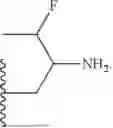


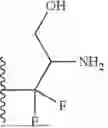


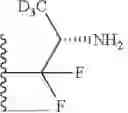


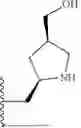


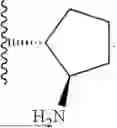


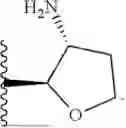


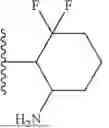


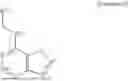


Sources:
- United States Patent and Trademark Office - verify current appl. status at the USPTO↗
Similar patent applications:
- » 20250101034
COMPOSITIONS USEFUL FOR MODULATING SPLICING - » 20250127789
COMPOSITIONS USEFUL FOR MODULATING SPLICING - » 20250129090
COMPOSITIONS USEFUL FOR MODULATING SPLICING
Recent applications in this class:
- » 20250304594 2025-10-02
METHYL (R)-2-(FLUOROMETHYL)-5-OXO-4-PHENYL-4,5,6,7-TETRAHYDRO-1H-CYCLOPENTA[B]PYRIDINE-3-CARBOXYLATE AND METHYL (R)-2-(FLUOROMETHYL)-5-OXO-4-PHENYL-1,4,5,7-TETRAHYDROFURO[3,4-B]PYRIDINE-3-CARBOXYLATE AS Cav1,2 ACTIVATORS - » 20250296936 2025-09-25
SARS-COV2 MAIN PROTEASE INHIBITORS - » 20250243215 2025-07-31
INHIBITORS OF EPIDERMAL GROWTH FACTOR RECEPTOR - » 20250236627 2025-07-24
CERTAIN OCTAHYDROFURO[3,4- B]PYRAZINES AS GLP-1 RECEPTOR MODULATORS - » 20250145633 2025-05-08
SUBSTITUTED FURANOPYRIMIDINE COMPOUNDS AS PDE1 INHIBITORS - » 20250115614 2025-04-10
Organic Compound, Light-Emitting Element, Light-Emitting Device, Electronic Device, and Lighting Device - » 20250115613 2025-04-10
DIARYL COMPOUND AS TUBULIN/SRC DUAL TARGET INHIBITOR - » 20250115612 2025-04-10
CERTAIN 2,5-DIAZABICYCLO[4.2.0]OCTANES AND OCTAHYDROFURO[3,4-B]PYRAZINES AS GLP-1 RECEPTOR MODULATORS - » 20250092054 2025-03-20
FUSED PYRIDINES FOR CONTROLLING INVERTEBRATE PESTS - » 20250051346 2025-02-13
BENZOFURAN AND BENZOTHIOPHENE PSYCHOPLASTOGENS AND USES THEREOF