PIPERIDINE COMPOUNDS AND PHARMACEUTICAL COMPOSITIONS
US20250332149A1
2025-10-30
19/193,490
2025-04-29
Smart Summary: Piperidine compounds are being developed for use in medicines. These compounds can help treat growth hormone deficiency or related issues where the body doesn't produce enough growth hormone. They are designed for people who have the ability to produce growth hormone but are not doing so adequately. The compounds can be used in various pharmaceutical compositions. Overall, they aim to improve health by addressing problems with growth hormone levels. 🚀 TL;DR
Abstract:
The present disclosure relates to pharmaceutical compositions comprising a compound of Formula (I) or a pharmaceutically acceptable salt thereof, and their use in treating growth hormone deficiency or a condition associated with an abnormal reduction in growth hormone (GH) secretion in a subject that has adequate GH secretion potential.
Applicant:
Interested in similar patents?
Get notified when new applications in this technology area are published.
Classification:
A61K31/438 » CPC main
Medicinal preparations containing organic active ingredients; Heterocyclic compounds having nitrogen as a ring hetero atom, e.g. guanethidine or rifamycins having six-membered rings with one nitrogen as the only ring hetero atom The ring being spiro-condensed with carbocyclic or heterocyclic ring systems
A61K9/2009 » CPC further
Medicinal preparations characterised by special physical form; Pills, tablets, discs, rods; Excipients; Inactive ingredients Inorganic compounds
A61K9/2018 » CPC further
Medicinal preparations characterised by special physical form; Pills, tablets, discs, rods; Excipients; Inactive ingredients; Organic compounds, e.g. phospholipids, fats Sugars, or sugar alcohols, e.g. lactose, mannitol; Derivatives thereof, e.g. polysorbates
A61K9/2054 » CPC further
Medicinal preparations characterised by special physical form; Pills, tablets, discs, rods; Excipients; Inactive ingredients; Organic macromolecular compounds; Polysaccharides, e.g. alginate, gums; Cyclodextrin Cellulose; Cellulose derivatives, e.g. hydroxypropyl methylcellulose
A61K9/2059 » CPC further
Medicinal preparations characterised by special physical form; Pills, tablets, discs, rods; Excipients; Inactive ingredients; Organic macromolecular compounds; Polysaccharides, e.g. alginate, gums; Cyclodextrin Starch, including chemically or physically modified derivatives; Amylose; Amylopectin; Dextrin
A61K9/4808 » CPC further
Medicinal preparations characterised by special physical form; Preparations in capsules, e.g. of gelatin, of chocolate characterised by the form of the capsule or the structure of the filling; Capsules containing small tablets; Capsules with outer layer for immediate drug release
C07D471/10 » CPC further
Heterocyclic compounds containing nitrogen atoms as the only ring hetero atoms in the condensed system, at least one ring being a six-membered ring with one nitrogen atom, not provided for by groups - in which the condensed system contains two hetero rings Spiro-condensed systems
A61K9/20 IPC
Medicinal preparations characterised by special physical form Pills, tablets, discs, rods
A61K9/48 IPC
Medicinal preparations characterised by special physical form Preparations in capsules, e.g. of gelatin, of chocolate
Description
CROSS-REFERENCE TO RELATED APPLICATIONS
This application claims the benefit of and priority to U.S. Provisional Application No. 63/639,933, filed Apr. 29, 2024, which is incorporated herein by reference in its entirety.
BACKGROUND
Growth hormone deficiency (GHD) leading to short stature (−2 SD height for chronological age) in children is a disorder found worldwide. Current treatment of growth hormone deficient children having short stature lasts typically for many years from diagnosis in childhood to reaching final height. Typically, treatment for 1 year or longer is necessary to establish a new growth trajectory on treatment. Thereafter, treatment is often required for 10 years or more, to reach an optimal adult height in these children. Moreover, results obtained from 6 months assessment of treatment in newly-diagnosed children can be widely variable due to the differences in underlying etiology of the GH deficiency, and patterns and rates of catch-up growth on start of treatment. Children with GHD are usually treated by daily subcutaneous injections of GH, which can be painful, inconvenient, and cause distress in some, especially younger, children.
Accordingly, it would be beneficial in terms of ease of treatment, patient convenience, and long-term adherence to develop non-injection-based therapies, e.g., a once-per-day oral treatment, which are effective for treating GHD in children and other diseases and conditions associated with abnormal reduction in GH secretion.
The compounds and compositions of the present disclosure address these and other unmet needs.
SUMMARY
The present disclosure provides a compound of Formula (I) or a pharmaceutically acceptable salt thereof.
wherein:
-
- R1 is alkyl, haloalkyl, cycloalkyl, or alkylene-cycloalkyl;
- R2 is —OH, —O—(C1-6 alkyl), —NH2, —NH(C1-6 alkyl), or —N(C1-6 alkyl)2;
- R3 is H, halogen, alkyl, alkoxy;
- R4 is H, halogen, or alkoxy; and
- m is 0 or 1.
In some embodiments of the compound of Formula (I) or a pharmaceutically acceptable salt thereof, R1 is methyl, R2 is —NH2, R3 and R4 are each H, and m is 1.
The prevent disclosure further provides a pharmaceutical composition comprising: a) a compound disclosed herein or a pharmaceutically acceptable salt thereof, and b) one or more pharmaceutically acceptable excipients. In some embodiments, the composition comprises drug-containing granules comprising the compound disclosed herein or a pharmaceutically acceptable salt thereof. In some embodiments, the drug-containing granules further comprise intragranular excipients. In some embodiments, the drug-containing granules of the present disclosure are roller-compacted drug-containing granules.
In some embodiments, the pharmaceutical compositions comprise a compound disclosed herein or pharmaceutically acceptable salt thereof in an amount greater than or equal to 10% by weight of the composition. In some embodiments, the pharmaceutical compositions comprise a compound disclosed herein or pharmaceutically acceptable salt thereof in an amount from about 10% to about 90% by weight of the composition. In some embodiments, the pharmaceutical compositions comprise a compound disclosed herein or pharmaceutically acceptable salt thereof in an amount from about 50% to about 90% by weight of the composition. In some embodiments, the pharmaceutical compositions comprise a compound disclosed herein or pharmaceutically acceptable salt thereof in an amount from about 60% to about 90% by weight of the composition.
In some embodiments, the pharmaceutical composition of the present disclosure is in the form of a tablet or mini-tablet. In some embodiments, the pharmaceutical composition is in the form of a compressed tablet or compressed mini-tablet. In some embodiments, the tablet is a coated tablet. In some embodiments, the mini-tablet is a compressed mini-tablet.
The present disclosure still further provides a dosage form, e.g., a capsule, comprising more than one pharmaceutical composition disclosed herein. In some embodiments, the capsule comprises more than one tablet or mini-tablet disclosed herein. In some embodiments, the capsule contains 2-12 tablets or mini-tablets disclosed herein. In some embodiments, the capsule contains 3, 4, or 12 tablets or mini-tablets disclosed herein.
In some embodiments, the present disclosure provides a method of treating growth hormone deficiency, comprising administering to a pediatric patient in need thereof a compound of Formula (I) or a pharmaceutically acceptable salt, a pharmaceutical composition disclosed herein, or a dosage form disclosed herein.
In some embodiments, the present disclosure provides a method for treating a disease or condition associated with an abnormal reduction in growth hormone (GH) secretion in a subject that has adequate GH secretion potential, comprising administering to the subject a compound of Formula (I) or a pharmaceutically acceptable salt, a pharmaceutical composition disclosed herein, or a dosage form disclosed herein.
BRIEF DESCRIPTION OF THE DRAWINGS
FIG. 1 provides a flowchart outlining a non-limiting embodiment of process for manufacturing a pharmaceutical tablet of the present disclosure comprising ibutamoren mesylate.
DETAILED DESCRIPTION
Definitions
Unless defined otherwise, all technical and scientific terms used herein have the meaning commonly understood by a person skilled in the art of the present disclosure. The following references provide one of skill with a general definition of many of the terms used in this disclosure: Singleton et al., Dictionary of Microbiology and Molecular Biology (2nd ed. 1994); The Cambridge Dictionary of Science and Technology (Walker ed., 1988); The Glossary of Genetics, 5th Ed., R. Rieger et al. (eds.), Springer Verlag (1991); and Hale & Marham, The Harper Collins Dictionary of Biology (1991). As used herein, the following terms have the meanings ascribed to them below, unless specified otherwise.
As used herein, “comprise” and its conjugations are used in its non-limiting sense to mean that items following the word are included, but items not specifically mentioned are not excluded. The present disclosure may suitably “comprise”, “consist of”, or “consist essentially of”, the steps, elements, and/or reagents described in the claims.
Unless specifically stated or obvious from context, as used herein, the term “or” is understood to be inclusive. Unless specifically stated or obvious from context, as used herein, the terms “a”, “an”, and “the” are understood to be singular or plural.
Throughout the present specification, the terms “about” and/or “approximately” may be used in conjunction with numerical values and/or ranges. The term “about” is understood to mean those values near to a recited value. Furthermore, the phrases “less than about [a value]” or “greater than about [a value]” should be understood in view of the definition of the term “about” provided herein. The terms “about” and “approximately” may be used interchangeably.
“Alkyl” or “alkyl group” refers to a fully saturated, straight or branched hydrocarbon chain having from one to twelve carbon atoms, and which is attached to the rest of the molecule by a single bond. Alkyls comprising any number of carbon atoms from 1 to 12 are included. An alkyl comprising up to 12 carbon atoms is a C1-C12 alkyl, an alkyl comprising up to 10 carbon atoms is a C1-C10 alkyl, an alkyl comprising up to 6 carbon atoms is a C1-C6 alkyl and an alkyl comprising up to 5 carbon atoms is a C1-C5 alkyl. A C1-C5 alkyl includes C5 alkyls, C4 alkyls, C3 alkyls, C2 alkyls and C1 alkyl (i.e., methyl). A C1-C6 alkyl includes all moieties described above for C1-C5 alkyls but also includes C6 alkyls. A C1-C10 alkyl includes all moieties described above for C1-C5 alkyls and C1-C6 alkyls, but also includes C7, C8, C9 and C10 alkyls. Similarly, a C1-C12 alkyl includes all the foregoing moieties, but also includes C11 and C12 alkyls. Non-limiting examples of C1-C12 alkyl include methyl, ethyl, n-propyl, i-propyl, sec-propyl, n-butyl, i-butyl, sec-butyl, t-butyl, n-pentyl, t-amyl, n-hexyl, n-heptyl, n-octyl, n-nonyl, n-decyl, n-undecyl, and n-dodecyl. Unless stated otherwise specifically in the specification, an alkyl group can be optionally substituted.
“Halo” or “halogen” refers to bromo, chloro, fluoro or iodo radical, including their radioisotopes.
“Haloalkyl” refers to an alkyl, as defined above, that is substituted by one or more halo radicals, e.g., trifluoromethyl, difluoromethyl, trichloromethyl, 2,2,2-trifluoroethyl, 1,2-difluoroethyl, 3-bromo-2-fluoropropyl, 1,2-dibromoethyl, and the like. Unless stated otherwise specifically in the specification, a haloalkyl group can be optionally substituted.
“Alkylene” or “alkylene chain” refers to a fully saturated, straight or branched divalent hydrocarbon chain radical, and having from one to twelve carbon atoms. Non-limiting examples of C1-C12 alkylene include methylene, ethylene, propylene, n-butylene, and the like. The alkylene chain is attached to the rest of the molecule through a single bond and to a radical group (e.g., those described herein) through a single bond. The points of attachment of the alkylene chain to the rest of the molecule and to the radical group can be through one carbon or any two carbons within the chain. Unless stated otherwise specifically in the specification, an alkylene chain can be optionally substituted.
“Alkylene” or “alkylene chain” refers to a fully saturated, straight or branched divalent hydrocarbon chain radical, and having from one to twelve carbon atoms. Non-limiting examples of C1-C12 alkylene include methylene, ethylene, propylene, n-butylene, ethenylene, propenylene, n-butenylene, propynylene, n-butynylene, and the like. The alkylene chain is attached to the rest of the molecule through a single bond and to the radical group through a single bond. The points of attachment of the alkylene chain to the rest of the molecule and to the radical group can be through one carbon or any two carbons within the chain. Unless stated otherwise specifically in the specification, an alkylene chain can be optionally substituted.
“Alkenyl” or “alkenyl group” refers to a straight or branched hydrocarbon chain radical having from two to twelve carbon atoms, and having one or more carbon-carbon double bonds. Each alkenyl group is attached to the rest of the molecule by a single bond. Alkenyl group comprising any number of carbon atoms from 2 to 12 are included. An alkenyl group comprising up to 12 carbon atoms is a C2-C12 alkenyl, an alkenyl comprising up to 10 carbon atoms is a C2-C10 alkenyl, an alkenyl group comprising up to 6 carbon atoms is a C2-C6 alkenyl and an alkenyl comprising up to 5 carbon atoms is a C2-C5 alkenyl. A C2-C5 alkenyl includes C5 alkenyls, C4 alkenyls, C3 alkenyls, and C2 alkenyls. A C2-C6 alkenyl includes all moieties described above for C2-C5 alkenyls but also includes C6 alkenyls. A C2-C10 alkenyl includes all moieties described above for C2-C5 alkenyls and C2-C6 alkenyls, but also includes C7, C8, C9 and C10 alkenyls. Similarly, a C2-C12 alkenyl includes all the foregoing moieties, but also includes C11 and C12 alkenyls. Non-limiting examples of C2-C12 alkenyl include ethenyl (vinyl), 1-propenyl, 2-propenyl (allyl), iso-propenyl, 2-methyl-1-propenyl, 1-butenyl, 2-butenyl, 3-butenyl, 1-pentenyl, 2-pentenyl, 3-pentenyl, 4-pentenyl, 1-hexenyl, 2-hexenyl, 3-hexenyl, 4-hexenyl, 5-hexenyl, 1-heptenyl, 2-heptenyl, 3-heptenyl, 4-heptenyl, 5-heptenyl, 6-heptenyl, 1-octenyl, 2-octenyl, 3-octenyl, 4-octenyl, 5-octenyl, 6-octenyl, 7-octenyl, 1-nonenyl, 2-nonenyl, 3-nonenyl, 4-nonenyl, 5-nonenyl, 6-nonenyl, 7-nonenyl, 8-nonenyl, 1-decenyl, 2-decenyl, 3-decenyl, 4-decenyl, 5-decenyl, 6-decenyl, 7-decenyl, 8-decenyl, 9-decenyl, 1-undecenyl, 2-undecenyl, 3-undecenyl, 4-undecenyl, 5-undecenyl, 6-undecenyl, 7-undecenyl, 8-undecenyl, 9-undecenyl, 10-undecenyl, 1-dodecenyl, 2-dodecenyl, 3-dodecenyl, 4-dodecenyl, 5-dodecenyl, 6-dodecenyl, 7-dodecenyl, 8-dodecenyl, 9-dodecenyl, 10-dodecenyl, and 11-dodecenyl. Unless stated otherwise specifically in the specification, an alkyl group can be optionally substituted.
“Alkoxy” refers to a group of the formula —ORa where Ra is an alkyl, alkenyl or alkynyl as defined above containing one to twelve carbon atoms. Unless stated otherwise specifically in the specification, an alkoxy group can be optionally substituted.
“Cycloalkyl” refers to a stable non-aromatic monocyclic or polycyclic fully saturated hydrocarbon consisting solely of carbon and hydrogen atoms, which can include fused, bridged, or spirocyclic ring systems, having from three to twenty carbon atoms (e.g., having from three to ten carbon atoms) and which is attached to the rest of the molecule by a single bond. Monocyclic cycloalkyls include, for example, cyclopropyl, cyclobutyl, cyclopentyl, cyclohexyl, cycloheptyl, and cyclooctyl. Polycyclic cycloalkyls include, for example, adamantyl, norbornyl, decalinyl, 7,7-dimethyl-bicyclo[2.2.1]heptanyl, and the like. Unless otherwise stated specifically in the specification, a cycloalkyl group can be optionally substituted.
“Amino” refers to the —NH2 radical.
“Alkylamino” refers to a radical of the formula —NHRa or —NRaRa where each Ra is, independently, an alkyl, alkenyl or alkynyl radical as defined above containing one to twelve carbon atoms. Unless stated otherwise specifically in the specification, an alkylamino group can be optionally substituted.
“Alkylcarbonyl” refers to the —C(═O)Ra moiety, wherein Ra is an alkyl, alkenyl or alkynyl radical as defined above. A non-limiting example of an alkyl carbonyl is the methyl carbonyl (“acetal”) moiety. Alkylcarbonyl groups can also be referred to as “Cw-Cz acyl” where w and z depicts the range of the number of carbon in Ra, as defined above. For example, “C1-C10 acyl” refers to alkylcarbonyl group as defined above, where Ra is C1-C10 alkyl, C1-C10 alkenyl, or C1-C10 alkynyl radical as defined above. Unless stated otherwise specifically in the specification, an alkyl carbonyl group can be optionally substituted.
“Aryl” refers to a hydrocarbon ring system radical comprising hydrogen, 6 to 18 carbon atoms and at least one aromatic ring. For purposes of this invention, the aryl radical can be a monocyclic, bicyclic, tricyclic or tetracyclic ring system, which can include fused or bridged ring systems. Aryl radicals include, but are not limited to, aryl radicals derived from aceanthrylene, acenaphthylene, acephenanthrylene, anthracene, azulene, benzene, chrysene, fluoranthene, fluorene, as-indacene, s-indacene, indane, indene, naphthalene, phenalene, phenanthrene, pleiadene, pyrene, and triphenylene. Unless stated otherwise specifically in the specification, the term “aryl” is meant to include aryl radicals that are optionally substituted.
“Aralkyl” or “arylalkyl” refers to a radical of the formula —Rb—Rc where Rb is an alkylene group as defined above and Re is one or more aryl radicals as defined above, for example, benzyl, diphenylmethyl and the like. Unless stated otherwise specifically in the specification, an aralkyl group can be optionally substituted.
“Heteroaryl” refers to a 5- to 20-membered ring system radical comprising hydrogen atoms, one to thirteen carbon atoms, one to six heteroatoms selected from the group consisting of nitrogen, oxygen and sulfur, and at least one aromatic ring. For purposes of this invention, the heteroaryl radical can be a monocyclic, bicyclic, tricyclic or tetracyclic ring system, which can include fused or bridged ring systems; and the nitrogen, carbon or sulfur atoms in the heteroaryl radical can be optionally oxidized; the nitrogen atom can be optionally quaternized. Examples include, but are not limited to, azepinyl, acridinyl, benzimidazolyl, benzothiazolyl, benzindolyl, benzodioxolyl, benzofuranyl, benzooxazolyl, benzothiazolyl, benzothiadiazolyl, benzo[b][1,4]dioxepinyl, 1,4-benzodioxanyl, benzonaphthofuranyl, benzoxazolyl, benzodioxolyl, benzodioxinyl, benzopyranyl, benzopyranonyl, benzofuranyl, benzofuranonyl, benzothienyl (benzothiophene), benzotriazolyl, benzo[4,6]imidazo[1,2-a]pyridinyl, carbazolyl, cinnolinyl, dibenzofuranyl, dibenzothiophene, furanyl, furanonyl, isothiazolyl, imidazolyl, indazolyl, indolyl, indazolyl, isoindolyl, indolinyl, isoindolinyl, isoquinolyl, indolizinyl, isoxazolyl, naphthyridinyl, oxadiazolyl, 2-oxoazepinyl, oxazolyl, oxiranyl, 1-oxidopyridinyl, 1-oxidopyrimidinyl, 1-oxidopyrazinyl, 1-oxidopyridazinyl, 1-phenyl-1H-pyrrolyl, phenazinyl, phenothiazinyl, phenoxazinyl, phthalazinyl, pteridinyl, purinyl, pyrrolyl, pyrazolyl, pyridinyl, pyrazinyl, pyrimidinyl, pyridazinyl, quinazolinyl, quinoxalinyl, quinolinyl, quinuclidinyl, isoquinolinyl, tetrahydroquinolinyl, thiazolyl, thiadiazolyl, triazolyl, tetrazolyl, triazinyl, and thiophene (i.e. thienyl). Unless stated otherwise specifically in the specification, a heteroaryl group can be optionally substituted.
The term “substituted” used herein means any of the above groups (i.e., alkyl, alkylene, alkenyl, alkenylene, alkynyl, alkynylene, alkoxy, alkylamino, alkylcarbonyl, thioalkyl, aryl, aralkyl, carbocyclyl, cycloalkyl, cycloalkenyl, cycloalkynyl, cycloalkylalkyl, haloalkyl, heterocyclyl, N-heterocyclyl, heterocyclylalkyl, heteroaryl, N-heteroaryl and/or heteroarylalkyl) wherein at least one hydrogen atom is replaced by a bond to a non-hydrogen atoms such as, but not limited to: a halogen atom such as F, Cl, Br, and I; an oxygen atom in groups such as hydroxyl groups, alkoxy groups, and ester groups; a sulfur atom in groups such as thiol groups, thioalkyl groups, sulfone groups, sulfonyl groups, and sulfoxide groups; a nitrogen atom in groups such as amines, amides, alkylamines, dialkylamines, arylamines, alkylarylamines, diarylamines, N-oxides, imides, and enamines; a silicon atom in groups such as trialkylsilyl groups, dialkylarylsilyl groups, alkyldiarylsilyl groups, and triarylsilyl groups; and other heteroatoms in various other groups.
“Substituted” also means any of the above groups in which one or more hydrogen atoms are replaced by a higher-order bond (e.g., a double- or triple-bond) to a heteroatom such as oxygen in oxo, carbonyl, carboxyl, and ester groups; and nitrogen in groups such as imines, oximes, hydrazones, and nitriles. For example, “substituted” includes any of the above groups in which one or more hydrogen atoms are replaced with —NRgRh, —NRgC(═O)Rh, —NRgC(═O)NRgRh, —NRgC(═O)ORh, —NRgSO2Rh, —OC(═O)NRgRh, —ORg, —SRg, —SORg, —SO2Rg, —OSO2Rg, —SO2ORg, ═NSO2Rg, and —SO2NRgRh. “Substituted also means any of the above groups in which one or more hydrogen atoms are replaced with —C(═O)Rg, —C(═O)ORg, —C(═O)NRgRh, —CH2SO2Rg, —CH2SO2NRgRh. In the foregoing, Rg and Rh are the same or different and independently hydrogen, alkyl, alkenyl, alkynyl, alkoxy, alkylamino, thioalkyl, aryl, aralkyl, cycloalkyl, cycloalkenyl, cycloalkynyl, cycloalkylalkyl, haloalkyl, haloalkenyl, haloalkynyl, heterocyclyl, N-heterocyclyl, heterocyclylalkyl, heteroaryl, N-heteroaryl and/or heteroarylalkyl. “Substituted” further means any of the above groups in which one or more hydrogen atoms are replaced by a bond to an amino, cyano, hydroxyl, imino, nitro, oxo, thioxo, halo, alkyl, alkenyl, alkynyl, alkoxy, alkylamino, thioalkyl, aryl, aralkyl, cycloalkyl, cycloalkenyl, cycloalkynyl, cycloalkylalkyl, haloalkyl, haloalkenyl, haloalkynyl, heterocyclyl, N-heterocyclyl, heterocyclylalkyl, heteroaryl, N-heteroaryl and/or heteroarylalkyl group. In addition, each of the foregoing substituents can also be optionally substituted with one or more of the above substituents.
As used herein, “D90” refers to the 90% value of particle diameter as determined by sieve analysis, i.e., by the percent of drug particles retained on the mesh screen during the sieve process with a screen of a particular mesh size. For example, if D90=100 m, 90% of the drug particles remain on a 100 m mesh screen during the sieve process. Similarly, “D80” refers to the 80% value of particle diameter, “D70” refers to the 70% value of particle diameter, “D60” refers to the 60% value of particle diameter, “D50” refers to the 50% value of particle diameter, “D40” refers to the 40% value of particle diameter, “D30” refers to the 30% value of particle diameter, “D20” refers to the 20% value of particle diameter, and “D10” refers to the 10% value of particle diameter.
As used herein, “substantially” or “substantial” refers to the complete or nearly complete extent or degree of an action, characteristic, property, state, structure, item, or result. For example, an object that is “substantially” enclosed would mean that the object is either completely enclosed or nearly completely enclosed. The exact allowable degree of deviation from absolute completeness may in some cases depend on the specific context. However, generally speaking, the nearness of completion will be so as to have the same overall result as if absolute and total completion were obtained. The use of “substantially” is equally applicable when used in a negative connotation to refer to the complete or near complete lack of action, characteristic, property, state, structure, item, or result. For example, a composition that is “substantially free of” other active agents would either completely lack other active agents, or so nearly completely lack other active agents that the effect would be the same as if it completely lacked other active agents. In other words, a composition that is “substantially free of” an ingredient or element or another active agent may still contain such an item as long as there is no measurable effect thereof.
The term “treating” means one or more of relieving, alleviating, delaying, reducing, reversing, improving, or managing at least one symptom of a condition in a subject. The term “treating” may also mean one or more of arresting, delaying the onset (i.e., the period prior to clinical manifestation of the condition) or reducing the risk of developing or worsening a condition.
The term “therapeutically effective” applied to dose or amount refers to that quantity of a compound or pharmaceutical formulation that is sufficient to result in a desired clinical benefit after administration to a subject (e.g., a human child) in need thereof.
As used herein, “prepubertal” refers to a child having a bone age of <8 years for female children and <9 years for male children. Bone age can be determined using a well-known method such as the atlas matching method of Greulich and Pyle or the point scoring system of Tanner and Whitehouse. Other examples of bone age include <7 for females and <8 for males.
As used herein, “peripubertal” refers to a child who has started to go through puberty which is assessed clinically by Tanner staging. Tanner stage 1 is prepubertal and anything past that until puberty is complete (Tanner stage 4) is considered peripubertal.
As used herein, “short stature” refers to a child's stature that is below the 2.3 percentile (˜−2 SD height for chronological age) for his/her chronological age. Other examples include being below the 5th, 4th, 3rd, 2nd, and 1st percentile for his/her chronological age.
As used herein, “growth retardation” or “slow height velocity” refers to a height velocity less than the 25th percentile for age and gender, as recorded over at least a 6-month period. Other examples include being below the 24th, 23rd, 22nd, 21st, 20th, 19th, 18th, 17th, 16th, 15th, 14th, 13th, 12th, 11th, 10th, 9th, 8th, 7th, 6th, 5th, 4th, 3rd, 2nd, and 1st percentile for age and gender, as recorded over at least a 6-month period.
As used herein, “adequate GH secretion potential” refers to a patient that is considered to have adequate GH secretion potential if the subject:
-
- (i) has a peak GH of <10 μg/L (or <7 μg/L) in response to a standard Provocative Test; and
- (ii) has a peak serum GH≥5 μg/L in response to a single dose of ibutamoren mesylate (e.g., 0.8 mg/kg).
As used herein, “equivalent growth potential compared to rhGH” refers to a patient that is considered to have equivalent growth potential compared to chronic subcutaneous injections of rhGH (equivalent growth potential compared to rhGH) if the subject:
-
- (i) has a peak serum GH≥5 μg/L in response to a single dose of ibutamoren mesylate (e.g., 0.8 mg/kg); and
- (ii) has a baseline serum IGF-I of >30 μg/L.
All weight percentages (i.e., “% by weight” and “wt. %” and “w/w”) referenced herein, unless otherwise indicated, are measured relative to the total weight of the solid pharmaceutical form or pharmaceutical composition.
Compounds
In some embodiments, the present disclosure provides a compound of Formula (I) or a pharmaceutically acceptable salt thereof:
wherein:
-
- R1 is alkyl, haloalkyl, cycloalkyl, or alkylene-cycloalkyl;
- R2 is —OH, —O—(C1-6 alkyl), —NH2, —NH(C1-6 alkyl), or —N(C1-6 alkyl)2;
- R3 is H, halogen, alkyl, alkoxy;
- R4 is H, halogen, or alkoxy; and
- m is 0 or 1.
In some embodiments, m is 0. In some embodiments, m is 1.
In some embodiments, R1 is a C1-6 alkyl. In some embodiments, R1 is a C1-3 alkyl. In some embodiments, R1 is methyl, ethyl, or isopropyl. In some embodiments, R1 is methyl.
In some embodiments, R2 is —NH2 or —NH(C1-6 alkyl). In some embodiments, R2 is —NH2 or —NH(CH3). In some embodiments, R2 is —NH2.
In some embodiments, R3 is H, F, C1-4 alkyl, or —O—(C1-4 alkyl). In some embodiments, R3 is H, F, CH3, or —OCH3. In some embodiments, R3 is H or F. In some embodiments, R3 is H.
In some embodiments, R4 is H or F. In some embodiments, R4 is H.
In some embodiments, R1 is methyl, R2 is —NH2, R3 and R4 are each H, and m is 1. In some embodiments, the compound of Formula (I) is ibutamoren or a pharmaceutically acceptable salt thereof. In some embodiments, the compound of Formula (I) is ibutamoren mesylate.
Ibutamoren is non-peptide agonist of ghrelin and a growth hormone secretagogue having the structure:
and the chemical name: N-[l(R)-[(1,2-di-hydro-1-methane-sulfonylspiro[3H-indole-3,4′-piperdin]-l′-yl)carbonyl]-2-(phenyl-methyloxy)ethyl]-2-amino-2-methylpropanamide or 2-amino-2-methyl-N-[(2R)-1-(1-methylsulfonylspiro[2H-indole-3,4′-piperidine]-1′-yl)-1-oxo-3-phenylmethoxypropan-2-yl]propanamide.
The mesylate salt of ibutamoren, N-[1(R)-[(1,2-dihydro-1-methanesulfonylspiro[3H-indole-3,4′-piperdin]-yl)carbonyl]-2-(phenylmethyloxy)ethyl]-2-amino-2-methylpropanamide methanesulfonate, is known as MK-0677 and LUM-201, and has been evaluated in multiple clinical studies.
Pharmaceutical Compositions
In some embodiments, the present disclosure provides a pharmaceutical composition comprising: a) a compound of Formula (I) disclosed herein or a pharmaceutically acceptable salt thereof, and b) one or more pharmaceutically acceptable excipients. In some embodiments, the compound is ibutamoren or a pharmaceutically acceptable salt thereof. In some embodiments, the compound is ibutamoren mesylate.
In some embodiments, the pharmaceutical compositions of the present disclosure comprise a compound disclosed herein (e.g., ibutamoren) or a pharmaceutically acceptable salt thereof (e.g., ibutamoren mesylate) in an amount greater than 10%, greater than 12.5%, greater than 15%, greater than 17.5%, greater than 20%, greater than 22.5%, greater than 25%, greater than 27.5%, greater than 30%, greater than 32.5%, greater than 35%, greater than 37.5%, greater than 40%, greater than 42.5%, greater than 45%, greater than 47.5%, greater than 50%, greater than 52.5%, greater than 55%, greater than 57.5%, greater than 60%, greater than 62.5%, greater than 65%, greater than 67.5%, greater than 70%, greater than 72.5%, greater than 75%, greater than 77.5%, greater than 80%, greater than 82.5%, greater than 85%, greater than 87.5%, greater than 90%, greater than 92.5%, or greater than 95% by weight of the pharmaceutical composition. In some embodiments, the compound disclosed herein or a pharmaceutically acceptable salt thereof is present in an amount greater than or equal to 10% by weight of the pharmaceutical composition.
In some embodiments, the compound disclosed herein or a pharmaceutically acceptable salt thereof is present in an amount greater than or equal to 20% by weight of the pharmaceutical composition. In some embodiments, the compound disclosed herein or a pharmaceutically acceptable salt thereof is present in an amount greater than or equal to 30% by weight of the pharmaceutical composition. In some embodiments, the compound disclosed herein or a pharmaceutically acceptable salt thereof is present in an amount greater than or equal to 40% by weight of the pharmaceutical composition. In some embodiments, the compound disclosed herein or a pharmaceutically acceptable salt thereof is present in an amount greater than or equal to 50% by weight of the pharmaceutical composition. In some embodiments, the compound disclosed herein or a pharmaceutically acceptable salt thereof is present in an amount greater than or equal to 60% by weight of the pharmaceutical composition. In some embodiments, the compound disclosed herein or a pharmaceutically acceptable salt thereof is present in an amount greater than or equal to 70% by weight of the pharmaceutical composition. In some embodiments, the compound disclosed herein or a pharmaceutically acceptable salt thereof is present in an amount greater than or equal to 80% by weight of the pharmaceutical composition. In some embodiments, the compound disclosed herein or a pharmaceutically acceptable salt thereof is present in an amount greater than or equal to 85% by weight of the pharmaceutical composition. In some embodiments, the compound disclosed herein or a pharmaceutically acceptable salt thereof is present in an amount greater than or equal to 90% by weight of the pharmaceutical composition. In some embodiments, the compound disclosed herein or a pharmaceutically acceptable salt thereof is present in an amount from about 10% to about 90% by weight of the pharmaceutical composition. In some embodiments, the compound disclosed herein or a pharmaceutically acceptable salt thereof is present in an amount from about 15% to about 90% by weight of the pharmaceutical composition. In some embodiments, the compound disclosed herein or a pharmaceutically acceptable salt thereof is present in an amount from about 20% to about 90% by weight of the pharmaceutical composition. In some embodiments, the compound disclosed herein or a pharmaceutically acceptable salt thereof is present in an amount from about 25% to about 90% by weight of the pharmaceutical composition. In some embodiments, the compound disclosed herein or a pharmaceutically acceptable salt thereof is present in an amount from about 30% to about 90% by weight of the pharmaceutical composition. In some embodiments, the compound disclosed herein or a pharmaceutically acceptable salt thereof is present in an amount from about 35% to about 90% by weight of the pharmaceutical composition. In some embodiments, the compound disclosed herein or a pharmaceutically acceptable salt thereof is present in an amount from about 40% to about 90% by weight of the pharmaceutical composition. In some embodiments, the compound disclosed herein or a pharmaceutically acceptable salt thereof is present in an amount from about 45% to about 90% by weight of the pharmaceutical composition. In some embodiments, the compound disclosed herein or a pharmaceutically acceptable salt thereof is present in an amount from about 50% to about 90% by weight of the pharmaceutical composition. In some embodiments, the compound disclosed herein or a pharmaceutically acceptable salt thereof is present in an amount from about 55% to about 90% by weight of the pharmaceutical composition. In some embodiments, the compound disclosed herein or a pharmaceutically acceptable salt thereof is present in an amount from about 60% to about 90% by weight of the pharmaceutical composition. In some embodiments, the compound disclosed herein or a pharmaceutically acceptable salt thereof is present in an amount from about 65% to about 90% by weight of the pharmaceutical composition. In some embodiments, the compound disclosed herein or a pharmaceutically acceptable salt thereof is present in an amount from about 70% to about 90% by weight of the pharmaceutical composition. In some embodiments, the compound disclosed herein or a pharmaceutically acceptable salt thereof is present in an amount from about 75% to about 90% by weight of the pharmaceutical composition. In some embodiments, the compound disclosed herein or a pharmaceutically acceptable salt thereof is present in an amount from about 80% to about 90% by weight of the pharmaceutical composition. In some embodiments, the compound disclosed herein or a pharmaceutically acceptable salt thereof is present in an amount from about 85% to about 90% by weight of the pharmaceutical composition. In some embodiments, the compound disclosed herein or a pharmaceutically acceptable salt thereof is present in an amount from about 50% to about 80% by weight of the pharmaceutical composition. In some embodiments, the compound disclosed herein or a pharmaceutically acceptable salt thereof is present in an amount from about 55% to about 80% by weight of the pharmaceutical composition. In some embodiments, the compound disclosed herein or a pharmaceutically acceptable salt thereof is present in an amount from about 60% to about 80% by weight of the pharmaceutical composition. In some embodiments, the compound disclosed herein or a pharmaceutically acceptable salt thereof is present in an amount from about 65% to about 80% by weight of the pharmaceutical composition. In some embodiments, the compound disclosed herein or a pharmaceutically acceptable salt thereof is present in an amount from about 70% to about 80% by weight of the pharmaceutical composition. In some embodiments, the compound disclosed herein or a pharmaceutically acceptable salt thereof is present in an amount from about 75% to about 80% by weight of the pharmaceutical composition. In some embodiments, the compound disclosed herein or a pharmaceutically acceptable salt thereof is present in an amount from about 30% to about 60% by weight of the pharmaceutical composition. In some embodiments, the compound disclosed herein or a pharmaceutically acceptable salt thereof is about 50% by weight of the pharmaceutical composition. In some embodiments, the compound disclosed herein or a pharmaceutically acceptable salt thereof is about 60% by weight of the pharmaceutical composition. In some embodiments, the compound disclosed herein or a pharmaceutically acceptable salt thereof is about 70% by weight of the pharmaceutical composition. In some embodiments, the compound disclosed herein or a pharmaceutically acceptable salt thereof is about 80% by weight of the pharmaceutical composition. In some embodiments, the compound is ibutamoren. In some embodiments, compound is ibutamoren mesylate.
Drug-Containing Granules
In some embodiments, the composition comprises drug-containing granules, and the drug-containing granules comprise the compound disclosed herein (e.g., ibutamoren) or a pharmaceutically acceptable salt thereof (e.g., ibutamoren mesylate). In some embodiments, the drug-containing granules comprise ibutamoren or a pharmaceutically acceptable salt thereof. In some embodiments, the drug-containing granules comprise ibutamoren mesylate.
In some embodiments, the drug-containing granules are compacted drug-containing granules. In some embodiments, the drug-containing granules are roller-compacted drug-containing granules.
In some embodiments, the drug-containing granules comprise a compound disclosed herein or a pharmaceutically acceptable salt thereof and pharmaceutical intragranular excipients. In some embodiments, the drug-containing granules comprise a compound disclosed herein or a pharmaceutically acceptable salt thereof and one or more of a binder, bulking agent, disintegrant, and lubricant. In some embodiments, the drug-containing granules comprise a compound disclosed herein or a pharmaceutically acceptable salt thereof and a binder, bulking agent, disintegrant, and lubricant (collectively, “the intragranular excipients”).
(1) Binders
Suitable intragranular binder materials include, but are not limited to, starch (including corn starch and pregelatinized starch), gelatin, sugars (including sucrose, glucose, dextrose and lactose), polyethylene glycol, polyvinyl alcohol, waxes, and natural and synthetic gums, e.g., acacia sodium alginate, polyvinylpyrrolidone, cellulosic polymers (including hydroxypropyl cellulose, hydroxypropyl methylcellulose, methyl cellulose, microcrystalline cellulose, ethyl cellulose, hydroxyethyl cellulose, and the like), and Veegum, and combinations thereof. Examples of polyvinylpyrrolidone include povidone, copovidone and crospovidone.
In some embodiments, the binder is corn starch, pregelatinized starch, gelatin, sucrose, glucose, dextrose and lactose, polyethylene glycol, polyvinyl alcohol, waxes, acacia sodium alginate, polyvinylpyrrolidone, hydroxypropyl cellulose, hydroxypropyl methylcellulose, methyl cellulose, microcrystalline cellulose, ethyl cellulose, hydroxyethyl cellulose, or combinations thereof. In some embodiments, the binder is pregelatinized starch.
In some embodiments, the binder is in an amount ranging from about 2% w/w to about 30% w/w, e.g., about 2% w/w, about 3% w/w, about 4% w/w, about 5%, w/w, about 6% w/w, about 7% w/w, about 8% w/w, about 9% w/w, about 10% w/w, about 11% w/w, about 12% w/w, about 13% w/w, about 14% w/w, about 15%, w/w, about 16% w/w, about 17% w/w, about 18% w/w, about 19% w/w, about 20% w/w, about 21% w/w, about 22% w/w, about 23% w/w, about 24% w/w, about 25%, w/w, about 26% w/w, about 27% w/w, about 28% w/w, about 29% w/w, or about 30% w/w, of the pharmaceutical composition, including all ranges and values therebetween. In some embodiments, the binder is in an amount ranging from about 10% w/w to about 30% w/w of the pharmaceutical composition. In some embodiments, the binder is in an amount ranging from about 10% w/w to about 25% w/w of the pharmaceutical composition. In some embodiments, the binder is in an amount ranging from about 10% w/w to about 15% w/w of the pharmaceutical composition. In some embodiments, the binder is in an amount ranging from about 15% w/w to about 25% w/w of the pharmaceutical composition. In some embodiments, the binder is in an amount ranging from about 20% w/w to about 25% w/w of the pharmaceutical composition. In some embodiments, the binder is in an amount ranging from about 2% w/w to about 15% w/w of the pharmaceutical composition.
(2) Bulking Agents
The intragranular bulking agent, which can also be referred to as a diluent, includes, but is not limited to, silicon dioxide, titanium dioxide, alumina, talc, kaolin, powdered cellulose, microcrystalline cellulose, urea, sodium chloride, saccharides, and combinations thereof. Any suitable saccharide may be used in the composition of the present invention. As used herein, the “saccharides” used in the invention include sugar alcohols, monosaccharides, disaccharides, and oligosaccharides. Exemplary sugar alcohols include, but not limited to, xylitol, mannitol, sorbitol, erythritol, lactitol, pentitol, and hexitol. Exemplary monosaccharides include, but are not limited to, glucose, fructose, aldose and ketose. Exemplary disaccharides include, but are not limited to, sucrose, isomalt, lactose, trehalose, and maltose. Exemplary oligosaccharides include, but are not limited to, fructo-oligosaccharides, inulin, galacto-oligosaccharides, and mannan-oligosaccharides.
In some embodiments, the bulking agent is a sugar alcohol selected from the group consisting of xylitol, mannitol, sorbitol, erythritol, lactitol, pentitol, and hexitol. In some embodiments, the bulking agent is sorbitol, mannitol, or xylitol. In some embodiments, the bulking agent is mannitol.
In some embodiments, the bulking agent is in an amount ranging from about 1% w/w to about 20% w/w, e.g., about 1% w/w, about 2% w/w, about 3% w/w, about 4% w/w, about 5%, w/w, about 6% w/w, about 7% w/w, about 8% w/w, about 9% w/w, about 10% w/w, about 11% w/w, about 12% w/w, about 13% w/w, about 14% w/w, about 15%, w/w, about 16% w/w, about 17% w/w, about 18% w/w, about 19% w/w, or about 20% w/w, of the pharmaceutical composition, including all ranges and values therebetween. In some embodiments, the bulking agent is in an amount ranging from about 1% w/w to about 15% w/w of the pharmaceutical composition. In some embodiments, the bulking agent is in an amount ranging from about 10% w/w to about 20% w/w of the pharmaceutical composition. In some embodiments, the bulking agent is in an amount ranging from about 5% w/w to about 15% w/w of the pharmaceutical composition. In some embodiments, the bulking agent is in an amount ranging from about 10% w/w to about 15% w/w of the pharmaceutical composition. In some embodiments, the bulking agent is in an amount ranging from about 5% w/w to about 10% w/w of the pharmaceutical composition.
(3) Disintegrants
The intragranular disintegrant for use in the pharmaceutical compositions of the present disclosure includes, but is not limited to, starches, clays, celluloses, algins, gums, or crosslinked polymers (e.g., crosslinked polyvinyl pyrrolidone). Other non-limiting examples of suitable disintegrants include lactose, white sugar, starch, carboxymethyl cellulose, carboxymethyl cellulose calcium, croscarmellose sodium, carboxymethyl starch sodium, light silicic acid anhydride, low substituted hydroxypropyl cellulose, and the like.
In some embodiments, the one or more disintegrants is lightly crosslinked polyvinyl pyrrolidone, corn starch, potato starch, maize starch and modified starches, croscarmellose sodium, crospovidone, sodium starch glycolate, or combinations and mixtures thereof. In some embodiments, the disintegrant is croscarmellose sodium, crospovidone, sodium starch glycolate, or combinations thereof. In some embodiments, the disintegrant is croscarmellose sodium.
In some embodiments, the disintegrant is in an amount ranging from about 0.5% w/w to about 10% w/w, e.g., about 0.5% w/w, about 1% w/w, about 2% w/w, about 3% w/w, about 4% w/w, about 5%, w/w, about 6% w/w, about 7% w/w, about 8% w/w, about 9% w/w, or about 10% w/w, of the pharmaceutical composition, including all ranges and values therebetween. In some embodiments, the disintegrant is in an amount ranging from about 1% w/w to about 5% w/w of the pharmaceutical composition. In some embodiments, the disintegrant is in an amount ranging from about 2% w/w to about 5% w/w of the pharmaceutical composition. In some embodiments, the disintegrant is in an amount ranging from about 2% w/w to about 4% w/w of the pharmaceutical composition. In some embodiments, the disintegrant is in an amount ranging from about 0.5% w/w to about 3.5% w/w of the pharmaceutical composition. In some embodiments, the disintegrant is in an amount ranging from about 0.5% w/w to about 1.5% w/w of the pharmaceutical composition.
(4) Lubricants
Suitable intragranular lubricants for the pharmaceutical compositions of the present disclosure include, for example, magnesium stearate, calcium stearate, talc, colloidal silica, and the like. In some embodiments, the lubricant comprises stearic acid and/or stearic acid salts, for example magnesium stearate. In some embodiments, the lubricant is magnesium stearate, calcium stearate, colloidal silica, talc, or combinations thereof. In some embodiments, the lubricant is magnesium stearate and/or talc. In some embodiments, the lubricant is magnesium stearate and talc. In some embodiments, the lubricant is magnesium stearate.
In some embodiments, the lubricant is in an amount ranging from about 0.5% w/w to about 5% w/w, e.g., about 0.5, about 1.0%, about 1.5%, about 2.0%, about 2.5%, about 3.0%, about 3.5%, about 4.0%, about 4.5%, or about 5%, of the pharmaceutical composition, including all ranges and values therebetween. In some embodiments, the lubricant is in an amount ranging from about 0.5% w/w to about 4% w/w of the pharmaceutical composition. In some embodiments, the lubricant is in an amount ranging from about 0.5% w/w to about 3% w/w of the pharmaceutical composition. In some embodiments, the lubricant is in an amount ranging from about 0.5% w/w to about 2% w/w of the pharmaceutical composition. In some embodiments, the lubricant is in an amount ranging from about 0.5% w/w to about 1.5% w/w of the pharmaceutical composition.
In some embodiments, the drug-containing granules disclosed herein comprise ibutamoren mesylate, a binder in an amount ranging from about 2% w/w to about 60% w/w, a bulking agent in an amount ranging from about 1% w/w to about 30% w/w, a disintegrant in an amount ranging from about 1% w/w to about 5% w/w, and a lubricant in an amount ranging from about 0.5% w/w to about 2% w/w.
In some embodiments, the drug-containing granules disclosed herein comprise ibutamoren mesylate, a binder in an amount ranging from about 2% w/w to about 30% w/w, a bulking agent in an amount ranging from about 1% w/w to about 20% w/w, a disintegrant in an amount ranging from about 2% w/w to about 5% w/w, and a lubricant in an amount ranging from about 0.5% w/w to about 1.5% w/w.
In some embodiments, the drug-containing granules disclosed herein comprise ibutamoren mesylate, a binder in an amount ranging from about 20% w/w to about 30% w/w, a bulking agent in an amount ranging from about 10% w/w to about 20% w/w, a disintegrant in an amount ranging from about 2% w/w to about 5% w/w, and a lubricant in an amount ranging from about 0.5% w/w to about 1.5% w/w.
In some embodiments, the drug-containing granules of the present disclosure have a bulk density less than 1 g/cc, less than 0.9 g/cc, less than 0.8 g/cc, less than 0.7 g/cc, less than 0.6 g/cc, or less than 0.5 g/cc, inclusive of all values and subranges therebetween. In some embodiments, the drug-containing granules have a bulk density less than 0.6 g/cc. In some embodiments, the drug-containing granules have a bulk density less than 0.5 g/cc.
In some embodiments, the drug-containing granules of the present disclosure have a tapped density less than 1 g/cc, less than 0.90 g/cc, less than 0.8 g/cc, less than 0.75 g/cc, less than 0.7 g/cc, less than 0.65 g/cc, or less than 0.6 g/cc, inclusive of all values and subranges therebetween.
In some embodiments, the drug-containing granules have a tapped density less than 0.75 g/cc. In some embodiments, the drug-containing granules have a tapped density less than 0.6 g/cc.
In some embodiments, the drug-containing granules of the present disclosure have a bulk density of less than about 0.6 g/cc and a tapped density of less than about 0.75 g/cc. In some embodiments, the drug-containing granules of the present disclosure have a bulk density of less than about 0.5 g/cc and a tapped density of less than about 0.6 g/cc.
Flow characteristics of the drug-containing granules can be estimated by calculating a Hauser ratio, which as used herein, is the ratio of tapped density to bulk density. In some embodiments, the roller-compacted drug-containing granules have a Hausner ratio of from about 1.0 to about 1.4. In some embodiments, the roller-compacted drug-containing granules have a Hausner ratio of from about 1.15 to about 1.4. In some embodiments, the roller-compacted drug-containing granules have a Hausner ratio of from about 1.0 to about 1.25. In some embodiments, the roller-compacted drug-containing granules have a Hausner ratio of from about 1.0 to about 1.2. In some embodiments, the roller-compacted drug-containing granules have a Hausner ratio of from about 1.15 to about 1.25, e.g., when the drug-loading of ibutamoren mesylate is from about 60% to about 90% by weight of the pharmaceutical composition. In some embodiments, the roller-compacted drug-containing granules have a Hausner ratio of from about 1.20, e.g., when the drug-loading of ibutamoren mesylate is about 90% by weight of the pharmaceutical composition. A correlation between flowability and Hausner ratio is provided in Table 3, below.
The compressibility of drug-containing granules can be estimated by calculating a Carr's index from the following equation:
C = 100 ( 1 - pB pT ) ,
where ρB is the freely settled bulk density of the granules and ρT is the tapped density of the granules.
In some embodiments, the roller-compacted drug-containing granules have a Carr's index of from about 10% to about 30%. In some embodiments, the roller-compacted drug-containing granules have a Carr's index of from about 15% to about 30%. In some embodiments, the roller-compacted drug-containing granules have a Carr's index of from about 10% to about 20%. In some embodiments, the roller-compacted drug-containing granules have a Carr's index of from about 15% to about 20%. In some embodiments, the roller-compacted drug-containing granules have a Carr's index of from about 15% to about 20%, when the drug-loading of ibutamoren mesylate is from about 70% to about 90% by weight of the pharmaceutical composition. In some embodiments, the roller-compacted drug-containing granules have a Carr's index of about 16%, when the drug-loading of ibutamoren mesylate is about 90% by weight of the pharmaceutical composition. A correlation between compressibility and Carr's index is provided in Table 3, below.
Without being bound by any particular theory, it was surprisingly and unexpectedly found that roller-compacted blends of drug-loaded granules comprising 10% to 90% by weight ibutamoren mesylate possessed unique and beneficial properties compared to pre-compacted blends (e.g., the initial blend of FIG. 1). In particular, it was discovered that roller-compacted blends (e.g., the RC-Milled Blend of FIG. 1) produced drug granules with low densification and large particle size, including lower densification and larger particle size as the drug-loading levels in the granules increased. (Table 2A and Table 2B).
This finding is the opposite of what was expected. For example, when the drug load is increased, typically the granules become less dense, and the particle size of the granules decreases. As the particle size decreases (high amount of fines), it becomes more difficult for the drug granules to be compressed, i.e., compressed into a tablet or mini-tablet, and thus have desirable pharmaceutical tablet properties such as the requisite hardness and friability for storage and transportation of the tablet as needed in the pharmaceutical arts.
Unlike the prior art, the granules of the present invention allow for a high drug load with large particle size and thus the ease to be compressed into a tablet with desirable hardness and friability. It was discovered in the present invention that all drug-loaded granules processed by roller compaction showed an increase in the percentage of larger particles compared to pre-compacted blends (Table 2A and Table 2B). Unexpectedly and consequentially, the shift in particle size distribution (PSD) towards larger particles was most pronounced for granules loaded with about 70% to about 90% by weight ibutamoren mesylate, which had a D50 greater than 400 μm compared to a D50 of about 170 μm for pre-compacted drug-containing granules at these drug-loadings.
The combination of the unexpected increase in densification and the shift to larger PSD, particularly at high drug-load levels, provided improved material flowability, and enabled the compression into small tablets and mini-tablets comprising ibutamoren mesylate at ≥50% or ≥70% by weight) that previously have been challenging to prepare with suitable characteristics. Indeed, with the high drug load and easily compressible tablets, one embodiment of the present invention is a pharmaceutical composition (such as a mini-tablet) comprising ibutamoren mesylate drug amount of least 10% by weight, at least 20% by weight, at least 30% by weight, at least 40% by weight, at least 50% by weight, at least 60% by weight, at least 70% by weight, at least 80% by weight, or at least 90% by weight, with a combination of a pharmaceutical composition such as a tablet wherein the tablet weighs less than about 30 mg, 20 mg, 15 mg, or 12 mg.
In some embodiments, the pharmaceutical composition comprises drug-containing granules having a D50 greater than about 175 μm. In some embodiments, the drug-containing granules have a D50 greater than about 175 μm, when the ibutamoren or pharmaceutically acceptable salt thereof is present in an amount greater than 50% by weight of the solid dosage form.
In some embodiments, the pharmaceutical composition comprises drug-containing granules having a D50 greater than about 400 μm. In some embodiments, the drug-containing granules have a D50 greater than about 400 μm, when the ibutamoren or pharmaceutically acceptable salt thereof is present in an amount greater than 70% by weight of the solid dosage form. In some embodiments, the drug-containing granules have a D50 greater than about 400 μm, when the ibutamoren or pharmaceutically acceptable salt thereof is present in an amount ranging from about 70% to about 90% by weight of the solid dosage form.
In some embodiments, the drug-containing granules are compacted drug-containing granules. In some embodiments, the compacted drug-containing granules have a D50 that is at least about 1.5-fold greater than non-compacted drug granules with the same composition. In some embodiments, the compacted drug-containing granules have a D50 that is at least about 2-fold greater than non-compacted drug granules with the same composition. In some embodiments, the compacted drug-containing granules have a D50 that is at least about 2.5-fold greater than non-compacted drug granules with the same composition.
Extragranular Excipients
In some embodiments, the extragranular pharmaceutical excipients of the pharmaceutical compositions disclosed herein comprise a binder, a disintegrant, and a lubricant. In some embodiments, the extragranular pharmaceutical excipients of the pharmaceutical compositions disclosed herein comprise a disintegrant and a lubricant.
Suitable binders for the extragranular material include, but are not limited to, starch (including corn starch and pregelatinized starch), gelatin, sugars (including sucrose, glucose, dextrose and lactose), polyethylene glycol, polyvinyl alcohol, waxes, and natural and synthetic gums, e.g., acacia sodium alginate, polyvinylpyrrolidone, cellulosic polymers (including hydroxypropyl cellulose, hydroxypropyl methylcellulose, methyl cellulose, microcrystalline cellulose, ethyl cellulose, hydroxyethyl cellulose, and the like), and Veegum, and combinations thereof. Examples of polyvinylpyrrolidone include povidone, copovidone and crospovidone. In some embodiments, the binder is corn starch, pregelatinized starch, gelatin, sucrose, glucose, dextrose and lactose, polyethylene glycol, polyvinyl alcohol, waxes, acacia sodium alginate, polyvinylpyrrolidone, hydroxypropyl cellulose, hydroxypropyl methylcellulose, methyl cellulose, microcrystalline cellulose, ethyl cellulose, hydroxyethyl cellulose, or combinations thereof. In some embodiments, the binder is pregelatinized starch.
In some embodiments, the extragranular binder is in an amount ranging from about 0.5% w/w to about 5% w/w by weight of the pharmaceutical composition. In some embodiments, the binder is in an amount ranging from about 0.5% w/w to about 4% w/w by weight of the pharmaceutical composition. In some embodiments, the binder is in an amount ranging from about 0.5% w/w to about 3% w/w by weight of the pharmaceutical composition. In some embodiments, the binder is in an amount ranging from about 0.5% w/w to about 2% w/w by weight of the pharmaceutical composition.
Suitable disintegrants for the extragranular material, include, but are not limited to starches, clays, celluloses, algins, gums, or crosslinked polymers (e.g., crosslinked polyvinyl pyrrolidone). Other non-limiting examples of suitable disintegrants include lactose, white sugar, starch, carboxymethyl cellulose, carboxymethyl cellulose calcium, croscarmellose sodium, carboxymethyl starch sodium, light silicic acid anhydride, low substituted hydroxypropyl cellulose, and the like. In some embodiments, the disintegrant is lightly crosslinked polyvinyl pyrrolidone, corn starch, potato starch, maize starch and modified starches, croscarmellose sodium, crospovidone, sodium starch glycolate, or a combination thereof. In some embodiments, the disintegrant is croscarmellose sodium.
In some embodiments, the extragranular disintegrant is in an amount ranging from about 0.5% w/w to about 5% w/w, the disintegrant is in an amount ranging from about 1% w/w to about 5% w/w, and the lubricant is in an amount ranging from about 0.5% w/w to about 2% w/w, each by weight of the pharmaceutical composition. In some embodiments, the disintegrant is in an amount ranging from about 2% w/w to about 4% w/w, the disintegrant is in an amount ranging from about 2.5% w/w to about 3.5% w/w, and the lubricant is in an amount ranging from about 0.25% w/w to about 1.0% w/w, each by weight of the pharmaceutical composition.
Suitable lubricants for the extragranular material include, but are not limited to, magnesium stearate, calcium stearate, talc, colloidal silica, and the like. In some embodiments, the lubricant comprises stearic acid and/or stearic acid salts, for example magnesium stearate. In some embodiments, lubricant is magnesium stearate and/or talc. In some embodiments, lubricant is magnesium stearate.
In some embodiments, the extragranular lubricant is in an amount ranging from about 0.5% w/w to about 5% w/w, e.g., about 0.5, about 1.0%, about 1.5%, about 2.0%, about 2.5%, about 3.0%, about 3.5%, about 4.0%, about 4.5%, or about 5%, including all ranges and values therebetween. In some embodiments, the lubricant is in an amount ranging from about 0.5% w/w to about 4% w/w. In some embodiments, the lubricant is in an amount ranging from about 0.5% w/w to about 3% w/w. In some embodiments, the lubricant is in an amount ranging from about 0.5% w/w to about 2% w/w. In some embodiments, the lubricant is in an amount ranging from about 0.50% w/w to about 1.50% w/w.
In some embodiments, the binder is pregelatinized starch, the disintegrant is croscarmellose sodium, and the lubricant is magnesium stearate. In some embodiments, the disintegrant is croscarmellose sodium and the lubricant is magnesium stearate.
In some embodiments, the present disclosure provides a pharmaceutical composition (e.g., a compressed pharmaceutical tablet or compressed pharmaceutical mini-tablet) comprising (a) drug-containing granules comprising (i) about 10% to about 90% by weight of a compound of Formula (I) or pharmaceutically acceptable salt thereof, (ii) about 2% to about 50% by weight of a binder; (iii) about 1% to about 35% by weight of a bulking agent, (iv) about 0.5% to about 5% of a disintegrant, and (v) about 0.1% to about 1% by weight of a lubricant; and (b) extragranular excipients. In some embodiments, the pharmaceutical composition comprises about 60% to about 90% of the compound of Formula (I) or pharmaceutically acceptable salt thereof. In some embodiments, the pharmaceutical composition comprises about 70% of the compound of Formula (I) or pharmaceutically acceptable salt thereof. In a specific embodiment, the compound of Formula (I) is ibutamoren or a pharmaceutically acceptable salt thereof. In another specific embodiment, the compound of Formula (I) is ibutamoren is ibutamoren mesylate. In some embodiments, the pharmaceutical composition comprises about 2% to about 25% by weight of a binder; about 1% to about 15% by weight of a bulking agent, about 0.5% to about 5% of a disintegrant, and about 0.1% to about 1.5% by weight of a lubricant. In some embodiments, the pharmaceutical composition comprises about 15% to about 25% by weight of a binder; about 10% to about 15% by weight of a bulking agent, about 2% to about 5% of a disintegrant, and about 0.1% to about 1.5% by weight of a lubricant. In some embodiments, the composition has a friability less than 1% and a hardness greater than about 0.7 Kp, e.g., when compressed using a tablet press with less than 3 mm tooling.
Dosage Forms
The pharmaceutical composition of the present disclosure can be any suitable dosage form known in the art. In some embodiments, the pharmaceutical composition can be designed in any shape as desirable, including a tablet, sprinkles in the form of pellets or granules, or beads. In some embodiments, the pharmaceutical composition is a tablet. In some embodiments, the tablet is a mini-tablet. In some embodiments, the tablet or mini-tablet is not prepared by wet granulation. In some embodiments, the composition or mini-tablet is prepared by use of roller compaction on the drug particles. In some embodiments, the pharmaceutical composition is a bead or plurality of beads. In some embodiments, the pharmaceutical composition is a plurality of pellets or granules. In some embodiments, the pharmaceutical composition can be orally administered by mixing with soft food, e.g., applesauce, pudding, yogurt, or the like.
In a specific embodiment, the composition is prepared after roller compaction and compressed into a tablet or mini-tablet form. The tablet or mini-tablet form can then be further incorporated in additional dosage forms, such as a capsule, or administered directly to a subject as one or more mini-tablets depending on the requisite drug dosage administered to a subject.
In some embodiments, the pharmaceutical composition is in the form of the tablet or mini-tablet. In some embodiments, the tablet or mini-tablet of the present disclosure weighs less than about 20 mg, less than about 19 mg, less than about 18 mg, less than about 17 mg, less than about 16 mg, less than about 15 mg, less than about 14 mg, less than about 13 mg, less than about 12 mg, less than about 11 mg, less than about 10 mg, less than about 9 mg, less than about 8 mg, less than about 7 mg, less than about 6 mg, or less than about 5 mg. In another embodiment, the tablet or mini-tablet of the present disclosure weighs within the range of about 5 mg to about 20 mg, about 5 mg to about 15 mg, or about 10 mg to about 20 mg. In some embodiments, the tablet or mini-tablet of the present disclosure has a weight of about 5 mg to about 20 mg, e.g., about 5 mg, about 6 mg, about 7 mg, about 8 mg, about 9 mg, about 10 mg, about 11 mg, about 12 mg, about 13 mg, about 14 mg, about 15 mg, about 16 mg, about 17 mg, about 18 mg, about 19 mg, or about 20 mg. In some embodiments, the tablet or mini-tablet of the present disclosure weighs less than about 19 mg. In some embodiments, the tablet or mini-tablet of the present disclosure weighs less than about 18 mg. In some embodiments, the tablet or mini-tablet weights from about 12 mg to about 20 mg. In some embodiments, the tablet or mini-tablet weighs from about 12 mg to about 18 mg. In some embodiments, the tablet or mini-tablet weights from about 12 mg to about 20 mg. In some embodiments, the tablet or mini-tablet weighs from about 12 mg to about 15 mg.
In a specific embodiment, the tablet or mini-tablet, comprises about 1 to about 20 mg of ibutamoren mesylate, e.g., 0.1 mg, 0.2 mg, 0.3 mg, 0.4 mg, 0.5 mg, 0.6 mg, 0.7 mg, 0.8 mg, 1 mg, 2 mg, 3 mg, 4 mg, 5 mg, 6 mg, 7 mg, 8 mg, 9 mg, 10 mg, 11 mg, 12 mg, 13 mg, 14 mg, 15, mg 16 mg, 17 mg, 18 mg, 19 mg, 20 mg, or 22 mg, inclusive of all values and subranges therebetween. In some embodiments, the tablet or mini-tablet comprises from about 4 to about 15 mg of ibutamoren mesylate, e.g., 3.5 mg, 4 mg, 4.5 mg, 5 mg, 5.5 mg, 6 mg, 6.5 mg, 7 mg, 7.5 mg, 8 mg, 8.5 mg, 9 mg, 9.5 mg, 10 mg, 10.5 mg, 11 mg, 11.5 mg, 12 mg, 12.5 mg, 13 mg, 13.5 mg, 14 mg, 14.5 mg, 15 mg, or 15.5 mg, inclusive of all values and subranges therebetween. In some embodiments, the tablet or mini-tablet with 50% drug-loading by weight comprises about 4.7 mg of ibutamoren mesylate. In some embodiments, the tablet or mini-tablet with 70% drug-loading by weight comprises about 7.11 mg of ibutamoren mesylate. In some embodiments, the tablet or mini-tablet with 85% drug-loading by weight comprises about 10.36 mg of ibutamoren mesylate.
In some embodiments, the pharmaceutical composition is a tablet having a diameter of less than or equal to about 5 mm, e.g., about 4.5 mm or less, about 4 mm or less, about 3.5 mm or less, about 3.0 mm or less, about 2.5 mm or less, or about 2 mm. In some embodiments, the tablets have a diameter in the range of from about 1 mm to about 5 mm, e.g., about 1 mm, about 1.5 mm, about 2 mm, about 2.1 mm, about 2.2 mm, about 2.3 mm, about 2.4 mm, about 2.5 mm, about 2.6 mm, about 2.7 mm, about 2.8 mm, about 2.9 mm, about 3.0 mm, about 3.1 mm, about 3.2 mm, about 3.3 mm, about 3.4 mm, about 3.5 mm, about 3.6 mm, about 3.7 mm, about 3.8 mm, about 3.9 mm, about 4.0 mm, about 4.1 mm, about 4.2 mm, about 4.3 mm, about 4.4 mm, about 4.5 mm, about 4.6 mm, about 4.7 mm, about 4.8 mm, and about 4.9 mm, inclusive of all values and subranges therebetween. In some embodiments, the tablet has a diameter of less than about 3 mm, and is referred to as a mini-tablet. In some embodiments, the tablet has a diameter of less than about 2.5 mm, and is referred to as a mini-tablet. In some embodiments, the mini-tablets have a diameter in the range of about 2 mm to about 3 mm. In some embodiments, the mini-tablets have a diameter of 2 mm. In some embodiments, the mini-tablets have a diameter of 2.5 mm. In some embodiments, the mini-tablets have a diameter of 2 mm. The tablets and mini-tablets disclosed herein may have any shape convenient to the skilled person, e.g., spherical, round, oval, and triangular. In some embodiments, the tablets are round, oval, or triangular. In some embodiments, the tablets are round. In some embodiments, the tablets are round and convex. In some embodiments, the tablets are round and concave.
In some embodiments, the tablet or mini-tablet disclosed herein is a compressed tablet, which can be compressed by a tablet press (rotary or single punch), or any other technology known in the art. In some embodiments, the tablet or mini-tablet comprises the drug-containing granules disclosed herein. In some embodiments, the compressed tablet or mini-tablet comprises the drug-containing granules and one or more extragranular pharmaceutical excipients. In some embodiments, the compressed tablet or mini-tablet comprises the drug-containing granules and an extragranular binder, disintegrant, and/or lubricant. In some embodiments, the compressed tablet or mini-tablet comprises the drug-containing granules and an extragranular disintegrant, lubricant, and optional binder. In some embodiments, the tablet or mini-tablet is compressed with the drug-containing granules disclosed herein processed by roller compaction and the extragranular binder, disintegrant, and/or lubricant.
In some embodiments, the present disclosure provides a pharmaceutical tablet (e.g., a compressed pharmaceutical tablet or compressed pharmaceutical mini-tablet) comprising drug-containing granules comprising about 10% to about 90% by weight ibutamoren mesylate, about 2% to about 50% by weight of a binder; about 1% to about 35% by weight of a bulking agent, about 0.5% to about 5% of a disintegrant, and about 0.1% to about 1% by weight of a lubricant; wherein the tablet has a friability less than 1% and a hardness greater than about 0.7 Kp when compressed using a tablet press with less than 3 mm tooling.
In some embodiments, the binder is pregelatinized starch, the disintegrant is croscarmellose sodium, and the lubricant is magnesium stearate.
In some embodiments, the binder is pregelatinized starch, the bulking agent is mannitol, the disintegrant is croscarmellose sodium, and the lubricant is magnesium stearate.
Tablets should possess sufficient hardness and low friability to ensure the strength and structural integrity of a tablet for packaging, transportation, and end-use. However, maintaining adequate hardness and friability can be challenging when compressing small tablets and mini-tablets (e.g., those with a diameter less than 5 mm), especially when the drug-containing granules being compressed include high drug-load levels (e.g., ≥50% by weight ibutamoren mesylate). As explained herein, it was unexpectedly found that roller-compacted blends of drug-containing granules exhibited an increased proportion of large granules (e.g., granules retained on 40, 60, and 80 mesh sieves), increased blend densification, and improved flow, compared to non-compacted granules, even for drug-load levels exceeding 50% by weight. These surprising and unexpected properties resulted in roller compacted blends of drug-containing granules that provide sufficient hardness and low friability when compressed into small tablets and mini-tablets comprising from about 10% to about 90% by weight ibutamoren mesylate.
The ability to prepare small tablets and mini-tablets is important for improving compliance and providing flexible dosing regimens for treating children between the ages of 2 and 20 as disclosed herein.
In some embodiments, the tablet disclosed herein has a hardness greater than 0.7 Kp. In some embodiments, the tablet disclosed herein has a hardness greater than 1 Kp. In some embodiments, the tablet has a hardness greater than 1.5 Kp. In some embodiments, the tablet has a hardness greater than 2 Kp. In some embodiments, the tablet has a hardness greater than 2.5 Kp. In some embodiments, the tablet has a hardness greater than 3.0 Kp. In some embodiments, the tablet has a hardness from about 0.5 Kp to about 6 Kp, e.g., about 0.5 Kp, about 1 Kp, about 1.5 Kp, about 2 Kp, about 2.5 Kp, about 3 Kp, about 3.5 Kp, about 4 Kp, about 4.5 Kp, about 5 Kp, about 5.5 Kp, or about 6 Kp, inclusive of all values and subranges therebetween. In some embodiments, the tablet has a hardness of from about 1 Kp to about 10 Kp. In some embodiments, the tablet has a hardness of from about 1 Kp to about 7 Kp. In some embodiments, the tablet has a hardness of from about 1.5 Kp to about 7 Kp. In some embodiments, the tablet has a hardness of from about 1 Kp to about 6.5 Kp. In some embodiments, the tablet has a hardness of from about 1.5 Kp to about 6.5 Kp. In some embodiments, the tablet has a hardness of from about 1 Kp to about 6 Kp. In some embodiments, the tablet has a hardness of from about 1.5 Kp to about 6 Kp. In some embodiments, the tablet has a hardness of from about 2 Kp to about 6 Kp. In some embodiments, the tablet disclosed herein is compressed at a compression force less than or equal to 25 kN, less than or equal to 20 kN, less than or equal to 15 kN, or less than or equal to 10 kN.
In some embodiments, the drug loading in the tablet is from about 50% to about 90% by weight of the tablet, and the tablet has a hardness of from about 1.5 Kp to about 6 Kp, when prepared by a 2.5 mm tableting tool. In some embodiments, the drug loading in the tablet is about 90% by weight of the tablet, and the tablet has a hardness of from about 1.5 Kp to about 6 Kp, when prepared by a 2.5 mm tableting tool. In some embodiments, the drug loading in the tablet is about 70% by weight of the tablet, and the tablet has a hardness of from about 1.5 Kp to about 6 Kp, when prepared by a 2.5 mm tableting tool. In some embodiments, the drug loading in the tablet is about 60% by weight of the tablet, and the tablet has a hardness of from about 1.5 Kp to about 6 Kp, when prepared by a 2.5 mm tableting tool. In some embodiments, the drug loading in the tablet is about 50% by weight of the tablet, and the tablet has a hardness of from about 1.5 Kp to about 6 Kp, when prepared by a 2.5 mm tableting tool. In some embodiments, the drug loading in the tablet is about 30% by weight of the tablet, and the tablet has a hardness of from about 1.0 Kp to about 2.0 Kp, when prepared by a 2.5 mm tableting tool. In some embodiments, the compression force is less than or equal to 20 kN, 19 kN, 18 kN, 17 kN, 16 kN, 15 kN, 14 kN, 13 kN, 12 kN, 11 kN, or 10 kN, including all values and ranges therebetween. In some embodiments, the compression is performed using a tablet press machine.
In some embodiments, the tablet disclosed herein has a friability less than about 1%, less than about 0.9%, less than about 0.8%, less than about 0.7%, less than about 0.6%, less than about 0.5%, less than about 0.3%, or less than about 0.20%. In some embodiments, the tablet has a friability less than about 1%. In some embodiments, the tablet has a friability less than about 0.75%. In some embodiments, the tablet has a friability less than about 0.5%.
The pharmaceutical tablet (e.g., mini-tablet) of the present disclosure may be uncoated or coated with one or more layers of coating. In some embodiments, the tablet comprises one coating layer. In other embodiments, the tablet comprises two coating layers. In some embodiments, a tablet with two coating layers comprises a base coat as the first coating layer and a second coating layer that is disposed over the first coating layer. In some embodiments, the base coat (i.e., first coating layer) comprises hydroxypropyl methylcellulose (hypromellose, HPMC). The hypromellose base coat can be applied to the tablet for a weight gain of about 1% to about 15%, e.g., about 1%, about 2%, about 3%, about 4%, about 5%, about 6%, about 7%, about 8%, about 9%, about 10%, about 11%, about 12%, about 13%, about 14%, or about 15%, by weight based on the total weight of the tablet. In some embodiments, the hypromellose base coat is applied to the tablet for a weight gain of about 5% to about 10% by weight based on the total weight of the tablet. In some embodiments, the second coating comprises Eudragit® E PO, Eudragit® E 100, Eudragit® E 12.5, or Opadry® amb II. In some embodiments, the coating comprises an Opadry® amb II film coating, which is a polyvinylalcohol (PVA)-based coating free of polyethylene glycol (PEG). In some embodiments, the coating comprises Eudragit® E PO, which is a functional copolymer comprising N,N-dimethylaminoethyl methacrylate, methacrylate, and butyl methacrylate monomers. In some embodiments, the coating applied to the tablet or mini-tablet comprises an aminoalkyl methacrylate copolymer. In some embodiments, the second coating is applied to the tablet for a weight gain of about 1% to about 30% based on the total weight of the pharmaceutical composition (dry polymer weight), e.g., about 1%, about 2%, about 3%, about 4%, about 5%, about 6%, about 7%, about 8%, about 9%, about 10%, about 11%, about 12%, about 13%, about 14%, about 15%, about 16%, about 17%, about 18%, about 19%, about 20%, about 21%, about 22%, about 23%, about 24%, about 25%, about 26%, about 27%, about 28%, about 29%, or about 30%, inclusive of all values and subranges therebetween. In some embodiments, the coating is applied to the tablet for a weight gain of about 5% to about 25% based on the total weight of the pharmaceutical composition. In some embodiments, the coating is applied to the tablet for a weight gain of about 8% to about 20% based on the total weight of the pharmaceutical composition, e.g., about 8%, about 10%, about 12%, about 16%, or about 20%, inclusive of all values and subranges therebetween. In some embodiments, the coating is applied to the tablet for a weight gain of about 10% to about 15% based on the total weight of the pharmaceutical composition. In some embodiments, the coating is applied to the tablet for a weight gain of about 8% based on the total weight of the pharmaceutical composition. In some embodiments, the coating is applied to the tablet for a weight gain of about 10% based on the total weight of the pharmaceutical composition. In some embodiments, the coating is applied to the tablet for a weight gain of about 12% based on the total weight of the pharmaceutical composition. In some embodiments, the coating is applied to the tablet for a weight gain of about 16% based on the total weight of the pharmaceutical composition. In some embodiments, the coating is applied to the tablet for a weight gain of about 20% based on the total weight of the pharmaceutical composition. In some embodiments, the one or more coating is a taste-masking layer. The coating can be applied by any known method in the art, including by spraying the polymer or polymers on top of the above-described tablet or mini-tablet. In some embodiments, the coating is applied using a fluid bed coater or in modified coating pans.
In some embodiments, the pharmaceutical composition of the present disclosure comprises drug-containing granules or drug particles as described herein. In some embodiments, the pharmaceutical composition is a tablet comprising drug-containing granules or drug particles as described herein. In some embodiments, the tablet is a mini-tablet comprising drug-containing granules or drug particles as described herein. In some embodiments, the tablet or mini-tablet is not prepared by wet granulation or direct compression. In some embodiments, the composition or mini-tablet is prepared by use of roller compaction on the drug particles or drug-containing granules as described herein.
In some embodiments, the present disclosure provides a tablet having a composition with 1000 to 90% drug load (DL) as shown in Table A: 10% 20% 30% 50% 70% 85% 90%
| 10% | 20% | 30% | 50% | 70% | 85% | 90% | |
| Drug Load | Drug Load | Drug Load | Drug Load | Drug Load | Drug Load | Drug Load | |
| Intra-granular Components | |||||||
| LUM-201 Drug substance (salt) | 10.00 | 20 | 30 | 50 | 70 | 85 | 90 |
| Pregelatinized starch, NF/EP (Starch 1500) | 49.08 | 43.08 | 37.08 | 25.08 | 13.08 | 4.08 | 3.00 |
| Mannitol (Mannogem EZ spray) | 32.72 | 28.72 | 24.72 | 16.72 | 8.72 | 2.72 | 2.00 |
| Croscarmellose Sodium NF (Ac-Di-Sol) | 1.00 | 1.00 | 1.00 | 1.00 | 1.00 | 1.00 | 1.00 |
| Magnesium Stearate, NF [Vegetable Source] | 0.50 | 0.50 | 0.50 | 0.50 | 0.50 | 0.50 | 0.50 |
| Extra-granular Components | |||||||
| Pregelatinized starch, NF/EP (Starch 1500) | 3.20 | 3.20 | 3.20 | 3.20 | 3.20 | 3.20 | N/A |
| Croscarmellose Sodium NF (Ac-Di-Sol) | 3.00 | 3.00 | 3.00 | 3.00 | 3.00 | 3.00 | 3.00 |
| Magnesium Stearate, NF [Vegetable Source] | 0.50 | 0.50 | 0.50 | 0.50 | 0.50 | 0.50 | 0.50 |
| Total pellets weight | 100.00 | 100.00 | 100.00 | 100.00 | 100.00 | 100.00 | 100.00 |
| Coating | |||||||
| Eudragit E PO | 20.00 | 20.00 | 20.00 | 20.00 | 15.38 | 15.38 | 20 |
| Talc | N/A | N/A | N/A | N/A | 4.62 | 4.62 | N/A |
| Ethanol 190 * | N/A | N/A | N/A | N/A | N/A | N/A | N/A |
| Total coated pellets weight | 120.00 | 120.00 | 120.00 | 120.00 | 120.00 | 120.00 | 120.00 |
| * Removed during processing, not found in final product |
In some embodiments, the present disclosure provides a tablet having a composition with 60% or 70% drug load (DL) as shown in Table B:
| 70% Drug Load | 60% Drug Load | |
| Composition | % w/w | % w/w |
| Intragranular components |
| Ibutamoren Mesylate | ~70.00 | ~60.00 |
| Pregelatinized starch, NF/EP | ~12-14 | ~21-24 |
| (Starch 1500) | ||
| Mannitol, USP/NF/EP (Pearlitol | ~8-10 | ~11-13 |
| 50C) | ||
| Croscarmellose sodium, NF | ~0.8-1.2 | ~2.5-3.5 |
| (Ac-Di-Sol SD-711) | ||
| Magnesium stearate, NF (non- | ~0.4-0.6 | ~0.65-0.9 |
| bovine, Hyqual) |
| Extragranular components |
| Pregelatinized starch, NF/EP | ~3-4 | — |
| (Starch 1500) | ||
| Croscarmellose sodium, NF | ~2.0-4.0 | ~0.8-1.2 |
| (Ac-Di-Sol SD-711) | ||
| Magnesium stearate, NF (non- | ~0.4-0.6 | ~0.6-0.9 |
| bovine, Hyqual) |
| Coating Components |
| Talc, USP | ~0.4-0.5 | ~0.4-0.5 |
| Hydroxy Propyl Methyl | — | ~7-9 |
| Cellulose, USP (Methocel ™ E3) | ||
| Eudragit ® E PO | ~14-16 | ~7-9 |
| Denatured Alcohol (SD3A) | * | * |
The tablets, mini-tablets, beads, and sprinkle formulations prepared according to the roller-compaction manufacturing methods described herein provide substantial advantages, including in dosing flexibility and patient compliance when treating pediatric patent populations having GH deficiencies. For example, owing to the small size of compressed tablets comprising from about 10% to about 90% by weight ibutamoren mesylate that can be prepared by the roller compaction methods disclosed herein, compositions (e.g., capsules, sachets, and the like) with different dosage amounts of ibutamoren can be provided, which increases dosing flexibility, e.g., in children that have a wide range in body weight, and compliance, and ultimately leads to more beneficial outcomes in treating pediatric patient populations.
Accordingly, in some embodiments, the pharmaceutical compositions disclosed herein comprise a plurality of mini-tablets, for example in the range of from 1 to 30 mini-tablets, e.g., 1, 2, 3, 4, 5, 6, 7, 8, 9, 10, 11, 12, 13, 14, 15, 16, 17, 18, 19, 20, 21, 22, 23, 24, 25, 26, 27, 28, 29, and 30 mini-tablets, inclusive of all subranges therebetween. In some embodiments, the mini-tablets are contained in a capsule or sachet for oral administration. In some embodiments, the mini-tablets are contained in a capsule for oral administration. In some embodiments, the capsule is a hard gelatin or hydroxypropylmethylcellulose (HPMC) capsule. In some embodiments, the capsule comprises from 2 to 30 mini-tablets, e.g., 2, 3, 4, 5, 6, 7, 8, 9, 10, 11, 12, 13, 14, 15, 16, 17, 18, 19, 20, 21, 22, 23, 24, 25, 26, 27, 28, 29, and 30 mini-tablets, inclusive of all subranges therebetween. In some embodiments, the capsule comprises from 3 to 12 mini-tablets, e.g., 3, 4, 5, 6, 7, 8, 9, 10, 11, or 12 mini-tablets, inclusive of all subranges therebetween. In some embodiments, the capsule comprises 3, 4, or 12 mini-tablets. In some embodiments, the capsule contains 3 mini-tablets. In some embodiments, the capsule contains 4 mini-tablets. In some embodiments, the capsule contains 5 mini-tablets. In some embodiments, the capsule contains 6 mini-tablets. In some embodiments, the capsule contains 7 mini-tablets. In some embodiments, the capsule contains 8 mini-tablets. In some embodiments, the capsule contains 9 mini-tablets. In some embodiments, the capsule contains 10 mini-tablets. In some embodiments, the capsule contains 11 mini-tablets. In some embodiments, the capsule contains 12 mini-tablets.
In some embodiments, the capsules disclosed herein contain 3 to 12 mini-tablets, each comprising 10% ibutamoren mesylate by weight of the tablet. In some embodiments, the capsules disclosed herein contain 3 to 12 mini-tablets, each comprising 20% ibutamoren mesylate by weight of the tablet. In some embodiments, the capsules disclosed herein contain 3 to 12 mini-tablets, each comprising 30% ibutamoren mesylate by weight of the tablet. In some embodiments, the capsules disclosed herein contain 3 to 12 mini-tablets, each comprising 50% ibutamoren mesylate by weight of the tablet. In some embodiments, the capsules disclosed herein contain 3 to 12 mini-tablets, each comprising 70% ibutamoren mesylate by weight of the tablet. In some embodiments, the capsules disclosed herein contain 3 to 12 mini-tablets, each comprising 90% ibutamoren mesylate by weight of the tablet.
The pharmaceutical compositions disclosed herein may comprise a plurality of sprinkles. For example, 100 or more sprinkles could be incorporated in a pharmaceutical composition. In another embodiment, the amount of sprinkles in the pharmaceutical compositions may be in the range of from 10 to 50 sprinkles, e.g., 10, 11, 12, 13, 14, 15, 16, 17, 18, 19, 20, 21, 22, 23, 24, 25, 26, 27, 28, 29, 30, 31, 32, 33, 34, 35, 36, 37, 38, 39, 40, 41, 42, 43, 44, 45, 46, 47, 48, 49, and 50 sprinkles, inclusive of all subranges therebetween. In some embodiments, the sprinkles are contained in a capsule or sachet for oral administration. In some embodiments, the sprinkles are contained in a capsule for oral administration. In some embodiments, when the sprinkles are contained in a capsule, the capsule is opened, and the sprinkles are added to a soft food for oral administration. In some embodiments, the capsule is a hard gelatin or hydroxypropylmethylcellulose (HPMC) capsule. In some embodiments, the capsule comprises from 10 to 50 sprinkles, e.g., 10, 11, 12, 13, 14, 15, 16, 17, 18, 19, 20, 21, 22, 23, 24, 25, 26, 27, 28, 29, 30, 31, 32, 33, 34, 35, 36, 37, 38, 39, 40, 41, 42, 43, 44, 45, 46, 47, 48, 49, and 50 sprinkles, inclusive of all subranges therebetween.
In a specific embodiment, the pharmaceutical compositions described herein may be included in the form of a kit. In a specific embodiment, the kit may comprise one or more pharmaceutical compositions and/or one or more pharmaceutical compositions. In a specific embodiment, the kits may include one or more tablets in a capsule.
In another embodiment, the pharmaceutical compositions and/or one or more pharmaceutical compositions include dosage amounts of ibutamoren mesylate ranging from about 4 mg to about 6 mg, about 6 mg to about 8 mg, and/or about 9 mg to about 11 mg. In a specific embodiment, the kit comprises capsules that comprise one or more tablets with dosage amounts of ibutamoren mesylate ranging about 4 mg to about 6 mg, about 6 mg to about 8 mg, and/or about 9 mg to about 11 mg. In another embodiment, kits comprise at least one capsule comprising 1-6 tablets with dosage amounts of ibutamoren mesylate ranging from about 4 mg to about 6 mg; and/or at least one capsule with 2 to 12 tablets with dosage amounts of ibutamoren mesylate ranging about 6 mg to about 8 mg; and/or at least one capsule with 2 to 10 tablets with dosage amounts of ibutamoren mesylate ranging about 9 mg to about 11 mg.
In some embodiments, the dosage forms of the present disclosure are immediate release dosage forms that provide greater than about 80%, greater than about 85%, greater than about 90%, or greater than about 95% release of the active ingredient within about 5 min, about 15 min, about 30 min, about 45 min, about 1 h, about 1.25 h, about 1.5 h, about 1.75 h, or about 2 h after administration. In some embodiments, the dosage forms provide sustained release of the active ingredient, e.g., over a period of about 4 hours, about 8 hours, about 12 hours, about 16 hours, about 20 hours, or about 24 hours.
In some embodiments, the dosage forms of the present disclosure are administered orally to the subject in a fasted state. In some embodiments, the dosage forms are administered orally to the subject in a fed state. In some embodiments, the dosage forms include a compound from Formula I. In another embodiment, the dosage forms include ibutamoren. In another embodiment, the dosage forms include the mesylate salt of ibutamoren, N-[1(R)-[(1,2-dihydro-1-methanesulfonylspiro[3H-indole-3,4′-piperdin]-yl)carbonyl]-2-(phenylmethyloxy)ethyl]-2-amino-2-methylpropanamide methanesulfonate.
In some embodiments, the orally administered dosage forms of the present disclosure provide a dose normalized Cmax (DNCmax) of from about 0.5 ng/mL/mg to about 3.5 ng/mL/mg, e.g., of from about 0.5 ng/mL/mg to about 3.25 ng/mL/mg, of from about 0.75 ng/mL/mg to about 3 ng/mL/mg, of from about 1 ng/mL/mg to about 2.75 ng/mL/mg, or of from about 1.25 ng/mL/mg to about 2.5 ng/mL/mg. In some embodiments, the orally administered dosage forms provide a dose normalized Cmax of from about 0.5 ng/mL/mg to about 3 ng/mL/mg. In some embodiments, the orally administered dosage forms provide a dose normalized Cmax of from about 0.5 ng/mL/mg to about 2.5 ng/mL/mg. In some embodiments, the orally administered dosage forms provide a dose normalized Cmax of from about 0.5 ng/mL/mg to about 2 ng/mL/mg. In some embodiments, the orally administered dosage forms provide a dose normalized Cmax of from about 0.5 ng/mL/mg to about 1.5 ng/mL/mg. In some embodiments, the orally administered dosage forms provide a dose normalized Cmax of from about 0.75 ng/mL/mg to about 3.5 ng/mL/mg, from about 0.75 ng/mL/mg to about 3 ng/mL/mg, from about 0.75 ng/mL/mg to about 2.5 ng/mL/mg, from about 0.75 ng/mL/mg to about 2 ng/mL/mg, or from about 0.75 ng/mL/mg to about 1.5 ng/mL/mg. In some embodiments, the orally administered dosage forms provide a dose normalized Cmax of from about 1 ng/mL/mg to about 3.5 ng/mL/mg, from about 1 ng/mL/mg to about 3 ng/mL/mg, from about 1 ng/mL/mg to about 2.5 ng/mL/mg, from about 1 ng/mL/mg to about 2 ng/mL/mg, from about 1 ng/mL/mg to about 1.75 ng/mL/mg, or from about 1 ng/mL/mg to about 1.5 ng/mL/mg. In some embodiments, the orally administered dosage forms provide a dose normalized Cmax of from about 1.25 ng/mL/mg to about 1.75 ng/mL/mg. In some embodiments, the orally administered dosage forms provide a dose normalized Cmax of from about 1.25 ng/mL/mg to about 2.25 ng/mL/mg. In some embodiments, the orally administered dosage forms provide a dose normalized Cmax of from about 1 ng/mL/mg to about 2.25 ng/mL/mg. In some embodiments, the orally administered dosage forms provide a dose normalized Cmax of about 0.5 ng/mL/mg, about 0.75 ng/mL/mg, about 1 ng/mL/mg, about 1.25 ng/mL/mg, about 1.5 ng/mL/mg, about 1.75 ng/mL/mg, about 2 ng/mL/mg, about 2.25 ng/mL/mg, about 2.5 ng/mL/mg, about 2.75 ng/mL/mg, about 3 ng/mL/mg, about 3.25 ng/mL/mg, or about 3.5 ng/mL/mg.
In some embodiments, the orally administered dosage forms of the present disclosure provide a dose normalized AUC0-inf (DNAUC0-inf) of from about 3 h*ng/mL/mg to about 10 h*ng/mL/mg, e.g., of from about 3 h*ng/mL/mg to about 9 h*ng/mL/mg, of from about 4 h*ng/mL/mg to about 9 h*ng/mL/mg, of from about 5 h*ng/mL/mg to about 9 h*ng/mL/mg, of from about 5 h*ng/mL/mg to about 8 h*ng/mL/mg, or of from about 5 h*ng/mL/mg to about 7 h*ng/mL/mg. In some embodiments, the orally administered dosage forms provide a dose normalized AUC0-inf of from about 5 h*ng/mL/mg to about 10 h*ng/mL/mg. In some embodiments, the orally administered dosage forms provide a dose normalized AUC0-inf of from about 5 h*ng/mL/mg to about 8 h*ng/mL/mg. In some embodiments, the orally administered dosage forms provide a dose normalized AUC0-inf of from about 4 h*ng/mL/mg to about 9 h*ng/mL/mg. In some embodiments, the orally administered dosage forms provide a dose normalized AUC0-inf of from about 4 h*ng/mL/mg to about 8 h*ng/mL/mg. In some embodiments, the orally administered dosage forms provide a dose normalized AUC0-inf of from about 5 h*ng/mL/mg to about 8 h*ng/mL/mg, from about 6 h*ng/mL/mg to about 8 h*ng/mL/mg, from about 5 h*ng/mL/mg to about 7 h*ng/mL/mg, from about 6 h*ng/mL/mg to about 9 h*ng/mL/mg, from about 6 h*ng/mL/mg to about 8.5 h*ng/mL/mg, from about 6.5 h*ng/mL/mg to about 8.5 h*ng/mL/mg, or from about 5.5 h*ng/mL/mg to about 7.5 h*ng/mL/mg. In some embodiments, the orally administered dosage forms provide a dose normalized AUC0-inf of from about 6 h*ng/mL/mg to about 8.5 h*ng/mL/mg. In some embodiments, the orally administered dosage forms provide a dose normalized AUC0-inf of from about 6.25 h*ng/mL/mg to about 8.5 h*ng/mL/mg. In some embodiments, the orally administered dosage forms provide a dose normalized AUC0-inf of from about 6.25 h*ng/mL/mg to about 8 h*ng/mL/mg. In some embodiments, the orally administered dosage forms provide a dose normalized AUC0-inf of from about 6.25 h*ng/mL/mg to about 7.5 h*ng/mL/mg.
In some embodiments, the orally administered dosage forms of the present disclosure provide a dose normalized AUC0-last (DNAUC0-last) of from about 3 h*ng/mL/mg to about 10 h*ng/mL/mg, e.g., of from about 3 h*ng/mL/mg to about 9 h*ng/mL/mg, of from about 4 h*ng/mL/mg to about 9 h*ng/mL/mg, of from about 5 h*ng/mL/mg to about 9 h*ng/mL/mg, of from about 5 h*ng/mL/mg to about 8 h*ng/mL/mg, or of from about 5 h*ng/mL/mg to about 7 h*ng/mL/mg. In some embodiments, the orally administered dosage forms provide a dose normalized AUC0-last of from about 5 h*ng/mL/mg to about 10 h*ng/mL/mg. In some embodiments, the orally administered dosage forms provide a dose normalized AUC0-last of from about 5 h*ng/mL/mg to about 8 h*ng/mL/mg. In some embodiments, the orally administered dosage forms provide a dose normalized AUC0-last of from about 4 h*ng/mL/mg to about 9 h*ng/mL/mg. In some embodiments, the orally administered dosage forms provide a dose normalized AUC0-last of from about 4 h*ng/mL/mg to about 8 h*ng/mL/mg. In some embodiments, the orally administered dosage forms provide a dose normalized AUC0-last of from about 5 h*ng/mL/mg to about 8 h*ng/mL/mg, from about 6 h*ng/mL/mg to about 8 h*ng/mL/mg, from about 5 h*ng/mL/mg to about 7 h*ng/mL/mg, from about 6 h*ng/mL/mg to about 9 h*ng/mL/mg, from about 6 h*ng/mL/mg to about 8.5 h*ng/mL/mg, from about 6.5 h*ng/mL/mg to about 8.5 h*ng/mL/mg, or from about 5.5 h*ng/mL/mg to about 7.5 h*ng/mL/mg. In some embodiments, the orally administered dosage forms provide a dose normalized AUC0-last of from about 6 h*ng/mL/mg to about 8.5 h*ng/mL/mg. In some embodiments, the orally administered dosage forms provide a dose normalized AUC0-last of from about 6.25 h*ng/mL/mg to about 8.5 h*ng/mL/mg. In some embodiments, the orally administered dosage forms provide a dose normalized AUC0-last of from about 6.25 h*ng/mL/mg to about 8 h*ng/mL/mg. In some embodiments, the orally administered dosage forms provide a dose normalized AUC0-last of from about 6.25 h*ng/mL/mg to about 7.5 h*ng/mL/mg.
Pharmaceutical solid forms comprising ibutamoren or a pharmaceutically acceptable salt thereof and their uses in treating various diseases and conditions, such as those related to GH deficiency (GHD), are described in PCT/US2022/050700, which is incorporated herein by reference in its entirety.
Methods of Treatment
Methods of treating growth hormone (GH) deficiency in children are described in U.S. Pat. Nos. 10,898,472, 10,105,352, and 9,763,919, the contents of which are herein incorporated by reference in their entirety. However, in addition to needing improvements in efficacy, challenges with dosing flexibility and patient compliance remain in the pediatric patient populations in need of treatment.
As described above, the pharmaceutical compositions and dosage forms (e.g., mini-tablets, beads, and sprinkle formulations) prepared according to the roller-compaction manufacturing methods described herein provide substantial advantages in treating growth hormone deficiencies in pediatric patients.
Accordingly, in some embodiments, the present disclosure provides a method of treating growth hormone deficiency, comprising administering to a subject in need thereof a compound of Formula (I) (e.g., ibutamoren) or pharmaceutically acceptable salt thereof (e.g., ibutamoren mesylate), a pharmaceutical composition disclosed herein, or a dosage form disclosed herein.
In some embodiments, the subject is a human subject. In some embodiments, the subject is a human subject from 0 to 20 years old, e.g., 1 month old, 2 months old, 4 months old, 6 months old, 8 months old, 10 months old, 1 year old, 2 years old, 3 years old, 4 years old, 5 years old, 6 years old, 7 years old, 8 years old, 9 years old, 10 years old, 11 years old, 12 years old, 13 years old, 14 years old, 15 years old, 16 years old, 17 years old, 18 years old, 19 years old, or 20 years old. In some embodiments, the subject is a human subject from 2 years old to 20 years old. In some embodiments, the subject is a human subject from 3 years old to 13 years old. In some embodiments, the human subject is an infant, i.e., a child from 0 to 1 year old.
In some embodiments, the present disclosure provides a method of treating growth hormone deficiency (GHD) in a child, comprising administering a therapeutically effective amount a compound of Formula (I) (e.g., ibutamoren) or pharmaceutically acceptable salt thereof (e.g., ibutamoren mesylate), a pharmaceutical composition disclosed herein, or a dosage form disclosed herein to a child known to have short stature and adequate GH secretion potential.
In some embodiments, the child is severely GH deficient child as identified by an inability to increase peak GH to >5 μg/L and/or by having a baseline IGF-I of <30 μg/L.
In some embodiments, the present disclosure provides a method of treating growth hormone deficiency (GHD) in a child, comprising: administering a therapeutically effective amount of a compound of Formula (I) (e.g., ibutamoren) or pharmaceutically acceptable salt thereof (e.g., ibutamoren mesylate), a pharmaceutical composition disclosed herein, or a dosage form disclosed herein to a child known to have short stature and equivalent growth potential compared to rhGH, wherein the child has equivalent growth potential compared to rhGH when the child has: (i.) a peak serum GH≥5 μg/L in response to a single oral dose of ibutamoren mesylate; and, (ii.) a baseline serum IGF-I of >30 ng/mL.
In some embodiments, the compound, pharmaceutical composition, or dosage form is administered orally once daily (qd).
In some embodiments, the child is known to have growth retardation. In some embodiments, the child is known to have equivalent growth potential compared to recombinant growth hormone (rhGH).
In some embodiments, the child is prepubertal. In some embodiments, the child is peripubertal.
In some embodiments, the treatment is maintained for more than 6 months. For example, treatment according to the disclosed methods may be maintained for at least 7, 8, 9, 10, 11, 12, 13, 14, 15, 16, 17, 18, 19, 20, 21, 22, 23, or 24 months. Further examples include treatment for at least 2.5, 3, 3.5, 4, 4.5, 5 years or until growth potential is exhausted
As described above, the pharmaceutical compositions disclosed herein provide favorable tablet and pharmaceutical dosage form properties. The drug granules of the present invention can be compressed, i.e., compressed into a tablet or mini-tablet, have desirable pharmaceutical tablet properties, and have a high drug load of ibutamoren mesylate. Indeed, with the high drug load and easily compressible tablets, one embodiment of the present invention also includes a method of administering a pharmaceutical composition (such as a mini-tablet) comprising ibutamoren mesylate drug amount of least 10% by weight, at least 20% by weight, at least 30% by weight, at least 40% by weight, at least 50% by weight, at least 60% by weight, at least 70% by weight, at least 80% by weight, or at least 90% by weight, wherein the pharmaceutical composition such as a tablet also weighs less than about 30 mg, 20 mg, 15 mg, or 12 mg.
The combination of a high drug load and small tablet size allows for both compliance from a pediatric patient population and flexibility in administering ibutamoren mesylate to a pediatric patient population that can vary widely in weight. One embodiment of the present invention thus allows for pharmaceutical dosage forms, such as solid dosage forms, and tablets (such as mini-tablets), to have different dosage amounts that can be mixed and matched for administration to the pediatric patient of any weight, such as the weight of a 2 year old or an 18 year old. In one embodiment, the methods may include dosage forms that can comprise various dosage amounts in different tablets or mini-tablets. In another embodiment, the various dosage amounts can be in different capsules wherein the capsules comprise tablets or mini-tablets of the same dosage amount or of different dosage amounts.
In some embodiments, the pharmaceutical composition comprises about 1 mg to about 15 mg of a compound of Formula (I) or pharmaceutically acceptable salt thereof, or about 3 mg to about 15 mg of a compound of Formula (I) or pharmaceutically acceptable salt thereof, or about 4 mg to about 6 mg of a compound of Formula (I) or pharmaceutically acceptable salt thereof, or about 6 mg to about 8 mg of a compound of Formula (I) or pharmaceutically acceptable salt thereof, or about 9 mg to about 11 mg of a compound of Formula (I) or pharmaceutically acceptable salt thereof. In some embodiments, the pharmaceutical composition comprises about 1.0 mg, 1.5 mg, 2.0 mg, 3.5 mg, 4 mg, 4.5 mg, 5 mg, 5.5 mg, 6 mg, 6.5 mg, 7 mg, 7.5 mg, 8 mg, 8.5 mg, 9 mg, 9.5 mg, 10 mg, 10.5 mg, 11 mg, 11.5 mg, 12 mg, 2.5 mg, 13 mg, 13.5 mg, 14 mg, 14.5 mg, or 15 mg of a compound of Formula (I) or pharmaceutically acceptable salt thereof.
In a specific embodiment, each pharmaceutical composition comprises about 1 mg to about 15 mg of ibutamoren mesylate, or about 3 mg to about 15 mg of ibutamoren mesylate, or about 4 mg to about 6 mg of ibutamoren mesylate, or about 6 mg to about 8 mg of ibutamoren mesylate, or about 9 mg to about 11 mg of ibutamoren mesylate. In another specific embodiment, each pharmaceutical composition comprises about 1.0 mg, 1.5 mg, 2.0 mg, 3.5 mg, 4 mg, 4.5 mg, 5 mg, 5.5 mg, 6 mg, 6.5 mg, 7 mg, 7.5 mg, 8 mg, 8.5 mg, 9 mg, 9.5 mg, 10 mg, 10.5 mg, 11 mg, 11.5 mg, 12 mg, 2.5 mg, 13 mg, 13.5 mg, 14 mg, 14.5 mg, or 15 mg of ibutamoren mesylate.
In another embodiment, the subject is administered more than one pharmaceutical composition (e.g., tablet or mini-tablet). In another specific embodiment, the pharmaceutical composition can be administered freely, such as mixed in food or administered directly with no food to the subject. In another embodiment, the pharmaceutical composition can be administered in a dosage form that encapsulates the pharmaceutical composition. In a specific embodiment, the dosage form may be a capsule. In a specific embodiment, 1, 2, 3, 4, 5, 6, 7, 8, 9, 10, 11, 12, 13, 14, or 15 tablets are incorporated into a capsule for administration to the subject.
In another embodiment, the more than one tablet, for example, is administered based on the drug load of the tablet and the weight of the subject, e.g., as provided in Table 11.
In some embodiments, the pharmaceutical composition is administered to the subject once, twice, three, four, five or six times a day.
In a specific embodiment, the pharmaceutical composition or dosage form is administered to the subject once a day. In another embodiment, the overall daily dose of a compound of Formula (I) or a pharmaceutically acceptable salt thereof to a subject ranges from about 8 mg to about 120 mg, about 10 mg to about 100 mg, about 20 mg to about 75 mg, to about 30 mg to about 60 mg, and about 40 mg to about 50 mg. In another embodiment, the overall daily dose of ibutamoren mesylate to a subject ranges from about 8 mg to about 120 mg, about 10 mg to about 100 mg, about 20 mg to about 75 mg, to about 30 mg to about 60 mg, and about 40 mg to about 50 mg.
In a specific embodiment, the therapeutic dose administered to the subject ranges from about 0.1 mg dose/kg of subject weight/day to about 4.0 mg dose/kg of subject weight/day, or about 0.6 mg dose/kg of subject weight/day to the subject to about 3.5 mg dose/kg of subject weight/day. In another embodiment, the therapeutic dose ranges from about 0.8 mg/kg/day to about 3.2 mg/kg/day of ibutamoren mesylate, or in the amount from about 0.8 mg/kg/day, about 0.9 mg/kg/day, about 1.0 mg/kg/day, about 1.1 mg/kg/day, about 1.2 mg/kg/day, about 1.3 mg/kg/day, about 1.4 mg/kg/day, about 1.5 mg/kg/day, about 1.6 mg/kg/day, about 1.7 mg/kg/day, about 1.8 mg/kg/day, about 1.9 mg/kg/day, about 2.0 mg/kg/day, about 2.1 mg/kg/day, about 2.2 mg/kg/day, about 2.3 mg/kg/day, about 2.4 mg/kg/day, about 2.5 mg/kg/day, 2.6 mg/kg/day, about 2.7 mg/kg/day, about 2.8 mg/kg/day, about 2.9 mg/kg/day, about 3.0 mg/kg/day, about 3.1 mg/kg/day, or about 3.2 mg/kg/day.
In some embodiments, the subject is administered about 0.8 mg/kg/day to about 3.2 mg/kg/day of ibutamoren mesylate, e.g., about 0.8 mg/kg/day, about 0.9 mg/kg/day, about 1.0 mg/kg/day, about 1.1 mg/kg/day, about 1.2 mg/kg/day, about 1.3 mg/kg/day, about 1.4 mg/kg/day, about 1.5 mg/kg/day, about 1.6 mg/kg/day, about 1.7 mg/kg/day, about 1.8 mg/kg/day, about 1.9 mg/kg/day, about 2.0 mg/kg/day, about 2.1 mg/kg/day, about 2.2 mg/kg/day, about 2.3 mg/kg/day, about 2.4 mg/kg/day, about 2.5 mg/kg/day, 2.6 mg/kg/day, about 2.7 mg/kg/day, about 2.8 mg/kg/day, about 2.9 mg/kg/day, about 3.0 mg/kg/day, about 3.1 mg/kg/day, or about 3.2 mg/kg/day, inclusive of all values and subranges therebetween. In some embodiments, the subject is administered about 0.8 mg/kg/day, about 1.6 mg/kg/day, about 2.4 mg/kg/day, or 3.2 mg/kg/day of ibutamoren mesylate. In some embodiments, the subject is administered about 0.8 mg/kg/day of ibutamoren mesylate. In some embodiments, the subject is administered about 1.6 mg/kg/day of ibutamoren mesylate. In some embodiments, the subject is administered about 3.2 mg/kg/day of ibutamoren mesylate.
In some embodiments, the subject is administered about 0.1 mg/kg/day to about 1.5 mg/kg/day of ibutamoren mesylate, e.g., about 0.1 mg/kg/day, about 0.2 mg/kg/day, about 0.3 mg/kg/day, about 0.4 mg/kg/day, about 0.5 mg/kg/day, about 0.6 mg/kg/day, about 0.7 mg/kg/day, about 0.8 mg/kg/day, about 0.9 mg/kg/day, about 1.0 mg/kg/day, about 1.1 mg/kg/day, about 1.2 mg/kg/day, about 1.3 mg/kg/day, about 1.4 mg/kg/day, or about 1.5 mg/kg/day, inclusive of all values and subranges therebetween. In some embodiments, the subject is administered about 0.6 mg/kg/day to about 1.0 mg/kg/day of ibutamoren mesylate. In some embodiments, the subject is administered about 0.8 mg/kg/day of ibutamoren mesylate.
In some embodiments, the subject is administered on a weight basis one or two capsules, each containing up to 12 mini-tablets, in a day. In some embodiments, the subject is administered on a weight basis one or two capsules, each containing from 2 to 12 mini-tablets, in a day. In some embodiments, the subject is administered on a weight basis one or two capsules, each containing 3, 4, or 12 mini-tablets in a day. In some embodiments, the subject is administered on a weight basis one or two capsules, each containing up to 10 mini-tablets, in a day. In some embodiments, the subject is administered on a weight basis one or two capsules, each containing from 2 to 10 mini-tablets, in a day.
In some embodiments, a dose of 0.8 mg/kg/day of ibutamoren mesylate is provided by administering to the subject from 2 to 12 mini-tablets/day, wherein each mini-tablet is a 50% drug-loaded mini-tablet comprising about 4.7 mg of ibutamoren mesylate. In some embodiments, the dose is administered via 1 or 2 capsules, each containing 2, 3, or 6 mini-tablets.
In some embodiments, a dose of 0.8 mg/kg/day of ibutamoren mesylate is provided by administering to the subject up to 2 capsules/day comprising 2, 3, or 6 mini-tablets, wherein each mini-tablet is a 50% drug-loaded mini-tablet comprising about 4.7 mg of ibutamoren mesylate.
In some embodiments, a dose of 1.6 mg/kg/day of ibutamoren mesylate is provided by administering to the subject from 3 to 16 mini-tablets/day, wherein each mini-tablet is a 70% drug-loaded mini-tablet comprising about 7.11 mg of ibutamoren mesylate. In some embodiments, the dose is administered via 1 or 2 capsules, each containing 3, 4, or 12 mini-tablets.
In some embodiments, a dose of 1.6 mg/kg/day of ibutamoren mesylate is provided by administering to the subject up to 2 capsules/day comprising 3, 4, or 12 mini-tablets, wherein each mini-tablet is a 70% drug-loaded mini-tablet comprising about 7.11 mg of ibutamoren mesylate.
In some embodiments, a dose of 3.2 mg/kg/day of ibutamoren mesylate is provided by administering to the subject from 3 to 20 mini-tablets/day, wherein each mini-tablet is an 85% drug-loaded mini-tablet comprising about 10.36 mg of ibutamoren mesylate. In some embodiments, the dose is administered via 1 or 2 capsules, each containing 3, 4, or 10 mini-tablets.
In some embodiments, a dose of 3.2 mg/kg/day of ibutamoren mesylate is provided by administering to the subject up to 2 capsules/day comprising 3, 4, or 10 mini-tablets, wherein each mini-tablet is an 85% drug-loaded mini-tablet comprising about 10.36 mg of ibutamoren mesylate.
In some embodiments, the subject to be treated has never been treated with growth hormone (naïve). In some embodiments, the subject or child to be treated may have received prior GH treatment that is discontinued provided that the child meets the criteria of adequate GH secretion potential as ascertained above.
In some embodiments, the present disclosure provides a method for treating a disease or condition associated with an abnormal reduction in growth hormone (GH) secretion in a subject that has adequate GH secretion potential, comprising administering to the subject one or more pharmaceutical compositions disclosed herein, or a pharmaceutical composition disclosed herein.
In some embodiments, treating the disease or condition comprises increasing endogenous GH secretion in the subject.
In some embodiments, the disease or condition is Turner Syndrome, pediatric chronic kidney disease (PCKD), Prader-Willi Syndrome (PWS), lipodystrophy (e.g., HIV lipodystrophy), a muscle wasting disease, small for gestational age (SGA), idiopathic short stature (ISS), short stature homeobox-containing gene (SHOX) deficiency, Noonan Syndrome, non-alcoholic fatty liver disease (NAFLD), or non-alcoholic steatohepatitis (NASH).
In some embodiments, the muscle wasting disease is sarcopenia, cachexia, hypothalamic amenorrhea, or relative energy deficiency in sport (RED-S) syndrome.
Methods of Preparation
The present disclosure also provides methods for preparing the pharmaceutical compositions disclosed herein (e.g., compressed tablets or compressed mini-tablets).
In some embodiments, the present disclosure provides compressed pharmaceutical tablets prepared by:
-
- (a) blending a mixture of ibutamoren or a pharmaceutically acceptable salt thereof with a first portion of binder, bulking agent, disintegrant, and lubricant;
- (b) compacting the blended mixture of step (a) using a roller compactor, thereby forming a compacted material;
- (c) screening the compacted material of step (b) through one or more screens to produce drug-containing granules;
- (d) blending the drug-containing granules of step (c) with a second portion of disintegrant and lubricant to provide a final blend;
- (e) compressing the final blend of step (d) into a compressed tablet; and
- (f) optionally coating the compressed tablet with a coating described herein (e.g., Eudragit® E PO).
In some embodiments, the ibutamoren salt is an ibutamoren mesylate salt.
The binder, bulking agent, disintegrant, and lubricant can be any of the options described herein in any of the amounts or ranges disclosed. In some embodiments, the binder is pregelatinized starch, the bulking agent is mannitol, the disintegrant is croscarmellose sodium, and the lubricant is magnesium stearate and/or talc.
In some embodiments, the blending of step (a) is carried out for about 1 min to about 30 min. In some embodiments, the blending of step (a) is carried out for about 5 min to about 15 min.
In some embodiments, the blending is carried out in a blender, e.g., a V-blender.
The roller compactor of step (b) can be operated at any suitable screw speed, roller speed, and compaction pressure sufficient for preparing the compacted material of the present disclosure as determined by one of ordinary skill in the art based on factors including, but not limited to, compactor size, model type, and composition of the blended mixture. In some embodiments, the roller compactor of step (b) is operated at a screw feeder speed of about 20 rpm to about 60 rpm, a roller speed of about 3 rpm to about 9 rpm, and a compaction pressure of about 10 bar to about 30 bar. In some embodiments, the roller compactor of step (b) is operated at a screw feeder speed of about 40 rpm, a roller speed of about 6 rpm, and a compaction pressure of about 20 bar. In some embodiments, the roller compactor comprises a granulator operating between 75 rpm and 125 rpm. In some embodiments, the granulator operates at about 95 rpm.
In some embodiments, the first portion of binder is from about 25% to about 75% by weight of the total amount binder added. In some embodiments, the first portion of lubricant is from about 25% to about 75% of the total amount of lubricant added. In some embodiments, the first portion of binder is about 50% by weight of the total amount binder added. In some embodiments, the first portion of lubricant is about 50% of the total amount of lubricant added.
In some embodiments, one or more of the binder, bulking agent, disintegrant, and lubricant of step (a) are sifted through a mesh sieve prior to roller compaction. In some embodiments, the sieve is a 20 mesh or 40 mesh sieve.
In some embodiments, the screening of step (c) comprises screening the roller compacted material through a coarse screen and/or a fine screen. In some embodiments, the screening of step (c) comprises screening the roller compacted material through a coarse screen and a fine screen. In some embodiments, the coarse screen has a size of 1.6 mm. In some embodiments, the fine screen has a size of 1.0 mm. In some embodiments, the coarse screen and the fine screen are fitted to the roller compactor.
In some embodiments, one or more of the second portion of binder, disintegrant, and lubricant are sifted through a mesh sieve prior to the blending of step (d). In some embodiments, the sieve is a 20 mesh or 40 mesh sieve.
In some embodiments, the second portion of disintegrant is about 50% by weight of the total amount disintegrant added. In some embodiments, the second portion of lubricant is about 50% of the total amount of lubricant added.
NUMBERED EMBODIMENTS OF THE DISCLOSURE
-
- 1. A pharmaceutical composition comprising ibutamoren or a pharmaceutically acceptable salt thereof, wherein the ibutamoren or a pharmaceutically acceptable salt thereof is in an amount greater than or equal to 10% by weight of the pharmaceutical composition, wherein the pharmaceutical composition weighs less than about 20 mg.
- 2. The pharmaceutical composition of embodiment 1, wherein the ibutamoren or a pharmaceutically acceptable salt thereof is in an amount from about 10% to about 90% by weight of the pharmaceutical composition.
- 3. The pharmaceutical composition of embodiment 1, wherein the ibutamoren or a pharmaceutically acceptable salt thereof is in an amount greater than 50% by weight of the pharmaceutical composition.
- 4. The pharmaceutical composition of embodiment 1, wherein the ibutamoren or a pharmaceutically acceptable salt thereof is in an amount greater than 80% weight of the pharmaceutical composition.
- 5. The pharmaceutical composition of any one of embodiments 1-4, wherein the pharmaceutical composition comprises drug-containing granules comprising ibutamoren or a pharmaceutically acceptable salt thereof.
- 6. The pharmaceutical composition of embodiment 5, wherein the drug-containing granules have a bulk density less than 0.6 g/cc.
- 7. The pharmaceutical composition of embodiment 5, wherein the drug-containing granules have a bulk density less than 0.5 g/cc.
- 8. The pharmaceutical composition of any one of embodiments 5-7, wherein the drug-containing granules have a tapped density less than 0.78 g/cc.
- 9. The pharmaceutical composition of any one of embodiments 5-7, wherein the drug-containing granules have a tapped density less than 0.6 g/cc.
- 10. The pharmaceutical composition of any one of embodiments 5-9, wherein the drug-containing granules have a D50 greater than about 175 μm.
- 11. The pharmaceutical composition of any one of embodiments 5-9, wherein the drug-containing granules have a D50 greater than about 400 μm.
- 12. The pharmaceutical composition of any one of embodiments 5-11, wherein the drug-containing granules are compacted drug-containing granules.
- 13. The pharmaceutical composition of embodiment 12, wherein the compacted drug-containing granules have a D50 that is at least about 2-fold greater than non-compacted drug granules with the same composition.
- 14. The pharmaceutical composition of any one of embodiments 5-13, wherein the drug-containing granules comprise the ibutamoren or a pharmaceutically acceptable salt thereof, and a binder, a bulking agent, a disintegrant, and a lubricant.
- 15. The pharmaceutical composition of embodiment 14, wherein the binder is in an amount ranging from about 2% w/w to about 60% w/w, the bulking agent is in an amount ranging from about 1% w/w to about 40% w/w, the disintegrant is in an amount ranging from about 1% w/w to about 5% w/w, and the lubricant is in an amount ranging from about 0.5% w/w to about 2% w/w.
- 16. The pharmaceutical composition of embodiment 14, wherein the binder is in an amount ranging from about 2% w/w to about 30% w/w, the bulking agent is in an amount ranging from about 1% w/w to about 20% w/w, the disintegrant is in an amount ranging from about 1% w/w to about 2% w/w, and the lubricant is in an amount ranging from about 0.5% w/w to about 1.5% w/w.
- 17. The pharmaceutical composition of any one of embodiments 14-16, wherein the binder is pregelatinized starch, the bulking agent is mannitol, the disintegrant is croscarmellose sodium, and the lubricant is magnesium stearate.
- 18. The pharmaceutical composition of any one of embodiments 5-17, wherein the drug-containing granules are processed by roller compaction.
- 19. The pharmaceutical composition of any one of embodiments 1-18, wherein the ibutamoren is an ibutamoren mesylate salt.
- 20. The pharmaceutical composition of any one of embodiments 1-19, wherein the pharmaceutical composition is a tablet, sprinkles, or beads.
- 21. The pharmaceutical composition of embodiment 20, wherein the pharmaceutical composition is a tablet.
- 22. The pharmaceutical composition of embodiment 20 or 21, wherein the pharmaceutical composition or tablet has a diameter of less than about 3 mm.
- 23. The pharmaceutical composition of embodiment 20 or 21, wherein the tablet has a diameter of about 2.5 mm.
- 24. The pharmaceutical composition of any one of embodiments 20-23, wherein the tablet is a compressed tablet.
- 25. The pharmaceutical composition of embodiment 24, wherein the tablet is compressed with the drug-containing granules prepared by roller compaction.
- 26. The pharmaceutical composition of any one of embodiments 20-25, wherein the tablet is not prepared by wet granulation or direct compression.
- 27. The pharmaceutical composition of any one of embodiments 20-26, wherein the tablet is a coated tablet.
- 28. The pharmaceutical composition of embodiment 27, wherein the coating is applied to the tablet for a weight gain of about 8% to about 20% by weight based on the total weight of the tablet.
- 29. The pharmaceutical composition of embodiment 27 or 28, wherein the coating comprises a taste-masking layer.
- 30. The pharmaceutical composition of any one of embodiments 27-29, wherein the coating comprises an aminoalkyl methacrylate copolymer.
- 31. The pharmaceutical composition of any one of embodiments 27-30, wherein the coating comprises a N,N-dimethylaminoethyl methacrylate/methacrylate/butylmethacrylate copolymer (Eudragit® E PO).
- 32. The pharmaceutical composition of any one of embodiments 20-26, wherein the tablet is an uncoated tablet and has a hardness greater than 0.7 Kp when compressed using a 2.5 mm tablet tooling size.
- 33. The pharmaceutical composition of any one of embodiments 20-26, wherein the tablet is an uncoated tablet and has a hardness greater than 1.5 Kp when compressed using a 2.5 mm tablet tooling size.
- 34. The pharmaceutical composition of any one of embodiments 20-26, wherein the tablet is an uncoated tablet and has a hardness greater than 3.0 Kp when compressed using a 2.5 mm tablet tooling size.
- 35. The pharmaceutical composition of any one of embodiments 20-26 and 32-34, wherein the tablet is an uncoated tablet and has a friability less than 1%.
- 36. The pharmaceutical composition of any one of embodiments 20-35, wherein the tablet further comprises a binder, a disintegrant, and a lubricant.
- 37. The pharmaceutical composition of embodiment 36, wherein the binder is in an amount ranging from about 1% w/w to about 5%, the disintegrant is in an amount ranging from about 1% w/w to about 5%, and the lubricant is in an amount ranging from about 0.5% w/w to about 2%, each by weight of the tablet.
- 38. The pharmaceutical composition of embodiment 36, wherein the binder is in an amount ranging from about 2% w/w to about 4%, the disintegrant is in an amount ranging from about 2.5% w/w to about 3.5%, and the lubricant is in an amount ranging from about 0.25% w/w to about 1.0%, each by weight of the tablet.
- 39. The pharmaceutical composition of any one of embodiments 36-38, wherein the binder is pregelatinized starch, the disintegrant is croscarmellose sodium, and the lubricant is magnesium stearate.
- 40. The pharmaceutical composition of any one of embodiments 20-39, wherein the tablet weighs less than about 20 mg, the friability of the tablet is less than 1%, and the tablet has a hardness greater than 1.5 Kp when compressed using a 2.5 mm tablet tooling size.
- 41. The pharmaceutical composition of embodiment 40, wherein the ibutamoren or a pharmaceutically acceptable salt thereof is in an amount greater than 60% weight of the tablet.
- 42. The pharmaceutical composition of embodiment 40, wherein the ibutamoren or a pharmaceutically acceptable salt thereof is in an amount greater than 80% weight of the tablet.
- 43. The pharmaceutical composition of any one of embodiments 40-42, wherein the tablet further comprises a binder, a disintegrant, and a lubricant, and wherein the binder is in an amount ranging from about 1% w/w to about 5%, the disintegrant is in an amount ranging from about 1% w/w to about 5%, and the lubricant is in an amount ranging from about 0.5% w/w to about 2%, each by weight of the tablet.
- 44. The pharmaceutical composition of embodiment 43, wherein the binder is pregelatinized starch, the bulking agent is mannitol, the disintegrant is croscarmellose sodium, and the lubricant is magnesium stearate.
- 45. A pharmaceutical composition comprising more than one solid pharmaceutical form of any one of embodiments 1-44.
- 46. The pharmaceutical composition of embodiment 45, wherein the composition is in the form of a capsule containing the more than one pharmaceutical tablet.
- 47. The pharmaceutical composition of embodiment 45 or 46, wherein the composition is in the form of a capsule containing 2-12 of the pharmaceutical tablets.
- 48. A method of treating growth hormone deficiency, comprising administering to a subject in need thereof one or more pharmaceutical forms of any one of embodiments 1-44, or a pharmaceutical composition of any one of embodiments 45-47.
- 49. The method of embodiment 48, wherein the subject is a human from 2 years old to 20 years old.
- 50. The method of embodiment 48, wherein the subject is a human from 3 years old to 13 years old.
- 51. The method of any one of embodiments 48-50, wherein the one or more tablets or composition is administered orally once daily.
- 52. The method of embodiment 51, wherein each tablet comprises about 1 mg to about 15 mg of ibutamoren mesylate, or about 3 mg to about 15 mg of ibutamoren mesylate, or about 4 mg to about 6 mg of ibutamoren mesylate, or about 6 mg to about 8 mg of ibutamoren mesylate, or about 9 mg to about 11 mg of ibutamoren mesylate.
- 53. The method of embodiment 52, wherein each tablet comprises about 1.0 mg, 1.5 mg, 2.0 mg, 2.5 mg, 3.0 mg, 3.5 mg, 4.0 mg, 4.5 mg, 5.0 mg, 5.5 mg, 6.0 mg, 6.5 mg, 7.0 mg, 7.5 mg, 8.0 mg, 8.5 mg, 9.0 mg, 9.5 mg, 10.0 mg, 10.5 mg, 11.0 mg, 11.5 mg, 12.0 mg, 12.5 mg, 13.0 mg, 13.5 mg, 14.0 mg, 14.5 mg, or 15.0 mg of ibutamoren mesylate.
- 54. The method of any one of embodiments 48-53, wherein the subject is administered more than one solid pharmaceutical form or tablet.
- 55. The method of embodiment 54, wherein the 1, 2, 3, 4, 5, 6, 7, 8, 9, 10, 11, or 12 tablets is filled in a capsule for administration.
- 56. The method of embodiment 54, wherein more than one capsule is administered to a subject in a day.
- 57. The method of any one of embodiments 54-56, wherein 1, 2, 3, 4, 5, 6, 7, 8, 9, 10, 11, 12, 13, 14, 15, 16, 17, 18, 19, 20, 21, 22, 23, 24, or 25 tablets are administered to a subject per day.
- 58. The method of any one of embodiments 48-53, wherein the therapeutic dose administered to the subject ranges from about 0.1 mg dose/kg of subject weight/day to about 4.0 mg dose/kg of subject weight/day, or about 0.6 mg dose/kg of subject weight/day to the subject to about 3.5 mg dose/kg of subject weight/day.
- 59. The method of embodiment 58, wherein the therapeutic dose ranges from about 0.8 mg/kg/day to about 3.2 mg/kg/day of ibutamoren mesylate, or in the amount from about 0.8 mg/kg/day, about 0.9 mg/kg/day, about 1.0 mg/kg/day, about 1.1 mg/kg/day, about 1.2 mg/kg/day, about 1.3 mg/kg/day, about 1.4 mg/kg/day, about 1.5 mg/kg/day, about 1.6 mg/kg/day, about 1.7 mg/kg/day, about 1.8 mg/kg/day, about 1.9 mg/kg/day, about 2.0 mg/kg/day, about 2.1 mg/kg/day, about 2.2 mg/kg/day, about 2.3 mg/kg/day, about 2.4 mg/kg/day, about 2.5 mg/kg/day, 2.6 mg/kg/day, about 2.7 mg/kg/day, about 2.8 mg/kg/day, about 2.9 mg/kg/day, about 3.0 mg/kg/day, about 3.1 mg/kg/day, or about 3.2 mg/kg/day.
- 60. The method of any one of embodiments 48-59, wherein the overall daily dose of ibutamoren mesylate to a subject ranges from about 8 mg to about 120 mg, about 10 mg to about 100 mg, about 20 mg to about 75 mg, to about 30 mg to about 60 mg, and about 40 mg to about 50 mg.
- 61. A method for treating a disease or condition associated with an abnormal reduction in growth hormone (GH) secretion in a subject that has adequate GH secretion potential, comprising administering to a subject in need thereof one or more pharmaceutical forms of any one of embodiments 1-44, or a pharmaceutical composition of any one of embodiments 45-47.
- 62. The method of embodiment 61, wherein treating the disease or condition comprises increasing endogenous GH secretion in the subject.
- 63. The method of embodiment 61 or 62, wherein the disease or condition is Turner Syndrome, pediatric chronic kidney disease (PCKD), Prader-Willi Syndrome (PWS), lipodystrophy (e.g., HIV lipodystrophy), a muscle wasting disease, small for gestational age (SGA), idiopathic short stature (ISS), short stature homeobox-containing gene (SHOX) deficiency, Noonan Syndrome, non-alcoholic fatty liver disease (NAFLD), or non-alcoholic steatohepatitis (NASH).
- 64. The method of embodiment 63, wherein the muscle wasting disease is sarcopenia, cachexia, hypothalamic amenorrhea, or relative energy deficiency in sport (RED-S) syndrome.
- 65. The method of any one of embodiments 61-64, wherein the subject is a human from 2 years old to 20 years old.
- 66. The method of any one of embodiments 61-64, wherein the subject is a human from 3 years old to 13 years old.
- 67. The method of any one of embodiments 61-66, wherein the one or more tablets or composition is administered orally once daily.
- 68. The method of embodiment 67, wherein each tablet comprises about 1 mg to about 15 mg of ibutamoren mesylate, or about 3 mg to about 15 mg of ibutamoren mesylate, or about 4 mg to about 6 mg of ibutamoren mesylate, or about 6 mg to about 8 mg of ibutamoren mesylate, or about 9 mg to about 11 mg of ibutamoren mesylate.
- 69. The method of embodiment 68, wherein each tablet comprises about 1.0 mg, 1.5 mg, 2.0 mg, 2.5 mg, 3.0 mg, 3.5 mg, 4.0 mg, 4.5 mg, 5.0 mg, 5.5 mg, 6.0 mg, 6.5 mg, 7.0 mg, 7.5 mg, 8.0 mg, 8.5 mg, 9.0 mg, 9.5 mg, 10.0 mg, 10.5 mg, 11.0 mg, 11.5 mg, 12.0 mg, 12.5 mg, 13.0 mg, 13.5 mg, 14.0 mg, 14.5 mg, or 15.0 mg of ibutamoren mesylate.
- 70. The method of any one of embodiments 61-69, wherein the subject is administered more than one solid pharmaceutical form or tablet.
- 71. The method of embodiment 70, wherein the 1, 2, 3, 4, 5, 6, 7, 8, 9, 10, 11, or 12 tablets is filled in a capsule for administration.
- 72. The method of embodiment 70, wherein more than one capsule is administered to a subject in a day.
- 73. The method of any one of embodiments 70-72, wherein 1, 2, 3, 4, 5, 6, 7, 8, 9, 10, 11, 12, 13, 14, 15, 16, 17, 18, 19, 20, 21, 22, 23, 24, or 25 tablets are administered to a subject per day.
- 74. The method of any one of embodiments 61-69, wherein the therapeutic dose administered to the subject ranges from about 0.1 mg dose/kg of subject weight/day to about 4.0 mg dose/kg of subject weight/day, or about 0.6 mg dose/kg of subject weight/day to the subject to about 3.5 mg dose/kg of subject weight/day.
- 75. The method of embodiment 74, wherein the therapeutic dose ranges from about 0.8 mg/kg/day to about 3.2 mg/kg/day of ibutamoren mesylate, or in the amount from about 0.8 mg/kg/day, about 0.9 mg/kg/day, about 1.0 mg/kg/day, about 1.1 mg/kg/day, about 1.2 mg/kg/day, about 1.3 mg/kg/day, about 1.4 mg/kg/day, about 1.5 mg/kg/day, about 1.6 mg/kg/day, about 1.7 mg/kg/day, about 1.8 mg/kg/day, about 1.9 mg/kg/day, about 2.0 mg/kg/day, about 2.1 mg/kg/day, about 2.2 mg/kg/day, about 2.3 mg/kg/day, about 2.4 mg/kg/day, about 2.5 mg/kg/day, 2.6 mg/kg/day, about 2.7 mg/kg/day, about 2.8 mg/kg/day, about 2.9 mg/kg/day, about 3.0 mg/kg/day, about 3.1 mg/kg/day, or about 3.2 mg/kg/day.
- 76. The method of any one of embodiments 61-75, wherein the overall daily dose of ibutamoren mesylate to a subject ranges from about 8 mg to about 120 mg, about 10 mg to about 100 mg, about 20 mg to about 75 mg, to about 30 mg to about 60 mg, and about 40 mg to about 50 mg.
- 77. A kit comprising one or more pharmaceutical compositions and/or one or more pharmaceutical compositions of embodiment 1-47.
- 78. The kit of embodiment 77, wherein the kit provides various dosage amounts in said pharmaceutical compositions or pharmaceutical compositions.
- 79. The kit of embodiment 78, wherein the kit includes tablets with dosage amounts of ibutamoren mesylate ranging from about 2 mg to about 6 mg, about 6 mg to about 8 mg, and/or about 9 mg to about 11 mg.
- 80. The kit of embodiment 79, wherein the kit comprises capsules that comprise one or more tablets with dosage amounts of ibutamoren mesylate ranging about 4 mg to about 6 mg, about 6 mg to about 8 mg, and/or about 9 mg to about 11 mg.
- 81. The kit of embodiment 80, wherein at least one capsule comprises 1-6 tablets with dosage amounts of ibutamoren mesylate ranging from about 4 mg to about 6 mg; and/or at least one capsule with 3-12 tablets with dosage amounts of ibutamoren mesylate ranging about 6 mg to about 8 mg; and/or at least one capsule with 3-10 tablets with dosage amounts of ibutamoren mesylate ranging about 9 mg to about 11 mg.
ADDITIONAL NUMBERED EMBODIMENTS OF THE DISCLOSURE
-
- 1. A compressed tablet comprising:
- (a) a plurality of roller-compacted drug-containing granules, the roller-compacted drug-containing granules comprising ibutamoren or a pharmaceutically acceptable salt thereof and intragranular excipients, wherein the ibutamoren or a pharmaceutically acceptable salt thereof is in an amount greater than or equal to 50% by weight of the tablet; and
- (b) extragranular excipients, wherein the tablet weighs less than about 20 mg; and wherein the tablet has a hardness greater than 0.7 Kp and a friability less than 1%.
- 2. The compressed tablet of embodiment 1, wherein the ibutamoren or a pharmaceutically acceptable salt thereof is in an amount from about 50% to about 90% by weight of the compressed tablet.
- 3. The compressed tablet of embodiment 1, wherein the ibutamoren or a pharmaceutically acceptable salt thereof is in an amount from 60% to about 80% by weight of the compressed tablet.
- 4. The compressed tablet of embodiment 1, wherein the pharmaceutically acceptable salt is ibutamoren mesylate.
- 5. The compressed tablet of embodiment 1, wherein the intragranular excipients comprise a binder, a bulking agent, a disintegrant, and a lubricant.
- 6. The compressed tablet of embodiment 5, wherein the binder is in an amount ranging from about 2% w/w to about 30% w/w, the bulking agent is in an amount ranging from about 1% w/w to about 20% w/w, the disintegrant is in an amount ranging from about 1% w/w to about 5% w/w, and the lubricant is in an amount ranging from about 0.5% w/w to about 2% w/w.
- 7. The compressed tablet of embodiment 5, wherein the binder is corn starch, pregelatinized starch, gelatin, sucrose, glucose, dextrose and lactose, polyethylene glycol, polyvinyl alcohol, waxes, acacia sodium alginate, polyvinylpyrrolidone, hydroxypropyl cellulose, hydroxypropyl methylcellulose, methyl cellulose, microcrystalline cellulose, ethyl cellulose, hydroxyethyl cellulose, or combinations thereof.
- 8. The compressed tablet of embodiment 5, wherein the bulking agent is a sugar alcohol selected from the group consisting of xylitol, mannitol, sorbitol, erythritol, lactitol, pentitol, and hexitol.
- 9. The compressed tablet of embodiment 5, wherein the disintegrant is croscarmellose sodium, crospovidone, sodium starch glycolate, or combinations.
- 10. The compressed tablet of embodiment 5, wherein the lubricant is magnesium stearate, calcium stearate, colloidal silica, talc, or combinations thereof.
- 11. The compressed tablet of embodiment 1, wherein the extragranular excipients comprise a disintegrant and a lubricant.
- 12. The compressed tablet of embodiment 11, wherein the disintegrant is in an amount ranging from about 1% w/w to about 5% w/w and the lubricant is in an amount ranging from about 0.5% w/w to about 5% w/w.
- 13. The compressed tablet of embodiment 11, wherein the lubricant is magnesium stearate, calcium stearate, colloidal silica, talc, or combinations thereof and the disintegrant is carboxymethyl cellulose, carboxymethyl cellulose calcium, croscarmellose sodium, carboxymethyl starch sodium, crospovidone, sodium starch glycolate, low substituted hydroxypropyl cellulose, or combinations thereof.
- 14. The compressed tablet of embodiment 1, wherein the drug-containing granules have a bulk density less than 0.6 g/cc and/or a tapped density less than 0.78 g/cc.
- 15. The compressed tablet of embodiment 1, wherein the drug-containing granules have a D50 greater than about 175 μm.
- 16. The compressed tablet of embodiment 1, wherein the drug-containing granules have a D50 greater than about 400 μm.
- 17. The compressed tablet of embodiment 1, wherein the tablet has a diameter of less than about 5 mm, less than about 4 mm, or less than about 3 mm.
- 18. The compressed tablet of embodiment 1, wherein the tablet has a diameter of less than about 4 mm.
- 19. The compressed tablet of embodiment 1, wherein the hardness is from about 1.5 Kp to about 6 Kp, when compressed using a 2.5 mm tablet tooling size.
- 20. The compressed tablet of embodiment 1, wherein the tablet is a coated tablet.
- 21. The compressed tablet of embodiment 20, wherein the coated tablet comprises one or more coating layers.
- 22. The compressed tablet of embodiment 21, wherein the one or more coating layers comprise a N,N-dimethylaminoethyl methacrylate/methacrylate/butylmethacrylate copolymer or a polyvinyl alcohol (PVA)-based coating free of polyethylene glycol.
- 23. The compressed tablet of embodiment 21, wherein the one or more coating layers are applied to the tablet for a weight gain of about 5% to about 25% by weight based on the total weight of the tablet.
- 24. The compressed tablet of embodiment 21, wherein the one or more coating layers are applied to the tablet for a weight gain of about 8% to about 20% by weight based on the total weight of the tablet.
- 25. A pharmaceutical composition comprising more than one compressed tablet of embodiment 1.
- 26. The pharmaceutical composition of embodiment 25, wherein the composition is in the form of a capsule containing 2-12 of the compressed tablets.
- 27. The pharmaceutical composition of embodiment 26, wherein the composition is in the form of a capsule containing 3, 4, or 12 of the compressed tablets.
- 28. The pharmaceutical composition of embodiment 26, wherein the capsule is a hard gelatin or hydroxypropyl methylcellulose (HPMC) capsule.
- 29. The pharmaceutical composition of embodiment 25, wherein the ibutamoren or a pharmaceutically acceptable salt thereof is in an amount from 50% to about 90% by weight of each compressed tablet.
- 30. A method of treating growth hormone deficiency, comprising administering to a pediatric patient in need thereof the compressed tablet of embodiment 1.
EXAMPLES
The following examples are provided to illustrate the present disclosure and should not be construed as limiting thereof.
Example 1: Preparation of Drug-Containing Granules
The final blends of drug-containing granules of the present disclosure that include 10%, 20%, 30%, 50%, 70%, 85%, and 90% ibutamoren mesylate by weight were prepared by a manufacturing method comprising roller compaction (see FIG. 1) and the process parameters provided in Table 1.
| TABLE 1 |
| Development Batch Manufacturing Information for Low (10%) to High (90%) Drug-containing Granules Produced by Roller Compaction. |
| Development batch composition |
| 10% DL | 20% DL | 30% DL | 50% DL | 70% DL | 90% DL | 85% DL | |
| (NB1787:45) | (NB1787:29) | (NB1787:54) | (NB1787:37) | (NB1787:62) | (NB1787:14) | (NB1787:72) | |
| De-lumping (#20/30 mesh screen) | Yes | Yes | Yes | Yes | Yes | Yes | Yes |
| Pre-blending (Gemco 0.5 cu · ft) | 10 min | 10 min | 10 min | 10 min | 10 min | 10 min | 10 min |
| Pre-blend Lubrication (Gemco 0.5 cu · ft) | 3 min | 3 min | 3 min | 3 min | 3 min | 3 min | 3 min |
| Roller Compaction Process (Alexander Works) |
| Screw Feeder Speed (rpm) | 39.8-39.9 | 39.8-39.9 | 39.8-39.9 | 39.8-39.9 | 39.8-39.9 | 39.8-39.9 | 39.8-39.9 |
| Roller speed (rpm) | 6 | 6 | 6 | 6 | 6 | 6 | 6 |
| Compaction Pressure (Bar) | 20 | 20 | 20 | 20 | 20 | 21 | 21 |
| Roller Gap (mm) | 2 | 2 | 2 | 2 | 2 | 1.4 | 2 |
| Coarse Screen (mm) | 1.6 | 1.6 | 1.6 | 1.6 | 1.6 | 1.6 | 1.6 |
| Fine Screen (mm) | 1 | 1 | 1 | 1 | 1 | 1 | 1 |
| Granulator (rpm) | 95 | 95 | 95 | 95 | 95 | 95 | 95 |
| Extragranular component addition |
| Extra granular blending (Gemco 0.5 cu · ft) | 5 min | 5 min | 5 min | 5 min | 5 min | 5 min | 5 min |
| Final blend (lubericant) (Gemco 0.5 cu · ft) | 3 min | 3 min | 3 min | 3 min | 3 min | 3 min | 3 min |
Example 2: Properties of Drug-Containing Granules
Density and particle size distribution by sieve analysis were compared (Table 2A and Table 2B) for drug-containing granules with 10%, 20%, 30%, 50%, 70%, 85%, and 90% ibutamoren mesylate by weight prepared as described in Example 1. In the Tables below, the initial blend from pre-roller compaction (pre-RC) is compared to a post-roller compacted milled blend (see FIG. 1), which is also referred to below as the post-RC.
| TABLE 2A |
| Density and Sieve Analysis Comparison for Drug-Containing |
| Granules loaded with 10% to 30% Ibutamoren Mesylate. |
| 10% DL (1787:45) | 20% DL (1787:29) | 30% DL (1787:54) |
| Pre RC | Post RC | Pre RC | Post RC | Pre RC | Post RC | |
| Bulk Density (g/cc) | 0.53 | 0.53 | 0.48 | 0.5 | 0.44 | 0.48 |
| Tap Density (g/cc) | 0.78 | 0.73 | 0.61 | 0.65 | 0.55 | 0.65 |
| Mesh Analysis (% Retained) |
| 10% DL | 10% DL | 20% DL | 20% DL | 30% DL | 30% DL | |
| (1787:45) | (1787:45) | (1787:29) | (1787:29) | (1787:54) | (1787:54) | |
| Pre RC | Post RC | Pre RC | Post RC | Pre RC | Post RC | |
| 40 Mesh (420 μm) | 2.00 | 3.60 | 1.85 | 3.60 | 3.20 | 10.40 |
| 60 Mesh (250 μm) | 2.40 | 8.40 | 1.39 | 4.40 | 6.00 | 1.20 |
| 80 Mesh (177 μm) | 2.80 | 12.00 | 8.33 | 18.80 | 12.40 | 22.40 |
| 100 Mesh (149 μm) | 6.40 | 8.80 | 8.33 | 12.80 | 14.40 | 8.00 |
| 200 Mesh (74 μm) | 70.80 | 55.20 | 45.83 | 41.60 | 61.20 | 44.40 |
| Pan (<74 μm) | 14.40 | 10.00 | 34.26 | 18.80 | 1.60 | 9.60 |
| TABLE 2B |
| Density and Sieve Analysis Comparison for Drug-containing |
| Granules loaded with 50% to 90% Ibutamoren Mesylate. |
| 50% DL (1787:37) | 70% DL (1787:62) | 85% DL (1787:72) | 90% DL (1787:01) |
| Pre RC | Post RC | Pre RC | Post RC | Pre RC | Post RC | Pre RC | Post RC | |
| Bulk Density (g/cc) | 0.41 | 0.47 | 0.398 | 0.45 | 0.4 | 0.44 | 0.38 | 0.48 |
| Tap Density (g/cc) | 0.62 | 0.64 | 0.55 | 0.57 | 0.58 | 0.55 | 0.54 | 0.57 |
| Mesh Analysis (% Retained) |
| 50% DL | 50% DL | 70% DL | 70% DL | 85% DL | 85% DL | 90% DL | 90% DL | |
| (1787:37) | (1787:37) | (1787:62) | (1787:62) | (1787:72) | (1787:72) | (1787:01) | (1787:01) | |
| Pre RC | Post RC | Pre RC | Post RC | Pre RC | Post RC | Pre RC | Post RC | |
| 40 Mesh (420μ) | 5.20 | 20.00 | 15.60 | 59.20 | 10.00 | 63.60 | 7.00 | 54.60 |
| 60 Mesh (250μ) | 1.60 | 1.60 | 8.40 | 0.80 | 4.40 | 2.80 | 18.82 | 18.80 |
| 80 Mesh (177μ) | 17.20 | 29.20 | 27.20 | 23.20 | 42.00 | 19.60 | 12.35 | 7.20 |
| 100 Mesh (149μ) | 7.20 | 8.40 | 13.60 | 2.80 | 18.80 | 1.60 | 18.82 | 4.40 |
| 200 Mesh (74μ) | 5.60 | 2.80 | 28.80 | 10.40 | 22.40 | 8.80 | 16.47 | 9.60 |
| Pan (<74μ) | 62.00 | 34.40 | 5.60 | 4.00 | 2.80 | 2.80 | 7.00 | 4.00 |
As shown in Table 2A and Table 2B, the drug-containing granules produced by roller compaction exhibit significant compactability with increased drug load. The general trend observed is that densification decreases as ibutamoren mesylate drug load increases, however, particle size distribution (PSD) shifted to larger particle size for the post-RC blend, with respect to the pre-RC Blend.
Table 3 lists the calculation of Hausner ratio and Carr's index for the estimation of powder blend/granule flowability and compressibility index, respectively. Table 4 lists the powder blend/granules flowability characterization guidance.
| TABLE 3 |
| Ibutamoren Mesylate Powder Blend/Granule |
| Hausner Ratio and Carr's Index Data |
| Hausner Ratio (Post | Carr's Index % (Post | |
| Roller Compaction) | Roller Compaction) | |
| 10% DL (NB1787:45) | 1.38 | 27.4 |
| 20% DL (NB1787:29) | 1.30 | 23.1 |
| 30% DL (NB1787:54) | 1.35 | 26.2 |
| 50% DL (NB1787:37) | 1.36 | 26.6 |
| 70% DL (NB1787:62) | 1.24 | 19.6 |
| 85% DL (NB1787:72) | 1.25 | 20.0 |
| 90% DL (NB1787:01) | 1.19 | 15.8 |
| TABLE 4 |
| Characterization Guidance for Powder |
| Flow Characteristics for Compression. |
| Flow Character | Hausner Ratio | Carr's Index (%) |
| Excellent/very free flow | 1.00-1.11 | ≤10 |
| Good/free flow | 1.12-1.18 | 11-15 |
| Fair | 1.19-1.25 | 16-20 |
| Passable | 1.26-1.34 | 21-25 |
| Poor/cohesive | 1.35-1.45 | 26-31 |
| Very poor/very cohesive | 1.45-1.59 | 32-37 |
| Very, very poor/approx. non-flow | >1.60 | >38 |
The data above indicate that ibutamoren mesylate exhibits unique compaction properties at low (10%) as well as high (90%) drug load, resulting in roller-compacted granules/powder blend with suitable sieve analysis (particle size distribution) and densities (bulk and tap) for compression. For all drug load preparations, the roller compaction process exhibited an increase in the amount of large granules (i.e., granules retained on 40, 60, and 80 mesh sieves), along with blend densification (increase in bulk density) compared to pre-roller compaction. Without being bound by any particular theory, the control of granule size distribution and avoidance of large amounts of fines are important to minimize the powder segregation with suitable flow during compression. Density measurements of pre- and post-roller-compacted granules were measured as per USP <616>. In all cases, densification of blend was noted, however there was a decrease in densification with increase in drug load (90%<85%<70%<50%<30%<20%<10%) and the blend exhibits improved flow and compressibility characteristics with increase in drug load.
Example 3: Preparation of Compressed Tablets
The final blend of drug-containing granules and extra-granular excipients (binder, disintegrant, and/or lubricant) described above and in FIG. 1 was compressed into tablets using a rotary tablet machine. The tablets were made by pressing the blend comprising the drug-containing granules and extra-granular excipients in the center of the die by two punches that fit into the top (upper) and bottom (lower) of the die. Both punches move between two large wheels (pressure rolls), which push the punches together to form the tablet at a specific compression force. The distance between the upper & lower punches and compression force determines the thickness and the hardness of the tablet while keeping the tablet weight constant.
Example 4: Properties of Compressed Tablets
The properties of the tablets produced according to Example 3, including their hardness and percent friability, are provided in Table 5.
| TABLE 5 |
| Properties of Compressed Tablets of the Present Disclosure. |
| Development batch compression (e.g. Tablet press: Synthesis 300/TX) |
| 10% DL | 20% DL | 30% DL | 50% DL | 70% DL | 85% DL | 90% DL | |
| (1787:45) | (1787:29) | (1787:54) | (1787:37) | (1787:85) | (1787:72) | (1787:14) | |
| Tooling | 2.5 mm | 2.5 mm | 2.5 mm | 2.5 mm | 2.5 mm | 2.5 mm | 2.5 mm |
| Minitab weight (mg) - Target | 13.29 | 13.9 | 13.29 | 13.9 | 12 | 14.4 | 15.6 |
| Average (n = 10) | 13.271 | 14.03 | 13.282 | 14.07 | 12.14 | (n = 50) | 14.42 (n = 50) | 15.59 |
| Low/High | 13.22/13.38 | 13.8/14.4 | 13.24/13.35 | 13.8/14.4 | 11.9/12.4 | 14.3/14.5 | 15.4/15.7 |
| Minitab hardness (kp) |
| Average (n = 10) | 0.94 | 1.05 | 1.29 | 2.04 | 3.06 | (n = 50) | 2.8 (n = 50) | 4.89 |
| Low/High | 0.8/1.1 | 0.8/1.5 | 1.1/1.6 | 1.5/2.5 | 2.9/3.2 | 2.7/3.0 | 1.8/5.2 |
| Minitab thickness (mm) |
| Average (n = 10) | 2.238 | 2.496 | 2.379 | 2.559 | 2.32 | (n = 50) | 2.98 (n = 50) | 2.869 |
| Low/High | 2.2/2.33 | 2.48/2.51 | 2.35/2.42 | 2.52/2.58 | 2.3/2.34 | 2.95/3.02 | 2.85/2.89 |
| Minitab friability (%) |
| 100 Revolution | 0.75 | 0.37 | 0.44 | 0.25 | 0.31 | 0.35/0.42 | 0.32 |
| 200 Revolution | 0.93 | 0.68 | 0.66 | 0.57 | 0.41 | Not | Not |
| Performed | Performed |
| Minitab dissolution | 98 | 108 | Not | Not | 101 | (1787-01) | 98 | 96 |
| (% released in 30 minutes) | Performed | Performed | ||
Tablets at each ibutamoren mesylate drug loading were successfully compressed using 2.5 mm round tooling. All tablet batches exhibited less than 1% friability and a hardness ranging from 0.8 Kp to 5.2 Kp prior to coating. According to the data, tablet hardness generally increased as drug loading increased. Following compression, all batches were successfully coated at 20% weight gain.
The compression of compacted blends into tablets (see FIG. 1) using 2.5 mm tooling was not affected by ibutamoren mesylate drug loading. All tablets are prepared within USP weight variation limit of 10% and friability of not more than 1.0%. At each drug load tablet hardness was sufficient to withstand the fluid bed coating process. At each drug load mini-tablet dissolution of not less than (NLT) 85% (Q=80%) at 30 minutes was achieved.
Example 5: Phase 1 Study to Determine the Pharmacokinetics, Pharmacodynamics, and Relative Bioavailability of LUM-201 Tablets and Capsule Formulations
Study Rationale
This study in healthy adult subjects was designed to establish the pharmacokinetic (PK) and pharmacodynamic (PD) profiles for the orally administered test product (coated mini-tablets in a capsule) and reference product (mini-tablet) to evaluate relative bioavailability in Part 1 and to evaluate the food effect on the bioavailability of test product (capsule only) in Part 2.
Background
LUM-201 is a small molecule that directly stimulates the growth hormone secretagogue receptor (GHSR1a) to augment the natural endogenous pulses of growth hormone (GH) production. LUM-201 is being developed for the treatment of children diagnosed with idiopathic pediatric growth hormone deficiency (PGHD) who are capable of producing endogenous GH. LUM-201, along with the endogenous peptide hormone ghrelin act on the GH secretagogue receptor in the anterior pituitary and hypothalamus to stimulate the release of GH. Secretion of GH is under strict and complex hormonal homeostatic control with growth hormone-releasing hormone (GHRH) and ghrelin as the most significant stimulators of its production and somatostatin and insulin-like growth factor 1 (IGF-1) exerting inhibitory action. Once GH is released, it stimulates release of IGF-1 into the circulation, primarily from the liver, and this effector in turn exerts negative feedback at the level of both the pituitary and the hypothalamus to limit GH release 1. LUM-201 not only stimulates the release of hypothalamic GHRH, but also suppresses the activity of hypothalamic somatostatin, which further enhances the anterior pituitary release of GH.
Overall Study Design and Plan: Description
This was a single center, open-label, randomized, Phase 1 study in healthy adult subjects. This study consisted of 2 parts: Part 1 was a 4-sequence, 4-treatment, 4 Treatment Periods, crossover study to determine the relative bioavailability of current tablets to new capsule formulations of LUM-201; Part 2 was a 2-sequence, 2-treatment, 2 Treatment Periods, crossover study to evaluate the food effect on the bioavailability of the new capsule formulation of LUM-201. An individual subject was allowed to participate in only 1 part (Part 1 or Part 2) of the study. Forty subjects were planned and enrolled in this study.
-
- Part 1: A total of 28 subjects were planned and enrolled in Part 1. Part 1 consisted of 4 sequences, each having 4 Treatment Periods enrolling 7 subjects (1:1:1:1 ratio). During Treatment Periods 1 through 4, each subject received 4 single oral doses of LUM-201 drug product in a randomized, crossover order.
- Part 2: A total of 12 subjects were planned and enrolled in Part 2. Part 2 consisted of 2 sequences, each having 2 Treatment Periods enrolling 6 subjects (1:1 ratio). Each subject received a single oral dose of LUM-201 at each Treatment Period. During Treatment Periods 1 and 2, each subject received 2 single oral doses of LUM-201 in a randomized, crossover order.
- On Day 1 of Treatment Period 1, subjects were administered the assigned treatment (A or B) as randomized, followed by a washout of at least 3 days between Treatment Periods 1 and 2. Subjects stayed in-house (not discharged) between the Treatment Periods.
- Treatment A was dosed at 85.3 mg capsule formulation of LUM-201 (intact capsule consumed unopened) consumed while subject was in a fasted state with 240 mL of water.
- Treatment B was dosed at 85.3 mg capsule formulation of LUM-201 (intact capsule consumed unopened) consumed 30 minutes after start of a high-fat meal with 240 mL of water.
- Subjects were discharged from the study center on the morning of Day 3 of Treatment Period 2 after the scheduled study assessments had been completed.
- On Day 1 of Treatment Period 1, subjects were administered the assigned treatment (A or B) as randomized, followed by a washout of at least 3 days between Treatment Periods 1 and 2. Subjects stayed in-house (not discharged) between the Treatment Periods.
Primary Objectives
-
- Part 1: To evaluate the relative bioavailability between the current LUM-201 formulation as tablet (reference) and the new LUM-201 formulation as capsule (test).
- Part 2: To evaluate food effect on the bioavailability of the new LUM-201 formulation as capsule (test).
- Part 1 and Part 2: To evaluate the safety and tolerability of the new LUM-201 formulation as capsule (test).
Secondary Objectives
-
- Part 1: To evaluate PD (GH response) of the new LUM-201 formulation as capsule (test).
- Part 2: To measure PD (GH response) to LUM-201 administered as capsule (test) in fasted versus fed state.
Discussion of Study Design
This study was conducted to establish the bioavailability of an LUM-201 capsule (test formulation) and current LUM-201 tablet (reference formulation). The study results provided information on the safety, PK, and PD profiles of new LUM-201 capsule in comparison with the current LUM-201 tablet to support the clinical development of LUM-201.
A sequential dose design was used to evaluate the PK, safety, and tolerability of LUM-201 in healthy subjects. Since PK assessments were the primary objective of the study, an open-label design was selected. The study was conducted in healthy subjects to minimize the effects of concomitant disease states or comedication effects on study measurements.
LUM-201 was designed to typically be dose adjusted for body weight (i.e., mg/kg) in pediatric patient population. However, in this study, the purpose was to evaluate a new capsule formulation performance in healthy adults. A fixed dose (i.e., mg) provided better study control. In addition, the body weight range was restricted to 70 kg to 110 kg.
The dose rationale was to match the dose (mg) of tablets and capsules as closely as possible. An 85.3 mg capsule was available for test evaluation and was the highest strength capsule. This was chosen for treatments B, C, and D in Part 1 (relative bioavailability) and Part 2 (food effect). There was an 18 mg tablet available as a reference dose for Part 1. Five 18 mg tablets equaled a 90 mg dose, and the 90 mg dose best matched the capsule formulation dose.
Treatment—Part 1
-
- Treatment A (reference): five 18 mg oral tablets of LUM-201 were administered under fasted state with 240 mL of water.
- Treatment B (test): a single 85.3 mg dose of oral capsule formulation of LUM-201 was administered as a whole capsule under fasted state with 240 mL of water.
- Treatment C (test): a single 85.3 mg dose of oral capsule formulation of LUM-201 was administered by dosing capsule contents (dry) under fasted state with 240 mL of water.
- Treatment D (test): a single 85.3 mg dose of oral capsule formulation of LUM-201 was mixed (capsule contents) with banana puree (2 teaspoons), followed by 240 mL of water and was ingested within 5 minutes under fasted state (Note: Banana Puree, single serve cup was used [118.3 mL]).
Subjects were required to remain in an upright position for at least 4 hours after dosing, except for the assessments which required brief supine position.
Subjects were required to remain fasting from food and caloric drink other than water for at least 4 hours after dosing. Water was allowed ad lib up to 1 hour before dosing and 1 hour after dosing.
Standardized meals with respect to composition and timing for all 4 Treatment Periods were allowed no less than 4 hours after dosing.
Treatments—Part 2
Fasted Treatment Period (Treatments A): Each subject received a single dose of LUM-201 in the morning of Day 1 after an overnight fast of at least 10 hours.
Treatment A was dosed at 85.3 mg capsule formulation of LUM-201 (intact capsule consumed unopened) consumed while subject was in a fasted state with 240 mL of water.
Fed Treatment Period (Treatment B): On the morning of Day 1, following an overnight fast of at least 10 hours, a high-fat breakfast (approximately 800 to 1000 calories) was served approximately 30 minutes before the planned dosing time. Subjects were required to eat the entire breakfast in less than 30 minutes.
Treatment B was dosed at 85.3 mg capsule formulation of LUM-201 (intact capsule consumed unopened) consumed 30 minutes after the start of the high-fat breakfast with 240 mL of water according to the FDA Guidance 20225.
No meals were consumed sooner than 4 hours post-dose. No fluid was allowed from 1 hour pre-dose until 1 hour post-dose except for the water for dosing.
Standardized meals with respect to composition and timing for all Treatment Periods was allowed no less than 4 hours after dosing.
Drug Products
| TABLE 6 |
| Identify of Study Interventions |
| Intervention | Treatment A | Treatment B | Treatment C | Treatment D | Treatment A/B |
| Label | (Part 1) | (Part 1) | (Part 1) | (Part 1) | (Part 2) |
| Intervention | LUM-201 | LUM-201 Capsules |
| Description | Tablets |
| Type | Drug |
| Dosage | Tablet | Capsule |
| Formulation | ||
| Unit Dose | 18 mg | 85.3 mg |
| Strength(s) | ||
| Dosage Level(s) | 18 mg (five | 85.3 mg |
| tablets to | ||
| equal 90 mg | ||
| total dose) |
| Route of | Oral |
| Administration | |
| Use | Experimental |
| IMP of | IMP |
| NIMP/AxMP | |
| Sourcing | Provided centrally by the Sponsor. |
| Packaging and | Study | Study | Study | Study | Study |
| Labeling | Intervention | Intervention | Intervention | Intervention | intervention |
| was provided | was provided | was provided | was provided | was provided | |
| in white HDPE | in HDPE | in HDPE | in HDPE | in HDPE | |
| bottles with | bottles. | bottles | bottles | bottles. | |
| child resistant | then capsules | then capsules | |||
| closures with | were opened at | were opened and | |||
| desiccant and | the time of | capsule content | |||
| polyester coil. | dosing. Capsule | was mixed with | |||
| content was | food at the time | ||||
| used for dosing. | of dosing. | ||||
| Abbreviations: AxMP = auxiliary medicinal product; HDPE = high-density polyethylene; IMP = investigational medicinal product; NIMP = non-investigational medicinal product. |
Dose Rationale: The dose rationale was to match the dose (mg) of tablets and capsules as closely as possible. An 85.3 mg capsule was available for test evaluation and was the highest strength capsule. This was chosen for treatments B, C, and D in Part 1 (relative bioavailability) and Part 2 (food effect). Four consecutive doses in the same subject in Part 1 and 2 consecutive doses in the same subject in Part 2 were considered safe.
Pharmacokinetic (PK) Endpoints
-
- Primary parameters (pt 1): dose normalized area under the concentration-time curve from pre-dose (time 0) to the time tlast (DNAUC0-last), dose-normalized area under the concentration time curve from pre-dose (time 0) extrapolated to infinite time (DNAUC0-inf), and dose-normalized maximum plasma concentration determined directly from the concentration-time profile (DNCmax).
- Secondary parameters (pt 2): the area under the concentration-time curve (AUC) from zero time (pre-dose) to the time of last quantifiable concentration (AUC0-last), area under the concentration-time curve from pre-dose (time 0) extrapolated to infinite time calculated using the linear-log trapezoidal rule (AUC0-inf), maximum plasma concentration determined directly from the concentration-time profile (Cmax), the percentage of AUC0-inf obtained by extrapolation (% AUCex), time of maximum plasma concentration determined directly from the concentration-time profile (tmax), the time prior to the first measurable (nonzero) concentration.
- Primary parameters (pt 2): AUC0-last, AUC0-inf, Cmax, tmax
- Secondary parameters (pt 2): % AUCex, tlag, λz, t½, Clast, tlast
The pharmacokinetic sampling for LUM-201 resulted in well characterized pharmacokinetic profiles for this bioavailability and food effect study. The lower limit of quantification (LLOQ) was 0.5 ng/mL and quantifiable concentrations were measurable between 30- and 48-hour post-doses. Plasma concentrations of LUM-201 increased rapidly following all treatments with median tmax ranging from 0.7822 to 1.232 hours post-dose for all four treatments.
PK Results (Tables 7-10):
The AUC0-last and AUC0-inf parameters were very similar for each participant. Both parameters represent good estimates of LUM-201 exposure following 85.3 mg and 90 mg doses.
The statistical comparison of test Treatment B (85.3 mg whole capsule, fasted) to reference Treatment A (90 mg tablets dose, fasted) showed the GLS mean ratio % (90% CI) for DNCmax was 85.90% (73.80, 100.00), which was outside of the 80.00 to 125.00% bioequivalence acceptance range. The GLS mean ratio % (90% CI) for DNAUC0-last was 95.50% (89.30, 102.20). The GLS mean ratio % (90% CI) for DNAUC0-inf was 95.50% (89.30, 102.10). The test B to reference A comparisons for DNAUC0-last and DNAUC0-inf were bioequivalent.
The statistical comparison of test Treatment C (85.3 mg capsule contents in dosing cup, fasted) to reference Treatment A (90 mg tablets dose, fasted) showed the GLS mean ratio % (90% CI) for DNCmax was 79.60% (69.10, 91.70), which was outside of the 80.00 to 125.00% bioequivalence acceptance range. The GLS mean ratio % (90% CI) for DNAUC0-last was 99.40% (93.30, 105.80). The GLS mean ratio % (90% CI) for DNAUC0-inf was 99.50% (93.40, 105.90). The test C to reference A comparisons for DNAUC0-last and DNAUC0-inf were bioequivalent.
The statistical comparison of test Treatment D (85.3 mg capsule contents in banana puree) to reference Treatment A (90 mg tablets dose, fasted) showed the GLS mean ratio % (90% CI) for DNCmax was 85.60% (72.50, 101.10), which was outside of the 80.00 to 125.00% bioequivalence acceptance range. The GLS mean ratio % (90% CI) for DNAUC0-last was 102.00% (95.40, 109.10). The GLS mean ratio % (90% CI) for DNAUC0-inf was 102.20% (95.60, 109.20). The test D to reference A comparisons for DNAUC0-last and DNAUC0-inf were bioequivalent.
For the secondary parameters, the sampling around tmax was good resulting in representative estimates for Cmax in all treatment groups. The geometric mean (CV %) for the Cmax 90 mg reference dose (Treatment A) was 114.0 ng/mL (56.5%), 93.16 ng/mL (72.2%) for the 85.3 mg test dose (Treatment B), 86.51 ng/mL (56.6%) for the 85.3 mg test dose (Treatment C), and 92.74 ng/mL (77.4%) for the 85.3 mg test dose (Treatment D). The variability for Cmax as measured by the geometric mean CV % was moderately high and consistent across treatment groups.
The median (range) tmax value for Treatment A was 0.7822 hours (0.2983-2.997), 1.232 hours (0.4661-5.966) for Treatment B, 1.116 hours (0.5153-5.982) for Treatment C, and 1.031 hours (0.4817-4.048) for Treatment D.
The AUC0-last and AUC0-inf were very similar for each treatment. The geometric mean (CV %) for the AUC0-inf 90 mg reference dose (Treatment A) was 562.2 h*ng/mL (49.4%), 512.5 h*ng/mL (48.2%) for 85.3 mg test dose (Treatment B), 533.9 h*ng/mL (45.5%) for 85.3 mg test dose (Treatment C), and 546.0 h*ng/mL (54.9%) for 85.3 mg test dose (Treatment D). The variability for AUC0-inf as measured by the geometric mean CV % was moderate and consistent across treatment groups.
The geometric mean (CV %) for t1/2 90 mg reference dose (Treatment A) was 7.828 hours (18.8%), 8.056 hours (19.2%) for 85.3 mg test dose (Treatment B), 8.470 hours (16.7%) for 85.3 mg test dose (Treatment C), and 8.095 hours (19.0%) for 85.3 mg test dose (Treatment D). The variability for t1/2 as measured by the geometric mean CV % was low and consistent across treatment groups.
| TABLE 7 |
| Summary Statistics of Primary LUM-201 Plasma PK Parameters - Part 1. |
| Parameter | Treatment A | Treatment B | Treatment C | Treatment D | |
| (unit) | Statistic | (N = 28) | (N = 27) | (N = 27) | (N = 27) |
| DNCmax | n | 28 | 27 | 27 | 27 |
| (ng/mL/mg) | Arithmetic Mean | 1.464 | 1.353 | 1.159 | 1.422 |
| SD | 0.9399 | 1.008 | 0.6505 | 1.430 | |
| Arithmetic CV % | 64.2 | 74.5 | 56.1 | 100.5 | |
| Geometric Mean | 1.267 | 1.092 | 1.014 | 1.087 | |
| Geometric CV % | 56.5 | 72.2 | 56.6 | 77.4 | |
| DNAUC0-last | n | 28 | 27 | 27 | 27 |
| (h*ng/mL/mg) | Arithmetic Mean | 6.885 | 6.534 | 6.721 | 7.254 |
| SD | 3.882 | 3.160 | 2.919 | 5.014 | |
| Arithmetic CV % | 56.4 | 48.4 | 43.4 | 69.1 | |
| Geometric Mean | 6.137 | 5.903 | 6.142 | 6.276 | |
| Geometric CV % | 49.9 | 48.8 | 46.2 | 55.7 | |
| DNAUC0-inf | n | 28 | 27 | 27 | 27 |
| (h*ng/mL/mg) | Arithmetic Mean | 6.998 | 6.638 | 6.832 | 7.377 |
| SD | 3.935 | 3.184 | 2.935 | 5.071 | |
| Arithmetic CV % | 56.2 | 48.0 | 43.0 | 68.7 | |
| Geometric Mean | 6.247 | 6.008 | 6.259 | 6.400 | |
| Geometric CV % | 49.4 | 48.2 | 45.5 | 54.9 | |
| Abbreviations: CV = Coefficient of variation; DNAUC0-last = Dose normalized area under the concentration-time curve from pre-dose (time 0) to time tlast; DNAUC0-inf = Dose-normalized area under the concentration time curve from pre-dose (time 0) extrapolated to infinite time; DNCmax = Dose-normalized maximum plasma concentration determined from the concentration-time profile; N = Number of participants included in the PK analysis set; n = Number of participants with a specific parameter PK analysis set; PK = pharmacokinetic(s); SD = Standard Deviation; tlast = Time of last quantifiable concentration. | |||||
| Treatment A (reference): five 18 mg oral tablets of LUM-201 were administered under fasted state; | |||||
| Treatment B (test): a single 85.3 mg dose of oral capsule formulation of LUM-201 was administered as a whole capsule with 240 mL of water under fasted state; | |||||
| Treatment C (test): a single 85.3 mg dose of oral capsule formulation of LUM-201 was administered by dosing capsule contents (dry) with 240 mL of water under fasted state; | |||||
| Treatment D (test): a single 85.3 mg dose of oral capsule formulation of LUM-201 was mixed (capsule contents) with banana puree (2 teaspoons), followed by 240 mL of water and was ingested within 5 minutes under fasted state. |
| TABLE 8 |
| Summary Statistics of Secondary LUM-201 Plasma PK Parameters - Part 1. |
| Parameter | Treatment A | Treatment B | Treatment C | Treatment D | |
| (unit) | Statistic | (N = 28) | (N = 27) | (N = 27) | (N = 27) |
| Cmax | n | 28 | 27 | 27 | 27 |
| (ng/mL) | Arithmetic Mean | 131.8 | 115.4 | 98.90 | 121.3 |
| SD | 84.59 | 85.98 | 55.49 | 122.0 | |
| Arithmetic CV % | 64.2 | 74.5 | 56.1 | 100.5 | |
| Geometric Mean | 114.0 | 93.16 | 86.51 | 92.74 | |
| Geometric CV % | 56.5 | 72.2 | 56.6 | 77.4 | |
| tmax | n | 28 | 27 | 27 | 27 |
| (h) | Median | 0.7822 | 1.232 | 1.116 | 1.031 |
| Minimum | 0.2983 | 0.4661 | 0.5153 | 0.4817 | |
| Maximum | 2.997 | 5.966 | 5.982 | 4.048 | |
| AUC0-inf | n | 28 | 27 | 27 | 27 |
| (h*ng/mL) | Arithmetic Mean | 629.9 | 566.2 | 582.8 | 629.3 |
| SD | 354.1 | 271.6 | 250.3 | 432.5 | |
| Arithmetic CV % | 56.2 | 48.0 | 43.0 | 68.7 | |
| Geometric Mean | 562.2 | 512.5 | 533.9 | 546.0 | |
| Geometric CV % | 49.4 | 48.2 | 45.5 | 54.9 | |
| AUC0-last | n | 28 | 27 | 27 | 27 |
| (h*ng/mL) | Arithmetic Mean | 619.6 | 557.3 | 573.3 | 618.8 |
| SD | 349.4 | 269.5 | 249.0 | 427.7 | |
| Arithmetic CV % | 56.4 | 48.4 | 43.4 | 69.1 | |
| Geometric Mean | 552.3 | 503.5 | 523.9 | 535.4 | |
| Geometric CV % | 49.9 | 48.8 | 46.2 | 55.7 | |
| Clast | n | 28 | 27 | 27 | 27 |
| (ng/mL) | Arithmetic Mean | 0.8783 | 0.7461 | 0.7612 | 0.8723 |
| SD | 0.3987 | 0.2200 | 0.2390 | 0.4717 | |
| Arithmetic CV % | 45.4 | 29.5 | 31.4 | 54.1 | |
| Geometric Mean | 0.8225 | 0.7189 | 0.7309 | 0.7962 | |
| Geometric CV % | 34.6 | 27.6 | 28.6 | 41.2 | |
| % AUCex | n | 28 | 27 | 27 | 27 |
| (%) | Arithmetic Mean | 1.763 | 1.748 | 1.859 | 1.932 |
| SD | 0.6738 | 0.7103 | 0.9332 | 1.038 | |
| Arithmetic CV % | 38.2 | 40.6 | 50.2 | 53.7 | |
| Geometric Mean | 1.652 | 1.630 | 1.673 | 1.703 | |
| Geometric CV % | 37.5 | 38.8 | 48.8 | 53.7 | |
| λz | n | 28 | 27 | 27 | 27 |
| (l/h) | Arithmetic Mean | 0.09013 | 0.08765 | 0.08295 | 0.08716 |
| SD | 0.01827 | 0.01866 | 0.01432 | 0.01751 | |
| Arithmetic CV % | 20.3 | 21.3 | 17.3 | 20.1 | |
| Geometric Mean | 0.08855 | 0.08604 | 0.08183 | 0.08563 | |
| Geometric CV % | 18.8 | 19.2 | 16.7 | 19.0 | |
| t1/2 | n | 28 | 27 | 27 | 27 |
| (h) | Arithmetic Mean | 7.954 | 8.188 | 8.580 | 8.229 |
| SD | 1.389 | 1.435 | 1.381 | 1.471 | |
| Arithmetic CV % | 17.5 | 17.5 | 16.1 | 17.9 | |
| Geometric Mean | 7.828 | 8.056 | 8.470 | 8.09 | |
| Geometric CV % | 18.8 | 19.2 | 16.7 | 19.0 | |
| tlag | n | 28 | 27 | 27 | 27 |
| (h) | Median | 0 | 0.2494 | 0 | 0 |
| Minimum | 0 | 0 | 0 | 0 | |
| Maximum | 0 | 0.3661 | 0.2825 | 0.3650 | |
| tlast | n | 28 | 27 | 27 | 27 |
| (h) | Median | 36.34 | 47.93 | 48.07 | 48.02 |
| Minimum | 29.98 | 29.88 | 35.90 | 30.00 | |
| Maximum | 48.33 | 48.23 | 48.35 | 48.38 | |
| Abbreviations: AUC = Area under the concentration-time curve; AUC0-last = The AUC from zero time (pre-dose) to the time of last quantifiable concentration; AUC0-inf = Area under the concentration-time curve from pre-dose (time 0) extrapolated to infinite time calculated using the linear-log trapezoidal rule; Clast = Last measurable concentration; Cmax = Maximum plasma concentration determined directly from the concentration-time profile; CV = Coefficient of variation; N = Number of participants included in the PK analysis set; n = Number of participants with a specific parameter PK analysis set; PK = pharmacokinetic(s); SD = Standard Deviation; tlag = The time prior to the first measurable (nonzero) concentration; tlast = Time of last quantifiable concentration; tmax = Time of maximum plasma concentration determined directly from the concentration-time profile; t1/2 = Terminal elimination half-life; % AUCex = The percentage of AUC0-inf obtained by extrapolation; λz = The apparent terminal phase rate-constant. | |||||
| Treatment A (reference): five 18 mg oral tablets of LUM-201 were administered under fasted state; | |||||
| Treatment B (test): a single 85.3 mg dose of oral capsule formulation of LUM-201 was administered as a whole capsule with 240 mL of water under fasted state; | |||||
| Treatment C (test): a single 85.3 mg dose of oral capsule formulation of LUM-201 was administered by dosing capsule contents (dry) with 240 mL of water under fasted state; | |||||
| Treatment D (test): a single 85.3 mg dose of oral capsule formulation of LUM-201 was mixed (capsule contents) with banana puree (2 teaspoons), followed by 240 mL of water and was ingested within 5 minutes under fasted state. |
| TABLE 9 |
| Statistical Analysis to Evaluate Relative Bioavailability |
| Between LUM-201 Reference Tablet and LUM-201 Capsule. |
| Within- | ||||||
| Geo LSM | participant |
| GLS Means (90%) | Ratio % | variability |
| Parameter | n | Treatment A | n | Treatment B | (90%) | (% CV) |
| DNCmax | 28 | 1.27 | 27 | 1.09 | 85.90 | 33.4 |
| (ng/mL/mg) | (1.08, 1.49) | (0.93, 1.28) | (73.80, 100.00) | |||
| DNAUC0-last | 28 | 6.14 | 27 | 5.86 | 95.50 | 14.5 |
| (h*ng/mL/mg) | (5.44, 6.92) | (5.20, 6.61) | (89.30, 102.20) | |||
| DNAUC0-inf | 28 | 6.25 | 27 | 5.97 | 95.50 | 14.4 |
| (h*ng/mL/mg) | (5.55, 7.03) | (5.29, 6.72) | (89.30, 102.10) | |||
| Within- |
| Geo LSM | participant |
| GLS Means (90%) | Ratio % | variability |
| Parameter | n | Treatment A | n | Treatment C | (90%) | (% CV) |
| DNCmax | 28 | 1.27 | 27 | 1.01 | 79.60 | 31.3 |
| (ng/mL/mg) | (1.09, 1.47) | (0.87, 1.17) | (69.10, 91.70) | |||
| DNAUC0-last | 28 | 6.14 | 27 | 6.10 | 99.40 | 13.6 |
| (h*ng/mL/mg) | (5.41, 6.96) | (5.38, 6.92) | (93.30, 105.80) | |||
| DNAUC0-inf | 28 | 6.25 | 27 | 6.21 | 99.50 | 13.5 |
| (h*ng/mL/mg) | (5.52, 7.07) | (5.49, 7.04) | (93.40, 105.90) | |||
| Within- |
| Geo LSM | participant |
| GLS Means (90%) | Ratio % | variability |
| Parameter | n | Treatment A | n | Treatment D | (90%) | (% CV) |
| DNCmax | 28 | 1.27 | 27 | 1.08 | 85.60 | 36.9 |
| (ng/mL/mg) | (1.07, 1.51) | (0.91, 1.29) | (72.50, 101.10) | |||
| DNAUC0-last | 28 | 6.14 | 27 | 6.26 | 102.00 | 14.5 |
| (h*ng/mL/mg) | (5.36, 7.02) | (5.47, 7.16) | (95.40, 109.10) | |||
| DNAUC0-inf | 28 | 6.25 | 27 | 6.38 | 102.20 | 14.3 |
| (h*ng/mL/mg) | (5.47, 7.14) | (5.59, 7.30) | (95.60, 109.20) | |||
| Abbreviations: CV = Coefficient of variation; CI = Confidence Interval; DNAUC0-last = Dose normalized area under the concentration-time curve from pre-dose (time 0) to the time tlast: DNAUC0-inf = Dose-normalized area under the concentration time curve from pre-dose (time 0) extrapolated to infinite time; DNCmax = Dose-normalized maximum plasma concentration determined directly from the concentration-time profile; GLS = geometric least squares; Geo LSM Ratio = Geometric LS mean ratio, LS = least squares; n = Number of observations; PK = pharmacokinetic(s);. | ||||||
| Natural ln-transformed LUM-201 plasma DNAUC0-last, DNAUC0-inf, and DNCmax were analyzed with ANOVA model appropriate for a 4-period crossover design. The dependent variable was the ln-transformed PK parameters and the independent variables were treatment, period, and sequence as fixed effects and subject with sequence as random effect. | ||||||
| Treatment A (reference): five 18 mg oral tablets of LUM-201 were administered under fasted state; | ||||||
| Treatment B (test): a single 85.3 mg dose of oral capsule formulation of LUM-201 was administered as a whole capsule with 240 mL of water under fasted state; | ||||||
| Treatment C (test): a single 85.3 mg dose of oral capsule formulation of LUM-201 was administered by dosing capsule contents (dry) with 240 mL of water under fasted state; | ||||||
| Treatment D (test): a single 85.3 mg dose of oral capsule formulation of LUM-201 was mixed (capsule contents) with banana puree (2 teaspoons), followed by 240 mL of water and was ingested within 5 minutes under fasted state. |
| TABLE 10 |
| Summary Statistics of LUM-201 Plasma PK Parameters - Part 2. |
| Parameter | Treatment A | Treatment B | |
| (unit) | Statistic | (N = 11) | (N = 11) |
| Cmax (ng/mL) | N | 11 | 12 |
| Arithmetic Mean | 87.30 | 151.2 | |
| SD | 34.03 | 71.53 | |
| Arithmetic CV % | 39.0 | 47.3 | |
| Geometric Mean | 80.47 | 133.8 | |
| Geometric CV % | 46.5 | 58.5 | |
| tmax (h) | N | 11 | 12 |
| Median | 1.533 | 1.499 | |
| Minimum | 0.4994 | 0.9994 | |
| Maximum | 5.963 | 4.015 | |
| AUC0-inf | N | 11 | 12 |
| (h*ng/mL) | Arithmetic Mean | 537.8 | 626.3 |
| SD | 186.4 | 215.9 | |
| Arithmetic CV % | 34.7 | 34.5 | |
| Geometric Mean | 503.8 | 591.3 | |
| Geometric CV % | 41.3 | 37.8 | |
| AUC0-last | N | 11 | 12 |
| (h*ng/mL) | Arithmetic Mean | 528.0 | 614.0 |
| SD | 183.2 | 213.3 | |
| Arithmetic CV % | 34.7 | 34.7 | |
| Geometric Mean | 494.4 | 579.0 | |
| Geometric CV % | 41.6 | 38.3 | |
| Clast | n | 11 | 12 |
| (ng/mL) | Arithmetic Mean | 0.7762 | 0.9223 |
| SD | 0.3610 | 0.3051 | |
| Arithmetic CV % | 46.5 | 33.1 | |
| Geometric Mean | 0.7216 | 0.8783 | |
| Geometric CV % | 38.3 | 33.6 | |
| % AUCex (%) | n | 11 | 12 |
| Arithmetic Mean | 1.868 | 2.081 | |
| SD | 0.8174 | 1.066 | |
| Arithmetic CV % | 43.8 | 51.3 | |
| Geometric Mean | 1.689 | 1.845 | |
| Geometric CV % | 51.9 | 55.0 | |
| λz (l/h) | n | 11 | 12 |
| Arithmetic Mean | 0.08740 | 0.08291 | |
| SD | 0.02414 | 0.02078 | |
| Arithmetic CV % | 27.6 | 25.1 | |
| Geometric Mean | 0.08479 | 0.08032 | |
| Geometric CV % | 25.4 | 25.9 | |
| t1/2 (h) | n | 11 | 12 |
| Arithmetic Mean | 8.392 | 8.870 | |
| SD | 1.873 | 2.306 | |
| Arithmetic CV % | 22.3 | 26.0 | |
| Geometric Mean | 8.174 | 8.608 | |
| Geometric CV % | 25.4 | 25.9 | |
| tlag (h) | n | 11 | 12 |
| Median | 0.2489 | 0.2906 | |
| Minimum | 0 | 0 | |
| Maximum | 0.2992 | 1.982 | |
| tlast (h) | n | 11 | 12 |
| Median | 48.03 | 48.00 | |
| Minimum | 30.05 | 30.02 | |
| Maximum | 48.27 | 48.18 | |
| Abbreviations: CV = Coefficient of variation; DNAUC0-last = Dose normalized area under the concentration-time curve from pre-dose (time 0) to time tlast; DNAUC0-inf = Dose-normalized area under the concentration time curve from pre-dose (time 0) extrapolated to infinite time; DNCmax = Dose-normalized maximum plasma concentration determined from the concentration-time profile; N = Number of participants included in the PK analysis set; n = Number of participants with a specific parameter PK analysis set; PK = pharmacokinetic(s); SD = Standard Deviation; tlast = Time of last quantifiable concentration. | |||
| Treatment A: 85.3 mg capsule formulation of LUM-201 consumed while subject was in a fasted state; | |||
| Treatment B: 85.3 mg capsule formulation of LUM-201 consumed 30 minutes after start of a high-fat meal. |
PD Results (pt 1): Individual serum growth hormone (GH) concentration time data were obtained for each subject and treatment cohort. Mean baseline concentration of serum GH was comparable for all treatment groups. Following the administration of LUM-201, the serum GH concentration values increased post dose as expected. At pre-dose, mean (SD) serum GH concentration values were 0.2970 (0.7404) ng/mL for Treatment A, 0.2052 (0.3174) ng/mL for Treatment B, 0.5303 (1.354) ng/mL for Treatment C, and 0.1454 (0.1981) ng/mL for Treatment D. The serum GH concentration value peaked at 1 h post-dose for all treatment groups. 17.10 (15.07) ng/mL in Treatment A, 16.55 (16.36) ng/mL in Treatment B, 17.30 (17.05) ng/mL in Treatment C, and 18.01 (14.32) ng/mL in Treatment D. The trend of serum GH concentration changes in all 4 treatment groups was similar, except for the serum GH concentration in Treatment A that approached the peak concentration sooner, relative to the other treatments, at 0.5 h post-dose.
The serum IGF-1 concentration values remained stable over the sampling time interval post dose. At pre-dose, mean (SD) serum IGF-1 concentration values were 200.9 (50.41) ng/mL for Treatment A, 192.6 (50.55) ng/mL for Treatment B, 192.5 (47.67) ng/mL for Treatment C, and 195.8 (47.16) ng/mL for Treatment D. At 24 h post-dose, the serum concentration values rose to 224.7 (48.70) ng/mL in Treatment A, 224.2 (50.24) ng/mL in Treatment B, 230.4 (60.81) ng/mL in Treatment C, and 223.7 (56.75) ng/mL in Treatment D.
PD Results (pt 2): Following the administration of LUM-201, the serum GH concentration values increased post dose. At pre-dose, mean (SD) serum GH concentration values were 0.2121 (0.2192) ng/mL in Treatment A and 0.1088 (0.09518) ng/mL in Treatment B. The serum GH concentration value peaked at 22.18 (22.24) ng/mL in Treatment A at 1 h post-dose and 14.10 (13.48) ng/mL in Treatment B at 1.5 h post-dose. The serum GH concentration values in Treatment A were consistently higher compared to Treatment B over time and approached the peak concentration sooner at 1 h post-dose.
The serum IGF-1 concentration values remained stable over the sampling time interval post dose. At pre-dose, mean (SD) serum GH concentration values were 209.2 (54.28) ng/mL for Treatment A and 188.8 (26.11) ng/mL for Treatment B. At 24 h post-dose, the serum GH concentration value peaked at 244.7 (37.66) ng/mL in Treatment A and 220.8 (43.50) ng/mL in Treatment B.
CONCLUSIONS
Pharmacokinetics: the bioavailability PK parameter DNCmax comparisons for the 85.3 mg whole capsule, fasted (Treatment B), the 85.3 mg capsule contents in a dosing cup, fasted (Treatment C), and the 85.3 mg capsule contents in banana puree (Treatment D) were not bioequivalent to the 90 mg tablet dose, fasted (Treatment A).
Statistically significant decreases were observed for LUM-201 DNCmax of 14.1% (B), 20.4% (C), and 14.4% (D) for the 85.3 mg capsule as compared to the 90 mg tablet dose, fasted.
The bioavailability PK parameters DNAUC0-last and AUC0-inf for the 85.3 mg whole capsule, fasted (Treatment B), the 85.3 mg capsule contents in a dosing cup, fasted (Treatment C), and the 85.3 mg capsule contents in banana puree (Treatment D) were bioequivalent to the 90 mg tablet, fasted (Treatment A).
There was a statistically significant increase for LUM-201 Cmax in the food effect study. The increase was 64.4% for the 85.3 mg capsule with food.
There was no significant effect on LUM-201 tmax in the food effect study.
There was a statistically significant 17.8% increase for LUM-201 AUC0-last and AUC0-inf for the 85.3 mg capsule with food.
Pharmacodynamics: in Part 1, the concentration values and the trend of concentration value changes of serum GH and serum IGF-1 were comparable in the 4 treatment groups after administration of LUM-201. There were no observed differences in PD parameters of LUM-201 administered as capsule versus tablets.
In Part 2, the concentration values and the trend of concentration value changes of serum IGF-1 were comparable in Treatment A (fasted state) and Treatment B (fed state) after administration of LUM-201. Serum GH concentrations 1.5 hours after LUM-201 administration were comparable in Treatment A (fasted state) and Treatment B (fed state).
Example 6: Efficacy Study in Pediatric Growth Hormone (GH) Deficient Subjects
Overview: a study is conducted to determine whether or not the mini-tablets disclosed herein can be used to treat pediatric GHD. The disclosed mini-tablets are compared against rhGH injections according to the following protocol. Bone age is determined using the atlas matching method of the Greulich and Pyle Protocol: Subjects are randomized to receive mini-tablets providing one of three oral daily doses of ibutamoren mesylate or daily injections of recombinant human growth hormone (rhGH).
The study consists of up to 24 months of treatment. Subjects have a physical exam, blood, and urine collections to evaluate response to treatment.
Participants:
-
- Male and female children from 3 to 12 years old diagnosed with idiopathic PGHD as determined by standard diagnostic criteria, having adequate GH secretion potential.
- Have HT-SDS≤−2.0 or HT-SDS≥2 SD below mean parental HT-SDS.
- Have a baseline height velocity <5.5 cm/year based on at least 6 months of growth.
- Have a bone age delayed by ≥6 months with respect to chronological age.
- Have prepubertal status as evidenced by Tanner Stage I breast development in girls and testicular volume <4.0 mL in boys.
Treatments Groups and Dosing (Table 11):
-
- 0.8 mg/kg/day of ibutamoren mesylate administered orally via mini-tablet once daily
- 1.6 mg/kg/day of ibutamoren mesylate administered orally via mini-tablet once daily
- 3.2 mg/kg/day of ibutamoren mesylate administered orally via mini-tablet once daily
- 34 μg/kg/day rhGH administered subcutaneously once daily (active comparator)
Primary Outcomes Include:
-
- Annualized height velocity (AHV) measured as standing height with stadiometer
- AHV measured after 6 months on disclosed mini-tablets comprising ibutamoren mesylate compared to rhGH
Secondary Outcomes May Include:
-
- Determination of change in bone age-measure by X-ray of left hand and wrist using Greulich and Pyle atlas
- Pharmacokinetic assessment
- Change in weight, body mass index, and other parameters
- Height standard deviation score (SDS) and height velocity standard deviation score (HV-SDS)
Conclusions: Subjects diagnosed with GHD and treated with the mini-tablets of the present disclosure demonstrate improved outcomes at each dose of ibutamoren mesylate administered, as determined by AHV and other measured parameters, compared to subjects treated subcutaneously with rhGH.
| TABLE 11 |
| Dose Variation Calculation Summary and Selection of Capsule |
| Strength - Therapeutic Dose by Weight of Subject. |
| Therapeutic Dose |
| 0.8 | 1.6 | 3.2 | |
| Final Dosage Form | mg/kg/day | mg/kg/day | mg/kg/day |
| Amount of Ibutamoren | 4.70 @ 50% | 7.11 @ 70% | 10.36 @ 85% |
| per minitab | Drug load | Drug load | Drug load |
| (mg/minitab) @ | |||
| drug load | |||
| Final Dosage form: | 2 | 3 | 3 |
| Capsule (minitab | 3 | 4 | 4 |
| fill per capsule) | 6 | 12 | 10 |
| No. of Capsule | Minimum: 1 | Minimum: 1 | Minimum: 1 |
| Administration/day | Maximum: 2 | Maximum: 2 | Maximum: 2 |
| (based on patient | |||
| weight range | |||
| 10-80 kg) | |||
| No. of mini-tablets | Minimum: 2 | Minimum: 3 | Minimum: 3 |
| Administration/day | Maximum: 12 | Maximum: 16 | Maximum: 20 |
| (based on patient | |||
| weight range | |||
| 10-80 kg) | |||
SUMMARY
In general, high drug load formulations are challenging preparations using a roller compaction process. In case of lower drug load, the blend properties can be adjusted to improve processability by selecting appropriate excipients in suitable amounts, but this option is limited in the case of high drug load. Hence, drug substance physical properties that exhibit equivalent blend characteristics and tablet characteristics at low and high drug load presents challenges that are addressed by the pharmaceutical solids forms and methods of making disclosed herein.
INCORPORATION BY REFERENCE
All publications and patents mentioned herein are hereby incorporated by reference in their entirety as if each individual publication or patent was specifically and individually indicated to be incorporated by reference. In case of conflict, the present application, including any definitions herein, will control.
EQUIVALENTS
While specific embodiments of the subject disclosure have been discussed, the above specification is illustrative and not restrictive. Many variations of the disclosure will become apparent to those skilled in the art upon review of this specification and the claims below. The full scope of the disclosure should be determined by reference to the claims, along with their full scope of equivalents, and the specification, along with such variations.
Claims
1. A compound of Formula (I) or a pharmaceutically acceptable salt thereof:
wherein:
R1 is alkyl, haloalkyl, cycloalkyl, or alkylene-cycloalkyl;
R2 is —OH, —O—(C1-6 alkyl), —NH2, —NH(C1-6 alkyl), or —N(C1-6 alkyl)2;
R3 is H, halogen, alkyl, alkoxy;
R4 is H, halogen, or alkoxy; and
m is 0 or 1.
2. The compound of claim 1, wherein m is 1.
3. The compound of claim 1, wherein R1 is a C1-6 alkyl.
4. The compound of claim 1, wherein R1 is methyl, ethyl, or isopropyl.
5. (canceled)
6. The compound of claim 1, wherein R2 is —NH2 or —NH(C1-6 alkyl).
7. (canceled)
8. The compound of claim 1, wherein R3 is H, F, C1-4 alkyl, or —O—(C1-4 alkyl).
9. The compound of claim 8, wherein R3 is H, F, CH3, or —OCH3.
10. (canceled)
11. The compound of claim 8, wherein R3 is H.
12. The compound of claim 8, wherein R4 is H or F.
13. The compound of claim 12, wherein R4 is H.
14. The compound of claim 1, wherein R1 is methyl, R2 is —NH2, R3 and R4 are each H, and m is 1.
15. A pharmaceutical composition comprising:
a) a compound of claim 1 or a pharmaceutically acceptable salt thereof; and
b) one or more pharmaceutically acceptable excipients.
16. The pharmaceutical composition of claim 15, wherein the composition comprises drug-containing granules comprising the compound or a pharmaceutically acceptable salt thereof.
17. (canceled)
18. (canceled)
19. The pharmaceutical composition of claim 16, wherein the compound or a pharmaceutically acceptable salt thereof is in an amount from about 50% to about 90% by weight of the composition.
20. (canceled)
21. The pharmaceutical composition of claim 19, wherein the drug-containing granules further comprise intragranular excipients.
22.-27. (canceled)
28. The pharmaceutical composition of claim 21, wherein the one or more pharmaceutically acceptable excipients include extragranular excipients.
29.-31. (canceled)
32. The pharmaceutical composition of claim 16, wherein the drug-containing granules have a bulk density less than 0.6 g/cc and/or a tapped density less than 0.78 g/cc.
33. The pharmaceutical composition of claim 16, wherein the drug-containing granules have a D50 greater than about 175 μm.
34. (canceled)
35. The pharmaceutical composition of claim 15, wherein the composition is in the form of a tablet, sprinkles, or beads.
36. The pharmaceutical composition of claim 15, wherein the composition is in the form of a compressed tablet.
37.-39. (canceled)
40. The pharmaceutical composition of claim 36, wherein the compressed tablet has a hardness greater than 0.7 Kp and a friability less than 1%.
41. (canceled)
42. The pharmaceutical composition of claim 36, wherein the compressed tablet is a coated tablet comprising one or more coating layers.
43. (canceled)
44. The pharmaceutical composition of claim 42, wherein the coated tablet comprises a first coating layer comprising hydroxypropyl methylcellulose (HPMC) and/or a second coating layers comprising a N,N-dimethylaminoethyl methacrylate/methacrylate/butylmethacrylate copolymer or a polyvinyl alcohol (PVA)-based coating free of polyethylene glycol.
45. (canceled)
46. The pharmaceutical composition of claim 44, wherein the first coating layer is applied to the tablet for a weight gain of about 8% to about 15% by weight based on the total weight of the tablet and/or the second coating later is applied to the tablet for a weight gain of about 8% to about 15% by weight based on the total weight of the tablet.
47. (canceled)
48. A capsule comprising the pharmaceutical composition of claim 35.
49. (canceled)
50. The capsule of claim 48, containing 2-12 of the tablets or a plurality of the beads or sprinkles.
51. (canceled)
52. (canceled)
53. A method of treating growth hormone deficiency, comprising administering to a pediatric patient in need thereof the pharmaceutical composition of claim 48.
54. A method for treating a disease or condition associated with an abnormal reduction in growth hormone (GH) secretion in a subject that has adequate GH secretion potential, comprising administering to the subject the pharmaceutical composition of claim 48.
55. The method of claim 54, wherein the disease or condition is Turner Syndrome, pediatric chronic kidney disease (PCKD), Prader-Willi Syndrome (PWS), lipodystrophy (e.g., HIV lipodystrophy), a muscle wasting disease, small for gestational age (SGA), idiopathic short stature (ISS), short stature homeobox-containing gene (SHOX) deficiency, Noonan Syndrome, non-alcoholic fatty liver disease (NAFLD), or non-alcoholic steatohepatitis (NASH).
Images & Drawings included:
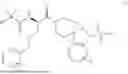
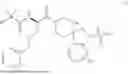
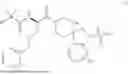
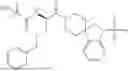
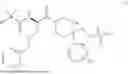
Sources:
- United States Patent and Trademark Office - verify current appl. status at the USPTO↗
Similar patent applications:
- » 20190092727
Piperidine Compounds, Pharmaceutical Composition Comprising The Same And Its Use - » 20140135314
Piperidine compounds, pharmaceutical composition comprising the same and its use - » 20160362374
Piperidine compounds, pharmaceutical composition comprising the same and its use - » 20170275250
Piperidine compounds, pharmaceutical composition comprising the same and its use - » 20100093801
Piperidine compounds, pharmaceutical composition comprising the same and its use - » 20050215546
Substituted piperidines, pharmaceutical compositions containing these compounds, their use and processes for the preparation thereof - » 10388273
Substituted piperidines, pharmaceutical compositions containing these compounds, their use and processes for the preparation thereof - » 20110021569
Piperidine compounds, a process for their preparation and pharmaceutical compositions containing them
Recent applications in this class:
- » 20250325527 2025-10-23
KIF18A INHIBITION FOR TREATMENT OF CANCER - » 20250295643 2025-09-25
METHODS OF TREATING EPILEPSY - » 20250281470 2025-09-11
COMPOSITIONS FOR THE TREATMENT OF NON-ALCOHOLIC FATTY LIVER DISEASE AND NON-ALCOHOLIC STEATOHEPATITIS - » 20250281469 2025-09-11
RIFABUTIN TREATMENT METHODS, USES, AND COMPOSITIONS - » 20250248980 2025-08-07
IMMUNE MODULATORY AGENTS - » 20250235434 2025-07-24
RIFABUTIN ANALOGS FOR THE TREATMENT OF DISEASE - » 20250195484 2025-06-19
CEREBLON LIGANDS AND USES THEREOF - » 20250195483 2025-06-19
SPIRO PIPERIDINE DERIVATIVES AS INHIBITORS OF APOL1 AND METHODS OF USING SAME - » 20240423965 2024-12-26
FIXED DOSE COMBINATION OF CHOLINESTERASE INHIBITOR AND A QUATERNARY AMMONIUM ANTIMUSCARINIC AGENT TO TREAT NEURODEGENERATIVE COGNITIVE DISORDERS - » 20240358689 2024-10-31
Modulators Of The Beta-3 Adrenergic Receptor Useful For The Treatment Or Prevention Of Renal Cystic Disease and Cardiorenal Syndrome